



A blunt bob on wavy hair can feel like a dare. Some mornings it sits like a polished helmet; by lunch it has kicked out at the ends and swollen at the sides. Layered Korean bobs for wavy hair with side-swept bangs solve that problem by working with the bend you already have, not staging a fight with it. The shape stays light, the front stays soft, and the whole cut moves instead of locking into one flat outline.
What makes this family of cuts so useful is the balance. Korean-inspired bob shapes usually keep the perimeter clean enough to look intentional, but they soften the interior with careful layers so the wave pattern can show through. Add side-swept bangs, and the front of the haircut stops feeling heavy. The fringe slides across the forehead, opens the eyes, and gives the style that easy, slightly undone finish that looks better after a little movement.
I’ve always thought wavy hair looks best when it has room to breathe. Too much bulk at the jawline and you get the dreaded triangle. Too little structure and the shape disappears by noon. These 22 versions land in the middle, which is exactly where a good bob should live.
Why This Collection Feels Different
-
The layers are doing real work: They remove weight where wavy hair tends to balloon, especially through the sides and lower back of the head.
-
Side-swept bangs soften the front without hiding it: The fringe gives cheekbones and brows a frame, but it doesn’t trap the forehead the way full blunt bangs can.
-
The shapes grow out cleanly: A good layered Korean bob still looks deliberate six or eight weeks later, which matters if you don’t want salon visits to rule your life.
-
These cuts can air-dry or blow-dry well: That flexibility is the whole point. Some days you want a quick scrunch and leave; other days you want a smoother bend with a round brush.
-
They flatter a range of wave patterns: Loose waves, stronger S-waves, and that in-between texture all benefit from soft internal layering instead of one heavy block of hair.
-
They keep the neck and jawline visible: That small detail changes the whole mood of the haircut. The result feels lighter, sharper, and easier to wear with earrings, collars, and glasses.
1. Soft Curtain Layer Bob
This is the version I reach for when someone wants the safest, prettiest entry point into a Korean bob. The shape sits just below the jaw, the layers start softly around the cheekbones, and the side-swept bangs drift into a curtain-like sweep rather than a hard diagonal. On wavy hair, that keeps the front from looking chopped.
Why it flatters waves
The wave pattern gets a place to land. Instead of piling up at the sides, the hair bends inward near the face and loosens toward the ends, which keeps the cut airy. If your hair has a medium density and forms loose S-waves, this shape gives you movement without a lot of product.
A little bend from a 1-inch round brush or a quick pass with a flat iron at the front pieces is enough. I like this one because it looks finished even when the rest of the hair is air-dried. That’s a rare quality, honestly.
Best for
- Oval faces that want a little softness
- Round faces that need a slightly longer front line
- Wavy hair that frizzes when it gets over-layered
One-line tip: Ask for the side-swept bang to start at the high point of the eyebrow, not deep in the temple, or the front can disappear into the rest of the cut.
2. Chin-Grazing Swing Bob
A chin-length swing bob is sharper than the soft curtain version, and that’s the appeal. The perimeter hugs the jaw, then kicks out a touch at the ends so the whole cut feels like it’s moving even when you’re standing still. Side-swept bangs keep it from looking severe.
This is the bob for wavy hair that likes shape but hates heaviness. The internal layers are minimal, which means the outline stays clear, but the ends are removed just enough to stop the hair from sitting like a block. If your waves are loose and your strands are medium-fine, this can make your hair look fuller without making it puffy.
The trick is in the finish. Blow-dry the front with a slight bend toward the face, then let the ends swing outward just a bit. If you over-smooth the whole head, you lose the point. It should feel breezy, not stiff.
Practical note
This cut works especially well if your chin is one of your best features and you like a little edge near the face. It’s also forgiving on second-day hair, which is a bigger deal than most people admit.
3. Rounded Cloud Bob
Ever seen a bob that looks fluffy in a good way, not a frizzy way? That’s the rounded cloud shape. It has enough internal layering to keep thick waves from ballooning, but the outside line stays rounded instead of angular. Side-swept bangs slip in at the front and keep the top from looking boxy.
What makes it different
A rounded Korean bob is built for density. The stylist takes weight out from underneath, then preserves a soft dome through the crown and sides. That means the hair can puff a little in the right places without turning into a triangle. If your waves are strong or your hair is naturally full, this is one of the more useful cuts in the bunch.
I like this version on square and heart-shaped faces because the round outline softens the jaw and chin. It also plays well with a slightly deeper side part. If you want the cut to feel less sweet and more polished, tuck one side behind the ear and let the bangs sweep over the other.
Best for
- Thick wavy hair
- Stronger wave patterns
- Faces that benefit from a softer silhouette
Bold truth: This shape only works if the layers are balanced. Too much removal at the crown and the whole top starts to look flat and separated.
4. Collarbone Face-Frame Lob
This one is the bridge between a bob and a lob, and that’s why so many people end up loving it. It gives you length to tuck behind the ear or clip back, but the face framing still reads as a bob family cut. The side-swept bangs are longer here, so they blend into the front layers instead of sitting as a separate piece.
A collarbone-length cut is the safest choice if you’re nervous about going too short. Wavy hair tends to look expensive at this length because the movement shows up clearly without creating too much width at the cheeks. I especially like it for anyone who wears glasses; the bangs can curve around the frames without fighting them.
The styling is mercifully simple. A rough dry, a touch of mousse, and a quick bend with a round brush at the front is often enough. If you want more shape, curl the pieces away from the face only from the mid-lengths down. Leave the roots alone.
Why it works
The extra length keeps the ends from springing too high when the waves tighten. That makes it easier to wear if your hair has unpredictable shrinkage or if humidity tends to change the whole silhouette.
5. Razor-Feathered Wave Bob
A razor-feathered bob has more bite. The ends look airy, almost broken up, and the whole cut feels lighter than a blunt bob with hidden layers. On wavy hair, that feathering creates separation, so the waves don’t all collapse into one solid shape.
Use this one if your hair is dense and resistant. A razor cut can take out a surprising amount of bulk, which helps the side-swept bangs blend into the rest of the haircut instead of sitting on top of it. But there’s a catch: if your hair is already fine, too much razor work can leave the ends wispy in a bad way.
A good version of this cut should still have a little density at the perimeter. The ends ought to move, not disappear. I’d steer it toward someone who likes texture spray, dry hair, and a slightly edgy finish. It’s not the most conservative bob on the list.
For styling, mist with a light sea salt spray, scrunch, and let the waves dry most of the way before touching them. If you keep fussing with it while it’s damp, the feathering turns fuzzy.
6. Tucked-Under Korean Bob
Compared with the feathered cut, this one is neat and precise. The shape sits closer to the head, and the ends are cut so they tuck under with a round brush or a quick pass of a blow dryer nozzle. Side-swept bangs smooth the front, which keeps the look soft instead of severe.
The best thing about a tucked-under bob is how clean it looks with almost no visible effort. That sounds backwards, but it’s true. The undercurve gives the haircut a quiet polish, and the side bang prevents the whole thing from looking too school-uniform. On wavy hair, a little internal layering keeps the bend from flipping out at random.
This is the cut I’d pick for someone who likes neat collars, sharp earrings, and a haircut that still behaves on windy days. It also photographs well in real life, meaning it looks tidy from the side and the back, not just face-on.
Ask for this if
- You want a more refined outline
- Your waves are loose and manageable
- You prefer a haircut that air-dries into shape with a little help
7. Shaggy Seoul Bob
This one leans more textured and lived-in. The layers are higher, the ends are more broken up, and the side-swept bangs have a softer, almost swept-aside fringe feel. It’s the bob for people who like their hair to look like it has already been somewhere.
Why it works on thicker waves
Thick wavy hair can turn stubborn fast. A shaggy bob takes weight out of the inside of the cut, which lets the wave pattern separate instead of puffing into one block. The result is movement with a little grit at the ends, especially if you use a matte texture spray.
It’s not the cleanest cut on this list, and that’s the point. If you like hair that looks a little undone and a little cool, this gets you there quickly. The key is to keep the bangs long enough to sweep, not short enough to stand up on their own.
I’d avoid this one if your strands are very fine. The layers can overexpose the ends and make the whole shape look thin. On medium or dense waves, though, it’s a smart choice.
8. A-Line Bob with Side Sweep
Here’s the bob with a little attitude. Shorter in the back, longer toward the face, the A-line shape gives wavy hair a built-in direction. Add side-swept bangs, and the whole cut starts pointing forward instead of puffing out at the sides.
The angle matters. Too steep, and the haircut starts looking dated. Too subtle, and you lose the lift that makes the shape interesting. The sweet spot is a gentle forward slope that still lets the ends skim the jaw and collarbone. That line works especially well if you want your hair to appear a bit sleeker without spending 20 minutes with a flat iron.
A-line bobs also play nicely with glasses and earrings because they create a clean frame around the face. The front draws the eye downward, which can make the neck look longer. Small thing. Big effect.
Good for
- Rounder faces that need length in front
- Wavy hair with a bit of frizz
- People who like structure more than softness
9. Shoulder-Skimming Wavy Lob
This is the easygoing cousin in the group. A shoulder-skimming lob gives wavy hair enough room to move, and the side-swept bangs keep the front from feeling too plain. It’s long enough to tie back, but short enough to look intentional when worn loose.
If you’re nervous about a true bob, start here. The length lands in a forgiving place, which means the waves can shrink a little and still look like they belong there. The layers should be soft and low, mostly around the front and the mid-lengths, so the shape keeps some body.
This cut is a favorite for people with unpredictable texture. Some days the waves are loose and glossy; other days they’re more bent and a little wild. The lob handles both without much drama. That’s one of the reasons it shows up so often in salon chairs.
For styling, I’d keep the product light. A small amount of cream through the ends and a lift at the roots is enough. Too much moisture and the length drags down.
10. Piecey Jawline Bob
A piecey jawline bob is less polished and more playful. The ends are separated into little chunks, the layers sit around the jaw, and the bangs sweep across the forehead with a bit of texture. It has movement in every direction, which is exactly why it suits wavy hair.
What it does well
This cut breaks up the outline enough that the waves don’t sit in one big sheet. If your hair tends to clump in a way you don’t like, piecey layering can make each section look more deliberate. It’s also a good choice if you use a little styling paste or texture powder, because the cut responds to product instead of swallowing it.
The downside is that it needs a light hand. Heavy conditioner or thick smoothing cream can erase the separation and make the shape look stringy. Use enough product to define, not enough to weigh it down.
I like this on oval and heart-shaped faces. The jawline focus gives a crisp finish, but the side-swept bangs stop it from getting too sharp.
11. Soft Wolf-Bob Hybrid
This is the edgy one, but it’s still wearable. A soft wolf-bob borrows the light crown layers and movement of a wolf cut, then reins everything in with a bob length. Side-swept bangs keep it from turning into full-on shag territory.
It’s the best pick for people who want movement more than neatness. Wavy hair loves a little height at the crown and separation through the sides, and this cut gives both. The top stays a touch airy while the perimeter keeps enough length to feel like a bob, not a mullet pretending to be polite.
I’d only ask for a soft version here. The wrong wolf-bob can get too disjointed, especially on medium-fine hair. The good version still has a clear shape around the jaw and neck. It just moves more than a traditional bob.
If you air-dry this cut, scrunch the crown lightly and leave the bangs loose. If you blow-dry it, keep the brush movements soft. The goal is lift, not drama for its own sake.
12. Polished Root-Lift Bob
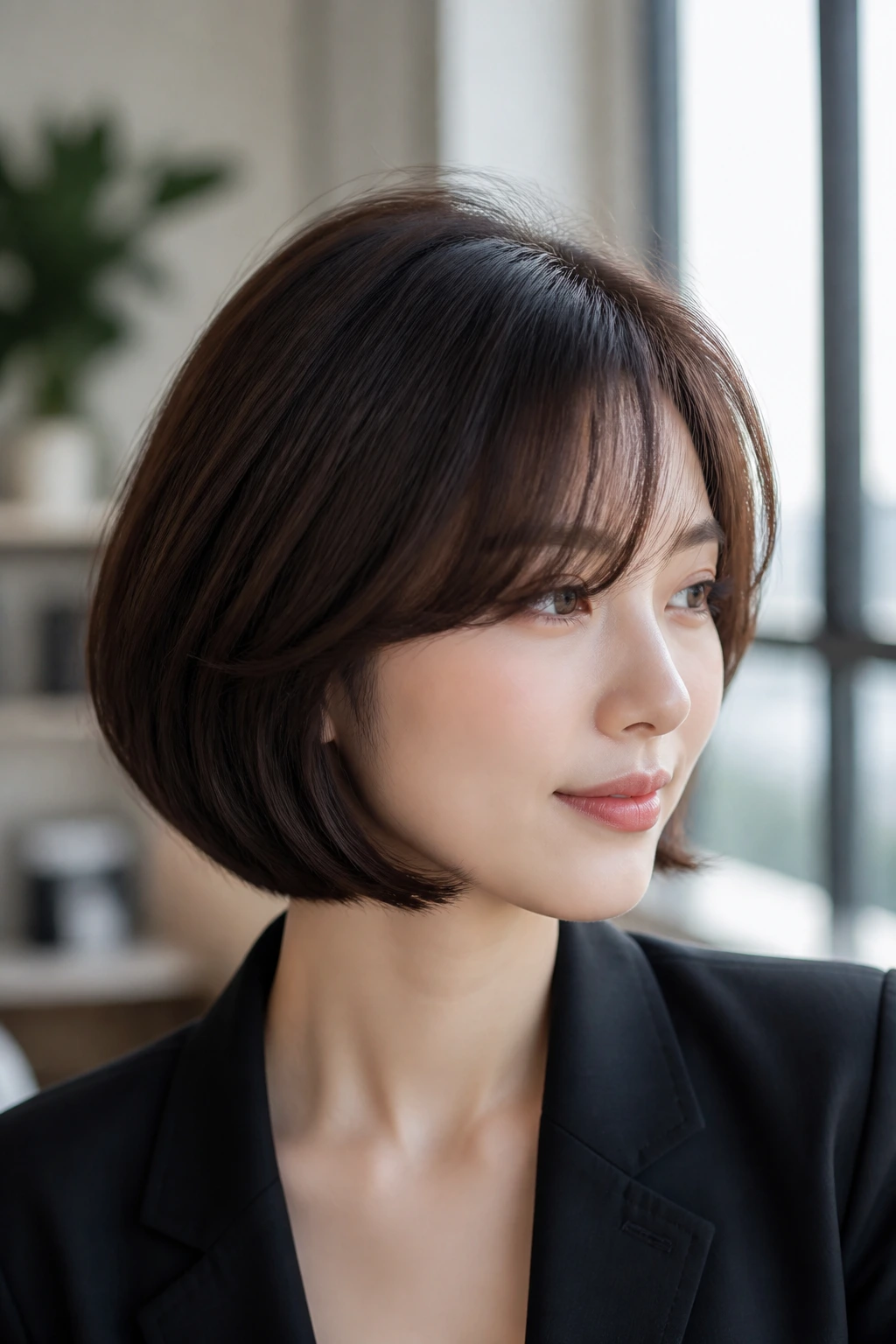
Sometimes the most useful bob is the one that behaves at the scalp. A polished root-lift bob keeps the body concentrated at the roots and mid-lengths, then smooths the ends so the shape looks controlled. Side-swept bangs help the front stay soft while the rest of the cut keeps its edge.
This is a strong choice if your waves collapse at the top and frizz at the bottom. A bit of root mousse, a blow-dry with lift at the crown, and a round brush through the front can make a huge difference. The cut itself should have enough internal layering to keep the sides from ballooning, but not so much that the silhouette loses its clean line.
It’s a better office haircut than people give it credit for. The style looks tidy, but it doesn’t read stiff. That middle ground is hard to find, and this one sits there nicely.
Best for
- Fine to medium waves that go flat at the roots
- People who prefer a smooth finish
- Anyone who wants side-swept bangs that lie in place
13. Beachy Air-Dry Bob
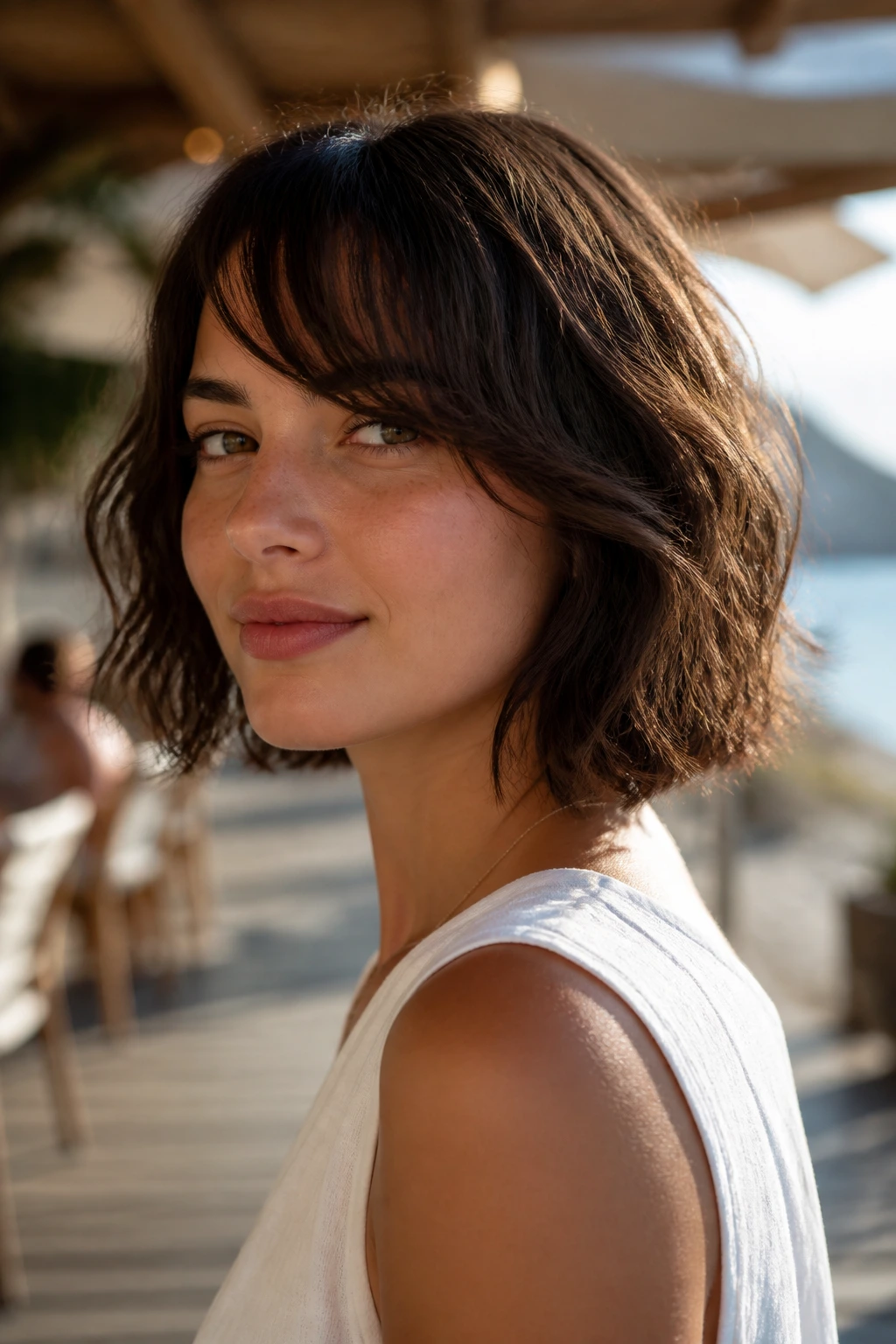
This one is the low-effort version that still looks like it was planned. The layers are soft enough to encourage wave pattern, and the side-swept bangs fall into place after a quick scrunch. No round brush circus required.
Why it works
Wavy hair usually looks best when it isn’t overhandled, and this cut respects that. A little mousse on damp hair, a dab of cream through the ends, and a hands-off dry can leave you with shape and movement without the crunchy feel you get from too much product. The bob should be cut with that in mind: soft perimeter, controlled layering, no aggressive thinning.
I like this cut on hair that has some natural bend but not enough density to hold a super-structured style all day. It’s the kind of haircut that improves as it settles. Day one may be fine; day two often looks better.
If your ends tend to kick out, ask for them to be softened just enough to bend instead of flipping. That one detail changes the whole finish.
14. Deep Side-Part Bob
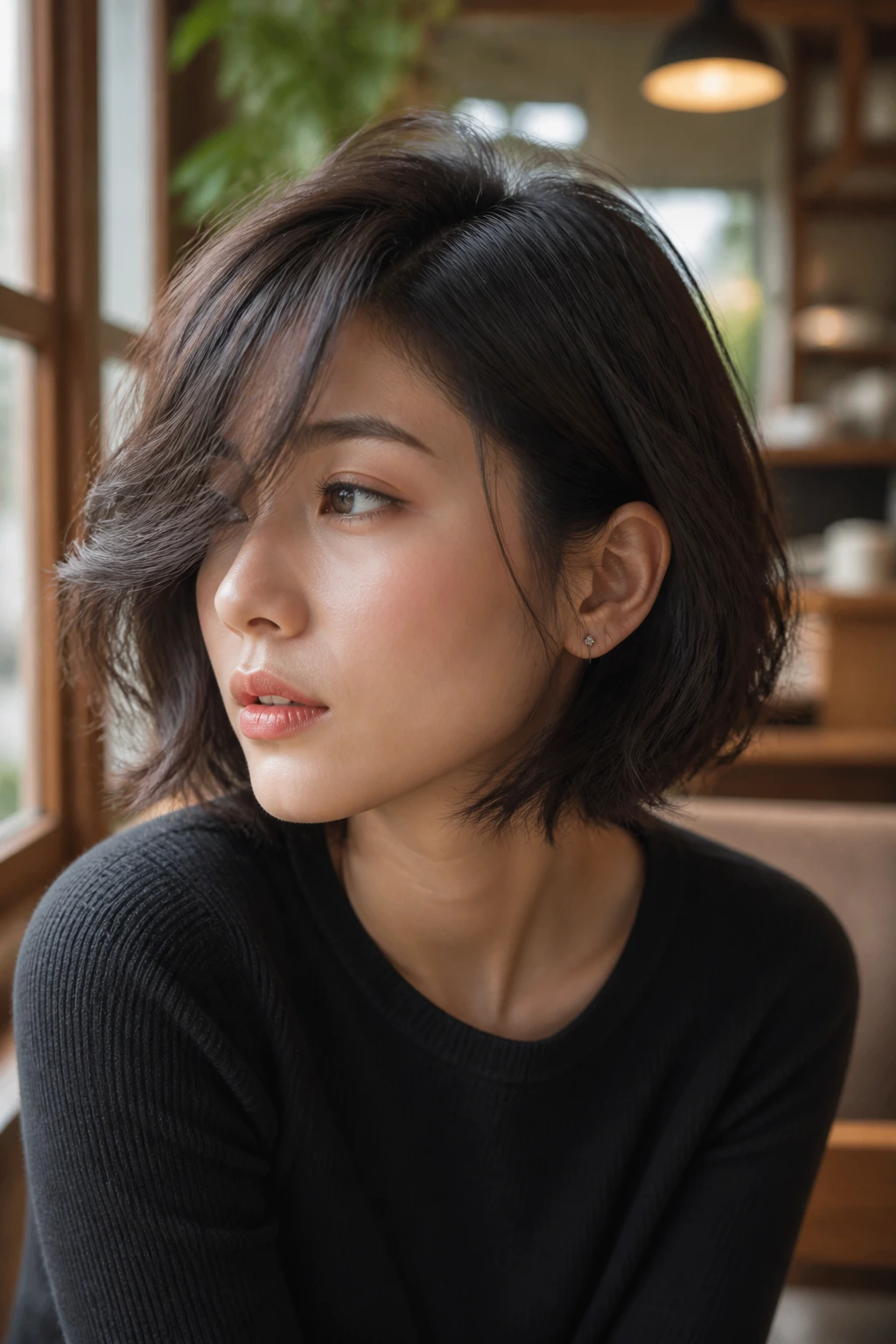
A deep side part gives the whole haircut a little drama without making it fussy. The side-swept bangs become more obvious here, falling across the forehead in a longer sweep that opens one side of the face and narrows the other. On wavy hair, the asymmetry feels natural.
This is the bob I’d point to if you want instant shape from a simple cut. The part creates height at the crown, the wave pattern does the rest, and the bangs pull the eye diagonally instead of straight across. That diagonal line matters more than people think. It makes the haircut feel longer, leaner, and a little more deliberate.
Use it when your waves are loose enough to sit one way without fighting back. If the hair stubbornly splits down the center, a little root drying in the opposite direction helps. Don’t overdo it, though. The charm is in the sweep, not the volume contest.
This style also works well with a tucked side behind the ear. That tiny move gives the face an open, asymmetrical frame that looks polished without much effort.
15. Sleek Underlayer Lob
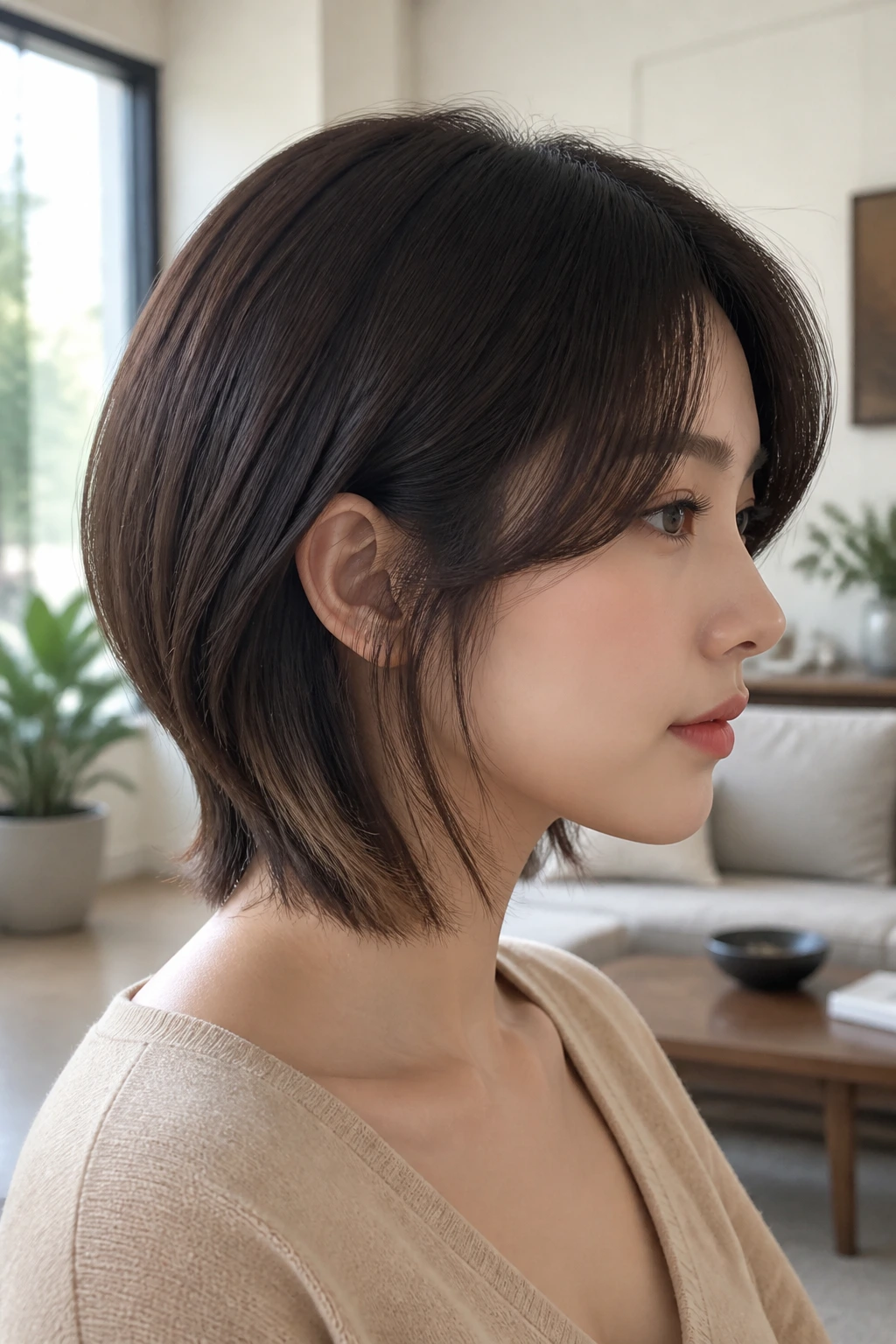
This version is for people who like a cleaner surface. The top layer is smoother and flatter, while the underlayers carry the movement. The effect is subtle until the hair swings, and then you see the structure.
That’s the trick with an underlayer lob: it keeps the visible shape sleek while still giving wavy hair somewhere to live. Side-swept bangs help bridge the top and bottom, so the front doesn’t look disconnected. If your hair is thick, this can be a small miracle. Bulk hides underneath. Surface stays calm.
It does need the right cut. Too much thinning and the underside becomes stringy. Too little and the hair can feel heavy. I’d ask for a controlled interior removal, not random razoring.
Who should try it
- People with dense wavy hair
- Anyone who likes smooth roots and movement underneath
- Readers who want a longer bob that still feels clean
16. Floating Layers Bob
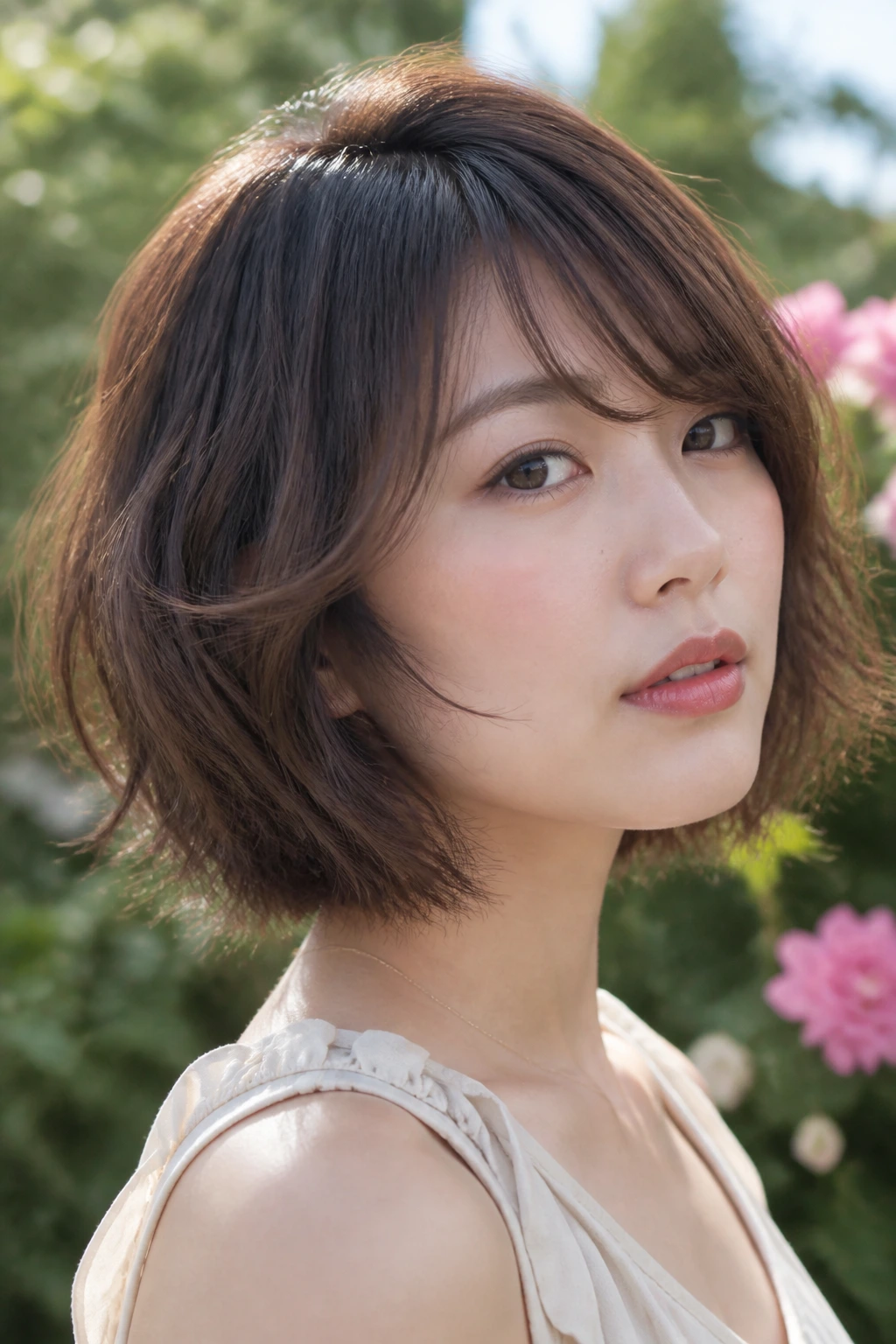
Floating layers are what happen when the cut is lifted in the right places and left alone in the wrong ones. The layers sit just under the cheekbones and around the sides, which gives the hair a light, hovering look. Side-swept bangs add one more soft diagonal so the whole cut feels airborne.
A floating-layer bob is excellent on medium-density waves. The layers keep the sides from sticking out, and the length stays light enough to move when you turn your head. I think this one looks especially good when the ends are not too perfect. Slight irregularity gives the haircut personality.
If you’re used to blunt edges, this will feel looser. That’s not a mistake. It’s the whole point. The shape looks fuller because the weight has been redistributed, not because the hair has been piled high and sprayed into place.
A small amount of volumizing spray at the roots can help, but avoid heavy oils near the crown. They drag the entire shape down.
17. Long Bob with S-Curve Ends
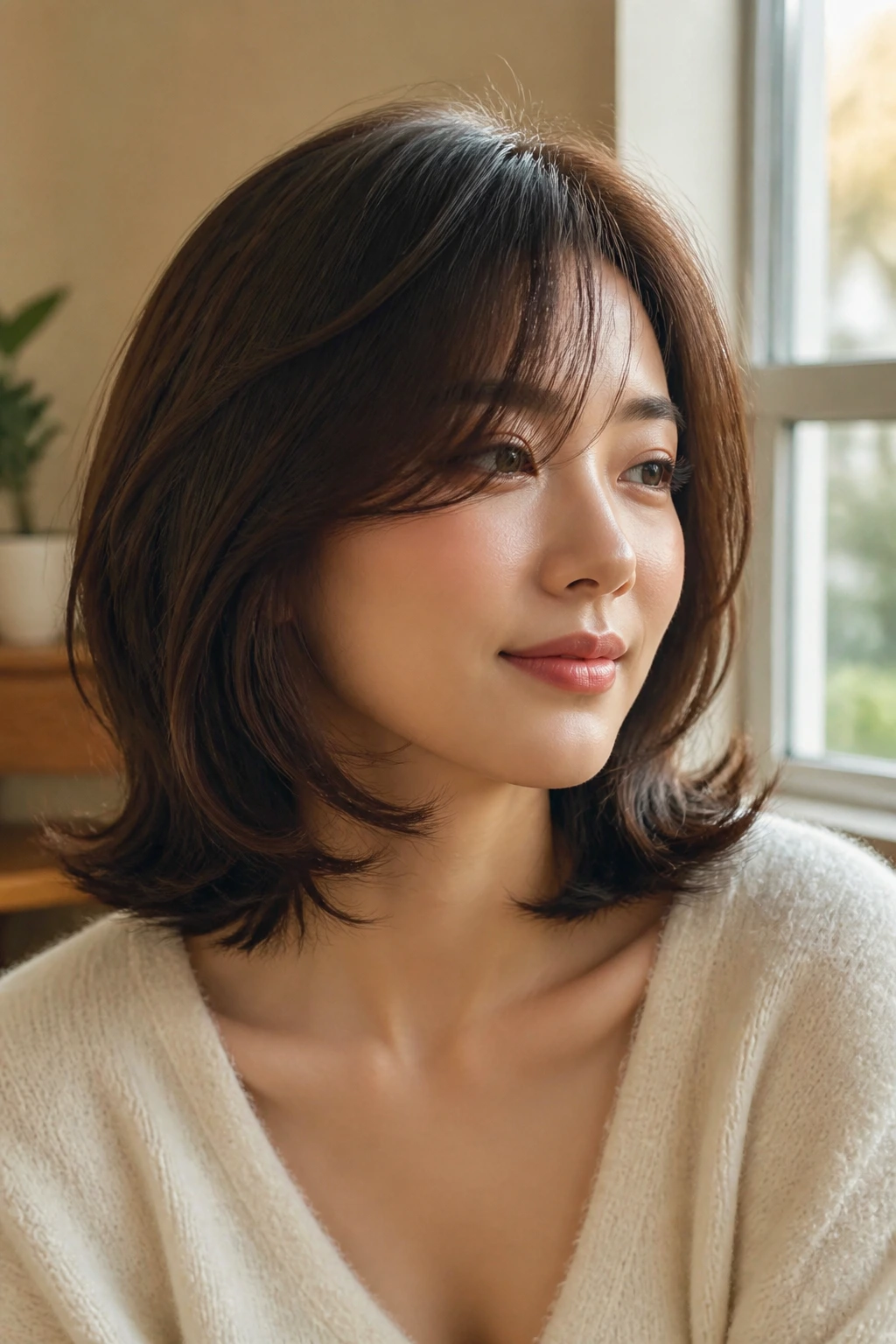
The S-curve lob is one of the prettiest versions in the lineup. The waves at the ends bend in a loose S shape, which gives the haircut a graceful finish rather than a choppy one. Side-swept bangs connect the front to those soft bends, so the cut reads as one movement.
It’s a smart choice if you want your hair to look longer without losing the bob feel. The length sits between collarbone and upper chest, and the layers are kept soft so the curve can show. That means you get swing, not frizz. You also get enough length to create a ponytail on lazy days, which is a small but real advantage.
This shape likes a round brush or a large curling brush more than a flat iron. You’re creating bend, not ringlets. Wrap the front pieces away from the face for just a few seconds, then let them cool in place. It makes the side-swept bangs settle instead of flipping.
I’d choose this for anyone who loves a feminine finish without too much sweetness.
18. Choppy Micro-Layer Bob
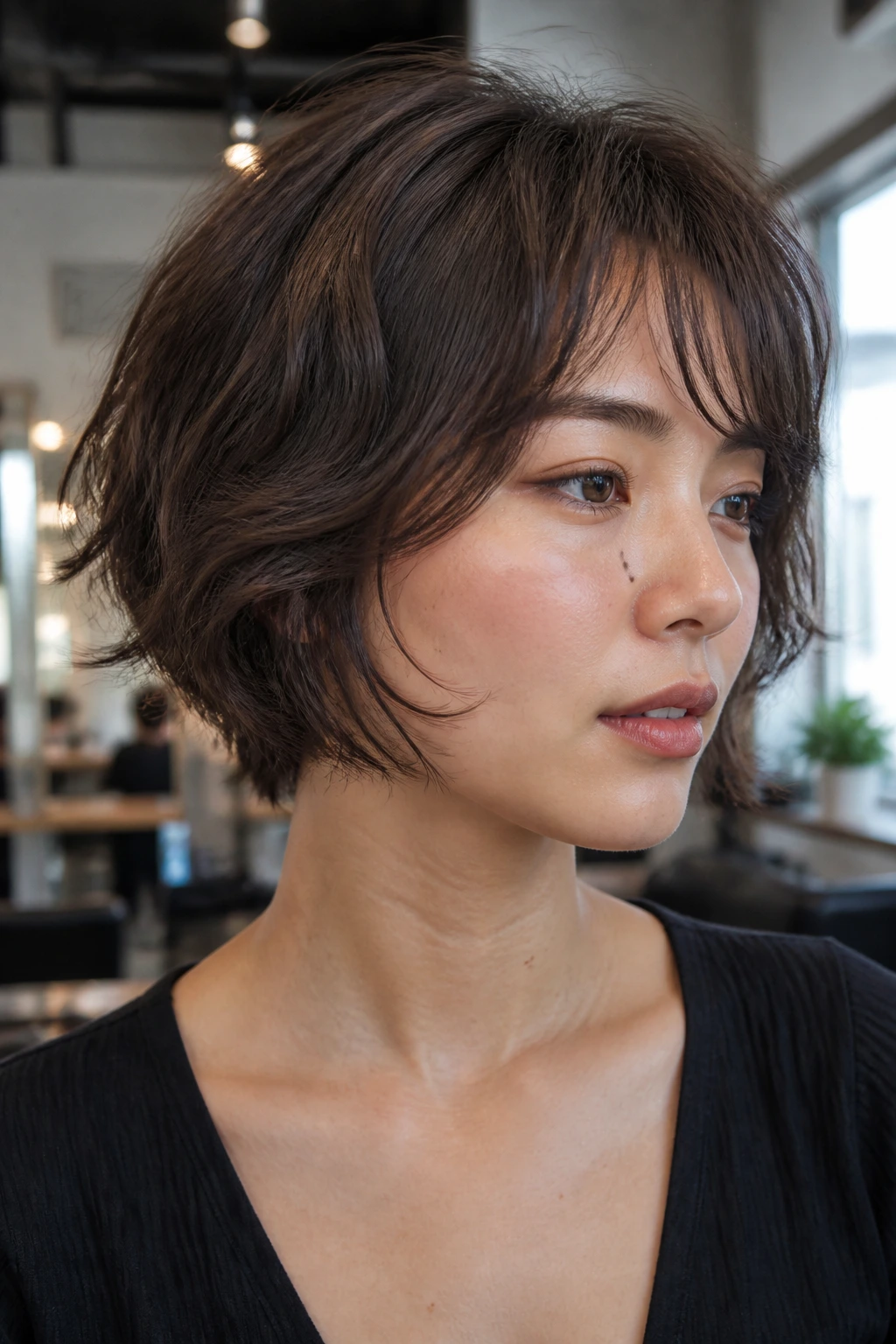
If you want more edge and more texture in a shorter shape, this is the one. Micro-layers give wavy hair a chopped, energetic look, and the side-swept bangs keep the front from getting too busy. It’s compact, lively, and a little bit cool.
The danger here is over-layering. On strong waves, too many short layers can make the haircut puff. On fine waves, they can make the ends look sparse. So the version you want is choppy, yes, but controlled. The perimeter should still hold its line.
I like this cut with a matte paste worked only through the tips and front pieces. That creates separation without stealing movement from the rest of the hair. It’s also a good haircut for people who use clips, headbands, or glasses because the short layers keep the silhouette from getting bulky.
Best for
- Younger, more textured looks
- Hair that naturally wants separation
- People who don’t mind a bit of maintenance
19. Romantic Face-Opening Bob
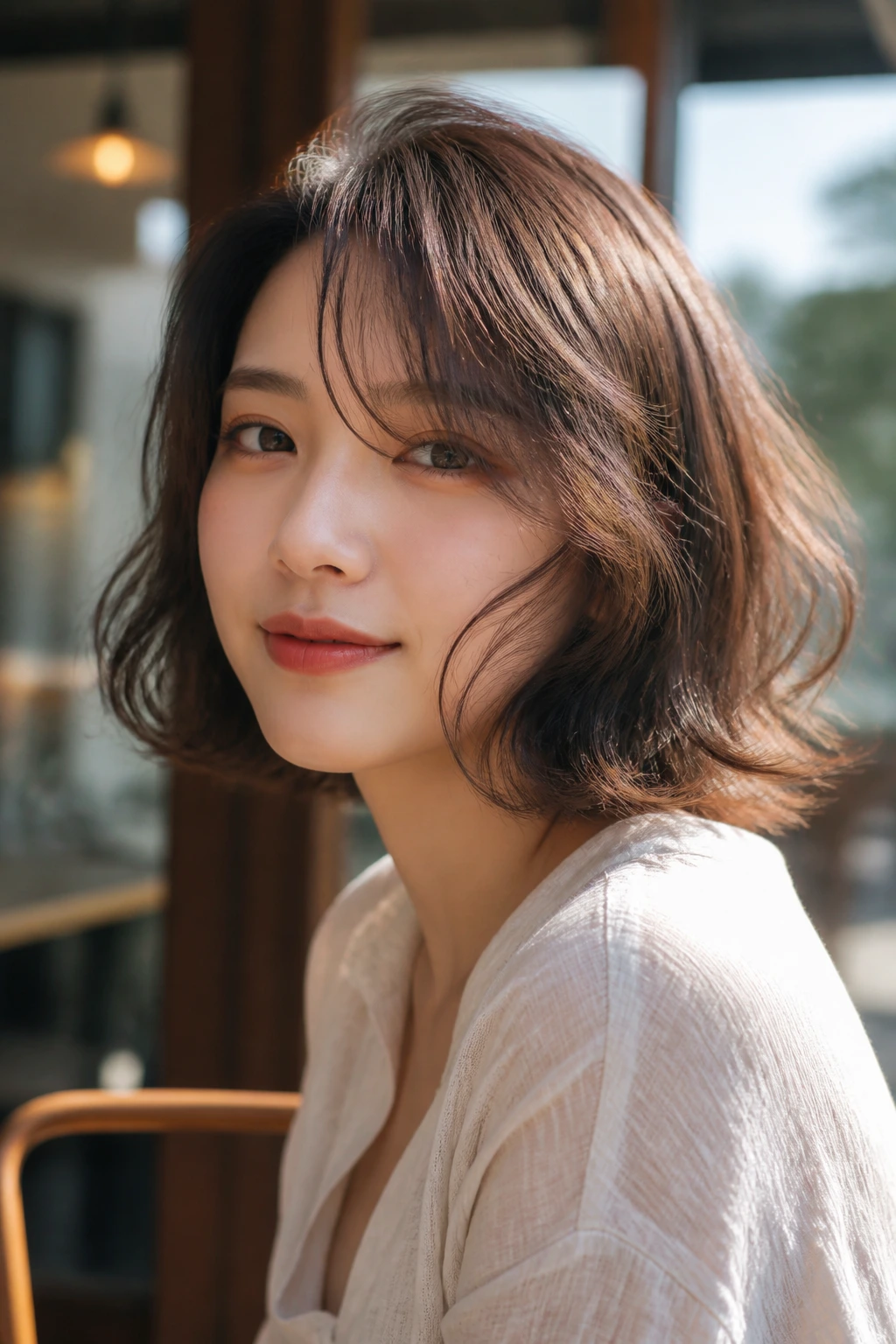
This bob is softer, gentler, and a little more flattering than people expect. The face-framing pieces start around the cheekbones, the side-swept bangs drift rather than land, and the overall shape circles the face without closing it in. On wavy hair, that gives you movement that feels easy rather than styled.
Why it reads so well
The haircut creates a soft frame around the features without making the face look crowded. That’s useful if you want a little width through the sides but not too much volume at the jaw. The waves add texture, the layers release weight, and the side bang prevents the forehead from feeling boxed in.
This is one of my favorites for heart-shaped faces and anyone who wants a bob that feels a bit gentler than the sharper versions. It also handles a soft wave pattern well because it doesn’t need a lot of product to look finished. A touch of light cream and a few bends around the face are enough.
If you’re unsure where to start, this is a safe compromise between polished and relaxed. Safe isn’t boring here. It’s smart.
20. Office-Ready Gloss Bob
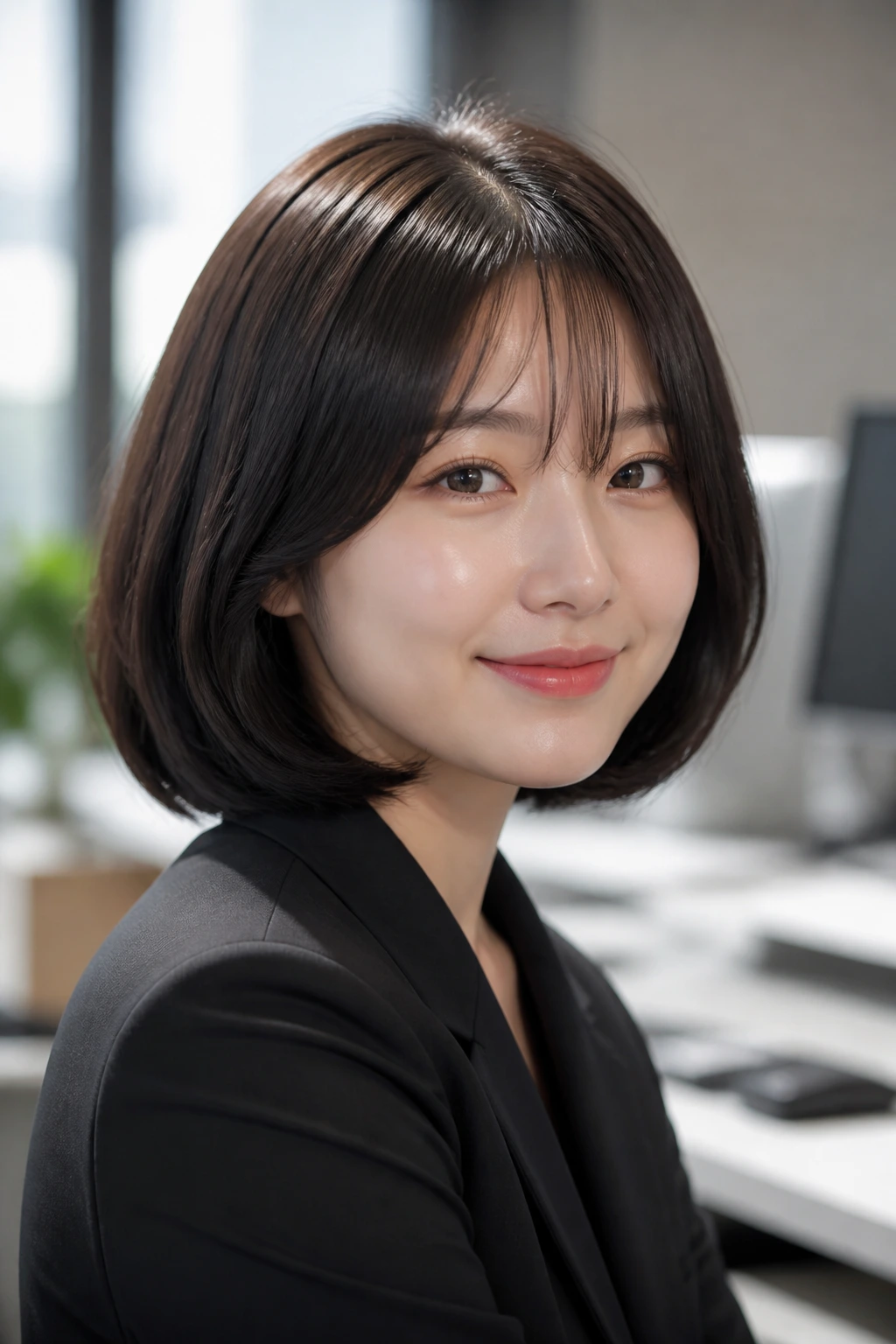
This one is neat, controlled, and quietly expensive-looking when it’s cut well. The ends are smoothed, the layers are subtle, and the side-swept bangs are polished enough to stay put through a full day. Wavy hair still shows through, but in a restrained way.
The secret is not making the hair too straight. You want gloss, not flatness. A light blowout with a nozzle attachment, a round brush through the front, and a single pass over the outer surface can smooth the top while leaving the body underneath. That balance keeps the haircut from losing its shape.
I’d recommend this to someone who likes clean lines and hates hair that falls in the face. It’s especially useful if you spend a lot of time in structured clothes or if your day includes a lot of coming and going. The cut still has movement, but it reads calm.
If you want the side-swept bang to behave, keep it a touch longer than you think you need. Short bangs on wavy hair can split and spring.
21. Tousled Korean Bob with Airy Fringe
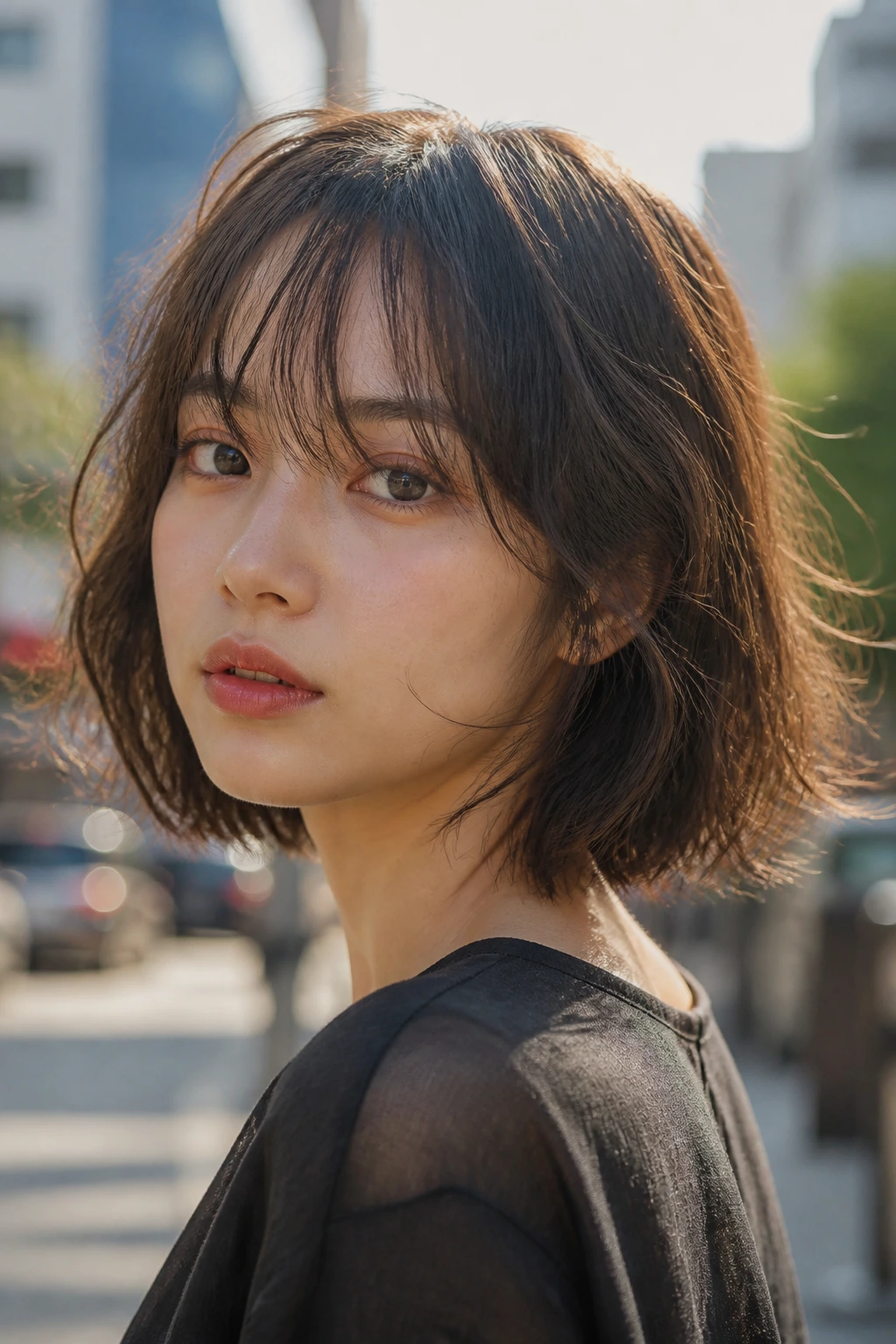
This version leans into texture without going full shag. The fringe is lighter and more airy than heavy side bangs, so it sweeps across the forehead instead of sitting on it. The rest of the bob is tousled, with layers that encourage the wave to separate naturally.
A tousled bob like this is a good choice if you like hair that looks better after a little movement. It doesn’t need perfect styling. In fact, perfection can kill it. The charm lives in the uneven bends, the slightly broken-up ends, and the fringe that falls in a soft arc rather than a hard line.
I’d pair this with a texture spray or a light salt mist, then scrunch once and stop touching it. Overworking the wave pattern makes the fringe frizzy, and nobody wants that. The cut should do most of the work.
Watch for
- Too much product at the roots
- Fringe that’s cut too bluntly
- Over-smoothing the outer layer
22. Soft Wedge Bob with Swept Bangs
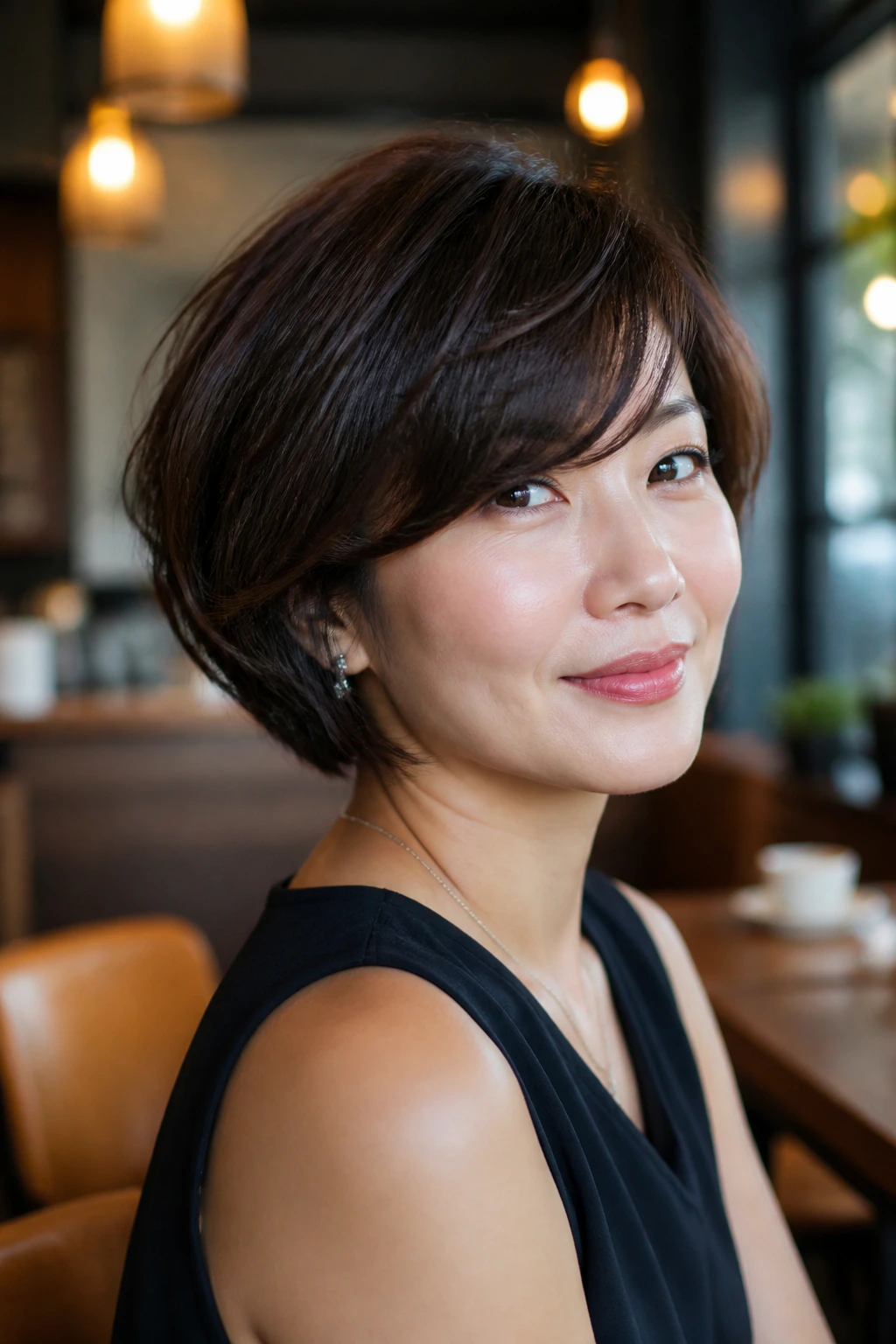
This is the shape I’d choose for thick wavy hair that needs a little discipline. The back is slightly shorter, the sides sweep forward, and the bangs move diagonally across the face. It has the clean line of a wedge without the hard, old-school edge.
The appeal is simple: it gives wavy hair direction. Hair that wants to spread outward gets pulled inward by the shape, which keeps the silhouette neat. The side-swept bangs make sure the front still feels soft, so it doesn’t slide into a helmet effect. If you’ve ever wanted a short cut that still feels wearable with natural texture, this is a strong candidate.
I’d ask for soft stacking in the back and carefully blended sides. The whole thing should feel light, not stacked up like a shelf. And if your waves are uneven, this shape can hide a lot of that while still looking intentional.
Why Layering and Side-Swept Bangs Change the Shape
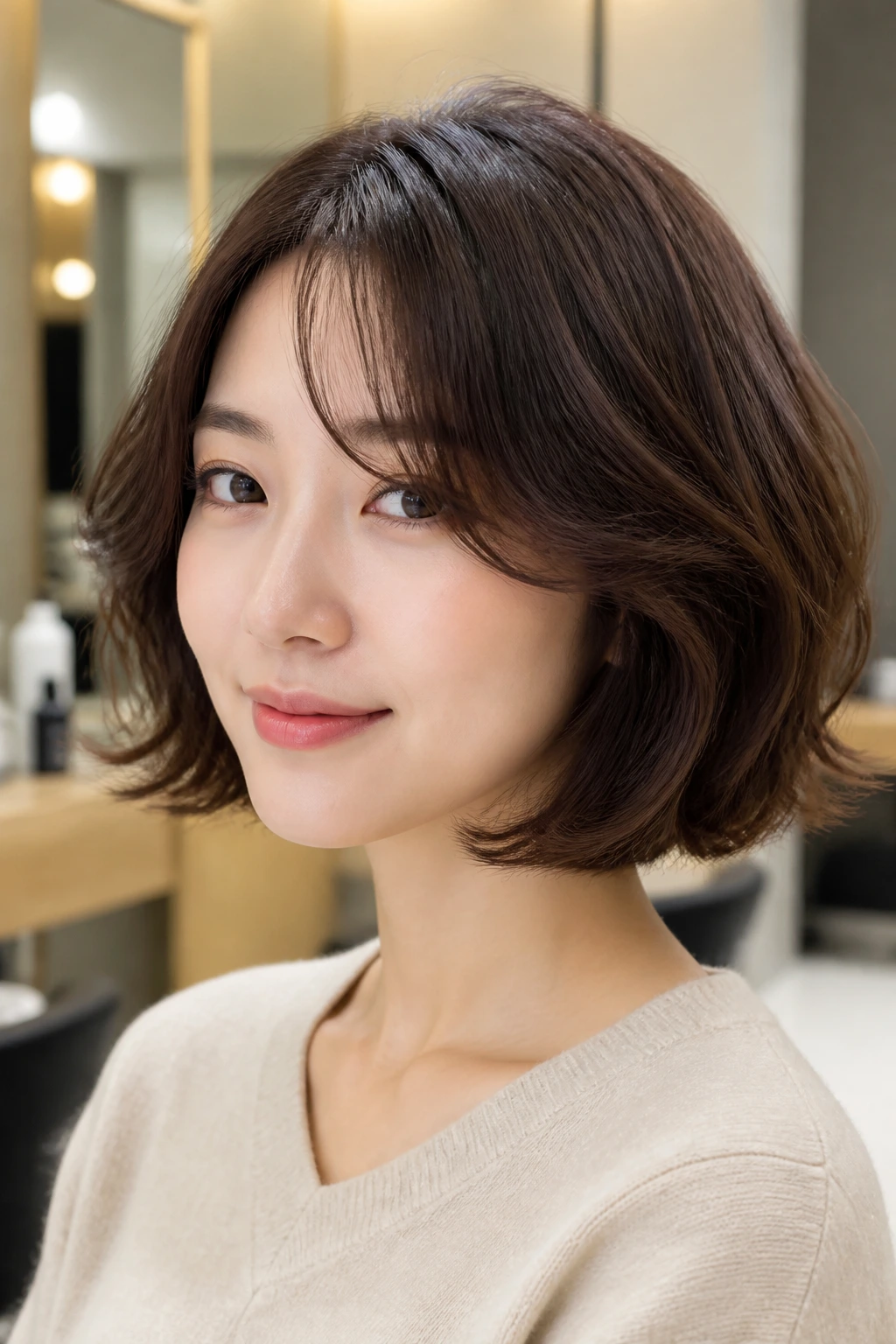
Wavy hair doesn’t fail because it’s wavy. It fails when the cut asks it to behave like straight hair. That’s the whole argument here. Layering breaks up the weight so the wave can bend, and side-swept bangs keep the front from fighting the rest of the haircut. Together, those two choices solve the most common bob problems: puffiness at the sides, heaviness at the crown, and a front that feels too blunt.
The best layered Korean bobs keep the perimeter visible. That means the outline still reads as a bob, even when the interior has movement. If the cut is too layered from root to tip, the shape can get stringy. If it’s too blunt, the wave has nowhere to go and pushes out at the widest point of the head. Middle ground. Always middle ground.
Another thing worth saying: side-swept bangs are not just a styling detail. They change how the whole face sits inside the haircut. A bang that sweeps across the forehead softens the top edge of the style and gives the cut a built-in diagonal. Diagonal lines are kinder to wavy hair than straight ones. They let the hair move in a way that feels natural, not boxed in.
What to Tell Your Stylist Before the First Snip
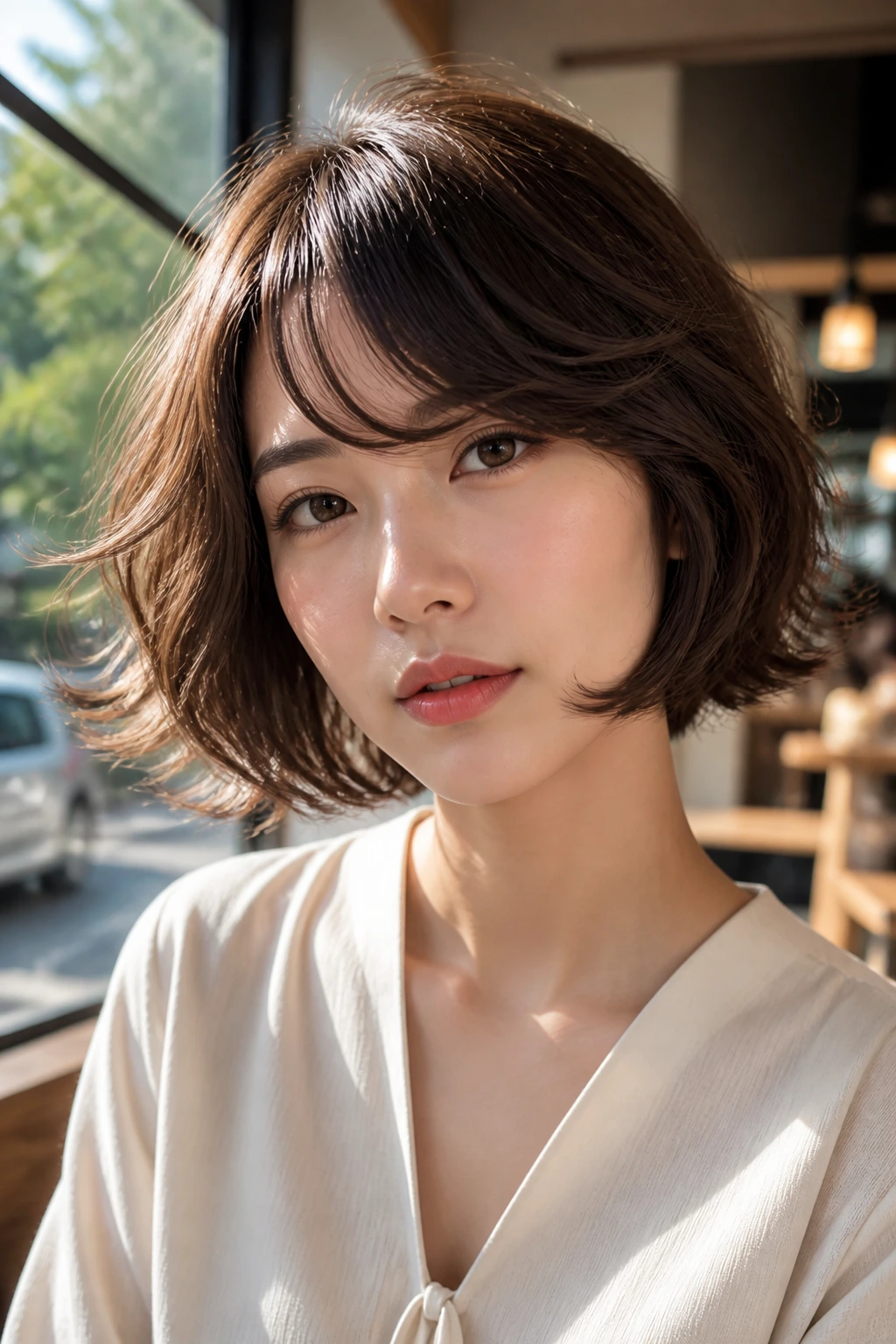
Bring photos, but bring the right photos. One photo from the front is not enough. You want a front view, a side view, and if possible a back view of the bob you like. Haircuts are three-dimensional, and the difference between a soft Korean bob and a puffy one often shows up in profile.
Tell your stylist how your waves behave on a bad day, not just a good one. Do they swell at the cheeks? Do the ends flip out? Does the crown flatten while the sides widen? Those details matter more than the exact phrase you use. A good stylist can translate “my hair turns into a triangle by lunch” into a better cut.
If you want side-swept bangs, say whether you want them to blend into the face frame or stand apart more clearly. The first gives a soft sweep from temple to cheekbone. The second reads more like a fringe with direction. Both work. They just solve different problems.
And here’s the part people skip: ask whether the cut should be done on dry or mostly dry hair. Wavy hair often behaves better when the stylist can see how it sits in real life. That one question can save you a lot of post-salon disappointment.
Styling a Wavy Bob Without Fighting the Texture
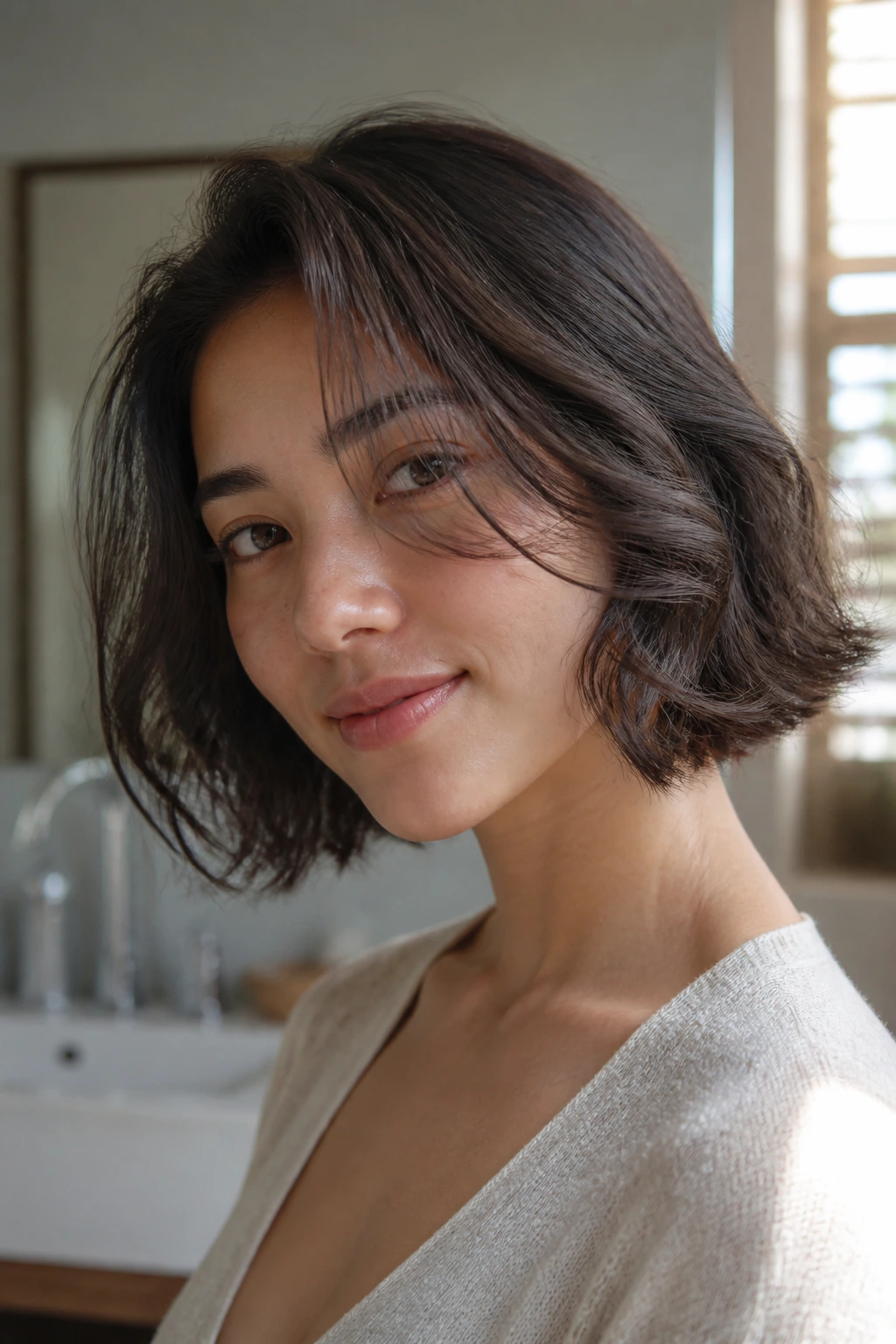
A wavy bob does not need a giant routine. It needs the right three or four moves, done in the right order. Start with a light leave-in or mousse on damp hair, then choose either air-drying or a quick blow-dry finish depending on how polished you want it. The mistake is loading on too much cream, then trying to flatten everything into submission.
For air-drying, scrunch once or twice, clip the bangs in the direction you want them to fall, and leave the rest alone. For blow-drying, use a nozzle and direct the roots first. The front matters most. If the bangs dry in a weird direction, the whole cut gets fussy.
A round brush can help, but it doesn’t have to become a performance. Work only the face-framing pieces if the rest of the hair already has a good bend. Most of the time, you are shaping, not rebuilding. That distinction saves time and keeps the hair from looking overdone.
If your waves are the type that last well on day two, lean into that. A little dry shampoo at the roots and a finger-combed refresh through the ends often makes the cut look even better the second day.
Essential Equipment for These Looks
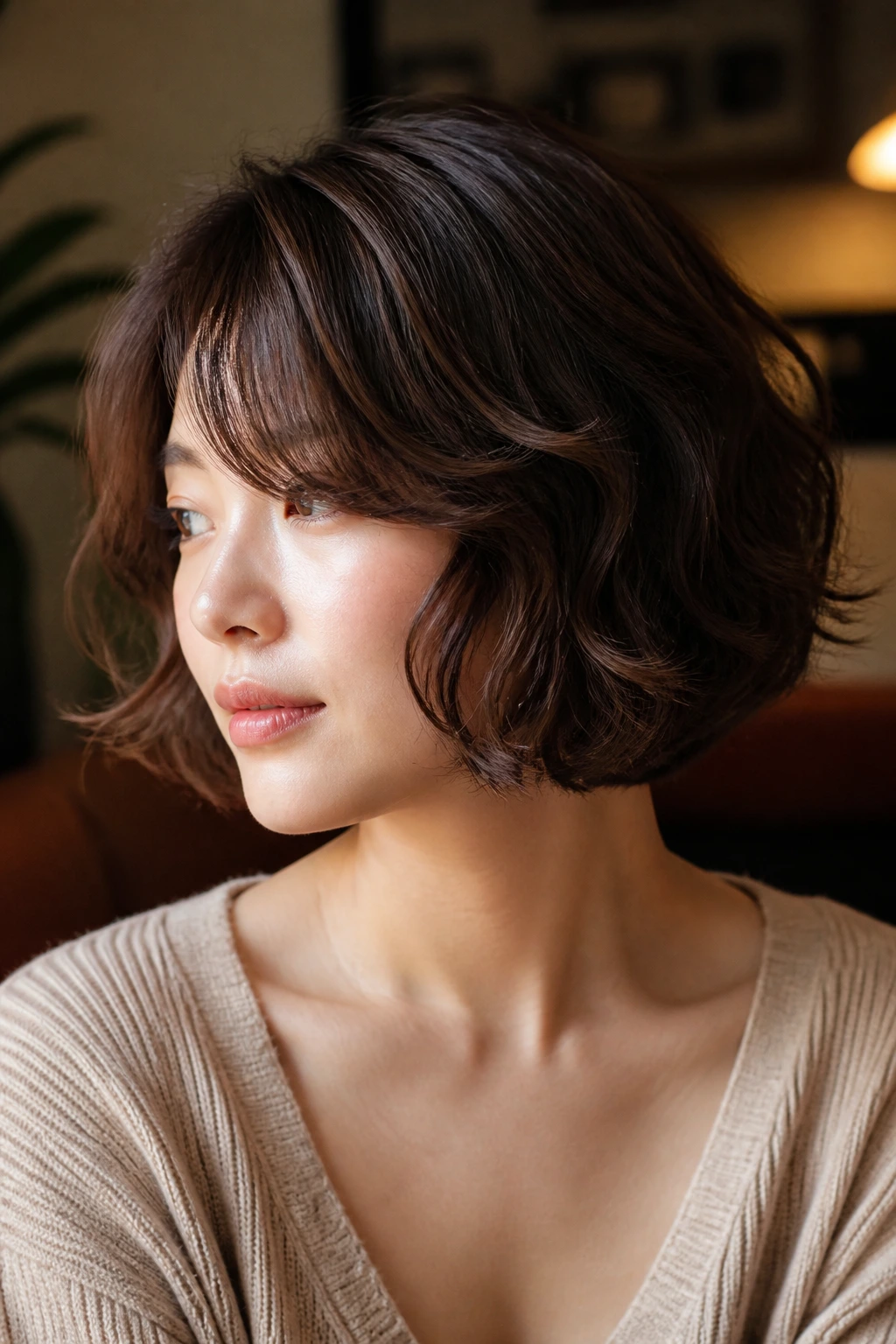
-
A 1-inch or 1.25-inch round brush: Best for shaping the front pieces and teaching the side-swept bangs where to sit.
-
A blow dryer with a nozzle attachment: The nozzle keeps air directed where you want it instead of blowing the wave pattern apart.
-
Light mousse or root foam: Gives wavy hair lift without the sticky, stiff feel some gels leave behind.
-
Heat protectant spray: Use this before any round-brush blowout or flat-iron touch-up. Skip it and the ends dry out fast.
-
Microfiber towel or soft T-shirt: Better than rough terry cloth for squeezing out water without making the cut frizzy.
-
Wide-tooth comb: Handy for distributing product through damp waves without pulling them flat.
-
Duckbill clips: Great for training bangs and setting the front while it cools in the direction you want.
-
Dry shampoo: Useful on day two or three when the roots need a reset and the ends still look fine.
-
Light finishing serum or hair oil: A pea-sized amount on the ends can stop a bob from looking dry, but too much will collapse the shape.
What to Tell Your Stylist Before the First Snip
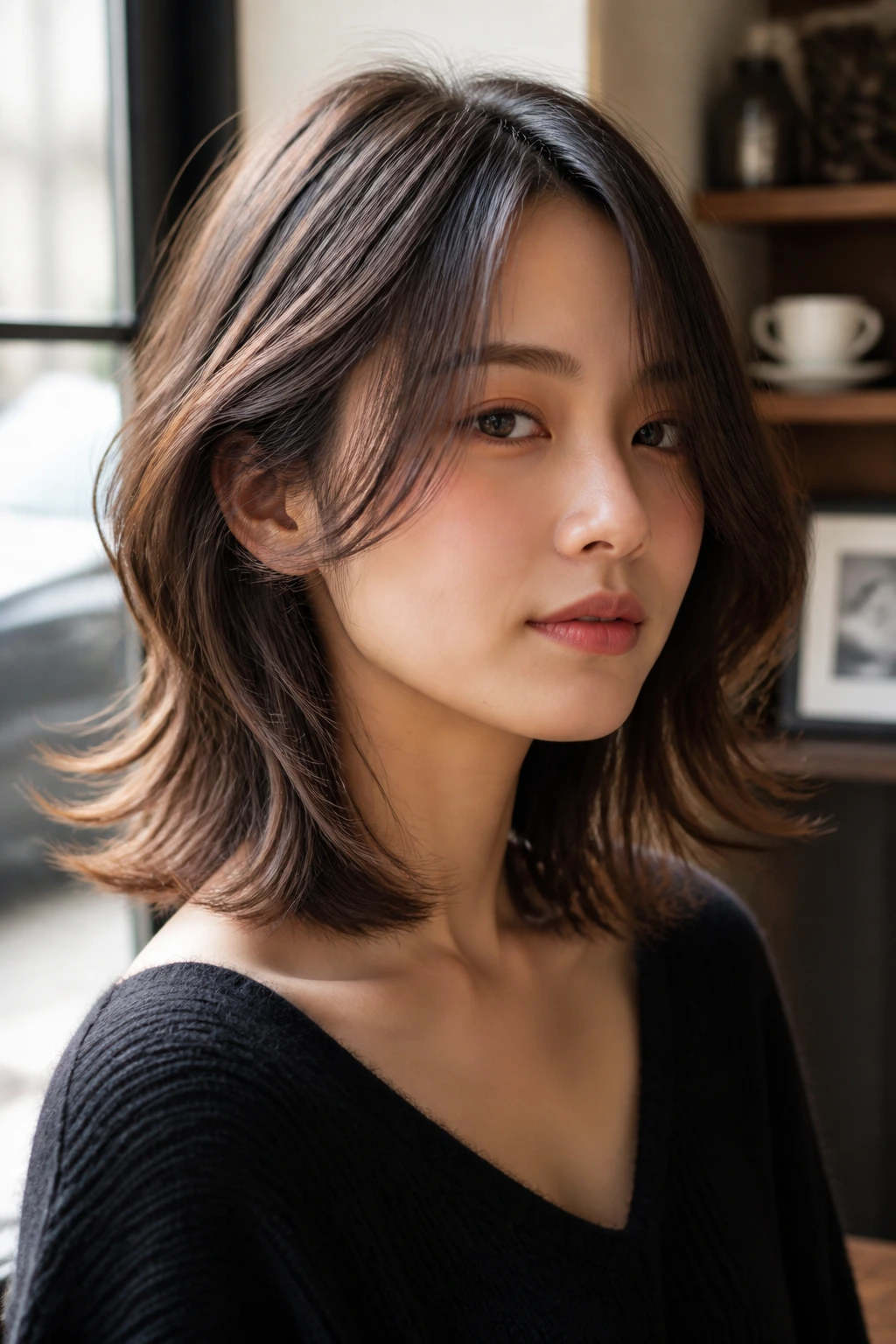
Start with the length you actually live in, not the fantasy length from a photo. If you tuck your hair behind your ears all day, if you wear glasses, if you hate chin-length hair touching your jaw, say it. A Korean bob that looks flattering in a picture can become annoying in real life if it lands in the wrong spot.
Be specific about the bang line. Side-swept bangs can start anywhere from the eyebrow peak to the temple, and that shift changes the whole face frame. A shorter sweep feels lighter and more lifted. A longer sweep feels softer and easier to grow out. If your forehead is small, too much bang can crowd it. If your forehead is long, a longer sweep can balance the face beautifully.
Mention density and shrinkage. Dense waves need weight removed carefully. Fine waves need enough perimeter to keep the cut from looking thin. Shrinkage matters too, because a bob that lands at the chin when wet may sit an inch higher once dry. That’s how people end up with a haircut that feels shorter than they asked for.
A good stylist will talk you through all of this. If they don’t, ask anyway.
How to Wear These Cuts Without Overstyling
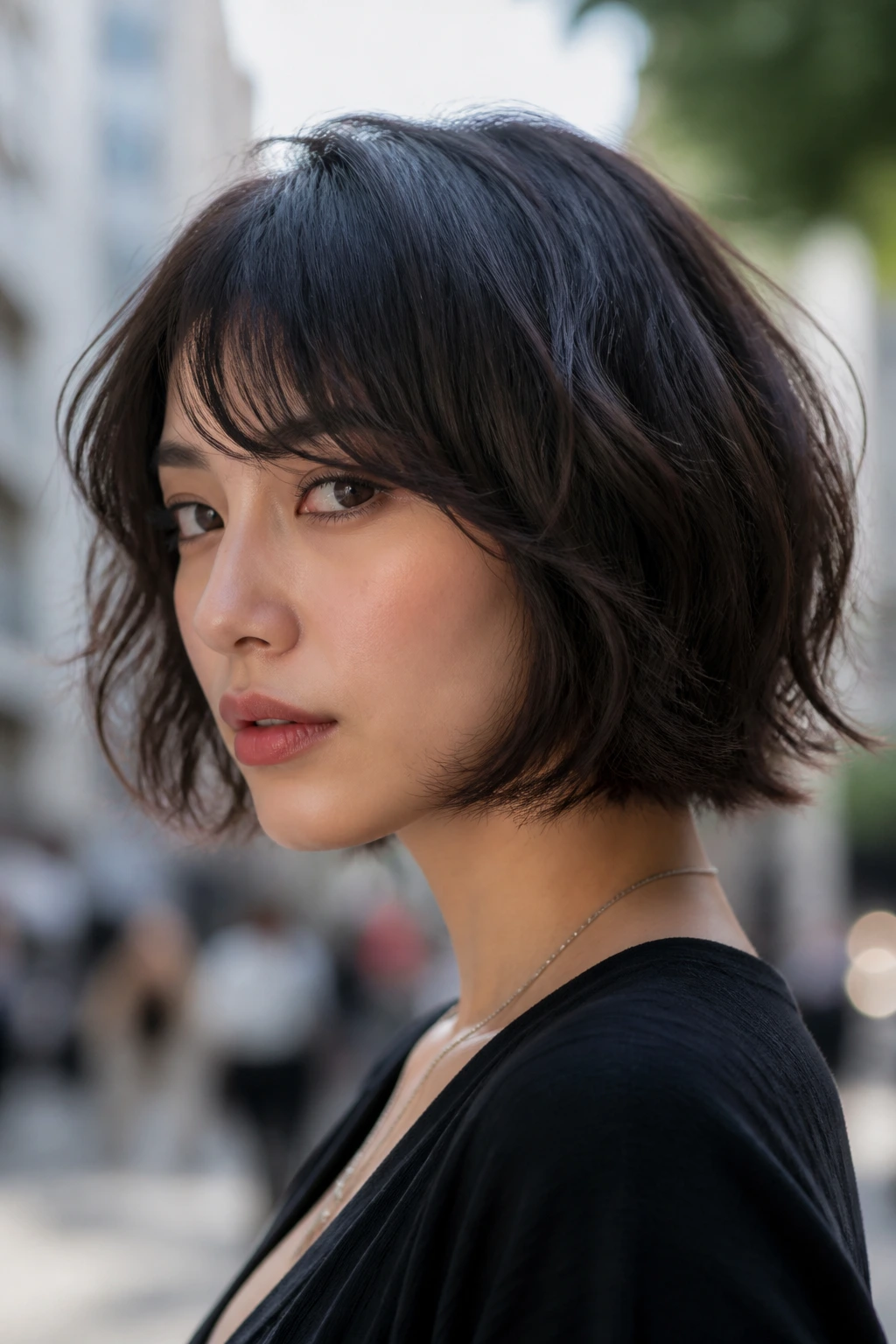
The cleanest version of a wavy Korean bob often comes from restraint. Let the cut do the heavy lifting. On most days, that means root lift first, then a tiny bit of shaping around the bangs, then stop. If you keep chasing every wave with a wand or brush, you erase the movement that makes the haircut worth having.
Fast Refresh: Mist the front lightly with water, twist the side-swept bangs once or twice, and let them reset while you finish getting dressed. That’s usually enough to bring the shape back.
Weekend Softness: Scrunch a small amount of curl cream into the ends, then diffuse on low for two or three minutes if the waves need encouragement. The goal is bend, not a cloud of volume.
Smoother Finish: Use a round brush only on the top layer and fringe. Leave the underneath pieces alone so the haircut keeps a little texture. That contrast is part of the charm.
No-Time Day: Add dry shampoo at the roots, finger-comb the bangs across the forehead, and go. Some of these cuts look better a little lived-in anyway.
Extra Texture, Shine, and Lift
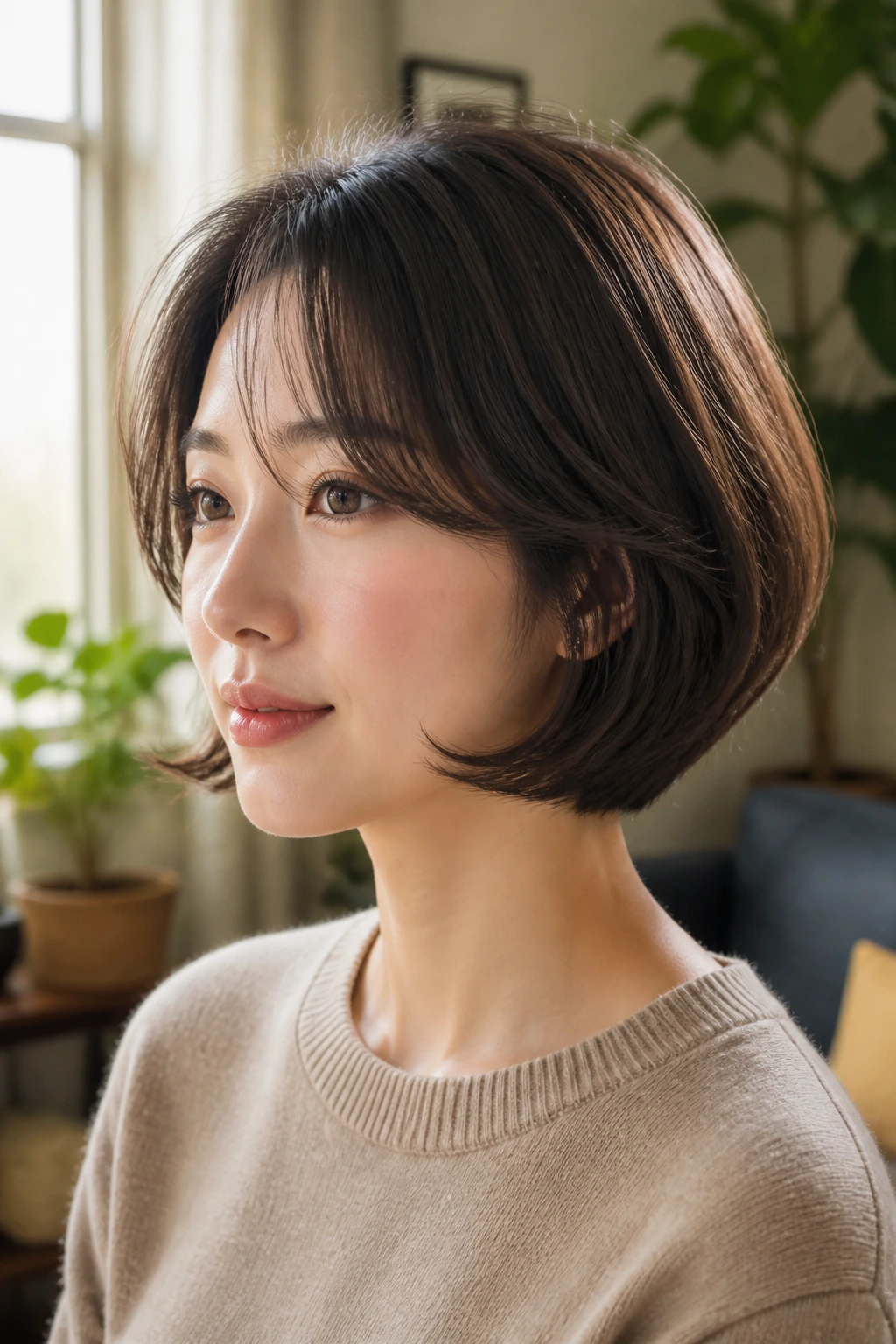
A few small moves can change the whole look of a bob. If the ends feel heavy, a pea-sized amount of serum rubbed between your palms and pressed only onto the bottom inch can help them look cleaner. If the crown falls flat, a light mousse at the roots before drying gives the shape a little backbone.
For shine, I prefer a mist rather than a thick oil. Heavy products on wavy bobs make the top collapse and the bangs split. A mist or very light serum keeps the surface smoother without killing the airiness underneath. That’s a better trade.
If you want more visible texture, use your hands, not a brush, after the hair is about 80 percent dry. That’s the point where the wave pattern is set but still flexible. A little squeeze can define the bend. Too much combing at that stage turns it fuzzy.
Common Mistakes That Flatten the Cut
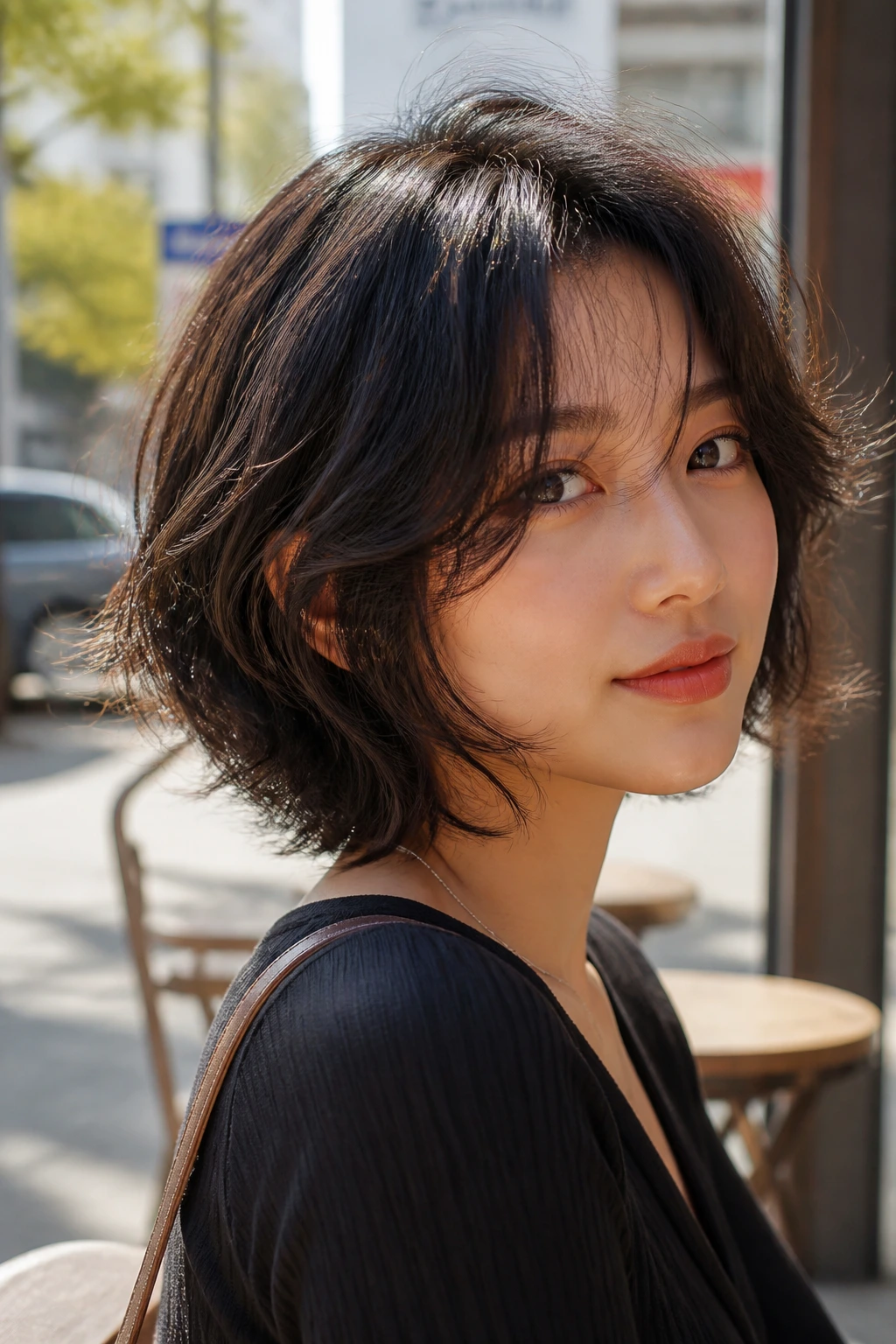
The first mistake is asking for too many short layers. On wavy hair, that can create a puffed halo or make the ends look thin and broken. The fix is simple: keep the interior layers controlled and let the perimeter stay readable.
The second mistake is cutting the bangs too short. Side-swept bangs should sweep. If they’re chopped up at the eye, they tend to split or spring. Longer bangs are easier to style and easier to grow out.
The third mistake is overloading the hair with cream or oil. A bob is short enough that product concentration matters. One extra pump can weigh down the front and collapse the lift at the crown. Use less than you think, then add only if the hair needs it.
The fourth mistake is ignoring how the hair dries. If your wave pattern changes a lot from wet to dry, a wet-only haircut can surprise you. Ask for a dry or mostly dry check so the stylist can see the real shape.
The fifth mistake is trimming the bob too infrequently. Wavy bobs can get fuzzy at the ends once the perimeter starts to soften out. A tidy-up every 6 to 8 weeks usually keeps the outline honest.
Variations and Adaptations to Try
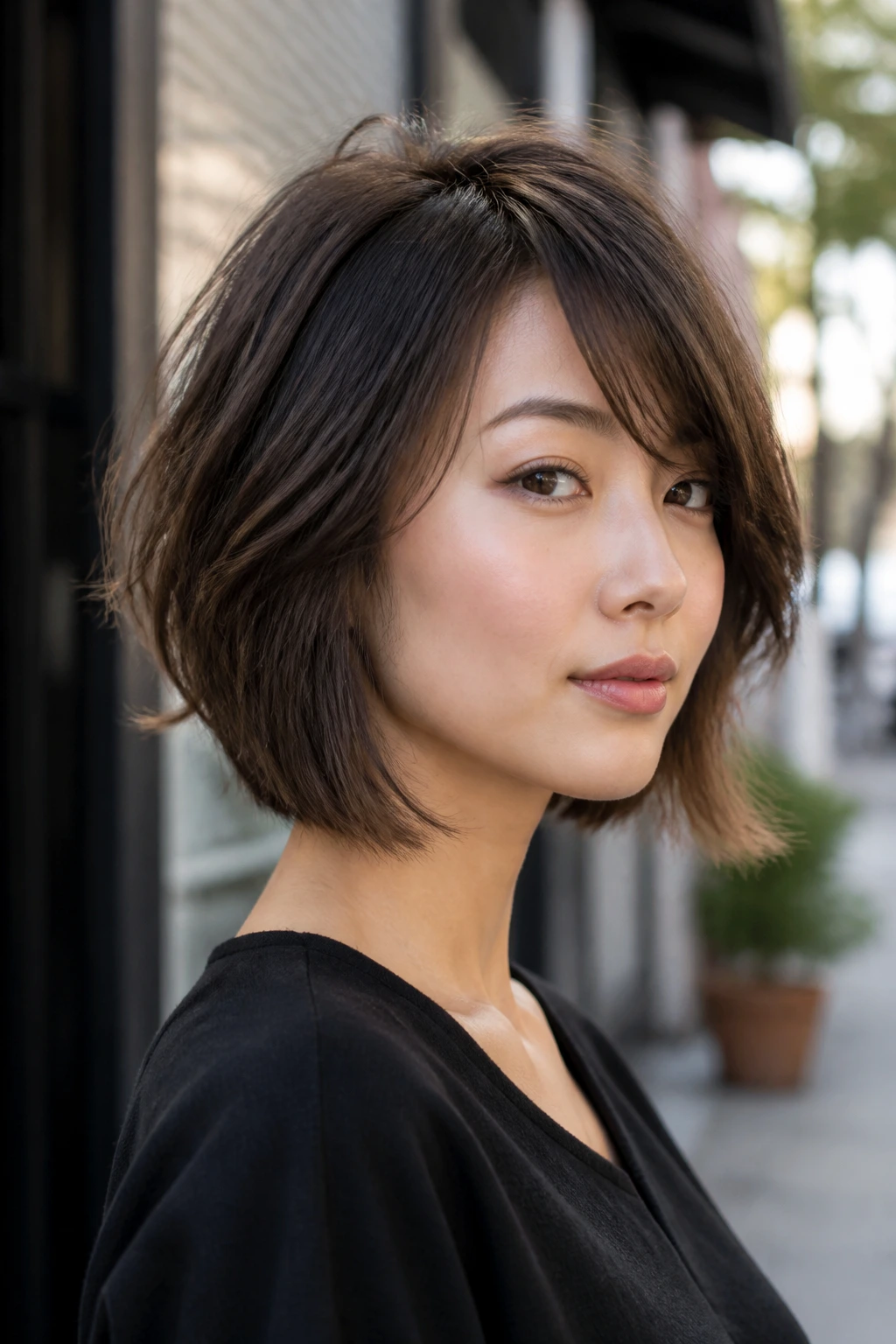
Fine-Hair Float: If your waves are delicate, keep the layers longer and the perimeter fuller. You want movement, not see-through ends. A lightweight mousse beats thick cream here.
Thick-Hair Release: If your hair is dense, ask for more internal removal underneath and a slightly softer wedge through the back. That keeps the width under control without making the top look thin.
Long-Grow-Out Version: If you’re nervous about short hair, keep the length at or just below the collarbone and use the same side-swept bang shape. You get the Korean bob feeling without giving up ponytail length.
Air-Dry-Only Version: For people who dislike heat styling, keep the layers soft, the bang longer, and the ends slightly softened. This version is built to look better with minimal intervention.
Polished Evening Version: If you like a more refined finish, use a round brush on the bangs and front layers, then tuck one side behind the ear. The rest of the hair can stay loose and wavy. It’s a small change, but it sharpens the whole look.
Wash-Day, Refresh, and Trim Schedule
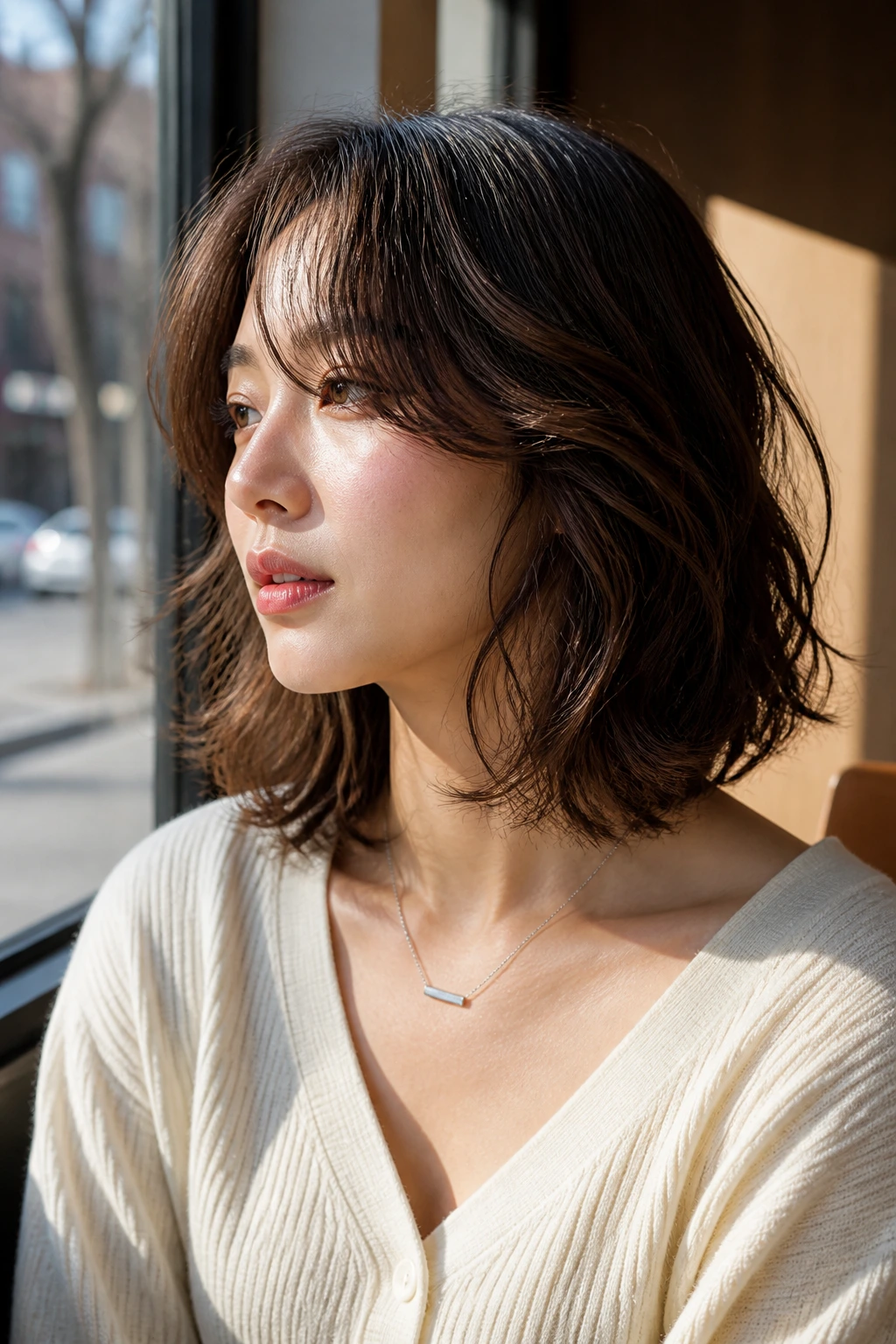
Wavy bobs stay nicest when you treat them like shape cuts, not wash-and-forget hair. Most of these styles do well with washing every 2 to 4 days, depending on oil at the roots and how much product you use. If your scalp gets greasy faster, you can stretch the style with dry shampoo at the root line on day two.
On refresh days, dampen only the front and the outer layers. The side-swept bangs usually need the most help, so mist them lightly, twist them into the direction you want, and let them cool. The back often needs less attention than you think.
For trims, 6 to 8 weeks is the sweet spot if you want the bob to keep its outline. If you prefer a slightly softer, more grown-in look, 8 to 10 weeks can work. Bangs usually need attention sooner than the rest of the cut. A small fringe trim between full haircuts can keep the sweep from dropping into your eyes.
Sleep also matters. A loose clip at the crown or a soft silk scrunchie can preserve the side part and keep the bangs from folding badly overnight. Not glamorous. Very effective.
Frequently Asked Questions
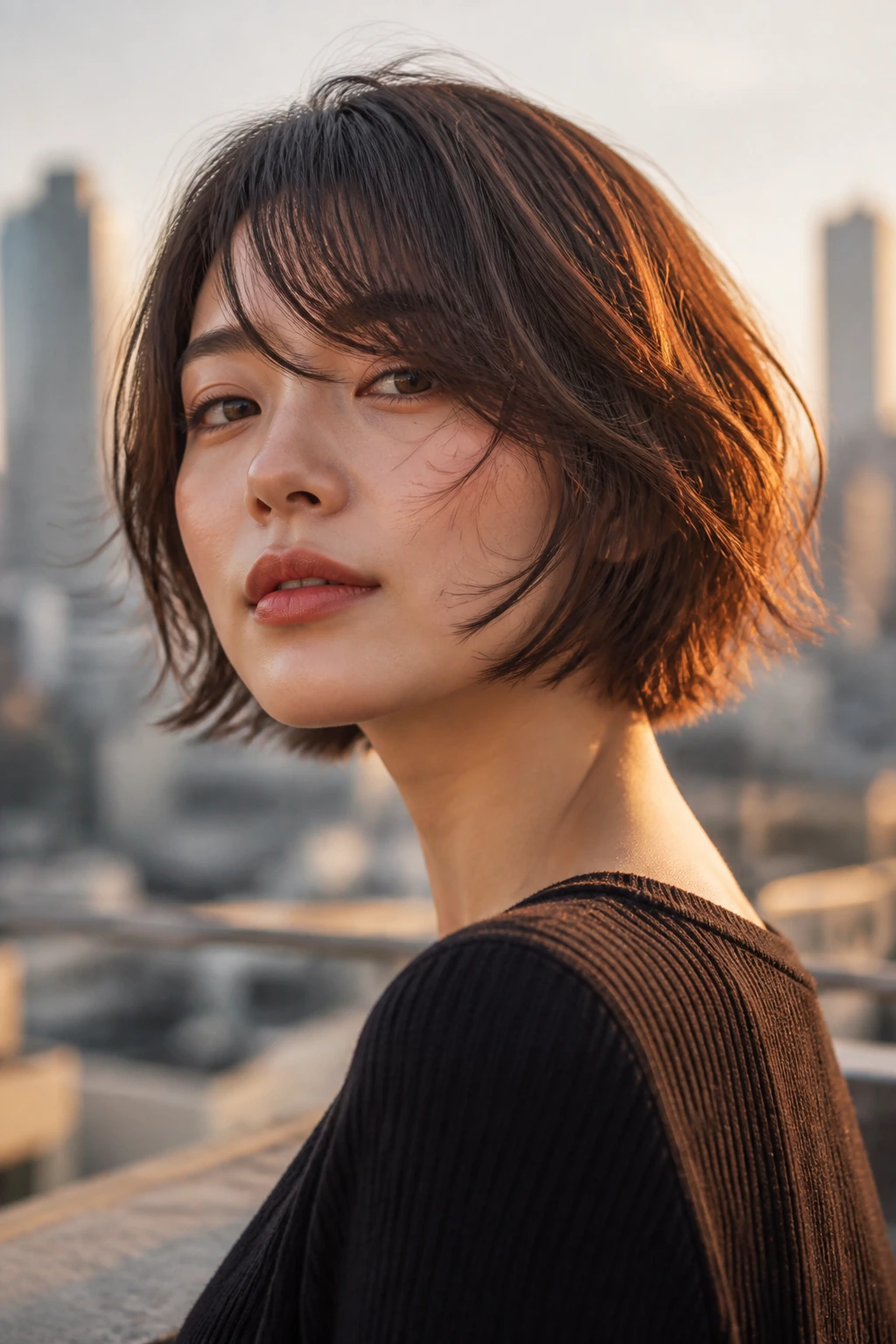
What face shape works best with layered Korean bobs and side-swept bangs?
Most of them are friendly to oval, heart, and round faces because the sweep creates a diagonal line across the forehead. The trick is choosing the right length and how high the layers start. Jaw-length cuts sharpen the face; collarbone versions soften it.
Can really wavy hair pull off a short Korean bob?
Yes, but the cut has to be planned around shrinkage and width. If your waves are strong, ask for weight removal underneath and keep the perimeter slightly longer than you first imagine. A chin-length bob can sit much shorter once it dries.
How do I keep side-swept bangs from splitting in the middle?
Dry them in the direction you want them to fall, then let them cool there. A duckbill clip at the root for a few minutes helps a lot. If they still split, the bangs may be too short or too heavy at the center.
Is a Korean bob different from a regular bob?
Usually, yes. Korean-inspired versions tend to feel softer around the face, with more attention to airy layers, rounded edges, and a polished but not stiff finish. A classic bob can be blunter and more uniform. Neither is better; they just aim for different textures.
What if my hair is thick and puffy at the sides?
Ask for internal debulking, not random thinning. The stylist should remove weight where the hair swells, then leave enough perimeter to hold the outline. That’s how you avoid the mushroom effect.
Can I style these cuts with a flat iron?
You can, but use it gently. A small bend at the ends and a soft sweep in the bangs is enough. If you flatten the whole head, you lose the movement that makes the haircut work.
How often should I trim the bangs?
Usually every 3 to 5 weeks, depending on how fast your hair grows and how short the fringe starts. Side-swept bangs are forgiving, but once they drop into the lashes, they start to behave more like a curtain than a sweep.
What’s the best cut if I want low maintenance?
Go with the collarbone lob or the beachy air-dry version. Those two give the most forgiveness on days when you do not have time to finesse every section. They also grow out in a way that still looks intentional.
The Cut That Moves With You
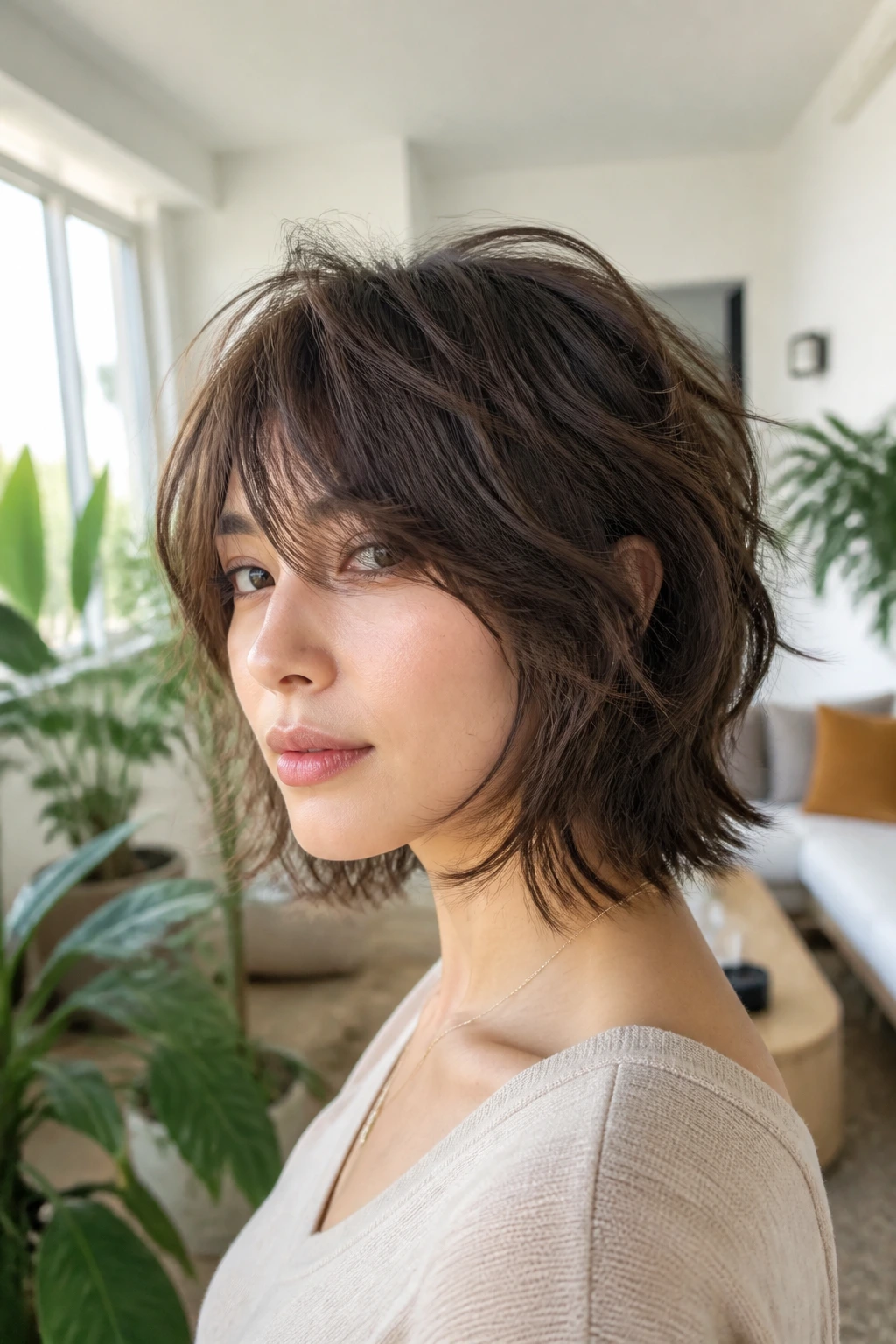
The best thing about these layered Korean bob ideas is that they don’t demand perfect hair. They make room for bend, softness, and a little irregularity, which is usually where wavy hair looks most alive. Side-swept bangs help the front feel finished, and the layering keeps the sides from turning into a triangle. That combination is useful in the chair and even better three weeks later.
If you’re deciding between a few of them, start with the version that matches your hair’s personality, not your mood on one good day. Dense hair wants release. Fine hair wants structure. Loose waves want shape without too many short pieces. Once those facts are matched to the cut, the whole style gets easier to live with.
And that’s the part that matters most. A good bob shouldn’t ask you to babysit it. It should move when you move, settle when you stop, and still look like itself when you catch your reflection at the end of the day.