



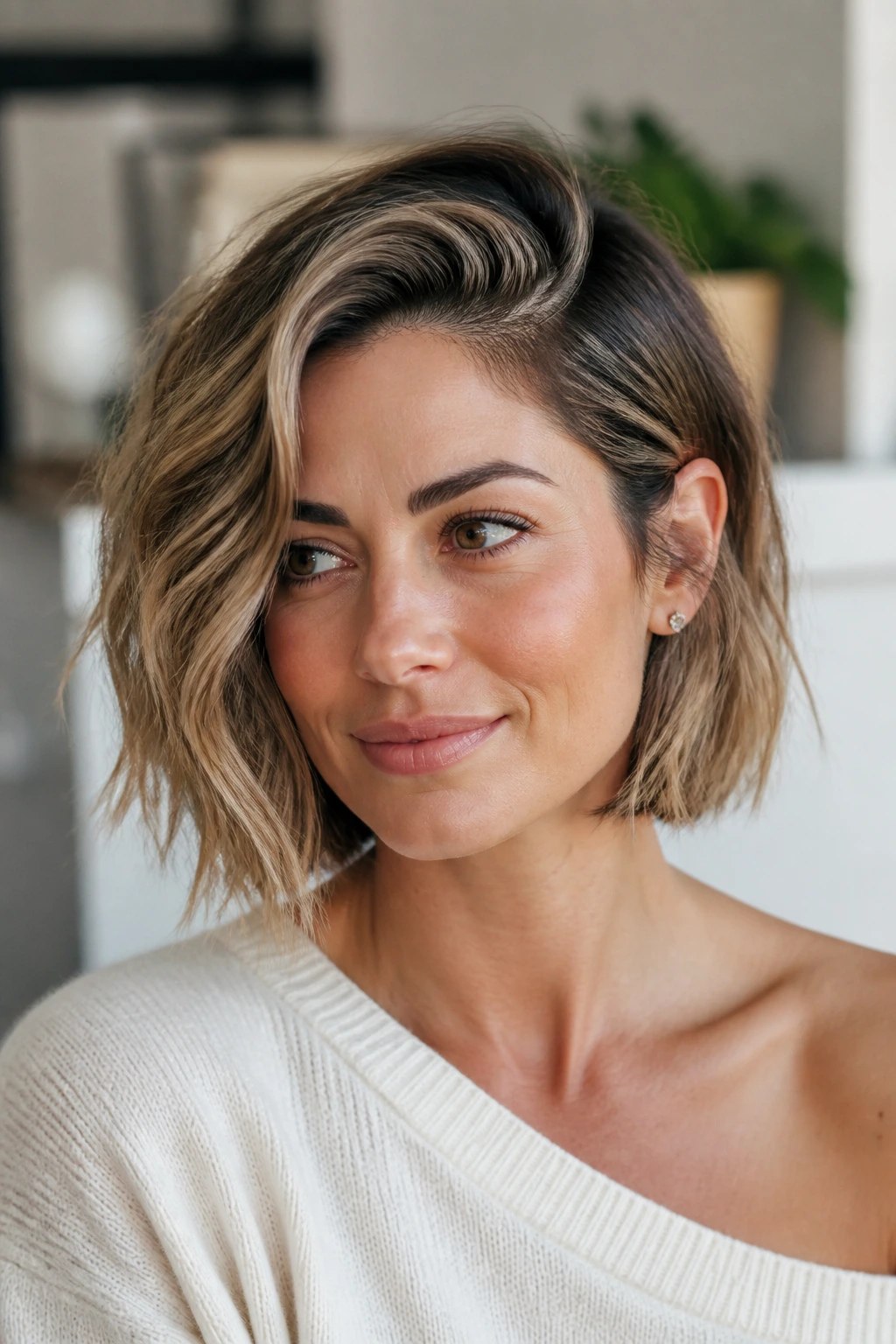
Thin hair gets blamed for a lot it doesn’t deserve. A bob can turn limp if the cut is too blunt, and it can look ragged if the layers are hacked in with no plan. The sweet spot is a stacked layered bob for thin hair with beachy waves: enough graduation at the back to build shape, enough softness through the lengths to keep the perimeter from looking see-through, and enough loose movement to stop the whole thing from collapsing by noon.
That balance matters more than people think. A stacked shape lifts the nape, a light layer pattern gives the hair somewhere to move, and the wave pattern breaks up the outline so the eye reads “fuller” instead of “flat.” It’s a small set of adjustments, but together they change the whole silhouette.
Beachy waves are the piece that ties it together. Not tight curls. Not helmet hair. Loose bends that start lower on the shaft, keep the ends a little straighter, and let the bob look lived-in instead of overworked. If your hair has been hanging heavy, this is the kind of cut that gives it back some posture.
Why Stacked Layered Bobs and Beachy Waves Work So Well on Thin Hair
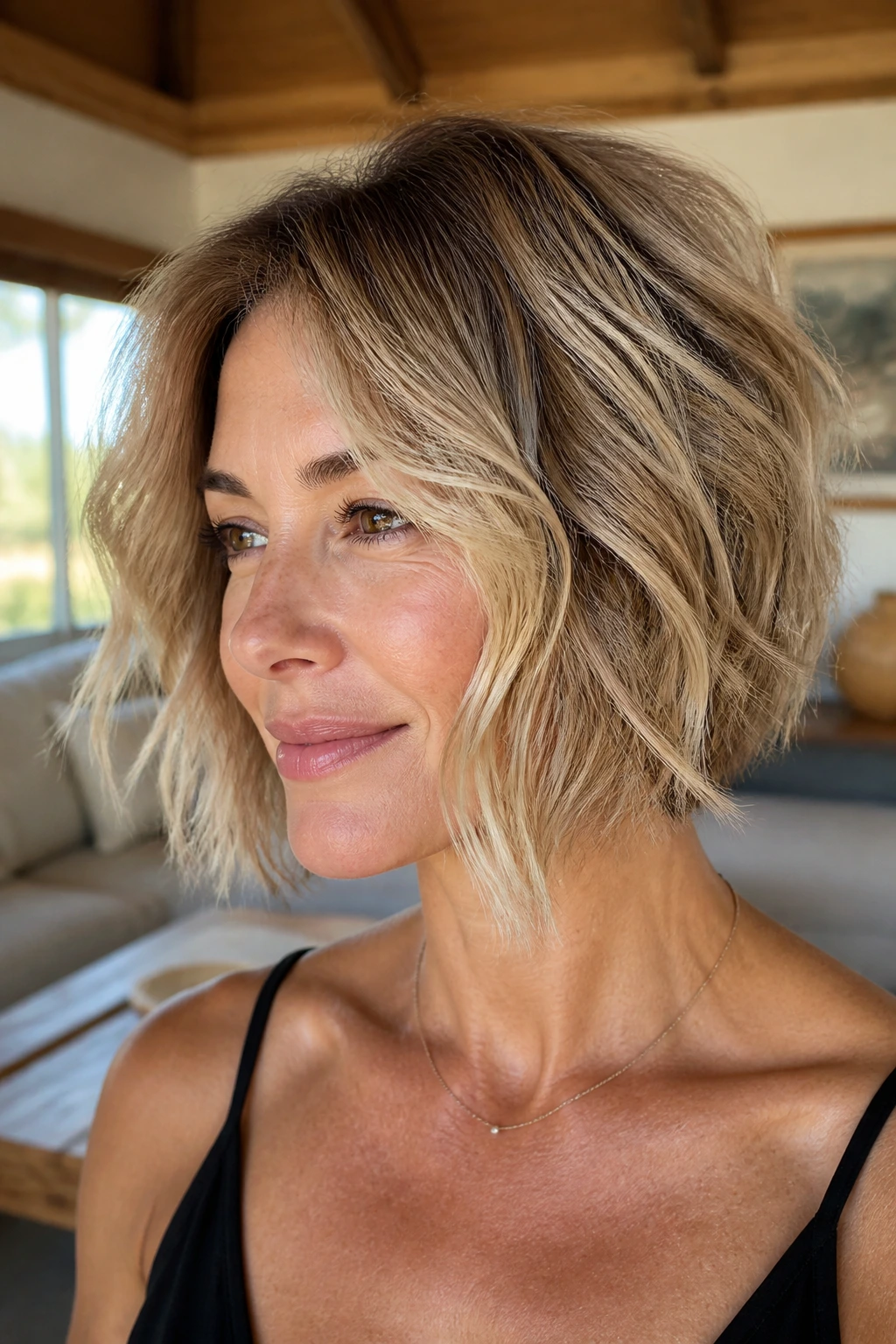
-
Built-in lift at the nape: The stacked back shortens the underlayers so hair doesn’t sit flat against the neck, which gives thin hair a cleaner shape from day one.
-
Movement without over-thinning: Beachy waves create width through the mid-lengths, but they don’t require dense ends, which is where many thin-hair cuts go wrong.
-
Better face framing: Longer front pieces and loose bends pull attention to the cheekbones and jaw instead of the scalp line.
-
Easier day-two styling: A little dry shampoo, a finger comb, and the cut’s natural architecture can revive the look without a full restyle.
-
Flexible length options: You can keep it chin-length, jaw-length, or just grazing the collarbone and still keep the stacked effect.
-
Less product, more payoff: Fine or thin hair usually looks better with mousse, spray, and light hold than with heavy creams that make the crown sink.
1. Soft Nape Stack With Airy Ends
The back is where this cut earns its keep. A soft nape stack gives thin hair a little architectural backbone, because the shortest layers sit under the crown and let the shape rise instead of draping straight down. The outer line stays soft, which matters; if the perimeter gets too ragged, the ends start looking sparse.
Loose waves finish the job by bending the silhouette outward without turning the whole thing into a curl set. I’d keep the wave pattern from the cheekbones down and leave the last inch or so a touch straighter. That little bit of restraint keeps the cut looking polished, not fussy.
2. Angled Stack With Long Front Pieces
Can a diagonal line make thin hair look denser? Absolutely, because the eye follows the angle. A stacked back with longer front pieces pulls the silhouette forward, so the front feels fuller and the jawline looks a little more elongated. It’s a smart move if your hair loses body fast around the temples.
Why the angle matters
The shortest part should live at the nape, not halfway up the head. That keeps the stack from puffing out like a triangle. Ask for the front to graze the chin or just brush the collarbone, then style with loose bends that tuck one side behind the ear. The asymmetry adds shape without making the cut look stiff.
3. Collarbone-Length Bob With Broken Waves
Longer isn’t weaker here. A collarbone bob gives thin hair a little extra insurance at the ends, which can be useful if your strands are fine and the last inch tends to look fragile. The stacked back still gives you lift, but the front has enough length to swing, tuck, and wave without disappearing.
Broken waves suit this shape better than tight spirals. Use a larger iron, bend the hair in alternating directions, and stop short of the ends. The result looks airy and a bit undone, which is exactly what keeps a longer bob from feeling heavy.
4. Curtain-Bang Layered Bob
A curtain bang changes the whole mood of a stacked bob. It brings some softness to the forehead and gives thin hair another place to hold movement, which matters when the crown needs all the help it can get. The fringe should be light and split cleanly in the middle, not thick and blocky.
The best version skims the cheekbones and blends into the front layers, so there isn’t a harsh line where the bang ends and the bob begins. On styling days, wrap each side away from the face with a round brush or a large barrel, then let the rest fall into loose, beachy bends. It reads casual, but the shape does some real work.
5. Deep Side-Part Volume Bob
Can a parting change the whole haircut? Yes. A deep side part instantly gives thin hair a side of lift, and when it meets a stacked bob, the shape feels fuller at the root without any teasing. If your crown lies flat no matter what you do, this is one of the simplest fixes.
Keep the side with less hair tucked lightly behind the ear so the heavier side can lift. That uneven distribution makes the top look more alive. A little root spray at the higher side and a few loose waves through the mid-lengths are enough; don’t overdo the curl, or the effect gets too round.
6. Feathered Crown Stack
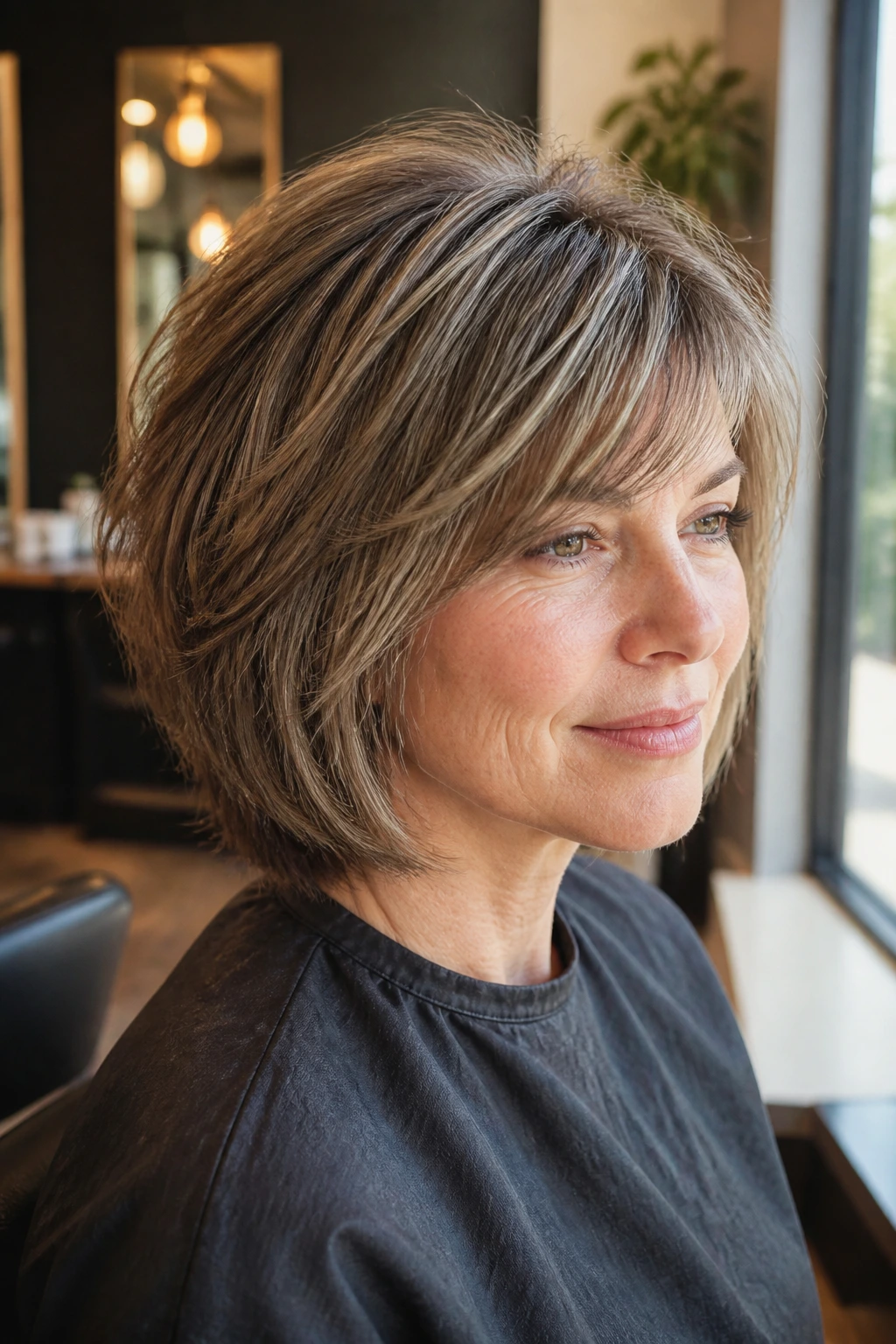
The crown should be feathered, not shredded. That’s the difference between a bob that floats and one that looks wispy. A feathered crown stack works well when the top area needs a little bounce, but the ends still need enough weight to stay visible.
Best for flat roots
If your hair tends to lie close to the scalp, ask for shallow layering around the crown and a stronger stack near the nape. That gives you lift where you need it most, without removing too much density from the outer line. Style it with a light mousse and blow-dry the crown section first so it doesn’t get pinned down by the rest of the hair.
7. Razor-Soft Textured Bob

This one needs a careful hand. Razor-softening can be lovely on thin hair when the stylist uses it sparingly, because it creates movement in the mid-lengths and keeps the bob from looking too blunt. But if the blade is used all over, the ends can get see-through fast.
The sweet spot is a soft interior texture with enough perimeter left intact to hold the outline. That makes the beachy wave pattern read better, because the waves fall into little broken pieces instead of clumping into a solid mass. It’s a good choice if you like hair that looks intentionally a little mussed.
8. French Bob With a Gentle Bend

A French bob usually lands at the jaw or just below it, and that shorter length can be a gift for thin hair. The cut feels crisp, but the gentle bend keeps it from reading severe. You get a clean line around the face, then the waves loosen it up.
This shape works best when the stack is subtle and the front isn’t too over-layered. Think more “soft tuck under the cheekbone” than “big curl.” It’s one of the neatest options if you want a bob that looks polished in daylight and still has movement when you turn your head.
9. Face-Framing Stacked Bob
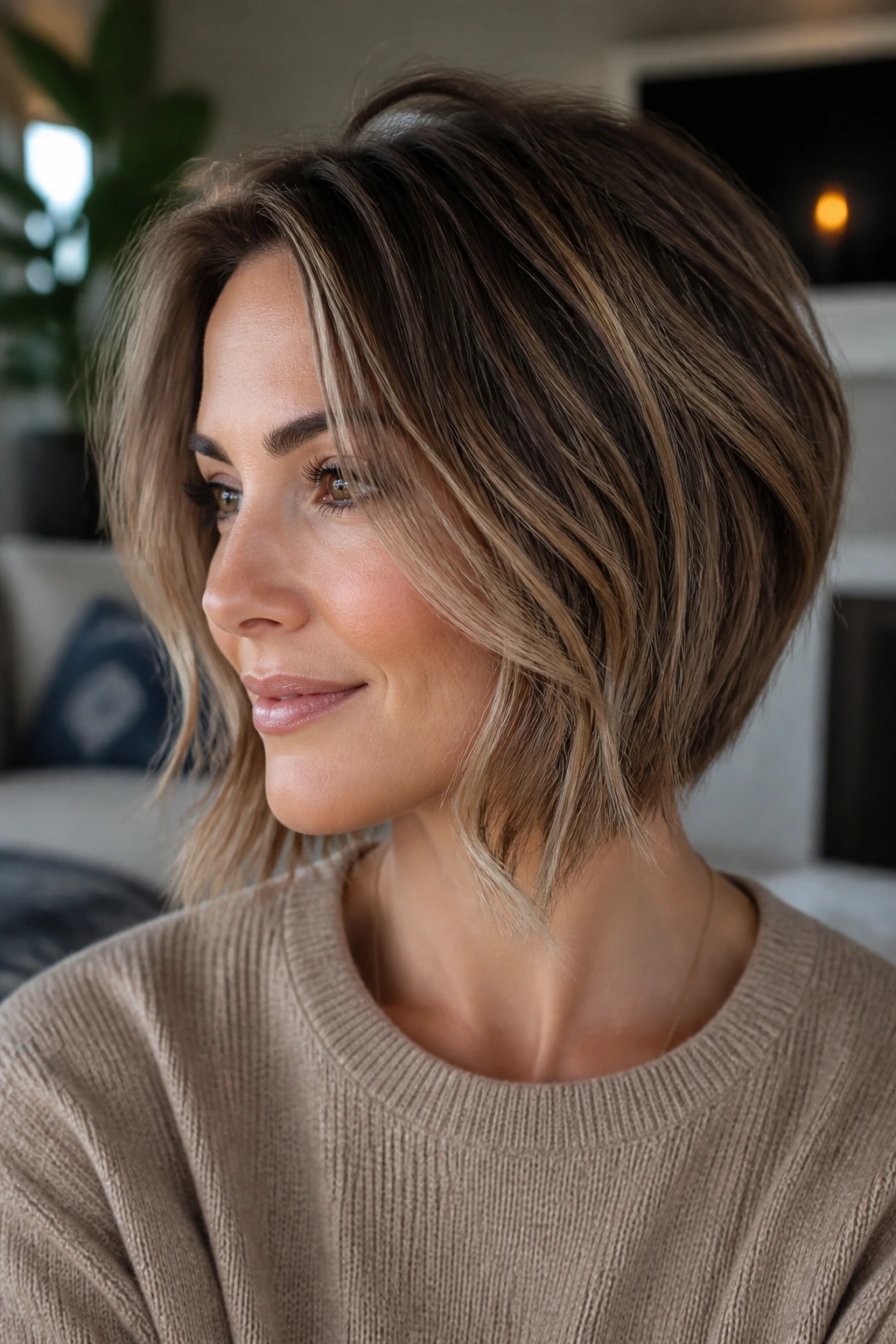
The trick here is contrast. The back can be tightly stacked and clean, while the front stays longer and more open around the cheeks. That keeps thin hair from looking too chopped up, and it lets the face-framing pieces do the talking.
If your features are sharp or your jawline is narrow, this version softens everything without hiding the shape of the cut. I like it with soft bends that start below the ears, because the waves make the front pieces fall in loose curves rather than stiff angles. It’s a good middle ground for anyone who wants movement without a lot of fringe.
10. Invisible-Layer Bob
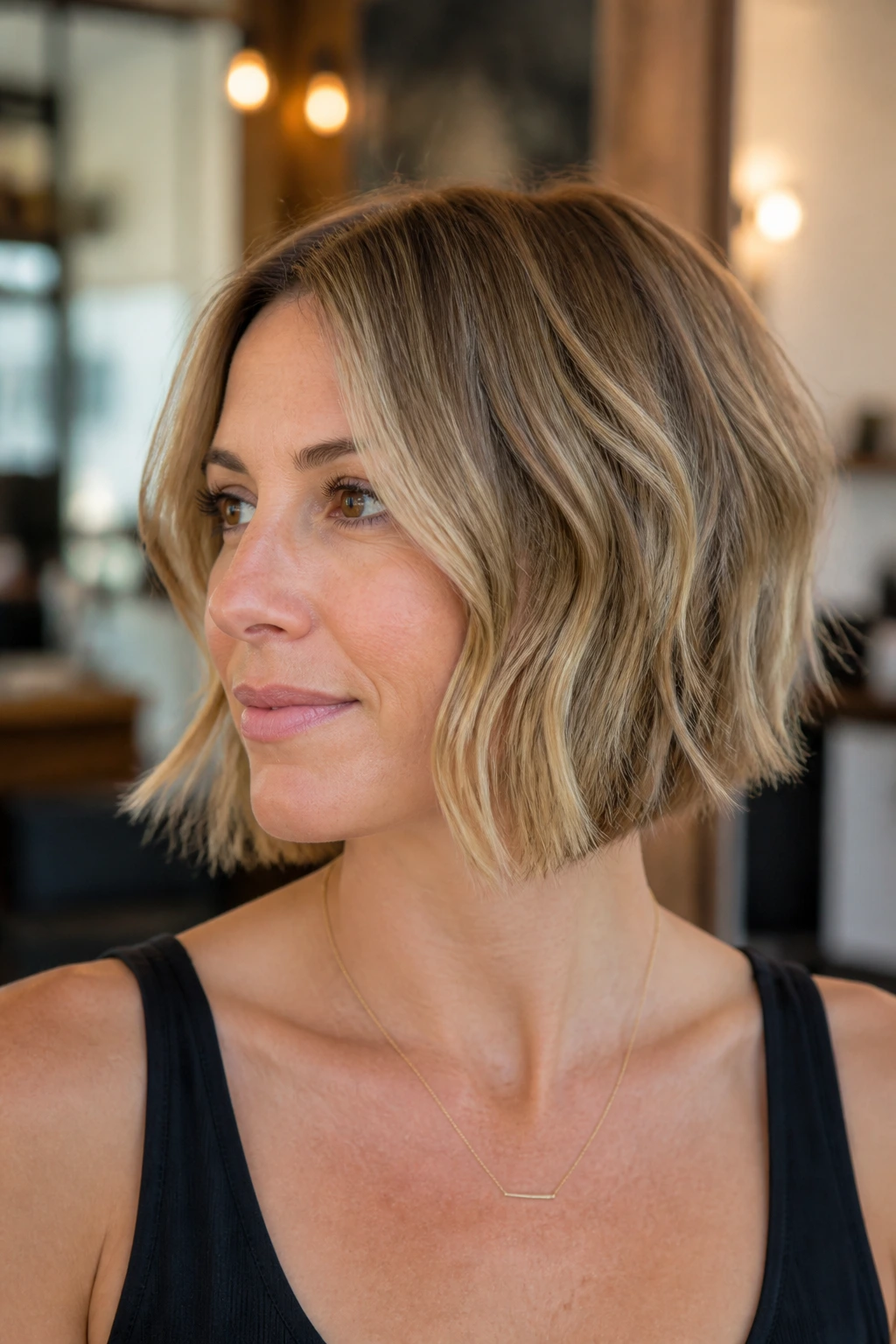
Why does this cut work? Because the layers are hiding in plain sight. From the outside, an invisible-layer bob looks almost one-length, which helps thin hair keep a clean edge. Underneath, the internal layering gives the hair room to move and keeps the back from collapsing.
This is one of the better choices if you’ve been burned by over-layered bobs before. The surface line stays strong, the stack stays quiet, and the waves create enough texture to keep the look from going flat. It’s a subtle haircut, which is not a bad thing at all.
11. Wedge-Inspired Stack
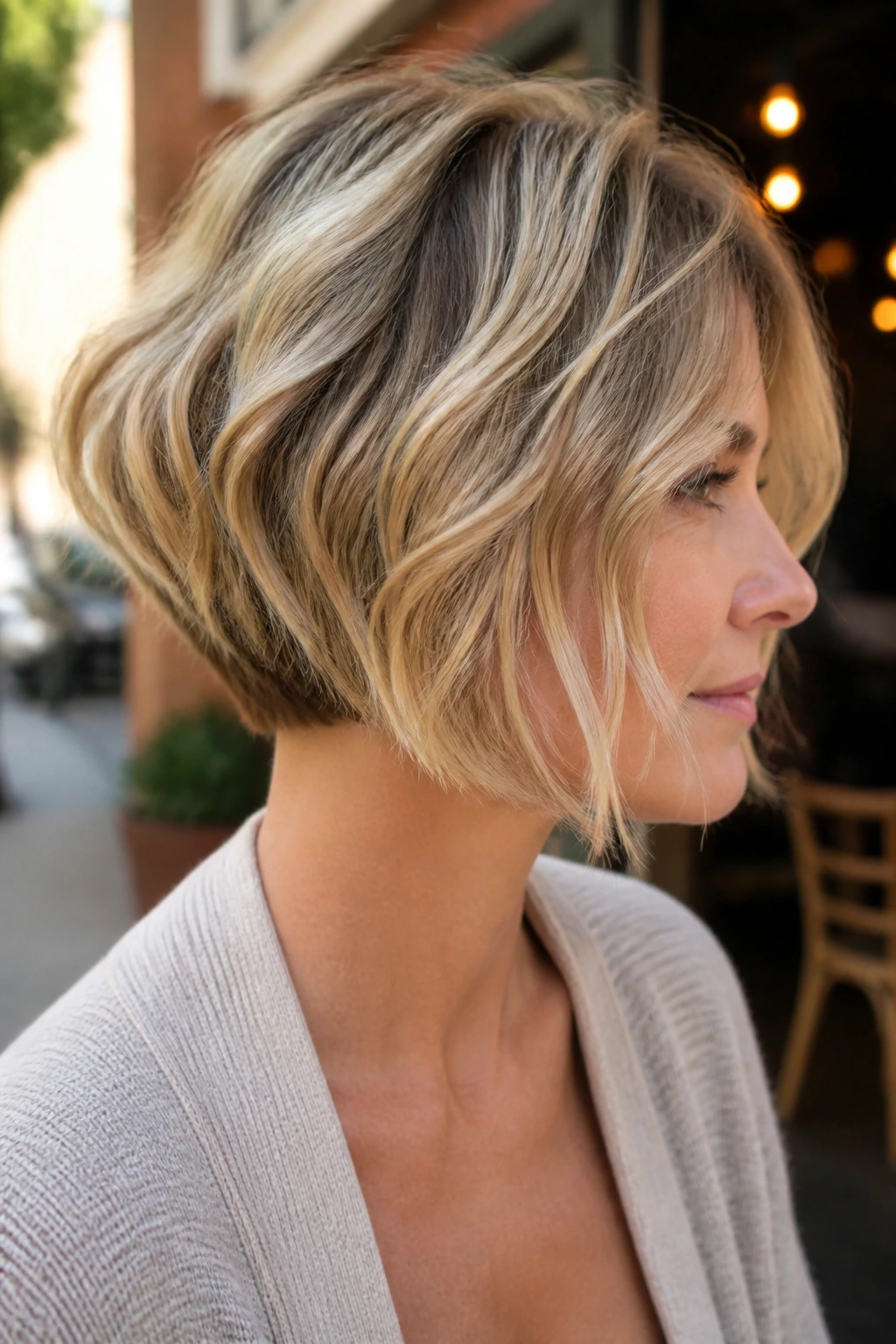
The wedge bob has a sharper backbone than a soft layered bob, and that can be useful on thin hair when you want a stronger shape. The shorter back lifts the nape, while the front stays long enough to soften the profile. It feels a little retro, but not costume-y.
What to watch for
Don’t let the wedge get too high. If the graduation climbs too far up the head, the style can puff out in a way that fights thin hair instead of helping it. Keep the beachy waves loose and broken so the structure stays visible. A little movement goes a long way here.
12. Asymmetrical Wavy Bob
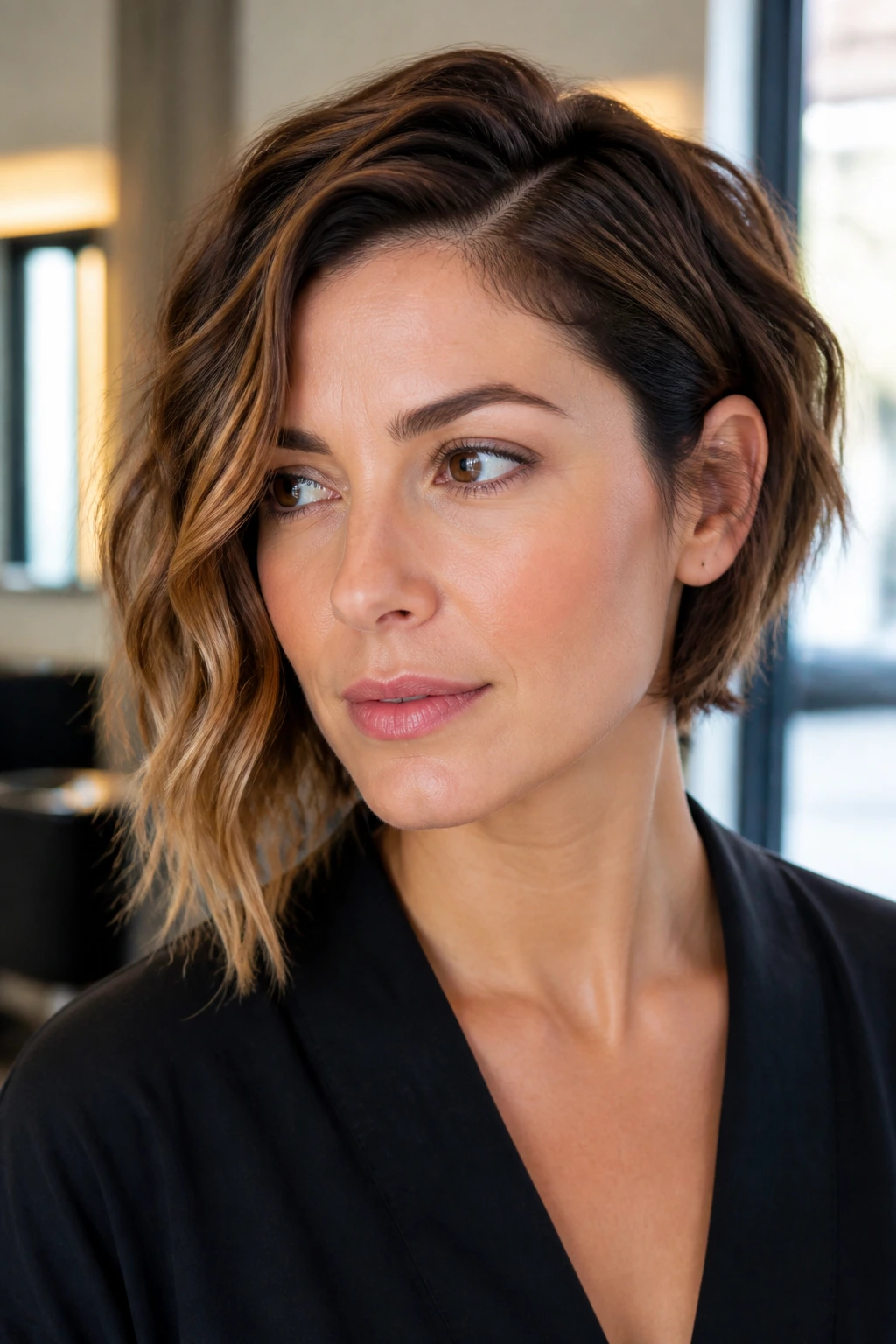
One side longer than the other changes the whole reading of the haircut. Asymmetry gives thin hair motion, and it also distracts the eye from any spot where the hair is naturally finer. That makes it a smart choice if one side tends to lie flatter than the other.
The shape should still feel balanced when you move, which is why the wave pattern matters. Soft bends keep the asymmetry from looking sharp or severe. Tuck the shorter side behind the ear sometimes and let the longer side skim the jaw; it creates an easy, modern line.
13. Choppy Piecey Bob

A piecey bob is all about separation. Instead of one smooth sheet of hair, you get small, defined sections that create texture and make thin hair look more active. It can be a little messier than the softer options, but that’s part of the appeal.
Use point-cut ends and a texture spray that doesn’t leave grit behind. Then bend only a few sections at a time, leaving some straight pieces mixed in. The contrast between waved and untouched strands makes the whole bob read thicker, because your eye can’t pin down exactly where each piece begins and ends.
14. Balayage Dimension Bob
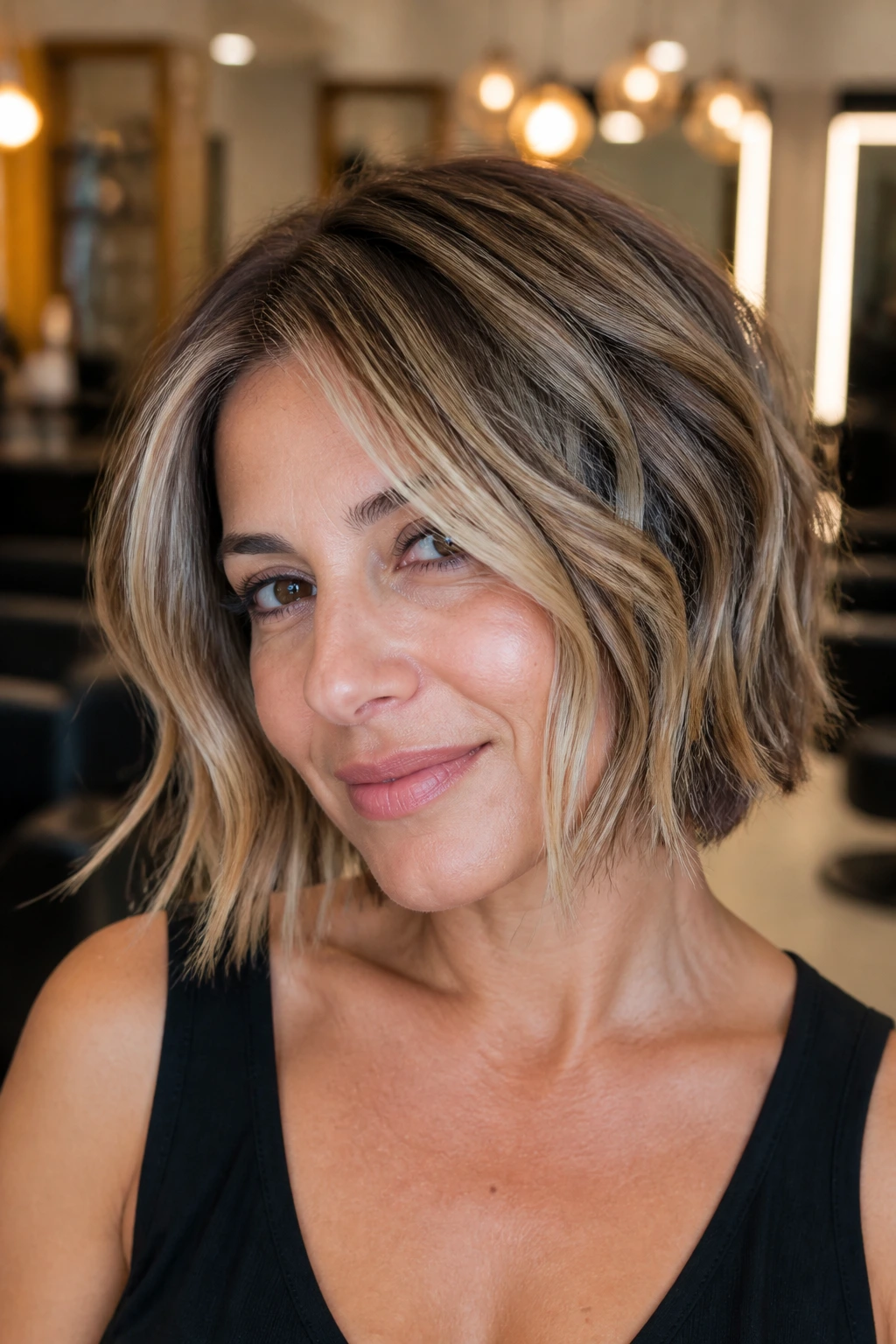
Color can do part of the lifting for you. A balayage dimension bob uses lighter ribbons to catch the bends in the wave, and darker depth near the underside to keep the base from looking hollow. On thin hair, that kind of contrast creates the illusion of more body.
Color placement that helps
The brightest pieces should sit around the face and the wave ridges, not scattered everywhere. That’s what gives the cut movement without making it streaky. If your hair is very fine, ask for a soft root shadow and a few lighter panels around the front and crown. The cut stays airy, but the color gives it more depth.
15. Blowout-to-Wave Bob
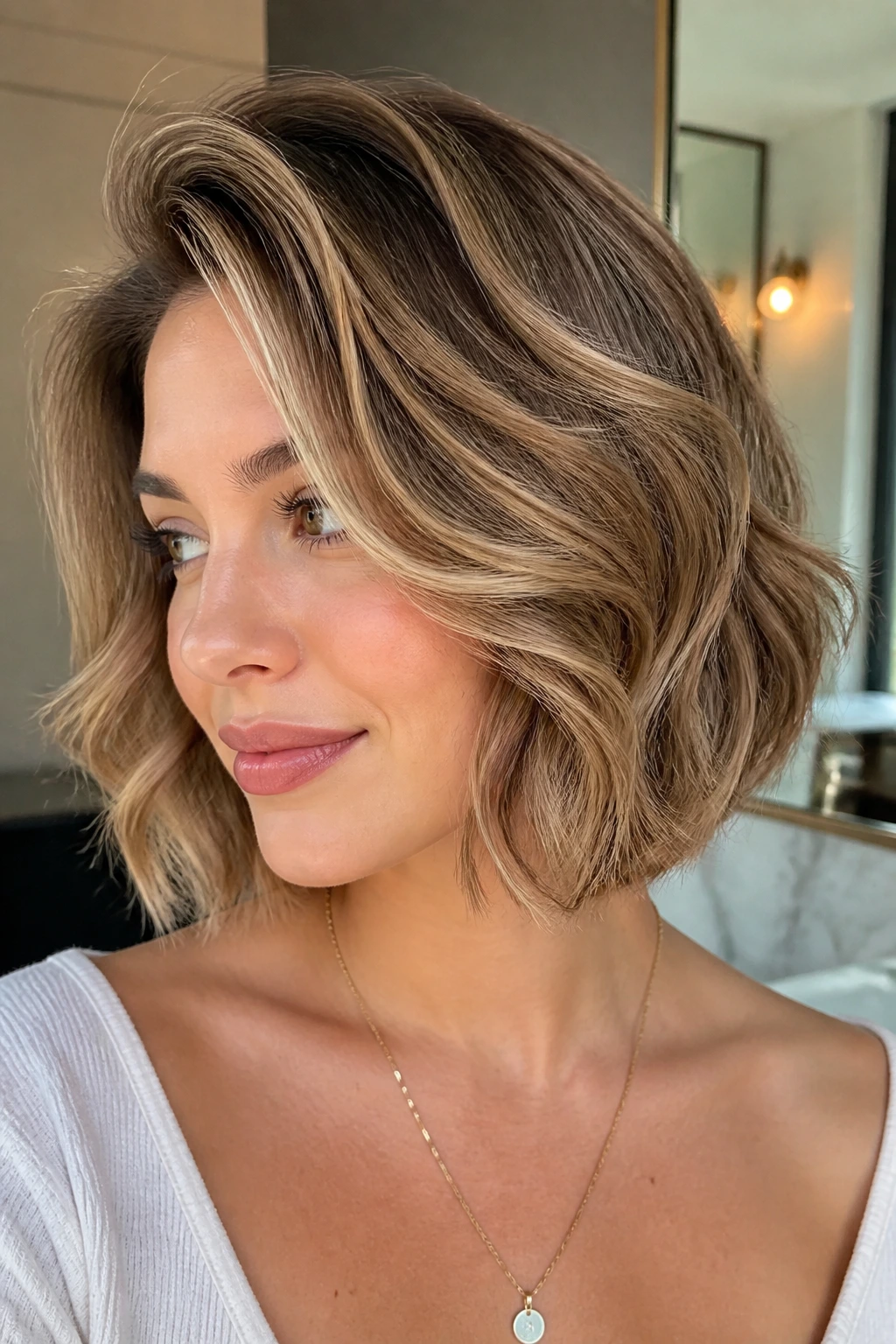
A blowout base with soft waves is one of my favorite ways to wear a bob on thin hair. The root section stays smooth and lifted, which keeps the head shape clean, while the ends get enough bend to feel relaxed instead of stiff. It’s a cleaner finish than a fully tousled wave.
This style works well for people who like polish but don’t want a salon blowout every morning. Blow-dry with a round brush, bend the front pieces with a wand, then brush the curls out once they cool. The result is soft movement with a little shine left on the surface.
16. Airy Shag Bob

An airy shag bob sits between a classic bob and a soft shag. The layers are lower and looser than a true shag, which matters for thin hair, because too many short layers can make the top look skimpy. The shape should feel light, not choppy for the sake of being choppy.
This version shines when the waves are irregular. Some sections can be more curved, others nearly straight, and the cut still makes sense because the layer pattern is doing the visual work. It’s a good fit if you want the bob to feel less controlled and a little more lived-in.
17. Ear-Tuck Bob With Longer Fronts
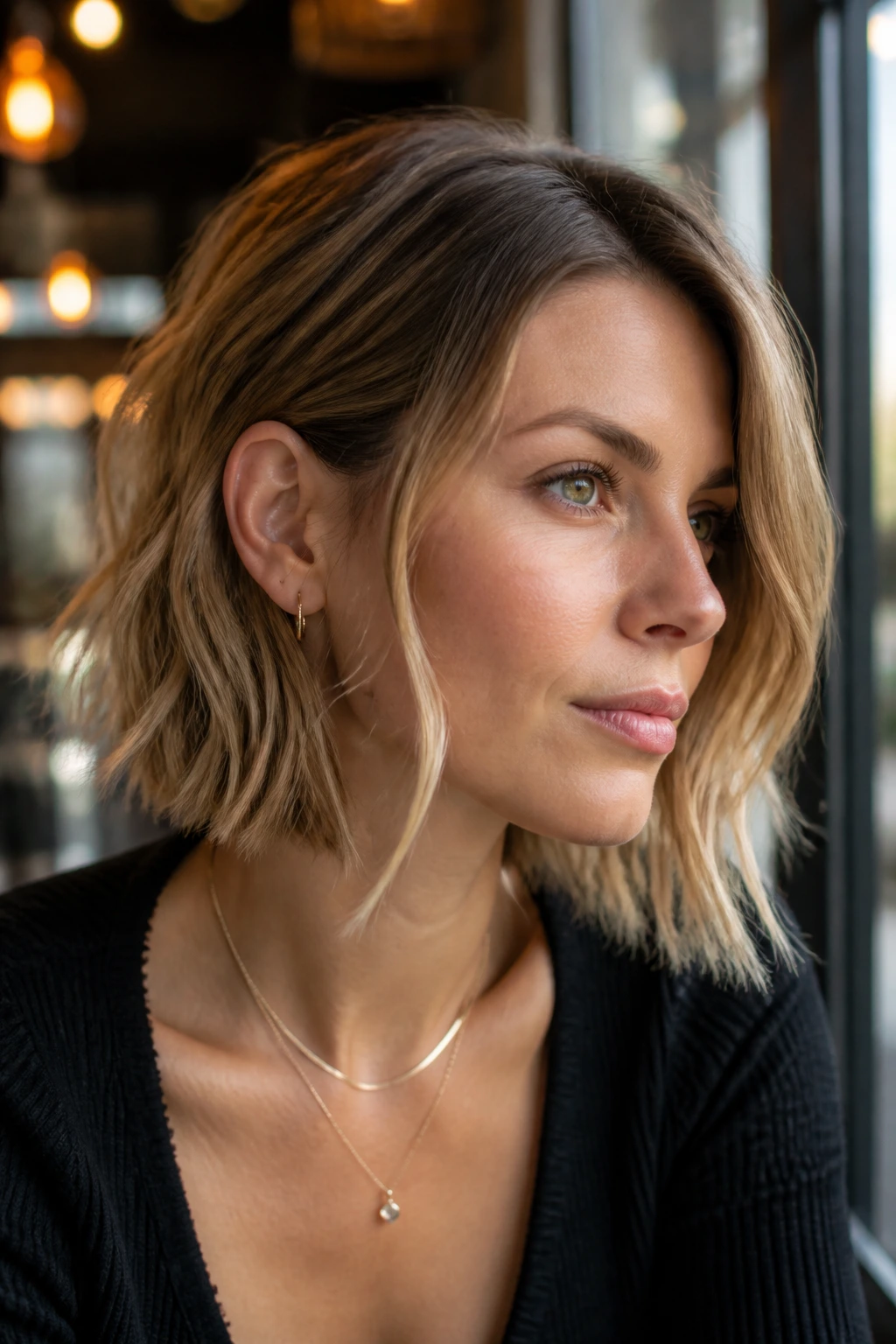
A bob that tucks neatly behind the ear changes the whole face. The exposed side lifts visually, the longer front pieces keep the cut from feeling too short, and the tucked side gives you a clean line that works with earrings, glasses, or just a strong jawline.
A small but useful detail
Leave enough length at the front so the hair still skims the face when it’s not tucked. That way you can switch between open and tucked without losing the shape. Loose waves should sit mostly through the bottom half of the hair; if the wave starts too high, the tuck looks bulky.
18. Rounded Stack Bob
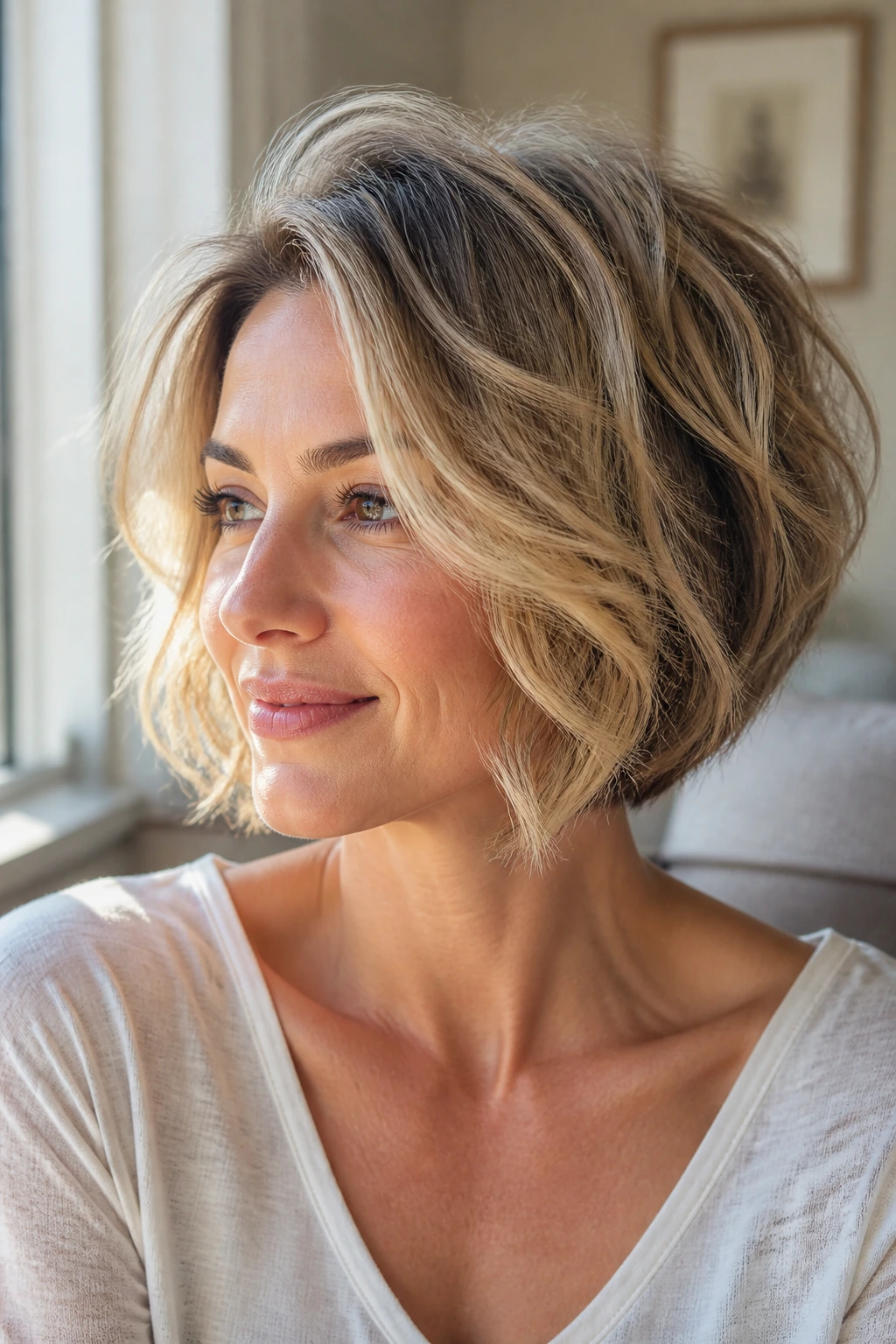
Rounded does not have to mean helmet-like. A rounded stack bob follows the curve of the head and keeps the shape soft around the sides, which can be useful if thin hair tends to stick out instead of lying neatly. The stack gives it lift at the back, while the rounded outline keeps the silhouette controlled.
Beachy waves stop this cut from looking too formal. They break the perfect curve just enough to keep the style from feeling dated. I’d keep the ends lightly textured and avoid over-layering the top, because the rounded shape already does a lot of the visual lifting.
19. Glossy Root-Lift Bob
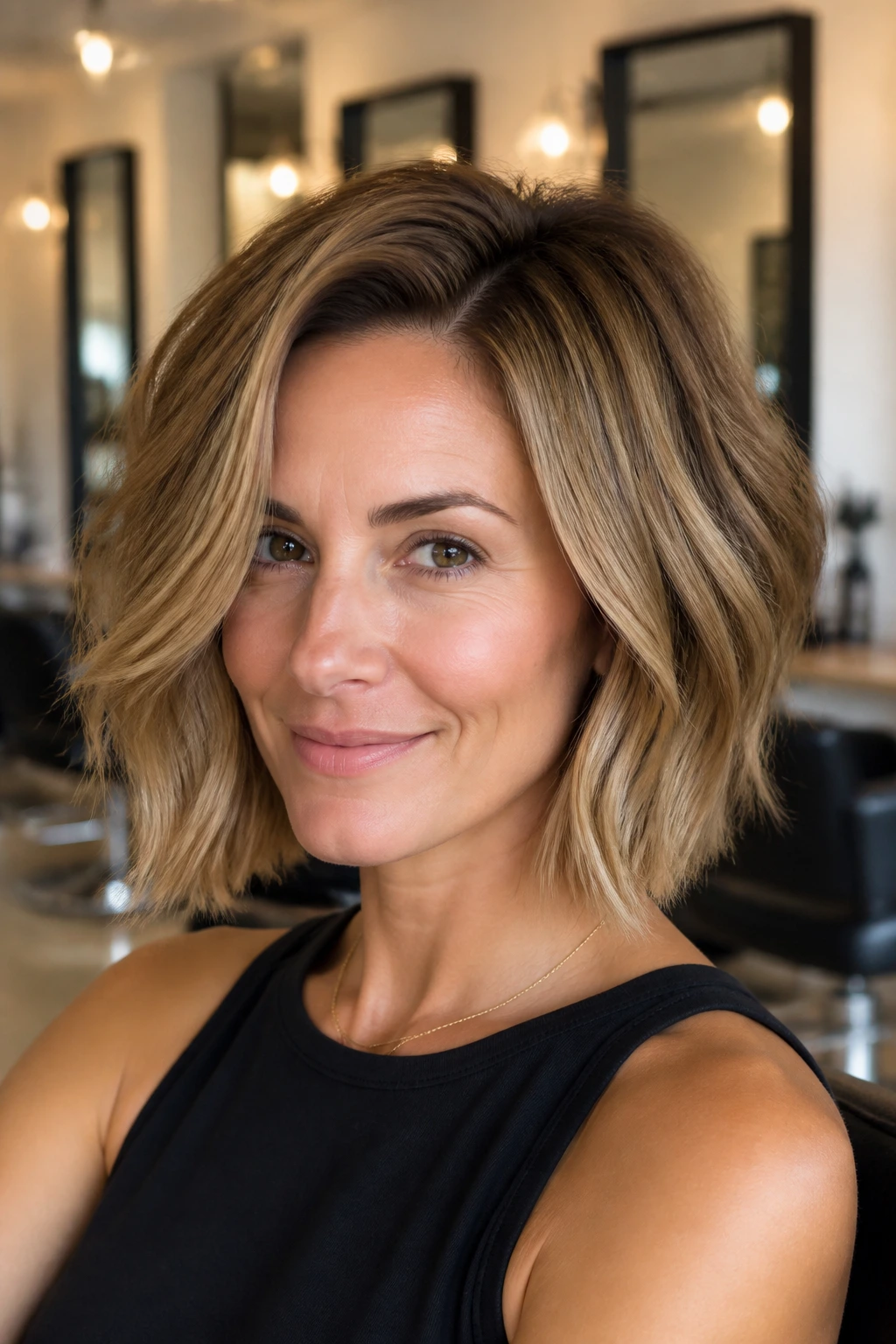
Some people want volume, but not the messy kind. A glossy root-lift bob keeps the roots smooth and lifted, then lets the movement happen through the mid-lengths and ends. That’s a smart choice if your hair gets frizzy when you load it up with texture spray.
Use mousse at the crown, a nozzle on the dryer, and a small round brush or a quick finger-dry to push the roots up. Then add soft bends only after the hair cools. The finish is neat, a little shiny, and far less fussy than a full wave set.
20. Soft Wave Bob With a Deep Side Bend

The deep side bend is the detail that keeps this bob from disappearing. When one side lifts higher and the wave arcs across the forehead, thin hair suddenly has a shape to follow. It’s more sculpted than messy, but still loose enough to feel relaxed.
If your hair falls flat at the temples, this is a useful trick. The bend creates volume where the head needs it, not just where the ends happen to fall. Keep the shortest layers tucked into the stack at the back, then let the wave live around the face.
21. Bottleneck Bang Bob

Bottleneck bangs are a smarter fringe than most people give them credit for. They open at the center, widen near the eyes, and blend into the front of the bob without carving out too much density from the top. On thin hair, that matters because a heavy fringe can eat up the fullness you need elsewhere.
What to ask for
Ask for a narrow center section and longer outer pieces that connect to the bob. The fringe should feel soft at the ends, not blunt across the brow. Pair it with loose waves and a slightly stacked back, and the whole cut keeps its shape without looking crowded.
22. Polished-Ends Layered Bob
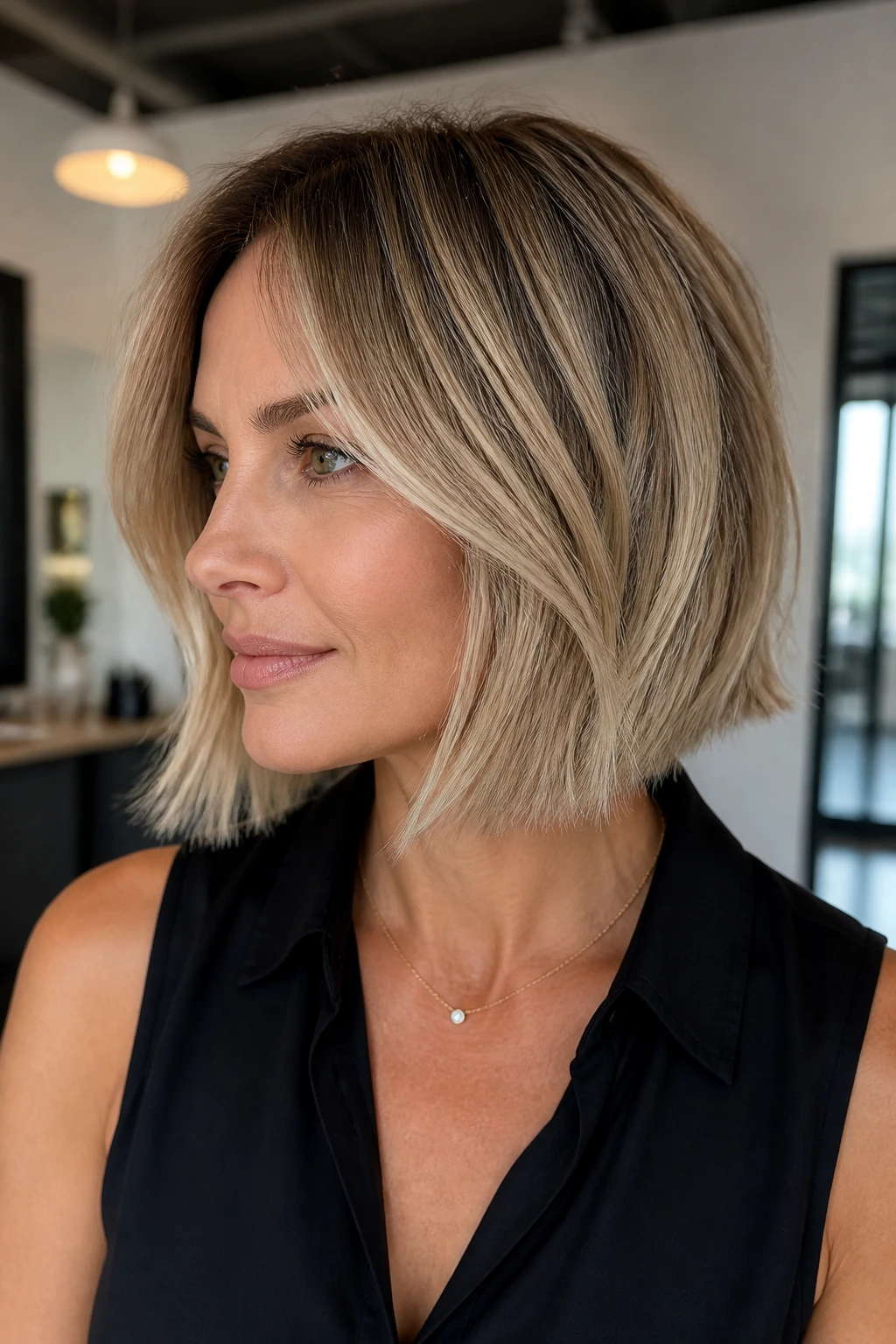
This version keeps the ends blunt enough to do some work. That’s a good thing for thin hair, because the perimeter line carries visual weight. The layers live higher up, where they can create movement without making the bottom edge look moth-eaten.
It’s a useful cut if your hair is fine but you still want the wave pattern to show. Bend the mid-lengths, leave the tips smoother, and let the perimeter hold the shape. The result feels deliberate, almost tailored, which is a nice change from the overly tousled bob that can look flimsy in real life.
23. Low-Maintenance Grow-Out Bob

A cut that falls apart after six weeks is not low-maintenance. This one keeps the weight line a little fuller, uses softer stacking, and lets the front pieces grow without losing the shape. Thin hair often looks better this way, because there’s more hair left at the outline.
If you want a bob that doesn’t demand constant trimming, ask for a gentle stack and fewer short layers near the crown. The waves can be looser and more relaxed, and the cut will still read as intentional. It’s the practical choice, and practical is underrated.
24. Halo-Volume Bob
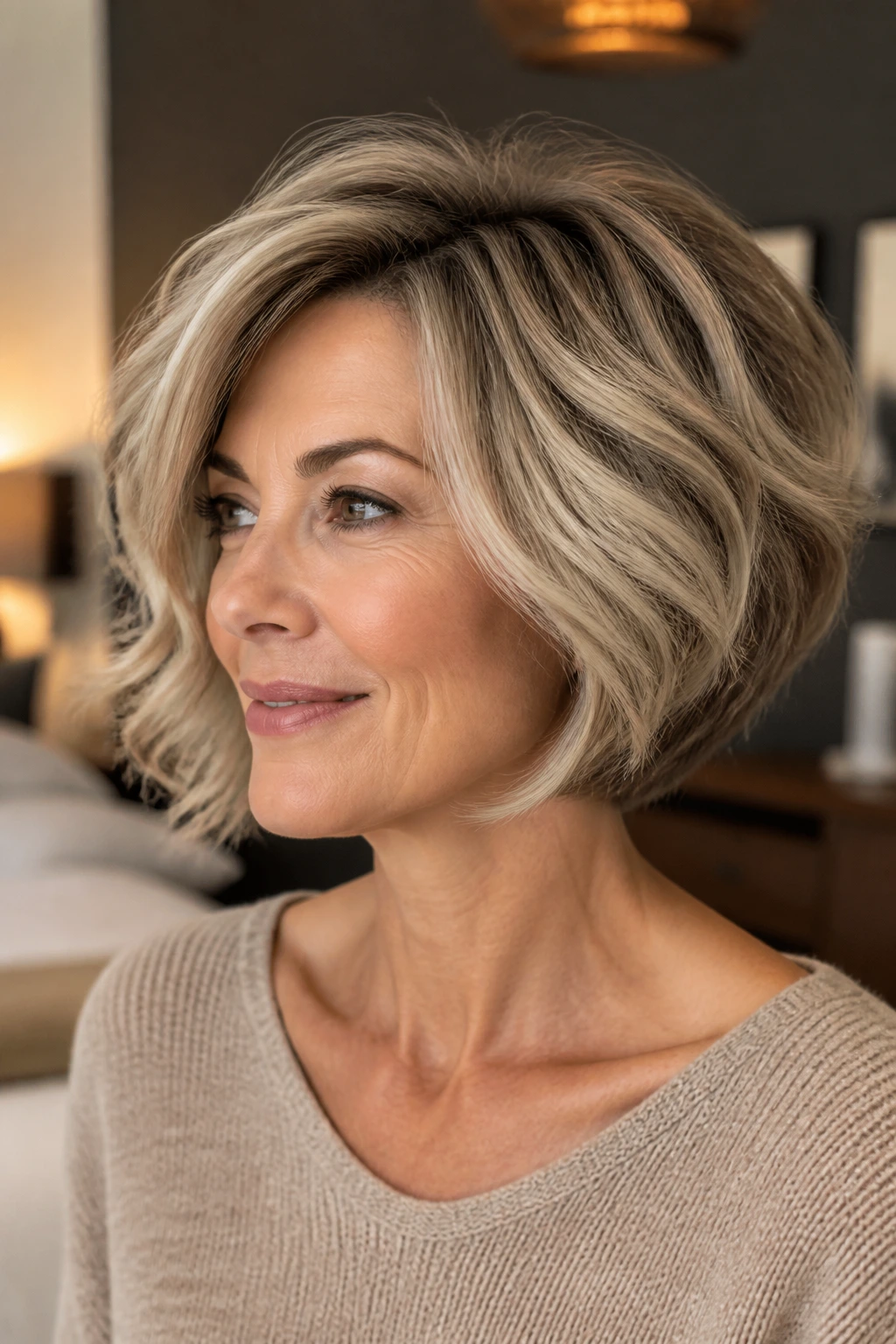
A halo-volume bob puts the movement where it’s most visible: around the top, sides, and upper cheek area. That keeps thin hair from looking flat on the outside while the back maintains enough structure to support the shape. It’s a flattering trick when the crown is the first place to go limp.
The waves should be placed with care here. Lift the roots, bend the upper sections, and leave the bottom edge clean enough to avoid a frizzy cloud. When it’s done right, the style looks full from every angle, not just from the front.
25. Editorial Micro Stack
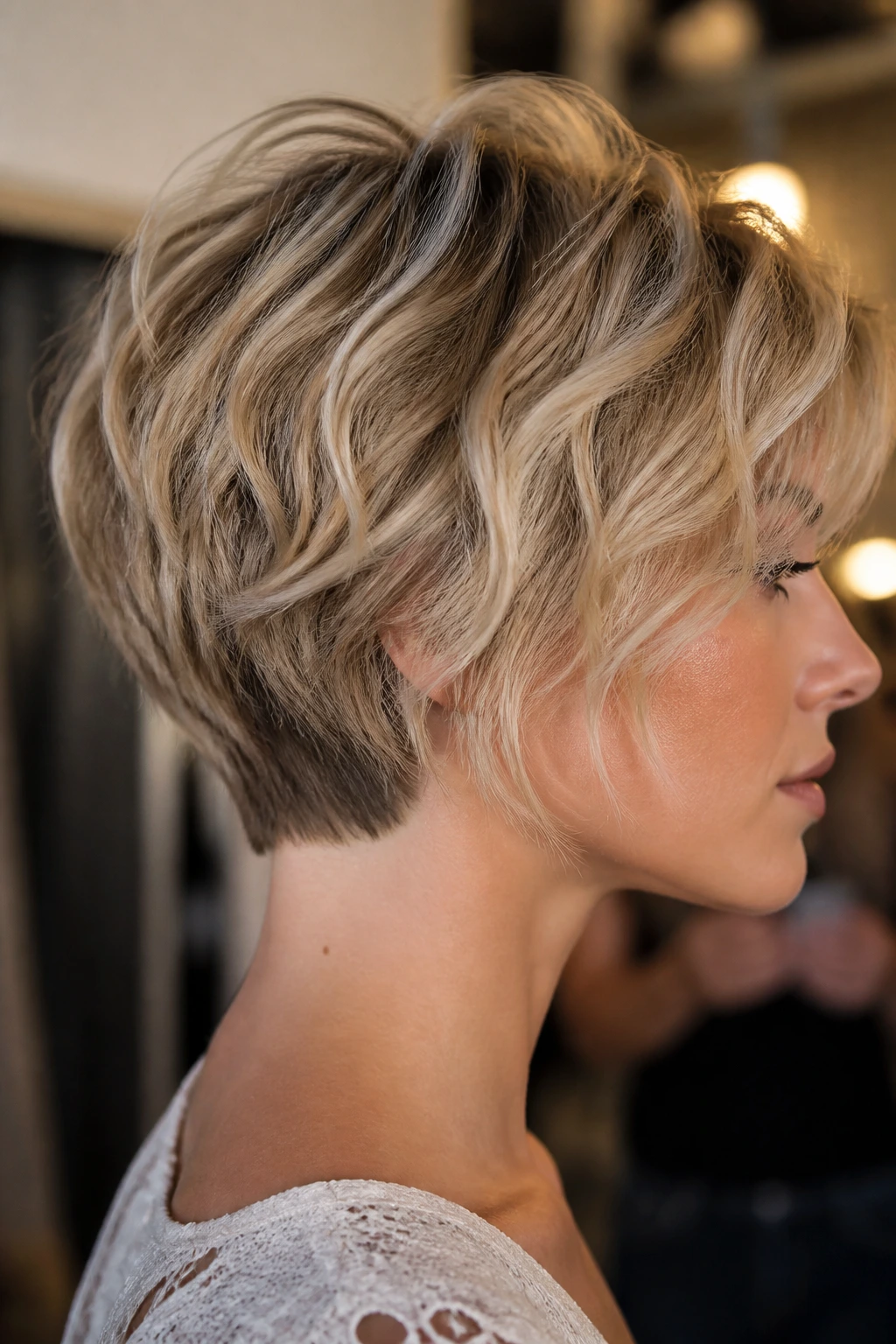
The shortest, sharpest version in the group is the editorial micro stack. It sits close to the jaw or even a little above it, with a compact stacked back that gives the whole cut an intentional edge. Thin hair can handle this if the perimeter stays clean and the top layers don’t get over-processed.
This one needs confidence. It’s not trying to be soft or invisible. The beachy waves soften the geometry just enough so it doesn’t read severe, but the structure is still there, which is what gives the cut its bite.
Why the Stacked Shape Gives Thin Hair a Fuller Outline
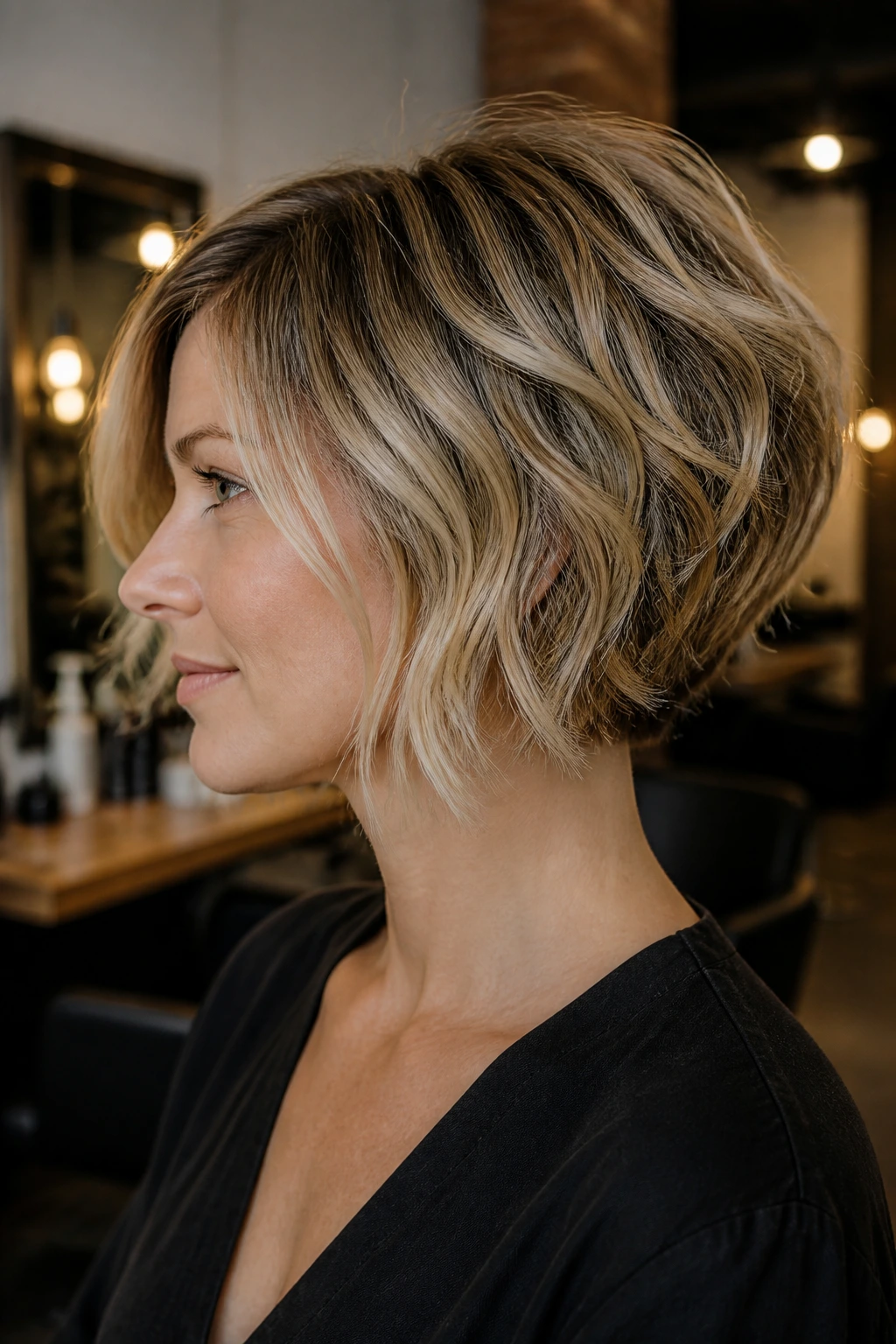
A stacked layered bob works because it changes where the weight sits. Instead of hanging the same from crown to ends, the haircut removes some bulk underneath and keeps a cleaner line through the perimeter. That makes the back lift off the neck and gives the eye a better shape to follow.
Thin hair does not need a thousand layers. It needs a cut that respects density. Too many short pieces at the top can expose the scalp line and make the ends look frayed. A controlled stack, plus beachy waves placed lower on the shaft, keeps the silhouette open without turning wispy.
The wave pattern matters just as much as the cut. Loose bends add width through the mid-lengths, and the broken texture hides the places where fine hair tends to separate. If the waves start at the root, you lose lift. If they live lower down, the crown stays cleaner and the bob keeps its shape.
How to Ask for This Cut at the Salon
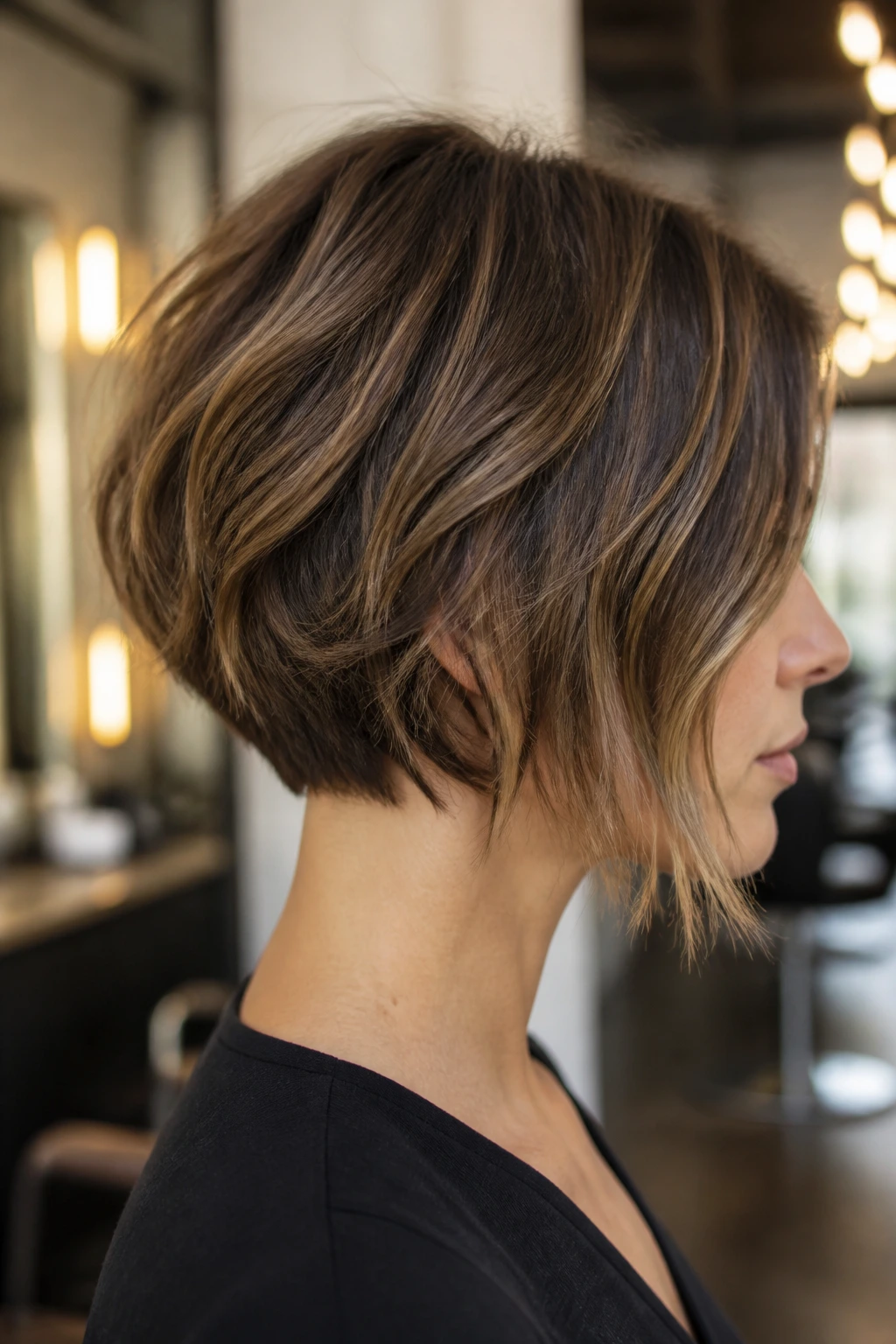
Bring photos, yes, but bring the right ones. One picture should show the silhouette you want, and another should show the wave texture. A lot of bob photos are misleading because the cut is good but the styling is doing half the work.
Use plain language that a stylist can actually work with:
- Ask for a stacked graduation at the nape if you want lift in the back.
- Keep the perimeter full enough to hold a clean edge so the hair doesn’t look stringy.
- Leave the front pieces longer if you want jaw or collarbone grazing length.
- Avoid heavy thinning through the ends if your strands are fine.
- Request soft face-framing layers only if you want movement without losing density.
- Say beachy waves, not tight curls, so the shape is cut with the right finish in mind.
The one thing I’d avoid is saying “just add lots of layers.” That usually ends badly on thin hair. Lots of layers sounds flexible. In practice, it often means too much removal from the very places that need weight.
The Tools and Products That Keep the Shape Up
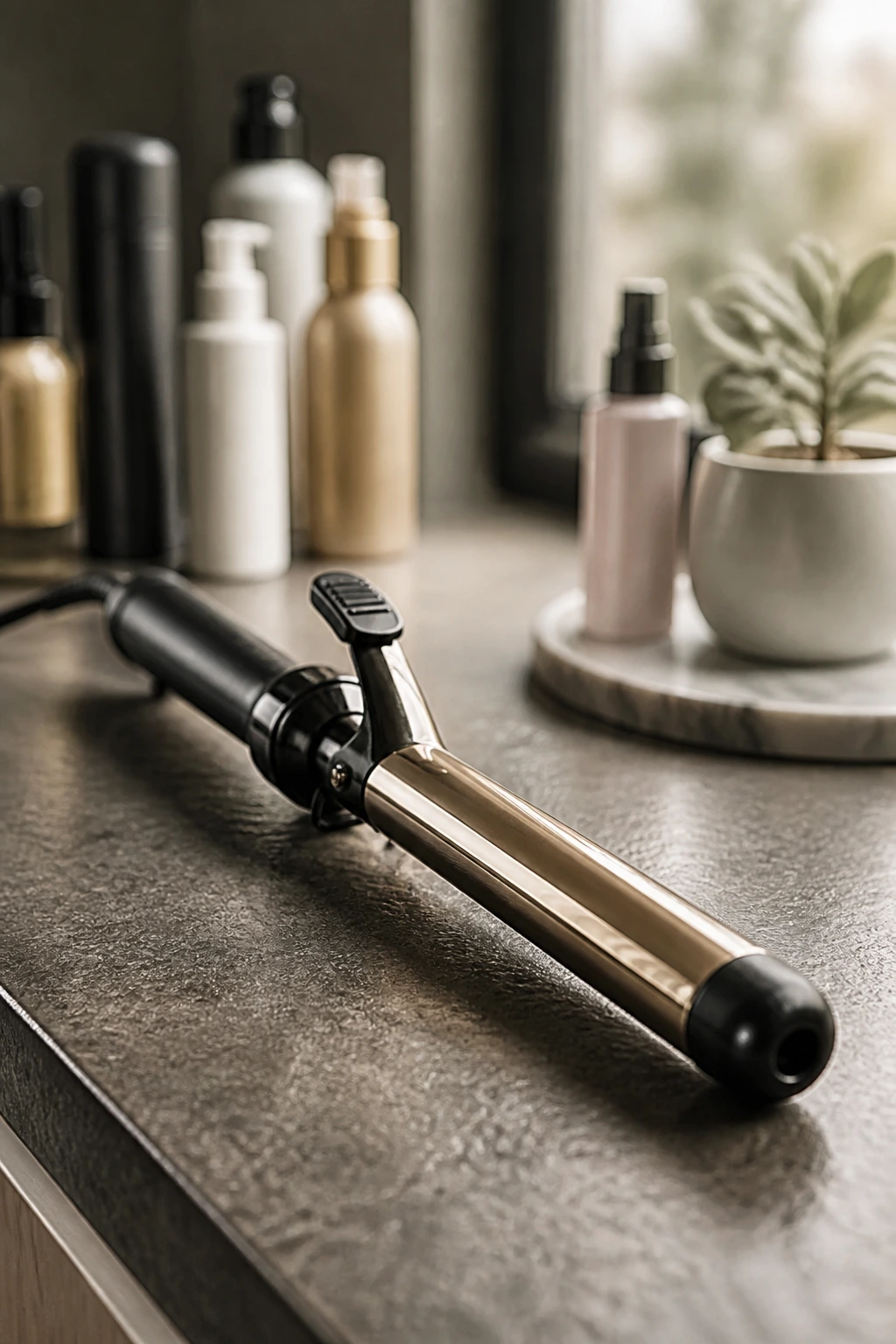
- 1-inch curling wand or iron — the best size for loose bends on bobs; smaller barrels tend to make the wave too tight.
- Heat protectant spray — use it on damp hair or before hot tools so the ends don’t dry out and fray.
- Volumizing mousse — gives the roots grip without the crunchy feel of old-school foam.
- Lightweight texture spray — adds separation to the mid-lengths after the waves cool.
- Blow dryer with concentrator nozzle — directs air at the roots so the stack keeps its lift.
- Duckbill clips or small sectioning clips — useful for pinning the crown while it cools.
- Flexible-hold hairspray — holds the bend without freezing the hair in place.
- Dry shampoo — best for day two or day three when the roots start to sink.
- Wide-tooth comb or fingers — helps break waves softly without puffing up the ends.
How to Style Beachy Waves on a Stacked Bob
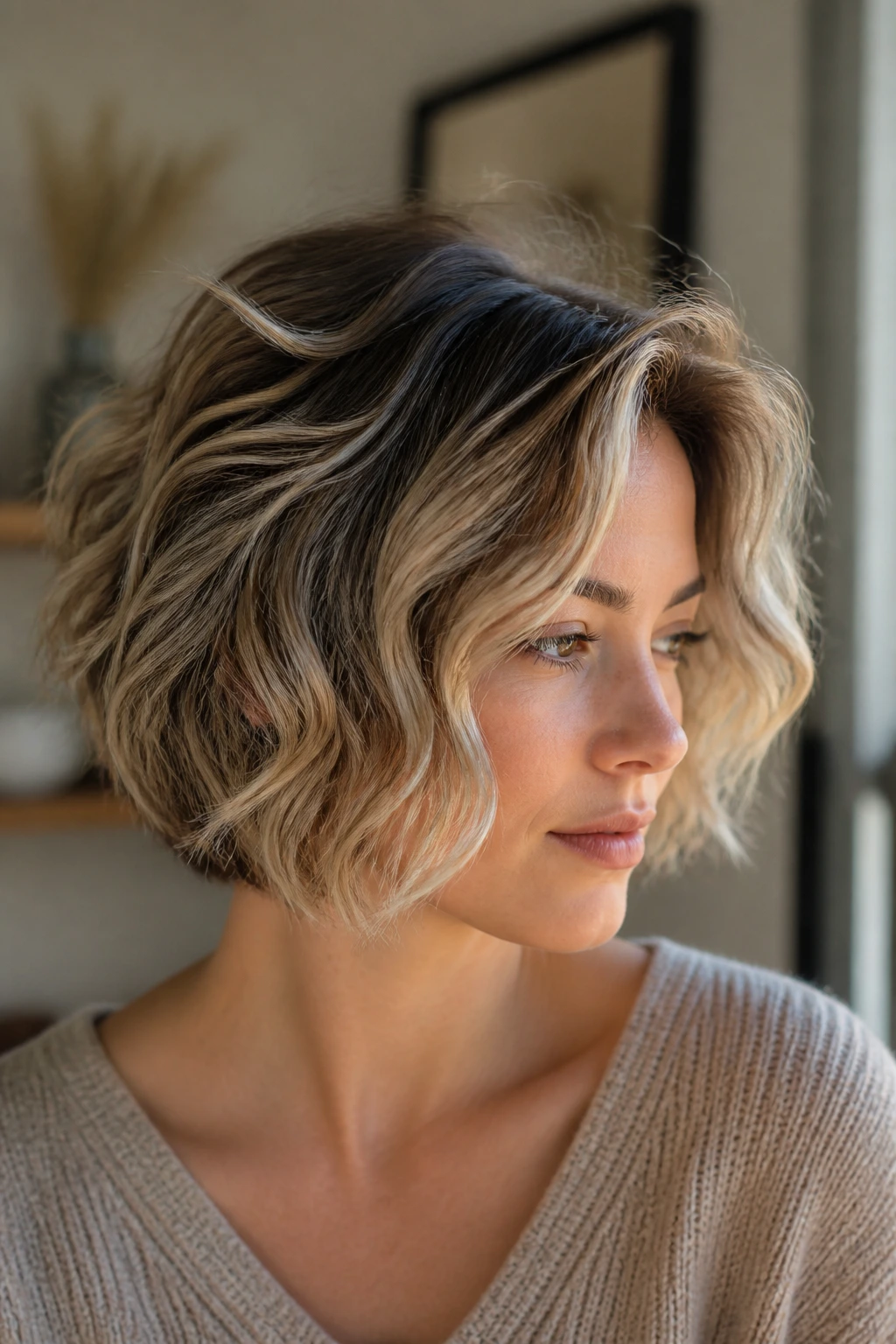
Start with a lifted base. Work mousse through damp hair, then rough-dry about 70 percent of the moisture before you go in with a brush. The crown should get the most attention here. If the roots are flat at the start, the wave pattern won’t save you later.
Shape the back first. Use the dryer nozzle to push the nape into position and keep the stack tucked under slightly. That part sounds boring, and it is, but it’s the difference between a bob that holds its shape and one that flops open by afternoon.
Wave in small, loose sections. Wrap 1-inch pieces around a curling wand for 5 to 8 seconds, leaving the last inch or so out. Alternate directions, and don’t curl every piece the same way unless you want a dated, uniform look.
Let the hair cool before you touch it. That part matters. When the bend is still warm, it’s easy to brush it out too soon and lose the whole pattern. Once it’s cool, finger-comb the waves apart, mist texture spray through the mid-lengths, and use a light spray under the top layer if you need extra hold.
A good beachy wave on a bob should still let you see the cut. If the texture hides the stack completely, you’ve gone too far.
Extra Tips for More Lift, Softness, and Shine
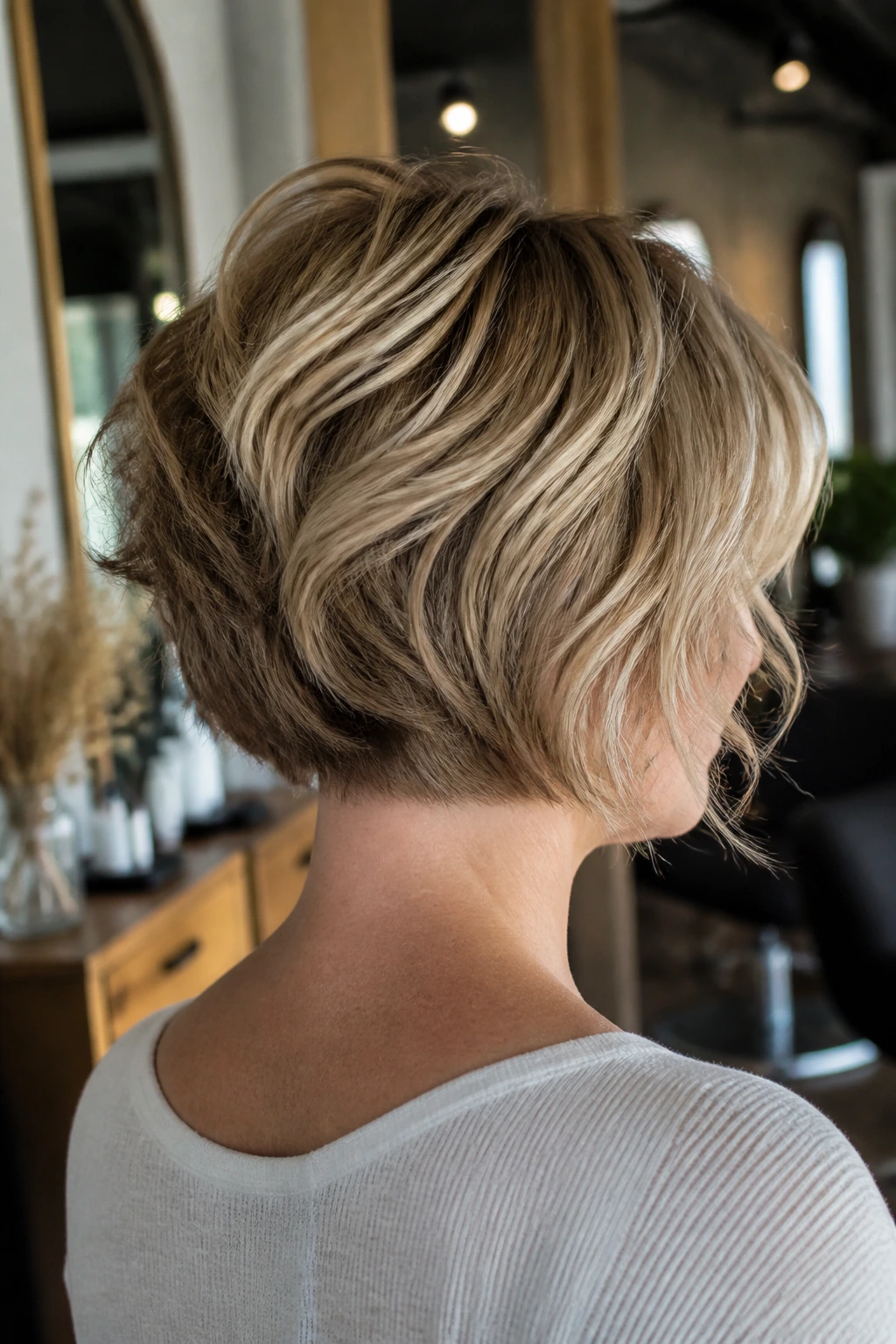
Texture boost: A tiny bit of color dimension goes a long way on thin hair. Soft highlights around the wave ridges and a slightly deeper root shade create contrast that makes the bob look denser in photos and in daylight.
Parting trick: Change your part while the hair is still warm. That small switch can wake up a flat crown and keep the top from settling into the same groove every time.
Softness without collapse: Put conditioner only from the mid-lengths down. The roots need grip, not slip, or the stack will lose its lift the minute you air-dry.
Night move: If your hair bends badly while you sleep, clip the top section loosely at the crown or sleep on a silk pillowcase. The goal is to protect the wave shape, not preserve every curl like it’s a museum piece.
My favorite shortcut: Refresh the front pieces only. Most people don’t need to restyle the entire bob. A quick bend around the face and a touch of dry shampoo at the crown is often enough to make the whole cut look deliberate again.
Common Mistakes That Flatten the Cut
-
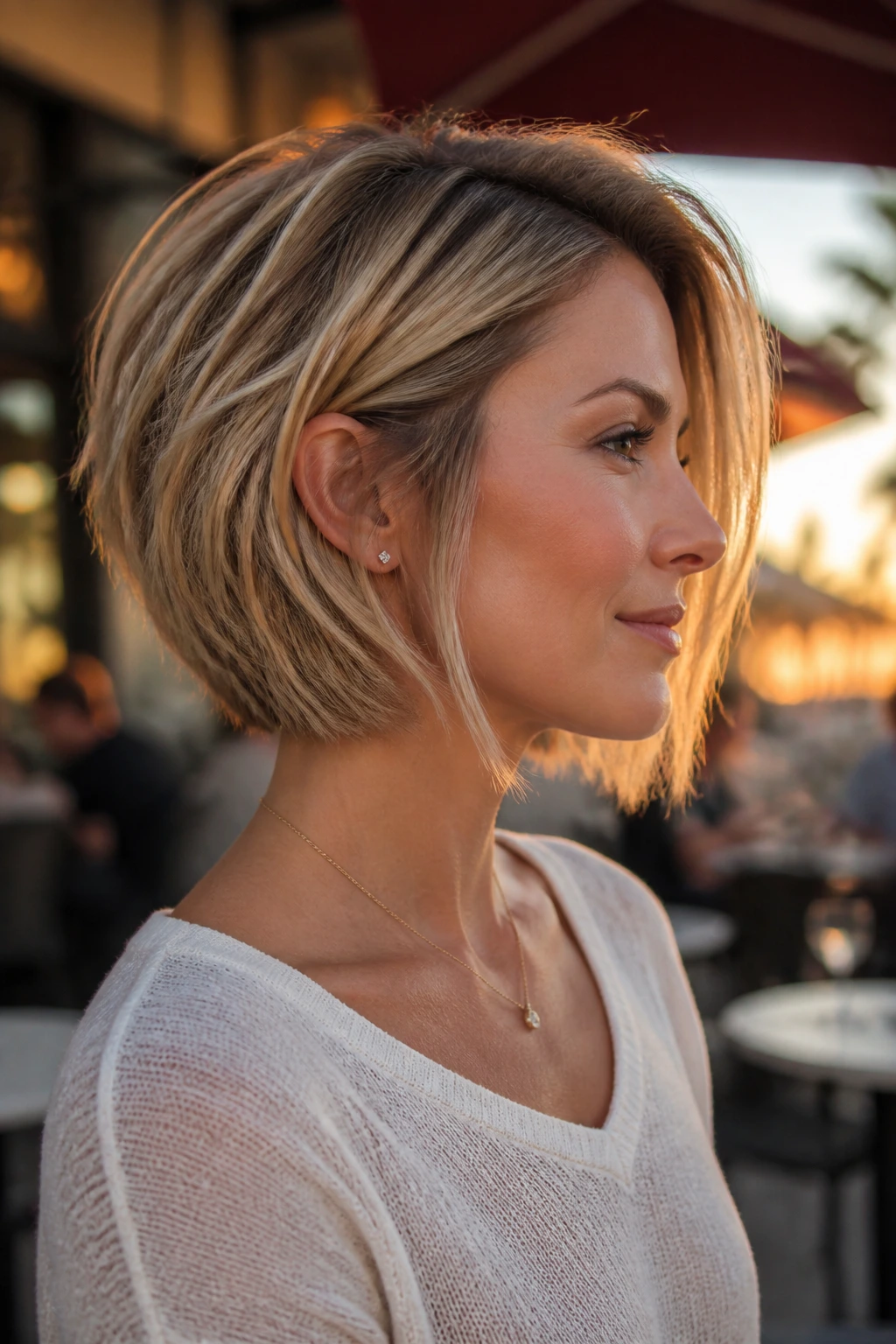
Over-layering the crown: The symptom is a wispy top with no real body. The fix is to keep the top layers longer and let the stack do the heavy lifting in the back.
-
Curling the hair too tightly: The bob shrinks above the jaw and stops looking like a bob at all. Use a 1-inch tool, leave the ends out, and brush the waves apart once they’ve cooled.
-
Loading on heavy cream or oil: The roots go limp and the waves clump together. Put richer products only on the ends, and choose mousse or spray at the crown.
-
Cutting the stack too high: The back starts puffing out like a mushroom. Ask for graduation that stays low enough to support the shape instead of forcing it.
-
Skipping the cool-down: Waves fall apart an hour later because they never set properly. Clip the sections or pin them for a few minutes so they hold the bend.
-
Thinning the perimeter too much: The ends start to look shredded and uneven. Thin hair needs a clean edge more than it needs aggressive texturizing.
Variations to Match Face Shape, Texture, and Routine

For the ultra-fine strand: Keep the stack subtle, the perimeter blunt, and the layers soft. This version protects density while still giving you movement through the mid-lengths.
For a broad forehead: Add curtain bangs or bottleneck bangs that split softly at the center. They bring the focus down toward the eyes and cheekbones, where the bob can do its best work.
For a round face: Choose longer front pieces and a side part, then keep the waves lower and looser. The diagonal line helps lengthen the face without making the cut look severe.
For a cowlicked crown: Ask for a slightly stronger root lift at the part and keep the crown layers long enough to resist flipping. A deep side part often behaves better than a center part on this kind of growth pattern.
For a low-heat routine: Let the hair air-dry with mousse, then bend only the front and top sections with a wand. You’ll still get the wave pattern where it matters, and the stack can stay clean underneath.
Keeping a Stacked Bob Sharp Between Trims

A bob like this stays nice only if the outline stays honest. For most hair types, a trim every 6 to 8 weeks keeps the nape stack from losing its shape. If you’re growing it a little longer, you can stretch that out, but the back will start to feel heavier and the lift will soften.
Dry shampoo is useful, but use it at the roots, not the ends. If you dust the ends with too much product, the wave gets dull and the hair starts to feel rough. A quick mist at the crown and a finger rake through the top usually does more than another round of hot tools.
If you air-dry, don’t let the back dry stuck to the neck. Clip the crown up for a few minutes or rough-dry the roots first so the stack has a chance to set in the right direction. And if the bob starts to lose its curve, you don’t need a full restyle every time. A little bend around the face, plus a fresh part, usually brings it back.
Frequently Asked Questions About Stacked Layered Bobs
Will a stacked bob make thin hair look thinner?
Not if the stack is controlled. The problem is usually too much layering at the crown or too much texturizing at the ends, which strips away the weight line. A clean perimeter with soft internal graduation does the opposite.
Is a bob or a lob better for thin hair?
A bob gives more lift and makes the hair look denser at the ends. A lob gives you more length and usually feels safer if you like to tuck or tie your hair back sometimes. The right choice depends on whether you want more shape or more length.
Can I do beachy waves on thin hair without heat?
Yes, though the wave will be softer and less controlled. Loose braids, twist clips, or a gentle overnight bend can work, but you’ll still want texture spray or mousse so the hair doesn’t fall completely flat by morning.
How often should I trim a stacked layered bob?
Most people need a trim every 6 to 8 weeks to keep the nape stack looking crisp. If you’re letting it grow out, you can go longer, but the shape will lose some lift and the back may start to sit heavier.
What part works best with this cut?
A deep side part gives the most instant lift. A slightly off-center part is easier to wear every day and still keeps the top from lying dead flat. Center parts can work too, but they usually need more root support.
Should I avoid layers if my hair is already sparse at the ends?
Yes, aggressive layers are the wrong move. Ask for controlled stacking in the back and a fuller perimeter so the ends still look solid when the waves break apart.
How do I keep the waves from looking crunchy?
Use less product than you think you need, and choose flexible hold over stiff hold. Once the hair cools, break the wave with your fingers, not a brush, and keep heavy spray away from the crown.
Can curly or wavy hair wear this cut too?
Definitely, but the stylist should cut with your natural texture in mind. Curly hair often needs a softer stack and a dry cut so the shape doesn’t spring too high after washing.
The Shape That Carries the Hair
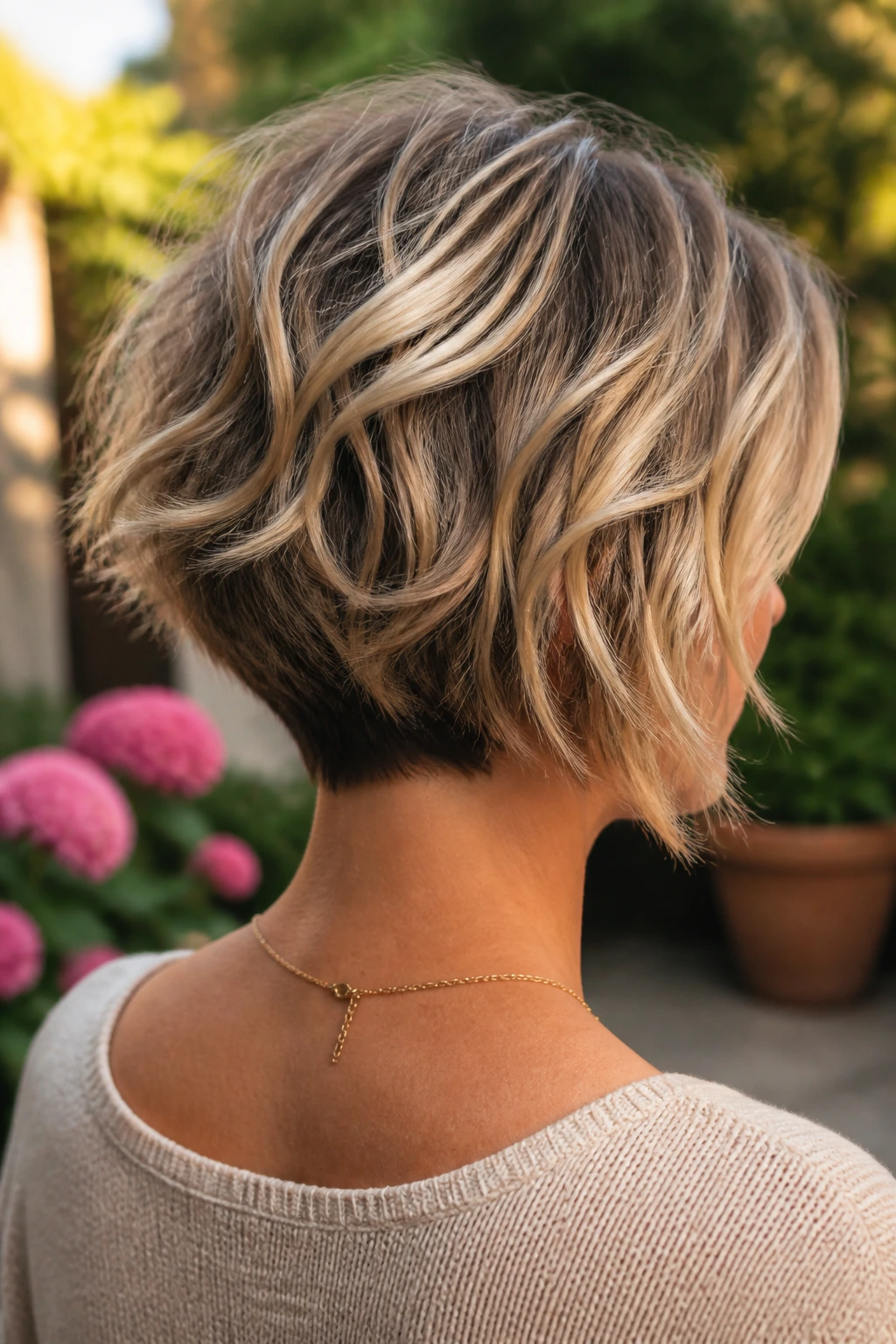
A stacked layered bob for thin hair with beachy waves works because it gives the hair a job. The stack supports the back, the layers keep the movement light, and the waves do the subtle cheating that makes thin hair look fuller without pretending it isn’t thin.
That’s the part I like best: the cut doesn’t fight the hair. It frames it, gives it a little lift, and leaves enough softness for the style to feel easy instead of overbuilt. If your hair has been hanging limp for too long, this is a shape worth taking seriously.