



Layered haircuts for medium hair with thin hair live or die on balance: keep enough weight in the perimeter, then sneak movement into the right places. Cut too much, and the ends separate into see-through tails. Leave it too blunt, and the whole shape can collapse into a flat curtain by lunch.
Medium length gives you a useful middle ground. There’s enough hair to bend, flip, and frame the face, but not so much length that every ounce of volume gets dragged downward. That’s why the smartest cuts for thin medium hair are usually less about dramatic stacking and more about placement—where the first layer starts, how much stays at the hemline, and whether the face frame softens the front without chewing up density in the back.
One thing people mix up all the time: fine hair and thin hair are not identical twins. Fine describes the thickness of each strand. Thin usually points to overall density, or how many strands you actually have. A haircut can work beautifully on one and fall apart on the other, which is why the details matter more here than in almost any other length category.
Why These Cuts Earn Their Keep
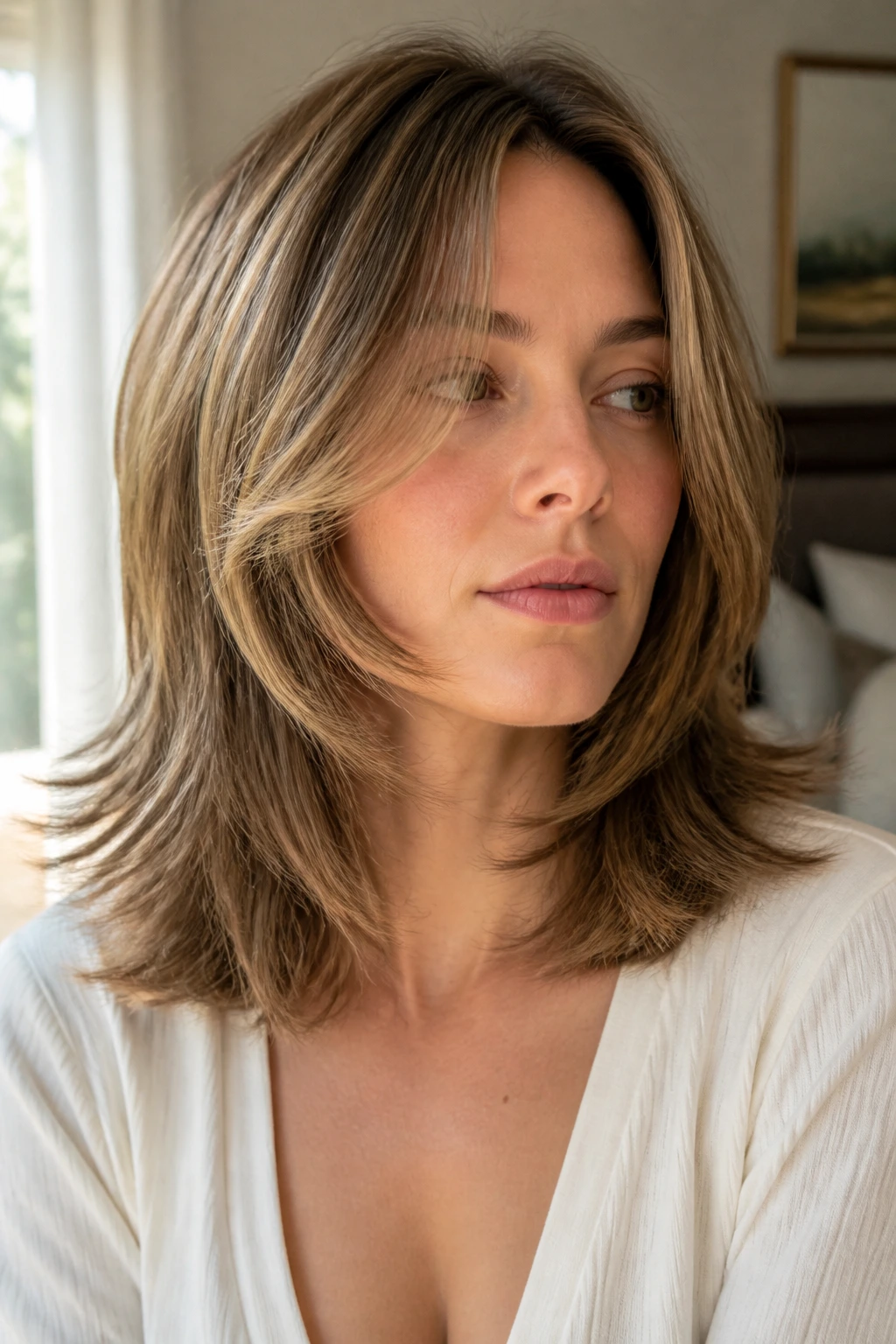
Keep the outline full: The strongest layered cuts for medium hair with thin hair protect the bottom edge, so the ends still read as thick even when the top has movement.
Lift the face without exposing the crown: Smart face-framing layers draw attention to the cheekbones and jaw instead of asking the top of the head to carry all the volume.
Work with lazy styling: The best versions look intentional with a quick blow-dry, a round brush bend, or even a rough air-dry and a dab of mousse.
Grow out without turning choppy: Long layers, curved layers, and hidden layers soften as they grow, which matters when you don’t want a cut that looks bad six weeks later.
Give you choices: Some of these cuts lean polished, some lean textured, and some split the difference. Thin hair does better when the haircut fits your actual routine, not an imagined one.
1. Collarbone Cut with Floating Face Frame
This is the cut I’d put near the top of the list for anyone who wants movement without losing the feeling of hair. The collarbone line gives thin hair a clean bottom edge, and the floating face frame starts high enough to matter but low enough to avoid that wispy, over-layered look that can make medium hair seem sparse.
What to ask for
Tell your stylist you want the longest length to sit at the collarbone, with face-framing pieces that begin around the cheekbone and melt down toward the jaw. Keep the ends blunt or only lightly textured. That blunt hemline is doing real work here.
A little bend at the front is enough. You do not need short crown layers or aggressive thinning at the ends. In thin hair, restraint usually wins.
2. Butterfly Layers That Keep the Ends Full
The butterfly cut gets talked about like it’s all about drama, but on medium thin hair the softer version is the one worth your time. The top shelf lifts around the cheekbones and chin, while the bottom length stays intact enough to make the cut read full when it hangs straight.
What makes it useful is the contrast. Hair around the face gets that airy swing, and the back keeps its substance instead of disappearing into a stringy tail. That’s the whole trick.
I’d choose this if you like a blowout or a big round-brush finish. If you air-dry and hope for the best, the layers can look a little too separated. Not bad. Just less convincing.
3. Soft Shag with Long, Wispy Movement
Why does the shag work better on some thin medium hair than a standard layered cut? Because the shape adds texture without needing the hair to look heavy at the bottom. The soft shag keeps the crown layers longer and the edges less blunt, which gives natural movement without that chopped-up, over-textured feeling.
Best for
- Wavy hair: The natural bend makes the layers look thicker than they are.
- People who dislike perfect blowouts: A shag forgives a little roughness.
- Fine strands with decent density: You get movement without losing too much mass.
Keep the fringe light, not heavy. A shag with a big dense bang on thin hair can crowd the face fast. The better version has air in it, a little separation, and ends that still feel like they belong to the same haircut.
4. Blunt Lob with Hidden Interior Layers
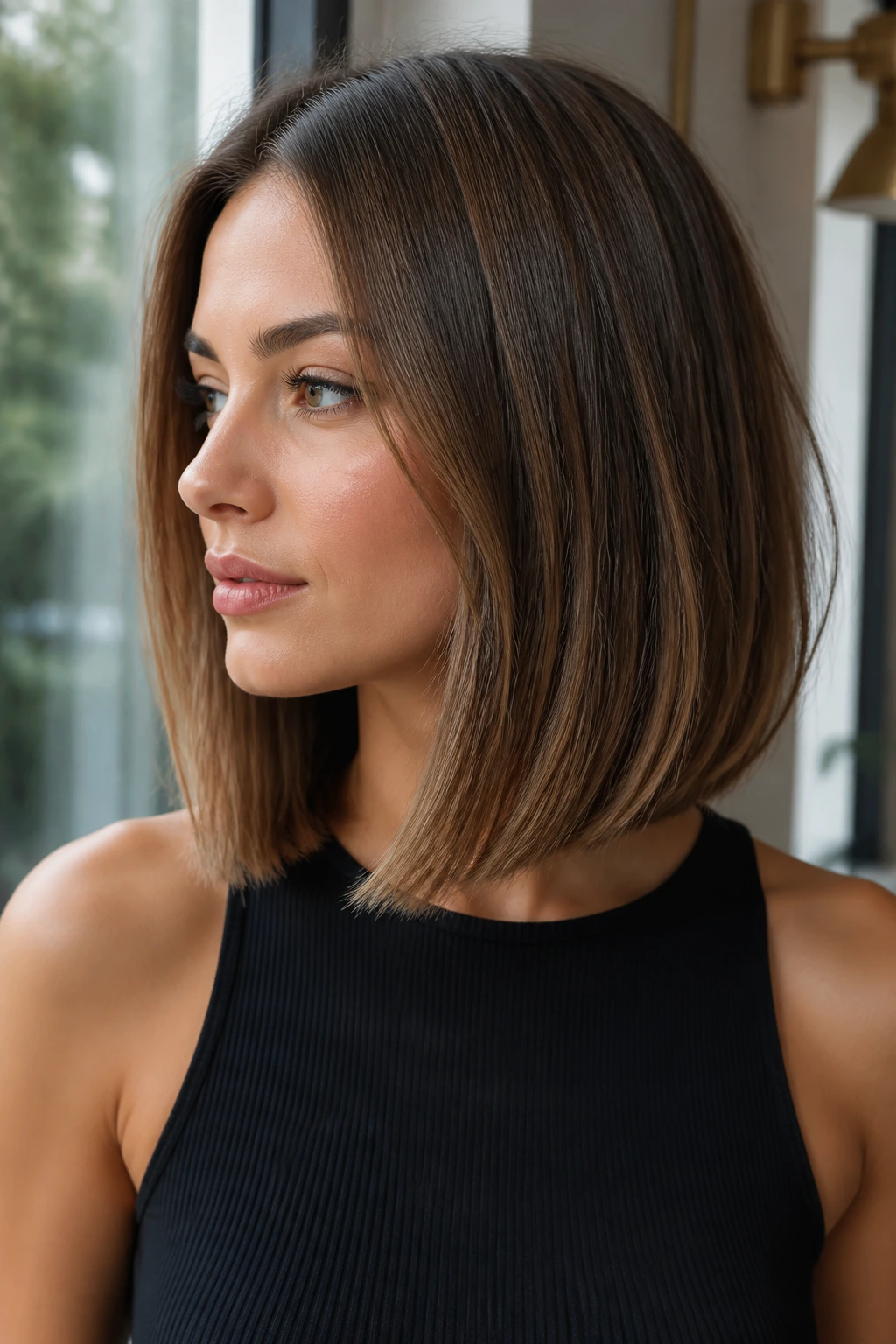
This is one of my favorites, and it’s the one I’d hand to someone who says, “I want my hair to look thicker, but I still want it to move.” The outside line stays blunt, which gives the eye a strong edge to follow. Inside, there are just enough hidden layers to keep the shape from turning boxy.
The beauty here is sneaky. From the front, it reads as a dense lob. From the side, it has enough lift that it doesn’t sit like a helmet. That’s a rare combination.
Ask for minimal interior layering and a clean perimeter. If your stylist starts talking about removing bulk all over, pump the brakes. Thin hair is not the place for heavy debulking.
5. Curtain Bangs and a Mid-Length Layer Cascade
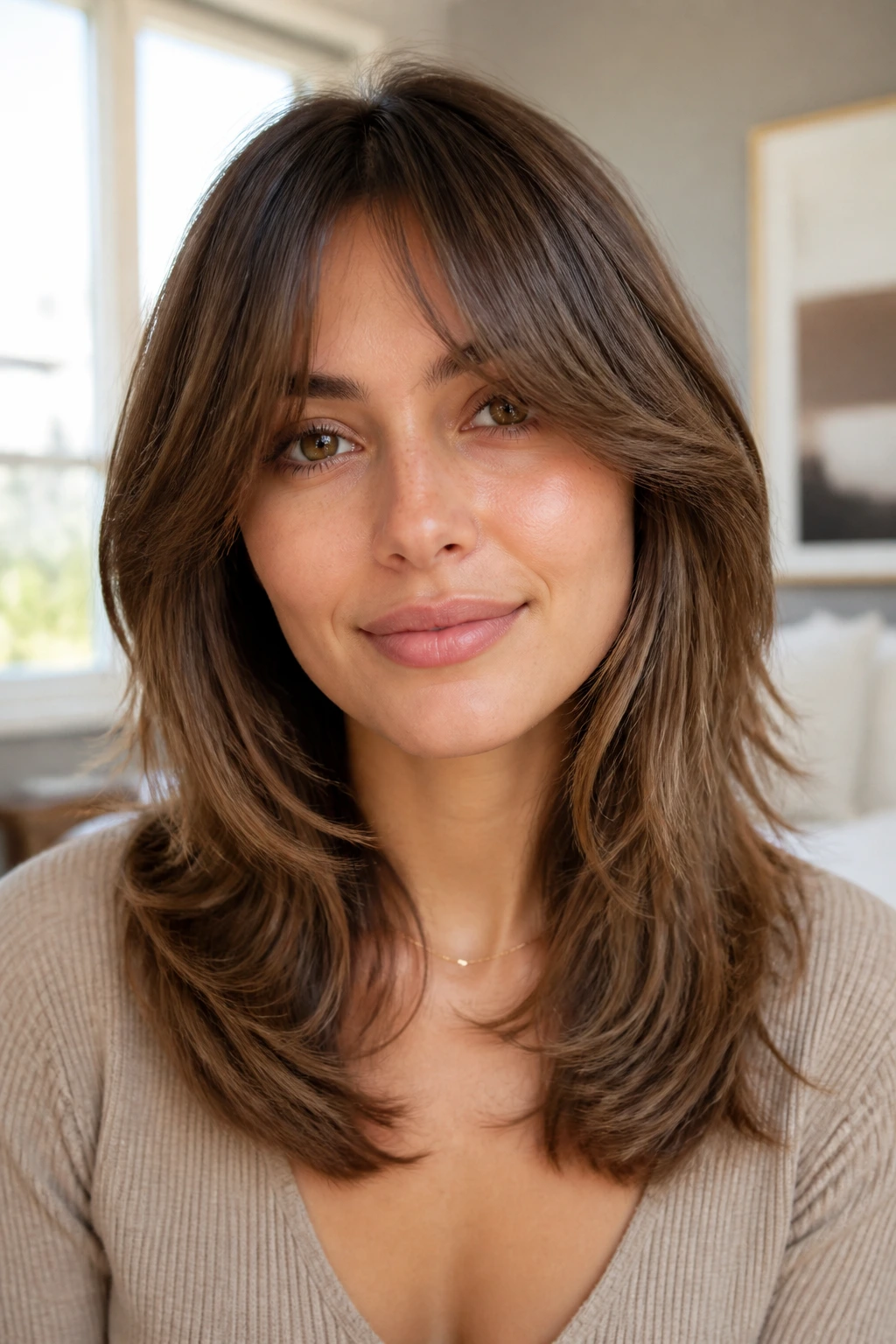
Curtain bangs can be a gift on medium hair with thin hair, but only when they’re cut with enough softness to blend instead of sit on their own like a separate object. The middle opens up the face, the longer sides skim the cheekbones, and the rest of the layers taper back from there.
This cut is especially good if your face looks best when there’s a little frame near the eyes and cheekbones. It gives you shape up front while leaving the back long enough to hold a decent amount of body.
How to wear it
A round brush or a big Velcro roller at the front makes a huge difference. Curtain bangs that are left flat can separate into two sad strips. Give them a little bend, and the whole haircut perks up.
6. Rounded Midi Cut with Bouncy Ends
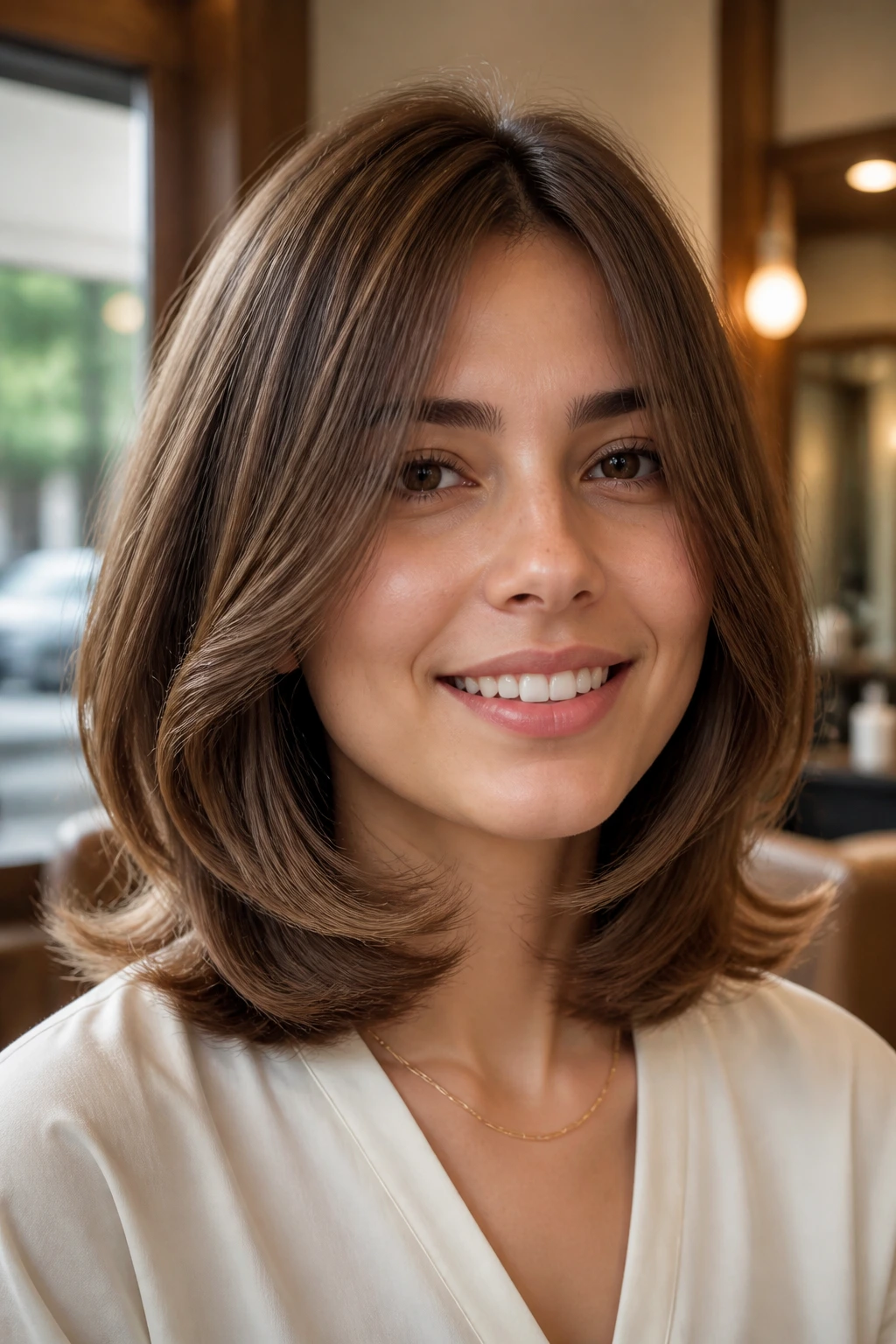
The rounded midi is quietly excellent for thin medium hair because it stops fighting the natural fall of the head. Instead of letting the sides hang straight and flat, the cut curves inward just enough to make the ends feel lifted and deliberate.
It also photographs differently than a straight-line cut. A rounded shape gives the eye movement along the cheek and jaw, which can make the overall silhouette look denser than it is. No gimmicks. Just shape.
This is a nice choice if your hair wants to puff a little at the ends but lies flat at the crown. The roundness helps you use that natural curve instead of working against it with a harsh, straight outline.
7. Choppy Collarbone Cut with Piecey Texture
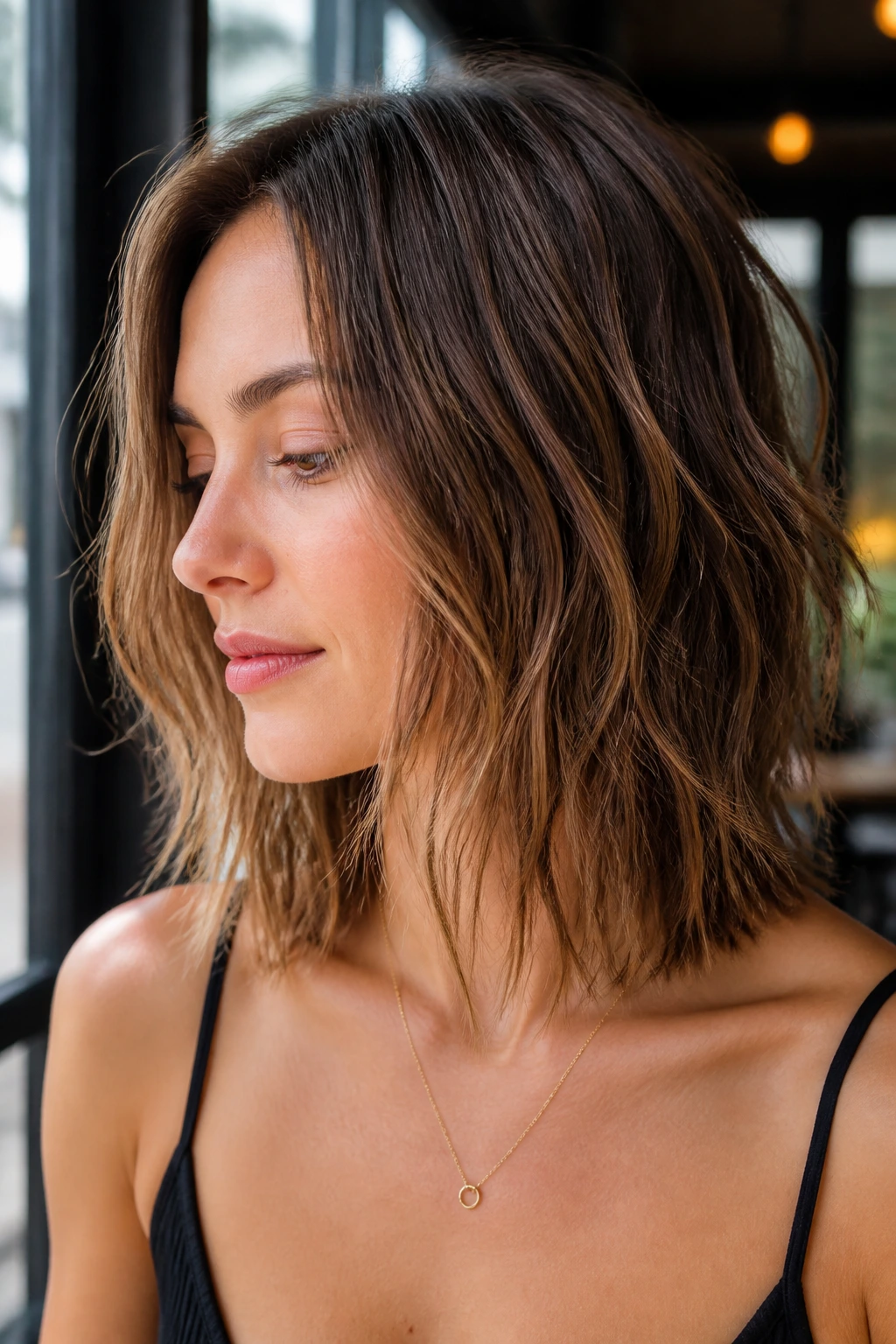
A choppy collarbone cut can be fantastic for thin hair when the choppiness stays controlled. The goal is not to shred the ends into nothing. The goal is to create a few separated pieces that keep the shape alive.
If your hair tends to sit too neatly, this cut adds a little grit. A texturizing spray or lightweight mousse can bring out the piecey movement without making the hair look sparse. That matters. Sparse and piecey are not the same thing.
One warning: if your hair is already fragile, ask for soft texture rather than a razor-heavy finish. A little separation is flattering. Over-thinning the ends is not.
8. Feathered Layers and a Side Part
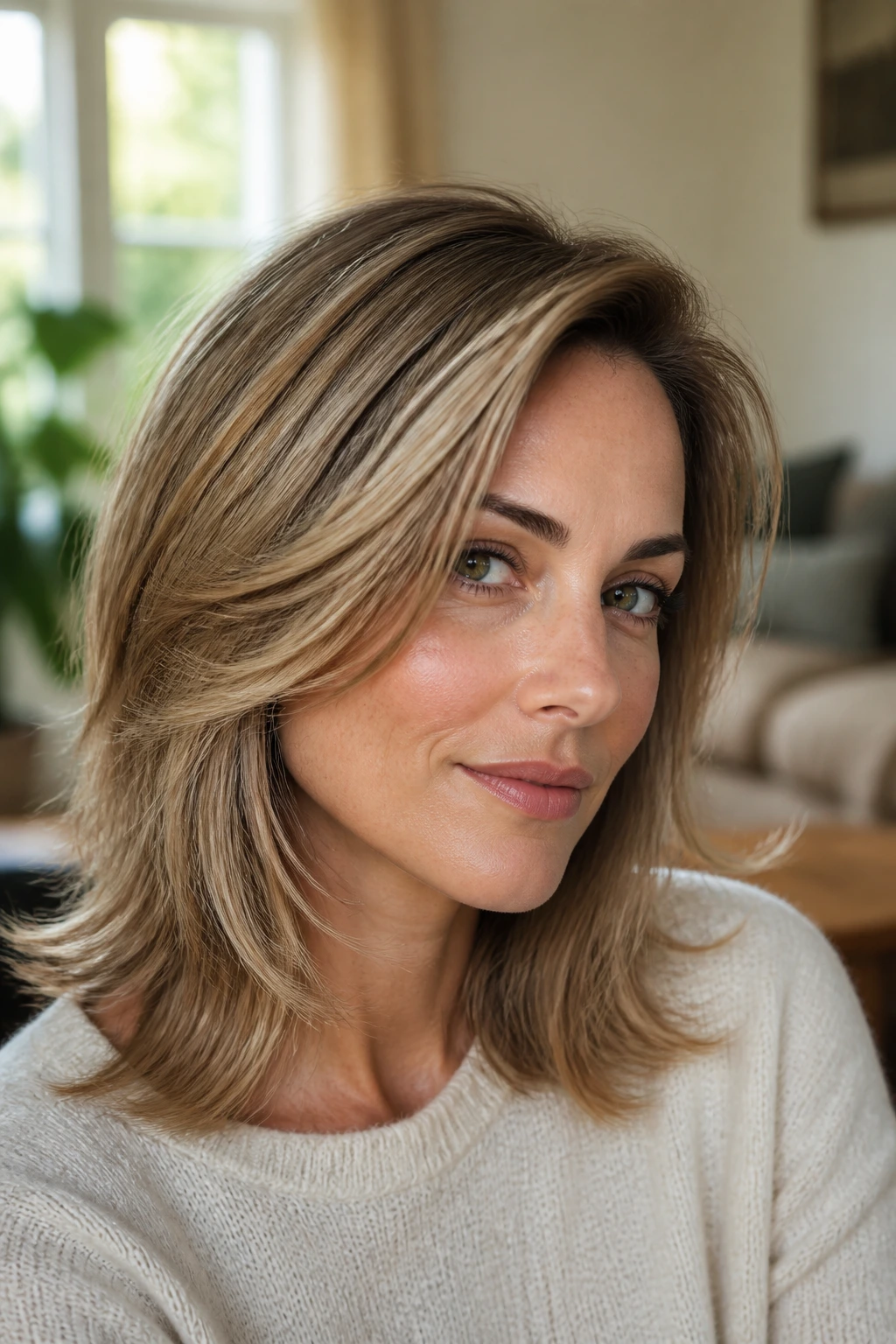
A side part can do more for flat medium hair than people give it credit for. Shift the hair away from its old rut, and suddenly the root area gets a lift that a center part sometimes won’t give you. Add feathered layers, and the whole cut starts to feel lighter without losing the body in the middle.
This shape has a bit of old-school glamour in it, but the modern version is softer and less stiff. The layers should skim, not fan out into hard wings.
Why it helps thin hair
- Creates lift at the root where hair usually collapses.
- Keeps the front from looking too heavy around the cheeks.
- Works especially well when the crown needs a little visual height.
If your hair sticks flat to one side all the time, this is a smart place to start.
9. Soft Wolf Cut for Wavy Hair

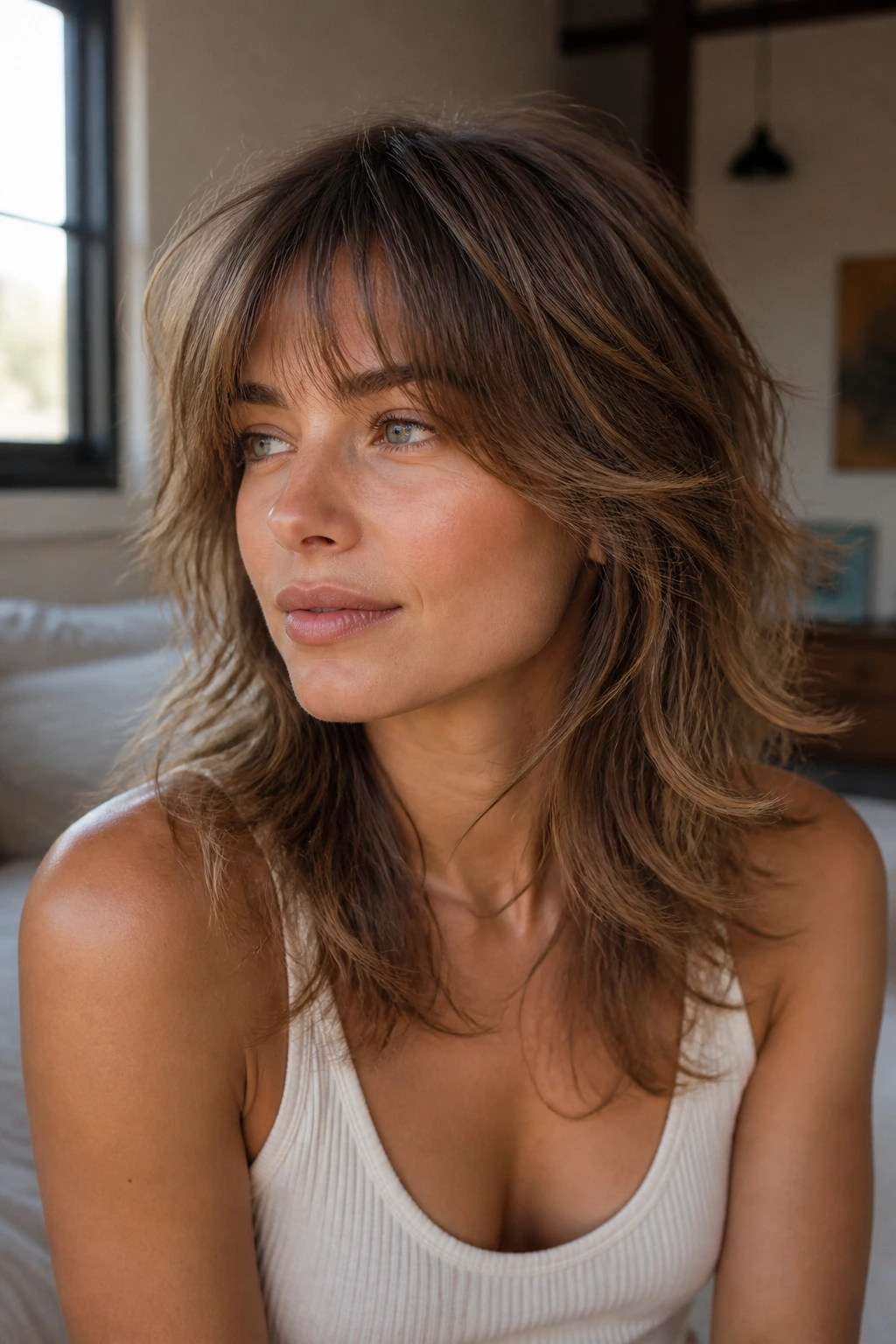
The wolf cut can be too much on thin hair if the crown is chopped aggressively. The soft version is a different animal. It keeps the silhouette loose, with shorter layers around the top and longer pieces through the ends, but the contrast is dialed back.
That makes it a strong choice for naturally wavy medium hair. The wave pattern gives the cut some structure, so you don’t have to over-style it to see the shape. A little mousse, a little scrunch, and the pieces separate in a way that reads textured instead of stringy.
If your hair is very straight and very fine, go carefully here. The wrong wolf cut can make the top feel light in all the wrong ways.
10. U-Shaped Cut That Keeps the Back Dense
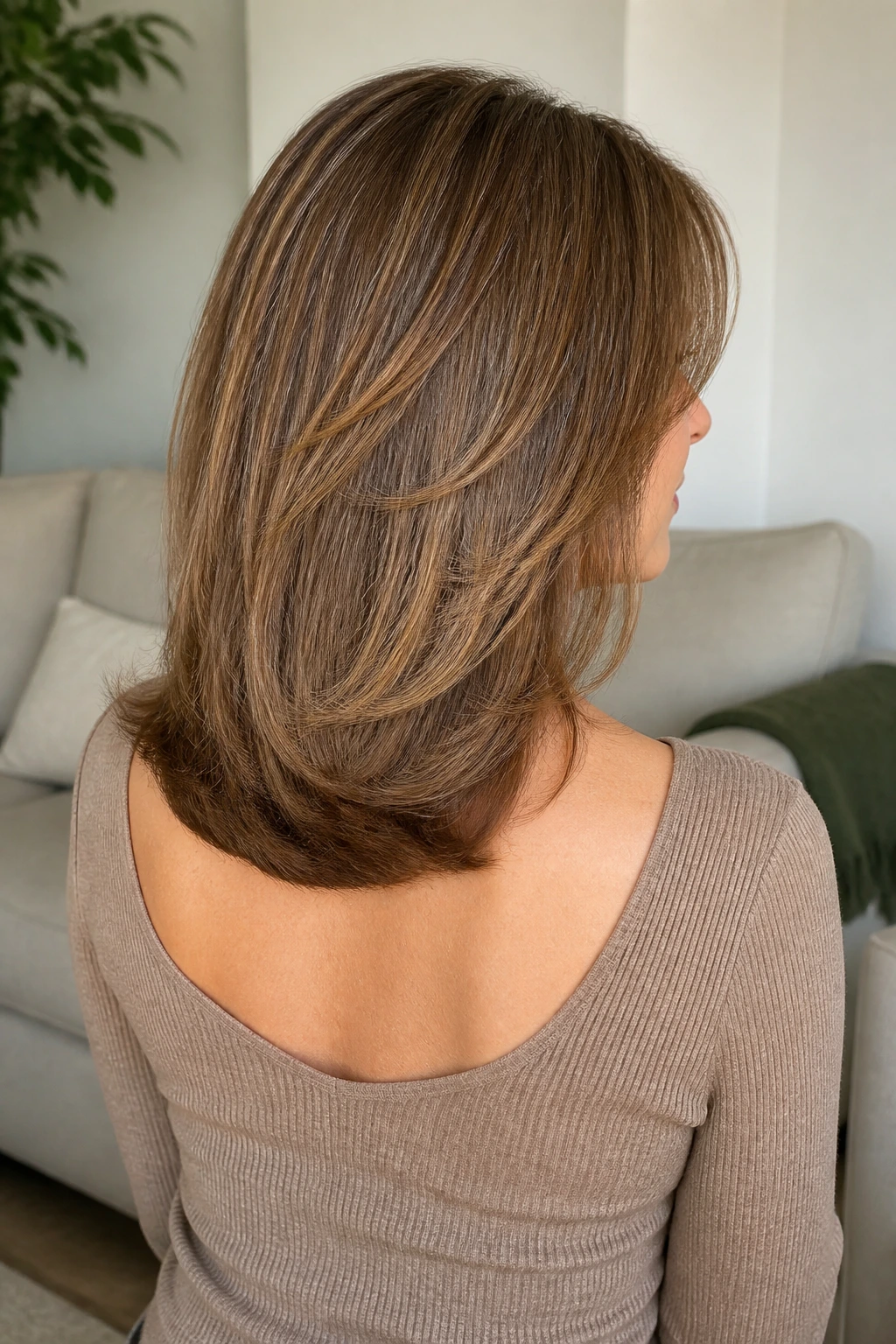
A U-shaped medium cut is underrated. The curve in the back keeps the hemline looking full while the sides fall a little shorter and frame the face. On thin hair, that curve is a gift, because it stops the bottom from feeling like a straight, flat line.
This shape is especially nice if you wear your hair down more than half the time. The back has enough presence to look substantial, and the front pieces don’t need to do all the visual work. That’s a big deal when density is limited.
If you want to ask for it simply, say you want a soft U shape, not a sharp V. A V can make thin hair look more tapered than you wanted.
11. A-Line Lob with a Lifted Nape
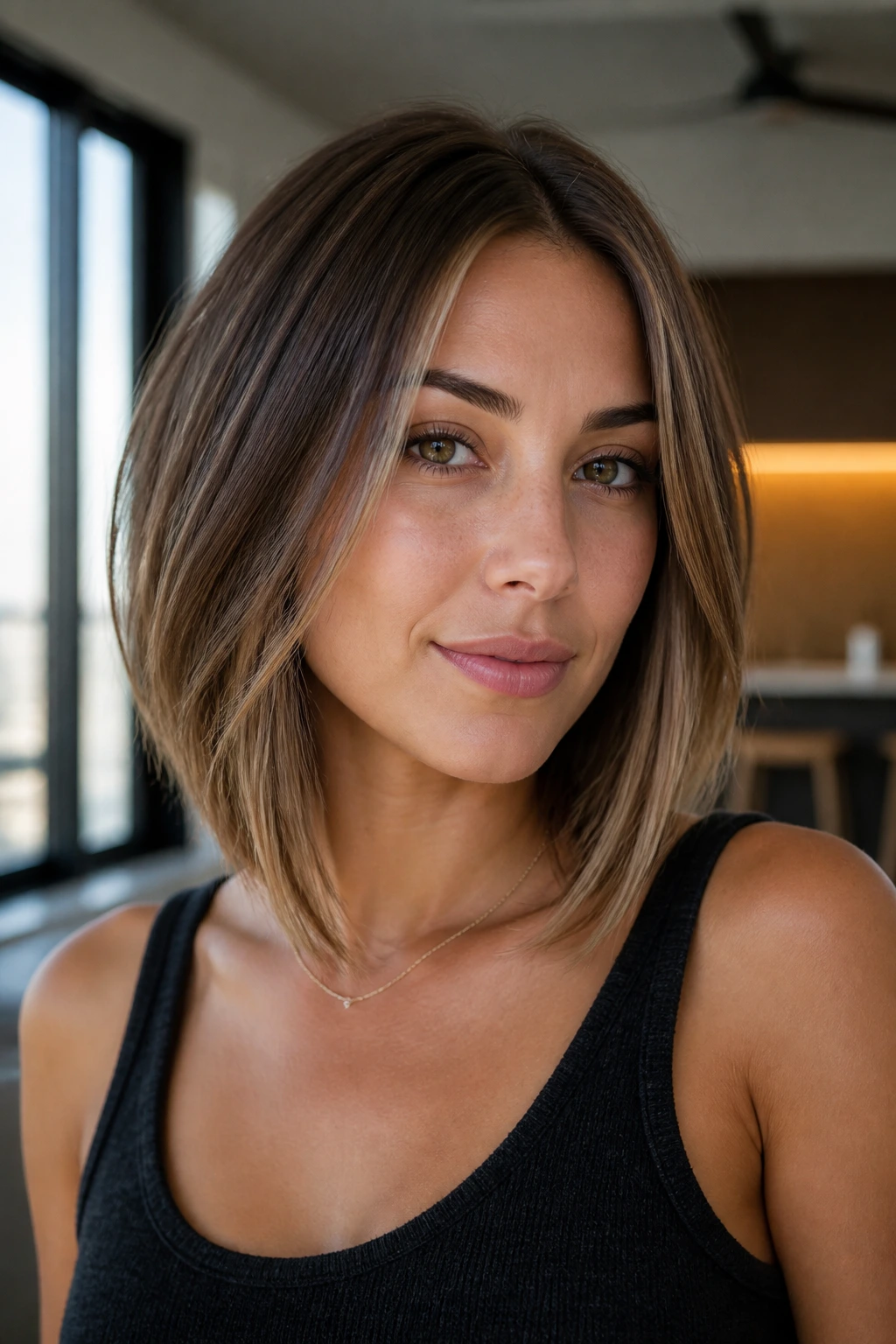
The A-line lob gives you a little forward motion without shaving away thickness. Shorter in the back, longer in the front, it creates a clean angle that helps medium hair look sharper and fuller at once.
This cut is good for people who like to tuck hair behind the ears or wear one side slightly forward. The angled front adds movement around the jaw, which can make the whole style look more dimensional. And because the back is a touch shorter, the nape gets a bit of lift.
It’s a polished cut. Clean lines matter here. If the angle is too dramatic, thin hair can start to look like it’s been sliced into two pieces.
12. Updated Rachel Cut for Medium Hair
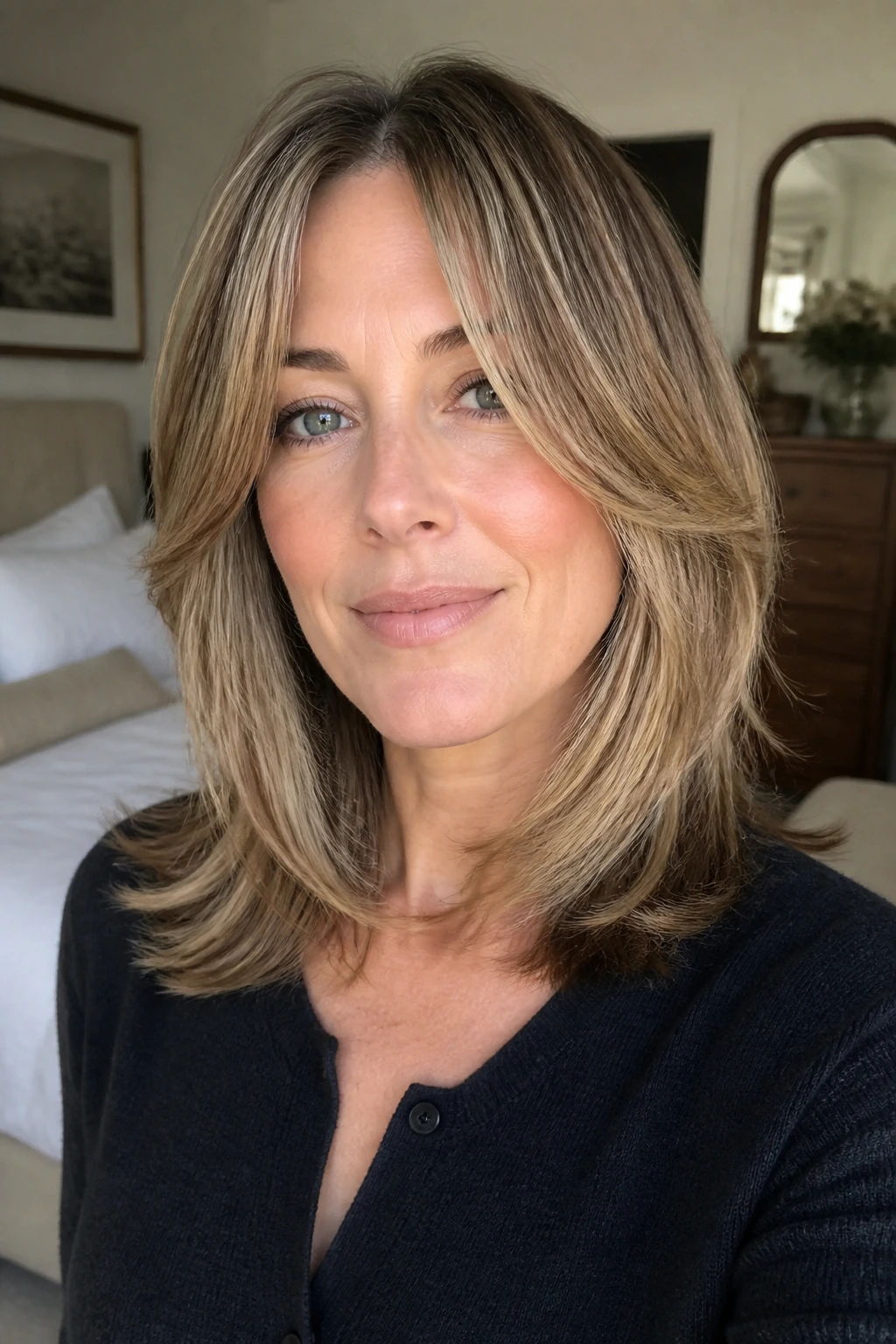
The Rachel gets mentioned a lot, but the version that works on thin medium hair is softer than the one people remember from old photos. Think shoulder-grazing length, a face frame that sweeps away from the cheekbones, and layers that bend instead of spike.
This cut is all about movement in the front. It gives shape near the face while keeping enough weight through the back to avoid the feathered-out, over-layered look that can make thin hair feel flimsy.
A blowout helps a lot. Not a complicated one. Just enough round-brush work to encourage the layers to turn outward and away from the face. That little curve is the whole point.
13. Invisible Layers for Straight, Fine Hair
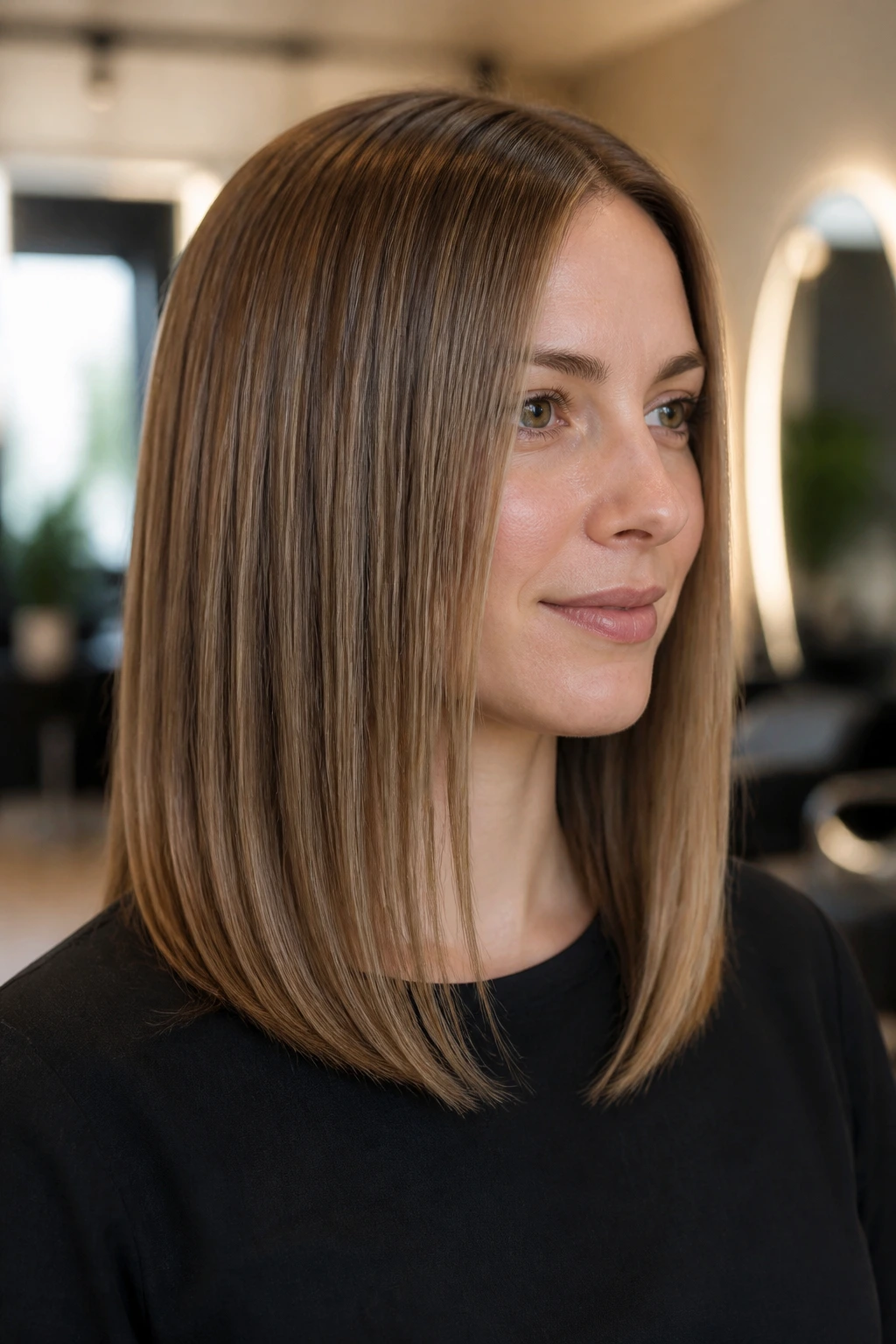
If your hair is straight and flat, obvious layers can backfire. Invisible layers solve that by hiding the movement inside the haircut instead of broadcasting it across the surface. The exterior still looks smooth and dense, which is exactly what fine hair often needs.
Ask for this
Tell your stylist you want internal layering with a blunt or softly curved outside line. You want the hair to swing, not fray. That sentence matters more than most people think.
This cut works best when you use lightweight product and a smooth finish. Too much texture spray can make the hair look separated at the wrong spots. Keep the exterior sleek, and let the hidden layers do the lifting.
14. Bottleneck Bangs with Low-Drama Layers

Bottleneck bangs are one of those quiet fixes that can change the whole face. They start a little narrower near the brow and widen softly around the cheekbones, which makes them easier to wear than a heavy straight fringe. On thin medium hair, that shape gives front-of-the-face interest without asking the rest of the haircut to lose volume.
The layers behind them should stay long and low-key. You want the bangs to lead, not compete with a bunch of short pieces all over the head. That’s where a lot of thin hair cuts go wrong.
This is a strong option if your forehead feels a little long in proportion to your face, or if you simply want the haircut to look finished even on a simple air-dry day.
15. Swoopy Face Frame and Long Mid-Length Layers
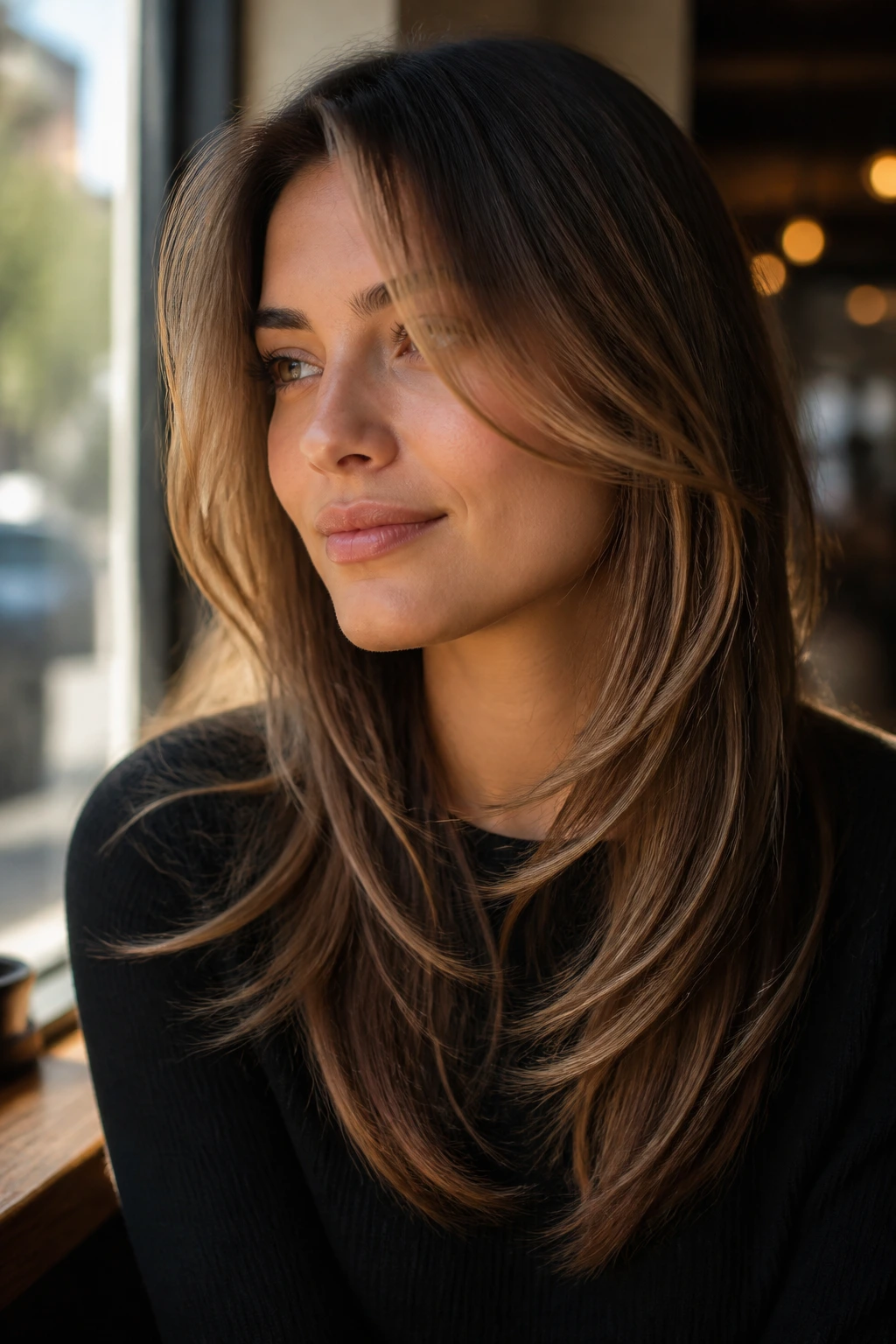
This is the cut for someone who wants the front of the hair to do the talking. The swoopy face frame starts around the chin or just below it, then travels back in a long curve that leaves the sides feeling airy without stripping the density from the back.
It’s a very flattering shape on thin medium hair because it gives the illusion of movement and fullness where people look first: around the cheeks, jaw, and shoulders. The rest of the layers stay long enough that the haircut doesn’t break apart.
A large round brush or a 1.25-inch iron bend makes this look come alive. Straight, unstyled front pieces can feel too tame. Give them a curve.
16. Ghost Layers That Disappear into the Length
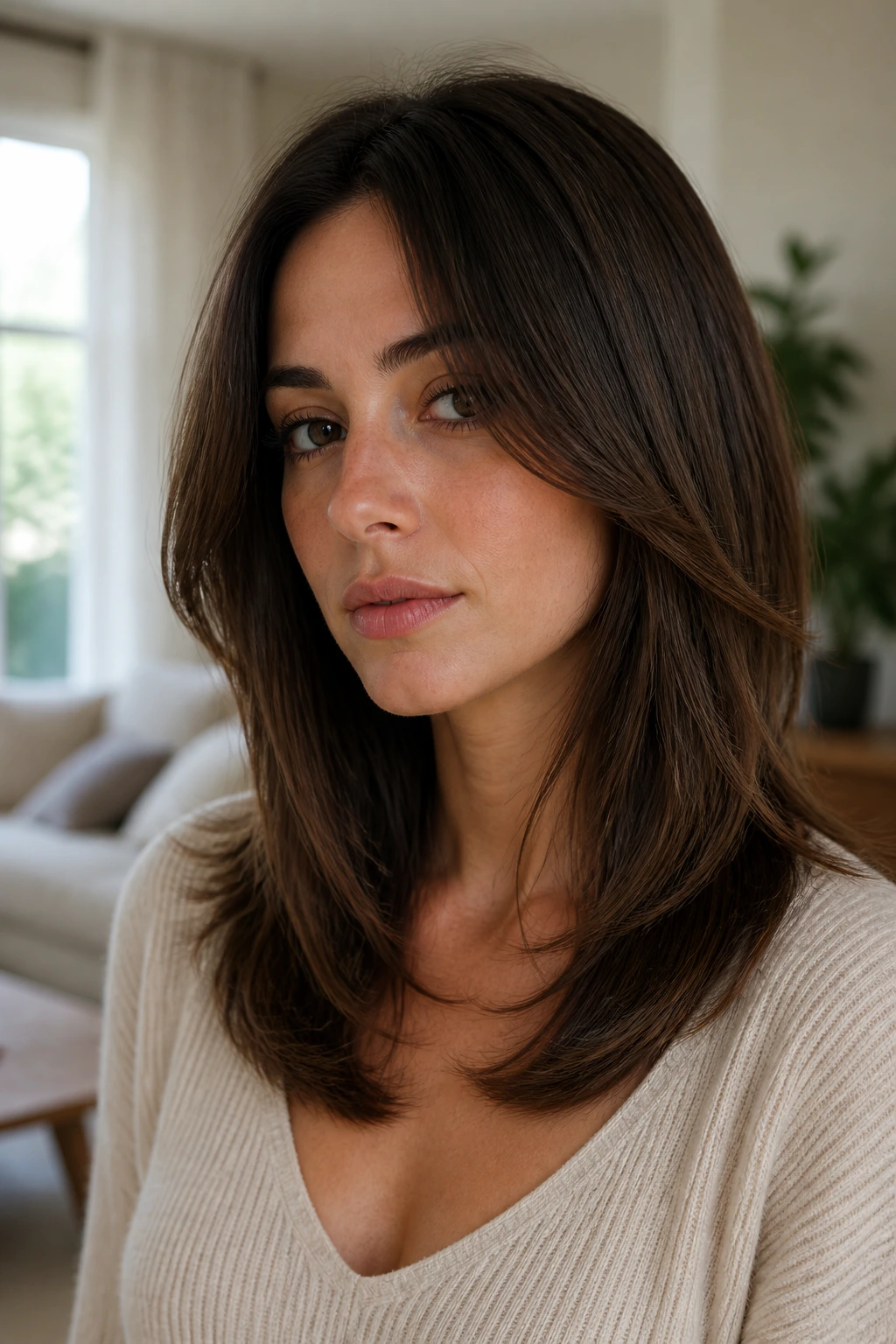
Ghost layers are exactly what they sound like: layers that almost disappear when the hair hangs straight. That makes them brilliant for thin hair that needs movement without losing the look of density.
You won’t see a hard staircase of layers. You’ll see hair that bends a little more easily, moves a little more cleanly, and falls with less drag through the mids and ends. It’s subtle, and that subtlety is the point.
When they work best
- Straight hair: The hidden movement stops the style from reading flat.
- Fine strands: You keep the outer line intact.
- Low-maintenance routines: They grow out neatly and don’t demand a perfect blow-dry.
If you like haircuts that look expensive because they’re controlled rather than fussy, this is one to save.
17. Tapered Ends with a Soft Flip

A soft flip at the ends can make medium hair look fuller in a way that feels almost old-fashioned, but in a good way. The taper keeps the hemline moving, while the flipped finish stops the ends from hanging dead straight against the neck and shoulders.
This works best when the taper is gentle. You want the hair to narrow a little, not thin out into wisps. There’s a difference, and thin hair needs you to respect it.
If your hair tends to flip out on its own anyway, this cut can cooperate with that habit instead of fighting it. Sometimes the best haircut is the one that stops arguing with the hair you already have.
18. Textured Blunt Cut That Fakes Thickness
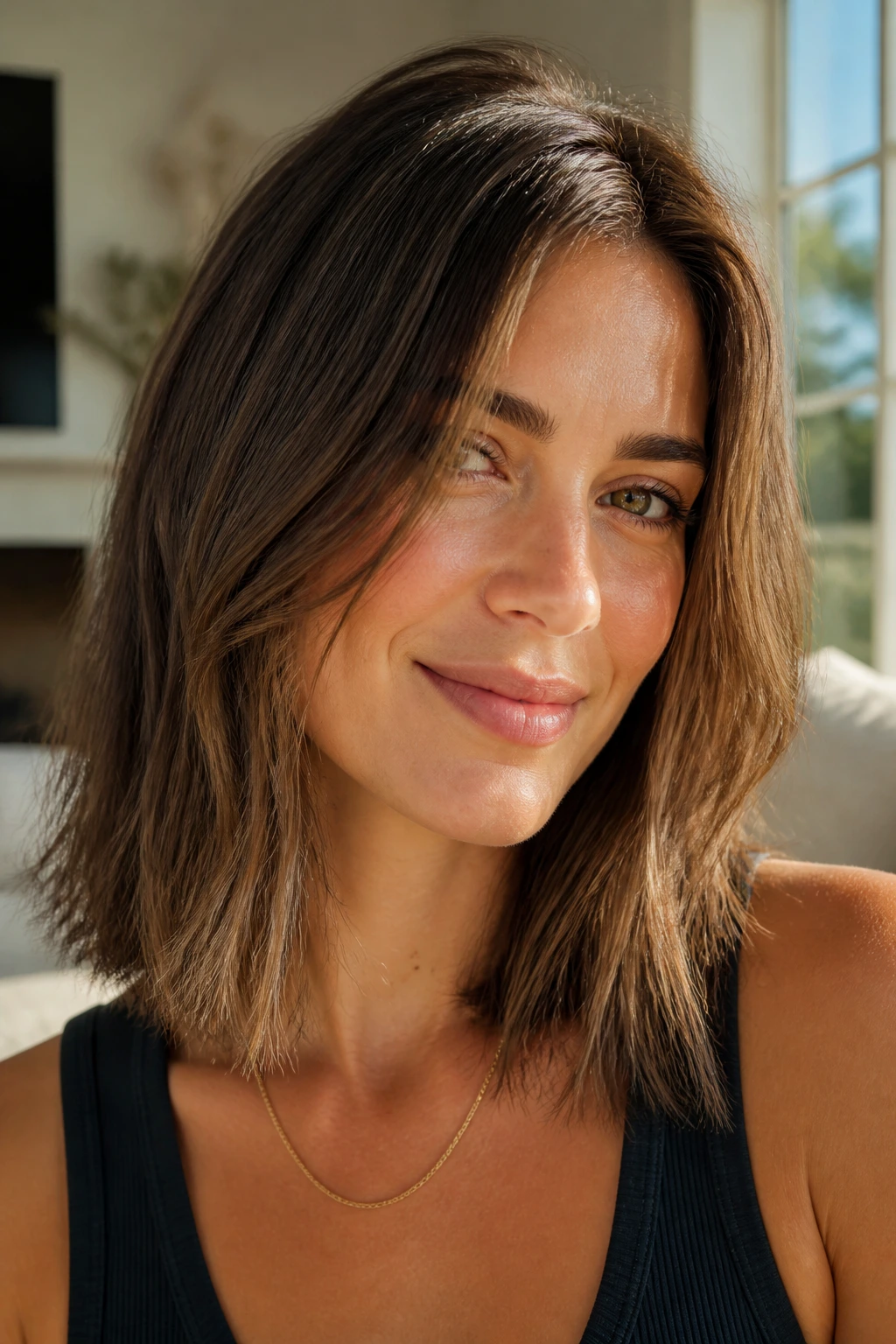
A blunt cut doesn’t mean boring. On thin medium hair, a blunt line can be the very thing that makes the hair look stronger, because it gives the eye one solid edge to register. A tiny bit of texture through the interior keeps it from becoming blocky.
I like this cut for people who want the ends to look dense from every angle. The haircut doesn’t rely on lots of layers. It relies on a strong outline and smart styling.
Use mousse or a root-lifting foam at the base, then keep the ends smooth. If you rough up the entire head, the bluntness disappears. That clean line is the asset.
19. Deep Side Part with Shoulder-Grazing Layers

A deep side part can rescue a haircut that’s gone a little too limp in the middle. Shift the bulk over, and the crown suddenly looks taller. Add shoulder-grazing layers, and the silhouette gets movement without sacrificing too much width at the bottom.
This is one of those cuts that works better than it sounds. The part itself does some of the volume work, which means the haircut doesn’t need to be overly complicated. That’s a nice thing when your hair is thin and you don’t want daily gymnastics.
Good signs this cut suits you
- One side of your hair collapses faster than the other.
- Your crown goes flat by midday.
- You want lift without short bangs.
If that sounds familiar, start here.
20. Curved Lob That Hugs the Jawline
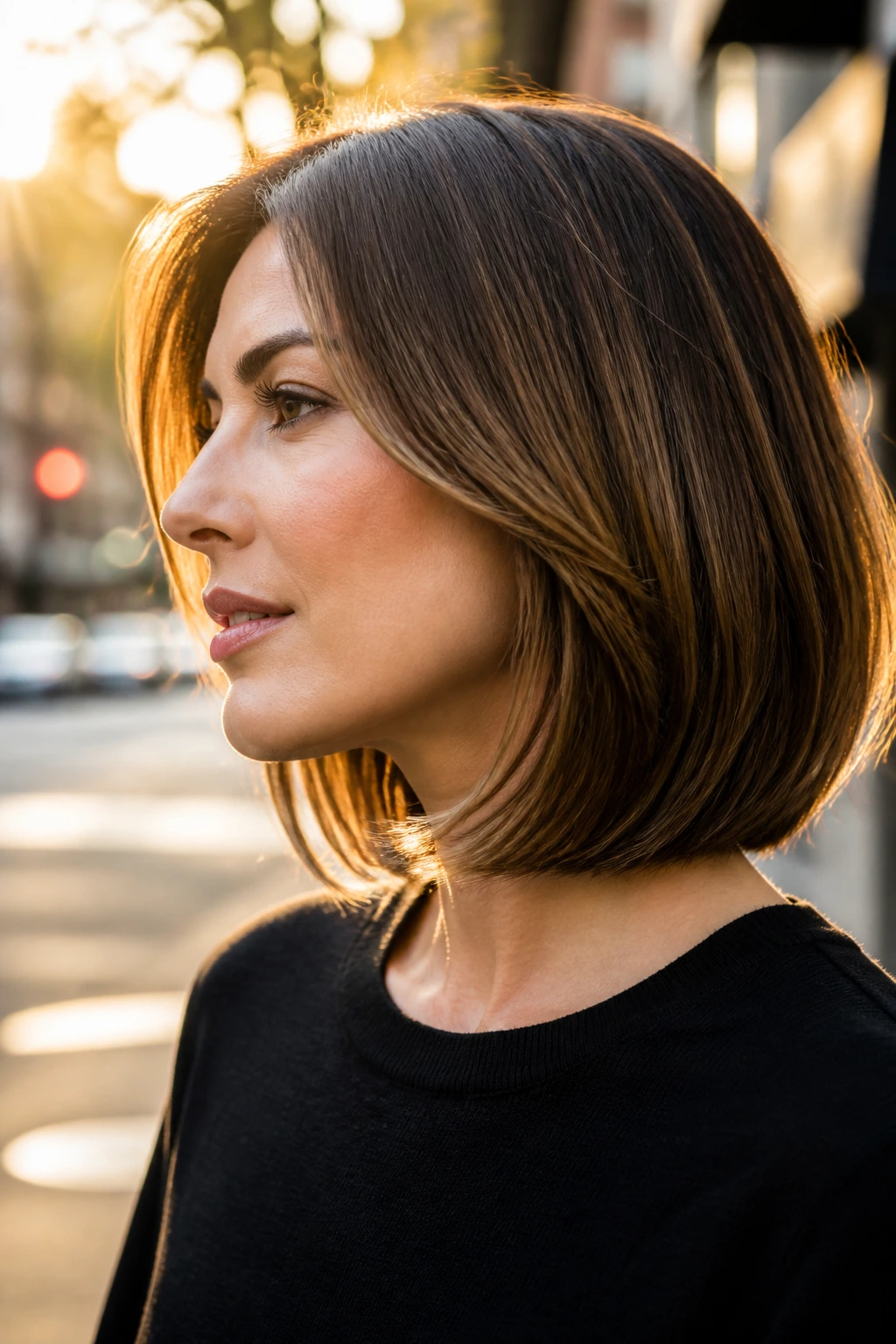
The curved lob is all about line. Instead of dropping straight down, the edges bend slightly inward around the jaw, which gives medium hair a sense of fullness at the perimeter. Thin hair looks better when the outline is deliberate, and this cut understands that.
It’s especially flattering if you want the haircut to bring attention to the jaw and lower cheek area. The curve creates a nice frame without needing layers to do all the visual labor.
A 1.25-inch curling iron or a round brush can sharpen the curve just enough. Don’t overdo the bend. If every inch of the hair turns under, it starts looking stiff.
21. Light Razor Layers on Healthy Ends
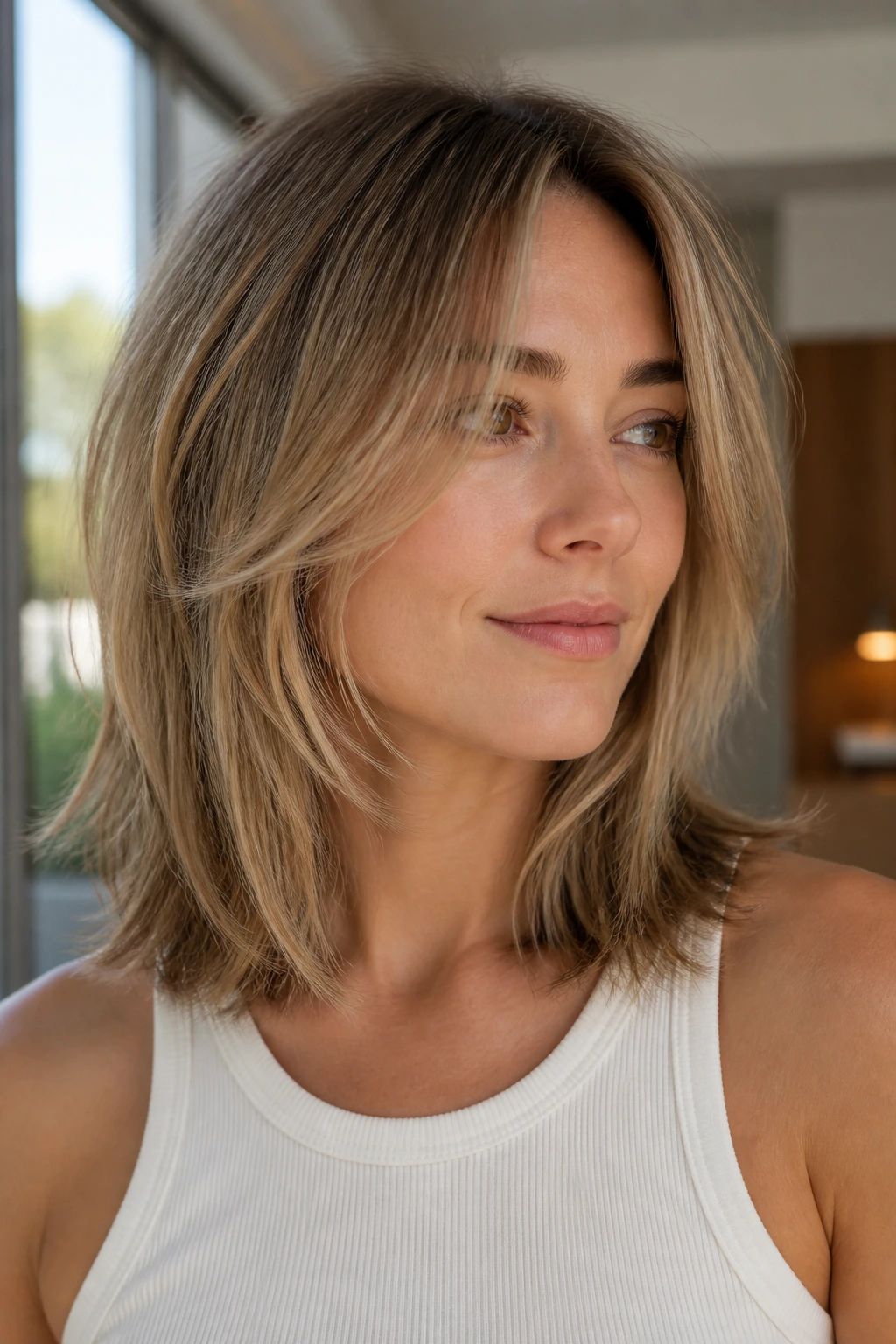
Razor layers can be lovely on medium hair, but only when the hair is healthy enough to handle them. Used lightly, they create soft movement and a slightly airy edge. Used too hard, they shred the ends and make thin hair look even thinner.
This is the haircut I’d only choose if your hair is not prone to breakage and you actually like a piecey finish. The result can be chic and soft, but it asks for careful hands. No aggressive thinning. No over-texturizing.
The best version looks as if the hair is moving naturally, not as if someone attacked it with a razor and called it texture.
22. Center-Part Face Frame with Long Symmetry
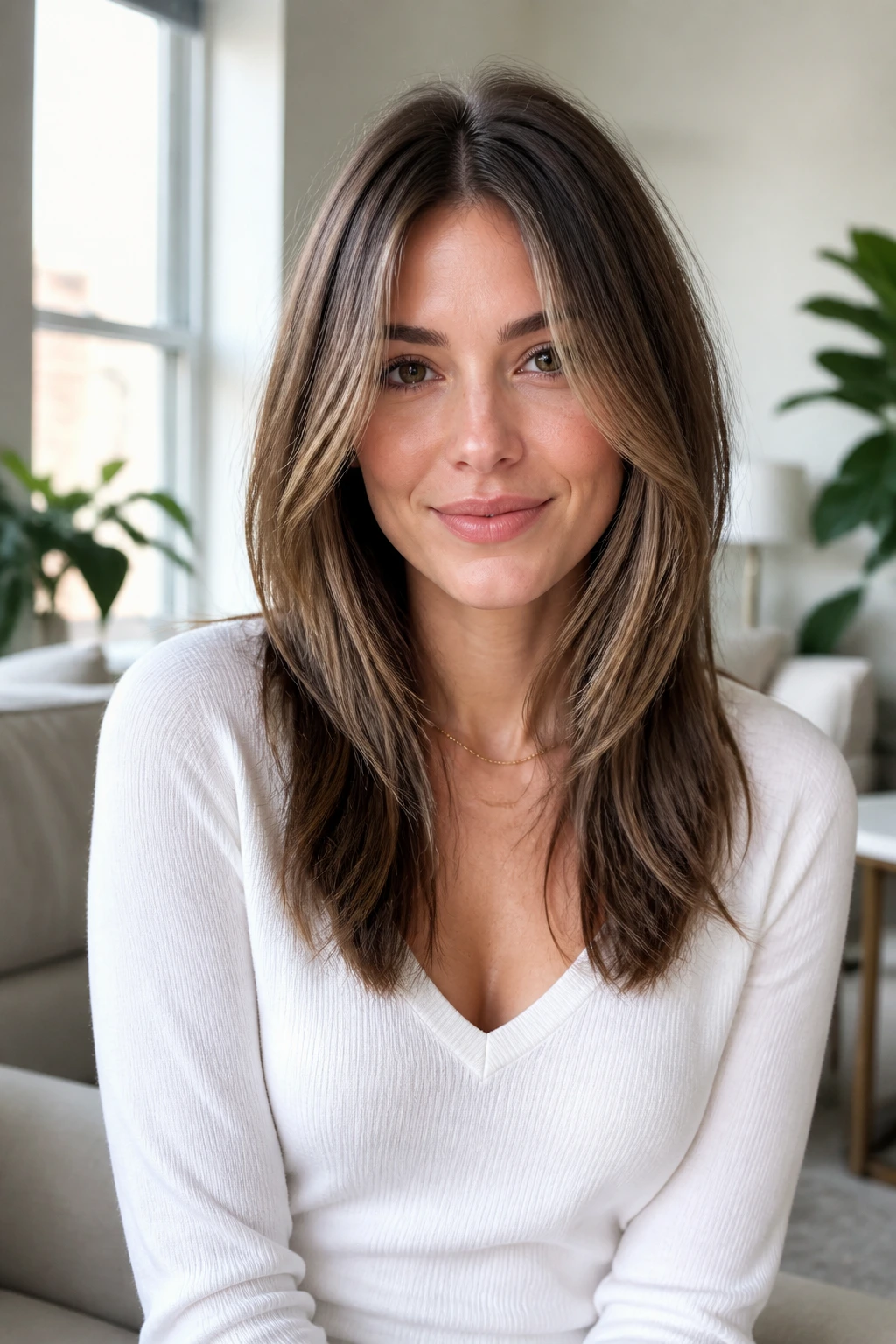
Some thin hair looks better with a center part because it keeps the left and right sides visually even. If that’s your situation, a long symmetrical face frame can give you shape without making one side heavier than the other.
This cut tends to work best when the shortest pieces begin around the chin and blend smoothly into the rest of the length. The face frame does the job, but the layers behind it stay long enough to preserve density.
It’s a clean, simple look. The trick is in the balance. Too many layers around the cheeks and the symmetry starts to break apart.
23. Wavy Midi Cut That Builds Lift at Mid-Length
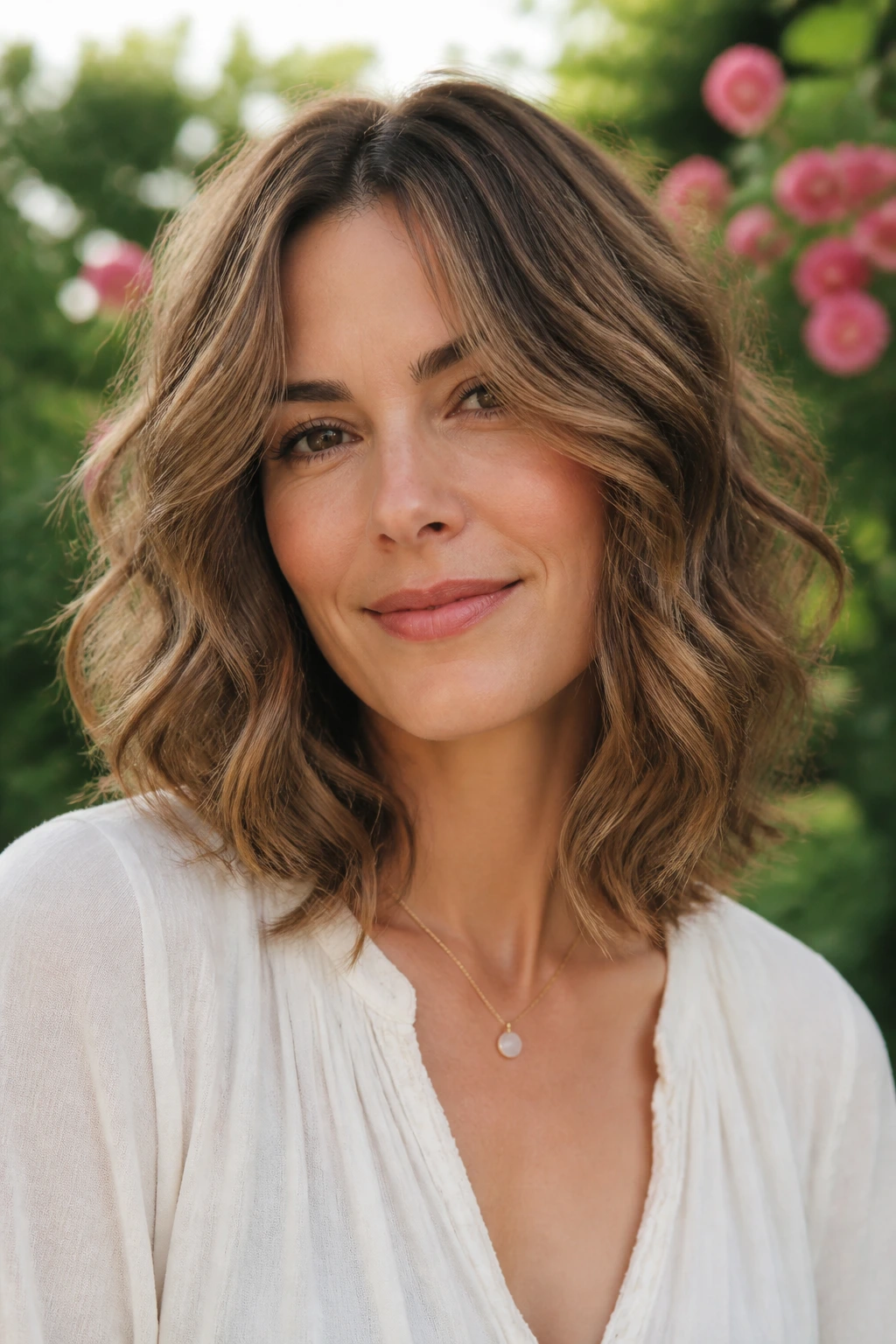
Here’s a cut that lets the wave pattern do some of the work for you. Instead of piling all the visual interest at the top or the ends, the layers sit through the middle so the hair looks fuller where the bends happen.
That matters because thin wavy hair can look flat at the root and stringy at the ends if the weight isn’t placed carefully. Mid-length layering gives the wave somewhere to pop. The shape reads fuller without needing a giant amount of styling.
A diffuser helps, but you don’t need to fuss over it. Scrunching in mousse and letting the hair dry with a little control can be enough if the cut is right.
24. Polished Shag with a Smooth Finish
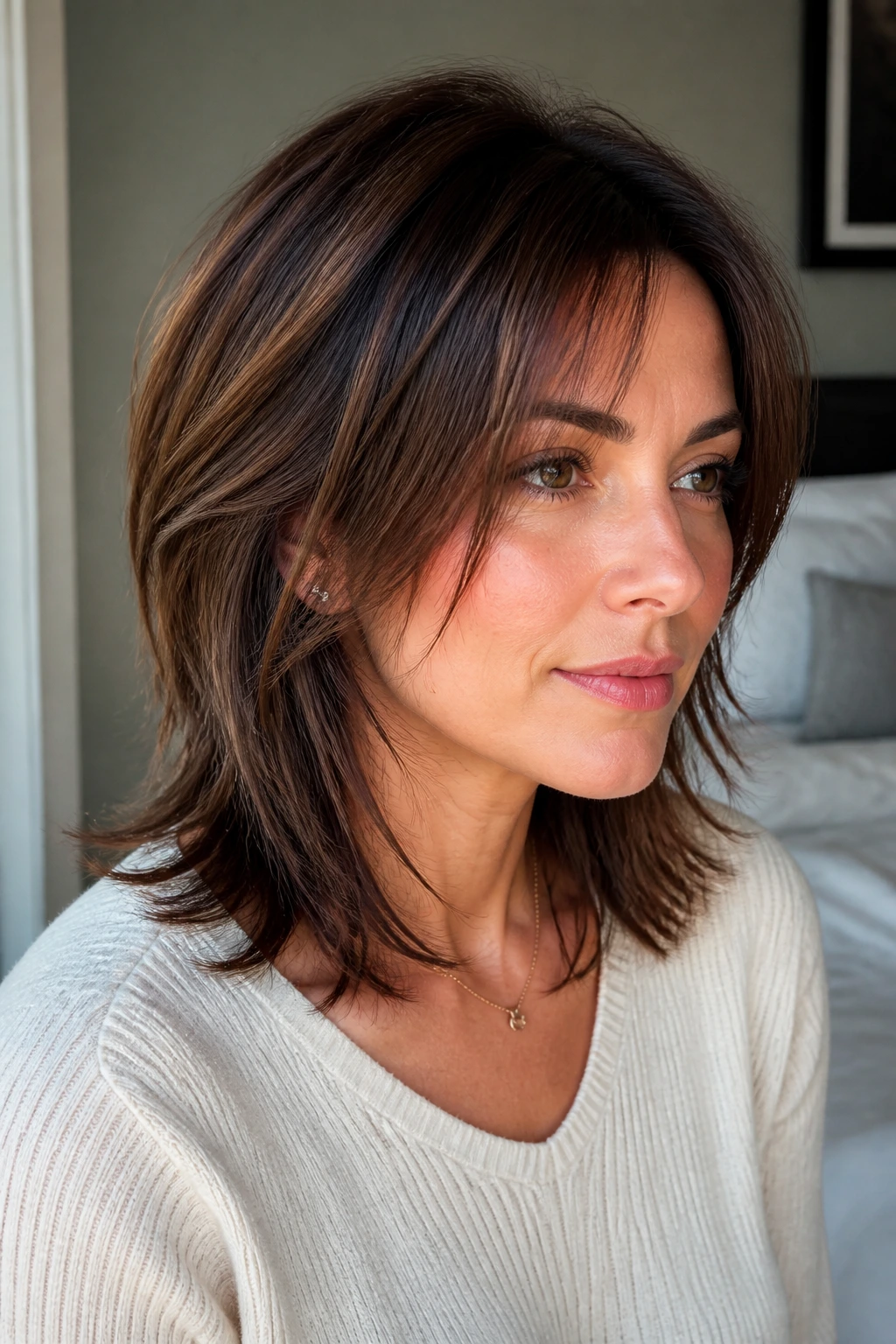
This is the quieter cousin of the shag. Same general energy—movement, air, soft layers—but with a smoother finish and less mess around the crown. That makes it a lot easier to wear for thin medium hair that needs texture but not chaos.
The pieces around the face should stay soft and blended. Nothing blocky. Nothing too short. The whole point is to keep the haircut looking touched, not overworked.
Better than a rough shag when…
- You need the cut to work at the office.
- You like layers but hate a deliberately tousled look.
- Your hair gets tangled easily and can’t handle too many short pieces.
If you’ve always liked shags in photos but not in your mirror, this is the compromise worth trying.
25. Low-Maintenance Grow-Out Cut That Stays Friendly for Weeks
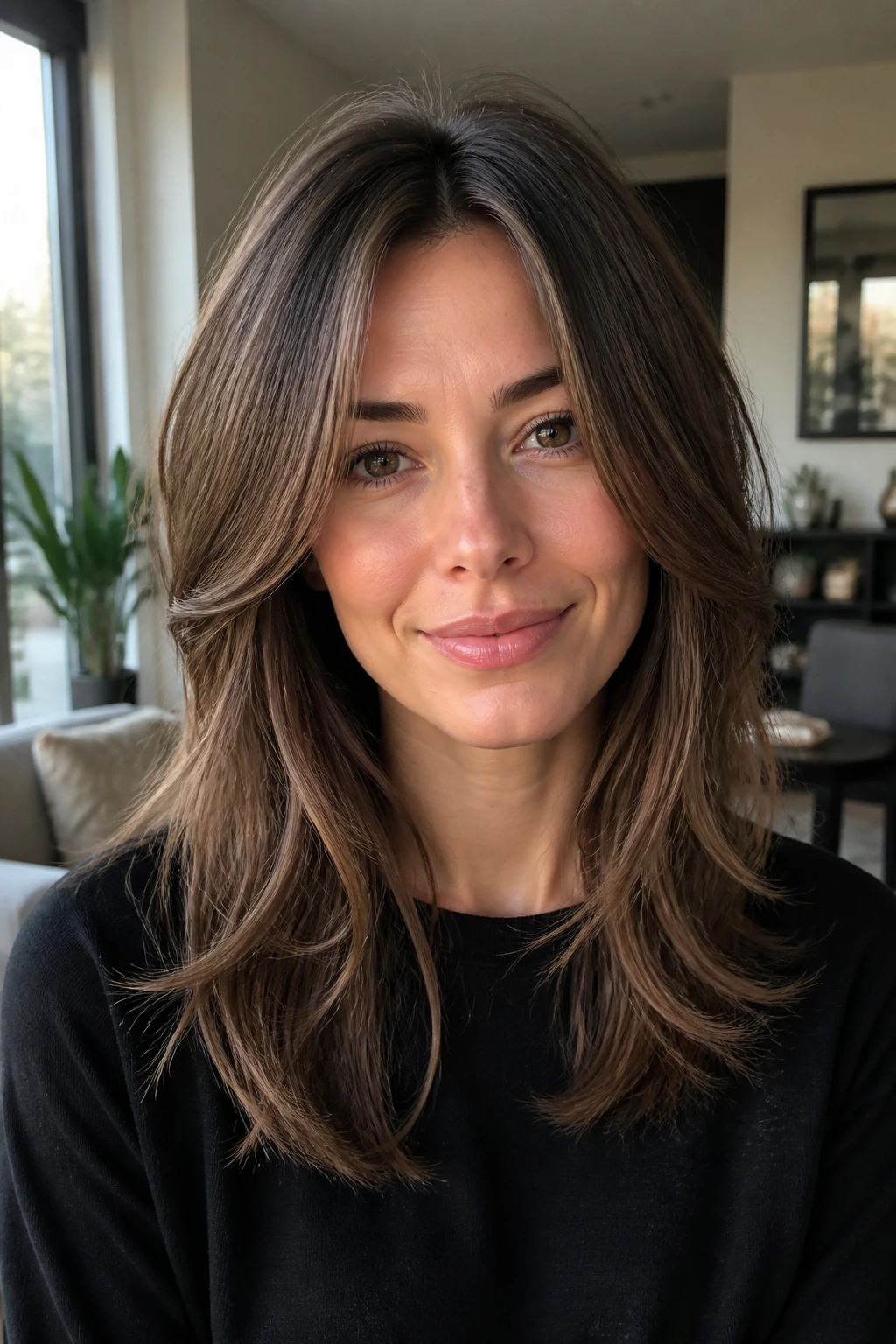
The smartest layered haircut for thin medium hair might be the one that keeps its shape while it grows. This version uses long face-framing pieces, a softened perimeter, and layers that start low enough to avoid obvious shelf lines after a few weeks.
That matters because thin hair tends to show its grow-out faster than dense hair does. Every short layer becomes more visible as the shape slips. A better grow-out cut doesn’t fight that process. It simply gives you a cleaner transition.
Ask for soft, long layers with a strong outer line. If you can still tie it back, tuck it behind your ears, and part it differently without the cut falling apart, you’re in the right territory.
Why Layer Placement Matters More Than the Word “Layers”
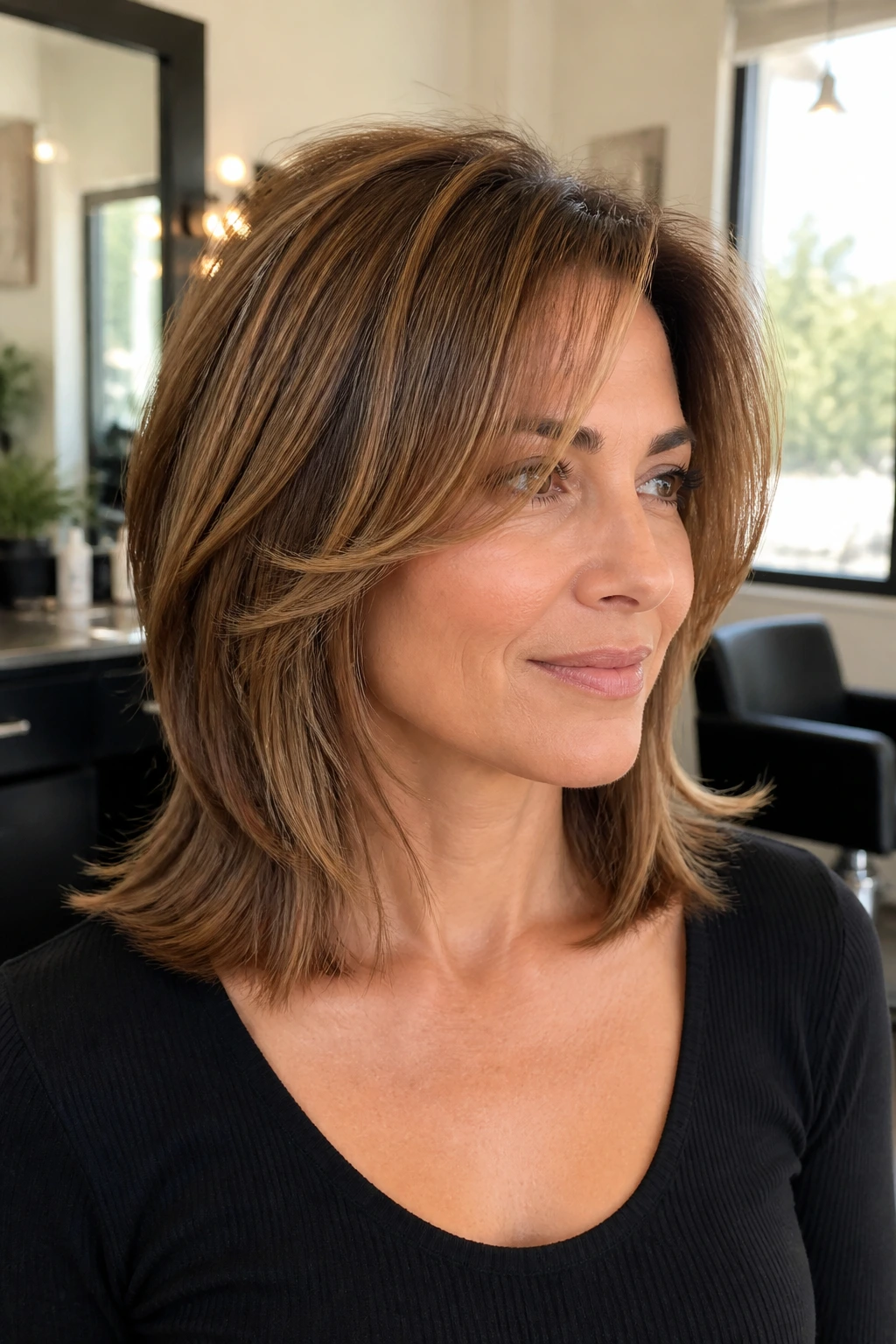
The word layers gets thrown around like it’s one haircut. It isn’t. On medium hair with thin hair, the difference between a flattering layered cut and a sad one often comes down to where the shortest pieces sit and how much weight stays at the bottom.
A layer starting at the cheekbone can build shape around the face without exposing too much scalp. A layer starting at the crown can lift the top, sure, but if the hair is low-density, that lift can turn into see-through patches. The scalp starts peeking through the mids, and the cut loses its strength.
The perimeter matters just as much. A blunt or softly curved hemline gives the eye a place to stop. Without that edge, thin hair can look wispy even when it’s freshly washed and blown dry. That’s why some of the prettiest cuts on this list are not the most layered ones. They’re the ones that know when to stop.
A good rule: if the hair is fine, keep the outer line strong; if the hair is dense but fine, you can usually take a little more off the inside; if the hair is both fine and sparse, be conservative and let face-framing layers do the heavy lifting.
Essential Tools for Styling These Cuts
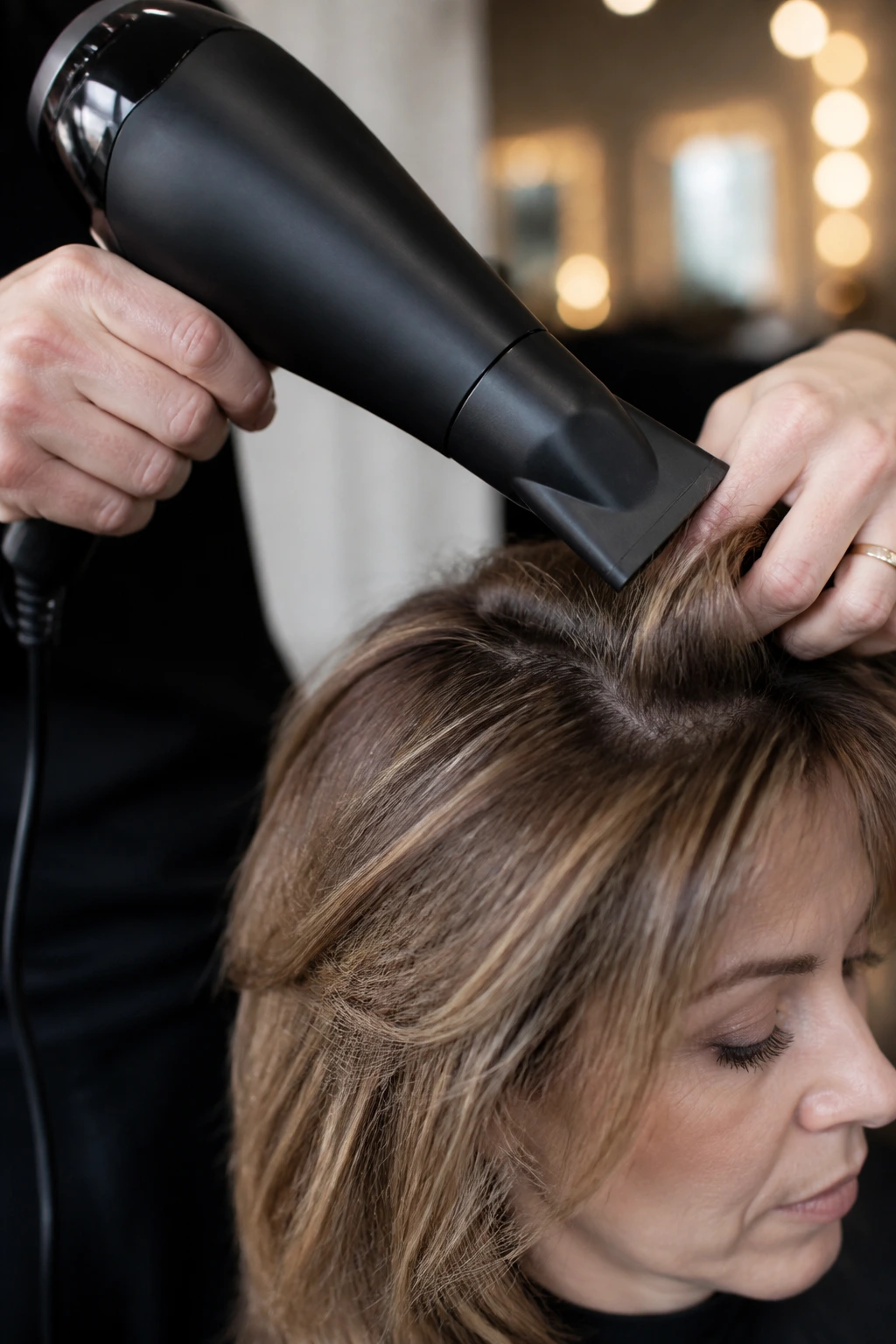
- A blow dryer with a narrow nozzle: Directs air at the roots so the crown lifts instead of puffing sideways.
- A 1-inch or 1.25-inch round brush: Gives collarbone bends, face-frame curves, and a smoother finish at the ends.
- A vent brush: Handy when you want quicker lift and less polished movement on busy mornings.
- Light mousse or root-lift foam: Adds grip to fine hair without soaking it in cream.
- Heat protectant spray: Fine strands burn and flatten faster than people expect.
- Texturizing spray: Best on mids and ends, not the scalp; too much near the roots can make hair look dusty.
- Duckbill clips or root clips: Useful while the hair cools, which is when lift actually sets.
- A fine-tooth tail comb: Clean parts matter on thin hair because messy sections can exaggerate sparseness.
- A 1-inch curling iron or flat iron: Good for bent ends and soft, not-too-perfect movement.
- A silk or satin pillowcase: Reduces friction so the cut doesn’t wake up full of static and kinked ends.
How to Ask for the Cut Without Losing Density
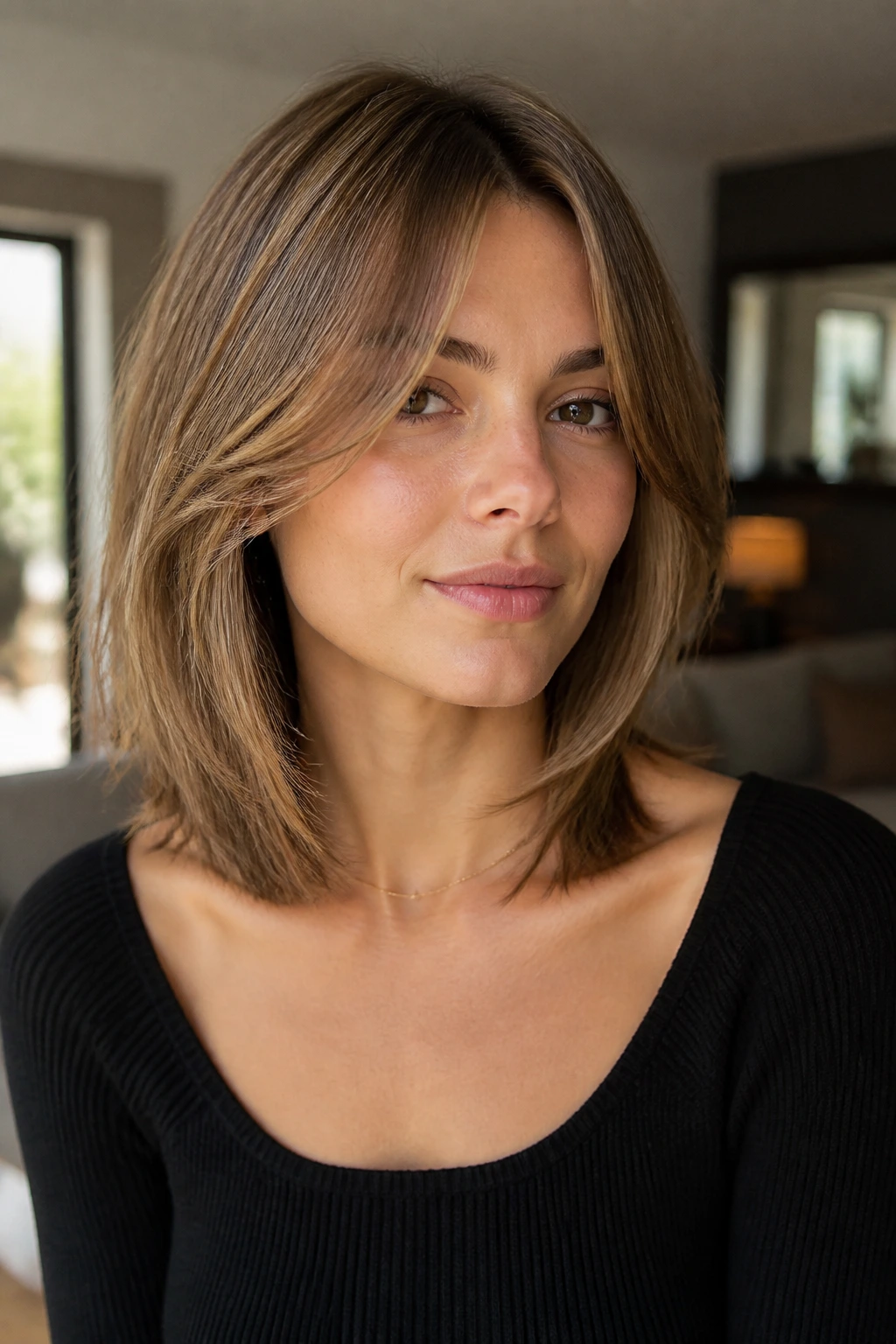
A reference photo helps, but it has to be the right kind of photo. Bring pictures that match your hair density and texture, not just your face shape. A sleek model with twice your thickness can make the same haircut look completely different in the chair.
Use measurements. Say collarbone, chin, cheekbone, jawline. Those words are more useful than “medium layers,” which can mean almost anything. If you want the haircut to stay full, say that out loud. Stylists are not mind readers, and many of them will happily remove more weight than you wanted unless you put a fence around the plan.
A few useful phrases:
- Keep the perimeter full
- Start the face frame at cheekbone or jaw
- Keep layers long and soft
- No heavy thinning or razor shredding
- I want movement, not a see-through outline
That last one is worth repeating. Thin hair usually needs the haircut to do the visual work, not a mountain of finishing product.
How to Style These Cuts So They Hold Their Shape
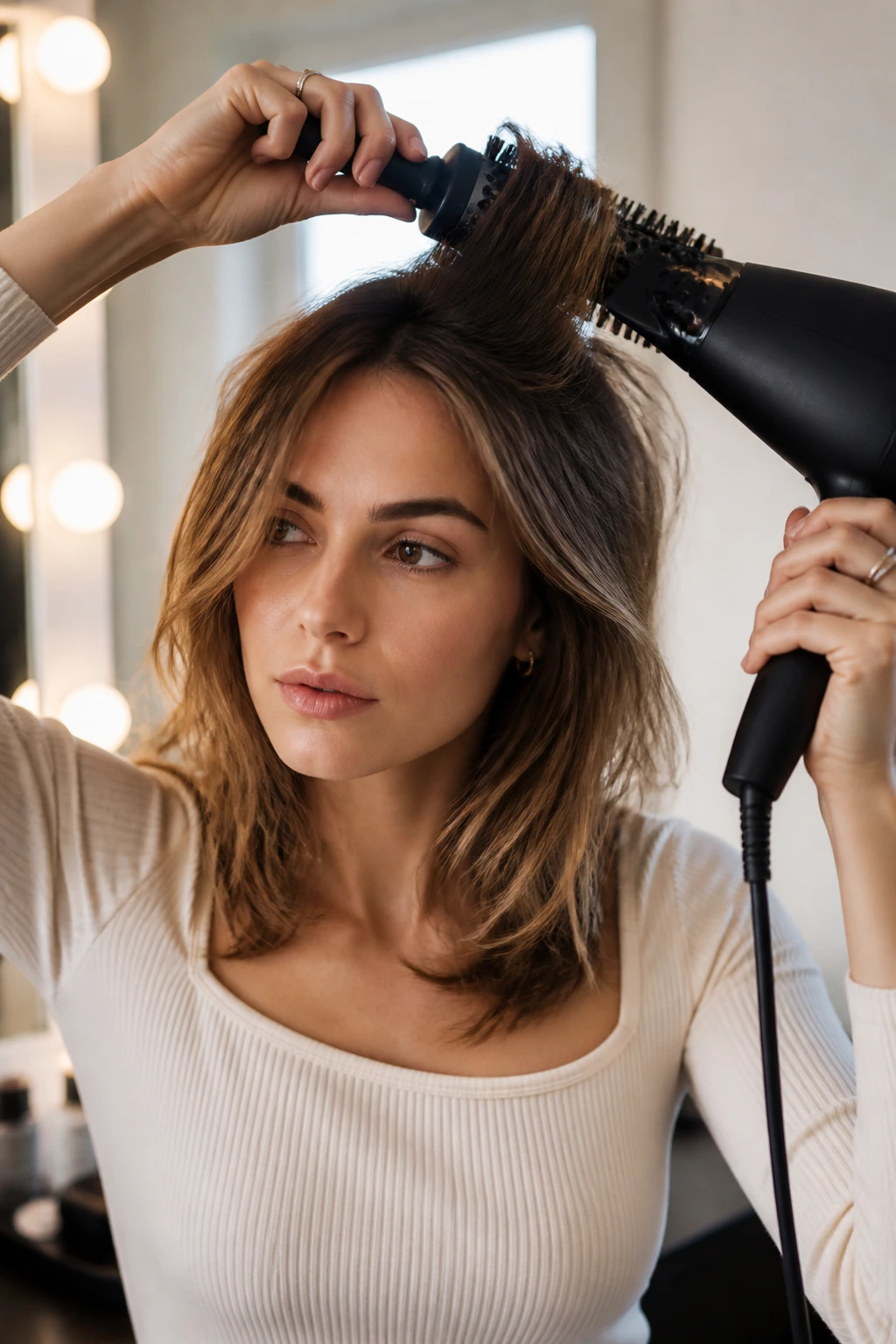
Blow-Dry Direction: Start at the roots. Aim the airflow opposite your part for the first minute or two, then switch back. That tiny detour helps the crown stand up instead of settling into the scalp.
Product Load: Use less than you think. A golf-ball amount of mousse can be right for fine hair; a palmful usually isn’t. Keep heavier creams and oils off the roots, or the cut will collapse before noon.
Finish: Bend the bottom 1 to 2 inches rather than curling the entire head. A soft undercurve on the ends makes the haircut look intentional without stealing length. The goal is shape, not a pageant blowout.
Day-Two Rescue: Mist the roots with dry shampoo, clip the crown up for ten minutes, and shake it out with your fingers. Brushing everything again usually makes thin hair lose the little lift it had left. Sometimes a clean middle part is the problem. Moving it an inch off-center can wake the whole cut up.
If your hair air-dries well, let the roots dry upward with clips and leave the mids mostly alone. If it does not, don’t force a natural routine onto it. Thin hair is honest. It tells on bad styling fast.
Extra Moves That Make Fine Hair Look Fuller
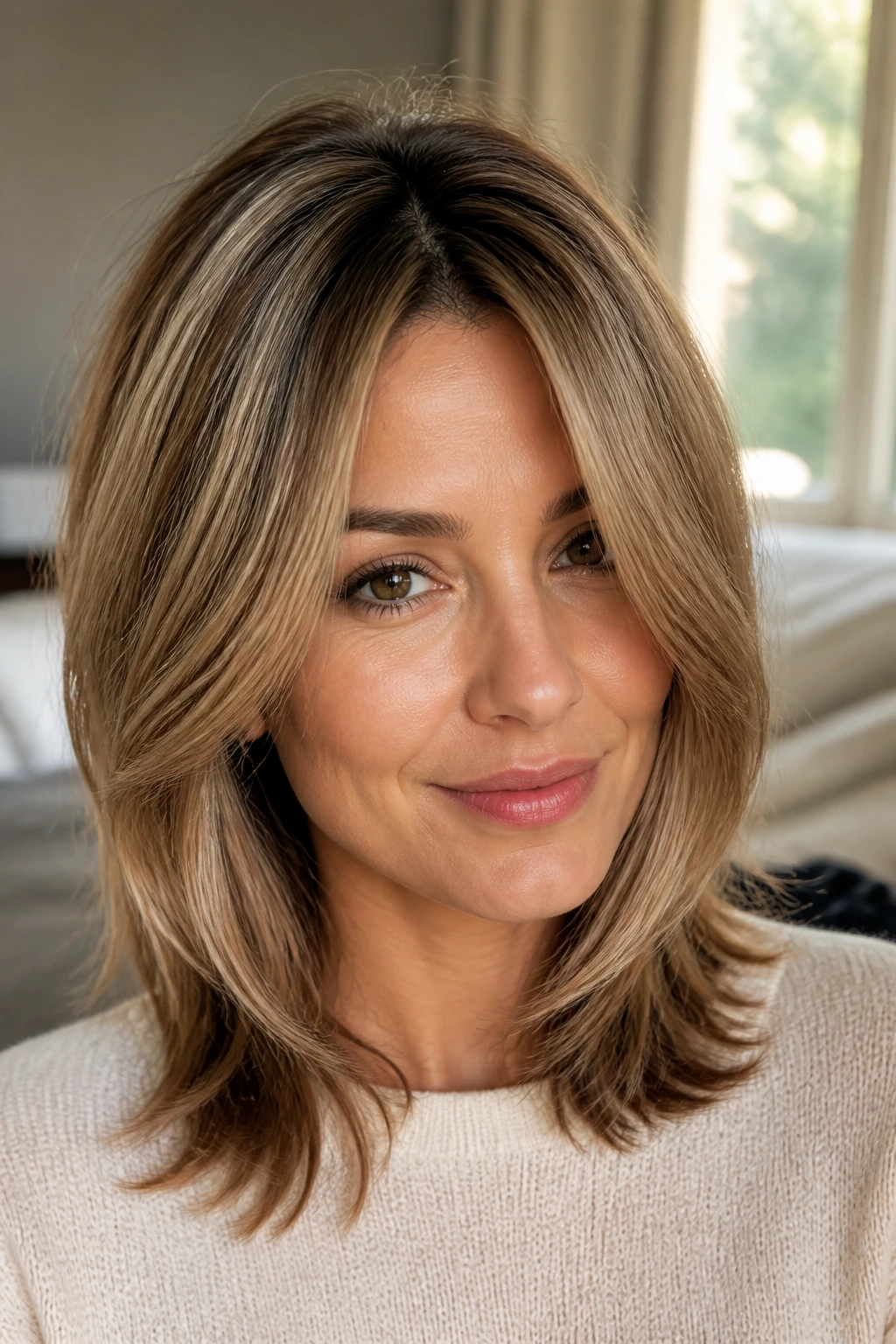
Color Depth: A few subtle lowlights or a soft root shadow can give the haircut more visual thickness. One flat, all-over shade can make layers disappear. A little depth near the underside and around the face gives the eye more to read.
Part Tricks: Shift the part slightly from where you normally wear it. Even a one-inch move can create root lift that lasts longer than teasing. It’s low effort, and it works.
Face Frame: Ask for face-framing layers that curve toward the cheekbones, then away from the jaw. That soft S-shape pulls attention forward and away from the ends, which is helpful when the hair is fine.
Finish: Keep the ends polished. A pea-size drop of serum on the last inch or two is enough. Put it anywhere higher, and the haircut starts sinking.
A simple truth here: texture helps, but too much texture can make thin hair look tired. The sweet spot is light separation with a strong shape underneath.
Keeping the Shape Between Trims and Wash Days
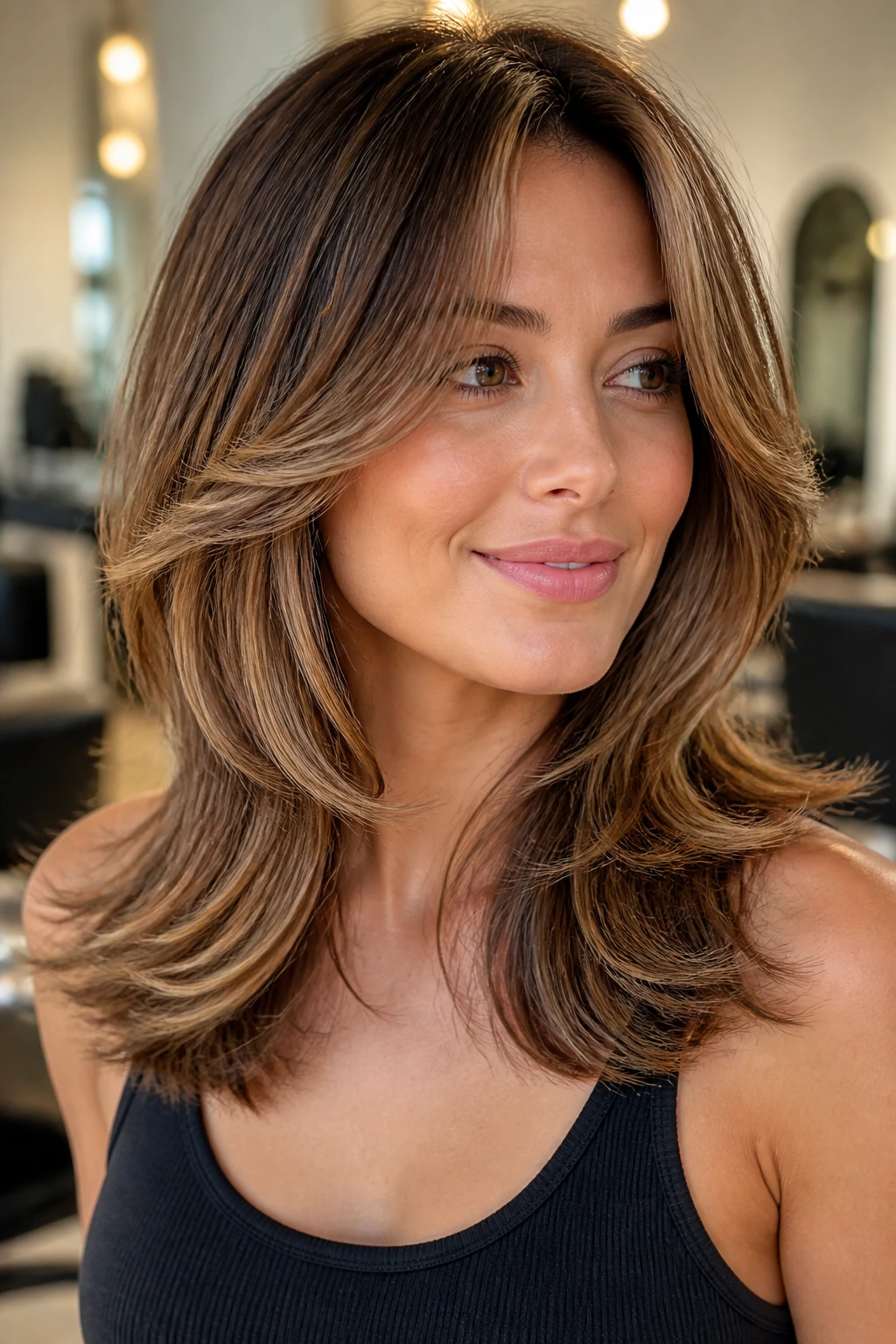
Thin medium hair loses its shape faster than dense hair does, especially around the ends and crown. Plan on a trim every 6 to 8 weeks if you’re wearing a lob, bob, or anything with a clean perimeter. If the cut is longer and softer, you may stretch that to 8 to 10 weeks, but don’t wait until the layers have turned into a vague memory.
Wash frequency matters too. Many thin-haired people do best washing every 1 to 3 days, depending on scalp oil and product use. Heavy conditioner at the roots is a fast way to flatten the whole look, so keep conditioning products from ear level down. A clarifying shampoo every couple of weeks helps if mousse, dry shampoo, or texture spray starts coating the hair.
At night, a loose clip, a soft braid, or a silk pillowcase can keep the ends from fraying. The cut will still need a refresh, but it won’t wake up with half its lift smashed into the mattress. On day two, refresh the crown first. The ends are usually fine. It’s the roots that tell the whole story.
Variations and Adaptations to Try
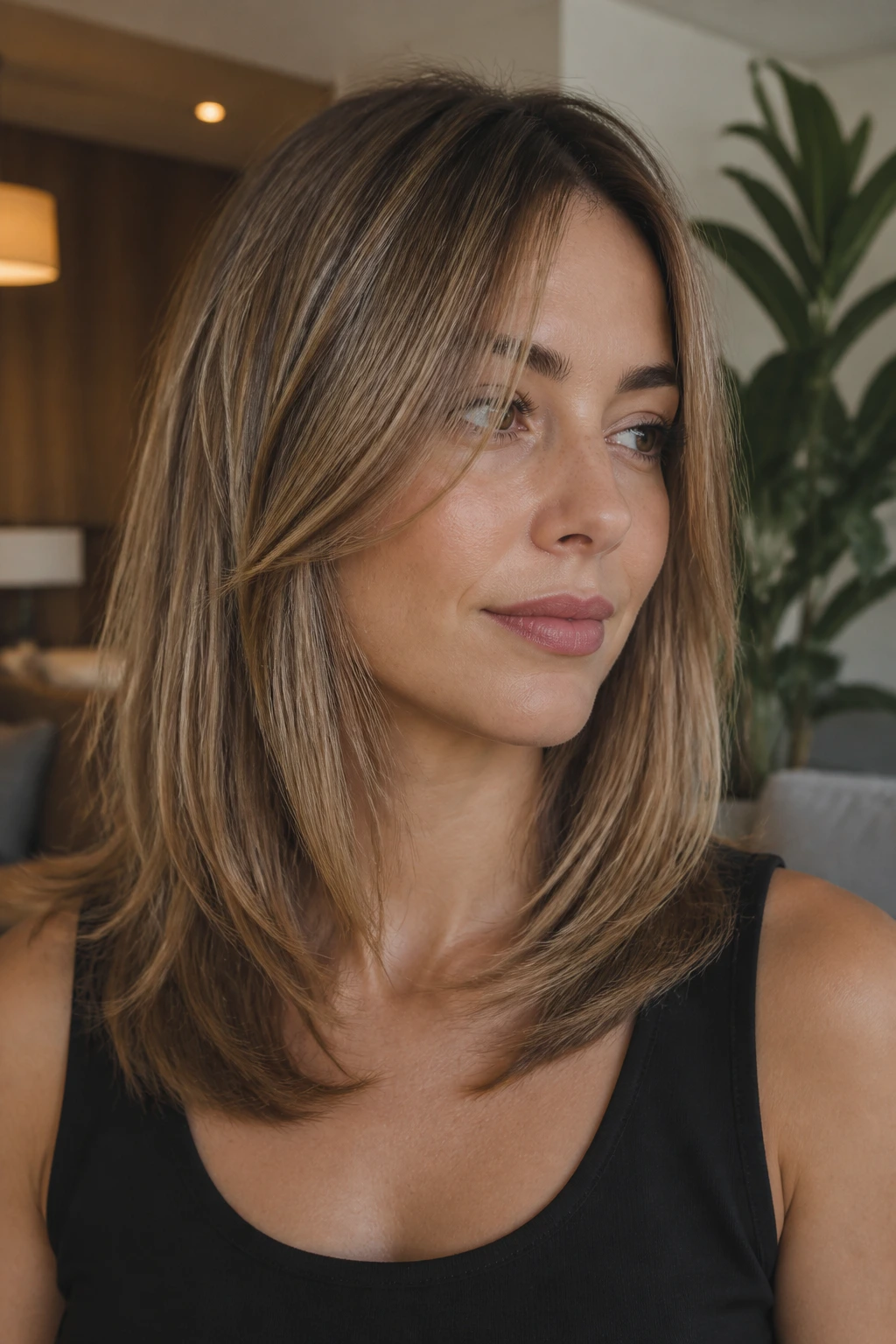
Straight-Hair Version: Keep the layers longer and the exterior line blunt. Straight thin hair needs visual weight, and too much texture can make it look frayed.
Wavy-Hair Version: Allow the shortest layer to land a little higher, around the cheekbone, so the wave has room to spring. A diffuser and mousse help the layers separate without becoming puffy.
Curly-Hair Version: Ask for long layers only. Curly hair shrinks, and medium-length thin curls can turn triangular if the layers are too short or too severe.
No-Bangs Version: If fringe feels like too much maintenance, move the face frame forward instead. A long chin-to-jaw frame gives shape without the daily blow-dry battle.
Big-Style Version: For people who like a fuller blowout, choose butterfly or Rachel-inspired layers. They reward round-brush styling and give you the most visible movement.
Low-Styling Version: Stick with invisible layers, a blunt lob, or a curved perimeter. These versions hold their own when you only have five minutes and a little dry shampoo.
Common Mistakes That Make Thin Hair Look Sparse
- Starting the shortest layers too high: If the crown gets chopped up, the scalp can show through the mids. Keep short layers lower unless your hair density is genuinely high.
- Over-thinning the ends: The symptom is a wispy tail that looks stringy when the hair is down. The fix is a stronger hemline and softer internal movement.
- Choosing a reference photo with heavy curls or extensions: That cut can look great on the model and flat on your head. Bring photos that match your texture, not just the vibe.
- Using thick creams near the roots: The hair goes flat fast, sometimes within an hour. Save heavier products for the ends only.
- Ignoring the part: A center part can work, but not if it sits on a natural cowlick that fights the haircut. Try a slight off-center part before blaming the cut.
- Razor-cutting fragile hair: The ends start looking ragged. If your hair breaks easily, ask for scissors and a softer finish.
Questions People Ask Before They Book the Cut
Will layers make thin hair look thinner?
They can, if the layers are too short or too aggressive. The better versions keep a solid perimeter and use face-framing or hidden layers to add movement without exposing too much of the scalp or ends.
Are curtain bangs a good idea for medium thin hair?
Yes, if they’re cut softly and blended into the sides. Heavy, blunt curtain bangs can crowd the forehead and steal density from the rest of the haircut, so keep them airy and easy to sweep apart.
Should I choose a blunt cut or a layered cut?
If your hair is very sparse, a blunt cut with minimal internal layering often looks thicker. If your hair has enough density to support movement, soft layers can give you shape without sacrificing the full look at the ends.
How often should I trim this kind of haircut?
Plan on every 6 to 8 weeks for sharper shapes like lobs and bobs. Softer layered cuts can go a little longer, but once the face frame stops blending and the ends start splitting, the haircut loses the thing that made it work.
Can I wear these cuts if I air-dry my hair?
Yes, but choose the softer, longer-layer versions. A polished shag or heavy butterfly cut usually wants styling, while invisible layers, a blunt lob, or a curved cut can hold their shape with far less effort.
What if my hair is flat at the crown?
Avoid very short crown layers unless your stylist knows exactly how much density you have to spare. A side part, root clips while drying, and a root-lift mousse will usually help more than chopping the top to pieces.
How do I stop the ends from flipping out weirdly?
Ask for a soft curve instead of a harsh angle, and keep the bottom edge full. Weird flips usually happen when the cut is too light at the perimeter or when the ends are dried in every direction at once.
Is a shag too messy for fine hair?
Not if the shag is softened and the layers stay long. The risky version is the choppy, high-volume one. The better version keeps the shape controlled and lets the texture do a little work without turning the haircut into a feather duster.
The Cuts Worth Showing Your Stylist
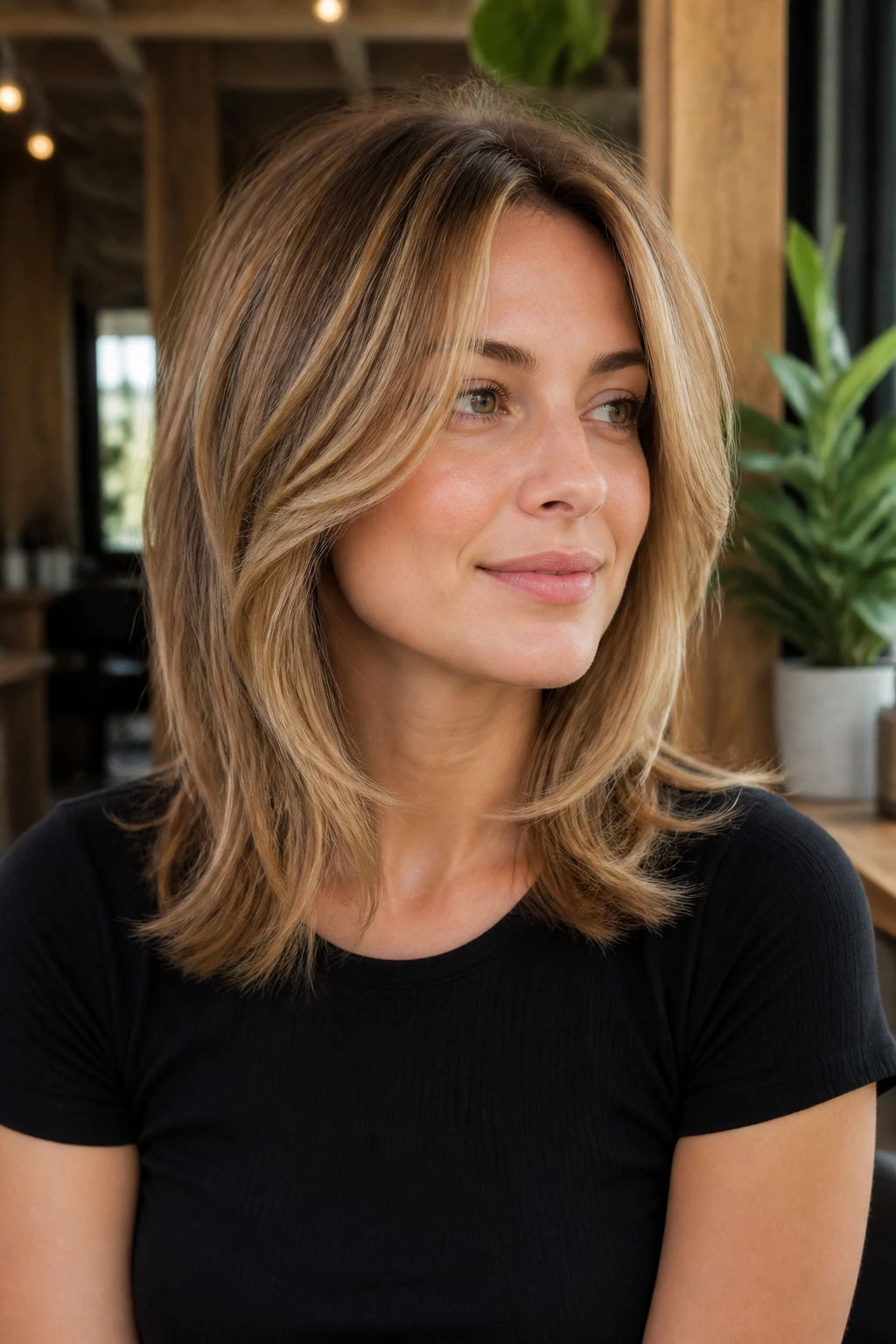
The best layered haircut for medium hair with thin hair is usually the one that respects the hair’s limits first. That means a clean outline, face-framing that starts in the right place, and just enough internal movement to keep the style from collapsing into a flat line.
Pick the version that matches the way you actually wear your hair. If you blow-dry, choose a cut that rewards a bend and a little lift. If you air-dry, stay closer to blunt, curved, or invisible layers. Thin hair has a way of exposing shortcuts, so the smartest cut is the one that looks good on a normal Tuesday, not only on the day you leave the salon.