



Long layered curls can make a heart-shaped face look softer in a way a blunt curtain of hair rarely does. The trick is not piling on volume everywhere. It’s placing lift where the face narrows, then letting the curl pattern blur the transition from wider forehead to slimmer chin.
Long hair complicates that a little. The weight of it pulls shape out fast, so a cut that looked lively at the salon chair can go flat by noon if the layers are wrong. That’s why the best versions of layered curls on a heart-shaped face do two jobs at once: they keep the length, and they move the eye lower, toward the cheekbones, jawline, and ends.
I always come back to one simple rule: if the shortest layer starts too high, the forehead does all the talking. If it starts around the cheekbone or lip line, the whole face relaxes. That’s where these styles get interesting.
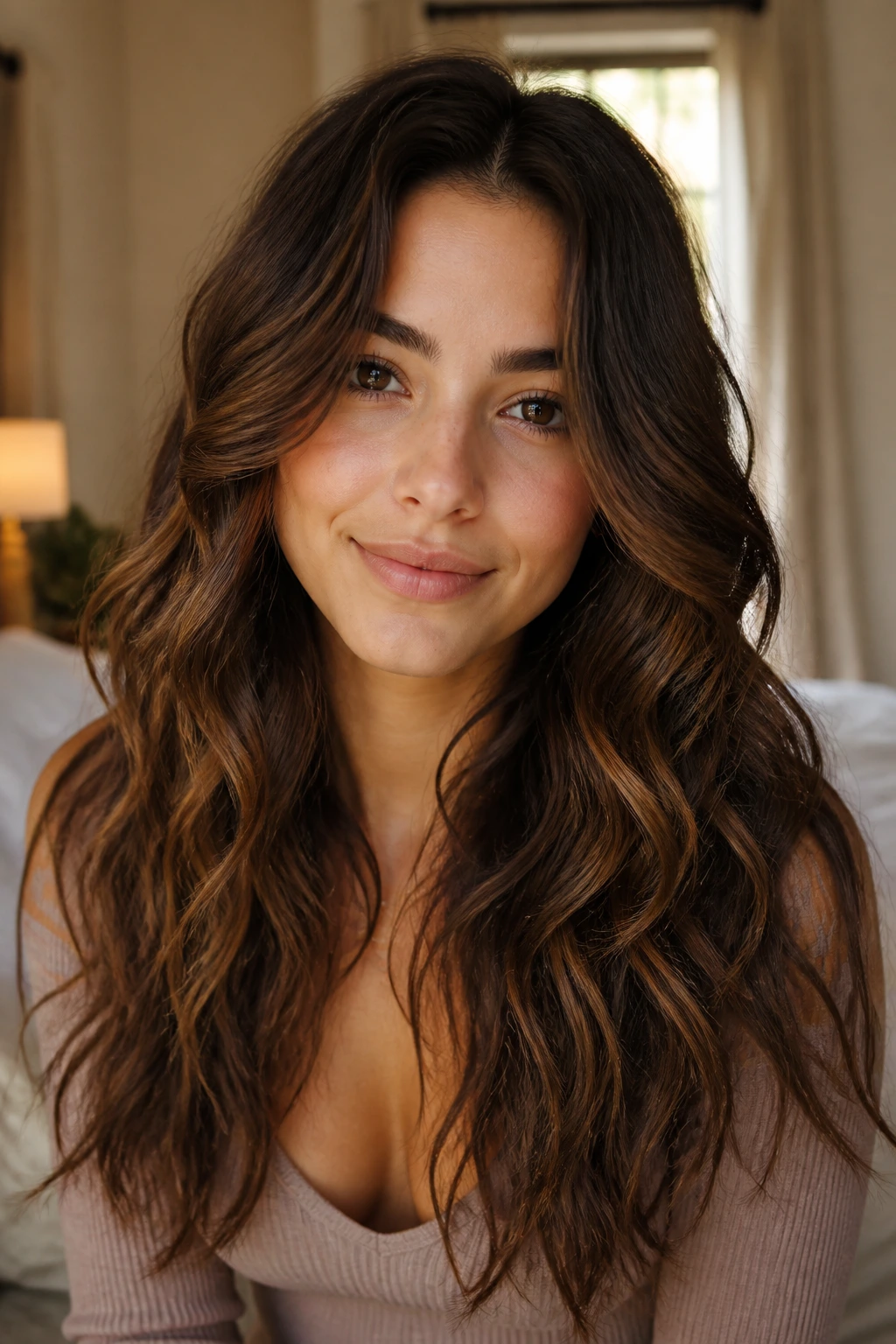
Why These 22 Styles Work on Heart-Shaped Faces
-
They shift the visual weight downward. Heart-shaped faces usually carry more width through the forehead, so curls that land around the cheeks and jaw make the shape feel more even.
-
They keep long hair from turning into a heavy curtain. Layers remove enough bulk that the curl pattern can move instead of collapsing into one flat sheet.
-
They give you room to choose your part. A center part, a soft off-center part, or a deep side part all work here when the front pieces are cut with intention.
-
They let the forehead breathe. The best face-framing layers don’t crowd the temples; they soften the upper face without making it look boxy.
-
They grow out better than one-length curls. Even when the curls loosen, the cut still has shape. That matters if you do not want a salon-perfect finish every single day.
1. Butterfly Layers with Barrel Curls
Butterfly layers are the cleanest answer when long hair needs movement without losing its length. The shorter top layers sweep away from the face, while the longer bottom layers keep the drama, and the barrel curls make the cut read soft instead of choppy. On a heart-shaped face, that’s a smart trade.
Why This One Works
The shortest pieces sit around the cheekbone area, which pulls attention away from a wider forehead. The longer layers beneath them keep the lower half of the face from feeling too narrow. Use a 1.25-inch curling iron, curl away from the face on the front sections, and let the curls cool fully before brushing them out.
- Short layers start around cheekbone level.
- Longer layers hold the visual weight below the chin.
- A brushed-out barrel curl keeps the finish smooth, not stiff.
My favorite move: clip the front pieces up while they cool for 5 to 8 minutes. That small pause gives the face frame more bend and less droop.
2. Curtain Layers and a Soft Center Part
A center part can work on a heart-shaped face, but only if the front layers earn their keep. Curtain layers do that job. They fall from the part, split around the cheekbones, and taper into the rest of the length so the face does not get trapped behind one hard line.
The best version feels easy, not fussy. Blow-dry the roots with a round brush, then use a 1.5-inch iron or a large wand to add a bend through the mid-lengths. Keep the ends slightly straighter if you want the style to read modern rather than pageant-y.
A lot of people make this shape too flat at the crown. Don’t. You want a little lift right at the part, then softness through the front pieces. That one detail keeps the forehead from feeling broad and the curls from looking pasted on.
3. Cheekbone-Grazing Face Frame Curls
What happens when the shortest curl lands right at the cheekbone? The whole face softens without losing length. That’s the trick here. The face frame becomes the main event, while the long layers fall back and do their quiet work.
How to Wear It
Ask for long layers with the front pieces cut to hit the cheekbone or just below the eye. Curl those front pieces away from the face with a 1-inch iron, then leave the rest of the hair in looser bends. The tighter curl in front and softer curl in back makes the face frame look deliberate.
- Front curls sit at cheekbone height.
- Mid-lengths stay looser so the style doesn’t puff at the sides.
- A side tuck on one side can make the whole look feel cleaner.
Best for: readers who want visible framing without a full blowout. It’s especially useful if your hairline is fuller at the temples.
4. Feathered Ends with Big Blowout Bends
I keep coming back to feathered ends when long hair starts to feel too dense. The ends lighten up first, which makes the curl pattern swing instead of dragging. On a heart-shaped face, that extra motion at the bottom helps balance a stronger top half.
The look is less “tight curl” and more “expensive blowout.” Use a large round brush or a 2-inch curling iron on the mid-lengths, then flip the ends out just a touch. The whole point is to keep the shape airy. If the ends clamp shut, the cut loses its softness fast.
- Feathering should be subtle, not shredded.
- Ends can bend out instead of curling under.
- The finished shape should feel touchable, not sealed.
A little root lift at the crown helps, but don’t overdo it. Too much height at the top makes the forehead feel wider than it needs to.
5. The U-Cut with Polished C-Curls
A U-cut is one of those shapes that looks understated in photos and better in motion. The back keeps its soft curve, which preserves length, and the front layers can be curled into C-shapes that hug the cheekbones instead of fighting them. I like this shape for anyone who wants long hair to look expensive without looking overworked.
The polished finish matters. Use a heat protectant with a bit of slip, curl sections in the same direction, then brush them only after they’ve cooled. If the curls are brushed while warm, the ends fray and the whole thing gets fuzzy at the bottom.
This is the kind of cut that looks especially good with a glossy serum on the last two inches. Keep the roots clean and the lengths shiny. That contrast gives the curl pattern a crisp edge.
6. Side-Parted Cascading Waves
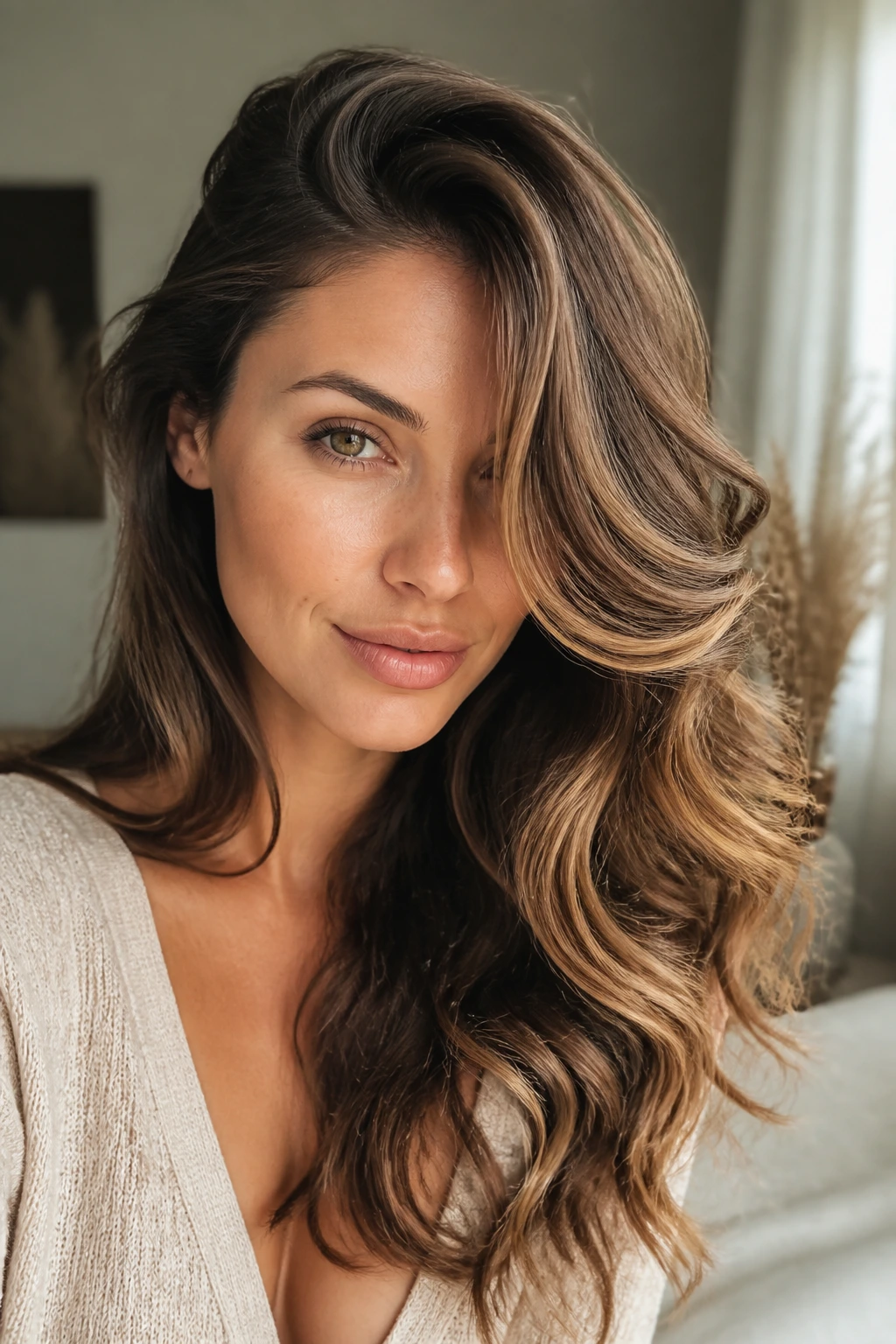
If butterfly layers are the soft answer, side-parted waves are the dressier cousin. The deep part moves the visual weight away from the forehead, which is useful on a heart-shaped face that already carries width there. Then the waves fall diagonally across the face instead of cutting it in half.
The magic is in the direction. Curl away from the face on the heavier side, then wrap the lighter side toward the face just a little so the wave bends across the cheek. That small asymmetry keeps the style from feeling formal in a stiff way.
Use a 1.5-inch iron if your hair is dense or very long. Smaller irons can make the wave look busy from the neck down, and that’s not the effect here. You want sweep, not tight pattern.
7. Long Shag Layers with Tousled Texture
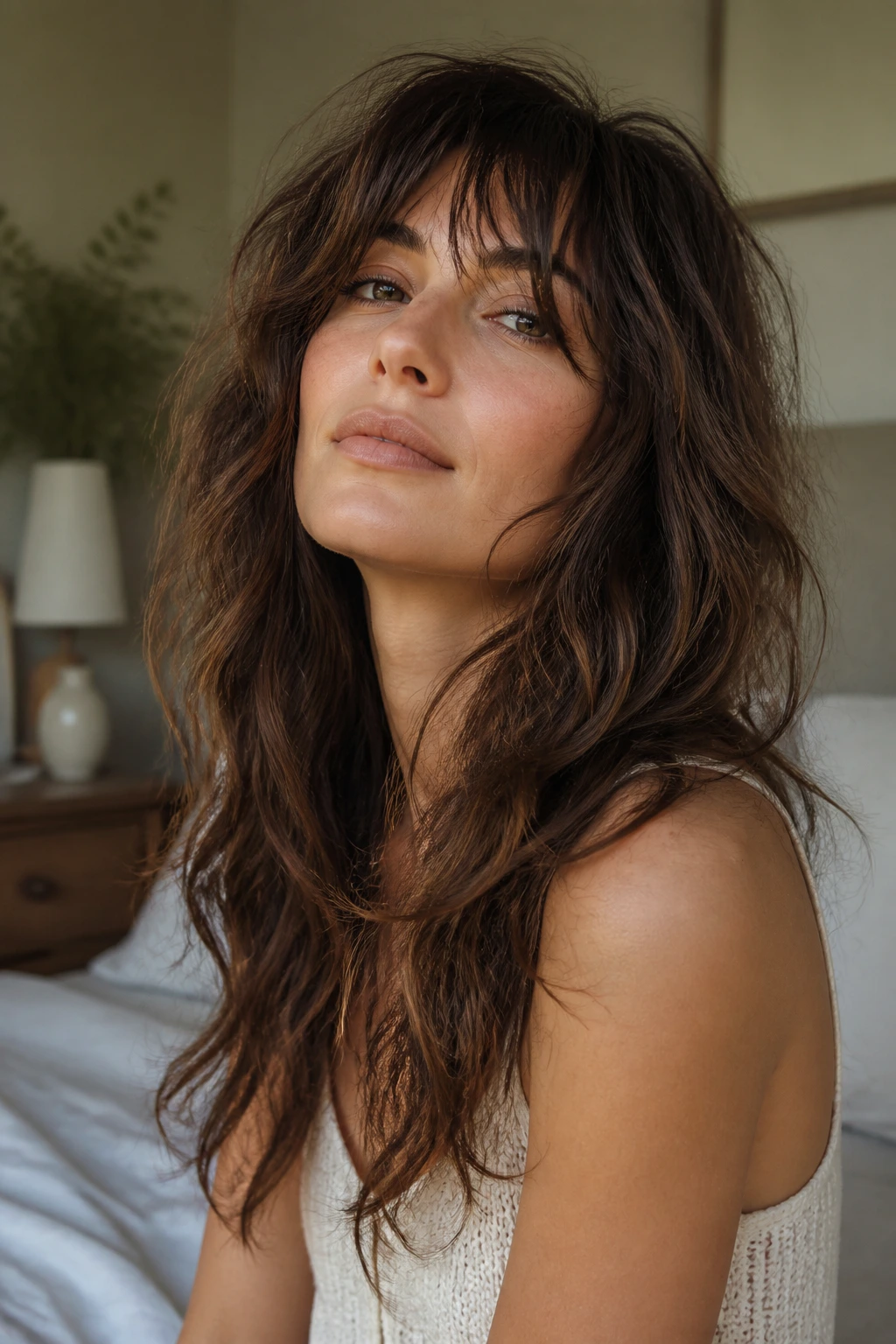
A long shag can look fantastic on a heart-shaped face, but only when the layers stay long enough to keep the shape from jumping up near the temples. The good version is loose and slightly undone, with the shortest pieces still falling below the cheekbone. The bad version gets too short too fast and makes the top half of the face look louder than the rest.
Use a light mousse at the roots, diffuse until about 80 percent dry, then pinch a few bends into the front pieces with your fingers. You do not need every curl to behave. The staggered, uneven finish is part of the charm.
What Makes It Different
- Internal movement matters more than perfect curl definition.
- The crown gets lift, but not helmet volume.
- Ends stay soft so the face doesn’t get boxed in.
If your hair is fine, skip heavy cream here. It will weigh the shag down before lunch.
8. Money Piece Layers and Glossy Glam Waves
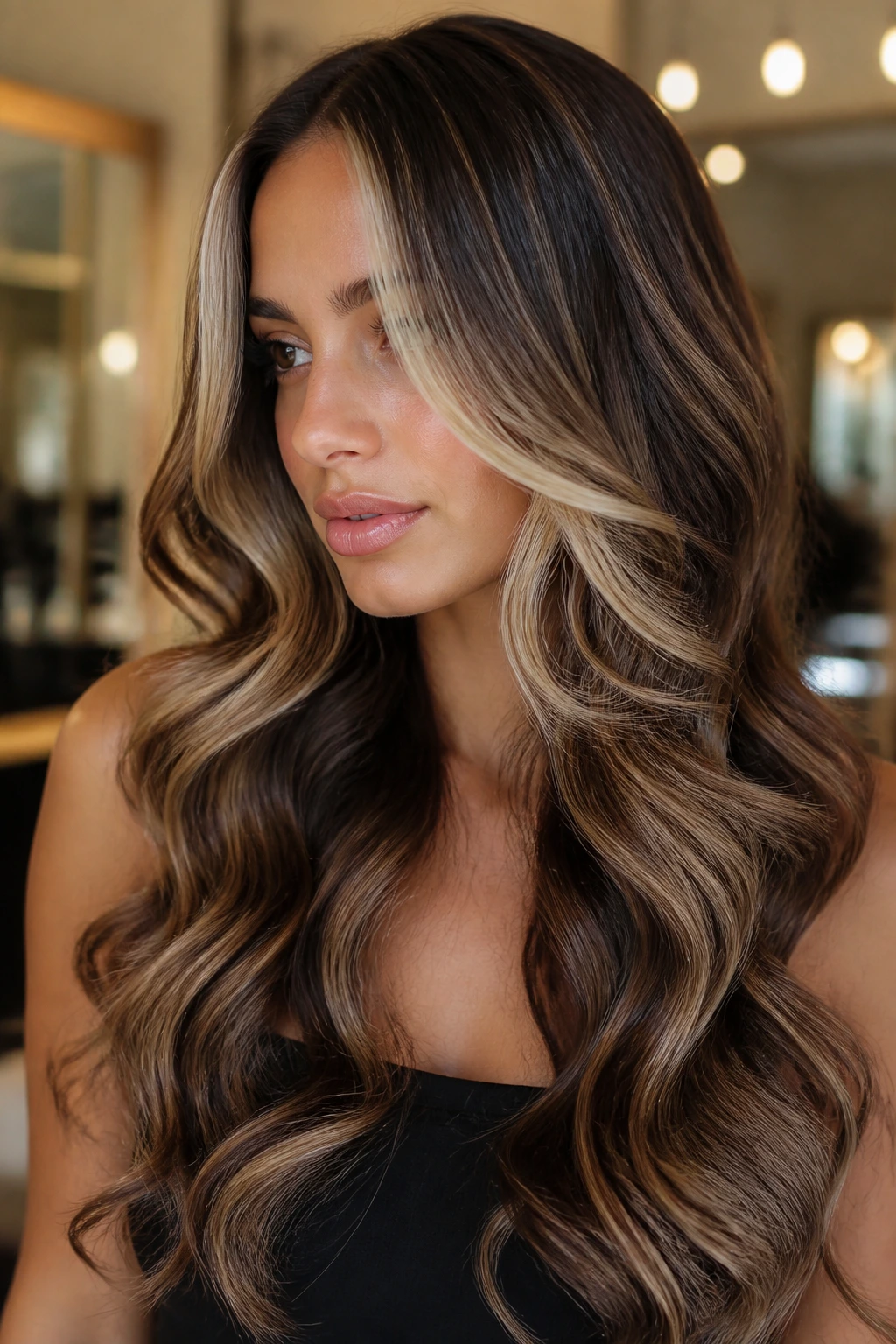
A strong money piece changes the whole read of a curl style. The bright front streaks or lighter face-framing sections pull the eye to the curl pattern near the cheekbones, which is exactly where a heart-shaped face benefits from attention. The long layers underneath keep the look from turning stripey.
I like this style with a smooth, glossy wave rather than a crunchy curl. Wrap sections around a 1.25-inch iron, brush them out, then set the front pieces with a clip while they cool. The money piece should frame, not shout.
This look is useful when you want the face to feel a little narrower at the forehead and fuller through the middle. That’s the whole trick. The color does part of the framing, and the layers do the rest.
9. Invisible Internal Layers for Thick Hair
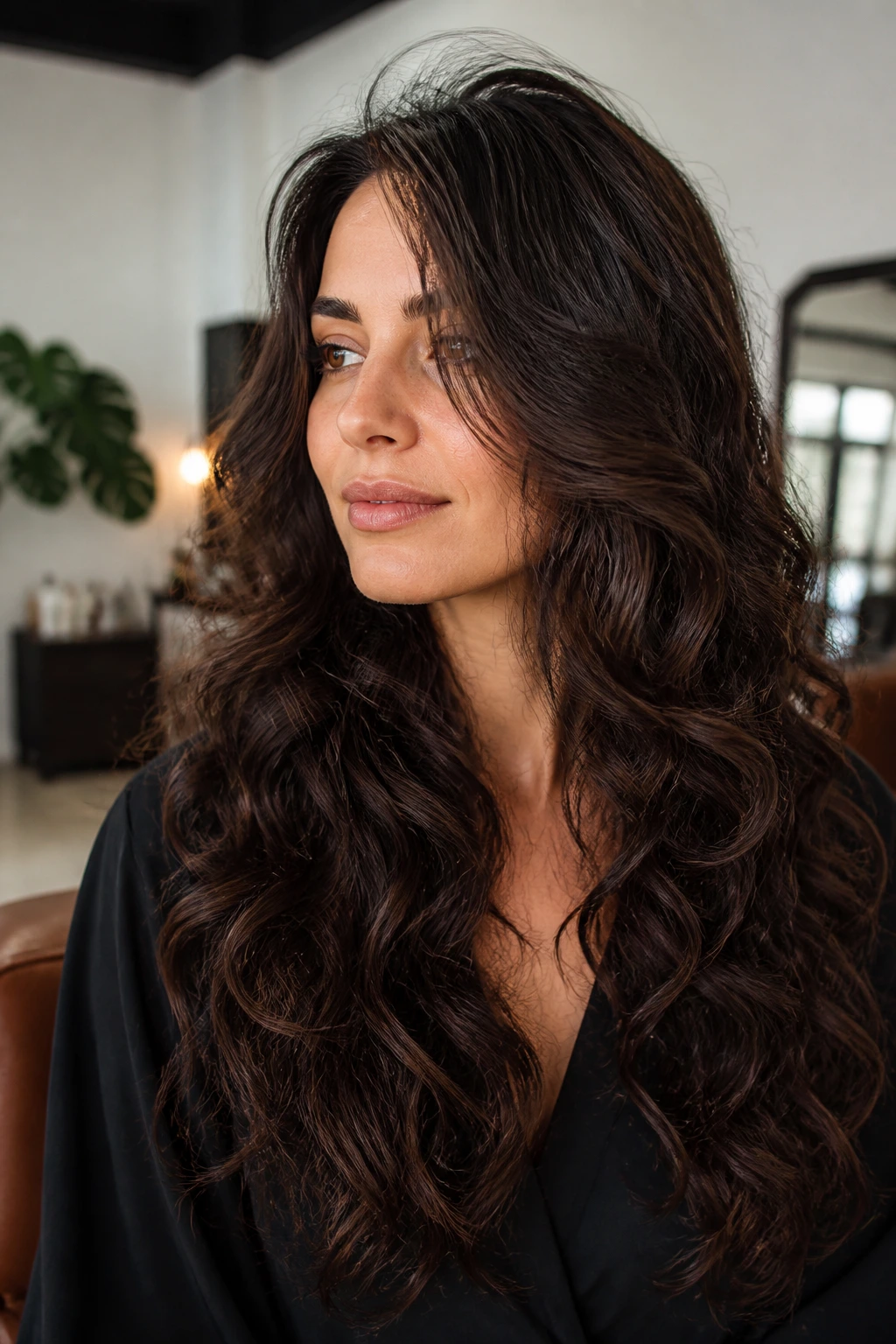
What if the curls keep falling flat because the hair is too heavy? That’s where invisible internal layers save the day. The outside length stays long and smooth, but hidden weight removal underneath lets the curls spring instead of sinking. It’s one of the smartest ways to handle very thick hair on a heart-shaped face.
The cut matters more here than the styling. Ask for internal layers, not a ton of short face pieces. If the top gets over-thinned, the ends go wispy and the face frame gets too busy. Better to remove bulk from the middle and lower sections first.
Curl with a medium barrel, then separate the pieces with your fingers only. A brush can turn thick hair into a puff if the layers are too aggressive. Keep the finish controlled.
10. Ribbon Curls on a Gradient Cut
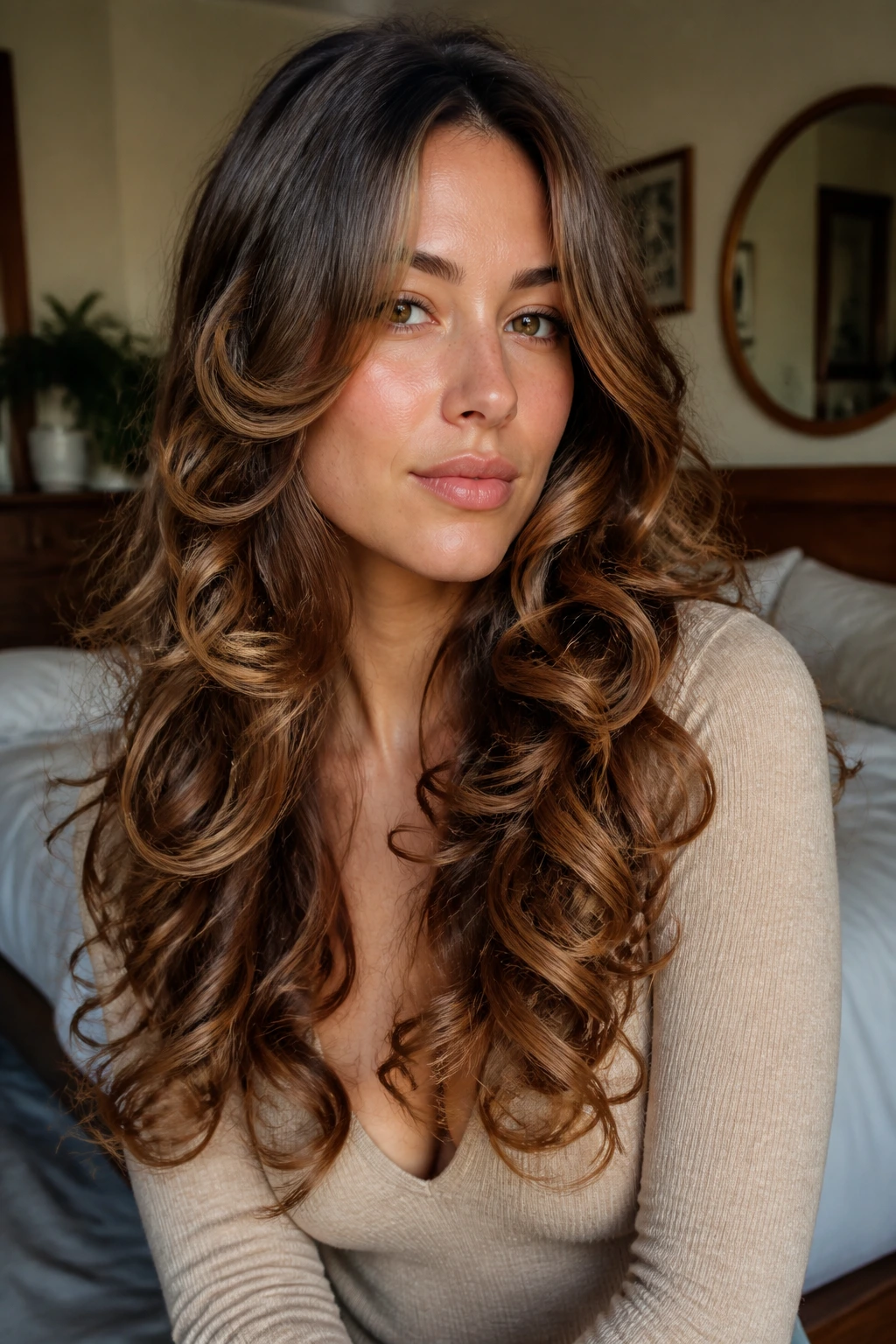
Ribbon curls are polished, narrow curls that hold their shape in long lengths, and they look especially good when the haircut moves from shorter layers near the collarbone to longer ones down the back. That gradient keeps the eye moving down the body of the hair instead of stopping at the forehead. It’s sleek without being severe.
Use a curling iron with a smooth clamp and wrap each section tightly, then let the curl cool in your palm before dropping it. That little step helps the curl stay defined in long hair, which loves to tug itself straight. Finish with a light mist of flexible hairspray. Not a shell. Just enough hold to keep the ribbon shape from fraying.
This is a sharper, dressier look. If you want soft and airy, skip it. If you want your layers to show from root to tip, it’s a strong choice.
11. Spiral Curls with Long Layers
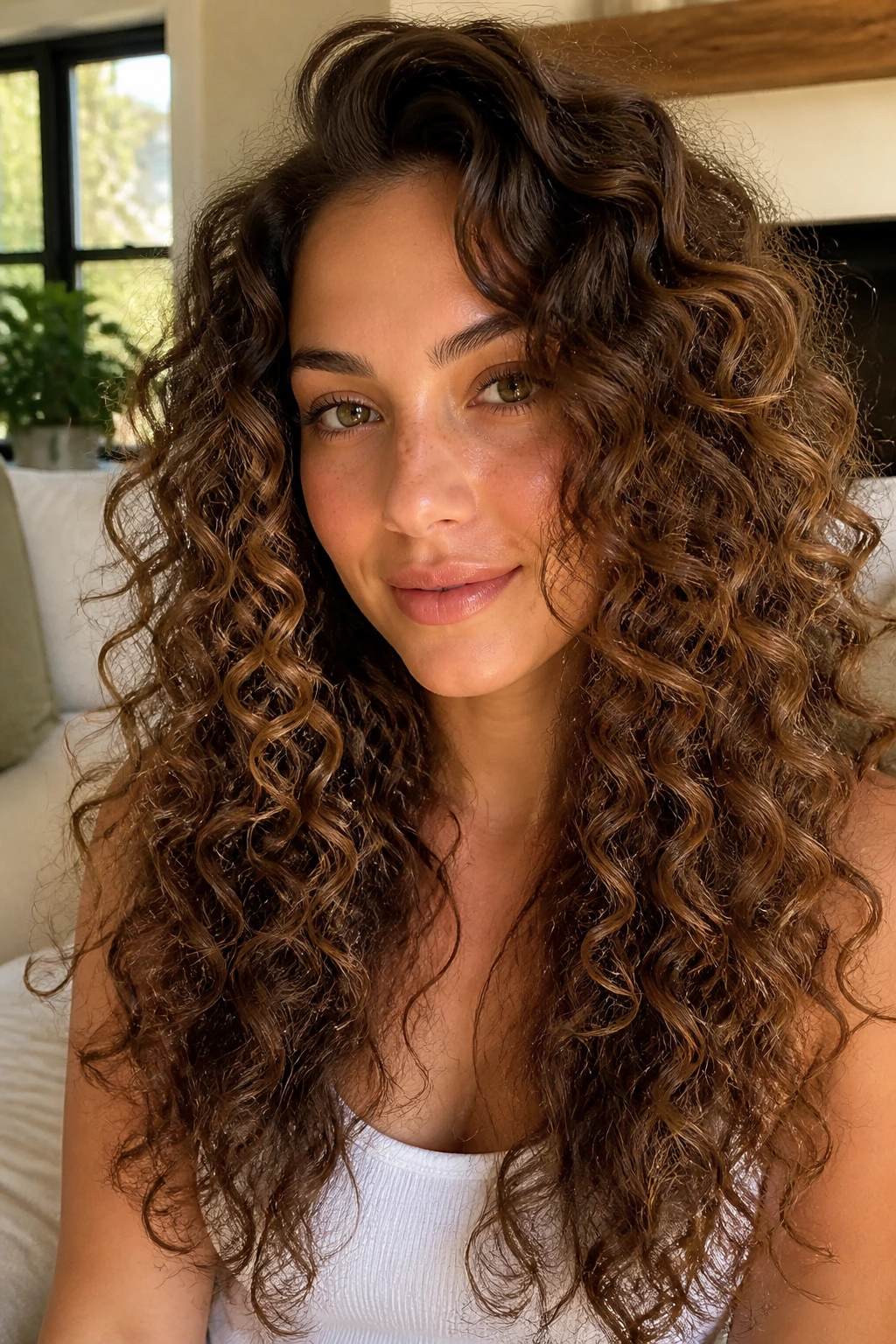
Natural spiral curls on long layers can be gorgeous when the cut respects the curl pattern instead of fighting it. The layers stop the hair from ballooning at the bottom, and the spirals keep the face looking lifted through the cheeks. On a heart-shaped face, that softness around the middle matters more than perfect symmetry.
Dry-cutting helps here. You want the stylist to see where each curl lands when it’s in its real shape, not stretched out in the sink. That is how you avoid a shelf of volume at the chin or a see-through top. The curl has to be shaped where it lives.
Keep product light at the roots and richer through the lengths. A curl cream followed by a small amount of gel usually gives the best hold without crunch. If your spirals clump well, leave them alone.
12. Old-Hollywood Brushed-Out Waves
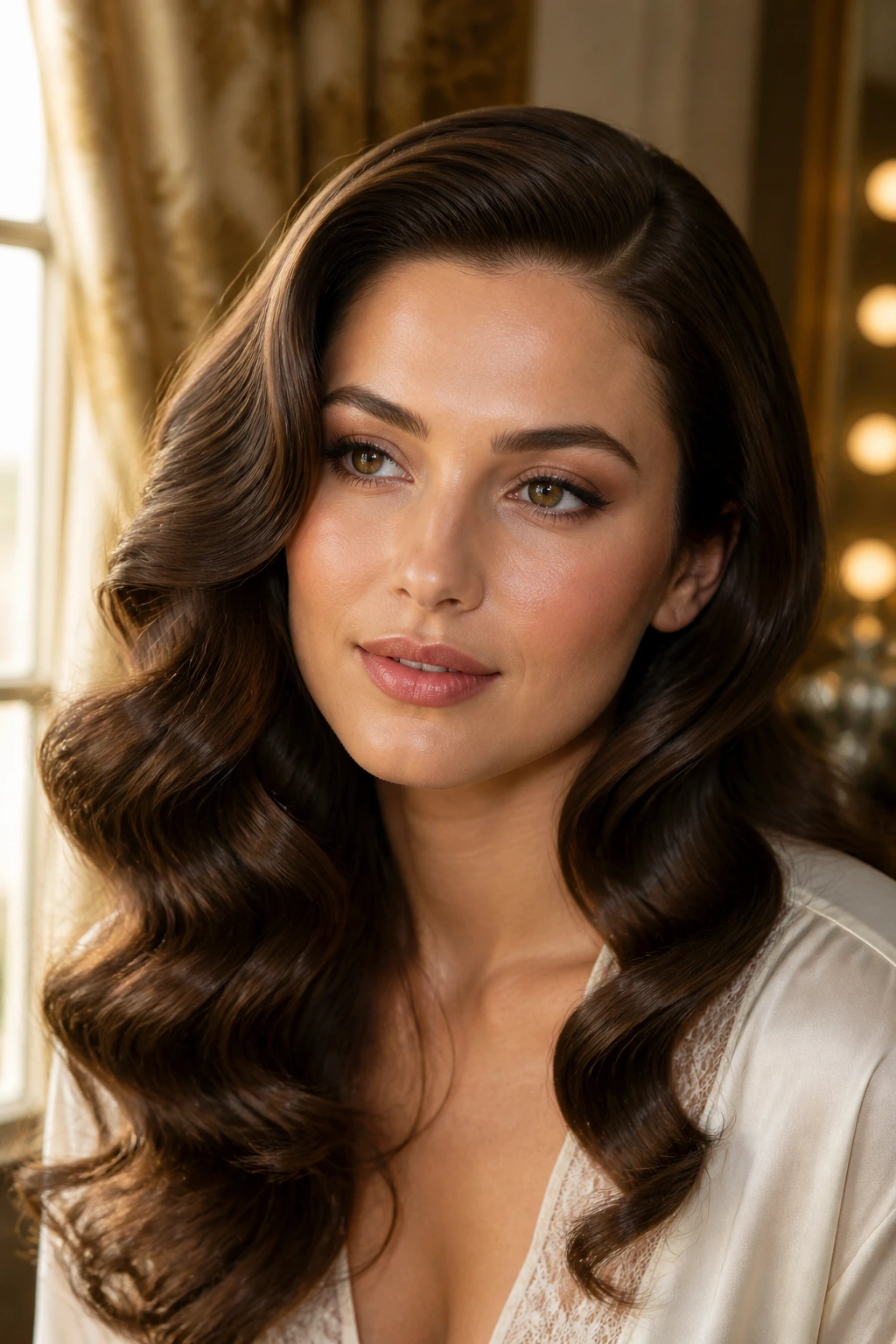
Old-Hollywood waves are the grown-up answer for long hair that needs structure. The side part, the polished wave, the brushed finish—everything is controlled, but not rigid. For heart-shaped faces, this works because the wave mass sits low and wide enough to soften the chin without widening the forehead.
Unlike beach waves, these are meant to look intentional. You curl in a consistent direction, pin the waves while they cool, then brush them into one smooth line. The result has a dense, silky surface that catches light in a clean way.
This style loves a good shine spray. Too much texture ruins the point. If your hair is layered heavily, use a little extra setting spray at the ends so the pieces do not split apart before the event is over.
13. Beachy Mermaid Layers
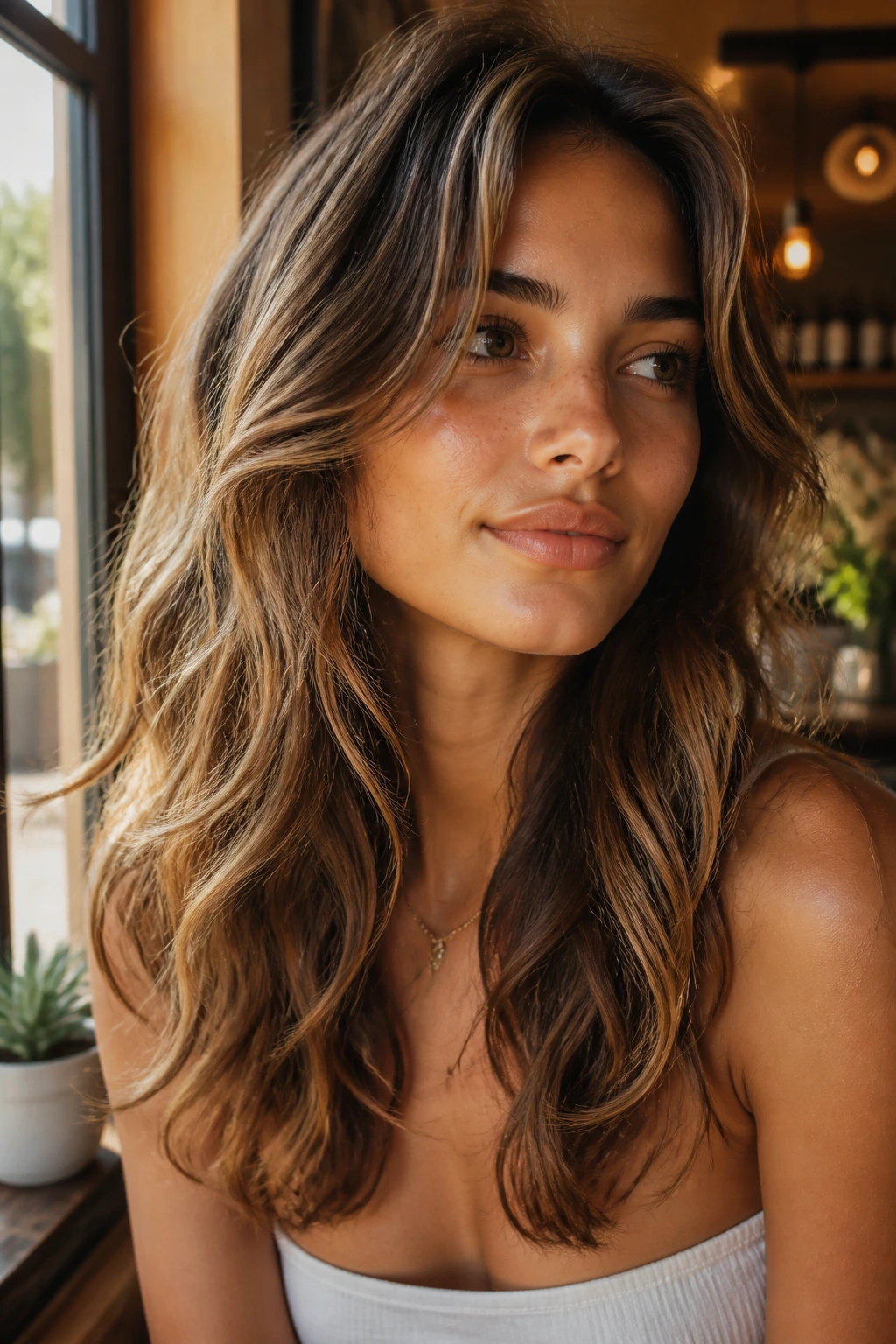
Beachy mermaid layers are easy to overdo, which is why the best versions stay soft. The hair should look like it moved in the air, not like it was crimped into submission. On a heart-shaped face, loose bends through the mid-lengths are better than volume packed around the temples.
I like this shape when the layers start below the cheekbone and taper gently through the length. A 1.25-inch wand gives the hair enough wave without making every section identical. Leave the last inch or two straighter if you want that relaxed, lived-in finish.
Why It Still Flatters
- The wave pattern stays lower on the face.
- The ends feel light, not bulky.
- It works with side parts or soft center parts.
If you want a style that looks good after it’s been slept on, this is one of the best bets.
14. Layered Half-Up Curls for Extra Lift
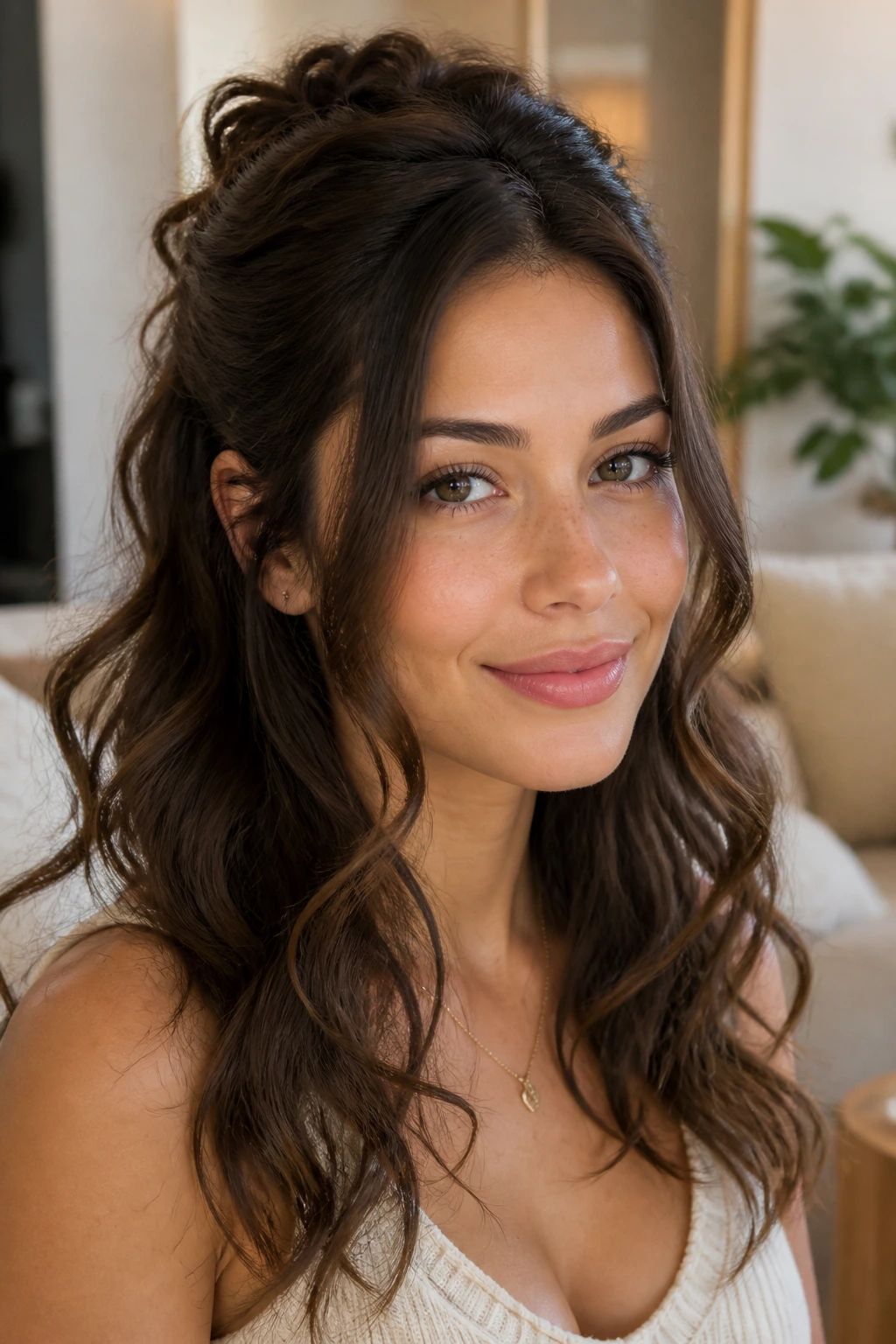
Can a half-up style flatter a heart-shaped face? Absolutely, if the front pieces are left loose and the crown lift is kept under control. A layered half-up gives the face room around the cheeks while lifting the hair away from the forehead, which can be a useful trade when the top feels heavy.
The trick is not pulling everything back. Leave the front layers out, twist or clip the top section loosely, and let the curls at the sides hang with a bit of bend. That keeps the shape from turning top-heavy or severe. The face frame should still do the work.
This is one of the better choices for long hair that starts to look flat by the second day. It gives the illusion of a fresher blowout with very little effort.
15. Flip-Out Layers with a 90s Blowout
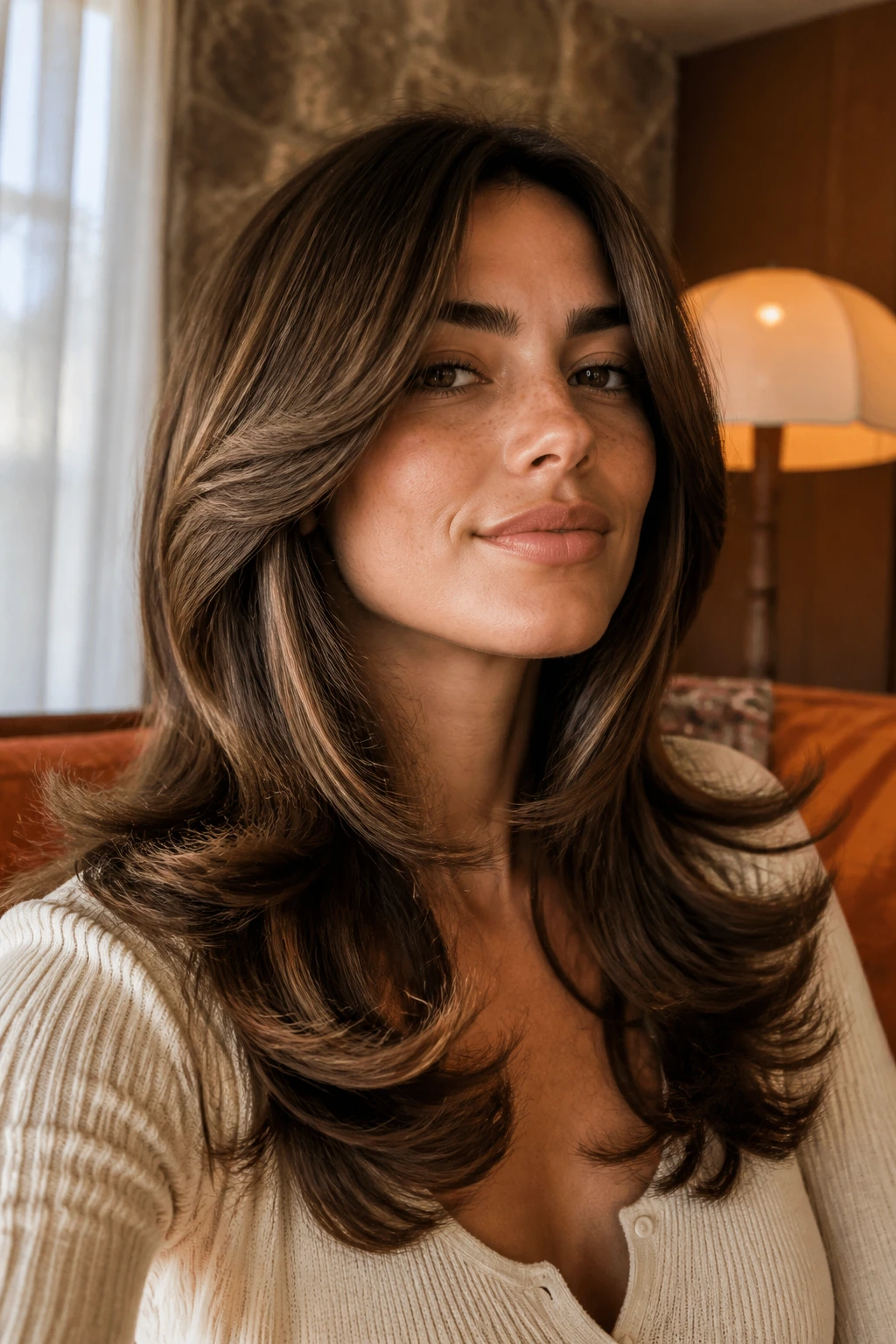
The 90s blowout is back because the shape actually works. Flip-out layers create width through the lower half of the hair, which helps balance a heart-shaped face. The movement is especially nice if your chin is narrow and your hair tends to hang straight.
Use a round brush and turn the ends out just at the last inch or two. Don’t curl the whole head. That’s how the style turns costume-y. The flipped ends should feel playful, not frozen.
A side part or soft off-center part makes this even better. It shifts the whole frame a little lower, and the result is less forehead, more cheekbone, more jaw. That balance is the point.
16. Collarbone-to-Waist Soft Layers
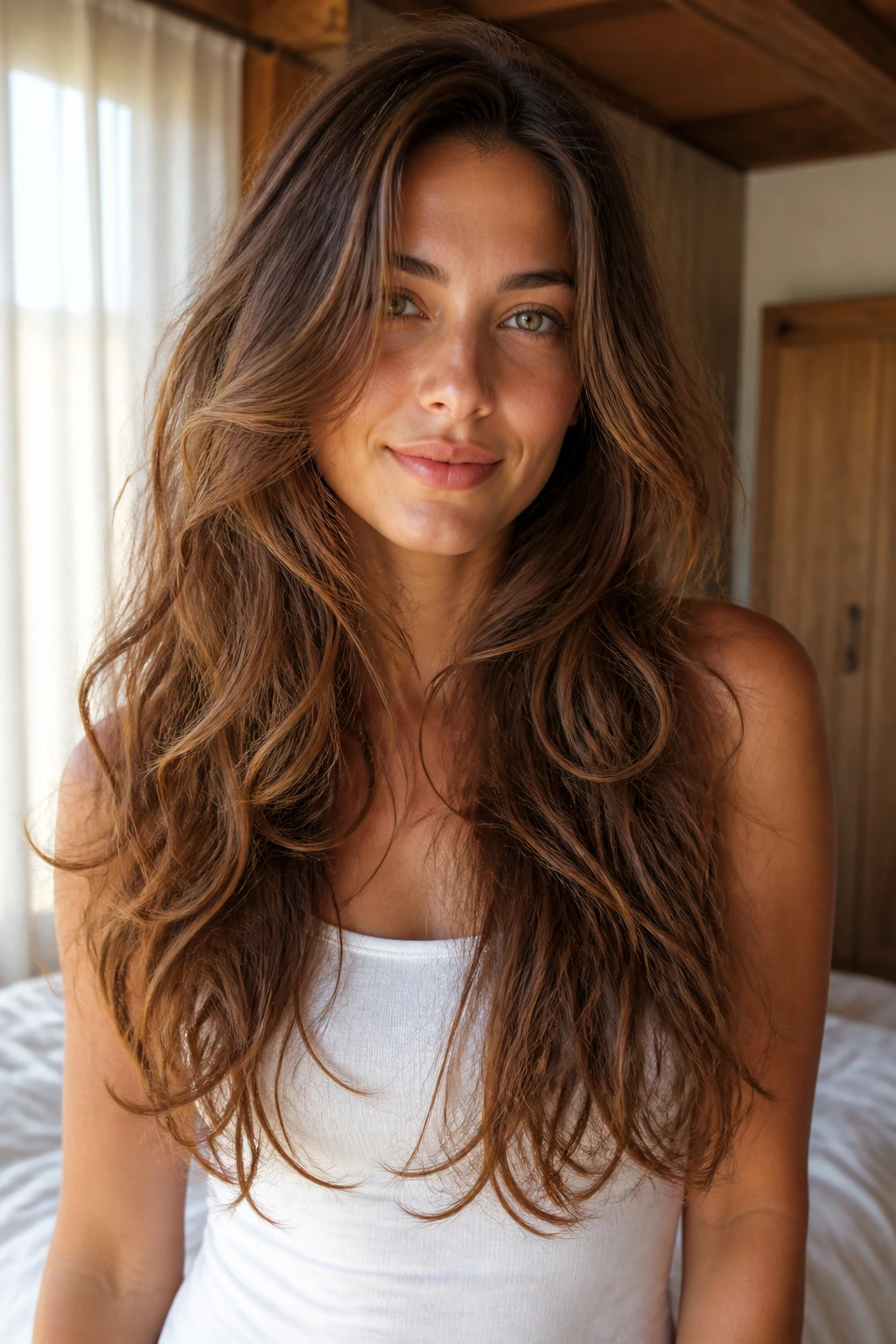
If you hate obvious layering, this is your lane. The cut is long enough to keep the silhouette dramatic, but the layers are placed so the movement starts around the collarbone and melts down toward the waist. On a heart-shaped face, that keeps the eye traveling downward instead of hanging around the temples.
This version looks best with soft, wide waves rather than tight curls. Think 1.5-inch iron, brushed through lightly, then separated with fingers. The layers should show when you move, not scream from across the room.
It’s a good option if you want length first and curl second. Some days that is the smarter choice.
17. Natural Curl Pattern with Dry-Cut Layers
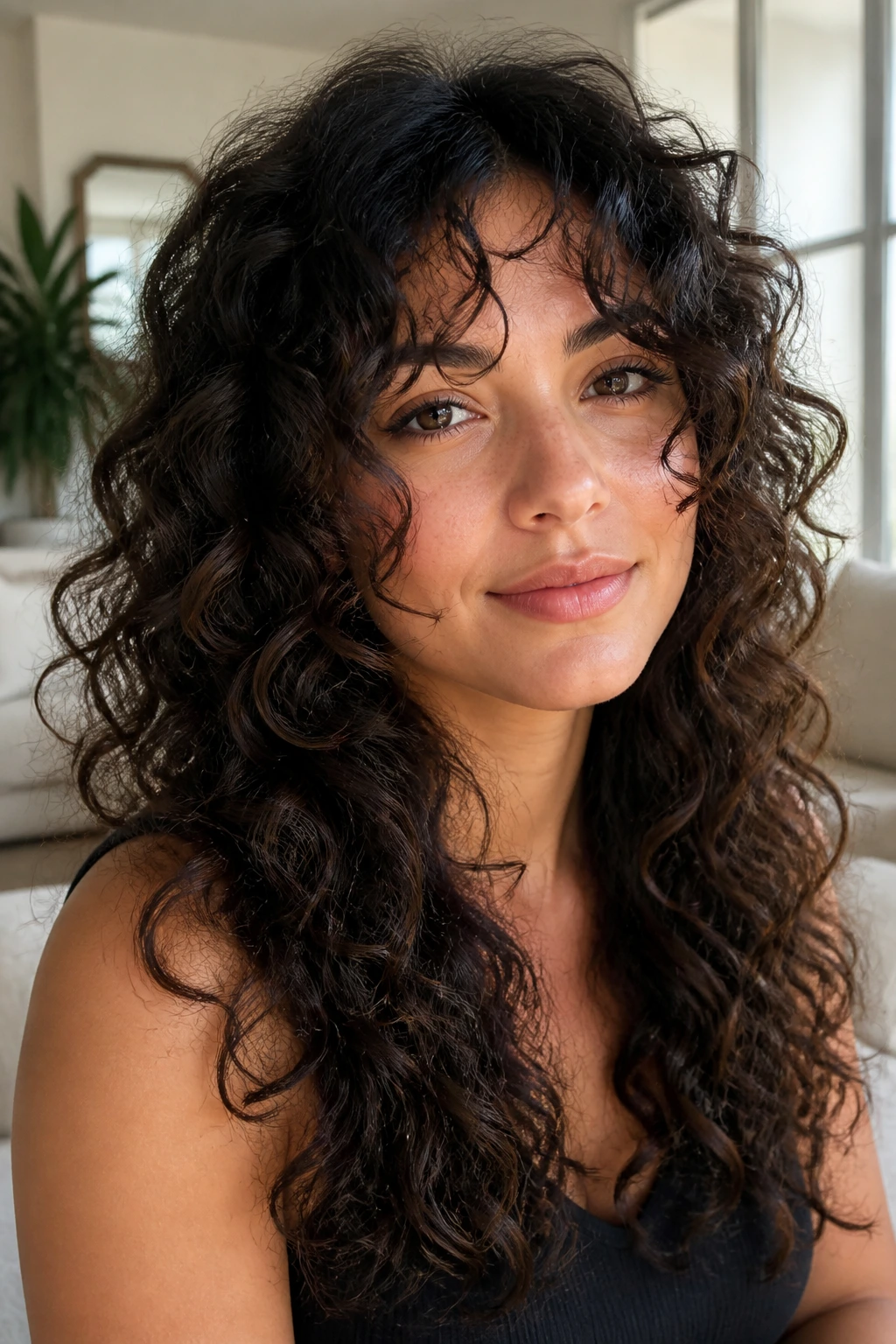
Long curly hair needs a different kind of respect. Dry-cut layers let the stylist see where the curls live when they’re in their real shape, which matters a lot on a heart-shaped face. If the cut is done wet and stretched, the front can end up too short once the curls spring back.
The goal is to keep the curls clustered around the cheeks and jaw without building a triangle. That means layers placed where the curl opens, not where the stylist guesses it will fall. A good dry cut can make long curls feel lighter without stealing length.
Use a leave-in and a medium-hold gel, then diffuse until the hair is set. Don’t rake through it too much after styling. Curly hair punishes overhandling.
18. Deep Side Sweep with S-Curls
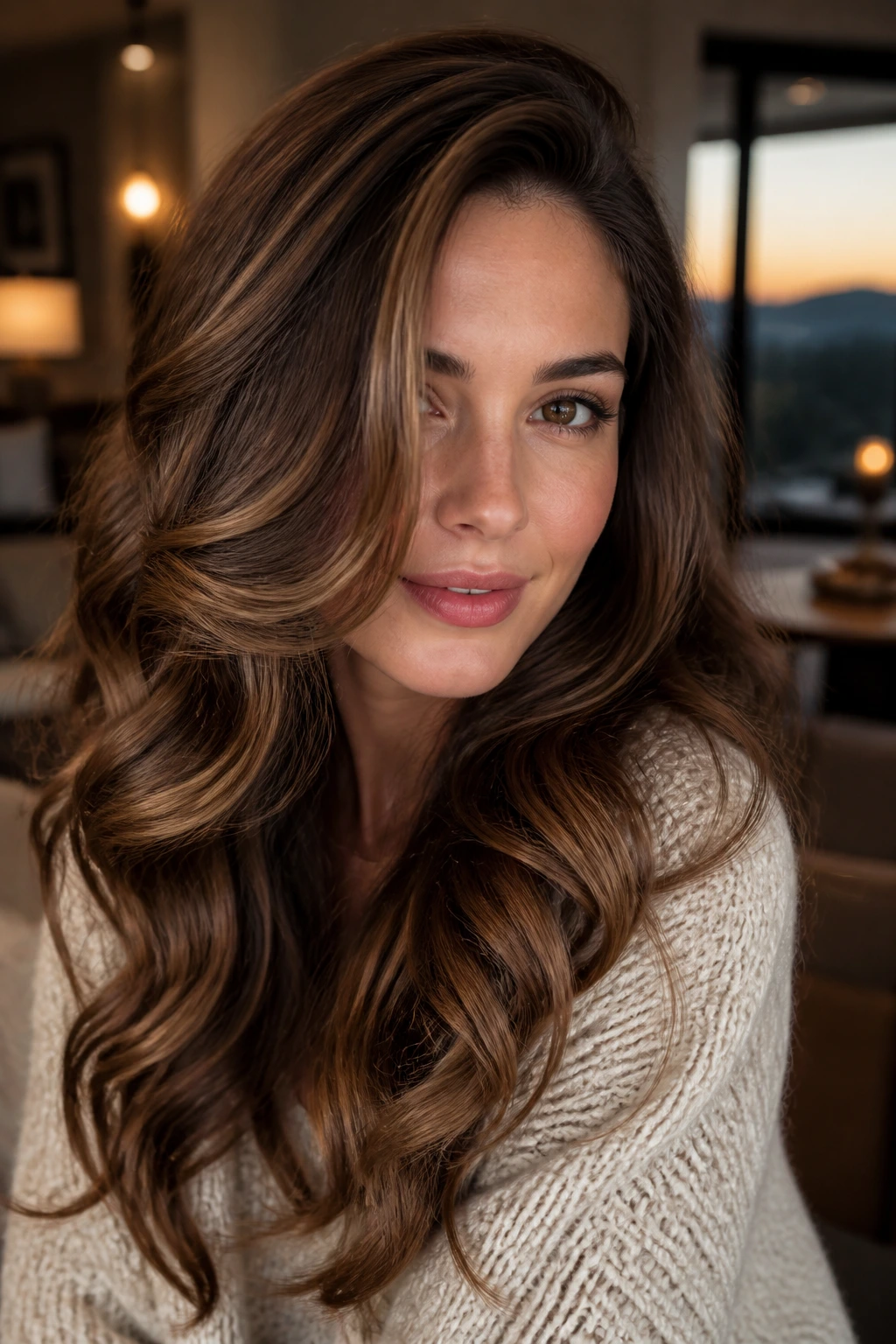
Why does a deep side sweep work so well here? Because it breaks up the forehead width and pulls the eye across the face instead of straight down the middle. Add S-curls through the lengths, and the whole shape starts to feel softer and more expensive.
This style likes a little drama. Set the part low and deep, curl away from the face on the heavier side, and keep the front layer loose enough to move. The wave should fold over itself in a long S, not snap into a tight bend.
How to Use It
- Tuck the smaller side behind one ear.
- Leave the longer side to drape across the cheek.
- Finish with a mist of shine spray, not heavy oil.
It’s a strong choice for evenings out, but it also works on a plain T-shirt if the wave is soft enough.
19. Loose Corkscrew Layers
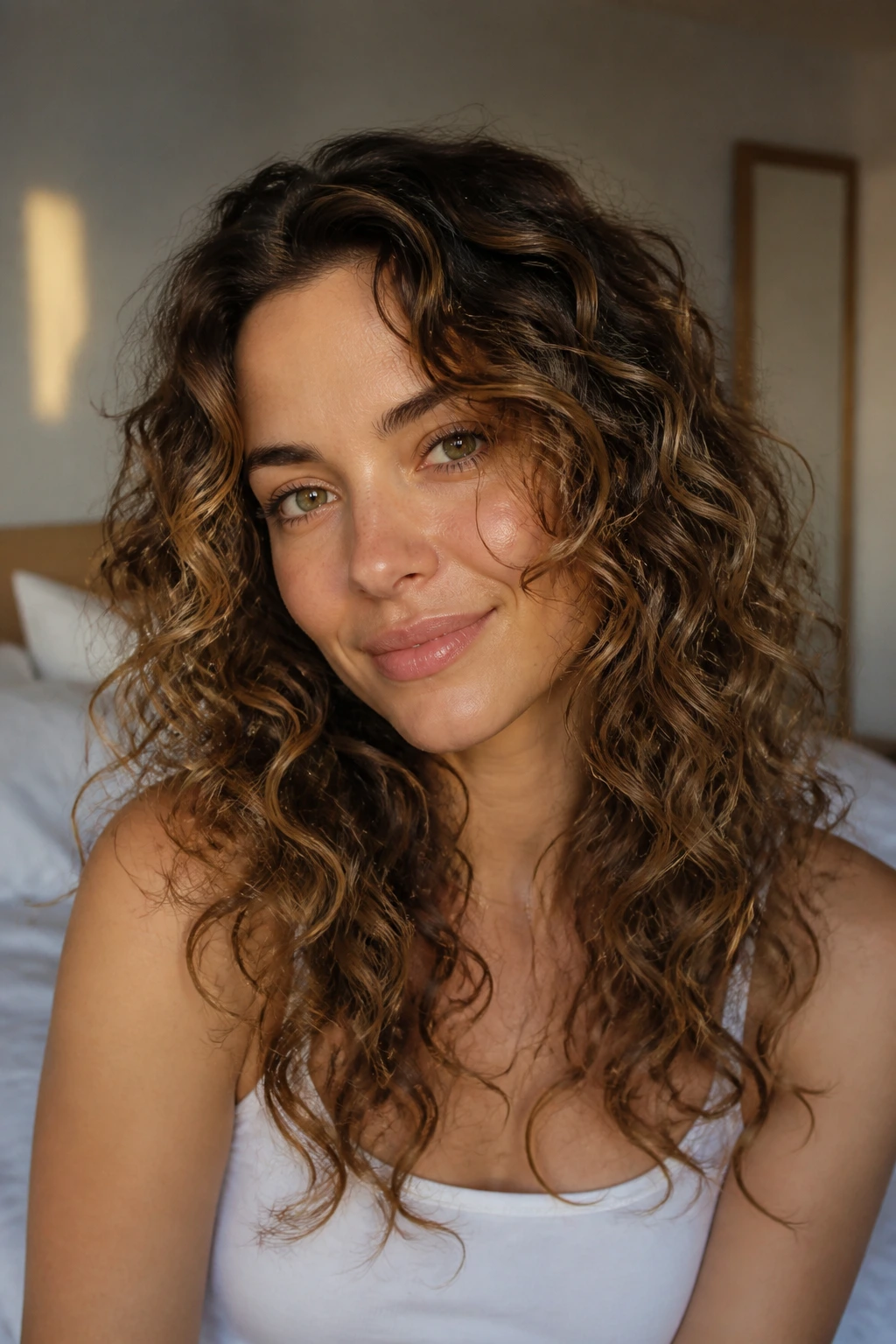
Loose corkscrew curls are a nice middle ground between polished spirals and beach waves. They bring shape without making the hair feel stiff, and the layered cut keeps the lower half from turning into a dense ball. On a heart-shaped face, that matters because the eye needs room to move downward.
I prefer this style when the layers are a little longer around the chin and collarbone. The curl should sit just loose enough that you can separate it by hand. If every curl is too perfect, the face frame gets busy and the whole look starts to fight itself.
Use a smaller wand or flexi rods if your hair is naturally straight. If it already has texture, a diffuser and a curl cream can do most of the work.
20. Face-Framing Layers with Wispy Curtain Bangs
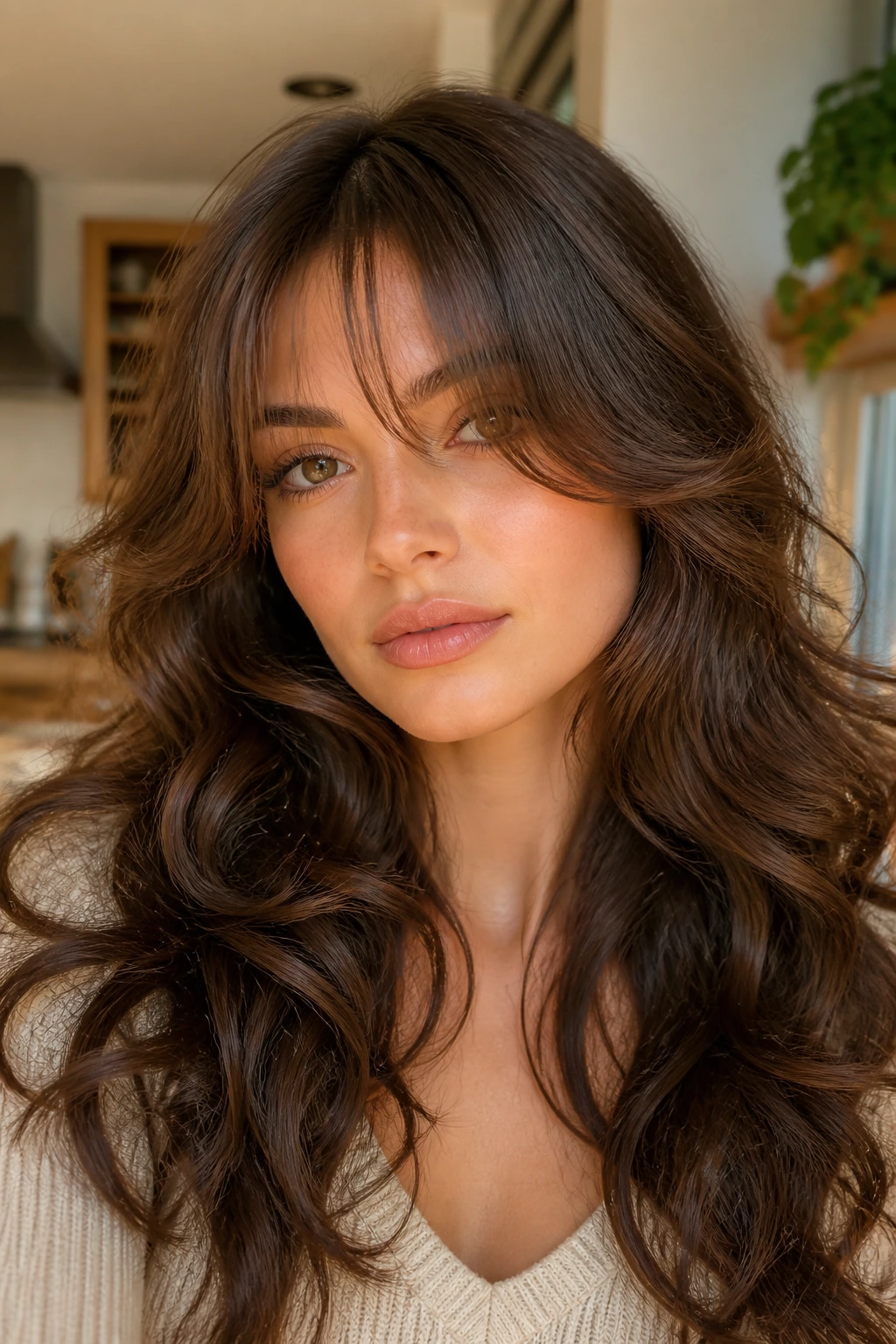
Curtain bangs can work beautifully on a heart-shaped face, but they need to stay soft. The fringe should open in the middle and graze the cheekbones, not sit in one blunt line across the forehead. Paired with long layers, the result is less top-heavy and more balanced.
The best version blends. The bangs should melt into the front layers, and the layers should continue the same bend down the sides. Curl them away from the face, then pinch the ends slightly so they don’t stick out in a hard angle.
Trim them every 6 to 8 weeks if you want them to keep that loose shape. Once they get too long, they stop framing and start hanging. That is a different problem.
21. Glam Ponytail Layers with Curled Tendrils
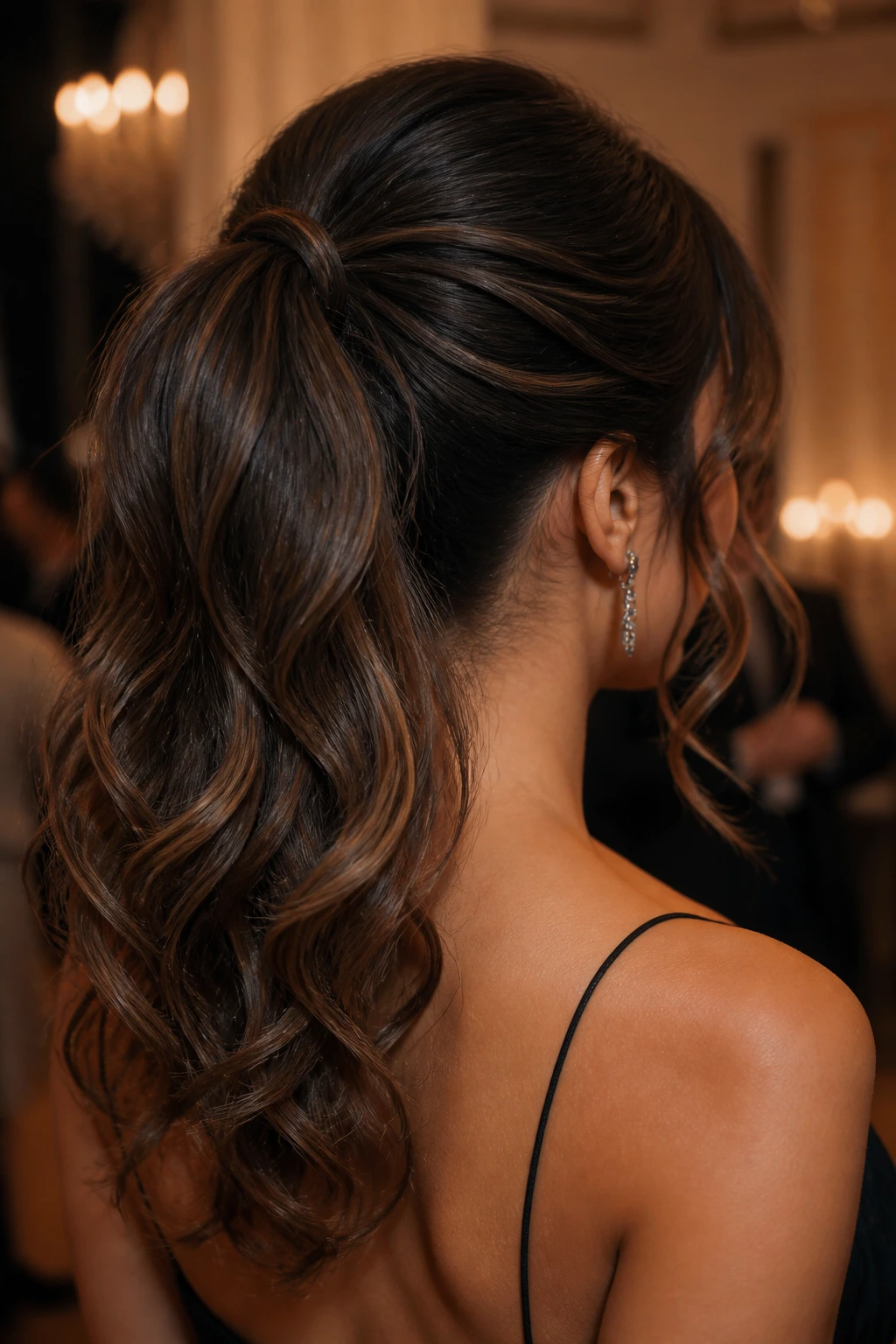
Can a ponytail belong in a layered curls roundup? If the tendrils are handled well, yes. A high or mid ponytail with curled face-framing pieces can flatter a heart-shaped face by showing the cheekbones while keeping the forehead soft. The layers around the face do more work than the ponytail itself.
Keep the tendrils loose and purposeful. The shortest ones should start around the cheekbone or jaw, not the temples. Curl the ponytail lengths in sections so the tail has movement, then wrap a small piece of hair around the elastic for a cleaner finish.
This is a useful style when you want the length off your neck but still want the layers to show. It’s neat enough for day wear and polished enough for an event.
22. Heatless Overnight Layers with Soft Polish
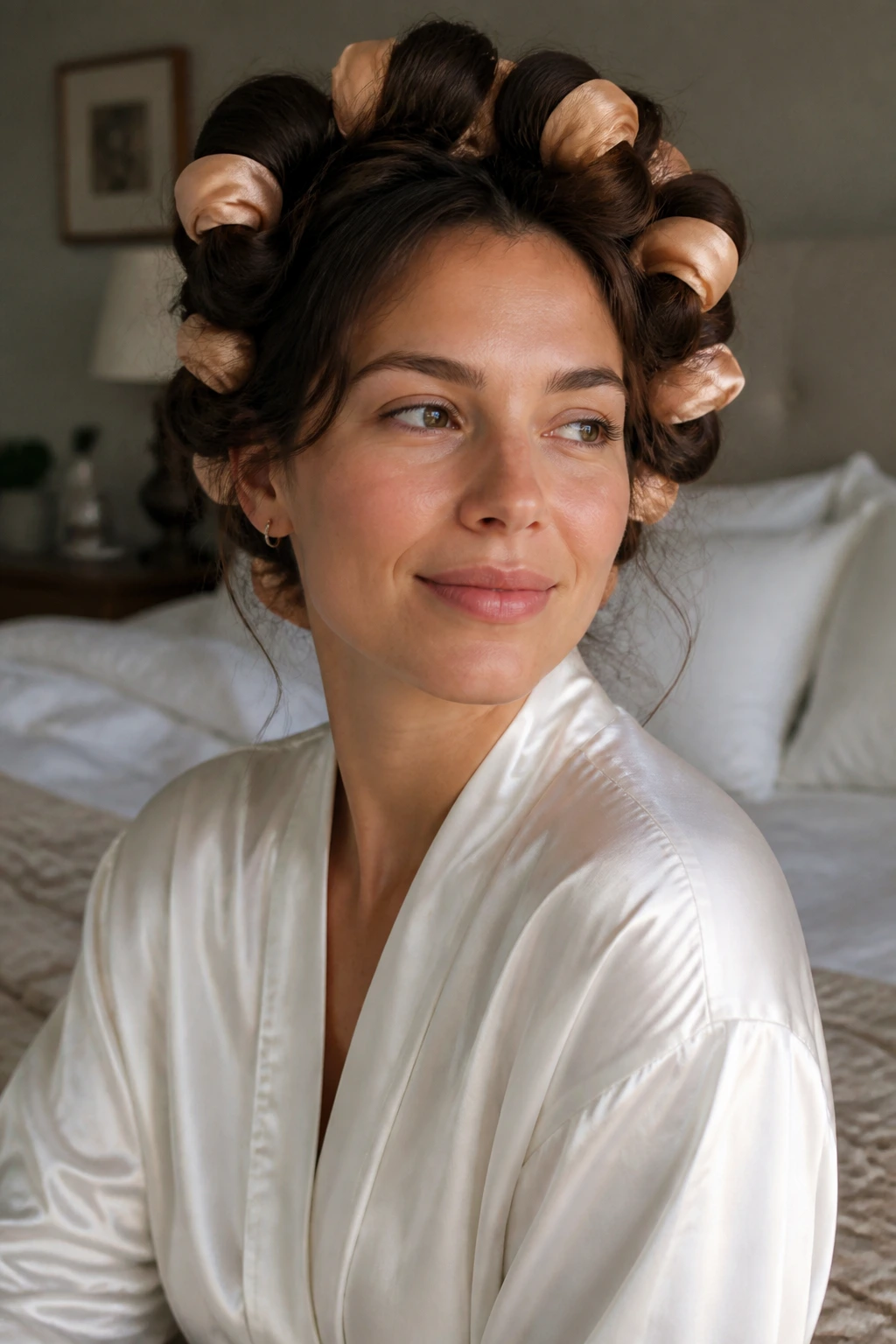
Heatless curls are the quiet choice, and I respect that. They protect long hair from daily hot-tool abuse, and on a heart-shaped face they can still give enough bend to frame the cheeks and chin. Satin rollers, a robe belt wrap, or flexi rods all work if the sections are placed with intention.
The key is setting the front pieces away from the face and keeping the crown from going too flat. In the morning, shake the curls out with dry hands, not a brush. If the ends feel fuzzy, smooth a tiny bit of serum only on the last two inches.
This style is best when you want softness instead of precision. It looks a little less formal than hot-set curls, but it keeps the long layers light and the face frame gentle.
Why Layered Curls Work on Long Hair and Heart-Shaped Faces
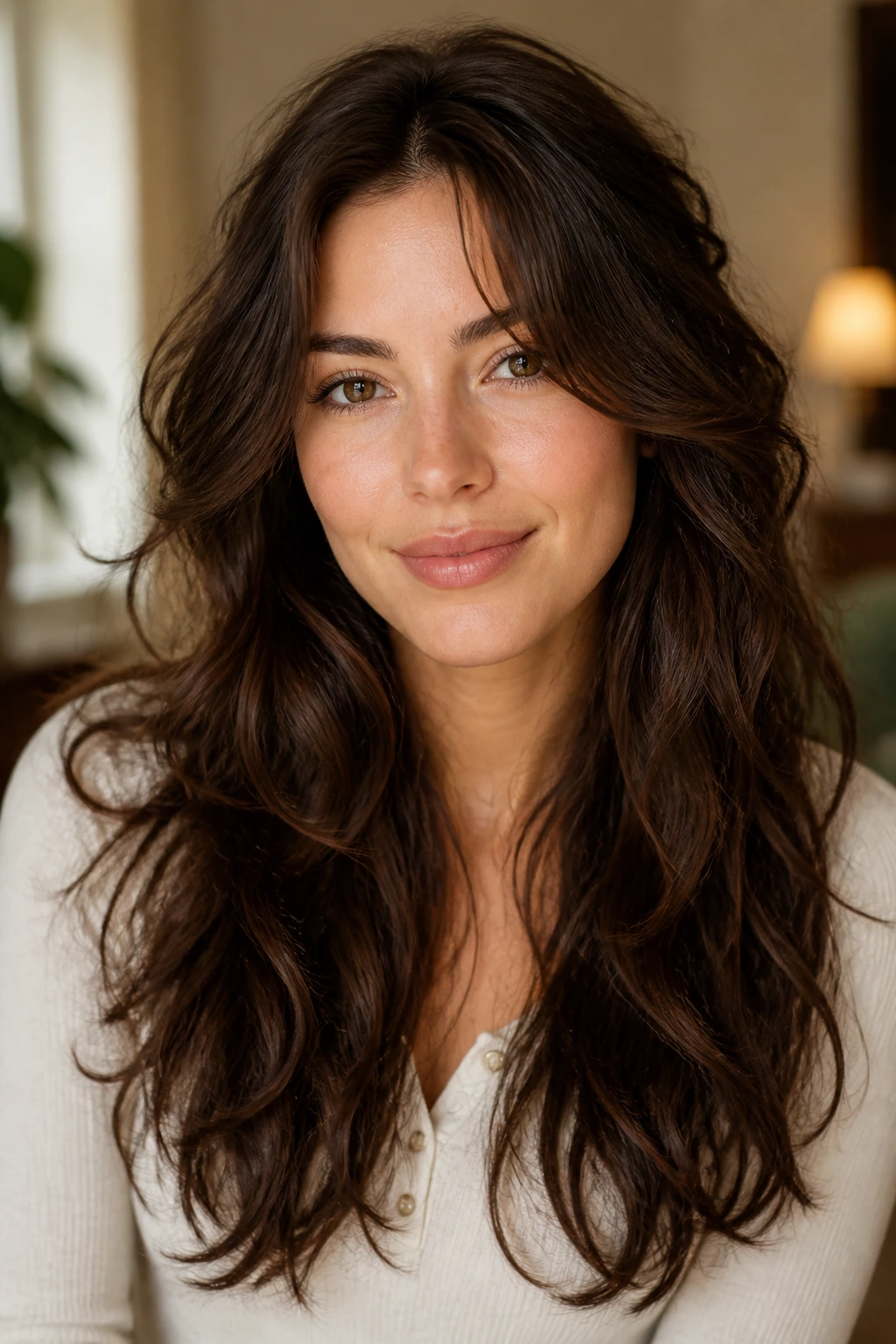
Long hair is heavy. That sounds obvious, but people forget how much that weight changes the shape of a curl once the hair passes the shoulders. A blunt cut can drag curls straight down, while a layered cut lets the curl spring at different points, which keeps the outline from turning into one long curtain.
Heart-shaped faces need a bit of finesse because the forehead is usually the widest part of the face and the chin narrows more quickly. The sweet spot is not adding height at the crown. It’s building softness around the cheekbones and jaw so the face reads as balanced, not top-loaded.
That is why so many of these styles place the shortest layer around cheekbone or lip level. A cut that starts too high can make the upper face feel even broader. A cut that starts too low can miss the face entirely and leave you with length but no frame.
The curl pattern matters too. Big waves, ribbon curls, and brushed-out bends all do something slightly different, but they share one useful trait: they blur the harsh line between forehead and chin. That blur is the whole game here.
What to Ask Your Stylist Before the First Snip
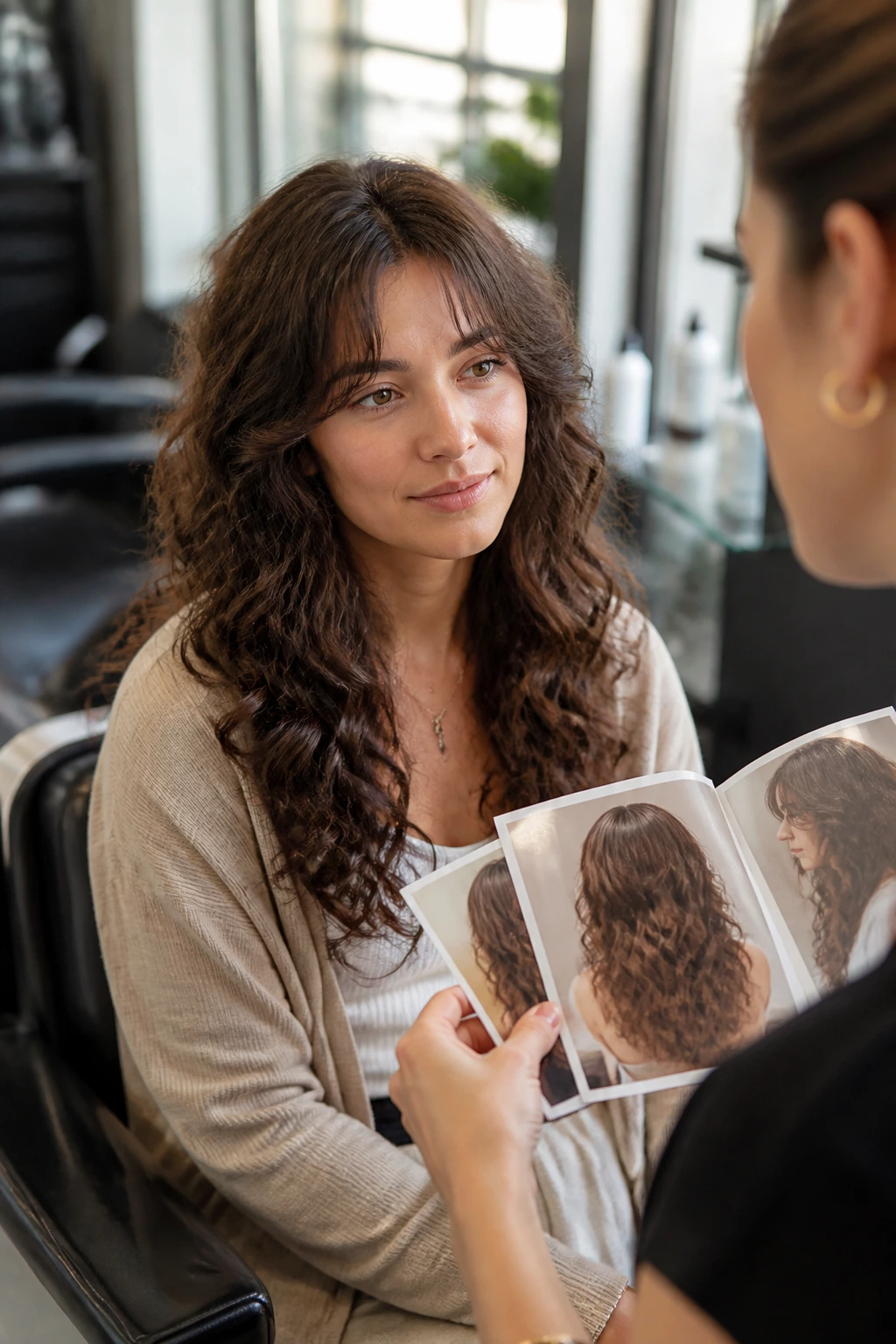
Bring photos. Not one. Two or three. One should show the front, one should show the side, and one should show how the curls fall when the hair moves. A still photo of a perfectly posed head can be misleading if your hair is denser, finer, or straighter than the model’s.
Ask for long layers that start around the cheekbone, collarbone, or just below the chin, depending on how much face frame you want. If you want softness without losing length, ask for internal weight removal rather than a lot of short exterior pieces. If your hair is naturally curly, ask for the cut to be shaped in its dry state so the shrinkage doesn’t wreck the balance.
A few salon phrases help:
- Face-framing pieces: point to where you want them to land.
- Invisible layers: good for thick hair that needs movement.
- Dry cut: useful for curls and waves with real bounce.
- Soft curtain fringe: useful if your forehead feels prominent and you want a little break in the line.
One more thing: tell the stylist how you wear your part most days. A center part and a deep side part do not ask the cut to behave the same way.
Tools and Products That Make the Shape Hold
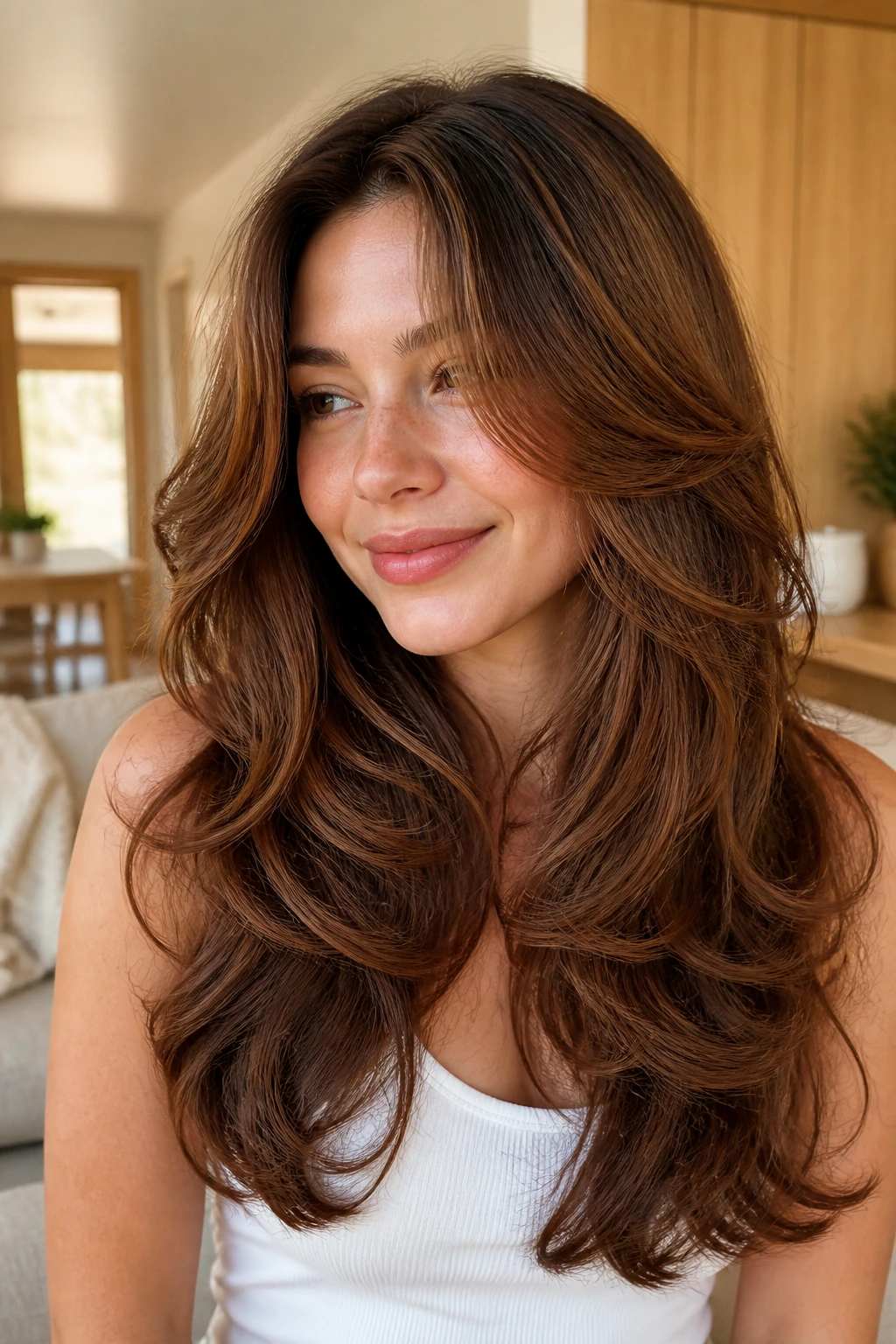
-
1-inch curling iron or wand — Best for tighter face-framing curls and shorter layers around the cheekbones.
-
1.25-inch curling iron — My default for long hair; it gives bend without making the curl look cramped.
-
1.5-inch iron or wand — Useful for soft waves, blowout bends, and brushed-out glam finishes.
-
Heat protectant spray — Don’t skip this. Long hair shows damage at the ends first, and ends are what everyone notices.
-
Mousse or root-lift foam — Handy when the crown goes flat and you need a bit of air under the roots.
-
Flexible-hold hairspray — Keeps the shape in place without turning the curls stiff or crunchy.
-
Sectioning clips — They keep long layers organized while you style, which matters more than people think.
-
Round brush — Useful for feathered ends, blowouts, and any style that needs a smooth bend.
-
Wide-tooth comb or finger comb — Better than a fine brush for breaking up curls without blowing the shape apart.
-
Silk or satin pillowcase — Helps the curl pattern stay smoother overnight and cuts down on the fuzzy halo around the face.
-
Light serum or finishing oil — Use a tiny amount on the last two inches only. The roots do not need it.
How to Wear These Curls in Real Life
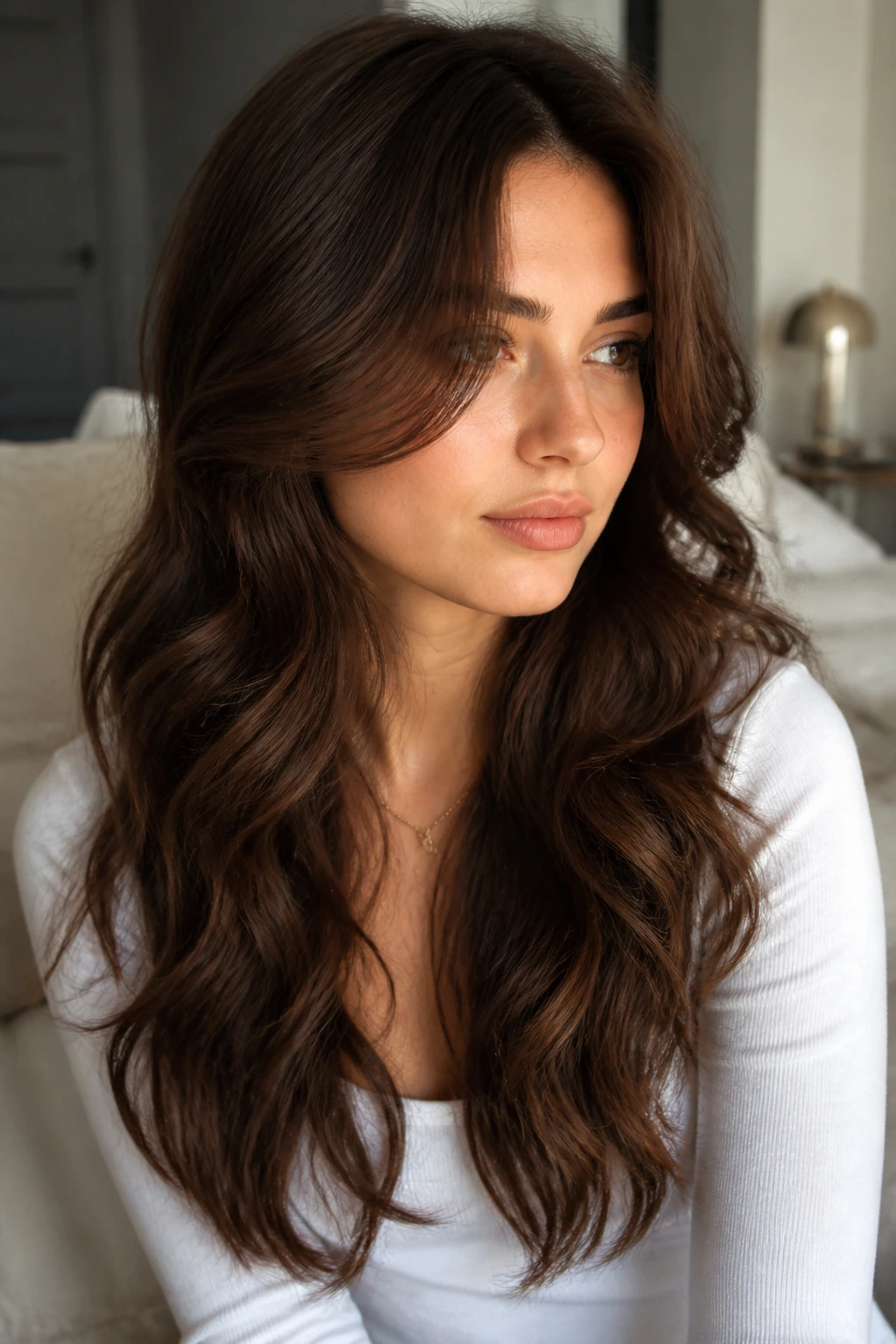
Everyday wear: Keep the face frame soft and let the lower layers do the work. A tucked-behind-the-ear side, a loose clip at the back, or a single pin on one side can make the style feel lived-in instead of overdone. If your hair is fine, skip heavy finishing cream at the crown; it will flatten the very lift you wanted.
When you want more polish: Brush the curls into one shape, smooth the front pieces away from the face, and use a light shine spray. That works especially well with Old-Hollywood waves, ribbon curls, and deep side parts. The hair should look controlled, but not stiff enough to stand on its own.
What clothes suit it: Open necklines help. V-necks, scoop necks, off-shoulder tops, and soft collars all give the curls room to sit without crowding the chin. High necks can work too, but then the hair needs a little more lift near the jaw so the whole look doesn’t pile up at the throat.
When to pull hair back: If the curls are already wide around the temples, a half-up style or a low clip can keep the face from feeling boxed in. That is usually the better choice than adding more spray and hoping for the best.
Keeping the Shape Between Wash Days
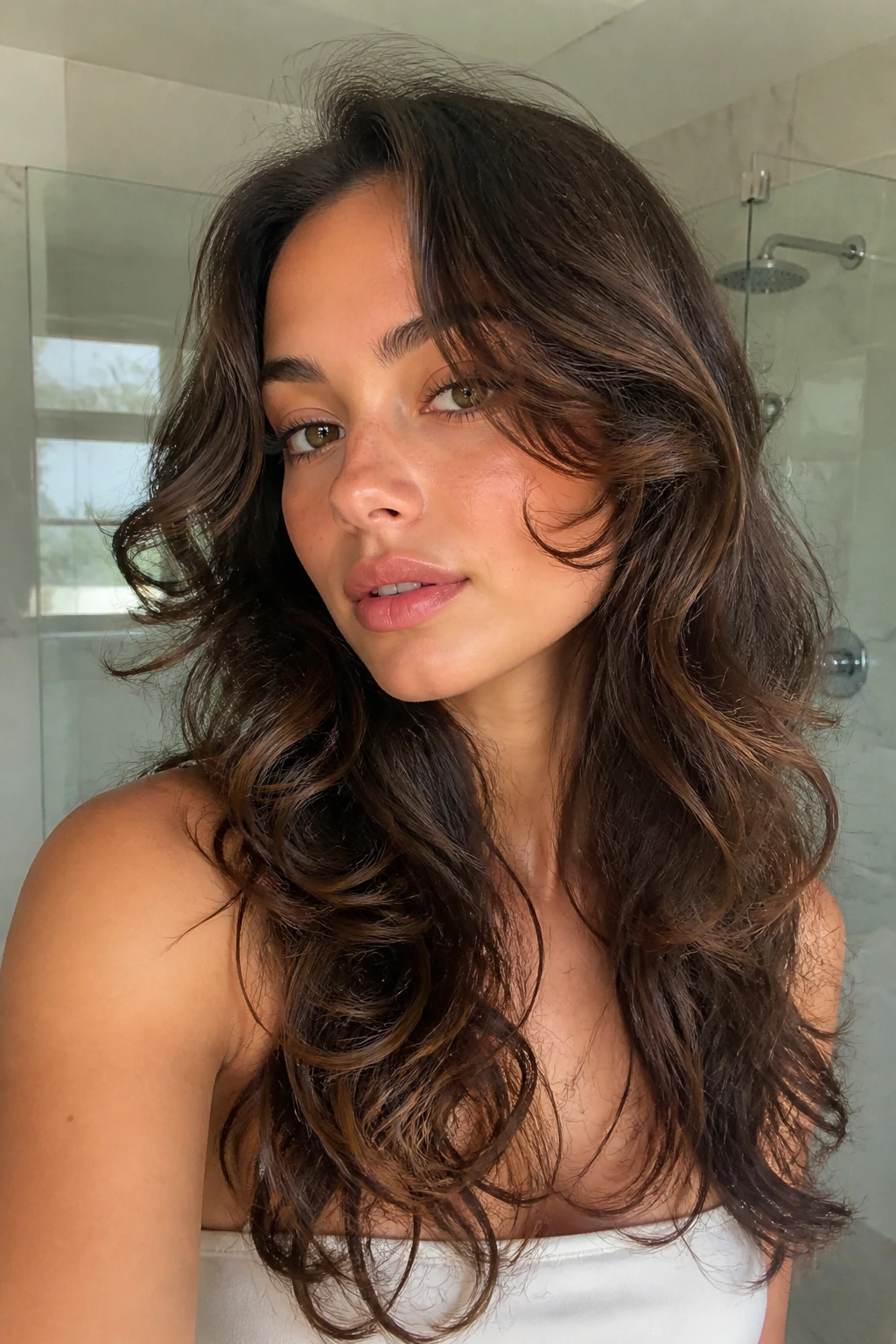
Long layered curls survive on good second-day habits. Sleep on a silk or satin pillowcase, or wrap the hair loosely in a pineapple if the curl pattern is soft and wave-like. If the layers are more defined, clip the top section loosely so the front pieces don’t get crushed into the pillow.
The next morning, mist the mid-lengths lightly with water, then add a touch of curl cream, mousse, or leave-in depending on the texture. Do not soak the roots unless they truly need a full reset. Too much water at the crown usually means more frizz, not more shape.
By day two or three, dry shampoo at the roots can buy you a little height without making the hair dusty. If the face frame goes limp, re-curl only the front two sections with a 1-inch iron. That is faster than redoing the whole head and usually enough to bring the cut back into focus.
Most layered curls look best fresh through day two, acceptable through day three, and a bit more relaxed after that. If the style still holds shape by then, the cut is doing its job.
Small Tricks That Give the Layers More Lift
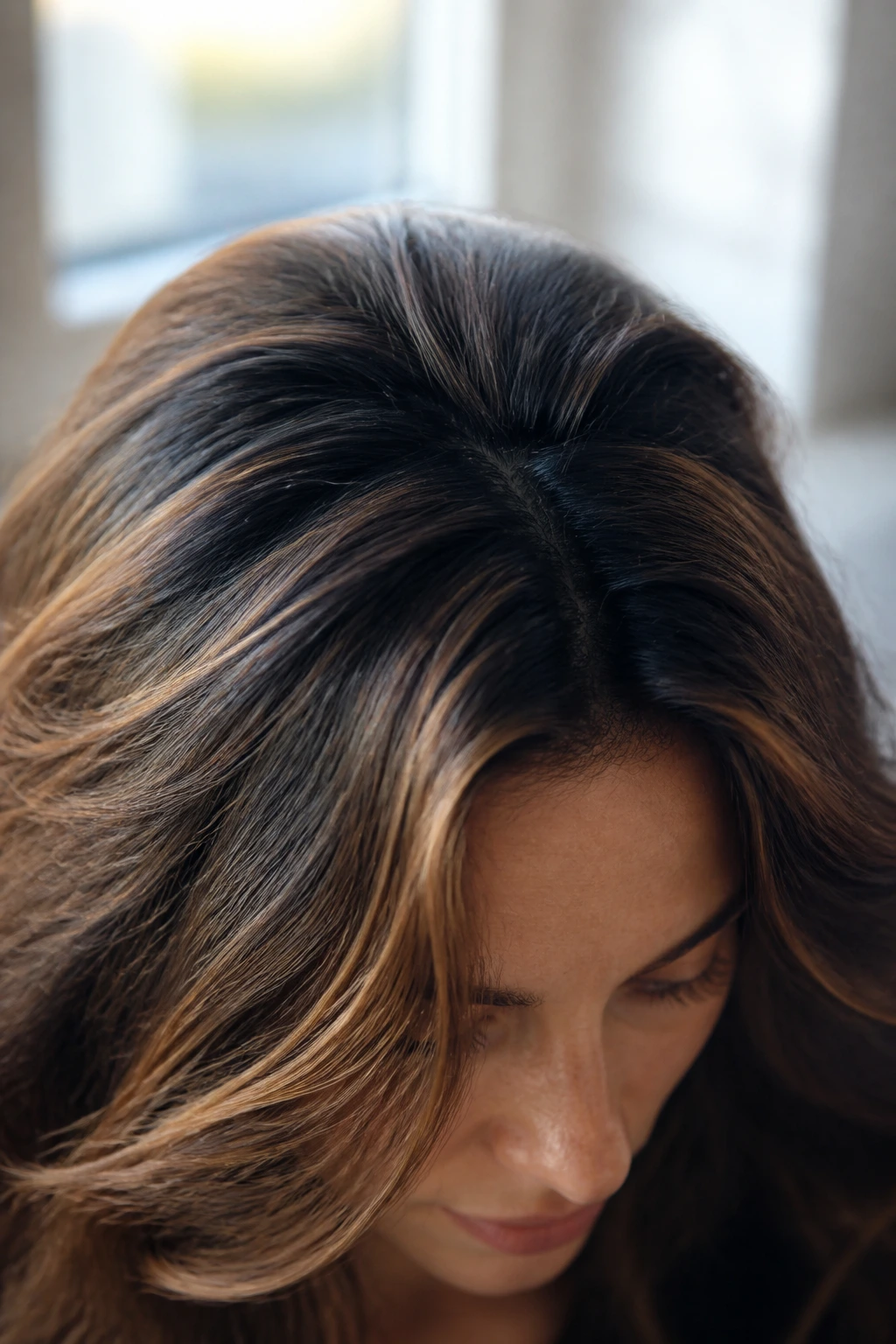
Root lift: Clip the crown at the root while the hair cools after blow-drying. Ten minutes is enough. It gives the top enough air that the curls don’t collapse into the forehead.
Framing trick: Curl the front sections away from the face, then let them sit in your hands until fully cool. That pause matters more than another blast of hairspray.
Length trick: Leave the last inch straighter on the longest layers if you want the style to feel modern. It keeps the ends from frizzing into a fuzzy halo.
Time-saver: On rushed mornings, curl only the face frame and the top layer. The underlayers can stay looser. No one notices every section the way you do in the bathroom mirror.
Cost-saver: You do not need a pile of products. A decent heat protectant, a flexible hairspray, and one styling cream or mousse usually cover it. The rest is technique.
Mistakes That Flatten the Face Frame
-
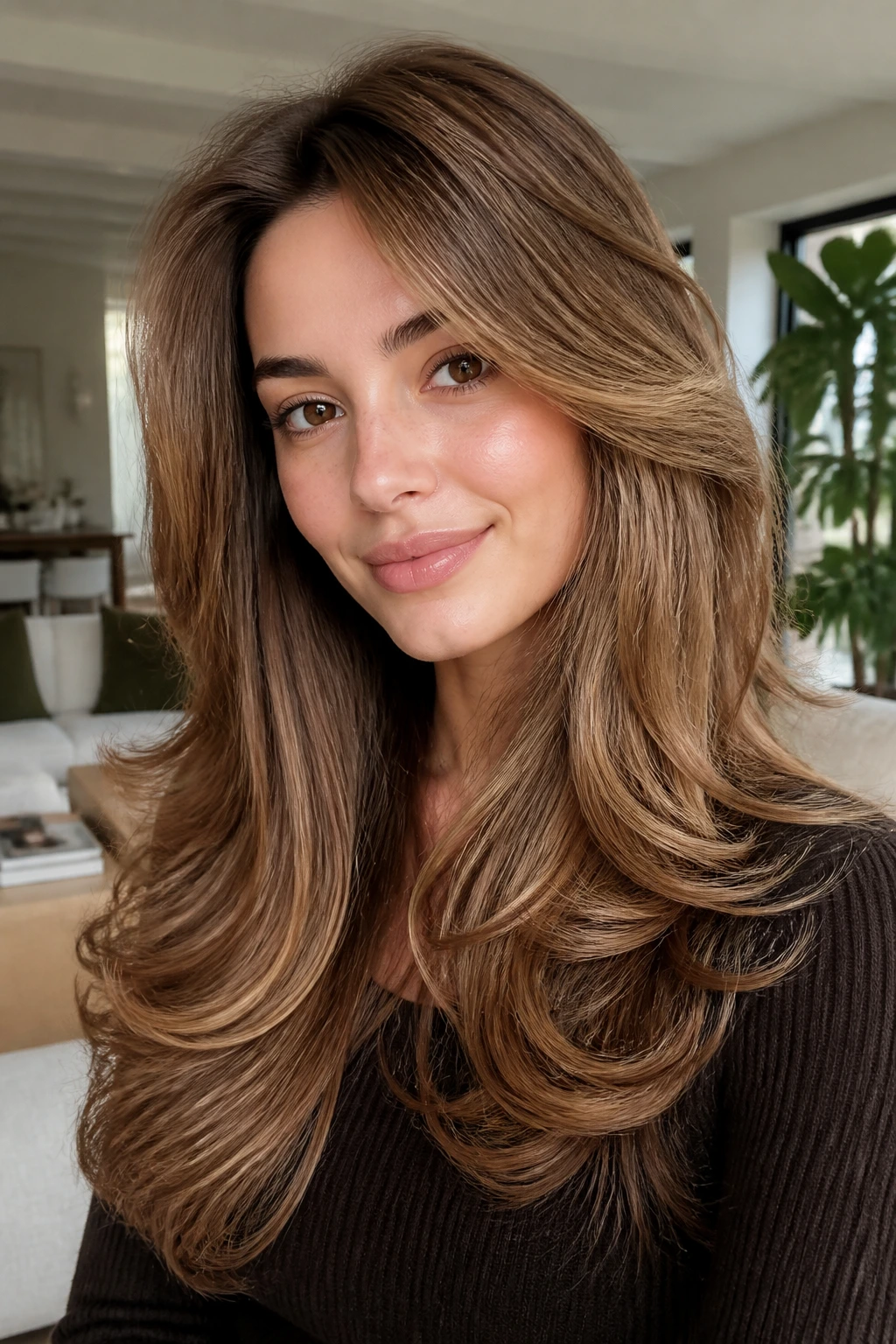
Starting the shortest layer too high. The symptom is a forehead that feels wider and a top-heavy outline. The fix is to keep the face frame around cheekbone or jaw level.
-
Curling every section in the same direction. That can make the hair look stiff and a little helmet-like. Alternate directions through the mid-lengths and keep the front pieces away from the face.
-
Using a tiny iron on very long hair. The curls may look overdone near the top and limp at the bottom. A 1.25-inch or 1.5-inch barrel usually reads better on long lengths.
-
Over-thinning thick hair. The ends go see-through and the lower half loses its weight. Ask for internal layers instead of aggressive thinning shears.
-
Putting oil near the roots. The crown collapses, the curls separate early, and the face frame goes flat by noon. Keep oil on the last two inches only.
Variations and Adaptations to Try
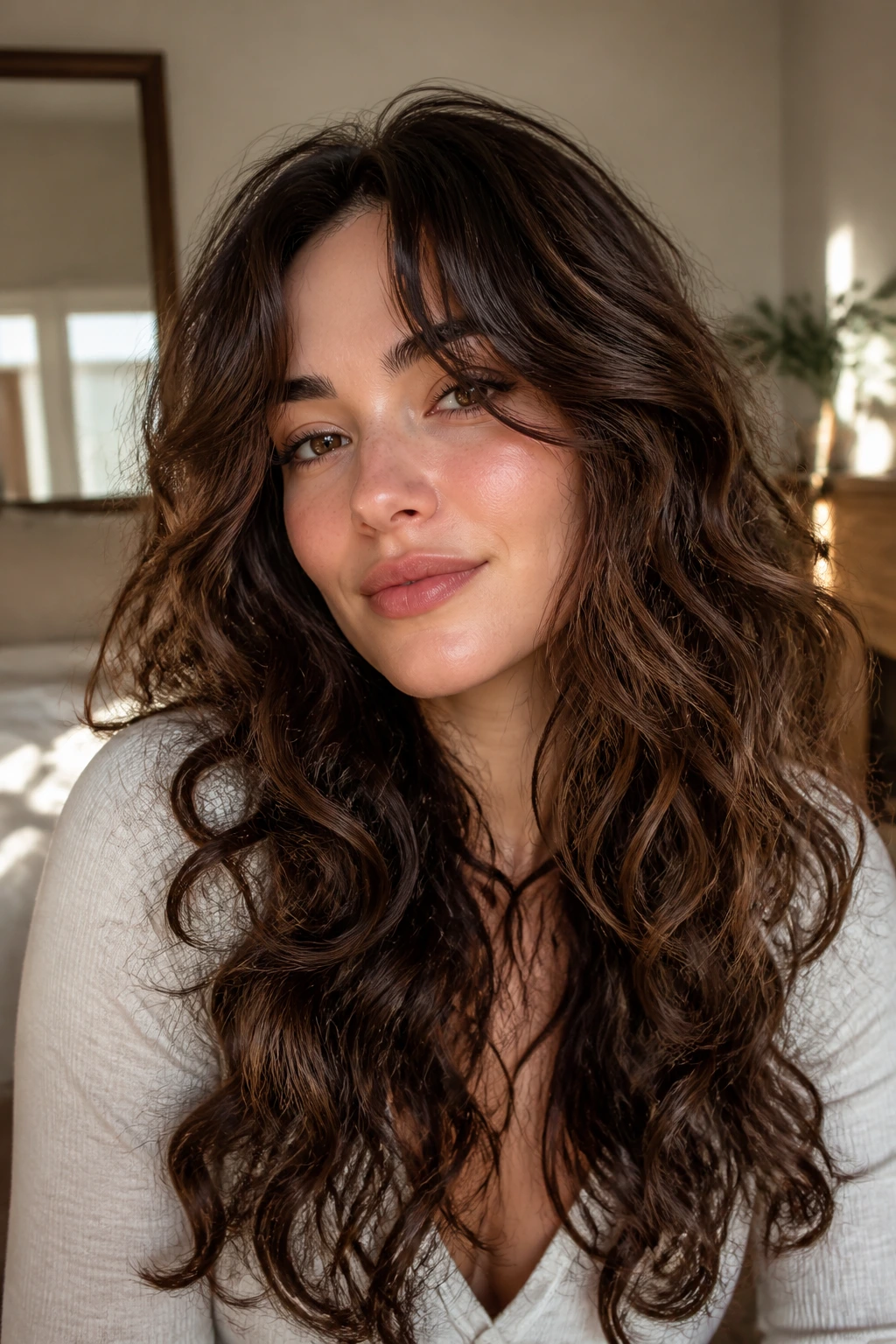
Fine-Hair Float: If your hair is fine, keep the layers longer and ask for a soft face frame instead of dramatic chopping. Use mousse at the roots and a 1.25-inch iron so the curl has enough body to hold.
Thick-Hair Release: For dense hair, go with internal layers and a medium-barrel curl. The aim is not more curl. It’s less drag, which makes the whole shape move instead of sitting like a wall.
Heatless Satin Set: Use flexi rods, a robe tie wrap, or satin rollers overnight if you want to skip heat. This works well when the front pieces need softness but the lengths need less daily damage.
Curly-First Cut: If your hair is naturally curly, ask for a dry cut and style with curl cream plus gel. This keeps the layers from popping up too high near the crown once the curls dry.
Bangs Included: Curtain bangs or a wispy fringe can soften a larger forehead, but they need regular trimming. Pair them with long layers so the whole front line stays fluid instead of chopped.
Frequently Asked Questions
What layer length flatters a heart-shaped face most?
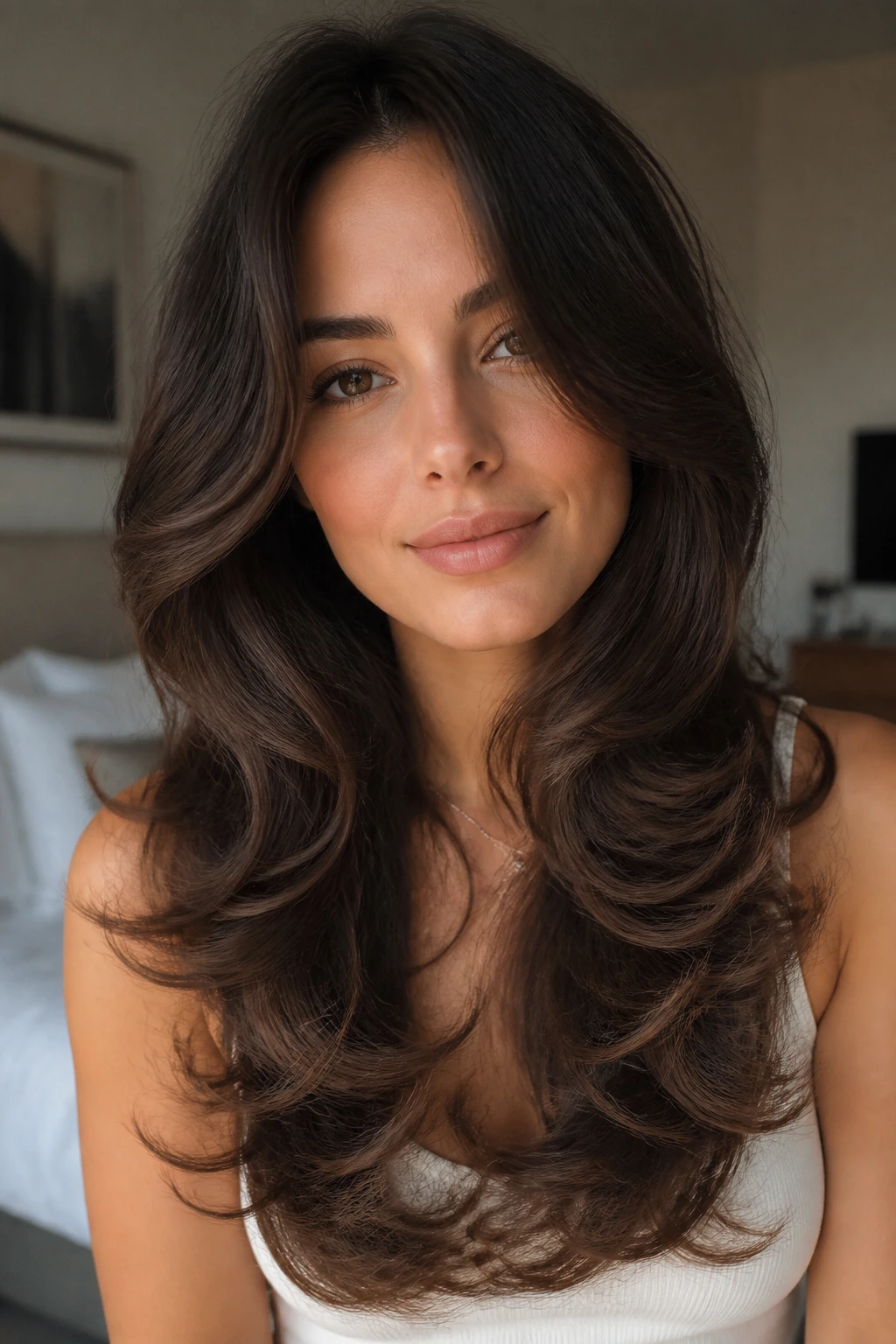
Usually, the safest sweet spot is around the cheekbone, lip line, or collarbone. That placement softens the upper face without making the forehead feel heavier.
Do center parts work on heart-shaped faces?
Yes, but they work best with curtain layers or a soft face frame. A hard center part with no front movement can make the forehead feel wider than it is.
Will layers make long hair look thinner?
Not if they’re cut well. Long layers should remove bulk and add movement, not strip out so much weight that the ends go wispy.
Should I curl the front pieces toward or away from my face?
Away from the face is usually the safer bet for heart-shaped faces because it opens the forehead and keeps the cheekbone area soft. You can alternate the mid-lengths for movement, but the front often looks better swept out.
How often should layered curls be trimmed?
The front pieces usually need attention every 6 to 10 weeks, especially if you wear curtain bangs or a strong face frame. The rest of the cut can usually go a bit longer if the shape still holds.
What if my curls fall flat by midday?
Check the cut before you blame the products. If the layers are too heavy, the curl will lose support no matter how much spray you use. A smaller refresh on the front sections and a little root lift at the crown usually help.
Can this shape work with naturally straight hair?
Absolutely. It just leans more on the cut and the styling tools. Use larger barrels, set the curls to cool, and keep the ends slightly softer so the layers read as movement rather than ringlets.
Are curtain bangs a bad idea for a heart-shaped face?
Not at all. They can be one of the best options if they stay long enough to sweep into the layers. The problem is a blunt fringe that stops too high; that can make the top half of the face feel crowded.
The Shape That Sticks
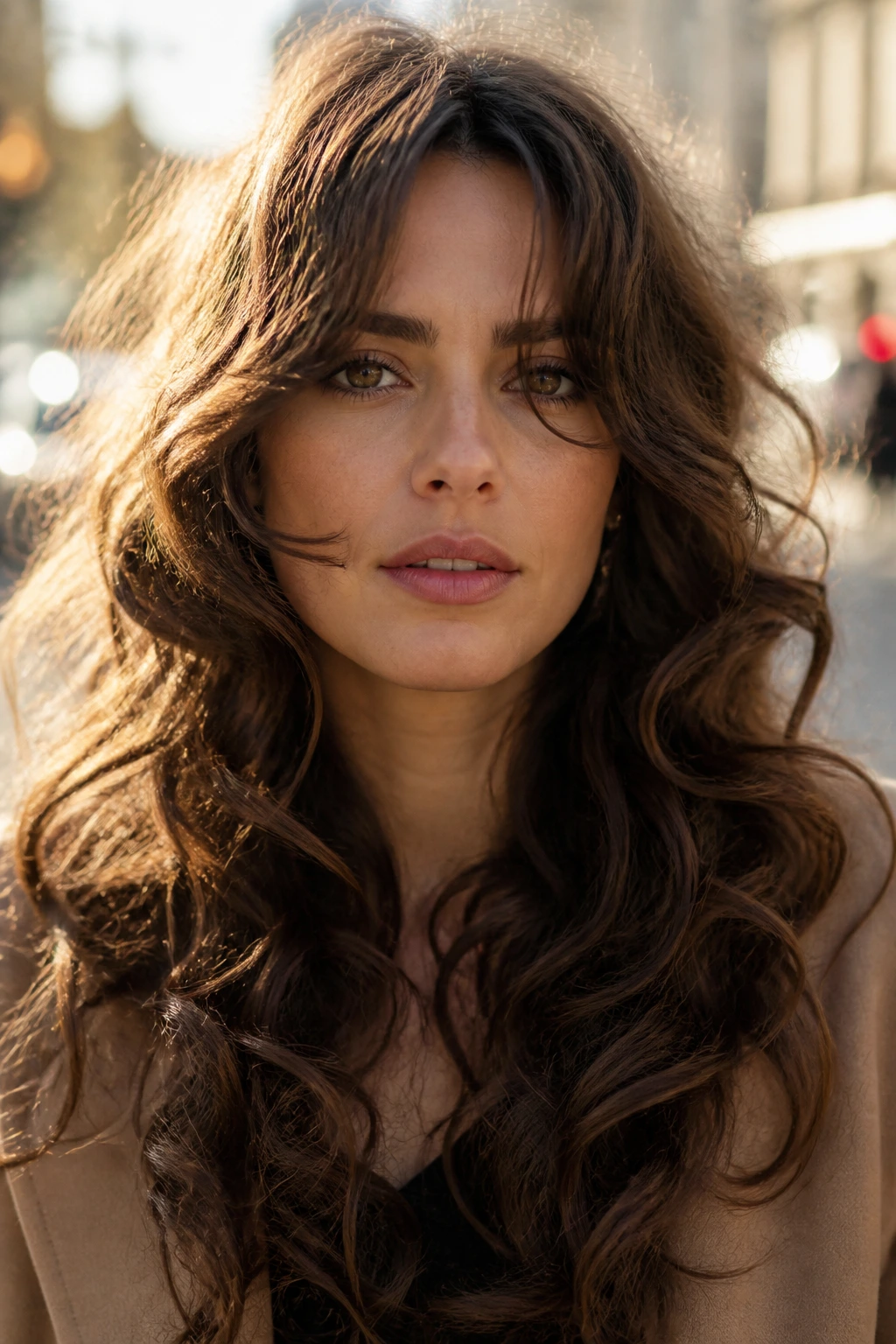
The best layered curls for long hair and a heart-shaped face do one thing better than the rest: they keep the face soft where it wants softness, and the length alive where long hair tends to go sleepy. That balance is subtle in the salon chair and obvious in the mirror on a windy day.
If you remember only one detail, make it this: place the shortest pieces where the cheekbones can catch them. Everything else—the barrel size, the part, the finish—just supports that decision. Once that frame is right, the curl pattern starts doing the flattering on its own.
And that’s the part worth the trouble. Get the layers in the right place, then let the curls do what curls do best.