



Short rounded hairstyles for women with wavy hair solve a problem that blunt cuts rarely touch: they let the wave keep its bend, but stop the shape from ballooning out at the sides. When the outline curves in the right places — at the jaw, behind the ear, through the nape — wavy hair suddenly looks deliberate instead of like it has a mind of its own. That’s the difference between “I got it cut” and “this was shaped.”
There’s also a very practical reason these cuts keep showing up in salons. Wavy hair often wants width before it wants length. A straight perimeter can turn into a triangle by noon, especially if the ends are dry or the crown has more lift than the lower half. A rounded cut changes the weight distribution. The silhouette softens. The whole head reads cleaner.
And no, rounded does not mean helmet-like. The good versions have movement, a little internal air, and enough edge work to keep the curve from looking carved with a ruler. The best ones look like the hair decided to cooperate on a good day — not like it was forced into a shape it resented.
Why This Collection Stands Out
-
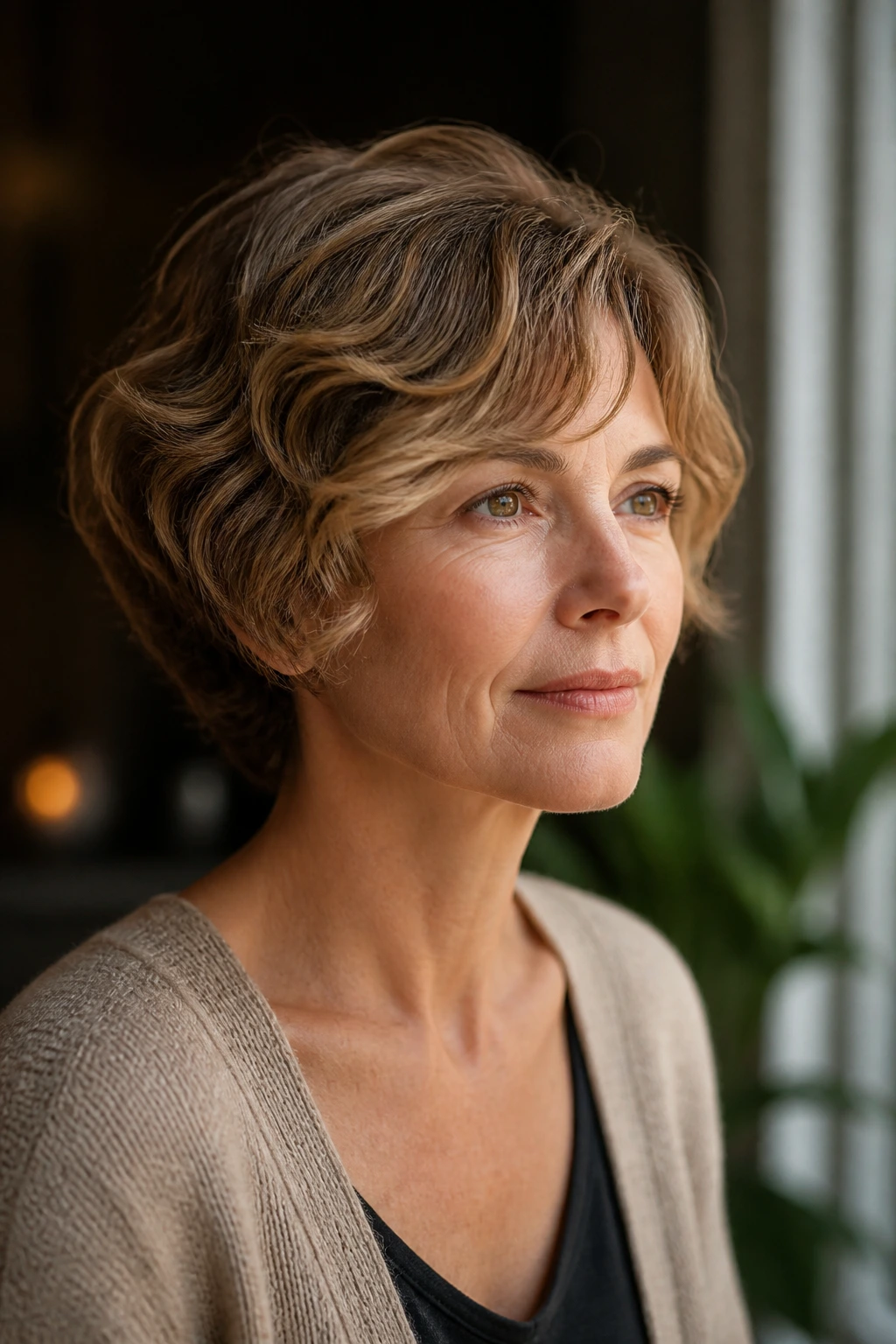
Built for wave pattern, not against it: These cuts leave enough softness in the outline that 2A, 2B, and looser 2C waves can bend without exploding sideways.
-
Shorter length changes the weight game: Once the ends are off the shoulders, the hair stops dragging itself flat and the wave pattern tends to show up more clearly.
-
Rounded shapes tame bulk at the sides: If your hair fills out through the ears or jaw, a curved perimeter keeps the silhouette from going wide.
-
There’s room for style personality: You can go polished, piecey, shaggy, sculpted, or airy without leaving the short-and-rounded lane.
-
These cuts are easier to refresh: A few careful trims and the outline still holds. You are not fighting a long grow-out that loses shape in every direction.
Why Rounded Shapes Work So Well on Wavy Hair
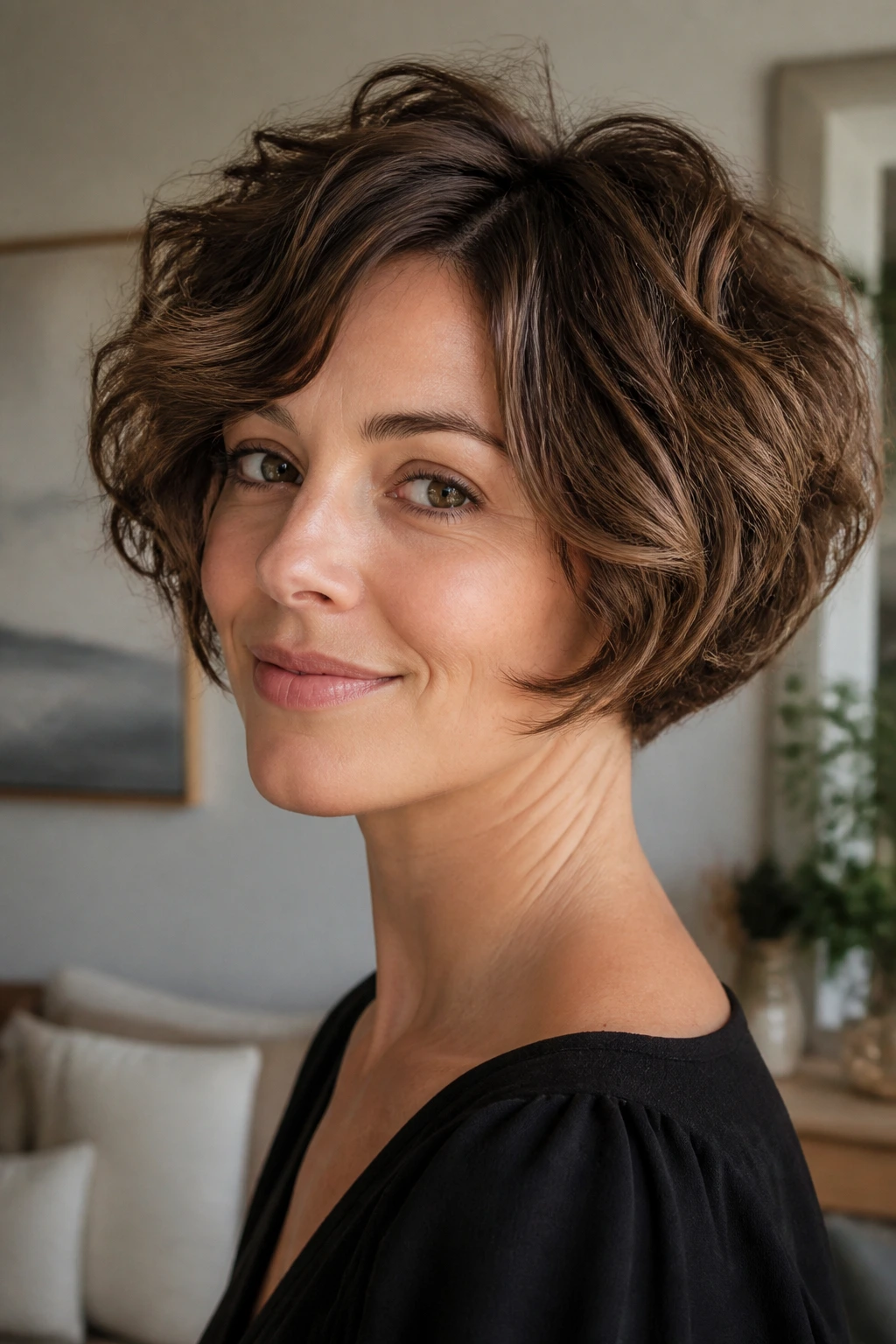
The shape does half the work for you. That’s the honest answer. Wavy hair already bends, flips, and lifts on its own, so the haircut has to give it a frame that keeps that movement from turning messy. Rounded silhouettes do that by narrowing the outline near the jaw and neck while leaving a little fullness where the hair wants to swell.
The trick is weight. Too much weight at the bottom and the ends hang in a sad, droopy line. Too little and the sides puff like a triangle. The sweet spot is a cut that removes enough bulk to let the wave spring, but not so much that the perimeter looks thin or sliced apart. A good stylist will talk about density, not just length.
There’s another reason these cuts work: they dry in a friendlier way. Wavy hair often looks best when it has a little lift at the root and a soft bend through the ends, not when every strand is forced to lie flat. Rounded bobs, curved pixies, and nape-hugging crops support that shape as the hair dries, which means less fuss with irons and less need to chase every flyaway.
If you’ve ever had wavy hair cut too bluntly, you know the weird effect. It can look sharp for one hour, then the sides swell and the top collapses. Rounded cuts prevent that. They don’t make the wave disappear. They give it a boundary.
What to Tell Your Stylist Before the First Snip
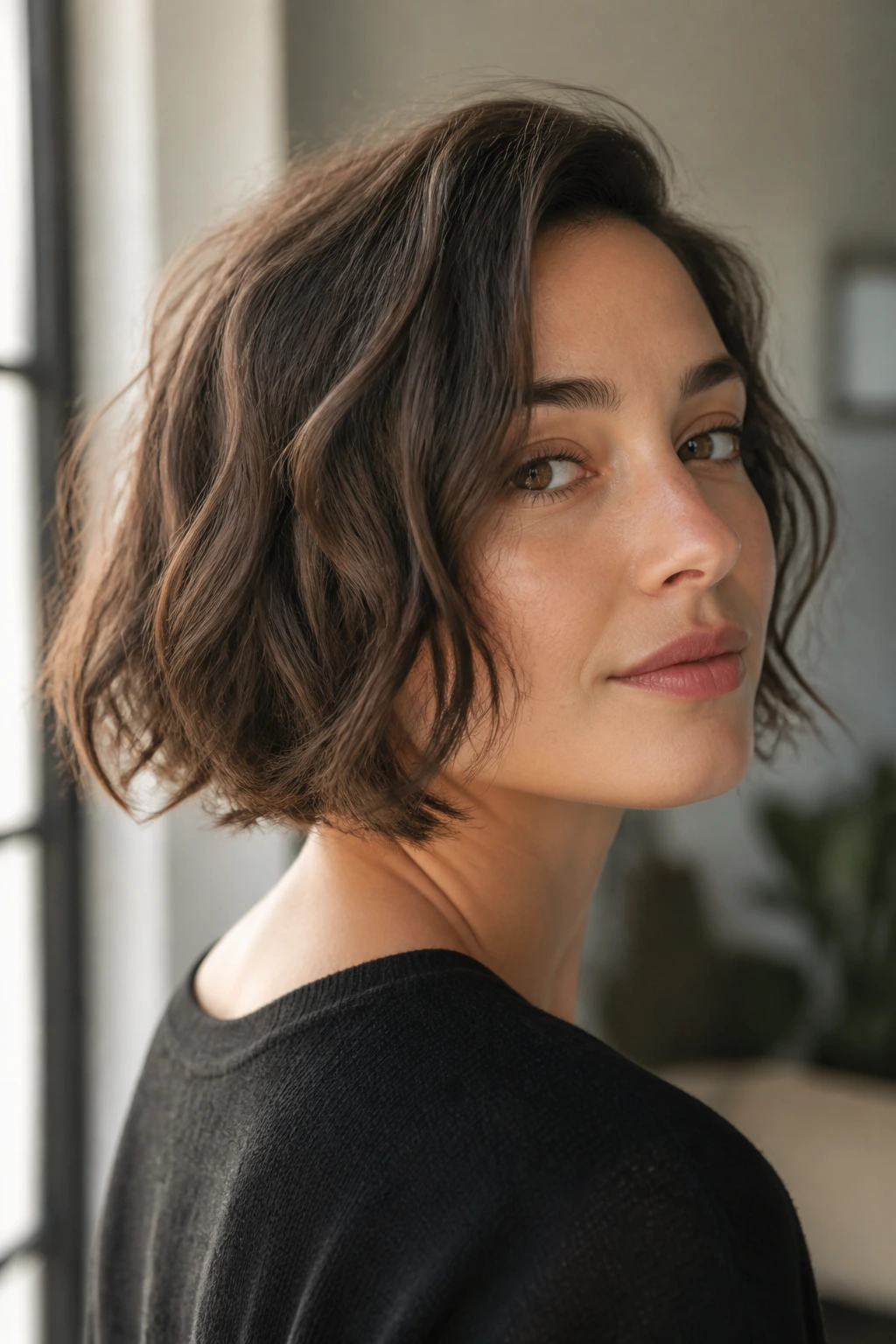
A good salon conversation changes everything. Bring photos, yes, but also bring a few plain-language notes about where your hair gets heavy, where it frizzes, and how much time you’ll actually spend styling it. A photo of the front is nice. A photo of the side and back is better.
Ask for rounded weight distribution, not just “shorter.” Those words matter. If the stylist knows you want the curve to sit at the jaw or tuck in at the nape, they can keep bulk where it helps and remove bulk where it hurts. Wavy hair tends to swell at the widest part of the head, so the perimeter has to be handled with a little care.
Say how you wear it most days. Air-dried with a little cream? Diffused for ten minutes? Pushed behind the ears? Those details decide where the shortest point should sit and whether the fringe should be curved, side-swept, or left longer. If you use a round brush once a week and nothing else, that’s useful too. A haircut should match the life you live, not the one on a mood board.
Ask for These Details
- Dry-cut check: Waves change shape as they dry, so a quick dry check helps the stylist see the true outline.
- Interior softness: Point cutting or light layering can keep the cut from turning blocky.
- A curved perimeter: Straight lines can look too hard on wavy hair, especially at chin length.
- A growth plan: Ask how the cut will look in six weeks, not just on day one.
1. The Jaw-Skimming French Bob
This is the cut that makes wavy hair look expensive without trying too hard. The length lands right around the jaw, which gives the wave a place to curve in and tuck under instead of spreading out past the cheeks. With a loose side part and a bit of bend through the ends, it reads crisp, not stiff.
It works best when the line is clean but not blunt. A slight point-cut at the ends keeps the hair from stacking up into a shelf, and that matters a lot if your waves are thick. I like this version with a soft fringe or a longer face frame, because the haircut already has enough structure on its own. Too much fringe and it starts to feel crowded.
2. The Curved Bixie with a Soft Nape
A bixie sits between a bob and a pixie, and the curved version is especially kind to wavy texture. The nape stays shorter, the crown keeps a little lift, and the top pieces are long enough to show the wave instead of crushing it. The silhouette has shape from every angle, which is what makes it feel so current without being fussy.
This is a smart cut if your hair gets wide at the bottom but flat at the top. You get movement near the crown and control around the neck, which can be a very nice trade. A pea-sized amount of mousse at the roots and a quick diffuser pass are usually enough. Past that, you start overworking it.
3. The Bubble Bob with Light Layers
A bubble bob has that rounded, plush outline that curves in toward the chin and then softly balloons before tapering back under. On wavy hair, the key is restraint. Light layers keep the shape airy so it doesn’t collapse into a mushroom or swing out too hard at the sides.
This one is especially good if you like your hair to feel full but not huge. The curve does the visual lifting, while the layers keep the ends from looking heavy. A smoothing cream on the mid-lengths and a bit of scrunching at the ends usually bring the shape out fast. If your wave is looser, this cut can look almost sculpted when it air-dries.
4. The Rounded Pixie Crop
The rounded pixie crop keeps the sides close and the top soft, which is exactly why it flatters wavy hair with a little natural body. The cut is short enough to feel easy, but not so short that the wave disappears. You want a curved fringe, a slightly longer top, and enough softness around the temples to keep the outline from looking harsh.
This is one of those cuts that can go chic or sporty depending on how you style it. Finger-dried with a touch of texture cream, it looks casual. Brushed forward and smoothed at the sides, it looks sharper. The main rule is not to flatten the crown. Wavy hair needs some lift there, or the whole cut shrinks visually.
5. The Stacked Mini Bob
If your hair is thick and tends to poof around the nape, a stacked mini bob is worth a serious look. The back is built a little shorter so the shape hugs the neck, while the front keeps enough length to frame the face. That stacking is what makes the haircut feel rounded instead of boxy.
The danger here is over-stacking. Too much and the back can look too tight, especially when the wave springs up. Ask for a gentle curve rather than a dramatic slope if your texture is strong. This cut likes a round brush and a quick bend under the ends. It does not need a perfect blowout. It needs a clean line and a little movement.
6. The Feathered Crop with a Side Part
Feathering is one of the best tools for wavy hair because it removes bulk without making the cut look thin. A feathered crop keeps the sides soft, the top airy, and the fringe light enough to move when you turn your head. The side part gives it shape without stealing volume from the crown.
This cut is easy to wear on days when you only want to finger-comb and go. It also forgives a rough grow-out better than a severe bob, because the feathering blends the change as it gets longer. If your wave is coarse, ask for light texturizing near the ends, not all the way through the top. Too much texturizing at the crown can make it frizzy fast.
7. The Curly Shag Bob
A shag can be rounded when the layers are placed with care, and that’s where wavy hair gets a lot of mileage. The curvier version keeps the perimeter soft while building lift through the crown and cheekbones. You get movement, a little attitude, and none of the triangular bulk that scares people off from shags in the first place.
I like this haircut for hair that wants to look lived-in, not polished. It’s especially good if your waves are a touch uneven, because the layers camouflage small bends and changes in texture. A diffuser helps, but so does patience. Let the hair dry halfway before touching it. If you scrunch too early, you’ll create frizz where you wanted definition.
8. The Chin-Length C-Curl Bob

This is the cut for people who like hair that looks like it was shaped on purpose. The ends bend inward in a soft C, which creates a clean curve around the jaw and chin. Wavy hair already wants to move that way, so the haircut simply guides it.
The best versions keep the layers subtle and the perimeter smooth. If the ends are too chopped up, the curve starts to break apart. A round brush or large curling brush can help reinforce the bend on wash days, but many waves will do the job themselves after a little mousse and a low-air diffuser pass. It’s polished, but not stiff. That’s the point.
9. The Modern Mushroom Bob

People hear “mushroom” and think of a harsh, old-school bowl. Not this version. The modern mushroom bob is rounded through the sides and crown, but softened with movement so it doesn’t sit like a helmet. On wavy hair, that softness matters more than almost anything else.
This cut looks best when the perimeter curves under just enough to keep the shape compact. If your hair is dense, the interior has to be taken down a bit or the shape gets too wide. It suits a bold style without demanding daily heat. A dab of styling balm through the ends can keep the curve from fraying. Use too much, though, and the whole thing goes limp. Small amount. Always.
10. The Side-Swept Rounded Crop

A side-swept crop gives the forehead and temple area a little breathing room, which is nice if your face feels narrow or your waves hit harder on one side than the other. The rounded shape keeps the overall silhouette soft while the sweep adds direction. It has that easy asymmetry that makes short hair feel less severe.
This one is especially useful if you hate having hair in your eyes but don’t want a full fringe. The longer front section can be pushed back, tucked behind the ear, or left to fall naturally. If your wave pattern has a stubborn front piece that kicks the wrong way, this cut can absorb it instead of fighting it. That’s a relief on busy mornings.
11. The Nape-Hugging Tapered Bob
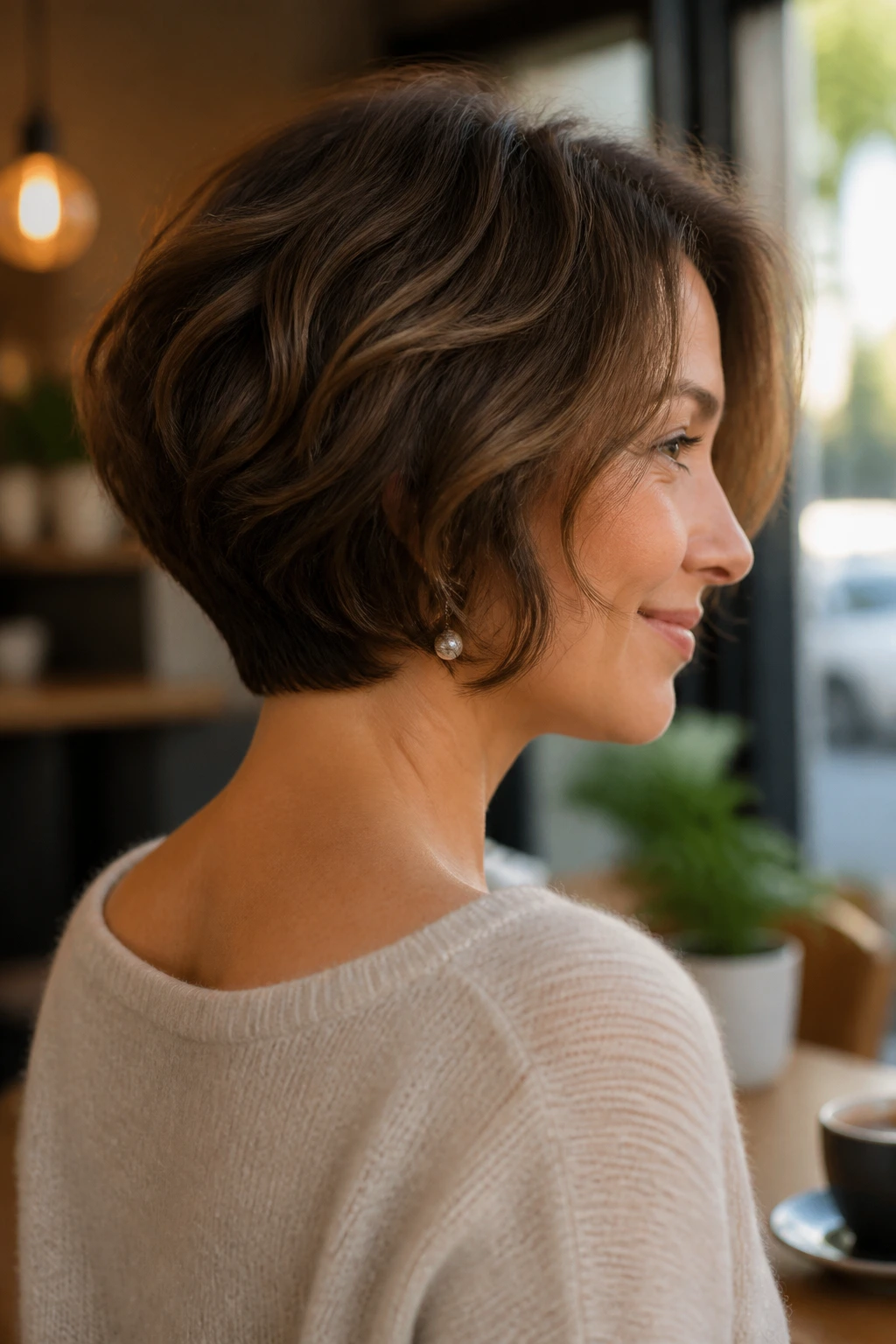
This bob sits close at the nape and curves up toward the cheekbones, which makes it one of the neatest shapes for wavy hair. The taper gives the back a tidy finish, while the sides keep enough softness to avoid a harsh shelf. It’s a good cut when you want short hair that still looks tailored.
The nape area is where a lot of wavy cuts fall apart. Too much bulk there and the back sticks out. Too little and the cut loses shape. This version hits a nice middle ground. Ask for the taper to be gradual, not severe, if your hair is thick or your wave is springy. Then keep the neckline clean with trims every six to eight weeks.
12. The Rounded Undercut Pixie
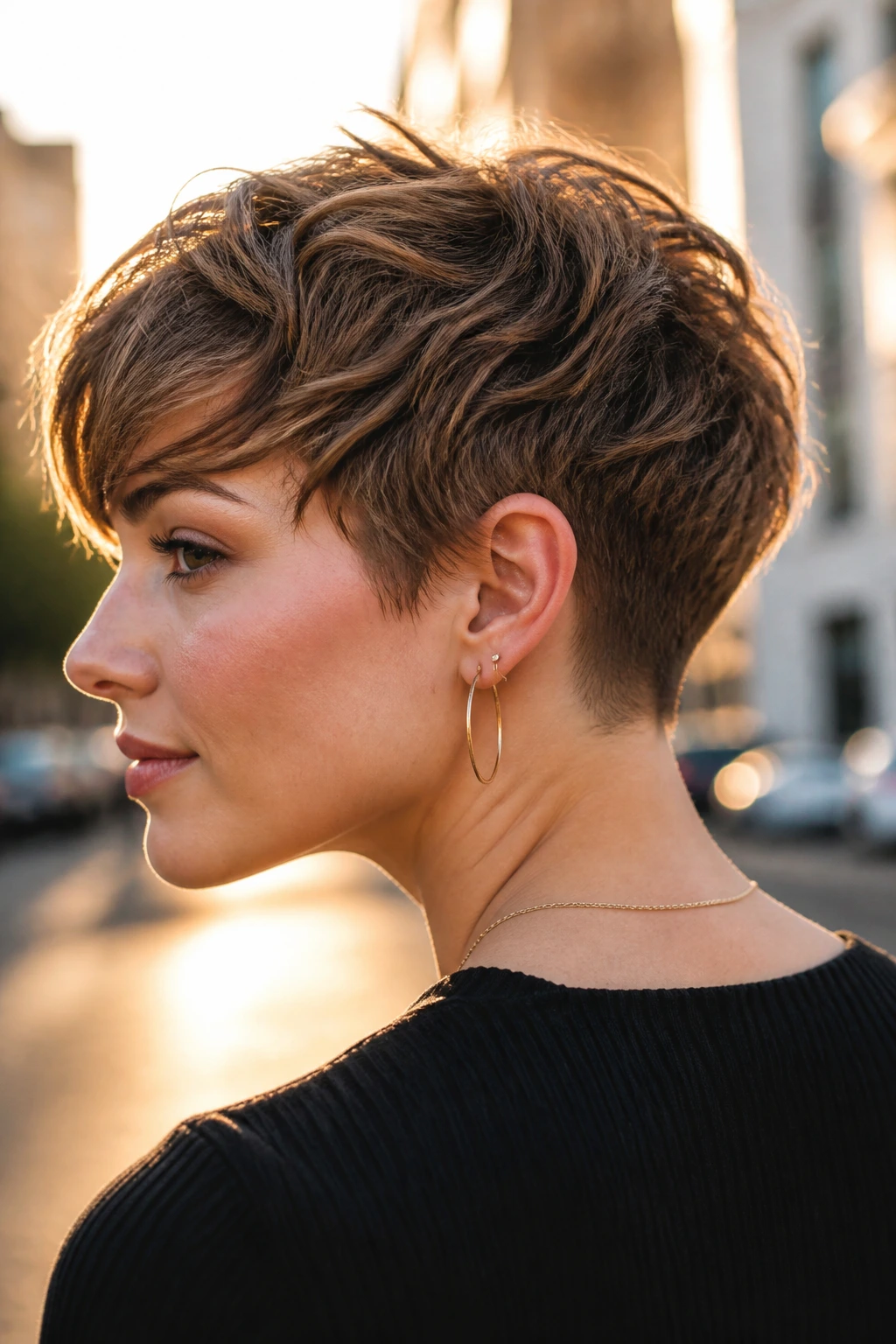
An undercut can be a mercy for thick, wavy hair. It removes weight where you don’t need it, especially underneath and around the nape, while leaving the top long enough to keep a rounded silhouette. The result feels lighter on the head and easier to dry, which is no small thing.
This cut needs a stylist who knows where to stop. If the undercut climbs too high, the top can start floating instead of sitting with shape. If it’s kept low and the top layers are soft, the cut stays rounded and wearable. A little root lift spray plus a diffuser gives the top enough body to sit above the undercut without looking piecey in a bad way.
13. The Inverted Bob with Soft Ends
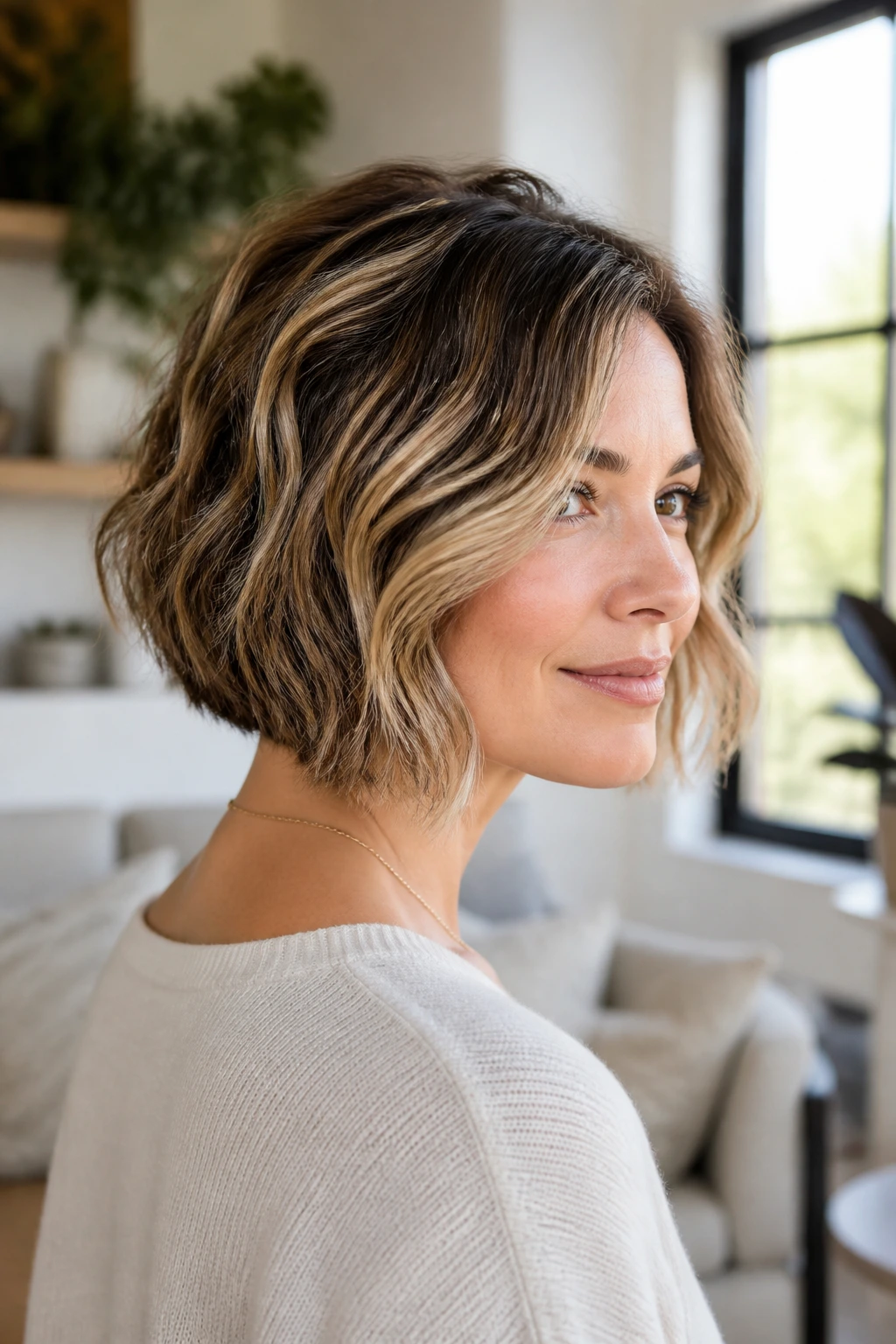
The inverted bob is longer in front and shorter in back, but the rounded version keeps the edges gentle. That matters with wavy hair, because a hard angle can make the ends look abrupt when they dry. A soft inversion gives you the shape change without the harsh line.
This is one of the better choices if you want the face to feel framed and a little stretched. The front pieces can skim the jaw or graze the collarbone if you’re not going ultra-short. At the back, the shape should hug in cleanly. If you notice the ends flipping out hard, that usually means the perimeter is too blunt or the stylist left too much weight at the front corners.
14. The Pageboy Bob for Soft Waves
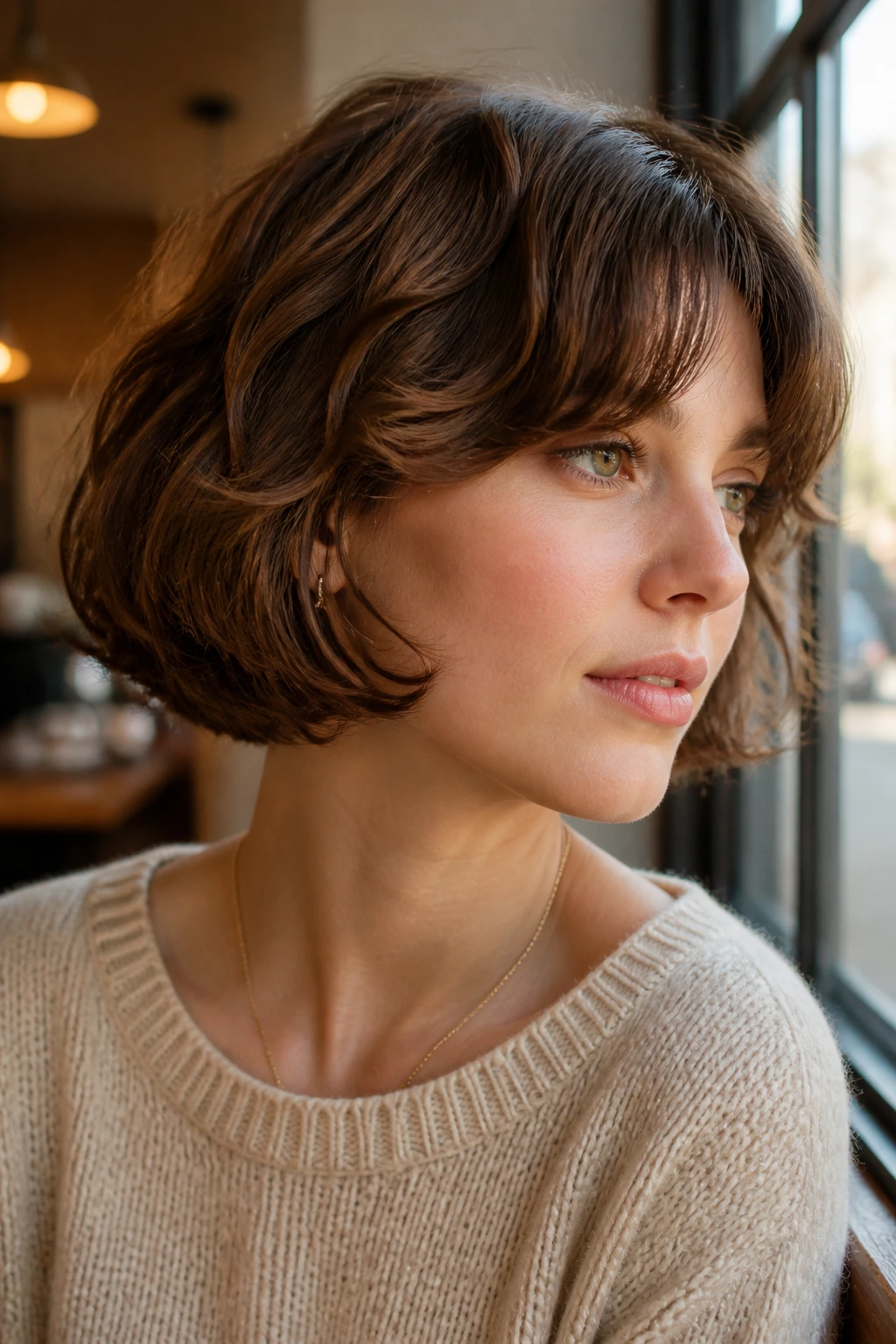
A pageboy sounds retro because it is, but the rounded, polished version has aged well. On wavy hair, it becomes softer and less rigid than the old-school version, which is exactly why it works. The hallmark is that curved underside and the smooth line around the head.
This cut feels best when the wave has some control. If your texture frizzes easily, you’ll want a smoothing cream and maybe a quick pass with a medium round brush. The fringe can be full or side-swept; I tend to prefer side-swept because it keeps the front from feeling too formal. There’s something oddly charming about this shape. It knows what it is.
15. The Razored Round Bob
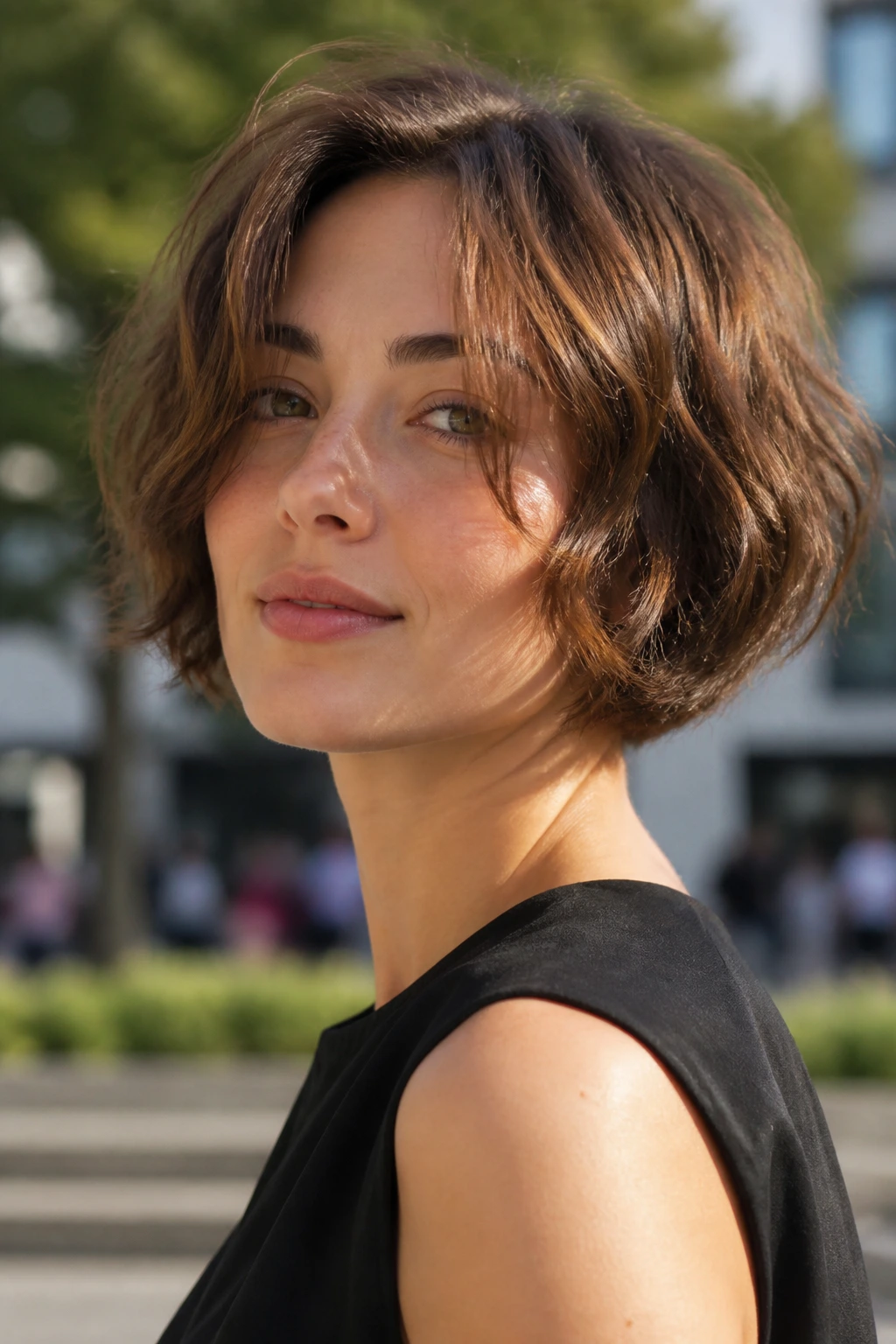
Razoring can be a great move on wavy hair when the goal is lightness and motion. A razored round bob keeps the outline curved while shaving off some of the heaviness that makes waves look bulky. The ends fall with a little more air, which can be lovely if your hair is dense.
There is a catch. Razor work on rough, porous, or very frizzy hair can make the ends look ragged if it’s overdone. So this is a “less is more” haircut. Ask for soft razoring only through the interior or just at the perimeter if your hair is already dry. The best result feels feathered, not shredded.
16. The Curved Fringe Bob

If you like hair near your face, this one has a lot going for it. The curved fringe follows the shape of the brow and cheekbones, which makes the whole bob feel cohesive. On wavy hair, the fringe should be cut with enough length to move, not sit like a tiny wall.
This haircut can sharpen the eyes and soften the forehead at the same time. It does need attention, though. Fringe grows fast, and wave patterns in the front tend to split or bend in odd ways if they’re left alone too long. A quick trim every three to four weeks keeps the curve clean. Skip that, and the bob starts to look less planned.
17. The Tucked-Behind-Ears Bob

Some short haircuts are designed for movement. This one is designed for motion and control. The tucked-behind-ears bob sits around the jaw or just below it, with enough softness through the sides that you can push it back without breaking the shape. That makes it a strong choice for wavy hair that likes to puff around the cheek.
It’s a good cut if you wear glasses, earrings, or both. The ear area stays neat, but the length still allows a little wave to swing out when you don’t tuck it. A light mist of texture spray at the ends can keep it from slipping flat. And if one side turns out heavier than the other, a deep side part usually fixes the balance fast.
18. The Mini Wolf Bob

The mini wolf bob takes the rough shape of a wolf cut and shortens it into something more rounded and practical. You still get the choppy layers and face-framing movement, but the perimeter stays soft enough to sit in a curve instead of a spike. On wavy hair, that’s a smart compromise.
This cut suits people who don’t want anything too polished. It has energy. A little edge. The top layers can be left piecey, while the lower sections keep enough weight to anchor the shape. If the stylist takes the top too short, it can pop up in odd ways, so ask for short-but-controlled, not highly disconnected. There’s a difference.
19. The Choppy Bowl-Bob
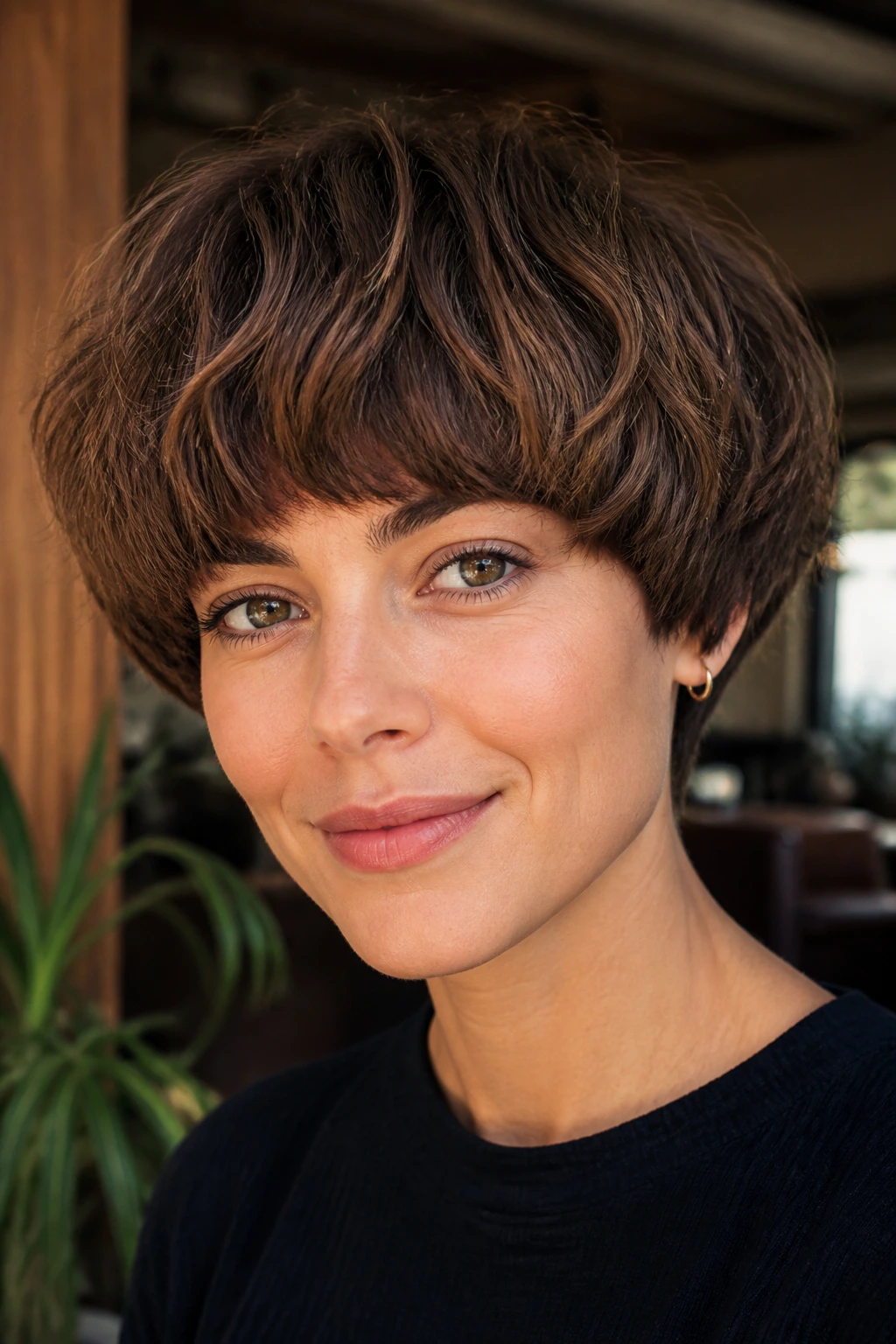
A bowl cut sounds strict, but the choppy bowl-bob is much friendlier. The outline remains rounded around the head, yet internal choppiness keeps it from looking severe. Wavy hair helps soften the geometry, which is why this version can look fresh rather than costume-like.
The best version depends on precision. The arc around the head has to be deliberate, and the interior layers need to remove enough bulk that the sides don’t turn into a dome. If you want something editorial and a little brave, this is the one. It also grows out with more character than a blunt cut, which matters if you don’t want to hit the salon every six weeks.
20. The Polished Rounded Crop
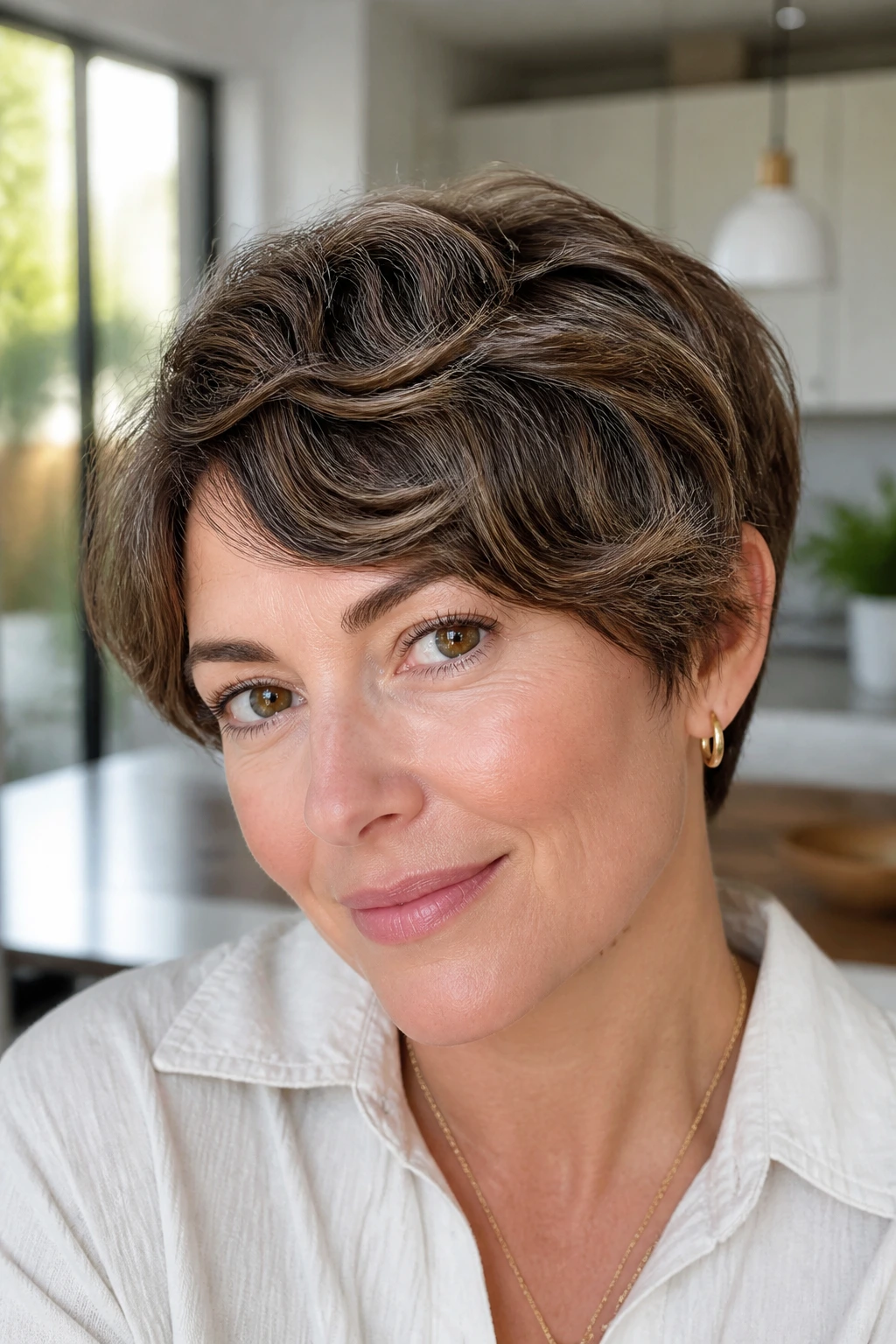
This is the neat one. The polished rounded crop hugs the head, curves at the edges, and keeps the top smooth enough to feel refined. Wavy hair gives it a touch of softness that stops it from looking too structured. If you like short hair that still feels tidy when you step outside, this shape earns its keep.
It works especially well with shine. A light finishing cream, not a heavy serum, can bring out the bend without making the hair greasy. If your wave pattern is loose, a quick blow-dry with a nozzle and a vent brush can set the curve fast. The whole point is control with a little movement, not glossy perfection.
21. The Side-Part Wavy Bob
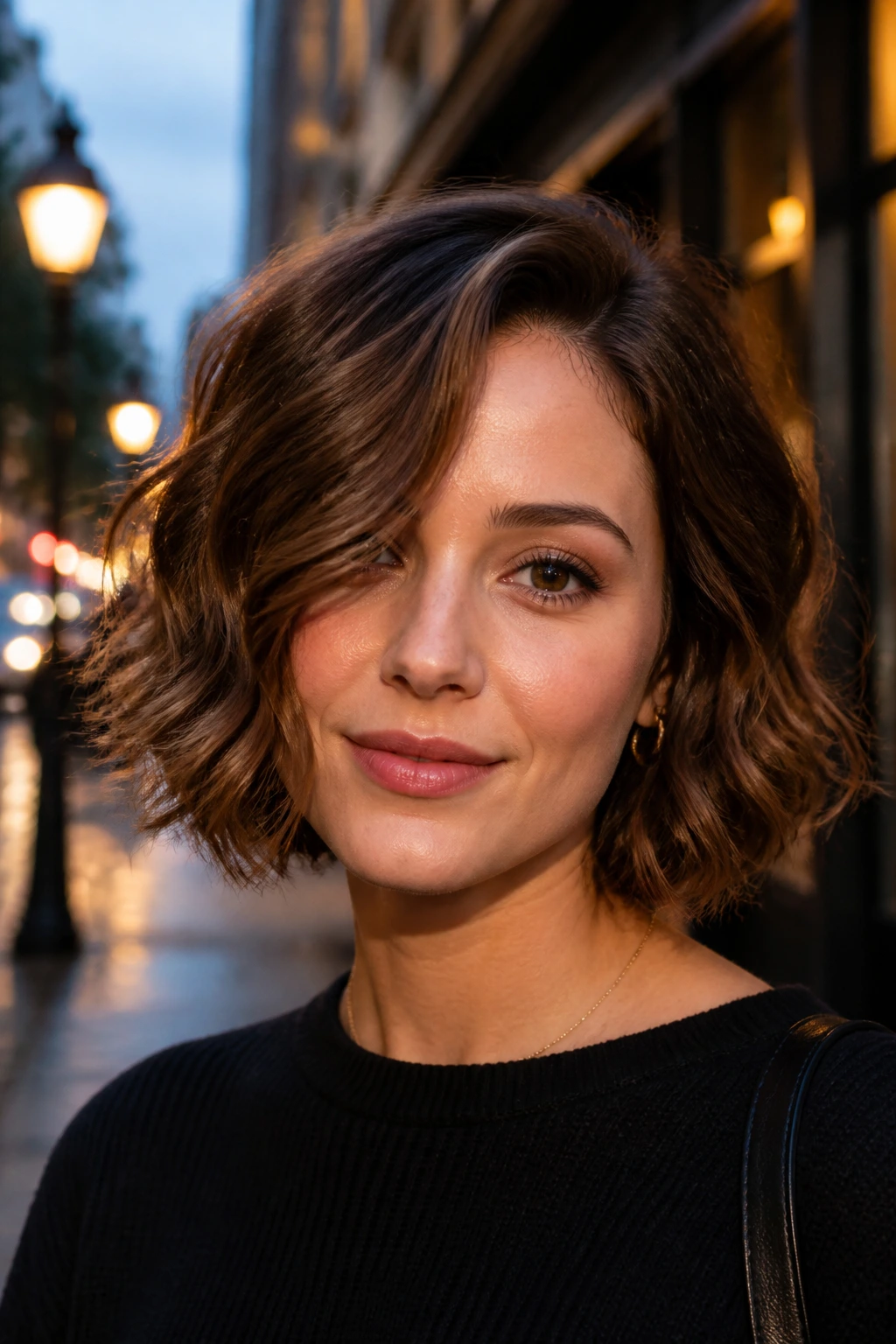
This is the easiest haircut in the group to wear if you’re nervous about going shorter. A deep side part gives volume where you want it and lets the rounded outline fall naturally around the cheeks and jaw. Nothing about it feels forced. That’s why so many people come back to it.
The side part also helps break up symmetry, which can keep wavy hair from looking too boxy. If one side of your wave pattern is stronger than the other, the part can disguise that difference instead of highlighting it. Keep the ends softly rounded and the interior lightly layered. The result is calm, not flat.
22. The Soft Halo Pixie Bob

This cut keeps the shortest pieces close around the nape and ears, then lets the top form a soft halo of wave and lift. It’s shorter than a bob, longer than a pixie, and much gentler than the name sounds. On wavy hair, the rounded crown creates a nice shape without relying on a lot of styling.
I like this one for people who want a very light cut but still want some facial framing. The top should have enough length to bend, not stick straight up. A fingertip amount of mousse or curl cream is usually enough. If the crown gets too much product, it can collapse; if it gets too little, it frizzes. Wavy hair, as ever, is choosy.
Styling Tricks That Keep the Curve in Place
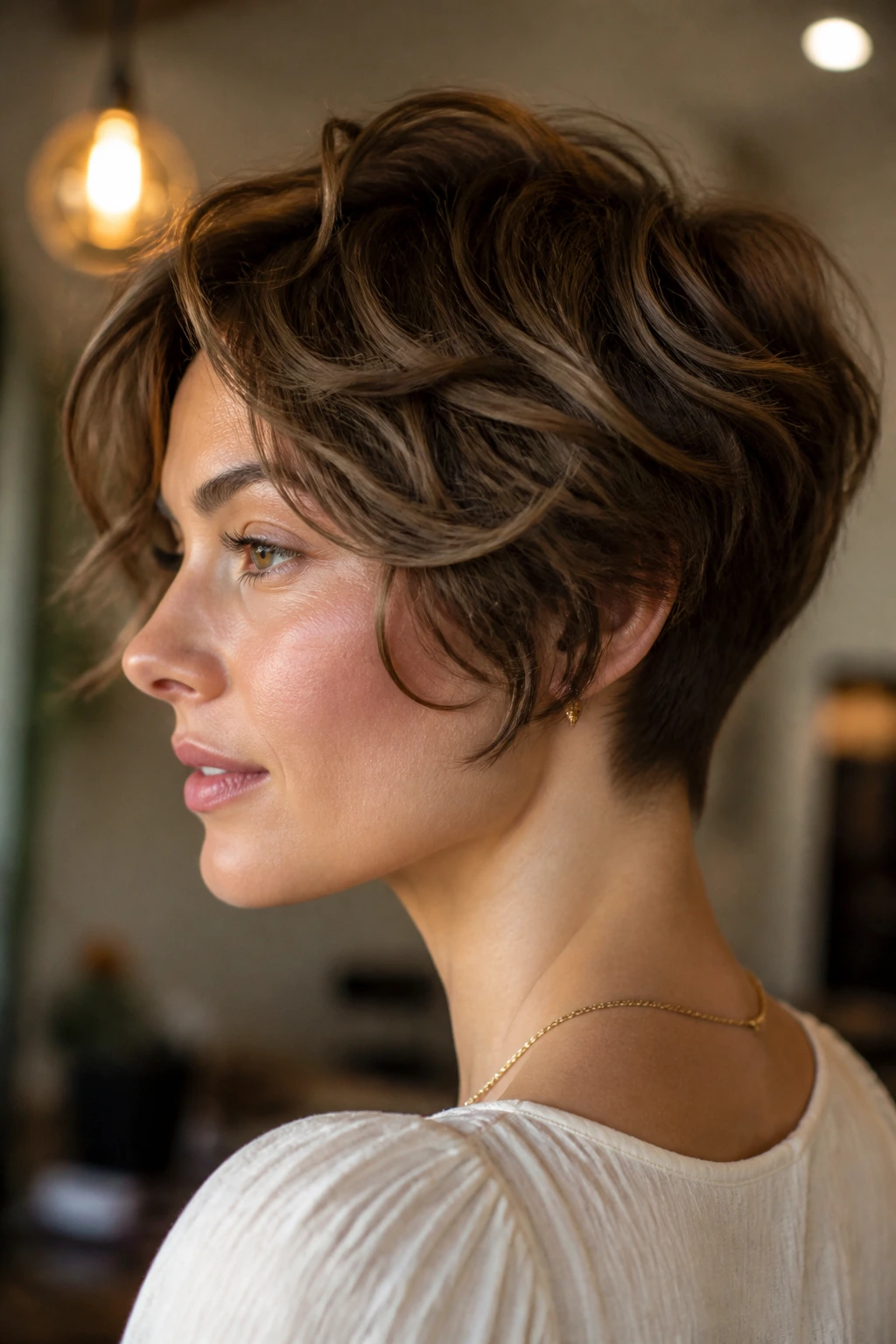
The shape matters, but styling decides whether the cut looks clean or accidental. With wavy hair, less product usually wins. A nickel-sized amount of mousse at the roots and a pea-sized cream through the ends is plenty for most chin-length cuts. More than that, and the hair often gets soft in the wrong way.
For Fine Wavy Hair
Fine waves usually need root lift more than heavy moisture. Try a lightweight mousse or root spray at the crown, then diffuse on low heat until the hair is about 80 percent dry. After that, stop touching it. Fine waves can collapse fast if you keep raking your fingers through them while they set.
For Thick Wavy Hair
Thicker textures usually need control at the perimeter. A small amount of smoothing cream on the ends and a vent brush or round brush through the bottom section can keep the curve from fanning out. If the nape goes fuzzy first, a quick dry with the dryer pointed downward helps the cut sit closer to the neck.
For Fast Mornings
Pick one move and repeat it. Either air-dry with a clip at the crown for lift or blow-dry only the front and nape for shape. Don’t chase every section. Rounded short cuts usually look better with one clear styling decision than with ten half-finished ones.
Common Mistakes That Flatten or Puff Out the Shape
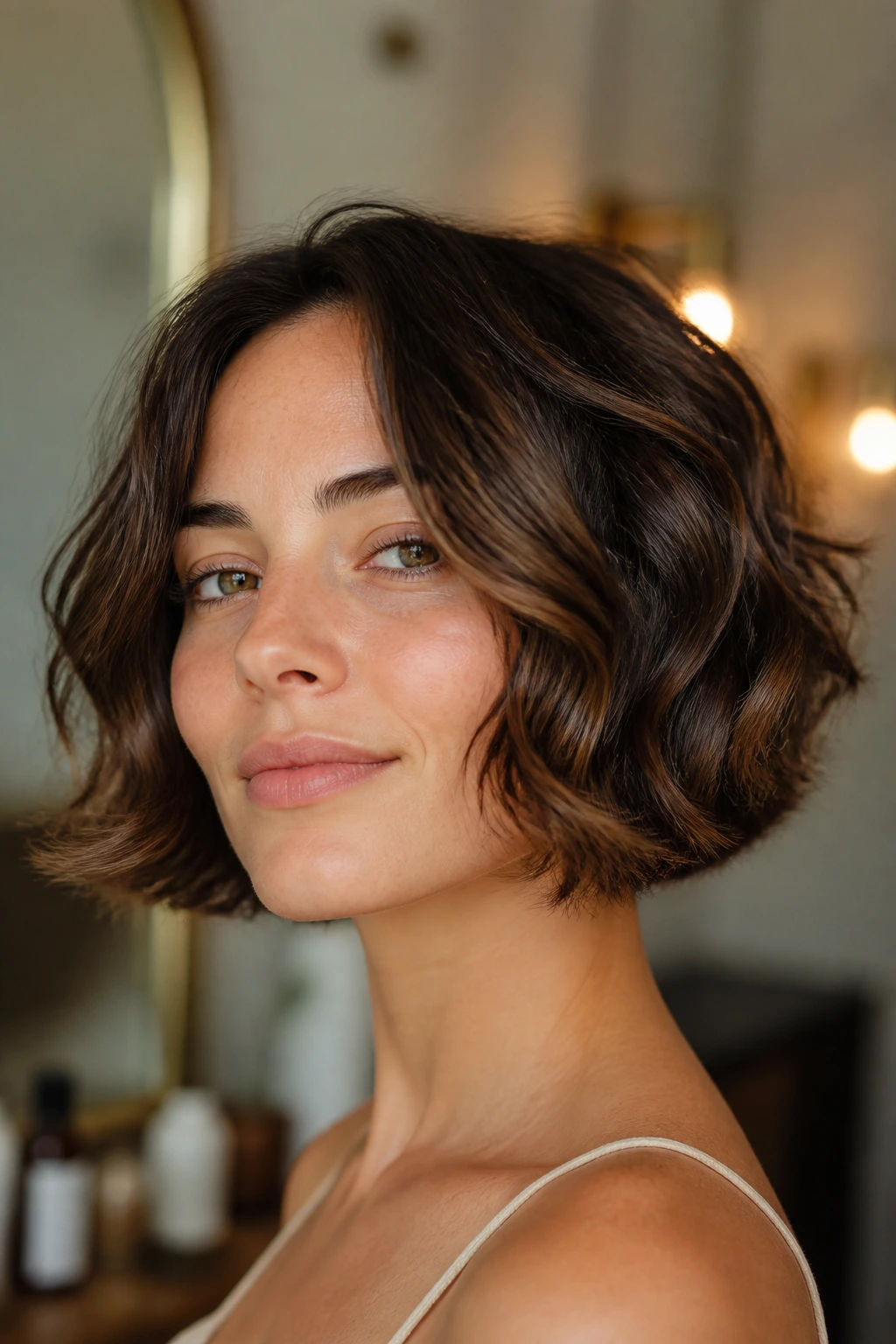
The most common mistake is cutting the hair too bluntly at the bottom. It sounds neat. It often isn’t. On wavy hair, a blunt edge can swell into a shelf or kick outward, especially near the jaw. The fix is gentle point-cutting or light internal shaping so the curve can sit in.
Another problem is removing too much weight from the crown. People ask for texture, then wonder why the top goes flat and the sides flare out. That’s a density issue, not a styling failure. Keep enough mass at the crown to support the silhouette, especially if your wave is loose or your hair is fine.
Heavy oils are another easy mistake. A lot of people put them near the roots, then wonder why the rounded shape collapses by lunch. Put richer products only on the ends, and stay light near the scalp. If you need frizz control at the top, use a mist or cream made for fine finish work, not a dense oil.
And then there’s the “it’ll fix itself as it grows” plan. Sometimes it won’t. Short rounded cuts need trims to keep the curve where it belongs. If the sides start getting wide, the outline changes fast. That’s not a failure. It’s just hair doing what hair does.
Rounder, Softer, Edgier: Easy Variations to Ask For
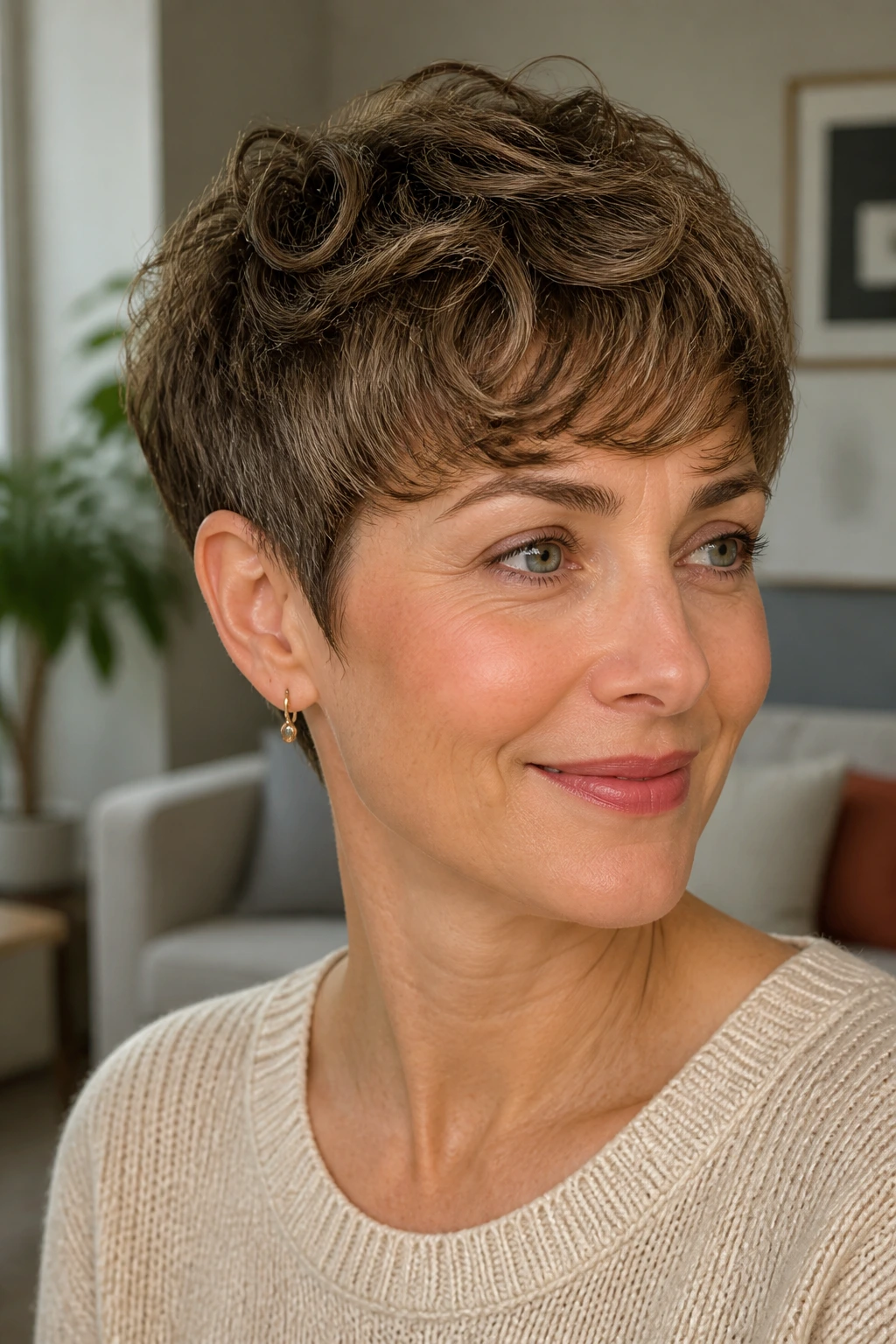
Softer Fringe Version: Ask for a longer fringe that can split or sweep instead of sitting bluntly across the forehead. This keeps the cut airy and makes grow-out easier if you change your mind later.
Extra-Short Nape Version: If your hair feels heavy in the back, ask to take a little more off the nape while keeping the top rounded. It’s a small adjustment, but it changes how the whole cut sits against the neck.
More Volume at the Crown: For fine waves, a bit more height through the top layers can stop the cut from going helmet-flat. The shape should lift, not spike.
Softer Edges for Coarse Hair: If your ends are thick or rough, keep the perimeter a touch longer and use gentle texturizing instead of heavy razoring. The curve stays cleaner, and the hair behaves better in humidity.
Low-Styling Version: Ask for a cut that still looks finished when air-dried with only a dab of cream. That usually means fewer disconnected layers and more attention to the outer curve.
Tools and Products That Help the Cut Behave
-
Blow dryer with a nozzle attachment: The nozzle directs airflow and keeps the curve from getting blasted open.
-
Diffuser: Best for preserving wave shape without roughing up the cuticle.
-
Round brush, 1 to 1.5 inches: Useful for turning the ends under on bob-length cuts and nudging lift into the crown.
-
Vent brush: Good for a quick root dry and for smoothing the nape without flattening everything else.
-
Lightweight mousse: Adds body at the roots and helps waves keep a clean bend.
-
Leave-in conditioner: Helpful on thicker or drier waves, but keep it off the crown unless the hair is very coarse.
-
Texturizing spray: Gives short layers a little grip and keeps the curve from looking too slick.
-
Heat protectant: Worth using if you round-brush or touch up with a dryer often.
-
Wide-tooth comb: Better than a fine comb for working product through wavy hair without pulling the bend apart.
-
Silk or satin pillowcase: Reduces friction, which helps the rounded outline last past one night’s sleep.
How to Keep the Shape Between Salon Visits
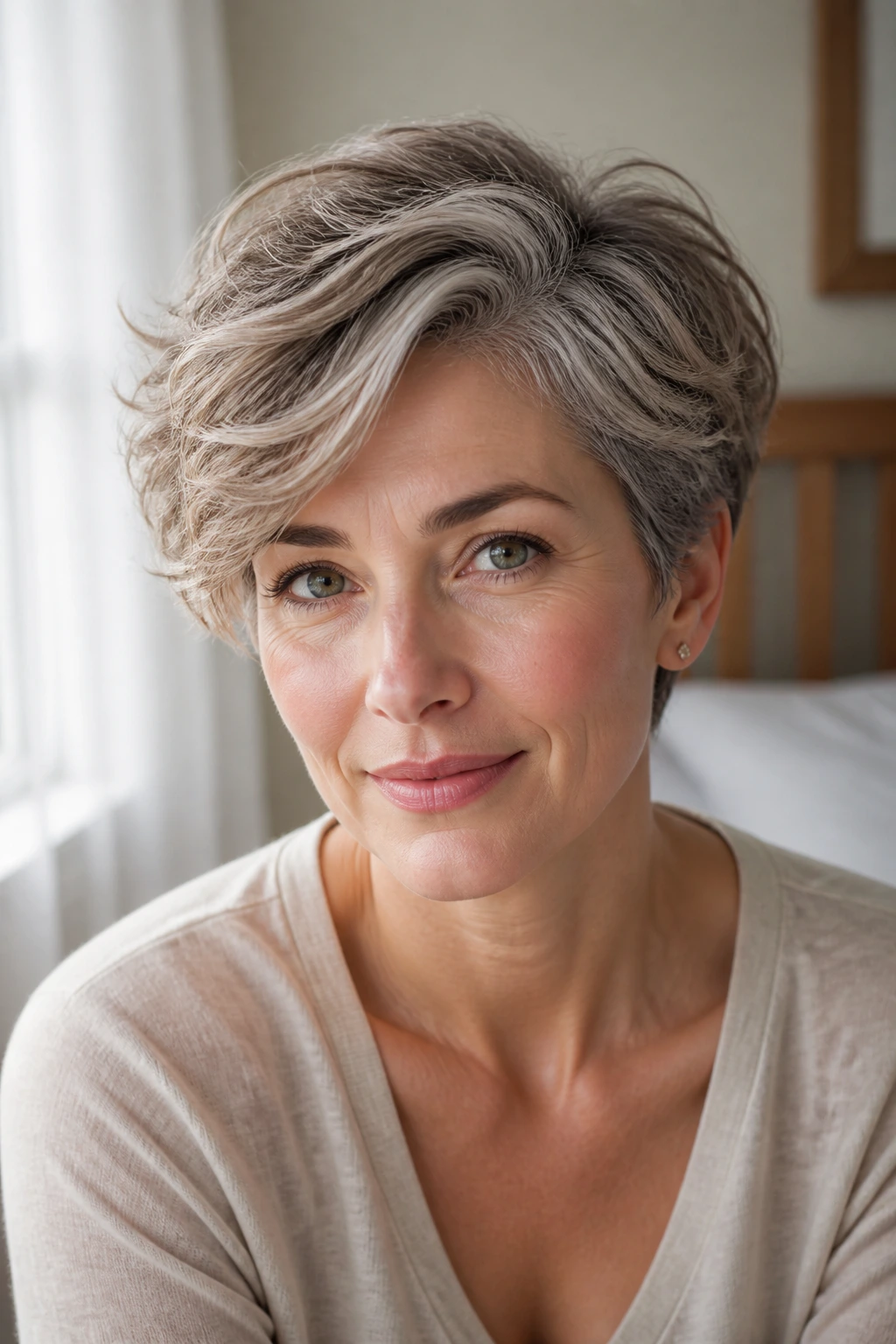
Rounded short cuts age best when you trim them before they start to spread. For most wavy styles in this group, 6 to 8 weeks is the sweet spot. Fringe needs attention sooner — often every 3 to 4 weeks — because even a small amount of growth changes the curve around the face.
Wash-day habits matter too. If you scrub the hair with a towel, you’ll rough up the surface and the cut will look wider. Press water out with a microfiber towel or an old T-shirt, then let the wave settle. A quick scrunch with mousse or cream usually does more than a full cabinet of products.
Sleeping habits can help or hurt. If the sides flatten overnight, clip the top loosely at the crown or sleep on a silk pillowcase. That keeps the rounded shape from folding in strange places. And if the nape gets puffed up in the morning, a few seconds of warm air aimed downward can reset it fast.
Don’t wait until the shape is gone. Once a rounded cut has grown too wide, the fix gets harder. Tiny trims keep it tidy. That’s the boring truth, and it matters.
Questions Women Ask Before Going Short

Will a rounded short cut make my wavy hair look puffy?
It can, if the perimeter is too blunt or too much weight is removed from the crown. The fix is a curved outline with enough interior softness to let the hair settle instead of sticking out at the sides.
Is this better for fine waves or thick waves?
Both can wear it, but the cut should be shaped differently. Fine waves usually need lift at the root and less bulk at the ends; thick waves usually need weight removed underneath so the silhouette doesn’t widen out.
Should I ask for layers?
Yes, but lightly. Rounded cuts on wavy hair usually need internal layers or point-cutting, not a heavily chopped shag unless you want a looser, messier result. Too many layers can make the shape frizzy.
Can I air-dry these styles?
Absolutely, and many of them look better that way. The trick is to leave the hair alone while it dries and use just enough product to guide the wave. Too much handling is what makes the cut swell.
How often will I need trims?
Most of these shapes want a trim every 6 to 8 weeks. Fringe and very short napes often need cleanup sooner because small changes show fast on shorter hair.
What if my waves are uneven on each side?
That’s common. A deep side part, slightly longer front pieces, or a bit of asymmetry can disguise the difference and make the haircut look intentional instead of lopsided.
Do rounded short cuts work with glasses?
They can work very well. Shorter side pieces that tuck near the ear keep the frame clear, and a soft fringe can echo the curve of the glasses without crowding the face.
What if the ends flip out instead of curving under?
That usually means the cut is too blunt, too heavy, or cut at the wrong angle for your wave pattern. A stylist can soften the perimeter, remove a touch of bulk, or shift the length a half-inch to change how the ends sit.
A Shape That Makes Wavy Hair Easier to Wear
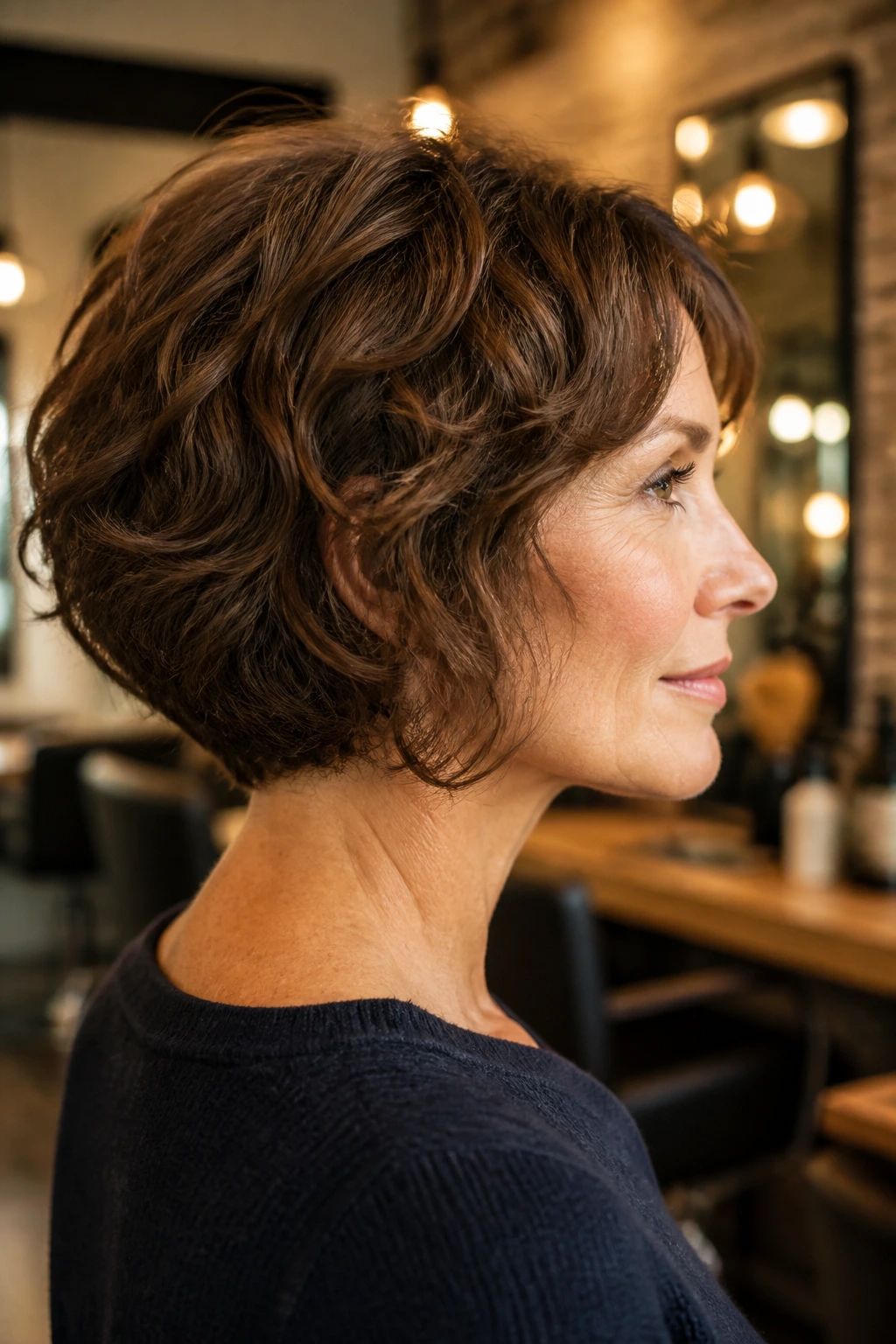
The nice thing about rounded short cuts is that they don’t ask wavy hair to pretend to be straight. They work with the bend, the lift, the little uneven places that make waves look alive. When the curve is placed well, the whole haircut starts behaving better in daily life — less puff, less drag, less odd flipping at the jaw.
If you’re heading to a salon with one of these in mind, bring photos that show the side and back, not just the front. That’s where rounded cuts succeed or fail. And once you’ve found the right outline, keep the trims steady. Wavy hair loves a shape that gets maintained before it starts arguing with you.