



Curtain bangs do a peculiar, useful thing: they make a haircut feel lighter without making it feel flimsy. The part opens in the middle, the fringe skims outward at the cheekbones, and the whole front of the head gets a little air. For women over 50, that matters more than people admit. Hair often shifts in density, texture, and lift around the crown and temples, and a heavy straight fringe can start to feel like work instead of shape.
I keep coming back to curtain bangs because they don’t demand a fake idea of “youthful” hair. They work with silver strands, fine strands, coarse strands, wavy strands, and the hair that wants to sit where it wants to sit. If the cut is done well, the bangs don’t sit on the face like a curtain in the theatrical sense. They move. They part. They soften. They let your features stay visible, which is the whole point.
The best versions below are not all the same length or mood. Some are polished and neat. Some have a little mess in them. A few lean into volume, which I like, because thin hair around the front can use the help. Others are cut for curl, glasses, or a low-styling morning. The common thread is simple: the fringe does the framing, and the rest of the cut gets to breathe.
Why These Styles Keep Working After 50
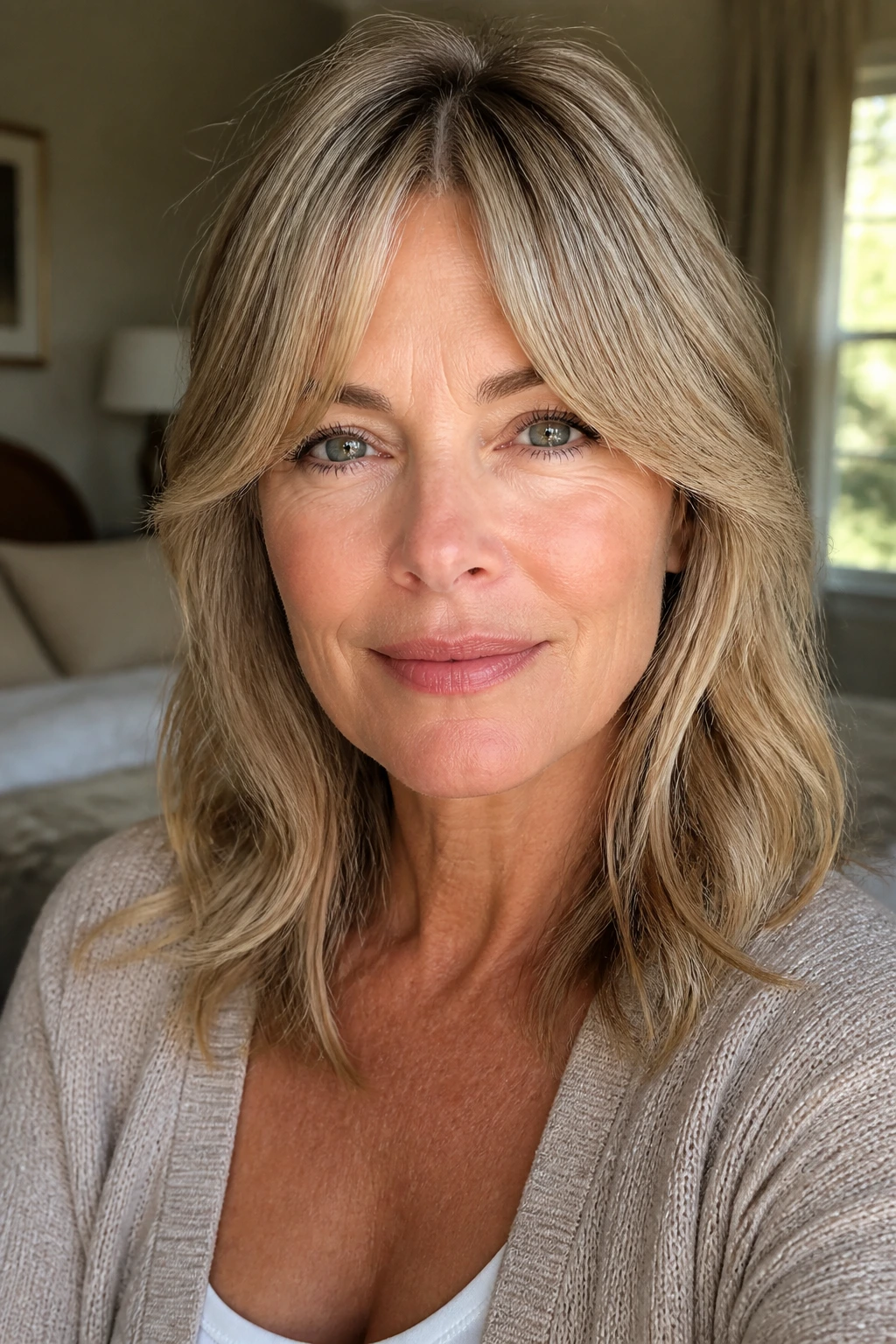
-
They soften the face without hiding it: Curtain bangs split at the center and taper toward the cheekbones, so they blur the forehead a bit while still keeping the eyes and brows in view.
-
They grow out in a sane way: A blunt fringe can turn awkward fast. Curtain bangs usually slide into face-framing layers, which means you can stretch the time between trims.
-
They play nicely with glasses: The center opening keeps the frame from fighting the bangs, and the outer edges can be cut long enough to clear the temples.
-
They make finer hair look less flat at the front: A little bend through the fringe creates lift where mature hair often needs it most, right around the hairline and crown.
-
They suit gray and silver hair especially well: Gray strands can look wiry or coarse at the front. A soft split fringe keeps that texture from becoming harsh.
-
They give you options: You can air-dry them, round-brush them, pin them back, or tuck them to one side on a rushy morning. Not many fringe styles are that forgiving.
1. Chin-Length French Bob With Soft Curtain Bangs
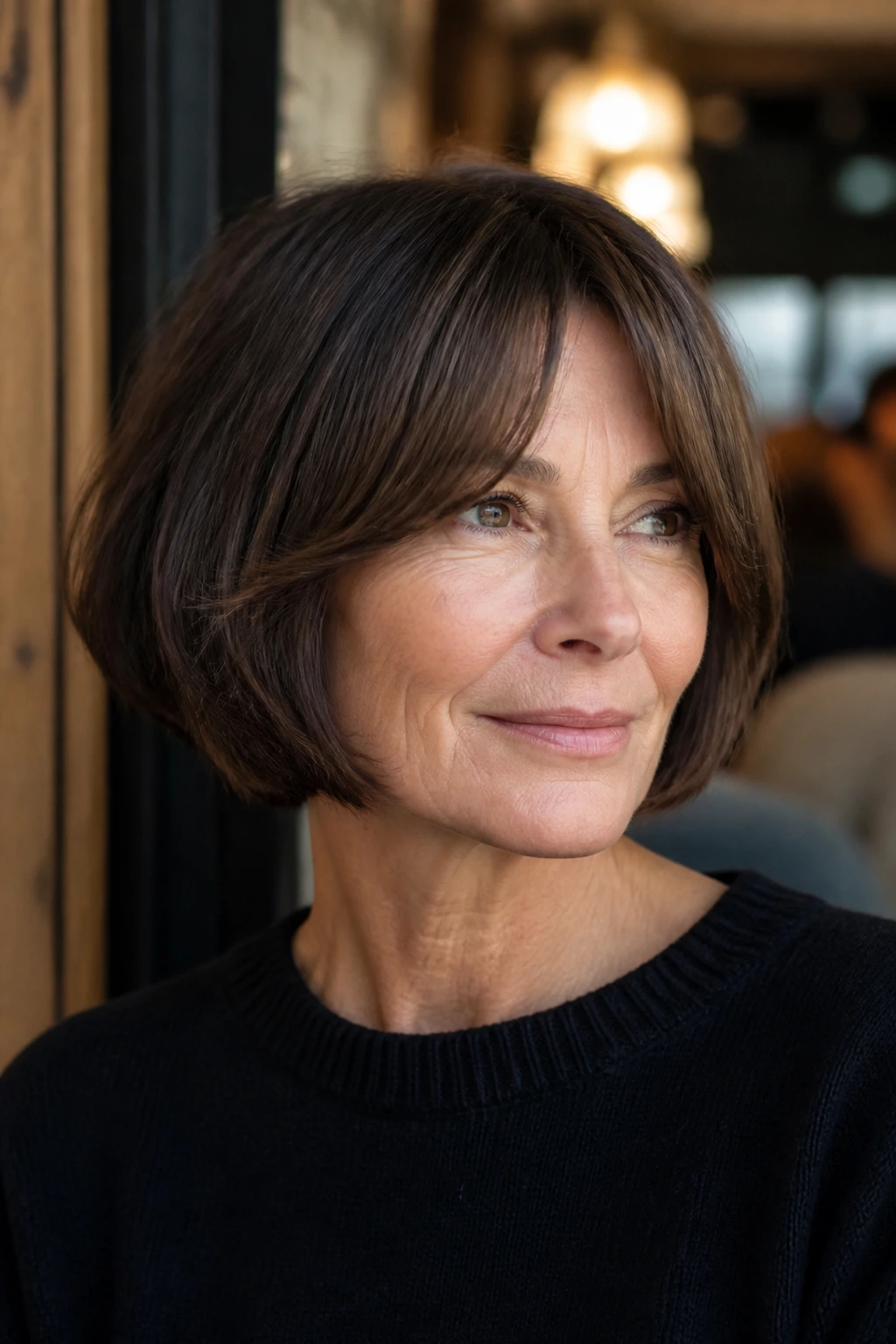
A chin-length French bob with curtain bangs has a clean, slightly serious shape that still feels easy around the edges. The length sits near the jaw, which gives the face structure, while the fringe opens at the center and curves out around the cheekbones. I love this on women who want the haircut to do the talking without piling on too much styling.
What makes it work after 50 is the contrast. The perimeter is neat and strong, but the bangs keep the front from looking severe. Ask for the shortest point of the fringe to sit around the bridge of the nose when dry, then let it graduate longer toward the temples. That little bit of length gives you room to bend the bangs with a round brush instead of forcing them flat.
This cut is especially good if your hair is fine or straight and tends to lose shape by noon. The blunt line at the bottom keeps the bob from disappearing, and the curtain fringe gives the front some lift. It’s tidy, but not stiff. That’s the sweet spot.
2. Shoulder-Grazing Lob With Layered Curtain Fringe
A shoulder-grazing lob is one of the safest bets in the room, and I mean that in the best way. It has enough length to tuck behind the ears or pull into a low clip, yet the curtain bangs stop it from feeling like “just hair.” The fringe blends into front layers that usually hit around the cheekbone or lip line, so the whole cut feels connected.
The trick here is restraint. Too many layers and the lob starts to fray; too few and the bangs look pasted on. Ask for the front to be slightly longer than the back, with the fringe cut in a soft arc that opens away from the middle. If your hair is dense, keep the layers internal rather than choppy on the surface. You want movement, not frizzed-out ends.
This shape is one of the easiest to live with because it works straight, wavy, or with a lazy blowout. It also handles second-day hair well. A little dry shampoo at the roots and a twist with a medium round brush on the bangs is usually enough.
3. Silver Pixie Shag With Feathered Bangs
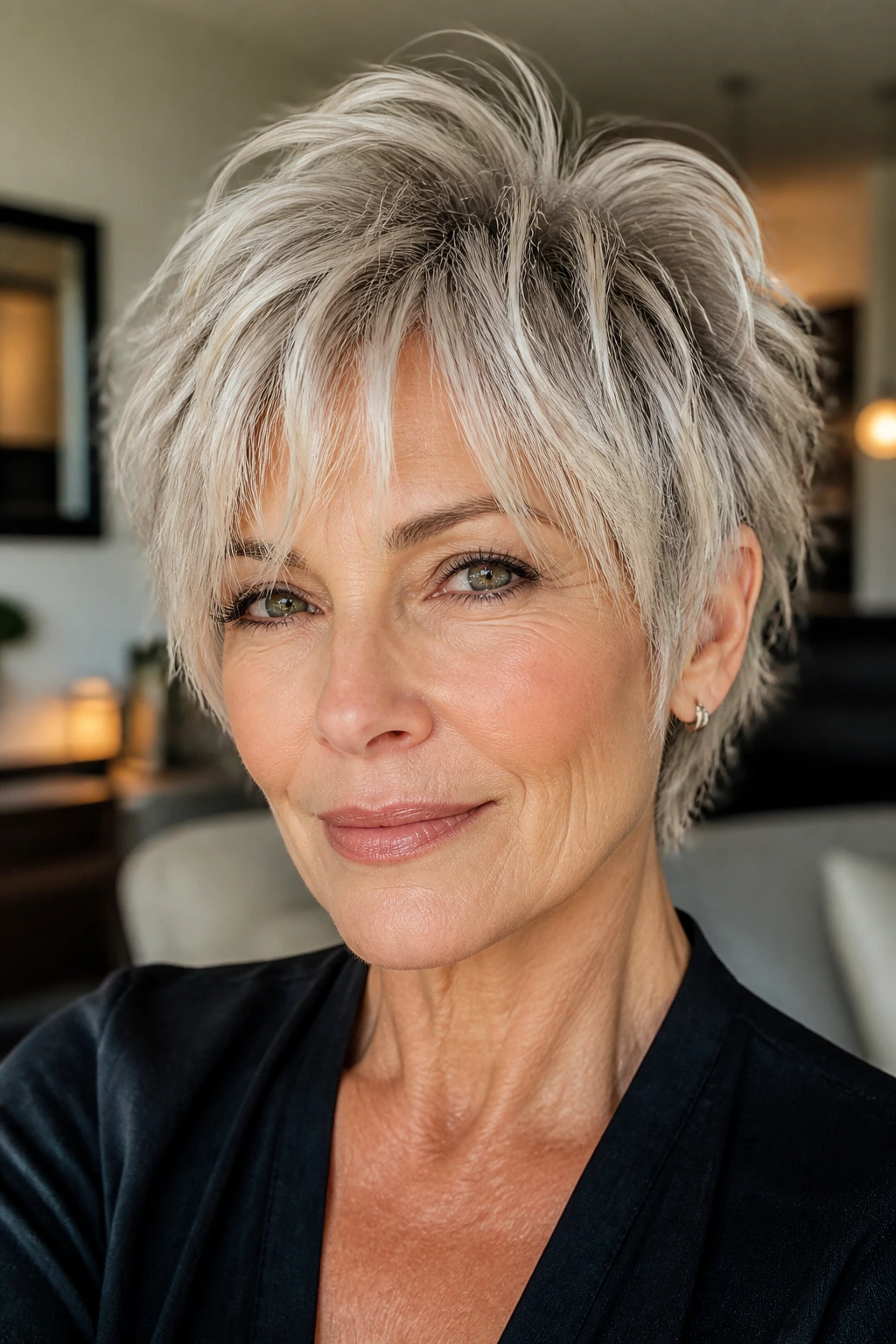
Short hair gets a bad reputation for being “high maintenance,” and that’s mostly because people picture a strict crop with no softness. A silver pixie shag with feathered curtain bangs is the opposite. It has short sides, lifted crown texture, and a fringe that falls in wisps rather than a solid line. The result looks deliberate even when you only spent five minutes on it.
This is a sharp choice for gray or white hair, especially if your strands have a wiry bend. Feathering the bangs keeps them light enough to move instead of standing up in little hard pieces. Ask your stylist to leave enough length through the front to tuck the center behind a brow if you want; that gives you a tiny bit of room on the days when the fringe is doing its own thing.
Best for:
- fine hair that needs lift at the crown
- gray hair with texture
- women who like short cuts but hate helmet shapes
It’s a small cut with a lot of personality. And it doesn’t need much else.
4. Long Layers With Center-Parted Curtain Bangs
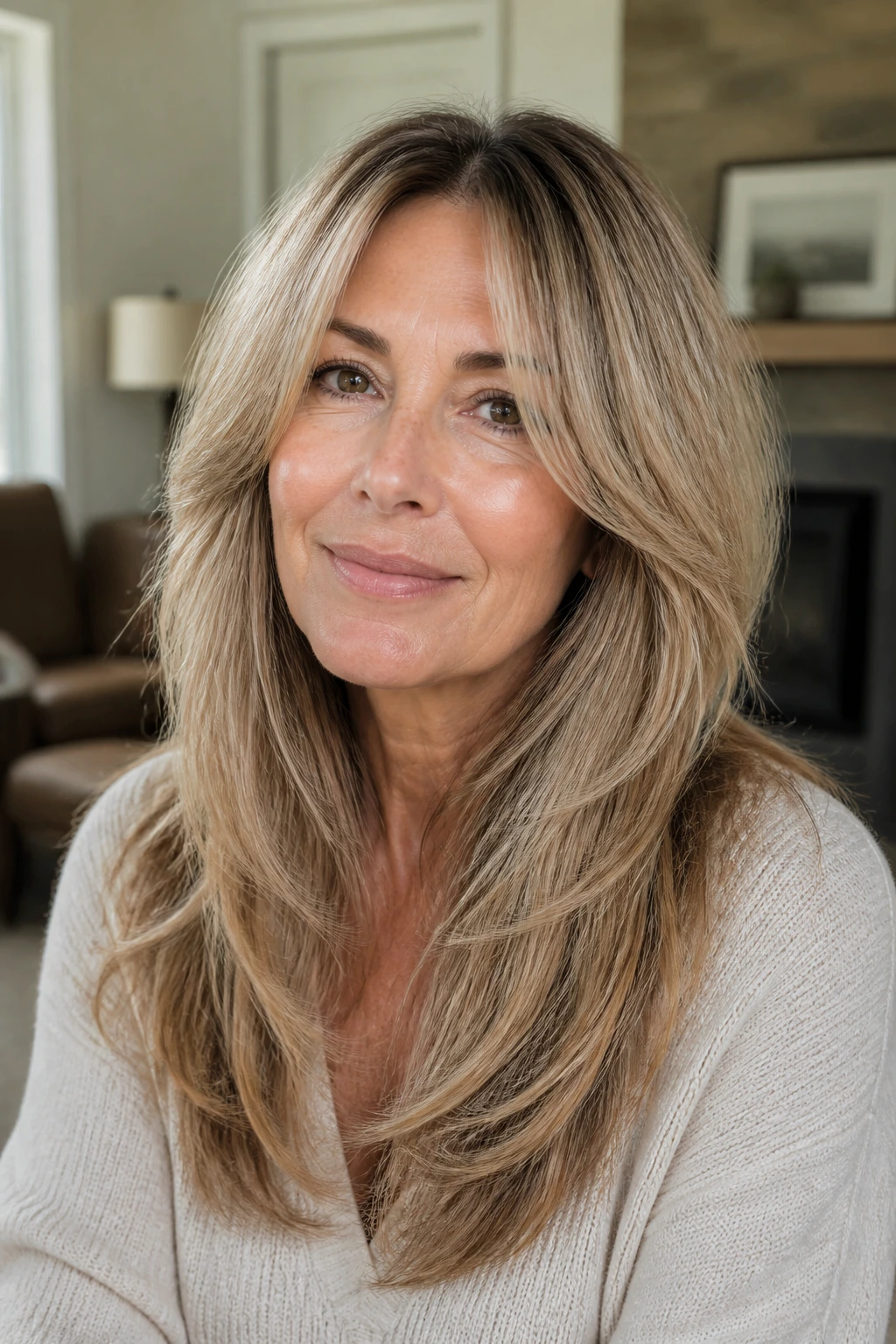
If you like your hair long and don’t want to hear otherwise, this is the version to pay attention to. Long layers keep the weight in the length, while the curtain bangs give the front a shape that keeps the whole thing from hanging flat. The bangs can be cut to cheekbone level, then blended into soft pieces that sweep into the rest of the layers.
This cut is a good fit for thicker hair that wants to drag the face down when it’s all one length. The split fringe lifts the eye line upward, and the layers around the front keep the ends from feeling like heavy ropes. If your hair is fine, keep the layers lower and fewer. Too many long layers can make the bottom see-through, and that’s a mess nobody needs.
I like this style when someone wants softness but not shortness. It works with a low ponytail, a loose wave, or a center part that stays a little undone. There’s also something nice about long hair with a fringe that doesn’t try too hard. It looks calm.
5. Wavy Collarbone Cut With Face-Framing Bangs
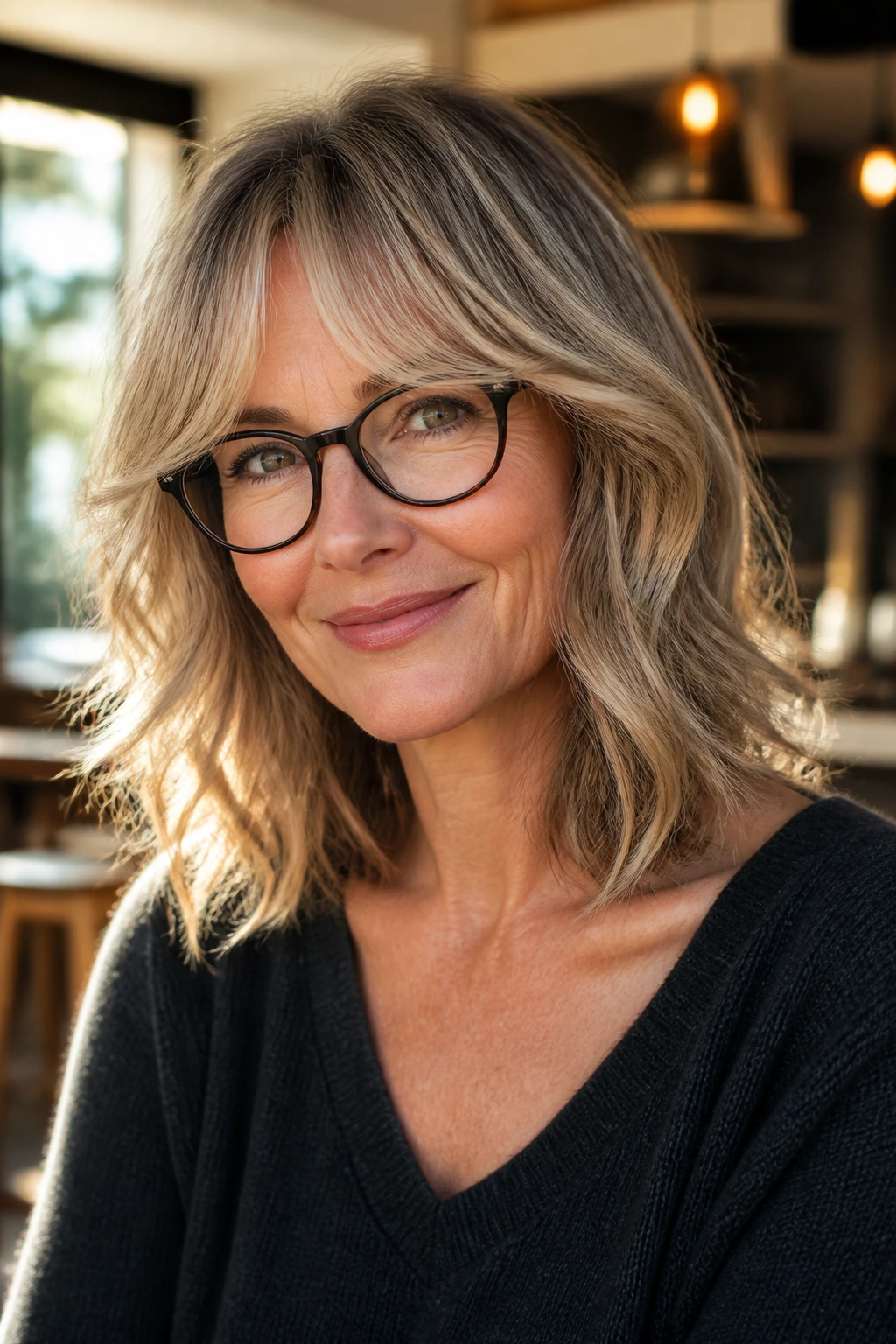
The collarbone is a useful stopping point. Hair that ends there has enough swing to move around the shoulders, but it doesn’t get lost the way longer lengths can. Add curtain bangs and the whole cut becomes about curves: the wave through the body, the bend through the fringe, the little lift at the cheekbones.
This is one of the easiest styles to wear if your hair has any natural wave at all. A few bends from a diffuser or a quick wrap around a round brush can bring it to life. Ask for the bangs to be a touch longer on the outside edges so they melt into the front layers instead of sitting on top of them. That keeps the shape soft around the face, especially if you wear glasses.
I’d choose this cut for someone who wants polish without a strict blowout schedule. A dab of styling cream on the ends, a touch of mousse at the roots, and you’re done. If the wave looks a little imperfect, fine. That’s part of the charm.
6. Tapered Crop With Swept Curtain Fringe
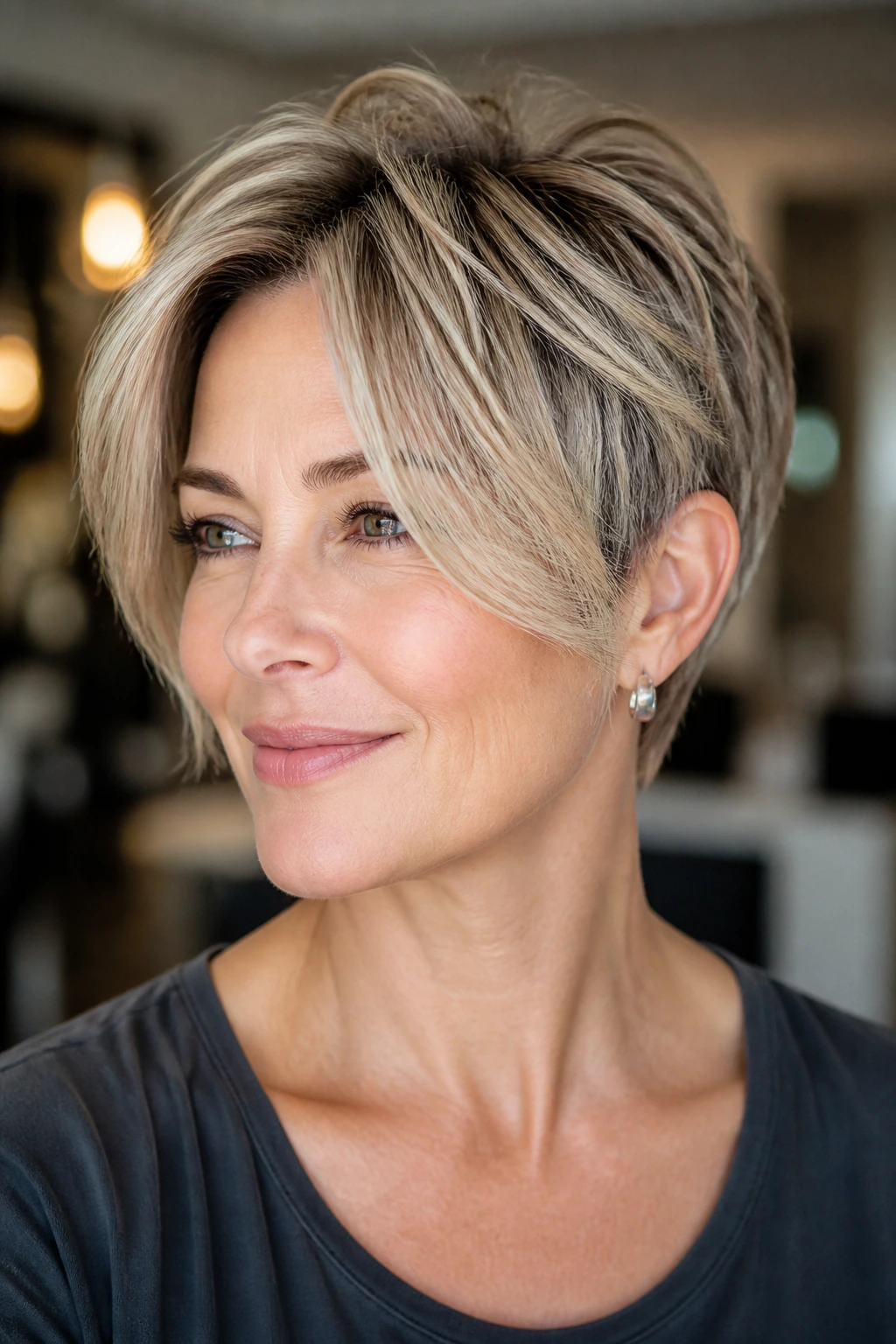
A tapered crop with curtain bangs sounds bolder than it feels. The sides and nape stay close, the crown gets a bit of lift, and the fringe stays long enough to sweep away from the center of the face. It’s a nice way to keep short hair from feeling too cropped at the forehead.
This cut is smart if you wear glasses or have a strong jawline you want to soften. The fringe creates a small frame without cutting off the face, and the taper keeps the silhouette clean around the neck and ears. Ask for the bangs to graze the upper cheek rather than sit high on the brow. That extra length keeps the fringe from looking fussy.
The best part? It’s fast. A pea-sized bit of lightweight paste through the top and a quick finger lift at the roots usually does it. No one needs a five-tool routine for a crop this tidy.
7. Soft A-Line Bob With Airy Curtain Bangs
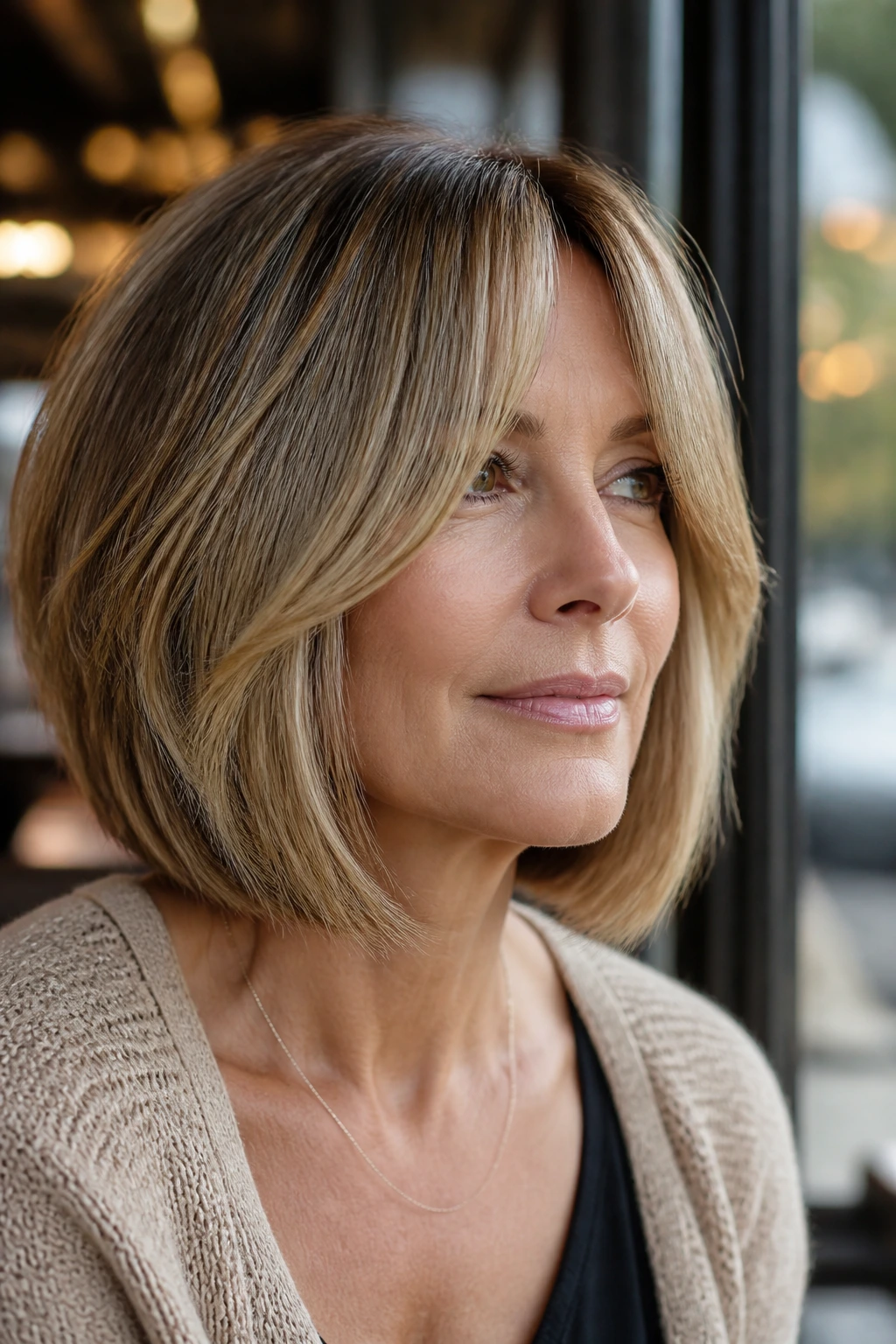
An A-line bob gives you built-in shape: shorter in the back, slightly longer in the front, with a line that angles down toward the chin. Add airy curtain bangs and the cut stops looking architectural and starts looking lived-in. That balance matters. Too much angle can feel hard; the fringe loosens it up.
I like this on square or round faces because the front length draws the eye downward in a gentle way. The bangs should be light, not thick. If they’re too dense, they’ll fight the clean line of the bob and make the front heavy. A little point cutting at the ends helps the fringe bend instead of sitting like a shelf.
This is one of those cuts that looks expensive even when it isn’t fussy. A smooth blow-dry with a round brush gives it shine. A little bend is enough; you do not need the ends curled under like a pageant helmet.
8. Curly Shag With Loose Curtain Fringe
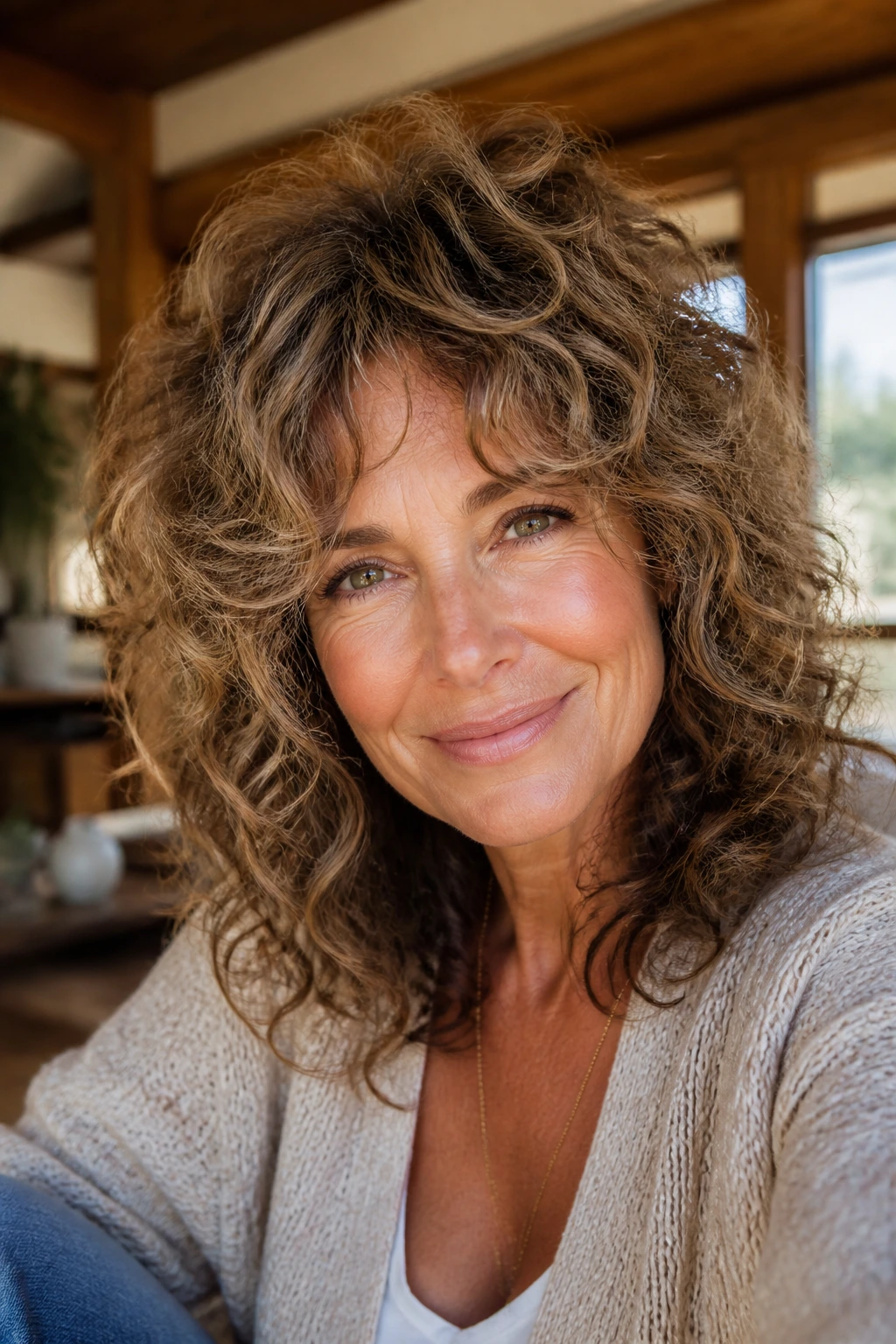
Curly hair and curtain bangs can be a very good match if the cut respects the curl pattern. A curly shag with a loose fringe keeps the layers soft and avoids the blocky triangle that curly hair can drift into when it’s cut too bluntly. The fringe should be longer than you think, because curls shrink and bounce in their own direction.
The best version of this cut is shaped dry or at least partially dry so the stylist can see where the curls sit. Ask for the bangs to split and fall around the cheekbones, not straight across the forehead. That keeps the curl from bunching up in the center. A diffuser, a curl cream, and maybe a touch of gel at the roots will usually be enough.
What to ask for:
- dry cutting or curl-by-curl shaping
- longer fringe length to allow for shrinkage
- face-framing layers that follow the curl pattern
This style has a little attitude, but it still feels soft around the face. That’s rare. Use it.
9. Layered Mid-Length Cut With Piecey Bangs
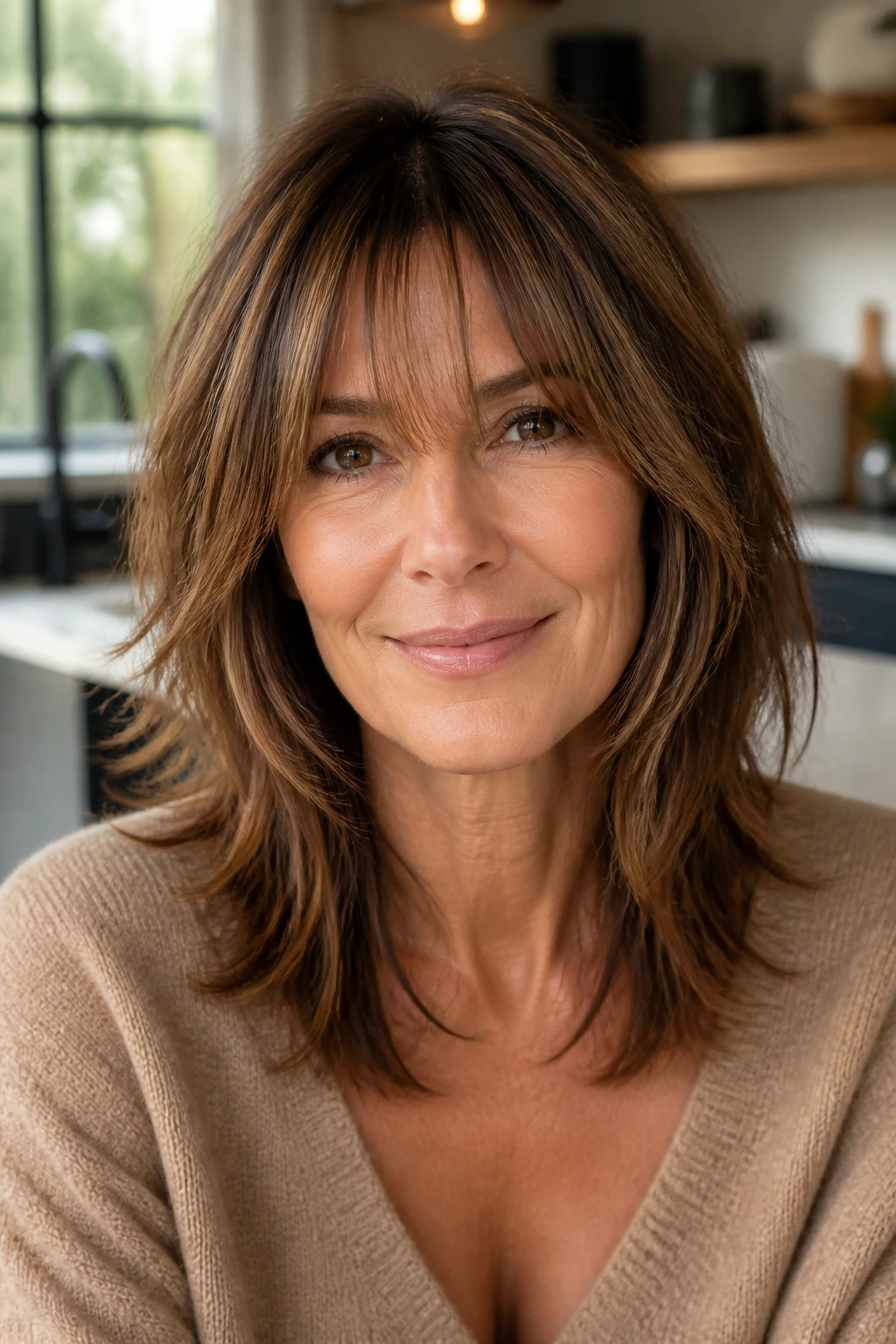
Mid-length hair between the jaw and collarbone can go flat fast if the layers are too polite. Piecey curtain bangs fix that. The fringe breaks up the front line, while light layers through the mids keep the shape from sitting like one solid block. It’s a nice middle ground for anyone who wants movement but not a shag.
This cut is especially useful for finer hair because the texture around the front creates the illusion of more density without stripping away too much weight. Ask for the bangs to be sliced or point-cut in small sections, not thinned aggressively with a razor. Over-thinning can make the fringe separate into strings, and that rarely looks better in real life than it does on paper.
A side benefit: this shape is easy to refresh with a flat brush and a quick bend at the ends. If the day gets busy, clip the bangs aside for an hour, then let them fall back down. They usually settle into place.
10. Classic Blunt Bob With Light Curtain Bangs

A blunt bob gets stronger when the fringe softens it. That sounds backward, but it’s true. The solid line at the bottom gives the cut a crisp edge, while the curtain bangs keep the front from feeling boxy or severe. On silver hair, especially, the contrast can be striking without being loud.
This cut works best when the bangs stay light and a little longer than brow length. You want the fringe to frame the face, not interrupt the line of the bob. If your hair is naturally straight, this style can be especially low-drama. Blow it dry with the nozzle pointed down the shaft, then lift the bangs with a round brush just enough to give them a bend.
It’s a good choice if you like structure. Not stiffness. Structure. There’s a difference, and hair people know it when they see it.
11. Feathered Shoulder Cut With Side-Lift Curtain Bangs
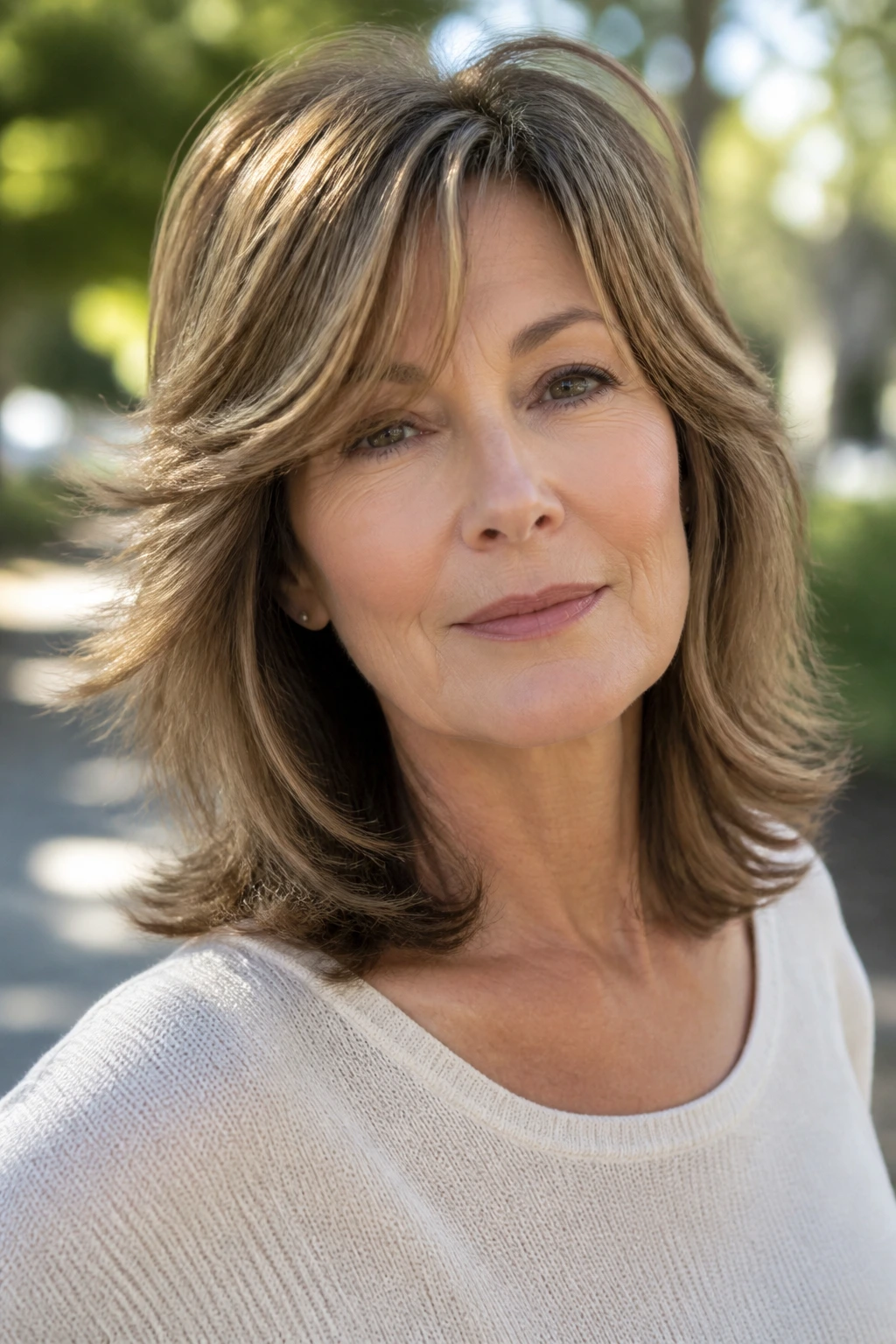
This one has a little 1970s echo, but in a way that feels polished rather than costume-like. Feathered layers through the shoulders create lift and movement, and the curtain bangs are angled slightly so they open more to one side. The result is soft around the face and full through the crown, which is useful if your hair has started to flatten there.
I especially like this cut for women whose hair is finer at the temples. The feathering gives the edges a lighter feel, and the side lift keeps the fringe from dropping straight down when it cools. A round brush and a blow-dryer with a nozzle make a real difference here. Start at the roots, roll the brush away from the face, and let the hair cool before touching it.
This is one of those styles that looks better when the movement is real, not sprayed into place. Keep the product light. A heavy serum would drag it down.
12. Lob With Bottleneck Curtain Bangs
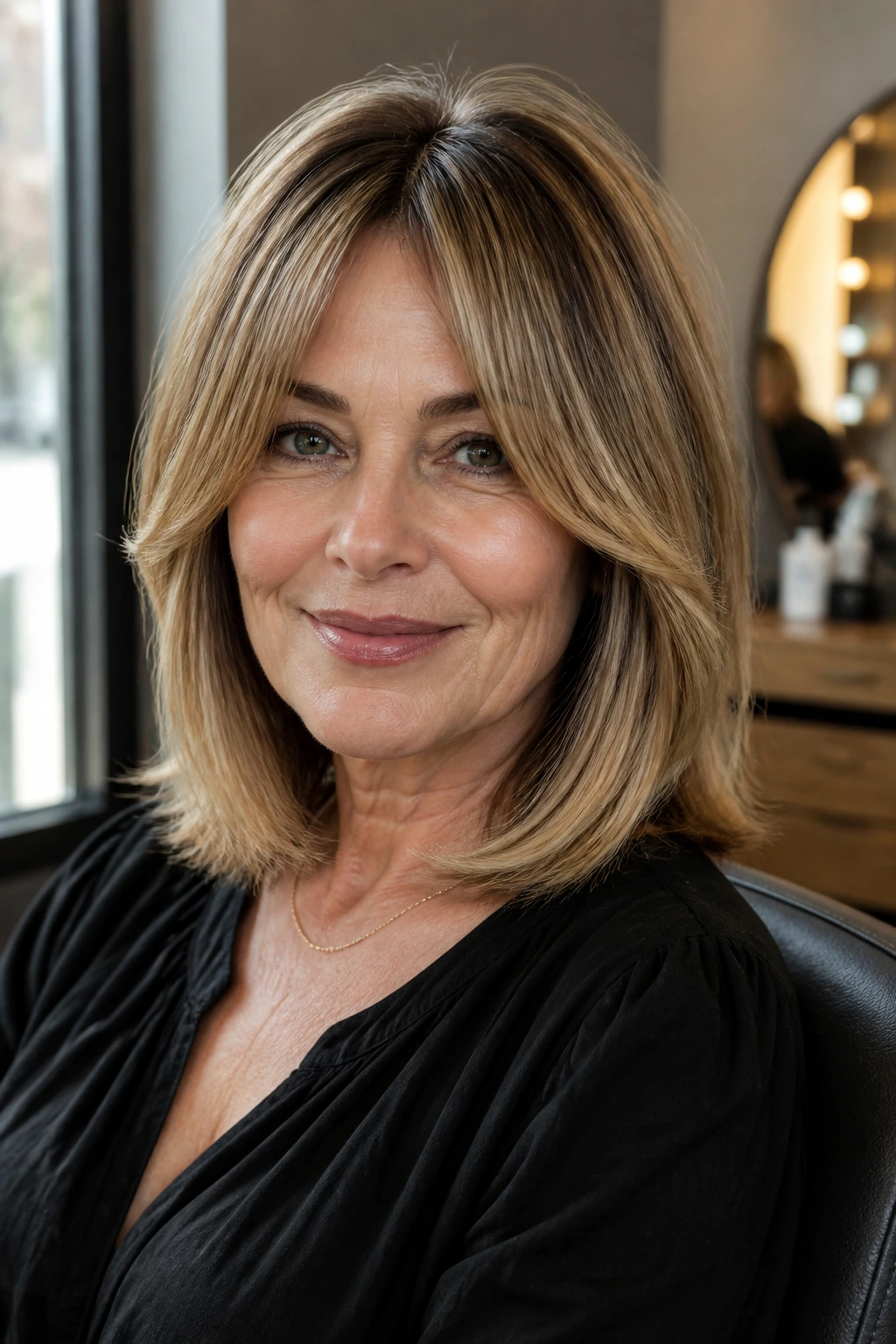
Bottleneck bangs are the quieter cousin of full curtain bangs. They start narrower at the center, then widen around the cheekbones. Paired with a lob, they create a nice, controlled frame that doesn’t crowd the forehead. If you like the idea of fringe but don’t want a lot of hair sitting on your face, this is the version I’d point you toward.
The bottleneck shape is useful because it follows the contours of the face instead of bulldozing over them. It can soften a longer face, balance a strong jaw, or make a square forehead feel less boxy. The lob underneath gives the bangs room to finish gracefully, especially when the ends are textured just enough to move.
Styling is straightforward. Bend the fringe away from the face with a medium brush, then let the ends settle into the shoulders or collarbone. It’s understated in the best sense of the word. Nothing about it asks for a second guess.
13. Soft Wolf Cut With Overlap Bangs
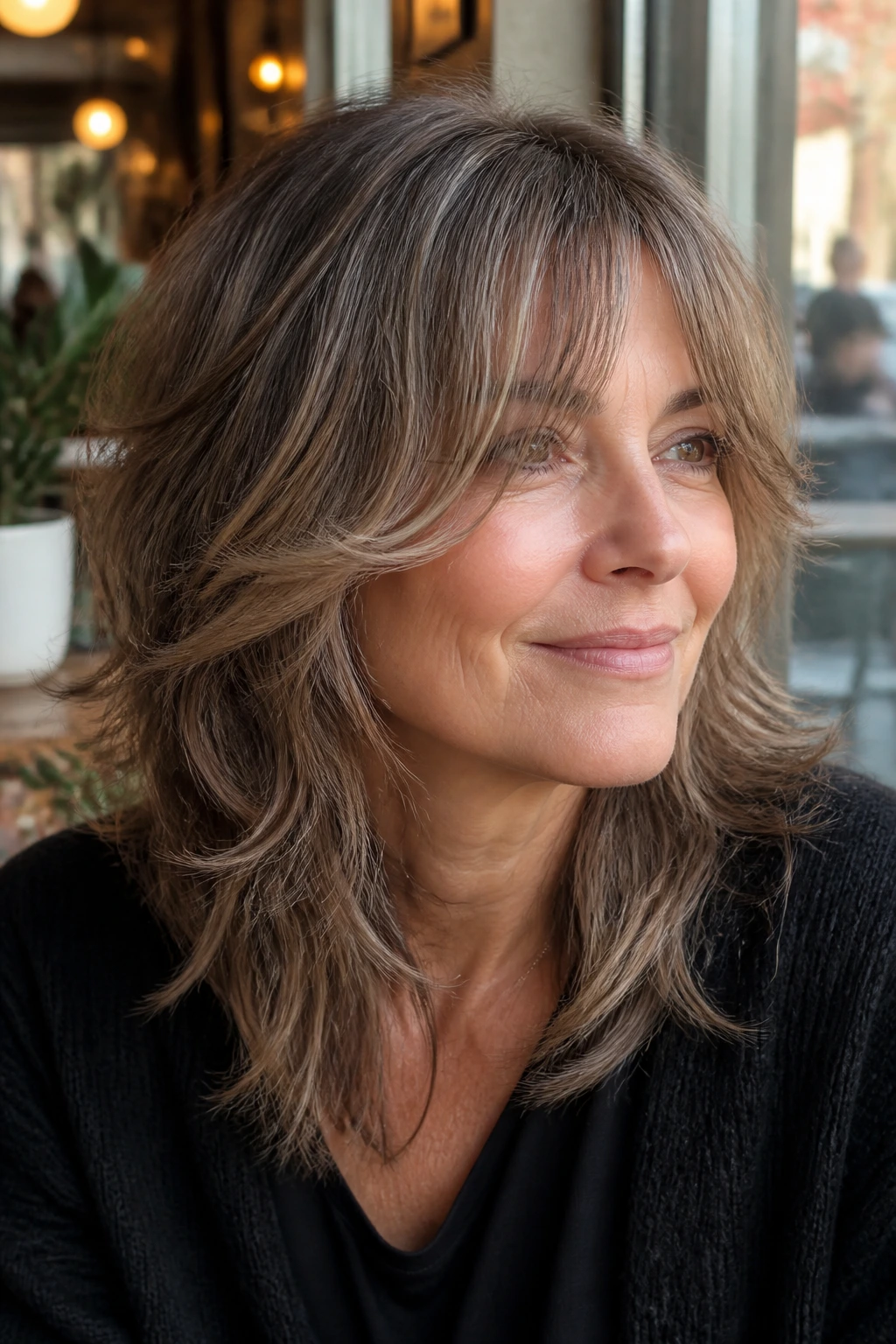
A wolf cut can sound like a dare, but the soft version is more wearable than people think. It keeps shorter layers near the crown, longer pieces around the perimeter, and curtain bangs that overlap into the front sections rather than stopping abruptly. That overlap is the key. It keeps the cut from looking choppy in a bad way.
This shape suits wavy hair especially well, because the layers can build natural lift without a lot of brush work. It’s also a nice answer if you want something a little more modern than a classic shag. Ask your stylist to keep the graduation gentle and the fringe longer through the sides. If the bangs are cut too short, the whole shape gets spiky fast.
The soft wolf cut has personality. Not chaos. Personality. If that sounds like hair you’d actually wear, you’re in the right place.
14. Choppy Bob With Textured Curtain Fringe
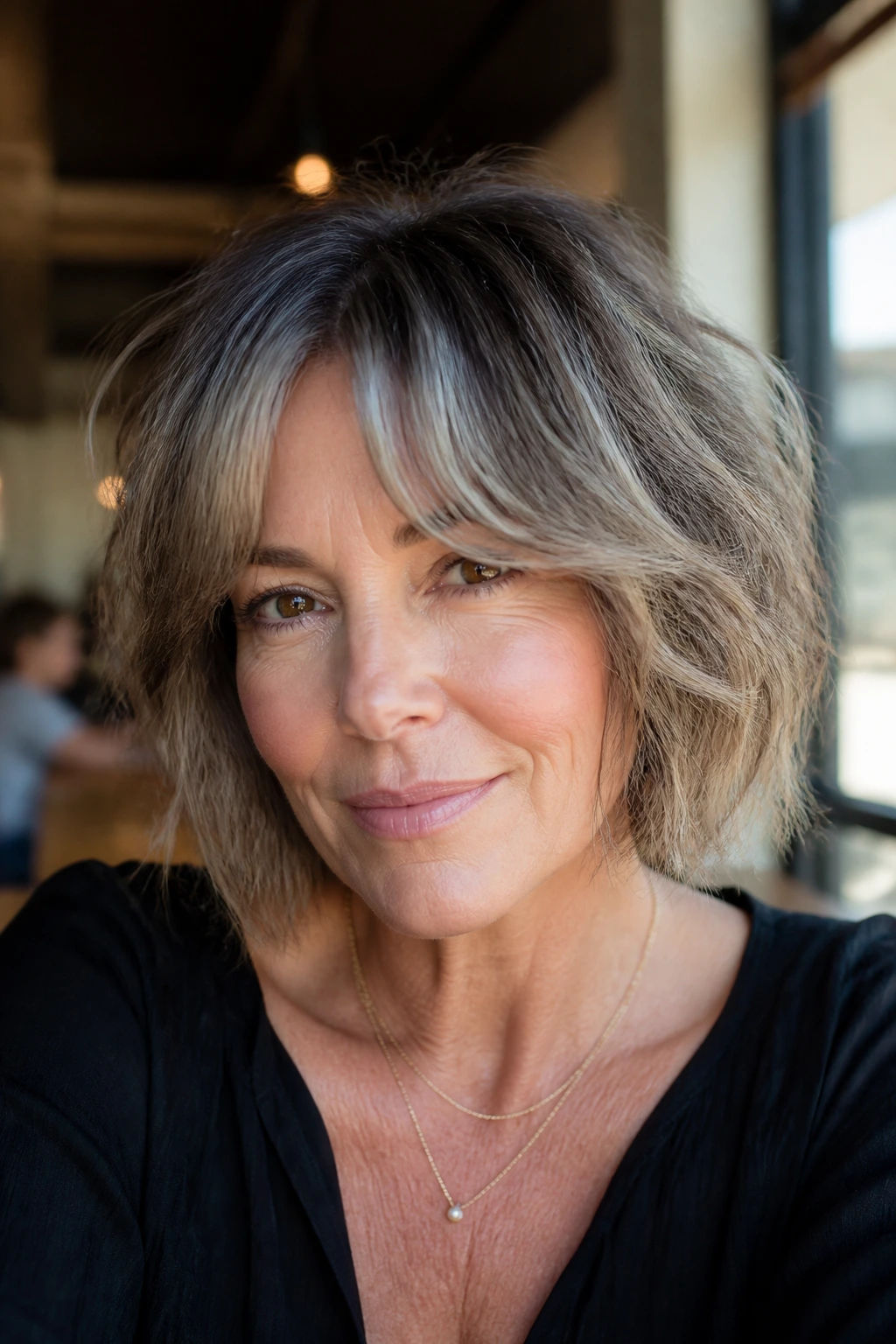
A choppy bob is for people who want the ends to move instead of sit still. The curtain fringe adds another layer of motion, especially when the texture is broken up in little segments rather than left smooth and uniform. It works well on straight hair that needs some life around the face.
The important part is not to overdo the choppiness. Too many uneven pieces and the cut starts to look accidental. You want deliberate texture, created with point cutting and a light hand around the front. The bangs should still frame the face in a curve, even if the ends are piecey.
This is a good cut for busy mornings because it doesn’t need to be perfect. A little texturizing spray, a quick finger rake through the bangs, and you’re out the door. If the fringe separates a bit at the center, that’s fine. It’s part of the shape.
15. Glossy Long Cut With Swoopy Curtain Bangs
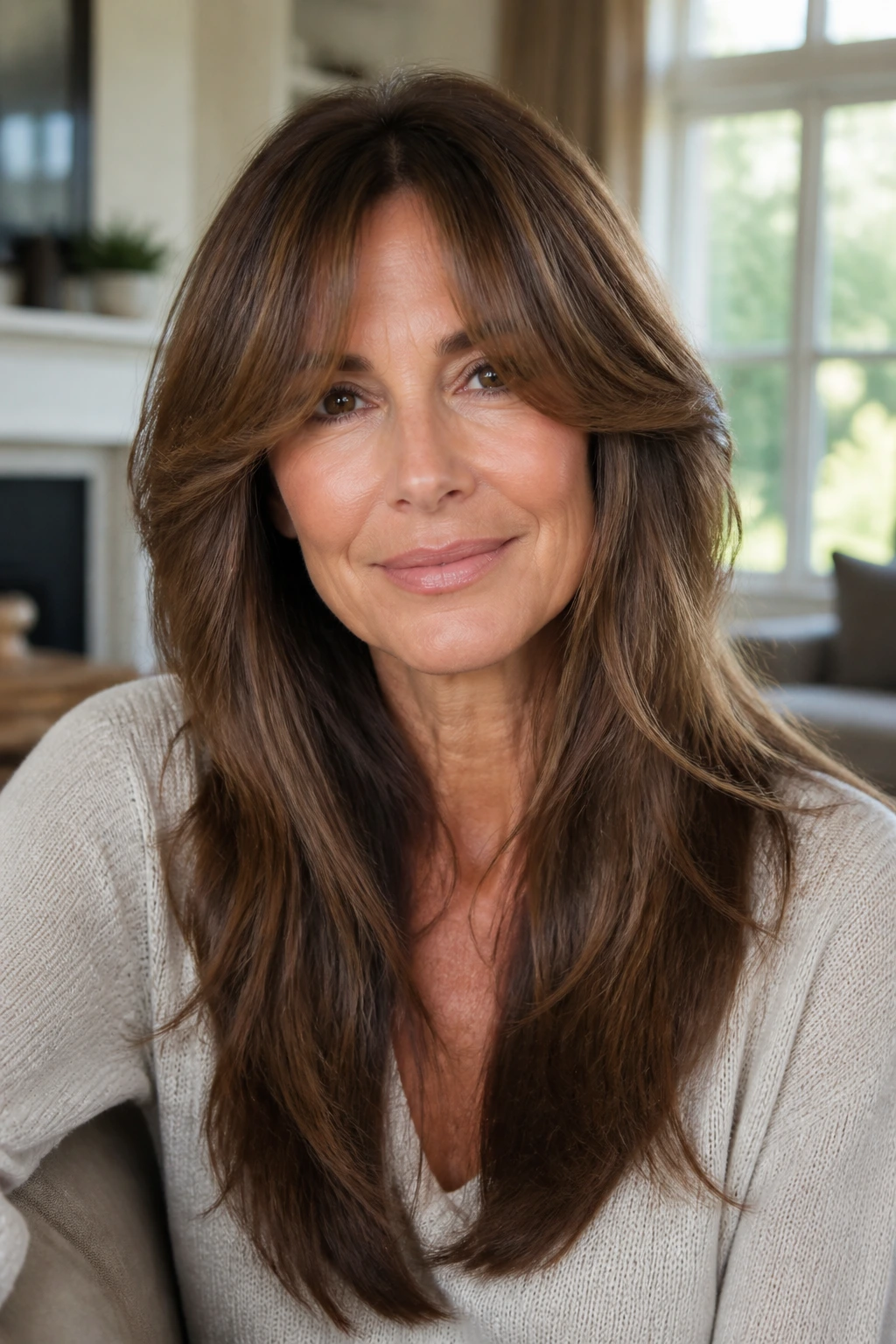
Long hair can still feel fresh after 50 when the front is handled well. Swoopy curtain bangs make that happen. They keep the length from dragging down the features, and they create a soft diagonal line that draws attention to the eyes and cheekbones. The rest of the cut can stay mostly long, with subtle layers that keep the ends from looking heavy.
This style works especially well on thicker hair because the bangs remove some visual weight from the top without sacrificing length. If your hair is straight, a large round brush or a single pass with a smoothing iron can give the fringe that swoop. If it’s wavy, let the wave do some of the work and smooth only the front pieces.
I like this look when someone wants a bit of glamour but not a full blowout every time. Long hair plus curtain bangs can go surprisingly casual if you keep the front soft. It’s a smart way to keep length from feeling tired.
16. Asymmetrical Bob With Split Fringe

An asymmetrical bob has a little angle to it, and the split fringe helps that angle feel intentional. One side of the bob sits a touch longer, or the front pieces drop a little lower on one side, while the curtain bangs part around the center and lean into the asymmetry. That gives the cut energy without making it feel harsh.
This is a useful shape if one side of your face carries more volume than the other, or if you have a hairline that naturally prefers a side part. The split fringe can be nudged slightly off-center while still keeping the soft curtain effect. That’s a nice trick when a perfect middle part feels too rigid.
I wouldn’t call this a quiet haircut. I would call it polished with a bit of nerve. If you want the front to say something without shouting, this is a clean way to do it.
17. Natural Gray Layers With Soft Curtain Bangs
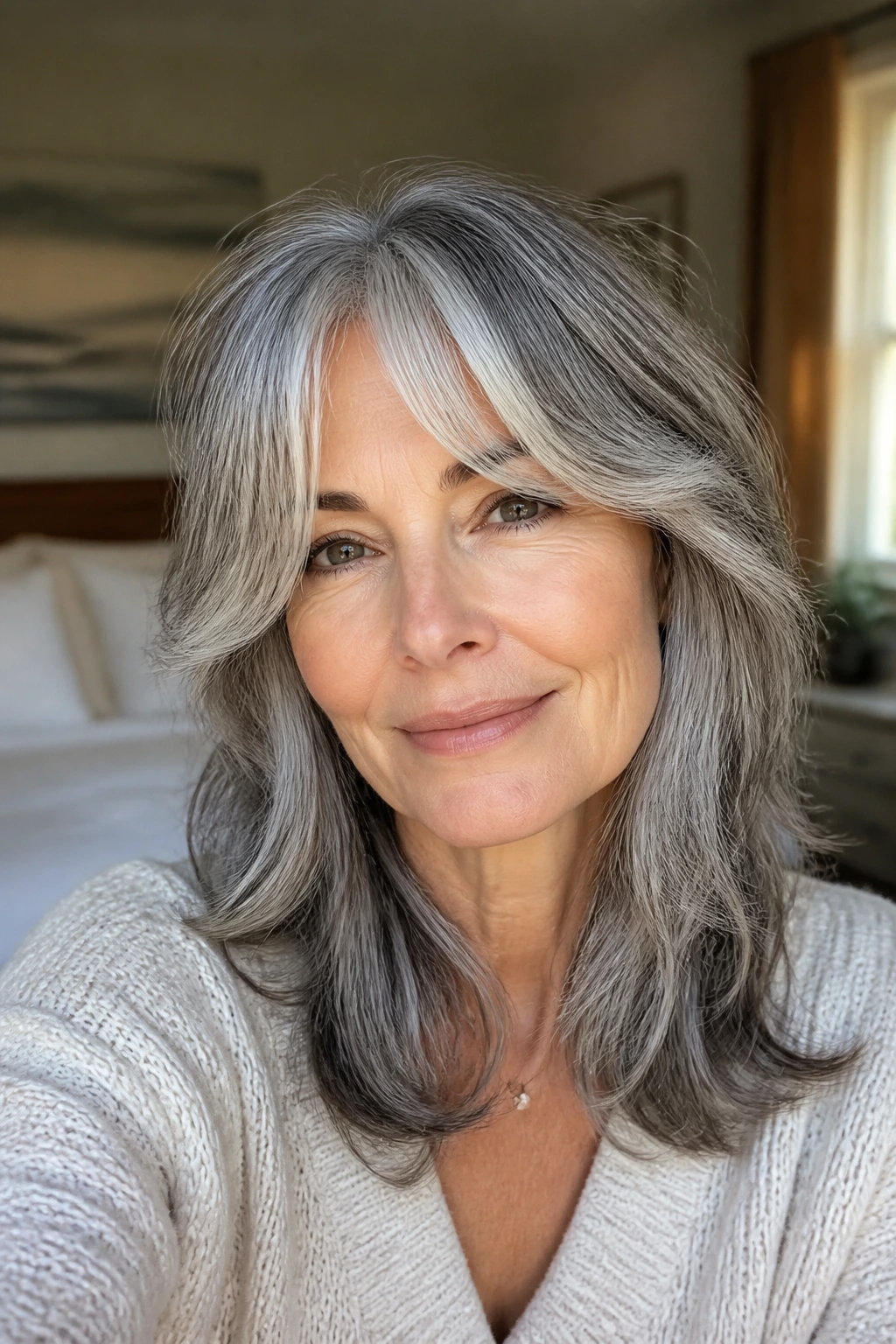
Gray hair deserves shape, not apology. Soft curtain bangs around natural gray layers can make silver strands look luminous because the front pieces break up the mass and catch light as the head moves. The cut should be soft at the temples and lightly layered through the sides so the fringe doesn’t sit like a separate object.
This is one of my favorite ways to wear gray because it respects the texture that often comes with it. Gray hair can be wirier, drier, or puffier at the front, and the right curtain bang shape handles that better than a blunt fringe. Ask for long, connected face-framing pieces that start around the cheekbone. Too much texturizing at the ends can make gray hair fray.
A light leave-in cream or a drop of oil on the last two inches usually does the trick. Keep the bangs touchable. That matters more than shine.
18. Flipped-Out Mid-Length Cut With Retro Curtain Bangs
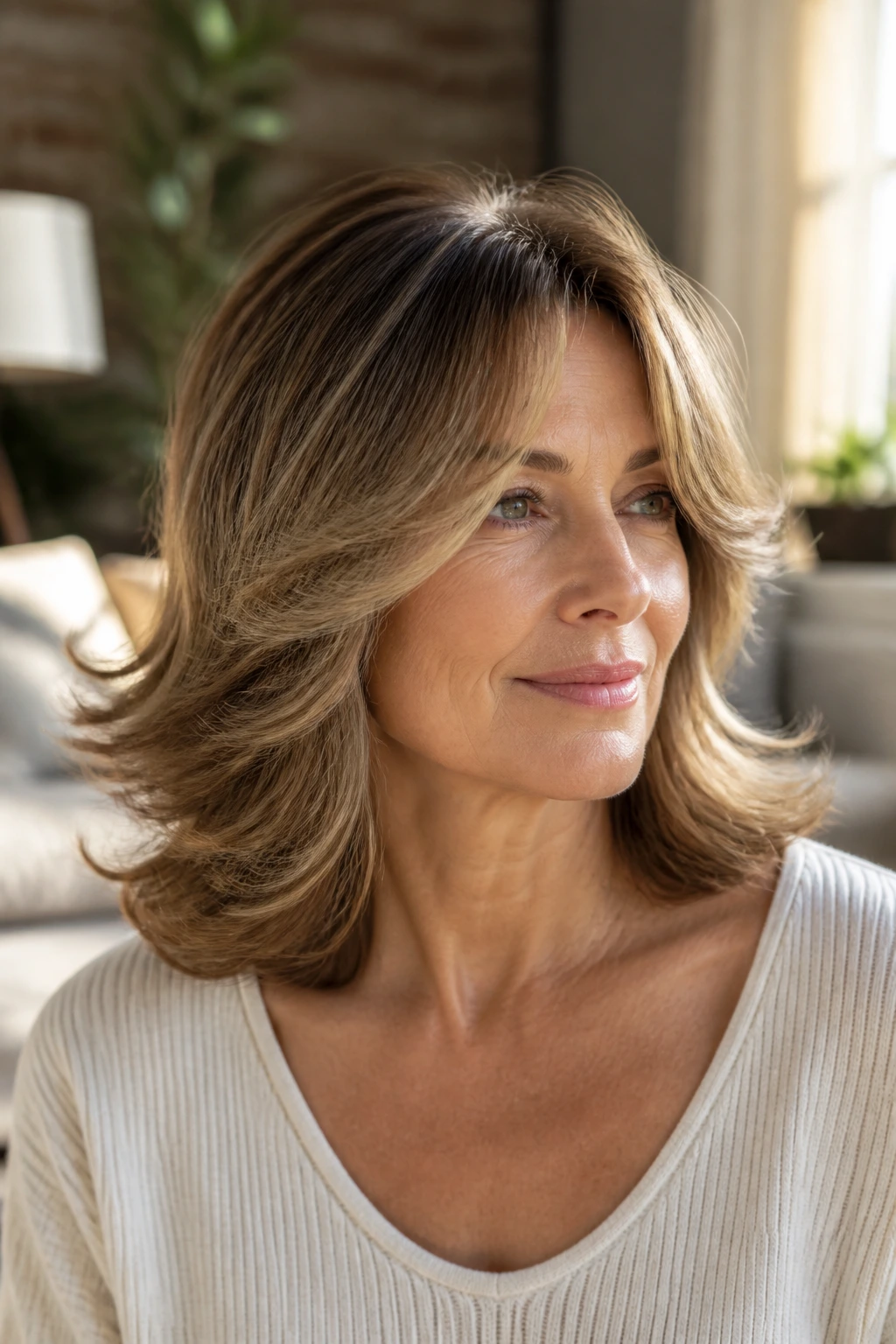
There’s a little swing to this one. The ends flip outward just enough to keep the silhouette from going straight down, and the curtain bangs echo that motion with a soft bend away from the face. It has a retro feel, but not in a costume way. More like the haircut remembers how to move.
This shape is good when you want width around the lower face and movement through the shoulders. It can balance a narrow chin or a long neck, especially if you like wearing open collars or simple tops. The bangs should be brushed off the face, then allowed to fall in a gentle arc. If the ends are too stiff, the whole style loses its ease.
I’d call this a moodier version of the classic mid-length cut. It still behaves. It just has a little more swing in the step.
19. Rounded Bob With Bouncy Curtain Bangs
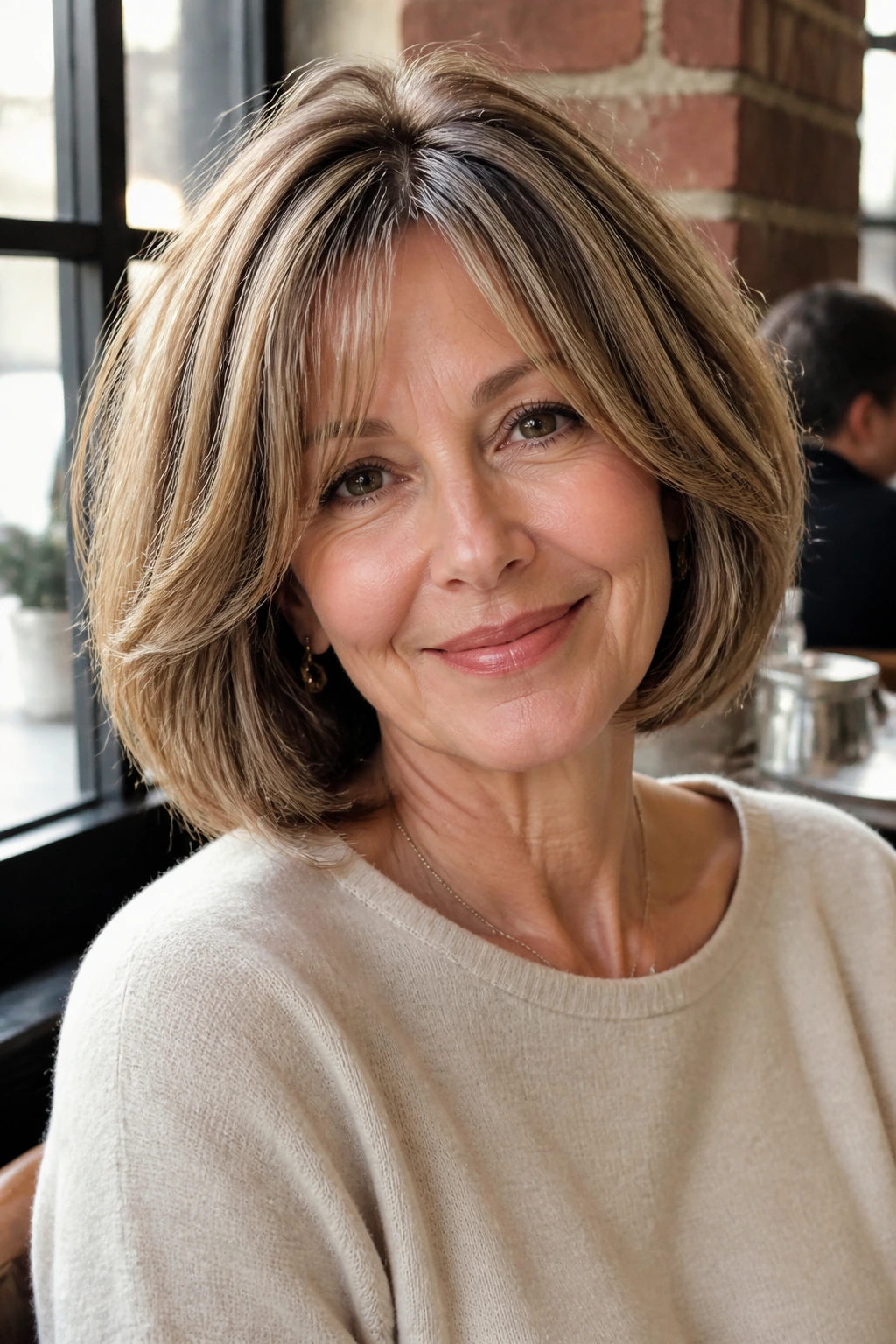
A rounded bob creates a soft dome of shape around the head, which can be very flattering when you want the haircut to look full without looking puffed up. Add bouncy curtain bangs and the front gets lift without a hard line. The curve of the bob and the split fringe work together, which keeps the shape clean.
This is a strong choice for fine to medium hair that needs body. The roundness gives the illusion of density, and the bangs stop the shape from becoming too helmet-like. Ask for the nape to stay neat and the front to be slightly longer so the fringe has somewhere to fall. You want the curve to read as intentional, not old-fashioned.
A medium round brush and a cool shot from the dryer are the two things that matter most here. Let the bangs cool on the brush before releasing them. That’s where the bounce comes from.
20. Shaggy Shoulder Cut With Neck-Grazing Layers
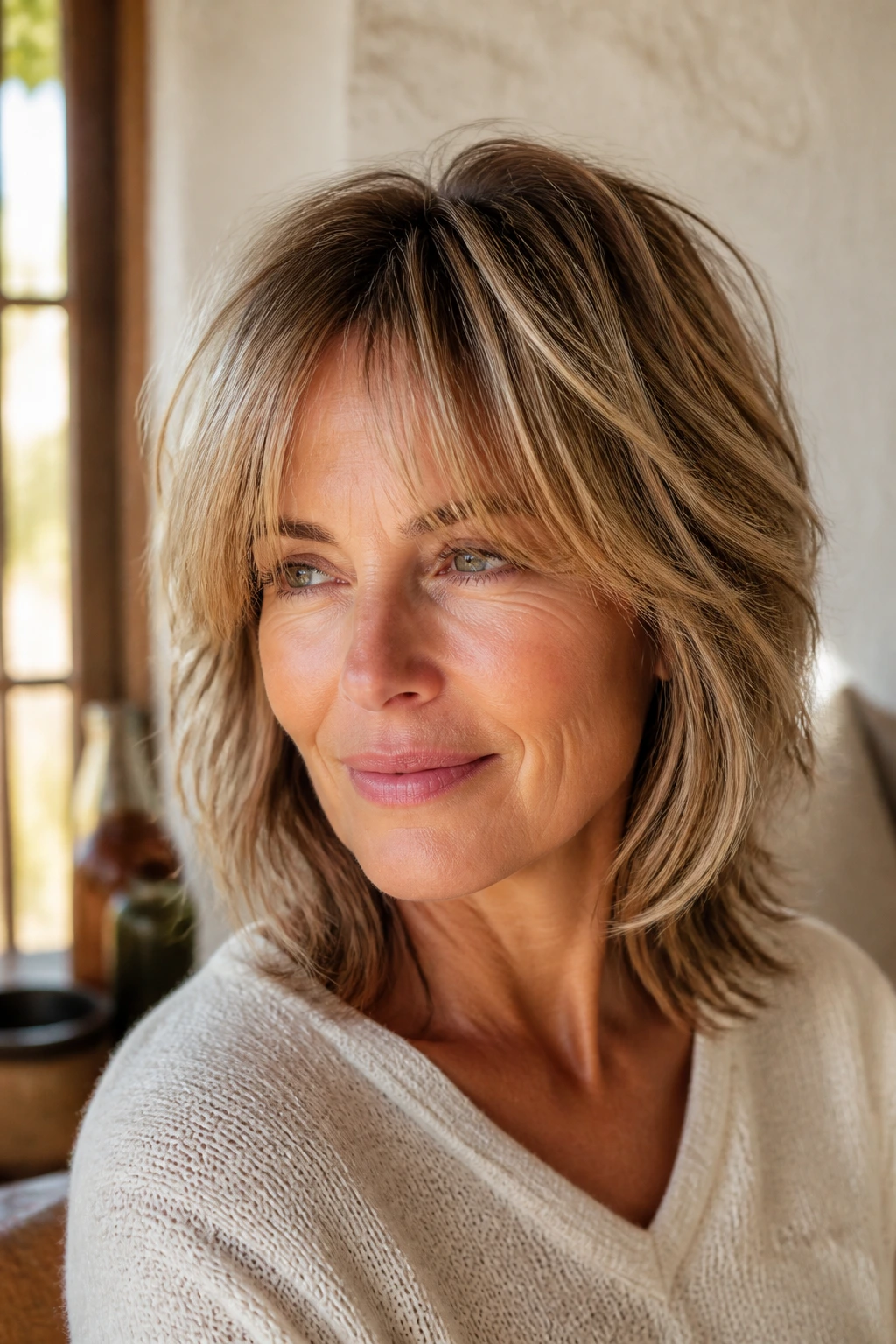
A shag that ends around the shoulders is one of the easiest cuts to live with when you prefer air-drying. The layers skim the neck, the fringe breaks softly at the center, and the whole shape looks better when it’s a little imperfect. That’s a useful quality. Hair is not always tidy, and this cut admits it.
The curtain bangs should blend into the shag rather than sit in front of it. That means longer sides, lighter center, and enough texture to keep the fringe from clumping. If your hair is wavy, this can be especially good because the layers can ride with the wave instead of fighting it. If your hair is straight, a bit of mousse at the roots helps the top from collapsing.
This is the style for people who hate spending twenty minutes fixing one section of hair. It looks like it knows how to move through a day.
21. Sleek Long Bob With Polished Curtain Bangs
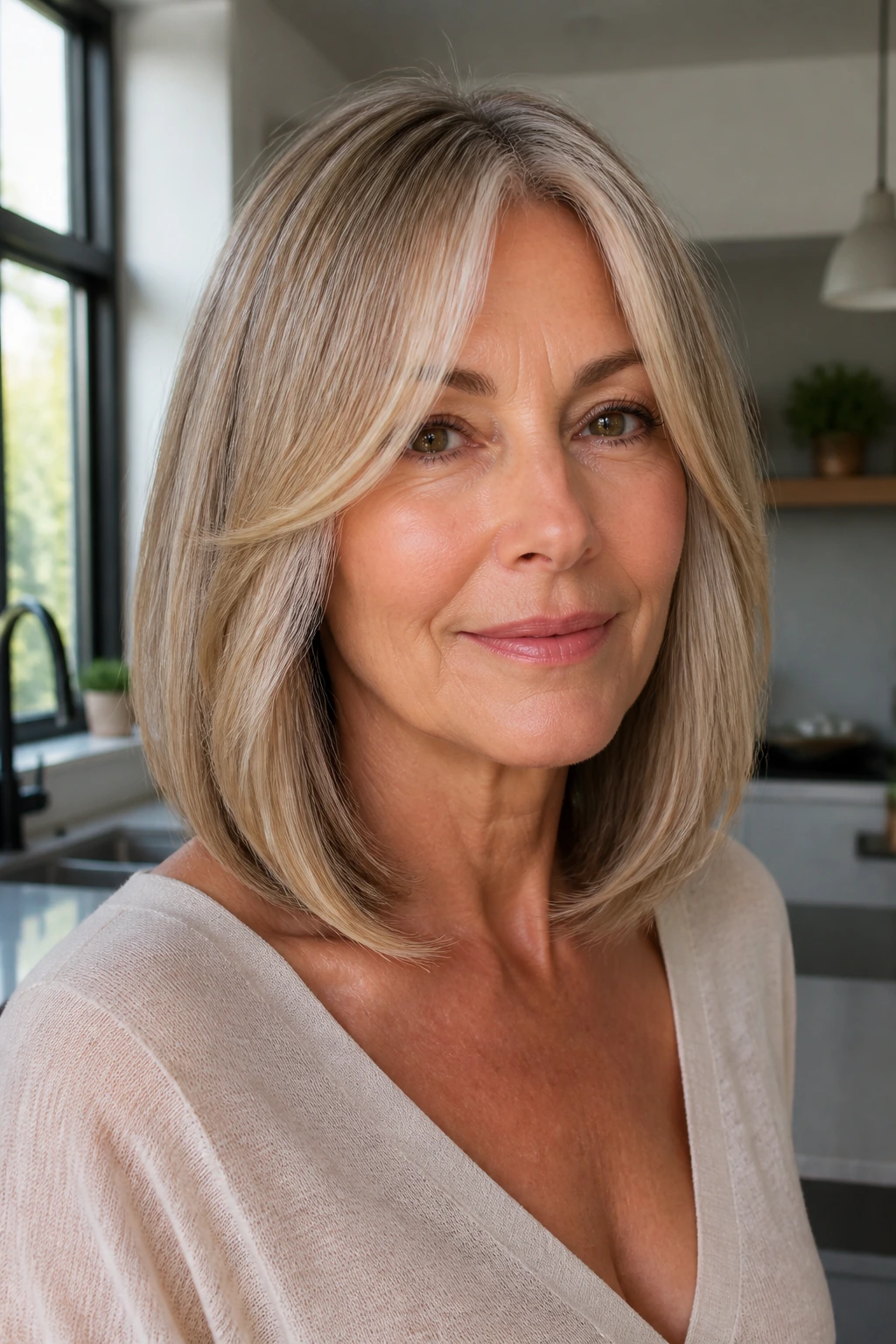
Sometimes you want your hair to look calm and finished. A sleek long bob with polished curtain bangs does exactly that. The length sits around the collarbone, the ends stay smooth, and the fringe parts cleanly from the center before gliding toward the cheeks. It’s neat without feeling severe.
This cut is especially good with straight hair or hair that takes well to a smoothing brush. Use a heat protectant, then shape the bangs with a round brush or a paddle brush and a slight wrist turn at the ends. The key is to keep the fringe supple. If it gets too flat, the whole style loses its point.
I like this on days when you want your haircut to look deliberate with very little ornament. A crisp collar, a bit of lipstick, and this kind of hair carry each other nicely. No drama needed.
22. Voluminous Mid-Length Cut With Full Curtain Fringe
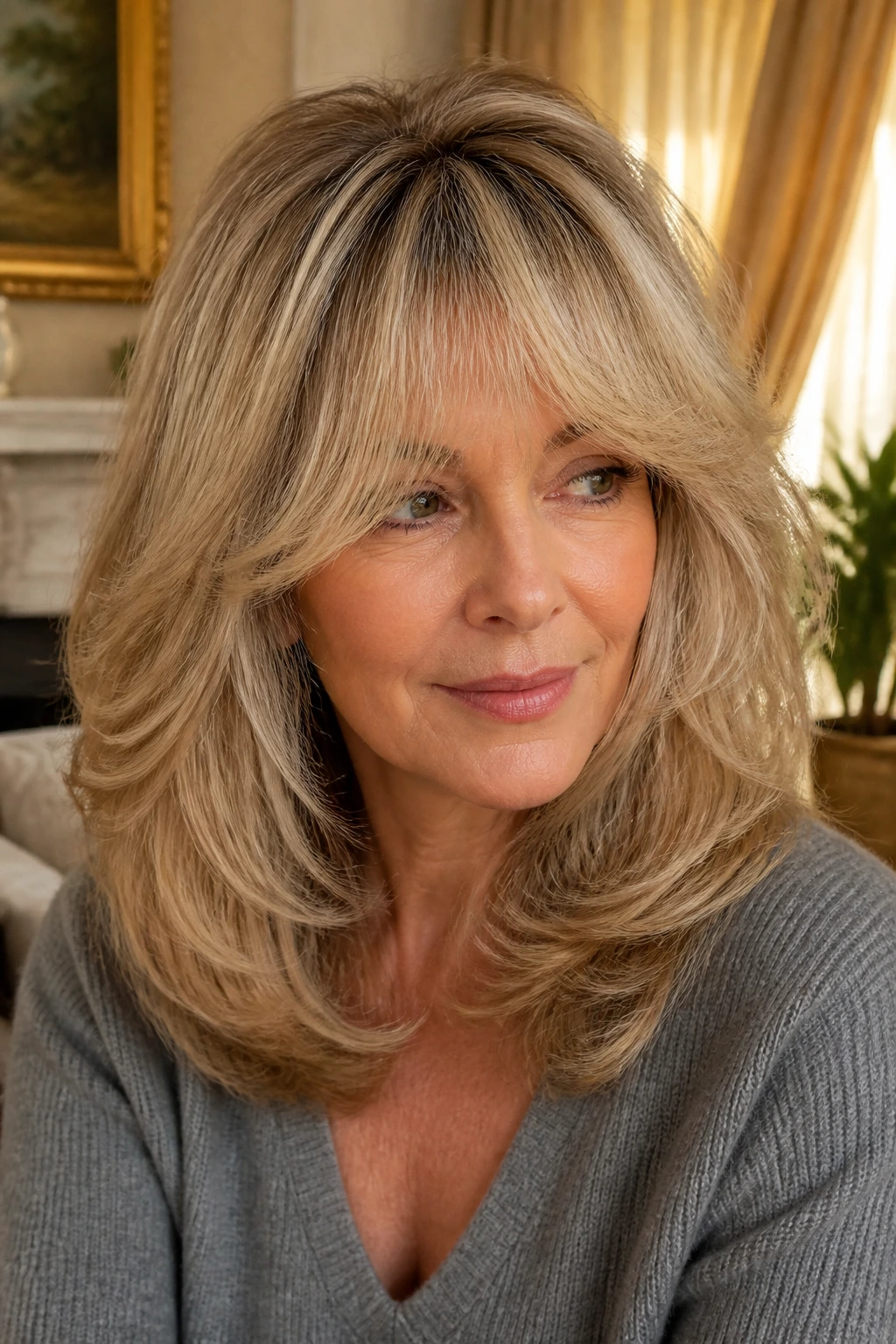
If your hair is thick and you like a fuller silhouette, this is the cut that gives the fringe room to matter. The mid-length shape keeps body through the ends, and the curtain bangs are fuller at the center than some of the lighter versions above. They still part, but they have enough density to hold a strong curve.
This style works best when the front is blow-dried with some lift at the root. A large round brush, a little mousse, and patience around the cooling stage are enough to build that volume. Ask for the bangs to start a bit lower on the forehead if your hair is naturally dense; that keeps them from swallowing the brows. The sides can be connected into long layers so the front doesn’t feel bulky.
It’s the most glam version in this collection, and I mean that in a practical way. It has body. It has shape. It doesn’t ask you to apologize for having hair.
Why Curtain Bangs Work So Well After 50

The real magic of curtain bangs is not that they “take years off,” which is the kind of lazy compliment hair gets all the time. Their value is more specific. They change where the eye lands. Instead of stopping at a hard fringe line, the gaze moves through the split opening and then out toward the cheekbones, the jaw, or the collarbone. That shift makes a haircut feel less boxed in.
The shape follows the face instead of fighting it
A center split gives you a built-in opening at the forehead, but the sides carry enough length to frame the temple area. That matters if the hairline has softened a little, which is common over time, or if you wear glasses and need the fringe to coexist with the frames. Curtain bangs can be cut long enough to sit above the lens or sweep past the temples without getting in the way.
They’re kinder to changing hair texture
Hair can come in drier, coarser, or flatter at different stages of life. A blunt fringe often shows every uneven strand. Curtain bangs hide a little of that by design. If one side sits higher on a humid day, the cut still reads correctly because the opening is supposed to be soft and moving.
They grow out with less awkwardness
That’s the part I care about most. You do not have to panic-trim curtain bangs every two weeks to avoid looking strange. They naturally slide into face-framing layers, which is a mercy if you prefer fewer salon visits or you like to stretch a cut a little longer. A fringe that behaves during grow-out is worth more than one that looks perfect for three days and then starts a fight.
Tools That Make Styling the Fringe Easier
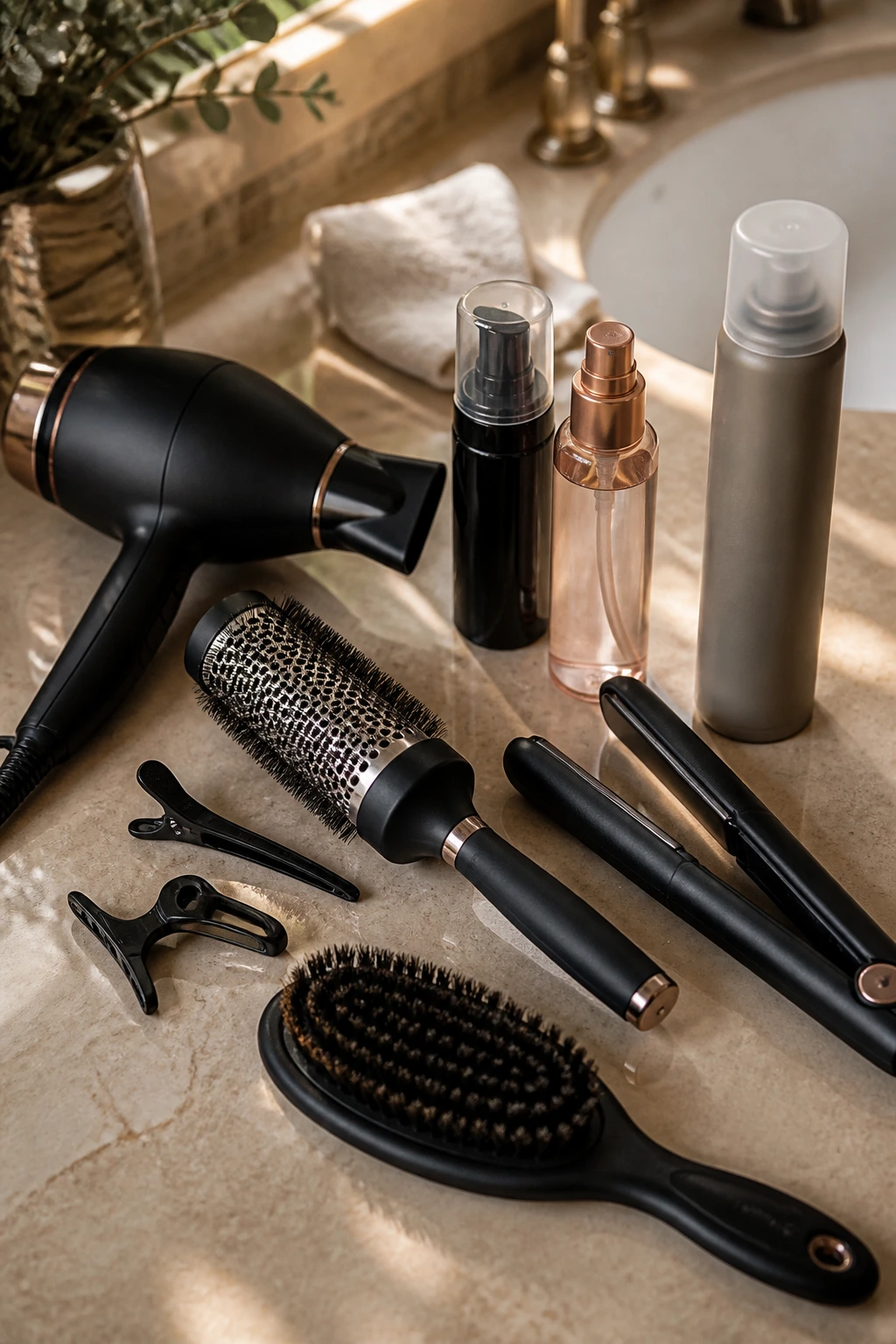
A good fringe needs a few specific tools, and none of them are exotic.
-
A blow dryer with a concentrator nozzle: Directs air along the hair shaft so the bangs bend instead of puffing outward.
-
A 1.25- to 1.5-inch round brush: Big enough to give shape, small enough to fit under the fringe without over-curling it.
-
Sectioning clips: Useful for pinning the rest of the hair away while you work just the front.
-
Lightweight mousse: Gives the root a little memory without turning the fringe crunchy.
-
Heat protectant spray: Necessary if you use a brush, iron, or dryer on the bangs more than once a week.
-
Dry shampoo: Best at the roots and just behind the fringe, where oil from the forehead tends to creep in first.
-
A small flat iron: Optional, but handy for smoothing stubborn bends in very straight or coarse hair.
-
A boar-bristle or mixed-bristle brush: Good for polishing the final shape and smoothing flyaways around the temple.
Nothing on that list is fancy. That’s part of why it works.
What to Ask Your Stylist for at the Chair
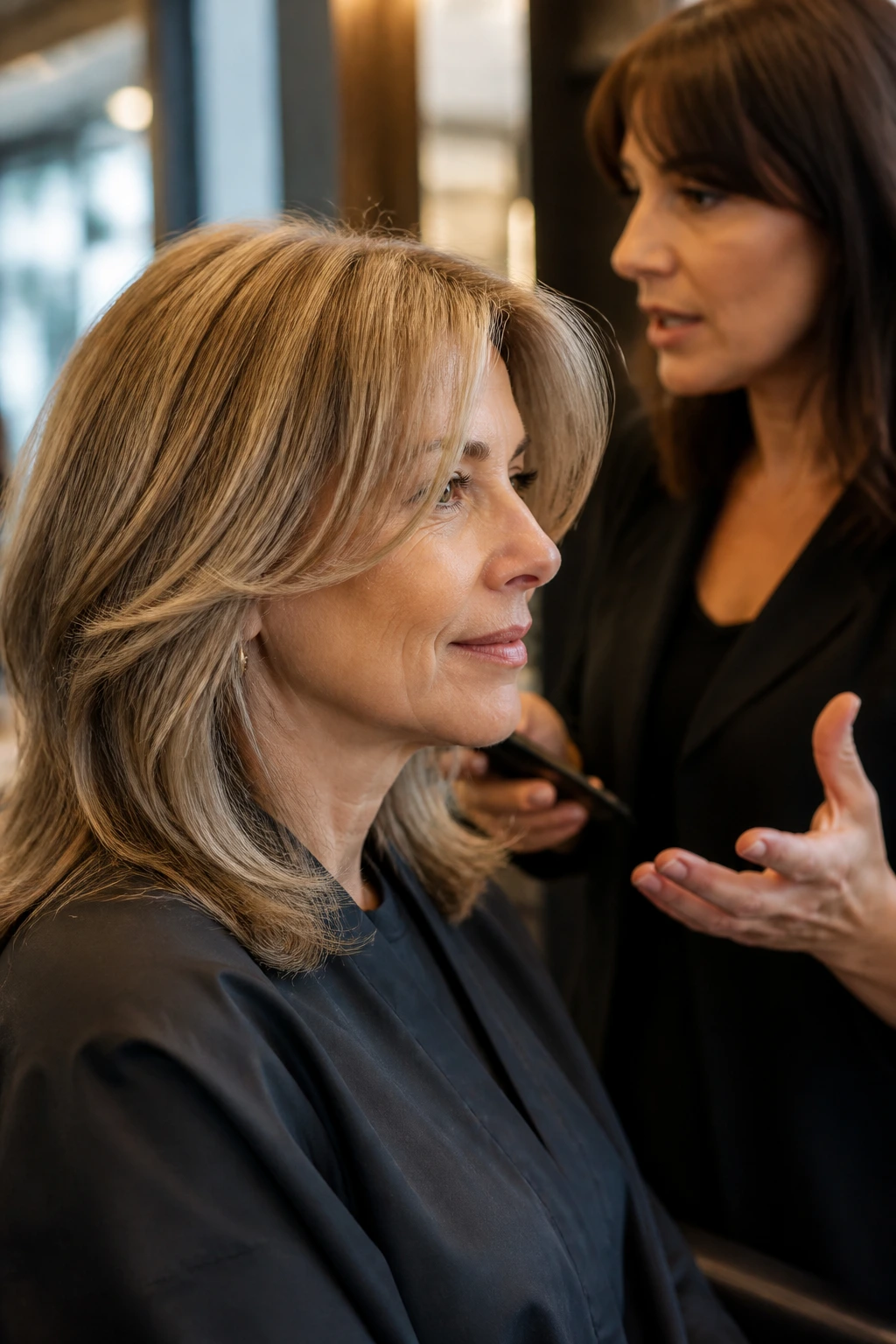
The difference between good curtain bangs and irritating curtain bangs often comes down to three minutes of conversation. Bring photos, sure, but say what you actually want the bangs to do. Do you want them to lift the eyes? Hide a high forehead? Sit cleanly with glasses? Grow out gently? Those are not the same request.
Mention the shortest point first
Tell your stylist where you want the center to land when dry. Brow level, bridge of the nose, or cheekbone are all very different starting points. If you have cowlicks at the front, or if your hair shrinks up when it dries, mention that before the scissors come out.
Say how much styling time you want to spend
This matters more than face shape alone. A cut built for a five-minute morning should look different from one that expects a round brush and heat. If you prefer air-drying, ask for softer layering and longer fringe. If you like a polished blowout, you can take more shape through the front.
Talk about your glasses, temples, and hair density
Glasses frames can steal the space a short fringe needs. Dense hair can swallow a soft bang if it isn’t thinned correctly. Fine hair can look sparse if the fringe is texturized too much. A good stylist will adjust the weight line and the length to suit those details, but only if you mention them.
Morning Styling That Takes Ten Minutes or Less
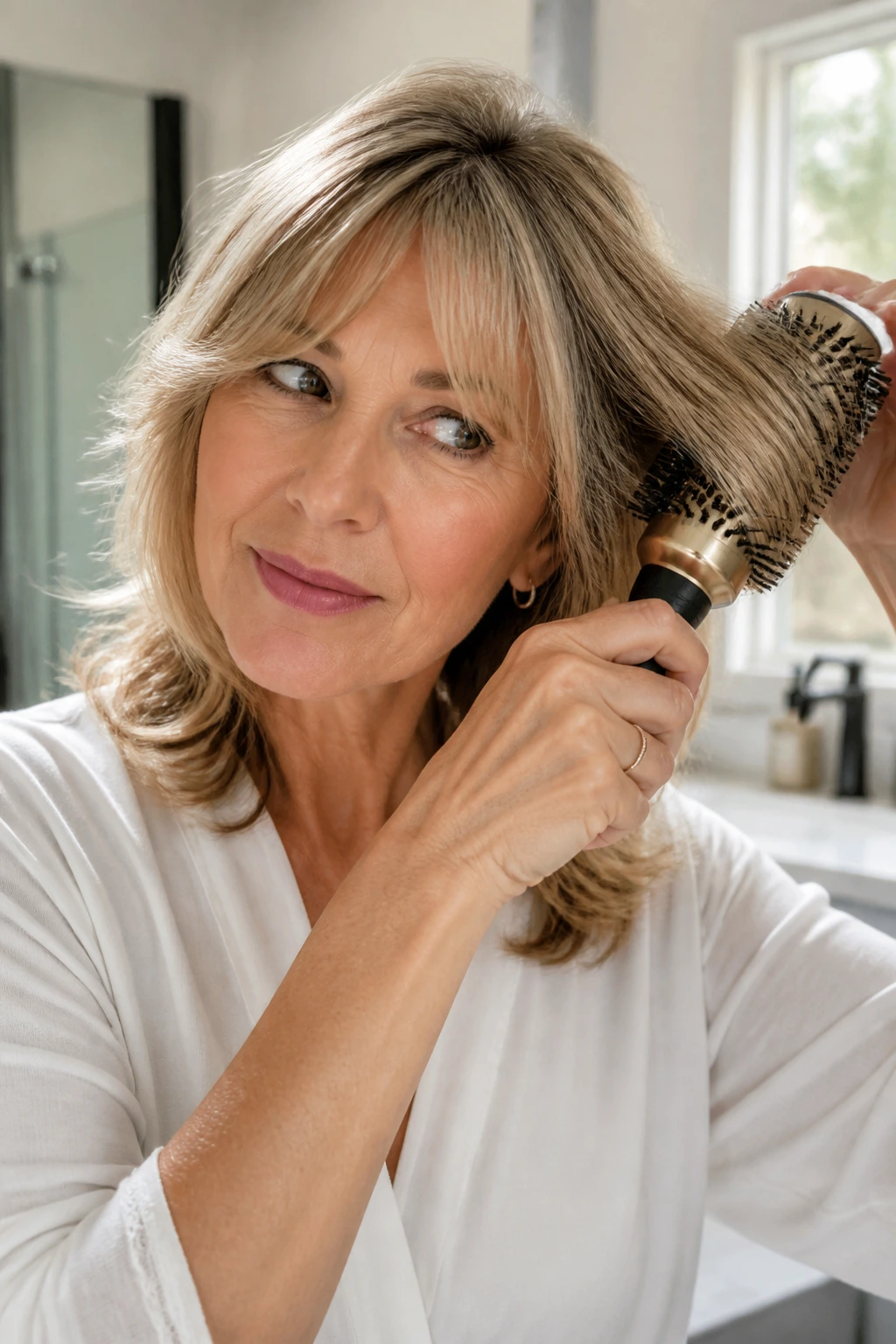
Curtain bangs should not need a ceremony. If they do, something went wrong in the cut or the method.
Quick Blowout:
Clip the rest of the hair away, mist the fringe with a little heat protectant, and wrap each side around a round brush for 20 to 30 seconds. Roll away from the face, then let the bangs cool on the brush for a few beats before releasing them. That cooling step is where the bend stays.
Air-Dry Routine:
If you’re not using heat, part the bangs while they’re damp and clip the center pieces up and away for a few minutes. Let the front dry with a little lift at the root, then finger-shape the ends into the split. This works best on wavy hair or on bangs cut with enough length to settle naturally.
If One Side Misbehaves:
Don’t fight both sides equally. Tame the stubborn side first with a damp hand, then brush it across and down. The curl or cowlick usually needs direction more than product.
For Glasses Wearers:
Keep the center just a touch longer and the outer edges slightly lighter. That prevents the bangs from sitting exactly where the frames already live. Less crowding. Better result.
How to Pair the Cut With Glasses, Earrings, and Necklines
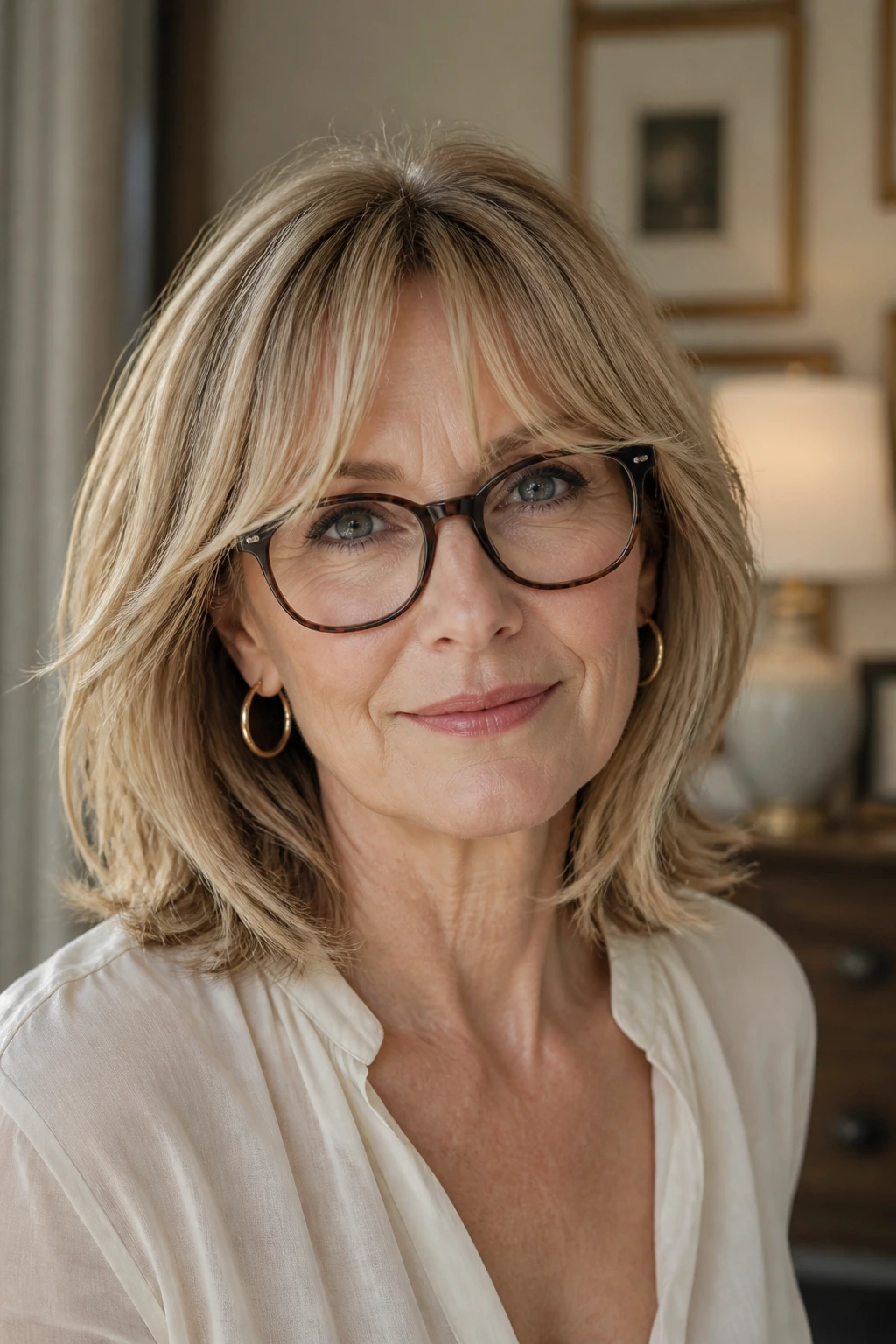
Hair does not sit in a vacuum. A good cut plays with the rest of your face and clothes, and curtain bangs are especially sensitive to that.
Presentation: If you want the style to look polished, bend the fringe away from the face and keep the crown lifted just enough to show the part. A little root volume makes the bangs look deliberate instead of limp.
Accompaniments: Glasses frames, small hoops, and open necklines all work well with curtain bangs because they give the face more room to breathe. High collars can be lovely too, but if the collar is bulky, keep the bangs slightly longer so the whole look doesn’t crowd the jaw.
Portions: If you wear larger frames, ask for a longer fringe that clears the top edge of the glasses and lands near the cheekbone. If you love statement earrings, keep the front layers softer so the hair doesn’t compete with them. Proportion is the whole game here.
Beverage Pairing: A mug of coffee or tea is the only drink that matters during a bang-styling morning, because it gives you a calm ten minutes while the fringe cools into shape. A little absurd? Maybe. Also true.
Small Tweaks That Make the Cut Feel More Like You
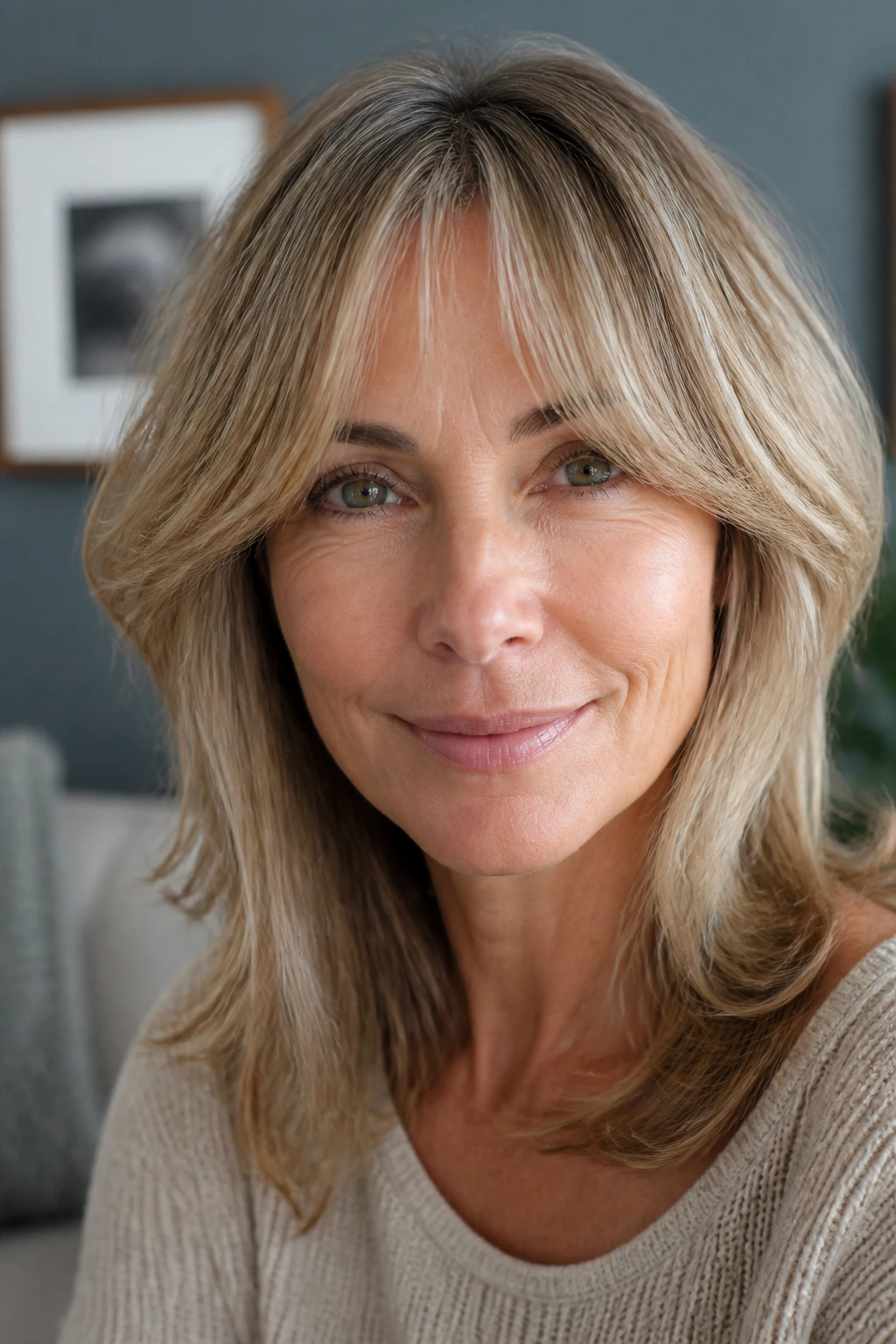
The same cut can lean sharp, soft, romantic, or undone depending on a few tiny choices.
Face-Framing Lift: Ask for the shortest point of the fringe to hit where your cheekbone starts to rise. That puts the eye line in a flattering place without making the bangs too short.
Root Volume: A small amount of mousse at the crown and front roots will stop the style from sinking. This matters most if your hair is fine or your scalp gets oily quickly.
Texture Control: If your hair is thick, keep some weight removed from the inside of the front sections. If it’s fine, leave more of the perimeter intact so the bangs don’t split into wisps.
Color Placement: A few lighter ribbons around the curtain bangs can make the fringe read softer and more dimensional, especially on gray, silver, or dark hair with contrast. You do not need chunky highlights. You need a little movement near the face.
Keeping the Cut Fresh Between Salon Visits
Curtain bangs are forgiving, but they still need a rhythm.
Bang trims usually hold their shape best when they’re cleaned up every 4 to 6 weeks, especially if the center lands at the brow or nose. Longer bobs and lobs can usually go 8 to 10 weeks between full shape-ups. Shags and layered cuts can stretch a little farther, though the fringe itself will still need attention sooner than the rest.
At night, keep the fringe dry before you go to bed. A damp bang pressed against a pillow turns odd in the morning, and no amount of wishful thinking fixes that. If the front wants to flip the wrong way, clip the bangs loosely away from your face or wrap them in a soft roller for a few minutes while you get dressed.
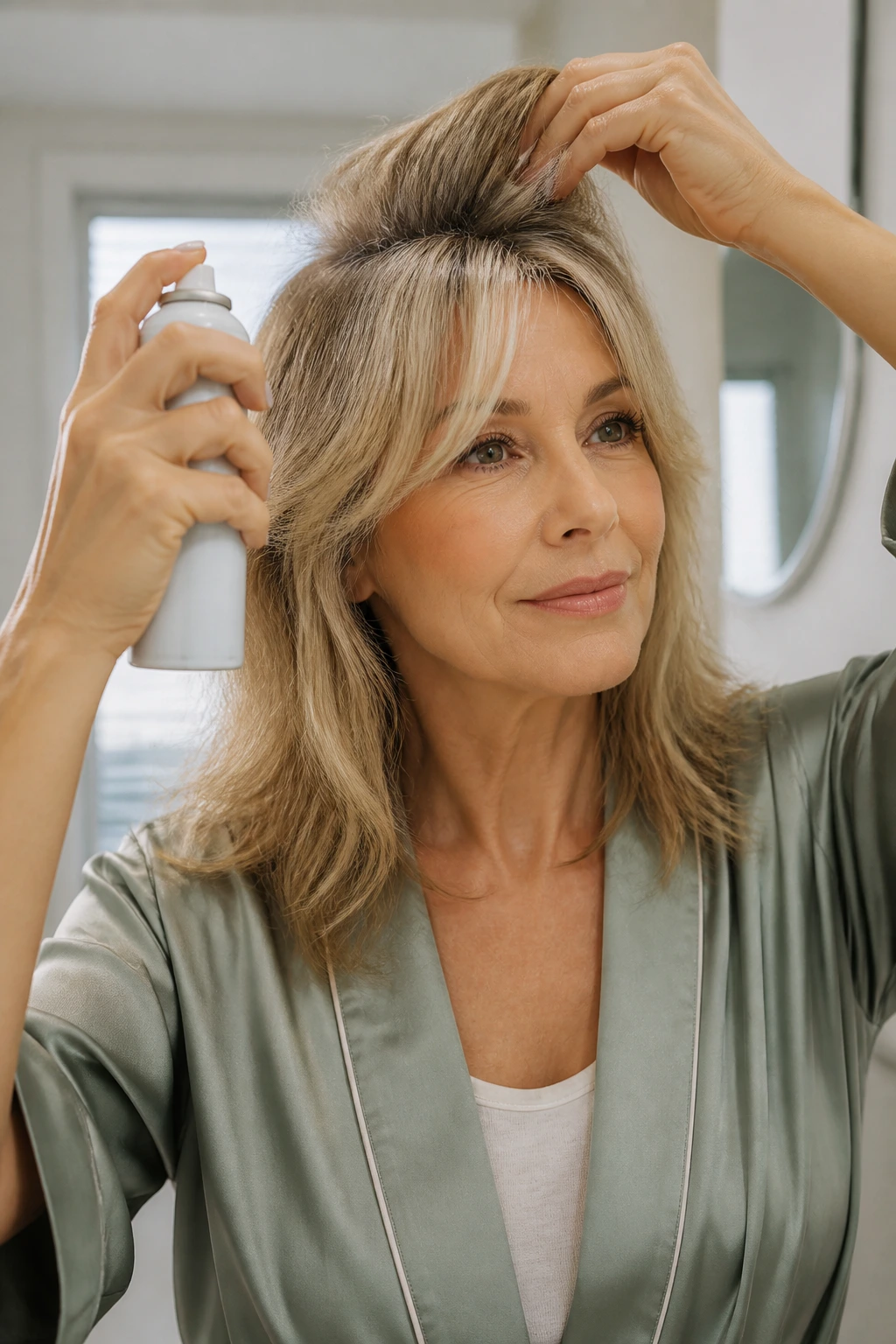
Second-day hair often helps curtain bangs. The roots are less slippery, the bend holds better, and dry shampoo can give the front a bit of grit. Spray it at the roots, let it sit for a minute, then brush it through. If the bangs separate too much, mist just the center lightly and re-bend each side for 10 seconds with a brush.
Variations to Try When You Want More or Less Fringe
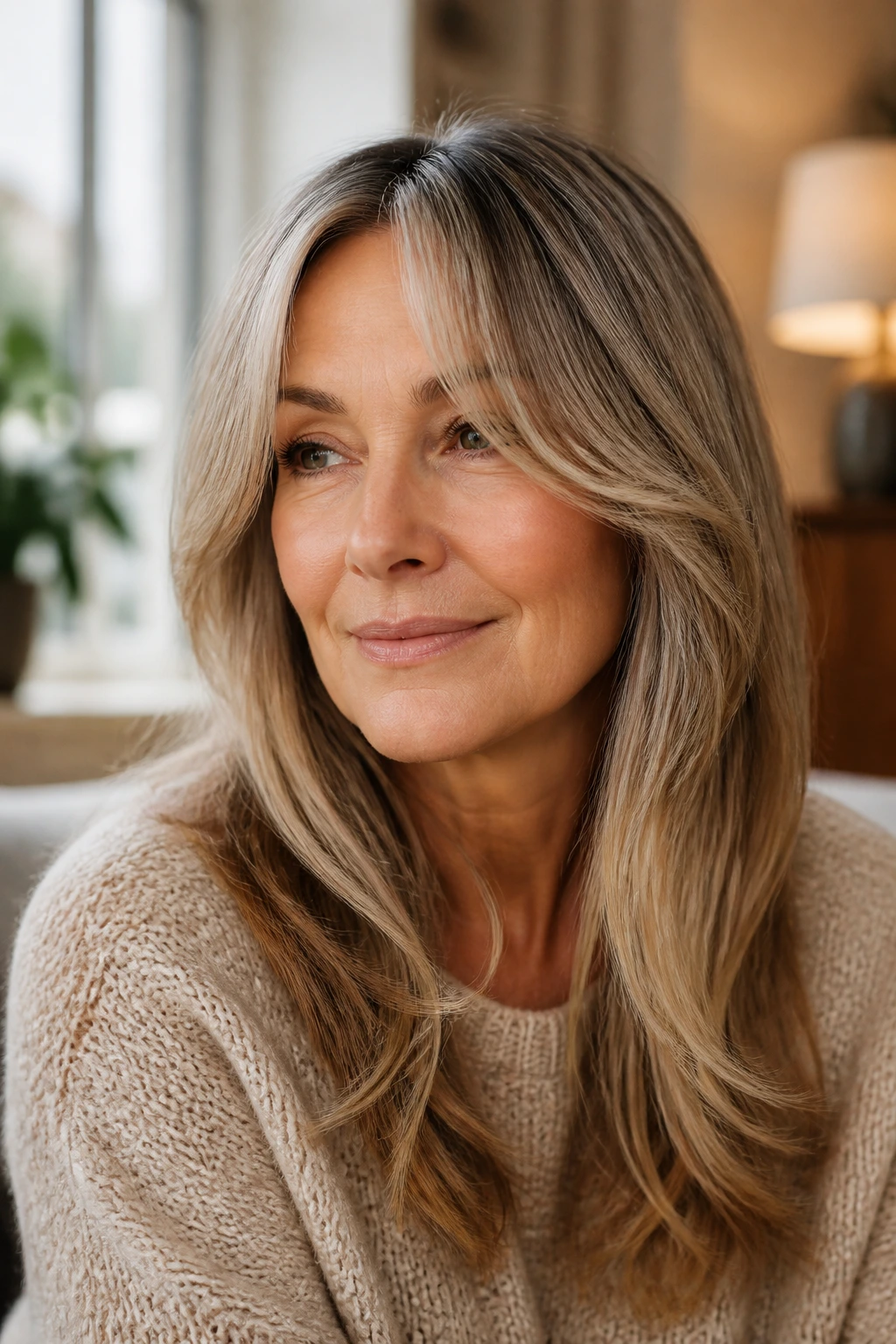
The Softer Sweep: Keep the bangs longer and let them part more loosely at the center. This is good if you want fringe that barely announces itself and then blends straight into layers.
The Fuller Curtain: Add more density through the center and cut the sides a touch shorter. It gives you a stronger frame for thicker hair, but it still opens away from the face.
The Glasses-Friendly Split: Start the shortest point a little lower on the forehead and keep the outer edges long enough to clear your frames. This keeps the fringe from competing with the glasses line.
The Silver Halo: On gray or white hair, soften the temples and avoid over-thinning the front. The fringe should look airy, not sparse, so the silver reads luminous rather than stringy.
The Air-Dry Bend: Ask for a fringe with more length and less layering if you hate heat styling. It will move with your natural pattern instead of requiring a brush every morning.
The Bold Frame: For thick hair or a stronger facial frame, keep the bangs fuller and the outer pieces more pronounced. This version has more presence, but it still opens at the center.
Common Mistakes That Throw the Shape Off
The biggest mistake is cutting the center too short. Short bangs can look cute on the chair, then pop up a half inch at home and sit awkwardly above the brows. Ask for a little length buffer, especially if your hair shrinks when dry.
Another problem is over-thinning the fringe. You see this a lot on fine hair. The bangs separate into wispy strands and never quite come back together. Better fix: leave more weight at the center and use point cutting only where the fringe needs softness.
Blow-drying the bangs straight down is a third trap. That pushes the hair flat against the forehead and makes the ends flick weirdly. Roll the brush away from the face, let the section cool, and don’t touch it too much while it sets.
Cowlicks can also ruin a good haircut if nobody plans for them. If your front hair wants to split hard to one side, tell the stylist before the cut. A small adjustment in length or direction saves a lot of morning swearing.
Finally, too much product can make curtain bangs sticky at the roots and separated at the ends. Keep the spray light. You want movement, not shellac.
Frequently Asked Questions
Do curtain bangs work on fine hair after 50?
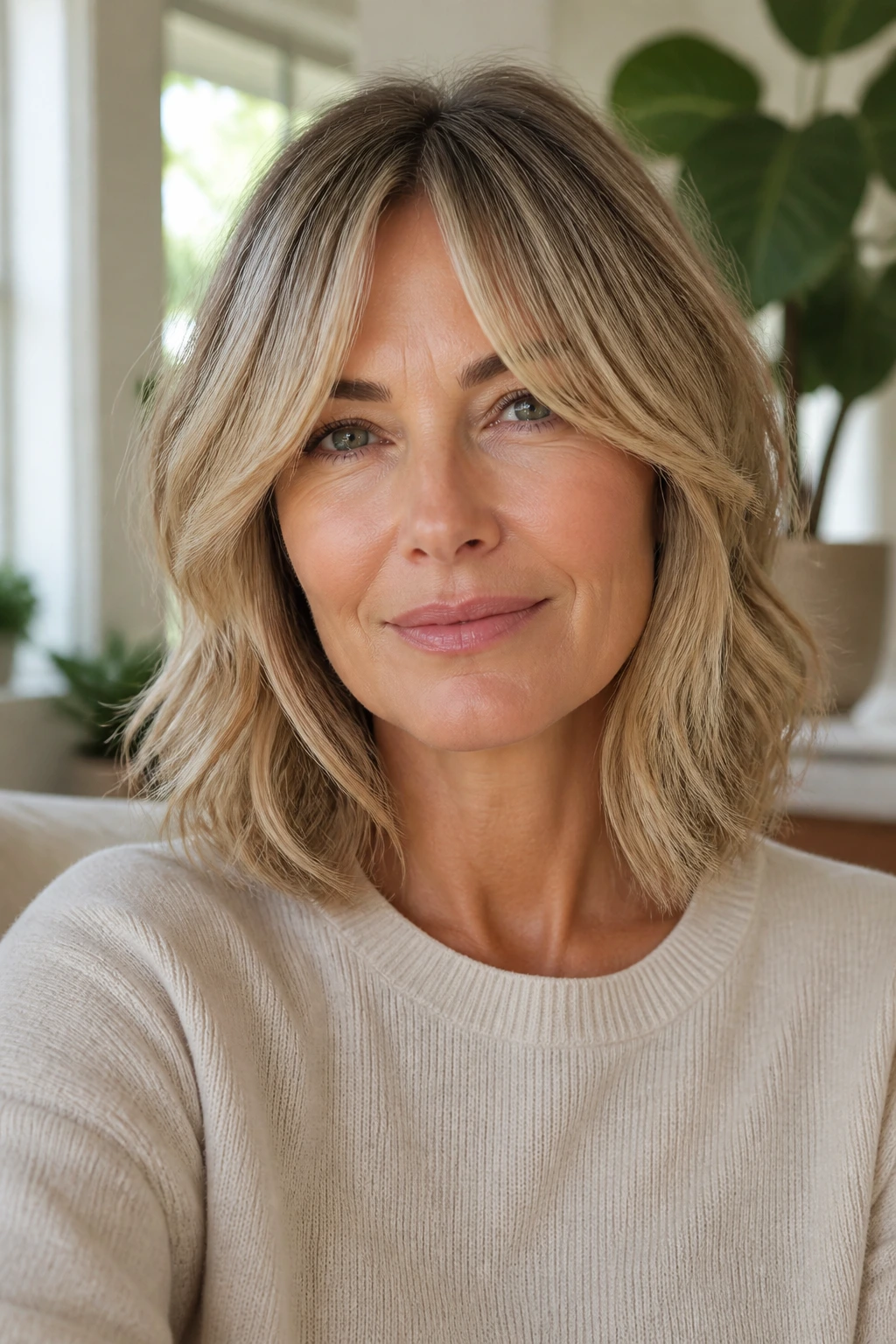
Yes, if the fringe is kept light but not over-thinned. Fine hair usually benefits from a small amount of root lift and a blunt enough edge to hold shape, especially near the center part. The mistake is making the bangs so wispy that they disappear by lunchtime.
Are curtain bangs good if I wear glasses?
Usually, yes. The center split keeps the fringe from living directly over the lenses, and the outer pieces can be cut long enough to clear the frame line. The key is to avoid a bang that lands exactly where your glasses already sit, because that creates visual clutter.
How short should curtain bangs be?
A lot depends on hair texture, but the safer starting point is around the bridge of the nose or slightly above the eyebrow when dry. If your hair is wavy, curly, or prone to shrinkage, go longer than you think. Short is easy to cut. Too short is the problem.
Can curly hair wear curtain bangs without fighting them?
Yes, but the cut should follow the curl pattern, not ignore it. Curly curtain bangs need length and room to bounce, and they usually look best when shaped dry or nearly dry. If they’re cut too short while wet, they can spring up in a way that feels abrupt.
How often do curtain bangs need trimming?
The fringe itself usually needs a touch-up every 4 to 6 weeks if you want to keep the exact shape. The rest of the haircut can often go longer, especially if it’s a lob, shag, or layered cut. If you’re happy with a softer grow-out, you can stretch the bangs a little farther.
What if my bangs separate in the middle too much?
That usually means the cut is either too light at the center or your hair naturally prefers a strong part. A little mousse at the roots can help, but so can a change in length or density. Sometimes the answer is not more product. It’s a slightly better haircut.
Will curtain bangs make my face look shorter or wider?
They can do either, depending on where the fringe starts and how long the side pieces are. A longer, cheekbone-grazing curtain usually adds length and softens width, while a fuller, shorter curtain can bring more focus to the center of the face. That’s why placement matters so much.
How do I grow curtain bangs out without hating the process?
Let them merge into face-framing layers instead of trying to keep them as bangs forever. Ask for small trims that preserve the side pieces while letting the center catch up. A few bobby pins and a side sweep can carry you through the awkward stage without much drama.
Curtain Bangs That Move With You

The best thing about curtain bangs is that they don’t ask hair to pretend it’s younger. They ask it to move better. That’s a much more useful goal. A good split fringe can soften a strong bob, wake up a long cut, or make gray hair look intentional instead of static.
If you’re choosing between styles, think less about “hiding” anything and more about where you want the eye to go. Cheekbones. Jawline. Eyes. Glasses. The front of the haircut is the map. Curtain bangs just draw the route.
And when the cut is right, the style doesn’t need a speech. It just falls into place, parts where it should, and makes the rest of the hair look easier to live with. That’s the kind of haircut worth keeping around.