



Thick hair has a sneaky way of turning a cute haircut into a pyramid if the layers are off by even half an inch. You can ask for movement and end up with weight sitting hard at the bottom. You can ask for fringe and get a sheet that lives in your eyes by lunch. That’s why choppy hairstyles for thick hair with side-swept bangs keep showing up in real salons: they break up the bulk, bend the outline, and let the front do some of the softening instead of forcing the whole cut to carry the load.
The trick is not “more layers” in the vague, salon-brochure sense. Thick hair needs the right layers in the right places. If the interior is too heavy, the style droops. If the bangs are too short or too blunt, they puff. If the ends are sliced without respect for density, you get frizz that looks like it got in a fight with humidity and lost.
A good choppy cut on thick hair does three things at once. It removes enough weight to let the shape move, keeps enough perimeter to stop the ends from feeling stringy, and places the side-swept bang where it can bend naturally instead of fighting your hairline. That balance is what makes these cuts worth saving to your phone before the next salon visit.
Why These Cuts Earn Their Keep
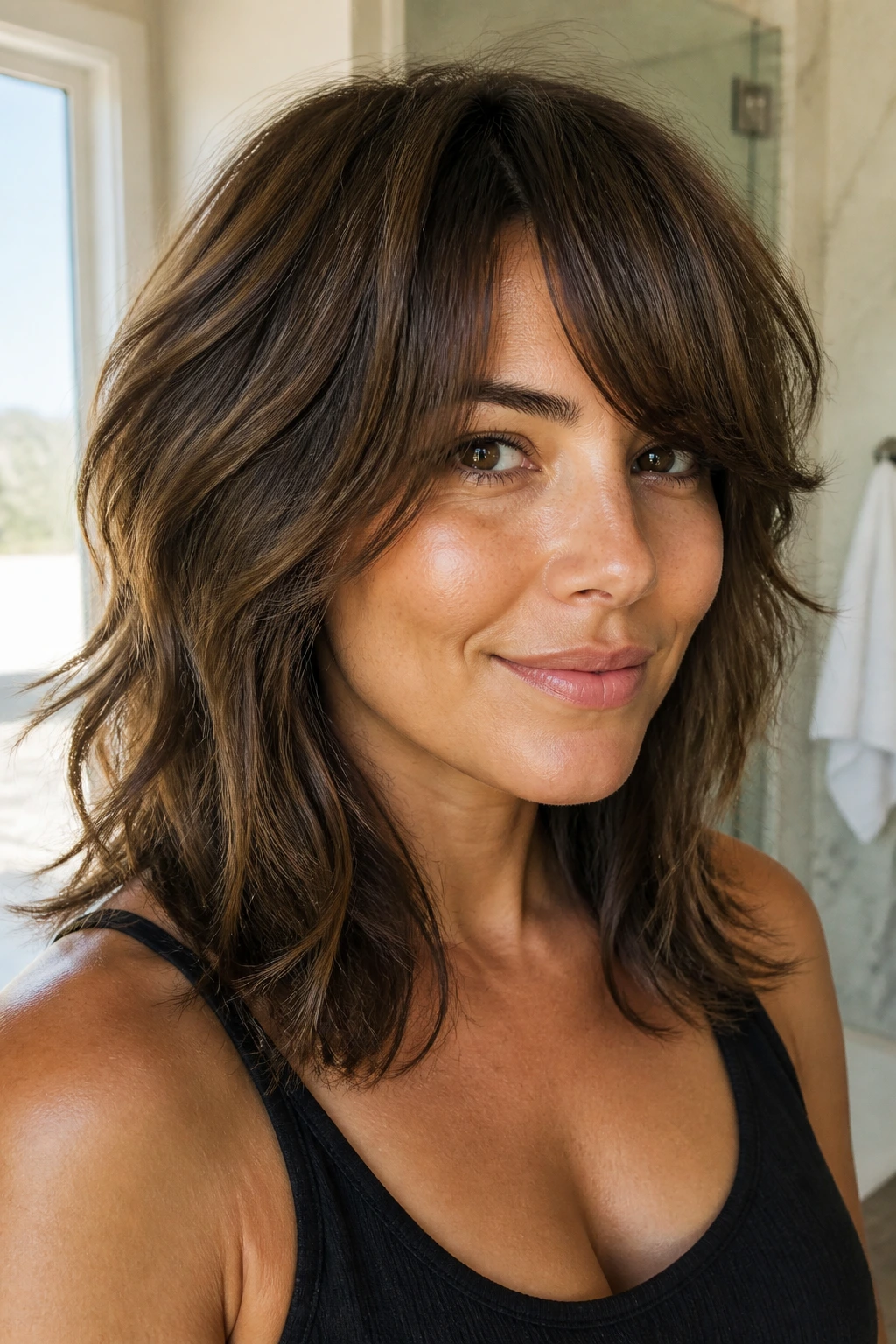
- Bulk without collapse: The best choppy cuts remove internal weight, so thick hair stops sitting like a block while still keeping enough substance at the ends to look full.
- A side sweep changes the whole face frame: A bang that starts a little off-center can soften a strong jaw, shorten a long forehead, or break up width at the cheekbones without trapping you in heavy fringe.
- They grow out with less drama: Clean blunt lines show every millimeter of grow-out. Choppy layers and a sweeping bang blur the line, which buys you a little more time between trims.
- They play nicely with texture: Wavy, straight, and curly thick hair all respond differently, but the same basic cut can be styled sleek, rough, or airy depending on the day.
- They stop the triangle effect: If your hair fans out at the bottom, these shapes pull some of that width upward and inward, which is the whole point.
1. Chin-Length Bob with Deep Side-Swept Bangs
A chin-length bob on thick hair can look sharp in the best way, almost sculpted, if the interior is cut with enough movement. The deep side-swept bang is what keeps it from reading severe. It slides across the forehead, hits around the cheekbone, and gives the cut a little tension so it doesn’t feel like a helmet.
This is the cut I’d point to when someone wants short hair but not a fussy short haircut. Thick hair loves the chin-length line because the weight naturally stays put, and the choppy layering prevents the sides from ballooning out. Ask your stylist to keep the perimeter clean but soften the ends with point cutting so the shape doesn’t turn square.
A round brush and a quick bend at the front are enough most days. If you tuck one side behind the ear, the side-swept bang does the framing work on its own. That tiny asymmetry matters more than people think.
2. Collarbone Lob with Razored Ends
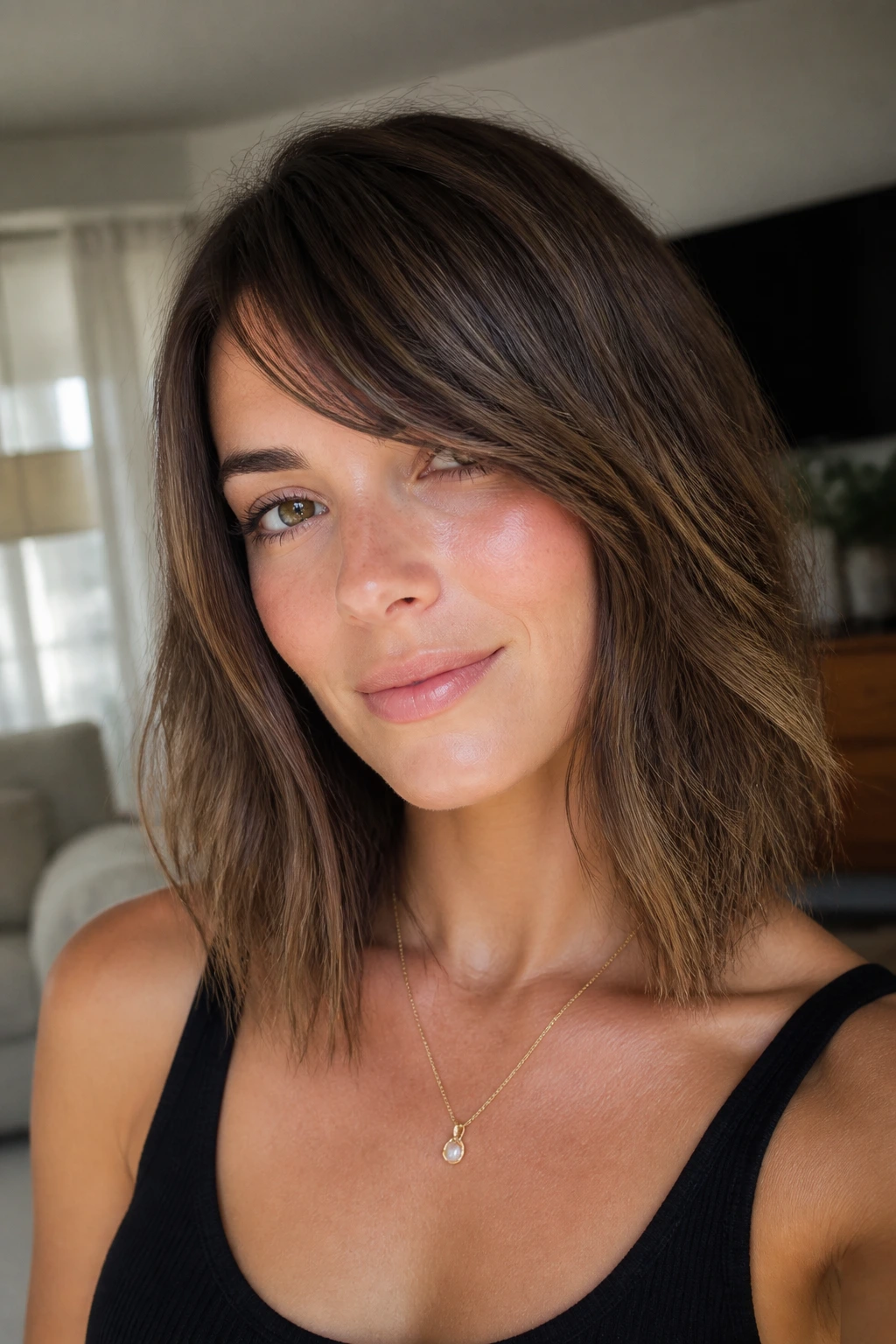
The collarbone lob is the haircut equivalent of good lighting. It’s long enough to feel forgiving, short enough to move, and the razored ends keep thick hair from sitting like a slab against your shoulders. You get swing. You get shape. You do not get that heavy curtain effect that some one-length lobs drag around with them.
What to Ask for at the Salon
Ask for a collarbone-length base, interior layers, and soft razoring or point cutting through the ends. The side-swept bang should start long enough to brush the outer brow and taper into the front pieces. If your hair is coarse, keep the razor work light. Too much can leave the ends fuzzy.
Why It Works on Dense Hair
- The length keeps enough weight to stop frizz from taking over.
- The choppy edge gives the cut a broken, airy line instead of a hard shelf.
- The bang can be tucked, pinned, or swept over with very little styling.
- It grows into a softer lob instead of a weird halfway shape.
Best tip: keep the bangs slightly longer than you think you need. Thick hair springs up after drying, and the extra half-inch saves you from that “why is my fringe floating?” problem.
3. Shoulder-Grazing Shag with Feathered Fringe
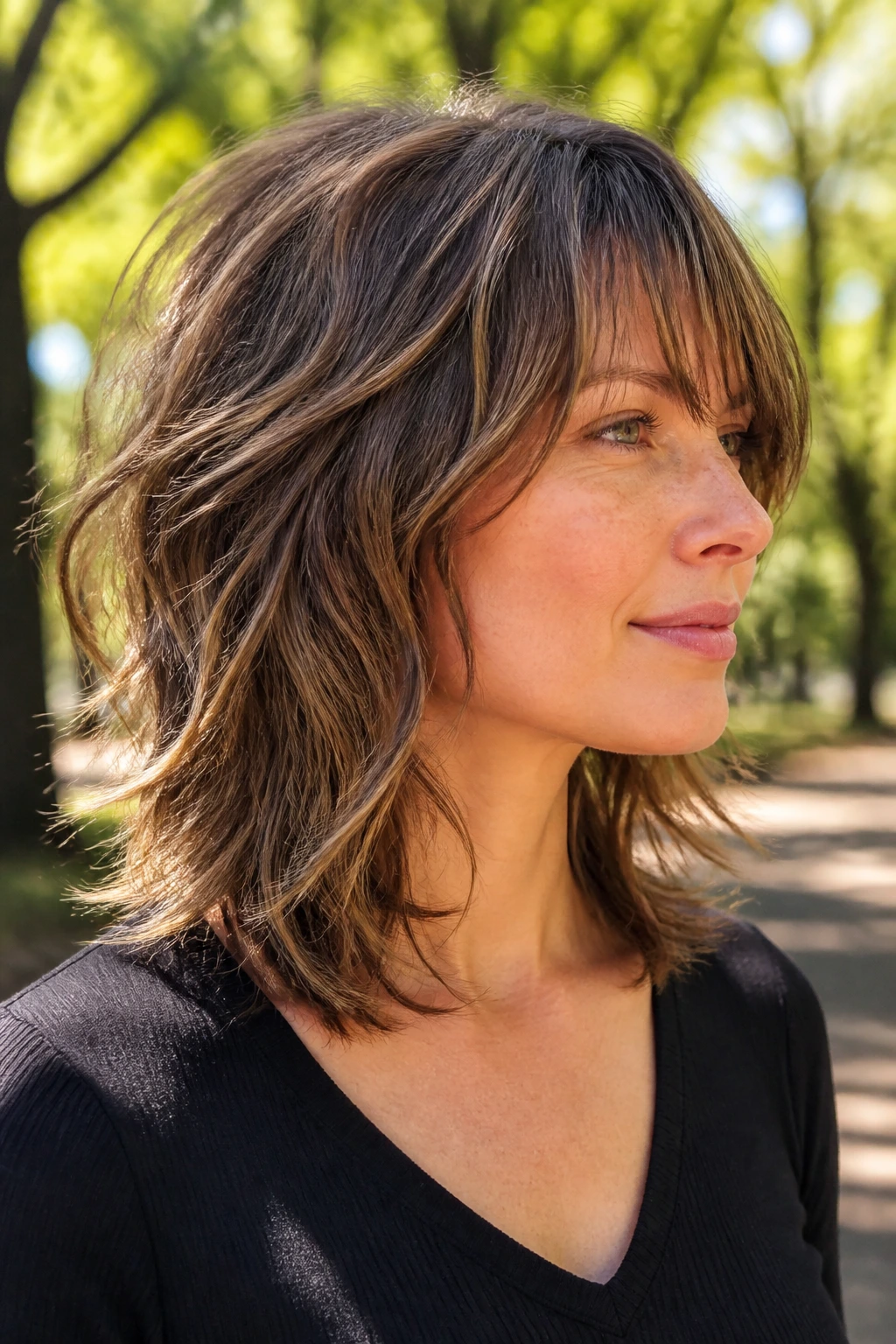
Do you want movement without committing to a short cut? This is the one. The shoulder-grazing shag takes thick hair and gives it a looser, more lived-in outline, while the feathered side fringe stops the front from getting too wild. It’s the haircut that looks like it knows where it’s going even when you only half-style it.
What makes it work is the layering pattern. The shortest layers sit high enough to lift the crown a little, but the weight isn’t stripped out so aggressively that the ends go wispy. The side-swept fringe should blend into the cheekbone area rather than dropping straight into the face. That little taper keeps the whole thing from looking piecey in a cheap way.
Styling this cut
Use a volumizing mousse at the roots, a light cream through the mids, and rough-dry with your fingers until the hair is about 80% dry. Then finish with a diffuser or a medium round brush at the front. The goal is not polish. The goal is controlled mess.
4. Cropped Pixie with a Long Side Sweep
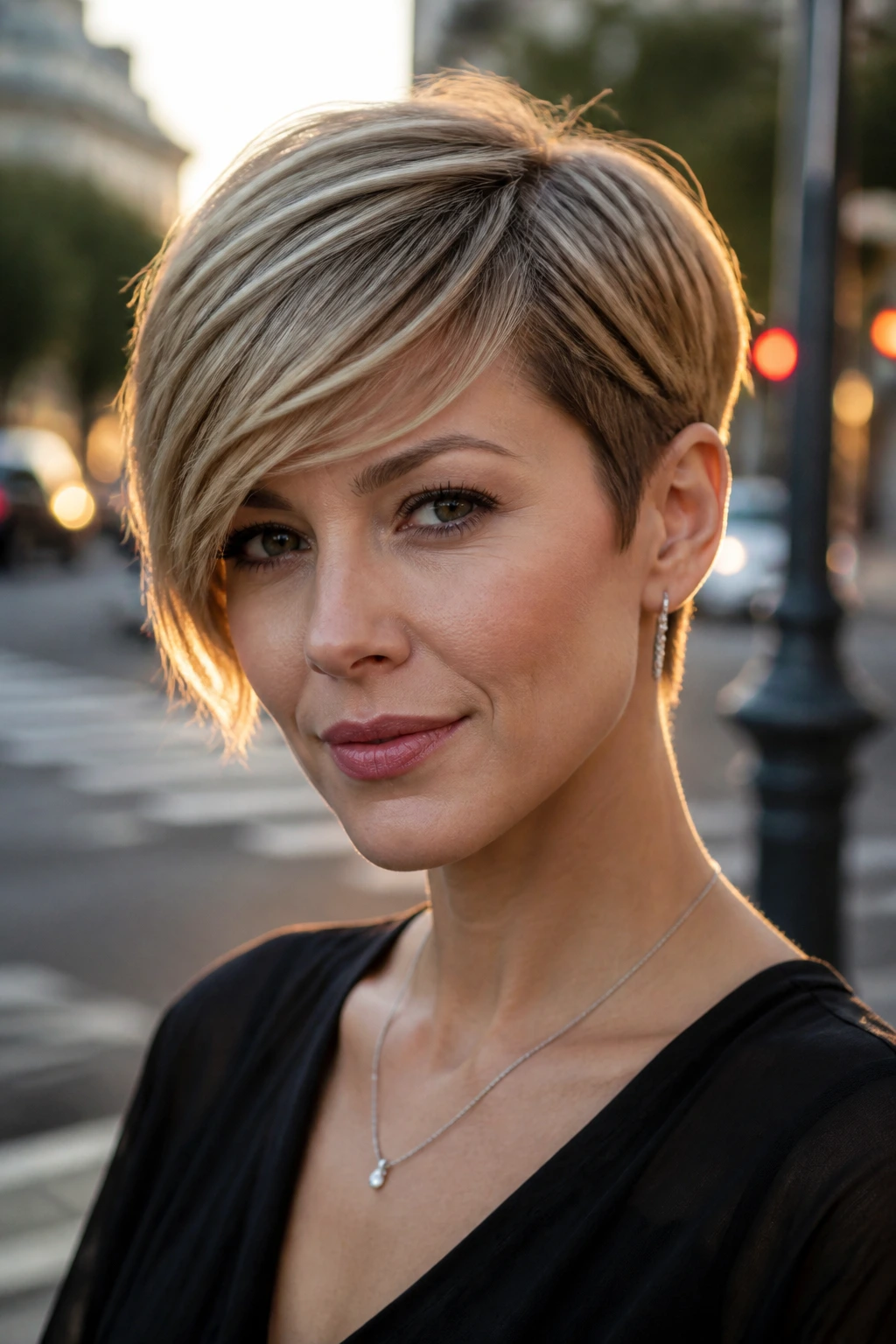
A pixie on thick hair is never boring. It can look expensive fast, but only if there’s enough length left in the fringe to soften the crop. The long side sweep keeps the forehead from feeling too exposed and gives the cut a line to follow, which matters when the rest of the hair is cut short and the density is trying to push outward.
I’ve seen this cut go wrong when the top gets thinned too much. The hair loses its shape and starts sticking up in little spikes the minute humidity shows up. Better to keep a stronger top section and use clean, deliberate tapering around the ears and nape. Thick hair already has its own architecture. You’re just editing it.
Ask for a fringe that can tuck behind the brow but still fall forward when it’s loose. A dab of matte paste on the ends is usually enough. Tiny amount. Not a palmful.
5. Butterfly Cut with Lateral Face Framing
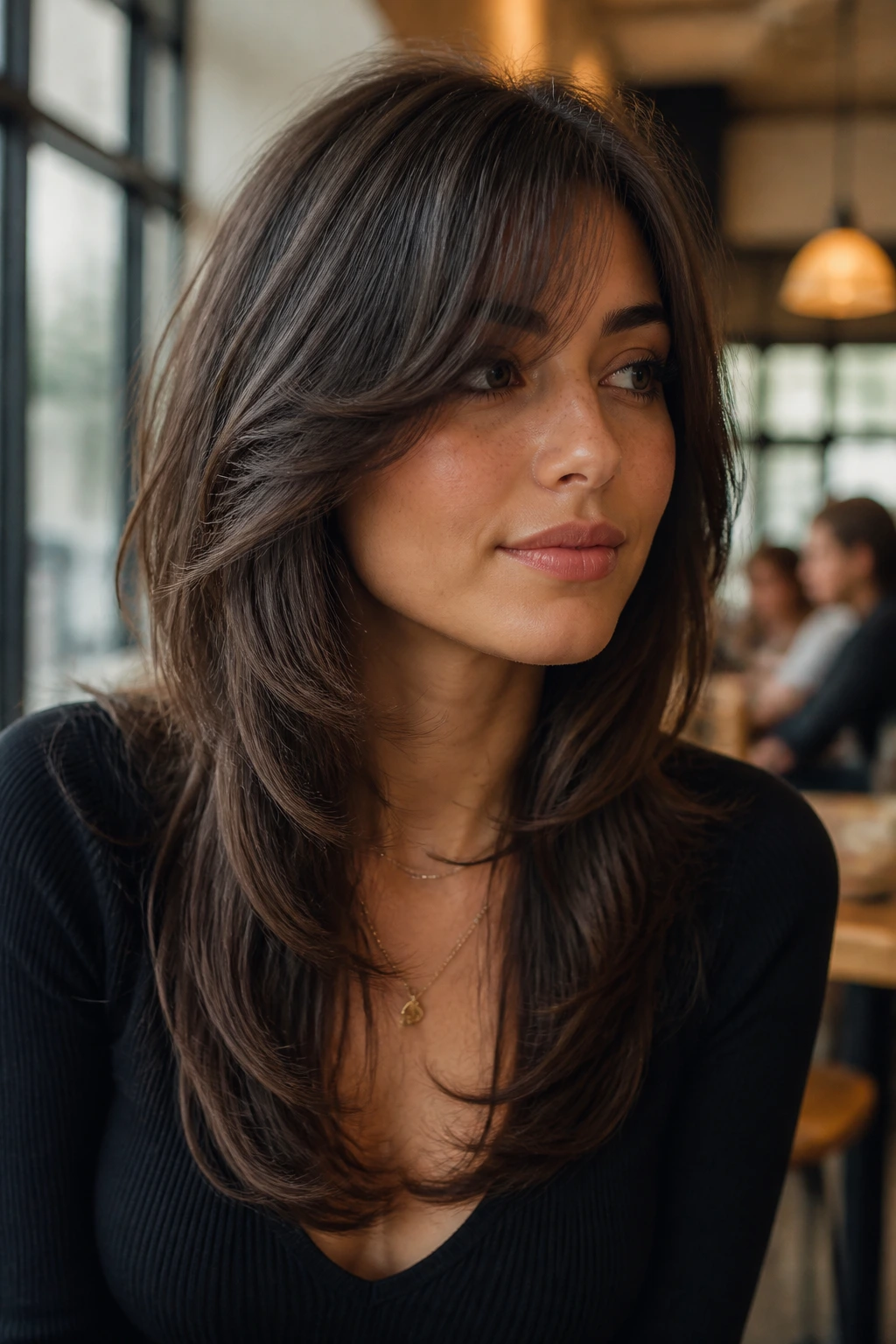
The butterfly cut is one of those shapes that makes thick hair feel lighter without making it look thin, which is a rare trick. The shorter upper layers give lift around the crown and sides, while the longer bottom section keeps the haircut feeling full. Add a side-swept bang or a long lateral fringe, and the whole shape starts to feather away from the face instead of clinging to it.
This cut is especially useful if you like wearing your hair down but hate when it sits flat on top and heavy at the bottom. The face-framing layers should start around the cheekbone or just below it, then taper toward the jaw. That gives the side sweep something to blend into, which keeps the front from looking chopped off.
The best version of this cut has movement you can feel when you run your hands through it. The short layers should lift. The long layers should swing. If either part disappears, the shape loses its reason for existing.
6. Angled Bob with Soft Swoop Bangs
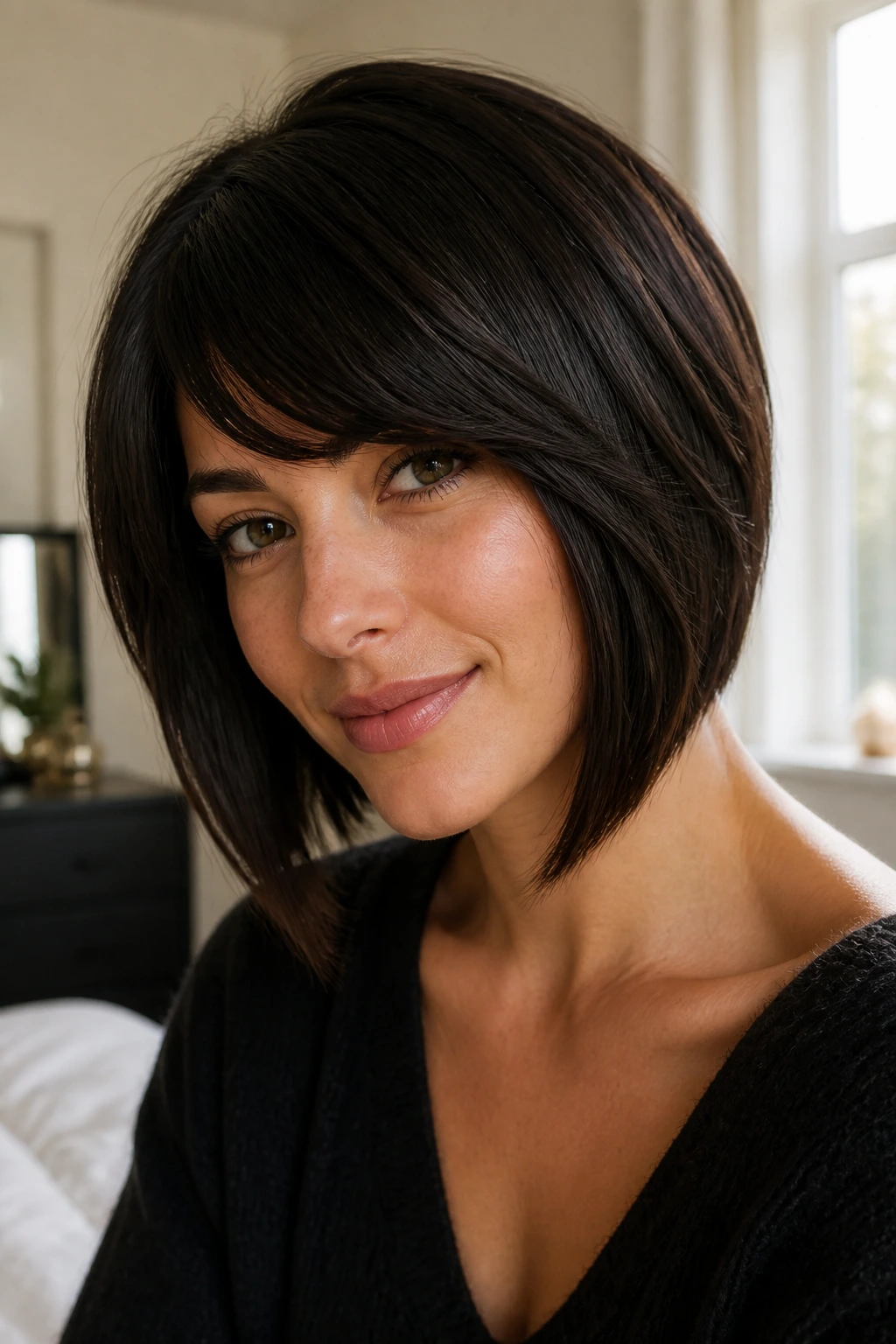
An angled bob is a neat fix for thick hair that wants to flip out in the wrong places. The front sits a little longer than the back, which visually pulls the weight forward and keeps the shape from feeling boxy. Add soft swoop bangs, and the cut starts to look deliberate instead of just cut short.
The side sweep is the quiet part here. It keeps the front soft enough to balance the sharper angle of the bob. If you’re someone who wants structure but doesn’t want a blunt edge across the face, this is a solid middle ground.
Best for
- Jawlines that need a little softening.
- Hair that gets bulky at the nape.
- Anyone who wants shape without a lot of daily styling.
- Thick straight or slightly wavy textures that can hold a bend.
A flat iron curve at the ends and a light mist of flexible spray are usually enough. Don’t overwork the front. The angle should show.
7. Wolf Cut with a Grazing Side Fringe
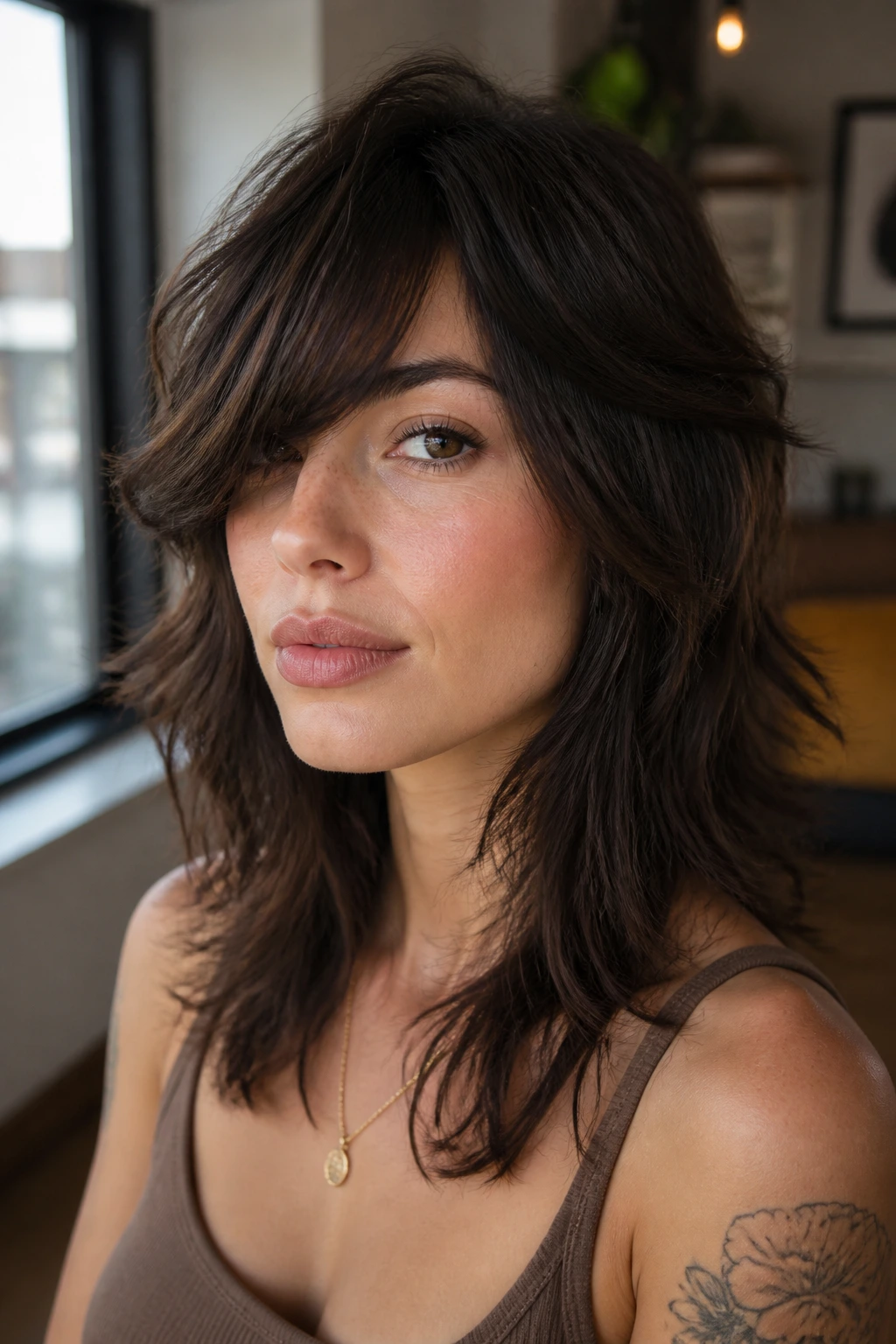
The wolf cut can look absurd on the wrong head shape and fantastic on the right one, which is why it’s not a lazy haircut. On thick hair, the choppy layers help create lift and separation through the crown and mids, while the grazing side fringe keeps the front from turning into a full curtain. It’s shaggy, but it has intention.
What to ask the stylist
Ask for disconnected layers rather than blended ones, and keep the fringe long enough to sweep across the face instead of stopping above the brow. Thick hair needs the extra length in the front so the fringe doesn’t jump up once it’s dry. If your hair is coarse, avoid aggressive thinning near the ends. You want texture, not fuzz.
This cut suits people who like a little edge and don’t mind some piecey styling. A texture spray on dry hair and a few twists with the fingers are usually enough. It is not the cut for someone who wants mirror-smooth polish every morning.
8. Long Layers with a Heavy Swept Bang
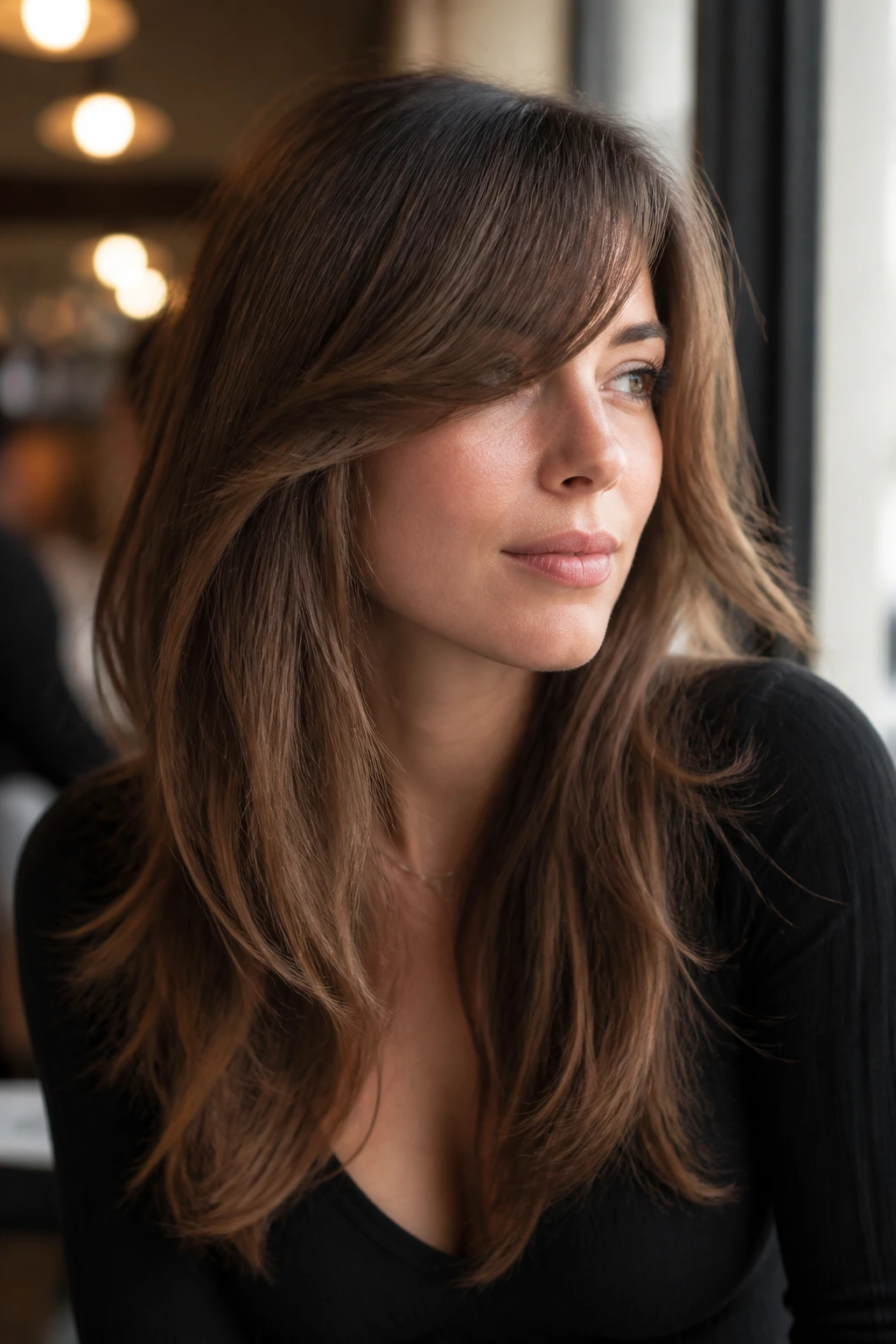
If you’re attached to length, this is the haircut I’d keep on the shortlist. Long layers remove bulk without taking away the curtain of hair you actually like having. The heavy swept bang anchors the front so the style doesn’t look flat or overly “safe.”
The key is where the layers start. On thick hair, they shouldn’t begin too high unless you want a very airy result. A lower-starting layer pattern keeps the length full, lets the ends move, and gives the bang room to blend into the front pieces. That blend matters. A disconnected front on long hair often looks accidental.
This is one of the easiest styles to wear straight, waved, or curled. The bang can live as a side sweep or be tucked behind one ear, and the rest of the length keeps enough weight to stay smooth. If you want a cut that won’t change your whole life but will make your hair behave better, this one earns its spot.
9. Midlength Flip Cut with Piecey Movement
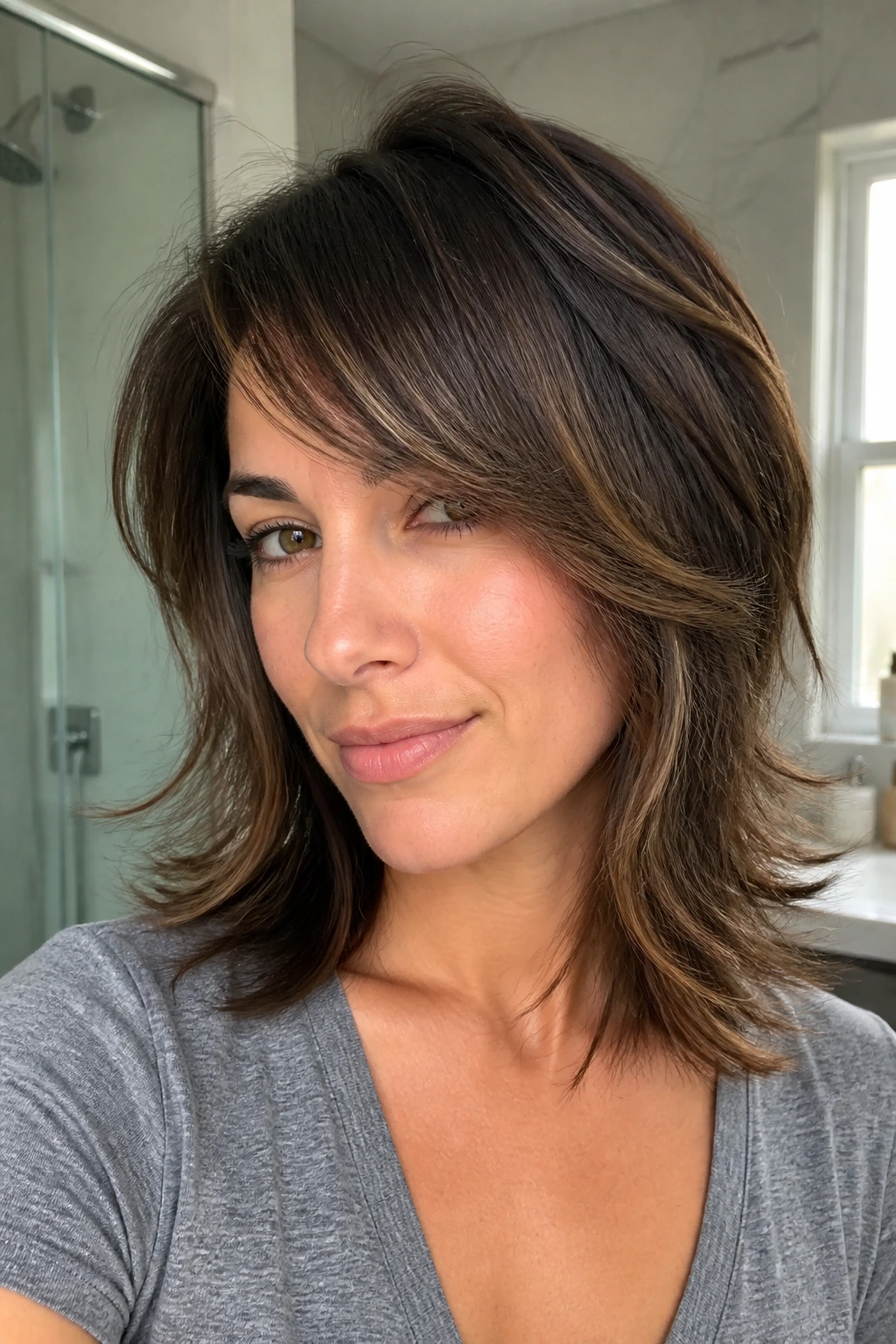
Why does this shape work so well on thick hair? Because it gives the ends a direction. A midlength flip cut usually lands somewhere between the jaw and the collarbone, and the choppy layers at the bottom encourage the ends to bend out or under instead of hanging straight down like wet rope. The side-swept bang breaks up the front so the whole cut doesn’t read as one solid mass.
How to style it
A 1.25-inch round brush does most of the work. Wrap the front away from the face, then flip the ends slightly outward with the brush or a quick pass of a flat iron. Finish with a light texturizing spray on the mids, not the roots, or you’ll lose the swing.
This cut feels especially good on thick hair that tends to sit too flat at the crown. The movement lives at the edges, which is where thick hair often needs help. And yes, the piecey finish is the point. It should look separated, not over-combed.
10. Wavy Lob with Uneven Ends
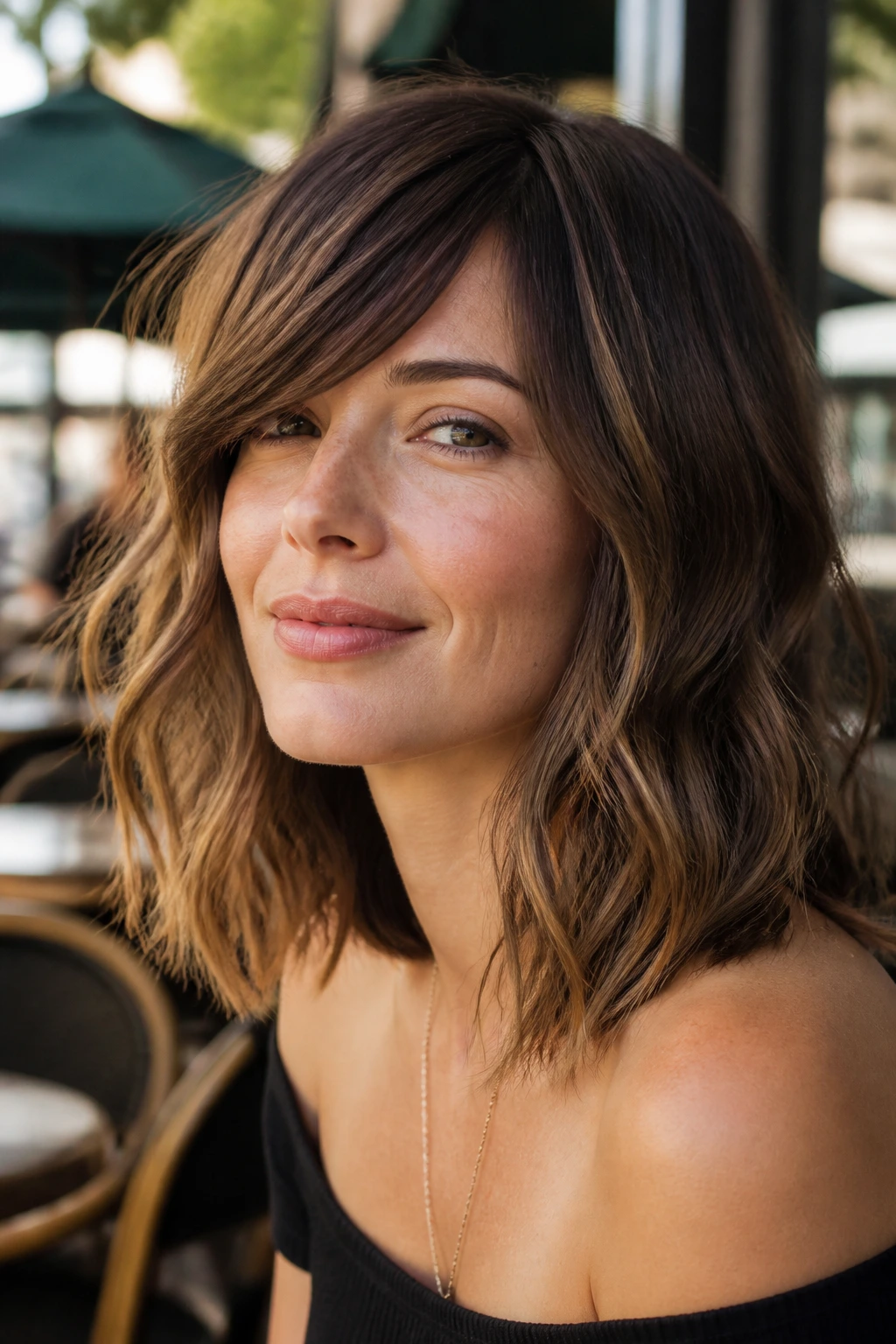
A wavy lob with uneven ends is the kind of haircut that looks easier than it is. The unevenness keeps thick wave patterns from locking into a single heavy line, and the side-swept bang softens the front so the cut reads relaxed instead of unfinished. It’s a smart choice if your hair already has bend and you don’t want to fight it.
The nicest thing about this shape is that it doesn’t need a perfect blowout. Air-dry it with a light cream and a bit of scrunching, or rough-dry until half dry and then bend the front pieces with a brush. The uneven ends give the whole cut a little shuffle, which helps the wave pattern move instead of puffing.
One thing to watch: if your wave is very strong and your hair is very dense, the unevenness should be subtle. Too much irregularity turns into frizz. Keep the line there. Just soften it.
11. Rounded Bixie with Swooped Fringe
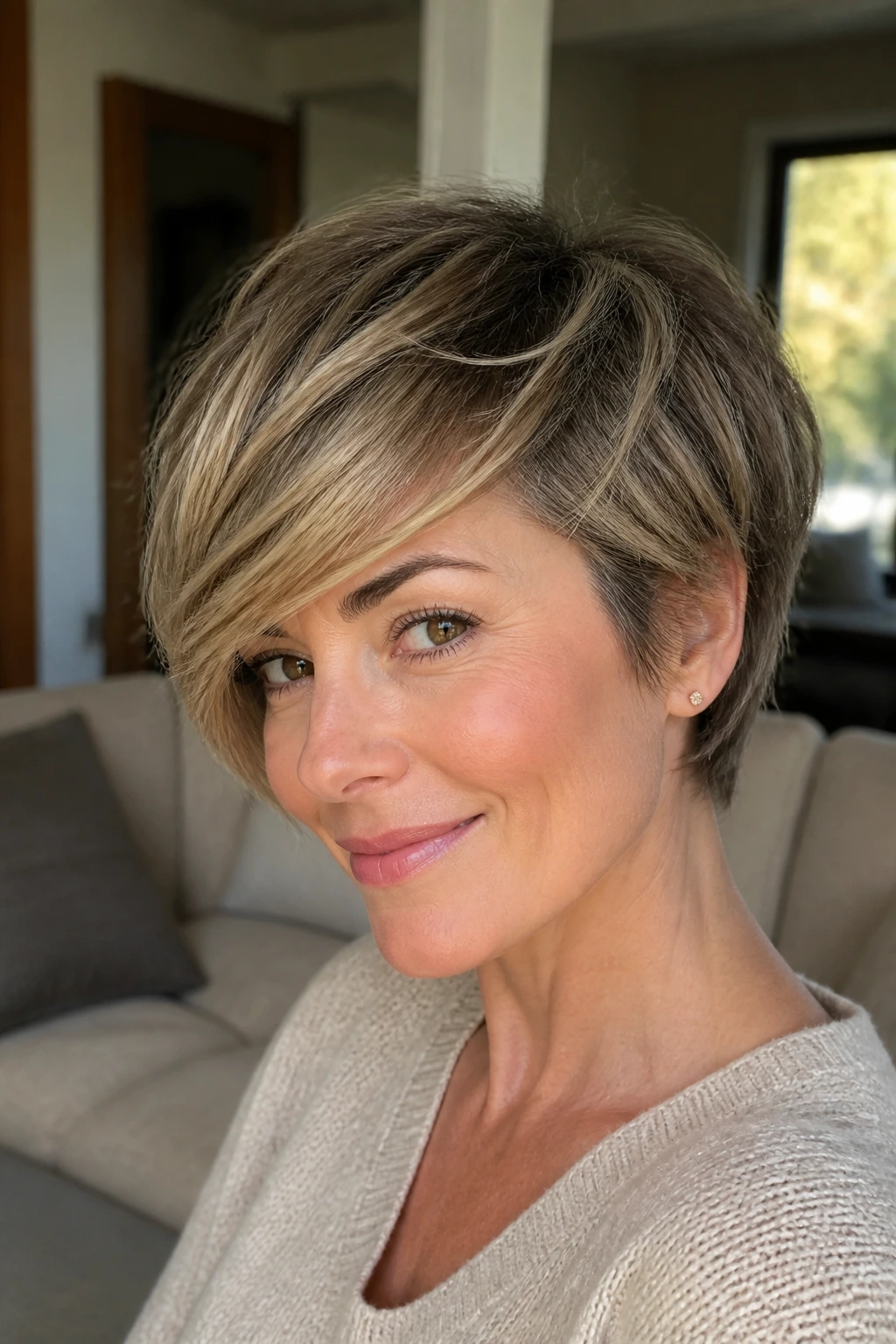
A bixie sits between a bob and a pixie, which makes it a useful cut for thick hair that feels too heavy in longer shapes but not ready for something ultra-short. The rounded outline keeps the head shape soft, and the swooped fringe pulls the eye diagonally instead of straight across the face. That diagonal line is doing real work.
This cut is especially good when the back of the head tends to bulk up. A tapered nape helps, but the crown should stay full enough to avoid a flat cap. The fringe needs enough length to sweep over, not stand up. That’s the whole personality of the cut.
12. Thick-Hair Shag with Cheekbone Bangs

A shag on thick hair can go from stylish to feral fast, and cheekbone bangs are what keep it on the stylish side. The bangs hit the face at its widest point, which creates a soft frame without swallowing the features. On dense hair, the layers should be cut with a light hand so the shape stays breezy instead of hollow.
Unlike curtain bangs, which split down the middle, cheekbone bangs sweep in one direction and give the front a cleaner drift. That matters if you want some softness but don’t want to constantly re-part the front. It’s also a smart choice if your hair tends to stick to itself in humidity. The layered breakup helps the hair separate just enough to breathe.
This cut likes texture spray, not heavy cream. Keep the product away from the fringe roots unless you enjoy collapsing your own volume by noon.
13. A-Line Lob with Interior Debulking
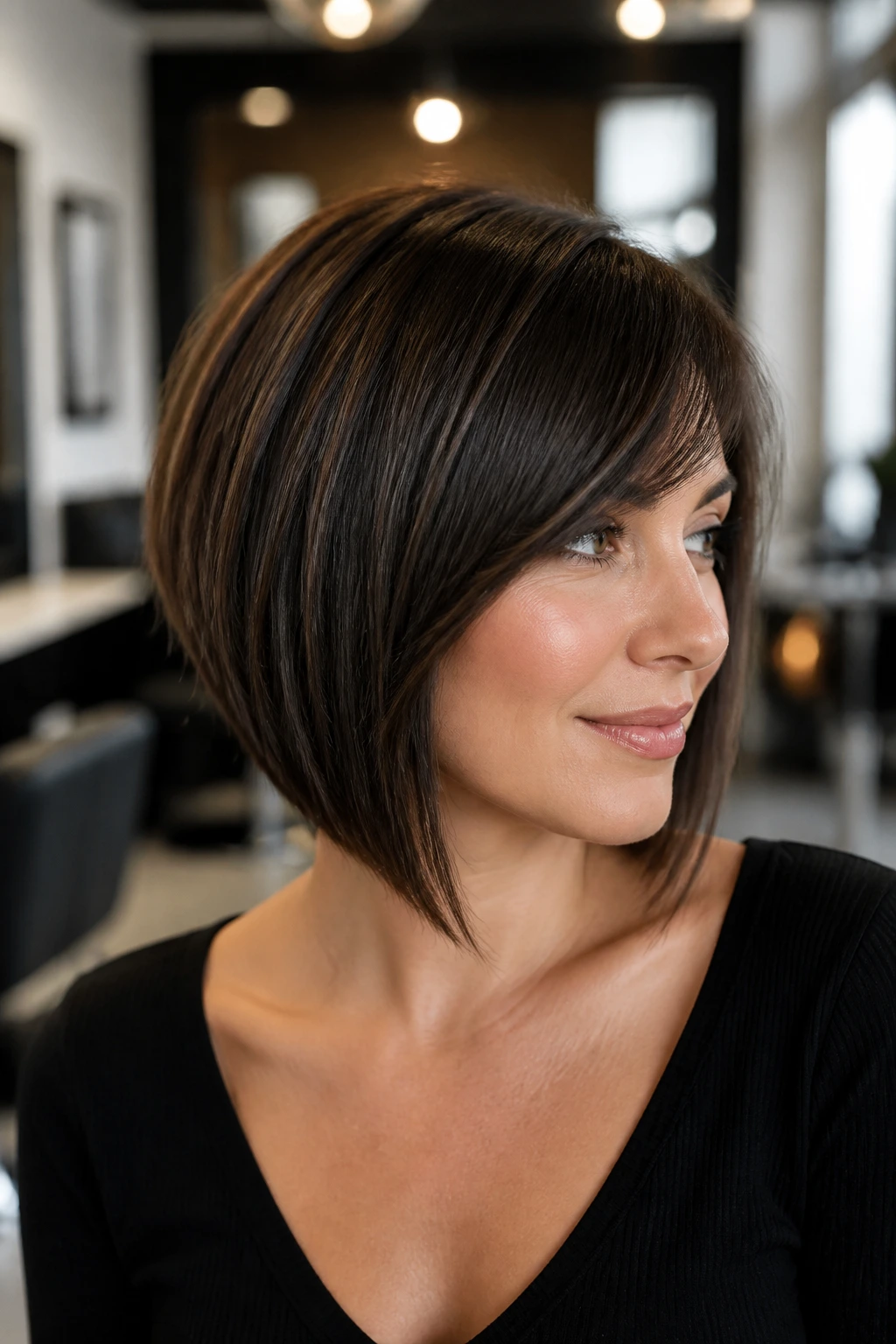
The A-line lob gives thick hair a gentle built-in angle: shorter in the back, longer in the front, with enough slope to make the shape look intentional from every side. The interior debulking is what keeps it from feeling thick at the back of the head, where a lot of density likes to hide. A side-swept bang finishes the line and gives the front something soft to fall into.
Where the weight comes out
The weight should come out from the middle and upper interior, not from the perimeter. If the stylist starts carving up the ends too much, the lob loses its clean edge and starts to fuzz around the shoulders. That’s the trap.
Ask for the front to sit just below the chin if you want the most flattering slope. It frames the face without ending at the widest part of the jaw. On thick hair, that small detail changes how the whole cut sits.
14. Airy Layered Cut with Soft Side Bangs
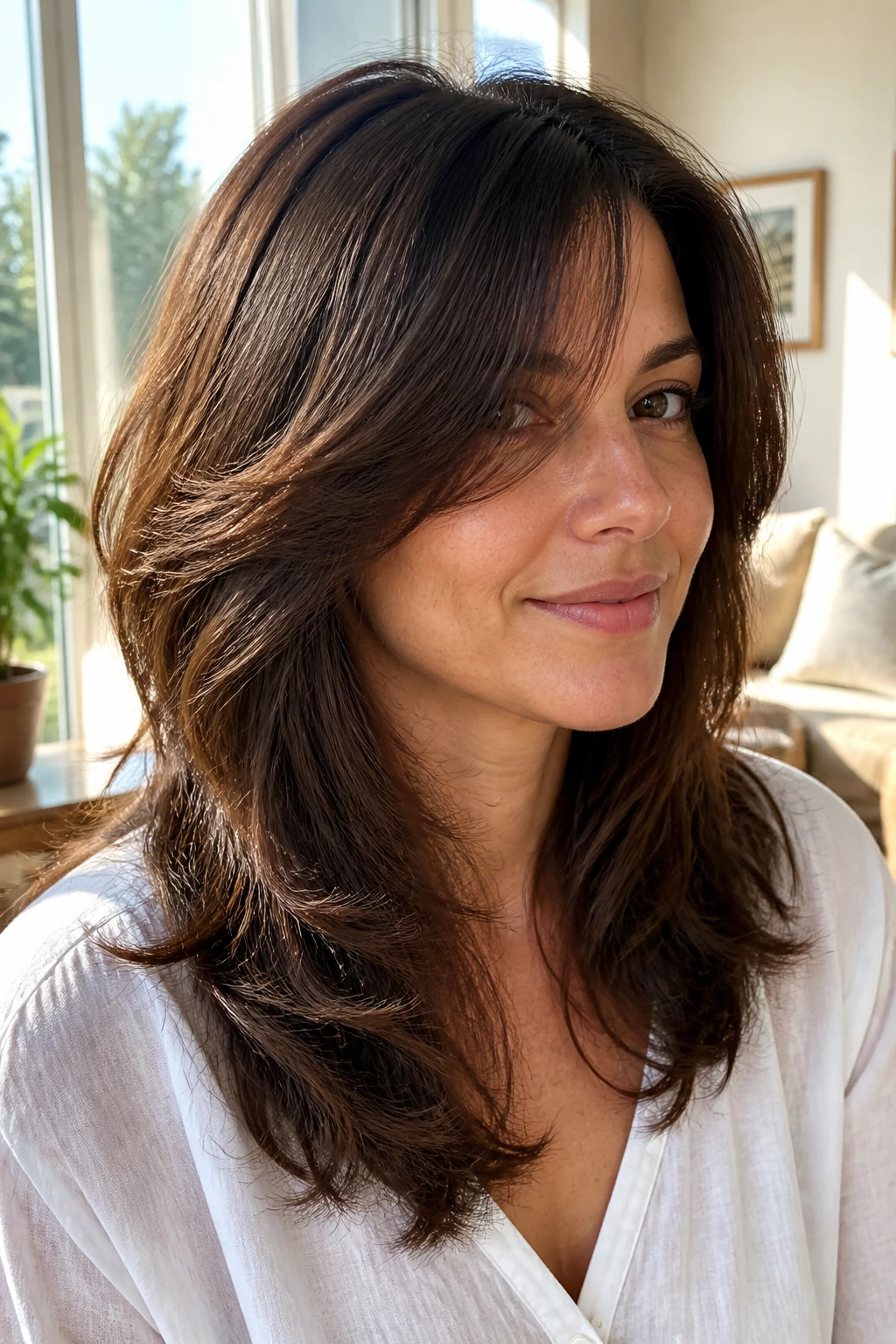
This is the cut for someone who likes movement but doesn’t want to look “done.” The layers are softer and lighter than a shag, and the side bangs are long enough to blend instead of announce themselves. Thick hair gets a little air through the mids, which is where a lot of weight tends to build.
A blow-dryer with a concentrator nozzle helps here. Aim the airflow downward on the sides, then flip the front section across the forehead and brush it away from the face. That one move gives the bang its curve. If your hair is naturally straight, a tiny bend in the front is enough. If it’s wavy, let the wave help.
The cut works because it does not overcomplicate itself. There’s shape, not fuss. That’s a nice change.
15. Disconnected Midi Cut with Chunky Texture
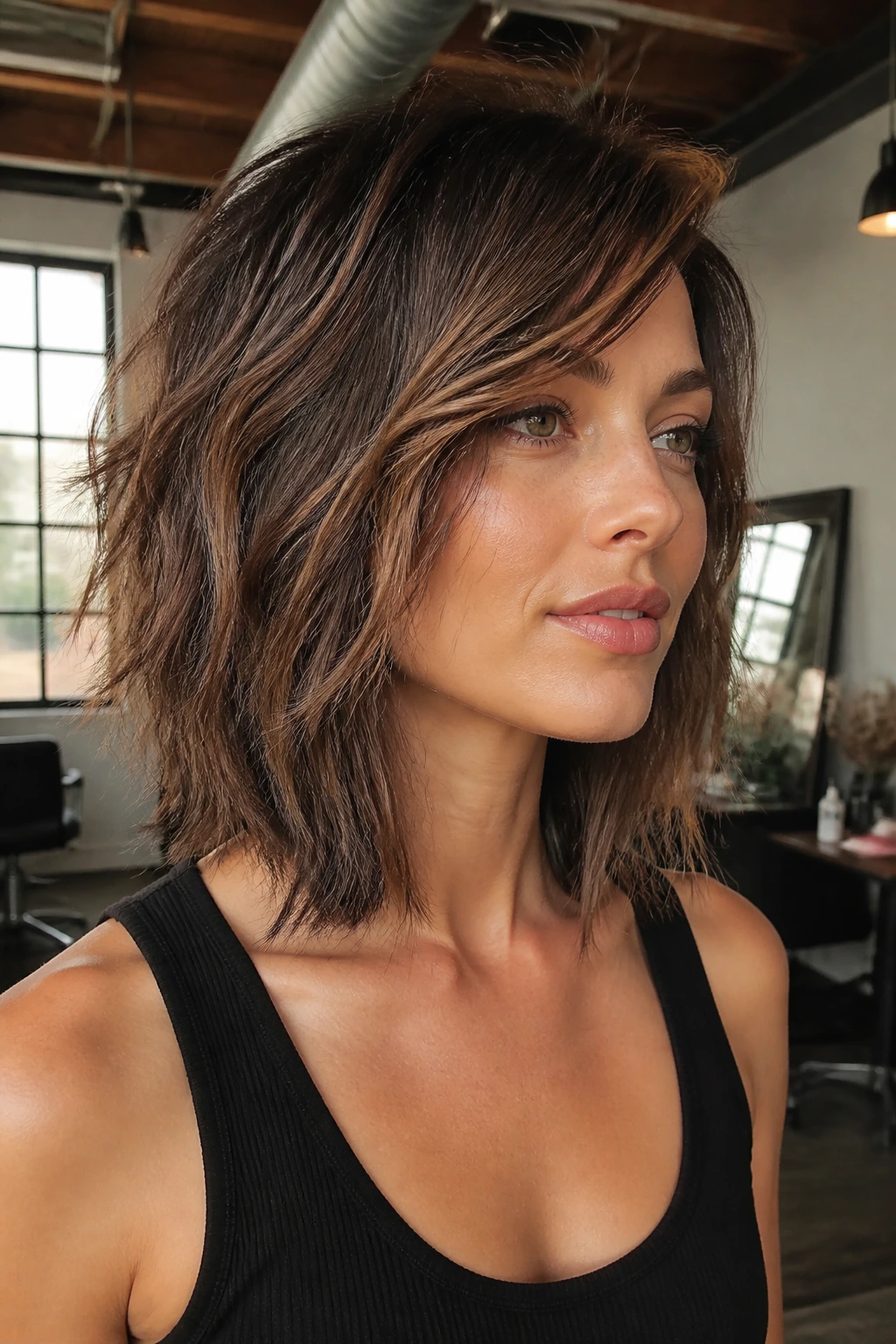
Disconnected cuts can be a gift for thick hair because they let one section move without dragging the rest down with it. A midi length keeps the overall shape wearable, while the chunkier texture gives the surface a bit of grit and separation. The side-swept bang softens the front enough to balance the sharper internal contrast.
How to ask for it
Ask for clear disconnection between the top and lower layers, but keep the perimeter visible. In plain language: you want movement, not mush. The bang should be long enough to tuck into the rest of the cut if you want, which makes it easier to style on days when you’re rushing.
This shape is a good fit if you like a haircut that looks better after you’ve lived in it for a few hours. The pieces loosen, the front falls a little, and the cut gets better instead of worse. Not every style can do that.
16. Curly Side-Part Cut with Blended Bangs
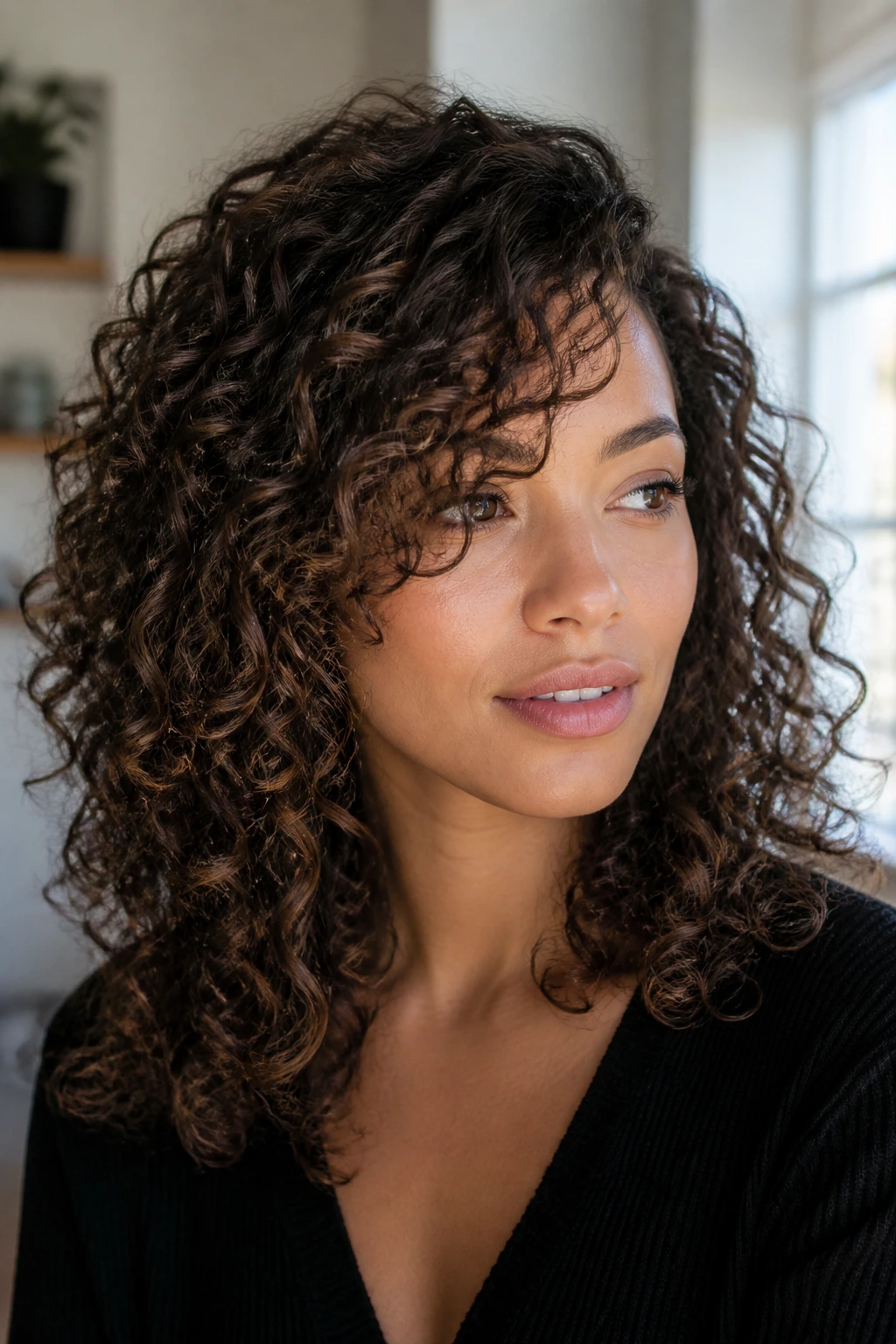
Curly hair and side-swept bangs can get along beautifully, but only if the cut respects the curl pattern. Thick curls need room to spring, so the bang should be longer than you think and cut in a way that follows the natural bend. The side part gives the whole shape a clear direction, and the blended bangs keep the front from turning into a hard wall.
The smartest move is to cut curls dry or mostly dry. Wet curls lie. They shrink in ways that can make a bang look charming in the chair and wildly short at home. Keep the front longer, then let the curl pattern do its thing.
This cut works best when the layers around the face are rounded and soft, not jagged. You want the bangs to disappear into the curl family, not sit on top of it like an afterthought.
17. Razor-Edged Long Bob with a Swooping Fringe
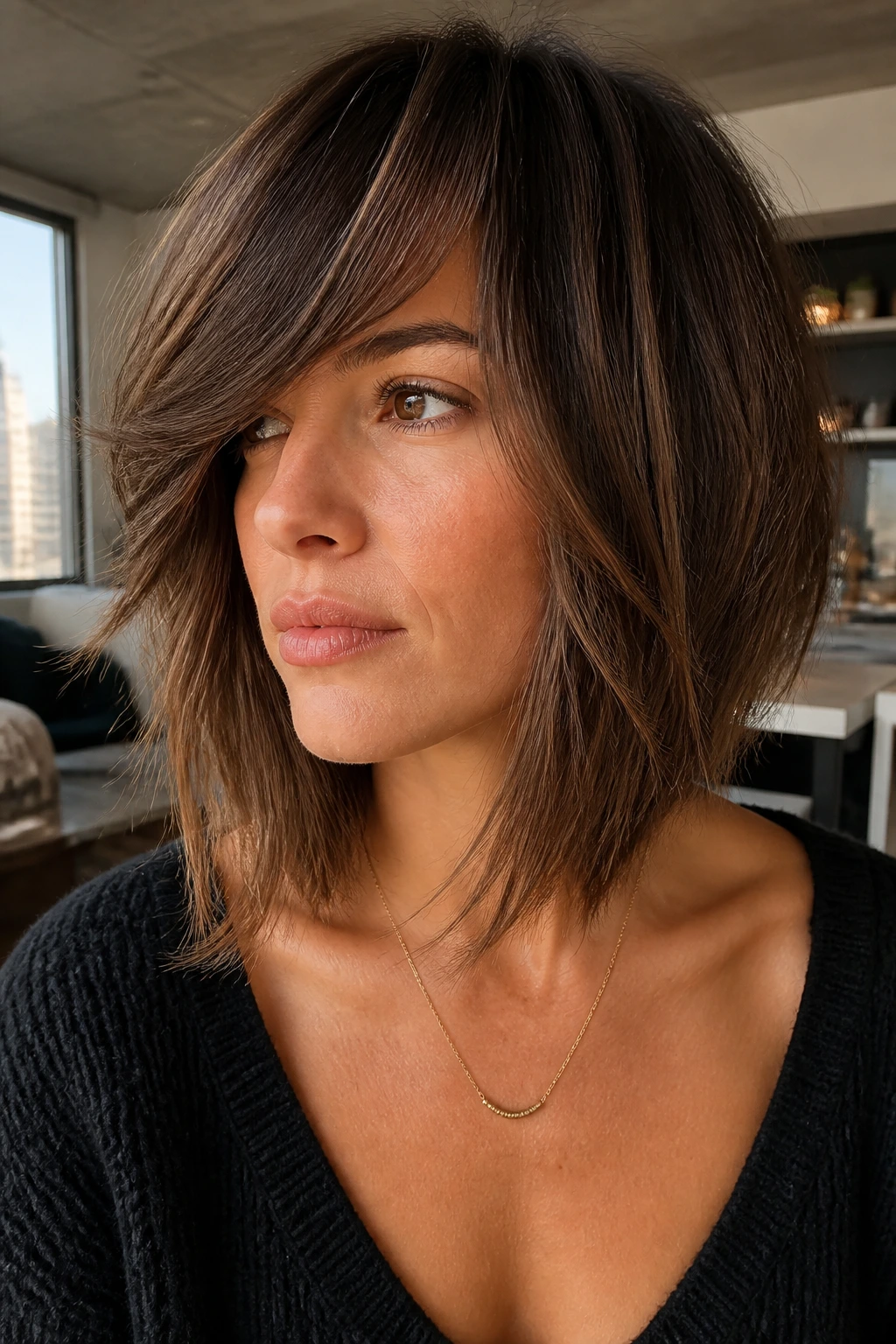
A razor edge can be gorgeous on thick hair when the texture is smooth enough to support it. The ends come out feathered and light, and the swooping fringe keeps the front from feeling heavy. This is the cut that looks particularly good when you want your hair to have movement in the mids instead of just at the bottom.
The catch is obvious: if your hair is coarse, porous, or prone to frizz, too much razor work can make the ends look dry. In that case, ask for light slicing instead. The shape stays intact, but the ends hold together better. That choice alone can save you a lot of styling frustration.
Finish it with a smoothing cream and a bend at the front. The fringe should look like it belongs to the lob, not like it was pasted on later.
18. Layered Crop with a Tapered Nape
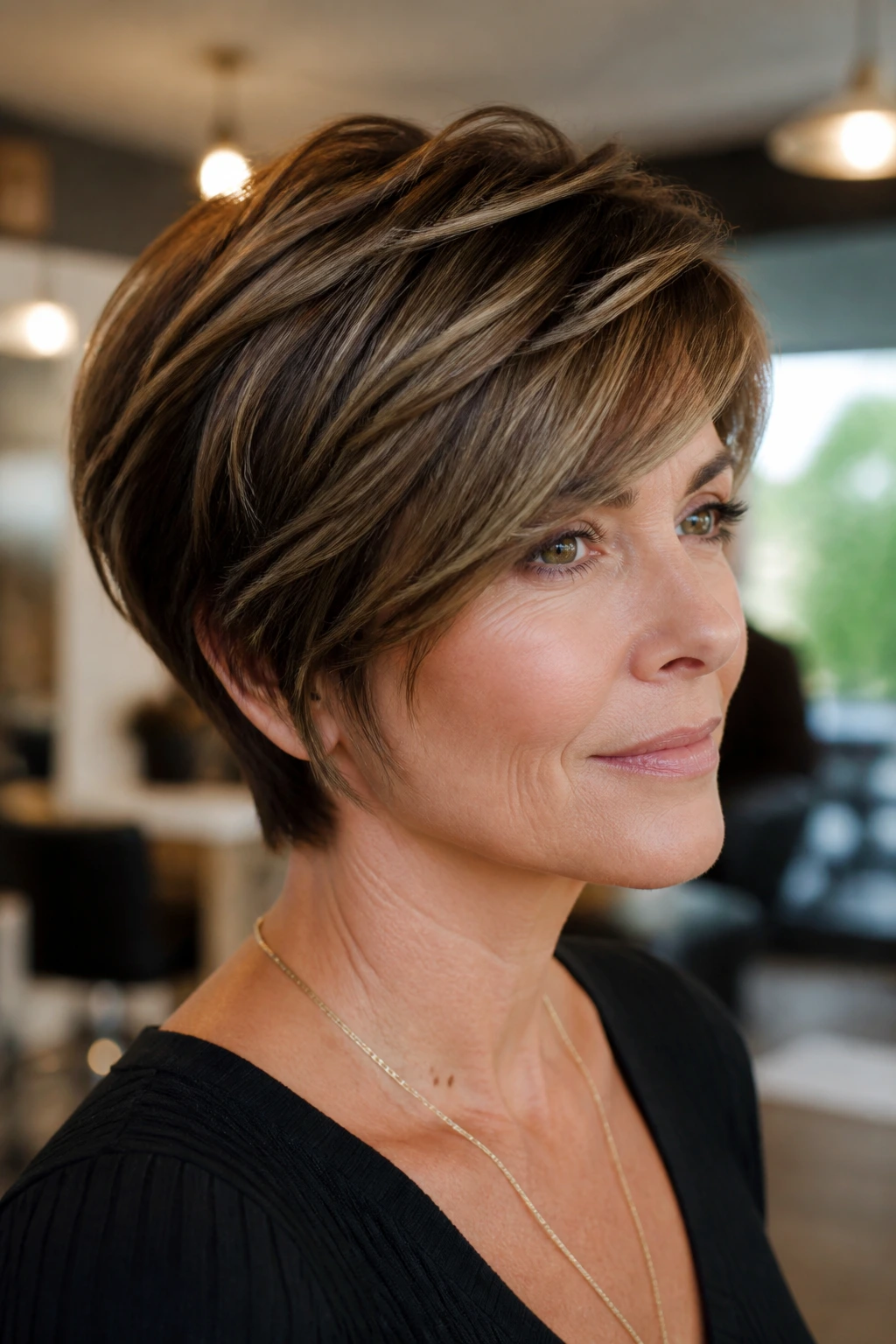
A layered crop can look severe if the back is left too blunt, and that’s where the tapered nape changes the whole mood. Thick hair clears out cleanly at the neck, the top keeps enough length for lift, and the side-swept fringe softens the face. It’s short, yes. But it doesn’t feel hard.
This shape is useful if you want your hair off your neck and still want a little styling flexibility. The top should be left long enough to create some direction, especially through the fringe area. Then the sides can be tucked or pushed forward depending on the day.
I like this cut on people who wear earrings, glasses, or strong collar lines. The hair stays out of the way but still frames the face with some motion. That’s the sweet spot.
19. Shoulder Cut with Tucked-Under Ends
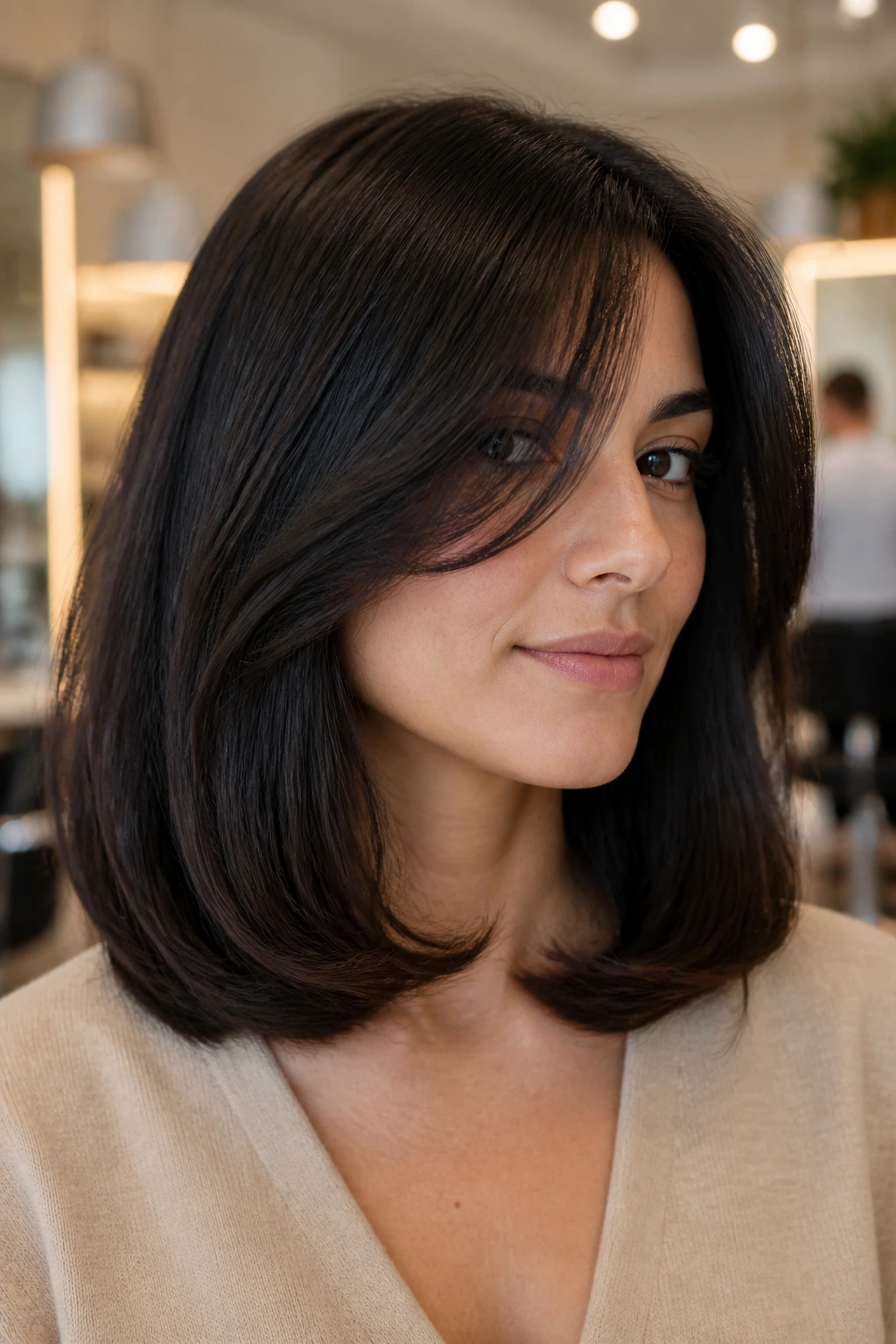
A shoulder cut with tucked-under ends sounds simple because it is simple, and that’s part of its charm. Thick hair reaches shoulder length with enough body to hold a polished bend, and the side-swept bang keeps the front from looking too plain. The tucked-under finish makes the outline softer and cleaner than a straight fall.
Why it stays neat
The cut works because the ends are guided inward, not left to flare. A round brush or a large curling iron can create that bend in under a minute once the hair is mostly dry. Use just enough heat to encourage the curve. Too much and the ends puff.
This is a good choice if you want a cut that plays well in office settings, dinners, and everything in between. The shape holds without much fighting. That’s worth a lot on thick hair.
20. Soft Mullet with Side Fringe
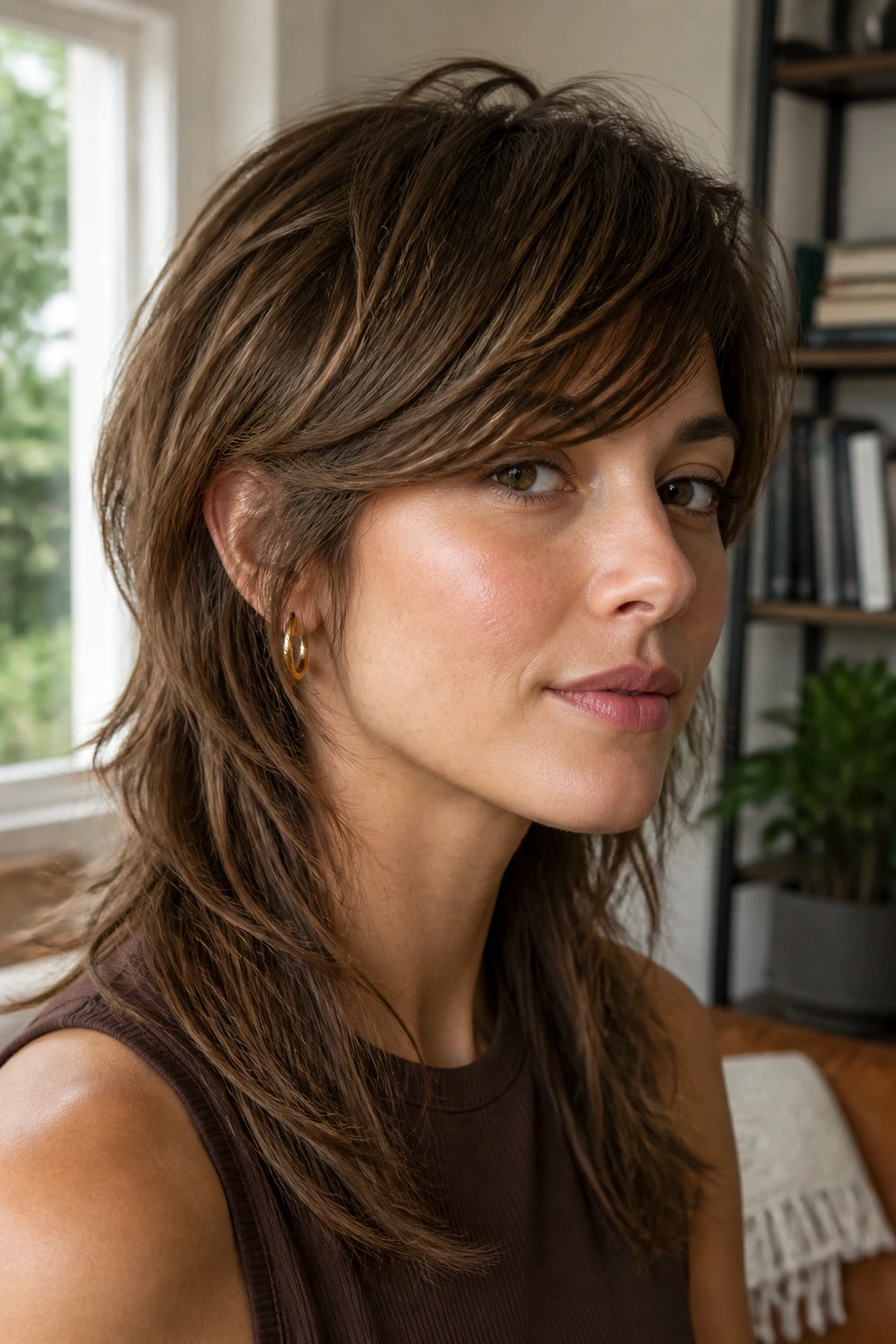
A soft mullet is not a joke haircut when it’s done with restraint. On thick hair, it removes weight from the crown and sides while keeping length at the back, which creates motion that a safer cut often can’t match. The side fringe softens the front and stops the shape from reading too hard.
This cut lives or dies on the balance between the top and bottom. If the top is too short, it turns edgy in a way that’s hard to wear. If the back is too thin, it loses the point. Keep the layers soft, the fringe long, and the edges broken up just enough to move.
It suits people who like texture and don’t need every haircut to behave politely. Fair warning. It has personality.
21. Sliced Long Layers with a Deep Side Sweep
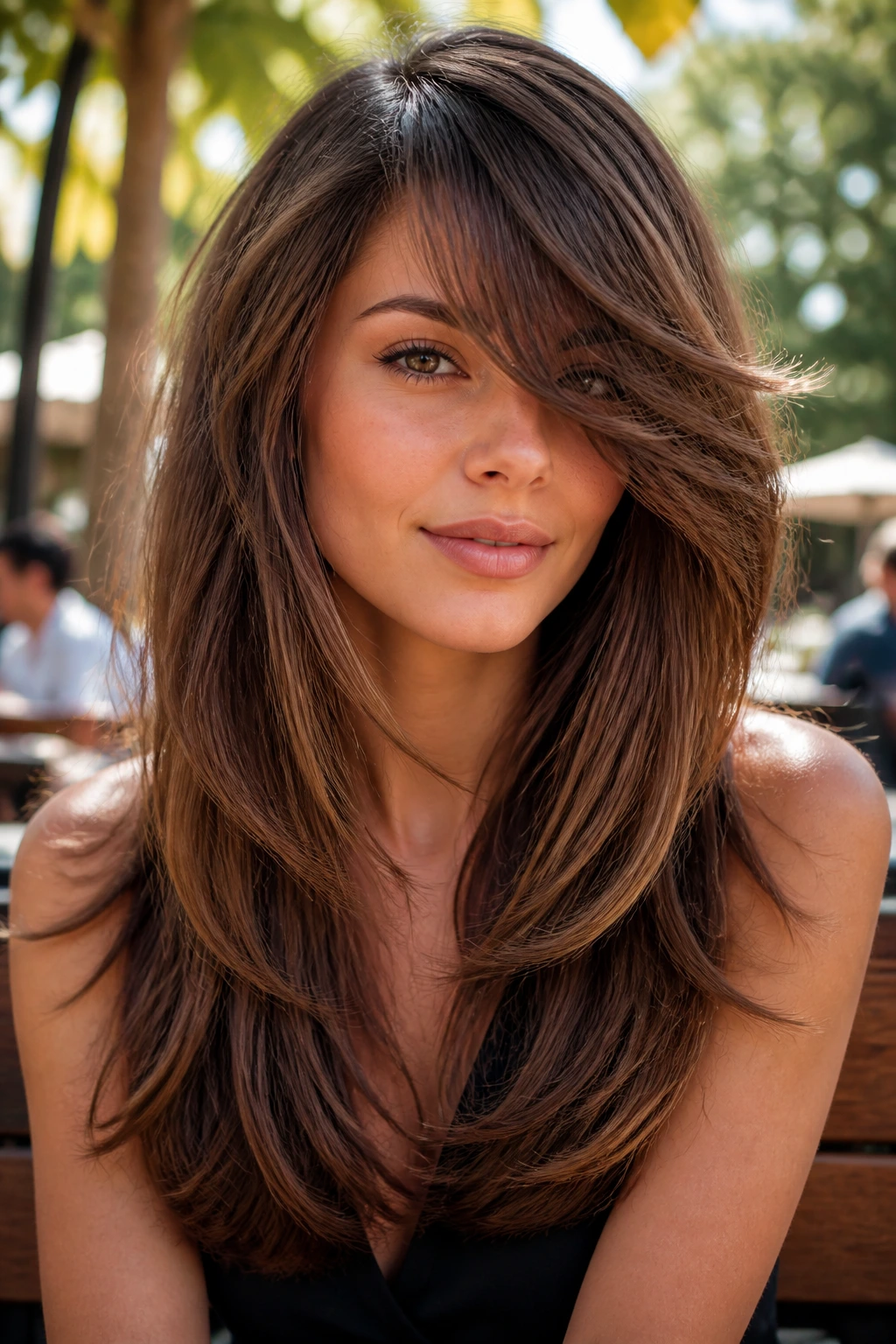
Why do sliced layers work so well on dense hair? Because they create channels for movement without chopping the overall length into little sections that fight each other. The hair still looks long, but it stops feeling like one heavy sheet. The deep side sweep is what keeps the front from collapsing into the rest of the length.
Best for
- Long hair that feels heavy at the ends.
- Thick hair that gets hot around the neck.
- Anyone who wants to keep length but add motion.
- Side parts that already sit naturally on the head.
The sliced layers should start lower than you’d expect if you want to preserve fullness. Too much carving at the top can make long hair feel airy in a thin, unhelpful way. You want glide, not hollowness.
22. Blunt Base with Hidden Choppy Layers
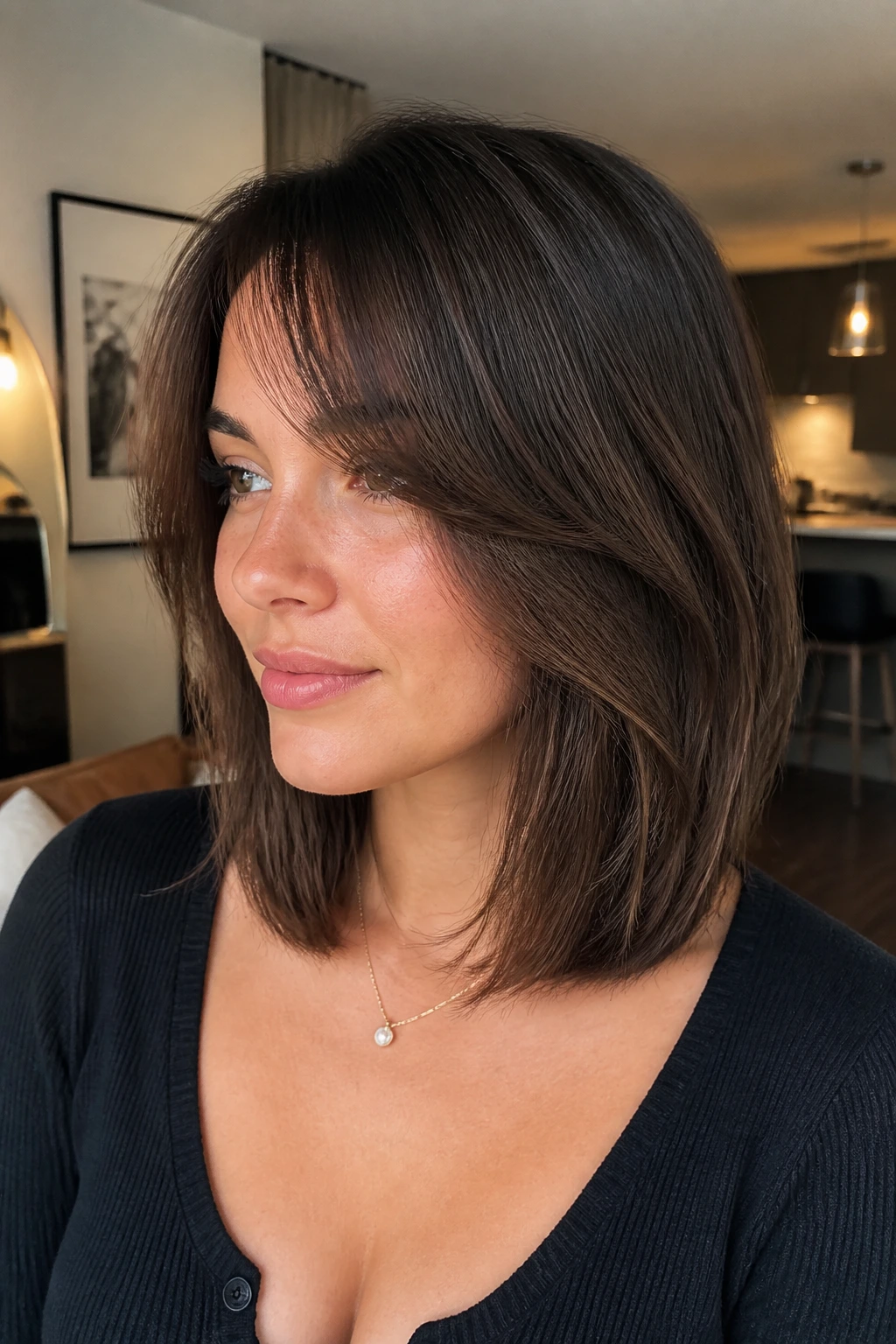
This is the haircut for people who like a strong outline but hate a heavy interior. The base stays blunt, which keeps thick hair looking clean and full, while the hidden choppy layers sit underneath and take out bulk where nobody sees it. The side-swept bang softens the front so the blunt edge doesn’t feel severe.
The good part about hidden layering is that the shape looks expensive from the outside. The cut holds its line. It doesn’t shout “thinning shears” every time the wind moves. That’s a win if you want control without losing density.
Use this shape when you want your hair to swing but not fray. It’s a little more subtle than a shag, a little more structured than a lob. I like that middle ground.
23. Tousled Midlength Cut with Angled Face Frame
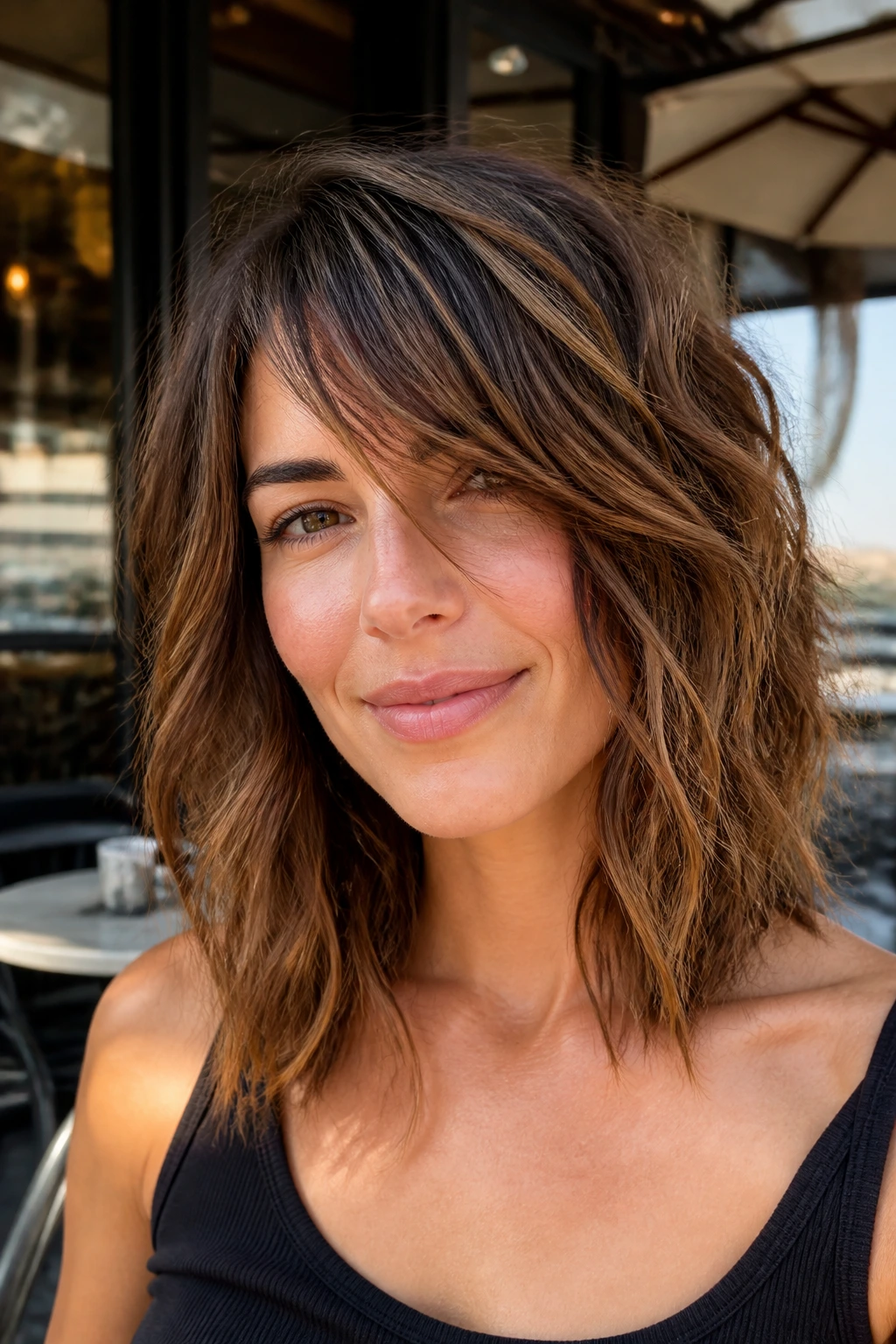
A tousled midlength cut is a good answer when your thick hair wants to do some of the styling on its own. The angled face frame gives the front a clear direction, and the choppy ends keep the mids from swelling into a triangle. The side-swept bang pushes the eye diagonally, which makes the whole shape feel lighter than it is.
This cut looks best when it’s not over-brushed. Finger-dry it a bit, twist a few sections, then let the ends land where they want. If you chase every strand into place, you’ll lose the looseness that makes the style work.
It’s one of the more forgiving shapes on this list. Not the easiest, exactly. Just forgiving. That matters on mornings when you’re halfway ready and already late.
24. Volumized Lob with Overlapping Bangs
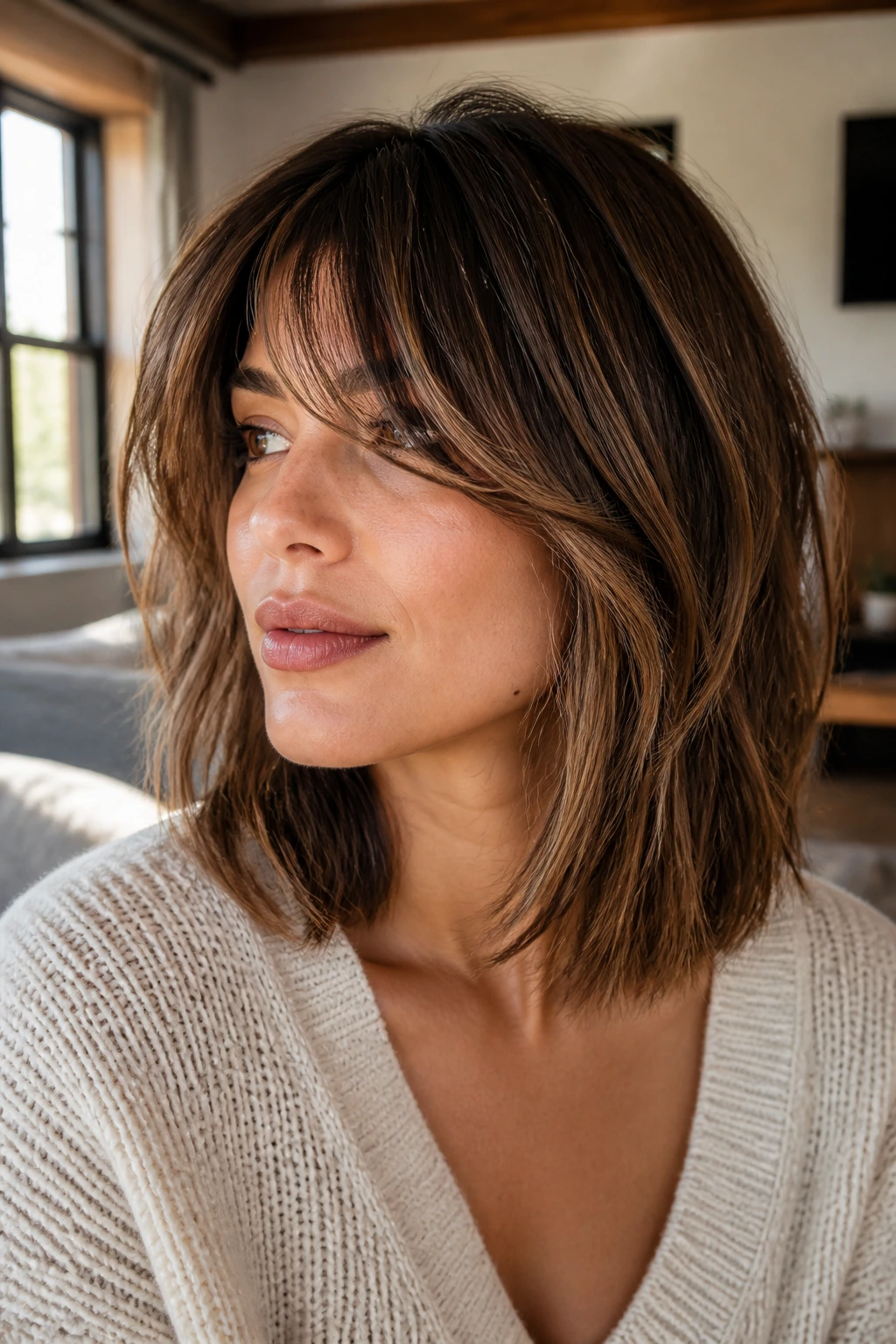
Overlapping bangs are a smart fix for thick hair that tends to split in the front. Instead of one solid side-swept piece, you get bang sections that overlap and blend into the lob, so the front keeps movement without exposing too much forehead. The result is fuller, softer, and a little more controlled than a single heavy swoop.
The volumized lob underneath should have enough lift at the crown to keep the shape from falling flat. That means a little root support from mousse or blow-drying upside down for a minute before smoothing the top. No need to overdo it. Thick hair already has structure. You’re just directing it.
This is a strong choice if your hairline is a little uneven or your bangs tend to separate. The overlapping pieces give you more wiggle room than one perfect swoop ever will.
25. Full-Length Choppy Cut with Side-Swept Bangs
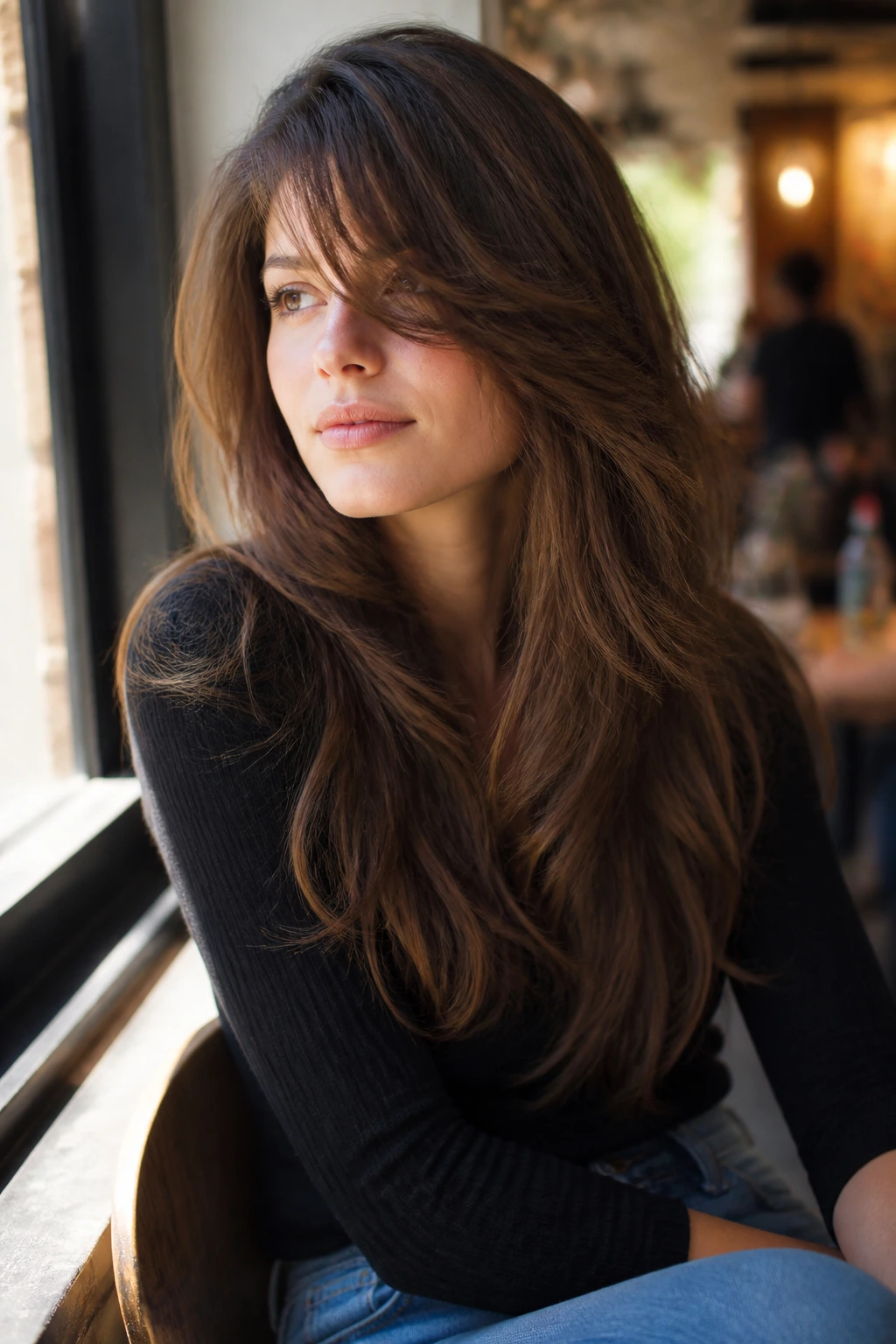
Long thick hair can still get choppy movement, and it doesn’t have to lose its length to do it. The trick is to keep the layers high enough to move but low enough to protect the fullness through the ends. The side-swept bangs stop the front from reading heavy, which matters more when the rest of the hair is long and dense.
How to keep long hair from sinking
Ask for long internal layers rather than short exterior ones. That keeps the silhouette intact while letting the hair swing a little at the mids. If the bang blends into a long face frame, the cut looks finished even when you wear it half-dry or loosely waved.
This is the style for someone who wants long hair with a pulse. Not flat length. Not overcut length. Real movement. A soft bend at the front and a light wave through the lower half can make the entire haircut feel lighter without sacrificing the part people love most: the length itself.
What Makes Choppy Layers and Side-Swept Bangs Work on Thick Hair
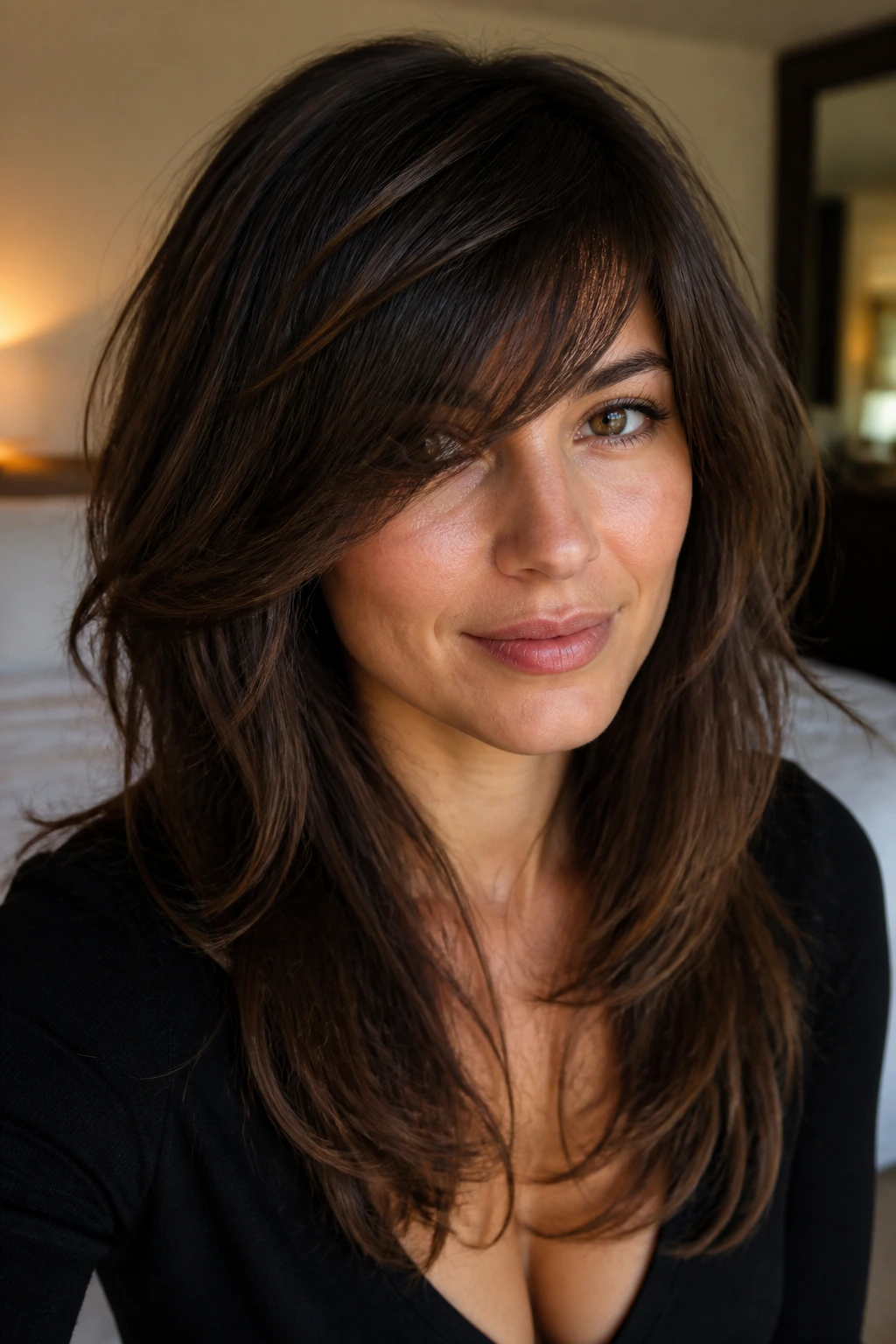
The best thing about this haircut family is that it respects density instead of fighting it. Thick hair does not need to be “fixed.” It needs direction. Choppy layers create pathways for movement, and side-swept bangs give the front of the cut a softer line so the weight doesn’t all sit in one place.
There’s a reason blunt, one-length shapes can feel heavy on dense hair. They leave the whole mass doing the same job at the same length. Once you break that up with interior layers, the shape starts to breathe. The hair still looks full. It just stops acting like a curtain rod.
A good choppy shape also buys you styling choices. You can blow it out smooth, rough-dry it for texture, bend only the front, or let the natural wave carry most of the load. That flexibility matters because thick hair rarely behaves the same way two days in a row.
The Tools That Keep These Cuts Looking Intentional
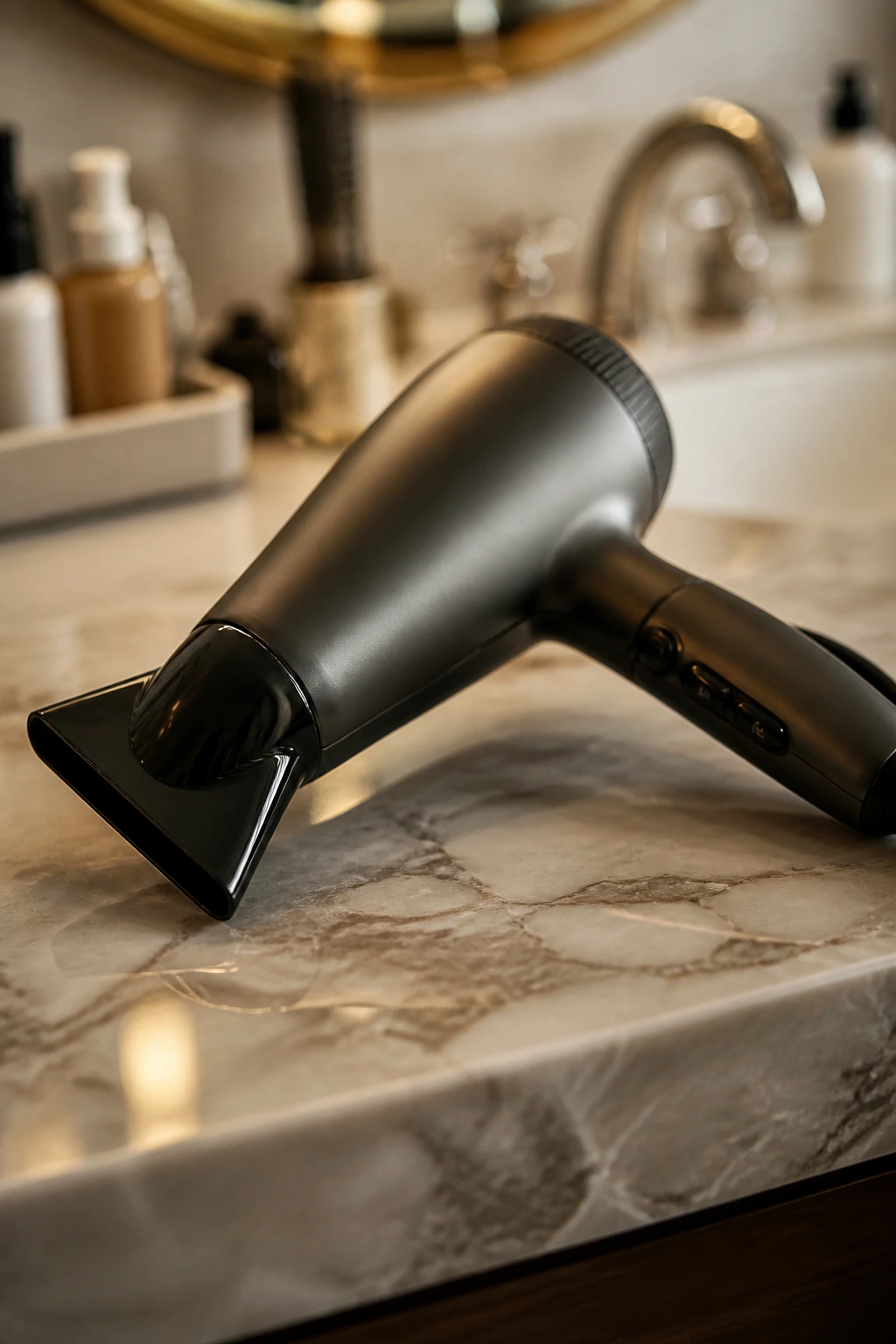
You do not need a drawer full of gadgets, but you do need a few specific ones. Thick hair rewards the right tool and punishes the flimsy ones. A weak dryer or a tiny brush will make you work twice as hard.
- Blow dryer with a concentrator nozzle: Directs airflow so the bangs and layers can be shaped instead of blown everywhere.
- 1 to 1.25-inch round brush: Best for side-swept bangs, collarbone cuts, and shoulder-length shapes that need a bend.
- Paddle brush: Useful for smoothing the mids and ends on longer cuts without making them too round.
- Wide-tooth comb: Good for detangling thick hair when it’s damp and fragile.
- Sectioning clips: Necessary if you want the front, crown, and bottom to dry in the right order.
- Heat protectant spray or cream: Thick hair often needs more heat to shape, so this is not optional.
- Texturizing spray: Works on the mids and ends when you want separation without crunch.
- Lightweight mousse: Best at the roots for shaggy cuts, wolf cuts, and any style that needs lift.
- Matte paste or styling cream: Useful for pixies, bixies, and piecey bang definition.
- Dry shampoo: Keeps the fringe from getting greasy first, which it always seems to do.
What to Ask for at the Salon and Which Products Matter
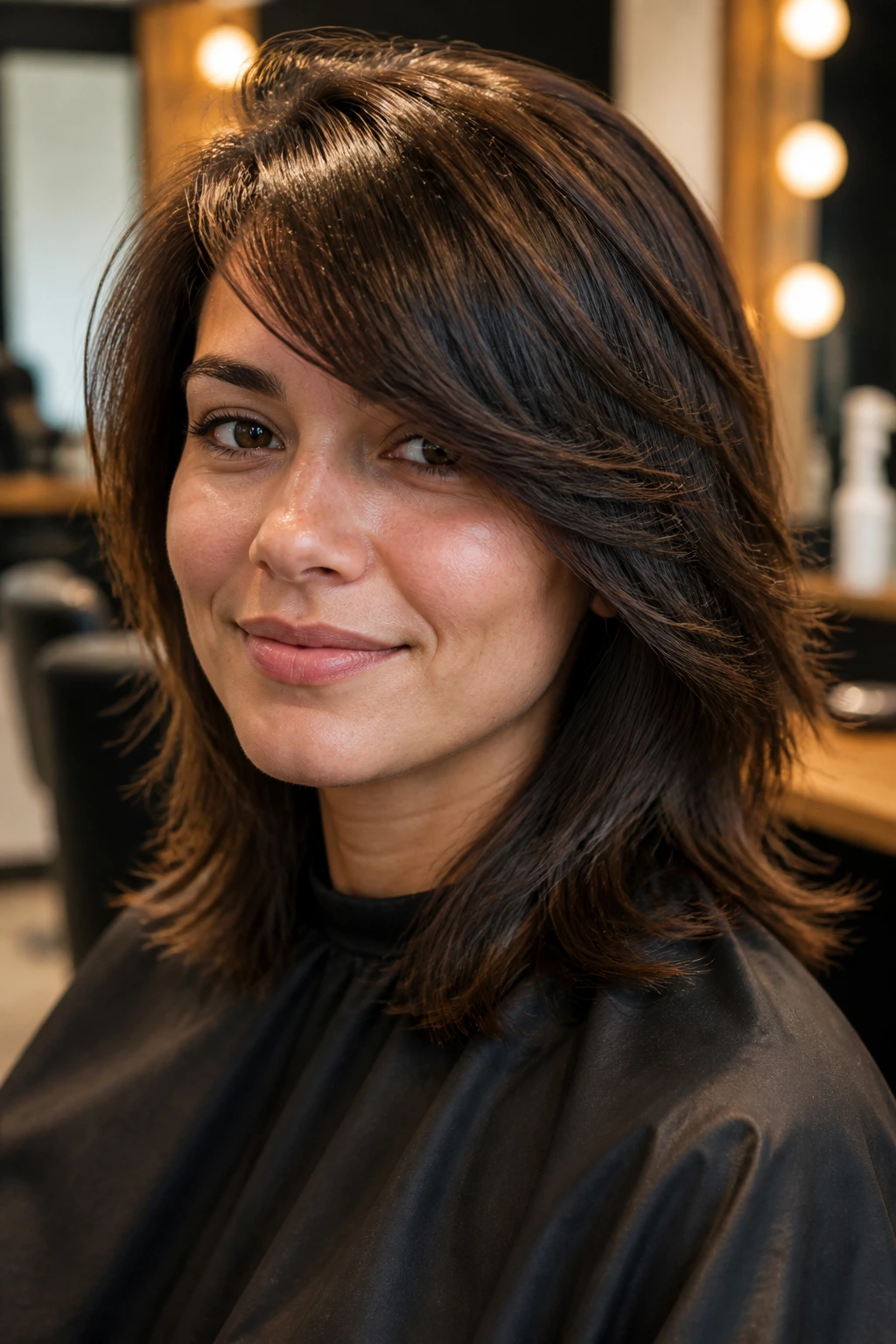
Bring photos, yes, but bring words too. Thick hair cuts change dramatically depending on where the layers start, how much weight is removed, and whether the stylist is cutting the hair wet, dry, or somewhere between the two. Say you want movement without losing bulk, because that tells the stylist what not to do. If you only say “choppy,” you may end up with something thinned out in all the wrong spots.
Ask about point cutting, internal layers, and whether your hair should be debulked near the ends or left heavier there. If your hair is very coarse or frizzy, be careful with aggressive razor work. A razor can make some textures look soft; on others, it can rough up the ends and make styling harder. There’s no prize for the most technical-sounding haircut if you spend every morning wrestling it back into shape.
Product choice should follow the cut, not the other way around. A shag wants mousse and texture spray. A lob with a polished side sweep wants heat protectant and a light cream. A pixie wants paste, not a heavy serum. Thick hair can carry more product than fine hair, but that does not mean you should pile it on. Start light. Add only if the shape needs help.
How to Wear These Cuts on Busy Mornings

Everyday Styling: On rushed days, pick one feature to finish and let the rest stay loose. For most of these cuts, that feature is the side-swept bang. A quick blow-dry on the front, then a finger-dry through the mids, often looks better than trying to smooth every strand.
Best Pairings: Thick choppy hair likes clothes with shape around the neck and shoulders. Collars, hoops, and clean necklines show off the cut’s movement. Heavy scarves can bury a shoulder-length shape, so if you wear one, leave a little extra lift at the crown.
Face-Frame Balance: If your face is rounder, let the bang start a little higher and the front layers fall below the cheekbone. If your face is long, keep the side sweep fuller and less vertical. A jawline that needs softening usually likes a longer front piece that ends near the chin.
Event-Ready Finish: A gloss spray on the mids, a clean side part, and a tucked side can make even a choppy cut look polished. You do not need a curled-out, big-hair routine every time. Sometimes one neat bend in the fringe is enough.
Extra Styling Moves That Change the Whole Shape
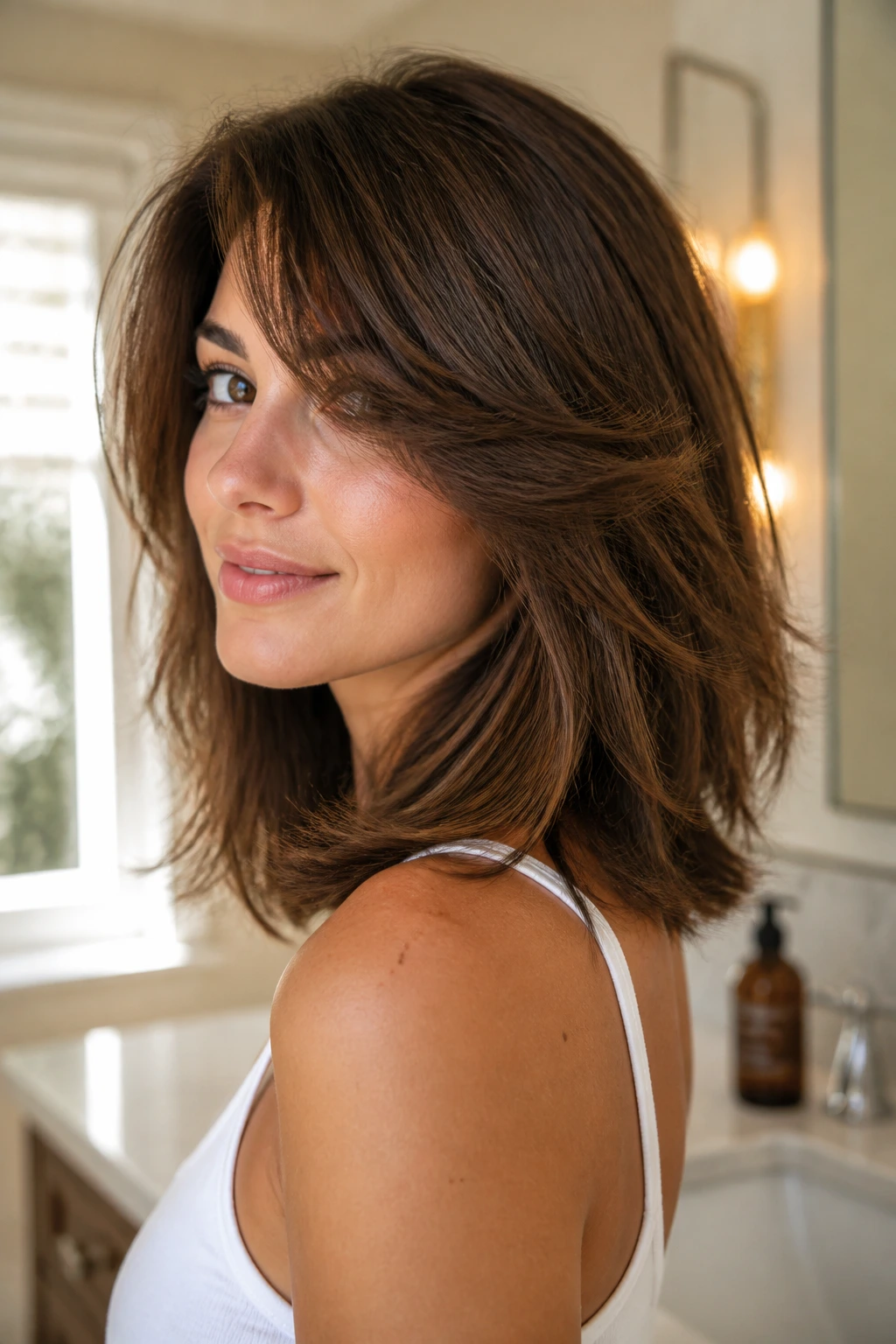
Flavor Enhancement: A tiny bit of shine cream on the last two inches of the hair can calm thick ends that puff after blow-drying. Use less than a pea for shoulder-length hair and a bit more for long lengths. More than that, and the shape gets greasy fast.
Customization: If your hair is dense at the nape, ask for a little extra debulking there and keep the side layers longer. If your hair is heavy at the front, shift the side sweep slightly deeper so it starts farther back and helps distribute weight. Small placement changes matter more than people think.
Serving Suggestions: Tuck one side behind the ear, add a clip at the temple, or let the bang land just over one eyebrow. Those tiny changes change the whole read of the haircut. A scarf, glasses, or a strong earring can also shift the look without touching the cut itself.
Make-It-Yours: For straighter hair, use a round brush bend or a loose wave through the ends. For wavy hair, let the texture stay visible and focus only on the fringe. For curly hair, keep the bang longer and cut it with the curl pattern in mind, or it will spring too high.
Keeping the Shape Between Trims
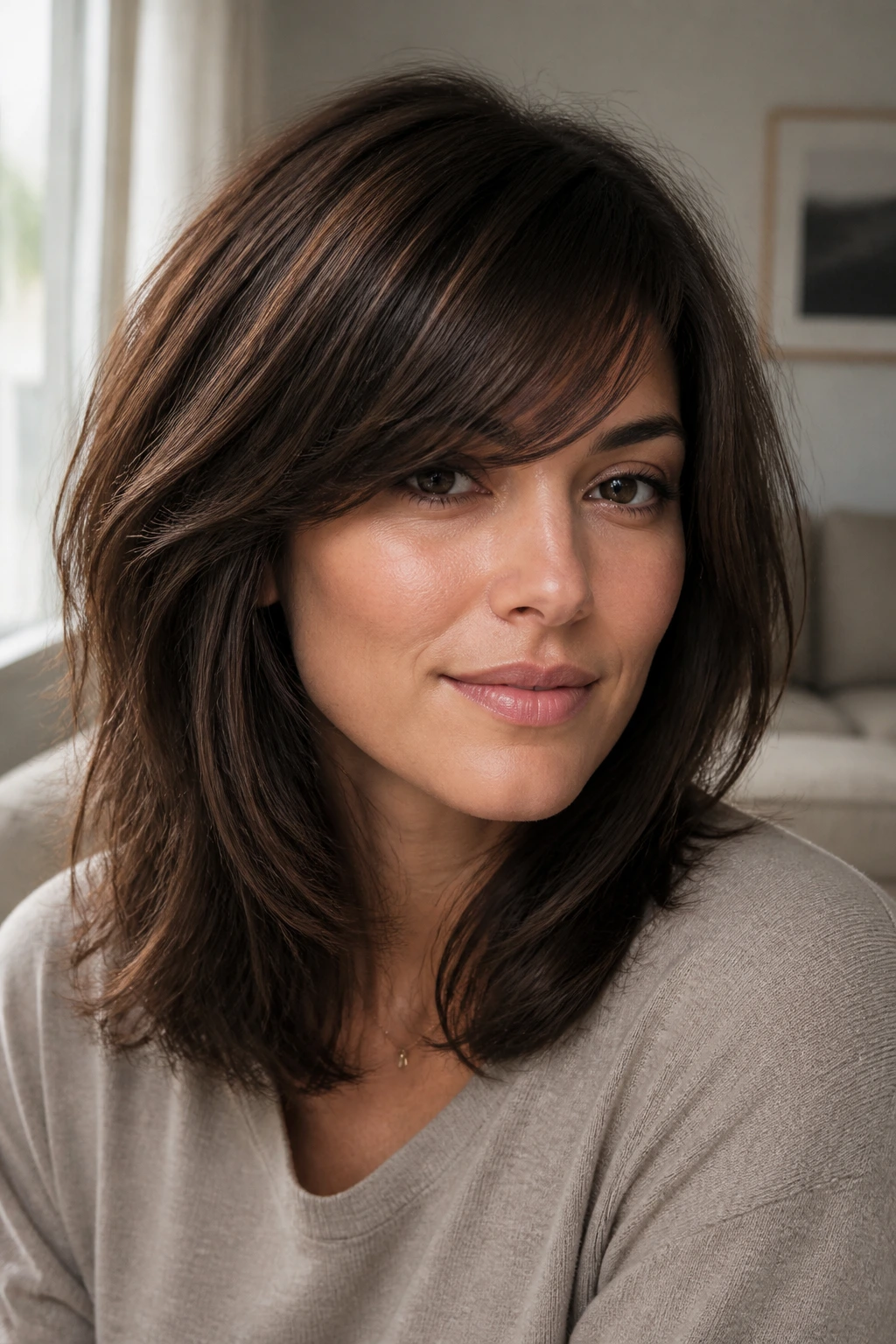
Thick hair tends to hold a style for a while, then suddenly announce that it needs help. Bangs usually need the first touch-up. Side-swept fringe can lose its angle or split at the roots after about 3 to 5 weeks, especially if you wear it the same direction every day. The rest of the shape can usually go 8 to 10 weeks before it starts feeling heavy or blunt.
If you’re wearing a shorter cut — pixie, bixie, crop, angled bob — plan on more frequent shape maintenance. Even a small half-inch of growth can change the outline. Longer lobs and layered midlength cuts are easier to stretch, but the front still matters. A fringe that has grown into your eye line can make the whole haircut feel messy.
At home, dry shampoo on the roots and a quick refresh on the fringe can buy you time. If the front is bent flat, mist it lightly with water, blow-dry just the bang area with a round brush, and stop. No need to restyle the whole head unless the rest of the cut has collapsed too.
Ways to Adapt These Cuts to Different Textures and Lifestyles
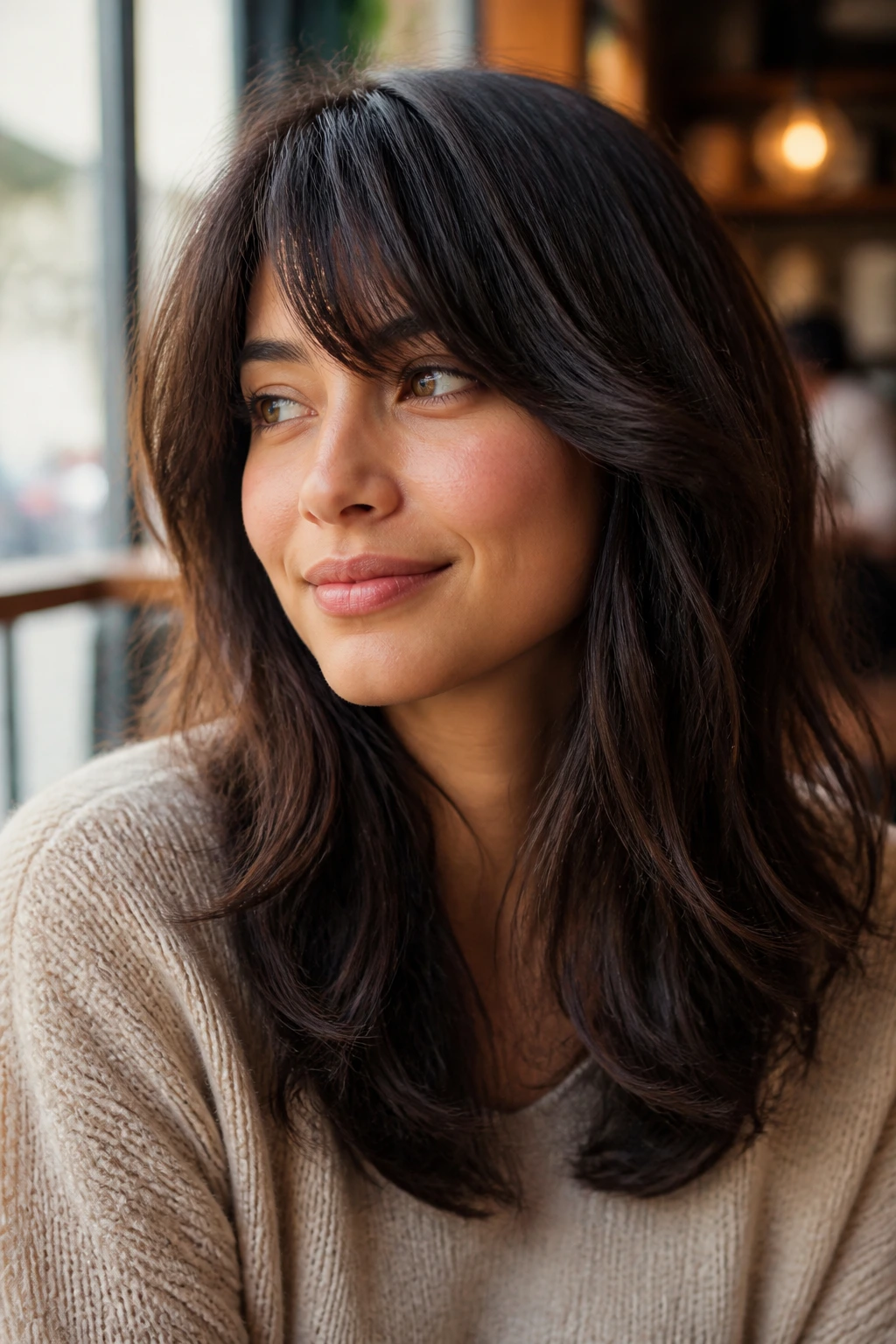
The Soft Air-Dry Version: Best for wavy hair that hates heat styling. Keep the layers a little longer, use a light cream, and let the side sweep fall naturally. The cut should look good even when it dries with a bit of bend and movement.
The Polished Blowout Version: Best for straight or slightly wavy hair that can hold a smooth curve. Ask for cleaner layering, a longer fringe, and a perimeter that still has shape when blown under with a round brush.
The Curly Friendly Version: Best for curls that need room to spring. Keep the bang longer, cut it dry if possible, and avoid over-thinning the perimeter. The front should blend, not sit on top of the curl pattern like a separate part.
The Low-Maintenance Version: Best for anyone who wants to go longer between salon visits. Choose a lob or long layered shape, keep the bang soft and not too short, and let the weight stay through the ends. This one grows out with grace.
The Sharp and Short Version: Best for people who want the face to take center stage. Pixies, bixies, and cropped shags give thick hair enough movement without requiring much length. They do ask for more regular trims, though. That part never changes.
Common Mistakes to Avoid
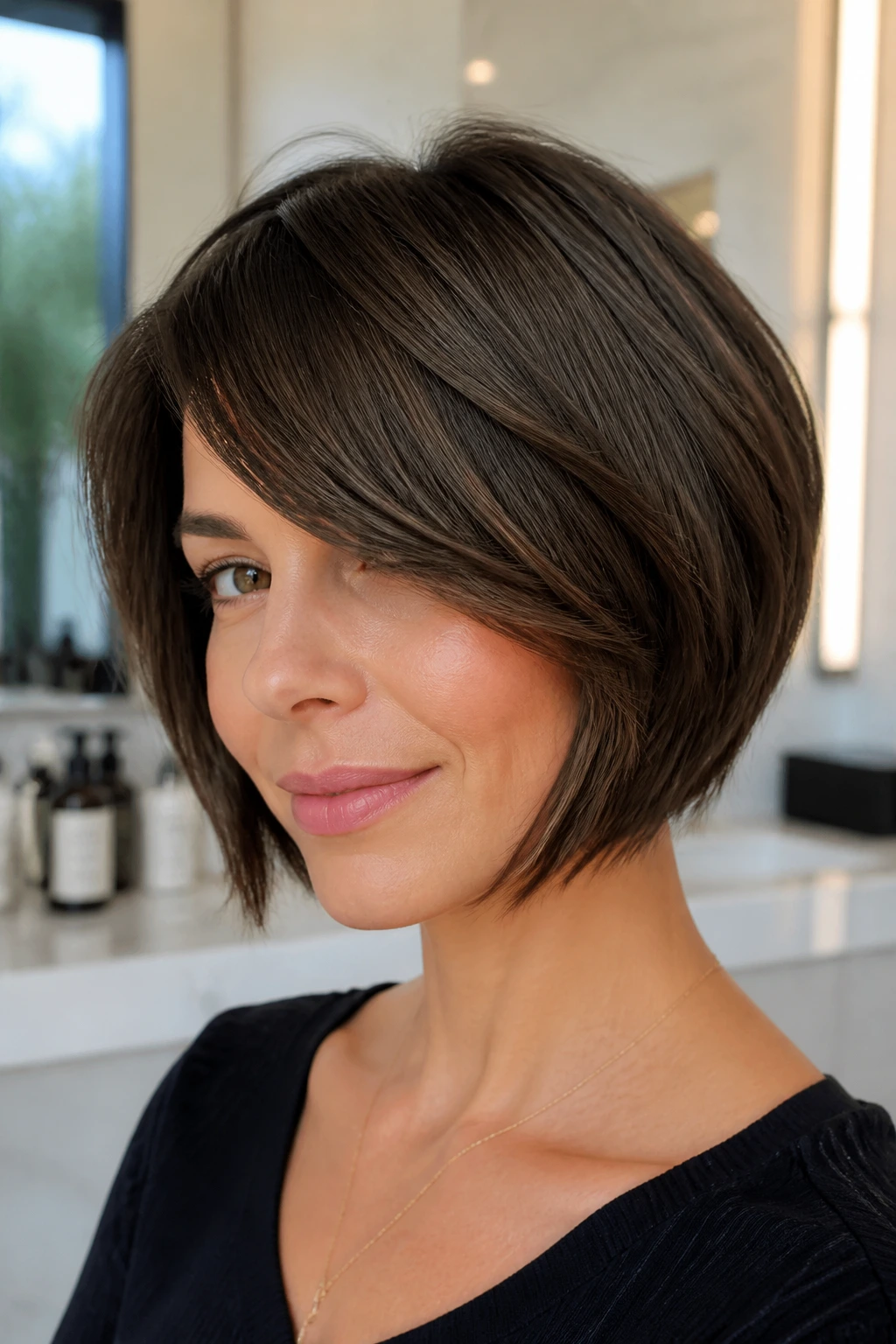
The first mistake is asking for choppy layers and then letting the stylist remove too much weight from the perimeter. The hair may feel lighter in the chair, but once it dries, the ends can look wispy and dry. The fix is simple: keep the outline solid and let the movement happen inside the cut.
The second mistake is cutting side-swept bangs too short. Thick hair springs up as it dries, and a bang that looks perfect wet can end up hovering an inch above the brow. Leave extra length, then refine after it’s dry.
A third problem is overusing texturizing products on the roots. Thick hair already has lift. Piling texture spray at the crown can make the hair feel gritty and dirty before noon. Put the product through the mids and ends instead.
There’s also the temptation to ignore your natural part. If your side sweep fights the way your hair wants to fall, you’ll spend every morning correcting it. Start the part where the hair wants to separate, then adjust the front layers around that line.
Questions People Ask Before They Sit in the Chair
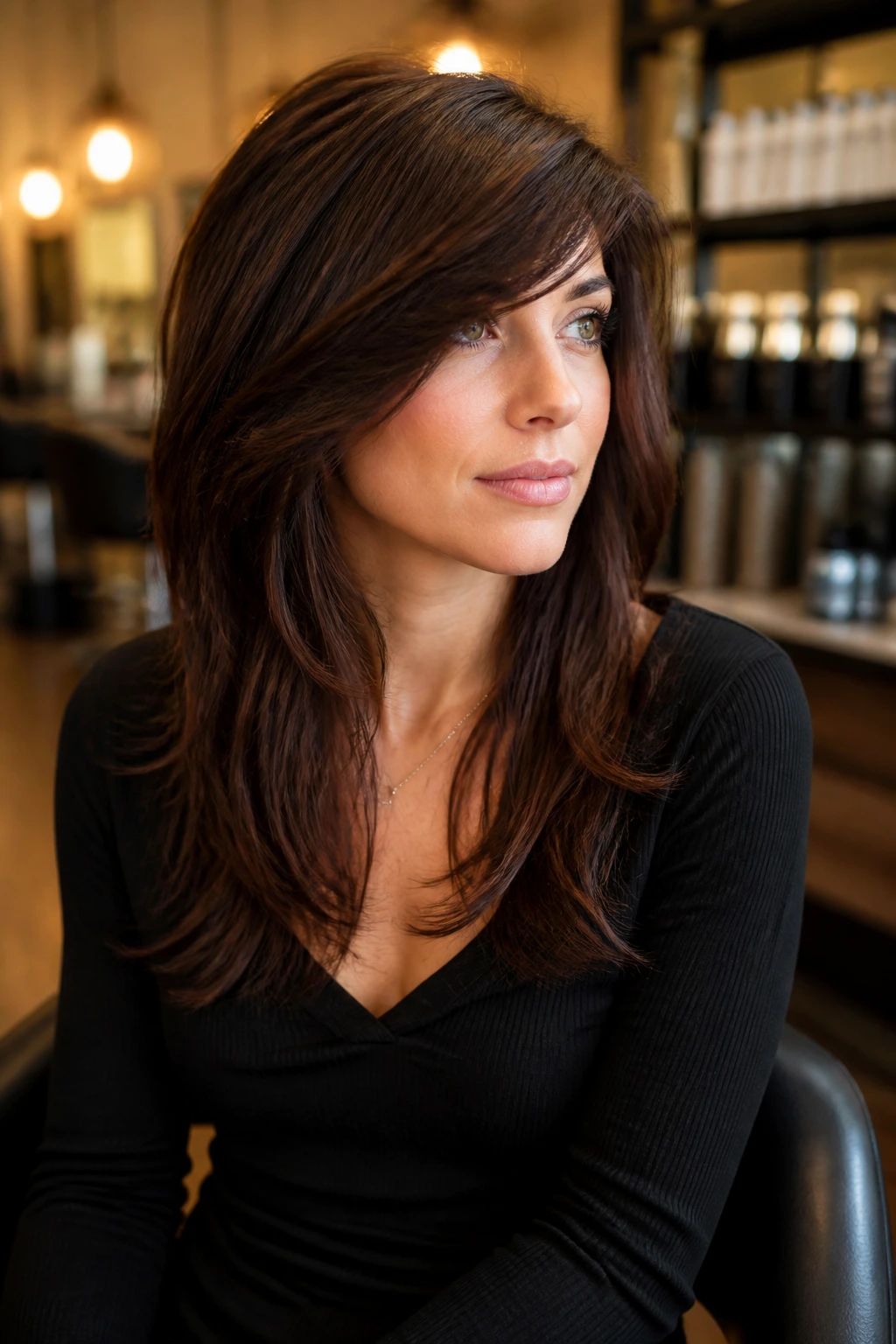
Will choppy layers make thick hair look thinner?
Not if they’re cut well. The point is to remove bulk from inside the shape, not to strip away density from the ends. A good choppy cut should still feel full in the hand.
How short can side-swept bangs go on thick hair?
Short enough to clear the eye line, but usually not so short that they sit high on the forehead. On dense hair, a slightly longer bang is safer because it shrinks up after drying.
Can this work on curly hair?
Yes, but the cut has to follow the curl pattern. Curly thick hair usually needs longer bangs and softer layers so the curls can spring without turning triangular.
Is razoring a bad idea for coarse hair?
Sometimes. If your hair is coarse and frizz-prone, a razor can rough up the ends. Point cutting or soft slicing is usually the safer route.
How often should I trim the fringe?
Plan on 3 to 5 weeks if you want the sweep to stay tidy. If you don’t mind a longer face frame, you can stretch it a little more.
What if my bangs split in two?
That usually means the part is fighting the cut or there’s too much product at the roots. Blow-dry the fringe in the direction you want it to sit, then pin it for a few minutes while it cools.
Can I air-dry these styles?
Absolutely, though some shapes need a little help in the front. A side-swept bang often behaves better if you hit just that section with a brush and dryer while the rest air-dries.
Do these cuts need a lot of product?
No. Thick hair can carry more than fine hair, but too much product kills the movement you’re paying for. Start with a small amount and build only where the shape needs support.
The Cuts That Keep Thick Hair Moving
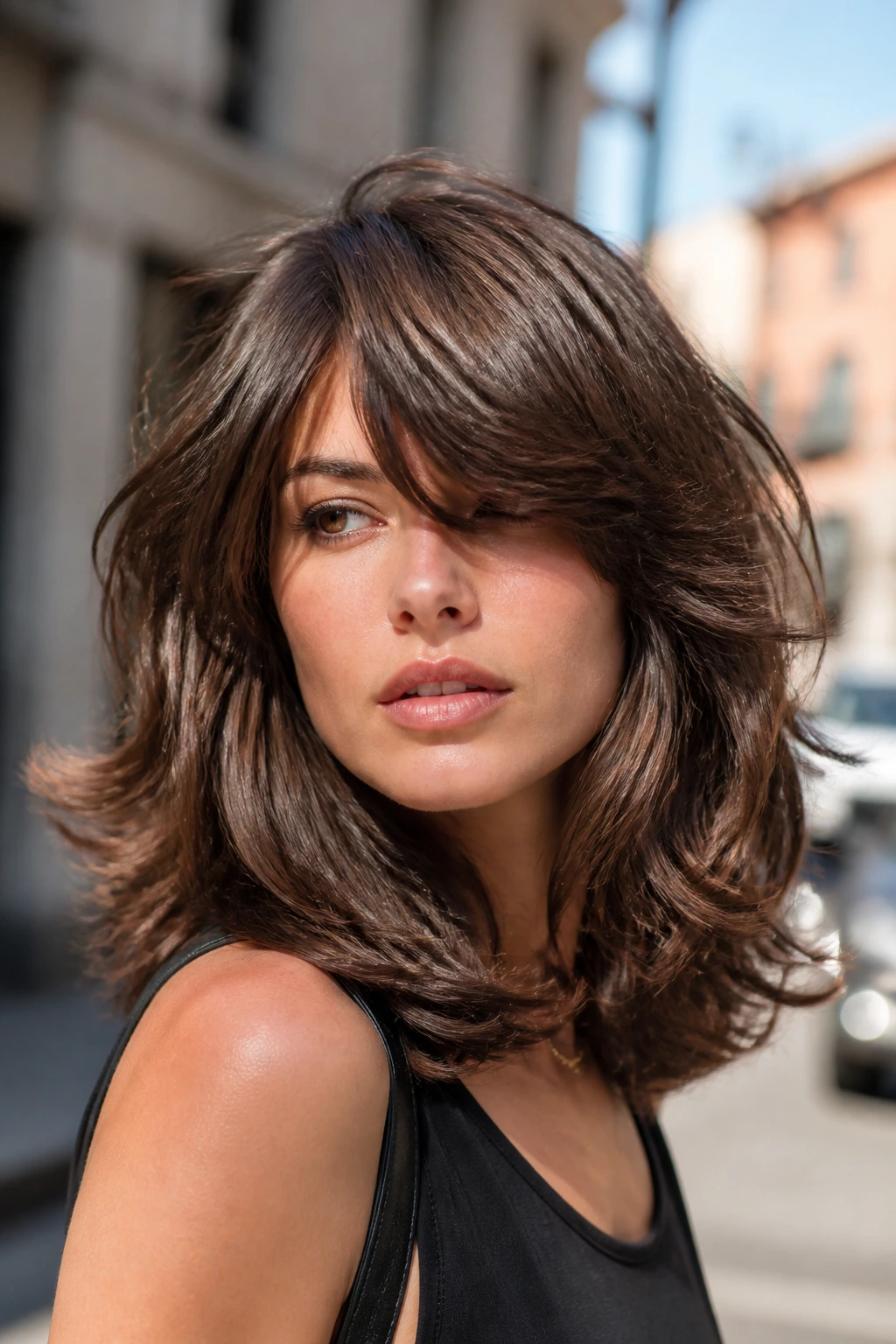
The nicest thing about these styles is that they treat thick hair like an asset, not a problem to hide. You keep the fullness. You lose the brick-like shape. And the side-swept bang gives the front a softer line that works with the face instead of blocking it.
If your hair has been sitting too heavy, too wide, or too flat on top, one of these cuts can change the whole feel of it without making you start over from scratch. Save the shape that matches your texture, bring a clear photo, and be specific about where you want the weight removed. That small conversation in the chair usually matters more than the haircut name itself.