



Fine hair and a heart-shaped face can be a tricky pairing, but the trick is not to hide either one. It’s to choose a cut that gives the hair a denser outline and gives the face a little more visual weight below the cheekbones, where the face naturally narrows. When those two things work together, short hair looks deliberate instead of fussy.
The wrong short cut can go in two bad directions fast. Too many wispy layers and the ends look see-through by noon. Too much height at the crown and the forehead takes over the whole picture. The sweet spot sits somewhere smarter: blunt edges, controlled movement, a side-swept line here, a soft fringe there, and enough structure that the hair doesn’t collapse the second you step outside.
Short hairstyles for fine hair and heart-shaped faces are worth paying attention to because they solve two problems at once. Fine strands need shape more than they need softness. Heart-shaped faces usually look best when the eye gets drawn down and outward, not straight up to the widest part of the forehead. That’s why the best cuts in this group feel balanced, compact, and a little bit strategic — the kind of haircut that looks easy only because someone thought hard about where every inch should land.
Why These Cuts Earn Their Keep
-
They put the weight where fine hair needs it: Blunt ends, compact layers, and small silhouettes make thin-feeling hair read as fuller without piling on product.
-
They soften the forehead without hiding your face: Side fringes, diagonal parts, and cheekbone-length pieces pull attention away from the upper third and into the middle of the face.
-
They keep the shape from going limp by lunch: These cuts are built to hold a line, so you’re not fighting flyaway ends and flat roots every hour.
-
They grow out without turning awkward overnight: The best short cuts here keep a clear perimeter even after a few weeks, which matters more than people admit.
-
They work with styling, not against it: A 5-minute blow-dry, a small round brush, or a bit of mousse is usually enough to make the shape behave.
-
They leave room for personality: You can go sleek, piecey, soft, or a little edgy without wrecking the face balance that makes the cut work.
1. Soft Pixie with Side-Swept Fringe
A soft pixie is the cut I’d point to first if you want short hair without the harshness of a true crop. The side-swept fringe does a lot of quiet work here. It breaks up the width at the forehead, then slides the eye diagonally toward the cheekbone instead of letting it stop at the top of the face.
For fine hair, keep the sides neat and the top controlled. You want movement, not fluff. A little root spray at the front and a fingertip’s worth of matte paste through the fringe is enough; anything heavier turns the whole thing sleepy and dull.
Why It Fits This Face and Hair Type
A heart-shaped face usually carries more visual width in the forehead and temples. A soft pixie with a side sweep makes that area feel less dominant, while the short nape keeps the lower half of the face from disappearing under too much hair.
Ask for a gentle taper at the ears, not an aggressive buzzed fade. The cut should feel light, but not shredded. That balance is what keeps fine hair from looking stringy.
2. Chin-Length Blunt Bob with Tucked Ends
A blunt bob at the chin is one of the few short cuts that can make fine hair look thicker on contact. The straight perimeter gives the eye a firm line to follow, which creates the illusion of more hair than is actually there. It’s one of those cuts that looks calm in the mirror and then turns sharp in motion.
The tucked-under ends matter more than people think. A slight curve under the chin gives the lower face a little more presence, which is useful on a heart-shaped face because it keeps the jawline from feeling too narrow. If your hair bends naturally, even better. If it doesn’t, a quick pass with a round brush or a flat iron turned under at the ends does the job.
3. French Bob with Brow-Grazing Bangs
Want something with a little Parisian bite and a lot of face balance? The French bob delivers. It usually sits around the cheekbone to lip area, with bangs that graze the brows rather than sit heavy on them, and that’s the part that matters most for a heart-shaped face.
Fine hair likes the bluntness of this cut, but it does not like heavy bang density. Keep the fringe airy enough that you can see a sliver of skin between strands when it moves. That little bit of openness prevents the forehead from feeling boxed in.
This one works best when the texture is left a touch undone. A quick bend with a small iron, then a soft shake with your fingers. Clean, but not stiff.
4. Textured Crop with Piecey Crown
This is the cut for days when your roots collapse before lunch and you’re done negotiating with them. The textured crop keeps the sides short and the top small, but enough length remains up top to create a piecey crown that lifts without looking tall for the sake of being tall.
The crown detail is the point. A heart-shaped face already brings attention upward, so the volume here has to be controlled, not exaggerated. Think little sections that separate cleanly, not spiky height. Fine hair responds well to a pea-size amount of matte paste worked into the roots, then a few pieces pinched forward across the forehead.
It’s a crisp, modern cut. It also grows out well if the nape stays tight.
5. Long Pixie with Cheekbone Layers
If you can’t decide between a pixie and a bob, this is the compromise that usually makes sense. The long pixie gives you shorter, manageable sides and enough length on top and around the cheekbones to soften a narrow chin without making the cut feel bulky.
The cheekbone pieces are the real trick. They land right where the face needs a little extra width, so the silhouette feels balanced from top to bottom. Fine hair benefits from this because the longer bits do not break up into wisps the way too many short layers can. The shape stays readable even when the hair is dry and a little imperfect.
A side part or a loose diagonal fringe makes this even better. Centered and flat, it can look too tidy. Swept and soft, it has life.
6. Side-Parted Mini Bob
The side part does more work here than the length itself. A mini bob that sits just below the ear or around the jaw looks fuller when it’s parted off-center, because the higher side gives the roots a little lift and the lower side drapes across the forehead with less effort.
For heart-shaped faces, that asymmetry is helpful. It keeps the forehead from feeling too broad and brings the eye down toward the mouth and chin. Fine hair likes the compact shape too, because the perimeter stays dense. You do not want a mini bob that gets thinned out at the ends; the line should feel clean enough to almost cut the air.
This cut is especially good if you like a polished finish but don’t want a lot of styling drama. A round brush and a light mist of spray usually do it.
7. Sleek Jawline Bob
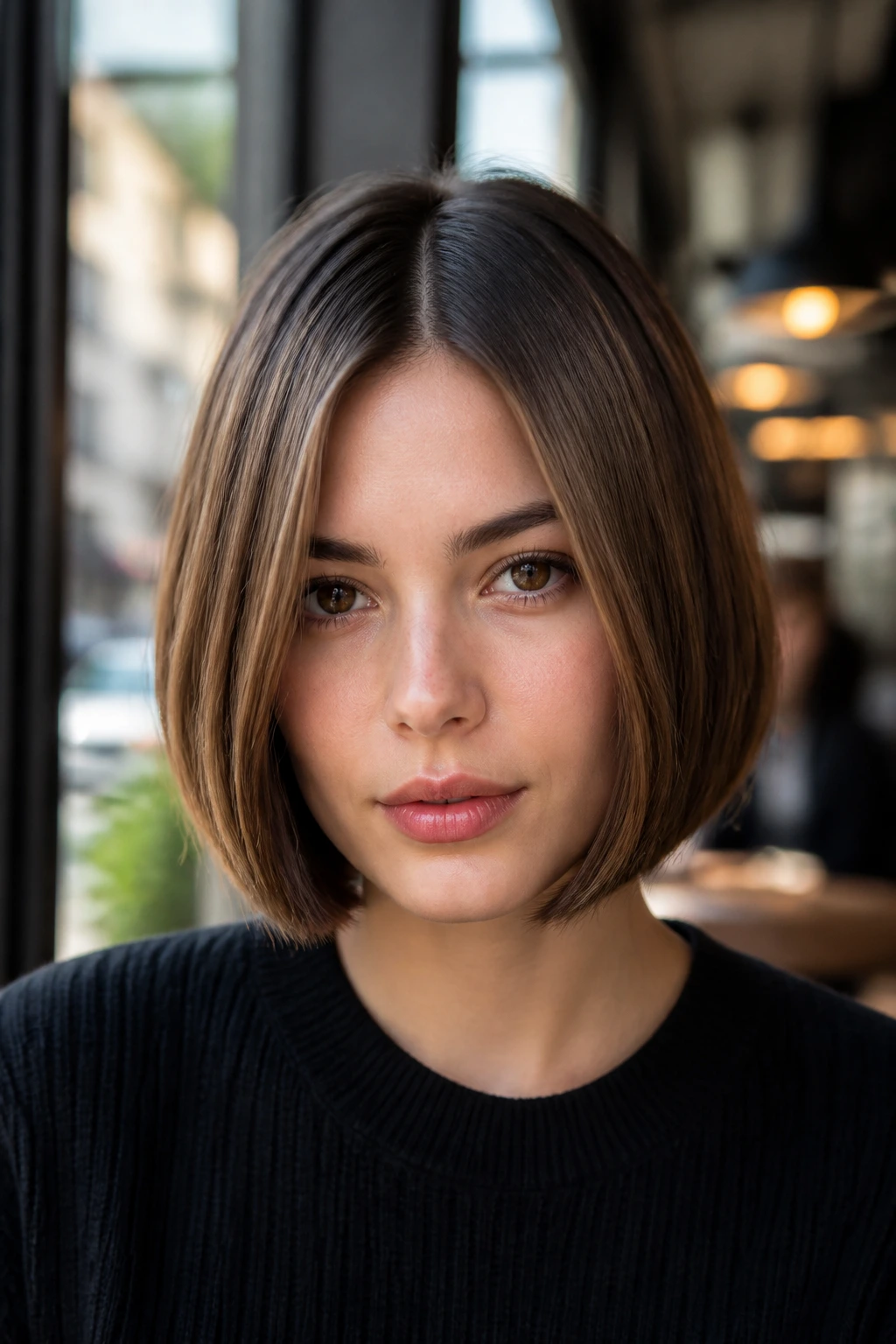
Fine hair does not need to be fluffy to look thick. Sometimes sleek is the smarter move. A jawline bob, cut with a slight bevel so it curves just under the face, creates a hard little frame that makes the ends look fuller than they are.
On a heart-shaped face, the jawline length earns its keep by adding a bit of visual width where the face narrows. That little subtraction from the forehead-to-chin contrast is what makes the shape feel balanced. If your hair is pin-straight, this is one of the easiest short cuts to live with. If it has a slight wave, you’ll need a smoothing cream or a flat iron pass to keep the line crisp.
The warning here is simple: do not over-layer it. The magic is in the edge.
8. Curly Crop with Soft Apex Volume
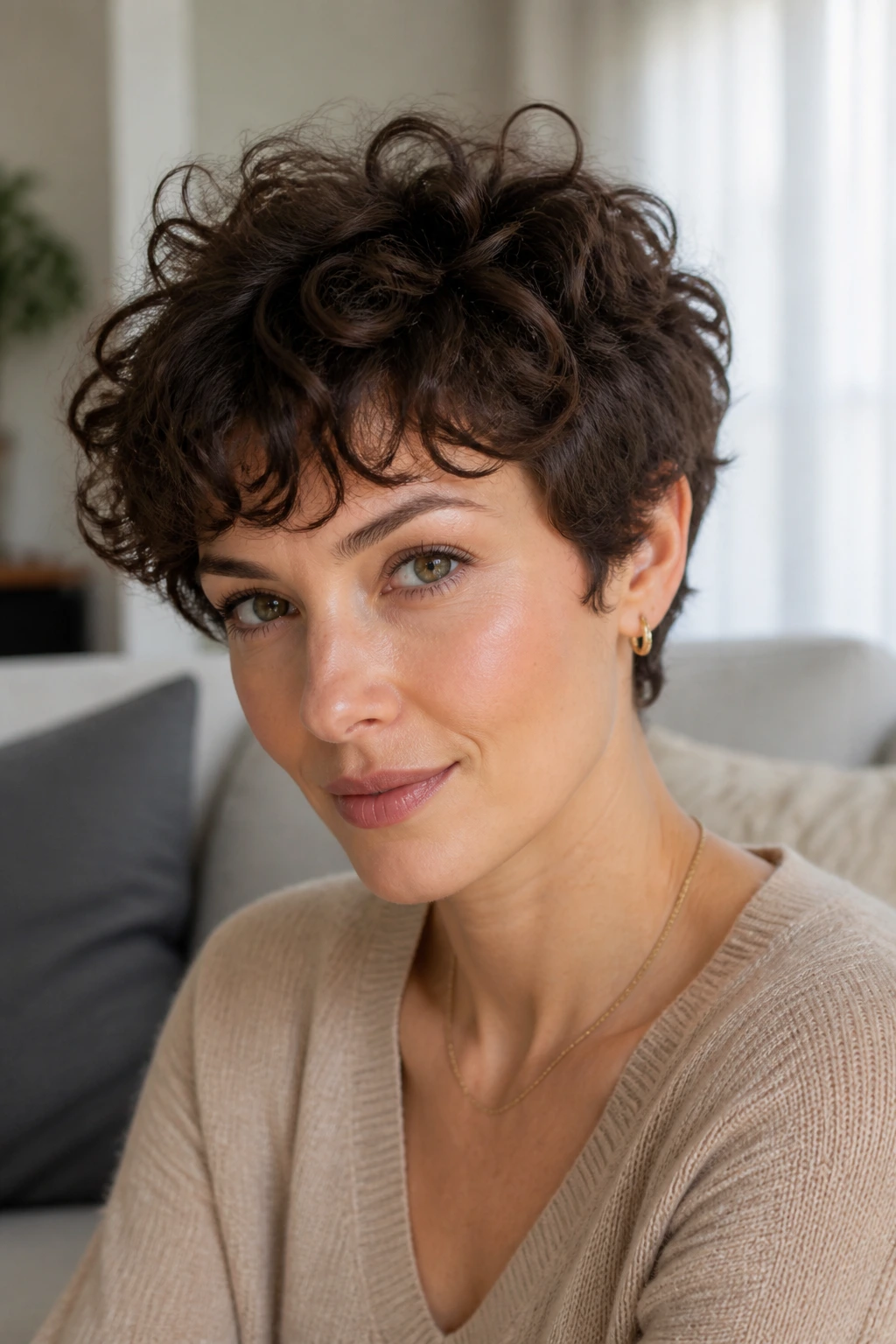
A short curly crop should feel springy, not puffed up. That sounds obvious, but too many cropped curly cuts go straight for height and forget shape. On a heart-shaped face, the better move is soft volume at the apex with curls allowed to settle gently around the temples and upper cheeks.
Fine curls can still look dense if the cut keeps enough length for the curl pattern to form. If they’re cut too short, the ends can frizz out and the whole shape starts to look airy in the wrong way. Leave the fringe area soft, not blunt, and let the curl sit where it wants to sit.
A diffuser helps. So does a light gel cast broken up only after the hair is dry. That part is tedious, yes. It matters.
9. Feathered Pixie Bob
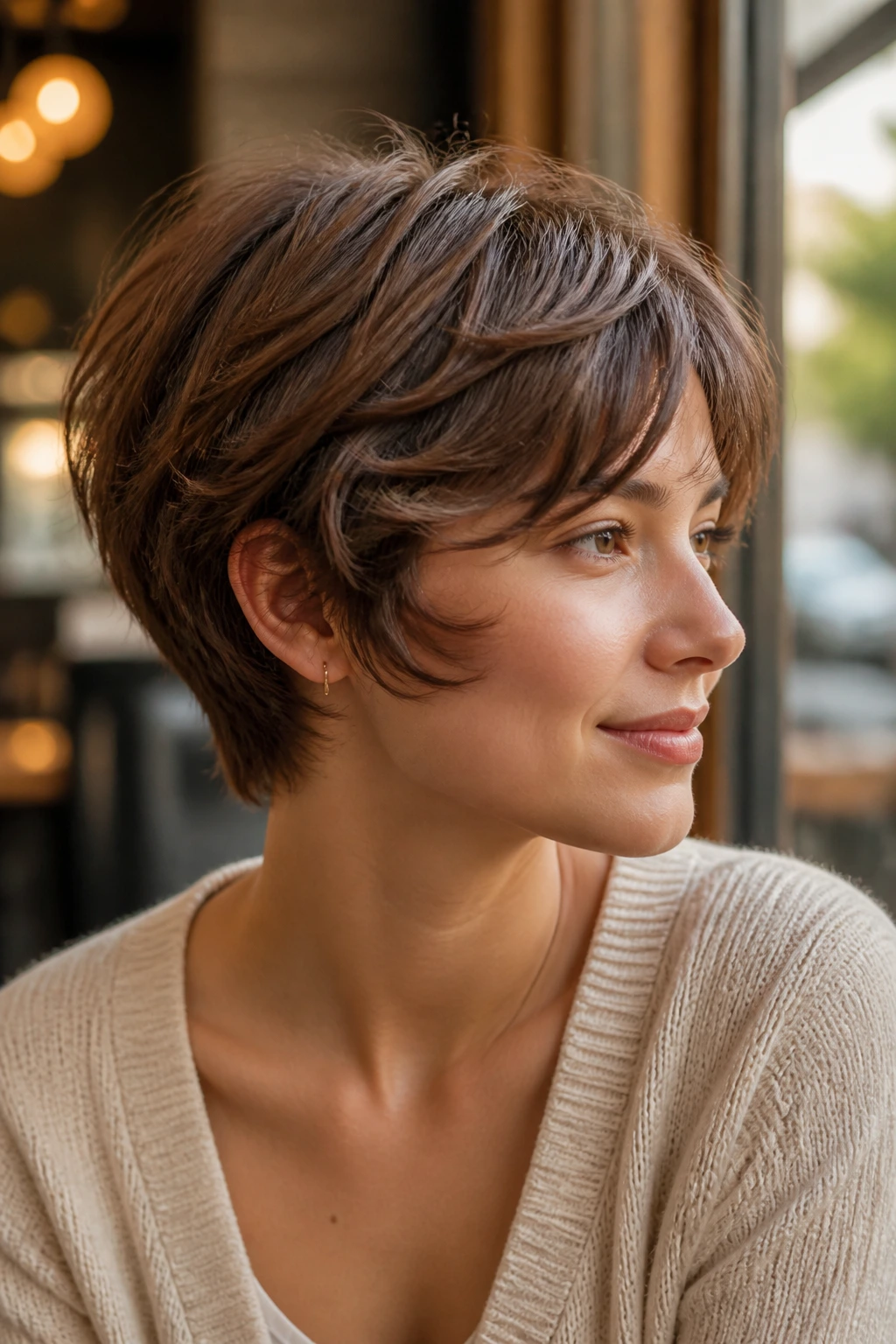
This hybrid cut sits between the neatness of a bob and the ease of a pixie. The feathers around the ears and temples soften the edges just enough to keep the shape from feeling blocky, while the back stays short enough that fine hair doesn’t get dragged down.
For a heart-shaped face, the feathering helps around the forehead-to-cheekbone transition. It diffuses the width at the top without hiding it completely. The result is lighter and less severe than a blunt bob, but still more structured than a shaggy crop.
The mistake to avoid is over-thinning. Feathered does not mean flimsy. Ask for movement through the mid-lengths, not through the perimeter.
10. Inverted Bob with Light Underlayer
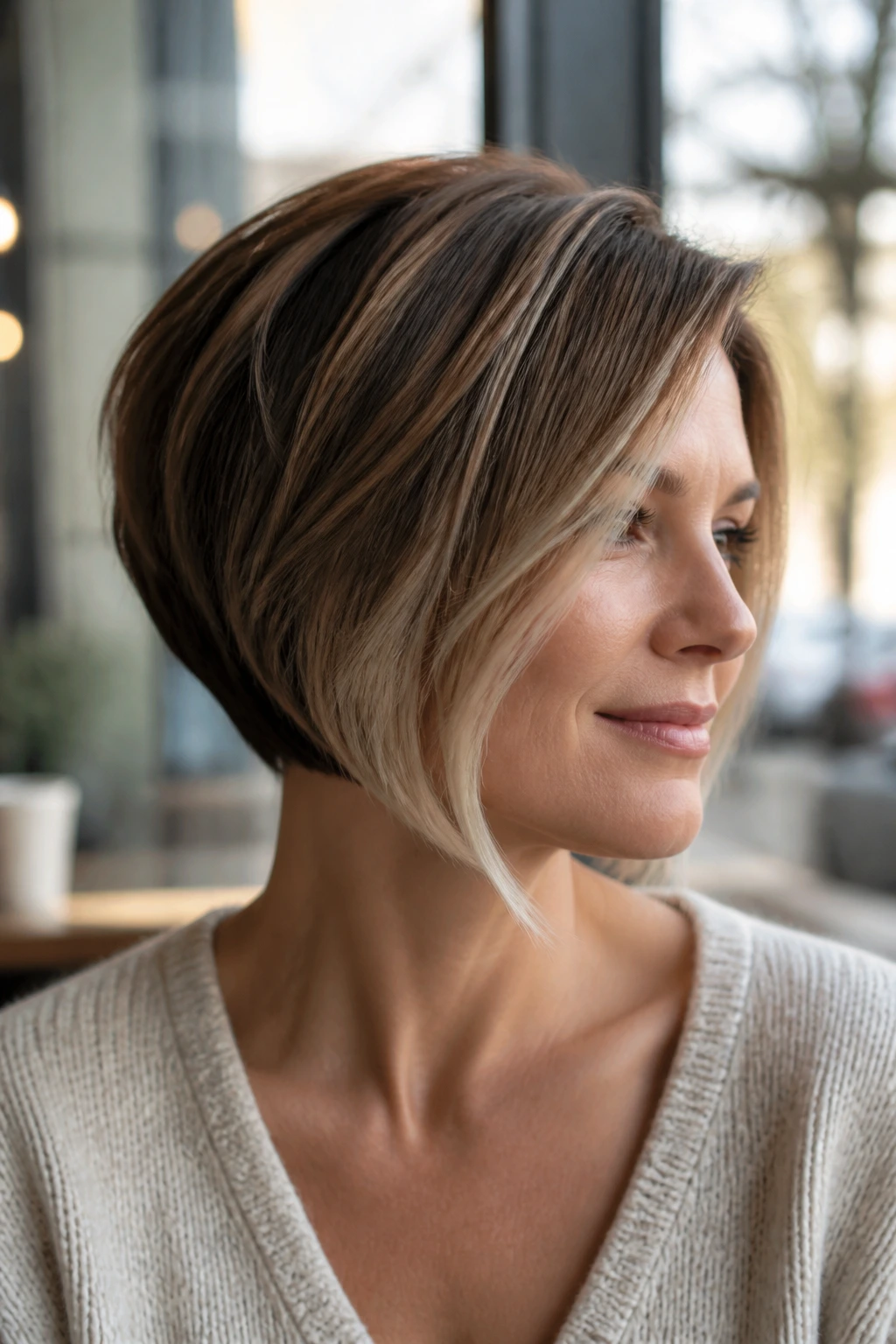
A slight inversion can make fine hair look fuller almost by default. When the back is a bit shorter and the front stays longer, the hair gets a natural angle that gives the illusion of lift at the nape and density at the sides.
That front length matters on a heart-shaped face because it draws the eye downward and out toward the jaw. Keep the angle gentle. A dramatic inverted bob can feel too sharp on fine hair, and the longer front pieces can end up looking stringy instead of sleek. A light underlayer — not a stack of aggressive layers — gives you shape without exposing too much scalp.
This one likes a clean blow-dry and a smooth finish. If the ends kick out, the whole cut loses its point.
11. Ear-Length Crop with Nape Detail
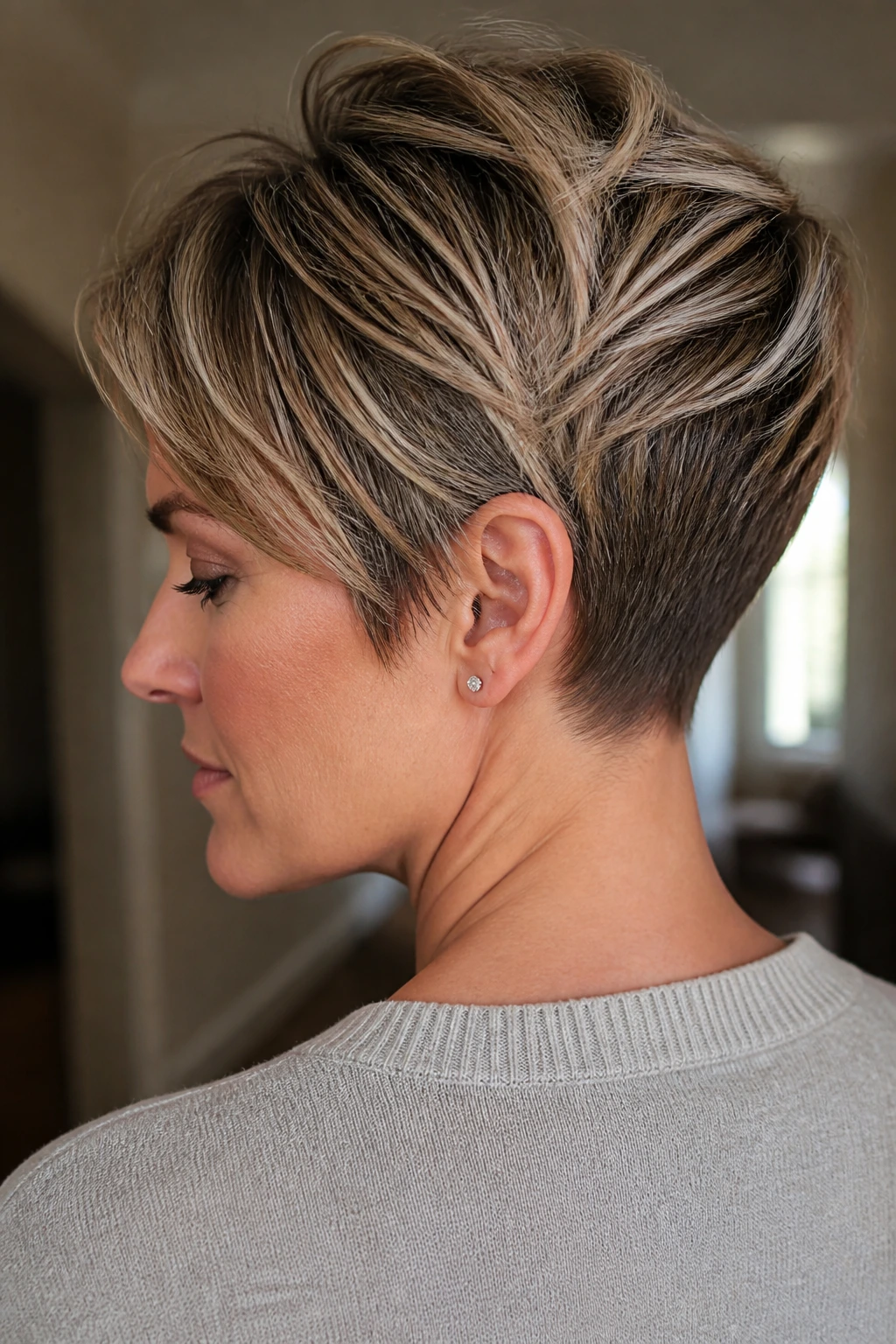
Short around the ears, neat at the neck, and easier than it looks. An ear-length crop with a tidy nape puts the emphasis on the bone structure of the face, which can be a good thing when the chin is narrower than the forehead. The key is keeping some softness on top so the cut does not look severe.
Fine hair often benefits from this kind of close silhouette. The whole shape stays compact, so the hair appears denser. A clean nape line also makes the cut look intentional between appointments, even when the top starts to grow a little.
If you wear glasses, this is quietly excellent. The hair clears the frames instead of fighting them.
12. Asymmetrical Bob with Deep Side Part
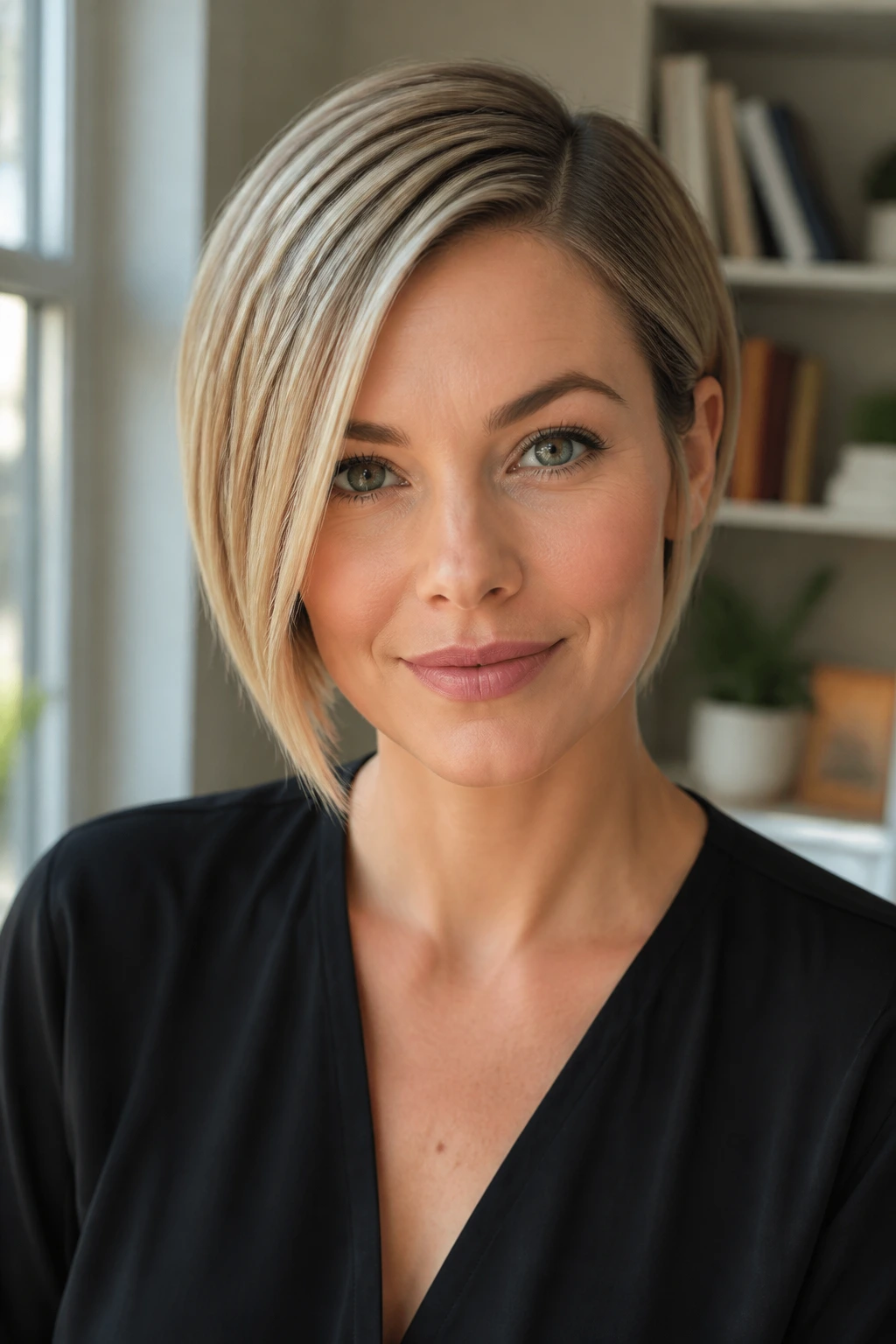
You do not need a dramatic asymmetry to get the effect. Even a difference of an inch or so can change the whole balance of the cut, especially on a heart-shaped face where a deep side part helps lower the visual weight from the forehead.
The longer side can skim the cheekbone or jaw, while the shorter side opens the face enough to keep the cut from feeling heavy. Fine hair benefits because the asymmetry creates interest without asking the strands to do too much. If the difference is pushed too far, though, the longer side can start to droop. Keep it subtle.
This is one of the better picks if you want a modern look that still reads calm at work or polished with earrings.
13. Layered Bixie Cut
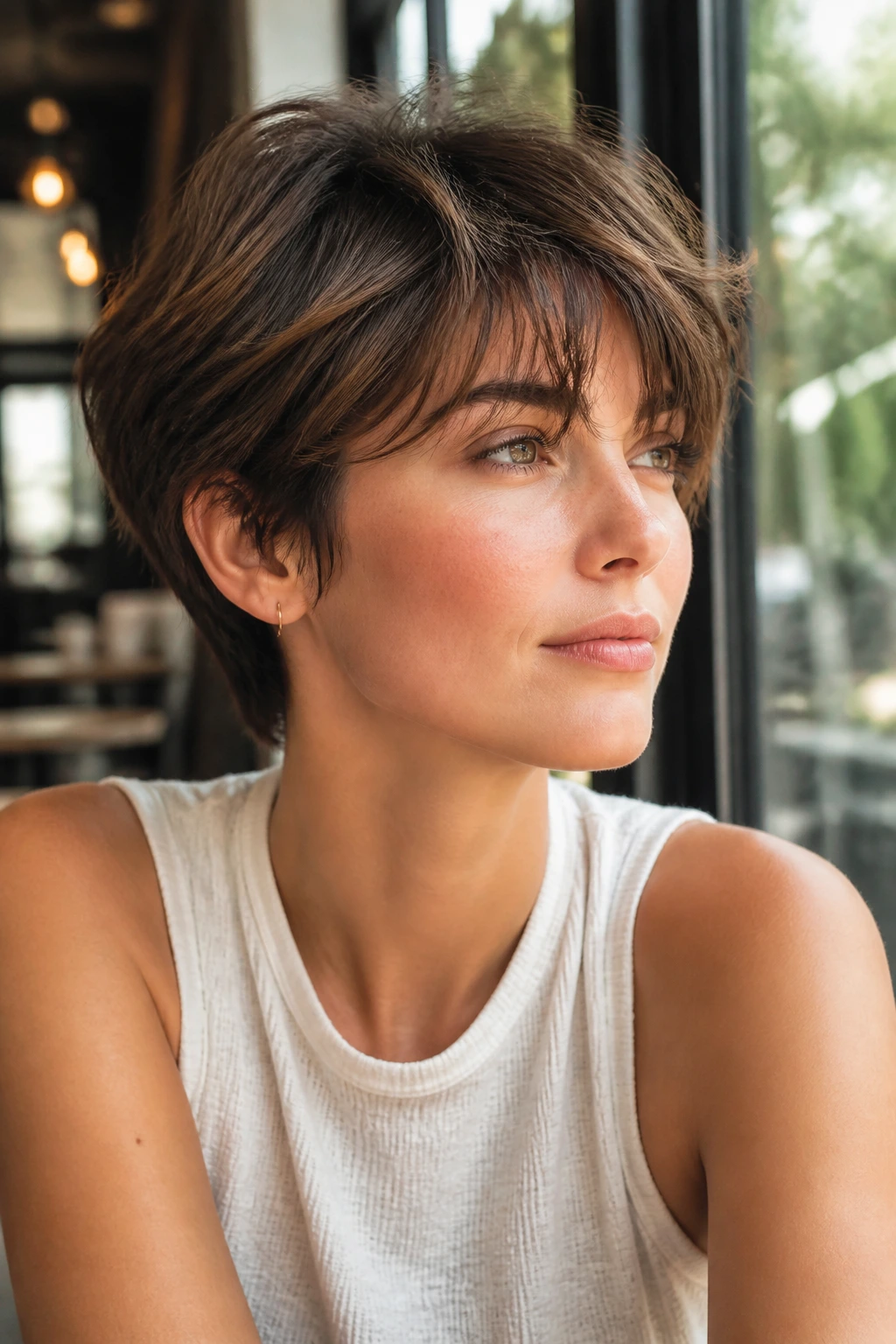
The bixie is the cut for people who want pixie energy without the full commitment. It keeps the shortness in the back and sides, then stretches the top and front just enough to build movement around the face. On fine hair, that extra length can make the cut feel fuller instead of more exposed.
For a heart-shaped face, the layered bixie lets you place softness where you need it most. The front can sweep across the forehead, while the sides stay close enough to avoid adding width in the wrong place. The shape grows out well too, which matters more than it gets credit for.
I like this cut when the layers are chunky rather than shredded. Too many tiny layers and the whole thing turns wispy fast.
14. Rounded Bob with Soft Curtain Fringe
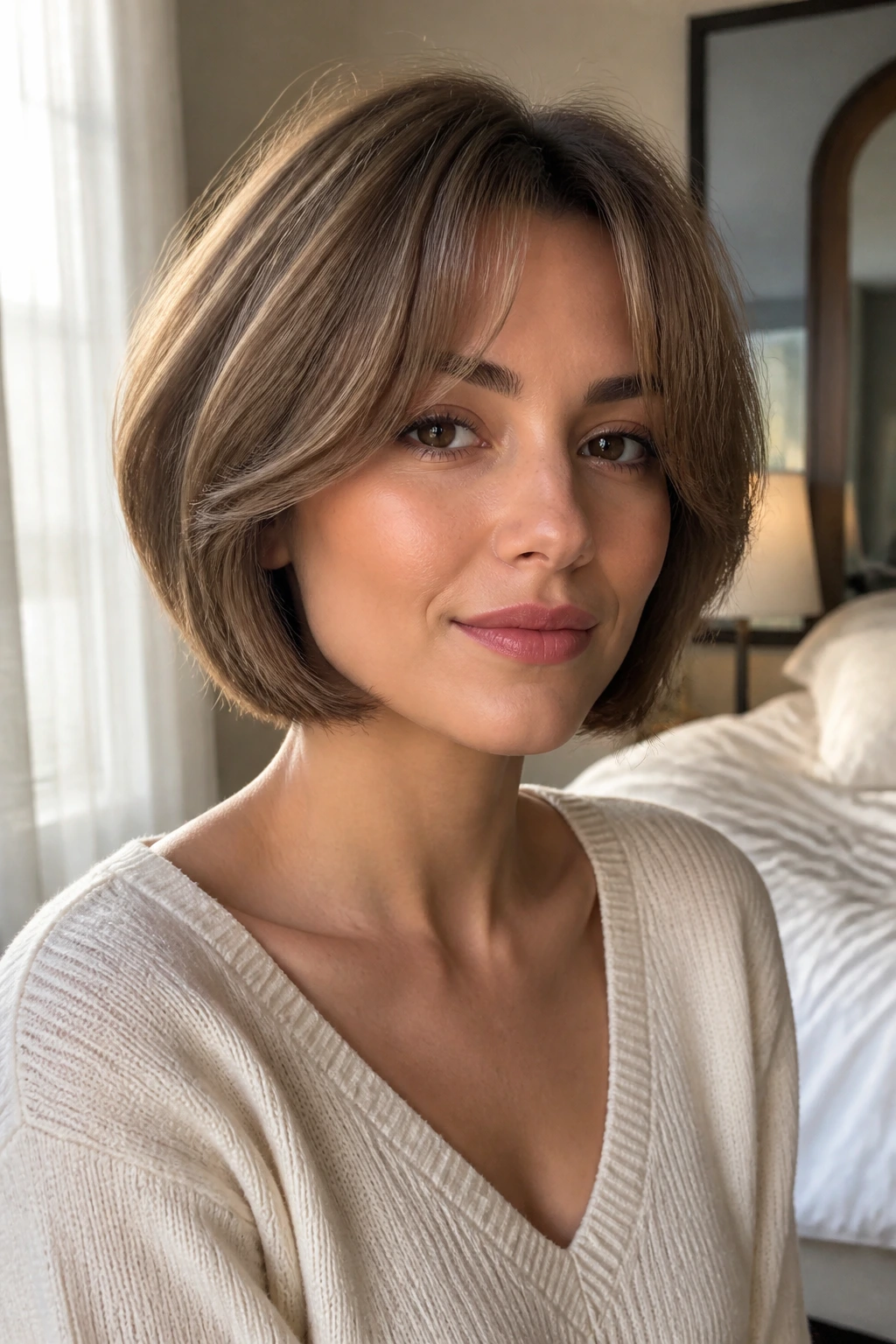
This is one of the gentlest fixes for a forehead that feels a little too dominant. The rounded bob curves inward around the jaw and chin, while the curtain fringe opens in the middle and softens toward the cheeks. That combination is kind to a heart-shaped face because it spreads attention across the upper half instead of concentrating it at the hairline.
Fine hair likes the rounded outline because it gives the perimeter a thicker look. The fringe should be soft enough to separate with your fingers, not heavy enough to sit like a curtain rod. Blow-drying it with a small round brush makes a difference here; the fringe needs a bit of bend to fall correctly.
It’s tidy, but not rigid. That’s the appeal.
15. Choppy Pixie with Long Top
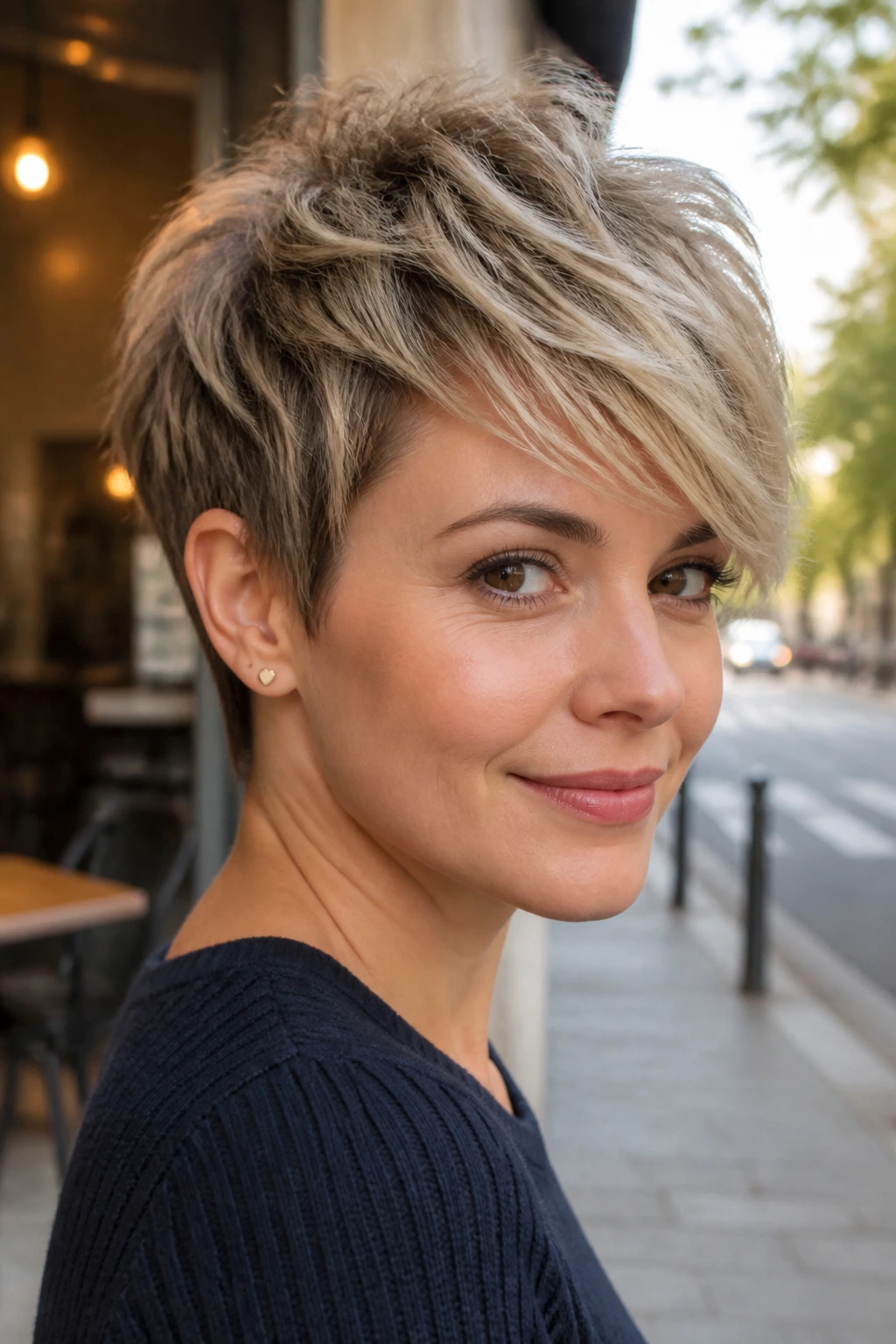
A choppy pixie needs a steady hand, not a lot of aggression. The top stays longer so you can sweep it across or slightly forward, while the sides are short enough to keep the silhouette clean. For fine hair, that longer top can create the illusion of fullness if it’s cut with purpose.
The long top helps heart-shaped faces by allowing diagonal styling. A little forward motion across the forehead is better than a straight-up spike, which tends to put all the emphasis right where you do not want it. The shape can feel edgy without looking unstable.
Use paste sparingly. A tiny bit at the roots, then another whisper through the ends. Too much product turns the texture into clumps.
16. Wavy Bob with Airy Ends
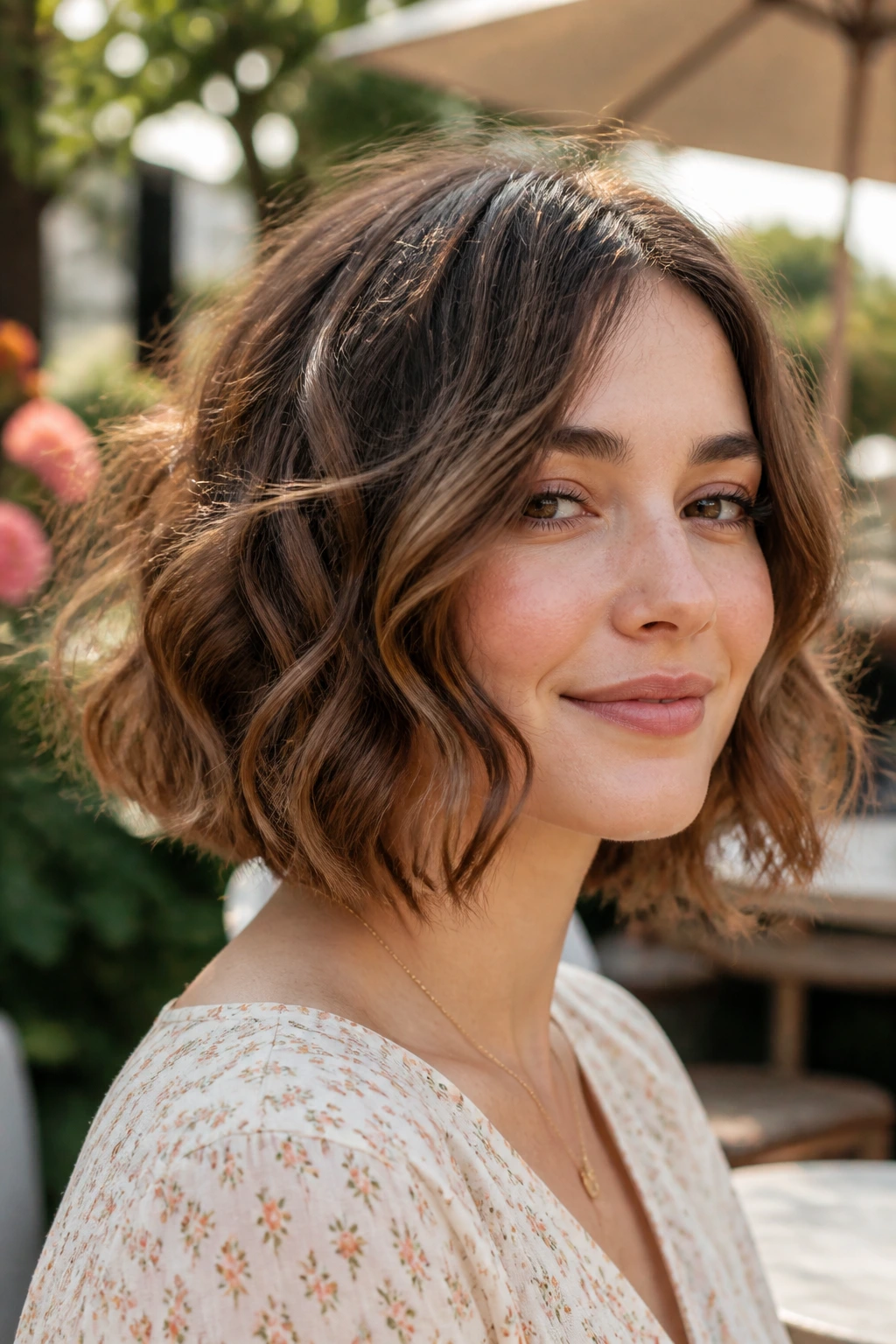
The ends should move when you turn your head. That’s the feeling you want from a wavy bob with airy ends: enough bend to make fine hair look fuller, enough softness at the perimeter that the cut does not lock into a helmet shape.
Heart-shaped faces benefit from the loose wave because it widens the lower half of the face a little. The airy ends keep the jawline from looking boxed in, while the waves build body around the mid-lengths. If your hair is naturally wavy, let it do most of the work. If it’s straight, a 1-inch iron and a quick bend alternating directions can fake the density pretty well.
The trick is not curling every strand to the same point. That’s how the style gets stiff.
17. Soft Mushroom Bob with Grown-Out Edges
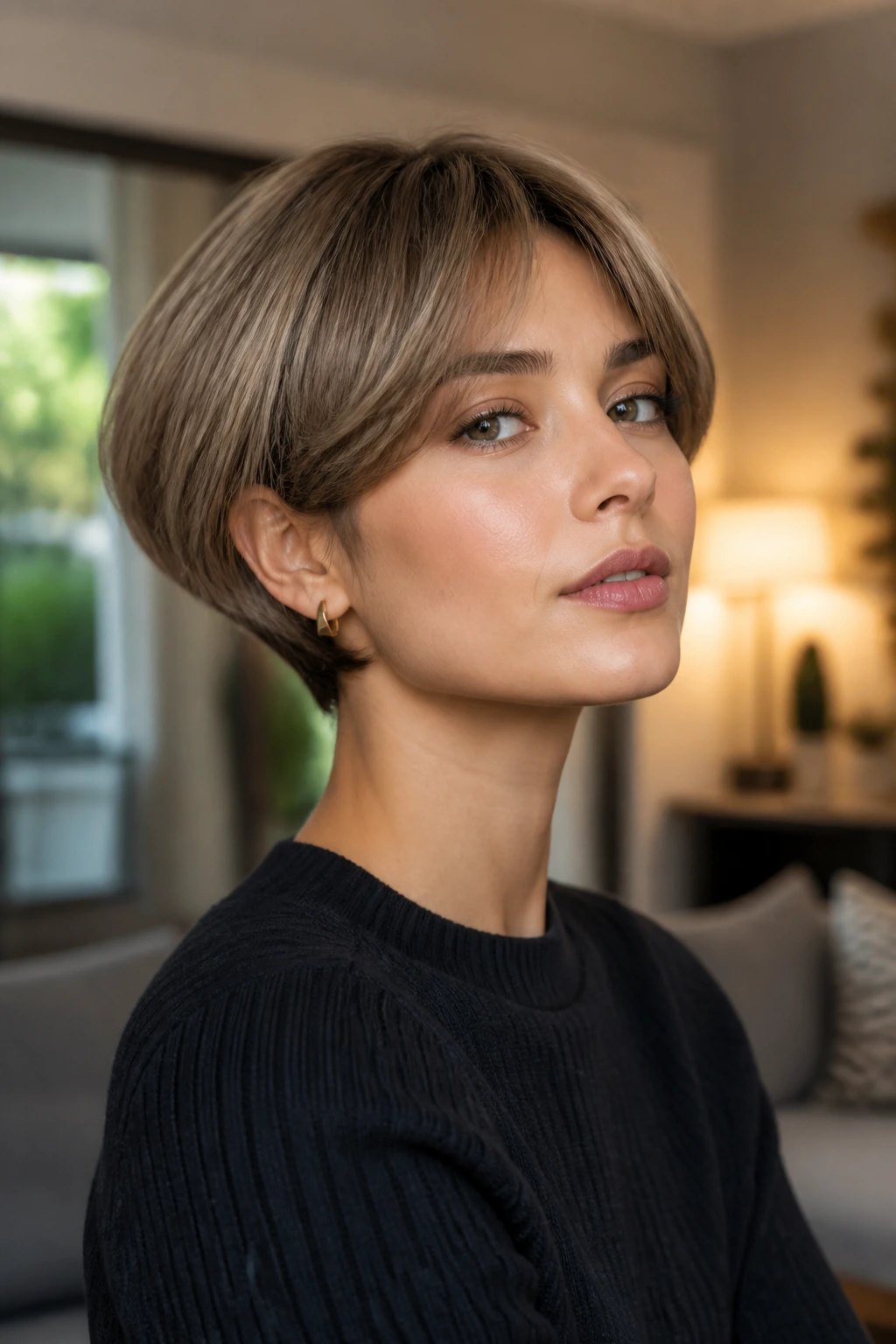
A softened mushroom shape sounds niche, but it solves a real problem: a flat crown and a narrow chin. The rounded outline adds width across the cheek area, while the grown-out edges keep the cut from feeling like a hard bowl. Done right, it reads modern and a little architectural.
Fine hair likes the compact perimeter because it makes the entire shape look fuller. The top needs enough length to drape, not stand up. For a heart-shaped face, that rounded width through the middle of the head is useful because it gently balances the forehead without making the chin disappear.
This is one of those cuts that either looks sharp or completely off, so the cut has to be precise. No sloppy texturizing here.
18. Sculpted Bob with Face-Framing Bevel
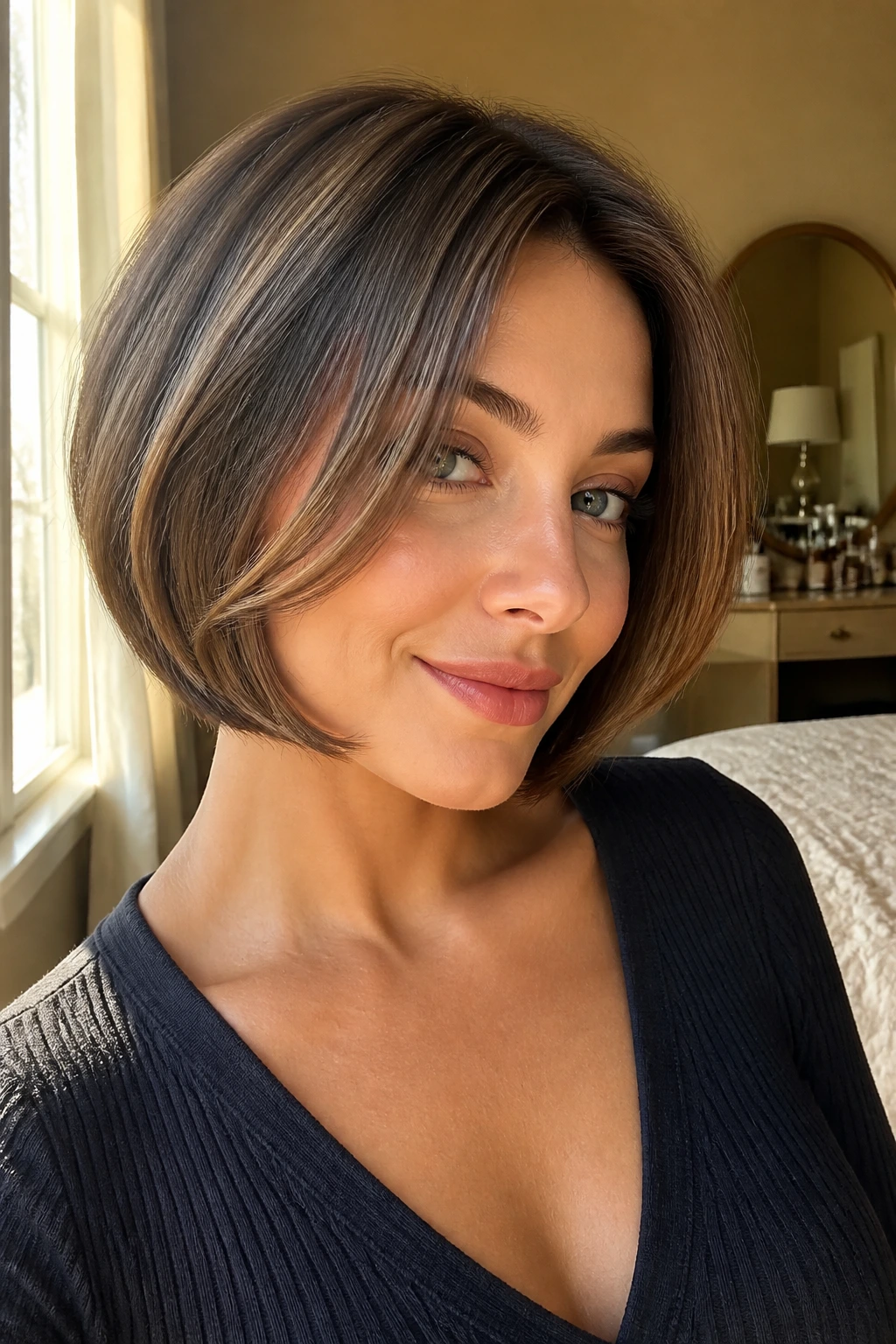
If you like a cut that looks tidy even when it air-dries, this is the neat one. A sculpted bob uses a soft bevel around the face so the edges turn inward at the cheek and jaw. That curve gives fine hair a fuller outline and keeps the length from hanging flat.
The face-framing bevel is flattering on a heart-shaped face because it directs the eye toward the middle and lower thirds. It’s less about drama and more about shape control. The cut doesn’t need heavy layers. It needs clean geometry.
A smoothing cream and a quick blow-dry with a paddle brush are usually enough. The cut should do the rest.
19. Tousled Crop with Micro Fringe
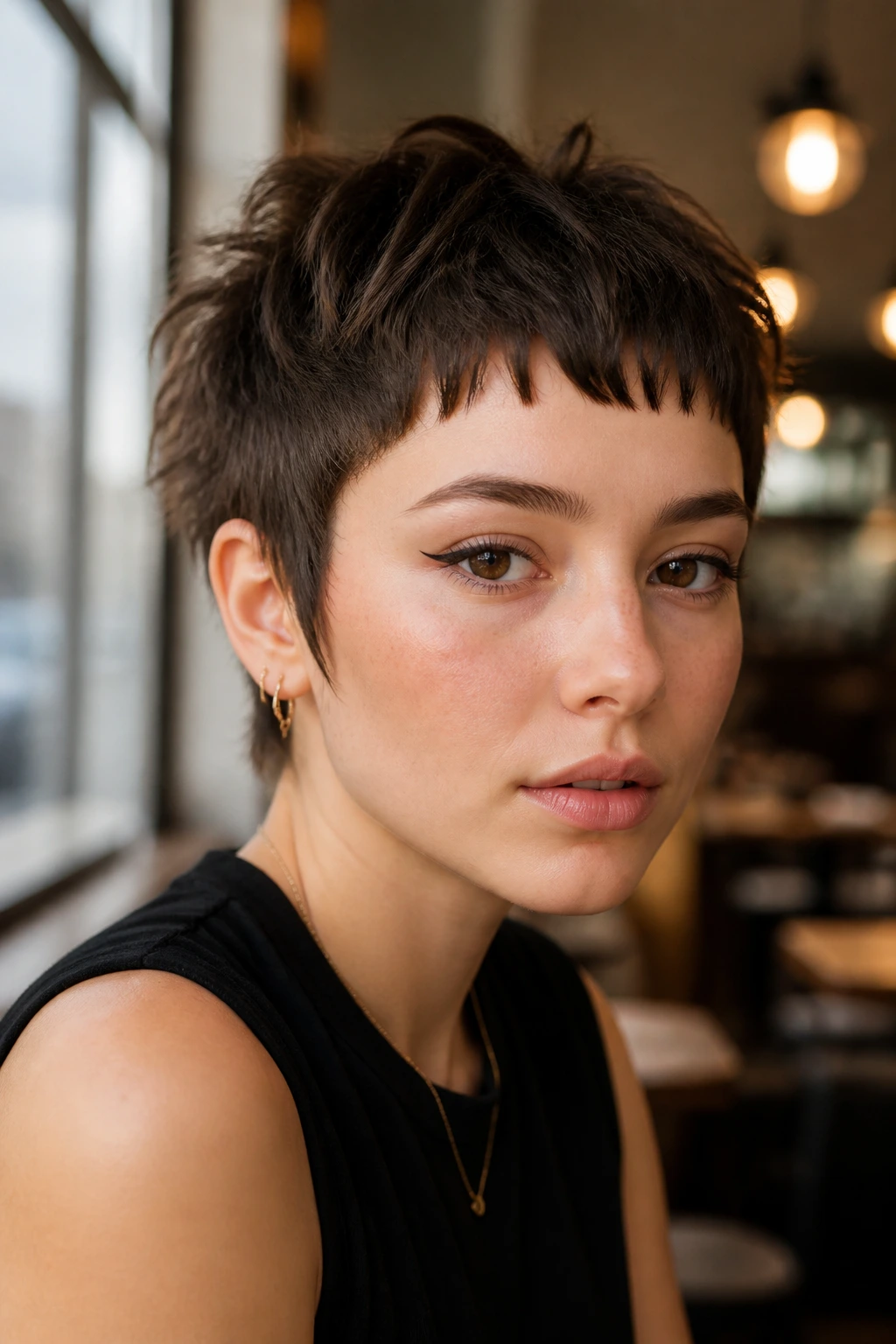
Micro fringe is not for the shy. When it’s paired with a tousled crop, though, it can look sharp and surprising in a good way. On fine hair, the crop keeps the back and sides compact, while the short fringe adds a strong line at the forehead.
That said, heart-shaped faces need balance here. The micro fringe works best when the sides have softness or texture, because the fringe alone can make the forehead feel wider. Keep the crop piecey, not puffy, and let a few longer sections fall near the temples.
This is an editorial cut. It will get attention. It also asks for regular maintenance, because tiny bangs do not hide bad grow-out.
20. Sleek Side-Part Pixie-Bob
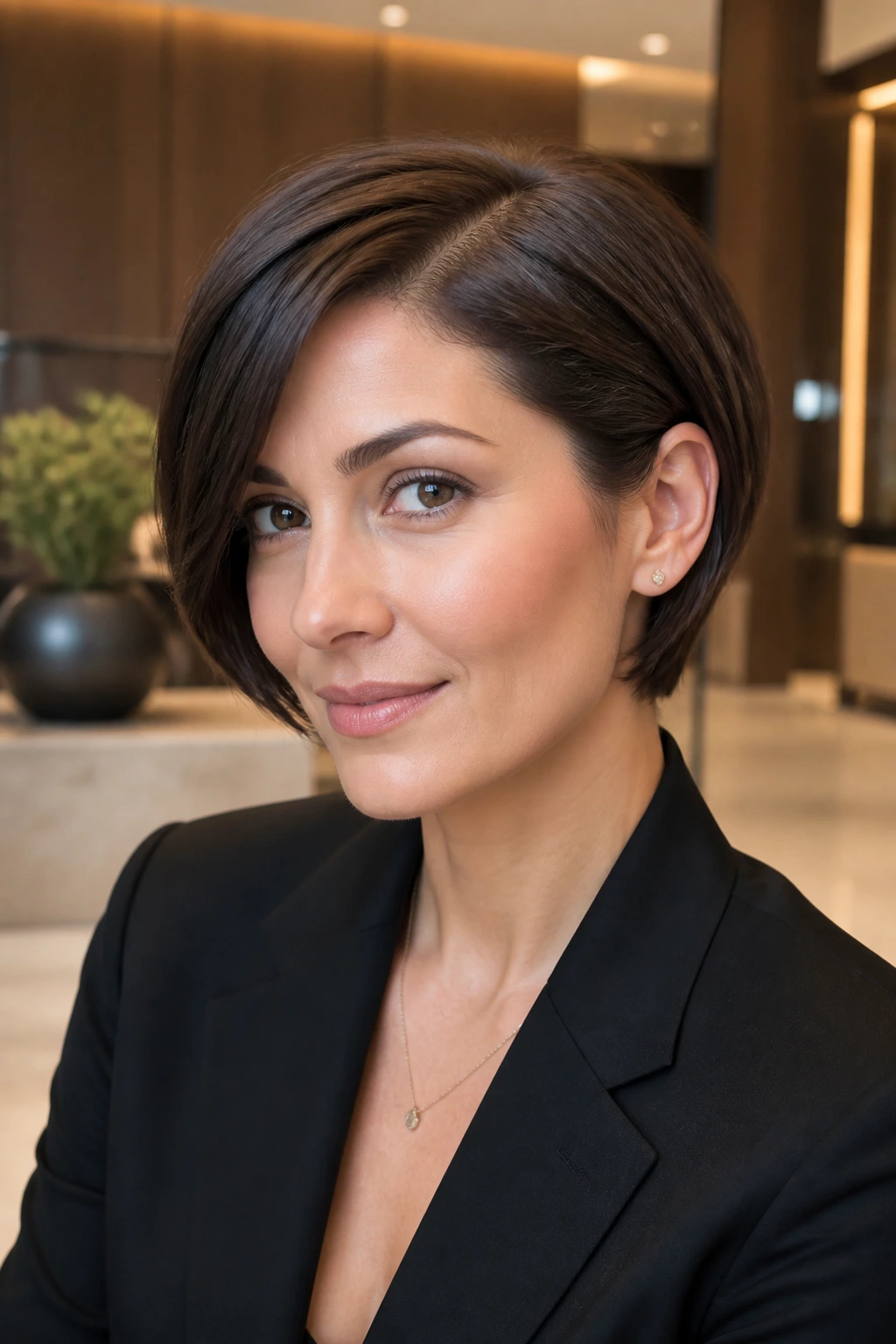
This is the dressier cousin of a long pixie. The side part gives it shape immediately, and the length through the top and sides keeps enough hair around the cheekbones to soften a heart-shaped face. It’s one of the most wearable short styles if you need something that can go from office to dinner without a full restyle.
Fine hair often looks more abundant when it’s smoothed into a controlled silhouette like this. The sleekness helps the perimeter stay visible, which is a big part of why the cut reads as full. Keep the finish soft rather than greasy; a little shine is good, but heavy oils flatten the whole thing.
A tucked-behind-one-ear variation works especially well here. Small change, big difference.
21. Curved Bob with Soft Graduation
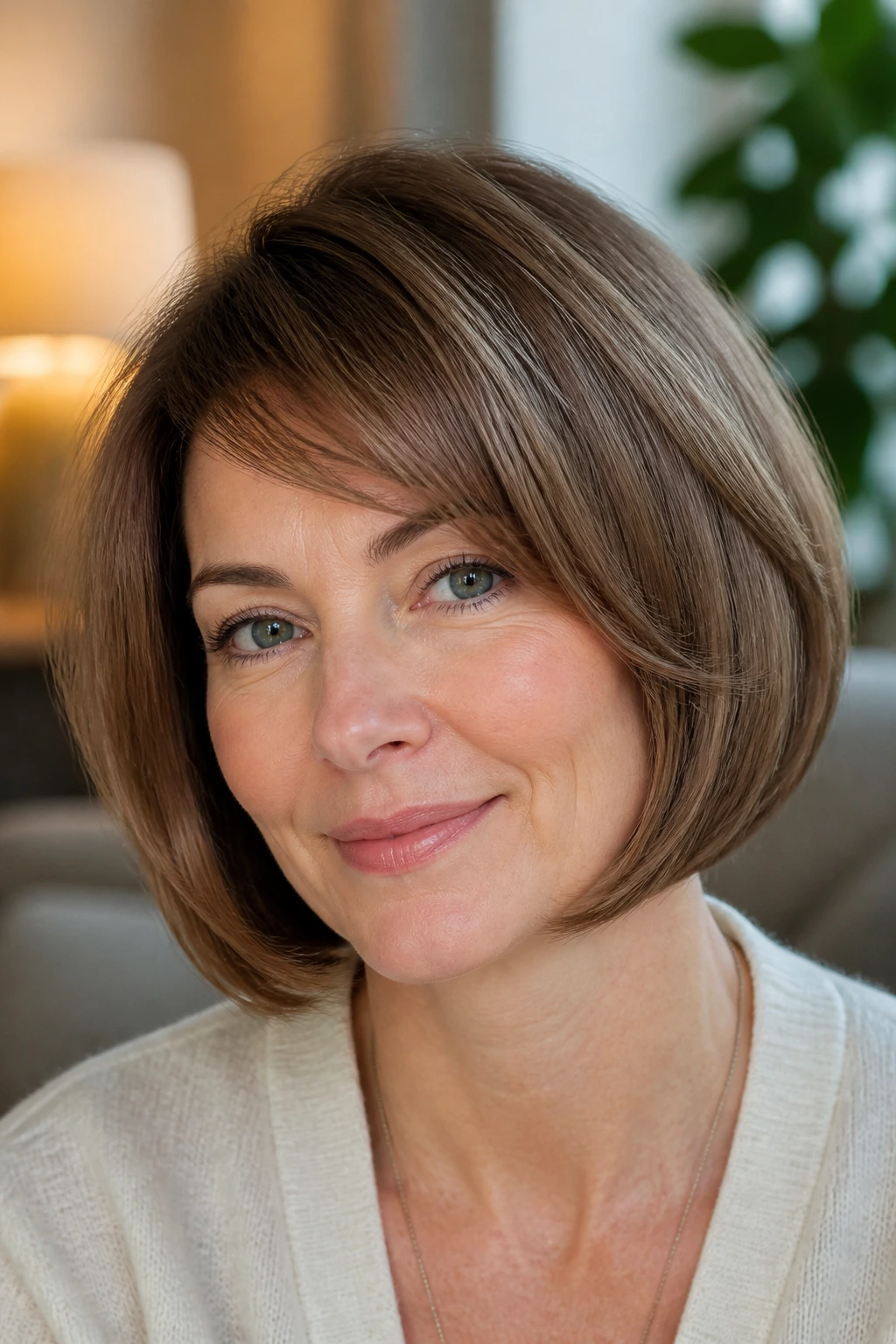
If you want the safest short haircut on this list, start here. The curved bob hugs the face at the ends, while the soft graduation in the back gives the crown some lift without turning it into a stack of obvious layers. It’s a quiet cut, and that’s part of why it works so well.
For fine hair, the curve creates the illusion of density along the edge. For a heart-shaped face, it adds a bit of width below the cheekbones, where the face needs it most. The shape should feel rounded, not round-brushed into stiffness.
This is a cut that holds up well with minimal styling. A quick blow-dry and a slight bend at the ends are often enough.
22. Soft Razor Crop with Sweepy Bangs
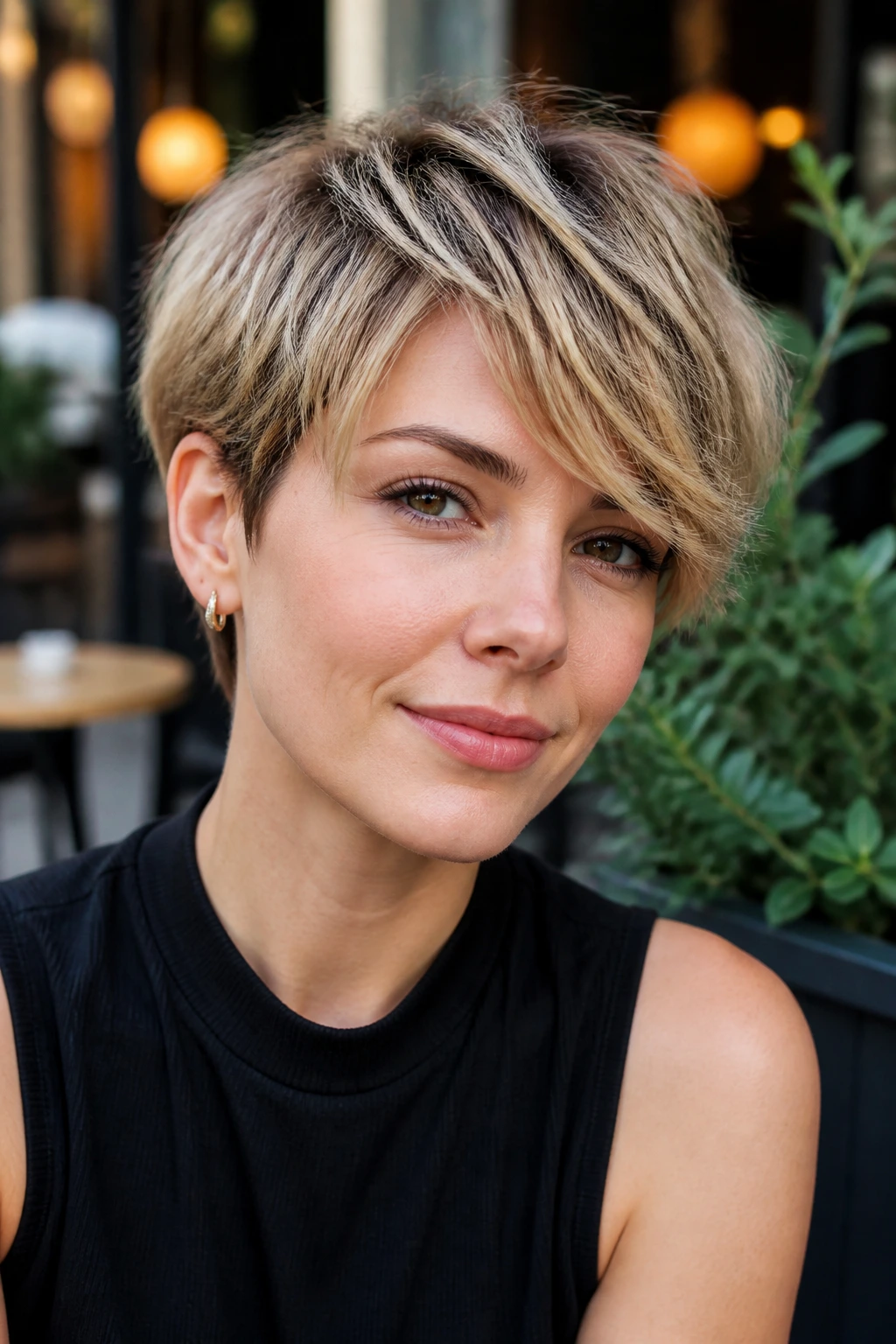
Razor cutting can go wrong on fine hair if it’s used like a shredder. Done carefully, though, a soft razor crop gives the ends a light, airy motion that looks modern without looking thin. The sweepy bangs are the part that make this work for a heart-shaped face, because they move diagonally instead of sitting flat across the forehead.
The crop should stay controlled at the sides and a little longer at the top, so the texture has somewhere to go. Fine hair can absolutely wear this shape, but only if the razor work is subtle. If the ends feel wispy in the chair, they will look wispy at home too.
This one rewards a light hand with product. A small amount of paste or cream is enough. More than that and the movement disappears.
Why These Shapes Work Together
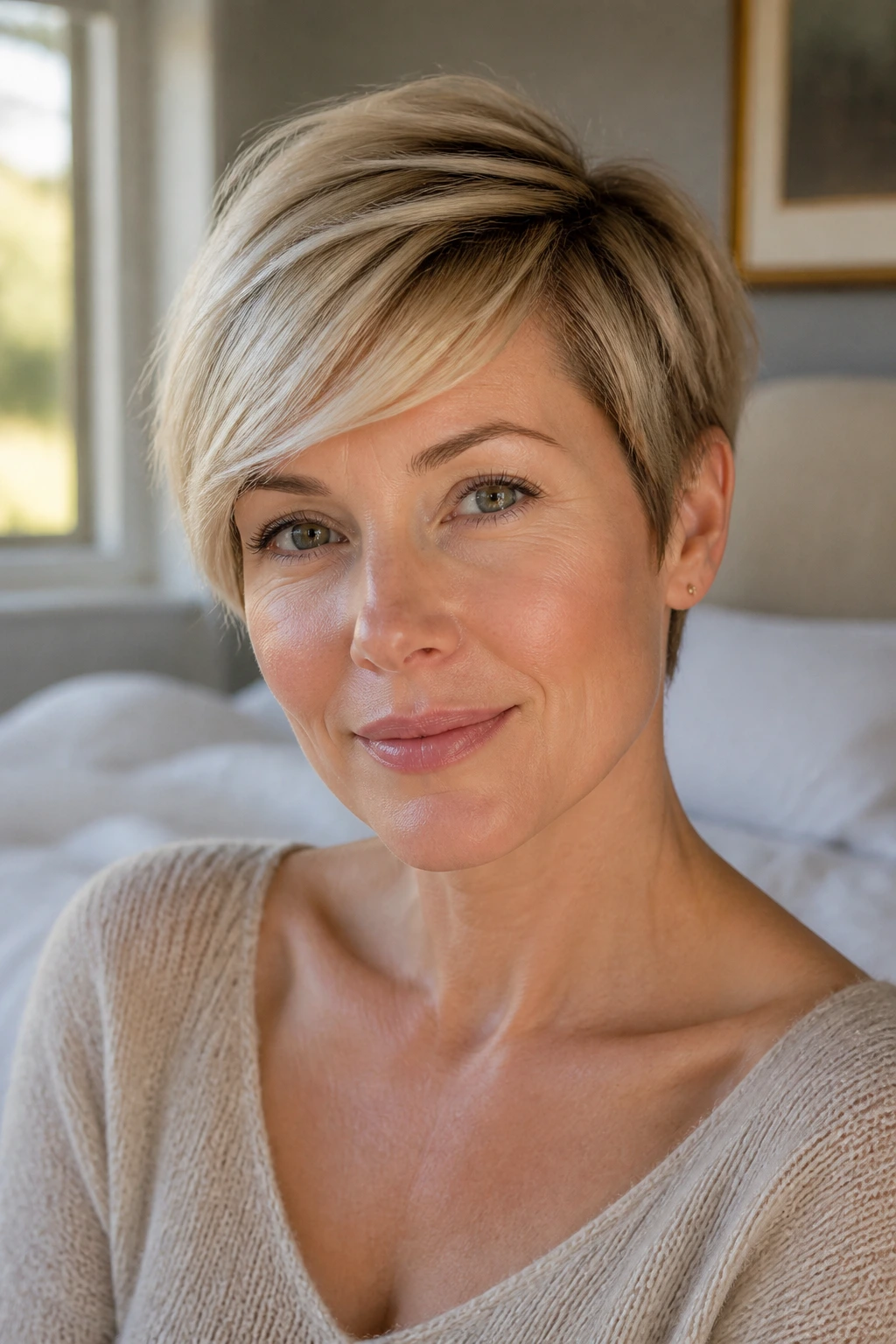
The overlap between fine hair and a heart-shaped face is more interesting than it first looks. Fine hair needs lines that hold, not layers that evaporate. Heart-shaped faces need balance below the forehead, not more attention on top. That means the best short cuts here tend to share two traits: they keep the perimeter firm and they soften the front in some controlled way.
Fine Hair Needs a Strong Edge
A blunt bob, a beveled curve, or a compact pixie outline gives the hair somewhere to stop. That stopping point is what creates the look of thickness. When the ends are overly thinned, the eye sees gaps instead of shape, and fine hair starts looking tired even if it’s clean.
Heart-Shaped Faces Need the Eye to Move Down
Side-swept fringes, diagonal parts, cheekbone pieces, and jaw-grazing lengths all do the same job in different ways. They move the eye away from the upper third of the face and into the middle and lower thirds, which softens the natural width at the forehead.
Short hair can be flattering here because it is direct. There’s no dead weight dragging everything downward. There’s just shape, and if the shape is right, that’s enough.
What to Keep in Your Styling Kit

-
Lightweight volumizing mousse: Use this at the roots on towel-dried hair when you need lift without stiffness.
-
Root-lifting spray: Best for pixies, bixies, and bobs that flatten at the crown by midday.
-
1-inch round brush: Small enough to steer fringe and short layers without making the ends flip too wide.
-
Blow dryer with a concentrator nozzle: The nozzle matters; it lets you aim the air where the lift should live.
-
Heat protectant spray: Necessary if you use a flat iron, curling iron, or hot brush more than once a week.
-
Matte paste or light pomade: Good for piecey crops and pixies, but use tiny amounts so fine hair doesn’t clump.
-
Texturizing spray: Helpful on wavy bobs and longer pixies when you want separation without crunch.
-
Dry shampoo: Useful on day two, but don’t layer it on for a week straight or the roots start looking dusty.
-
Fine-tooth comb and section clips: Small tools, big difference when you’re trying to keep a side part or fringe in place.
What to Tell the Stylist Before the First Snip
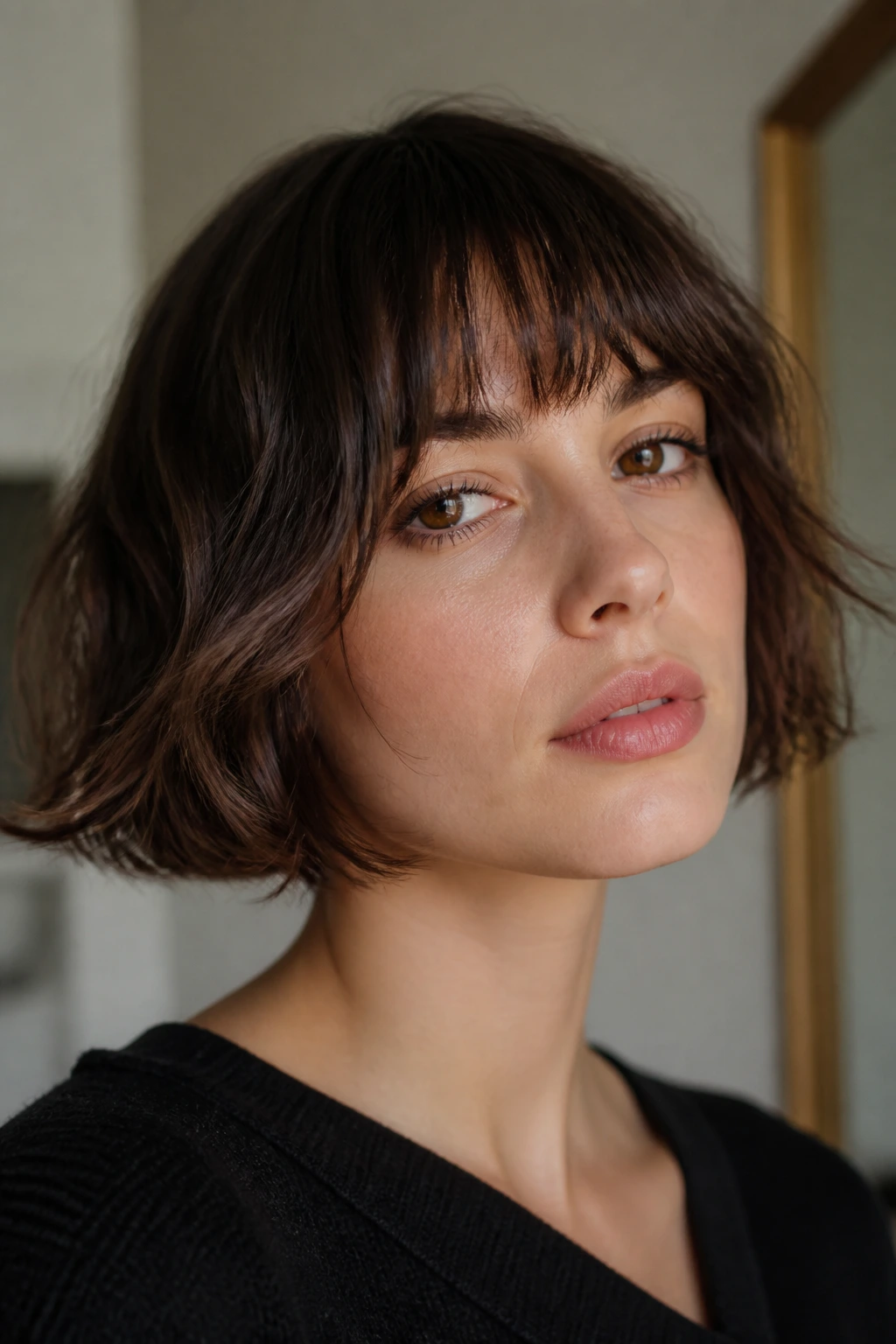
Bring two photos, not ten. One should show the front, one should show the side. That’s enough to communicate the silhouette without drowning the conversation in reference shots that all disagree with each other. If your hair is fine but dense, say that out loud. If it’s fine and sparse, say that too. Those are not the same thing, and they should not get the same cut.
Ask where the weight will sit. That one question changes everything. On this face-and-hair combination, the answer should usually be “around the perimeter and slightly below the cheekbones,” not “all over the crown.” If a stylist reaches for thinning shears too quickly, pause the conversation. Fine hair can lose its shape in a hurry when the ends are over-thinned.
Bang length matters more than the word “bangs.” Brow-grazing fringe, side fringe, and curtain fringe each behave differently. Tell the stylist how much forehead you want to show and how much daily styling you’re willing to do. There’s no point in getting a beautiful fringe that needs a full blowout every morning if you hate blow-drying.
How to Wear the Shape at Home
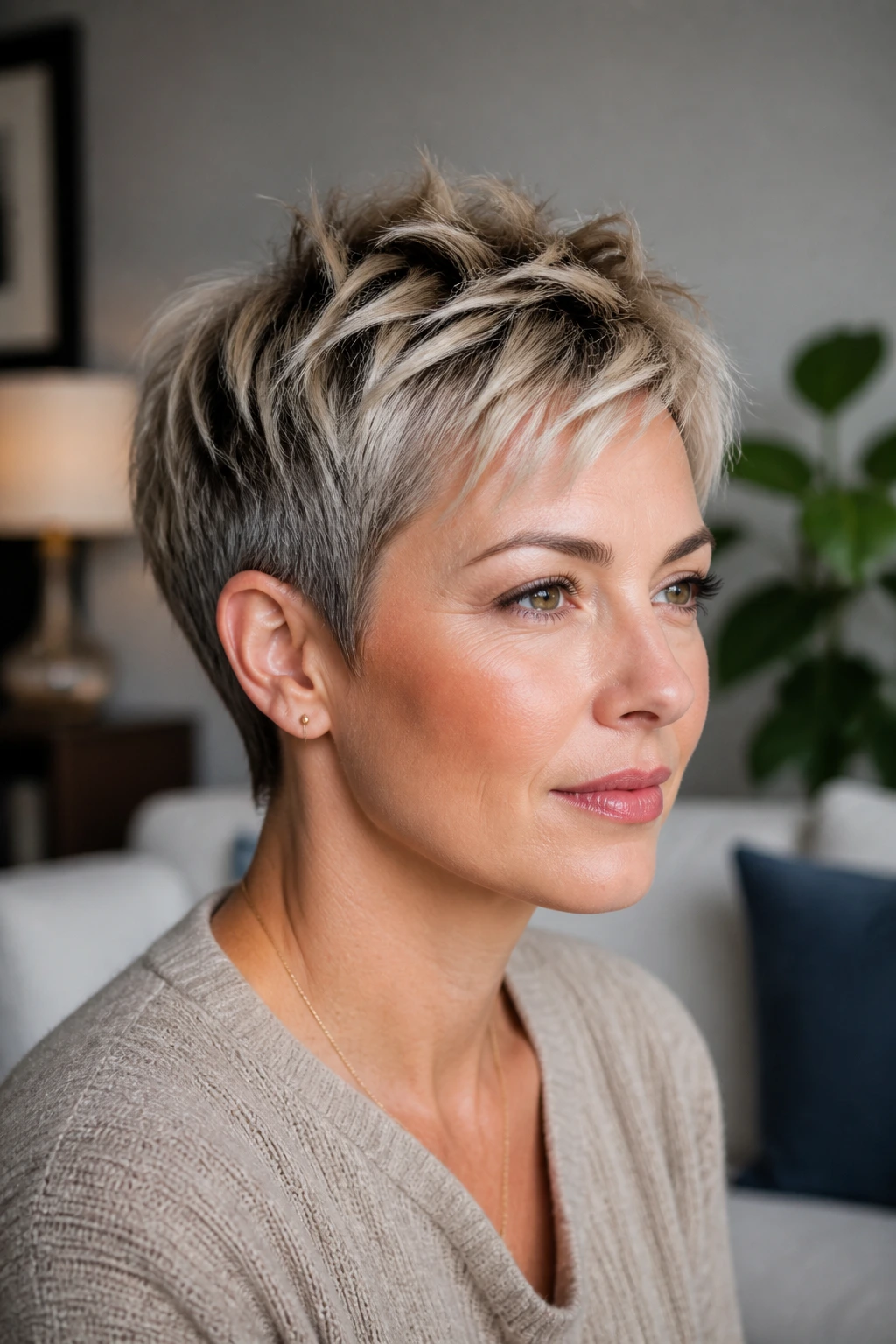
Parting: A slight off-center part is usually the safest move for a heart-shaped face. It softens the width at the forehead and gives fine hair a little lift at the root without forcing a dramatic style line.
Shape: Keep the volume closer to the sides and cheekbones when the cut allows it. Too much height at the crown makes the face read longer on top, and that’s rarely the goal here.
Texture: Fine hair usually looks better with controlled texture than with loose, fluffy separation. Think small pieces, clean movement, and enough product to define the cut without making it oily or sticky.
Finish: Leave the ends neat. A polished perimeter gives the illusion of thickness, while ragged tips can make the whole cut look half-grown even on day one.
Accessories: Small hoops, stud earrings, and simple clips tend to work better than bulky headbands. The point is to keep the face open while the haircut does the balancing work.
Small Styling Tweaks That Change the Whole Cut
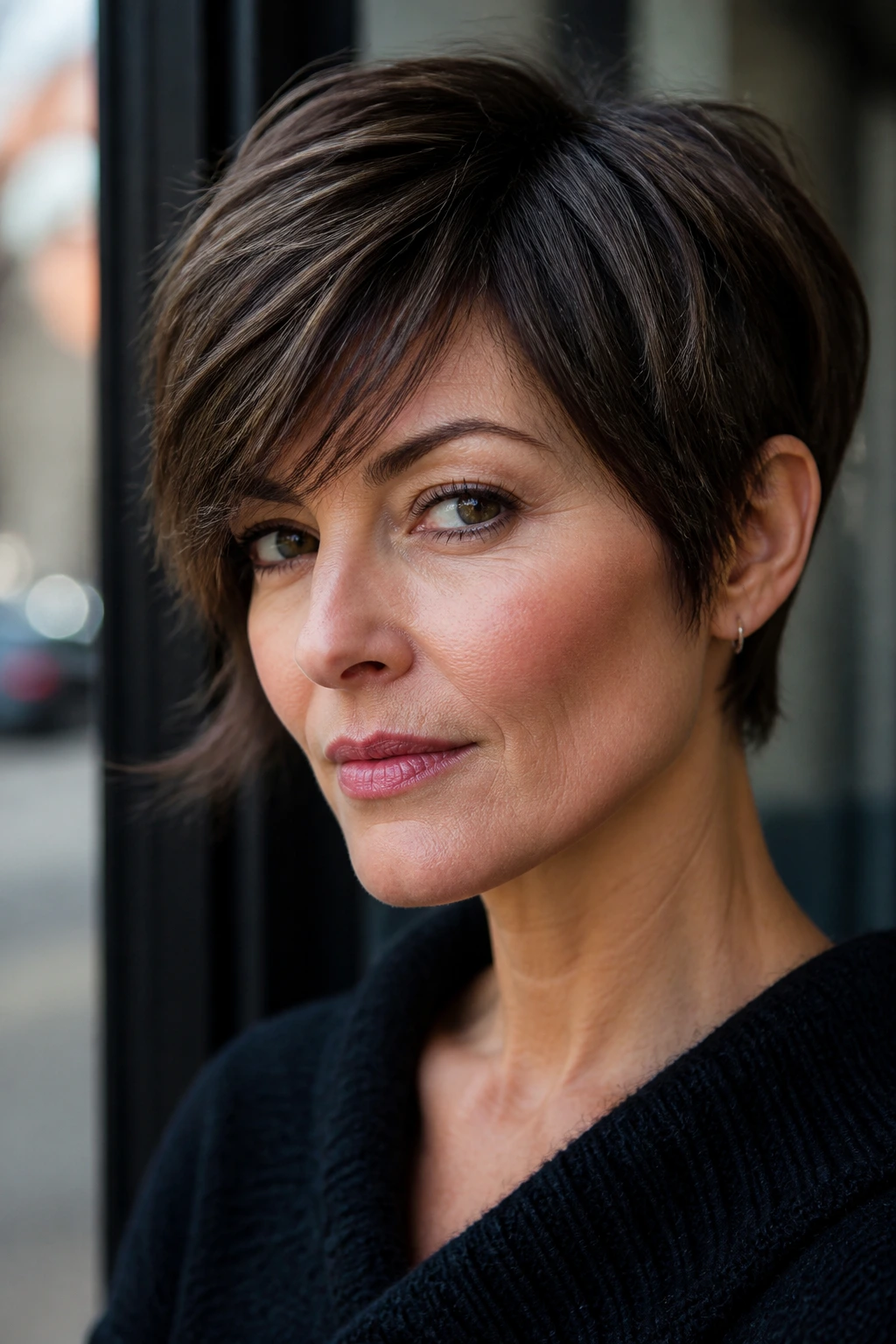
Root Lift: Blow-dry the roots in the opposite direction of your part for the first minute, then flip back. That little detour creates more lift than people expect, especially on fine hair that lays flat fast.
Color Placement: Soft ribbons of highlight around the temples and cheekbones can make the cut read fuller because they break up the shape in a good way. Keep the contrast gentle; heavy striping can make fine hair look thinner, not thicker.
Texture Control: If a cut looks too airy, use a dryer with a nozzle and smooth the surface first, then add texture only at the ends. That order matters. Once the whole head is puffed up, it’s hard to bring the shape back.
Fringe Tuning: A fringe that feels too blunt can be softened by changing the way it dries. Clip the center for 2 to 3 minutes while it cools, then sweep the sides out with your fingers. Small changes, big payoff.
Keeping the Cut Sharp Between Appointments
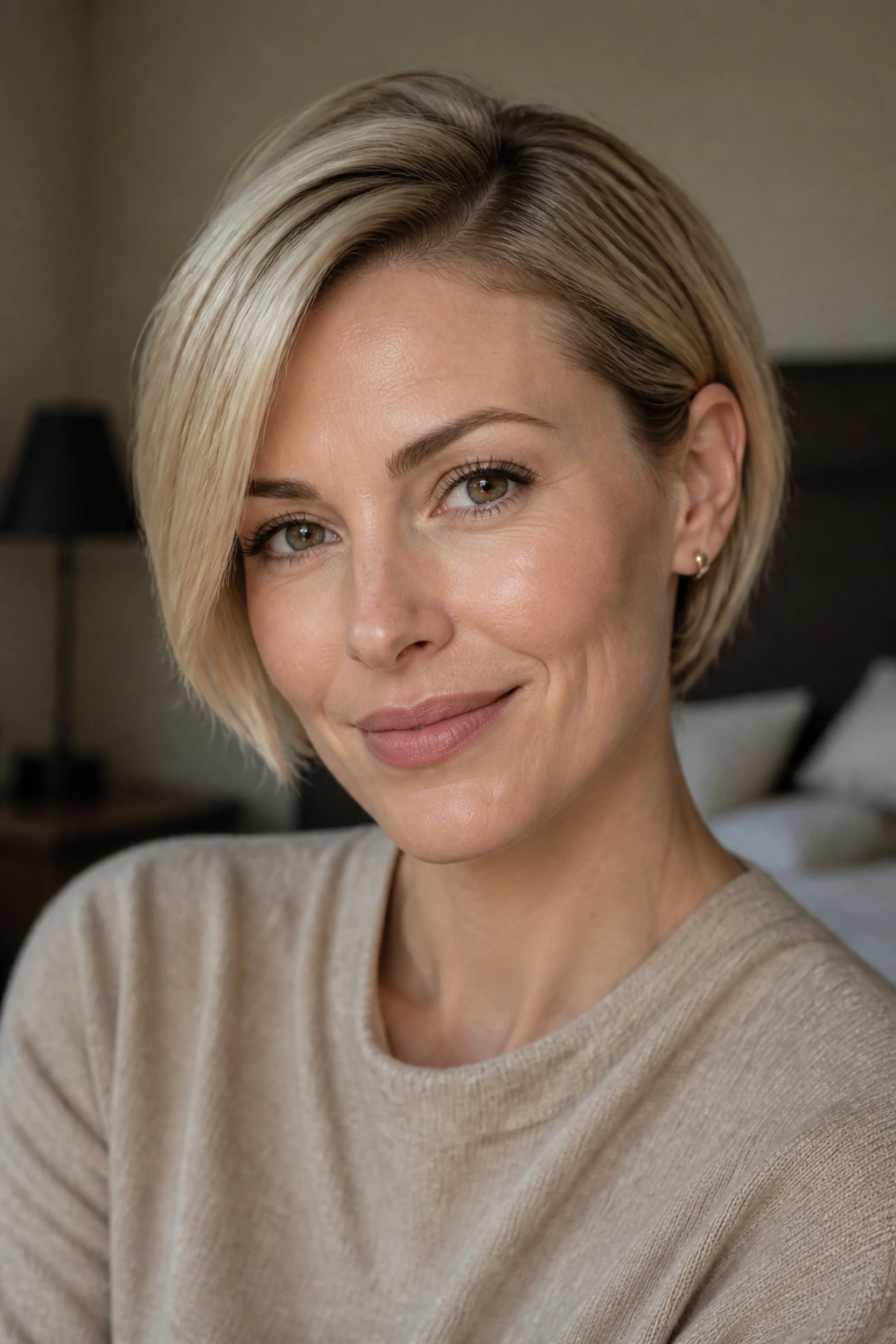
Pixies and crops usually need shape-ups every 4 to 5 weeks. Bixies and shorter bobs can stretch to 5 to 7 weeks if the perimeter stays clean. Chin-length bobs and curved bobs often hold for 6 to 8 weeks, though the fringe may need a trim sooner if it sits on the brows.
Wash frequency matters too. Fine hair often looks better when it’s cleaned before the roots start to separate in greasy strands, which can mean every other day or every 3 days. If you use dry shampoo, work it in at the roots and brush it through the next morning so it doesn’t collect in one dusty patch.
Heat styling should be light-handed. A quick blow-dry with a round brush or a few passes with a small iron is usually enough. If you’re using a hot tool every day, the cut will start to look tired faster, and the ends will show it first.
Common Mistakes That Flatten the Shape
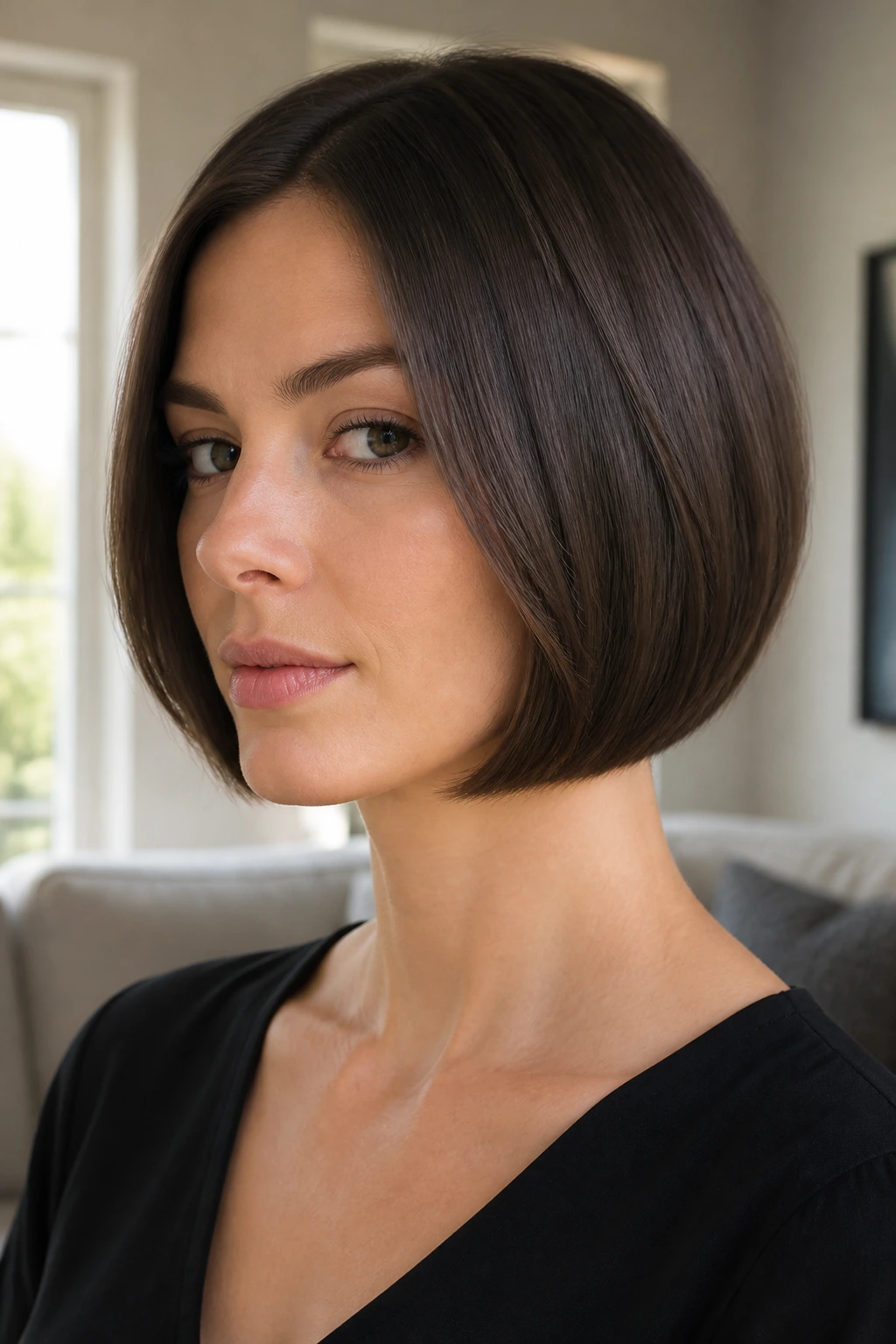
-
Too much texturizing at the ends: The symptom is airy, broken-looking tips that make fine hair seem thinner than it is. The fix is a cleaner perimeter and softer internal layering, not more thinning shears.
-
A center part that exposes the whole forehead: On some heart-shaped faces, a center part can work. On many, it puts the widest part of the face right on display. Shift the part a little off-center and the balance improves fast.
-
Crown height with no side balance: A lot of volume on top can make the face feel top-heavy. Keep lift modest and let the sides or fringe do some of the balancing work.
-
Products that are too rich: Heavy creams, thick oils, and buttery leave-ins can make fine hair hang in sections. Swap to lightweight mousse, spray, or a tiny dab of paste.
-
A cut that is too short at the temples: If the sides get cut too tight, the forehead can look even wider and the face loses softness. Leave enough side length to frame the upper cheekbones.
-
Skipping trims because the grow-out seems “fine”: Fine hair loses shape quietly. A cut can go from tidy to shapeless in two weeks if the perimeter starts to fray.
Variations and Adaptations to Try
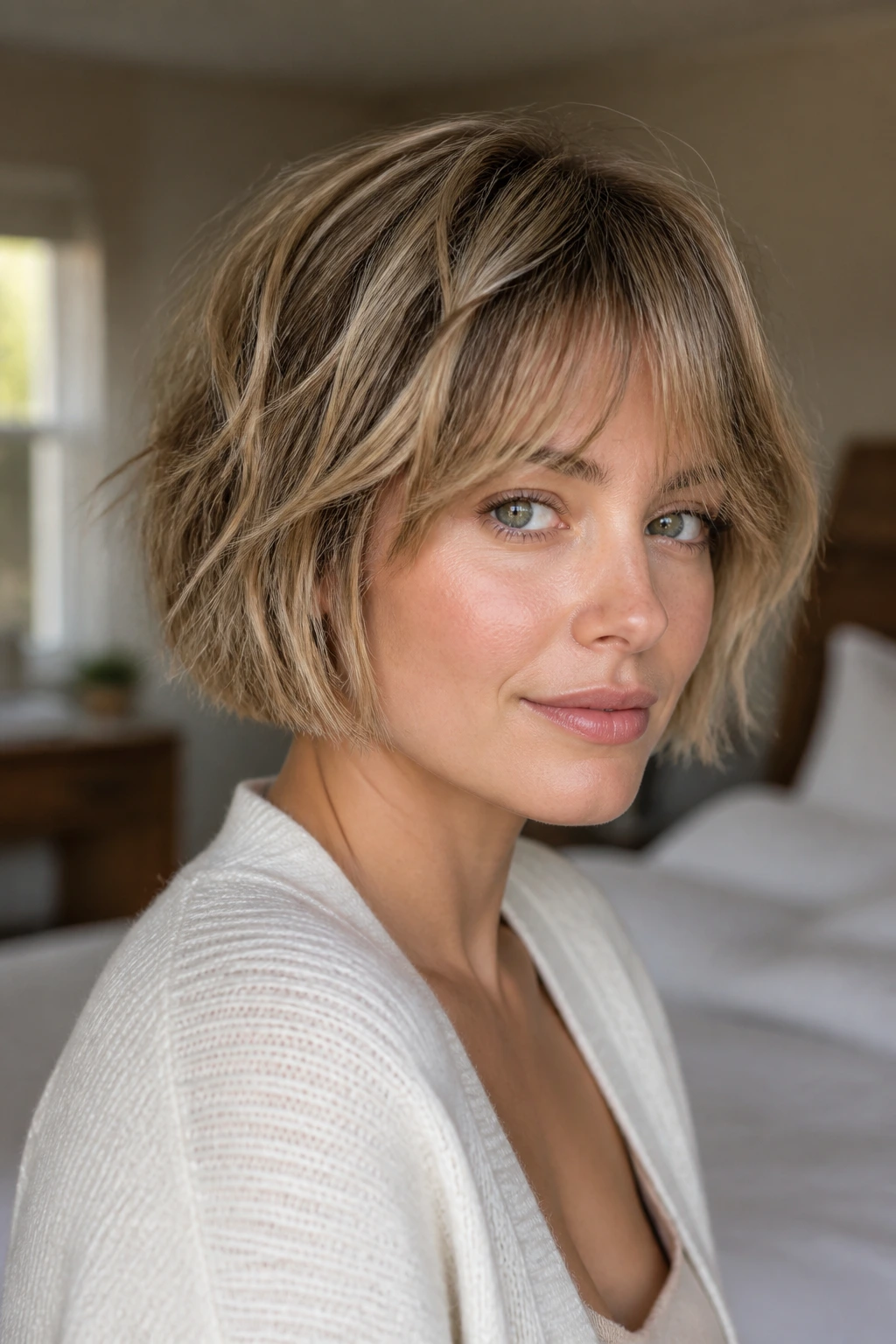
Air-Dried Texture Version: Best for wavy or lightly bent fine hair. Ask for a cut that keeps the perimeter blunt but leaves enough movement in the top layers so the hair can dry with shape, not puff.
Polished Blowout Version: Ideal if you like a cleaner finish and don’t mind using a round brush. A bob, bixie, or sleek pixie-bob works especially well here because the smooth surface makes the hair look denser.
Curly and Wavy Version: Fine curls need length somewhere in the shape so they don’t frizz into nothing. Keep the fringe soft, the ends tidy, and the sides controlled so the curl pattern can build body without swallowing the face.
Grow-Out-Friendly Version: This is for anyone who hates frequent trims. Choose a long pixie, bixie, or softly graduated bob with lines that stay readable as they lengthen, then avoid razor-heavy detailing that disappears fast.
Bolder Fringe Version: If you like a stronger style statement, push the fringe into brow-grazing, sweepy, or micro territory. Just keep the rest of the cut balanced so the forehead detail does not overpower the face.
Frequently Asked Questions
Should fine hair avoid layers entirely?
No, but the layers should be purposeful. Fine hair usually looks better with fewer, longer layers that support the shape instead of short, shredded pieces that make the ends look thin.
Are bangs good for heart-shaped faces?
Yes, if they’re chosen with care. Side-swept bangs, curtain fringe, and soft brow-grazing fringe usually work better than heavy, blunt bangs that sit like a wall across the forehead.
Is a pixie or bob better for very flat hair?
A bob is often easier if you want the hair to look fuller without daily styling. A pixie can work too, but it tends to need more root lift and more frequent trims to keep its shape.
Can I wear a middle part with a heart-shaped face?
You can, but a perfect center part is not always the most flattering option. A part that sits just off-center usually softens the forehead a bit and gives fine hair a little more lift at the roots.
What short cut makes fine hair look thickest?
A blunt bob or curved bob usually wins on sheer density. The clean perimeter creates a thicker-looking edge, which is more useful than trying to fake fullness with a lot of wispy layering.
How often should I trim short hair if it’s fine?
Pixies and crops often need attention every 4 to 5 weeks, while bobs can usually go 6 to 8 weeks. Fringe may need a touch-up sooner if it starts brushing your eyelashes and collapsing into the eyes.
What products should I skip?
Heavy oils, thick curl creams, and anything that promises extreme smoothness can flatten fine hair fast. Look for lightweight mousse, root spray, texturizing spray, and a little paste only where you need definition.
What if my hair is fine but also wavy?
Choose a cut that leaves enough length for the wave to form. A wavy bob, a long pixie, or a soft bixie usually works better than a super-short crop that can separate into frizz.
The Shape That Makes the Difference
The best short cuts for fine hair and heart-shaped faces do not try to fight the hair or hide the face. They place the weight carefully, keep the line clean, and give the eye a place to land below the forehead. That’s the whole job, really. Not more hair. Better shape.
If you’re standing between a pixie and a bob, pick the one that gives you the most control at the crown and the most softness where your face narrows. Then ask your stylist to show you where the weight sits when the hair moves. That small conversation usually matters more than the trend name on the inspiration photo.