



A-line medium bobs for round faces with thin hair have a very specific job: they need to skim the cheeks, keep enough weight at the ends to look full, and still give you that angled line that makes the whole head look longer. Get that balance right and the cut does a lot of quiet work for you. Get it wrong and the hair can puff at the sides or collapse flat by noon. Thin hair is unforgiving that way. It shows everything.
The sweet spot is usually a medium length with a cleaner front angle, not a choppy pile of layers that eats up density. A little graduation in the back can help lift the nape. Too much stacking can go helmet-like. Too much thinning can leave the perimeter see-through. The best versions of this cut know when to hold their shape and when to soften at the front.
What makes this collection useful is that it doesn’t treat every bob like the same haircut in a different outfit. Some versions lean sleek. Some use movement. Some keep the line blunt so the ends look thicker. Some add a side part or a fringe to break up facial roundness without stealing volume. That’s the real trick here: the angle should flatter your face, while the perimeter does the heavy lifting for your hair.
Why This Shape Keeps Working for Round Faces and Fine Hair
Length below the cheekline changes everything. When the front pieces fall closer to the jaw or collarbone, they create a vertical line that visually narrows the widest part of a round face. That’s why a medium A-line bob usually behaves better than a chin-length cut that stops right where the face is fullest.
The perimeter is your friend. Thin hair often looks better when the outline is a little solid and deliberate. A clean edge makes the ends look thicker than they are, especially if the cut keeps its weight through the front corners instead of fraying into too many short layers.
Angle beats bulk. You do not need a dramatic inverted bob to get shape. Even a subtle angle from a shorter back to a longer front gives the hair direction, and direction is what stops fine strands from looking like they’re just hanging there.
A side part or off-center part breaks the circle. Round faces tend to look fuller when the hair is split dead center and worn flat. A small shift in the part creates a diagonal line, and diagonals are your quiet little allies here.
These cuts also grow out better than people expect. A medium A-line bob can keep looking intentional for weeks after a trim because the shape is built into the silhouette, not only the styling. That matters when your hair doesn’t have a ton of density to spare.
1. Sleek Chin-Skimming A-Line Bob
This version is all about a clean front line that barely clears the jaw. The back stays a touch shorter so the cut tips forward, but the real effect comes from the smooth perimeter. On thin hair, that blunt-looking edge makes the ends feel fuller than a heavily layered cut ever will.
It works especially well if your hair falls straight or only bends a little on its own. The shape keeps the face from looking wide because the front pieces don’t stop at the cheeks. They slide past them. That tiny difference matters more than people think.
Ask for a minimal-layer A-line bob with the front landing just below the chin and a soft graduation in the nape. Then style it with a paddle brush or a flat brush and a light smoothing cream. Keep the crown from going flat, but don’t overbuild it. Too much root lift on this cut can make the line feel blocky.
2. Collarbone A-Line Bob with Feathered Ends
Want the bob to feel a little softer without losing shape? This is the one. The front lengths brush the collarbone, which gives a longer line through the face, while the ends are feathered just enough to keep the cut from feeling heavy. It’s a good move if your thin hair tends to split at the tips.
The feathering should stay subtle. If the stylist goes too far, the perimeter starts looking wispy, and wispy ends are not your friend when density is the goal. You want movement, not holes.
Why It Works
The longer front pieces lengthen the face visually, and the feathering keeps the bob from looking like one hard shelf. That mix is especially useful if your hair is fine but you still want some swing when you turn your head.
A round brush and a quick bend at the front corners are enough. Let the ends curve under slightly. Straightening every strand flat can make the haircut feel harsher than it needs to be.
3. Side-Parted A-Line Bob with Soft Tucks
A side part changes the mood fast. On a round face, it shifts the eye away from symmetry and gives the cut a longer diagonal line. On thin hair, it also helps you avoid the “flat middle part, flat crown, flat everything” problem. Been there. It’s not flattering.
This version looks especially good when one side is tucked behind the ear and the other side hangs forward. That little asymmetry creates shape without requiring heavy layering or extra length. The front pieces should still fall below the cheekbone so the face feels framed, not boxed in.
For styling, blow-dry the roots in the opposite direction of the part first, then flip them back. That one move gives more lift than piling on product. Finish with a small amount of texture spray from mid-lengths to ends, not near the scalp.
4. Blunt Perimeter A-Line Bob
Blunt ends can be a lifesaver for thin hair. There’s a reason this cut keeps showing up in salons: a solid edge makes the hair look denser, especially when the perimeter sits around the jaw or slightly below it. The A-line angle keeps the shape from feeling too boxy.
This is one of the best choices if your strands are fine but not sparse. The blunt line gives structure, and the angle stops the cut from widening the face. You get the visual thickness without losing the length at the front.
Keep the styling simple. A fast blowout with a nozzle and a medium round brush is enough. If you over-texturize this version, the whole point disappears. The ends should look deliberate, not shredded.
5. Slightly Stacked Nape A-Line Bob
A little stack in the back can create lift where thin hair needs it most: right at the crown and nape transition. The trick is restraint. You want a gentle graduation, not a high, rounded shelf that makes the head look top-heavy.
This cut suits hair that falls limp at the back of the neck. The shorter nape gives the illusion of body, while the longer front pieces still do the face-lengthening work. It’s a smart compromise if you like some structure but don’t want a severe bob.
A stylist should cut this with the head in natural fall, then check how the back sits once dry. Fine hair changes a lot as it dries. If the back is cut too short while wet, it can spring up and steal length you needed.
6. Wavy A-Line Bob with Long Front Pieces
The easiest way to soften a round face is to let the front pieces move. Soft waves keep the edges from sitting too close to the cheeks, and the longer front line gives the face a bit of vertical lift. This cut looks best when the wave starts below the cheekbone, not right at the temples.
Thin hair can wear this shape well if the wave is loose and placed with intention. Think one or two bends through the mid-lengths rather than a full curl pattern. Tight curls can shrink the silhouette and make the bob feel shorter than it really is.
How to Style It
Wrap 1-inch sections around a curling iron, leaving the ends out for a piecey finish. Brush through once with your fingers, not a paddle brush, so the wave stays soft. A drop of lightweight serum on the ends keeps the front from frizzing into a halo.
7. Curtain Bang A-Line Bob
Curtain bangs are one of the few bang styles that can work nicely with a round face and thinner hair. They open in the middle, which keeps the face from feeling boxed in, and they blend into the front corners of the bob so the whole haircut feels connected.
The key is length. Short, blunt bangs can shorten the face and crowd the forehead. Curtain bangs should graze the cheekbone or skim just below it, then taper into the front sections. That gives you movement without losing too much hair density at the front.
This version likes a blow-dry with a round brush, directing each side away from the face. A little root lift at the bang area helps, but keep the product light. Heavy bang cream can make fine fringe separate in sad little strings.
8. Deep Side-Swept Fringe Bob
A deep side-swept fringe is a neat trick for softening the upper half of a round face. It slices diagonally across the forehead, which pulls the eye upward and off to the side. That diagonal is doing real work. It’s not just decoration.
For thin hair, this fringe should stay airy and blended into the side of the bob. Too much density up front can make the forehead area heavy and the ends look underfed. The best version has enough movement to fall naturally, with the longest edge landing near the cheekbone.
If your hair sticks flat to the scalp, pre-dry the fringe in the opposite direction. Then sweep it back across. That little reset creates bend and keeps the front from lying like a curtain across your face.
9. Invisible-Layer A-Line Bob
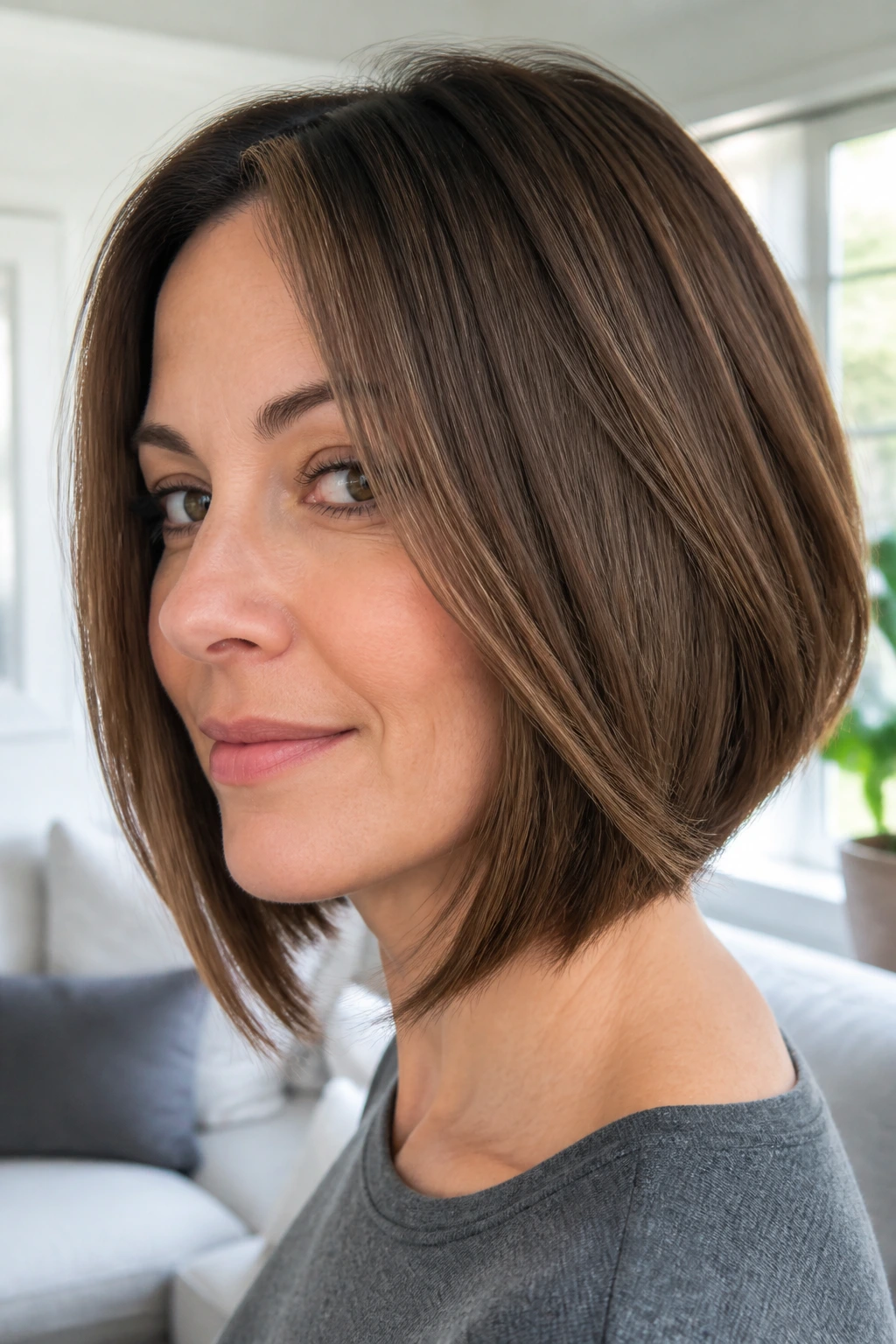
Invisible layers are exactly what they sound like: layers you feel more than you see. That matters on thin hair, because obvious layers can carve away the very fullness you’re trying to keep. The shape stays clean, but the interior gets enough movement to keep the bob from lying like a sheet.
This is a strong choice if you want your A-line bob to look polished but not stiff. The hidden layers allow the front to swing a little more and keep the back from collapsing. On a round face, that slight motion prevents the cut from widening the cheeks.
Ask for interior removal only in the areas that need it, usually the lower back and a touch through the sides. Avoid anything that creates little stair-steps at the surface. Those show up fast in fine hair.
10. Textured Piecey A-Line Bob

Texture gives the haircut attitude, but with thin hair the amount matters. A piecey A-line bob should look broken up in a controlled way, not shredded. You want separation at the ends, a little grip through the mid-lengths, and enough line left in the perimeter to keep the hair looking thick.
This cut is useful if your hair falls flat by lunch and you hate re-blow-drying it. A bit of texture spray can wake it up without changing the cut itself. The longer front pieces help the face look narrower, while the irregular movement keeps the style from feeling severe.
Best Styling Move
Work a pea-sized amount of pomade or styling paste between your palms, then tap it only onto the ends and front corners. Don’t rub it through the roots. That’s how a piecey cut turns greasy in 20 minutes.
11. Glossy Straight A-Line Bob
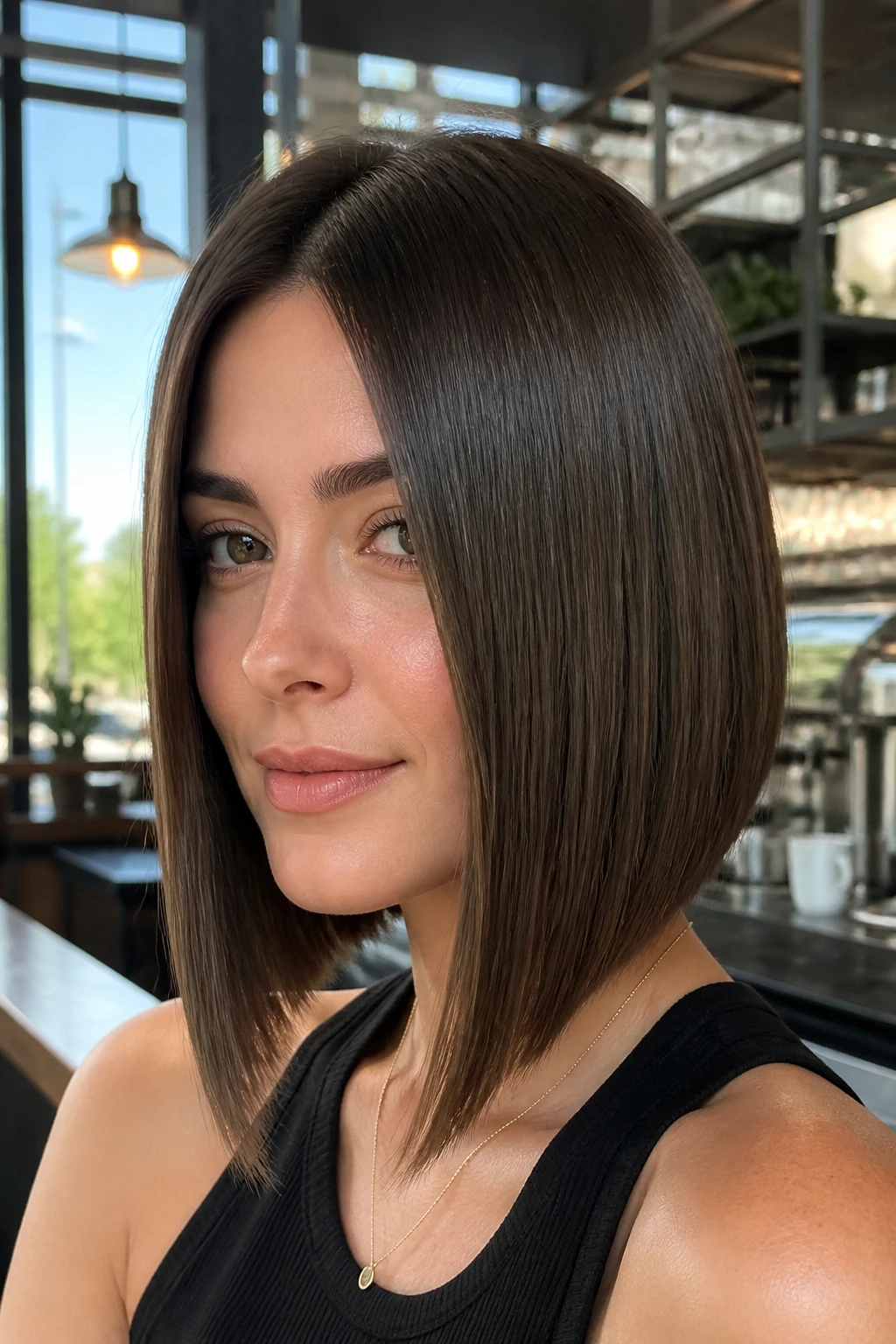
Sometimes the cleanest answer is the right one. A glossy, straight A-line bob puts all the attention on the shape, which is a good thing when your hair is thin. The finish makes the perimeter look sharp and the angle reads clearly even from a distance.
This version flatters round faces because the long front line creates a lengthening frame. It also behaves well with fine hair since straight styling compresses flyaways and makes the strands sit closer together. The whole cut looks denser when it’s smooth.
Use a heat protectant with a light smoothing effect, then blow-dry with tension from root to tip. If you use a flat iron, keep the pass slow but not sticky. One clean pass is better than going over the same piece four times.
12. Rounded-Brush Volumized A-Line Bob
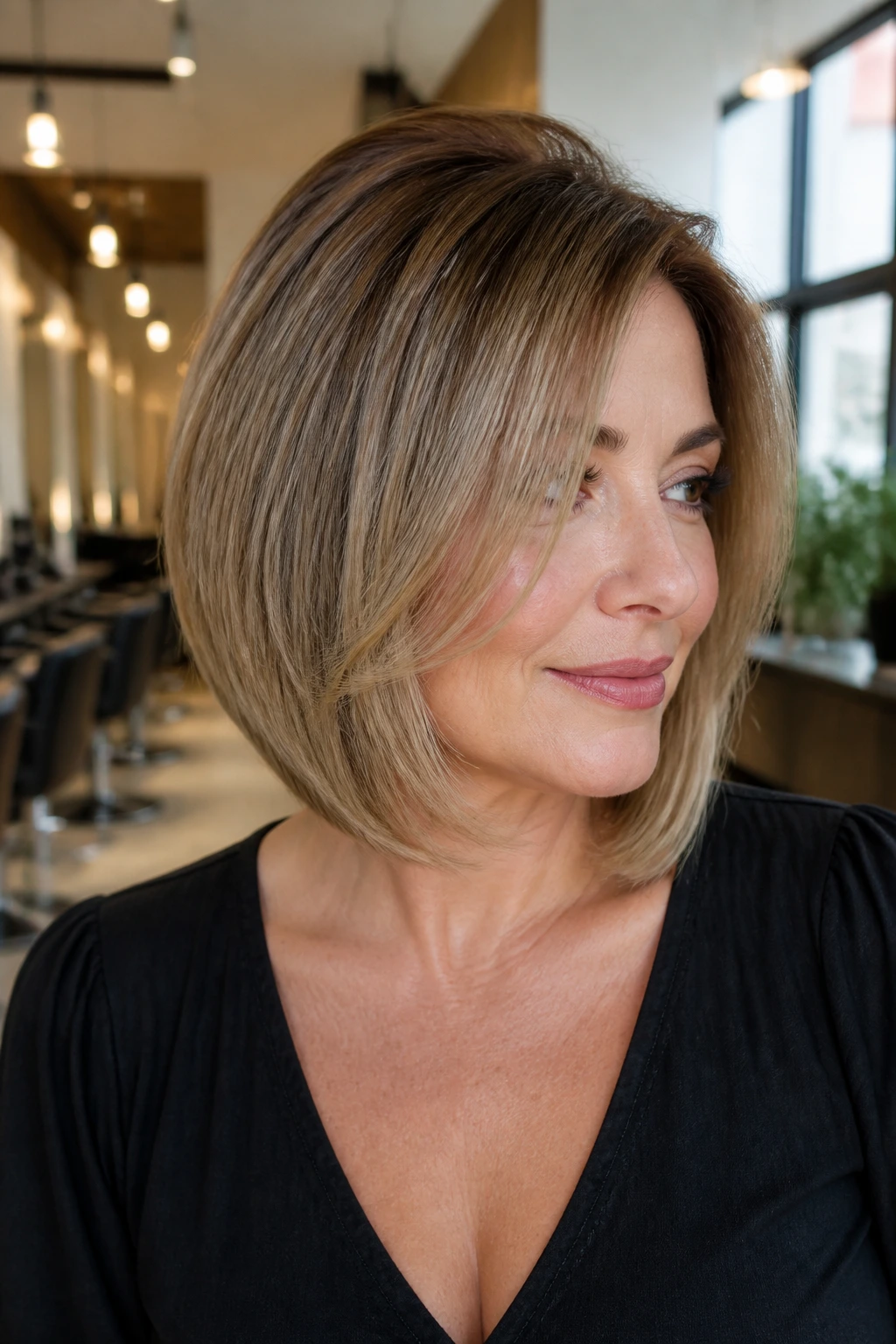
A round brush can do small miracles on fine hair, if you don’t overdo the curve. This style lifts at the roots and gently turns the ends under, which creates the feeling of body without turning the bob into a helmet. The front angle remains visible, but the silhouette gets softer.
It’s a strong choice if your hair tends to collapse at the crown. The lift at the top adds height, and height helps a round face look longer. Just keep the brush size moderate. A huge brush can overextend the curve and eat the line.
Blow-dry the roots first, then the mid-lengths, then finish the front corners. That order matters. If you start curling the ends before the base is dry, the shape won’t hold.
13. Subtle Undercut A-Line Bob
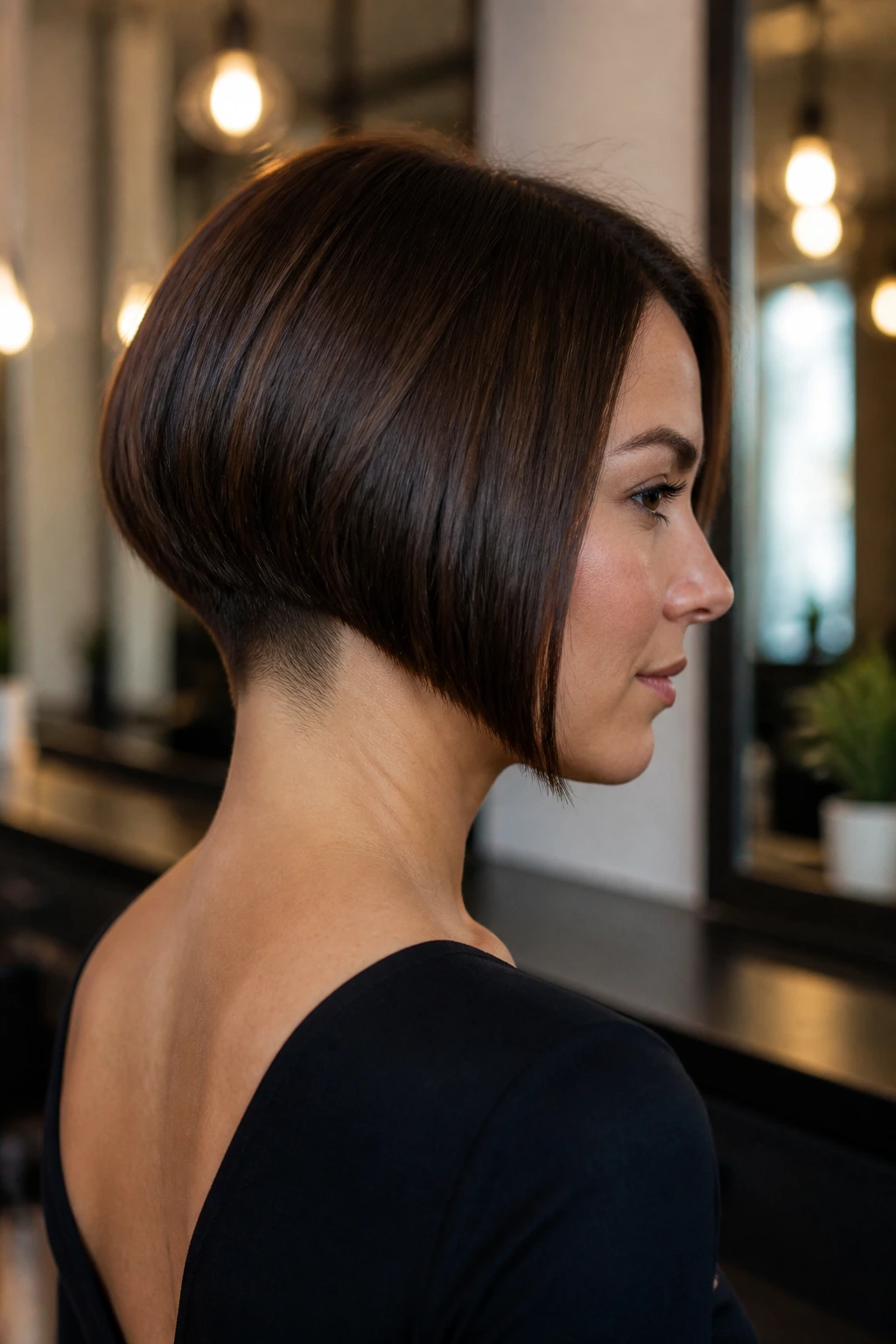
A hidden undercut sounds dramatic, but in a medium bob it can be a smart fix for hair that feels bulky underneath and thin on top. Removing a small amount of weight at the nape can stop the haircut from puffing out where it shouldn’t, which helps the front angle read cleaner.
This version is not for everyone. If your hair is already very sparse, too much undercutting can leave the shape skinny. But if the lower back section grows heavy while the top stays fine, a discreet reduction can make the whole cut sit better.
The undercut should stay hidden unless the hair is lifted. That way you get shape without losing the security of a full-looking bob. It’s a useful salon move, not a stunt.
14. Air-Dried Natural Wave A-Line Bob

Some bobs beg for a blow-dryer. This isn’t one of them. If your hair has a natural bend, an air-dried A-line bob can look relaxed in the best way, as long as the front pieces are long enough to keep the face open and the perimeter is cut with enough precision to hold the shape.
Thin hair can actually do well with air-drying if you apply product lightly and let the hair fall where it wants to. A dab of foam at the roots and a touch of cream on the ends is enough. Too much product makes fine hair clump, and clumping is not the same thing as texture.
Scrunch the front sections away from the face, then leave them alone. Seriously. The more you fuss, the flatter they get.
15. Tousled A-Line Bob with Soft Ends

This one has a bit of lived-in movement without turning into a full beach wave situation. The ends are softened, the front is longer, and the overall shape stays light around the cheeks. That makes it useful for round faces that need a little break in the silhouette.
Thin hair benefits from the tousled finish because it disguises any areas where density is a touch uneven. A slight bend here and there makes the cut feel fuller than a perfectly straight line. The trick is keeping the ends soft, not frayed.
Use a 1-inch iron or a flat iron bend on a few sections, then run your fingers through once. Don’t brush it into fluff. There’s a line between piecey and puffy, and hair this fine crosses it fast.
16. Glass-Hair A-Line Bob
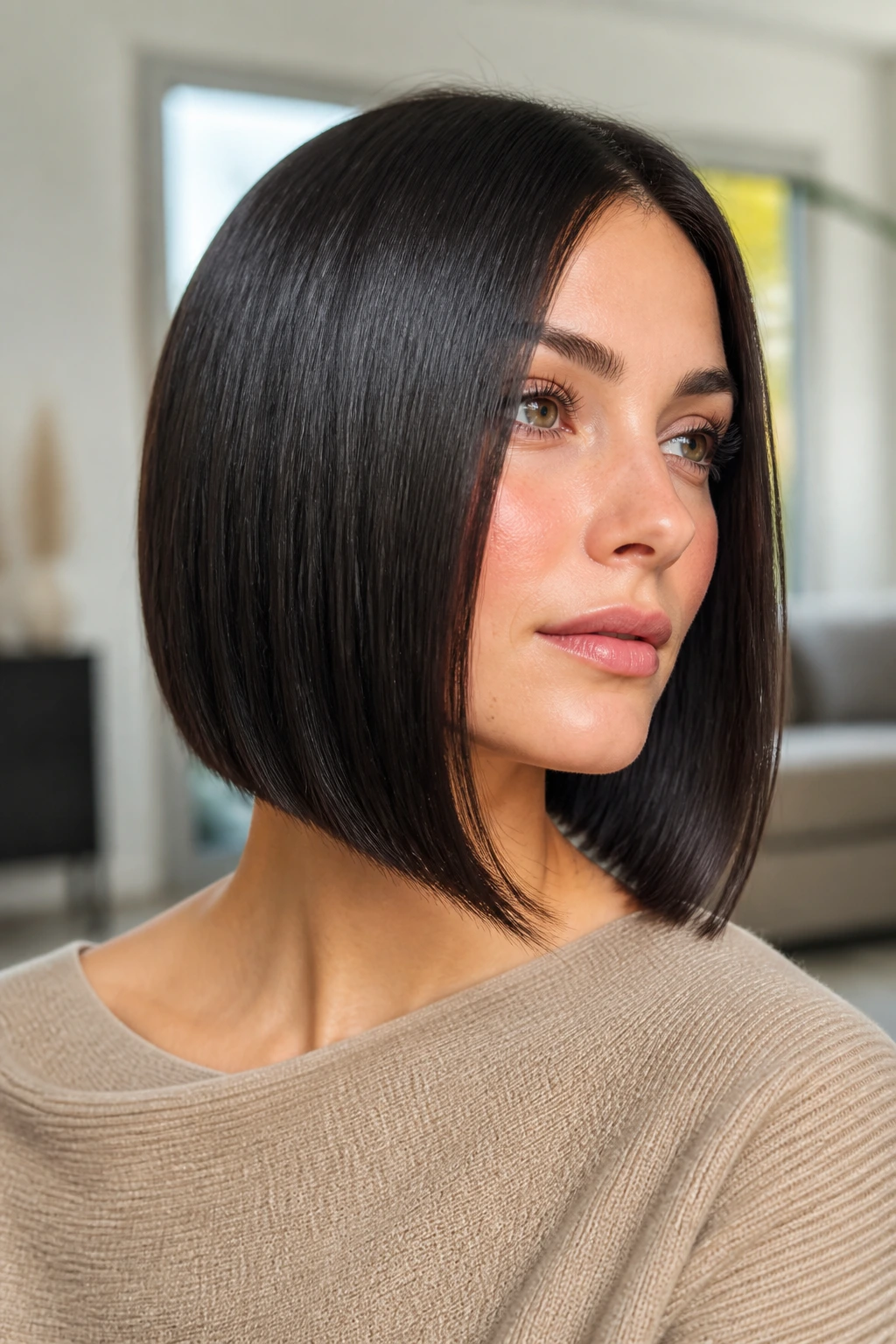
Glass hair is all about sheen and razor-clean lines. For a medium A-line bob on thin hair, that can be a gift. The smooth finish makes every strand sit in place, which helps the hair look denser and makes the angled line easy to read.
The face-framing effect is especially good here because the front sections lie sleekly along the jaw and neck instead of flaring outward. A round face often looks narrower when the shape is controlled and the center or off-center part stays tidy.
This style needs heat protectant, a good blow-dry, and a light finishing spray. Skip anything waxy or heavy. The whole point is that crisp, reflective surface. If the roots get greasy, the haircut loses its polish fast.
17. French-Girl A-Line Bob

This is the slightly undone version that still knows where it’s going. The front pieces graze the jaw or collarbone, the ends are soft, and the whole cut carries that casual, expensive-looking mess people keep trying to copy. What actually makes it work is the precise outline underneath.
For round faces, the longer front line keeps the face from looking too wide. For thin hair, the bob’s shape gives you enough structure that you don’t need to force volume everywhere. A little bend, a little movement, and a clean edge underneath are enough.
Let the hair dry roughly 80 percent of the way before you start fussing with shape. If you handle it too early, the fine strands go limp and stay there. No heroics required.
18. Asymmetrical Statement Bob
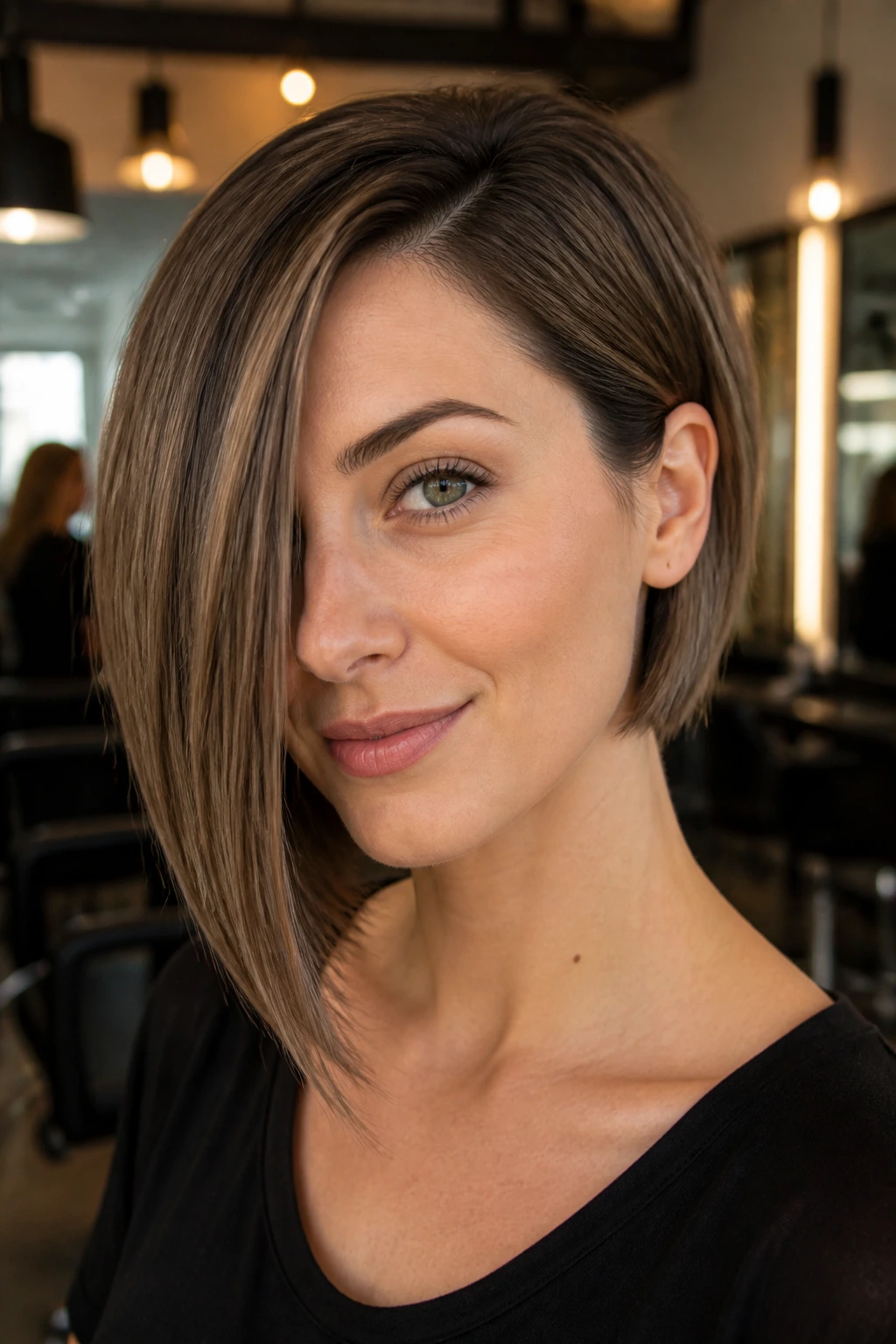
An asymmetrical A-line bob pushes the angle harder on one side, and that can be very flattering on a round face because it breaks the symmetry that often makes faces feel broader. The longer side draws the eye downward, while the shorter side keeps the back compact.
Thin hair can wear this cut if the asymmetry is controlled. You do not want one side much heavier than the other. A difference of an inch or two can give the haircut its shape without making it feel costume-like.
This is the one to choose if you want people to notice the haircut, not just the fact that you got a trim. It looks especially good with a deep side part and tucked ear on the shorter side.
19. Wash-and-Go A-Line Bob
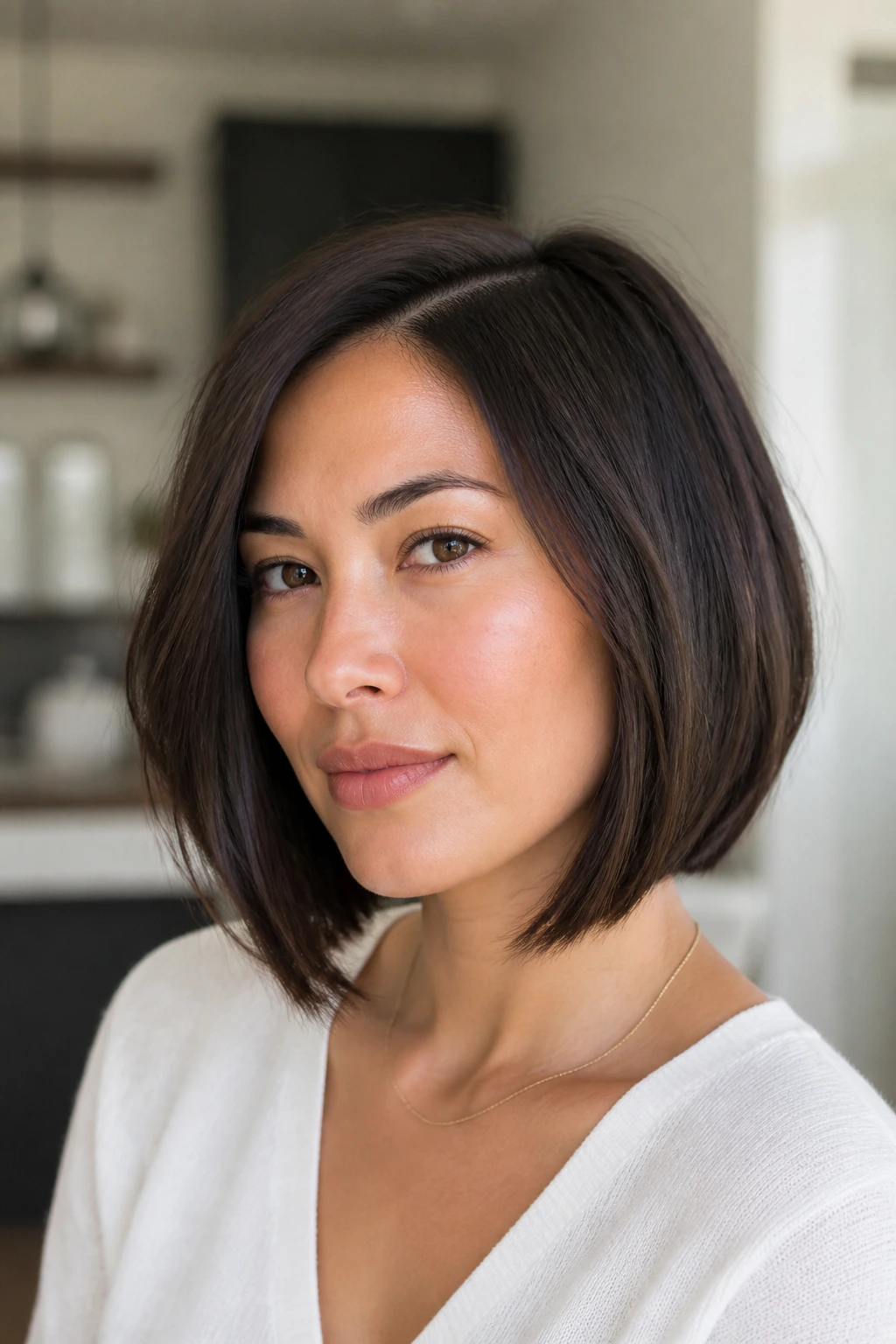
Some people want a bob that behaves without a 20-minute styling session. Fair enough. A wash-and-go A-line bob keeps the line clean enough that the cut still looks intentional even when you let it dry with minimal effort.
The secret is in the cut, not the product. The angle should already be doing the work, with just enough length in front to frame the face and enough weight at the perimeter to keep the hair from looking sparse. Thin hair often does better with this approach than with layers that require daily fixing.
A small amount of mousse and a side part can be all you need. If the front pieces bend weirdly, twist them once while damp and clip them away from the face. That tiny adjustment can save the whole morning.
20. Bouncy Blowout A-Line Bob
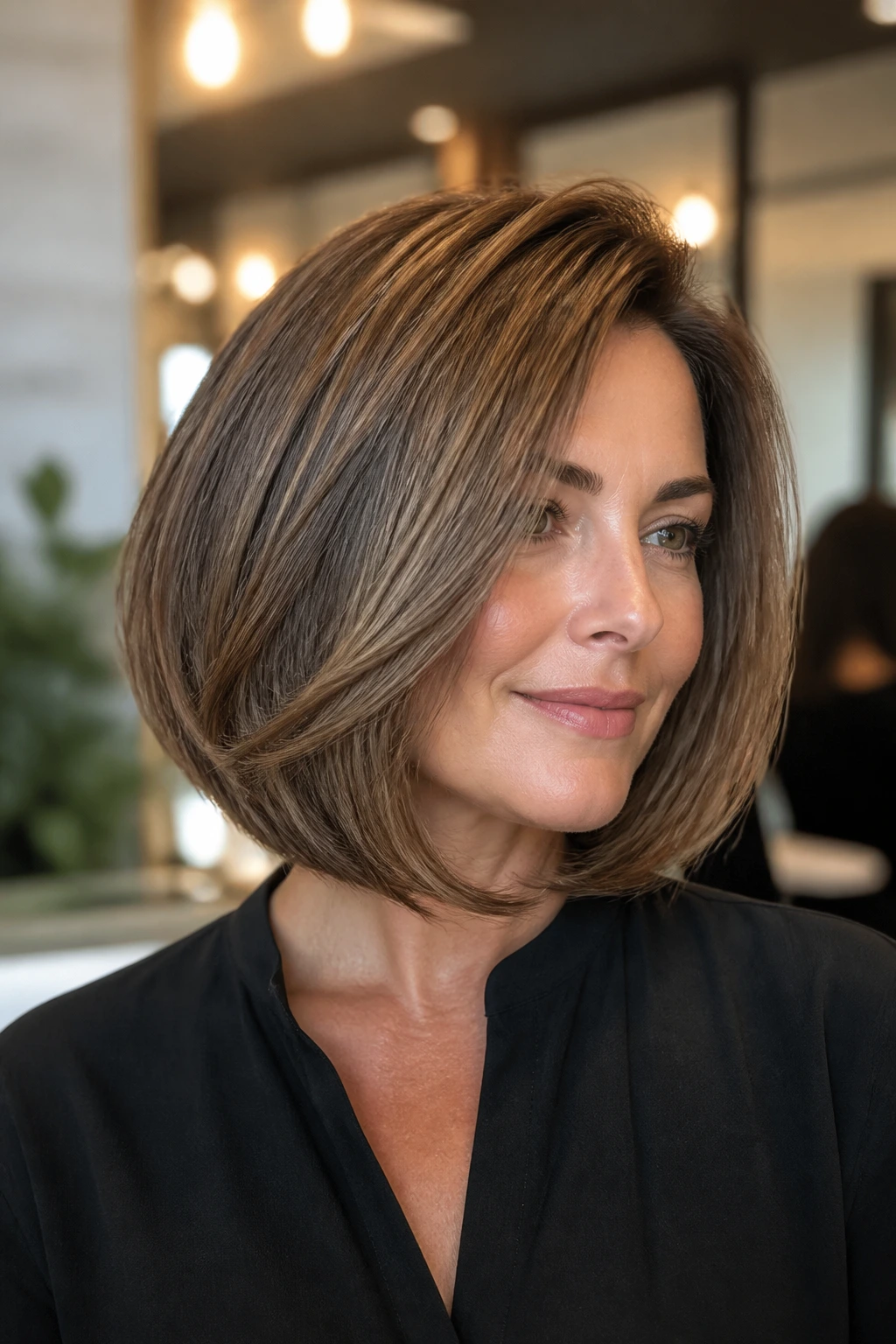
This version is the one with movement at the ends and a little lift through the crown. It’s especially good if your hair falls flat when worn straight, because the blowout gives the cut a fuller outline without shortening the face. The front still angles down, but the body sits where people can see it.
Round brushes and medium heat make the difference here. Start at the roots, direct the hair upward for lift, then roll the ends under just enough to show a soft curve. If the curve gets too tight, the haircut can start to look too formal.
A bouncy blowout works best when the front pieces stay a touch longer than you first think. That extra length keeps the cheeks from being the widest thing in the frame.
21. Deep Side Part Lob with Angle
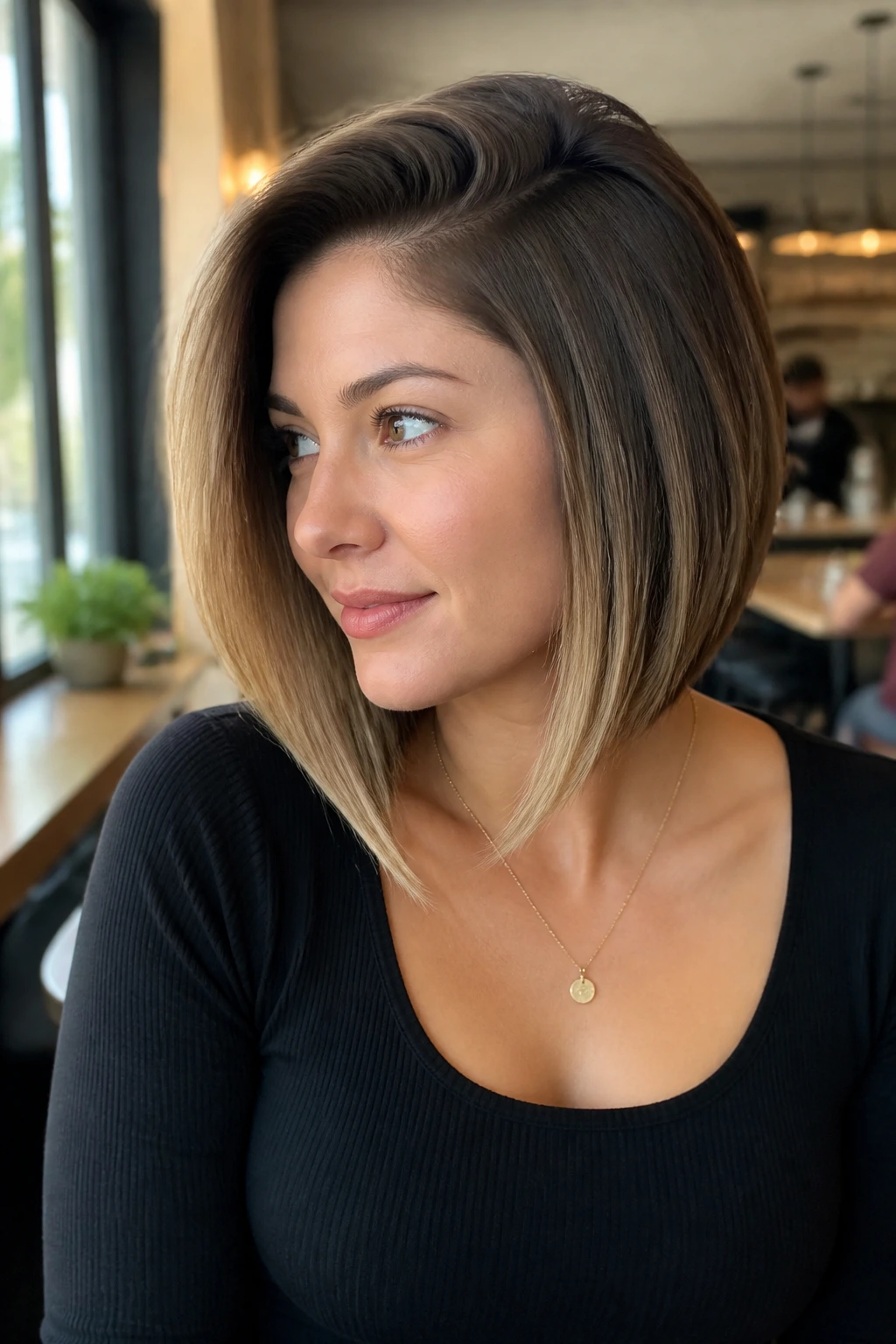
A longer bob with a visible angle is one of the easiest ways to lengthen a round face without going too short. The side part pushes volume to one side, which makes the top feel higher and the face look less circular. The front corner can almost brush the collarbone.
This style is kind to thin hair because the extra length gives the illusion of density. Medium-length ends tend to look fuller than short ends that have been too aggressively layered. That’s the quiet advantage of a lob with shape.
If your hair flips out at the front, don’t fight it with a heavy flat iron pass. Bend the front section under once, let it cool, and move on. Overworking it makes the cut lose that airy swing.
22. Face-Framing A-Line Bob with Money Pieces
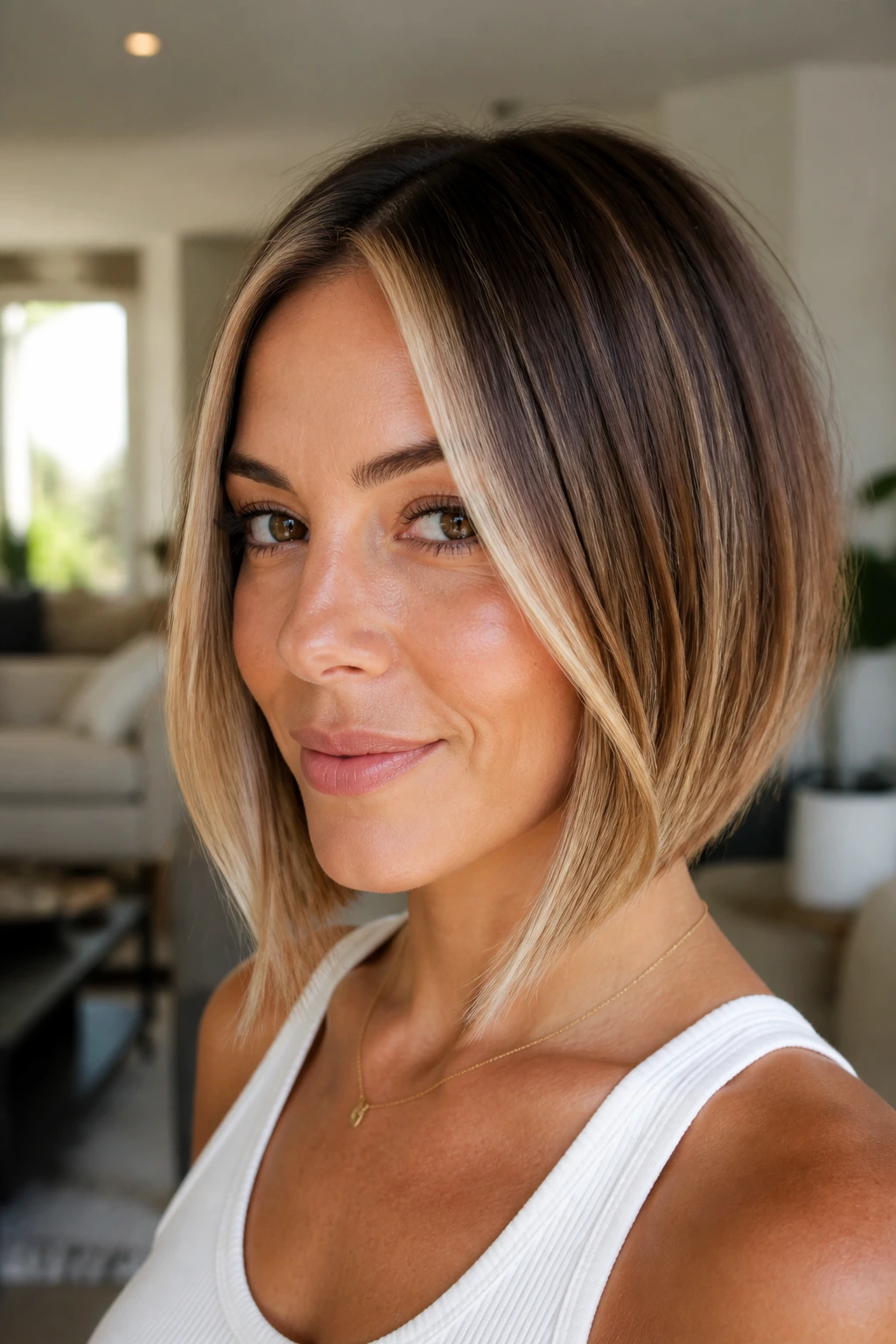
A little brightness near the front can change how the haircut reads. Face-framing pieces, sometimes called money pieces, pull attention toward the eyes and away from cheek width. On a round face, that vertical emphasis helps the cut feel longer and lighter.
For thin hair, keep the highlighted pieces delicate. Thick, stripey light pieces can make the front look disconnected from the rest of the bob. A softer, blended front frame is easier on the eye and easier to grow out.
The Shape Trick
Ask for the front pieces to be the longest point of the cut, then keep the rest of the bob anchored with a clean perimeter. That way the bright sections have a job to do. They don’t just sit there looking decorative.
23. Softly Layered Bob with Internal Graduation
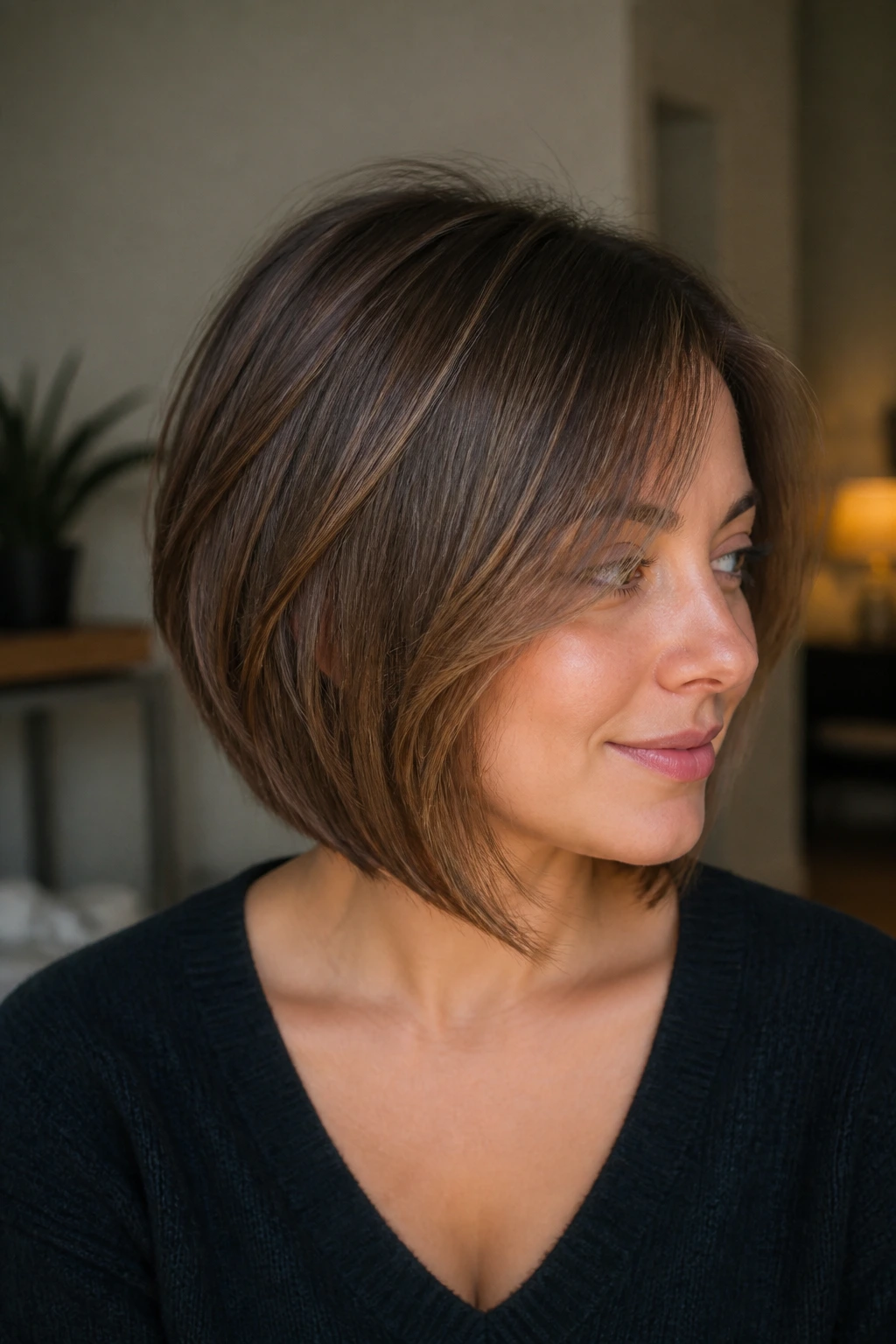
A softly layered A-line bob is not the same thing as a heavily layered one. The layers stay tucked inside the shape, which gives the hair a little movement while preserving fullness at the edge. Thin hair usually needs that kind of discipline.
This works well if your hair has a fine texture but decent overall density. The internal graduation lets the back sit better, while the front remains long enough to slim the face. The cut keeps its outline, which is the whole point.
Do not let anyone slice away too much weight around the outer line. That’s where the fullness lives. If the perimeter gets ragged, the haircut starts reading as thin instead of airy.
24. Razor-Edge A-Line Bob with Movement
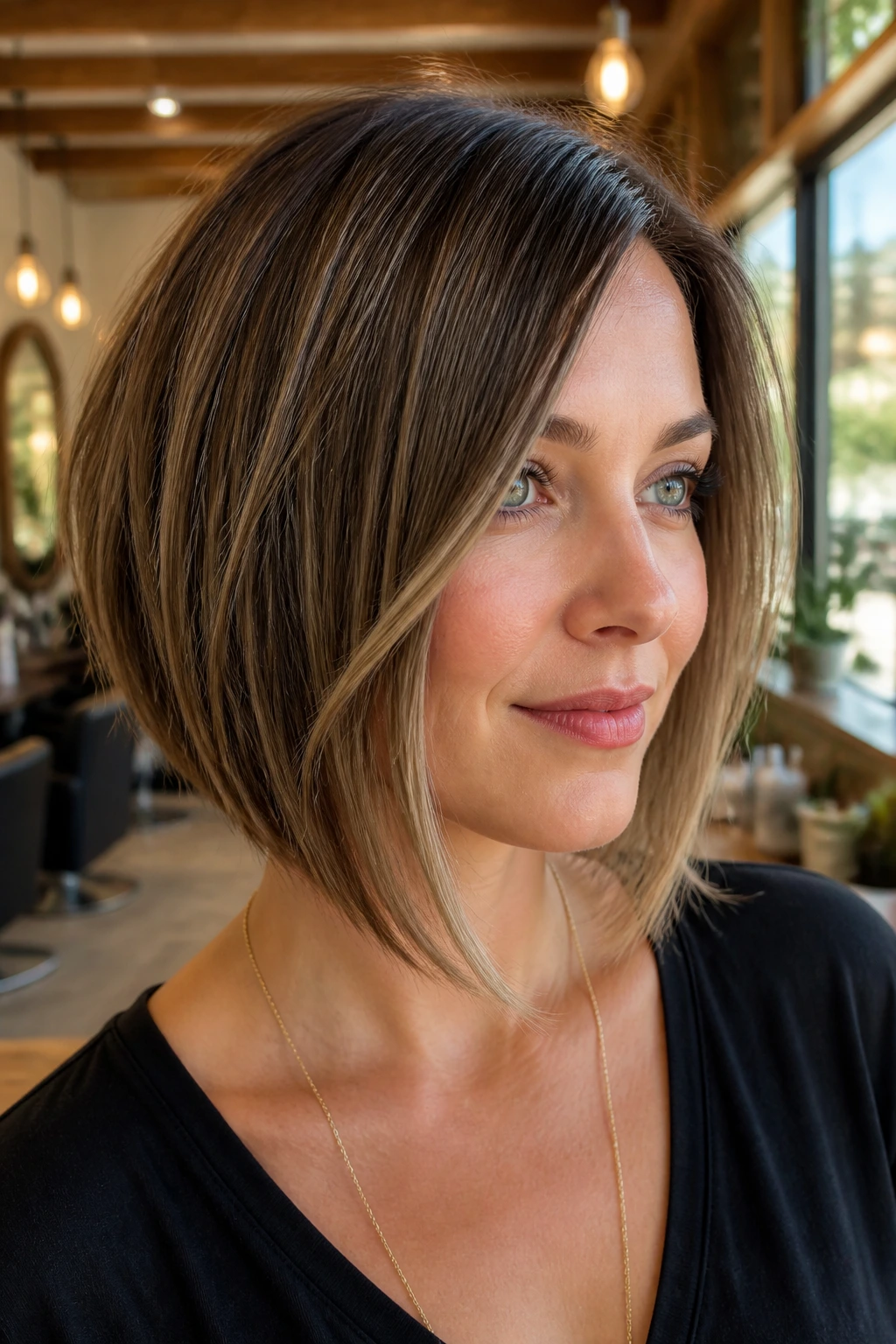
A razor can add softness to the ends, but it needs a careful hand. On medium fine hair, a razor-edge A-line bob can create movement without turning the ends into a feathery mess. The result is lighter than a blunt cut and less rigid than a fully textured one.
This style suits hair that feels too solid at the bottom but still needs the visual line of a bob. The razored movement should sit mostly through the front corners and mid-lengths, leaving enough density at the outline to make the shape look intentional.
If your stylist reaches for a razor, ask exactly where they plan to use it. A little in the right place can be lovely. Too much and the ends look tired by the second week.
25. Elegant Tucked-Behind-Ear A-Line Bob

A tucked bob sounds simple, and that’s part of its charm. The front pieces stay long enough to skim the jaw or collarbone, then one side slips behind the ear to open the face. On a round face, that exposed line from temple to neck creates instant length.
Thin hair often looks better in this kind of clean styling than in styles that ask too much of it. The tucked side shows the cut’s architecture, while the loose side keeps a little softness. It feels neat without going stiff.
A small stud earring or a thin hoop works well with this shape because the ear is part of the look. Keep the roots airy and the ends smooth. That contrast is where the haircut gets its polish.
How the Angle Makes the Face Look Longer
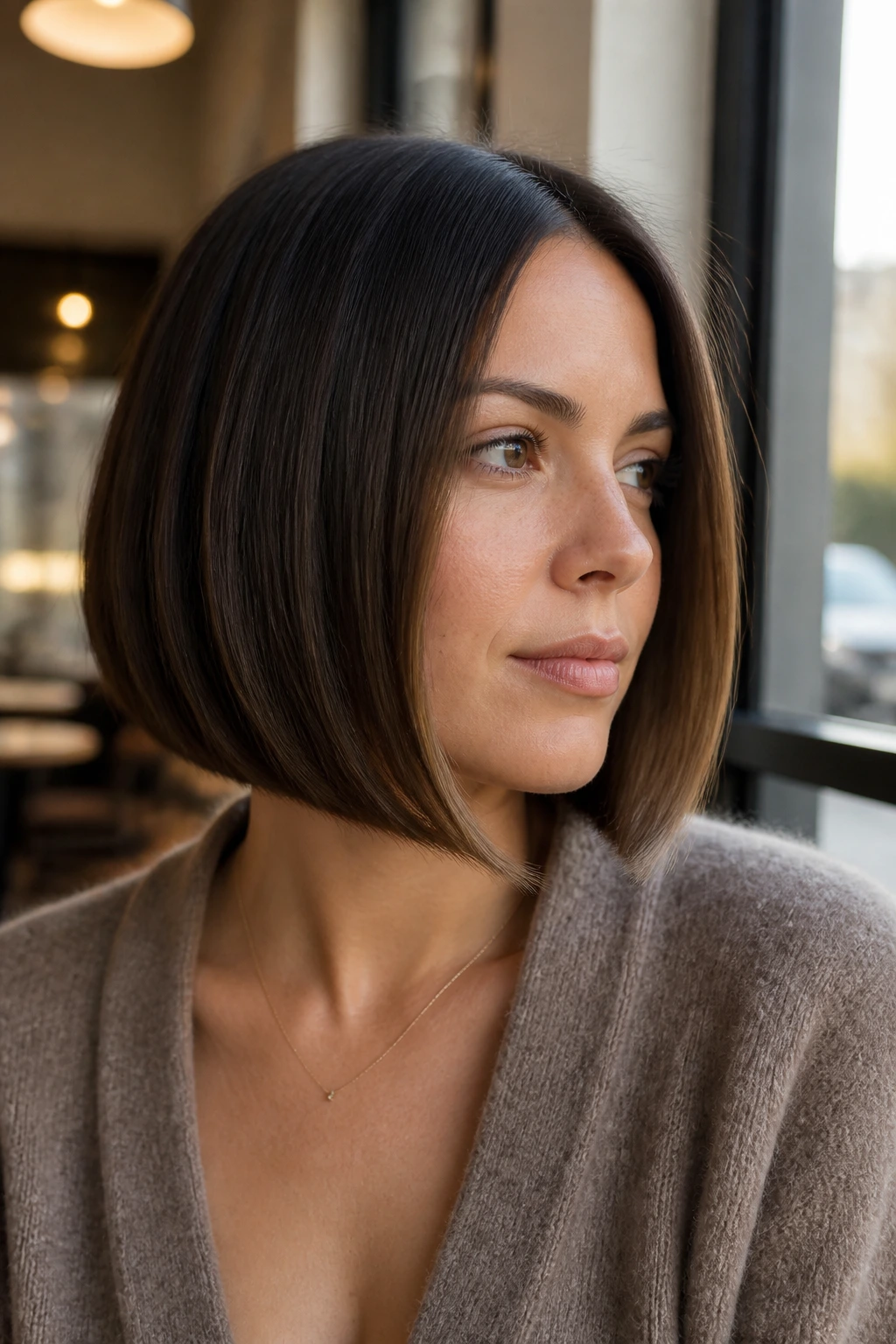
The reason an A-line bob keeps coming back is simple: it uses lines, not bulk, to do the flattering. Round faces need a cut that moves the eye downward. Thin hair needs a shape that doesn’t depend on giant layers or heavy styling to look full. The angled bob does both jobs at once.
The front pieces matter more than the back. If they end at the widest part of the cheek, the cut can widen the face. If they drop below the jaw, the line starts working like a frame instead of a circle. That’s why a medium length is so useful here. You have room to place the ends where they help most.
A lot of people think they need more volume on the sides. They usually do not. They need better placement. That’s a different thing, and it shows up in the mirror fast.
How to Brief Your Stylist Without Ending Up With the Wrong Bob
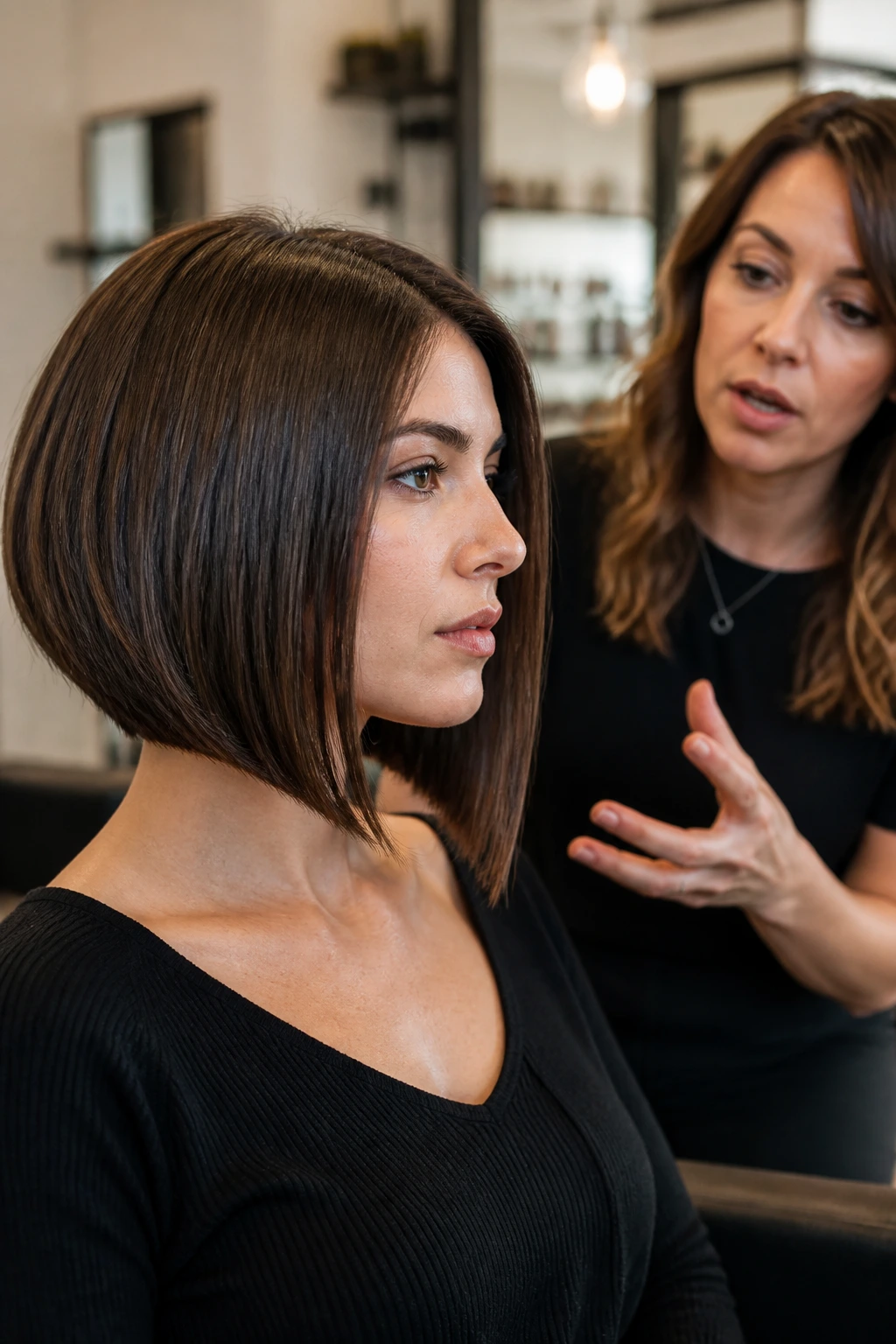
Bring photos, but bring the right ones. You want pictures that show the front length, the back angle, and the kind of parting you like. A single front-facing image won’t tell the whole story, and bobs are shape cuts. Shape matters more than vibe.
Say where you want the front to land: chin, jaw, or collarbone. Then say how much shorter you want the back to be. A subtle difference of 1 to 2 inches can be enough. You do not need a dramatic stack unless you like a stronger silhouette.
If your hair is truly thin, ask the stylist not to over-thin the ends with shears. If your hair is fine but plentiful, you may need a little interior removal. Those are not the same request. Good cuts start with that distinction.
Styling Moves That Make Thin Hair Look Fuller
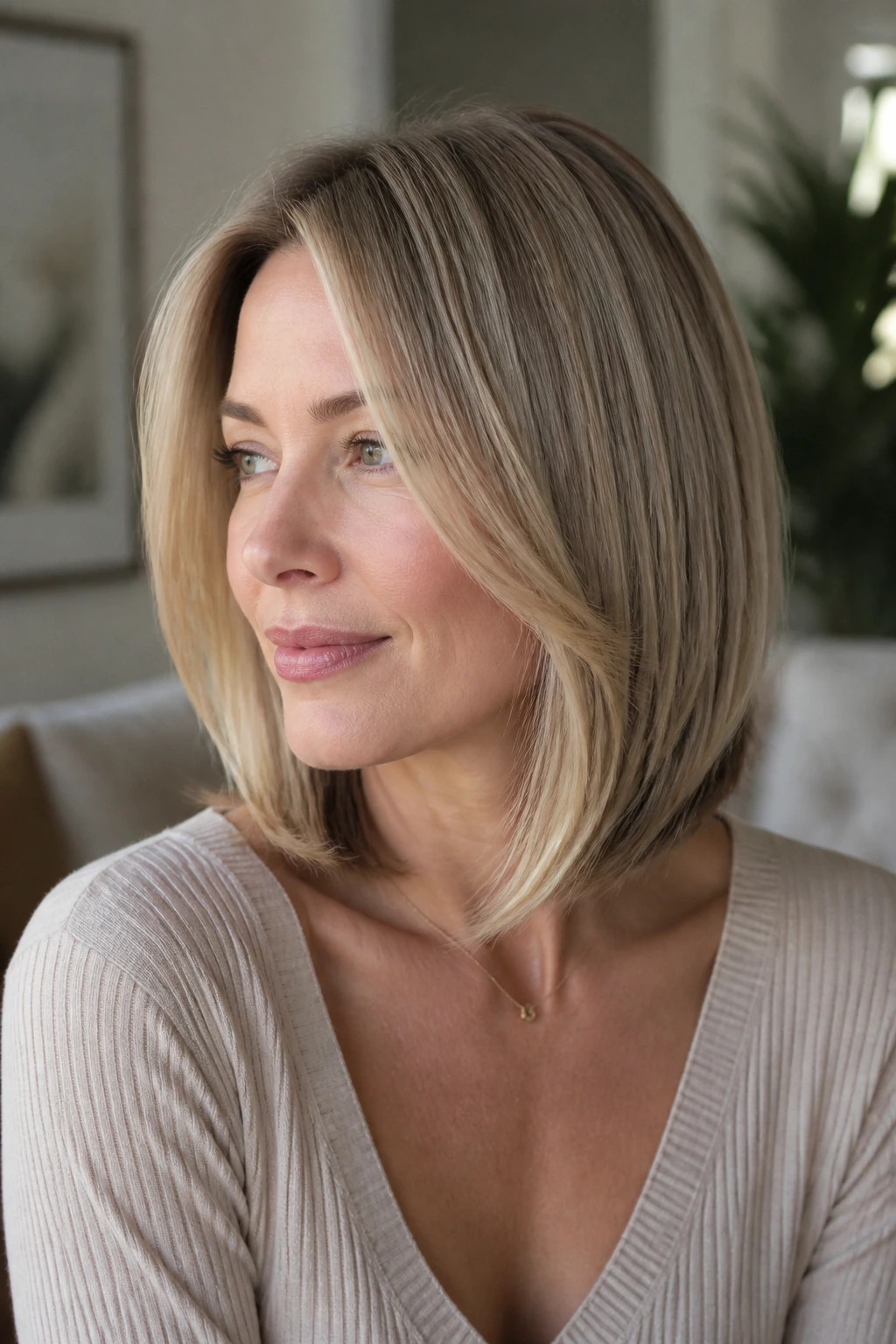
Root lift first, always. Put volumizing mousse or a light root spray at the crown and near the temples on damp hair. Then dry the roots before you worry about the ends. If the base is flat, the rest of the style has to work too hard.
Control the front corners. The front pieces are the part that change the face shape, so spend your time there. Blow them forward first, then back, then settle them in the direction you want. That little bit of tension gives the A-line its clean line.
Keep the ends honest. Use a light cream or serum only on the last inch or two. Thin hair gets greasy fast when product creeps upward. If the roots start looking slick, the cut loses its fullness in a hurry.
Cool it down. A few seconds of cool air after styling helps the bend hold. It’s a small step, but on fine hair, small steps stack up.
Tools and Products That Earn Their Spot on the Counter

- Medium round brush, 1.5 to 2 inches — Big enough to build a curve, small enough to control the front corners.
- Blow dryer with a concentrator nozzle — Directs air where you need it and keeps the cut sleek.
- Volumizing mousse or root spray — Gives thin hair lift at the crown without sticky buildup.
- Light heat protectant — Keeps the strands from frying when you smooth the angle.
- Texturizing spray — Best on mid-lengths and ends when you want piecey movement.
- Paddle brush — Useful for a straighter, cleaner finish.
- 1-inch curling iron or flat iron — Good for adding a soft bend to the front pieces.
- Dry shampoo — Helps the roots hold their lift between washes.
- Fine sectioning clips — Make it easier to work the top layer without flattening the rest.
- Lightweight serum — A tiny amount on the ends calms frizz without killing volume.
Common Mistakes That Flatten the Cut
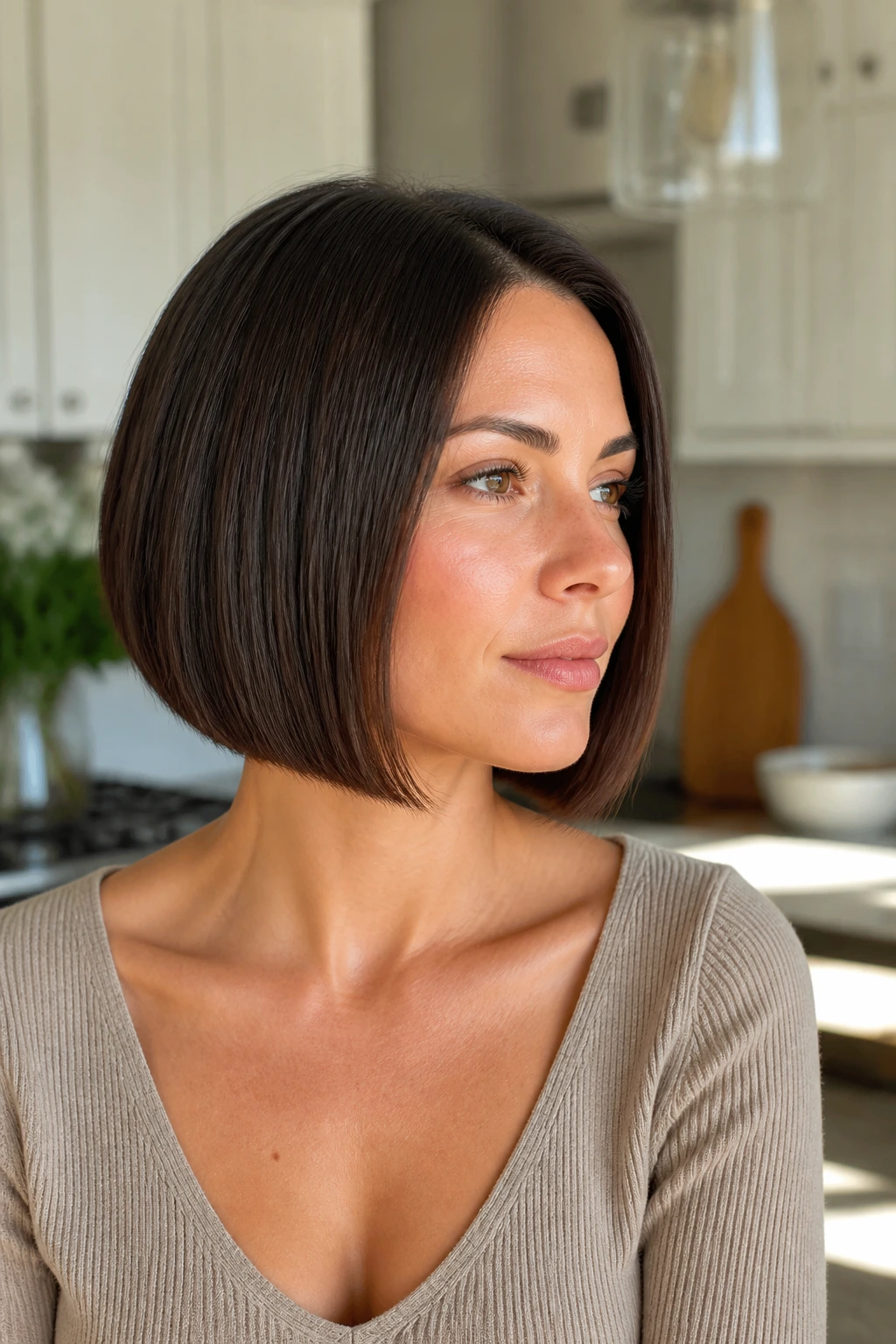
Cutting the front too short. If the longest pieces stop at the cheek, the bob can widen the face instead of narrowing it. Ask for length below the jaw, even if only by an inch or two.
Too many short layers. Fine hair does not need to be carved up like a hedge. The more the ends are thinned, the less body you have where it counts.
Center part without lift. A dead-straight center part on flat roots can make the roundness of the face look more obvious. Shift it slightly, or create some root height first.
Heavy products at the scalp. Oils, creams, and dense serums near the roots flatten thin hair fast. Save those for the ends and the front corners.
Skipping trims. The A-line shape depends on a clean line. Once the ends start getting shaggy, the haircut loses the very thing that makes it work.
Little Changes That Change the Whole Mood
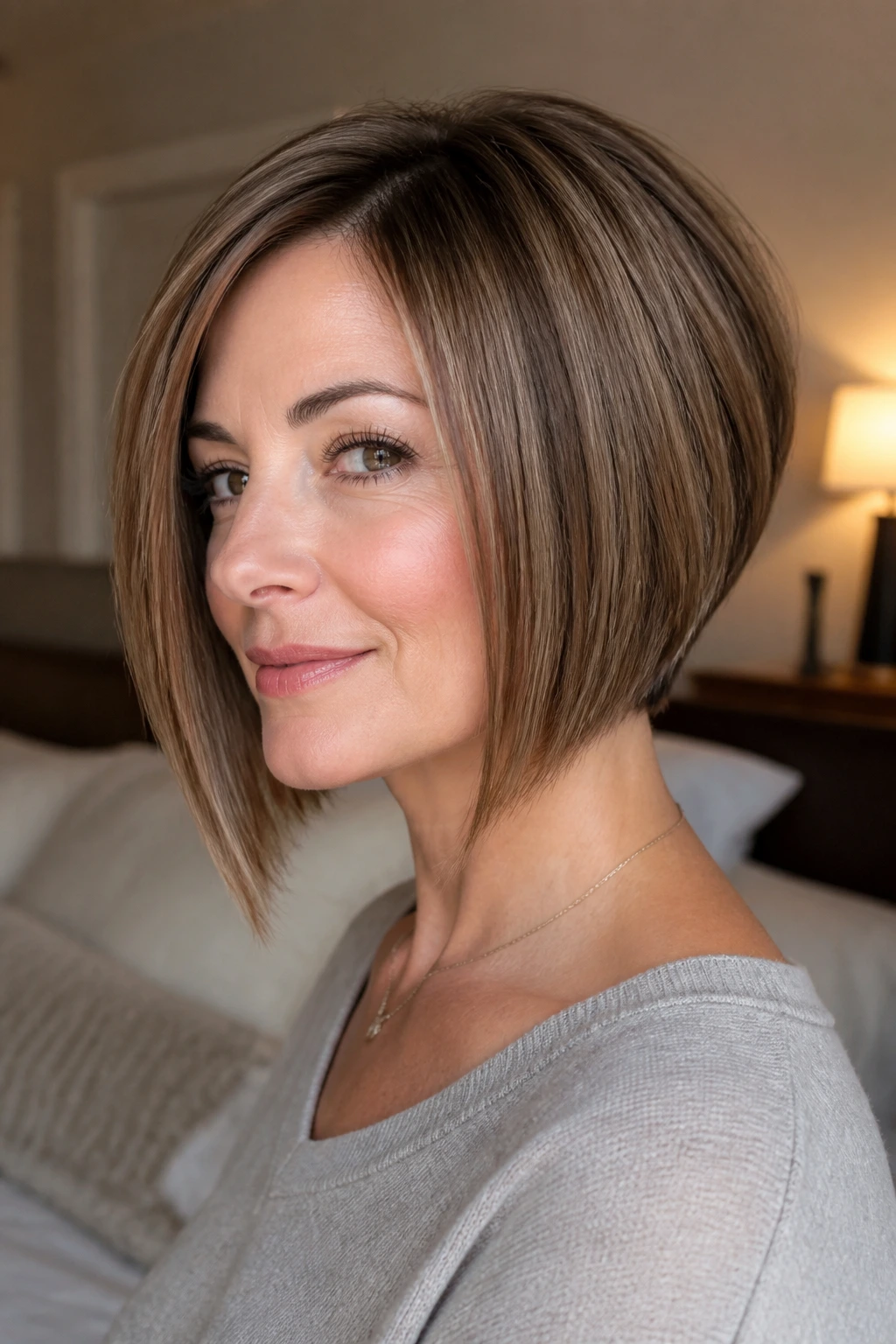
The Sleek Version: Keep the cut smooth, blunt, and polished. This is the one that makes fine hair look denser and feels the most refined.
The Soft Movement Version: Add invisible layers and a loose bend through the front. It gives you motion without breaking the outline.
The Fringe Version: Curtain bangs or a side-swept fringe can change the whole face frame. They work best when they blend into the longer front pieces instead of sitting apart from them.
The Tousled Version: Use texture spray and a few bends for a less formal finish. Good for hair that needs a little grit to keep its shape.
The Longer Lob Version: Push the front down toward the collarbone if you want extra length through the face and a bit more room for styling.
Keeping the Line Fresh Between Salon Visits
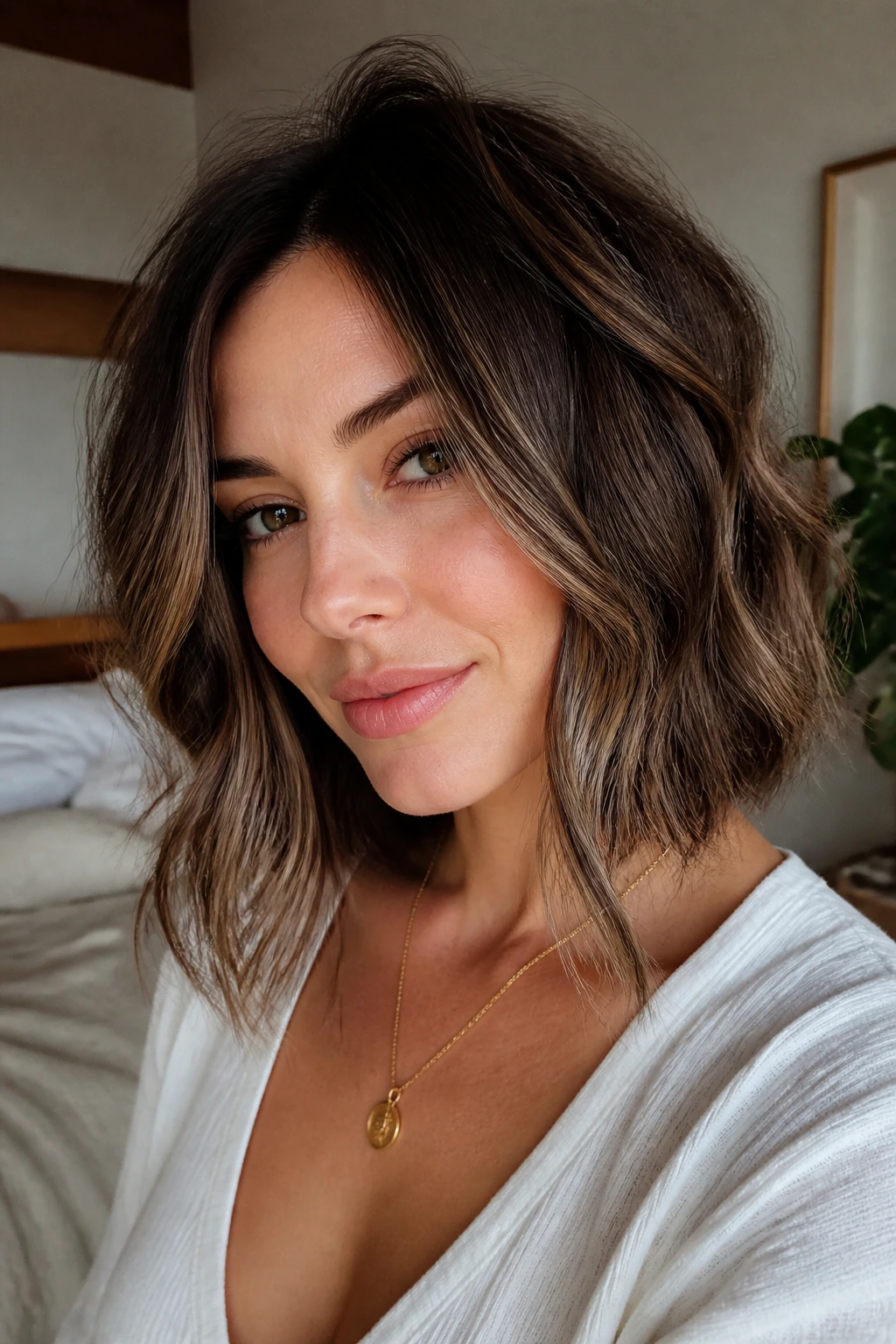
An A-line medium bob usually looks best with trims every 6 to 8 weeks if you like the line crisp. If you prefer a softer grow-out, you can stretch that a little longer, but the front corners will start losing their angle first. That’s the part to watch.
Between cuts, the fastest rescue move is a quick root lift and a little bend at the ends. Dry shampoo at the roots on day two or three can help the shape stay upright. A silk pillowcase also helps because it cuts down on the little bends and dents that make fine hair collapse overnight.
If the front starts flipping weirdly, don’t fight it with more product. Re-wet just the front corners, re-dry them in the right direction, and move on. That’s usually enough. Hair this fine rarely needs a full reset; it needs a better direction.
Questions People Ask Before They Cut Their Hair
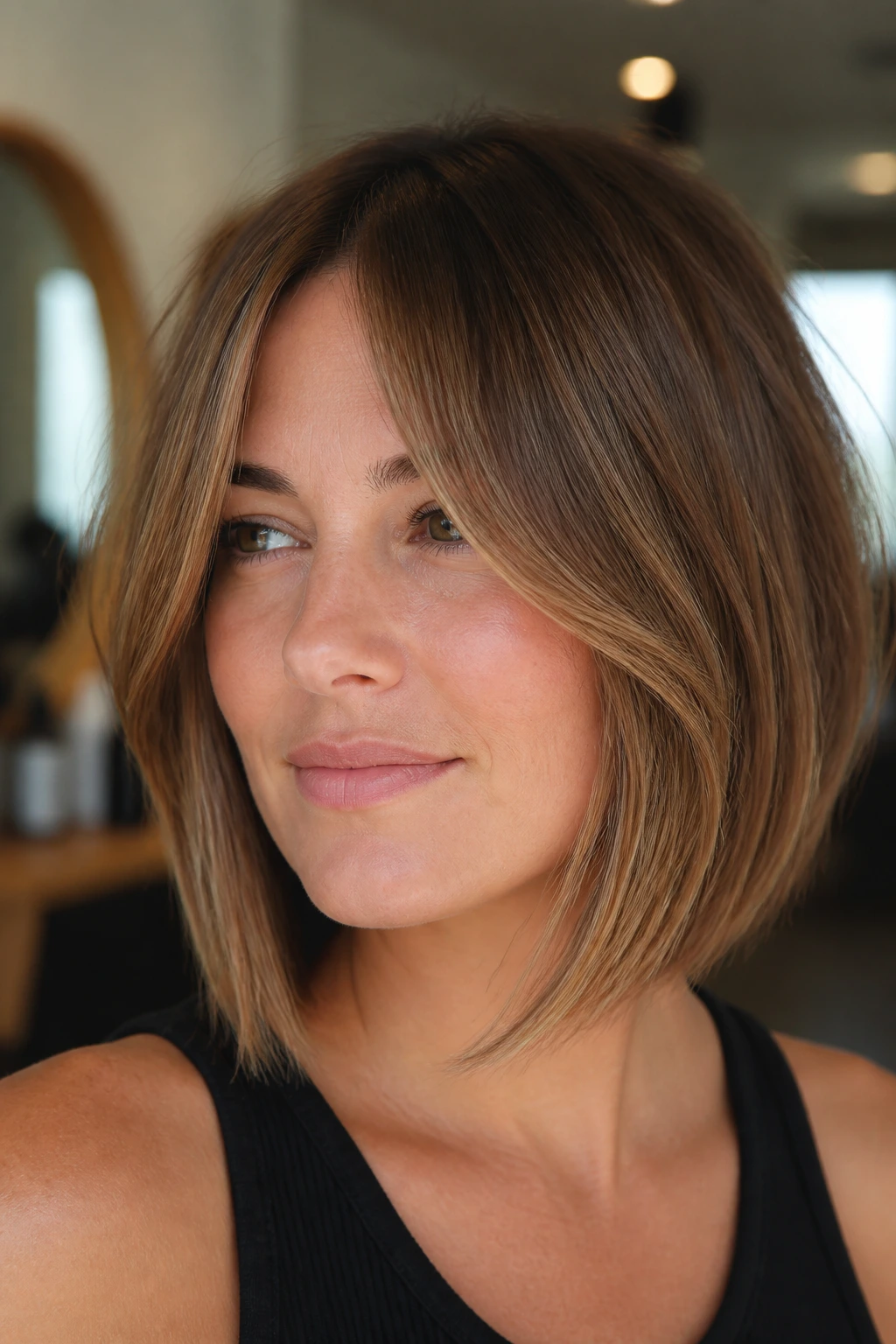
Will an A-line bob make a round face look slimmer?
Usually, yes, if the front pieces fall below the widest part of the cheeks. The angle and the length work together to create a longer line through the face.
Is this cut too risky for very thin hair?
Not if the stylist keeps enough weight at the perimeter. The danger is too much layering, not the bob shape itself.
Should I avoid bangs?
Not at all, but blunt bangs can be tricky on a round face. Curtain bangs or a side-swept fringe usually sit better because they keep the face from feeling boxed in.
What if my hair is fine but dense?
Then you may be able to handle a little more interior shaping. Dense fine hair often needs a different touch than sparse fine hair, so the haircut should be adjusted to the actual amount of hair, not just the strand size.
Does this cut work with waves?
Yes, and waves can make it look fuller. Keep the front long enough that the wave doesn’t shorten the face too much.
How often should I style it with heat?
As little as you can get away with. Two to four heat styles a week is manageable for many people, but if your hair dries flat well, let it air-dry on the off days.
What if the bob looks too wide on me?
That usually means the front ends are too short or the part is too centered. Ask for a little more length in front and a softer side part next time.
Can I grow this out without awkward stages?
Yes, because the A-line shape softens as it gets longer. A trim that just cleans the corners can keep it looking intentional while it grows.
A Cut That Does More Than Sit There
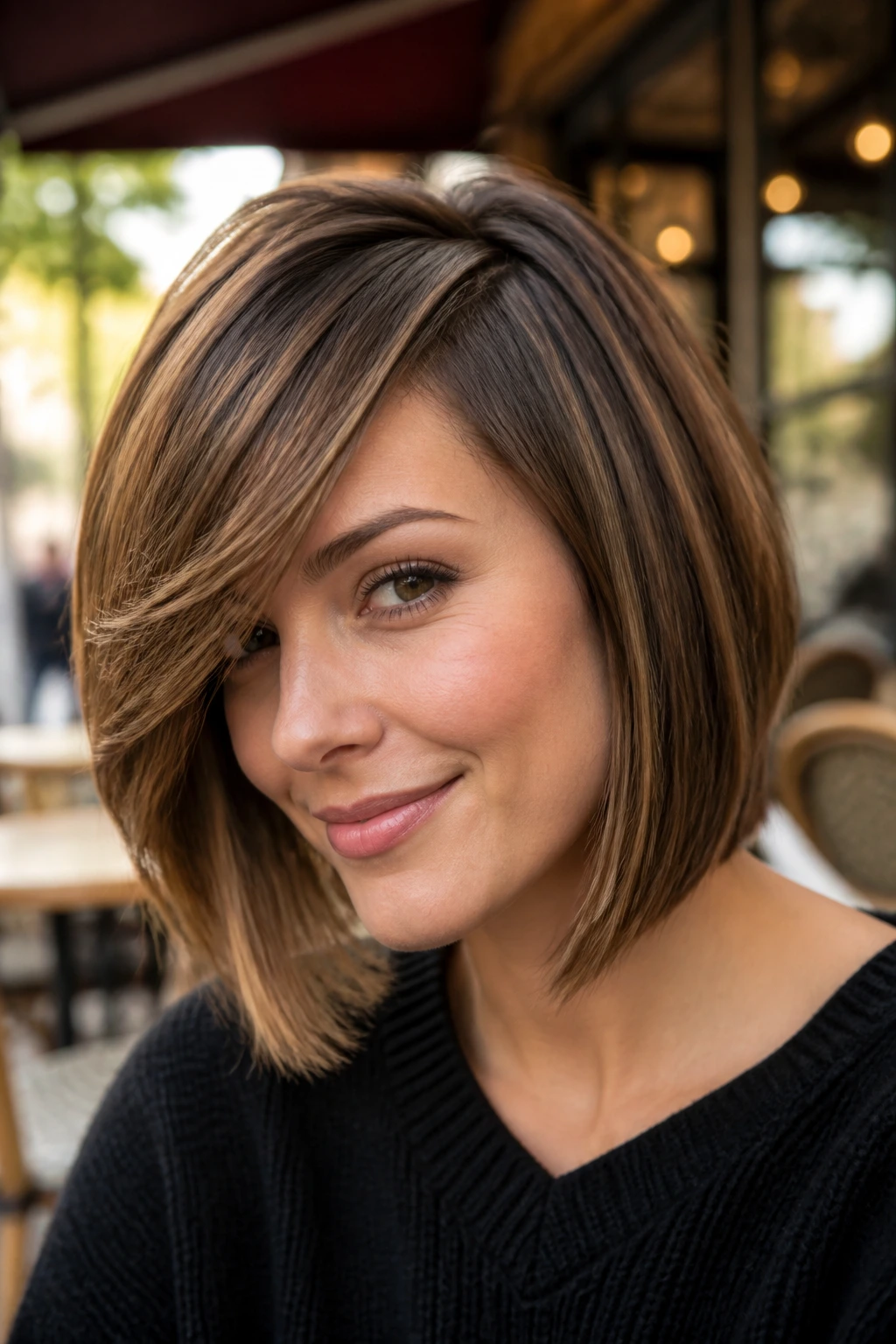
A good A-line medium bob doesn’t just trim the ends. It changes the way the face reads and gives thin hair a firmer edge to stand on. That’s why the best versions here are never random. They’re placed. The front is where the eye goes, the back is where the lift lives, and the perimeter is what keeps the whole thing from falling apart.
If you’re working with a round face and finer strands, the smartest move is usually restraint with a purpose. Keep the line clean. Keep the angle visible. Leave enough weight where the ends can do their job. The haircut should look calm, not busy.
Pick the version that matches how much polish you want to do in the morning, then commit to the shape. That’s where this cut pays off.