



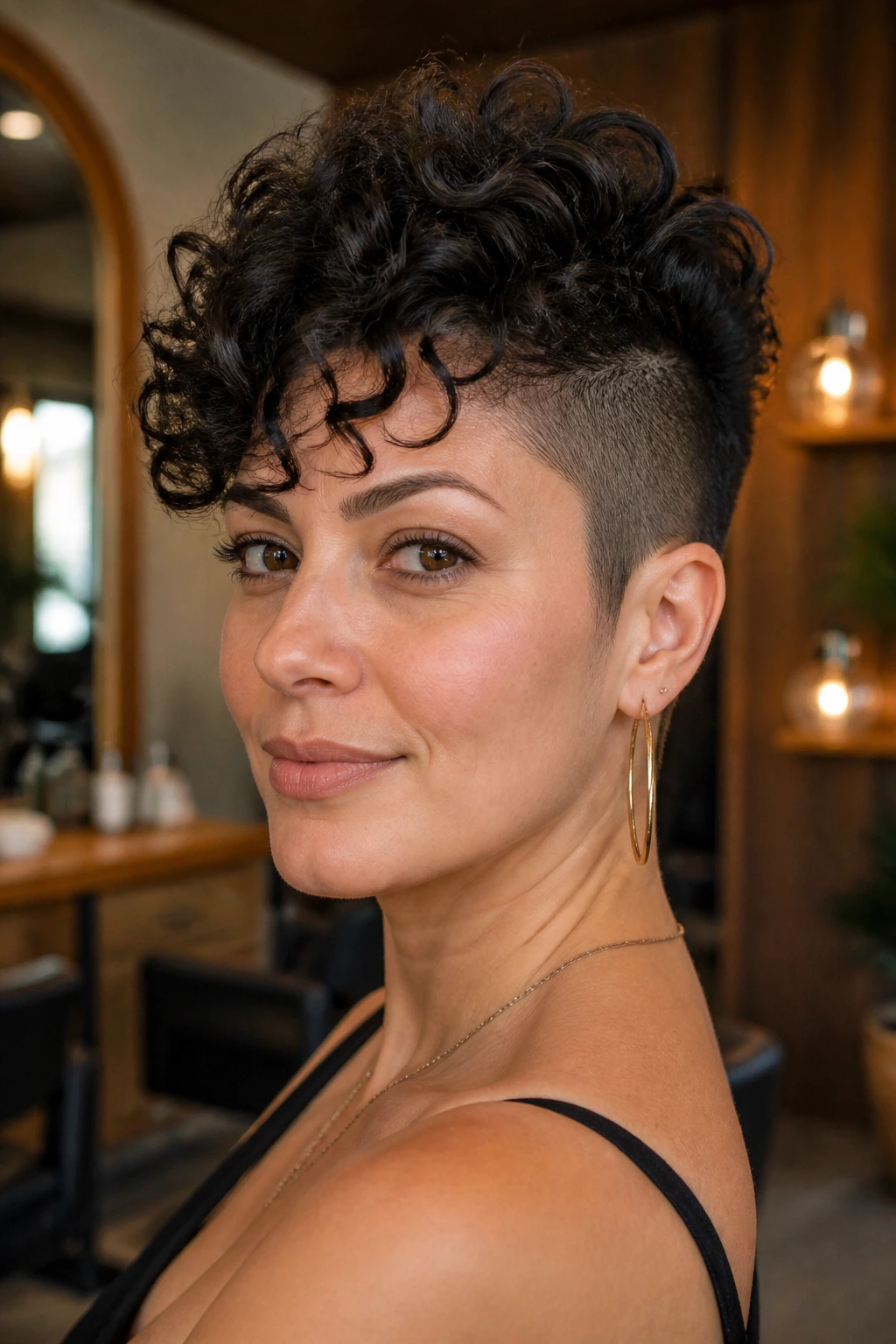
Thick hair and loose curls can make a pixie look either crisp and expensive or like you lost a fight with humidity. The difference usually comes down to shape. Shaved sides change the math: they take weight out of the places where dense curls puff up, and they let the top keep its bend instead of swallowing your face in a triangle of bulk.
That’s why shaved sides pixie cuts for thick hair with loose curls have such a loyal following. They don’t ask your texture to behave like straight hair. They work with the coil pattern, the density, and the little rebel cowlicks that always show up right where you need a smooth part. A good version of this cut can make a wide jaw look sharper, a round face look longer, and a heavy crown feel lighter by two or three honest inches.
The catch is that not every shaved-side pixie is built the same. Some rely on a soft taper at the temple, some go nearly to skin at the nape, and some keep the curls long enough on top to fall into a side sweep that still feels feminine and soft. The right choice depends on how much hair you’ve got, how much scalp you want to show, and how often you’re willing to see a barber or stylist. That’s where the real fun starts.
Why These Cuts Work So Well on Thick, Loose-Curl Hair
-
They remove bulk where density turns puffy: Shaving or tapering the sides gets rid of the “helmet” effect that thick curls can create around the ears and jawline.
-
They keep the good part of the curl pattern: Loose curls look best when they can spring on top without being crushed flat by too much length underneath.
-
They make styling faster: A pixie with shaved sides usually needs less blow-drying than a full curly crop, especially if the top is cut to sit between 2 and 4 inches long.
-
They sharpen the silhouette: The contrast between short sides and a fuller crown gives the style a cleaner outline, which matters a lot when the hair wants to expand outward.
-
They grow out better than a blunt pixie: If the shave is blended well, the cut can move into a soft short crop without turning into a mushroom.
1. Soft Temple-Fade Pixie With Airy Crown
A temple fade is the gentlest entry point if you want to test the shaved-sides look without going full edge. The fade clears the bulk right at the temples and around the ear, then leaves enough length on top for loose curls to stack in a soft, rounded shape. It’s tidy, but it doesn’t read severe.
What makes it work
The temple area is where thick hair often balloons first, especially if your curls bend outward before they drop. Taking that section down to a low fade keeps the sides close while the crown keeps its movement. The result is cleaner around glasses, ears, and cheekbones, and that matters more than people think.
If your curls are 2C or 3A, ask for the top to stay around 2.5 to 3.5 inches. Any shorter, and the curl pattern can lose its nice little bend. Any longer, and the top starts acting like a separate helmet.
Best for: soft features, glasses wearers, and anyone who wants a pixie that still feels friendly instead of punk. Styling note: work a pea-size curl cream through damp hair, then diffuse on low until the roots are dry and the ends still feel a little springy.
2. One-Side Shaved Pixie With a Long Crown Sweep
One shaved side changes the whole mood. The haircut reads asymmetric right away, which is useful if your thick hair tends to grow wide instead of tall. The longer side gives you a place to push the curl forward or across the forehead, and that slanted line makes the face look longer.
The trick here is not to overbuild the crown. Keep the top full enough to show the curl pattern, but remove weight through the internal layers so it doesn’t puff upward like a dandelion. A stylist who cuts curly hair dry will usually do a better job of judging where the mass actually sits.
This version works especially well if you like a little drama but still need a cut you can wear to a normal Tuesday meeting. The shaved side is the punch; the sweep on top keeps it from getting too hard-edged. It’s a nice balance. Rare, honestly.
3. Curly Pixie Bob With a Buzzed Nape
Think of this as the bridge between a pixie and a bob, with the back clipped short so the neckline stays neat. Thick curls often gather weight at the nape and create that bulky shelf that sticks out under collars. A buzzed nape solves that fast.
The longer front pieces still have room to curl and frame the cheekbones, which is where this cut earns its keep. If your hair is dense but your curls are loose, the front can sit just long enough to tuck behind one ear without losing the pixie shape. That makes the style feel grown-up without getting fussy.
Ask for the nape to stay soft, not square. A hard line at the back can look a little dated on this cut, and on thick hair it grows out in a blunt shadow that needs fixing sooner than you’d like. A gentle taper gives you more breathing room between trims.
4. Deep Side-Part Disconnected Pixie
A deep side part gives thick curls direction. Without it, dense hair often rises from the scalp in every direction at once. With it, the heavier side can sit low and sleek while the shorter side stays closer to the head, which makes the whole haircut feel intentional.
The disconnected part is the key detail. Instead of blending everything evenly, you let one side stay noticeably shorter. That contrast keeps the cut from going puffy at the temples and gives your curls a place to fall. I like this version for people who hate spending ten minutes coaxing hair into submission every morning.
It also plays well with loose curls that clump nicely. If your curl pattern forms bigger, ribbon-like bends, the side-part shape shows them off instead of burying them. Use a light mousse at the roots and a dab of gel through the top layer. Too much cream will make the part collapse.
5. Buzzed-Side Faux-Hawk Pixie
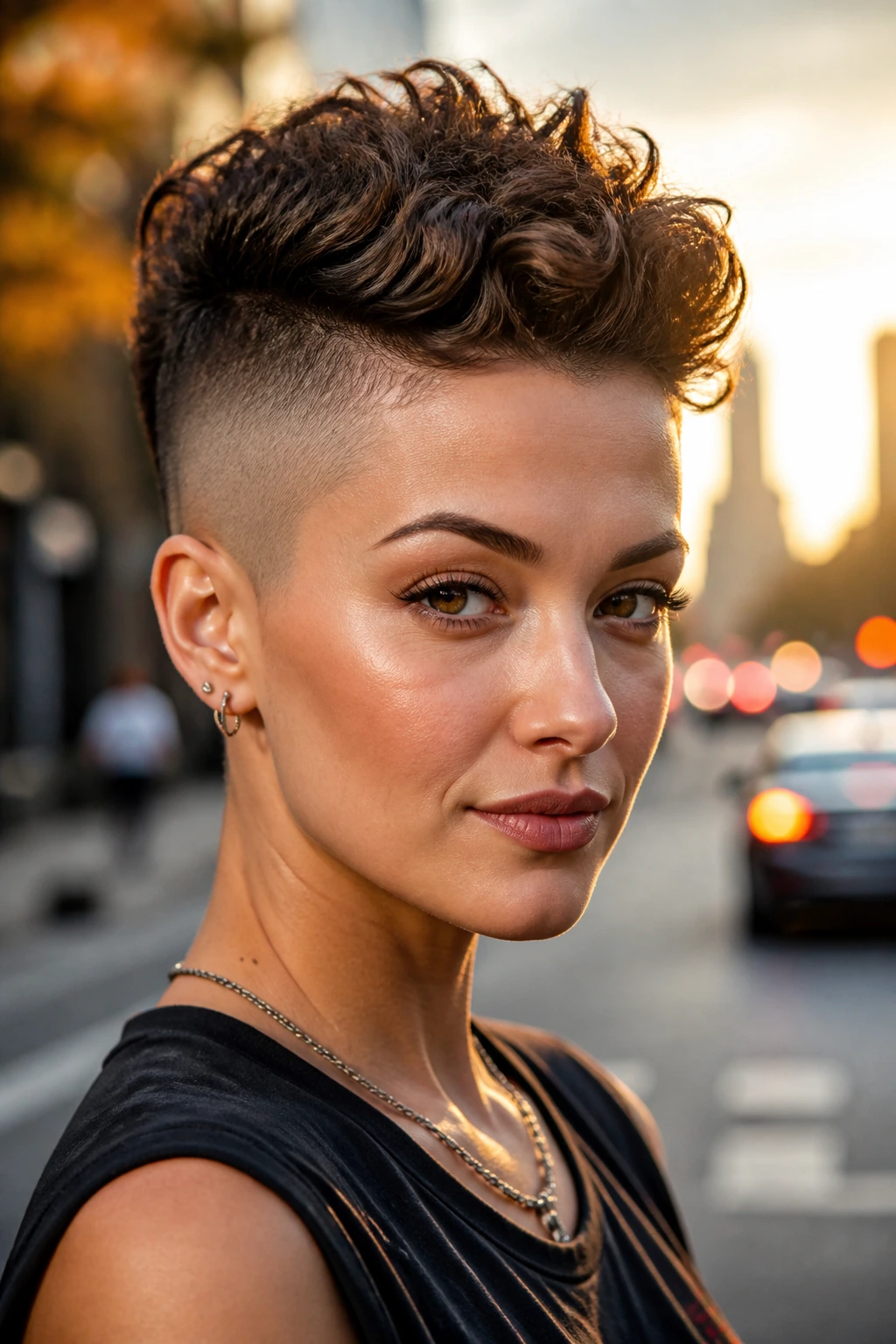
This one has teeth. The sides are clipped close, sometimes down to a #1 or #2 guard, while the center strip stays long enough for the curls to rise and bend forward. On thick hair, that central ridge controls volume in a way that a fully rounded pixie can’t.
A faux-hawk shape gives loose curls a spine. They don’t drift outward as much when the sides are stripped away, so the top can sit higher without looking bulky. If you’ve got a strong jaw or a longer neck, this cut does a nice job of showing both.
It’s also one of the easiest shaved-side styles to customize. Keep the top a little softer if you want a feminine finish, or push the front forward for a sharper line. A little finger styling goes a long way here. Don’t brush it into submission; that just breaks up the curl and turns the whole thing fluffy.
6. Feathered Fringe Pixie With Tapered Sides
The fringe changes everything. Instead of a hard, chopped pixie bang, a feathered fringe falls lightly across the forehead and breaks up the width of thick hair. Tapered sides keep the ears clear and stop the shape from turning boxy.
This is the cut I’d point to if someone said, “I want short hair, but I still want something soft around my face.” The fringe can be side-swept, slightly curved, or left piecey enough to show the curl bends. It works because the heavy lifting happens in the sides, not the front.
Styling it without overdoing it
Use a lightweight cream on the fringe and a touch of mousse at the roots. Then twist two or three front sections while they’re damp and let them air-dry or diffuse. That tiny bit of setting helps the fringe fall in clean curves instead of splitting into little frizz flags.
7. Hidden Undercut Pixie With a Full, Curly Top
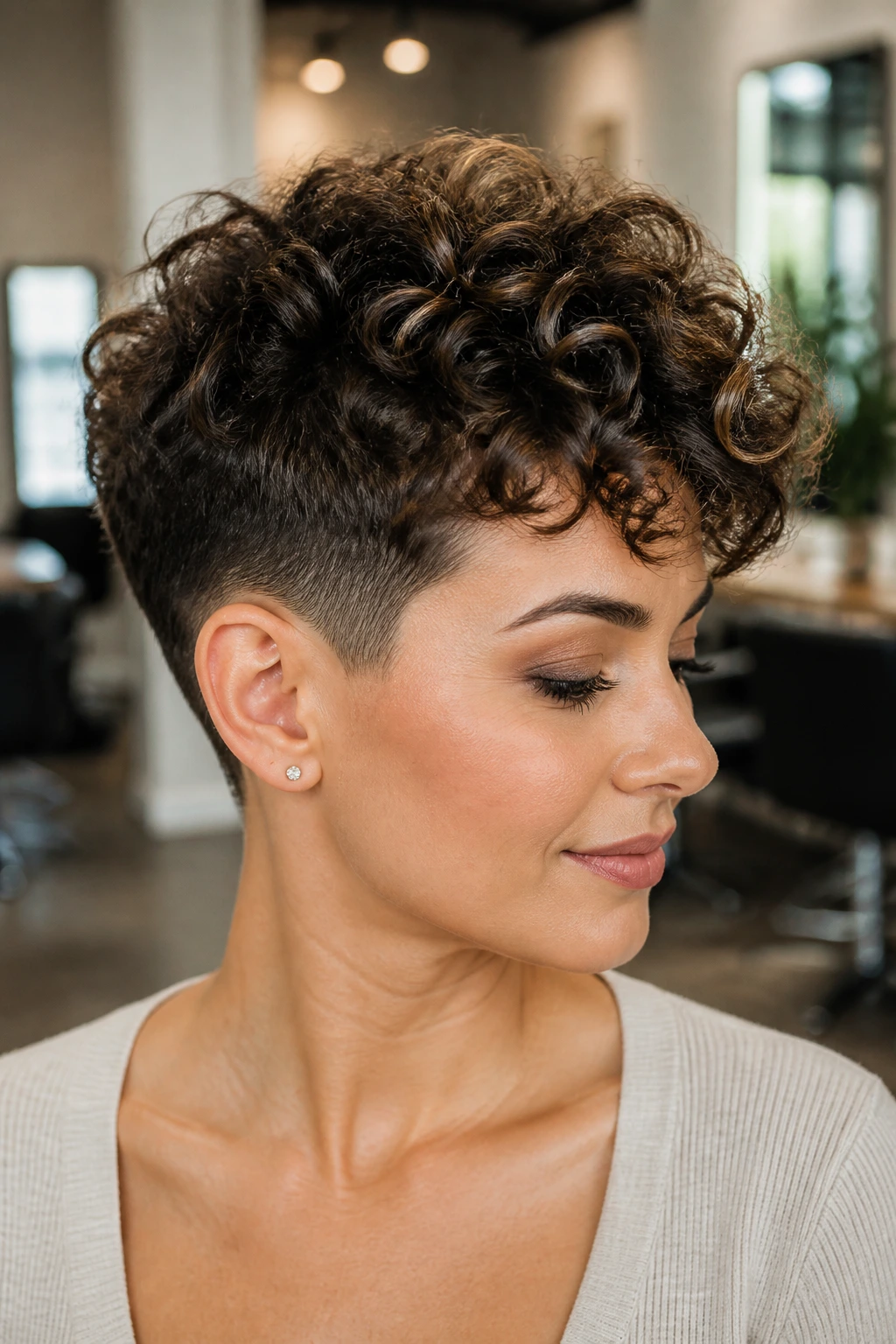
Here’s the sneaky version. The undercut is tucked underneath the top layer, so when the hair is worn down, it still looks like a soft curly pixie. Lift the top, though, and the shaved panel underneath shows up, which cuts a ton of hidden bulk from thick hair.
This is a smart choice if you want flexibility. You can wear it soft and rounded on workdays, then push the curls up or back on weekends and let the undercut show. The top should stay long enough to cover the shaved section when you want it hidden — usually around 3 to 4 inches, depending on curl shrinkage.
The big advantage is movement. Dense curls tend to trap heat at the back of the head, and that undercut creates a little air flow. If your scalp runs warm or you live in a humid place, you’ll feel the difference quickly. So will your blow-dryer.
8. Skin Fade Crop With Loose Curl Top
A skin fade is bold, no question. It strips the sides down to bare skin or nearly bare skin, which gives the top curl all the visual room it needs. On thick hair, that contrast can be gorgeous because the density stays concentrated where you want it — on the crown, not around the ears.
This cut works best when the top is kept intentionally textured, not fluffy. Ask for point cutting or soft layering so the curl pattern breaks into pieces instead of forming one dense mound. If your loose curls are fine-textured but plentiful, this is one of the cleaner ways to wear a short shape without losing your curl identity.
It does require maintenance. A skin fade grows in fast, and the line between sharp and shaggy is a short one. But if you like a crisp silhouette and don’t mind visiting the chair often, this is one of the strongest options in the bunch.
9. Long-Front Pixie With a Swept Bang
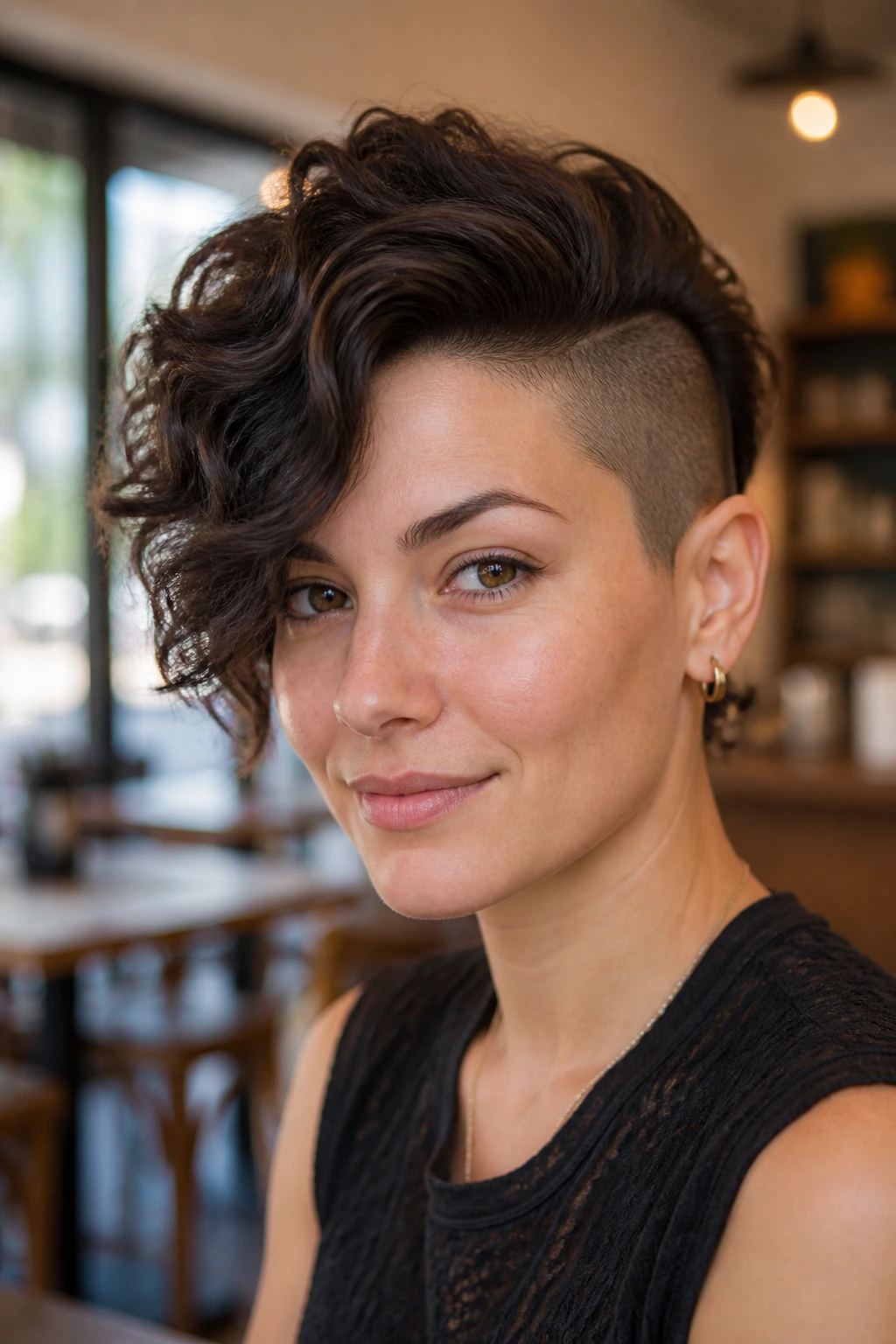
A longer front section can rescue a pixie if you’re nervous about going too short. The sides stay shaved or tightly tapered, while the front keeps enough length to sweep across the forehead or tuck behind one ear. That longer bang softens the whole haircut.
On thick, loose curls, the front piece needs a little weight control so it doesn’t spring out into a weird hump. Ask for the front to be cut with the curls’ natural bend in mind — not pulled straight and hacked off. That detail matters more than most people realize. A curl that looks 3 inches wet can shrink enough to read as 2 inches dry.
This version flatters strong brows, wide foreheads, and anyone who wants a little face-framing movement. It’s one of the easiest shaved-side pixies to grow into as well, because the front can transition into a short side-swept crop without a weird line.
10. Rounded Pixie With a Soft Neck Taper
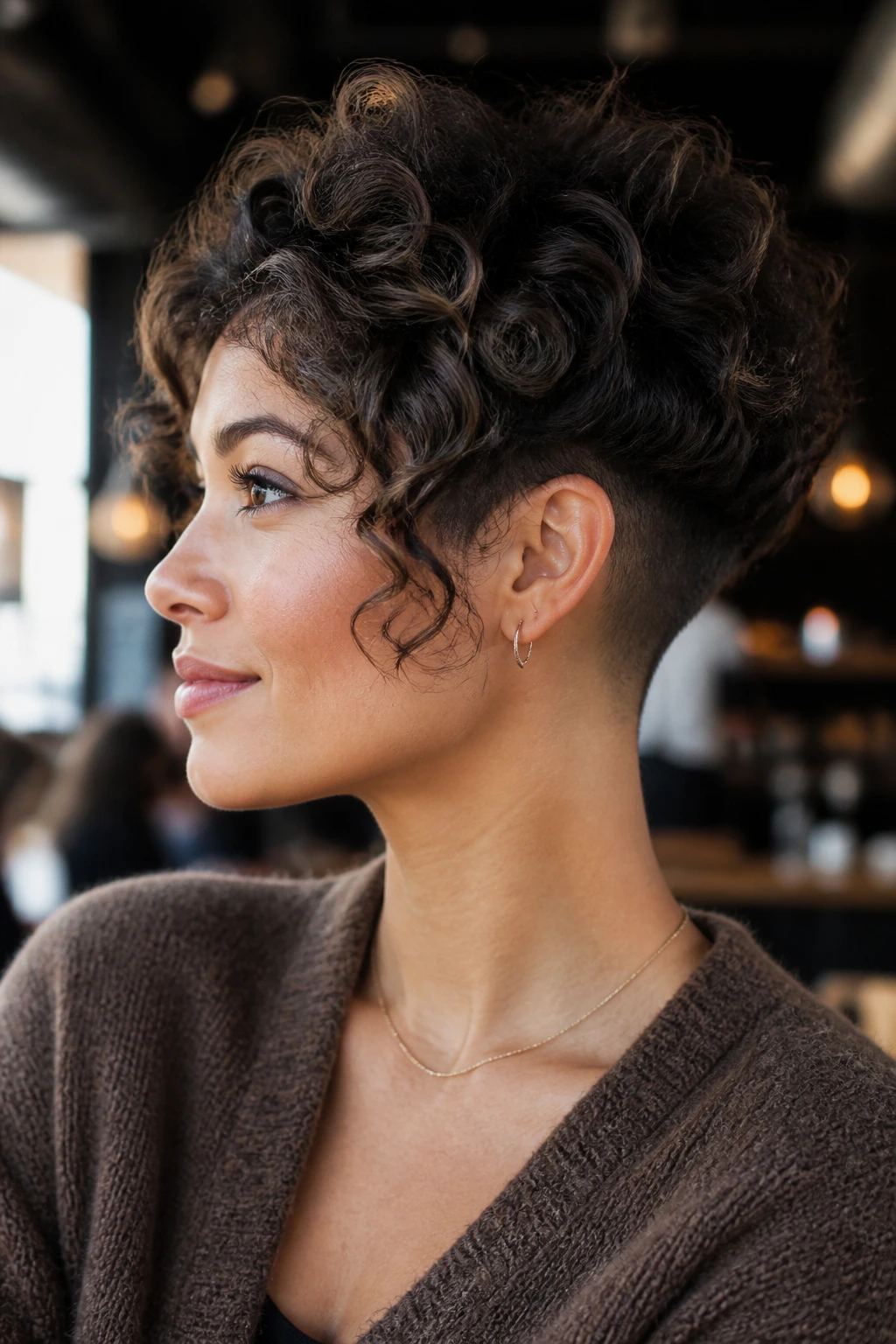
Rounded shapes are underrated. Thick hair often wants to stand away from the head, and a rounded pixie works with that reality instead of fighting it. The soft neck taper removes bulk at the nape so the back lies better under collars, while the top keeps a gently curved outline.
What makes this cut different is the lack of hard edges. The silhouette is smooth, almost bowl-like in the best sense, but the taper keeps it from feeling heavy. If your curls are loose and your hair is dense at the crown, this cut can make the whole head look balanced instead of top-heavy.
I’d recommend it for people who want shaved sides without the sharpness of a fade. It’s a calmer look. Less bite, more shape. And on thick curls, that shape often lasts longer because the transition from short side to fuller top is soft enough to grow out gracefully.
11. Razor-Textured Pixie With Piecey Ends
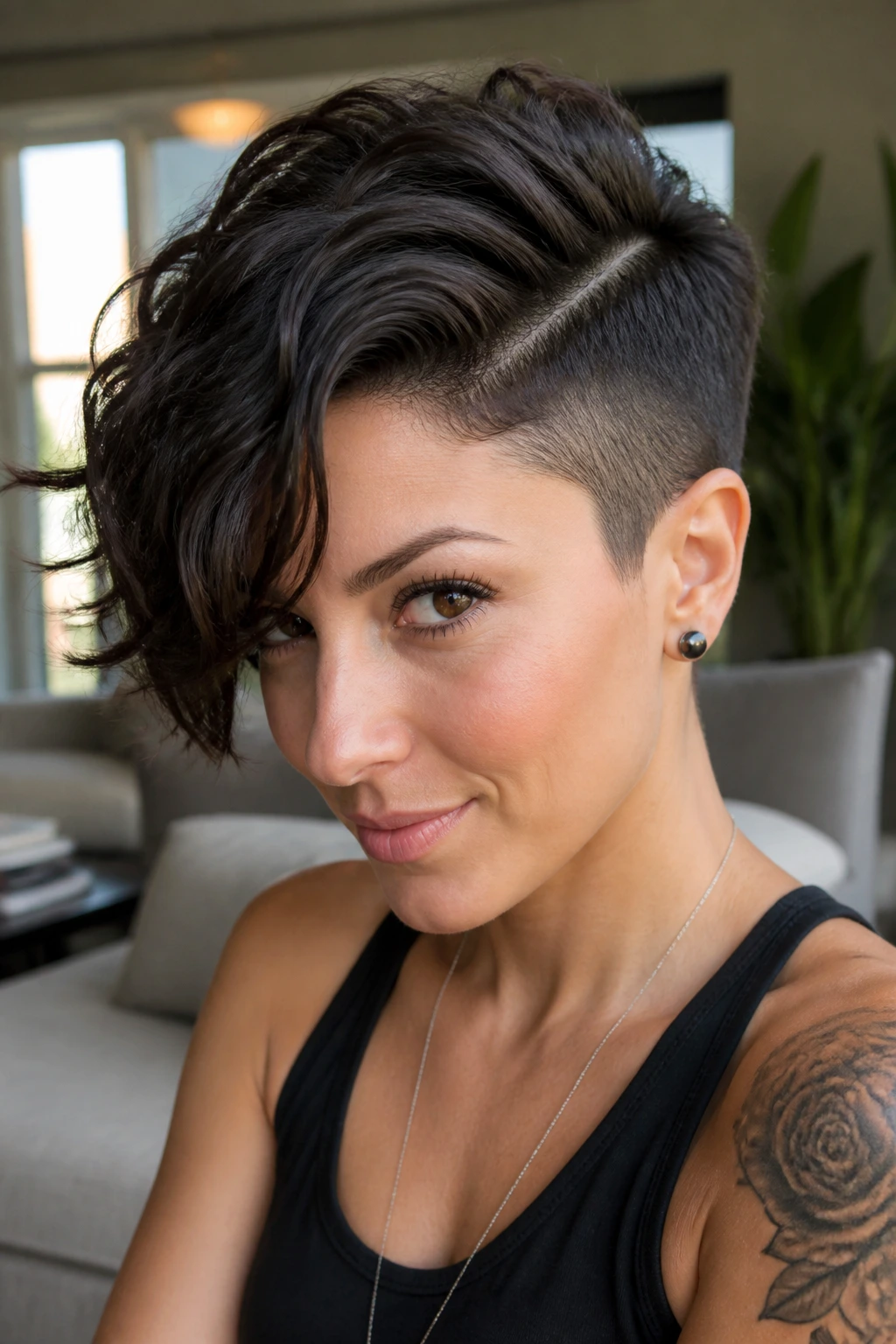
Razor texture can be a blessing or a mess. On thick loose curls, it works when the stylist uses it to remove weight at the ends, not to shred the whole haircut into frizz. The goal is separation — those little piecey curls that move instead of clumping into one big mass.
The shaved sides help here because they keep the silhouette tight while the top gets all the playful movement. If the crown is too dense, the texture just turns into puff. If it’s controlled, you get definition and air.
This style needs a light hand at home. A tiny amount of styling paste or a matte cream is enough. Warm it between your palms, scrunch it into the ends, then leave the roots alone. That last part matters. People ruin piecey pixies by trying to smooth the root area into submission, and then the whole cut loses its lift.
12. Soft Curly Mullet Pixie
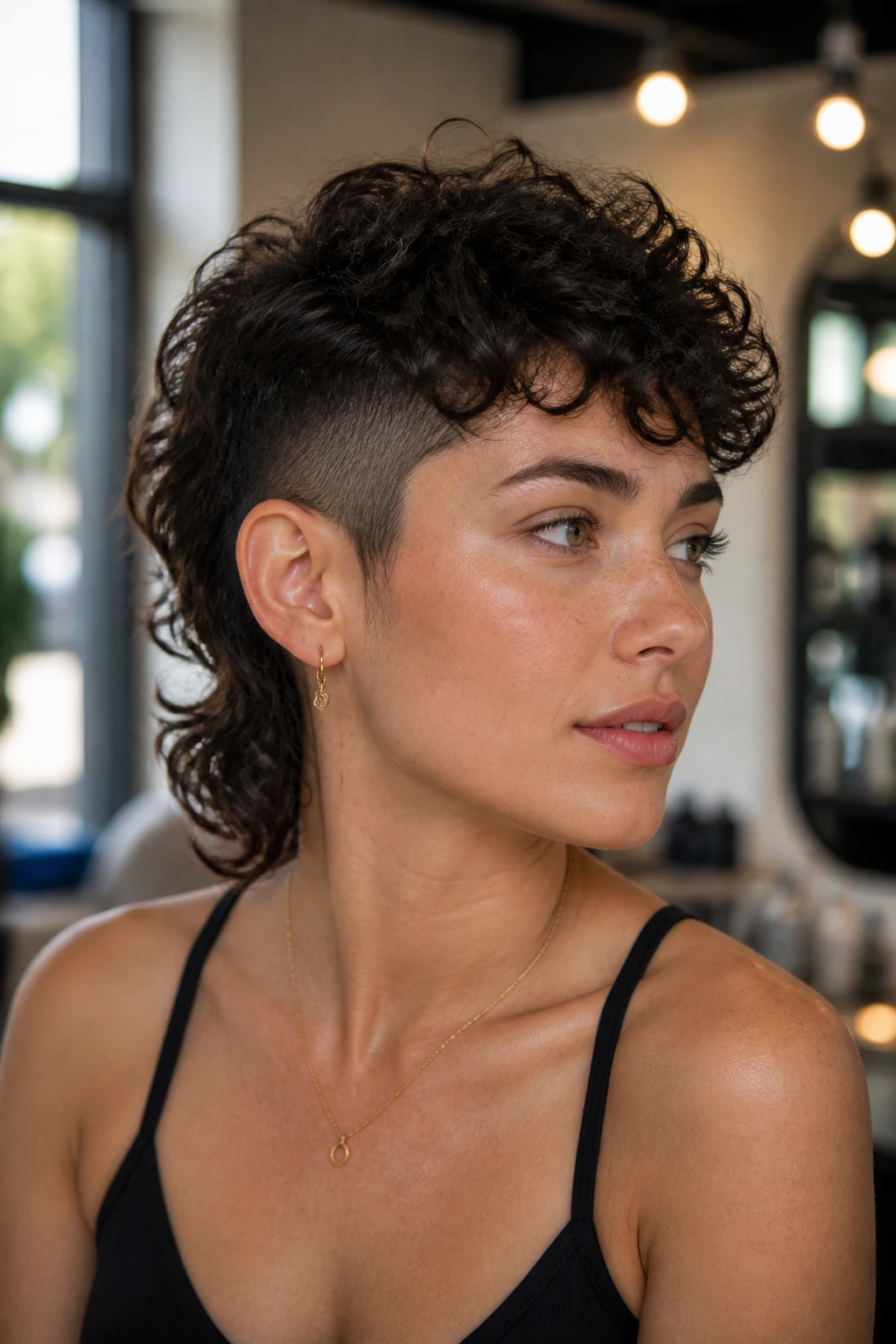
Yes, the mullet word gets people twitchy. Ignore the baggage. A soft curly mullet pixie keeps the front and sides short while leaving a little extra length at the back, which can look fantastic on thick hair if the transition is blended well.
The back length lets loose curls drop instead of balloon. That gives you movement at the nape without the square shape you sometimes get from a traditional pixie. The sides are still shaved or closely tapered, so the cut keeps that clean outline around the face.
This one is best if you like texture and don’t mind a bit of attitude. It’s especially good on hair that grows thick through the back of the head. The longer rear section can balance a heavy crown, and a few face-framing curls at the front keep it from going too retro in a bad way.
13. Sideburn-Framed Pixie With an Ear Tuck
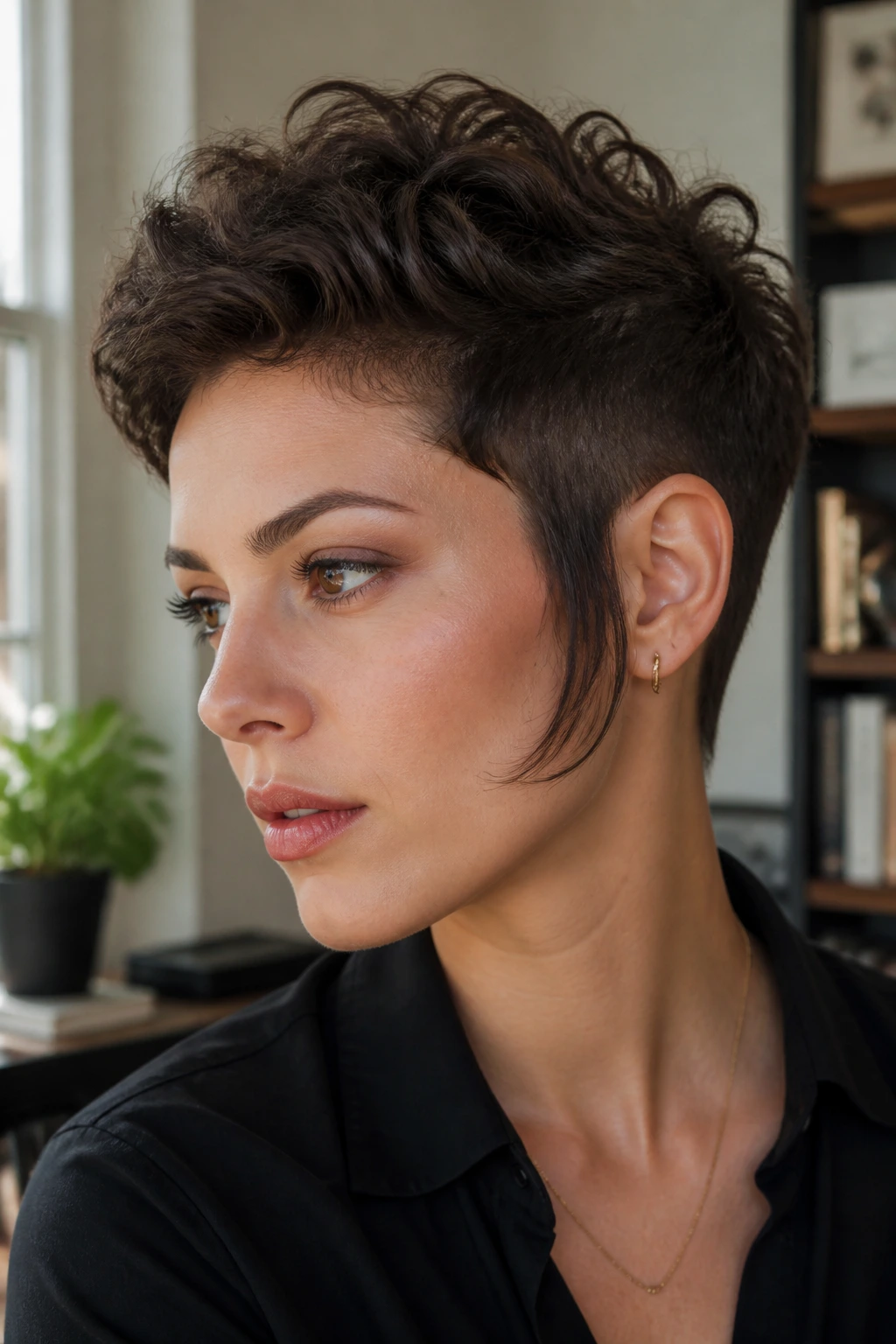
Sideburns matter more than people think. Leaving them a little longer, then shaving or tapering the area just behind them, creates a frame that makes thick curls look deliberate instead of wild. You get softness around the jaw without the puff at the ear line.
This is a lovely choice if you wear earrings or glasses. The cropped side opens up the ear, while the longer sideburn area gives the cut a subtle edge. On loose curls, those little front tendrils can land in just the right place and soften the cheekbones without stealing the show.
Try this if you want structure but not severity. It’s one of those cuts that looks polished with almost no effort, which is a rare and useful thing. A little root lift, a little curl cream, and you’re done.
14. Air-Dry Wash-and-Go Pixie
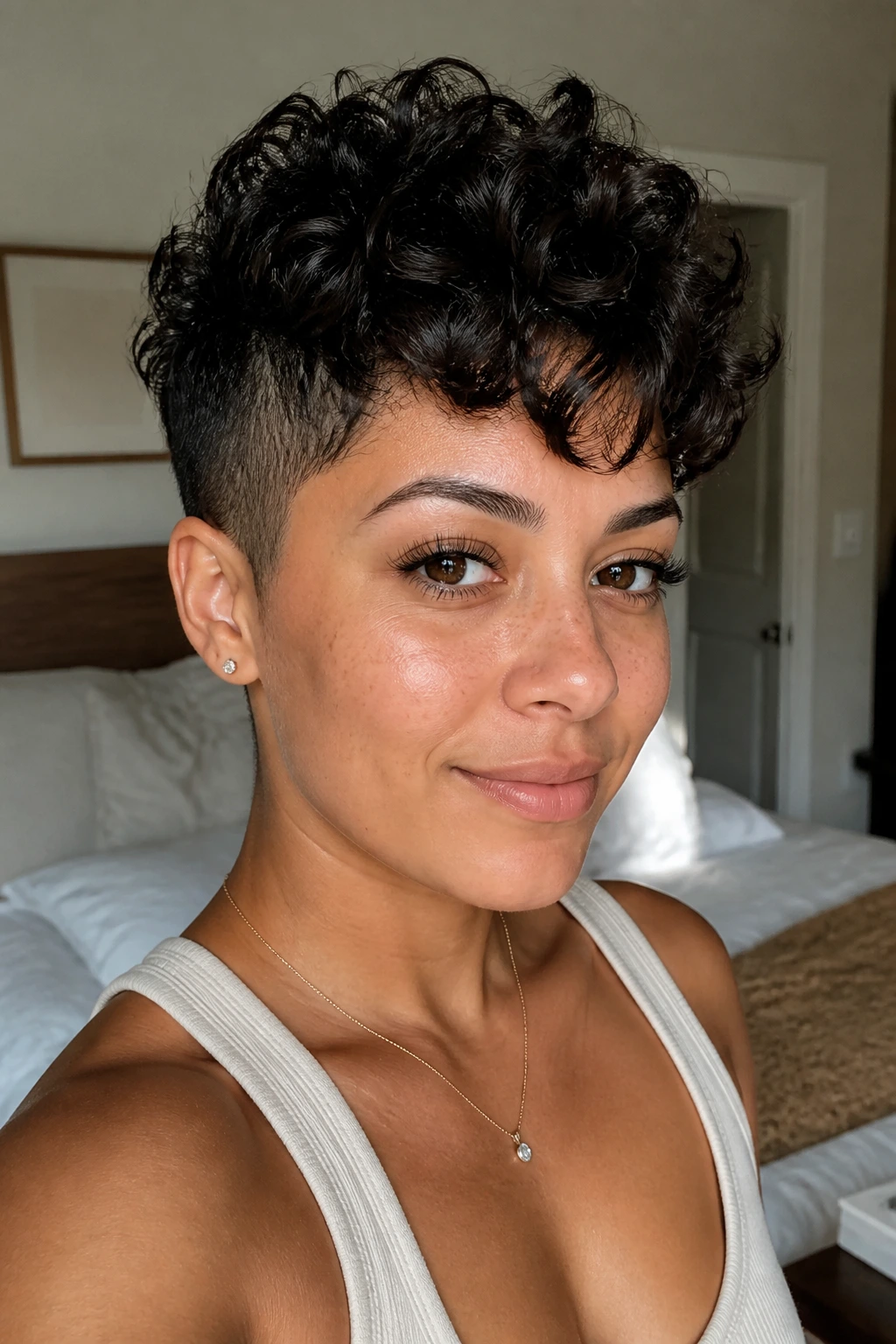
Some pixies want a round brush. This one doesn’t. The point is to let thick loose curls dry in their own pattern, with the shaved sides handling the bulk so the top can do its own thing. If your curl pattern is predictable and your density is high, this can be a dream.
The top should be cut to encourage curl clumping. Ask for soft layers rather than aggressive thinning. Too much texturizing will break the shape and leave the ends frayed. A good wash-and-go pixie needs enough length for the curls to link together as they dry.
Use leave-in, a small amount of mousse, and maybe a touch of gel on the surface. Then leave it alone. Seriously. Touching it while it’s drying is how you get halo frizz, and halo frizz is the enemy of a neat pixie.
15. Platinum Shaved Pixie With Loose Ringlets
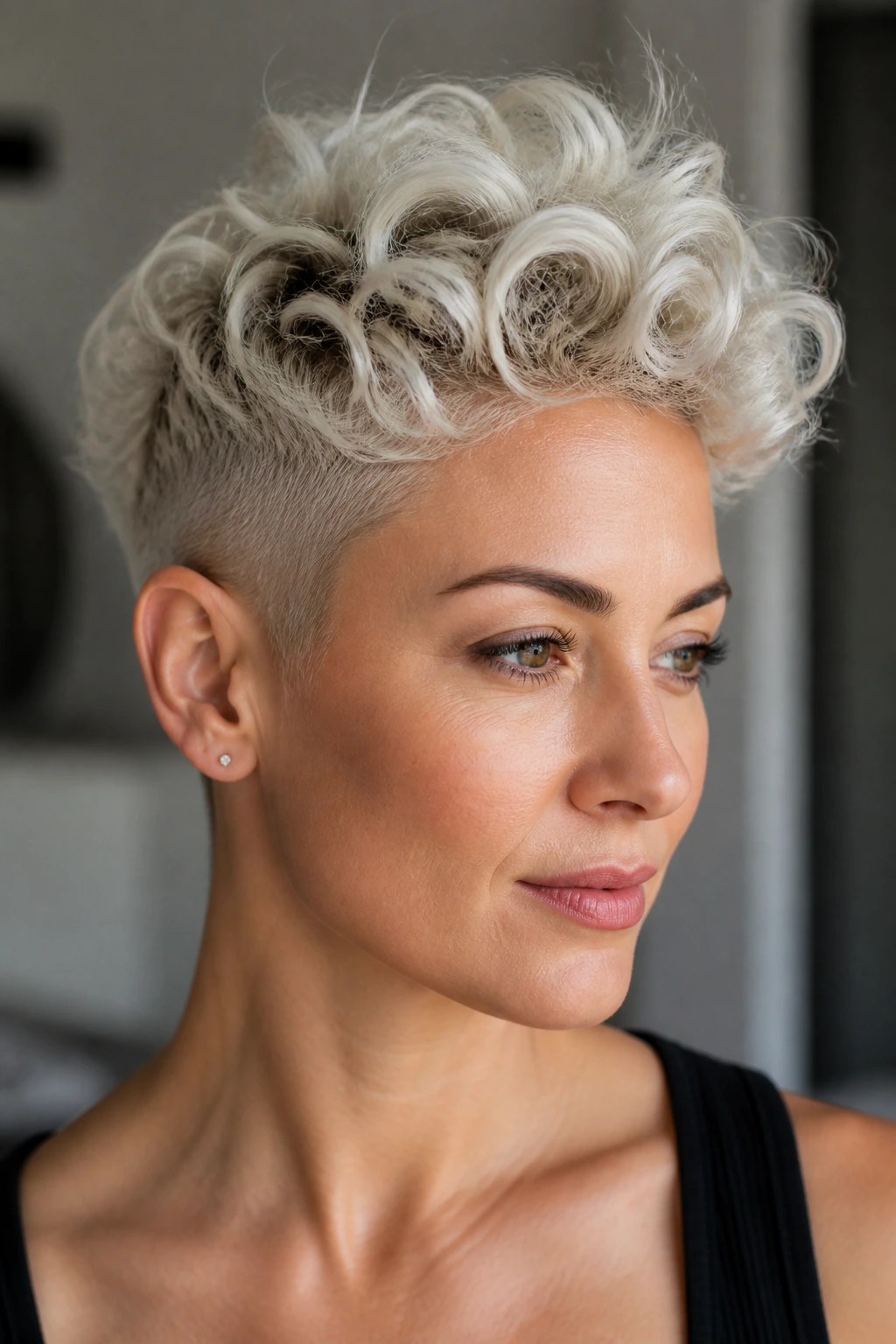
Color changes the whole silhouette. A platinum shade, icy blonde, or even a clear pastel can make shaved sides look sharper because the cut line becomes easier to see. On thick hair, that visual contrast is a big deal. It turns texture into a feature instead of just volume.
Loose ringlets keep this from feeling harsh. The softness of the curl pattern balances the brightness of the color, especially if the root is left a shade darker for depth. If your hair is naturally dark and dense, be honest about upkeep — lightening thick curls takes care, and dry ends will show fast on a short cut.
This style is for the brave, or at least the strategically brave. It looks best when the color is healthy and the curl pattern still has spring. If the hair feels brittle, I’d fix that first. A short blonde pixie with fried ends is not a look worth chasing.
16. Office-Friendly Swept-Top Pixie

Not every shaved-side pixie needs to announce itself from across the room. A swept-top version keeps the sides clean and tight, but the crown and fringe are styled in a smooth diagonal that reads polished. It’s the haircut equivalent of a crisp white shirt with one interesting detail.
This cut works well on thick hair because the shaved sides keep the structure neat while the top can be guided into place with a side part. Loose curls give the sweep some softness, so it doesn’t look flat. That little bend makes a huge difference.
If you need something that holds up in meetings and still looks good when you’re five minutes late, this is a smart pick. Use a light cream, then pin one side behind the ear while the hair cools. The shape tends to stay put better that way.
17. Big-Curl Crown With Close-Cropped Sides
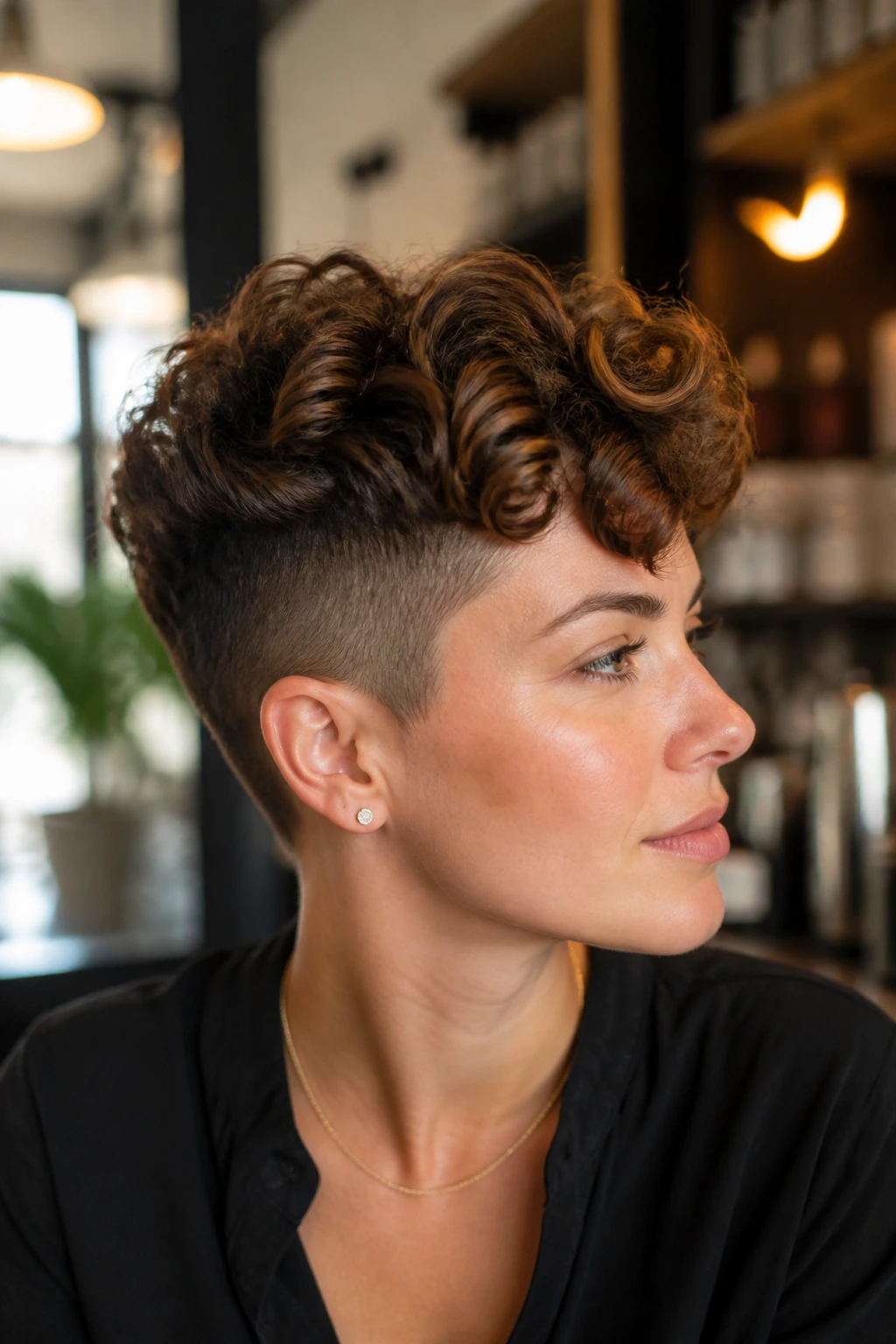
This one is all about letting the top be generous. The crown stays fuller, with curls left long enough to stack and show off their bend, while the sides are kept close so the whole shape doesn’t widen past your shoulders. On dense hair, that contrast is the whole point.
The haircut suits people who like a little height. Thick hair has natural lift at the crown, and a close crop underneath makes that lift look intentional instead of accidental. If your curls are looser, they’ll read as soft waves with enough structure to look sculpted.
A stylist should remove bulk from the interior of the crown, not just the surface. That keeps the cut from turning into a mushroom cap. You want height, not helmet. There’s a difference, and it’s not subtle.
18. Face-Framing Pixie With a Longer Fringe
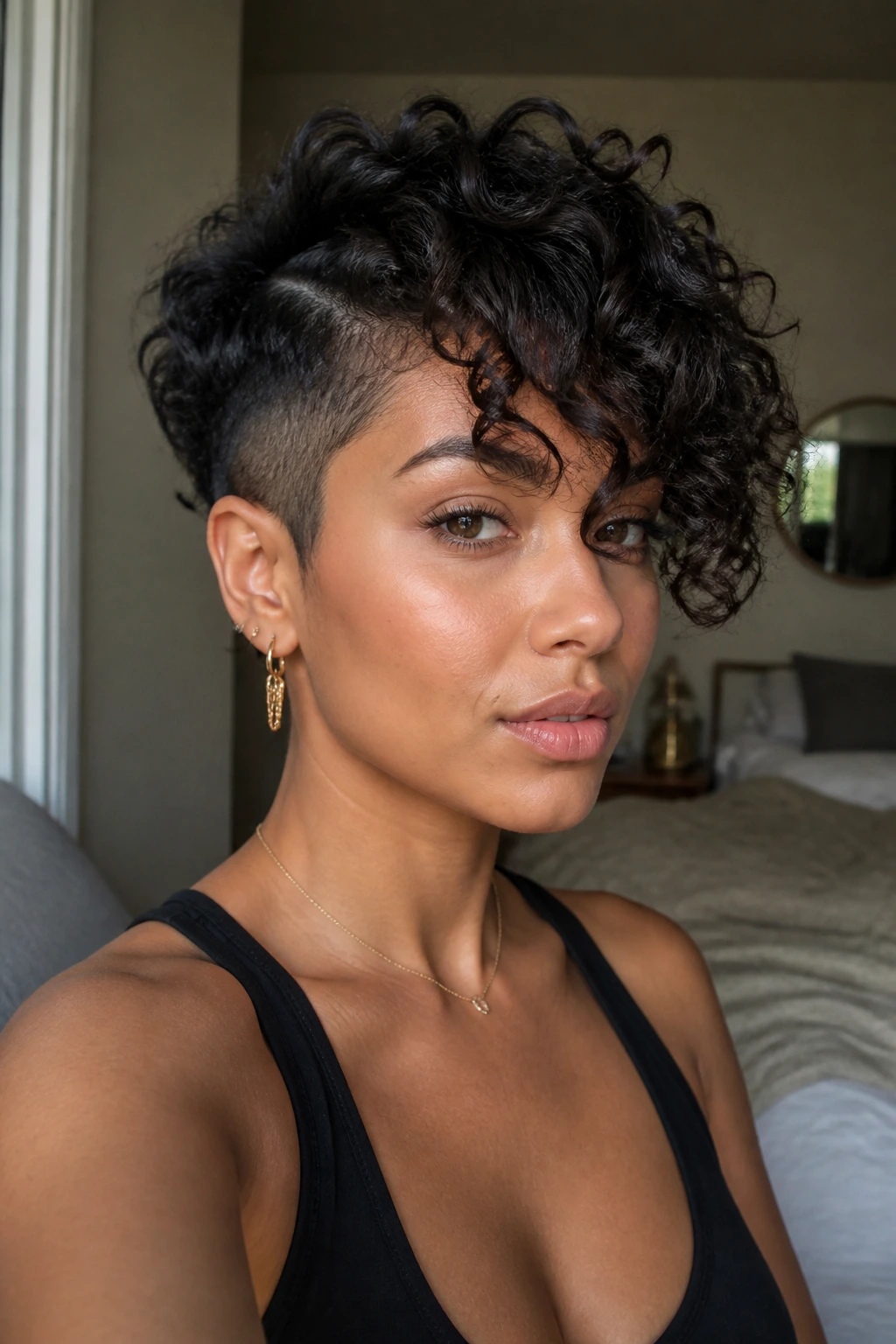
If you want your curls near your cheeks, this is the one to watch. The fringe stays longer, often around eye level when dry, and the sides are shaved or closely tapered so the face-framing pieces become the focal point. It’s a good move if you want softness around the forehead.
Thick hair makes this easier than it sounds. Density gives the fringe enough body to fall in a curve instead of splitting into tiny pieces. The shaved sides keep the rest of the style from competing with that front section, so the whole cut feels light where it needs to.
I like this version on square or heart-shaped faces because the longer fringe can break up width at the temples. The only caution is shrinkage. Loose curls dry shorter than they look when wet, and a fringe that seems generous in the sink can land much higher on the forehead once it dries.
19. Editorial Angular Pixie With Clean Lines
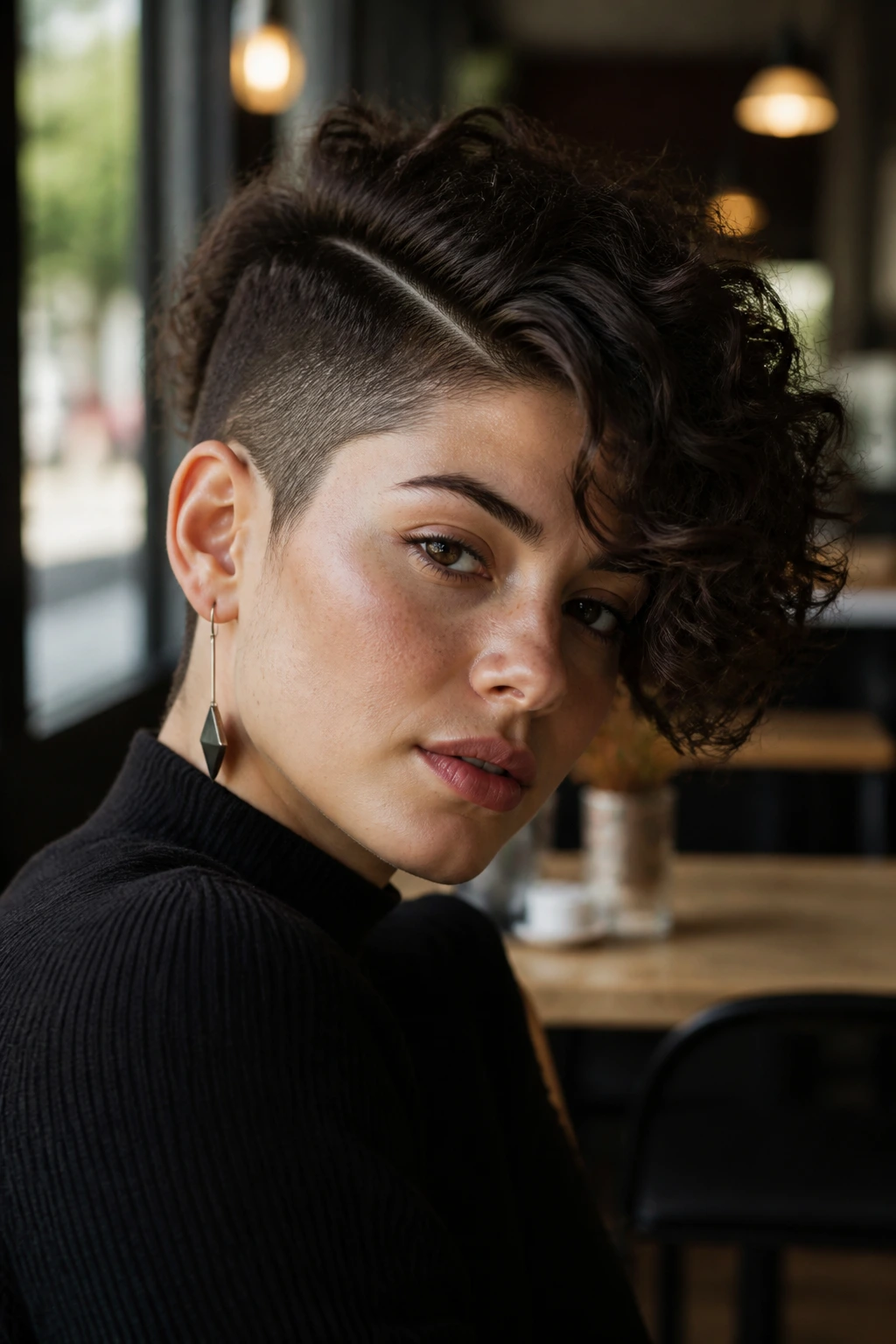
Angular pixies are not shy. They use a sharp side angle, a visible part, and a shaved side or tight fade to create a shape that looks deliberate from every angle. Thick hair gives the top enough weight to hold that line, which is half the battle.
What makes the cut editorial is the contrast. The side can be nearly bare, while the top falls in a longer, sculpted curve across the forehead or toward one eye. Loose curls soften the geometry just enough so it doesn’t feel severe. That mix of sharp and soft is why this cut looks expensive when it’s done well.
If your face has strong angles already, this can look fantastic. If your features are softer, it gives you structure without needing a lot of styling. Keep the top controlled with a medium-hold mousse and avoid over-brushing it. Brushing kills the line.
20. Low Fade Loose-Wave Pixie
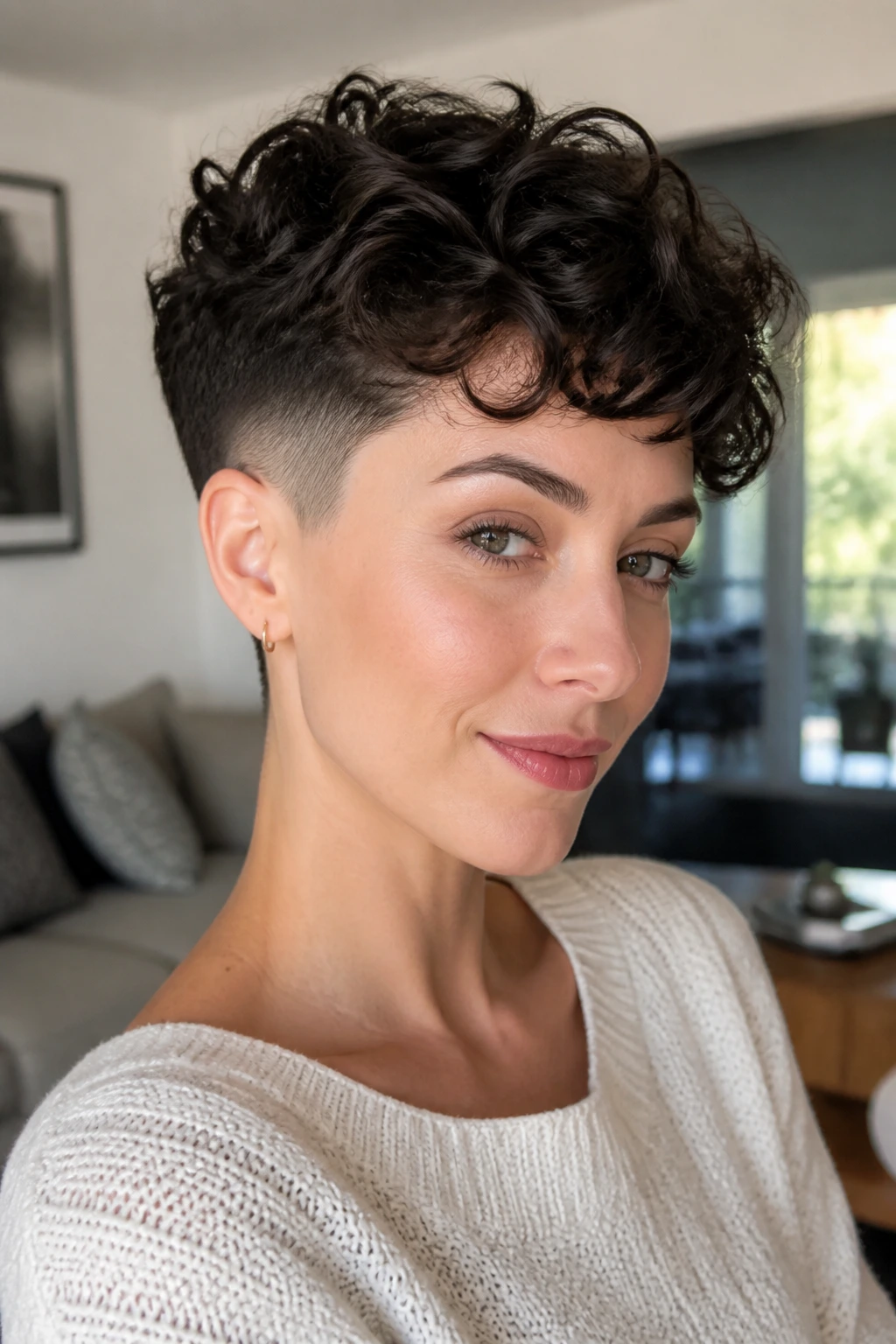
A low fade is quieter than a skin fade, and that’s exactly why it’s useful. It takes bulk out of the lower sides and the nape while leaving more hair intact through the midsection of the head. For thick loose-curl hair, that gives you shape without going too dramatic.
This cut is one of the easiest to live with because it keeps the style stable as it grows. The fade can soften for a couple of weeks before it starts looking untidy, which buys you some time between trims. The top can stay a touch longer and still sit well.
If you want a shaved-side pixie but don’t want to explain it to everyone you meet, this is the safe bet. Quiet. Clean. Practical. It also behaves nicely with second-day hair, which is a small blessing and a real one.
21. Feminine Soft-Shave Pixie With Curved Nape
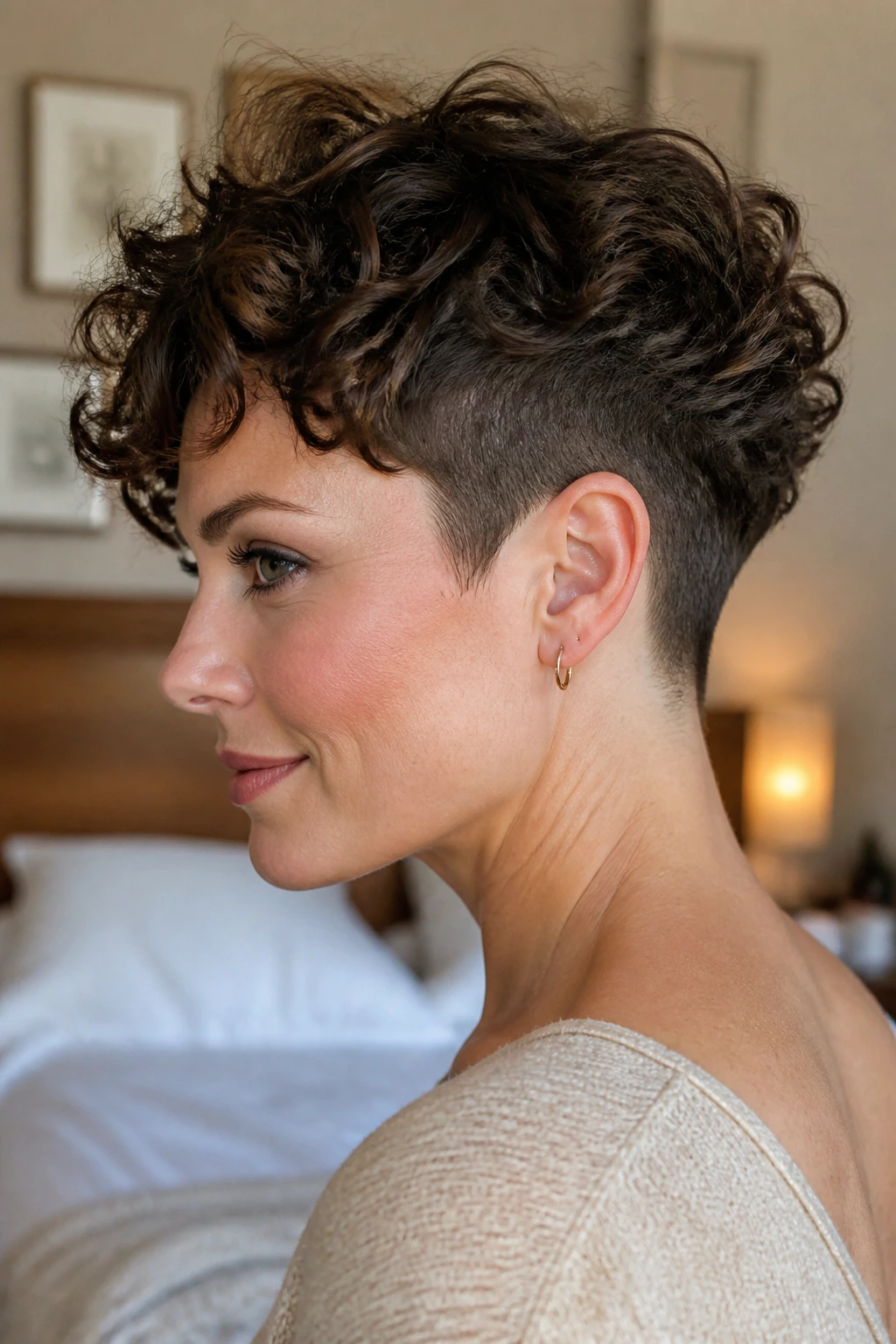
“Feminine” here doesn’t mean sweet or fussy. It means curved, soft, and balanced. The shaved sections are hidden just enough to slim the sides, while the nape and top are shaped in a gentle arc that follows the head instead of fighting it.
Loose curls make this look especially pretty around the ears and neck because they create little bends where the shaved area ends. On thick hair, the curve keeps the style from becoming boxy. I like this for people who want short hair but still want the neckline to feel graceful.
A soft-shave cut needs regular cleanups, but not as often as a skin fade. The shape is the point, and the shape depends on the transition. If the cut is done badly, it looks choppy. If it’s done well, it looks like the hair just happens to sit that way.
22. Grow-Out Friendly Blended Undercut Pixie
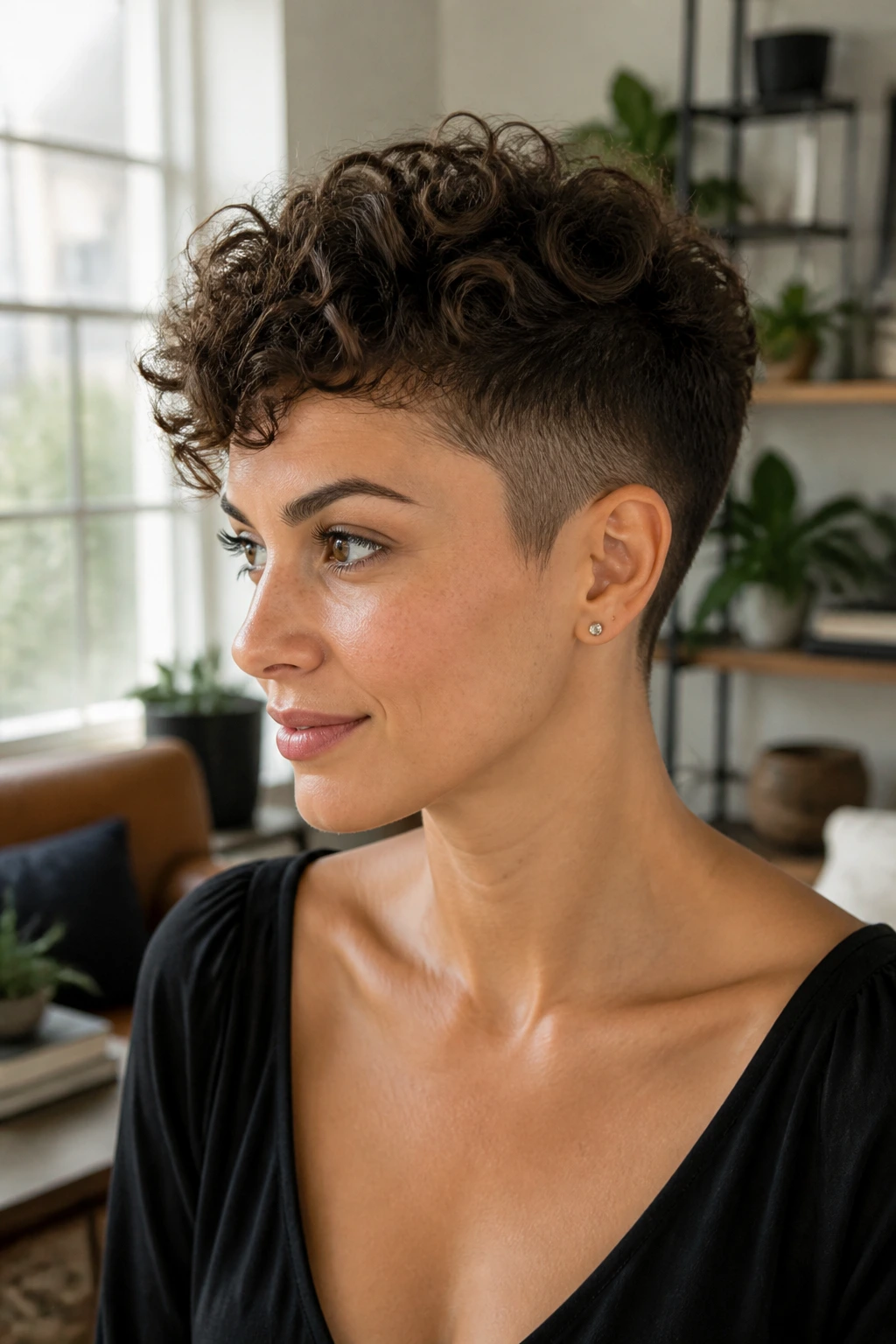
This is the one for anyone who knows they may want more length later. The undercut is blended rather than chopped hard, so when the top grows out, you don’t get a dramatic shelf across the head. Thick curls can hide the transition if the layering is smart.
The crown stays long enough to show the curl pattern, while the sides and back are cut close enough to clear the bulk. That blend matters. It keeps the haircut light today and less awkward three weeks from now, which is usually when people start regretting a too-hard line.
If you’re nervous about commitment, ask for a soft undercut with the perimeter left a little longer than you think you need. Curls shrink, hair grows, and the grow-out period always arrives faster than the stylist’s mirror makes it seem. Better to leave yourself room.
What Makes the Shaved-Side Shape Work on Thick Curls
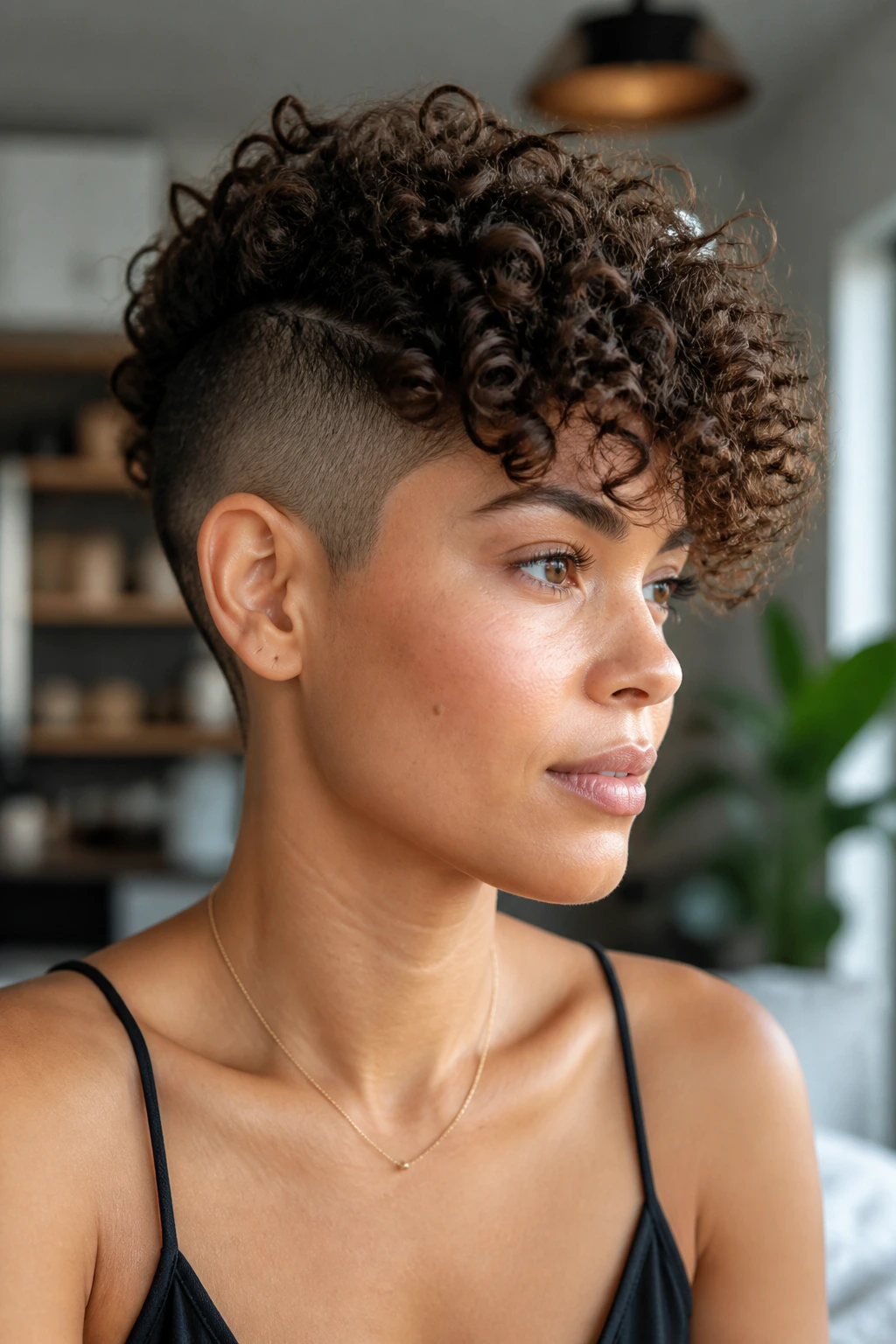
The best shaved-side pixie does not try to erase your texture. It edits it. Thick curls need a plan, because the bulk wants to gather in the same three places every time: the temples, the crown, and the nape. Remove weight in the wrong spot and the cut balloons. Remove it in the right place and suddenly the curls sit up instead of out.
Dry cutting helps here. So does cutting with the hair mostly in its natural curl pattern instead of stretched straight. Loose curls hide surprises when they’re wet — a section that looks harmless can spring up an inch once it dries. That’s why a stylist who understands shrinkage matters so much. One sloppy snip can turn a chic crop into a puffball.
The shape also needs a clear finish. The sides should not be left in a vague halfway state. Either commit to a close crop, a clean taper, or a soft fade with a visible transition. That edge is what makes the top feel fuller and more controlled.
What to Ask for at the Salon
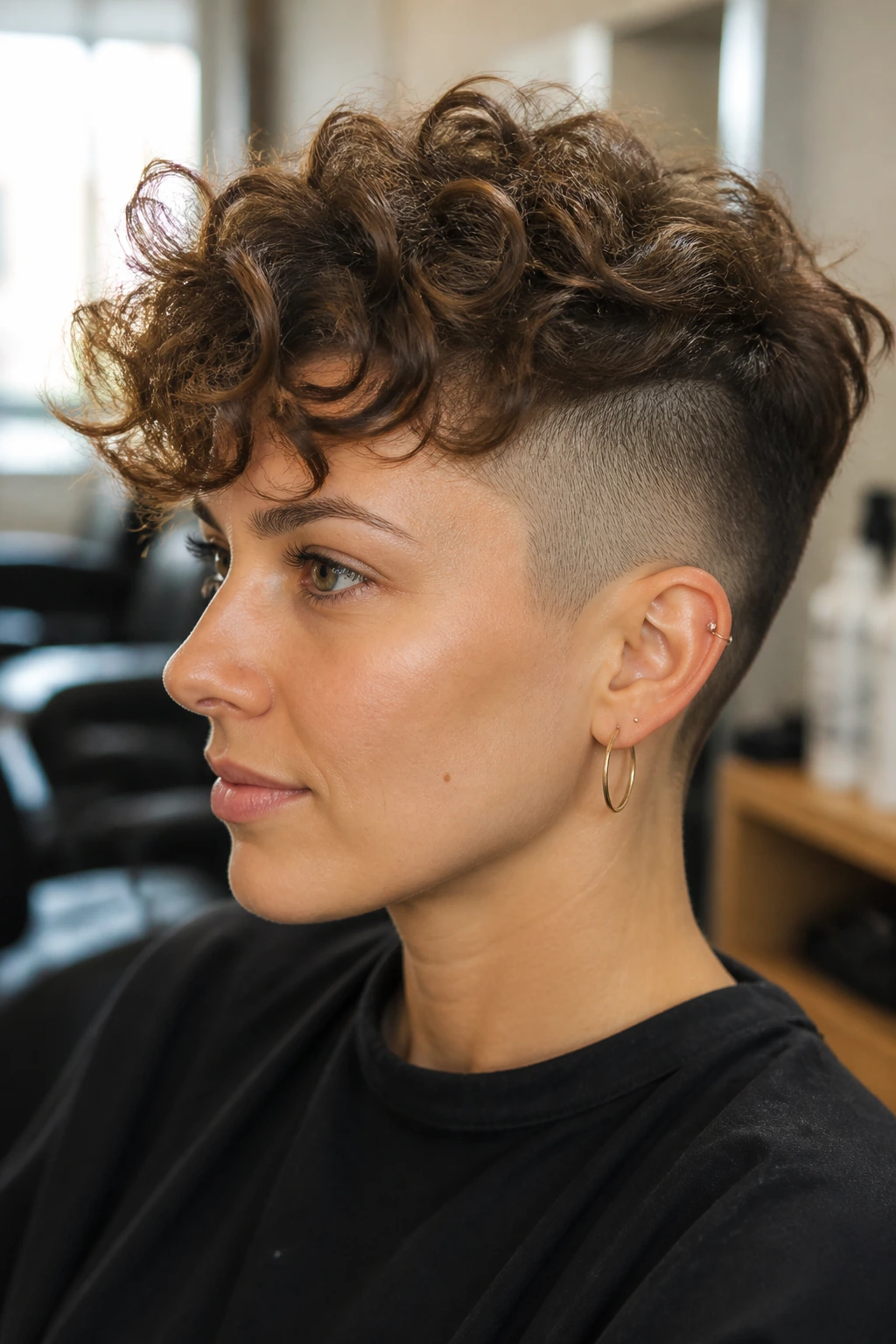
Bring a photo, sure, but bring the right kind of photo. You want a picture of the silhouette, not just the vibe. Point out where the shave starts, how long the top is, and whether the sideburns are left soft or cut tight. Those small details change the haircut more than people expect.
Say the words out loud if you need to: “I want the sides and nape shorter, but I need enough length on top for curl shrinkage.” That sentence saves a lot of trouble. If your curls are dense, ask the stylist to leave an extra half inch to an inch on top compared with what they think is needed when wet.
A good consultation should also cover maintenance. If you can’t come back every 2 to 4 weeks, don’t ask for a high skin fade. If you like a little grow-out, ask for a soft taper or blended undercut. The haircut has to fit your calendar, not just your mood.
Essential Tools and Products for Styling These Cuts
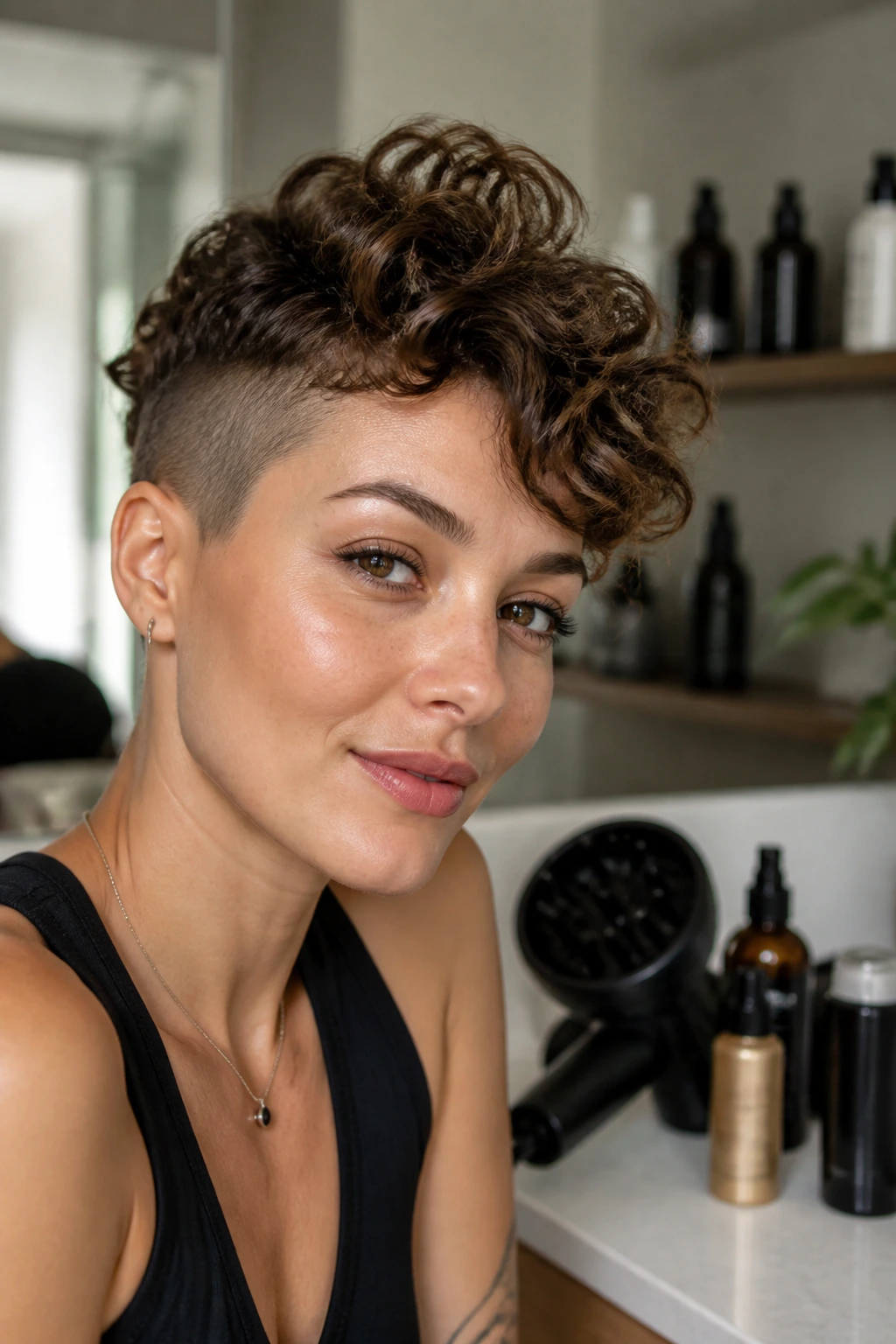
-
Diffuser attachment: Helps dry loose curls without blasting them flat; low heat is the move.
-
Microfiber towel or soft T-shirt: Cuts down on frizz when you squeeze out water after washing.
-
Spray bottle: Handy for reactivating curl cream and reshaping day-two texture.
-
Curl cream: Good for soft definition on thick, loose curls; use a small amount or the roots will slump.
-
Mousse: Gives lift at the crown and helps the shaved-side shape stay airy instead of heavy.
-
Light-hold gel: Useful when you want cleaner curl clumps and less halo frizz.
-
Clippers or trimmer for touch-ups: Optional, but useful if you keep the sides very short between appointments.
-
Wide-tooth comb: Better than a brush for working product through curls without blowing them apart.
-
Satin bonnet or pillowcase: Keeps the top from rubbing into a fuzzy triangle overnight.
How to Style and Wear These Cuts
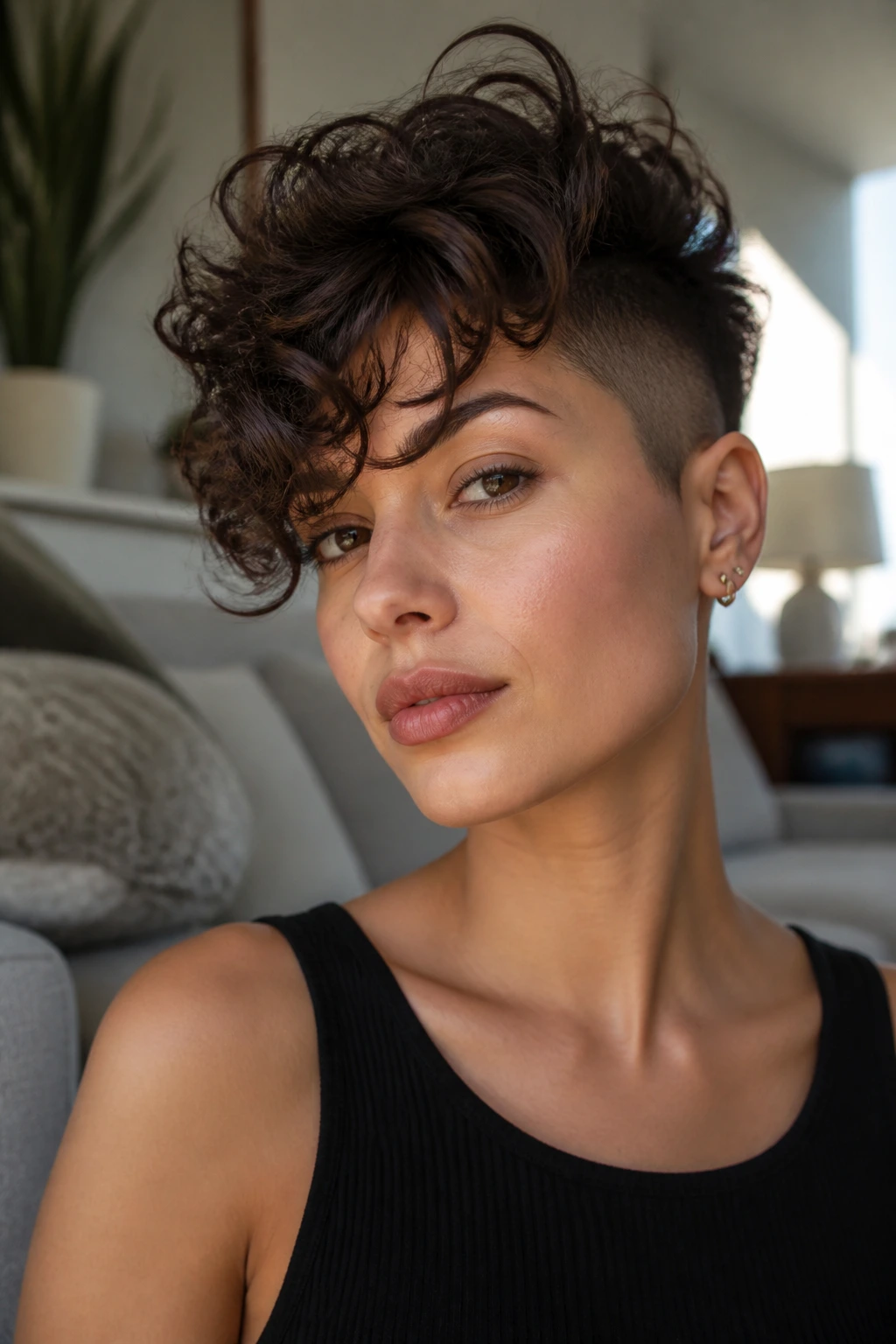
A shaved-side pixie wears best when the top has some motion. Start with damp hair, work in a leave-in or curl cream, then add mousse at the roots if you want lift. If you like a cleaner finish, smooth a little gel over the outer layer and let the curls set before you touch them.
Styling: Diffuse on low heat or air-dry with the crown clipped up for 10 to 15 minutes so it doesn’t collapse against the scalp.
Accessories: Small hoops, ear cuffs, and slim headbands work better than bulky clips because the sides are already close; you don’t want to crowd the shape.
Outfits: Open necklines, collarbones, and structured jackets show the haircut well, while very high collars can swallow the nape and make the shave disappear.
Occasion: For casual days, let the curls be a little imperfect. For a cleaner look, use a fine-tooth comb at the part, then press the side with a dab of cream so the contrast reads sharper.
Additional Styling Tweaks That Make a Big Difference
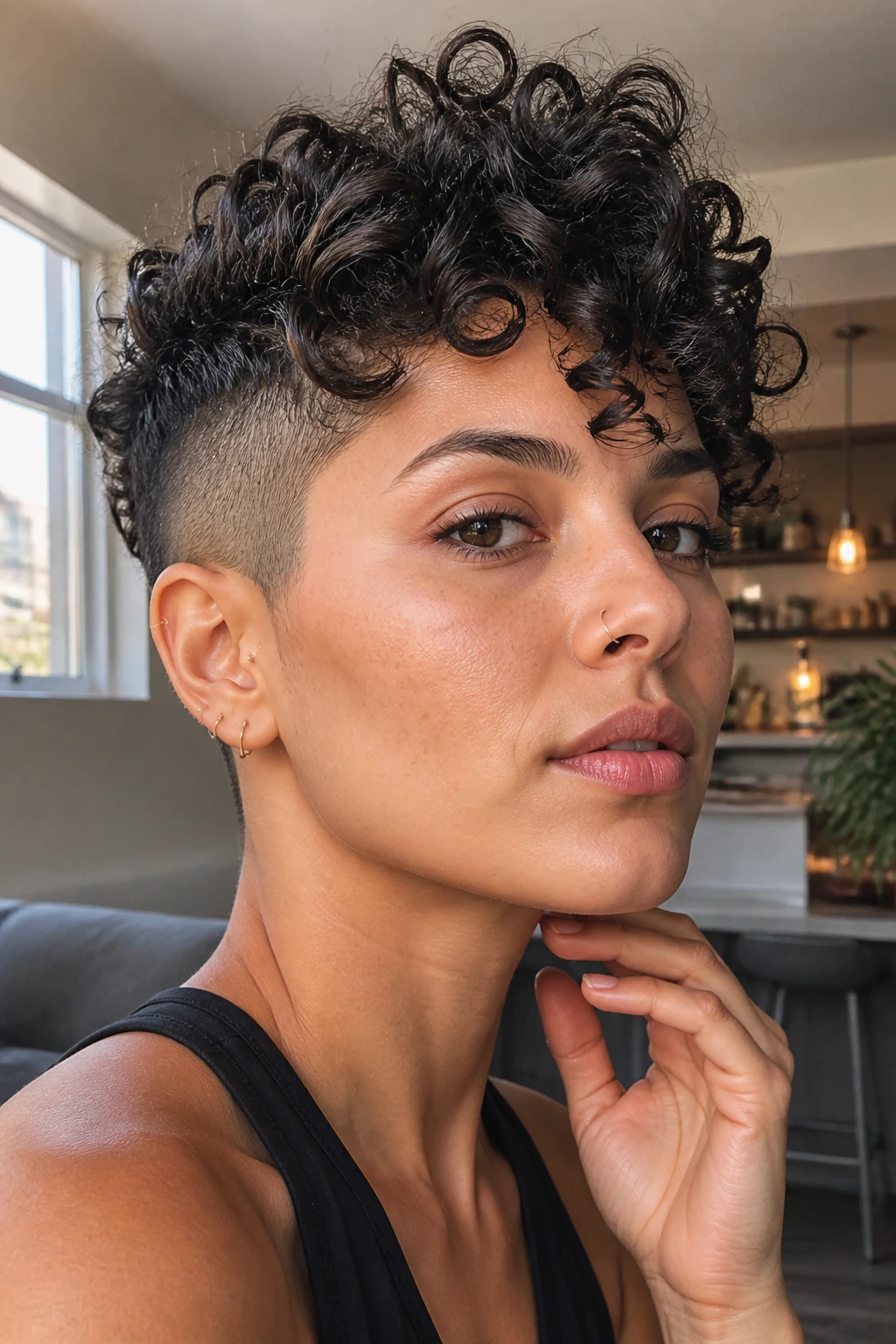
Volume Control: If the crown keeps ballooning, try root clips while the hair dries. Two small clips at the top can lift the root just enough to keep the shape from sitting flat against the head.
Shape Preservation: Ask your stylist to cut the top in dry curls, not just wet sections. Wet curls lie to everybody, including trained eyes.
Definition: A pea-size amount of gel over the top layer will give loose curls a cleaner finish than a heavy cream alone. You want clumps, not paste.
Make-It-Yours: If you wear glasses, keep the temple area lighter so the frame doesn’t fight the haircut. If you wear bold lipstick or big earrings, a tighter shave helps the whole look feel intentional.
Maintenance, Grow-Out, and Refresh Schedule
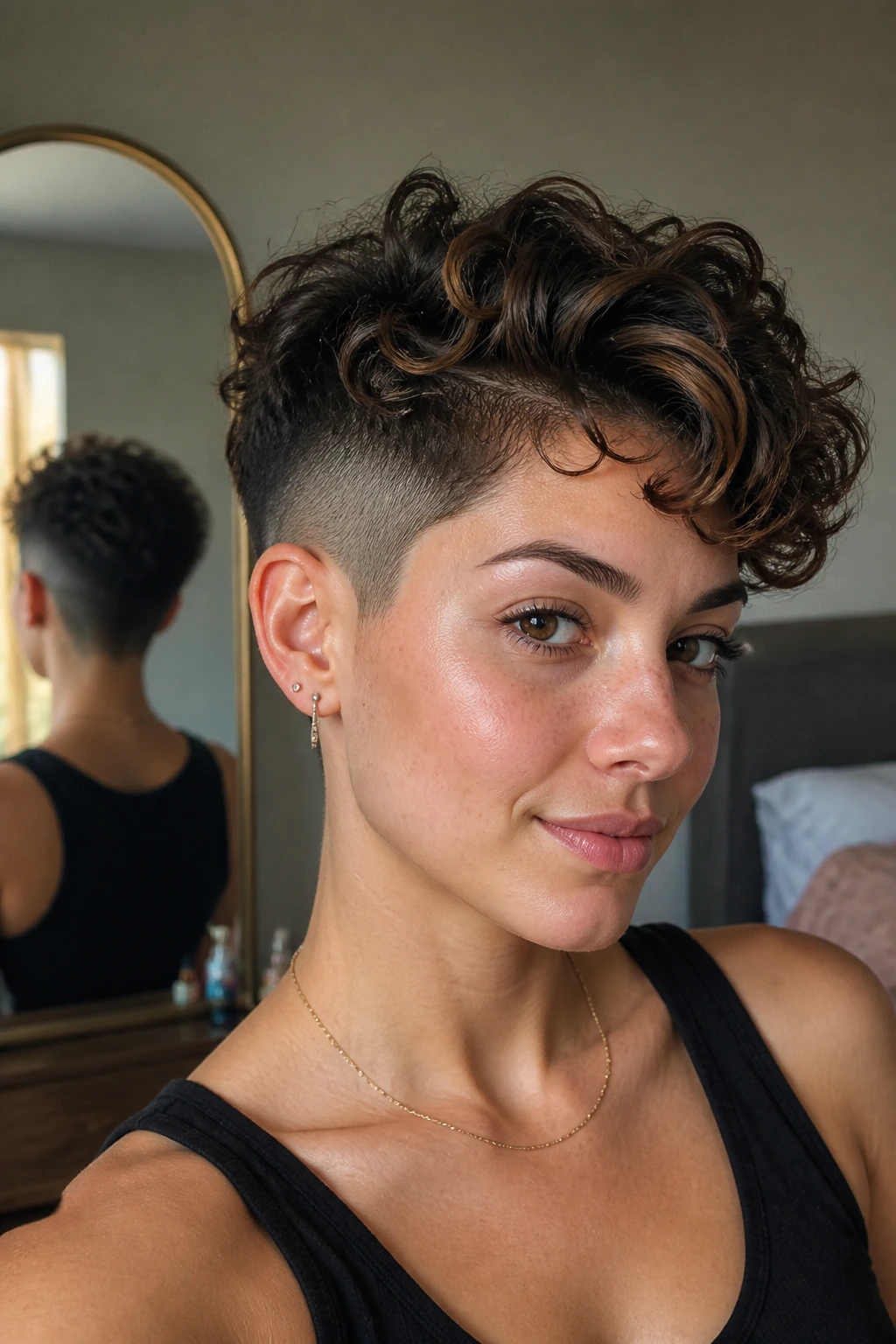
The sides and nape usually need attention every 2 to 4 weeks if you want the cut to stay crisp. Go longer than that and the whole shape starts widening, which is exactly what thick hair loves to do when nobody is looking. The top can usually wait 6 to 8 weeks, depending on how fast your curl pattern collapses or expands.
At home, day-two refresh is straightforward. Mist the top lightly with water, add a thumbnail of curl cream or mousse, and scrunch the curls back into place. If the sides are still close-cropped, avoid loading them with product; they get greasy fast and that only makes the contrast messy.
Sleeping on a satin pillowcase helps, but a loose satin bonnet is better if the top has enough length to flatten overnight. If the fringe keeps separating, clip it lightly in place before bed. Small habits. Big payoff.
Common Mistakes to Avoid With a Shaved-Side Pixie
-
Shaving too high at the first cut: If the shave starts above the widest point of your head, thick curls can look top-heavy fast. Keep the transition lower unless you want a very bold shape.
-
Over-thinning the crown: Removing too much weight can turn loose curls into frizz with no body. Ask for controlled layering, not aggressive texturizing.
-
Using too much curl cream: Thick hair loves moisture, but a heavy hand will flatten the root and kill the lift. Start with less than you think you need.
-
Ignoring shrinkage: Wet hair lies. Always leave a little extra length on top and fringe, or the cut can come out shorter than expected once dry.
-
Waiting too long between cleanup visits: The sides lose their sharp outline first. Once the nape and temples blur, the pixie reads as overgrown instead of deliberate.
Variations and Adaptations to Try

The Soft Office Version: Keep the shave low and the top swept to one side. This works when you want short hair that can sit under a blazer and still feel polished.
The Edgy Night-Out Version: Push the side closer to skin and keep the crown higher. A touch of shine cream at the front gives the cut more contrast under indoor light.
The Grow-Out Friendly Version: Ask for a blended undercut with no hard line at the nape. It’s the safest option if you know you’ll want more length later.
The Humidity Fighter: Use a low fade and a stronger hold gel on the top layer. This keeps thick curls from puffing outward when the air turns sticky.
The Color-First Version: Add a bold shade — platinum, copper, even deep burgundy — to make the shave visible. Color draws the eye to the structure, which can make a simple cut look much more deliberate.
Frequently Asked Questions
Will shaved sides work if my curls are more loose wave than ringlet?
Yes, as long as your hair has enough density to hold shape on top. Loose waves often need a little more product at the roots because they can collapse faster than tighter curls.
How short should the shaved sides be?
That depends on how much contrast you want. A low taper keeps some softness, while a #1 or #2 guard gives a stronger edge; just remember that very short sides grow out visibly within a couple of weeks.
Can I wear this cut without heat styling?
Absolutely. A wash-and-go routine with leave-in, mousse, and a diffuser or air-dry setup is usually enough. The real work happens in the cut, not the flat iron.
What face shapes suit this haircut best?
Most can wear it with the right proportions. Round faces usually like a taller crown or side-swept fringe, while square faces often benefit from softer temple lines and curved bangs.
How do I keep the top from puffing up?
Cut the crown with enough internal layering to remove bulk, then use light product and low heat. If you rough-dry thick curls from wet to dry, the root area tends to expand.
Can I grow this style out gracefully?
If the undercut or fade is blended, yes. Ask for softer transitions and keep the top a touch longer; that way the cut shifts into a short crop instead of a jagged halfway stage.
What if my hair is coarse and frizz-prone?
Use a richer leave-in and a small amount of gel to lock the surface down. Coarse curls usually need less manipulation and more moisture, but not so much cream that the roots collapse.
Short Hair That Knows What It’s Doing
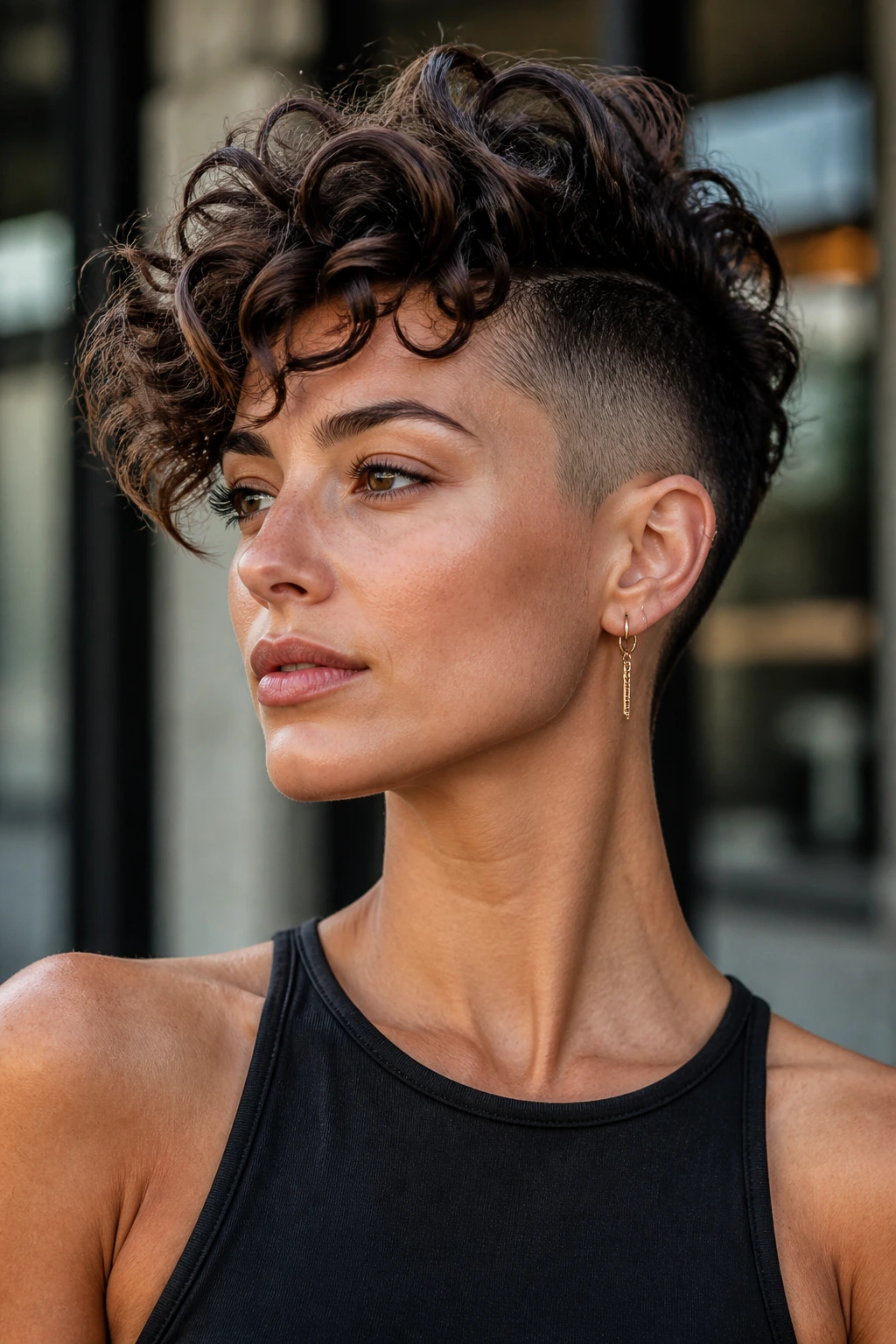
The best shaved-sides pixie cuts for thick hair with loose curls do one very practical thing: they give the curl pattern a job. The sides stop fighting for space, the crown gets to move, and the whole head looks lighter without losing texture. That’s the part I like most. It isn’t about making thick hair disappear. It’s about giving it shape that lasts past the first wash.
Bring a photo, talk honestly about shrinkage, and decide how much upkeep you’re willing to live with. Those three things matter more than trends, more than color, more than a dramatic mirror shot in the salon. Get the shape right, and the rest falls into place faster than you’d expect.