



Jumbo braids can make long hair look sculpted in the best way, but on a heart-shaped face they only work if the weight lands in the right place. Get that part wrong and the whole style feels top-heavy, with too much attention parked at the temples and not enough softness around the chin. Get it right and the braids do a neat little trick: they calm the forehead, flatter the cheekbones, and make the lower half of the face look more grounded.
Long hair changes the math too. A braid on shoulder-length hair behaves one way; a braid on hair that already falls past the shoulders has more swing, more pull, and more chances to look bulky if the sectioning is lazy. That is why jumbo braids for long hair and heart-shaped faces need more thought than “make it big and call it a day.” The part, the braid count, the finish at the ends, and even where the first inch of each braid starts all matter.
Some of the looks below stay sleek and minimal. Others lean into curls, beads, side sweeps, or a low bun. Different moods, same goal: keep the forehead from looking crowded and let the braid length do the balancing work. That’s the sweet spot.
Why These Braids Earn Their Place on Long Hair and Heart-Shaped Faces
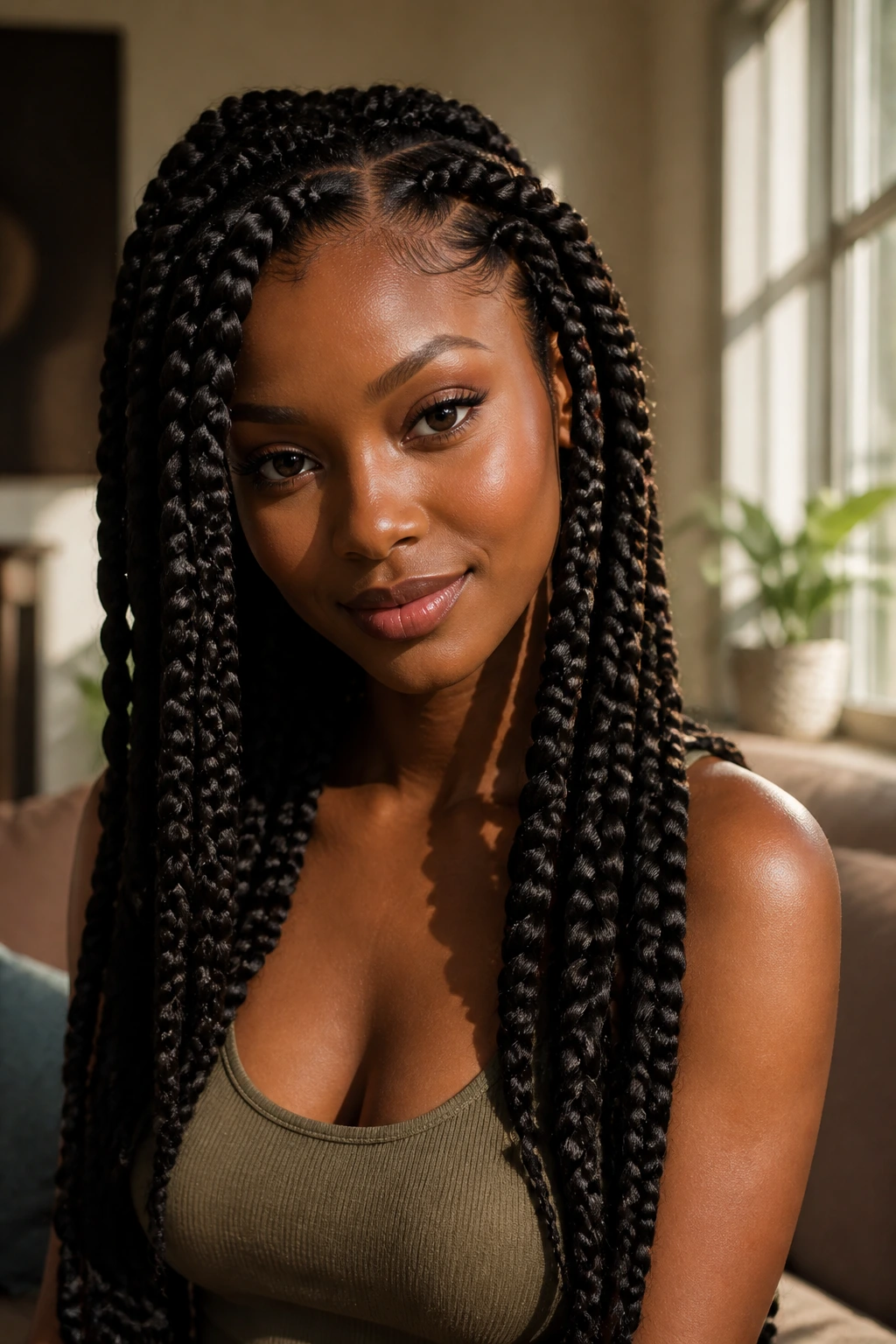
- Forehead balance: Thick braids shift visual weight lower, which keeps a broad forehead from taking over the whole frame.
- Length that works for you: Long hair gives jumbo braids extra swing, but the braid size keeps the finish from turning into a frizzy curtain.
- Lower-tension options: Knotless starts, curved parts, and nape-heavy styles can sit more comfortably than tight, straight-back installs.
- Easy to change the mood: A side part, loose tendrils, beads, or a scarf can push the same base style from polished to playful.
- Less daily fuss: Once the parting is clean and the roots are laid well, these styles ask for a lot less combing, heat, and redoing than loose hair.
- Strong profile from every angle: The braids add shape around the cheekbones and jawline, which is exactly where a heart-shaped face benefits from a little extra visual weight.
Why Jumbo Braids Sit So Well on Heart-Shaped Faces
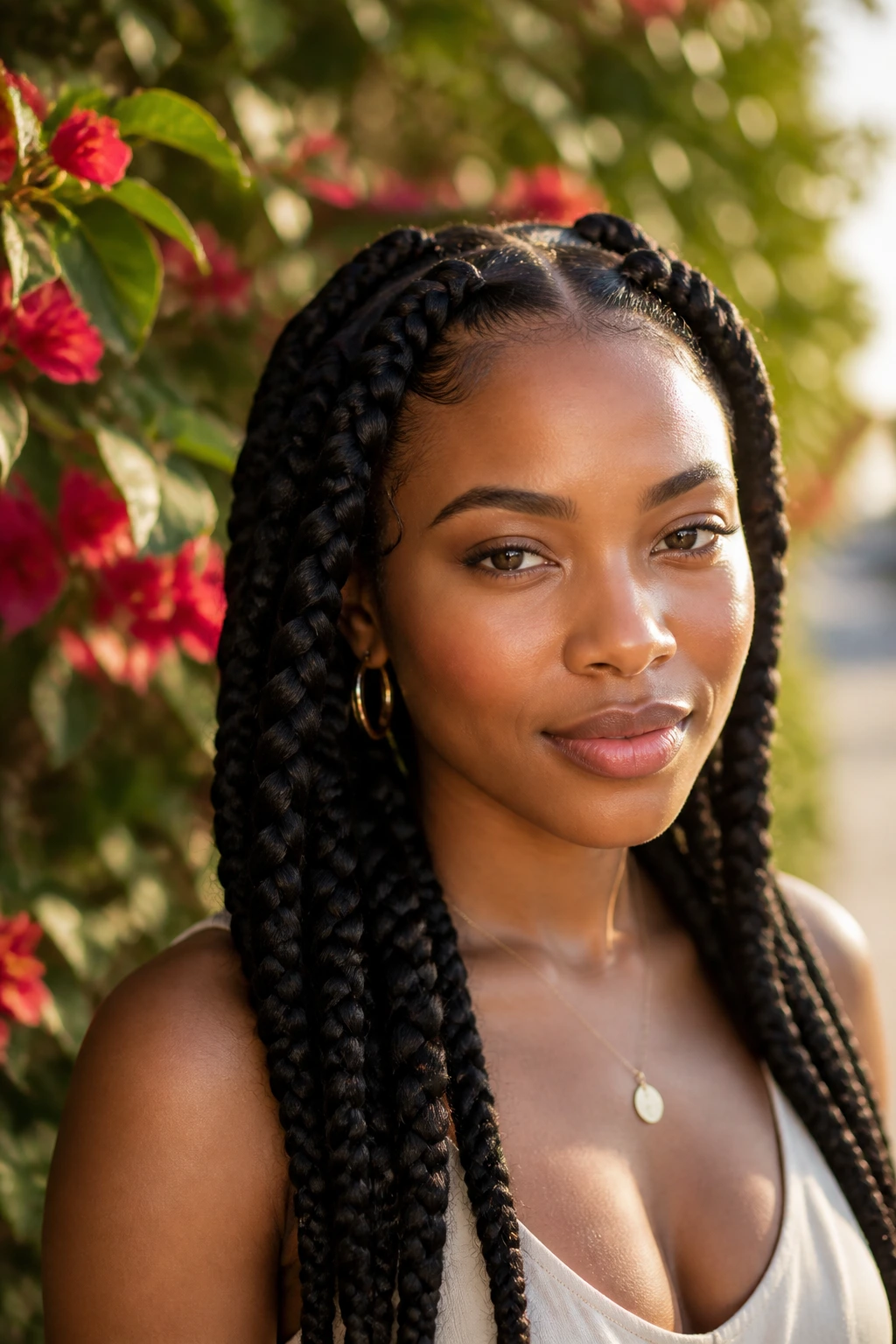
A heart-shaped face usually reads as wider at the forehead and temples, then narrower through the chin. Jumbo braids help because they create a thicker line lower down, which gives the eye somewhere else to go. That matters more than people think. A braid set can be neat, clean, and still make the face look off if all the volume sits at the top.
Where the Eye Lands First
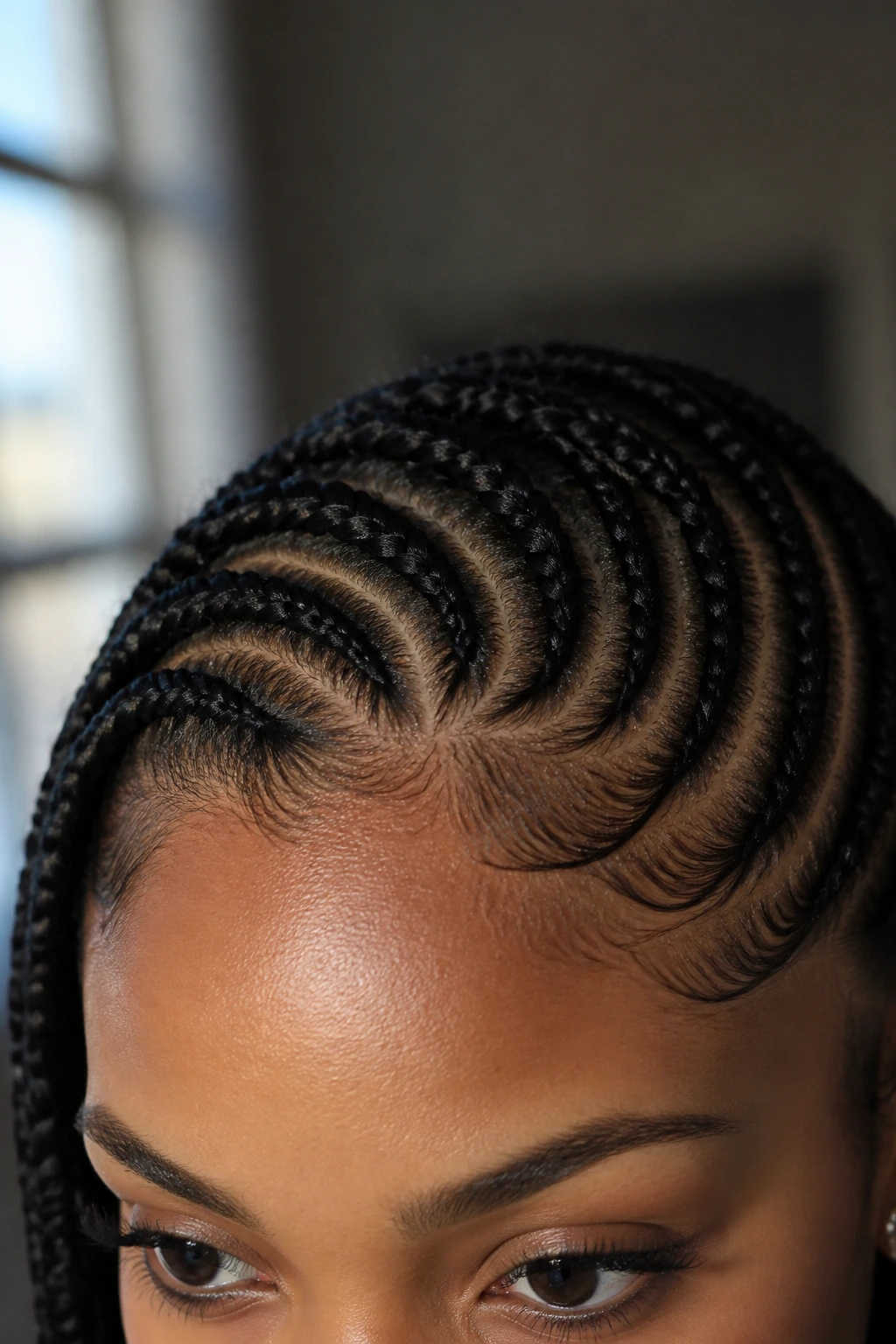
The first thing most people notice is the hairline. If the front braids start too tight, too straight, or too high, they make the forehead look even wider. A softer start — knotless, curved, or side-swept — changes that instantly. It is a small adjustment with a big visual payoff.
Why Long Hair Changes the Math
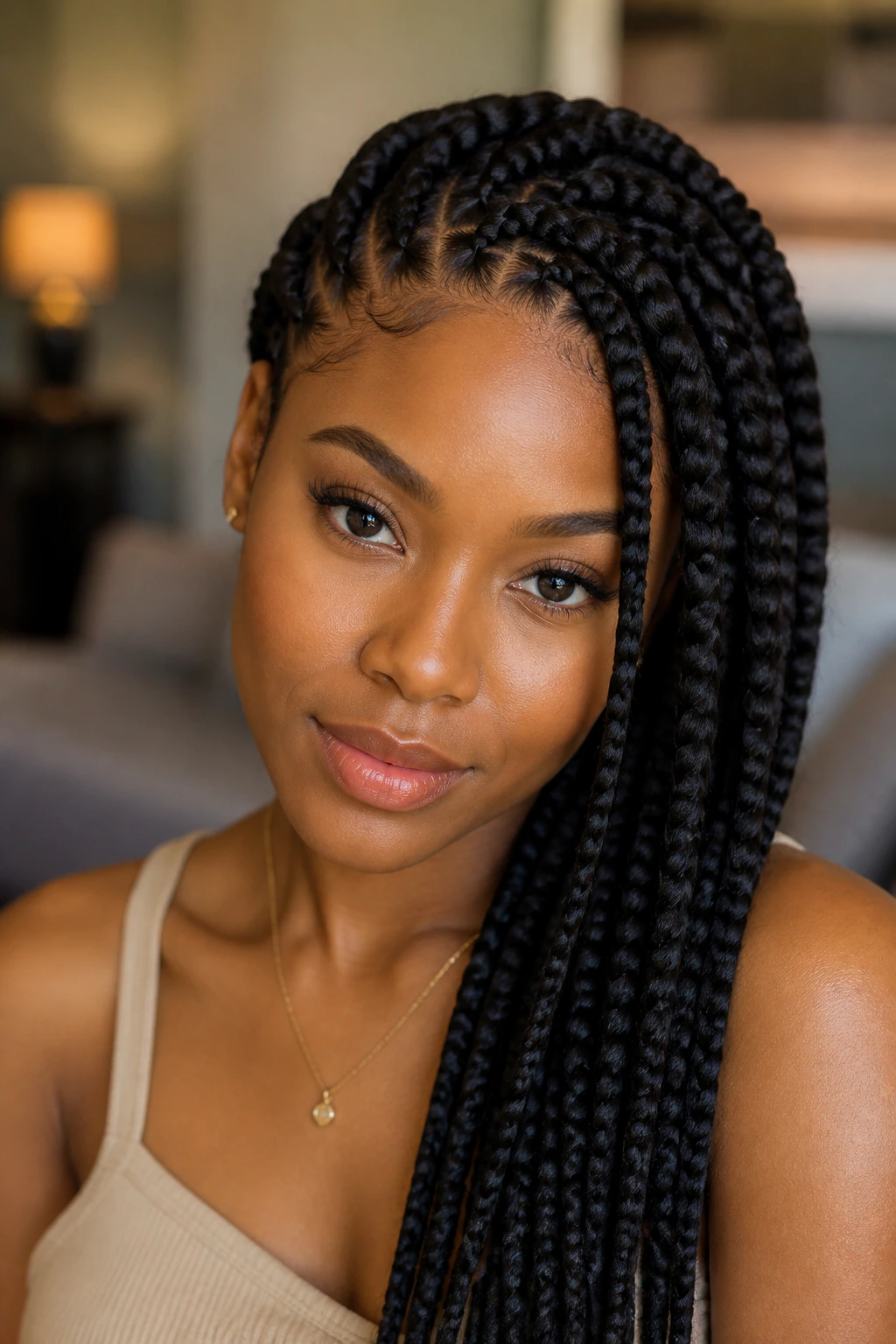
Long hair adds its own weight, which is good and annoying at the same time. Good, because the braids fall with more swing and less puff. Annoying, because if the install is too dense, the style can feel like a helmet by day three. The best versions use long hair as part of the shape instead of fighting it.
The styles that flatter this face shape most are the ones that widen the braid line around the jaw or nape, not the temples. Keep that in mind as you scan the list. It solves half the problem before the braid even starts.
1. Center-Part Knotless Jumbo Braids
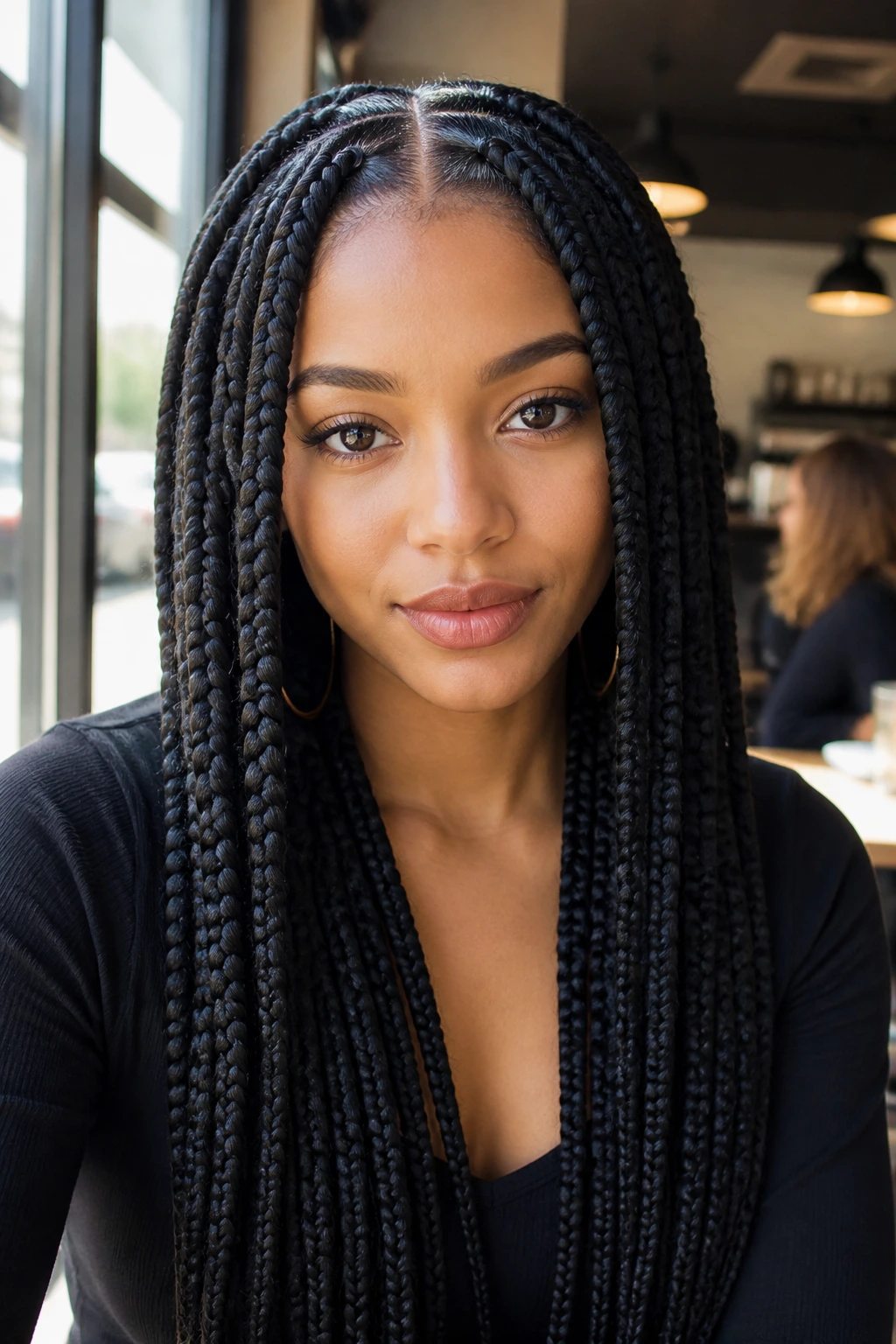
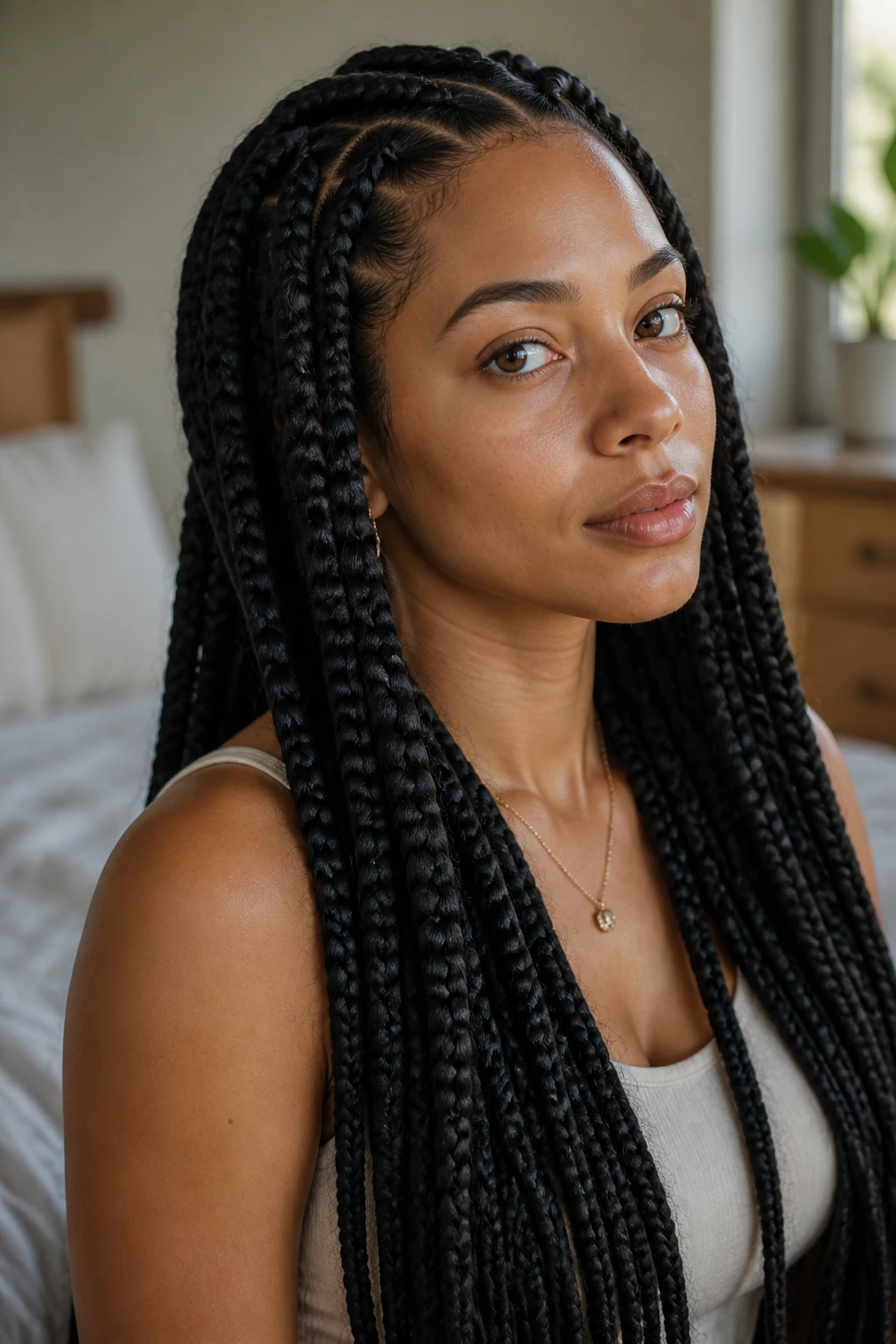
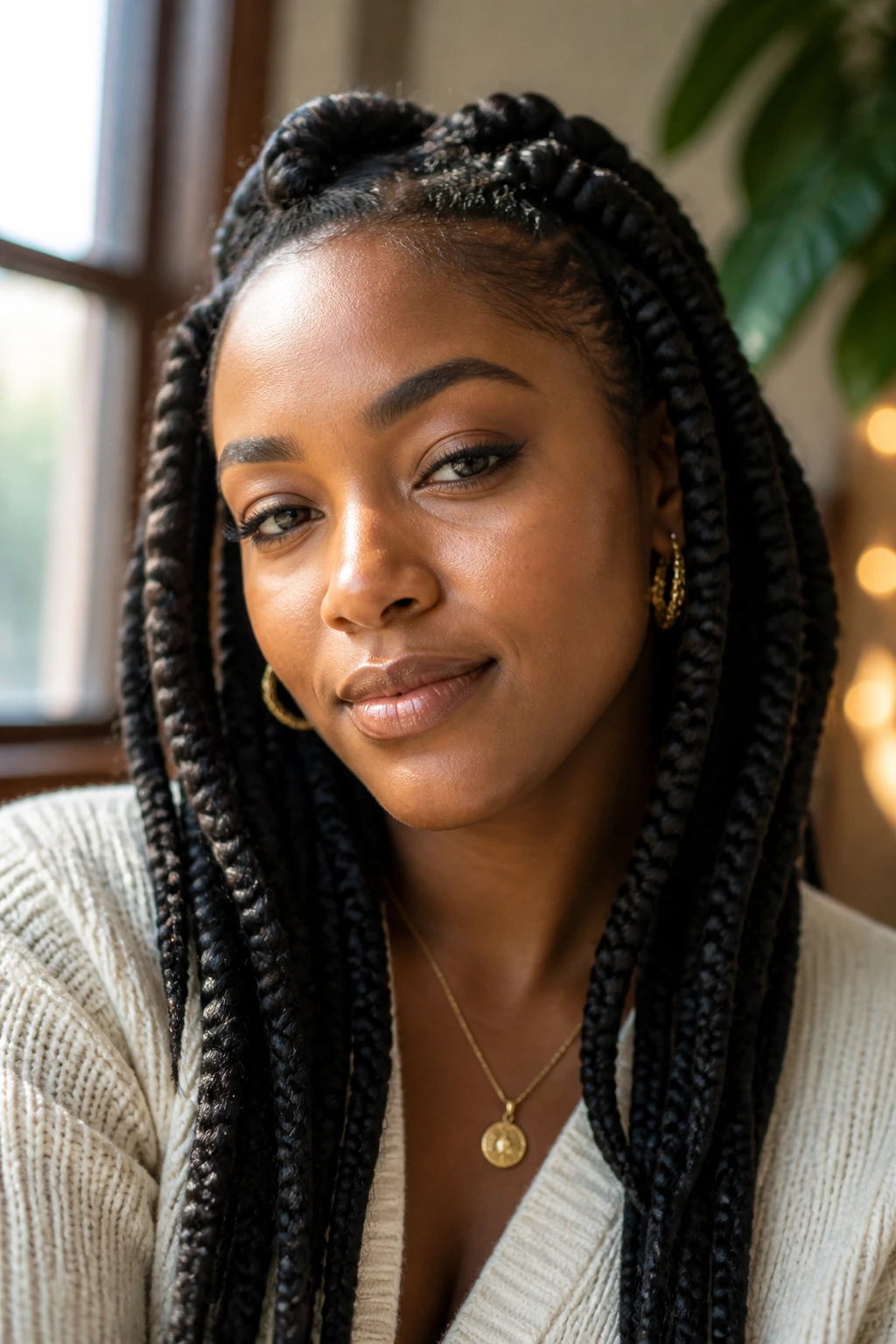
A clean center part can look sharp on a heart-shaped face when the braid size is large enough to soften the line. Knotless starts help because they keep the root from looking boxy right at the hairline, which is where a lot of styles go sideways. On long hair, this version looks especially smooth because the length hangs in one steady line instead of flaring out.
Why the middle line works
The trick is letting the first inch of each braid sit a touch farther back from the temples. That tiny shift keeps the forehead from feeling boxed in.
- Best when you want symmetry without stiffness.
- Good for long hair that already has enough density.
- Easier to dress up with cuffs or a center braid drop at the front.
- Keep the front pieces slightly softer than the back.
My take: ask for a center part, not a center attack. The braid should frame the face, not argue with it.
2. Deep Side-Sweep Jumbo Feed-Ins
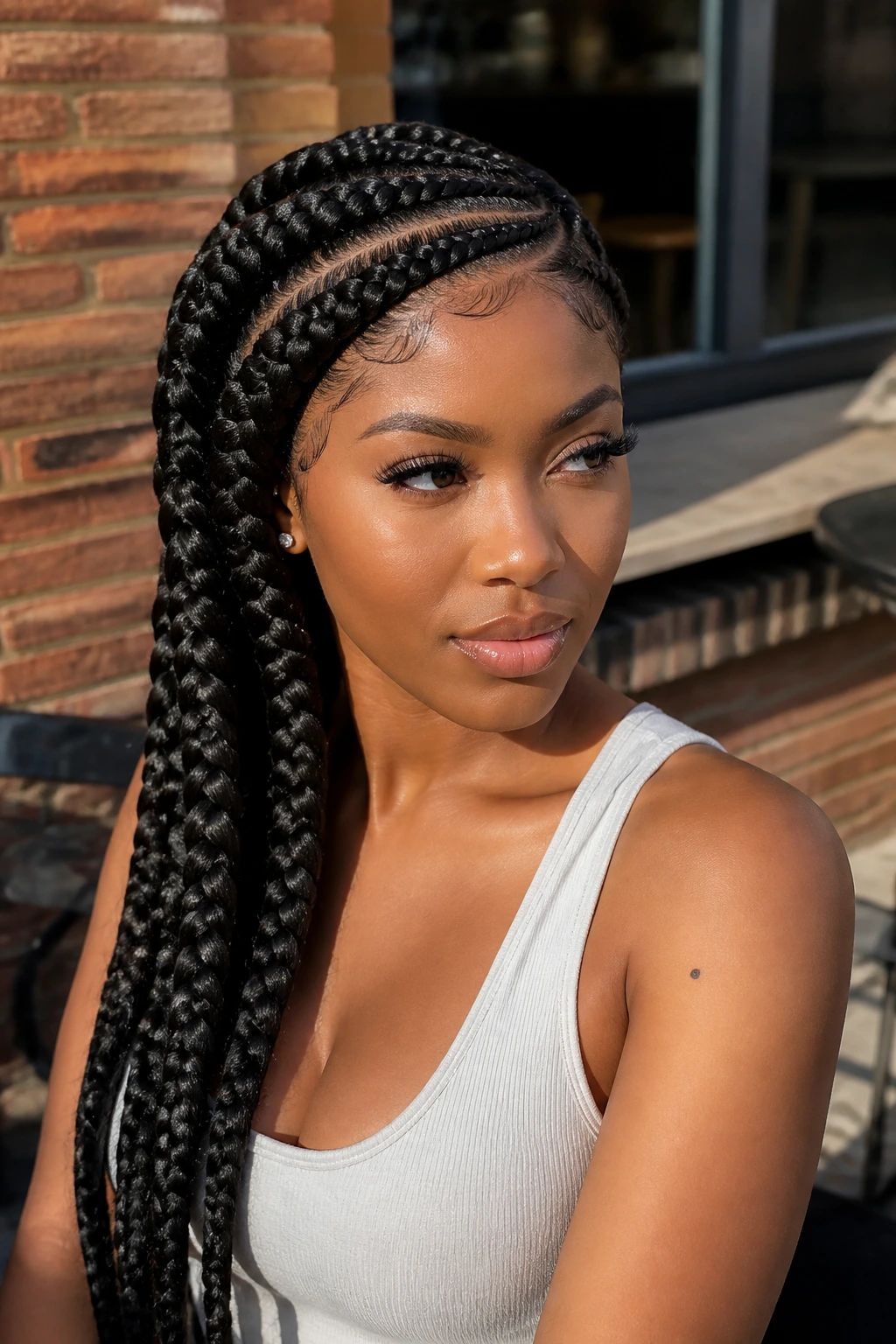
This is the style I reach for when a heart-shaped face needs less forehead and more cheekbone. The side sweep pulls the eye diagonally, which does a lot of quiet work. Feed-in braids keep the root line smooth, so the part doesn’t sit there like a ruler.
On long hair, the diagonal fall looks even better because the length carries the braid across the chest instead of letting it hang straight down and flatten the face. If your forehead feels like the widest part of your face, this one cuts that feeling fast. It also photographs well from the front because the braid line has movement before the length even starts.
Try keeping the fuller side below the cheekbone and the thinner side tucked closer to the temple. That small imbalance makes the whole style feel deliberate.
3. Face-Framing Jumbo Braids with Loose Tendrils
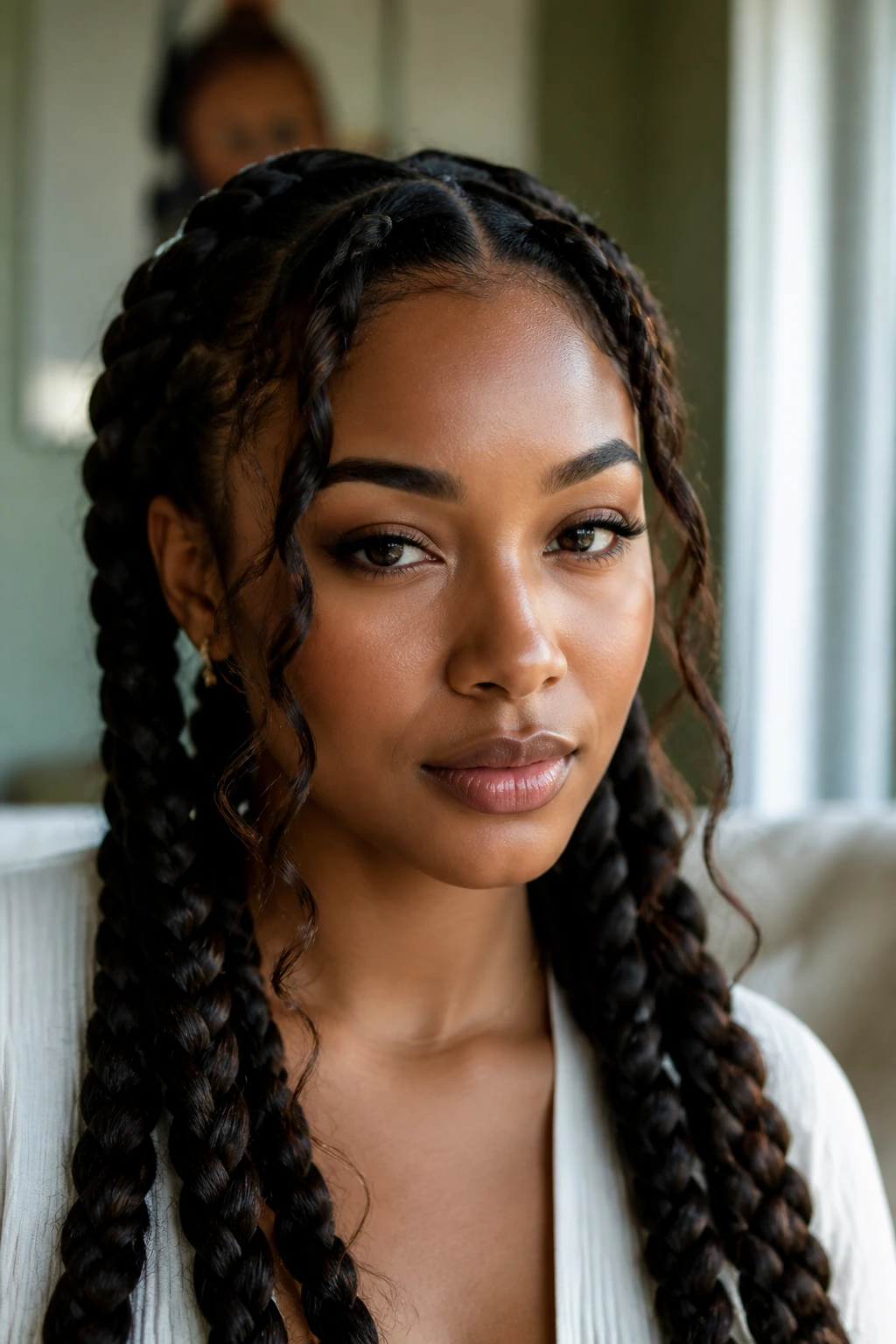
Want the face to feel softer without losing the clean braid silhouette? This is the move. A couple of narrow tendrils at the temples break up the upper third of the face, and on a heart shape, that matters more than a dramatic braid count ever will.
How to wear it
Leave one thin piece on each side, or just one on the side with the wider temple. If your hair is already long, the tendrils should stop around the chin or collarbone so they don’t disappear into the braid line. Too short and they look accidental.
The braids themselves can stay jumbo and neat. The soft pieces do the visual trimming.
- Best for softer makeup looks.
- Strong choice for events where you want a bit of movement around the face.
- Works with knotless or feed-in starts.
- Keep the tendrils light, not chunky.
4. High Pony Jumbo Braids
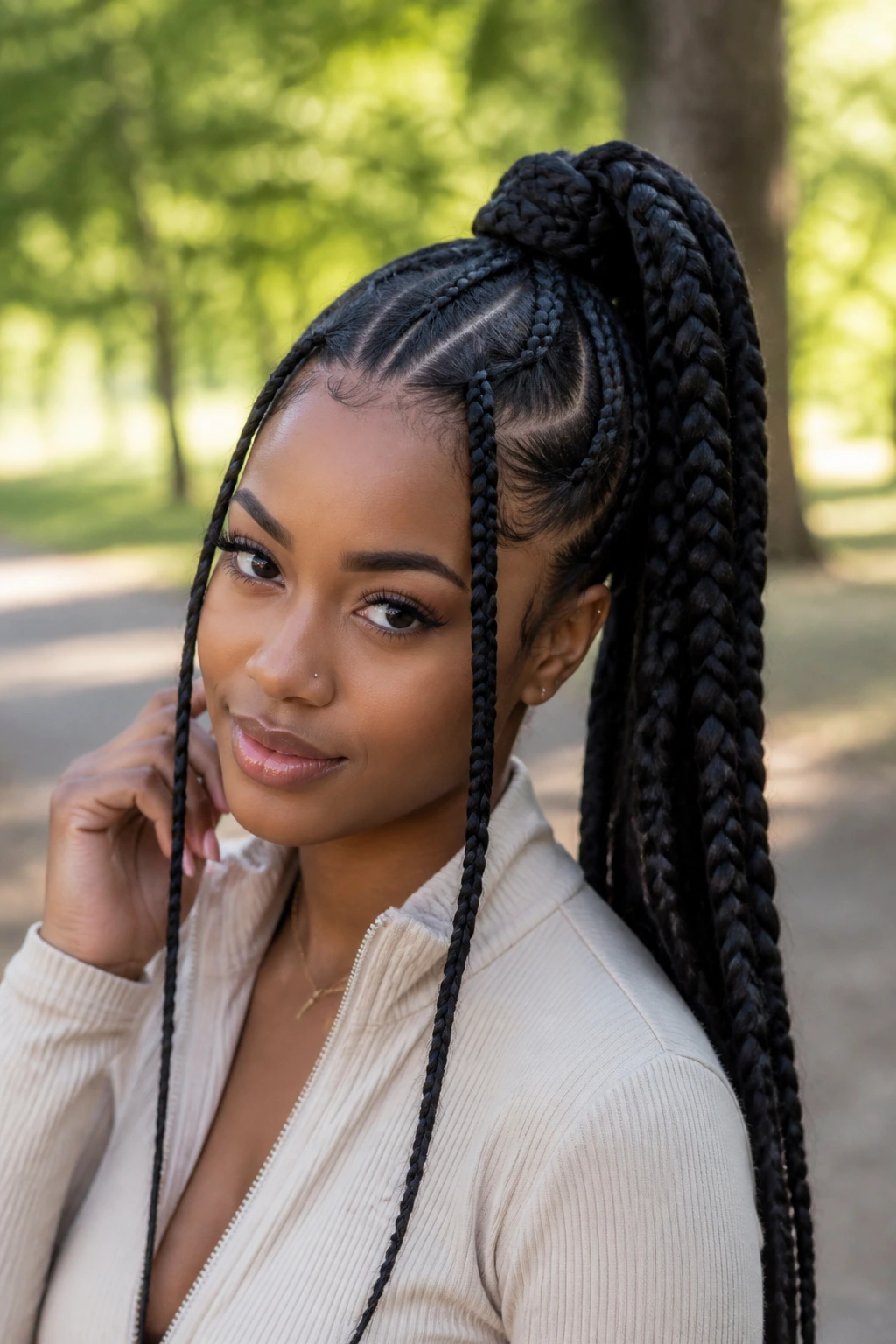
A high pony can be a good call for long hair when you want the weight off your neck, but it needs restraint on a heart-shaped face. Too much height at the crown makes the forehead look taller, and that is not the energy we want here. A slightly off-center pony, placed just above the occipital bone rather than right on top of the head, feels cleaner.
The best version keeps two front braids loose enough to soften the temple area. That way the style reads lifted, not pushed back. Long hair makes the ponytail hang with a heavy, glossy swing, which is half the appeal.
- Use if you want a sporty, polished look.
- Good for warmer weather or active days.
- Don’t make the base too tight.
- A wrapped braid around the pony base hides elastics nicely.
Quick opinion: a pony that tugs the scalp is not “snatched.” It’s just too tight.
5. Low-Nape Jumbo Braids
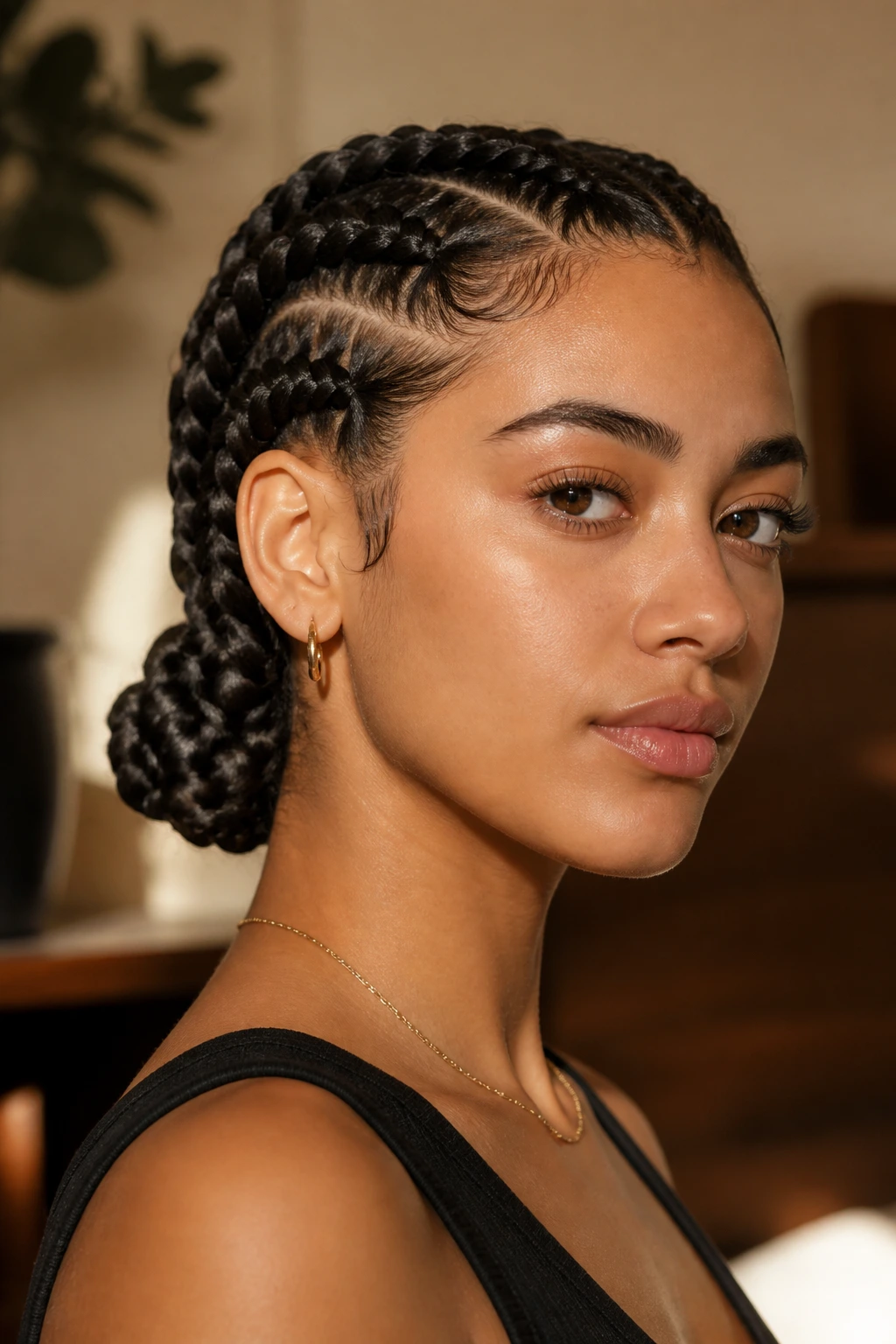
Low, heavy, and calm. This is one of the easiest ways to flatter a heart-shaped face because the visual weight sits near the jawline and neck instead of the forehead. Long hair helps here too; the length drops straight and tidy, with no weird puff at the base.
The shape is quiet in a good way. Nothing is fighting for attention at the hairline, which makes the face look more open. If you like your styles to feel secure and a little more grown-up, this version is hard to beat. It also tends to stay more comfortable over several days because the tension is spread lower.
Ask for the nape section to be slightly fuller than the front braids. That keeps the bottom half from feeling thin next to a broad forehead.
6. Boho Jumbo Braids with Curly Ends
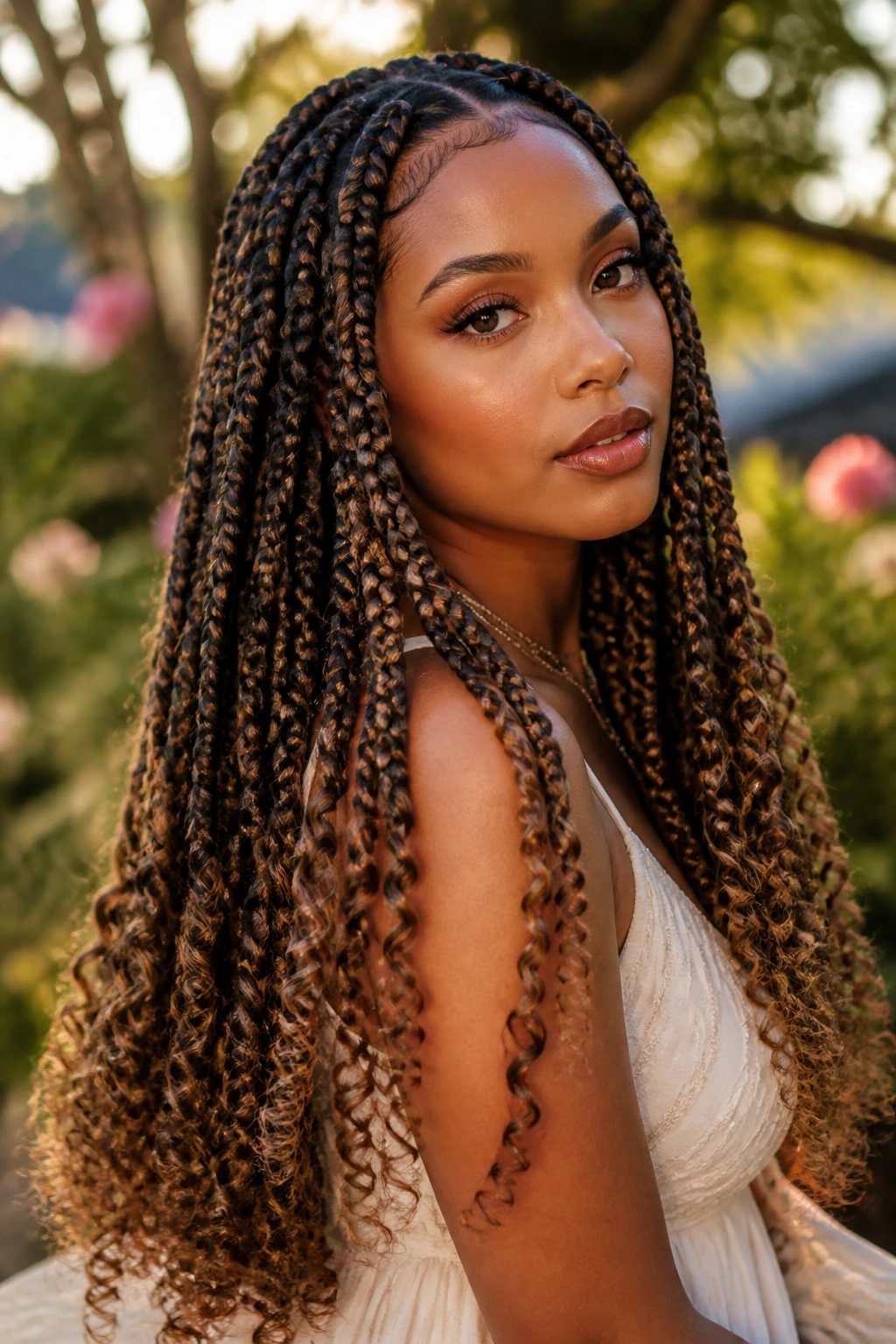
Boho ends add movement where a long braid can start to feel stiff. On a heart-shaped face, that softness matters because it keeps the lower half of the style from looking too blunt. The curls at the ends also break up the visual line, which is helpful when your hair is already long and the braid tail risks looking like one heavy rope.
Unlike a fully sleek set, this version feels a little looser and less severe. The face gets softness without losing the clean parting at the roots. I like this one best when the curls stay on the last third of the length, not halfway up the braid. Anything higher starts to blur the braid pattern.
It’s a good fit if you want the style to move when you turn your head. Static braids are fine. These are better.
7. Triangle-Part Jumbo Braids
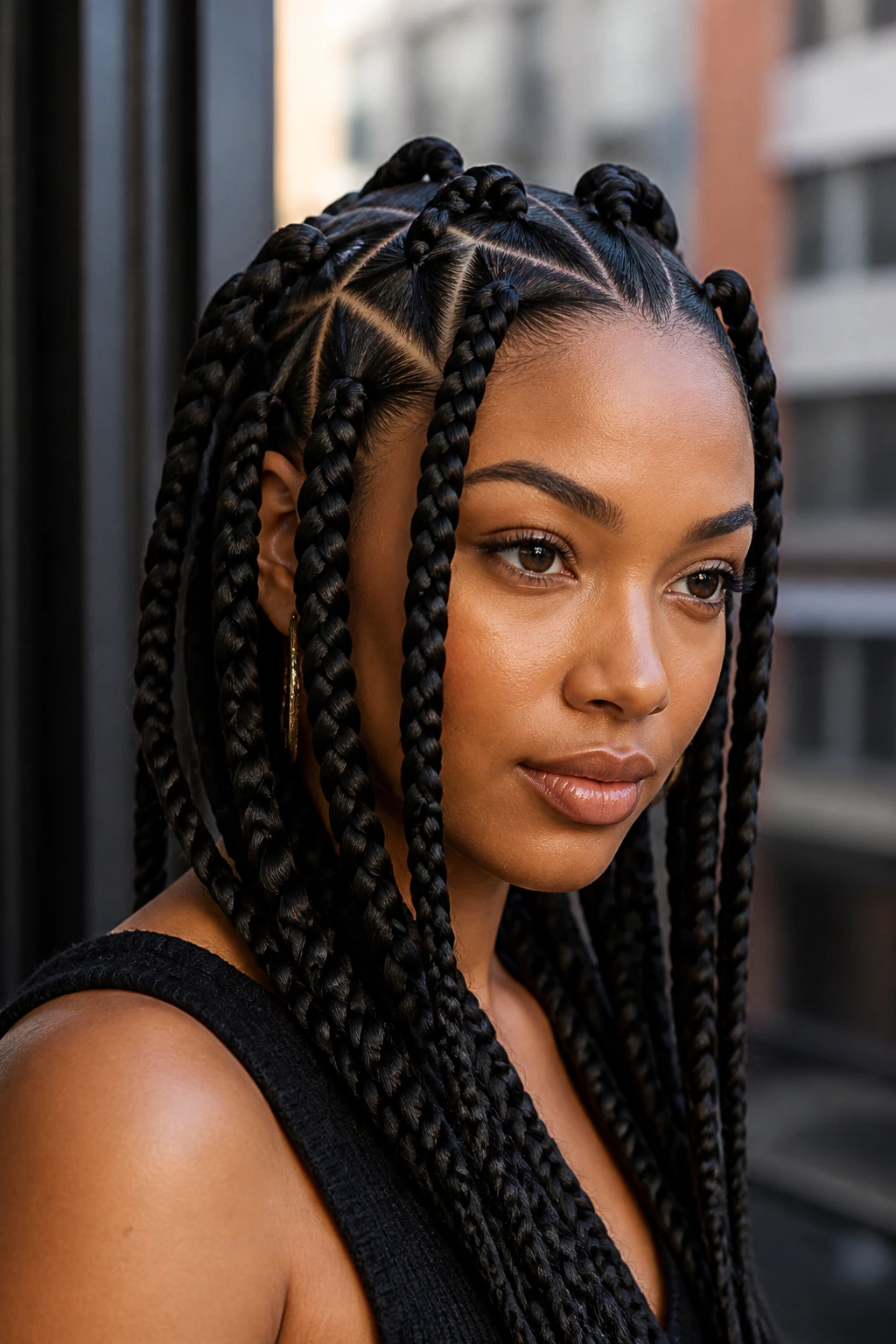
Triangle parts give the scalp pattern some personality without making the whole style busy. On a heart-shaped face, the angled sections break up the straight vertical lines that can make the forehead feel wider than it is. That little bit of geometry changes the mood fast.
The braid itself can stay simple and jumbo. The part does the talking. Long hair benefits here because the braid length is already substantial; the triangular sections keep the roots interesting so the style doesn’t look like one flat curtain from the front. Use this when you want something neat but not predictable.
A clean triangle part looks best with medium-sized triangles, not tiny ones. If the sections get too small, the jumbo effect gets lost and the install starts looking overworked.
8. Swept-Back Jumbo Braids
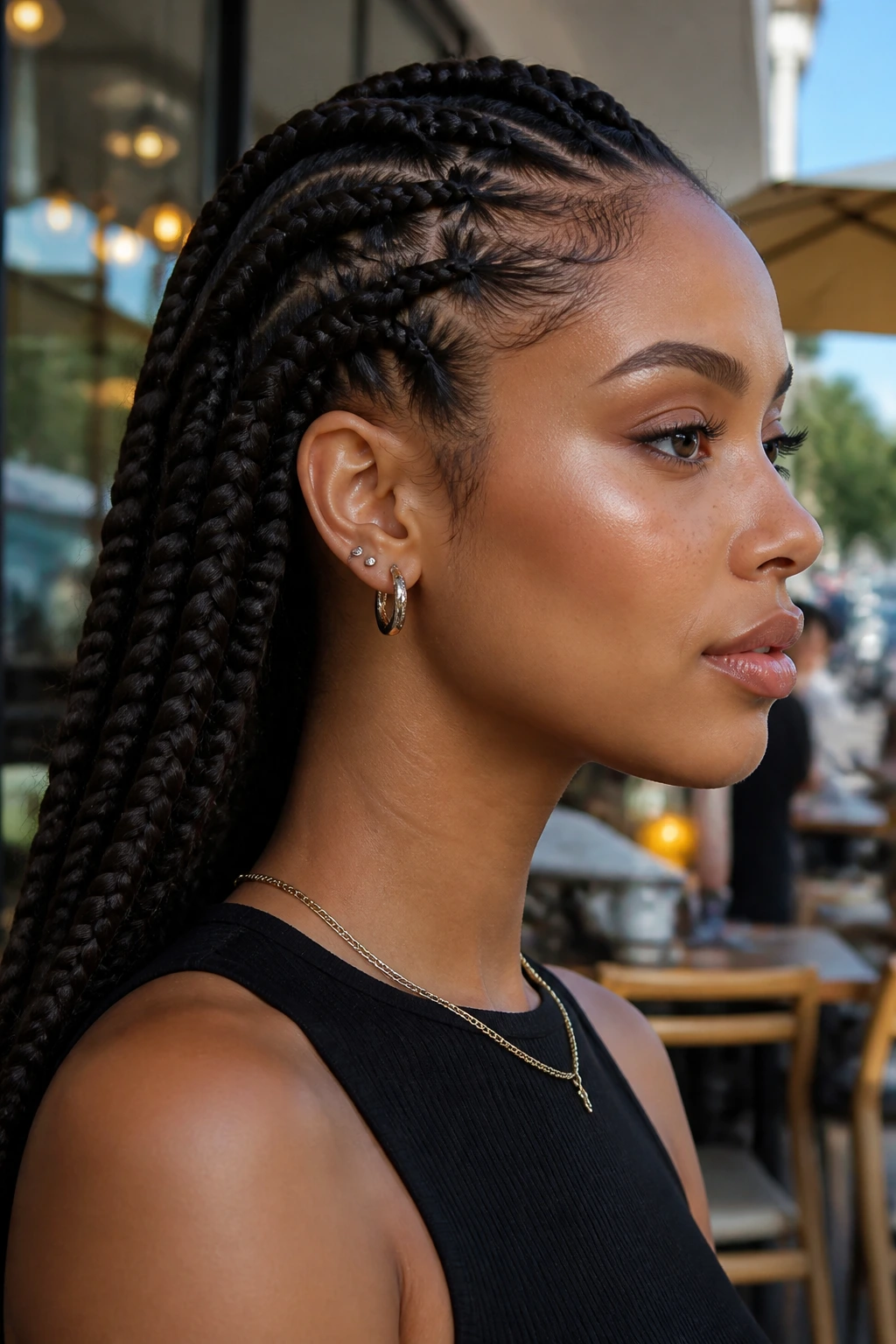
Swept-back braids are the easiest way to show cheekbones without making the forehead feel crowded. The key is to sweep the front sections back gently, not drag them straight back like you’re trying to erase them. That small difference matters on a heart-shaped face.
Long hair gives this style a nice line from crown to shoulder or back. The braids can fall behind the ears, which opens up the profile and keeps the jawline visible. If your hair is dense, this version is especially good because it removes some bulk from the front while keeping the braid count manageable.
Try one narrow braid near the temple on each side so the front doesn’t feel bare. Bare and sleek are not the same thing.
9. Jumbo Braided Crown
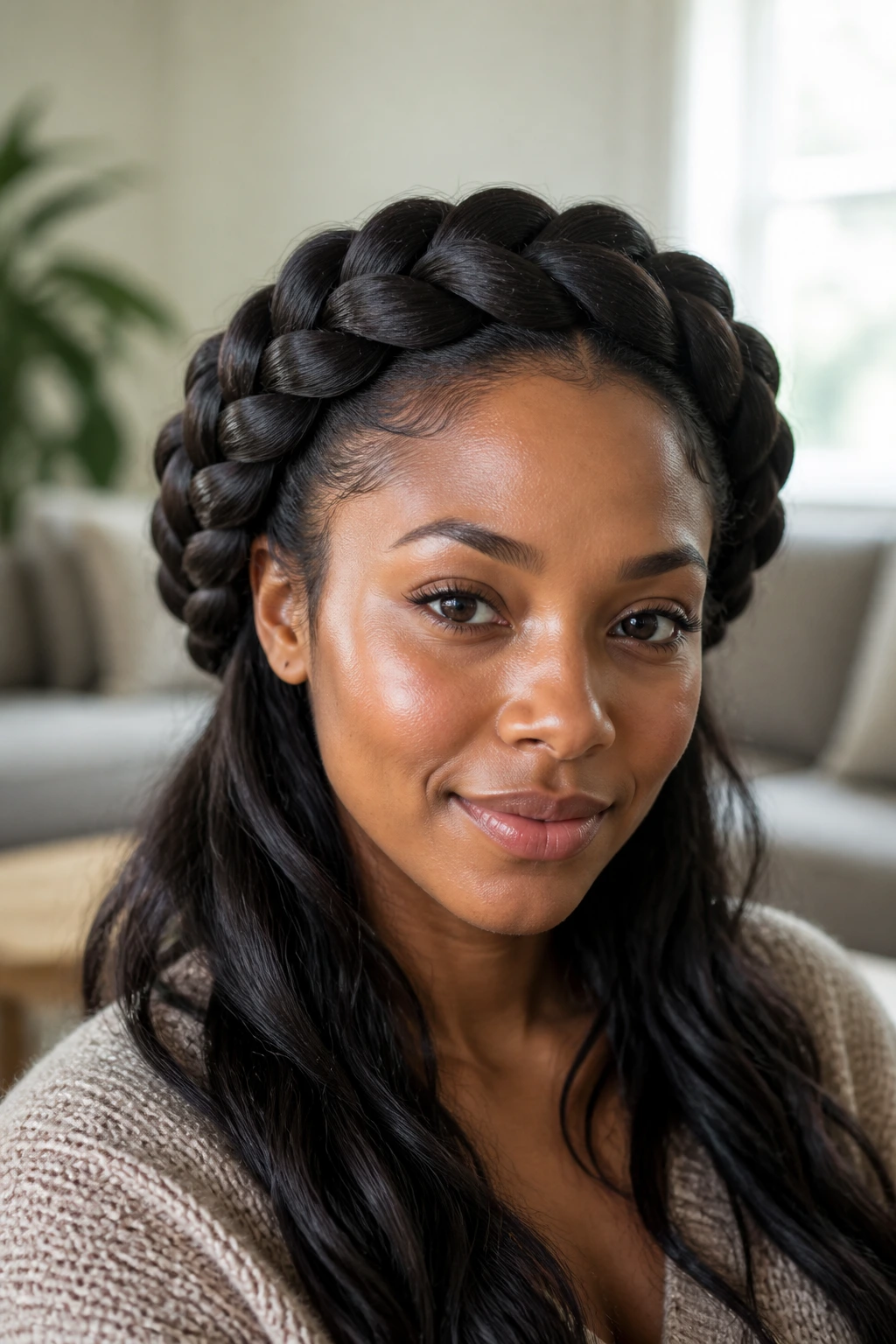
When does a crown braid stop looking fussy and start looking strong? When the braid is big enough to hold its shape. A jumbo crown braid sits like a frame around the face, and on a heart-shaped face that frame can be very flattering if it stays low enough at the hairline.
The crown should not sit up high like a halo. Keep it slightly dropped, with volume near the upper sides and a softer finish at the nape. Long hair helps here because there’s enough length to build the wrap without making the style collapse. It feels more structured than loose braids, but not hard.
This is a good choice for formal wear, yes, but it’s also one of the better “I need my hair out of my way” styles that still looks thought-out.
10. Half-Up, Half-Down Jumbo Braids
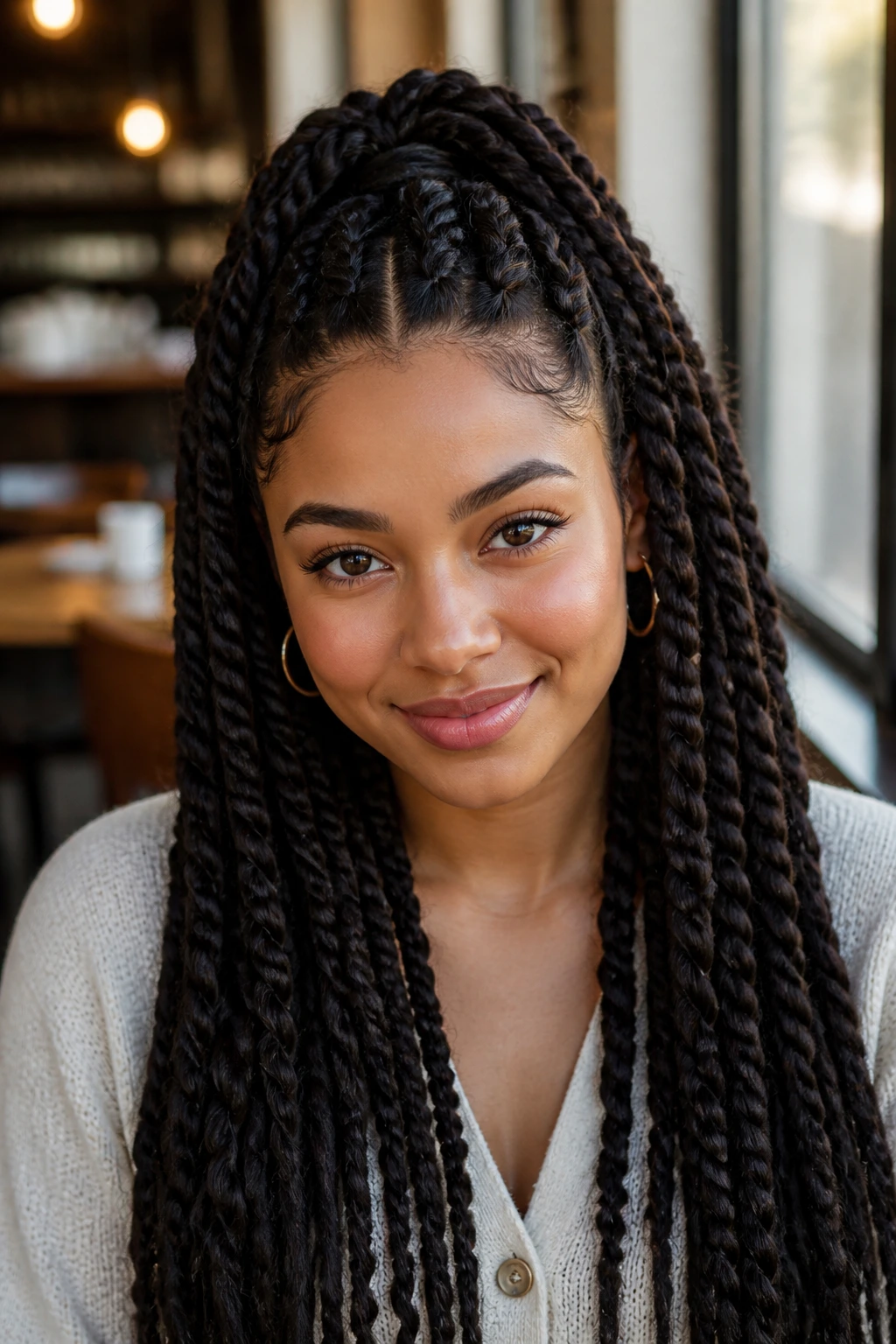
This one is useful when you want the face open but still want length moving around the shoulders. The half-up section lifts the braids away from the forehead, while the loose lower section keeps the style soft. On a heart-shaped face, that split is flattering because it doesn’t crowd the top of the head.
Long hair makes the down section feel lush without needing extra decoration. The upper section can be tied with a braid wrap, a cuff, or a simple knot, depending on how clean you want the finish. If the top section gets too high, though, it can widen the forehead. Keep the lift moderate.
A low half-up shape usually looks better than a very high one on this face shape. It’s calmer. Less drama at the crown, more balance below.
11. Waist-Length Ombre Jumbo Braids
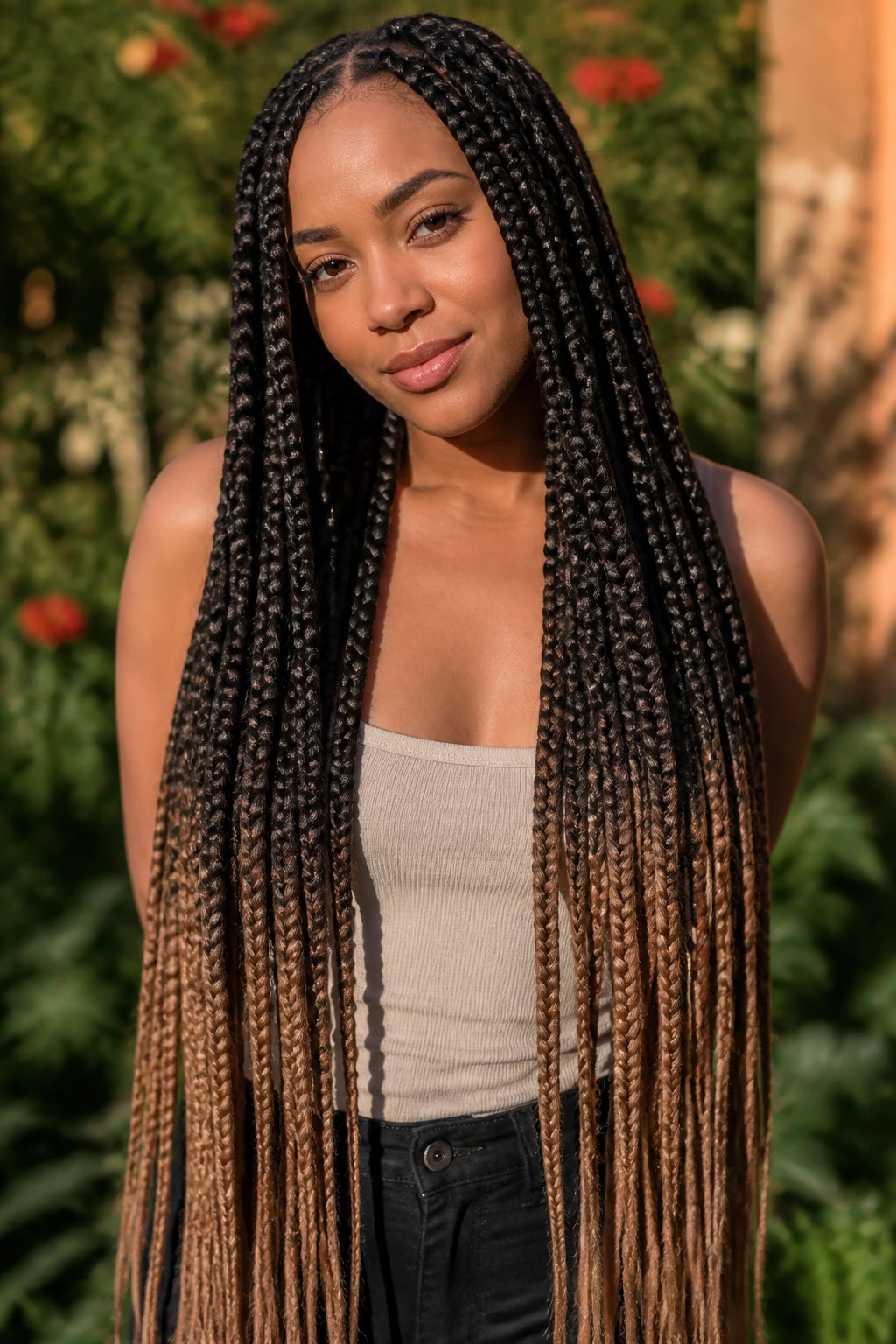
Waist-length braids are a commitment, so they need a shape that earns the length. Ombre color helps because it gives the eye a reason to travel downward, which suits a heart-shaped face nicely. The darker roots keep the scalp grounded, while the lighter ends add movement near the bottom.
Long hair can carry waist-length braids beautifully, but the extra length means you should watch the braid weight. If the install is too heavy, the nape starts to feel dragged down. Keep the section size even and don’t overload the front with too much extension hair. That’s the part people miss.
This version looks best when the color shift is gradual, not stripey. A harsh ombre line reads louder than the braid itself.
12. Beaded Jumbo Braids
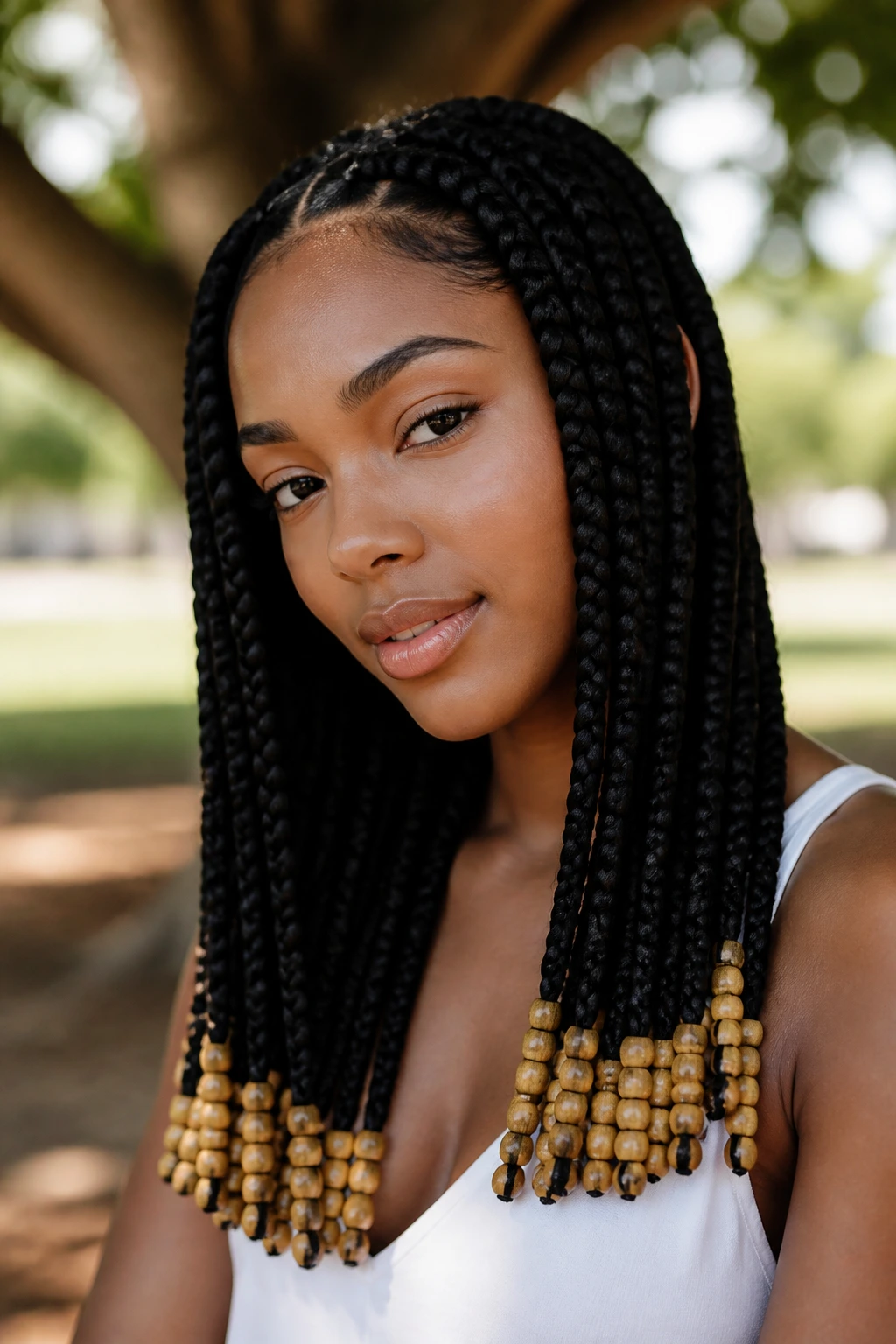
Beads change the sound and the rhythm of braids. They are not subtle, which is the point. On a heart-shaped face, though, placement matters. Put too many beads near the temples and you widen the very area you usually want to soften. Put them lower on the braid and the effect is cleaner.
I like beads best on the bottom half of long braids. That keeps the movement near the jaw and chest, where the face can use it. Wooden beads feel softer; metal cuffs feel sharper. Use one family of hardware, not five different styles at once. The result looks more deliberate.
A couple of beaded braids is enough. You do not need to cover the whole head like a craft project.
13. Spiral-Ended Jumbo Braids
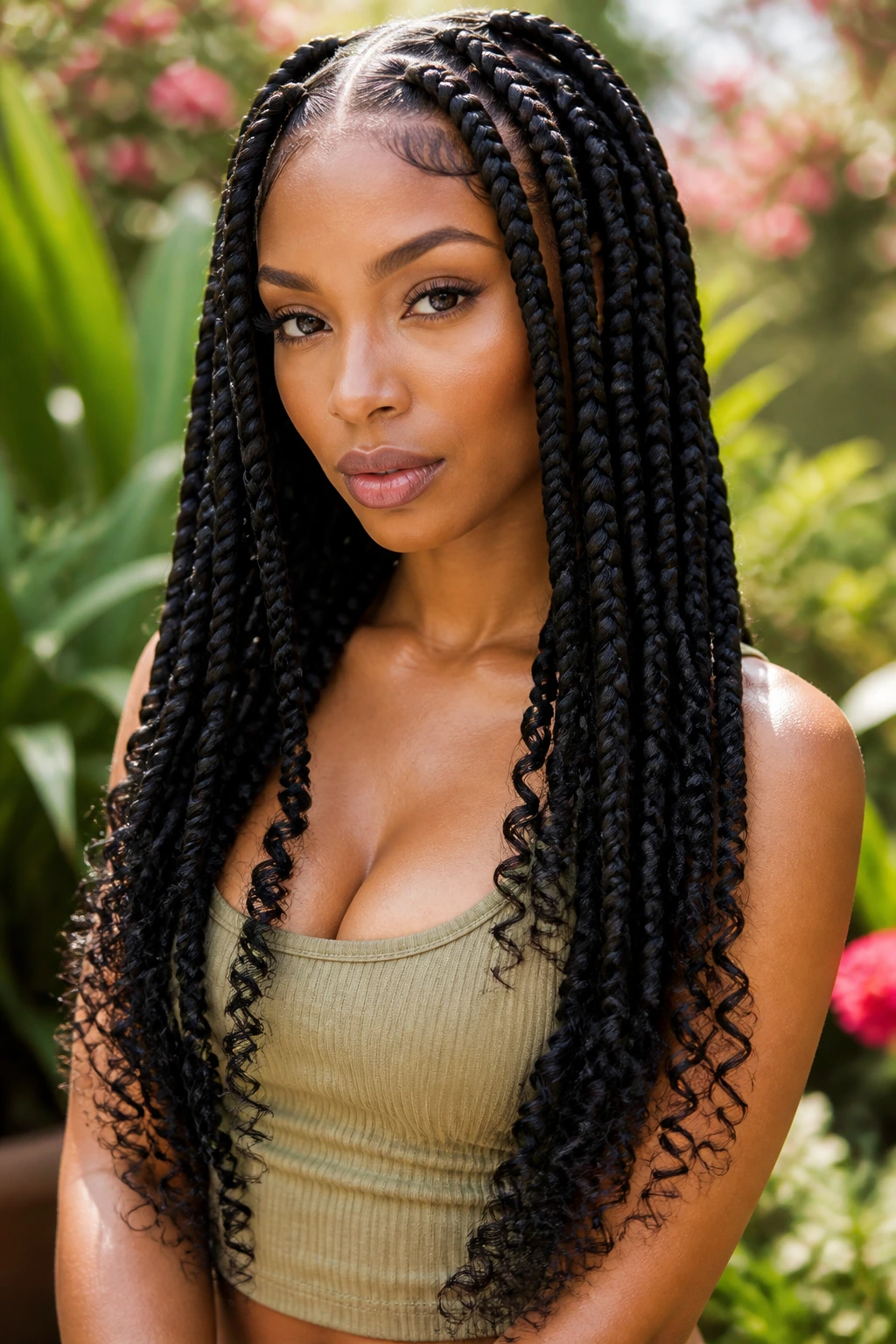
The braid itself can stay simple. The ends are where the movement lives. Spiral ends soften a long braid set because they break up the straight line at the bottom and stop the style from feeling blocky.
That matters for heart-shaped faces, where the lower half of the style should help balance the forehead. Spiral ends widen the visual base a little, which is useful if your chin is narrow. If the braids are synthetic, the ends can usually be set with hot water after they’re wrapped or twisted into shape. Keep the curl pattern tidy, not messy.
This version works especially well when you want long braids without the hard, poker-straight finish. It feels a bit more relaxed from the shoulders down.
14. Side-Tuck Jumbo Braids
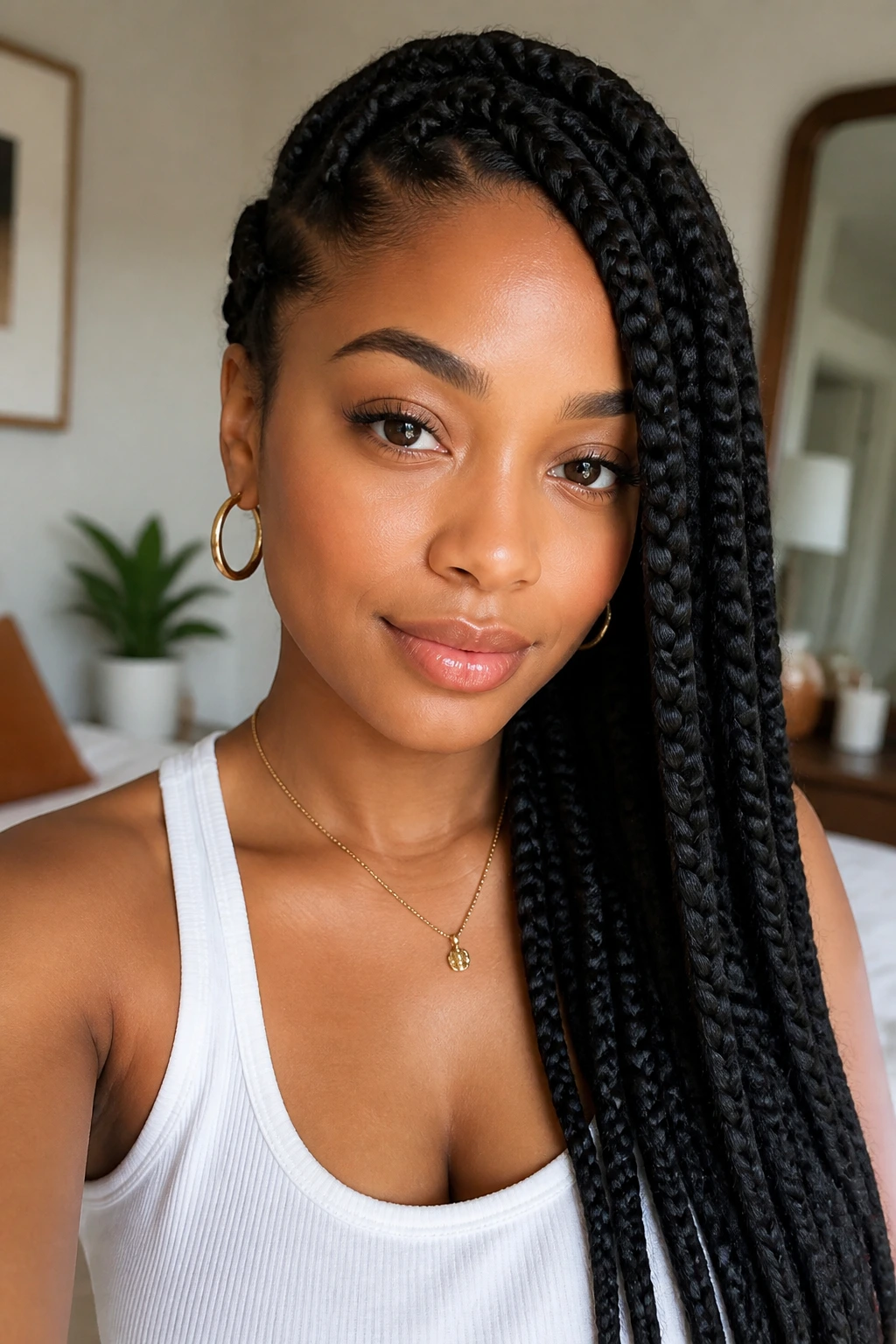
A side tuck is one of those small styling moves that changes everything. One side stays loose; the other gets tucked behind the ear or pinned low, which opens the face without exposing the whole forehead. On a heart-shaped face, that diagonal line makes the cheekbones look sharp in a good way.
Long hair helps the tuck hold its shape because the extra length gives the braid something to rest against. If your hair is very dense, tuck the heavier side and let the lighter side swing. That imbalance is what makes the style feel alive instead of stiff.
This is a nice option on days when you want your braids to look intentional but not overly styled. A little asymmetry goes a long way.
15. Asymmetrical Jumbo Braids
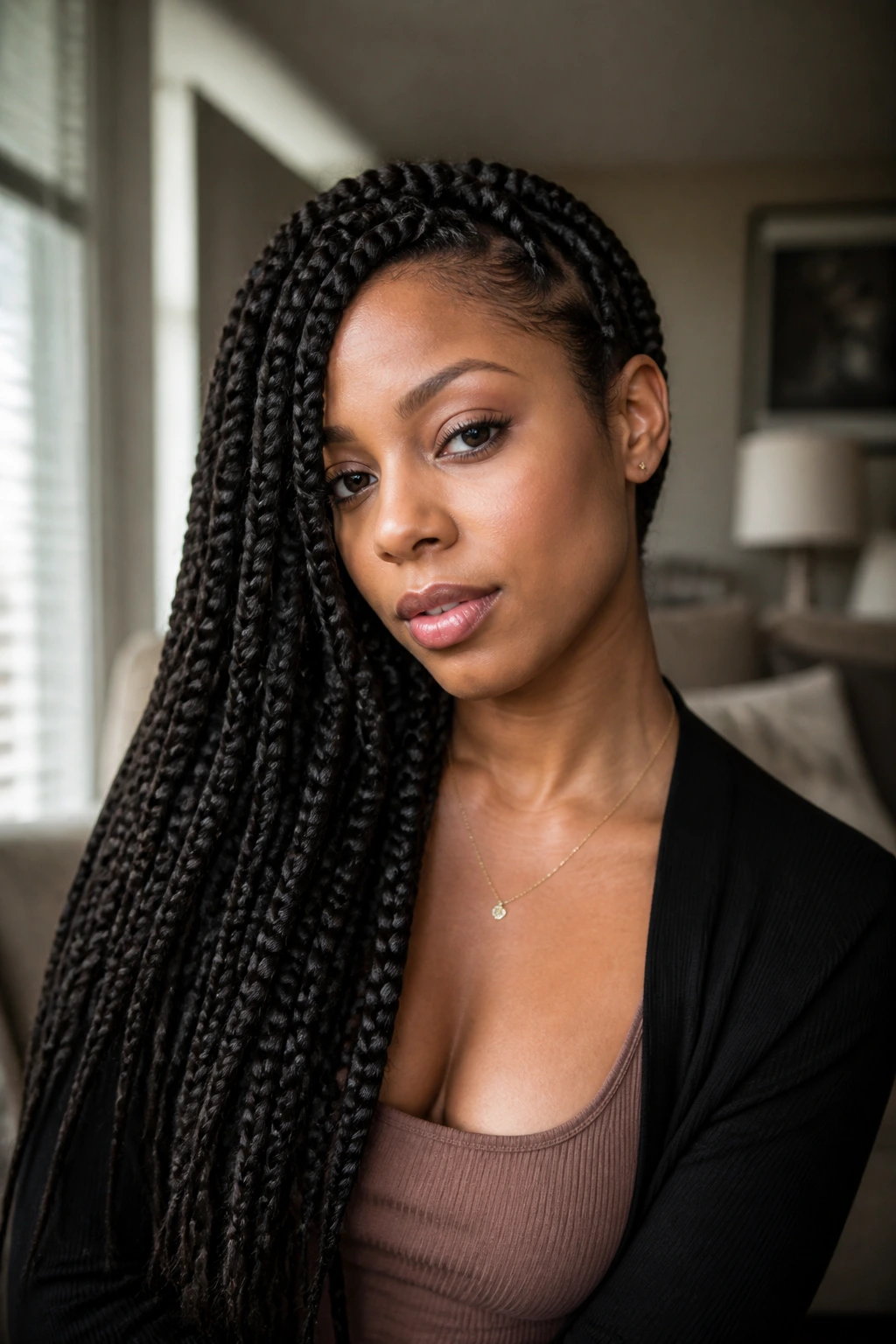
Do you want the face framed, but not symmetrically framed? Then asymmetry is your friend. One side gets more length or more visible braids, while the other side stays tighter to the face. On a heart-shaped face, that broken line keeps the forehead from feeling boxed in.
The asymmetry can be subtle. It doesn’t need to scream. A deeper side part, a lower braid on one side, or a braid draped forward over one shoulder is enough. Long hair makes this easier because the length naturally pulls the eye downward on the heavier side. That downward line helps balance a narrow chin.
Keep the shorter side clean. If both sides are fighting for attention, the whole point is lost.
16. Jumbo Braids into a Low Bun
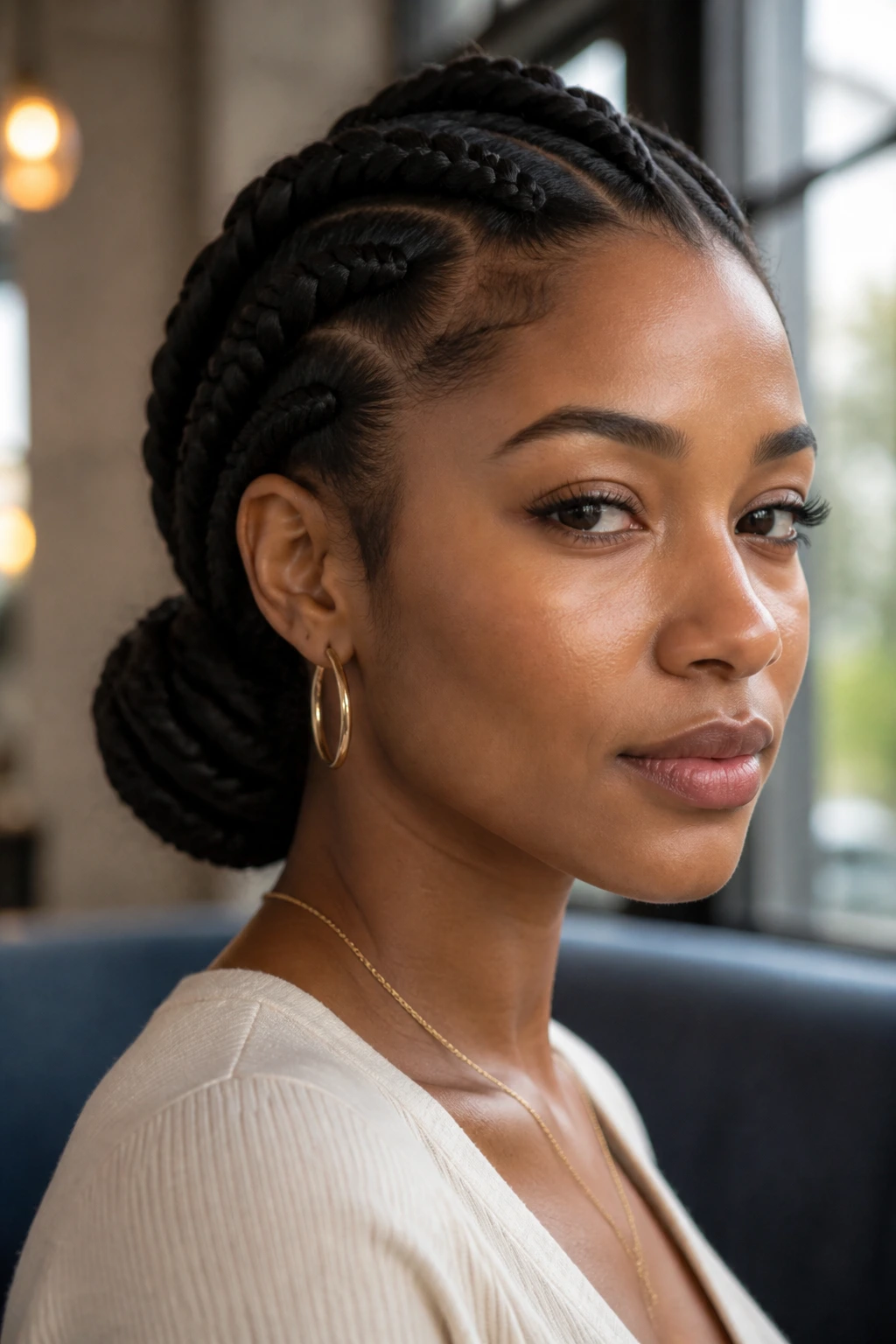
This is the “I need it up, but I still want shape” option. A low bun pulls the braid mass away from the forehead and brings it down to the nape, which is exactly where a heart-shaped face can use some extra visual weight. Long hair makes the bun fuller without needing a giant knot.
The bun should sit low and slightly loose, not packed into a hard ball. A too-tight bun gets severe fast. Leave one or two braids to wrap around the base so the style looks finished instead of accidental. This is one of those looks that can go from errands to dinner with almost no change.
If your ends are heavy, this style saves your neck too. That counts.
17. Peekaboo-Color Jumbo Braids
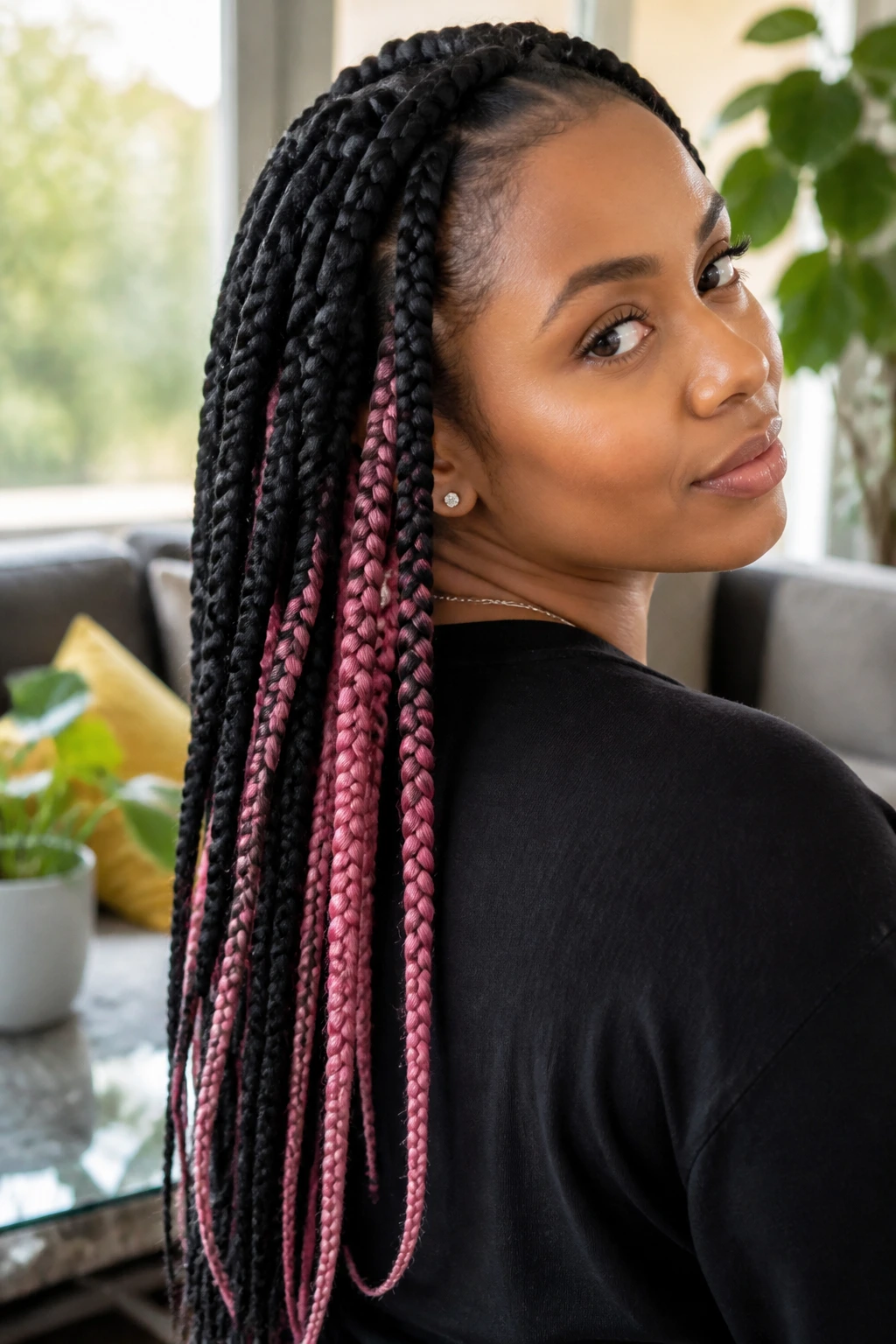
Peekaboo color is the smartest way to add interest without crowding the face. A hidden burgundy, copper, honey blonde, or deep blue layer can show when the braids move, but it doesn’t sit all over the hairline like a loud all-over color. That makes it easier on a heart-shaped face, where too much brightness at the temples can be distracting.
Long hair gives the color more time to show itself as the braids swing. I like the color tucked in the back half or underneath the top layer. That keeps the front soft and lets the surprise appear when you turn your head. It’s a small flourish, not a costume.
If you want the style to feel fresh without losing the clean shape, this is the lane.
18. Sleek Jumbo Braids with Defined Edges
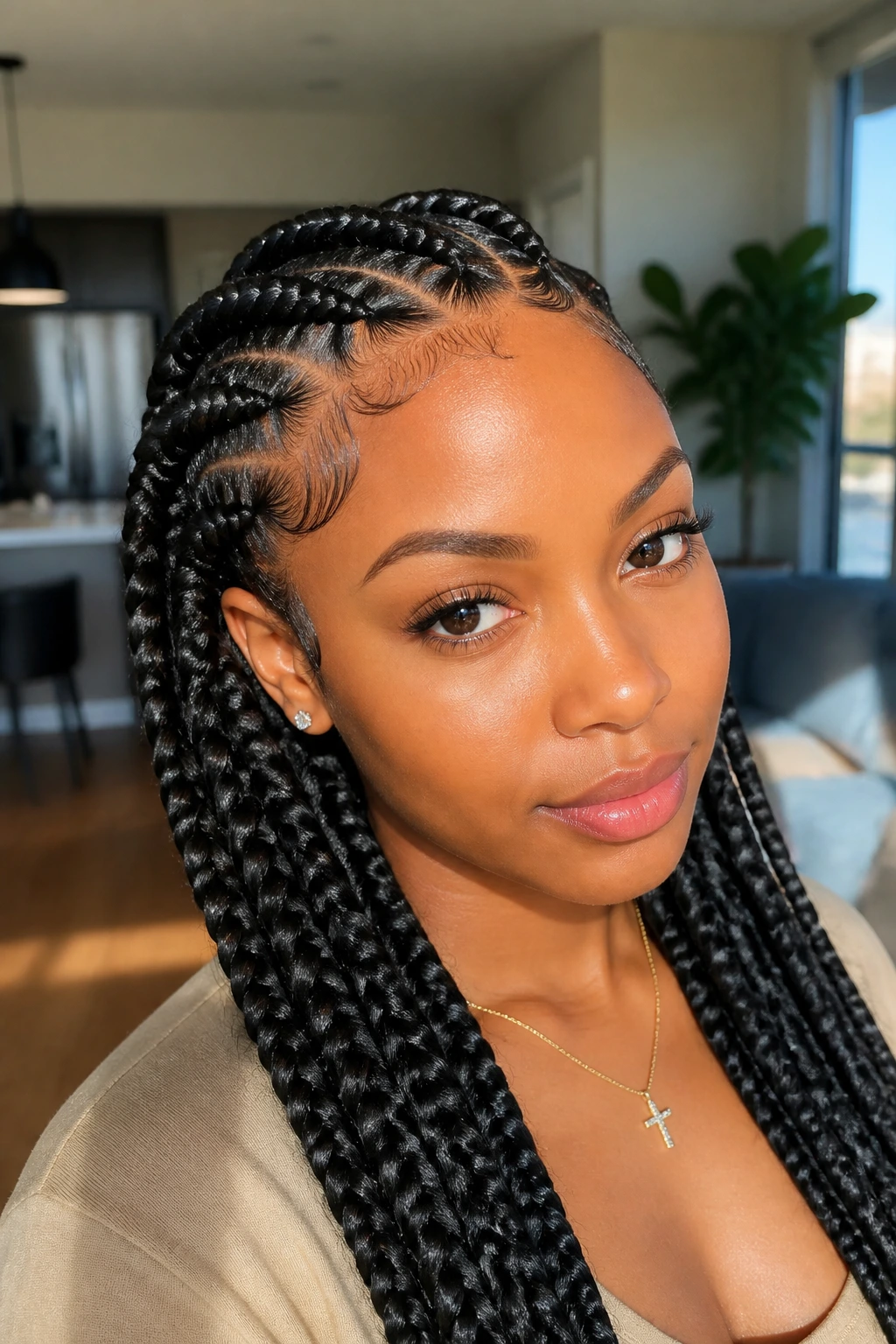
This is the sharpest version in the group, and it can look fantastic if you keep the edges neat instead of plastered. A heart-shaped face can handle clean lines, but the forehead should still breathe a little. That means smooth roots, yes, but not a hard helmet line.
Long hair makes the braid lengths look polished from top to bottom, especially if the braids fall straight and the ends are sealed well. Keep the edge work minimal. A thin, brushed line at the front is enough. Overworked baby hairs can make the face look busier than the braids themselves.
The appeal here is structure. Not drama. Structure.
19. Rope-Twist Jumbo Hybrid
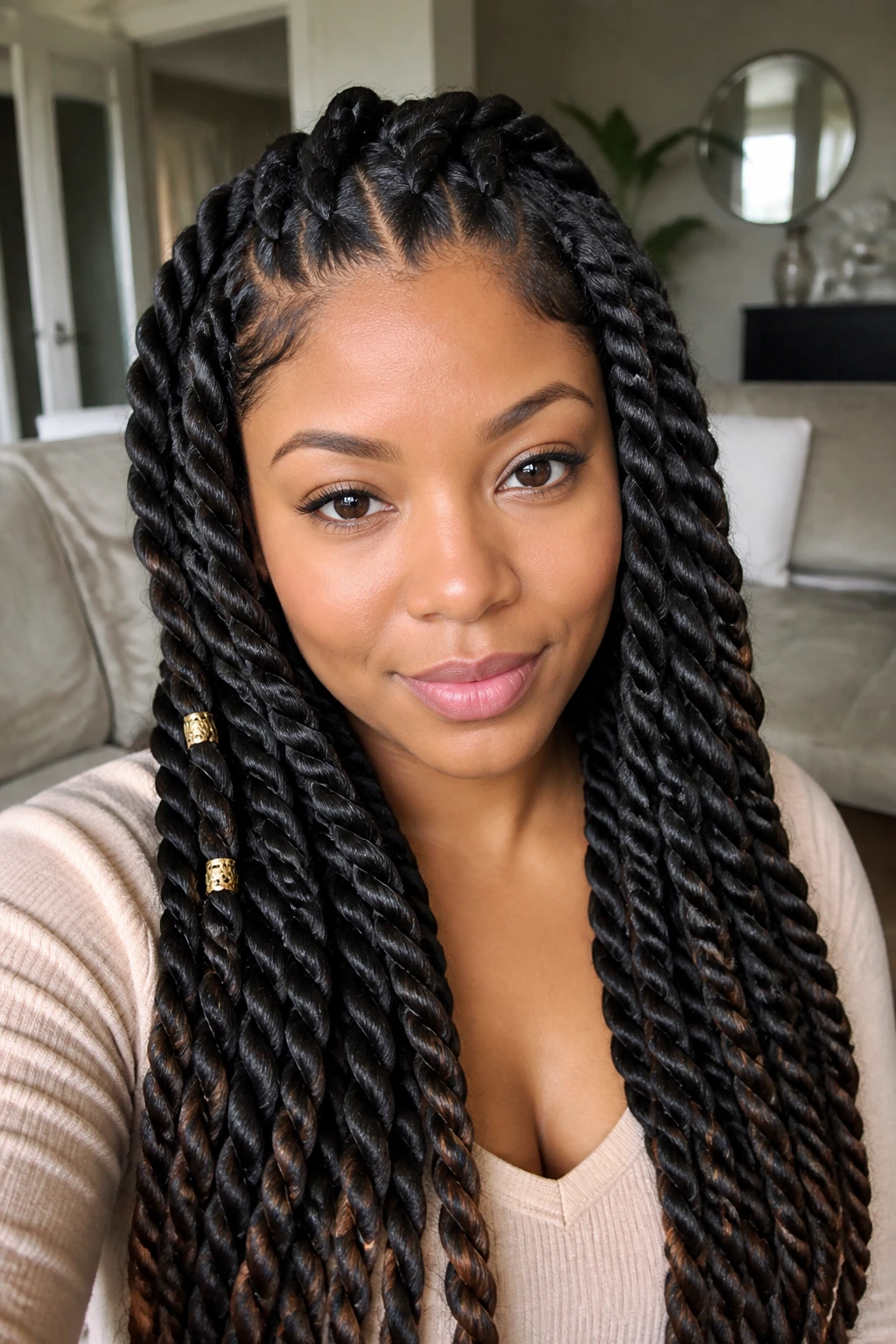
Sometimes braids feel too linear, especially on long hair that already has a lot of length. A rope-twist hybrid softens that. The surface is rounder, the pattern is less boxy, and the whole style sits a little gentler around a heart-shaped face.
Why this one feels softer
Rope twists don’t carve the scalp the same way a strict braid does, so the front line can look less harsh. That makes them a good choice if your forehead is on the wider side and you want a calmer frame.
- Good for medium-to-long hair with decent density.
- Works when you want movement without curls.
- Keep the twist tension even from root to end.
- A center or curved part both work here.
If your usual braids feel too stiff, this hybrid is worth trying.
20. Curved-Part Jumbo Braids
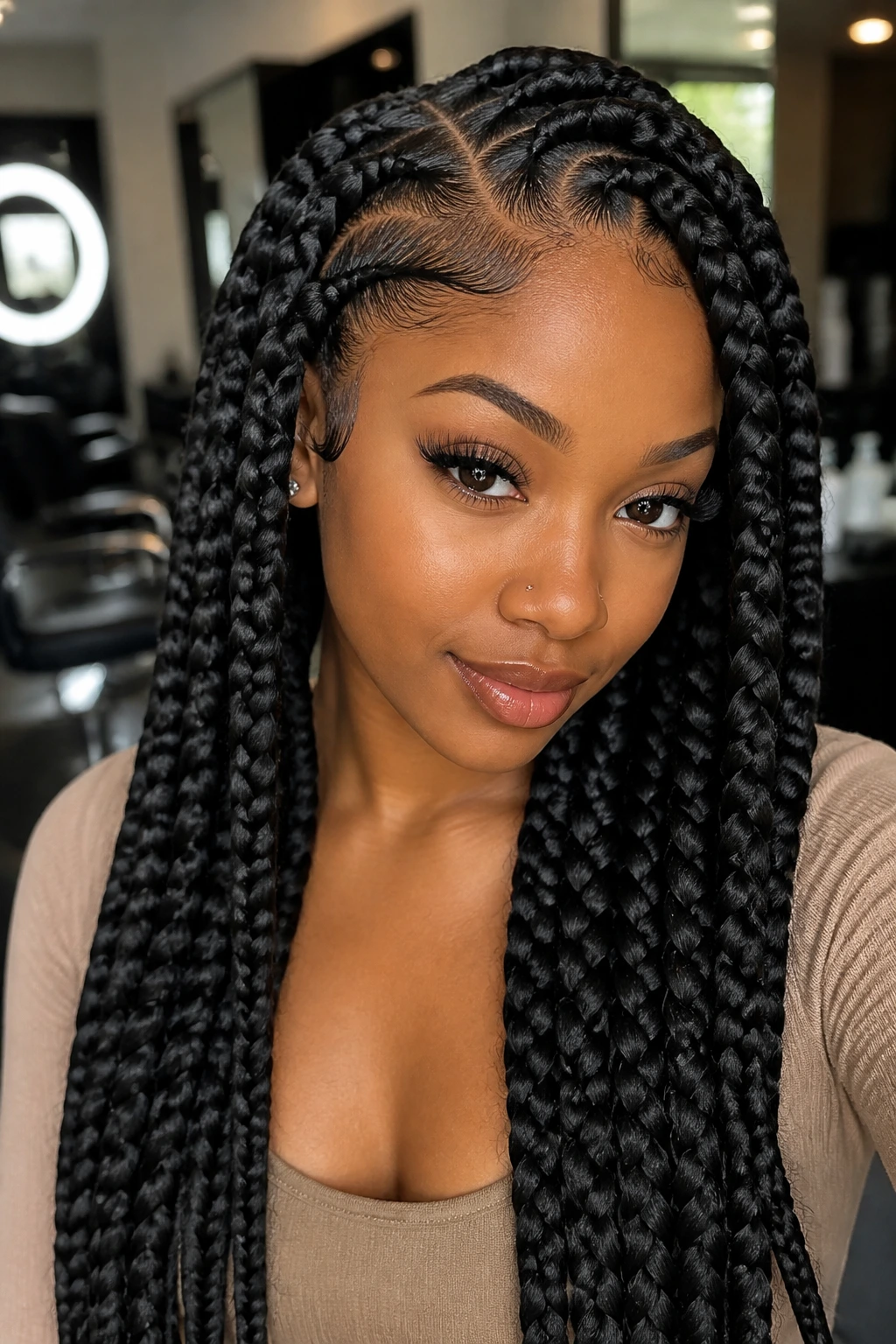
Curved parts are underused. Straight parts are easy, sure, but a curved line at the scalp makes the whole style feel more fluid. On a heart-shaped face, that curve helps the forehead look less boxed in, especially if the braids are long and heavy.
The curve does not have to be dramatic. A gentle arc that starts near the temple and sweeps back is enough. Long hair is useful here because the braid length continues the curve once it leaves the root. The result feels more organic than a hard center line.
If you want a braid set that looks planned without screaming for attention, this is it.
21. Layered-Length Jumbo Braids
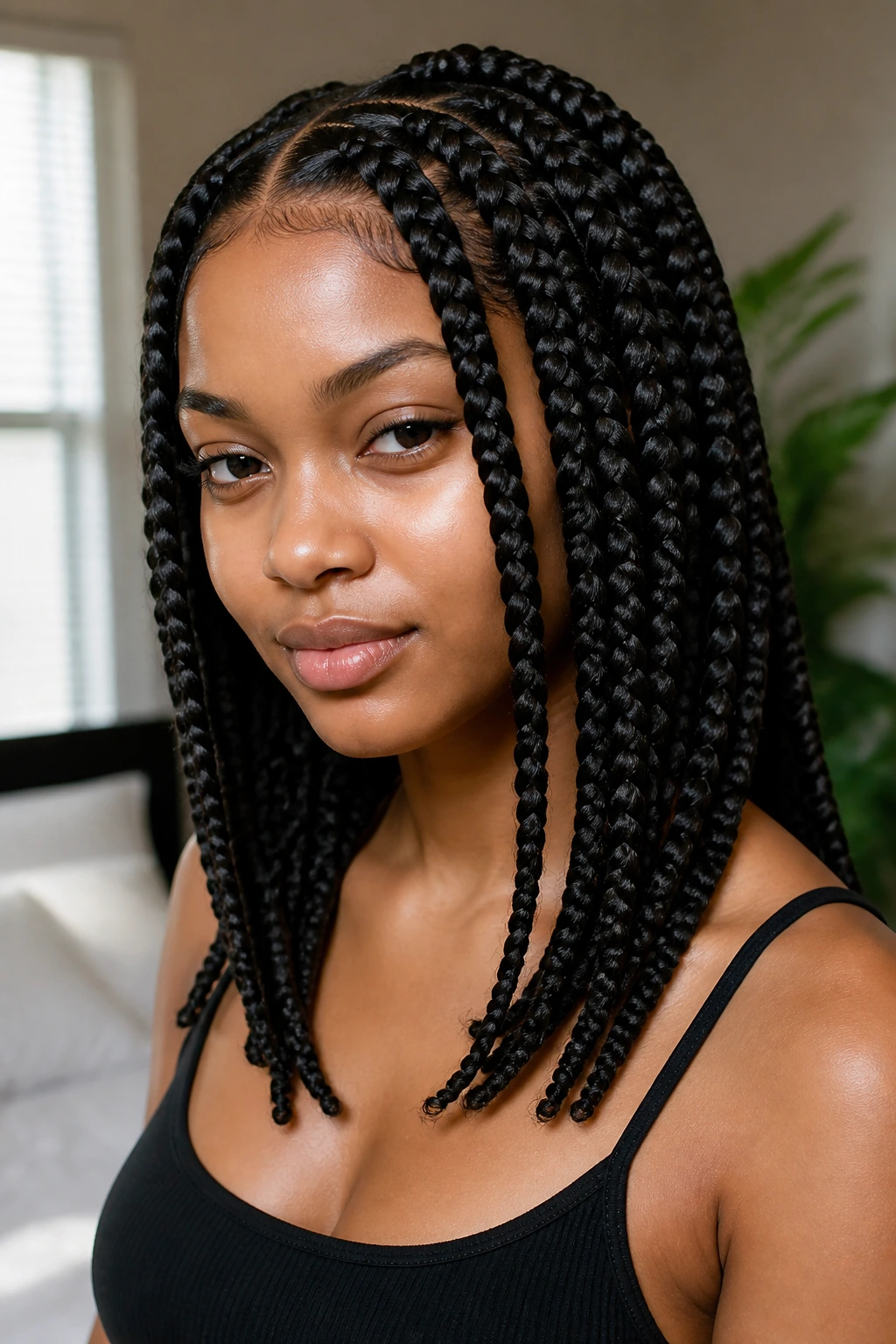
Not every braid has to hit the same endpoint. Layered lengths make long hair look lighter, which is a real gift when the base style is jumbo. On a heart-shaped face, that layered fall keeps the eye moving instead of stopping at one blunt edge near the chest.
The shorter front braids can land at the collarbone, while the back braids drop lower. That staggered shape softens the face and keeps the style from feeling like one solid wall. It also makes the braids easier to wear day to day because the weight is spread more naturally.
Ask for the layers to be clean, not choppy. Choppy reads accidental. Layered reads finished.
22. Silk-Scarf Jumbo Braids
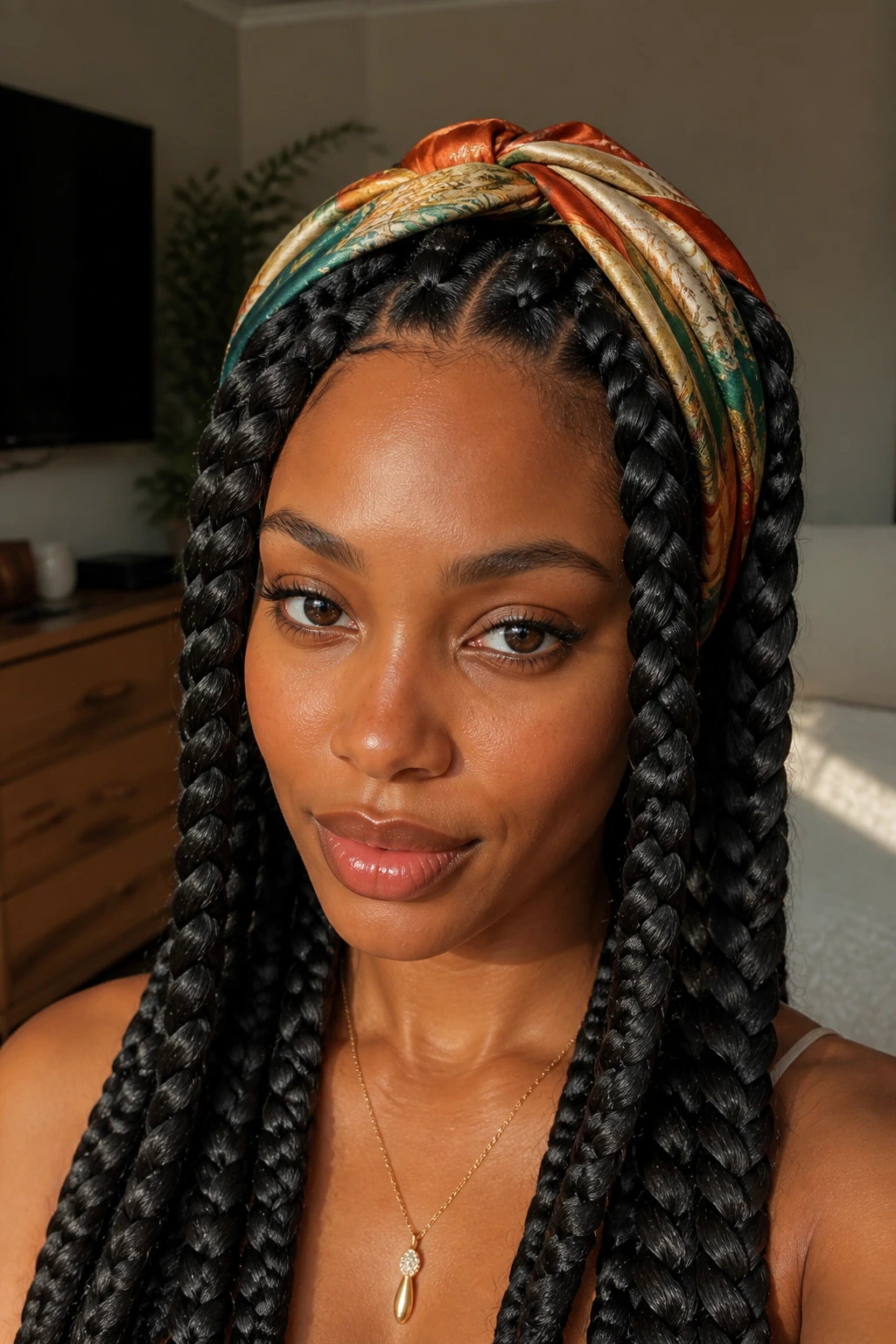
This is less about the braid pattern and more about the frame around it. A silk scarf can soften the forehead, add color near the face, and give the whole style a little shape at the crown. On a heart-shaped face, that soft frame is helpful because it keeps the top from feeling too bare.
Tied at the nape, wrapped around the head, or folded into a narrow band, the scarf changes the braid line without adding weight to the sides. That is the move. Long braids already bring drama; the scarf just points it in the right direction. Keep the print simple if the braids are already colored or beaded.
A scarf also buys you a little control on off days. Useful, not fussy.
23. Office-Polished Jumbo Braids
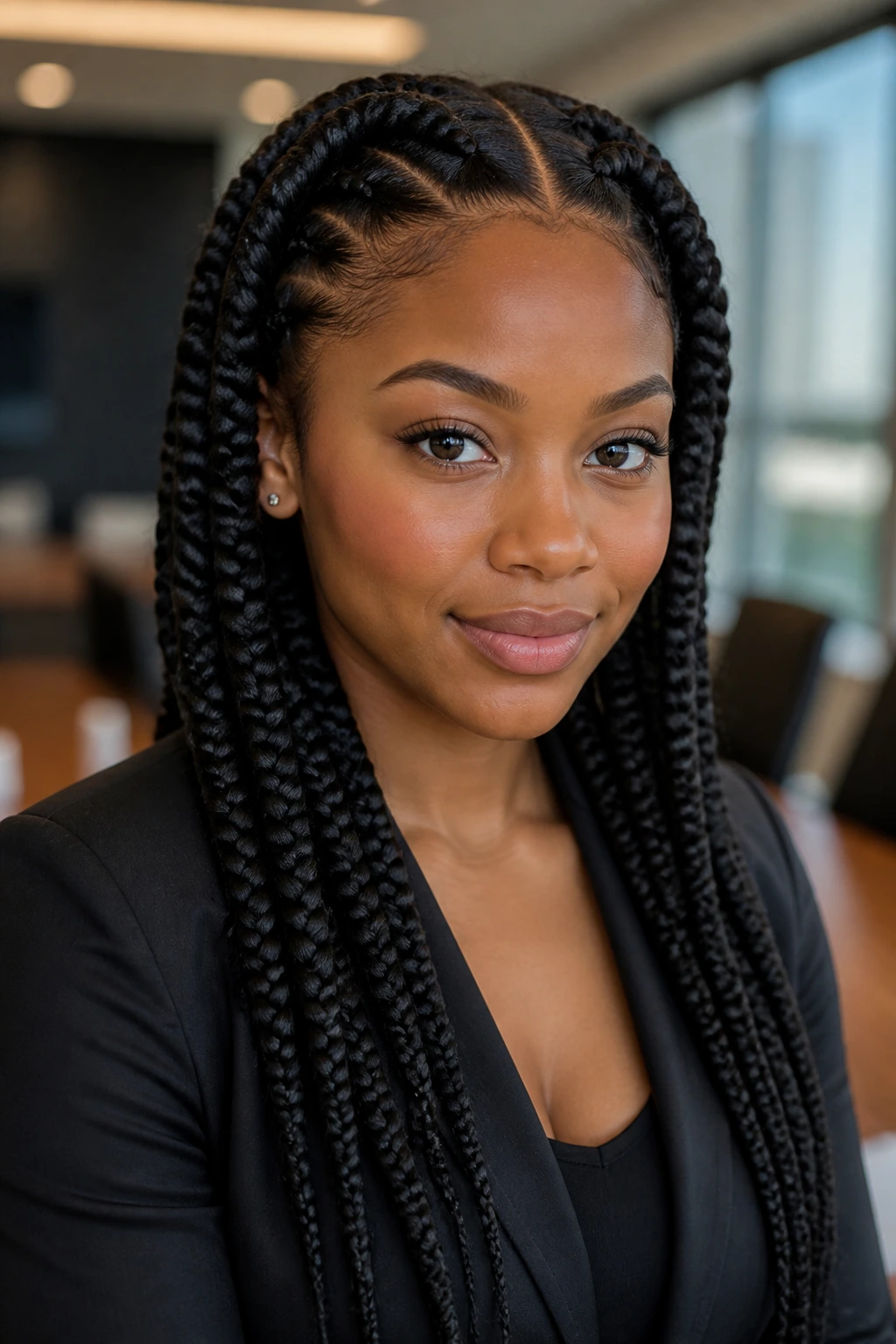
This version is for anyone who wants the style to read clean in a meeting, not loud in a mirror. The roots are neat, the length is controlled, and there is no extra fluff fighting for space around the face. On a heart-shaped face, that quiet front line lets the cheekbones do the work.
Keep the braid length mid-back to lower-back if you want polish without dragging weight. Too much length can start to feel theatrical in a work setting. A low side part or center part both work, but the finish should stay smooth. One cuff per side is enough.
This is the style that proves braids do not have to be casual to look good.
24. Vacation-Ready Jumbo Braids with Loose Ends
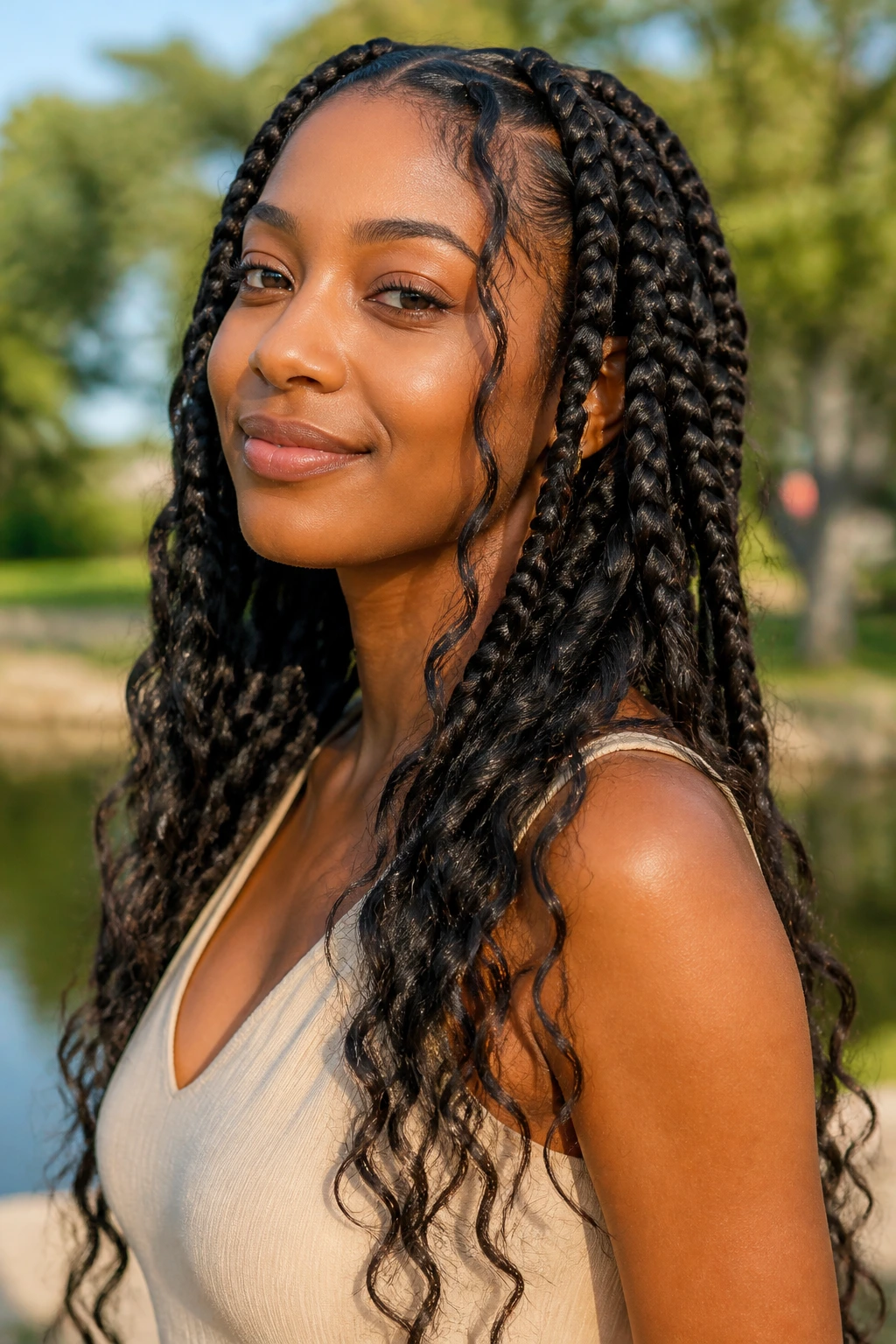
If you want something that can handle wind, salt, a backpack strap, and a long day outside, this is the useful version. The ends stay a little loose and movable, which keeps the style from getting stiff. On a heart-shaped face, that looseness helps the lower half feel softer and less boxed in.
Long hair actually helps here because the extra length keeps the braids hanging with some weight even when the weather gets messy. A loose end does not mean sloppy. It means the last few inches have a little air in them. That little air is what makes the style survive movement.
I’d choose this when I want the braids to look better the second day, not just the first.
25. Statement Center-Drop Jumbo Braids
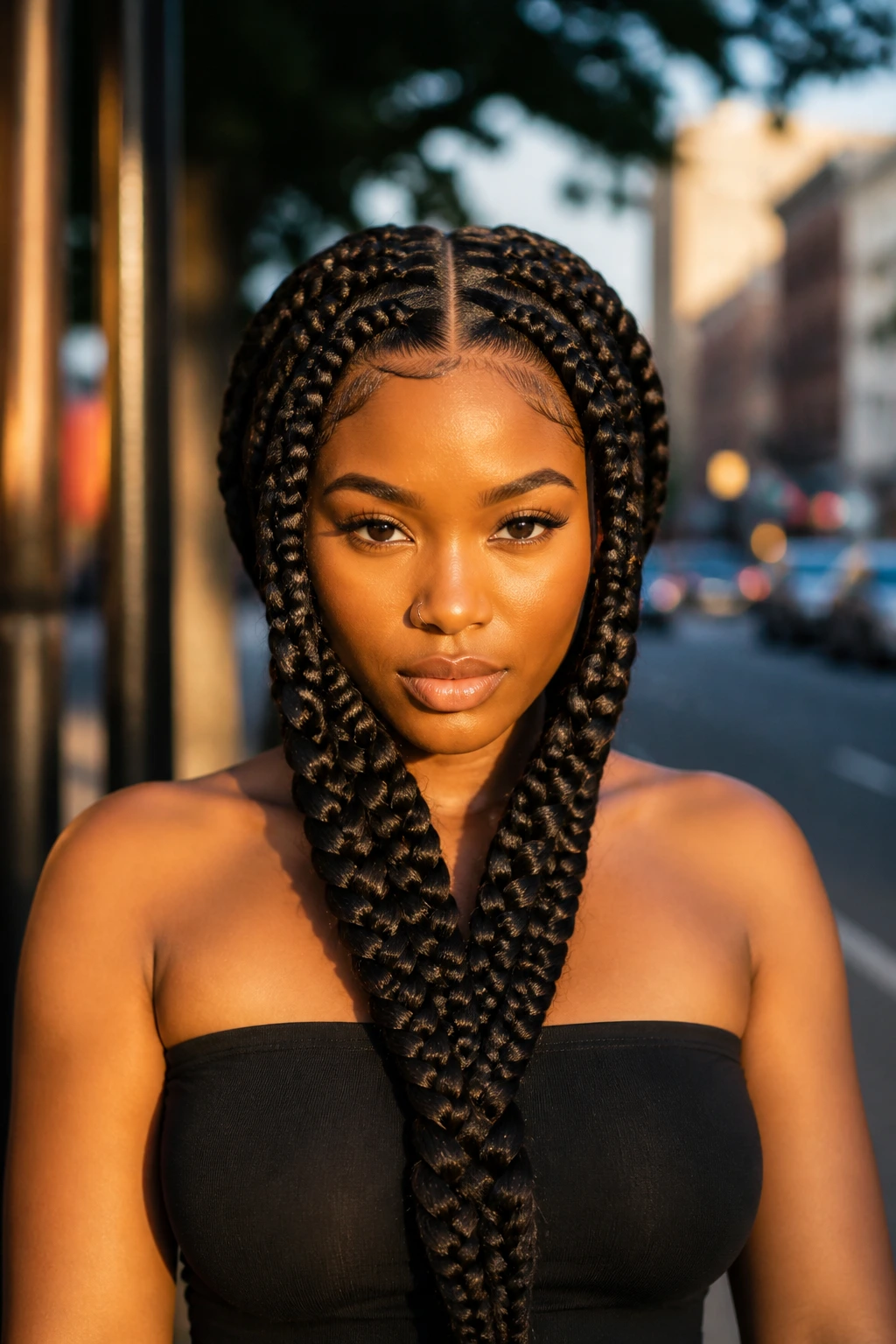
The most dramatic looks are not always the hardest to wear. A center-drop braid set falls straight down the middle of the chest, which can look striking on long hair if the forehead and temples are kept soft. On a heart-shaped face, the center line works only when the root area stays calm and the braid mass is carried lower.
The strength of this version is the vertical line. It pulls the eye down, past the cheeks and toward the length. That is why it works. Keep the front sections curved or gently lifted at the root so the style does not make the upper face feel too boxy. If you want the boldest possible finish, add cuffs only at the bottom third.
This one is for when you want the braids to be the outfit.
What Keeps the Shape Clean From Root to End
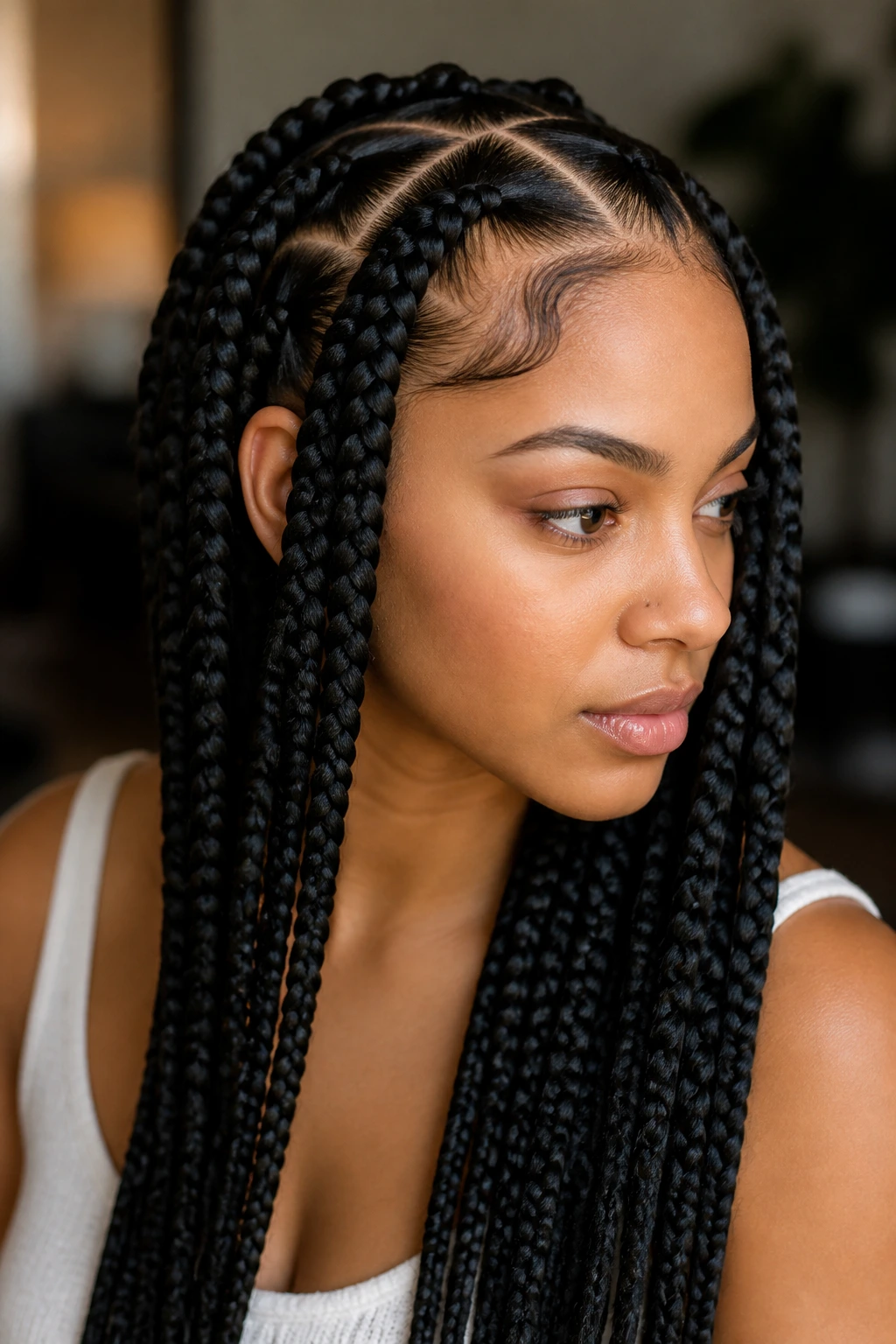
The whole trick with jumbo braids is balance. Not just face balance — braid balance. If the roots are tight, the ends are huge, and the parting is lazy, the style can feel loud in the wrong spots. A clean install spreads the visual weight from the forehead down to the jaw and length.
Weight Has to Move Downward
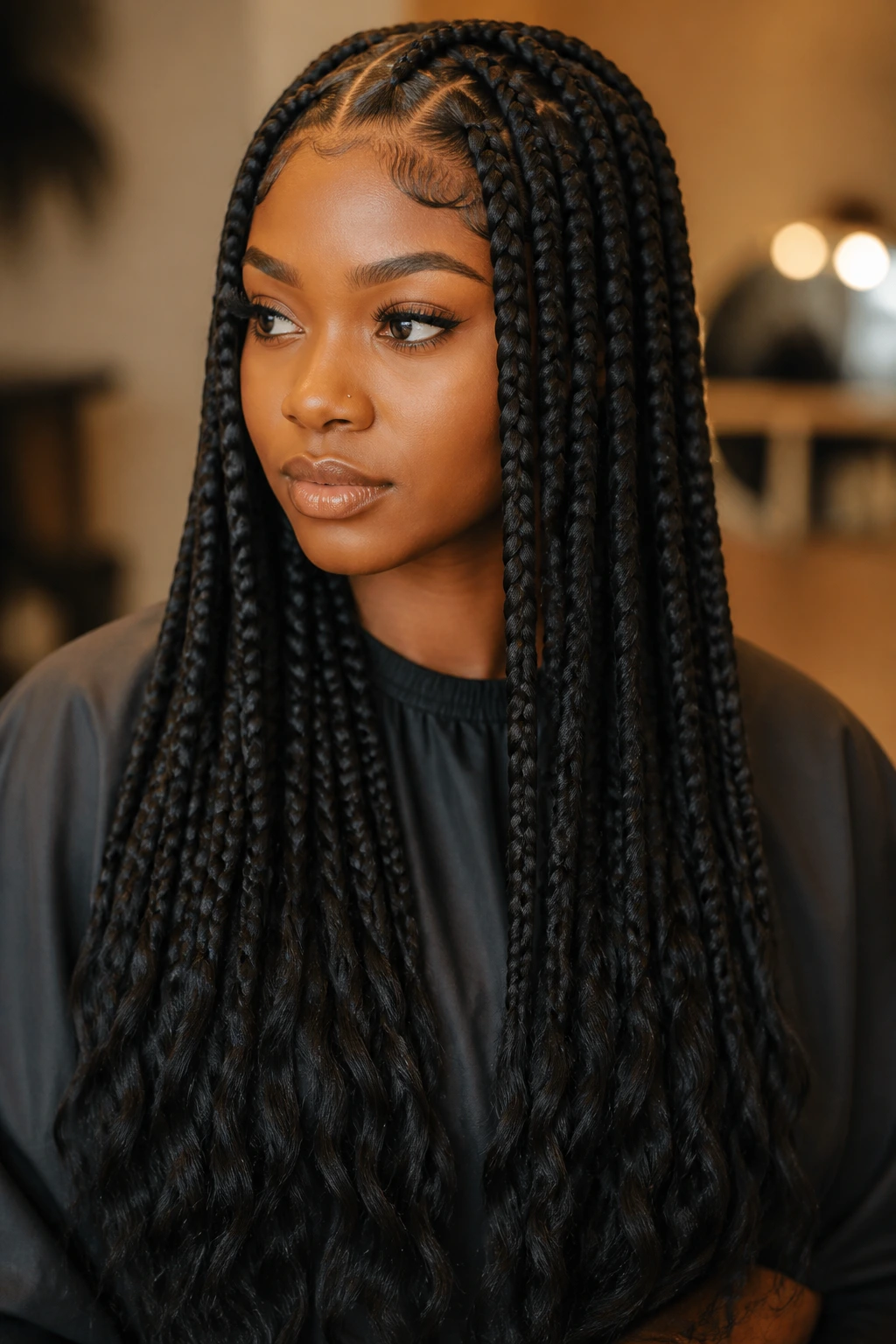
On a heart-shaped face, the lower third of the braid should do some work. That doesn’t mean the ends need to be heavy. It means the eyes should land there. A braid that falls straight and slightly forward does that better than one that sits stiff and wide at the temples.
Parting Changes Everything
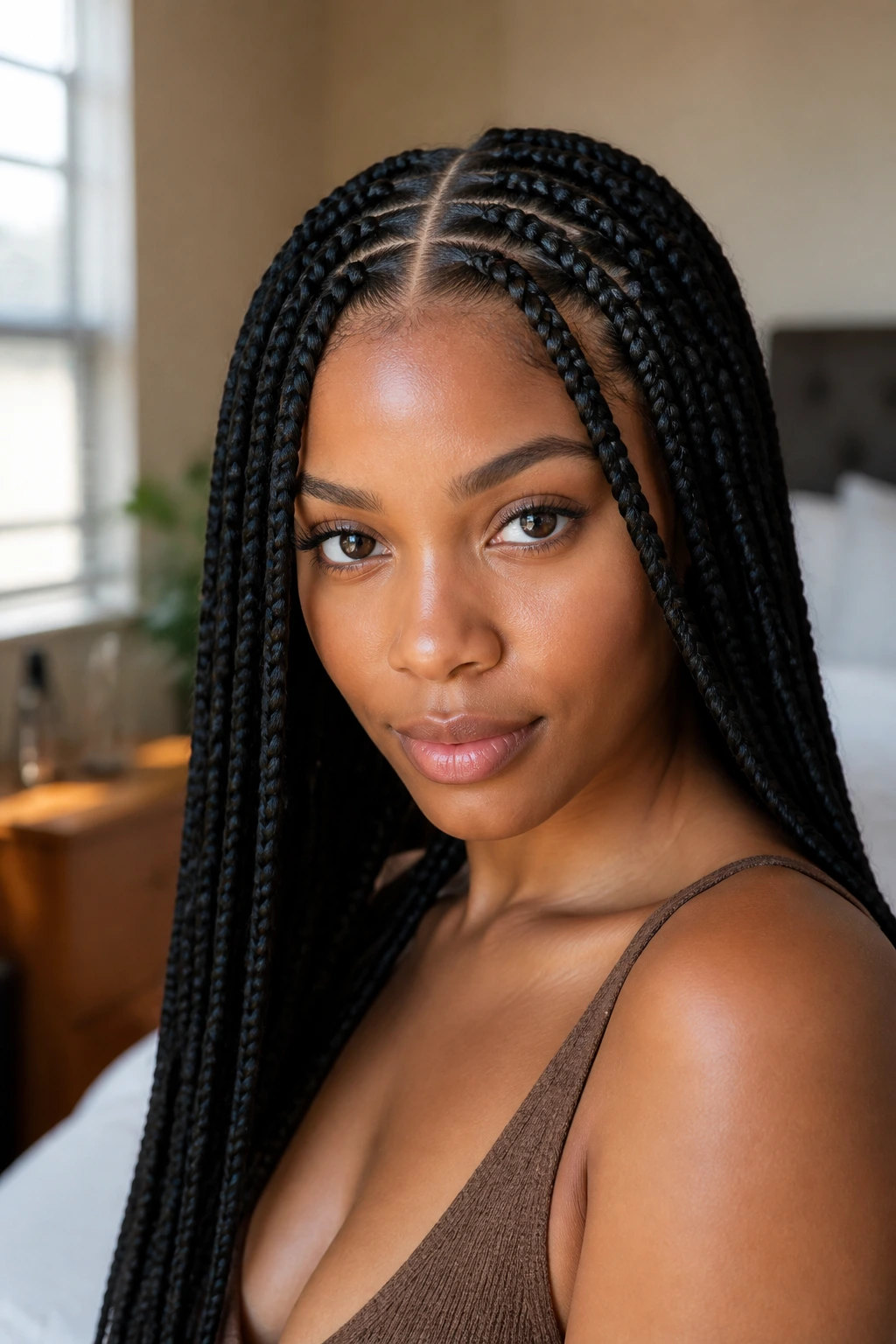
A center part, side part, or curved part changes the whole mood before the first braid is finished. If the part is crisp but too harsh, it can make the face look sharper than you want. If the part is soft and clean, the braids feel calmer from the start. That is one of those boring details that makes the difference between a style you keep touching and a style you leave alone.
Use the braid sections to control how much scalp shows. More scalp can look airy. Too much scalp can look thin. That balance depends on density, length, and how much extension hair you add.
Essential Tools for Clean Jumbo Braids
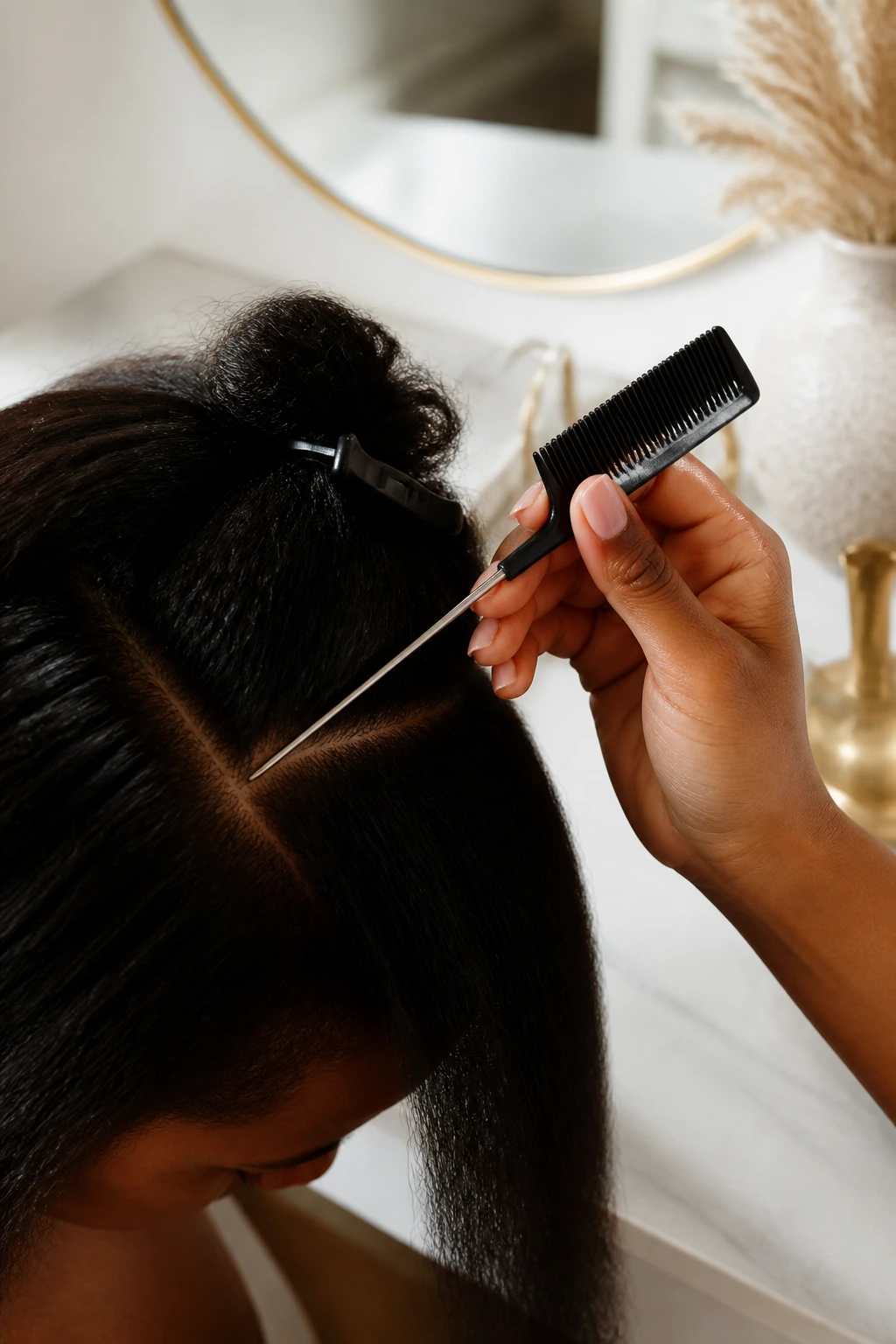
- Rat-tail comb: For parting clean sections without scraping the scalp.
- Sectioning clips: Keep long hair out of the way while you work braid by braid.
- Braiding hair: Pre-stretched synthetic hair gives a smoother finish and less bulk at the ends.
- Edge brush: Good for laying the front without using a heavy hand.
- Mousse or setting foam: Helps smooth flyaways and gives the braid surface a softer finish.
- Light gel or braid jam: Use at the roots, not piled on.
- Spray bottle with water: Useful for softening natural hair before sectioning, especially if it’s dry.
- Silk scarf or bonnet: Keeps the roots from fuzzing up overnight.
- Small elastics or thread: Handy for securing ends or wrapping ponytails.
- Hot-water-safe bowl or kettle setup: Only if your braiding hair supports it and you know how to use it safely.
Choosing Braiding Hair, Gel, and Accessories That Behave
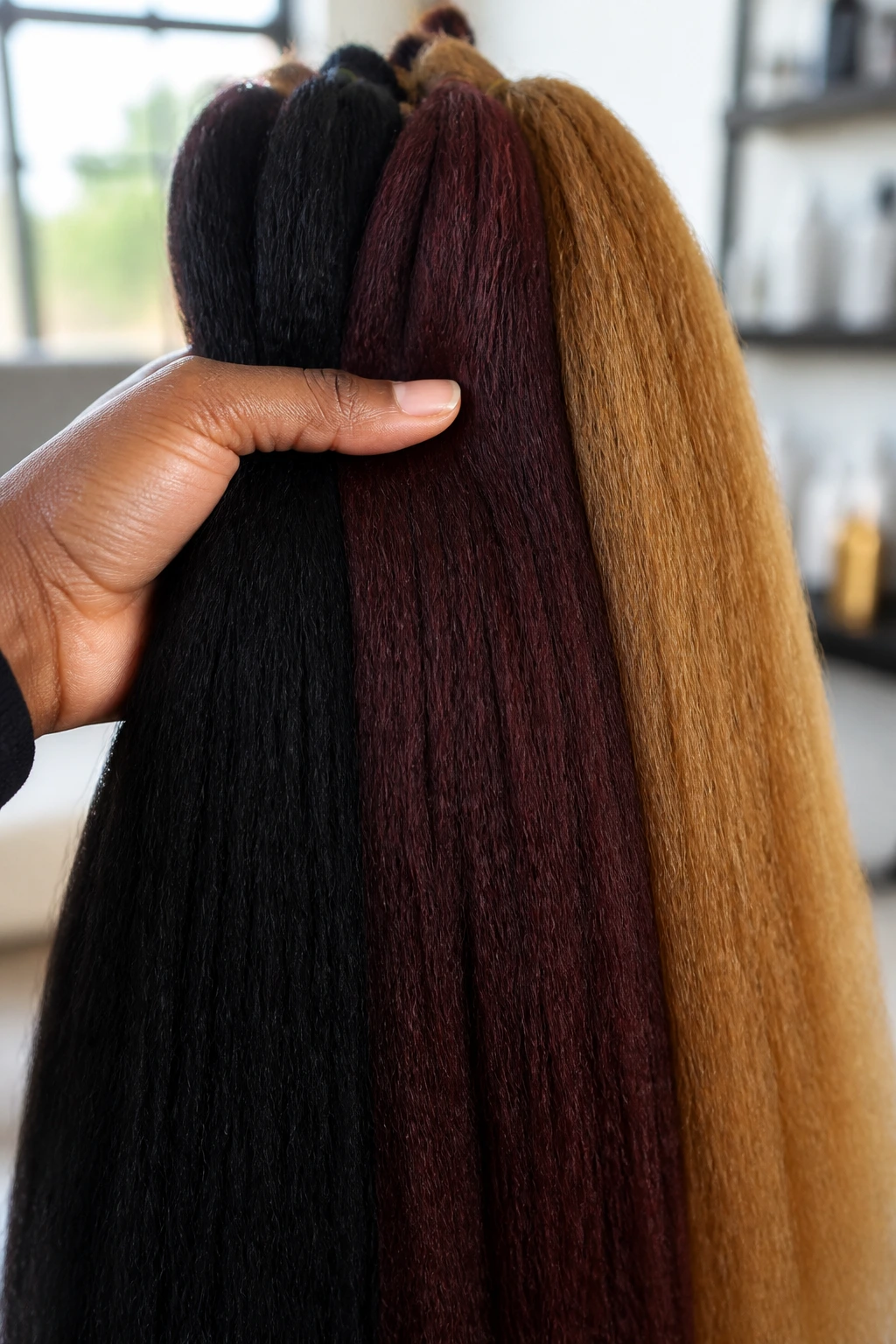
Pre-stretched braiding hair is usually the easiest path for jumbo styles because it cuts down on that blunt, bulky end that makes braids look unfinished. If your natural hair is already long, you often need less extension hair than people expect. That is a good thing. Too much added hair can make the style feel heavy around the hairline and nape.
Pick a braid hair texture that matches the finish you want. A slightly matte synthetic hair looks calmer and less plastic-y. A shinier one gives you more drama, but it can also expose every uneven section if the install is sloppy. For heart-shaped faces, I usually prefer a finish that looks smooth, not glossy to the point of glare.
For products, go light at the root and lighter still on the length. Heavy grease at the scalp makes the braids look oily fast, and thick gel can flake under the parts. A small amount of braid jam or gel at the base, then foam to tame flyaways, is usually enough. If you want beads, cuffs, or thread, keep the metal and color choices in the same family so the style does not start shouting from every angle.
How to Wear Them With Clothes, Makeup, and Jewelry
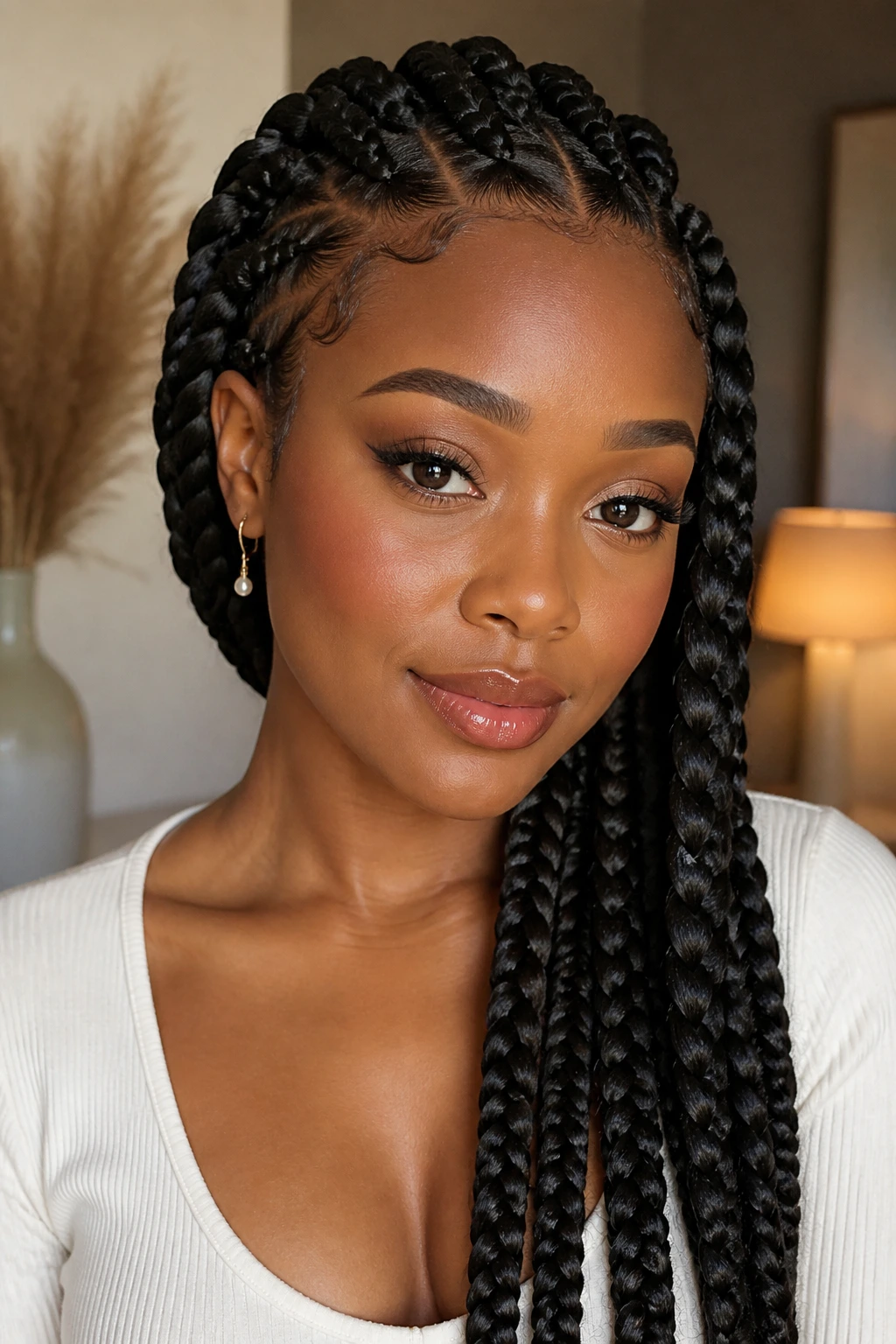
Presentation: Let the braids fall below the jawline or sweep cleanly over one shoulder. That keeps the face open and makes the lower half of a heart-shaped face feel more balanced.
Accessories: Thin hoops, one bold cuff, or a narrow scarf usually works better than a crowded set of extras. Heavy earrings plus heavy beads plus bright makeup can start competing with the braid shape.
Proportion: If your hair is very long, fewer jumbo braids often look cleaner than a crowded set of smaller ones. Six to ten braids usually read strong without making the head look overloaded.
Best For: Office days, travel, dinners out, weddings, gym weeks, and any stretch of time when you want your hair contained but not flat. The style can do all of that if the roots are handled with care.
Small Style Moves That Make a Big Difference
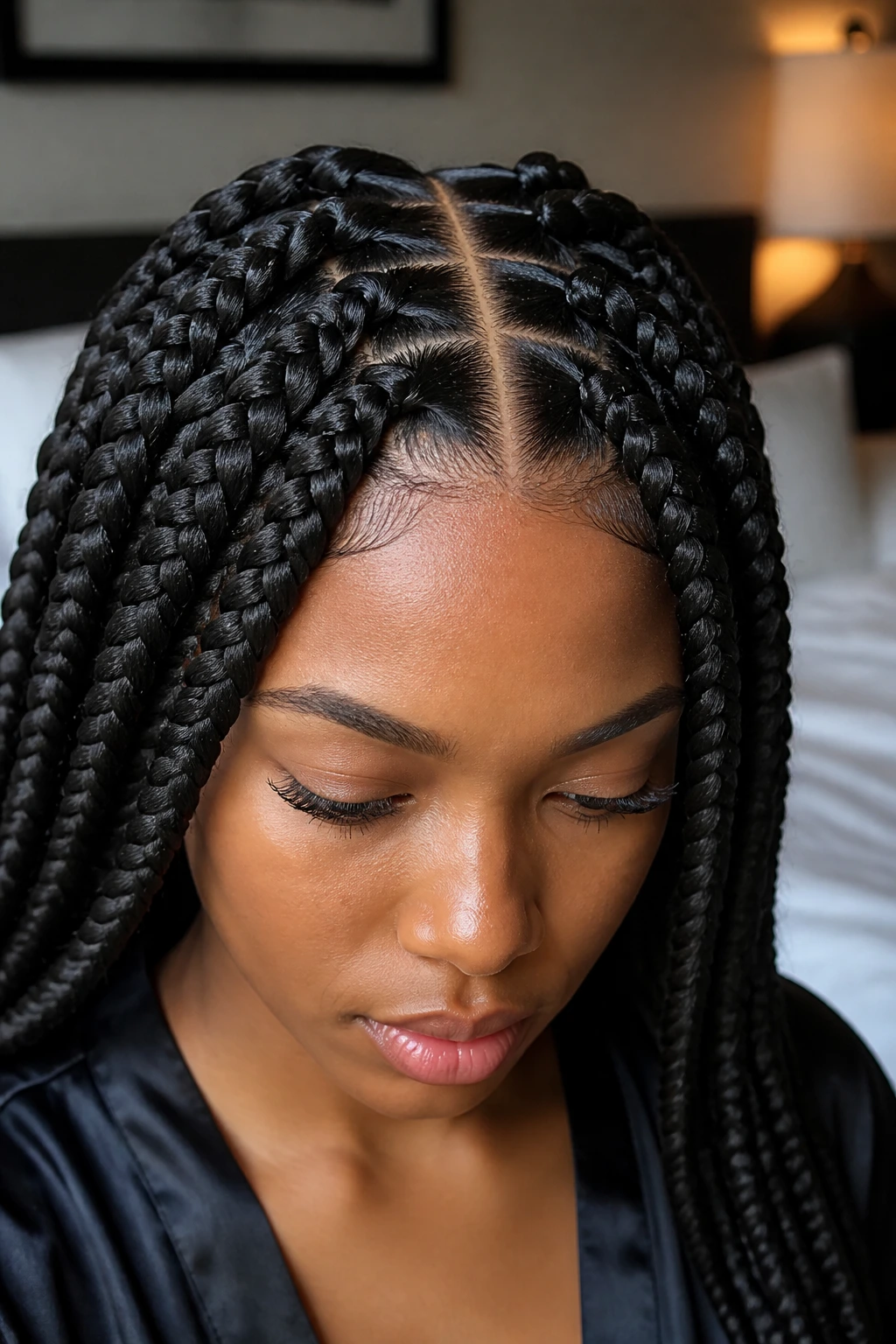
Soft Roots: A dab of gel or braid jam at the part keeps the scalp line neat, but don’t plaster the hair down. The goal is clean, not shiny concrete.
Face Framing: A narrow front braid or one slim tendril near the temple can save a style that feels too severe. On a heart-shaped face, that little softness matters.
Weight Control: Long hair already brings a lot of visual mass, so use the lightest extension hair that still gives you the size you want. More hair is not always better.
Finish Line: A thin scarf, a couple of cuffs, or a few beads at the lower third of the braid is usually enough. One good detail beats five random ones.
Keeping Jumbo Braids Fresh, Clean, and Comfortable
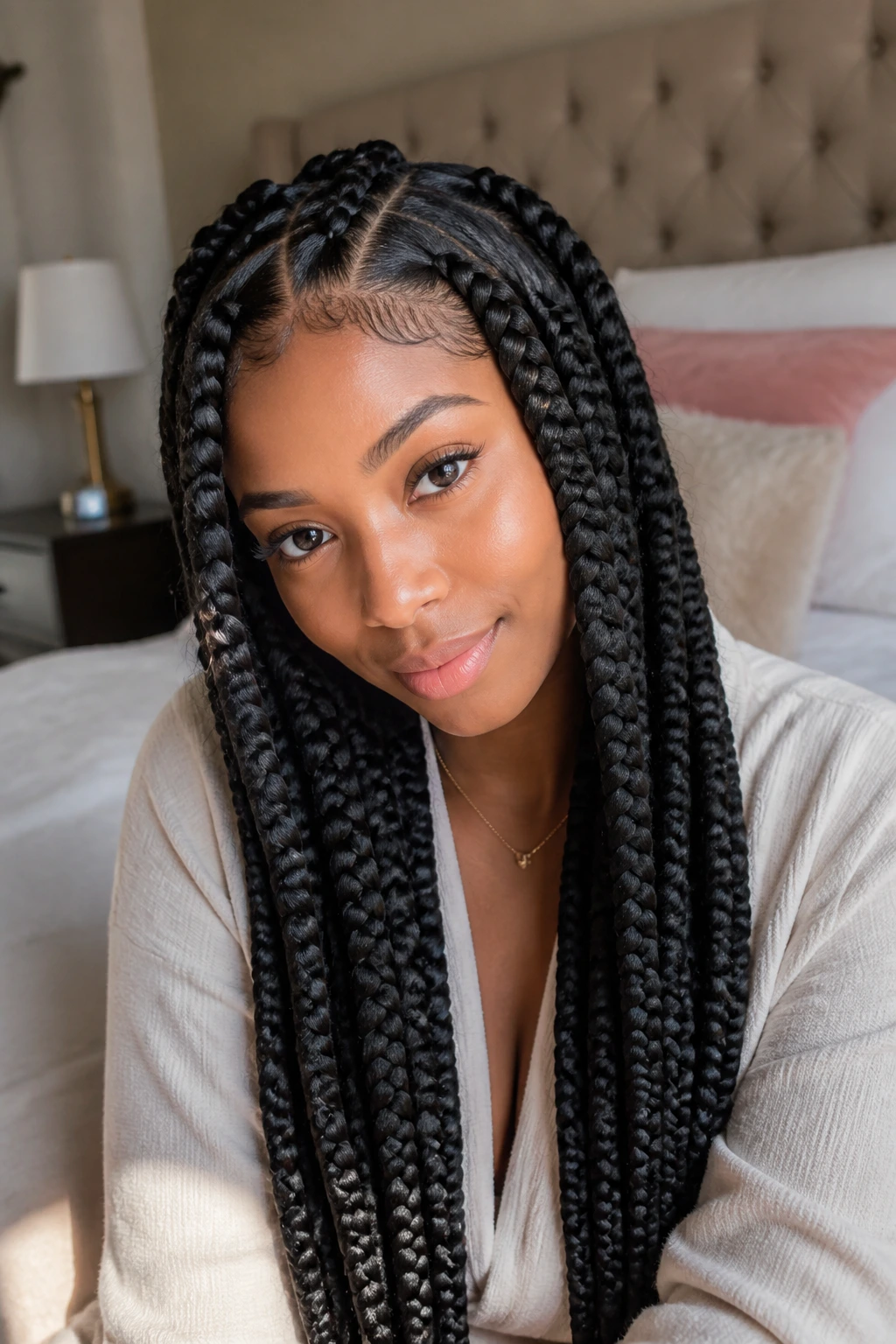
The first rule is simple: if the braids hurt, they’re too tight. Snug is fine. Sharp pulling at the temples, a headache behind the ears, or a puffy red line at the hairline means the install needs less tension. That advice is not cosmetic fluff. It is how you keep the edges intact.
At night, use a silk scarf or bonnet every single time. If your braids are long, gather them gently so they do not rub flat across the pillow. A loose braid wrap is fine; a tight knot at the top of the head is not. That habit alone can keep the front from fuzzing up too fast.
For the scalp, a light refresh every 2 to 3 days is usually enough: a little braid spray, a bit of diluted scalp cleanser, or a cotton pad with a mild cleanser on the part lines. Don’t soak the base. Long braids that stay damp near the roots smell off fast, and damp roots are where tangling starts. Wash the scalp every 1 to 2 weeks if needed, then dry it fully with a hooded dryer or cool setting.
Removal matters too. Don’t rush it. Break the takedown into sections, oil the braid ends if they’re dry, and detangle from the bottom up as soon as each braid comes out. If the front starts sliding or your edges look sparse after a few weeks, take the style down earlier rather than pushing it. A style that outstays its welcome stops being protective.
Variations and Adaptations to Try
Soft-Frame Side Sweep: Keep the braid base off-center and leave one thin front piece on the heavier side. This is the easiest way to soften a broad forehead without changing the whole install.
Low-Tension Knotless Build: Use knotless starts, smaller root sections, and lighter extension hair. It’s the version I’d pick for tender edges or a first-time jumbo install.
Beaded Bottom Half: Add beads or cuffs only from mid-length down. That keeps the face open while still giving the braids some sound and movement.
Curved Crown Path: Start the braids with a gentle arc around the temple instead of a straight line. The effect is subtle, but on a heart-shaped face it takes the edge off fast.
Long-Haul Layered Length: Keep the front braids a little shorter and the back braids longer. That layered fall helps long hair look intentional instead of heavy.
Colorwash Contrast: Use one shade darker or lighter than your natural hair through the middle or underlayer. It gives the braids dimension without crowding the hairline with brightness.
Common Mistakes That Throw Off the Balance
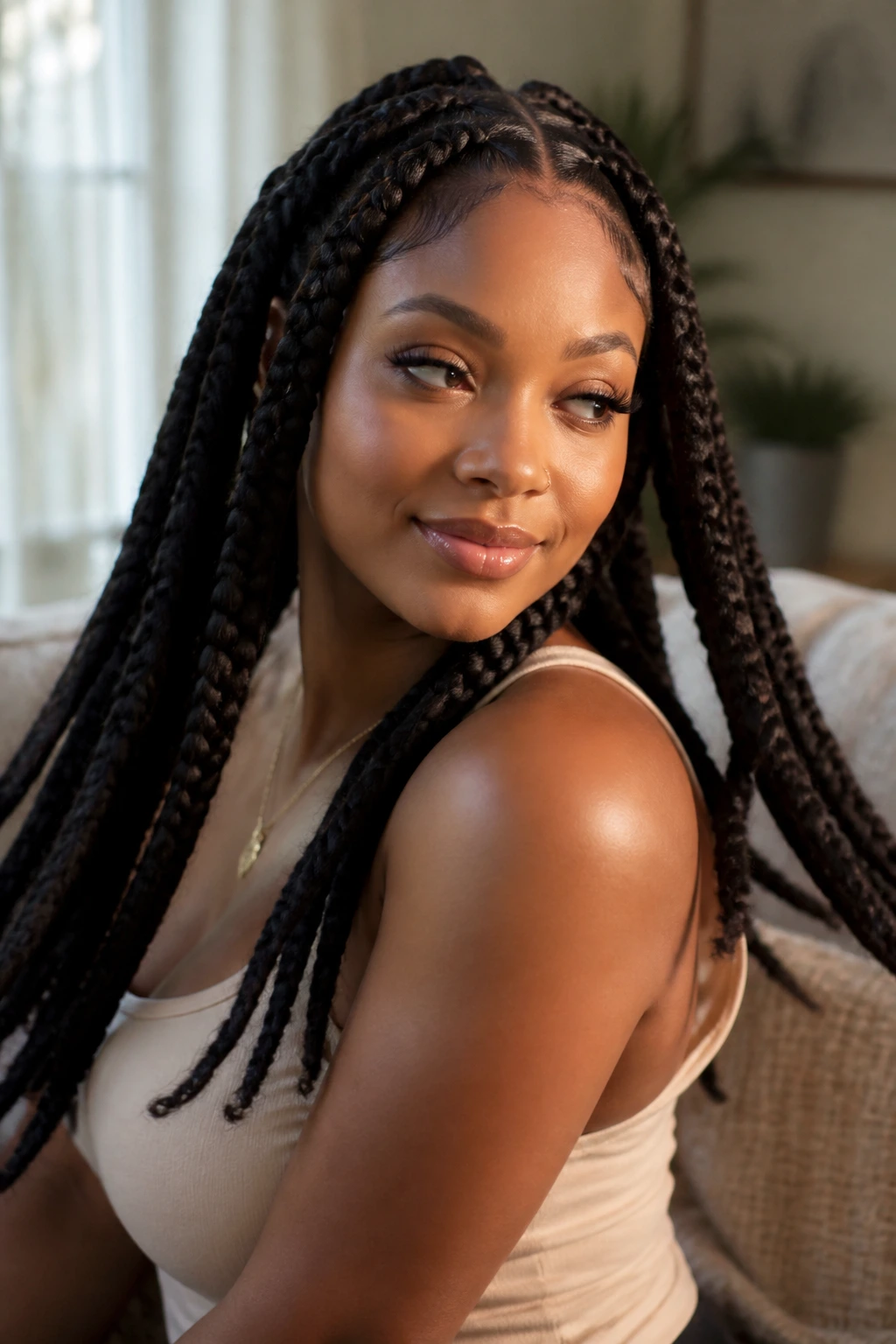
- Making the front braids too thick: The symptom is a crowded forehead and a braid line that feels heavy at the temples. Fix it by slightly reducing the size of the first two sections near the face.
- Pulling the style too tight: If the scalp stings or you see raised edges at the hairline, the install is too aggressive. The fix is simple: loosen the grip, or take it down and rebuild it more gently.
- Using too much extension hair on already long hair: The style starts to feel bulky and drags at the nape. Use less added hair and let your own length do part of the work.
- Keeping every braid the same length: A blunt finish can make the face look bottom-heavy in the wrong way. Add a little layering or let a few front pieces land higher.
- Crowding the face with accessories: Beads, cuffs, bold earrings, and a scarf all at once can make the style feel noisy. Pick one or two accents and stop there.
Frequently Asked Questions
How many jumbo braids look best on a heart-shaped face?
Usually somewhere between 6 and 10 braids gives a clean frame without crowding the temples. Fewer braids can look more refined on very long hair, while more braids help if you want the style to feel fuller and more textured.
Is a center part flattering for heart-shaped faces?
Yes, if the front sections are kept soft and the braid weight falls below the cheekbones. A harsh, straight center part with too much root tension is where problems start.
Do jumbo braids work better with knotless or regular starts?
Knotless starts are usually kinder at the hairline, especially if your forehead is wider or your edges are delicate. Regular starts can still work, but they need careful tension so the roots don’t look bulky.
Can long hair make jumbo braids too heavy?
It can, if too much extension hair gets added on top of already dense hair. The fix is to use lighter sections and let your natural length carry some of the weight.
Should I wear beads if I have a heart-shaped face?
Yes, but place them lower on the braid rather than near the temples. Beads at the top add width where you usually want softness.
What if the braids feel too tight after a few hours?
That is a warning sign, not something to ignore. If the pain sits at the hairline or behind the ears, the style needs to come down or be redone looser before it starts causing breakage.
How do I keep jumbo braids from looking frizzy around the front?
A silk scarf at night, a light foam on the surface, and minimal touching during the day usually handles it. If the front keeps puffing up, the part may be too dry or the braid may have been started with too much friction.
Can I wash my scalp with jumbo braids in?
Yes, but keep the water focused on the scalp and dry the roots well afterward. A diluted cleanser or braid spray works better than soaking the whole style.
A Shape That Moves With You
The best jumbo braids for long hair and heart-shaped faces do one thing very well: they move the focus away from the widest part of the forehead and let the lower half of the face breathe. That can happen with a center part, a side sweep, a low bun, or a beaded braid set. The silhouette changes, but the logic stays the same.
Pick the version that matches how you like to wear your hair, then make the roots soft, the tension kind, and the length intentional. That’s the part people notice first, even if they can’t quite explain why.