



The fastest braided looks for Black hair are the ones that respect your texture instead of fighting it. Clean parts. Smart section size. A braid pattern that doesn’t ask you to stand in the mirror for three hours with a sore wrist and a bad attitude. That’s the whole trick, and it’s why braided hairstyles for Black hair can look sharp even when you’re moving fast.
Black hair gives you a gift that other textures have to work harder for: grip. Coils, kinks, curls, and stretched lengths hold shape in a way that makes braids stay put once they’re set. But that same grip can turn into a battle if you start with dry tangles, rough parting, or a style that’s too tiny for the time you actually have. The styles below lean into speed, neatness, and wearability. Some are sleek and close to the scalp. Some use extensions for length without a fussy install. Some look more detailed than they really are. I love those. They make people think you tried harder than you did.
A quick braid is not a lazy braid. It’s the style you pick when you want your hair to look deliberate before the coffee finishes brewing. If you’re after protective styles, low-tension options, or just a rotation that saves your mornings, these 30 looks cover the practical range—from clean cornrows to dressed-up bun styles, from beginner-friendly parts to looks that bring a little drama without demanding a full day at the chair.
Why These Braids Earn a Spot in the Rotation
-
Fast installs: Most of these styles use a small number of sections or a simple braid path, so you’re not trapped in tiny-part purgatory for hours.
-
They protect the ends: Braids that tuck, wrap, or gather the hair keep your ends from rubbing on collars, scarves, and jacket zippers all day.
-
They work with real texture: Stretched natural hair, blown-out hair, and extension hair all fit into this lineup without forcing one single hair pattern.
-
Easy to dress up: A few cuffs, beads, or a sharper part can turn a plain braid into something polished enough for work or an event.
-
Low maintenance when done right: A satin scarf, a little mousse, and a sensible night routine usually beat constant restyling.
-
Flexible on time: Some of these take 15 minutes. Some take longer, but they still save time later because they stay in shape.
1. Straight-Back Cornrows
Straight-back cornrows are the plain-spoken classic. No drama. No extra design work. Just clean rows going from the hairline to the nape, which is exactly why they’re one of the fastest braided hairstyles for Black hair when you need to get out the door.
They work best on stretched hair or freshly detangled hair with a little grip from gel or pomade at the part. If you want them to look neater for longer, keep the sections even and don’t overload the roots with product. On medium-density hair, this style can be installed quickly and still feel secure without the scalp getting punished.
A center part gives the style a sharper finish. No part at all gives you a smoother, more traditional look. Either way, this is the braid you choose when you care more about a clean line than fancy geometry.
2. Two Feed-In Braids
Two feed-in braids hit that sweet spot between sleek and fast. They start small near the hairline and get thicker as you add hair, so the braid looks built-in rather than bolted on. That gradual thickening is why the style feels polished without taking forever.
If your goal is length, this is one of the easiest places to add pre-stretched braiding hair. You only need two sections, which means less parting and less time spent checking whether both sides match. On Black hair, that matters. A lot.
I like this style when I want something that stays smooth through the day but still looks good after a jacket hood, a long car ride, or a humid walk from the train. If your scalp is tender, ask for a loose feed at the first inch. That small shift changes everything.
3. Four Neat Rows
Four rows are the quiet overachiever of braided styles. More coverage than two braids, less time than a full head of tiny cornrows, and usually easier to sleep on than a style with lots of tight little parts.
This is the braid pattern I’d point a beginner toward if they want something that reads neat from across the room but doesn’t demand exacting precision in every section. The rows can be slightly thicker than classic cornrows, which makes the install faster and the finished look a little softer.
If you want the style to last longer, stretch the hair first and keep the parts clean at the front. A bit of mousse on the finished braids helps them settle down. Not drenched. Just enough to smooth the flyaways so the rows don’t start looking fuzzy by the second day.
4. Side-Swept Lemonade Braids
Lemonade braids have attitude built in. The side part and angled rows make the style feel a little sharper than straight-back braids, and that diagonal direction is flattering when you want to soften the face without adding volume all over the head.
The parting matters here more than the braid size. If the sections are crisp and the lines sweep in one direction cleanly, the style looks intentional even if the braids themselves are fairly simple. I’d call that a good trade. Less time in the chair, better payoff in the mirror.
Use edge control sparingly at the front and keep the braids a touch looser near the temple if your hairline is sensitive. This one looks best when the sweep is clean, not when the roots are pulled so tight your face looks surprised.
5. Stitch Braids
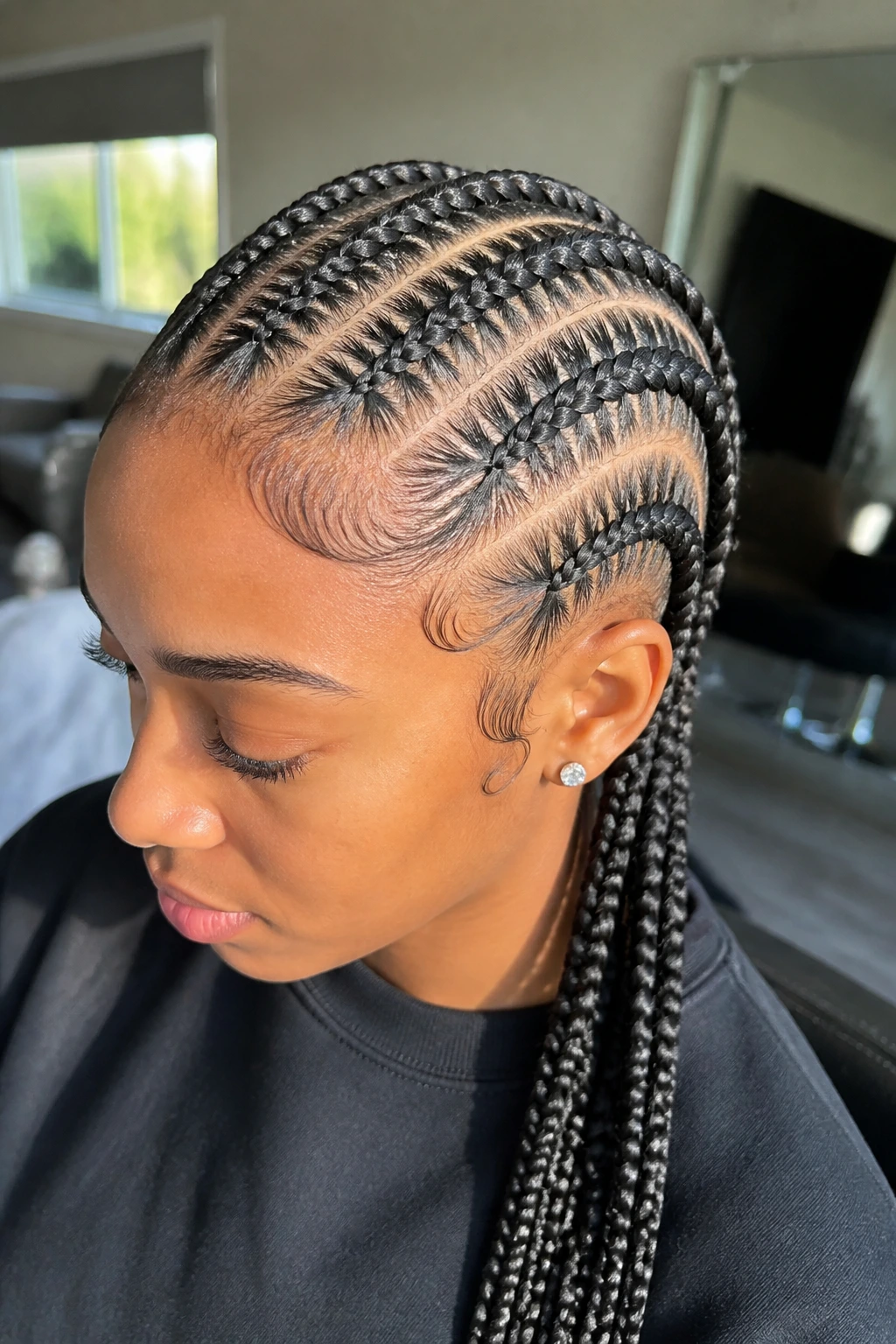
Stitch braids are for the person who wants people to think, “That took forever,” when it did not. The visible part lines—those straight, segmented “stitches” at the root—create the illusion of complicated work without changing the braid pattern too much.
The secret is in the parting, not the braid itself. Use a rat-tail comb to draw clean lines, then set each section with a little gel so the scalp shows through in sharp stripes. Too much product, though, and the parts can get gummy and flaky by lunch. Thin layers win here.
On Black hair, stitch braids look especially crisp when the hair is stretched beforehand. They’re a solid choice for school, office days, or any time you want detail without a massive install. Quick? Yes, compared with full micro braids. But they still need steady hands.
6. Fulani Braids With a Center Braid
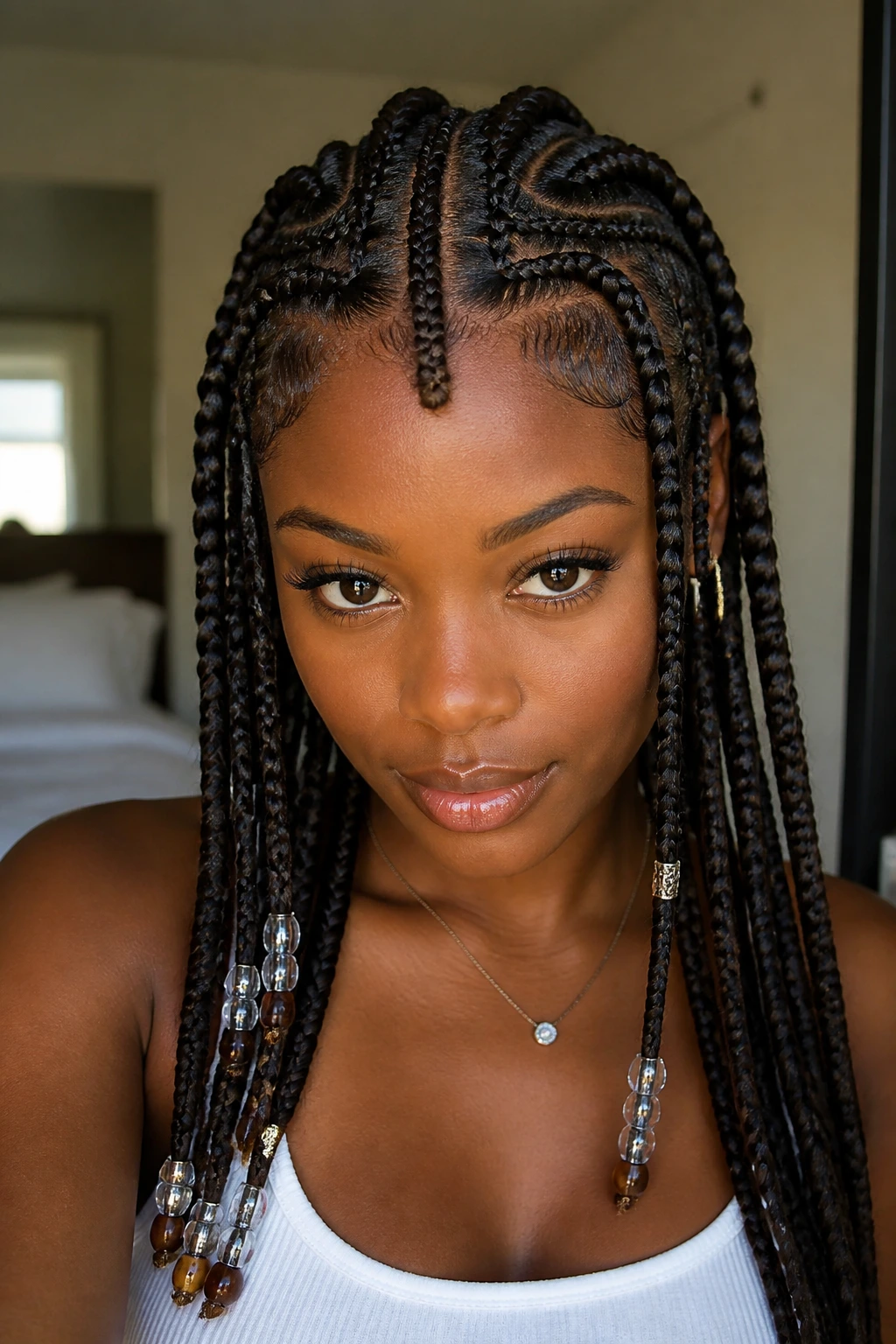
Fulani braids have a built-in point of focus. Usually you get a center braid or several braids down the middle, plus side braids that frame the face. Add beads or cuffs if you want, but the structure already carries the style.
What I like about this look is how much personality it gives you without requiring a huge braid count. The center line anchors everything. The side braids keep it balanced. That means you can get a style that feels dressed up while still finishing faster than a full head of small singles.
Keep the parts symmetrical enough to read cleanly, but do not obsess over microscopic perfection. Fulani braids look best when the lines are clear and the adornment is thoughtful. A couple of beads placed with intention beats a hundred things hanging everywhere.
7. Ghana Braids
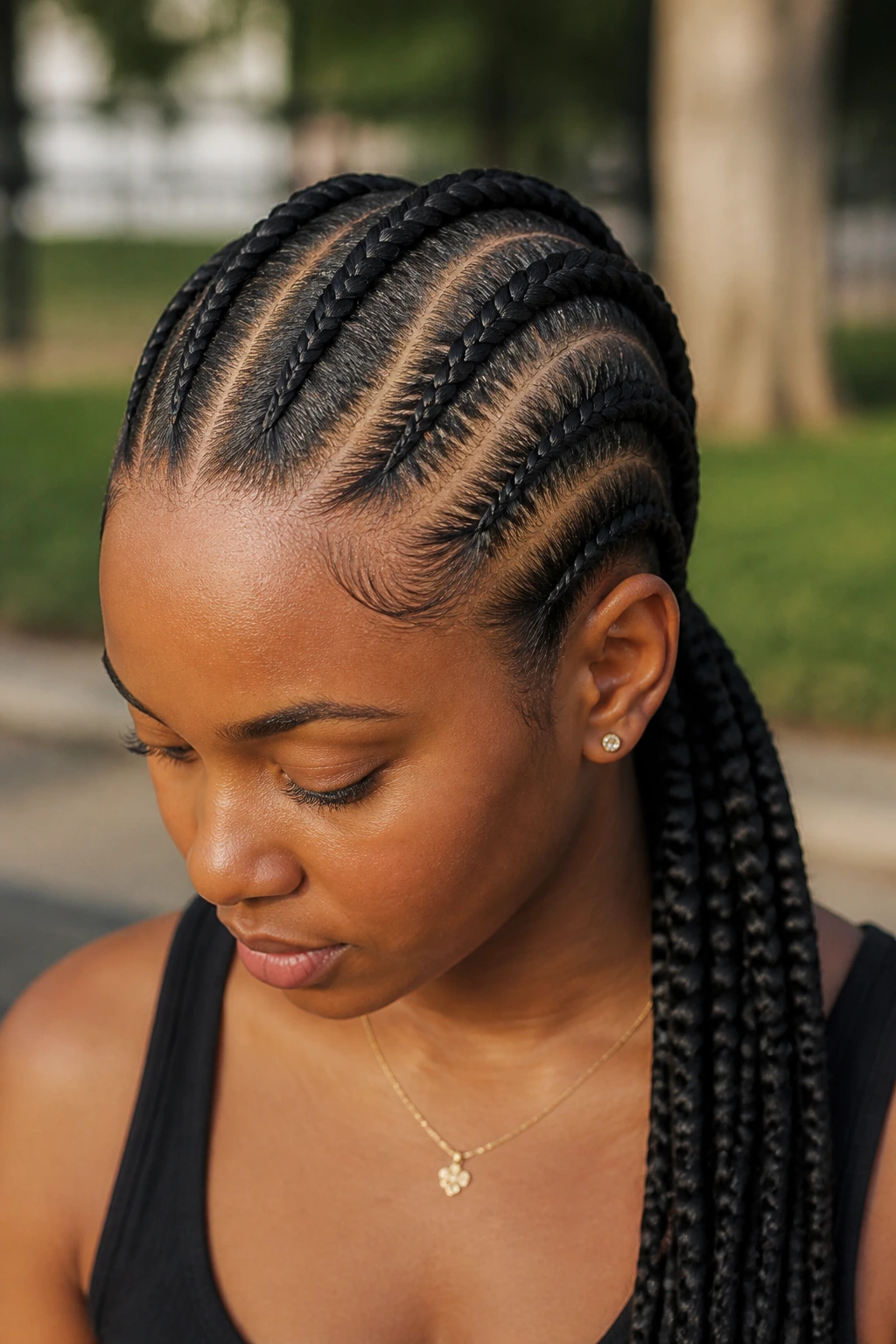
Ghana braids are feed-in cornrows with a stronger, fuller profile. They start narrow at the scalp and widen as more hair is added, which gives them a smooth, sculpted shape without needing dozens of tiny sections.
They’re one of my favorite quick protective styles for Black hair because they do a lot visually with a small amount of actual braid work. Once the base is set, the rest moves quickly. The thicker structure also makes them useful if you plan to tie the braids into a bun or ponytail later in the week.
If you want a sleek finish, stretch your hair first and use a firm but not sticky gel at the roots. Ghana braids hold best when the sectioning is tidy and the feed-in is gradual. Sudden thick jumps at the root make the style look lumpy.
8. Knotless Box Braids
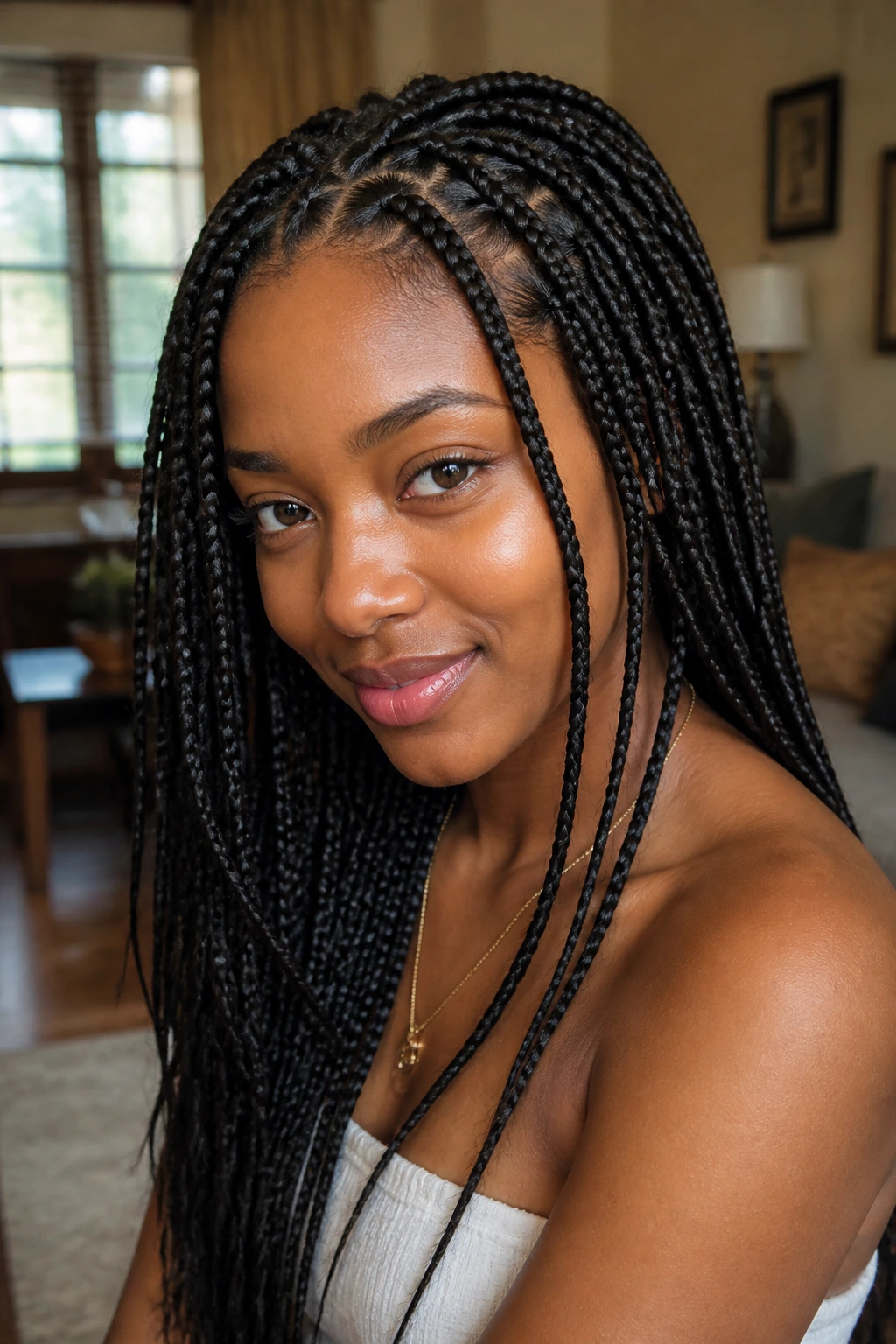
Knotless box braids are the more comfortable cousin of traditional box braids. There’s no tight knot at the base, so the braid eases out of your own hair more gently and usually sits flatter at the scalp.
They take longer than cornrows, sure. But if you’re choosing between style speed and wearability, knotless braids earn their keep because they’re kinder on the edges and easier to wear for weeks. Medium sizes are the fastest version that still look balanced.
The best part is the movement. Knotless braids swing a little more naturally than a stiff, heavily knotted install, which is why they look good pulled into a low ponytail, half-up style, or loose over the shoulders. Keep the added hair pre-stretched and you’ll save yourself a lot of frustrating end-feathering.
9. Jumbo Box Braids
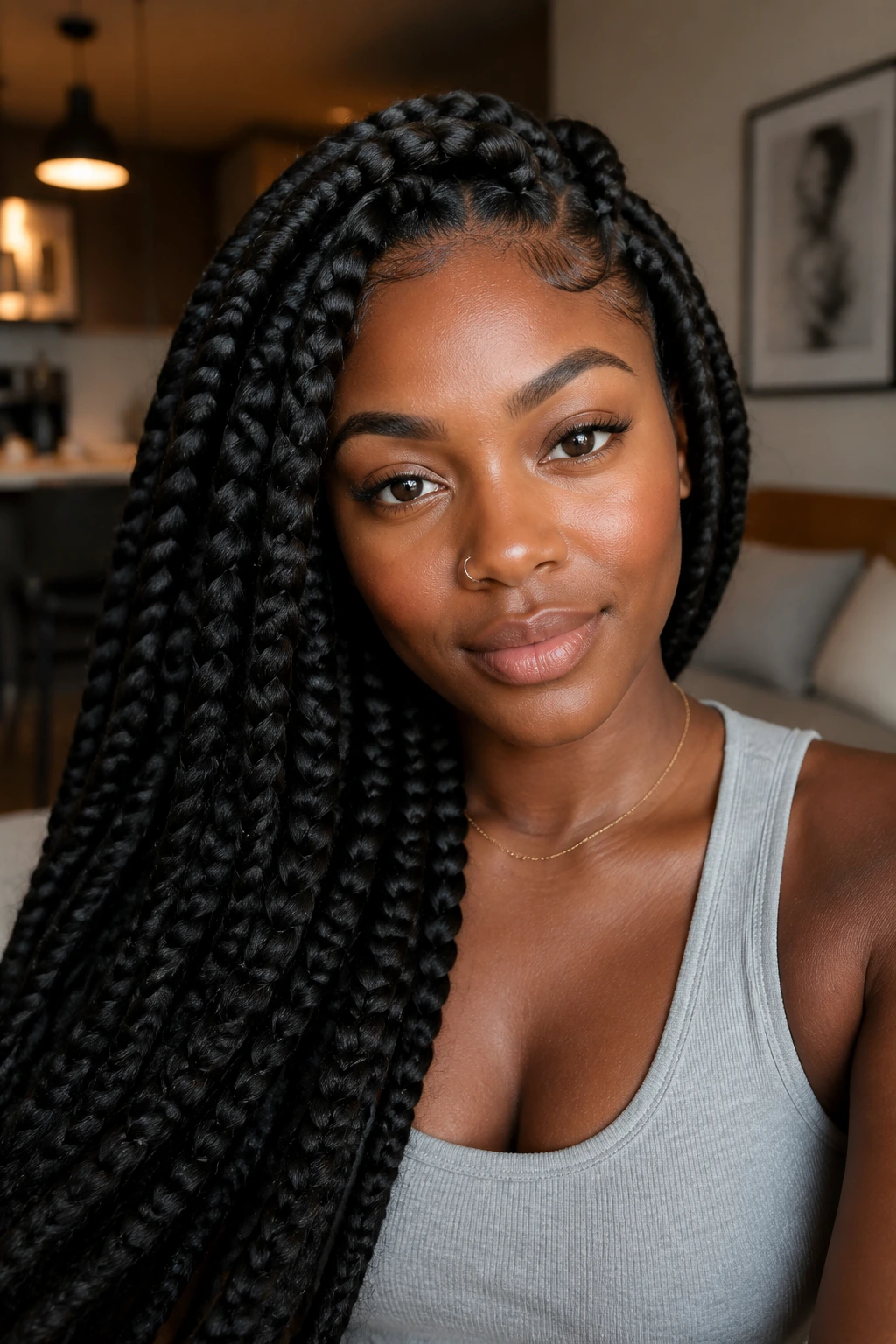
If you want the box braid look without sitting all day, jumbo braids are the answer. Fewer parts. Bigger sections. Less wrapping at the base. Done.
They are especially useful when you want a protective style that still feels light enough to throw into a bun or wear loose without turning your neck into a complaint department. The bigger braid size also makes the style easier to take down later, which is a real perk nobody talks about enough.
I’d choose this size when your natural hair is stretched and detangled, because the install goes faster and the finished braid hangs cleaner. Just don’t pull the parts too tight to compensate for size. That’s how a fast style turns into a headache before the first day is over.
10. Triangle-Part Box Braids
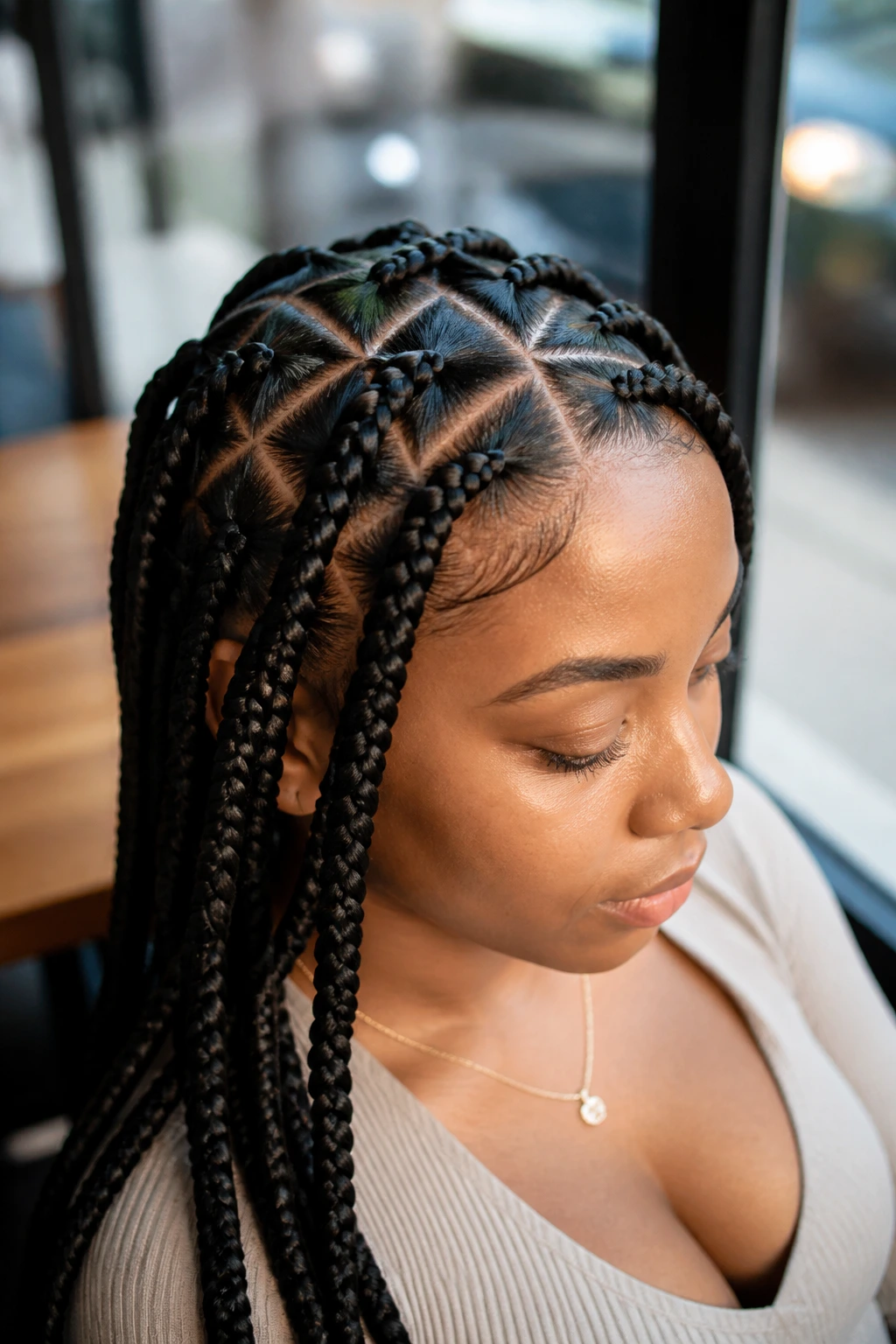
Triangle-part box braids are the exact kind of detail I enjoy because they look fancy without adding actual braid complexity. The braid itself is familiar. The parting shape is what changes the whole mood.
Triangle sections break up the grid pattern and make the scalp layout feel less expected. That makes the style read more custom, even when the braid size stays medium or jumbo. If you’re good with a rat-tail comb, the parting adds only a little time and a lot of payoff.
This is the style I’d pick if regular square parts feel too plain but you still want something structured. Pair it with medium-length extensions and you get a look that works for workdays, dinners, and the kind of weekend where you want your hair to do half the talking.
11. Boho Knotless Braids
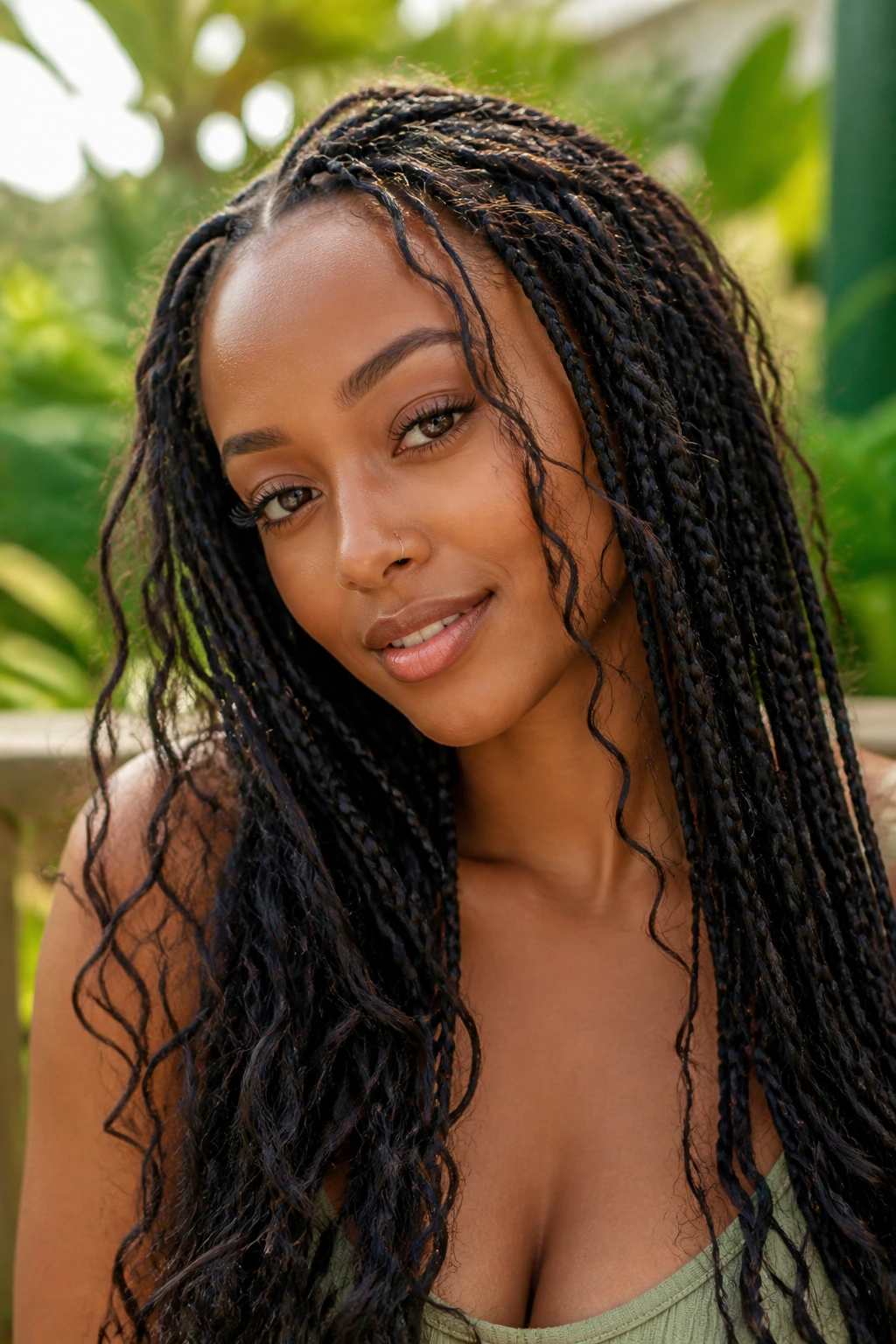
Boho knotless braids are for people who like a little looseness around the edges of a style. The braid base is neat, but curly pieces are left out here and there so the finished look feels softer and more lived-in.
That softness does cost a little time, because you’re working with extra texture and usually adding curly hair pieces or pre-curled strands. Still, the style reads lighter than a full, uniform box braid install, which is part of the appeal. It moves. It sways. It doesn’t look sealed in place.
If your climate is humid, choose a curl pattern that can handle some expansion without going flat or frizzy immediately. That’s the trade here. You get texture and movement, but you also have to respect the fact that curls have opinions.
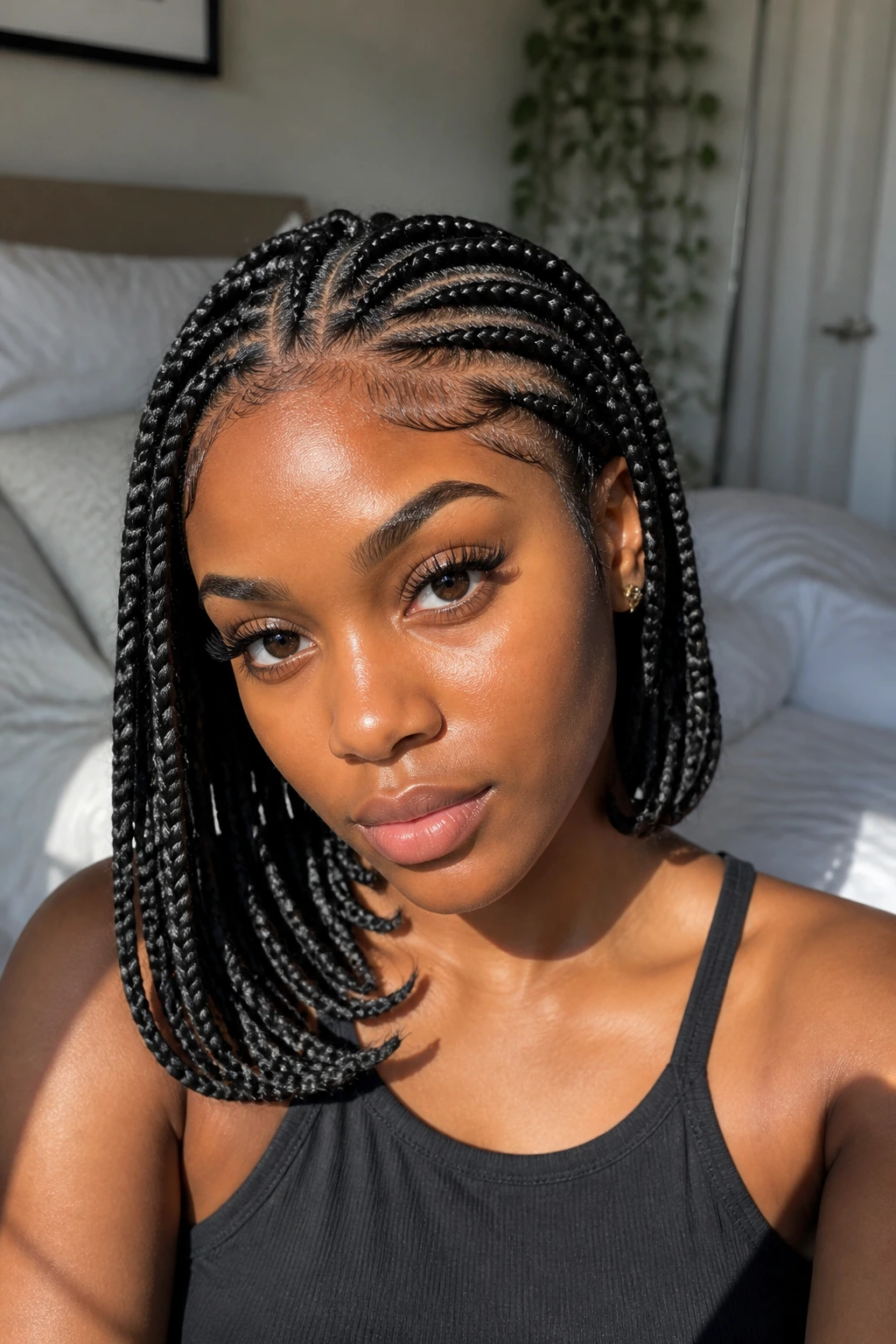
12. Braided Bob
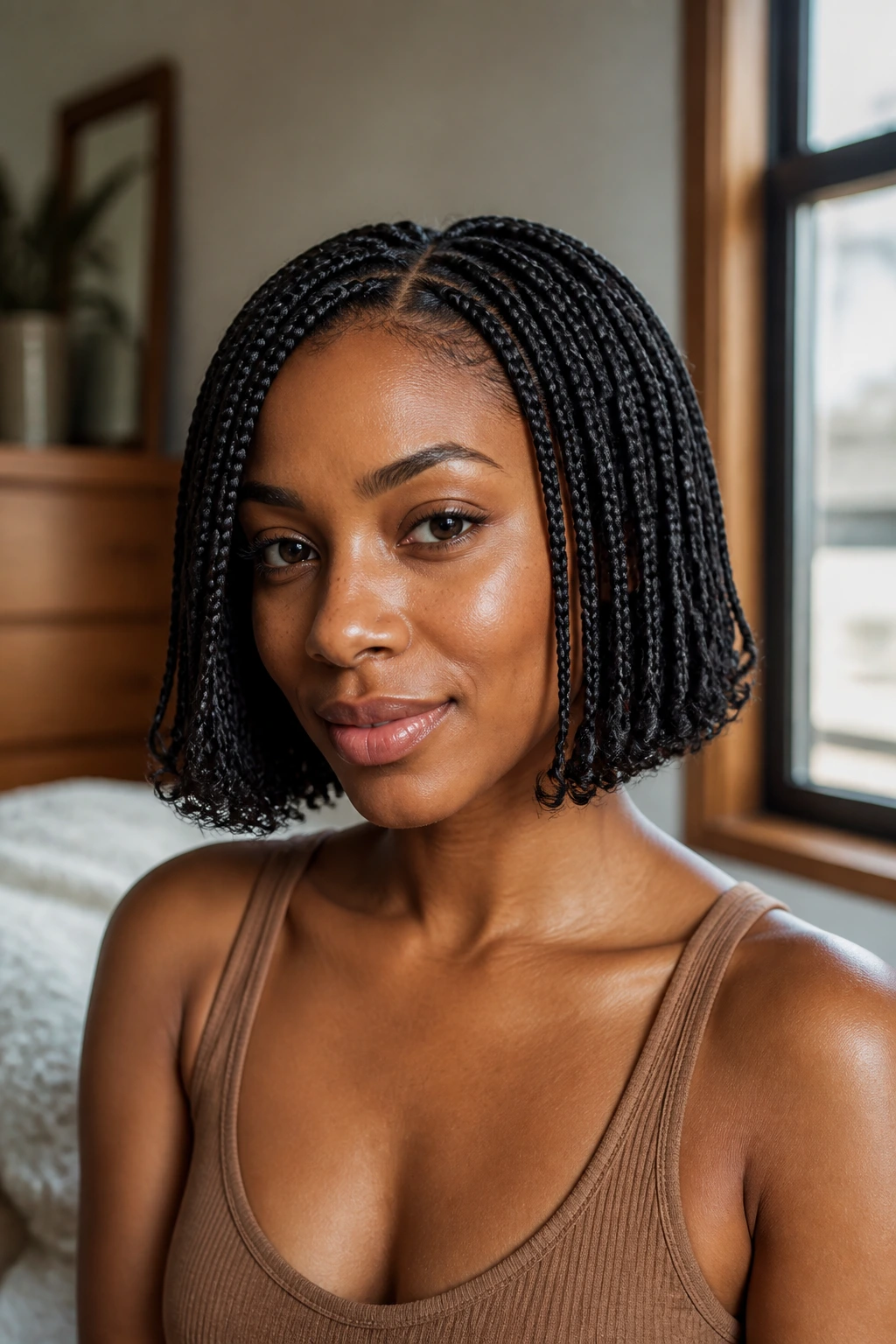
A braided bob is one of the best quick looks when you want braids but do not want the weight. Keeping the length short—chin to shoulder range—makes the style lighter on the scalp and faster to manage every single day.
The shorter length also changes the mood. It feels neat, modern, and practical without leaning severe. You can wear it blunt, tucked behind one ear, or split with a deep side part. If you add curled ends or a few cuffs, the whole thing gets a softer finish without much extra work.
I like this style when I know I’ll be up and moving all day. It doesn’t swing into your jacket, it dries faster after cleansing the scalp, and it’s much easier to pin back than waist-length braids. That’s real-life convenience, not theory.
13. Braided Low Bun
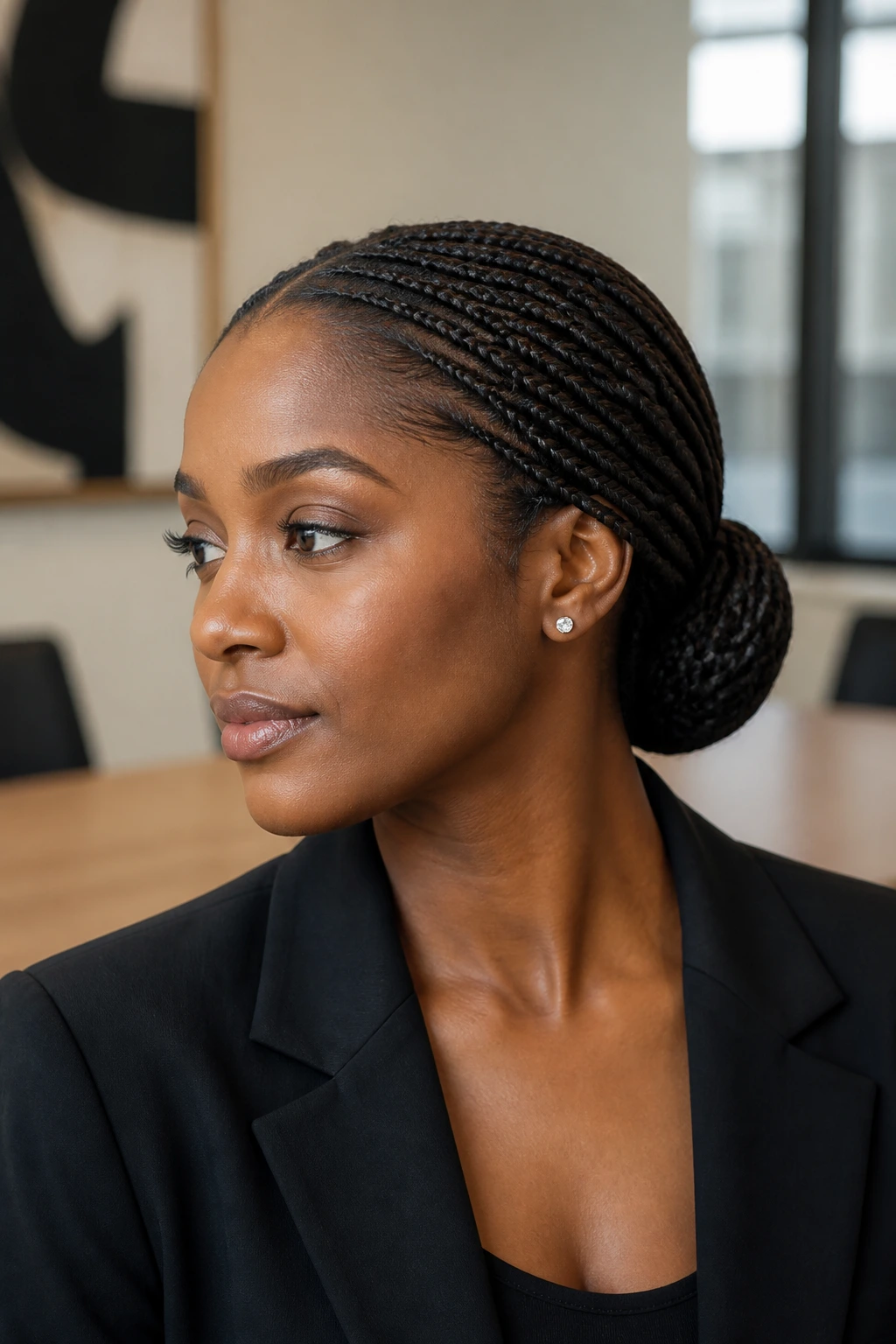
The braided low bun is a clean answer for days when you need your hair off your neck and your face. Usually it starts with a few braids or cornrows that feed into a bun at the nape, which keeps the whole style tidy and compact.
It works especially well for office settings, interviews, and events where you want structure without looking stiff. A side part makes it softer. A center part makes it sharper. Either version is quick once the base braids are in place.
If your hair is thick, keep the bun balanced rather than oversized. A bun that sits too heavy at the back can sag by evening. Use pins that grip well, and wrap the bun with a scarf for 10 minutes after styling so it settles into its shape.
14. High Braided Ponytail
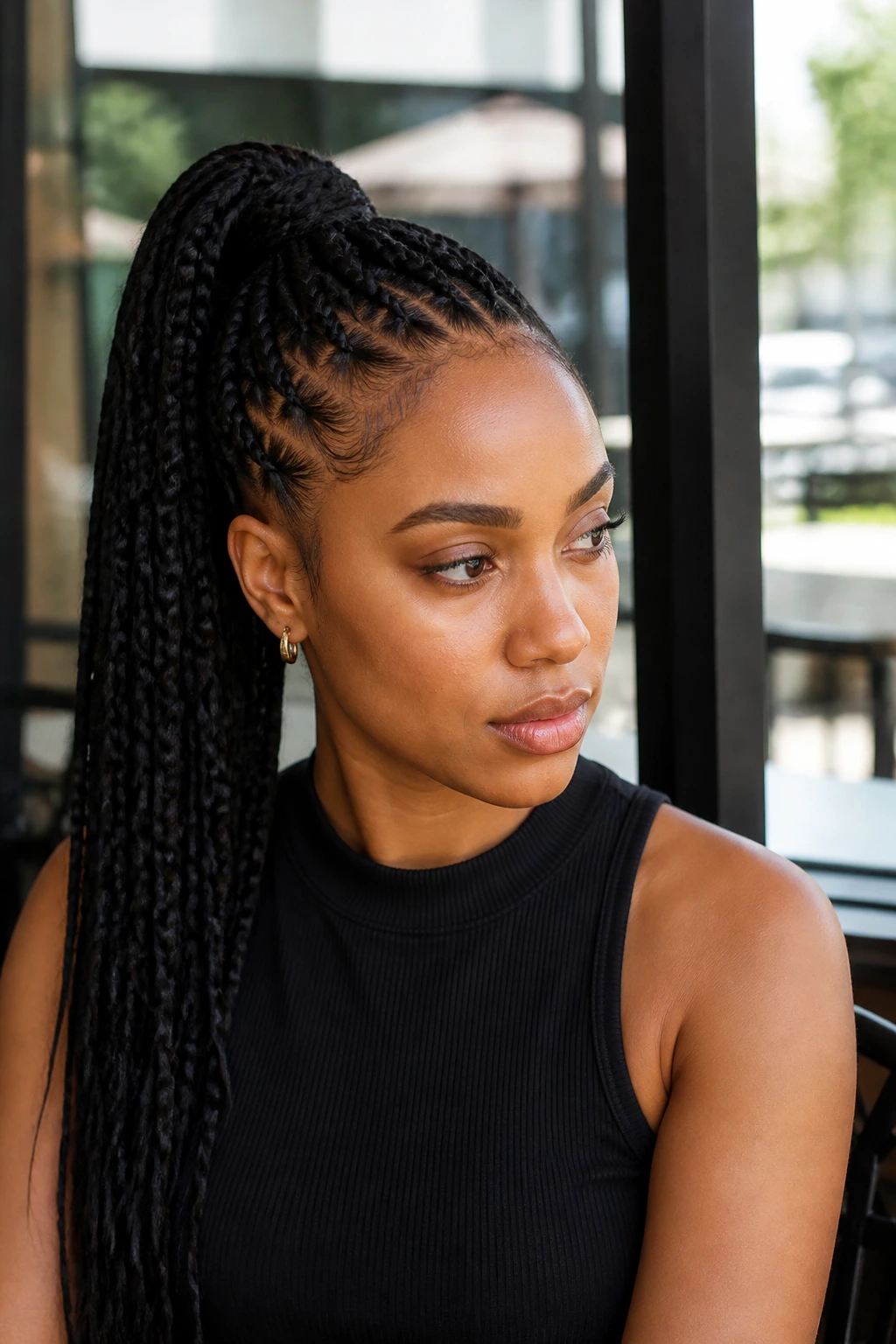
A high braided ponytail has a lot of payoff for the amount of space it takes up on your head. Pull the braids or feed-ins into one high point, smooth the roots, and let the ponytail do the rest. Clean. Long. No nonsense.
This is one of those looks that can go glam with almost no extra effort. Add a wrapped braid around the base or let the ponytail fall straight down your back. If you’re using extension hair, keep the weight reasonable so the ponytail doesn’t tug at your crown all day.
The main thing is balance. High is good. Pain is not. If the base feels tight before you leave the mirror, it’s already too tight. Loosen it now, not after your scalp has filed a complaint.
15. Braided Top Knot
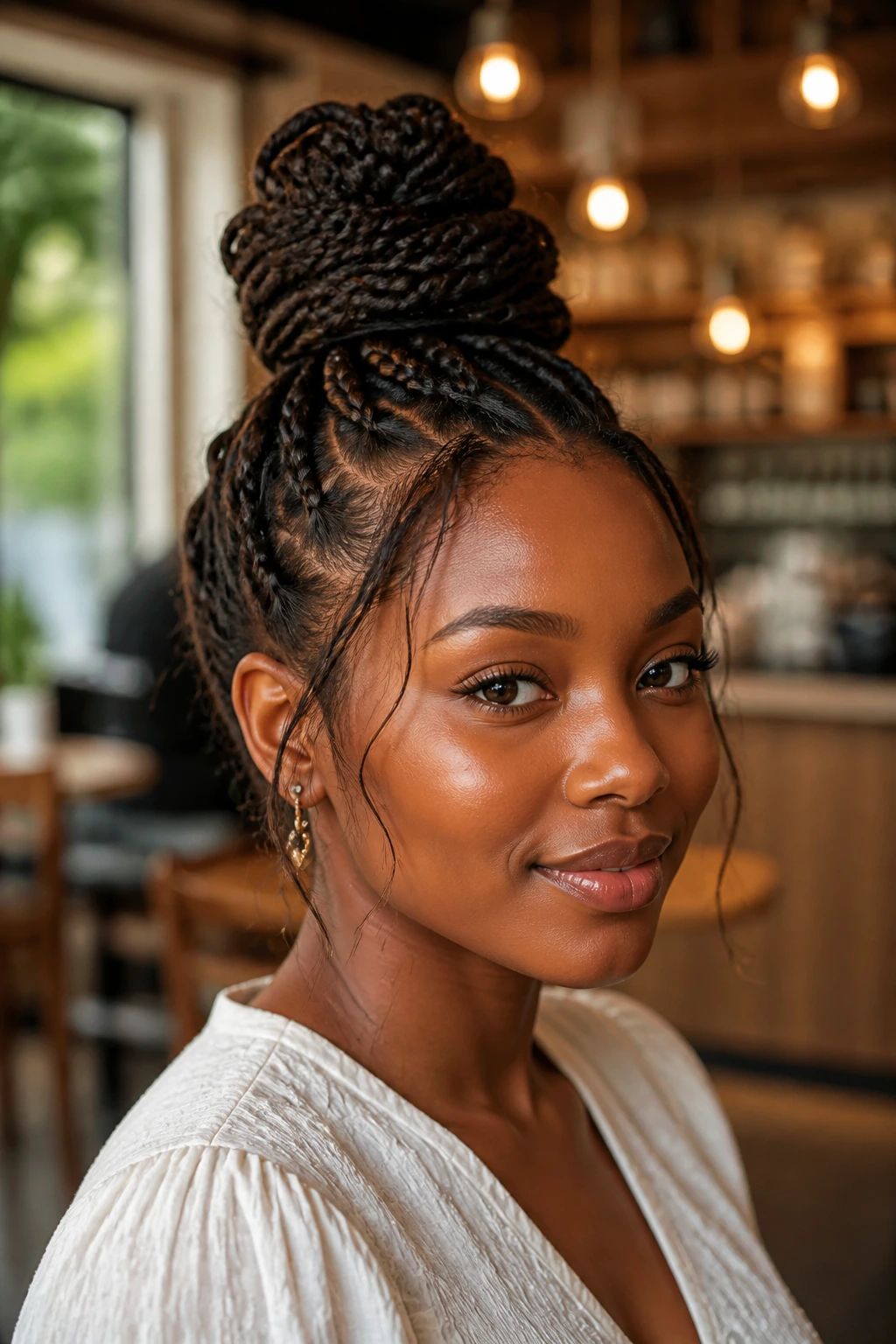
Braided top knots are the style you reach for when your hair needs to stay out of the way but you still want a finished look. Gather the braids high, twist or loop them into a knot, and pin until the shape holds.
It’s a strong second-day style too. If your braids were already in a ponytail or loose down style, the knot turns yesterday’s hair into today’s solution. That kind of flexibility is why I keep it on the list. It saves time twice.
For a neater finish, smooth the hair at the base before lifting it up. For a softer finish, leave a few braids free around the face. Either way, this one works best when the knot looks intentional, not like you shoved everything up there and hoped for the best.
16. Halo Braid
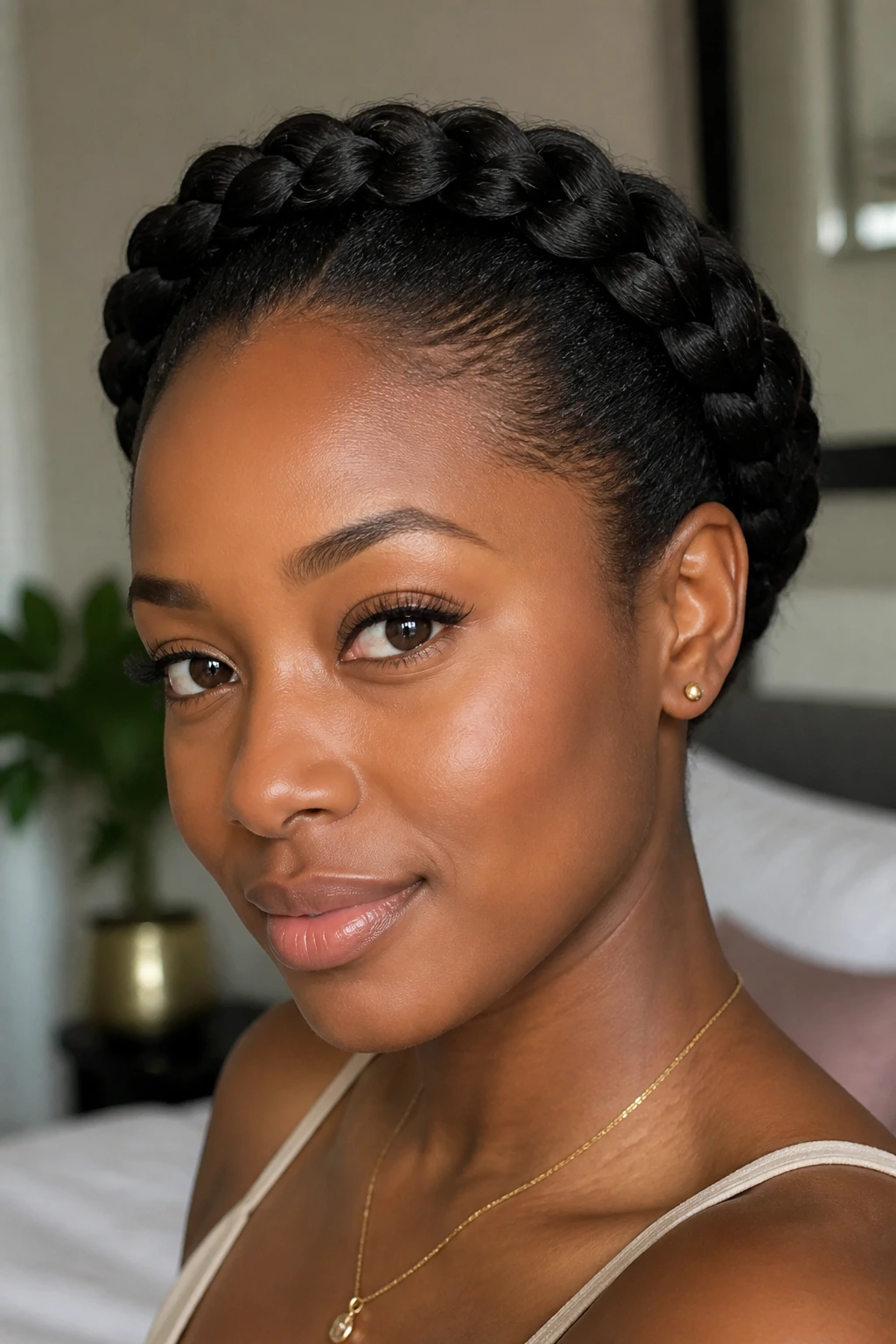
A halo braid circles the head like a crown, and it gives you a finished look with very little visual clutter. It’s one braid or a braid path that wraps around the perimeter, which means the hair stays off the face and neck in a tidy loop.
This style takes a little practice if you’re doing it yourself, mostly because the shape has to stay even as it travels around the head. But once you get the motion, it’s a lovely option for medium-length natural hair or stretched hair that needs to stay controlled all day.
I think the halo braid shines when you want elegance without extra pieces hanging down. It’s the braid equivalent of a clean white shirt. Quiet, yes. Plain, no.
17. Crown Braid Into Tucked Ends
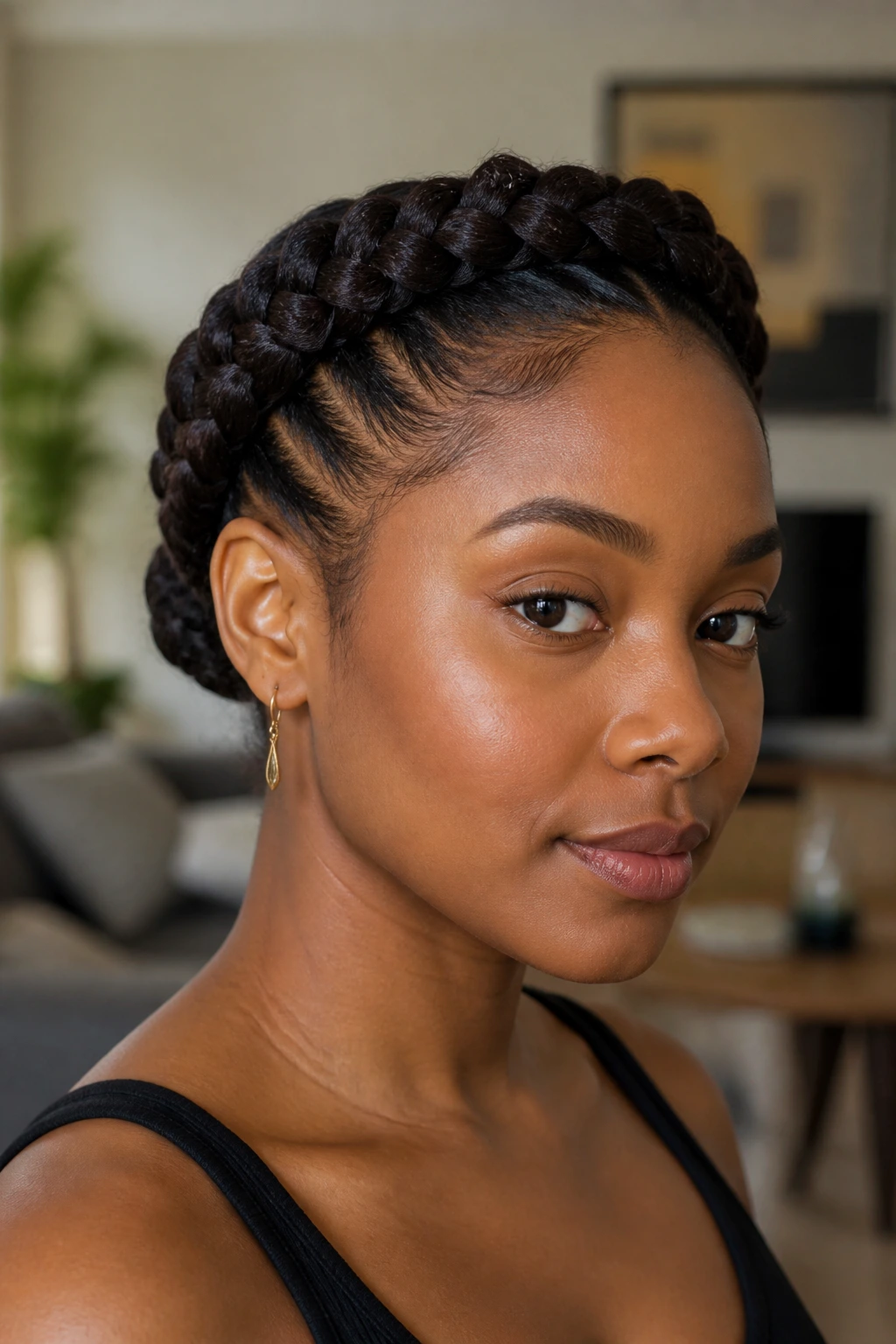
The crown braid into tucked ends is a close cousin of the halo braid, but the finish feels even more polished because the ends are hidden instead of trailing down. That tucked detail keeps the whole look neat and makes it last through a long day.
If you’re tired of ends brushing against your shoulders or getting caught in a coat collar, this one solves the problem cleanly. It’s also useful when you need to keep your hair off your neck but still want a softer silhouette than a bun.
Pins are the unsung hero here. Use enough to secure the tucked ends without poking yourself in the scalp later. A few well-placed bobby pins beat ten decorative ones fighting for attention.
18. Half-Up, Half-Down Braids
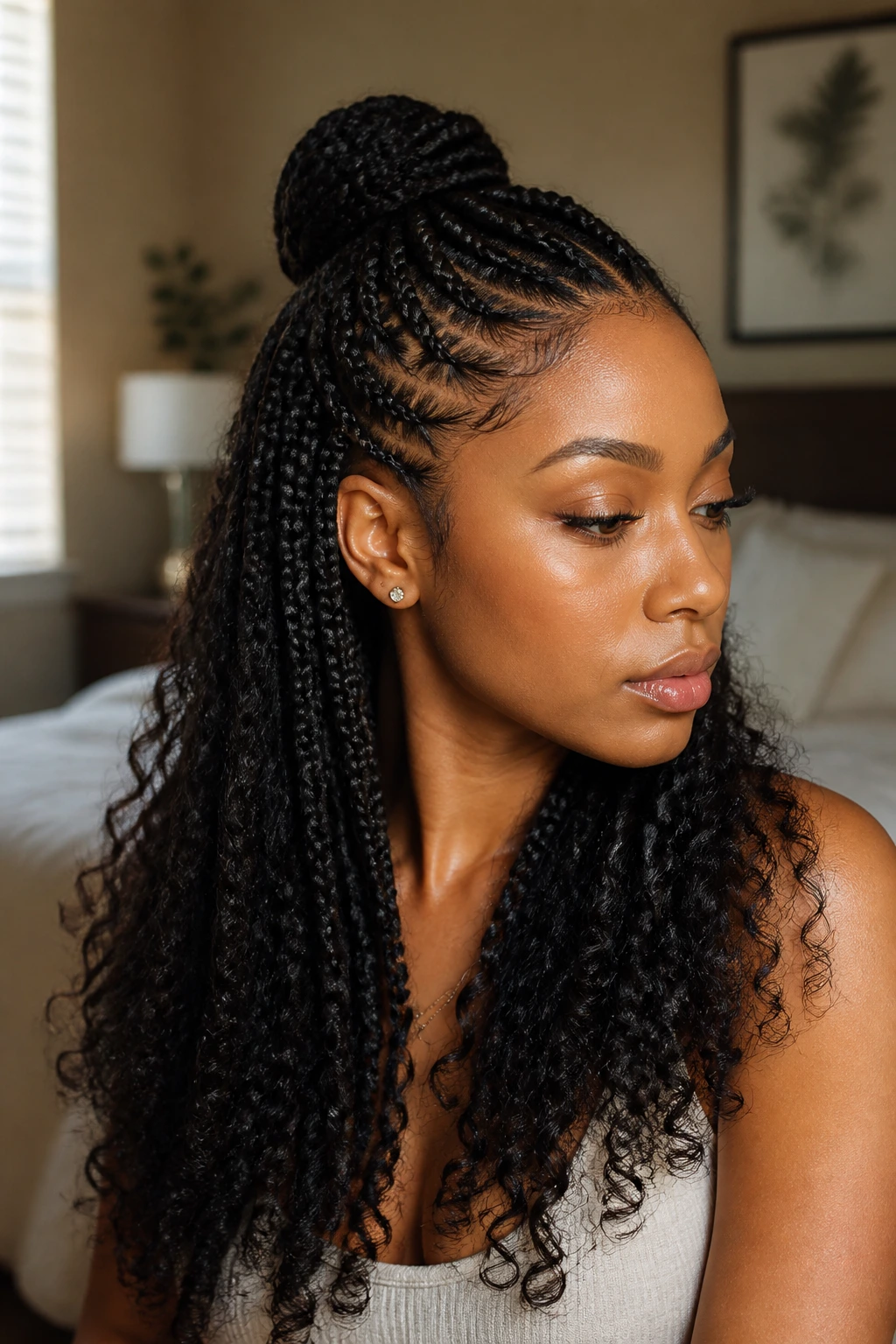
Half-up, half-down braids give you motion and control at the same time. The top section gets braided or smoothed back, while the rest stays loose, braided, or textured below. That split makes the style feel relaxed without looking unfinished.
It’s a smart choice when you want your hair to move but still keep the front away from your face. Add a braid crown on top, feed the top into a ponytail, or keep the lower half in loose braids. There’s room to play here without changing the basic idea.
This look also scales well. Shorter hair can use a tighter half-up shape. Longer hair can drag the top section into a ponytail or knot. It’s flexible, and flexibility counts when you’re styling on a clock.
19. Feed-In Pigtails
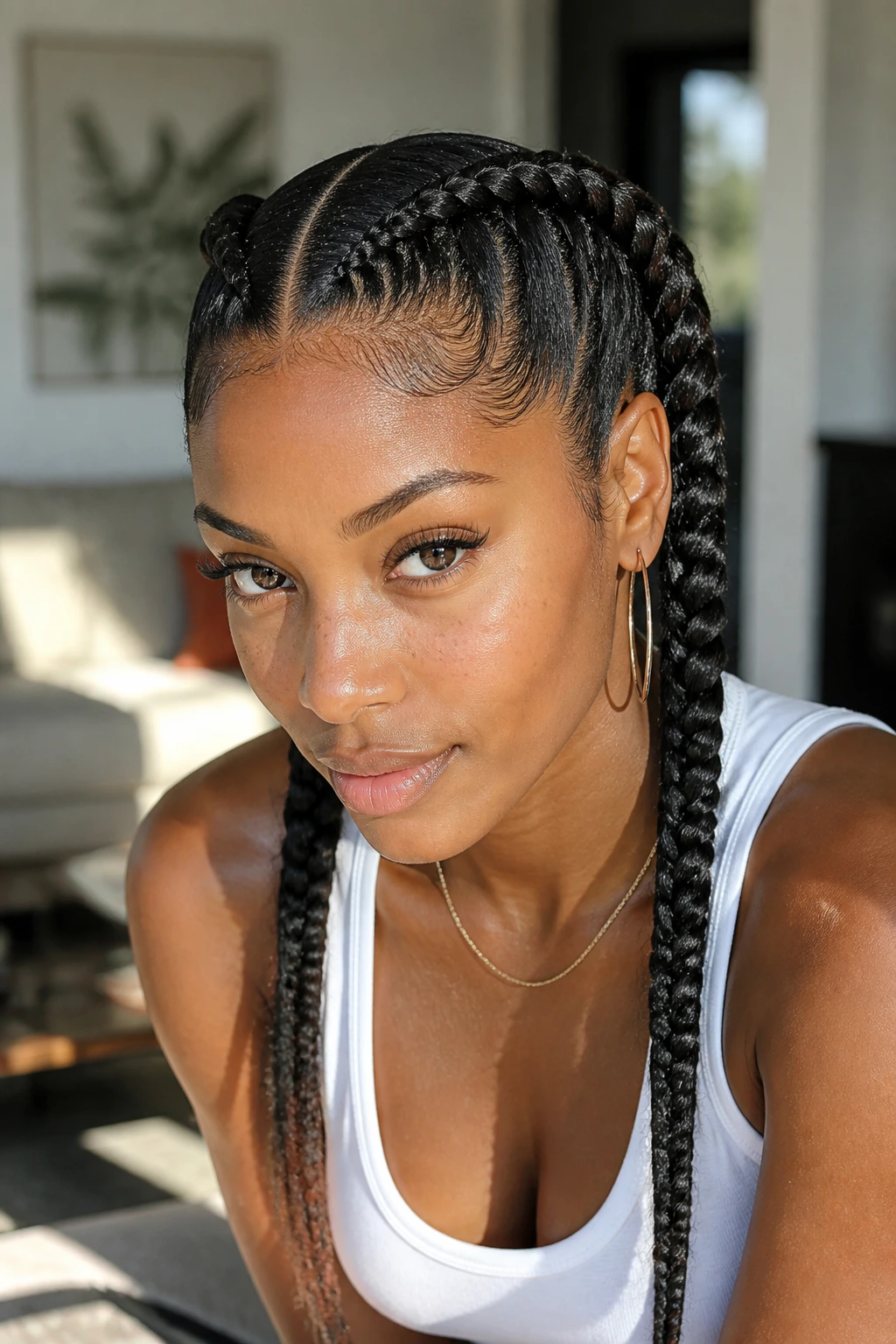
Feed-in pigtails are playful, clean, and faster than a lot of people expect. Two braids. Two anchor points. A little parting work up front. That’s enough to make the style feel polished without dragging your whole morning into it.
I like this version when the goal is neatness with a bit of personality. Low pigtails feel sweet and understated. Higher pigtails feel younger and more energetic. Beads work here, but they’re optional rather than required, which is part of the charm.
If your hair is short, keep the feed-in close to the scalp and let the braid length come from added hair. If your hair is longer, you can keep the style lighter by using less extension hair. The braid shape stays the same either way.
20. Braided Space Buns
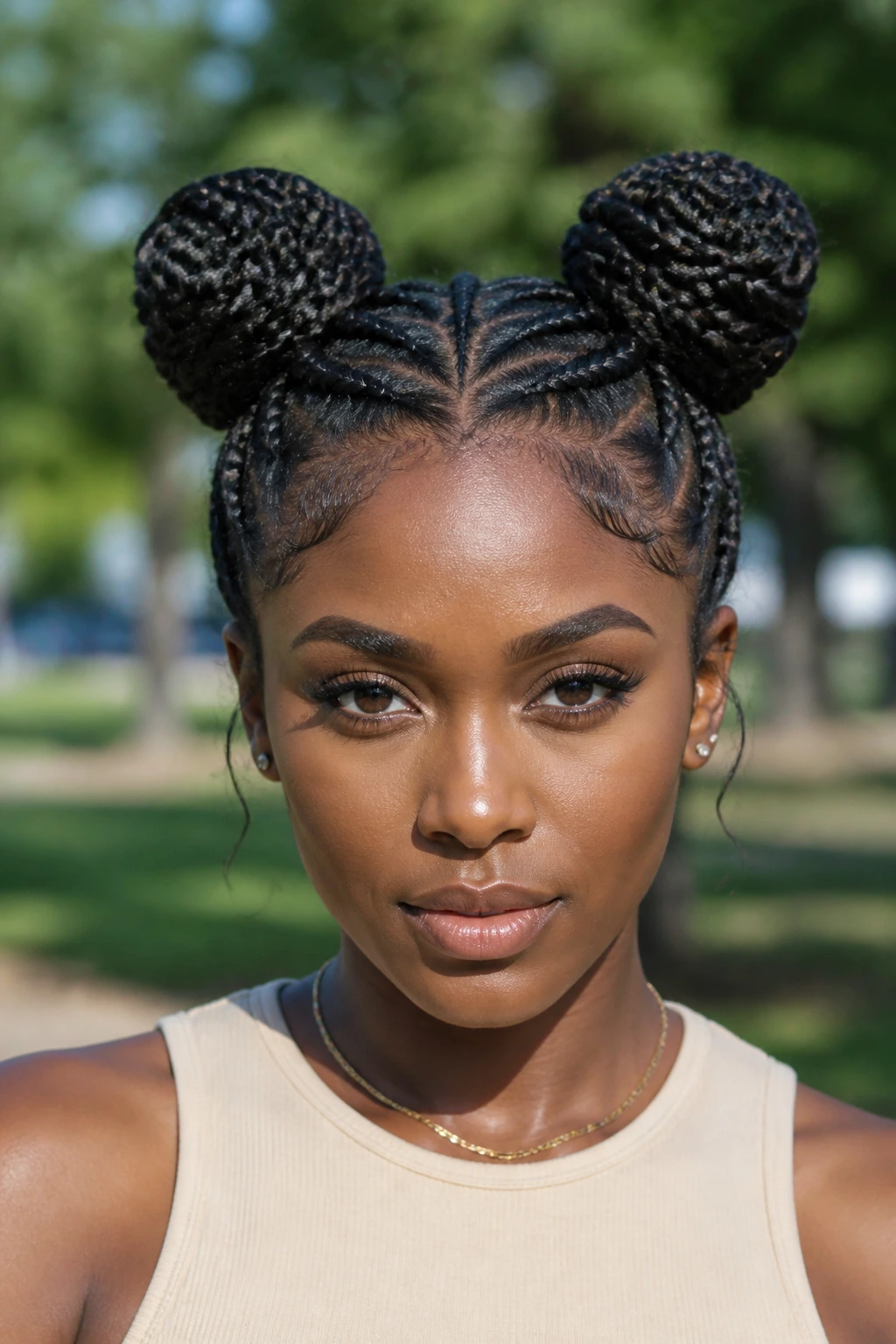
Braided space buns are pure fun, and yes, that matters. Two braids or two sets of braids get coiled into buns on the head, usually high and symmetrical, which gives you a look that feels bold without needing a complicated pattern.
They work well for weekends, travel days, concerts, or any time you want your hair up and out of the way but still visible as a style. The symmetry is the main event, so take a minute to line up the parts before you start twisting. That part is worth the patience.
If you’ve got medium or long braids, keep the buns compact so they don’t slide around. A little mousse on the lengths first helps the style hold its shape. Too much, and the buns get slick. Too little, and they unravel in pieces.
21. Mohawk Cornrows
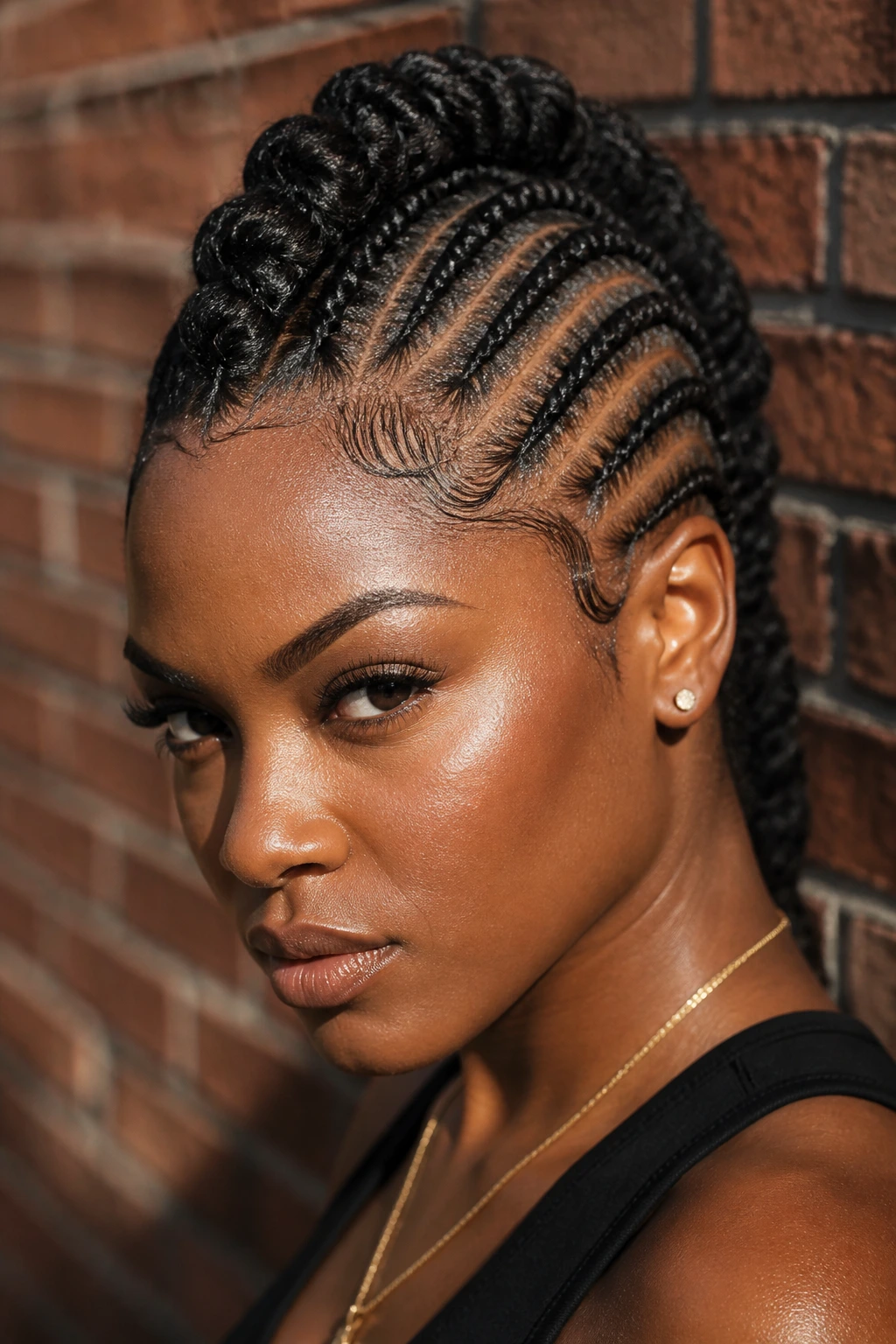
Mohawk cornrows make a bold shape fast. The sides are braided tight and close to the scalp, while the center section stays fuller or is styled into one long braid path. The result is sharp, strong, and quicker than a full-head intricate install.
This is the style I’d choose when I want structure without covering every inch of the scalp in braids. It gives you that lifted center line, which can make the face look longer and the whole style feel more dramatic. It also works well with shorter natural hair because you don’t need massive length to sell the shape.
Keep the side rows neat. That’s the whole trick. If the sides are messy, the mohawk effect loses its punch. Clean lines make the silhouette.
22. Criss-Cross Cornrows
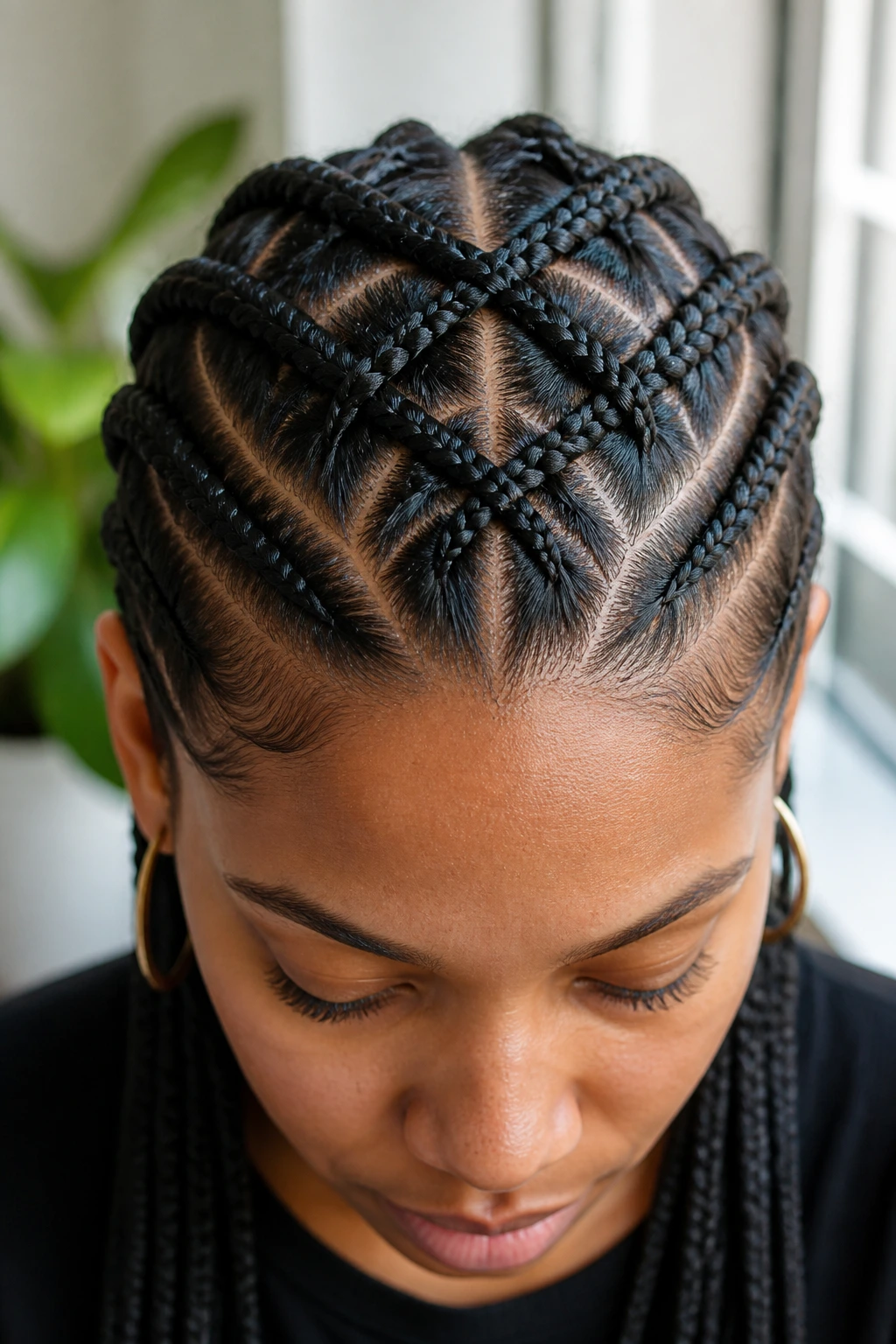
Criss-cross cornrows look more complicated than they are, and that’s exactly why people like them. The braids cross over one another in a pattern that gives the top of the head movement and shape, while the actual braid technique stays close to familiar cornrowing.
The design is easiest when you map the crossings before you start braiding. Once the lines are set, the rest moves quickly. I’d call this one a good middle ground: interesting enough to feel styled, simple enough not to turn into an all-day project.
The cleanest versions keep the crossings high on the crown where they can be seen. If you want the look to last, don’t overcrowd the top with too many lines. A few sharp crosses beat a tangle of half-formed ones.
23. Heart-Part Cornrows
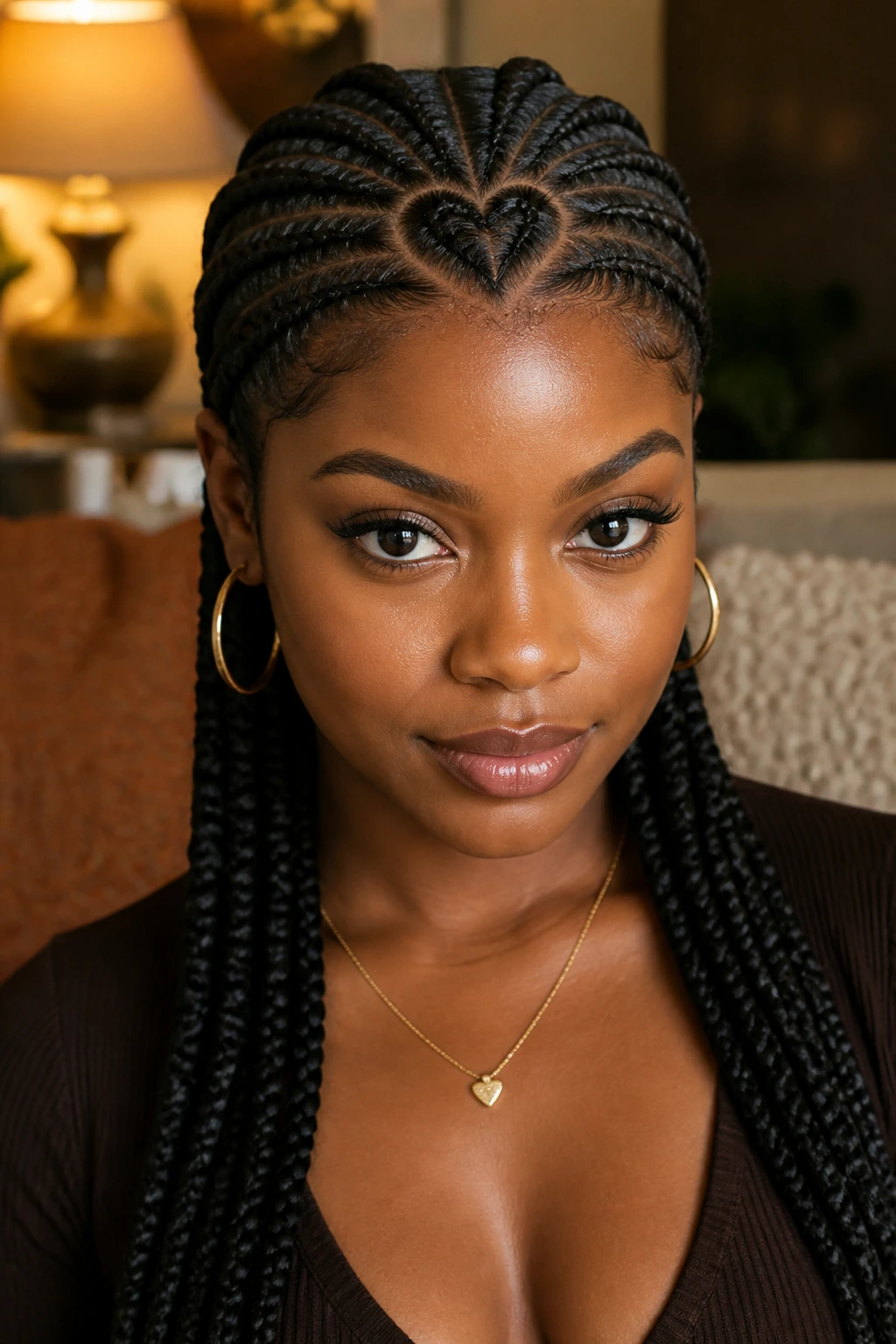
Heart-part braids are for the days when you want the parting to do the talking. The braid method can stay simple, but the sections around the crown or temple are shaped into a heart, which gives the style a playful edge without changing the whole routine.
That’s what makes this such a smart quick option. The braid install doesn’t have to be elaborate, yet the style still feels deliberate and a little special. It’s a nice choice for birthdays, date nights, or anyone who likes detail that reads up close.
The heart shape needs crisp lines. If the parting wobbles, the effect gets lost. Use a pointed comb, keep your hands steady, and don’t chase perfection so hard that you start overthinking the whole head.
24. Zigzag-Part Braids
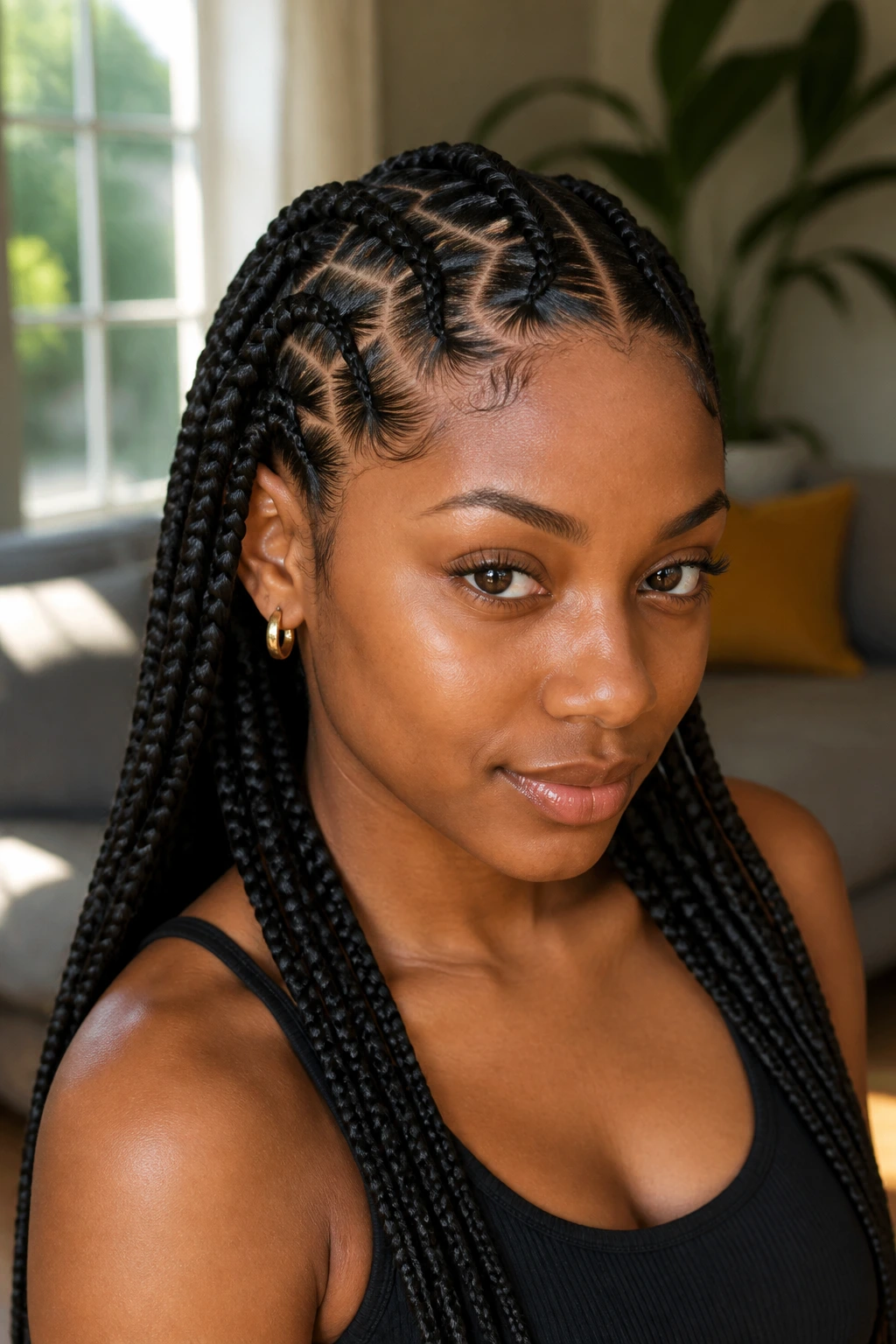
Zigzag parts are the fastest way to make plain braids feel less plain. You can keep the braid pattern simple and still change the energy of the style with one sharp part line running in angles instead of straight rows.
It’s a small move, but it changes the look more than people expect. Zigzags break up the usual grid, so the scalp has more visual rhythm. That makes this style a favorite when you want something different without learning a whole new braiding pattern.
If you’re styling your own hair, make the zigzags broad enough to follow easily. Tiny jagged lines look good in theory and get annoying in practice. Wide, confident angles are cleaner and faster.
25. Braided Headband Style
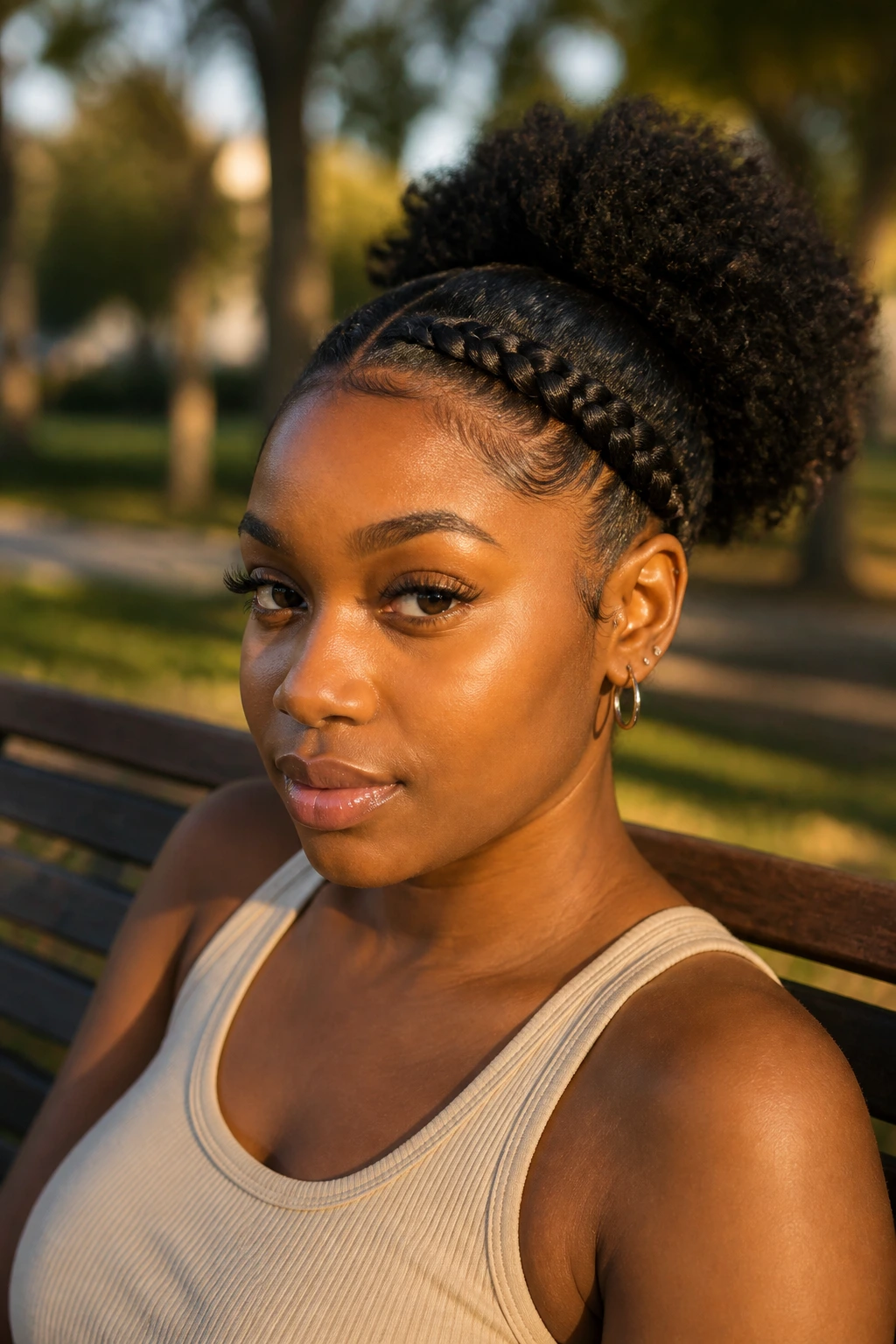
A braided headband style is one of the smartest quick fixes for short natural hair or a stretched style that needs a little front control. You braid across the hairline like a headband, then leave the rest in a puff, bun, or loose shape.
It solves two problems at once: hair out of the face and a visible style line that makes the whole look feel finished. That’s a lot for one braid. If you’ve ever wanted a style that works between wash days without demanding a full install, this is the one to remember.
I like it because it plays well with other textures. A puff in back, coils out the bottom, or a twisted bun all work with the front braid. The headband line sets the tone, and the rest can stay loose.
26. Beaded-Ends Braids
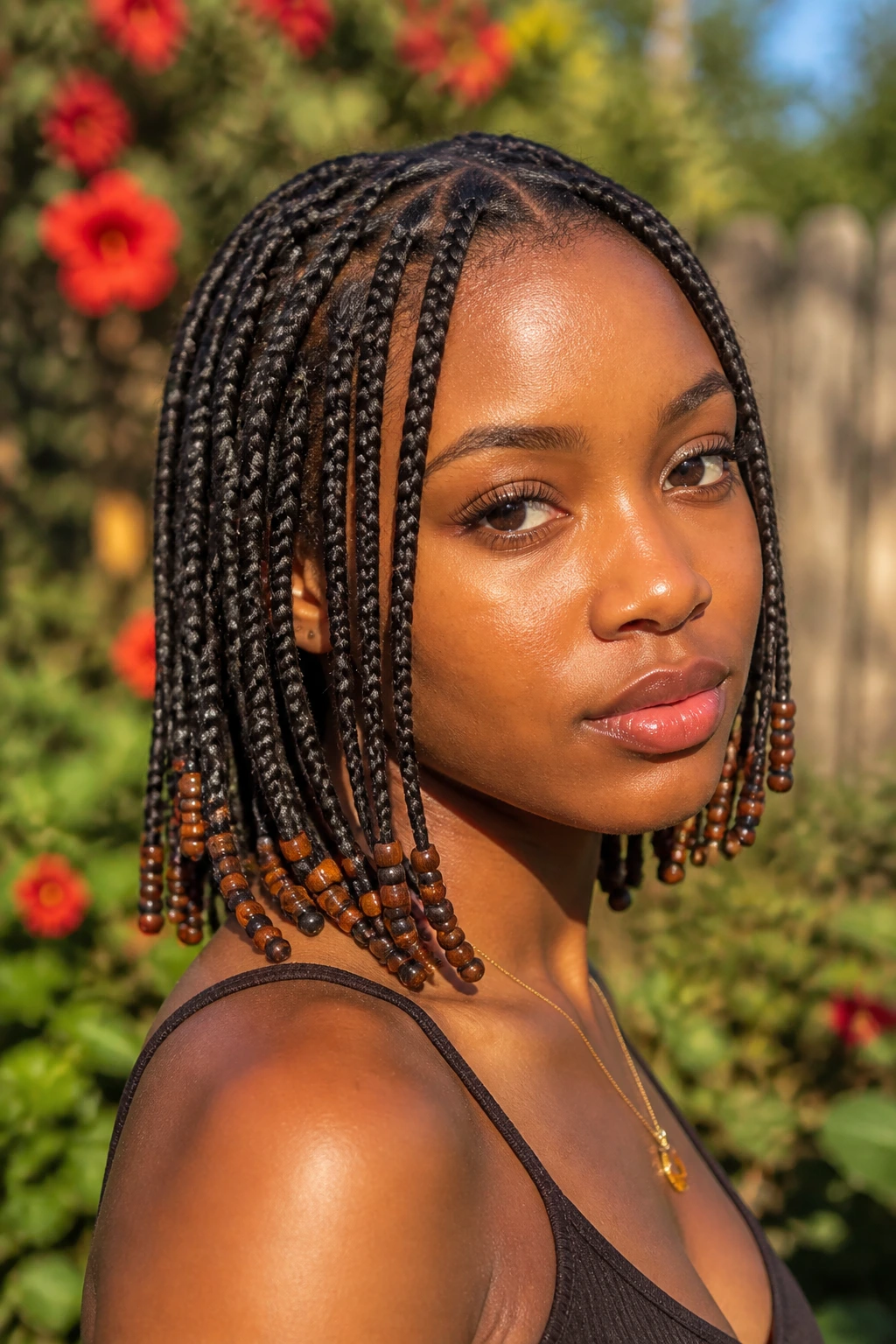
Beaded-ends braids have a little rhythm to them. The braids themselves can be simple—cornrows, pigtails, singles—but the beads at the ends add movement and sound, which changes the whole mood of the style.
The trick is matching bead size to braid thickness. Too small, and the beads won’t sit well. Too large, and the braid can slip around or feel heavy. For quick styles, I’d use a small handful of beads rather than covering every end. A little goes a long way.
This is a style that can feel playful or grown, depending on the bead color and placement. Clear beads read different from wooden ones. Gold accents feel dressier. Black beads disappear into the hair and let the braid shape stay in charge.
27. Braids With Curly Ends
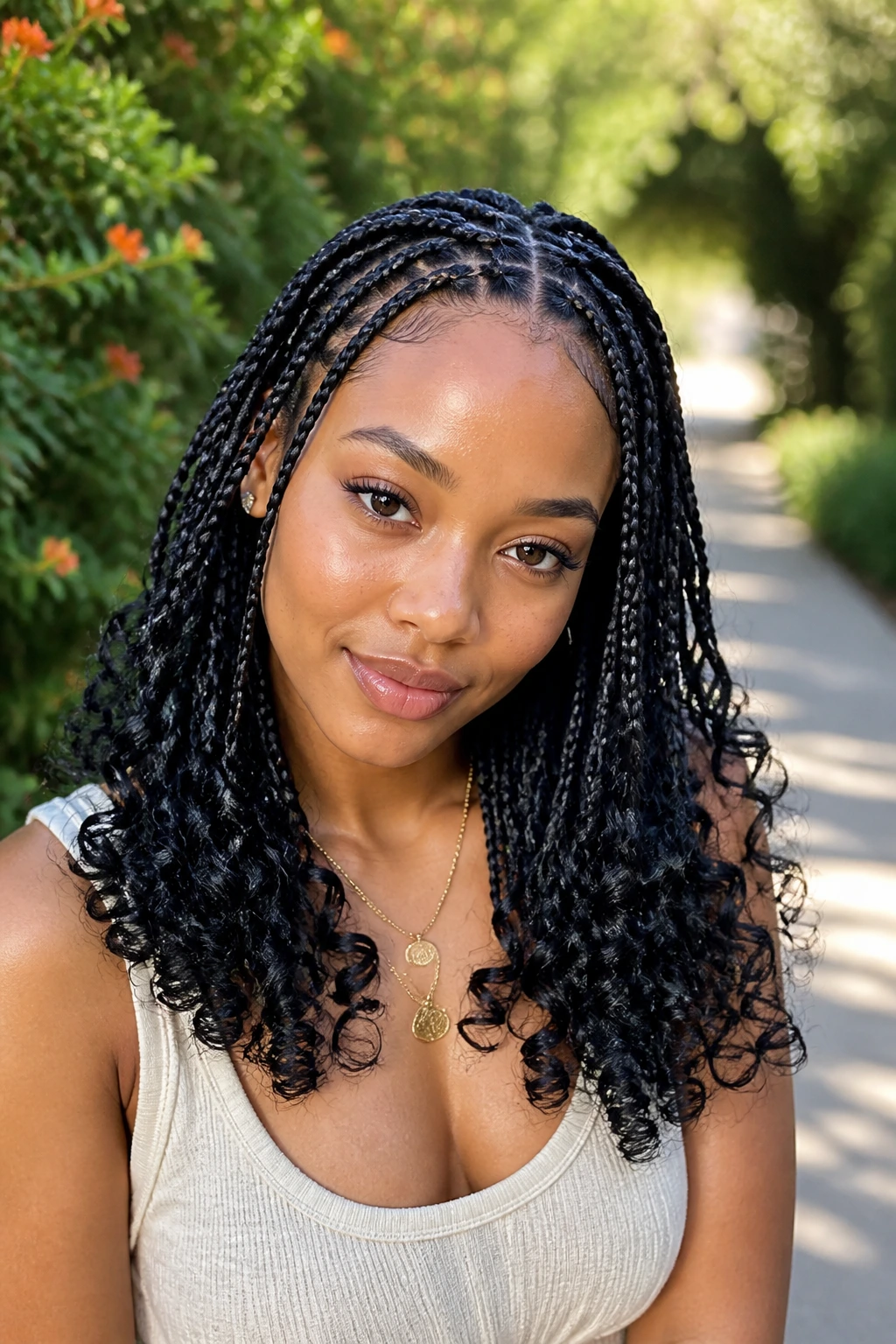
Braids with curly ends soften the finish in a way that plain straight ends never do. The braids can stay neat and structured, but the bottom reads lighter because the ends spill into curls instead of hanging stiffly.
If you want the look to stay fresh longer, use lightweight curls and don’t overpack the ends with product. Flexi rods, set curls, or pre-curled extension pieces all work. The goal is movement, not a frizz explosion by day two.
This style is especially nice when you want braids that feel a little more feminine and a little less severe. I keep coming back to it because it gives shape without looking boxed in. That softness changes the whole tone.
28. Cornrow Puff Ponytail
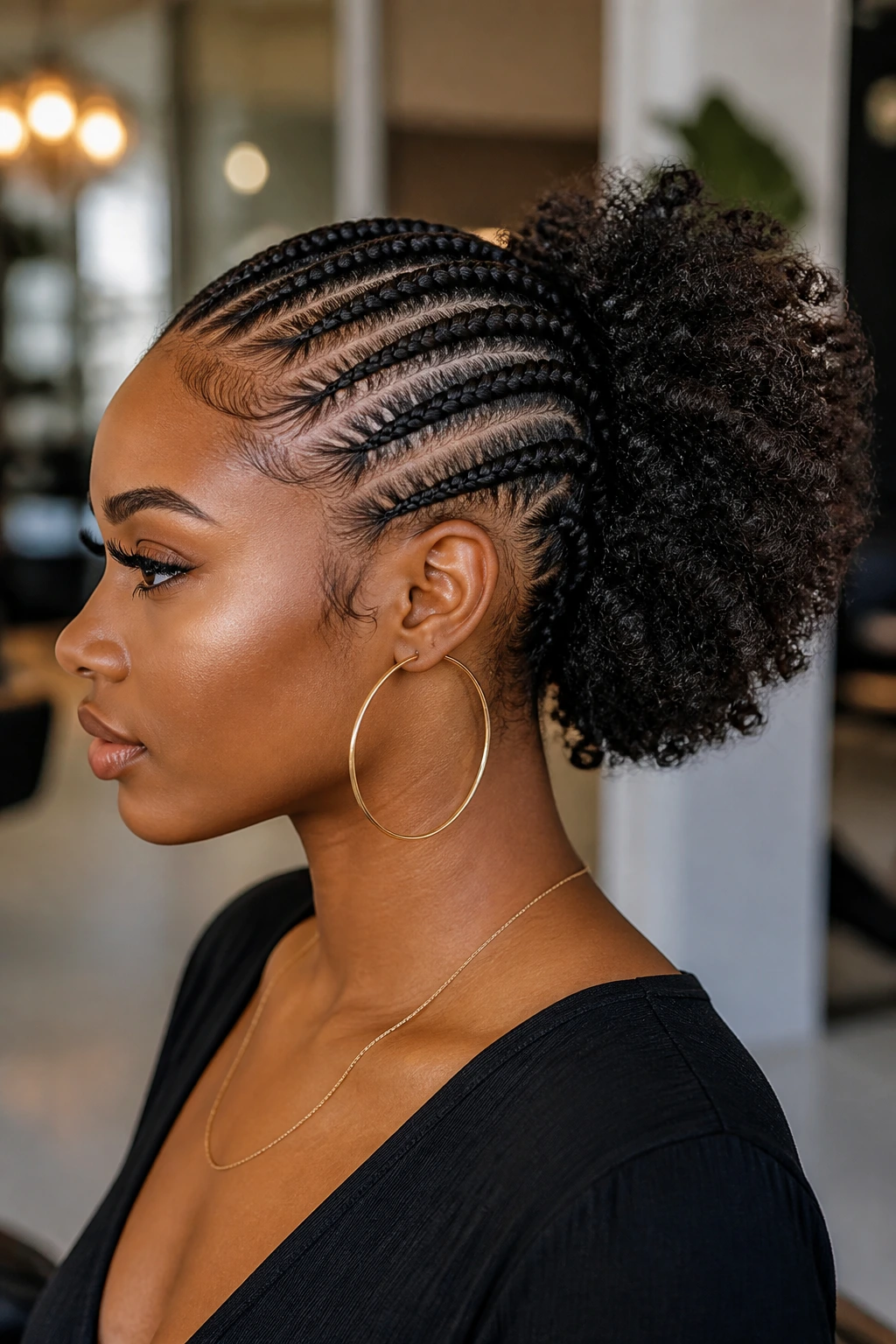
A cornrow puff ponytail gives you the best of both worlds: sleek at the front, full at the back. The cornrows keep the hairline controlled, while the puff leaves texture and volume visible, which is a nice balance on coily hair.
It’s a fast style because you’re only braiding part of the head. The rest can be gathered into a puff with a soft band or puff cuff. If your hair is already stretched, the style goes even faster and looks cleaner from the start.
This is one of my favorite ways to keep length out of the way without hiding the whole texture. It feels practical, but not flat. And that matters. Flat isn’t the only neat option.
29. Side-Part Braided Bun
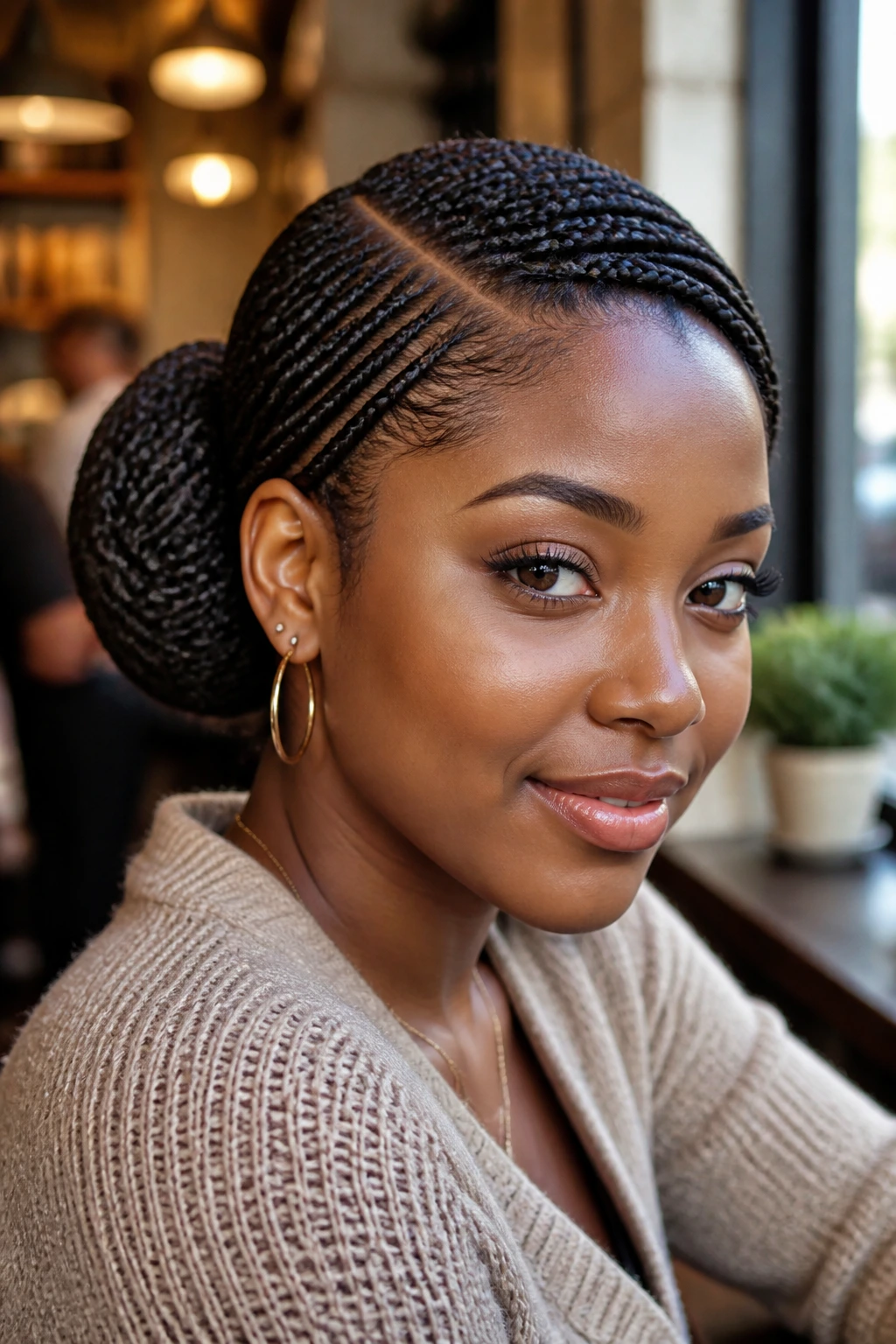
A deep side-part braided bun can make a simple bun look expensive without the fuss of a more complicated braid pattern. The asymmetry softens the face and gives the style a little shape before the bun even enters the picture.
The braid path usually starts with a side part and feeds into a low bun or tucked knot. That means the front reads polished while the back stays compact. It’s a strong pick for formal settings, but it doesn’t feel too stiff for daily wear.
If your hair is medium to long, this style comes together quickly once the part is set. Keep the bun low enough to rest comfortably under a scarf or coat collar. High buns have their place. This one is about clean lines and easy wear.
30. Mini Box Braids Pulled Back
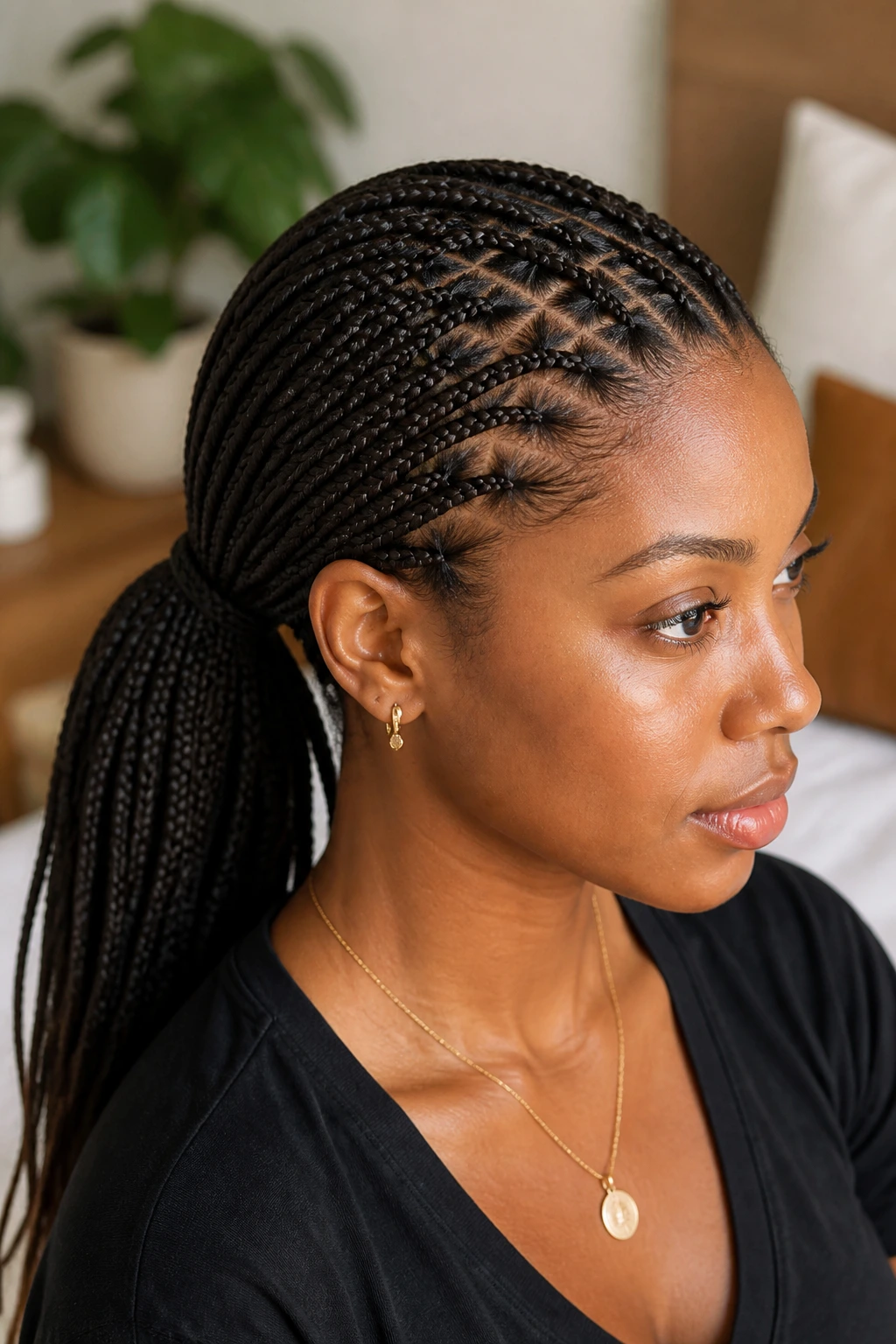
Mini box braids pulled back are a good compromise when you want smaller braids but don’t want the full commitment of micros. The sections are smaller than jumbo, larger than tiny braids, and easy enough to gather into a low ponytail or clip back at the ends.
This style gives you movement, but it also keeps the hair from feeling bulky. That makes it useful for work, school, or any day when you need a lot of hair control without the weight. The parts can be square or slightly offset if you want a softer finish.
I’d choose this if you like the look of mini braids but hate styles that hang in your face. Pulled back, they stay neat and practical. Loose, they still move well. That kind of flexibility earns its place.
Why Quick Braids Work So Well on Black Hair
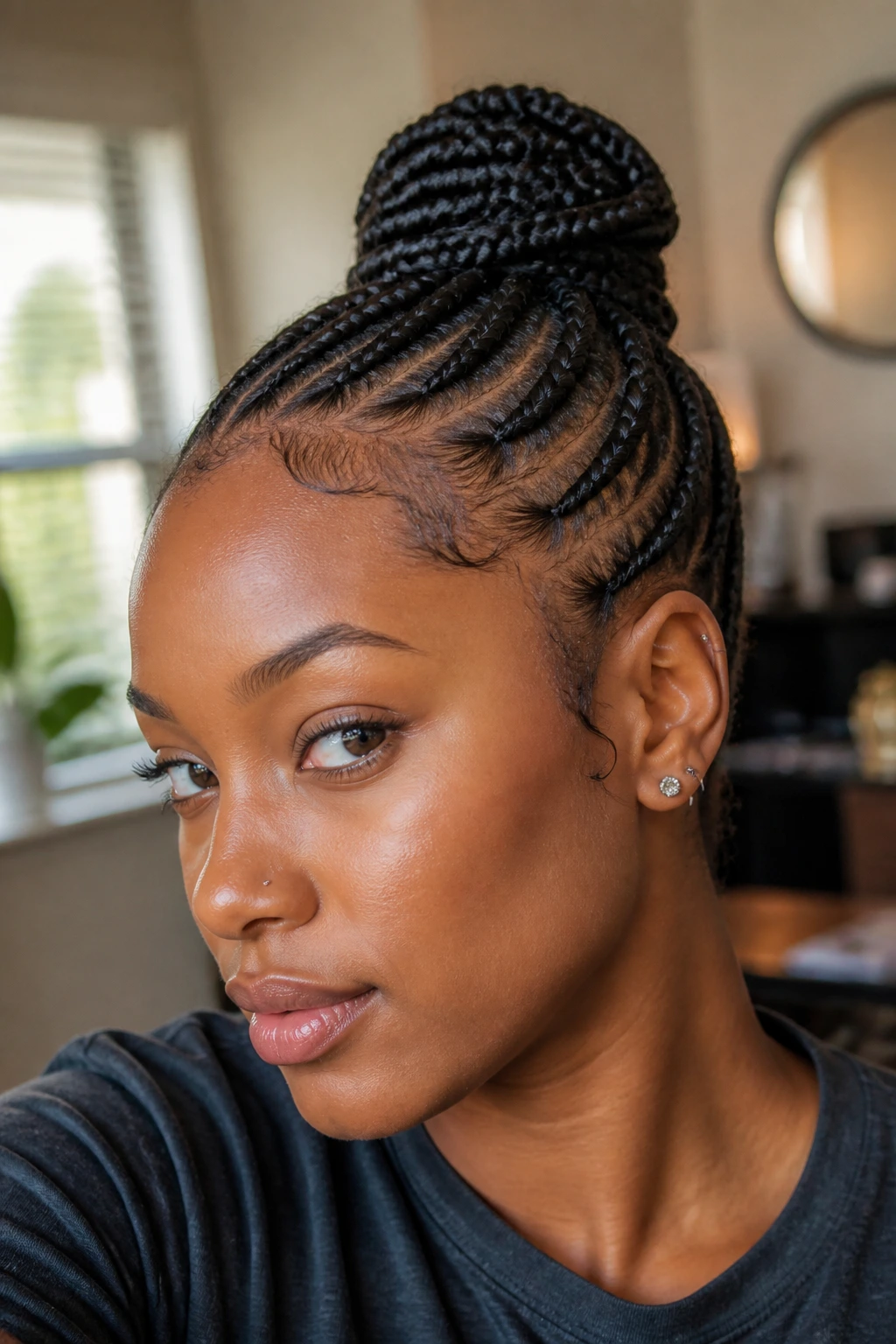
Black hair is already built to hold shape, which is why braids can look polished without a ton of extra work. Coils and curls give the braid structure some grip, so once the style is set, it tends to stay where you put it instead of sliding apart by noon. That’s the part a lot of people miss. Braiding is not magic. It’s pattern plus tension plus the right prep.
Quick braided hairstyles for Black hair also work because the braid size can match the time you actually have. A handful of large sections is a very different morning from forty tiny ones. The first gives you a style that looks finished in under an hour on stretched hair. The second is a project. Same family. Very different mood.
There’s a catch, though. Speed only works if the base is respected. Freshly detangled hair, parts that are clean but not razor-tight, and a product that gives slip without making the roots slippery all day—those details are what keep the style looking neat after you’ve left the mirror. Skimp there, and the braid starts frizzing early or pulling in places it should not.
Essential Tools for Braiding Black Hair
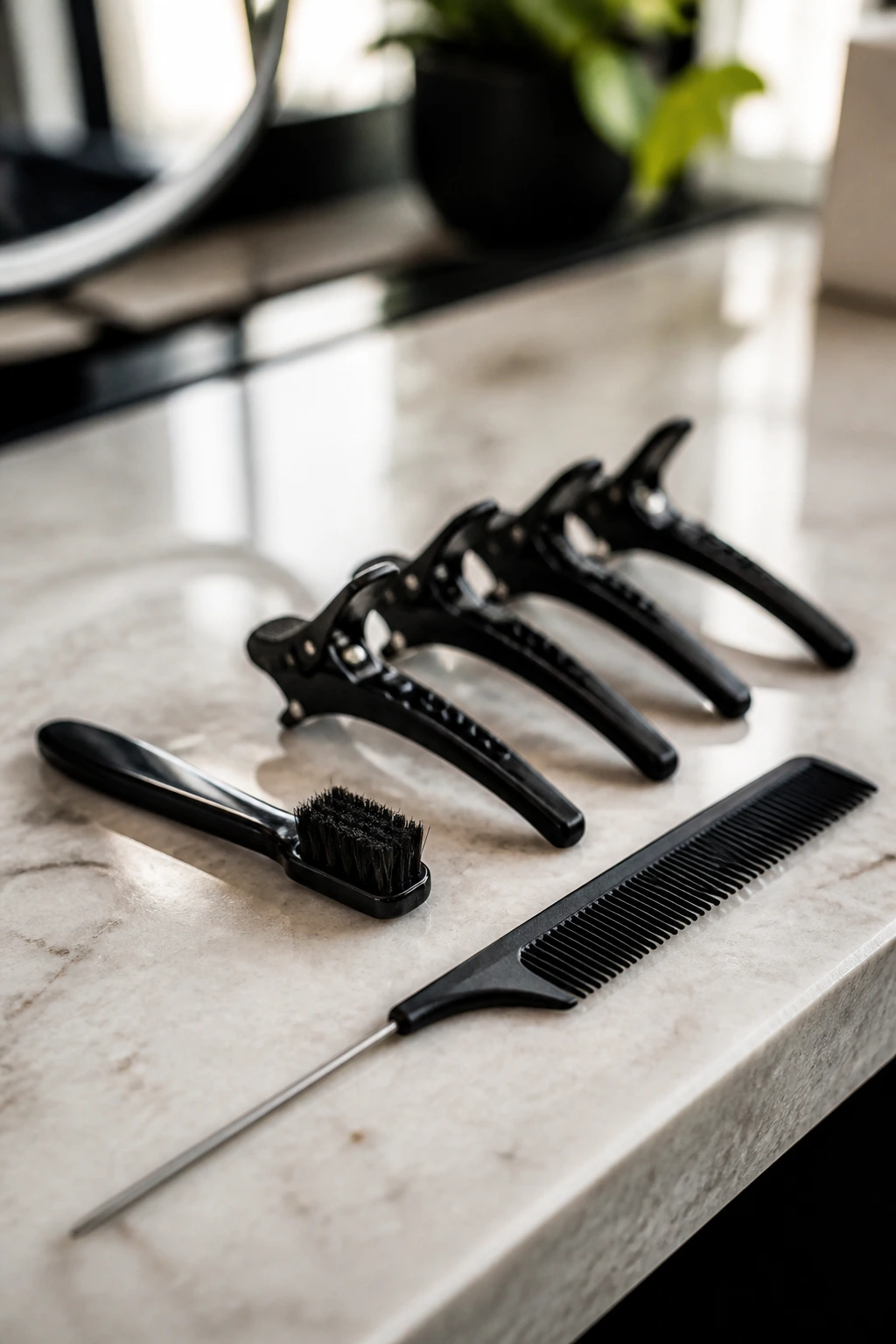
-
Rat-tail comb: The pointed end is what gives you clean parts; a blunt comb just gums up the work.
-
Duckbill clips: These keep the sections separated while you braid, which saves time and prevents the hair from folding back into the wrong row.
-
Edge brush: Useful for smoothing hairlines, but use it lightly so you do not scrape the edges raw.
-
Braiding hair: Pre-stretched synthetic hair is the fastest choice for feed-ins, box braids, and ponytails.
-
Mousse: A lightweight foaming mousse helps braids settle and keeps fuzz from taking over the finished look.
-
Styling gel or pomade: Choose something with hold that doesn’t flake under pressure; the roots need control, not cement.
-
Spray bottle with water or leave-in mix: Good for re-softening sections during prep, especially if the hair has gotten too dry to part cleanly.
-
Blow-dryer with a comb attachment: Optional, but it speeds up stretching the hair before braiding and can cut parting time.
-
Elastic bands or small rubber bands: Handy for pigtails, braids with beads, and styles that need extra hold at the ends.
-
Beads, cuffs, and braid thread: Optional, but they make simple styles look intentional in a hurry.
-
Satin scarf or bonnet: Night protection is not extra. It’s part of the style.
Smart Shopping and Hair Prep Tips
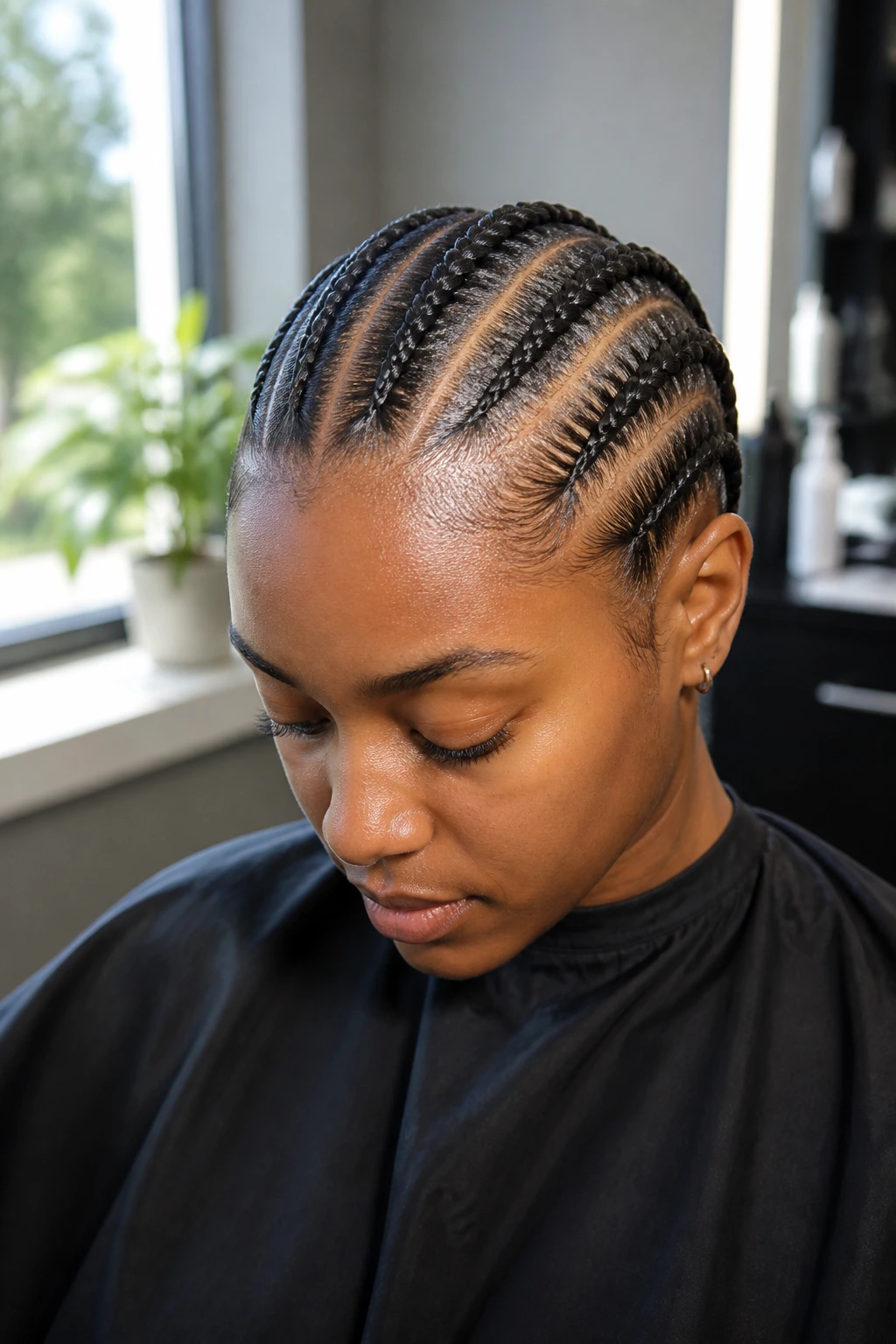
The fastest braid styles start before the first part is drawn. If you’re using extensions, buy pre-stretched braiding hair whenever possible. It saves you the annoying end-feathering step and makes the braid blend more naturally. For styles like feed-ins, knotless braids, or Ghana braids, that alone can shave a surprising amount of time off the install.
Match the hair type to the style. Smoother synthetic hair works well for sleek cornrows and feed-ins. Lighter, curly pieces make boho styles and braids with curly ends feel softer, but they can frizz sooner if you pile on product. If your scalp is sensitive, choose hair that feels soft in the pack instead of rough and plasticky. That hand test matters more than the label.
Prep your own hair with slip, not grease. A water-based leave-in, a little detangling spray, and a light oil on the ends are enough for most styles. Heavy butters near the root can make parting drag, which slows everything down and can make the finished style look dull. For stretch, a blow-dry on low to medium heat or an overnight banding method often works better than starting on a shrunken, tangled mass.
How to Wear These Braids in Real Life
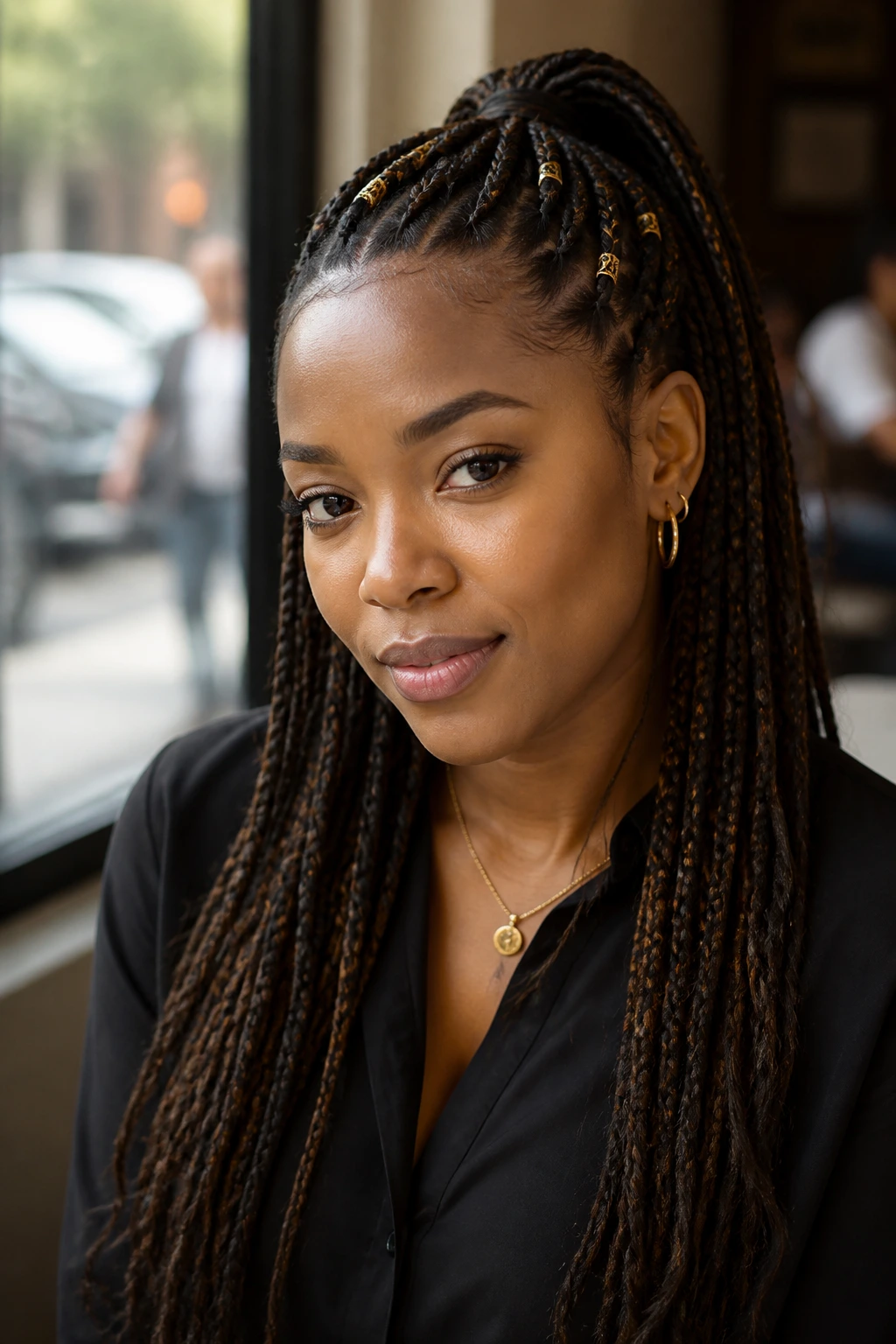
Presentation: The cleanest styles usually need only three things: neat parting, a smooth root, and a finish with mousse or a scarf for 10 minutes. That’s enough to make the braids look set instead of freshly fought over.
Accessories: Beads, cuffs, gold rings, and even one good pair of hoops can shift a braid from plain to polished. I’d keep the accessory count small for sleek styles and let one detail do the work.
Length Choice: Shoulder-length braids move fast and stay light. Longer braids bring more drama, but they also ask more of your scalp and your shoulders, especially if you wear them up a lot.
Occasion Match: Straight cornrows, low buns, and side-part styles usually read clean for work or school. Fulani braids, boho knotless braids, and beaded styles carry more personality when you want the hair to do part of the styling for you.
Small Moves That Make Braids Last Longer
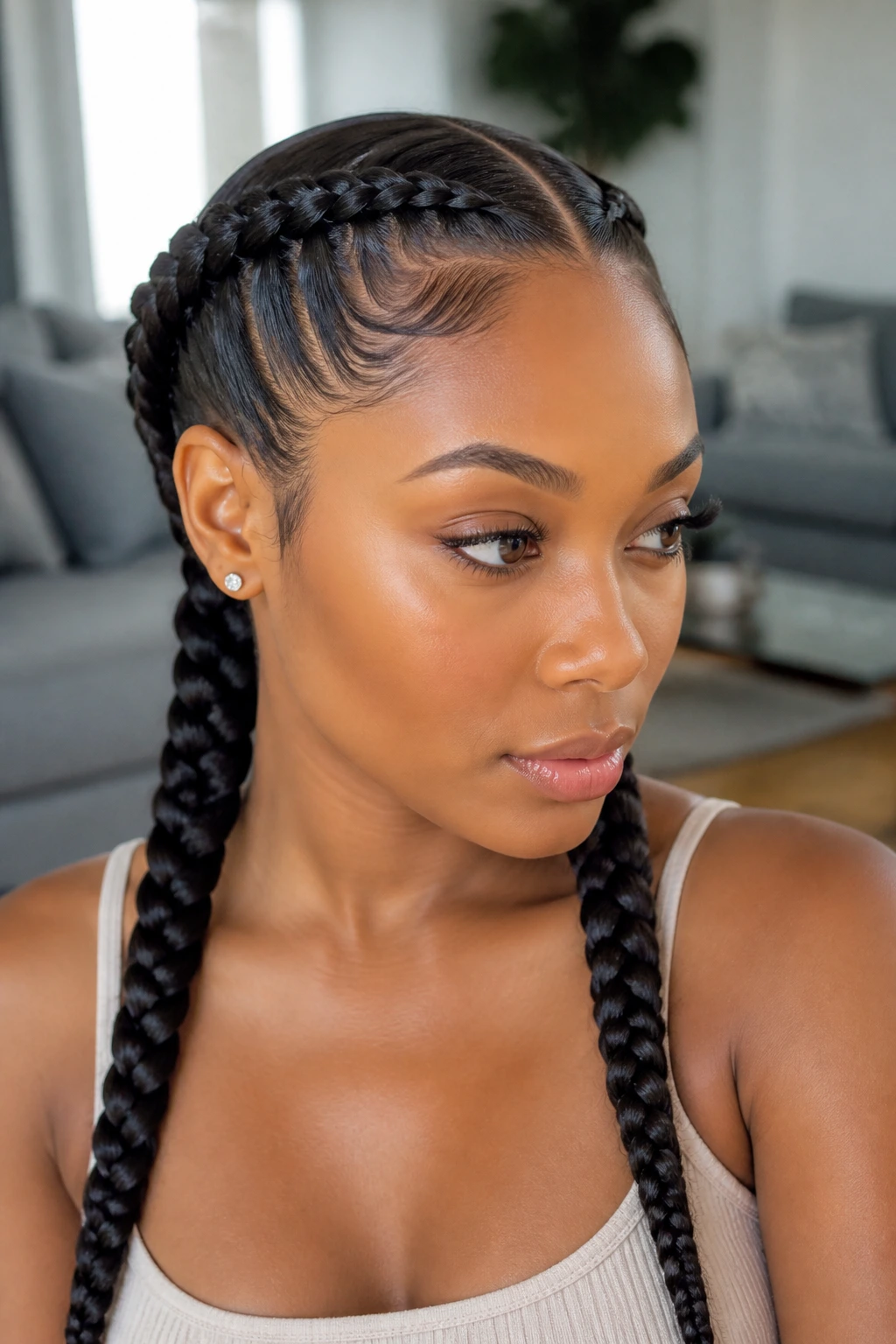
A quick braid can still look fresh on day four if you handle the small stuff well. My biggest rule: do not overwork the edges. Smooth them once, maybe twice, then leave them alone. Constant brushing makes the hairline fuzz faster and can pull at the front more than you realize.
Mousse is your friend, but only in a thin layer. Too much will make the braids damp and heavy. A light pass, then a satin scarf for 10 to 15 minutes, is usually enough to calm the surface without soaking the style.
Check your tension before you commit. If a braid hurts in the first hour, it is too tight. Pain is not a styling goal. Redoing one section early is better than carrying a sore scalp around for three days and pretending it will settle.
Split maintenance into two jobs: scalp care and braid care. The scalp gets a light clean or refresh. The braid length gets smoothing and protection. Mixing the two into one heavy product routine is how styles get greasy, sticky, and tired-looking.
Common Mistakes That Make Braids Hurt or Look Messy
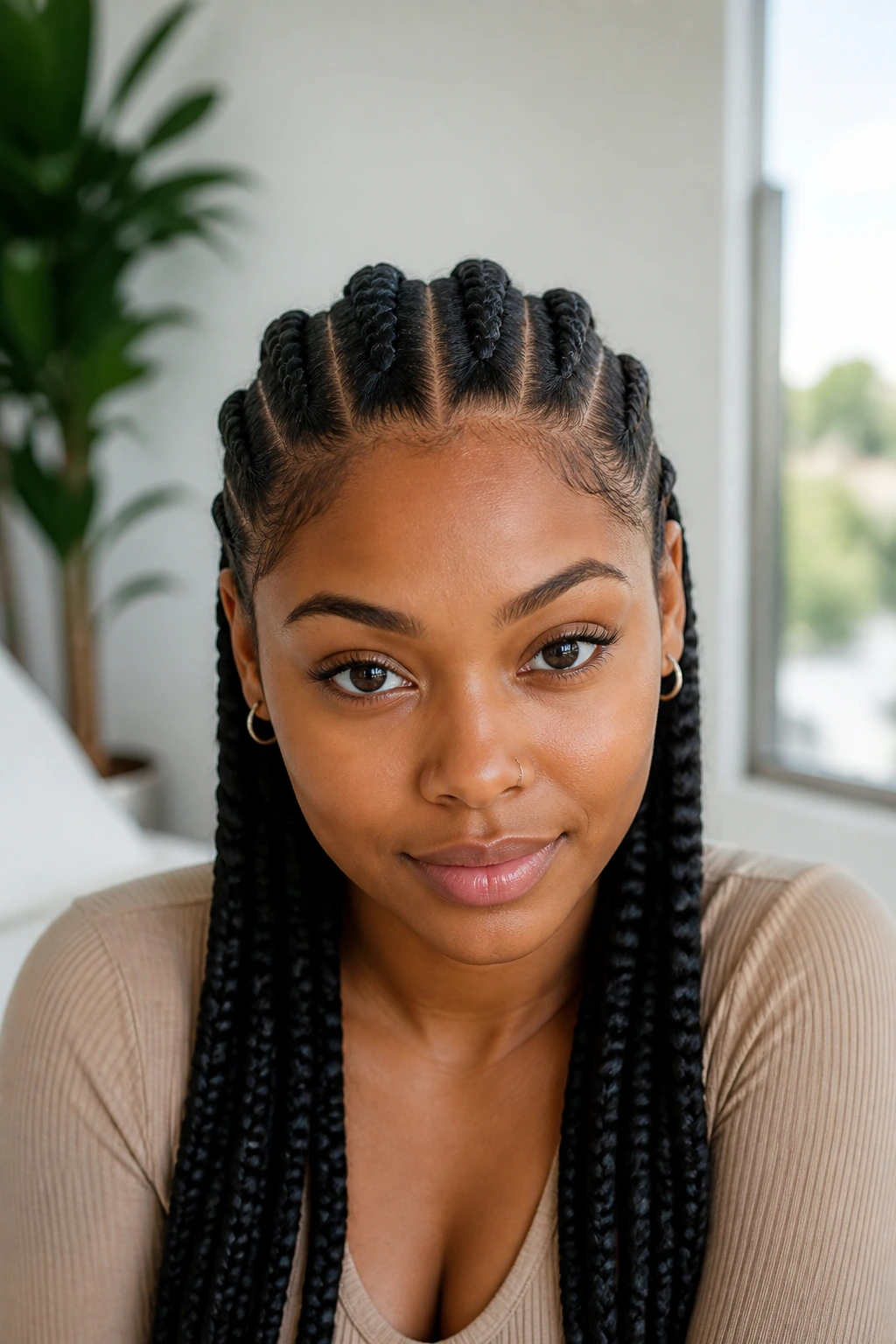
The first mistake is braiding hair that is still tangled or half-dry from wash day. The symptom is obvious: the comb catches, the parts snag, and the braid ends up uneven before you even get started. Fix it by stretching, detangling, and sectioning on hair that feels smooth to the fingers, not fluffy and rebellious.
Another common one is making the root too tight to force neatness. That produces shiny, sharp parts for about ten minutes, then soreness at the temples and a style that lifts in the wrong places. A cleaner part with moderate tension looks better for longer.
Heavy product is another problem. When the roots are loaded with gel or pomade, the style can look slick at first, then turn dull, flaky, or gummy as it dries. Use less than you think you need, and build in thin layers.
Skipping night protection is a mistake people repeat because the style still looks fine on day one. Satin matters. So does keeping the braids gathered or wrapped if they’re long enough to rub on pillows. Friction is where the frizz starts.
Finally, leaving the style in too long is a quiet mess-maker. Once the parts widen and the base gets fuzzy, the braid stops looking quick and starts looking neglected. Freshness has a window. Use it.
Variations and Adaptations to Try
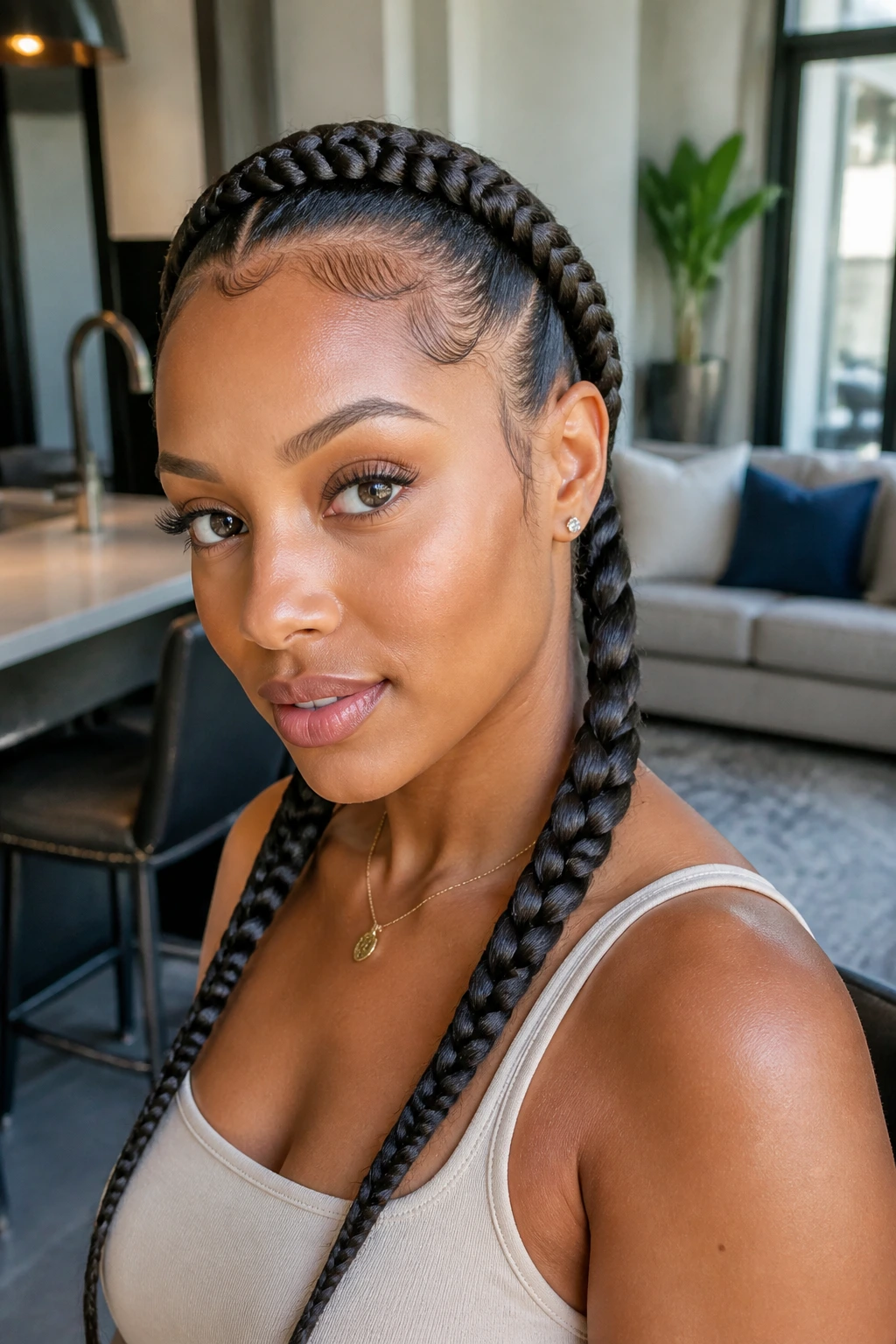
The Five-Minute Version: Choose two feed-in braids, four rows, or a braided headband style with a puff. These are the fastest options when you need structure and do not have time for a full install.
Soft Glam Finish: Add curly ends, braid cuffs, or a few beads near the front. The shape stays simple, but the finish feels more dressed up and less like an everyday default.
Low-Tension Build: Go for knotless box braids, medium parts, or a braided low bun instead of tight tiny cornrows. This version is better if your scalp is tender or you plan to wear the style for weeks.
Kid-Friendly Set: Use larger sections, soft accessories, and a style that stays away from the face, like pigtail braids or cornrow puff ponytails. Less tension, less time, fewer battles in the chair.
Office-Neat Edit: Side-part braids, halo braids, and low braided buns all look polished without turning the hair into the main conversation. The lines are clean, the finish is tidy, and the style holds its own under a blazer.
Maintenance, Night Care, and Take-Down Timing
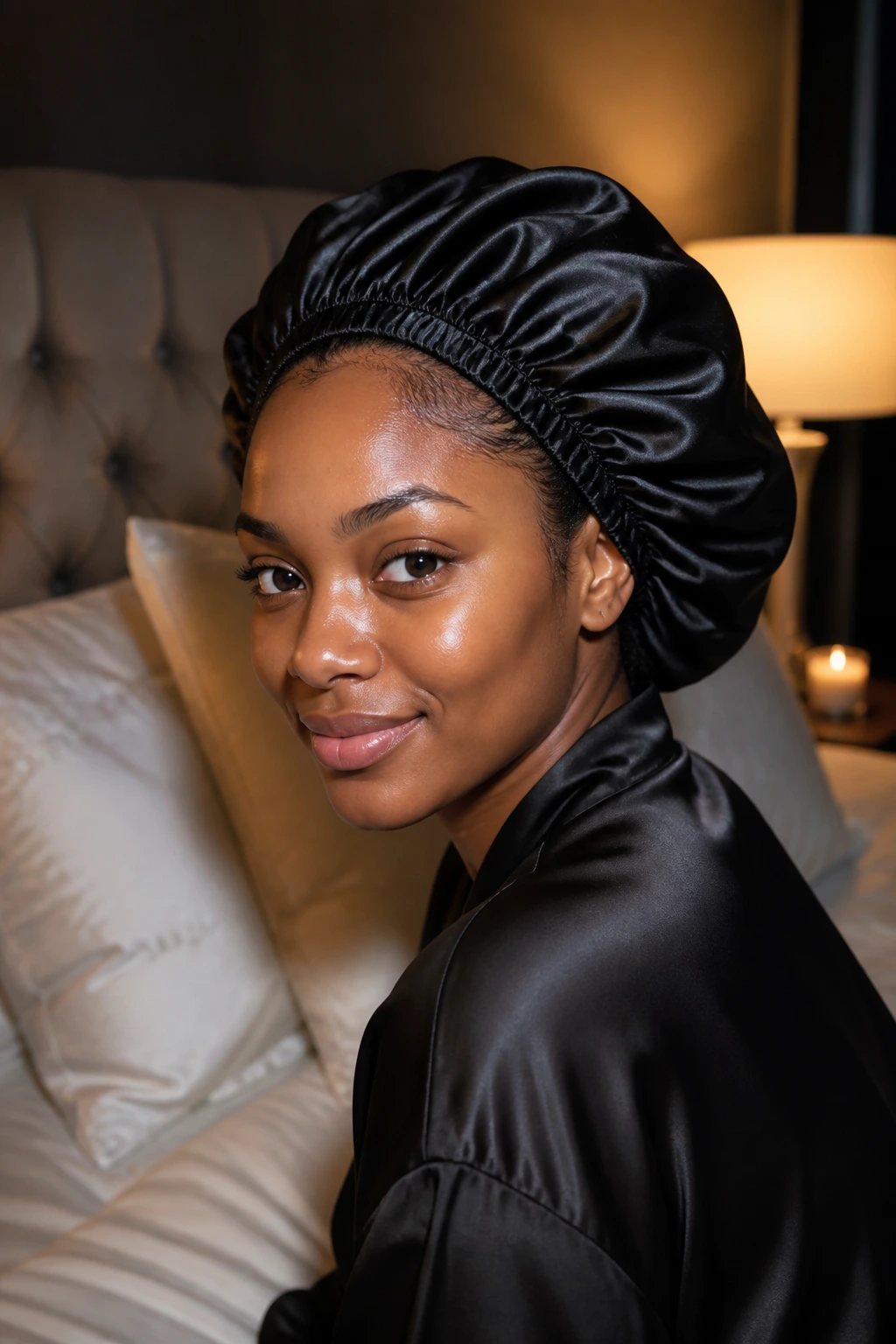
The right maintenance depends on the style. Simple cornrows, feed-in braids, and braided buns often look their best for about 1 to 2 weeks before the roots start losing that freshly done crispness. Knotless and box braids can usually stay in longer—often 4 to 6 weeks, sometimes a bit more for larger installs—but smaller braids frizz sooner and need more patience.
At night, wrap the hair with a satin scarf or slip on a bonnet every single time. If the style is long, tuck the lengths loosely or pine them up so they are not rubbing against the pillow. For braids that sit close to the scalp, a light mousse refresh every few days helps the surface settle. Do not drench the style with water unless you actually plan to dry it fully.
For the scalp, use a gentle cleanse or a braid spray every 1 to 2 weeks, depending on how much product you’ve used. If the roots are itchy, that can mean buildup or tension, and those are not the same thing. Build-up comes off. Tension needs adjusting.
Take the style down before the roots start matting at the base. Once detangling turns into a tug-of-war, you waited too long. A little oil on the take-down day and patience with each braid will save your ends. Rushing that part is expensive in hair, not just time.
Frequently Asked Questions
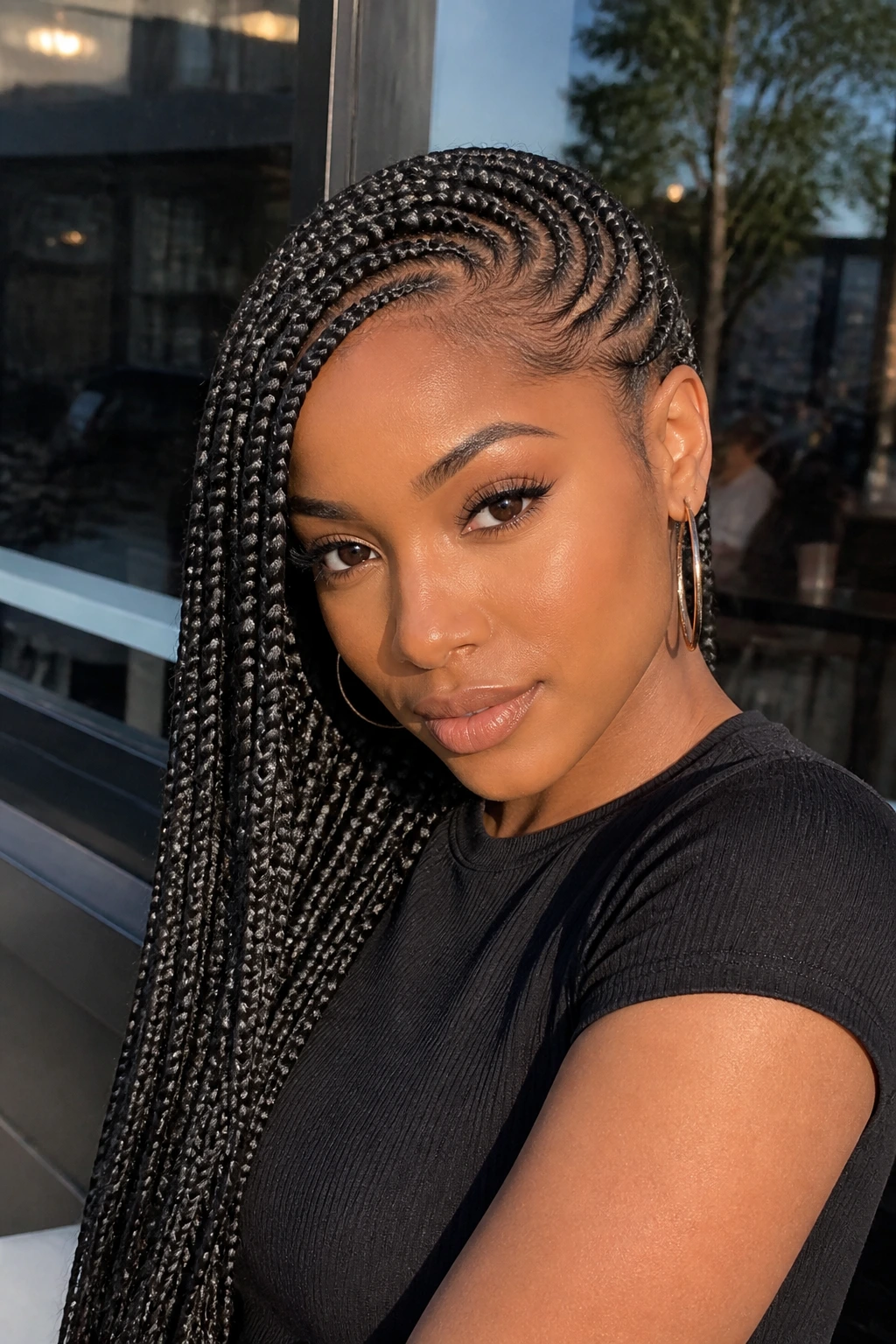
Which braided style is fastest for natural Black hair?
Two feed-in braids, four rows, and a braided headband style are usually the fastest because they use fewer sections. If your hair is stretched first, they move even quicker and the parts stay cleaner.
Should I braid my hair blown out or in its natural state?
Both can work, but blown-out or stretched hair usually parts faster and gives you a smoother finish. Natural shrinkage is fine if the style is loose, but tiny braids tend to behave better on stretched hair.
What braided style is best if I’m new to doing my own hair?
Four rows, a low braided bun, or a simple side-part braid are the easiest places to start. They don’t require fancy crossing patterns, and the mistakes are less visible than they would be in a detailed design braid.
How do I keep braids from hurting my edges?
Keep the first inch of each braid gentle and avoid pulling the hairline tight just to make the parts look sharper. If the front hurts the same day, it’s already too tight, and the fix is to loosen or redo that section.
Can I add hair to these styles if my natural hair is short?
Yes. Feed-in braids, knotless box braids, Ghana braids, and pigtails all work well with added hair. The trick is to anchor the base gently so the extension hair does not pull against the natural strands.
How do I stop braids from getting fuzzy so fast?
Wrap them at night, use mousse lightly, and do not keep brushing the roots every day. A clean part and a well-matched braid size help too, because tiny sections often frizz faster than medium ones.
What should I do if a braid feels too tight after it’s done?
Don’t wait and hope it passes. Loosen the section as soon as you can. Persistent tightness can lead to soreness, bumps, and breakage around the hairline, and none of that is worth a neat-looking root.
Are beads or cuffs better for quick braided styles?
Cuffs are faster and lighter, while beads make more sound and movement. If you want speed, cuffs win. If you want a little personality and don’t mind spending a few extra minutes, beads are worth it.
Braids That Make the Morning Easier
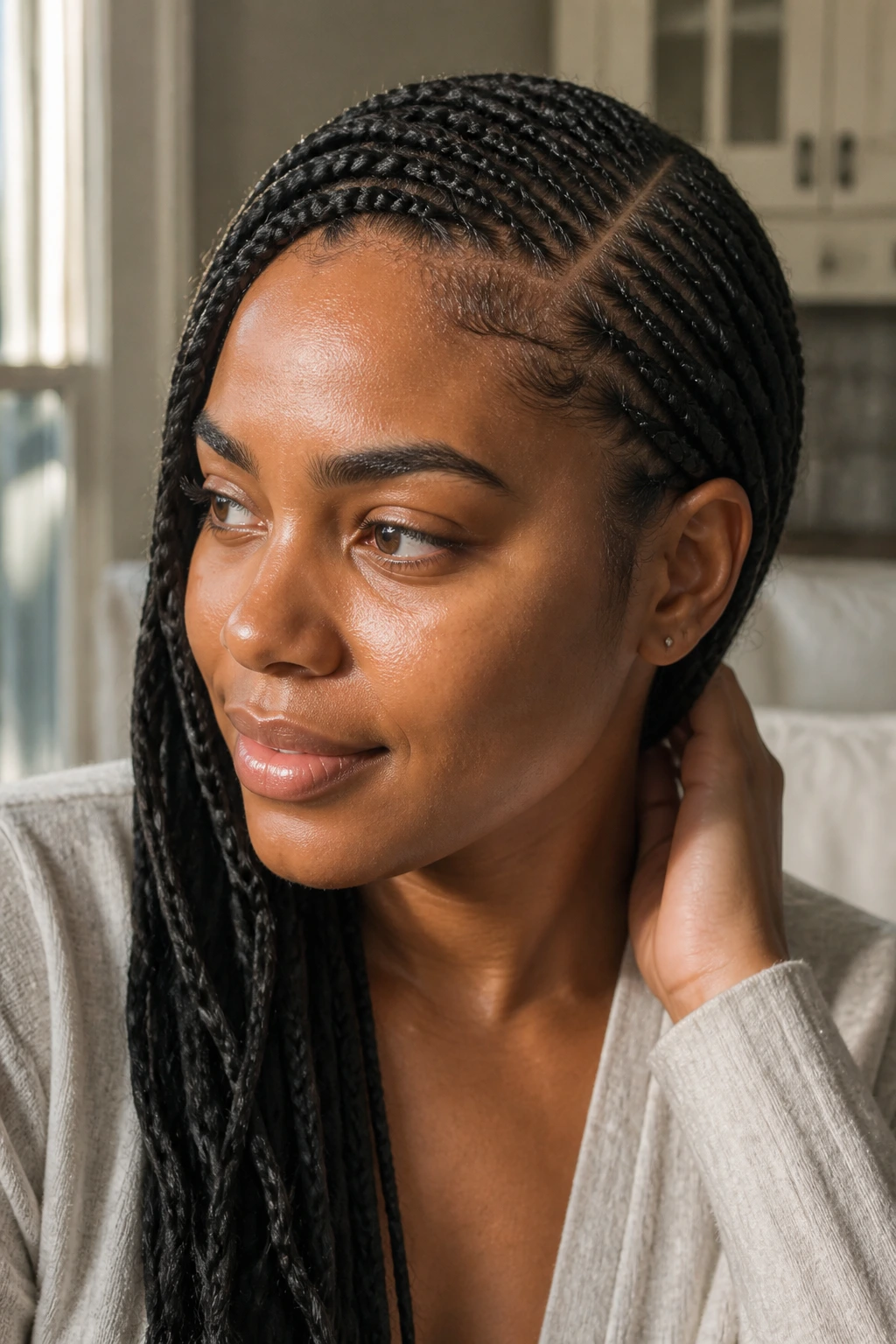
Quick braids are not about rushing your hair into submission. They’re about choosing a shape that works with Black hair’s texture, not against it. Once you get the parting right and keep the tension sensible, the style starts doing the heavy lifting for you.
That’s the real payoff here. A good braid buys you time, protects your ends, and still looks like you meant it. Pick the one that fits your morning, your scalp, and your patience, then keep the maintenance simple enough that you’ll actually do it.