



Summer is when curly hair tells the truth. The humidity comes up, the neck sweat starts, and every curl that was neatly defined in the mirror at 8 a.m. has opinions by lunch. That’s exactly why elegant braided hairstyles for summer with curly hair earn their place: they don’t fight the texture, they work with it, and they keep the shape interesting after the air gets thick and the day gets long.
The best braid styles for curly hair do a few jobs at once. They tame the top, protect the ends, and leave enough curl in view that the whole look still feels like your hair, not a stiff helmet someone talked you into. I’m partial to styles that keep a little lift at the crown and a few soft pieces around the face. Too tight, and the whole thing looks strained. Too loose, and it collapses the second you walk outside.
What makes these styles worth saving is the balance: polish without fuss, structure without heaviness, and enough variety that you can wear one to brunch, a wedding, a workday, or a long sweaty walk to nowhere in particular. Some are fast. Some take patience. A few are protective enough to last days. All of them give curly hair a better summer life.
Why These Braided Looks Work So Well on Curly Hair
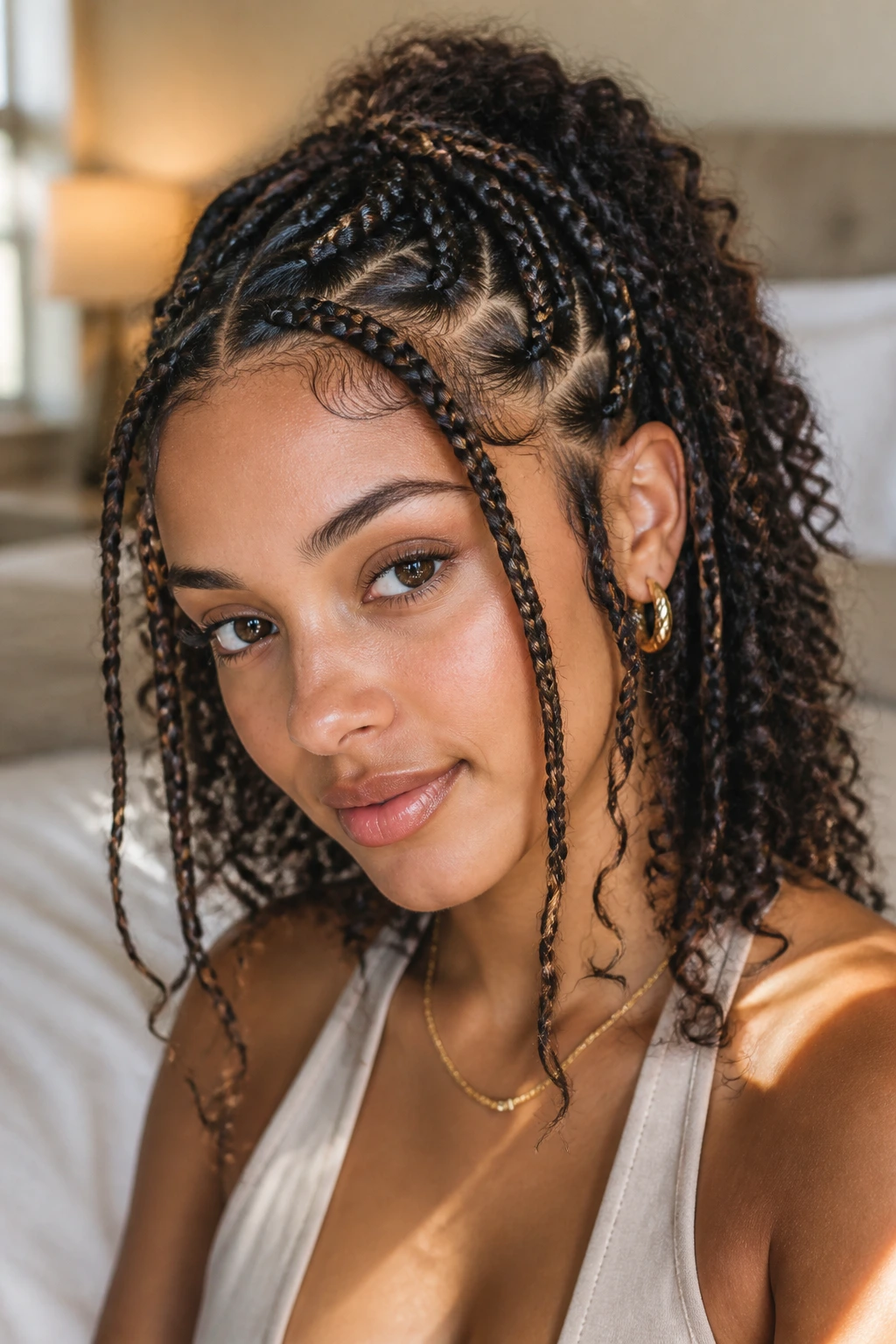
Humidity control matters. Braids pull the hair into a shape that stays readable even when the air swells up every strand, which means you spend less time wrestling frizz at the mirror.
Curl texture gives the braid grip. Straight hair often slips out of braids unless you rough it up first; curly hair tends to hold the pattern with less effort, especially if you braid on stretched or lightly smoothed hair.
The ends stay safer. When the longest, driest part of the hair is tucked, pinned, or wrapped, it rubs less against collars, shoulders, and seat belts. That’s a real help in hot weather.
They can look dressed up fast. A braid with a clean part, a tucked bun, or a few gold cuffs can look far more finished than a simple ponytail, even if the base is quick to do.
They buy you time. A good braided style lets you stretch wash day, skip heat tools, and still leave the house looking intentional.
1. Side-Swept Crown Braid with Curly Ends
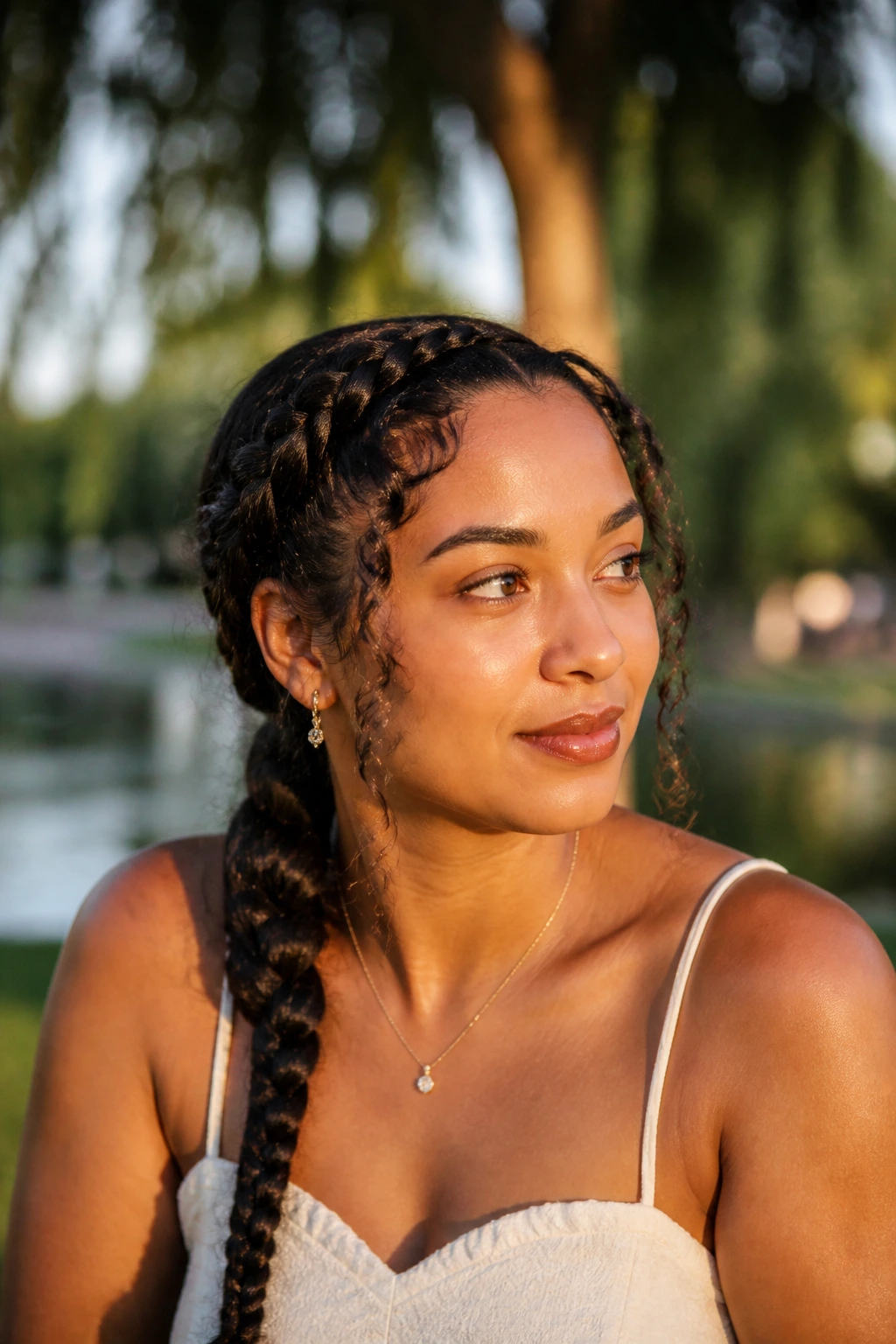
A side-swept crown braid is one of those styles that looks much more complicated than it is. You braid across the front hairline, sweep everything toward one shoulder, and let the remaining curls fall in a soft spill at the end. The result is polished at the top and loose at the bottom, which is exactly the kind of contrast that makes curly hair look expensive without acting fussy.
Why It Works
The braid acts like a frame, so the face gets definition while the curls keep their movement. I like this one on 3a through 4a curls because the texture gives the braid some body without turning it stiff. Keep the braid low and close to the scalp, then stop before the last third of the hair so the ends stay curly and full.
- Best on: Medium to long curly hair
- Parting: Deep side part for more drama
- Finish: Two small bobby pins hidden behind the ear
- Hold: Light gel at the hairline, mousse on the loose curls
Tip: Leave the front braid a little loose at the temples. If you pull it too tight, the style loses that soft, expensive look fast.
2. Sleek Feed-In Braided Ponytail
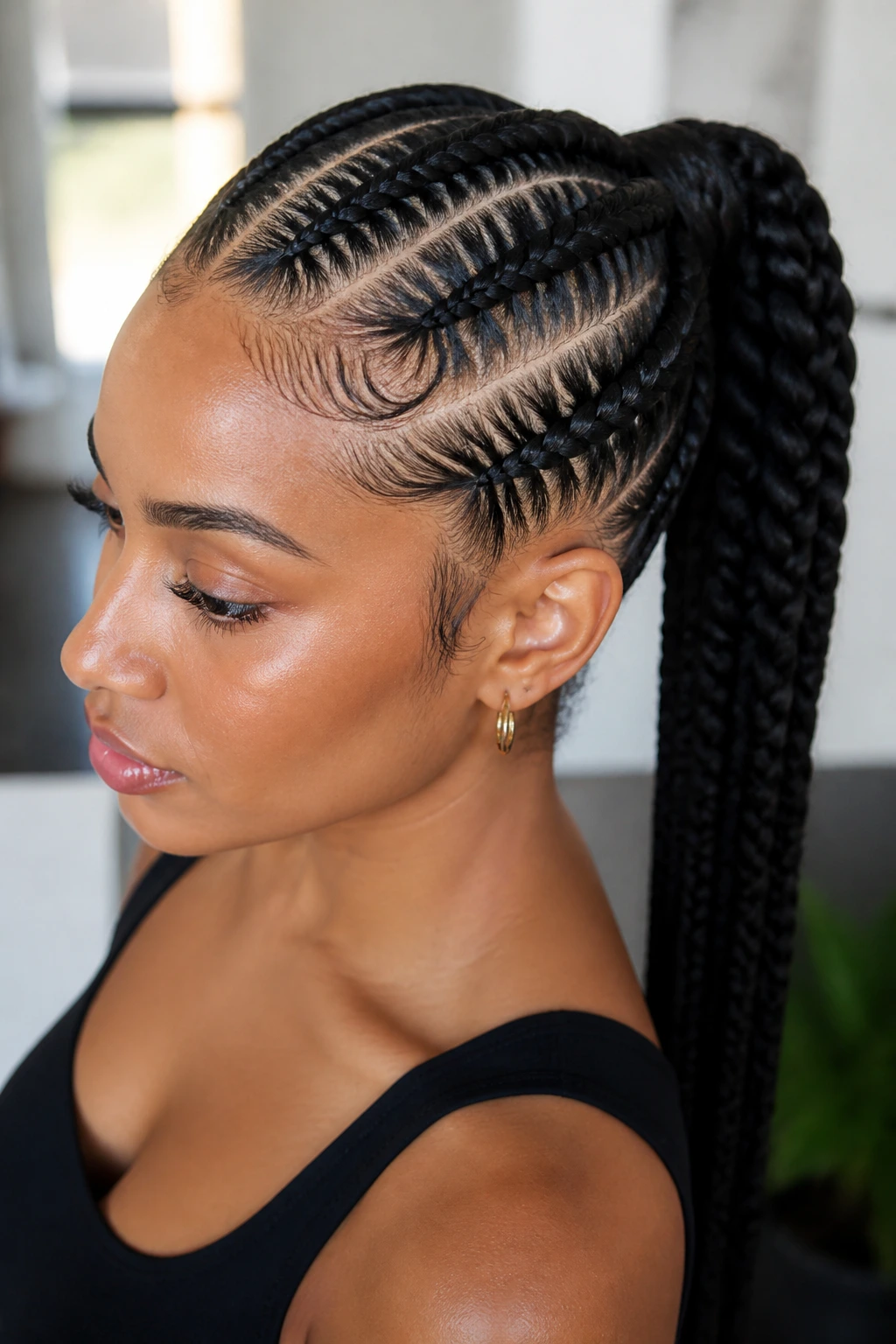
This one has a cleaner edge. The feed-in braid starts small near the hairline, thickens as it moves back, and drops into a ponytail that can be curly, straightened, or left in its natural texture if your curls are long enough. It’s sharp without feeling severe, which is why it shows up so often at summer events where people want their hair off the neck but still want shape.
A narrow base makes the ponytail look lifted instead of bulky. That matters. Use a smoothing brush and a small amount of gel at the parting, not all over the head, or the style can go flat and shiny in a way that feels more hard than elegant.
3. Half-Up Rope Twist with Free Curls
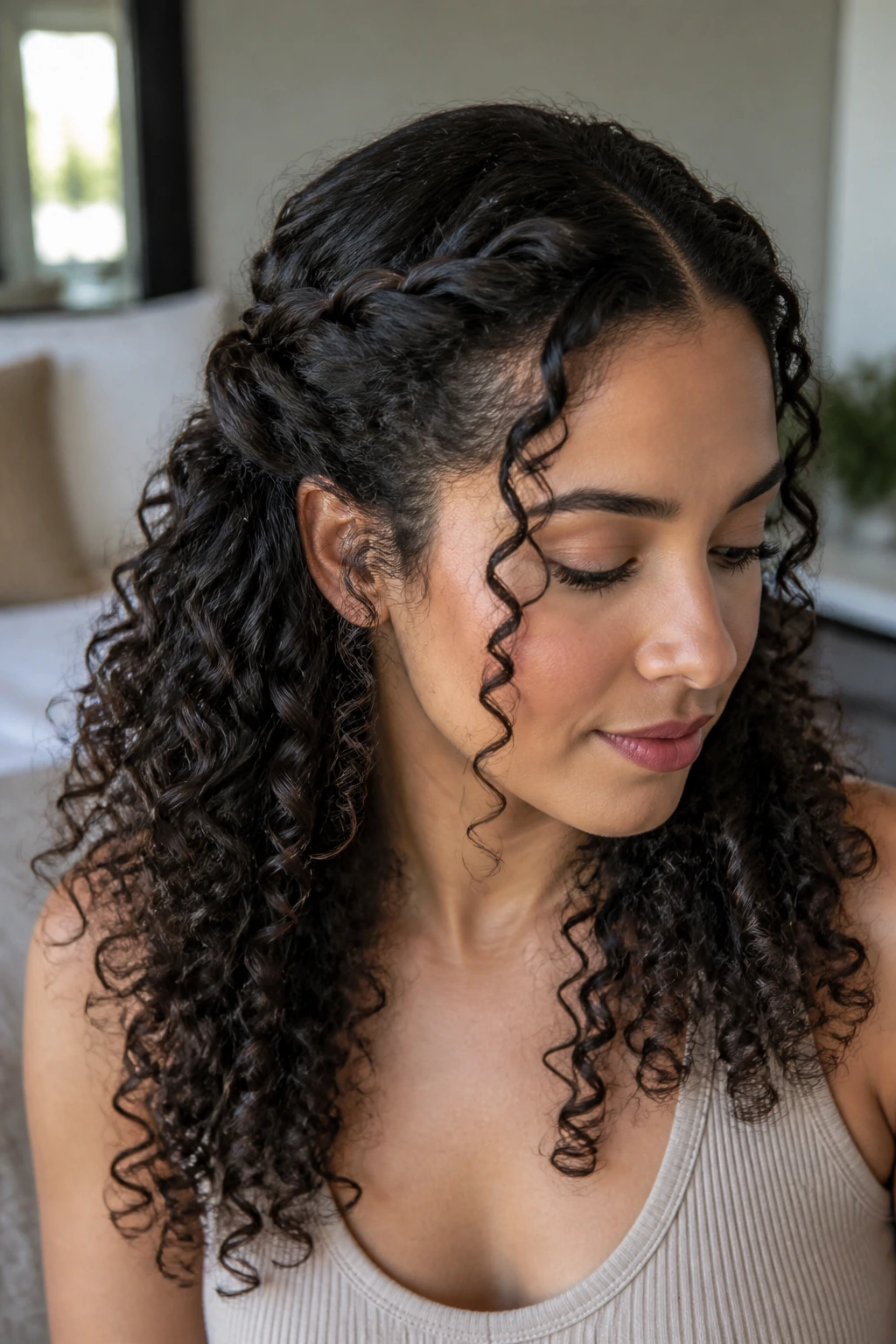
Why do rope twists work so well on curly hair? Because they echo the curl pattern instead of arguing with it. Twist two sections from the temples back to the crown, pin them together, and let the rest of the hair stay loose. The whole style sits in that sweet spot between tidy and relaxed.
How to Wear It
Use it when you want your hair off your face but do not want to sacrifice volume. It’s especially nice on shoulder-length curls, where a full braid can sometimes feel like too much structure. Keep a few thin curls loose near the cheeks if you want softness around the face.
4. Halo Braid with Soft Tendrils
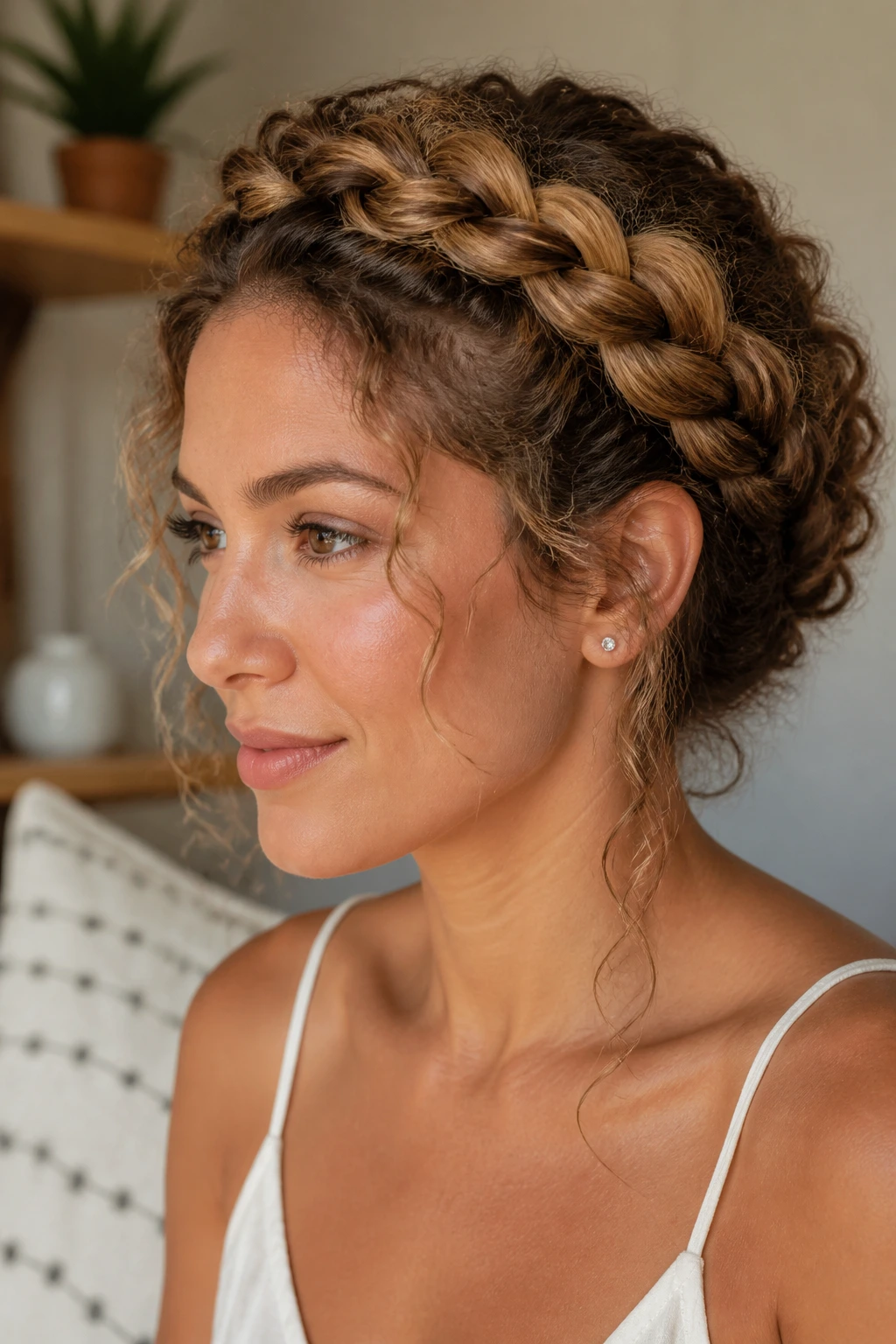
A halo braid wraps the head like a soft band of woven texture, which gives it that dressed-up look people usually reserve for special dinners and formal invites. On curly hair, it gets even better because the braid picks up all that natural grip and fullness. Leave a few tendrils near the ears and temples, and suddenly the whole thing stops looking severe.
The trick is not to over-smooth the hair before braiding. You want clean sections, yes, but not glass-flat sections. A little volume underneath keeps the halo from sitting too close to the head, which is where it can start to feel tight and old-fashioned.
5. Waterfall Braid Over Defined Curls
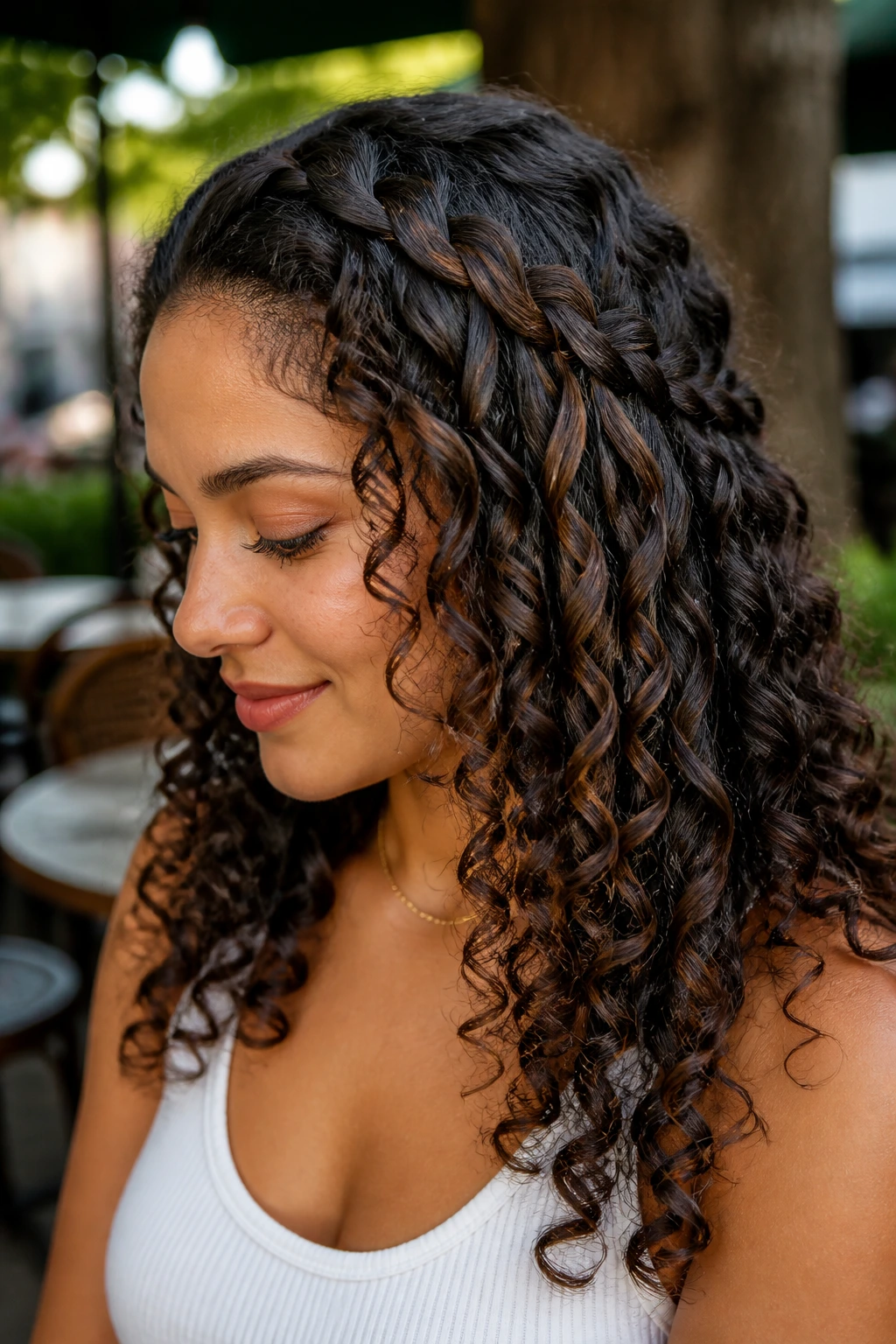
Waterfall braids are a favorite of mine when the goal is to show off curl pattern instead of hiding it. The braid runs across the head, but pieces of hair fall out as you go, creating that broken, ribbon-like effect. On curly hair, the dropped sections spring back into place with a lot more life than straight hair ever can.
If your curls are already defined, this style barely needs extra help. If they are a bit stretched from previous styling, a small amount of curl cream on the loose sections brings them back. Keep the braid narrow. Wide waterfall braids can swallow the curl pattern whole, and that defeats the point.
6. Dutch Braid Mohawk with Loose Ends
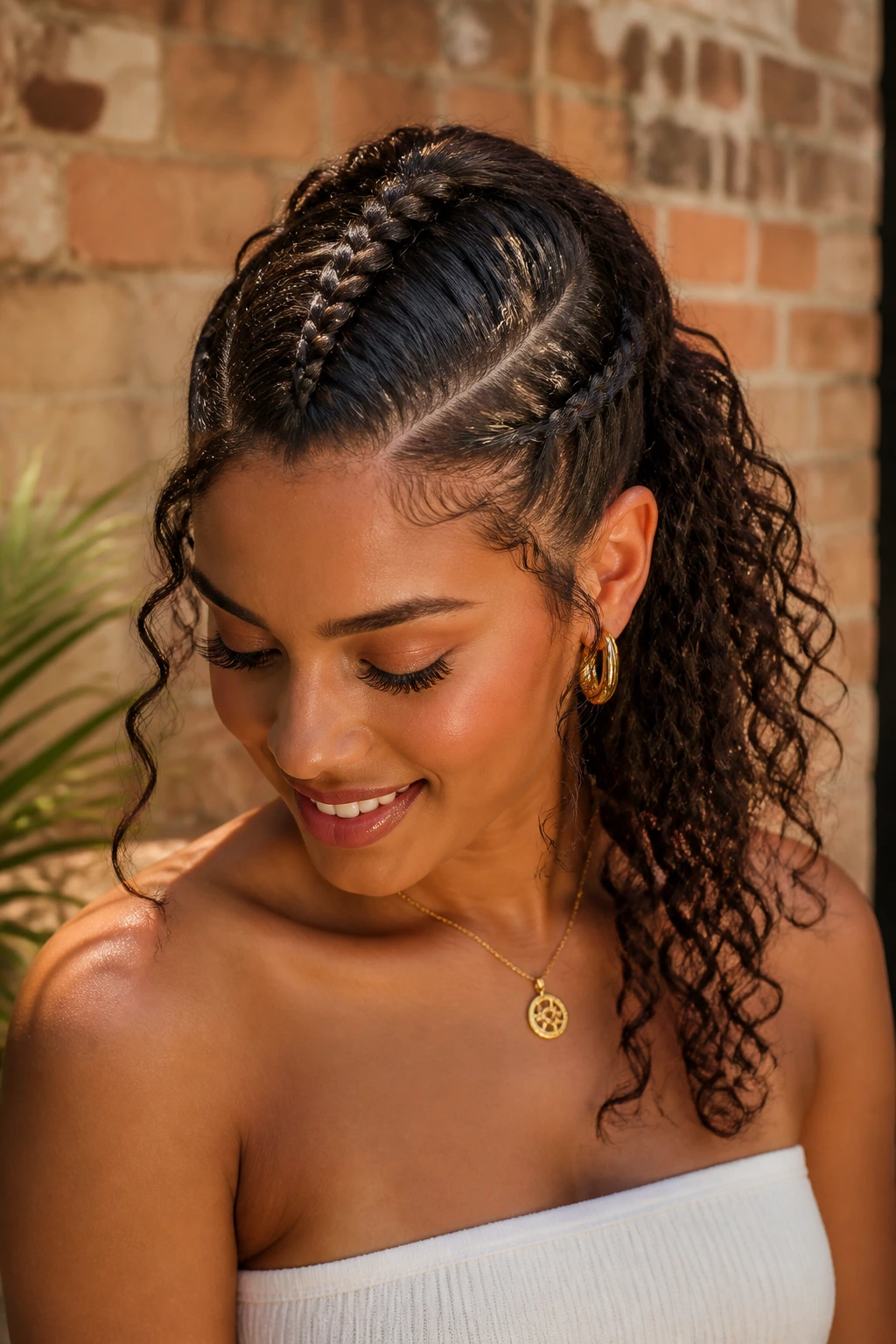
This is the style for days when you want height. The Dutch braid sits in the center like a raised seam, and the sides stay pulled back or tucked so the braid becomes the whole story. It looks clean at the root, dramatic through the middle, and soft at the ends if you let the length stay curly.
What Makes It Different
Unlike a basic center braid, the Dutch version pops off the scalp, which gives curly hair a little extra architecture. That lift is useful if your curls flatten at the crown in heat. Secure the braid with a covered elastic and let the tail fan out naturally instead of dragging it into a tight ponytail.
7. Braided Headband on a Side Part
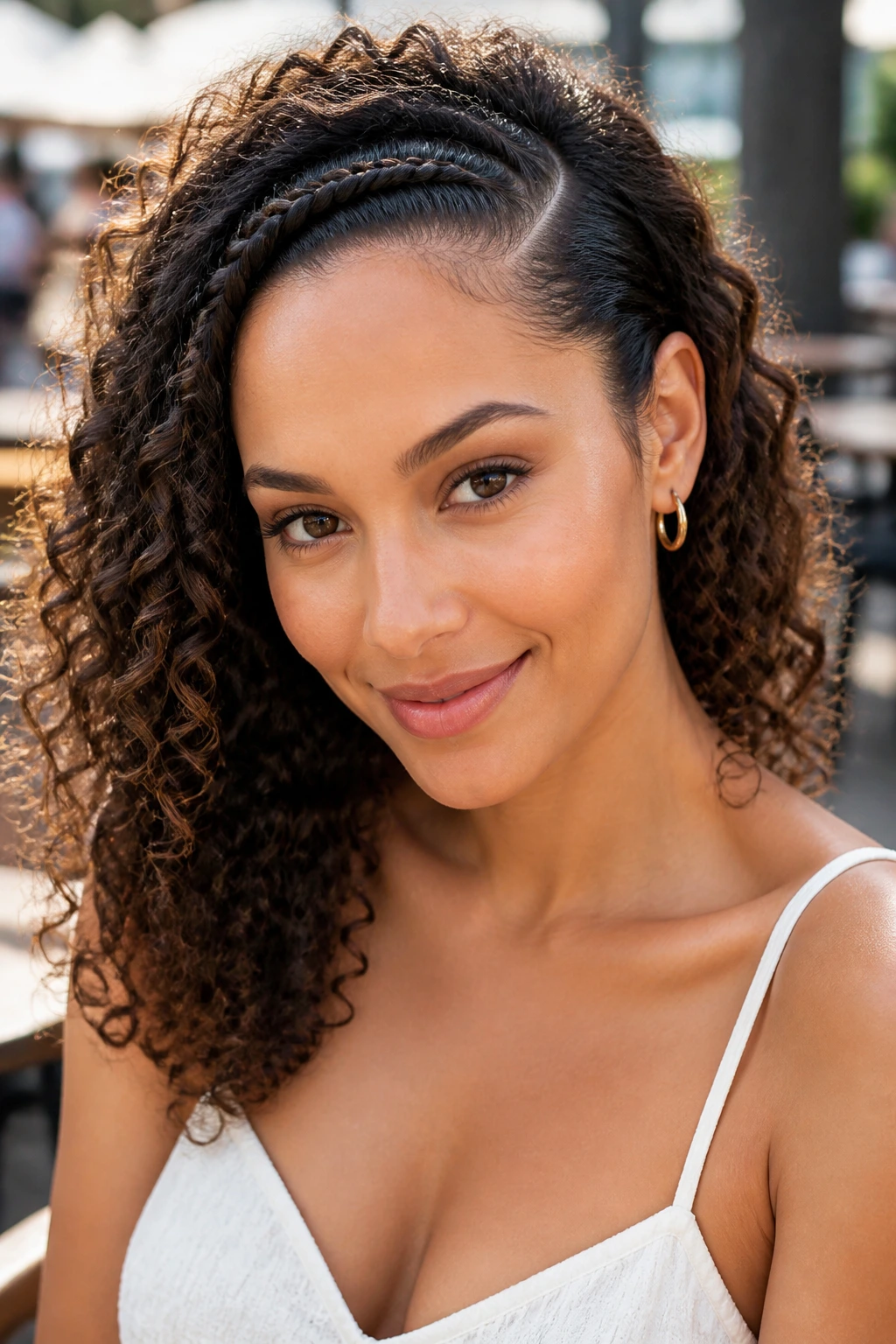
A braided headband is one of the easiest ways to make curly hair look finished without doing a full style. Take a narrow front section, braid it along the hairline, and pin it across like a built-in accessory. The rest of the hair stays loose, so the whole thing feels light and wearable.
This works especially well when the curls are big and the weather is warm, because it keeps the front controlled while the lengths keep their bounce. Add a pair of medium hoops or a slim earring, and the style reads polished in a way that a plain ponytail never quite manages.
8. Low Braided Bun with a Curly Fringe
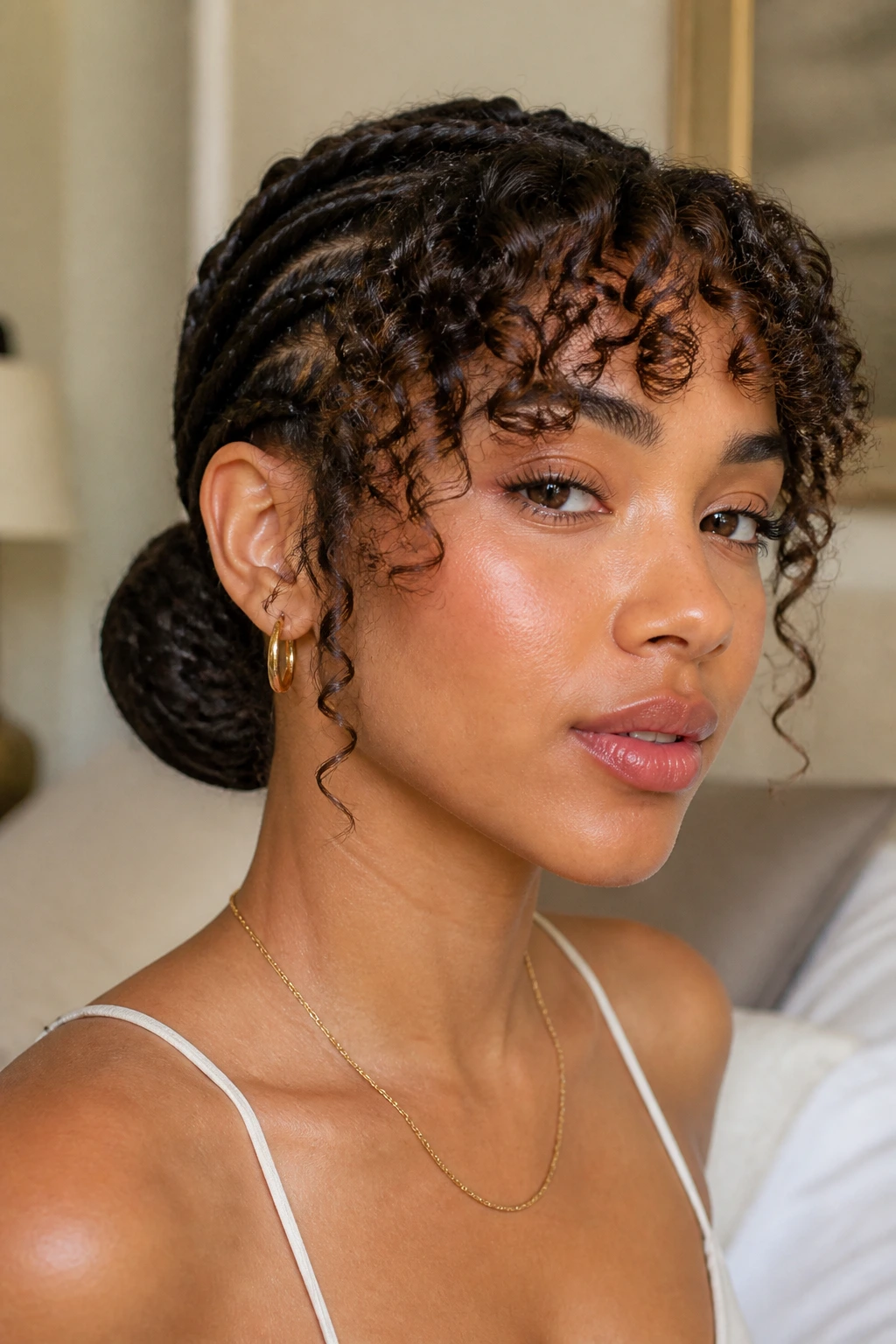
A low braided bun has a quiet kind of elegance. You braid the length down toward the nape, wrap it into a bun, and leave a few curls in front so the face does not get swallowed by the structure. It’s the sort of style that looks neat in the front and softly textured in the back, which is a nice trick for humid evenings.
The bun itself should not sit bone-tight against the scalp. Leave a little cushion at the crown so the braid has room to breathe. A loose fringe or a single curl near the cheek makes the whole thing feel warmer and less severe.
9. Pinned Back Mini Braids and Volume
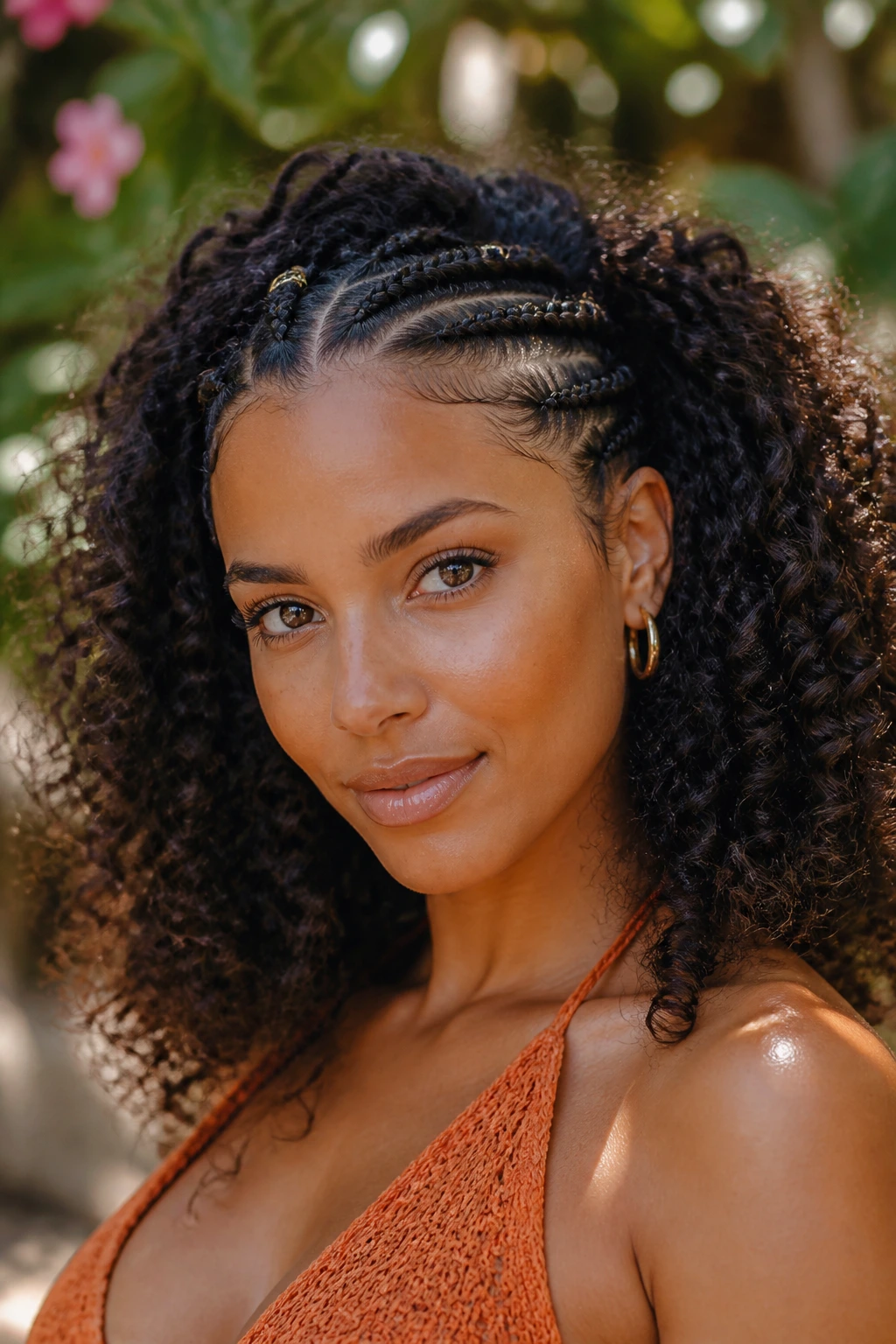
Mini braids in the front are underrated. They tame the pieces that like to escape first, but they don’t flatten the rest of the hair. Pin two or four small braids back along a clean part, then let the rest of the curls stay big. The contrast is the whole point.
This is a good style when you want detail without committing to a full updo. It also plays nicely with second- or third-day curls, which often have more grip and less slip than freshly washed hair. If the hair at the front tends to puff up, a tiny touch of gel on the braiding section keeps the braid neat without crunching the whole head.
10. Braided Space Buns with Face-Framing Pieces
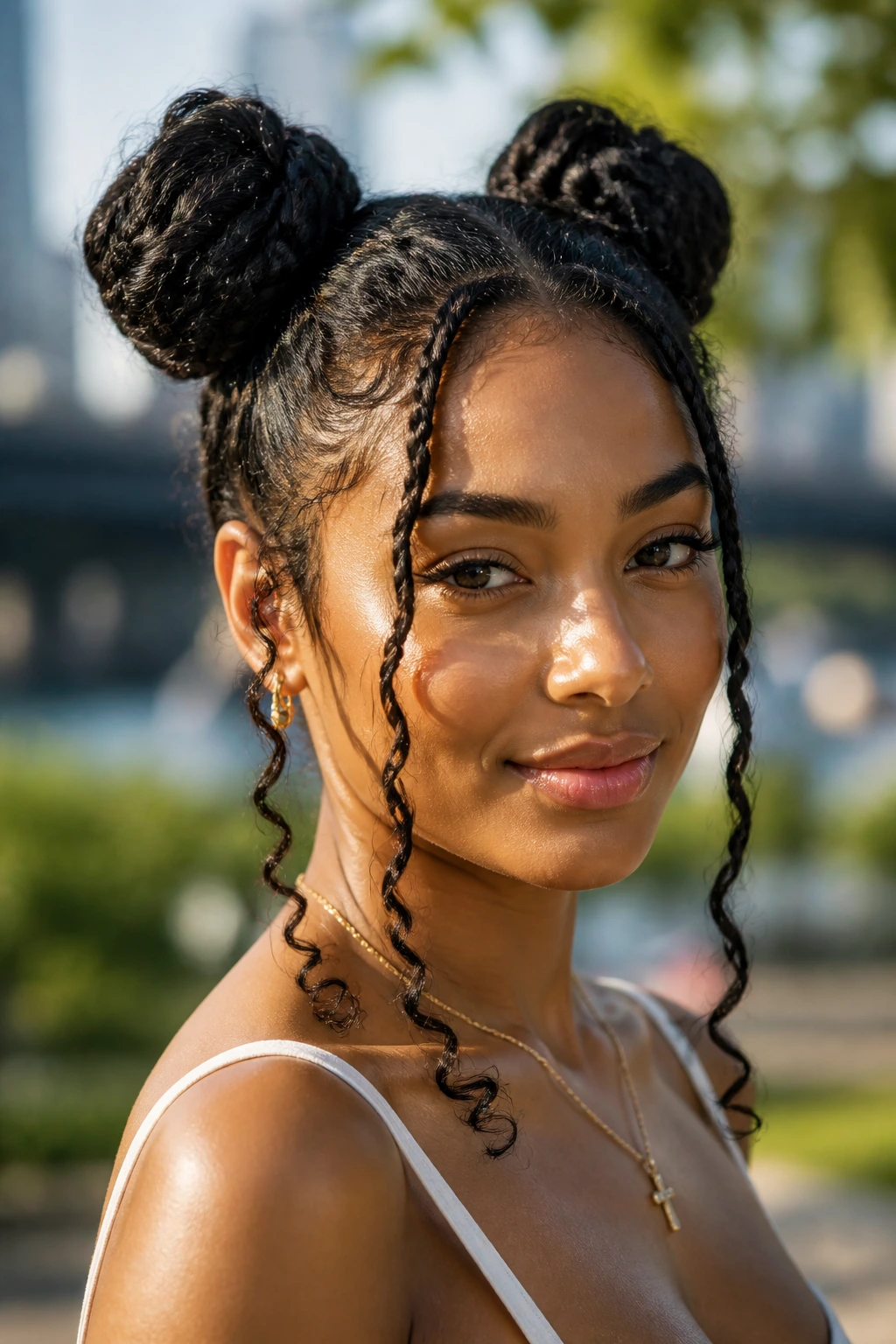
Braided space buns can be playful, but they do not have to look childish. When the buns are placed high and the front pieces are left long enough to curl around the cheeks, the style reads more fashion-forward than cute. That’s a useful line to walk.
Keep the braids that lead into each bun smooth and even, then let the buns themselves be a little soft. Too much tightening around the crown makes the whole style look forced. A few face-framing pieces, shaped with your fingers while the hair is still slightly damp, keep it elegant instead of cartoonish.
11. Cornrow Crown into a High Puff
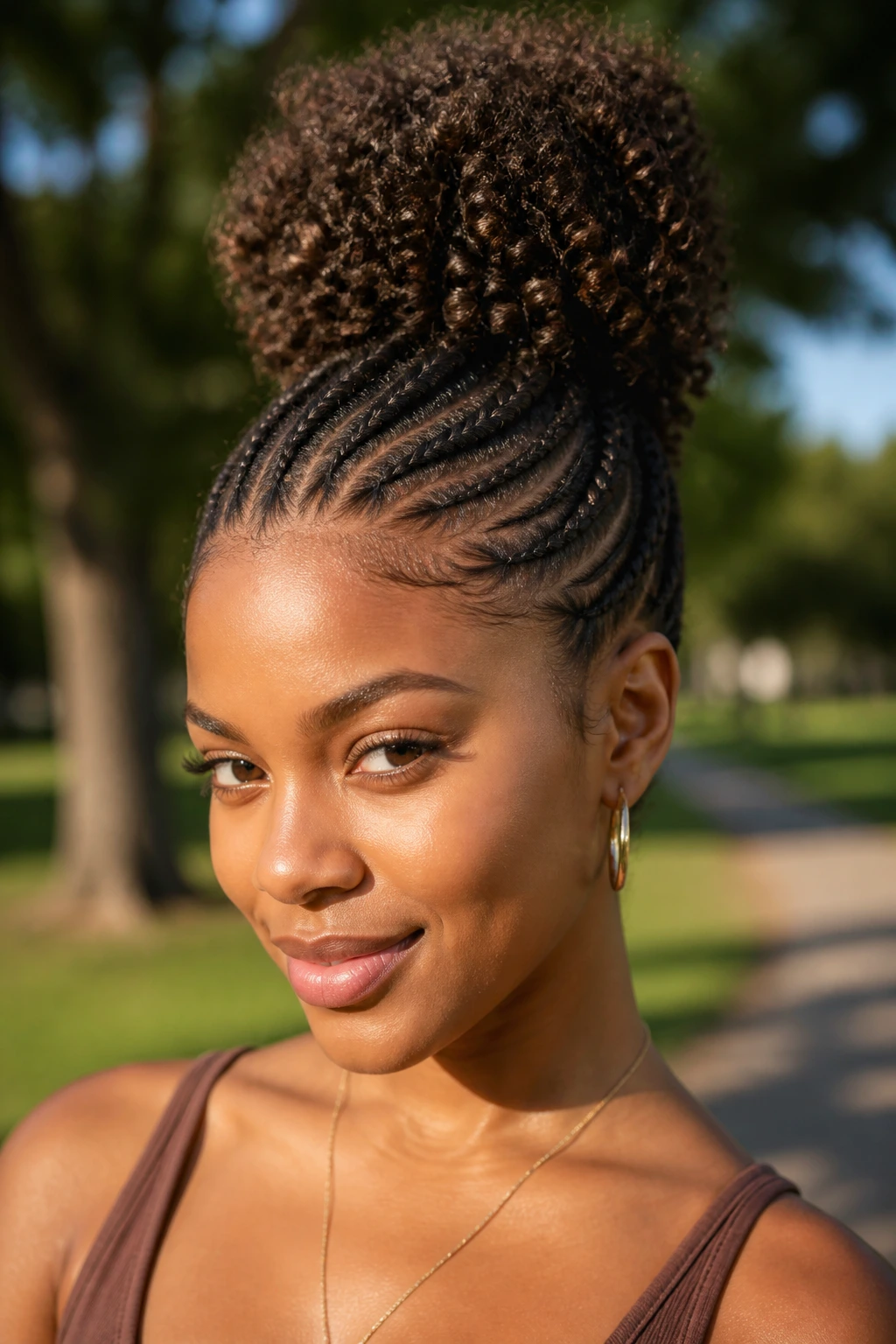
This is one of the smartest summer combinations for curly hair. Cornrows keep the front and sides controlled, while the high puff gives the style lift, texture, and air flow. It’s protective at the edges and dramatic at the top, which is a rare combination.
The key is placement. Start the cornrows low enough that they don’t tug at the hairline, then build the puff higher than you think you need. A puff that sits too low can drag the whole silhouette down. A puff that sits up near the crown makes the face open up in a cleaner way.
12. Chunky Side Fishtail Braid
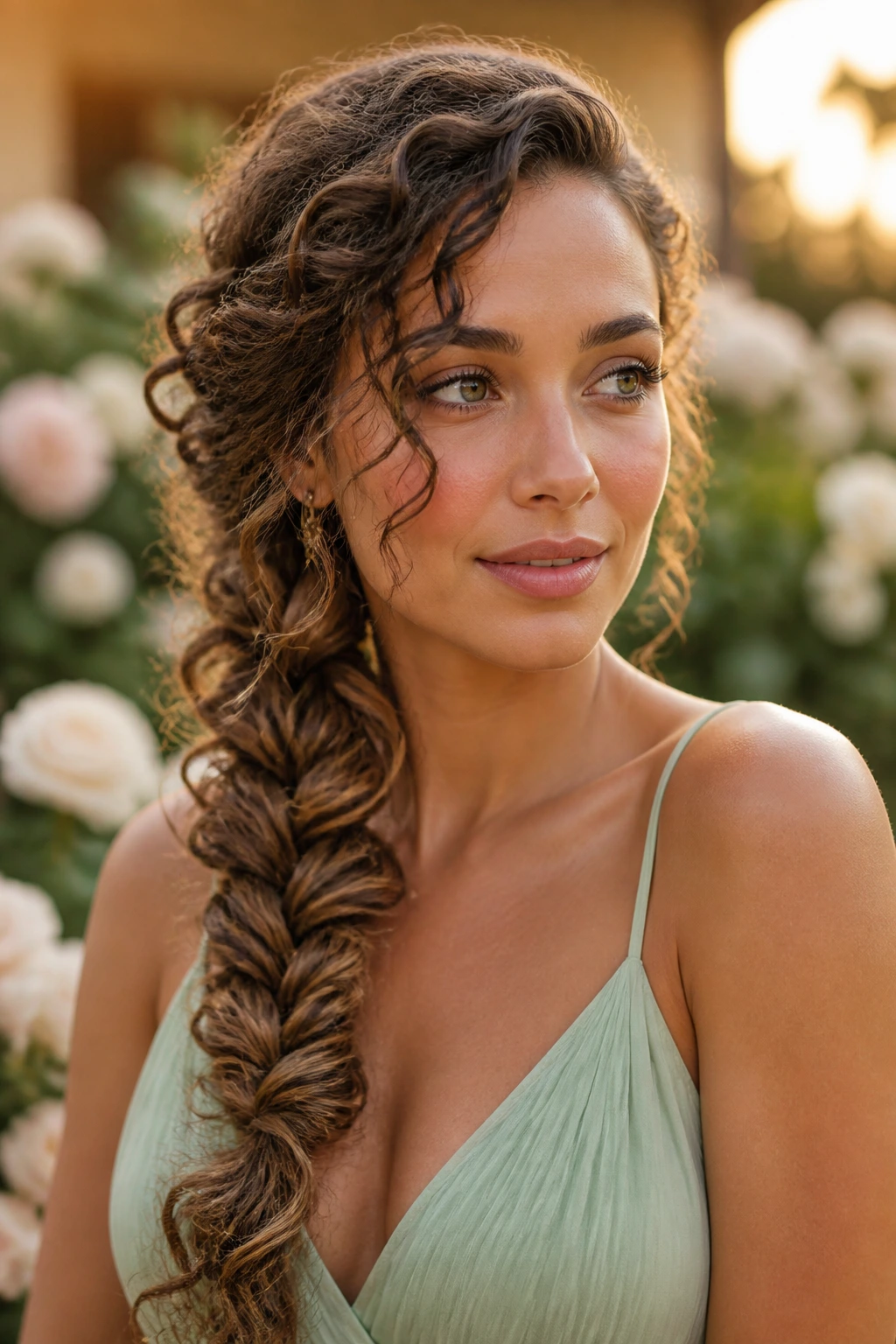
A chunky fishtail braid has texture for days. It looks intricate, but the woven pattern is really just a repeated split-and-cross motion. On curly hair, that pattern gets extra depth because the strands don’t lie flat against one another. The braid looks almost rope-like, which is one reason it feels so dressed up.
This works best when you let the braid sit over one shoulder. The asymmetry softens the look and keeps it from feeling too formal. Pull the braid apart gently after it’s secured, but only a little — overpancaking can make curly hair look fuzzy instead of full.
13. Pull-Through Braid on Thick Curls
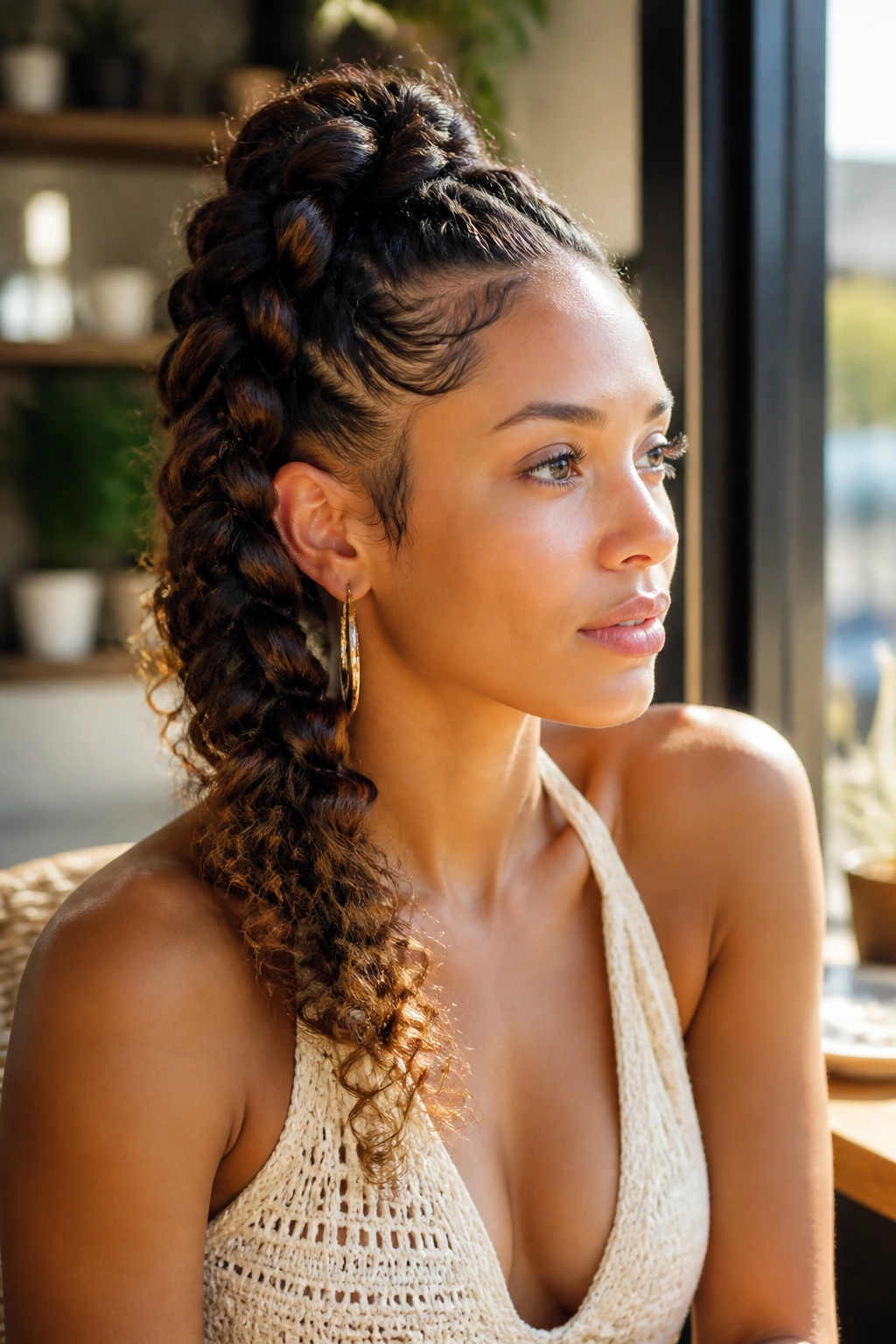
Why bother with a pull-through braid? Because thick curly hair can make a regular braid look tiny and flat. The pull-through version uses ponytail sections stacked one over another, which creates a bigger, more sculpted braid that still leaves room for texture. It’s a good choice when you want drama without intricate hand-braiding.
Quick Fit Check
- Best for: Dense curls and long lengths
- Look: Fuller than a standard braid, smoother than a twist-out
- Tool note: Clear elastics or small snag-free bands
- Finish: A light mist of flexible hold spray
The braid stays especially pretty if you leave the last few inches curly instead of trapping the entire length inside the plait. That little shift keeps it from looking like a costume piece.
14. Knotless Braids with Curly Ends
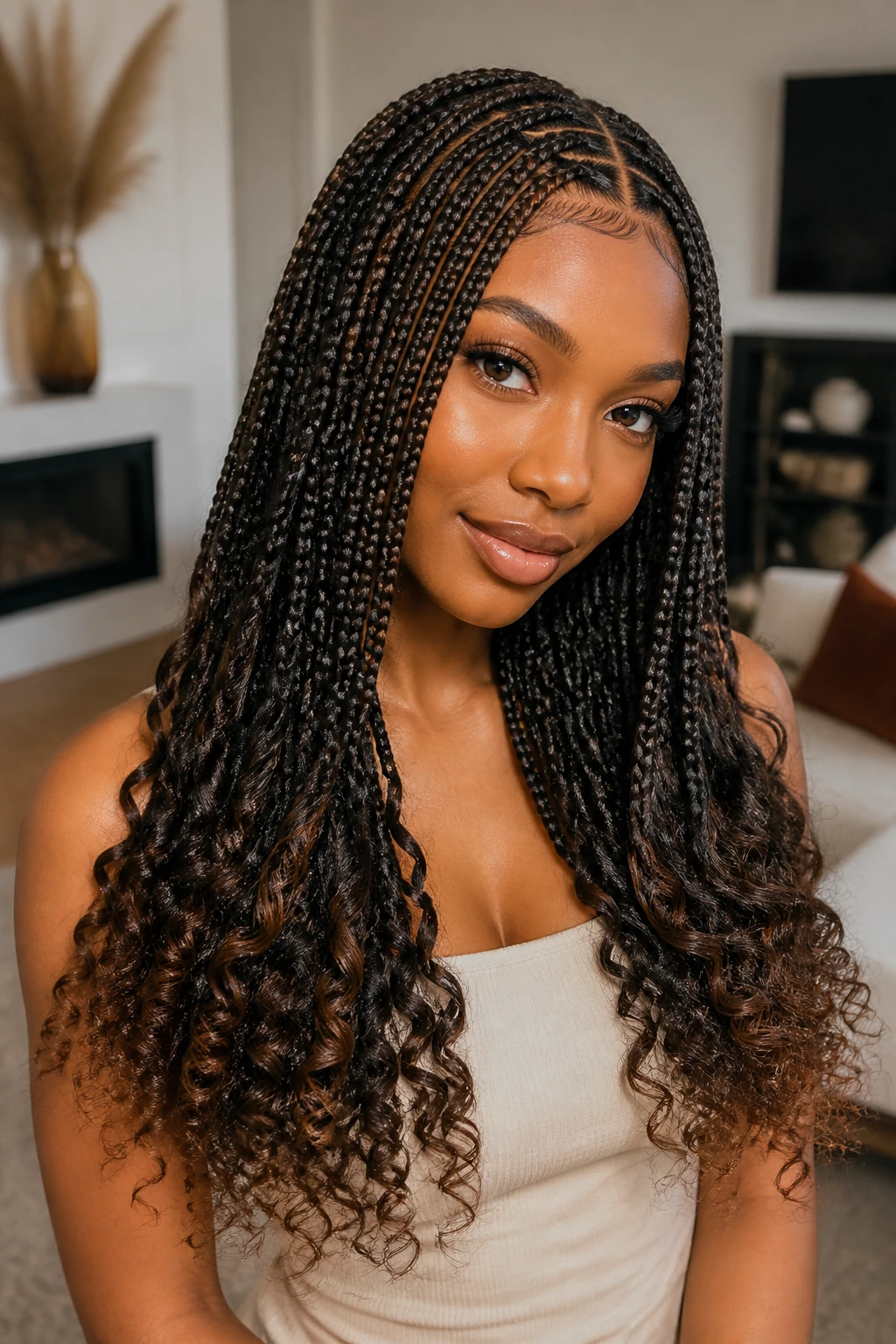
Knotless braids are the protective style people keep coming back to because they sit flatter at the scalp and usually feel gentler than older, bulkier braid methods. Add curly ends, and the style softens immediately. The braids can be long, medium, or shoulder-length; the curled tips make the whole thing look less rigid.
If you want summer hair that lasts more than a day, this is one of the strongest options in the bunch. Keep the parts clean, the tension even, and the ends well moisturized so they do not fray into a puffball by the second week.
15. Braided Chignon with a Soft Halo
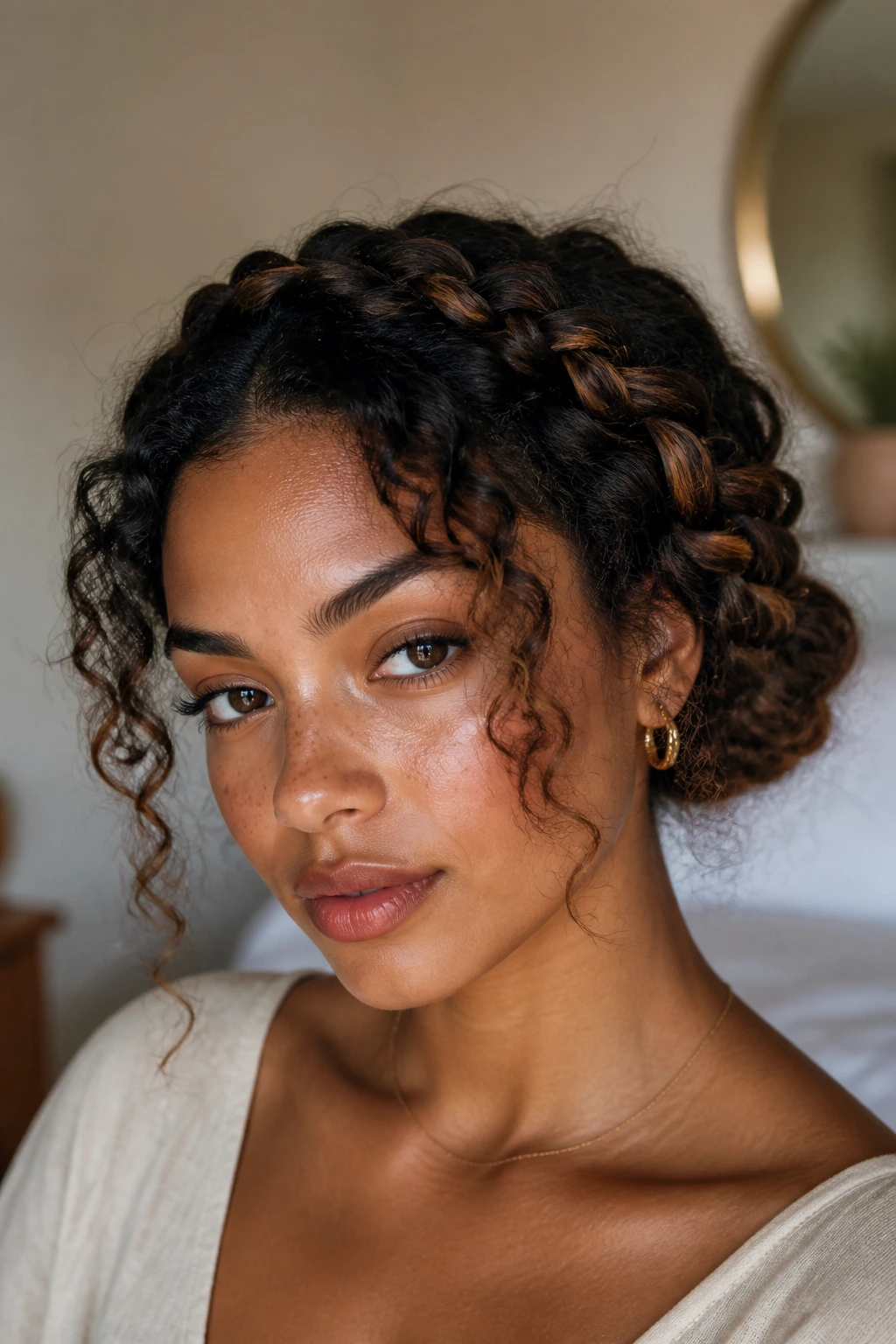
A braided chignon has that old-school polished feel, but on curly hair it looks warmer and less severe than the version you’d see on pin-straight hair. Braid the length, coil it low at the back, and let a few curls escape around the hairline. That soft halo around the face changes the whole mood.
The trick is to avoid making the bun too compact. If you crush the braid into a tight knot, the texture disappears. Leave the coil a bit loose and pin it from different directions so the shape holds without looking pressed down.
16. Four-Strand Side Braid
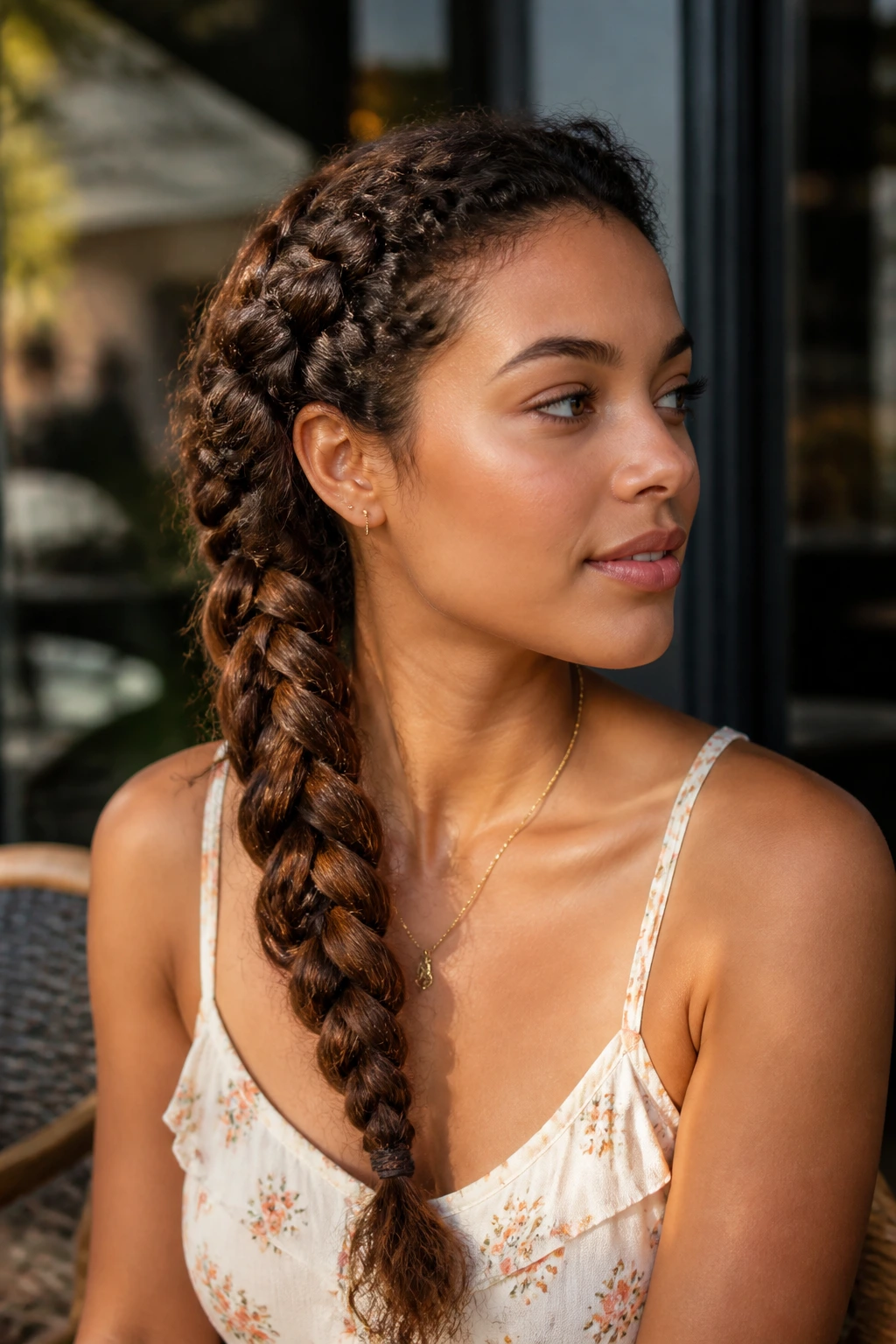
A four-strand braid is for the person who wants the braid itself to be the detail. It has more visible pattern than a standard three-strand braid, but it still feels clean and wearable. On curly hair, the extra weave catches the light and gives the style a kind of quiet texture that looks good up close.
What to Watch For
The first few passes can feel fiddly. That’s normal. If the hair is very textured, dampen the section slightly or smooth in a pea-sized amount of styling cream so the strands stay separated while you braid. Wear it over one shoulder and secure the end with a small covered elastic.
17. Side Cornrows into a Curly Ponytail
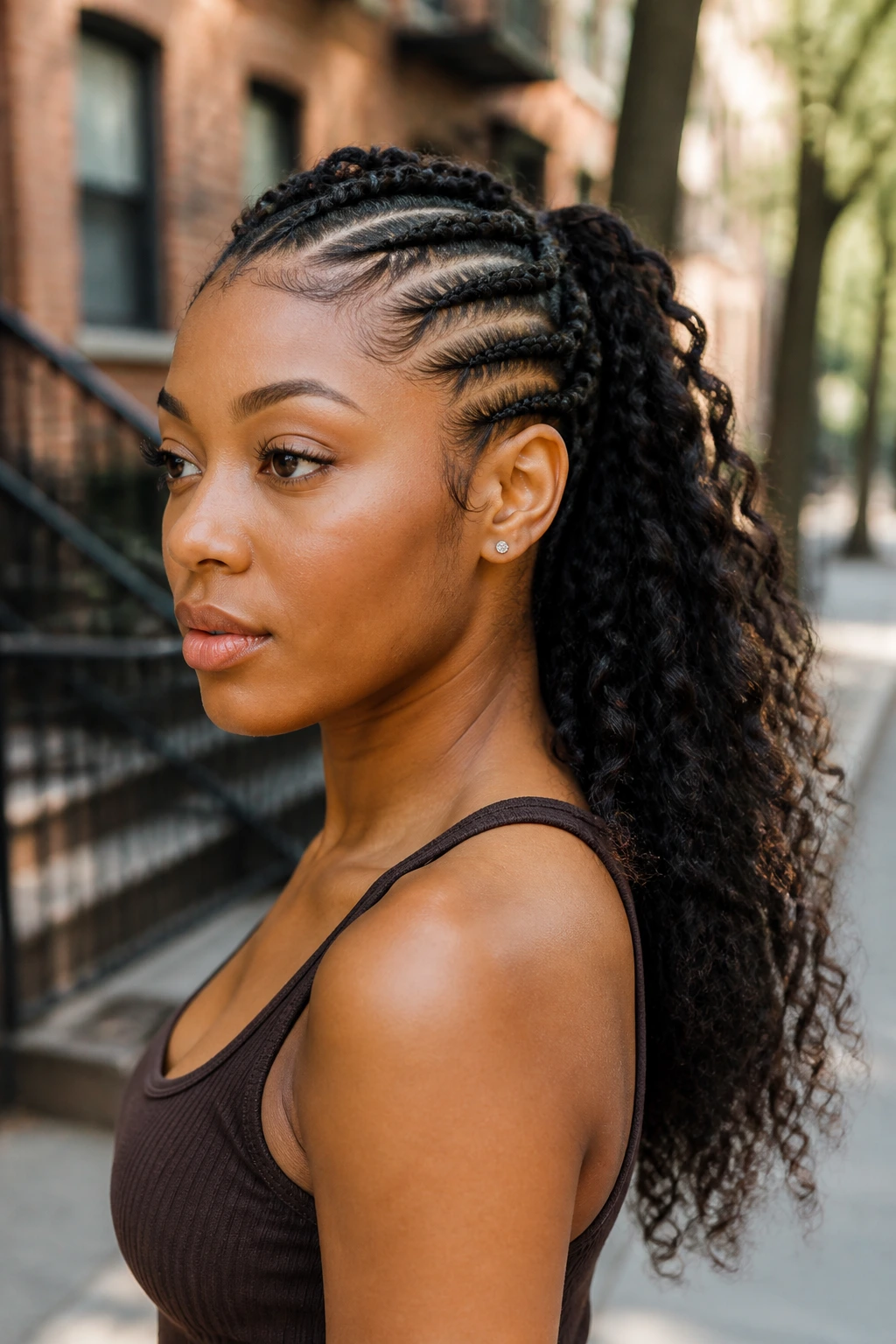
This style gives you the cleanest possible front and the biggest possible ponytail at the back. Side cornrows hold the sides flat and neat, then everything gathers into a curly ponytail that still moves when you walk. It’s a strong choice when you need your hair off your face but do not want the whole style to look severe.
The contrast is what makes it elegant. Sleek sides. Full back. If your curls are dense, this can take a lot of pressure off the temples because the weight is centered instead of spread across the hairline.
18. Braided Faux Hawk
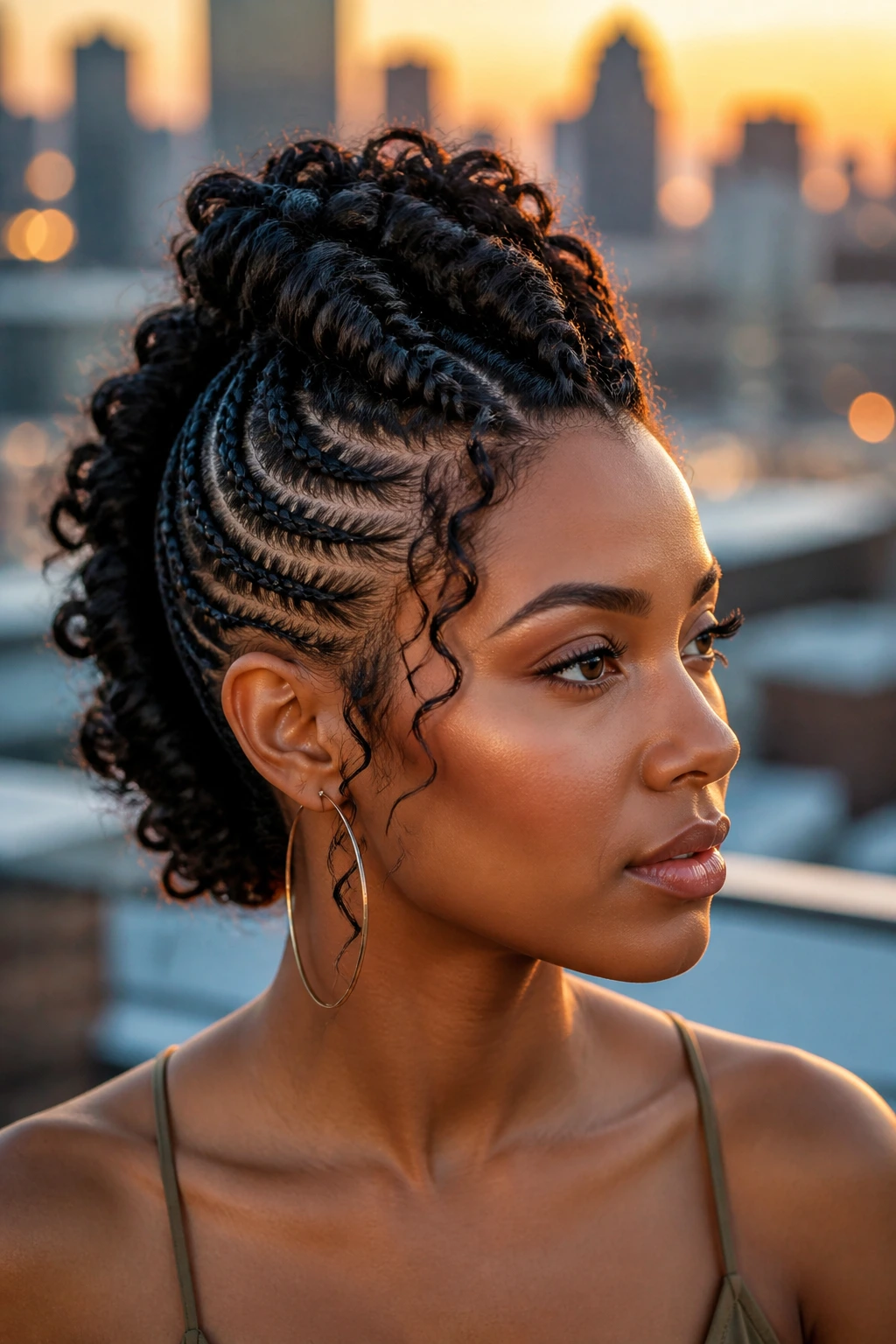
A braided faux hawk is the bold one in the group. The sides are braided or pinned close, and the center line stays high and full so the style rises instead of widening. On curly hair, that middle section has natural body, which means you can build the shape without a mountain of product.
It’s a good choice for nights out or any time you want the hair to make the statement for you. Keep the side braids neat and tight enough to stay put, but not so tight they pull the face down. The best faux hawks have some softness around the crown; the harsh ones look more costume than chic.
19. Twisted Crown Braid with Loose Length
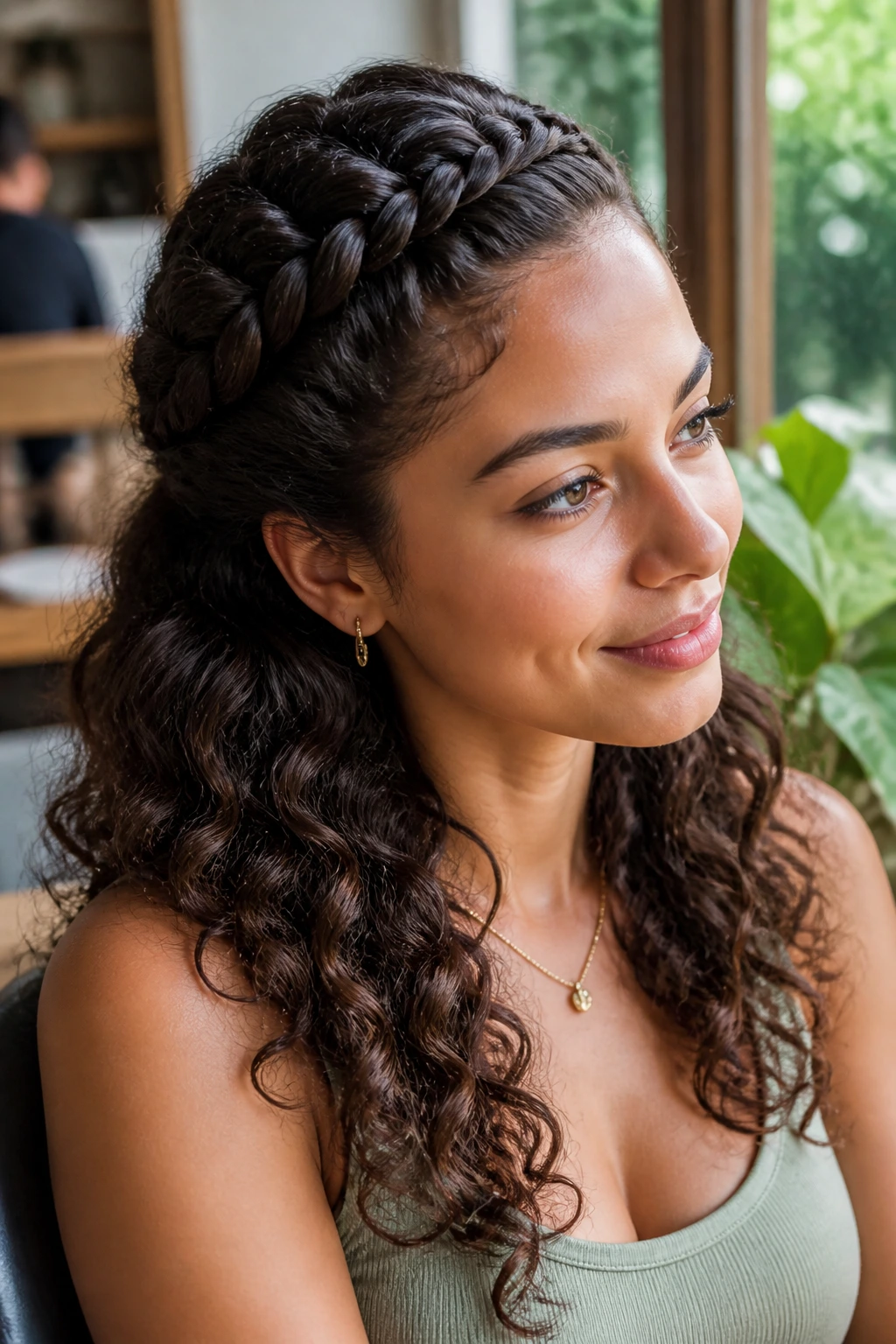
A twisted crown braid is a little easier than a full crown braid, and that’s not a downgrade. Sometimes the cleaner line of a twist reads more modern than a heavily woven braid. Start at the temples, sweep around the head, and pin the twist at the back while the curly length stays down.
This one suits people who like the look of hair away from the face but do not want to sacrifice volume. Add a side part and a small curl left near the cheekbone, and the whole style becomes softer right away. It’s one of those looks that can lean casual or dressy depending on the earrings.
20. Bubble Braid with a Braided Base
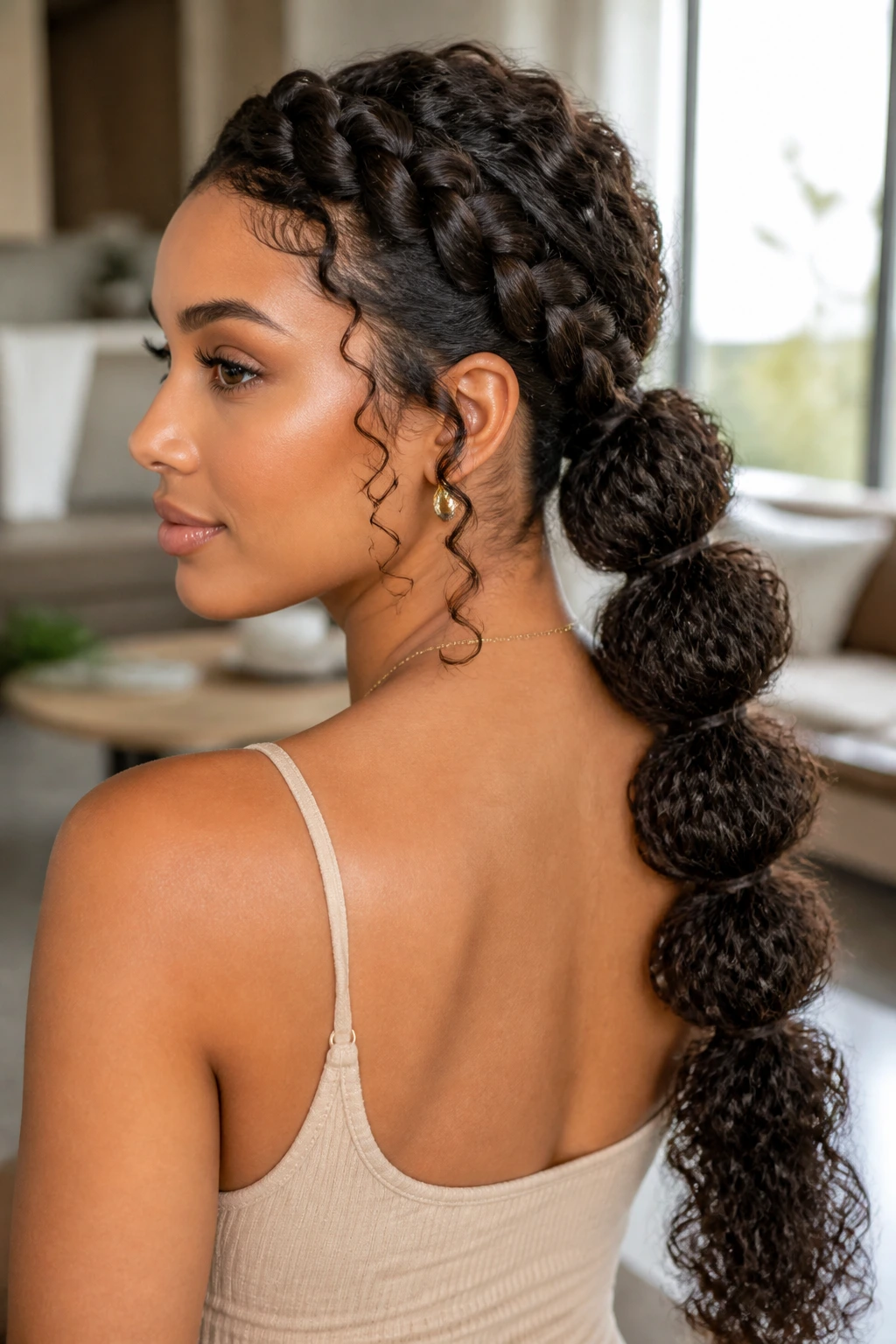
A bubble braid is basically a series of puffed sections tied off at intervals, and on curly hair it has a pleasing, sculptural shape. Start with a neat braided base at the crown or nape, then add elastics every few inches down the length. Gently tug each section until it rounds out into a bubble.
The braid base gives the style a more finished feel than a plain bubble ponytail. That matters if you want something playful that still looks deliberate. A satin ribbon or a tiny metal cuff at the last bubble can turn the whole style from sporty to dressed up in one move.
21. Goddess Braid Updo
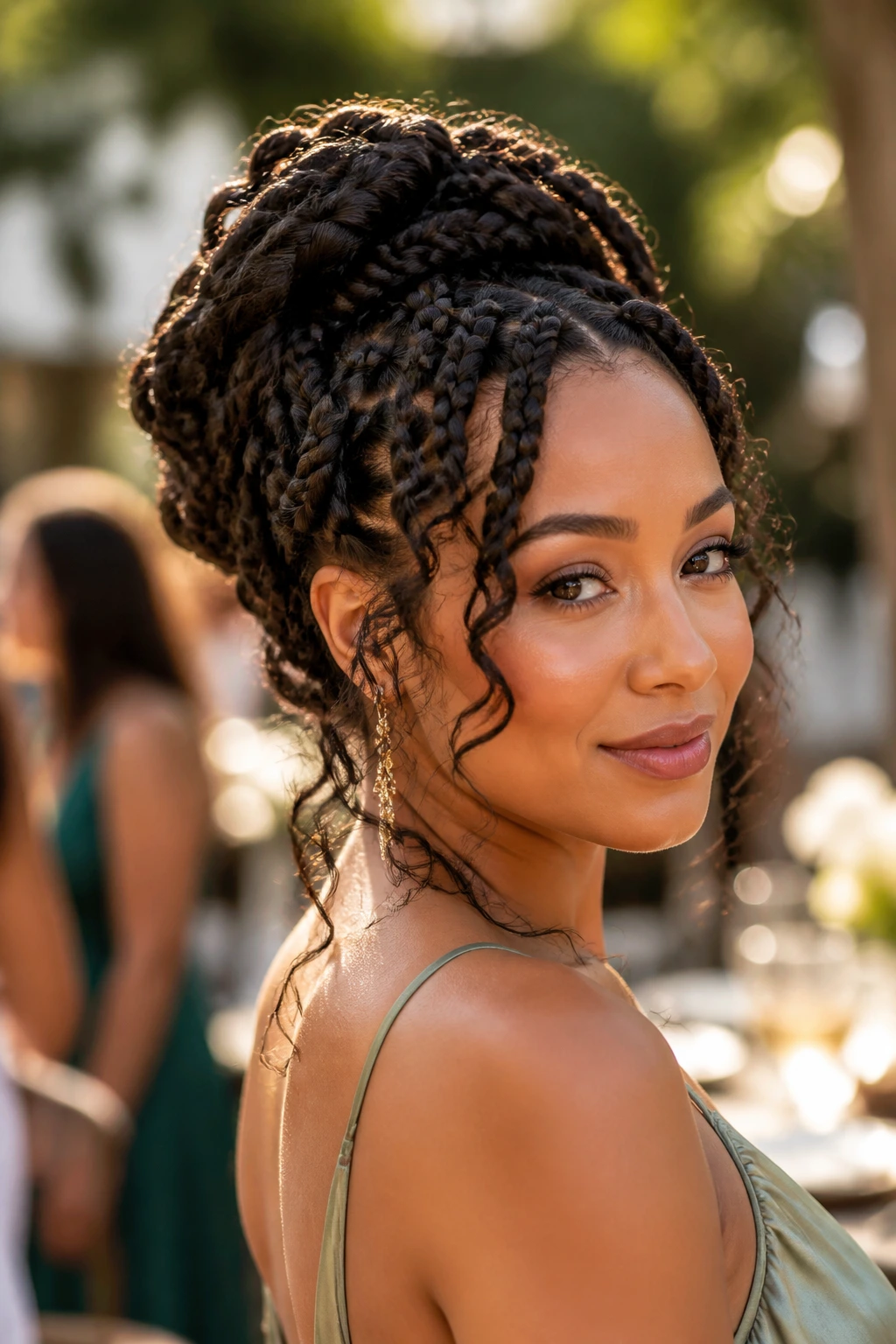
The goddess braid updo is the one I’d pick when the hair needs to look rich, soft, and controlled all at once. Large braids are pinned into an updo, and curly pieces are left out around the face and nape so the style doesn’t feel boxy. It’s fuller than a classic bun and more relaxed than a formal chignon.
How It Feels in Real Life
There’s a nice weight to this style, but it shouldn’t pull. If the updo feels heavy at the crown, the pins are probably doing too much work. Balance the braid placement across the head, and use a few well-placed bobby pins instead of loading one spot with metal.
22. Two Front Braids with a Curly Fro
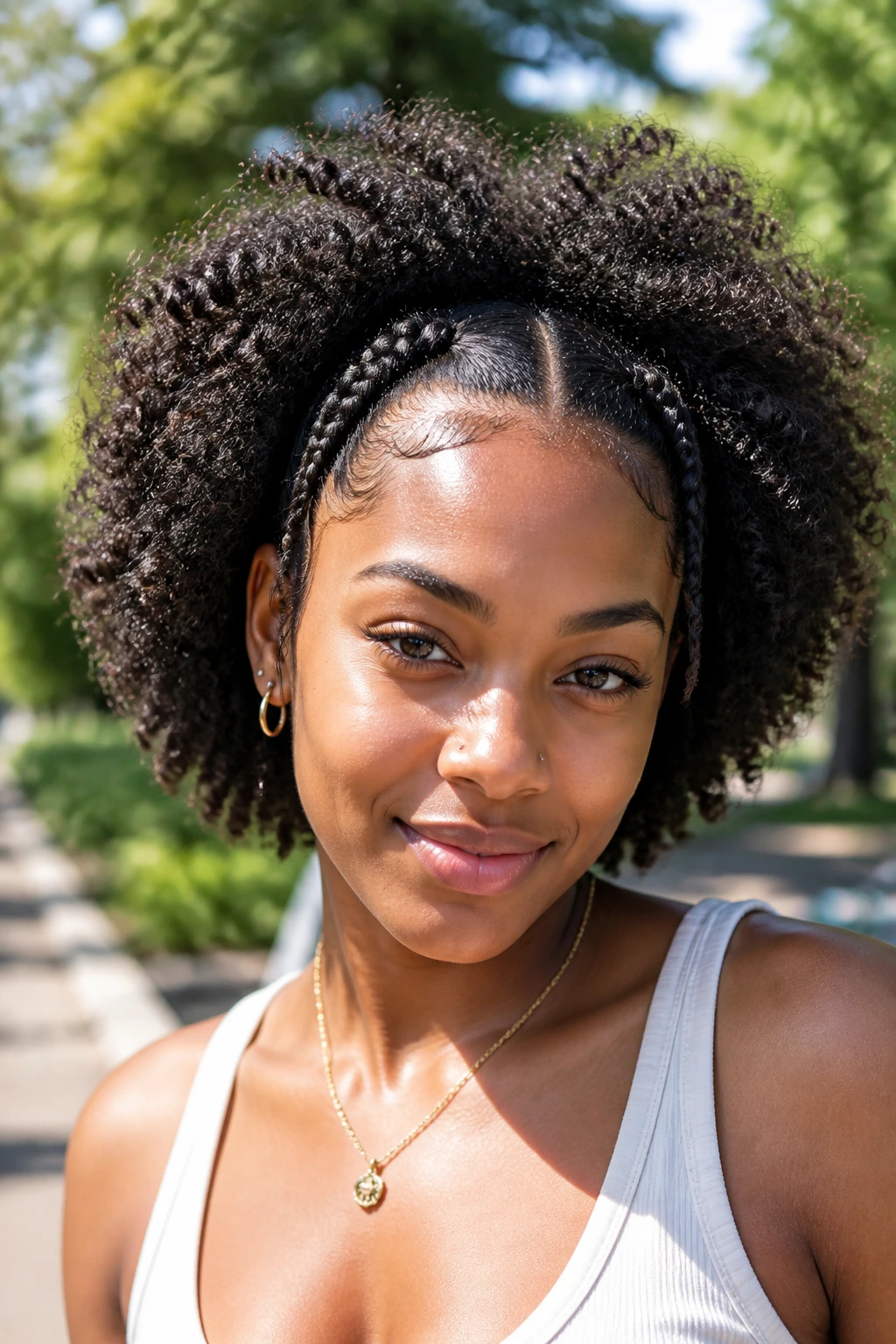
This one is simple, and that’s the charm. Two small braids at the front keep the hair off the face, while the rest of the curls stay big, fluffy, and visible. It gives the look just enough structure to feel intentional without stealing the show from the curls themselves.
The parts should be clean and even, but the rest of the hair can stay loose and full. That contrast looks especially good when the curls are stretched a bit at the root and more defined at the ends. It’s the kind of style that works for school, errands, or dinner, which is more useful than a lot of fancier options.
23. Braided Low Ponytail with Wrapped Base
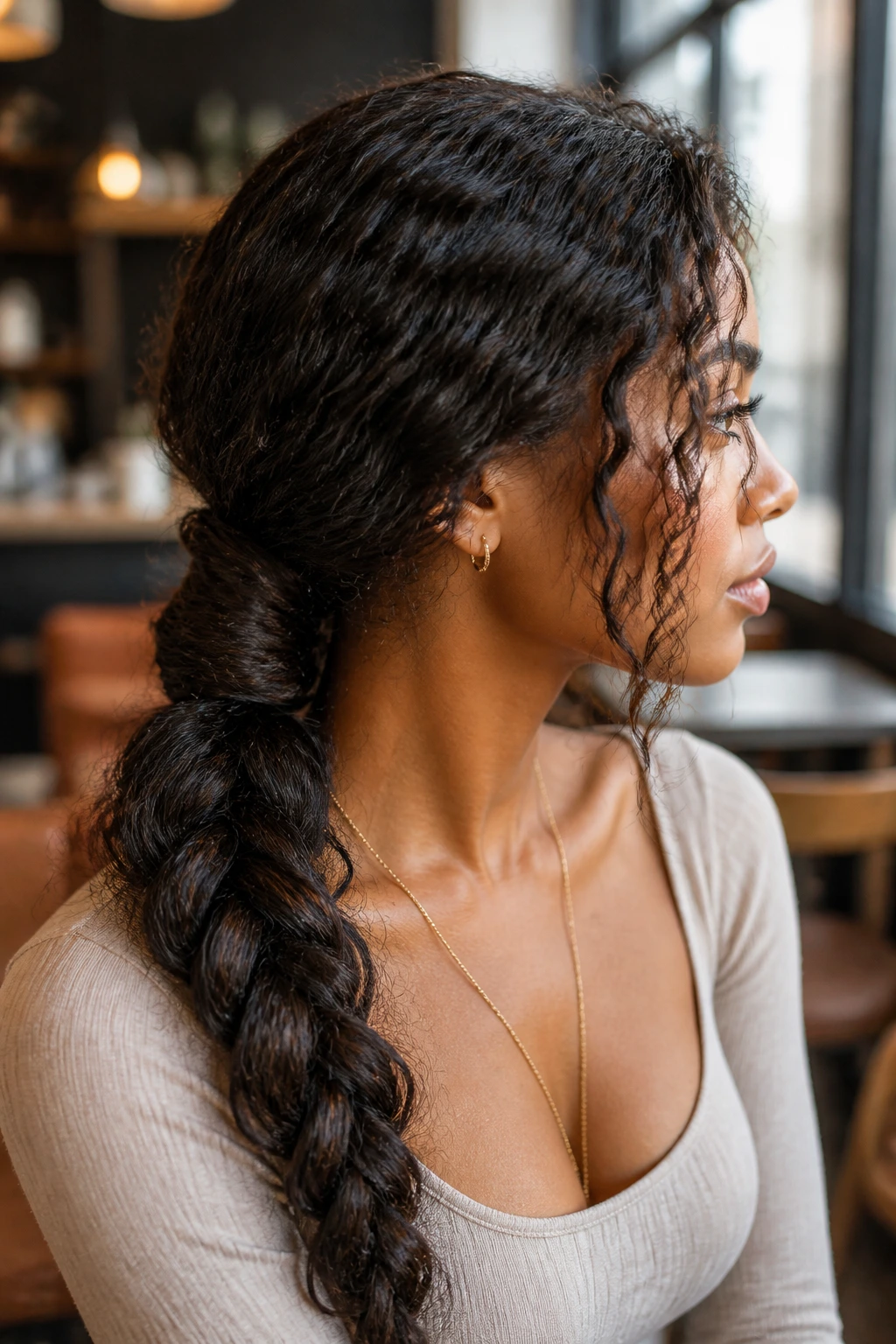
A low ponytail can look flat fast. Braid it first, wrap a small section around the base, and suddenly the whole thing feels much more polished. On curly hair, the braid gives shape and the loose ponytail keeps movement, which is a better trade than forcing the hair into a strict knot.
This style is useful on days when you want something neat but not stiff. Keep the ponytail low enough that it doesn’t catch on collars, and let a few curls sit loose around the ears if the face needs softness. The wrapped base is the part that makes it look finished.
24. Micro Braid Accent Rows
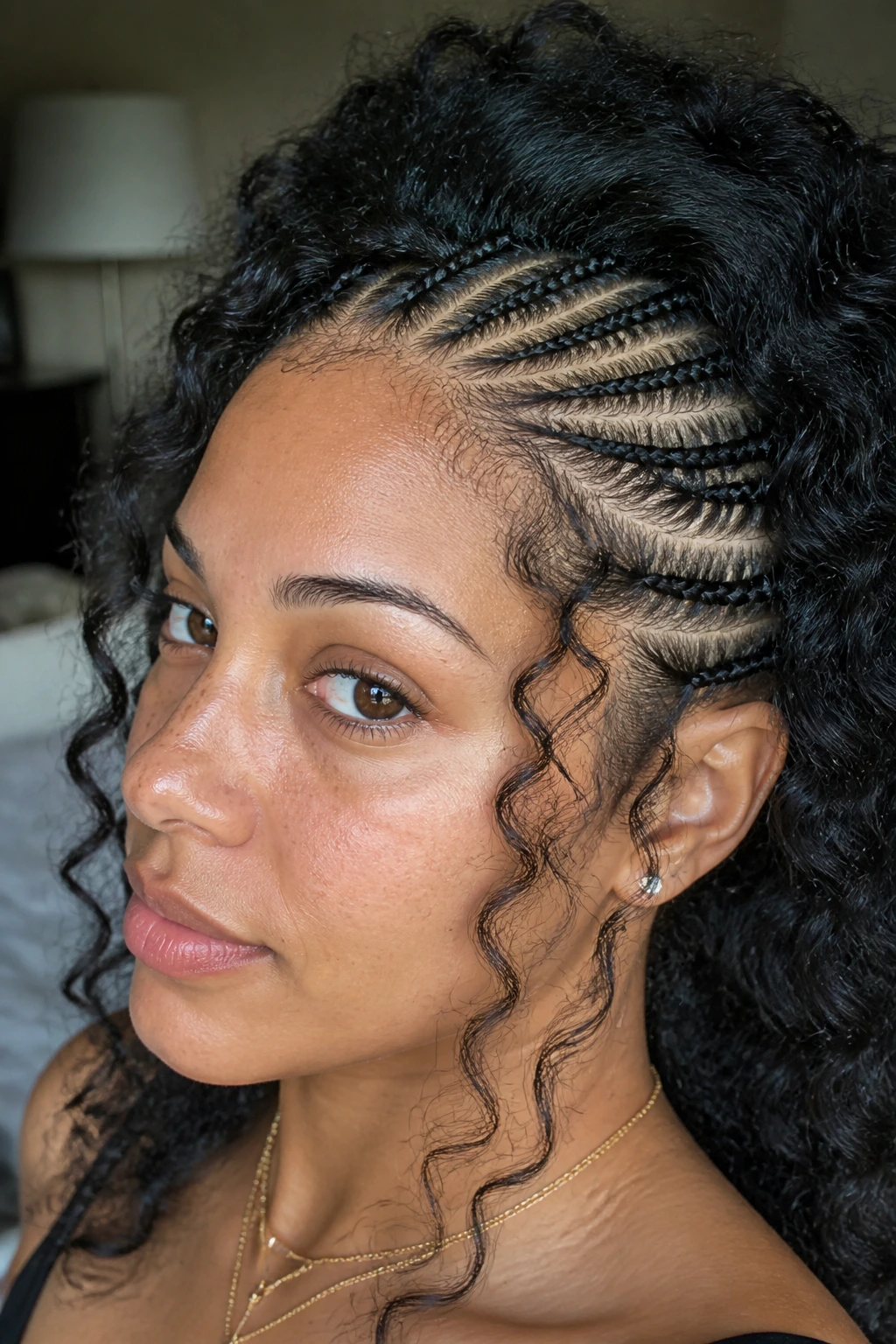
Micro braid accents are subtle, but they change the whole hairline. A few tiny braids placed near the part or temple add texture without taking over the style. They’re especially nice when the rest of the hair is worn loose and curly, because the small braids act like punctuation marks.
If you’ve got fine curls, this is one of the easier ways to add visual detail without committing to a full braid style. If the hair is thick, keep the accent rows narrow and clean so they don’t get swallowed. A little shine spray at the parting can make the detail stand out without making the scalp look greasy.
25. Braided Top Knot with Curly Tail
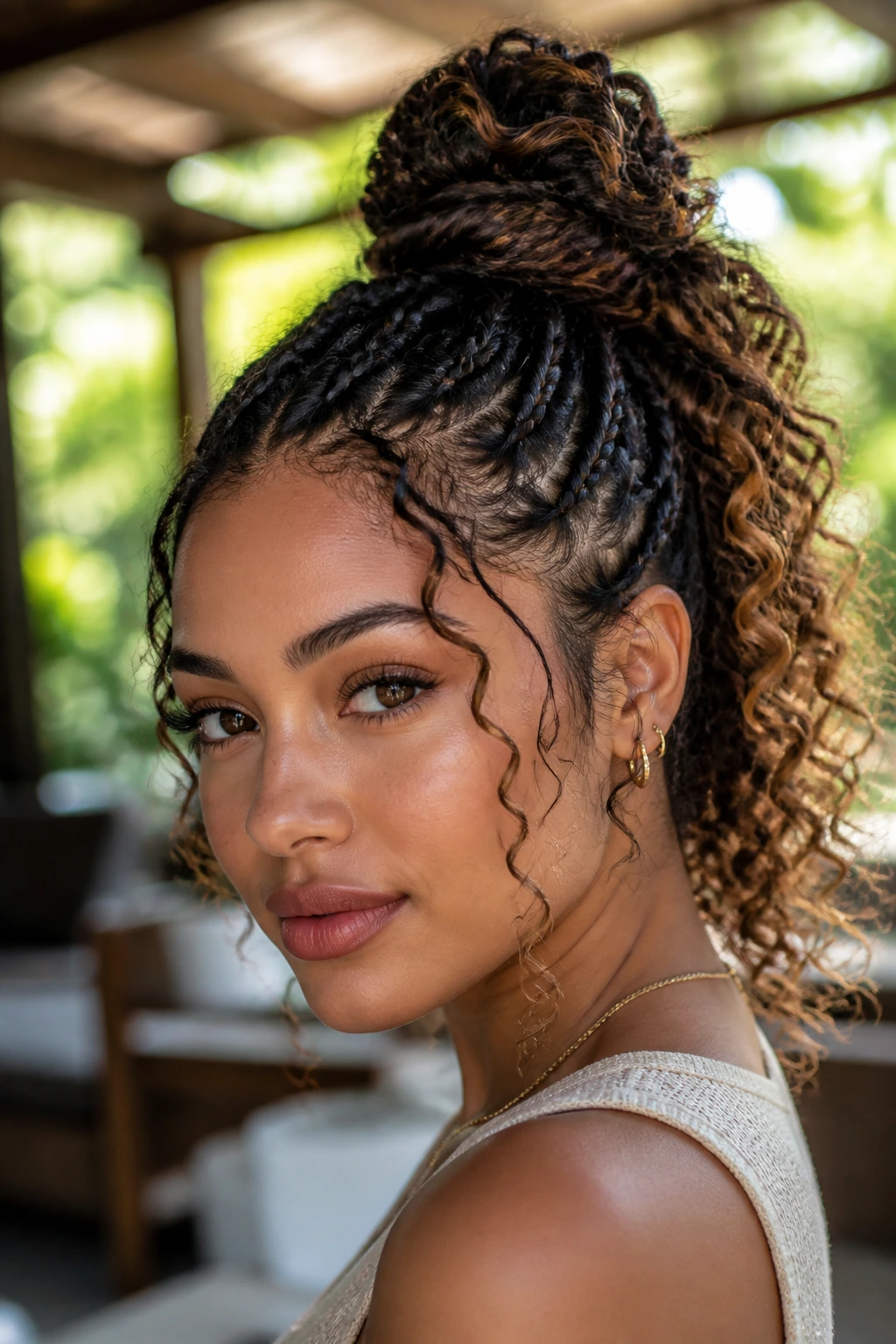
A braided top knot with a curly tail has a smart, slightly undone balance that works in heat. The braid lifts the front and sides, the knot keeps the bulk off the neck, and the curly tail gives the whole style a touch of movement. It’s one of the few high-up styles that still feels soft.
The base should be secure, but not compressed. Leave the knot with a little fullness, and let the tail keep its natural spring instead of brushing it into submission. If you want one braid style you can wear on a sweltering day without looking like you surrendered to the weather, this is a strong pick.
Why Braids Beat the Heat on Curly Hair
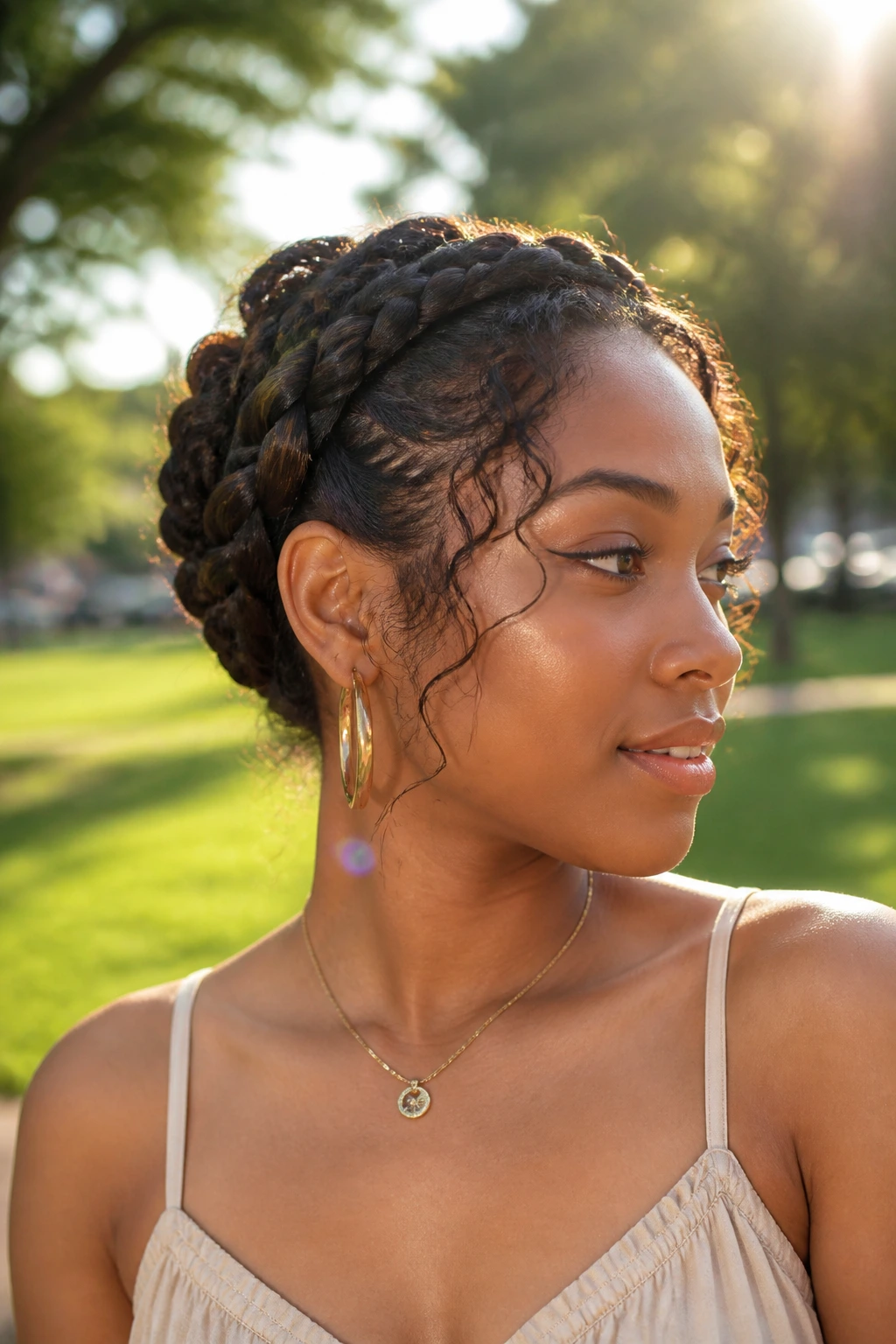
Braids earn their keep in summer because they solve the two things curly hair struggles with most in heat: swelling and friction. When curls rub on damp skin, collars, and seat backs, they puff. When they’re woven into a braid or twist, they stay contained, and that alone can buy you hours of neatness.
The other advantage is simpler than people think. Braids let you leave less hair exposed, which means less direct sun, less dryness at the ends, and fewer times reaching for a brush that only makes the situation worse. That’s why so many braid styles look better on day two than a blowout does.
There’s also a practical bonus: if your hair is already textured, a braid often holds better than it would on straighter hair. Curly strands catch each other. They grip. They stay put. That makes a braided style more forgiving when you’re running around in warm weather and not standing in front of a vanity all day.
Essential Tools for Braided Styles on Curly Hair
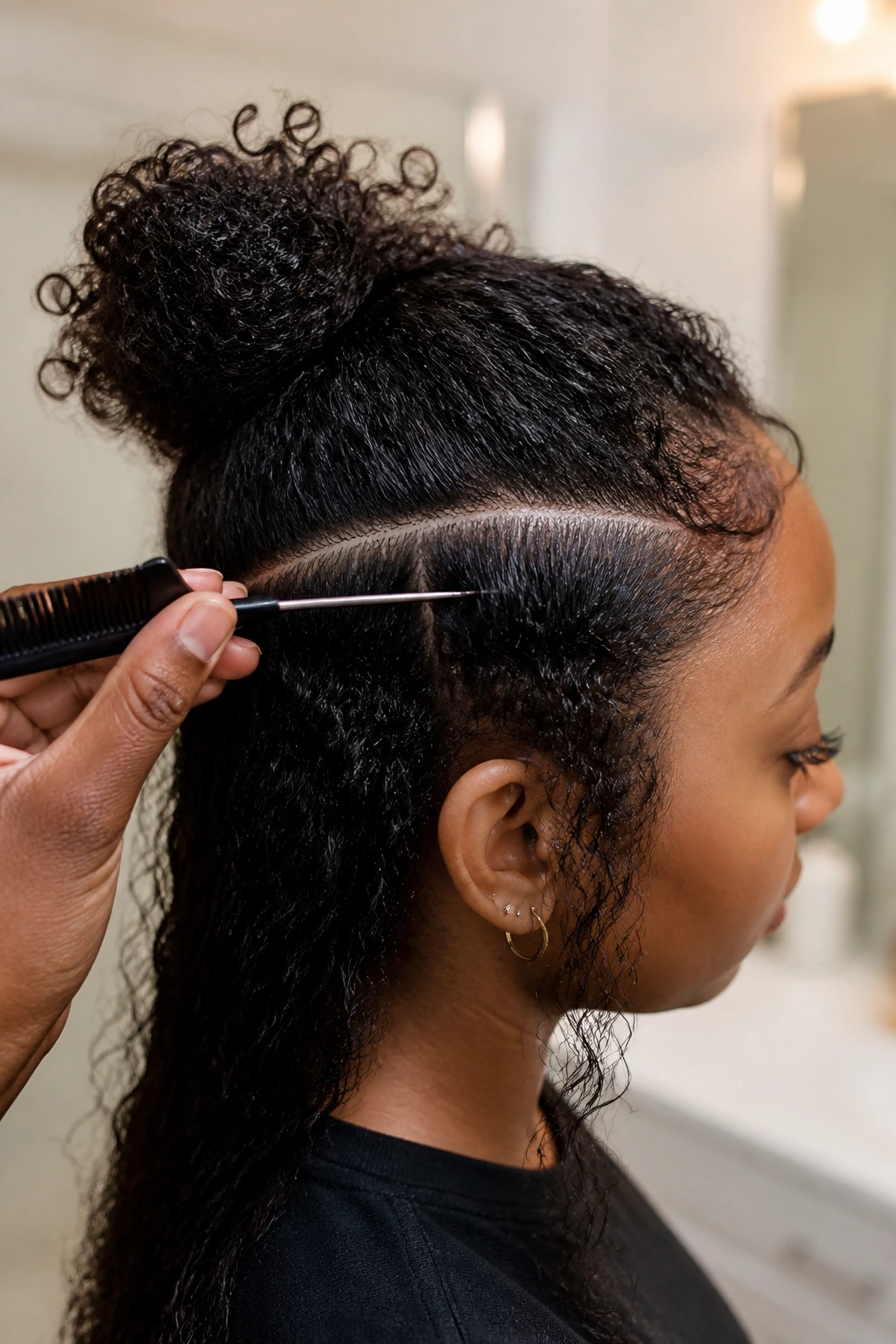
- Rat-tail comb: Best for clean parts and sectioning the hairline without shredding curls.
- Wide-tooth comb: Good for detangling wet or damp hair before braiding; it moves through curls without ripping.
- Detangling brush: Useful on thicker curls when you want smoother sections for feed-ins or ponytail bases.
- Duckbill clips or claw clips: Keep sections separated while you work; this saves time and keeps the braid line cleaner.
- Small snag-free elastics: Needed for ponytails, pull-through braids, and bubble sections; avoid rubber bands that break hair.
- Bobby pins: Handy for halos, crown braids, buns, and tucked ends; choose ones that match your hair color if possible.
- Light gel or edge control: Helps with parting lines and flyaways, especially around the temples and nape.
- Leave-in conditioner or curl cream: Gives slip and softness before styling; use a light hand near the roots.
- Mousse or foam styler: Good for smoothing finished braids and keeping loose curls defined without heavy buildup.
- Satin scarf or bonnet: Protects the style overnight and keeps the braids from frizzing into a halo by morning.
Smart Product and Prep Choices for Curly Hair Braids
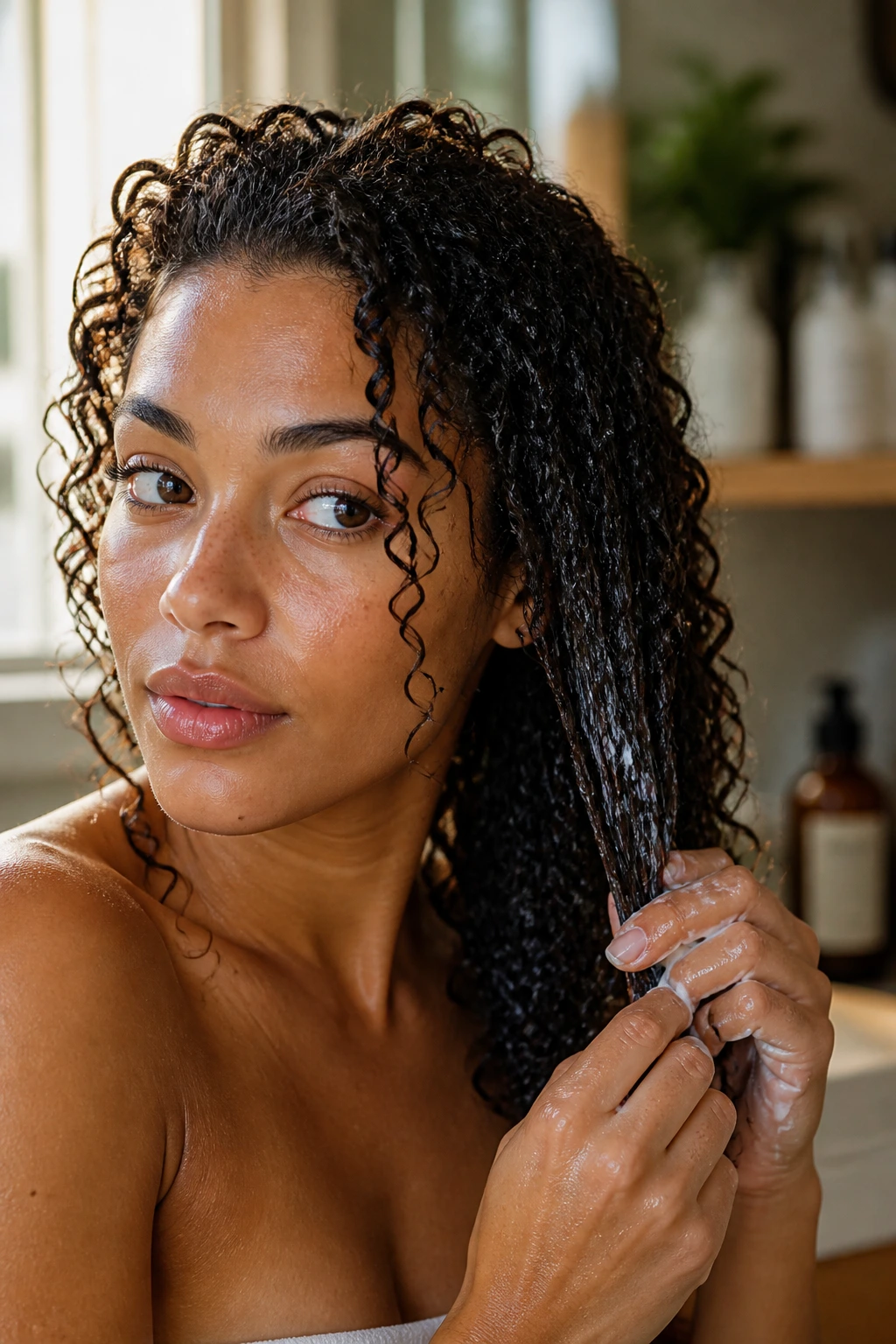
The prep matters as much as the braid itself. If the hair starts dry and tangled, the style will fight you the whole way. I like to start with a light cleanse, a leave-in conditioner, and just enough cream to give slip. Heavy butters can make parts look greasy by noon, especially in hot weather, so save the dense stuff for ends that need help.
For braid styles that sit close to the head, a water-based gel or light edge product gives cleaner parts than a thick waxy paste. Use the smallest amount that gets the job done. Too much product on curly hair turns the braid base dark and sticky, and the style can look older than it is after one hot afternoon.
If you’re shopping for products, look at the hold and finish instead of the marketing language. A flexible mousse can be better than a strong gel for loose styles like waterfall braids or half-up twists. A stronger gel makes sense for cornrows or sleek feed-ins where the front has to stay flat. And if your curls are fine, a lot of oil near the scalp is a bad trade; it weighs the whole style down and makes the braid slip.
How to Wear These Styles Without Fighting the Outfit
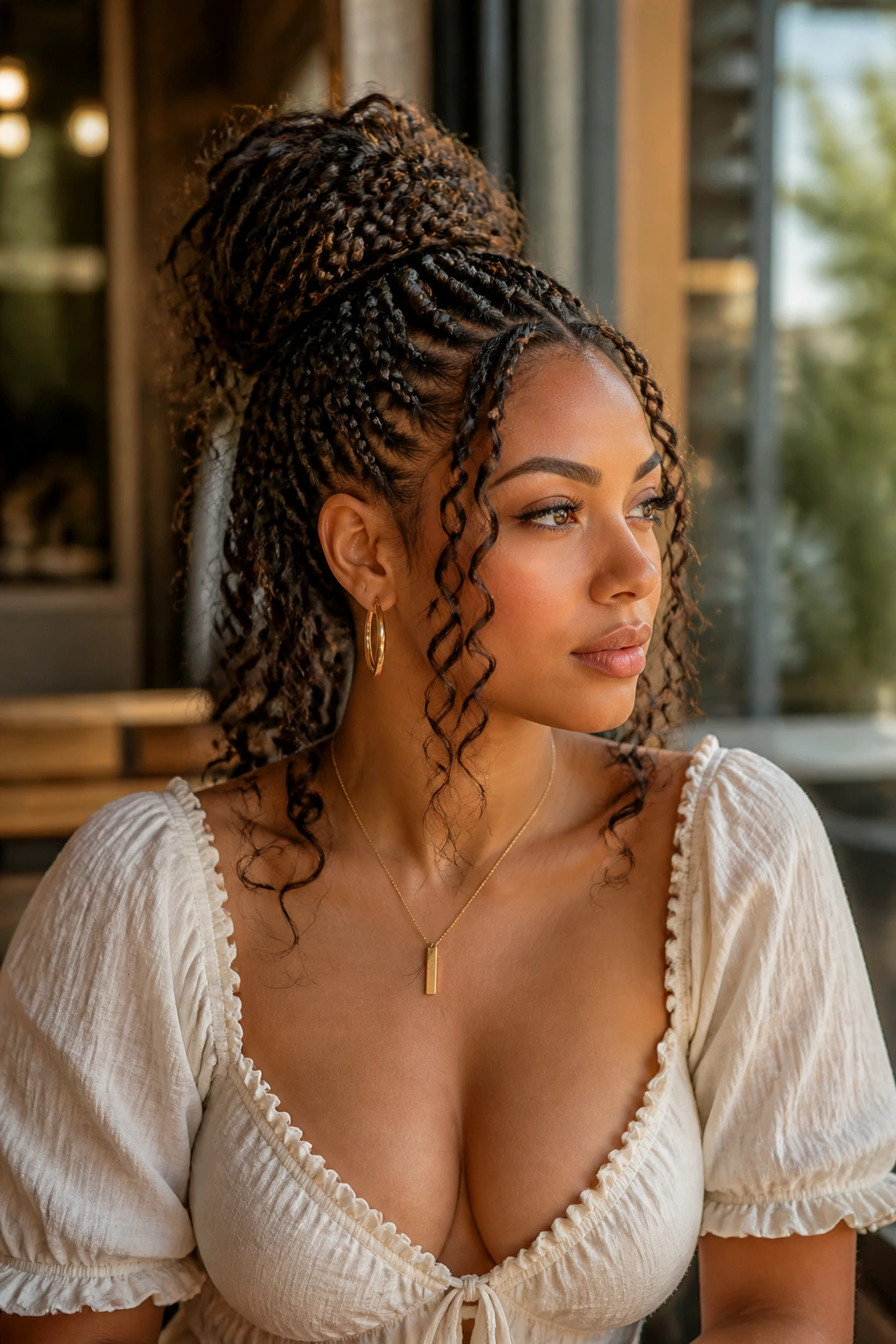
Face shape: Crown braids, halo styles, and side-swept plaits open up the cheekbones nicely, while faux hawks and high puffs add lift if your face likes a little height. If you prefer softness, leave a curl or two near the jawline.
Outfit match: Big braided updos look sharp with open necklines, square necks, and simple earrings. Loose side braids lean easier with linen shirts, tank tops, and anything with a collar that might otherwise crush your hair.
Event fit: For a wedding or dinner, reach for the chignon, halo, or braided crown. For a market run or beach day, the high puff, accent braids, or top knot make more sense because they handle sweat and wind with less drama.
Accessory rule: Small gold cuffs, pearl pins, and thin ribbon work better than bulky clips on curly braid styles. Too much ornamentation can fight the texture instead of highlighting it.
Extra Tips and Finishers That Make Braids Look Intentional
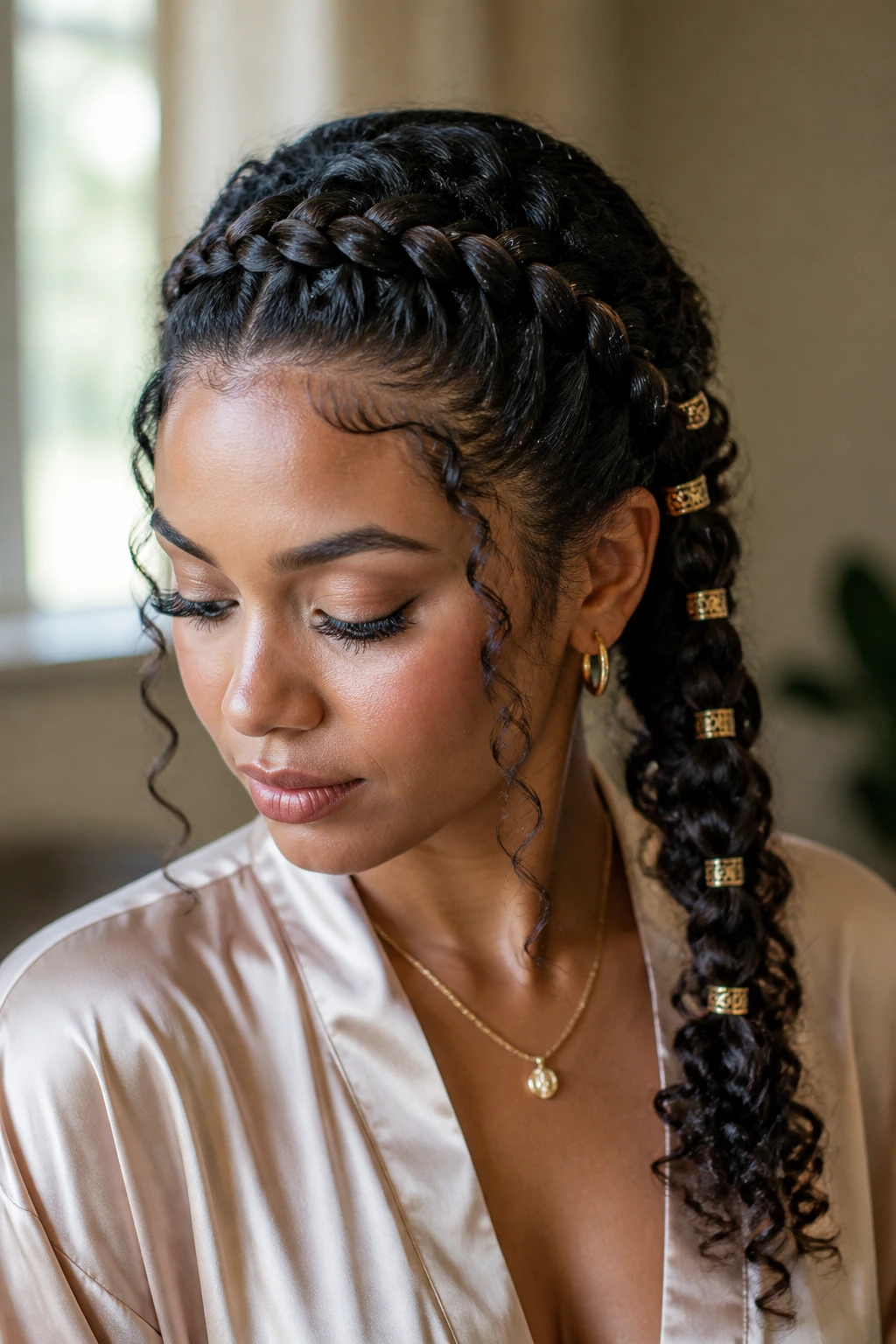
Braid Tension: Start a little looser at the hairline than you think you need. Curly hair swells, and a braid that feels fine indoors can feel tight after an hour outside.
Shine Boost: Smooth a pea-sized amount of lightweight serum or oil only on the braid lengths and ends. Skip the scalp unless the hair is genuinely dry there; shine at the roots can read greasy fast.
Customization: Add a few gold cuffs to one side, thread a ribbon through a fishtail, or tuck in a narrow scarf at the base of a bun. Small changes matter more than people expect.
Make-It-Yours: Fine curls often look best in slimmer braids with tighter parts, while dense curls need larger sections and more hidden pins so the shape does not collapse under its own weight.
Night Care, Refreshing, and Taking Braids Out Cleanly
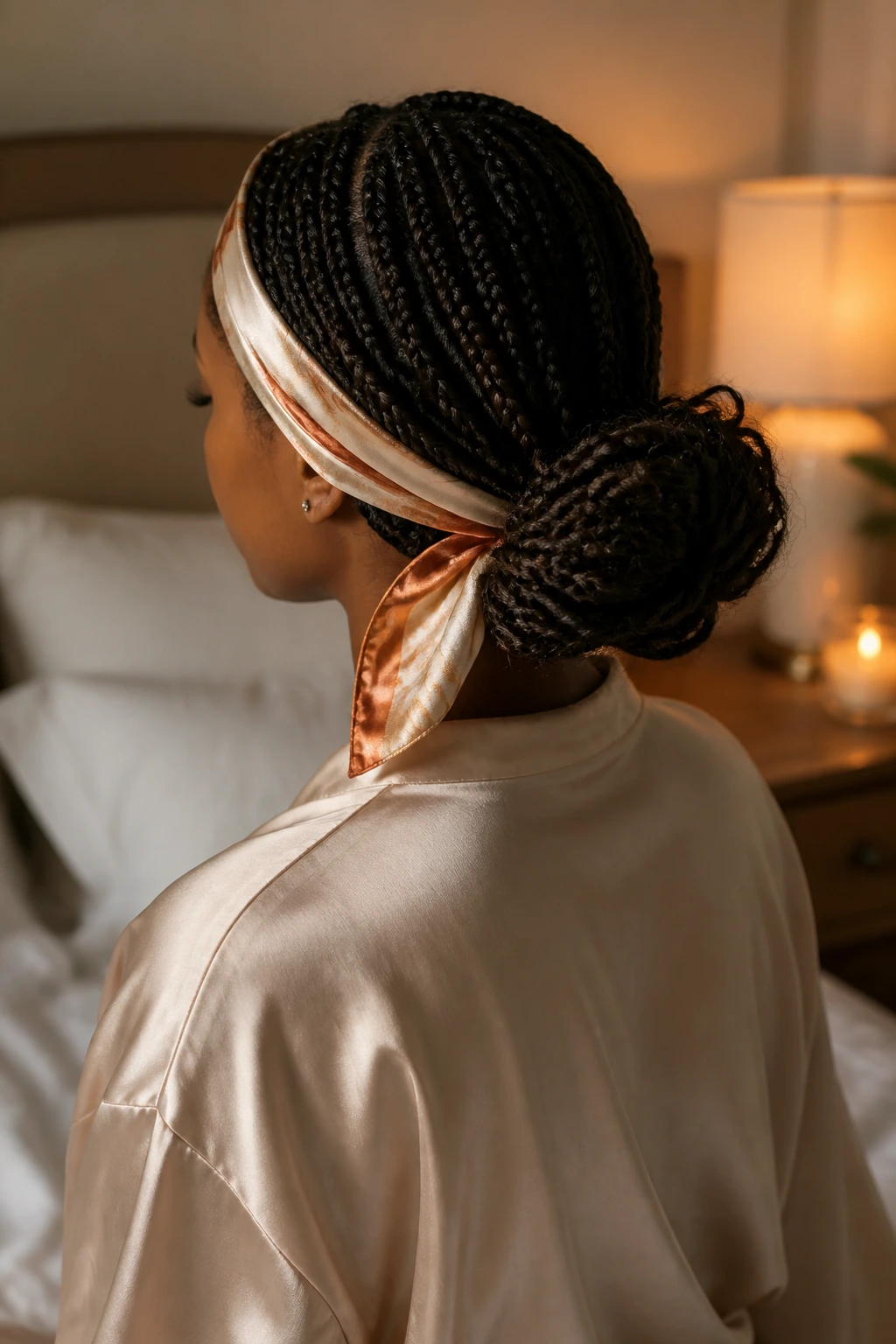
Loose braided styles usually look freshest for one to three days, especially if you sleep on a satin pillowcase or wrap the hair with a satin scarf. Protective braids like knotless styles, cornrows, or feed-ins can last much longer, often two to six weeks depending on tension, density, and how well the scalp is cared for.
For overnight care, tuck the style gently instead of crushing it flat. A loose pineapple works for styles with curls left out. A scarf tied around the hairline helps with crown braids, headbands, and accent rows. If the style has a ponytail or bun, pin the base lightly before wrapping so the shape does not spread while you sleep.
Refreshing is simple. Mist the frizzy areas with water mixed with a little leave-in, smooth the braid with your hands, and re-twist or re-pin the front if needed. Do not soak the whole head. Wet curls can swell and distort the braid pattern, especially around the face.
When it’s time to take a style down, go slow. Add slip with a light oil or detangling conditioner, unpin each section before pulling it apart, and finger-detangle the shed hair as you go. Ripping through the ends is how you get breakage, and there’s no reason for that when patience works better.
Common Mistakes That Make Braids Puff, Pull, or Fall Flat
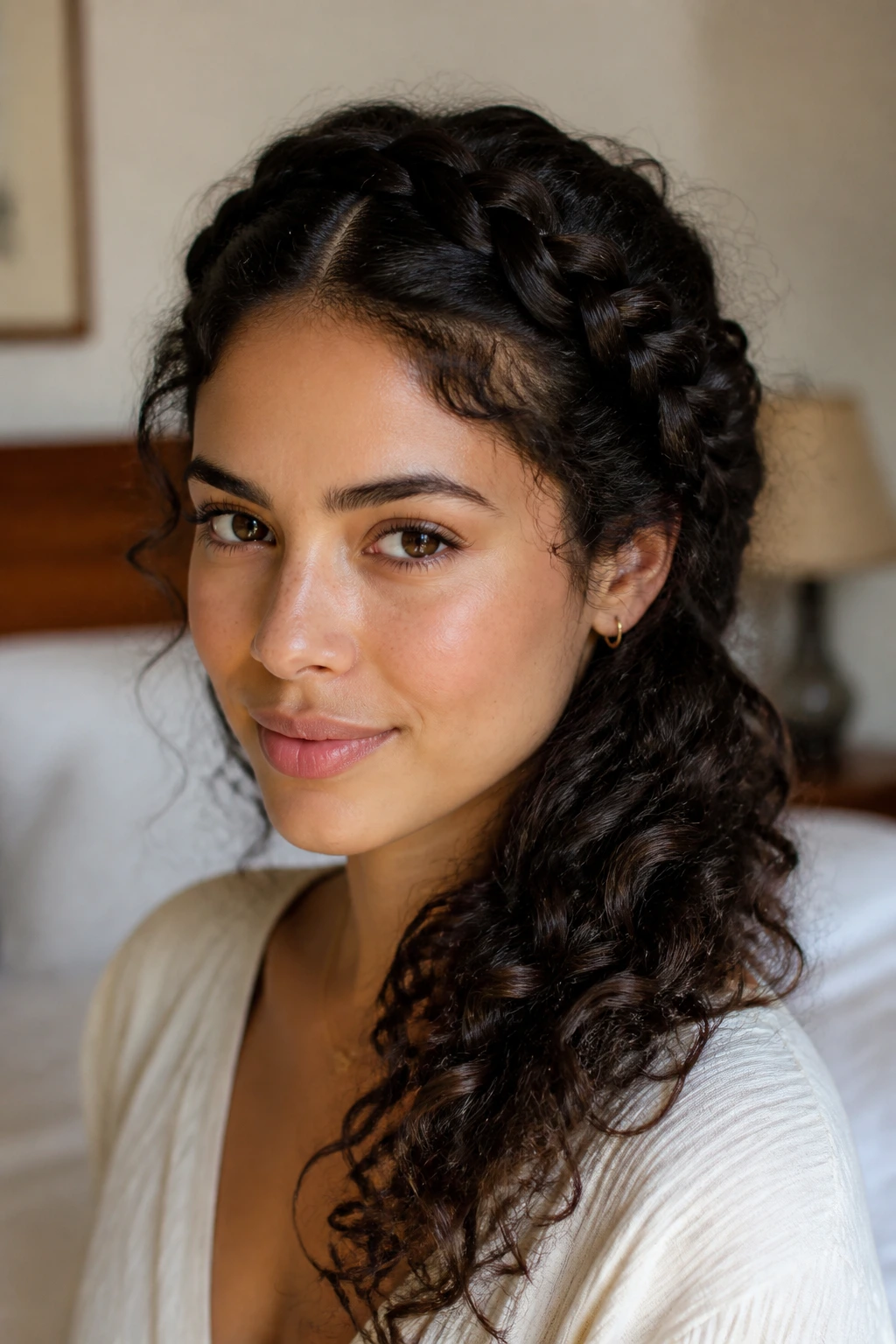
The first mistake is braiding hair that is too wet. It sounds efficient, but damp curls can swell, frizz, and even stay cold at the center of a dense braid. Let the hair dry to the point where it feels pliable, not damp enough to leave a mark on your shirt.
The second mistake is pulling the hairline too tight. That gives a crisp finish for about five minutes, then the scalp starts to complain. If you see skin pulling into ridges, the braid is too tight. Back off and redo it.
Heavy product at the roots is another easy way to ruin the look. It makes parts greasy, collects lint, and weighs down the crown. Use product where the braid needs control, not everywhere because you’re nervous.
People also forget about balance. A tiny braid on a dense head can disappear; a huge braid on fine curls can slide and loosen. Match braid size to hair density, and the style usually starts behaving.
Variations and Adaptations to Try
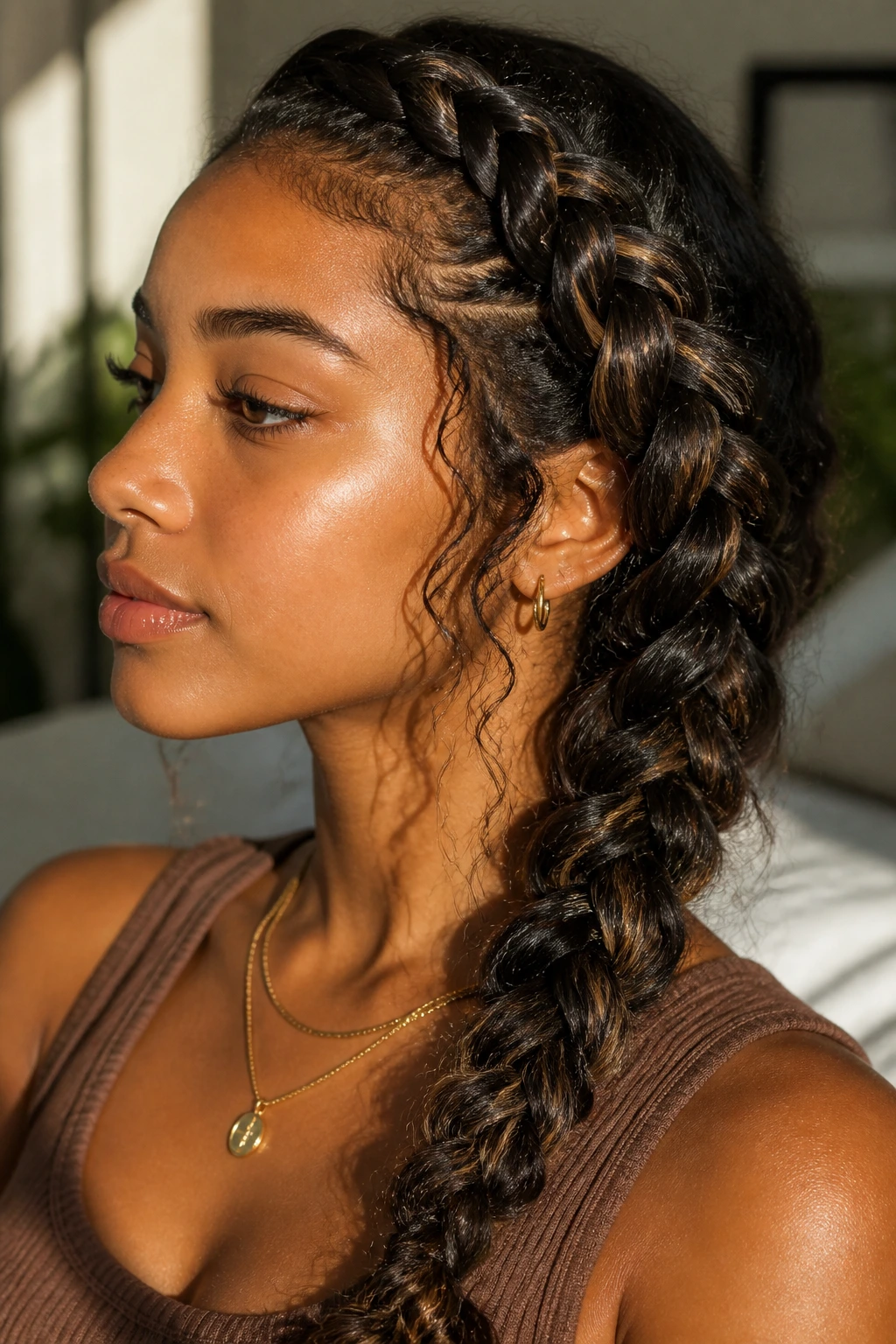
Fine-Curl Lift: Use smaller sections, lighter products, and more pins. Fine curls get swallowed by oversized braids, so a narrower braid line keeps the style readable.
Thick-Hair Statement Version: Choose pull-through braids, chunky side braids, or a faux hawk. These styles handle density without collapsing into a flat rope by midafternoon.
Short-Hair Accent Edit: Focus on mini braids, headbands, front twists, and side-cornrow details. Shorter curly hair often looks best when the braid is an accent instead of the whole story.
Protective Wear-Longer Option: Knotless braids, cornrow crowns, and braided ponytails give the most staying power. They need better nightly care, but they pay you back in fewer touch-ups.
Event-Ready Finish: Add pearl pins, a satin ribbon, or one clean metallic cuff. Keep the ornament small and deliberate so the braid stays the main event.
Frequently Asked Questions
How do I keep curly braid styles from frizzing in humidity?
Start with dry or mostly dry hair, use a light gel at the parting, and finish loose sections with a flexible-hold styler. At night, wrap the hair in satin so the front and ends don’t puff from friction.
Can I braid curly hair without stretching it first?
Yes, but the braid may look bulkier and shorter than you expect. If you want a cleaner line for feed-ins, crown braids, or sleek ponytails, lightly stretching the hair first gives you more control.
What braid styles work best for short curly hair?
Mini braids at the front, braided headbands, side twists, and accent rows work well because they don’t depend on long lengths. You can still get a dressed-up look without forcing a big braid that won’t stay anchored.
How tight should braids feel at the scalp?
Firm enough to hold shape, never sharp or painful. If your eyes feel pulled or the style leaves a headache before you’ve left the house, it’s too tight and will likely loosen badly anyway.
Do protective braids need scalp care?
Yes. Even neat protective styles need a clean scalp and a little moisture at the right times. A light scalp cleanse and careful drying help prevent buildup, itching, and that dull, dusty look some braids get after a while.
What if my curls slip out of the braid?
Use a little less conditioner at the roots, more grip at the section you’re braiding, and a small elastic where the braid ends. Very soft or freshly conditioned hair often needs a bit more hold before it stays put.
Can I wear these styles to work or a formal event?
Absolutely. Halo braids, chignons, feed-in ponytails, and braided buns read polished fast. Keep the part clean, the pins hidden, and the flyaways intentional rather than chaotic, and the style can go anywhere.
How do I keep braids from pulling on my edges?
Leave the first inch at the hairline looser, avoid stacking too much tension in one spot, and skip heavy braids where the hair is weakest. If the temple area feels sore, redo that section before the style sets in.
Braids That Still Look Good When the Day Runs Long
The nice thing about braided hairstyles on curly hair is that they age in an honest way. A good braid doesn’t have to look untouched at hour ten. It just has to hold its shape, keep the hair off your neck, and let the texture do what it naturally does best.
If you pick the braid that fits your density, your length, and the kind of day you’re actually having, summer stops being a battle with your hair. It becomes a little less about control and a lot more about shape. And that’s the sweet spot: hair that looks styled without feeling pinned down.