



Thin hair doesn’t need more length. It needs better geometry.
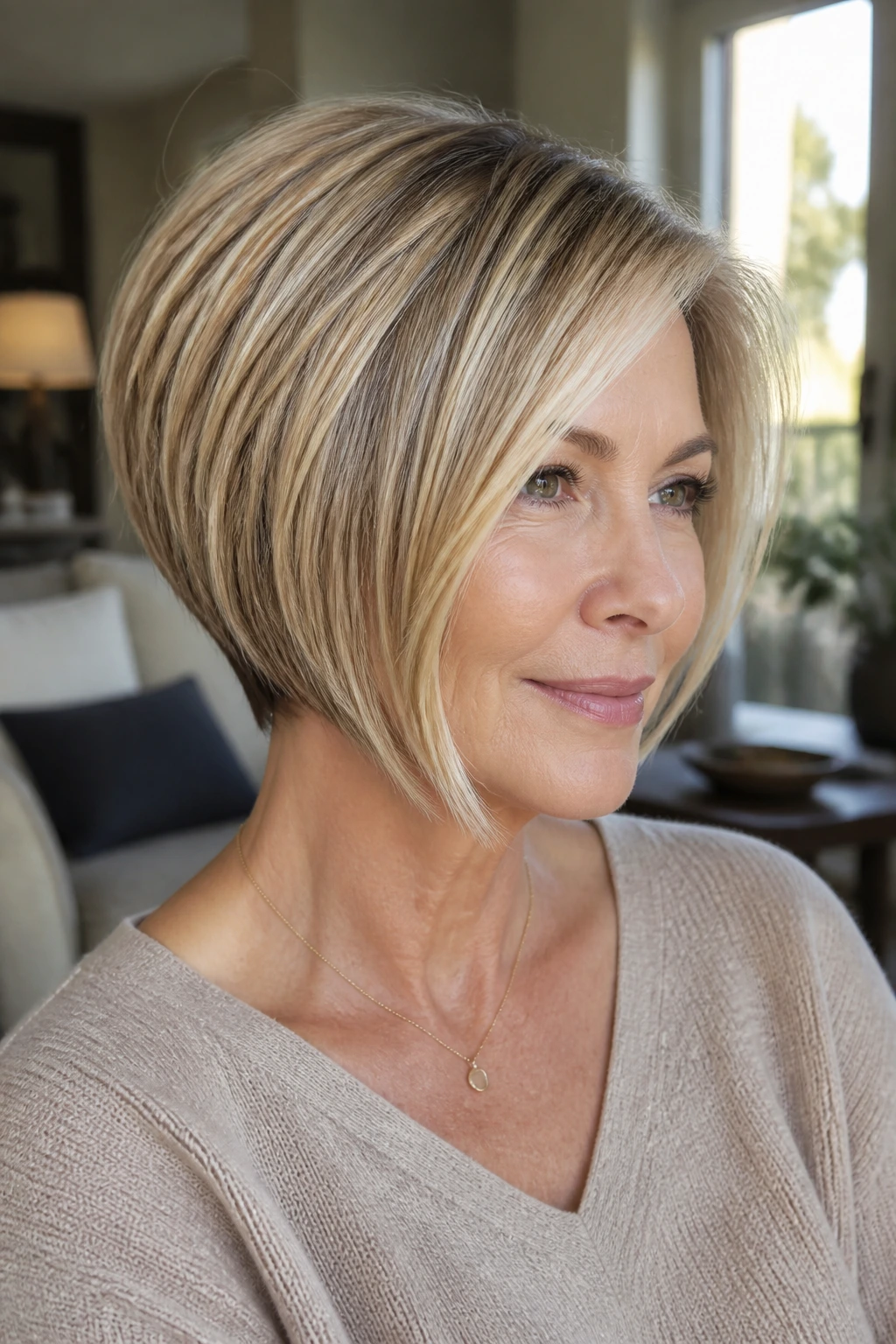
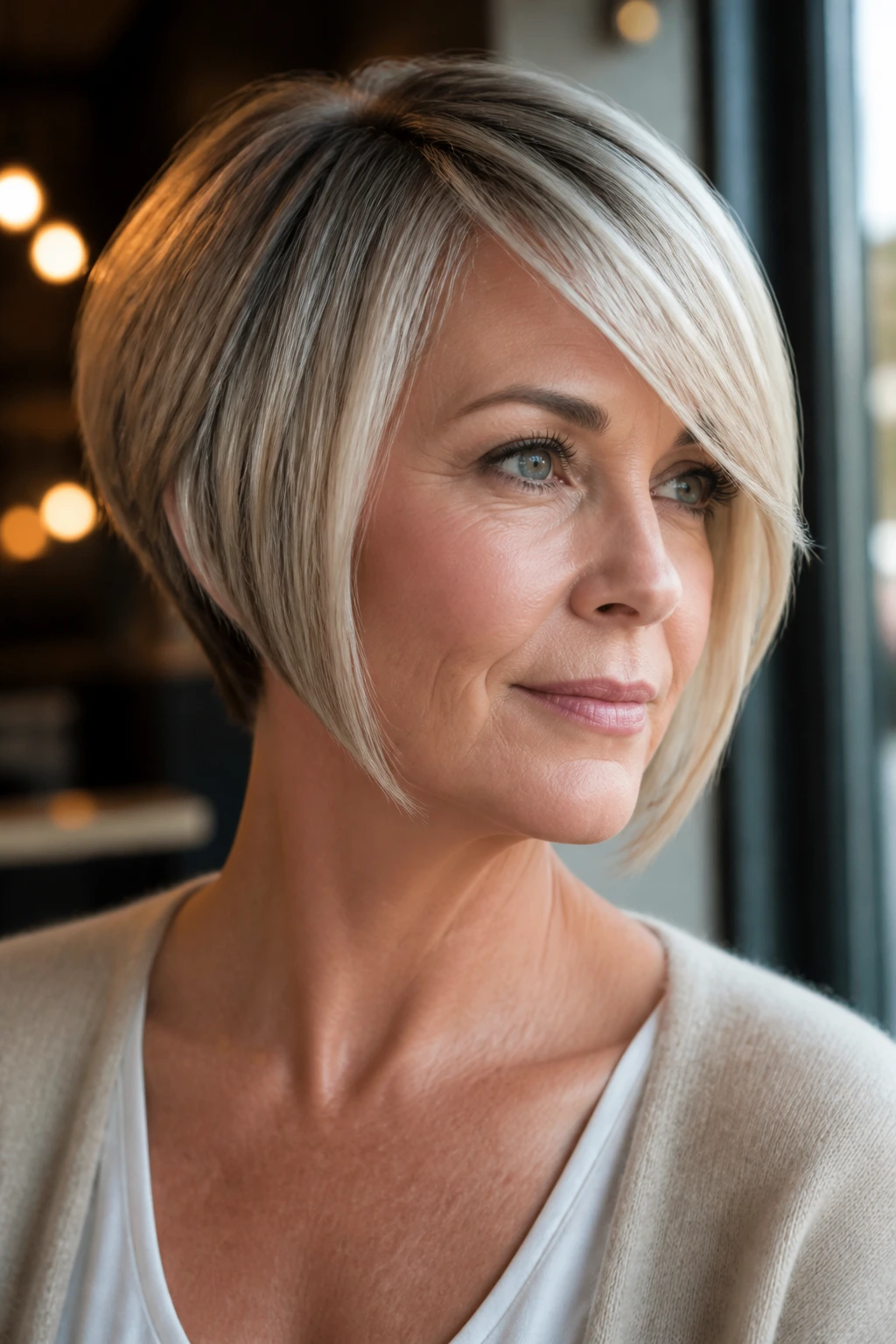
That’s why inverted short bobs for women over 50 with thin hair keep showing up in good salons: the shape does the heavy lifting. A shorter back removes the drag that makes fine strands sag, while the angled front gives your eye a clean line to follow instead of a wispy, see-through edge. When the cut is done well, it doesn’t scream “I got my hair cut.” It looks like your hair finally figured out where to sit.
The trick is not making everything short and severe. That’s the mistake people make. A strong inverted bob can be sleek, feathered, airy, or a little undone; it can work with silver hair, soft waves, glasses, and a face that’s changed shape over time. What it cannot do is stay full if it’s over-thinned, over-layered, or left too long in the back. Fine hair tells the truth fast.
If your crown has gone flatter, your ponytail has shrunk, or the sides around your temples seem to vanish by mid-afternoon, the right bob can make a dramatic difference without looking fussy. The sweet spot is a cut that builds lift where you need it and keeps the perimeter crisp enough to look deliberate. That’s where the good ones live.
Why You’ll Love These 25 Inverted Short Bobs
-
They build shape without extra bulk: The stacked back and angled front create the look of denser hair because the eye follows a clean line instead of scattered ends.
-
They work with finer texture: Thin hair usually looks better when the cut removes weight from the nape and keeps the outline tight.
-
They’re easier to style than longer cuts: A quick blow-dry with a round brush, or a few bends with a flat iron, is usually enough to wake the whole shape up.
-
They play nicely with silver and gray: Shorter lengths keep wiry ends under control, and a sharp perimeter makes gray hair look intentional instead of frayed.
-
They can be soft or sharp: You can go polished, piecey, rounded, asymmetrical, or feathered without losing the core inverted shape.
-
They suit real life: Glasses, earrings, cowlicks, and a busy morning routine all fit better when the haircut already has structure built into it.
Why the Inverted Shape Helps Thin Hair
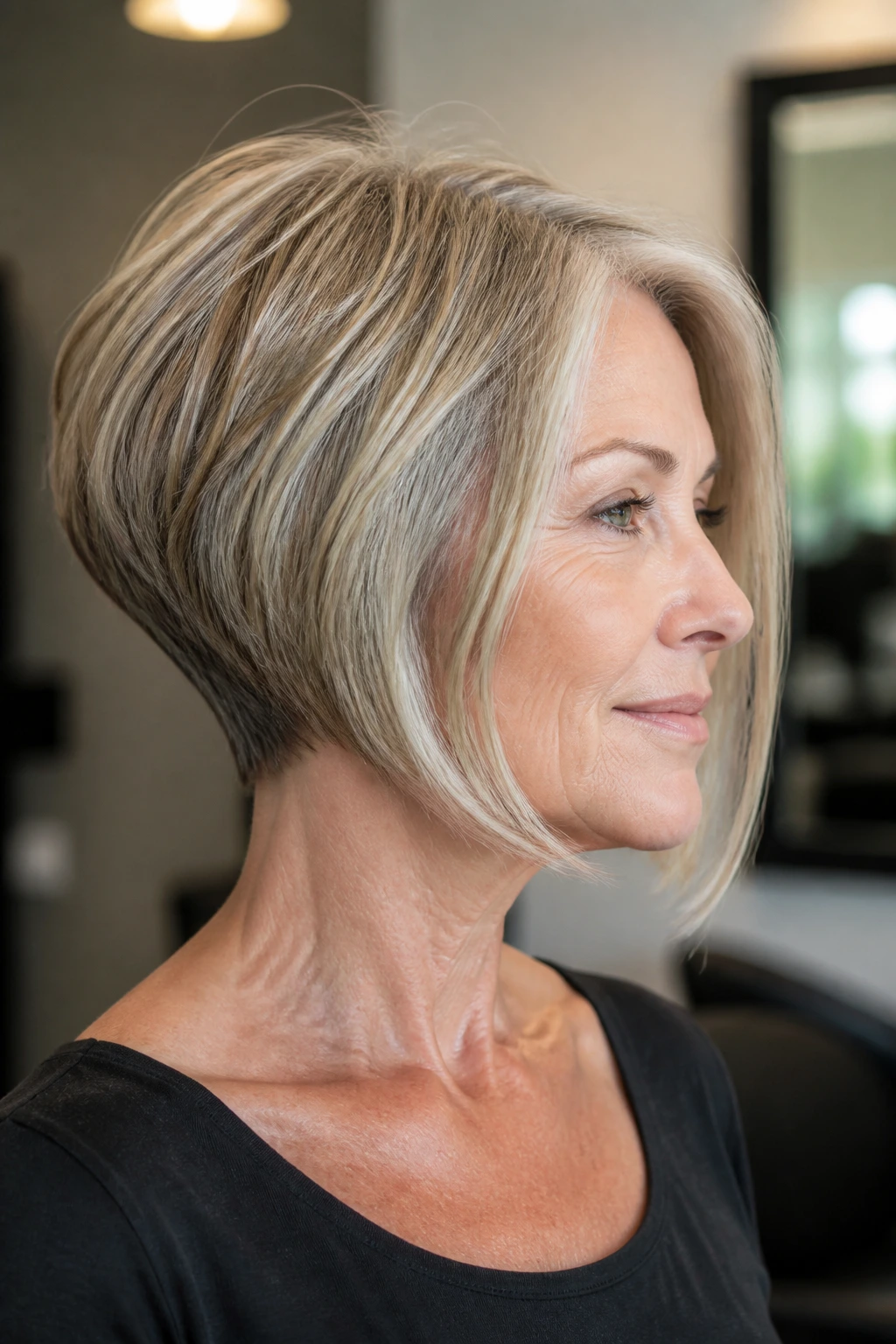
The back of an inverted bob is shorter for a reason. It takes weight off the hair that sits at the nape and lower crown, which is where fine hair starts to collapse first. A straight short cut can sit flat like a cap; an inverted cut gives the head a little architecture.
That angle matters more than people think. A one-inch difference between the nape and the front can change the whole mood of the cut. Push the graduation too high and it turns dated fast. Keep it too soft and the bob loses its spine. The good versions live in the middle, with enough stacking to lift the back but enough length in the front to frame the face.
Thin hair after 50 also tends to behave differently than it did before. You may notice more see-through spots at the temples, a flatter crown, or strands that feel softer but weaker. A smart inverted bob works with those changes instead of pretending they aren’t there. It gives the hair a cleaner edge, which is one of the fastest ways to make fine texture look fuller.
How to Ask for the Cut Without Guessing
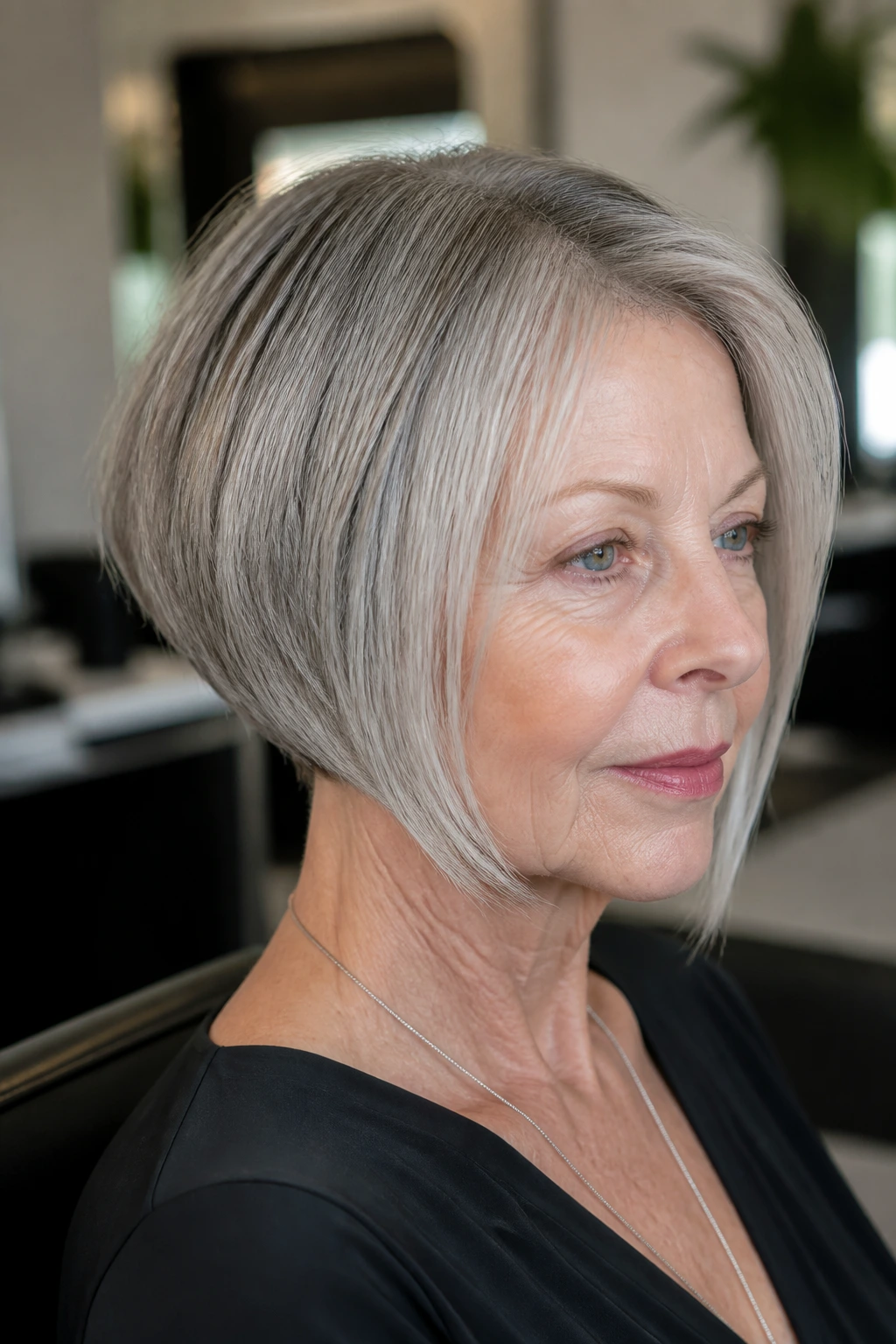
Bring photos, yes, but bring the right photos. One picture from the front tells a story your stylist cannot actually use. You want at least one side view and one back view, because the nape and graduation are the whole point here.
Say what you care about in plain language. If you want the back short but not spiky, say that. If you wear glasses every day, mention the frame size before anyone picks up shears. If your hair grows out fast around the neck, tell them that too. A good stylist can adjust the angle, but only if they know where the trouble spots are.
Fine hair usually does better with a cleaner perimeter and controlled layering, not deep slicing through the interior. Ask about point cutting at the ends, and be cautious with heavy texturizing shears. Those tools can turn a promising bob into a see-through shell if the hair is already sparse.
1. Classic Crown-Lift Inverted Bob
This is the one I’d hand to someone who wants a safe, flattering starting point. The back sits snug to the head with a neat stack at the occipital bone, and the front drops just enough to skim the jaw. It has shape without drama.
Why it works
The short back removes drag, which lets the crown sit higher with less effort from styling products. On thin hair, that matters. The cut creates the impression of density because the ends land in a clean line instead of splaying out.
- Keep the nape cropped close, but not shaved.
- Ask for a front length that brushes the jawline.
- Blow-dry the crown upward with a small round brush.
- Skip heavy layers in the interior.
Best tip: If the back starts to puff out, your stack is too high. A soft stack is enough.
2. Side-Swept Inverted Bob with a Long Fringe
A long side fringe does a lot of quiet work here. It softens forehead lines, lifts the eye diagonally, and stops the front from looking too blunt on thin hair. I like this version because it feels easy rather than over-designed.
What makes it different
The fringe adds movement near the face, where many fine-hair bobs lose energy. The cut still keeps its inverted shape in back, but the side-swept front gives you a softer entry point if you do not love a severe line.
- Ask for a fringe that starts around the arch of the brow.
- Keep the longest front piece near the cheekbone or jaw.
- Style the fringe with a quick pass of a round brush.
- Use a light mist of flexible-hold spray, not a sticky gel.
Best tip: If your hair splits where the fringe lands, dry that section first while it’s damp. Cowlicks calm down when they’re set early.
3. Chin-Bevel Inverted Bob
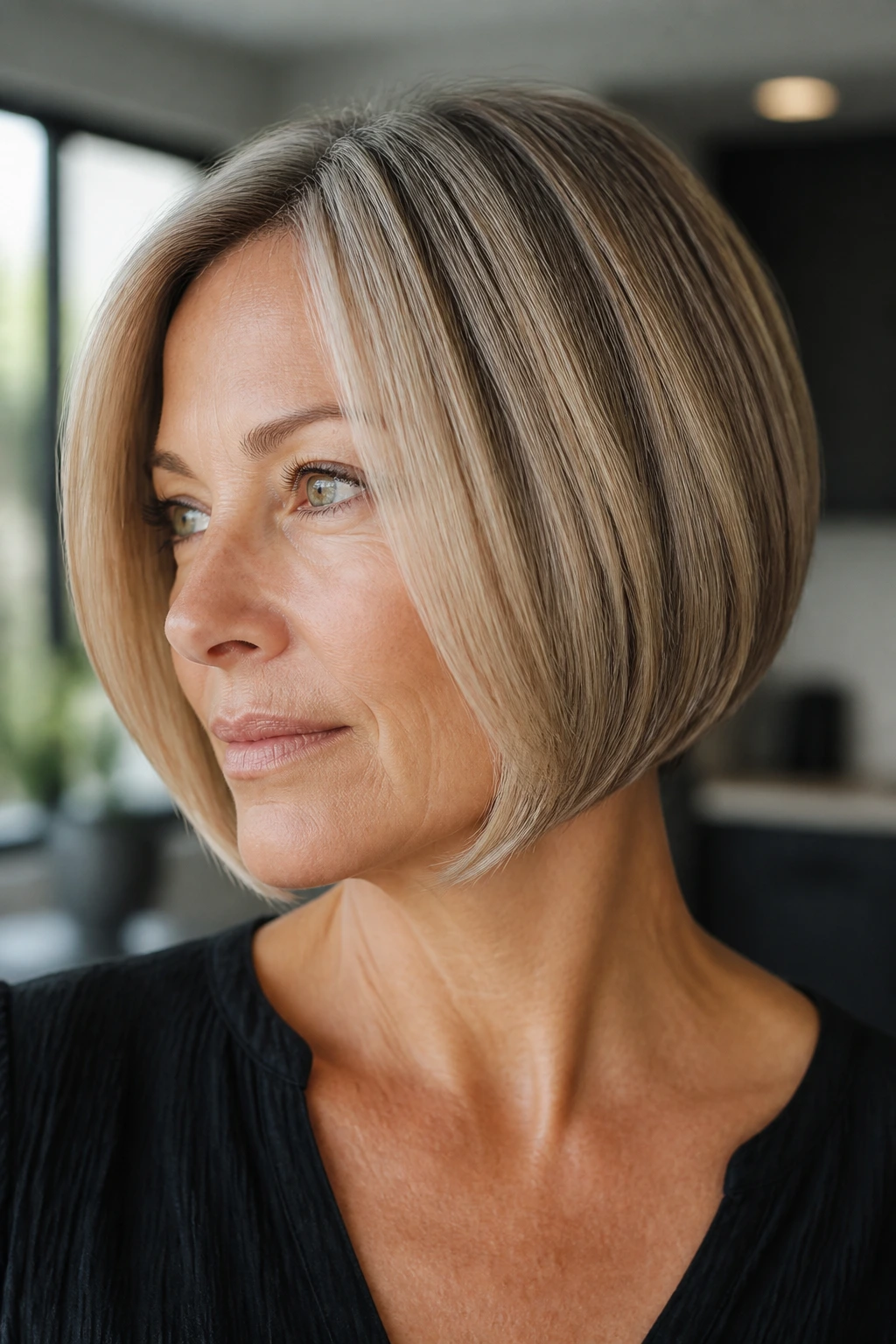
A chin-bevel bob is for someone who wants a little more edge. The front lands around the chin and turns under softly, which gives thin hair a fuller visual line. It also keeps the face open, which matters when hair has started to get wispy at the temples.
The bevel is the key. Straight ends can look stringy on fine hair if they’re too long, but a gentle inward curve makes the perimeter look denser. This version does best with a glossy blow-dry and a brush that can pull the ends under just a touch.
What to ask for
- A clean, angled line from nape to chin.
- Minimal thinning through the sides.
- Ends that turn under, not out.
- A polished finish, not a choppy one.
4. Feathered Inverted Bob with Soft Ends
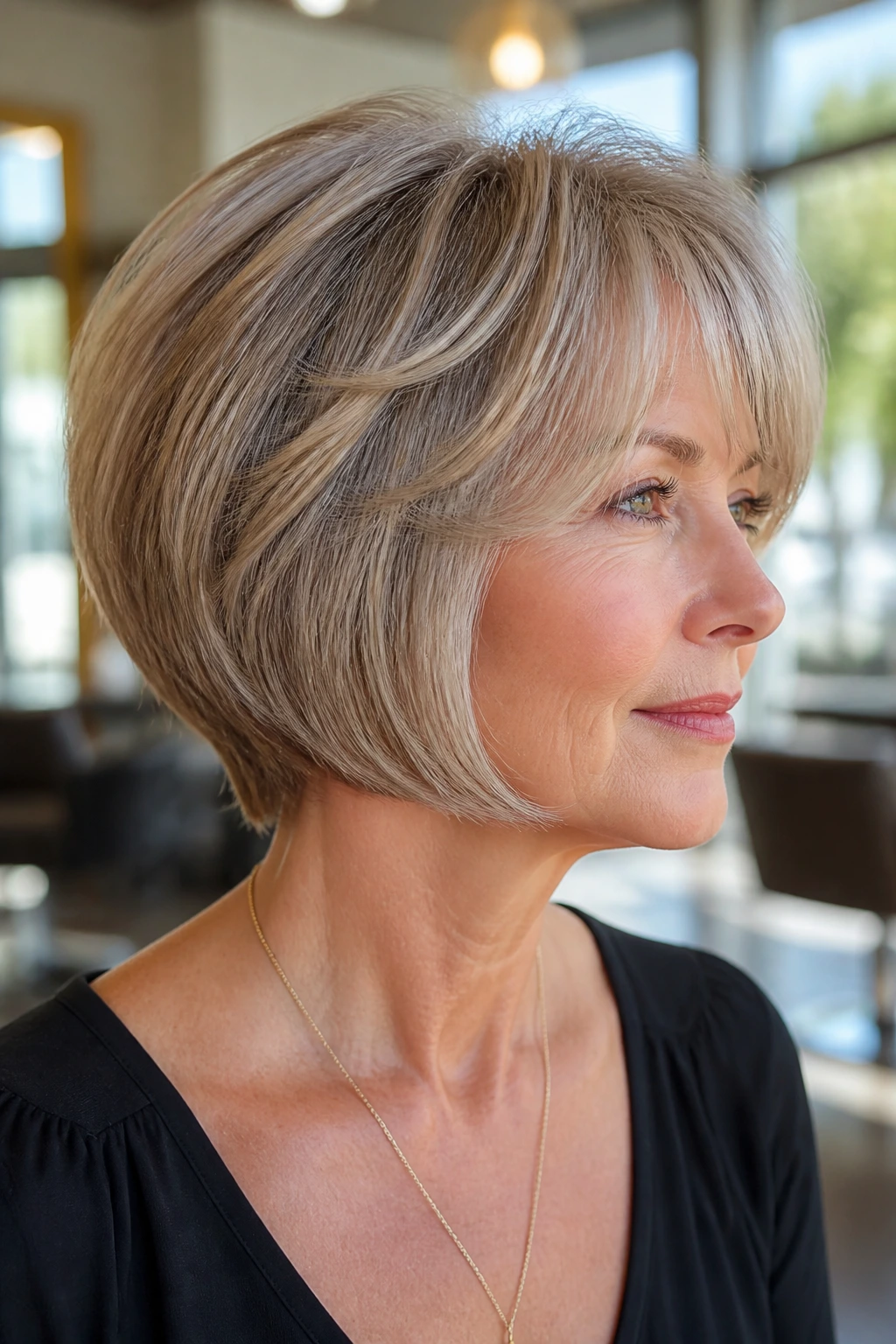
Feathering gets a bad name when it’s done too hard, but on thin hair, a little softness can be your friend. This bob uses light, airy layers only where movement helps, mostly around the crown and upper sides. The ends stay soft instead of blunt.
That gives the cut a bit of lift without turning it ragged. I like this shape for hair that has a fine strand but a lot of it, because the motion keeps the style from looking helmet-like. It also grows out in a kinder way than a sharply stacked version.
One small caution: Feathering should never mean carving deep holes into the interior. The hair needs air, not gaps.
5. French-Inspired Inverted Bob
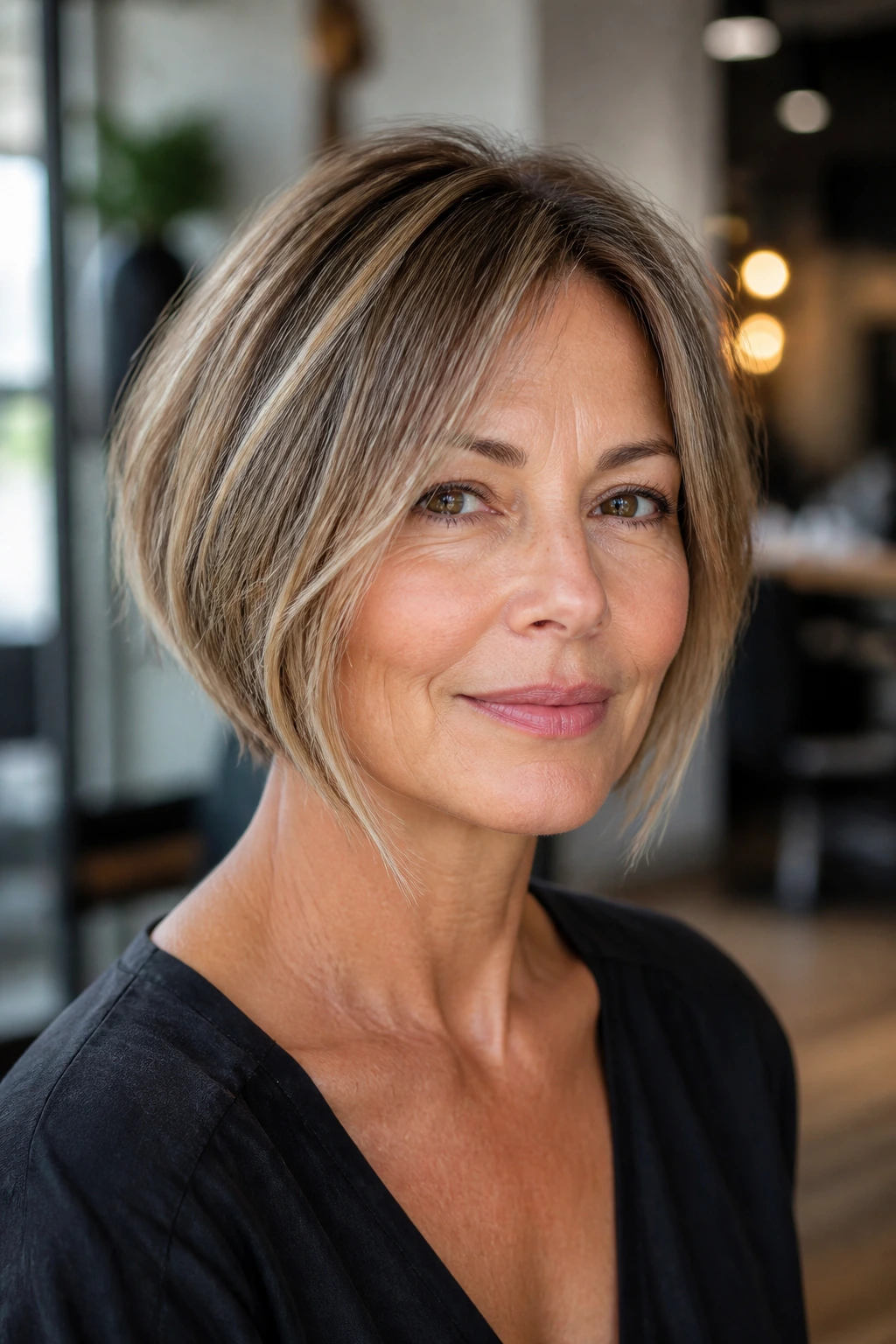
This one has that slightly undone, neck-grazing feel that looks expensive without trying too hard. The back is tapered and neat, but the front pieces sit loose and a little imperfect, which keeps the style from feeling too formal.
Thin hair often looks better when it isn’t forced into a perfect shell. A French-inspired bob works because it leaves a little softness at the edges and asks the styling to do less. A touch of dry texture spray through the mid-lengths is usually enough.
How to wear it
Pair it with a center or slightly off-center part, then tuck one side behind the ear. The contrast between the precise back and the relaxed front is the whole point.
6. Micro-Stacked Bob with a Tapered Nape
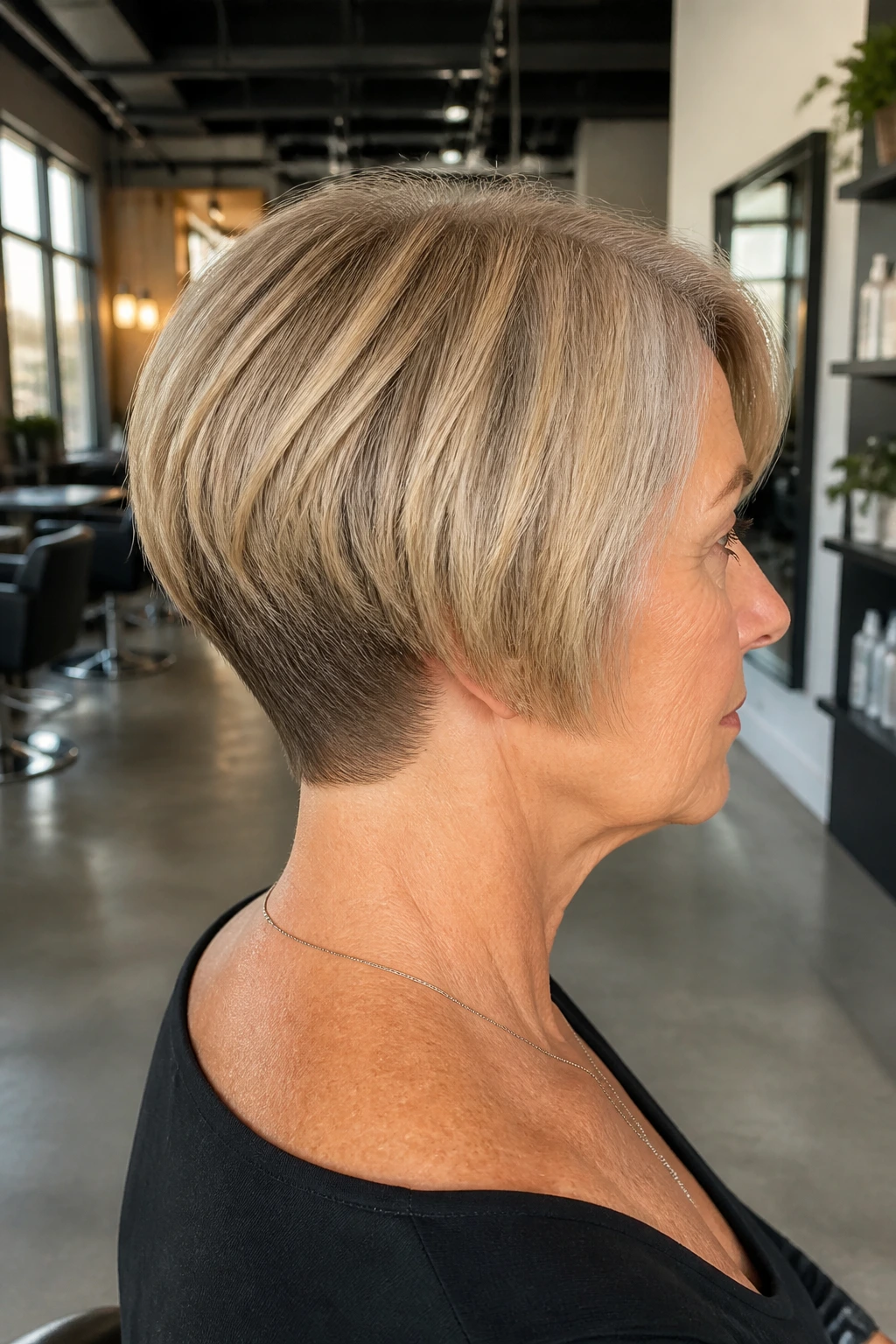
Short. Clean. Sharp at the neck.
This cut is for the person who likes a crisp outline and does not mind regular trims. The nape is tapered close, the stack starts low, and the front stays short enough to keep the shape compact. On thin hair, that compactness is the trick; long, wispy ends are what make the haircut fall apart.
The micro-stack gives a subtle lift without building a heavy dome at the back of the head. It’s polished, but not stiff, if the graduation stays controlled. Ask your stylist to keep the internal layers minimal and the outer line tidy.
What to watch for
- Too much stacking can make the back feel puffy.
- Too much thinning can make the top look sparse.
- The balance should feel clean from every angle.
7. Inverted Bob with Curtain Bangs
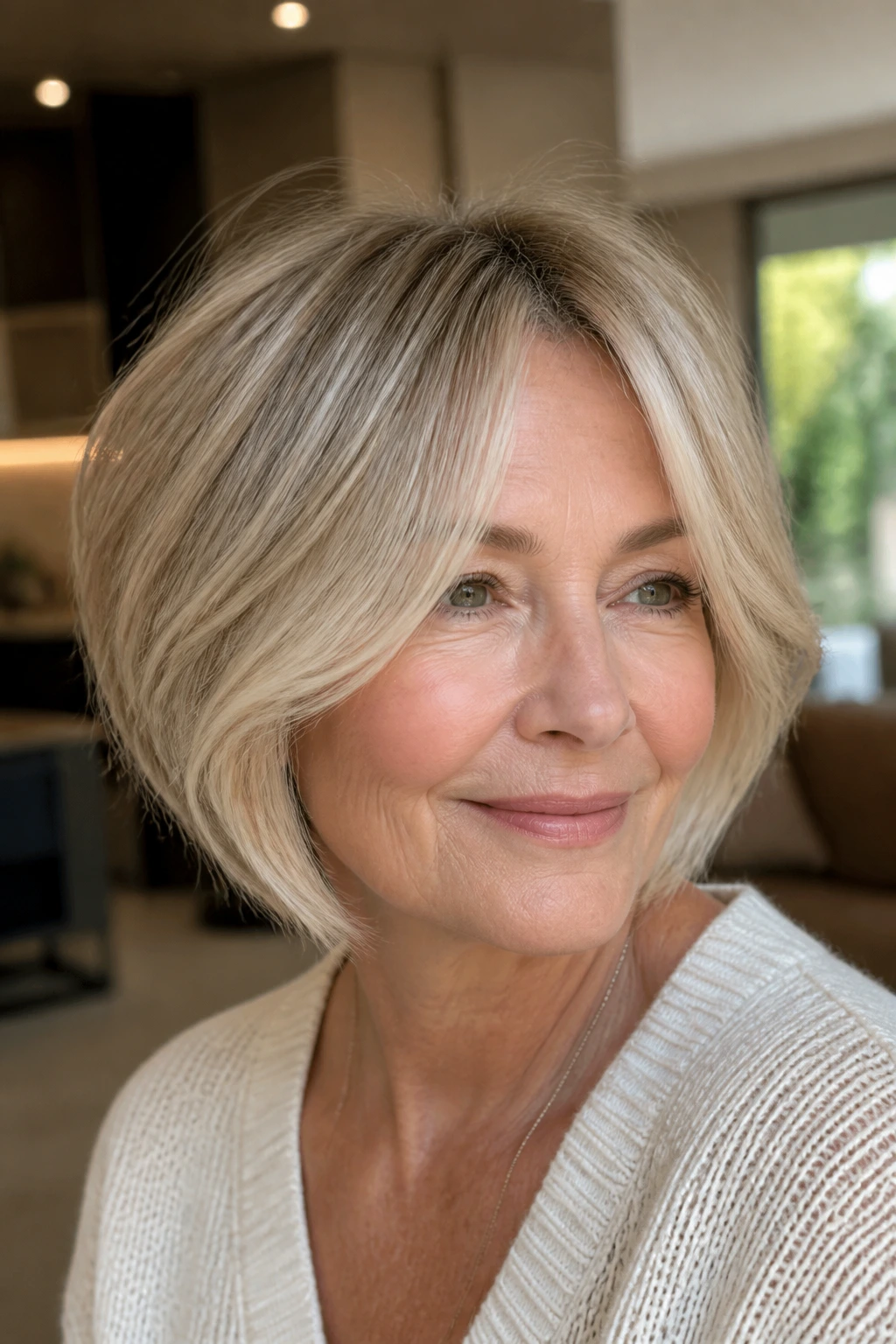
Curtain bangs can be a smart move when thin hair needs front-end softness. They break up the forehead area, create a little width around the eyes, and keep the bob from looking too severe. The shape still angles shorter in back and longer in front, but the fringe makes the transition feel gentler.
This version works best when the bangs are not too dense. Fine hair rarely has enough extra volume to support a heavy curtain fringe, so keep the pieces airy and let them part naturally. A small round brush or a quick bend with a flat iron is enough.
Good fit for: high foreheads, softer features, and anyone who wants the bob to feel a touch less strict.
8. Sleek Silver Inverted Bob
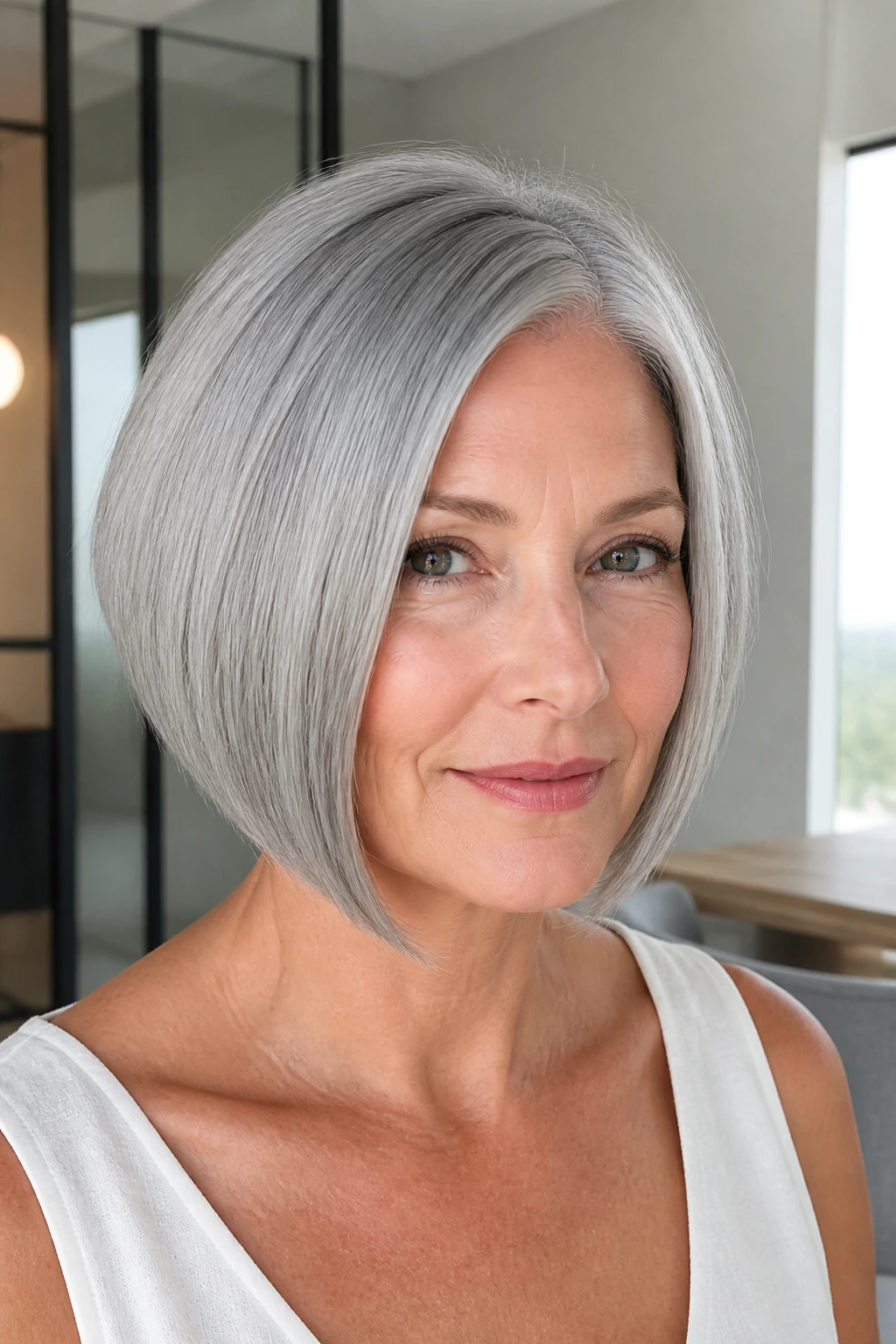
Silver hair loves a good bob. It shows off line, shine, and precision in a way that long, loose hair often can’t. If your color has gone white, pewter, or salt-and-pepper, a sleek inverted bob gives the shade shape instead of letting it drift around.
The key is gloss. Silver strands can look dry at the ends, especially if they’re fine, so a lightweight smoothing cream and a sharp trim make a real difference. I’d keep the layers minimal here and let the silhouette do the talking.
A purple shampoo can help with brightness, but don’t overdo it. Too much toning can leave the hair dull and chalky. Once every one or two weeks is often enough, depending on how cool you want the tone.
9. Soft-Wave Inverted Bob
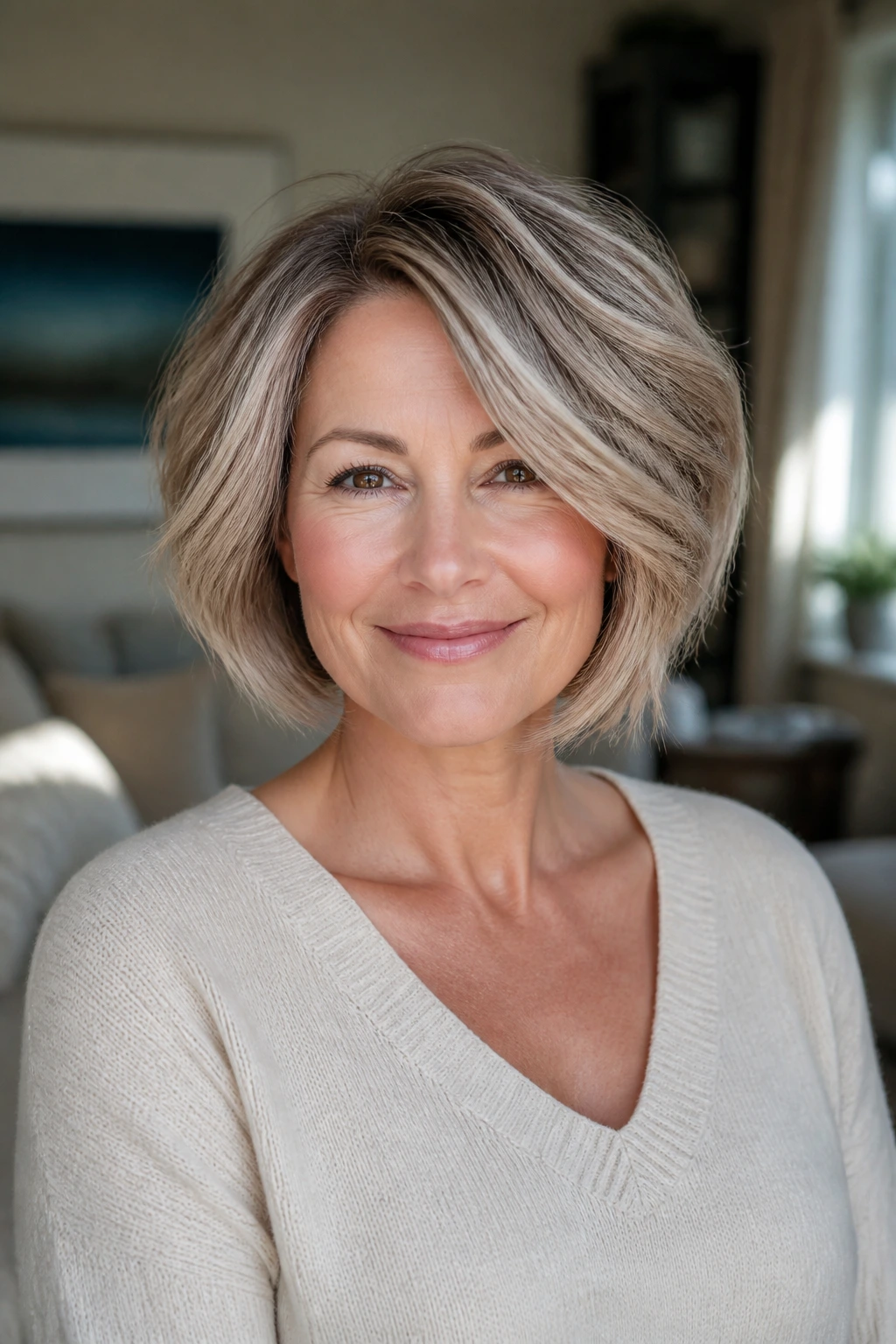
A soft wave changes everything. Thin hair that looks flat when straight can suddenly look fuller when it has a gentle bend through the mid-lengths and ends. The inverted shape gives the bob structure; the wave gives it life.
You do not need a curl pattern here. A one-inch iron, wrapped loosely for a few seconds, is enough to make the line feel less severe. Leave the ends slightly straight if you want the bob to stay modern. Curling every inch of the hair can make it look too done.
Best way to wear it
Keep the root area smooth, then bend just the top layer of the side sections. That contrast makes the hair look thicker than curling everything from root to tip.
10. Asymmetrical Inverted Bob
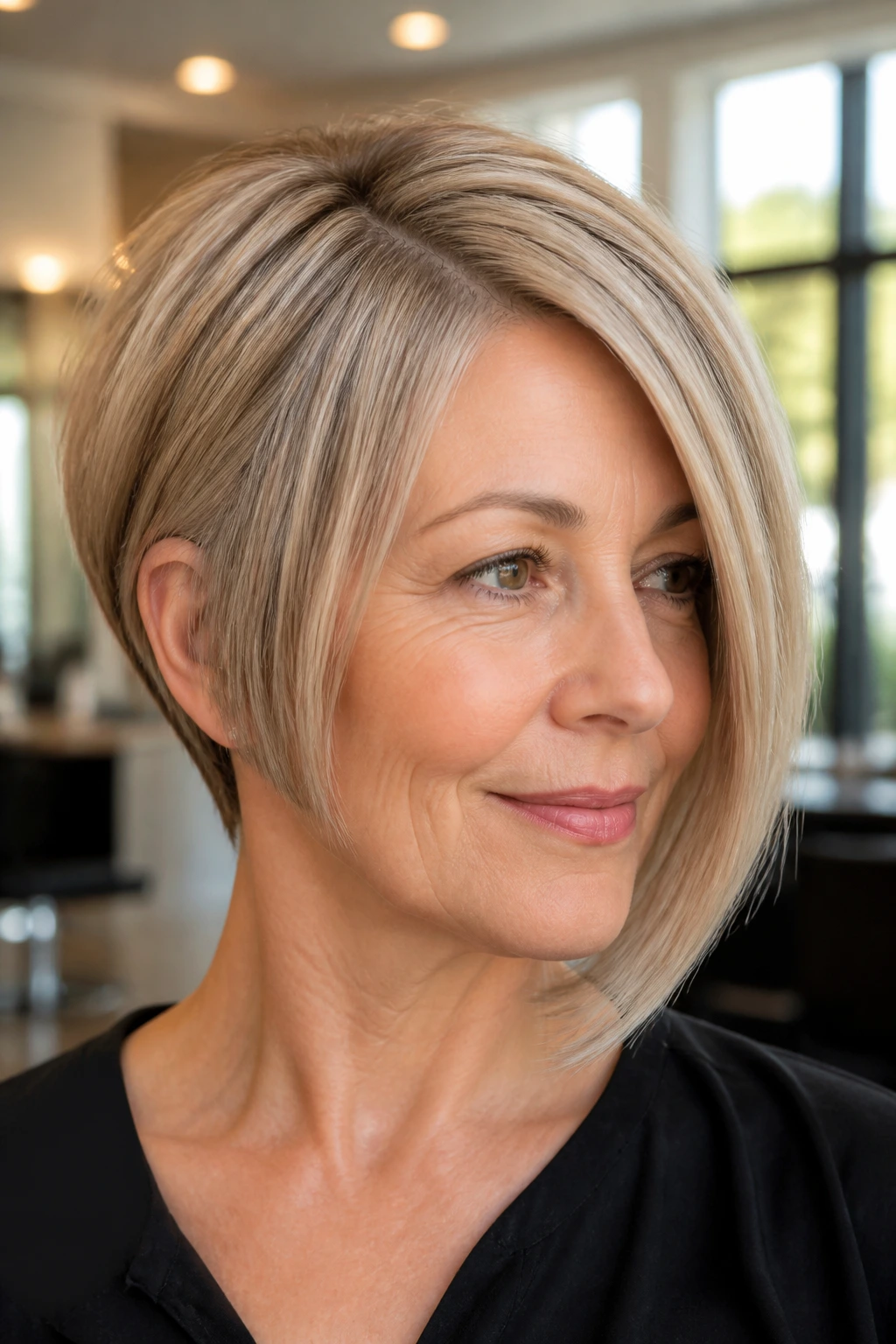
This cut shifts the balance on purpose. One side is longer, one side is shorter, and the angle creates instant movement even when the hair itself is fine. It’s a good choice if you want something with personality but not a lot of styling time.
The asymmetry gives the eye something to follow, which helps thin hair look fuller than it is. I’d keep the shorter side clean around the jaw and let the longer side skim just below it. That keeps the whole cut from feeling lopsided in a bad way.
If your face is round or broad through the cheeks, this can be especially useful. The diagonal line gives a little narrowing effect without making the hair look severe.
11. Rounded Inverted Bob with a Polished Curve
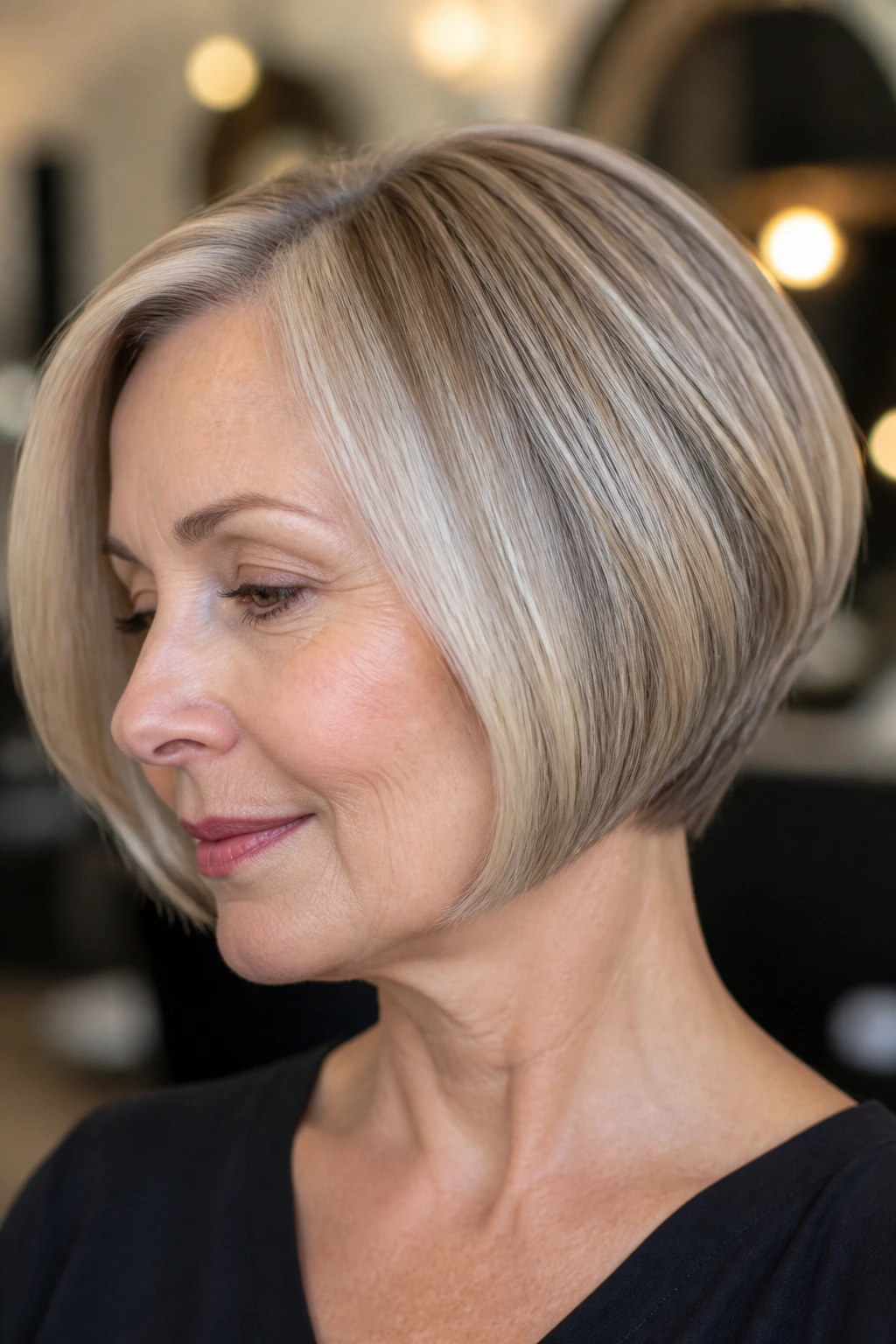
Some bobs want to look sharp. This one wants to look smooth.
The rounded version hugs the head and curves under at the ends, almost like a gentle bowl shape, but with a much more modern outline. On thin hair, the rounded silhouette can create a denser-looking edge because the ends sit close together instead of flaring out.
This is a good cut if you like order. It does need regular blow-drying or a quick pass with a brush, because the curve is part of the appeal. If you let it air-dry wild, it loses the shape fast.
Stylist note: Ask for the perimeter to be kept full. That means less aggressive texturizing and a stronger outer line.
12. Wispy-Bang Inverted Bob
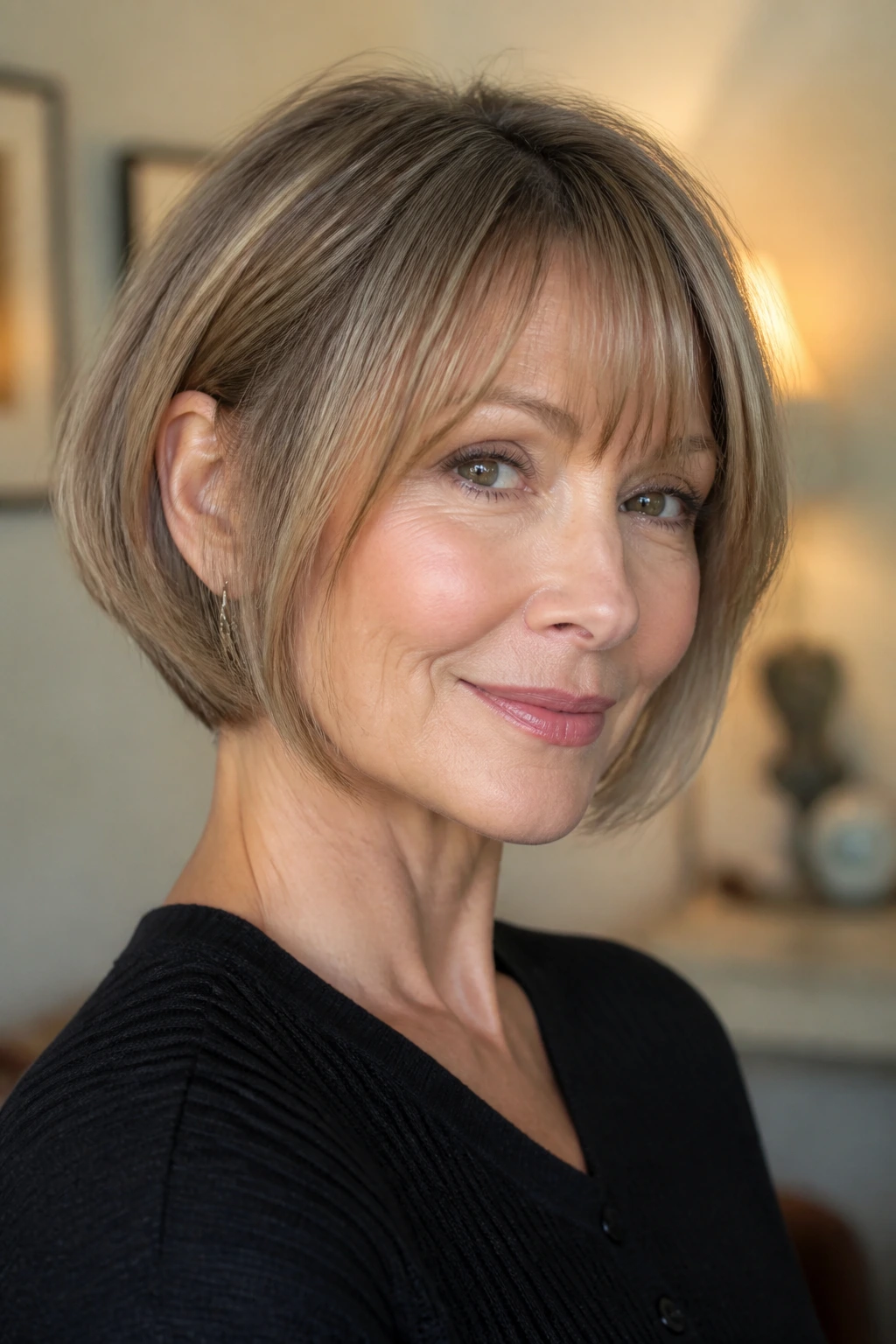
Wispy bangs are a smarter move than heavy bangs when hair is fine. They soften the forehead, blur a few fine lines if that matters to you, and keep the front from feeling weighted down. The rest of the cut can stay inverted and tidy.
I prefer this for hair that has a delicate texture but enough density at the front hairline to support fringe. If your bang area is sparse, go lighter still. A narrow fringe can look elegant; a wide, heavy fringe can look like you borrowed hair from somewhere else.
Styling note
Dry the bangs first, from side to side, so they do not separate oddly. A tiny round brush or a vent brush works fine.
13. Undercut Inverted Bob
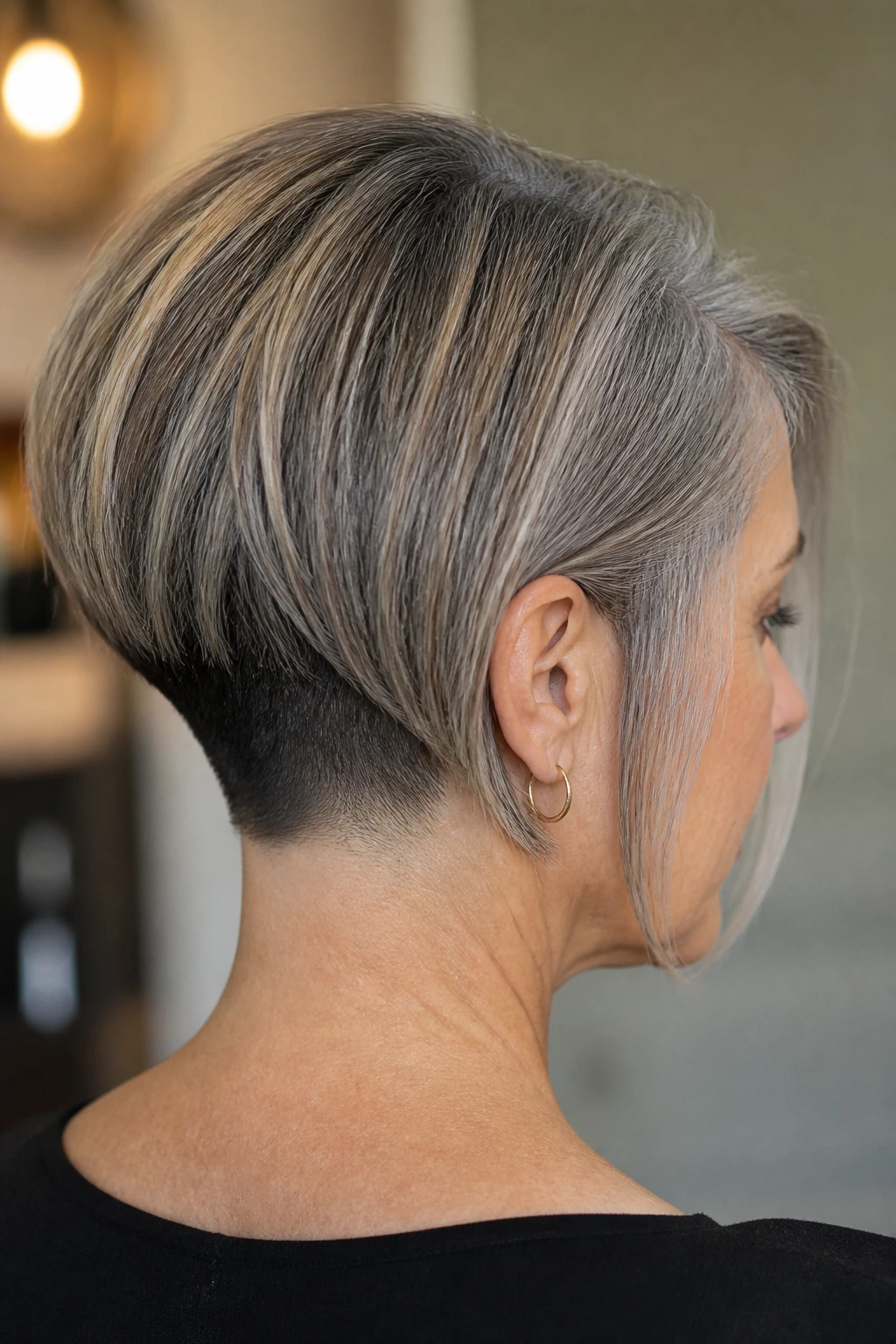
An undercut sounds bold, but on thick-enough fine hair that tends to balloon at the nape, it can be a relief. Removing a small section underneath keeps the silhouette closer to the head and stops the back from looking bulky. That’s useful when the top is fine but the underside is stubborn.
This is not a cut I’d give lightly. It’s best when the hair has a hidden pocket of weight that keeps puffing up no matter what you do. The undercut should be discreet, not shaved high enough to show through the top layer unless you want that look.
Why it helps thin hair It keeps the stack controlled and lets the top pieces sit cleaner, which makes the whole bob look sharper with less effort.
14. Piecey Textured Inverted Bob
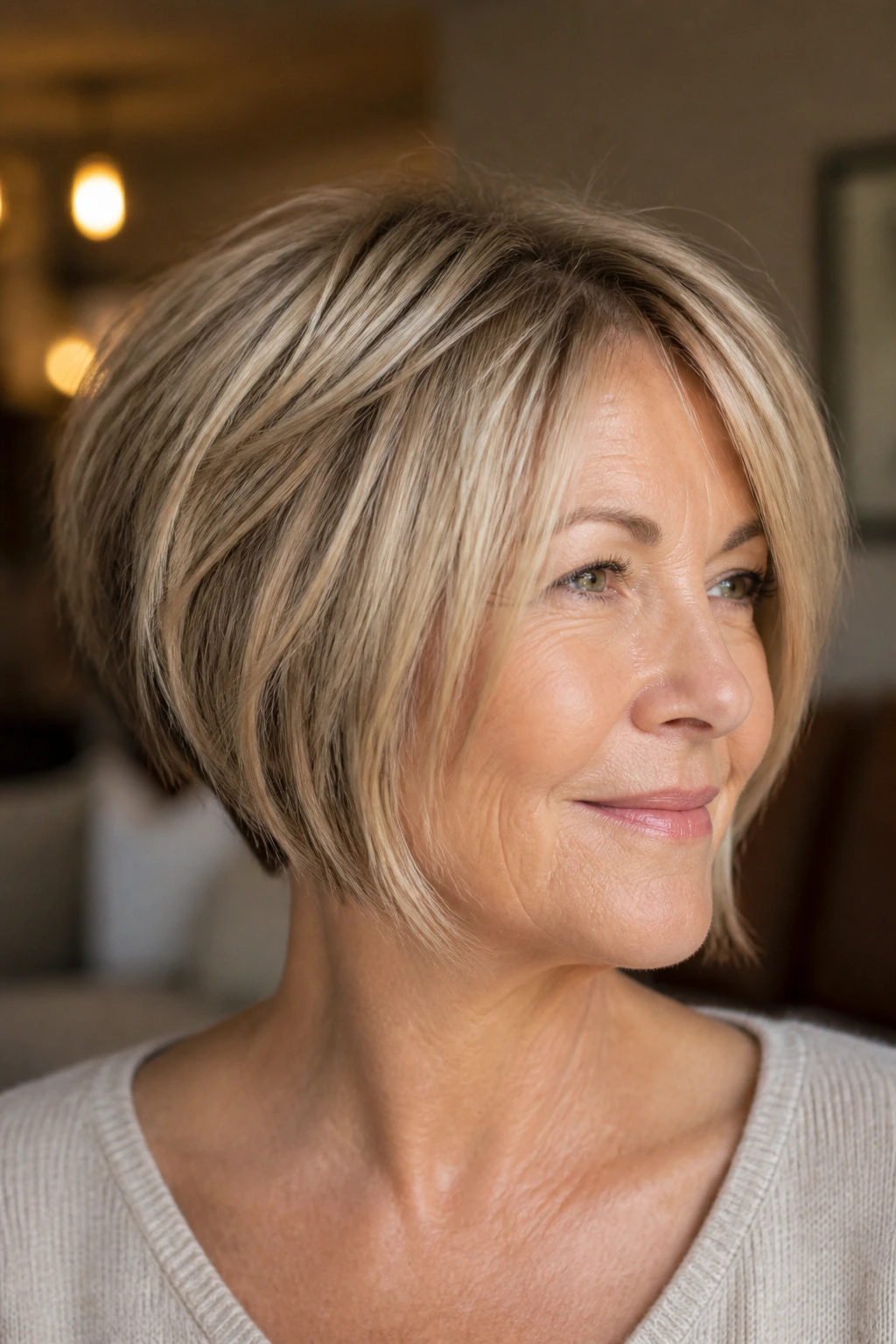
Piecey texture is all about separation. Instead of one smooth mass, the ends are lightly broken up so the hair moves in little sections. That can be a gift for thin hair if the cut stays controlled and the texture stays at the surface.
The mistake here is overdoing the layers. You want pieces, not gaps. A soft texturizing spray or a tiny bit of pomade rubbed between the fingers can make the ends look fuller, but too much product will split the hair and expose the scalp.
What it looks like in practice
A few bent sections around the crown, a slightly roughened side, and a nape that stays neat underneath. That combination keeps the style from feeling flat or over-styled.
15. Glasses-Friendly Inverted Bob
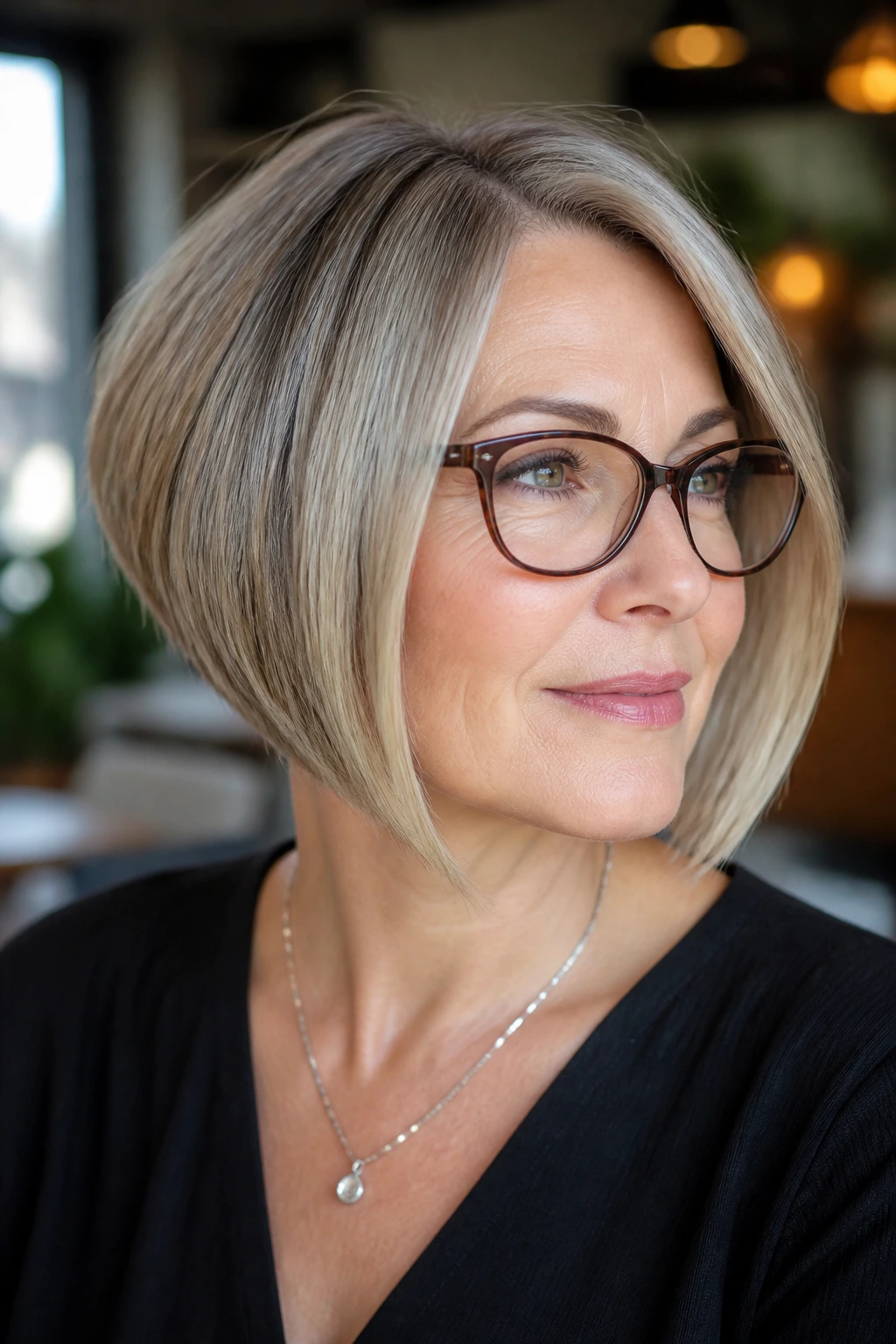
If you wear glasses, the bob has to work around the frames instead of fighting them. This version keeps the front at a length that doesn’t bunch up near the temples and the sides slim enough to avoid that “hair and frames competing for space” problem.
The best glasses-friendly bobs usually land somewhere between chin and jaw. That gives enough length to frame the face without trapping the arm of the glasses in a puff of hair. A soft side part helps too, because it shifts volume away from the temples and toward the crown.
Practical note: Bring your glasses to the salon. Or at least bring a photo of them. The fit matters more than people admit.
16. Deep Side-Part Inverted Bob
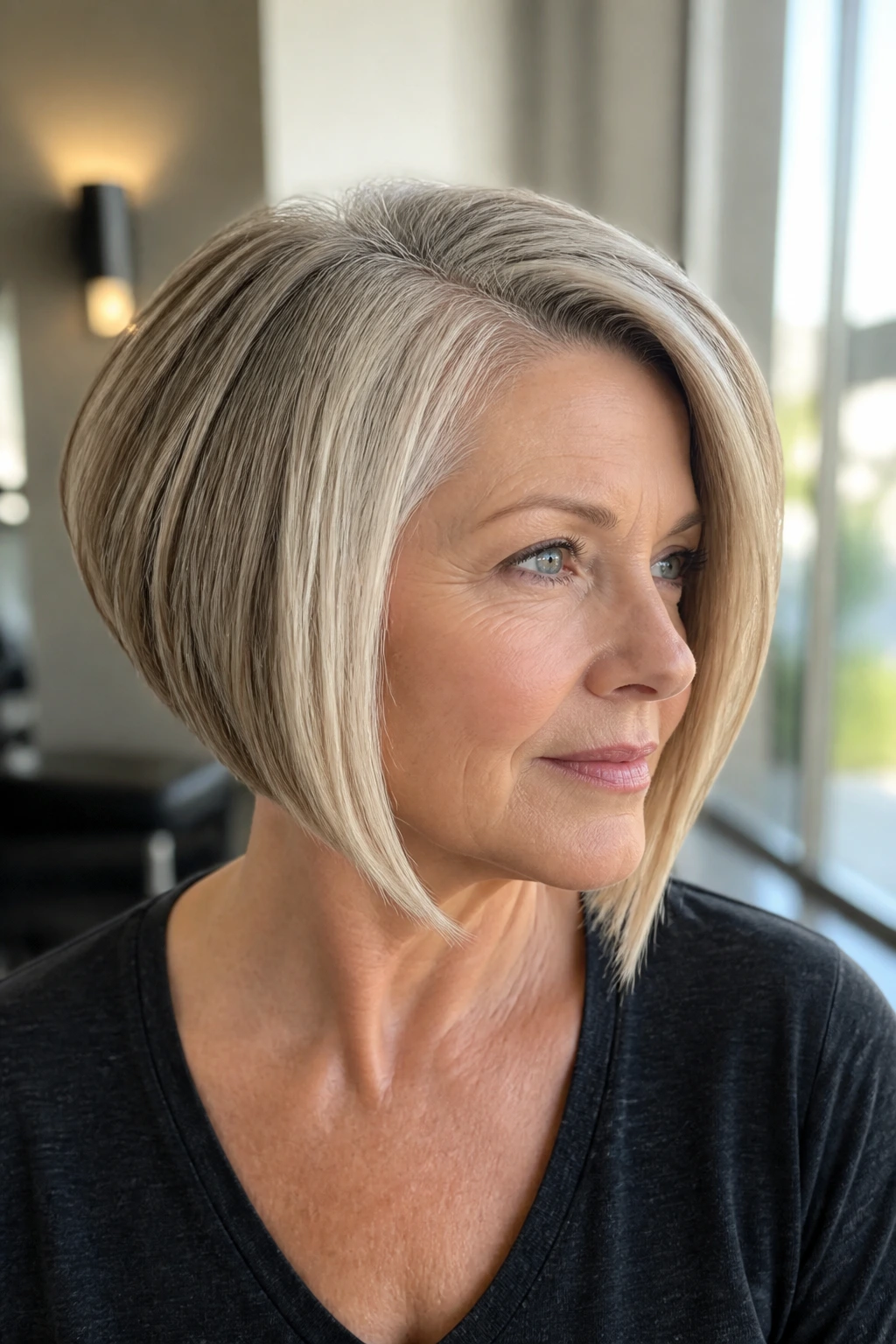
A deep side part is one of the fastest ways to fake volume at the crown. It changes where the hair falls, which makes one side look fuller and lifts the root line without changing the cut itself. On thin hair, that tiny shift can be surprisingly effective.
This cut works especially well when the back is stacked and the front is kept a little longer. The side part creates diagonal movement, and diagonal movement is the friend of fine hair. A little root spray at the part line helps, but the shape does most of the work.
I’d use this style on days when the hair feels a touch lifeless. It’s the kind of adjustment that takes thirty seconds and changes the whole silhouette.
17. Air-Dry Inverted Bob
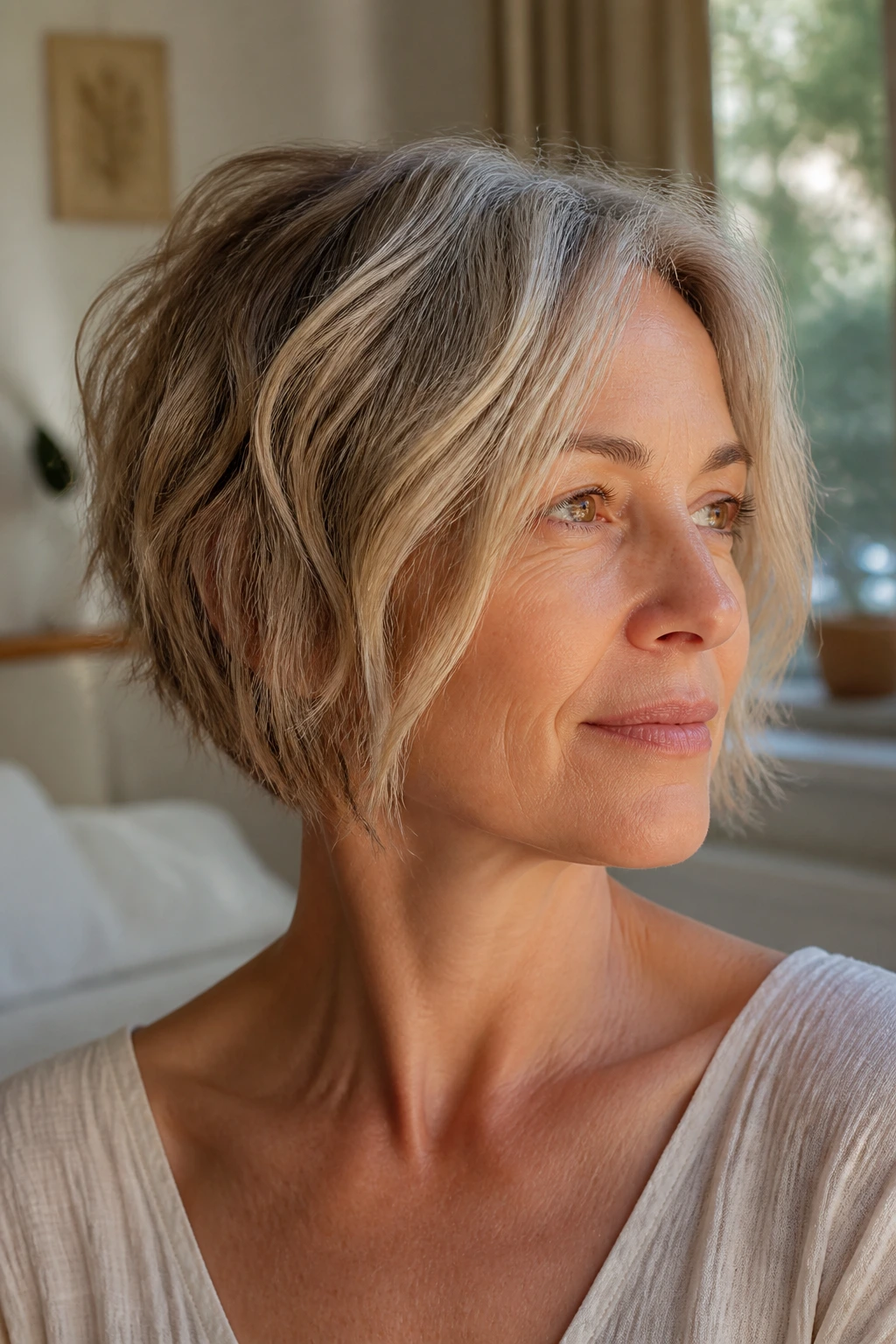
Not everyone wants a round brush and a half-hour in front of the mirror. Fair enough. The air-dry version keeps the inverted shape, but the layers and length are chosen to behave without much handling.
This works best when the hair has a mild wave or bends easily on its own. Fine straight hair can air-dry into a flat, stubborn shape unless the cut is especially clean. A little mousse at the roots and a pea-sized amount of cream through the ends usually helps.
Best for
Busy mornings, warm rooms, low-maintenance routines, and anyone who wants a bob that can survive a hand-scrunch and a walk out the door.
18. Balayage Inverted Bob
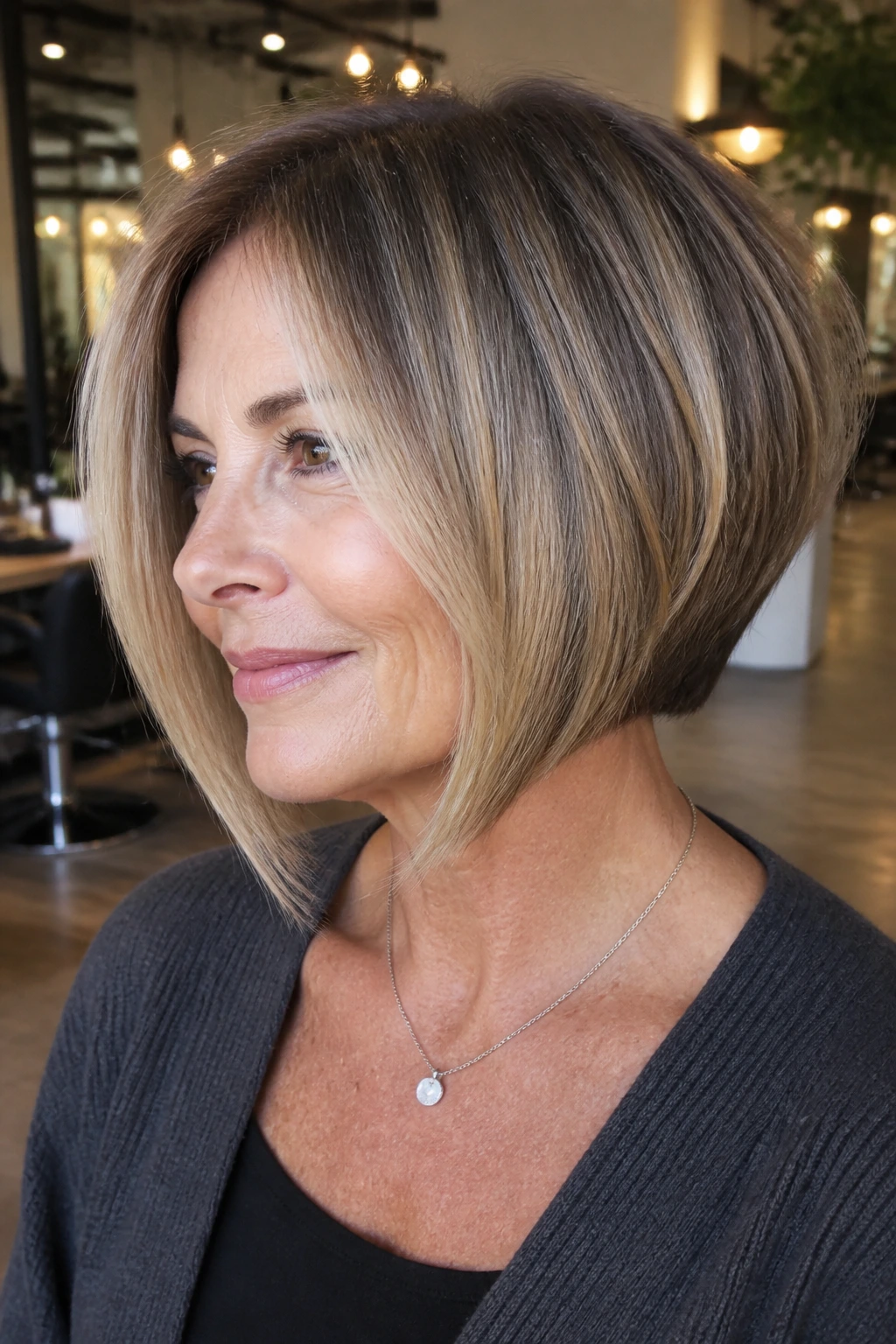
Color can do what products cannot. A well-placed balayage gives the eye contrast to read, which makes fine hair look like it has more depth. On an inverted bob, that dimension lands beautifully on the angled front and the stacked back.
Keep the light pieces around the face if you want softness, or place them through the curve of the cut if you want the shape to show up more clearly. I’d avoid chunky highlights here. Thin hair already has enough visual work to do; strong stripes can make it look patchy.
A gloss afterward helps a lot. Color without shine can make fine hair look thinner, not fuller.
19. Salt-and-Pepper Inverted Bob
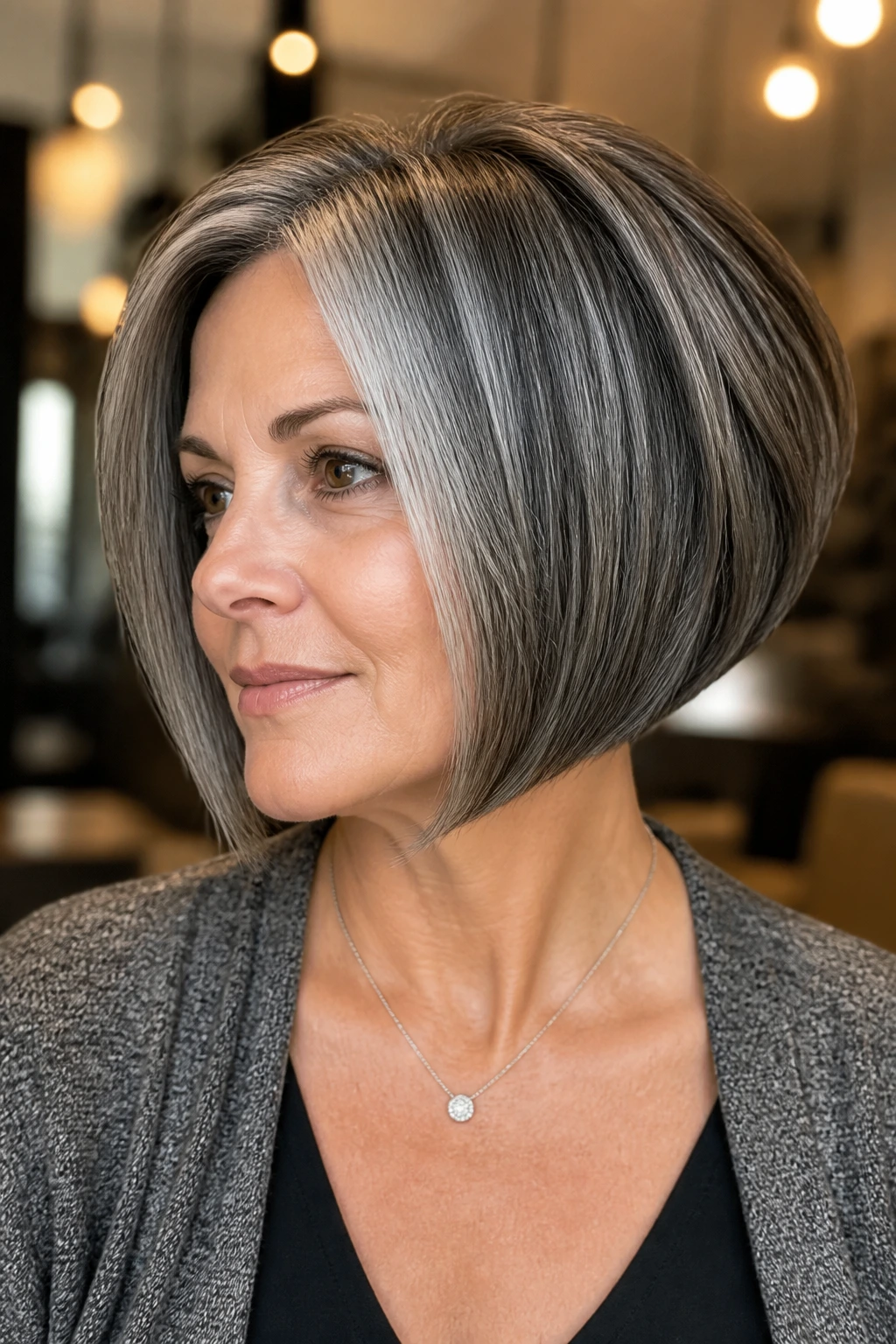
Salt-and-pepper hair has a way of looking best when the cut is crisp. The mixed tones already create natural contrast, so the haircut only needs to give that color a strong frame. An inverted bob does that better than a long, shapeless style ever will.
Gray can be wiry at the surface and softer underneath, which means the edge needs discipline. Keep the perimeter neat and the crown controlled. If your hair tends to stick out at the ears, ask for those areas to be refined rather than flattened with product.
This is one of those cuts that looks better with age, not in spite of it. The combination of color variation and structure is a very good look.
20. Tucked-Behind-the-Ear Inverted Bob
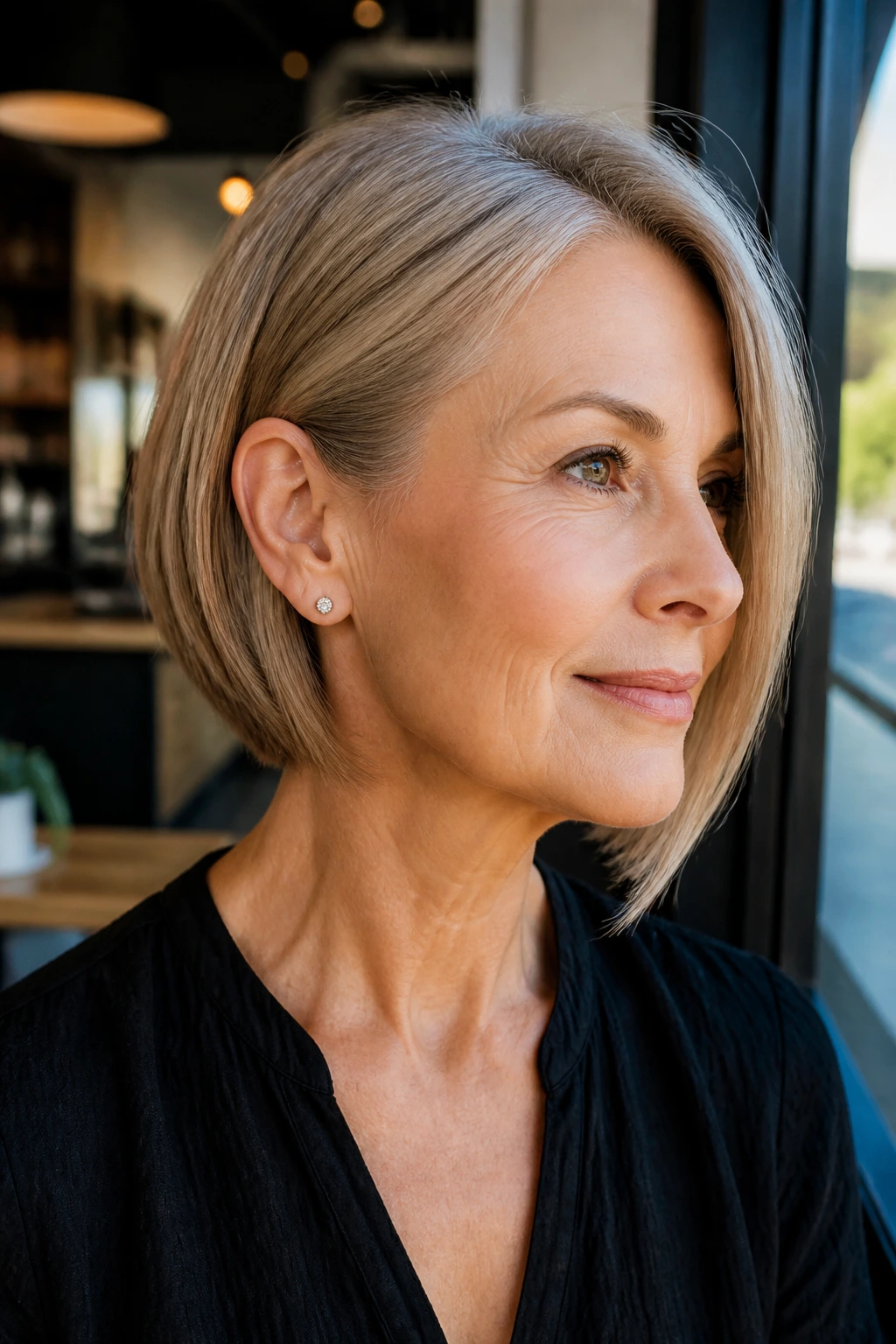
Some bobs are designed to show off the whole face. This one is designed to live with daily habits. Tucking one side behind the ear keeps the line open, shows off earrings, and gives the cut a little asymmetry without a dramatic shape change.
Thin hair often benefits from that tucked look because it takes pressure off the front and makes the style feel lighter. Leave enough length in the front to tuck without losing the angle entirely. Too short, and the ear tuck turns into a little springy shelf. Not a good look.
Best with: small hoops, sculptural studs, and clean sideburns.
21. Blunt-Edge Inverted Bob
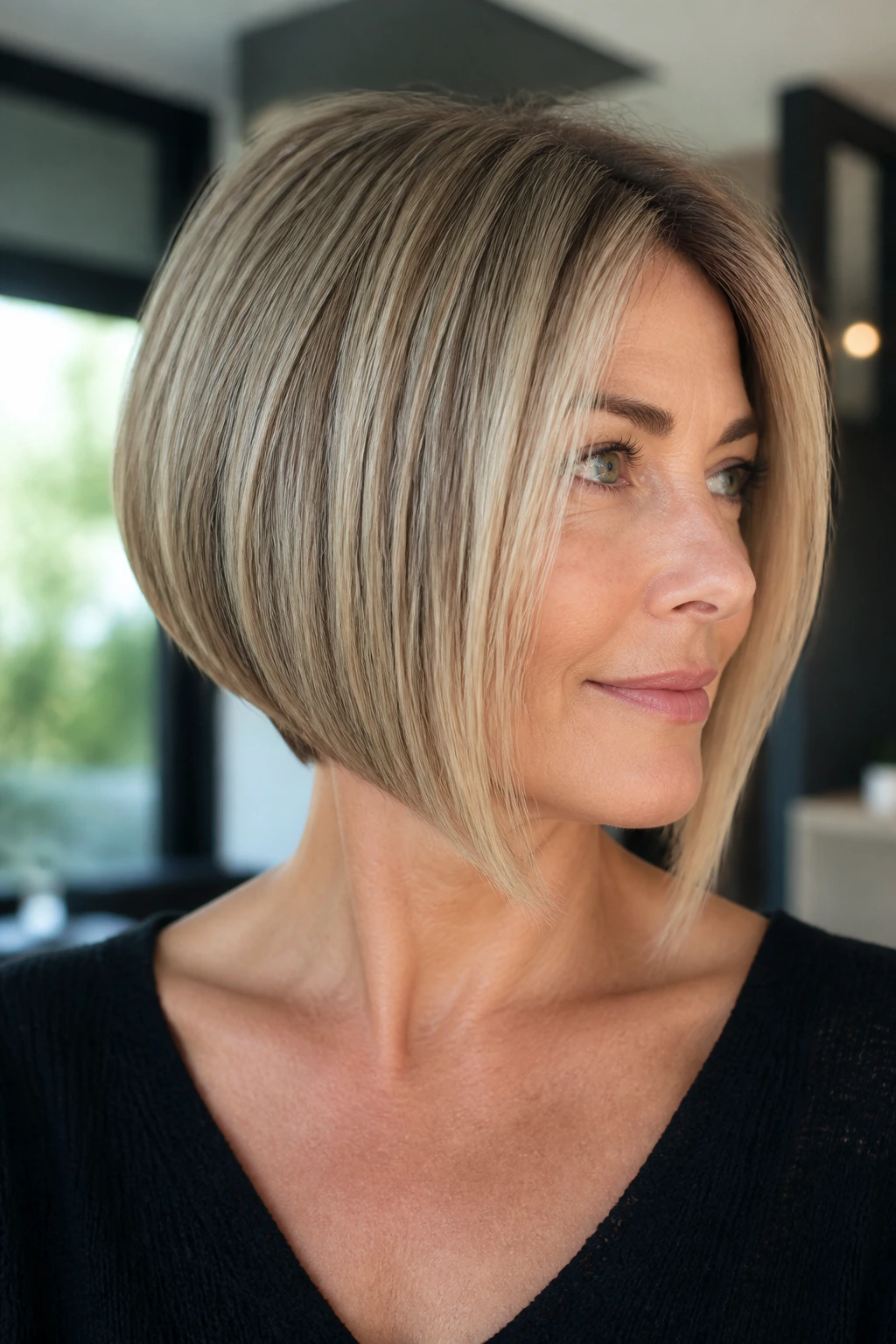
Blunt edges can be a gift for thin hair. Instead of wispy, separated ends, you get a strong visual line that makes the hair appear denser. The inverted angle keeps the cut from feeling boxy, while the blunt perimeter gives it substance.
This version is for someone who wants the hair to look fuller even when it’s not freshly styled. It does require honesty from the cut itself. If the hair is too textured or the ends are too thin, a blunt line may look choppy instead of thick.
I like this on straighter hair and on women who want a sleek, crisp silhouette that holds up for a couple of days.
22. Shag-Inspired Inverted Bob
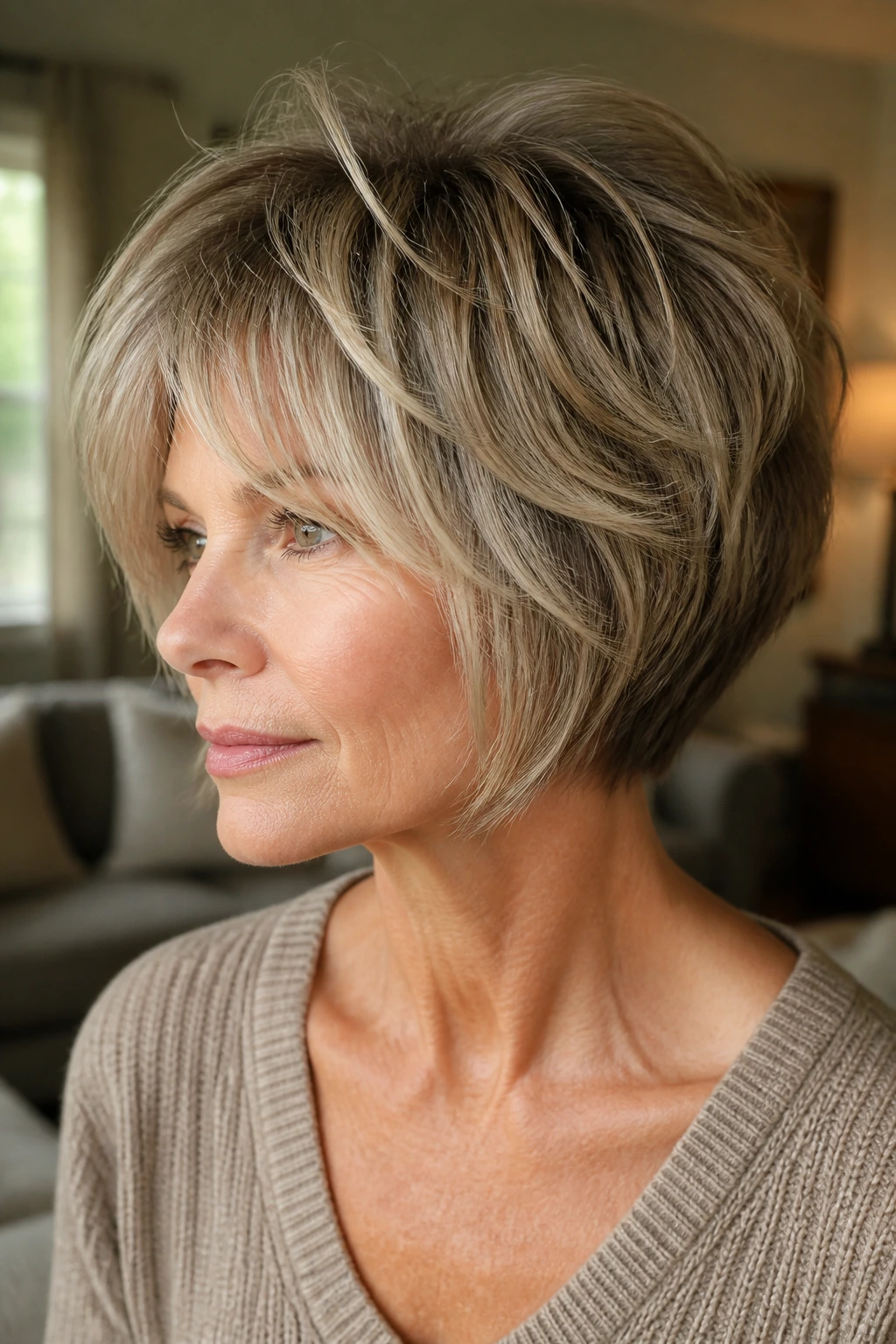
The shag-inspired version borrows a little softness from the shag without turning into one. You still get the shorter back and angled front, but the crown has a bit more airy lift and the ends are lightly broken up. That helps fine hair move instead of sitting as one flat sheet.
This is a good compromise if you like texture but hate looking over-layered. The movement should feel casual, not scruffy. A light dry wax at the ends can define the pieces without swallowing them.
Where it shines
Wavy hair, slightly dry hair, and anyone who likes a cut that looks better with a little natural mess to it.
23. Salon-Blowout Inverted Bob
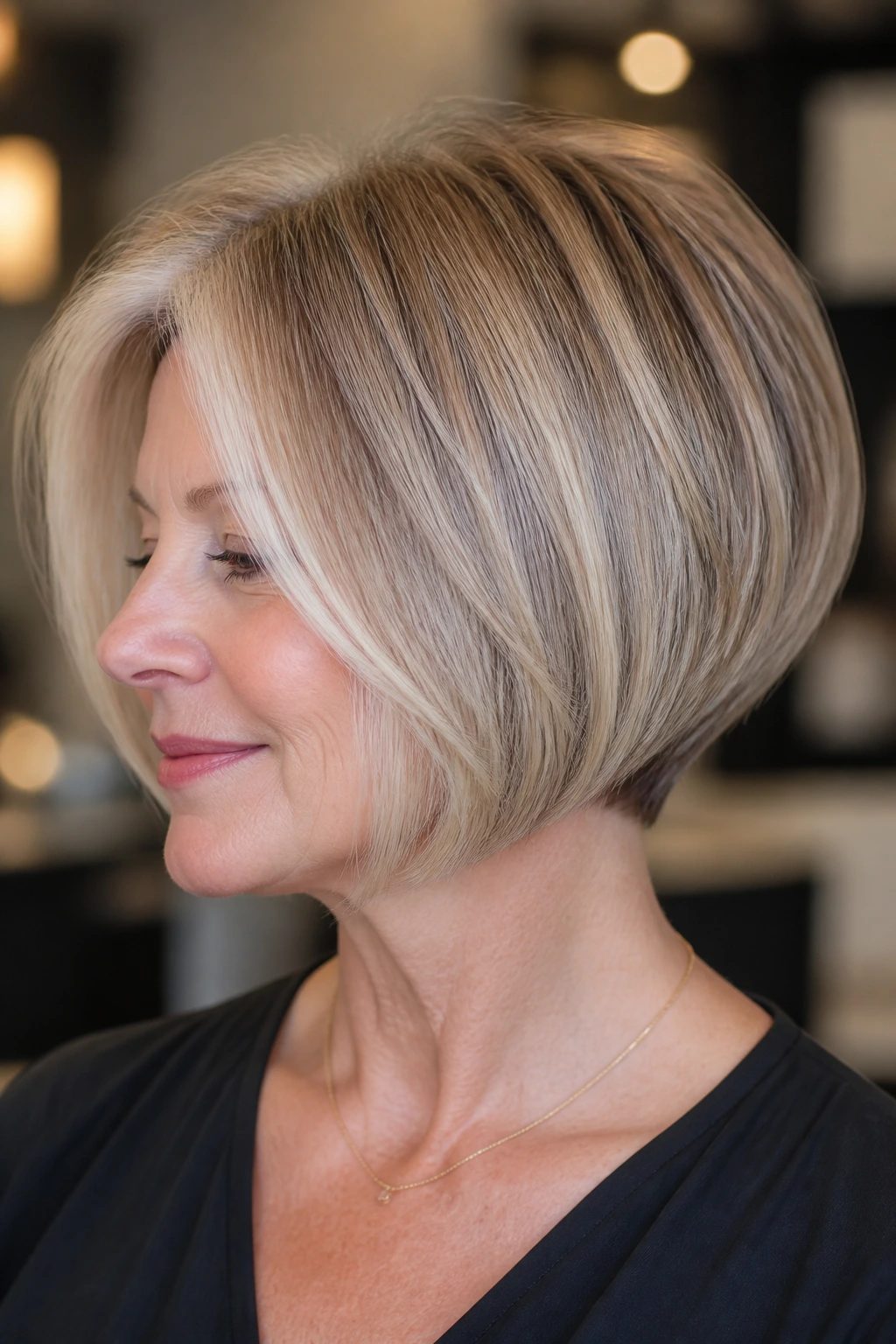
This is the glossy one. The polished one. The one that looks like it had a round brush and a patient hand.
A salon-blowout bob is still an inverted bob, but it leans into smoothness. The crown is lifted, the ends are beveled under, and the whole shape has that soft curve that makes fine hair look expensive. I don’t mean expensive as a compliment with no content behind it. I mean the lines are clear, the finish is controlled, and nothing is fighting the cut.
If your hair tends to fall apart in humidity, this version still works if you set it with a light spray and cool it fully before touching it.
24. Jaw-Length Inverted Bob
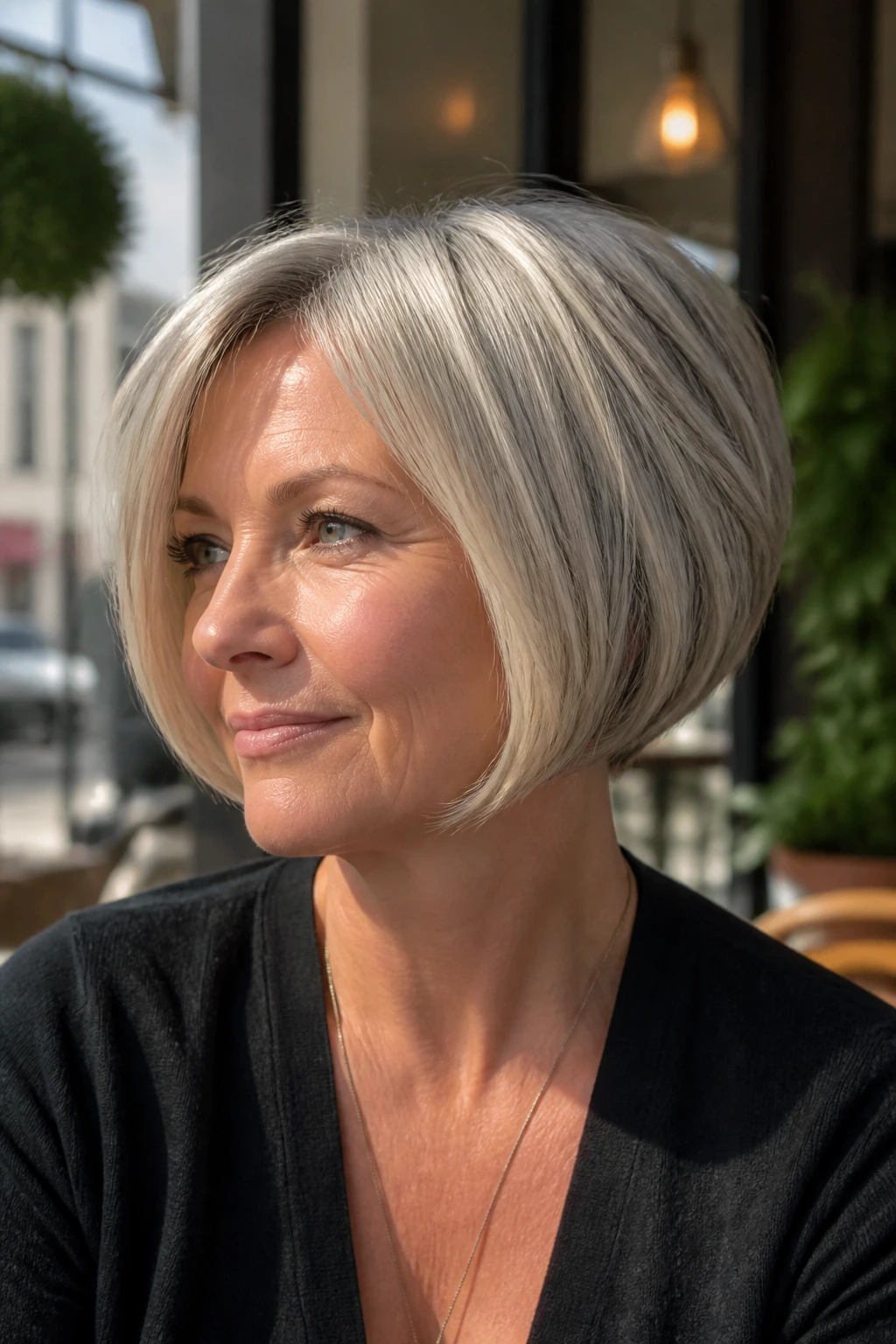
Jaw-length is a sweet spot for a lot of women with thin hair. It’s short enough to avoid drag, long enough to frame the face, and close enough to the head to look intentional even when volume is low. The inverted line keeps it from turning into a simple box.
This version can go sleek or piecey, depending on how you style it. If you want a little more softness, keep the front just below the jaw and let the nape sit neatly higher. If you want edge, sharpen the angle and keep the ends blunt.
Rule of thumb: If your hair goes flat fast, shorter usually wins.
25. Soft Grow-Out Inverted Bob
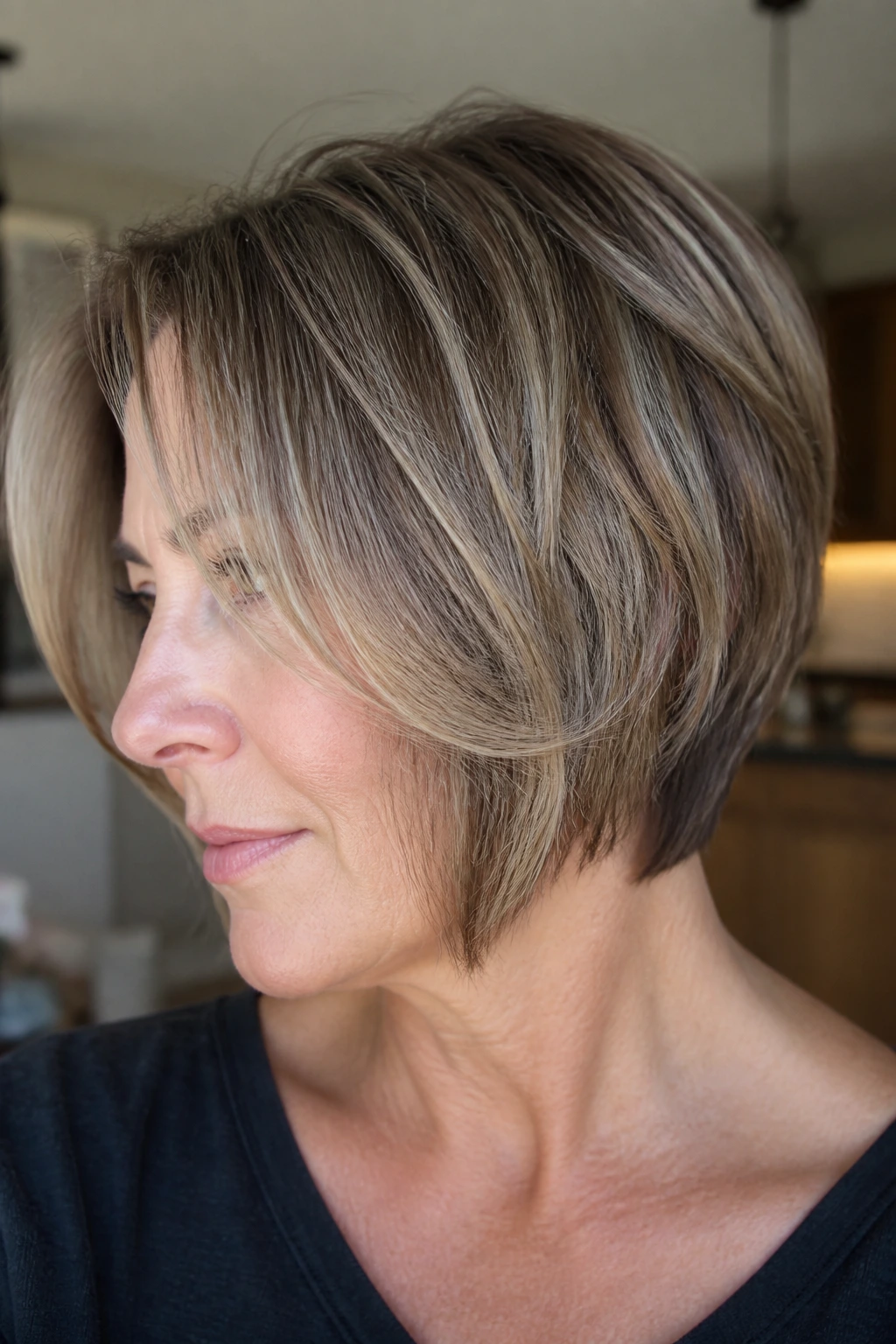
A lot of people love the idea of a bob until they remember the maintenance. Fair. This version is for anyone who wants a shape that still looks decent as it grows.
The back is shorter, but not so short that it turns into a maintenance trap. The front has enough length to shift into a longer bob later, and the layers are soft enough to avoid awkward stair steps after six weeks. That makes it easier to live with if you do not want constant salon visits.
It’s also the best choice if you are nervous about going too short. You get the architecture of an inverted bob without boxing yourself into a dramatic grow-out.
The Tools That Keep the Shape Awake
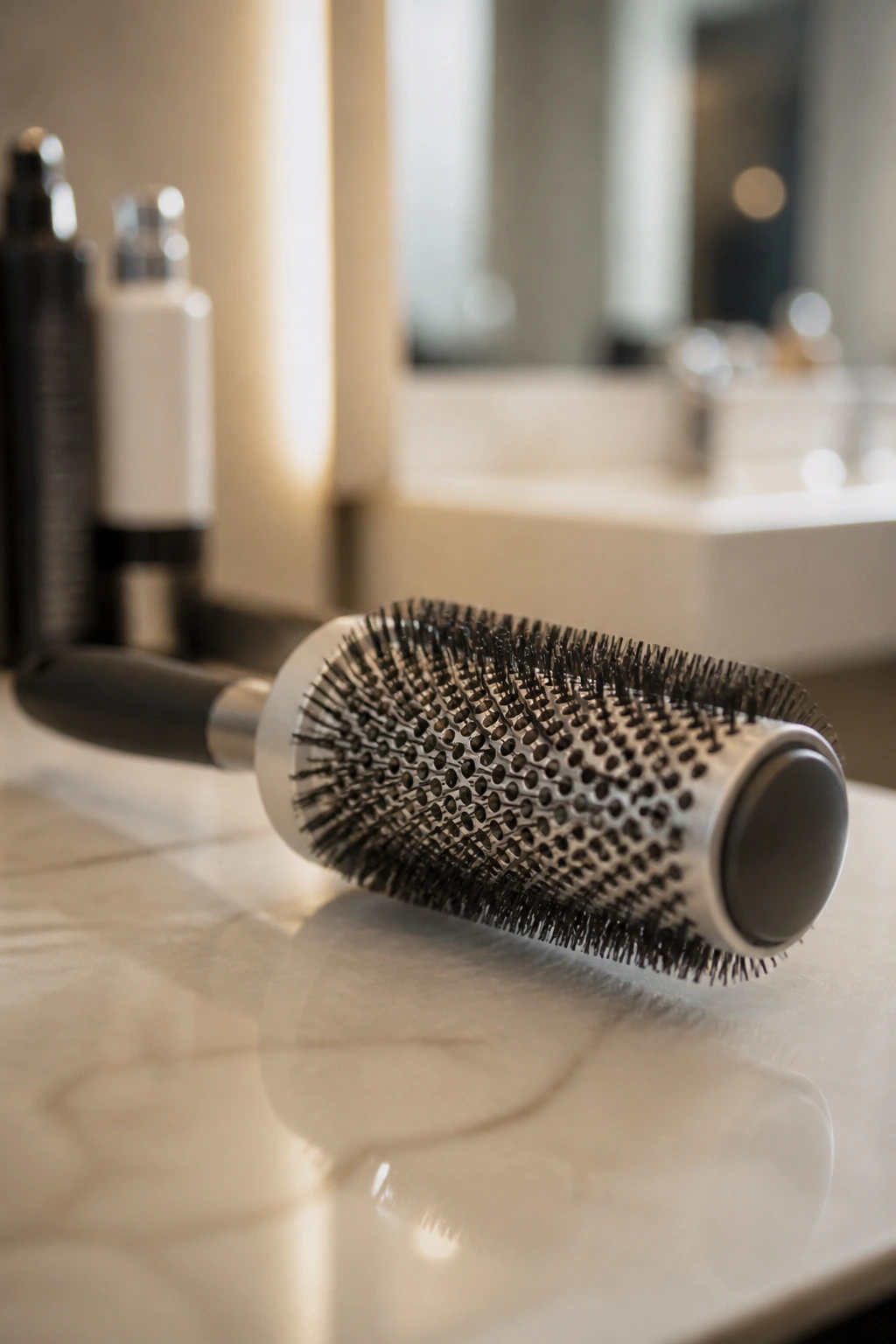
A good cut still needs the right tools. Fine hair can look limp fast if you use heavy products or the wrong brush, and a bob like this depends on a little lift at the roots and a clean finish at the ends.
Essential tools and products
-
Small round brush, 1 to 1.5 inches: Best for lifting the crown and turning the ends under without over-curving them.
-
Blow dryer with a nozzle attachment: The nozzle keeps airflow focused, which helps smooth the cut instead of roughing up fine strands.
-
Root-lift mousse or spray: Use it at the roots only. Too much through the length can make thin hair feel sticky.
-
Lightweight heat protectant: Fine hair can singe quickly, so this step matters before any round-brush work or flat-ironing.
-
Texturizing spray: A dry mist adds grit at the crown and keeps piecey styles from collapsing.
-
Small flat iron or 1-inch curling iron: Handy for shaping the front and making a soft bend through the ends.
-
Tail comb and section clips: These help you set a clean part and keep the back neat while you dry the front.
-
Dry shampoo: Useful on day two, especially at the crown and around the part line.
-
Purple shampoo for silver hair: Use sparingly so the color stays bright, not dull or chalky.
What to Ask for in the Salon Chair
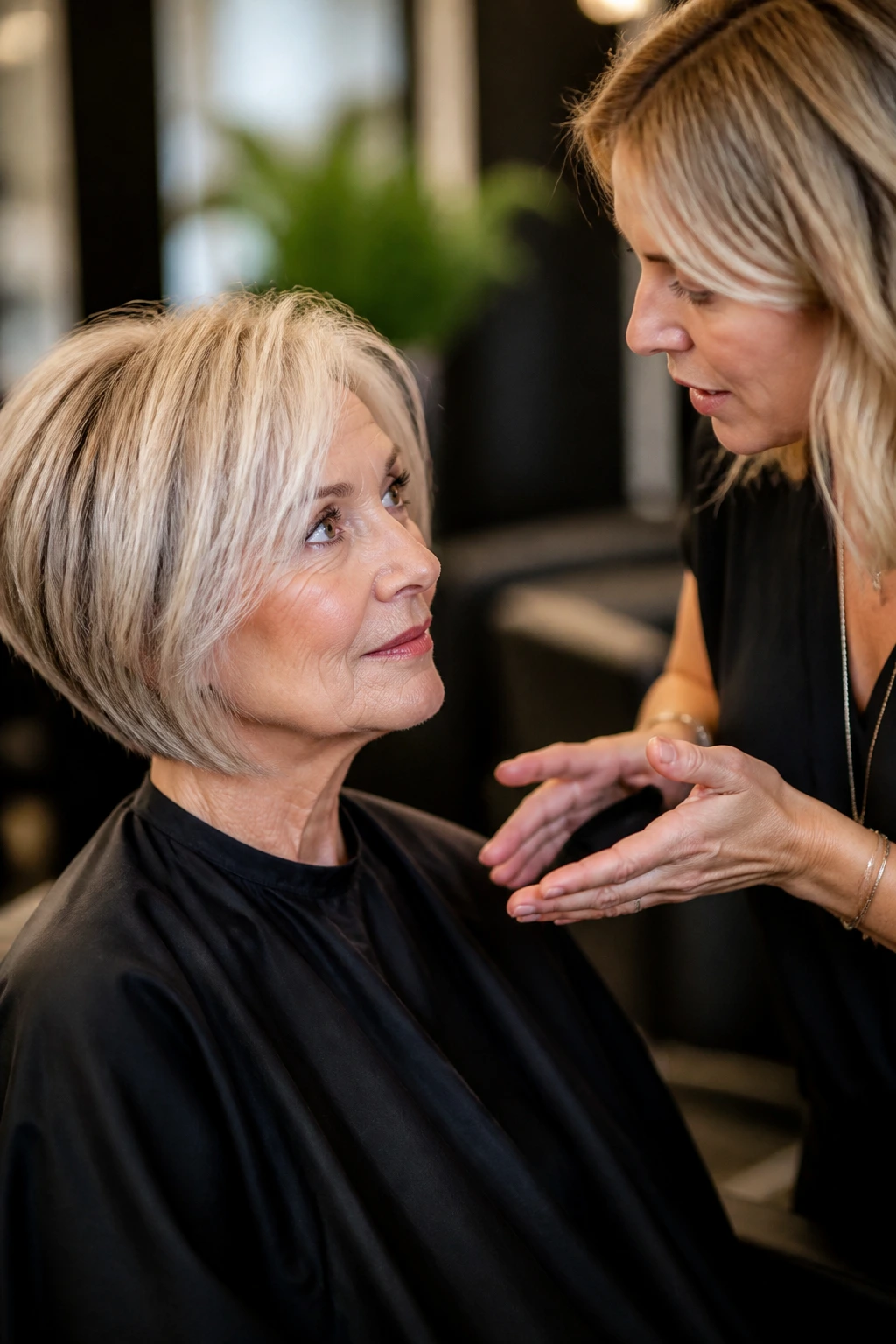
A clean haircut starts with a clean conversation. If you sit down and say “I want volume,” you may get three different interpretations from three different stylists. Better to talk shape, length, and density.
Say whether you want the nape short or soft, and how much contrast you want between back and front. A dramatic inverted bob has a stronger angle. A softer one still turns but barely grades. Those are not small differences when your hair is fine, because a little too much angle can expose the neck and a little too little can flatten the whole effect.
If your hair is straight and slippery, tell the stylist that it falls fast. If it’s wiry or silver, say that too. Straight fine hair usually needs a cleaner perimeter. Wiry fine hair often needs less rough texturizing and more precision at the outline. And if you want to wear your hair behind your ears most days, tell them before the cut, not after. That habit changes the balance at the sides.
Color Moves That Make Fine Hair Look Denser
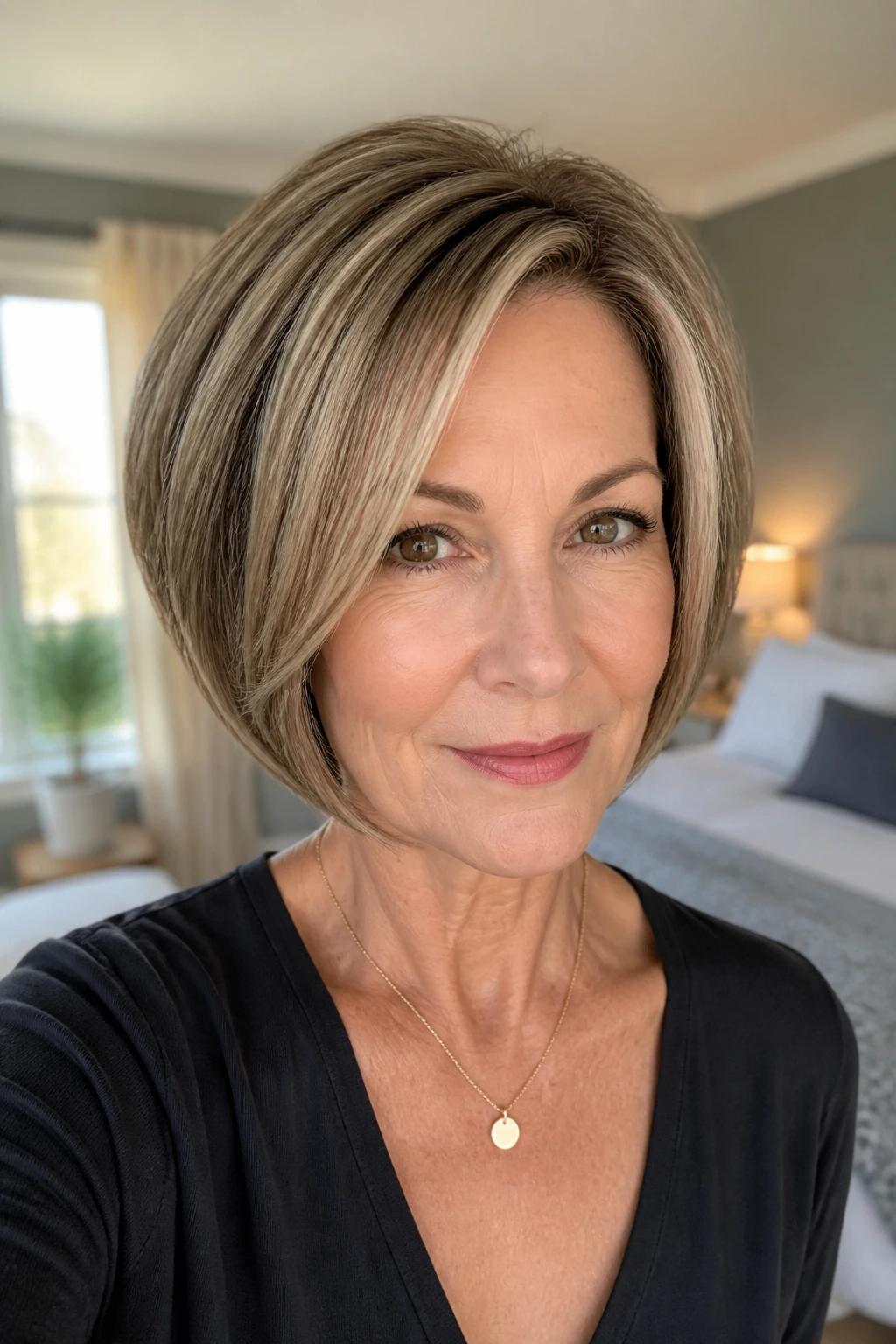
Color is one of the easiest cheats in the book, and I mean that in a good way. A single-tone fine bob can look flat if the cut is too close to the same shade from root to tip. A little dimension changes the way the eye reads the shape.
Lowlights can make a bob look thicker because they create shadow near the interior. Soft highlights around the face can widen the silhouette and make the front feel lighter. On silver or white hair, a gloss can sharpen the tone and stop the ends from looking dusty. I’d skip chunky stripe highlights unless you want the cut to read more fashion-forward than full.
The goal is not to make the hair louder. It’s to give the cut more depth. One tone too flat, and every line looks thinner. A little variation, and the bob suddenly has room to breathe.
How to Style the Cut Without Fighting It
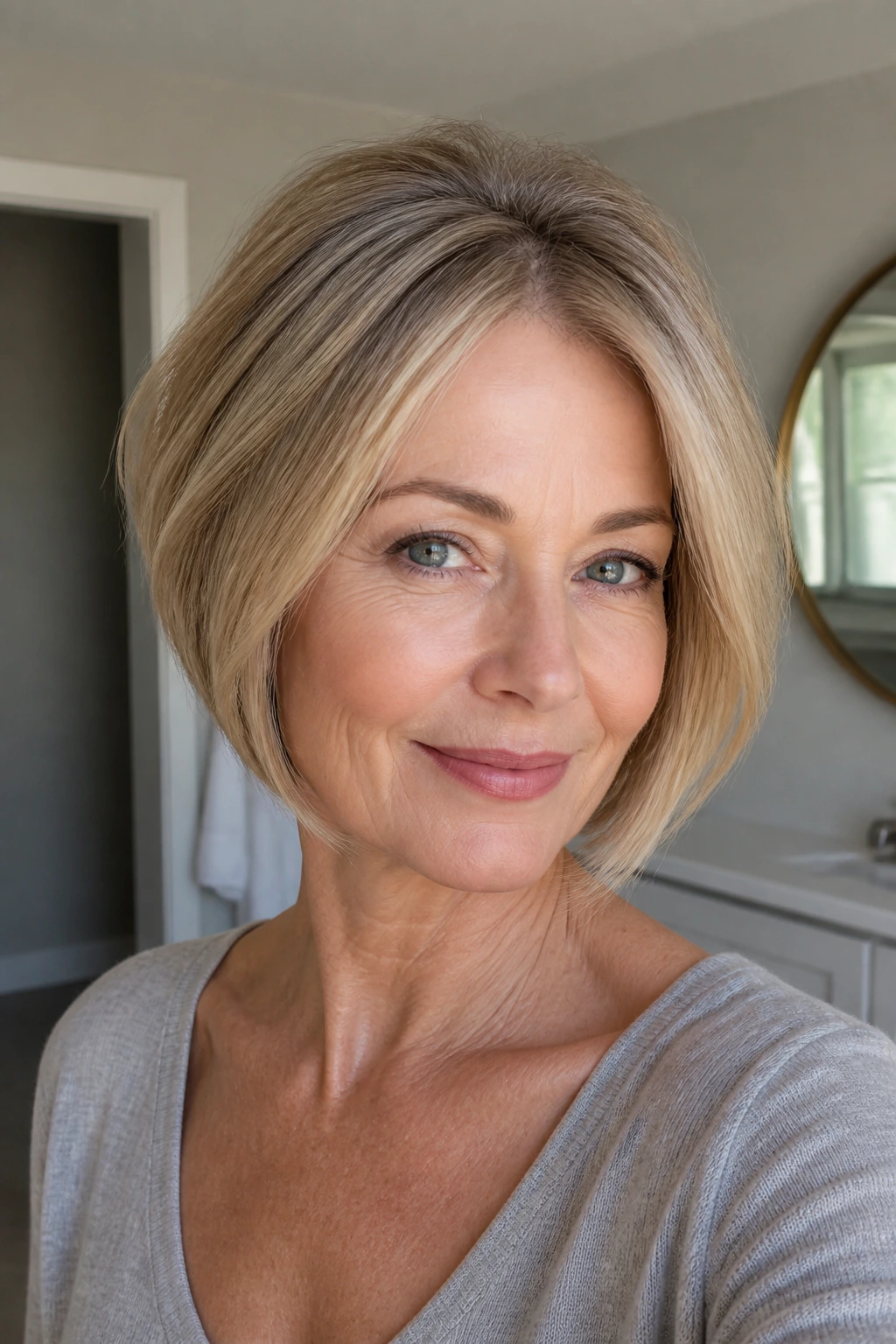
A fine inverted bob usually looks best when you work with the cut, not against it. That means a little root lift, controlled smoothing, and one or two shaping moves instead of a lot of fuss.
Fast blowout routine
Start with towel-dried hair and a small amount of mousse at the roots. Rough-dry until the hair is about 80 percent dry, then switch to the round brush and lift the crown upward, not backward. Direct the nozzle down the shaft so the ends stay smooth, then turn only the last inch under. That’s enough.
Air-dry routine
If your texture has some natural bend, scrunch a light cream through the mid-lengths and clip the roots up for a few minutes while the hair dries. Release the clips, finger-comb the crown, and leave the ends alone. Too much touching is what breaks the shape.
Second-day fix
Mist the top lightly with water or a leave-in spray, re-blow the crown for two minutes, and add a pinch of dry shampoo at the part. You don’t need to restyle the whole head. Usually the top is what gives away the tired look.
How to Wear the Shape with Glasses, Earrings, and Simple Outfit Lines

Finish: Keep the silhouette clean if you wear glasses every day. Rounded frames usually work well with a softer bob curve, while angular frames look good with a sharper edge. The haircut should not compete with the glasses for attention.
Accessories: Small hoops, slim studs, and scarves tied low at the neck suit these cuts better than oversized pieces that fight the nape. A tucked side can show off one earring without making the whole style feel one-sided.
Proportion: If your face feels shorter, keep the front a touch longer. If it feels wider, keep the line tighter around the jaw and let the crown carry the lift. That small change matters more than most people think.
Daily wear: These cuts look tidy with a crisp shirt collar, a simple knit, or a jacket that doesn’t crowd the neckline. The bob already brings structure. Let the clothes stay easy.
Common Mistakes That Flatten the Look
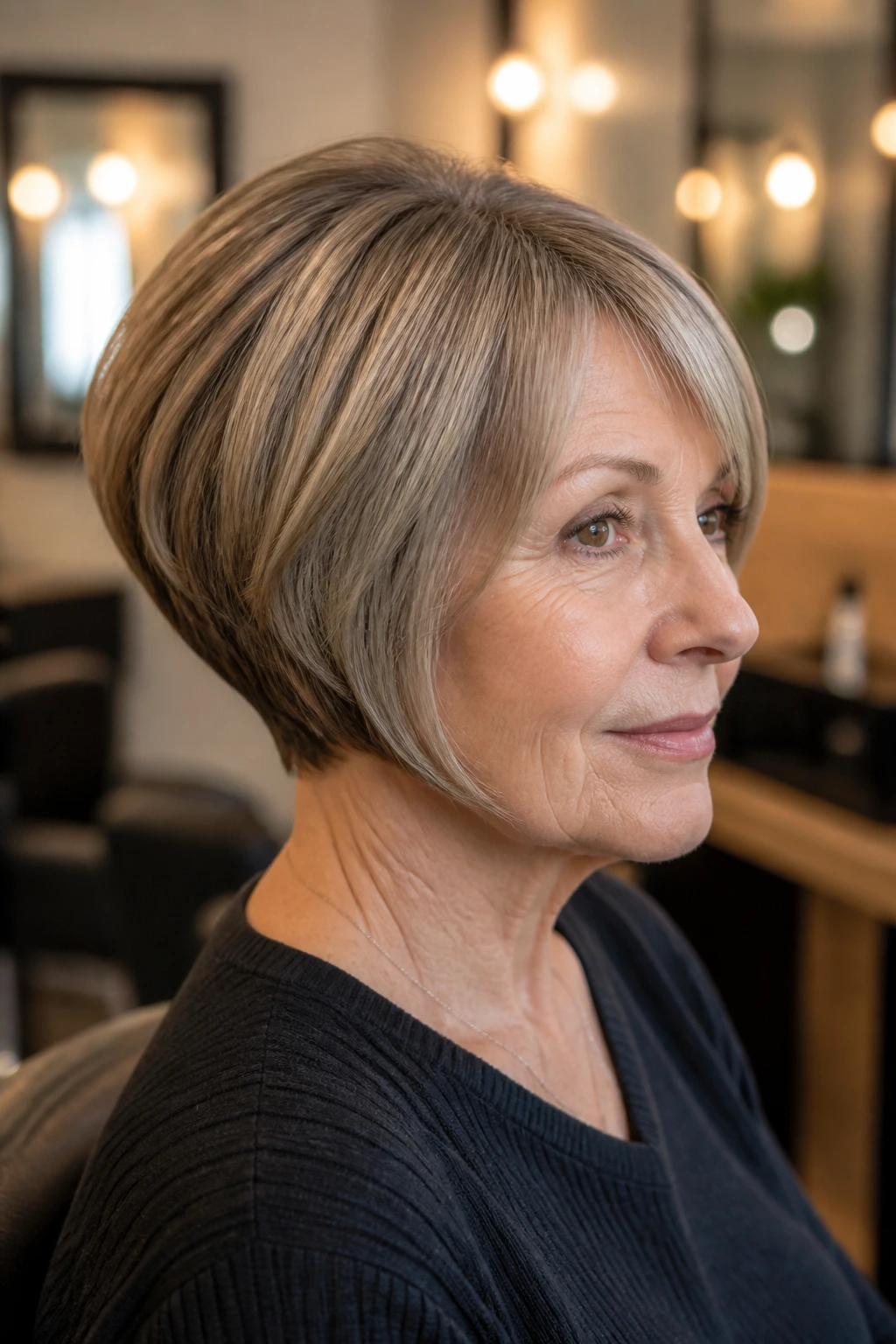
The first mistake is leaving the back too long. Once the nape gets heavy, the whole cut loses lift and starts to look like a grown-out wedge instead of an inverted bob. The fix is a shorter internal stack and a cleaner neckline.
The second mistake is over-layering thin hair. People think more layers mean more volume. Usually the opposite happens. Too many layers leave see-through ends and expose the scalp through the crown. If your hair is fine, ask for control, not shredding.
The third mistake is using thick creams and oils all over the head. Heavy product makes the roots sag and the ends look stringy. Use the smallest amount possible, and keep anything oily away from the crown.
The fourth mistake is ignoring the part line. Fine hair often shows its habits at the part first. If it starts widening, switch the side occasionally, use a root-lift spray, or ask for a part that suits your growth pattern better.
The fifth mistake is letting the cut go too long between trims. Inverted bobs lose their point fast when the back grows out and the angle softens. Once that happens, the whole style turns sleepy.
Variations and Adaptations to Try
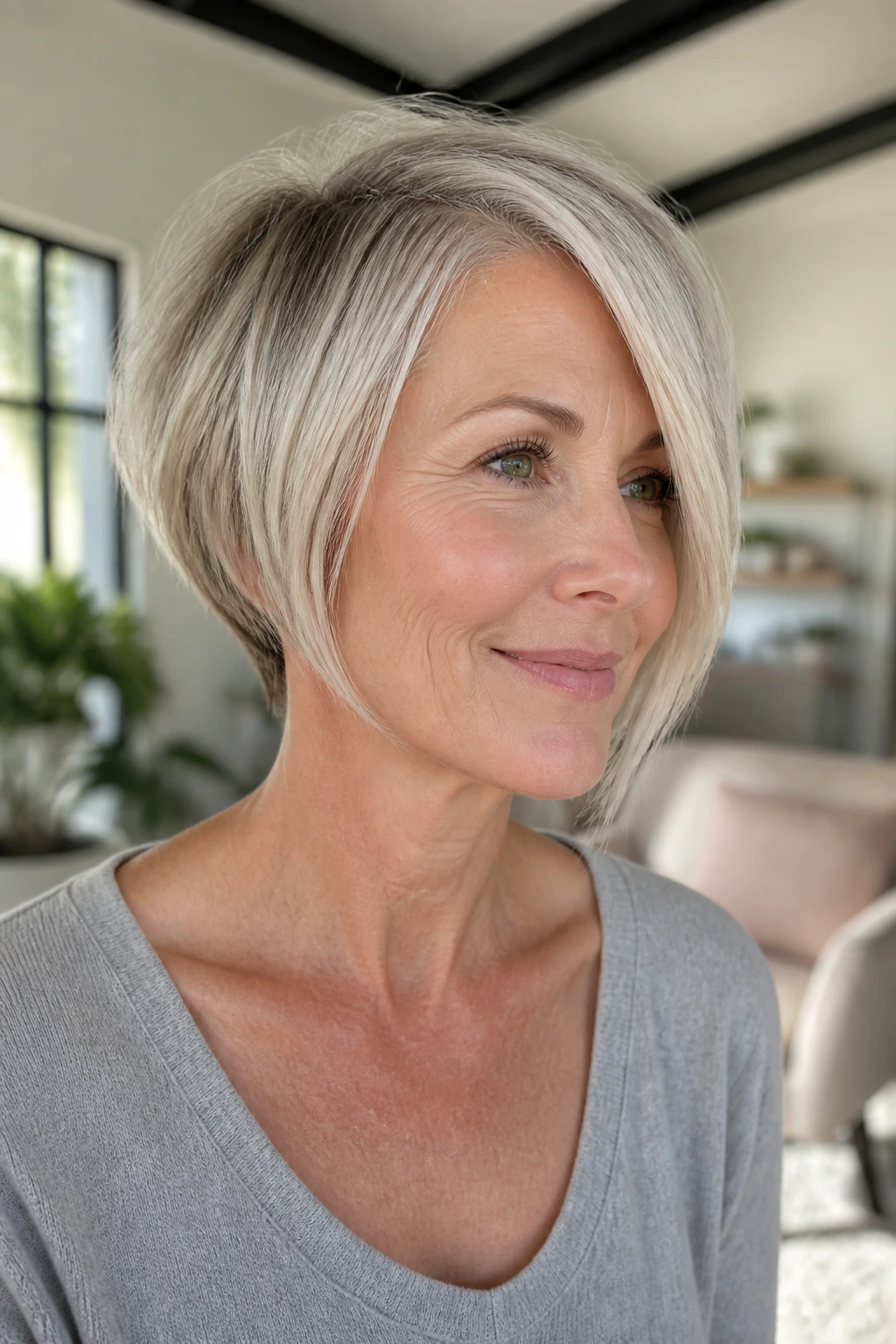
The Soft Side Angle: Keep the front longer on one side and let the rest of the bob stay calm. This is a nice choice if you want asymmetry without a dramatic shape change.
The Silver Gloss Finish: Use a clear or slightly cool gloss to sharpen gray or white hair, then pair it with a neat bevel at the ends. The cut looks cleaner, and the color reads brighter.
The Texture-Light Version: If your hair is very fine, ask for minimal internal layering and put all the movement at the surface. You get shape without holes.
The Bold Fringe Option: Add a wispy or curtain fringe if you want more face framing. Keep it light, though. Heavy bangs can pull the whole cut down.
The Grow-Out Friendly Shape: Leave the front just a little longer and keep the stack soft so the cut can transition into a bob-lob without a weird shelf line.
The Low-Maintenance Air-Dry Cut: Keep the perimeter neat, but build in enough movement for your natural texture to do the work. This is the version that survives a rough morning.
Maintenance, Trims, and Overnight Care

Short inverted bobs need regular trims if you want the shape to stay sharp. For most fine hair, every 5 to 7 weeks keeps the nape tidy and the angle visible. If you prefer a softer grow-out, you can stretch that a little, but once the back drifts too far, the structure starts to disappear.
Night care matters too. A silk or satin pillowcase cuts down on friction, which helps the ends stay smoother. If your hair bends oddly on one side, pin it loosely before bed or use a very soft roller at the crown for a bit of lift. Don’t sleep with damp hair if you want the bob to keep its line. That’s how you wake up with a bend that feels personal in the worst way.
Dry shampoo can buy you a day, sometimes two, but use it at the root only. If the ends feel dry, add a tiny mist of leave-in spray and comb it through with your fingers. A bob like this looks best when the crown stays fresh and the perimeter stays neat.
Frequently Asked Questions
What’s the difference between an inverted bob and a stacked bob?
A stacked bob usually describes the layered buildup in the back, while an inverted bob focuses on the angle from shorter back to longer front. In practice, many short bobs combine both. The difference matters most when you’re talking to a stylist about how dramatic you want the slope to be.
Will an inverted bob make thin hair look thinner?
Not if the cut is shaped well. Fine hair can look thinner when it’s over-thinned or left too long, but a clean inverted bob removes drag and gives the eye a stronger line. The key is keeping the perimeter full and the layers controlled.
How short should the back be?
Short enough to lift the nape, but not so short that the head shape looks harsh. For most women, that means the back sits close to the neck with a gradual rise toward the crown. If you want a softer look, keep more length at the nape and less height in the stack.
Can I wear one if my hair is wavy or curly?
Yes, but the shape needs to respect the pattern. A wavy inverted bob can look airy and modern, while a curly one may need more length so the curl doesn’t spring too high. Ask for a dry check if your texture has a mind of its own.
Does this cut work with glasses?
It can work beautifully, as long as the front doesn’t crowd the frame. Keep the side sections long enough to sit near the cheekbone or jaw, and ask the stylist to shape around the temples. Glasses can either frame the cut or fight it; length matters.
How often do I need a trim?
Most of these cuts need shaping every 5 to 7 weeks to stay crisp. If the back is very short or the angle is sharp, err toward the shorter side of that range. Fine hair shows growth quickly.
What if my hair is very straight and slippery?
Then the cut needs a strong outline and a little root support. A lightweight mousse at the crown, a focused blow-dry, and a blunt perimeter help more than heavy products ever will. Straight fine hair usually hates being overloaded.
Can I grow it into a longer bob later?
Yes, and some versions are built for that. If you think you may want more length later, keep the front slightly longer and the stack soft. That way the grow-out lands as a bob-lob instead of a strange shelf.
The Shape That Keeps Working
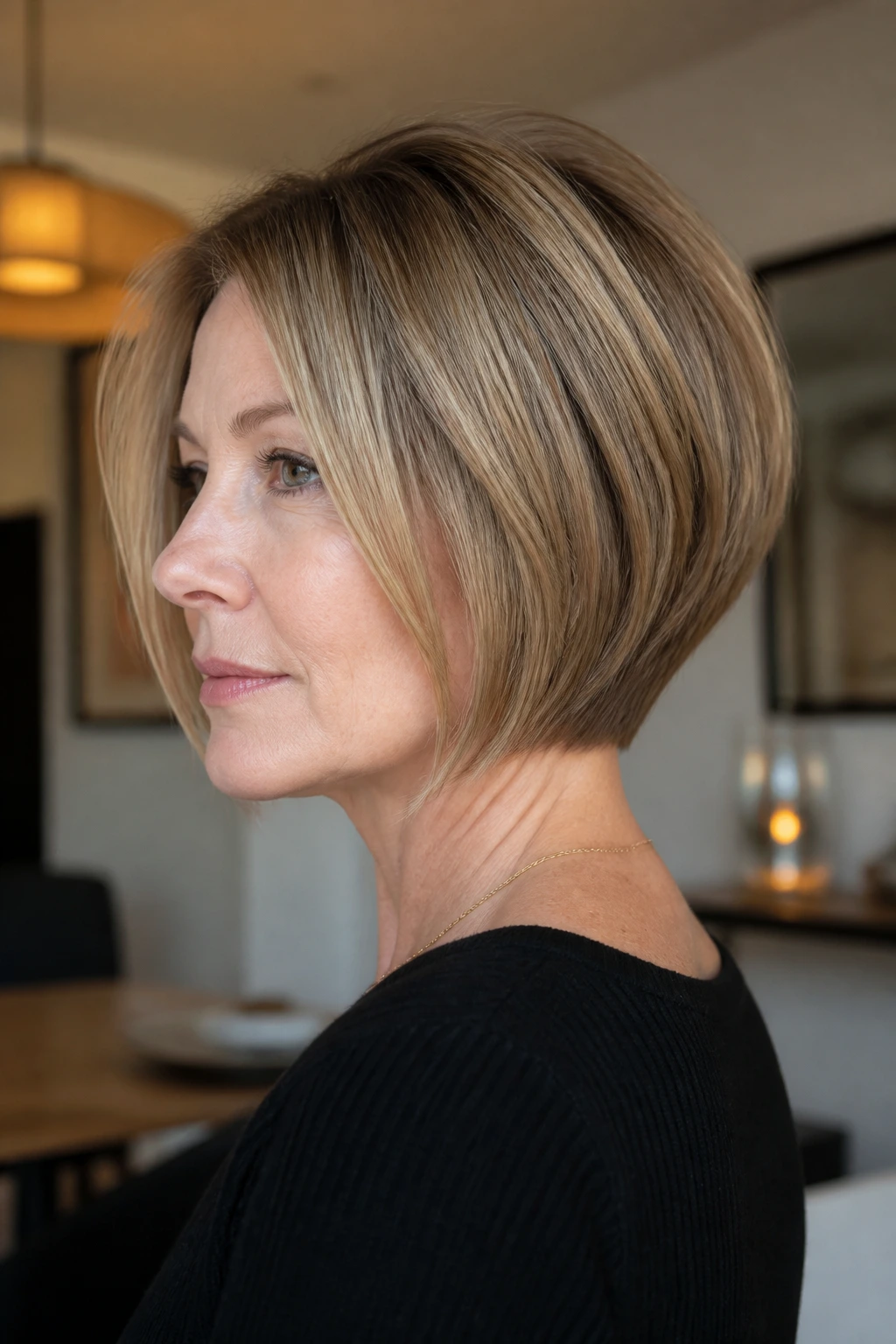
The reason these cuts stay in rotation is simple: they solve a shape problem. Thin hair after 50 often needs lift at the crown, control at the neck, and enough edge around the face to look intentional on a regular day, not only after a salon blowout. An inverted bob does that without dragging the hair into territory that looks sparse or tired.
Some versions lean polished, some lean piecey, and some are a little bolder than most people expect at first glance. That’s the useful part. You do not have to pick one mood and live there forever. You can take the same basic structure and make it softer, sharper, sleeker, or more relaxed depending on how you wear your hair and how much time you want to spend on it.
If your current cut feels like it has lost its shape halfway through the day, that’s a sign. A better bob can give the whole head a cleaner outline and make fine hair look like it has a reason to be there. And once you find the right angle, you stop thinking about volume all morning, which is the nicest kind of hair problem to have.