



Pixie cuts for round faces and fine hair can look cleaner, taller, and sharper than longer hair ever does — if the shape is built with a little discipline. The trick is not to hide your face or pile on layers until the cut loses itself. It’s to move the eye upward, keep the sides from ballooning, and leave just enough length in the right places that fine strands don’t vanish the second you step away from the salon chair.
That balance matters more than people think. A pixie that’s too full at the temples makes a round face look wider. A pixie that’s too aggressively thinned turns fine hair into see-through fuzz. The sweet spot lives between those two mistakes: a tidy perimeter, some lift at the crown, and fringe that travels on a diagonal instead of cutting straight across the widest part of the face.
The good news is that there isn’t one correct pixie here. There are soft versions, choppy versions, sculpted versions, and cuts that lean polished enough for work without feeling stiff. Some rely on side-swept movement. Others win by removing bulk from the sides or by keeping the front long enough to stretch the face a little. The styles below are built around that idea, and the differences between them matter.
Why These 22 Pixies Work for Round Faces and Fine Hair
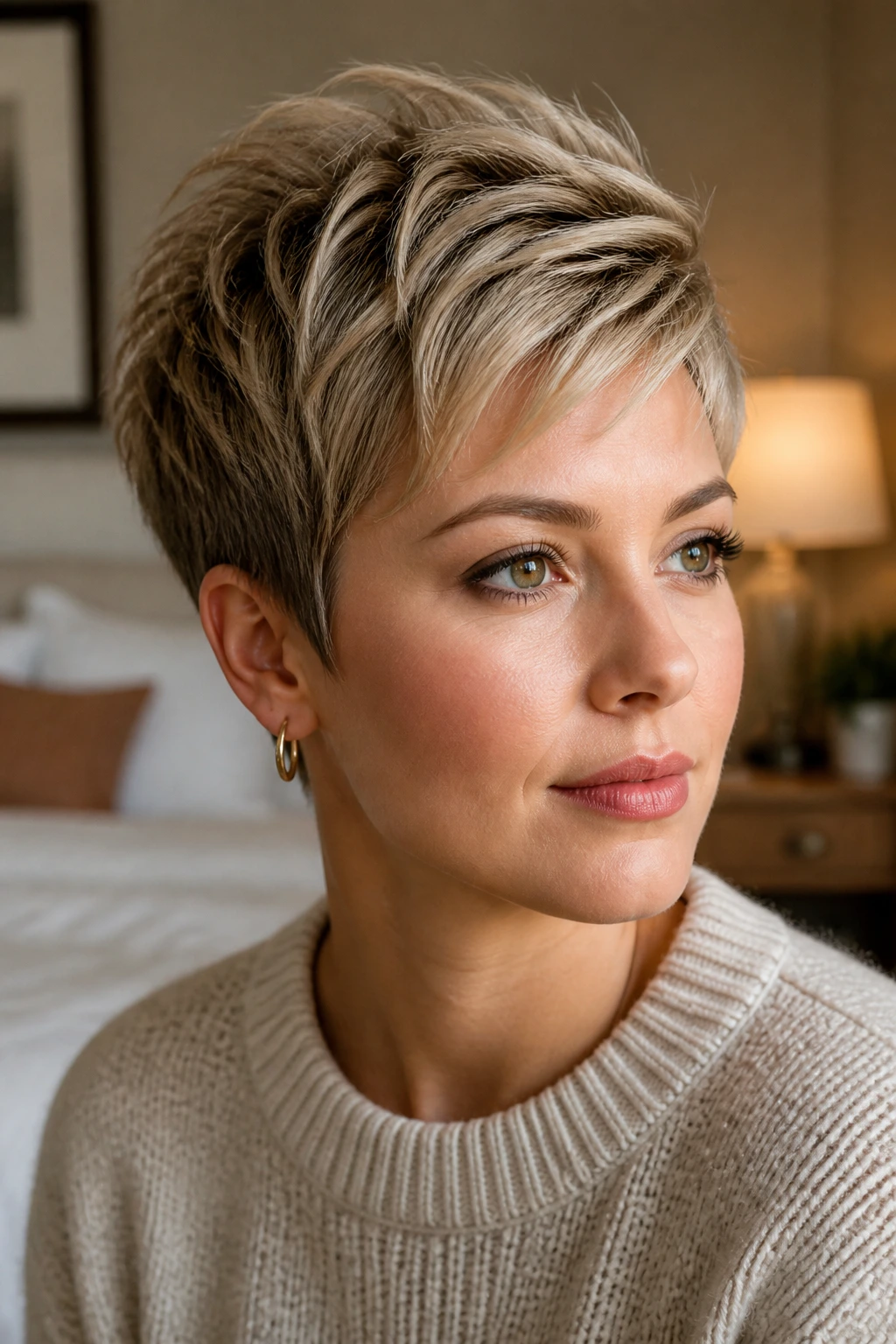
-
Vertical height changes everything: a crown that sits even 1 to 1.5 inches higher than the sides pulls attention upward and keeps the face from reading too wide.
-
Tapered sides keep the silhouette slim: when the area around the ears hugs the head, the cut stays neat instead of puffing out at the cheeks.
-
Diagonal fringe breaks up roundness: side-swept bangs, deep parts, and asymmetrical front pieces all work because they cut across the face instead of echoing its shape.
-
Fine hair needs structure, not stripping: point-cut ends and light layering create movement without shredding the perimeter into wisps.
-
Short hair should move fast: a good pixie on fine hair dries quickly, holds shape with a small amount of product, and still looks deliberate by the end of the day.
-
The right cut makes styling easier, not harder: if the shape is doing the heavy lifting, you do not need a full bathroom counter of sprays and creams to make it behave.
What Round Faces and Fine Hair Need Before the First Snip
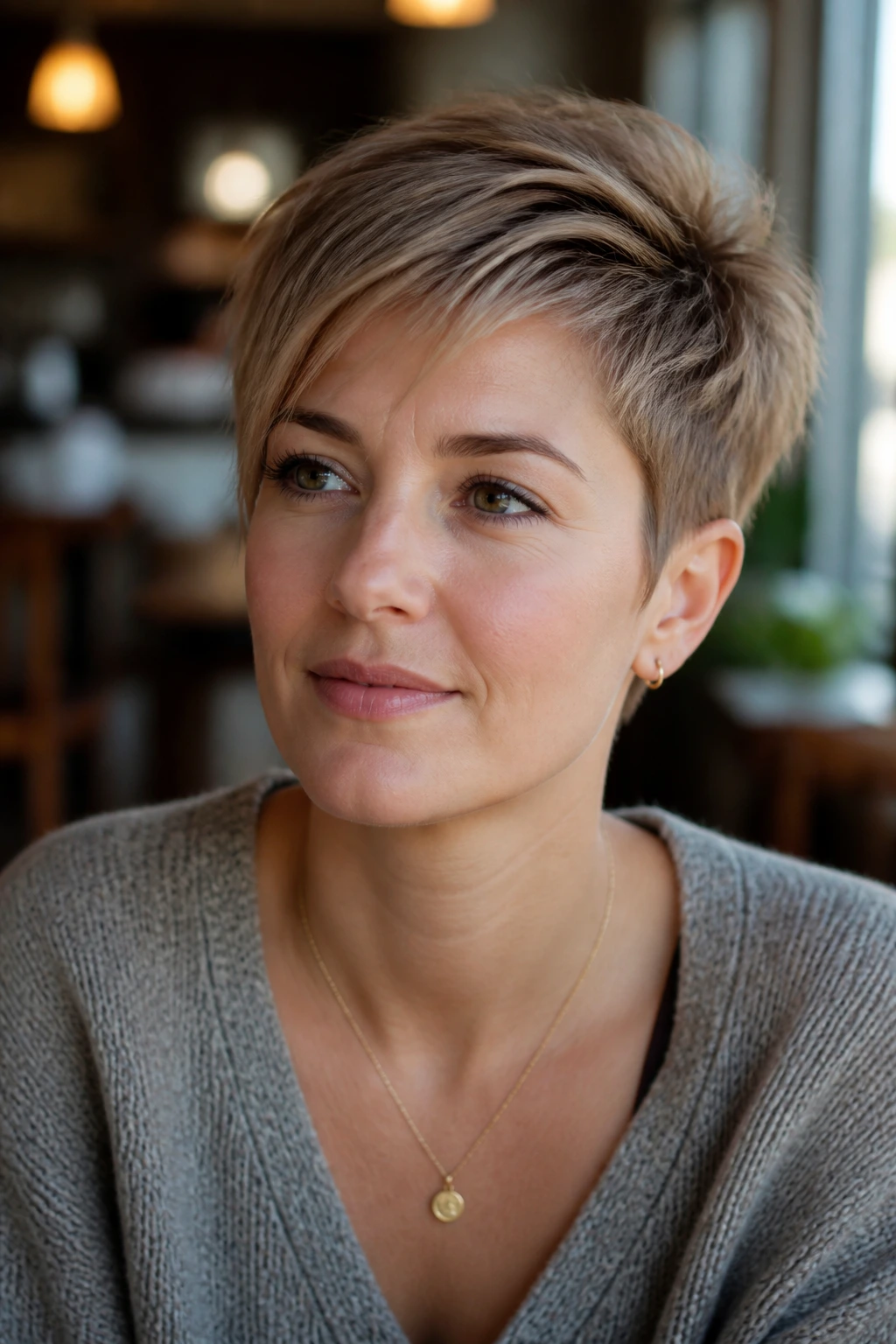
A round face does not need to be hidden. It needs lines. That usually means something that travels up, across, or diagonally — anything except a blunt, wide band sitting right at cheek level. If your face is fuller at the cheeks, the safest move is to keep the sides narrow and let the top or fringe do the interesting work.
Fine hair changes the discussion in a quieter way. Fine strands are small in diameter, which means they can go flat fast, but that does not automatically mean low density. Some heads of fine hair are thick as rope in total volume; others are sparse and soft. Those two hair types behave differently, and a stylist should not treat them the same.
Cheek Width, Jawline, and the Front Pieces
If the widest part of your face sits across the cheeks, leave enough length at the front to skim past that point. A side-swept bang that ends just above the cheekbone can be lovely. One that stops right on the cheek usually makes the face look broader than it is.
Fine Hair Is Not the Same as Thin Hair
Fine hair can be plentiful. Thin hair can be coarse. The cut has to respect that difference. Dense fine hair can take more texture and more pieces around the crown. Sparse fine hair usually looks better with cleaner lines and fewer layers carved into the ends.
Cowlicks and Growth Patterns Matter More Than People Admit
A stubborn crown swirl can ruin a beautiful pixie if the top is cut too short. The same goes for a cowlick at the temple or a part that refuses to sit where a photo suggests it should. Bring those patterns into the plan, not as afterthoughts. They decide how the cut behaves at 7 a.m., which is when the truth shows up.
1. Side-Swept Classic Pixie
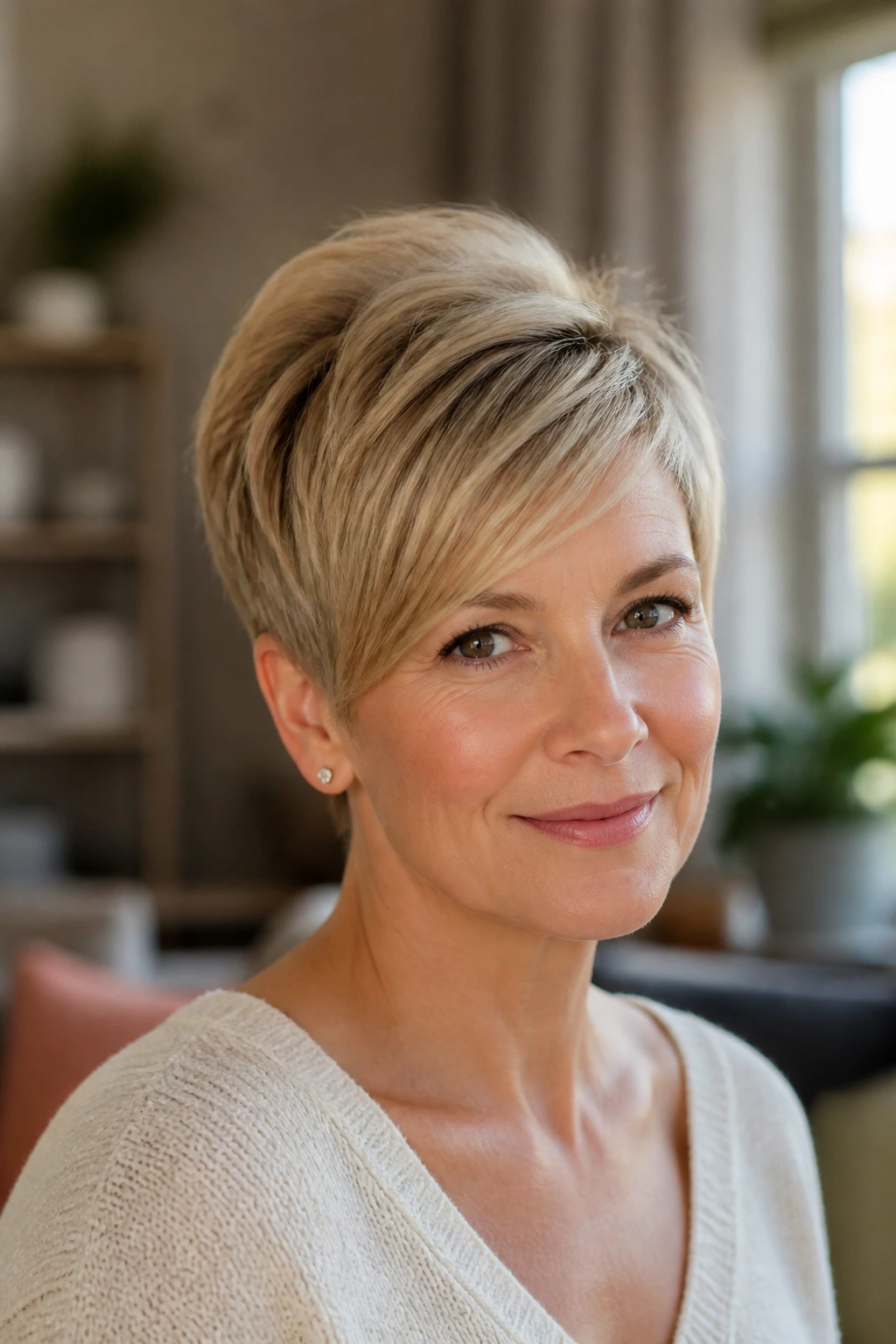
A side-swept classic pixie is the calm, reliable answer when you want the cut to flatter the face without shouting about it. The front falls diagonally across the forehead, the crown keeps enough length to lift, and the sides stay close enough to avoid the little mushroom shape that round faces hate.
Why It Works
Ask for this: keep about 2.5 to 3 inches on top, 1 to 1.5 inches at the sides, and a longer front piece that brushes the eyebrow.
- The diagonal fringe pulls the eye away from the cheeks.
- The narrow sides keep the cut from fanning outward.
- The longer top gives fine hair a place to build a little height.
- A soft edge around the front keeps the cut from looking severe.
Style tip: blow-dry the front in the direction you want it to sit, then finish with a pea-sized bit of lightweight cream only at the ends.
This is the pixie I’d hand someone who wants a first short cut that still feels familiar. It works on straight hair, slightly wavy hair, and fine hair that behaves itself most mornings. Skip heavy waxes here. They drag the fringe down and flatten the crown by lunchtime.
2. Tapered Crown Pixie
This is the one I reach for when someone says, “I want my face to look longer, but I still want it short.” The sides are cropped tight near the ears and nape, while the crown stays visibly longer so the whole silhouette lifts. That extra height does a lot of work on a round face.
The trick is in the balance. If the top is too short, the shape turns squat. If the sides are left too bulky, the head reads wider. Keep the crown around 3.5 to 4.5 inches, taper the sides to about half an inch to an inch, and let the back hug the neck without puffing out.
This cut is especially good for fine hair that collapses when it’s overlayered. The clean taper gives the illusion of density where you need it, and the longer top can be coaxed upward with root-lifting mousse and a small round brush. A cool shot at the end matters. It locks the shape before gravity talks you out of it.
3. Feathered Fringe Pixie
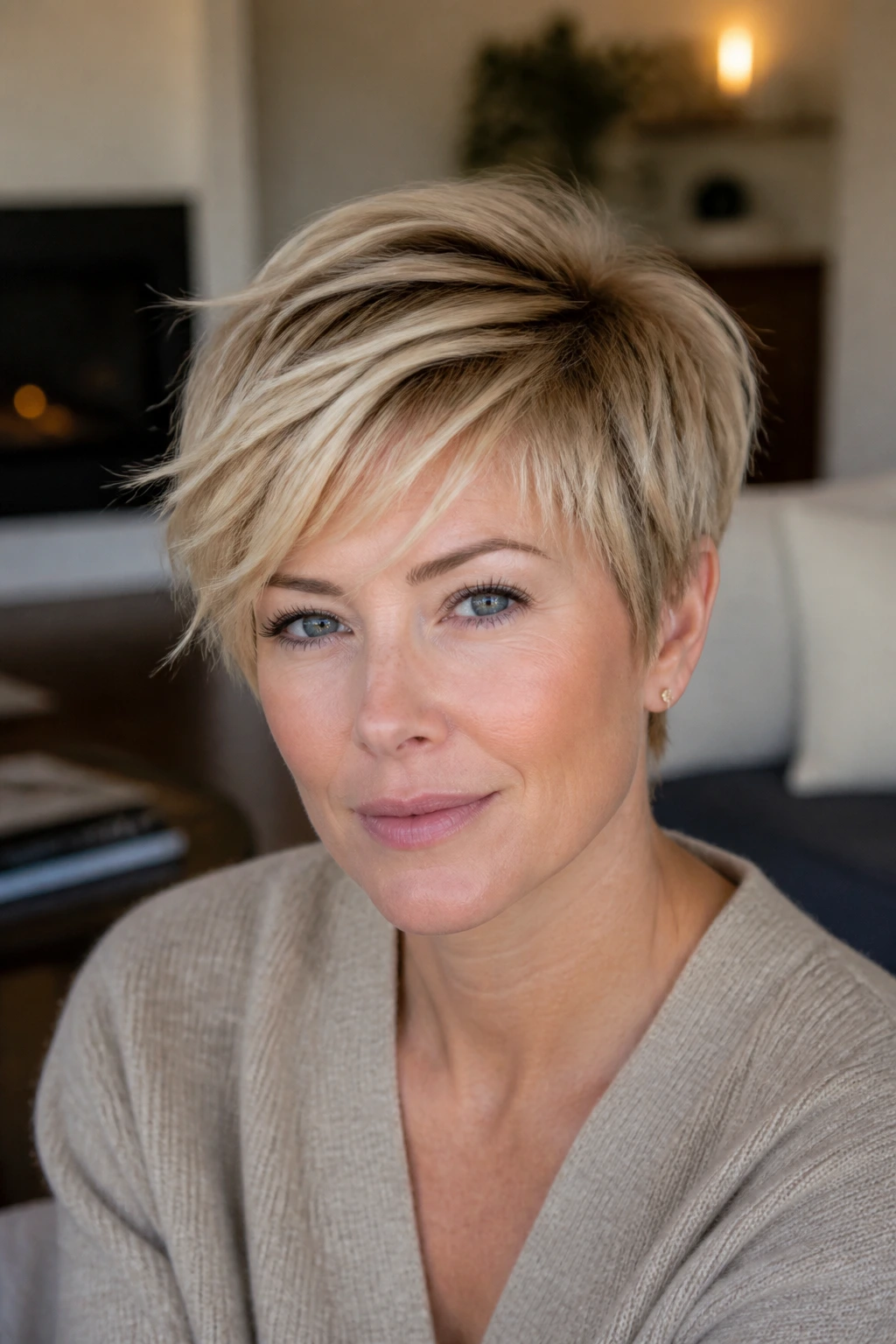
Why does a feathered fringe work so well on baby-fine hair? Because it makes the front feel lighter without erasing it. Instead of one obvious block of bangs, you get soft, separated pieces that sit over the forehead in little strands. That movement softens a round face and keeps the fringe from looking like a shelf.
The cut itself should stay airy. Ask for feathering around the front and crown, but not so much thinning that the ends go stringy. Around 2 to 3 inches in the fringe area is usually enough, with just a touch more length at the top so the hair can lift instead of sticking flat to the scalp.
How to Style It
Rough-dry the roots first, then switch to a small brush and bend the fringe forward and slightly to one side. Use a light volumizing spray at the roots, not a heavy paste through the top. The whole point is movement, not stiffness.
If your fine hair tends to separate into see-through strands, this cut can still work — but only if the feathering is controlled. Too much slicing and the front starts to look wispy in the wrong way. Keep the texture soft, not shredded.
4. Asymmetrical Pixie Sweep
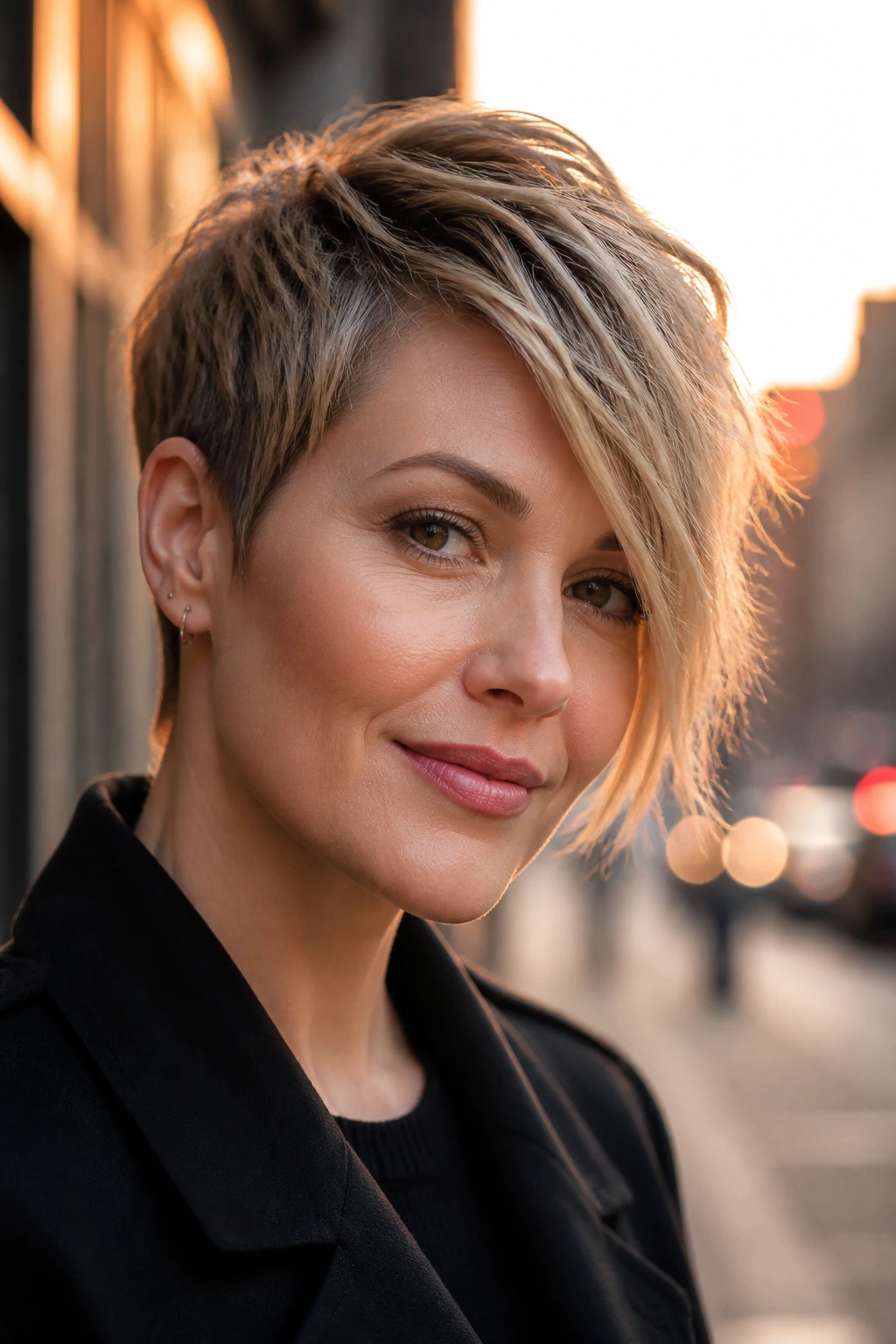
A round face loves a diagonal line, and an asymmetrical pixie gives you exactly that. One side stays shorter and snug, while the other sweeps across the forehead and past the brow. The difference does not need to be dramatic to do its job. Even a small imbalance creates a stronger outline.
This is a good cut if you like a little edge without going full punk. Ask your stylist to leave the longer side around 3 to 4 inches through the front, with the shorter side closer to 1 to 1.5 inches at the temple and around the ear. That longer sweep should angle down, not sit straight across the face.
Best for: fine hair that needs a visual trick more than more bulk. The diagonal front line stretches the face, and the shorter side keeps the cut from puffing at the cheek. It also plays nicely with a side part that refuses to sit in the middle.
A small round brush and a touch of mousse at the root are enough here. The cut should look intentional even when you don’t do much to it.
5. Choppy Textured Pixie
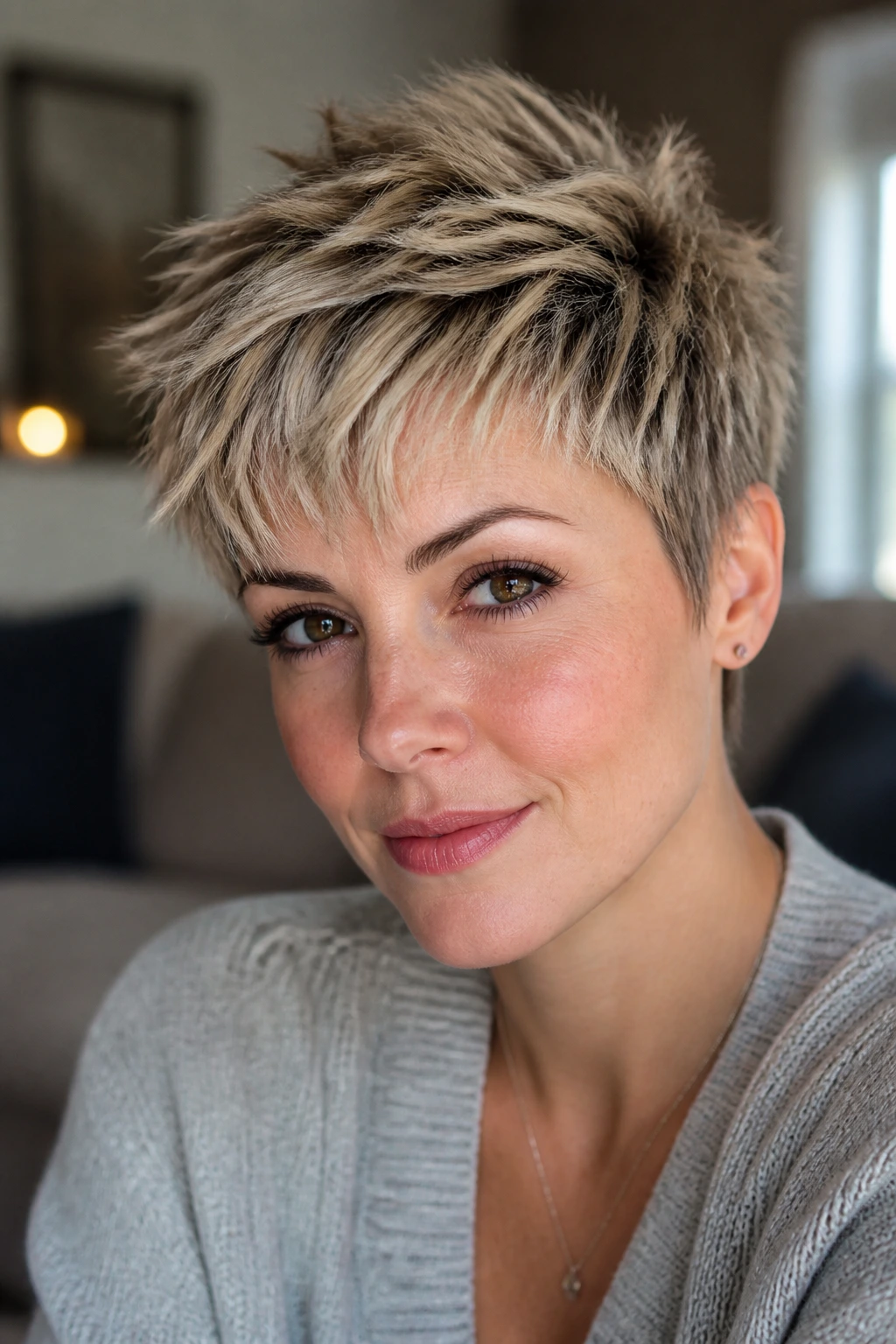
A choppy pixie is my favorite answer when someone has fine hair that looks too polite in a smoother cut. The uneven ends catch light, the pieces separate a little, and the hair reads thicker because the eye can’t lock onto one blunt outline. That matters on a round face, where a soft, broken edge tends to look more flattering than a dense, round shape.
The key is restraint. You want choppy, not shredded. Point-cutting works better than aggressive razor work on delicate strands, because it creates texture without making the ends look frayed. Keep the crown pieces slightly longer than the sides, and let the front sit in loose, irregular bits that move when you turn your head.
Use a matte paste or a tiny bit of styling cream warmed between your fingers. Press it into the ends, then lift a few pieces at the crown. Don’t comb it smooth. This cut wants finger shaping and a little imperfection.
It’s the sort of pixie that still looks good at 3 p.m., which is more useful than a cut that only behaves the first time you leave the mirror.
6. Curly Pixie With Face-Framing Fringe
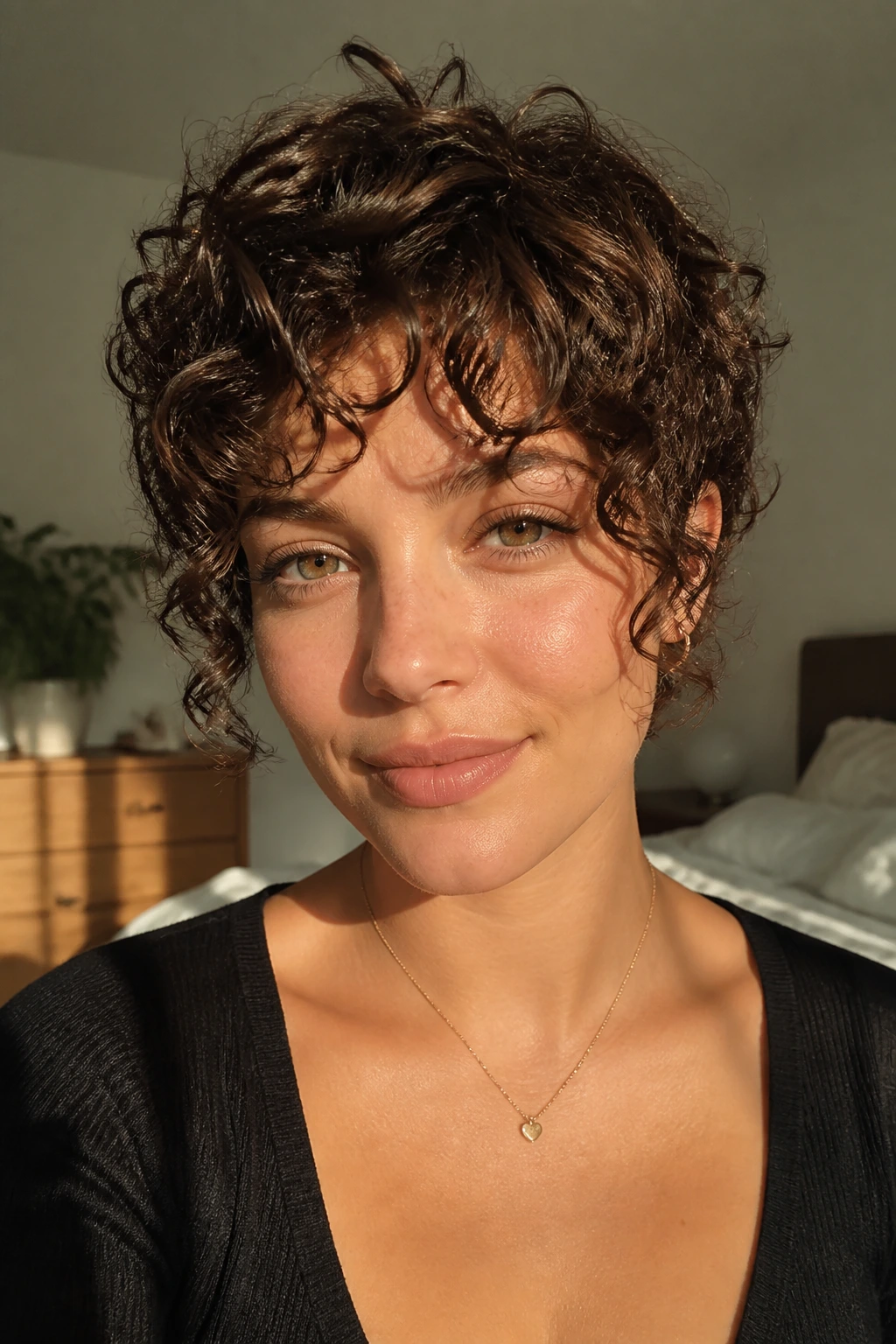
Why does this one work when your hair already has a bend in it? Because it respects the curl instead of trying to flatten it into submission. A curly pixie with a face-framing fringe can soften a round face while keeping enough life in fine curls that the head doesn’t shrink into a helmet shape.
Leave the curls a little longer around the temples and front — usually 2.5 to 3 inches there, with a touch more on top. That gives the curl room to form without springing too far outward at cheek level. The nape can stay neat and tapered so the overall shape remains slim.
What to Ask For
Ask for curl-by-curl shaping or very light point cutting, not heavy thinning shears. On fine curls, over-thinning can leave the top frizzy and the ends flimsy at the same time.
Diffuse on low heat with a curl cream or lightweight mousse. Then stop touching it. Fine curls get blurry fast when they’re fussed over too much, and that blur is not the same thing as volume.
7. Undercut Pixie With a Soft Top
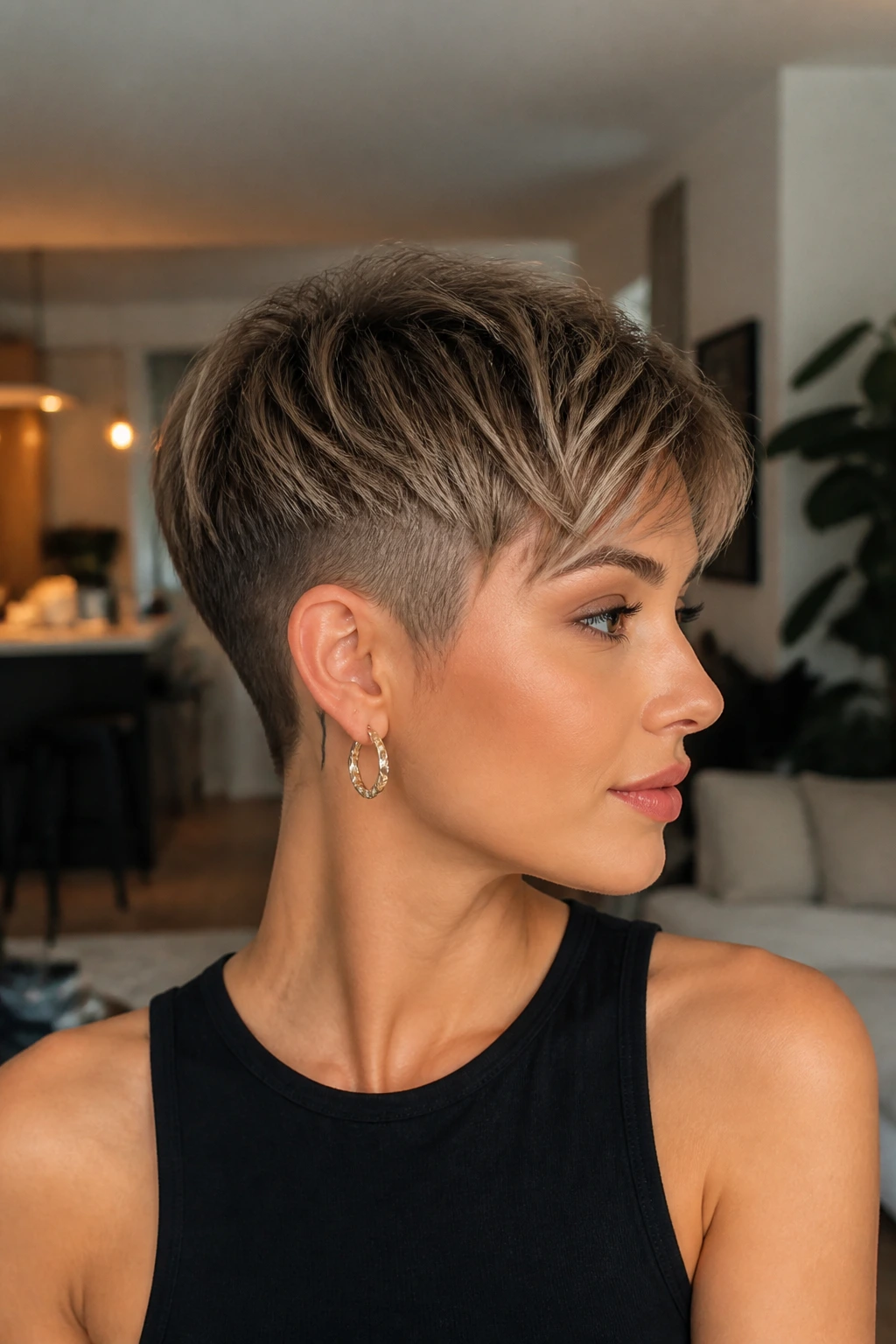
If the sides of your hair puff out first, this cut solves the problem fast. An undercut pixie removes bulk from the lower sides and nape, then leaves a softer, longer top sitting above it. The result is a cleaner outline and a little drama on top without making the whole head look top-heavy.
This is not the place to shave everything. Keep the undercut low enough that the top still has enough hair to cover it when styled down. On fine hair, a too-high undercut can leave the crown looking sparse because there simply isn’t enough hair left to drape over the shorter sections.
A good version usually keeps the top around 3.5 to 5 inches, with the shortest part tucked tight at the nape and behind the ears. Style it with root spray and a blow-dryer directed upward at the roots. The shape should rise, then settle. Never the other way around.
This cut suits people who want a little edge and do not mind seeing scalp at the sides. Clean. Direct. No fluff.
8. French Pixie With Wispy Bangs

The French pixie is softer than it sounds. It has a little movement in the front, a tidy neck, and a slightly undone finish that keeps it from looking too engineered. On a round face, that wispy fringe works because it breaks up the forehead without chopping the face in half.
The fringe should be light and irregular, usually around 1 to 1.5 inches in the shortest bits and a little longer where it sweeps to the side. Around the crown, keep enough length to create a soft lift, not a tall pompadour. The appeal here is touch, not height.
Fine hair likes this shape because it doesn’t ask for too much density. The cut sits close to the head, but the ends stay mobile. A touch of lightweight pomade, rubbed between fingertips and pressed into the fringe, is enough. If you can feel product sitting on the hair, you’ve used too much.
It’s a quiet cut. Not plain. Quiet. And that’s a useful distinction.
9. Temple-Long Pixie
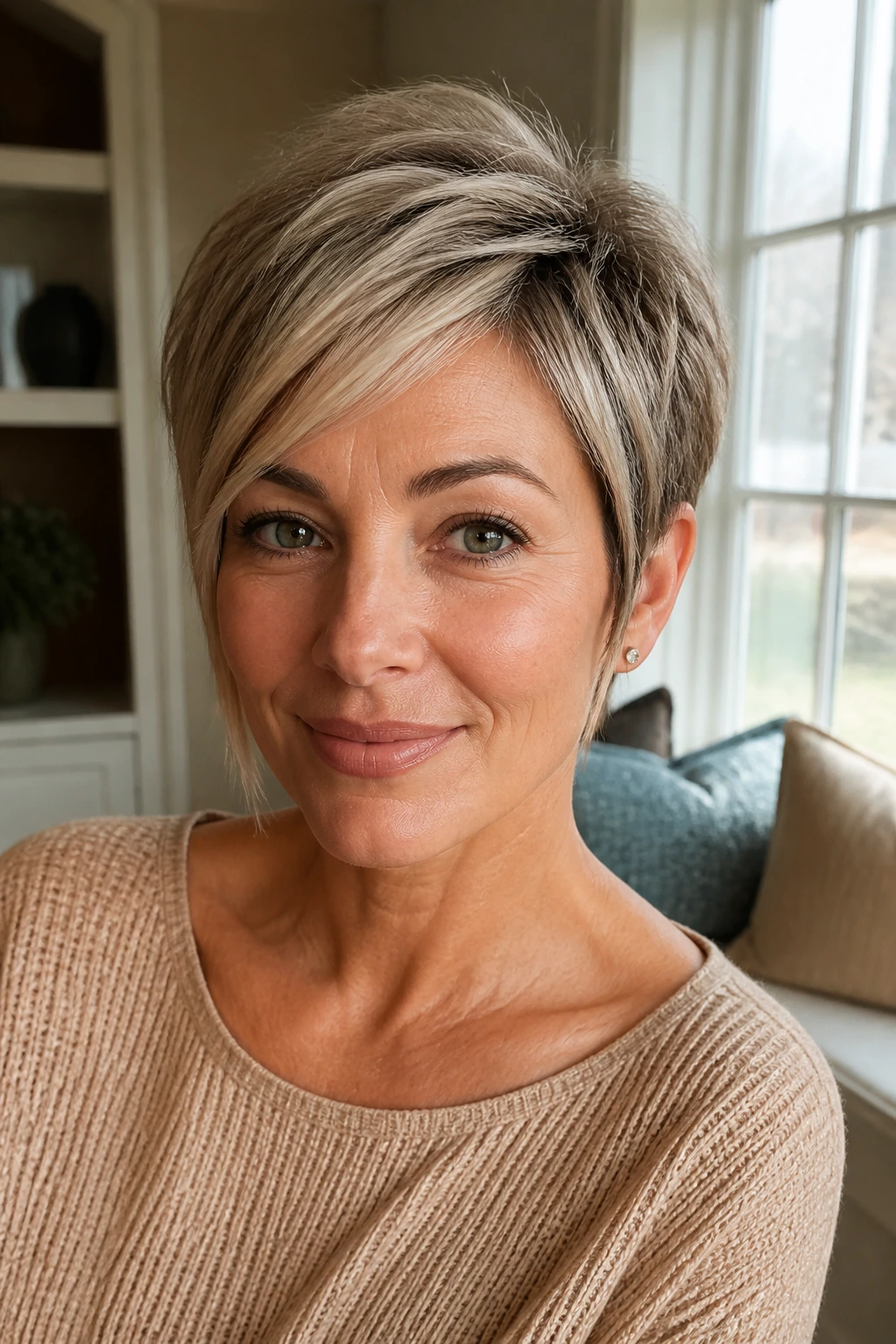
This is the pixie for someone whose face feels widest right at the temples and wants a little contour without resorting to dramatic bangs. The temples stay longer than the rest of the sides, usually around 2 to 3 inches, and the front can sweep lightly across the forehead or sit off to one side.
The extra length near the temples creates a soft frame that narrows the middle of the face visually. That matters more on round faces than most people realize, because the temple area is where a cropped cut can either soften the outline or make it puff outward. Keep those pieces narrow and gently tucked, not flared.
Fine hair works well here because the extra temple length gives the illusion of density where the eye can actually see it. Use a small amount of dry texture spray at the root and pinch the ends with your fingers. If you wear glasses, this shape is even better; it stays tidy around the frame arms without looking stiff.
10. Layered Crown Pixie
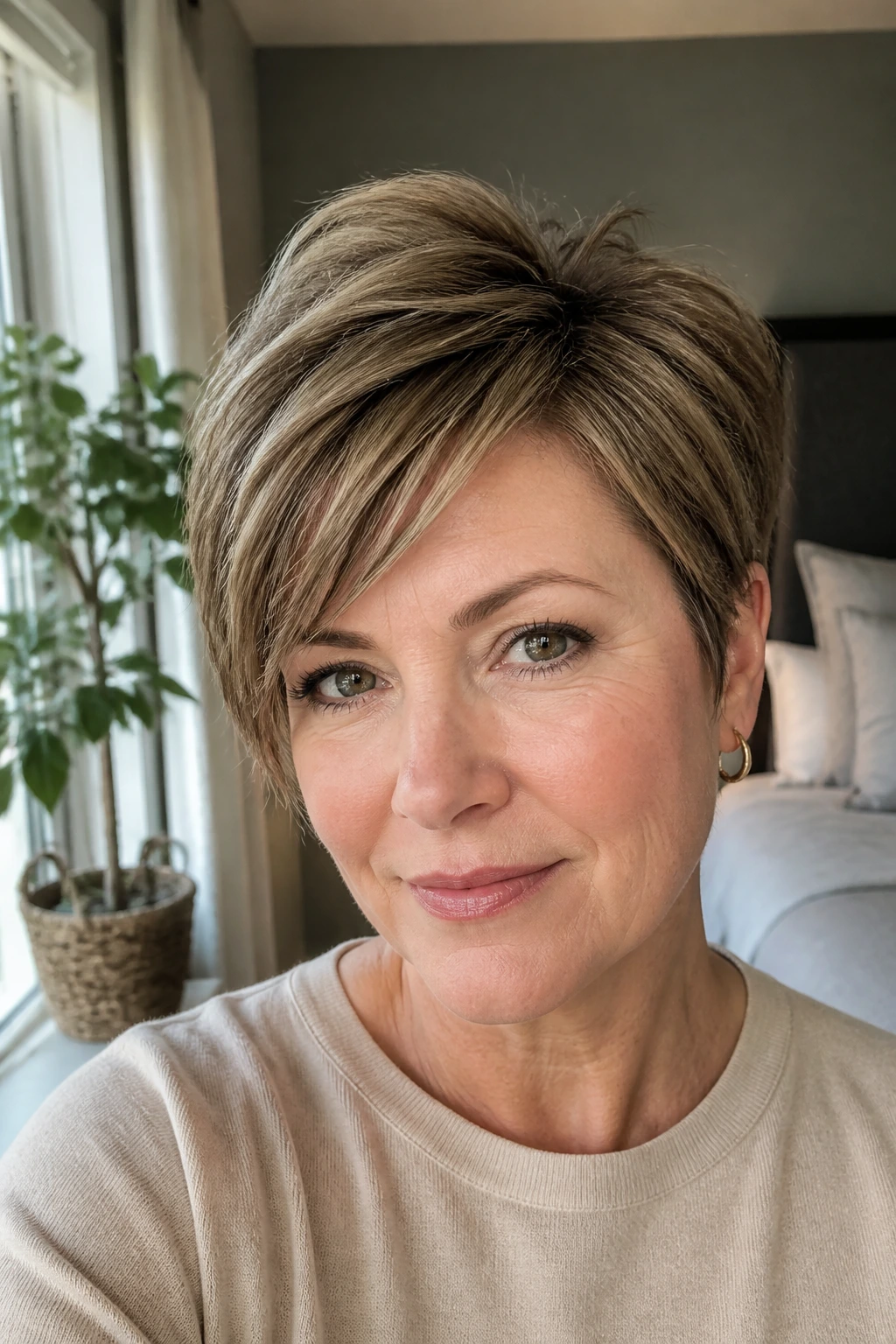
Fine hair often needs height more than it needs more hair. That’s why a layered crown pixie can be such a good fit for a round face. The back of the head gets a little stacked through the crown, which gives the silhouette a subtle lift and keeps the top from falling flat against the scalp.
Ask for layers that build gradually from the occipital area up toward the crown, with the longest top pieces around 3 to 4 inches. The sides should stay lean, not fluffed out. If the layering creeps too far down the head, the whole cut starts to look soft in a bad way.
This is one of those cuts that benefits from a round brush or a vent brush and a little heat. Direct the roots up and back, then let the hair cool before you touch it. A lightweight root mousse or volumizing spray helps, but the structure in the haircut is doing most of the work.
It’s a smart option for someone who wants body without a lot of visible styling tricks.
11. Elongated Pixie Bob
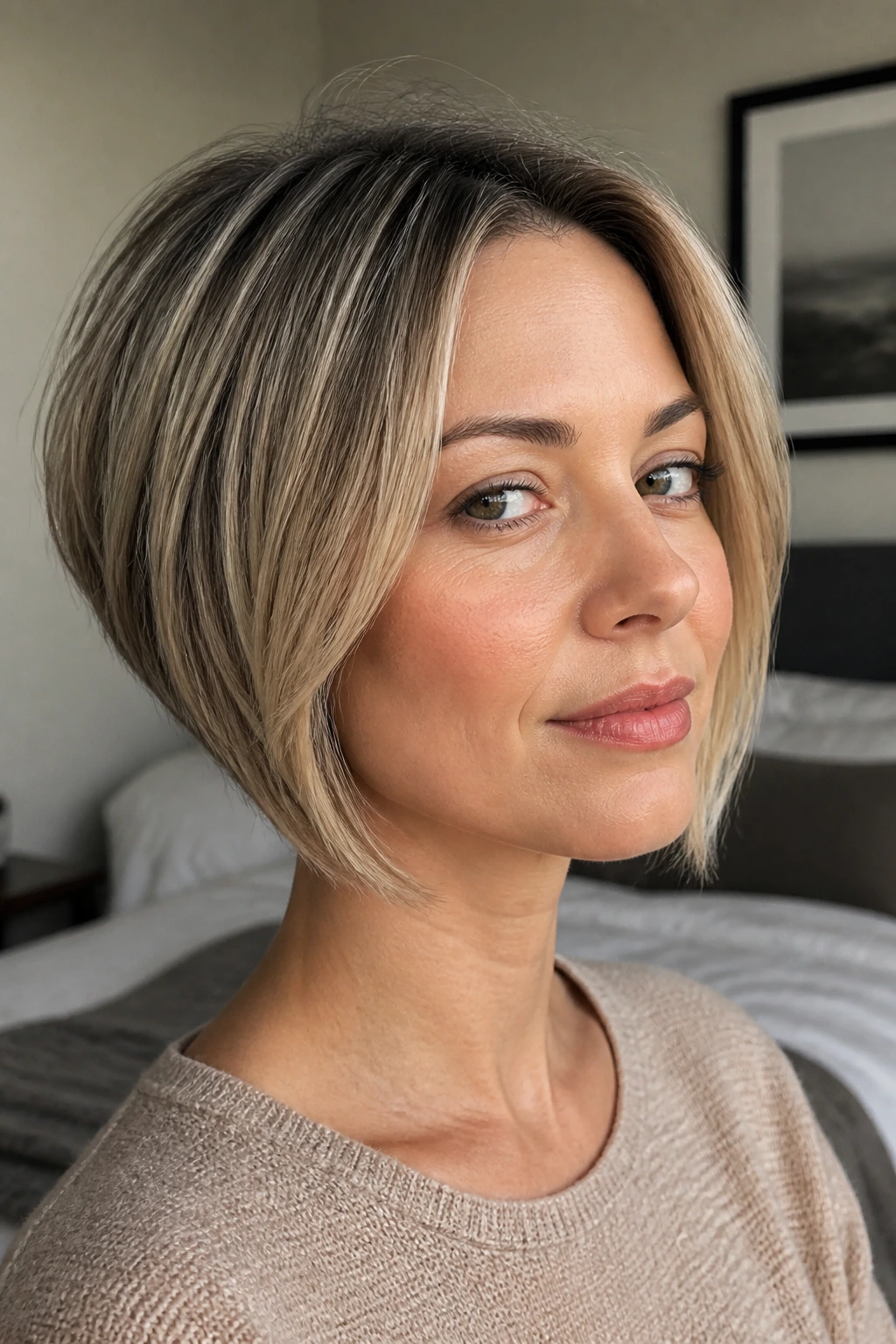
A pixie bob is the middle ground for people who want the pixie feel but don’t want to go all the way short. The front usually grazes the jawline or sits just above it, while the back stays tighter and shorter. On a round face, that front length creates a vertical line that keeps the shape from feeling too circular.
Fine hair often likes this hybrid because there’s enough length to fake fullness, but not so much that the strands collapse in long, limp sheets. The front pieces should angle forward and downward, not stop right at the cheek. That’s the trap. If the longest points sit directly on the widest part of the face, the whole thing gets wider.
This cut is also easier to grow out. That matters. Not every short haircut needs to be a one-way leap. The pixie bob gives you a bridge between sharp and soft, which makes the salon schedule easier to live with.
12. Shaggy Crop Pixie
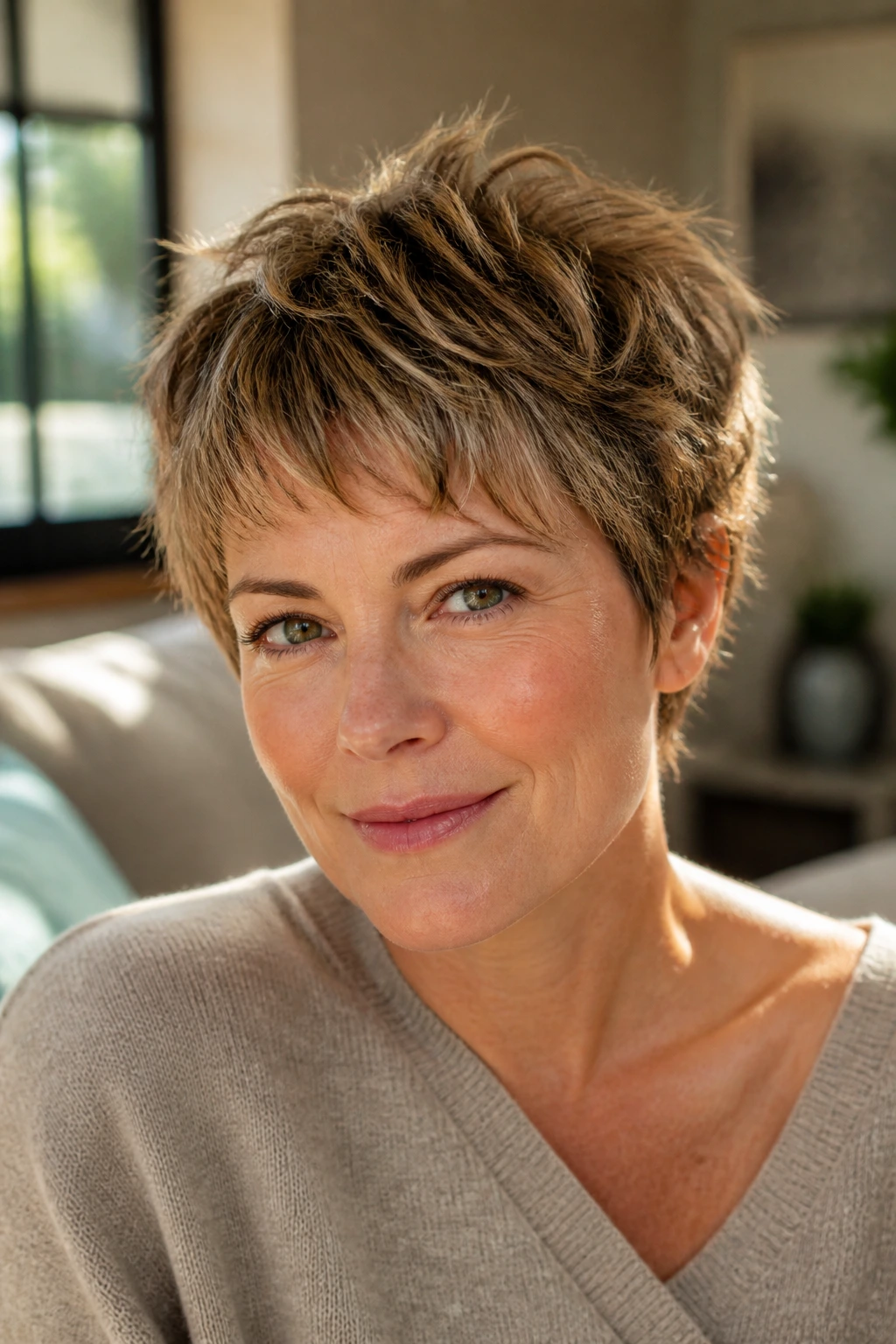
A shaggy crop pixie is what happens when you let the cut move a little more freely. The ends are broken up, the top has light layers, and the overall shape feels less polished than a classic pixie. On round faces, that little bit of disorder can be useful because it keeps the style from reading like one solid circle.
Fine hair with a little wave usually takes to this shape best. The trick is not to over-thin the interior. Shaggy does not mean empty. It means uneven, touchable, and loose around the edges. Keep some weight near the perimeter so the hair still looks like hair.
A small mist of texturizing spray through the mid-lengths and a quick scrunch with your hands is usually enough. Too much spray turns the hair crunchy. Too much cream turns it limp. The shag wants a dry, airy finish.
This one looks better when it’s not over-managed. That’s a blessing on the days you don’t want to wrestle with it.
13. Slicked-Back Pixie With Tapered Sides
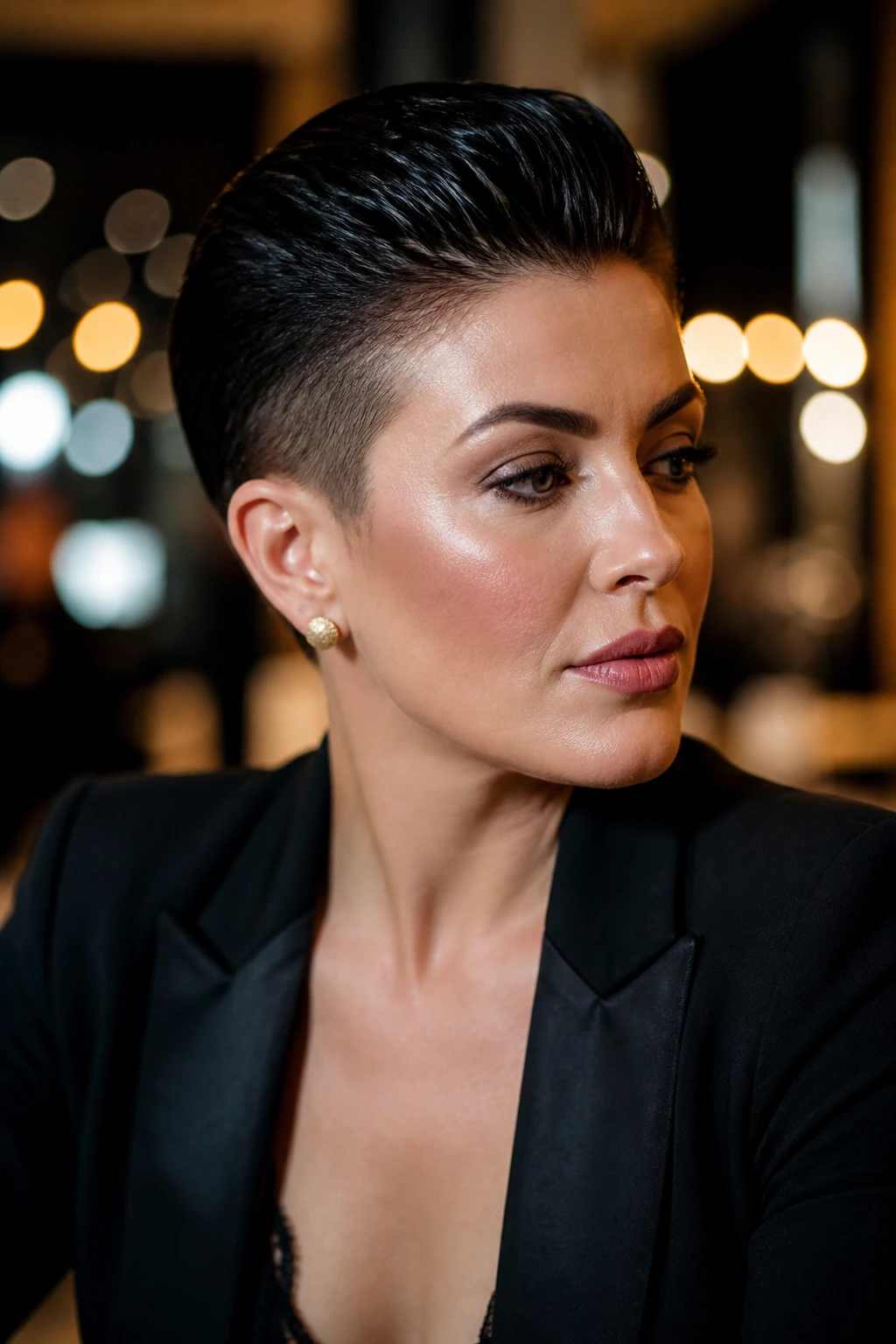
A slicked-back pixie on fine hair sounds risky until you see the shape done right. The sides stay tapered and neat, the top is brushed back with a little height at the front, and the face opens up in a way that can be surprisingly flattering on a round shape. The key is not flatness. It’s control.
Use mousse at the root, then blow-dry the hair back with a vent brush or your fingers. Don’t press everything down. Leave a slight lift at the front hairline and keep the crown smooth, not glued. The sides should hug the head so the silhouette stays narrow.
This cut works especially well for evenings, sharper outfits, or any day when you want the haircut to look deliberate in less than five minutes. Fine hair can take a slicked-back style well because there isn’t much bulk to fight. A flexible gel or light pomade is enough; heavy oil will collapse the whole thing.
It’s sharp, but not severe if the top still has a little bend in it.
14. Square-Edged Pixie
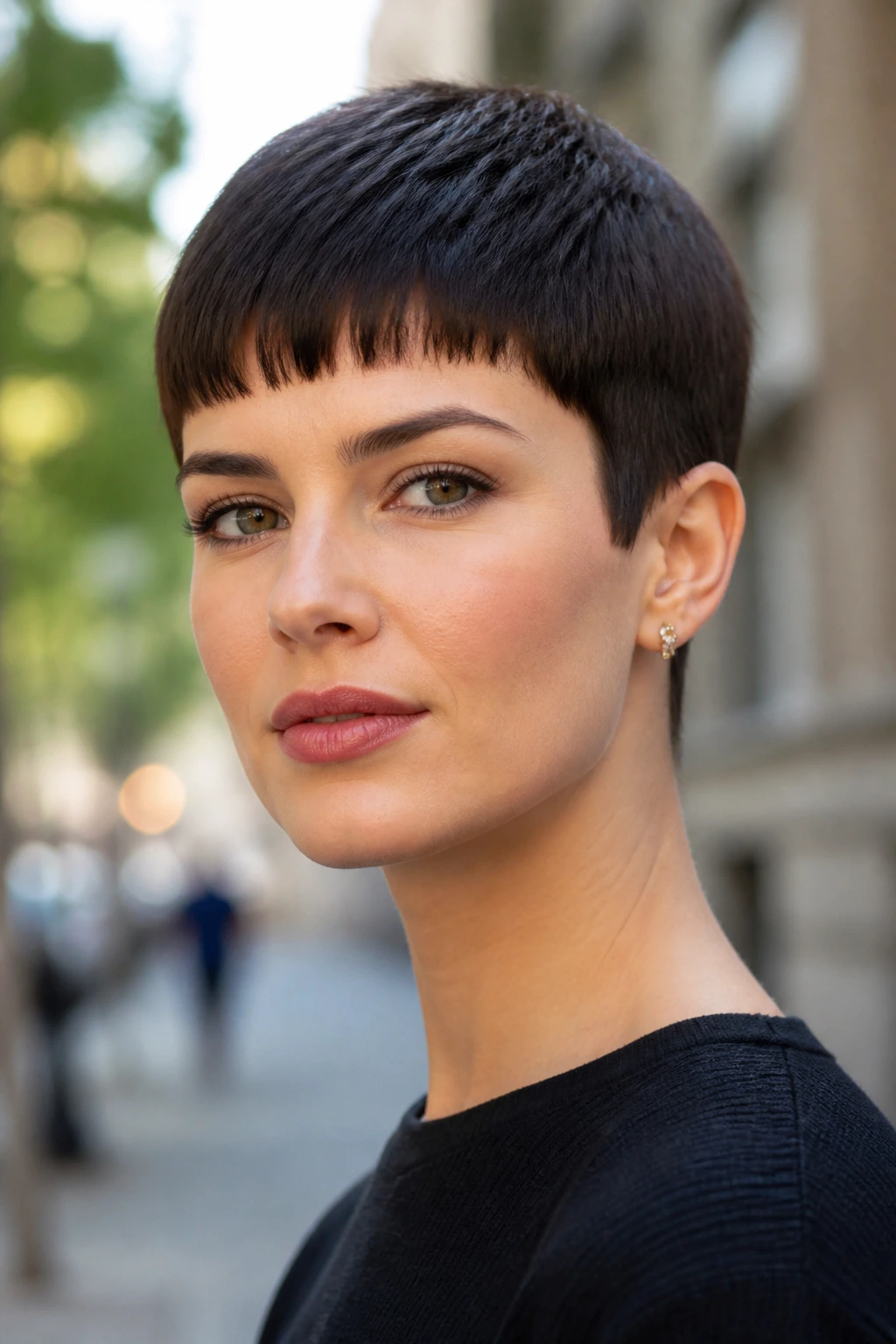
Most round faces do better with a little geometry. A square-edged pixie adds that by keeping the outline slightly straighter at the fringe and temple area. Not blunt. Straighter. There’s a difference, and it matters.
The hair near the forehead should have a bit of edge, while the interior stays soft enough to move. This keeps the cut from looking like a helmet. Ask for clean corners near the sideburns and a narrow nape so the hair doesn’t puff outward. Fine hair benefits from the clear perimeter because it makes the strands look denser than they are.
What Makes It Different
Unlike a very soft pixie, this cut borrows a little strength from the outline. That can be useful if your face is round but also full through the cheeks, or if your hair tends to disappear when every edge is feathered too much.
A styling balm or a light matte paste works better here than gloss. You want a shape you can see from across the room, not one that melts into the head.
15. Micro Pixie With a Longer Front
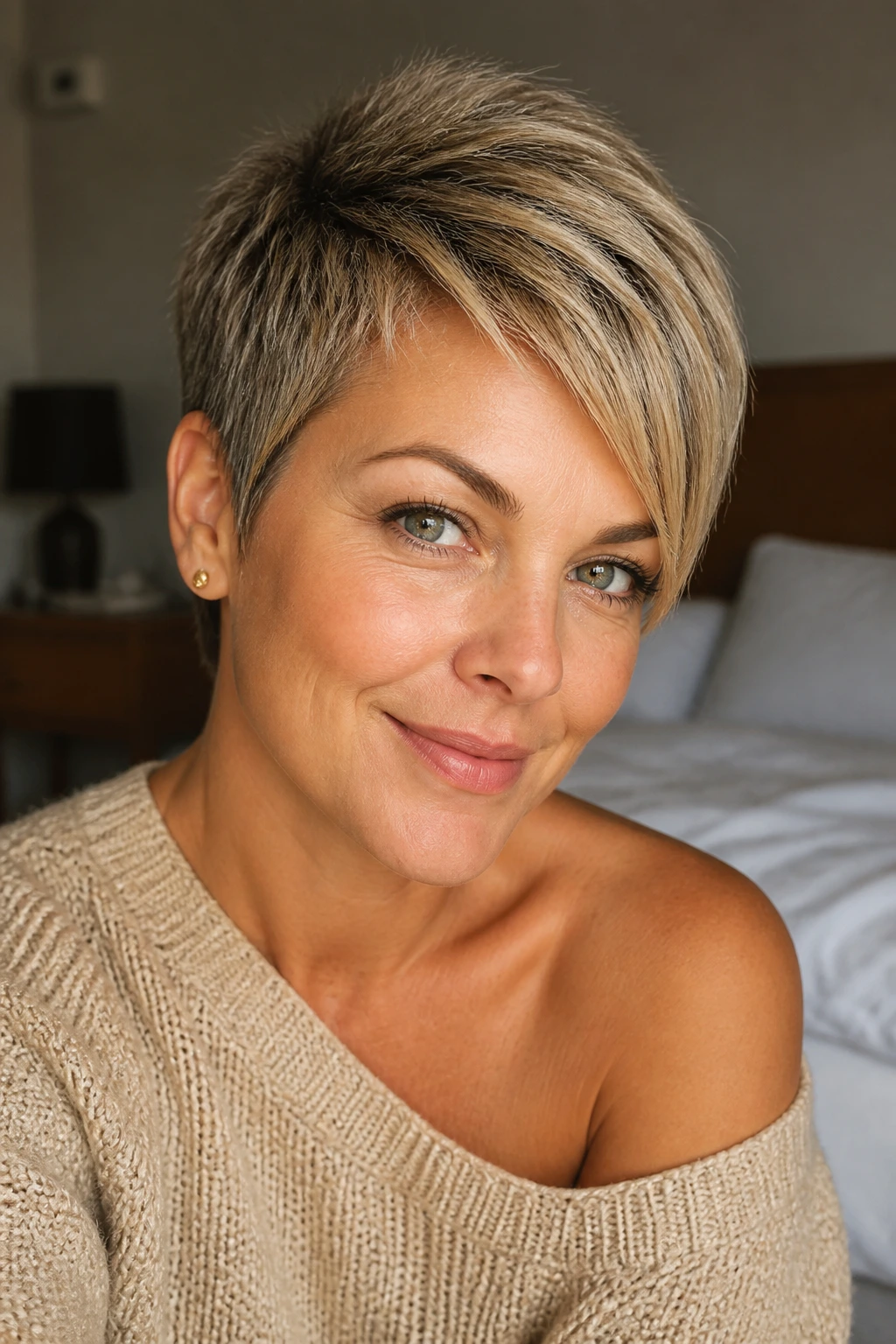
Can a very short pixie work on a round face? Yes, if the front stays long enough to keep the eye moving. The micro pixie is short at the back and sides, but the front has a little extra length — usually around 1.5 to 2.5 inches — so the face still gets a diagonal line or a tiny sweep.
This is a cut that works well with fine hair because there’s less length to collapse. That sounds harsh, but it’s the truth. Sometimes fine hair looks fuller when there is less of it to weigh down. The important thing is to keep the top from getting too tight. A flat micro pixie turns the face wide fast.
This version suits someone who likes a very low-maintenance routine and does not mind regular trims. It grows out cleanly for a while, then gets shaggy in a way that can still look intentional. If your forehead is short, keep the front pieces wispy rather than blunt.
16. Messy Crop Pixie
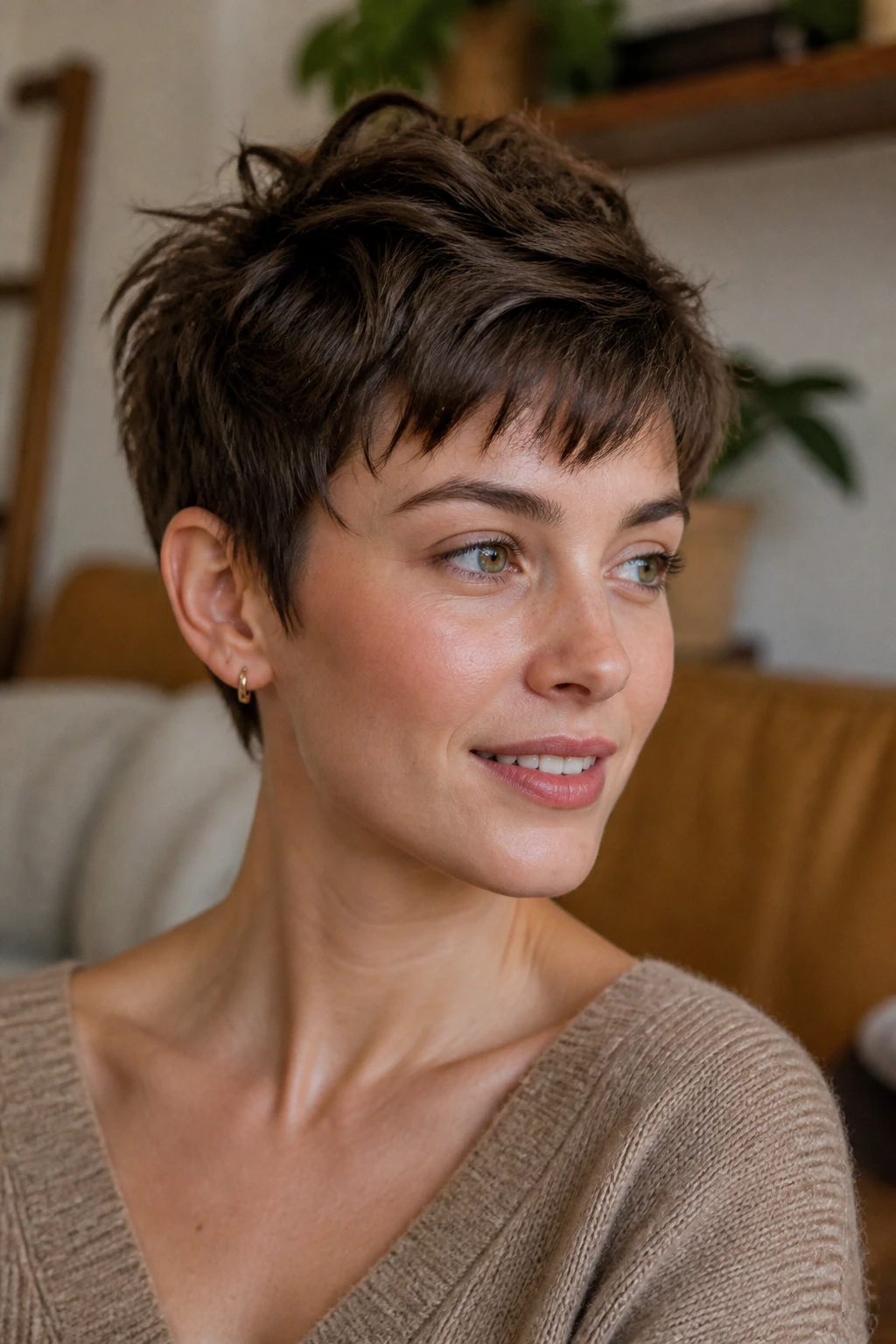
Some mornings, the hair just needs to look like you meant it. A messy crop pixie is built for that. The pieces are separated, the edges are irregular, and the crown has just enough lift to keep the cut from sitting dead on the head. On a round face, that uneven texture keeps the silhouette from turning circular.
I like this shape for fine hair that refuses to hold a smooth finish. Instead of fighting that, the cut turns it into texture. Ask for light layering through the top and a slightly shorter nape, then style with a tiny amount of matte paste or texturizing cream. The pieces should look touched, not pasted.
- Keep the top slightly longer than the sides.
- Leave some irregularity around the fringe.
- Use your fingers, not a brush, to finish.
- Stop adding product the second the hair starts to look damp.
That last point matters. Fine hair can go from airy to oily in half a minute if you overdo it.
17. Tucked-Behind-Ear Pixie
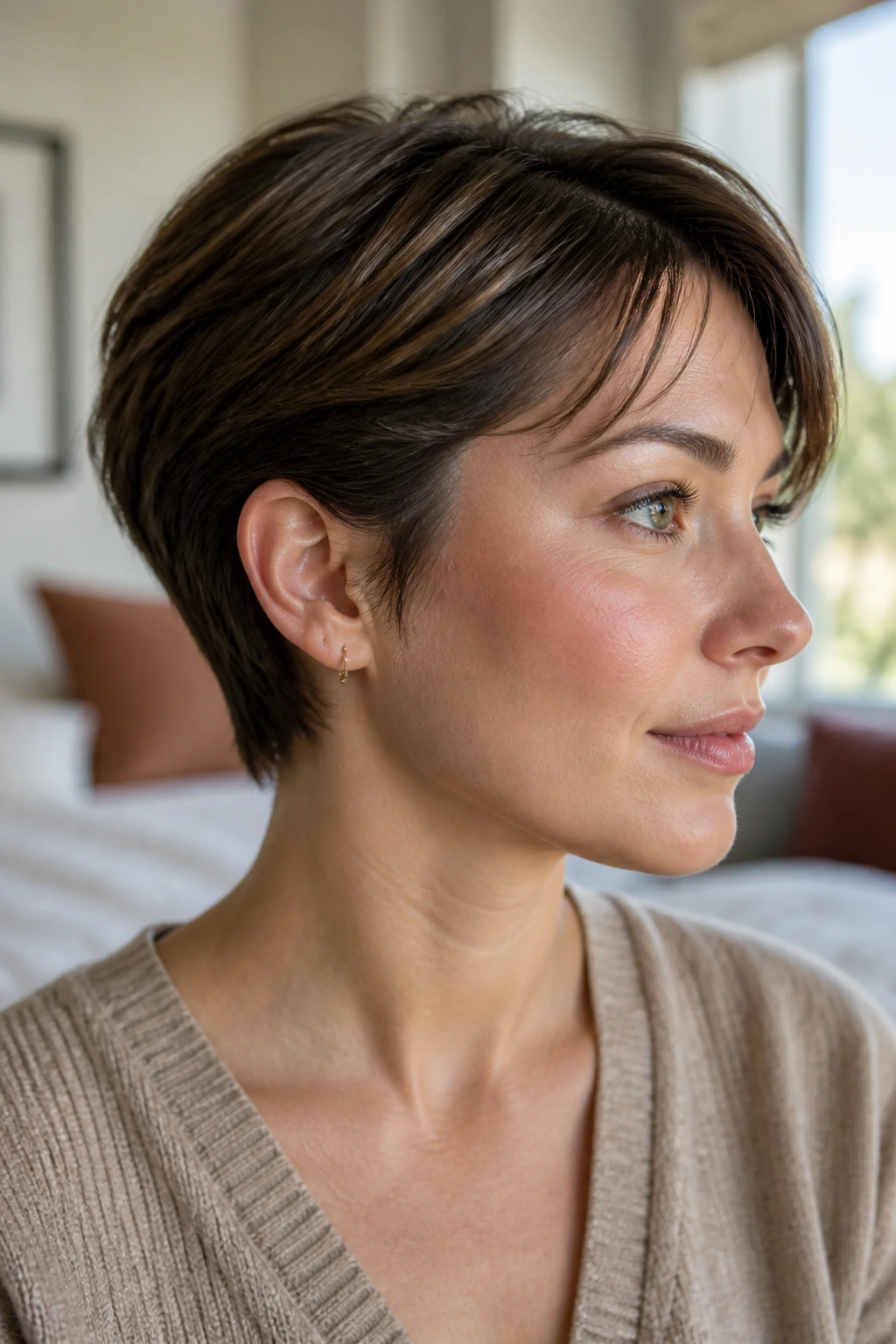
A tucked-behind-ear pixie is one of the simplest ways to slim a round face without changing the whole haircut. The temple pieces stay long enough to tuck, the side area remains tidy, and the front can fall softly across the forehead or sit slightly off center. That tucked line creates a neat diagonal that the eye follows.
This cut is especially useful if you wear earrings or glasses. The ear is no longer hidden, which gives the face more open space and keeps the cut from feeling closed in. On fine hair, the tucked shape also helps preserve density because the pieces are not all cut down to one short length.
Ask for a little extra length at the temples — enough to tuck, not enough to drag. Around 2.5 to 3.5 inches is usually the sweet spot, depending on the head shape. If the hair is too short there, you lose the trick entirely.
It’s a small move. It changes everything.
18. Soft Mohawk Pixie
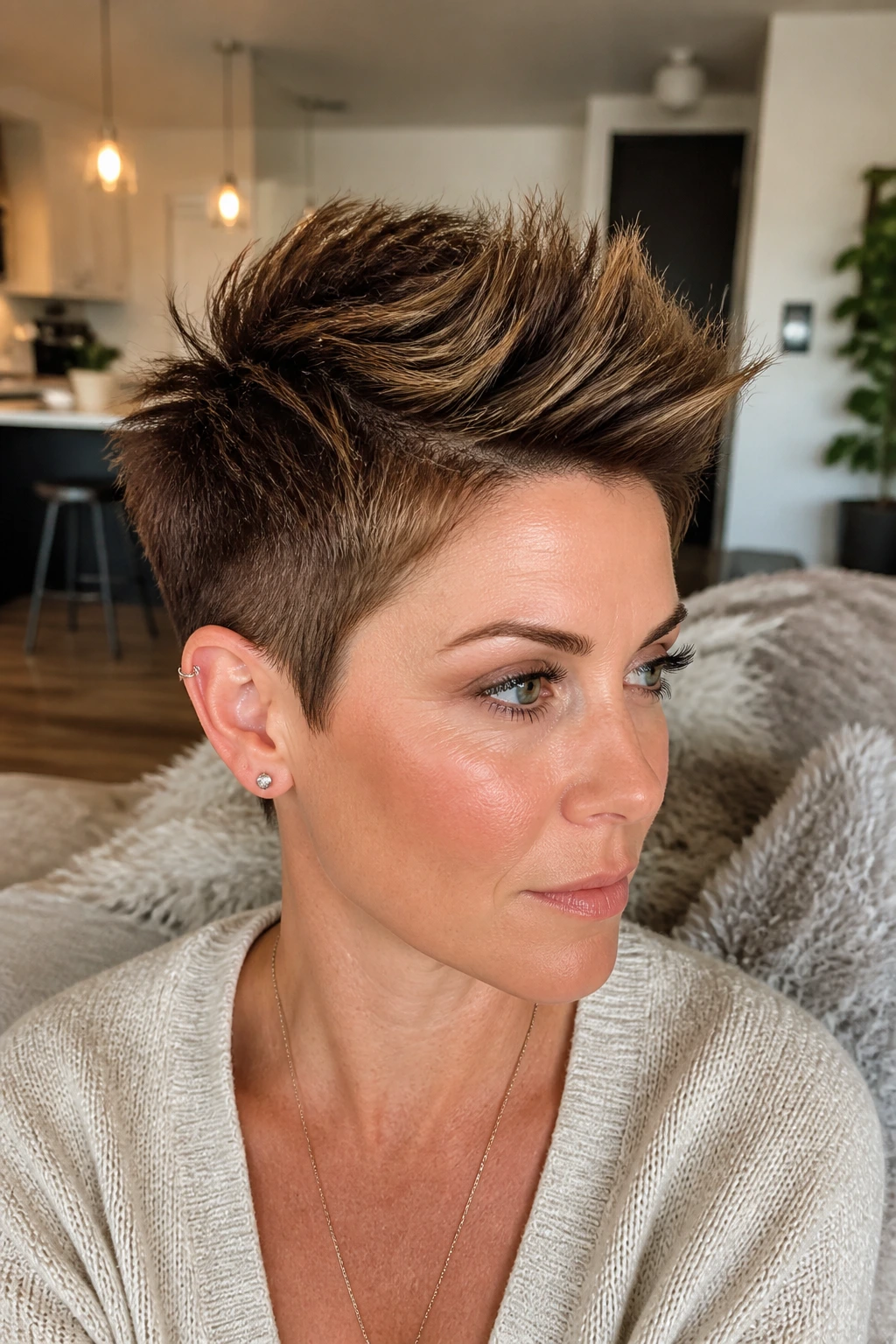
This is the boldest shape on the list, but not the hardest to wear. A soft mohawk pixie keeps the center strip longer from forehead to crown and trims the sides close, which builds a vertical line right down the middle of the head. That line is fantastic on a round face because it creates height where you want it most.
The “soft” part matters. You do not want the sides shaved so high that the cut looks severe or exposes every bit of scalp. On fine hair, the contrast needs to stay controlled. Keep the center around 4 to 5 inches, with the sides tapered tight but not stark.
Use mousse at the roots and push the center upward with your fingers or a small brush. A little texture on the top keeps it from looking too helmet-like. If you want edge without heaviness, this cut has real bite.
It’s not the safest choice, but it is one of the most face-lengthening.
19. Deep Side-Part Pixie
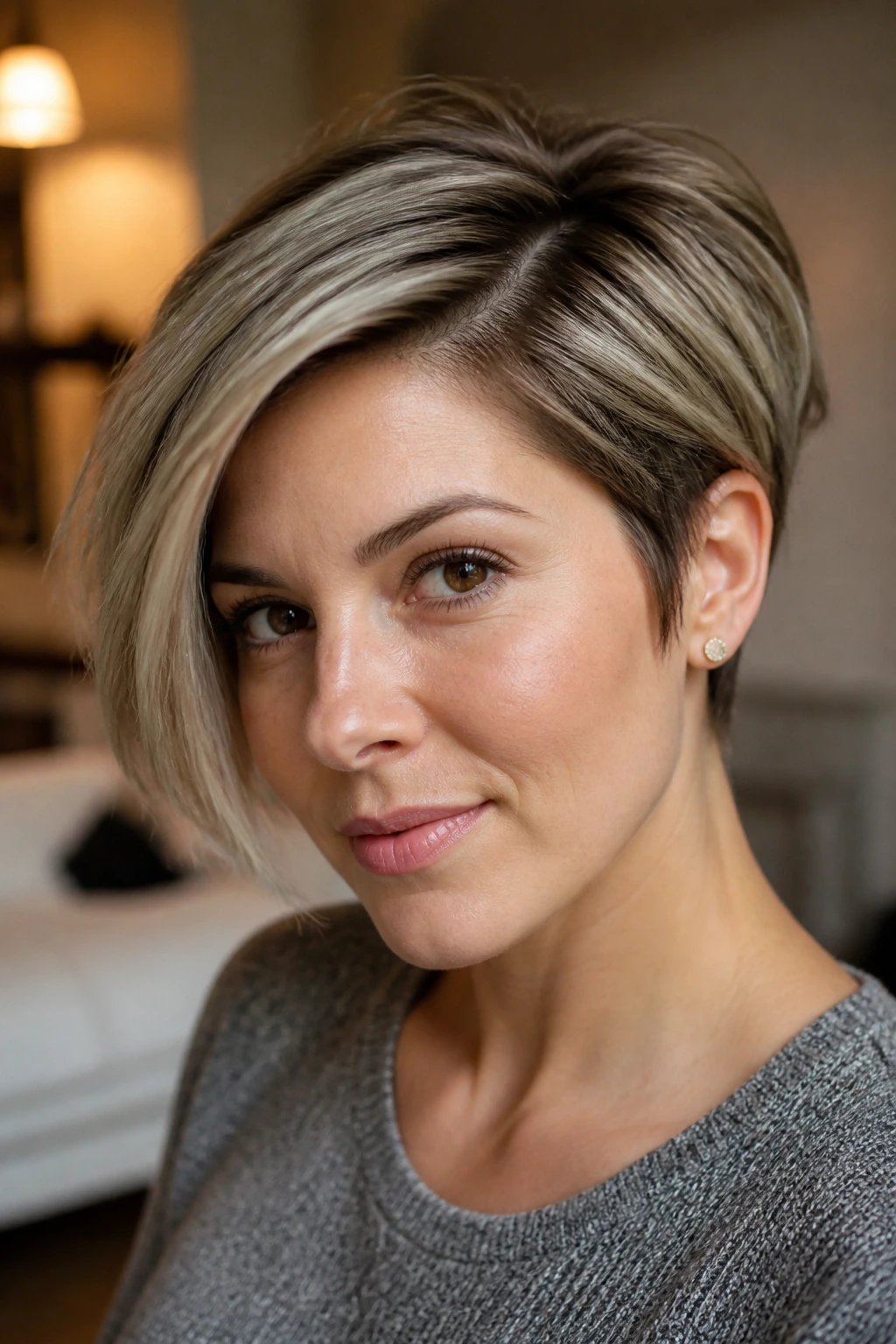
What if you don’t want a dramatic haircut change? Change the part. A deep side-part pixie shifts the bulk to one side and gives the face an instant diagonal. On a round shape, that’s often enough to make the face feel narrower and a little longer.
This works especially well if your fine hair already likes a side part or naturally falls that way. Ask for more length on the heavier side — usually 2.5 to 4 inches through the front — and keep the opposite side close to the head. Blow-dry the front opposite the part first, then flip it back. That gives the root a bend instead of a collapse.
How It Helps
Unlike a center-parted crop, this version breaks symmetry. That can be a relief if your face feels widest in the middle. It also gives you a built-in styling trick on days when the hair looks tired: move the part an inch over, and the whole cut changes character.
Simple. Cheap. Effective.
20. Wispy Baby Bang Pixie
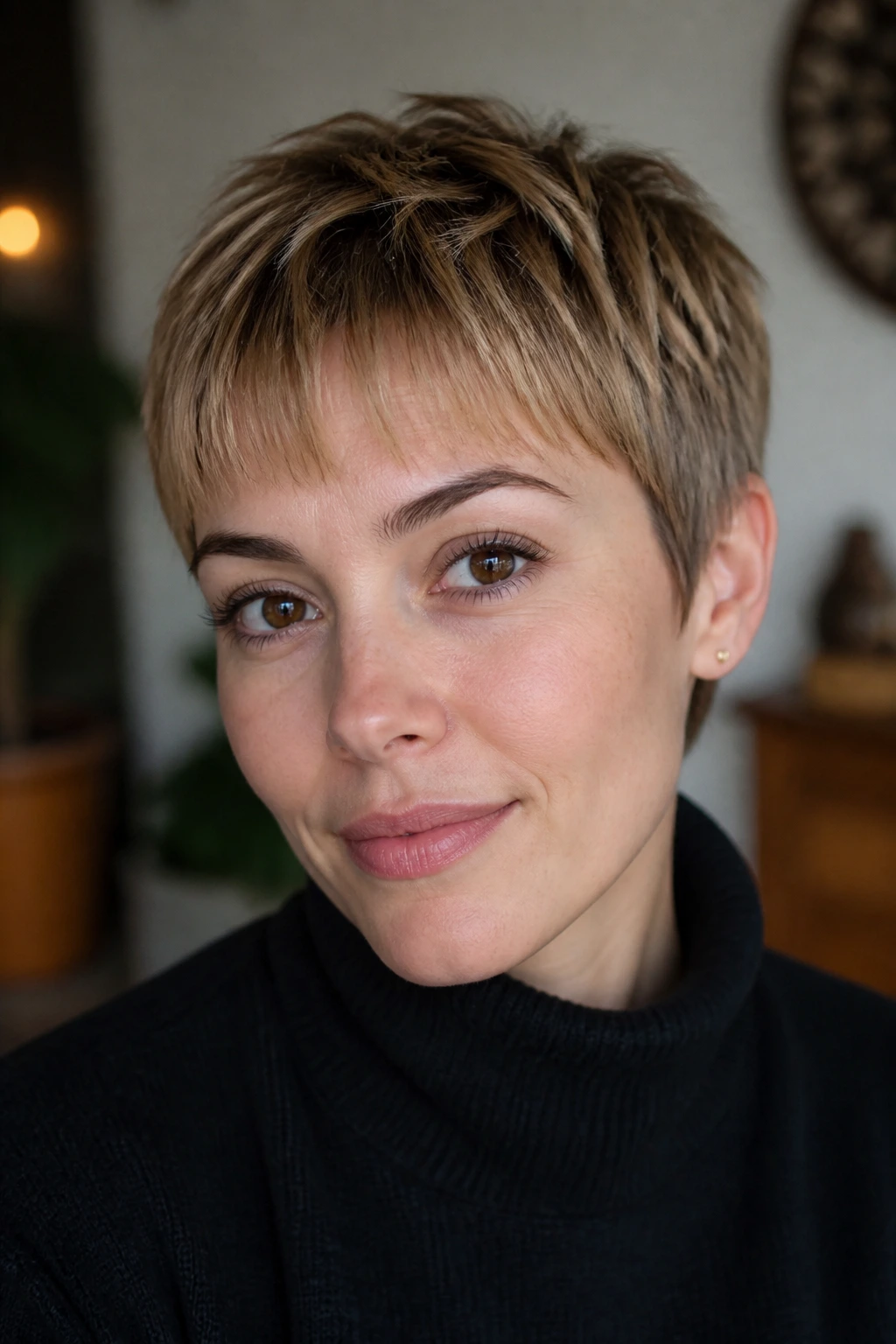
Blunt baby bangs are a gamble on a round face. Wispy baby bangs are a different animal. They sit short across the forehead, but the line stays broken and light, which keeps the cut from cutting the face in half. With fine hair, that airy fringe can work better than heavier bangs because it doesn’t drag the front down.
The rest of the pixie has to support the fringe. Keep the sides narrow and the crown lifted so the face still gets some vertical help. If the top is flat, baby bangs can shorten the face fast. That’s the part people miss.
This cut feels playful, a little graphic, and more interesting than a soft fringe if you like a sharper look. If your forehead is short or your face is very petite, go softer. The wispy version is the safer version.
Use the smallest amount of styling cream possible. The fringe should look feathered, not pasted.
21. Nape-Focused Pixie
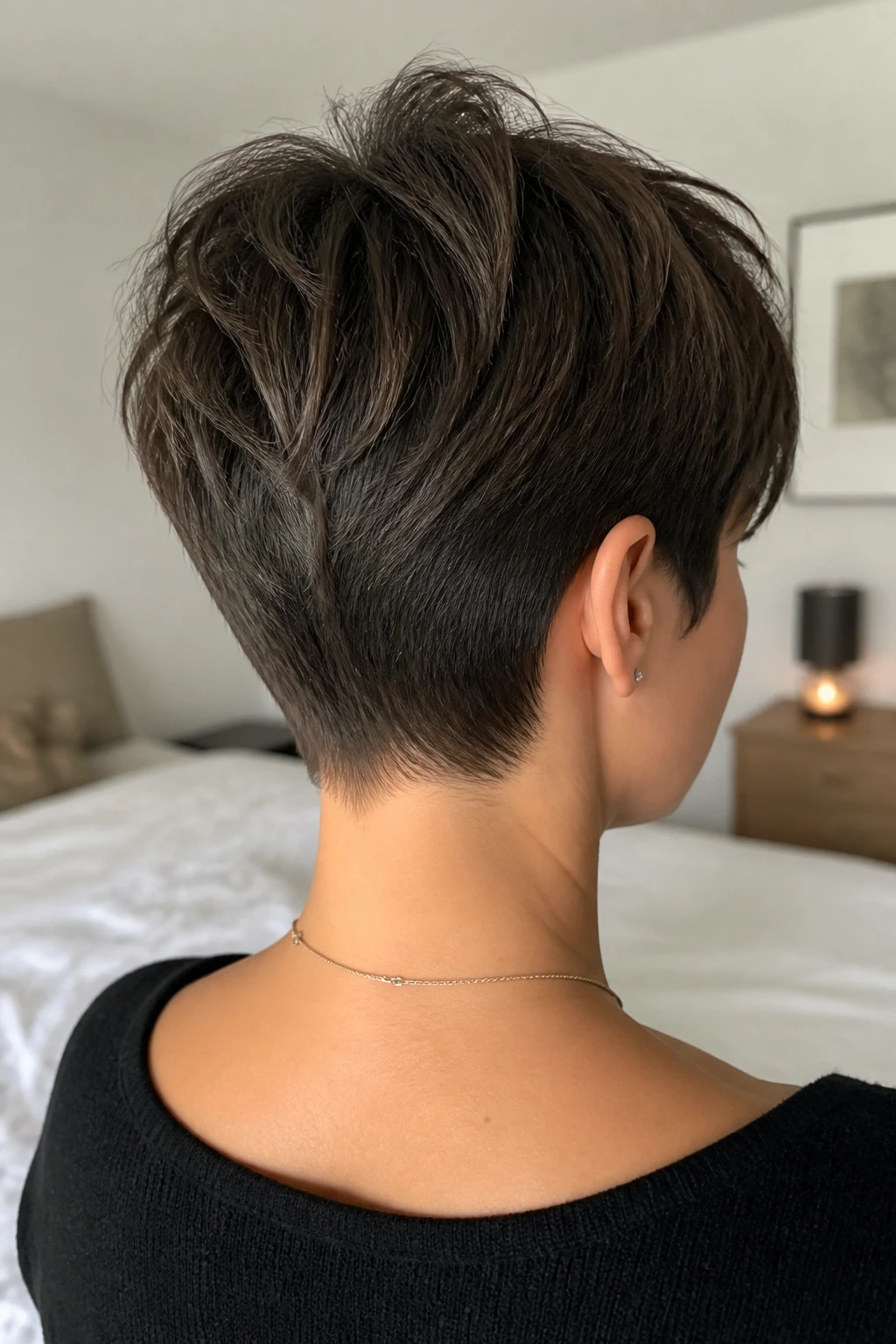
A nape-focused pixie puts the cleanest work at the back of the head. The neckline is tight, the lower back hugs the neck, and the crown keeps enough lift to avoid a flat cap shape. On round faces, that narrow back end helps the silhouette feel longer and lighter from profile and front views alike.
Fine hair likes this because the cut removes excess weight where it tends to drag hardest. If the nape gets too bulky, the whole style looks heavy. If the nape stays snug, the top can breathe. Keep the crown around 3 to 4 inches and the nape much shorter, with soft blending up into the back of the head.
This is a good choice for people who want the back to stay neat between trims. The shape holds up well under collars and scarves, and it looks polished even when the front gets a little messy. A tiny dab of paste at the crown is usually all it needs.
22. Wedge-Inspired Pixie Crop
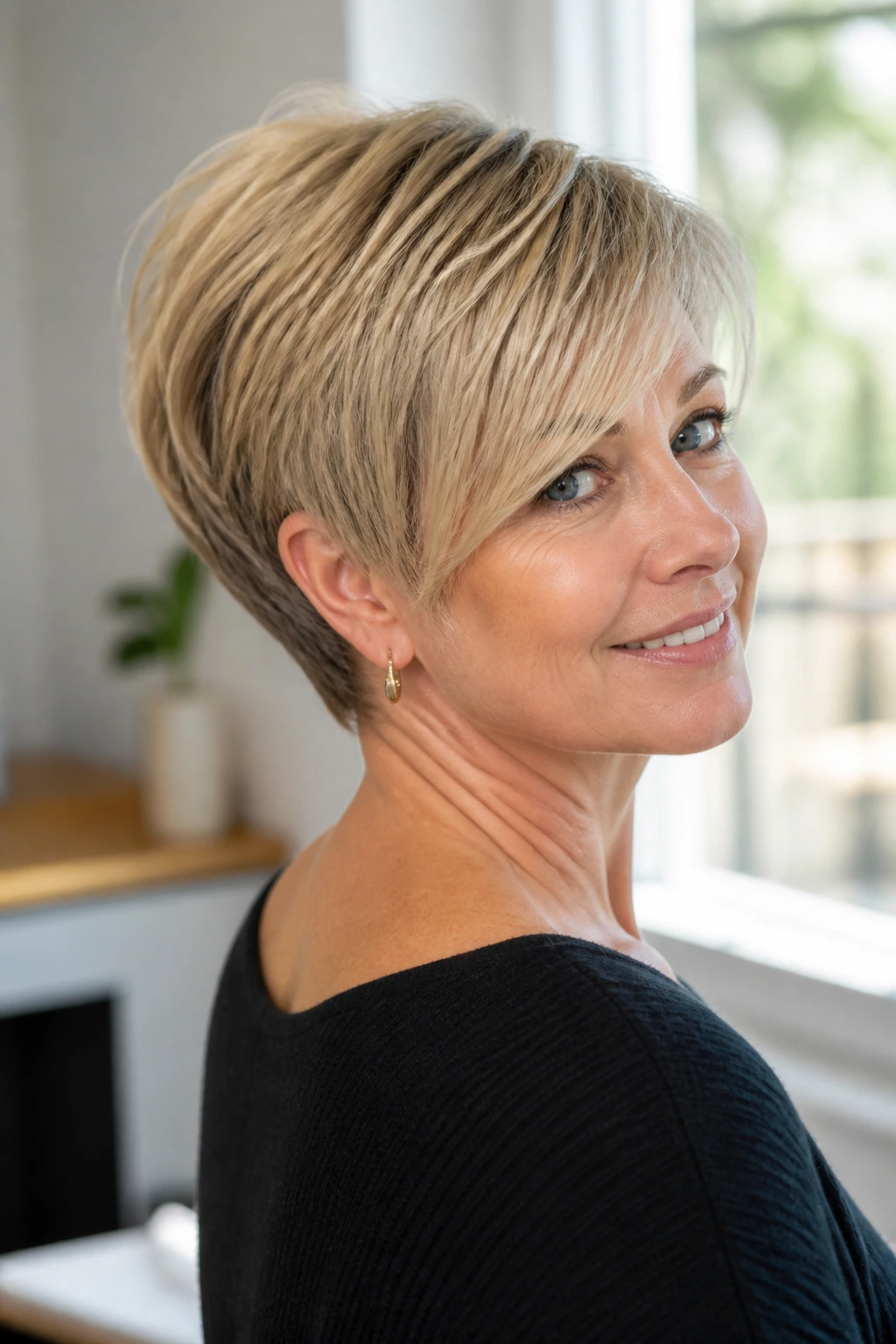
A wedge-inspired pixie crop borrows the stacked back and angled outline of a wedge cut, then shrinks it down into pixie territory. The back gets a little lift, the front stays longer, and the sides remain slim. On a round face, that angled shape creates a very useful sense of direction.
The benefit for fine hair is built-in fullness. The stacking in the back gives the illusion of volume without requiring big product or hot-tool drama. Keep the cheek area clean, though. If the stack spreads too far outward, the cut loses its edge and starts to feel bulky.
This is one of the more structured shapes on the list. It suits someone who likes a haircut with a clear outline and does not mind going back for trims a little more often. A smoothing cream at the ends and a root-lift spray at the crown are usually enough to keep it in line.
It’s crisp. It’s practical. And it has enough shape to make fine hair look like it means business.
How to Choose the Right Pixie for Your Face and Hair
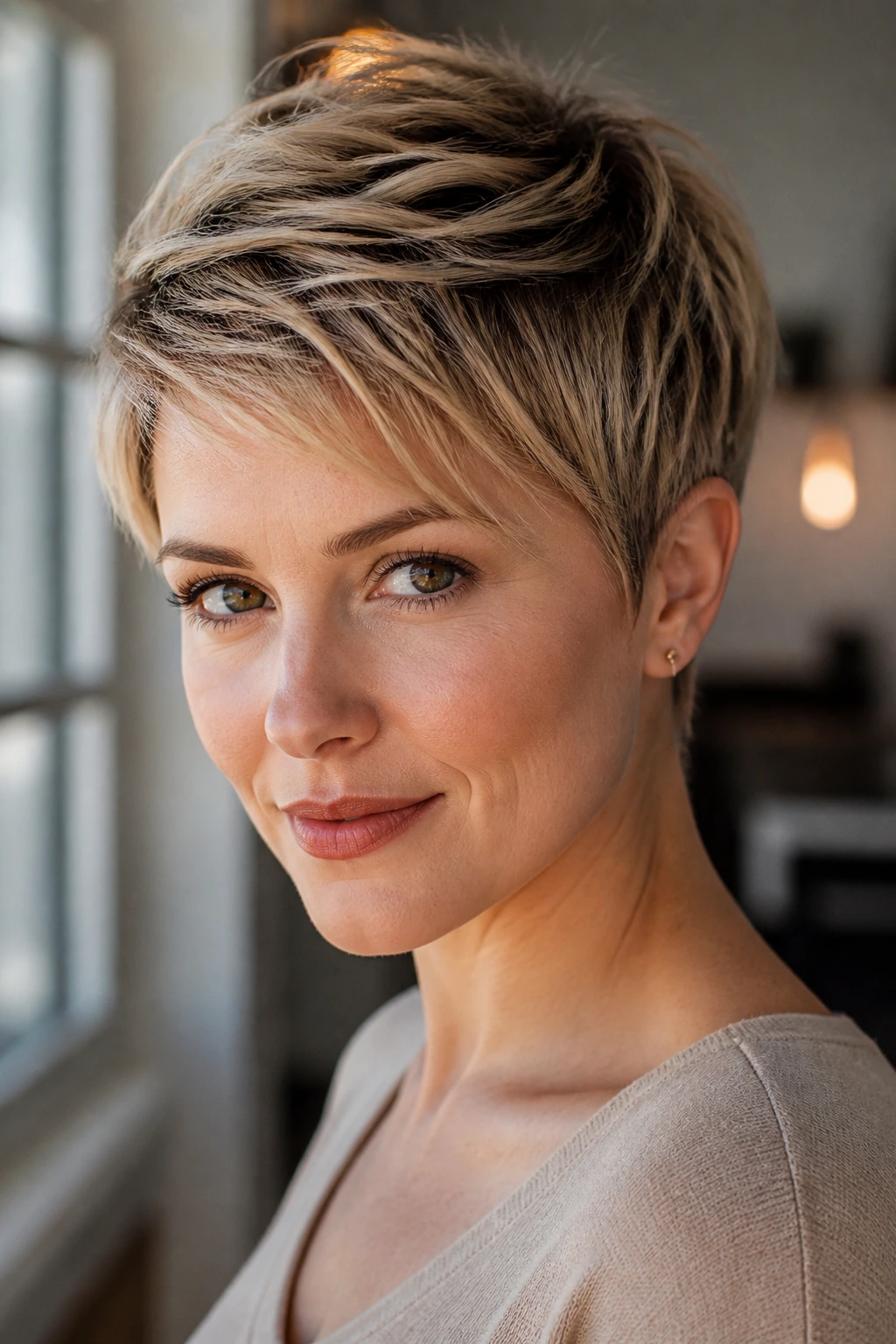
The easiest way to narrow these 22 pixies down is to decide what you need most: lift, softness, edge, or ease. A round face usually wants either vertical height or a diagonal front line. Fine hair usually wants clean structure with enough length left at the top to keep the crown from disappearing.
If you like soft movement, start with the side-swept classic, feathered fringe, French pixie, or messy crop. If you want more shape, look at the tapered crown, layered crown, wedge-inspired crop, or square-edged version. If you want boldness, the undercut, soft mohawk, and slicked-back pixie are the loudest on the list, but they still work when the sides stay narrow and the top keeps some lift.
Choose by Hair Behavior, Not Just Hair Type
Fine hair that is also dense can handle more texture than fine hair that is sparse. Wavy fine hair often holds shaggy or feathered cuts better than pin-straight strands. If your crown lies flat no matter what, keep more length there. If your sides puff out, remove bulk near the ears first. The haircut should answer the hair you actually have, not the hair you wish you had on a good day.
Tools and Products That Make Fine Hair Behave

-
Root-lifting mousse: gives the crown a little memory before heat touches it. Fine hair usually needs this more than a thick cream.
-
Volumizing spray with a light hold: mist it at the roots, not all over the head, or the hair can go sticky.
-
Small round brush: a 1-inch to 1.25-inch brush is easier on short pieces than a giant barrel brush that barely fits.
-
Vent brush: good for rough-drying the crown quickly without flattening the shape.
-
Blow dryer with a narrow nozzle: helps you direct the top up and the sides down, which is half the battle with a pixie.
-
Matte paste or lightweight styling cream: use a pea-sized amount to separate pieces at the ends.
-
Dry shampoo: useful on day two or three when the root starts to sink and the front needs a little grip.
-
Flexible-hold hairspray: keeps the fringe in place without making the cut stiff or crunchy.
-
Fine-tooth tail comb: helpful for moving the part and lifting root sections before drying.
-
Duckbill clips: clip the top up while it cools if you want extra crown lift; old-fashioned, yes, but they work.
How to Style Pixie Cuts for Round Faces and Fine Hair
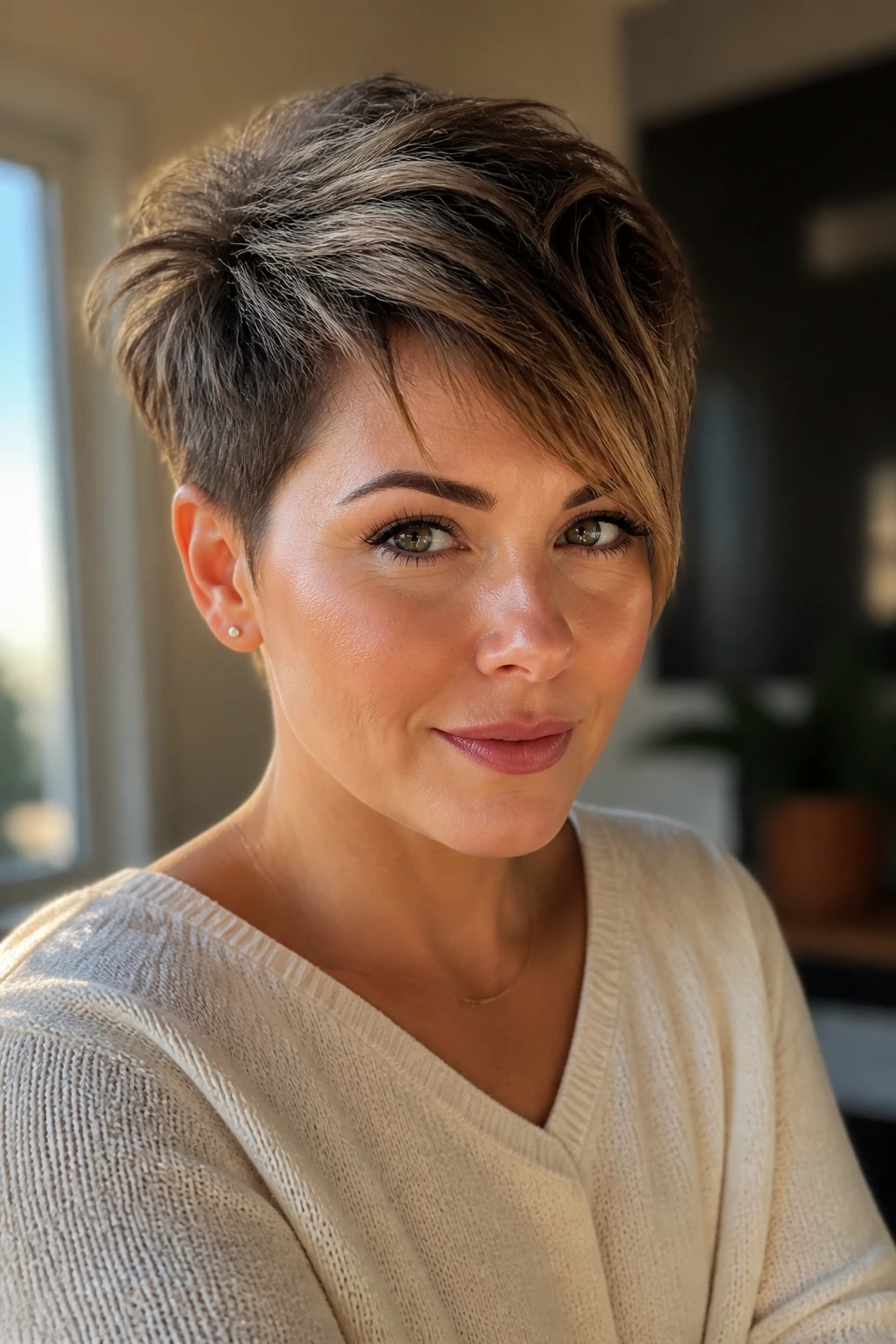
A pixie on fine hair usually fails at the root, not the ends. The top lies down, the sides widen, and the whole cut starts to look tired before you’ve even left the house. Fix the root first, and the rest gets easier.
Start With Damp Hair, Not Soaking Hair
Towel-dry until the hair is damp, then work a small amount of mousse or root spray into the crown and front. If the hair is dripping, the product slides off and the roots dry flat. If the hair is nearly dry, you lose the lift.
Dry the Hair in the Direction You Want It to Stay
Lift the crown up and back. Push the fringe to the side or into the diagonal sweep you actually want. For a round face, that sideways motion matters because it keeps the front from turning into a wide, flat band. Use the cool shot at the end. It sounds small. It isn’t.
Finish With Almost Nothing
A dab of paste at the ends, a tiny mist of flexible hairspray, and maybe a touch of dry shampoo at the roots on day two. That’s usually enough. Fine hair turns greasy fast when it’s overhandled, and a pixie shows product buildup immediately. Better too little than too much.
What to Tell Your Stylist Before the First Cut
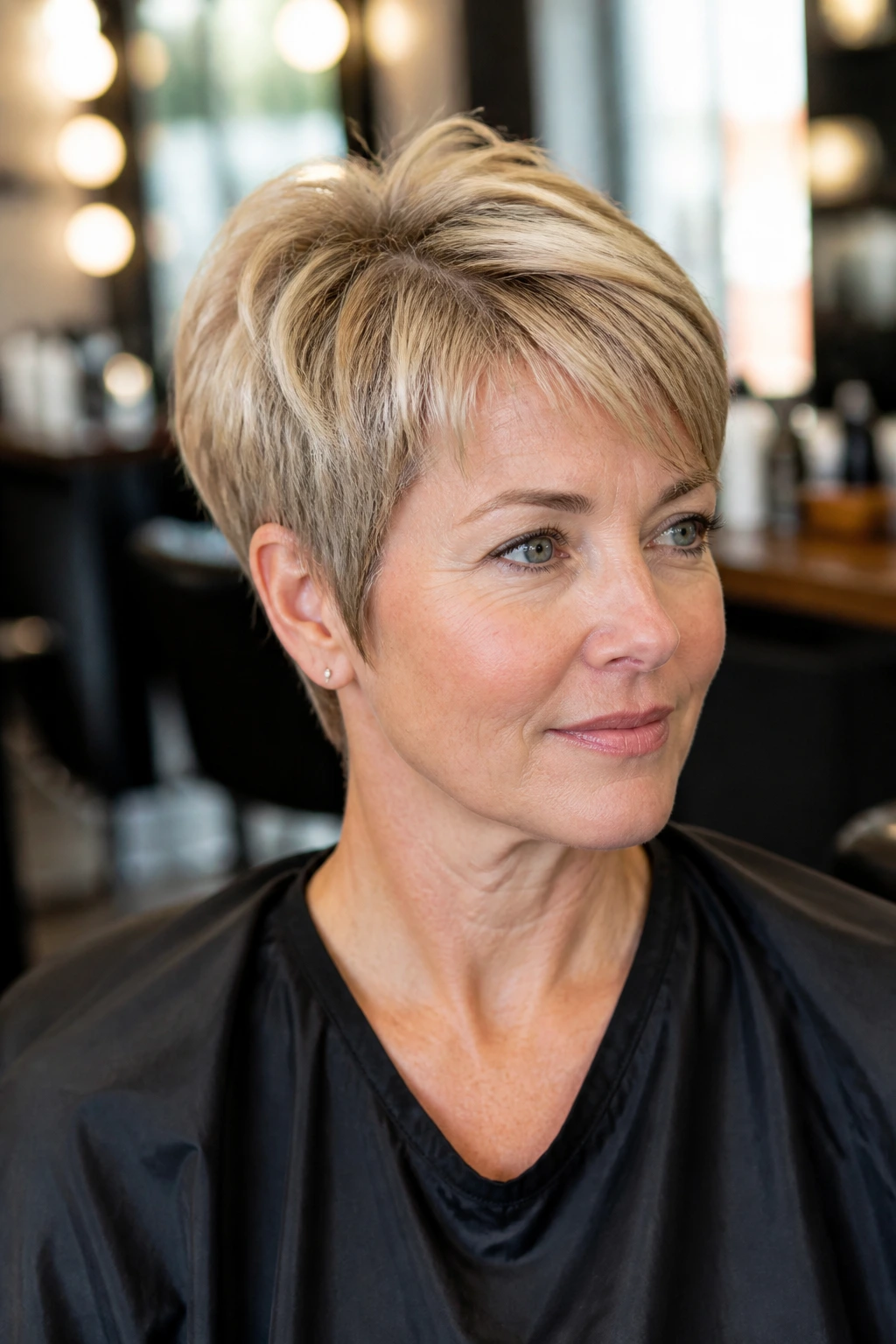
Bring more than one photo. Bring front, side, and back views if you can find them. A pixie is a shape, not just a front view, and the nape can make the difference between “sharp” and “why does this look off from behind?”
Say where your part falls naturally. Mention any cowlicks at the crown, temple, or hairline. If your hair is fine but dense, say that too. If it’s fine and sparse, say that clearly, because those two situations need different amounts of layering.
Ask for These Details
- Keep the sides narrow near the ear.
- Leave enough length on top to build crown lift.
- Avoid over-thinning the fringe.
- Make the front pieces move diagonally if possible.
- Preserve enough length at the temples if you want to tuck hair behind the ear.
If the stylist reaches for thinning shears near the crown, ask why. Sometimes they’re helpful. Sometimes they’re the fastest way to erase the density you were hoping to keep.
Common Mistakes That Make a Pixie Wider or Flatter
-
Letting the sides puff out: when the hair flares at the cheek, the face looks rounder. The fix is a cleaner taper around the ear and a narrower temple line.
-
Going too short on top: a cropped crown on fine hair can collapse into the scalp and make the whole cut look smaller than it is. Keep enough length up there to create lift.
-
Over-thinning the interior: fine hair does not need to be shredded into wisps. If the ends look see-through right after the cut, they’ll look worse after a few washes.
-
Using heavy cream or oil at the roots: the hair may feel smooth for 10 minutes, then sink. Put richer products only on the ends, and keep the root lightweight.
-
Ignoring your natural part and cowlicks: if the hair naturally falls left and you fight it into a middle part, the crown will probably rebel. Work with the growth pattern or expect a daily argument.
-
Skipping regular trims: pixies lose shape fast. Once the nape grows out and the side weight returns, the face loses that clean, lifted frame.
Three Ways to Adapt the Same Pixie Shape
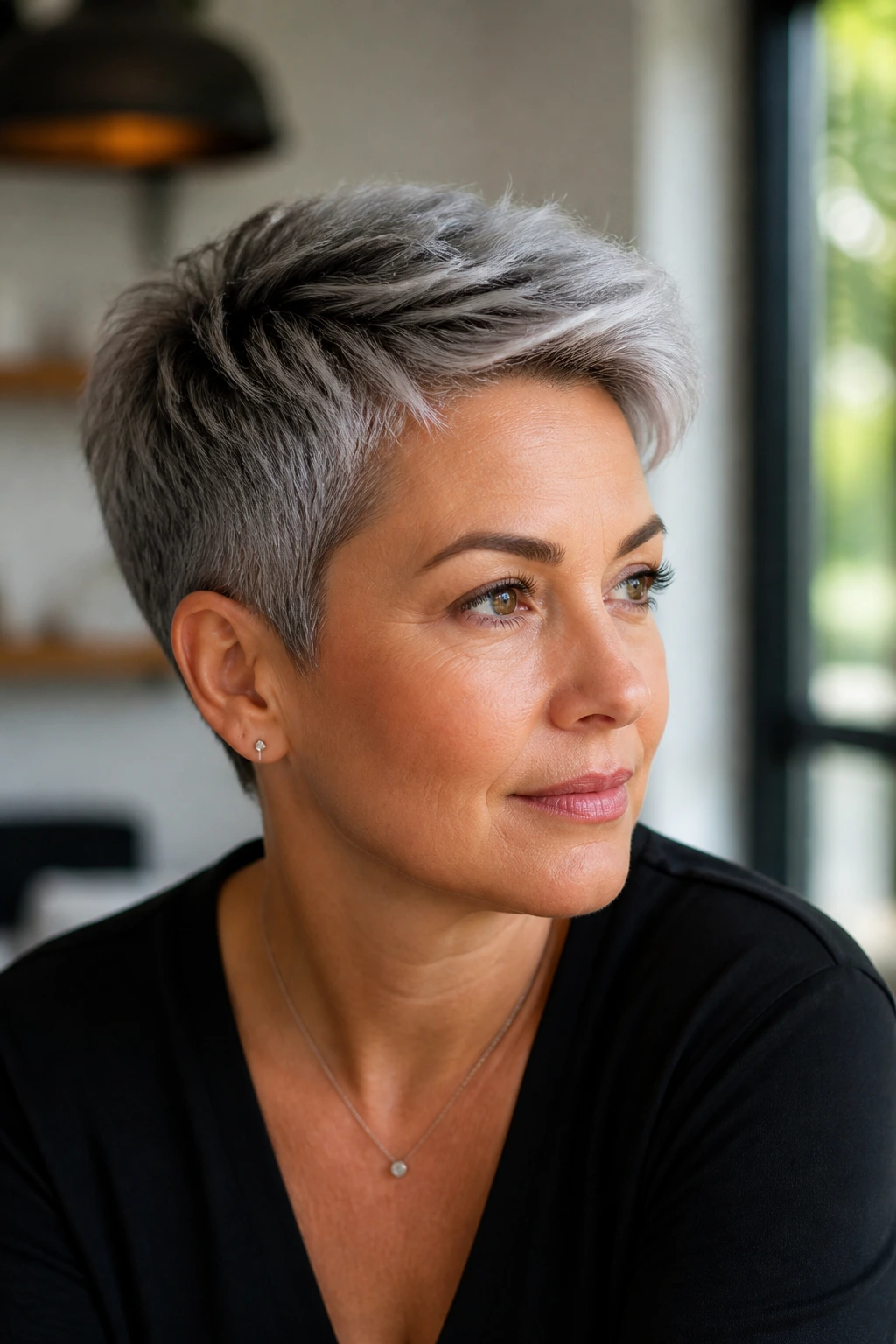
The Air-Dry Version: If your hair has a little wave, lean into a feathered, shaggy, or French-style pixie. Use a light mousse, scrunch the crown, and let the texture do the talking. This is the easiest route when hot tools feel like a chore.
The Sculpted Version: If you prefer cleaner lines, choose the tapered crown, square-edged, or deep side-part shape. Blow-dry the roots upward and finish with a small amount of flexible hairspray. The cut will look more polished and a little sharper around the cheeks.
The Grow-Out Version: If you hate awkward stages, pick the elongated pixie bob, temple-long pixie, or nape-focused cut. Those shapes hold together longer and turn into a cute short crop instead of an unruly in-between length.
The Bold Version: If you want more attitude, the undercut, soft mohawk, or slicked-back pixie will give you the strongest outline. Keep the sides tight and the top movable, or the shape can feel too hard.
Keeping a Pixie in Shape Between Salon Visits
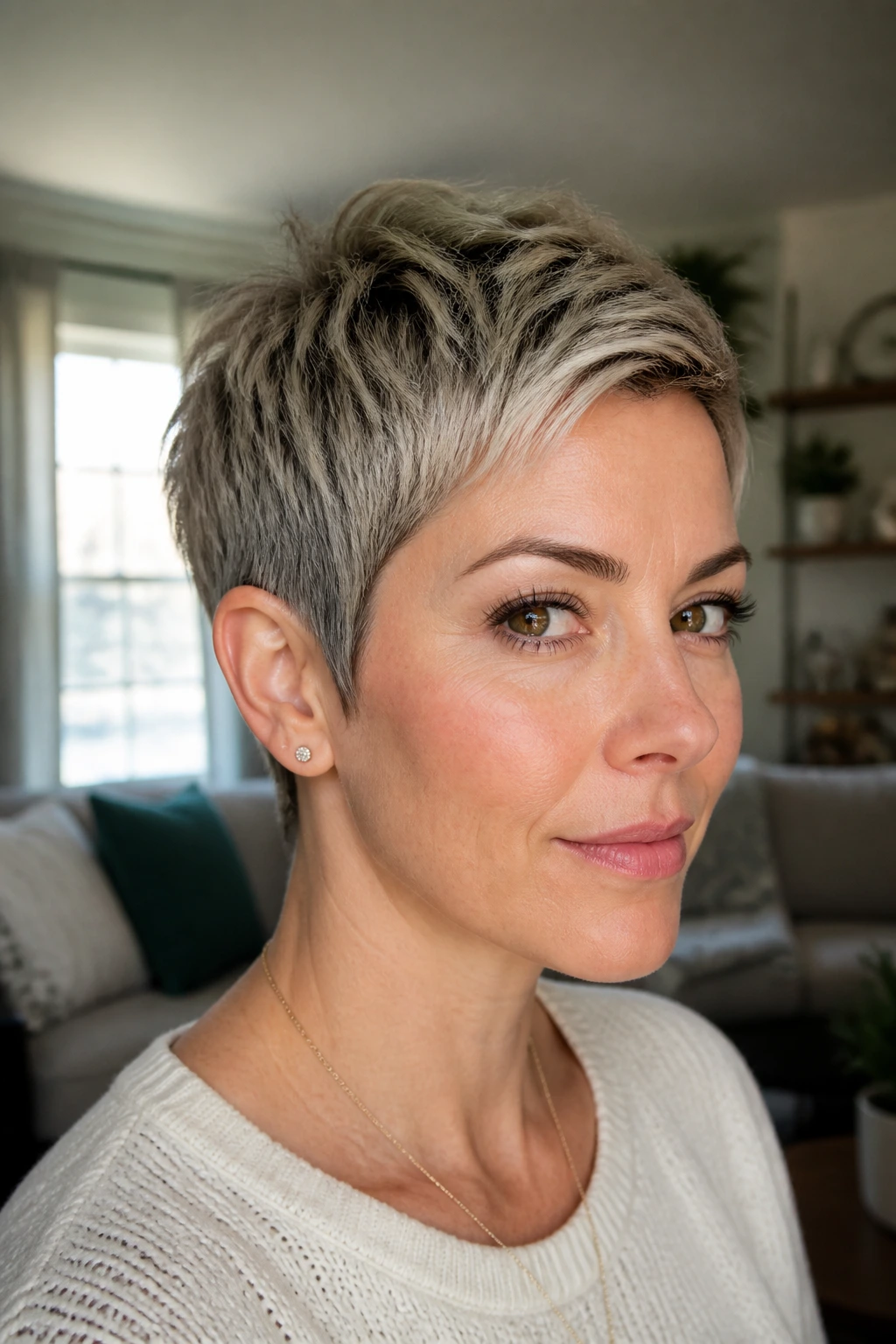
Short hair does not forgive neglect. That’s the annoying part and the useful part. A pixie can look expensive for weeks if you keep the outline trimmed, but it can also start looking sleepy fast once the nape and sideburns get fuzzy.
Plan on a trim every 4 to 6 weeks for most of these cuts. If you’re wearing a very short nape or an undercut, 3 to 4 weeks may be better. A tiny neckline cleanup between full appointments can make a huge difference, especially if your hair grows fast at the back.
Wash frequency matters too. Fine hair often needs more frequent washing than people expect, because product buildup is obvious. If the roots start to separate and cling together, use a gentle clarifying shampoo every 2 to 4 weeks, then follow with conditioner only on the ends. Sleep on a silk or satin pillowcase if you can. It helps the fringe and crown keep their shape instead of catching and flattening overnight.
Frequently Asked Questions About Pixie Cuts for Round Faces and Fine Hair
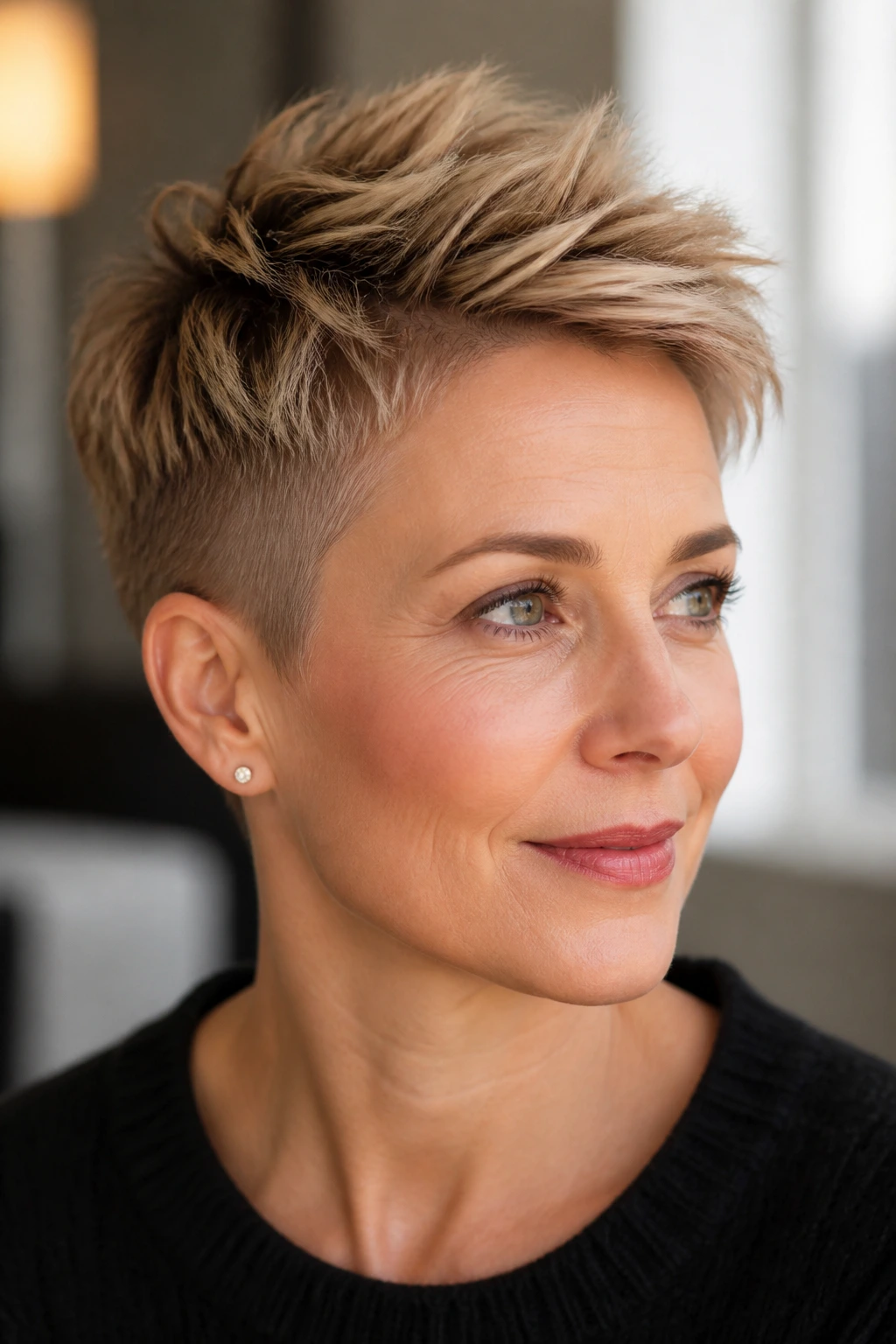
Will a pixie make my round face look wider?
It can, if the sides are too full or the fringe stops right at cheek level. A good pixie for a round face keeps the sides slim, adds some height at the crown, and uses diagonal lines in the front.
Is fine hair too thin for a pixie?
No. Fine hair often looks better short because there’s less length dragging it down. The cut just needs to preserve enough structure at the crown and avoid over-thinning the ends.
Should I choose a side part or a middle part?
A side part is usually easier on a round face because it creates a diagonal line and a little asymmetry. A middle part can work if the top is tall enough and the sides stay narrow, but it’s less forgiving.
Can curly or wavy fine hair wear a pixie?
Yes, and sometimes it wears one better than straight fine hair because the bend creates natural lift. The key is to leave enough length for the curl pattern to form without springing outward at the cheeks.
How often do pixies need trimming?
Most need shape maintenance every 4 to 6 weeks. Very short necklines or undercuts can need cleanup sooner, because even a half-inch of growth changes the outline.
What if my crown lies completely flat?
Keep more length there and ask for layered crown shaping instead of cutting the top too short. Use mousse at the roots, blow-dry upward, and let the hair cool before touching it.
Can I grow a pixie out without looking awkward?
Yes, if you start with longer temple pieces, a tapered nape, or a pixie bob shape. Those cuts grow into a short crop more gracefully than a very tight, all-over short style.
Is a very short fringe a bad idea on a round face?
Not always. Wispy baby bangs can work if the sides stay narrow and the crown has height. A blunt, straight-across fringe is the riskier version.
The Cut That Keeps Its Shape
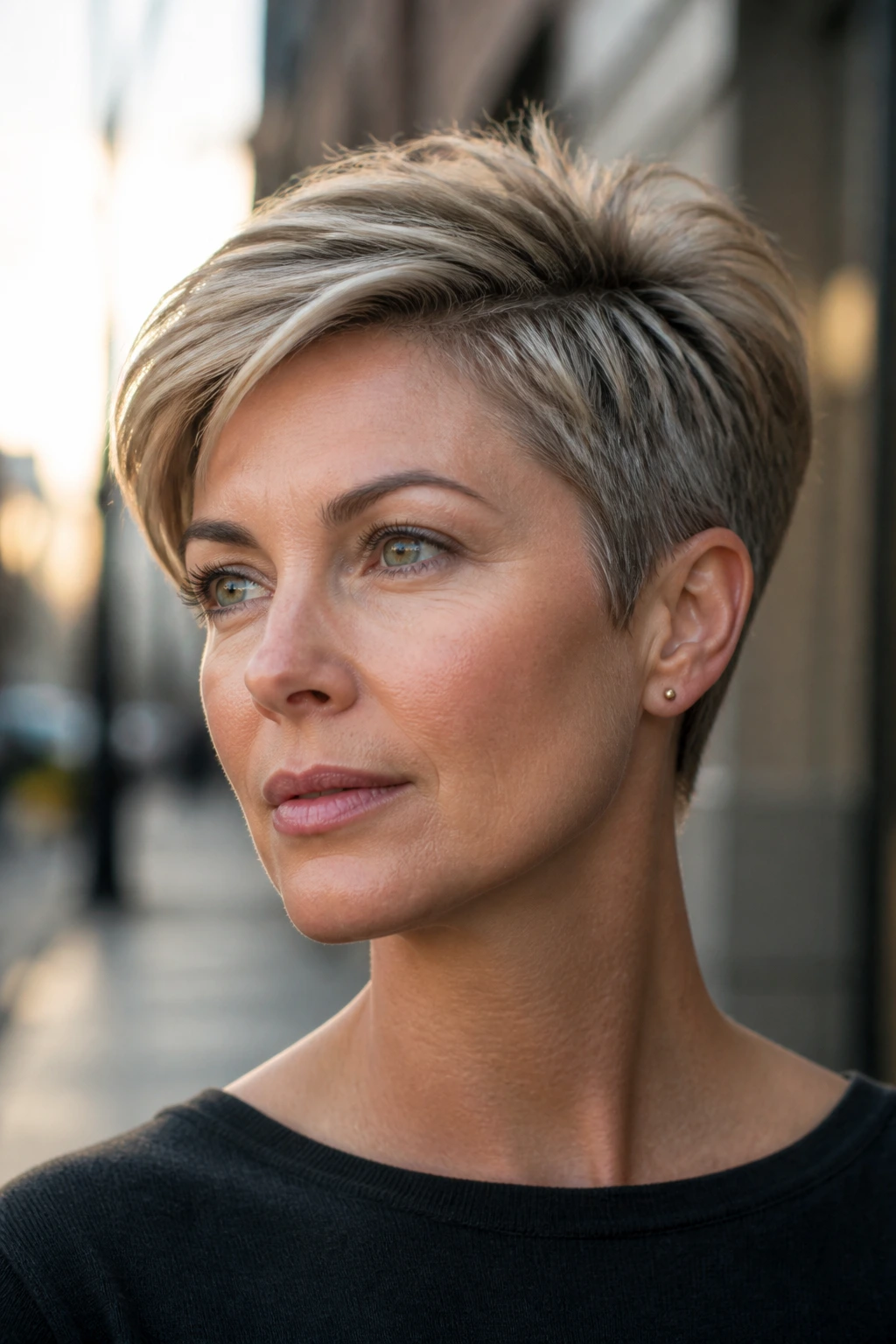
The strongest pixie for a round face with fine hair is rarely the shortest one. It’s the one that knows where to be slim, where to be lifted, and where to stay soft enough to move. A little height at the crown. A cleaner side line. A front that turns diagonally instead of stopping dead at the widest part of the face. That combination does the real work.
Pick the shape that matches your hair’s behavior, not just the photo you saved. If your strands fall flat, build the crown. If your cheeks read full, narrow the sides. If your hair has a little wave, let it keep some of that bend. The best pixie is the one that still looks like itself when you’ve had a long day, not just when you’ve just walked out of the salon.