



Short bobs for oval faces and thick hair have a funny habit of looking expensive even when the styling takes ten minutes and a blunt brush. The catch is that the cut has to be shaped with intent. Thick hair does not forgive lazy geometry. Leave too much bulk in the wrong place and the whole thing balloons outward. Cut it too thin and the ends start to fray, the body disappears, and you end up fighting the mirror every morning.
Oval faces make the job easier, which is probably why this pairing is such a favorite in salons. The face shape can handle a chin line, a jaw-skimming edge, cheekbone-grazing fringe, or a slightly off-center part without needing the cut to do all the work. That gives you room to play. You can go crisp, airy, polished, piecey, dramatic, soft — and if the perimeter is sound, it still reads as balanced.
What matters most is not whether a bob is “in” or “flattering” in some vague sense. What matters is where the weight sits, how the front frame lands, and whether the finish works with thick hair instead of bulldozing it into a triangle. The styles below are the ones that keep their shape, move cleanly, and make an oval face look even more open without swallowing the neck. Some are sleek. Some are choppy. Some are barely bobs at all, which is exactly the point.
Why These Bobs Earn Their Keep
-
Oval-face balance: An oval face can wear a blunt chin line, a side part, or a short fringe without the cut looking forced, so you get more freedom than most face shapes.
-
Thick-hair control: Dense hair needs a perimeter that sits down and behaves; blunt edges, low graduation, and careful internal removal keep the sides from puffing out.
-
Shorter = more shape: A shorter bob shows the line of the haircut immediately, which means a good cut looks sharp with almost no styling drama.
-
Fringe options actually matter: Thick hair can hold bangs, curtain pieces, or a micro fringe without going wispy, and oval faces can usually take the visual shortening from bangs without trouble.
-
Easy to switch moods: The same bob can look polished with a bend, loose with texture spray, or strict with a flat brush and a center part.
-
The grow-out is less annoying: If the line is chosen well, the cut softens instead of collapsing, which buys you a few extra weeks before you need a trim.
1. Chin-Length Blunt Bob
A chin-length blunt bob is the straight-talking option. No fuss, no fake layering, no soft excuses. On thick hair, that blunt edge is the thing that keeps the shape from expanding like a broom head by lunchtime, and on an oval face it lands exactly where the jaw can handle the attention.
The trick is density control, not thinning for the sake of thinning. Ask for a clean perimeter with minimal graduation at the back and only enough internal debulking to keep the inside from pushing the sides outward. If your hair is coarse, this is one of the few cuts that can actually use that heaviness as structure instead of fighting it.
Why It Works
A blunt bob works because thick hair likes a firm boundary. When the ends all sit at the same level, the haircut reads as intentional, not accidental. The chin-length version also keeps the eye near the face, which makes oval features pop without needing bang drama.
It also dries in a sane amount of time. That matters. A chin bob that stops at the jaw usually needs one pass with a round brush or flat brush and a quick bend under the ends. That’s it. If the line is crisp, the haircut does the talking for you.
Styling Note
Use a heat protectant, a medium round brush, and a blow-dryer nozzle. Smooth the top, bend the ends under just a touch, and stop before the shape gets puffy. Too much root lift can make this bob look like a helmet. Nobody wants that.
2. Soft A-Line Bob
What if you want movement without surrendering the clean line? That’s where the soft A-line bob comes in. It sits a little shorter at the nape and a little longer toward the front, which gives thick hair somewhere to go besides straight out from the head.
On an oval face, the longer front pieces draw a neat diagonal line that sharpens the jaw and keeps the bob from feeling boxy. This is one of the smartest cuts if your hair has a lot of natural body and you still want the style to feel sleek enough for work or dinner or a day when you actually bothered to put on earrings.
What Makes It Better Than a Straight Line
The A-line shape gives you a little forward swing without making the back heavy. Thick hair often needs that forward pull, because a perfectly even bob can sit like a shelf if the ends are too blunt and too wide.
The cut looks best when the front lands somewhere between the chin and the top of the neck. Too long and it stops reading as “short bob”; too short and you lose the soft diagonal that makes the shape interesting. A slight off-center part helps, too.
Styling Note
Blow-dry the front forward first, then curve the ends inward with a brush. If you like a bend rather than a curl, one quick pass with a flat iron at the last inch of the hair is enough.
3. French Bob With Micro Fringe
A French bob with a micro fringe is for the person who wants character first and convenience second. It’s cheekbone-to-lip length, usually with a short fringe that sits high on the forehead, and it has a blunt little confidence that thick hair wears well.
Oval faces can take the shortened proportion because the face already has balance. The micro fringe changes the mood fast. It makes the eyes look closer together, draws attention upward, and gives the bob a sharper, more editorial edge. If you’ve got thick hair, the fringe also holds its shape instead of floating around like a sad curtain.
What to Tell the Stylist
Ask for a bob that sits around the upper jaw or cheekbone, plus a fringe that’s short enough to show forehead but not so short it looks severe. The fringe should be cut with enough texture to move, not sliced into tiny jagged bits.
The important part is bulk control around the temples and the sides. French bobs can go mushroom-shaped fast on dense hair if the inside is ignored. A little internal weight removal goes a long way here.
Styling Note
This cut lives best with a bit of roughness. Use a small dab of styling cream on damp hair, then either diffuse lightly or air-dry and pinch the fringe into place once it’s mostly dry. Too much gloss kills the charm.
4. Jaw-Length Layered Bob
A jaw-length layered bob is the answer when your hair feels heavy the second it passes the shoulders. It keeps the length short enough to stay crisp, but the layering takes some pressure off the perimeter so the cut doesn’t sit there like a helmet.
The layers should be low and controlled, not hacked in high around the crown. That’s the mistake people make. Thick hair does not need a dozen layers. It needs the right few layers in the places where bulk collects, especially around the sides and under the occipital bone.
Why It Flatters an Oval Face
Jaw length is a sweet spot because it follows the natural curve of an oval face without dragging the features down. A few low layers around the front can soften a strong chin or a fuller jaw while still keeping the cut structured.
If your hair waves a little, this bob gets even better. The layers let the wave break up the line enough to keep the haircut from looking too severe. And if your hair is straight, the layers stop it from reading as one giant block.
Styling Note
Use a blowout brush or medium round brush and flip the ends under just slightly. If the layers are cut properly, you won’t need much product — a pea-sized amount of smoothing cream is enough.
5. Inverted Bob
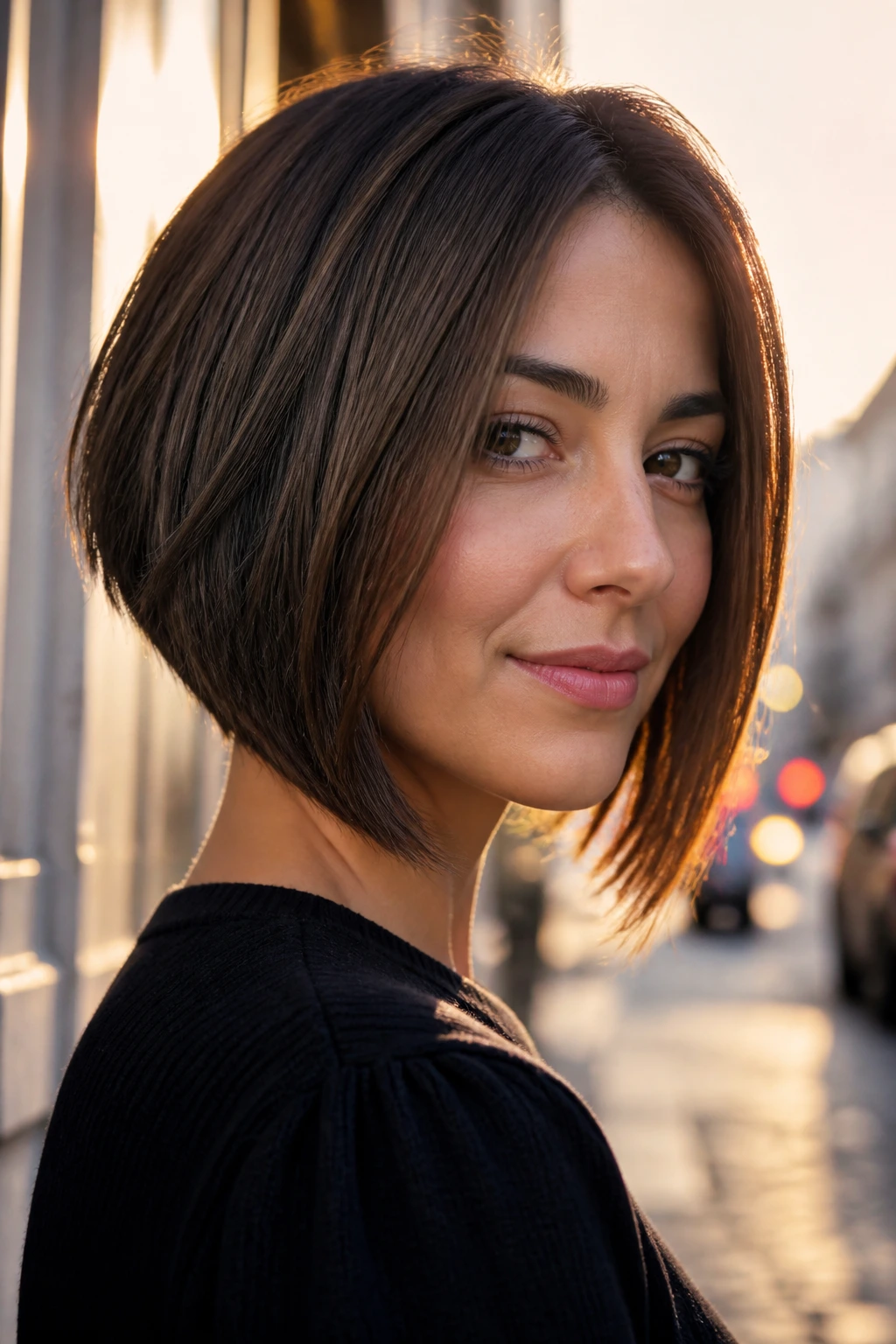
An inverted bob has that strong, slanted profile that thick hair secretly loves. It’s shorter in the back, longer in the front, and the diagonal line gives the cut momentum. It looks polished when it’s straight and still holds up when you add a soft bend.
On oval faces, the front pieces frame the cheek and jaw without crowding them. That matters. With dense hair, a blunt, even bob can sometimes widen the face visually at the sides. The inverted shape avoids that by directing the eye downward and forward instead.
Where It Can Go Wrong
Too much stack in the back, and it turns dated fast. Too much length in the front, and it stops looking like a bob. The sweet spot is a clean curve from the nape to the jaw, with enough contrast to show the angle but not so much that it shouts.
Ask for the back to stay compact and the front to stay long enough to skim the jawline. Thick hair needs that structure. Otherwise the silhouette inflates.
Styling Note
A paddle brush and a dryer with a nozzle keep the back smooth. If you want a sharper finish, bend the front pieces inward with a flat iron and leave the back a little tighter against the neck.
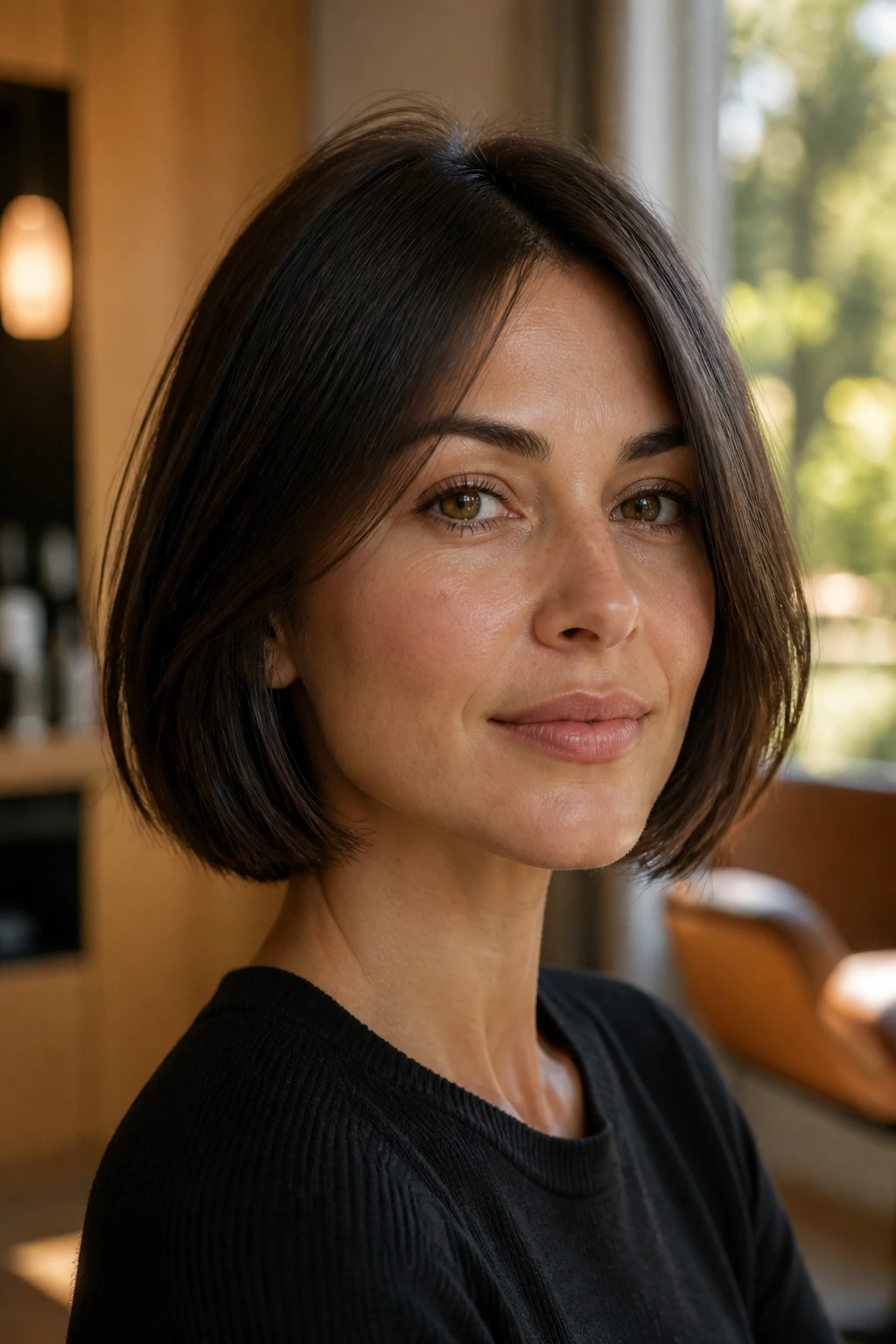
6. Curved-Under Bob
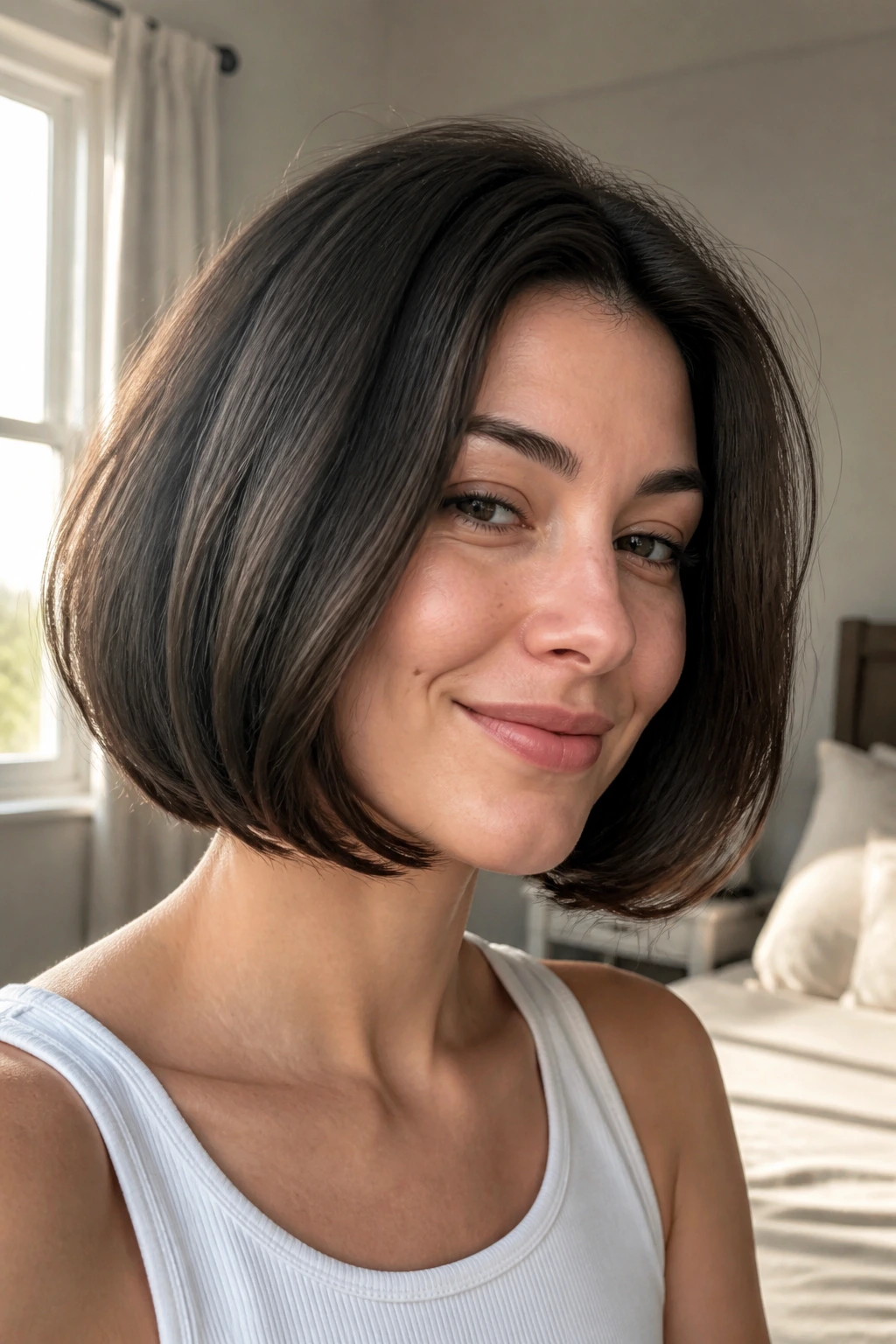
There’s something satisfying about a bob that folds under neatly at the ends. A curved-under bob has that old-school polish without feeling stiff, and on thick hair it behaves better than most people expect. The curve tames width. It also makes the cut look deliberate, which is half the battle with denser hair.
Oval faces wear this cut easily because the curve follows the shape of the jaw without hardening it. You get softness at the edge and order at the same time. It’s a clean little contradiction.
The Detail That Matters
This style relies on the right amount of internal shape. If the cut is too heavy, the ends push out and the curve disappears. If it’s too thinned, the line goes wispy and loses that satisfying weight at the hem.
The best version lands around the chin or just below it, with the underside cut in a way that encourages the hair to tuck inward as it dries. It’s not a blow-dry miracle. The haircut has to help.
Styling Note
Dry the hair in sections with a round brush, aiming the nozzle downward. Finish with a cool shot on the ends. That last blast matters more than people think. It sets the curve and cuts down on frizz.
7. Stacked Bob With Hidden Graduation
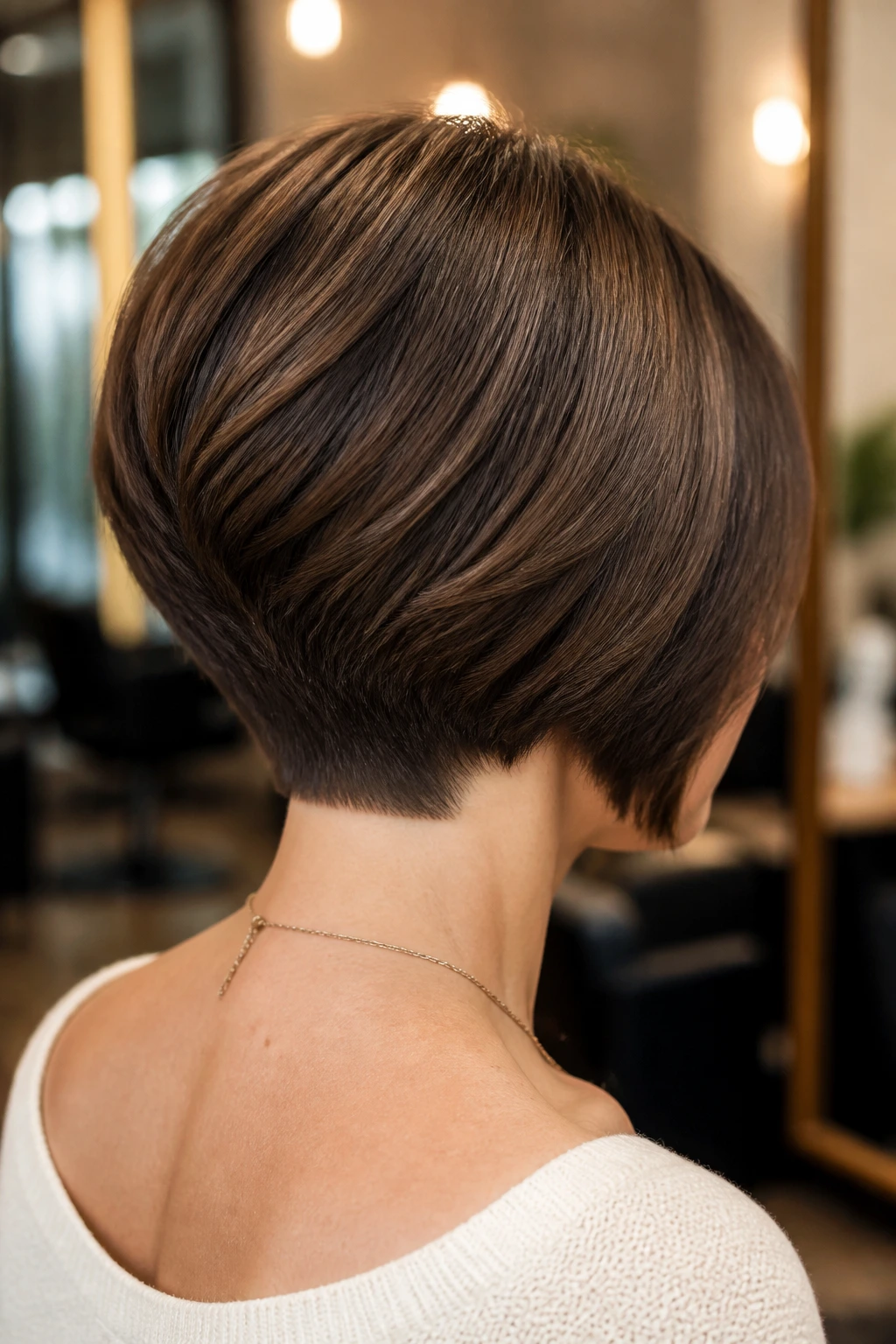
A stacked bob can look aggressive if the graduation is too obvious, but a hidden version is pure magic on thick hair. The shape builds a little lift at the back without turning the head into a wedge. That lift takes pressure off the sides, which is exactly where dense hair likes to misbehave.
Oval faces can handle the lifted crown because there’s enough balance in the proportions already. The cut gives the neck some breathing room and keeps the overall silhouette from feeling heavy.
The Best Part
The stacking should live underneath the surface. Think support structure, not decoration. The top layer still needs to lie smoothly over the graduation so the cut doesn’t look old-fashioned or puffy.
This is a smart pick if your hair sits flat at the crown but bulks out lower down. The short back creates shape where you need it, and the longer top smooths everything out. It’s one of those cuts that looks expensive when it’s done right and awkward when it’s not, so the precision matters.
Styling Note
Use a root-lifting mousse at the crown and a round brush to direct the back upward just a little. You do not need a giant pouf. You need a controlled bend and a clean neckline.
8. Textured Wavy Bob

A textured wavy bob is the cut for people who don’t want their hair to behave like a helmet. Thick hair naturally carries texture, so this style uses it instead of sanding it off. The result is looser, softer, and a lot less precious.
On oval faces, the waves break up the perimeter in a way that keeps the bob from feeling too graphic. The face shape can support a straight line, sure, but it also looks good when the line is softened with movement near the cheeks and jaw. That’s what makes this version so wearable.
The Real Advantage
This cut is at its best when the texture looks air-dried, not over-curled. The goal is a slight bend, not a pageant wave. Ask for internal layering that releases bulk without creating holes in the shape. Thick hair can handle a little disconnection, but not if the ends are left too thin.
Salt spray can help, but only if your hair isn’t already dry. If the strands feel rough before styling, use a lighter foam instead. Texture should look touchable, not crunchy.
Styling Note
Scrunch in a mousse, then rough-dry about 80 percent of the way. Finish with a one-inch iron on random pieces if the wave needs encouragement. Keep the pattern irregular. Perfect waves make this cut feel overworked.
9. Glass-Straight Bob
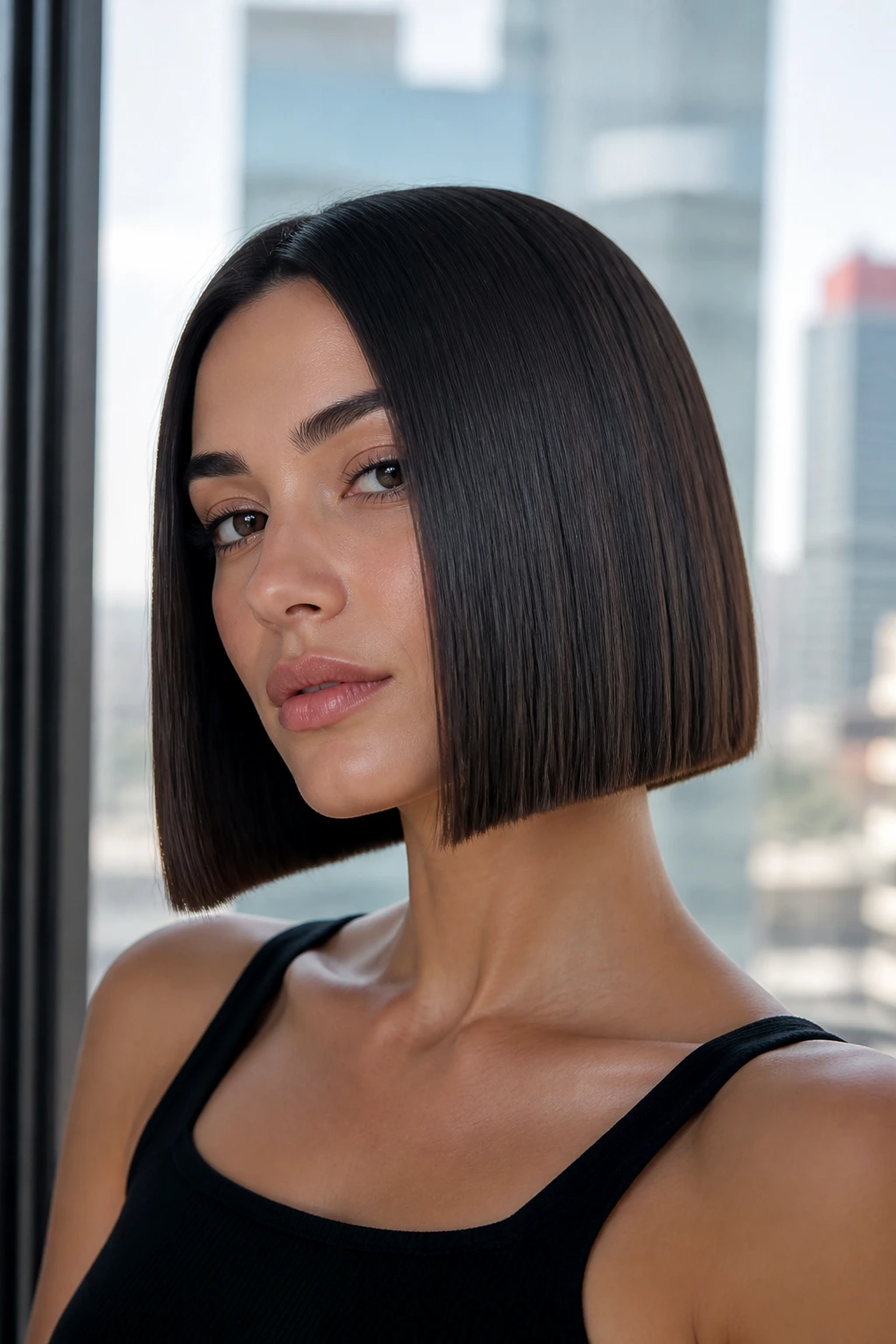
A glass-straight bob is all about line and shine. No fluff. No puff. Just a clean, reflective surface that makes thick hair look controlled instead of bulky. If you like a sharp finish, this one has a lot of mileage.
Oval faces work well with it because the center or slight off-center part can sit calmly on the face without fighting the proportions. The straight edge under the chin or jaw frames the face in a way that feels deliberate, not severe.
Why It Works on Dense Hair
Thick hair naturally gives the cut substance, which is exactly what a sleek bob needs. A fine-haired bob can look flimsy when it’s flat-ironed straight. A dense bob, on the other hand, keeps enough body to hold the outline.
The key is not just flattening the hair. It’s smoothing the cuticle so the ends look like one line. That means heat protectant, a decent flat iron with rounded edges, and a small amount of serum on the mid-lengths and ends only.
One warning: if your hair has a strong wave or cowlick, this is more upkeep than some of the other options. The payoff is real, though. Sharp is sharp.
10. Side-Part Bob With Long Fringe
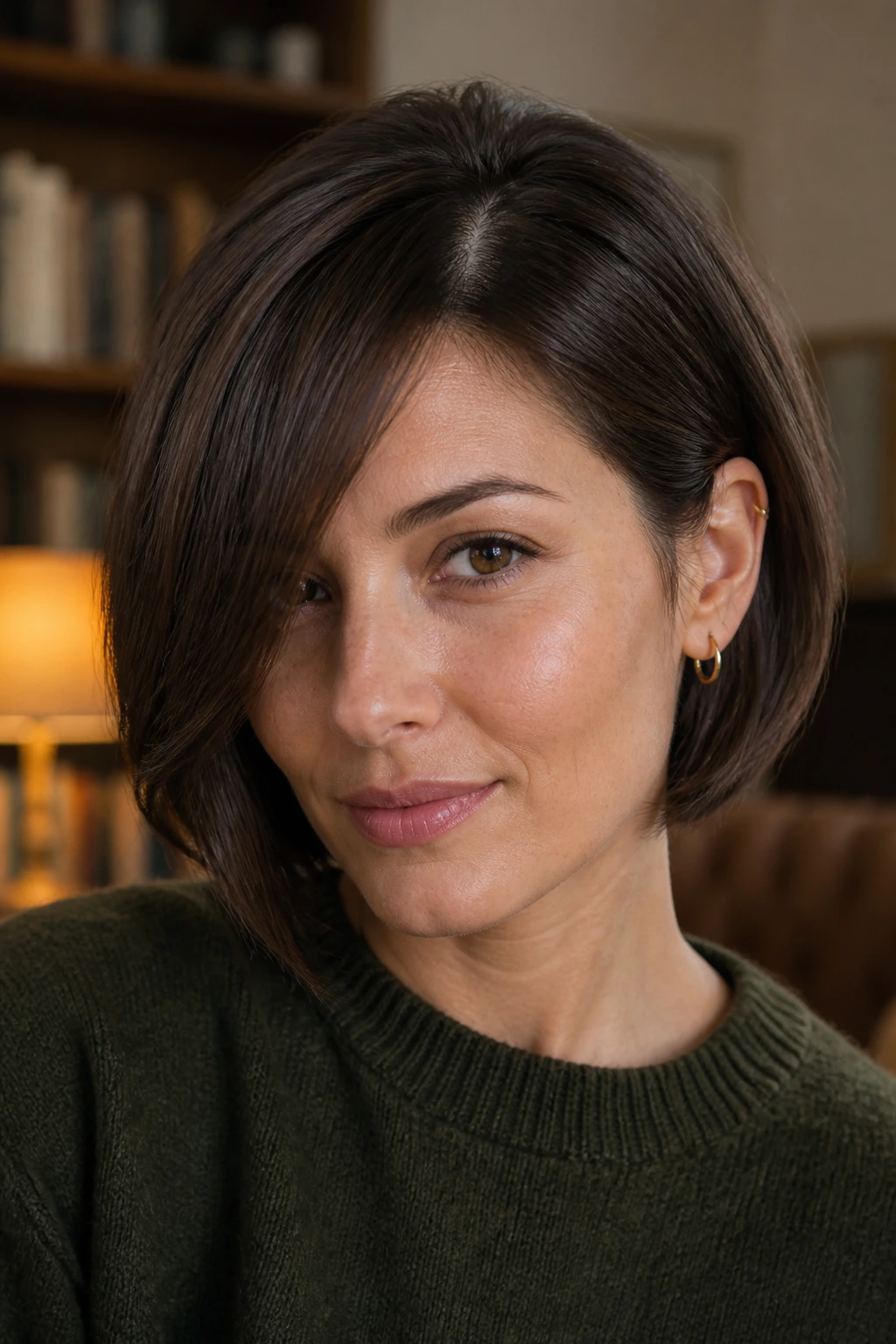
A side-part bob with long fringe has more attitude than the center-parted versions, and thick hair usually wears that attitude well. The long fringe sweeps across the face instead of sitting flat on it, which softens the oval shape a little and gives the eyes a focal point.
This is a smart cut if you like movement around the front but don’t want full bangs. The fringe should be long enough to tuck behind the ear when you’re tired of it, which makes the grow-out less annoying than a blunt fringe.
A Good Cut vs. A Heavy Cut
The fringe should be carved with enough weight to stay coherent, but not so much that it blocks the cheekbone. If it’s cut too thick, it can drape down like a curtain. If it’s too thin, it disappears into the rest of the bob.
The rest of the bob should stay compact. That front sweep needs a clean base to sit on. A little graduation in the back helps keep the shape from spreading wide.
Styling Note
Set the part while the hair is damp, not after it dries. Lift the roots at the part with a brush or clips, then direct the fringe diagonally across the forehead. A soft bend at the ends is enough.
11. Choppy Piecey Bob

A choppy piecey bob is for thick hair that refuses to sit still anyway. Instead of trying to force one smooth block, this version breaks the shape into visible pieces. That can be a relief. The haircut stops pretending the hair is finer than it is.
Oval faces can take the unevenness because the face shape already handles balance well. A few textured ends around the jaw and cheekbones make the cut feel lighter without stripping away all the body. The result is casual, but not sloppy.
The Line Between Texture and Frizz
This is where people get careless. Choppy should not mean shredded. Thick hair needs selective texturing, not a dozen random snips through the perimeter. If the ends are overcut, the style goes fuzzy by the second day.
Ask for point cutting and soft internal removal, then keep the outer line intact enough to anchor the shape. That keeps the haircut looking intentional while still giving you movement.
Styling Note
Use a matte texture spray or dry texturizing mist on dry hair, then twist a few front pieces with your fingers. No need to curl the whole head. The charm comes from the irregular finish.
12. Box Bob
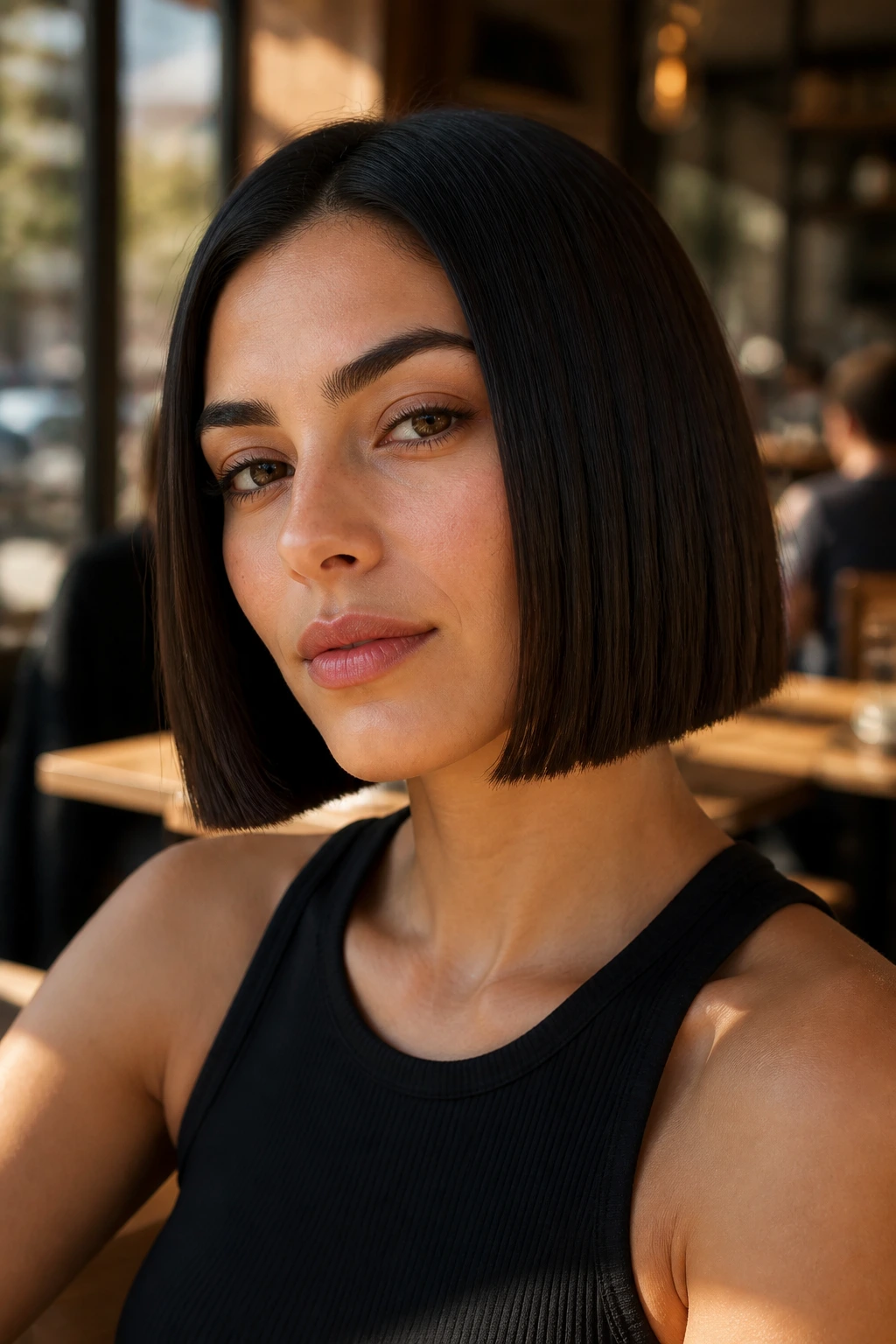
A box bob has a clean, square outline that looks crisp on thick hair. If your hair is dense and naturally expands, this cut can actually tame it better than a heavily layered style. The perimeter stays solid, the sides stay controlled, and the shape reads as modern instead of mushy.
Oval faces can wear the boxy outline because there’s enough balance in the face to support the strong line. The cut makes the face look framed, almost architectural, which is a nice shift if you’re tired of softer bobs.
What It Needs to Succeed
The inside of the cut has to be relieved carefully. You want the outside edge to stay blunt while the bulk underneath is reduced enough to stop the shape from pushing outward. That’s a subtle job, and it’s why this bob benefits from a stylist who understands dense hair.
This cut likes straight hair, but a slight wave can work too if you’re okay with a little texture in the finish.
Styling Note
Blow-dry with a flat brush, not a big round one. You want the sides to stay close to the head. If you use too much curling action at the ends, you’ll lose the square edge that makes the bob interesting.
13. Curtain-Bang Bob

A curtain-bang bob gives oval faces one of the easiest face-framing setups in the whole group. The bangs split down the middle or just off-center, opening the forehead while still softening the front. On thick hair, they have enough weight to sit properly without turning stringy.
The bob itself can stay fairly short — jaw or chin length works well — because the fringe adds a little visual length at the front. That keeps the cut from feeling blunt in an unflattering way. It also means you can grow the bangs into the sides if you get tired of them.
Why It’s So Forgiving
Curtain bangs are kinder than blunt fringe when you’re not in the mood for frequent trims. They blend into the bob as they grow, which makes maintenance easier. Thick hair helps here because the bangs hold their sweep instead of collapsing.
The shape gets muddy if the bangs are too heavy at the center, so ask for movement and a soft taper near the cheekbones. That’s the part that makes the cut look lived-in rather than costume-y.
Styling Note
Set the bangs with a round brush, pulling them away from the face first and then letting them fall back naturally. That little move keeps them from splitting too hard down the middle.
14. Razored Bob
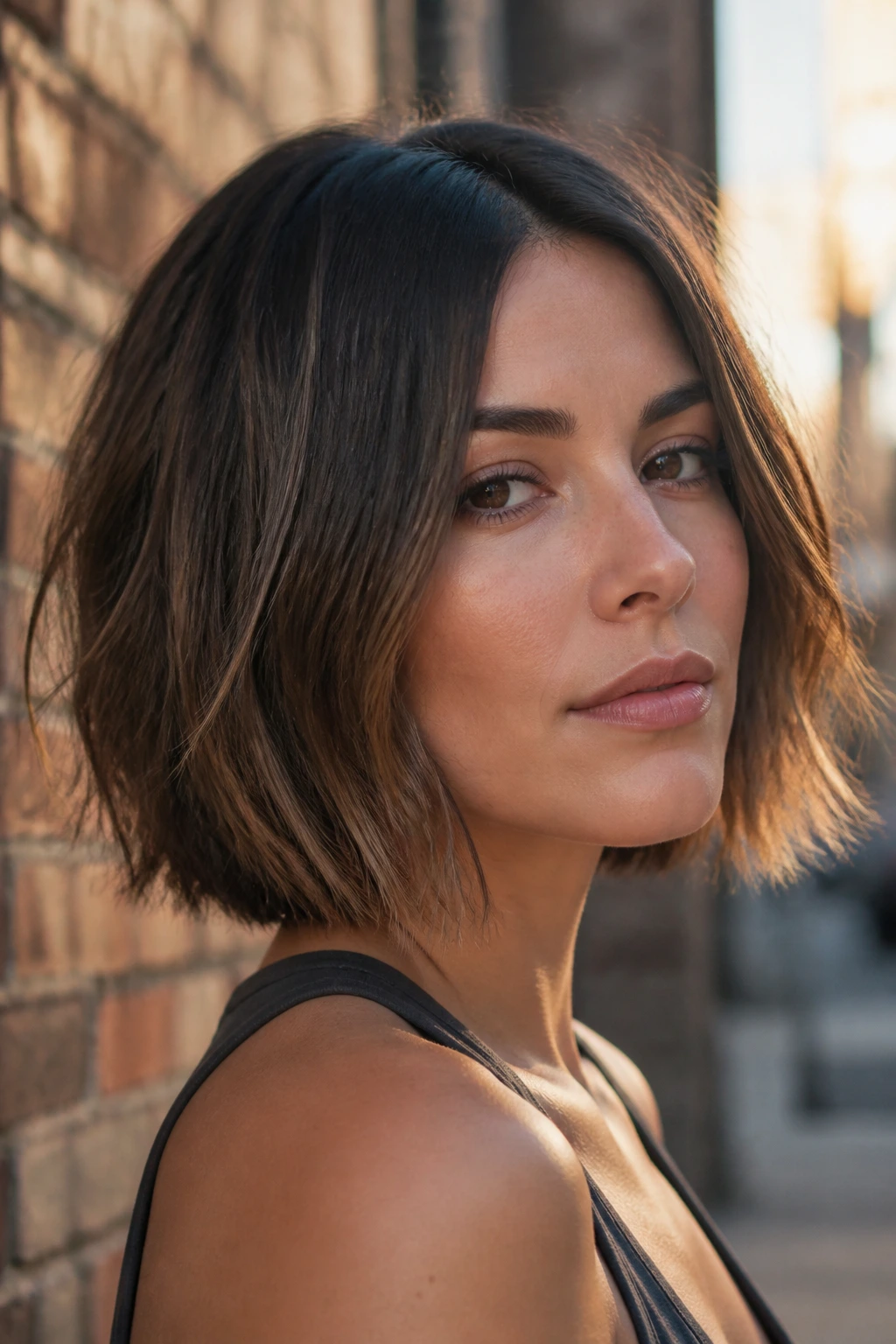
A razored bob softens the perimeter enough to keep thick hair from feeling blunt in the wrong way. The razor takes some of the mass out of the ends and gives the haircut a lighter, more feathery finish. Used well, it’s elegant. Used badly, it looks frayed.
Oval faces can carry this softer edge because they don’t need the haircut to create extra structure around the face. The line can loosen up a little, which is useful if your hair is coarse or resistant to bend.
The Catch
This style is not the friend of every head of hair. If your strands are already dry, porous, or curly in a way that frizzes fast, too much razor work can make the ends look ragged. In that case, scissors and point cutting are safer.
The good version has movement at the edge and fullness through the middle. It should feel airy, not shredded. There’s a difference, and it shows up fast.
Styling Note
Use a lightweight smoothing cream on damp hair and dry with tension. Avoid piling on oil. Razor-cut ends can turn stringy if you overload them.
15. Tucked-Under Bob
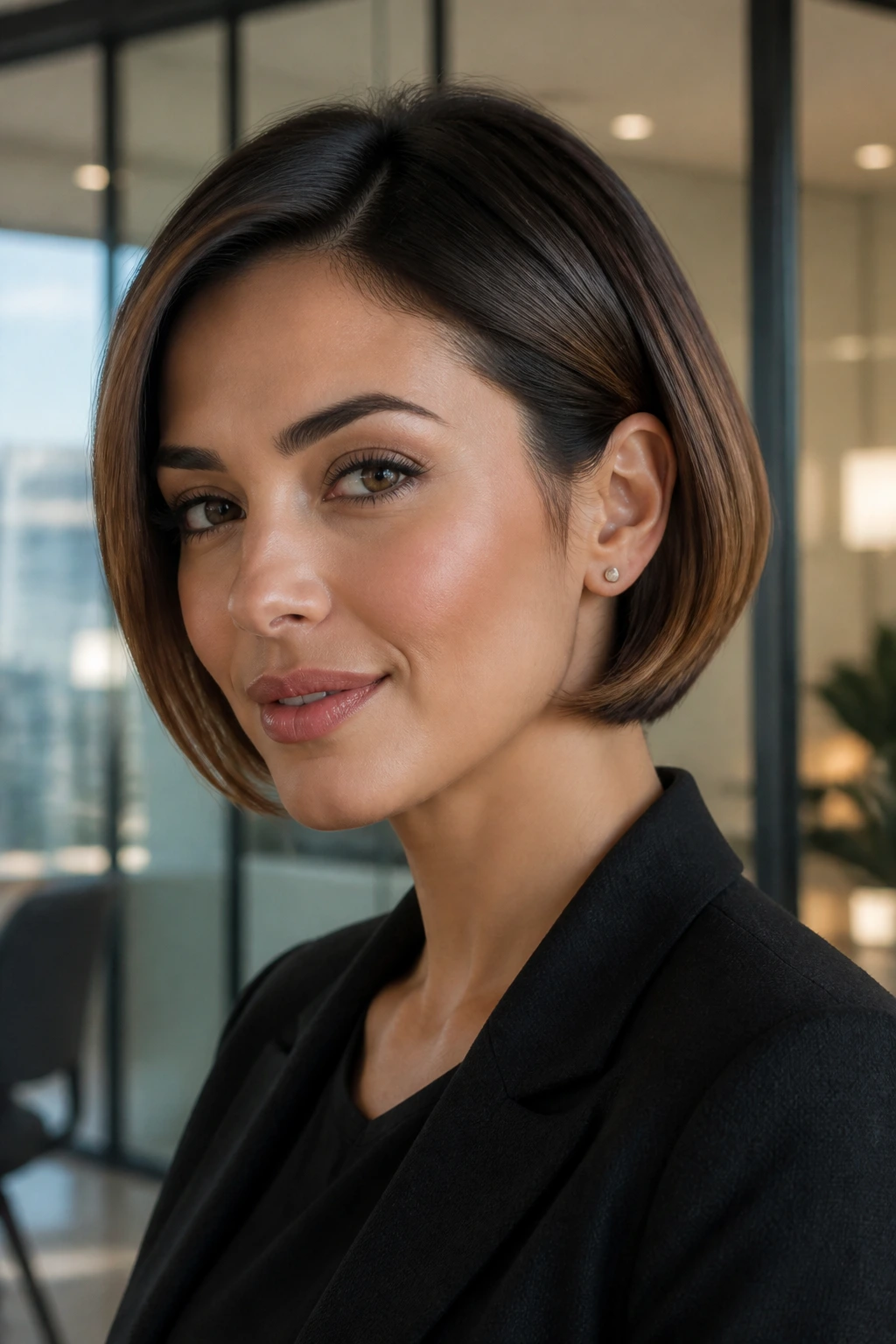
A tucked-under bob has one of the cleanest necklines in the bunch. It’s the kind of cut that looks especially good with glasses, hoops, and collars because the hair can slide neatly behind the ear without losing its shape. Thick hair benefits from that side control.
Oval faces get a nice framing effect because the front pieces hover near the cheekbones while the back stays neat against the neck. That contrast matters. It makes the haircut look sharper than it is.
Why It Stays Polished
The tucked-under look depends on the right front length. If the front is too short, it flips out. Too long, and it starts behaving like a lob. The sweet spot is around the jaw, with enough weight to tuck and stay put.
Ask for clean edges and a slightly narrower silhouette around the sides. That helps the hair sit closer to the head rather than puffing outward above the ears.
Styling Note
After blow-drying, tuck the front section behind the ears while it cools. That tiny cooling set teaches the hair where to lie. It sounds old-fashioned. It works.
16. Asymmetrical Bob
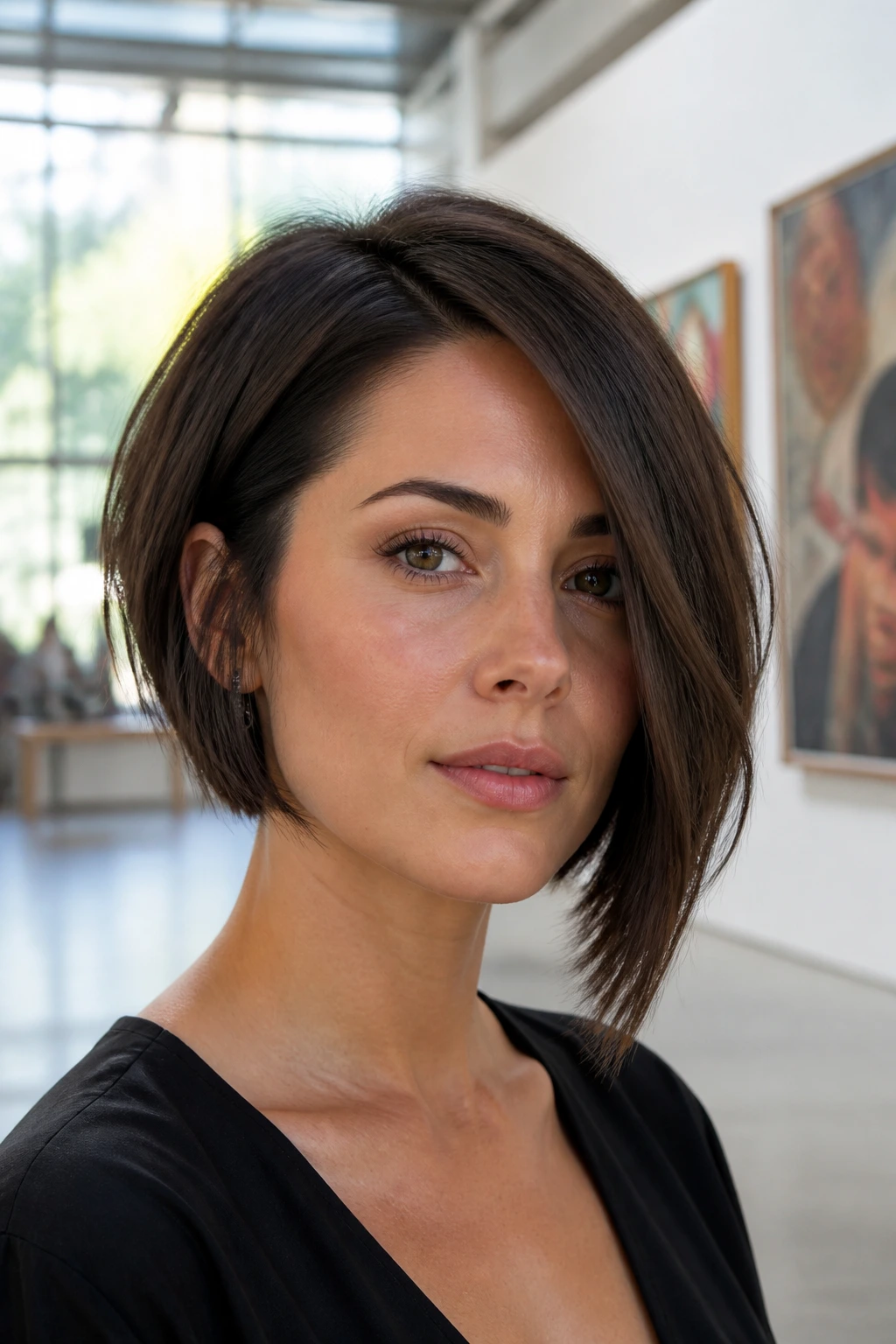
An asymmetrical bob is the one to pick when you want the haircut to do a little talking for you. One side sits longer, the other shorter, and the difference can be subtle or obvious depending on taste. On thick hair, the asymmetry prevents the cut from feeling heavy and predictable.
Oval faces are one of the few shapes that can wear this without much worry. The face can absorb the imbalance while the haircut adds tension and motion. If you’ve always thought bobs looked too neat, this is how you break the rule without making a mess.
Keep the Difference Controlled
A huge length gap is rarely the move with thick hair. It can make the ends feel disconnected. A smaller, more thoughtful difference — maybe an inch or two — is usually enough to create the effect without losing polish.
The style needs a precise part and a clean edge on the longer side. That keeps the asymmetry from looking like the haircut wandered off mid-sentence.
Styling Note
Straighten the longer side just enough to show the line, and keep the shorter side slightly tucked. The contrast does the work. Don’t overstyle both sides the same way.
17. Rounded Bob
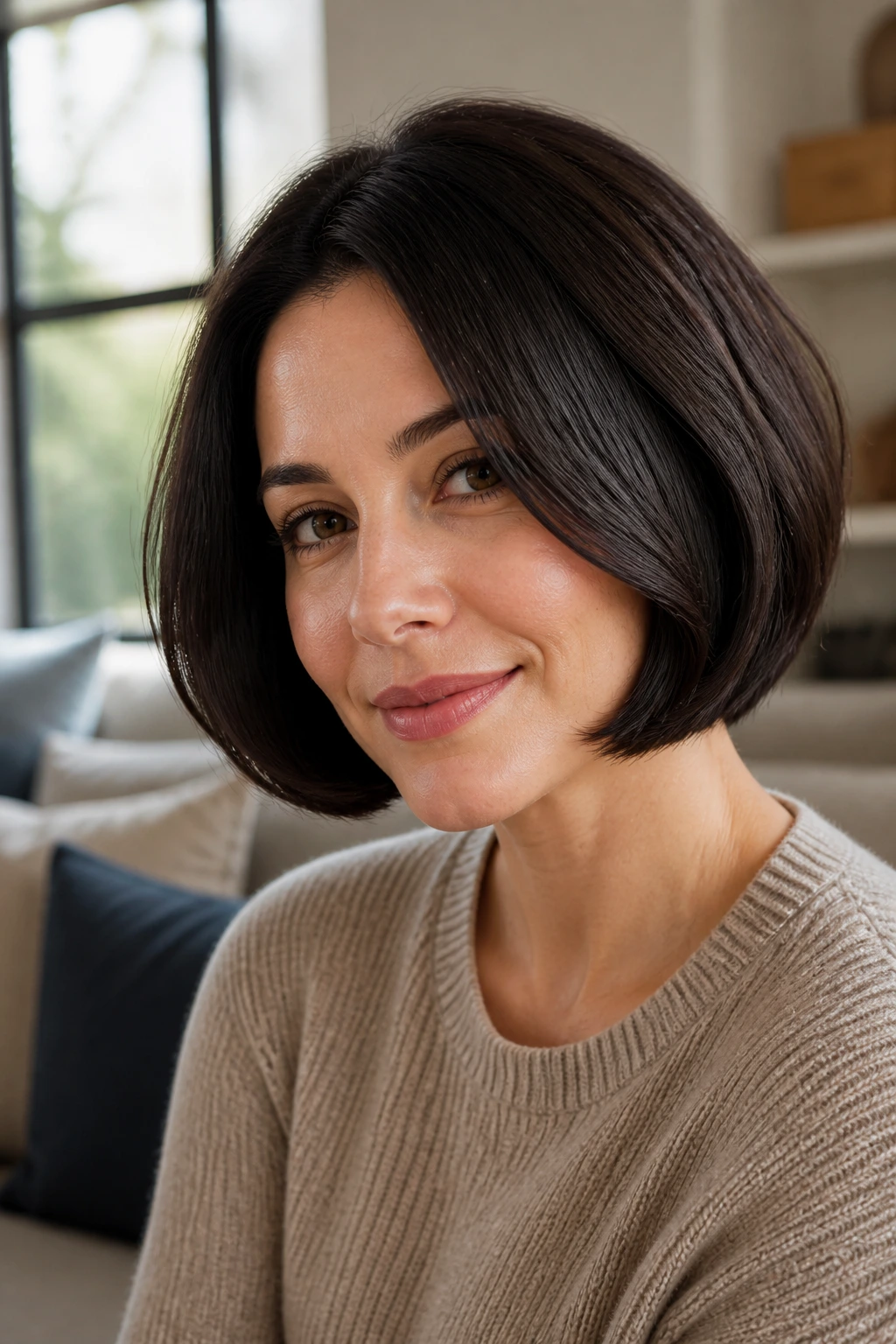
A rounded bob sits close to the head and curves gently around the face, which makes it feel softer than a square blunt bob. Thick hair gives this shape enough body to look full without going puffy, as long as the crown is controlled.
Oval faces suit the rounded line because it keeps the silhouette close to the bone structure. The cut doesn’t fight the face. It follows it. That’s why this version feels so balanced when it’s done well.
The Important Part
The rounded shape depends on controlled volume, not random fluff. The sides should hug the head, the ends should curve inward, and the crown should lift just enough to avoid a flat top. If all three pieces work together, the bob looks tailored.
Too much rounding can drift into helmet territory. Too little, and the cut loses the whole point. So the line has to be tuned carefully.
Styling Note
Blow-dry with a round brush and direct the hair slightly toward the face as you finish. That makes the ends settle into a gentle curve instead of sticking out.
18. Undercut Bob
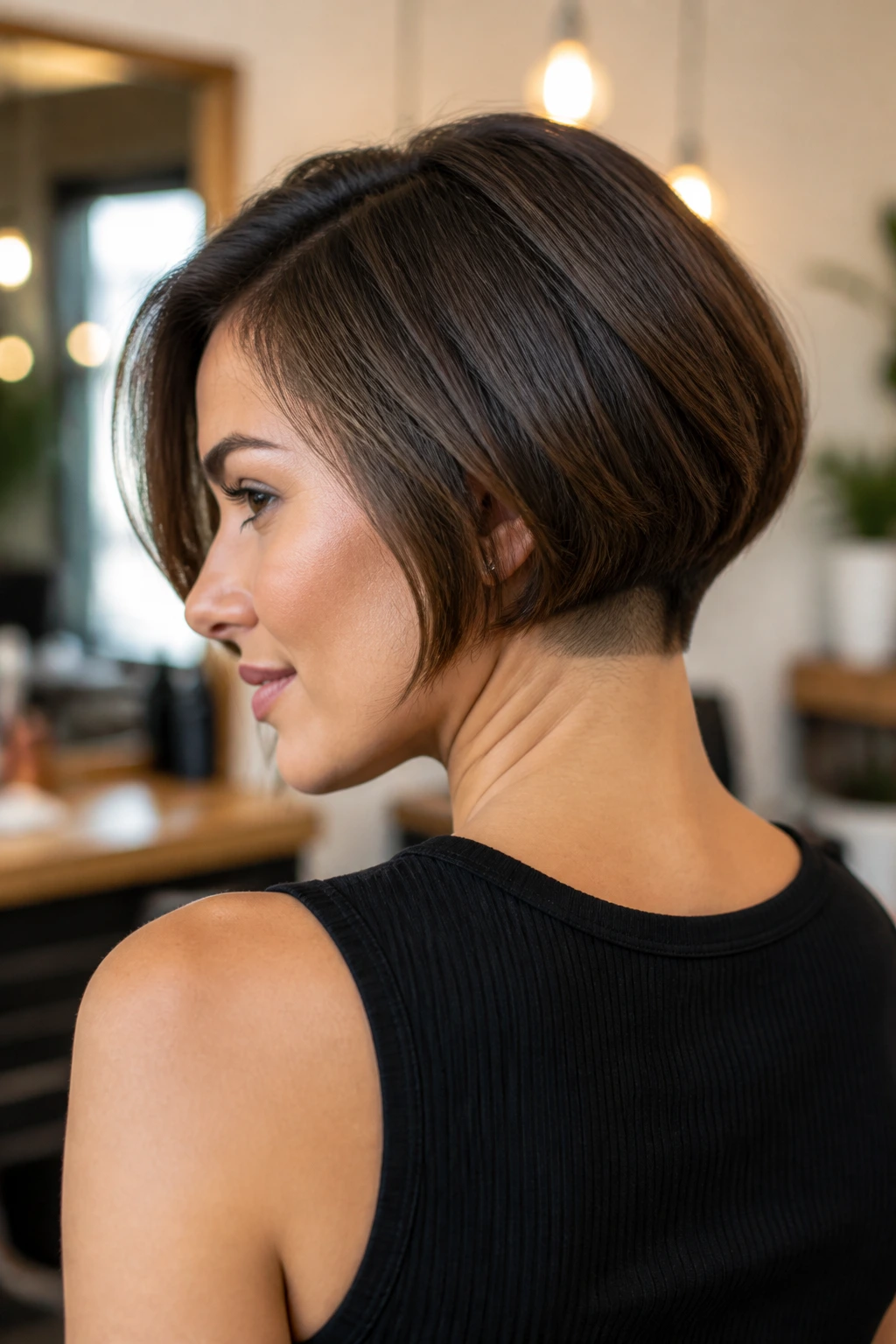
An undercut bob is the blunt tool in the toolbox, and thick hair can absolutely benefit from it. By removing some bulk underneath, the top layer falls more cleanly and the sides stop puffing out. It’s practical, plain and simple.
Oval faces can wear this because the visible layer still keeps the bob feminine, sharp, or whatever word you want to use for a cut that has shape without excess. The undercut stays hidden until you need the weight relief.
When to Choose It
If your hair is so dense that a regular bob feels heavy within a week of washing, an undercut can change your life. Not in a dramatic way. In a “why did I wait this long?” way. It especially helps if the nape gets sweaty or bulky under collars.
The downside is grow-out. You’ll want trims on the undercut part on a regular schedule so it doesn’t start showing through at odd angles.
Styling Note
Keep the top layer soft and movable. The undercut already does the heavy lifting. Your job is to preserve the smooth surface above it.
19. Italian Bob
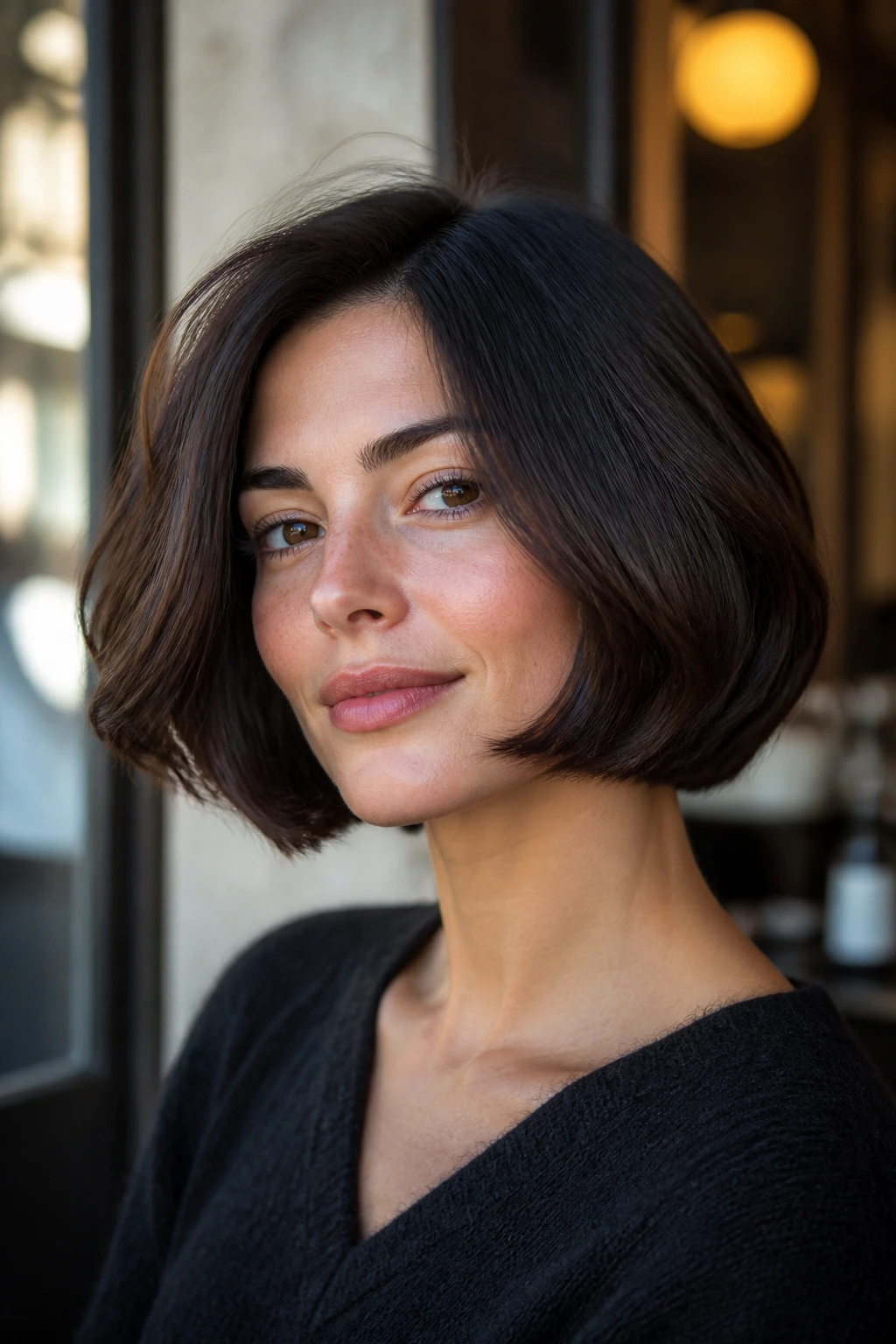
An Italian bob has a fuller, swingier feel than some of the sharper cuts here. On thick hair, that fullness is a feature, not a flaw, as long as the length stays short enough to keep the outline lively. Think jaw-length, maybe a touch below, with ends that have a little movement.
Oval faces wear this well because the shape can be plush without feeling heavy on the face. The cut gives body around the cheeks and jaw, which can look luxurious if the ends are clean and the style is not over-layered.
The Fine Line
The whole point is volume with control. Too many layers and you lose the dense, plush effect. Too little weight removal and the style swells in the wrong direction. The sweet spot is a bob that feels full but not bulky.
It’s a nice choice if you like hair that bends rather than hair that lies flat. There’s an ease to it.
Styling Note
A big brush and a low-heat blowout are enough. Finish with a touch of lightweight oil on the ends so the movement looks soft instead of dry.
20. Micro Bob
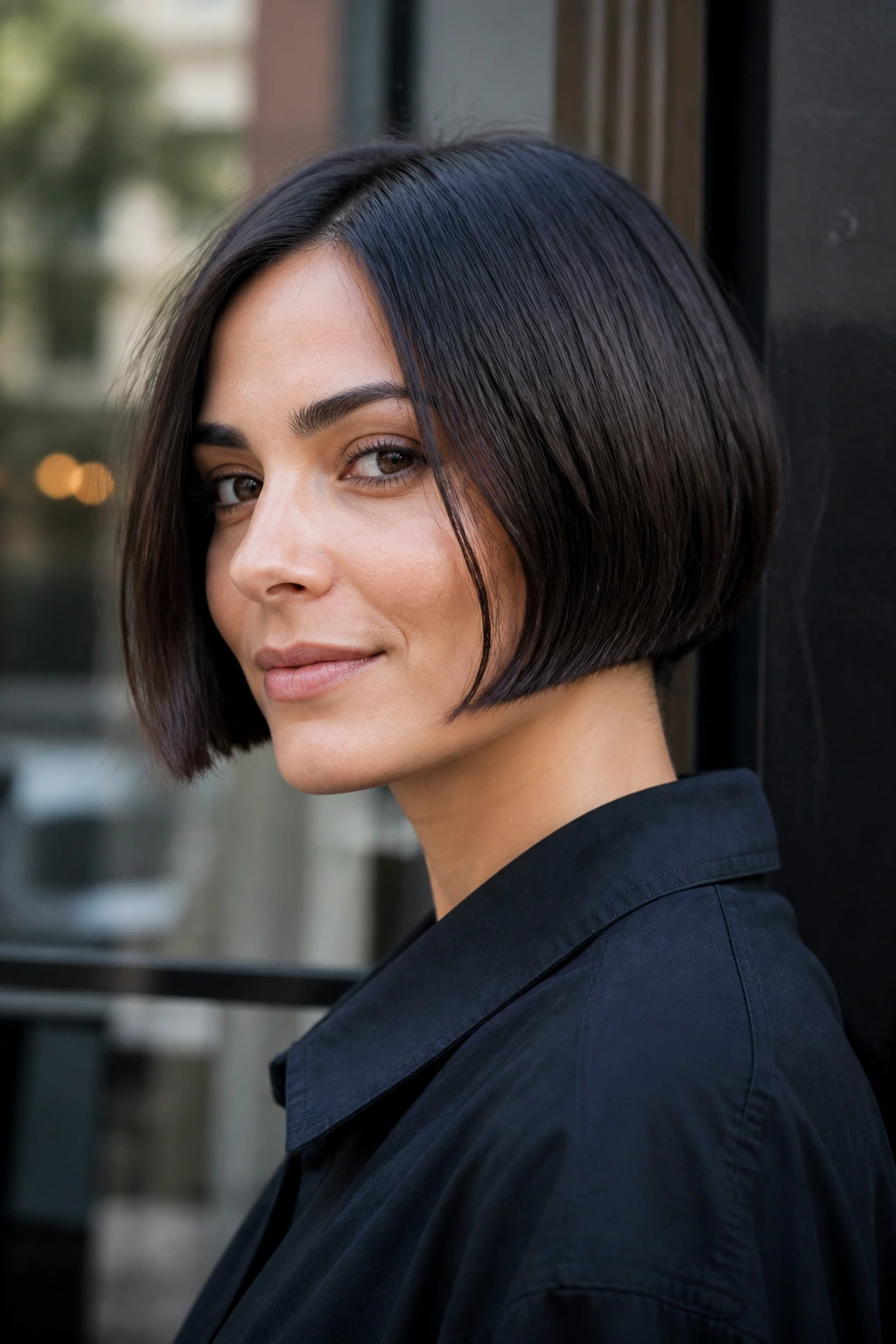
A micro bob is short enough to feel bold and long enough to stay in bob territory. It usually lands around the cheekbone, mouth, or just above the jaw, and on thick hair it can look striking because the density keeps it from going flimsy.
Oval faces are one of the best matches for this cut. The short length opens up the neck and makes the bone structure visible in a clean way. If you like earrings, sharp collars, or glasses, this cut plays well with all of them.
Why It Takes Confidence
There is nowhere to hide with a micro bob. The line is the line. That makes the cut less forgiving if it’s badly executed, which is why the perimeter has to be immaculate. Thick hair helps because it gives the shape some weight and presence.
If your hair grows fast or your face tends to look longer with very short cuts, keep the micro bob closer to the jaw than the cheekbone. Tiny changes matter a lot here.
Styling Note
Flat brush, quick bend, done. The less you fuss with it, the better it looks. This is one of those cuts that gets weak when it tries too hard.
21. Grown-Out Pixie Bob
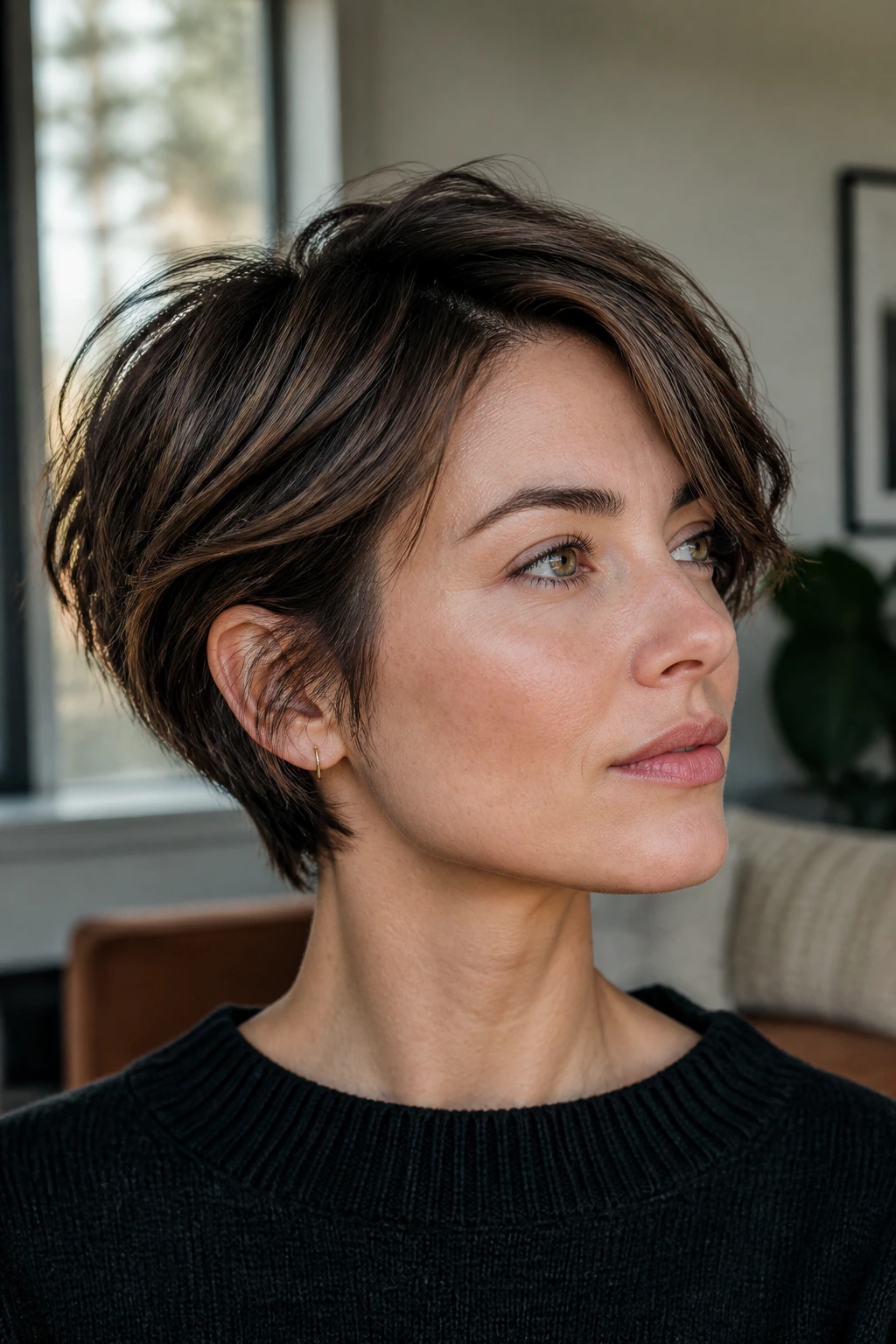
A grown-out pixie bob sits in that lovely middle space between cropped and bobbed. It keeps a little more length on top and around the front, while the nape stays short and neat. Thick hair gives it enough body to look intentional instead of accidental.
Oval faces can wear the hybrid shape because the longer front pieces preserve balance while the shorter back opens the neck. If you’re coming out of a pixie and don’t want to jump straight into a full bob, this is the most sensible bridge.
What Makes It Work
The top should have softness, not a hard shelf. That allows the hair to move forward and around the face. A bit of texture near the crown keeps the shape from collapsing into a flat cap.
This cut also suits people who don’t want to spend a long time styling every morning. The shape itself does a lot of the visual work.
Styling Note
Use a small amount of mousse at the roots and a texture cream through the top. Finger-dry first, then refine the front with a brush if needed. Leave a little mess in it. That’s the point.
22. Deep Side-Part Sculpted Bob
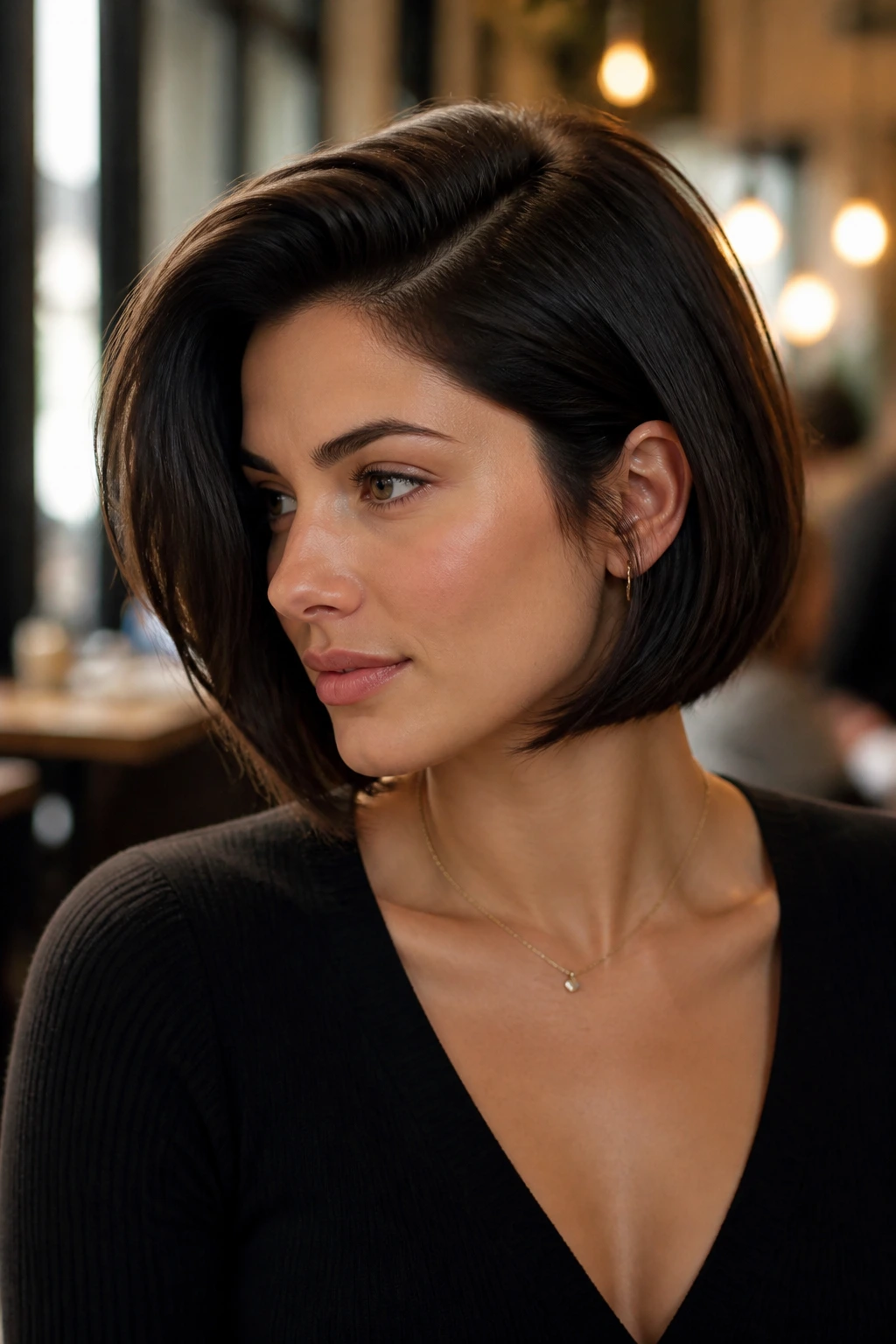
A deep side-part sculpted bob is the polished finish line of the whole collection. It’s the bob you wear when you want the haircut to look deliberate, sleek, and a little dramatic without adding length. Thick hair gives it body; the side part gives it direction.
Oval faces can carry the asymmetry without strain, which is why the cut looks so put-together. The heavy side creates volume at the crown, while the opposite side sits closer to the head. That contrast shapes the whole face.
Why It Feels More Tailored
A deep side part changes the whole read of the haircut. It shifts the balance, sharpens the cheekbone on one side, and gives the bob a bit of lift where flatness would usually settle in.
The sculpted finish works best when the perimeter stays clean and the surface is smooth. If you over-texturize it, the shape loses its point. If you under-style it, the part falls and the drama disappears.
Styling Note
Set the part while the hair is damp, then clip the heavier side at the roots for a few minutes while it dries. That little bit of help creates lift without needing a mountain of product.
What Makes Short Bobs and Thick Hair Such a Good Match
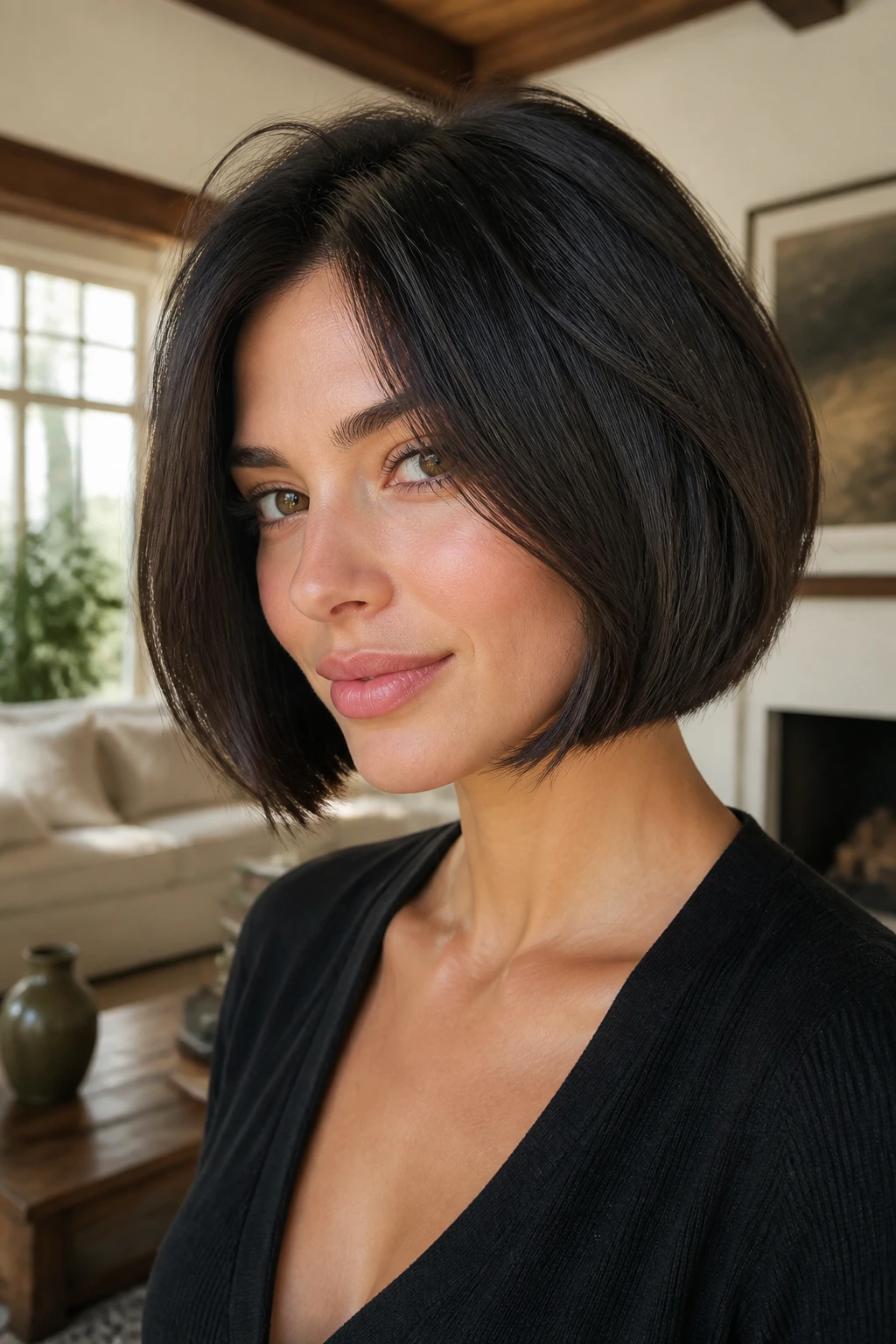
Thick hair is often treated like a problem to solve, which is lazy thinking. It’s not a problem. It’s a material with opinions. A short bob works because it gives the hair a boundary. The perimeter becomes the anchor, and the inside can be adjusted so the shape doesn’t swell into a triangle.
Oval faces make that easier because the face shape already has the balance to carry a sharp edge, a strong part, or a short fringe. You don’t have to use the haircut to fake symmetry. You can use it to show off what’s already there. That’s a nicer job for a bob, frankly.
The real key is matching the amount of bulk removal to the style. A blunt bob needs almost no thinning. A stacked bob needs hidden graduation. A razor-cut bob needs restraint. Once you understand that, the whole category stops feeling random and starts feeling like a menu of very specific tools.
How to Ask for the Right Cut at the Salon
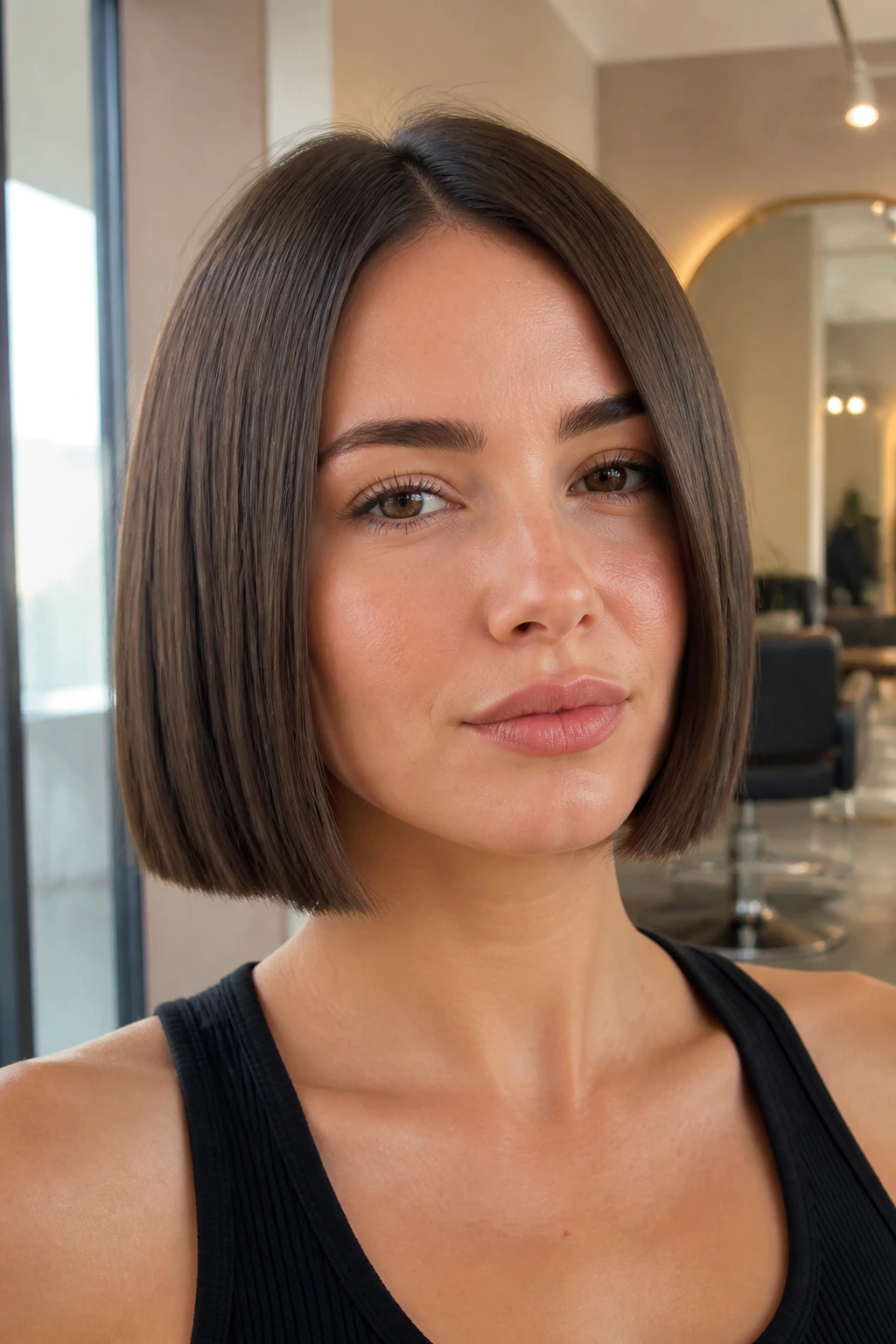
Bring photos, but bring the right photos. A screenshot of a bob on fine hair won’t tell your stylist what thick hair will do with the same line. Find images where the model has a similar density, similar wave pattern, and roughly the same jaw width if you can. That saves everyone time.
Use plain language when you sit in the chair. Say blunt perimeter, low graduation, internal weight removal, keep the length at the jaw, or leave the fringe long enough to tuck. Those phrases are useful because they point to shape, not vibes. A good stylist will know exactly what you mean.
Also tell them how you wear your part and how much styling you’ll actually do. If you never use a flat iron, don’t ask for a glass bob unless you’re prepared to make peace with the effort. If you air-dry most days, say that. Short bobs only look polished when the cut matches the life you really live.
How to Wear a Bob So the Shape Shows Up
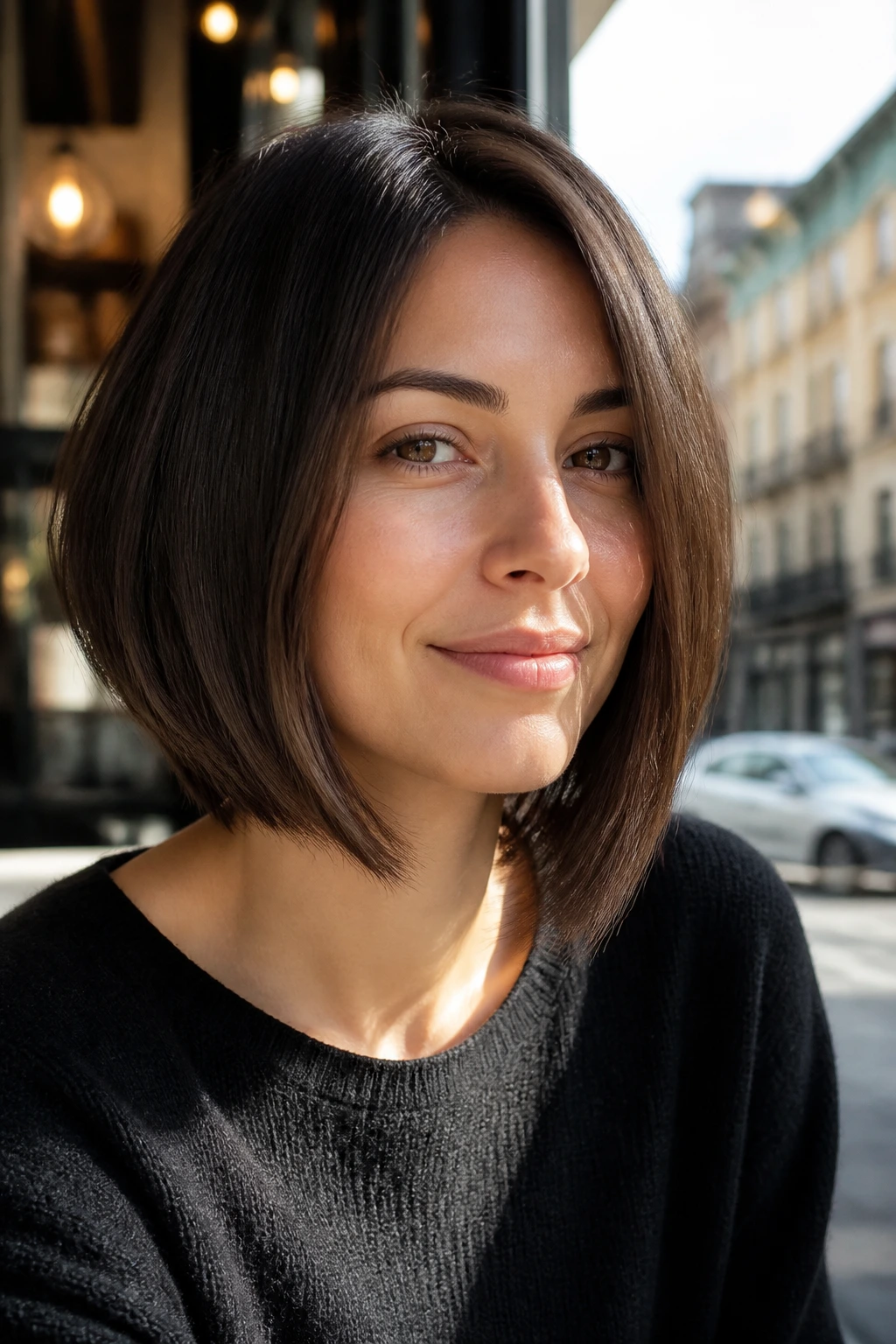
Presentation: Pick one finish and let the haircut own it. A blunt bob looks best when the outline is crisp; a textured bob looks best when the ends have some separation. Don’t blur the point of the cut with too many competing ideas.
Accessories: Thick hair and short bobs both play nicely with strong earrings, narrow headbands, barrette clips, and glasses with a clean frame. The shorter the bob, the more those details matter, because the neckline is on display.
Texture: Sleek, bendy, and piecey are all valid, but choose the one that matches your styling tolerance. A smooth finish usually needs a dryer and brush. A piecey finish can be built with texture spray and fingers. A bend in the ends often takes one pass with a flat iron.
Outfit Pairing: High necks, open collars, and jackets with clean lines make short bobs read sharper. Thick turtlenecks plus a heavy bob can feel crowded, so give the haircut some breathing room around the neck when you can.
Little Styling Moves That Keep the Cut Honest

Root Lift: A golf-ball-sized amount of mousse at the roots is often enough for thick hair. Put it in before drying, not after. That’s where it matters.
End Control: Use a heat protectant and then smooth only the last inch or two of the hair. The ends should look finished, not fried. That tiny difference changes the whole cut.
Part Discipline: Set the part while the hair is damp or right after a shower. Thick hair likes to remember where it lands, and if you wait until it dries, you’re already fighting it.
Finish With Less Product: Start light. One serum pump, not three. One texturizing mist, not a cloud. Thick hair can swallow product and still look dry at the ends if you overdo the wrong stuff.
Common Mistakes That Make a Good Bob Go Wide

-
Too much thinning at the ends: The hair looks fuzzy, the line disappears, and the bob starts puffing out instead of sitting cleanly. The fix is to keep the perimeter strong and remove bulk inside the shape.
-
Stacking too high in the back: This can make thick hair look triangular or dated. Ask for a low, controlled graduation instead of dramatic layers.
-
Using heavy oil all over: Thick hair can become lank at the roots and stringy at the ends in the same afternoon. Keep oil on the mid-lengths and ends only.
-
Ignoring your growth pattern: A cowlick at the crown or a strong side part can fight the cut. If the shape doesn’t respect where your hair naturally wants to fall, you’ll spend every morning correcting it.
-
Letting it grow too long between trims: Short bobs lose their edge fast on thick hair. The silhouette starts to widen and the nape loses its clean line. Trim before the shape goes soft.
Variations and Alternatives to Try
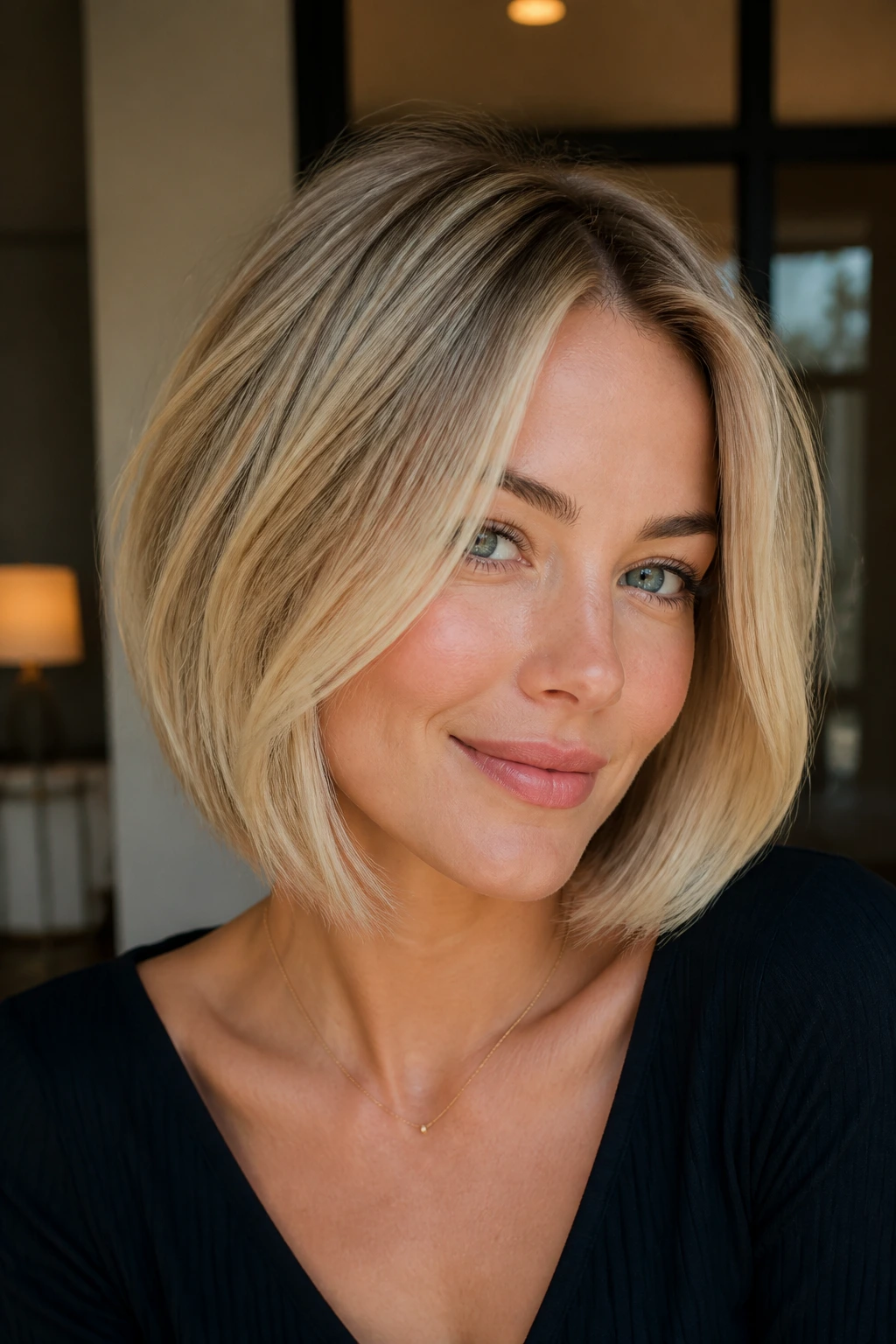
Air-Dry Rough Finish: If you hate heat styling, ask for a bob that keeps enough internal texture to dry with movement. A little mousse and a loose scrunch can give you that lived-in result without forcing a perfect curve.
Sleek Center-Part Version: Same bob, sharper mood. This works well on oval faces because the symmetry is easy to wear, and thick hair gives the shape enough weight to stay sleek instead of falling flat.
Bang-Free Face Frame: If you don’t want fringe, keep the front pieces a bit longer and angle them around the cheekbone. You still get softness near the face, but the forehead stays open.
Curly-Texture Adaptation: If your thick hair has curl, ask for a bob cut dry or with the curl pattern respected. A wet cut alone can hide shrinkage, and that’s how people end up with a bob that sits three inches shorter than planned.
Low-Maintenance Grow-Out Shape: Choose a cut with a slightly softer edge, like an A-line or rounded bob. These keep looking deliberate as they lengthen, which is handy if you don’t live in a salon chair.
Keeping the Shape Between Trims
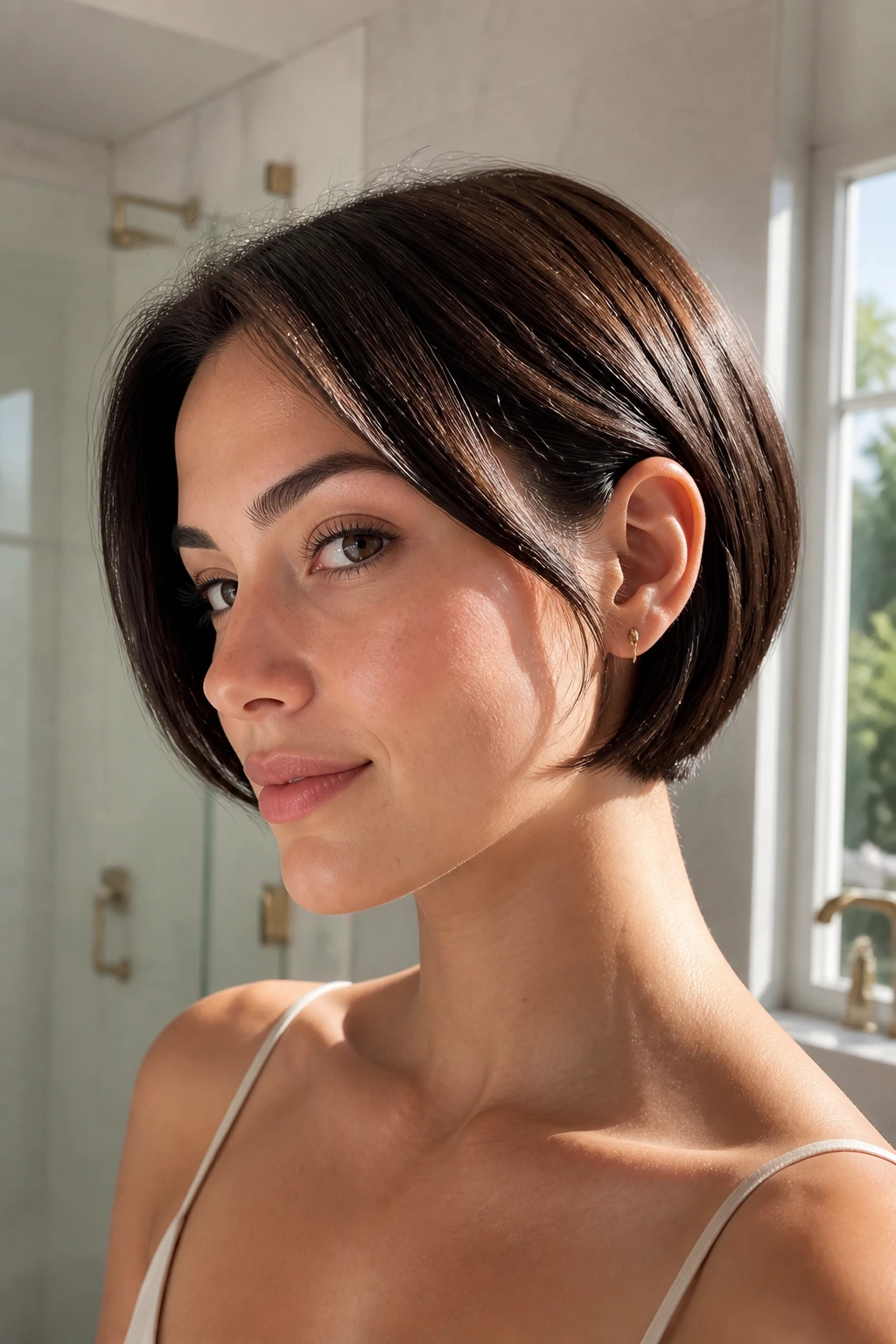
Short bobs on thick hair usually need a trim every 6 to 8 weeks if you want the line to stay crisp. Textured versions can stretch a little longer, but once the sides start widening or the nape loses its shape, the haircut stops looking fresh.
Wash rhythm matters too. Thick hair often does well with a 2- to 3-day wash cycle, though that depends on scalp oil and how much product you use. If the roots flatten faster, dry shampoo on day two can buy you time, but put it on before the hair looks greasy, not after. That’s the whole trick.
For heat styling, always refresh with a light mist of water or a damp hands-on reset before re-drying sections. Do not blast the whole bob with high heat every morning if you can help it. A quick root lift, a bend at the ends, and a tiny bit of smoothing cream usually keep the shape in play without frying the cuticles.
If you wear an undercut, curtain bangs, or a micro fringe, the maintenance clock runs faster. Fringe trims may be needed every 2 to 4 weeks, while the rest of the bob can wait longer. That’s the trade-off. The front line gets all the attention, so it’s the first part to show wear.
Frequently Asked Questions
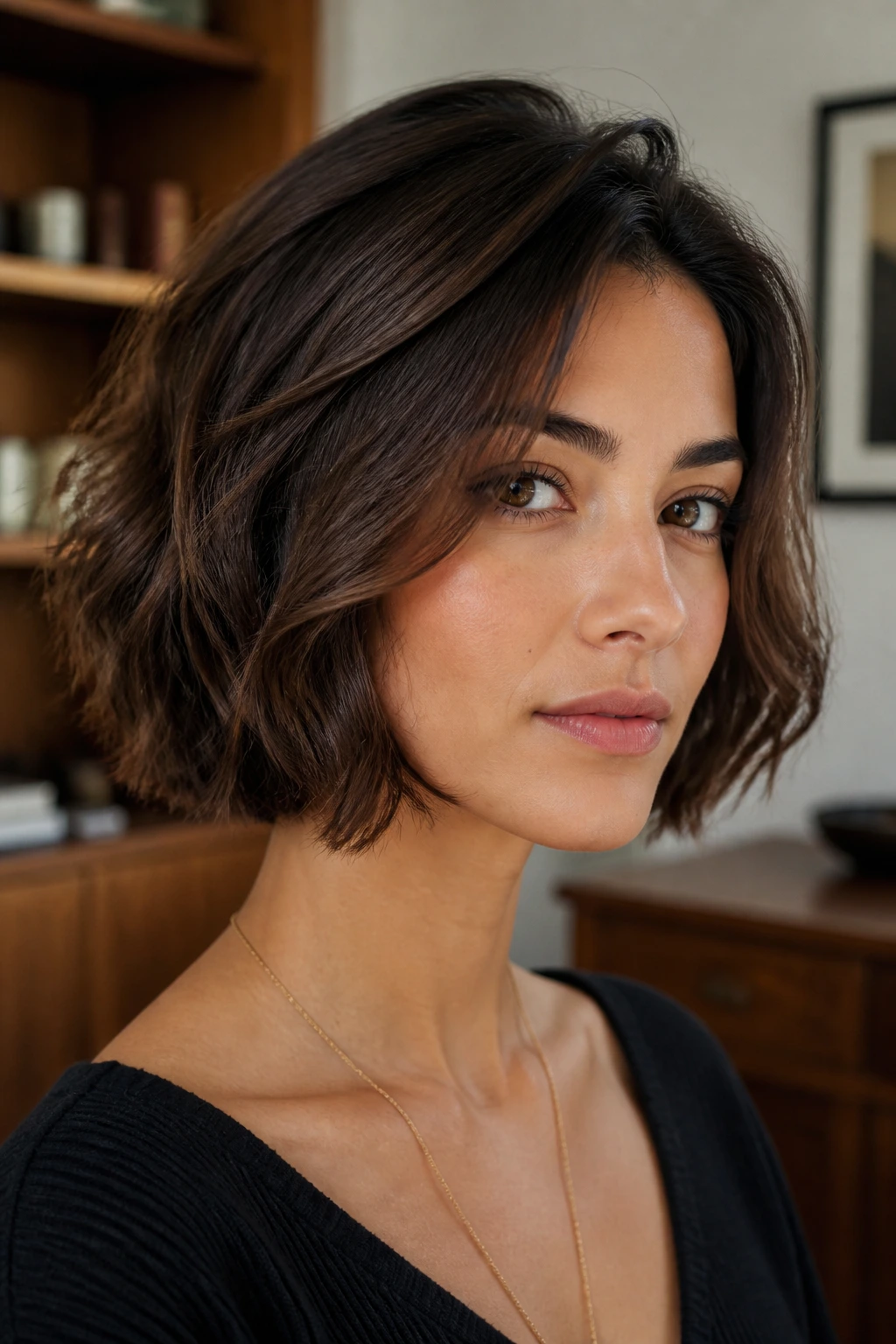
Which short bob is best for very thick hair?
A blunt chin-length bob or a softly graduated A-line bob usually gives the best control. Both keep the perimeter strong, which helps thick hair sit down instead of blooming outward.
Will a blunt bob make my thick hair look too wide?
Not if the internal bulk is handled carefully. The outside edge should stay blunt, but the inside can be relieved so the sides don’t spread. That balance is what keeps the shape clean.
Can oval faces wear bangs with a short bob?
Yes, and they usually can wear more than one kind. Micro fringe, curtain bangs, and side-swept fringe all work well because the face shape can take the shortening effect without looking crowded.
What if my hair is wavy, not straight?
Wavy thick hair often looks better in textured, layered, or French bob versions than in glass-straight shapes. The cut should support the wave pattern instead of trying to erase it every morning.
How often should I trim a short bob?
Most short bobs need a trim every 6 to 8 weeks to keep the line sharp. If you have a fringe, that piece may need attention sooner.
How do I stop my bob from puffing out at the sides?
Ask for internal weight removal, keep the perimeter controlled, and avoid loading the roots with too much product. A quick bend inward at the ends also helps the silhouette stay compact.
Is an undercut a bad idea if I want to grow my bob out later?
Not a bad idea, just a commitment. It grows out fine if you keep up with trims, but it does need a little more planning than a standard bob.
Can I wear a micro bob if I have a round face too?
You can, but the balance changes. Oval faces tend to take micro lengths more easily because the proportions are already even. A round face may need a little more front length or side framing.
The Shape That Keeps Paying Off
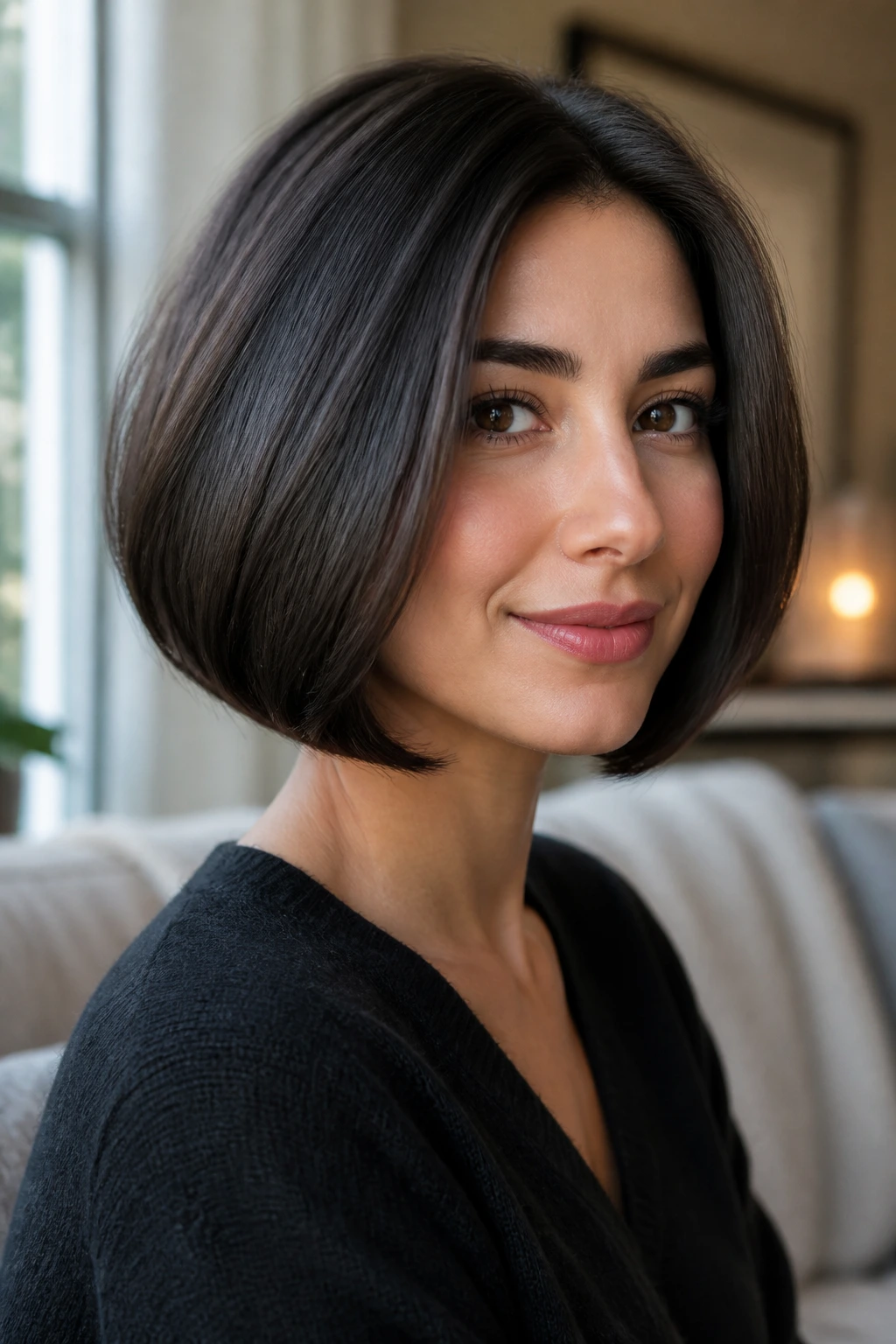
A good short bob does not ask thick hair to become someone else. It gives the hair a boundary, then uses that density to create line, body, and shine. That’s why these cuts work so well on oval faces: the face shape leaves room for the haircut to be bold without tipping awkwardly into extra width or extra length.
The smartest version is the one that matches your styling habits. If you want sleek, choose the blunt or glassy shapes. If you want movement, the textured, layered, and French cuts make more sense. If bulk is the enemy, hidden graduation and undercut work harder than surface fluff ever will.
Pick the bob that respects your hair’s habits, not the one that fights them. That’s where the good-looking part starts, and it keeps going long after the salon blow-dry has fallen into place.