



Thick hair can make a bob look expensive or boxy, and the difference usually comes down to where the weight sits. On an oval face, that choice matters less in the forehead-to-chin ratio and more in the silhouette around the jaw, neck, and cheekbone. A clean line, a soft bend, or a little internal texture can change the whole mood.
That’s why textured bobs for thick hair and oval faces are such a useful haircut family. You get shape without the helmet effect. You get movement without surrendering control. And, if the cut is done with some restraint, you get a bob that still looks like a bob on day three instead of a puffed-up opinion on day one.
The trick is not “more layers.” That’s the lazy answer, and thick hair punishes lazy answers. What works is smarter weight removal, a perimeter that still has a purpose, and enough texture to stop the ends from sitting like a shelf.
Why These Bobs Earn Their Keep
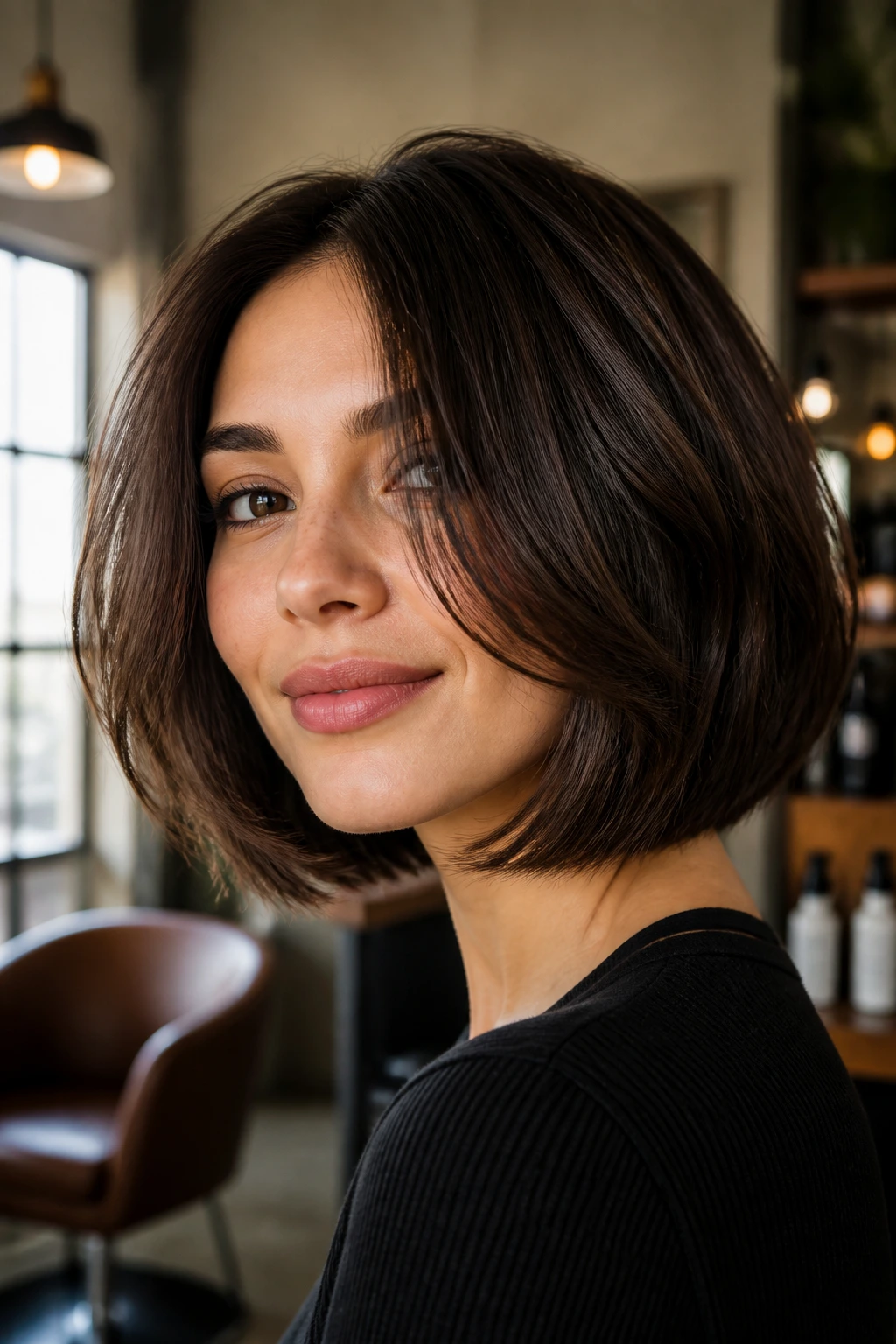
-
Bulk Control: Thick hair needs weight removed in the right places, not shredded all over, and these cuts focus on shape instead of random thinning.
-
Oval-Face Flexibility: Oval faces can wear blunt hems, side parts, curtain bangs, and cheekbone-grazing pieces without the proportions fighting back.
-
Real Movement: A good textured bob moves when you turn your head; it doesn’t just sit there and blur into one heavy block.
-
Styling Range: Several of these cuts air-dry well, while others reward a five-minute round-brush pass, so you’re not stuck with one routine.
-
Grow-Out Grace: The better versions keep their outline as they grow, which means fewer awkward weeks between trims.
-
Salon Clarity: Each style gives you a concrete language to use at the chair — internal layers, face framing, weight line, stacked nape, softened ends.
1. Chin-Length Textured Bob with Airy Ends
A chin-length bob is the bluntest place to start, and on thick hair that can be a blessing. The line sits high enough to show the jaw, but the texture keeps it from looking like a cut paper edge. On an oval face, that clean frame can sharpen the whole look without making the head feel top-heavy.
Why It Flatters Oval Faces
Oval faces can take a shorter bob because they already have room through the forehead and chin. What matters more is where the eye lands.
- The chin-length edge keeps attention near the jaw instead of letting the hair fall into the collarbone.
- Airy ends stop thick hair from building a dense, boxy outline.
- A side part or soft center part both work; the face shape doesn’t force a single answer.
The version I like best has a tiny bevel at the ends. Nothing dramatic. Just enough to let the bob tuck under instead of hanging like a ruler.
Pro tip: ask for the last half-inch to be point-cut, not aggressively thinned. That keeps the edge soft without turning the ends wispy.
2. Collarbone Textured Bob with a Soft A-Line
Longer in front, slightly shorter in back — that small shift does a lot of work on dense hair. The collarbone length gives the cut room to breathe, which is useful when your strands have enough weight to flatten a shorter style by noon. The gentle A-line also keeps the face from looking wider at the sides.
This is the bob for someone who wants movement first and sharpness second. The front pieces graze the collarbone, so they don’t kick out every time the weather gets rude. On an oval face, that length elongates the neck and leaves the cheekbones visible, which is a nice little trick without looking like you tried for a trick.
Ask your stylist for minimal layering through the back and a soft graduation from nape to front. The shape should tilt, not wedge. If the front falls straight and the back gets too chopped up, the cut loses its clean line and starts to feel fussy.
3. French Bob with Piecey Fringe
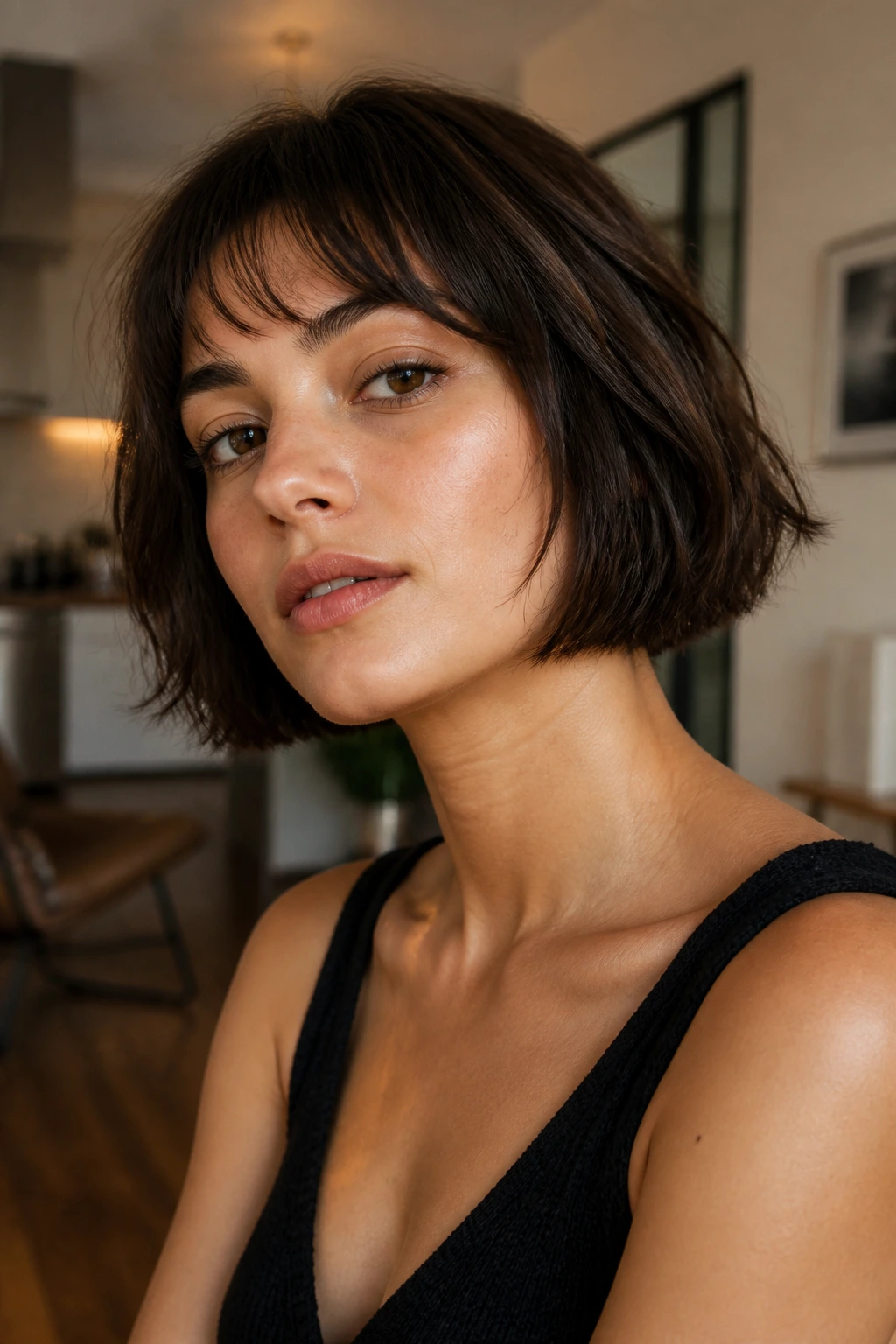
Can thick hair wear a French bob without turning into a mushroom? Absolutely — but only if the fringe is lighter than people expect. The best version has a cheeky, almost slouchy finish, not a dense block of bangs that sits like a curtain rod.
What Makes It Work
The short length keeps the silhouette compact, while the piecey fringe breaks up the width at the forehead. On an oval face, that fringe can land just above the brows or graze them lightly. Either one works. A severe, heavy fringe is where things start to feel costume-y.
I’d keep this cut slightly shorter at the nape than at the front, but not stacked into a wedge. Thick hair already brings its own drama. You do not need to exaggerate it.
How to Style It
- Blow-dry the fringe first, using a small round brush or your fingers.
- Use a pea-sized amount of styling paste only on the very ends of the bangs.
- Leave the rest a little imperfect; the charm is in the broken-up texture.
The cut shines when it looks effortless but not accidental. There’s a difference.
4. Rounded Bob with Light Internal Layers
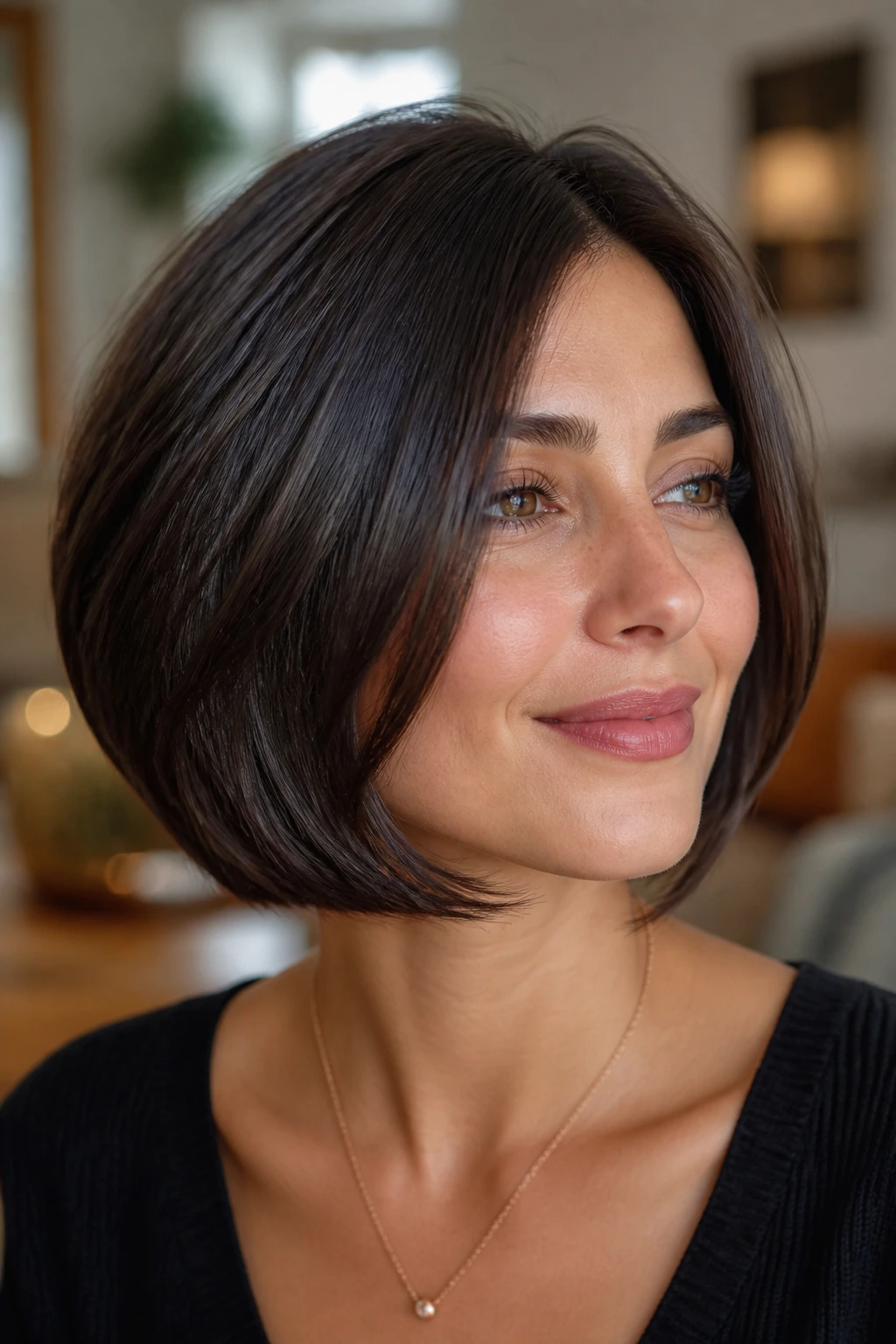
Some dense hair refuses to sit flat. It bulks out at the sides, puffs at the crown, and seems to take up extra space in the mirror. A rounded bob handles that by shaping the interior curve instead of attacking the perimeter.
The result is softer than a blunt bob and tidier than a shag. On an oval face, the curve follows the cheekbones and jaw without adding width where you don’t want it. It’s a neat cut, but not a stiff one.
The phrase to ask for is internal layering. That means the stylist removes weight inside the shape while leaving the outer line intact. It’s the safest way to lighten thick hair without leaving the ends frayed. If they reach for thinning shears as their first move, pause. Those shears can create a halo of frizz if the hair is coarse or porous.
This cut is especially good if your hair naturally bends under at the ends. The round shape just lets that bend do its job.
5. Shaggy Bob with Curtain Bangs
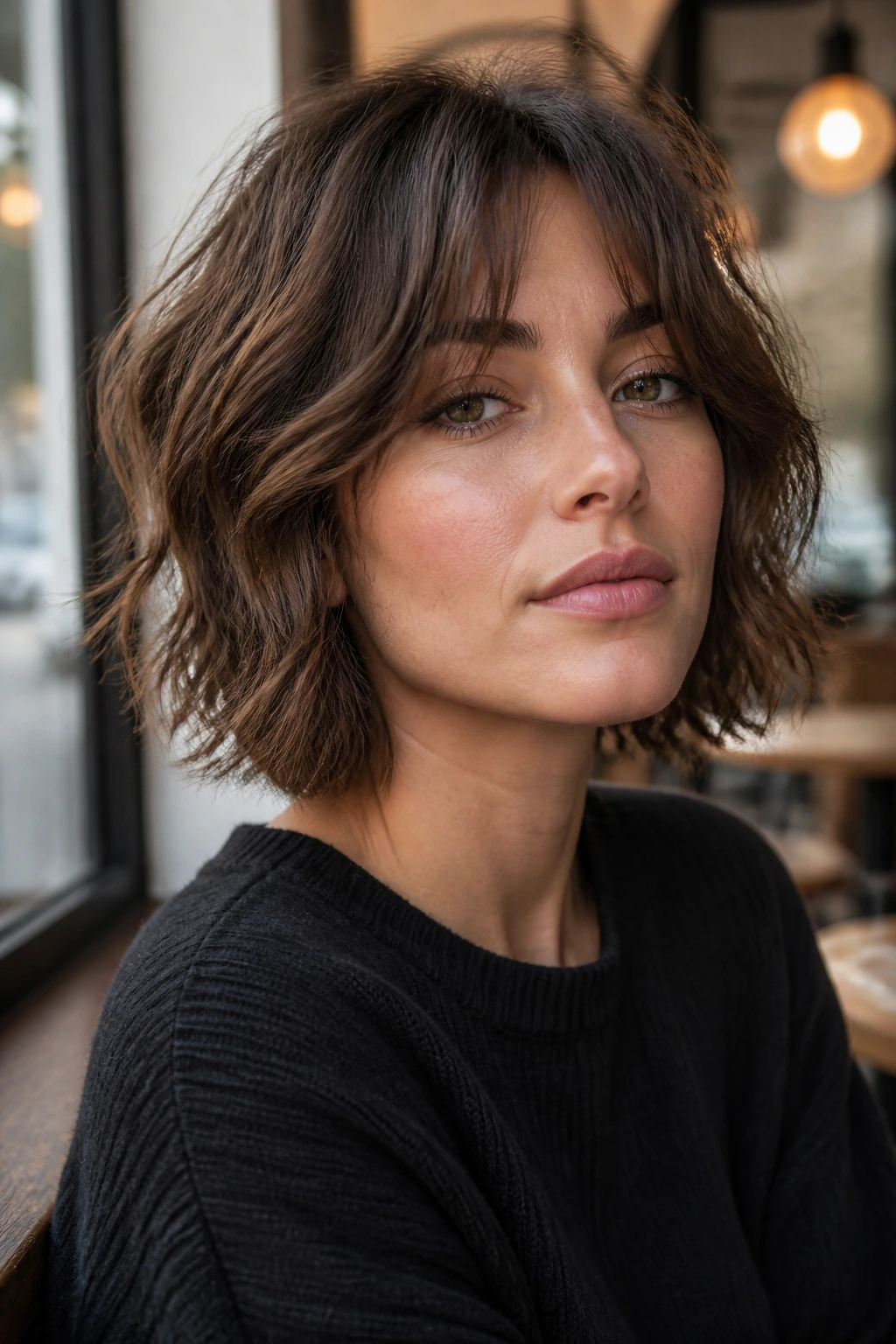
This is the version for people who want a bob that has some looseness around the face. Curtain bangs split the difference between fringe and face frame, and on thick hair they help redirect bulk away from the forehead. The bob itself can stay a touch longer and choppier, which keeps it from feeling too polished.
I like this cut on oval faces because the center opening of the curtain bang acts like a little vertical line. It draws the eye down, not out. That matters more than most people think. A dense fringe can swallow an oval face if it’s too heavy; a softer one does the opposite.
The shaggy texture works best when the ends are sliced lightly and the crown is not over-layered. Too much crown layering makes thick hair stand up in a way that looks more like static than style. Keep the top loose, keep the ends interesting, and let the bangs do the framing.
6. Blunt Bob with Hidden Debulking
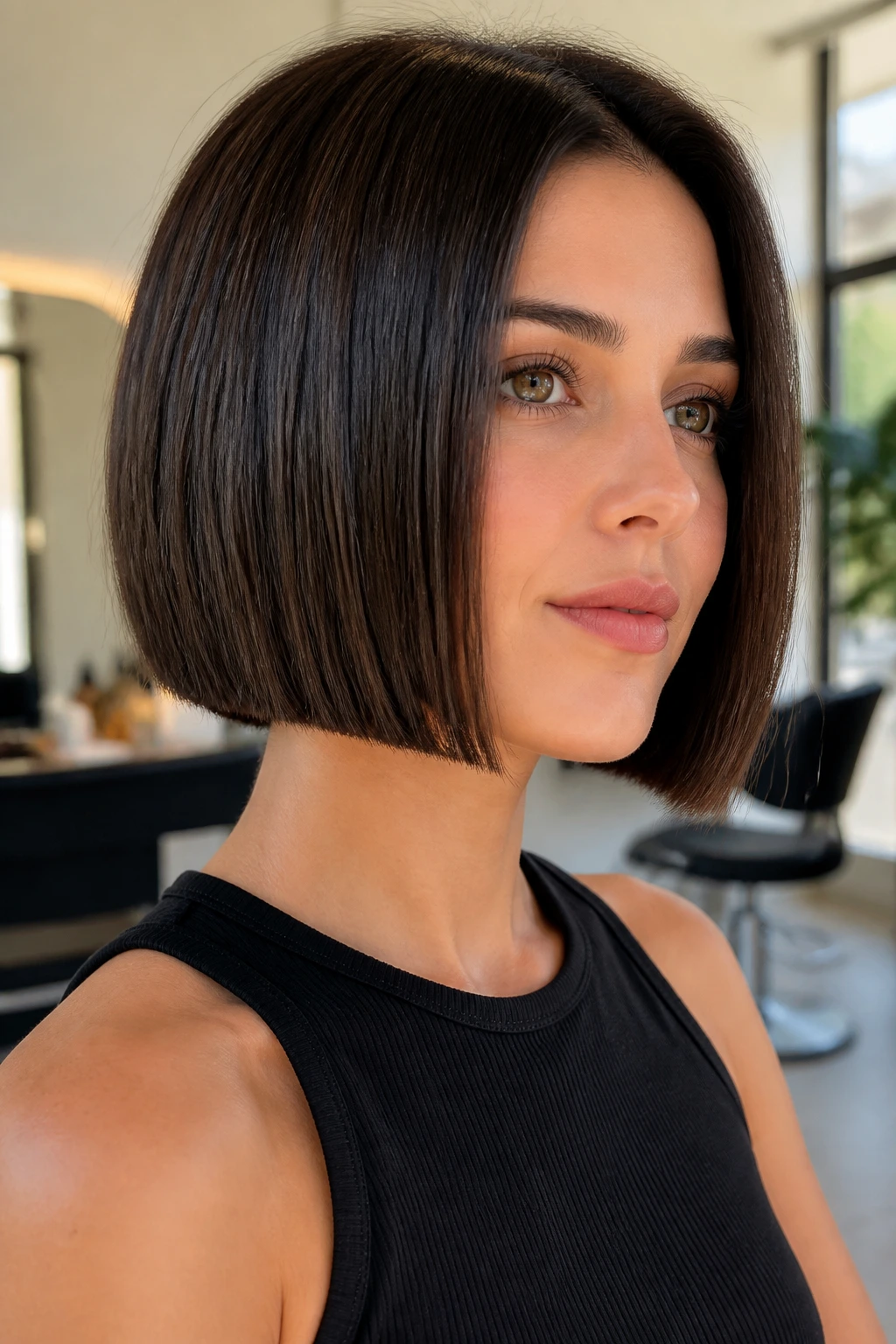
A blunt bob sounds counterintuitive for thick hair, which is exactly why it works when it’s done well. The outer line stays solid and strong, but the stylist quietly removes weight underneath so the cut doesn’t behave like a helmet. That contrast is the whole point.
Unlike a heavily layered bob, this one relies on the perimeter to do the visual work. The edge looks clean on an oval face, and the internal structure keeps the shape from exploding outward. It’s especially good if your hair is naturally straight or only has a slight bend, because the line reads clearly even on lazy styling days.
This is not the cut to request if you want a lot of airy separation at the ends. The charm is the contrast between the smooth edge and the hidden movement inside. Ask for weight removal below the surface, not a full texturizing assault. The shape should feel controlled, almost tailored, with enough softness to keep it from looking severe.
7. Wavy Bob with a Side-Swept Part
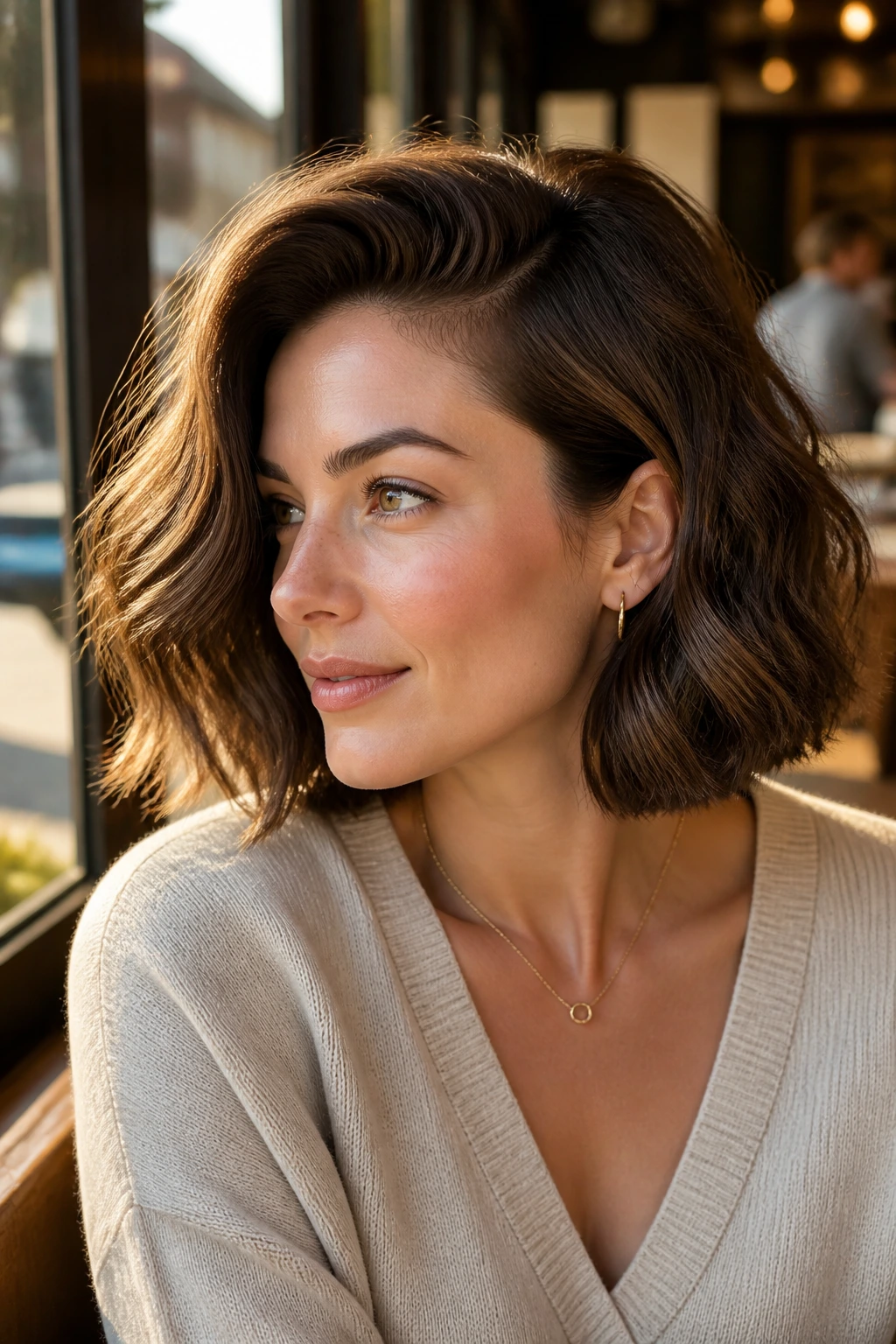
A side part can rescue thick hair faster than a drawer full of styling products. It changes the fall of the hair, shifts volume off the widest point, and gives the bob an easier line to follow. Add a soft wave and the whole cut starts moving instead of sitting in one lump.
Why the Part Matters
A center part can look sleek on an oval face, but a side part adds lift near the temple and keeps dense hair from landing symmetrically on both cheeks. That’s useful when the hair wants to puff wide.
Best Styling Notes
- Use a 1-inch iron or a flat iron to bend the mid-lengths, not curl the whole head.
- Leave the ends a little straighter for a more modern shape.
- Break up the wave with your fingers while it cools.
This cut is less about precision and more about rhythm. I like it when the wave is irregular, with one or two pieces around the face slightly more defined than the rest. That unevenness makes thick hair look deliberate instead of overworked.
8. Asymmetrical Bob with Cheekbone Sweep
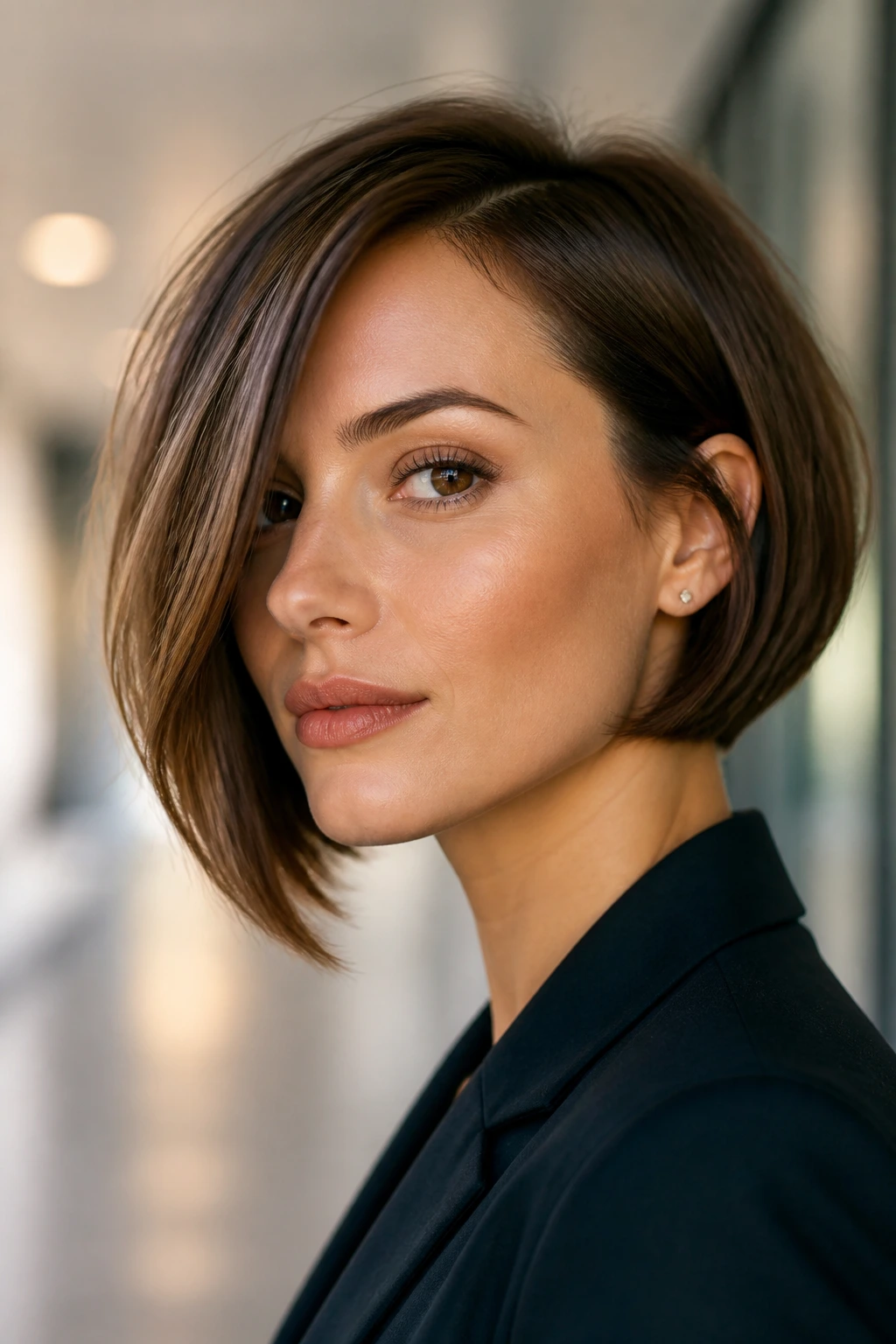
A small asymmetry can do a lot for thick hair because it gives the cut a direction. One side falls slightly longer, the other sits a little shorter, and the eye keeps moving instead of stopping at a hard line. On an oval face, that slight diagonal can sharpen the cheekbones without making the whole haircut feel theatrical.
Keep the difference subtle. Half an inch to an inch is enough for most people. If the split is too dramatic, thick hair starts behaving like it’s in a separate argument on each side of the face.
The longer side should skim near the cheekbone or just below it. That’s the sweet spot. Any shorter and the volume can crowd the face; any longer and you lose the point of the shape.
This cut is a good choice if you wear one side behind the ear a lot. It gives you a built-in styling move. One tuck, one loose side, done.
9. Stacked Bob with a Softer Back Curve
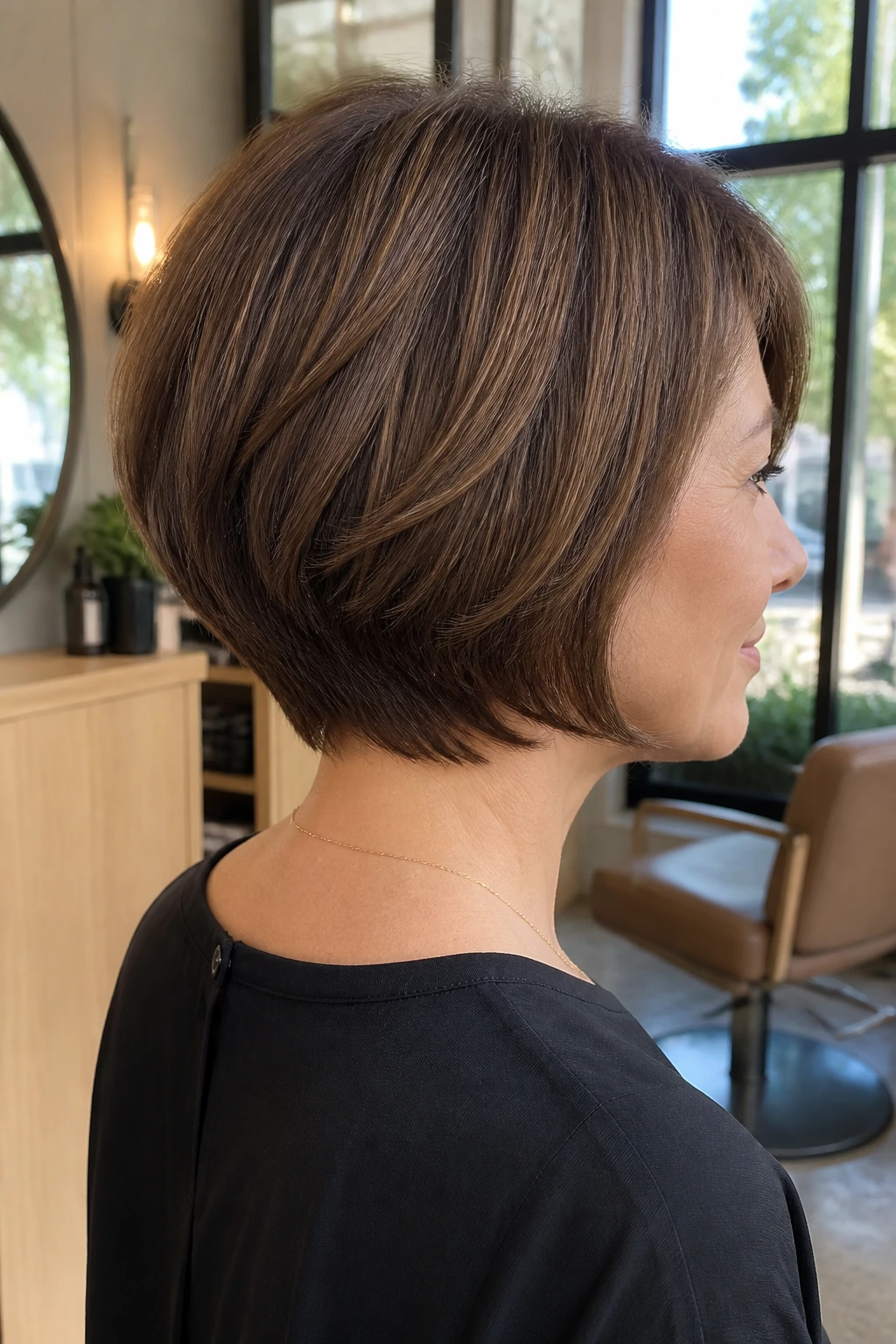
Need lift at the crown without the hard wedge shape that older stacked bobs sometimes carry? This is the answer. The back is graduated enough to take weight off the neck, but the stacking stays soft so it doesn’t look like a staircase.
For thick hair, the nape is where the haircut often goes wrong. Too much bulk there and the whole shape feels heavy. Too little and the head can look flat on top while the bottom balloons out. A softer stack threads that needle.
Where the Lift Belongs
- Shorter at the nape by small increments, not huge jumps.
- Moderate crown support so the top doesn’t collapse.
- A perimeter that still reads as a bob, not a cropped wedge.
On an oval face, this cut keeps the eye up near the cheekbones and temples. That’s helpful if you want the jawline to stay visible but not harsh. It’s a tidy shape with some personality, and thick hair gives it enough body to hold the curve.
10. Razored Bob with Whispery Ends
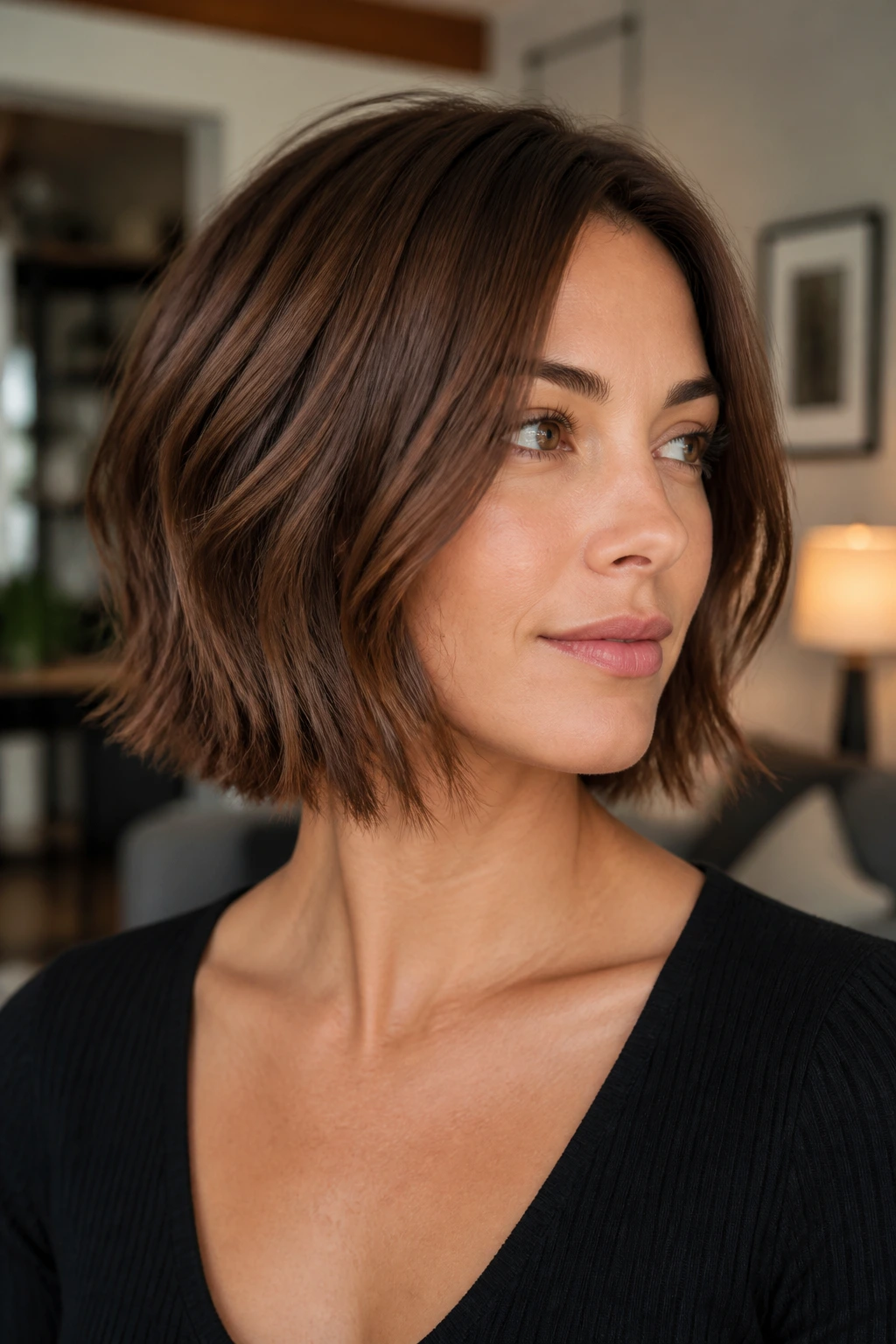
A razor can be a friend or a menace. On thick hair, it depends on the hand using it. When done well, razor work softens the ends so the bob doesn’t land with that blunt, heavy thunk that dense hair can create. The shape gets movement without losing its outline.
This cut is best when the hair is healthy and not overly fried from old bleach or constant heat. Razored ends on brittle hair can look stringy fast. On strong, full strands, though, they create a piecey finish that feels light without sacrificing the bob’s character.
What to Watch For
- If your hair frizzes easily, ask for light point cutting instead of aggressive razor work.
- If the ends already feel rough, keep the texture more internal.
- If you want a polished finish most days, this cut needs a better blow-dry than a blunt bob.
The whispery ends make this bob feel softer around an oval face. It never quite lands as hard as a classic line cut, which is the appeal.
11. Jaw-Length Bob with Tapered Sides
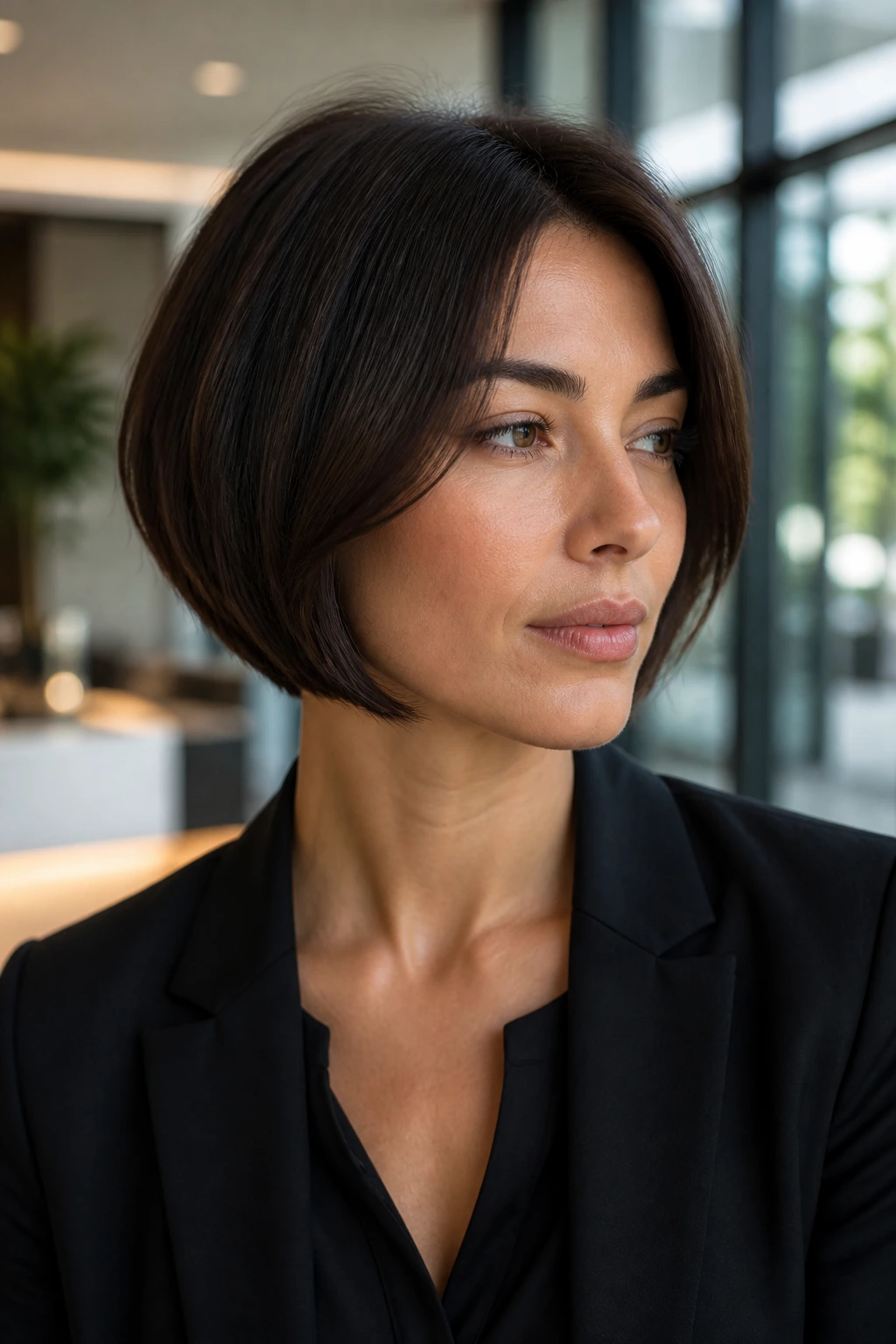
Jaw-length hair is unforgiving in the wrong hands and very flattering in the right ones. Thick hair benefits because the shape sits close to the face without dragging down the neck. Oval faces can take that bluntness, especially when the sides are gently tapered so the width doesn’t stop at the same point on both cheeks.
This is one of my favorite choices for someone who wants the shortest possible bob without crossing into high-maintenance territory. It feels precise. It also makes earrings, collars, and necklines matter again, which is one of the small pleasures of short hair.
The taper on the sides is the important part. Without it, the cut can look boxy. With it, the jawline stays visible and the thickness gets redirected instead of spread out. If you have a strong cowlick near the temple, mention it before the cut begins. That little detail changes how the sides settle.
12. Lobbed Bob with Long Layers
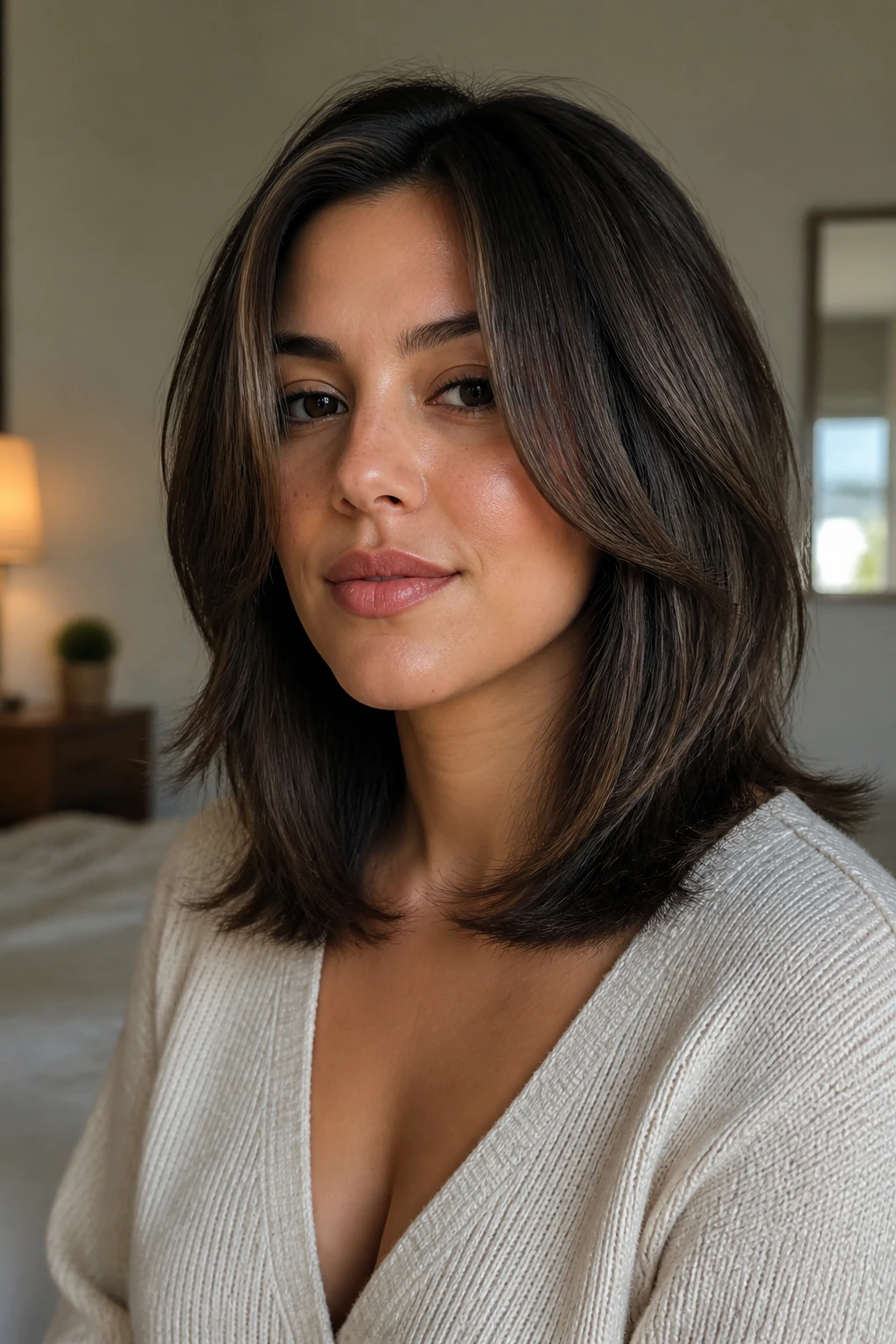
This is the bridge between a bob and a lob, and thick hair tends to love that middle ground. The extra length gives the cut enough weight to sit properly, while the long layers stop the ends from becoming one blunt slab. On an oval face, the length adds a calm vertical line that reads clean and easy.
I’d pick this if you want a cut that still works when you tuck it behind one ear or pull it into a short knot. True bobs can be less forgiving on busy mornings. A lobbed bob behaves better, especially if your hair is coarse and holds bends in odd places.
The best version keeps the front pieces a touch longer than the rest and avoids over-layering near the crown. Long layers should help the hair fall, not remove so much weight that the bottom flips outward. If your ends already flip, ask the stylist to leave a little more length than you think you need. Thick hair always shrinks on the way up.
13. Tucked Nape Bob with Volume at the Crown
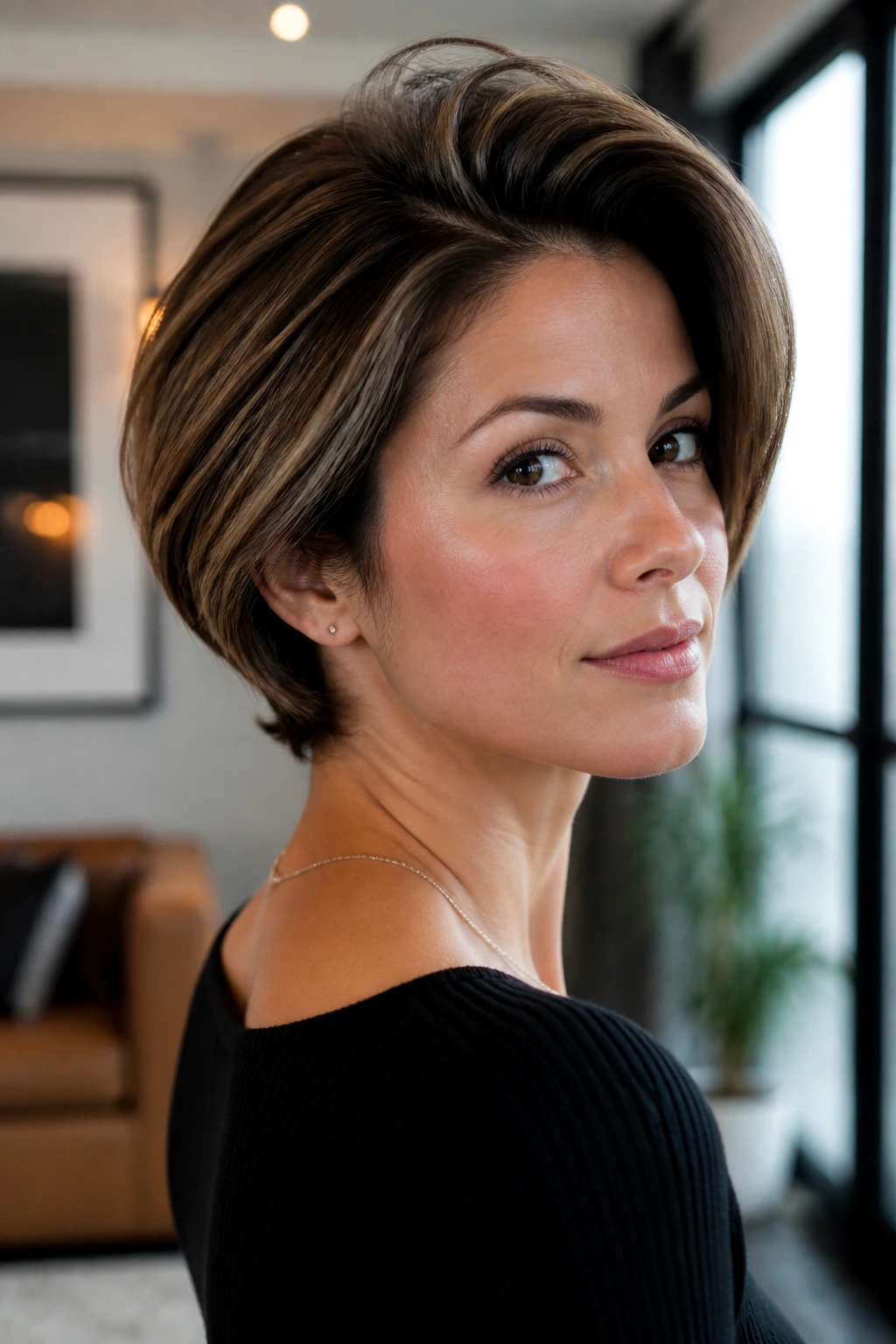
A short nape and a little lift at the top can change the whole read of a bob. The neckline feels clean, the crown gets some height, and thick hair stops sitting like a block from ear to ear. On an oval face, that upward movement is flattering because it keeps the eye moving vertically.
Why the Nape Matters
If the nape is too long, dense hair bulks against the collar. Too short, and the bob can creep into mullet territory. The tucked version threads the middle.
Styling Notes
- Blow-dry the crown first, lifting at the roots with a round brush.
- Direct the nape under while it’s still warm.
- Use a small clip for 5 minutes at the crown if your hair falls flat fast.
This cut has a slightly tailored feel, almost like the hair is being worn rather than merely cut. That sounds fussy, but it isn’t. It’s the sort of precision that makes thick hair look calmer.
14. Bouncy Curved Bob with Face-Framing Pieces

A curved bob does half the styling for you. The ends bend inward, the line follows the shape of the head, and thick hair gets a rounded silhouette instead of a sharp block. On an oval face, the curve can echo the cheekbones in a way that feels clean rather than stiff.
The face-framing pieces need to be chosen carefully. Too short, and they can sit awkwardly above the jaw. I prefer them starting around the lip or chin, depending on how much cheekbone you want to show. That gives the front pieces a chance to move with the rest of the cut instead of hanging in isolation.
This is one of the more forgiving shapes for people who want the bob to feel soft but not shaggy. The curve gives structure. The framing pieces give personality. And thick hair gives the whole thing enough body to hold its shape even on days when you skip the round brush.
15. Side-Part Bob with a Slight Undercut
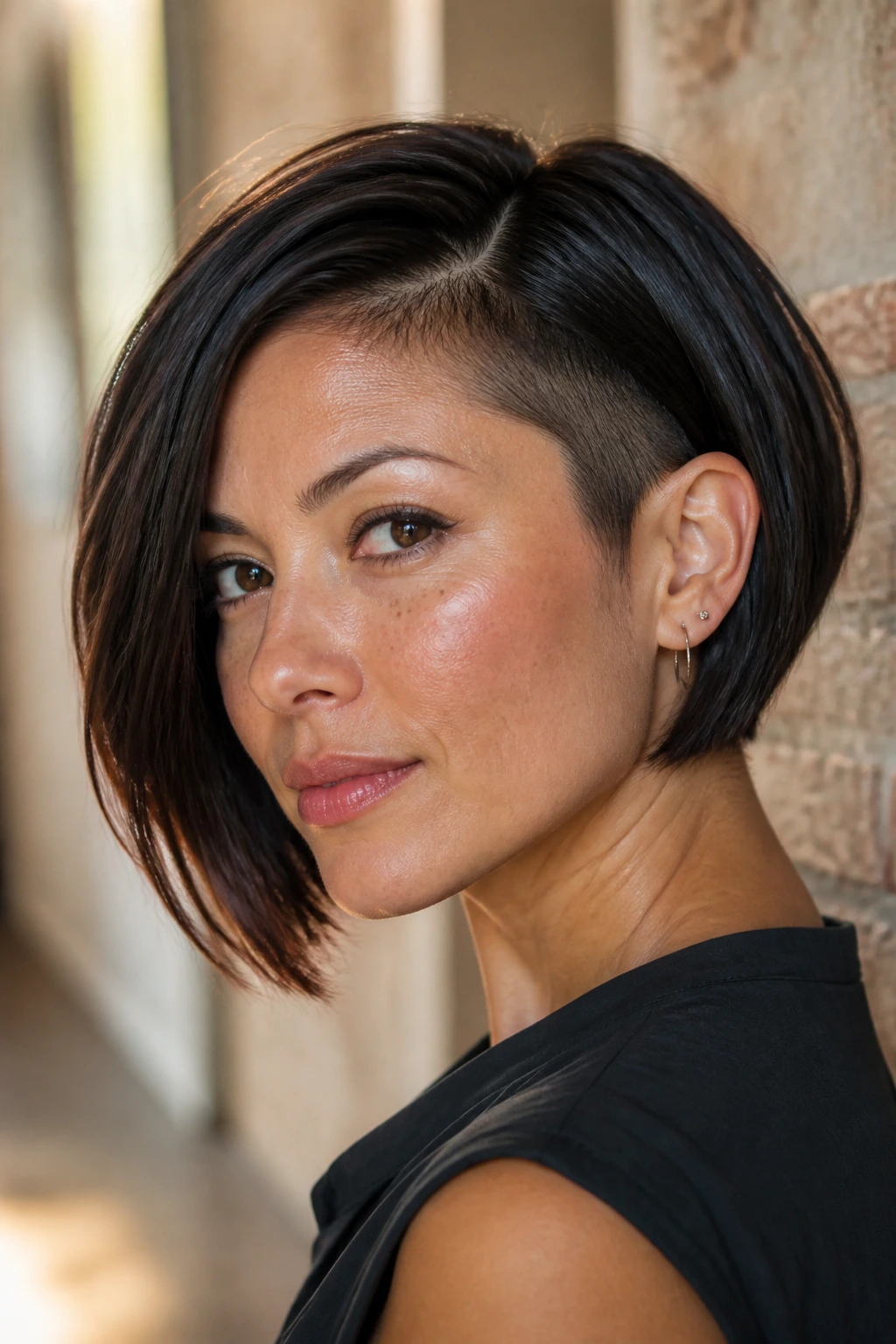
Need the top to look smooth without turning the whole haircut into a triangle? A slight undercut can be the quiet fix. Not a dramatic shave. Just enough to remove the hidden bulk underneath so the surface can sit closer to the head.
What to Ask For
- A small undercut section in the nape or just below the occipital bone.
- A side part that gives the front a little lift.
- Length left on top so the cut still reads as a bob, not a crop.
On thick hair, hidden undercutting can be a blessing because it reduces mass without sacrificing visual fullness. That matters if your hair feels hot or heavy at the neck. On an oval face, the side part keeps the front from hanging symmetrically and lets one side skim the cheekbone more closely.
This is not the cut for somebody who wants a zero-maintenance grow-out with no appointments. It’s tidy, not effortless. But it can be a very good trade if your hair grows like weeds.
16. Messy Jawline Bob with Sliced Ends
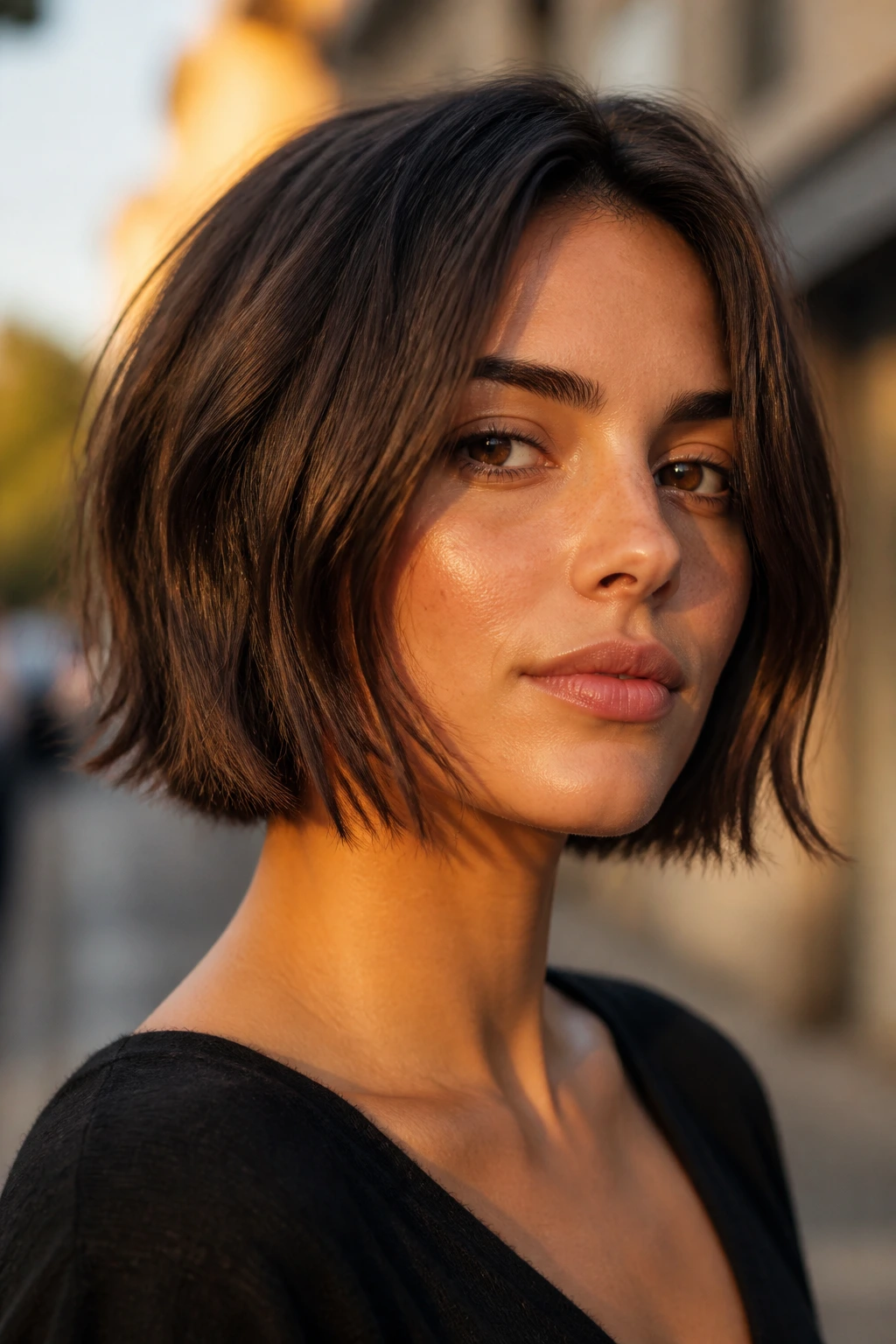
This is the bob that looks touched, not overworked. The sliced ends make the line softer, while the jaw-length perimeter keeps the shape close to the face. On thick hair, that close fit matters because the cut can otherwise balloon out at the corners.
I like this version when someone wants texture to be visible. Not fake beach waves. Actual broken-up ends and movement around the jaw. An oval face can wear it well because the length hits in a flattering spot without needing extra bangs to balance anything out.
What Keeps It From Looking Sloppy
- The slice work should be concentrated near the ends, not halfway up the shaft.
- The jawline should still be readable.
- A tiny bit of paste on the front pieces is enough; too much and the cut goes stringy.
This style has attitude, but it should still look deliberate. If the ends are too shredded, the whole thing loses the bob part of the bob.
17. Curly-Texture Bob with Length Around the Mouth
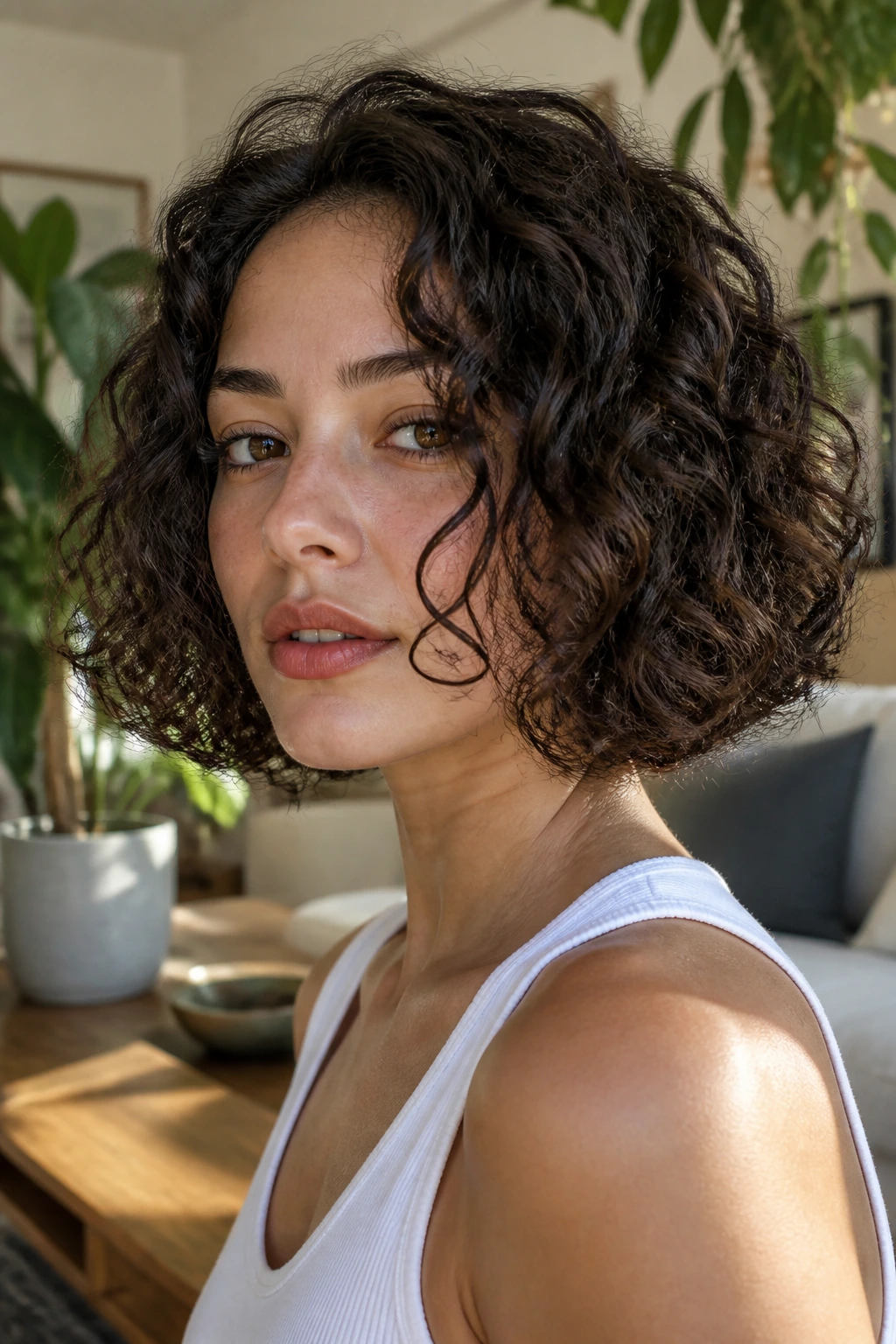
Thick hair that bends or curls has its own rules, and this bob respects them. The safest way to cut it is often longer than you think, usually around the mouth or chin when dry, because curl shrinkage can eat inches fast. On an oval face, that length frames the features without letting the curls crowd the cheeks.
The texture here is the point. You’re not trying to flatten the curl pattern into submission. You’re giving it enough shape so the bob doesn’t expand outward unpredictably. That usually means leaving some length, adding soft internal layers, and cutting with the curl pattern in mind rather than against it.
Use a diffuser, a light leave-in, and hands-off drying. If you touch the hair too much while it’s drying, the curls get fuzzy and the bob starts to lose its outline. Let it set before you separate the clumps.
18. Polished Bob with an Invisible Bend
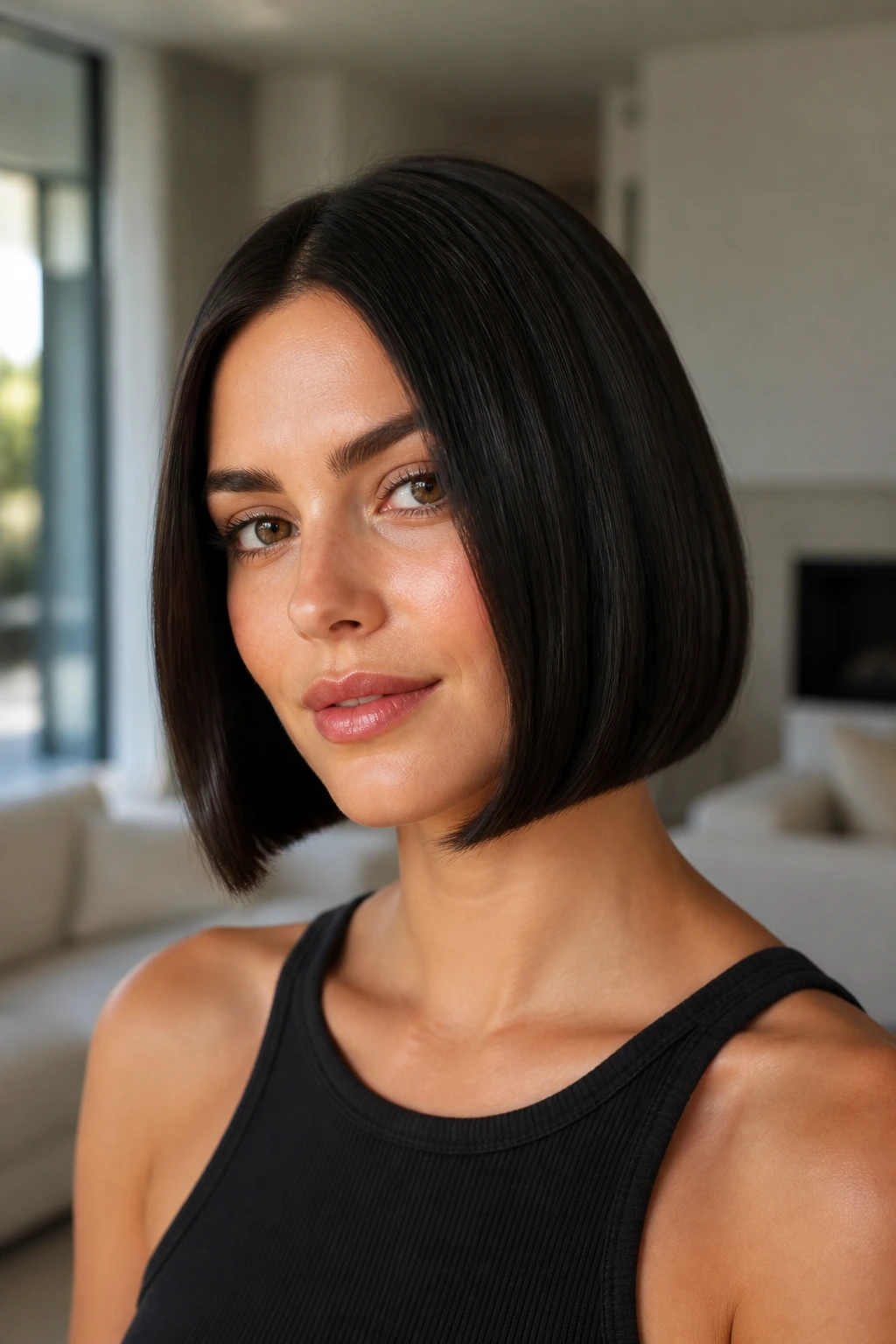
If choppy ends make you nervous, this is the safer lane. The line stays clean, almost understated, but a slight bend at the ends keeps the haircut from looking severe. Thick hair gives the cut enough body that you don’t need a lot of extra layers to make it feel alive.
Oval faces work well here because the symmetry of a center or soft side part doesn’t fight the face shape. The polish becomes the feature. That can look sharp in a very plain black sweater, or more dressed up with a cleaner neckline and a lip color that isn’t shy.
I’d ask for hidden layering and a beveled edge, not a lot of obvious texturizing. The bend should look like the hair naturally decided to sit that way. If you can see every haircut mark, the effect is gone.
19. Neck-Length Bob with Feathered Fringe

Neck-length hair gives thick strands enough room to move without swallowing the face, and a feathered fringe makes the whole cut feel lighter at the front. That fringe matters. A dense, straight-across bang on thick hair can feel like too much forehead coverage all at once. A feathered one breaks that up.
The Fringe Does the Balancing
- Keep the fringe airy and slightly separated.
- Let it hit at the brows or just below, not buried too deep.
- Pair it with a neck-length hem so the weight is spread out.
On an oval face, this cut lets the fringe add interest while the rest of the bob stays relatively simple. It’s an easy way to get softness without pushing into full shag territory. And because the neck length leaves a little room below the jaw, the haircut doesn’t crowd the face.
This is one of those styles that looks better when it is not too perfect. A little separation in the fringe helps.
20. Air-Dried Bob with Soft S-Curves
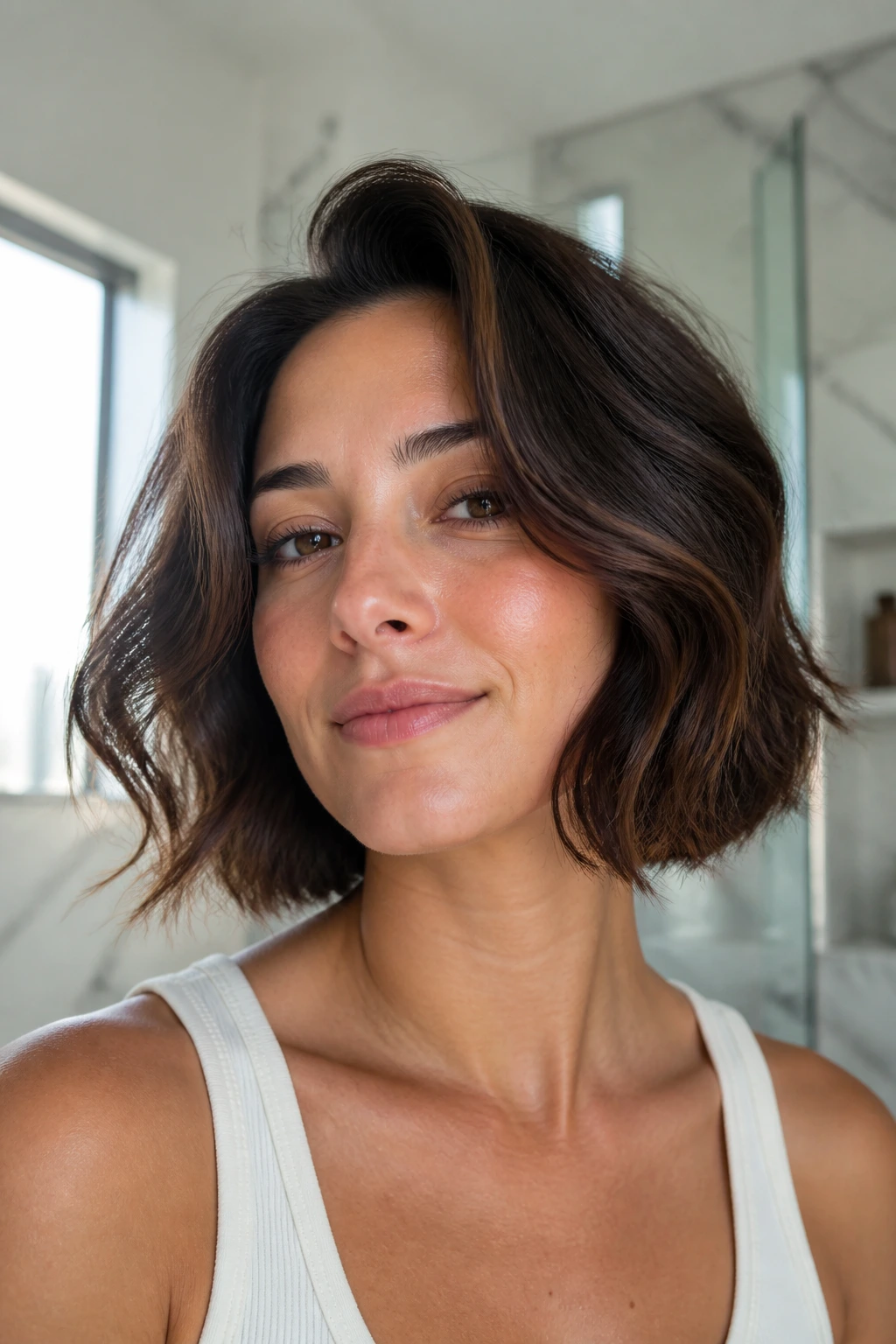
If you refuse to spend every morning holding a brush and a dryer like a hostage negotiation, this is your cut. The bob is shaped so the natural bend can do some of the work. Thick hair often has enough body to form soft S-curves on its own, as long as the shape isn’t over-layered or hacked up.
On an oval face, the air-dried version is relaxed but still neat enough to look intentional. The trick is using just enough product to keep the curves defined. Mousse at the roots, a lightweight cream through the mid-lengths, and hands off once the shape starts to set.
Best Routine
- Scrunch in mousse on damp hair.
- Clip the crown for 10 to 15 minutes.
- Twist 2 or 3 front pieces away from the face while they dry.
That’s usually enough. More product tends to flatten thick hair faster than people expect.
21. Stacked-Front Bob with Minimal Layers
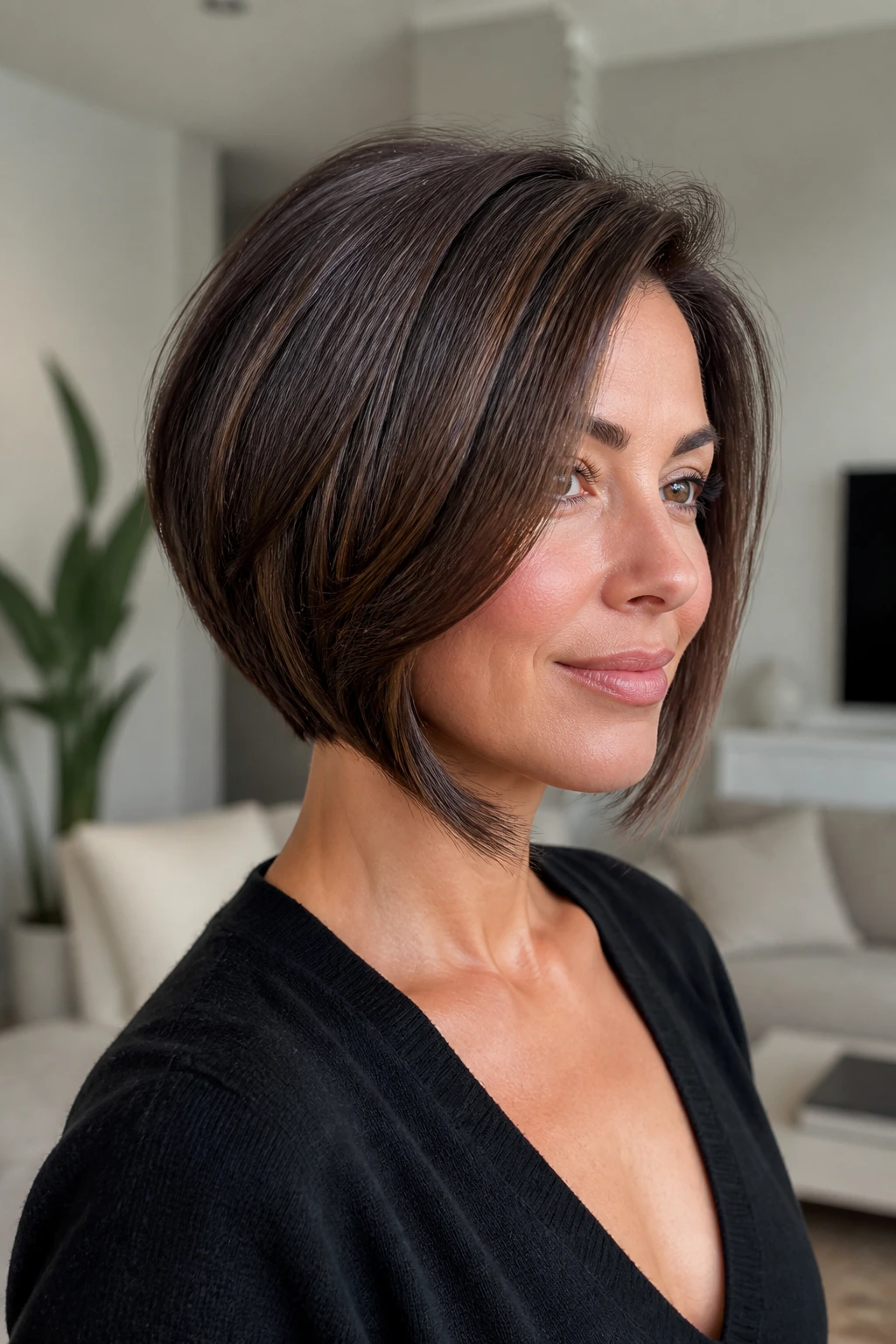
Can you get lift in front without creating a busy back? Yes, if the stacking is concentrated and the layers stay restrained. This cut puts shape where the eye lands first, near the face, while keeping the rest of the bob cleaner. Thick hair benefits because the front can feel lighter without the whole head turning into a puff.
What to Ask For
- Slight stacking or graduation toward the front half of the bob.
- Minimal layers through the back section.
- A part that lets the front fall forward or sweep over, depending on your habit.
On oval faces, the forward movement keeps the haircut from looking too wide near the ears. It’s a smart option if your hair wants to hide your cheekbones under a wall of volume.
This style sits in a nice middle zone: enough structure to look finished, enough softness to avoid stiffness.
22. Glossy Textured Bob with a Clean Center Part
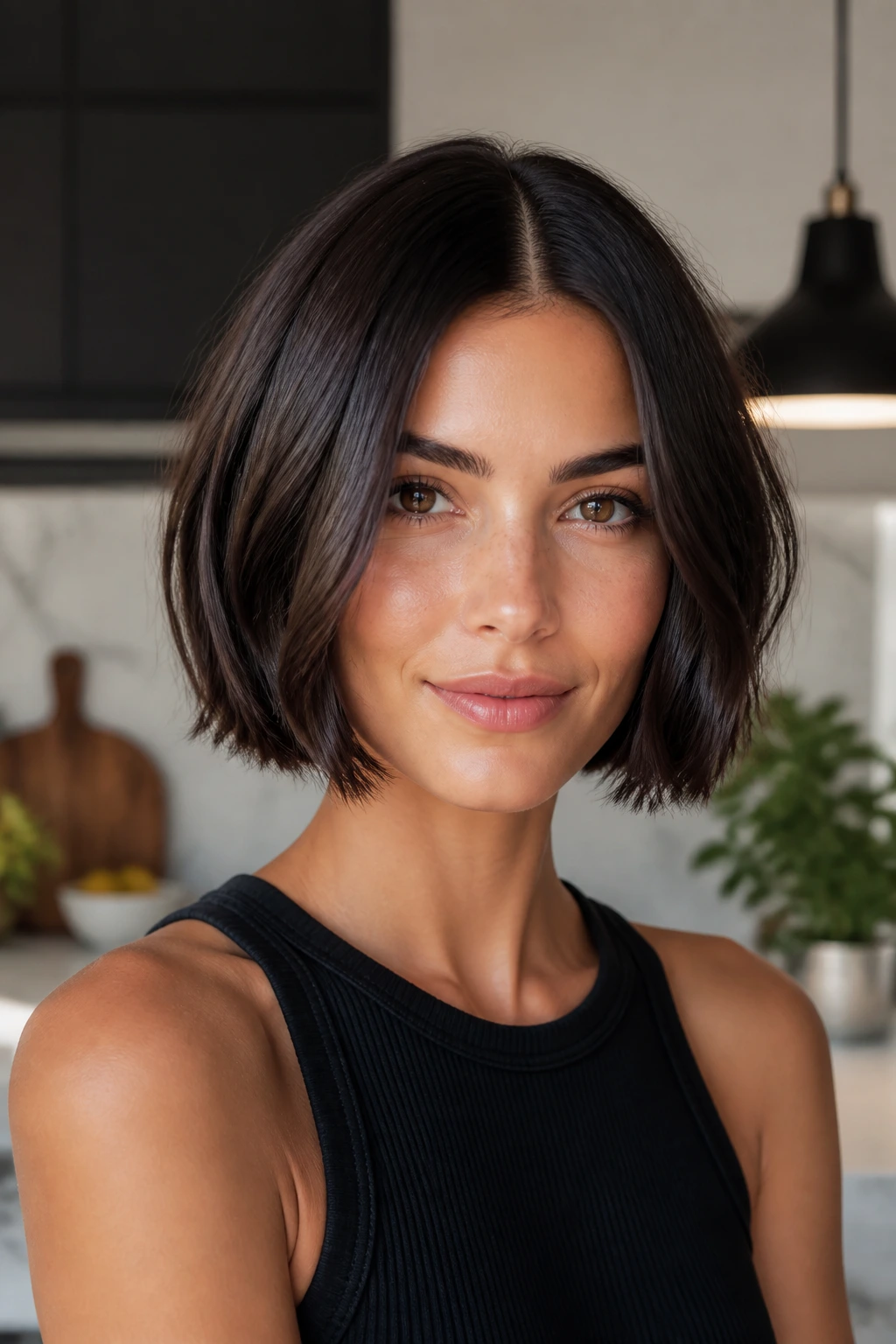
A center part can be unforgiving on thick hair unless the cut deserves it. This bob earns the part by staying clean at the line and textured only where it matters. The ends have movement, but the outline remains calm, so the style feels deliberate instead of accidental.
Oval faces wear a center part with ease, which is part of the reason this cut works so well. The symmetry can be striking. Not loud. Just clear. And thick hair gives the style the body it needs so the part doesn’t make the face look empty.
I like this bob with a smooth finish and a tiny bit of shine serum pressed into the mid-lengths, not the roots. The shine makes the texture look healthy, while the clean part keeps the whole thing from wandering. If you want a bob that feels modern without being messy, this is one of the strongest choices in the bunch.
Why Texture Keeps Thick Hair from Turning Boxy
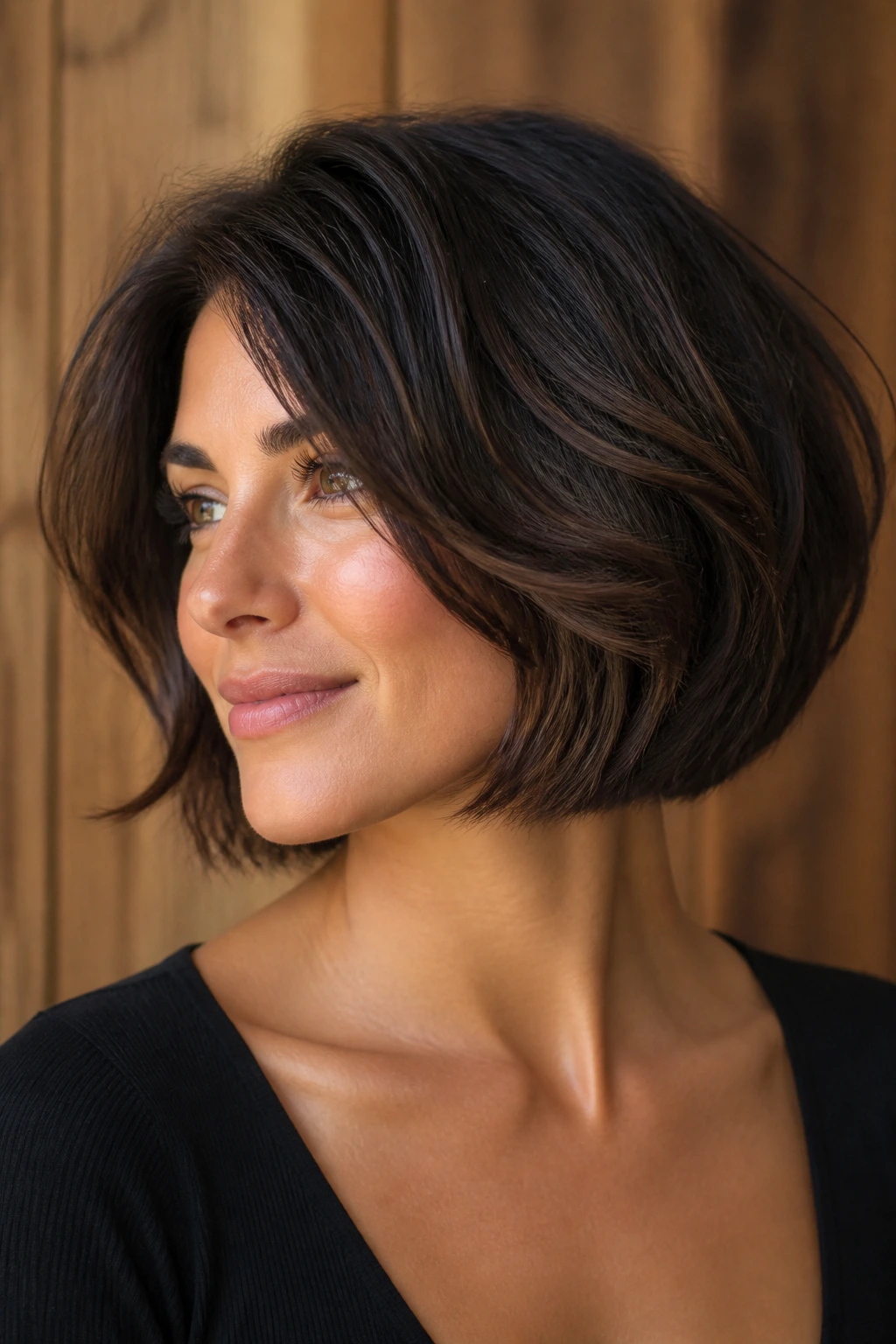
Thick hair does not behave like fine hair with extra volume. It behaves like a structure with its own weight, and that weight changes the shape fast. Cut it blunt and too short in the wrong place, and it can spread out into a shelf. Remove too much from the wrong section, and it gets frizzy at the ends while the crown stays heavy.
That’s why texture matters. The good kind is quiet. It lives inside the shape, where it removes mass without destroying the outline. Internal layers, point cutting, light graduation, and the occasional hidden undercut all do better work than brute-force thinning shears.
Oval faces make this easier because the proportions are already balanced. You don’t need a bob to fake width at the chin or create length at the forehead. You can pick the mood: jaw-skimming and crisp, collarbone-soft, fringe-heavy, center-parted, side-swept. The face shape gives you room. The haircut just needs to keep the hair from taking over the room.
I’ve always thought the best thick-hair bob is the one that still looks like a bob when it’s been lived in for six hours. That’s the real test. Not the salon mirror. The lunch mirror.
The Tools That Make These Cuts Behave
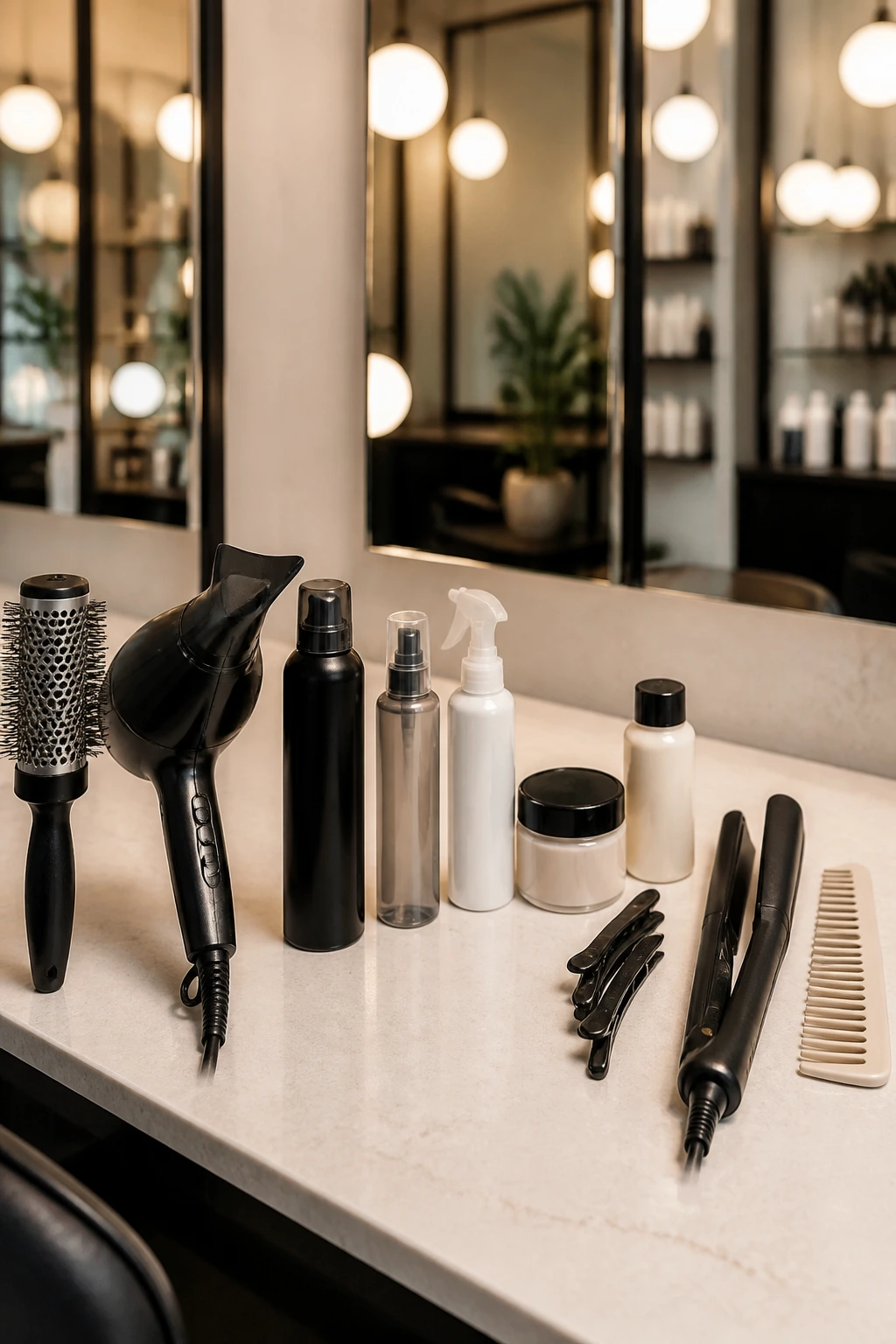
- 1.5-inch round brush: Big enough to smooth thick hair without making the ends curl into tiny corkscrews.
- Blow dryer with a concentrator nozzle: Keeps the air moving in one direction, which helps the cut sit cleaner.
- Mousse or root lift spray: Gives the crown enough support so the bob doesn’t collapse into the neck.
- Lightweight texture spray: Useful for piecey ends and a little separation through the mids.
- Heat protectant spray or cream: Thick hair often needs more heat to style, so this step is not optional.
- Matte styling paste: Best for separating a few front pieces or taming a fringe.
- Dry shampoo: Good for day-two roots and for keeping a bob from going flat at the scalp.
- Duckbill clips or root clips: Helpful for setting lift at the crown while the hair cools.
- 1-inch flat iron or curling iron: Optional, but useful for bending the ends under or creating soft S-waves.
- Wide-tooth comb: Better than yanking through dense hair with a fine comb after washing.
What to Ask Your Stylist and How to Read the Mirror

Bring photos, yes. But bring photos that match your hair density, not just your dream face shape. A bob on fine hair can lie in a completely different way than the same bob on thick strands. If the reference has wispy ends and your hair is dense, the result will not look the same unless the cut is adapted.
Bring Photos That Match Your Hair, Not Just the Vibe
Pick examples with similar thickness, wave pattern, and part preference. One photo with a center part and one with a side part is even better. That gives the stylist a sense of how much flexibility you want.
Ask About the Weight Line
This is the part most people skip, and it matters. Ask where the weight line will sit: at the jaw, below the cheekbone, or near the collarbone. On thick hair, that line decides whether the bob looks crisp or swollen.
Be Specific About Texture
Say whether you want internal layers, point cutting, face-framing pieces, or a soft stack at the nape. Don’t say “make it textured” and leave it at that. A good stylist can interpret the word, but the word alone is too loose for dense hair.
If your hair expands when it dries, ask whether they prefer a dry cut or a mostly dry finish cut. That one question can save a lot of regret.
How to Style a Textured Bob Without Wrestling It

Quick Blowout: Rough-dry the roots until they’re about 70% dry, then use a round brush just on the top layer and ends. Keep the nozzle pointed down the shaft so the cuticle lies flatter and the bob doesn’t bloom out at the sides.
Air-Dry Day: Work a small amount of mousse into damp roots and a light cream through the mids. Scrunch once or twice, then leave the hair alone. Too much touching makes thick hair frizz before it sets.
Soft Bend: Wrap the last inch of hair around a 1-inch iron for 5 to 8 seconds, then release without tugging. You want a bend, not a curl. That tiny detail keeps the bob modern.
Second-Day Reset: Mist the roots with dry shampoo, flip the head forward for a few seconds, and finger-comb the ends back into place. If one side has gone weird — and one side always goes weird — re-bend only that section. No need to redo the whole head.
A bob like this usually looks better after it settles for an hour. Freshly styled hair can be too neat. Let it cool, move around, then check the mirror again.
Extra Styling Tweaks and Finishers
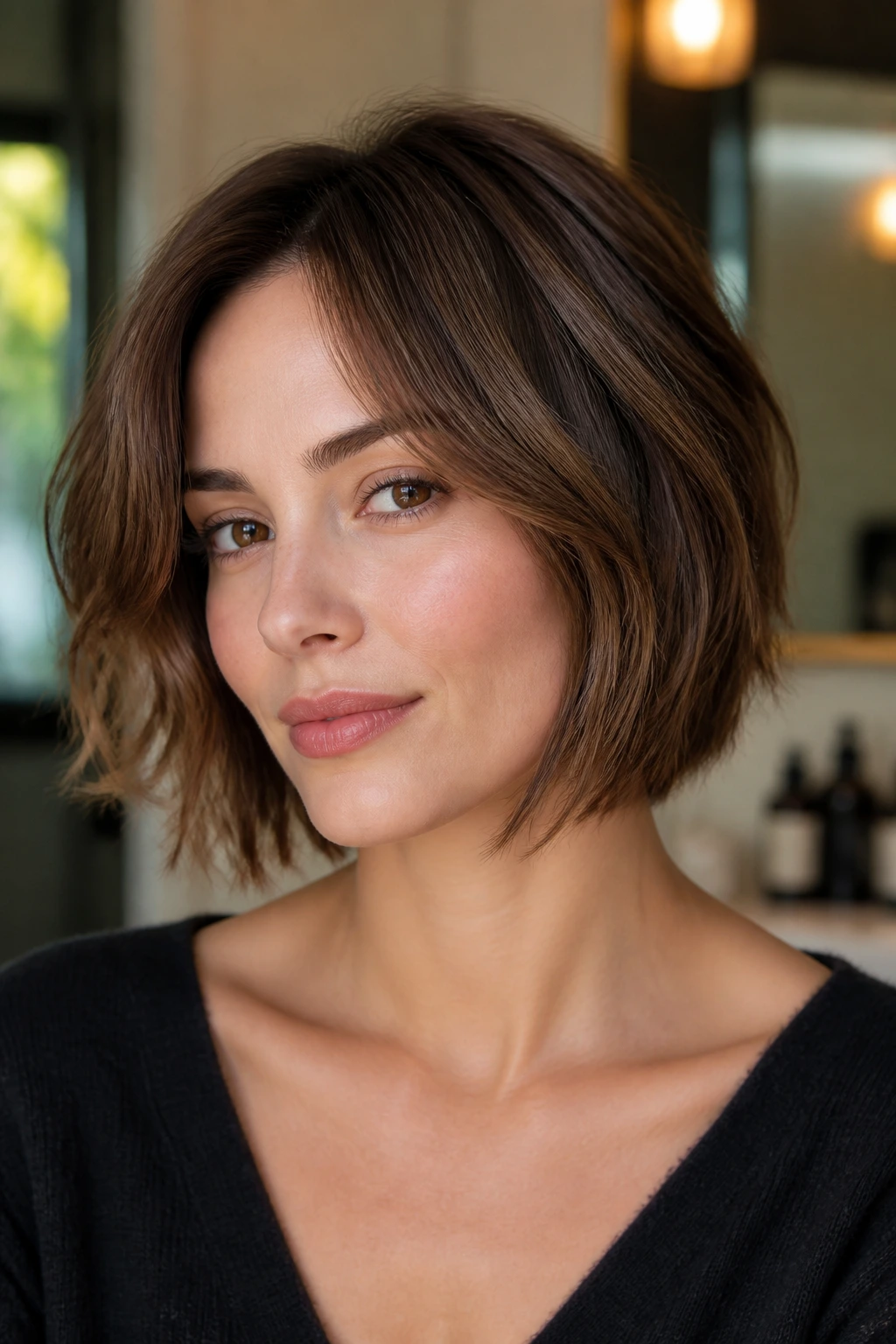
Root Lift: A touch of root spray at the crown before drying helps the bob keep its shape without forcing the ends outward. Thick hair needs lift at the top more than it needs extra product at the bottom.
Piece Separation: If the ends feel too solid, rub a grain-of-rice amount of paste between your fingertips and tap it into two or three front pieces only. That gives the cut some movement without turning the whole head stringy.
Gloss Finish: Use a few drops of light oil on the mid-lengths and ends after styling. Skip the roots. Thick hair can go oily at the scalp fast, and then the texture disappears.
Frizz Control: On humid days, a little cream before drying often works better than loading on serum after the fact. Once the hair is already fuzzy, you’re fighting a losing battle.
Make It Yours: If you like more edge, tuck one side behind the ear and leave the other loose. If you prefer softness, brush the front pieces away from the face and let the shape fall open.
Keeping the Cut Sharp Between Salon Visits
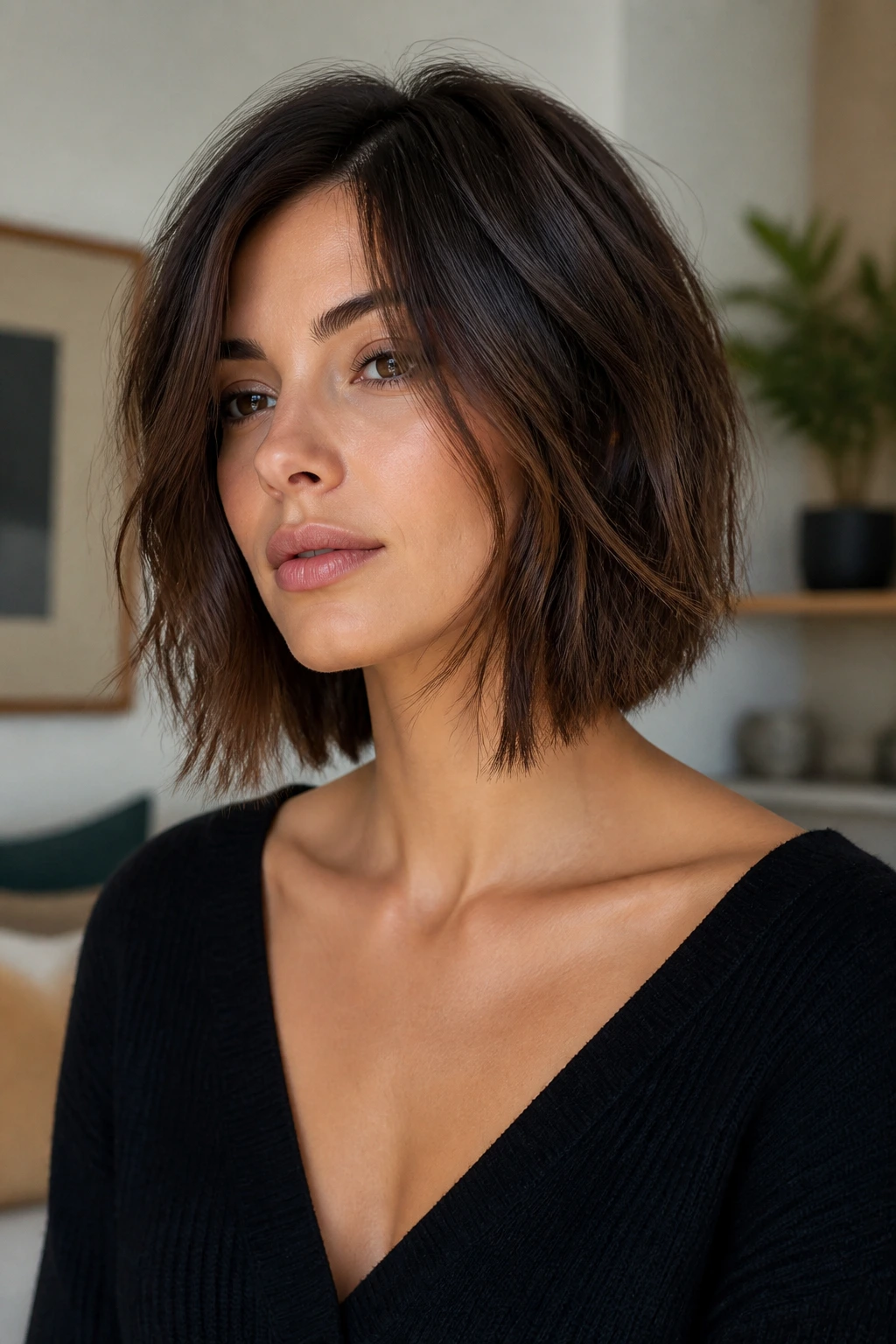
Thick hair grows out with opinions. A bob that looked neat at the chair can start changing shape within a couple of weeks, especially around the nape and the corners near the jaw. That doesn’t mean the cut is failing. It means the hair is doing what thick hair does.
For precision bobs — chin-length, blunt, jaw-length — aim for a trim every 5 to 7 weeks. If you’re wearing a softer shaggy bob or a lobbed bob, 7 to 10 weeks can work. Stacked or undercut versions usually need a quick cleanup sooner on the underside, even if the top still looks fine. The hidden bulk is what creeps first.
At home, the biggest enemy is buildup. Mousse, dry shampoo, heat protectant, and finishing spray all pile up on dense hair. A clarifying shampoo every 1 to 2 weeks keeps the texture from getting muddy. If your hair feels coated, the bob loses movement and starts hanging in one block.
Night care matters too. Don’t go to bed with a damp bob if you can help it. That’s how you wake up with a bent nape and one weird side flip that refuses to forgive you. If the hair is dry, a silk pillowcase or a loose clip at the crown can help preserve the shape.
Variations and Adaptations to Try
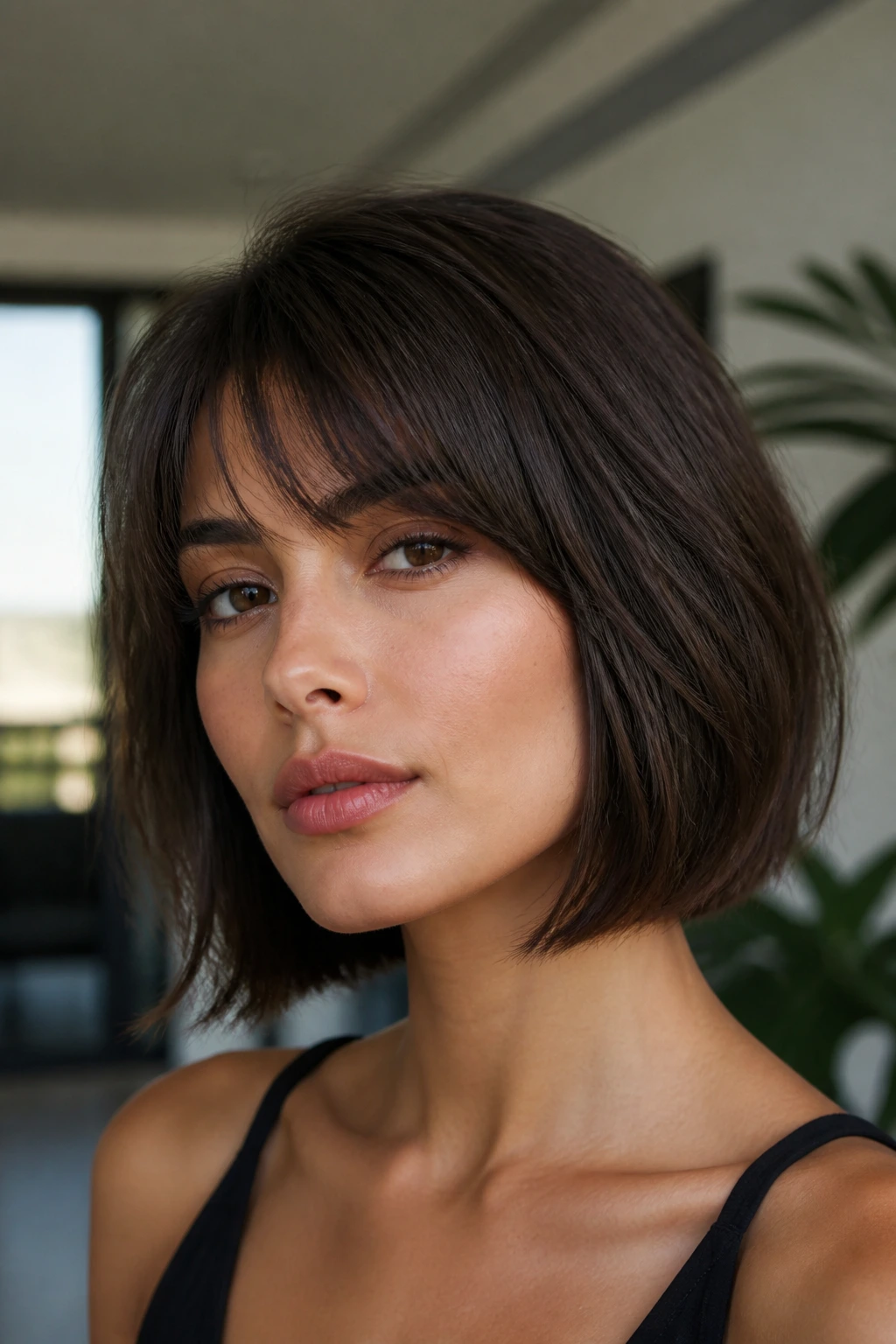
The Soft Office Bob: Keep the perimeter clean, but ask for subtle face-framing pieces and a gentle side part. It reads polished without feeling stiff, which is useful if you want the haircut to work with a blazer as easily as with a sweatshirt.
The Air-Dry Bob: Add a bit more internal texture and leave the ends less razor-sharp. This version is built for natural bend, so it behaves best with mousse, a little scrunching, and very little interference.
The Fringe-Forward Bob: Bring the bangs up front — curtain, feathered, or piecey — and keep the rest of the cut simple. Thick hair can carry a fringe well as long as the fringe itself isn’t too heavy.
The Curly-Friendly Bob: Leave more length than you think you need, and cut it with the curl pattern in mind. The shape should account for shrinkage, or the bob ends up too short near the cheeks.
The Sleek Center-Part Bob: Keep the cut clean and the texture hidden inside. This one is for people who like symmetry and shine more than obvious choppiness.
The Low-Maintenance Grow-Out Bob: Go collarbone length with soft graduation, so the cut still looks intentional as it gets longer. This is the least dramatic version and probably the easiest to live with.
Common Mistakes That Make Thick Hair Look Bigger Than It Is
-
Over-thinning the ends: The hair gets wispy on the bottom and bulky at the top. Ask for internal weight removal instead.
-
Cutting too short at the widest point of the cheek: That can widen the face visually, even on an oval shape. Keep the shortest pieces either slightly above or slightly below that zone.
-
Using too much product: Heavy cream or oil collapses the bob and makes it look greasy by lunch. Start small and add only if the hair asks for it.
-
Leaving the nape too thick: Dense hair at the neck makes the whole cut feel bulky. A tidy nape cleanup can fix more than another layer on top.
-
Choosing a fringe that’s too dense: Thick bangs on thick hair can create a wall. A lighter fringe or curtain bang is usually easier to live with.
-
Skipping regular trims: A bob grows into a triangle faster than most people expect. Once the corners start flaring, the shape is harder to rescue.
Questions People Ask Before Cutting Thick Hair Into a Bob
Will a textured bob make thick hair look puffier?
Not if the texture is placed inside the shape. Puffiness usually comes from too much bulk left at the sides or from thinning the ends too aggressively.
Is a blunt bob a bad idea for thick hair?
No. A blunt bob can look excellent on thick hair if the stylist removes some weight underneath. The outer line needs to stay clean, though, or the hair can spread out like a shelf.
Do oval faces need bangs with a bob?
They don’t need them, but they can wear them well. Curtain bangs, feathered fringe, and piecey bangs all work if the density is kept light enough to avoid crowding the forehead.
Can I air-dry a textured bob?
Yes, if the cut is designed for it. Ask for a little more internal movement and less blunt heaviness at the bottom, then use mousse or a lightweight cream while the hair is damp.
How often should thick hair be trimmed in a bob?
Usually every 5 to 8 weeks, depending on how sharp the line is. A precise chin-length or jaw-length bob needs more frequent cleanup than a shaggier lob.
What if my hair flips out at the ends?
That usually means the hemline is too heavy or the ends were cut at a length where your hair naturally kicks. A slight bevel, a small round-brush pass, or a bit more length can fix it.
Is an undercut too extreme for a bob?
Not if it’s hidden and used to remove bulk. A small undercut at the nape can make thick hair sit much closer to the head without changing the visible shape much at all.
Can curly thick hair wear these bobs?
Yes, but the cut has to account for shrinkage. Longer versions, especially collarbone or jaw-grazing shapes, are usually safer because the curls rise as they dry.
What’s the easiest style to maintain day to day?
The collarbone A-line, the air-dry bob, and the lobbed bob usually ask for the least daily coaxing. They keep enough weight to behave, which is half the battle with thick hair.
The Bob That Actually Moves

The best textured bob for thick hair isn’t the one with the most pieces cut out of it. It’s the one that knows where to keep the weight and where to let the hair breathe. That’s what keeps the shape from turning wide at the sides or flat at the crown.
Oval faces give you room to play. Shorter, longer, cleaner, messier, fringe-heavy, side-parted — most of it can work if the haircut is built with the hair’s density in mind. The style should feel like it belongs to the head it’s on, not like a borrowed photo.
Bring a couple of reference photos to the chair, but bring your own reality too. Thick hair has its own rules, and the right bob is usually the one that respects them instead of fighting them.