



Thick hair can make a pixie cut look expensive in a way fine hair never quite can. It can also turn into a helmet if the cut ignores how much density is sitting behind the ears and at the crown. On a round face, that bulky shape lands exactly where you do not want it.
Pixie cuts for thick hair and round faces need a different strategy: lift, diagonal movement, and careful removal of weight. The face does not need to be hidden; it needs to be pulled upward and slightly off center. When the shape is right, the cut feels crisp instead of puffed, and the hair stops fighting the haircut.
I like this combination because it rewards precision. A quarter inch too much around the temple changes the whole read; a little extra length at the crown can make the face look longer without looking stiff. That tiny balancing act is where the good short cuts earn their keep.
Why These 22 Pixies Earn Their Keep
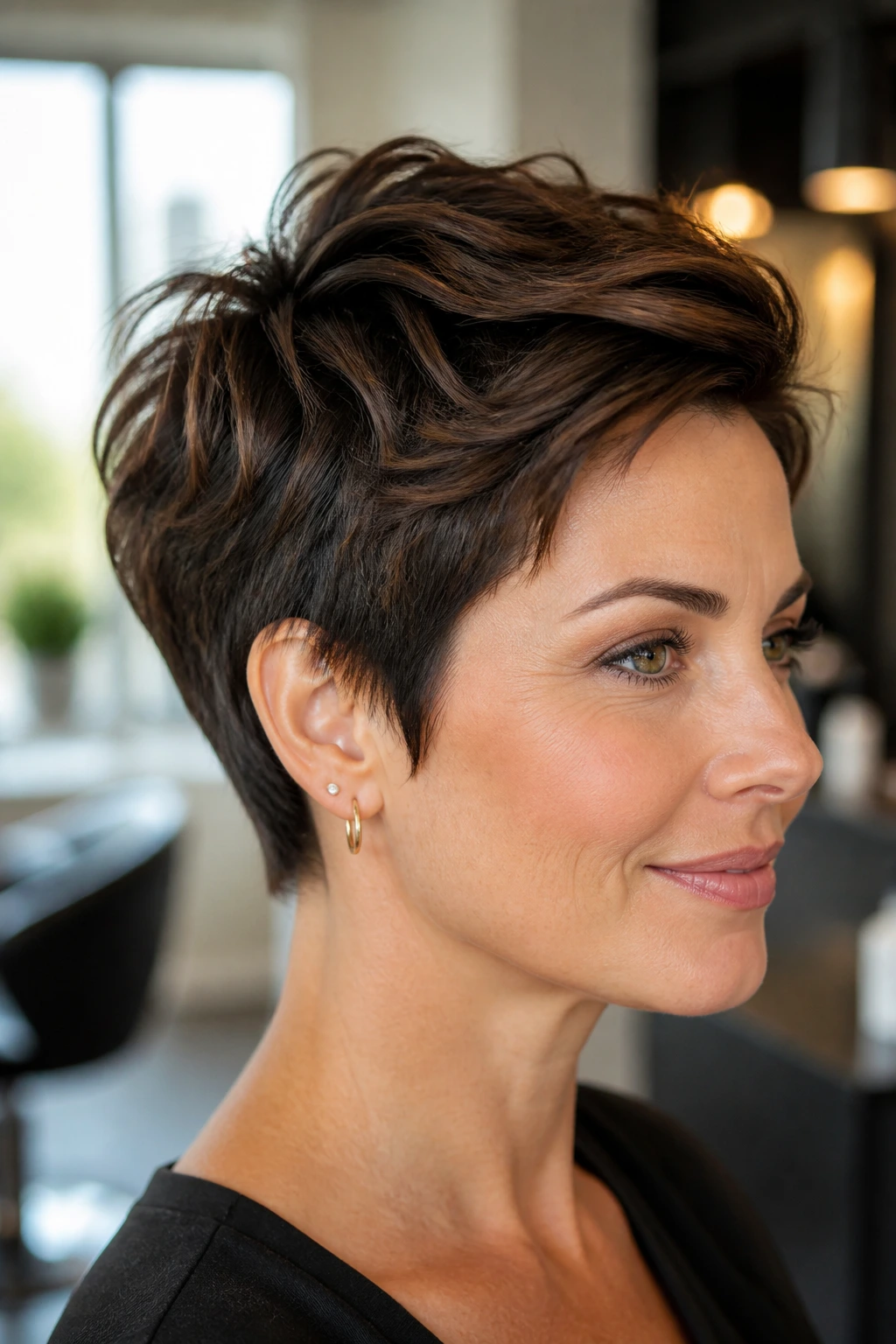
-
Built for density: These cuts remove bulk where thick hair swells—around the temples, behind the ears, and through the nape—so the shape stays close instead of ballooning.
-
Face-lengthening lines: Every style here uses height, diagonals, or a side part to keep a round face from reading wider than it is.
-
Real-world styling: Most of these cuts work with a quick blow-dry, a mousse, or a pea-sized dab of paste, not a forty-minute morning ritual.
-
Salon-friendly wording: The names map to things stylists can actually do: tapered napes, hidden undercuts, long fringe, and crown layers.
-
Low-commitment options: If you want to test short hair without going full clipper short, a bixie or long pixie bob gives you a softer landing.
What Thick Hair Changes at Pixie Length
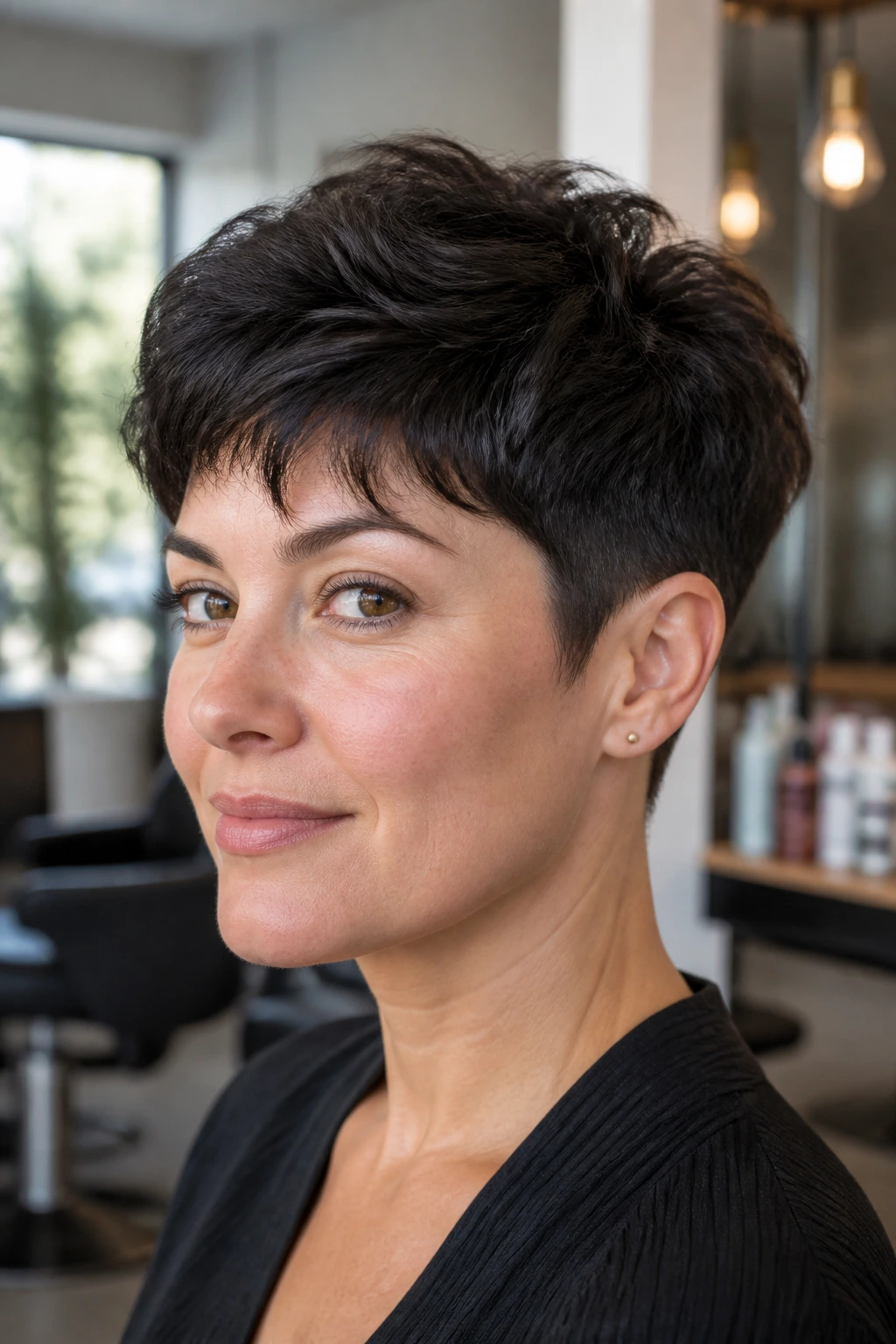
Thick hair does not behave like a neat little category. Some of it is coarse and springy, some of it is silky but dense, and some of it looks tame until it dries and wakes up in every direction. The point is simple: when you cut it short, the extra volume shows up fast. A pixie can look polished one hour and mushroom-shaped the next if the bulk is left in the wrong places.
Where the bulk hides
The trouble spots are usually behind the ears, through the nape, and right at the crown. That is where heavy hair stacks on itself and starts pushing outward. If a stylist only trims the outer surface, the cut can feel lighter for a day and then puff right back up.
Why point-cutting beats heavy thinning
Aggressive thinning shears can make thick hair look fuzzy at the ends. Point-cutting, slicing, and selective internal removal are cleaner tools for this job because they reduce weight without turning the perimeter into cotton candy. I trust those methods more on dense hair, especially if the strands are coarse.
Cowlicks and shrinkage matter
A pixie exposes every cowlick. The front hairline, the crown swirl, and the nape growth pattern all show up once there is less length to hide them. That is why a good short cut gets planned on dry or mostly dry hair when possible, so shrinkage does not surprise you later.
Why Round Faces Need Angles, Not More Width
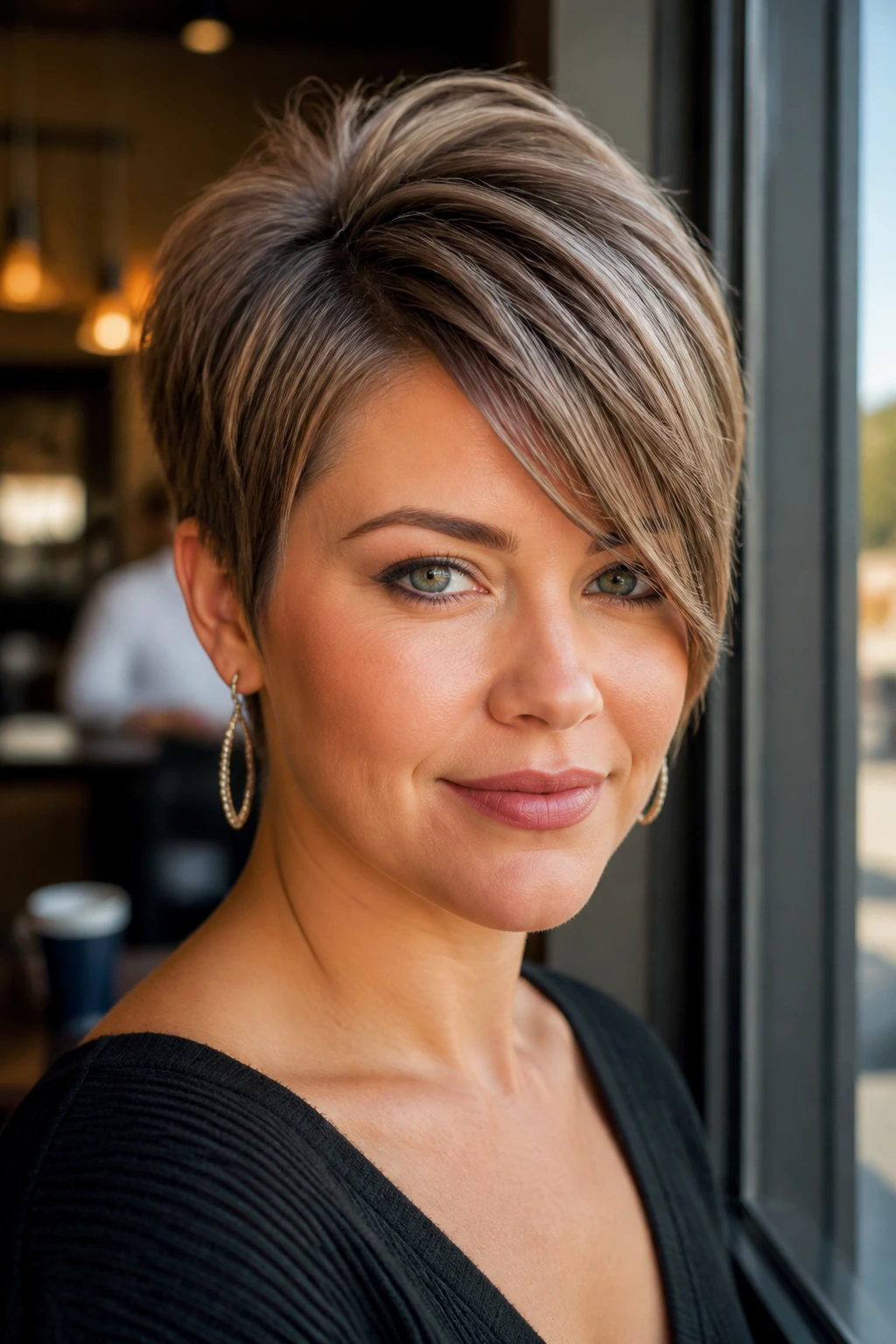
Round faces are not a problem. The problem is a haircut that repeats the same shape back at the face. If the sides end right at the widest point and the fringe cuts straight across, the whole effect gets shorter and wider. Nobody wants that.
The lines that help
What works best is a vertical or diagonal line: a longer top, a side sweep, a lifted crown, or one side that falls a little longer than the other. Those moves pull the eye up and away from the cheeks. A tiny bit of asymmetry does more than people expect.
Why bangs matter so much
Bangs are not banned. Blunt, horizontal bangs are the issue. Side-swept fringe, soft pieces that break up the forehead, or a micro-fringe paired with narrow sides can all work, depending on the rest of the cut. The bang line should never be the widest line in the haircut.
Where to leave a little length
Length around the temples, sideburns, or just in front of the ears can soften the face without adding bulk. That strip of hair acts like a frame, not a curtain. Keep it controlled, though. Loose does not mean shapeless.
1. The Tapered Crown Pixie
A tapered crown pixie is the version I reach for when thick hair grows outward before it grows down. The sides stay snug, the nape gets cleaned up, and the top keeps enough length—usually around 2 to 3 inches—to build lift without turning into a mushroom.
What makes it work on a round face is the vertical line. The eye goes up to the crown instead of stopping at the cheeks, and that lift does a lot of quiet work. Ask for soft point-cutting on top and a narrow outline around the ears so the silhouette stays lean, not square.
A little root-lifting mousse and a quick blow-dry with fingers are enough to bring it to life. If you like a short cut that still looks intentional on day three, this one earns its place.
2. The Side-Swept Fringe Pixie
A deep side sweep is a small thing with a big effect. It breaks up the forehead, leans the haircut to one side, and keeps a round face from reading as a perfect circle. Thick hair helps here because the fringe has enough body to fall with shape instead of collapsing flat.
The trick is length. You want the fringe long enough to move—usually grazing the eyebrow or slightly below it when dry—but not so long that it slides into your eye every ten minutes. The rest of the cut should stay tight around the ears and nape so the fringe is the star, not the bulk at the sides.
If your face feels widest at the cheeks, this is one of the easiest pixie variations to wear. It softens without hiding, and that balance is why it stays useful.
3. The Long-Top, Short-Sides Pixie
This cut works because contrast is doing the heavy lifting. The top stays long enough to sweep, lift, or spike slightly, while the sides are clipped or tightly tapered so thick hair does not expand horizontally. It has a sharper edge than a soft pixie, and that edge is part of the appeal.
I like this on dense hair because the length difference creates a clean shape fast. You are not asking the hair to lie politely; you are telling it where to go. With a matte paste and a rough dry, the top can sit forward, back, or diagonally depending on what your face needs.
If your hair naturally feels too bulky in the back half of your head, this cut handles that weight well. It is also one of the better pixies for people who want a little attitude without a high-maintenance styling routine.
4. The Choppy Piecey Pixie
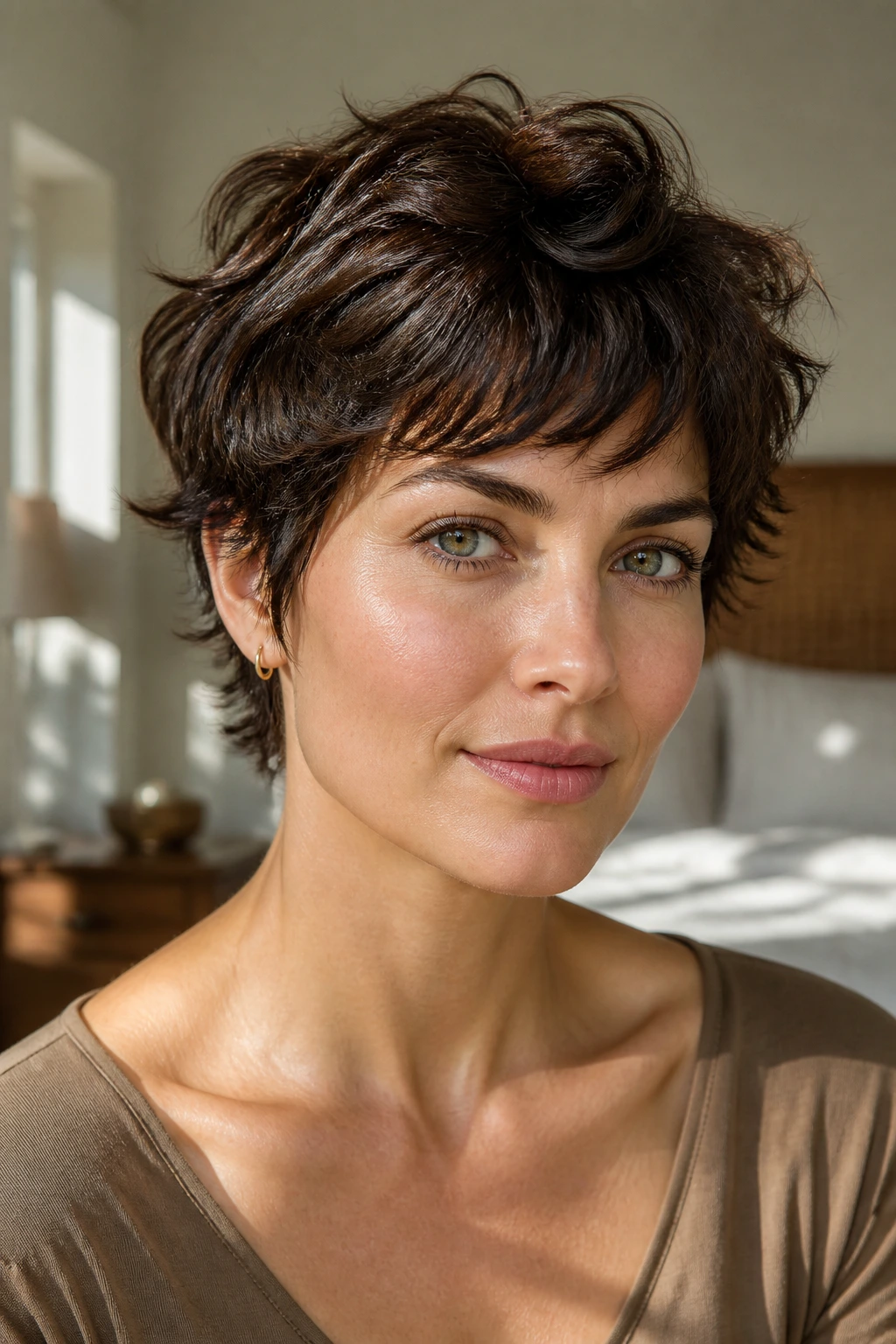
This is the cut for anyone who hates the helmet effect. Choppy ends break up the density, and the whole cut reads lighter because the eye sees movement instead of one solid mass. On thick hair, that matters. A lot.
The best version is not shredded to death. It is point-cut, not butchered. You want controlled little pieces around the temples and crown, with enough separation to show texture when you pinch in a bit of paste. If the hair is too heavily layered, the ends puff. If it is not layered enough, the shape goes blunt and heavy.
This one works especially well when your hair has a little natural wave. It gives the cut some grit and keeps the top from sitting like a flat cap.
5. The Hidden Undercut Pixie
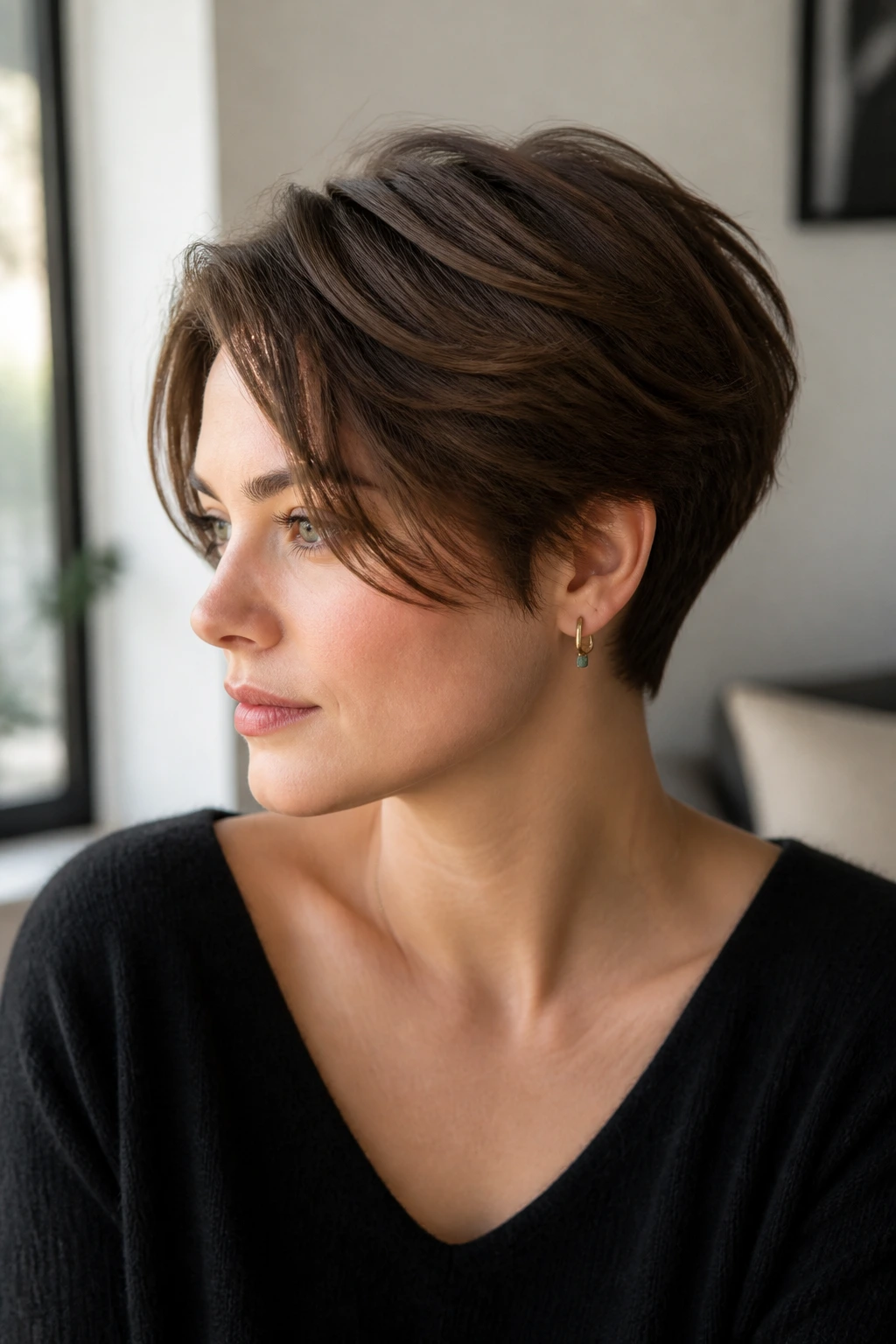
A hidden undercut is one of the smartest fixes for very thick hair. The top layer stays long enough to cover the shorter underneath sections, which means you get less bulk without advertising the haircut from every angle. It is clean, a little sneaky, and very practical.
Ask for the undercut around the nape and sometimes behind the ears, but keep the surface layer long enough to drape over it. That is the difference between a discreet, shape-saving cut and something that looks half-shaved in a way you did not mean. On a round face, this works because the fullness disappears where it would otherwise widen the silhouette.
- Best for: dense, heavy hair that balloons at the lower half of the head.
- Ask for: hidden removal under the top layer, not an exposed shave line.
- Styling note: a round brush is optional; the cut should hold its own even with fingers and a little cream.
6. The Asymmetrical Pixie
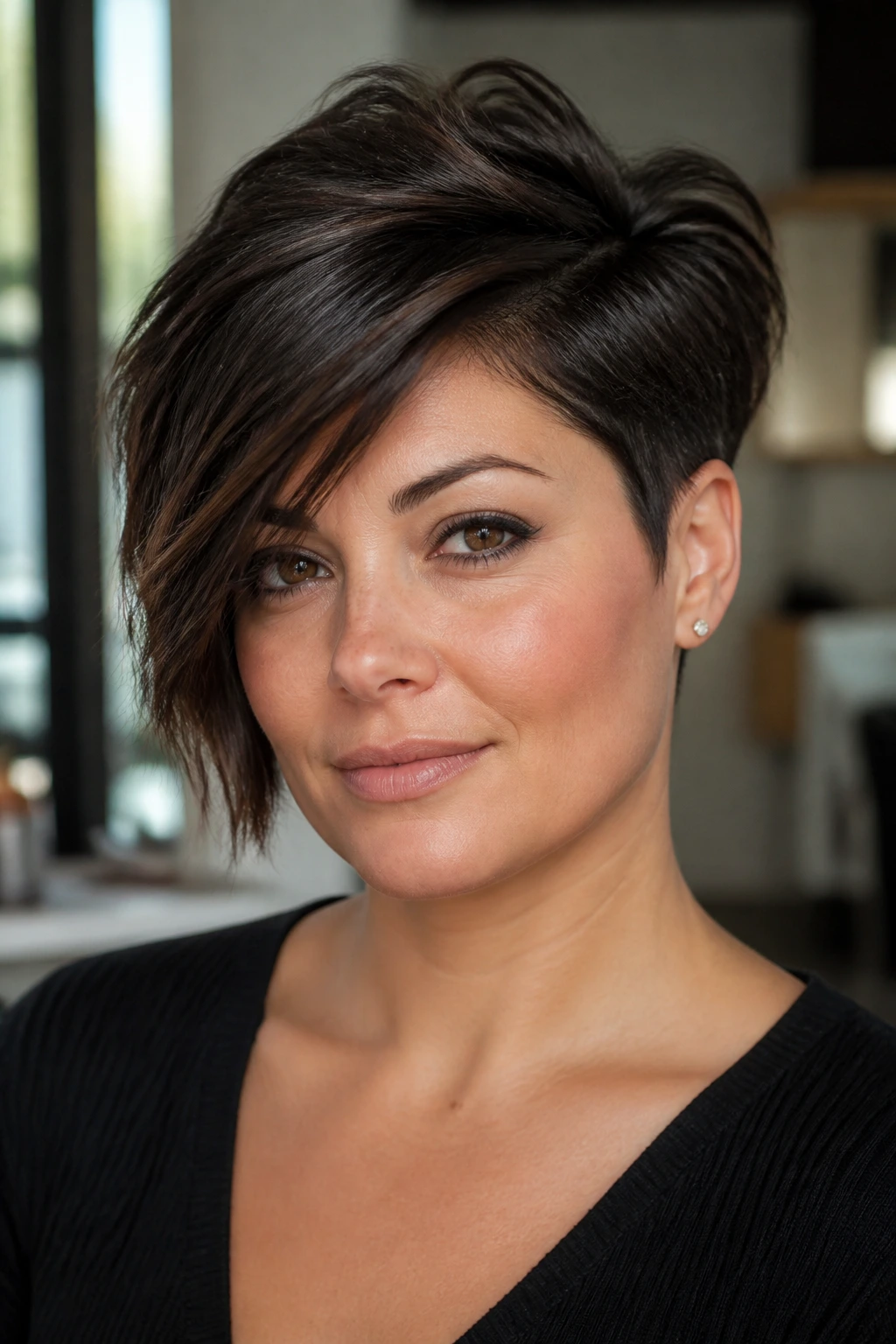
An asymmetrical pixie is a quiet cheat code for round faces. One side is kept longer, usually grazing the cheekbone or jawline, while the other side stays tighter and shorter. That uneven line breaks the symmetry that can make a round face look fuller.
The part matters here. A deep side part shifts the weight of the haircut and creates a diagonal sweep across the face. Thick hair gives that sweep enough body to stay visible, which is half the point. If the long side lands right at the cheekbone instead of stopping there, the face starts to look longer almost immediately.
This is a good pick if you want structure but not fuss. The cut has shape built in, so even a rough air-dry can look deliberate.
7. The Bixie Cut

A bixie sits between a pixie and a bob, and that middle ground is useful if you are nervous about going too short. The length usually brushes the ears or sits just under them, with a tapered nape and lighter layers through the top. Thick hair gets movement without losing all its softness.
For round faces, the bixie works because it keeps a little more length around the perimeter while still opening the face. That extra inch or two can be the difference between “short hair” and “my hair grew out into a triangle.” The key is not letting the sides flare at cheek level.
If you want something easy to tuck behind the ear, this is the one. It also grows out gracefully, which is a small mercy when you are not in the mood for a full salon sprint every month.
8. The Feathered Layered Pixie
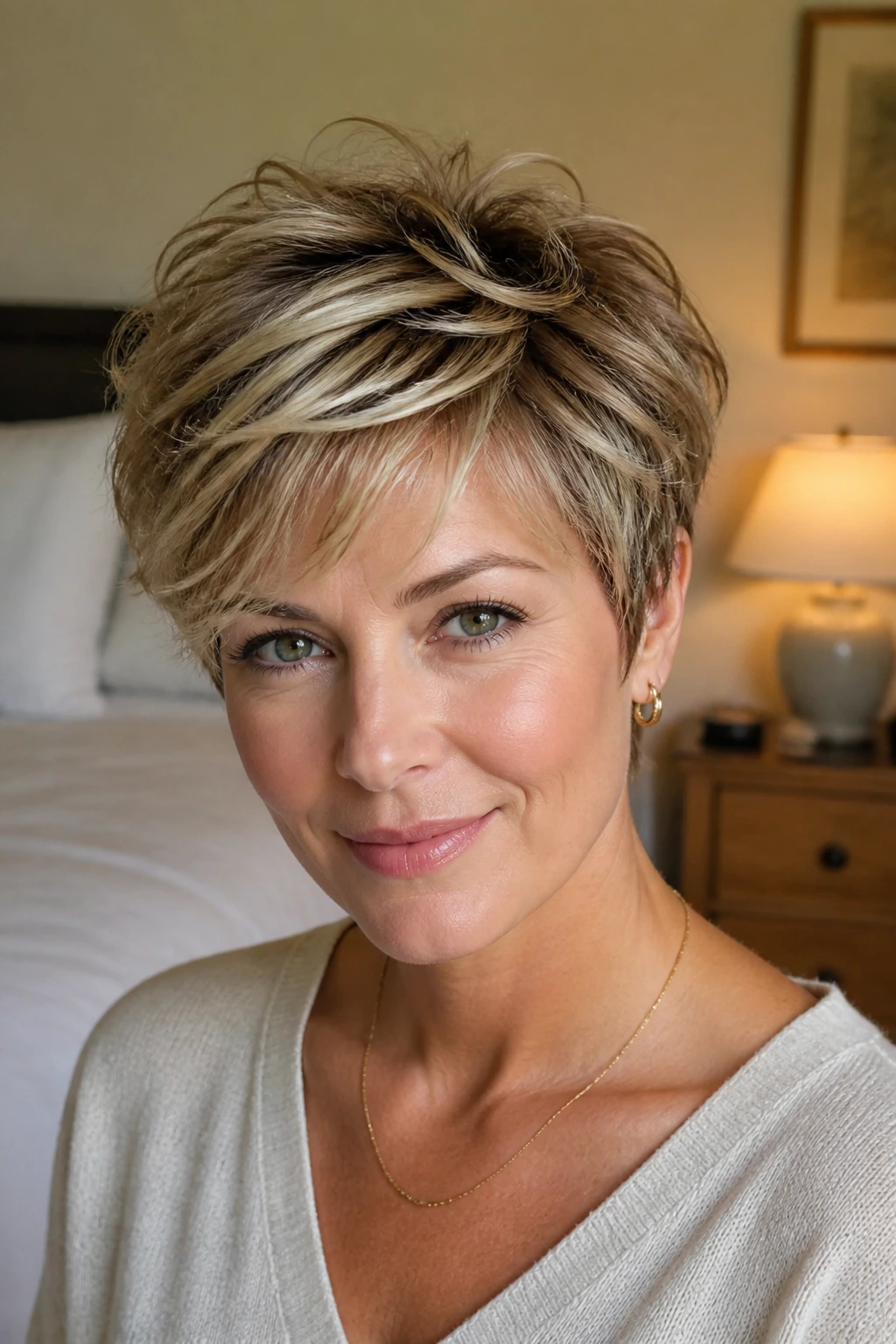
Feathering can be lovely on thick hair when it is controlled. The ends look lighter, the layers move, and the whole cut feels airier than a blunt crop. On a round face, feathered layers help because they keep the outline soft while still allowing height at the top.
This cut behaves best on straight to softly wavy hair. If the hair is coarse and frizzy, too much feathering can leave the ends looking ragged, so the layers should be subtle. The shape should feel brushed, not shredded.
A small round brush and a blow-dryer nozzle are enough to shape this one. If you like a polished finish that does not look too severe, the feathered pixie stays in the sweet spot.
9. The Curly Pixie With Tapered Sides
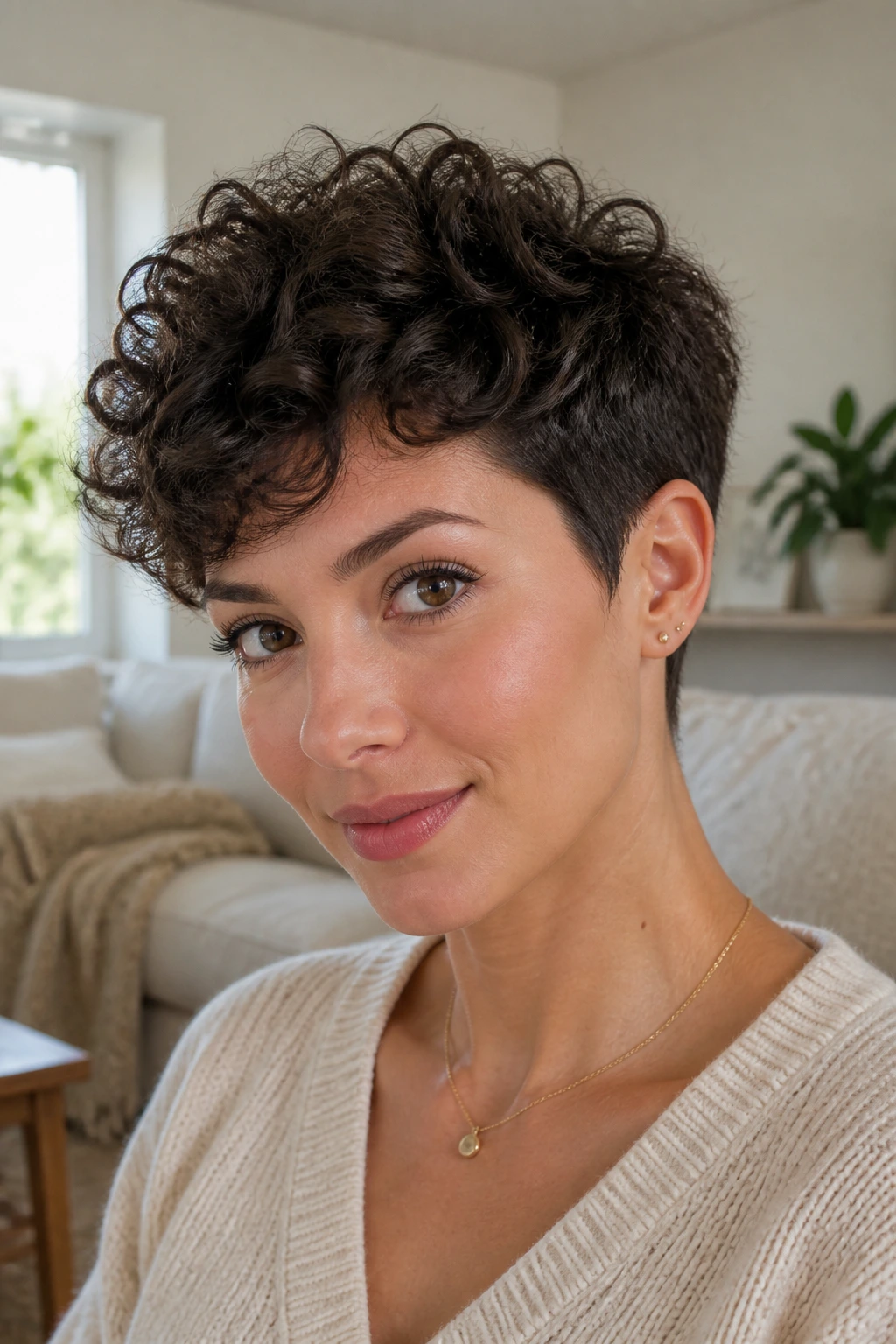
Curly hair and thick hair are not always the same thing, but they often travel together. A curly pixie with tapered sides lets the curl pattern stay visible on top while the sides and nape are trimmed closer so the shape does not flare out around the cheeks.
The biggest mistake with curly short hair is cutting it too wet and guessing at shrinkage. That is how you end up with a top that jumps an inch shorter than expected. A good stylist will respect the curl pattern and leave enough length on top to let the shape spring up without turning tight and round.
Use a curl cream or light mousse and leave the curls alone once they form. Pushing them around too much breaks the pattern and makes the cut look wider than it is.
10. The Slicked-Back Pixie
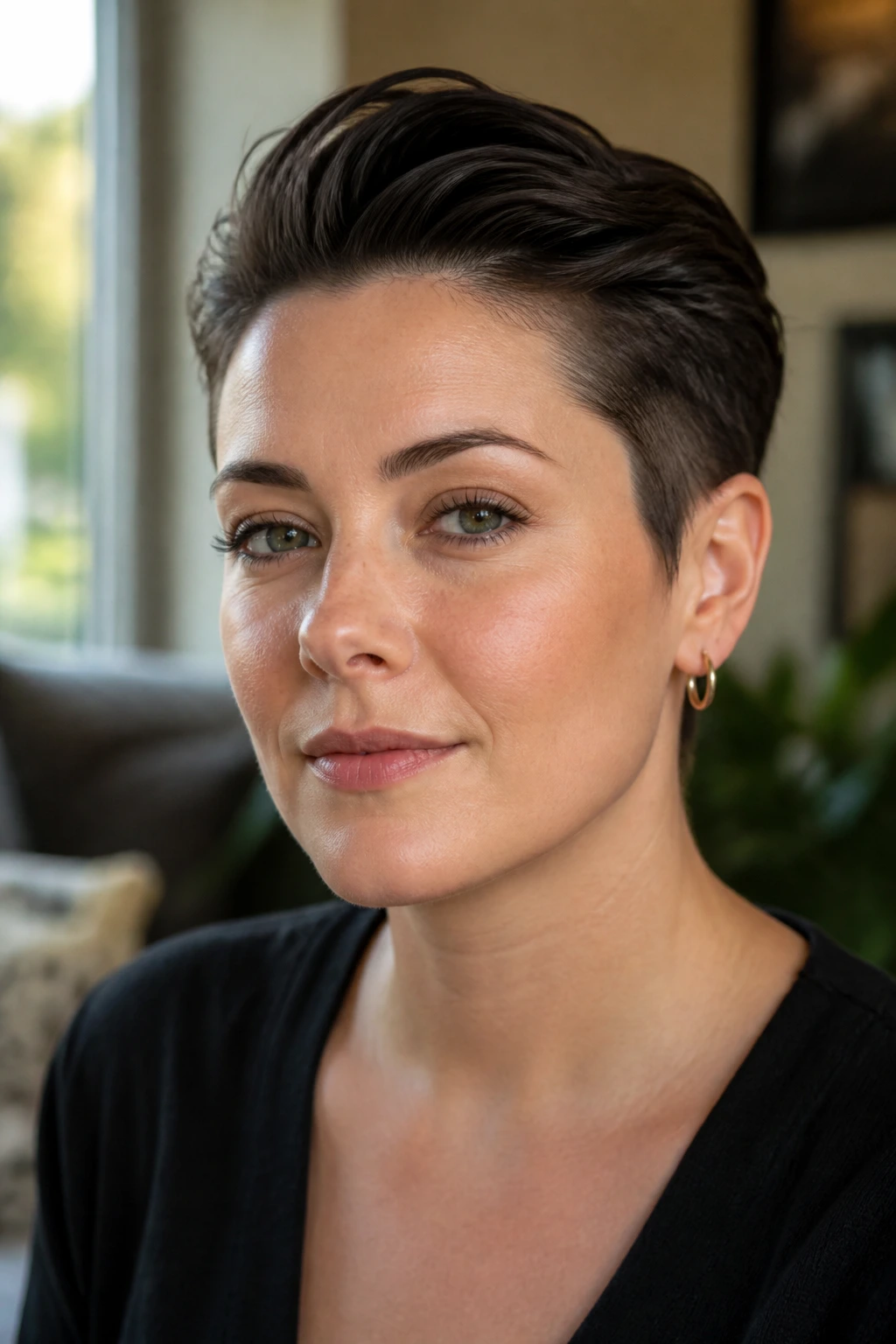
A slicked-back pixie is sharper than people expect, and it suits round faces because it opens up the forehead and stretches the face visually. The hair moves away from the cheeks instead of sitting next to them, which is exactly the kind of line that helps here.
This version needs enough top length—usually 3 inches or more—to actually push back without popping up again. Thick hair helps the style hold, but you still need a product with some grip. A medium-hold gel or styling cream works better than a heavy pomade that sits greasy on dense strands.
Wear it when you want the haircut to look deliberate and slightly dressed up. It is not trying to be soft. That is the point.
11. The Deep Side-Part Pixie
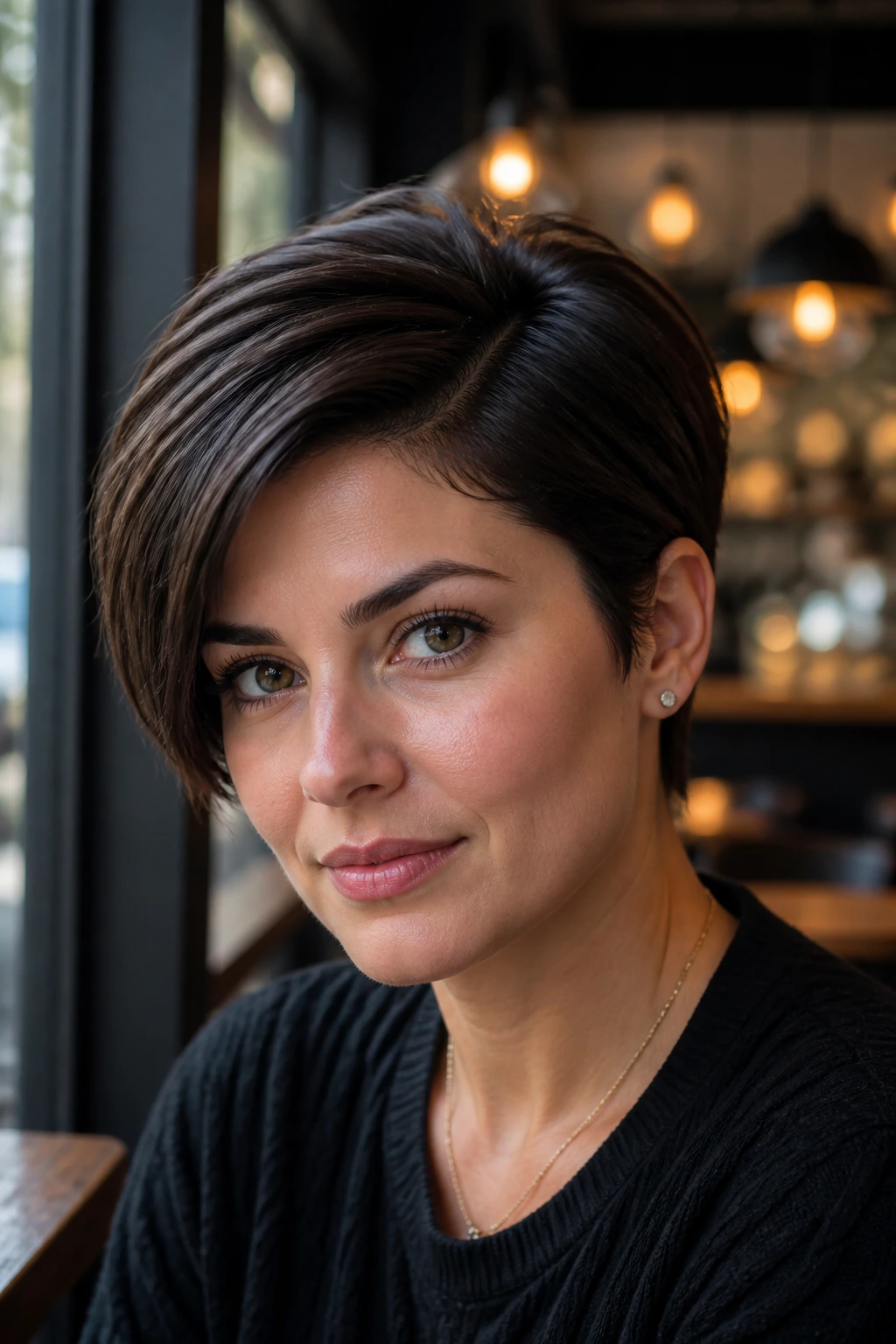
A deep side part does a lot of quiet balancing for round faces. It shifts the volume off center, creates one longer sweep across the forehead, and gives the haircut a longer line than a middle-ish part ever could. On thick hair, that off-center weight also helps the cut settle.
If your cowlick keeps fighting the part, the answer is not more product. It is training the hair while damp with a comb and a dryer nozzle pointed in the direction you want the part to live. Once the hair sets, the line stays put far better.
This style is especially good if you want the cut to feel softer around the face. It can look polished with a smooth finish or a little undone if you pinch the ends apart with paste.
12. The Shaggy Pixie Crop
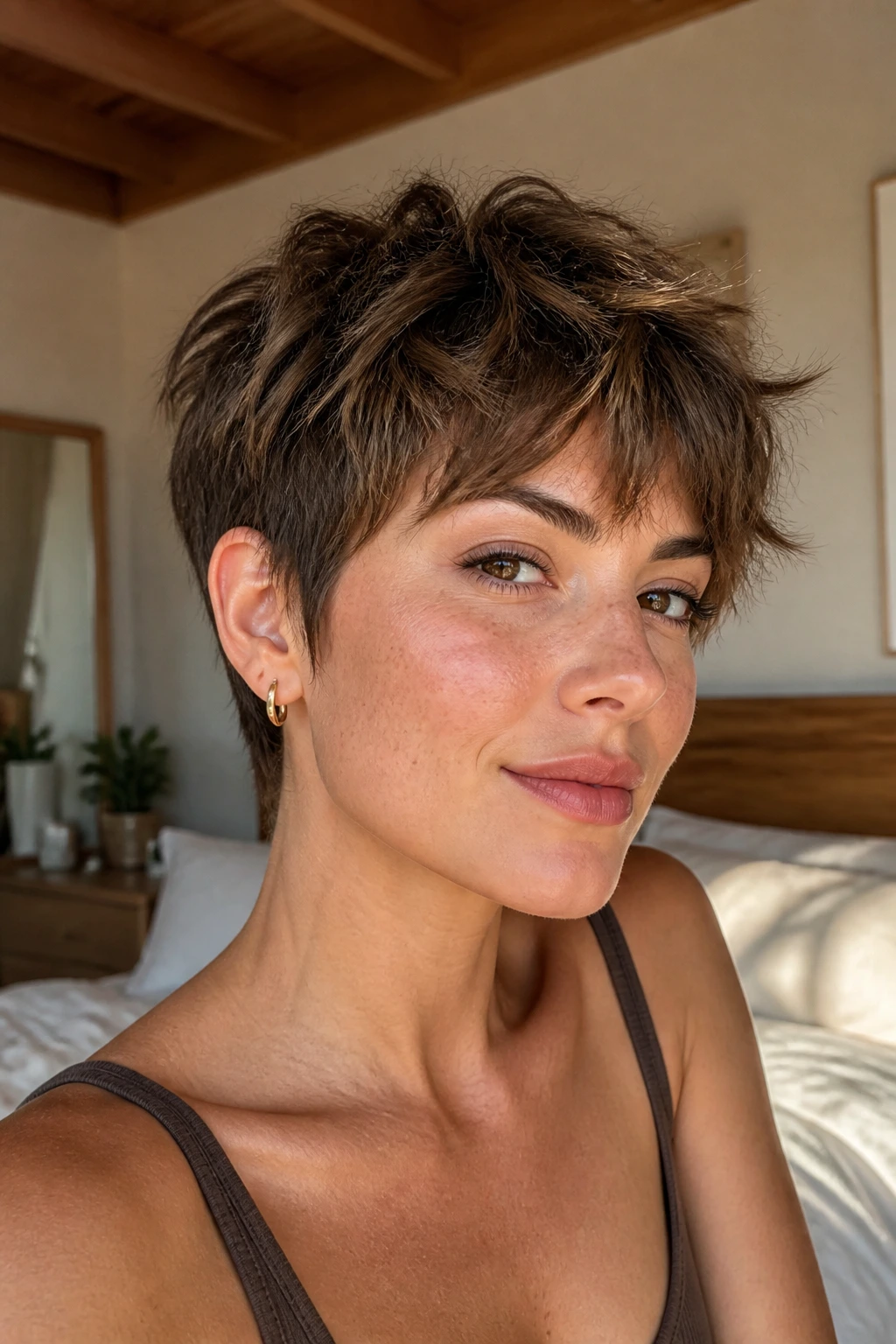
A shaggy pixie crop has less polish and more movement, which is often a relief on thick hair. The layers are broken up enough that the cut does not read as a single block, and the edges have a worn-in feel that keeps the style from sitting too neatly on a round face.
This is the one I would hand to someone who likes a bit of mess in their hair and does not want to spend long with hot tools. A touch of mousse at the roots and a scrunch with your hands can be enough. If the hair has wave, even better; the texture does some of the decorating for you.
The key is keeping the sides narrow. A shaggy top with wide sides is not a pixie, it is just puffy. Small difference. Big consequence.
13. The Crown-Volume Pixie
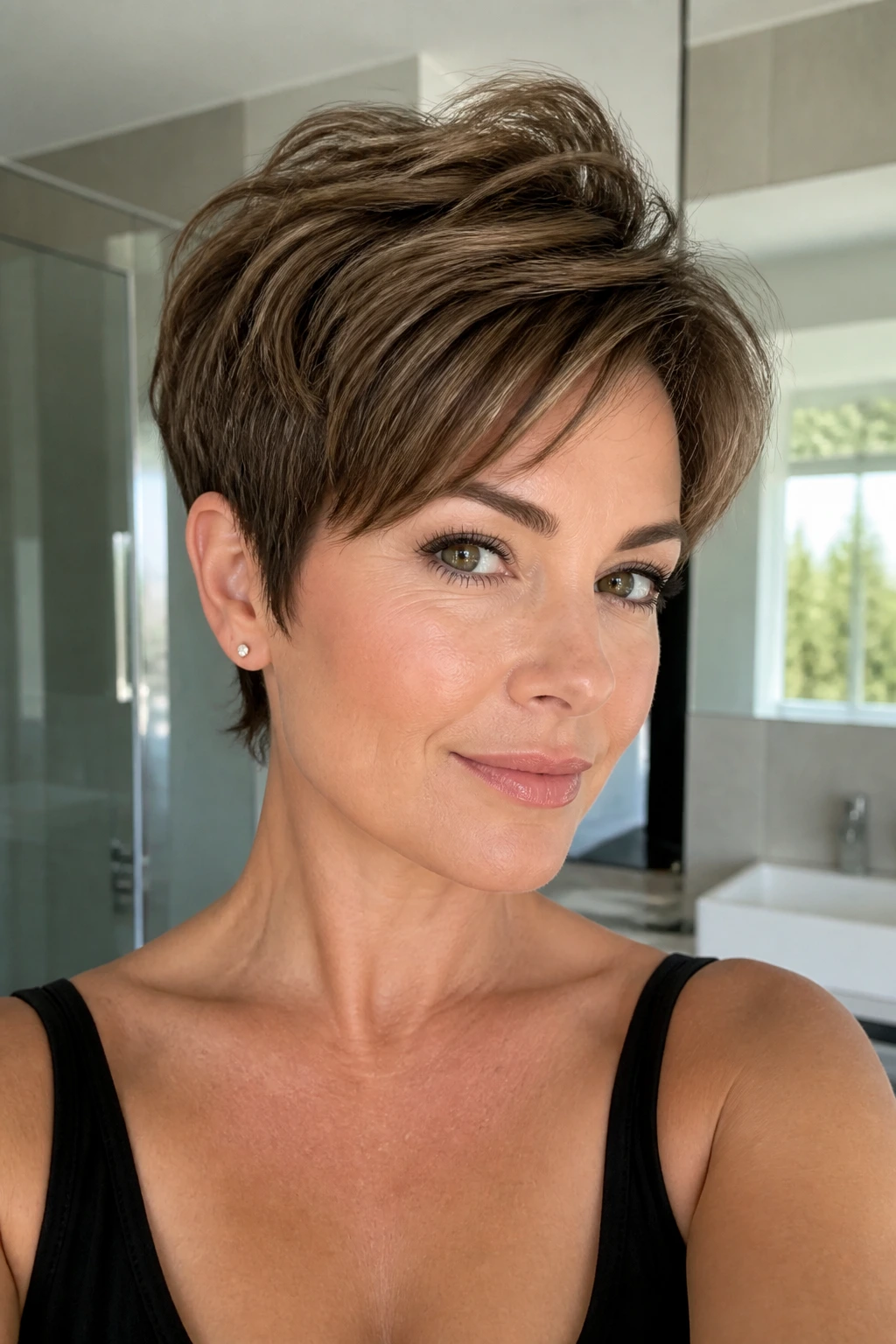
If your face needs length, crown volume is the safest place to create it. The top is cut to encourage lift, while the sides and back stay compact. Thick hair has the body to hold that shape, which is why this version looks so satisfying when it is done well.
Ask for the longest layers at the crown and shorter, cleaner edges around the temples. The lift should look intentional, not teased. A small round brush, a root spray, or even a few clipped sections while the hair cools can help set the shape.
This is a strong choice for anyone whose hair tends to lie flat on top. Flat roots make the face look wider. A little height fixes more than people expect.
14. The Ear-Skimming Pixie With Long Sideburns
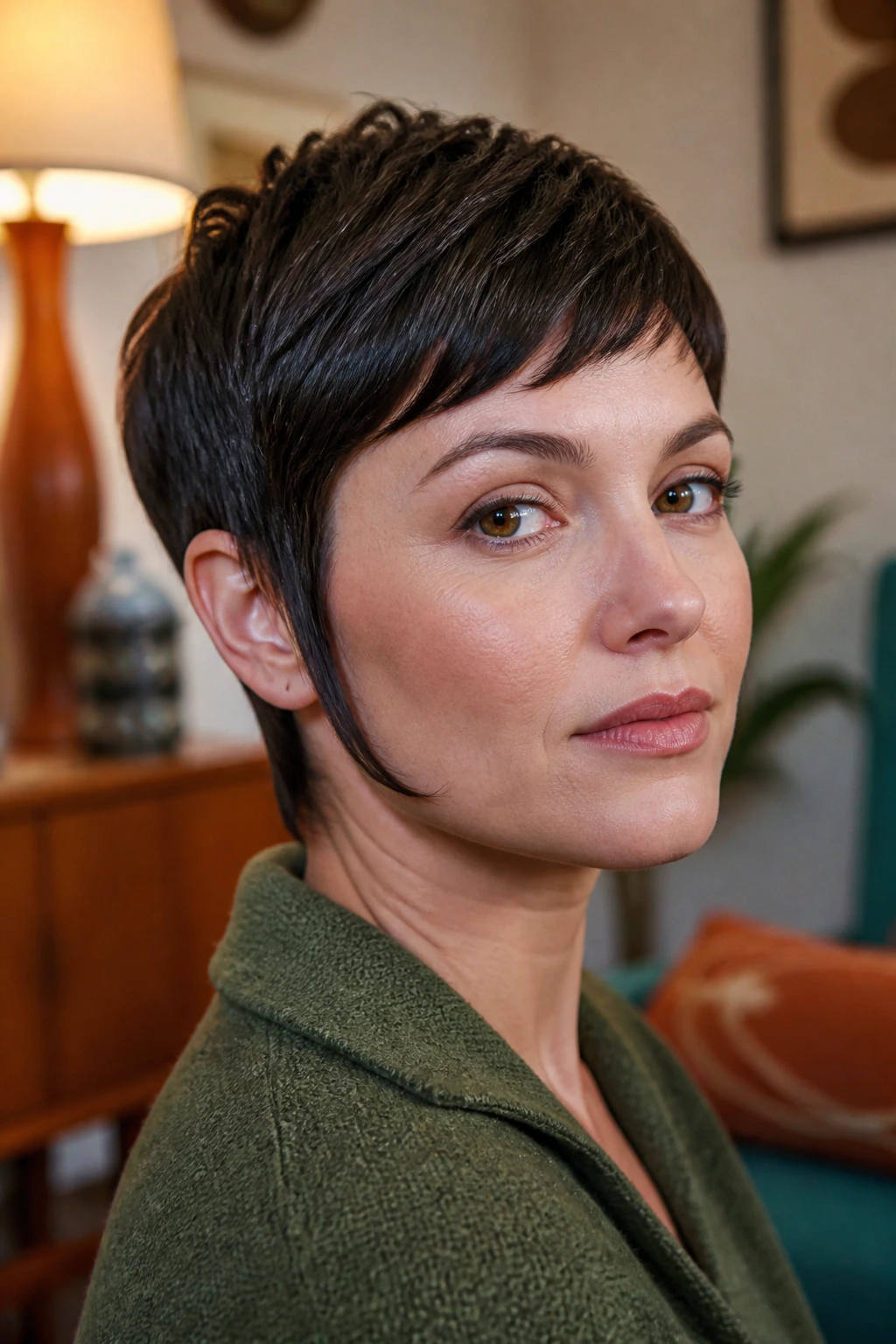
This cut uses length in a very specific place: just in front of and below the ear. That strip of hair creates a downward line, which helps a round face look longer, and the thicker top keeps the haircut from feeling skimpy.
Long sideburns need maintenance. If they fuzz out, the whole shape loses precision fast. But when they are neat, they soften the cheek area without adding bulk. That is a nice balance for thick hair, which can go from sculpted to bulky in a hurry.
- Ask for: ears mostly visible, sideburns left longer and tapered, nape kept tidy.
- Styling note: tuck one side behind the ear for a clean diagonal line.
- Best mood: soft, smart, and a little retro in the good way.
15. The Micro-Fringe Pixie
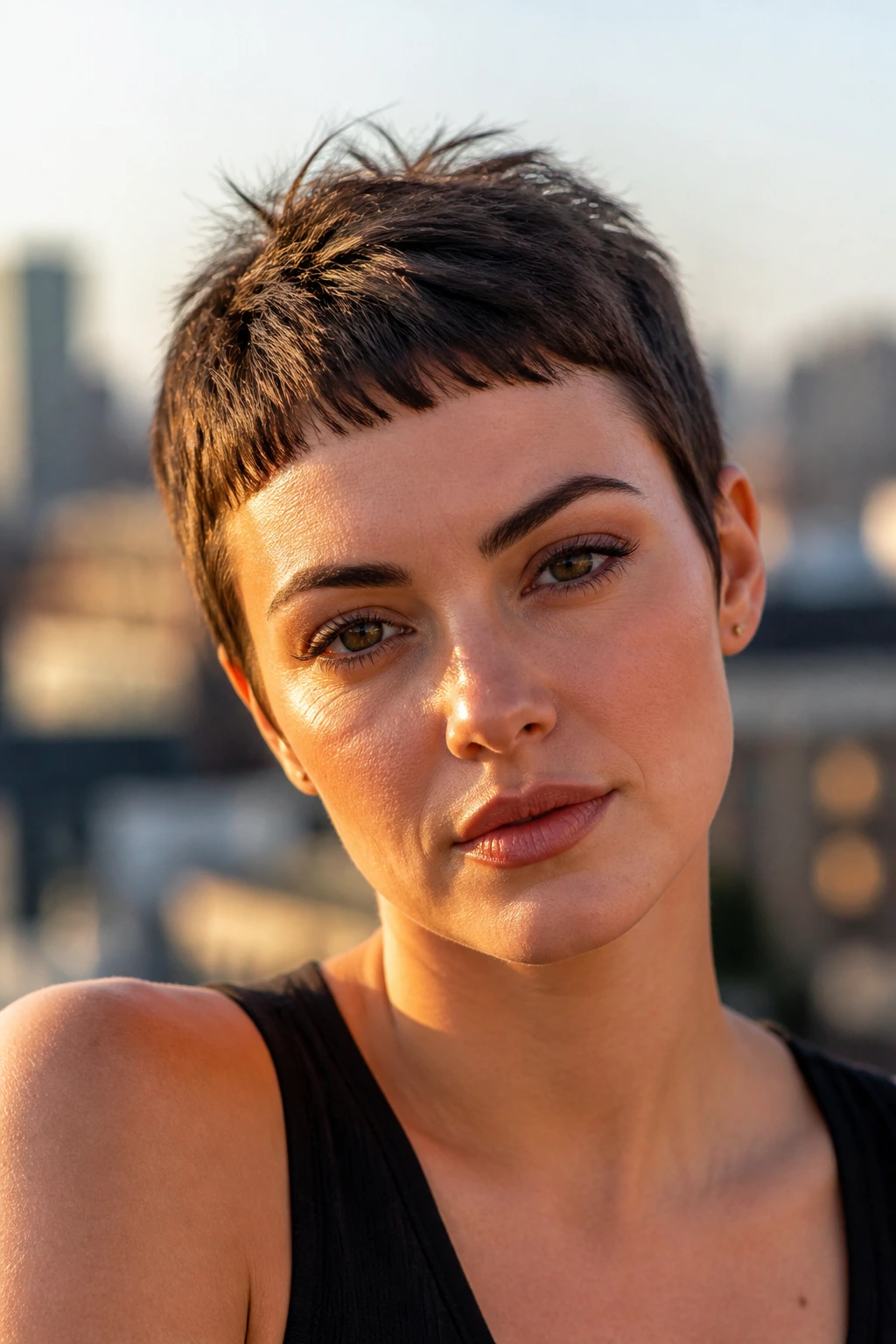
A micro-fringe pixie is a bolder move. The fringe sits high, the forehead opens up, and the rest of the cut has to do the work of balancing the face. On thick hair, that means the top should stay narrow and lifted, not wide and round.
I would not hand this to every round face without a caveat. If your forehead is already short, a blunt micro fringe can chop the face in the wrong place. But if the fringe is slightly broken or textured and the sides are lean, it can look sharp and very modern.
The cut feels best when it is paired with a bit of edge everywhere else. Think clean nape, narrow temples, and a crown that stands up just enough to keep the face from shrinking vertically.
16. The Nape-Taper Pixie
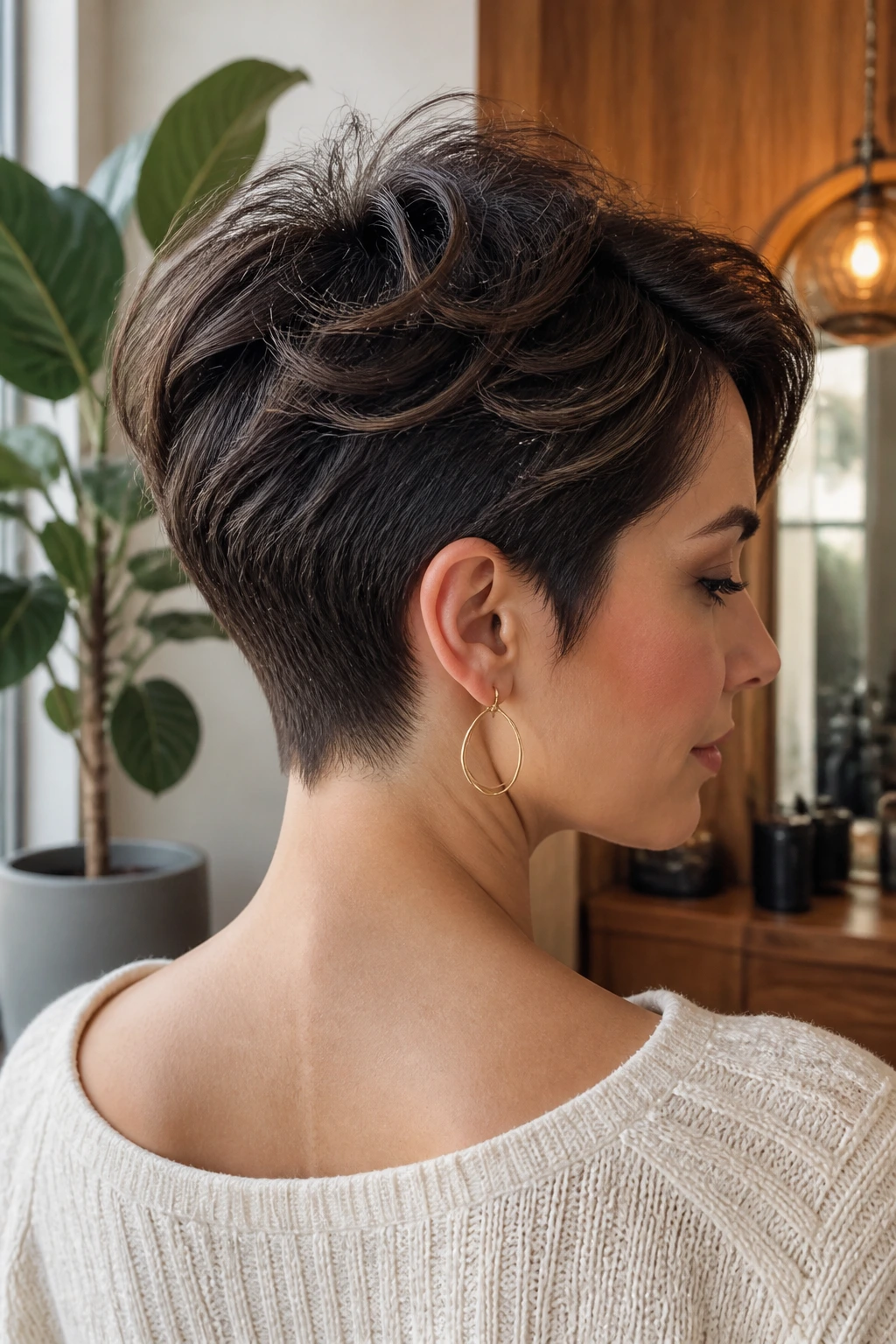
A tapered nape is one of those details nobody notices until it is missing. On thick hair, the back can puff out more than the front, and a clean taper at the neck keeps the silhouette from reading blocky. For round faces, that taper also helps stretch the whole shape downward.
This cut often looks better than it sounds. The front can stay soft or side-swept, but the nape does the quiet work of keeping the cut close to the head. If you wear collars, scarves, or jackets that rub the neck, this is a good practical choice because the line stays neat longer.
It is also one of the easiest cuts to maintain between trims. When the neckline stays crisp, the rest of the pixie keeps looking intentional.
17. The Disconnected Pixie
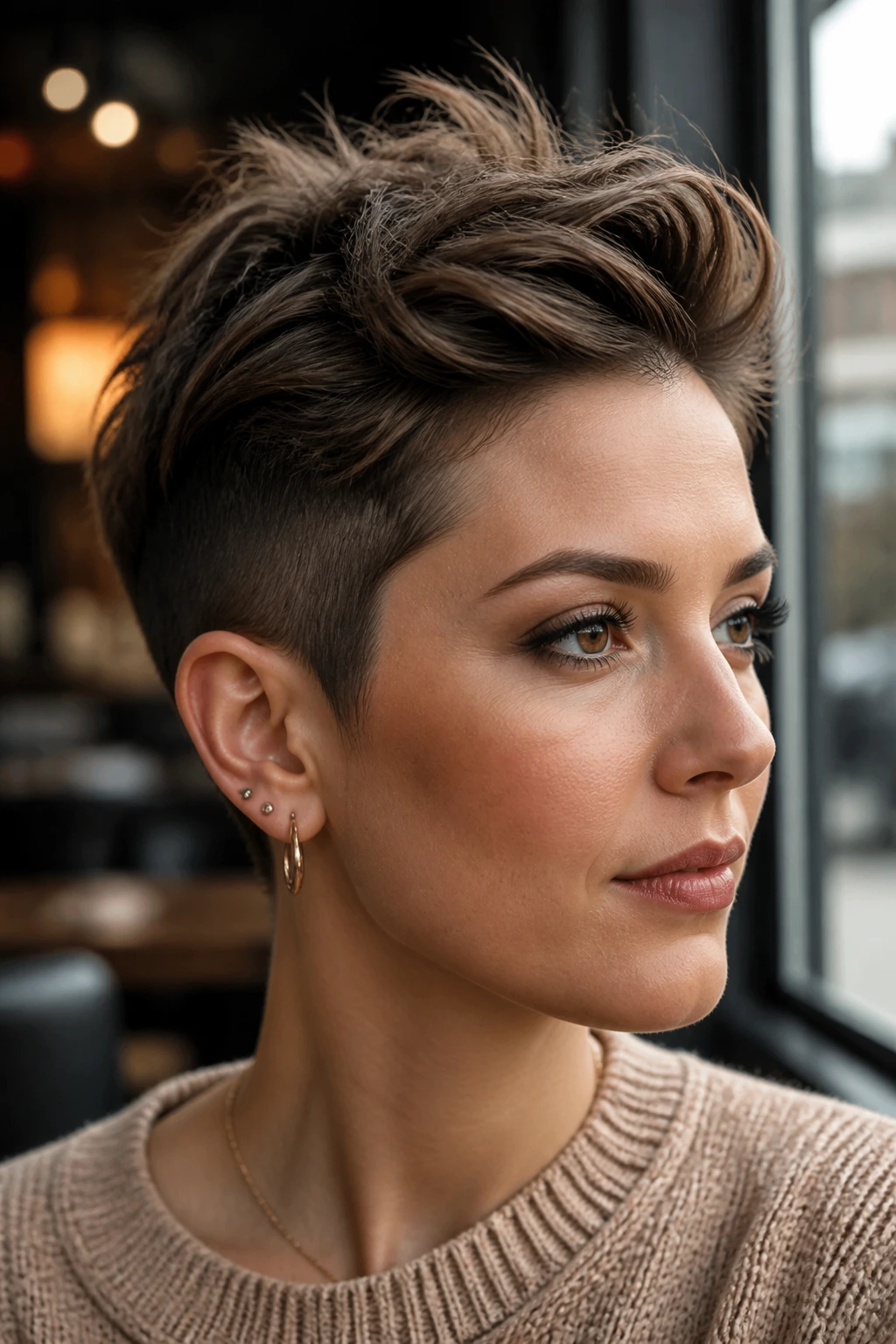
A disconnected pixie leaves a visible difference between the top and the sides instead of blending everything smoothly. That separation is useful on thick hair because it gives the stylist a way to remove bulk without collapsing the shape into a blur.
This cut can look a little tougher, and I mean that as a compliment. It gives round faces some edge and helps avoid the too-sweet look that very blended pixies can fall into. The top should still have movement, though. If the disconnection is too severe, the haircut starts to feel like two different ideas stuck together.
- Best for: dense hair that needs clear shape, not soft blending.
- Ask for: a deliberate disconnect at the temple or side, not accidental choppiness.
- Style cue: keep the top lifted and the sides close.
18. The Soft Mullet Pixie
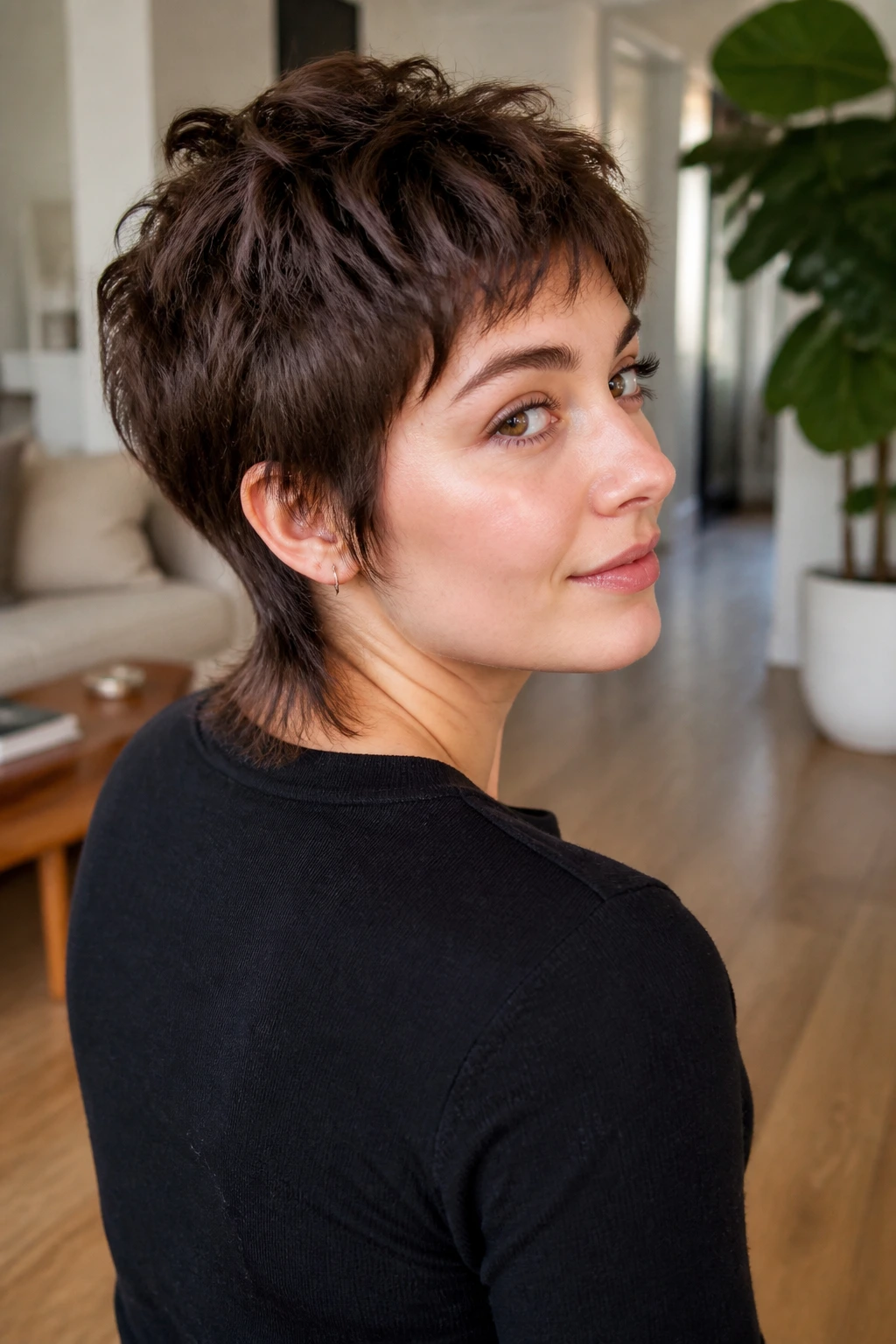
The words sound dramatic, but the haircut can be surprisingly wearable. A soft mullet pixie keeps the sides and crown shorter while leaving a little extra length in back. That back length helps thick hair lie better at the nape, and the forward-facing pieces keep a round face from looking too wide.
This version works when you want a bit of personality without a full scene-stealing haircut. The difference between this and an old-school mullet is in the softness. The outline should feel modern, with blended edges and enough top volume to keep the face open.
If you like hair that moves when you turn your head, this cut has that. It is not a stiff shape, and that looseness is part of the charm.
19. The Razor-Cut Pixie
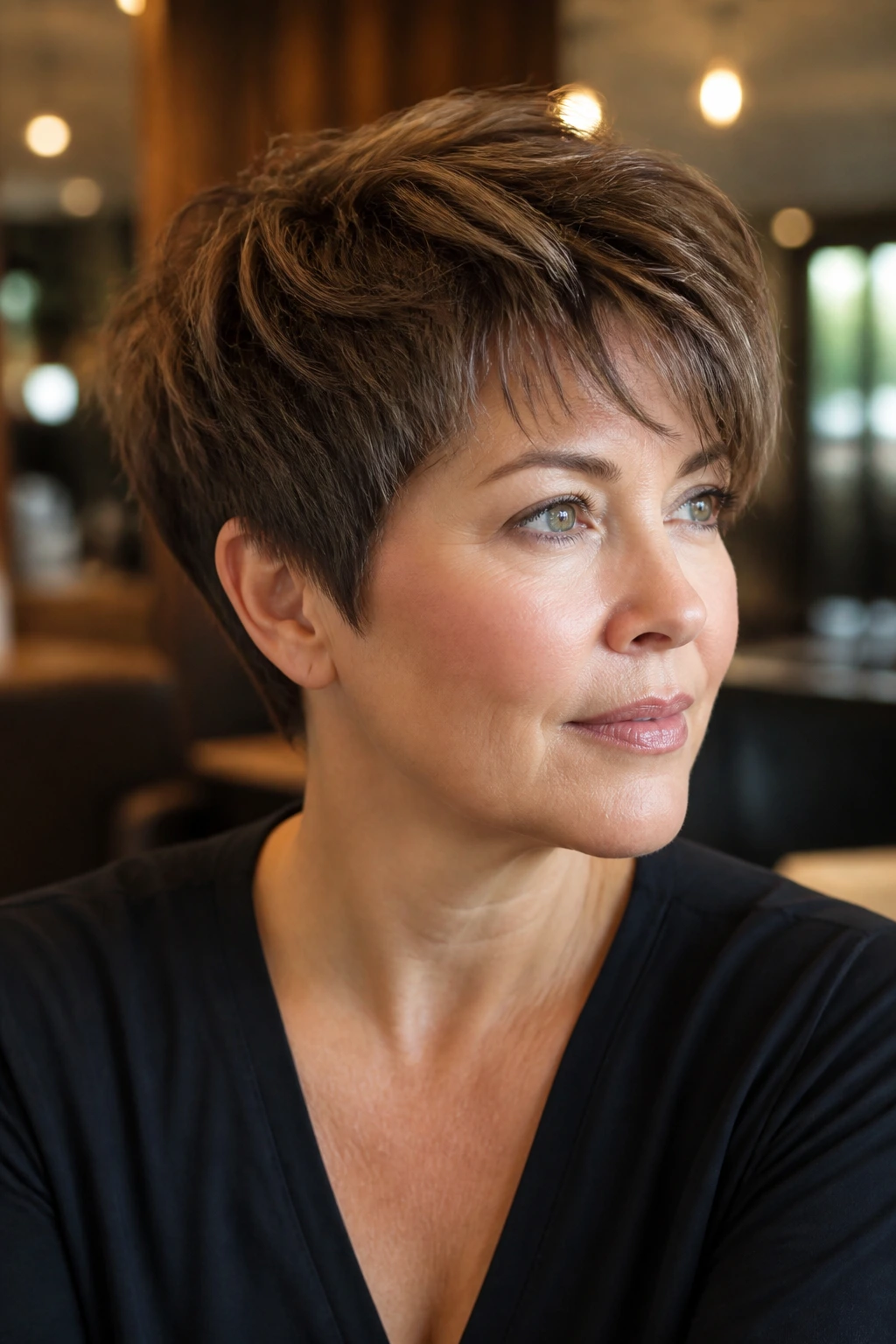
Razor-cutting can give thick hair a lighter, airier finish, but it is not a universal fix. On soft or wavy hair, the razor can create lovely, feathery ends that move well. On coarse hair, it can trigger frizz if the stylist gets too enthusiastic with it.
That is why this cut depends on judgment. The goal is not to shred the hair into pieces. The goal is to soften the perimeter and reduce the heavy, blunt edge that can make a pixie look boxy on a round face. Ask for controlled razor work, not an all-over attack.
If your hair usually feels too stiff in a blunt cut, this is worth considering. If it already frizzes when the humidity goes up, keep the razor work modest.
20. The Swept-Up Faux-Hawk Pixie
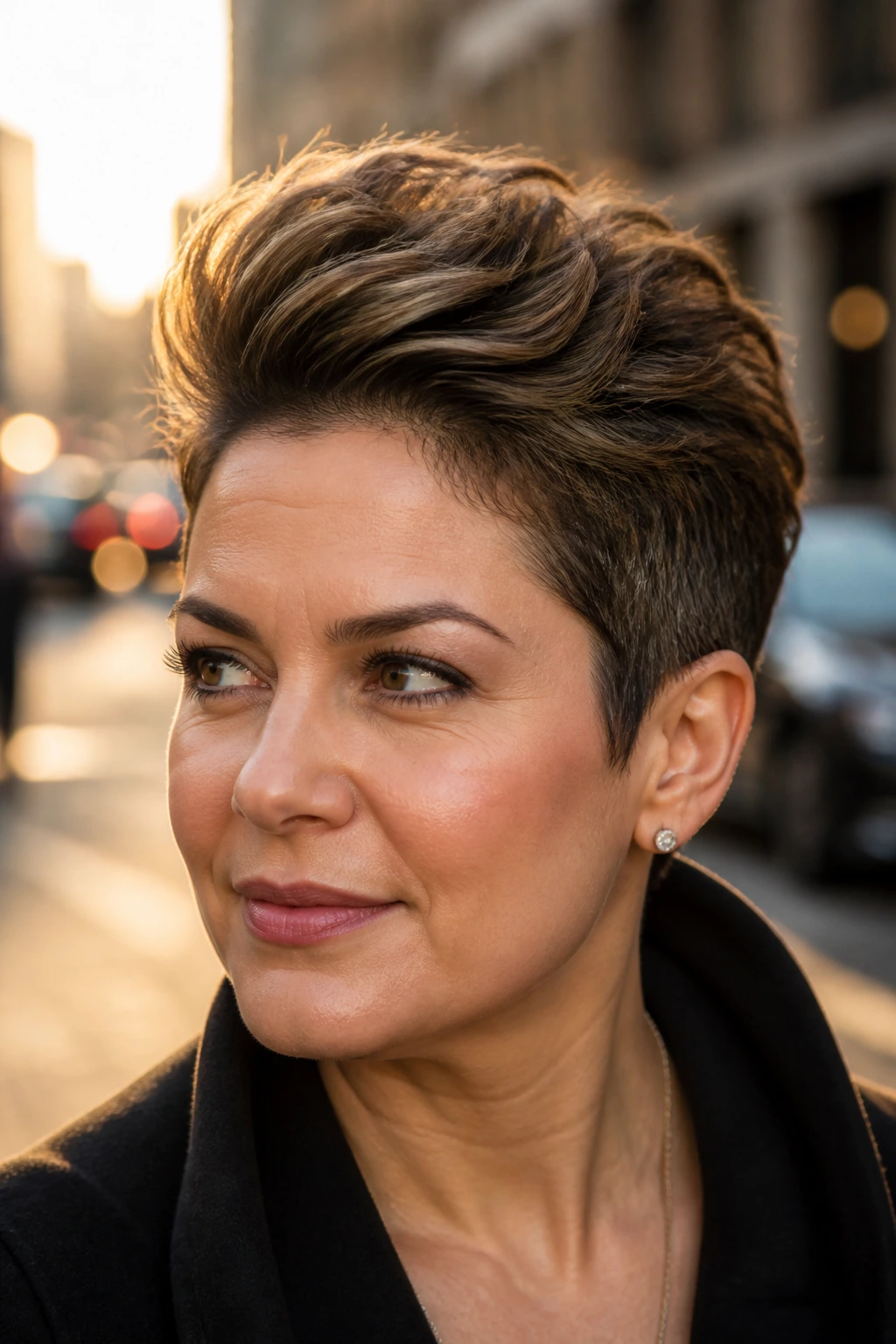
A faux-hawk pixie gives you height where you need it most. The center strip of hair is kept longer and styled up or back, while the sides stay close. On a round face, that vertical center line does exactly what it should: it stretches the shape.
Thick hair holds this style well because the density gives the ridge some structure. You do not need it to stand straight like a sculpture. A soft lift in the center is enough. A medium-hold paste or cream wax will keep the shape without making the hair crunchy.
This is one of the more playful pixies in the group, but it is not hard to wear. If you like a short cut that has a little energy, it hits that mark.
21. The Balanced Rounded Pixie
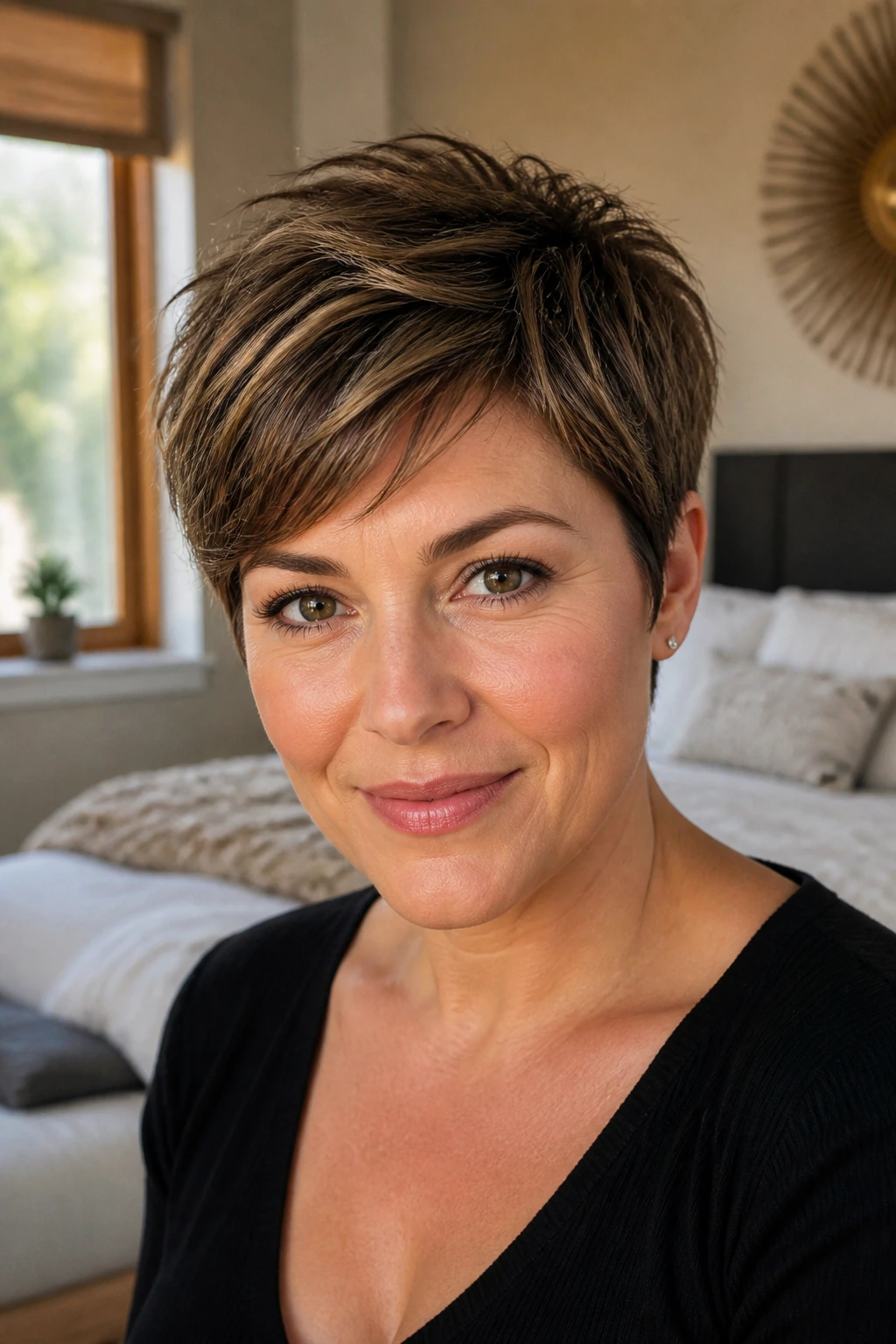
A rounded pixie sounds dangerous for a round face, and on paper it can be. The difference is in the details: the top has lift, the sides are narrow, and the overall outline is soft rather than mushroom-shaped. Done properly, it looks controlled instead of circular.
This one suits people who want the haircut to feel feminine and gentle rather than sharp. The trick is to keep the widest point above the cheeks, not at them. You want curve, but you want it to be placed with care.
If your style leans classic, this is one of the most wearable short cuts in the set. It still needs regular trimming, though. Rounded shapes lose their polish fast when the nape grows out.
22. The Long Pixie Bob Hybrid
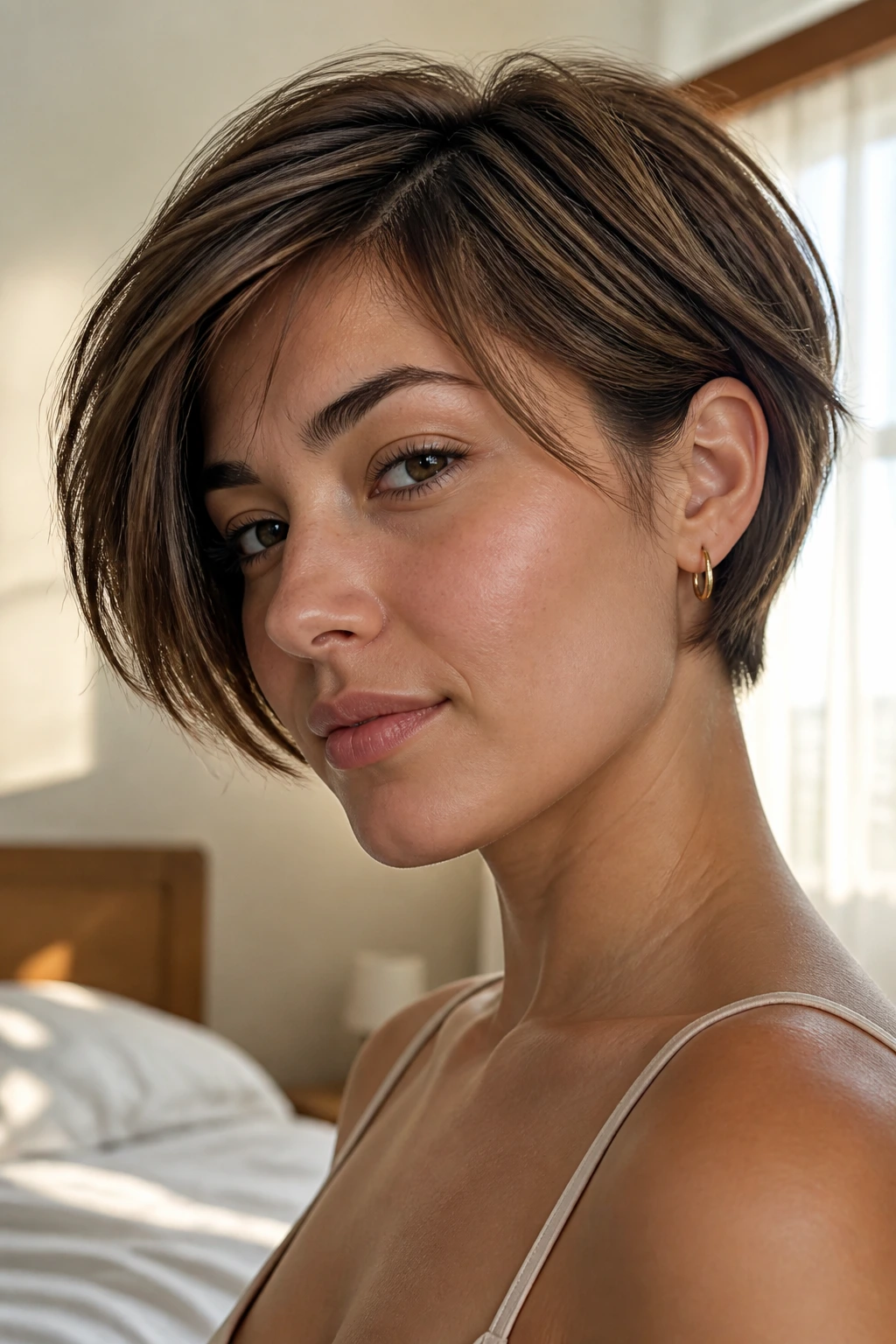
If you are not ready for a full crop, the long pixie bob hybrid is the safest place to land. It keeps enough length to tuck behind the ear or brush forward, while the nape and sides are still shaped tightly enough to control thick hair. That balance makes it a strong choice for round faces that need a slimmer outline.
The cut is forgiving in the grow-out phase, which matters more than people admit. A lot of short hair ideas fail because they look great for two weeks and strange for six. This one stays useful longer. You can wear it smooth, piecey, or a little tousled, and the shape still makes sense.
If you want to test short hair without losing options, start here. It is the least dramatic member of the group, and sometimes that is the smartest move.
What to Tell Your Stylist Before the Shears Come Out
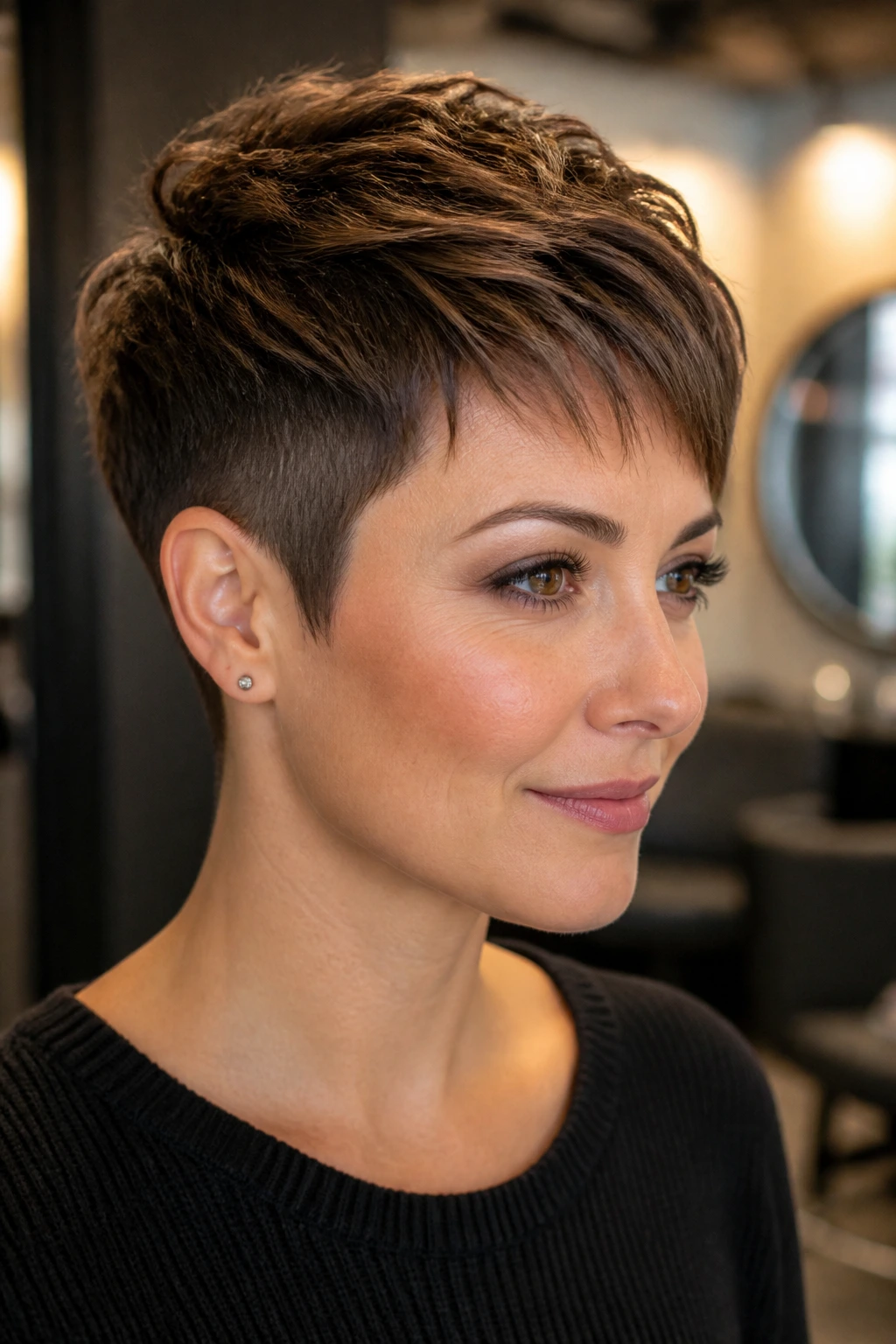
The fastest way to get the wrong pixie is to say, “Just make it shorter.” That sentence is a trap. Thick hair and round faces need shape decisions, not vague optimism. Bring photos from the front, side, and back if you can find them. Haircuts live in the back, too, and that part gets ignored in far too many chair-side conversations.
Tell your stylist where the hair grows heavy. Mention if it puffs at the temples, swirls at the crown, or flips out at the neck. If you wear glasses, say so. The side pieces need to clear the arms without sitting awkwardly on top of them, and that tiny detail changes the whole balance of the cut.
A few phrases help:
- Keep the sides narrow and the top longer.
- Leave enough length to create height at the crown.
- Remove bulk behind the ears and through the nape.
- Do not make the fringe a straight, wide line.
- Work with the cowlicks, not against them.
If your hair is very dense, ask how they plan to remove weight. Point-cutting and selective internal debulking are better answers than “I’ll just thin it out.” One of those phrases sounds like a haircut. The other sounds like a gamble.
Tools That Keep Short Dense Hair in Line
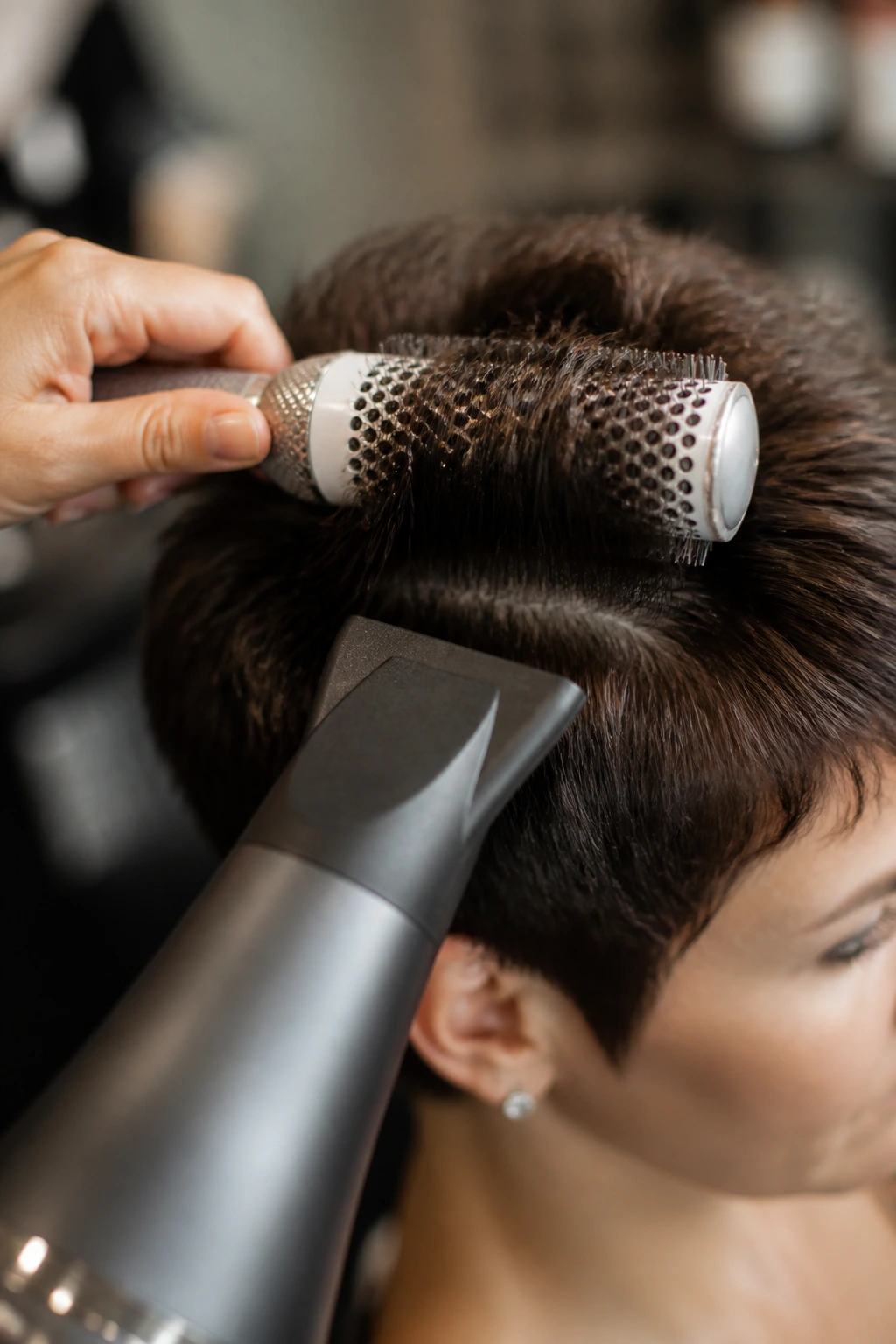
Short thick hair is easier when the tools are simple and specific. You do not need a drawer full of products. You need the right few things that keep the shape from puffing up by noon.
-
Blow dryer with a nozzle: The nozzle gives you direction, which matters when you need lift at the crown and control at the sides.
-
Small round brush: A 1-inch or 1.5-inch brush is enough for shaping fringe and bending the top without over-smoothing it.
-
Wide-tooth comb: Good for detangling wet hair without tearing up the cuticle or pulling out the shape you just built.
-
Matte paste or cream wax: A pea-sized amount is usually enough for piecey texture on thick hair. More than that can make the hair greasy fast.
-
Lightweight mousse: Helpful at the roots if your hair tends to lie flat or collapse after drying.
-
Dry shampoo: Great for day-two and day-three volume at the crown, especially on dense hair that gets heavy near the scalp.
-
Duckbill clips: Useful for setting a side sweep or lifting the crown while the hair cools.
-
Fine mist root spray: Optional, but handy if your hair needs a little extra lift without a sticky finish.
How to Style a Thick Pixie on Real Mornings
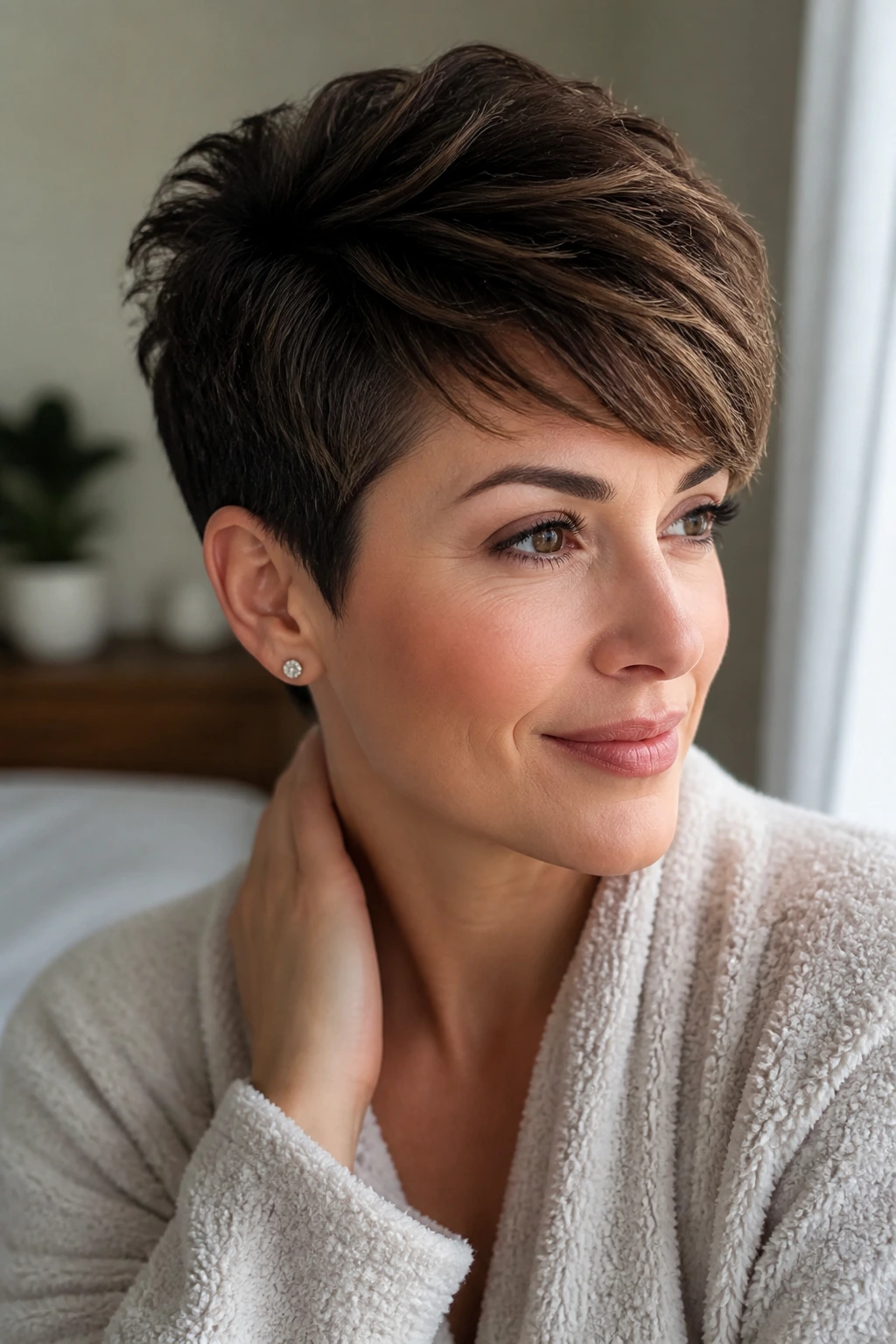
The best styling routine for a thick pixie is usually short. Really short. That is part of the point. Start with damp hair, not soaking wet hair, and work a small amount of mousse or root spray into the roots if you want lift. On dense hair, too much product at the ends makes the cut feel heavy again, which is the opposite of what you want.
For air-dry days
Air-drying works when the cut already has a good shape. Scrunch in a light cream or mousse, then tuck the sides with your fingers while the hair is still pliable. If the crown needs help, clip the roots up for a few minutes while the hair dries. That tiny lift can change the whole silhouette.
For blow-dry days
Aim the nozzle upward at the crown and downward at the sides. That direction matters. Use the brush only where the hair needs to bend—usually the fringe, the top, and the face-framing pieces. You do not need to round-brush the whole head into submission.
For sleek days
A small amount of gel or styling cream on damp hair can create a slicked-back finish or a clean side sweep. Let it set before you touch it too much. Thick hair usually holds this shape well, but if you keep combing through it, the product can separate and the style loses its edge.
How to Keep the Shape Between Trims
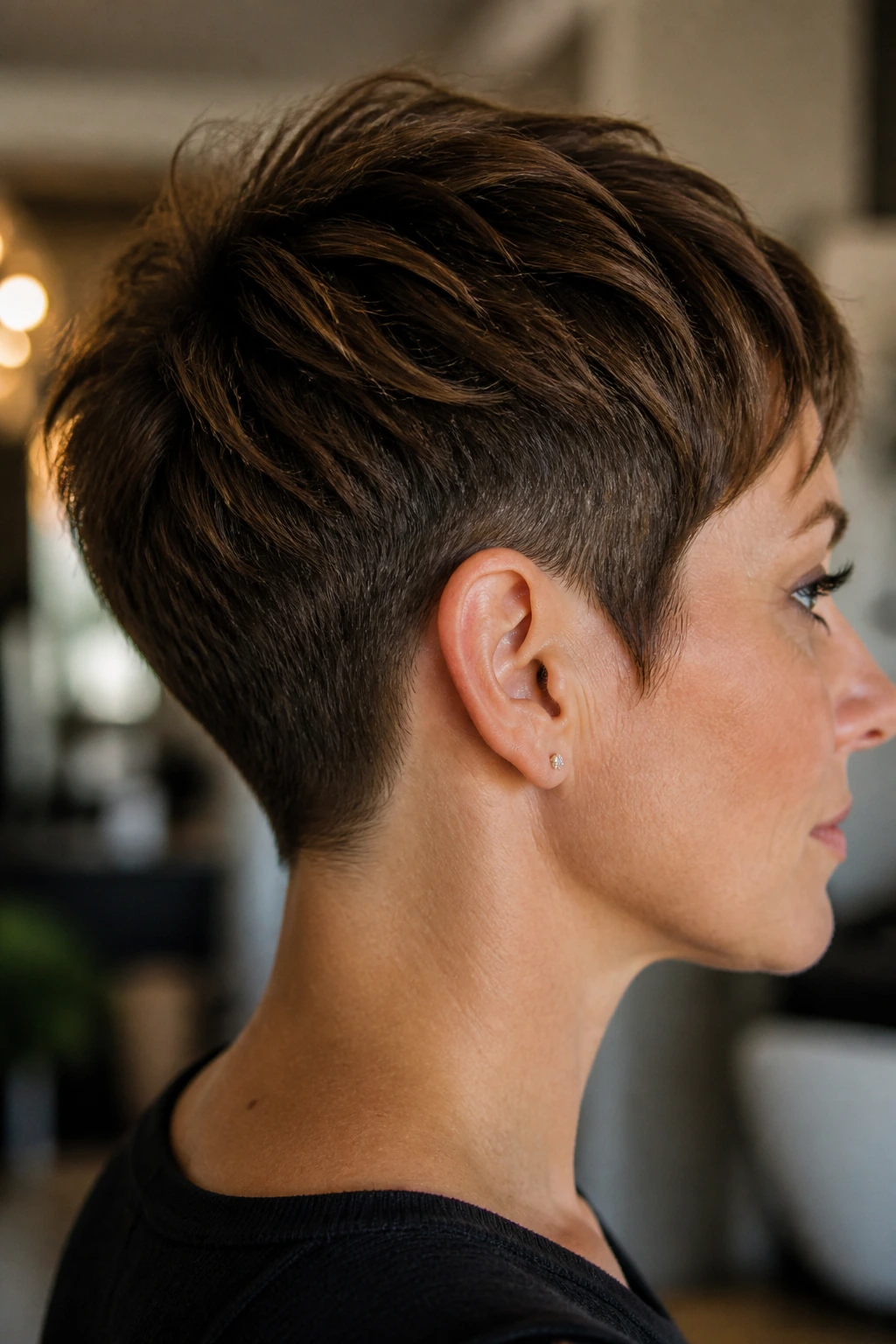
Short cuts live or die by their outline. On thick hair, that means the nape and sides start changing shape before you even notice the top growing out. A trim every 4 to 6 weeks usually keeps the silhouette clean. If your hair grows fast or the neckline gets fuzzy early, lean toward the shorter end of that range.
The nape often needs a tidy-up first. Once the back starts to flare, the whole cut looks wider. Some people can stretch to 7 weeks, but thick hair rarely stays cooperative that long without help. A quick neck clean-up between full cuts can buy you time.
Wash frequency depends on scalp oil and product use, but many thick pixies behave well with washing 2 to 4 times a week. If the ends feel dry, use conditioner only through the last inch or two of the top sections. Heavy conditioner on the crown flattens the lift you worked for.
A silk or satin pillowcase helps more than people expect. It cuts down on friction, which means less puffing at the nape and fewer weird bends at the fringe. Dry shampoo at the roots on day two can also keep the crown from collapsing into the face. Small maintenance habits add up fast with a pixie.
Variations and Personal Tweaks
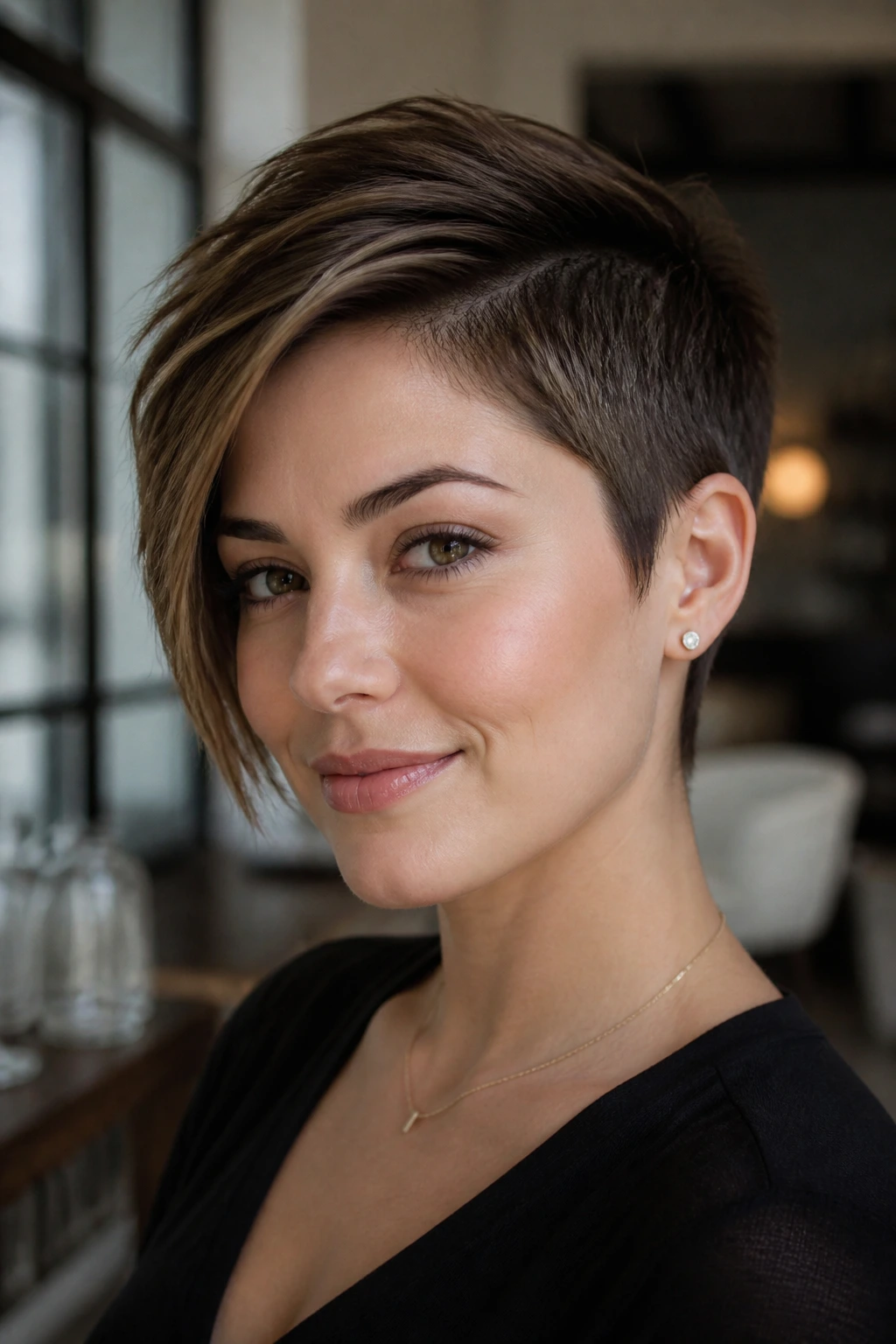
Soft and Longer
Keep the fringe and top about an inch longer than a classic crop, and soften the sides instead of clipping them close. This is the friendliest version if you want movement without a hard edge.
Sharper and More Graphic
Add a hidden undercut, a deeper part, or a micro-fringe. The shape gets more definition, and thick hair looks cleaner when the lines are decisive. This works best if you like your haircut to have some attitude.
Curl-First Cut
For wavy or curly hair, cut the shape with the curl pattern in mind and leave the top slightly longer than you think you need. Shrinkage is real. A curl-friendly pixie should be shaped dry or nearly dry so the final outline does not surprise you.
Polished Workday Version
Ask for smoother side taper, a soft side-swept fringe, and a neater nape. This keeps the haircut office-friendly and easier to tame with a brush and a little cream. It also grows out in a calmer way.
Bold Side-Part Version
Push more length to one side and keep the opposite side tighter. The imbalance helps a round face read longer, and the style feels less precious. If you want a pixie that looks a little intentional even when it is messy, this is a good route.
Mistakes That Make the Cut Wider
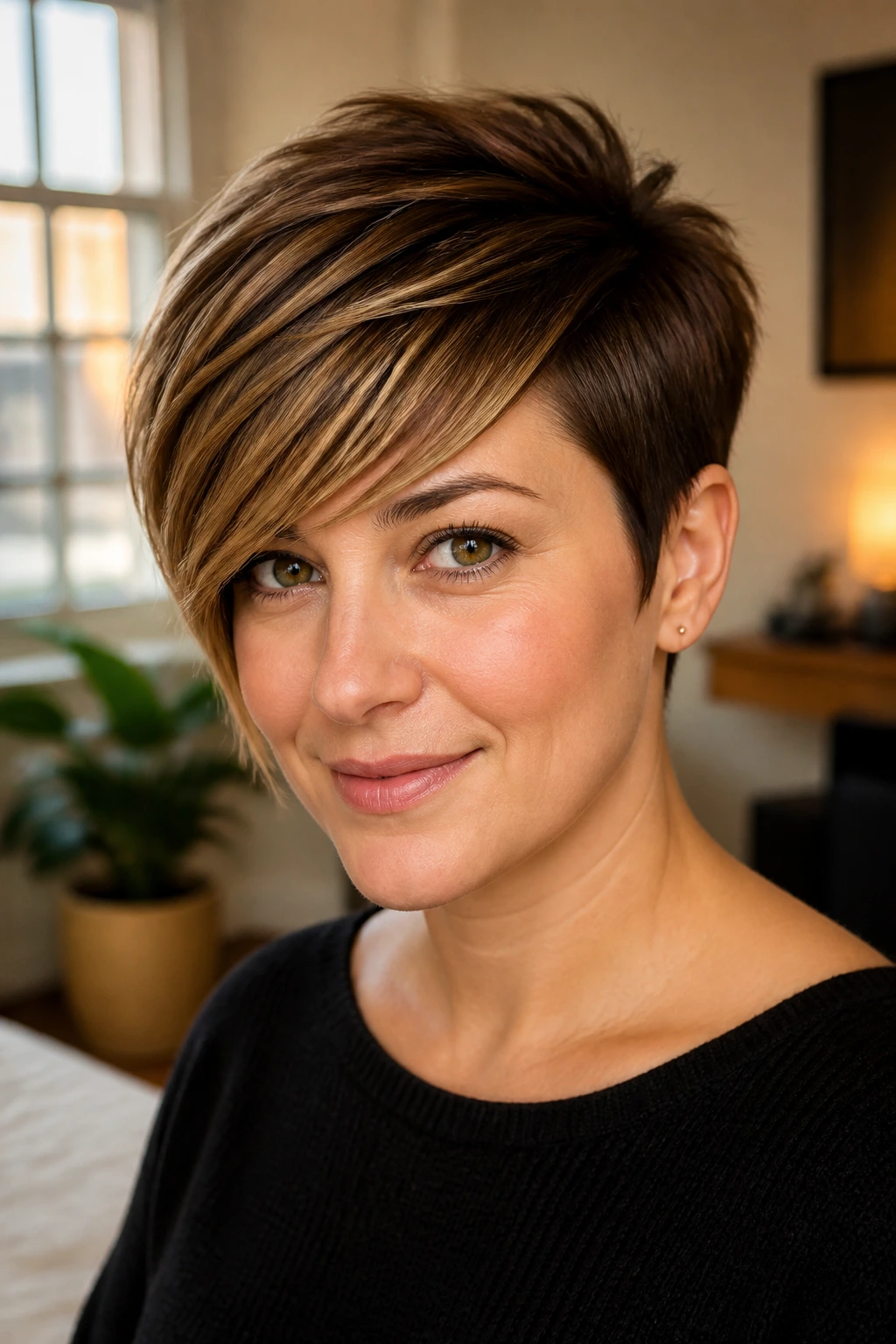
The most common error is leaving too much width at the temples and cheekbones. You see it immediately in the mirror: the hair stops right where the face is widest, and the whole cut spreads sideways. The fix is a narrower side outline and a little more lift on top.
Another one is blunt fringe. Straight-across bangs can shorten the face and make the forehead line too heavy. A side-swept or broken fringe usually works better because it leaves air in the middle and motion at the edge.
Over-thinning can backfire, too. Hair that has been stripped too hard often looks fuzzy and fragile at the ends, especially on coarse strands. Ask for controlled bulk removal instead of aggressive texturizing.
Skipping the nape is a sneaky mistake. The front might look cute, but if the back grows into a block, the whole cut loses its shape fast. That is why regular neck clean-up matters more with thick hair than people expect.
And then there is the “no crown plan” mistake. Flat roots make the face look wider because the eye has nowhere to go. A little lift at the crown fixes more than a lot of product at the ends.
Frequently Asked Questions
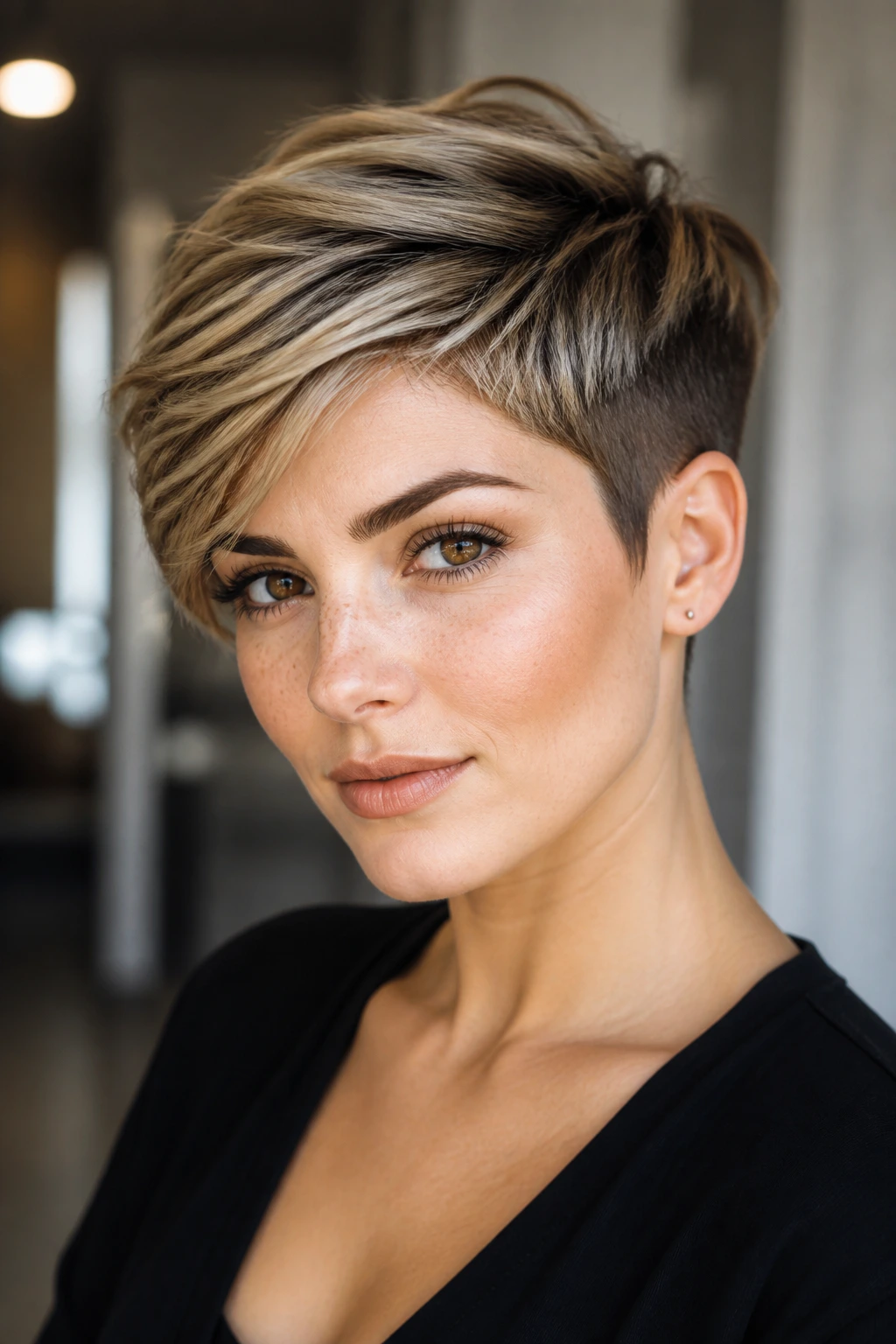
Will a pixie cut make my round face look wider?
It can, if the cut is too even around the sides or too blunt across the forehead. The safer route is height at the crown, narrower sides, and some kind of diagonal or side-swept line to pull the eye upward.
Is thick hair hard to manage in a pixie?
It is only hard when the cut ignores the bulk. Thick hair actually holds short shape well, which is a gift, but it needs careful debulking and a clear silhouette so it does not puff out at the edges.
Should I thin my hair before getting a pixie?
Not automatically. Heavy thinning shears can leave coarse or dense hair looking fuzzy. Ask for point-cutting, slicing, or selective internal removal instead, and let the stylist decide where the weight should come out.
What bangs work best with a round face?
Side-swept fringe, broken fringe, and soft longer pieces usually work best. A blunt horizontal bang can make the face look shorter. If you want a micro-fringe, balance it with height and narrow sides.
Can curly hair wear a pixie like this?
Yes, but the cut needs to respect shrinkage and curl pattern. Curly pixies usually look best when the top is left a little longer and the sides are tapered so the shape does not bloom outward around the cheeks.
How often will I need a trim?
Most thick pixies need attention every 4 to 6 weeks. The nape and sides tend to lose shape first, and once the back widens, the haircut starts reading less sharp.
What if my hair puffs up in humidity?
Keep the sides tighter, use less product, and avoid overly feathered ends if your texture is coarse. A lightweight anti-frizz cream on damp hair and a dry shampoo refresh at the roots can help the shape stay close to the head.
Is a pixie bob safer if I am not ready for very short hair?
Yes. A bixie or long pixie bob gives you a little more length around the face and a softer grow-out. It is a smart test drive if you want short hair without committing to a close crop right away.
Keeping the Shape Sharp
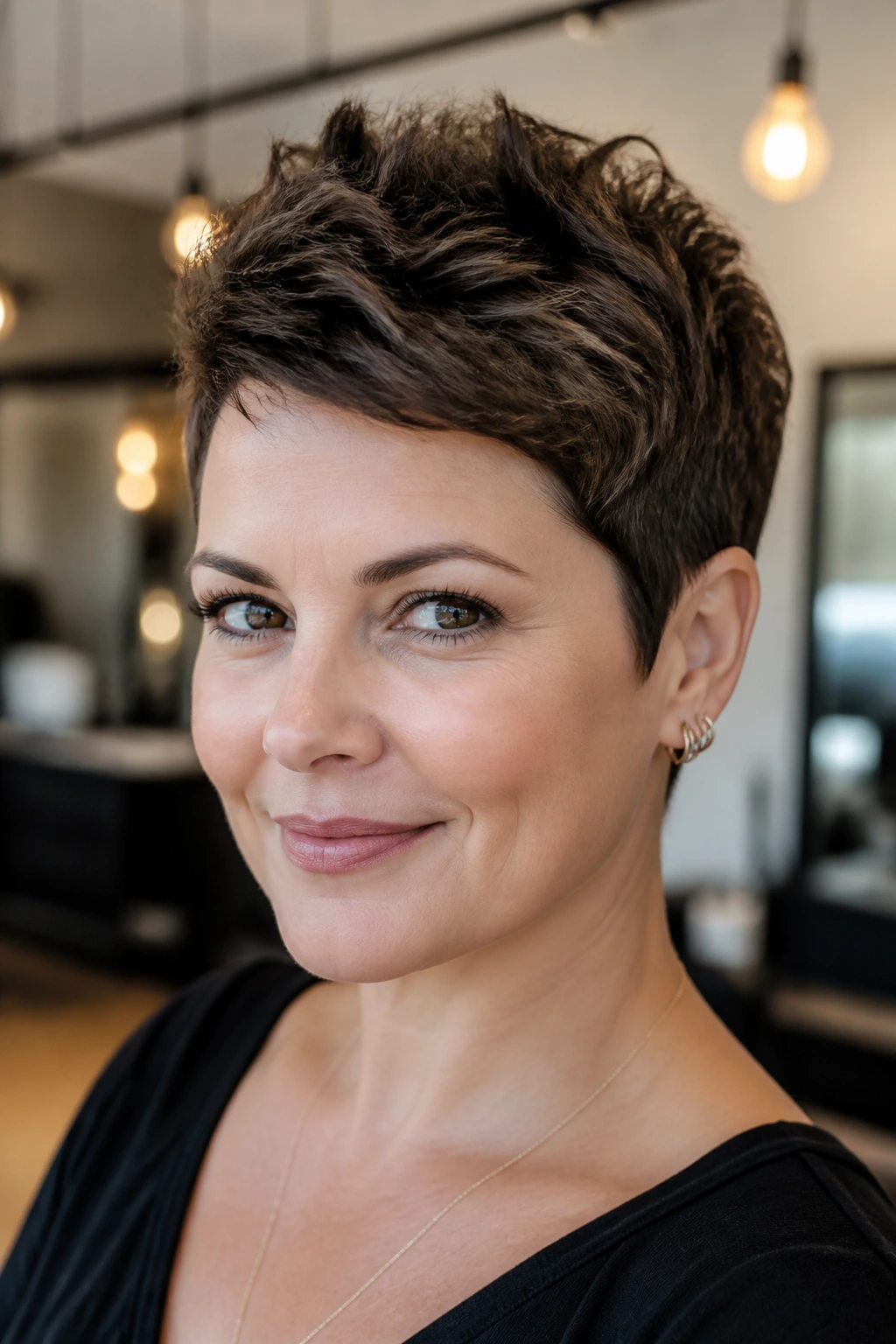
The best pixie for thick hair and a round face does one thing well: it edits the head shape instead of copying it. That is the whole trick. Lift where the eye should travel, reduce bulk where the hair tries to spread, and keep the fringe from forming a hard line across the widest part of the face.
A good cut like that does not need to shout. It just needs clean edges, a little height, and a stylist who understands that thick hair is a material to work with, not a problem to flatten. Get those pieces right and the haircut starts doing the flattering for you, which is the nicest kind of haircut there is.