



Thin hair changes the rules. A collarbone cut that feels crisp on thick strands can go limp on finer ones if the ends are too wispy or the color sits like a flat helmet. That is why midlength haircuts for thin hair with babylights work so well when the shape and the color are planned together: the length keeps enough weight at the bottom, and the babylights break up the surface so the whole head reads fuller, lighter, and a little more expensive without trying too hard.
Babylights are the quiet part of the equation, and that’s exactly why they matter. Chunky highlights can carve up thin hair in ugly little stripes, especially when the hair is straight or fine enough to show every foil line. Micro-fine babylights, woven close to the part, hairline, and crown, create tiny shifts in tone that the eye reads as texture. You notice movement first. Then shine. Then shape.
I have a soft spot for midlength hair because it’s the sweet spot between “too short to tuck behind your ear” and “long enough to drag the ends flat.” On thin hair, that middle ground gives you room for a blunt edge, a slight angle, or a few internal layers without starving the perimeter. And when the color is soft, beige, champagne, honey, sand, or cool pearl rather than streaky and loud, the cut suddenly gets a lot more range.
Why These Cuts Read Fuller on Thin Hair
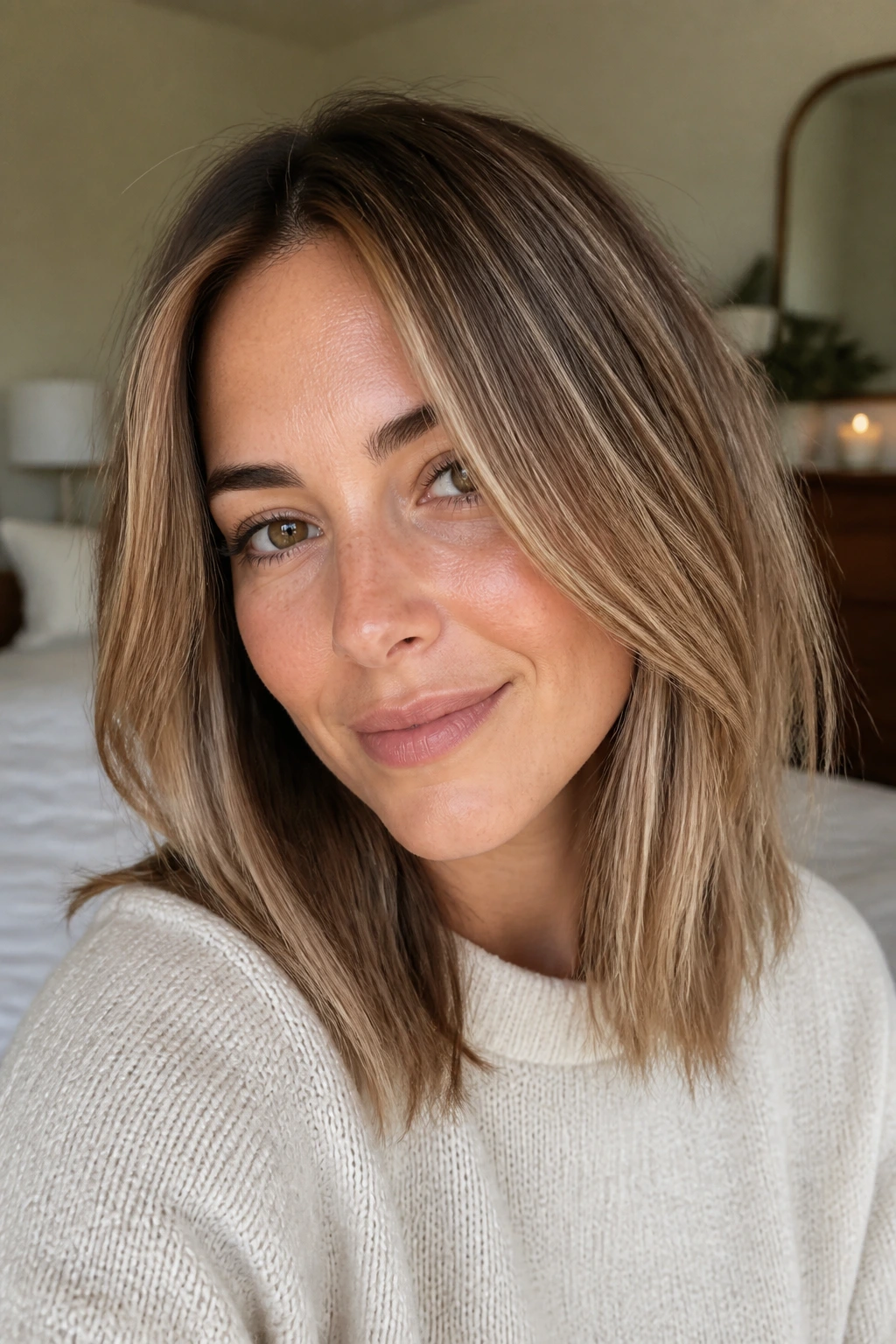
- The perimeter does the heavy lifting: A clean line at the collarbone or just below it keeps the ends looking deliberate instead of see-through.
- Babylights stop the surface from looking like one flat sheet: Tiny ribbons of light make the hair catch different angles, which the eye reads as density.
- Internal movement matters more than big layers: On thin hair, a few invisible layers or a gentle curve can lift the shape without hacking away too much bulk.
- The grow-out is kinder: Soft babylights fade into the base instead of leaving a hard root line that makes the hair look sparse.
- Midlength keeps styling realistic: It’s long enough for bends, clips, and tucked styles, but short enough that a quick blow-dry can still give the roots a push.
1. Collarbone Blunt Lob with Beige Babylights
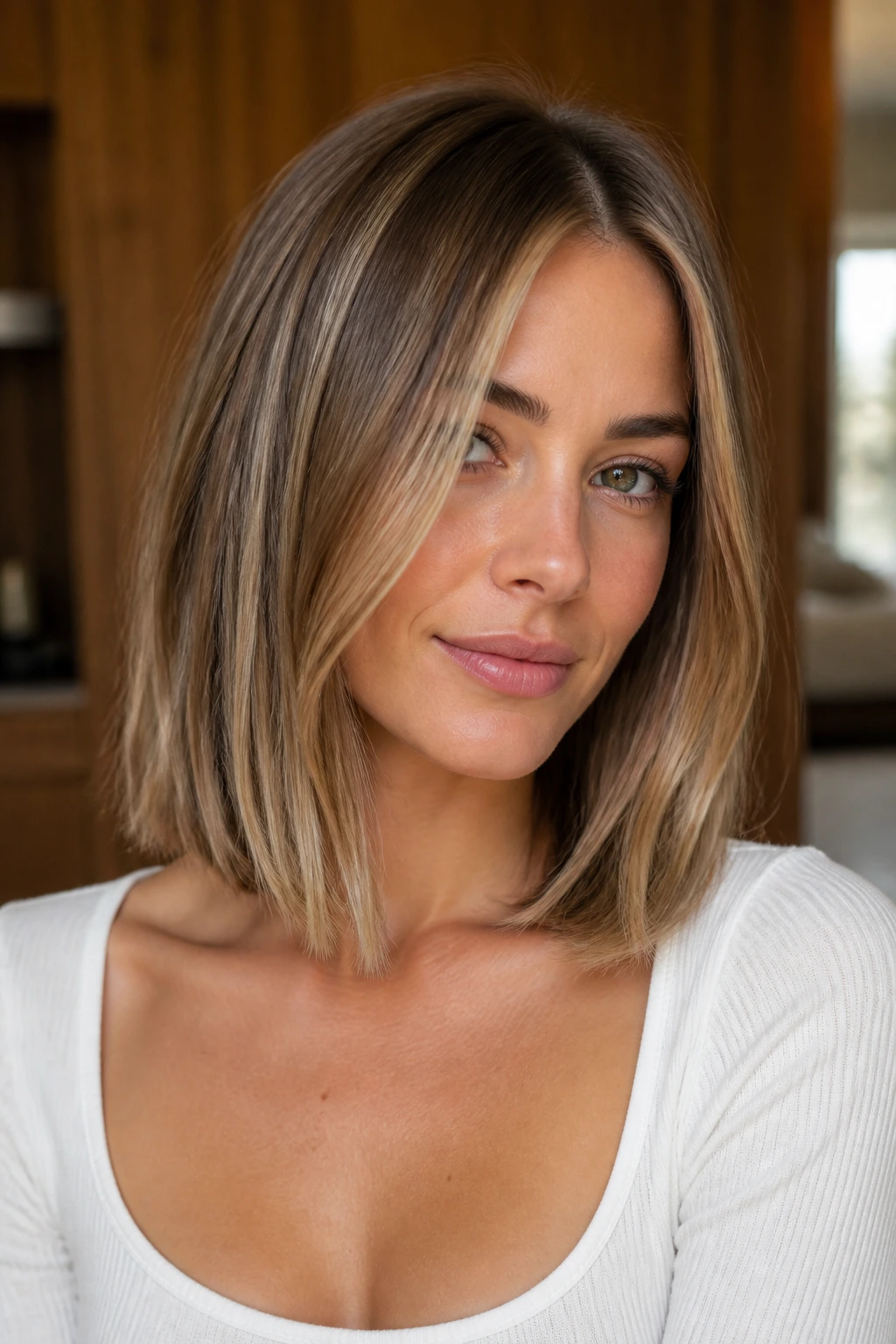
A blunt lob is the haircut I reach for when thin hair needs a firmer outline. The line sits at the collarbone, which gives the ends enough weight to stay visible instead of dissolving into air, and the babylights are placed in fine, soft ribbons so the surface doesn’t turn into one block of color.
What makes this version work is the contrast between structure and softness. The cut is clean. The babylights are not. That little tension keeps the hair from looking too severe, and it’s especially good if your strands are fine but not fragile. Ask for the lightest pieces around the face and part, then keep the interior closer to your base shade so the bottom still looks full.
This is one of those styles that looks smarter when it’s slightly bent under with a round brush. Straight works, too, but a subtle curve at the ends gives you a thicker-looking hemline. If your hair is pin-straight and flat by noon, this is the version that benefits most from a root-lifting mousse and a fast blow-dry.
2. Curtain Bang Lob with Rooty Champagne Babylights
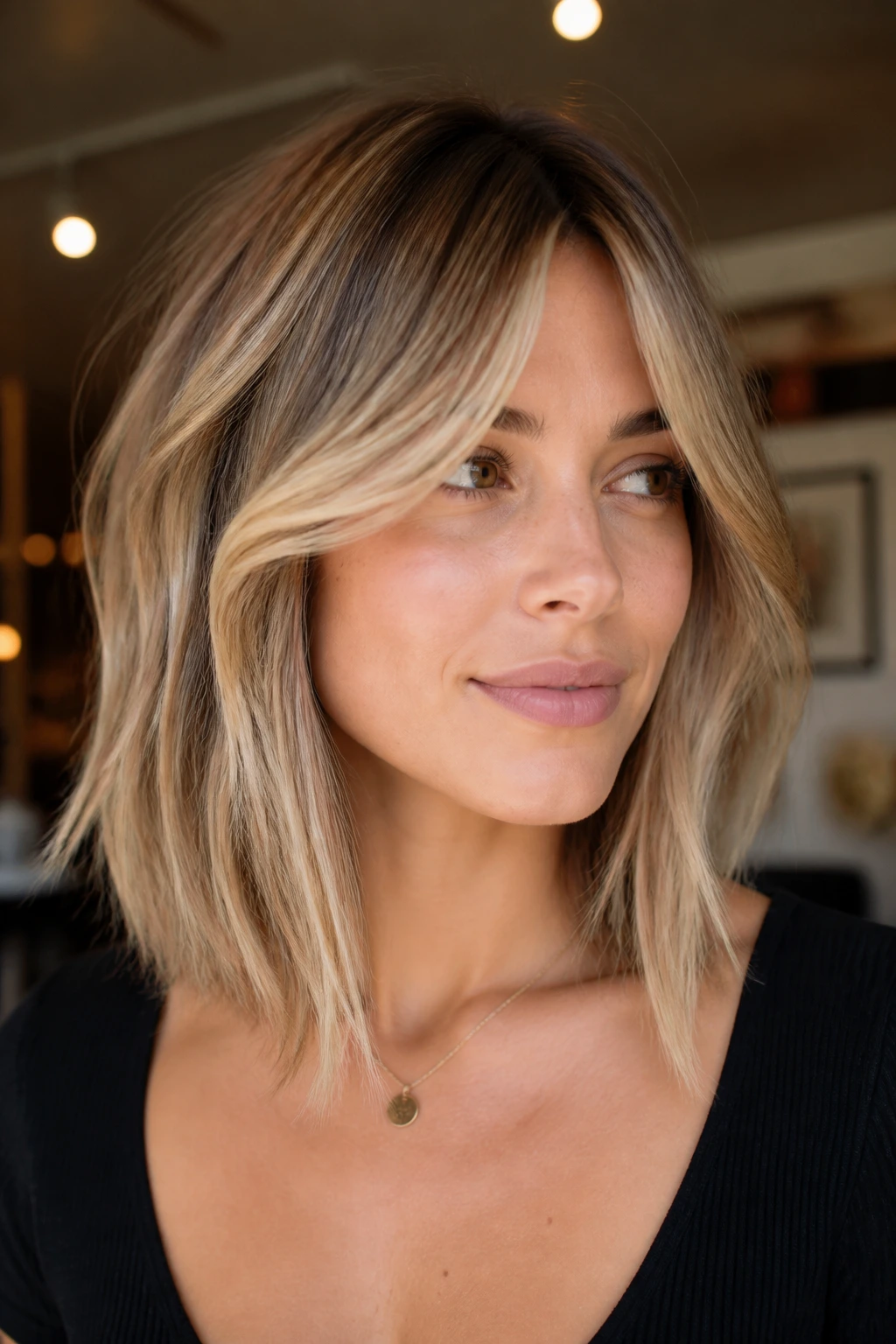
Curtain bangs can rescue a flat midlength cut, but only if the bangs are soft enough to move. Heavy fringe on thin hair tends to split in awkward places. A curtain shape opens at the center, drapes at the cheekbones, and gives the front of the haircut a little drama without eating up too much density.
Why it works on fine texture
The bangs and the babylights are doing the same job from two angles. The fringe creates movement in the front, while the champagne babylights soften the top layer and keep the crown from reading flat under overhead light. I like this cut on hair that’s medium-fine rather than ultra-fine, because you still have enough hair to support the fringe without exposing too much forehead.
Ask your stylist for bangs that start longer at the cheekbone and are not too short in the center. That matters. If the shortest point sits too high, the whole look can feel chopped up. Keep the babylights feather-light near the part and through the bangs only if the hairline already has enough density to hide the weave.
- Best for oval, heart, and long faces
- Works well when you wear a center or off-center part
- Needs a blow-dry with a small round brush or a Velcro roller at the bangs
3. Feathered Butterfly Midi with Soft Caramel Lights
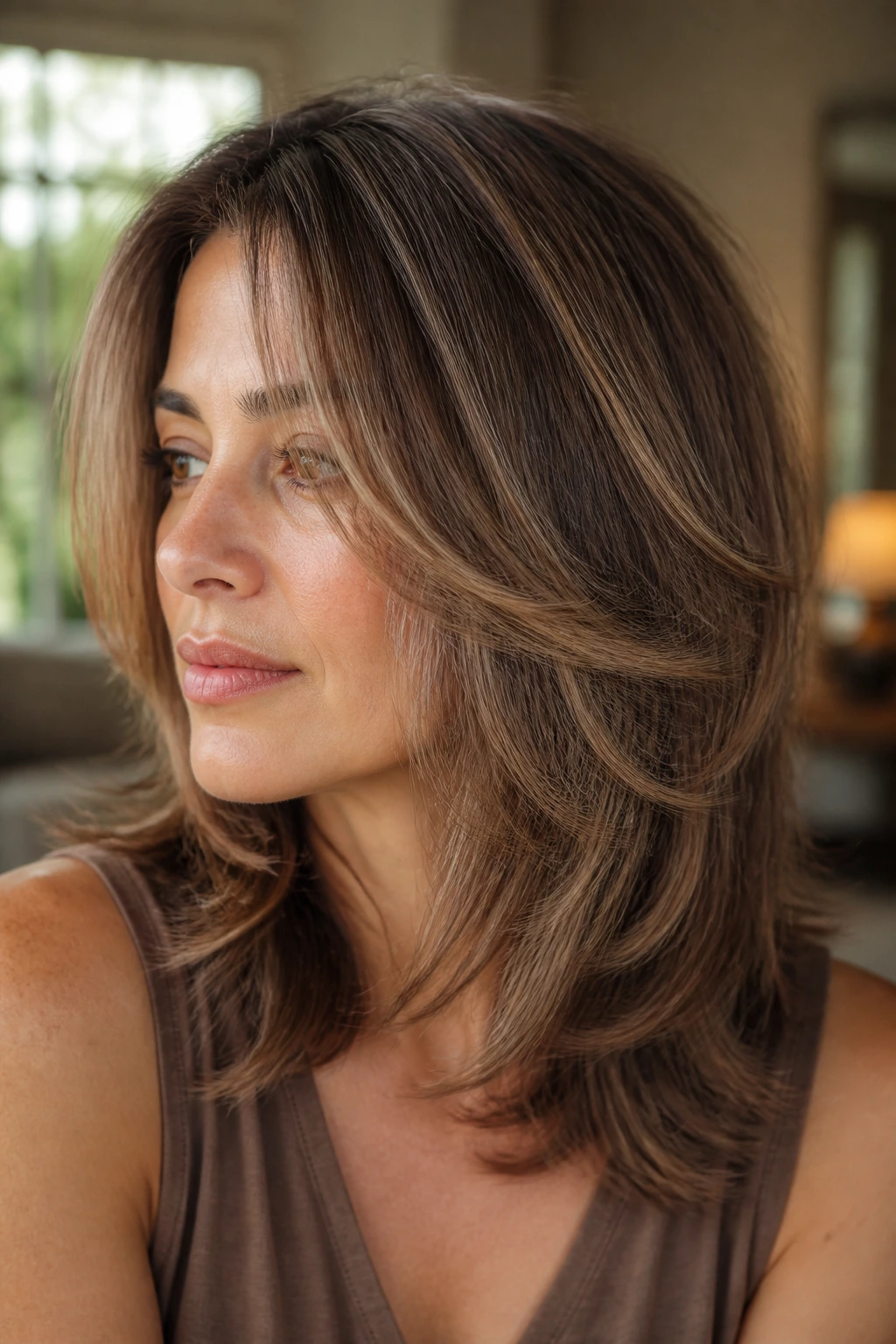
Why does the butterfly cut get so much attention? Because it’s one of the few layered shapes that can give thin hair movement without stripping the ends bare. The shorter face-framing sections sit around the cheekbones, while the longer back keeps the bottom looking like it still has something to say.
The caramel babylights help by breaking the cut into visible planes. On thin hair, a monotone shade can make layers vanish. Add a few soft ribbons around the crown and the front, and suddenly the style looks intentional rather than thin. I prefer this cut for people who want movement but hate choppy edges. It feels more floaty than shaggy.
A round brush helps here, but the real trick is not over-styling the layers. You want the front to fold away from the face, not puff out like a 1990s prom blowout. Keep the ends soft, and the butterfly shape gives you lift where you need it most.
4. Airy Shag-Lite Cut with Sandy Babylights
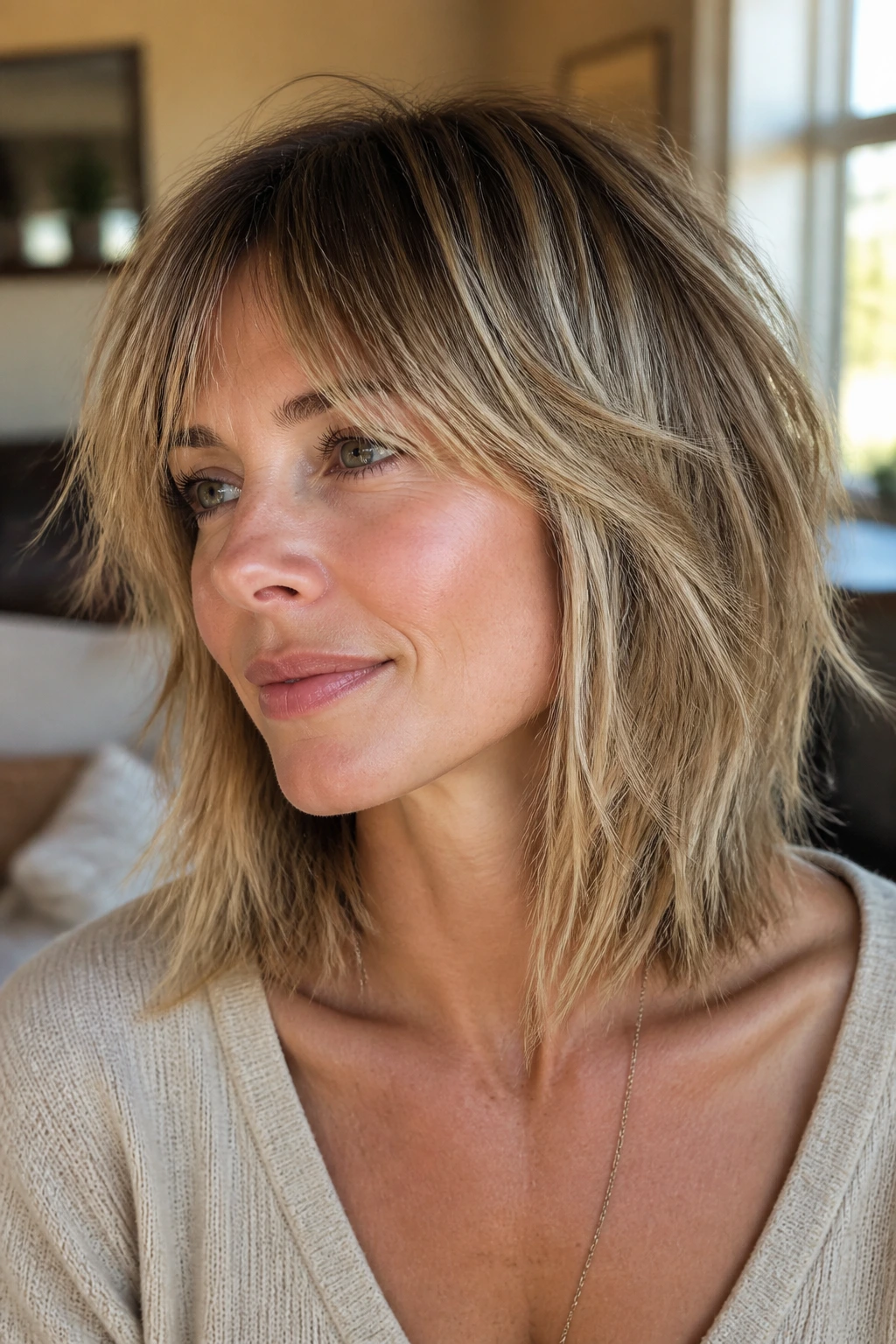
A full shag can be too much haircut for thin hair. Too many layers, and the ends start looking like they’ve been trimmed by accident. The lighter version keeps the spirit of a shag—piecey movement, a little lift around the crown, a lived-in feel—but stops before it chews through the density.
The sandy babylights matter because they keep the texture readable. On dark or flat hair, a shag-lite can disappear into a blur. These lighter ribbons catch on the broken ends and make each section look more distinct. That makes the style feel fuller, not thinner, which sounds backward until you see it in a mirror.
If your hair falls flat at the roots but frizzes at the ends, this cut can be a sweet spot. Keep the layers longer than you think. Thin hair likes restraint. The best shag-lite looks a little undone on purpose, not aggressively hacked apart.
Ask for this at the salon
- Long layers that start below the cheekbone
- Soft face framing instead of short crown layers
- Babylights concentrated around the outer layer, not packed through the whole head
5. Polished Blunt Midi with Hidden Internal Layers
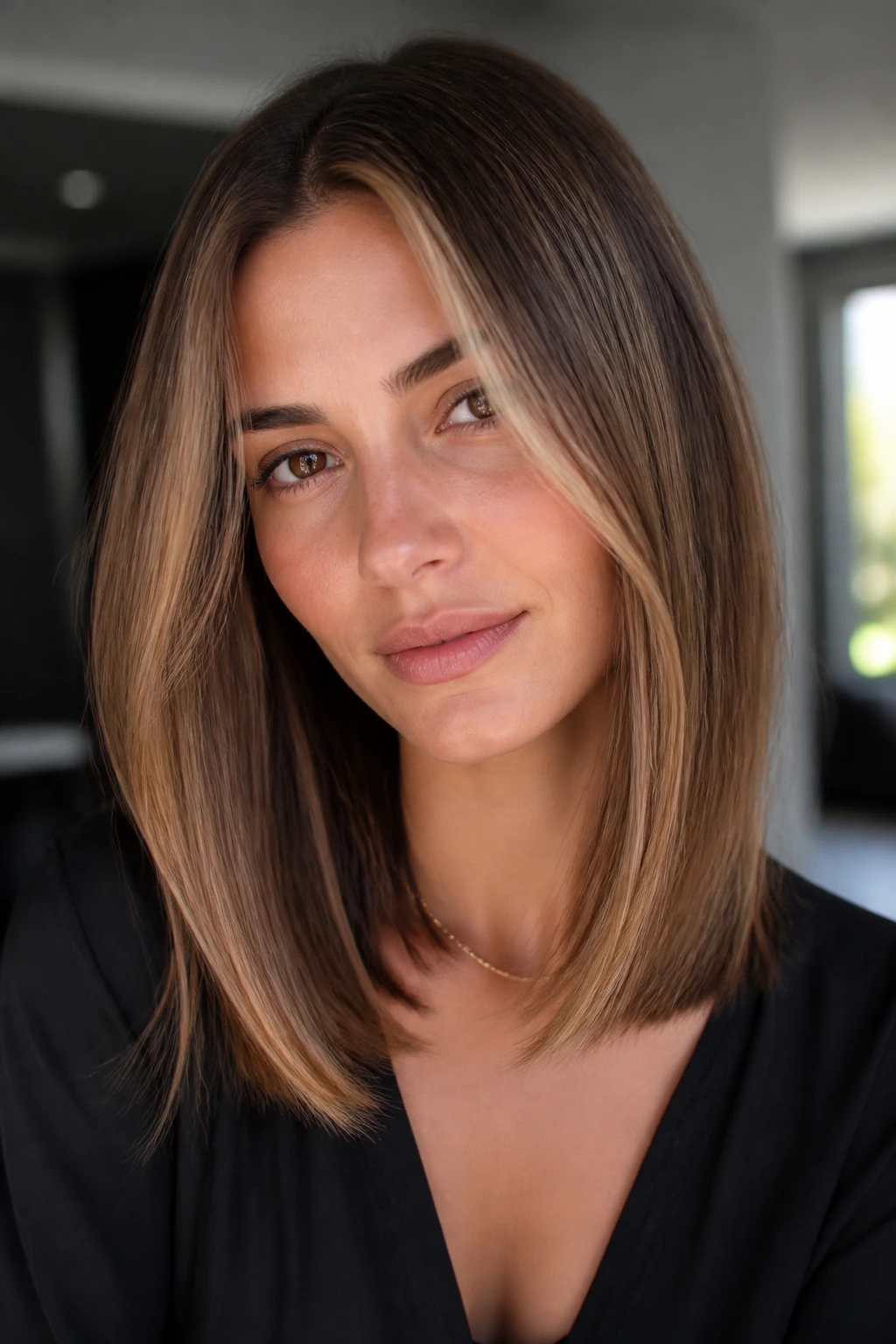
This is the one for people who want shape without visible layer lines. From the outside, it reads as a clean blunt cut. Inside, though, there are a few discreet layers or point-cut sections that stop the hair from collapsing into a heavy block.
That hidden structure is gold on thin hair. You get the visual weight of a blunt hemline, but the interior still moves when you turn your head. Add babylights in a narrow halo around the face and part, and the whole style feels brighter without losing its solid edge.
I like this cut when someone wants hair that can go sleek for work and loose for the weekend without changing the shape too much. It also behaves well under a blazer or high neckline because the ends stay tidy instead of flipping in random directions. Dry it smooth once, and you can usually stretch the style a second day with a little dry shampoo at the roots.
6. Deep Side-Part Volume Lob
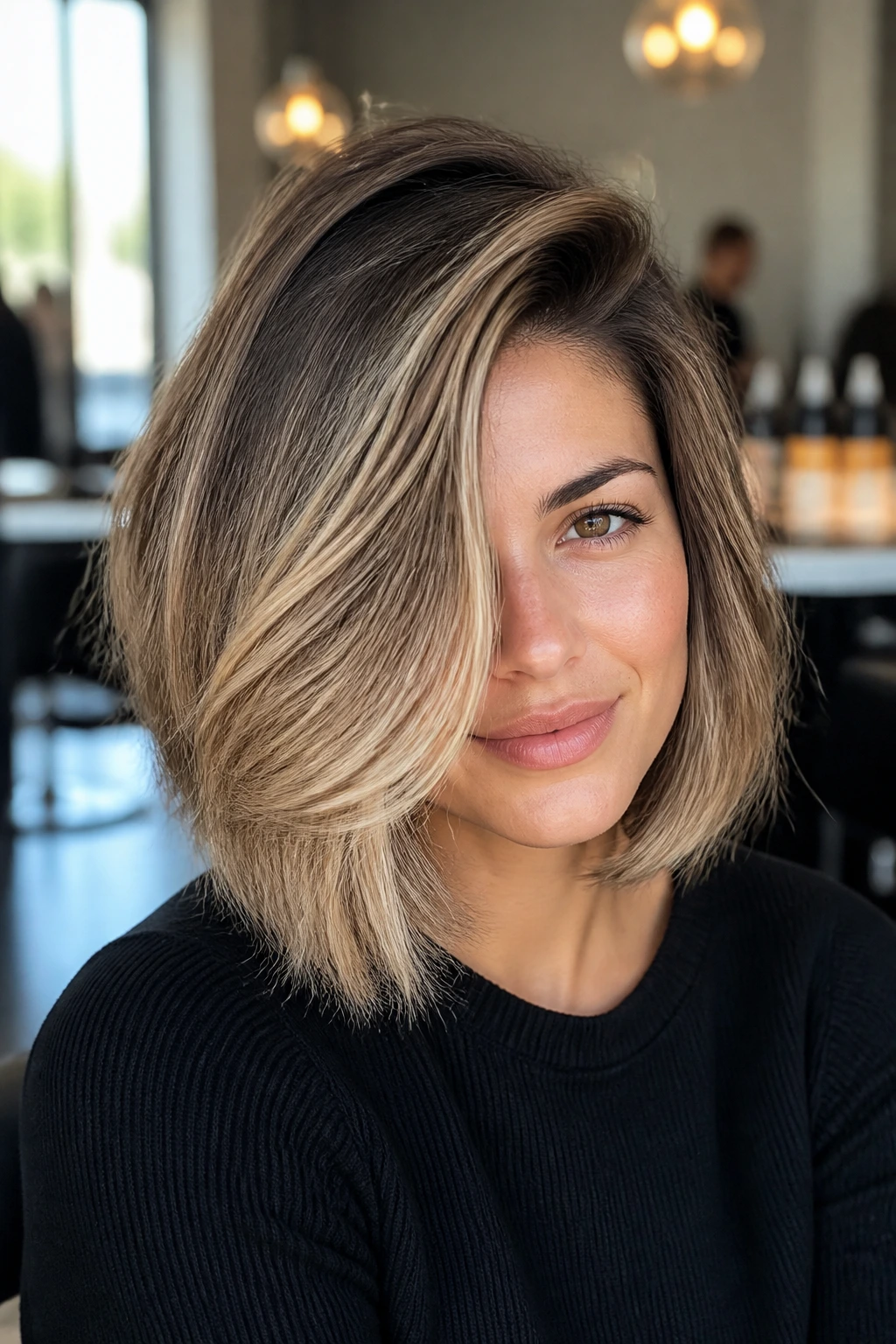
A side part is one of the cheapest volume tricks in the book. Cheap in the best way. Shift the hair to one side, and the root area on the heavier side lifts on its own because the base no longer falls symmetrically around the scalp.
That’s why this lob works so well on thin hair with babylights. The off-center part adds lift, and the babylights around the part line keep the scalp from reading too clearly under bright light. I usually prefer a soft beige or mushroom blonde here because it blends into the base instead of slicing through it.
This cut looks especially good if one side of your hair naturally falls flatter than the other. Instead of fighting that, lean into it. Let the heavier side sweep across the cheekbone and keep the lighter side tucked behind the ear. Strange as it sounds, asymmetry can make thin hair look less thin.
7. Invisible-Layer Shoulder Cut with Honey Babylights
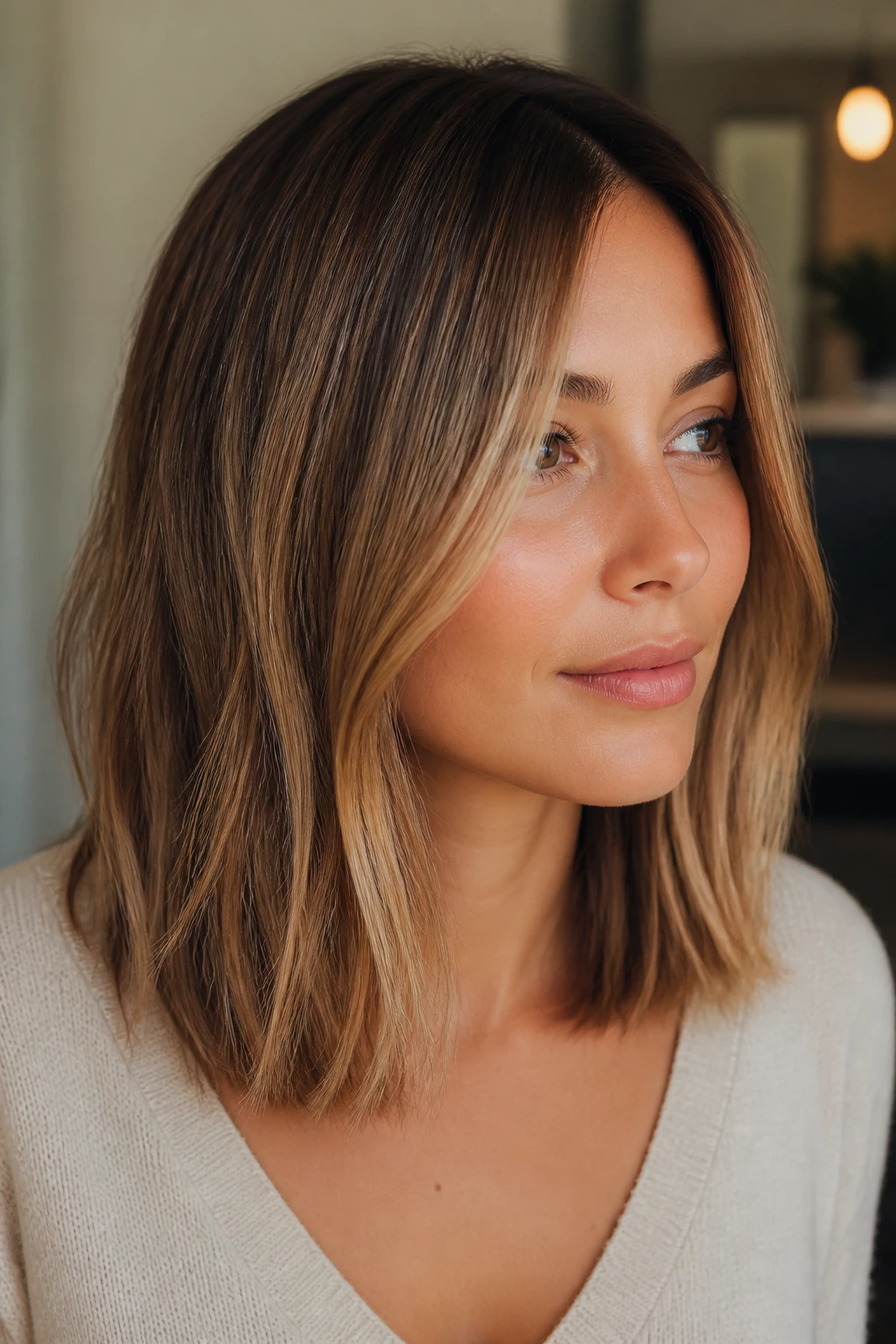
Some cuts shout about their layers. This one barely whispers. The end result sits around the shoulders, but the interior is lightly removed in a way that gives the hair movement without visible step lines. It’s the sort of haircut that looks simple until you turn your head and notice the bend.
Honey babylights work here because they warm up the shape without taking away depth. Thin hair often looks a little too transparent when it’s all one cool shade. A few softer lighter pieces through the top and front add reflection, which the eye reads as health and density.
This style is for anyone who wants low drama. It’s polished, manageable, and less fussy than a shag or butterfly cut. If you hate seeing obvious layers in the mirror, this is the version to keep in your pocket.
8. Soft A-Line Lob with Face-Framing Brights
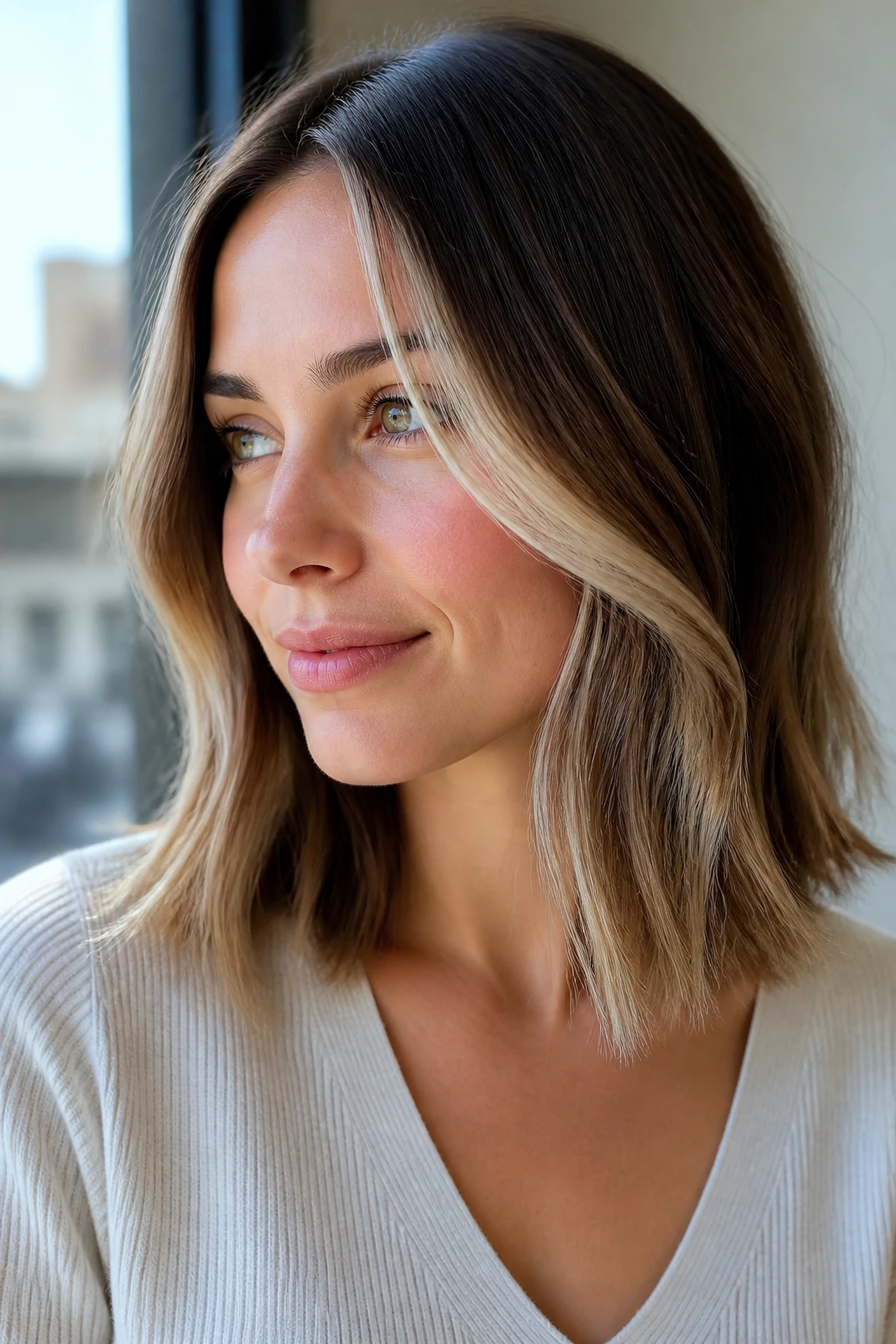
A gentle A-line gives the front just a bit more length than the back, and that small angle helps thin hair appear fuller at the jaw and collarbone. It’s a smarter shape than a pure one-length cut if your hair tends to taper toward the ends.
The face-framing babylights are the useful part here. They pull attention toward the front edge of the haircut, which is where the eye decides whether the style looks thick or stringy. Keep the bright pieces fine and broken up. If they’re too chunky, the whole front can look stripy, and that ruins the clean angle.
I especially like this on straight hair or hair that only takes a soft bend. The slope reads clean in a sleek finish, but it still has enough movement to work with loose waves. It’s a quiet haircut, not a showy one.
9. Bottleneck Bang Midlength Cut
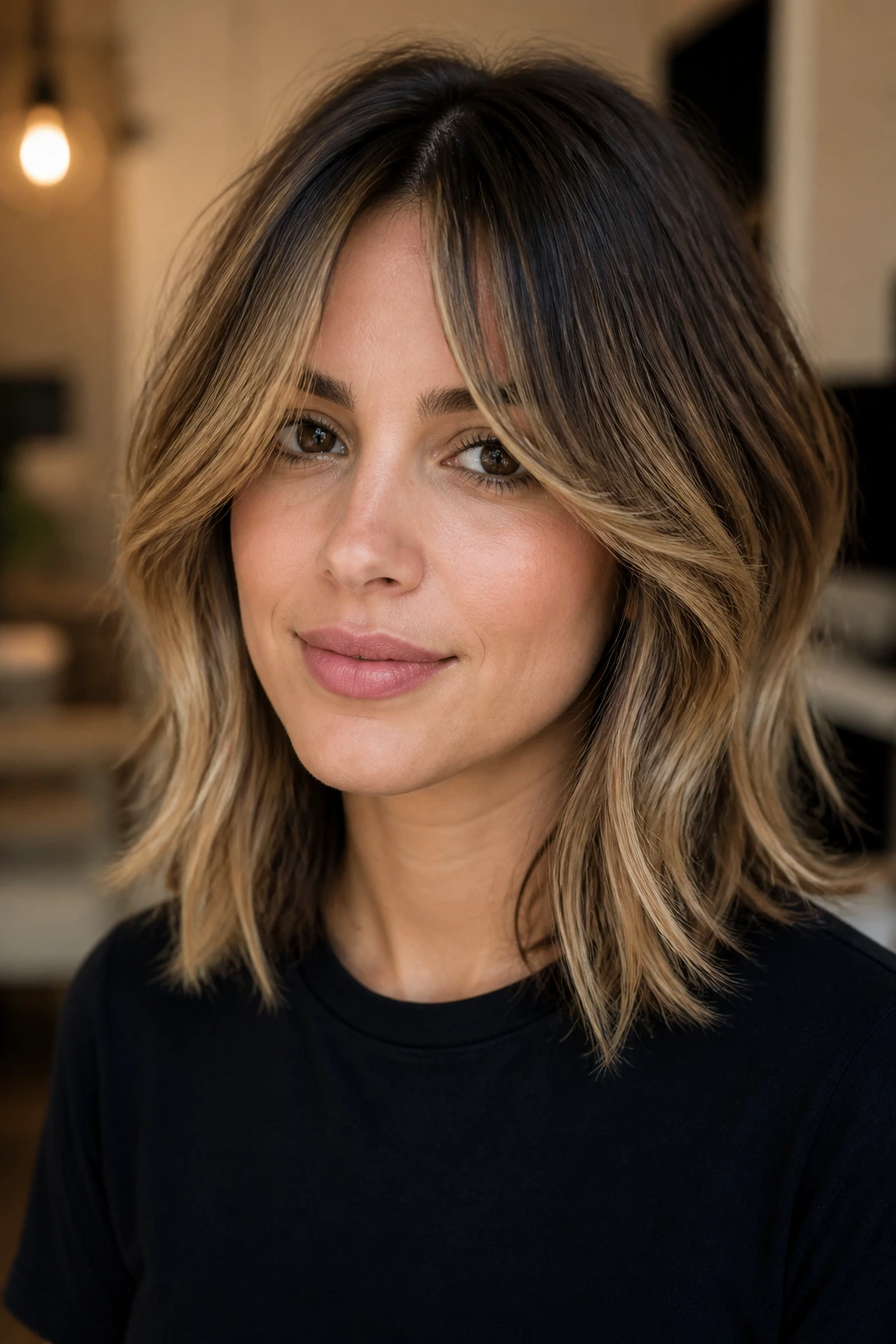
Bottleneck bangs have that narrow opening in the center and a fuller curve at the sides, and they’re kinder to thin hair than blunt fringe. The middle stays light enough not to reveal every scalp line, while the longer outer sections blend into the midlength cut.
Here, the babylights should stay concentrated around the temples and front layers. That gives the fringe a little brightness without making the bangs look see-through. If the hairline is sparse, keep the lightest pieces a touch farther back and let the front stay slightly deeper in tone.
This cut suits people who want the softness of bangs but not the maintenance of a full fringe. It also photographs well in motion because the bang curve leads the eye down into the rest of the shape. And no, it does not need to be styled into perfect arcs every morning. A loose bend is enough.
10. Choppy Razor Lob with Tapered Ends
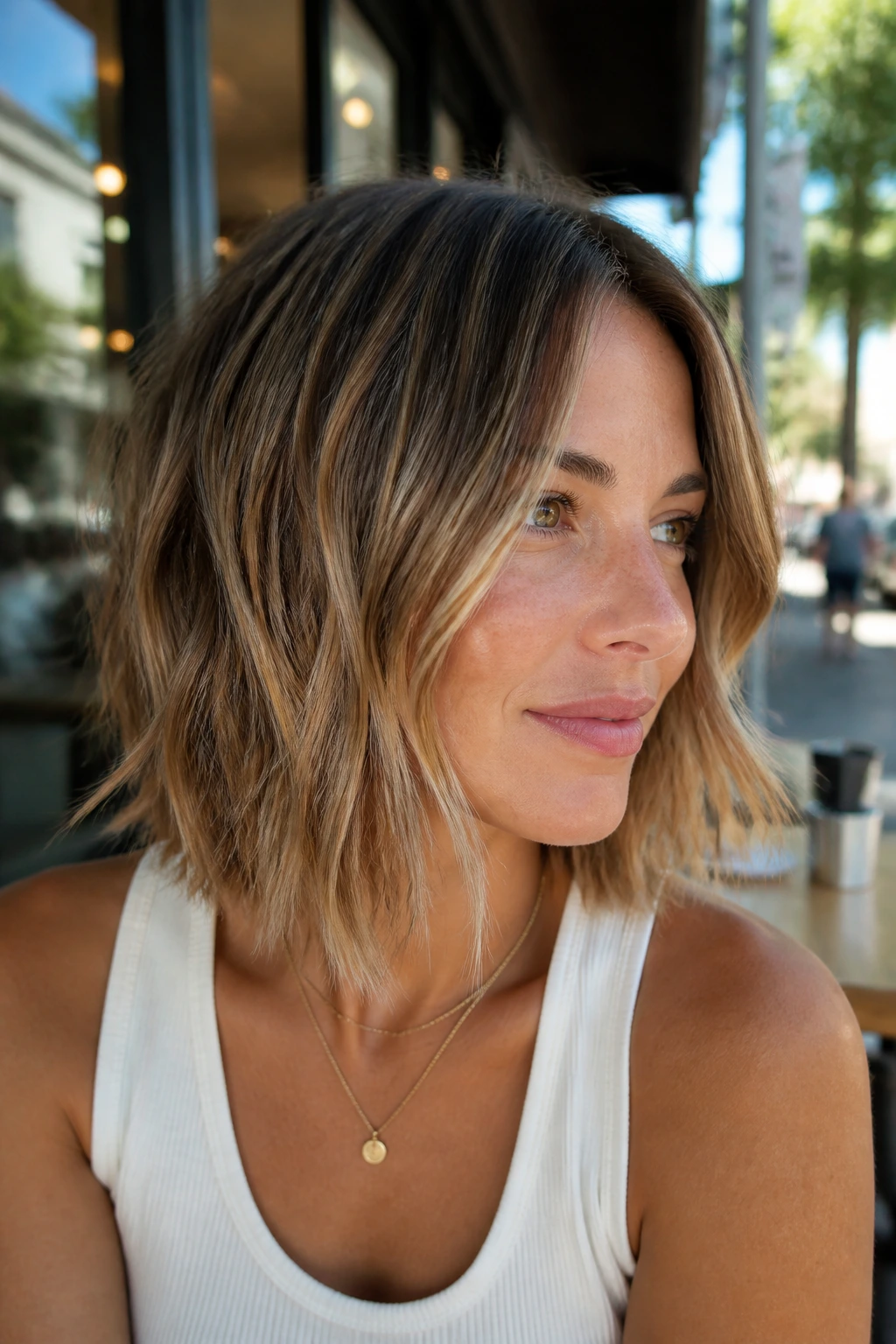
Razor-cut ends can be brilliant on the right hair and a disaster on the wrong hair. On very fragile strands, too much razor work can leave the hemline looking shredded. But on fine hair that still has some spring, a soft razor lob creates a piecey finish that keeps the haircut from feeling heavy.
Babylights help by making the broken ends easier to read. That’s the point. The color catches on the texture, and the texture catches the light, so the overall shape looks more layered than it is. Ask for tapered ends, not a full-on feathery collapse. There’s a difference, and it matters.
This is one of the few cuts on the list that benefits from texture spray almost every time you wear it. Not a crunch. Just enough grit to keep the pieces separated. If your hair is too silky for its own good, this may be the cut that finally gives it some attitude.
11. Rounded French Midi with Cream Babylights
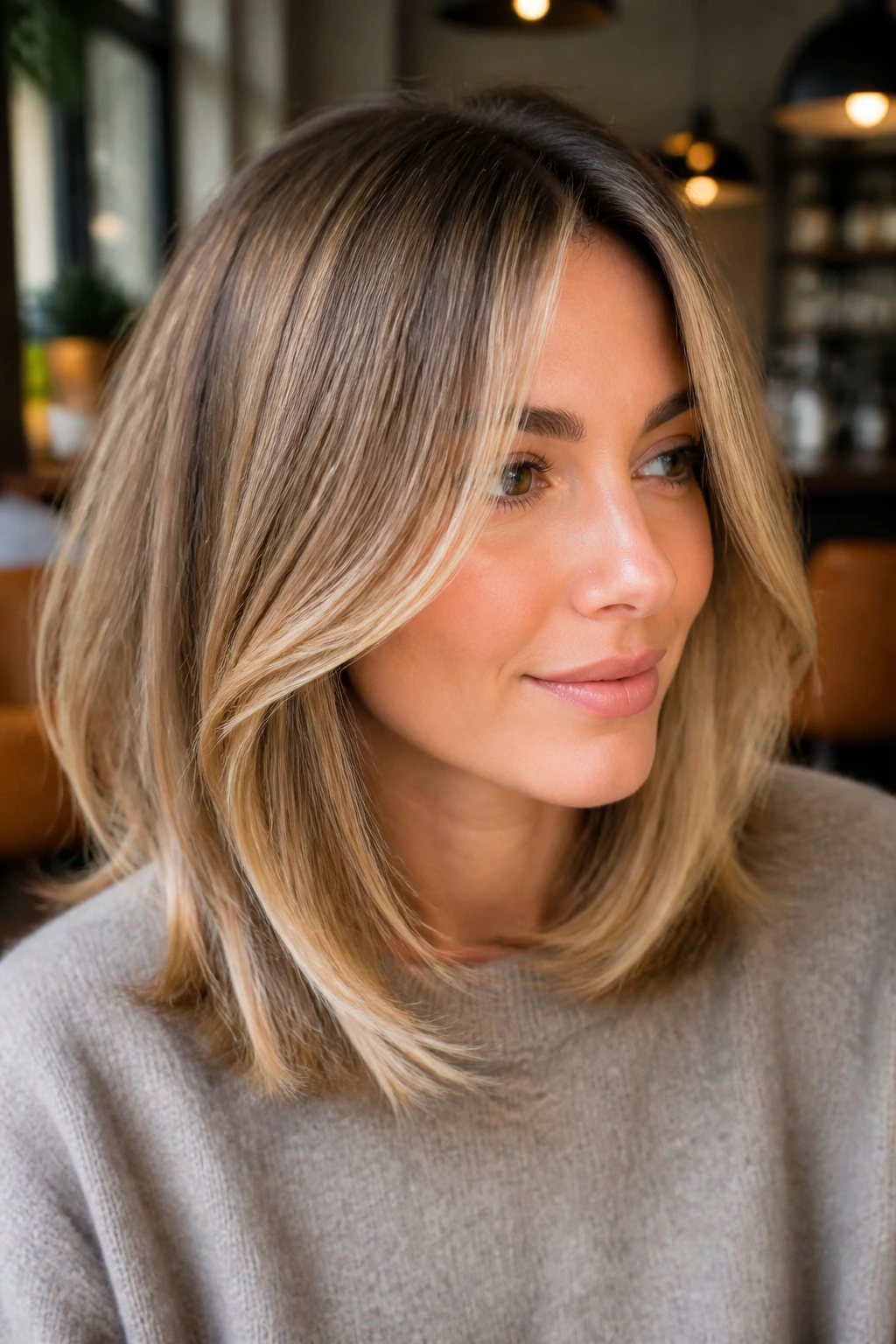
A rounded midi has a softer edge than a blunt lob. The perimeter curves gently toward the face and neck instead of hanging in a straight line, which keeps thin hair from looking too harsh at the bottom. It feels a little more Paris café and a little less gym locker.
Cream babylights suit this shape because they brighten the cut without turning it into a high-contrast statement. The point is refinement. When the highlights are placed in fine ribbons around the front and crown, the rounded shape looks plush instead of flat. That is the whole game here.
This cut likes a smooth blow-dry and a brush tucked under at the ends. You don’t need barrel curls. You need a bend that makes the edge feel soft and deliberate. If your neck-length hair tends to stick out in awkward flips, the rounded midi handles that better than a strict blunt line.
12. U-Shaped Shoulder Cut
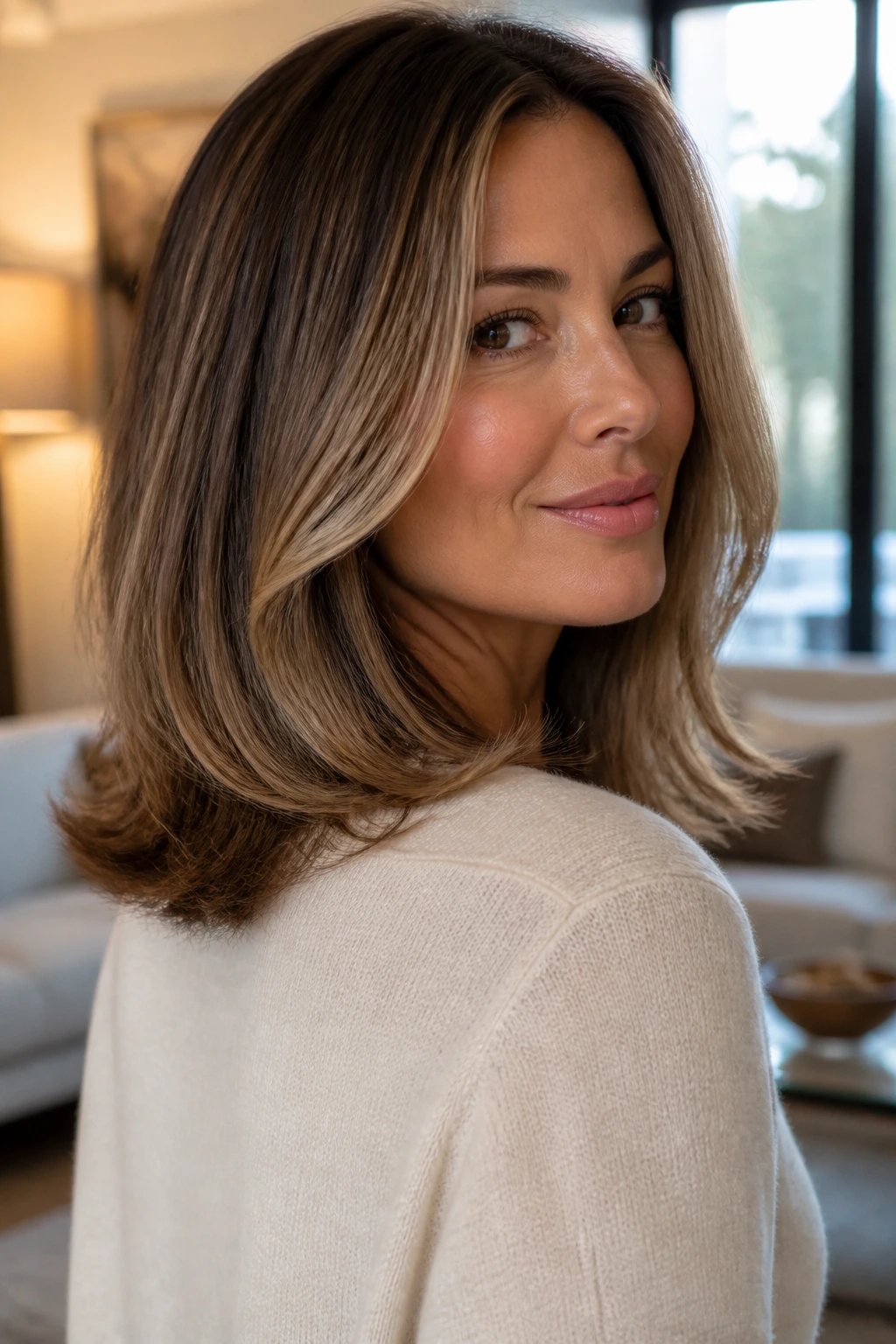
A U-shape sounds subtle because it is subtle. The center sits a touch longer than the sides, which gives thin hair a little more weight through the back while still keeping movement around the face. The curve keeps the ends from looking ruler-straight and sparse.
The babylights should follow the curve, not fight it. I’d keep the brightest pieces at the front and along the outer veil, then let the interior stay a shade deeper. That contrast creates the illusion of thicker strands because the edges look defined and the center keeps its shadow.
This is a good choice if you want length around the shoulders but don’t like a blunt bottom edge. It’s tidy enough for work, but it still moves when you wear it down. Straight hair and soft waves both work here, which is why the cut gets more use than fancier shapes.
13. C-Cut with Long Face-Framing Pieces
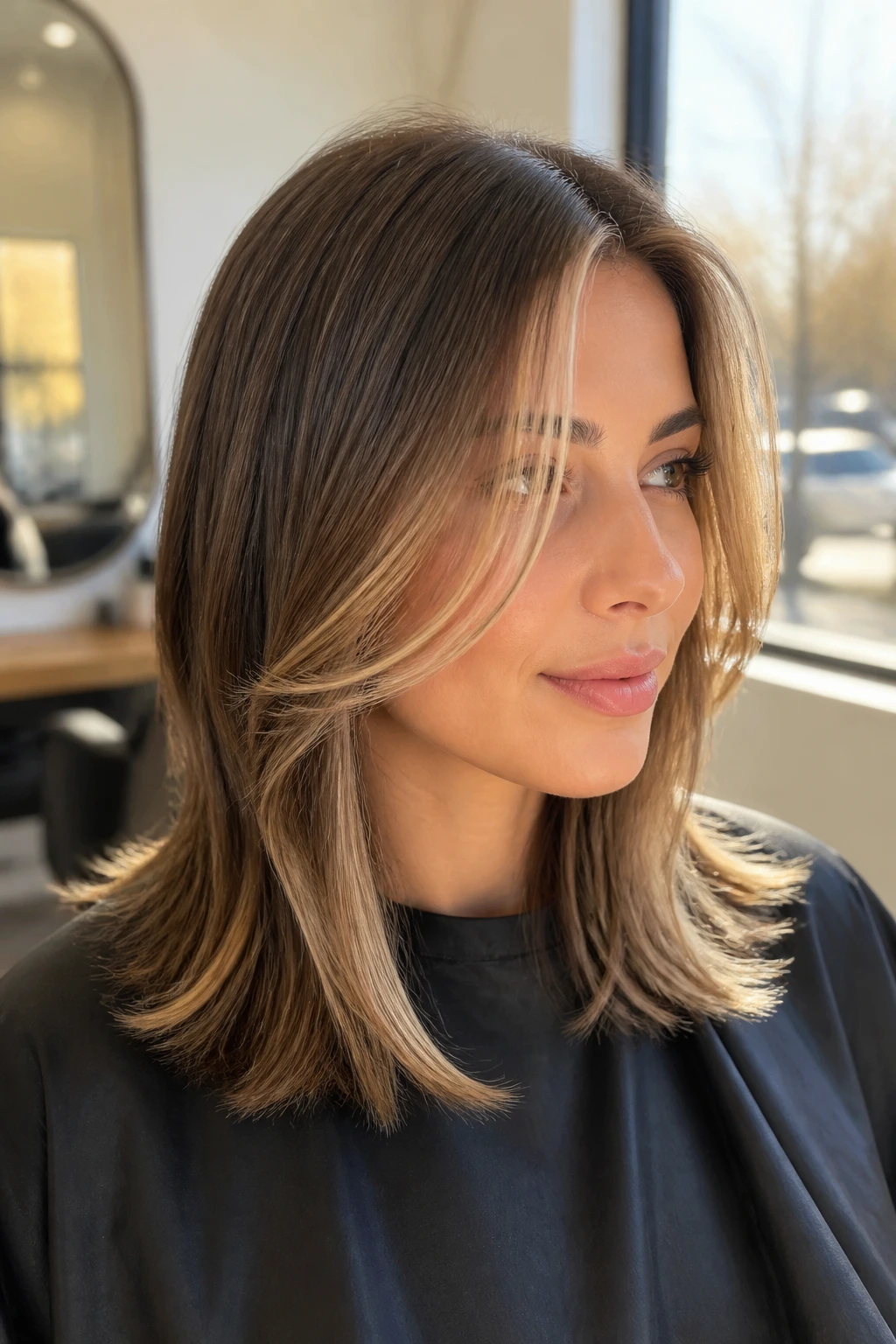
The C-cut earns its name from the soft curve that wraps the face and flows into the lengths. It’s one of the nicest shapes for thin hair because it keeps the perimeter intact while using long face-framing layers to build motion in the front third of the head.
Babylights belong at the cheekbones, under the part, and through the first few inches around the face. That is where the curve lives. If the light pieces are scattered too evenly, the shape loses its focus. You want the front to glow a little more than the back. Subtle, not streaky.
A C-cut also buys you flexibility. Wear it straight and it reads polished. Add a soft wave and the curve becomes even more obvious. It’s one of my favorites for people who want shape around the face but do not want the haircut to start looking overworked when it grows out.
14. Piecey Wavy Lob with Scattered Micro-Highlights
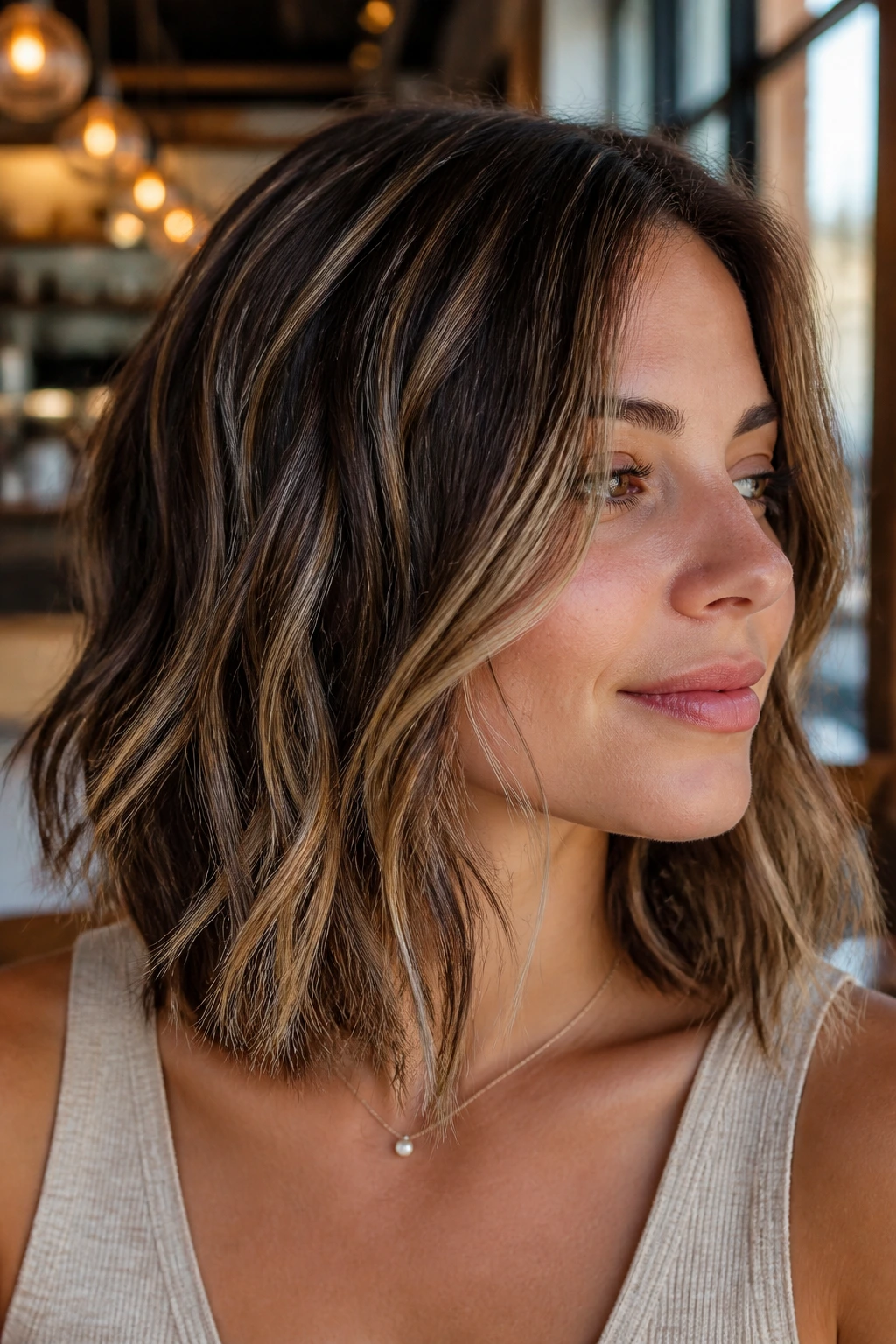
Some cuts are built around the wave pattern itself, and this is one of them. The lob sits at a medium length, but the ends are cut to encourage separation, not a solid block. Once you add soft waves, the pieces fall into little strands instead of one blanket of hair.
The babylights here should be almost scattered, like tiny flecks of brightness that appear when the hair bends. That’s why this style works. The color is not supposed to be obvious from across the room. It shows up when the hair moves, which is exactly what thin hair needs. Static color tends to flatten everything.
If your hair air-dries with some natural bend, this cut will feel easy. If not, a flat iron wave with a one-inch pass can fake the texture in ten minutes. Keep the ends blunt enough to hold shape, but not so blunt that the waves look boxy.
15. Wolf-Lite Midi with Wispy Layers
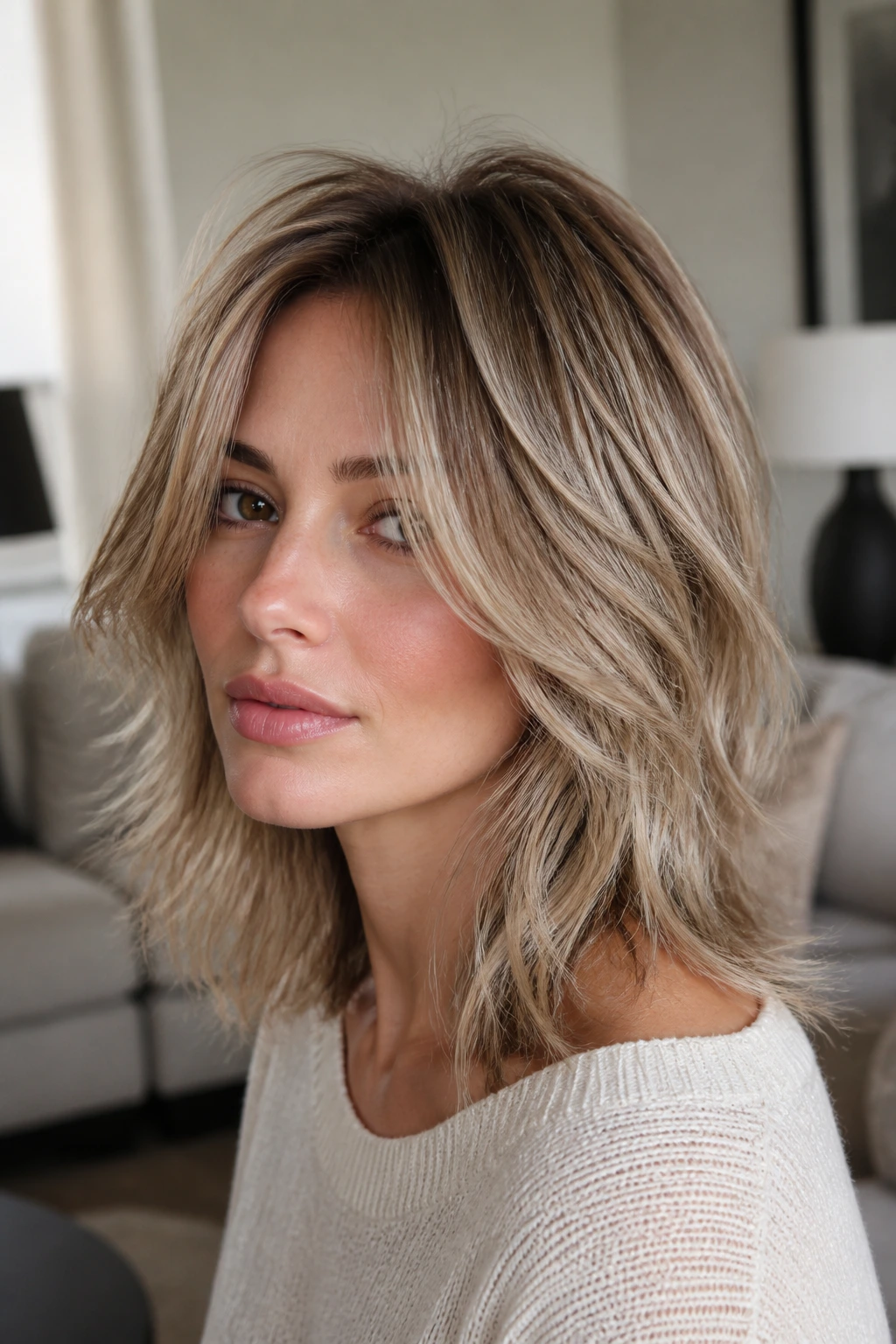
A full wolf cut can eat thin hair alive if the layers go too short. The lighter version keeps the shaggy spirit and skips the heavy thinning. You still get lift around the crown and wispy movement around the face, but the base holds together.
Babylights are useful here because they keep all those bits and pieces visible. Without color variation, the layers can blur into a single fluffy silhouette. With soft light pieces at the crown and temples, the shape reads airy rather than sparse. I’d choose cooler beige or mushroom tones over a very bright blonde so the cut stays grounded.
This one suits people who like a little edge. It’s less polished than the French midi and less structured than the blunt lob. If you air-dry often and don’t mind a little mess, the wolf-lite gives thin hair some personality without turning it into wisps.
16. Tucked-Behind-the-Ear Lob with Bright Edges
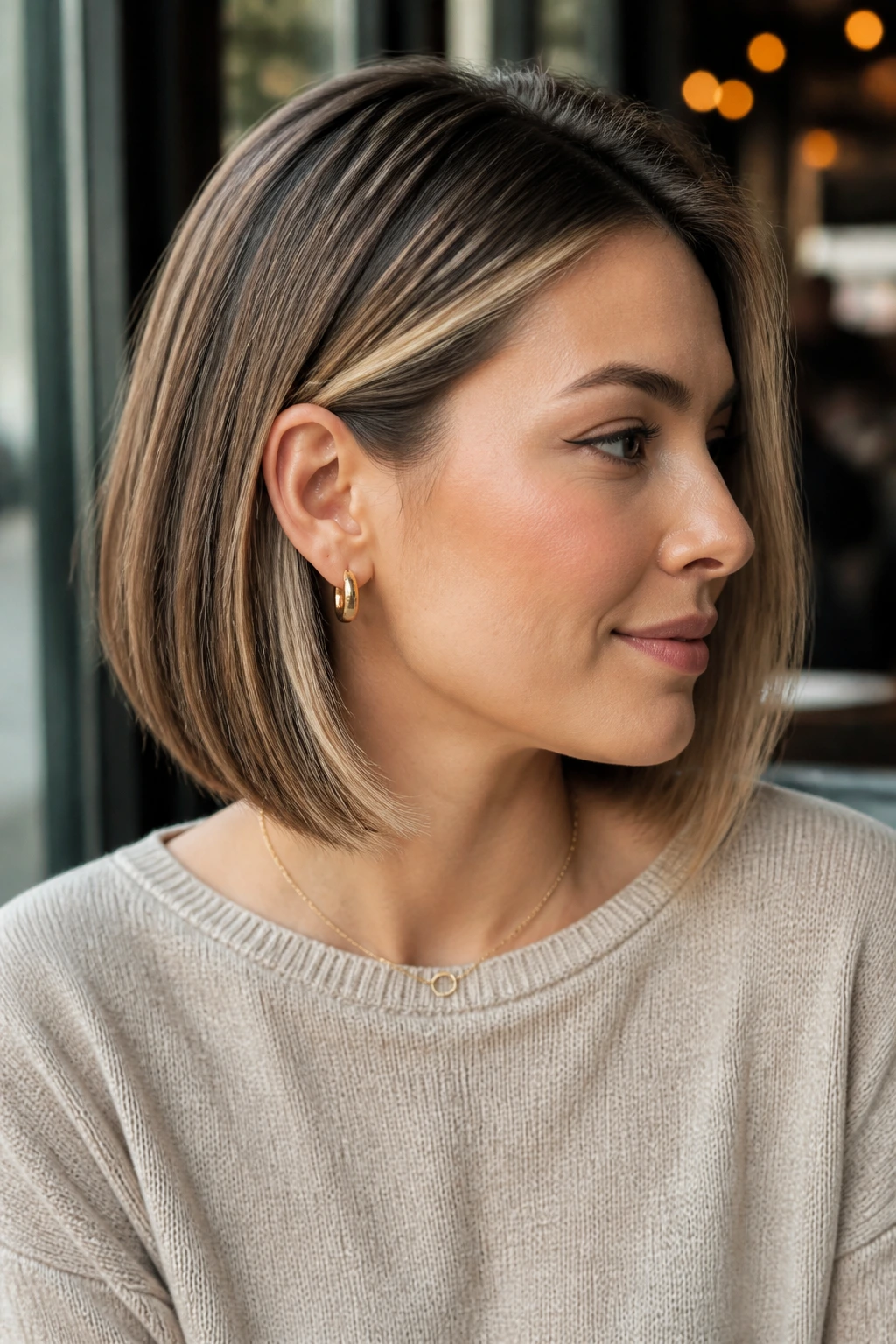
This cut is made for hair that gets worn behind one ear half the day anyway. The length sits at the lob zone, but the perimeter is cut clean enough that tucking one side creates a sharp line across the jaw and cheekbone. That visible edge helps thin hair look intentional.
Bright babylights around the front edge and temple area make the tuck look cleaner. When the lighter pieces sit near the ear, they catch the light where the hair is most exposed, which makes the front look denser and more styled. It’s a nice trick for people who wear glasses or hoops, because the haircut frames the accessories instead of fighting them.
I like this style for straight or slightly wavy hair that can hold a curve behind the ear. It’s very simple, which is its charm. Some cuts need effort. This one just needs a good line and a little light at the edges.
17. Flipped-End Midi with Beige Babylights
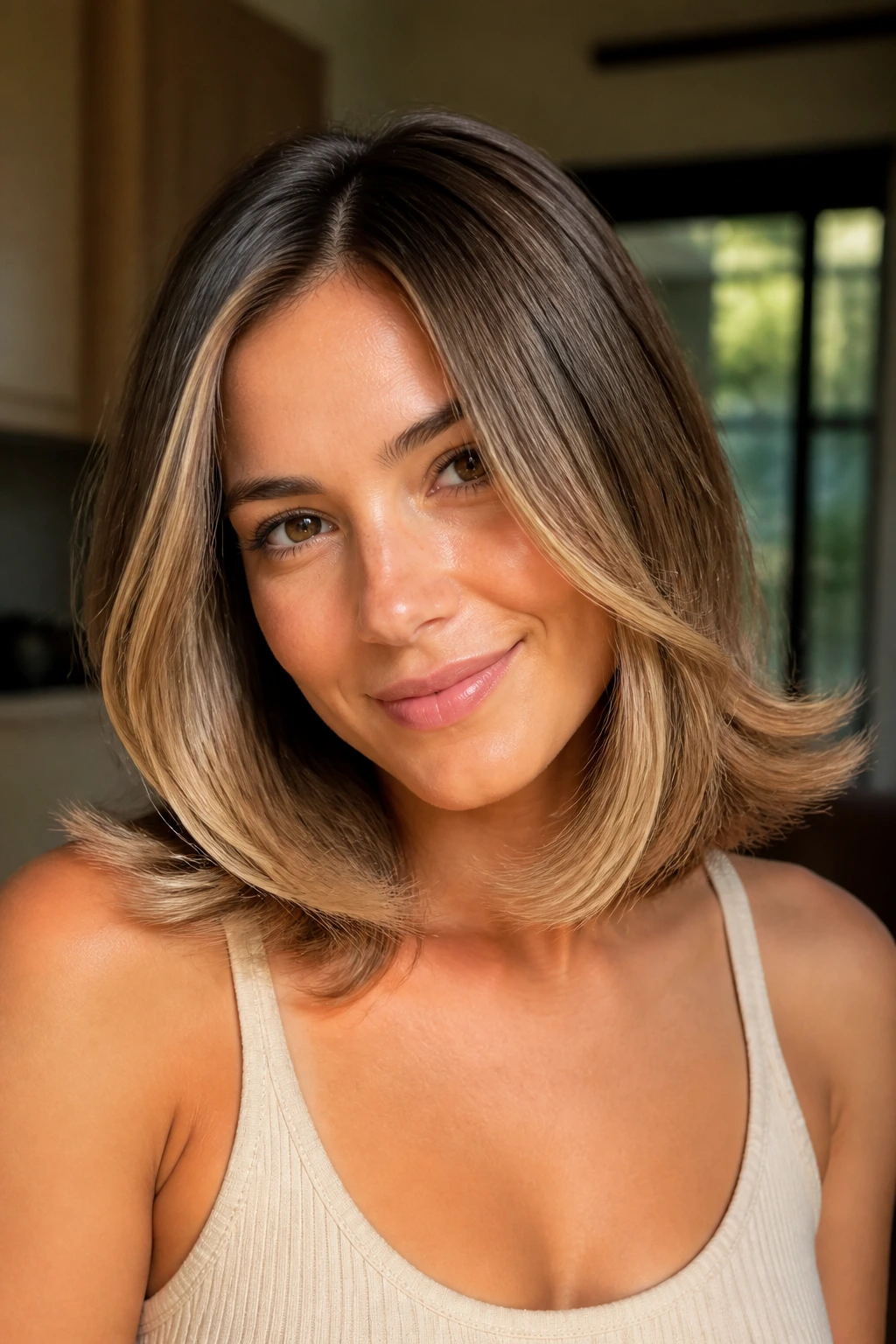
A flipped end changes the whole mood of a midlength cut. Instead of hanging straight down, the ends flick outward just enough to break the line and keep the hair from looking stuck to the neck. On thin hair, that small lift makes a real difference.
The beige babylights should sit where the flip catches the light—through the lower half and around the face. If the color is too warm or too chunky, the flip can look dated. Keep it soft, and the style feels lively rather than retro in a costume-y way.
This is a good choice if your hair naturally bends at the ends or if you already like a blow-dried finish. It’s also forgiving on second-day hair. A quick touch of a flat iron at the hemline can bring the flip back without redoing the whole head. That’s a nice thing on busy mornings.
18. Sleek Center-Part Lob with Glassy Finish
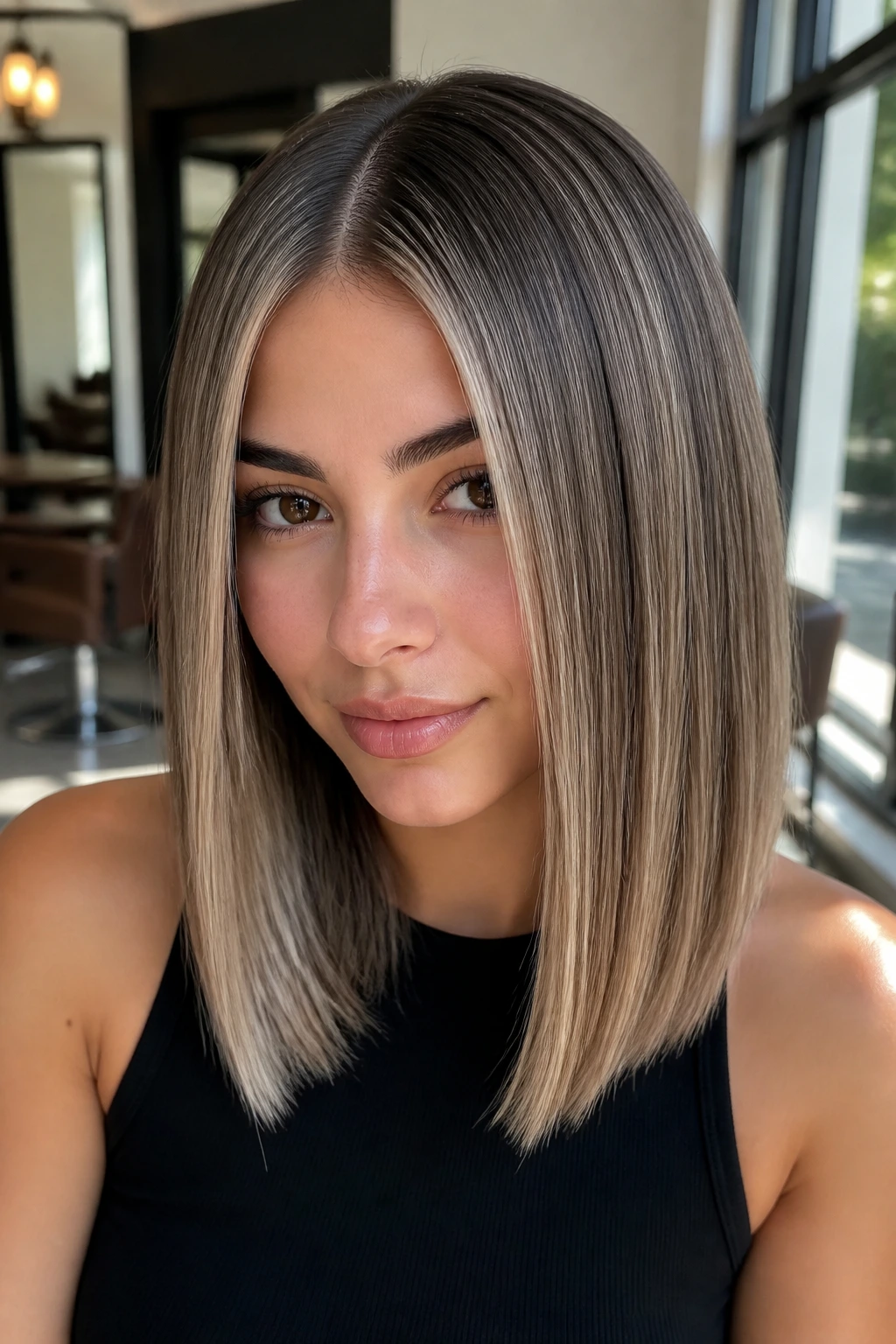
A center part can be a risk on thin hair because it exposes the scalp if the density is very low. But when the lob is cut cleanly and the babylights are placed with discipline, the whole look can feel sharp and modern rather than flat. The trick is balance. The base should have enough weight to anchor the part.
Keep the babylights super fine around the part line and front veil so the scalp doesn’t read as a hard divide. I prefer a soft beige or pearl tone here, because a cool platinum strip can make fine hair look even finer. The cut itself should stay blunt and smooth, with no choppy ends competing for attention.
This style is for people who like a polished finish. It’s not trying to fake big volume. It’s trying to make the hair look expensive, glossy, and deliberate. There is a difference, and the center-part lob leans all the way into that difference.
19. Long Layers with Curtain Fringe
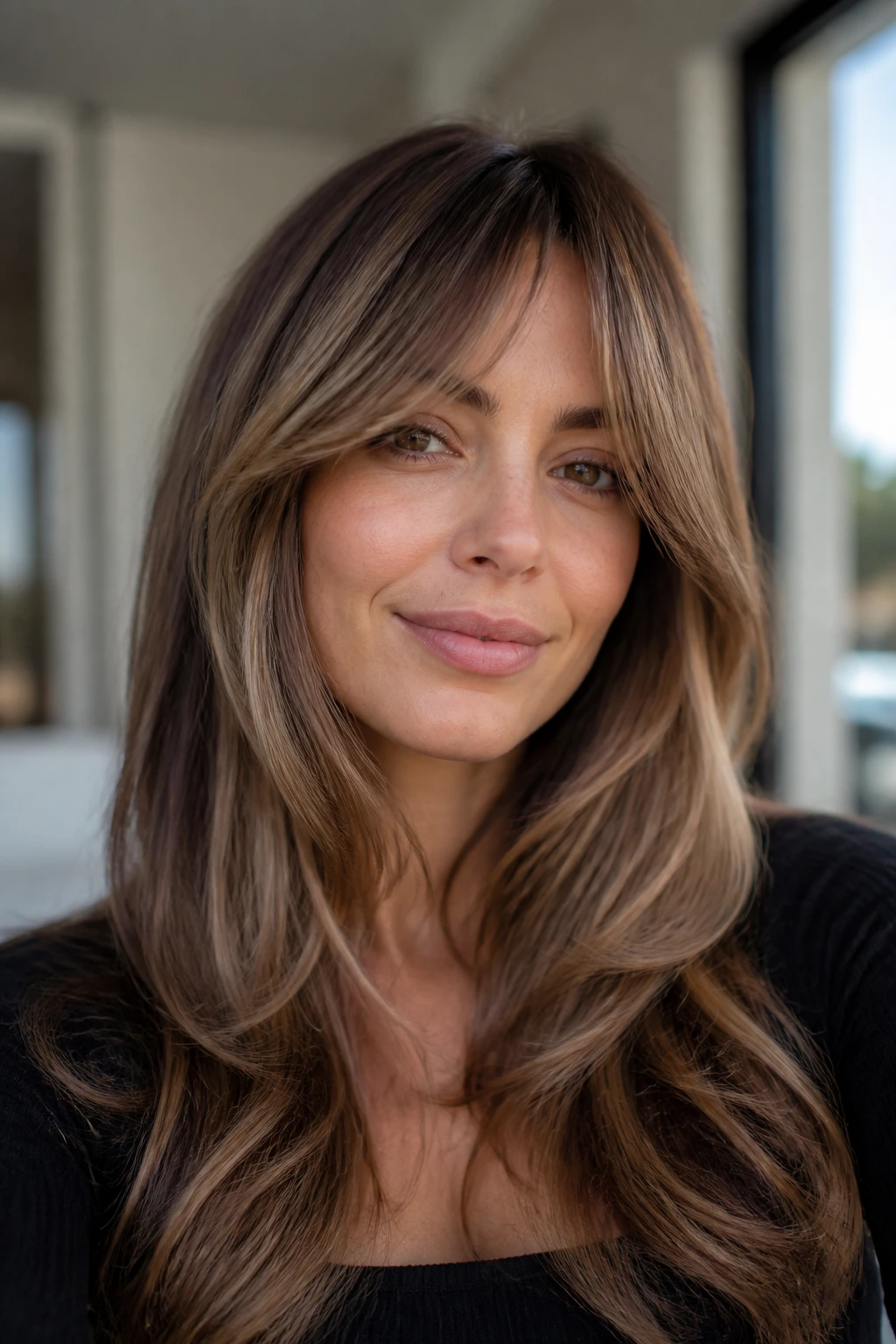
Long layers on thin hair can go wrong fast, which is why restraint matters. The layers should start low enough that the ends still feel full. The curtain fringe gives you movement at the front so the cut doesn’t look heavy, but the length stays intact through the back.
Babylights are best used to separate the layers visually. I like them near the bangs, temples, and outer lengths, with enough base color left in between to preserve depth. Thin hair does not need to be flooded with light pieces. It needs enough contrast to show the shape.
This style suits people who want to keep a little more length while still getting lift around the face. It also works well with blowout brushes and large Velcro rollers if you like a softer, bouncy finish. If your hair is fine but plentiful, this may be the most forgiving shape in the whole list.
20. Shoulder-Graze Cut with Crown Lift
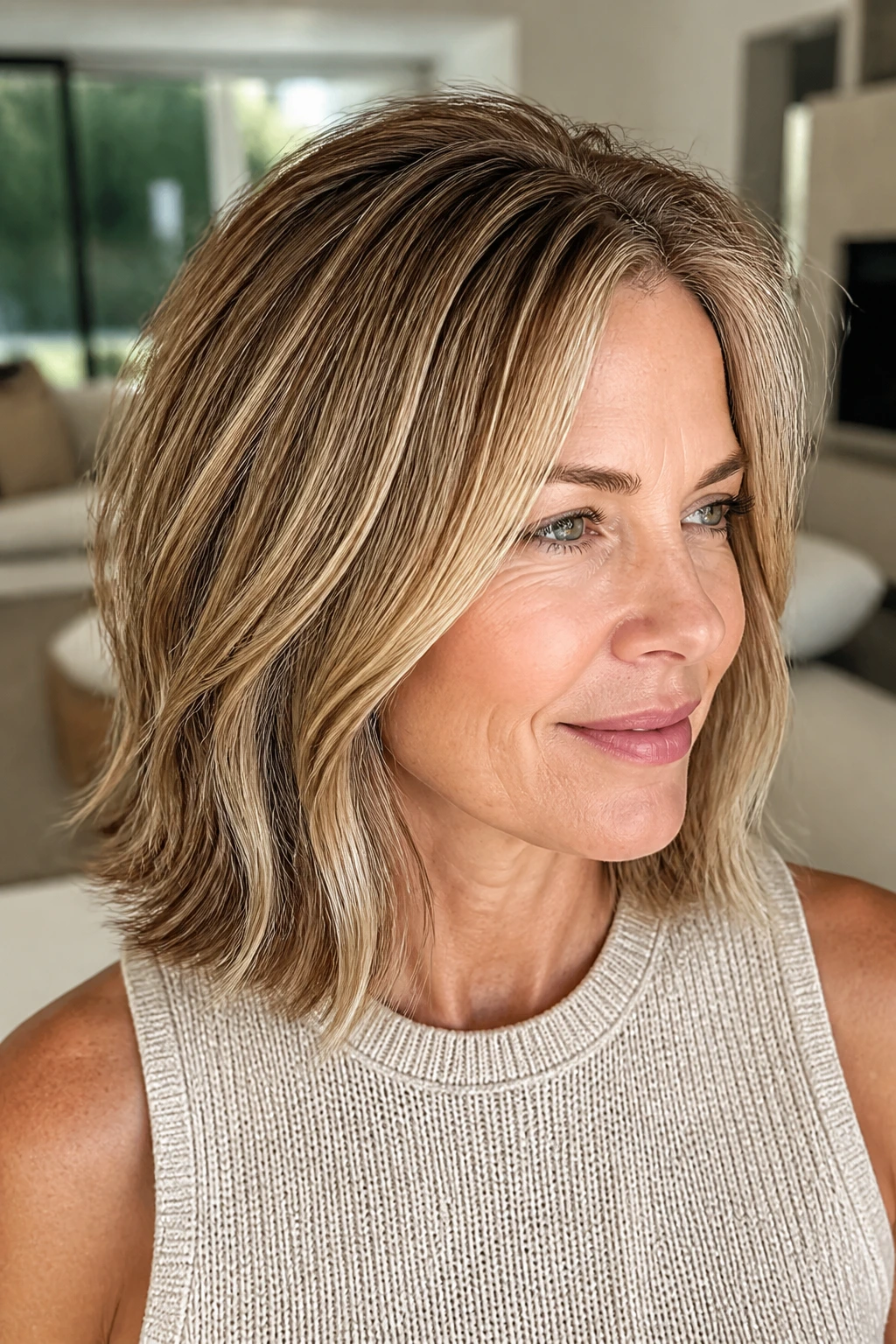
There’s something satisfying about a cut that just brushes the shoulders. It’s long enough to feel feminine and flexible, but short enough to keep the ends from thinning out into nothing. Add a touch of crown lift, and thin hair suddenly stops clinging to the head quite so much.
The babylights should be placed to support that lift. Fine, brighter pieces around the crown and top layers create a little sparkle when the roots are raised with mousse or a round brush. Keep the bottom a shade deeper and the style gets a stronger outline. That shadow at the base matters more than people think.
This is one of the most wearable cuts on the list. It doesn’t demand a special tool or a perfect air-dry. It just wants the roots encouraged in the right direction. If your hair tends to split flat at the top, this is a practical fix disguised as a pretty haircut.
21. Scandi Bright-Line Lob
This one is for the minimalist. The line is clean, the shape is simple, and the babylights are placed in very fine, bright ribbons around the hairline and top surface so the cut looks lighter without losing its architecture. It’s a crisp style, not a fluffy one.
The reason it works on thin hair is that it keeps the outline strong. A lot of people think thin hair needs more layers. Sometimes it needs less. A straight, well-cut line gives the eye somewhere solid to land, and the bright babylights keep that line from looking heavy or dull.
If you like a polished wardrobe—simple tees, sharp coats, clean lines—this haircut matches that mood. It’s one of the least fussy options here, and I mean that as praise. Some days you want movement. Some days you want your hair to behave.
22. Glossy Midlength Bob with Tapered Nape
The tapered nape is a small detail with a big effect. By letting the back sit a touch shorter and closer to the neck while keeping the front a little longer, the cut creates lift without shouting about it. Thin hair benefits from that quiet architecture.
Babylights along the front and upper layers keep the bob from looking like a single block. I like a soft champagne or light beige tone here because the shine reads through the ends better than a harsh platinum. The goal is a glossy, controlled shape that still has a little air around the face.
If you want a midlength cut that feels neat but not stiff, this is a strong finish to the list. It grows out cleanly, it works with straight or lightly waved hair, and it doesn’t collapse as quickly as some more layered looks. There’s a reason this shape keeps hanging around salons.
Why Babylights Change the Read of Midlength Hair
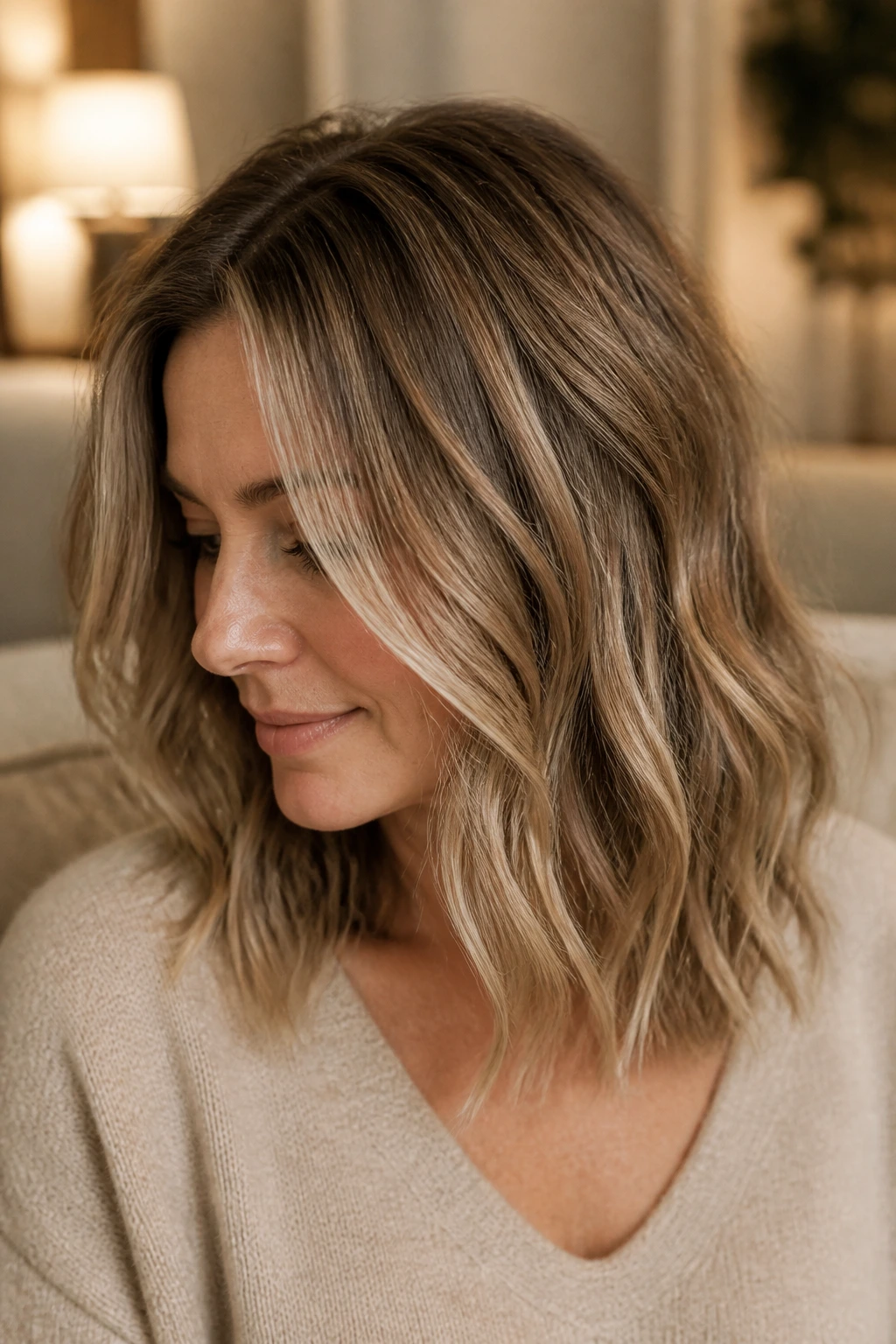
Babylights are tiny, but on thin hair they do a lot of work. Bigger highlights can make the scalp show more clearly because they carve the hair into obvious strips. Babylights soften that effect by weaving in such fine sections that the color shift feels natural rather than sliced apart.
The other thing they do is change how light lands on the cut. Thin hair often looks flatter under overhead light because there isn’t much surface variation. Babylights create tiny differences in tone across the crown, face frame, and ends, and that makes the haircut read as more textured. It’s a visual trick, sure. But it’s a useful one.
A good colorist usually keeps babylights only one or two levels lighter than the base on finer hair, especially if the goal is fullness, not brightness. That helps preserve shadow, which the eye needs. Too much light and you lose depth. Too little and the cut looks one-note. The sweet spot is somewhere in the middle, and it’s narrower than most people realize.
How to Ask for Midlength Haircuts for Thin Hair with Babylights at the Salon
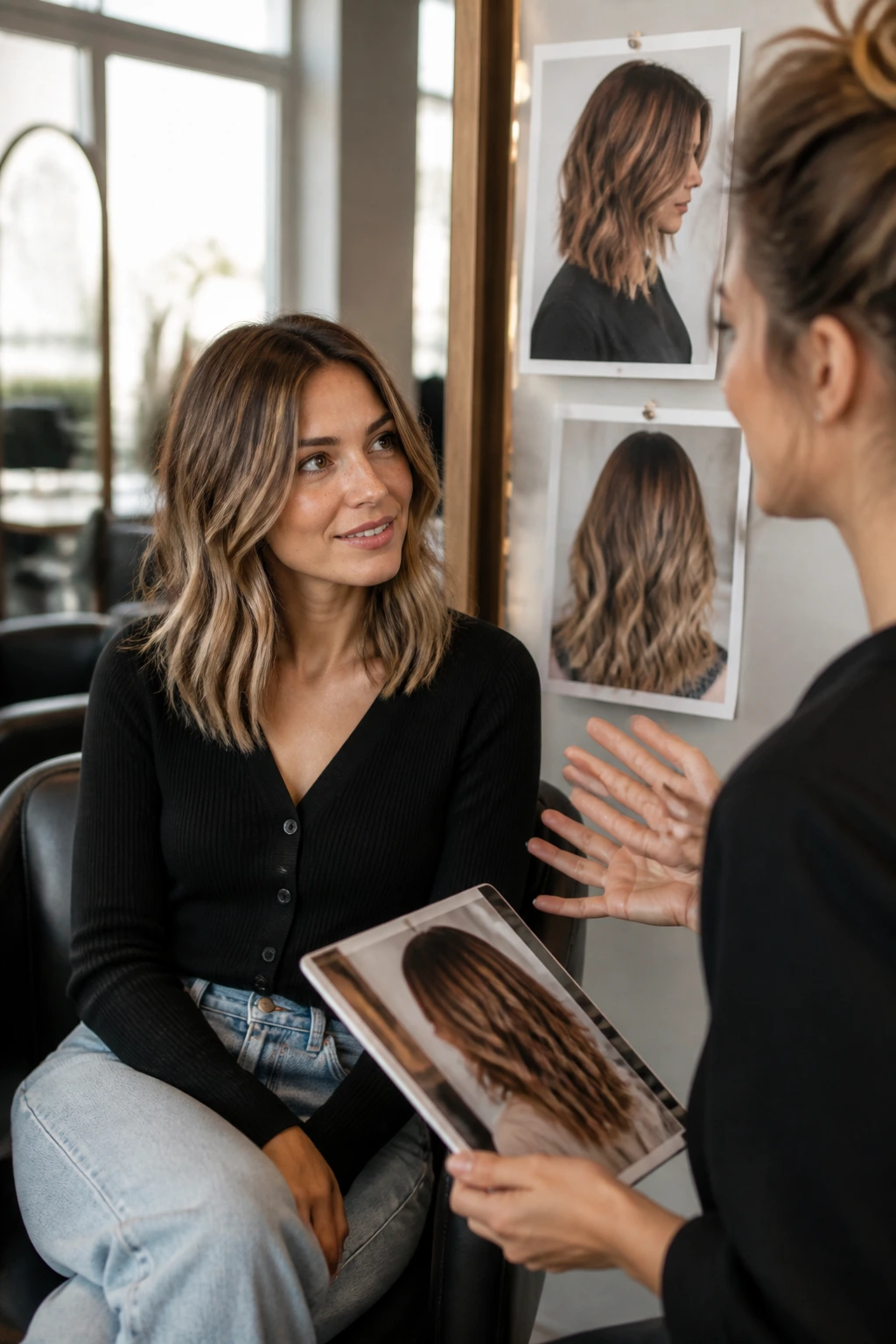
Bring photos, but bring the right ones. One photo should show the cut from the front or side. The other should show the color placement in a way that makes sense for your density, because babylights on thick hair can look gorgeous and still be totally wrong for you. A stylist can read a lot from a photo, but only if the photo matches your hair type.
Ask for the cut in the language of weight and outline. Say whether you want a blunt hemline, soft face framing, hidden internal layers, or a slightly angled shape. On the color side, ask for babylights that are very fine, with enough base left between them to keep the hair from going see-through. If your hair is fragile, say that plainly. A little honesty saves a lot of correction later.
For placement, the part line, hairline, and crown matter most. That’s where the eye goes first. Fine babylights around those areas create lift without flooding the whole head with brightness. If you want low maintenance, ask for a soft root shadow or a toner that fades in a forgiving way instead of a bright, high-contrast blonde that needs constant rescue.
Tools That Make These Cuts Easier to Wear at Home
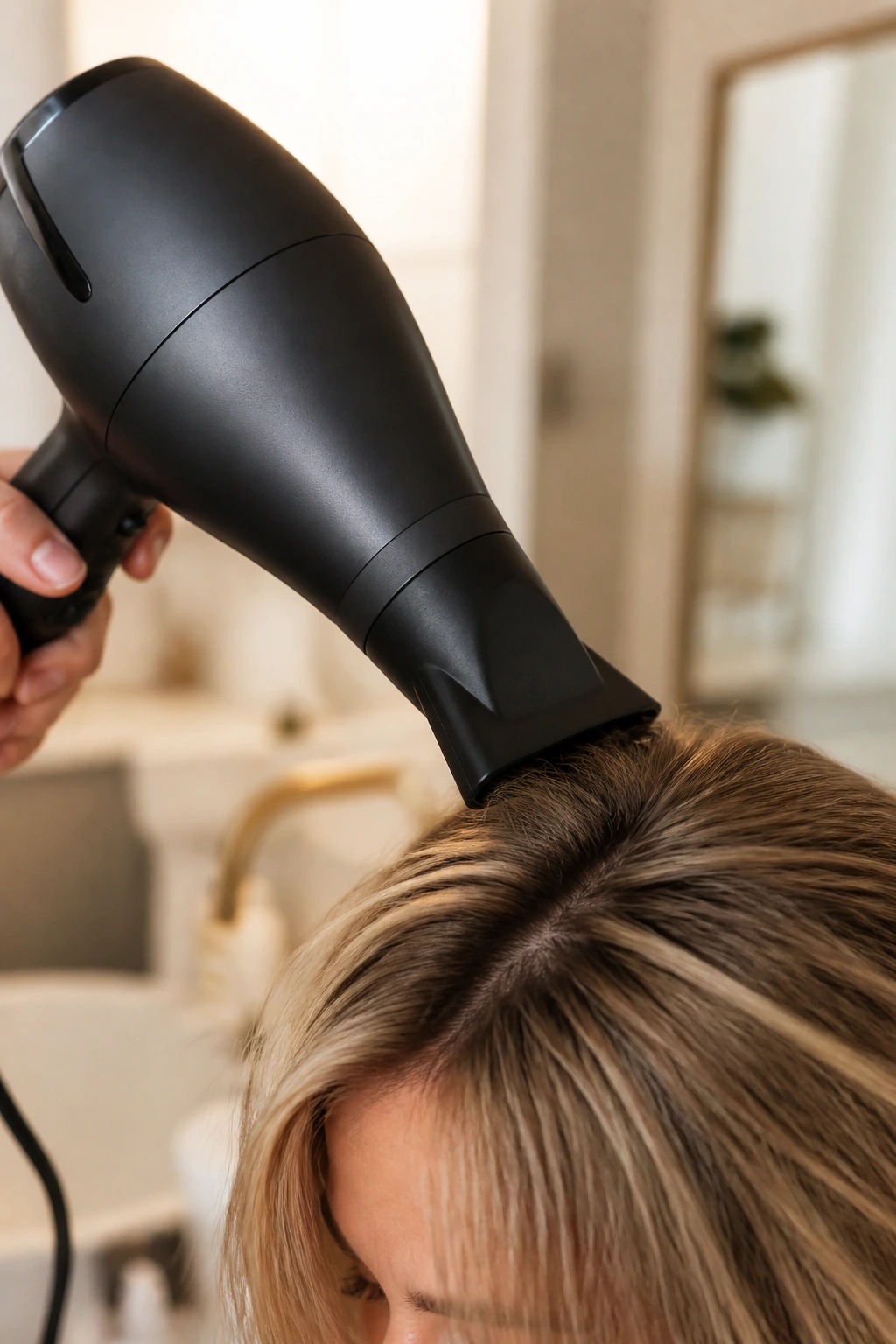
- Blow dryer with a narrow nozzle: Directs air at the roots so you can get lift without puffing up the ends.
- 1.25-inch round brush: A good middle ground for collarbone and shoulder lengths; smaller brushes can overcurl thin hair.
- Wide-tooth comb: Keeps fine, color-treated hair from getting snagged when it’s damp.
- Root-lifting mousse or spray: Gives the crown some memory before the blow-dry starts.
- Texturizing spray: Helps piece out ends on shags, lobs, and flipped styles without making them gritty.
- Heat protectant: Non-negotiable if you use a flat iron or curling iron even twice a week.
- Tail comb: Makes clean parts and precise babylight-inspired styling easier.
- Color-safe shampoo: Keeps babylights from turning dull and muddy.
- Velcro rollers or clips: Useful for crown lift on blunt cuts and rounded mids.
How to Style and Wear These Cuts So They Do Not Collapse
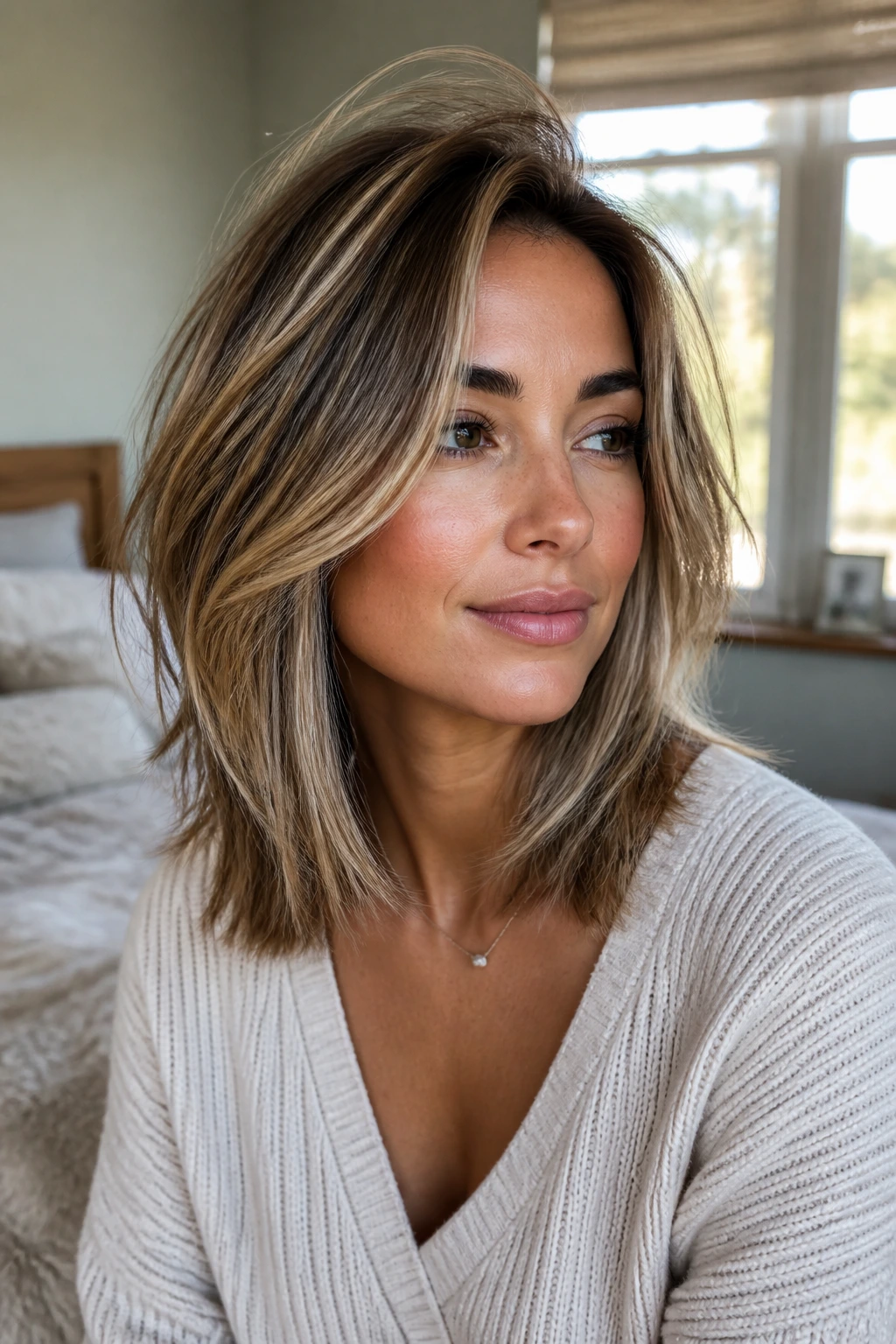
Presentation: The easiest way to keep a midlength cut from looking flat is to control the root and leave the ends soft. That means drying the roots in the direction you want the lift to go, then bending the last inch or two only if the perimeter needs more shape. A blunt lob should look clean at the edge; a shag-lite should look airy, not frizzy.
Products and Partners: Root mousse, a light heat protectant, and a dry texture spray are the workhorses here. Heavy oils at the crown are a bad trade on thin hair. If the babylights are beige or champagne, a glossing spray can keep the color reflective without coating the strands in slick buildup.
Length and Layer Balance: Ask yourself where the haircut needs to carry weight. Collarbone cuts usually need a stronger hemline, while butterfly and shag-lite shapes need longer internal layers that start below the cheekbone. If the layers begin too high, the ends get stringy fast. Thin hair rarely rewards impatience.
Best Setting: These cuts shine in ordinary life, which is the whole point. They work at the office, on a weekend, and in dim restaurant light where a too-bright color can look harsh. If a style needs an hour of curling to look alive, it’s asking too much. The good ones still have shape after a quick brush and a little lift at the roots.
Additional Styling Tips and Volume Boosters
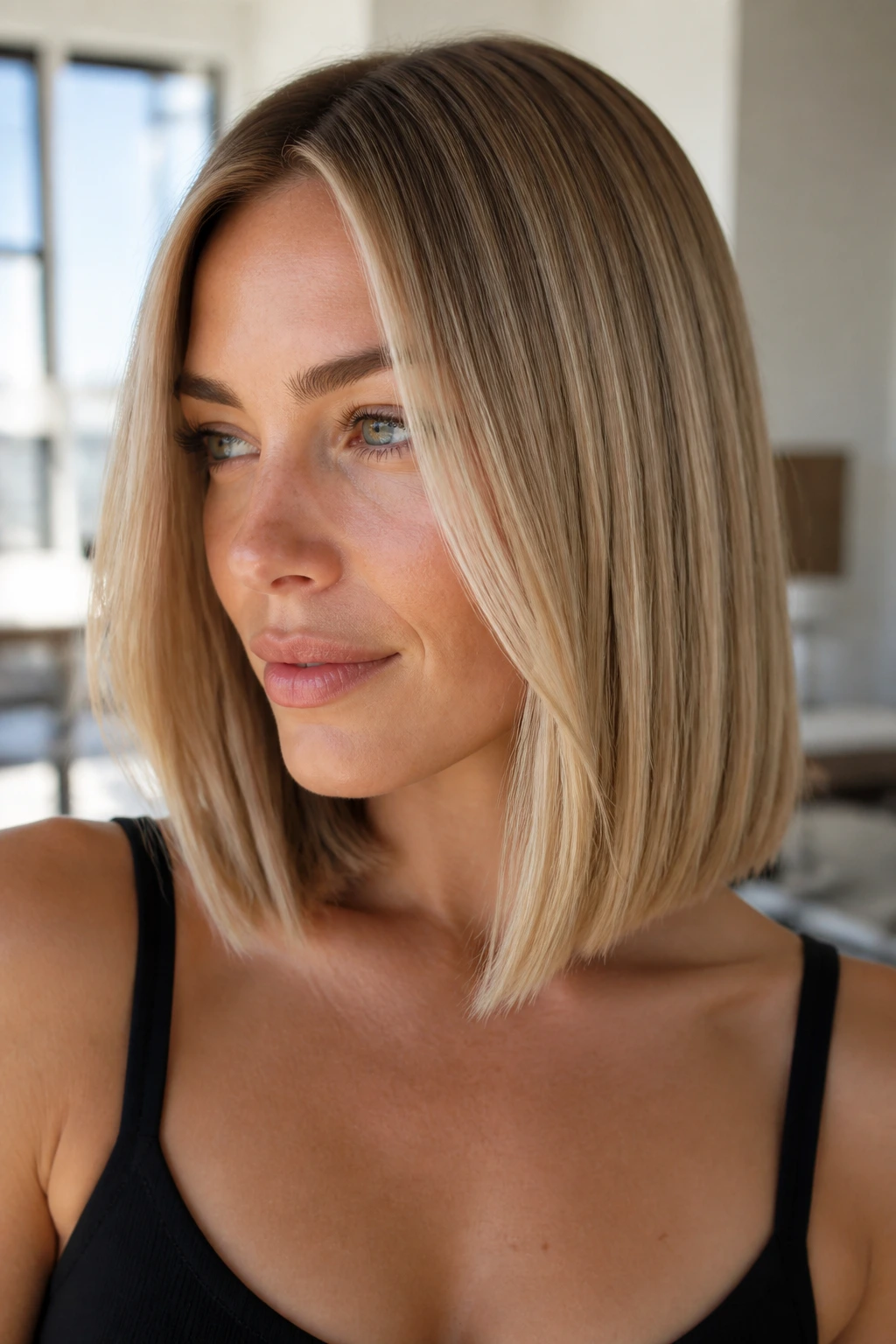
Root Lift: Clip the crown up while it cools after blow-drying. That five-minute pause can lock in more shape than another blast of heat. It’s a small thing, but hair remembers the cooling stage.
Texture: Bend only the middle section of the hair on some days. Leaving the ends straight keeps the cut looking longer and fuller, which is better than curling everything into a puffed-out ball.
Shine: Use a lightweight glossing mist on the mid-lengths only. Fine hair looks richer when it reflects light at the right places, but roots need to stay clean and airy.
Make-It-Yours: If your hair is naturally straight, lean toward blunt or angled shapes. If it holds a bend, butterfly and shag-lite cuts can give you more movement for less effort. Curly or wavy textures usually want longer layers and softer babylight placement so the color doesn’t break up the curl pattern too much.
The Mistakes That Make Thin Hair Look Flatter
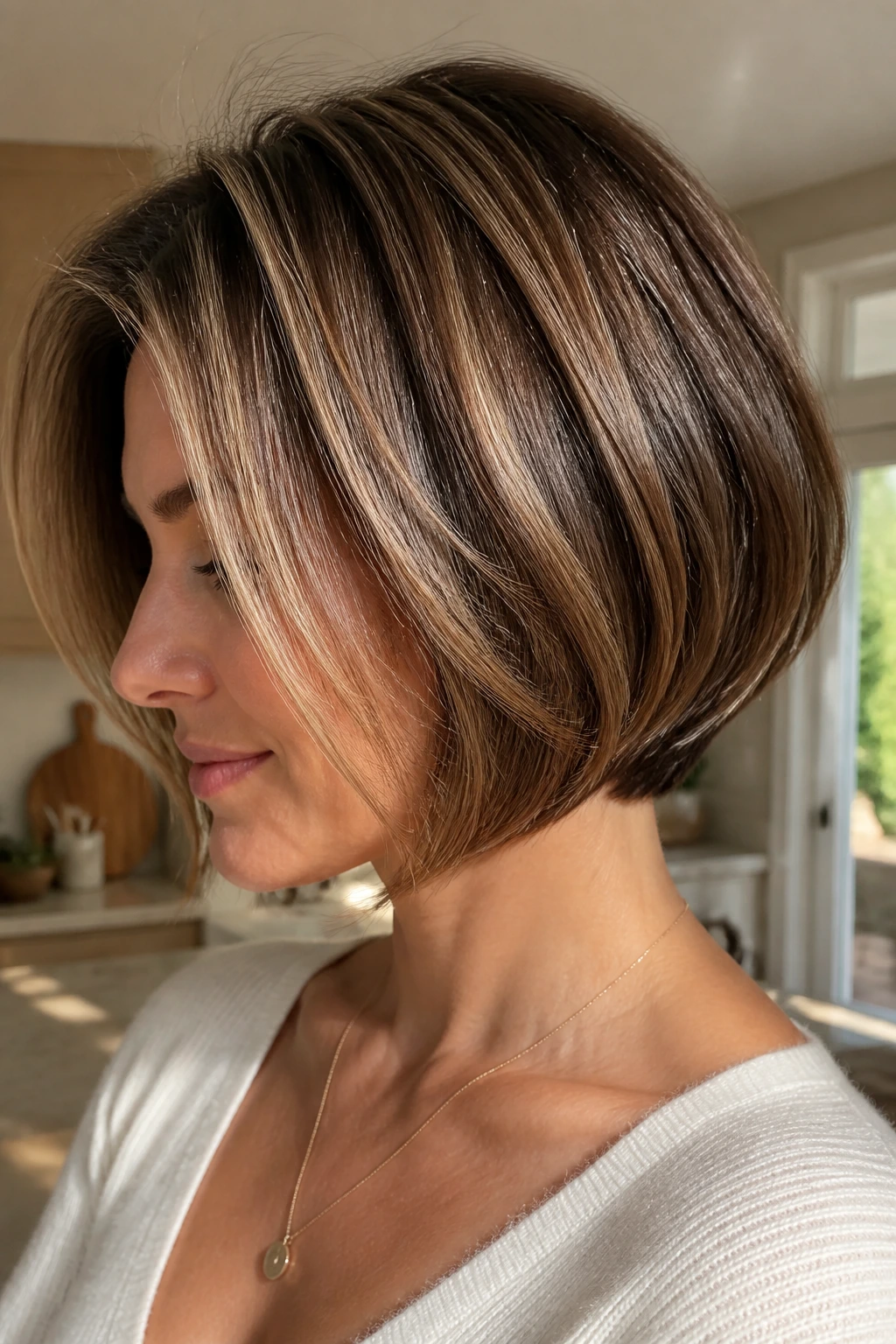
The first mistake is over-layering. People hear “thin hair” and assume the answer is more layers everywhere. It isn’t. If the shortest layers sit too high, the ends start looking empty and the whole cut loses its line. The fix is to keep the perimeter strong and let movement come from internal shaping or face framing, not from carving the haircut to pieces.
Another common problem is babylights that are too bright or too dense. Thin hair needs shadow to look full. If every section is lightened, the scalp can read more clearly and the hair loses its depth. Softer placement around the part, hairline, and crown usually looks better than a blanket of foils.
Heavy product is a silent killer here. A thick serum, oil, or cream near the roots can make a nice haircut collapse in under an hour. Use those products sparingly and keep them from the scalp unless your hair is actually dry at the ends. One extra pump is often the difference between airy and greasy.
And then there’s the blunt-cut panic: people worry a clean line will look too plain, so they soften it until it barely exists. Don’t. A good blunt hemline is part of what makes these styles work in the first place.
Variations to Match Different Hair Textures and Lifestyles
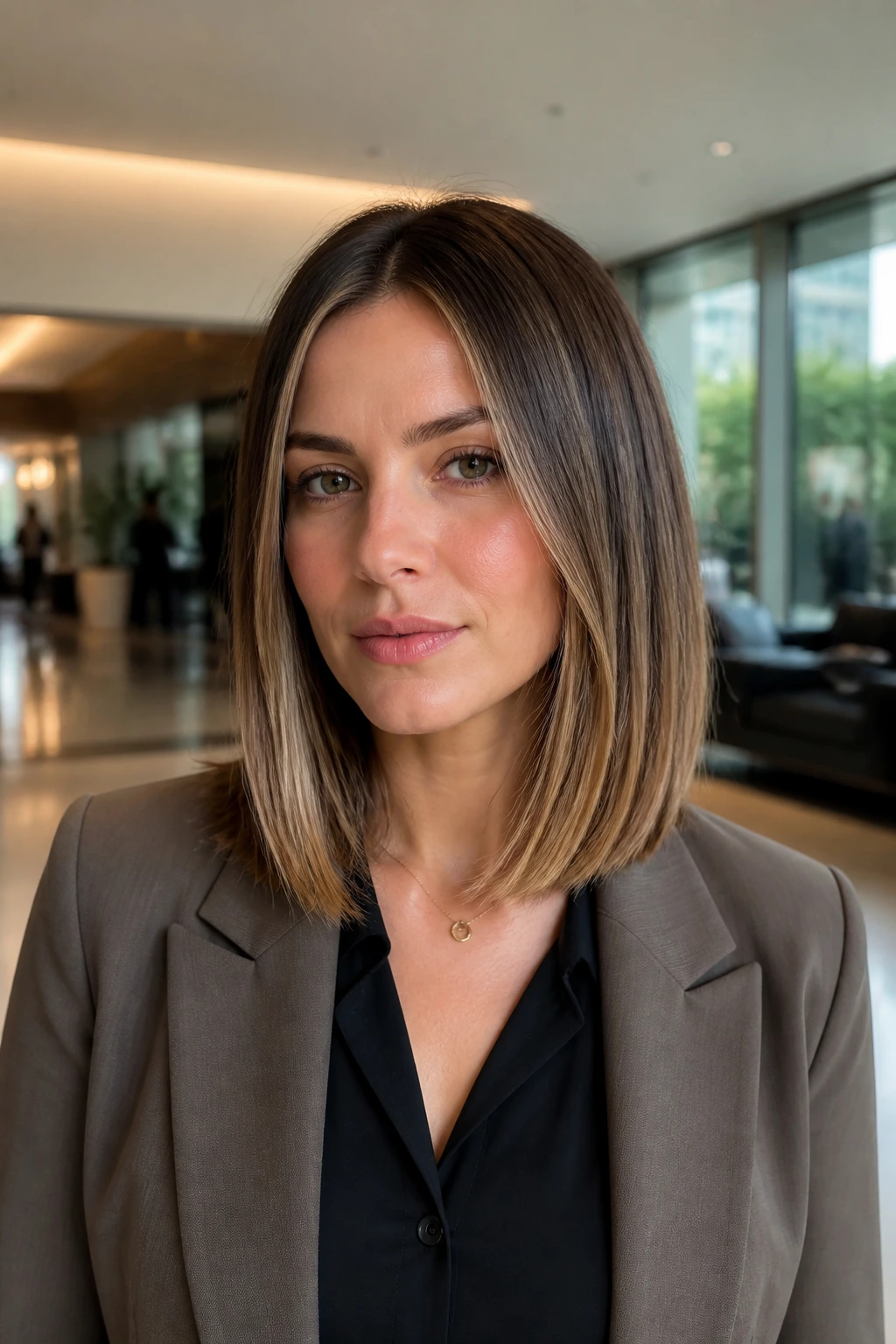
The Soft Office Version: Keep the cut blunt or slightly rounded, with babylights concentrated around the front veil and part. This version suits people who need the hair to look neat after a long day and don’t want layers flying around the face.
The Air-Dry Version: Choose a shaggier lob or wolf-lite midi with longer face framing and scattered babylights. A little texture cream on damp hair is usually enough. If your hair dries with a natural wave, this route can save time and still look intentional.
The Bright-Front Version: Put the lightest babylights around the money piece, temples, and part line, while the back stays deeper. This one is good if you want the eye pulled forward and don’t want to lighten the whole head.
The Low-Maintenance Grow-Out: Ask for a soft root shadow and babylights that fade gently into the base. The color stays believable longer, which matters if you don’t want a salon appointment every few weeks.
The Straight-and-Sleek Version: Choose a blunt lob, sleek center part, or polished midi with hidden layers. Thin hair can look surprisingly dense when it’s smoothed into a single line and the babylights are kept fine and close together.
Keeping the Shape and Babylights Fresh
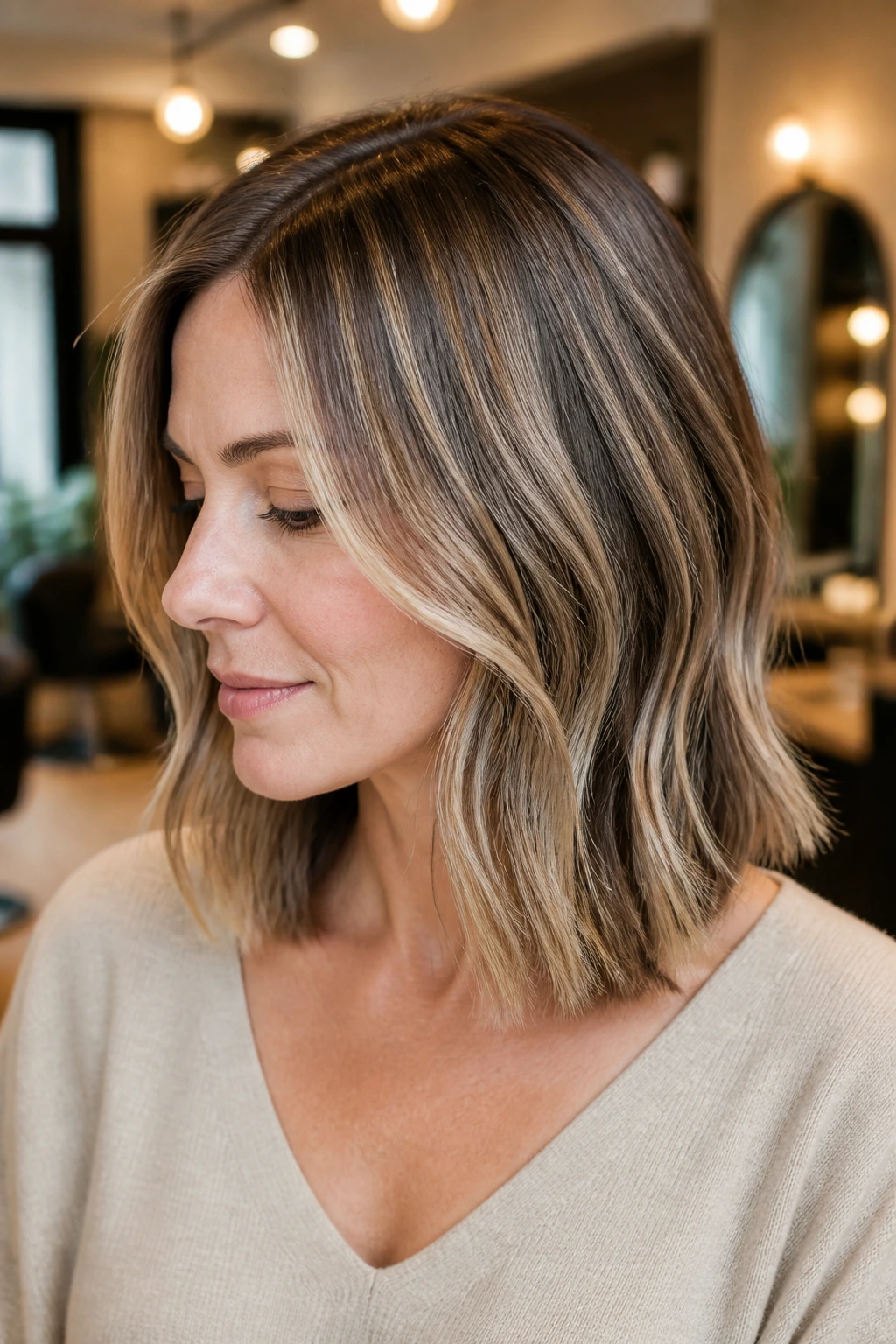
Midlength cuts on thin hair usually need trims every 6 to 10 weeks, depending on the shape. A blunt lob or polished midi starts to lose its edge sooner, often around the 6-8 week mark. Softer shag-lite and butterfly shapes can stretch a little longer, closer to 8-10 weeks, because the texture makes the grow-out less obvious.
Babylights need their own schedule. If you like a bright hairline and a clean part, expect a refresh every 8 to 12 weeks. If you prefer a softer grow-out with more shadow at the root, you can often push that longer. A toner or gloss every 4 to 6 weeks helps keep beige and champagne tones from turning dull or brassy, especially if you use heat often.
At home, use a color-safe shampoo and don’t overdo clarifying washes. Once every 2 to 4 weeks is enough for most people who use dry shampoo. Too much cleansing strips the tone out of babylights fast, and thin hair already has enough trouble hanging onto shine.
Heat protection matters more than people like to admit. Fine hair burns and frays faster than thicker hair, so keep tools in the 300-340°F range unless your hair is unusually resistant. Lower heat, slower passes, fewer repeats. That’s usually the smarter route.
Questions People Ask Before They Book

Will babylights make thin hair look thinner?
Not if they’re done lightly and with enough base left between pieces. Very chunky highlights can expose the scalp and cut the hair into visible stripes, but fine babylights usually have the opposite effect. They blur the surface and create a fuller read.
Are layers bad for thin hair?
No, but too many short layers are a problem. Thin hair usually does better with long layers, invisible layers, or face-framing shapes that preserve weight at the ends. The goal is movement without stripping away the outline.
Should I get bangs if my hair is thin?
You can, but the shape matters. Curtain bangs, bottleneck bangs, and soft side-swept fringe are easier to wear than a dense blunt fringe because they take less hair from the rest of the cut. If your hairline is sparse, keep the fringe longer and lighter.
How do I stop my roots from falling flat?
Blow-dry the roots in the opposite direction from your part first, then switch the part back once the hair is about 80% dry. A root-lifting spray or mousse helps, but the real trick is letting the roots cool with some lift already in them.
Can I wear a center part with thin hair?
Yes, if the cut has enough weight and the part is not exposing a lot of scalp. A blunt lob or polished midi usually handles a center part better than a heavily layered cut. Babylights should stay soft around the part line so the scalp doesn’t look stark.
What if my hair is thin but dense?
That’s a different problem from fine, sparse hair. Dense thin hair can often handle more internal shaping and a little more lightness through the top. You still want a strong perimeter, but you may have more freedom with layers than someone with low density.
How often should I refresh the color?
If the babylights are soft beige or champagne, a gloss every 4 to 6 weeks and a full refresh every 8 to 12 weeks is a solid rhythm. If you like softer grow-out, you can extend that. The hair will tell you when the tone has gone muddy.
Can I do these cuts on curly or wavy hair?
Yes, but the layers need to respect the curl pattern. On waves, midlength cuts with long face-framing pieces and softer babylight placement tend to behave better than sharp, choppy shapes. On curls, too much layering can make the silhouette puff out in the wrong places.
The Shape That Holds Its Own
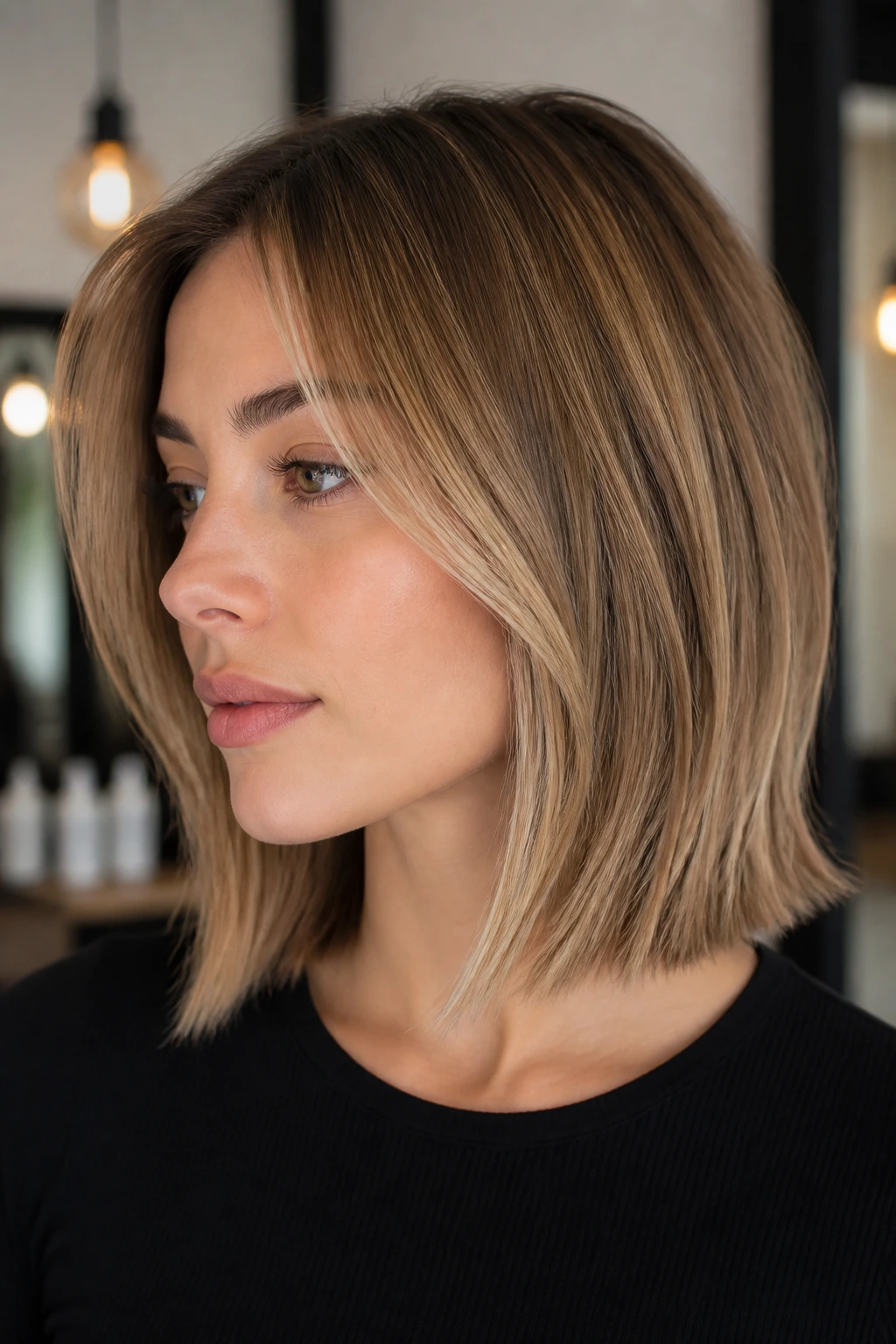
The best midlength cuts for thin hair do not shout. They hold their shape, keep the ends visible, and leave enough room for babylights to do their quiet work. That’s the part people miss when they chase bigger volume at the crown and forget about the bottom edge. A good line, a smart layer, and a soft ribbon of light at the part can change the whole read of the head.
If you’re choosing between dramatic and wearable, I’d vote wearable almost every time. Thin hair looks nicest when the cut respects what it already has instead of fighting it. A clean collarbone lob, a careful butterfly midi, or a polished blunt shape with fine babylights can give you more visual density than a dozen aggressive layers ever will.
And once you find the version that fits your hair texture, your part, and the way you actually style in the morning, it stops feeling like a haircut and starts feeling like a shape you can live in.