



Long blonde hair after 50 works best when it has shape, shine, and a little air around the face. Leave it too blunt, too flat, or too one-note, and it starts looking tired fast. Give it movement, a smart color blend, and ends that don’t look chewed up, and the whole thing changes.
That’s why long blonde hairstyles for women over 50 can be such a good lane to stay in. The right cut softens the jawline, the right tone brightens the skin, and the right styling choice keeps the hair from sitting there like a sheet. Honey blonde, champagne, beige, silver-blonde, and rooted blonde all do different jobs. That’s the part people miss.
Some of these looks are polished enough for dinner. Some are the kind you can throw together with a round brush, a couple of clips, and ten minutes of patience. A few lean soft and romantic, a few lean sharp, and a few are just practical in the best possible way. The point is not to chase some fantasy version of hair that never frizzes, never flattens, and never needs a trim. The point is to find the shape that works with what your hair actually does.
Why These 30 Styles Earn Their Keep
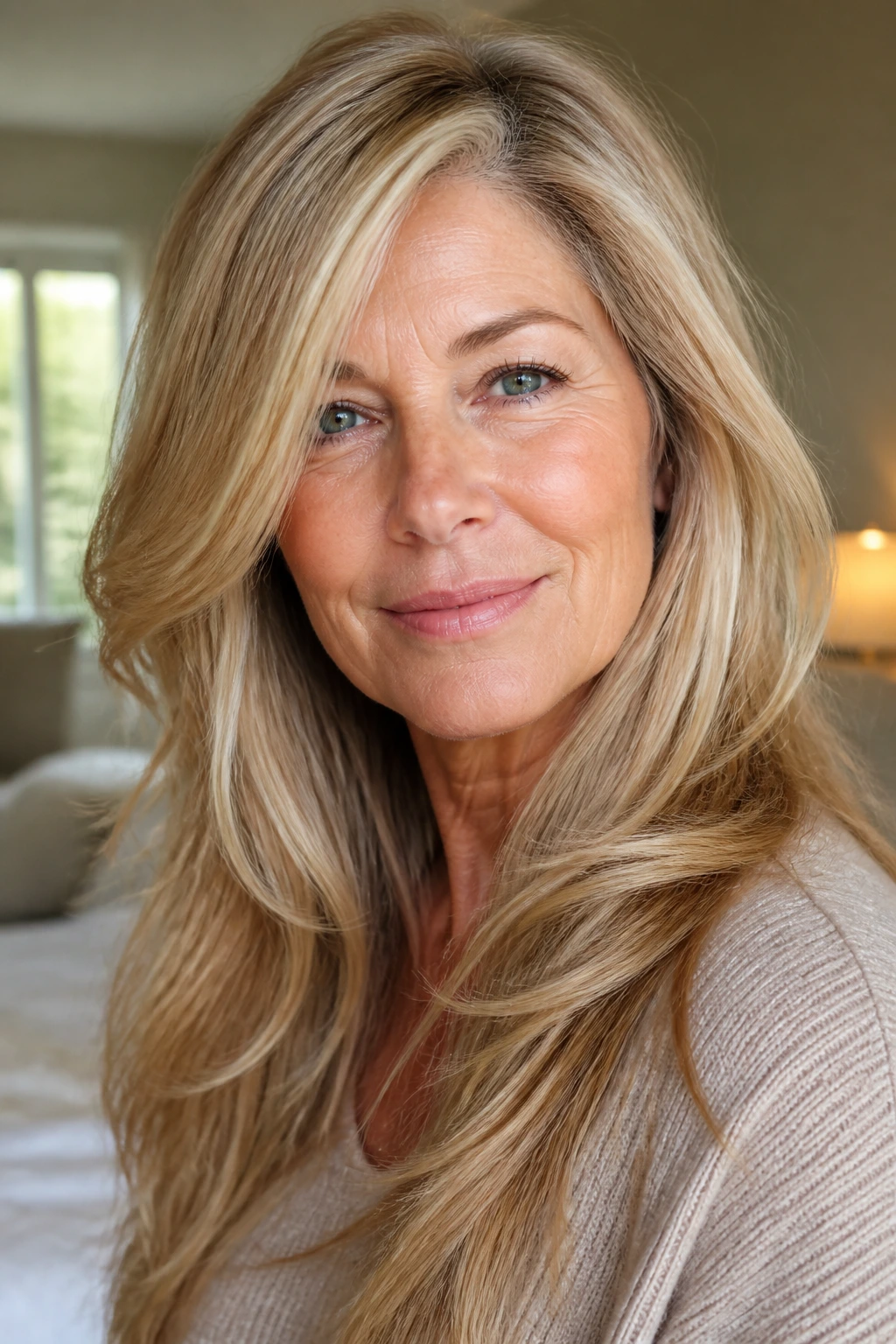
- Face-softening shape: Long layers, curtain fringe, and side parts keep blonde hair from dragging the features downward, which matters when the ends get finer with age.
- Color that grows out cleanly: Root shadow, balayage, and silver-blonde blends give you a softer grow-out line instead of a harsh stripe every few weeks.
- Room for different densities: Fine hair can use light layers and lift at the crown; thick hair can use deeper shaping so the length doesn’t feel bulky.
- Styles that don’t demand perfection: A loose wave, braid, or twist still looks intentional even when the blowout is a little off. That’s useful.
- Gray-friendly choices: Blonde mixed with beige, ash, honey, or silver tones can blend new gray strands instead of fighting them head-on.
- Easy to dress up or down: The same length can become sleek, waved, pinned back, or braided without cutting it off and starting over.
1. Honey-Blonde Face-Framing Layers
These are the styles I reach for when long blonde hair needs movement near the cheeks and collarbone. The front pieces start around the jaw or just below it, which keeps the length from pulling everything downward, and honey blonde around the face gives the whole cut a warmer read than icy blonde.
Best on medium-density hair
Ask for long layers that don’t start too high. If the shortest layer hits the chin, the hair can bounce up too much and lose its line; if it starts closer to the collarbone, the ends still look full. A round brush and a quick bend away from the face is enough. Skip heavy oil at the roots. It flattens the lift you paid for.
2. Curtain Bangs with Feathered Length
Why do curtain bangs keep showing up on long blonde hair after 50? Because they do the face-softening work of a fringe without forcing you into a blunt line across the forehead. The center opening keeps the look airy, and feathered lengths below it stop the style from feeling top-heavy.
Keep the sides of the bang longer—cheekbone length when dry is a good target—so they can blend into the rest of the cut. Beige blonde or champagne blonde makes the split in the fringe read as a feature instead of a problem. If your hairline is a little sparse, go wispy rather than dense. Dense bangs can feel heavy fast.
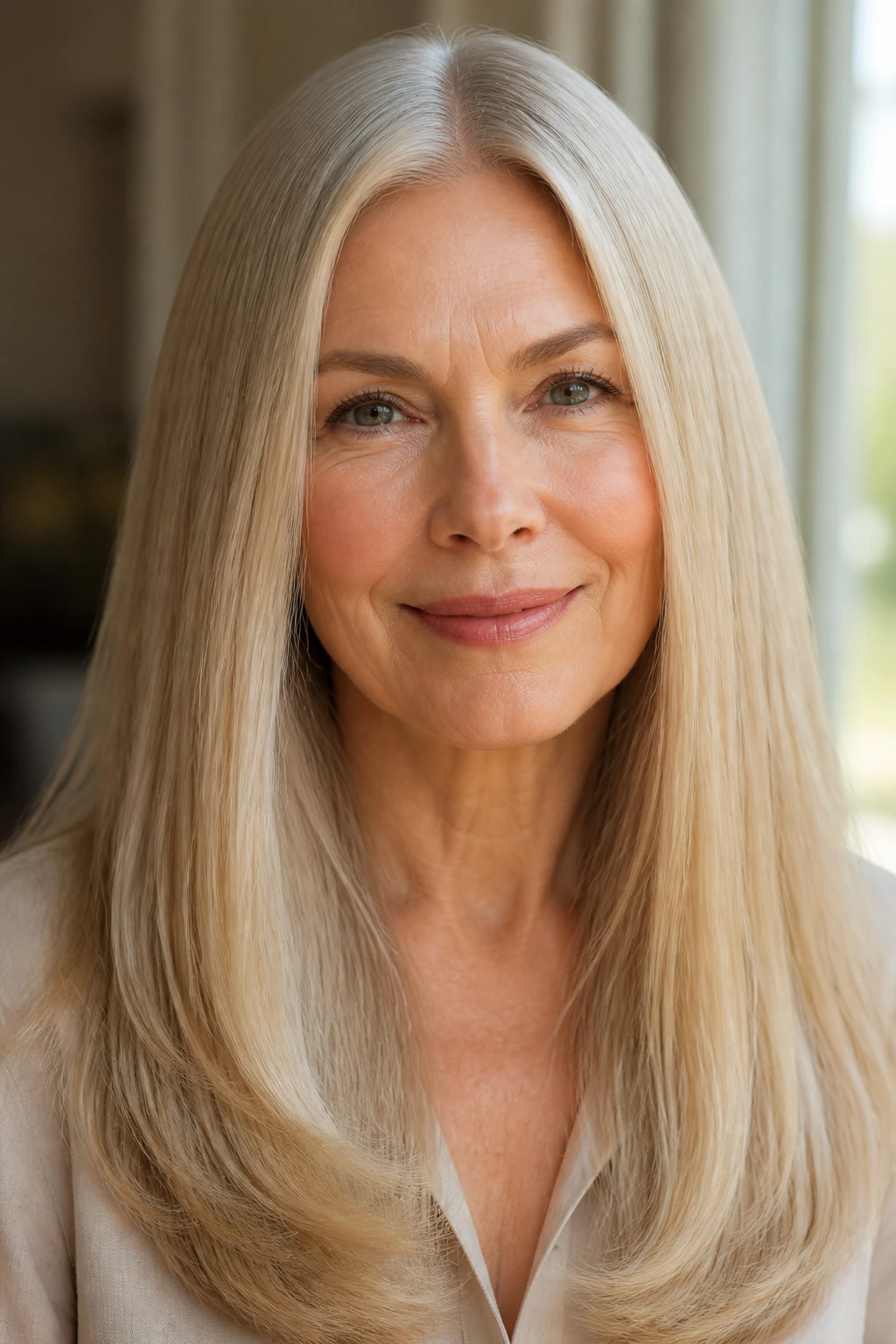
3. Glassy Center-Parted Straight Hair
This one is all about discipline. Straight, long blonde hair with a clean center part looks sharp when the ends are blunt enough to feel intentional, but not so blunt that they look thick and boxy. The shine matters here more than the color. A beige or pearl blonde finish shows off the line without screaming for attention.
Use a paddle brush, a heat protectant, and a flat iron only if the hair needs it. Too much ironing makes the cut look stiff, especially if the hair is already fine. I like a soft bend at the ends, not a poker-straight finish. That tiny curve keeps the hair from reading flat on the shoulders.
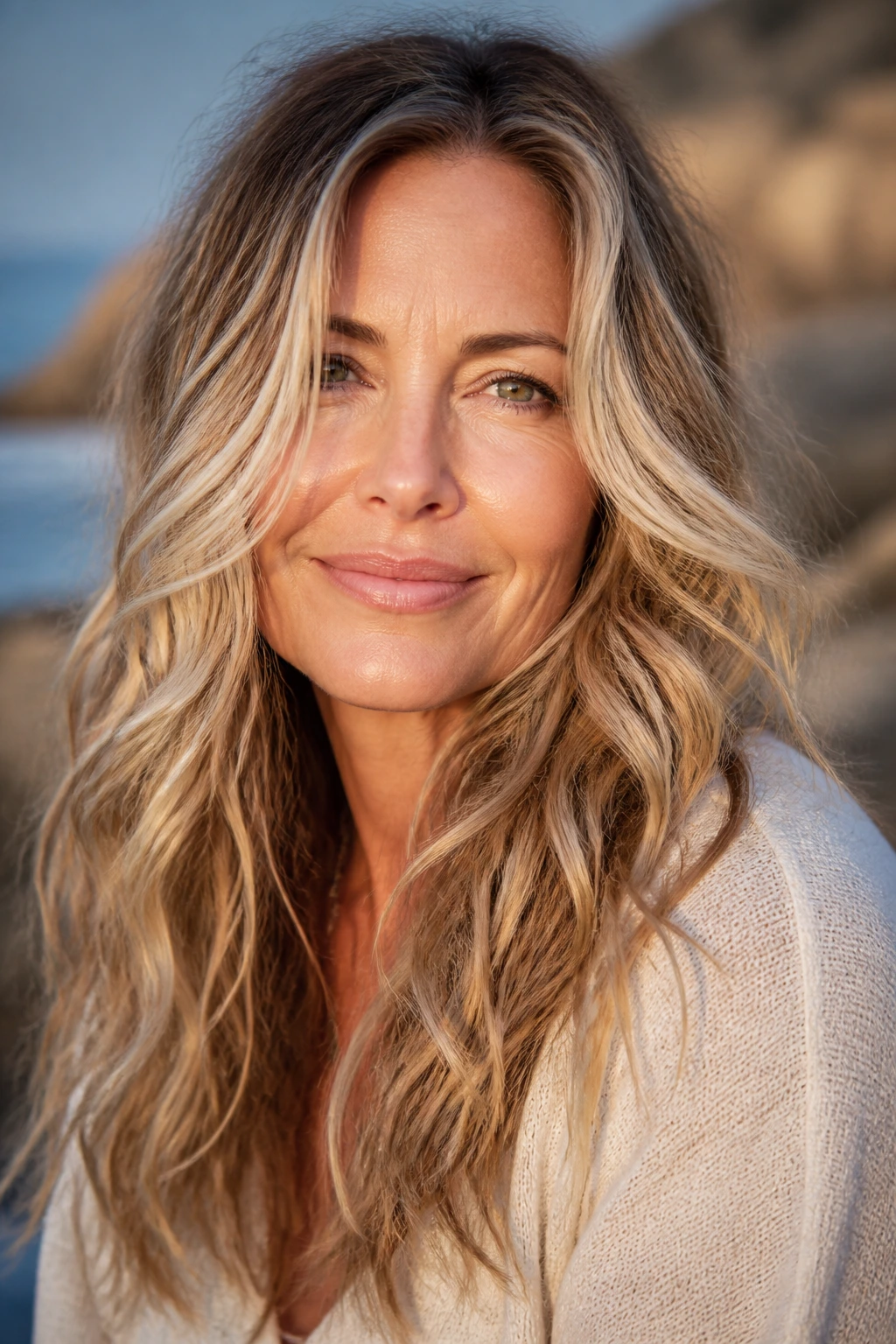
4. Beach Waves with Balayage Ribbons
Loose waves with balayage ribbons are one of the few blonde looks that can handle a little mess and still look finished. The highlight placement does the heavy lifting here. Lighter pieces around the front and midlengths catch the eye, while deeper blonde at the roots keeps it from turning into a washed-out blur.
Quick styling notes
- Use a 1.25-inch curling wand and leave the last inch of each section out.
- Curl away from the face on both sides for lift near the cheekbones.
- Shake the waves apart with fingers, not a brush, or they’ll puff out.
This style works especially well if your hair has some natural texture. It doesn’t need to be perfect. That’s the whole appeal.
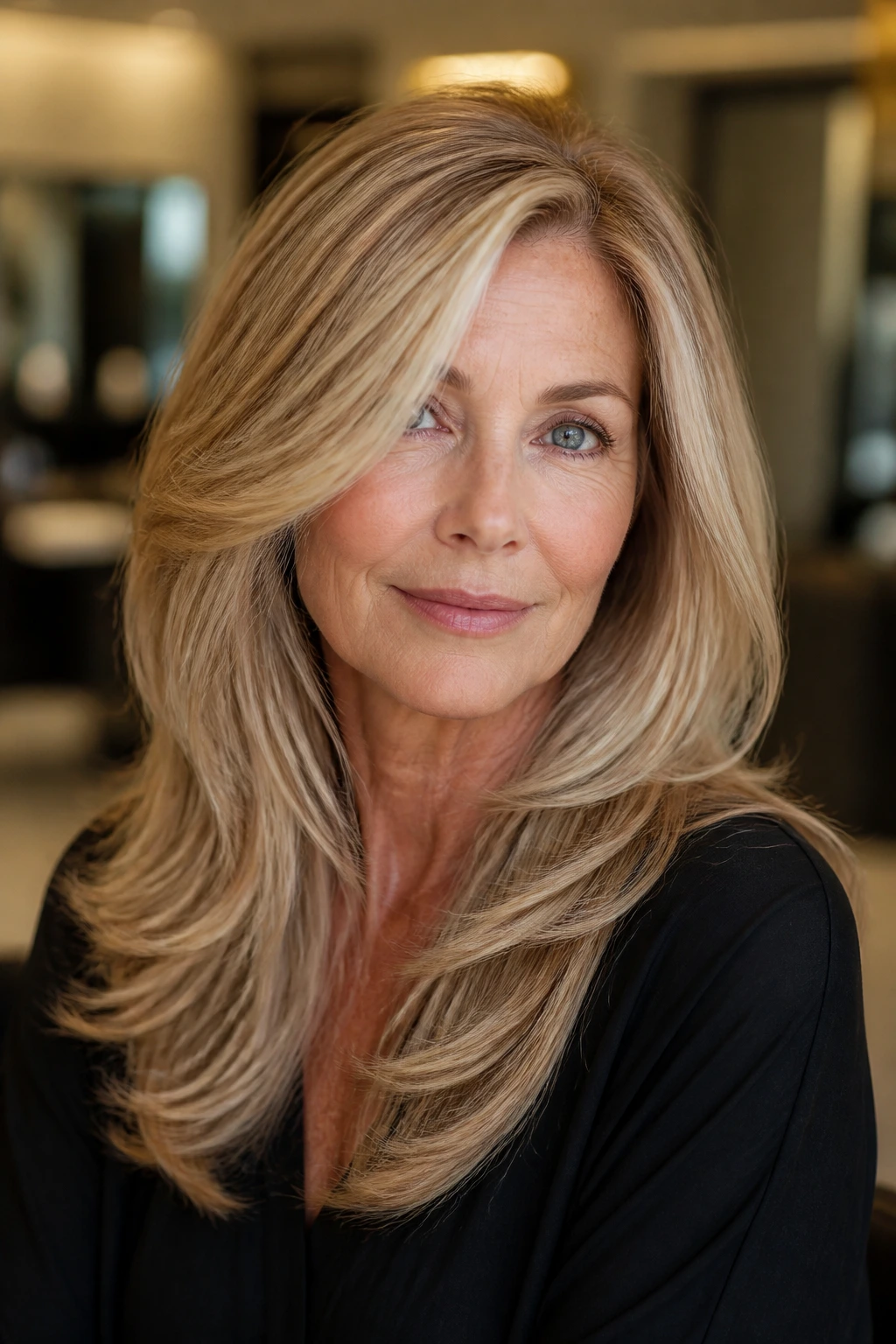
5. Side-Swept Blowout with Feathered Ends
A deep side part gives long blonde hair a little drama without needing a full cut change. The sweep opens one side of the face and lets the opposite side fall in a soft curtain, which can be useful if one side feels stronger than the other or if you want to draw attention to earrings.
The feathered ends matter more than people think. They keep the length from ending in a hard block, which is where long blonde styles can start to look dated. If your hair is thick, ask your stylist to thin the ends lightly and leave the top full. If it’s fine, keep the layering subtle and focus on root lift.
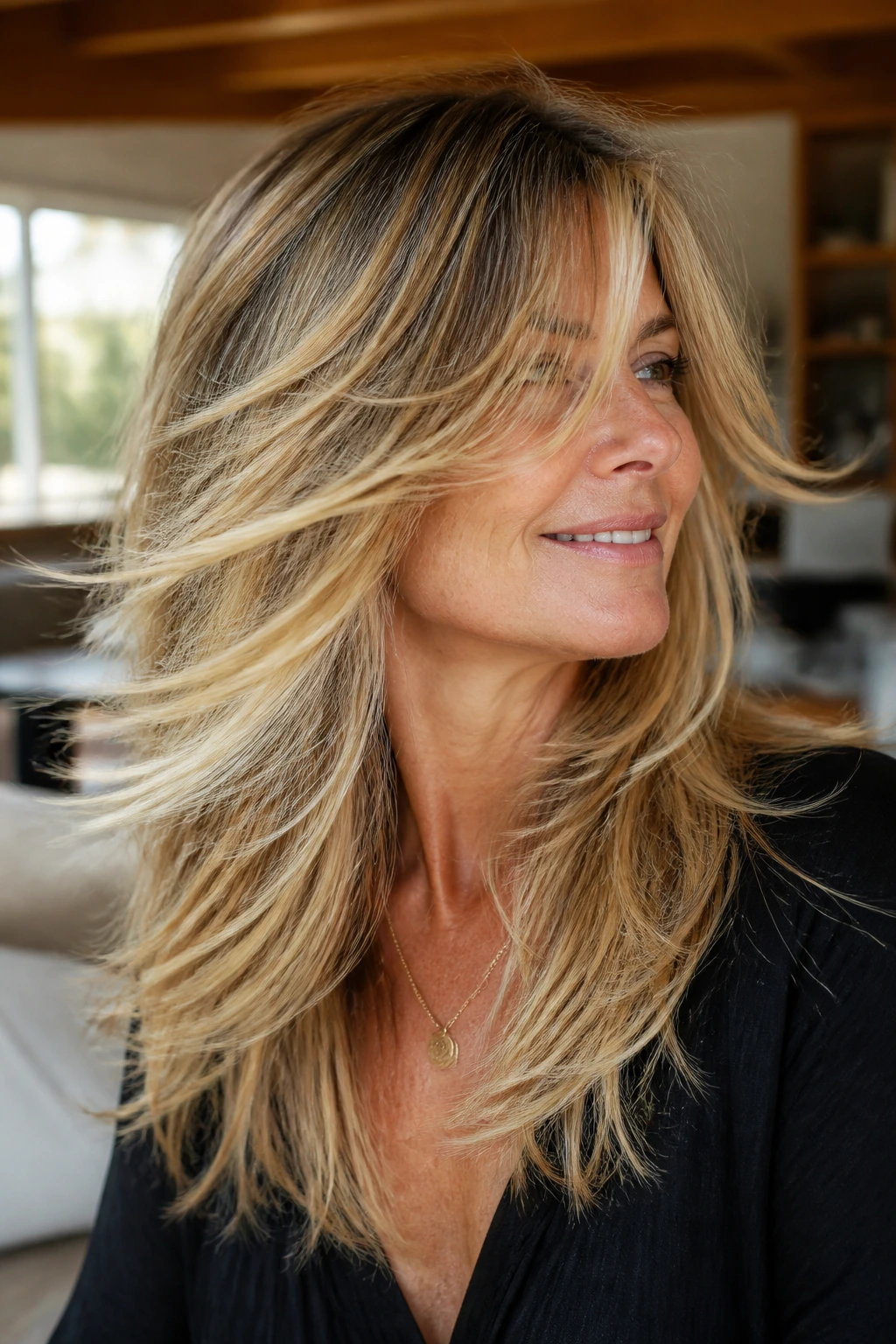
6. Long Shag with Golden Blonde
This is the style for hair that needs energy. A long shag with golden blonde pieces through the mids and ends gives the cut a lived-in edge without making it look choppy or overworked. The layers should move when you turn your head. If they don’t, they’re not doing enough.
It’s a strong choice for women with a little natural wave or bend, because the shag shape actually benefits from imperfect texture. A smoothing cream through the ends and a bit of mousse at the roots is enough on most days. If you like your hair with some attitude, this one has it. No stiff helmet shape. Thank goodness.
7. Root-Shadow Blonde for Easy Grow-Out
Root-shadow blonde is the style I recommend to anyone who is tired of obvious regrowth. A slightly deeper root melts into lighter midlengths, so the blonde grows out with a soft line instead of a hard demarcation. That matters a lot when gray comes in around the temples.
The trick is not to make the root too dark. One to two shades deeper than the mids usually does the job. Keep the ends bright but not chalky, and use a gloss every few weeks if the color starts to look flat. This is one of those styles that looks casual on purpose. It isn’t lazy. It’s strategic.
8. Deep Side Part with Tucked-Back Sides
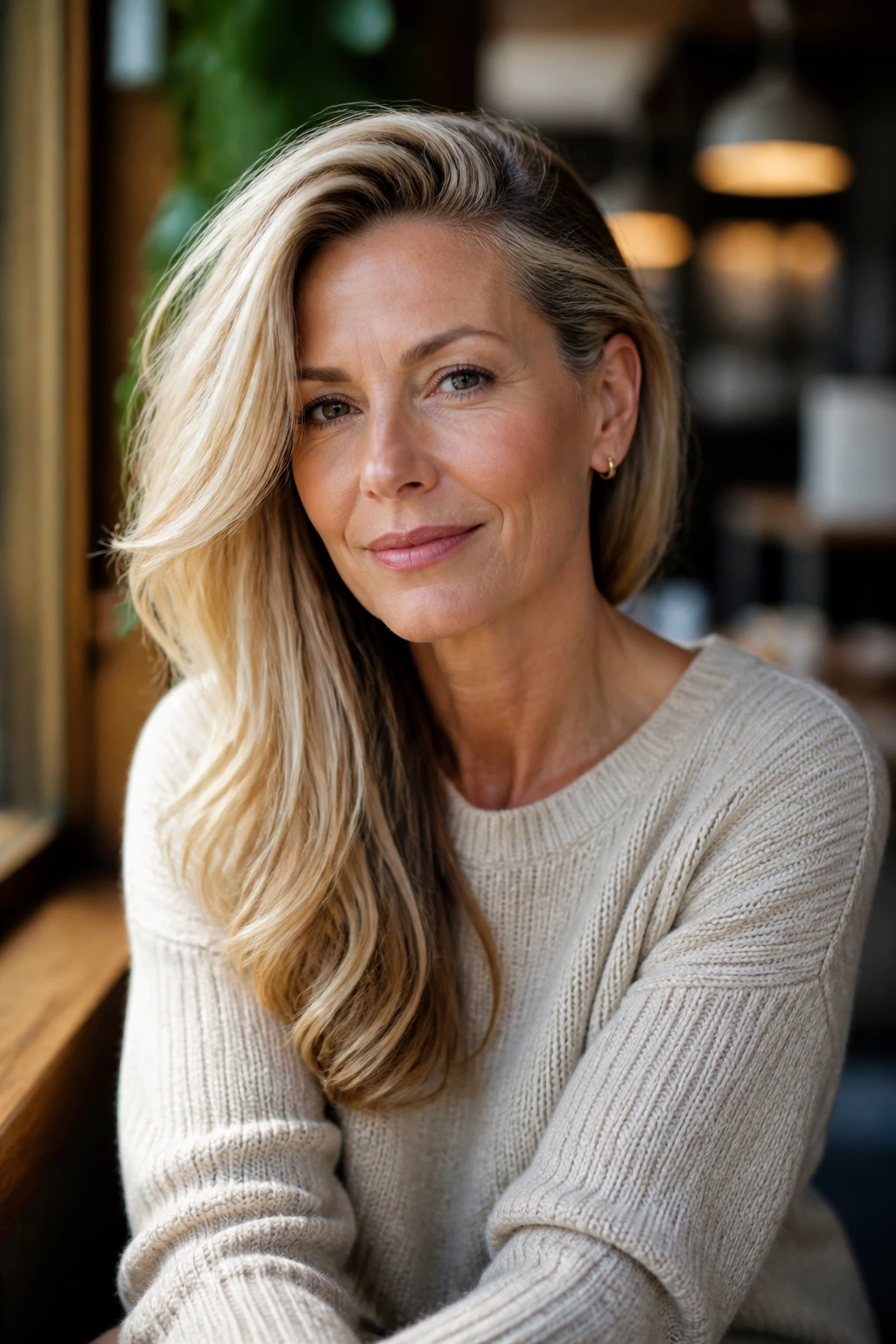
A deep side part can change the whole mood of long blonde hair in ten seconds. Tuck one side behind the ear, let the other side fall forward, and the face suddenly gets more shape. It’s a simple move, but it works especially well when the hair has grown past the shoulders and needs a little structure back.
This style suits women who wear glasses, because the tucked side keeps the frames from competing with the hair. It also lets highlights show in a cleaner way along the front panels. A light mist of flexible hairspray at the roots helps the part stay put. Don’t bury it under a heavy cream. You’ll lose the lift.
9. Loose Low Ponytail with Crown Lift
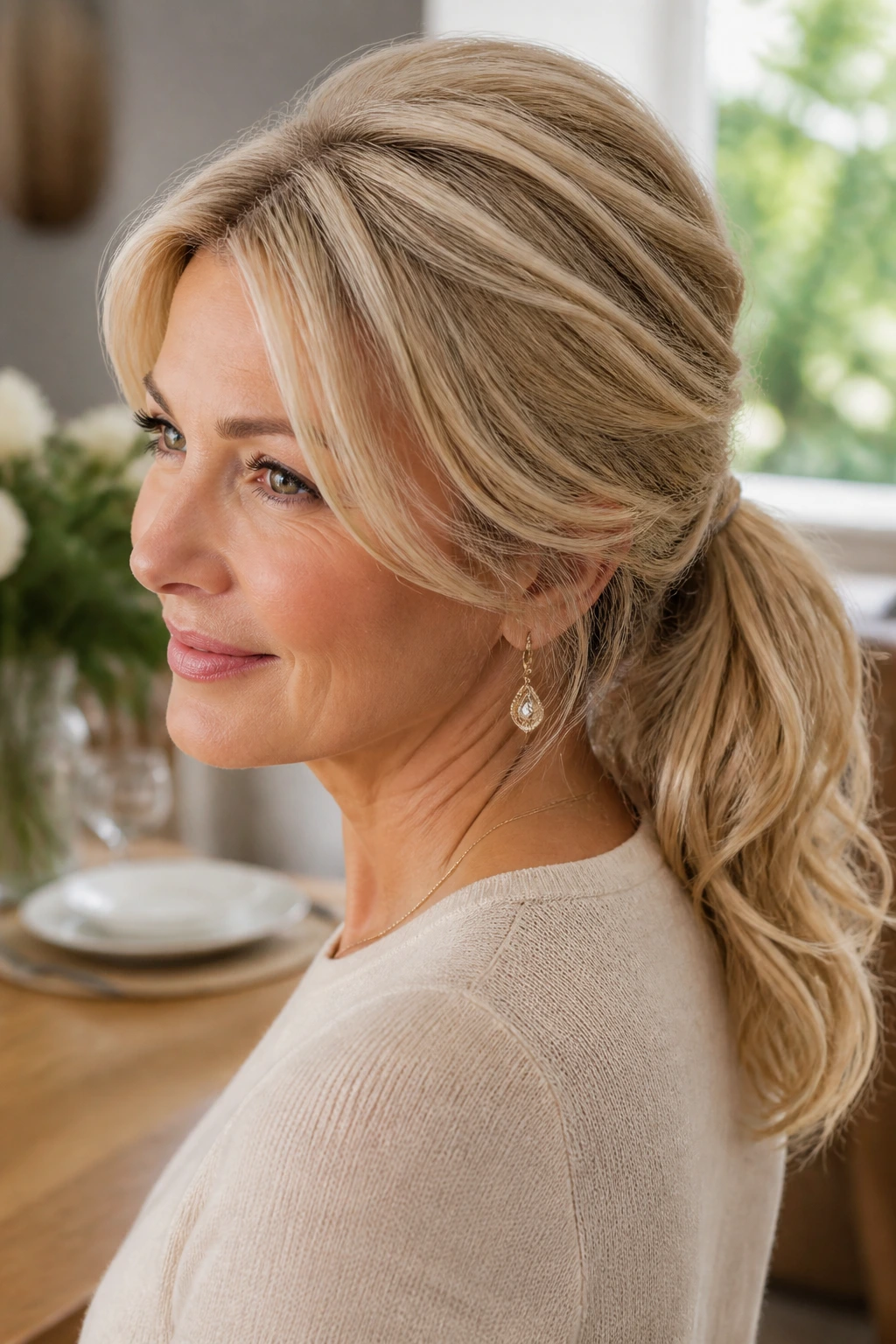
A low ponytail does not have to look plain. With a little lift at the crown and a wrap of hair around the elastic, long blonde hair turns into something polished enough for dinner but easy enough for a busy morning. Champagne and buttery blonde tones look especially good in this style because the ponytail shows off the color movement.
Keep the ponytail loose. Tight pulls can make the face look drawn and the scalp look stretched, neither of which helps. A soft bump at the crown is plenty. If the ends are a little dry, curl just the bottom third of the ponytail so it doesn’t hang in one flat line.
10. Half-Up Twist with Caramel Ribbons
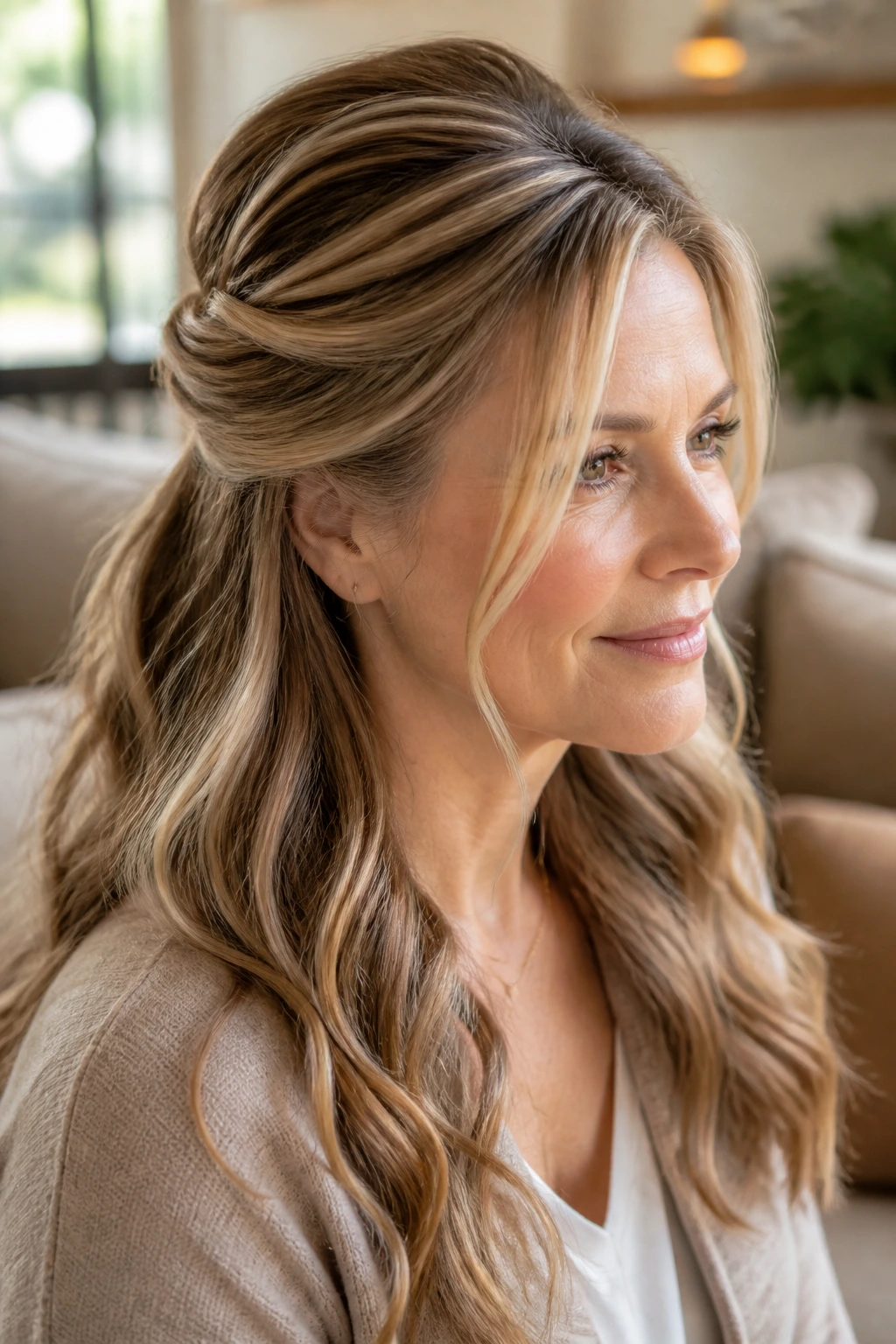
The half-up twist is a neat trick for long blonde hair that wants to fall into your eyes but still deserves to stay long. Pulling the top section back gives instant lift, while the loose lower section keeps the style from feeling stiff. Caramel ribbons through the midlengths make the twist read as dimensional instead of flat.
What to tell your stylist
Ask for long layers that can be gathered cleanly at the back without short pieces slipping out. That sounds minor until you try to pin it yourself. It matters. A few face-framing tendrils keep the style soft, especially if the hairline around the temples is a bit thinner than it used to be.
11. Braided Crown with Soft Tendrils
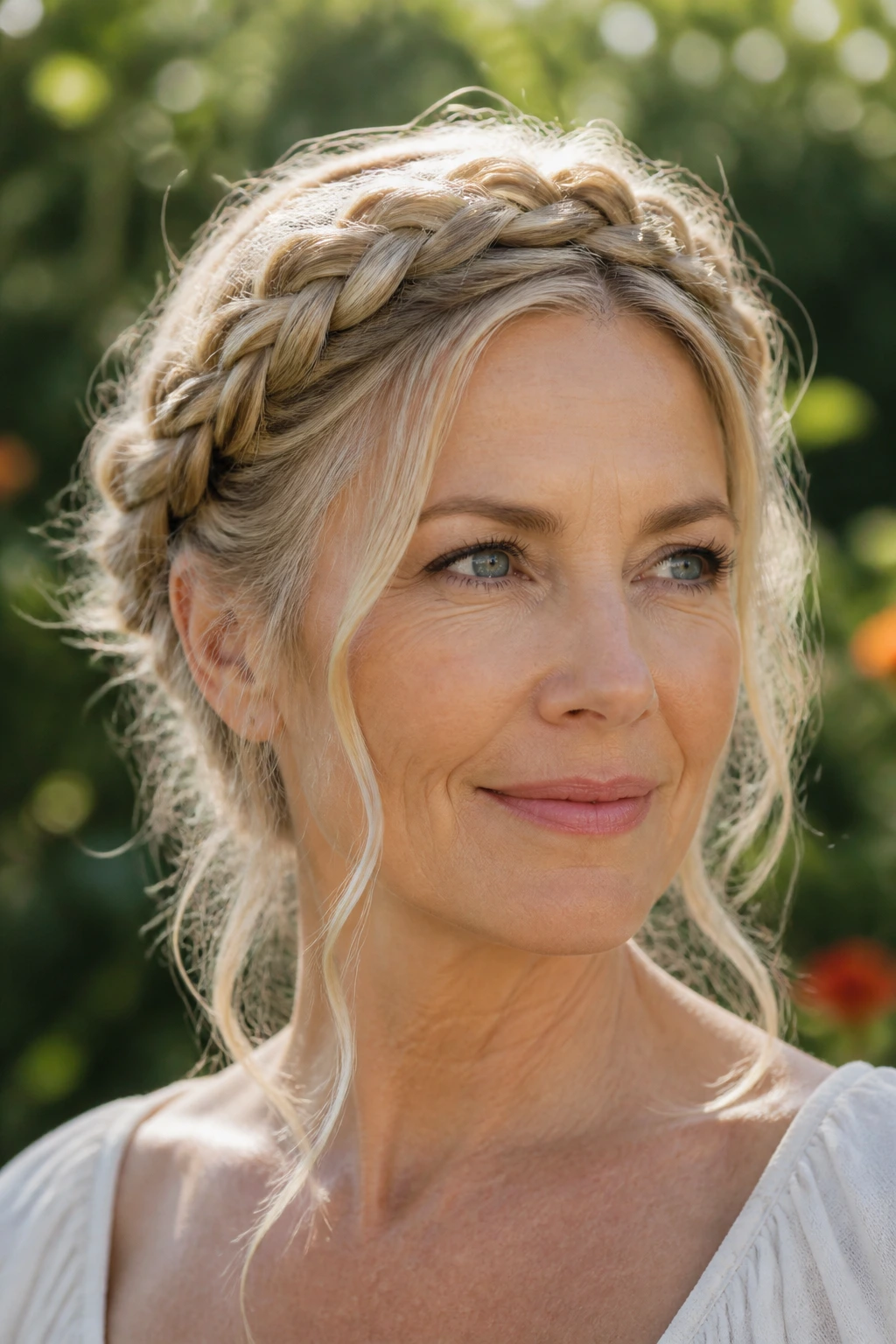
A braided crown has one job: keep long hair off the face without looking severe. On blonde hair, it also shows off tone shifts in a way that a simple down style can’t. Warm blonde braids read sunlit; cooler blondes read cleaner and sharper.
This is a good choice for thicker hair because the braid has enough material to hold shape. If your hair is fine, keep the braid loose and tug the loops apart gently after securing it. That little widening step gives the illusion of more volume. Leave two narrow tendrils in front. If they’re too thick, the style loses its lightness.
12. U-Shaped Cut with Airy Ends
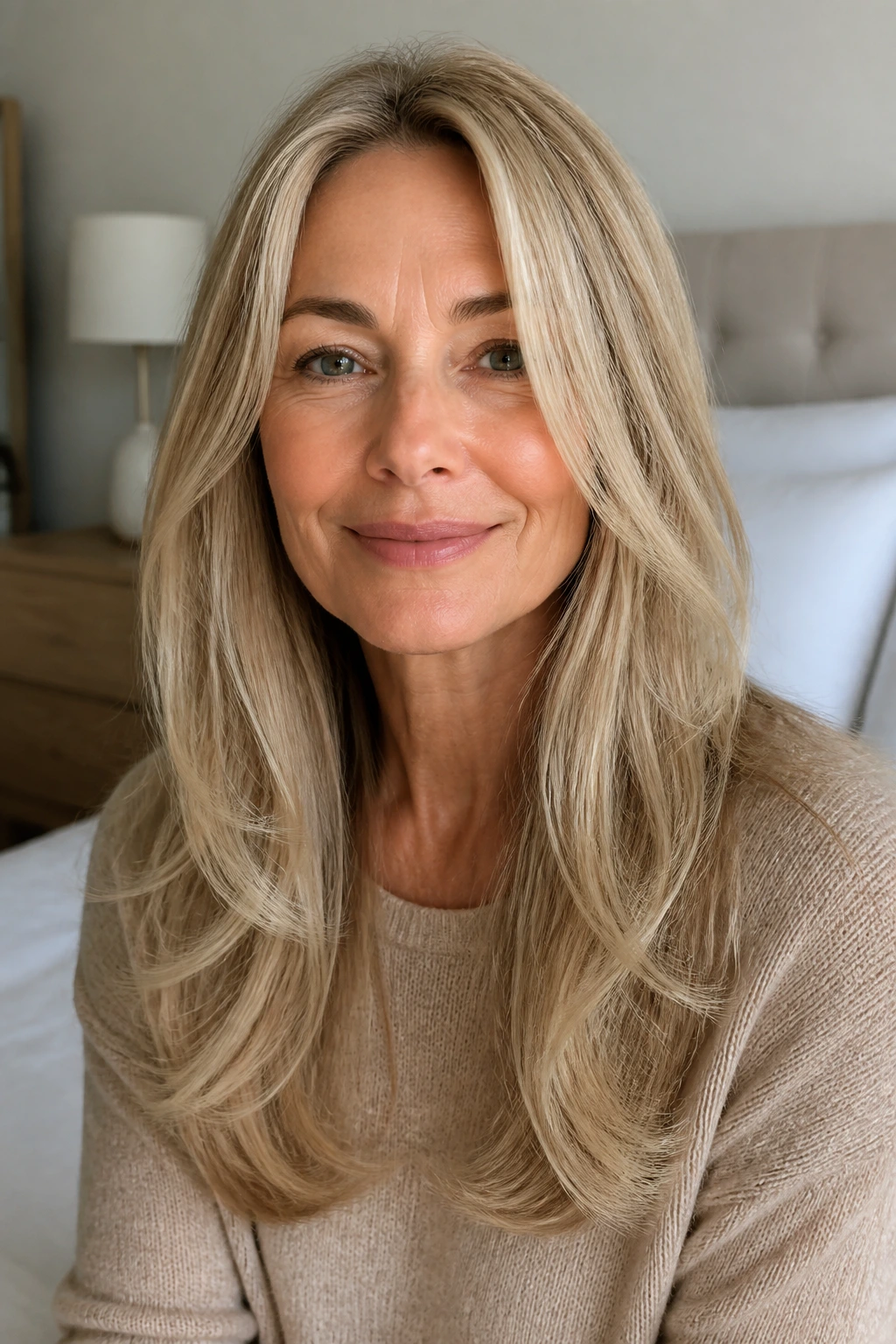
A U-shaped cut is one of the quiet heroes of long blonde hair. The perimeter curves softly instead of landing in a blunt straight line, which makes the length feel more fluid and less blocky. It’s especially useful if the hair gets heavier as it gets longer.
This shape is easy to miss in a photo because it isn’t flashy. That’s also why it works. The ends stay full-looking, and the curve gives movement to straight, wavy, or lightly curled hair. If you wear your hair down a lot, this cut is kinder to the neck and shoulders than a flat edge.
13. V-Cut with Cascading Layers
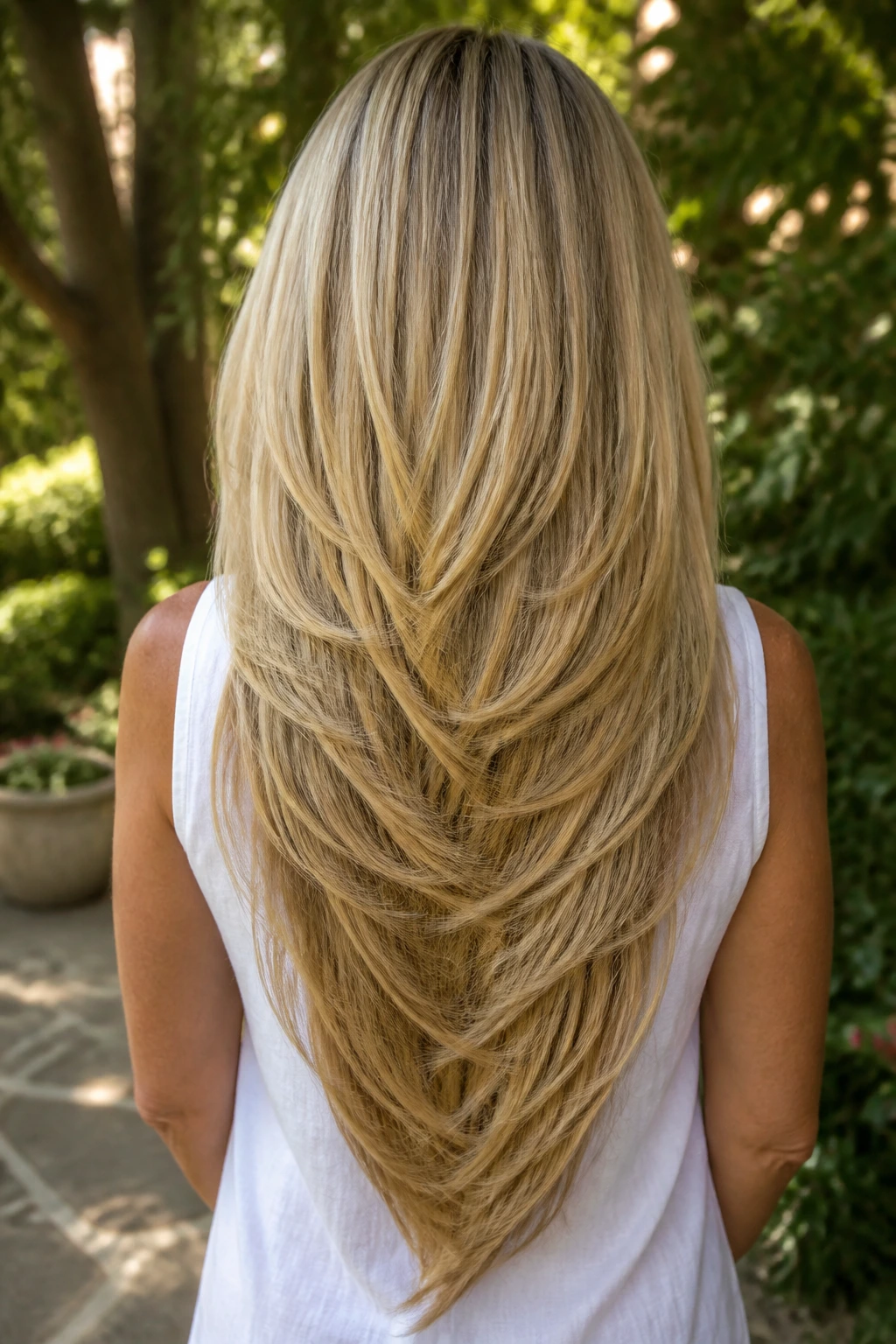
A V-cut gives long blonde hair a little more drama through the back. The center point narrows the shape, while the layers fall away in a cascading line that looks good from behind and from the side. It’s a strong pick if your hair is thick and you want to keep the length without carrying all the weight.
This cut does ask for regular maintenance. If the point gets too thin, it loses the shape fast. I’d keep the layers long and soft rather than short and choppy. Beige blonde or honey blonde shades work especially well here because the pointed finish is easier to read when the color has depth.
14. Long Spiral Curls with Warm Honey Tone
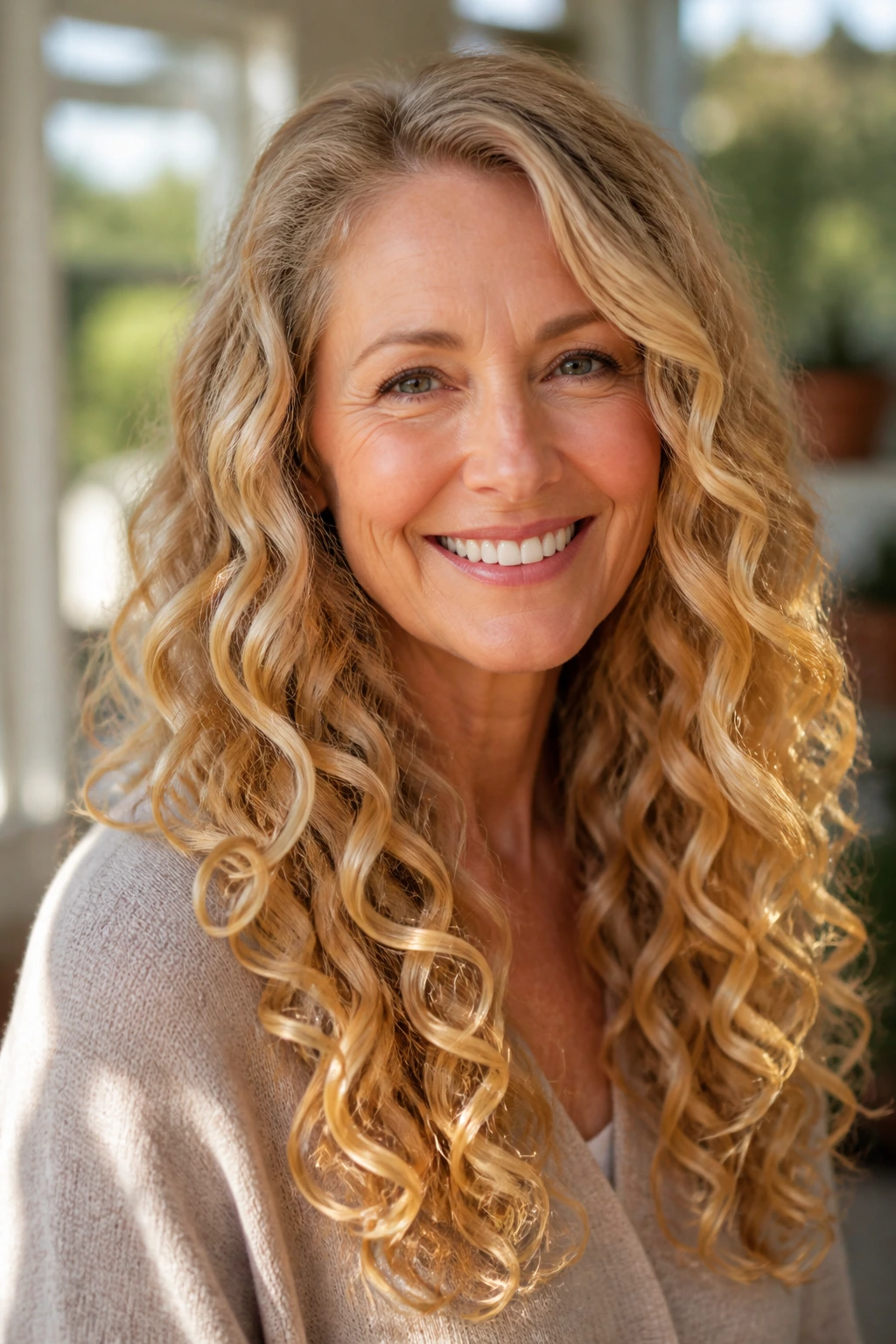
Spiral curls are not just for formal events. On long blonde hair, they give the length enough bounce that it doesn’t settle into a dull curtain. Honey tones near the ends make the curls look richer, especially when the light hits the curves.
Use a curling iron with a barrel around 1 inch if you want tighter spirals, or 1.25 inches for a softer curl pattern. Let each curl cool in your hand before you shake it out. That part matters. If you brush too soon, the curl collapses into frizz and you lose the clean ring shape that makes this style work.
15. Waterfall Braid Over Loose Length
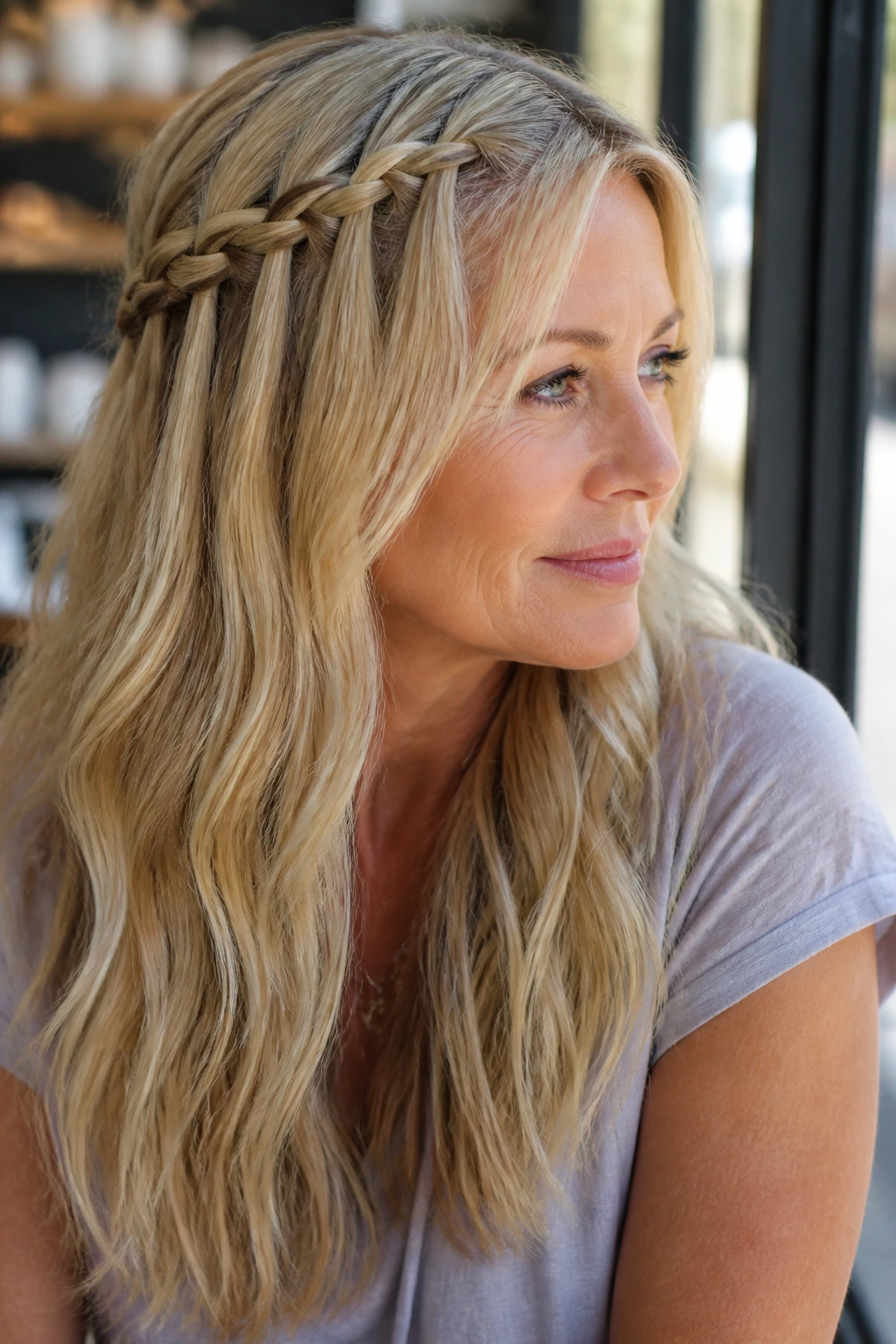
A waterfall braid lets long blonde hair stay down while still giving the front and crown a little architecture. The braid feeds pieces in and lets others drop through, which creates movement without turning the whole head into an updo. On highlighted blonde hair, the pattern shows off dimension in a way that plain straight hair can’t.
This style is good when you want something pretty but not fussy. It works best on hair with some grip, so a light texturizing spray can help if your strands are slippery. Keep the braid a touch loose. A tight waterfall braid can look too formal and lose the soft, lived-in feel that makes it worth wearing.
16. Flip-Out Layers with Retro Movement
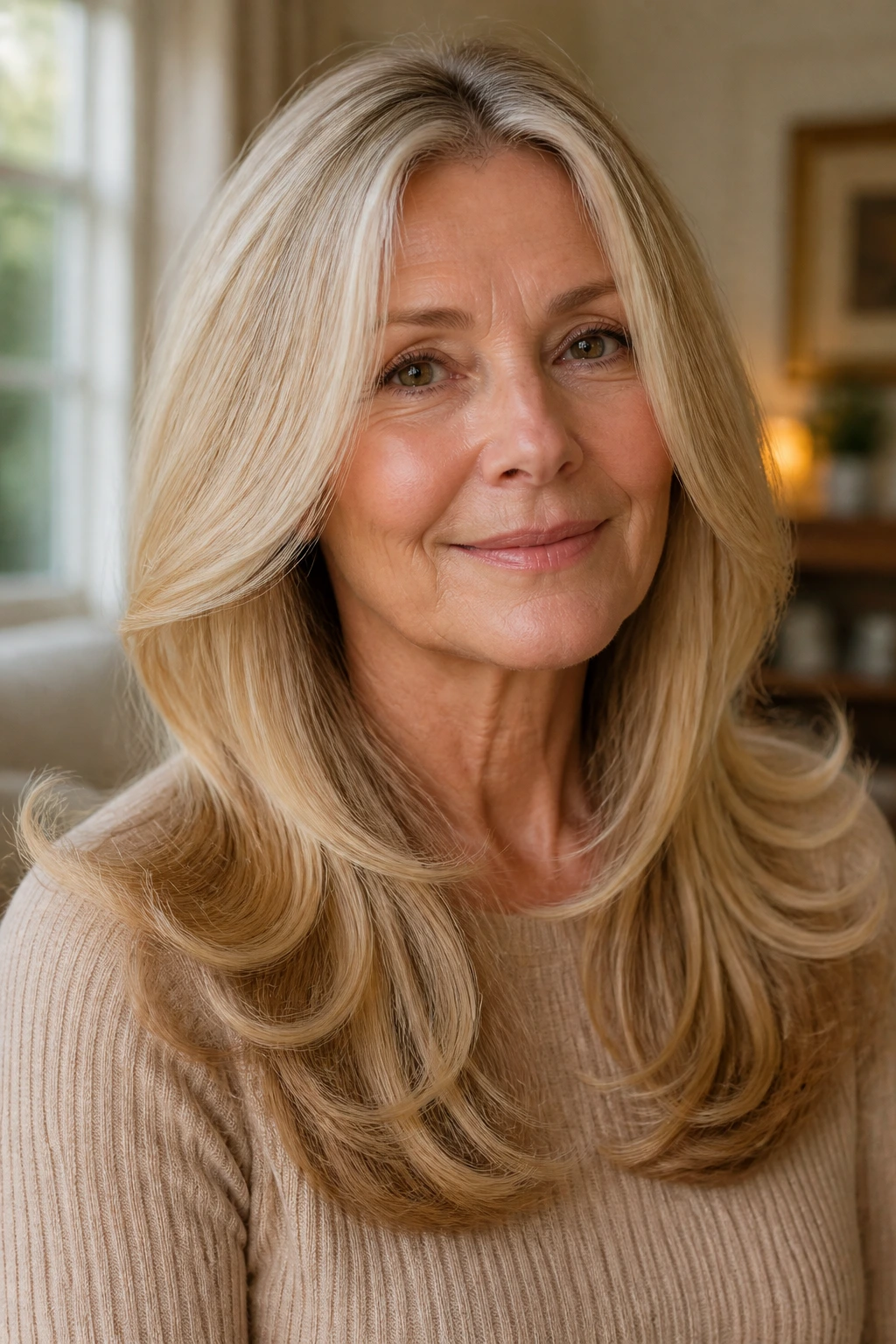
Flip-out ends bring back shape at the bottom of long blonde hair. The look is simple: long layers, a round brush, and ends that turn away from the face instead of hanging straight down. It gives the style a little lift, especially if the length has started to sit heavy.
This is a smart move for women whose hair is fine at the bottom but fuller near the crown. The flip makes the perimeter look more energetic. Golden blonde suits it well because the movement of the ends catches the lighter bits. Keep the flips soft, not stiff. Think bend, not curl.
17. Polished Straight Hair with Invisible Layers
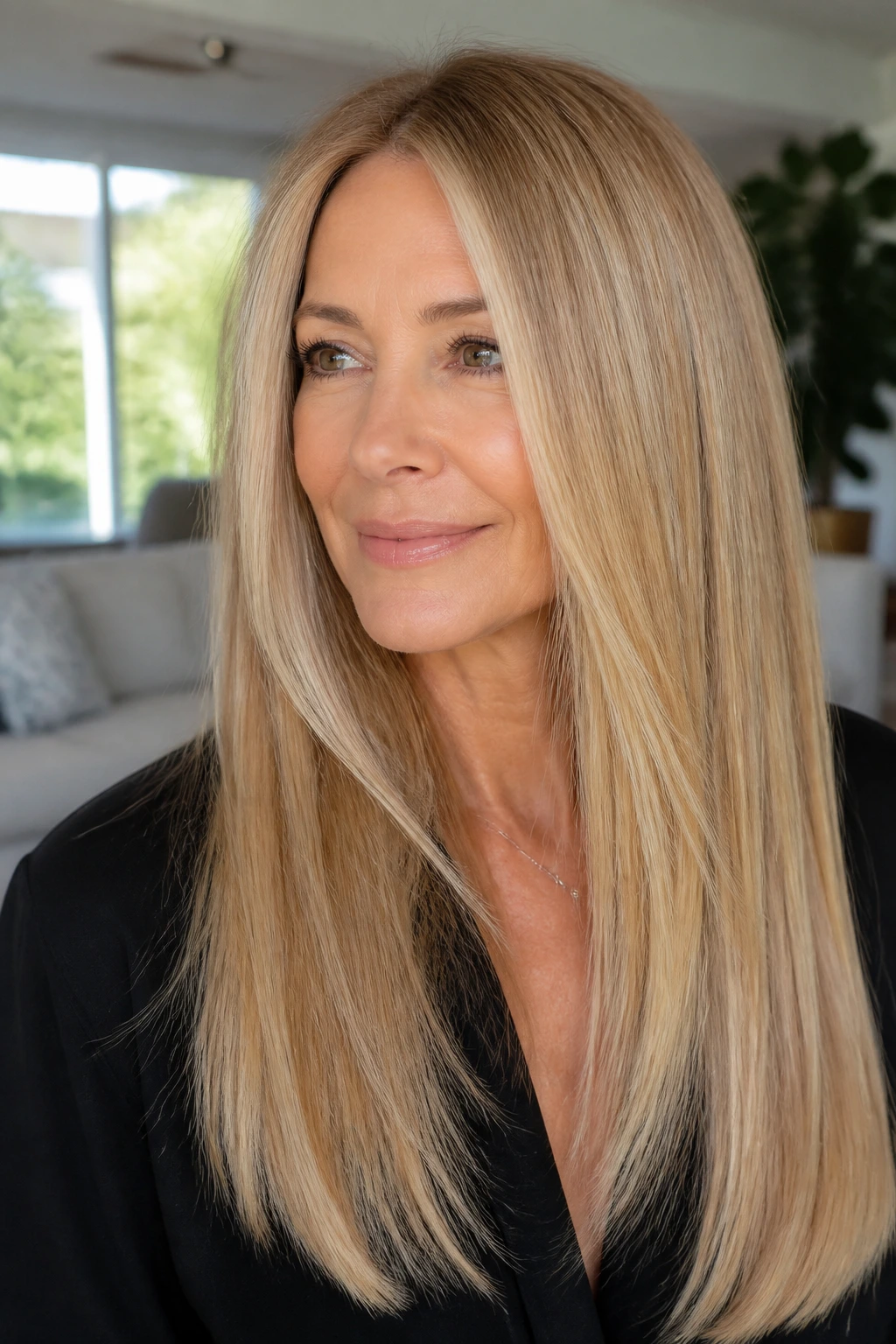
Invisible layers are for people who want long blonde hair to move without looking layered. The cut keeps the surface smooth, but the inside of the shape is thinned just enough to stop the hair from lying like one heavy panel. You see the result more than the cut itself.
This style works best with a good blow-dry and a light serum on the ends. Don’t flood the hair with product. It steals shine. If your hair is naturally straight, this is one of the easiest long blonde looks to keep neat through the day, because the shape doesn’t fall apart when the weather changes a little.
18. Voluminous Blowout with Rounded Ends
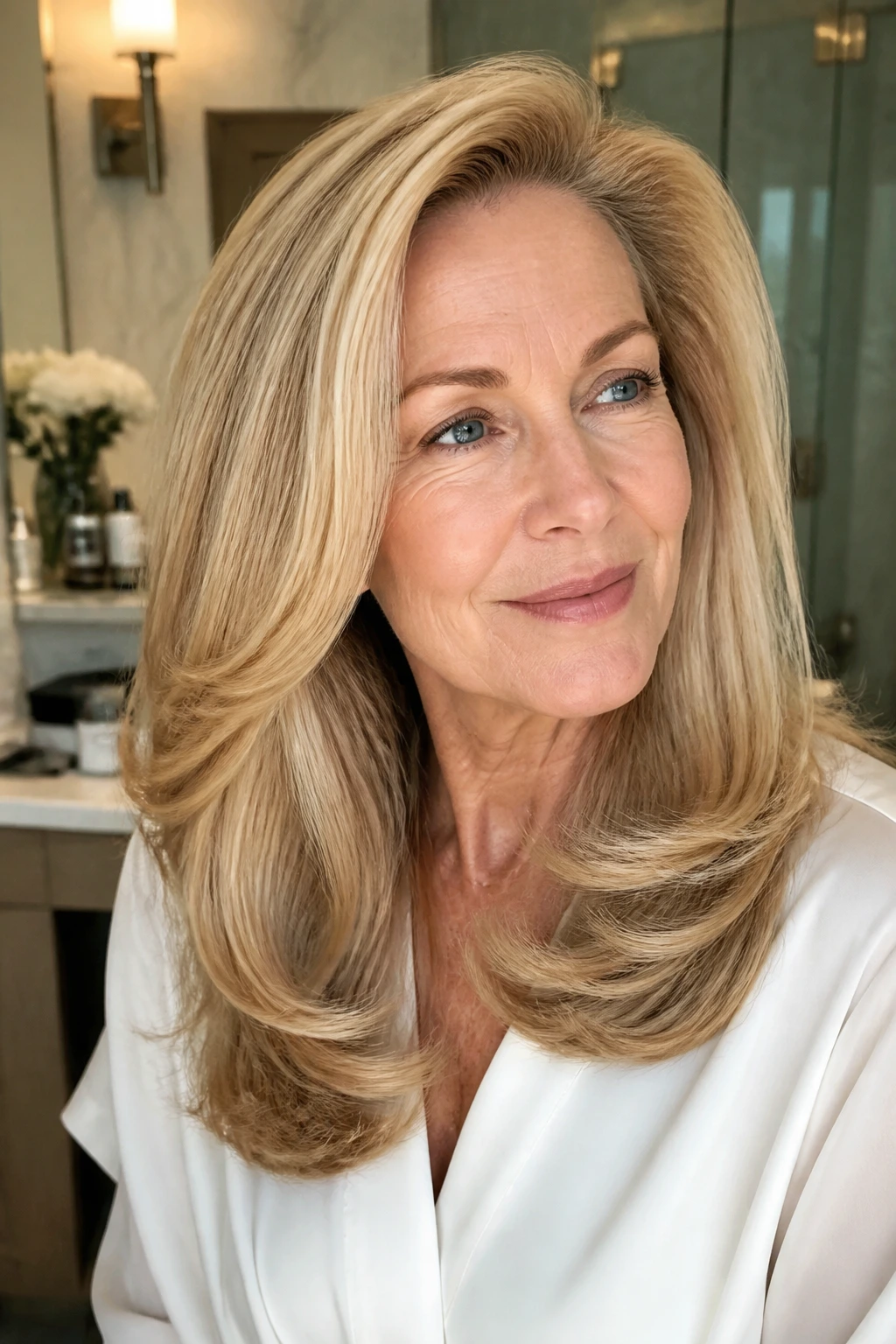
A rounded blowout is still one of the most useful long blonde styles, even if the word “blowout” gets tossed around too loosely. The ends curve under, the crown lifts, and the whole shape feels fuller without looking stiff. For women over 50, that crown lift matters. It keeps the style from collapsing toward the face.
Use a large round brush and dry the roots first. If the roots are flat, the rest of the style is fighting uphill. Warm blonde and beige blonde shades tend to look richest in a blowout because the curves in the hair create small bands of light and shadow. It’s simple. It works.
19. Messy Bun with Face-Framing Pieces
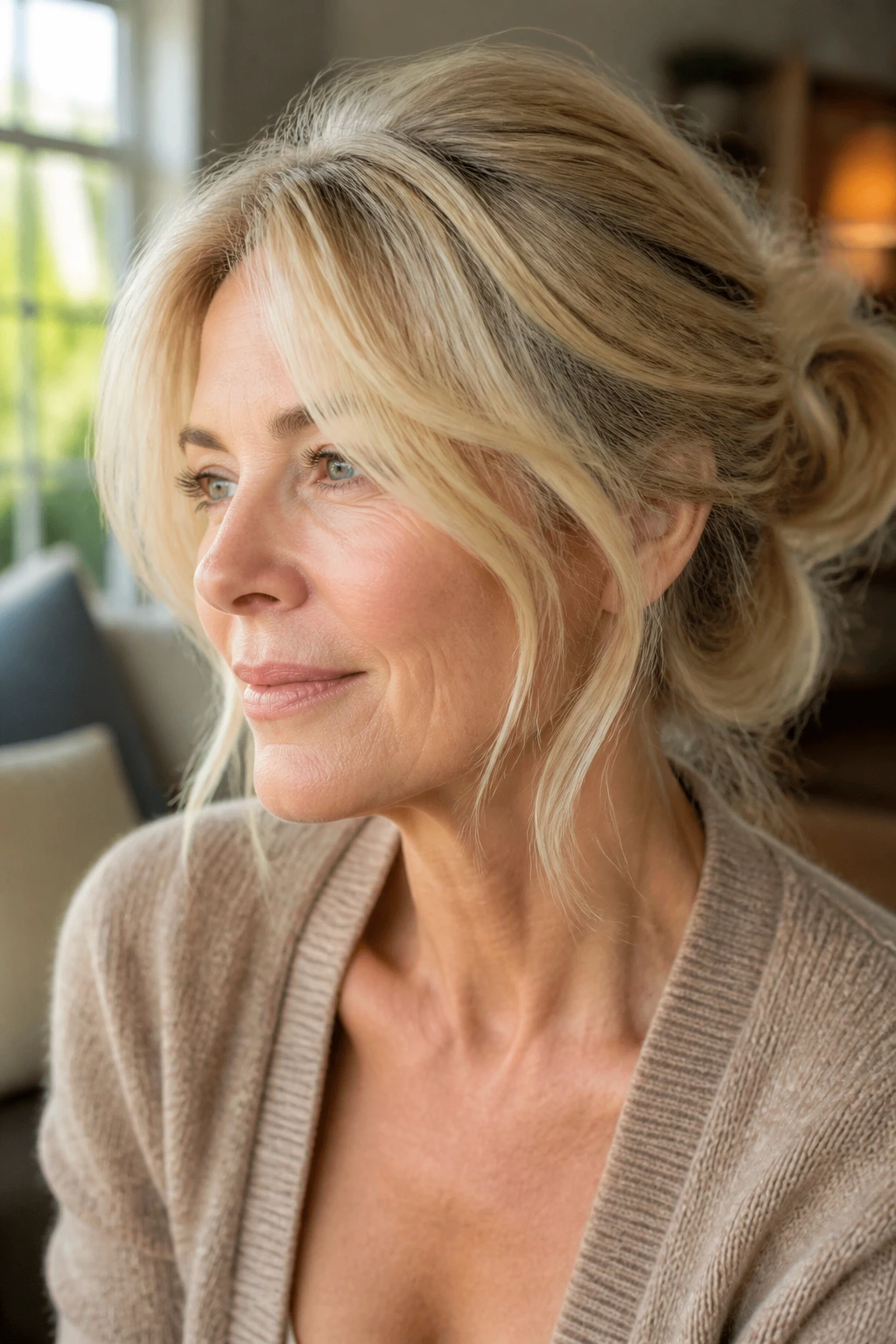
A messy bun is not a throwaway style when it’s done on purpose. With long blonde hair, a loose bun at the back of the head and two soft front pieces can look finished in a way that a tight knot never does. It’s the easiest answer for days when you need the hair off your neck but still want some shape around the face.
The key is keeping the bun low enough to feel relaxed and high enough to show the neck line. Pull a few pieces out around the temples, then pinch them loose with your fingers. If the bun looks too round and tidy, it starts feeling severe. A little mess helps. A lot of mess turns into a gym tie-up.
20. Long Layers with Side-Swept Bangs
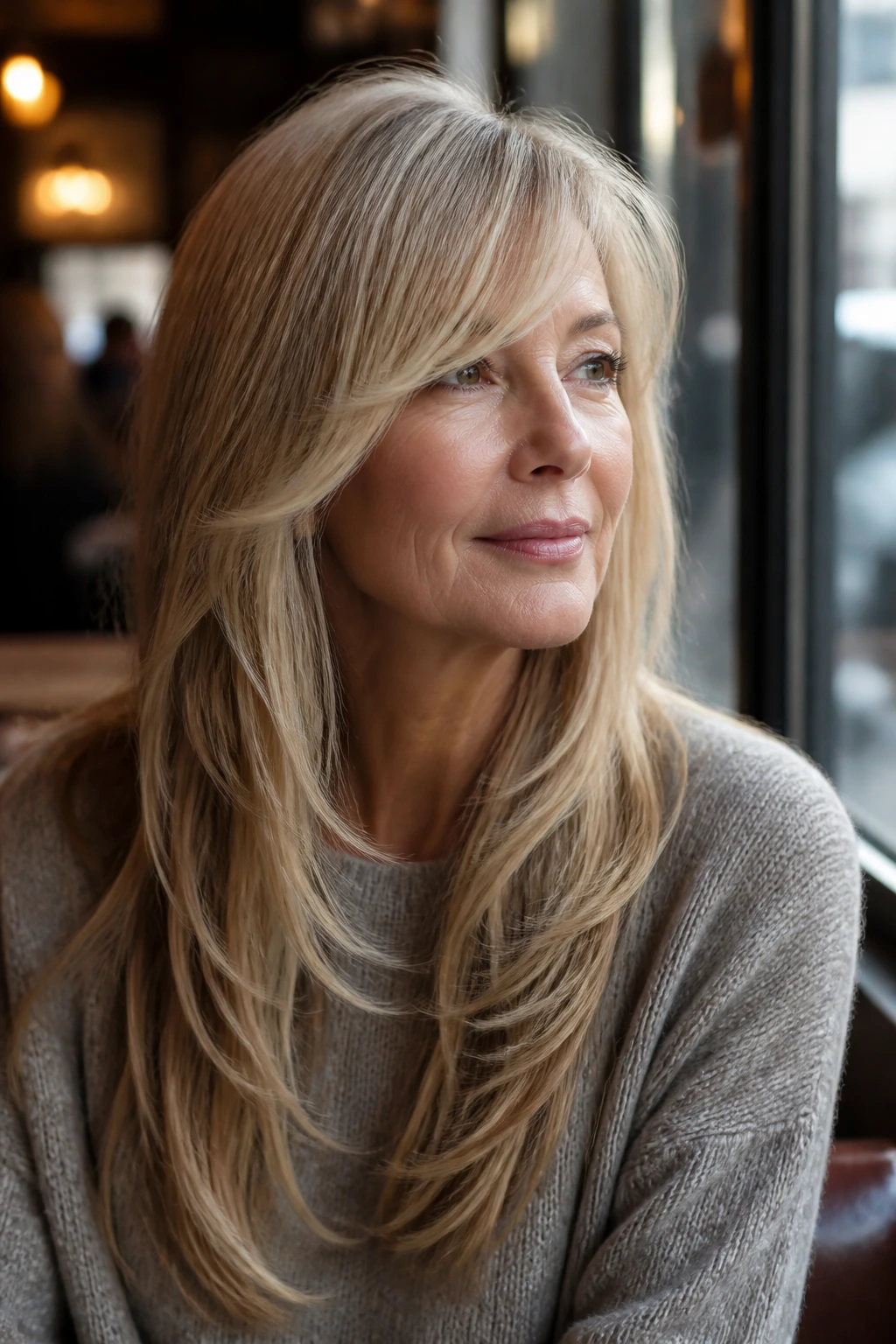
Side-swept bangs can be a good bridge between full fringe and no fringe at all. They move diagonally across the forehead, which softens the face without creating a hard line. On long blonde hair, they also help the front section blend into the lengths instead of ending in a blunt drop.
This is one of the easier fringe choices if you wear your hair in different ways. You can pin the bangs back, sweep them across, or let them fall with a bend from a blow-dryer. Ask for the shortest piece to start around the eyebrow arch, then blend gradually into the sides. That keeps the bang from looking chopped.
21. Sunlit Balayage with Tousled Texture
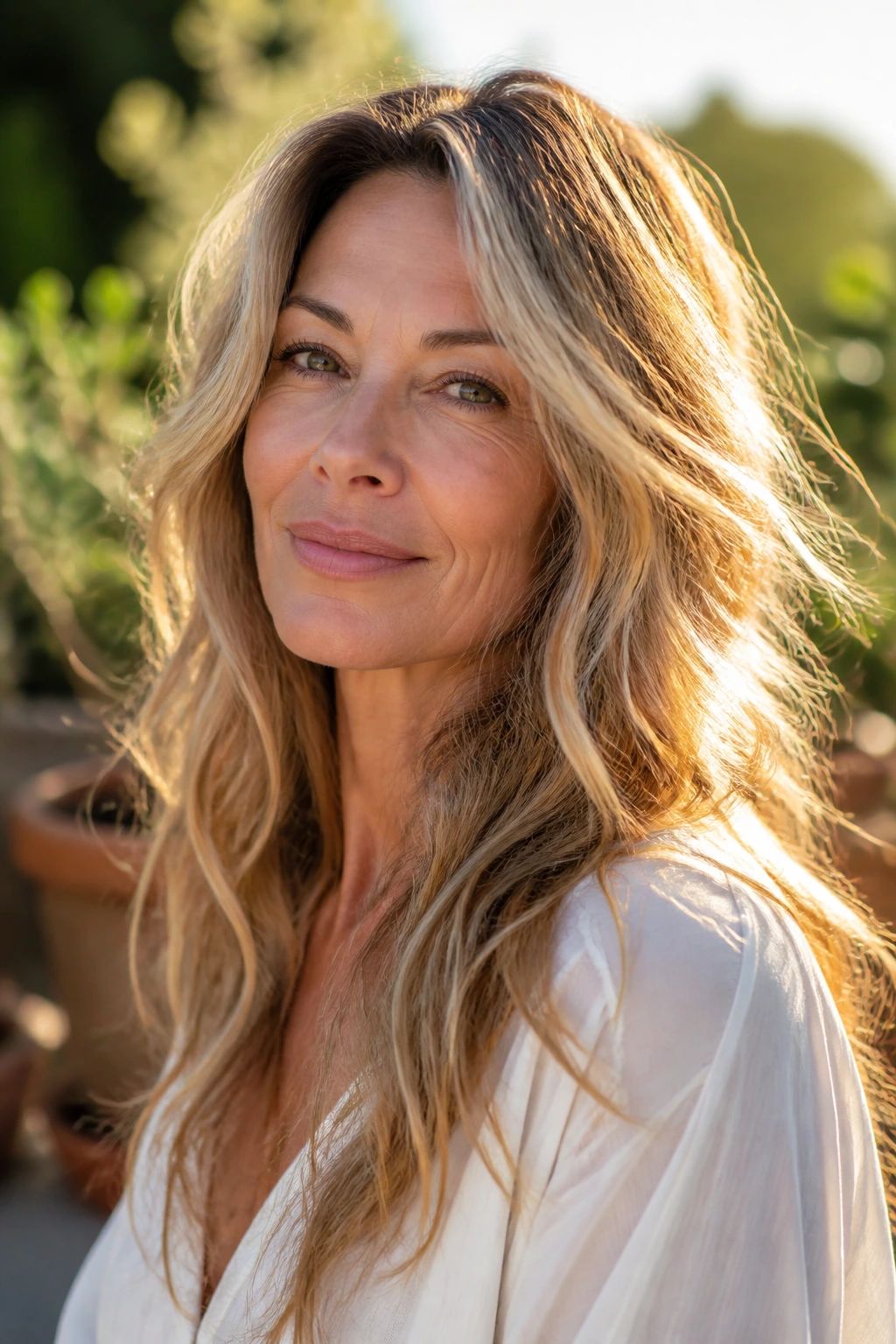
Balayage is still one of the best ways to lighten long hair because the highlights can be painted where the hair actually catches light. Around the face, through the crown, and on the ends—that’s where the color shifts matter most. Sunlit blonde with tousled texture feels softer than a full-head lift.
The texture is doing as much work as the color. A loose wave over balayage pieces creates depth that a straight blow-dry can hide. If your hair tends to go flat in the afternoon, a little dry texture spray at the roots and midlengths can wake it up without making it crunchy. That’s the line to stay under.
22. Platinum Blonde with Soft Waves
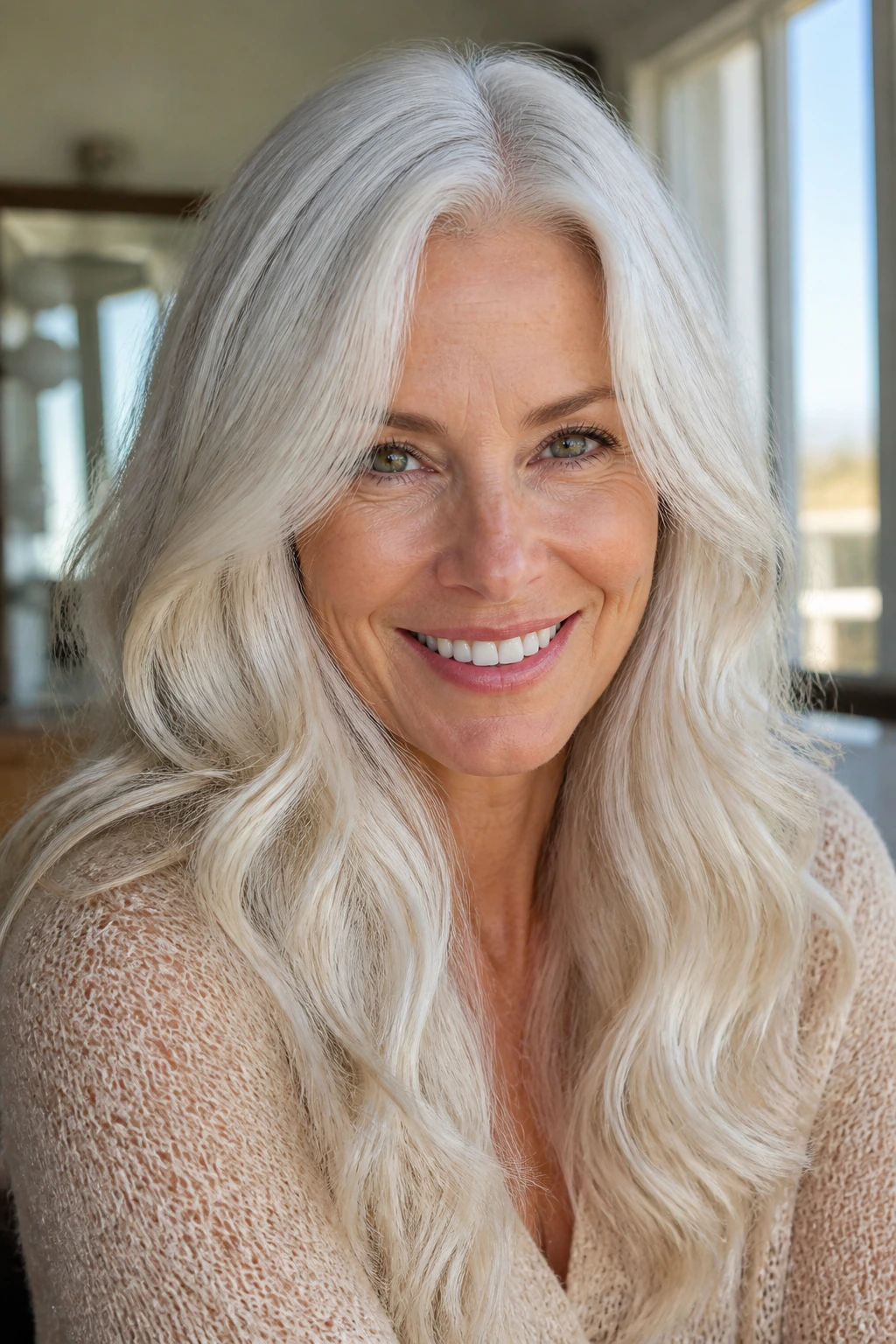
Platinum blonde is not for the faint of heart, and I mean that kindly. On long hair, it can look striking, but only if the texture stays soft enough to keep the color from feeling harsh. A loose wave keeps platinum from reading like a single shiny block.
The upkeep is the price you pay. Blonde this light needs toning, moisture, and regular attention to the ends. If your hair is already fragile, the result can look wiry instead of sleek. When it’s healthy, though, the effect is clean and bright. Soft waves keep it from veering into costume territory.
23. Caramel Blonde Curls
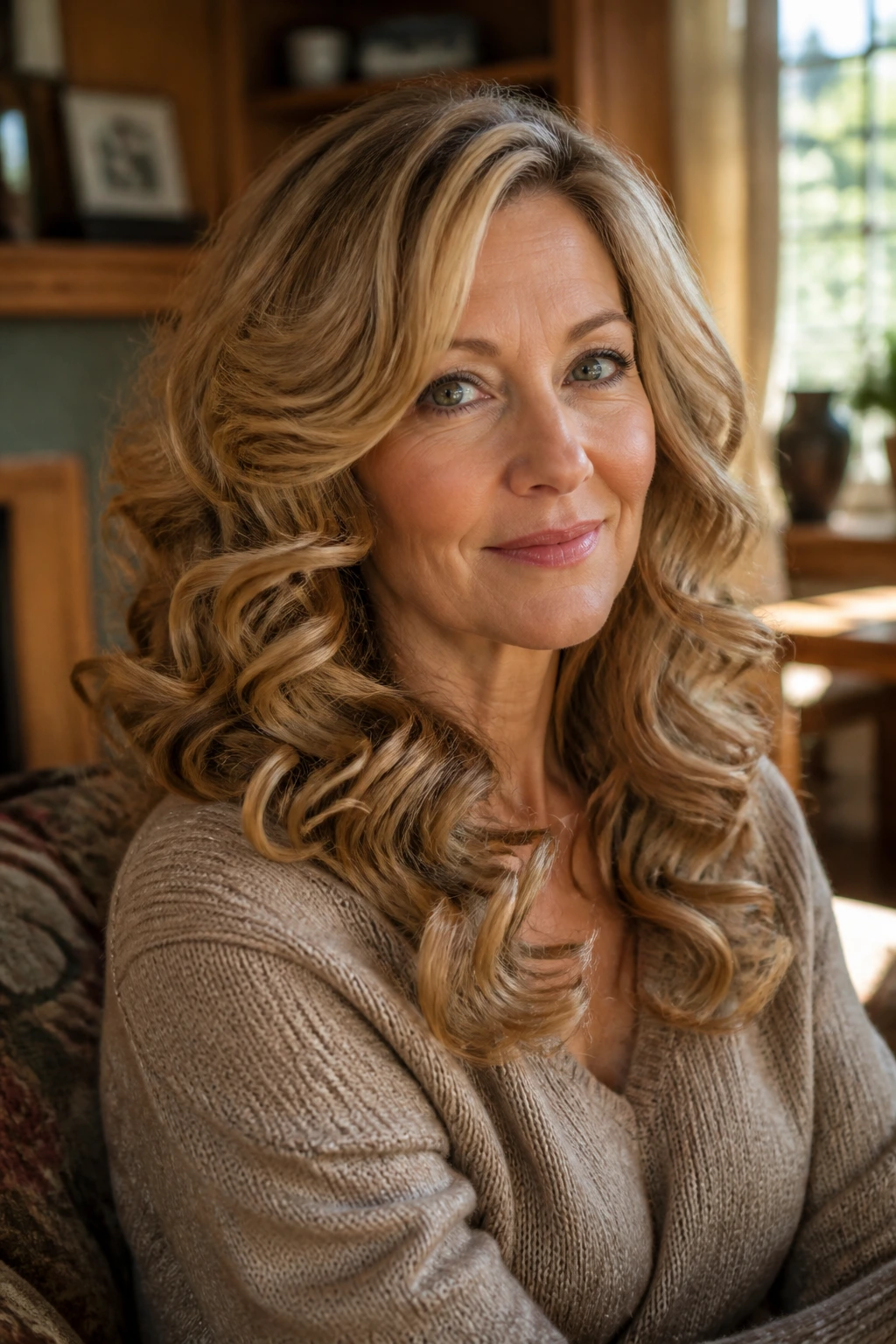
Caramel blonde curls are useful because they warm up the skin and give long hair more dimension than a single pale shade. The darker blonde ribbons inside the curl pattern make the hair look denser, which is a real plus if the ends have thinned a bit.
This style leans friendly and full without losing polish. Medium-barrel curls work better than tiny ringlets here; the larger shape lets the caramel tones show through. A bit of mousse before drying gives the curls more memory. If your hair tends to go limp, this is one of the easiest ways to get it back on its feet.
24. Wispy Baby Bangs and Long Length
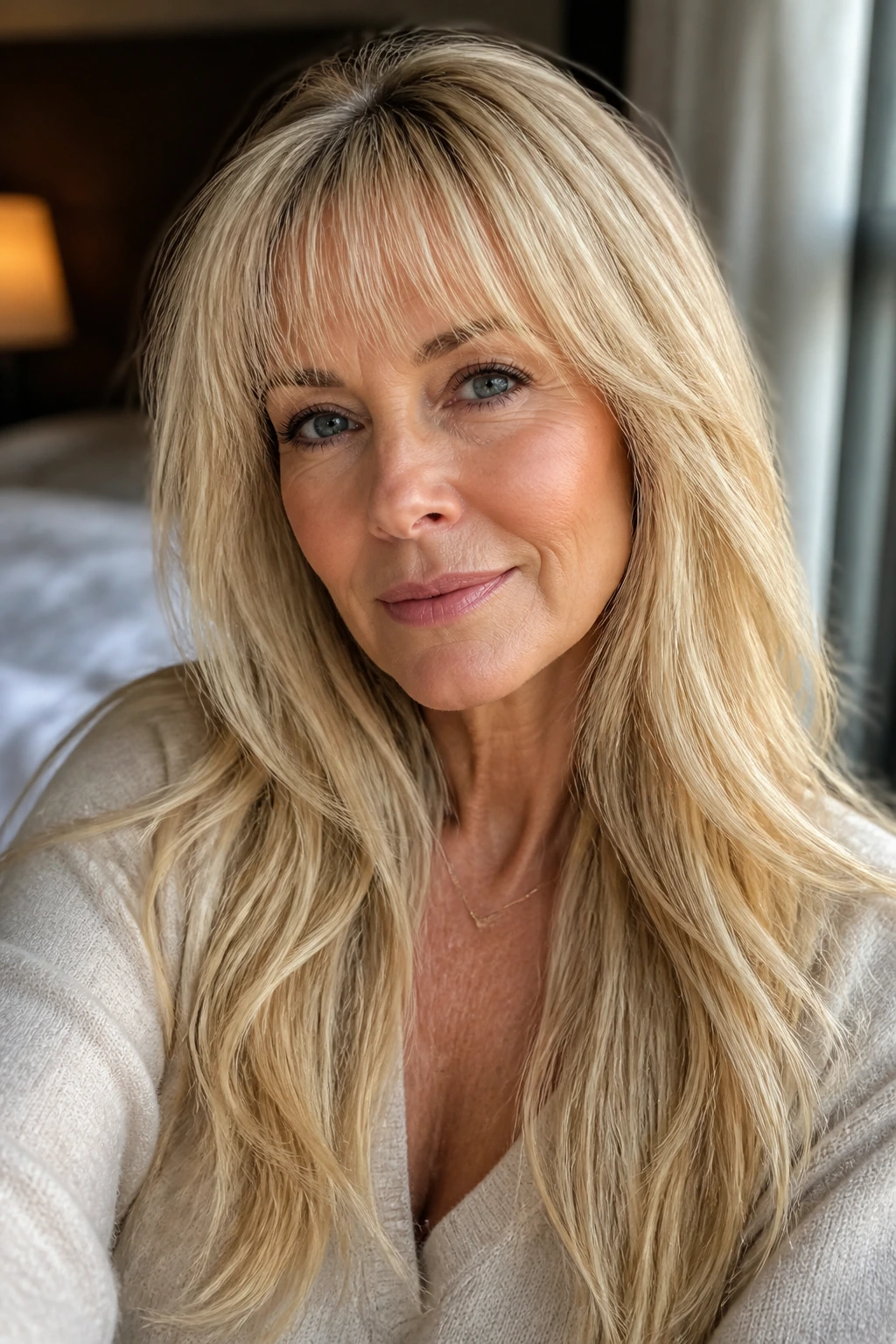
Baby bangs are a choice. A strong one. They can look sharp with long blonde hair when they’re kept wispy and light, because the contrast between the tiny fringe and the long lengths gives the style real personality. If the bangs are too heavy, though, the whole thing can tip into costume.
This works best on women who like edge in their haircut and don’t mind regular trims. The fringe grows out fast, and it needs a hand every few weeks. Long blonde hair with baby bangs looks best when the ends are soft and the color has depth, not when everything is the same icy shade from root to tip.
25. Rope-Twist Half-Up Style
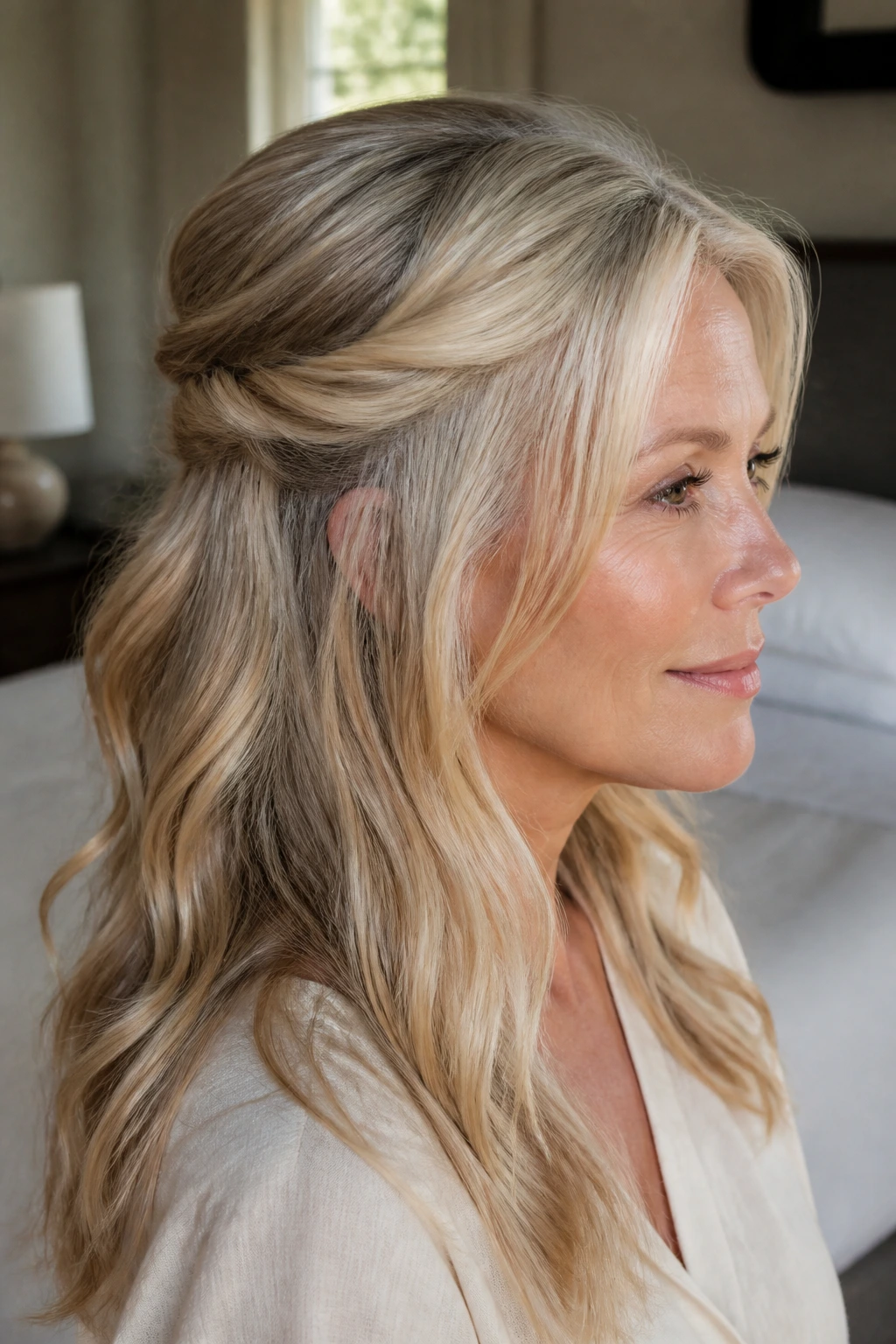
A rope-twist half-up style is a neat change from braids when you want something quick with a little texture. Twist two sections back from the temples, pin them together, and let the rest fall loose. On blonde hair, the twist catches the highlights and gives the crown a little structure.
This is a good choice for hair that won’t hold a braid well or for days when you want less fuss. The twist is easier to make symmetrical than a full braid, which is useful if you’re doing your own hair in the mirror. Keep the lower half loose and brushed through. The top needs shape; the rest should move.
26. Defined Barrel Waves with Lived-In Roots
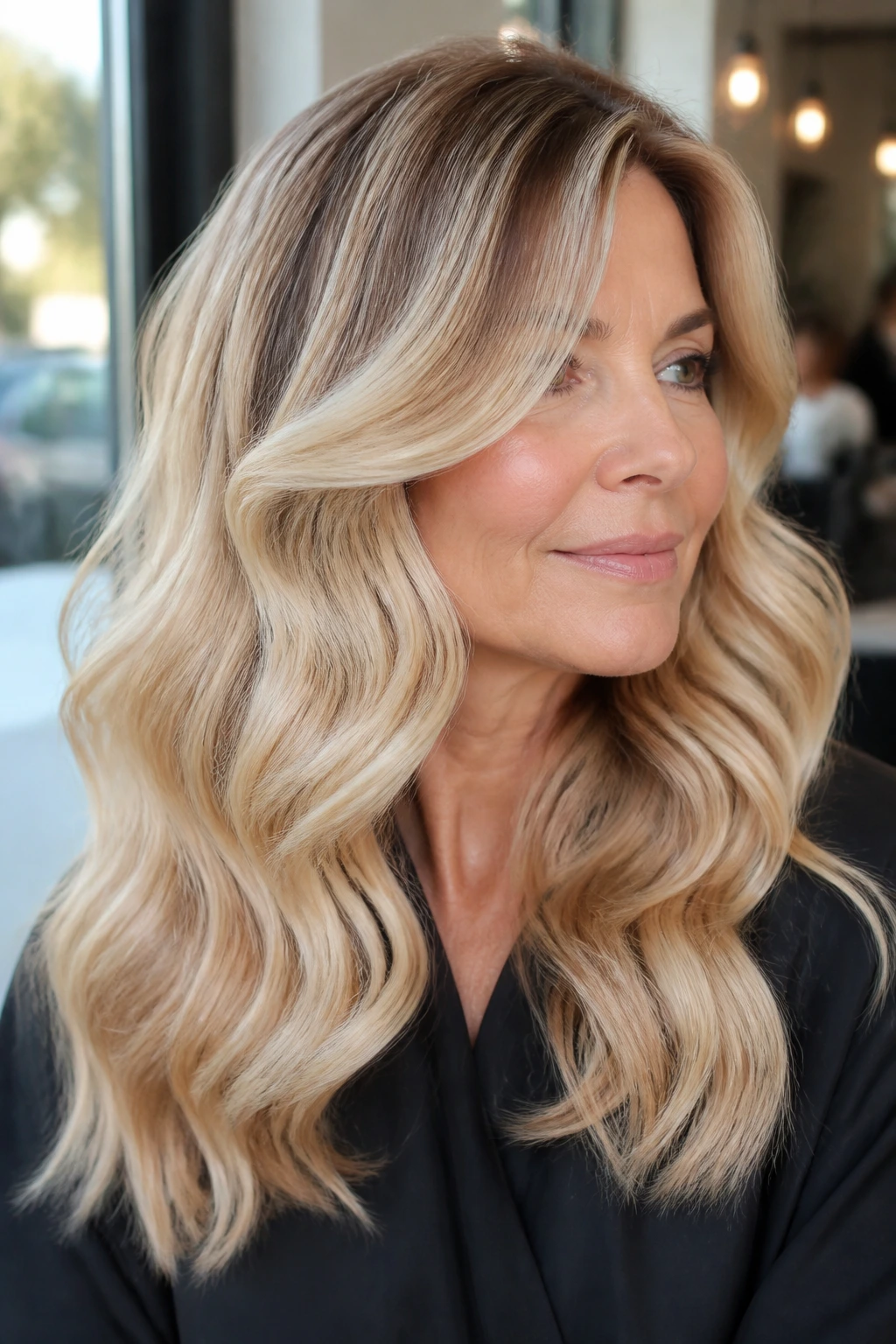
Barrel waves give long blonde hair a smoother, more controlled finish than beach waves. The curl pattern is broader, the movement is slower, and the result feels a bit more dressed up. Lived-in roots stop the look from becoming too polished and help it grow out without a hard line.
This is one of the best styles for thicker hair because the waves can hold their shape. If your hair is fine, use smaller sections and let the curls cool completely before brushing them apart. The trick is not to overdo the root volume. A little lift is enough. Too much and the ends look thin by comparison.
27. Center-Parted Length with Curtain Fringe
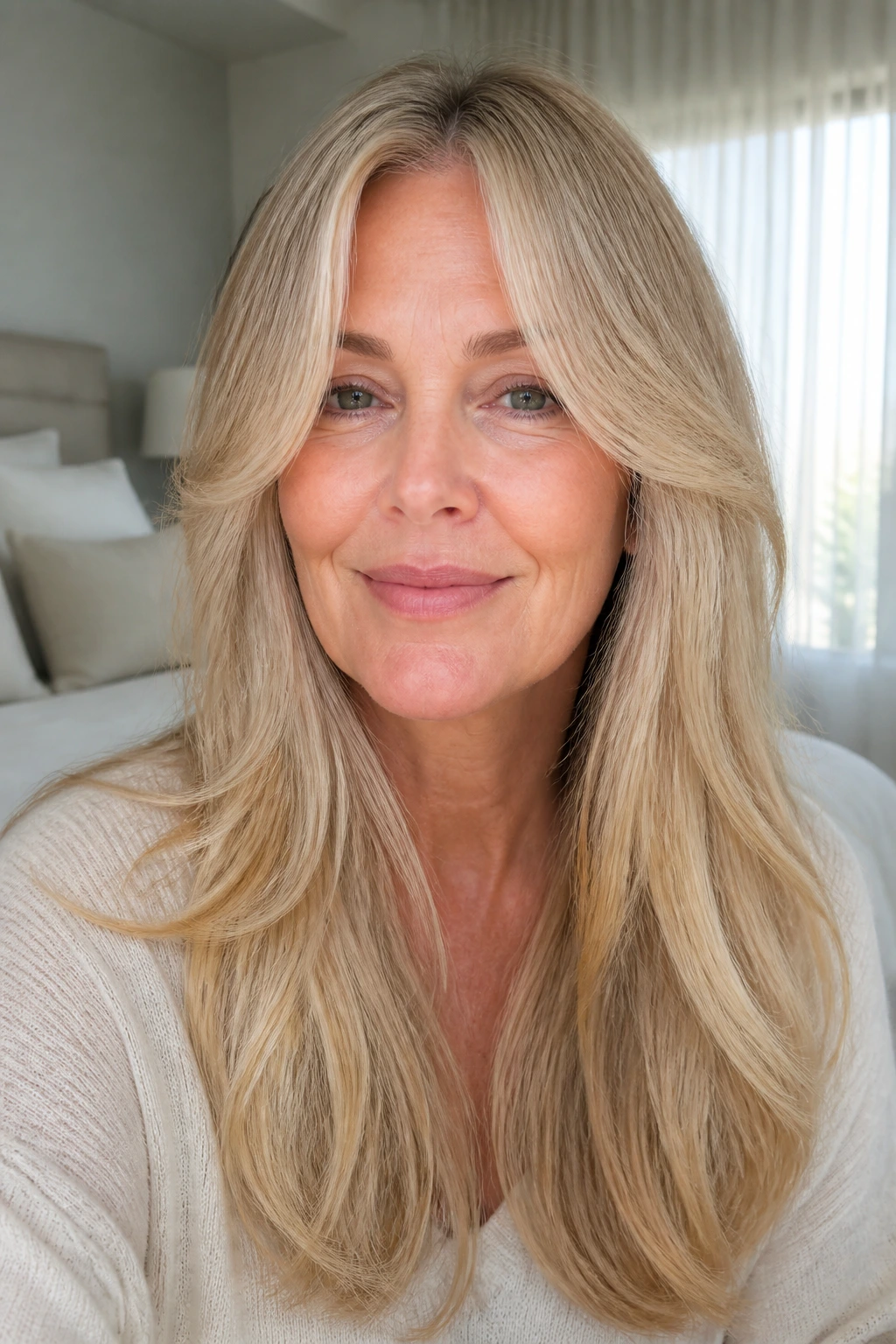
If you want long blonde hair that feels current without trying too hard, this is the one. The center part keeps the shape clean, while the curtain fringe opens around the eyes and cheekbones. It gives you the symmetry of a middle part and the softness of a bang.
This style works because the fringe does not stop at the forehead. It blends into the sides, which keeps the whole look from becoming top-heavy. Pearl blonde and beige blonde tones are especially good here because they show the movement in the fringe without making it look striped. A quick bend with a round brush is enough most days.
28. Fishtail Braid Over One Shoulder
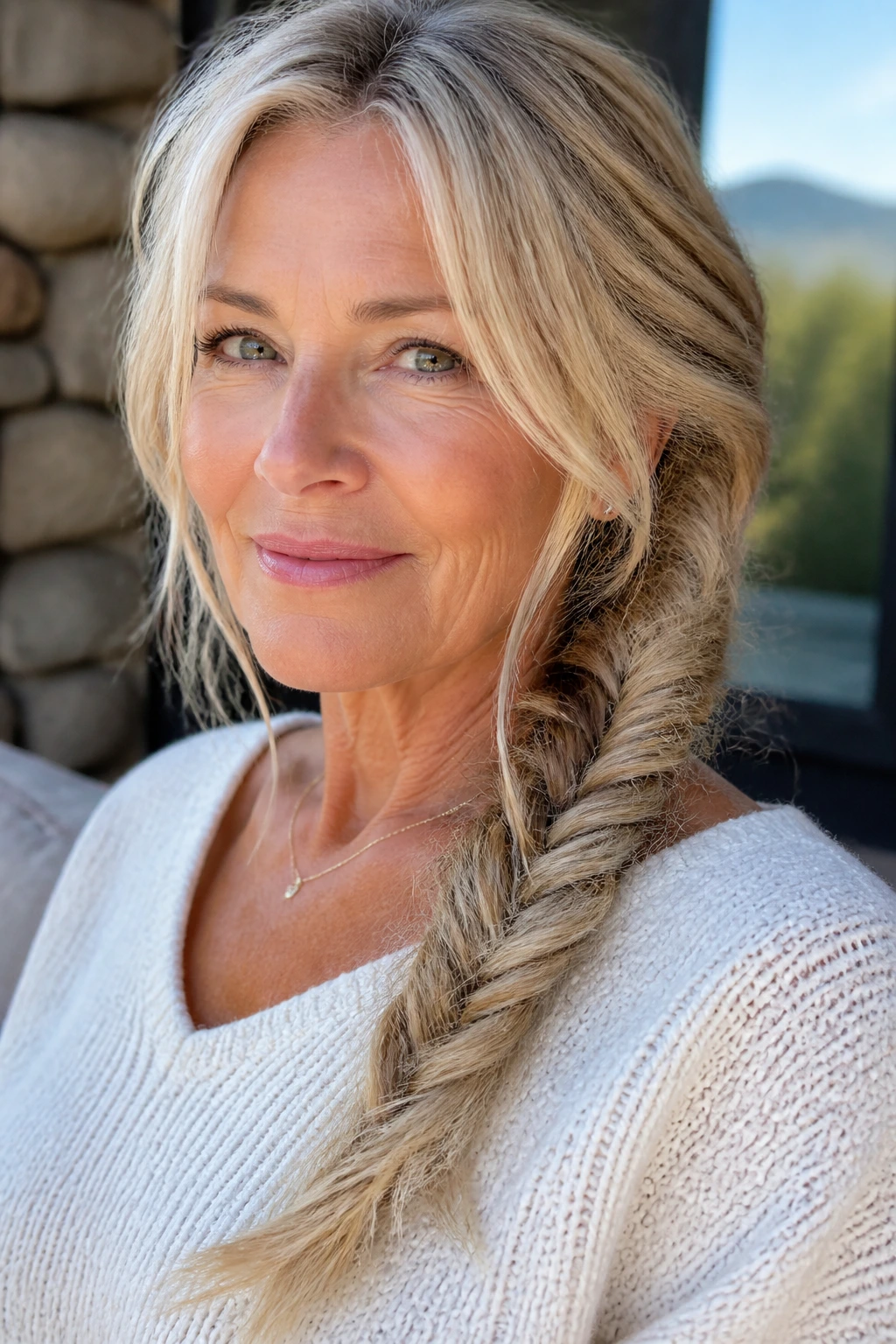
A fishtail braid looks more involved than it is. On long blonde hair, the weave pattern turns highlights and lowlights into a visible texture, especially when the braid sits over one shoulder. It has enough detail to feel special without needing any hot tools at all.
This style is useful when you want the length contained but not hidden. Pull the braid apart a little after tying it off so it doesn’t look too tight. The loosened edges make a big difference. If the hair is layered, leave a few shorter pieces around the face. They soften the braid and keep it from feeling overly neat.
29. Silver-Blonde Blend with Glossy Finish
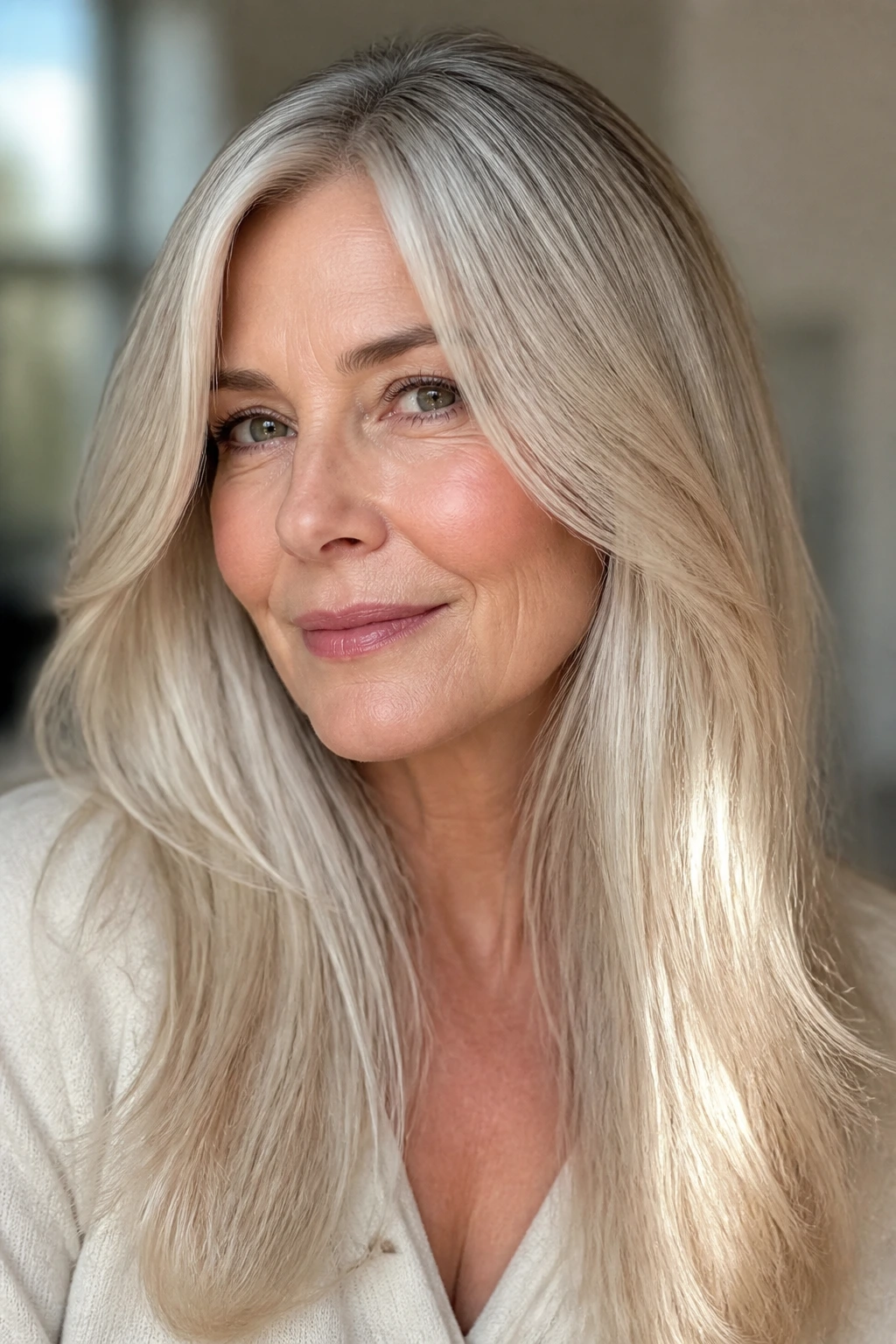
Silver-blonde is one of the cleanest ways to work with natural gray instead of pretending it isn’t there. The blend can be cool and luminous when it’s toned well, and a glossy finish keeps the silver from looking dull or dusty. On long hair, the effect is calm and polished, not harsh.
This style needs moisture and a good gloss schedule. The ends should feel smooth to the touch, not rough. I like it when the roots stay slightly deeper than the lightest pieces, because that gives the silver somewhere to land. If the whole head goes to one flat pale tone, the shape disappears.
30. Sleek Low Chignon with Face Pieces
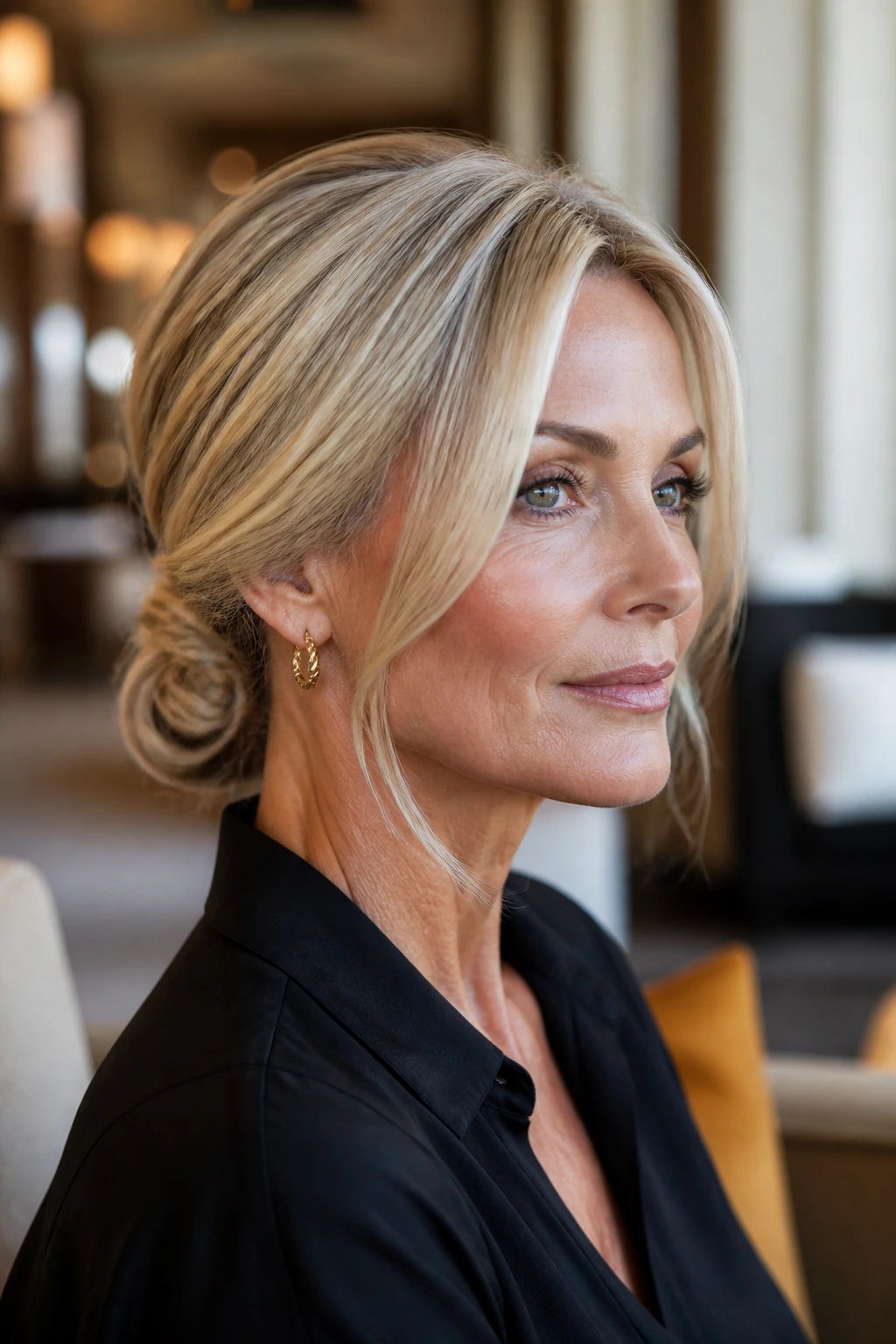
A low chignon gives long blonde hair a graceful exit without cutting the length off. The hair twists at the nape, the front stays soft, and a few loose face pieces keep the style from becoming too formal. It’s one of the few updos that still lets the blonde show its dimension.
This is a smart style for events, dinners, and any day when you want your hair out of the way but not hidden. Beige, champagne, and silver-blonde all look clean in this shape because the twist catches the light. Keep the front pieces loose around the cheekbone. Tight face framing makes the whole look harder than it needs to be.
Why Long Blonde Hair Needs Shape, Not More Length
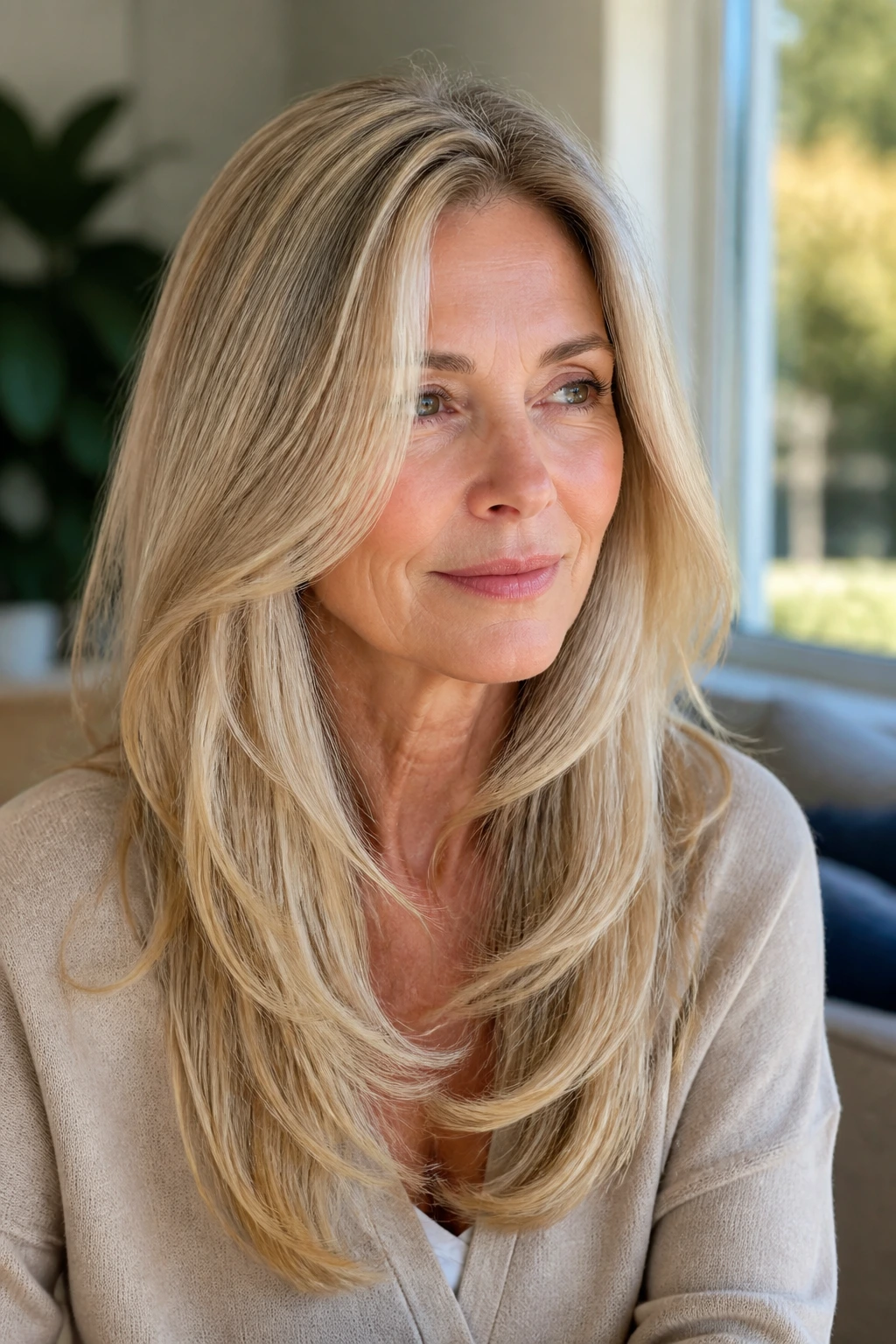
The biggest mistake with long blonde hair is assuming the answer is always more length. It isn’t. Past a certain point, hair needs shape, internal lift, and a clean perimeter, or the ends start looking tired and the whole style drags.
That’s especially true with blonde shades, because lighter color shows dryness faster than darker hair does. If the ends are wispy, a blunt line can make them look thinner, not fuller. Layers, root shadow, and a smart gloss schedule fix more than another inch ever will.
Essential Tools for These Styles
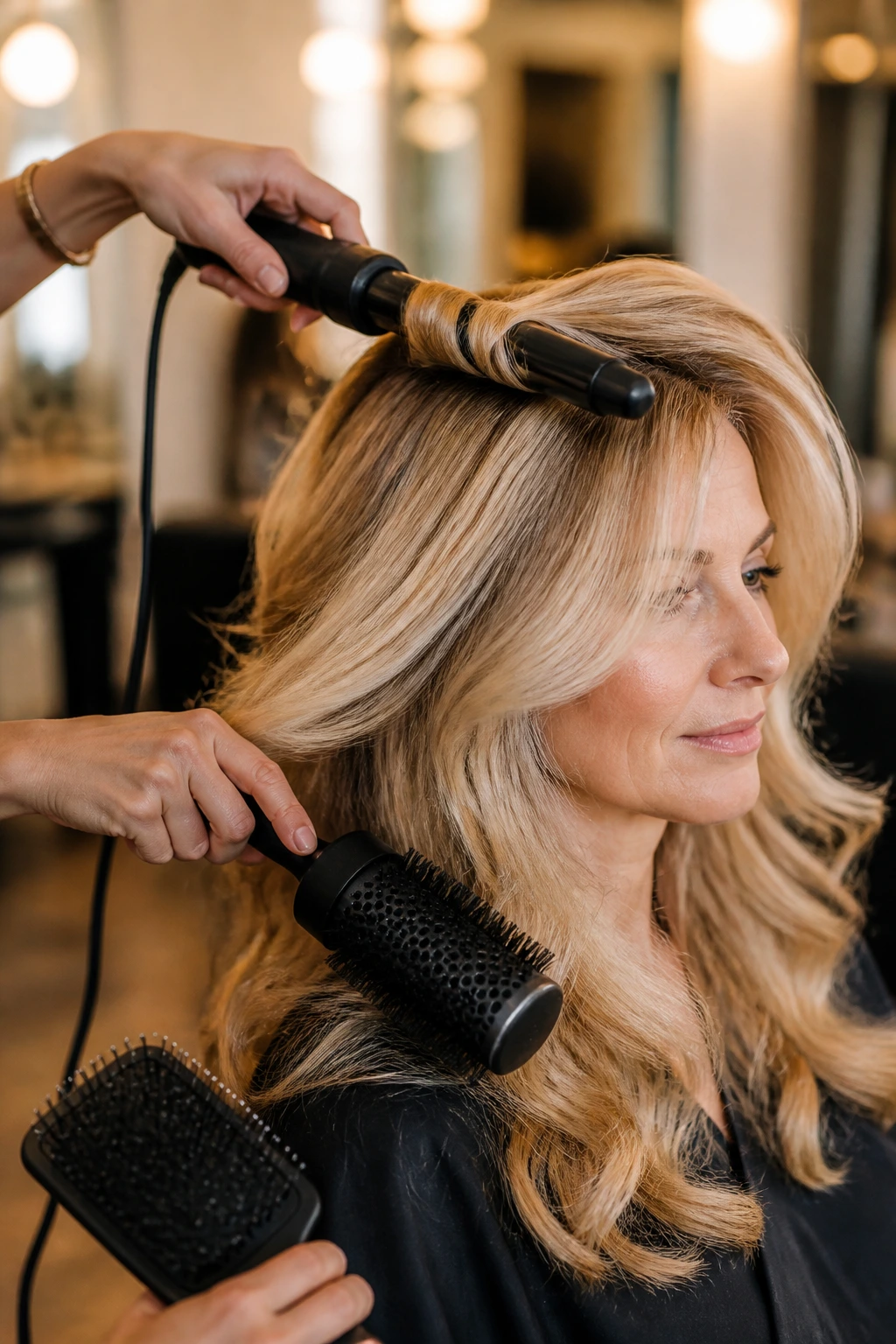
- 1.25-inch curling wand: The sweet spot for soft waves, barrel curls, and face-framing bend without tiny ringlets.
- Large round brush: Best for blowouts, curtain bangs, and rounded ends that keep long hair from hanging flat.
- Paddle brush: Good for sleek center parts, low ponytails, and smoothing out the top layer without fluff.
- Tail comb: Useful for clean parts, sectioning bangs, and making neat half-up styles.
- Sectioning clips: Keep long hair organized while you dry or curl it; worth having even if you only use them twice a week.
- Heat protectant spray: Non-negotiable if you use hot tools. Blonde hair shows heat damage fast.
- Volumizing mousse or root spray: Helps fine hair keep lift at the crown instead of collapsing by noon.
- Flexible-hold hairspray: Holds shape without making waves crunchy or bangs stiff.
- Purple shampoo: Handy for keeping yellow brass out of pale blonde, but it needs a light hand.
- Lightweight serum or oil: Use it on the ends only. Too much near the roots will flatten the whole look.
- Blow-dryer with a nozzle: The nozzle matters. It gives the air direction and makes styling less messy.
- Silk or satin scrunchie: Better than elastic for loose ponytails, braids, and overnight prep.
What to Ask For at the Salon
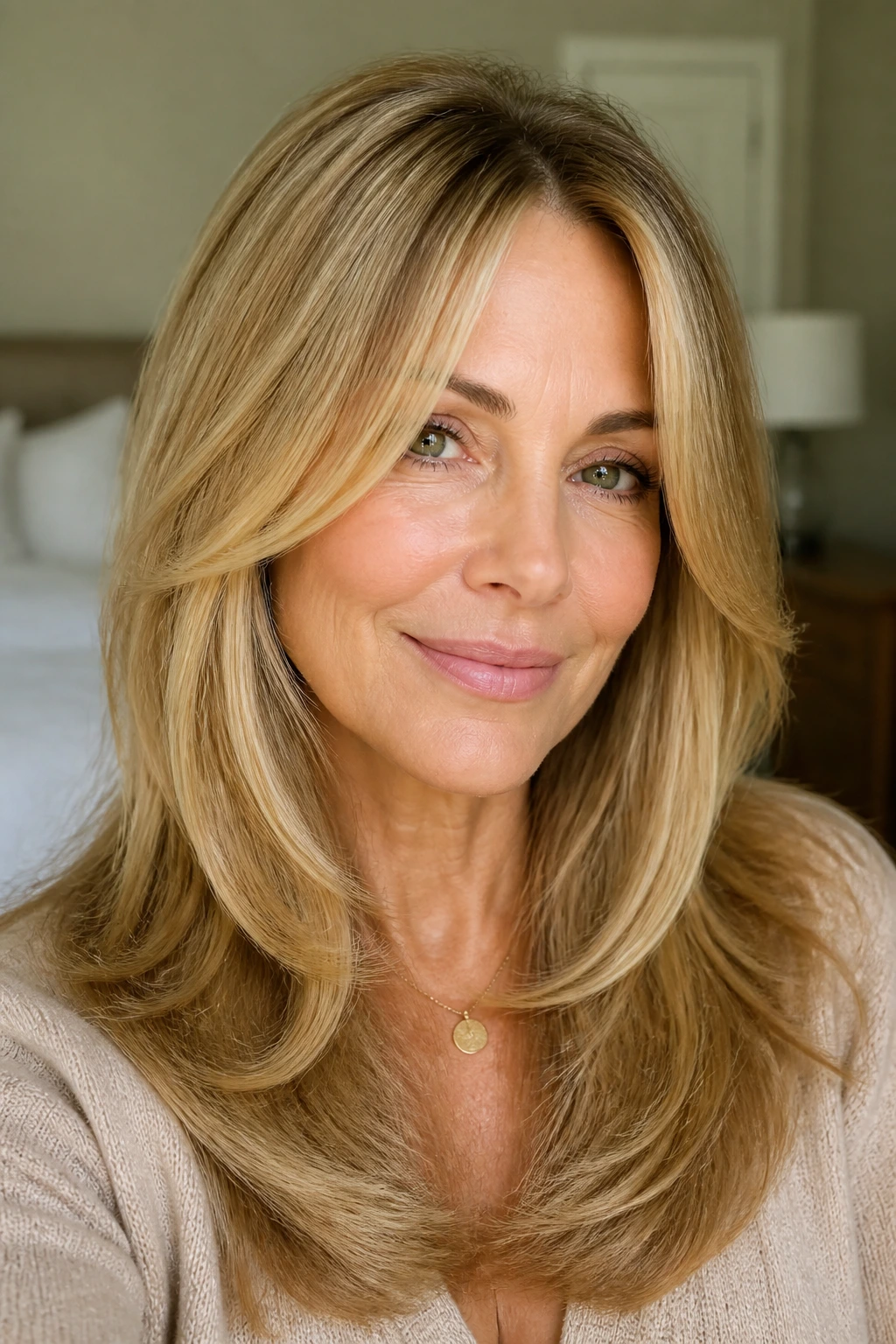
The conversation at the chair matters as much as the styling at home. If you want one of these long blonde styles to hold up, ask for shape first and color second. That sounds backward, but it isn’t. A good cut keeps the blonde from settling into a block, which is what makes long hair look heavy and aging.
Ask your stylist where the layers should start, not just how many you need. A long fringe can soften the face, but a short one can turn high-maintenance fast. If your hair is fine, ask for internal layering rather than lots of visible chopping. If it’s thick, ask for weight removal through the mids and a perimeter that still feels full at the ends.
Color-wise, root shadow and gloss are your friends. They let gray come in more naturally and keep blonde from turning into a stripe job every four weeks. Beige, honey, and silver-blonde tones usually age better than a very yellow blonde, which can look brassy if it’s not refreshed often. And if your hair is already dry, avoid pushing it to the palest level all over. You’ll spend too much time repairing it.
How to Wear Long Blonde Hair in Daily Life
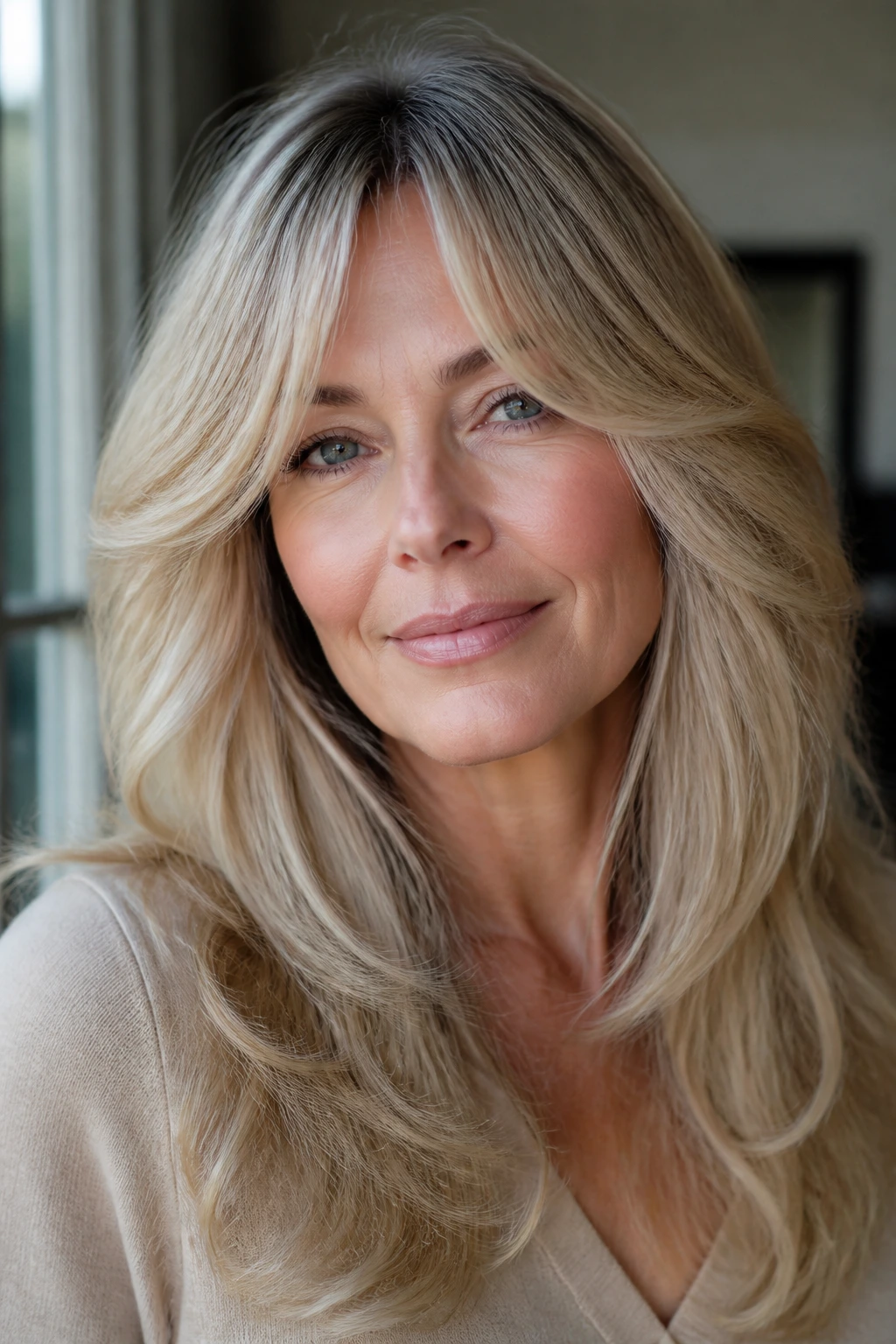
Presentation: Keep one side tucked behind the ear, lift the crown a little, or leave a few face pieces loose so the style shows its shape instead of sitting there as one long curtain.
Accessories: Thin hoops, pearl studs, narrow headbands, and small clips tend to work better than heavy barrettes. Big accessories can compete with the length and make the hair look busier than it is.
Time Budget: Sleek styles need the least correction through the day, while curls and waves usually need a five-minute finger reset after a few hours. Half-up styles and low ponytails sit in the middle and can be refreshed fast with a bit of water and a brush.
Where It Shines: The polished cuts suit workdays and dinners. Braids, twists, and ponytails are the practical choices for errands, travel, and humid days when loose hair has a mind of its own. If you wear glasses, a tucked side or side-swept fringe keeps the front from feeling crowded.
Small Tweaks That Make the Styles Look Intentional
Color Enhancement: A soft root shadow and a gloss on the midlengths can do more than another round of highlights. Ask for brightness around the face and softer depth underneath so the blonde keeps moving.
Texture: Waves should bend, not puff. If the ends start fraying, back off the heat and use a smaller amount of serum after styling. A little texture spray goes a long way on blonde hair.
Volume: Lift the roots first, then shape the mids. If you curl the bottom before the crown has any height, the style collapses on itself. That order matters more than people realize.
Make-It-Yours: Fine hair usually looks better with longer layers and less weight removal. Thick hair needs internal shaping. Curly hair wants moisture and a wider curl pattern. Straight hair often benefits from a more visible perimeter, because the line of the cut becomes the style.
Maintenance, Trims, and Overnight Care
Long blonde hair looks best when you treat the ends like they matter. They do. Schedule trims every 8 to 10 weeks if the hair is layered, and stretch to 10 to 12 only if the cut keeps its shape and the ends stay full. If the blonde is lightened heavily, a gloss or toner every 6 to 8 weeks keeps the tone from drifting yellow or dull.
At night, use a silk or satin pillowcase if you can. It cuts down on friction and keeps the lengths from tangling into a rough knot by morning. A loose braid, low ponytail, or satin scrunchie helps too. Tight elastics are rough on blonde hair, especially at the same spot night after night.
Wash schedules vary, but many long blonde styles hold up best with a 2- to 4-day rhythm. Too much washing strips tone and moisture; too little can flatten the roots and make the lengths limp. Use purple shampoo once every 2 to 4 washes if brass is creeping in, and leave it on only as long as the bottle says. More is not better. It can dull the tone fast.
Common Mistakes to Avoid
- Keeping the ends too blunt and heavy: The hair can look like one solid block. Ask for a U-shape, soft layers, or invisible layering so the ends move instead of sitting there.
- Choosing one flat blonde tone from root to tip: It often looks harsher than a blended blonde. A little depth at the root and around the underside gives the hair shape.
- Overusing purple shampoo: If the hair starts to look gray-violet or dry, you’ve gone too far. Cut back and switch to a moisturizing blonde shampoo.
- Skipping trims for too long: The ends split, thin out, and the length starts to look stringy. Small trims keep more usable length than big rescue cuts.
- Going too high with layers: Short layers can make long hair puff out around the crown and leave the bottom sparse. Keep the shortest pieces where they can support the shape.
- Flattening the crown every time: Long hair needs lift at the top or it drags the face down. A little root spray or a round brush at the crown solves more than heavy teasing ever will.
Frequently Asked Questions
What blonde shade is easiest to maintain after 50?
Root-shadow blonde, beige blonde, and honey blonde usually buy you the most breathing room. They grow out softly and don’t show every strand of gray as it appears. Platinum and very pale ash blonde can look gorgeous, but they need more toning and moisture.
Do long blonde hairstyles work if my hair is thinning?
Yes, if the cut has the right structure. Long, blunt hair can make thinning ends look narrower, while soft layers, a little crown lift, and a bright face frame create more body. Keep the shortest layers long enough to support the length.
How often should long blonde hair be trimmed?
Every 8 to 10 weeks is a good rhythm for most layered long cuts. If your hair is very healthy and grows slowly, you can sometimes stretch a little longer, but once the ends start looking wispy, it’s time.
Can I wear curtain bangs with glasses?
Yes, and they often help. Curtain bangs open around the eyes instead of sitting straight across the forehead, so they don’t fight the frames. Keep the sides long enough to tuck behind the glasses arm if needed.
How do I stop blonde hair from turning brassy?
Use cool or neutral shampoo, limit heat, and add a purple shampoo once or twice between salon glosses. Hard water can also shift blonde toward yellow, so a clarifying wash every few weeks may help if your water runs mineral-heavy.
Is platinum blonde too harsh for mature hair?
Not automatically, but it leaves less room for dry ends and visible damage. If the hair is strong and glossy, platinum can look crisp and modern. If it’s fragile, a softer silver-blonde or beige blonde usually ages better and wears easier.
What’s the best part for long blonde hair with a round face?
A slightly off-center or deep side part usually gives the face more length. A dead-center part can work too, but it tends to look best when there’s curtain fringe or soft layers to break up the symmetry.
Can I air-dry these styles instead of using heat?
Absolutely. Beach waves, shags, braids, twists, and messy buns all work well with air-drying. If you’re aiming for sleek straight hair or a rounded blowout, you’ll need some heat, but not every style on the list asks for it.
The Long Blonde Look That Still Moves
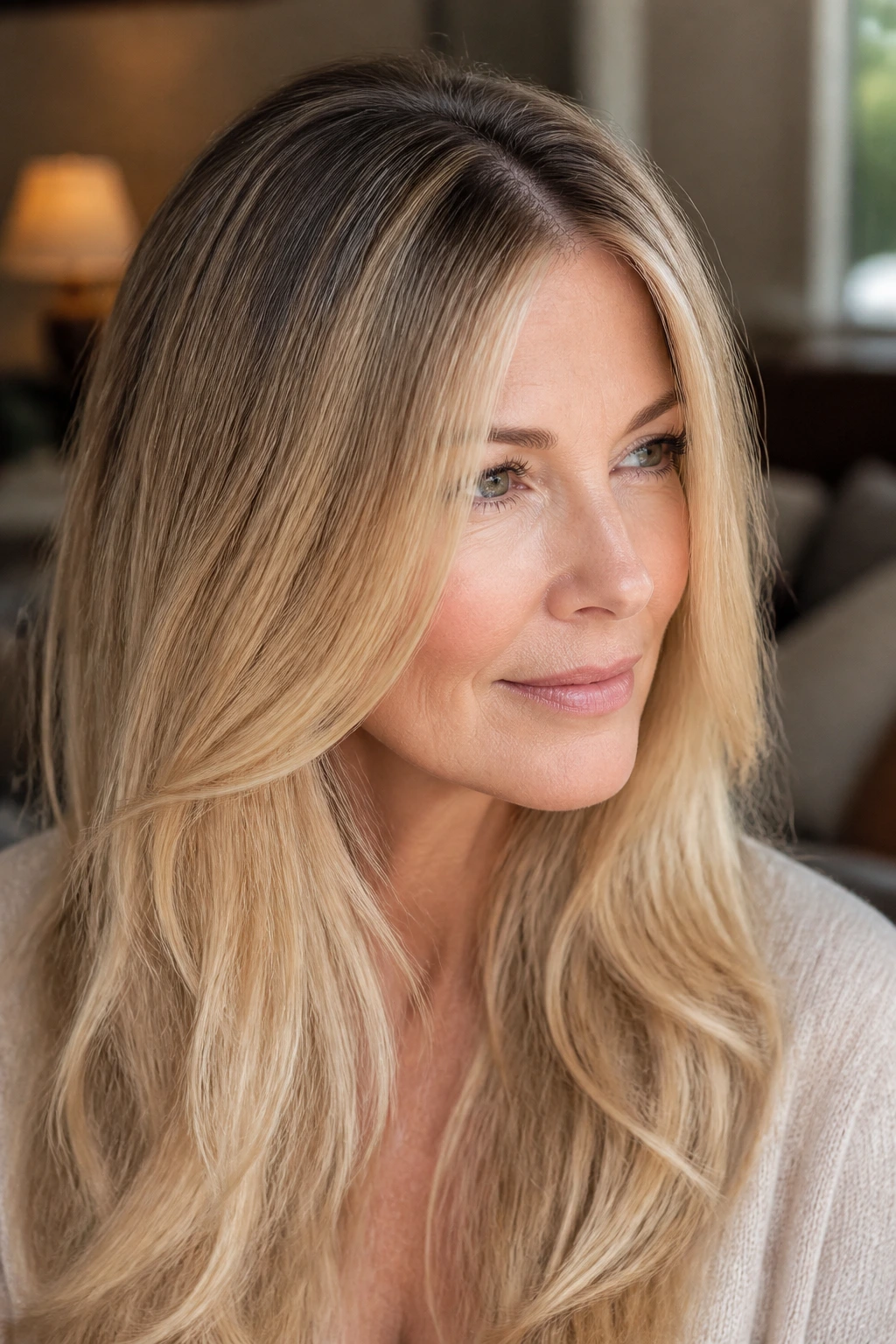
The best long blonde hair after 50 isn’t the longest or the lightest. It’s the one with enough shape to keep moving when you walk, enough tone to look fresh at the roots, and enough softness around the face to feel easy instead of overworked.
That’s the sweet spot these styles live in. Some lean polished, some lean relaxed, and some lean all the way into gray blending or root shadow so the grow-out doesn’t become a monthly battle. Pick the one that matches your hair texture and your patience level, then let the cut do some of the work for you.