



Wavy hair looks best when it isn’t forced into a flat, obedient shape. Give it a shag, let the ends break apart a little, and the whole head starts moving in a way that feels alive instead of coated in styling product and hope. Add caramel highlights, and those bends stop disappearing into one brown mass; they catch on the layers, show up in the fringe, and make even a simple air-dry look deliberate.
That pairing works because the cut and the color do the same job from different angles. The shag builds texture with scissors. Caramel highlights build it with light. Put them together and you get that sweet spot where the hair still looks easy, but not accidental. That’s why shag haircuts for wavy hair with caramel highlights keep getting saved, screenshot, and requested in salons by people who are tired of heavy ends and color that only looks interesting under bathroom lighting.
There’s a catch, though. A bad shag on wavy hair turns puffy fast. Bad highlight placement can make the layers look striped instead of dimensional. So the trick is not “more layers” and it’s definitely not “blonder everywhere.” It’s shape, placement, and restraint. The good versions know exactly where to let the wave breathe.
Why These Cuts Work So Well Together
- The cut does the texture work: Shag layers remove bulk where waves need room, so the hair bends instead of bulking out at the sides.
- Caramel keeps the shape readable: Warm highlights sit between brunette and blonde, which means they show the movement without turning brassy or harsh.
- Most of these styles air-dry with attitude: A little mousse, a scrunch, and a diffuser if you’re impatient. That’s usually enough.
- The fringe changes everything: Curtain bangs, bottleneck bangs, and soft micro-fringes each change the whole mood without demanding a full haircut overhaul.
- You can tune them for fine or thick hair: The same shag idea can be feather-light or dense and piecey, depending on how the layers are cut.
- They grow out with less drama: The silhouette softens instead of collapsing into a blunt, boxy shape, which is a relief when life gets busy.
1. Collarbone Shag with Curtain Bangs
This is the shag I’d put near the top of the list if you want something forgiving. The collarbone length keeps the ends from puffing out too high, while the curtain bangs split the face in a way that looks relaxed even on second-day hair. Caramel highlights around the cheekbones and front layers make the whole cut feel brighter without stealing the show.
Why It Works:
The length sits in that sweet middle zone where wavy hair can still swing, but it doesn’t mushroom. Curtain bangs let the front pieces taper into the sides, so the grow-out is soft instead of awkward. Ask for caramel ribbons concentrated around the face and through the top layers; that placement catches the bends each time the hair moves.
What to Tell Your Stylist:
- Keep the perimeter at collarbone length.
- Build light internal layers through the crown.
- Keep the fringe long enough to tuck behind the ear.
- Paint the warmest caramel closest to the face.
Styling Note:
A 1-inch curling wand used only on the top layers can sharpen the shape in 5 minutes. Leave the ends a little undone. That’s the point.
2. Chin-Length Choppy Shag with Caramel Ribbons
Shorter shags can go feral in the wrong hands, but this one stays tidy enough to wear every day. The chin-grazing length gives wavy hair bounce, and the choppy layers stop it from turning into a triangle. Caramel ribbons placed in thin slices through the midlengths make the whole cut read as glossy and piecey instead of heavy.
Why It Works:
The shortest layers sit where your wave pattern already wants to lift, which means the hair does half the styling on its own. The trick is not to over-thin the ends. You want separation, not see-through strands. A few hand-painted highlights near the temples make the shorter shape feel more expensive, even if you’ve just rough-dried it.
Best For:
- Oval and heart-shaped faces
- Hair that bends easily but loses shape at the ends
- People who like a slightly cheeky, not-too-serious haircut
Quick Styling Cue:
Use a pea-sized amount of curl cream on damp hair, then scrunch and air-dry until the roots are dry and the ends still feel cool.
3. Long Wolf Shag with Balayage Ends
Why do long shags keep hanging on? Because they let you keep length without pretending the hair is one solid sheet. This version keeps the shape below the shoulders, then breaks it up with wolfy layers that start around the cheekbones and soften toward the ends. Caramel balayage only on the lower half makes the movement read like light hitting fabric.
Why It Works:
Long waves can look sleepy when all the weight sits at the bottom. The wolf-shag shape fixes that by taking bulk out of the interior and building a little drama around the face. If your stylist leaves the root area darker and smears the caramel through the mid-lengths and ends, the result looks lived-in rather than stripey.
What to ask for
- Longer layers around the face
- Shorter internal layers at the crown
- A soft, tapered finish at the ends
- Balayage that starts below the cheekbone
How to Wear It:
This is the shag for people who want a bit of edge but still like hair they can clip up. It looks best with loose waves and a center part.
4. Mid-Length Shag with Bottleneck Bangs
Bottleneck bangs do something a blunt fringe can’t: they soften the forehead without taking over the face. Paired with a mid-length shag, they create a shape that feels balanced from every angle. Caramel highlights threaded through the bang area make the front of the haircut glow a little, which is handy when the rest of your hair sits in a deeper brunette shade.
Why It Works:
The mid-length cut lands around the shoulders, which is one of the easiest places for wavy hair to live. The layers can move, but they don’t need constant restyling. Bottleneck bangs are shorter in the center and longer at the sides, so they blend into the shag without looking like a separate haircut.
Color Note:
Ask for lighter caramel pieces only through the fringe and the first two front panels. That gives you brightness near the face and keeps the back from looking too busy.
Styling Tip:
Blow-dry the bangs with a small round brush and let the rest air-dry. Mixing methods sounds fussy, but it saves time and keeps the fringe from splitting into odd little pieces.
5. Airy Invisible-Layer Shag
This one is for the person who wants a shag but hates the word “choppy.” Invisible layers keep the outline soft while still taking enough weight out of the interior to let waves stack naturally. With caramel highlights placed under the top layer, the color peeks through when the hair moves instead of announcing itself all at once.
Why It Works:
Invisible layers are cut so the outside line stays smooth. That matters on wavy hair, which can look frizzy if the haircut is too aggressively sliced. The caramel is usually better here when it stays in fine, diffused pieces rather than bold stripes. You get shimmer, not a highlighter pen effect.
Best Match:
- Fine to medium hair
- Waves that puff when overloaded with layers
- Anyone who likes soft shape more than obvious texture
One Smart Move:
Ask for a dry cut or a curl-by-curl check if your wave pattern changes a lot between wet and dry. That small extra step can save you from a weird mushroom shape later.
6. Razor-Cut Beach Shag
A razor cut brings a sharper edge to a shag, and on wavy hair it can look expensive in a slightly undone way. The ends feather out, the layers melt together, and caramel highlights slip across the surface like sun on sand. Done well, it has movement from root to tip. Done badly, it frays. There’s a difference.
Why It Works:
The razor removes weight fast, which helps thicker waves lie flatter and move more easily. That said, it’s not the best choice for hair that already feels dry or fragile. Caramel highlights help this cut because the feathered ends can look too airy without color variation. Warm tones restore some visual density.
What to Watch For:
- Keep the top soft, not over-thinned
- Avoid a razor on very porous ends
- Use heat sparingly, because ragged ends show damage fast
Styling Habit:
A small amount of lightweight oil on the very ends keeps the feathering from looking fuzzy by the afternoon.
7. Layered Lob Shag with a Money Piece
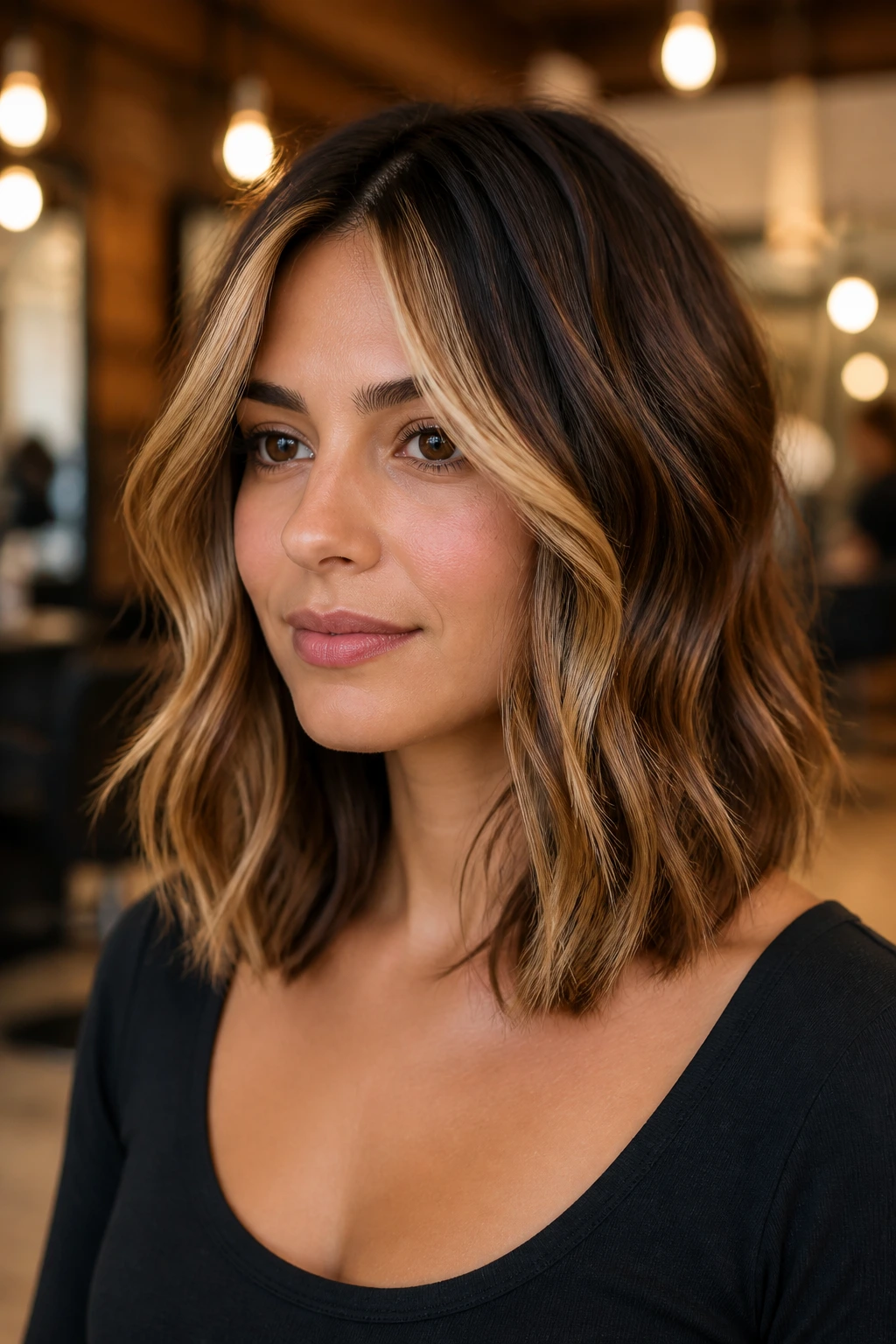
The lob gives the shag a cleaner outline, which some people need. Not everyone wants their hair to look wild every day. This cut stays just above or right at the shoulders, then uses internal layers and a brighter caramel money piece to make the front pop. It’s polished enough for work, loose enough for weekends.
Why It Works:
The lob is long enough to pull back, but short enough to keep wave definition visible. The money piece works because it frames the face first, then lets the rest of the caramel stay quieter through the lengths. That contrast keeps the haircut from looking overdone. A little light right up front goes farther than a full-head lift.
Quick Shape Check:
If your hair collapses at the crown, ask for a tiny bit more lift there. If the ends flare, keep the perimeter blunt-ish with soft internal texturizing instead of more slicing.
My Take:
This is one of the easiest shags to live with. It has shape, but it doesn’t make a scene.
8. Curly-Wavy Hybrid Shag
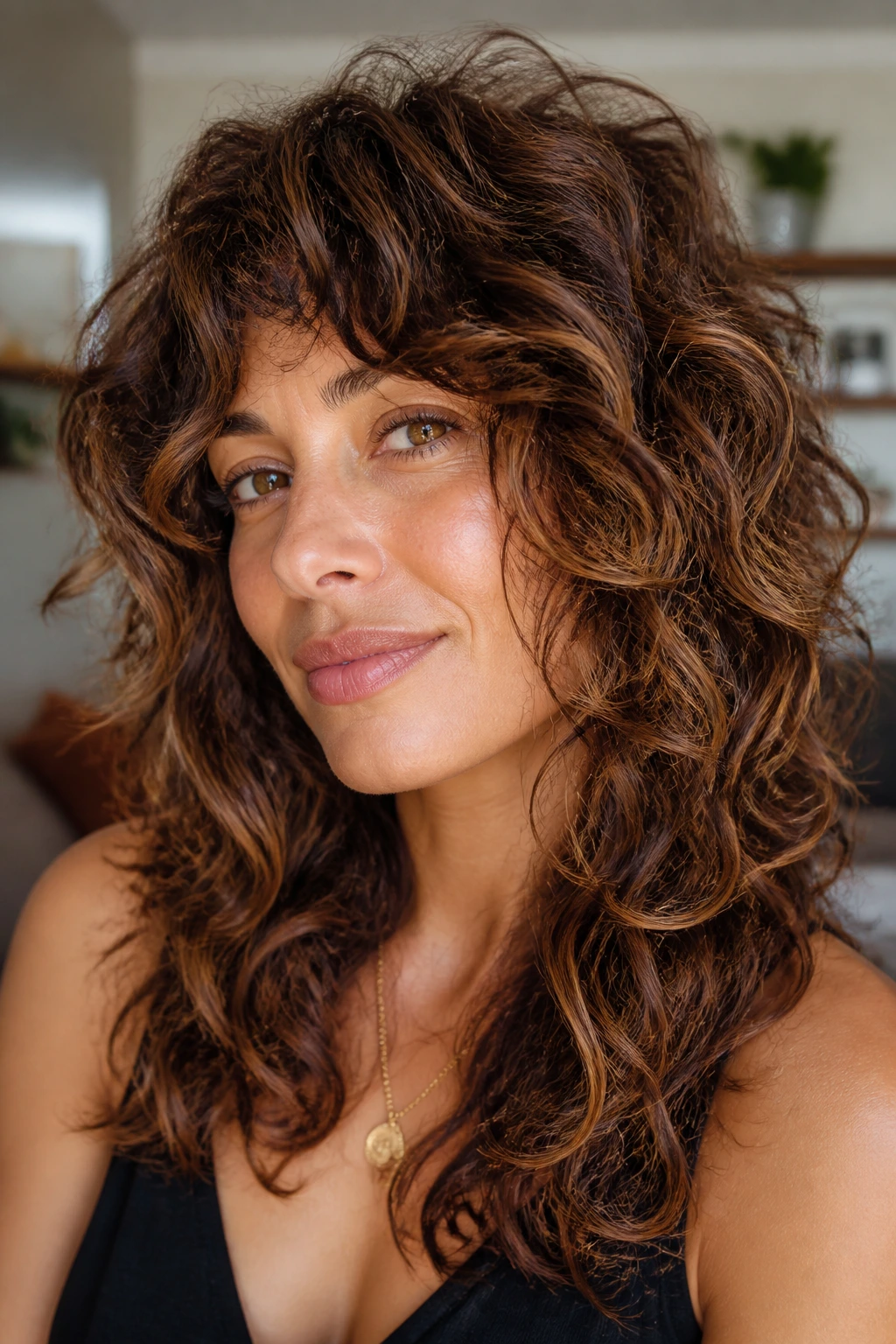
Some heads sit right between curl and wave, and that’s where a hybrid shag earns its keep. The layers need to be cut with enough space for the curl to spring, but not so much that the shape turns frizzy. Caramel highlights should be painted where the pattern opens up, because color trapped inside tight bends can disappear.
Why It Works:
The hybrid cut respects the fact that not all waves behave the same from top to bottom. The top layer may be looser, the lower sections tighter, and a single blunt length can’t handle that well. The shag gives those different textures room to do their own thing. A warmer caramel makes the curl pattern easier to read, especially in dim light.
Best Styling Products
- Light mousse at the roots
- Cream only on midlengths and ends
- Diffuser on low heat
- Wide-tooth comb, never a fine brush when dry
Color Placement Tip:
Keep the brightest caramel on the outer curve of the wave. That’s where the eye lands first.
9. Retro 70s Flip Shag
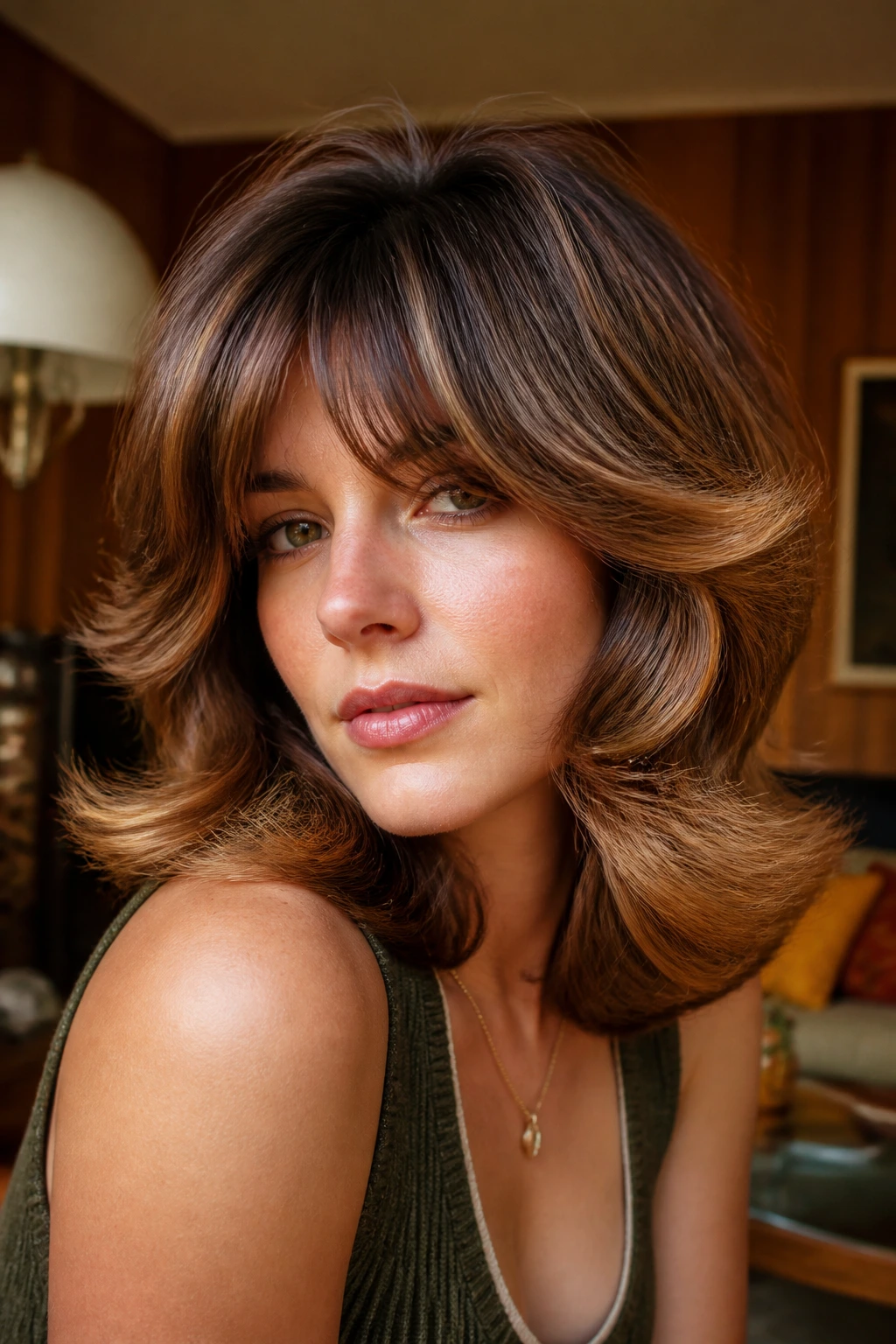
There’s a reason the 70s shag keeps coming back. The flipped ends, the airy crown, the soft fringe that kisses the brows—it has personality. This version leans into that shape, with caramel highlights placed in a way that makes the layers flick and separate at the ends instead of blending into one long line.
Why It Works:
Retro shags are not just about nostalgia. They’re about shape that shows up from across the room. The ends flip because the layers are short enough to kick out when you blow-dry with a round brush. Caramel highlights on the outer layers keep that movement visible, especially if your natural base is medium or dark brown.
Styling Move:
Roll the front sections away from the face with a medium brush, then let them cool before touching them. Cooling matters. Hot hair forgets what you did.
Best For:
People who like a slightly styled finish, even on casual days. This one looks better with intention than with zero effort.
10. Soft Mullet Shag
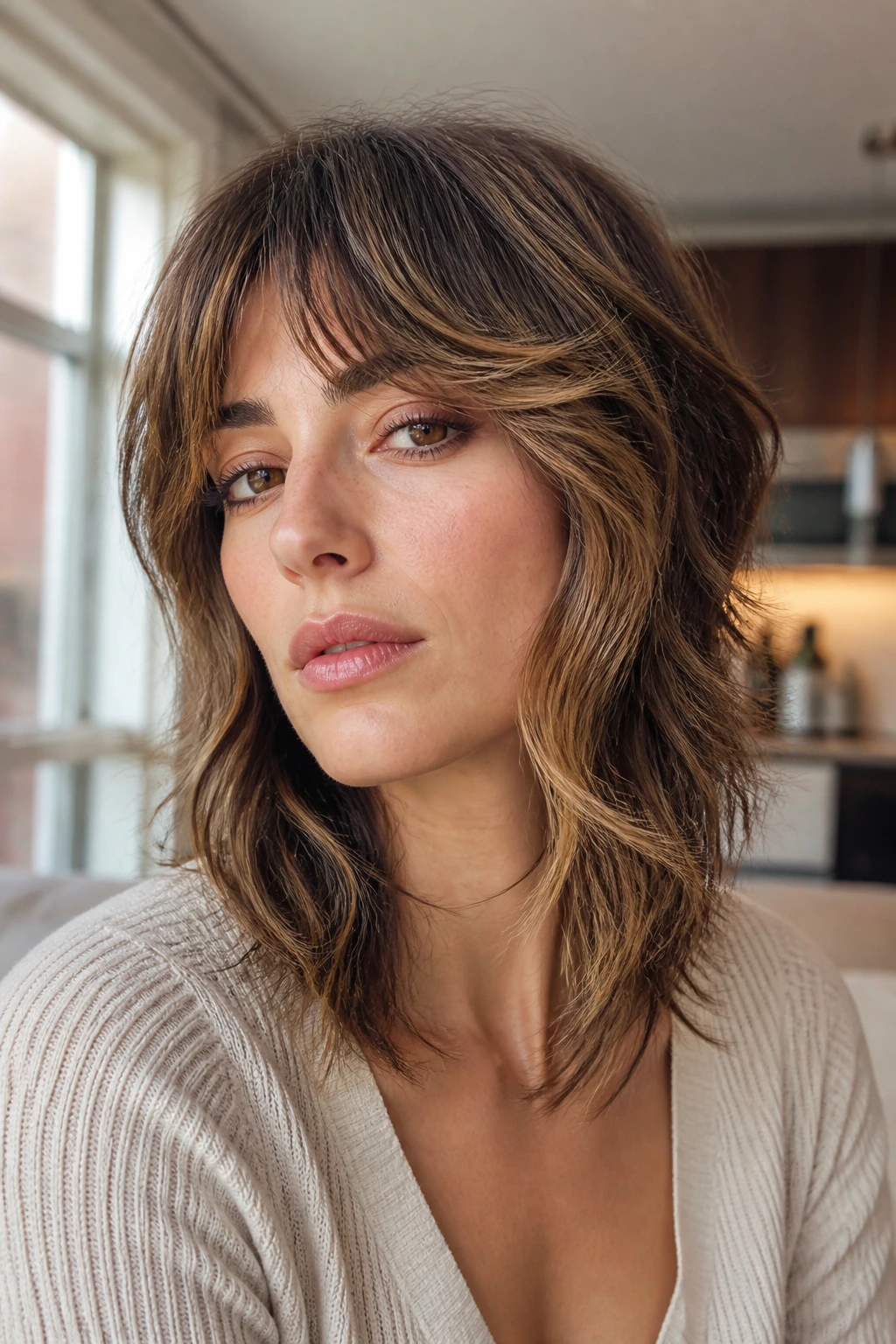
“Soft” matters here. Without that word, this cut can go too sharp and too punk, which is not what everyone wants. The soft mullet shag keeps the front face-framing pieces longer while allowing the back to sit a touch shorter and fuller. Caramel highlights on the top and front give the cut lightness where it needs it most.
Why It Works:
The mullet shape gives wavy hair a bit of lift at the crown and a swing through the back. The front stays long enough to avoid that cartoonish disconnect people worry about. If the caramel stays concentrated around the face and crown, the haircut reads textured and modern instead of flat-out retro.
A Useful Comparison:
Unlike a classic shag, this one leans harder into contrast. If you want the front and back to feel different on purpose, this is the cut.
Color Note:
Keep the back darker or more softly highlighted. Too much brightness in the back can make the shape look busy.
11. Micro-Fringe Shag
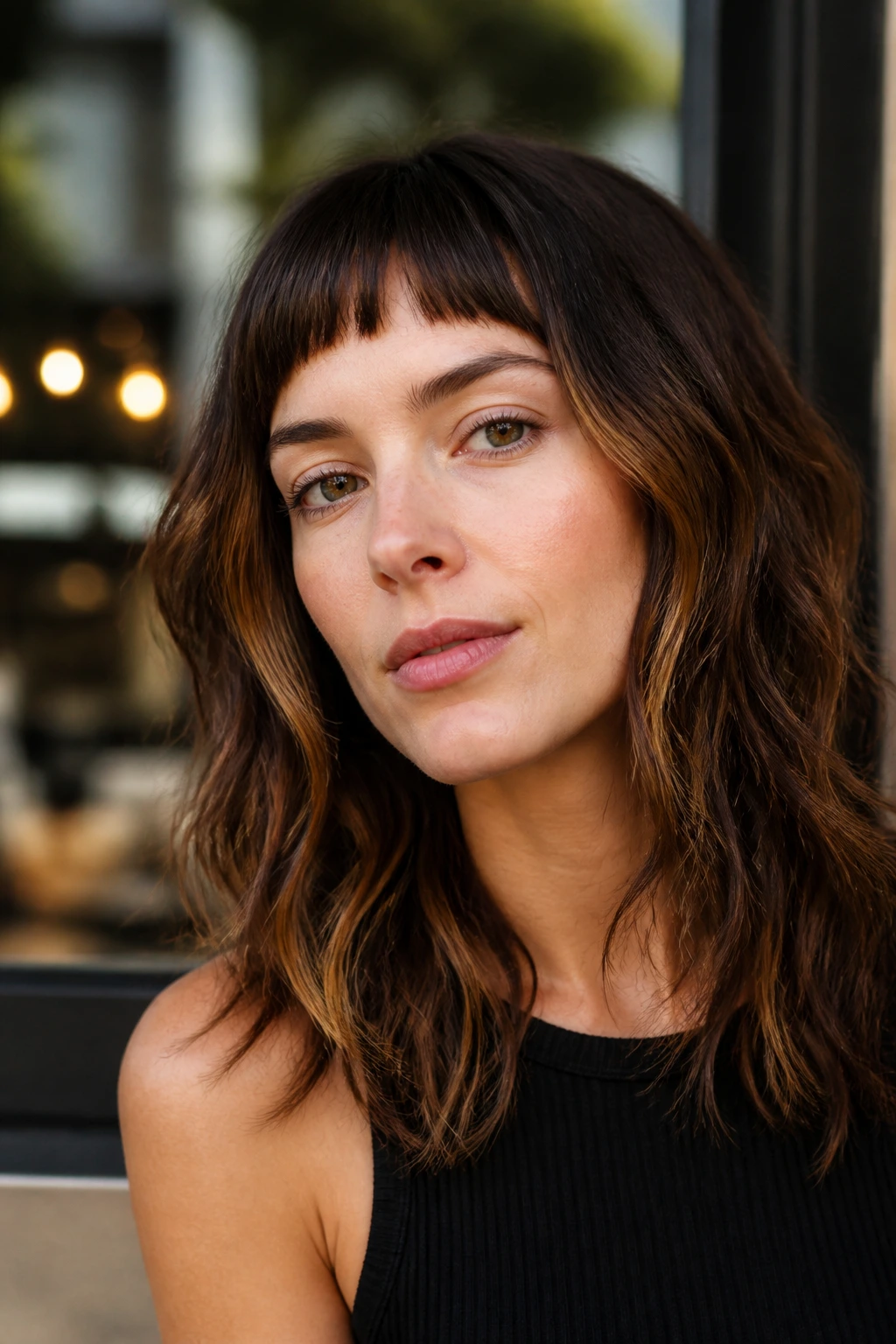
Micro bangs are not for everyone. Good. They shouldn’t be. When they work, though, they give a shag a sharp little point of view that you don’t get from curtain bangs. The rest of the cut stays wavy and soft, while the fringe adds a clean, cropped line above the brows. Caramel highlights should stay subtle here, because the bangs already command attention.
Why It Works:
A tiny fringe can make the face look more open, especially when the rest of the haircut sits around the cheekbones and jaw. The trick is keeping the shag loose enough that the bangs don’t feel like a separate object. A few caramel pieces around the temples soften the contrast.
Who Should Skip It:
If you hate trims, walk away. Micro bangs need maintenance. They grow out fast and get pokey before you know it.
Styling Tip:
Dry the fringe first, straight down, then let the rest of the wave do its thing. If you try to “fix” micro bangs after the waves are already dry, they usually set in the wrong direction.
12. Center-Part Lived-In Shag
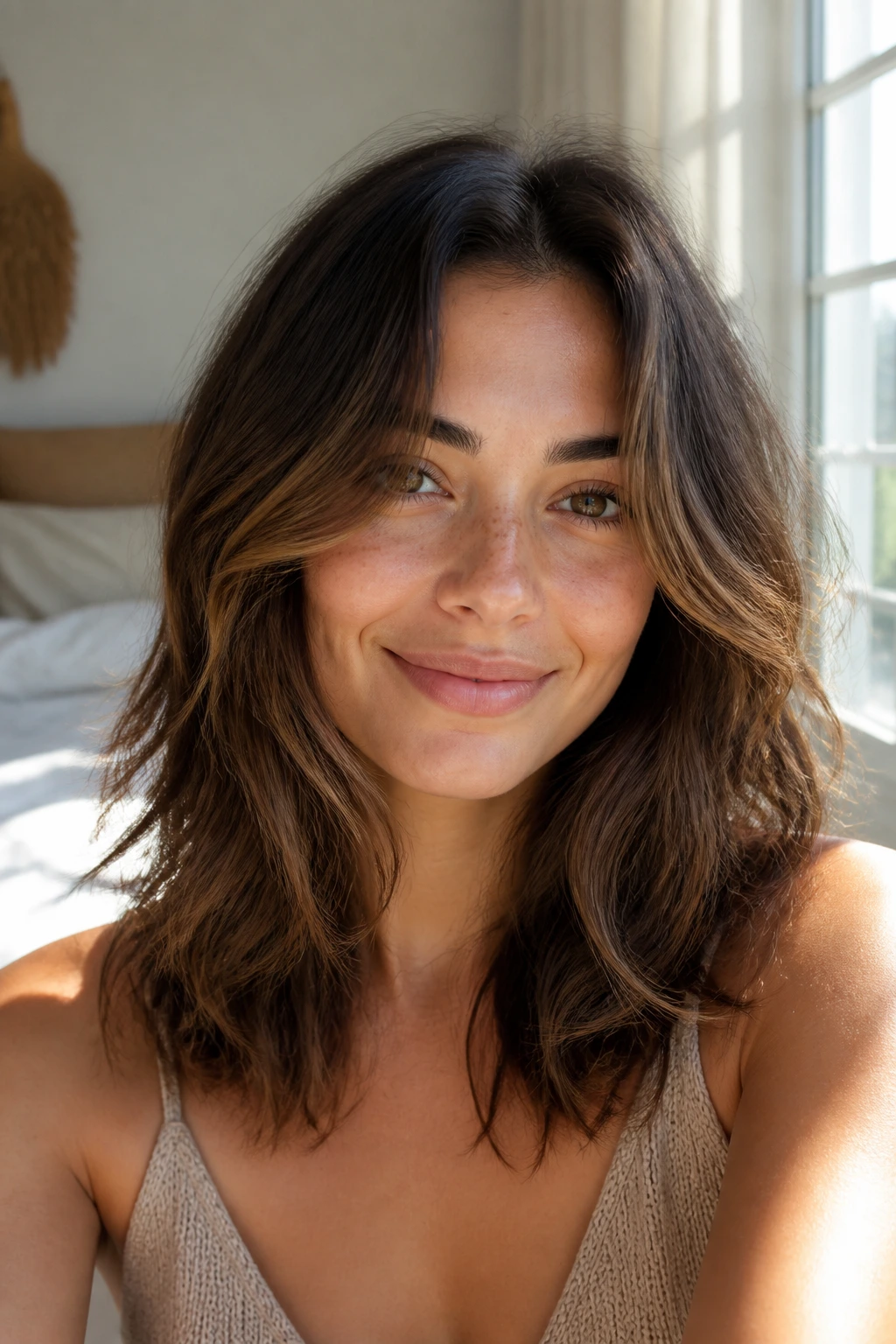
This is the version I’d call the most quietly wearable. A center part keeps the shape balanced, while lived-in layers avoid that too-perfect salon finish that never survives a real commute. Caramel highlights sit best here in soft panels that start near the cheekbones and taper into the ends.
Why It Works:
The middle part makes the waves fall evenly on both sides, which shows off the shag layers without drama. If your hair naturally separates down the center, this cut makes that feel intentional instead of accidental. Caramel on the front and underlayers adds depth when the hair swings back from the face.
Small Detail, Big Difference:
Ask for face-framing pieces that begin around the chin, not the nose. That extra length keeps the cut from feeling too early-2000s.
Styling Habit:
Flip your part once in a while if you want a little root lift. The cut can take it.
13. Deep Side-Part Piecey Shag
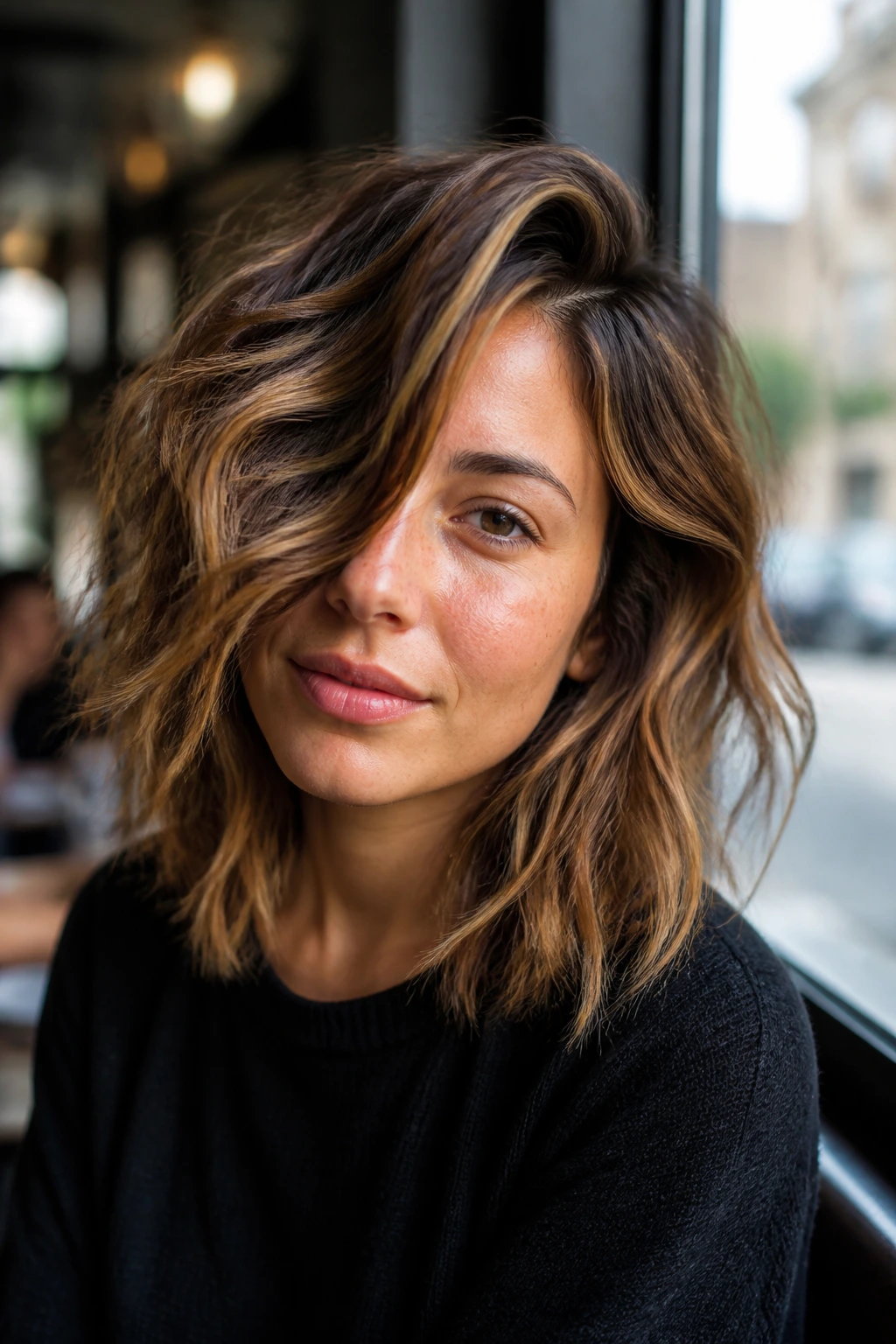
A deep side part changes the mood fast. The same shag layers suddenly look more dramatic, a little lopsided in the best way, and the caramel highlights catch on the heavier side of the wave. If center parts feel too neat for you, this cut gives you motion with an edge.
Why It Works:
The side part builds instant volume on one side without asking the haircut to do more than it should. Piecey layers help the wave fall into separate sections, which keeps the side-heavy shape from turning bulky. Caramel highlights are worth placing in thin slices near the part line, because that’s where the eye hits first.
What to Ask For:
- A side part with a clear bend point
- Piecey face layers
- Soft, not blunt, ends
- Lightening concentrated on the top side and front
Opinion:
This is one of the few shag styles that looks even better when the wave is a little uneven. Perfection would ruin it.
14. Heavy Fringe Low-Contrast Shag
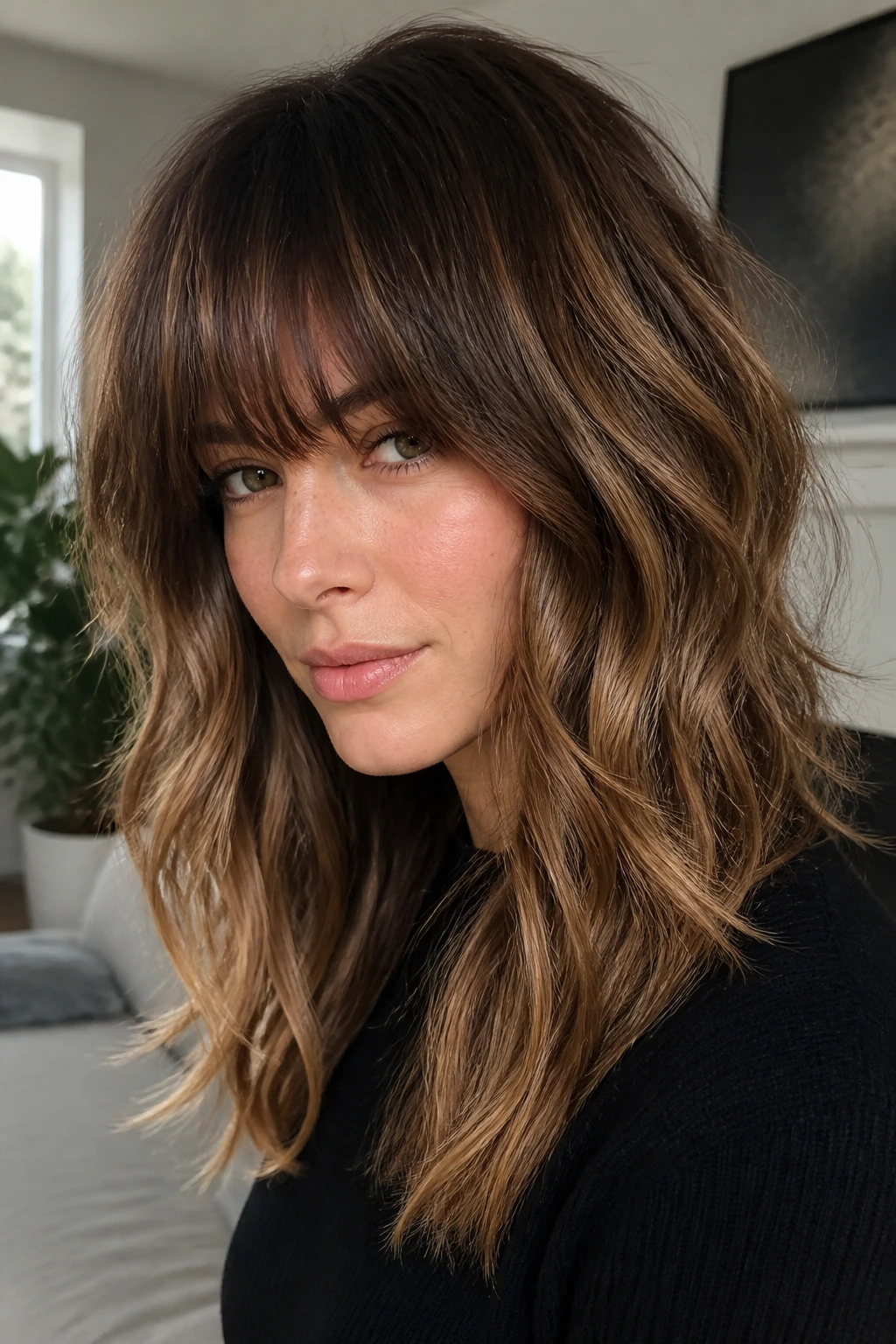
A heavy fringe changes the whole personality of a shag. Instead of floating bangs and open forehead space, you get a denser front that sits just above the eyes and makes the rest of the hair feel more sculpted. Low-contrast caramel highlights keep that weight from looking dark and flat.
Why It Works:
The fringe gives structure. The shag gives movement. Put them together and the haircut has a frame without losing softness. Low-contrast caramel means the highlights stay close to the brunette base, so the effect is subtle in daylight and richer indoors.
Good Choice If:
- You like a stronger front section
- Your hairline can handle a fuller bang
- You want texture without a high-light, high-drama color map
Styling Note:
Blow-dry the fringe with the nozzle pointed down to keep it smooth. Then let the rest of the hair be loose. The contrast is the whole point.
15. Messy Fine-Hair Shag

Fine waves can get bullied by the wrong haircut. Too many long layers, and the ends thin out. Too much product, and the whole shape collapses. This shag keeps the layers modest and the texture messy on purpose, with caramel highlights used to make the hair look denser through color movement rather than weight.
Why It Works:
Fine hair usually needs shape more than it needs aggressive thinning. The layers should lift the crown and soften the sides without stealing too much bulk from the bottom. Caramel highlights help because they create the illusion of thicker strands when light hits different sections.
What to Avoid:
Do not overload fine waves with heavy cream. They go limp in half an hour. A foam or light mousse gives you more lift and less slide.
Simple Formula:
Less product. Slightly brighter face pieces. A trim every 8 to 10 weeks. That’s the lane.
16. Thick-Hair Sun-Kissed Shag
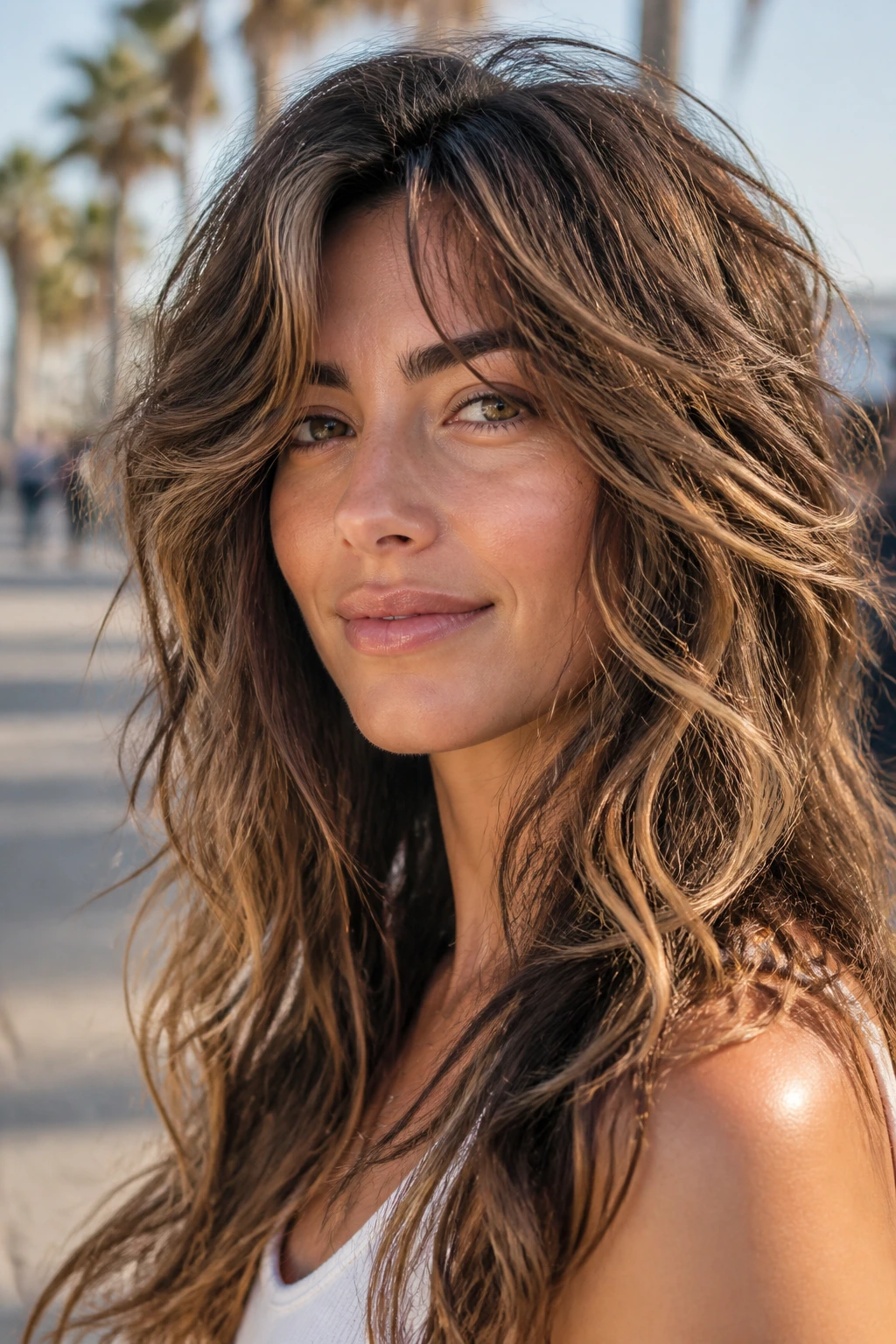
Thick wavy hair has the opposite problem: too much bulk, not enough air. A sun-kissed shag clears space inside the cut so the wave has somewhere to go. Caramel highlights should be woven with enough separation that the hair doesn’t look striped, just softened and lifted.
Why It Works:
Thick hair usually holds a shag beautifully because the cut can take weight out without making the ends look thin. The brighter pieces around the surface help break up density, especially at the sides and crown. If your stylist keeps the interior layers a bit shorter and the perimeter slightly longer, the shape stays full but not puffy.
Best Styling Tool:
A diffuser with medium heat. Thick waves need drying power, but blasting them with high heat can rough up the cuticle and make the caramel look dull.
One Honest Caveat:
This cut needs regular trims. Thick hair has a way of swallowing shape if you let it go too long.
17. Rounded Long-Layer Shag
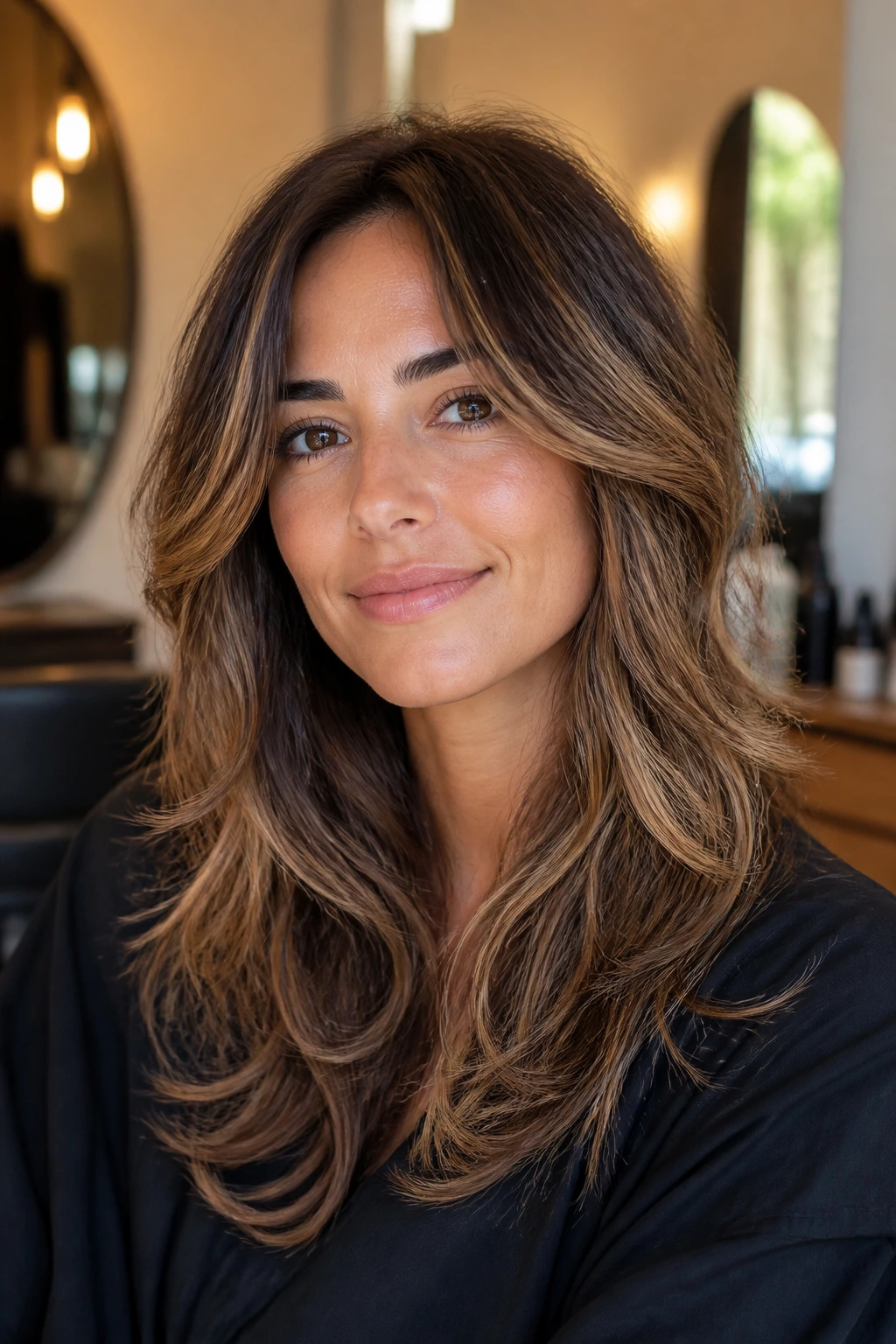
Some shags look intentionally rough. This one leans softer and rounder, with long layers that curve around the face and shoulders instead of kicking out sharply. Caramel highlights follow that curve, which makes the shape feel polished without turning stiff.
Why It Works:
A rounded silhouette suits waves that naturally want to bend inward or outward in a loose pattern. The long layers let the hair keep movement while keeping the outline controlled. Caramel placed along the curved front panels draws attention to the shape itself, not just the color.
Who It Flatters:
People who like their hair to feel soft around the cheeks and jaw usually love this cut. It’s gentle without being boring.
Styling Tip:
Use a big round brush only at the front. You do not need to blow out the entire head to make this look work.
18. Bixie Shag with Caramel Spark
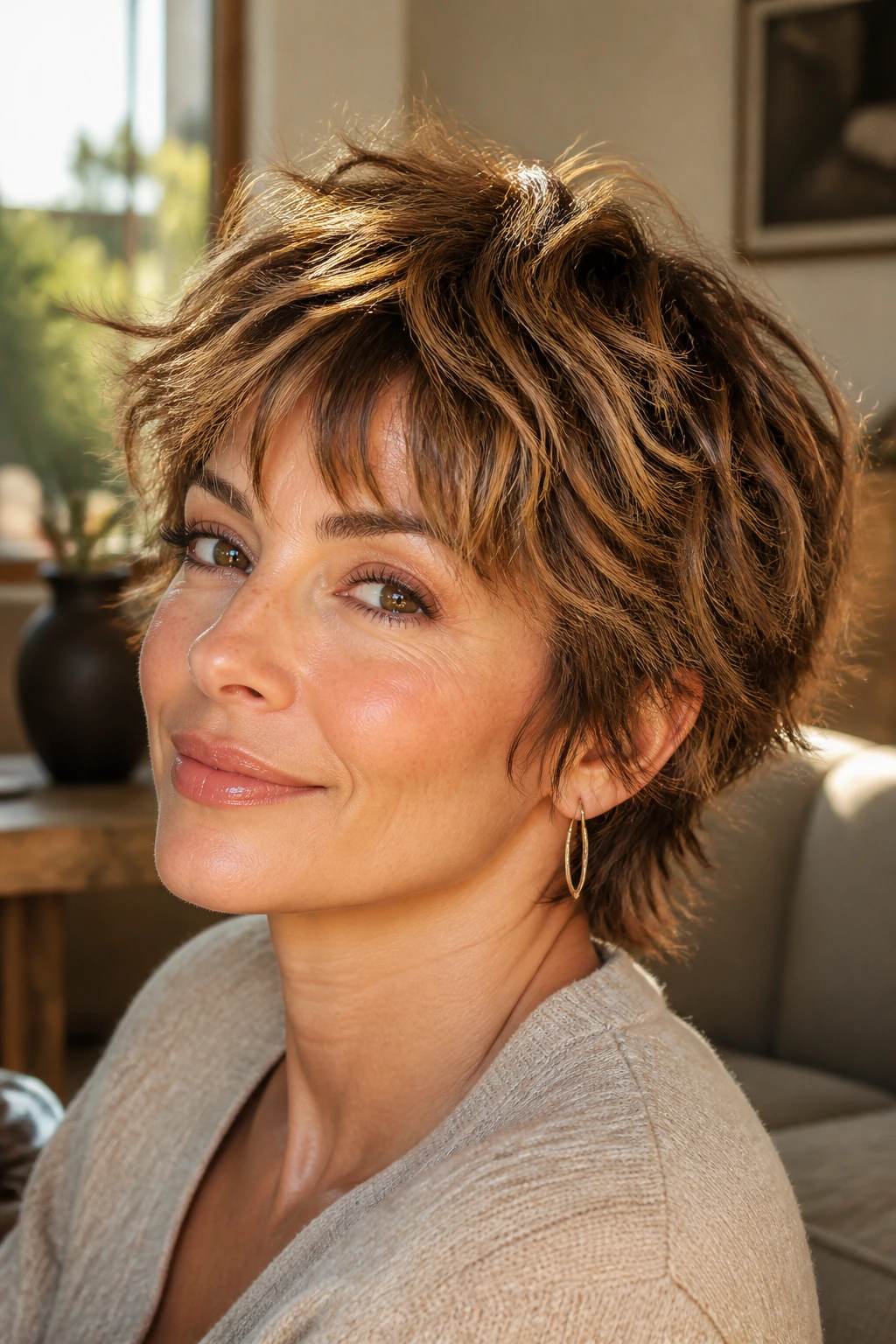
The bixie sits between a pixie and a bob, which makes it an interesting place to land if you want short hair with texture. Add shaggy layers and caramel spark through the top and sides, and the shape gets a little messy in a flattering way. It’s cropped, but not harsh.
Why It Works:
Short waves can go flat if they’re cut too cleanly. The bixie shag gives them room to move on top while keeping the neck and sides tidy. A few caramel pieces near the crown and fringe add lift, because short hair shows color contrast fast.
Best For:
- Anyone ready to go shorter but not all the way to a pixie
- Hair that bends easily
- Faces that can carry a bit of width through the cheek area
Styling Advice:
A tiny dab of paste or cream on the fingertips is enough. If you can see the product, you’ve used too much.
19. Modern Wolf Cut
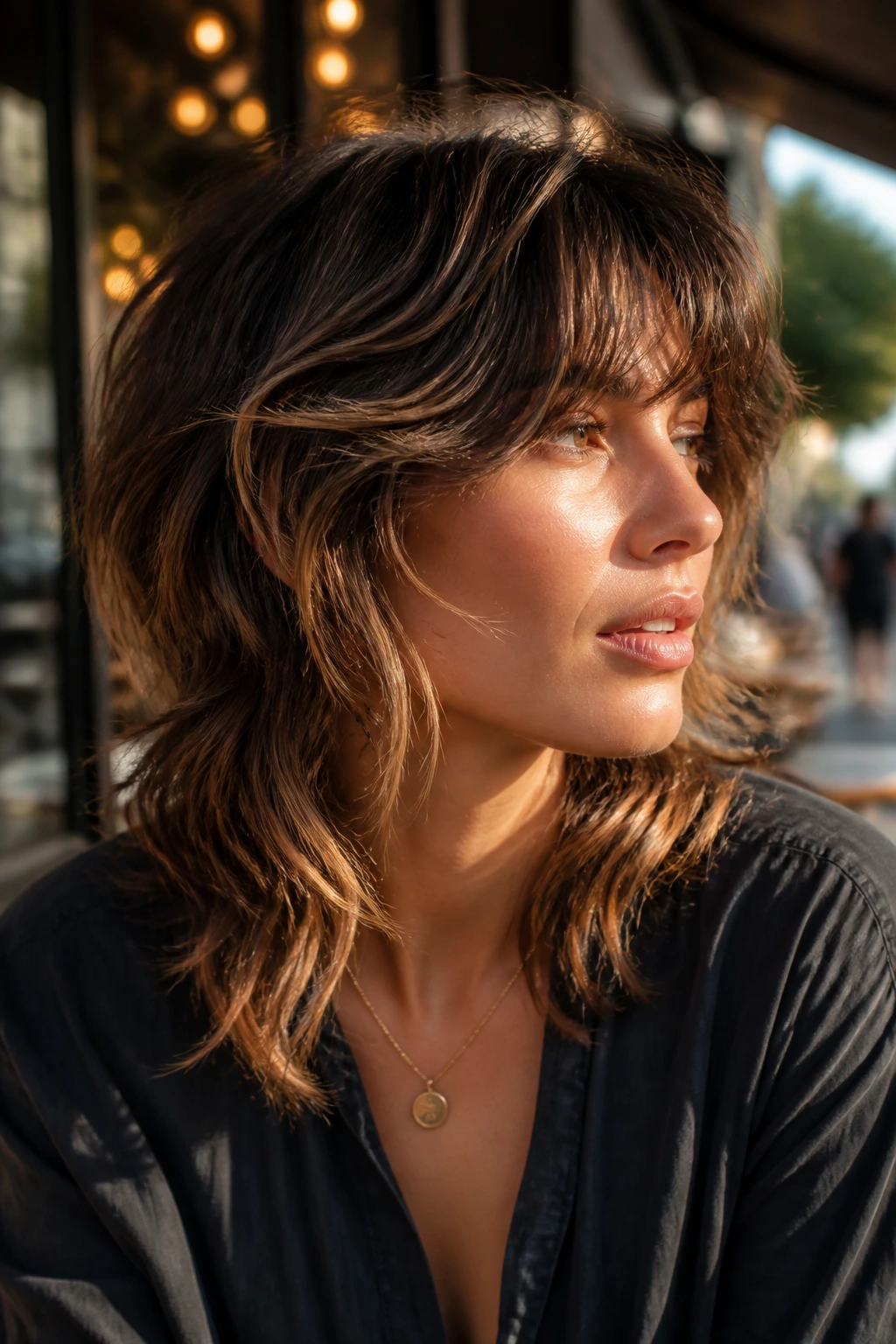
The wolf cut is the shag’s louder cousin. It keeps the crown more built up, the lengths more tapered, and the overall silhouette a touch rebellious. On wavy hair, caramel highlights can make the top layers and the scruffy ends read as a style choice instead of a growth phase.
Why It Works:
The modern wolf cut thrives on contrast. Shorter layers up top create lift, while longer pieces through the back keep it wearable. Caramel balayage or chunkier ribboning both work, but I’d lean slightly softer if you want this cut to age well between salon visits.
What Makes It Different:
It looks best with a bit of collapse and a bit of mess. That sounds odd. It’s true. If every strand sits too neatly, you lose the whole point.
Styling Note:
Rake in a texturizing spray after the hair is 80 percent dry. Not before. Before usually turns into a sticky knot.
20. Air-Dry Shag
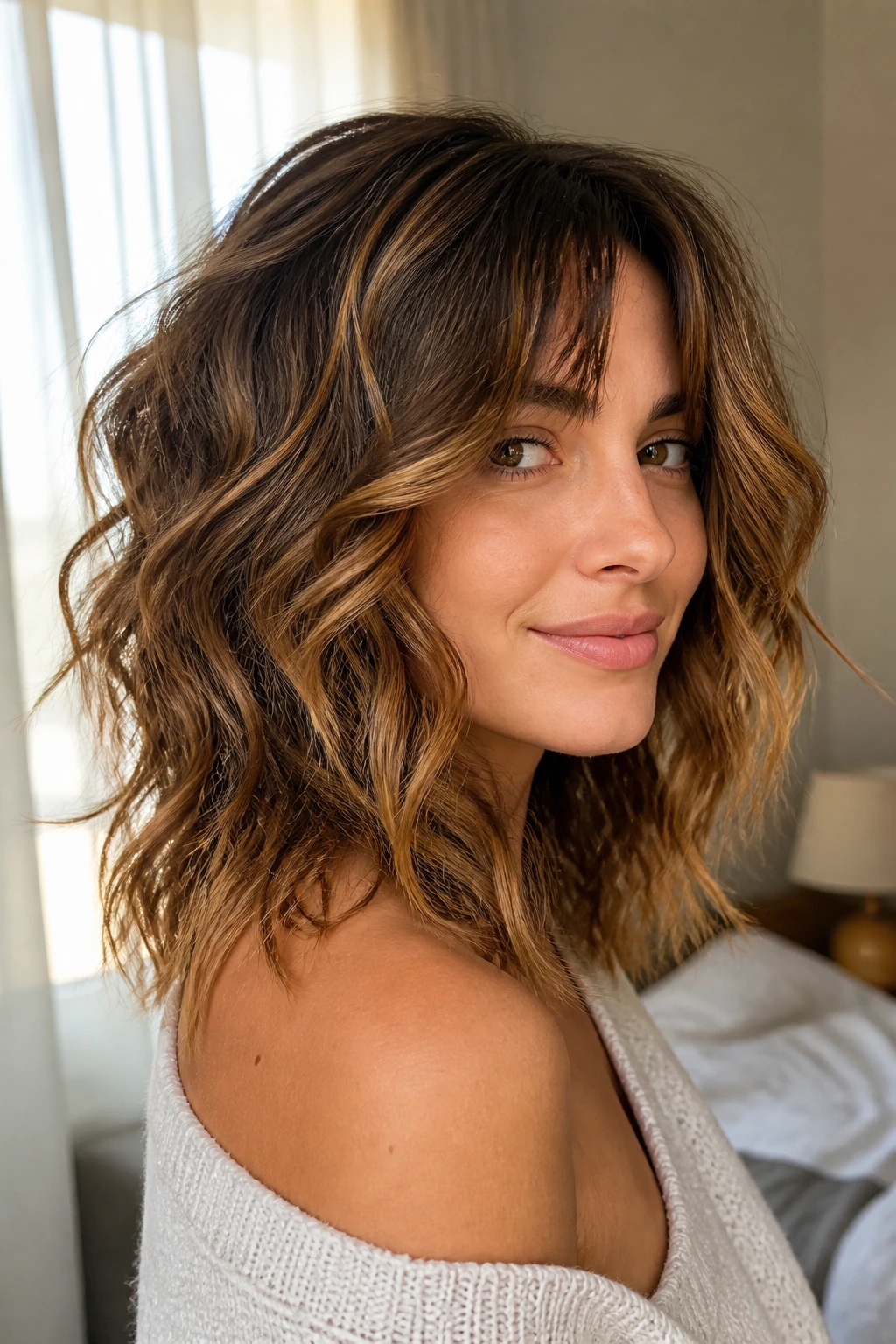
Not every shag needs a brush, a wand, or a heroic 20-minute styling session. The air-dry shag is built for people who want the cut to do the hard part. Internal layers create shape while caramel highlights brighten the bends as they dry naturally.
Why It Works:
Wavy hair often looks best when it’s left alone after a little product is worked through. A good air-dry shag uses layers that sit where your natural pattern already wants to curve. The caramel adds movement, so even a slightly imperfect dry down looks on purpose.
Practical Detail:
Scrunch with a light leave-in and a small amount of mousse, then do not touch it until it’s dry. Constant fiddling is how you end up with fuzzy frizz instead of separation.
Best Match:
This is the cut for people who hate hot tools but still want a shape with some personality.
21. Glam Polished Shag
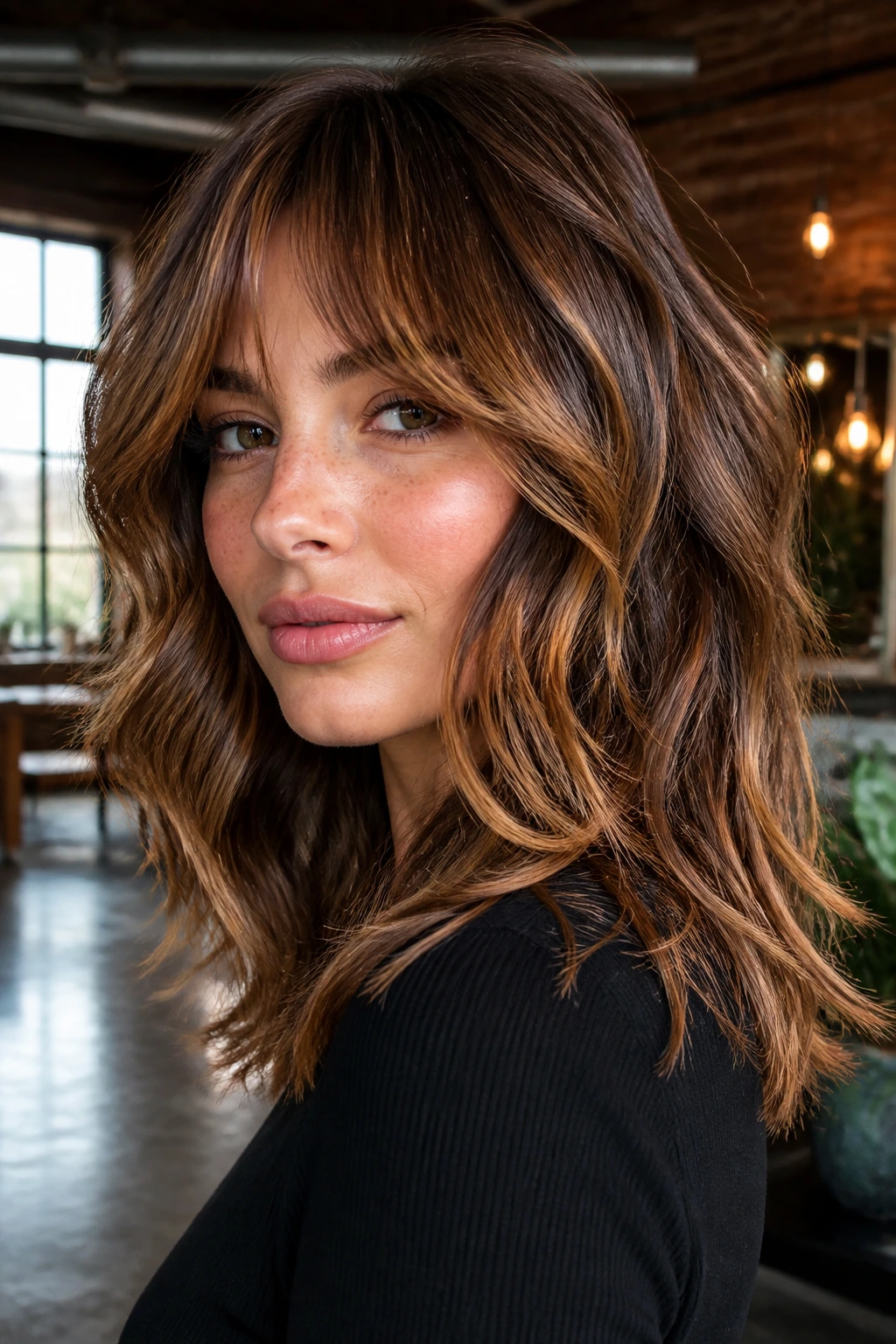
A shag can be polished. It doesn’t have to look like you slept on a train. This version keeps the layers soft but controlled, with smoother waves and caramel highlights placed to make the hair gleam rather than mess around. It’s a good choice when you want texture without chaos.
Why It Works:
The polished shag keeps enough layering to avoid the heaviness of a one-length style, but the finish is neater. That means a round brush, a smoothing cream, and a little bit of time. Caramel pieces that start lower and stay blended through the midlengths make the style feel rich instead of streaky.
A Nice Tradeoff:
You lose some wildness, sure. You gain a cut that works with a blazer as easily as it does with a T-shirt.
Styling Cue:
Use a flat iron only on the front pieces if needed. The whole head doesn’t need to be straight to look refined.
22. Grown-Out Bang Shag
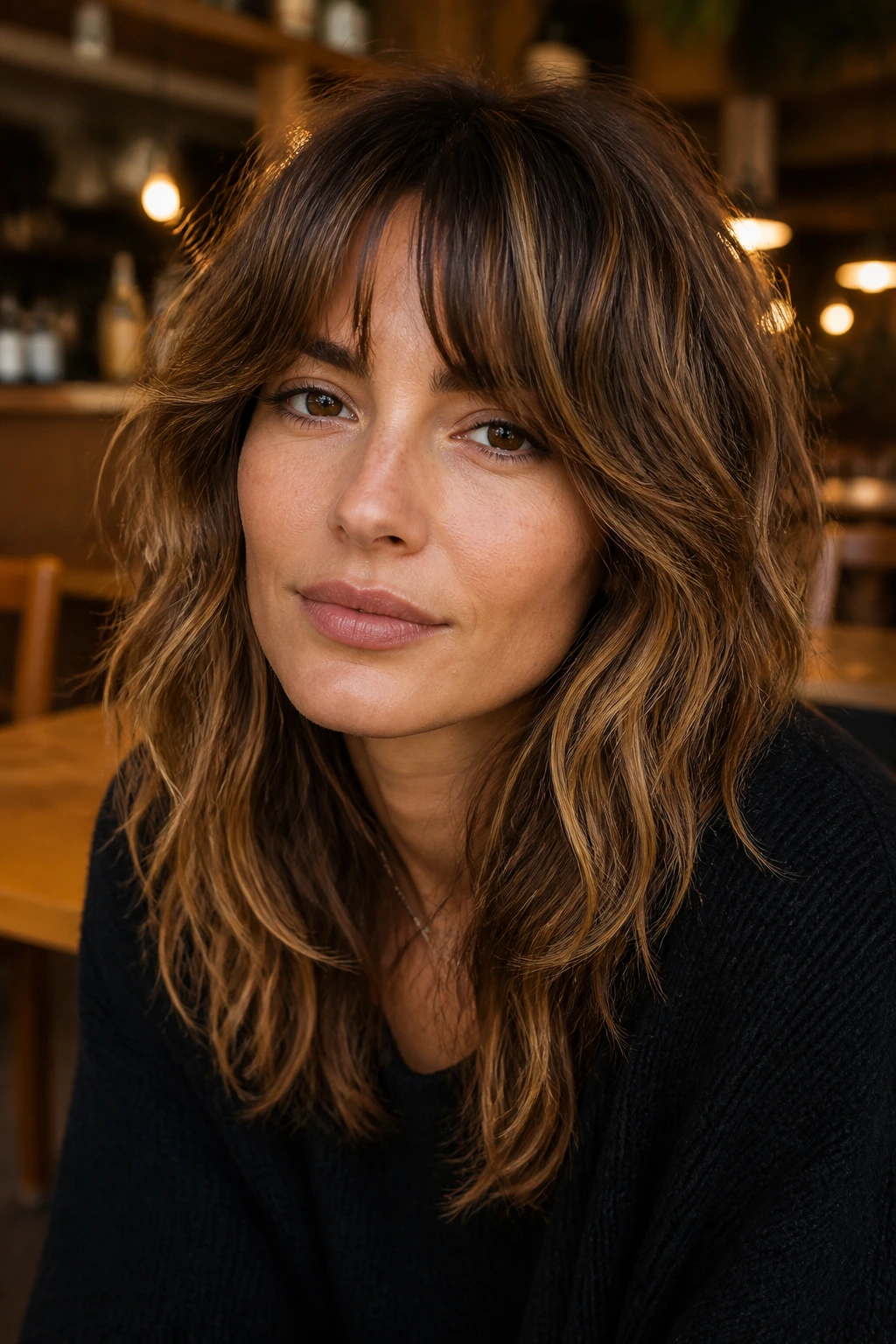
This might be the easiest shag to keep loving after the first few weeks. Grown-out bangs blend into the layers, which means the haircut keeps its shape even when the fringe loses its original edge. Caramel highlights around the front and crown keep the whole thing from sinking into one flat brown curtain.
Why It Works:
Hair grows. Bangs especially grow. A haircut that expects that will save you a lot of annoyance. The grown-out bang shag avoids that awkward “I need a trim yesterday” look because the fringe becomes part of the layer system instead of a separate feature.
Who It Suits:
Anyone who likes the idea of bangs but not the maintenance bill. Also good for people who want flexibility to pin pieces back when they’re over it.
Final Styling Tip:
Twist the front pieces away from the face with your fingers while they’re damp. That tiny bit of direction helps the bangs blend as they grow.
Why Shag Haircuts and Caramel Highlights Work So Naturally on Wavy Hair
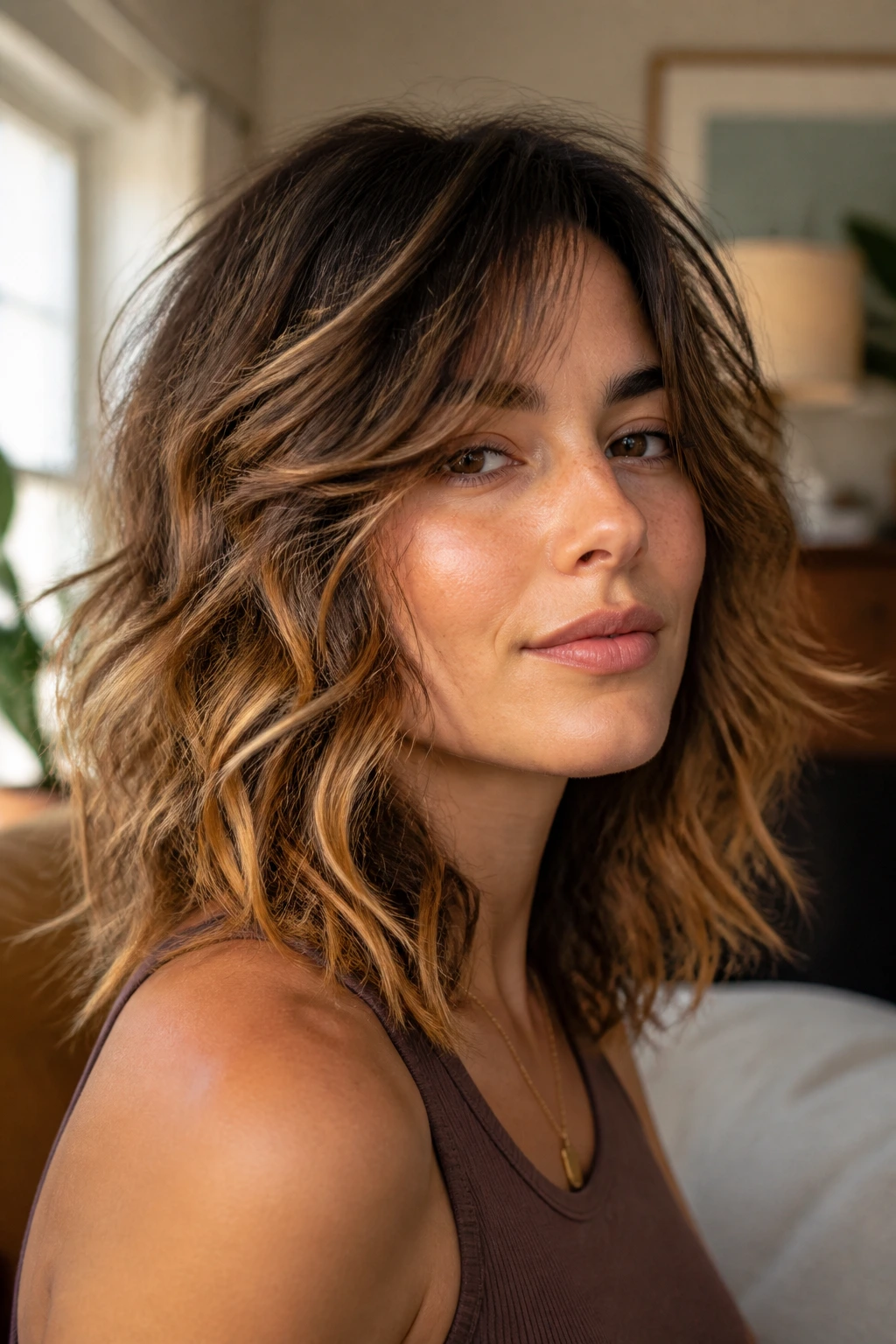
Wavy hair has a built-in problem and a built-in advantage. The problem is that it can balloon, collapse, or frizz depending on the cut. The advantage is that it already wants movement. A shag haircut works because it removes enough weight to let the wave travel through the hair instead of getting trapped at the bottom. Caramel highlights do the rest of the work by catching those bends and making the pattern easier to see.
The color choice matters more than people think. Caramel sits in that warm middle range where brunette hair doesn’t look flat and blonde doesn’t look harsh. On wavy hair, that softness is a gift. Thin ribbons around the face give lift, while deeper caramel through the mids and ends gives the cut depth. If the highlights are too pale or too chunky, the shag can start looking patched. Warm, blended placement usually reads better.
There’s also a practical upside. The shag is forgiving when your waves don’t behave exactly the same every day, and caramel highlights are forgiving when your regrowth starts showing. Neither part of the style demands perfect execution. That’s probably why it keeps surviving trend cycles and showing up on real people, not just salon mood boards.
Essential Tools for Styling These Cuts
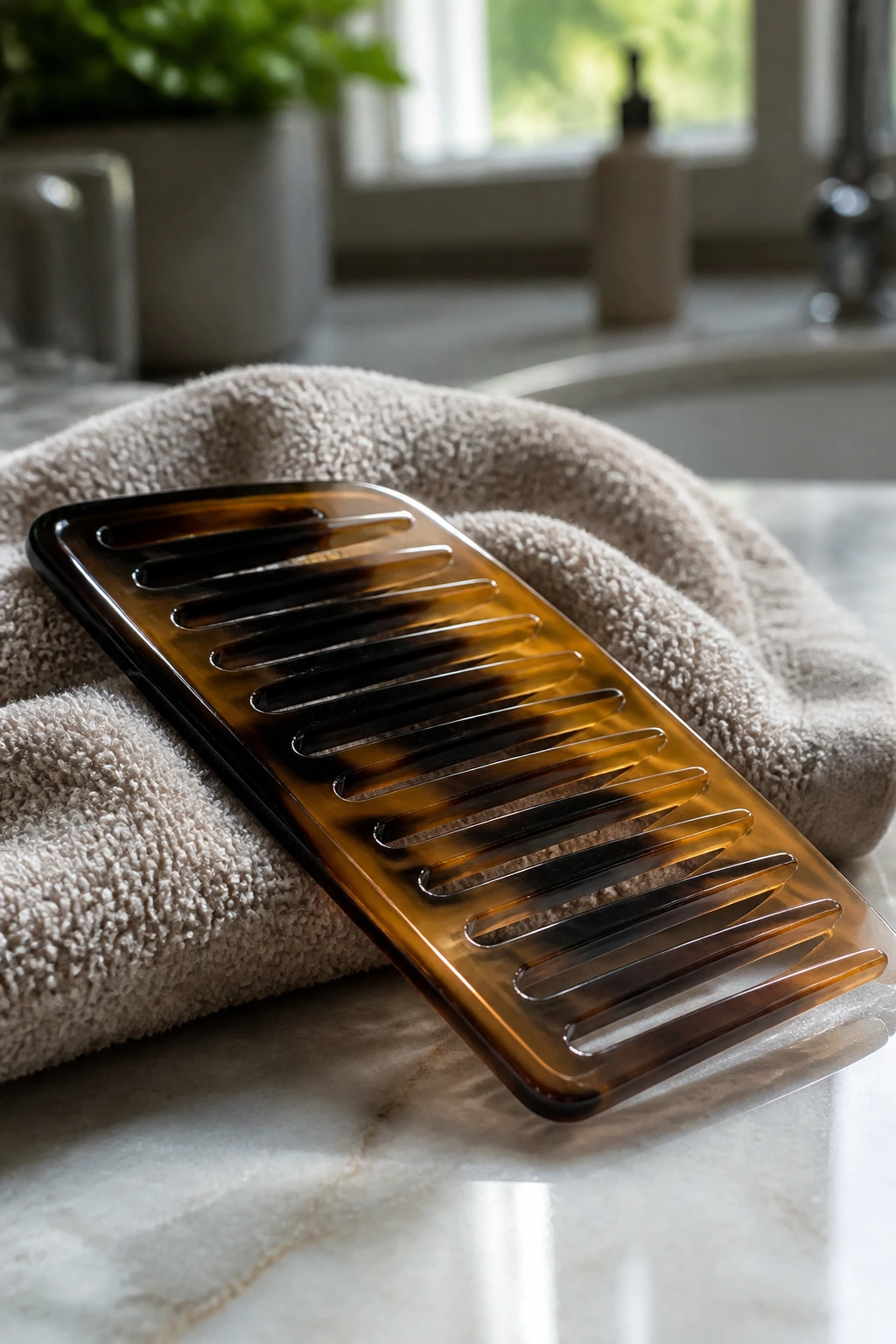
- Wide-tooth comb: Best for distributing leave-in on damp waves without pulling the pattern apart.
- Microfiber towel or soft T-shirt: Cuts down on rough frizz when you scrunch out water.
- 1-inch curling wand or iron: Handy for refreshing the front pieces and the layers that go flat first.
- Diffuser attachment: Useful if you want volume at the roots without blasting the caramel pieces into frizz.
- Light mousse or foam: Gives fine to medium waves grip without weighing them down.
- Leave-in conditioner: Helps the ends stay soft, especially if the hair is highlighted.
- Texturizing spray: Good for piecey shags, but use it sparingly; too much makes the cut sticky.
- Heat protectant: Non-negotiable if you use hot tools more than once a week.
- Small round brush: Useful for curtain bangs, bottleneck bangs, and any front pieces that need a little curve.
- Salon clips: Keep sections clean when you’re styling or air-drying with a set part.
Smart Salon Consultation and Color Placement Tips
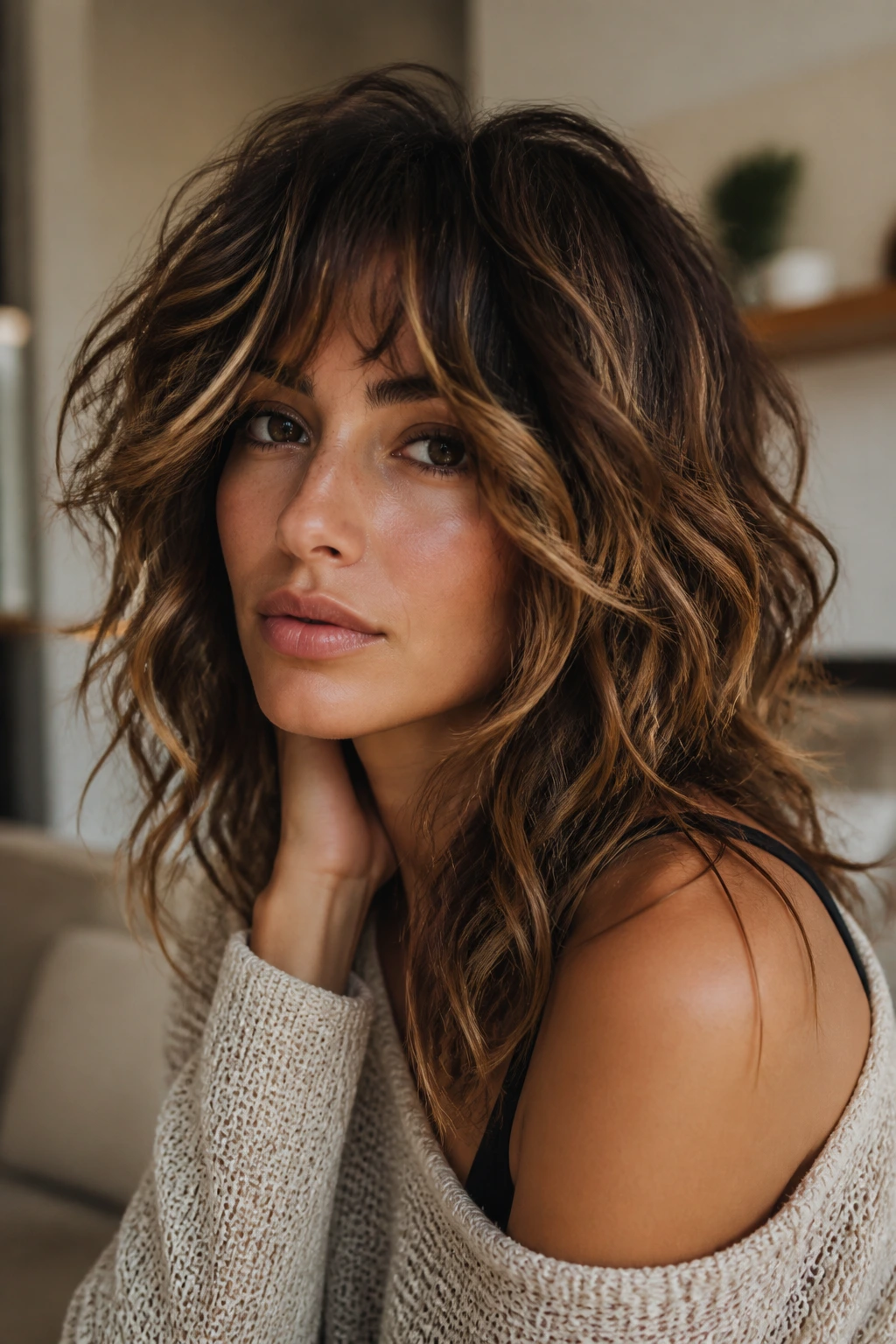
A good shag starts in the chair, not in the mirror after you’ve already panicked. Bring photos, yes, but bring the right kind. Show your stylist pictures of hair that matches your density and wave pattern, not just the end result. A shag on thick hair and a shag on fine hair can be the same idea and still behave like two different cuts.
Ask where the shortest layers will sit. That matters more than a vague request for “more texture.” On wavy hair, layers that start too high can create a halo. Layers that start too low can leave the cut heavy and flat. For most people, the most useful layers hit somewhere between the cheekbones and collarbone, but face shape and density change that answer.
Caramel highlights deserve the same kind of thinking. Face-framing pieces brighten the front and make a shag look more intentional. Softer balayage through the mids and ends brings movement without shouting. If your base color is dark brown, ask for caramel that stays warm but not orange. If your hair tends to pull red, ask for beige-caramel or a more neutral honey-caramel mix. Tiny wording change. Big difference.
And talk about maintenance before the scissors come out. A shag that needs a trim every six weeks is a different animal from one that can soften out to ten or twelve weeks. Same for the color. The highlights should fit the life you actually live, not the life your camera roll pretends you have.
How to Wear These Cuts Day to Day
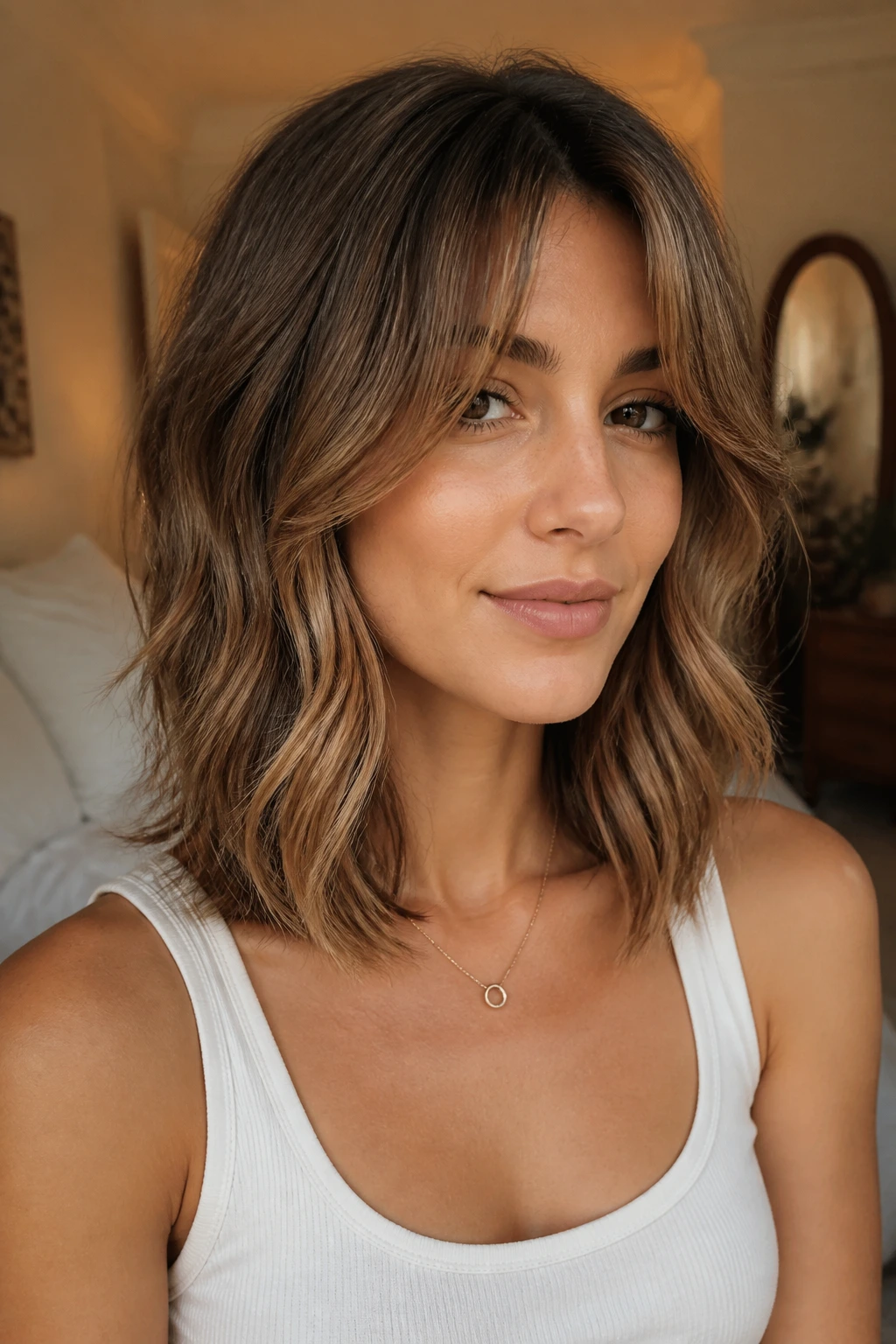
Silhouette: Keep the overall shape in mind before you chase curl definition. A shag looks best when the crown has a bit of lift and the ends still move, not when every wave is locked into one pattern.
Texture: Air-drying gives you the softest result, but a diffuser or quick wand refresh on the front can sharpen the style in five minutes. The goal is separation, not crunch.
Accessories: Clips, slim headbands, and tucked-behind-the-ear styling work especially well with these cuts because they show the layered front. A big opaque barrette can hide the caramel pieces you paid for, so choose accessories that leave some hair visible.
Best Match: If you like easy mornings, choose a longer shag with softer bangs. If you don’t mind a bit of styling, the shorter, piecey cuts bring more shape. If your hair is highlight-heavy, wear it loose more often; the color movement is part of the point.
Additional Tips and Style Boosters
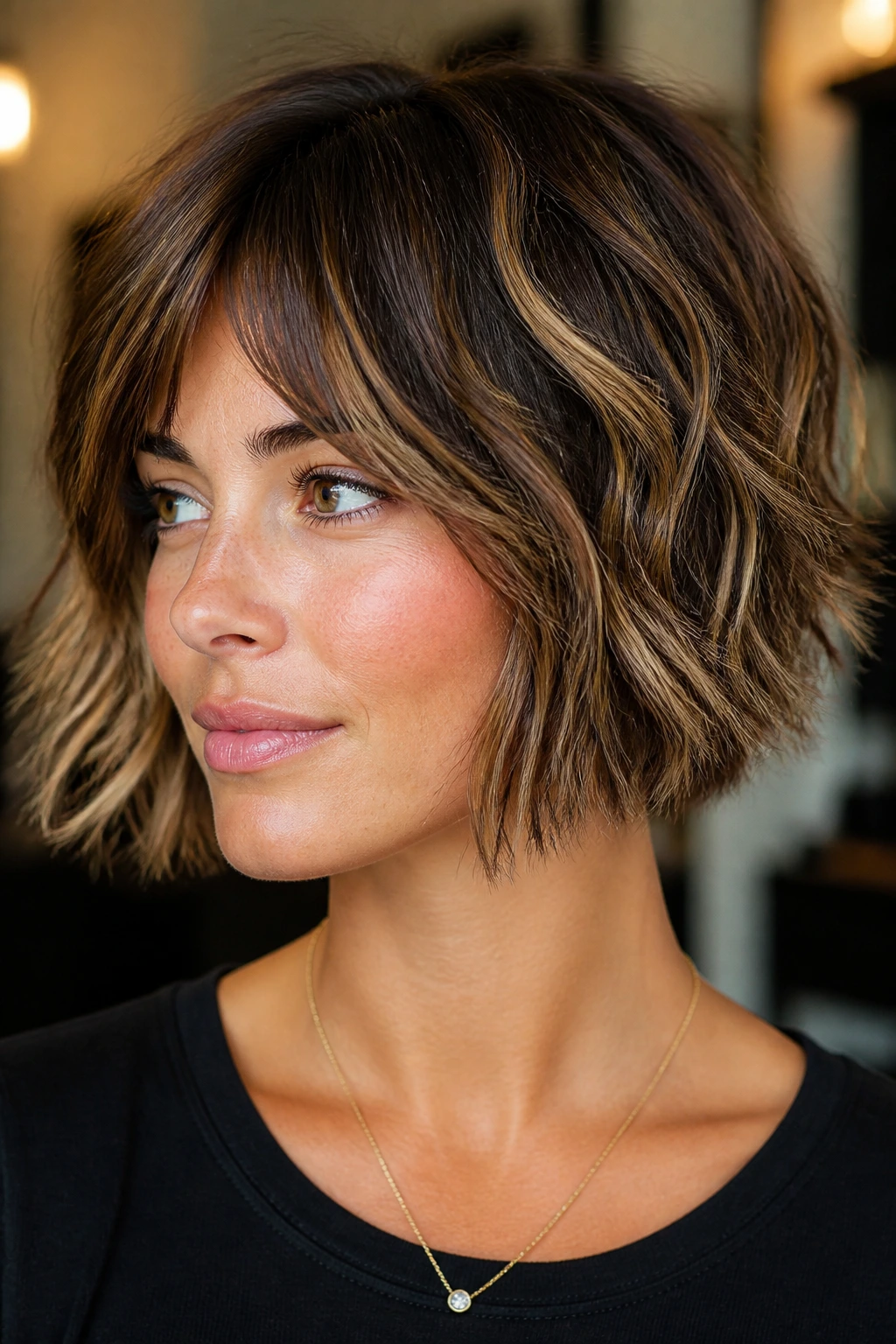
Glow Boost: A clear or warm gloss every few weeks keeps caramel from looking dusty. It’s a small move, but it makes the warm tones look richer under indoor light.
Texture Boost: If your waves get limp, mist a little root-lifting spray at the crown before drying. Focus on the first two inches of growth, not the ends. The ends already have enough going on.
Customization: Want the cut softer? Keep the face-framing pieces longer. Want more attitude? Shorten the crown a touch and let the front fall around the jaw. Same shag idea, different mood.
Make-It-Yours: Fine hair does better with fewer, cleaner layers and lighter product. Thick hair can take more internal shaping and a stronger highlight contrast. If your hair tends to frizz, ask for softer blending through the ends rather than aggressive razor work.
Serving Suggestions: Yes, that sounds like a recipe heading, and no, I’m not sorry. For hair, the equivalent is the finish: a middle part for symmetry, a slight side part for volume, and a tucked front section when you want the caramel streaks to show off a little.
Wash-Day, Trims, and Color Care That Keep the Shape Alive
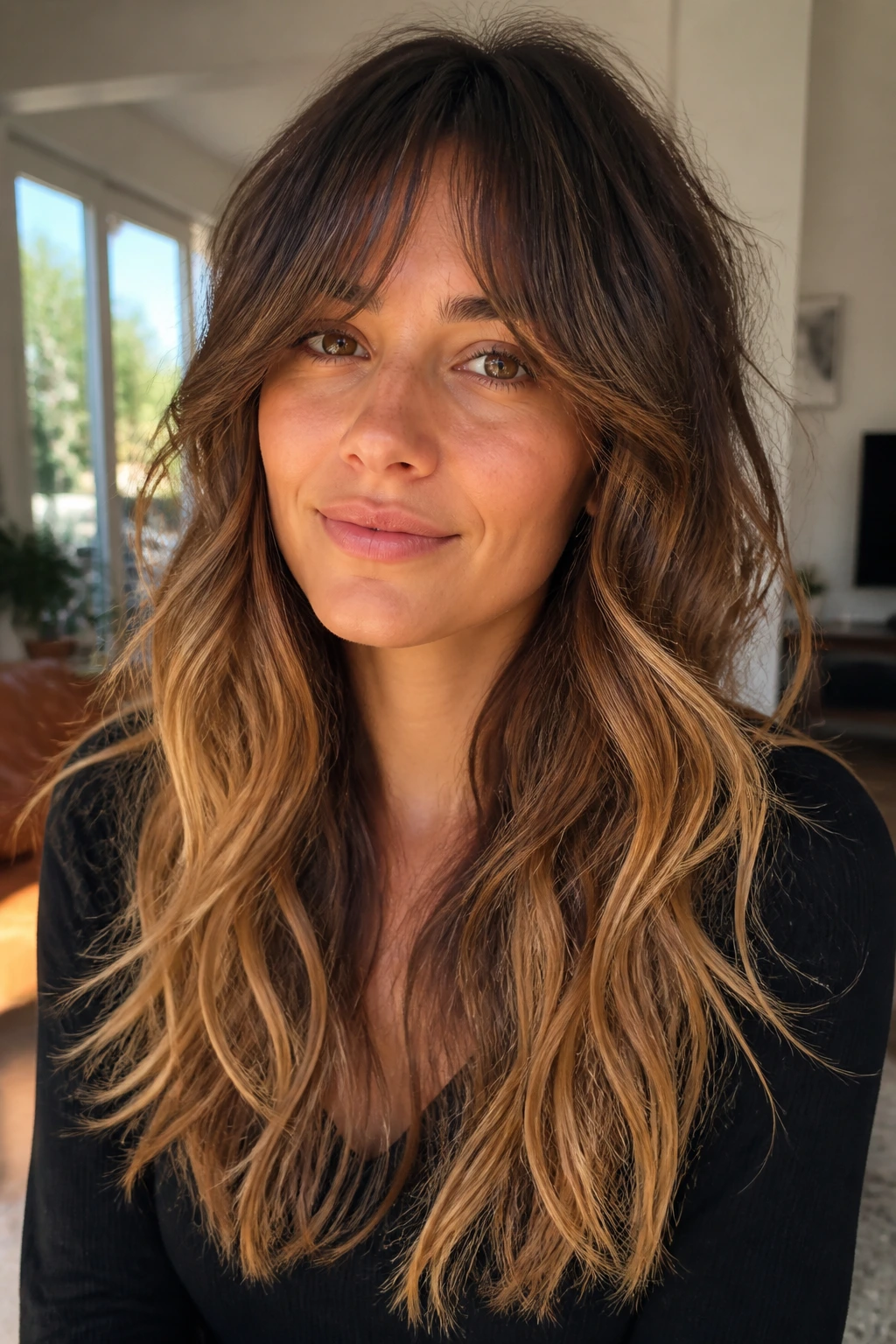
Wavy shags age best when you stop treating them like a daily emergency. Most people do too much. They wash too often, blow-dry too hot, and then wonder why the ends look fuzzy and the caramel starts to dull. Give the haircut some breathing room.
Wash frequency usually sits around two to three times a week for wavy hair, though scalp oil and workout habits can push that one way or the other. Use a color-safe shampoo and conditioner, because caramel highlights lose their warmth fast if the hair is stripped every other day. If your hair runs dry, focus conditioner from midlength to ends and keep the roots lighter so the crown doesn’t collapse.
Trims matter more than people admit. A shag with bangs often needs shape every 6 to 8 weeks if you want the fringe to stay useful. Without bangs, you can usually stretch to 8 to 12 weeks, depending on how much layering you have. That’s especially true if the haircut relies on the layers rather than on one dramatic line.
For color, watch the warm tones. Caramel can turn too orange, too flat, or too yellow if it’s left to fade without care. A gloss, toner, or salon glaze keeps the shade smoother. At home, a purple or blue-violet shampoo can help if the brassiness shifts too hard, but use it carefully. Once every one to two weeks is usually enough for most brunettes with highlights. More than that and the hair can look dull instead of fresh.
Night care helps too. A loose scrunchie, a satin pillowcase, or a gentle pineapple on longer cuts can keep the wave pattern from getting smashed flat. It’s boring advice, yes. It also saves you ten minutes every morning, which is worth something.
Variations and Adaptations to Try
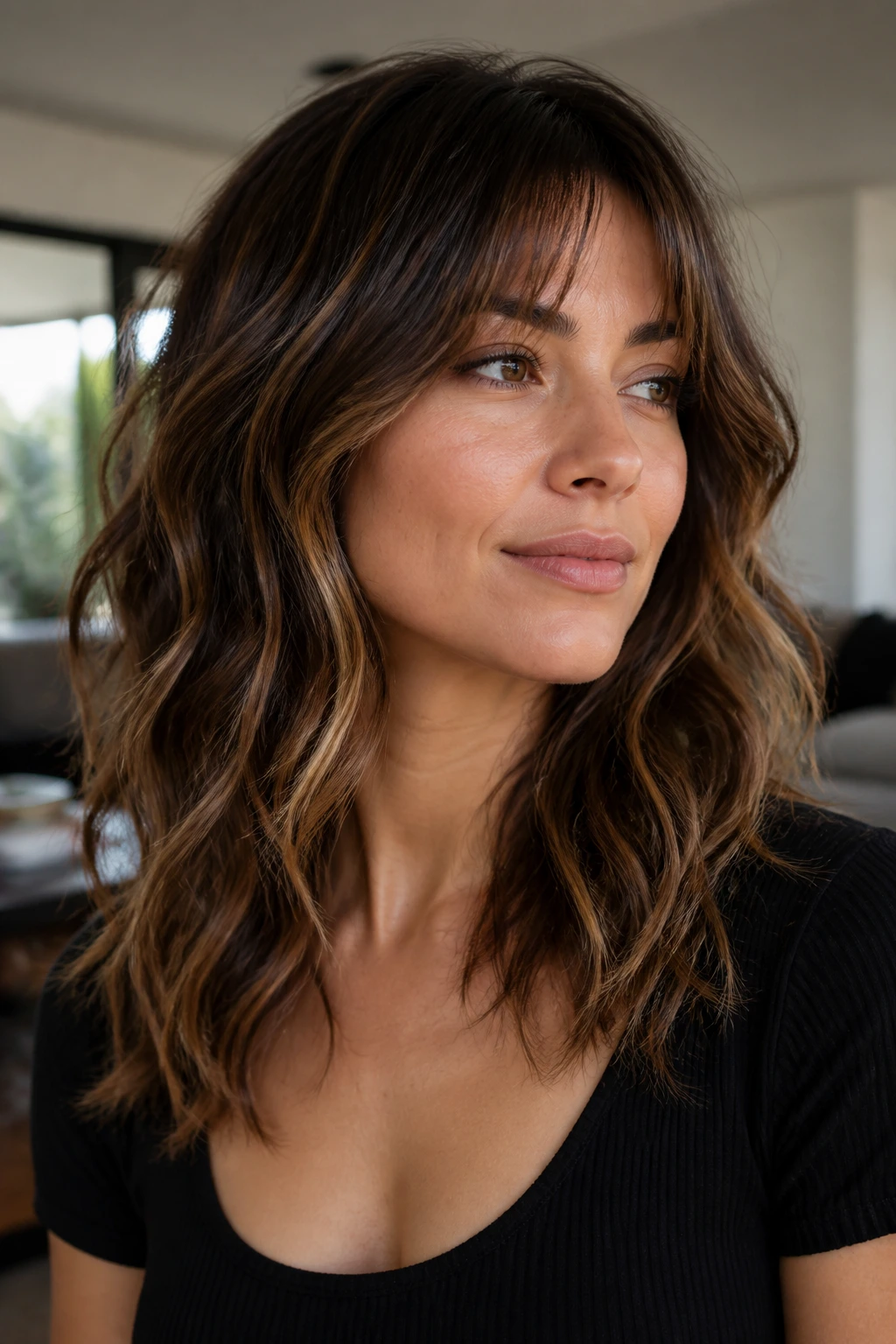
Soft Brunette Shag: Keep the caramel very subtle, almost like a sunlit glaze rather than visible ribbons. This version suits people who want texture first and color second.
High-Contrast Money Piece Shag: Brighten only the front panels and keep the rest of the caramel much deeper. The haircut reads sharper and more face-focused, which works nicely if you wear your hair parted in the middle.
Short Crop Shag: Take the length up above the shoulders and keep the fringe soft. This adaptation works best for people who like volume on top and a quick styling routine.
Thick-Hair Control Shag: Use longer outer layers, deeper internal texturizing, and medium caramel panels through the mids. The goal is to take away bulk without making the ends look thin.
Fine-Hair Feather Shag: Keep the layers minimal and the highlights delicate. A few caramel ribbons around the face and crown create movement without stealing density from the cut.
Warm-to-Cool Caramel Blend: If pure caramel feels too golden, ask for a mix of caramel and beige or mushroom-brown lowlights. The result is calmer and a little more grown-up, especially on darker bases.
Common Mistakes to Avoid
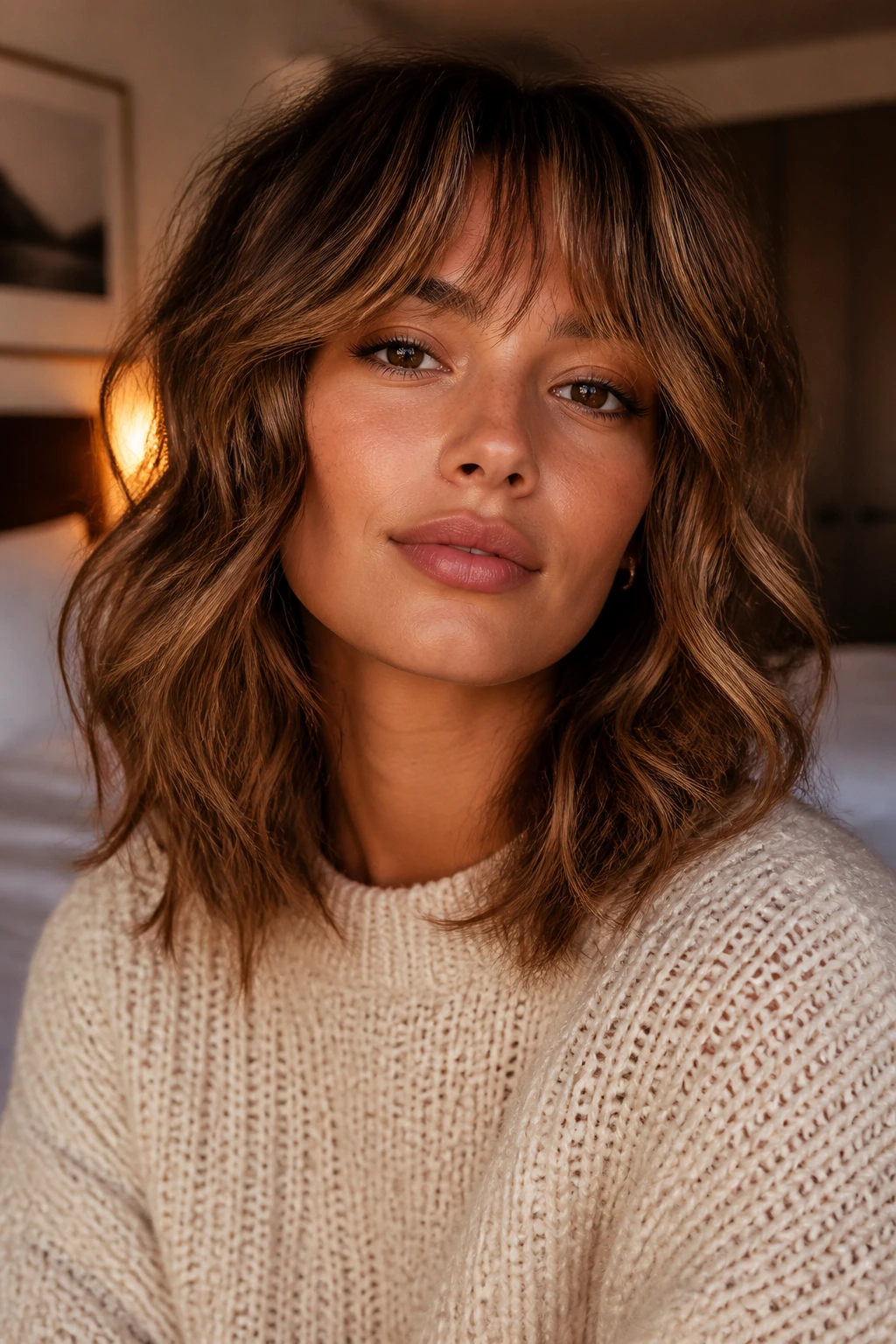
- Over-layering fine waves: The hair looks fluffy at the crown and see-through at the ends. Ask for fewer, cleaner layers if your strands are light.
- Putting highlights too high on the crown: The cut starts looking striped instead of dimensional. Keep most of the caramel around the face and mids unless you want a louder result.
- Cutting bangs too short when wet: Wavy hair springs up, and you end up with fringe that sits an inch higher than you planned. Dry-check the length before committing.
- Using heavy cream everywhere: The roots go limp and the waves separate in the wrong places. Put rich products only on the ends.
- Skipping trims for too long: Shags lose their shape quietly. One day they look lived-in; a few weeks later they just look grown out.
- Choosing the wrong shade of caramel: Too orange and the color fights the brunette base. Too pale and it can look dusty. A warm beige-caramel usually behaves best.
Frequently Asked Questions
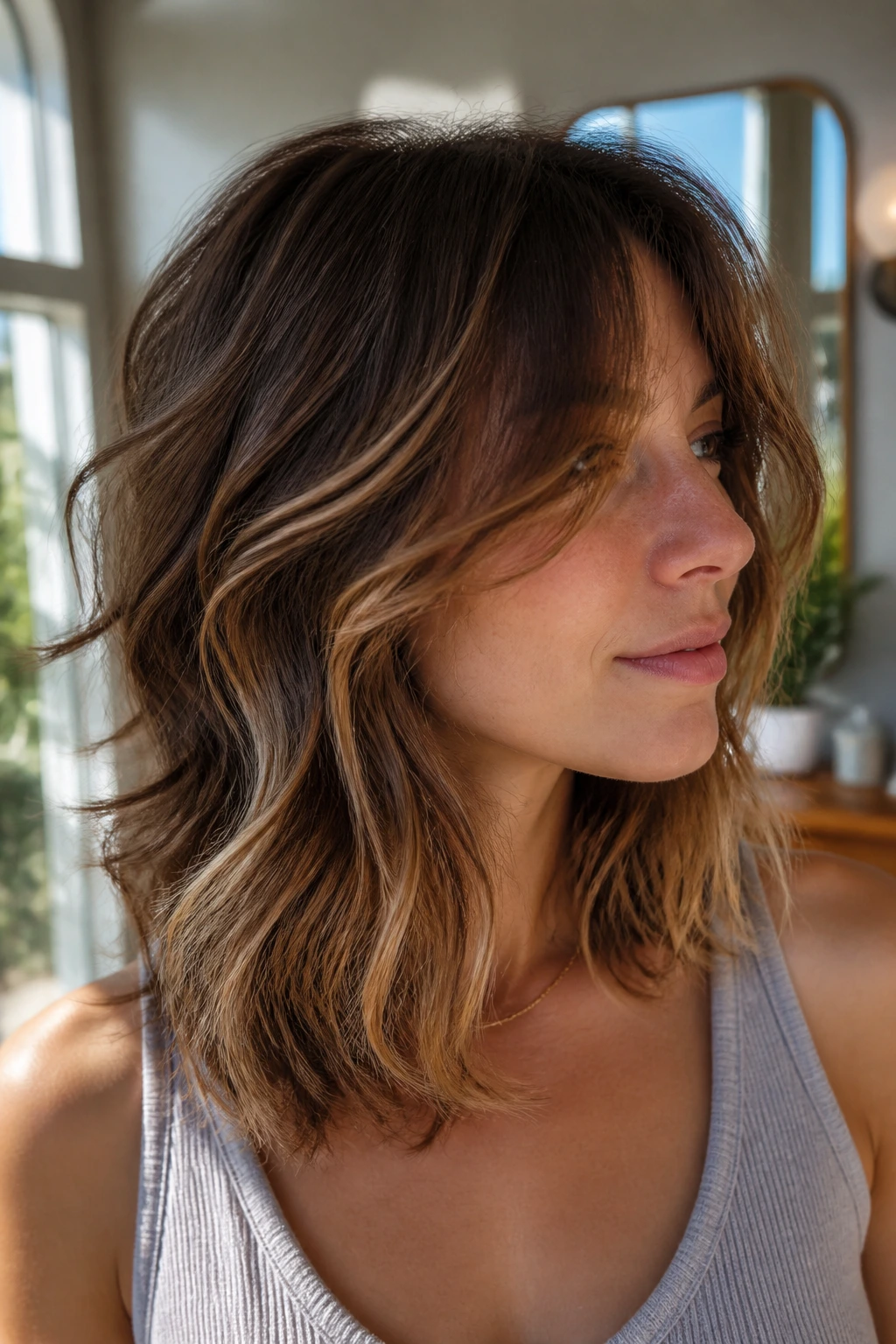
Will a shag haircut work if my waves are uneven?
Yes, and uneven waves are often where shags look most natural. The layers can hide inconsistency and turn it into texture, as long as the cut isn’t taken too short in the wrong spots.
Do caramel highlights damage wavy hair more than one-length color?
The lightening process can dry out the hair, but that’s true for most highlights. Keep the service gentle, ask for bond-building if your stylist uses it, and use a richer conditioner on the ends after every wash.
How do I ask for caramel highlights without ending up too blonde?
Use shade language. Say caramel, warm brunette, beige-caramel, or honey-caramel, and mention that you want dimension rather than a blonde look. Point to photos where the highlights stay soft and blended.
Can I air-dry a shag and still make it look finished?
Yes. Start with a light leave-in and a foam or mousse, scrunch once, and leave it alone. If you want a bit more polish, curl just the front pieces and let the rest stay natural.
Is this cut good for thick hair?
Very, if the layers are placed correctly. Thick wavy hair can hold the shape well, but it needs enough internal weight removal to avoid the triangle effect.
What if my bangs separate in weird directions?
That usually means the front was cut too short or dried without direction. Blow-dry the fringe first, using your fingers or a small brush, before the rest of the head gets styled. That one habit fixes a lot.
How often should I get it trimmed?
If the haircut has bangs, plan on 6 to 8 weeks. Without bangs, 8 to 12 weeks usually keeps the shape under control. The more sculpted the fringe, the sooner it needs attention.
Can I wear this with a side part instead of the middle part?
Absolutely. A side part can give a shag extra lift and make the caramel highlights catch light differently. If your waves lean flatter on one side, a deep part can help with volume fast.
Soft Layers, Warm Ribbons
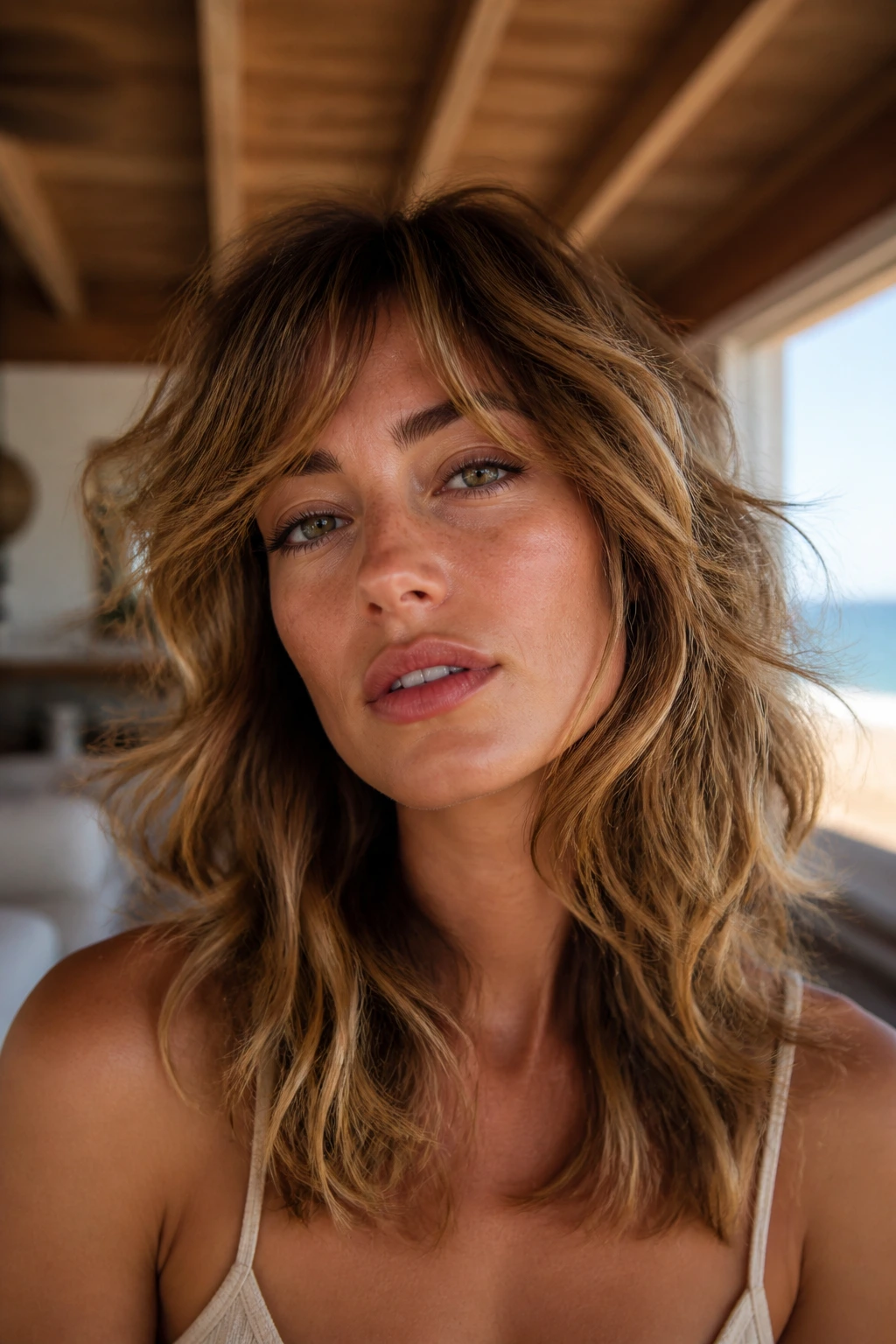
The best thing about a shag on wavy hair is that it doesn’t ask the waves to apologize for being wavy. It gives them shape, then steps back. Caramel highlights do the same thing in color form: they brighten the movement instead of covering it up.
That’s why this pairing keeps working across so many lengths, fringes, and textures. A collarbone shag feels softer. A wolf cut feels sharper. A bixie feels more playful. The details change, but the logic stays the same. Let the cut move. Let the color show the movement.
And if you’re taking one thing from all of this, take this: the best version is the one that fits your wave pattern, your density, and the amount of time you want to spend with a blow-dryer in your hand. Pick the shape that behaves on your head, not the one that behaves on someone else’s.