



Blonde hair and oval faces are a useful combination to have, but they’re also a little deceptive. The shape gives you room to play, and the color catches light in a way that makes every bend, layer, and part show up in a mirror. That means a lazy cut looks lazy fast. A good one looks like you meant it.
The best hairstyles for blonde hair and oval faces do two things at once: they keep the face open and balanced, and they give the hair enough movement that the color doesn’t sit there flat and polite. A blunt edge can make fine blonde hair look fuller. A loose wave can keep a long face from feeling stretched. A fringe can soften the forehead without hiding all the good bone structure underneath. None of that is complicated. It does need intention.
There’s a small trap here, though. Because oval faces can wear so many shapes, people sometimes pick whatever is easiest and call it done. That’s how you end up with limp mid-length hair, a part that drags everything down, and color that only looks bright when the sun is hitting it from the right angle. Better to choose a cut or style that adds shape where you actually want it. The good news: there are plenty of them.
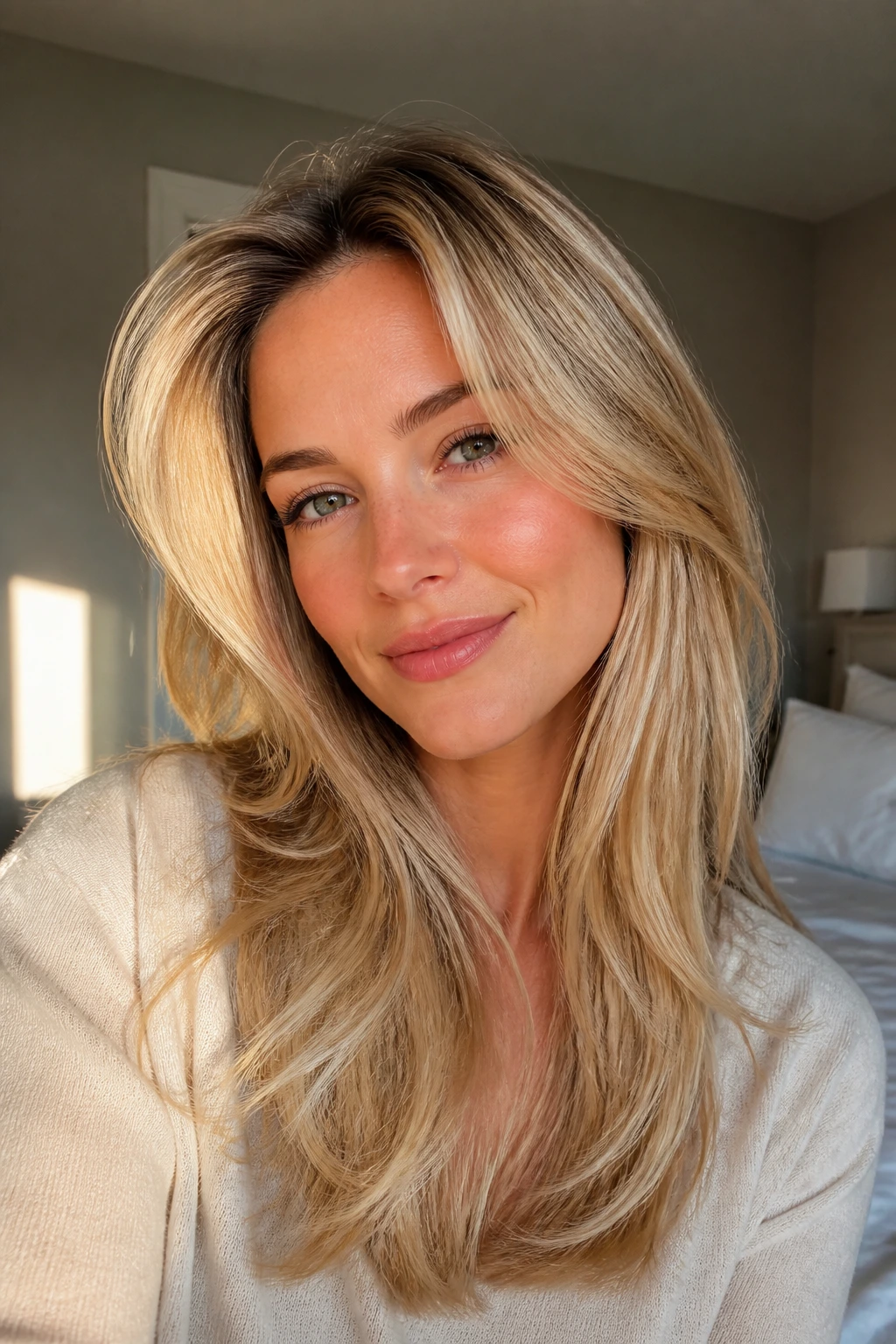
Why These Styles Fit Blonde Hair and Oval Faces So Well
-
Oval-face balance: The face already has a balanced outline, so these styles keep the proportions open instead of boxing them in with heavy width at the cheeks.
-
Blonde dimension: Lighter hair shows layers, bends, and highlights more clearly, which makes styles with movement look richer instead of flat.
-
Parting flexibility: Middle parts, side parts, and off-center parts all work here, but each one changes the mood fast — and that gives you room to adjust for the day.
-
Length variety: Chin-length bobs, shoulder-grazing lobs, long layers, and cropped pixies can all work, as long as the shape supports the face rather than swallowing it.
-
Texture matters more than length: A one-length cut on blonde hair can look sleek and clean, but a little bend or lift usually keeps the color from reading as one blank sheet.
-
Easy to personalize: Highlights, lowlights, bangs, and face-framing pieces can shift the same haircut from casual to polished without a full overhaul.
1. Long Center-Parted Waves That Keep the Face Open
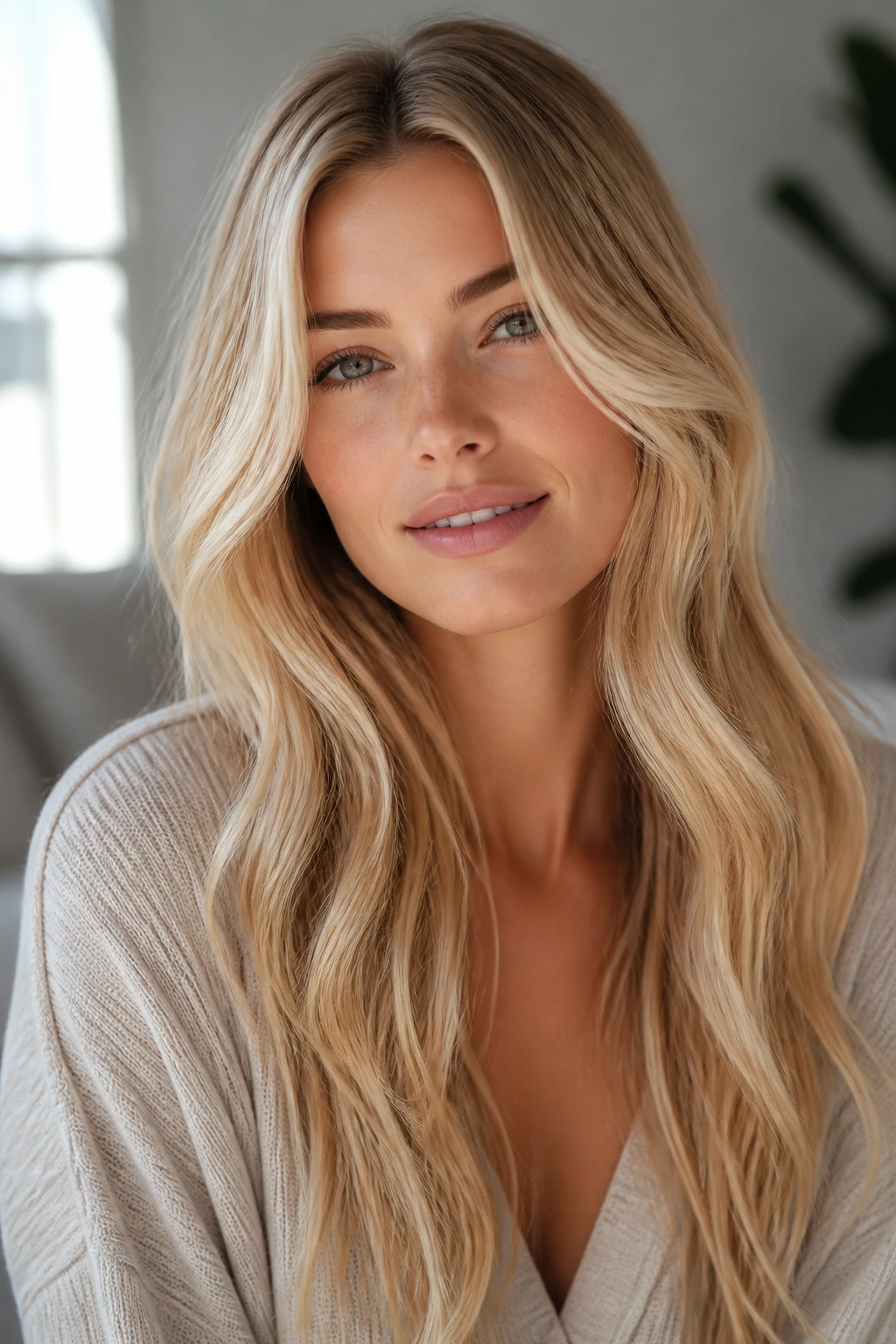
This is the one people call “simple” when they mean “well judged.” Long waves with a center part let an oval face stay visible while the bends keep the length from feeling too straight or too severe. On blonde hair, especially with ribbon highlights, those curves show off every lighter and darker strand as the hair moves.
The trick is keeping the waves loose enough to look soft, not spiral-heavy. I like them starting around the cheekbone and dropping into longer bends through the ends. If the wave begins too high, the style can crowd the face. If it starts too low, the hair can fall flat through the crown and lose all its shape.
How to wear it
Use a 1¼-inch curling wand, wrap large sections away from the face, and leave the last inch out. Then brush the waves out with a wide paddle brush so they settle into a single fluid shape instead of separate curls.
2. Collarbone Lob with Curtain Bangs
A collarbone lob is one of those cuts that looks expensive without trying to be dramatic, and curtain bangs make it even better. The lob stops at a length that keeps oval faces from looking stretched, while the bangs split around the cheekbones and soften the forehead in a way that feels open, not heavy. On blonde hair, the fringe also gives you a clean place to show off lighter pieces near the face.
Why it works
The lob gives structure. The curtain bangs give movement. Put them together and you get a cut that can air-dry into something relaxed or blow out into something much more polished. If your blonde is fine, ask for soft internal layers so the ends don’t look see-through. If it’s thick, keep the base line blunt enough to hold its shape.
A good curtain bang should not flop into your eyes like a curtain rod dropped on the floor. It should separate around the brow and cheekbone, with the shortest point usually near the bridge of the nose or just below it.
3. Jaw-Length Blunt Bob with a Soft Bend
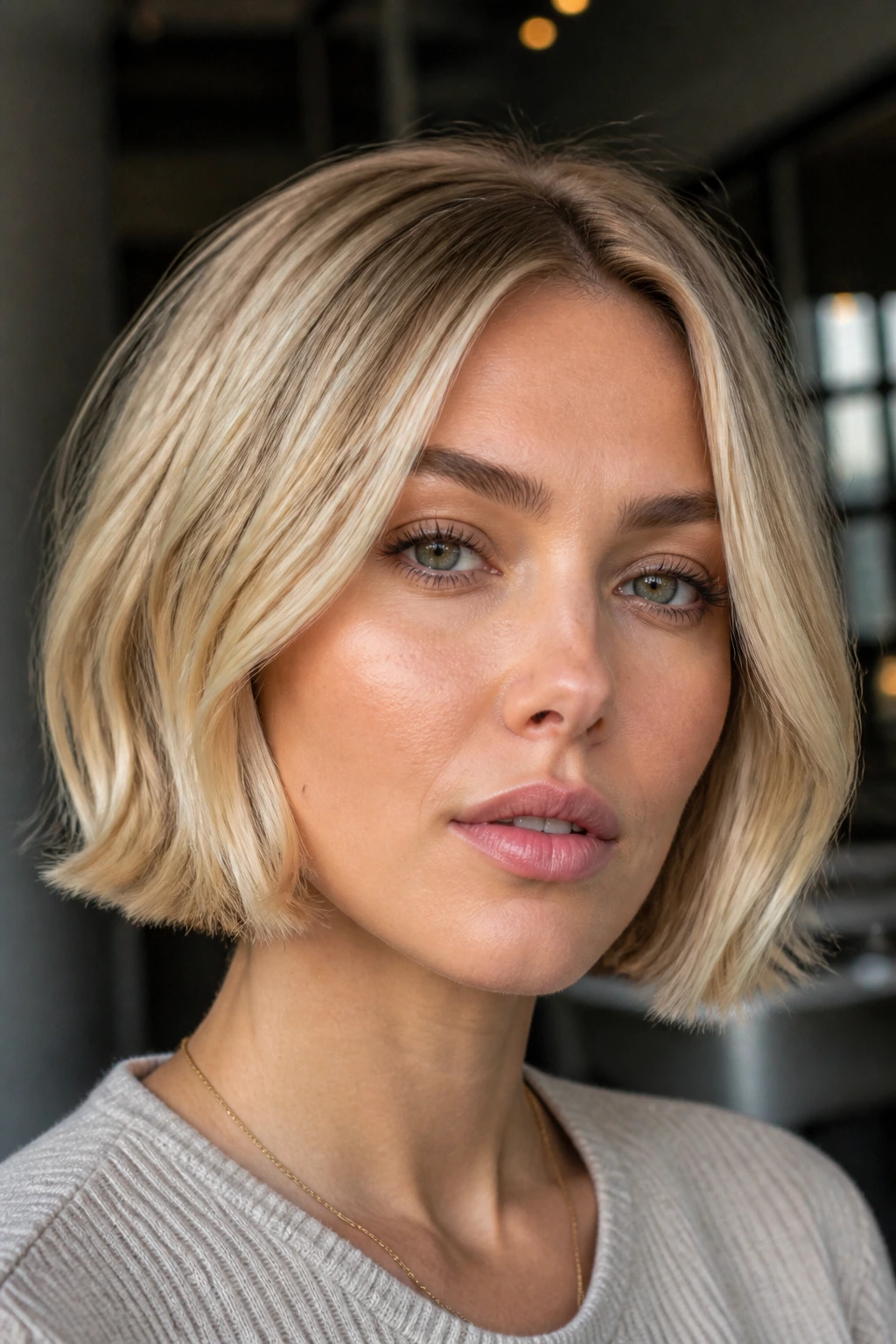
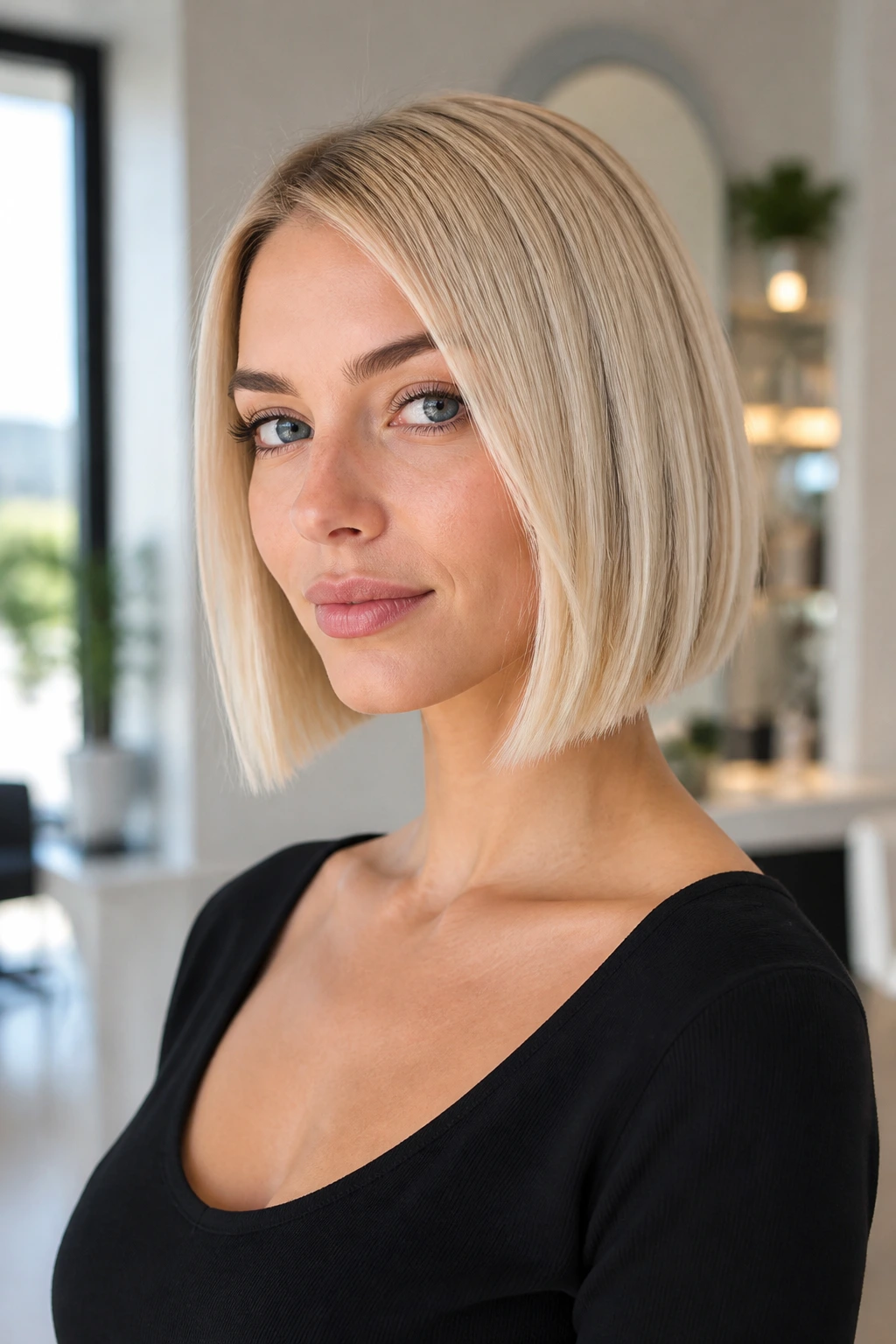
A blunt bob at the jawline can be a fantastic choice on blonde hair because it gives the ends weight, and weight matters when the hair is light in color. Fine blondes especially can look fuller in this cut than in a layered style that removes too much bulk. For oval faces, the clean line frames the jaw without boxing it in.
The soft bend keeps it from feeling helmet-like. That’s the part people miss. A pin-straight bob can look chic, yes, but a little undercurve at the ends makes the whole thing feel more deliberate and less rigid. Ask for the bob to sit just at or a touch below the jaw, not above it, unless you want a sharper, more editorial look.
A side part is a nice shift here if your face feels a little too symmetrical with a center part. Even half an inch can change the mood.
4. Textured Pixie with Side-Swept Fringe
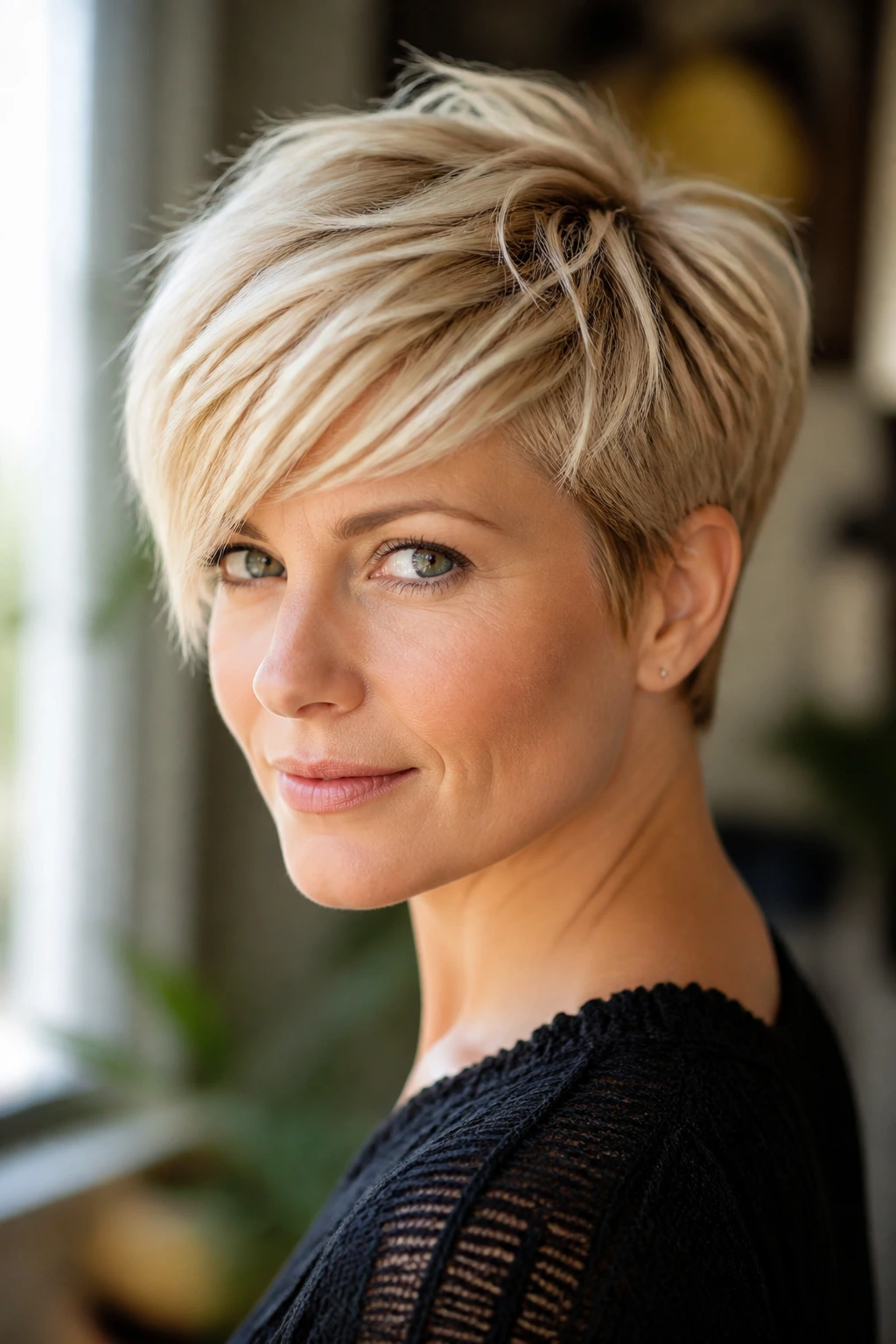
This cut is for the person who wants to show off cheekbones and doesn’t mind a little edge. A textured pixie with a longer top and side-swept fringe works on oval faces because it keeps the proportions clean while still giving the top some lift. Blonde hair makes the layers stand out, especially if there’s a root shadow or subtle lowlight running through it.
What to ask for
- Short sides that stay neat around the ears
- A longer top, usually 2 to 4 inches
- Fringe that sweeps diagonally across the forehead
- Soft texture on the crown so it doesn’t sit flat
Use a matte paste or lightweight pomade. Too much shine can make a pixie collapse into the scalp, and then the shape disappears. That’s a bad trade, especially on lighter hair where every line is visible.
5. High Ponytail with Loose Face-Framing Pieces
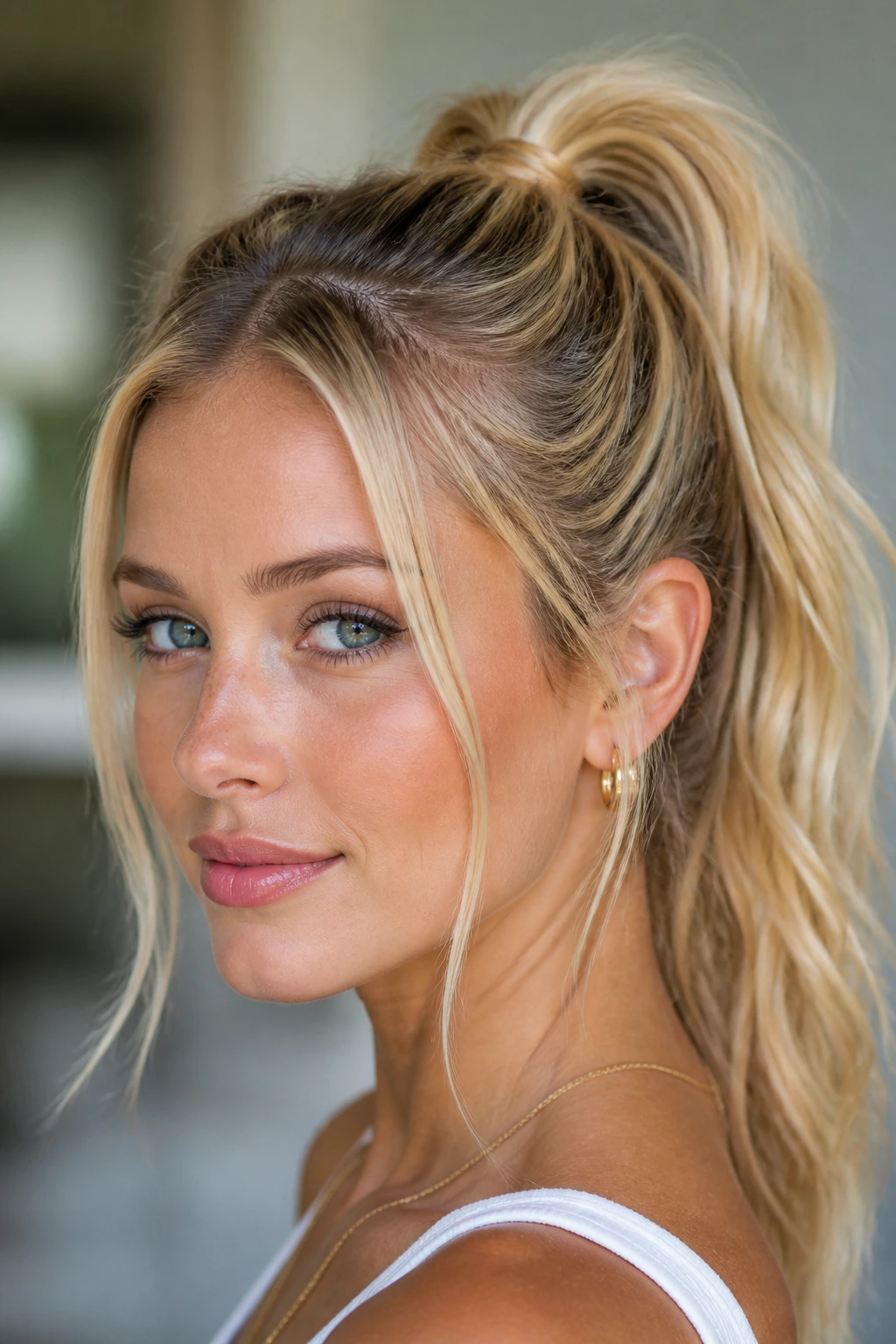
A high ponytail can go wrong fast on an oval face if it’s pulled too tight and lifted too high. Then the face feels longer than it is, and the whole look turns severe. The fix is easy: keep the pony high enough to create lift, but leave two slim face-framing pieces near the temples or cheekbones.
Blonde hair loves this style because the tail shows texture from top to bottom. Highlights read cleanly in a ponytail, and the wrapped base makes the look feel finished. A little crown height helps too. Tease the roots lightly or mist them with volumizing spray before tying it up.
Wrap a small strand of hair around the elastic instead of using a visible band. That tiny move changes everything. It looks like you spent time on it, even when you didn’t.
6. Chin-Skimming French Bob
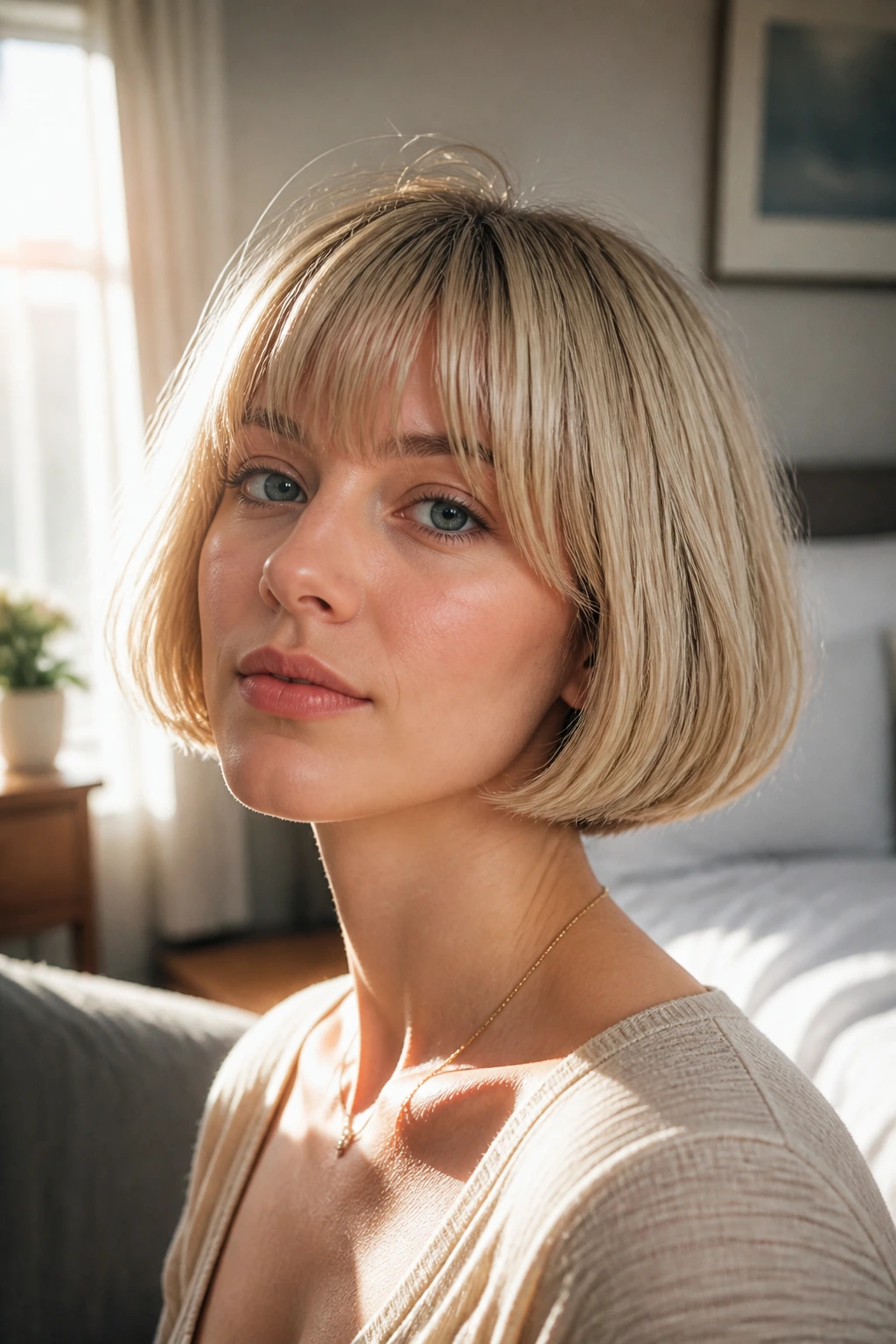
A French bob at chin length has a neat little arrogance to it, and I mean that as a compliment. It’s cropped enough to feel purposeful, but soft enough to stay wearable. On blonde hair, the chin line gives the cut a crisp outline, which is useful if the hair tends to look wispy at the ends.
Oval faces carry this cut well because the length lands right around the narrowest part of the face and keeps the eyes, lips, and jaw in balance. The trick is to avoid making it too heavy at the brow. A tiny fringe works. A dense fringe can take over.
This is one of those styles that looks best when the ends are tucked under just a touch, almost like they were brushed inward and told to behave. Not too neat. Just enough.
7. Layered Shag with Feathered Ends
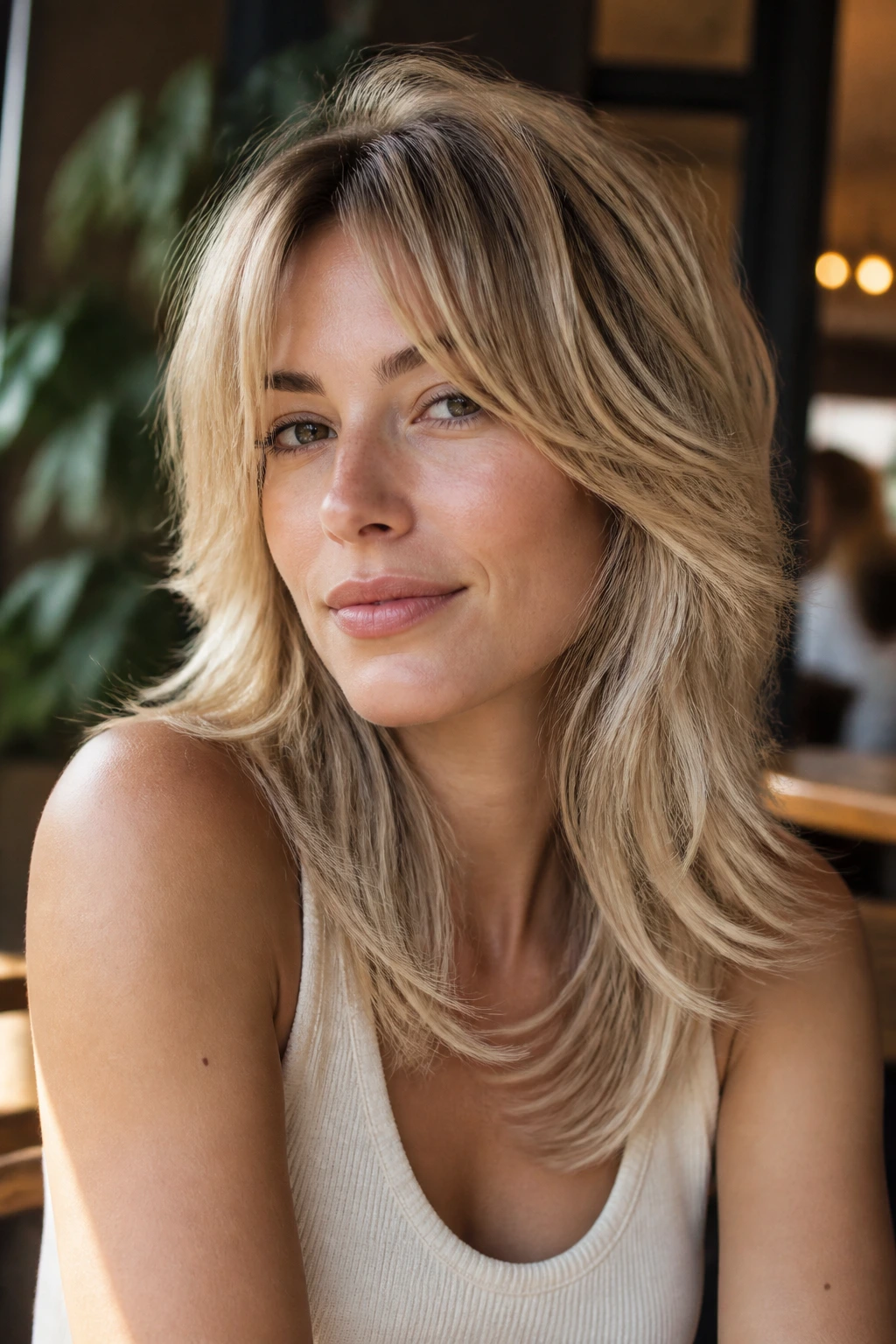
A shag can be too much if it’s cut with zero restraint. On an oval face, though, a softer version with feathered ends and cheekbone layers gives the hair movement without swallowing the features. Blonde hair benefits because the texture catches light across the layers, especially if the color has creamier ribbons or a darker root for depth.
Why this version works
It doesn’t rely on thickness alone. It relies on direction. The pieces around the face should flip a little away from the cheeks, and the ends should stay light enough to move. That keeps the cut from turning into a puffball.
Use mousse at the roots and a diffuser if your hair is wavy. If it’s straight, rough-dry the crown first, then work in a few bends with a medium curling iron. You want separation, not a perfect curl pattern. A shag looks best when it feels a little lived in.
8. Sleek Low Bun with a Deep Side Part
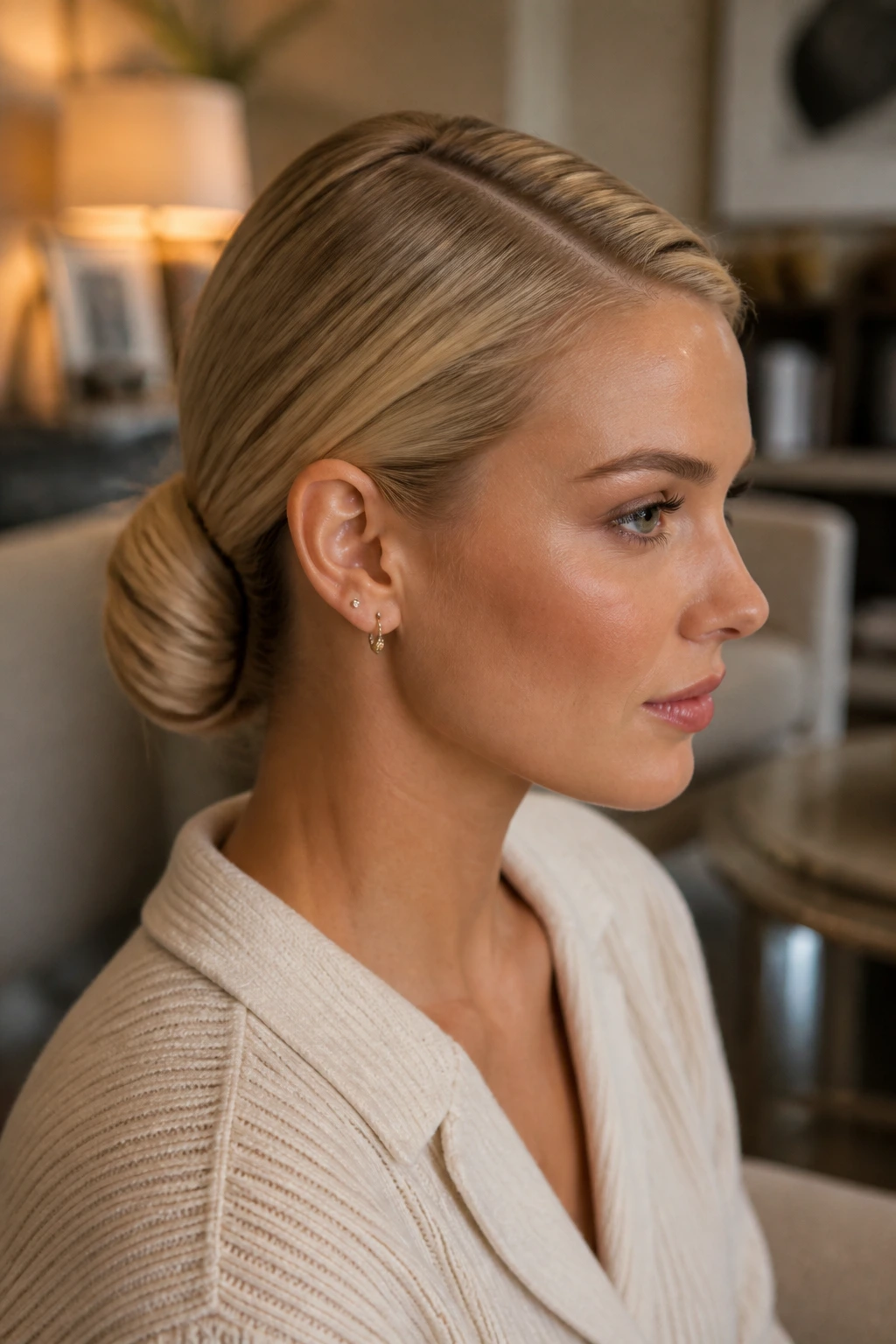
A low bun can be boring. Or it can be one of the cleanest ways to show a face shape and make blonde hair gleam. The deep side part matters here because it interrupts the symmetry just enough to keep an oval face from feeling too elongated. The bun itself should sit at the nape, not high on the head.
Blonde tones show shine in a low bun better than darker hair does. If the hair is smooth, the bun reads as polished. If the hair has a bit of texture, it looks softer and less severe. Either way, use a smoothing cream at the top and a fine-tooth comb to lay the crown flat before twisting the bun.
This is the style I reach for when earrings are doing half the work. Big hoops, a clean neck, and a bun that doesn’t wobble. Done.
9. Beach Waves with Root Lift
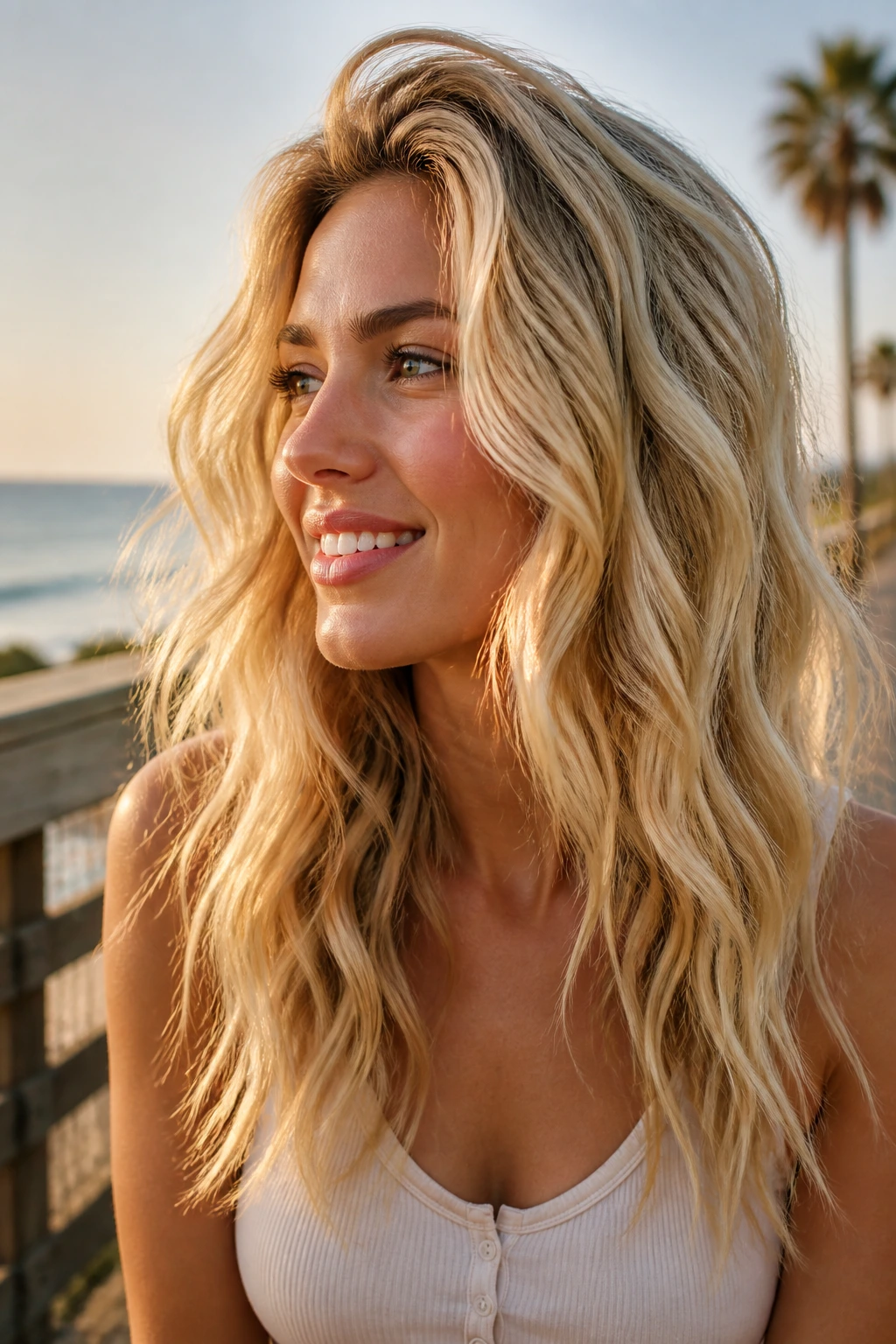
Beach waves are everywhere, which is exactly why they need to be done with some care. On blonde hair, the texture can either look airy and expensive or stringy and overdone. The difference is root lift. If the roots are flat, the entire head looks tired. If the crown has a little body, the waves look deliberate.
The easiest way to get there is with mousse at the root, a blow-dry that lifts the top sections, and a wand that leaves the ends loose. Alternate wave direction through the mid-lengths so the hair doesn’t clump into one pattern. That mixed direction gives dimension.
Quick styling cues
- Use a 1-inch or 1¼-inch wand
- Leave 1 inch at the ends out
- Brush waves lightly after they cool
- Finish with a dry texturizing spray, not a sticky lacquer
10. Glass-Hair Straight Long Cut
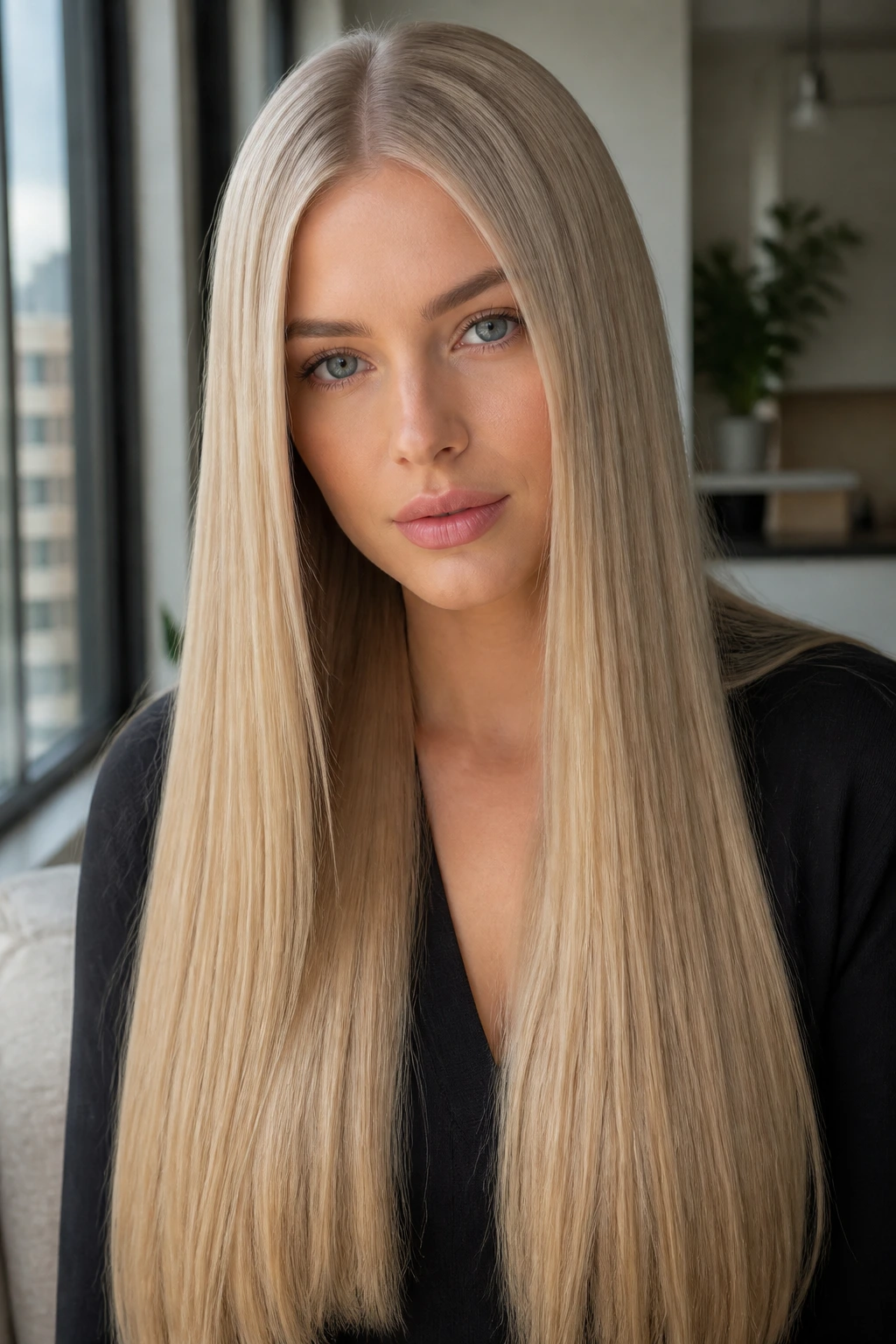
Straight, glossy, and very controlled — this cut works when the hair is healthy enough to show it. On an oval face, long straight lengths create a clean frame without making the face look overworked. Blonde hair has a particular advantage here because shine shows fast, especially in cooler or ashier tones.
The danger is flatness. Long straight hair with no body can drag the face down and make the ends look thinner than they are. So keep a blunt or near-blunt perimeter and use a little internal layering only if the hair is dense enough to need it. A center part keeps the line clean, but an off-center part can soften the whole look if your features feel too symmetrical.
Use heat protectant. Seriously. Blonde hair, especially lightened hair, will show damage faster than you think.
11. Chin-Length Bob with Tucked Ends
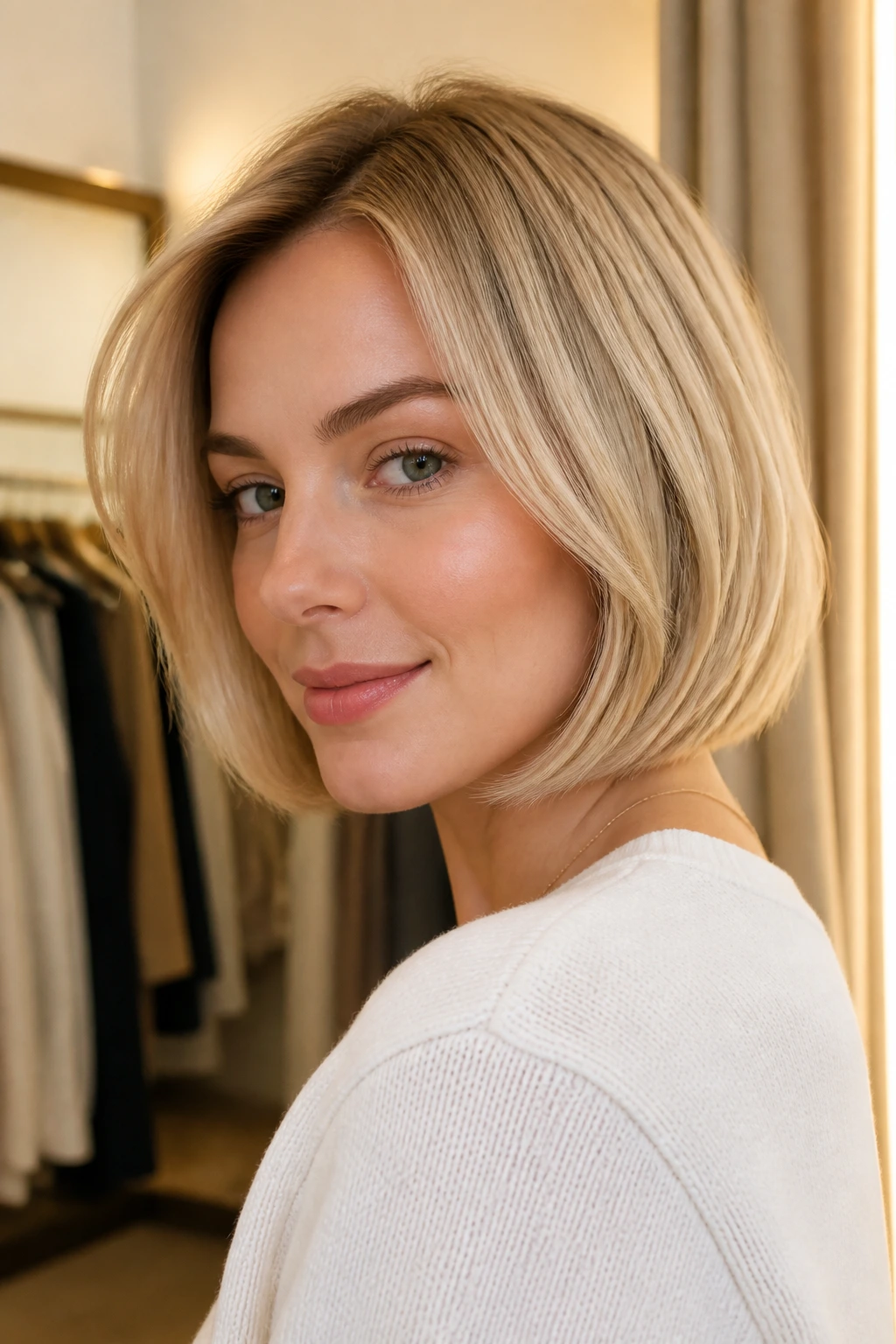
A chin-length bob with ends tucked under gives a blonde cut some shape without making it fussy. It’s a good move for fine hair because the tucked finish creates the sense of density at the bottom edge. On an oval face, that chin line provides just enough framing to keep the balance neat.
The styling is straightforward: blow-dry with a round brush, turning the ends inward for a soft curve. Don’t overdo the bend. You’re not building a pageant wave here. The goal is a gentle inward sweep that makes the bob look intentional and healthy.
This cut is especially good if your blonde has highlights around the face. The tucked ends help the lighter pieces catch near the jaw, which can make the whole style feel brighter without needing more color work.
12. Half-Up Twist with Loose Curls
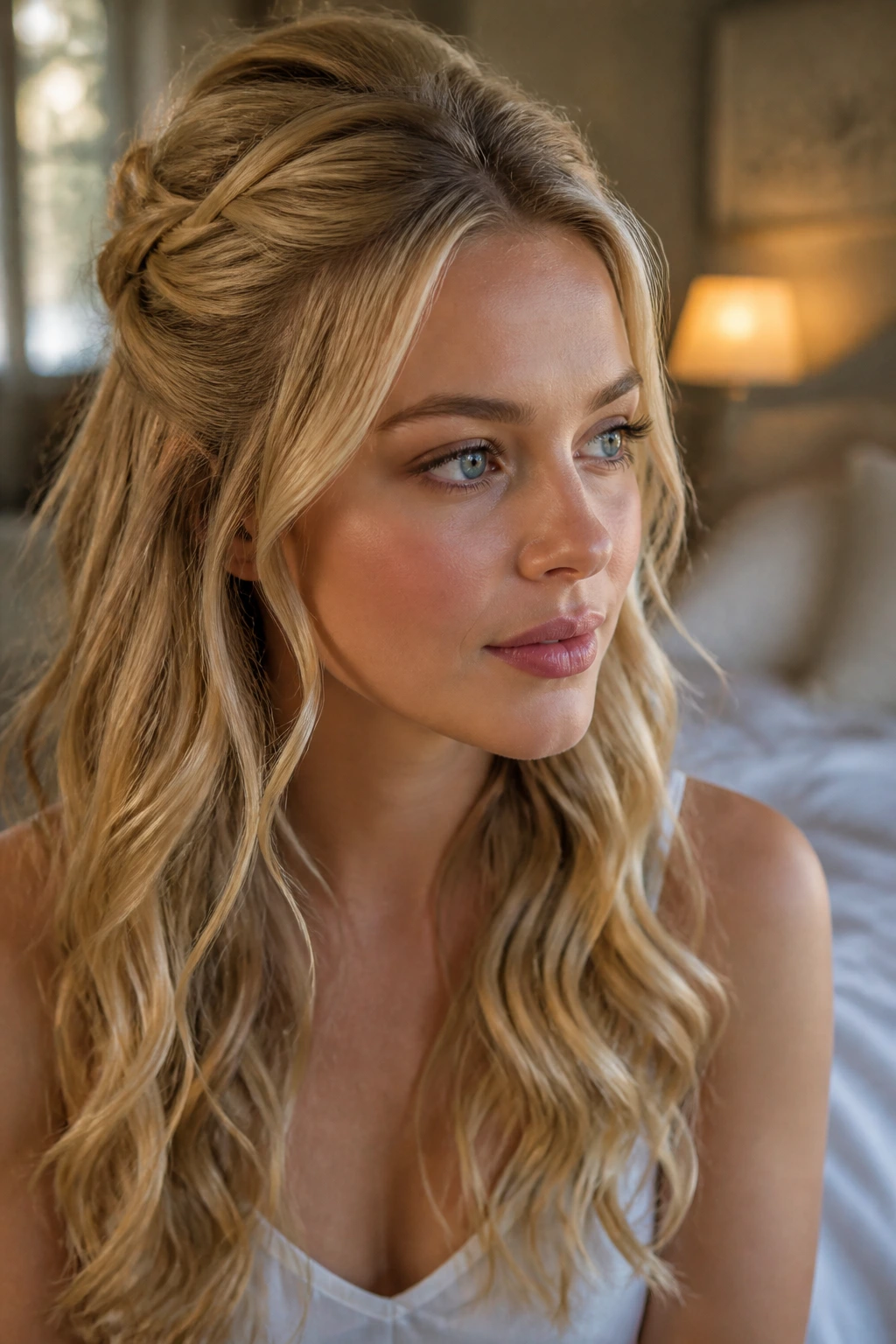
The half-up twist is a small fix with a big payoff. It pulls hair away from the face, which keeps oval features open, but leaves enough length down that the style never feels severe. Blonde curls make this one easy to love because every twist and bend reflects light in a slightly different way.
How to build it
Take two sections from the temples, twist them back, and pin them just behind the crown. Leave the front pieces soft — not wispy in a sloppy way, just relaxed. Curl the remaining hair in broad sections so the bottom half has motion and the top half has shape.
This is a good look for medium to long lengths, and it works especially well when the hair is a little second-day textured. Freshly washed hair can be too slippery for the twist to hold. Day-old hair? Better. It grips, and the curls last longer.
13. Messy Top Knot with Crown Height
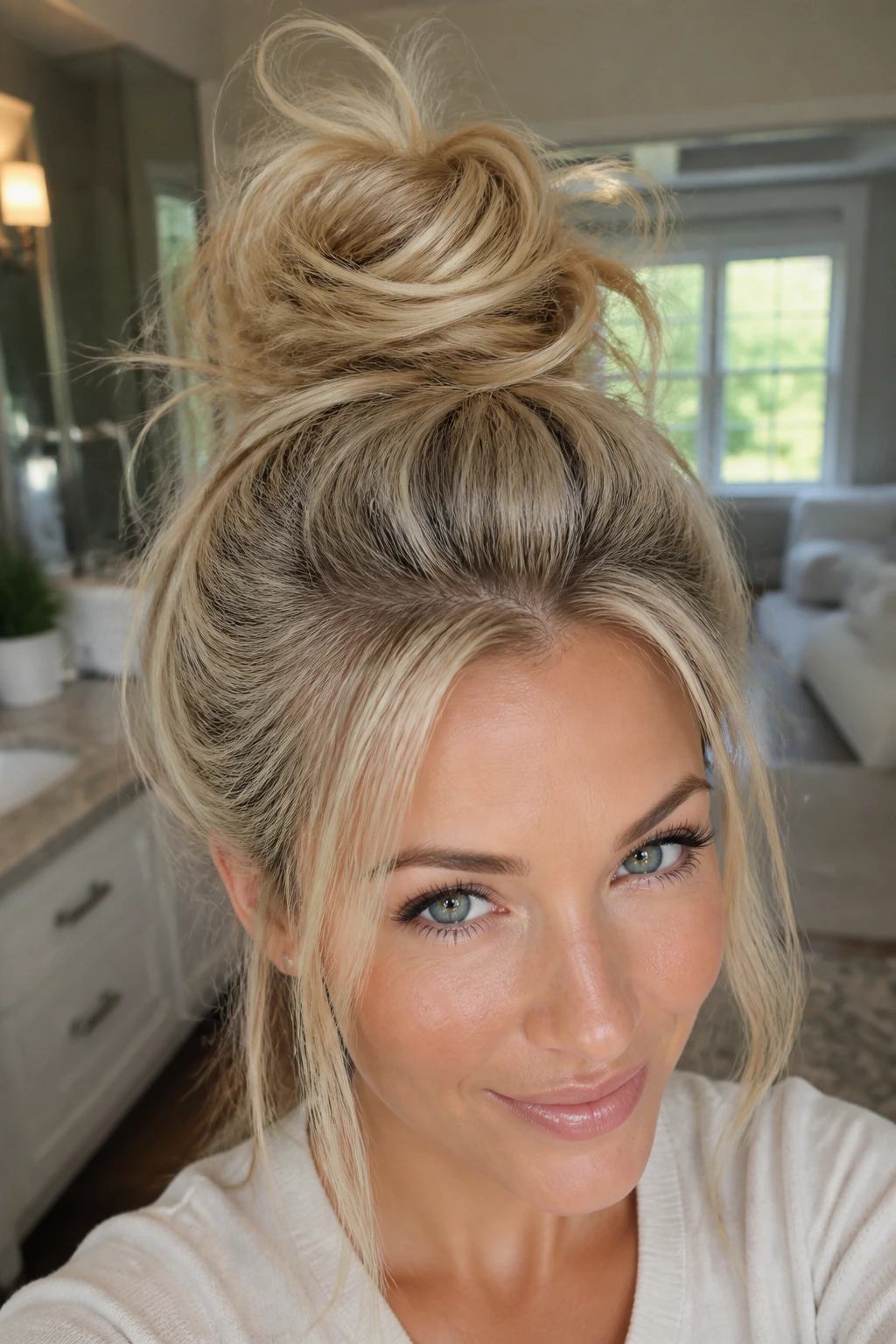
A top knot can flatten a face out if it’s placed too tight and too high. The fix is to keep the knot high enough to lift the hair off the shoulders, but not so severe that it turns into a tiny little knob. Oval faces usually do best with a bit of crown volume left intact.
Blonde hair makes this style look less heavy because the knot shows texture across every twist. If your hair is layered, let a few shorter pieces escape around the temples and nape. That softens the whole thing and keeps the shape from looking too engineered.
I like this one for day two or day three hair, when the roots need help and the lengths don’t want to be brushed to perfection. A mist of dry shampoo at the crown and a few bobby pins are often enough.
14. Long Layers with Bottleneck Bangs
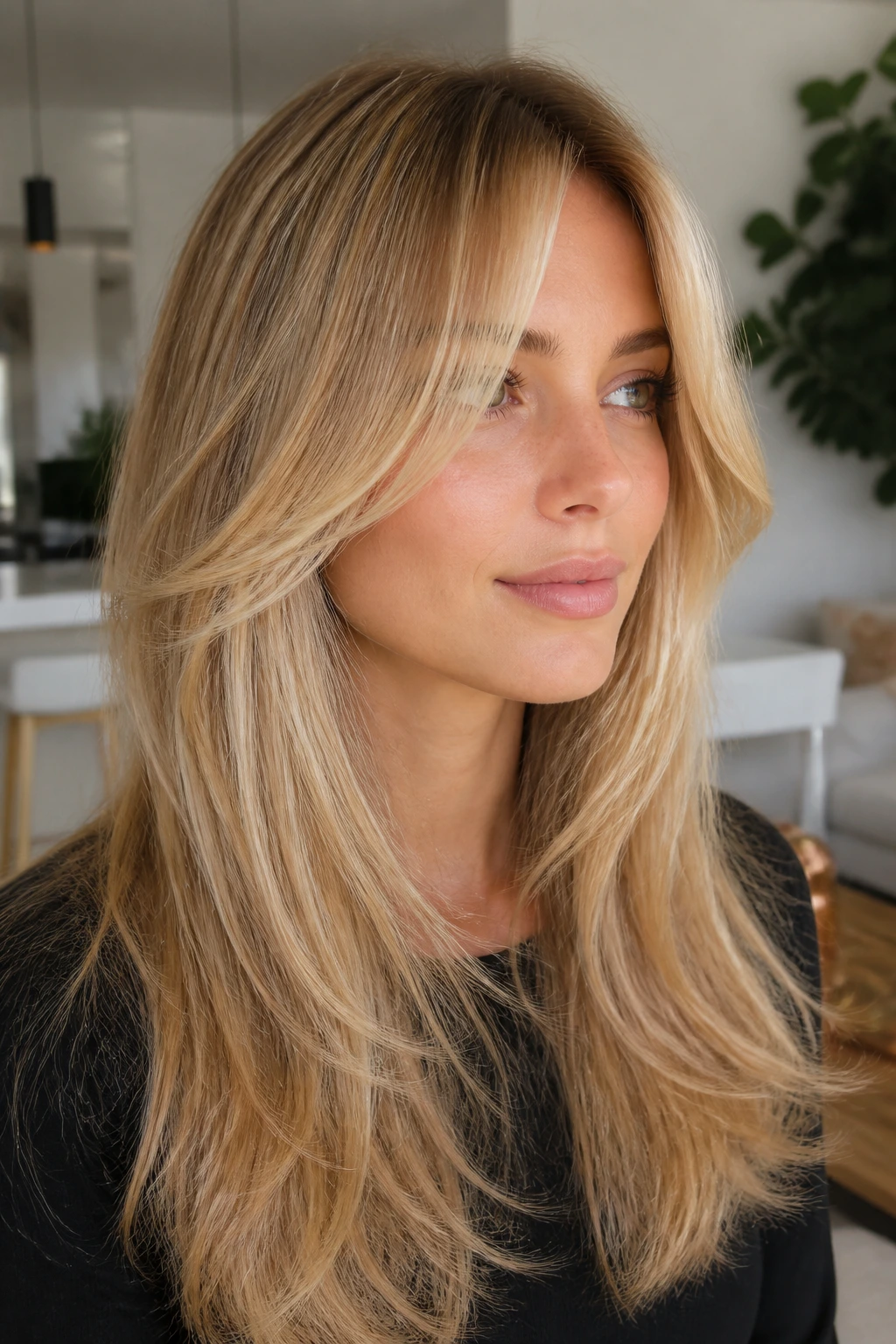
Bottleneck bangs are one of the smarter fringe choices for blonde hair and oval faces because they narrow at the center and widen as they reach the cheekbones. That shape gives the forehead a softer edge without hiding the face. Long layers below that keep the overall length from sitting like a curtain.
The best version starts the longest bang pieces right around the cheekbone. Anything shorter can feel abrupt. Anything longer can lose the shape. On blonde hair, the gradient in the bangs also shows off subtle color differences near the face, which makes the cut look richer without needing a heavy highlight pattern.
Best styling note
Blow the center fringe forward at first, then sweep it apart with a round brush. That helps the shorter middle area sit in place while the sides curve out naturally.
15. Bubble Braid Ponytail
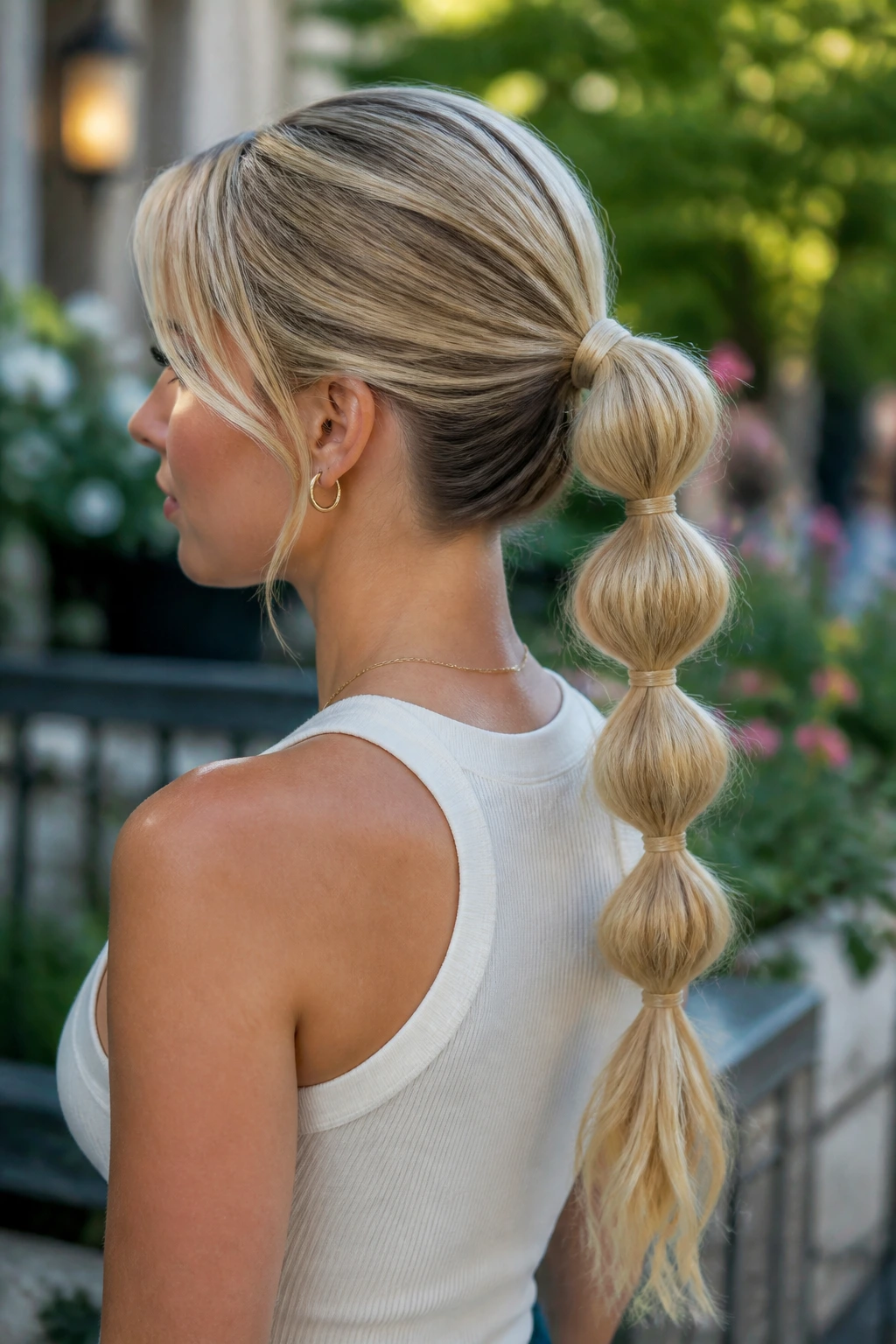
A bubble braid ponytail sounds playful, and it is, but it’s also a smart way to give long blonde hair more structure. Each elastic creates a little “bubble” that catches light differently, so highlights and lowlights show in sections instead of disappearing into one long sheet of color. Oval faces can wear this well because the shape stays pulled back and open.
What makes it work
The top needs to be smooth. The bubbles need to be even. And the braid should start with a ponytail that sits at mid-height, not too high and not glued to the nape. Pull each section outward gently after tying it off so the bubbles feel rounded rather than pinched.
This style is a good option when you want interest without a complicated braid. It’s fast, and it holds up well if your hair tends to fall out of traditional braids by lunchtime.
16. Soft Wolf Cut with Airy Movement
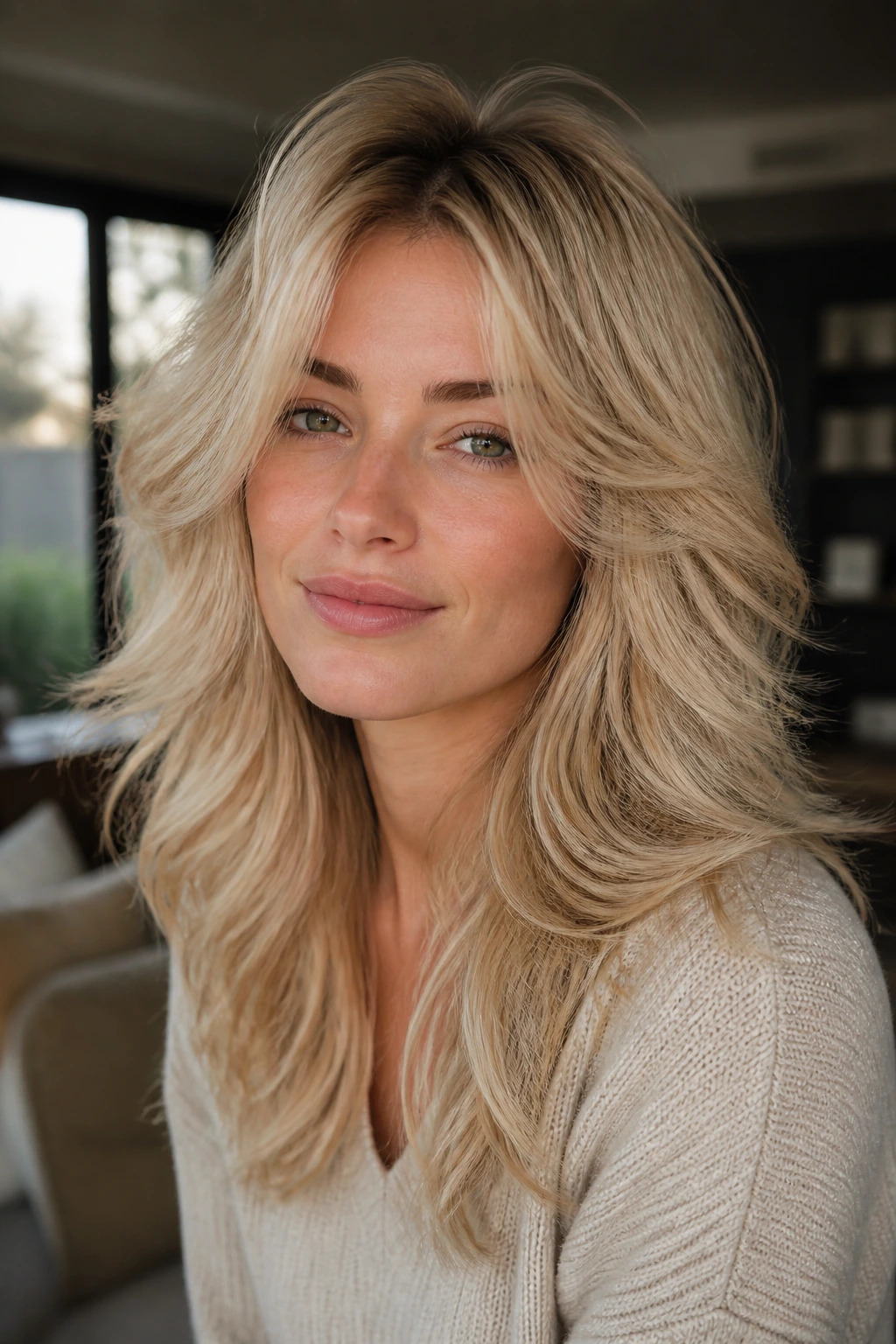
A soft wolf cut is not the same thing as a loud, jagged mullet. The softer version keeps the layers around the crown and cheekbones, but the overall shape stays wearable and flattering. On blonde hair, especially with mixed tones, the chopped layers create movement that reads instantly.
Oval faces can take this cut well because the shorter top pieces add lift while the longer bottom pieces keep the face from looking too narrow. If the cut is too disconnected, though, it can get weird fast. Ask for a blended version with pieces that feather rather than stab out.
Air-dry cream helps here. So does a diffuser if your hair has any wave at all. If it’s straight, a few bent pieces around the front are enough; you do not need to curl every strand.
17. Side-Swept Hollywood Waves
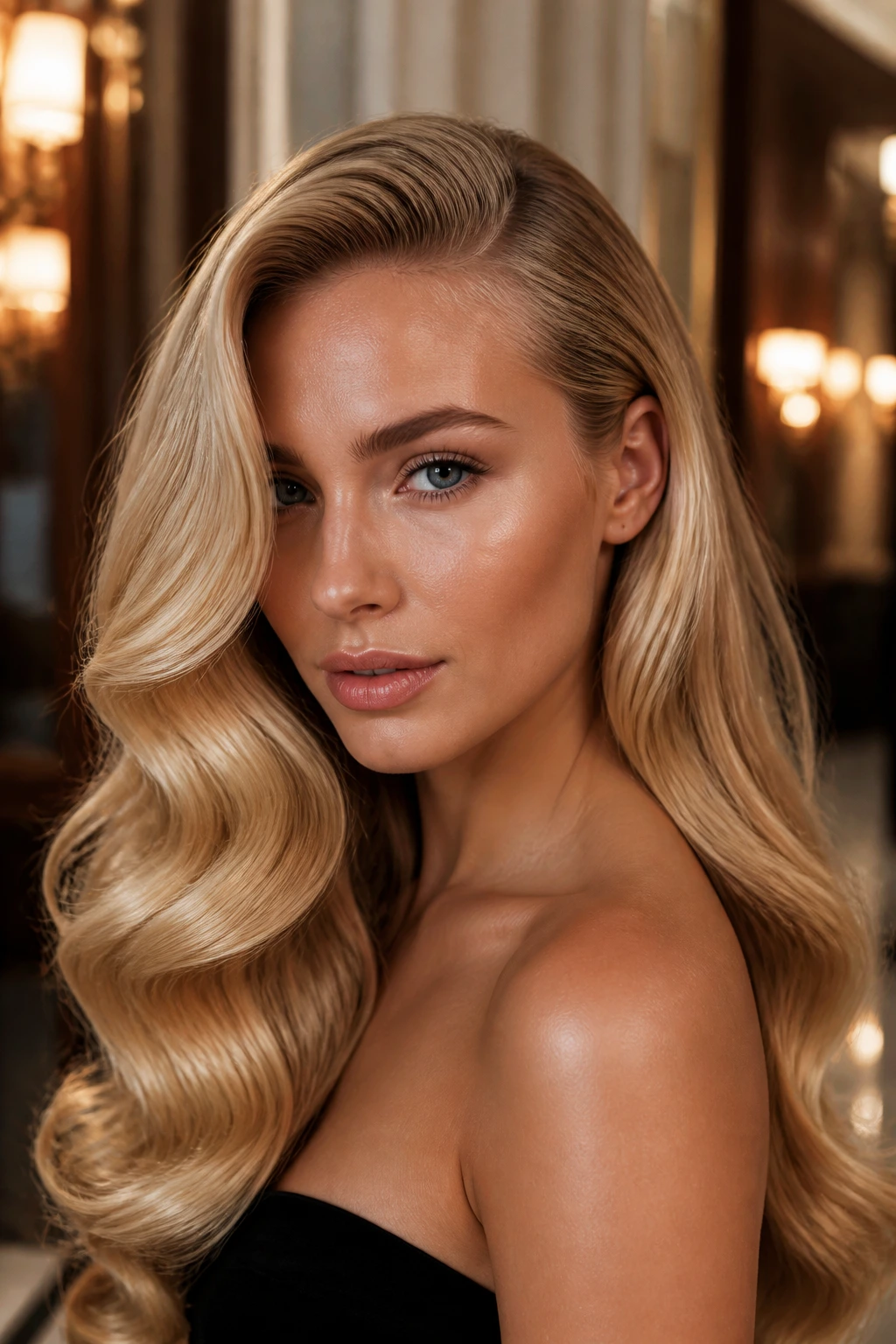
A deep side part and brushed-out waves can do a lot of work with very little drama. For oval faces, the side sweep breaks the symmetry and gives the face a little more sculpting around one cheekbone. Blonde hair, especially with a polished tone, looks especially smooth in this shape.
What to watch for
The waves should be large and even, not tight. Pin them while they cool if you want that smooth ribbon effect. Then brush them out carefully, starting at the ends and working upward so you don’t shred the pattern.
This style is one of the best when you want movement without mess. It’s formal enough for evening, but it doesn’t feel stiff if you leave the ends just a little loose. The shine on blonde hair does half the job, so keep frizz under control with a tiny amount of serum.
18. Braided Crown Half-Up
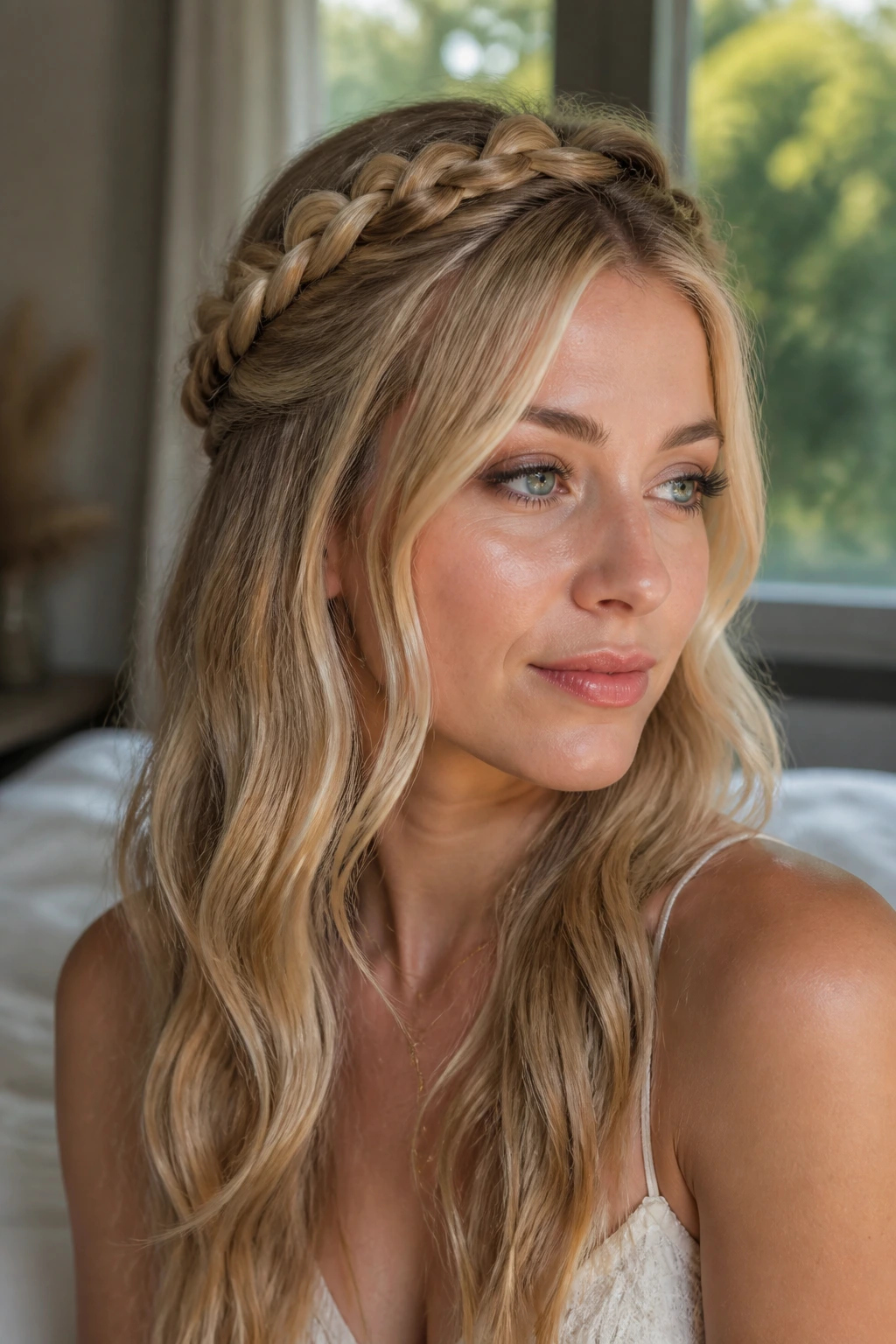
A braided crown half-up style keeps hair away from the face without putting all of it up, which is ideal when you want to show off an oval face and keep blonde lengths visible. The braid wraps the head in a way that feels decorative but not fussy, and the loose lower section keeps the style from getting too tight.
You want the braid loose enough to keep some width at the sides. If it’s pulled too hard, the style can make the face look longer. A little softness around the temples helps. So does a few face-framing pieces left out before you start braiding.
This one works especially well on highlighted hair, because the braid itself shows a mix of tones. Each turn of the braid catches light differently, which makes the whole thing look more detailed than it is.
19. Angled Lob with Subtle Highlights
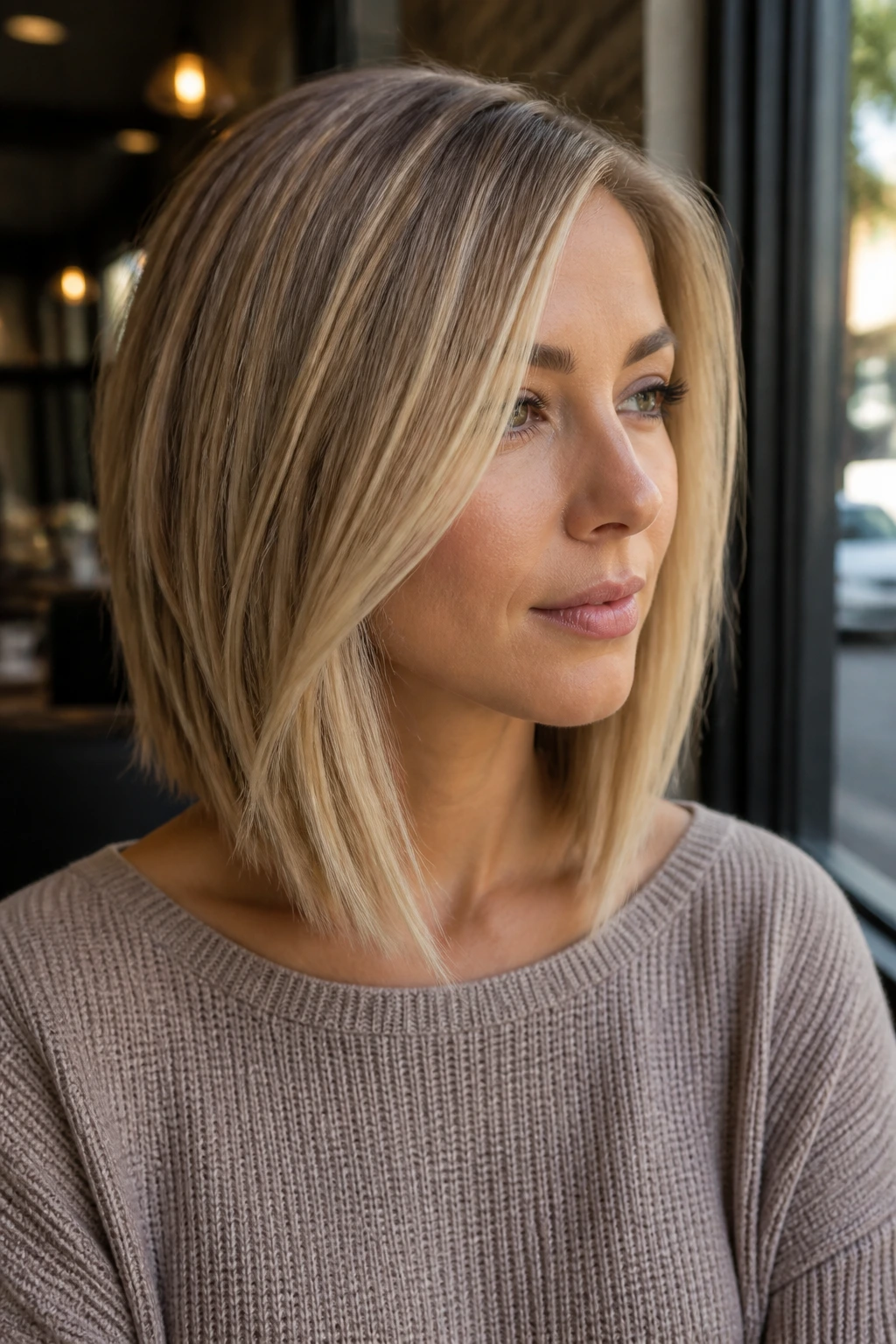
An angled lob is a clean choice when you want shape without going all the way to a bob. The front pieces sit a little longer than the back, which gives oval faces a sleek line without crowding the jaw. On blonde hair, subtle highlights along the front angle make the cut look sharper and brighter.
The angle shouldn’t be dramatic unless you want that sharper salon feel. A gentle slope is usually better for everyday wear. It keeps the hair swingy and still easy to tuck behind the ears. If your hair is thick, this is a nice way to take weight out of the back without making the ends too thin.
This style works across straight and wavy textures. Straight hair shows the line. Wavy hair softens it. Both are good.
20. Curly Bob at the Chin
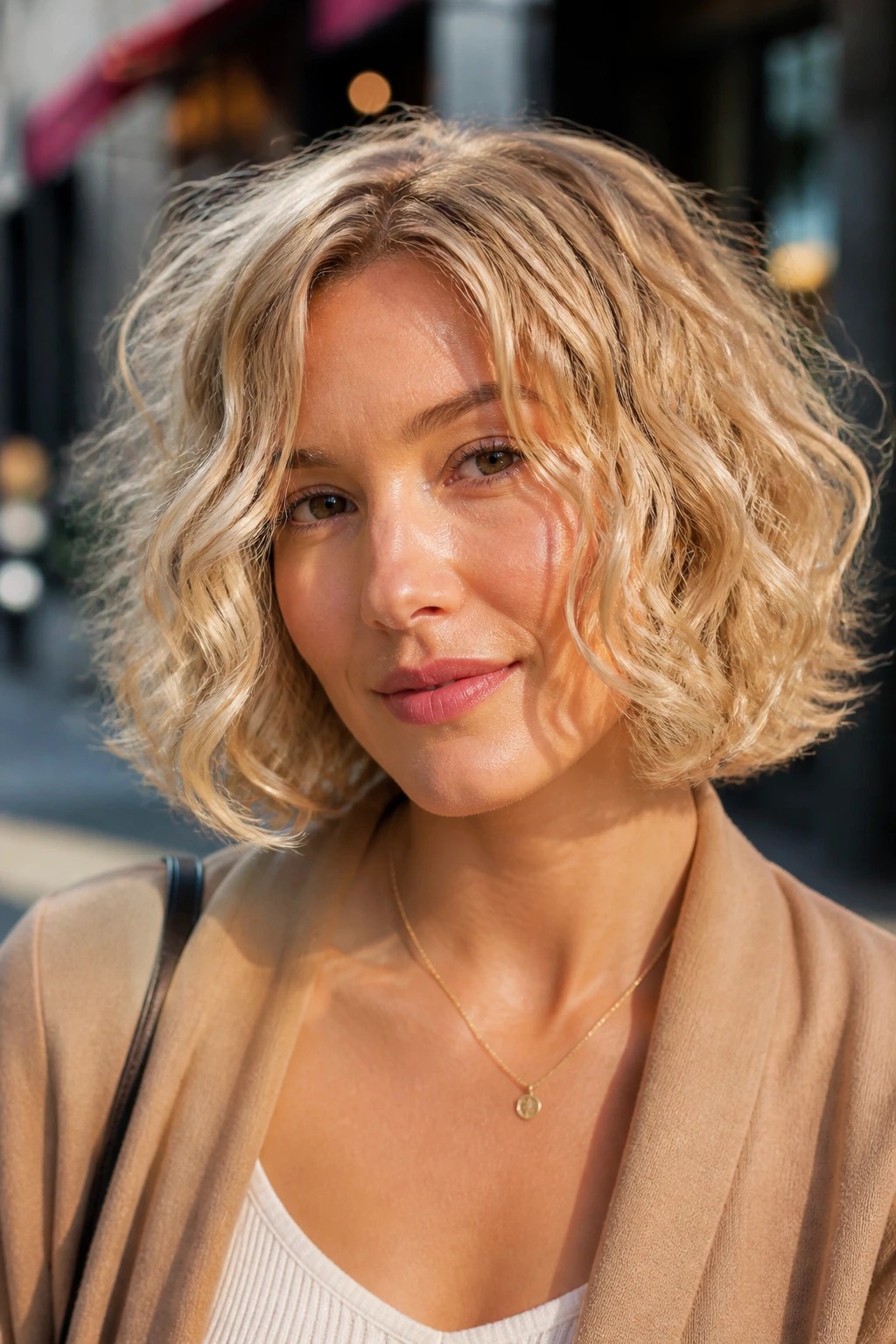
A chin-length curly bob can be brilliant on an oval face if the curl pattern has enough shape and the cut respects the volume. The chin length keeps the face framed, and the curls add life where straight styles might fall flat. Blonde hair makes the curl definition more visible, especially when there’s dimension in the tone.
The main thing is balance. If the curls puff too wide at the cheeks, the face loses its clean outline. So the cut should be shaped with the curl pattern in mind, usually with some length left through the front and a little more control through the sides.
Styling cue
Use a curl cream or gel on soaking-wet hair, scrunch gently, and diffuse until the curls are set but still soft. Don’t touch them while they dry. That part matters more than people like to admit.
21. Low Braided Chignon
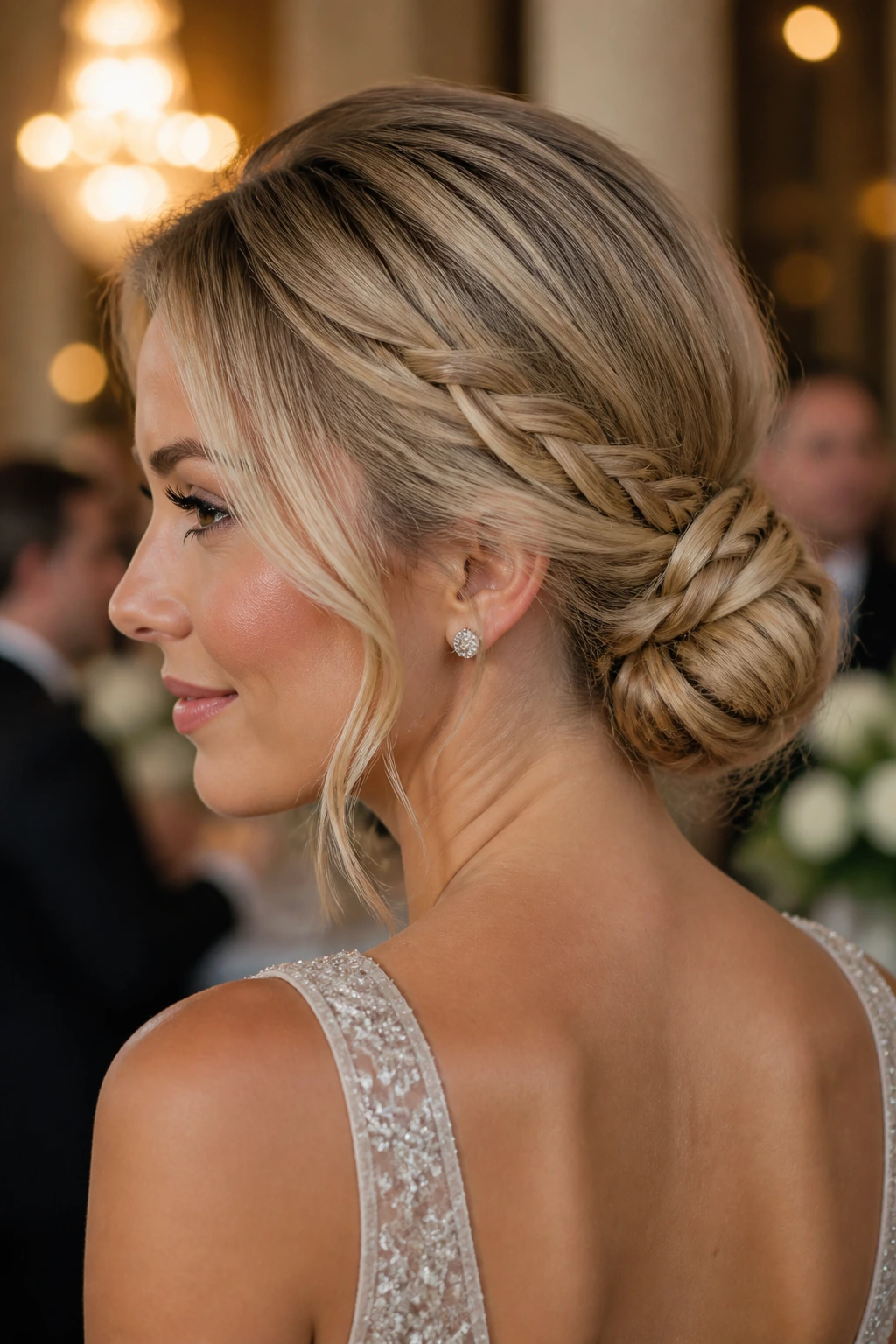
A low braided chignon is polished, but not in a stiff way. The braid adds texture before the hair is wrapped into the bun, which gives blonde strands a chance to show depth and shine at the nape. On an oval face, the low placement keeps the top open and the proportions calm.
The chignon should sit close to the base of the skull, not halfway up the back of the head. That lower placement is what keeps it flattering. If you want a little softness, pull a few small pieces loose around the ears. Nothing dramatic. Just enough to keep the shape from looking severe.
This is a strong choice for formal events, work functions, or any day when you want your hair to stay put and still look thoughtful.
22. Feathered Blowout with Full Ends
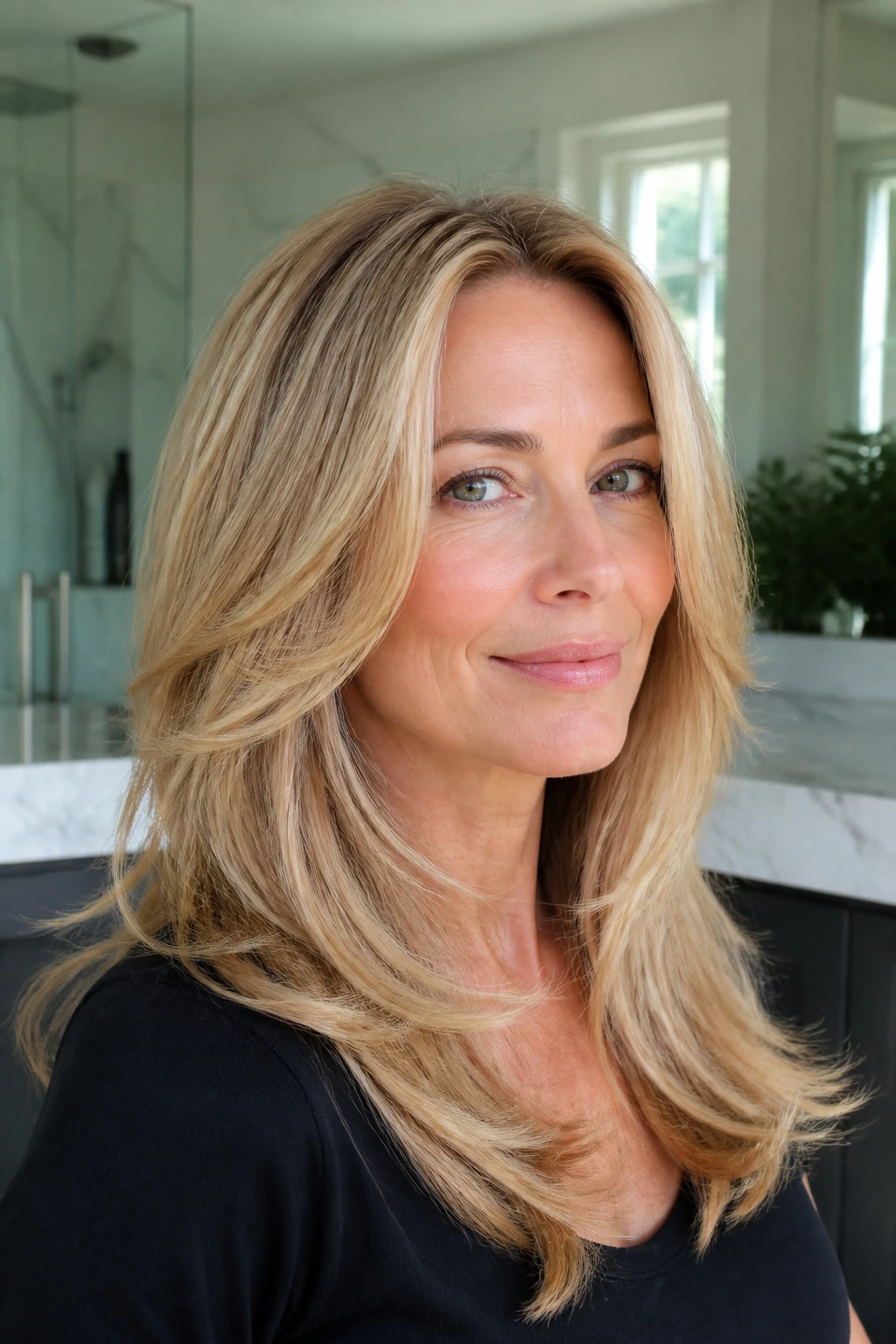
A feathered blowout gives blonde hair a lot of life without relying on curls. The layers at the face and through the lengths sweep outward in a soft, brushed shape, which suits oval faces because it adds movement without changing the face too much. The ends stay full, which matters more than people think.
A round brush and a medium heat setting are the whole game here. Overheating blonde hair makes the cuticle look frayed fast, and then the blowout loses that smooth finish. Direct the ends away from the face or under slightly depending on whether you want a softer or more lifted look.
This is one of my favorites when the color has dimension. Feathered layers make highlights read almost like brush strokes.
23. Slicked-Back Wet Look Ponytail
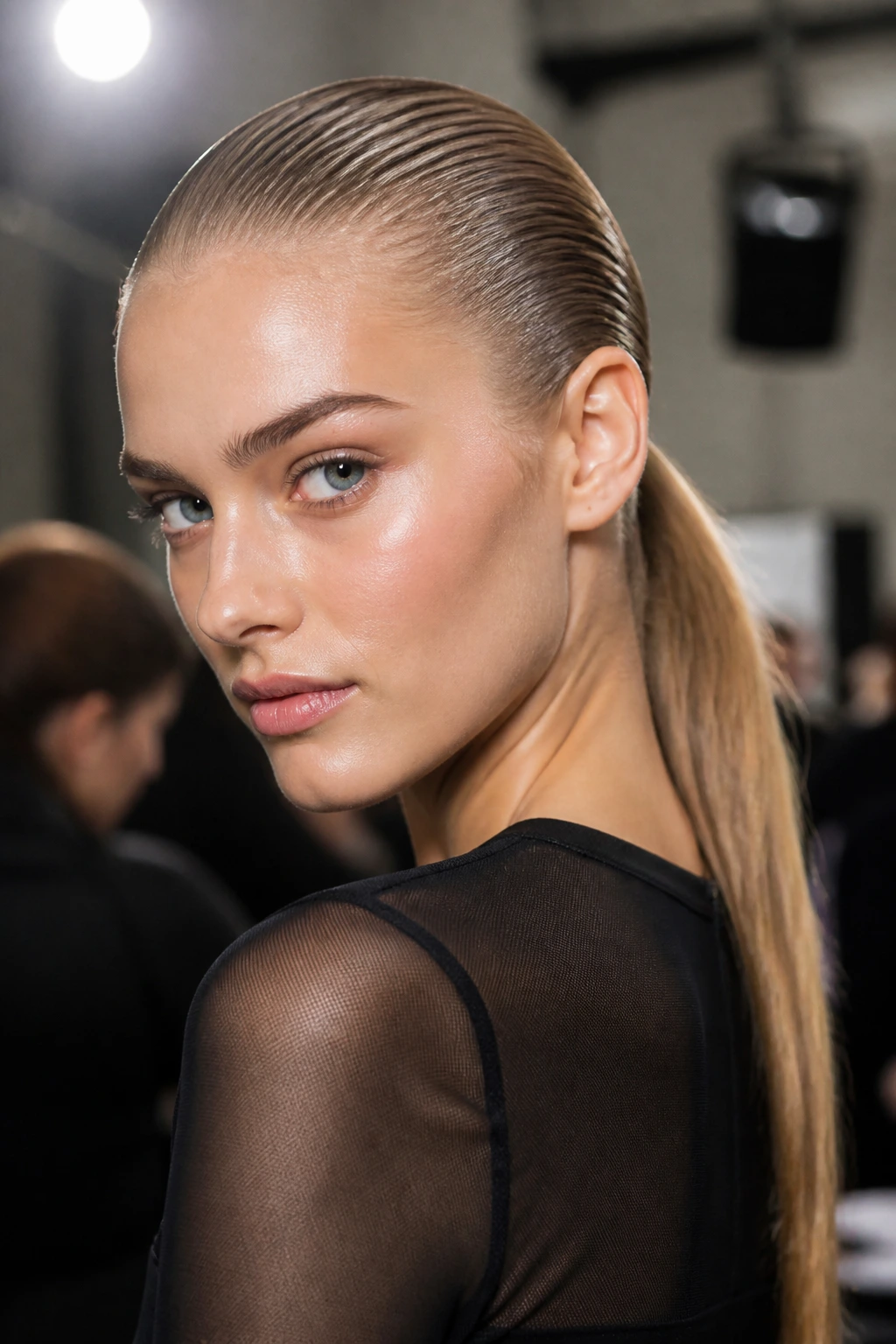
This style has a sharper edge, and that’s why it works. An oval face can handle the exposed forehead and clean lines without looking unbalanced. Blonde hair gives the wet look extra shine, but it also shows product buildup fast, so the application has to be neat.
Keep it controlled
Use gel at the hairline, comb the top back smoothly, and gather the ponytail low or mid-low. The surface should look sleek, not crunchy. If you use too much product, blonde hair can go dull and muddy instead of glossy.
I like this style for evening or a fashion-heavy look, not for every day. It’s strong. It knows what it is.
24. Soft Modern Mullet
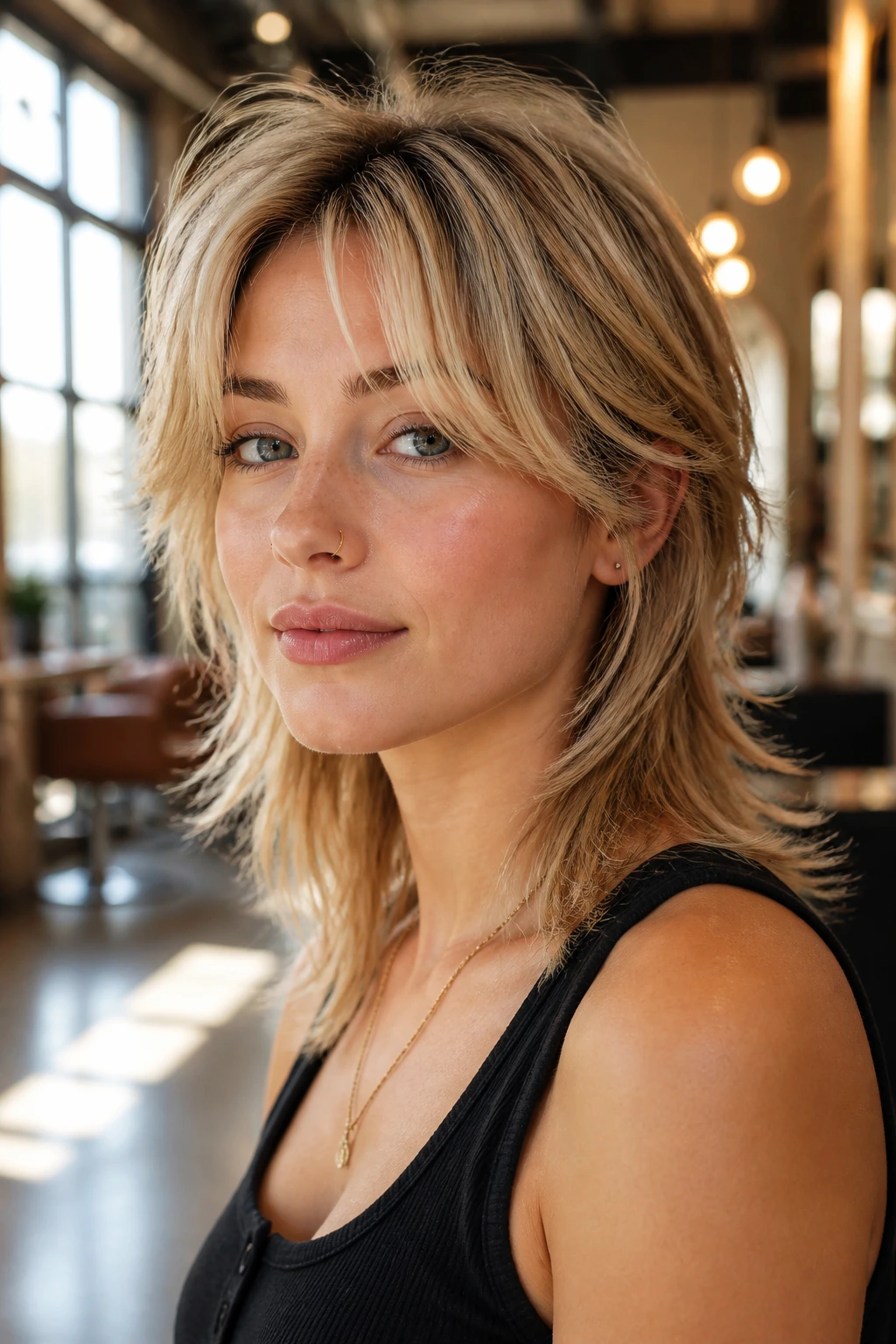
A modern mullet sounds like a daring choice, and it can be, but the softer version is much easier to wear than the old-school extremes. The crown gets a little lift, the front pieces stay light, and the back keeps enough length to feel balanced. On blonde hair, the shape reads cleanly because the layers catch light at different points.
Oval faces can pull this off when the fringe isn’t too short and the layers aren’t too disconnected. That’s the whole difference between a wearable shape and a haircut that feels like a dare. Keep the transition from short to long soft, and the cut becomes playful instead of awkward.
This style works especially well if you like texture. It does not love being flattened to the scalp.
25. Face-Framing Updo with Wispy Tendrils
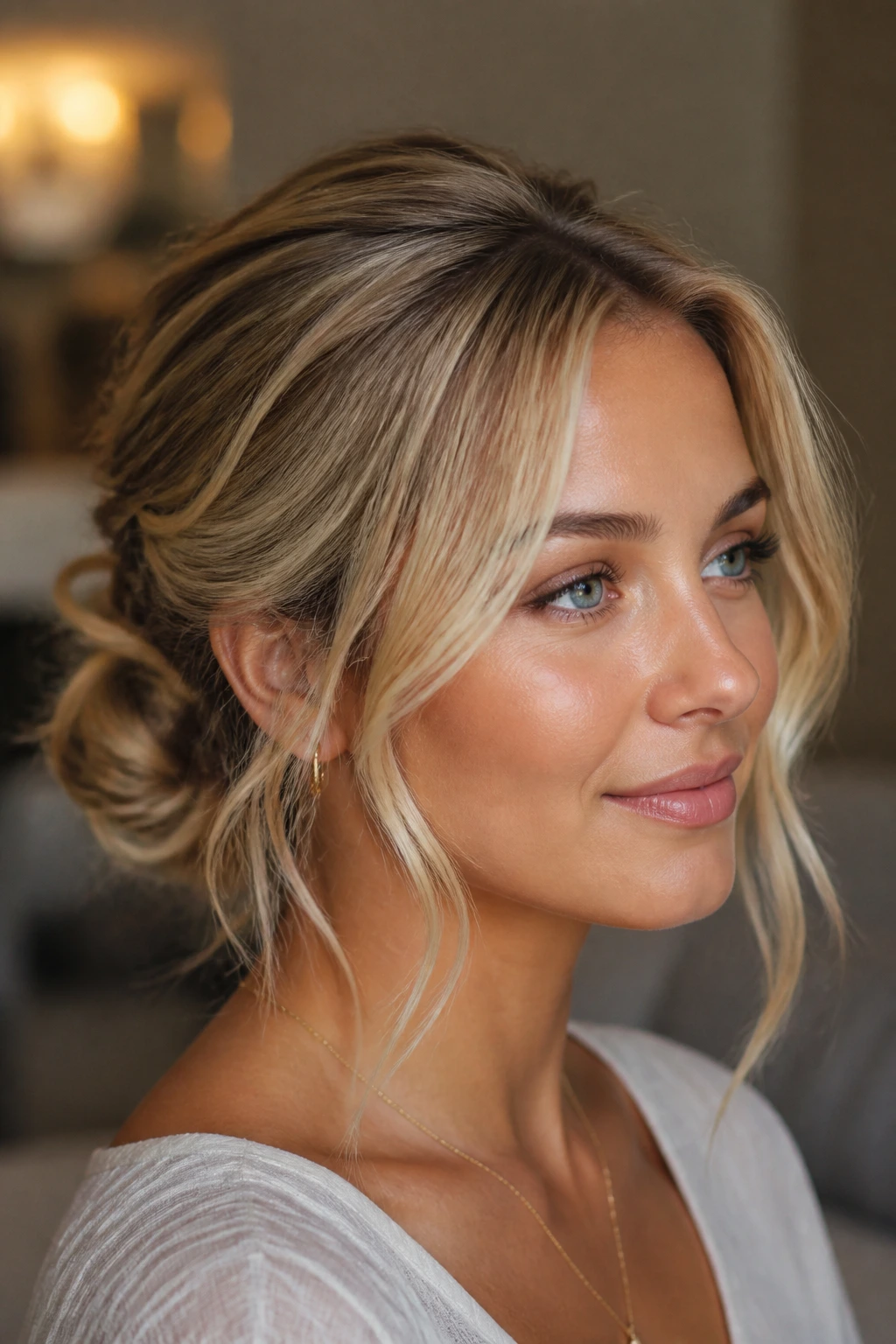
A soft updo with wispy tendrils is the kind of style that looks simple in a photo and takes a few more pins than you’d expect in real life. The payoff is worth it. An oval face stays open because the hair is pulled back, but the loose tendrils keep the outline soft. Blonde hair benefits because the lighter front pieces show shape right around the cheekbones.
The key is restraint. Let a few pieces fall naturally around the temples, and keep the bun or twist low enough that the face doesn’t feel stretched. If you want more polish, curl just the tendrils with a small iron and brush them out lightly so they don’t look ringlet-tight.
This is a good one for weddings, dinners, or any night when you want your face to stay the focus.
26. Long Glossy Layers with Invisible Layers
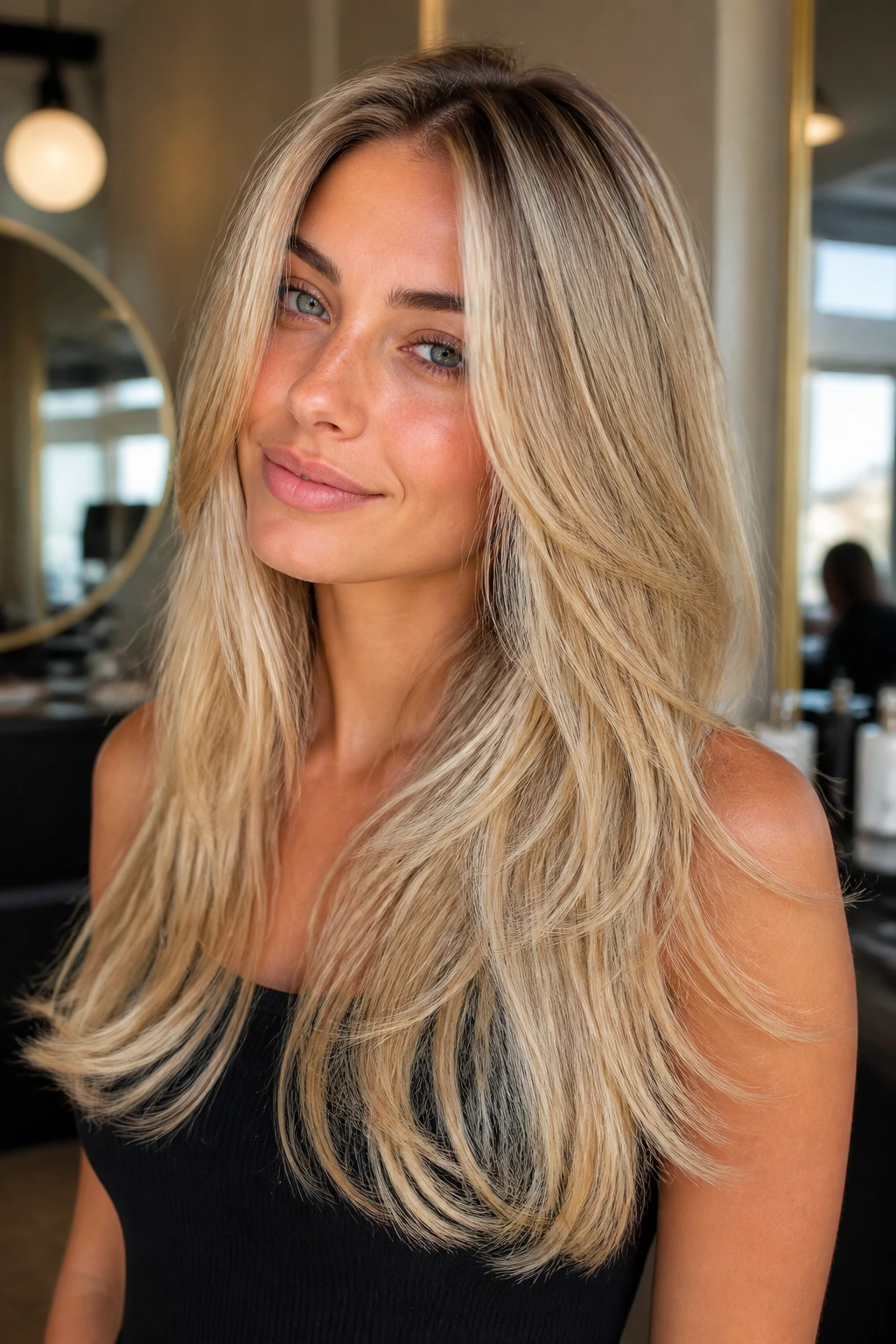
Invisible layers are exactly what they sound like: layers that give movement without shouting about it. On long blonde hair, that can be a very smart move. You keep the length, you keep the clean outline, and you lose some of the bulk that can make long hair hang there like a blanket.
For oval faces, this means the hair stays fluid around the face instead of dragging the eye straight down. The layers should be subtle enough that you feel the movement more than you see the cuts. If your hair is thick, this keeps the style from getting heavy. If it’s fine, ask for a very light hand so the ends still look full.
A glossy finish matters here. Blow-dry smooth, add a pea-sized amount of serum through the ends only, and stop before the hair gets greasy.
27. Tapered Pixie with a Long Top
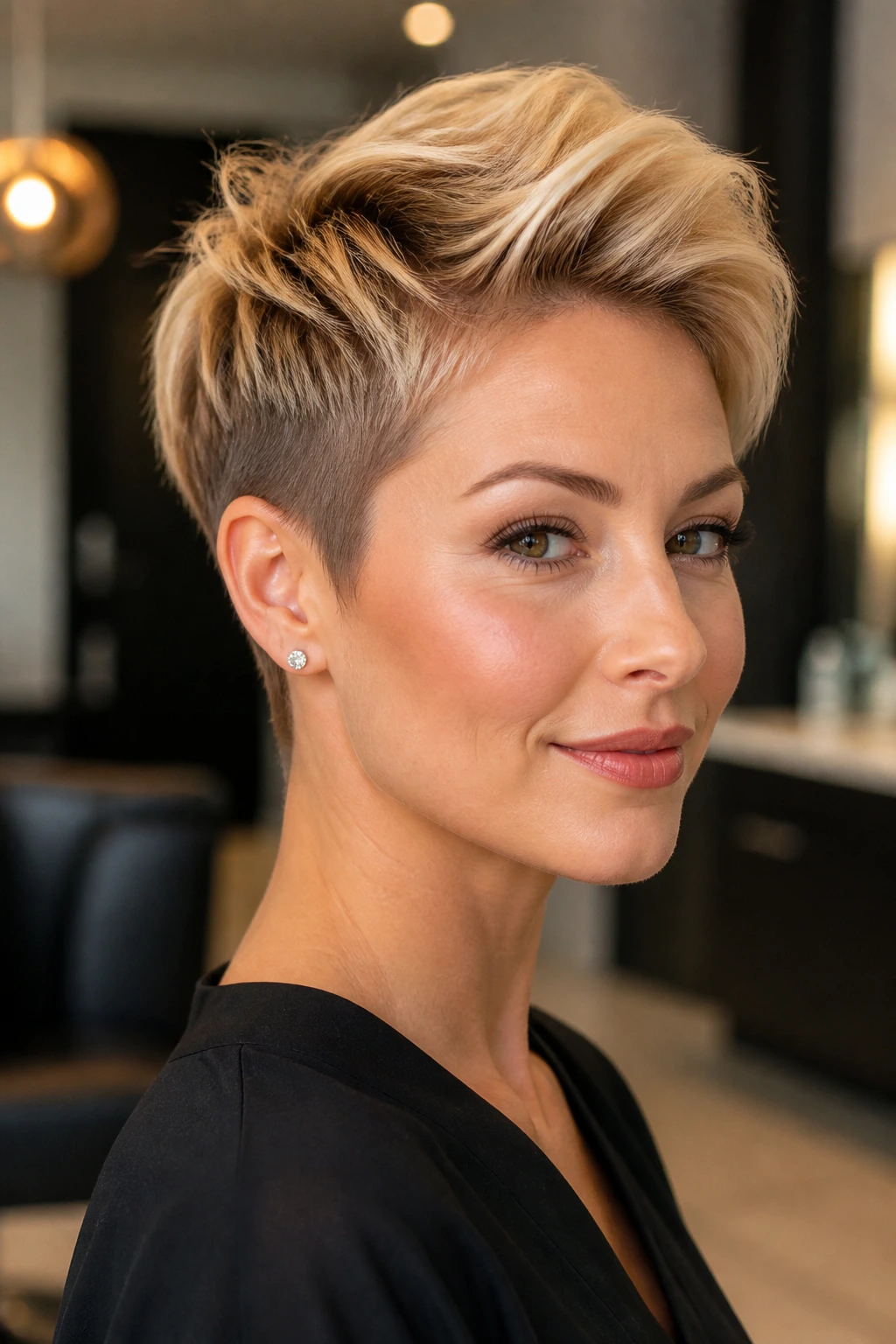
A tapered pixie with a long top is not shy, and that’s what makes it fun. The sides stay close to the head, while the top has enough length to sweep, spike, or fall soft depending on your mood. Oval faces suit this because the shape stays clean around the edges and the top can be adjusted to add height where you want it.
Blonde hair makes the contrast between short and long sections more obvious, so the cut feels graphic in a good way. If the top is textured, use a tiny amount of styling cream to separate pieces. If you want more lift, blow-dry the top upward with a round brush or your fingers.
This is the haircut for someone who likes to change the mood with one product and a five-minute mirror check.
28. Rope-Braid Pigtails for Long Blonde Hair
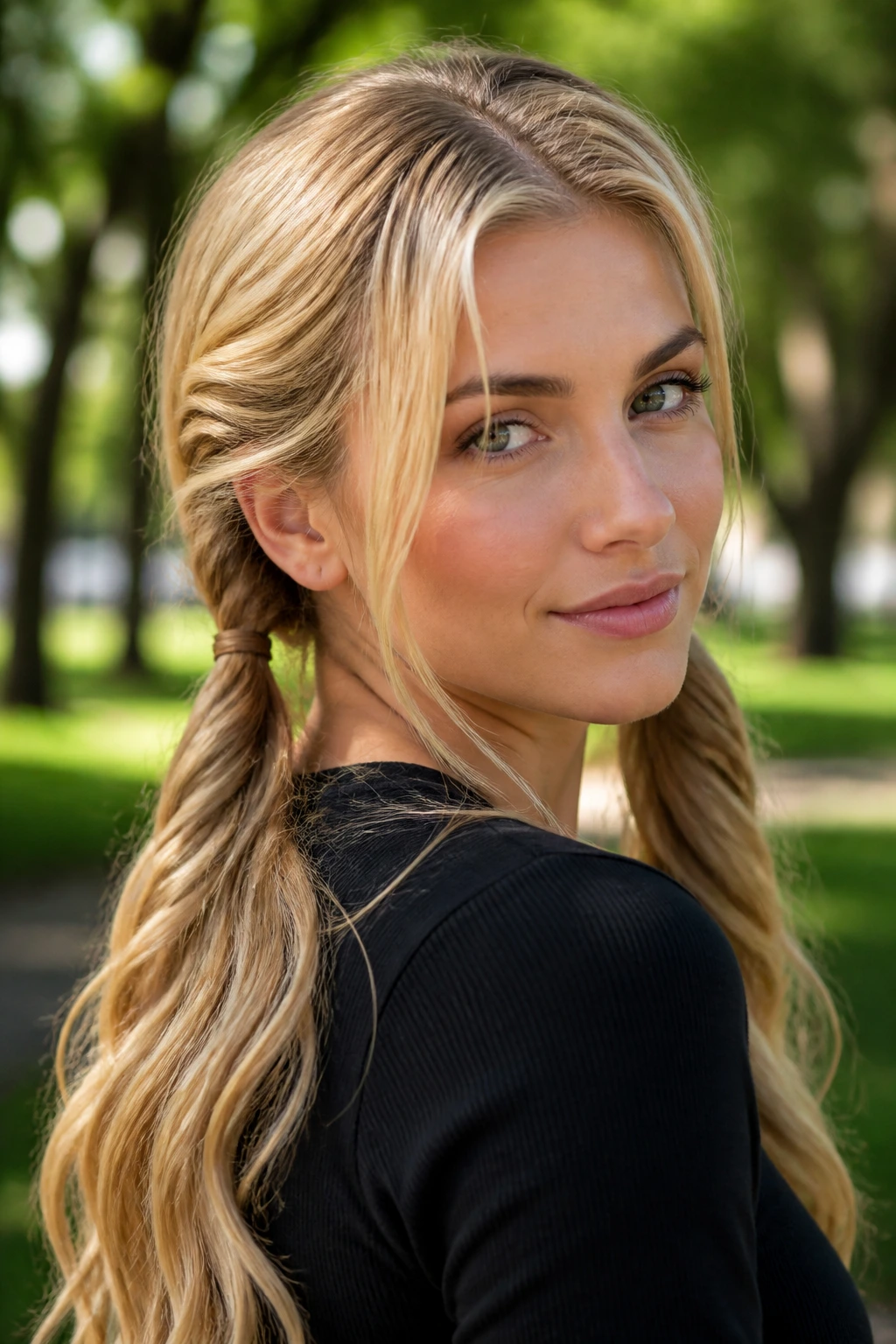
Rope-braid pigtails can sound playful, but they’re a smart way to make long blonde hair look intentional on a casual day. Because each braid twists the strands together, the light catches on the surfaces in a different way than it does on a regular plait. Oval faces stay open if you keep the braids low enough and don’t pull them too tight.
Easy way to do it
Split the hair into two sections, twist each one in the same direction, then wrap the two twists around each other in the opposite direction. That’s the rope part. Secure with small elastics and tug the braid edges a little if you want them fuller.
It’s a low-effort style with a little detail built in. Good for errands. Good for travel. Better than a messy pony that’s trying too hard.
29. Voluminous Side-Flip Blowout
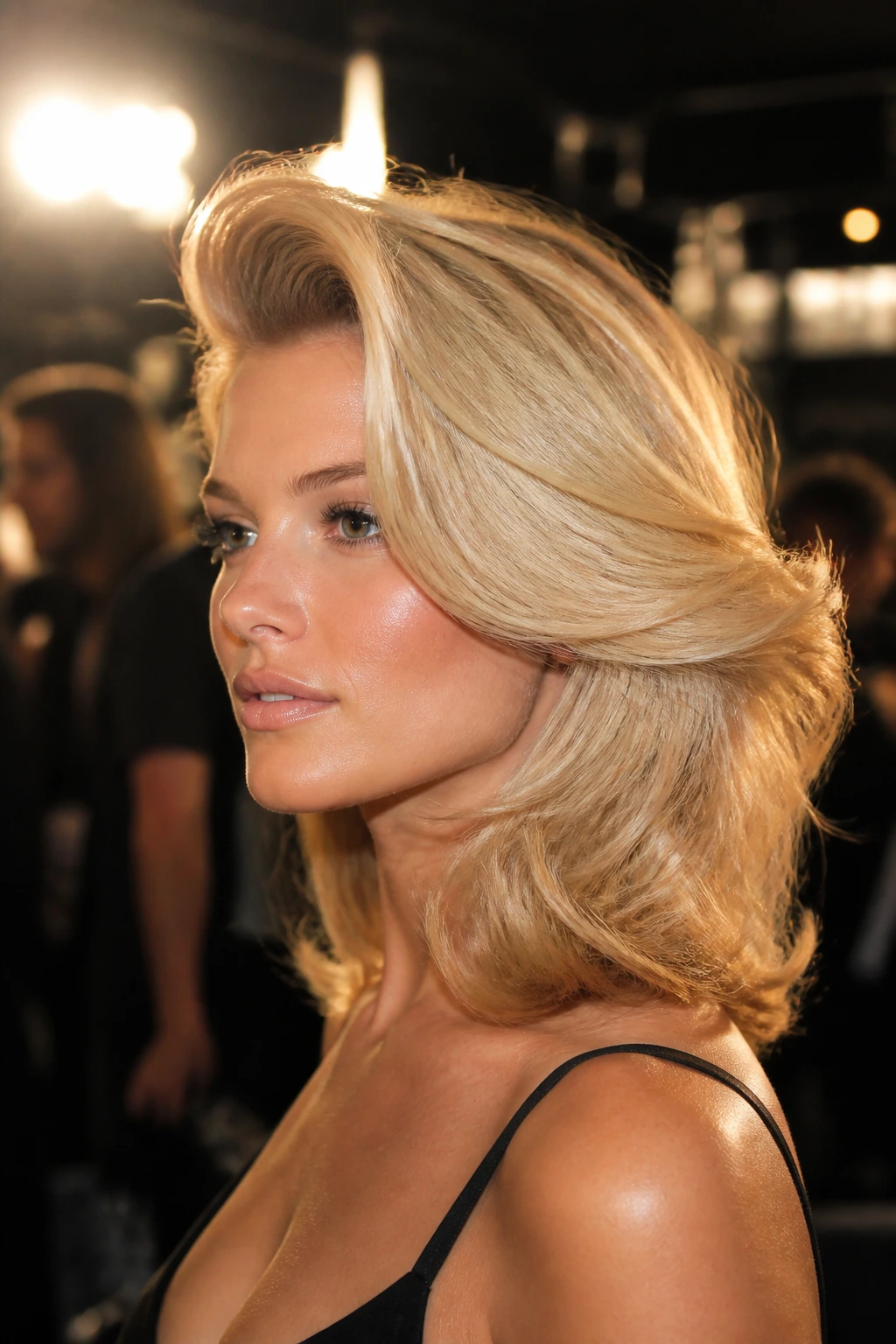
A side-flip blowout is a classic for a reason. It gives an oval face a little asymmetry, which softens the symmetry that oval shapes already have in abundance. Blonde hair loves the lifted crown and side sweep because the shine catches along the curve of the hair as it flips away from the face.
The blowout should have height at the roots and a bend through the mid-lengths, not just a flat side part with ends turned under. That’s what keeps it from looking dated. Use a large round brush, direct the top backward and sideways, and let the ends flick out with a soft curve.
If your hair is layered, this style comes alive fast. If it isn’t, you may want face-framing pieces so the flip has somewhere to land.
30. Fishtail Side Braid with Soft Texture
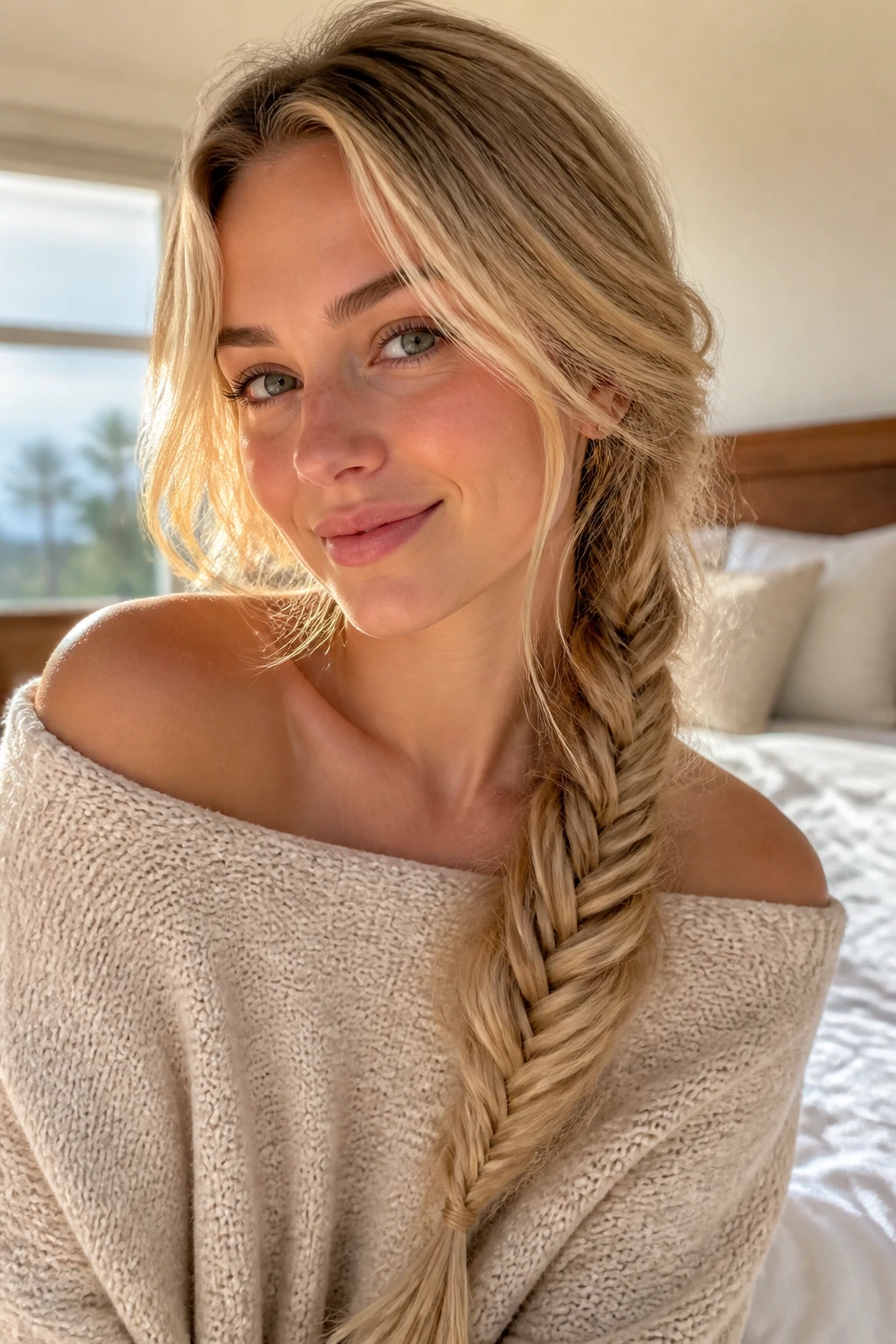
A fishtail braid over one shoulder has a lot going for it: detail, softness, and enough structure to stay in place. On blonde hair, it shows off the mixed shades in the strands more clearly than a simple three-strand braid, which makes the color look richer. Oval faces benefit because the braid sits off to one side and leaves the front open.
Why it’s a strong finish
The braid should be loose enough that you can see the pattern, but not so pancaked that it turns fuzzy. Start low, over one shoulder, and pull a few tiny sections free around the face if you want it softer. A ribbon or small elastic can finish it if you want a more dressed-up feel.
This is one of those styles that looks like effort even when the actual work is modest. Which is a nice place to be.
Why the Cut Shape Matters More Than the Curl Pattern
Oval faces give you a wide lane, but that does not mean every hairstyle lands the same way. The shape of the cut decides where the eye goes first. A blunt jaw-length line says something very different from a feathered shag, and a center part does a different job than a deep side sweep. That’s the real game here.
Blonde hair makes the cut shape more obvious because lighter strands reflect light across the edges. If the perimeter is strong, you notice it immediately. If the layers are weak or the ends are scraggly, you notice that too. This is why blonde hair often looks best when the cut has a clean edge and just enough movement to keep the shape alive.
The easiest mistake is chasing volume in the wrong place. Too much lift at the crown can stretch an oval face. Too much width at the cheekbones can crowd the center. The cuts that work best usually do one smart thing instead of five noisy things.
Essential Tools for These Looks
-
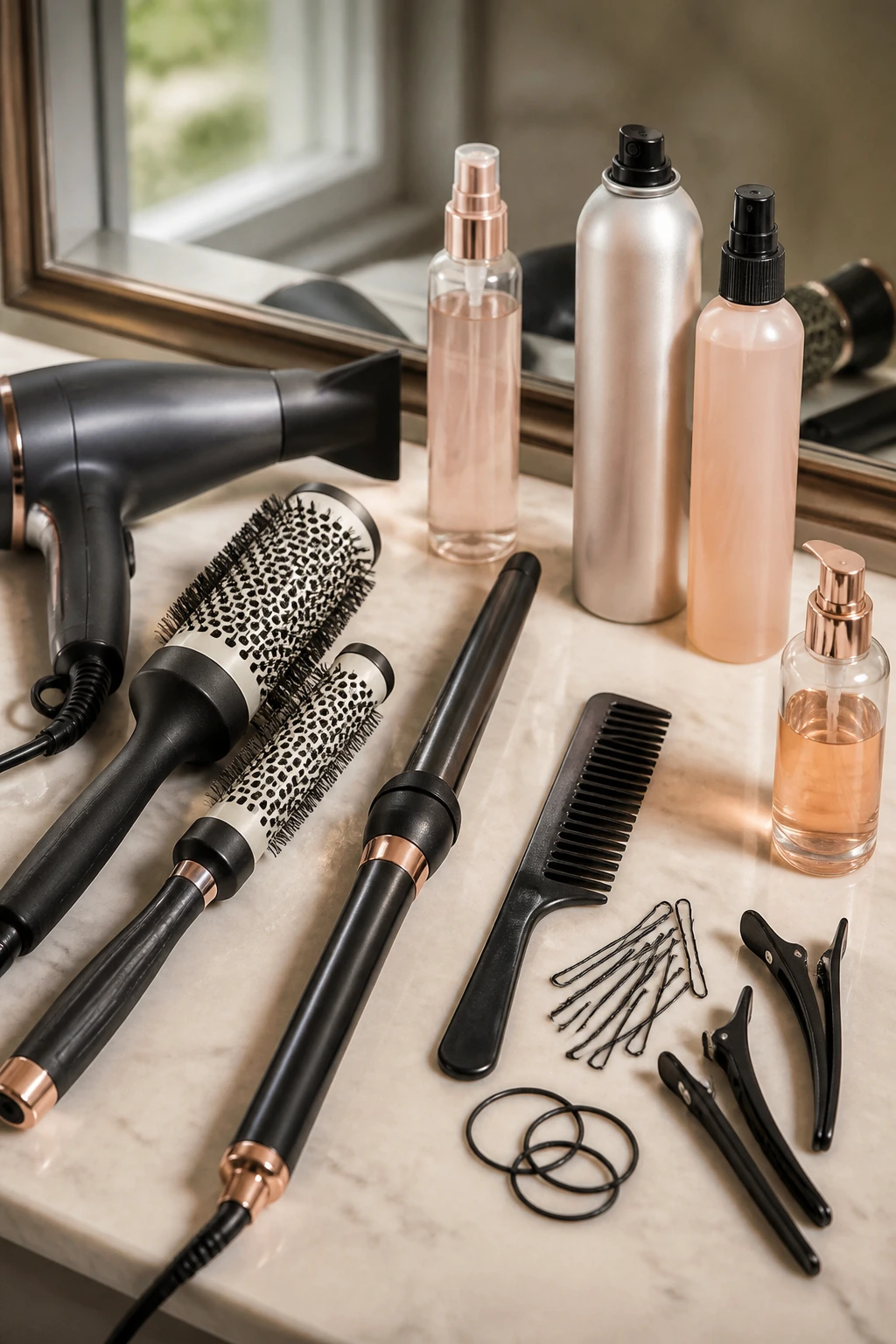
Blow dryer with a nozzle attachment: Helps control the cuticle and direct the hair where you want it, especially for bobs, blowouts, and sleek styles.
-
1-inch and 1¼-inch curling wands or irons: The smaller barrel makes tighter bends for lobs and bobs; the larger one gives softer waves and polished bends.
-
Round brush in two sizes: A medium brush works well for bangs and bobs; a larger brush is better for long layers and feathered blowouts.
-
Heat protectant spray: Non-negotiable on lightened hair. It reduces roughness and helps blondes hold shine longer.
-
Dry shampoo: Useful for root lift on blonde hair, which can show oil faster than darker shades.
-
Texturizing spray or light finishing spray: Gives shags, beach waves, and braids a little grip without turning them sticky.
-
Fine-tooth comb: Best for sleek ponytails, wet looks, and cleaning up part lines.
-
Bobby pins and small elastics: Match them to your hair tone if you want them to disappear; clear elastics are handy for braids and bubble styles.
-
Smoothing serum or cream: Keep it light and use it only through the ends if your blonde is fine or freshly lightened.
-
Duckbill clips: Helpful when setting waves or pinning sections while the hair cools.
Smart Product and Shade Tips for Blonde Hair and Oval Faces
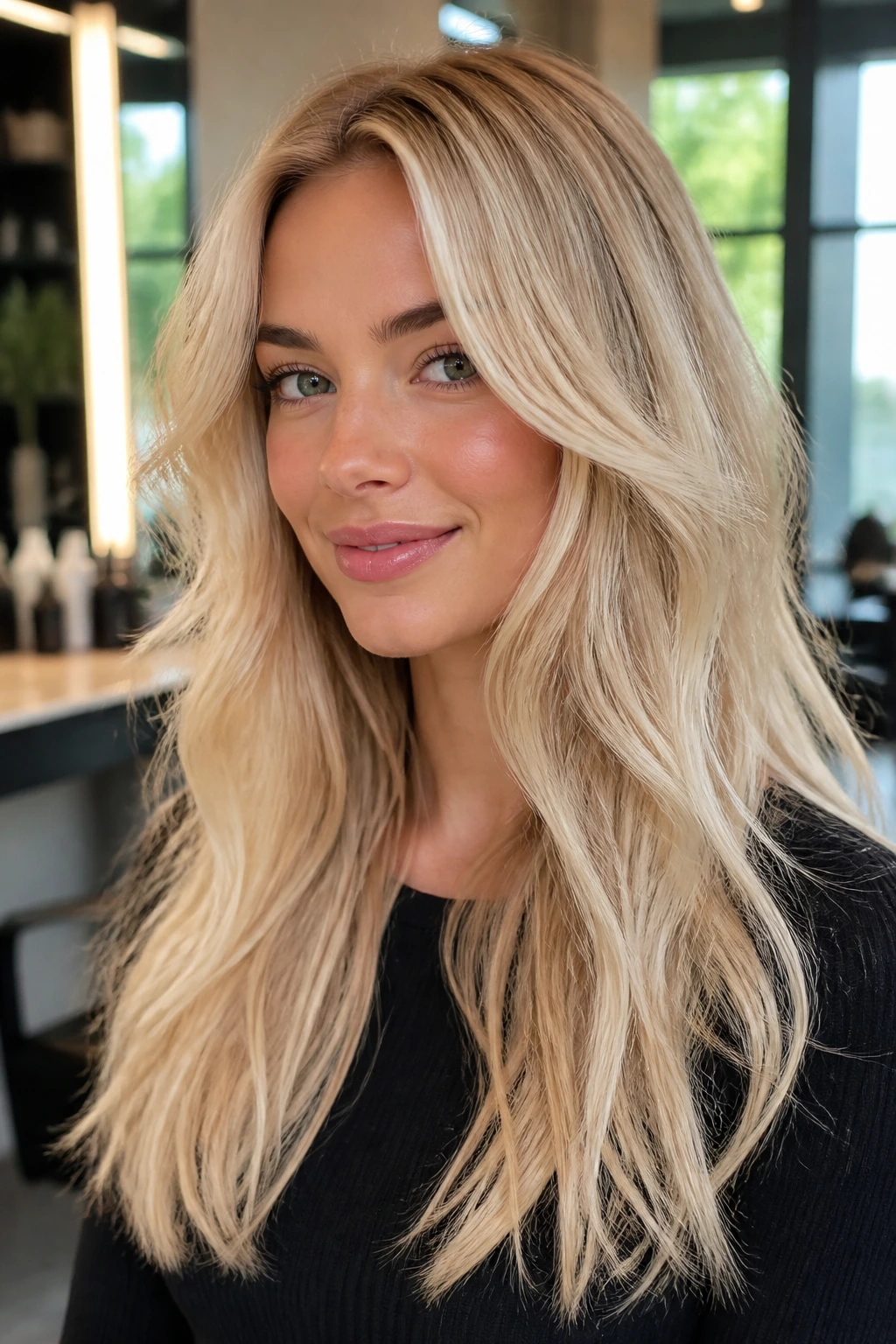
Blonde hair is not one category. That sounds obvious, but it gets ignored constantly. A cool platinum blonde needs different finishing products than a warm honey blonde. A fine highlighted bob needs a different root product than a thick, one-length lob. If you ignore that, the style can fall apart even when the cut is good.
For processed blonde hair, heat protection should be the first product you grab, not the last. Keep irons on the lower end that still does the job, and don’t keep passing over the same section because you want it “a little smoother.” That extra pass adds up. It always does.
If your blonde skews brassy or yellow, use purple shampoo sparingly. Once a week is often enough. Too much can leave the hair dull, dry, or oddly gray at the ends. For warm blondes, a color-safe gloss or a soft beige toner can keep the tone rich without making it flat.
For styling, look for products that give shape without coating every strand. Root sprays, mousses, and light creams tend to behave better than heavy oils and thick waxes. Blonde hair shows buildup fast. One greasy root can ruin an otherwise sharp shape.
How to Wear These Styles for Work, Weekends, and Events
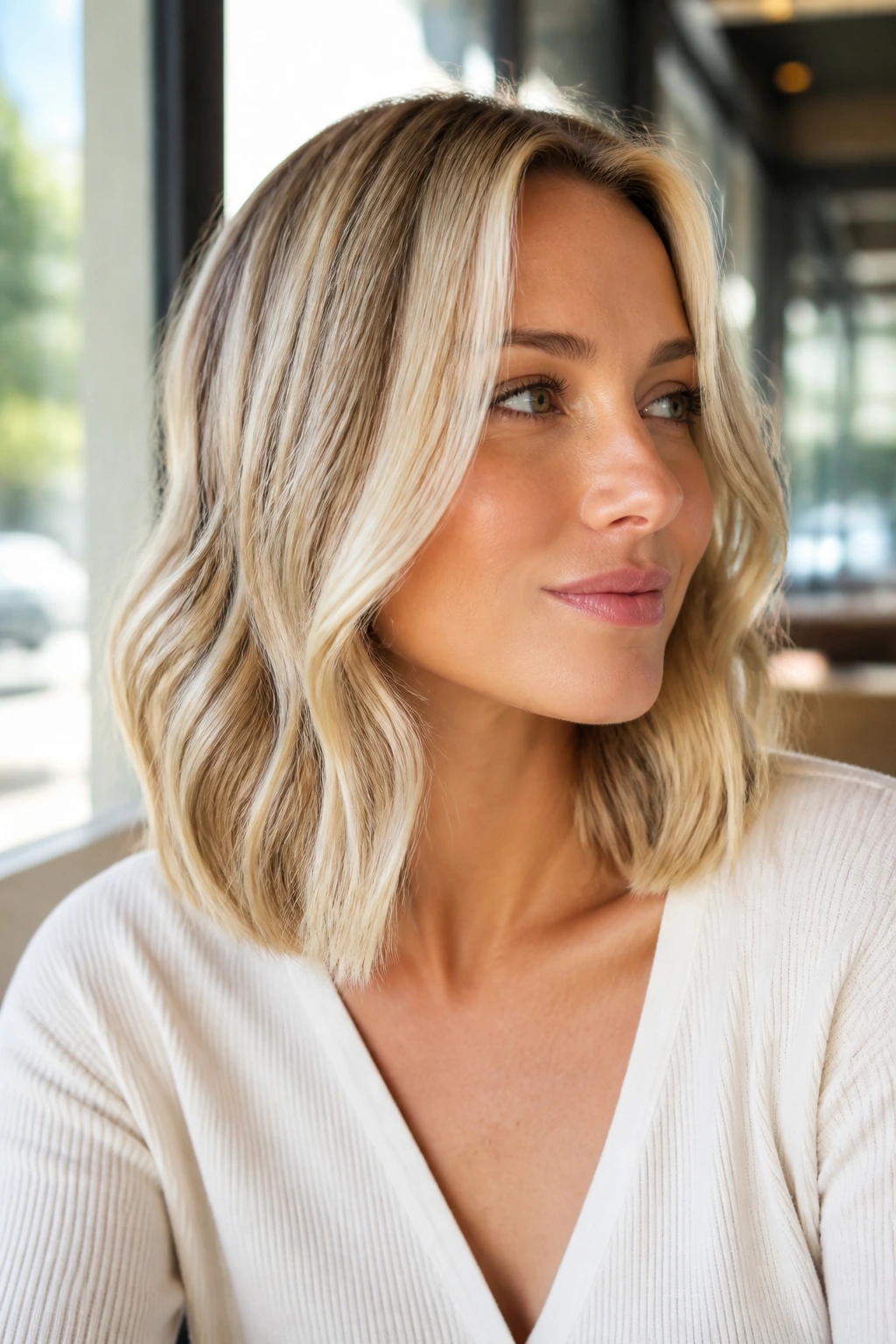
Everyday: The lob, the beach wave, the soft shag, and the messy top knot are the easiest to live in. They don’t need constant mirror checks, and they still keep an oval face looking open.
Work or clean-dress settings: Try the blunt bob, low bun, feathered blowout, or angled lob. They read polished without looking stiff, and they hold up when you tuck hair behind the ears or pair them with a collared shirt.
Evening or event styling: Side-swept waves, low braided chignons, face-framing updos, and slicked-back ponytails give you a stronger line and more contrast. Blonde hair tends to glow under indoor light, so these styles often look richer than they do in daylight.
If you want your face shape to stay the focus: Keep volume either at the crown or the ends, not both. That keeps the silhouette balanced and prevents the style from spreading too wide around the cheeks.
Additional Tips and Styling Boosters
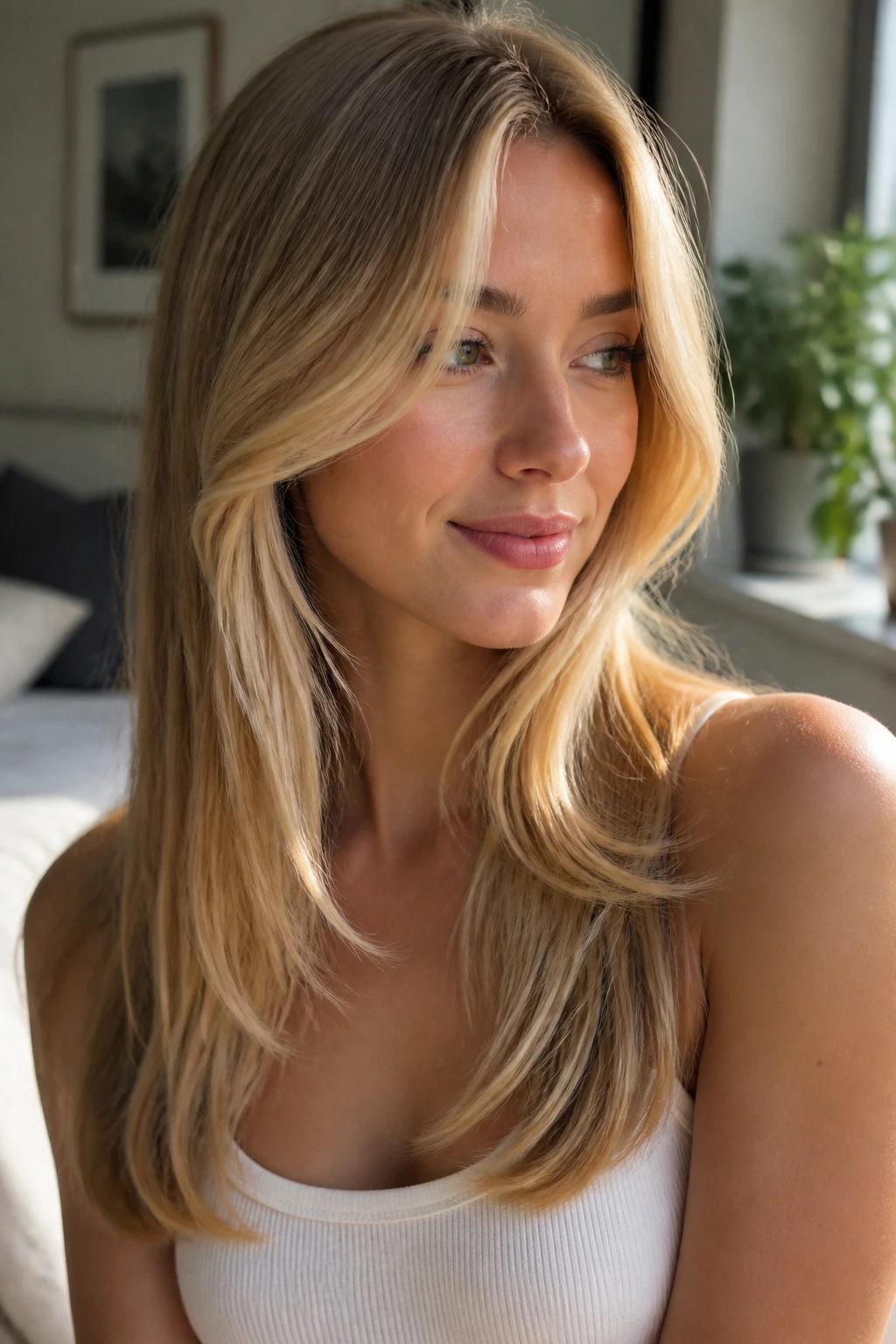
Face-Framing Rule: Keep the shortest face-framing pieces around cheekbone level if you want softness without dragging the face down. That little placement difference matters more than people think.
Color Placement: If your blonde is highlighted, ask for lighter pieces around the front and crown. It makes waves, braids, and blowouts read with more depth because the light catches the top layers first.
Part-Switch Trick: Shifting your part by even half an inch can wake up a flat style. A center part is clean, but a deep side part adds instant lift when the hair feels stuck.
Accessory Move: Small clips, ribbon ties, pearl pins, or a thin headband can change the mood of a simple ponytail or braid without changing the cut itself.
Finish: Use a tiny amount of serum only on the last 2 to 3 inches of hair. If you put it near the roots, blonde hair often goes limp and dull within minutes.
Common Mistakes in Hairstyles for Blonde Hair and Oval Faces
The first mistake is dragging every style too tight. A severe ponytail or slicked-back bun can make an oval face look longer than it is, especially if the crown is flattened too hard. Leave a little movement at the top or soften the front pieces.
Another common one: too much product. Blonde hair shows it fast. If the roots look dirty by noon or the ends feel waxy, you went too far with serum, cream, or dry shampoo. Use smaller amounts and build up only if the hair needs it.
The third issue is ignoring the ends. Lightened hair gets stringy at the bottom before people notice the top looks off. Regular trims matter here. So does keeping blunt edges full instead of letting them fray for months.
A fourth mistake is choosing bangs that are too dense. On an oval face, heavy fringe can hide the best part of the shape. Curtain bangs or bottleneck bangs usually keep the balance better.
And then there’s the color problem. Harsh brass, over-toned ash, or a muddy root can make a great cut look tired. Healthy-looking blonde needs tone control as much as shape.
Variations and Adaptations to Try
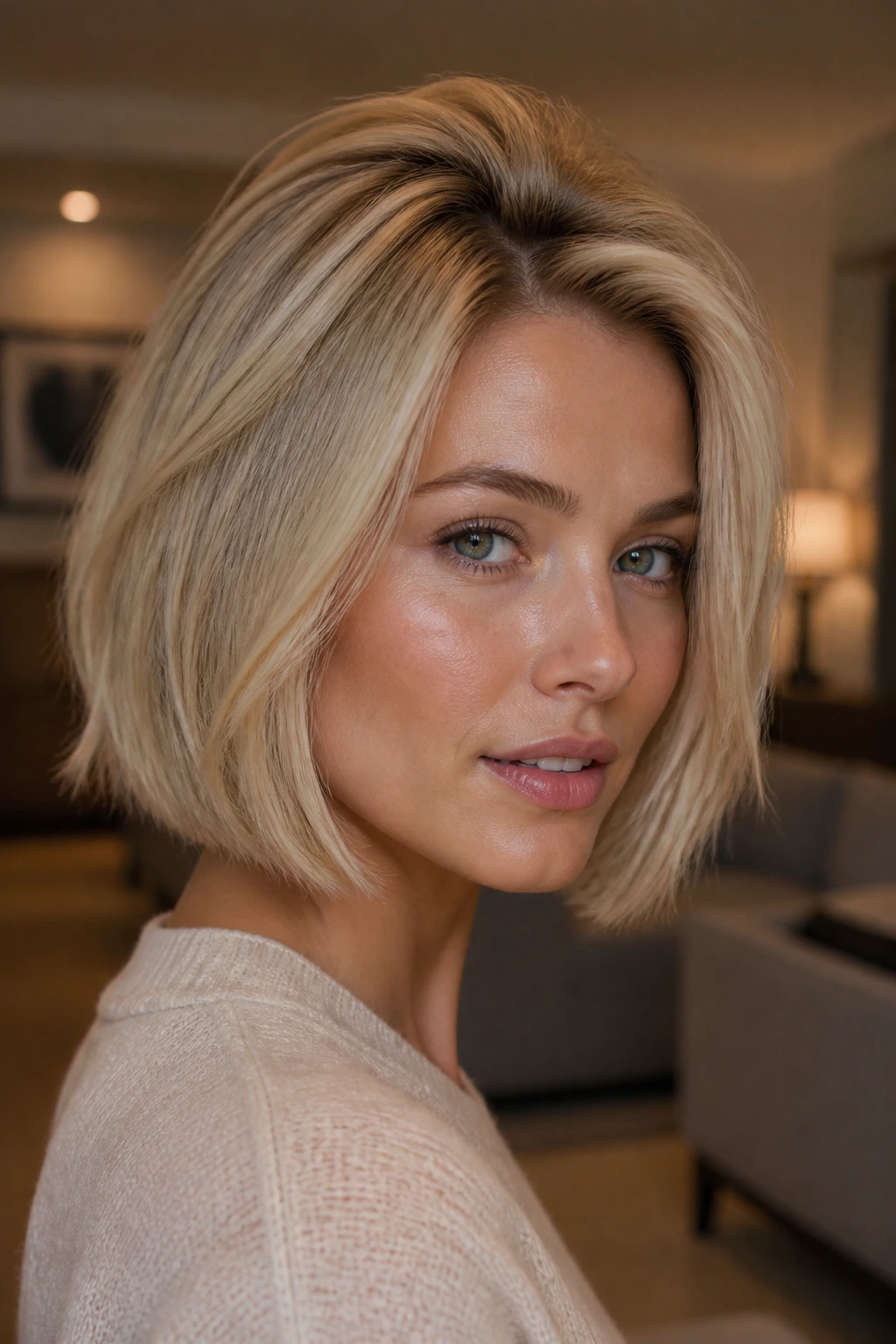
Fine-Hair Volume Boost: Choose blunt edges, shorter layers, and root-lifting mousse. This works best with bobs, lobs, and feathered blowouts because the hair keeps a fuller perimeter.
Thick-Hair Softening Edit: Ask for internal layers that remove weight without breaking the outline. Shags, long layers, and angled lobs are especially good when the hair gets heavy around the jaw and shoulders.
Curly Blonde Version: Keep the shape longer than you would for straight hair and cut by curl pattern, not just by length. Chin-length curls, half-up styles, and soft updos work better than blunt shapes that fight the curl.
Cool Blonde Finish: Pair cleaner styles — glass hair, sleek ponytails, sharp bobs — with cooler or pearl tones. The hair reads crisp, and the lines feel intentional.
Warm Honey Blonde Finish: Soft waves, feathered blowouts, braids, and layered lobs bring out warm tones without making them look brassy. The movement helps the color glow instead of sitting still.
Low-Maintenance Air-Dry Version: Keep the cut in a shag, lob, or soft wolf cut. These styles are forgiving when you only have time for leave-in cream and a quick scrunch.
Make-Ahead, Maintenance, and Wash-Day Planning
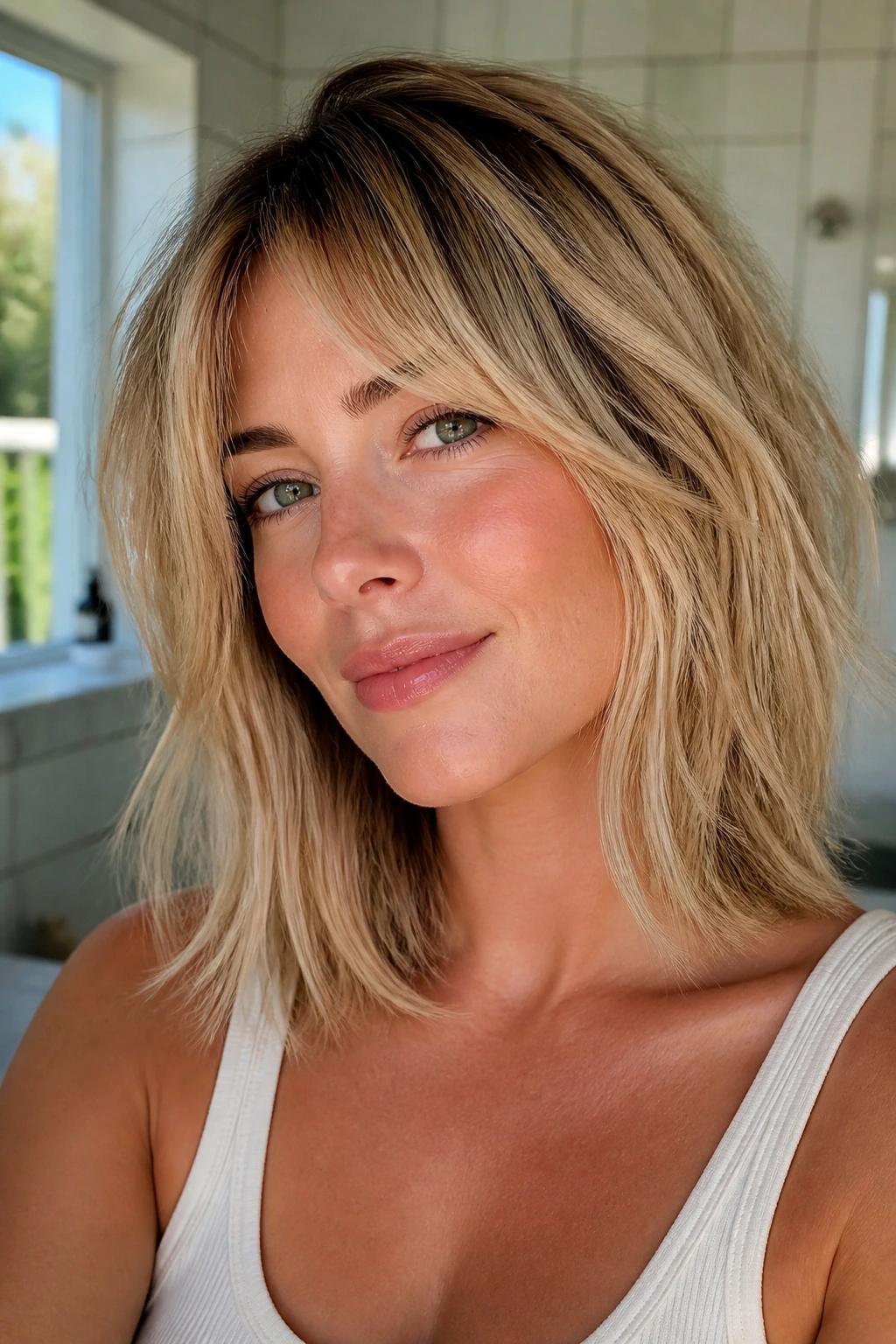
Some of these hairstyles hold better than others, and blonde hair usually decides that by day two. Sleek ponytails, wet looks, and polished buns are best worn the same day. They can survive a little touch-up, but they don’t improve much overnight.
Braids, bubble ponytails, and soft updos usually last 1 to 3 days if you protect them with a silk pillowcase or a loose wrap. A quick refresh with dry shampoo at the roots and a tiny mist of water on the ends is often enough. For waves and blowouts, expect the shape to stay strongest through day one and soften naturally after that.
For maintenance, keep a bob or pixie trimmed every 4 to 8 weeks depending on how fast your hair grows and how sharp you want the line to stay. Longer layers can usually go 8 to 12 weeks, but the ends should not be left to fray. Blonde hair shows split ends early.
Heat-styled looks last longer if you prep the hair correctly: heat protectant, dry fully before using irons, and let curls cool before brushing them out. If you sleep on a style, clip the crown loose rather than crushing the whole shape flat. That tiny habit can save a lot of morning frustration.
Frequently Asked Questions About Hairstyles for Blonde Hair and Oval Faces
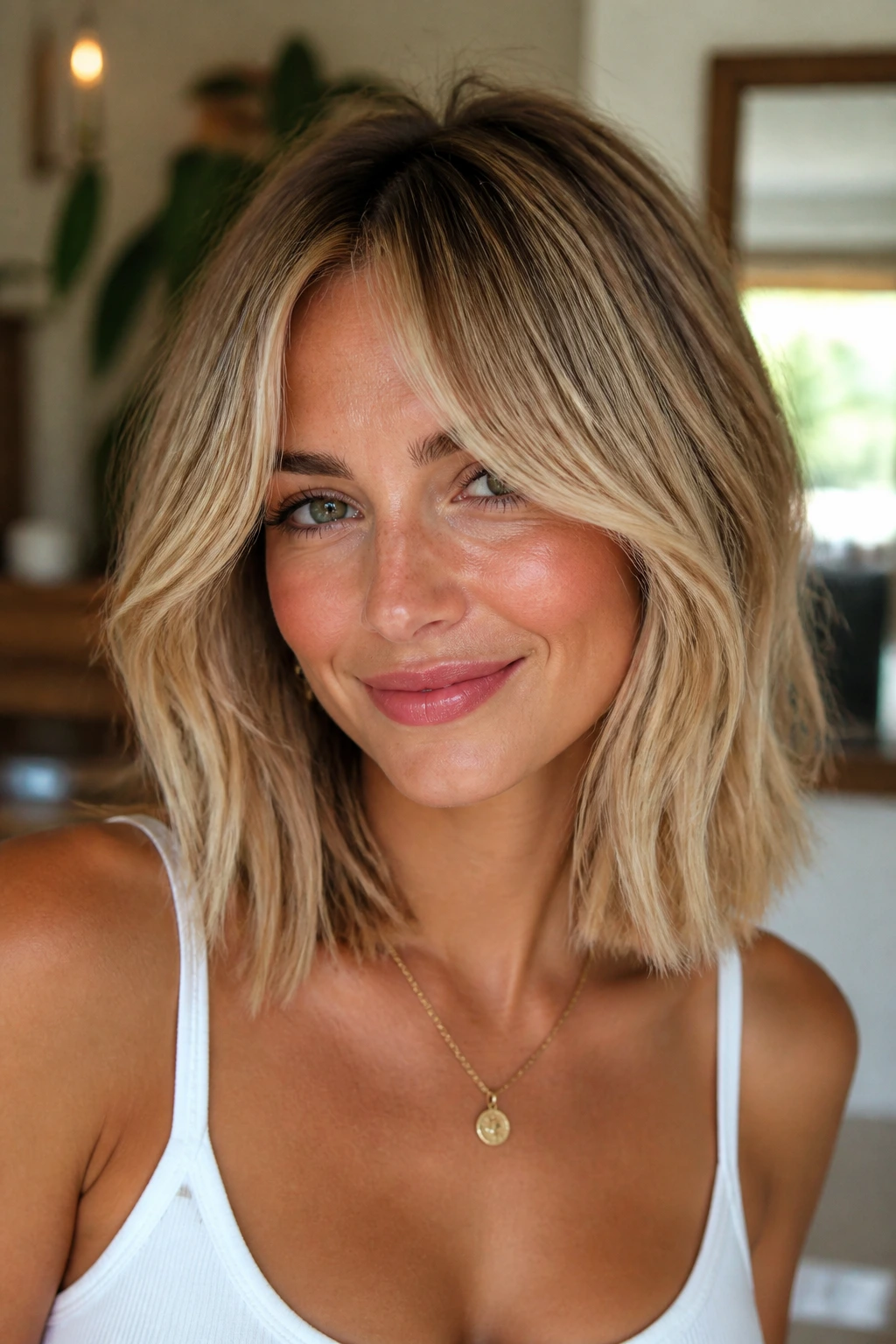
What haircut is most flattering if I have blonde hair and an oval face?
A collarbone lob, a blunt bob, and long layers with soft movement are all strong choices. Oval faces have flexibility, but blonde hair looks best when the cut gives the color some shape instead of leaving it to hang flat.
Do bangs work on an oval face with blonde hair?
Yes, but the type matters. Curtain bangs and bottleneck bangs usually work better than thick, heavy fringe because they soften the forehead without hiding the face’s balance.
Is a middle part good for oval faces?
Usually, yes. It keeps the face open and clean, which works well with blonde hair. If the style feels too long or severe, shift the part slightly off center for a softer effect.
What if my blonde hair is fine and flat?
Choose blunt edges, root lift, and styles with crown volume such as a feathered blowout, bob, or shoulder-length lob. Fine blonde hair often looks best when the perimeter stays full and the roots get a bit of help.
Which styles work best for thick blonde hair?
Layered shags, angled lobs, long layers with invisible shaping, and braided or pinned styles. Thick hair needs movement so the shape doesn’t collapse into one heavy block.
How often should I trim these styles?
Short cuts like pixies and bobs need more regular trims, usually every 4 to 8 weeks. Longer layered styles can stretch longer, but if the ends look see-through or the shape drops, it’s time.
Can curly or wavy blonde hair use these same ideas?
Absolutely, but the cut has to respect the texture. A curly bob, soft shag, layered lob, and half-up styles often work better than super blunt lines that fight the curl pattern.
How do I keep blonde hair from looking dull in these styles?
Use a gentle shampoo, avoid overusing purple shampoo, and finish with a light glossing serum on the ends. Shine and tone matter a lot on blonde hair because the color can go flat fast if it’s overloaded with product.
A Few Styles Worth Trying First
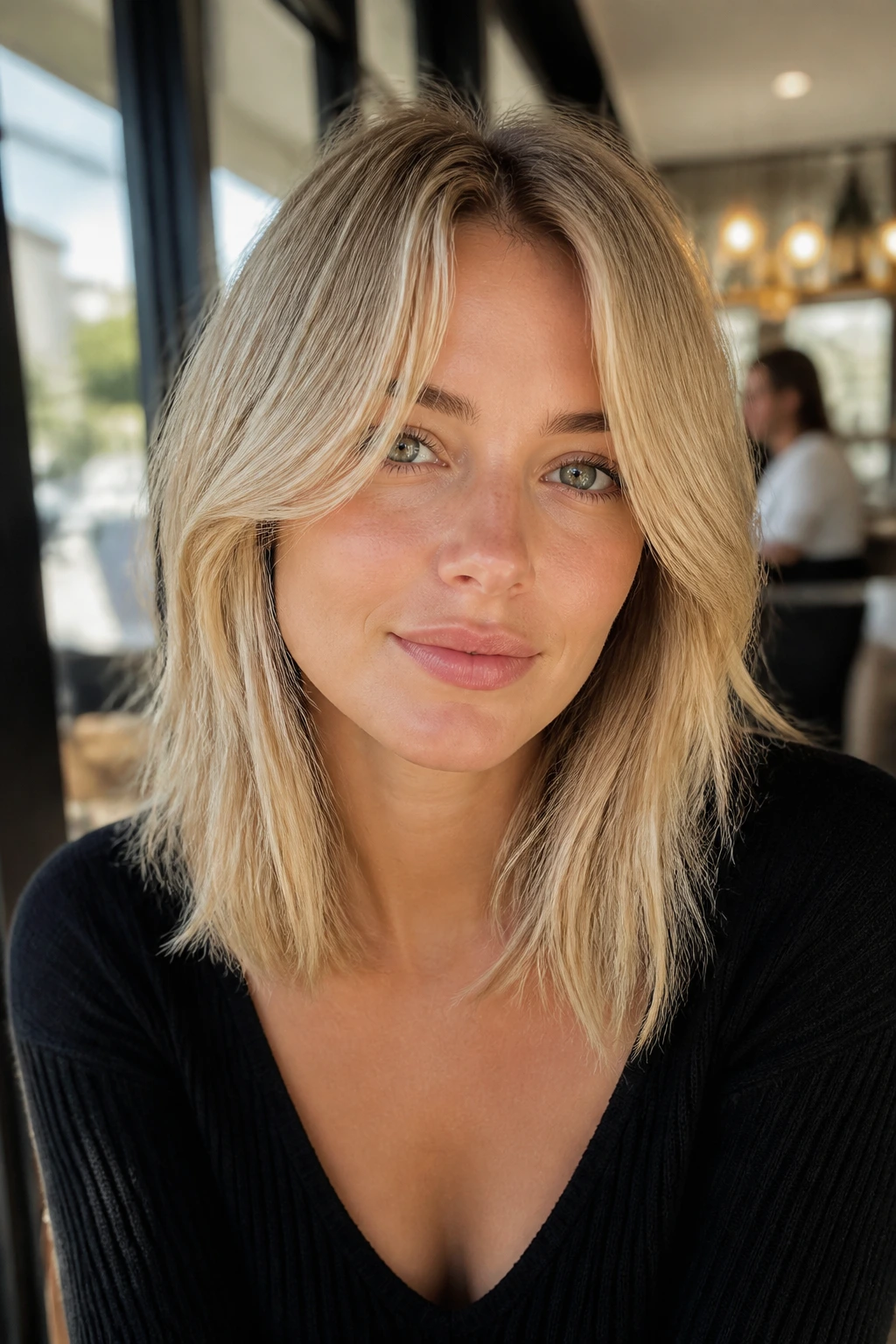
If you’re staring at the list and feeling a little spoiled for choice, start with the styles that carry the least risk and the most payoff: the collarbone lob with curtain bangs, the feathered blowout, and the long center-parted waves. They all give oval faces shape without overthinking the geometry, and they make blonde hair look like it has depth instead of just length.
After that, move toward the bolder options if you want them — the pixie, the wet ponytail, the wolf cut, the French bob. Oval faces can handle the switch. Blonde hair tends to make the details easier to see, which is both the challenge and the fun of it. Pick the shape that gives your color a better job to do, and the rest gets a lot easier.