



A low bun box braid style with money-piece highlights solves a problem many summer hairstyles ignore: you want your hair off your neck, but you still want the front of your face to look awake. The bun handles the heat, the braids give the style weight and shape, and the lighter front pieces keep the whole thing from sinking into one dark lump at the back of the head.
The best versions are not the tight, shiny helmets people sometimes call sleek. They sit low, with enough tension to hold, enough looseness to breathe, and enough color near the temples to catch the eye before the bun even comes into view. That small bit of contrast matters more than a lot of people think.
Once you start paying attention to where the bun sits, how wide the face-framing braids are, and whether the highlight tone leans honey, caramel, copper, or blonde, the style opens up fast. Some versions look polished enough for a wedding guest dress. Others feel made for a linen shirt, a tube top, and a day when you want your hair cooperating without asking much back.
Why This Collection Feels Different
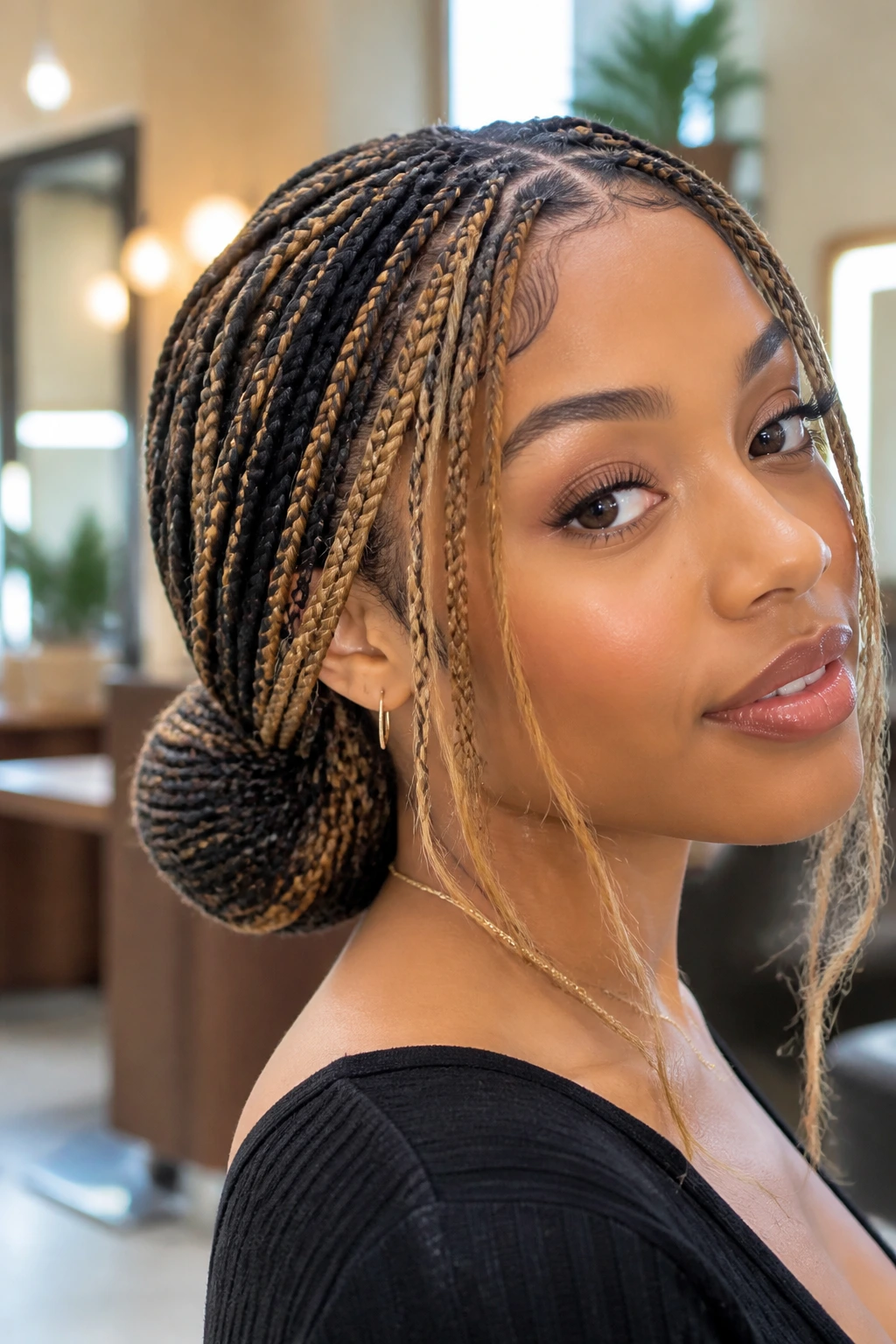
-
The color does the heavy lifting: Money-piece highlights sit where the eye lands first, so even a very simple bun looks intentional instead of plain.
-
The shape stays cool near the neck: A low bun keeps the weight off your shoulders and collarbone, which matters when the weather is sticky and you do not want extra hair sticking to skin.
-
The looks range from sharp to soft: You can go with crisp center parts, loose tendrils, side sweeps, or beadwork and still stay inside the same basic silhouette.
-
The bun keeps the style practical: Box braids already have structure; the low placement keeps that structure from getting too tall, too heavy, or too fussy.
-
The front pieces make it wearable: Face-framing highlights soften the front so the style does not feel severe, which is the mistake a lot of braid buns make when they are left all one color.
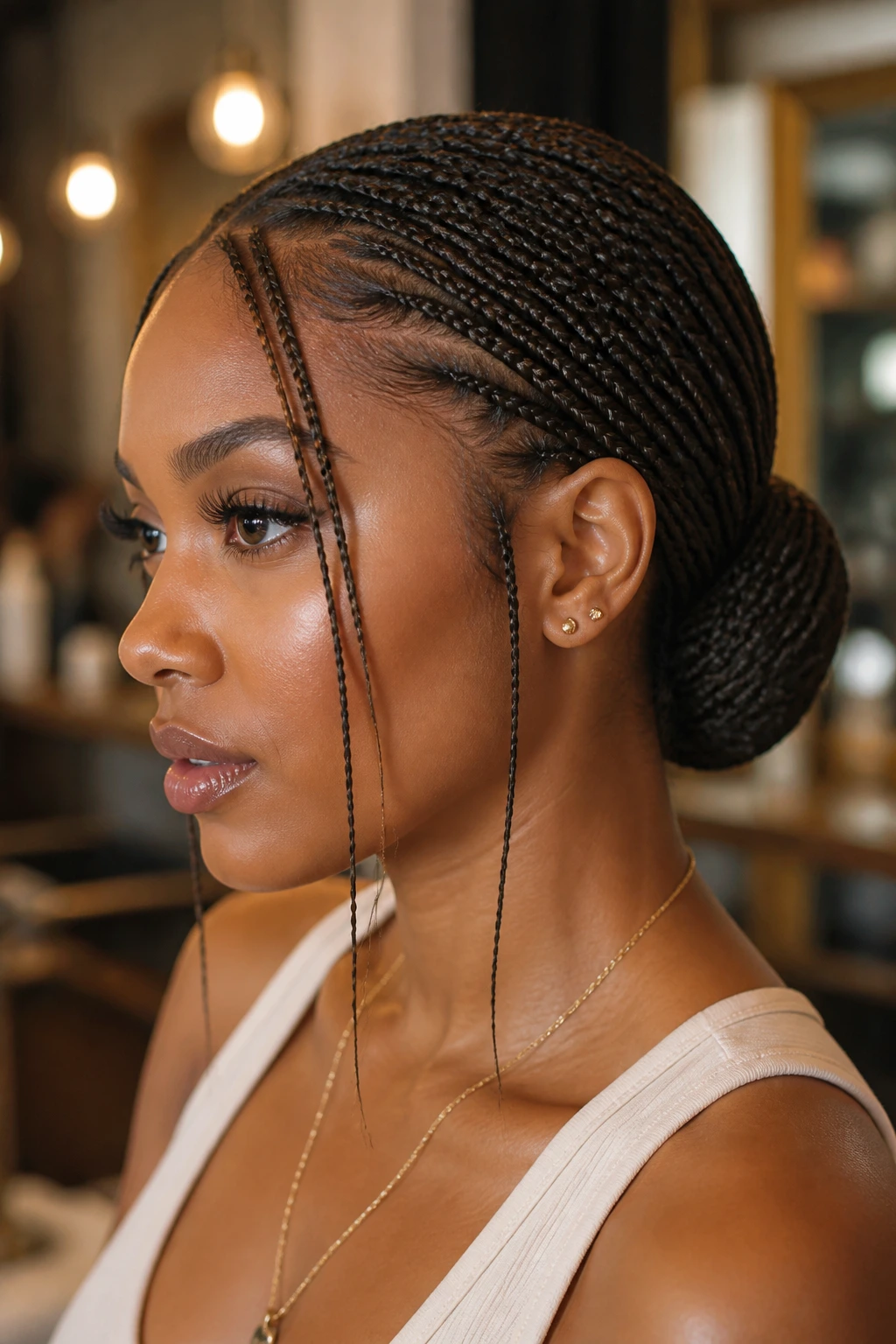
1. Sleek Nape Knot with Thin Face Frames
The cleanest version of this look is the one that sits right at the nape and refuses to move. Thin money pieces at the front keep it from feeling too stern, especially if the rest of the braids are deep brown, black, or burgundy. It is the kind of style that looks calm even when the rest of the day is not.
Why it works
The low knot creates a neat little anchor point, and the skinny face-framing pieces act like a soft border around the face. That matters because a dark braid bun on its own can look a little heavy from the front. A narrow highlight strip changes the balance without making the whole head look overdone.
If your braids are medium size, this version is especially nice because the braid pattern still shows at the crown. Pull the bun low, smooth the top, and let the front pieces fall in front of the ears instead of forcing them behind them.
Best for: round or oval faces, sharp cheekbones, and anyone who likes a minimal finish.
Best braid length: shoulder length to mid-back length.
Best highlight tone: warm blonde, caramel, or a soft beige blonde.
2. Deep Side-Part Roll with Honey Streaks
A deep side part gives the style more movement before the bun even starts. The bun itself stays low, but the part shifts the weight to one side, which makes the honey money pieces read softer and more face-focused. It has a little old-school glamour in it, which I like.
The trick is to keep the part clean and the bun compact. If the bun gets too fluffy, the side part loses its shape and the whole look starts to wander. You want a deliberate bend, not a loose pile of braids pinned wherever they landed.
Wear this with hoops or a single statement earring on the heavier side. It draws the eye up and keeps the front from feeling flat. The highlight tone should be warm; honey sits better here than icy blonde because the side sweep already gives you enough contrast.
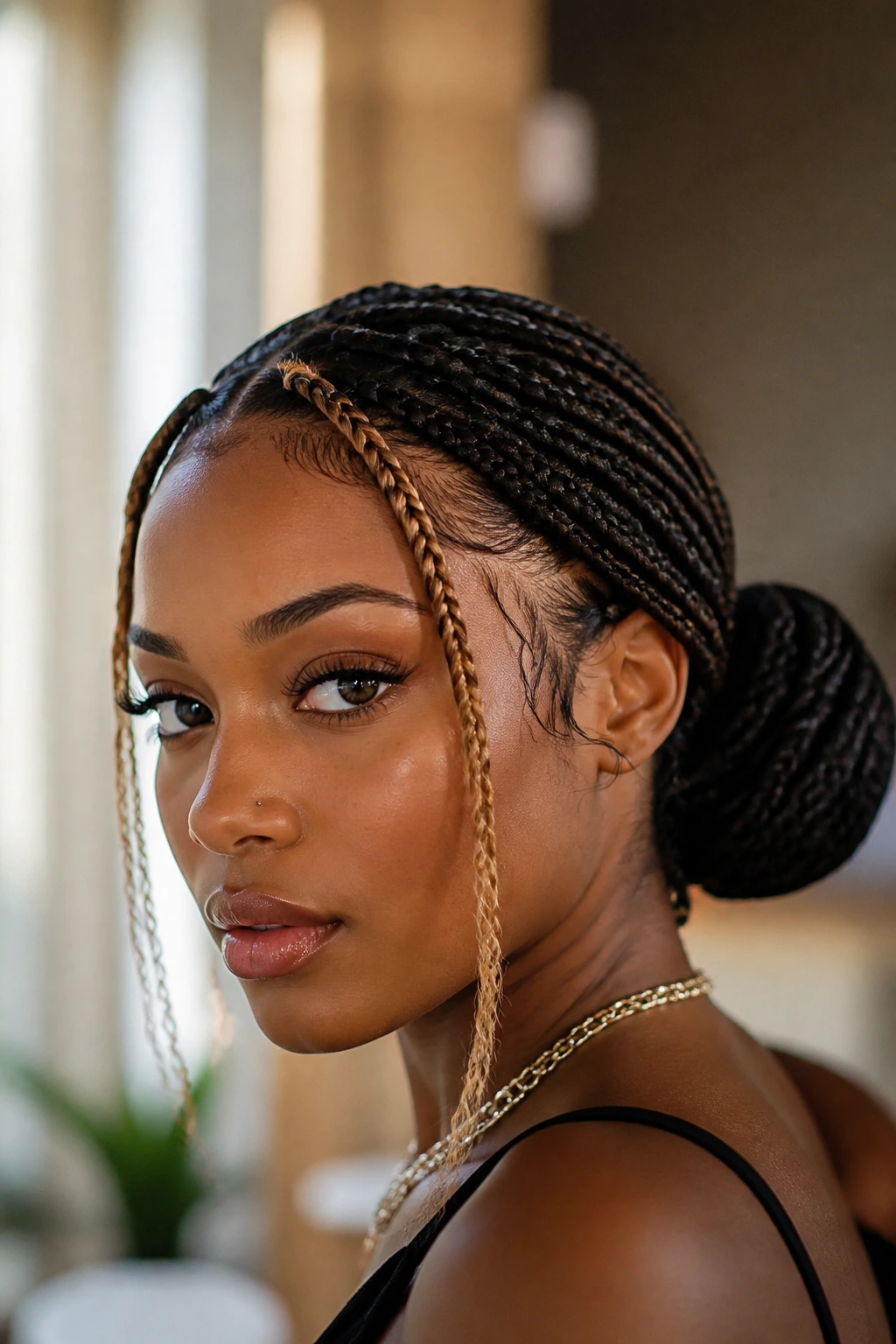
3. Middle-Part Wrapped Bun with Two Bright Strands
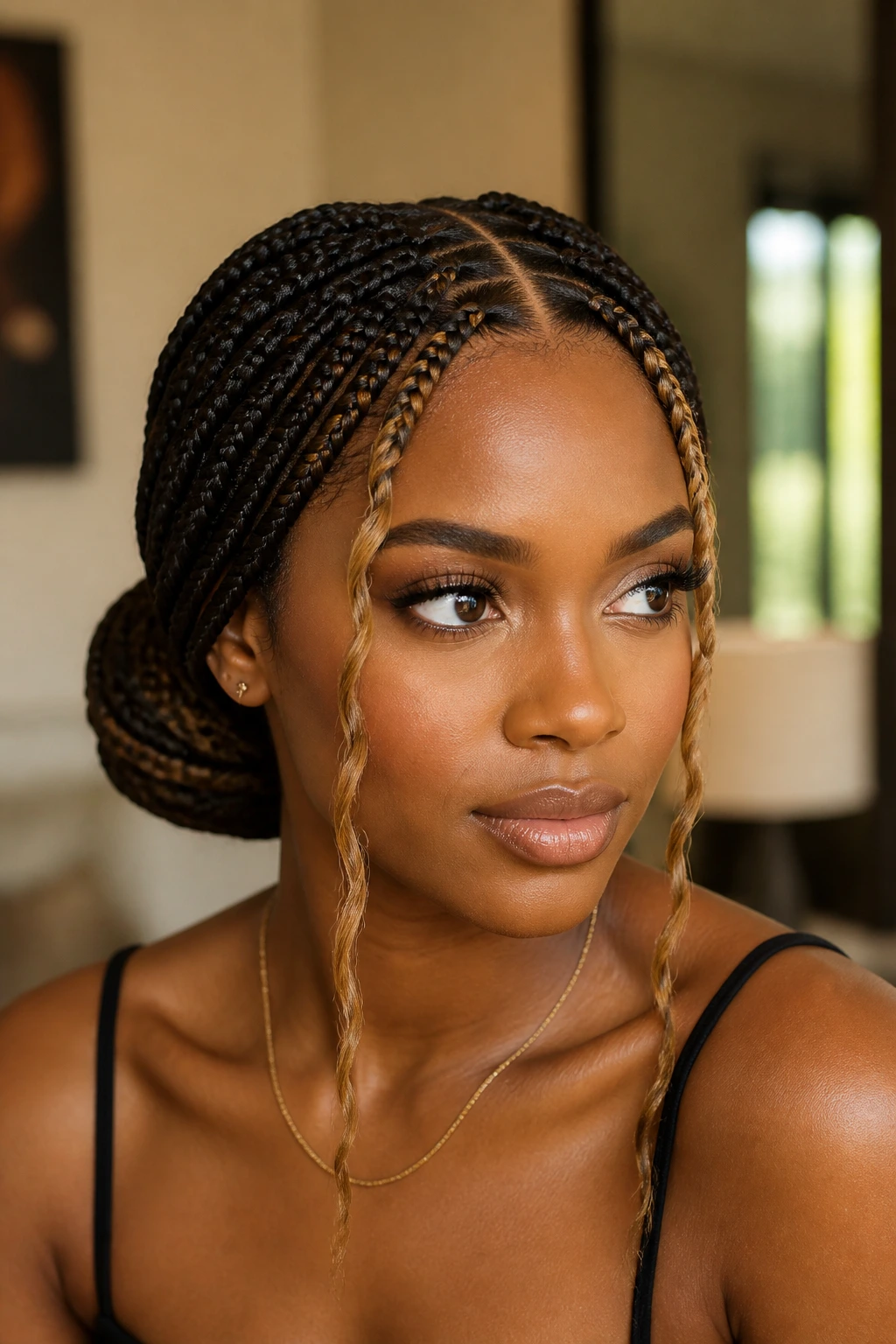
Why does the middle-part version keep showing up in braid inspo boards? Because it works. The symmetry makes the low bun feel deliberate, and two bright front strands keep the face from disappearing behind the braids.
How to wear it
Keep the middle part straight all the way back, then wrap the bun tightly enough that the braid ends disappear under the coil. The front pieces should be just wide enough to show the color, not so wide that they start looking like chunky curtain bangs. Two pieces at the temples is enough.
This version is easy to style for a dressier event because the parting does half the work. Add a soft gloss on the face-framing braids and leave the rest matte. That contrast is small, but it reads well.
4. Chunky Rope-Twist Bun with Caramel Money Pieces
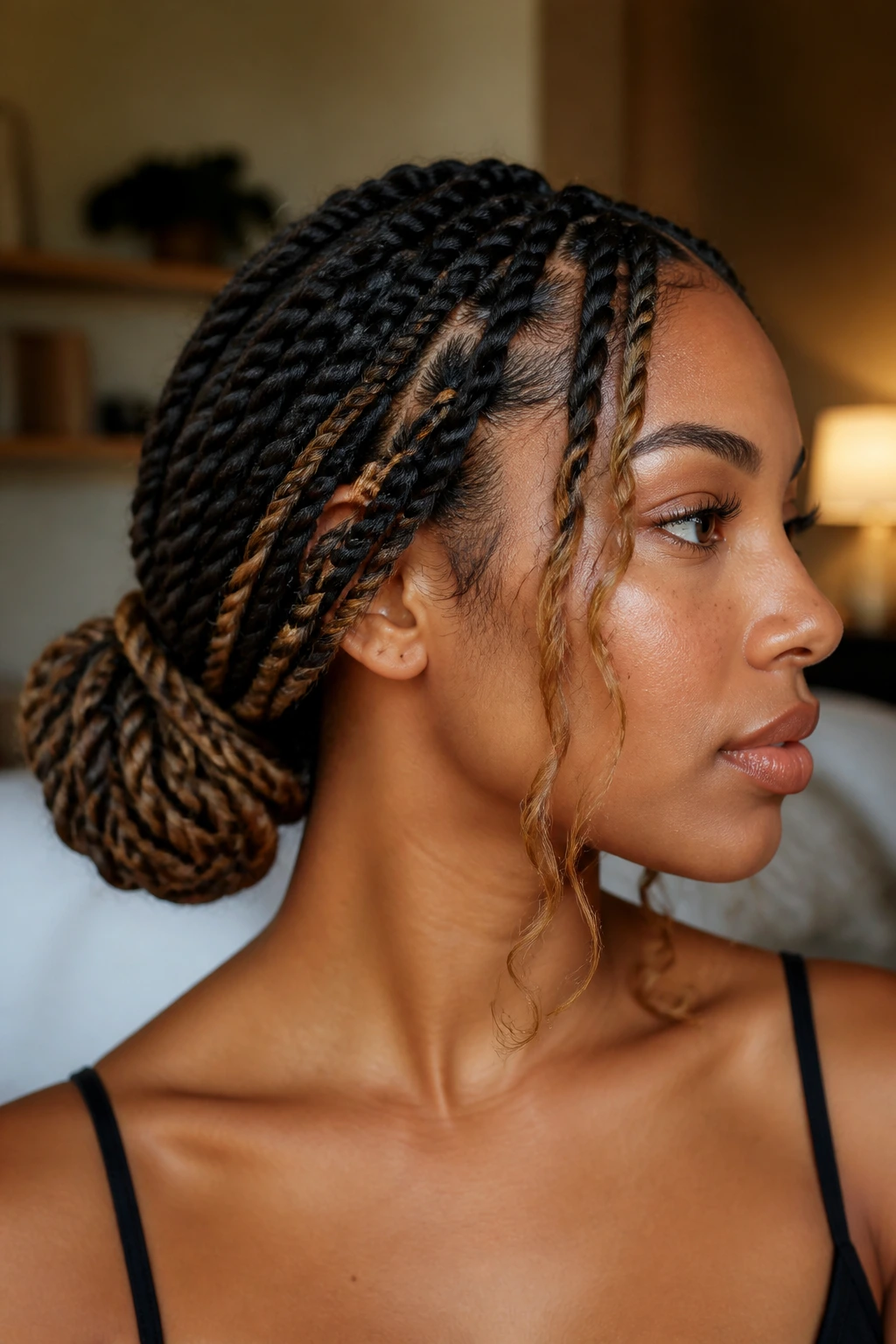
If your box braids are thick, do not fight them into a tiny knot. Turn them into a rope-twist bun instead. The twist gives the bun a firmer spine, and caramel money pieces keep the front from looking too heavy against the larger braid size.
You can think of this look as the sturdy version of the low bun. It has more texture and less fuss. The bun looks full, but because it stays close to the nape, it still feels manageable in warm weather.
Quick details:
- Works best with medium-to-jumbo box braids.
- The rope twist should wrap flat, not stack upward.
- Caramel or light brown front pieces give the cleanest contrast.
- A few bobby pins placed in an X pattern hold the shape better than one giant pin.
That last bit matters. One pin will slip. Two crossed pins usually do the job.
5. Crowned Low Bun with Braids Swept Back
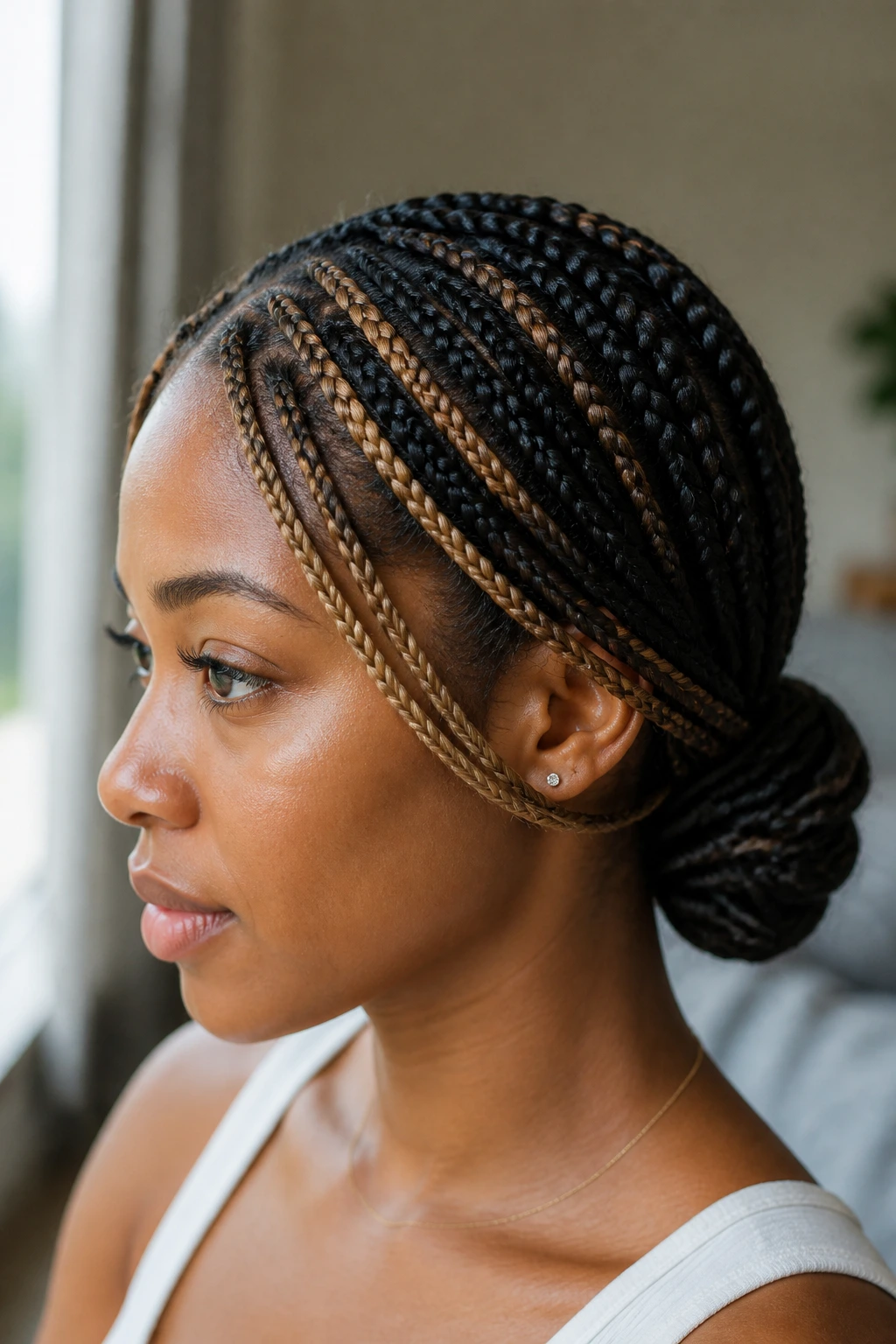
This is the version that looks more dressed up without asking for much extra work. The front braids sweep backward in a neat line, almost like a low crown, and then everything collapses into a polished bun at the nape. The money pieces sit right beside the temples and along the part, so the face gets a bright frame before the bun even enters the picture.
I like this one for events where you want your hair to hold up in photos. It has shape from the front, shape from the side, and a clean finish from behind. The bun itself should stay round and low, not perched high like a topknot that lost the plot.
A light sheen spray across the braids is enough. Don’t drown the roots. Too much shine at the scalp makes the style look flat, and flat is not what you want when the braid line is doing this much work.
6. Copper Center-Split Bun with Glossy Edges
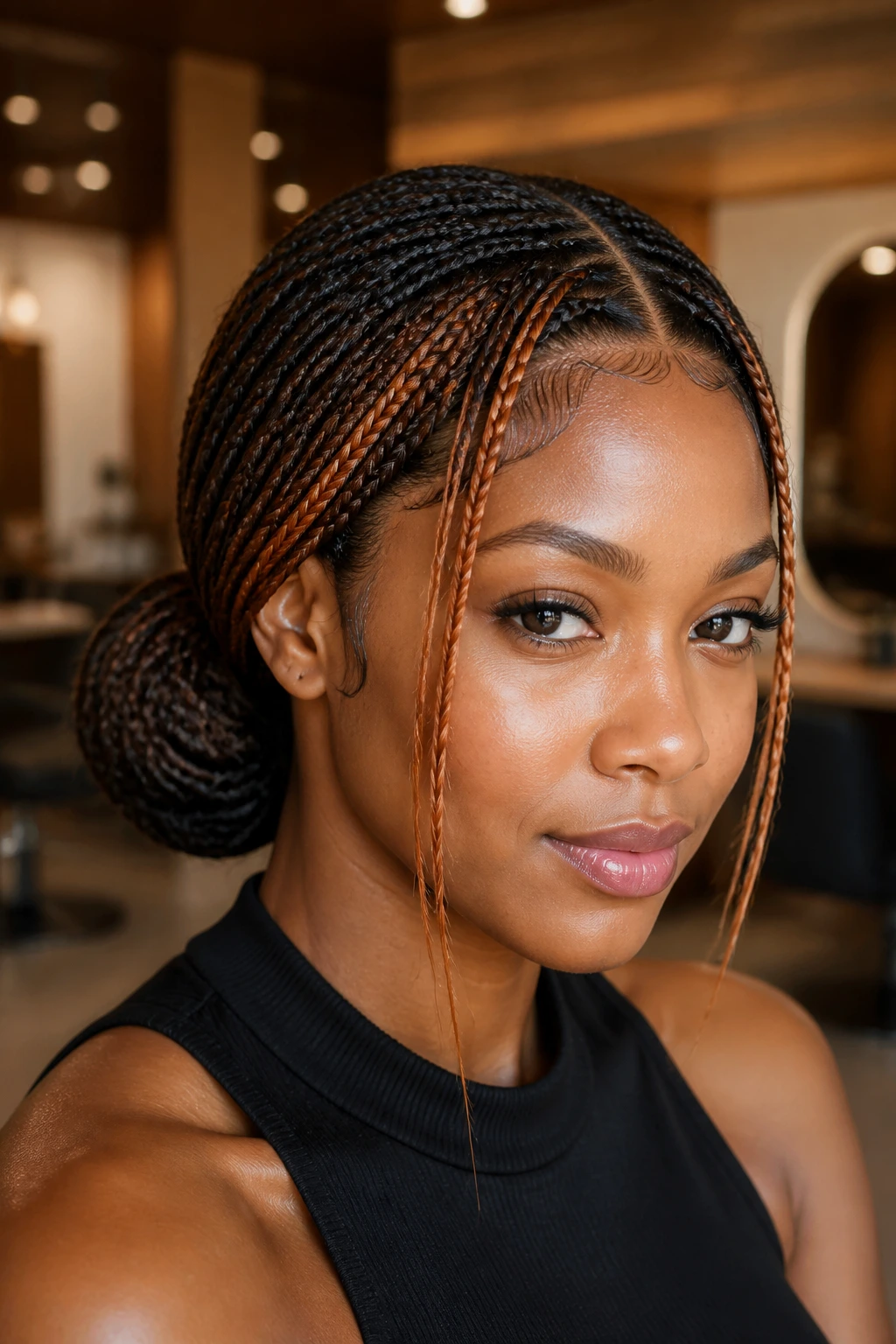
Copper money pieces change the whole mood. The style moves warmer, richer, and a bit more vivid, especially when the rest of the braids are black or espresso brown. A center part gives the color room to breathe, and the low bun keeps the warmth from feeling loud.
Unlike the softer honey versions, copper looks best when the rest of the style is pared back. Clean edges. Compact bun. No extra accessories fighting for attention. The front pieces should hit just below the cheekbone so the color lands where it matters.
This is the version I’d pick if you want the style to carry makeup well. A warm bronzer, a nude lip, and copper or gold earrings are enough. You do not need to build much around it.
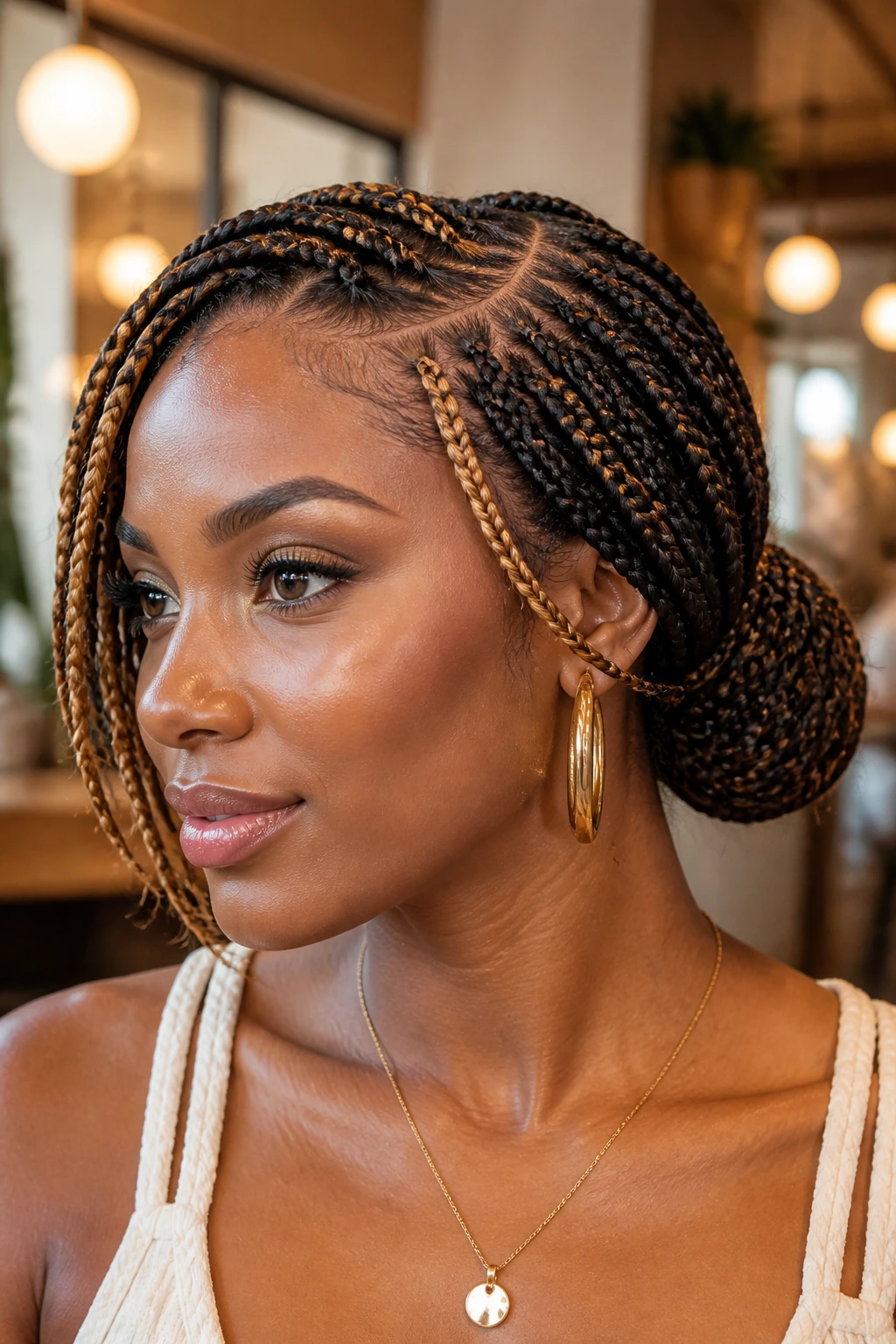
7. Side-Swept Low Bun with Auburn Money Pieces
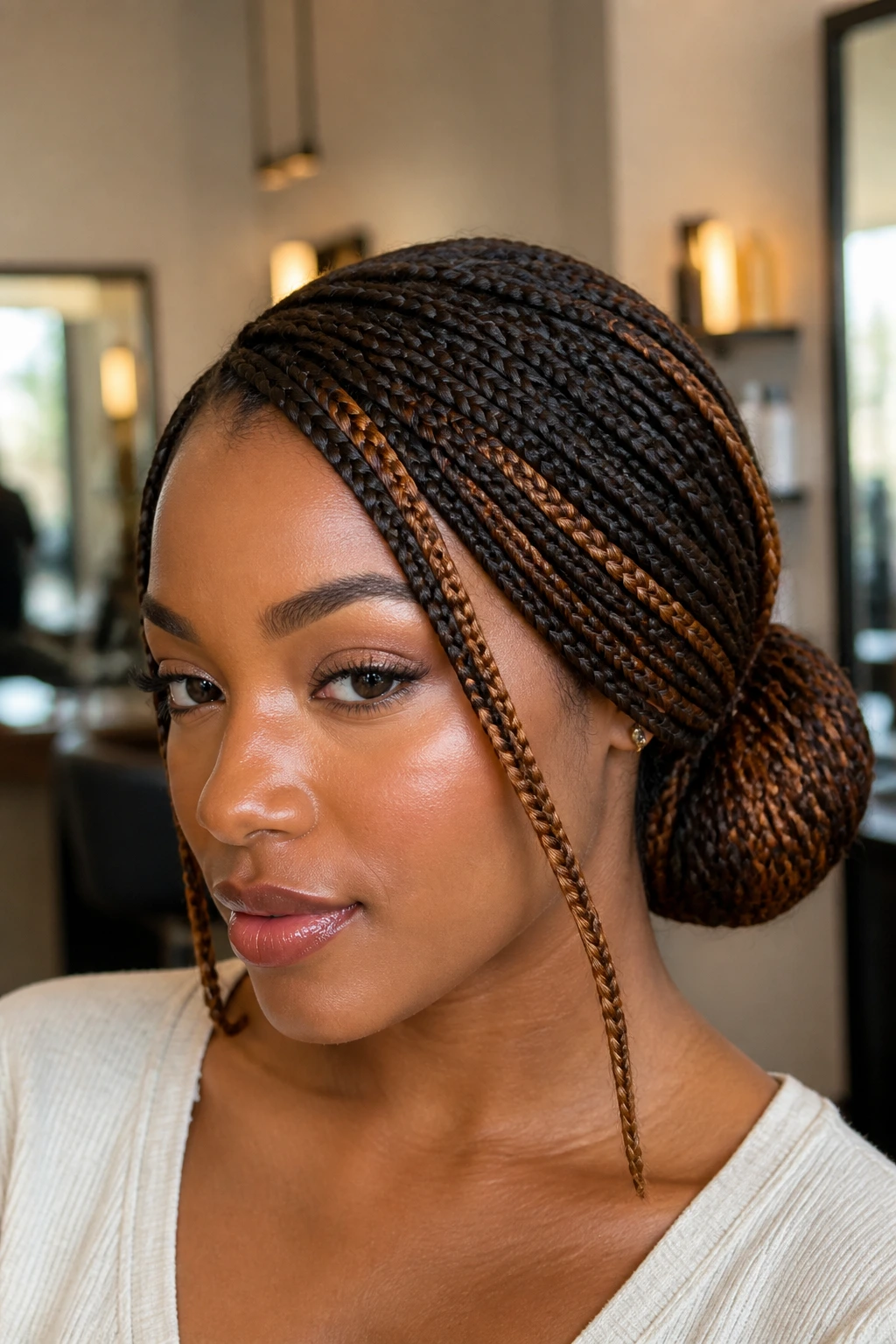
The side-swept version has a little movement built in from the start. The front braid on one side is lifted just enough to curve across the forehead before it blends into the low bun, and the auburn money pieces keep the look soft instead of severe.
What to ask your braider
Ask for one deeper side part, two face-framing braids that start near the temple, and a bun that sits low enough to clear the collar. If the braid ends are long, keep them tucked tight. If they are shorter, let them coil under the bun instead of sticking out.
The auburn color works especially well against medium and deep skin tones because it has warmth without going full copper. It is also one of the few highlight shades that still looks pretty when it has been worn for a few weeks and the bun has loosened a little.
8. Beaded Nape Bun with Golden Frames
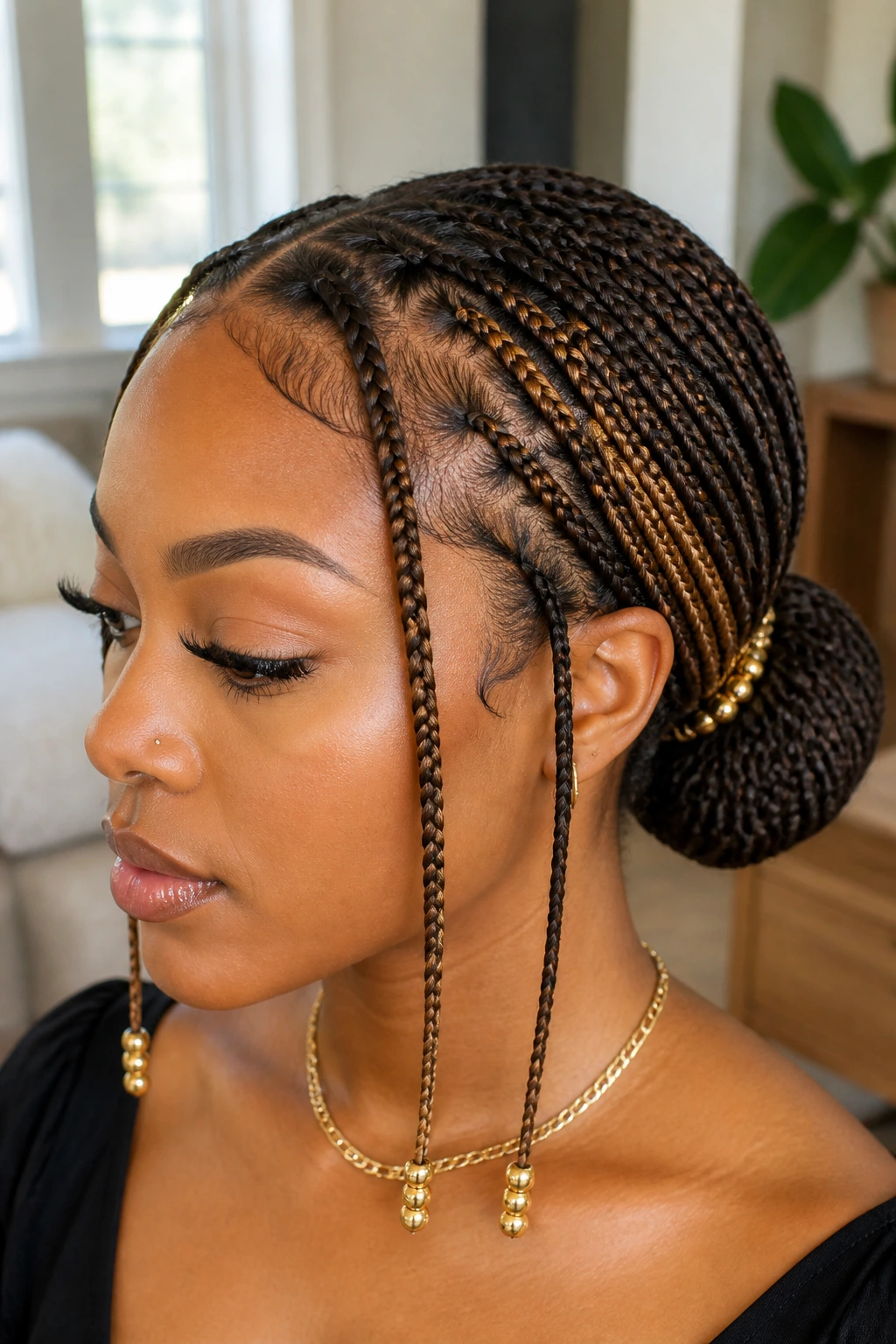
Beads can make the style lean playful fast, but only if you use them with some restraint. A few beads at the ends of the front money pieces and one or two near the bun base are enough. More than that, and the bun starts to feel busy.
- Best placement: Keep the beads in the front and near the nape, not all over the head.
- Best tone: Gold or amber beads play nicely with honey and caramel money pieces.
- Best outfit pairing: A simple neckline lets the beads read as the accent instead of the whole story.
- Best hold: Tie the bun with snag-free elastics before adding any beads, or the weight starts pulling.
This look is friendly. It has motion, sound, and a little personality when you move. Just keep the bun itself smooth so the beads stay the fun part, not the only part anyone notices.
9. Curly Tendril Bun with Loose Front Braids
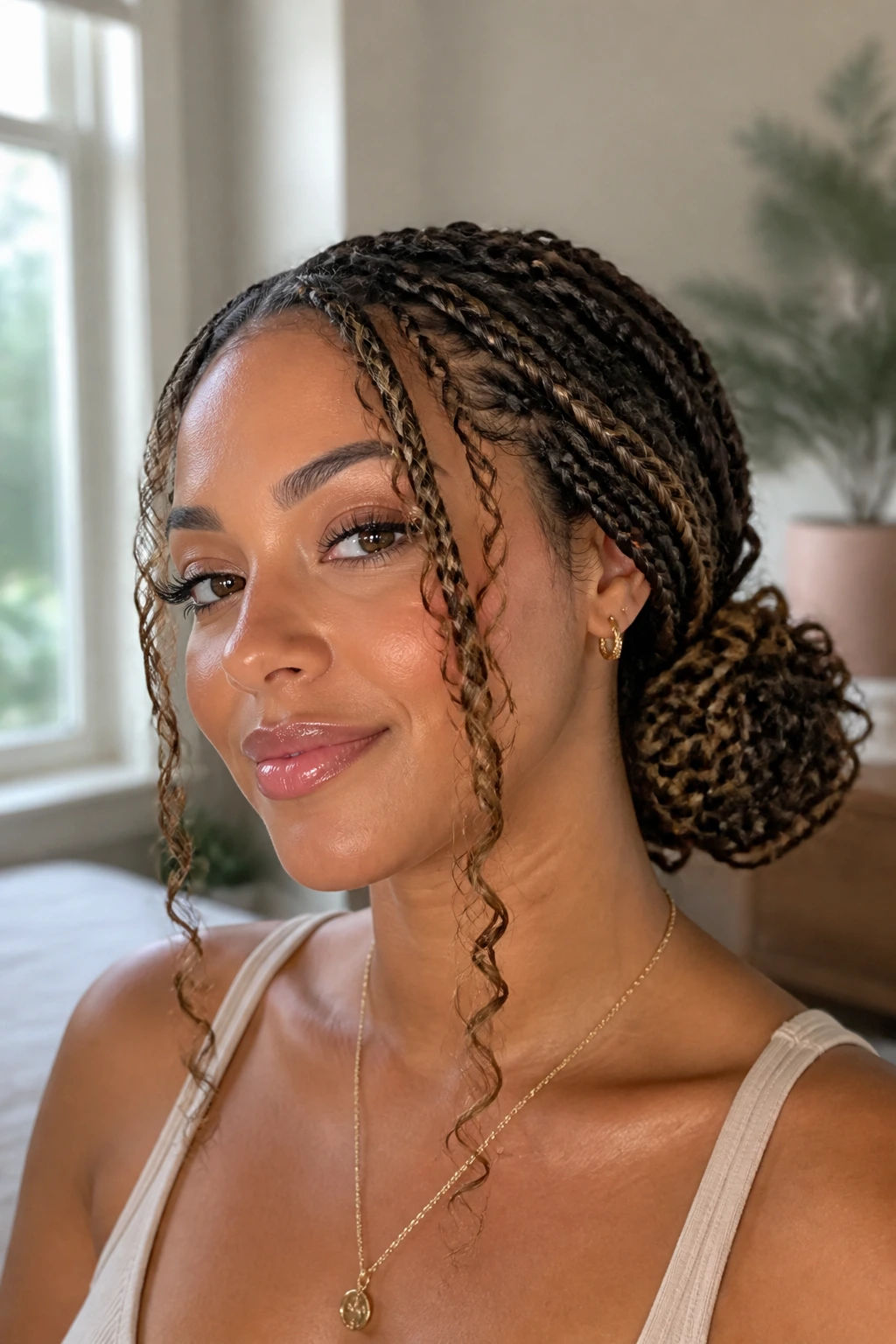
Do you want the low bun to feel softer without losing the braid structure? Leave two front braids curled at the ends, then let them fall beside the face like tendrils. The bun stays low and neat, but the front gets a bend that makes the whole style feel less rigid.
This works well with pre-curled synthetic pieces or with a quick set on flexi rods if you are using human hair additions. The money-piece highlights show up even better when the ends have some movement, because the eye follows the curl and the color at the same time.
A little foam at the ends keeps the curls from puffing out. Don’t overload the bun with product, though. You want the front to move, not to feel sticky.
10. Jumbo Donut Bun with Blonde Pop
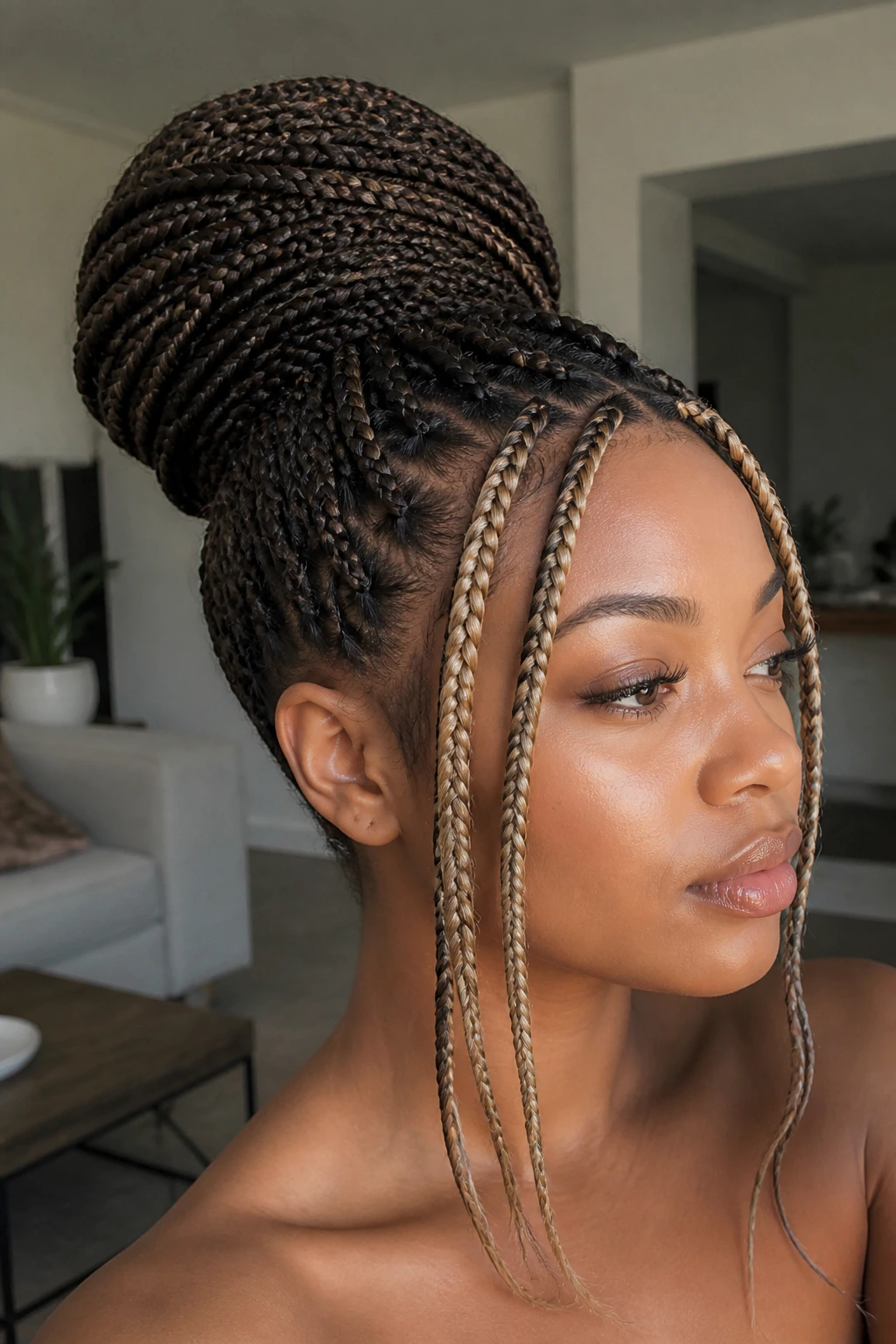
Jumbo braids need a bun with enough scale to match them. A donut-shaped wrap gives the style a thicker silhouette, and blonde money pieces bring the front forward so the whole thing does not sink into the back of the head.
The bun should look full from the side, almost like one large coil. Use the braid length to wrap around itself once or twice, then pin underneath where the pin heads won’t show. If you keep wrapping and wrapping, the bun starts looking lumpy. Stop earlier than you think.
A blonde pop works here because the braid size already gives you drama. You do not need a second visual trick. Keep the front pieces clean, let the bun stay smooth, and wear it with shoulders uncovered if you want the shape to show off.
11. Micro Braid Flat Bun with Razor Parts
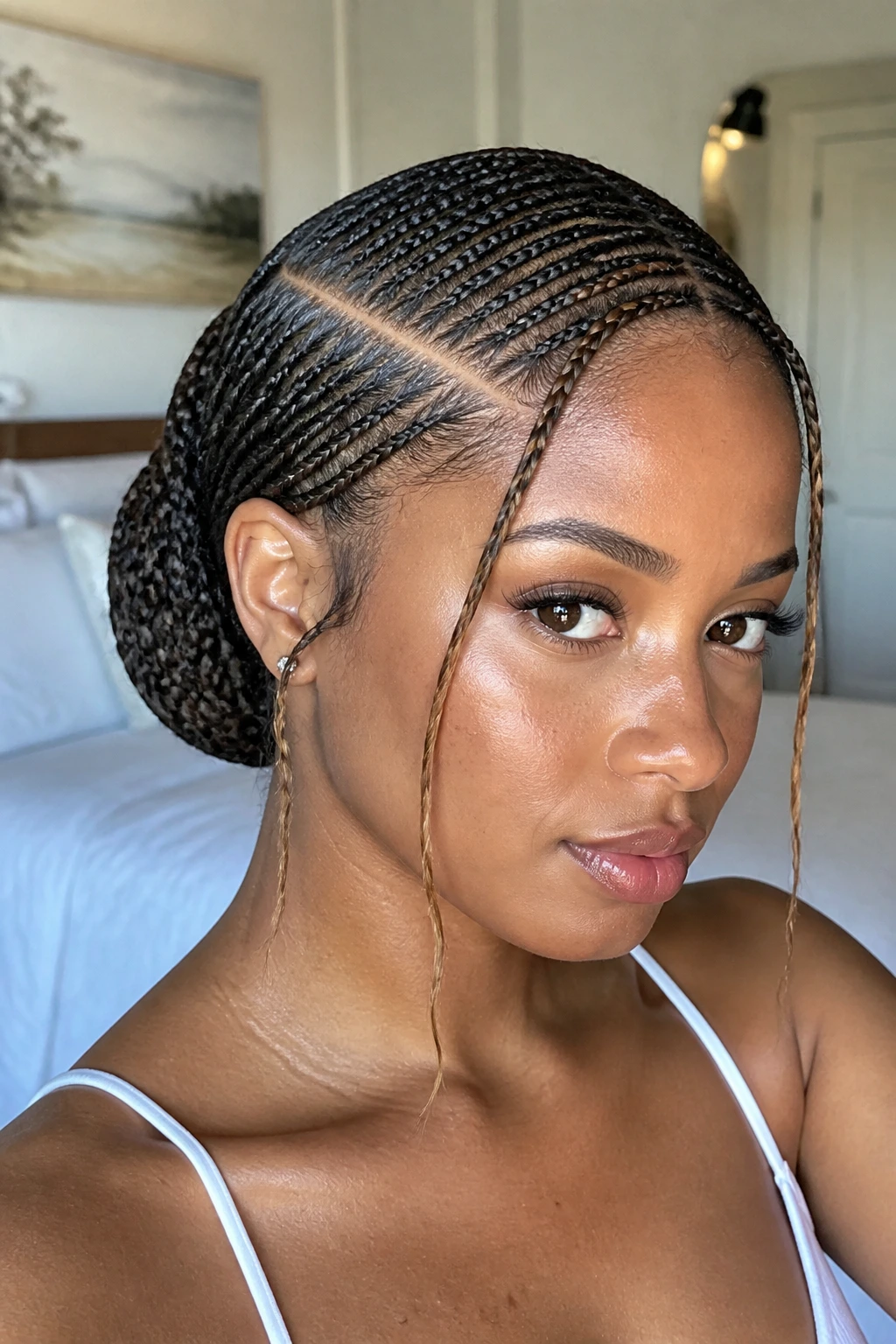
Micro box braids create a flatter, denser bun, which makes the shape feel almost tailored. The small braid size also gives the money-piece highlights a finer look, so the color reads like a clean line instead of a chunky streak. It is a sharp style, and I mean that in a good way.
The mechanism
Smaller braids compress more tightly at the nape, which means the bun sits lower and stays flatter against the head. That makes the front color look more precise. If your parts are neat — razor straight or triangle clean — the style gets a crispness that bigger braids can’t really fake.
This is a good pick if you like your hair to feel compact. It is also one of the better choices for long days, because the bun does not wobble around as much as a bigger coil.
12. Half-Tucked Nape Bun with Face Ribbons
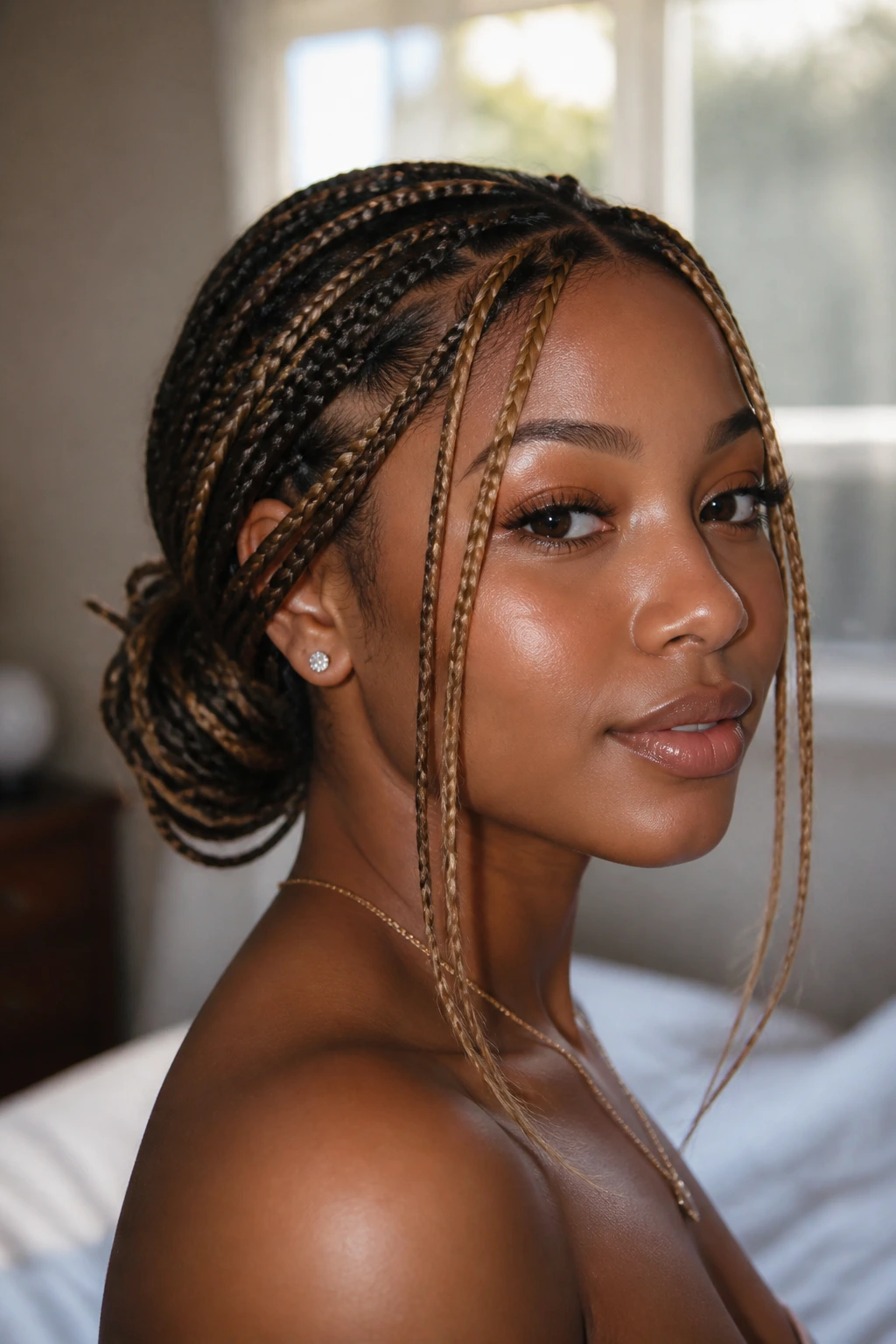
Some styles feel too finished. This is the fix. A half-tucked nape bun leaves a few braid ends visible inside the coil, which softens the shape and keeps it from looking overbuilt. The money-piece highlights frame the face, but the bun itself keeps a little looseness.
The look works best when the front pieces are parted cleanly and the bun is pinned in a way that hides most, not all, of the ends. Let one or two braids peek out. That tiny bit of unevenness keeps the style from feeling stiff.
It is also a smart option for people who do not want to spend time making the bun perfectly round. A little irregularity actually helps here. Too-perfect buns can make the front highlights look disconnected; a slightly softer finish ties them back into the rest of the braid texture.
13. Triangle-Part Low Bun with Copper Threads
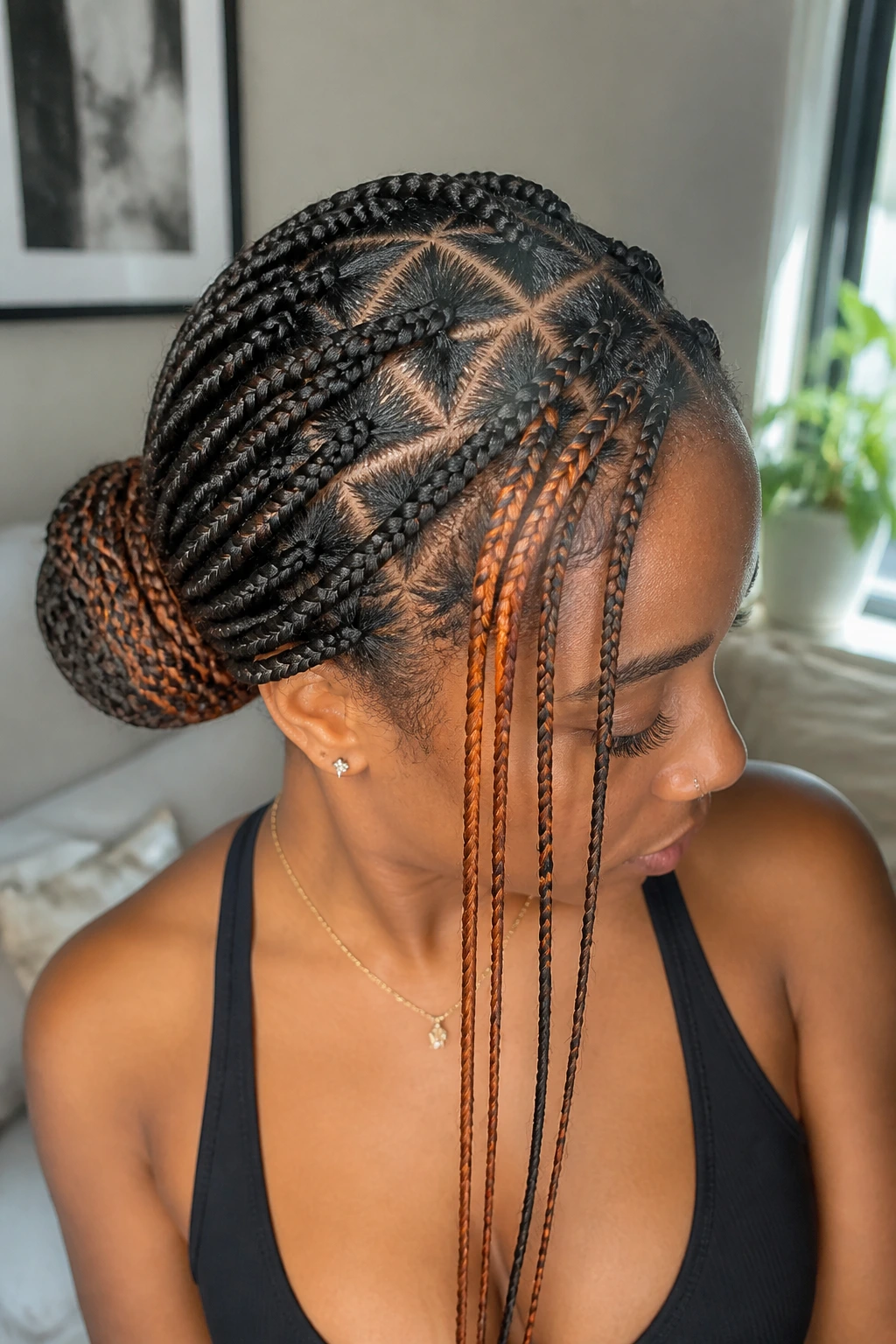
Triangle parts change the whole read of the style. Instead of a standard grid, the scalp pattern shows a sharper geometry, and that makes copper money pieces feel even more intentional. The bun stays simple so the parting can do its work.
Contrary to what people sometimes assume, triangle parts do not make the look busy if the bun itself is controlled. They make it richer. The difference is in the balance. Keep the bun low and compact, and the triangle pattern becomes a design detail rather than a distraction.
This is one of those versions that looks better the closer you get. From a distance, it reads as a clean low bun. Up close, the parting gives it texture. That’s the good stuff.
14. Boho Low Bun with Curled Pieces
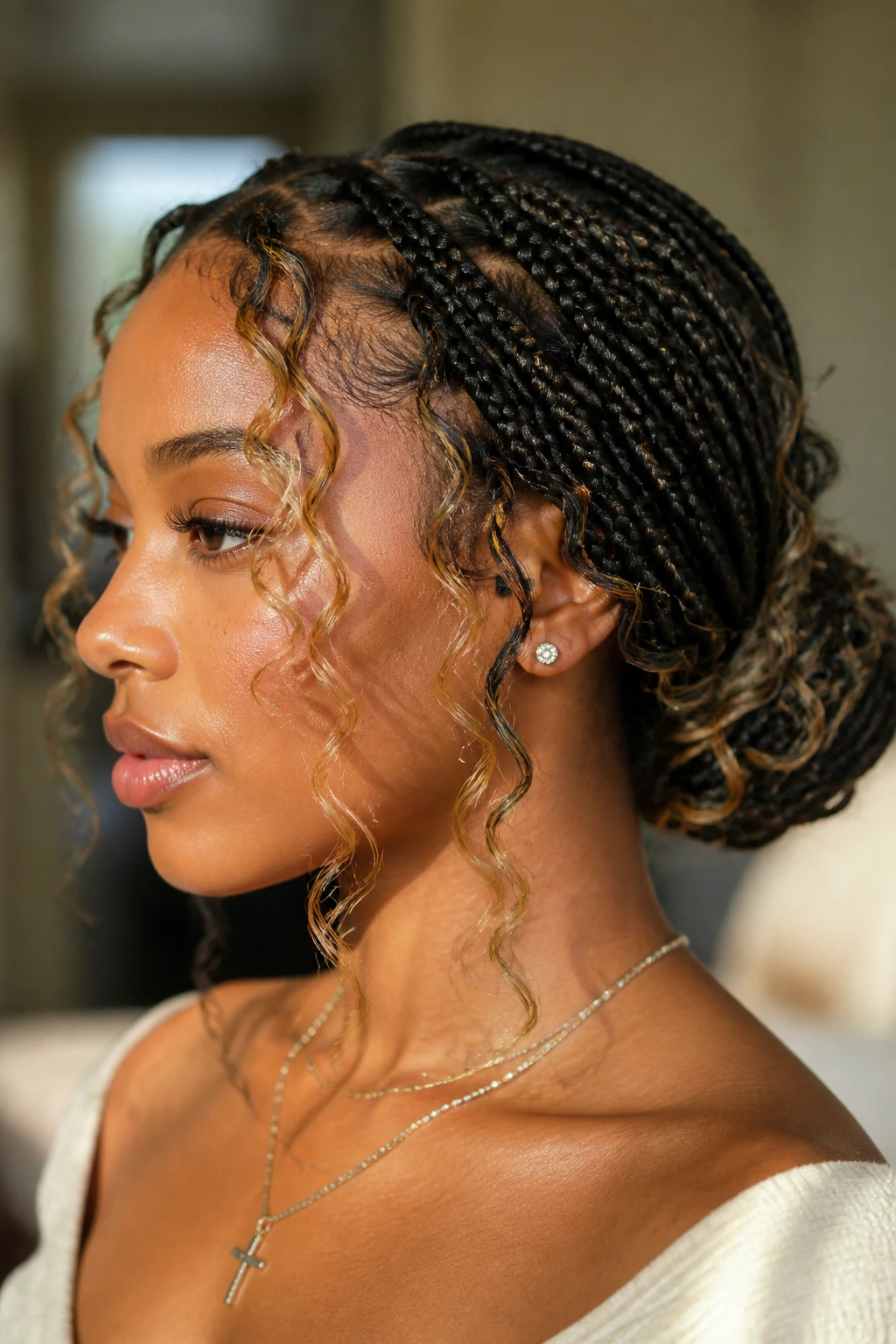
Where to keep the softness
Leave a few curled strands around the face and maybe one tucked curl near the bun base. That is enough. If every braid gets a curl, the style stops reading as a low bun and starts looking like a bundle of loose pieces fighting for space.
What to keep sleek
The crown and the bun base should stay smooth. That contrast — soft front, tidy nape — is what keeps the style from looking unfinished. The money-piece highlights are even prettier here because the color bends with the curls instead of just hanging straight.
This version is the easygoing cousin of the cleaner braid buns. It looks good with a tank top, yes, but it can also hold its own with a slip dress and a little shine on the cheekbones.
15. Gold-Cuff Accent Bun with Neutral Highlights
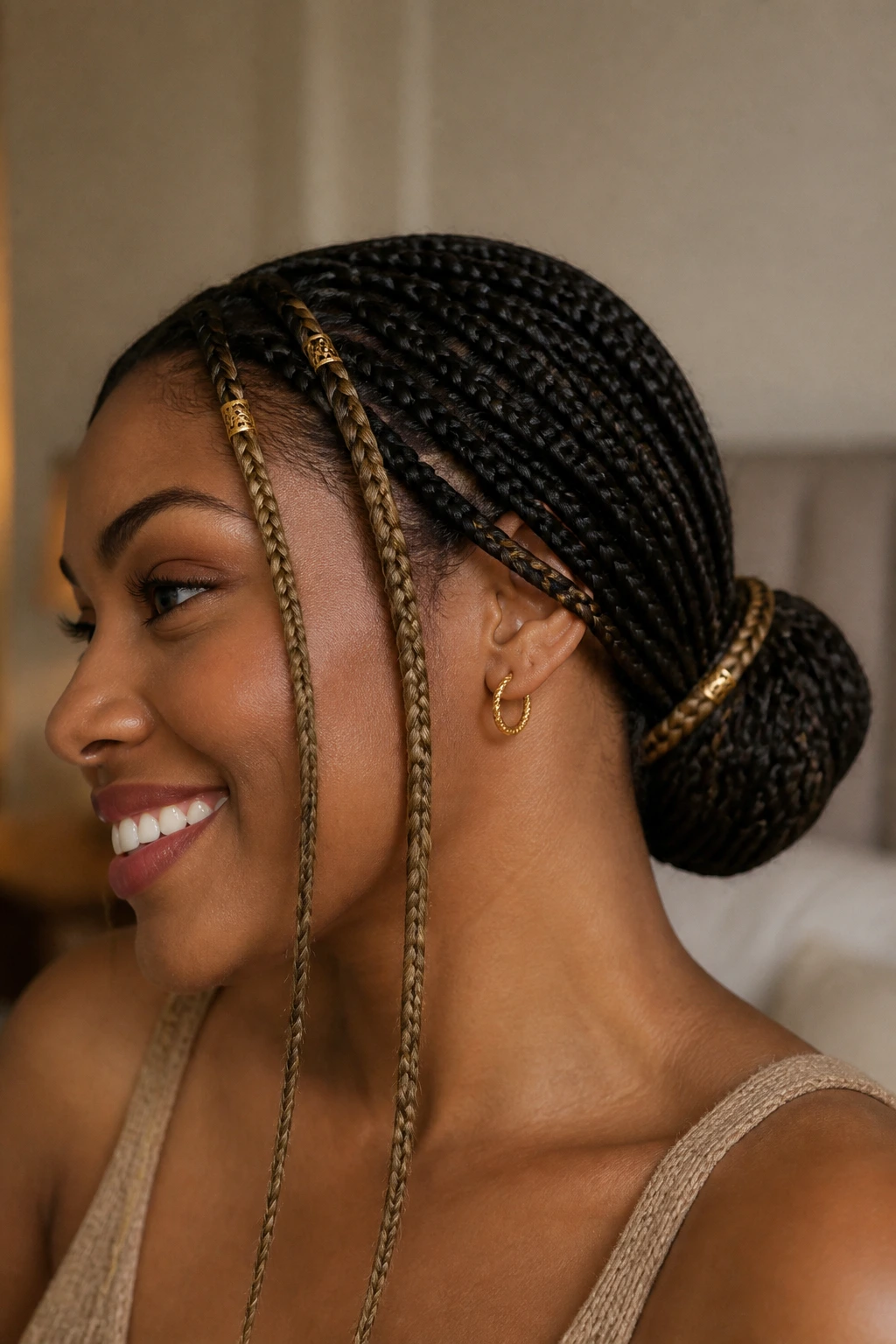
Neutral money pieces — beige blonde, soft caramel, light brown — are the easiest base for gold cuffs. The cuffs give the style a small jolt of shine without forcing the bun to do something it doesn’t want to do. That matters. Heavy accessory work can ruin a good low bun faster than a bad part.
Wear the cuffs on the face-framing braids or near the tail ends of a braid that loops into the bun. Don’t scatter them everywhere. The goal is one or two bright spots, not a hardware store.
This version is especially useful if your outfit already has gold hardware. The hair does not compete with the earrings or necklace; it just joins the same conversation.
16. Offset Bun with Sleek Baby Hair Detail
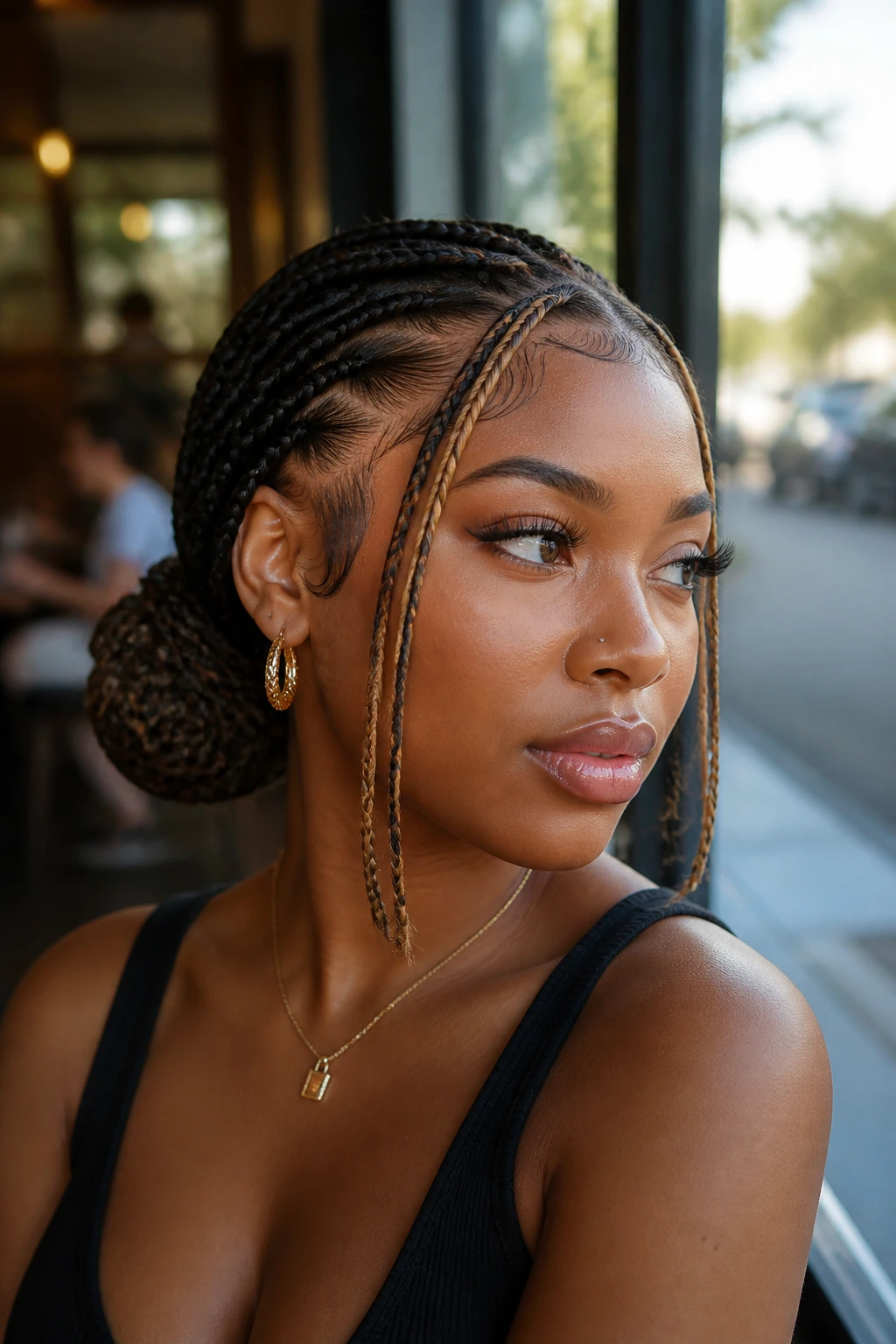
A centered bun is safe. An offset bun has personality.
Shift the bun one inch to the left or right of the center line, smooth the front straight back, and let the baby hair sit low and thin instead of carved in heavy waves. The money-piece highlights keep the face open, and the offset placement makes the whole style feel a little editorial.
This works best when the bun itself stays tight. If the bun is loose and off-center, it can look like it slid there by accident. You want control, not chaos. A clean side choice in the hairline and a crisp bun base make the offset feel deliberate.
This is one of my favorites for simple outfits. Black tank. White shirt. Small hoops. Done.
17. Layered-Length Bun with Long Tail Tuck
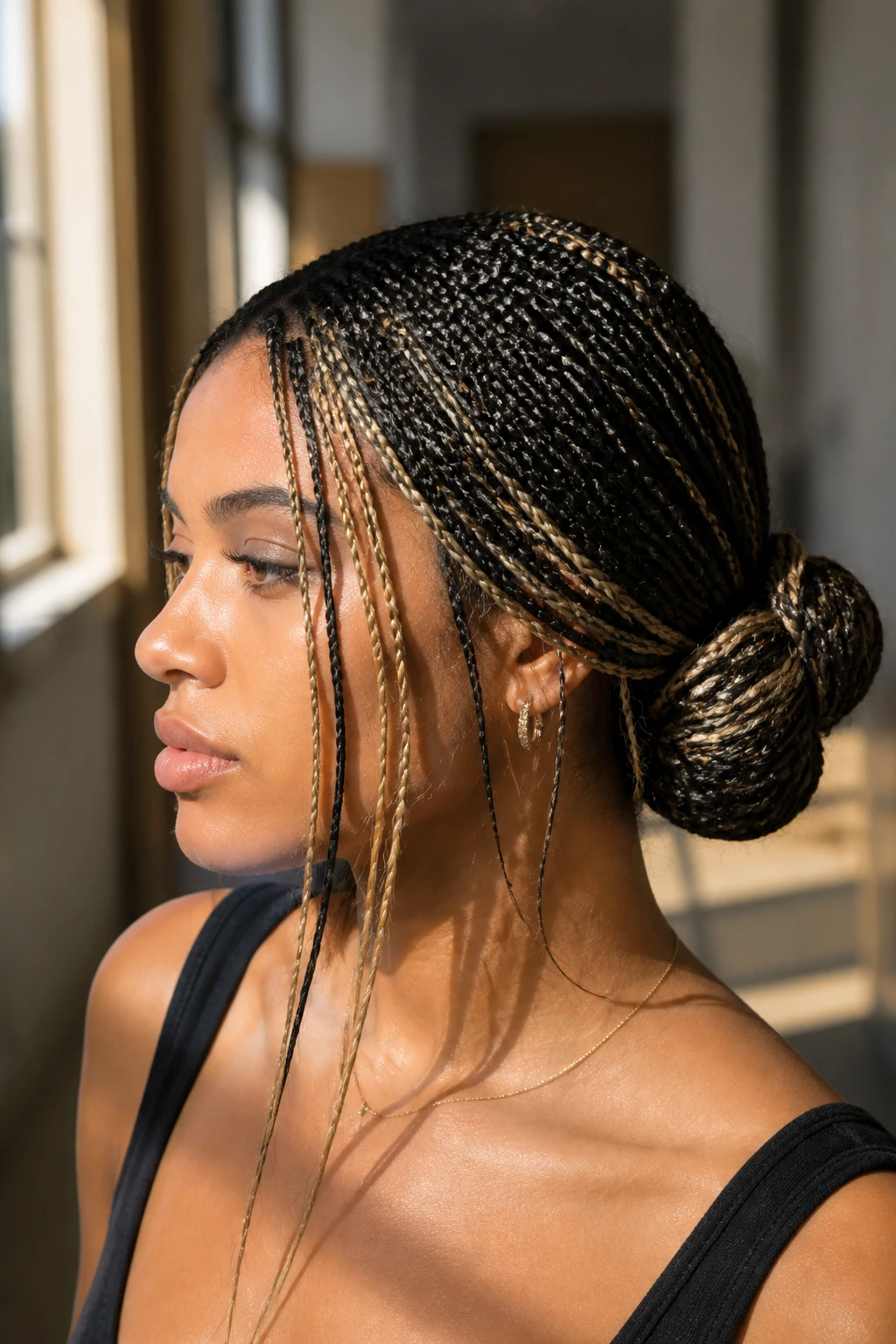
What if your braids are not all the same length? Don’t hide that. Use it. Layered lengths make the bun feel more lived-in, because the wrapped ends create subtle texture instead of one smooth coil.
The trick is to tuck the longest braids first, then wrap the shorter ones around the base so the silhouette stays low. That layered tuck keeps the money-piece highlights from looking too isolated at the front. The eye moves from the bright pieces to the bun and back again, which makes the whole style feel connected.
How to style it
Keep the top sleek, let the longer lengths hide inside the bun, and pin the heaviest part closest to the scalp. If the bun starts drooping, you probably pinned too far out from the center. Move the pins inward and it will sit better.
18. Fulani-Inspired Low Bun with Front Beads
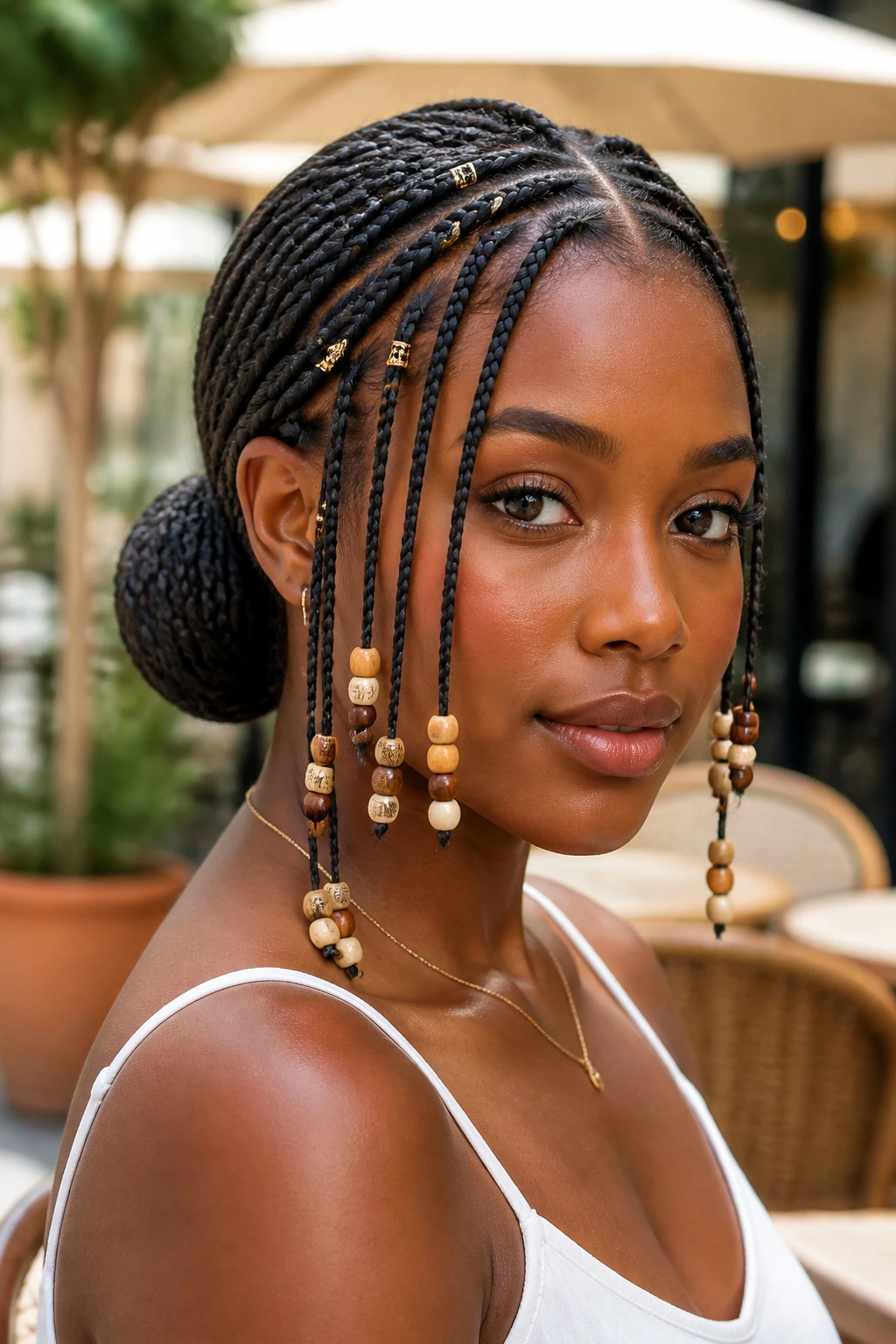
The Fulani-inspired version brings in a classic braided front pattern, but the low bun keeps it modern and easy to wear. A few front braids can carry beads or shells, while the rest feed into a smooth nape bun. The money pieces sit right in that front section, so the color and the ornamentation support each other.
Who it suits
If you like hair that announces itself a little, this is the style. It works beautifully when you want the front to feel decorated but not crowded. The bun at the nape acts like a visual reset, which keeps the front detail from going too far.
My advice: keep the bead count modest and the bun compact. The front already has enough going on. Let the low bun be the quiet part.
19. Caramel Face-Light Bun with Deep Side Part
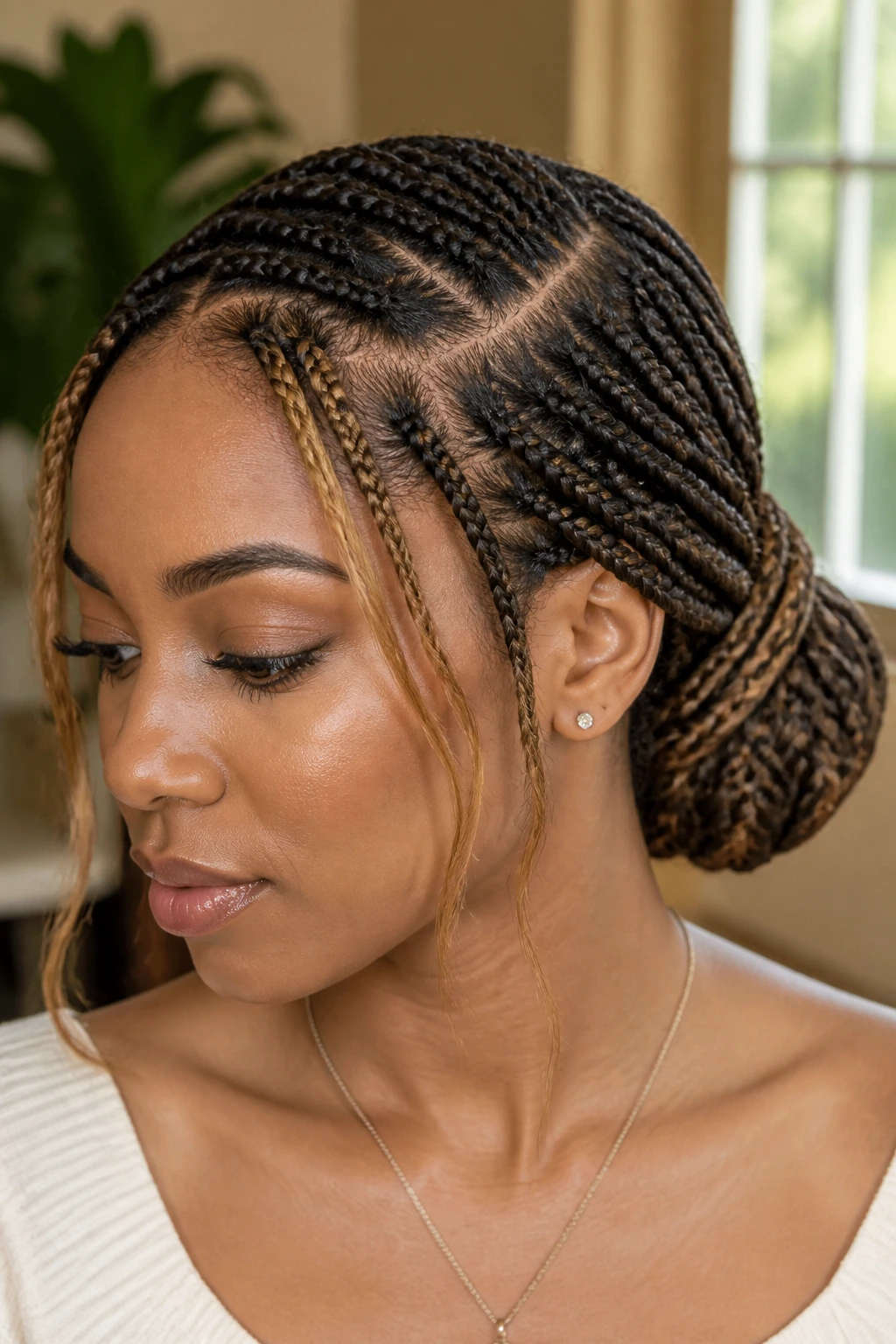
This is the version for people who want the color to read soft rather than bold. A deep side part gives the hairline shape, and caramel money pieces warm up the front without taking over. The low bun stays clean and grounded, which makes the whole style feel easy to wear.
It is especially good with natural makeup. Think brushed brows, a bit of cream blush, maybe gloss. The caramel pieces do not need much help. They already lift the face if they are placed right at the front and not stretched too far back.
I like this look because it behaves in real life. It does not need a formal outfit, and it doesn’t get ugly when a few braids loosen around the bun. It ages fairly well, which is more valuable than people admit.
20. Mixed-Size Braid Bun with Dimensional Highlights
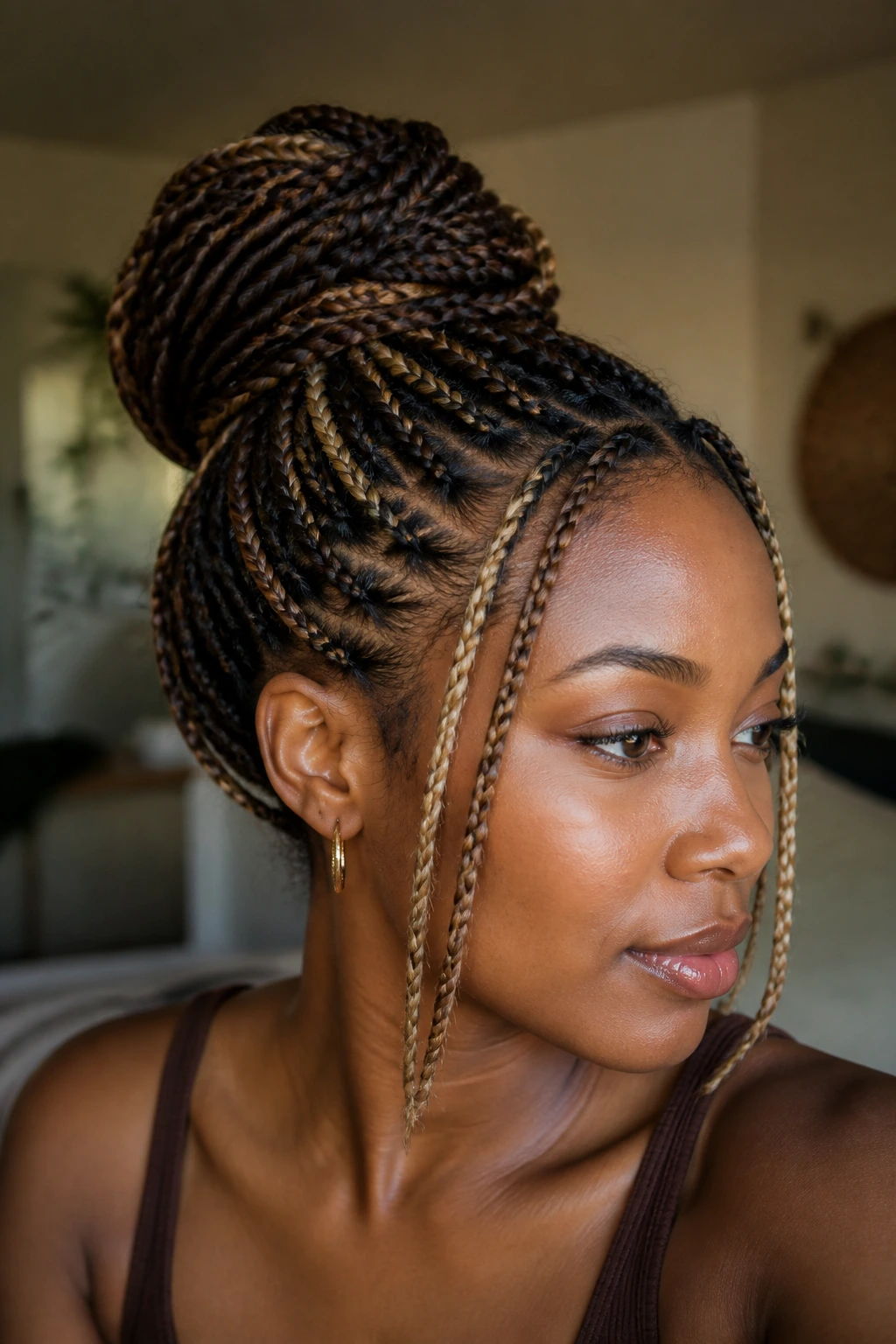
- Best texture mix: Keep the front braids slightly smaller and the bun braids a touch thicker so the style has a built-in contrast.
- Best highlight placement: Put the brightest money pieces right at the temples, then let the rest of the color stay softer through the lengths.
- Best bun shape: A round, low coil works better than a flat twist here because the different braid sizes need room to stack.
- Best feel: This look has motion even when it is pinned down.
Mixed-size braids keep the style from looking too uniform. That matters when the highlight color is already doing a lot. If every braid is the same size, the face-framing pieces can seem separate from the bun. A little braid-size variation pulls everything together.
21. Glossy Pressed-Back Bun with Barely-There Honey Lights
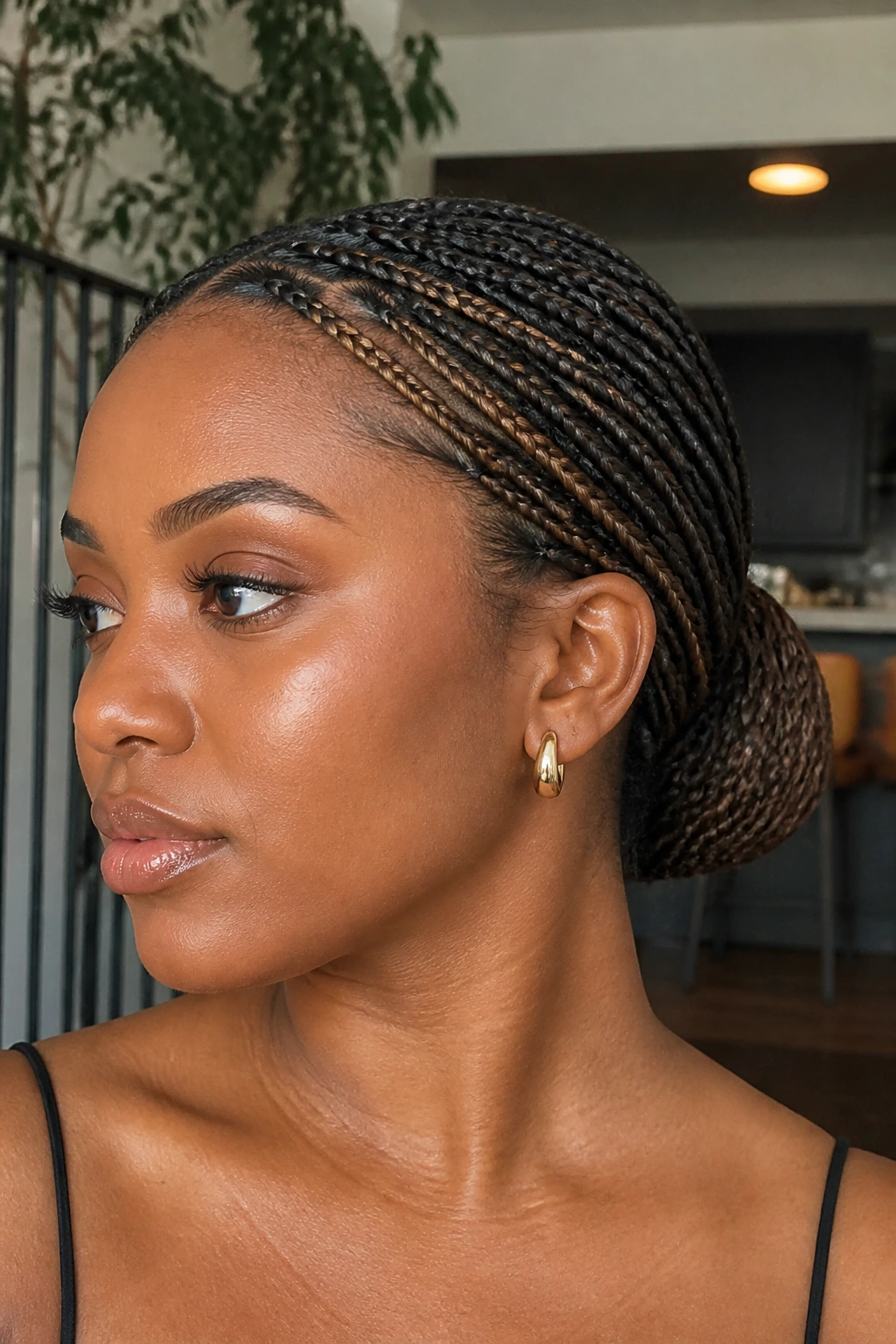
This style is all about finish. The hairline is pressed back clean, the bun is low and smooth, and the money-piece highlights are just soft enough to brighten the front without yelling about it. Barely-there honey tones are especially nice here because they keep the look refined.
The texture should feel controlled, not crunchy. Use a light mousse to lay the braids, then stop. Too much gel at the scalp turns the front heavy and can make the low bun look older than it is. You want gloss on the braid lengths, not a shellacked crown.
This version is a good pick for hot days when you still want to look put together. It gives you the clean outline people associate with formal braid styles, but the soft color keeps it from feeling harsh.
22. Loc-Style Box Braid Bun with Warm Blonde Pieces
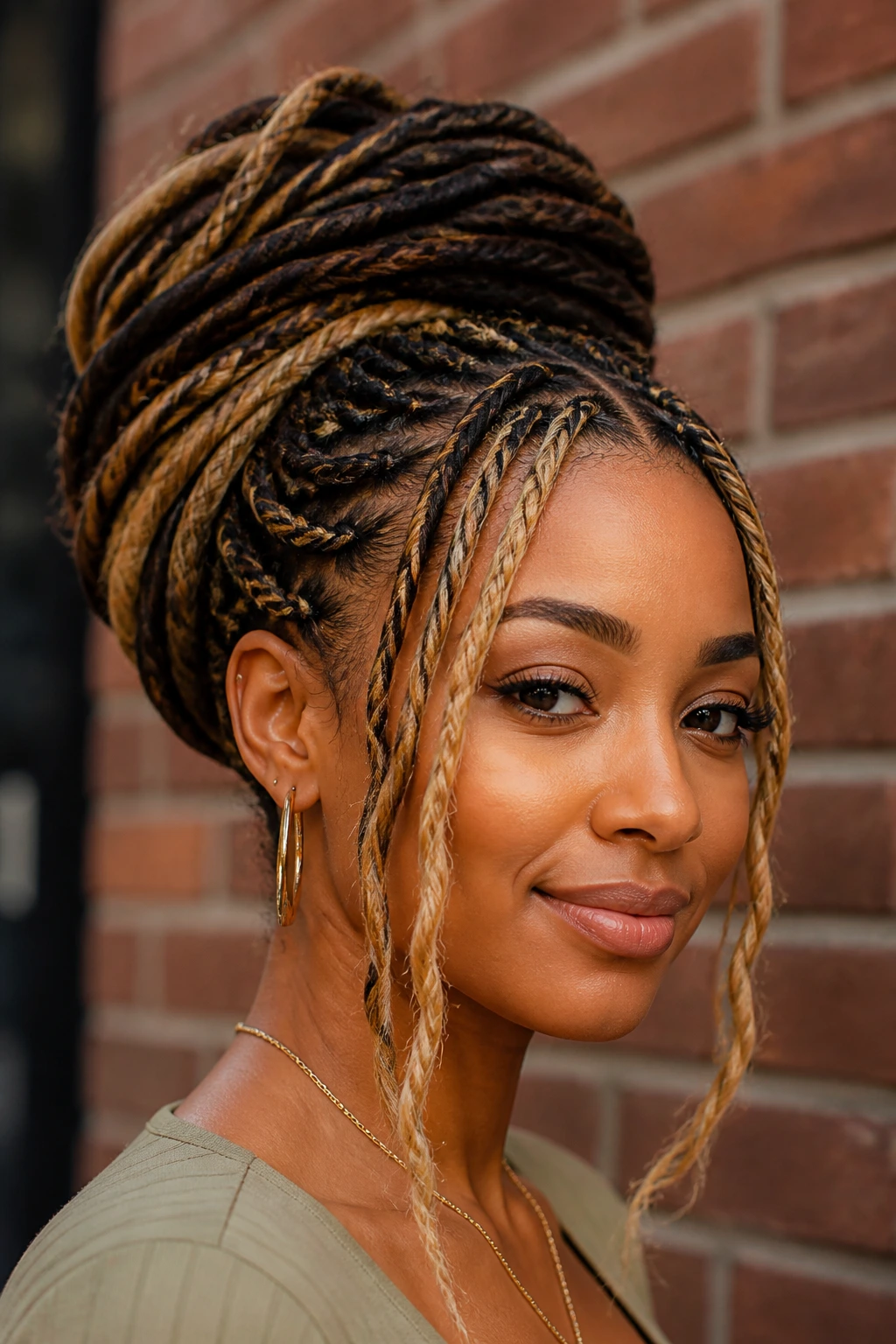
A loc-style bun uses thicker, more wrapped braids, which gives the whole style a denser, more sculpted finish. Warm blonde money-piece highlights keep the front bright and break up the weight at the nape. The result is earthy, textured, and a little bold without needing much else.
I like this version when the goal is presence. The bun feels substantial, the front color catches light, and the style still sits low enough to stay practical. If the bun is a little imperfect, that is fine. In fact, it usually looks better that way.
Keep the front pieces neat and the bun wrapped close to the base. Let the blonde tone stay warm rather than icy. The whole look gets better when the color and the texture agree with each other instead of fighting.
Why the Low Bun Shape Makes Box Braids Easier to Wear in Warm Weather
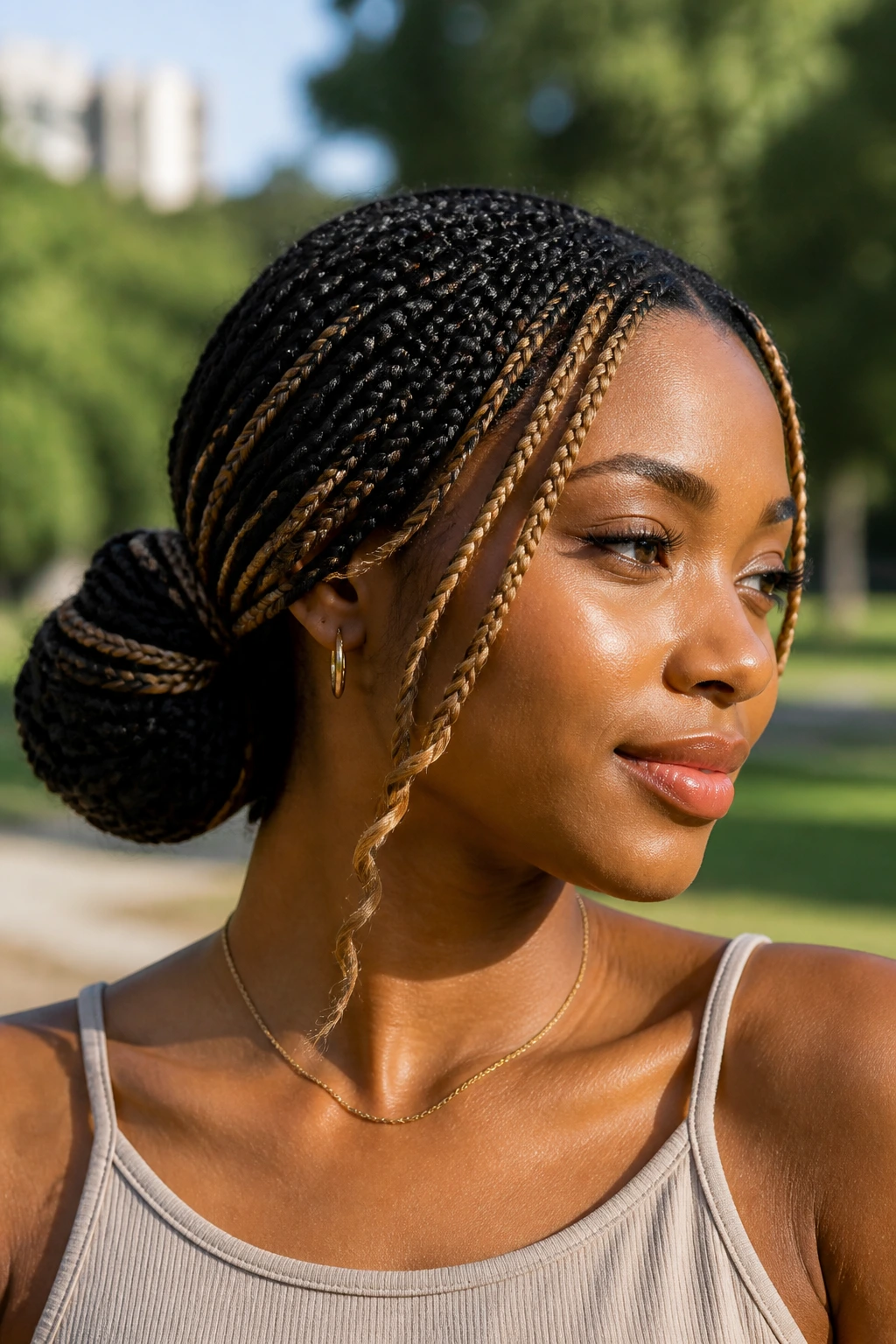
A low bun is not just a styling choice. It changes how the braids sit on your head, how much they tug at your scalp, and how much air moves around your neck. That matters more than people think, especially with box braids, because the weight of the style is already doing a lot of work.
When the bun sits at the nape, the braid length stays off the shoulders. You feel that difference immediately if you spend time outside, ride in a car with a headrest, or wear jackets that brush the back of your neck. A high bun can start to feel like a stack of hair riding on top of you. A low bun settles into the shape of the head instead.
Money-piece highlights also help the style read lighter. Dark braids piled low can blur together from the front. Face-framing color breaks that up. Your eye sees the bright pieces first, then the clean part, then the bun. That order keeps the style from feeling heavy even when the braid count is high.
The best part is that the shape works with almost every braid size. Medium braids make the cleanest knot. Jumbo braids give more volume. Micro braids sit flatter. The low bun is the common thread, and that makes it a useful silhouette instead of a one-off look.
The Tools That Keep a Low Braided Bun in Place
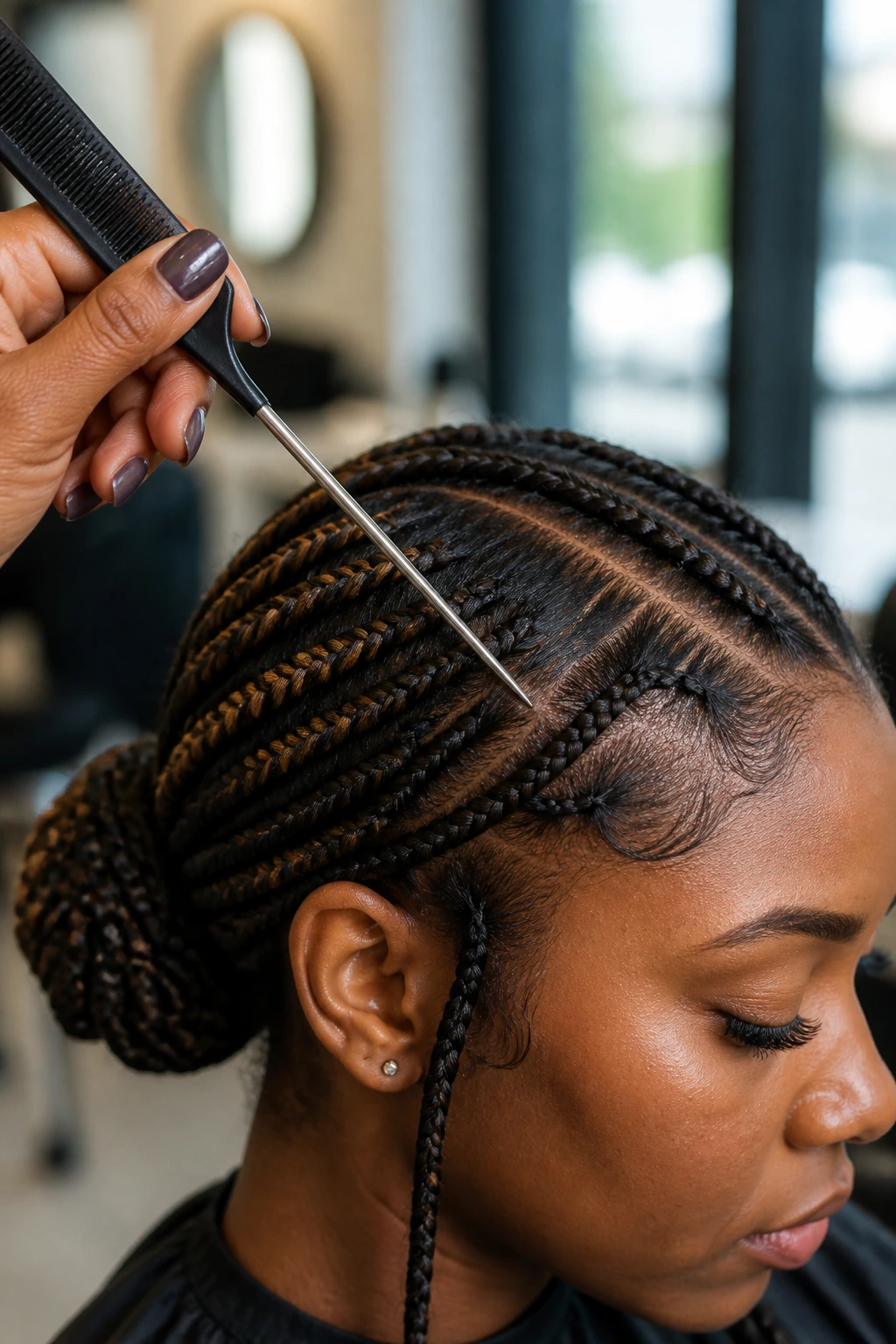
You do not need a drawer full of gadgets, but the right few tools make the style easier.
-
Rat-tail comb: Clean parts and sharp sections start here; the pointed end helps you map the front frame without guessing.
-
Duckbill clips or section clips: These hold the front braids out of the way while you wrap the bun, which saves you from pulling on already-finished sections.
-
Snag-free elastics: Use them to anchor the bun before pinning. They grip better than regular office-style elastics and won’t chew through braid ends as fast.
-
U-pins and long bobby pins: U-pins work well for the bun base; bobby pins are better for catching stray braid ends or fixing the side sweep.
-
Edge brush: Use it lightly. The point is to smooth the hairline, not to draw a cartoon outline around your forehead.
-
Foaming wrap lotion or braid mousse: A thin layer helps the braid lengths lie down and keeps frizz from popping up around the bun.
-
Lightweight oil or sheen spray: Put it on the braid lengths, not the roots. The scalp area gets greasy fast if you overdo it.
-
Satin scarf or bonnet: This is non-negotiable if you want the front pieces to keep their shape overnight.
-
Small hand mirror: Handy for checking the nape bun from the back. You do not want to build a perfect front and a crooked back.
Choosing Braiding Hair, Highlight Tone, and Part Size Without Guessing
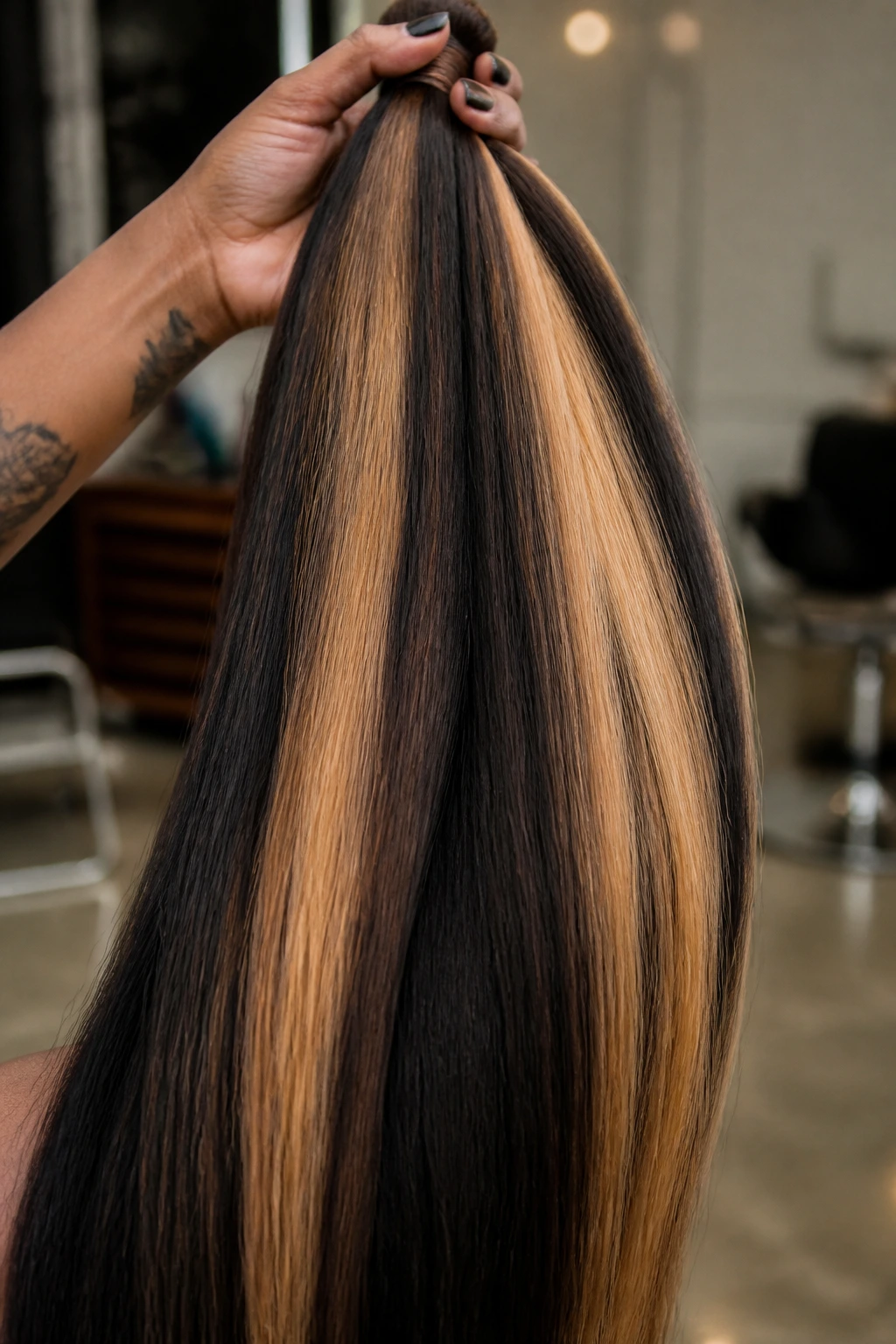
The braid hair you choose changes the whole feel of the bun. Pre-stretched kanekalon hair is the usual choice for a reason: it lies smoothly, braids evenly, and does not make the bun heavier than it has to be. If you want a tighter, cleaner finish, avoid hair that is too silky. It can slide when you pin the bun.
Color is where most people either play it safe or go too far. The sweet spot for money-piece highlights is usually one or two shades lighter than the braid base. Honey, caramel, beige blonde, copper, and warm auburn are the easiest to wear because they brighten the face without making the braids look striped. If the front pieces are too wide or too pale, they take over the style fast.
Part size matters more than people admit. Medium parts give the cleanest everyday look. Smaller parts make the bun flatter and more polished. Larger parts give the style more texture and a stronger braid pattern. If you want the highlights to stand out, keep the parting tidy; a messy part plus bright front pieces can look accidental rather than styled.
For braid length, shoulder length to mid-back is the easiest range for a low bun. Long braids can still work, but they need a better pinning plan. If the hair is too long and too thick, the bun gets bulky fast. That is not a moral failure. It just means you should expect to wrap more, pin more, and keep the bun lower.
How to Wear These Looks with Accessories and Makeup
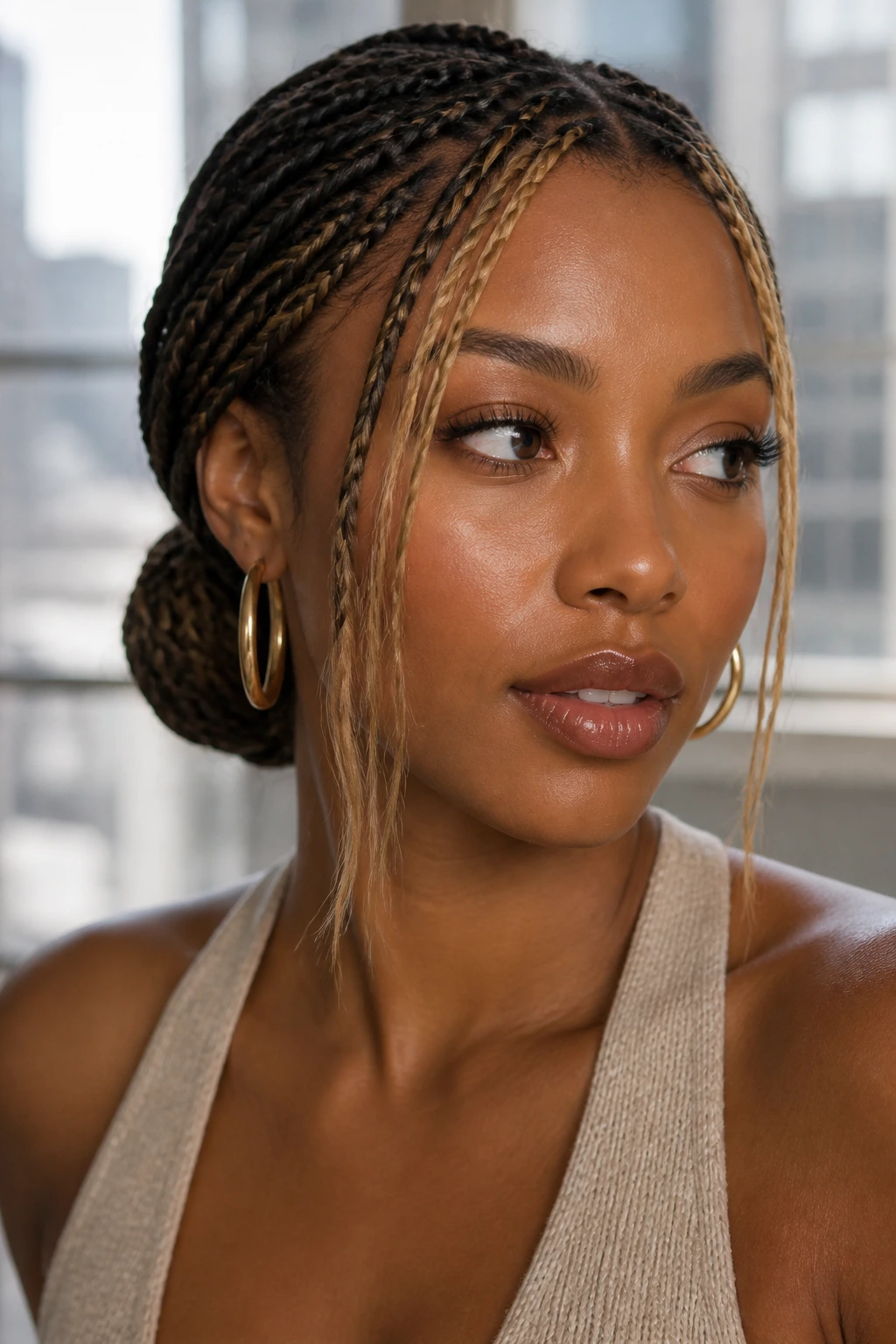
Presentation: Keep the bun at the hollow of the neck and let the face-framing highlights fall where they can do some work. A low bun looks best when the front is tidy and the back is not trying to steal attention.
Accompaniments: Gold hoops, small cuffs, a clean neckline, and a glossy lip are the easiest companions. If you wear a high-collar top, the bun loses some of its shape; if you wear a boat neck, open shoulders, or a sharp V-neck, the whole style breathes better.
Portions: For finer hair, a smaller bun and 6 to 8 medium braids at the front is plenty. Thicker or denser hair can handle 10 to 14 braids and a larger wrap at the nape. The point is scale. A tiny bun under very thick braids looks off, and a huge bun on fine braids can swallow the head.
Pairing: Warm highlights like honey and caramel pair well with bronzy makeup, terracotta blush, and gold jewelry. Cooler blonde streaks look cleaner with matte lips, silver hoops, and sharper liner. Match the finish of the hair to the rest of the outfit and it stops looking accidental.
Extra Polish and Personal Touches
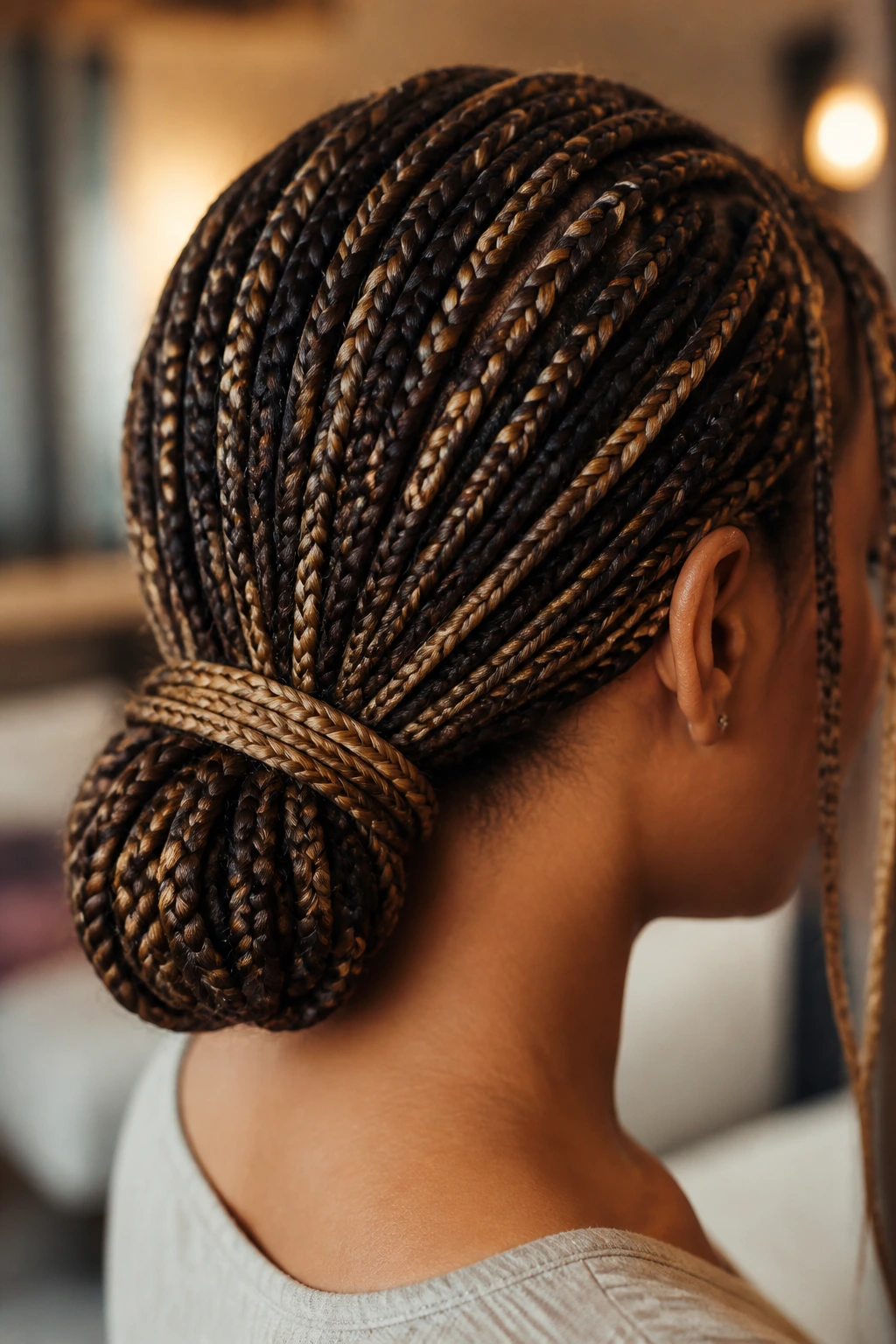
Shine Boost: A light spray on the braid lengths makes the color sit up a little, especially around the front pieces. Use less than you think. Too much product at the roots turns the style slippery.
Customization: Add one wrapped braid around the bun base for a cleaner finish, or leave one small face-framing braid slightly longer if you want the highlight to curve around the jaw. Both tweaks change the look without rebuilding the style.
Serving Suggestions: If you want the style to read sharper, pair it with a clean part and no extra accessories. If you want it softer, add one or two cuffs, a curled front strand, or a narrow scarf tied just under the bun.
Make-It-Yours: For a softer everyday version, keep the highlights warm and the bun simple. For a bolder version, go with copper, gold cuffs, and a deeper side part. For a cleaner office-friendly version, use neutral blonde money pieces and skip the beads entirely.
Keeping the Style Fresh Between Wash Days
Low bun box braids can stay neat for weeks, but only if you treat the front and the nape differently. The bun itself needs to stay smooth, while the scalp line needs gentle upkeep. I’d refresh the edges and part lines every 3 to 4 days, not every morning. Daily heavy gel build-up is what makes the front look dull and flaky.
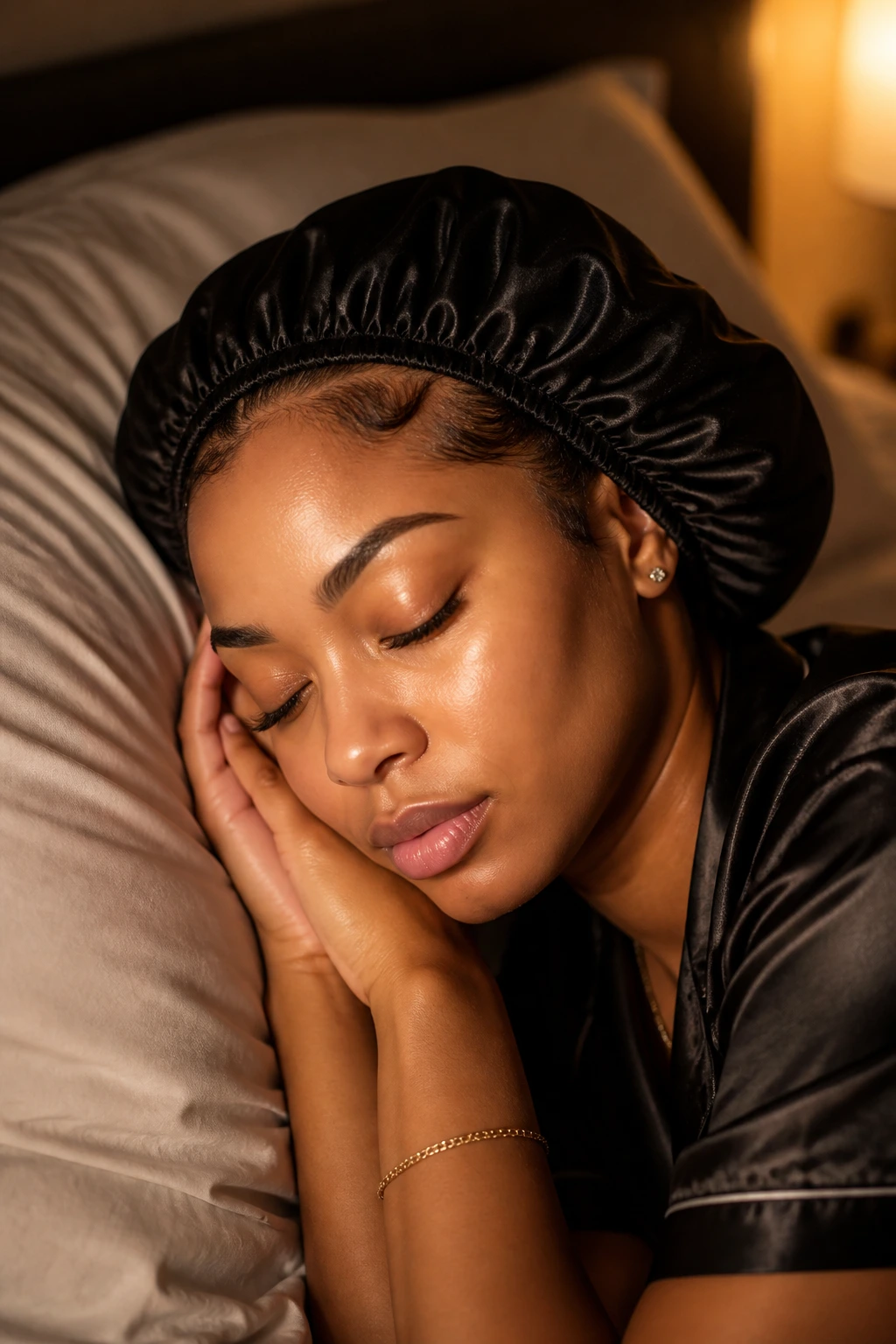
Sleep with a satin bonnet or scarf every night. If the bun is especially low, fold a scarf around the nape before you wrap the whole head so the bun does not rub itself loose against the pillow. A silk or satin pillowcase helps too, but it does not replace wrapping.
If your scalp starts feeling dry, use a light scalp oil or braid spray once or twice a week. Apply it directly to the part lines, not all over the hair. If you soak the bun, the braids can swell and start to look frizzy much faster. For buildup, a damp cotton pad or a little diluted cleanser at the scalp works better than pouring product through the whole style.
Plan on a full refresh of the front pieces and bun shape every 7 to 10 days. That does not mean redoing the entire style. It means retucking flyaways, resetting the edges, and smoothing the nape so the bun sits low again instead of puffing upward.
Variations and Adaptations to Try
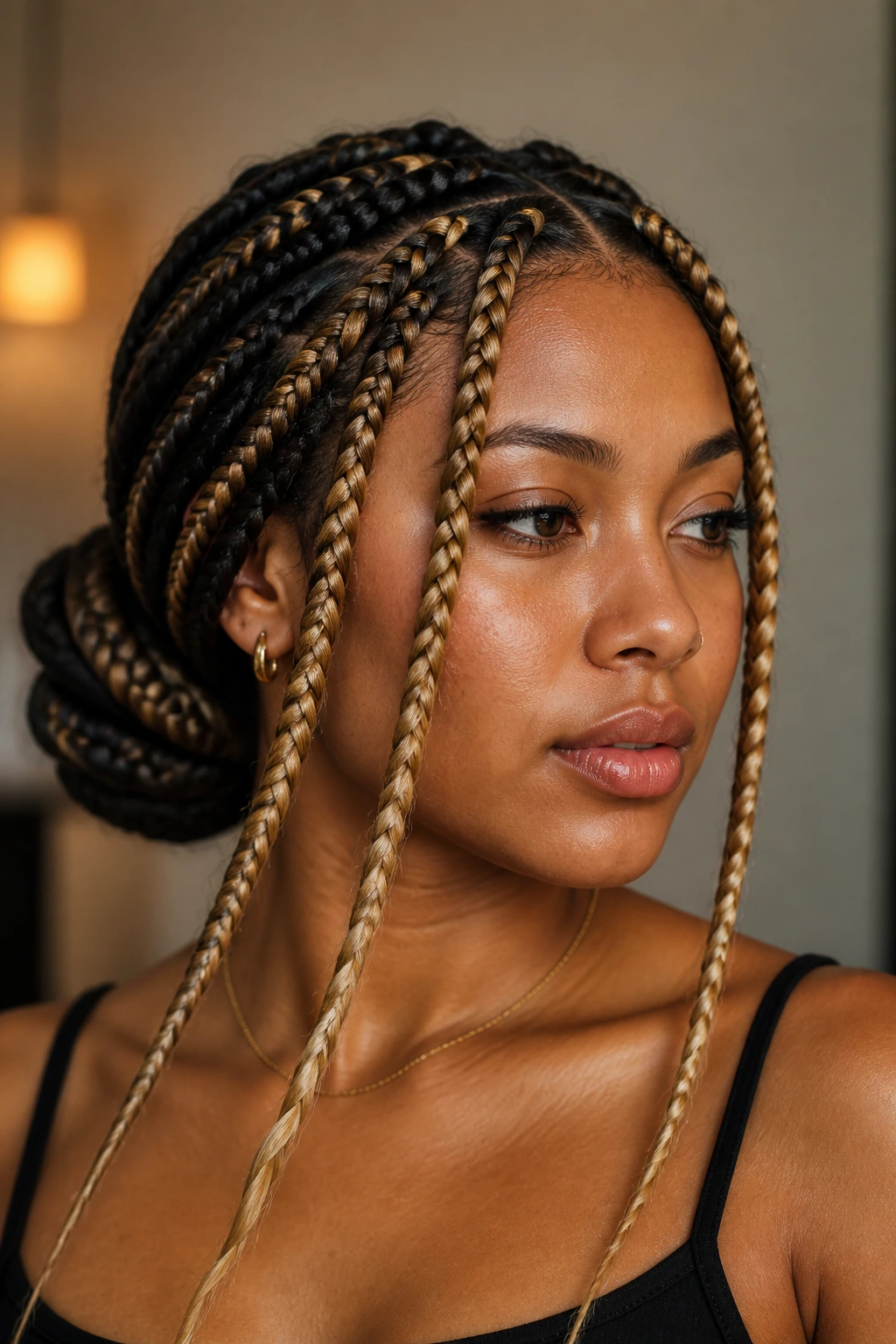
Knotless Nape Version: If you want less tension at the scalp, switch the front and crown braids to knotless pieces. The bun stays low, but the hairline feels softer and lighter.
Jumbo Statement Version: Fewer, thicker braids create a fuller bun and make the money-piece highlights look bolder. This works best when you want the style to read fast from across the room.
Curly Front Version: Keep the bun straight and low, then add curled face-framing pieces. The contrast between smooth braids and soft curls makes the highlight color look more dimensional.
Office-Sleek Version: Use neutral highlights, a center part, and no accessories. It is the most restrained version in the bunch, which makes it easy to wear with structured clothes or a sharper makeup look.
Weekend Beaded Version: Add a few gold or wooden beads to the front strands only. That gives the style sound and movement without making the bun itself busy.
Faux-Loc Version: Wrap the braid ends more tightly and let the bun feel denser. Warm blonde or honey money pieces work especially well here because they soften the heavier texture.
Common Mistakes That Make the Style Look Heavy
The bun sits too high.
If the knot creeps up toward the crown, the whole look stops reading as a low bun and starts looking like an awkward topknot. Fix it by lowering the anchor point at least an inch and pinning closer to the nape.
The money pieces are too wide.
Thick front highlights can dominate the face and make the style look disconnected from the rest of the braids. Keep the front pieces narrow enough to frame the face, not block it.
Too much gel at the scalp.
The hairline gets stiff, shiny, and flaky after a day or two. Use a small amount, smooth it down, then stop. A clean part matters more than a shellacked crown.
The bun is pinned only from the outside.
That’s why some buns sag by lunchtime. Anchor the braid ends inside the coil first, then add pins deeper into the center of the bun so the weight is supported from underneath.
Accessory overload.
Beads, cuffs, rings, and glitter all at once make the braid bun feel crowded. Pick one or two accents and leave the rest alone.
Frequently Asked Questions
How long does a low bun box braid style usually last?
The bun shape can stay useful for 2 to 4 weeks if the braids were installed cleanly and the nape is pinned well. The face-framing highlights will still look good after that, but the root area will usually need a refresh before the style feels sharp again.
Can I do this with knotless braids instead of box braids?
Yes, and the front usually feels softer because knotless braids sit flatter at the root. The low bun shape stays the same; you just get a lighter, less bulky finish at the hairline.
Which money-piece color is easiest to wear?
Warm tones like honey, caramel, and soft auburn are the least fussy. They sit well against most braid colors and still look good once the style has loosened a little.
How do I keep the bun from sliding down?
Use a snag-free elastic first, then pin the wrapped ends from the inside of the coil. If the hair is extra heavy, split the bun into two wrapped sections before pinning them together. That gives the style more grip.
Will this style work if my braids are very long?
Yes, but the bun will need more structure. Long braids are better when wrapped in a flatter coil rather than piled into a ball. If you try to force too much length into one knot, it gets bulky fast.
Can I wear beads and still keep the bun low?
Absolutely, but keep the beads on the front pieces or at a few tail ends near the nape. Too many beads around the bun itself add weight and make the silhouette slump.
What if my hairline is sensitive?
Ask for less tension at the front and keep the edges soft. A low bun is easier on the scalp than a high pull, but tight front braids can still cause discomfort if they are installed too firmly. If it aches, loosen it. Do not wait.
Can I refresh the style without redoing the whole head?
Yes. Re-mist the front pieces lightly, smooth the parts, retuck the bun, and reset the edges with a small amount of product. That usually buys you several more days without a full reinstall.
A Low Bun That Still Has Something to Say
A good low bun box braid style does not need to shout. It just needs shape, clean placement, and a front color that wakes the face up a little. That is why the money pieces matter so much here; they stop the braids from flattening into the background and give the whole style a point of view.
Pick the version that matches your braid size, your tolerance for upkeep, and how much color you want near your face. A soft honey frame, a copper streak, or a crisp blonde pair can change the mood more than a whole head full of extra work.
And if the bun sits low, stays neat, and gives you one fewer thing to worry about when the weather gets sticky, that is the style doing exactly what it should.