



Wavy hair does half the styling work for you, and that is exactly why half-up curls can look polished without turning stiff or fussy. When the front is controlled and the length is left loose, the whole style reads intentional instead of overworked. That balance matters on days that start with a meeting and end somewhere less formal, because the same hair has to sit under a blazer and still look fine with a button-down undone at the collar.
The trick is not to flatten the waves into submission. Bad half-up styling does that. Good half-up styling lets the bends stay visible, keeps the crown from puffing out in strange places, and uses pins, clips, or braids to shape the top third of the head while the rest keeps its movement. If your hair tends to go flat at the roots and frizzy at the ends, this is one of the few styles that can actually help both problems at once.
A half-up style on wavy hair also buys you time. You do not need a perfect blowout. You need smart placement, a few clean lines, and the nerve to leave some texture alone. That is where the real polish comes from.
Why These Half-Up Looks Earn Their Place
-
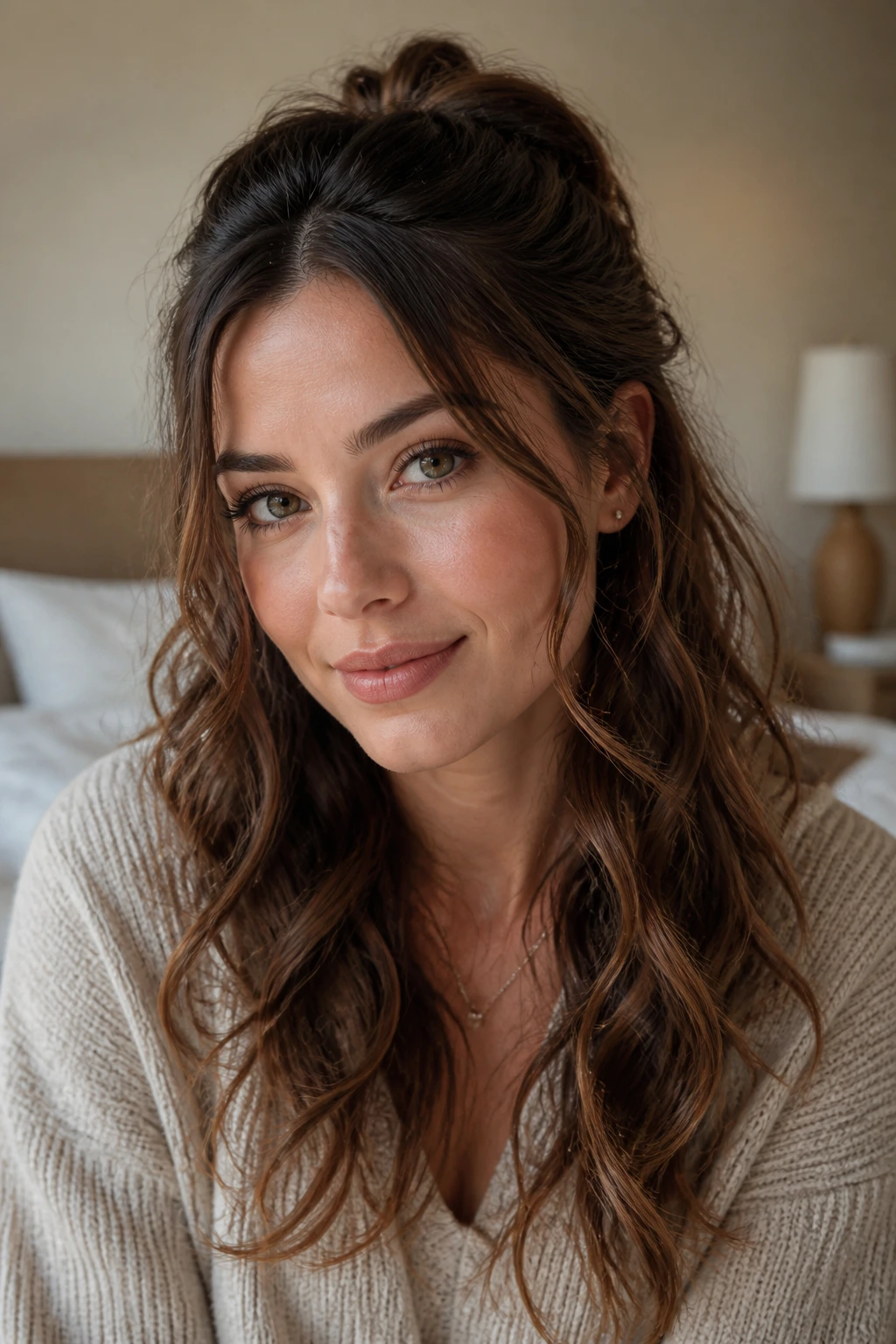
They keep the face open without stealing the wave pattern. You get the practical part of an updo and the softness of loose hair in the same style.
-
They hold up better than a full down style on second-day hair. A little texture at the roots gives pins and clips something to grip, which helps on mornings when the crown is not cooperating.
-
They can look office-ready with almost no heat. A twist, a braid, or a neat clip at the back does more visual work than another pass with a curling wand.
-
They move easily from desk to dinner. The same half-up base can look sharp with a blazer, then looser and more relaxed after you tug out a few face-framing strands.
-
They scale up or down with hair density. Fine waves need smaller sections and lighter accessories; thick waves can handle a braid, a knot, or a stronger clip without collapsing.
-
They are forgiving. A tiny bump at the crown or a wave that bends the wrong way is not a disaster here. It usually just looks like texture.
1. Sleek Temple Twist with Soft Ends
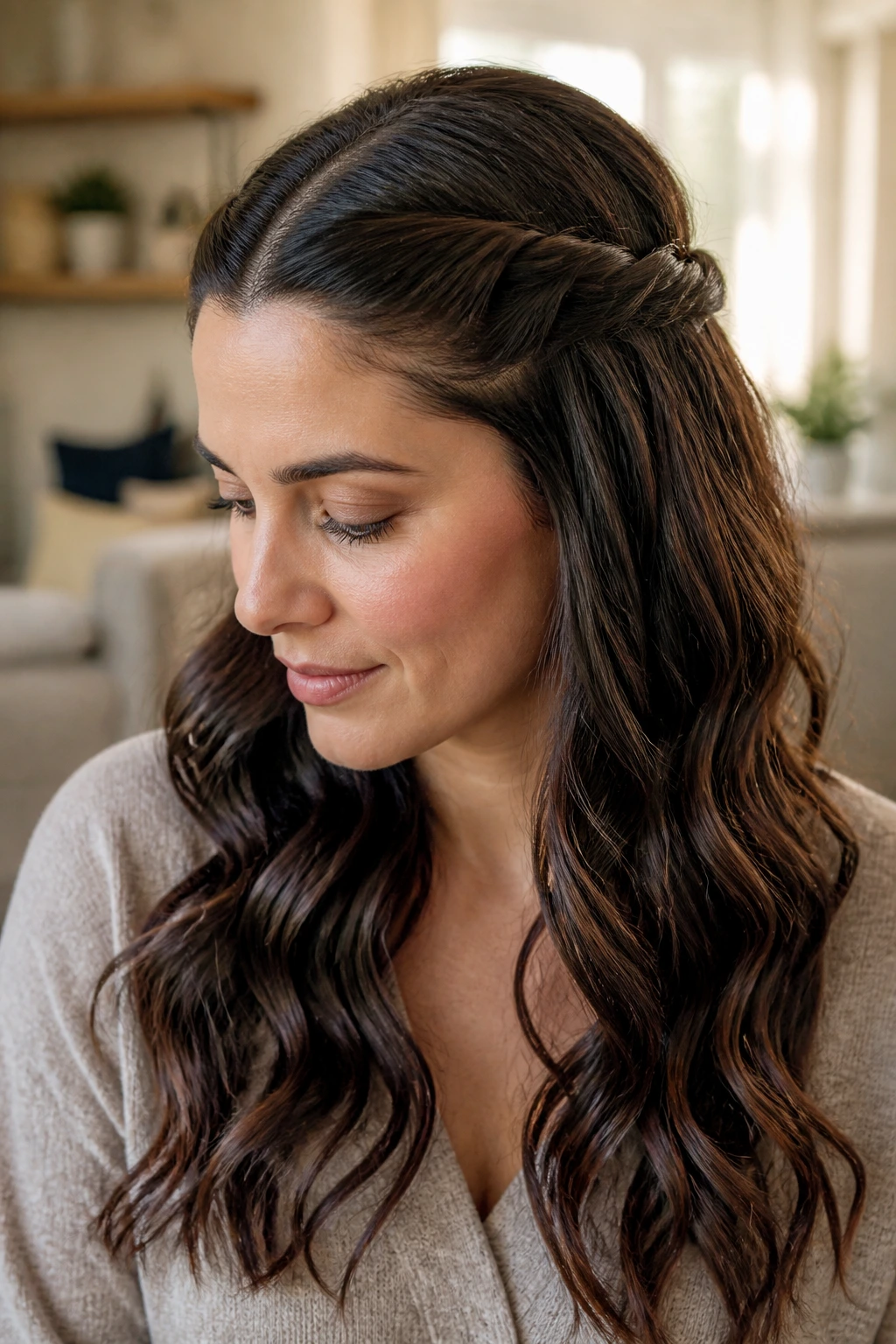
A temple twist is the one I reach for when I want the top of the hair to look calm and the rest to keep its shape. Start by taking a one-inch section from each temple, twist them back tightly for the first two turns, then let the twist soften as it reaches the crown. Pin it just below the back of the head so the loose waves fall over the ends of the pins.
What makes this style work on wavy hair is the contrast. The front is neat, almost architectural, while the length stays airy and lived-in. It looks especially good if your waves are a little uneven, because the twist gives the eye a clear line to follow.
If your hair frizzes around the hairline, smooth the first half-inch with a tiny bit of cream or a mist of water before twisting. That one step keeps the style from looking fuzzy by lunch.
2. Braided Crown Half-Up on Loose Waves
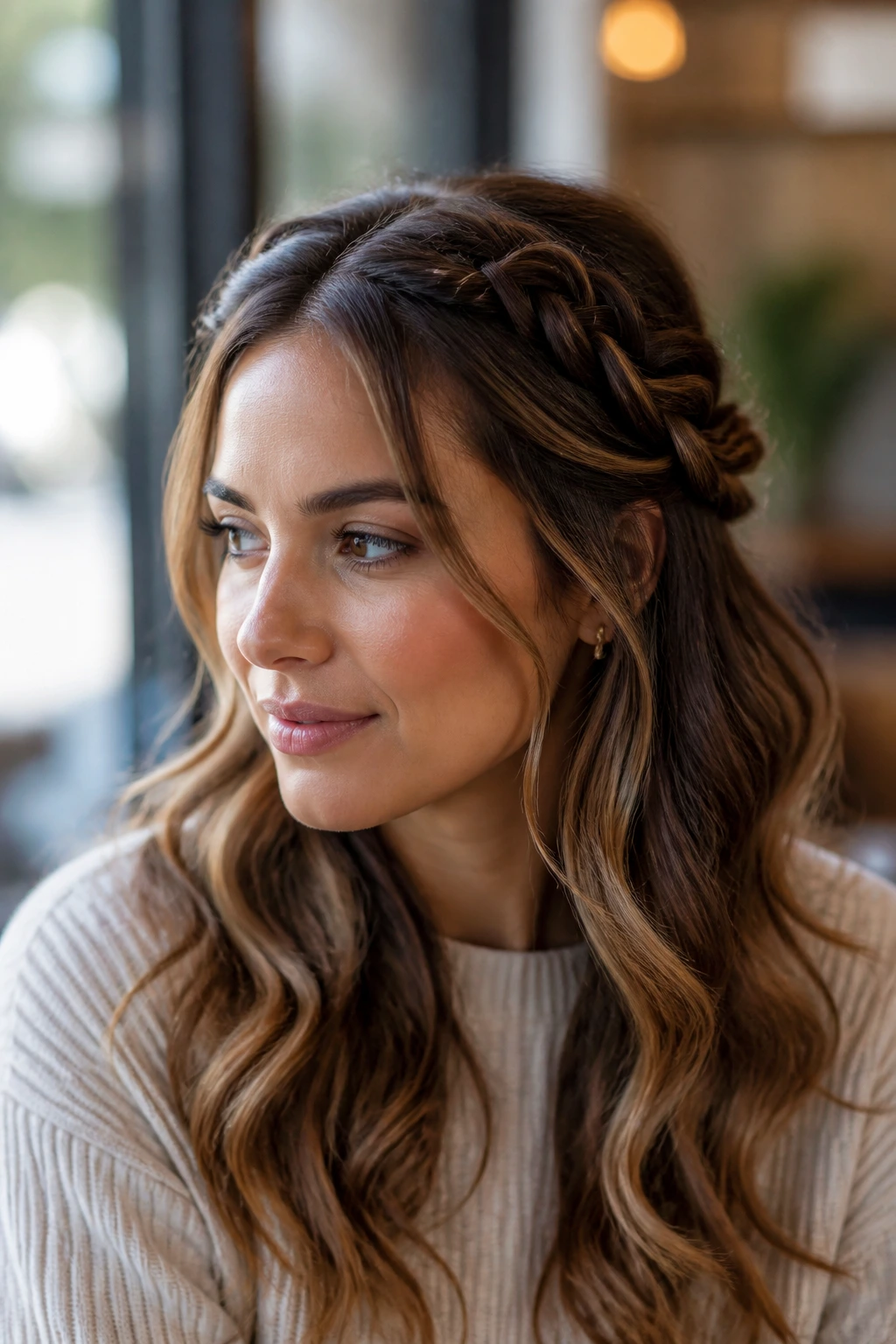
Two small braids from the front sections give wavy hair a more structured shape without making it feel formal. Braid each side from the temple back toward the crown, then join them with a clear elastic or two crossed bobby pins. The rest of the hair stays loose, which keeps the whole thing from reading too bridal.
Why it stays put
The braids grab onto the wave pattern instead of fighting it. If your hair slips out of clips, this is the safer bet, because woven hair has more grip than a smooth twist. Keep the braids narrow — about the width of your pinky — or the style starts to look heavy.
This one suits medium to thick waves best, especially if your ends have a little bend. If you want it softer, tug the outer braid edges just a touch after securing them. Not much. Just enough to break the tight line.
3. Claw-Clip Cascade with Face-Framing Pieces
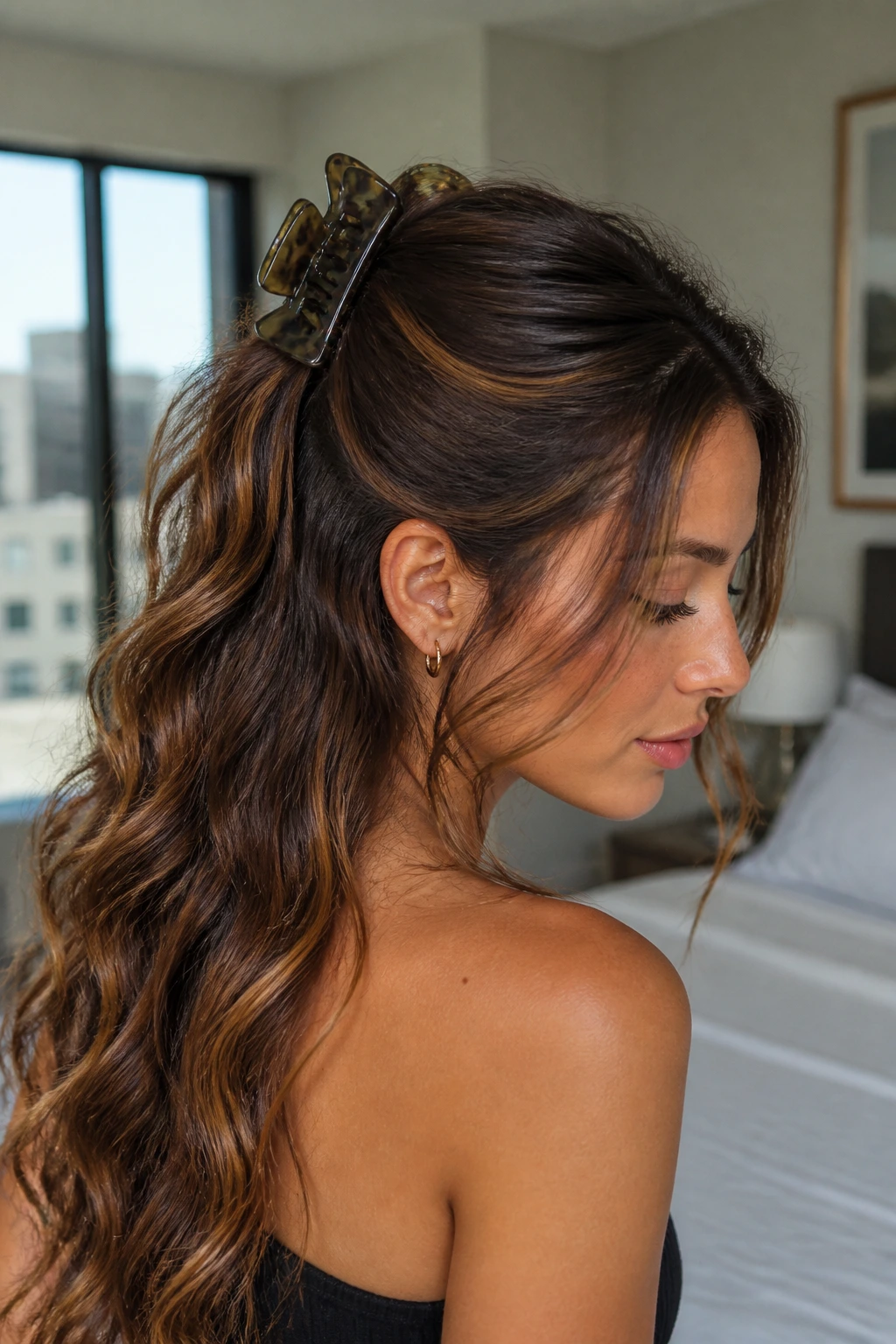
A good claw clip is doing half the work here, and I mean that literally. Gather the top section from temple to temple, twist it once, fold it up, and set a medium clip vertically so the ends spill out below. Leave two face-framing pieces out in front if you want the style to feel less severe.
A claw clip can go wrong fast on wavy hair if it is too big. That giant clip from your bathroom drawer will drag the style down and make the crown look flat. A medium clip, especially one with matte teeth, holds better and looks cleaner.
If you only have five minutes, this is the style. It is fast, it forgives uneven wave pattern, and it does not need a mirror-perfect finish to work.
4. Low Half-Up Knot with a Clean Center Part
A center part and a low knot at the back of the crown make wavy hair look more controlled without looking slicked down. Pull the top half into a small ponytail, twist it once, and wrap it into a loose knot that sits just above the occipital bone. Pin the knot flat so it doesn’t stick out like a knob.
This is one of the better choices for workwear because it sits quietly under a collar and does not fight with earrings or a structured neckline. It also keeps the wave texture visible from the sides, which matters more than people think. If the ends are too polished, the style can feel stiff. Leave the lower lengths soft.
A narrow center part helps the waves fall in a symmetrical way, which makes the whole thing feel cleaner. If your part shifts during the day, that is fine. A slight bend only makes it look more human.
5. Rope-Twist Ponytail for Long Wavy Hair
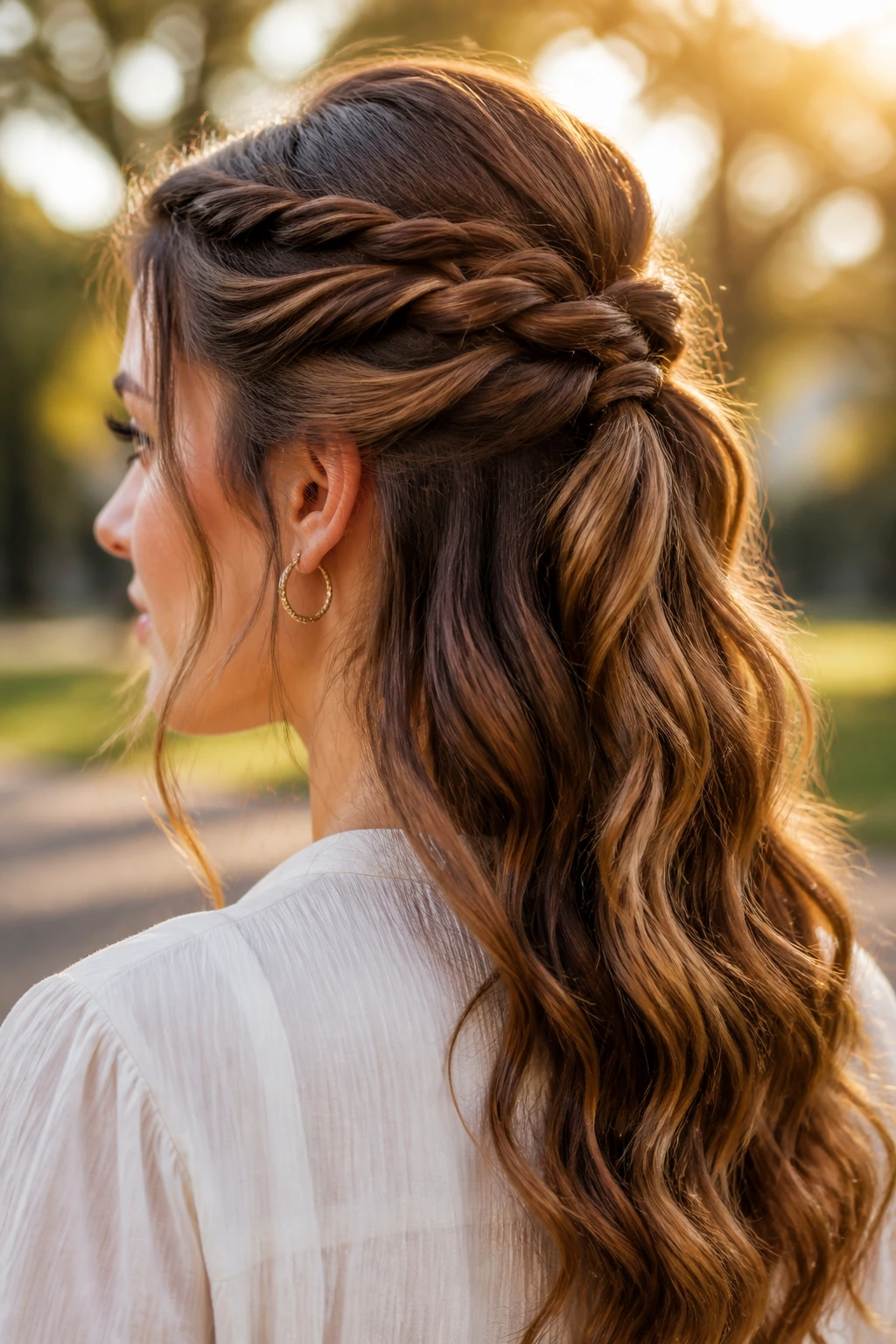
Rope twists give long waves a tidy shape without the flatness you sometimes get from a straight ponytail. Split the top section into two pieces, twist each one clockwise, then twist them around each other counterclockwise and secure them into a half-up ponytail. The result should have a subtle cable-like look that still lets the lower waves move.
What to watch for
If you twist too loosely, the rope falls apart. Too tightly, and the front section looks stiff. Aim for tension that feels snug in your fingers but not tight against the scalp. That middle ground is where the style looks intentional.
I like this one on hair that has a little length past the shoulders, because the rope twist gives the eye a lead-in to the loose ends. It is neat enough for a desk and soft enough that you do not look overdressed if you take your blazer off later.
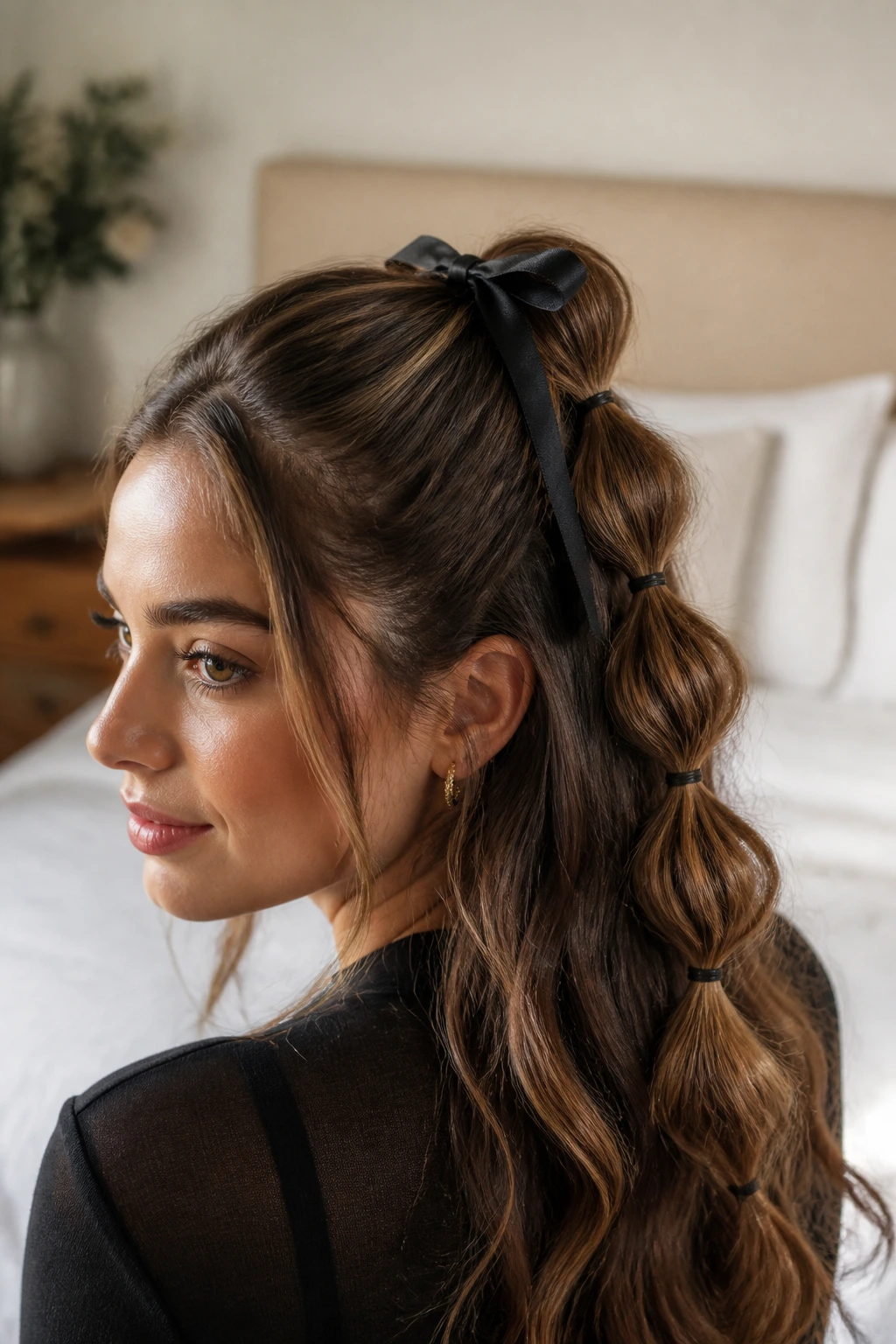
6. Bubble Half-Up Pony with a Ribbon Tie
A bubble half-up pony sounds playful, but on wavy hair it can read polished if you keep the bubbles small and the ribbon simple. Start with a half-up ponytail, add tiny clear elastics every 2 to 3 inches, then gently pull each section outward until it rounds into a bubble. Tie the base with a narrow ribbon if you want the finish to feel softer.
This style is best when your waves are long enough to show the bubble shape without getting swallowed by it. If your hair is shoulder length, keep the bubbles shallow. If it is longer, you can make the spacing a touch wider.
The ribbon is not decoration for decoration’s sake. It hides the elastic, and when you choose a matte ribbon in a color close to your hair, the whole style looks deliberate instead of thrown together.
7. Side-Swept Barrette Sweep for Shorter Waves
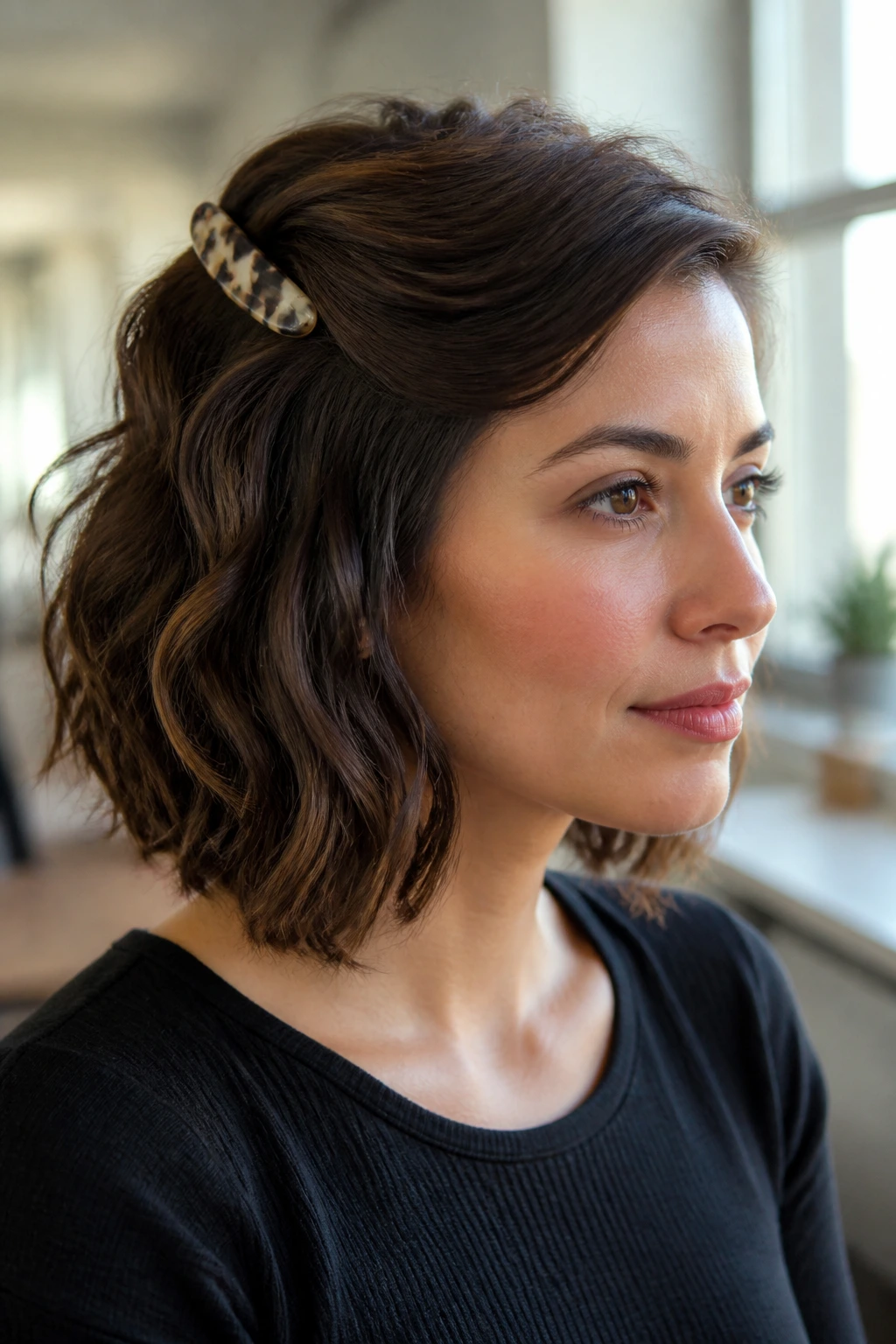
Shoulder-length waves can be tricky because they need control up top, but they do not always give you enough weight for a full knot. A side-swept barrette sweep solves that neatly. Gather the front section from one side, draw it across the crown, and pin it back with a barrette that has enough grip to catch the thicker part of the hair.
The side sweep is especially good if your layers keep slipping out of clips. You are only holding back one side, so the tension stays lower and the style lasts longer. It also gives a soft diagonal line, which is kinder to shorter lengths than a big center pull-back.
Choose a barrette with teeth or a flat clasp, not a flimsy decorative piece that opens too easily. Pretty is fine. Weak is not.
8. Mini Dutch Braid Across the Hairline
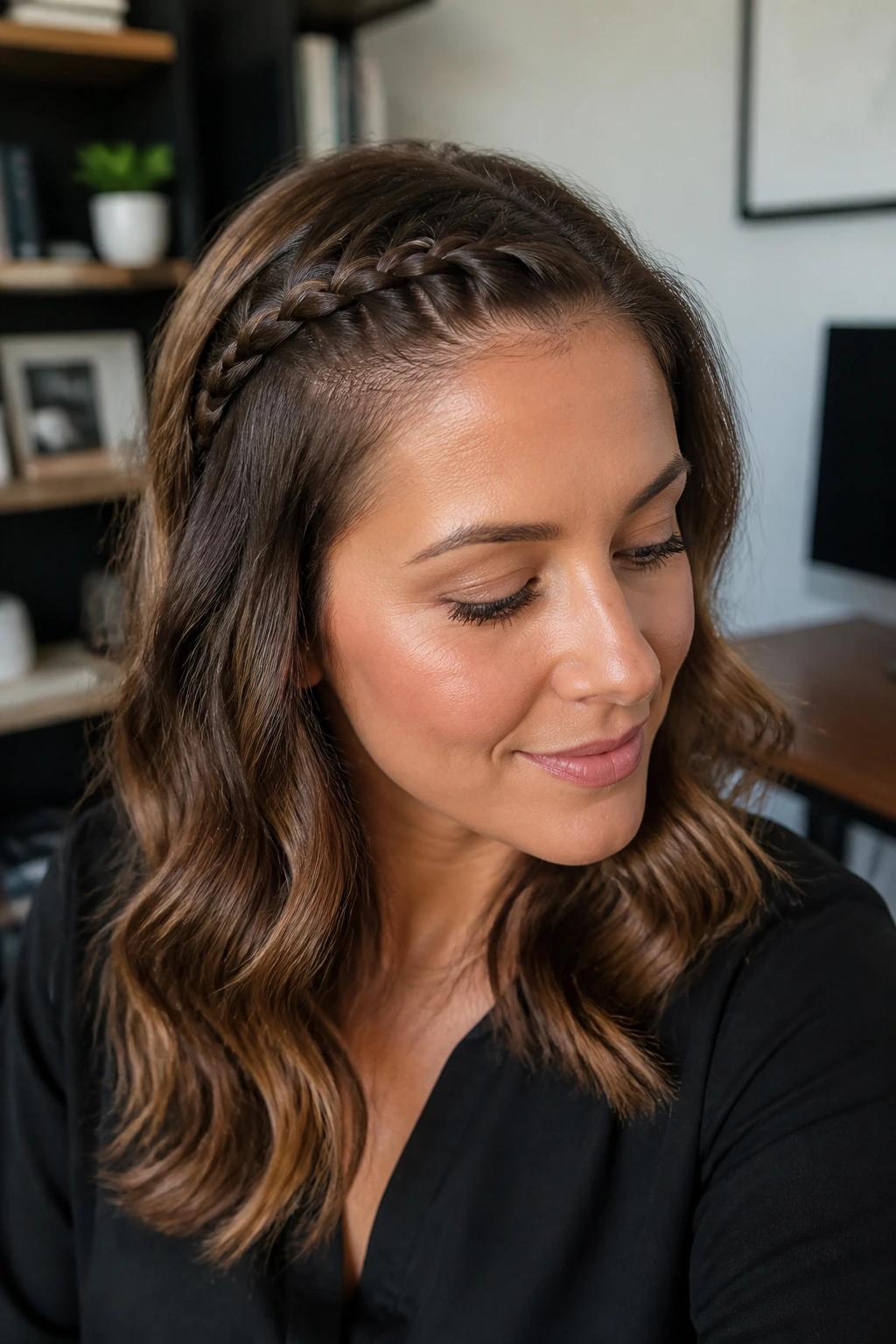
A tiny Dutch braid near the hairline gives wavy hair a little edge control without making the style feel sporty. Take a thin section from the front, braid it under rather than over, and carry it along the hairline for two or three inches before pinning it back. Leave the rest loose and curved.
Best when you need your front pieces to behave
This one is useful if your face-framing layers always fall into your eyes during the day. A mini braid does the job of a bobby pin, but it looks more finished and usually grips better on wavy hair. Keep the braid small. That is the whole trick.
If you wear glasses, this style is especially practical because it keeps the temples clear. It also sits well under a headset, which is a nice bonus if your work day involves calls and not just looking composed in a conference room.
9. Velvet Bow Half-Up for Office-to-Dinner
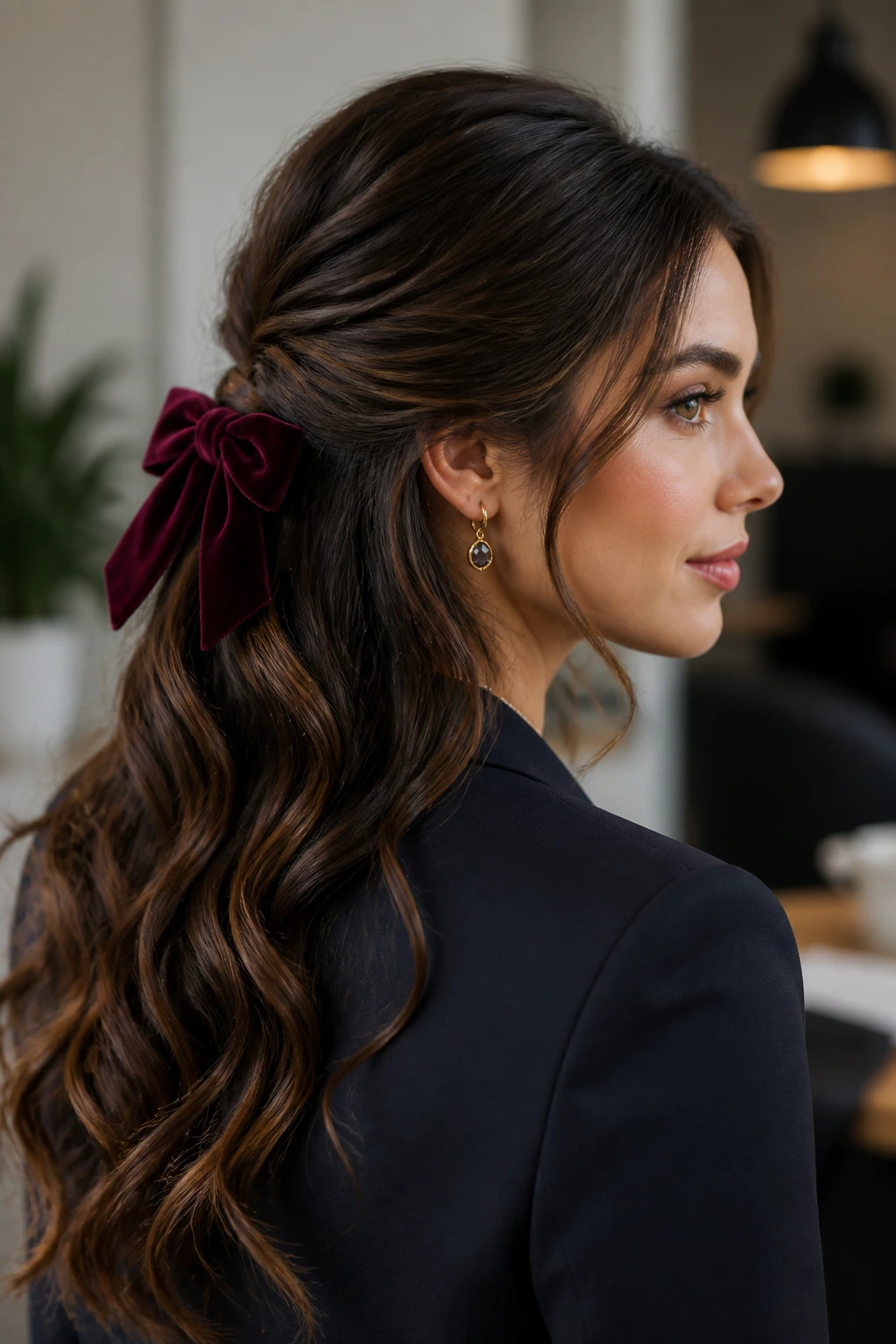
A velvet bow can soften a half-up style fast, but it needs a clean base under it. Pull the top half into a low ponytail or small knot, secure it, then tie the bow where the elastic sits. The bow should be wide enough to show, but not so large that it swallows the wave pattern underneath.
This is one of those styles that looks more expensive than it is, mostly because velvet has weight and texture. It pairs well with loose waves that have been brushed just enough to separate, not brushed into a puff. If your hair is very fine, keep the bow small or the clip will overwhelm the style.
I like this version for days that end somewhere a little nicer than the office. You do not have to redo your hair. You just swap the mood.
10. Waterfall Braid Accent Over Soft Curls
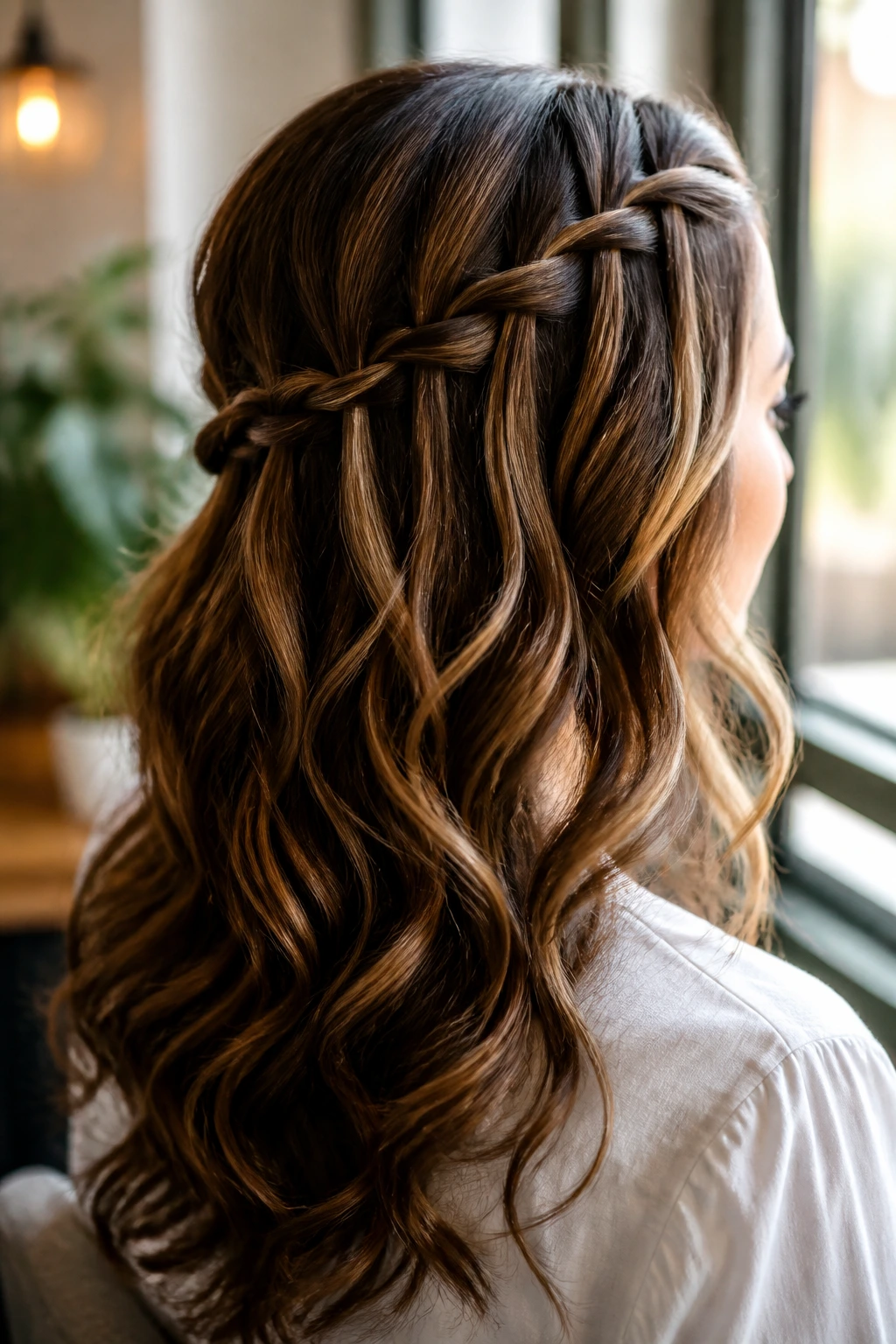
The waterfall braid is the one style in this list that looks intricate even when you keep the rest of the effort low. Braid along the back section of one side, dropping a strand each time so the loose pieces fall through like little arches. Let the rest of the hair stay in soft waves or curls, and pin the braid where it meets the crown.
What sells this style is movement. Every dropped strand blends into the waves below, so the braid feels like part of the texture instead of a hard line on top of it. It suits medium to long hair best, especially if the waves have enough bend to echo the braid.
Take your time with the first two crossings. If those are neat, the rest usually behaves. And if one section slips, it will disappear into the wave pattern anyway.
11. Wrapped-Elastic Half-Up Pony with Volume at the Crown
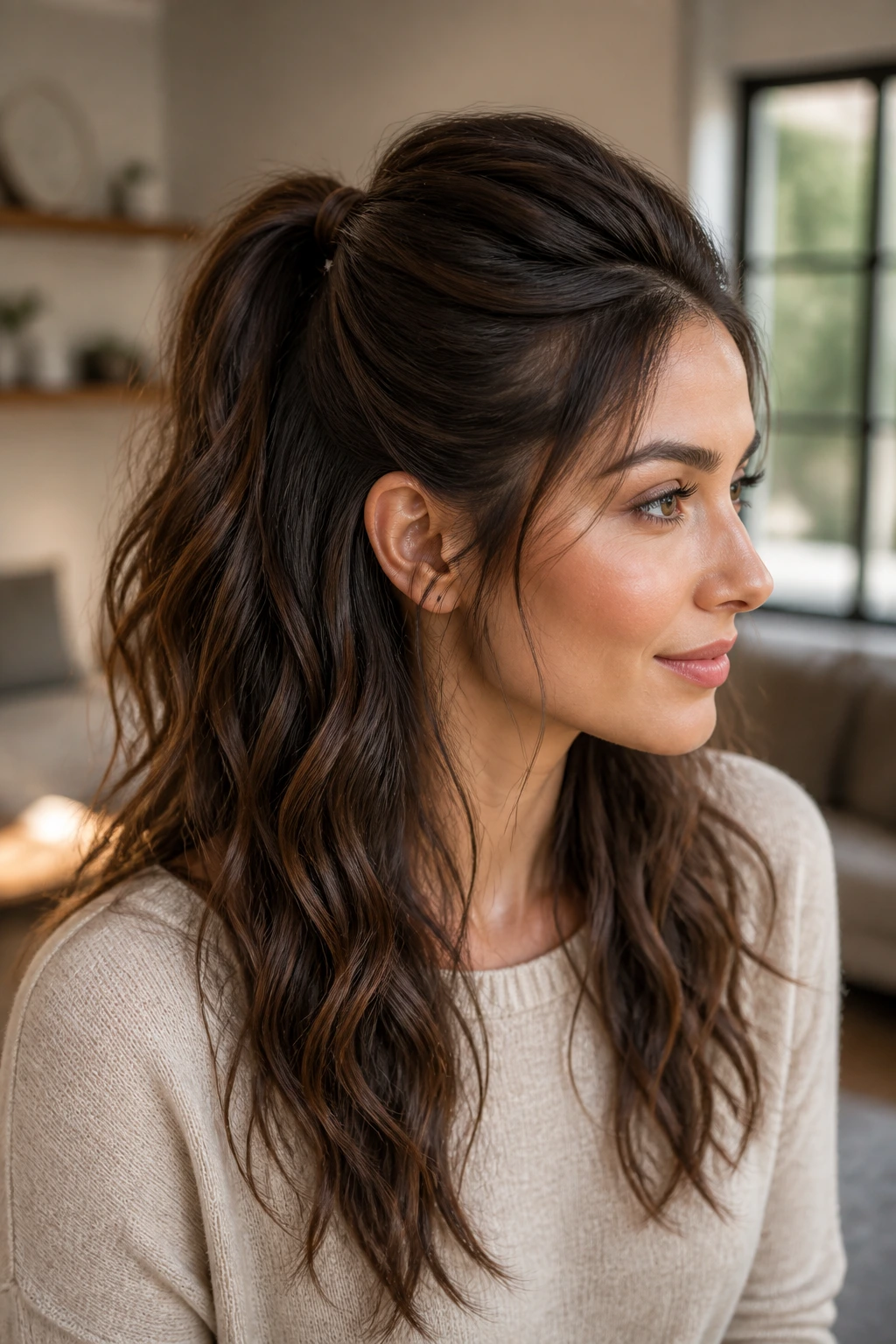
A wrapped elastic makes a plain half-up ponytail look finished in about ten extra seconds. Pull the top half back, secure it, then take a thin strand from underneath the ponytail and wrap it around the elastic until the band disappears. Pin the tail under the pony or tuck it into the elastic base.
A little crown lift helps here. Not a lot. Just enough to keep the top from lying flat against the head. If your waves are dense, use your fingers to loosen the hair at the crown before you secure anything. That tiny lift is what keeps the style from feeling glued down.
This one works because it is simple and quiet. No clip. No bow. Just a cleaner line and some soft movement underneath.
12. Tucked-In Half-Up Roll for a Smooth Finish
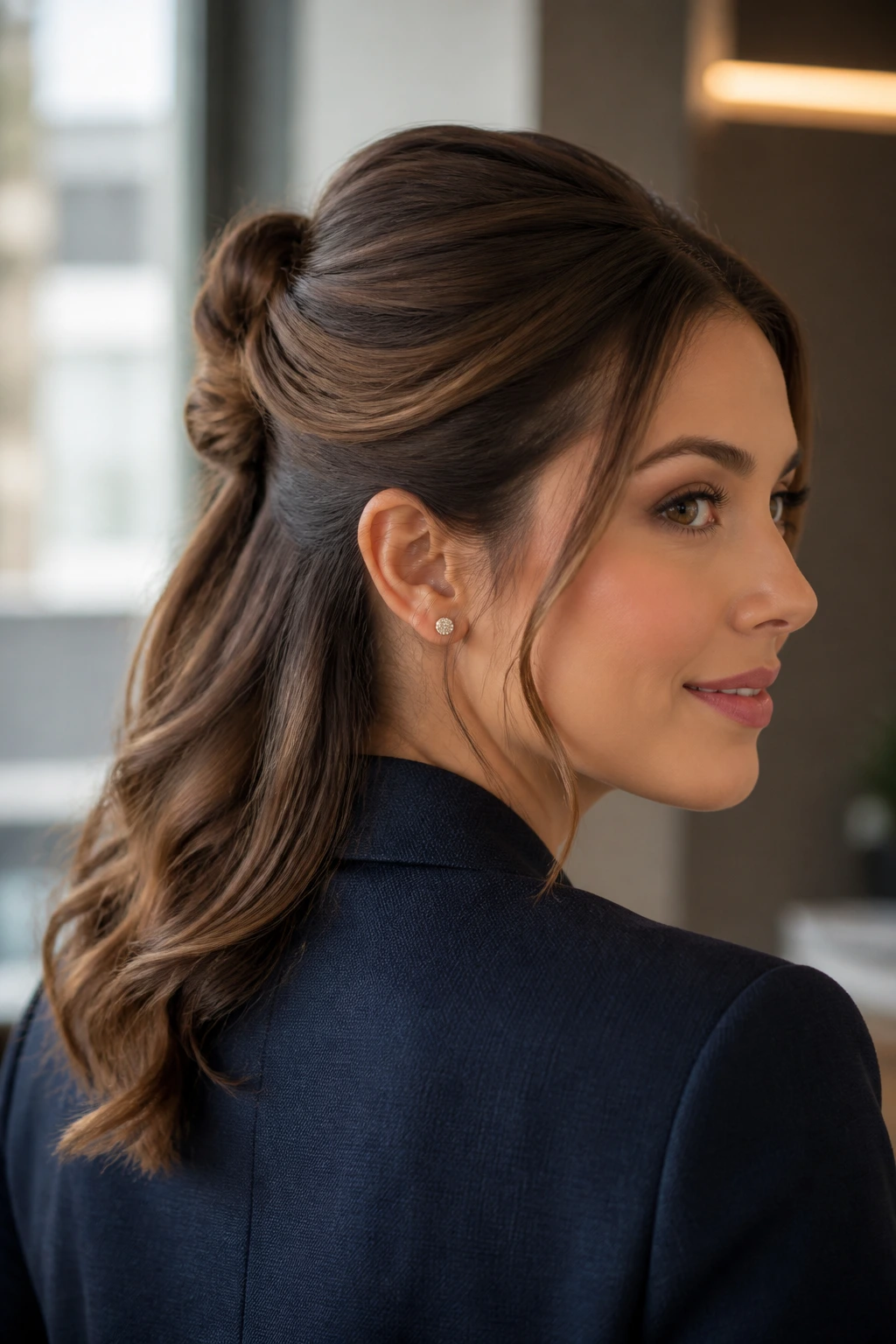
Need something that lies flat against a blazer collar and doesn’t fight with the back of your shirt? The tucked-in half-up roll is the answer. Gather the top section into a small ponytail, loosen the elastic a touch, and fold the tail upward and inward so the ends disappear into the roll. Pin both sides with two bobby pins crossed in an X.
The result sits close to the head, which is useful when you want polish without height. It is especially good on wavy hair that has a smooth top layer and fuller ends. If your hair is layered heavily, leave a few shorter pieces out at the temples so the style doesn’t look over-tight.
This is a calm style. No drama. That is the point.
13. Crisscross Bobby Pin Half-Up for Second-Day Hair
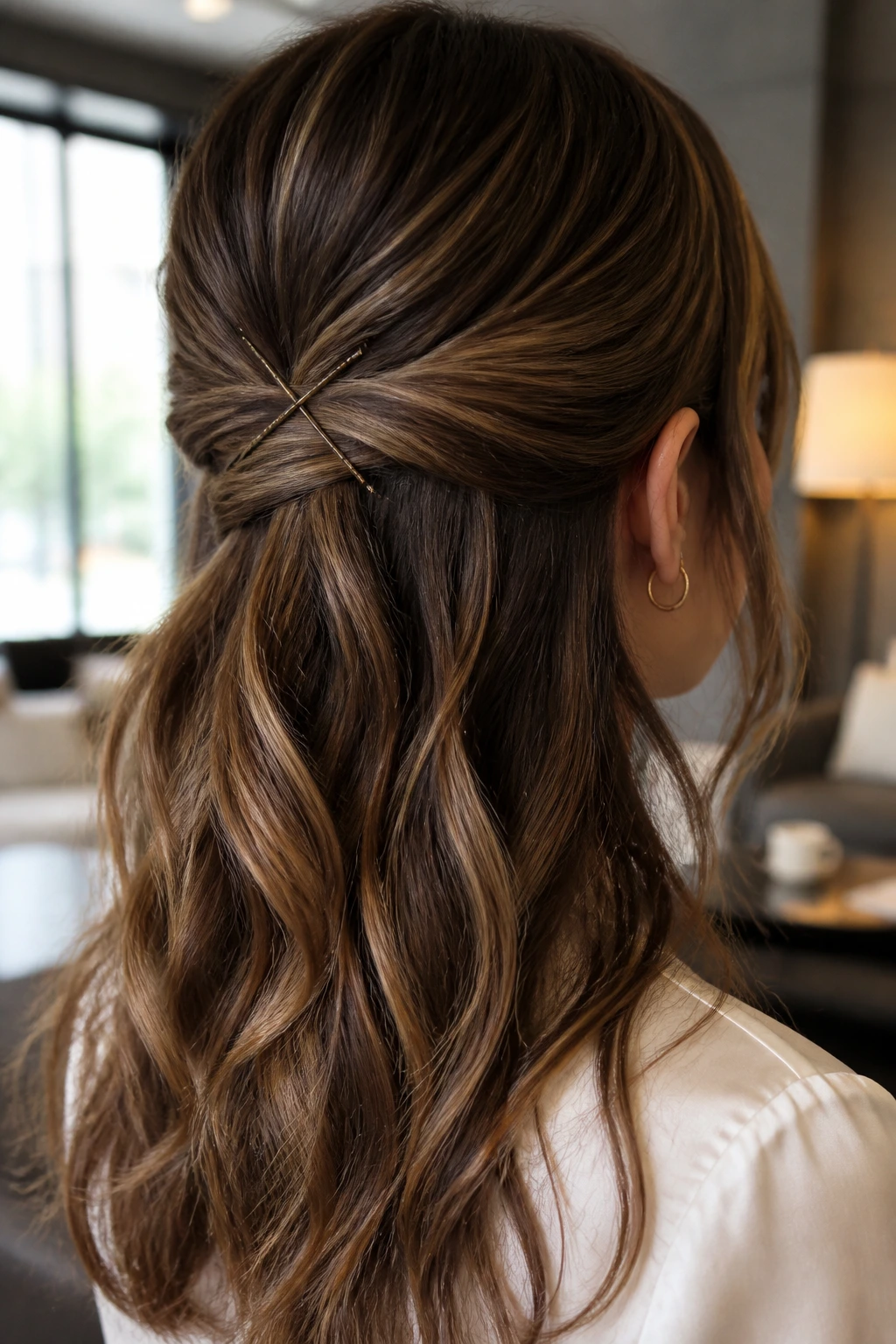
Second-day waves usually have the grit that pins love, which is why this style works so well when the rest of the week gets busy. Pull back two small side sections, cross them at the back of the head, and pin them in an X with two or four bobby pins. You can stack the pins in a neat row or hide them under one another.
A few things that make it hold
- Spray the pins lightly with hairspray before inserting them.
- Push each pin in against the direction of hair growth, then flip it.
- Keep the sections narrow so the weight stays low.
That is it. The style stays minimal, but the crossed pins add a little visual line that looks thoughtful rather than accidental. It is one of the best options for hair that has some texture but not enough length for a knot.
14. Curled Tendrils and Pinned Crown
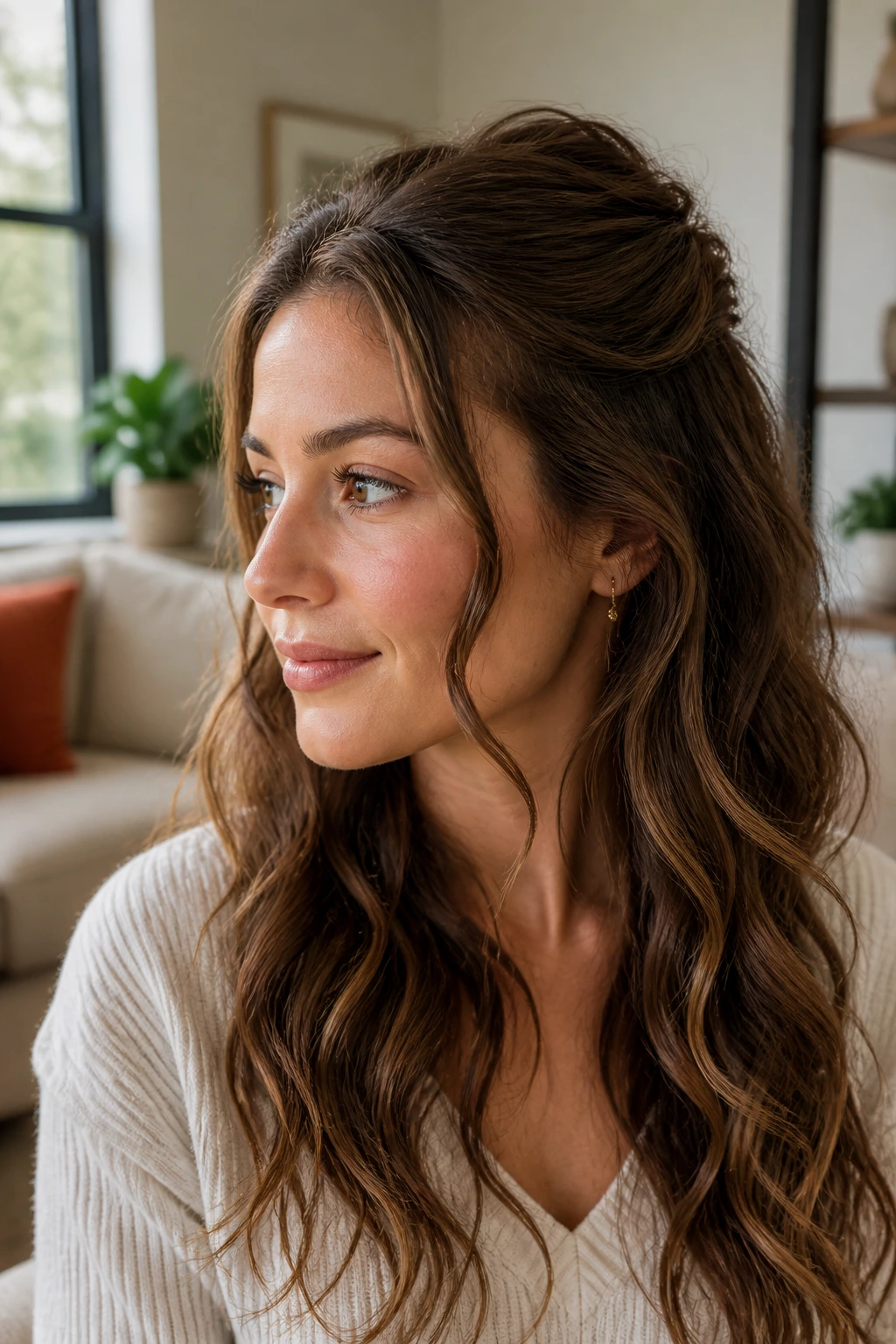
Sometimes the cleanest half-up style is the one that barely asks anything from the hair. Pin back just the crown section, then leave two front tendrils out and soften them with a curling wand if they do not already bend on their own. The lower half stays loose and wavy, which keeps the look from drifting into prom territory.
This one works especially well if you have face-framing layers or curtain bangs. The tendrils help the style settle around the face instead of pulling everything backward at once. A small amount of smoothing cream at the ends can stop the loose pieces from puffing out.
It is uncomplicated, and that is why people keep coming back to it. Some mornings need a style that behaves without taking over.
15. Double Mini Buns with Loose Wavy Length
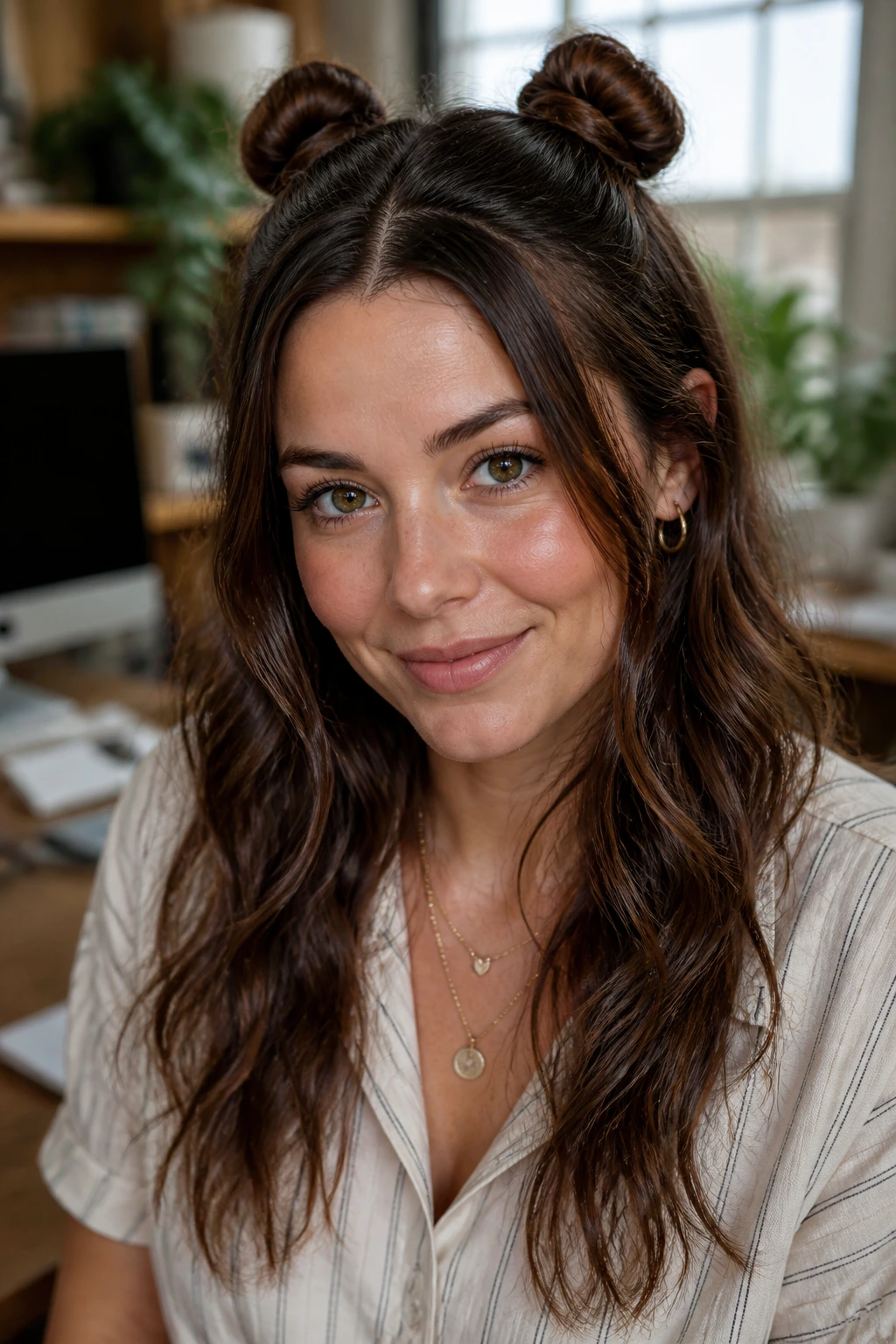
Double mini buns are the playful edge of the half-up family, and they work better than people expect on wavy hair. Gather two small sections from each side of the crown, twist each into a tiny bun, and pin them low enough to stay balanced. Leave the rest of the waves long and soft so the look doesn’t go too far.
This is not the style I’d pick for a formal presentation. It is the one I’d reach for on a casual Friday or for a creative office where a little personality helps. Because the buns are tiny, they do not fight the wave pattern underneath. They just sit on top of it.
If your hair is thick, keep the buns smaller than you think. Big buns on half-up styles can pull the eye up too hard and flatten the rest.
16. Twisted Halo Half-Up with a Center Part
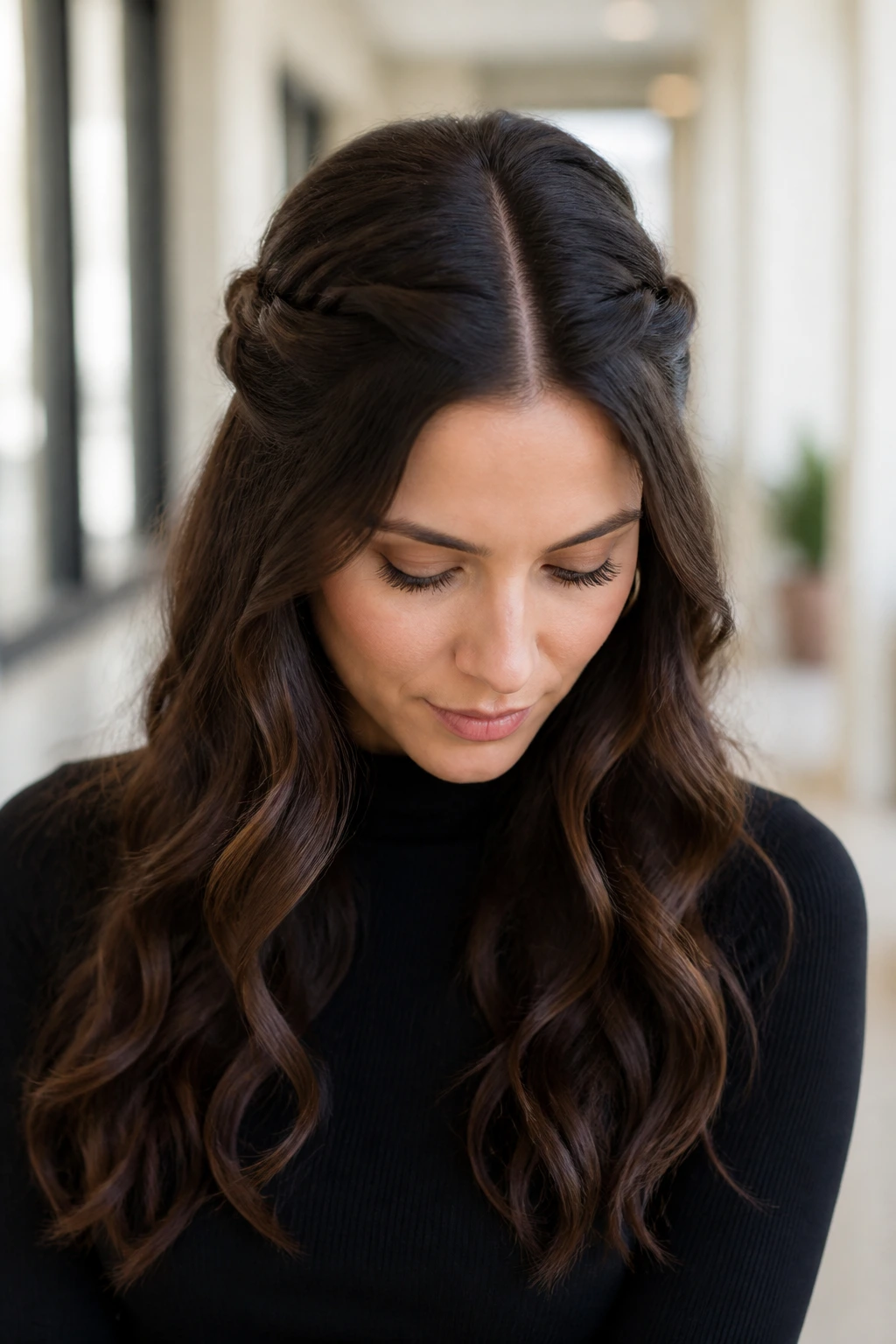
A twisted halo works when you want symmetry and a bit of detail without visible fuss. Part the hair down the center, twist a section from each side toward the back, and pin the twists together so they form a soft halo across the crown. Leave the lower half loose and the ends free.
Where this style shines
It is particularly good on wavy hair that has a little frizz at the top but nicer shape through the lengths. The twist controls the crown; the waves do the rest. Keep the part precise at the start, because the whole look leans on that symmetry. If the part is crooked, the style loses some of its clean line.
I like this for days when you want detail but not volume. It sits flatter than a puff, and flatter is sometimes exactly what you need.
17. Pearl Pin Half-Up for Straightforward Polished Days
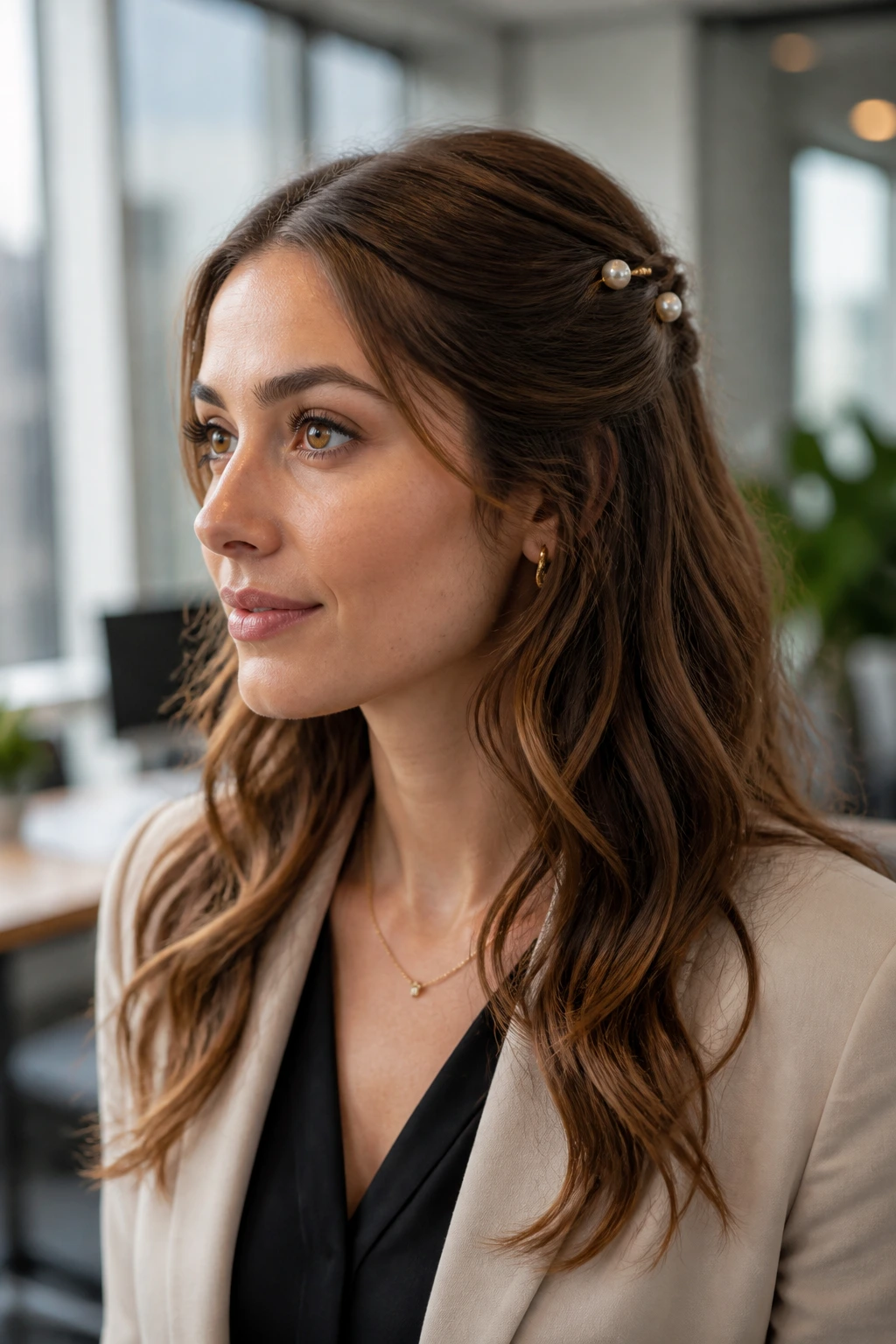
Pearl pins do a lot with very little. Pull the top half of the hair back into a small twist or low half pony, then slide one or two pearl pins along the seam where the hair is gathered. The pins should feel like an accent, not the only thing holding the style together.
This look is best when your waves are already defined and you do not want to overwork them. A pearl pin can make a simple half-up style feel deliberate enough for a meeting, a dinner reservation, or any day when your outfit does most of the talking. Keep the accessory on one side if you want a softer line, or center it if you want symmetry.
There is a reason this style keeps showing up. It is plain in the best way.
18. French Twist Half-Up with Loose Waves
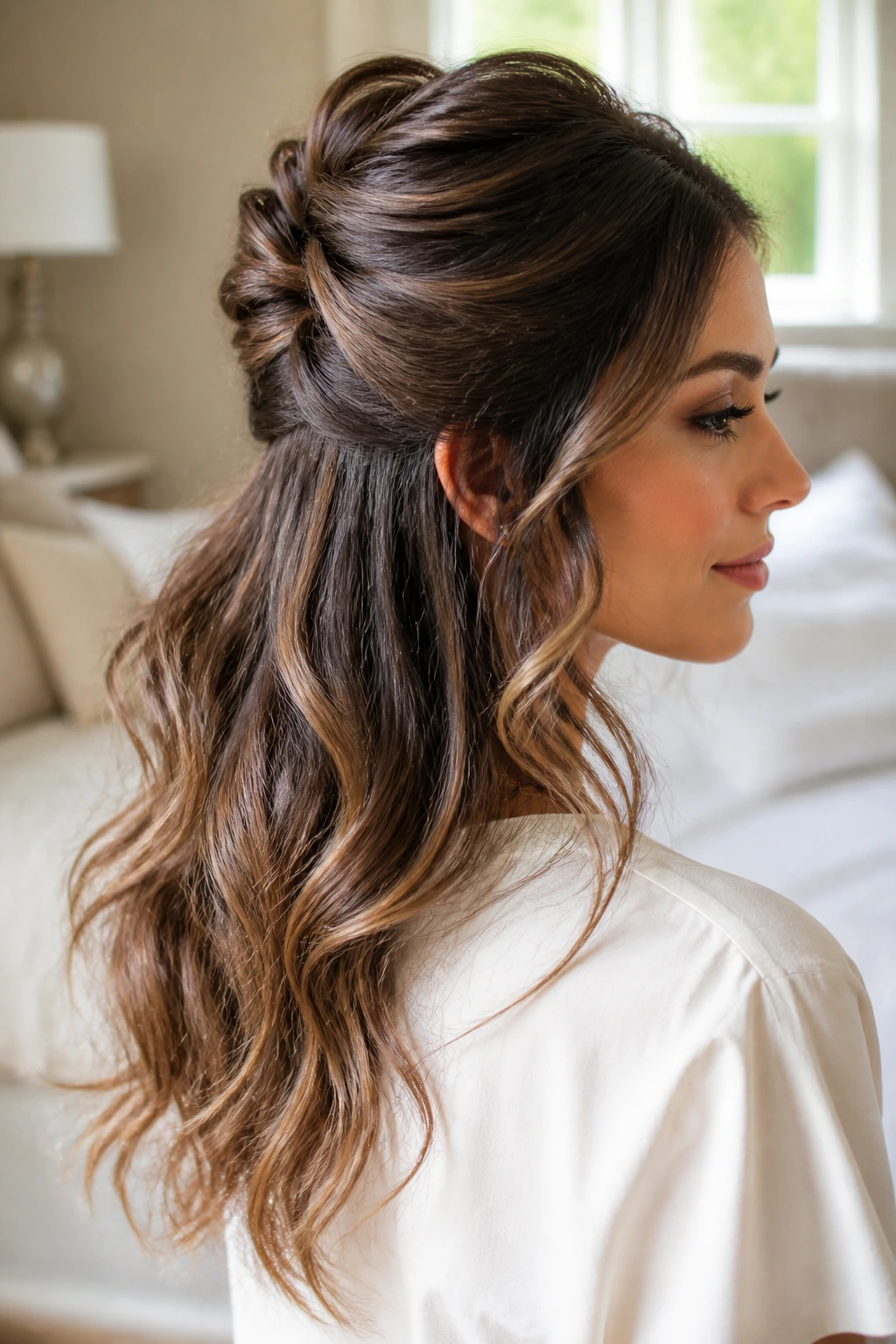
A half-up French twist gives wavy hair a little more spine. Sweep the top section upward, twist it inward against the back of the head, and pin it vertically so the shape sits neatly in the center. The rest of the hair stays loose, which stops the style from feeling too formal.
This version has more structure than a basic twist, and that structure is useful when your hair is medium to long and needs a stronger anchor. If your waves are heavy, use two or three pins instead of one. One pin on dense hair is just asking for trouble.
The contrast is what I like most here: a smooth, tucked top and ends that still move. That mix always looks considered.
19. High Half-Up Puff with Long Ends
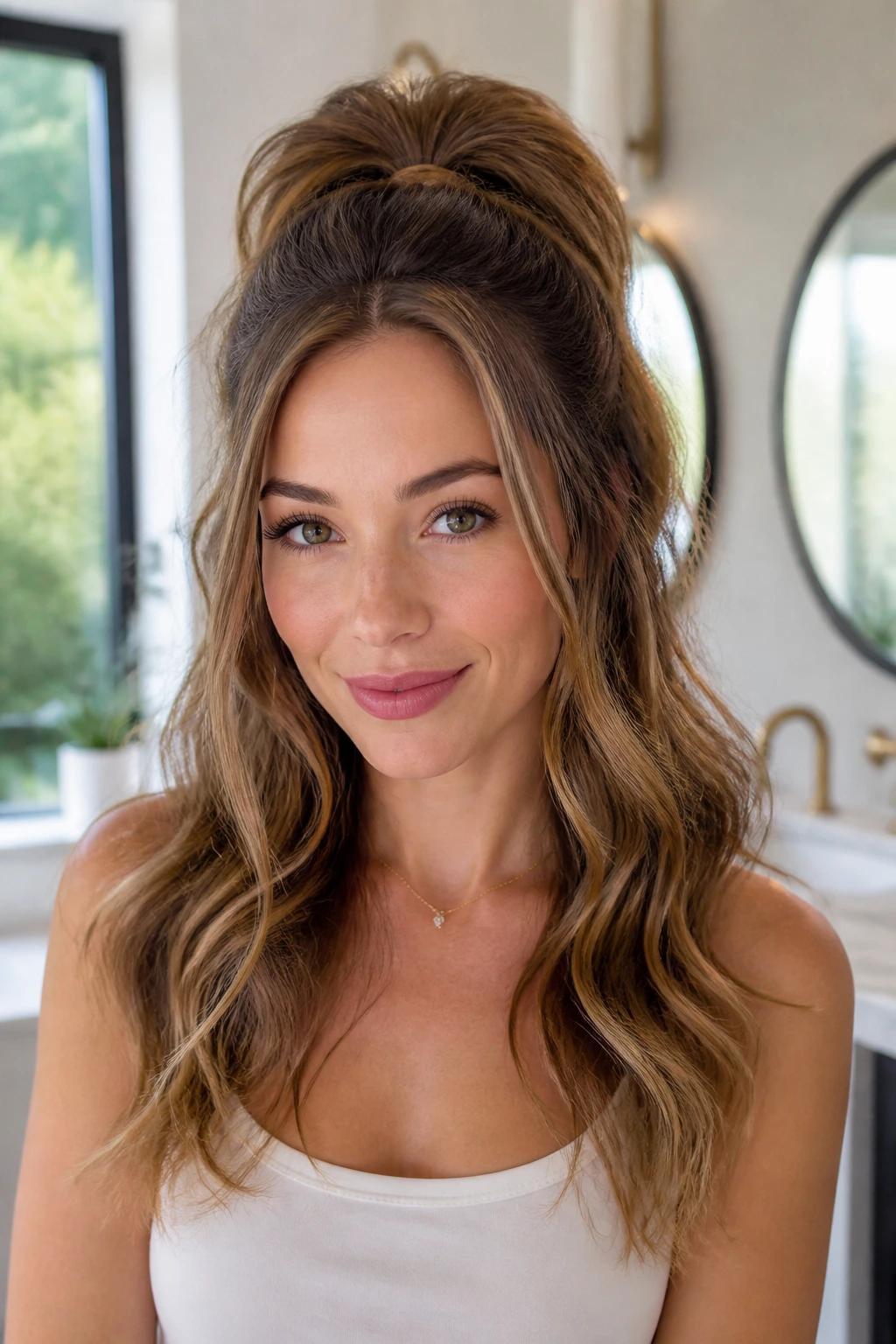
A little height at the crown can rescue waves that fall flat by noon. Pull the top half up a bit higher than usual, tease the underside lightly at the root, and secure it so the front has a soft puff. Leave the length loose and curly, because the top is already doing enough.
This style is useful on thicker hair and on haircuts with layers that need a bit of lift. It gives the face some space and makes the waves below look longer. If your hair is fine, keep the puff modest. Too much backcombing will show through and make the style look dry.
I reach for this when the roots need help. Not every half-up style should lie flat.
20. Messy Knot Half-Up for Textured Waves
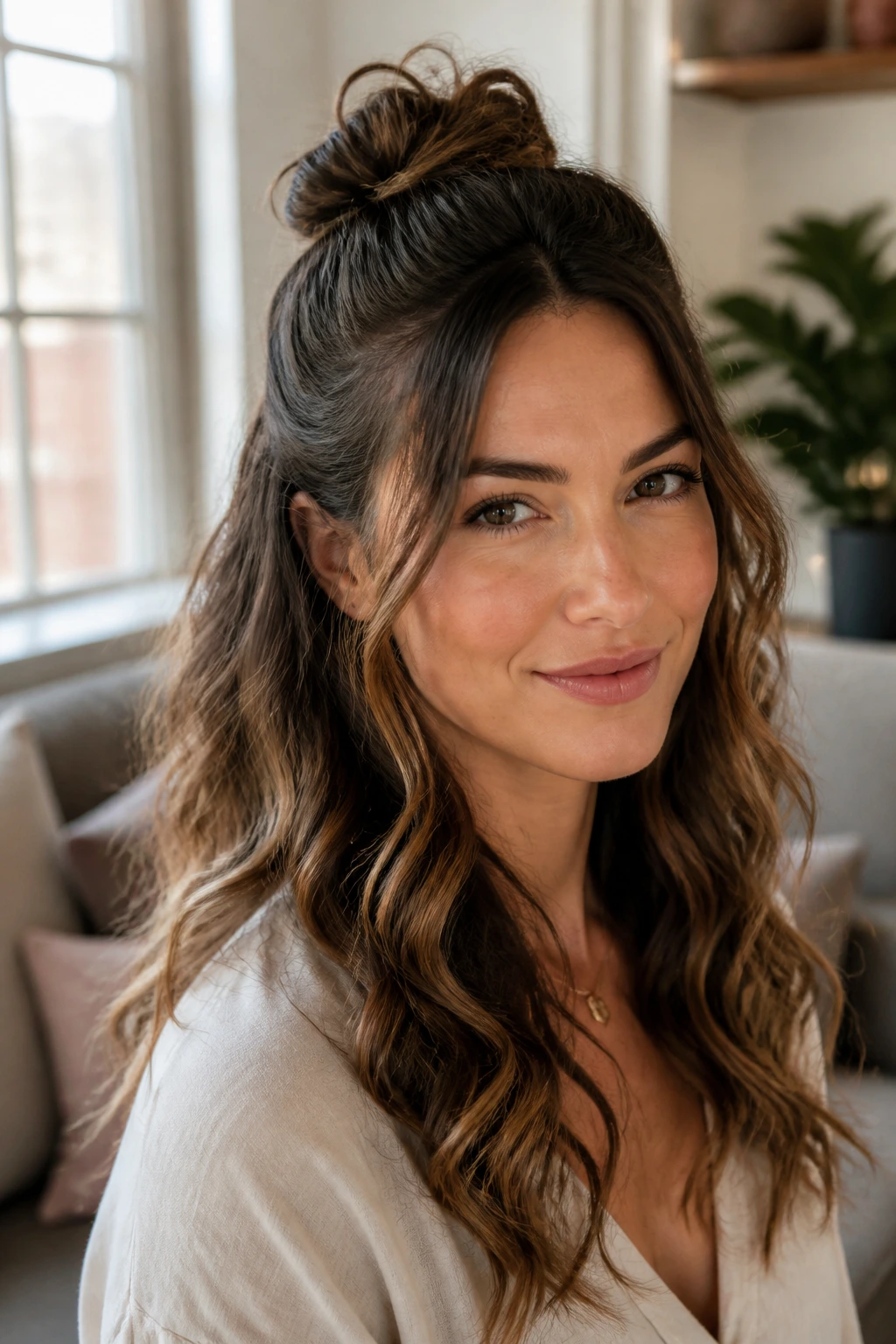
A messy knot can look polished if you keep the mess in the right place. Pull the top section into a loose knot, but keep the sides smooth and let the lower waves stay defined. Then tug only the outer edges of the knot so it has shape without turning into a puffed nest.
Don’t do this part
- Don’t pull half the head into the knot; it swallows the wave pattern.
- Don’t rough it up at the crown; the top should still look tidy.
- Don’t add too many flyaways on purpose. A few are enough.
The style works because wavy hair already has texture. You are not manufacturing chaos. You are giving the hair a small, controlled bend at the back and leaving the rest alone. That restraint is what makes it wearable beyond a casual brunch.
21. Double Side Twist Half-Up with a Low Sway
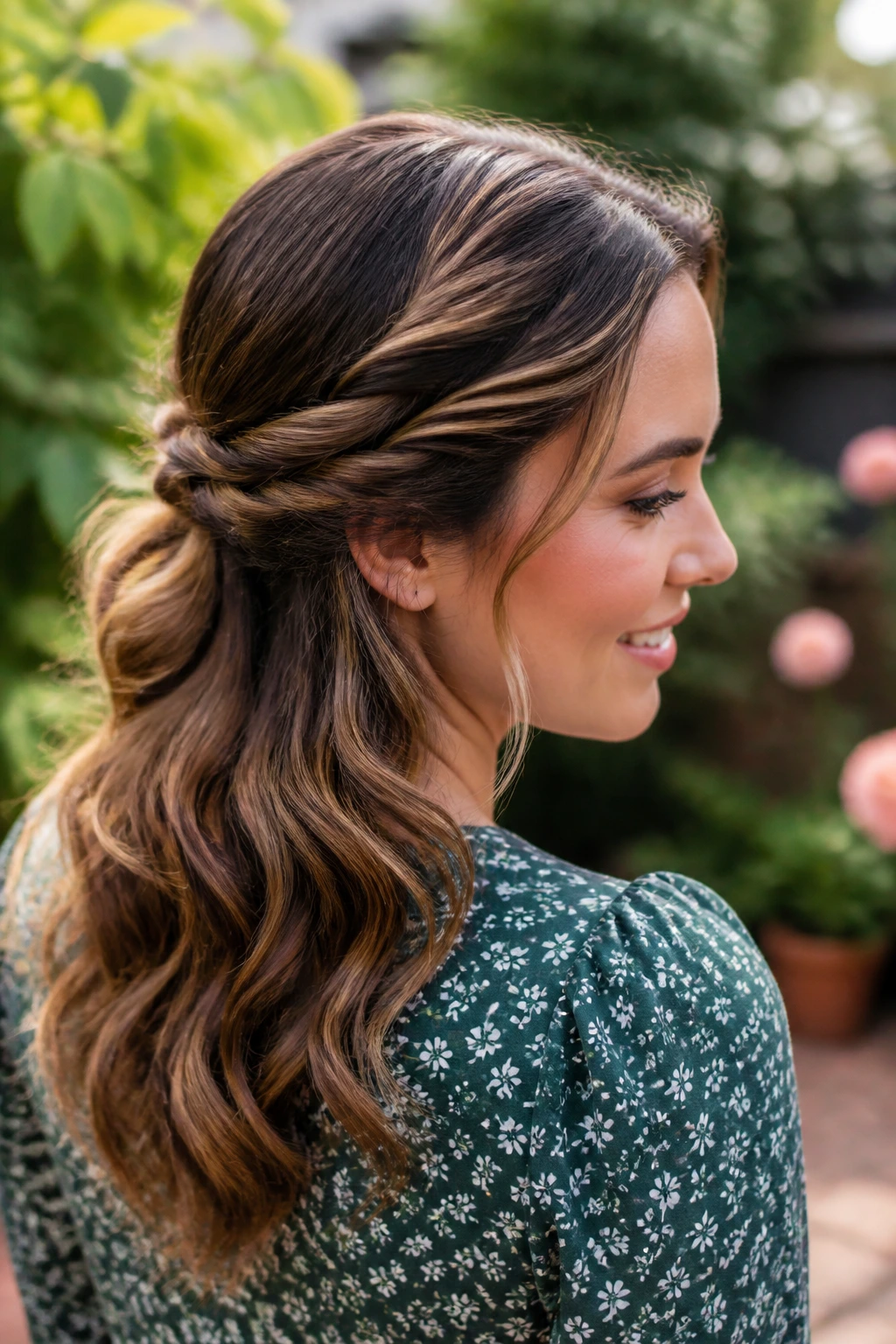
A double side twist is a nice answer when you want the face opened up but do not want a full center pull. Take a section from each side, twist them back low and slightly diagonally, then pin them together just off center. The result should sit low enough that the ends of the hair still swing freely.
Why does this feel softer than a full half pony? Because the tension is spread across two points instead of one. That keeps the style from creating a hard line through the back of the head. On wavy hair, the low placement lets the pattern show through from behind.
If you have layers, leave the shorter pieces closer to the face. They frame the style and keep it from looking too bare near the temples.
22. Ribbon-Tied Half-Up Ponytail with Soft Ends
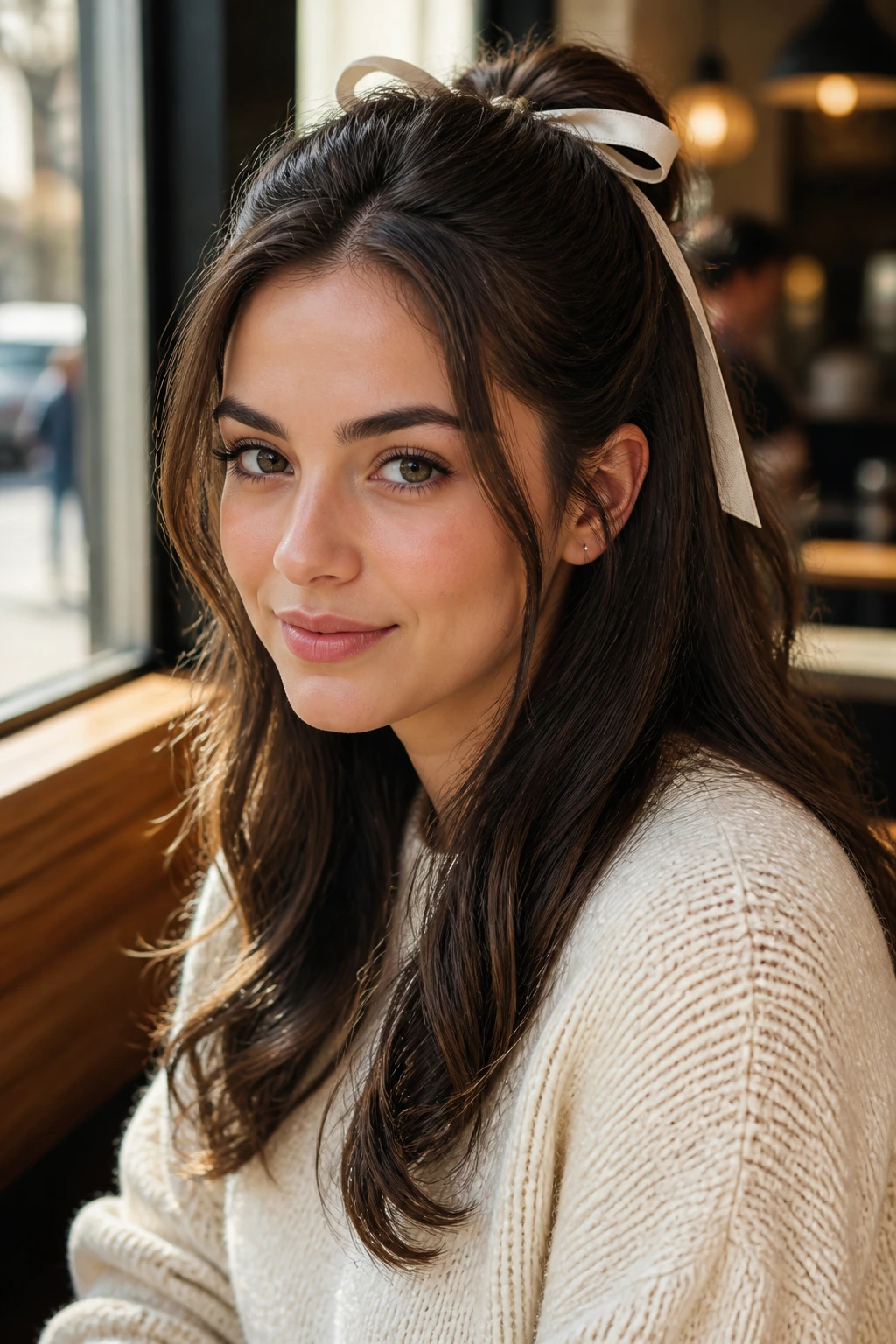
A ribbon-tied half-up ponytail can be sweet or sharp depending on the ribbon you choose. Use a half-up ponytail as your base, then tie a ribbon around the elastic so the tails hang down into the loose waves. A narrow grosgrain ribbon feels cleaner; satin feels softer.
This is a good option when you want something easy but not plain. The ribbon draws the eye to the center back of the head, which makes the rest of the waves look fuller by contrast. If your hair is dark, a ribbon one shade lighter shows up well. If your hair is light, a deeper ribbon can give the style more definition.
Keep the ponytail relatively small. If the gathered section gets too thick, the ribbon starts to look cramped.
23. Statement Clip Half-Up with Big Wave Texture
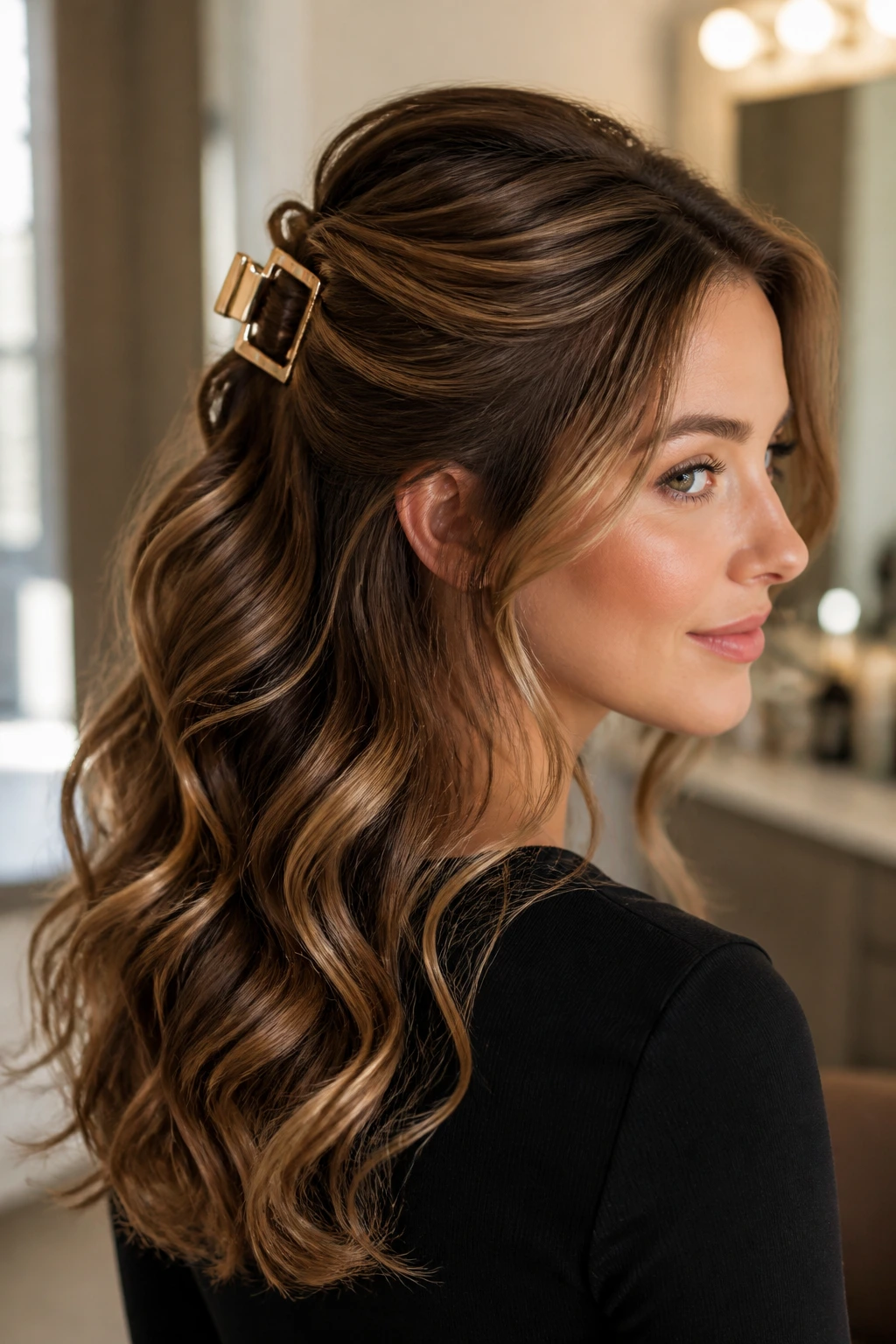
A statement clip only works if the waves underneath still get to breathe. Gather the top half loosely, twist once, and clamp it with a strong clip in a matte finish or a clean metal shape. The rest of the hair should fall in big, visible bends so the clip feels like a part of the style, not a rescue mission.
This one is best for days when you want one accessory to do the talking. You do not need extra braids or pins here. In fact, more would probably clutter it. Keep the waves defined and the top a little loose.
I prefer clips with a little texture on the teeth. Smooth plastic can slide, especially if your hair is silky or freshly conditioned. Grip matters.
24. Half-Up Knot with a Hidden Elastic
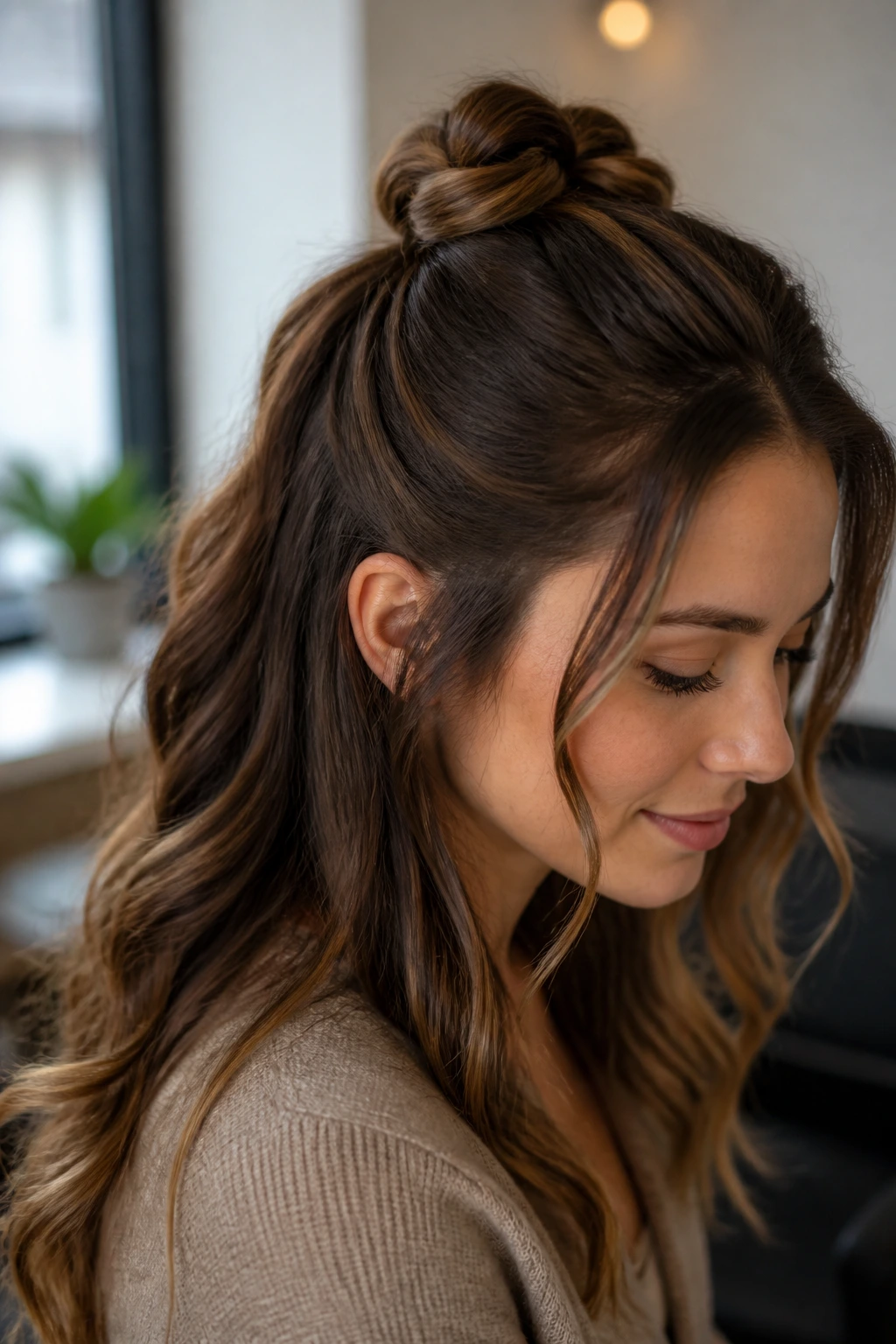
The hidden elastic makes this style look cleaner than it has any right to. Pull the top section into a small ponytail, twist it into a knot, and wrap a thin strand of hair around the base so the elastic disappears. Pin the end of the wrapped strand underneath the knot so nothing sticks out.
Why the hidden base matters
A visible elastic can make a polished wave style look unfinished, especially if the rest of the hair is soft and glossy. Hiding it gives the eye one smooth shape instead of a knot interrupted by rubber. That is a small change, but it changes the tone of the whole look.
This is a nice middle ground between formal and easy. It stays neat for work, but it does not feel overbuilt if you keep the knot compact.
25. Soft S-Curve Half-Up That Stays Put
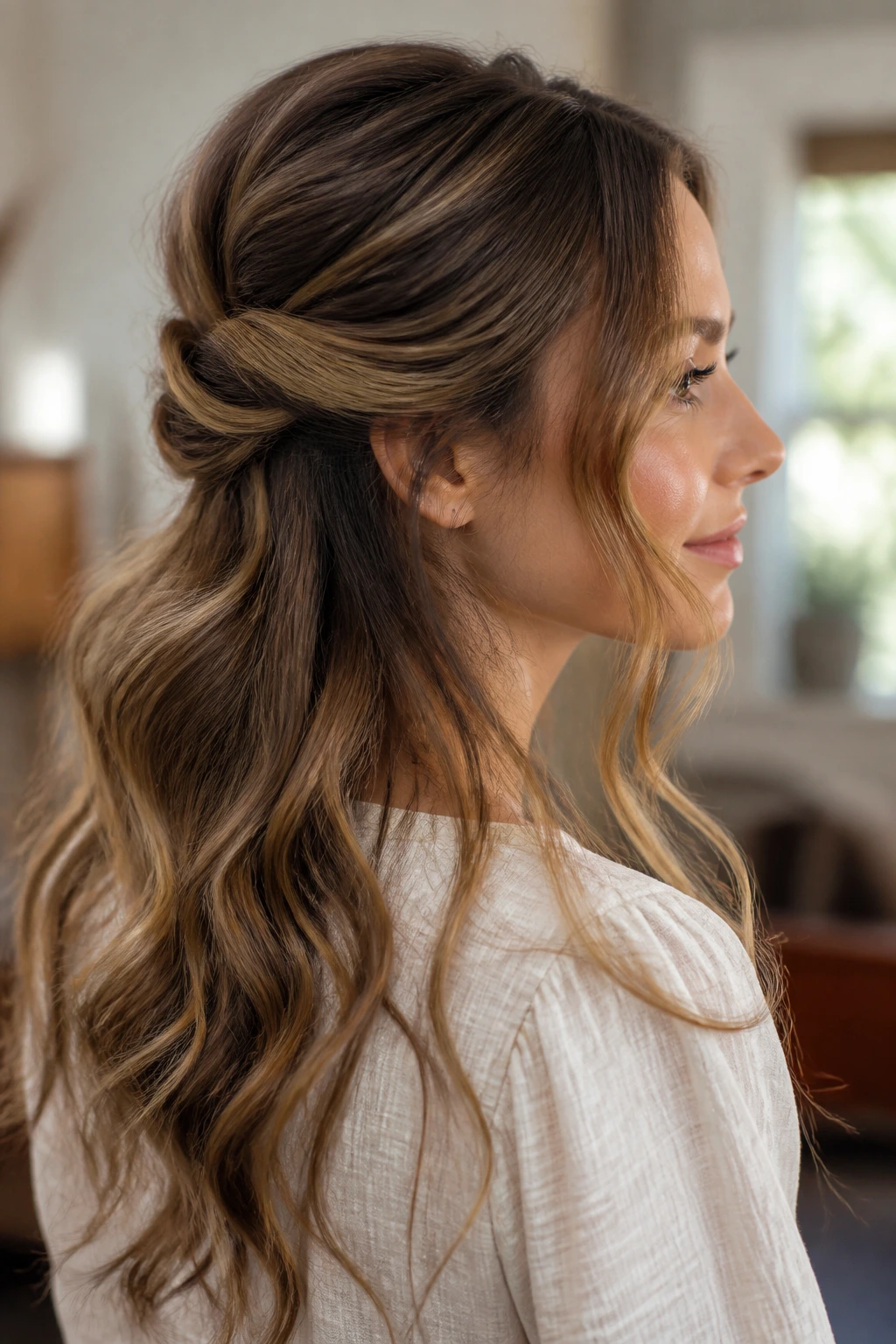
The style I keep coming back to is the one that bends gently instead of locking the hair into a hard line. Sweep each side back in a soft S-curve, cross them at the back, and secure them low enough that the loose waves still fall naturally. If you want more security, add one pin on each side under the curve.
That gentle shape matters. It keeps the top of the hair from looking too tight and gives the waves below room to keep moving. On wavy hair, movement is the point. Not chaos. Movement.
If you only try one style from this whole list, make it this one. It is the easiest to adjust, the least fussy about texture, and the most likely to still look decent after a long day.
What Makes Half-Up Curls Look Intentional on Wavy Hair
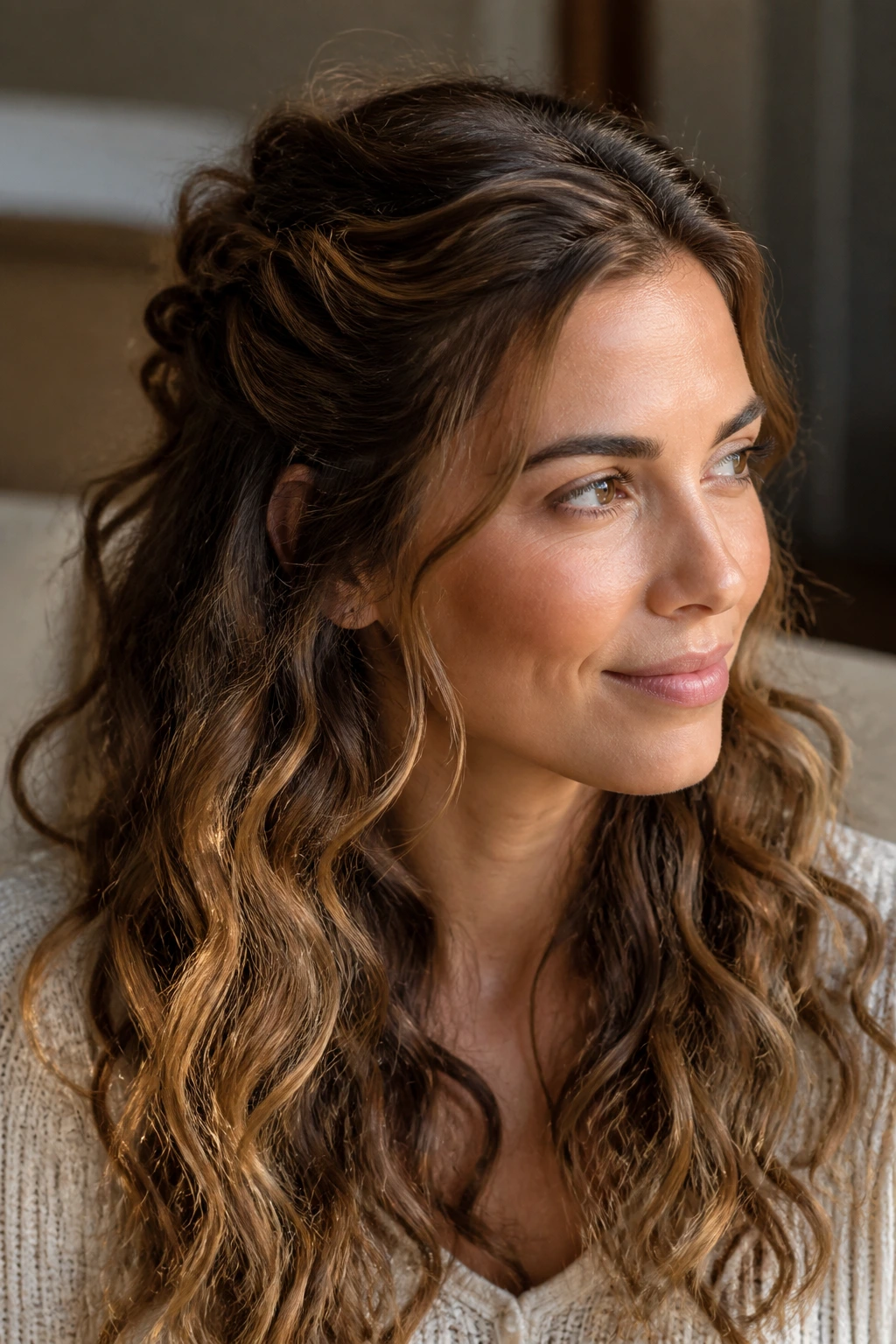
Wavy hair gives you a head start, but it also has opinions. The top layer can puff, the ends can separate, and the crown can go flat if you pull too much hair into the style. That is why the best half-up looks use restraint. They hold enough hair back to clear the face, then stop before the shape gets rigid.
The sweet spot is usually the upper third of the head, sometimes a little less if your hair is fine. Pulling back too much makes the style heavy and exposes the wave pattern in a harsh way. Pulling back too little can leave the front pieces slipping into your eyes. You want the middle path. Annoying answer, yes, but accurate.
Texture is the other piece. A little grit at the roots helps. Freshly washed, slippery hair is harder to pin and easier to flatten. Day-old waves, or clean hair with a touch of texture spray at the crown, usually hold better. And if the front is frizzy, smooth only the hairline, not the whole head. Over-smoothing is how wavy hair loses its shape and starts looking oddly disconnected from the rest of the style.
Essential Equipment for These Styles
-
A tail comb: Clean parts and neat sectioning make every half-up style easier, especially the braided and center-part looks.
-
Bobby pins in two sizes: Regular pins hold the shape; smaller pins tuck in flyaways and keep twists from slipping.
-
A medium claw clip: The size matters. Too large, and it drags the crown down; too small, and it snags the ends.
-
Clear elastics: Useful for bubble ponytails, rope twists, and any base you want to hide later.
-
A small curling wand or flat iron: Handy for re-bending front pieces or fixing a bend that fell weird overnight.
-
Texturizing spray or dry shampoo: Adds grip at the roots so pins and clips stay where they belong.
-
A smoothing cream or light hair oil: Best used on the hairline and ends, not the crown, so the style stays polished without sliding apart.
-
A strong-hold finishing spray: One light mist over the finished style can keep everything in place through a long workday.
-
Ribbon, bow, or decorative clip: Optional, but useful when you want one style to move from office to evening without a full redo.
Smart Product Picks and Hair Prep That Make Styling Easier
Wavy hair behaves best when the product load stays light and targeted. Heavy cream everywhere makes the roots soft and slippery, which is exactly what half-up styles do not need. I like to think in zones: a touch of smoothing product at the hairline, a bit of grip at the crown, and almost nothing on the lengths unless they are dry.
Texture at the roots
Dry shampoo or texturizing spray at the crown gives pins something to hold. If your hair is freshly washed, spray under the top layer and wait a minute before styling. That tiny pause matters more than people think. The product needs a moment to settle, or it just sits on the surface and does very little.
Hold without crunch
A flexible-hold hairspray is usually better than a stiff one for these looks. You want the hair set, not shellacked. If the ends feel crisp, the style loses the soft movement that makes wavy hair look good in the first place. A light mist from about 10 inches away is enough for most styles.
Accessories that behave
Matte clips, coated bobby pins, and elastics with a little grip are worth the buy. Smooth metal and shiny plastic can slip on soft waves. If an accessory has snaggy teeth or a padded finish, that is usually a good sign. Cheap accessories are not always bad, but flimsy hinges and bent teeth will ruin a style faster than bad technique.
How to Wear These Looks From Desk to Dinner

Desk polish: Keep the crown smoother and the part cleaner when you want a style to read more professional. A low knot, a wrapped pony, or a temple twist sits quietly under a collar and does not fight with a laptop, glasses, or a headset.
After-hours loosen-up: Pull out one or two face-framing pieces, then pinch the twist or knot gently so it relaxes. Do not pull at random all over the head. That turns polished texture into frizz. Tiny adjustments are enough.
Accessory matchups: Pearl pins and velvet bows lean dressier. Claw clips and crisscross pins feel more casual. If your outfit is structured, a softer hair shape keeps things from feeling too severe. If the clothes are relaxed, a cleaner half-up style can stop the whole look from drifting sloppy.
Hair density notes: Fine hair needs smaller sections and lighter accessories. Thick hair can take a braid, a knot, or a bigger clip, but it also needs stronger pinning at the base. If your waves sit heavy, anchor the style lower. If they sit flat, add a little crown lift and stop there.
Additional Tips and Texture Boosters
Wave Boost: If the lower lengths look sleepy, mist them lightly with water and scrunch once before styling the top. You do not need to soak the hair. A little moisture brings the bend back and keeps the overall look from feeling dry.
Shape Control: Smooth the top two inches with a brush or your hands before pinning, then stop. That is enough to clean up the crown without erasing the wave pattern underneath. Over-brushing the whole head is where the softness disappears.
Accessory Swap: Use the same base and change the accessory. A wrapped elastic reads plain, a ribbon reads softer, a pearl pin feels cleaner, and a matte clip feels practical. That one switch can turn the same half-up shape into three different outfits’ worth of hair.
Make-It-Yours: Leave the ends more curly if you want softness, or brush them out a little if you want a broader wave. Add one thin braid at the temple if the style needs something extra. Keep the change small. These looks work best when the accessory or braid is the accent, not the whole show.
Make-Ahead, Overnight Wear, and Day-Two Revival
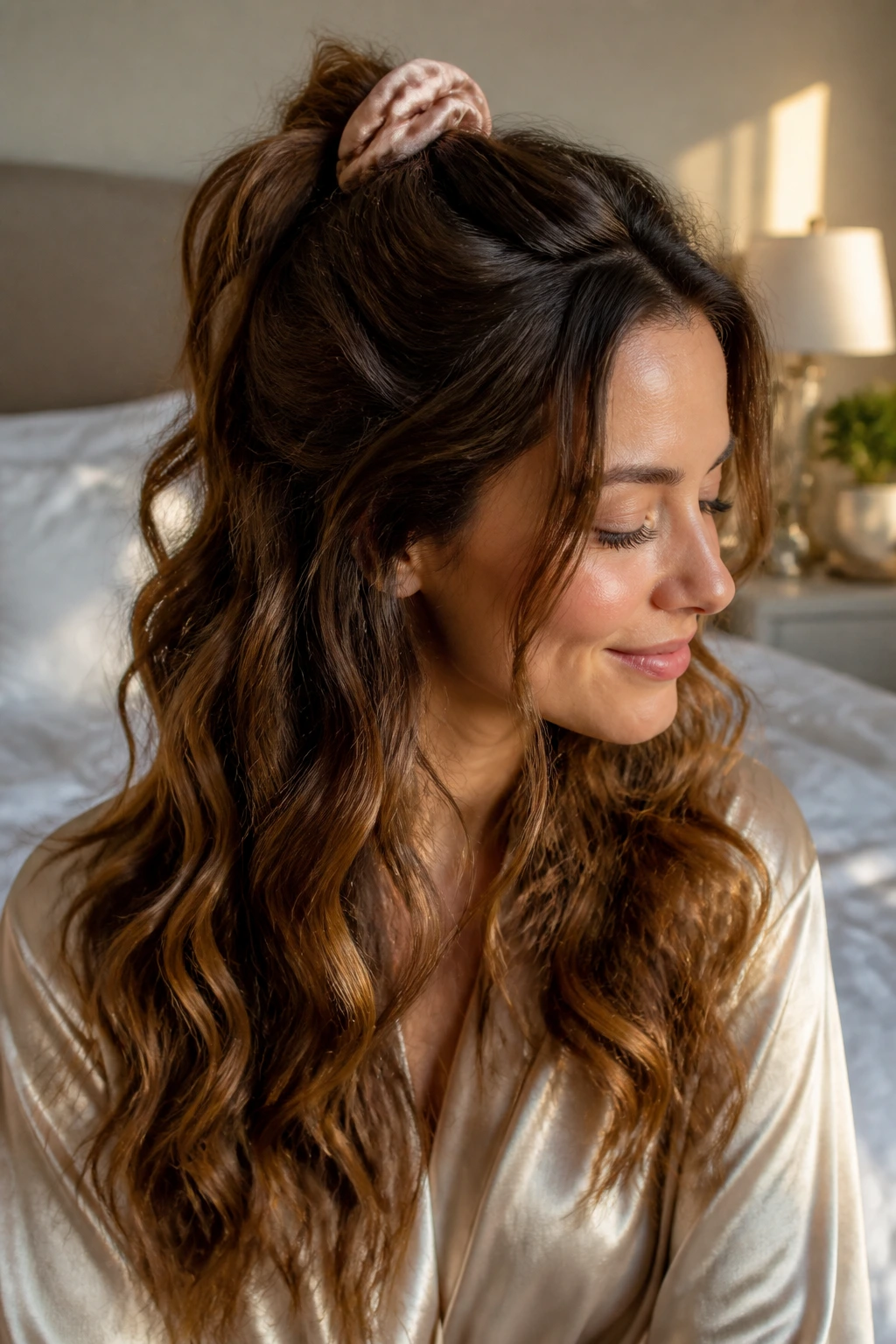
Half-up styles on wavy hair hold better when you plan around texture instead of trying to fight it. Clean hair that is freshly blown out tends to slip, while hair that has had a day to settle usually pins better. If you know you have an early start, set the wave pattern the night before with loose braids or twists, then take them down in the morning and build your half-up shape from there.
Overnight, avoid hard clips and anything that digs into the scalp. Use a silk scrunchie, a couple of loose pins, or a soft wrap if you need to preserve a half-up base for a second day. A satin pillowcase helps too. It cuts down on frizz near the crown, which is where these styles usually go wrong first.
For day-two revival, work in small sections. Mist the crown lightly, smooth it with your fingers, and re-pin the top without dragging the whole style apart. If the ends have collapsed, bend just the bottom two inches with a wand. That small touch brings the shape back fast. Most of these styles can last through a full workday, dinner, and a late errand if you refresh the crown once and stop touching it.
Variations and Adaptations to Try
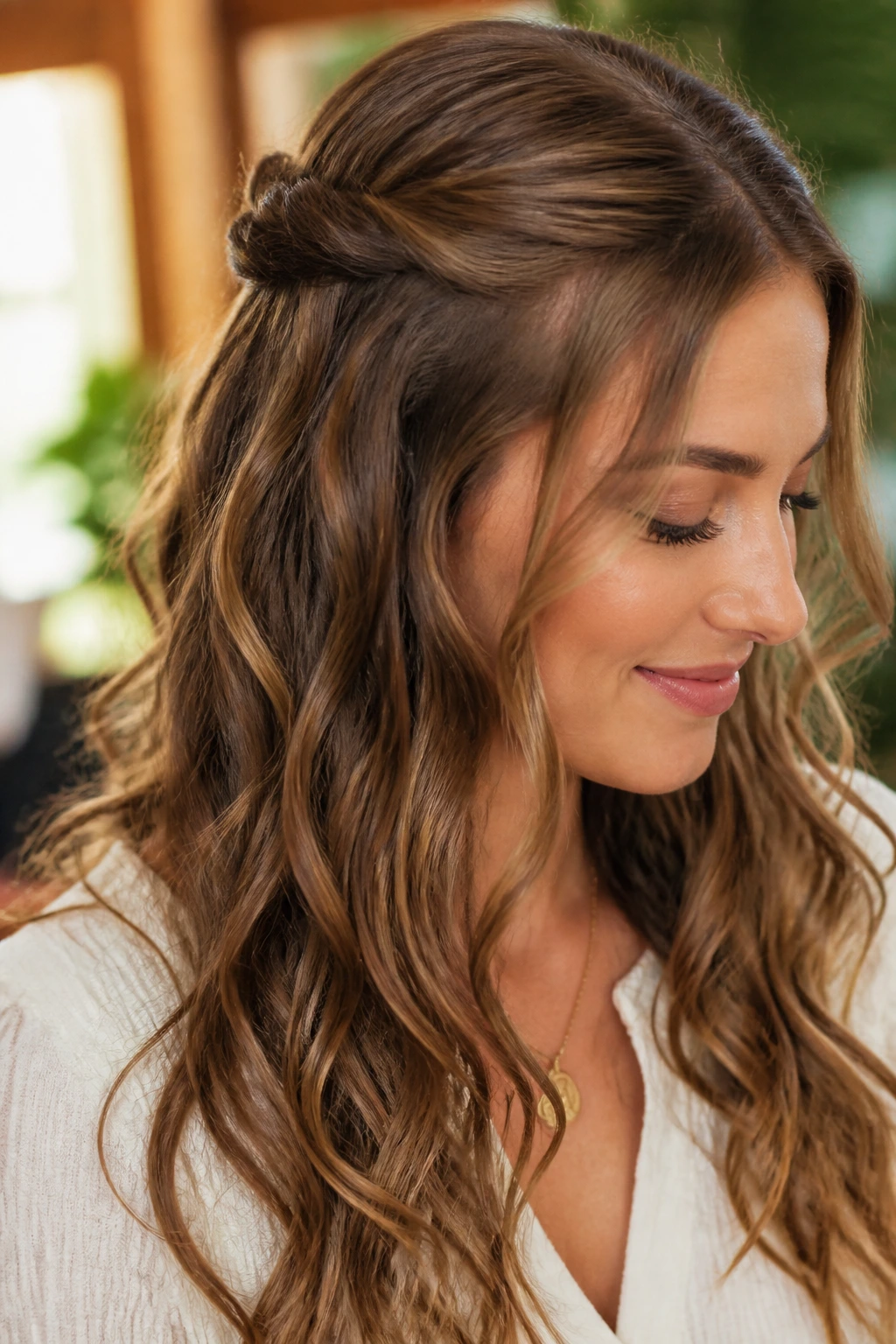
Fine-Hair Lift: Use a small amount of dry shampoo at the roots, tease the underside of the crown lightly, and keep the half-up section narrow. Bigger twists tend to overwhelm fine waves, so smaller shapes look cleaner and hold longer.
Thick-Hair Control: Divide the top section into two smaller parts before pinning or twisting. Thick wavy hair holds a style well, but it also creates weight, so two anchors usually work better than one. Crossing pins under the base helps too.
No-Heat Wave Set: If you want to skip hot tools, braid or twist damp hair loosely the night before, then release it in the morning and style the top half. The waves do most of the work for you. That is the whole appeal.
Shorter-Length Fix: Move the anchor point slightly lower and use a smaller clip or barrette. Half-up styles on lob-length waves often look better when the back section sits just below the crown instead of way up high.
Humidity Shield: Keep smoothing cream off the roots and use it only on the ends. A little anti-frizz spray at the hairline can help, but too much product near the scalp makes pins slip. That tradeoff matters.
Bangs-Friendly Edit: Leave curtain bangs or a fringe out in front and pull back only the temple sections. This keeps the style soft around the face and avoids that too-tight pulled-back look that bangs can make even worse.
Common Mistakes to Avoid
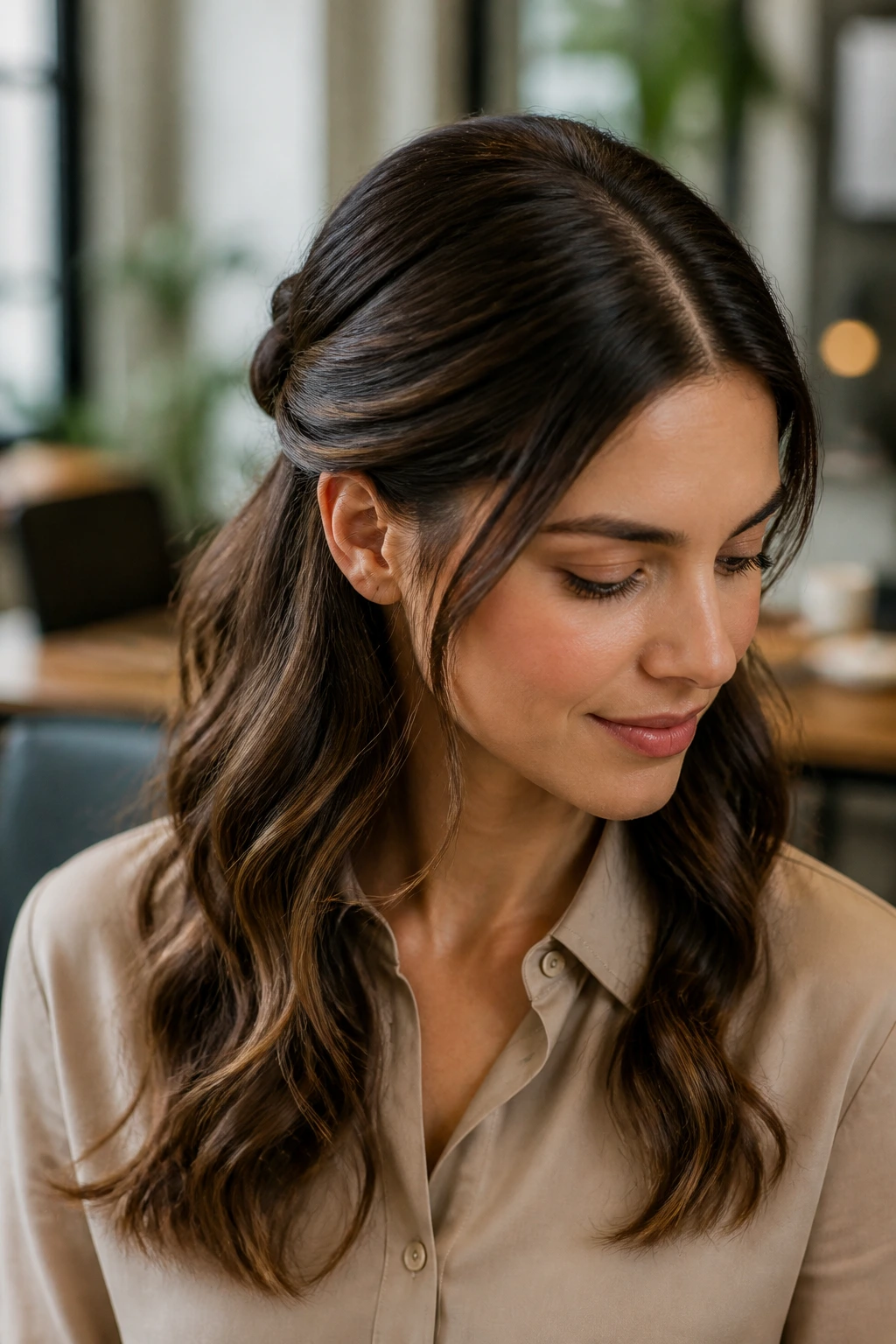
The first mistake is pulling too much hair into the style. You end up with a heavy top section and a flat crown, and the waves that should stay loose get swallowed. Keep the section smaller than you think, especially if your hair is long or thick.
Another one: using a clip that is too big. It sounds harmless until the clip drags the top down by lunchtime. Match the size of the accessory to the amount of hair you are holding back. Medium clip for medium section. Tiny elastic for tiny knot. That logic saves you from the weird sagging look.
Heavy product is another trap. Too much oil, cream, or serum at the roots makes the hair slippery, and slippery hair does not stay pinned. Put smoothing product only where the frizz lives, usually the hairline or the ends. Leave the crown with some grip.
And please do not overbrush the waves after styling. That can turn defined texture into a fuzzy halo, which is a shame after you did the work. If a piece is out of place, finger-comb it back. Brushes are for before or after, not every time you notice something.
Frequently Asked Questions
Can half-up curls work on shoulder-length wavy hair?
Yes, but the anchor point should sit lower and the sections should be smaller. Shoulder-length hair often looks best with side sweeps, mini twists, or a barrette because those shapes do not need a lot of length to make sense.
How do I keep the style from collapsing by midday?
Start with a little texture at the roots and cross your pins instead of lining them up in the same direction. A light mist of flexible hairspray over the finished style helps, but the bigger fix is not overloading the crown with oil or conditioner.
Can I do these styles without heat?
Absolutely. Loose braids or twists overnight give you enough bend to work with, especially if your hair already has some wave. In the morning, release the hair, smooth the crown, and choose a style that matches the amount of texture you have.
What if my hair is frizzy at the hairline?
Treat only the hairline with a little smoothing cream or water before styling. If you coat the whole head, the crown gets slippery and the pins slide out. A neat hairline plus textured lengths is the sweet spot.
Which styles work best for fine hair?
Temple twists, crisscross pins, pearl pins, and smaller claw-clip styles usually work well. Fine hair can get lost inside a big braid or oversized knot, so the shape should stay compact and the accessory should be light.
Can I wear a half-up style with bangs?
Yes. Leave the bangs or curtain fringe out and build the style behind them. That keeps the look balanced and stops the front from getting pulled too tight, which is where bangs can start sticking out in weird directions.
What accessory stays put the best?
Bobby pins and matte claw clips usually beat decorative pieces when grip matters. If you want a ribbon or bow, use it over a real anchor point like an elastic or a pin base, not as the only thing holding the style together.
How do I make the style look less formal?
Loosen the twist a little, pull out one face-framing piece, or swap a pearl pin for a matte clip. Small changes are enough. If you loosen everything, the style loses the shape that made it look good in the first place.
What do I do if the clip keeps sliding?
Spray the inside teeth lightly with hairspray, let it sit for 20 seconds, then reclip the hair. Also check the section size. A clip that is too small for the amount of hair will slip no matter how expensive it is.
Styles That Keep Up With Your Day
Wavy hair does not need to be tamed into silence to look ready. A good half-up style keeps the top under control, lets the length move, and gives you a shape that still makes sense when the day gets long. That is the real reason these looks work so well. They are built for motion.
Try a few of them with your own texture, not against it. Some days will want a clean twist. Some days will want a clip, a braid, or a ribbon doing the heavy lifting. The nice part is that you do not need a different head of hair to make that happen.
Pick two or three that suit your length and density, and keep them in rotation. The morning gets easier when the style choices already know your hair.