



A low chignon has a way of looking composed even when the process is a little messy behind the scenes. A few pins. A twist that refuses to behave for one minute. A last little tuck at the nape, and suddenly the whole shape settles into something that looks deliberate, clean, and more expensive than the five minutes you spent on it. That’s the charm of a good low chignon: it doesn’t shout, but it does make a roomful of bad hair days stop mattering.
There’s also a practical side that gets overlooked. A low chignon sits where coats, collars, earrings, and wind are least likely to bully it. It keeps the weight low, which helps the style feel grounded instead of top-heavy, and it gives you room to choose the finish you want—sleek enough for a formal dinner, soft enough for brunch, or a little undone so it doesn’t look like you borrowed it from a bridal catalog. Not every updo can do that without looking strained.
The trick is learning the shape, not just copying the silhouette. Once you understand where the tension belongs, how much texture your hair needs, and which pins do the real work, the style gets easier every time you make it. And the details matter more than people think. A chignon that collapses by lunch usually fails at the roots, not the knot.
Why a Low Chignon Earns Its Place in Rotation
It stays low and out of the way: The knot sits near the nape, so it clears scarves, high collars, and the back of a chair without constant fussing.
It can look polished or relaxed: A center part, a smooth crown, and tucked ends give you a formal finish; a looser twist and face-framing pieces shift it into something softer.
It flatters the neckline: Because the style leaves the jaw and neck open, it pairs well with higher necklines, open backs, and statement earrings.
It gives second-day hair a useful job: Hair with a little bend or leftover texture often grips better, which means you don’t need squeaky-clean strands to make it hold.
It’s easier to refresh than a high bun: If a few pins loosen, you can usually tighten the nape and keep going without remaking the whole style.
It works across a lot of settings: I like that a low chignon can look intentional at a wedding and still make sense on a Tuesday with a plain sweater.
What a Low Chignon Actually Is, and What It Isn’t
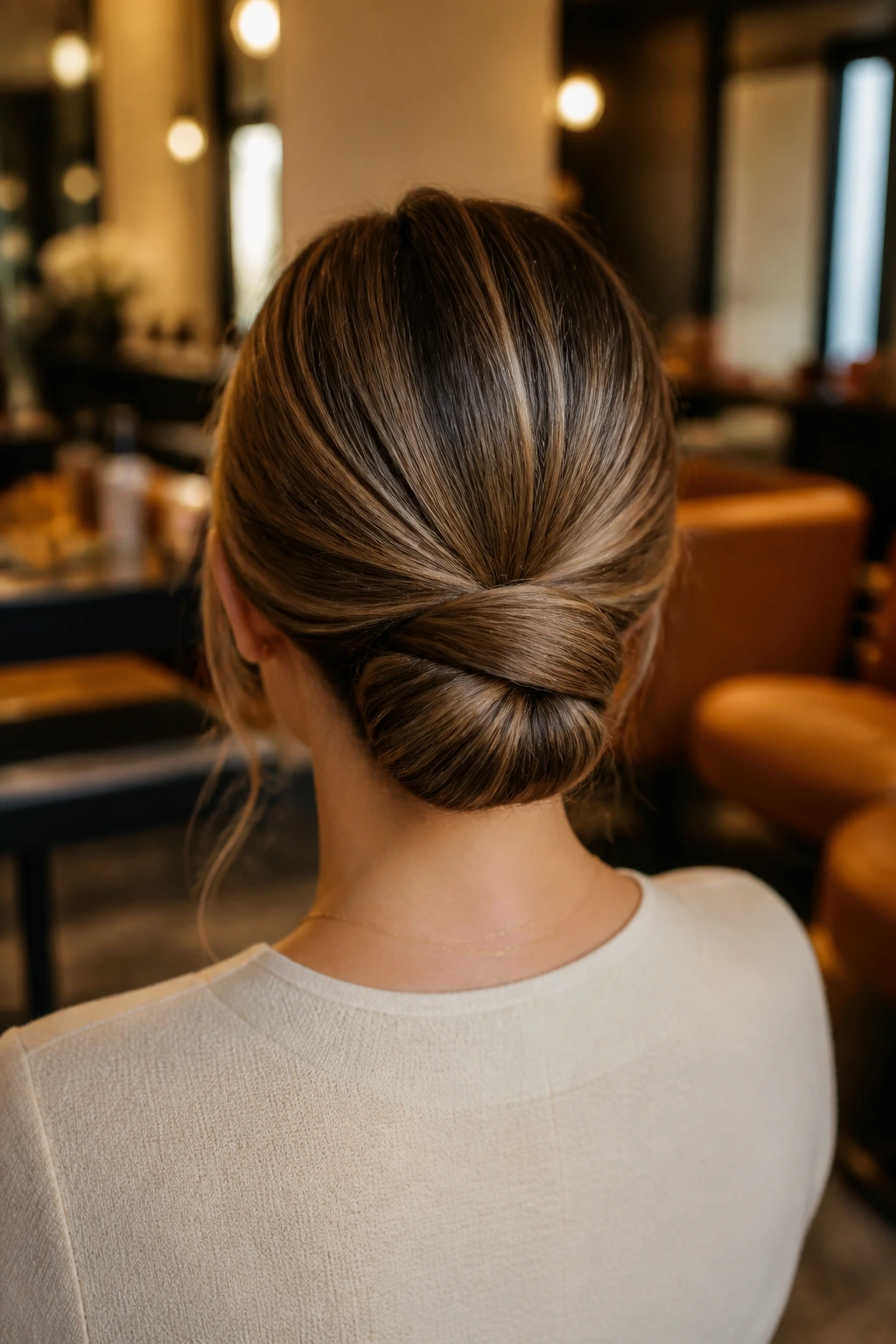
A low chignon is a tucked, knotted, or coiled style placed low at the back of the head, usually around the nape. The word itself carries a formal feel, but the shape can be minimal, soft, braided, sleek, or slightly messy. What defines it is the placement and the tucked finish, not a single rigid method.
A lot of people call every low bun a chignon, and that’s where the language gets sloppy. A low ponytail twisted into a lump is not the same thing. A chignon has some visible shaping—usually a fold, twist, coil, or tucked wrap that gives it that wrapped, refined look. A plain elastic loop with ends sticking out reads more casual and less composed.
The style can also be smaller than people expect. It does not need to be a huge knot to count. In fact, on fine hair, a smaller low chignon often looks better because it sits close to the head and avoids that awkward puffed-up shape that can happen when you try to fake bulk.
Low Chignon vs. Low Bun
A low bun is the broad category. A low chignon is the more tailored version.
That distinction matters because the chignon usually looks more structured at the base. The hair is tucked, wrapped, or coiled into a form that feels intentional, even if a few ends stay soft or imperfect. A low bun can be anything from a sock-bun donut situation to a quick twist-and-pin at the nape.
If you want the style to look elegant rather than merely secured, think chignon. If you just want your hair off your neck, a bun is enough. There’s room for both.
The Hair Prep That Stops Slippage Before It Starts
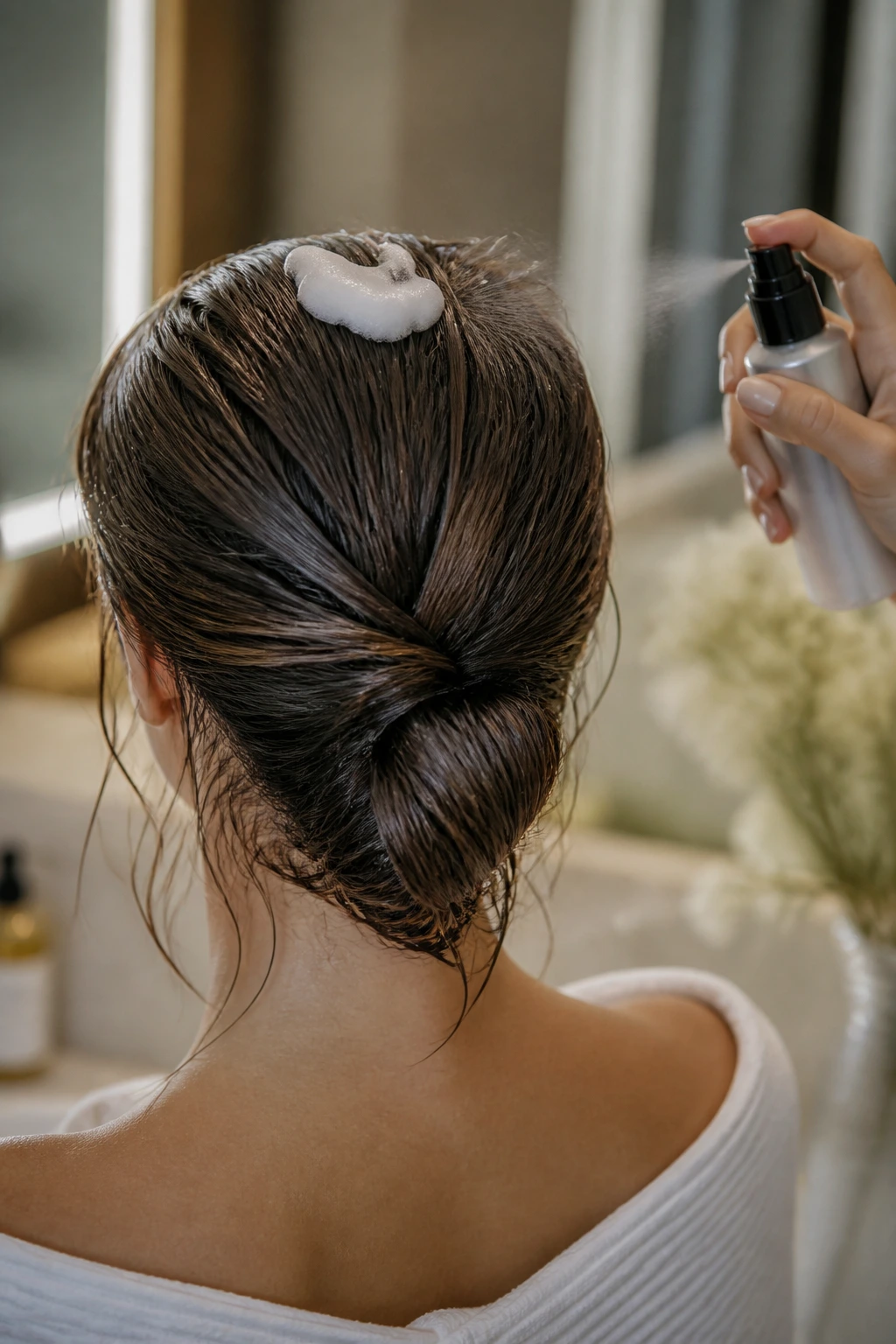
Freshly washed hair can be a blessing or a headache. If it’s silky and clean, it may slide around like it has a grudge against every pin you own. If it’s two days old with a little natural oil and texture, the chignon often settles faster and stays put with less effort.
That doesn’t mean you need dirty hair. It means you need grip. A little dry shampoo at the roots, a light mist of texturizing spray through the mid-lengths, or a whisper of mousse worked into damp hair before drying can change the whole situation. You’re trying to create just enough friction so the twist has something to hold on to.
Fine Hair Needs Different Prep Than Thick Hair
Fine hair usually needs a bit of roughness at the root. A pea-sized amount of volumizing mousse at the crown, blow-dried in, can help the section where the chignon sits hold shape instead of sliding flat. Dry shampoo on clean hair also helps, especially if your strands get glassy by midday.
Thick hair is a different story. Too much product can make it heavy, which sounds helpful until the bun starts sliding because the weight is pulling down on itself. With thick hair, I’d rather see a little sectioning and a few strategic pins than a mountain of paste or spray.
The Product Load Should Be Light
One of the most common errors is overdoing the smoothing cream. A small amount goes a long way. Start with a pea-sized dab for the front and crown, then add only if flyaways keep popping up after you’ve shaped the twist.
And don’t coat the ends in heavy product unless the hair is extremely dry. That can make the finished knot look greasy instead of neat. A better move is to keep the roots slightly cushioned, the lengths flexible, and the very last polish for the surface only.
Finding the Sweet Spot at the Nape
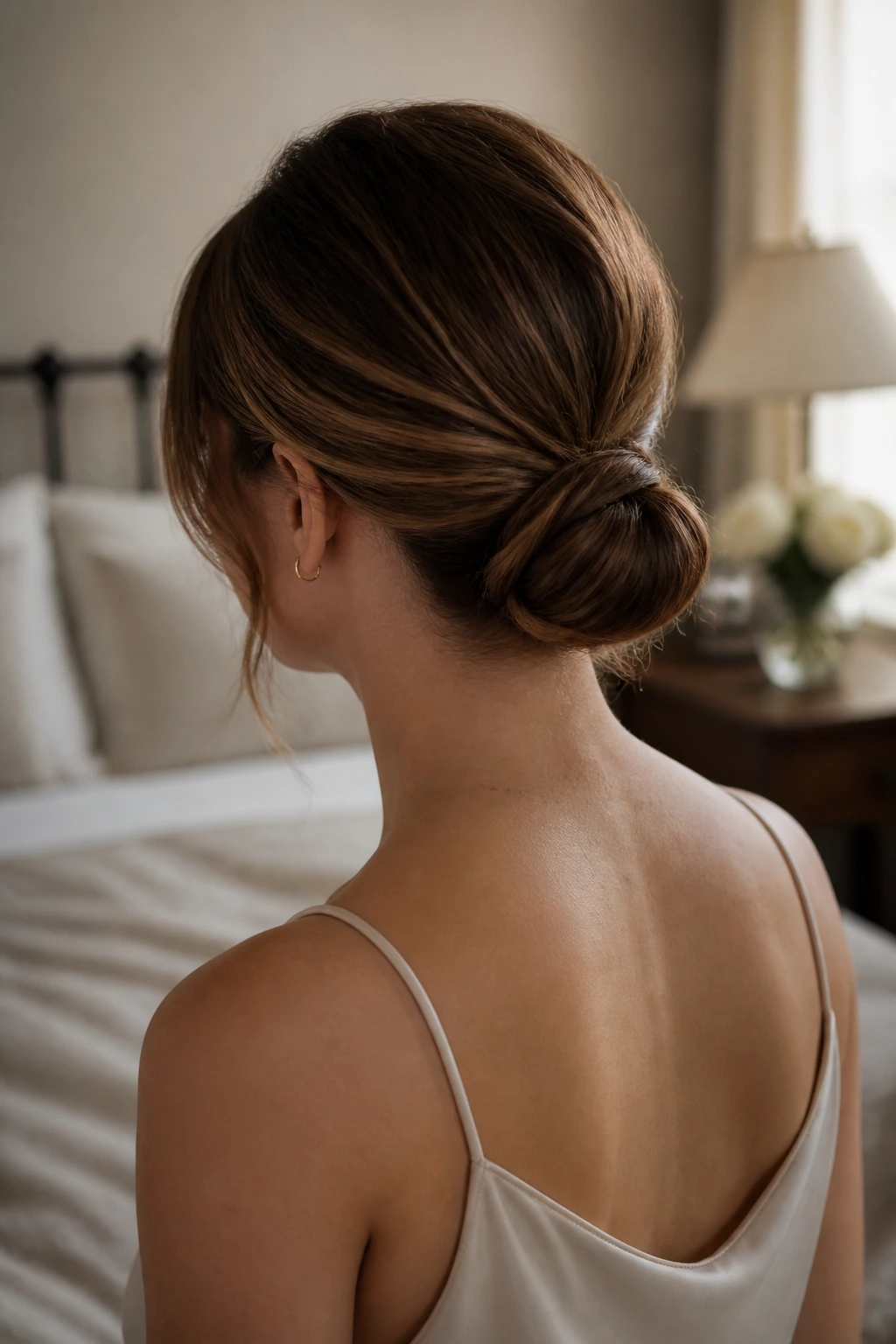
Placement changes the mood more than most people realize. Slide the chignon too low, and it can look like it’s hanging off the back of the neck. Too high, and you lose the whole low-chignon effect and start drifting into a mid-bun that fights the neckline of your clothes.
The sweet spot is usually centered just above the nape, or a little lower if you want a classic, bridal feel. For a modern, clean look, I like to place it so the top edge of the bun sits roughly at the base of the occipital bone—the bony curve at the back of your head. That gives the style enough lift to look intentional without rising into the crown.
Centered, Off-Center, or Side-Swept?
A centered low chignon feels the most traditional and symmetrical. It’s the version that plays nicely with veils, statement necklaces, and formal dressing because the line of the head stays clean.
An off-center placement softens the look fast. Move the knot just an inch to the left or right, and the whole style feels less rigid. That’s useful if your face shape already reads long or narrow, or if you want the style to feel a little more relaxed.
A side-swept front can change the silhouette too. Keeping a deep side part or a soft sweep across the forehead gives the chignon more movement, especially if the back is neat and the front pieces are intentionally loose.
Building the Base So the Chignon Doesn’t Sag
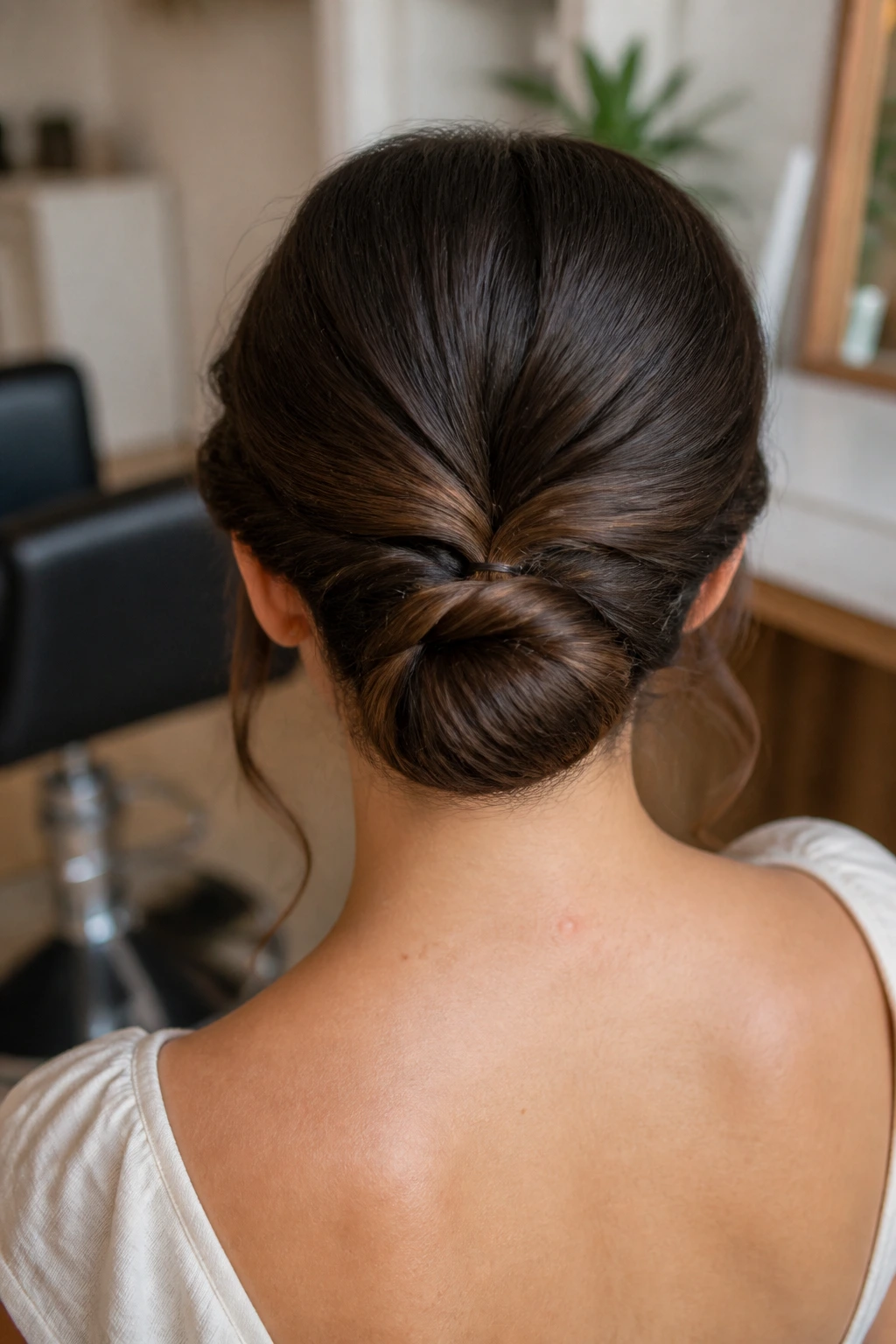
A low chignon needs a base. Without one, the style looks pretty for about twenty minutes and then starts wandering south. The simplest base is a low ponytail secured with a strong elastic, but even that needs to be placed carefully.
I like a clear elastic or a small snag-free band because it keeps the base compact. Put it exactly where you want the knot to live, not two inches above it. That one mistake changes the whole shape. If the elastic sits too high, the bun tends to bulge; if it sits too low, the style loses support and the twist can slide.
Once the ponytail is secured, split the tail into sections if your hair is thick. Two sections are often enough. Three is better for very dense hair. Smaller sections coil with less bulk and tuck more neatly, which is how you avoid that lumpy, overstuffed look.
The Pin Pattern Matters
Pins do not just hold the style; they steer it. Insert bobby pins in a crisscross pattern, aiming them toward the center of the base rather than straight out into space. That creates a little locking effect inside the knot.
If your pins keep slipping, use the wavy side facing down against the hair. And press them in after the twist is already shaped, not before. A pin that’s doing real work should disappear into the bun, not sit on top like a safety sign.
Hair Nets Are Not Old-Fashioned in the Bad Way
A thin hair net can be useful, especially for smooth hair or very long lengths. It tucks stray ends in without adding much bulk, and it can make a low chignon feel more secure under humidity. If you’ve ever had the ends of a bun start poking out by mid-afternoon, this is one of the easiest fixes.
Not glamorous. Extremely useful.
Twist, Coil, and Tuck the Hair Into Shape
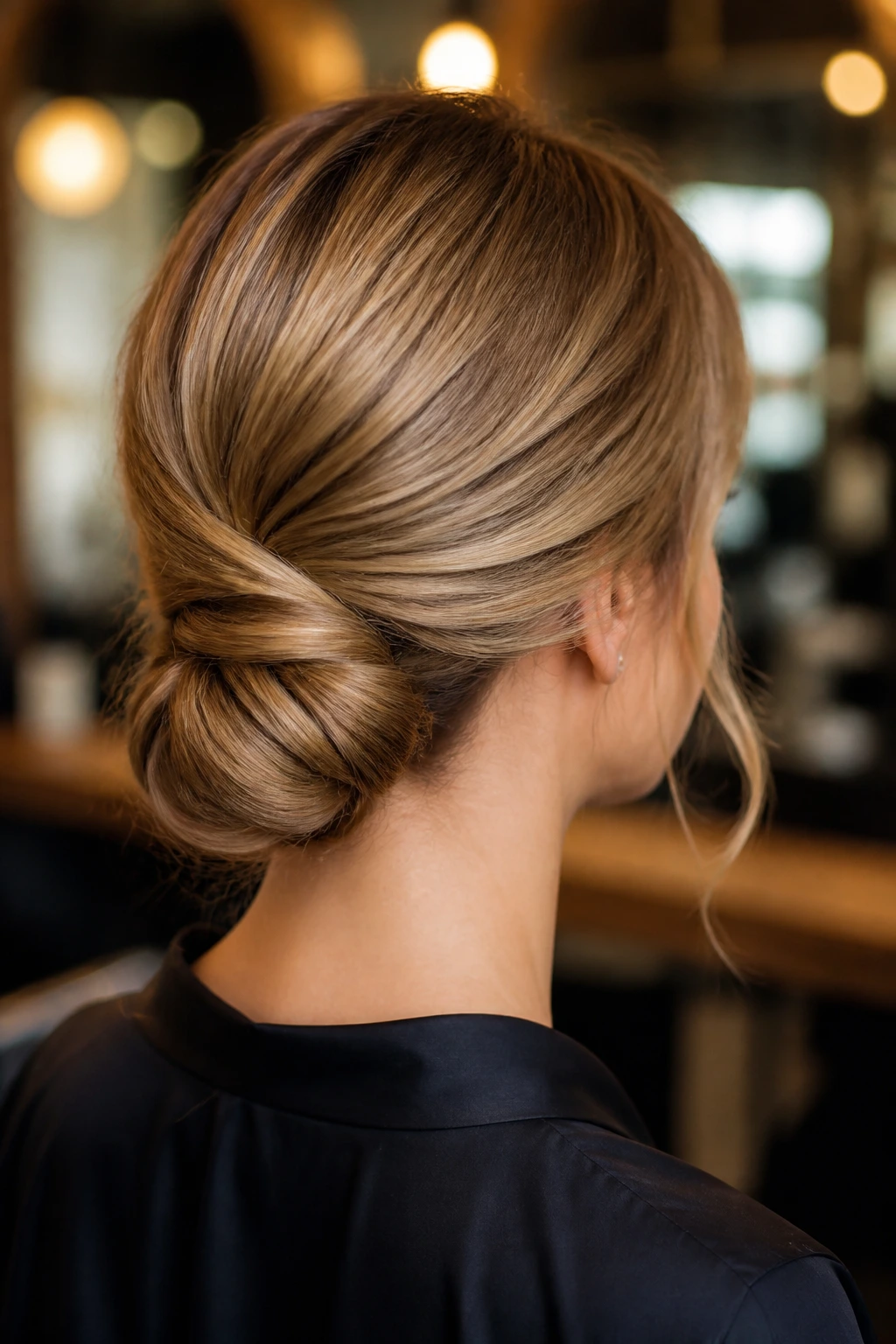
Here’s where the chignon starts to look like itself. Take the ponytail and twist it once or twice until it begins to coil naturally. Then wrap it around the base in the direction that feels smoothest to your hands. Hair has opinions here. If the twist fights you, flip the direction rather than forcing it.
For a classic chignon, tuck the ends underneath the coil so they disappear. For a softer version, leave a tiny tail visible and pin it so it looks relaxed on purpose. The difference between elegant and sloppy often comes down to whether the ends look hidden or merely forgotten.
A good rule: the surface should look calm, even if the inside is pinned like a small construction project. That’s normal. The bun’s interior can be a little ugly. Nobody needs to see it.
Use Your Hands Before You Reach for More Spray
Fingers are better than a brush once the shape starts forming. A brush can flatten out the volume you just created and make the chignon feel overworked. Your hands let you feel where the tension needs tightening and where the coil needs more slack.
If you want a smooth finish, brush only the crown and the outer perimeter before you twist. After that, hands win. Every time.
Keep the Weight Balanced
A low chignon should sit as a single shape, not as a lump pulling to one side. If it starts tilting, the center of gravity is off. Usually that means one side of the twist has more hair than the other, or the base elastic is too loose.
Divide the ponytail again if needed. Pin one section first, then layer the second around it. The goal is a compact knot that feels tucked, not stuffed.
Sleek, Soft, or Slightly Undone: Finish the Surface With Intention
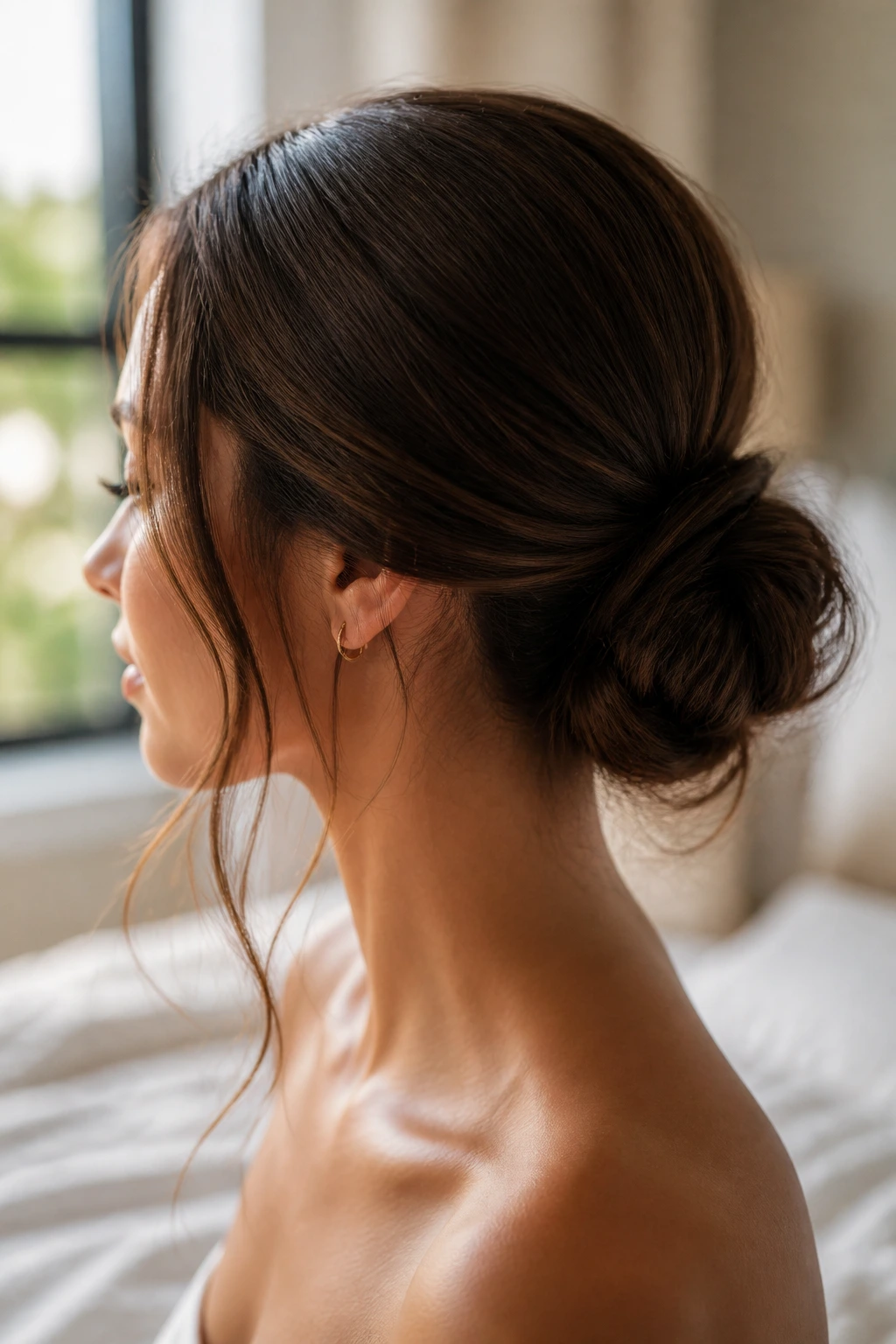
The finish changes the mood more than the knot itself. A sleek low chignon looks crisp, polished, and a little more formal. A softer version feels gentler around the face and can make fine lines, baby hairs, and natural texture part of the style rather than a problem to fight.
For a sleek finish, smooth the crown with a boar bristle brush and a touch of smoothing cream before you gather the hair. Use only enough spray to tame flyaways at the top and sides. Too much hairspray near the roots can make the style feel stiff, and stiff hair often looks less expensive than hair that moves a little.
For a softer finish, leave a few narrow face-framing pieces out and curl them lightly with a 1-inch iron or flat iron bend. Keep those pieces clean and deliberate. Random strands are messy; placed strands are styling.
Little Imperfections Can Help
A low chignon does not need to be glassy to look good. A touch of texture around the hairline can keep it from reading severe, especially if your features are sharp or the outfit is structured. The trick is to let the softness live in specific places—the temples, the nape, maybe a bent strand near the ear—rather than all over the head.
That’s what separates “done on purpose” from “I lost the battle.”
Low Chignon Variations for Different Hair Types and Lengths
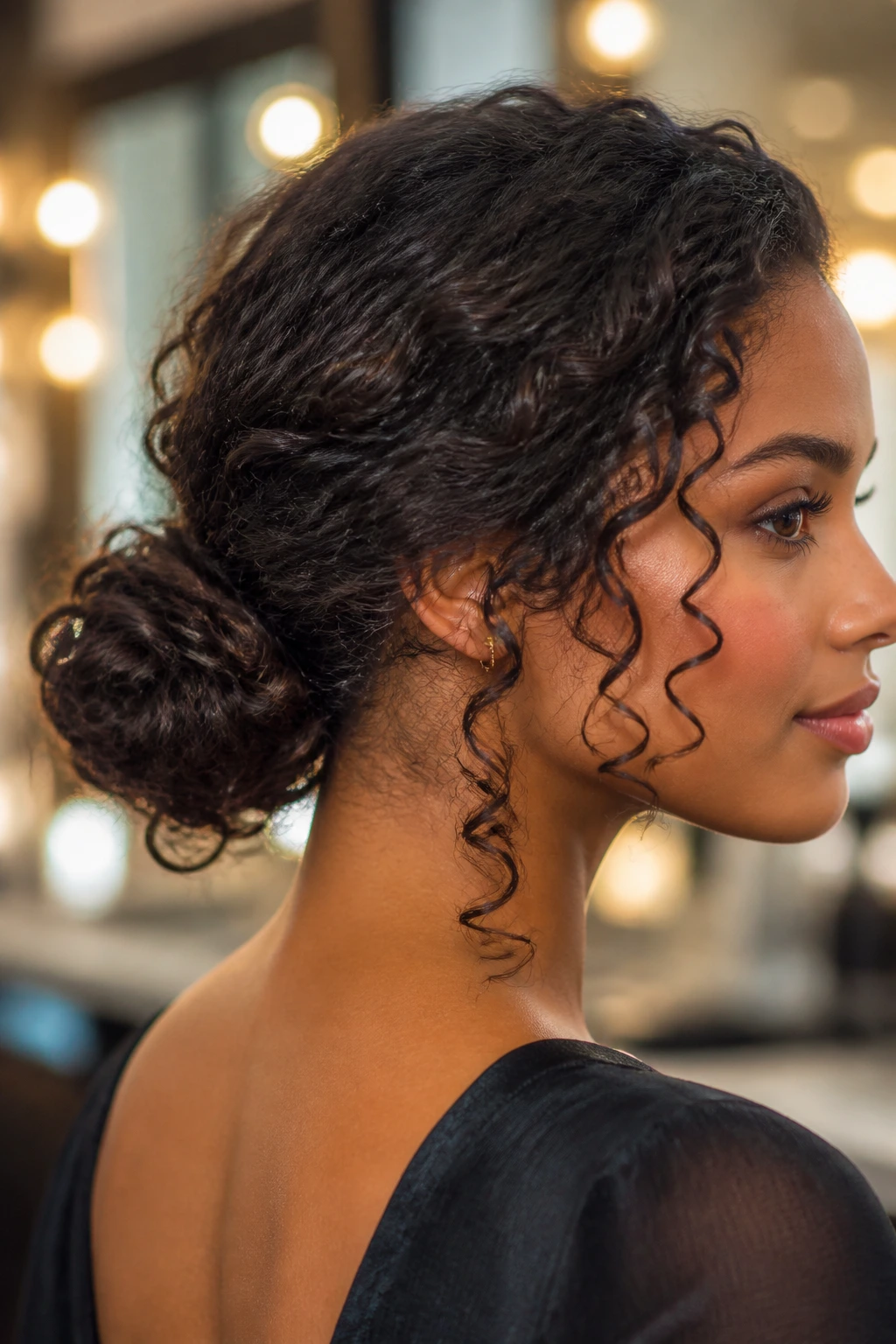
Hair type changes the mechanics, not the goal. A low chignon on fine hair needs support. On thick hair, it needs division. Curly hair wants to keep some of its shape. Shorter hair often needs hidden sections and a few extra pins.
Fine Hair
Fine hair usually benefits from a rougher base. A dry texturizing spray or light mousse gives the strands more bite, which helps the twist hold. Keep the chignon compact; trying to build too much volume can make the style collapse at the edges.
If your hair is shoulder-length and fine, gather everything into a low ponytail first, then twist small sections around the base instead of wrapping all the hair in one big loop. Smaller coils look fuller than one loose twist.
Thick Hair
Thick hair needs control. Sectioning it into two or three parts before you twist keeps the chignon from becoming a heavy ball that pulls on the elastic. Use stronger pins—longer bobby pins, U-pins, or even a few hairpins if the bun is dense.
I’d also keep the bun slightly flatter at the crown. With thick hair, too much volume near the base can make the chignon feel bulky and wobble under its own weight.
Curly and Wavy Hair
Curly hair can make a gorgeous low chignon because the texture already gives the style shape. The mistake is brushing the curl pattern into fuzz and then wondering why the finish feels wrong. Preserve some of the pattern unless you specifically want a sleek look.
For a softer curly chignon, stretch the curls just enough to twist them, then pin them where they naturally fold. For a sleek version, smooth the top only and leave the tucked ends slightly textured. That contrast often looks better than fighting every curl into submission.
Shorter Hair
Hair that barely reaches the shoulders can still make a low chignon, but it usually needs more hidden pinning. A low ponytail is still useful here, though the ends may need to be looped and pinned in layers. If your hair is layered, work with the longer pieces first and let the shorter ones disappear into the base.
A little hair powder at the root can help shorter lengths grip the scalp better. And do not be shy with pins. Short hair chignons rarely need fewer; they usually need smarter ones.
Tools That Make the Style Easier
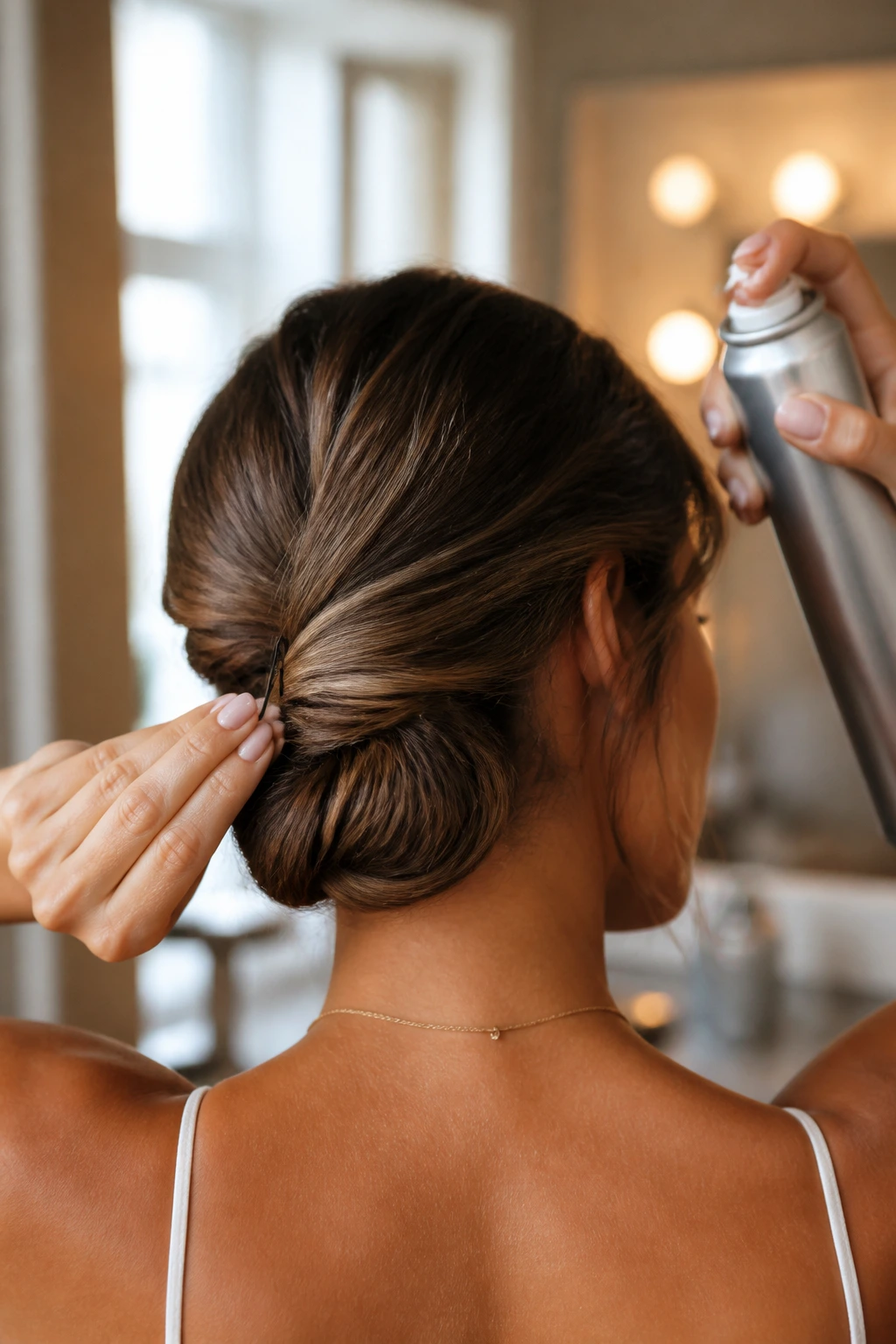
The right tools do not make the hairstyle for you, but they save a lot of swearing in the mirror.
- Tail comb: The pointed end helps create clean parts and precise placement at the nape.
- Boar bristle brush: Best for smoothing the top and polishing flyaways without making the hair puff up.
- Clear elastic bands: These make a compact base and disappear better than chunky ties.
- Bobby pins in two sizes: Standard pins for average hold, longer pins for thicker or denser hair.
- U-pins or hairpins: Useful for securing a bulky chignon from the inside without creating a pin-heavy look.
- Texturizing spray or dry shampoo: Adds friction to clean hair and helps the style stay in place.
- Light smoothing cream or serum: Keeps the crown neat, but use a small amount or the bun can look greasy.
- Hand mirror: Helpful for checking the nape and the back corners of the chignon.
- Hair net: Optional, but excellent for a sleek or all-day style that needs hidden support.
A flat iron or curling iron can help too, but only if you need them for the front sections or face-framing pieces. They’re not required for every low chignon, and I’d rather see a good brush hand than unnecessary heat on hair that’s already cooperating.
Accessories That Belong With a Low Chignon
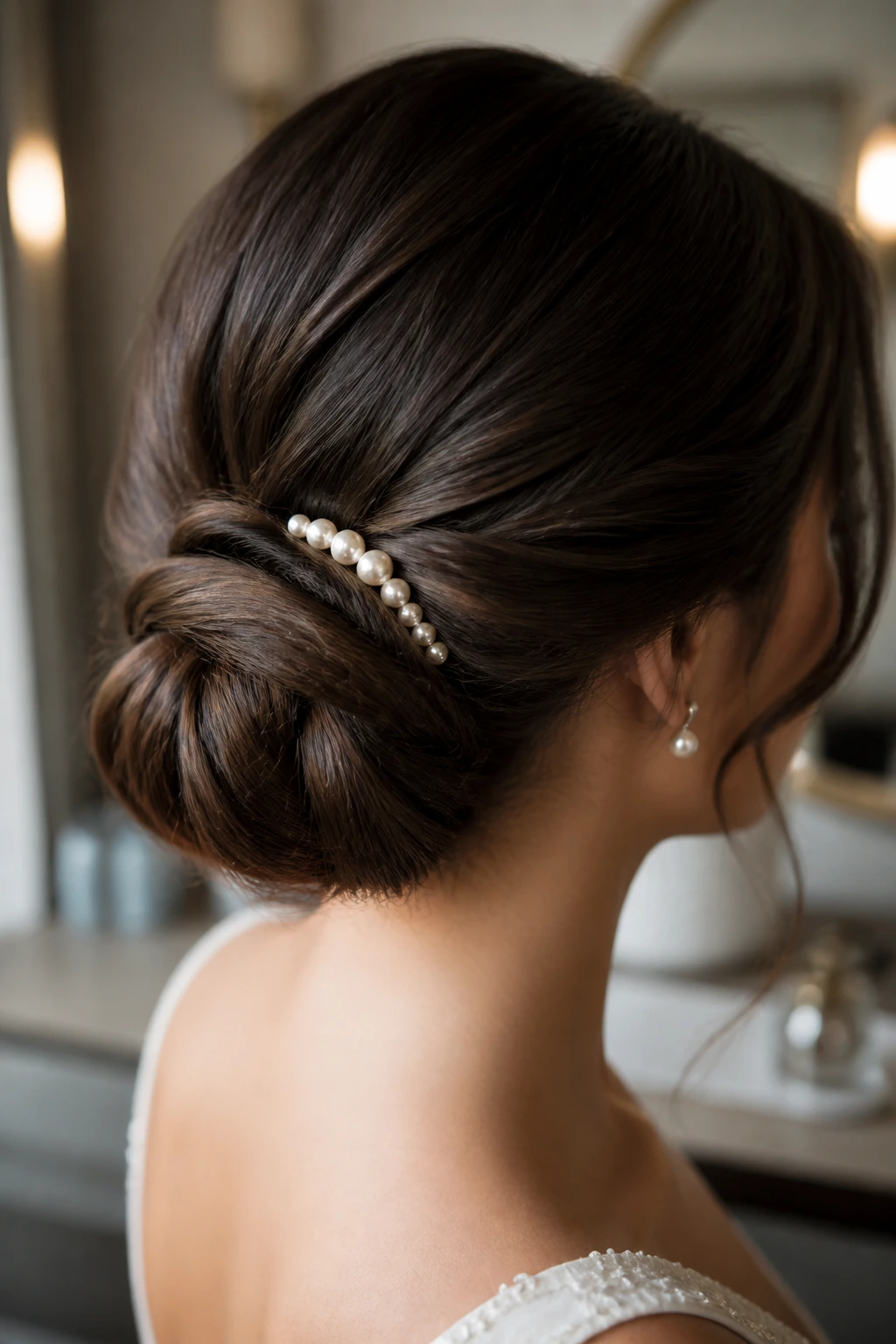
A low chignon can carry accessories, but the accessory has to respect the shape. A heavy clip shoved into the center of a soft knot can flatten the whole thing. A delicate pin, comb, or barrette usually does a better job because it sits along the curve rather than crushing it.
Pearl pins, thin gold combs, ribbon ties, and hair vines all work, depending on the mood. If the bun is sleek, a clean metallic accessory can look sharp and modern. If the bun is softer or braided, something with texture—fabric, pearls, a matte finish—often looks more at home.
Match the Accessory to the Job
If you want the accessory to stay visible, place it slightly off-center or just above the knot. If you want it to function like support, hide it at the base where it can reinforce the shape. The prettiest piece in the world is a nuisance if it makes the chignon tilt.
For weddings or formal events, I’d keep the accessory lightweight and anchored at two points whenever possible. One pin at a single spot is asking a lot from a small piece of hardware.
Practical Tips for a Low Chignon That Holds All Day
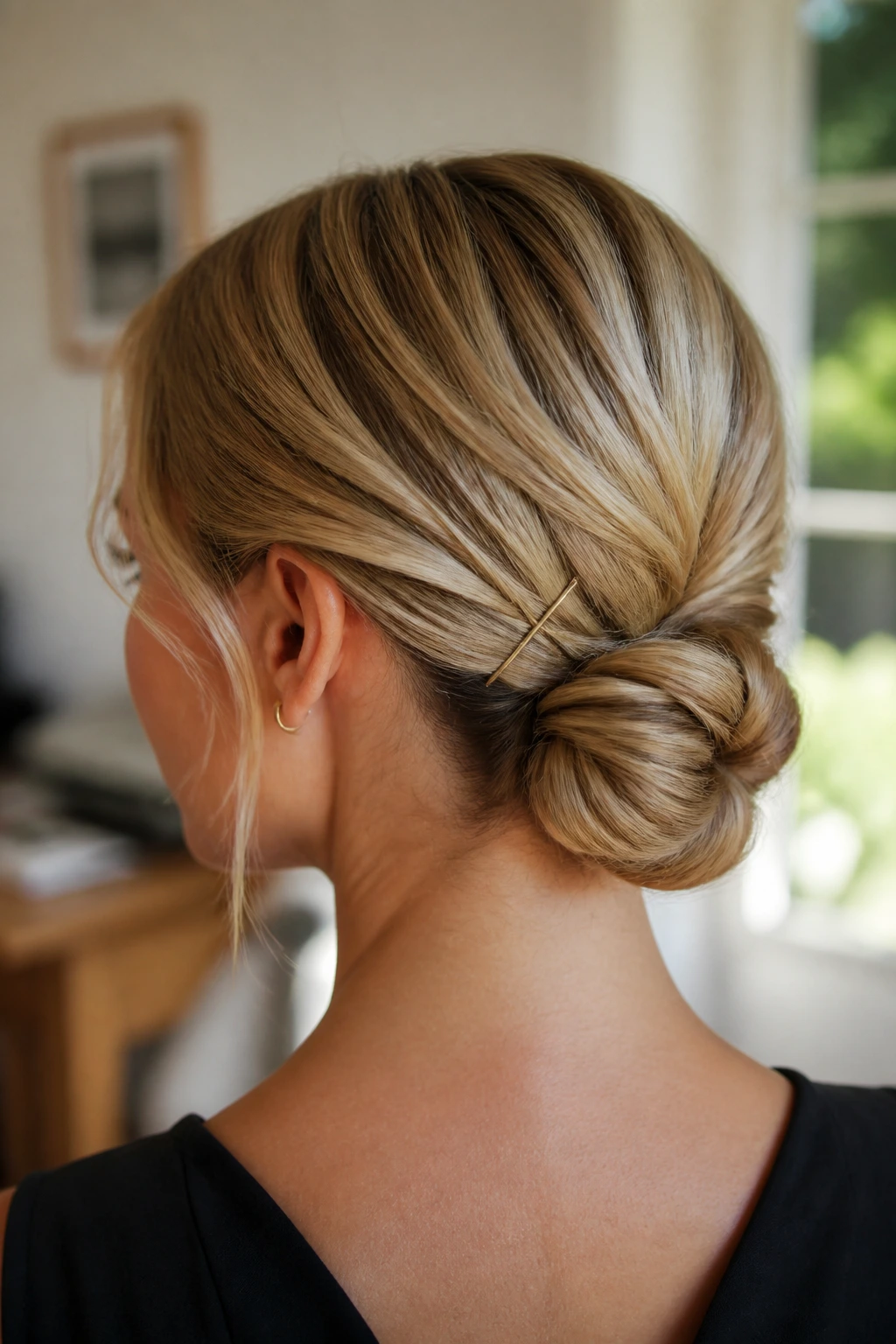
Build grip before glamour: A little dry shampoo at the roots and a few sprays of texturizing mist through the lengths will help the hair cooperate far more than a heavy layer of hairspray at the end.
Cross your pins: Insert bobby pins in an X pattern when a section feels loose. That locks the hair in place more reliably than stuffing in three pins in the same direction.
Anchor the first loop hard: The first wrap around the elastic is the one that carries the style. If that part is weak, the rest of the chignon will sag, no matter how pretty the surface looks.
Use the nape as your guide: If the bun is creeping upward, it probably started too high. If it drifts downward, the base needs firmer support or a tighter elastic.
Choose one finish and commit: Sleek and soft both work, but half-and-half usually reads unfinished. Decide whether you want smooth edges or a lived-in surface, then shape the front and sides to match.
Stop spraying once the hair turns tacky: There’s a point where hairspray stops helping and starts turning the surface brittle. When the hair feels stiff enough to hold, put the can down.
Common Mistakes That Make a Low Chignon Slip, Sag, or Look Messy
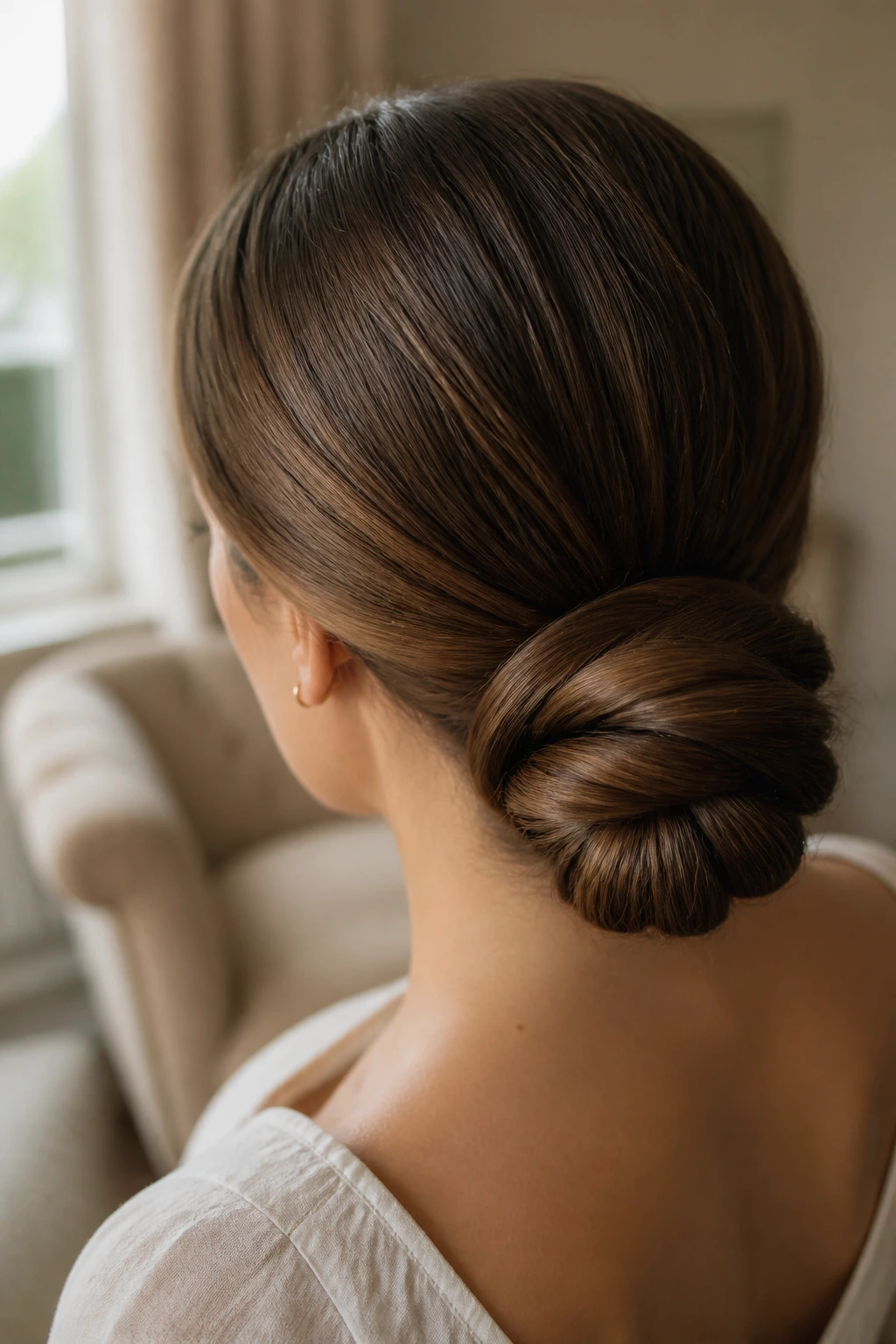
The first mistake is building the style on hair that is too slippery. Freshly washed, straight, and squeaky-clean hair can make a low chignon feel like it has no traction. The fix is simple: add a bit of texture at the roots and lengths before you start, or wait until the hair has a little natural grip.
Another problem is placing the base too high. That changes the whole profile. The style starts to look like a mid-bun with an identity issue, and it can fight the shape of your outfit. Keep the ponytail anchored low and check it in a second mirror before you twist.
Overloading the hair with product is a common one too. Heavy cream, too much serum, or a thick layer of spray can weigh the hair down and make the chignon slide. Use less than you think you need. Add in small amounts, then stop once the surface behaves.
Pinned too loosely? That’s a classic. Pins that only skim the outer layer will pop out when you turn your head. Push them into the center of the coil and let them catch a second layer of hair under the surface. That hidden grip is doing the real work.
Watch the Ends
Loose ends are often the giveaway. If the tail sticks out in a stubborn little fan, the style looks unfinished even if the base is secure. Tuck the ends underneath the coil, or pin them flat in a direction that follows the bun’s curve.
And if the bun feels bulky on one side, do not keep adding pins at random. Unwrap it a little, rebalance the sections, and rebuild the twist. Ten rushed pins can make things worse than three smart ones.
Variations and Alternatives That Shift the Mood
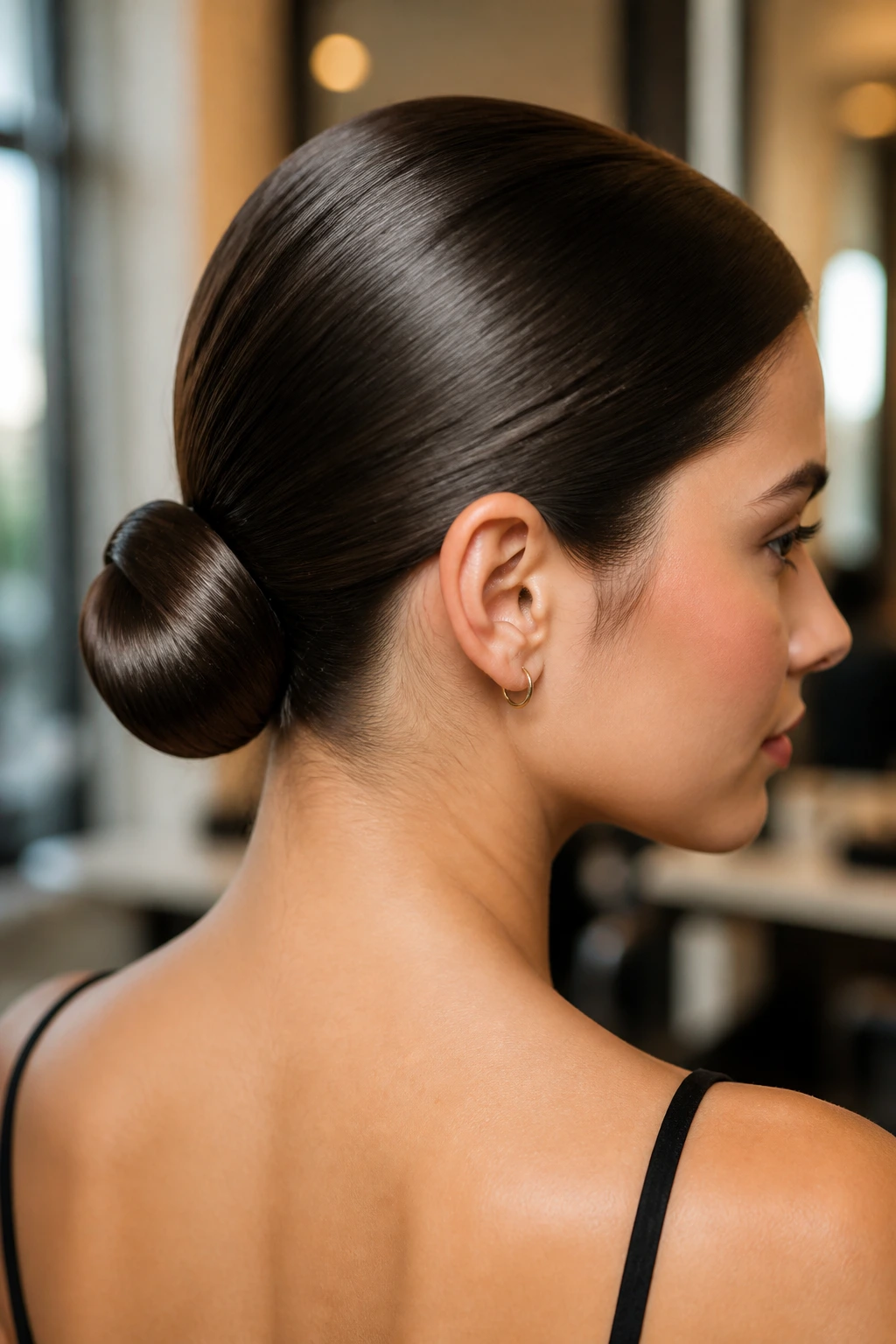
Sleek Ballet Chignon: Smooth the crown with a boar bristle brush, pull the hair into a centered low ponytail, and coil the length into a compact knot with hidden pins. This version looks sharp with satin, suiting, or anything with a structured neckline.
Soft Wrapped Chignon: Leave a few face-framing strands out, twist the ponytail loosely, and allow one or two ends to peek from the wrap. It’s a good choice when you want the style to feel less formal without losing the low-chignon shape.
Braided Nape Chignon: Braid the ponytail first—three-strand, rope, or fishtail—then wrap the braid into a bun and pin it around the base. The braid gives the style more texture and helps thick or layered hair stay put.
Side-Swept Chignon: Part the hair deeply on one side, sweep the front across the forehead, and place the knot just off-center at the nape. This version softens a strong jawline and gives the style a little motion without turning it into a full side bun.
Twisted Half-Chignon for Shorter Hair: If your lengths are borderline too short, twist only the bottom half of the hair into a compact tucked shape and leave the rest to blend into the base. It’s a practical workaround that still gives you the low-chignon effect.
How to Keep the Style Fresh Through the Day
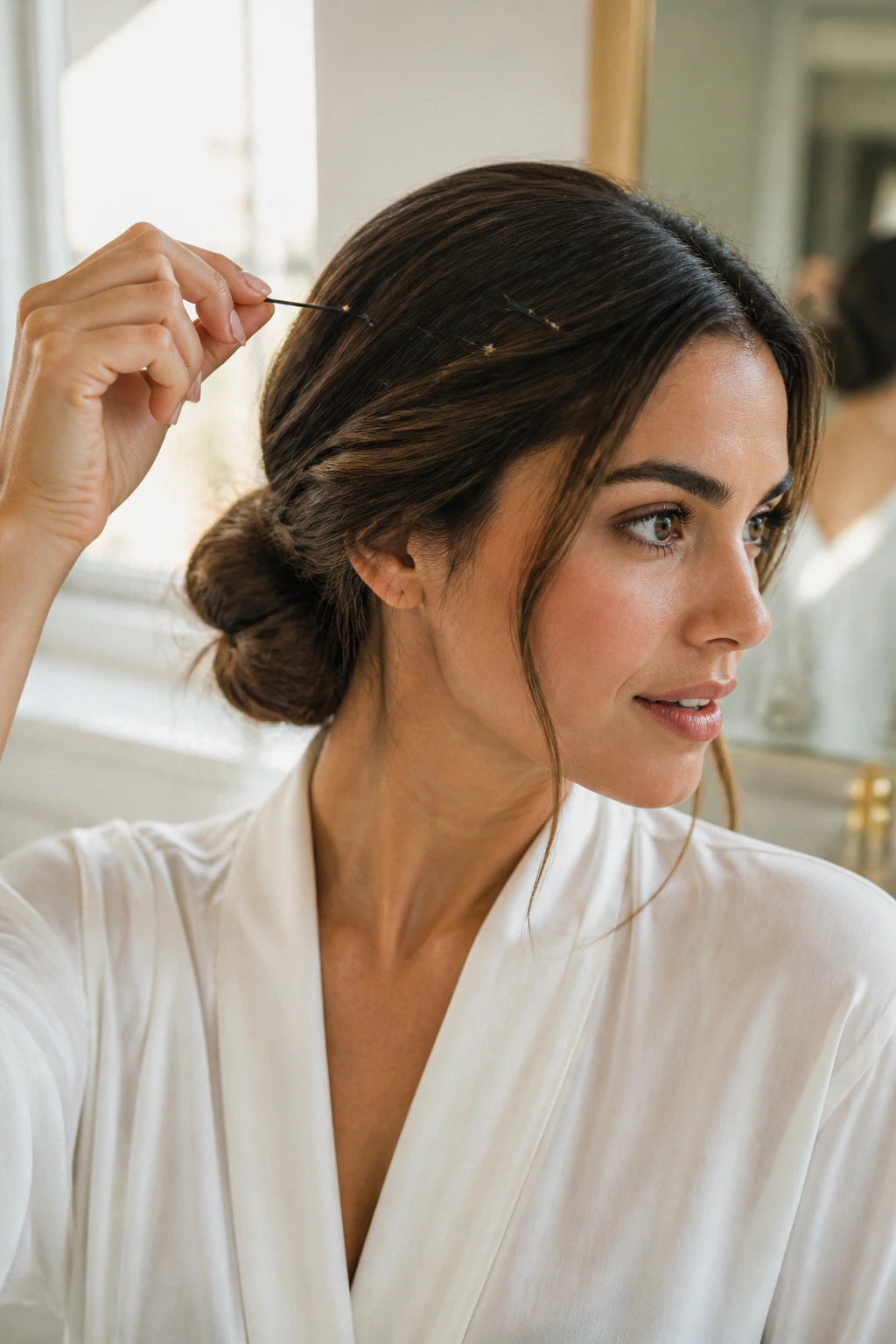
A low chignon is one of those styles that can be worn for hours if you give it a tiny bit of attention at the right moments. The good news is that maintenance is simple. You usually do not need to rebuild the whole thing.
Carry two or three spare bobby pins and one small travel spray if you expect wind, humidity, or a long event. If the crown starts to loosen, press the hair back toward the base with your fingers and add one pin instead of misting the whole head again. If the bun itself starts to tilt, support the underside first. That’s usually where the shift begins.
For overnight wear or saving a style for a second day, remove the accessory, loosen the pins just enough to relieve pressure, and wrap the hair in a silk scarf if the finish is sleek. A soft low chignon can also be protected by sleeping on a satin pillowcase and using a loose bonnet if that’s your thing. The next day, a small touch of dry shampoo at the roots and a fresh pin or two often brings the shape back.
If the style needs a total refresh, don’t start at the front. Take the bun apart from the nape upward. That’s where the structure lives, and that’s where the rebuild should begin.
Frequently Asked Questions About a Low Chignon
How long does a low chignon usually take to do?
A simple low chignon can take 10 to 15 minutes once you know where you want the base. If you’re smoothing the crown, curling face-framing pieces, or adding braids and accessories, plan for 20 to 30 minutes.
Can you do a low chignon on clean hair?
Yes, but clean hair usually needs prep. Dry shampoo, texturizing spray, or a bit of mousse gives the strands enough grip to stay in place. Without that, the style may slide before you leave the house.
What if my hair is too short for a full chignon?
Work with a tucked twist at the nape instead of forcing a large knot. Shorter layers can be pinned into a compact shape, and the illusion of a low chignon is often enough if the base is neat and the ends are hidden.
Is a low chignon better than a low bun for formal events?
If you want a more refined look, yes, because the chignon usually reads as more tucked and shaped. A low bun can still be formal, but the chignon has a cleaner line and tends to sit better with gowns, pearls, or elegant necklines.
How do I keep a low chignon from loosening during humidity?
Start with a firmer base, use a little texturizing spray before you twist, and pin the first wrap tightly. A light mist of humidity-resistant hairspray on the finished surface helps, but the real support has to come from the pins inside the knot.
What’s the best way to hide short ends that stick out?
Tuck them underneath the coil and pin them flat with the curve of the bun, not outward. If the ends are especially stubborn, split them into two smaller sections and fold each one back in separately. Smaller hidden pieces stay put better than one thick end.
Can curly hair make a low chignon without becoming frizzy?
Absolutely. Keep some of the curl pattern intact and don’t overbrush the whole head. Smooth the top where needed, then let the curls help create body inside the chignon. Frizz usually shows up when the curl pattern is destroyed and then overhandled.
What pins work best: bobby pins or U-pins?
Bobby pins are better for locking the shape in place, especially around the base and outer edges. U-pins are helpful for tucking into a dense bun because they hold volume without flattening it, but they work best when the style already has a solid foundation.
A Low Chignon Worth Repeating
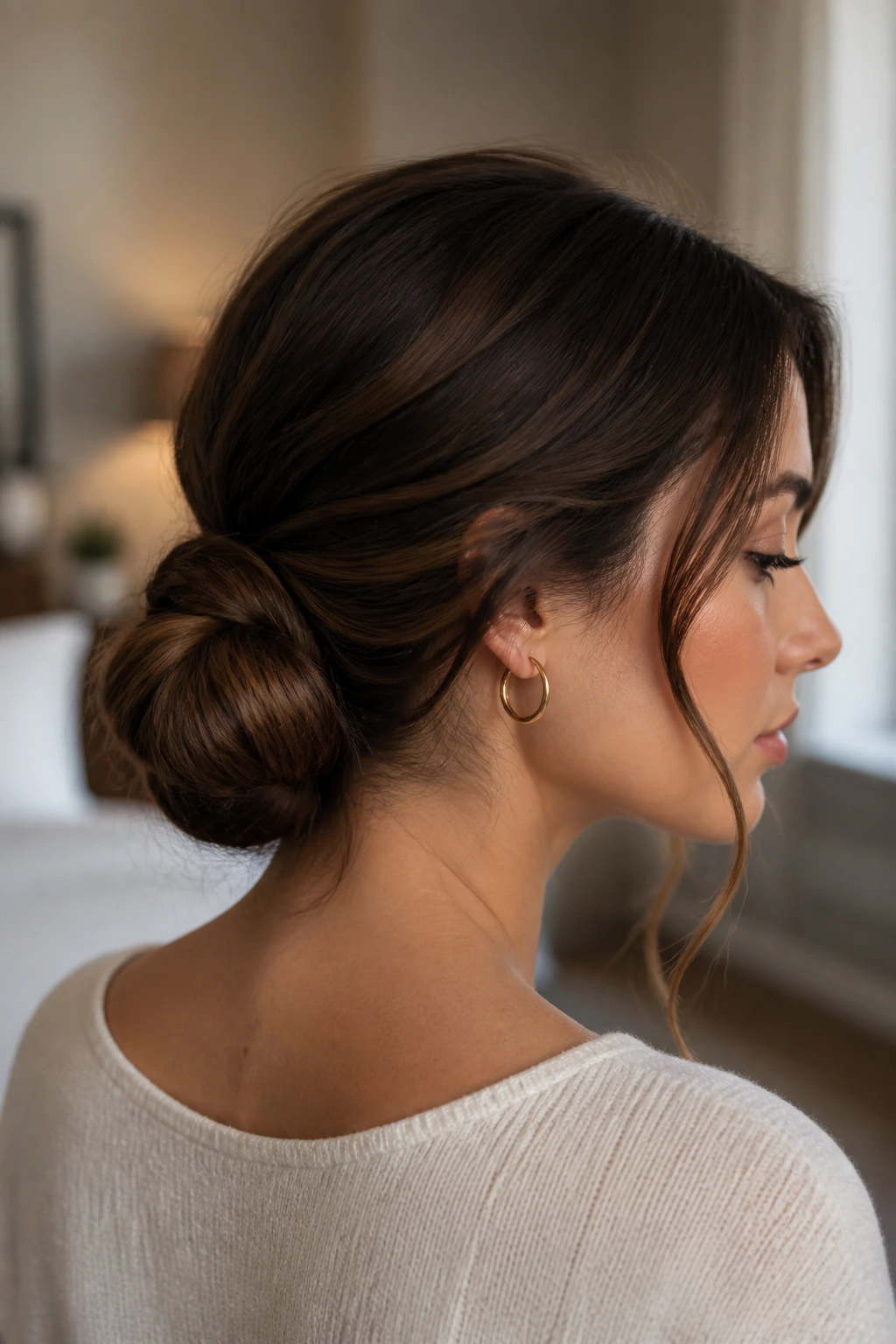
A low chignon sticks around because it solves a lot of problems without looking like it tried too hard. It keeps hair off the neck, sits comfortably under clothes, and gives you enough control to lean sleek, soft, braided, or slightly undone without changing the basic shape. That’s a rare mix. Some styles are prettier. Some are easier. A good low chignon can be both.
What makes it worth learning is the repeatability. Once you know where the base belongs, how much texture your hair needs, and how the pins should cross inside the knot, the style stops being a gamble. It becomes a dependable option—the kind you can reach for when your hair won’t cooperate but you still want to look as though it did.
And that’s the real value here: not perfection, but a style with enough structure to hold, and enough softness to forgive a little human life along the edges.