



A warm complexion can go flat fast under the wrong hair color. Put an icy ash blonde next to golden or peachy skin and the face can look tired; put a honey balayage or copper gloss next to it and the whole thing wakes up in the mirror. That’s the real job here: not “make it lighter,” but make the color and the skin speak the same language.
Hair color techniques for warm skin tones work best when the warmth is placed, not dumped on top of everything. A few inches of root shadow can do more for your face than another level of lift. A ribbon of caramel around the cheekbone can soften a jawline in a way that a flat all-over brown never will. The difference is usually in the strategy, not the shade name on the box.
I’ve always preferred warmth with dimension. Flat orange at the ends ages badly. Layered gold, amber, apricot, chestnut, and copper can look rich for weeks, even as they fade. The techniques below lean into that kind of warmth—the sort that flatters golden, olive, peach, and terracotta undertones instead of fighting them.
Why This Collection Feels Different
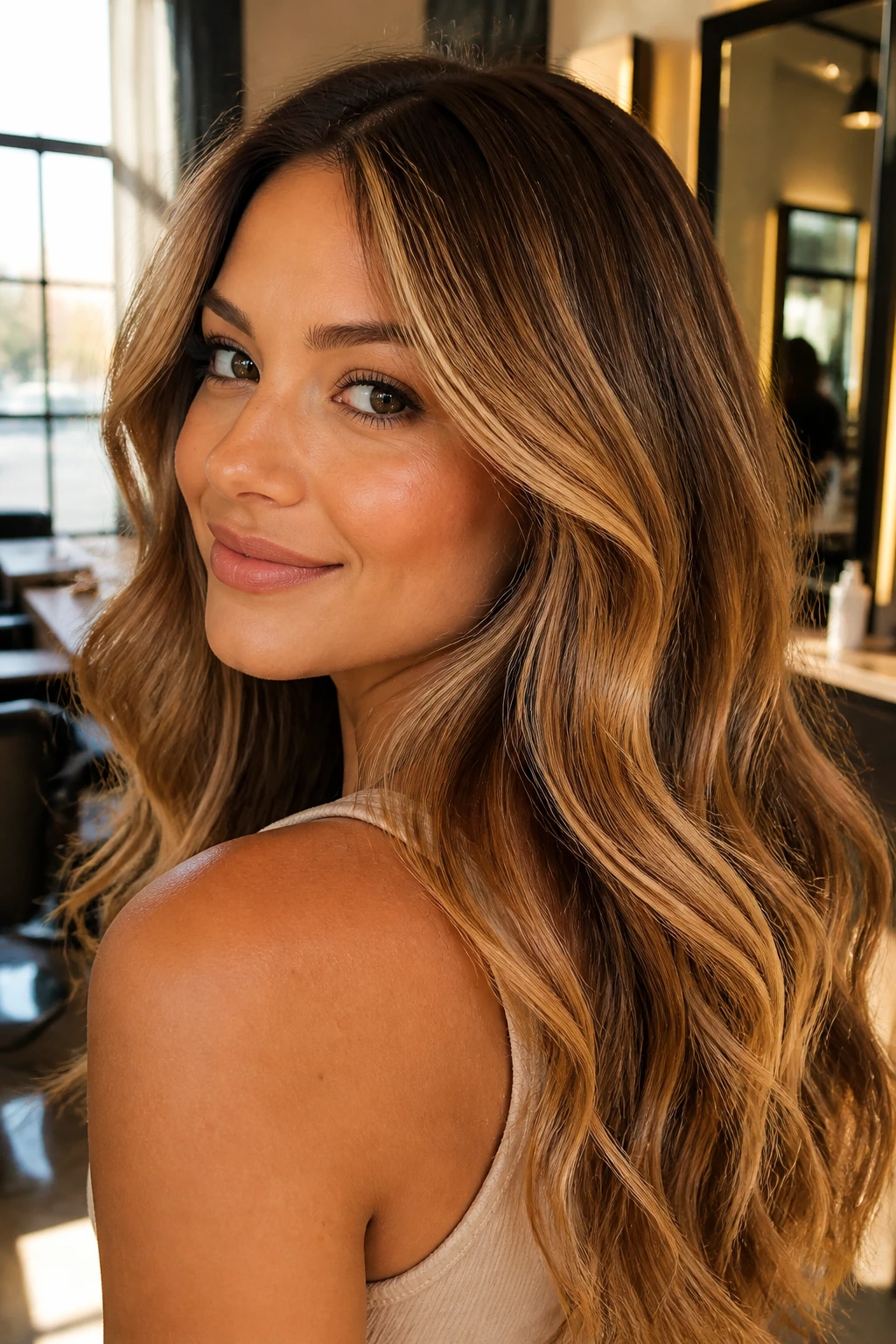
- Placement first: These techniques put warmth where it brightens the face line, not just where it’s easiest to paint.
- Grow-out matters: Root shadows, melts, and babylights soften regrowth so the color doesn’t look choppy after a few weeks.
- Warm doesn’t mean orange: The best results here use honey, amber, apricot, caramel, copper, and bronze in controlled doses.
- Works across bases: Deep brunettes, medium browns, and lighter blondes all have options; the method changes more than the mood does.
- Movement shows everything: A soft bend, wave, or blowout reveals ribbons and contours that disappear in a one-tone dye job.
- Less correction later: Good warm color is easier to live with because it fades into something close to the original target.
1. Honey Balayage for Warm Skin Tones
Honey balayage is the first technique I reach for when someone wants warmth without that blunt, stripey look. On a medium brunette base, the ribbons sit like sunlight threaded through the mid-lengths, with just enough root shadow to keep the grow-out calm. Around warm skin, honey reads soft rather than brassy, which is exactly the point.
Why It Flatters So Well
The trick is that balayage gives you controlled brightness. Instead of lighting every strand, you paint the lightener where the hair would naturally catch sun—around the face, through the outer layers, and on the ends. That keeps the color from sitting flat against skin with peach or golden undertones.
Quick cues:
- Best base: level 4 to 6 brunettes
- Lift target: 2 to 4 levels
- Maintenance: touch-up every 8 to 12 weeks
- Best finish: loose wave or round-brush blowout
Use a beige-gold toner, not a pale ash toner. Ash can mute the whole look and leave the face looking dull.
2. Copper Gloss for Warm Skin Tones
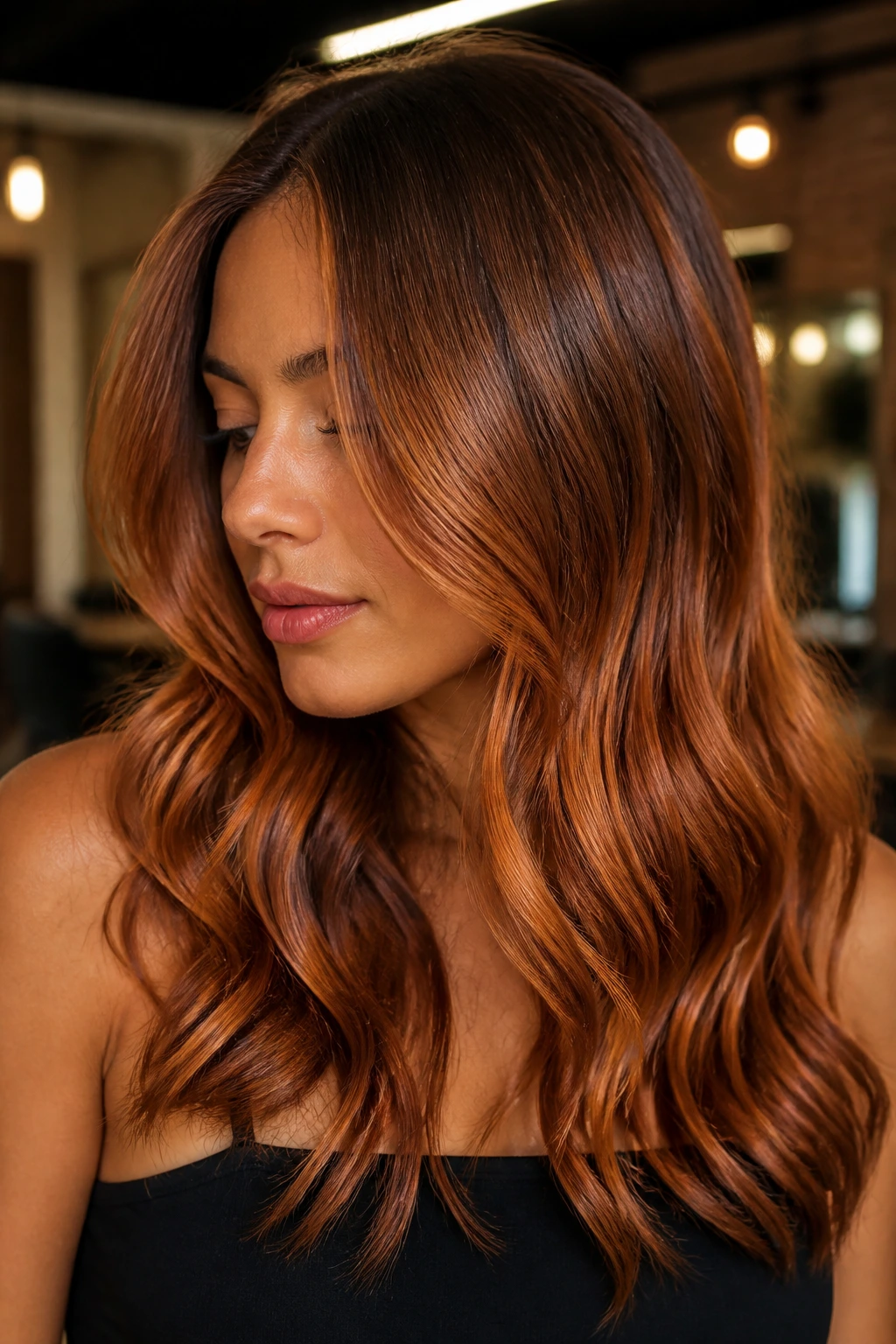
Copper gloss is the move when the hair already has enough depth and you want the color to glow instead of scream. A demi-permanent gloss lays a transparent copper stain over the strands, so the finish looks polished, reflective, and a little expensive without the damage of a full lift. Warm skin loves this kind of light-catching red gold.
A gloss is also forgiving. If you’re nervous about going full copper, a gloss gives you a softer read that fades in 4 to 8 washes, depending on porosity and shampoo habits. On porous ends, it grabs faster; on virgin hair, it can look like a whisper of rusted gold rather than a bold red.
I like copper gloss best on medium brown hair and dark blonde bases. On lighter hair, the same formula can turn pumpkin-y if you overprocess it by even a few minutes. Keep the timer in hand. Seriously.
3. Caramel Ribbon Highlights for Warm Skin Tones
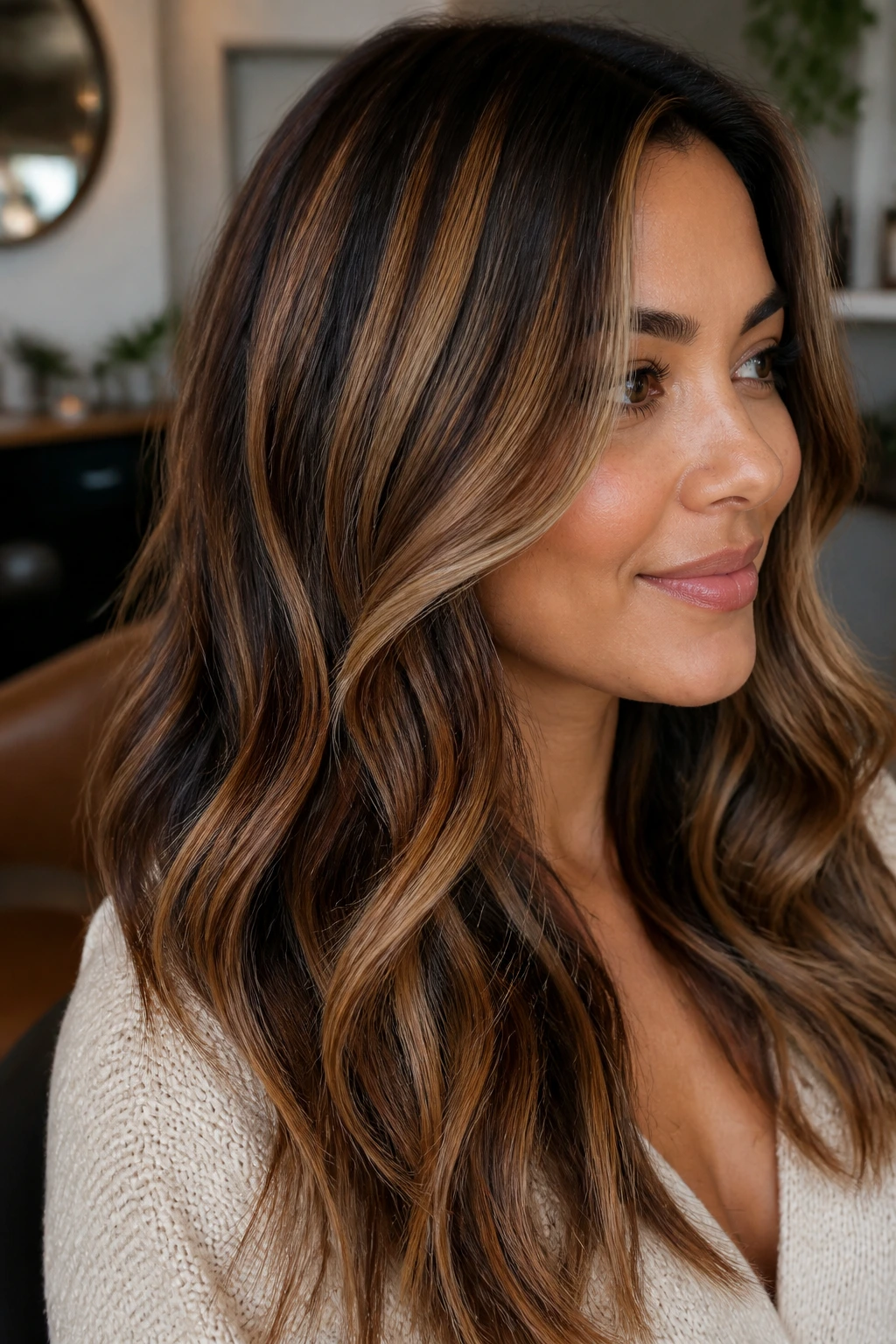
Why do caramel ribbons look richer than chunky highlights? Because they slide through the hair in thin, uneven lanes instead of announcing themselves with a hard line. That irregular placement gives warmth, depth, and a little motion every time the hair moves.
How to Use It
Ask for highlights that are painted in varying widths—some thin as a shoelace, some a bit wider near the face. The color should sit a shade or two warmer than your base, not five shades lighter. On a dark brunette, caramel can stay elegant; on medium brown, it can read almost buttery.
- Best on layered cuts and lob lengths
- Great for people who air-dry their hair
- Pairs well with a soft root melt
- Needs a gloss refresh every 6 to 8 weeks
Skip heavy ash toner here. It can turn caramel into a flat beige and strip out the warmth that makes this technique work.
4. Auburn Color Melt With Chocolate Roots
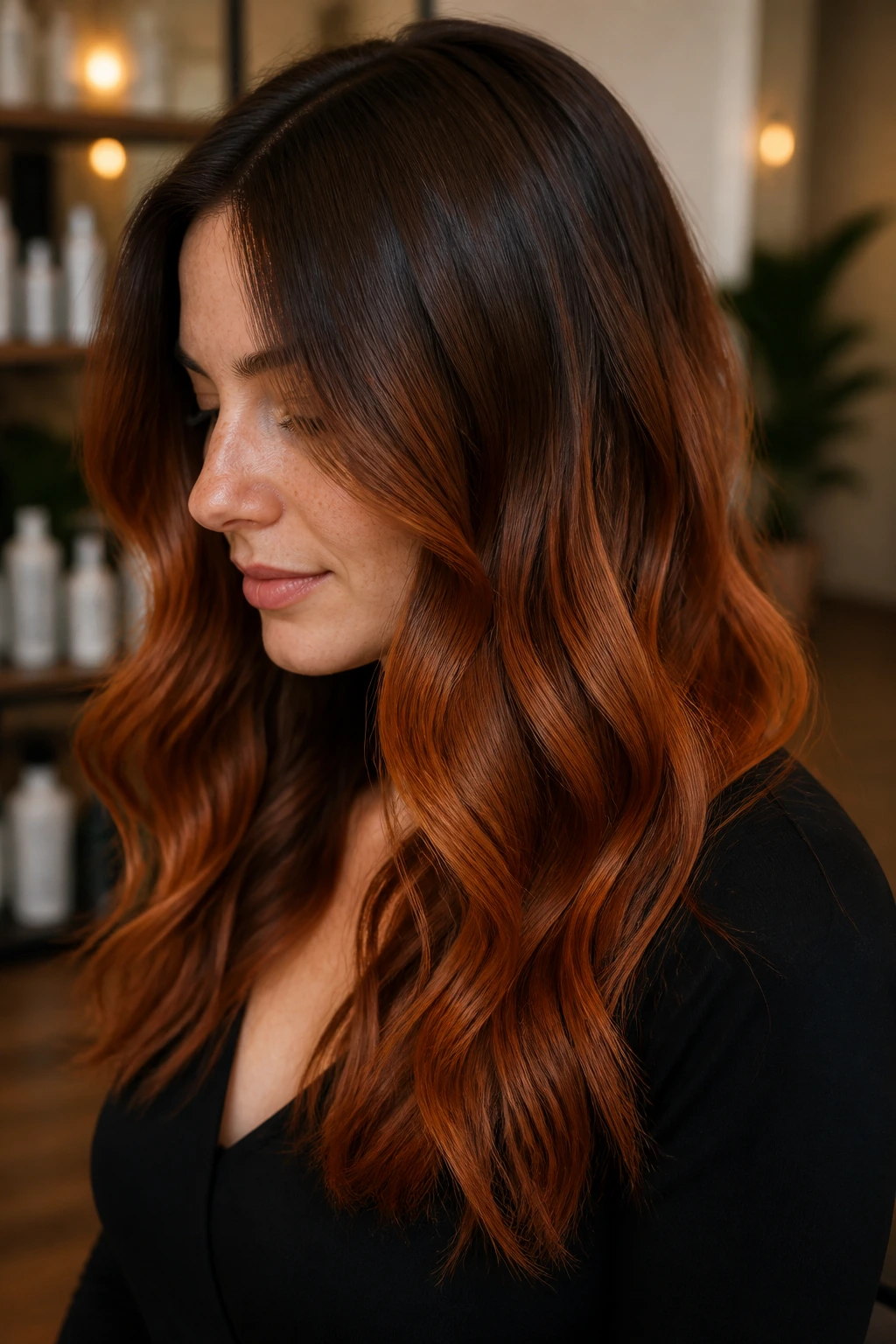
Picture this: chocolate at the roots, cinnamon in the mids, and a soft auburn drift near the ends. That’s the appeal of a color melt. There’s no obvious stop point, no harsh jump, no line that screams “fresh dye job.” Just a long, blended shift that sits beautifully next to warm skin.
The melt works because each zone is only slightly lighter or warmer than the one before it. That keeps the eye moving instead of stopping at one stripe. It also makes the grow-out less annoying, which is a blessing if you hate frequent salon appointments.
Auburn can be tricky on porous hair. The red pigments sink in fast and can look darker than expected. If your hair already grabs color, ask for a diluted auburn formula or a gloss version first. It’s easier to deepen later than to strip out a red that went too hard.
5. Golden Brunette Glaze for Subtle Shine
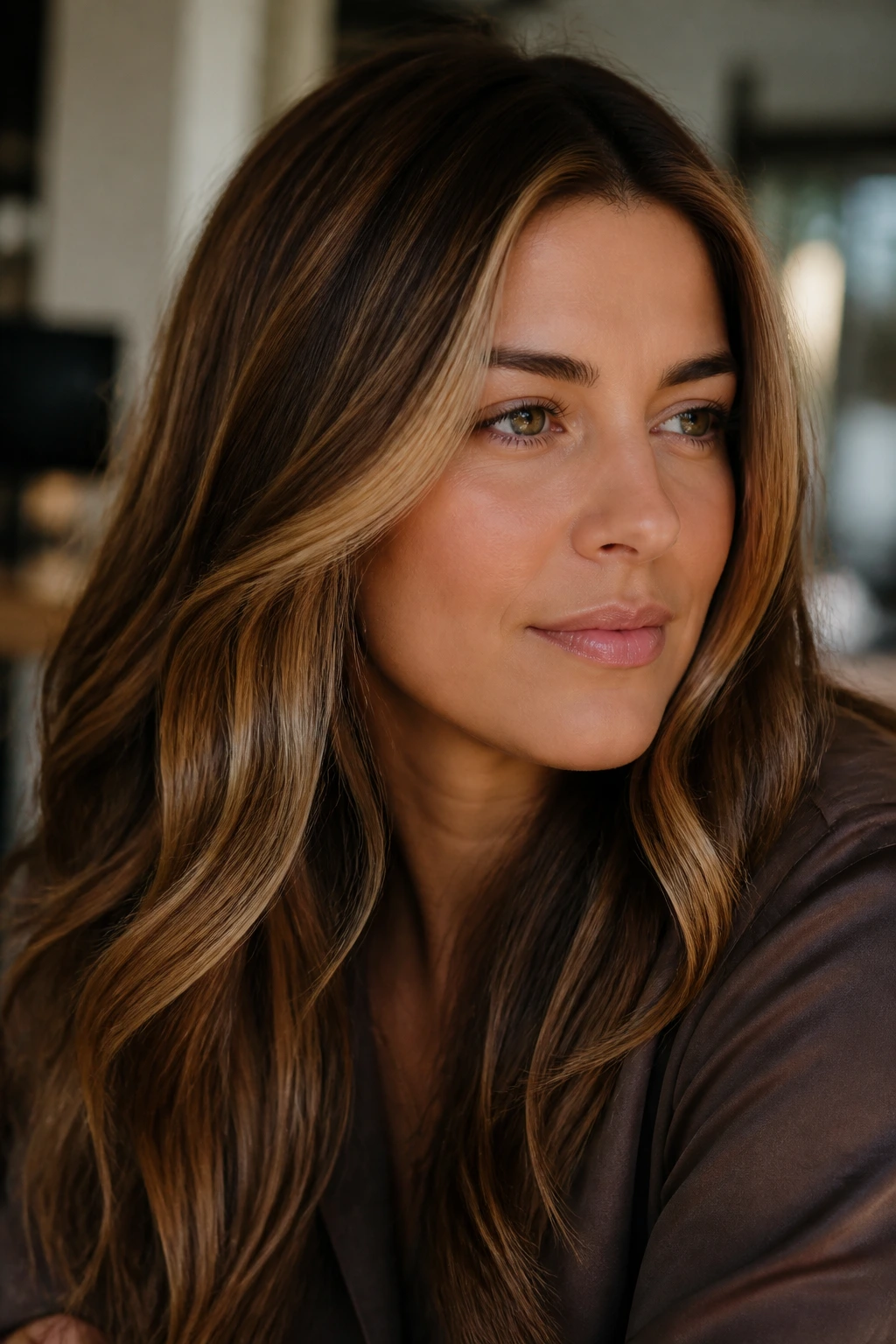
Golden brunette is one of those shades that looks almost boring in the tube and quietly lovely on the head. The base stays brown, but the glaze pushes gold through the surface so the hair catches warmth whenever it moves. On warm skin, that little bit of gold stops the complexion from looking flat.
I like this technique when someone wants their natural color to look polished rather than dramatically changed. It’s less about contrast and more about sheen. A brown glaze with gold undertones can make the hair read healthier, thicker, and a bit more expensive without the drama of highlights.
This is the easiest warm look to maintain. Use a demi gloss or glaze every 4 to 6 weeks, and keep your shampoo gentle. If your water is hard, a chelating wash once a month helps keep the glaze from turning muddy at the ends.
6. Apricot Money Piece Around the Hairline
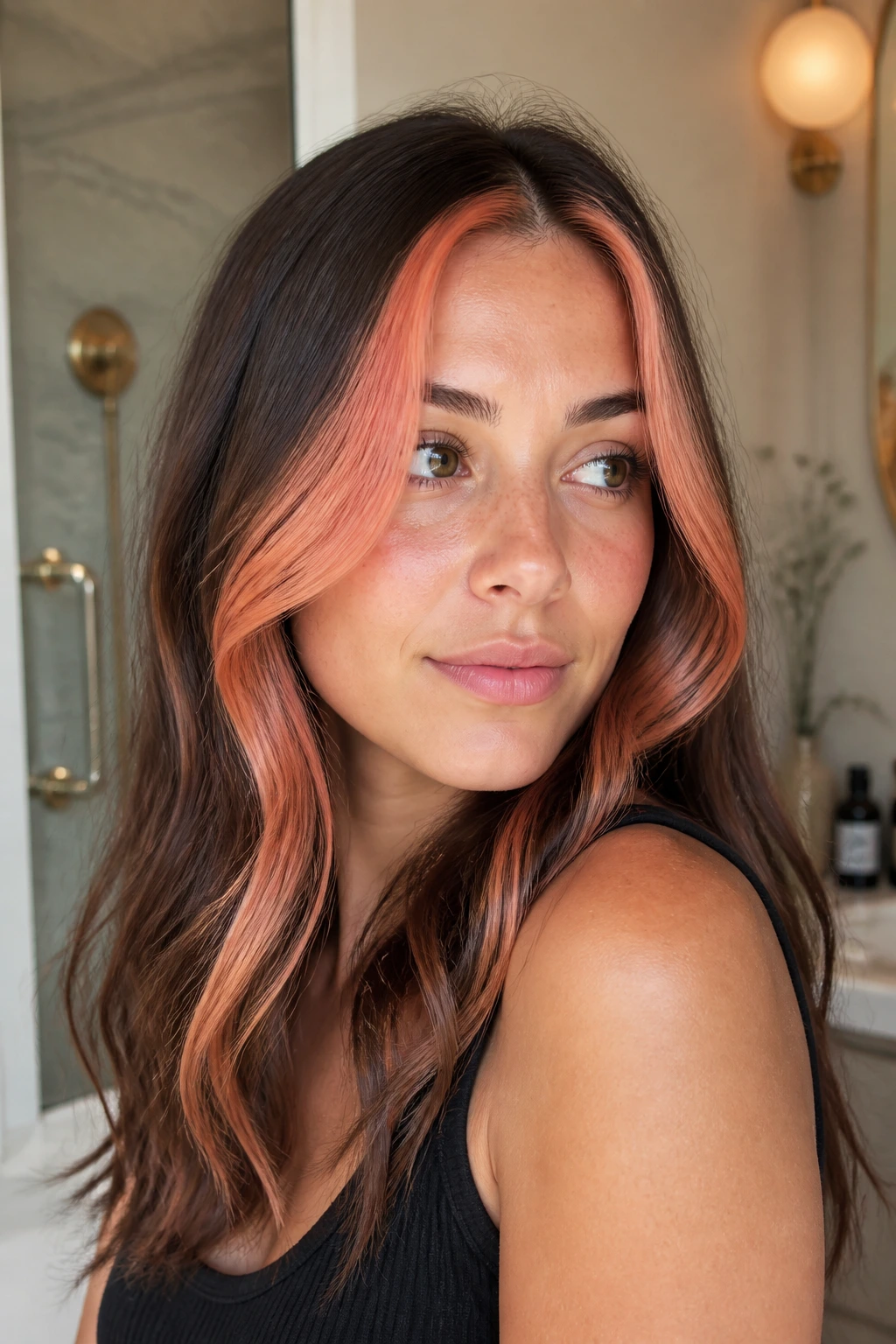
A money piece is the fastest way to test warmth without committing your whole head to it. An apricot or soft golden-apricot ribbon around the hairline frames the face, catches light, and gives warm skin that lifted, awake look without lifting every section underneath.
Compared with full highlights, the money piece is cheaper to maintain and easier to grow out. It also gives you more room to be playful. If the apricot reads a touch bright, you can soften it with a quick gloss at the next appointment rather than repainting the whole head.
I’d choose this for someone with dark hair who wants change but not a full foil situation. The face is where the warmth matters most anyway. Keep the rest of the hair a shade deeper and you’ll get a much cleaner contrast.
7. Buttercream Balayage for Warm Skin Tones
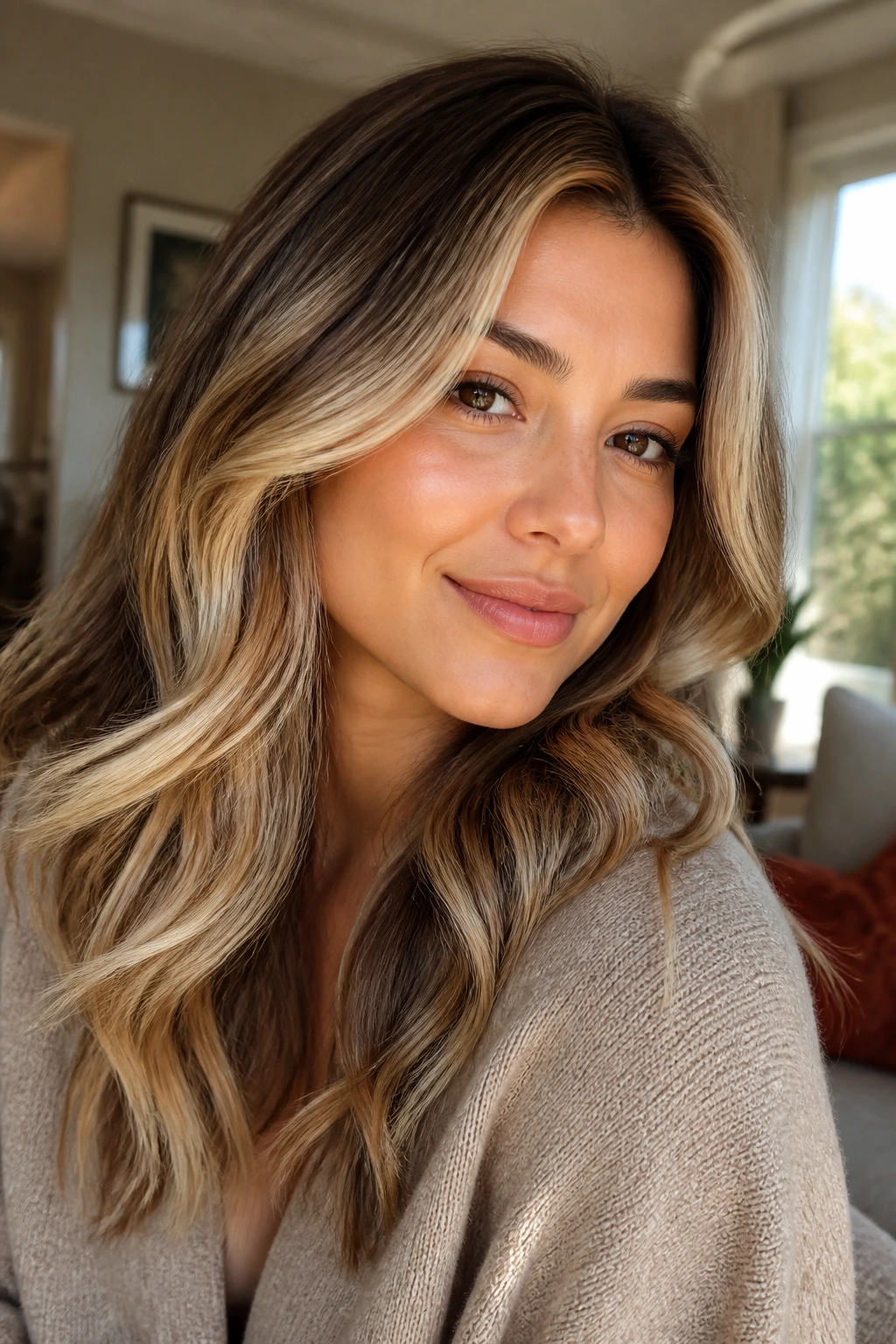
Buttercream blonde is warmer than platinum, softer than gold, and far less fussy than either extreme. The shade sits between beige and pale gold, which means it can brighten warm skin without making the face look ruddy. It also has enough creaminess to stay believable on grown-out roots.
What Makes It Work
Buttercream balayage depends on a controlled lift. The lightest pieces should stay creamy, not chalky, and the root shadow should be soft enough that the whole thing looks blended from day one. A small amount of warmth in the toner is a feature here, not a problem.
Best for:
- Dark blonde and light brown bases
- Medium-length cuts with movement
- People who want blonde without icy contrast
- Hair that can handle moderate lightening
Pro tip: Ask for the lightest pieces to live around the face and on the top layer, then keep the underlayers a bit deeper. That gives the blonde room to breathe without making the whole head look washed out.
8. Cinnamon Lowlights for Blonde or Bronde Hair
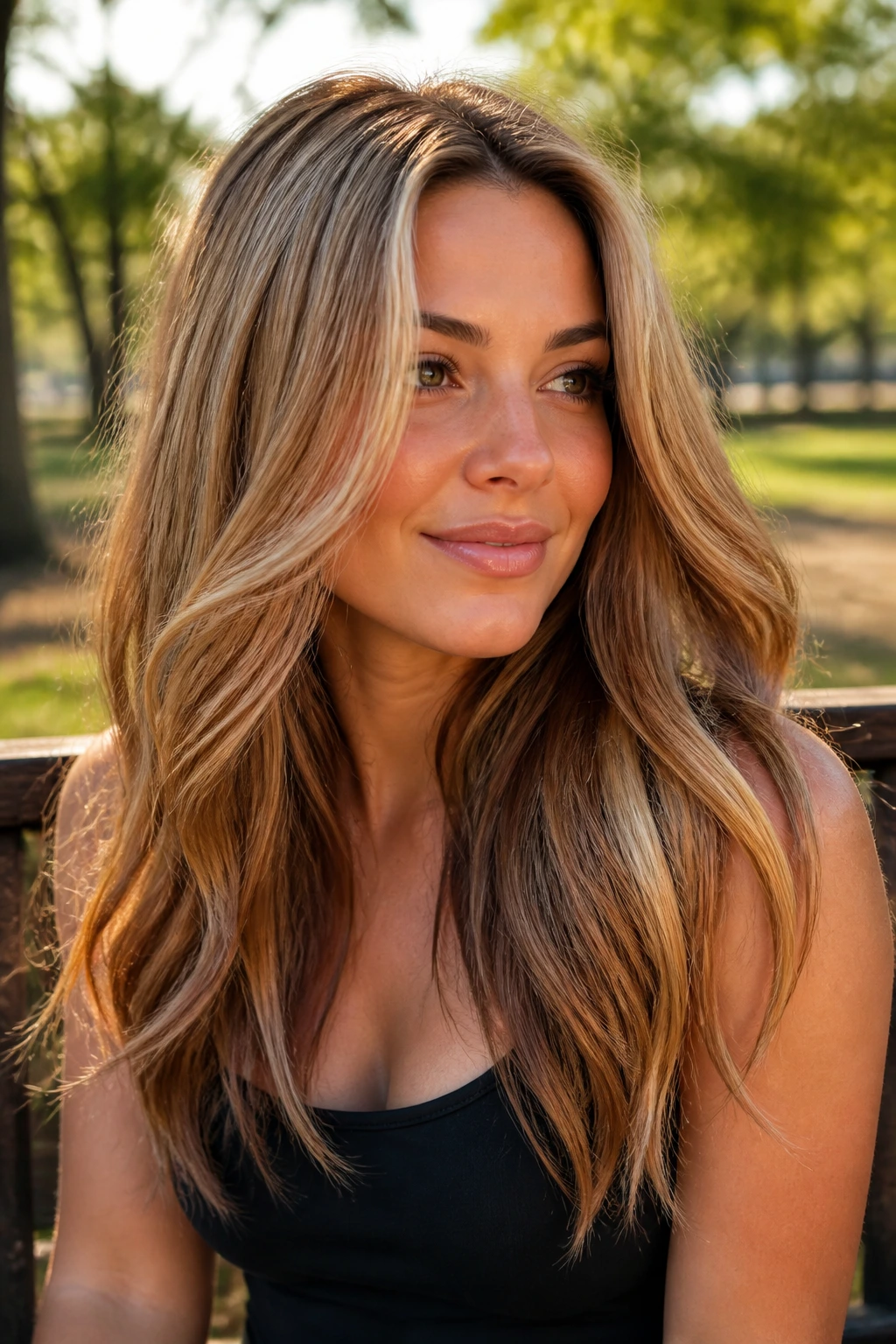
Cinnamon lowlights are the underused fix for blondes that have gone too pale, too flat, or too sunny in every section. Instead of adding more light, you drop warm depth back into the mids and underlayers. The result feels less stripey and more expensive.
A lot of people think they need highlights when their blonde looks weak. Sometimes they need the opposite. Cinnamon or soft russet lowlights can rebuild dimension and help warm skin look less washed out under very light hair.
This is especially useful if your blonde has started to look one-note after repeated toning. The lowlights restore contrast so the lighter pieces have something to sit against. Ask for fine, irregular placement rather than blocky chunks; that’s what keeps it looking soft.
9. Bronze Contouring Through the Mid-Lengths
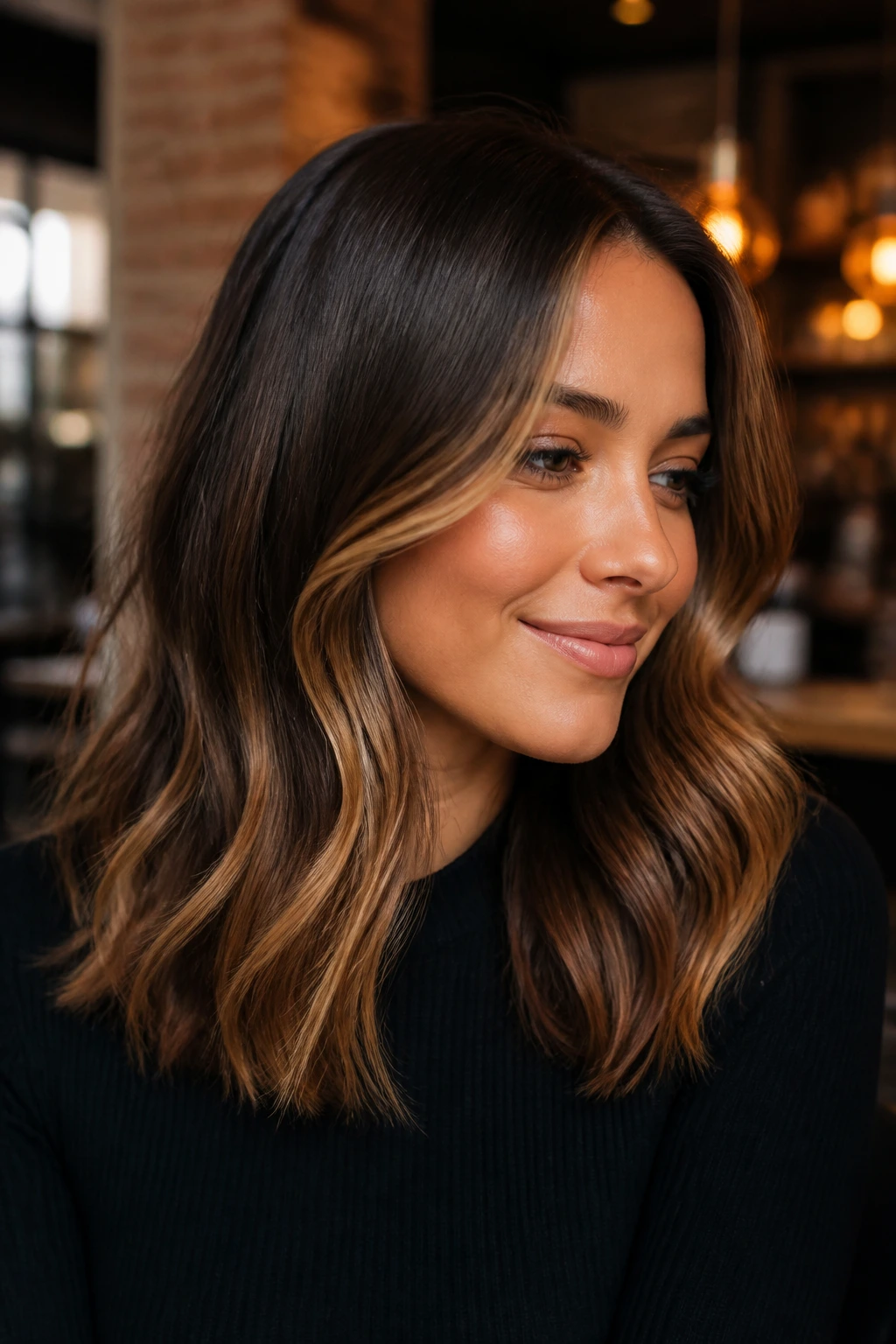
Bronze contouring is a face-shaping trick disguised as hair color. The stylist places deeper bronze pieces where the head needs shape and brightness where the face needs lift. On warm skin, bronze can be better than gold because it has a richer, slightly earthy undertone.
Why does it feel so polished? Because contouring works with the cut. A layered bob, long shag, or shoulder-length blowout suddenly has more shadow and movement. The color doesn’t just sit there; it carves out the outline of the haircut.
How to Ask for It
Ask for bronze ribbons around the outer face frame, temple area, and top layer, then keep the interior a shade deeper. This keeps the depth from disappearing under bright light. If your hair is dense, the contrast can be a little stronger; on fine hair, keep the difference subtler so the strands don’t look skunky.
10. Strawberry Blonde Foilyage for Warm Skin Tones
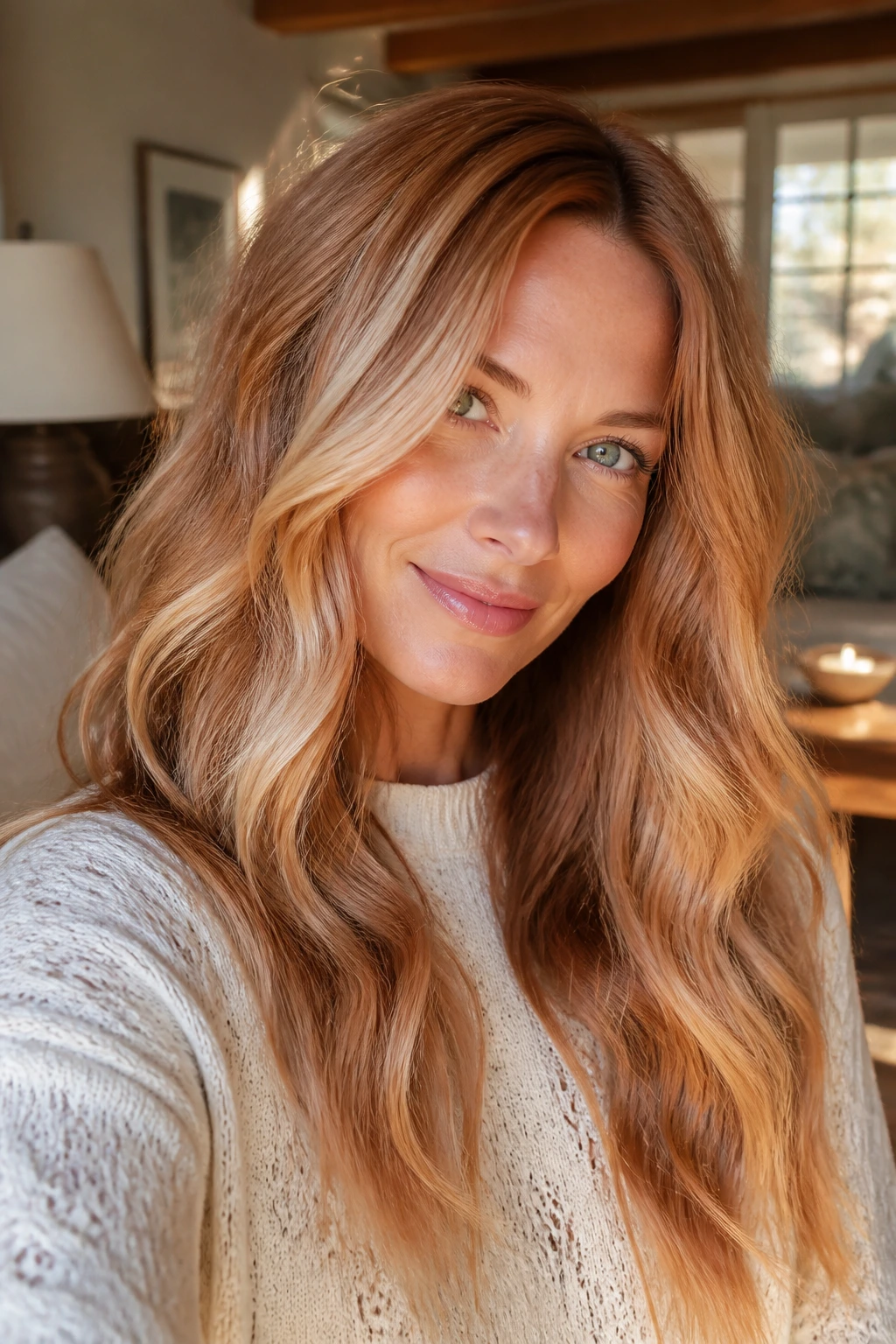
Strawberry blonde foilyage is what happens when hand-painted warmth meets a bit of foil lift. The foil gives the pieces extra brightness, while the strawberry tone keeps them from drifting into cool beige territory. The whole look can read soft, sunny, and slightly rosy without turning pink.
I like this on people who want dimension but need more lift than balayage alone can give. Foils let the stylist place brightness exactly where it matters—around the hairline, on the crown, and through the ends—while the strawberry tone keeps the finish flattering on warm skin.
The caution? Strawberry shades can over-saturate fast on porous hair. If your ends are thirsty, ask for a lighter glaze on the bottom half and a slightly stronger mix near the mids. That gives you the rosy warmth without turning the ends red-orange.
11. Warm Bronde With a Gentle Root Shadow
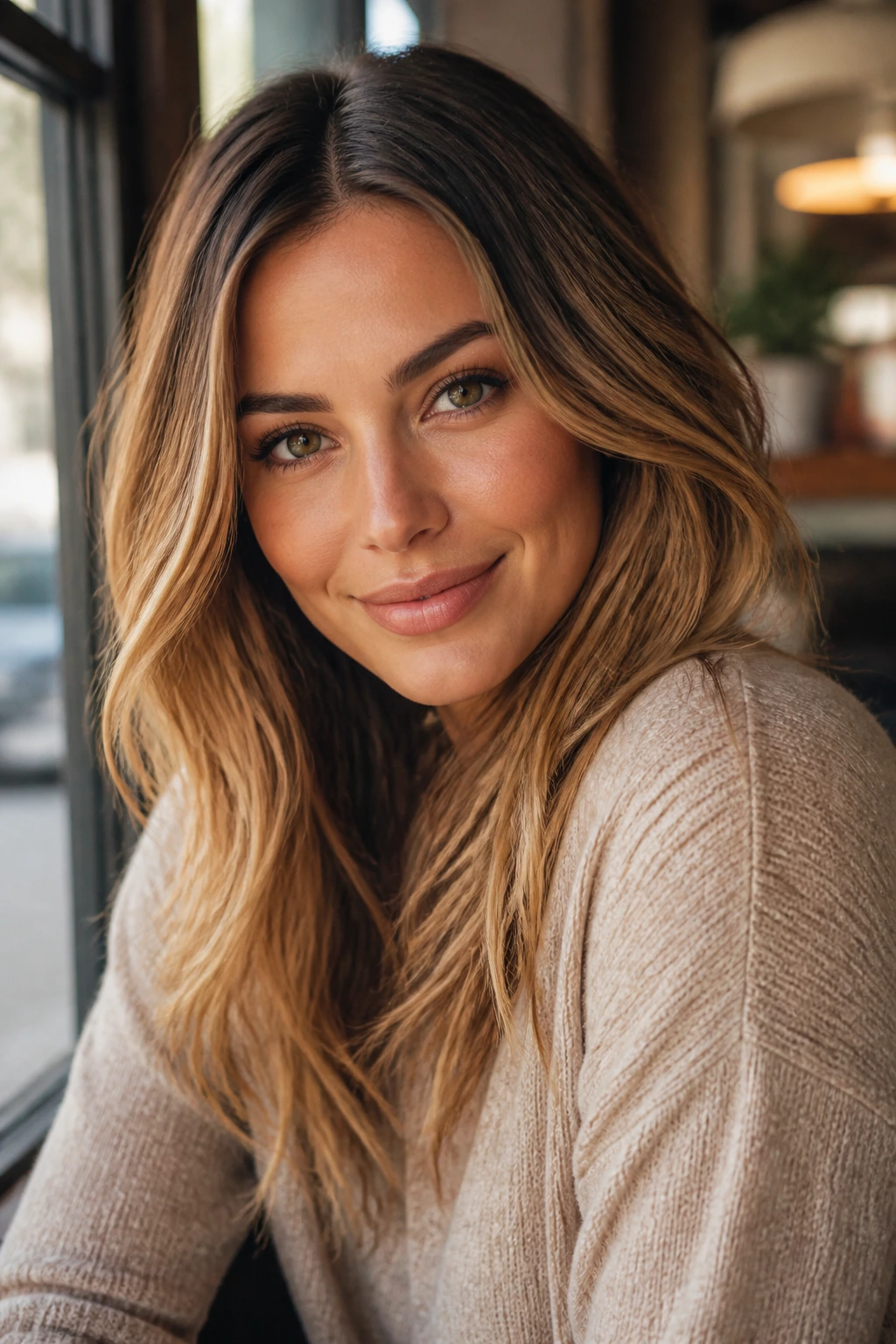
Bronde is the safe word for people who live between brunette and blonde and don’t want to pick a side. With warm skin, the best version keeps the base a soft brown and lets honey, beige-gold, or caramel pieces surface through the top layers. A gentle root shadow ties the whole thing together.
This technique has one big advantage: it looks believable. It’s warm enough to brighten the face, but not so bright that every regrowth line shouts for attention. If you wear your hair in a middle part, the root shadow keeps the crown from looking patchy.
I prefer bronde on people who want low drama and a clean grow-out. It’s also a smart choice if your natural hair is already warm-toned and you just want it to look more finished. Not louder. Finished.
12. Toffee Babylights for Warm Skin Tones
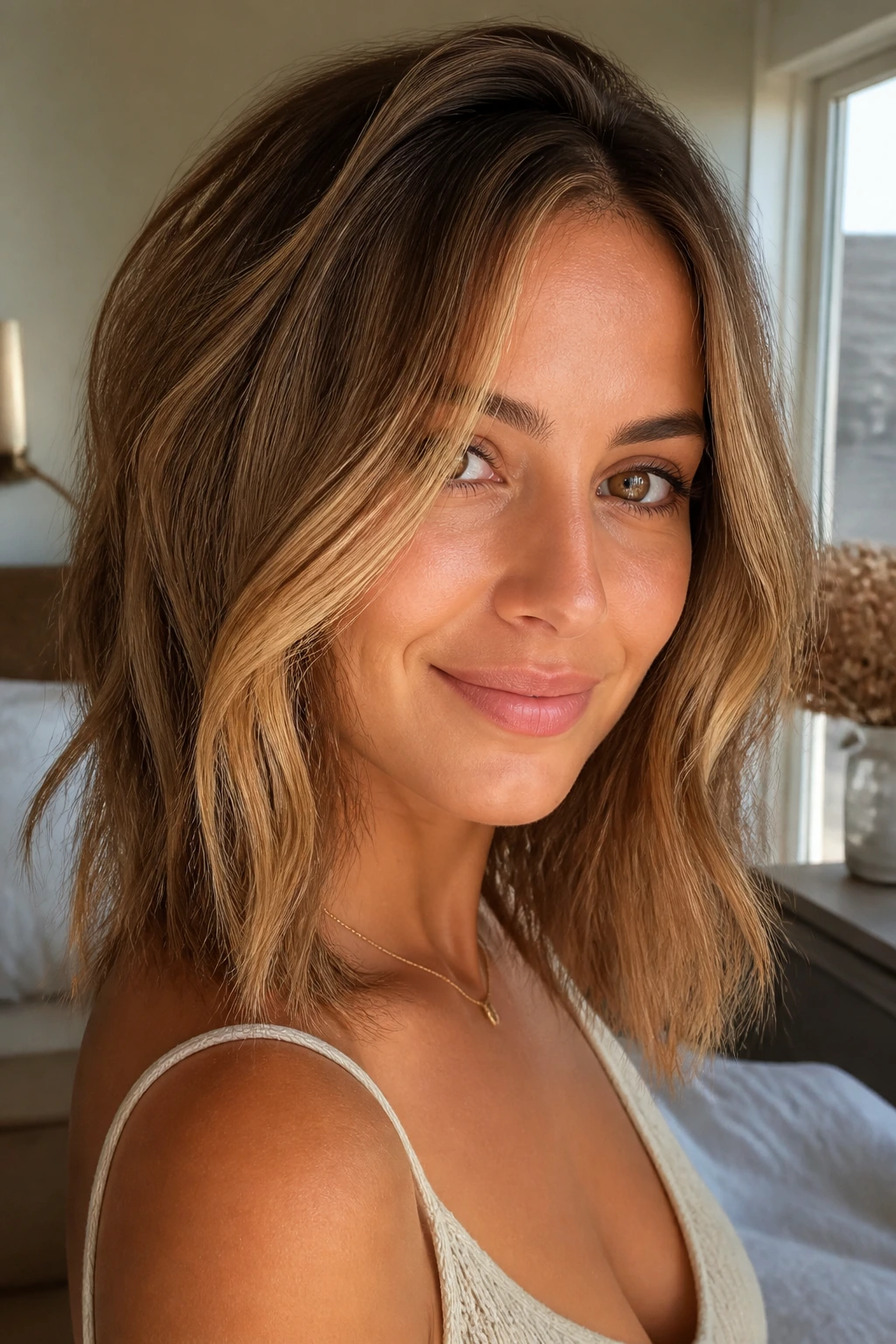
Babylights are the tiny, fine highlights that mimic the way a child’s hair lightens in sun. Toffee babylights use that same thin placement, but with a warm caramel-beige tone that flatters golden and olive skin without looking harsh. The result is soft, stitched-in light rather than obvious stripes.
Unlike chunkier highlights, babylights can build brightness without taking over the haircut. That matters if you have fine hair, because too much contrast can make the hair look thinner than it is. A field of tiny warm pieces reads airy and expensive.
If you want a little more movement around the face, ask for the babylights to be a shade brighter at the hairline and crown, then softer under the ears. That small placement trick makes the whole style look deliberate instead of sprayed on.
13. Mahogany Color Melt for Warm Skin Tones
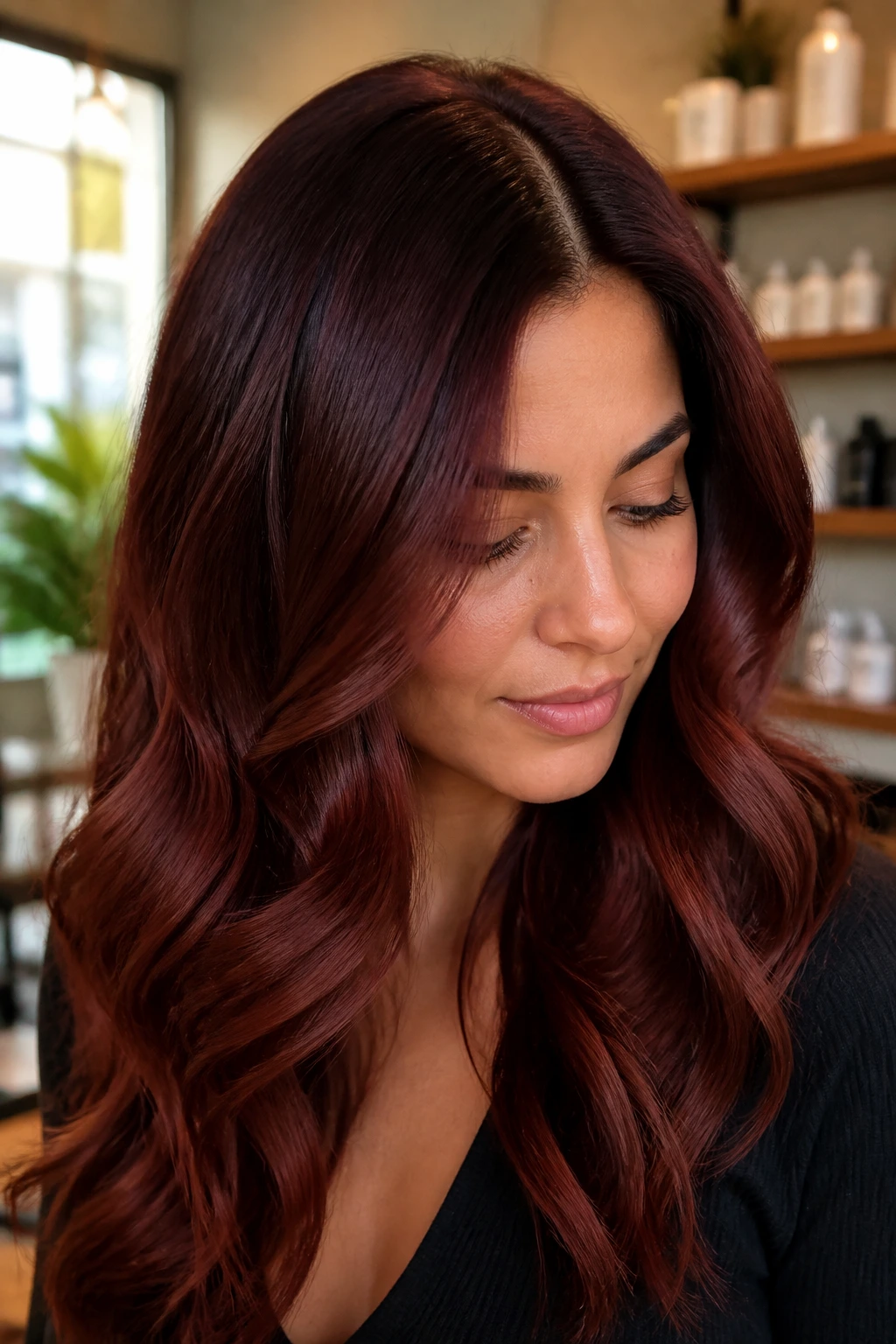
Mahogany sits in that sweet spot between brown and red, which is why it can look so good against warm skin. The red-brown depth adds richness, while the brown keeps it from turning too cherry. In a melt, the shade slides from deeper roots into lighter mahogany ends with almost no visible line.
The Science Behind the Look
Warm skin usually handles red-brown pigment better than cool burgundy because the undertones echo the skin instead of fighting it. The color can make the face look more awake, especially when the hair is styled with soft bend rather than pin-straight.
A few things to know:
- Mahogany is easiest to maintain on darker bases
- Porous hair may pull red faster than expected
- A demi formula fades softer than permanent color
- Gloss refreshes keep the tone from looking dark and dull
Best use case: You want dimension, richness, and a little drama without pushing into true red.
14. Peach-Rose Gloss on Pre-Lightened Hair
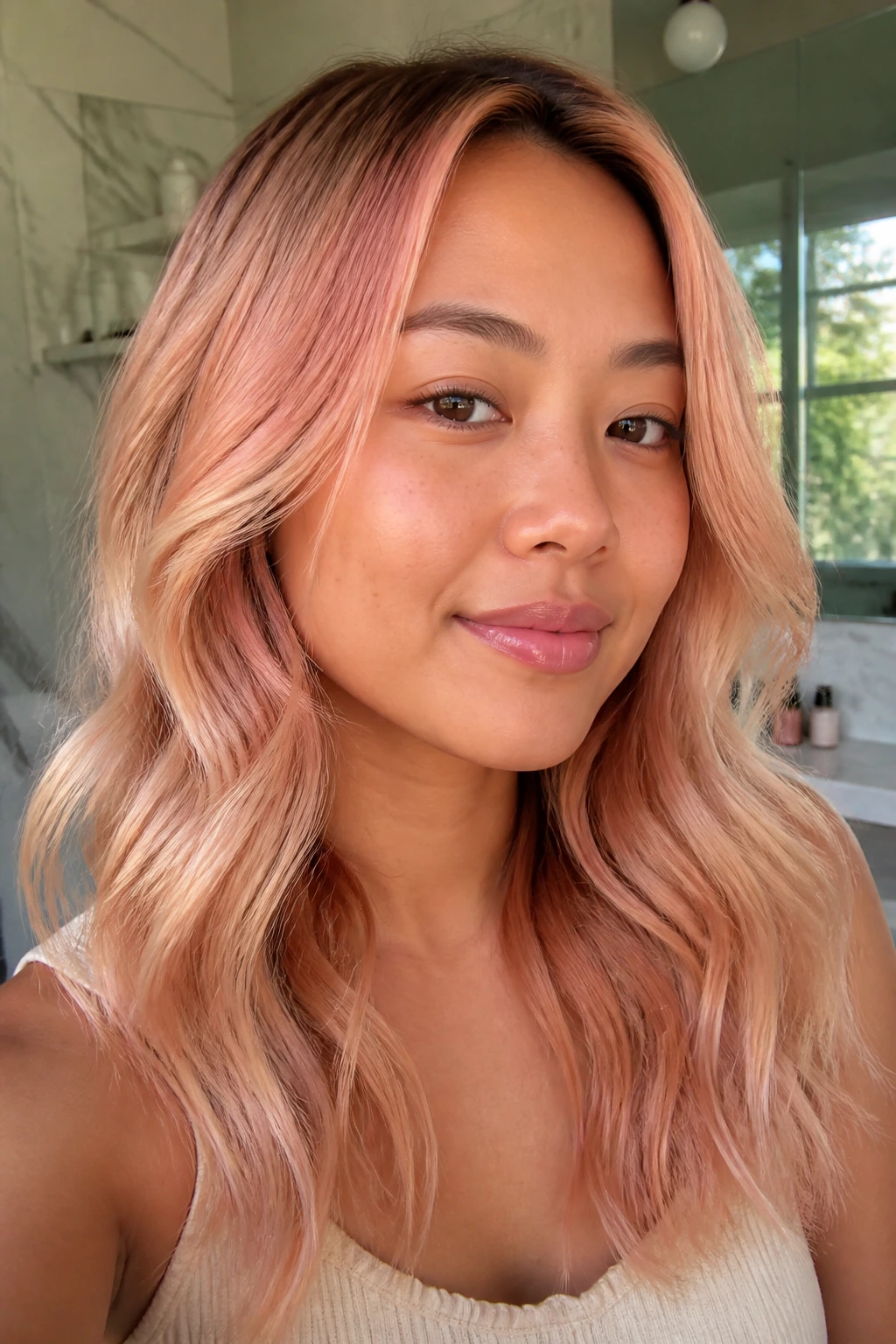
Peach-rose gloss is for hair that’s already been lifted and just needs a warmer, fresher tone. The gloss coats the lighter strands with peach, rose-gold, and a touch of amber, which keeps the finish warm without sliding into bubblegum territory. On warm skin, that softness matters.
This is a smarter move than chasing a bright pastel if you want something wearable. The peach gives brightness; the rose softens it. When the two sit together, the result is delicate, not sugary. And because it’s a gloss, the tone will fade gradually instead of leaving a hard line.
I’d use this on blonde clients whose color has gone too beige or too cool after several toners. The warmth returns without needing another heavy lift. Keep the processing time short and watch the end strands closely; they can overgrab the pink side of the formula.
15. Amber Ombré From Dark to Light
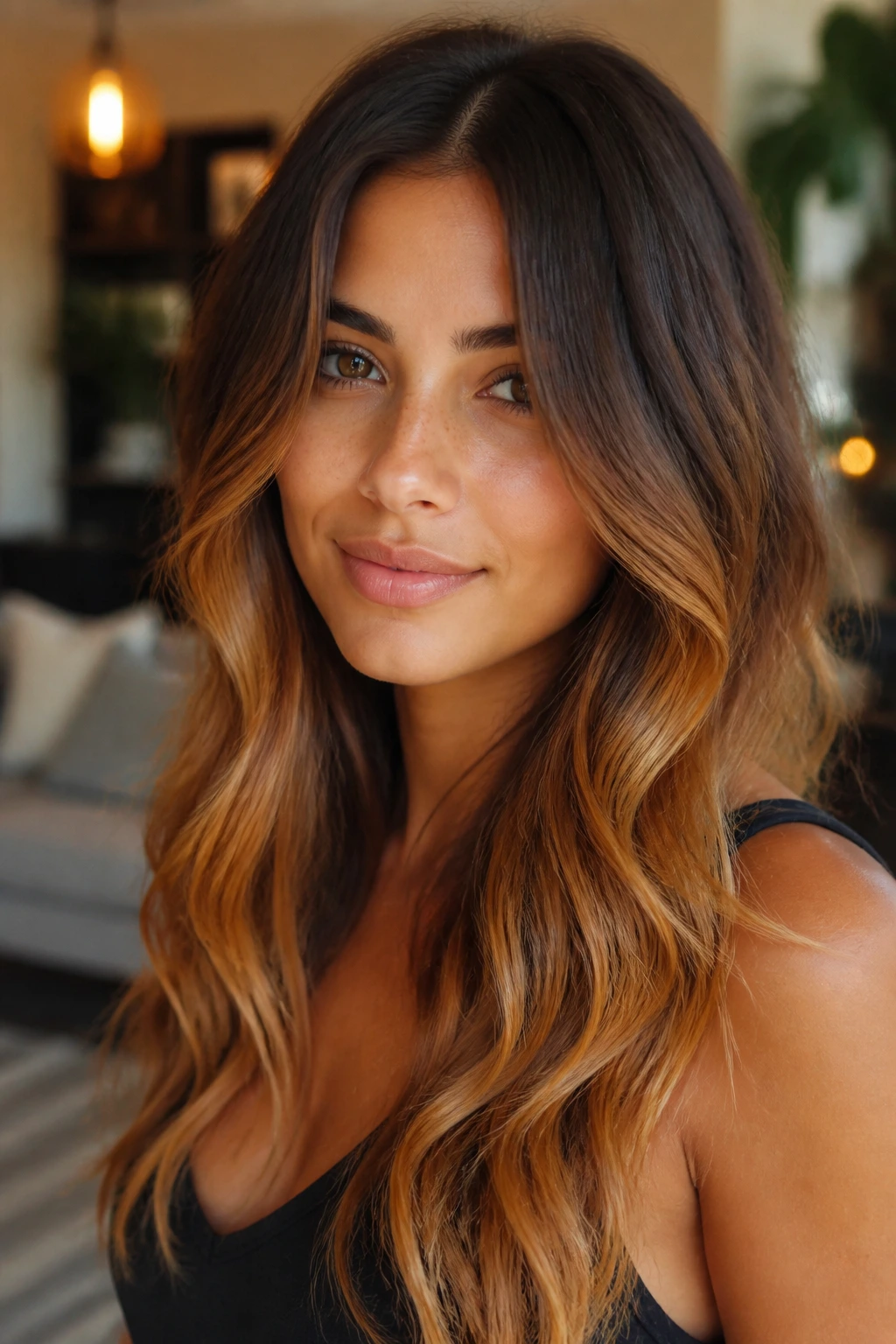
Amber ombré gives you a deep root area and a warmer, brighter finish at the ends, with the color moving gradually like liquid. The amber tone is what keeps the lightened ends from looking pale and hollow. On warm skin, that progression can make the face look softer and the hair look thicker.
The reason ombré still has a place is simple: it buys you time. A darker root is easier to live with, and the amber ends carry the visual interest. If your hair grows fast or you hate root touch-ups, this is a strong choice.
For best results, the transition should not start too high. Keep the shift low enough that the depth near the crown stays intact. If the blend begins at the cheekbones, the whole thing can look overdone. Lower is usually better here.
16. Maple Dimension on Shoulder-Length Cuts
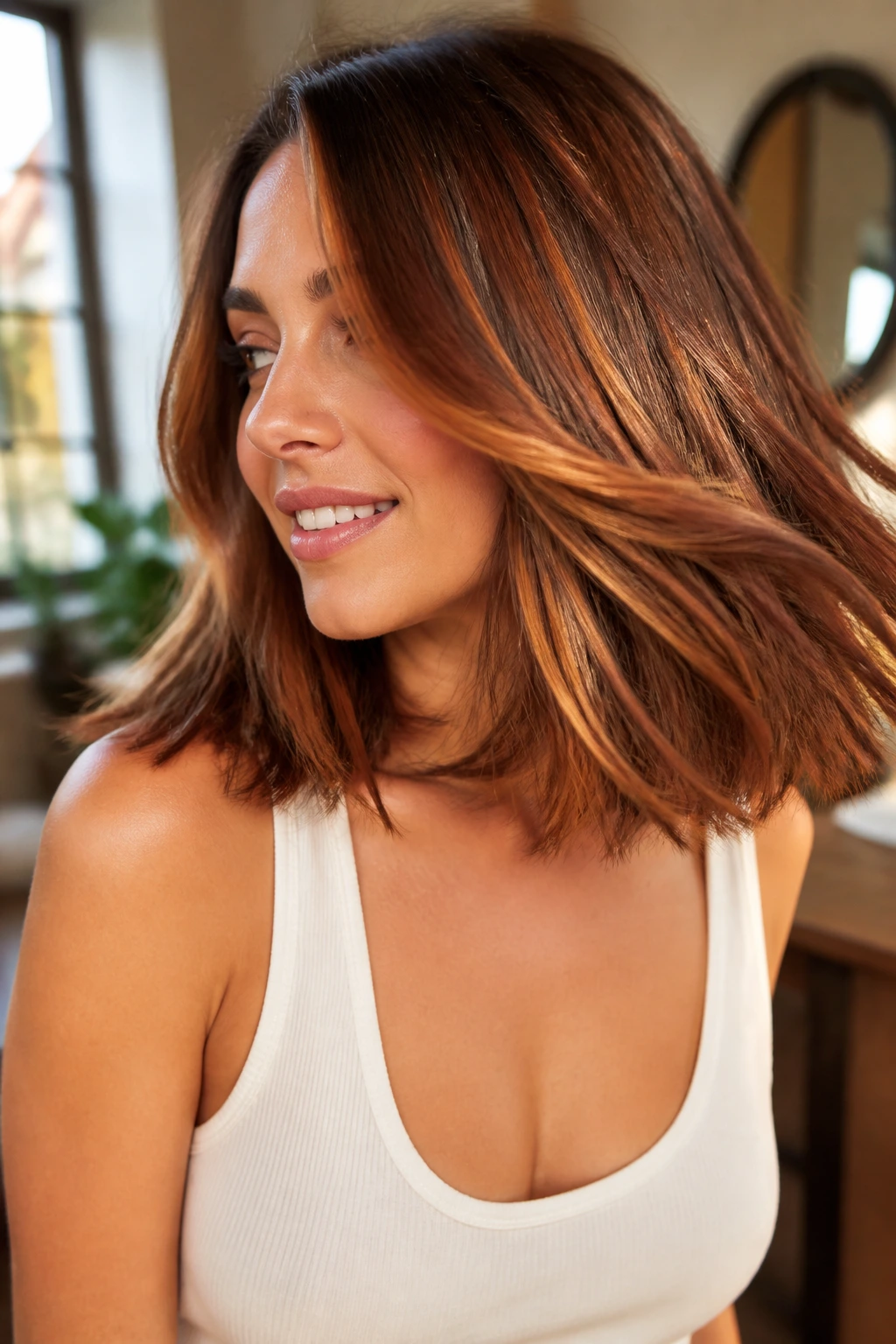
Maple dimension has a little red, a little gold, and just enough brown to keep it grounded. On a shoulder-length cut, those pieces move every time you turn your head, which is why this shade looks much better in motion than it does laid flat on a salon chair.
A strong opinion: this kind of color is made for cuts with shape. A blunt shoulder-length lob or a softly layered midi gives the maple ribbons somewhere to live. Without movement, you lose half the effect.
The best placement is usually a mix of thin highlights and a few slightly wider ribbons near the front. That keeps the color from reading like a single block of warmth. If you want depth, leave some interior pieces darker. The contrast is what makes the maple look rich instead of flat.
17. Butterscotch Highlights With a Creamy Finish
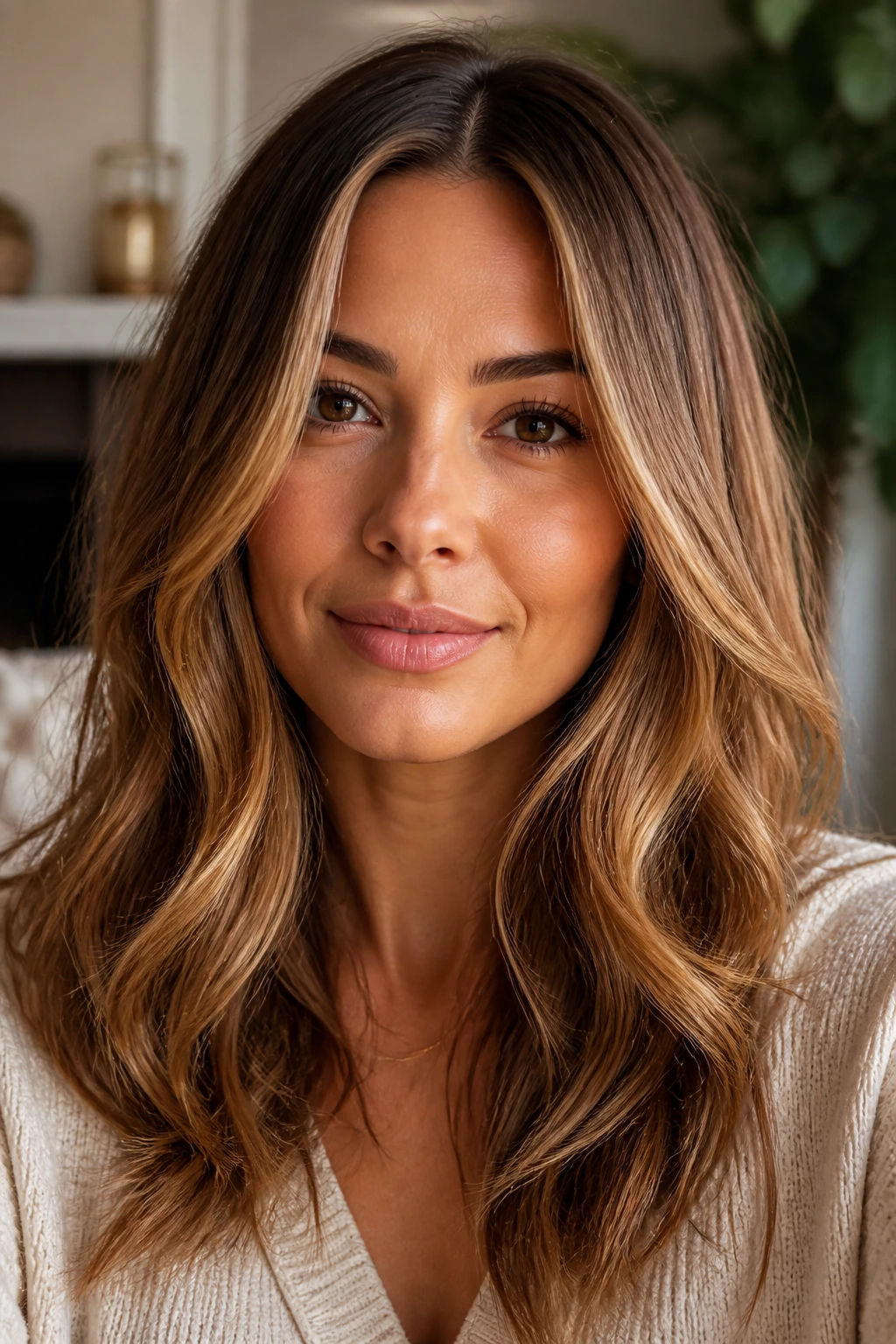
Butterscotch is warmer than beige and softer than gold, which makes it a smart middle ground for warm skin that still wants brightness. The creamy finish matters. Too much yellow and the whole thing turns loud; too little and it disappears in the hair.
What to Watch For
Butterscotch highlights can go flat if the toner is too cool or too opaque. You want visible warmth, not a smoked-down beige that swallows the shine. The highlight should still look like light, just light with a richer temperature.
I’d recommend this for someone moving from brunette into lighter territory but not wanting a dramatic blonde. The color lightens the edges and front pieces while keeping the base grounded. It also looks especially good on wavy hair, where each bend catches a slightly different shade.
18. Chestnut Single-Process Color for Full Coverage
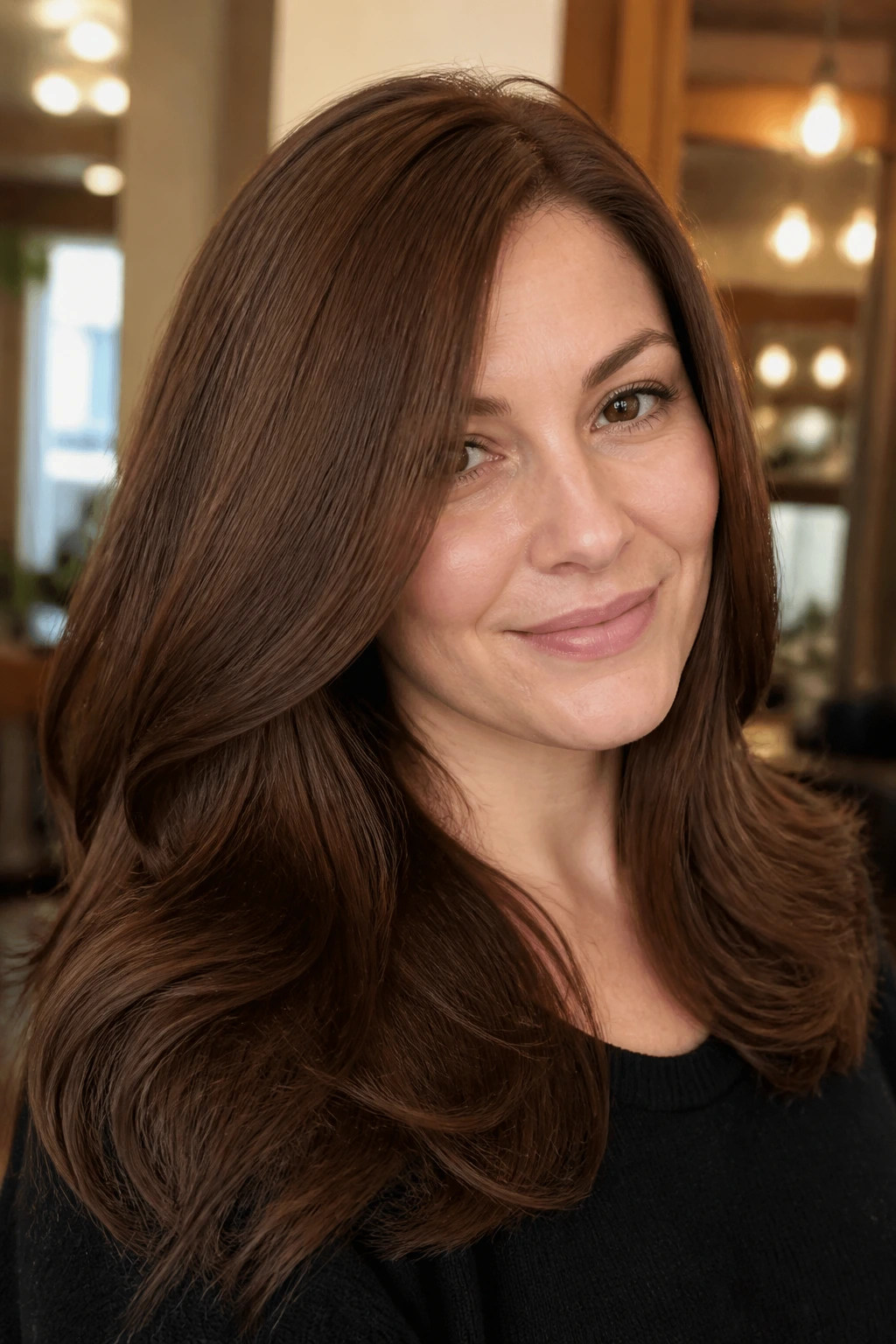
Not every warm look needs highlights. A single-process chestnut color can be the cleanest answer for warm skin when the goal is shine, depth, and gray coverage with no extra fuss. Chestnut sits in brunette territory, but the red-gold undertones keep it from looking muddy.
This is the technique I’d choose for someone who wants one shade from root to tip and likes the polish of a uniform color. It’s easier to maintain than any highlighted look, and regrowth is less obvious when the base is close to your natural depth. The downside is obvious too: you lose the ribboned movement that balayage gives you.
A chestnut single-process looks best when the formula is rich but not black-brown. Too dark and the warmth disappears. Ask for a chestnut with golden or auburn undertones, especially if your skin reads olive or peach.
19. Spiced Mocha Balayage for Warm Skin Tones
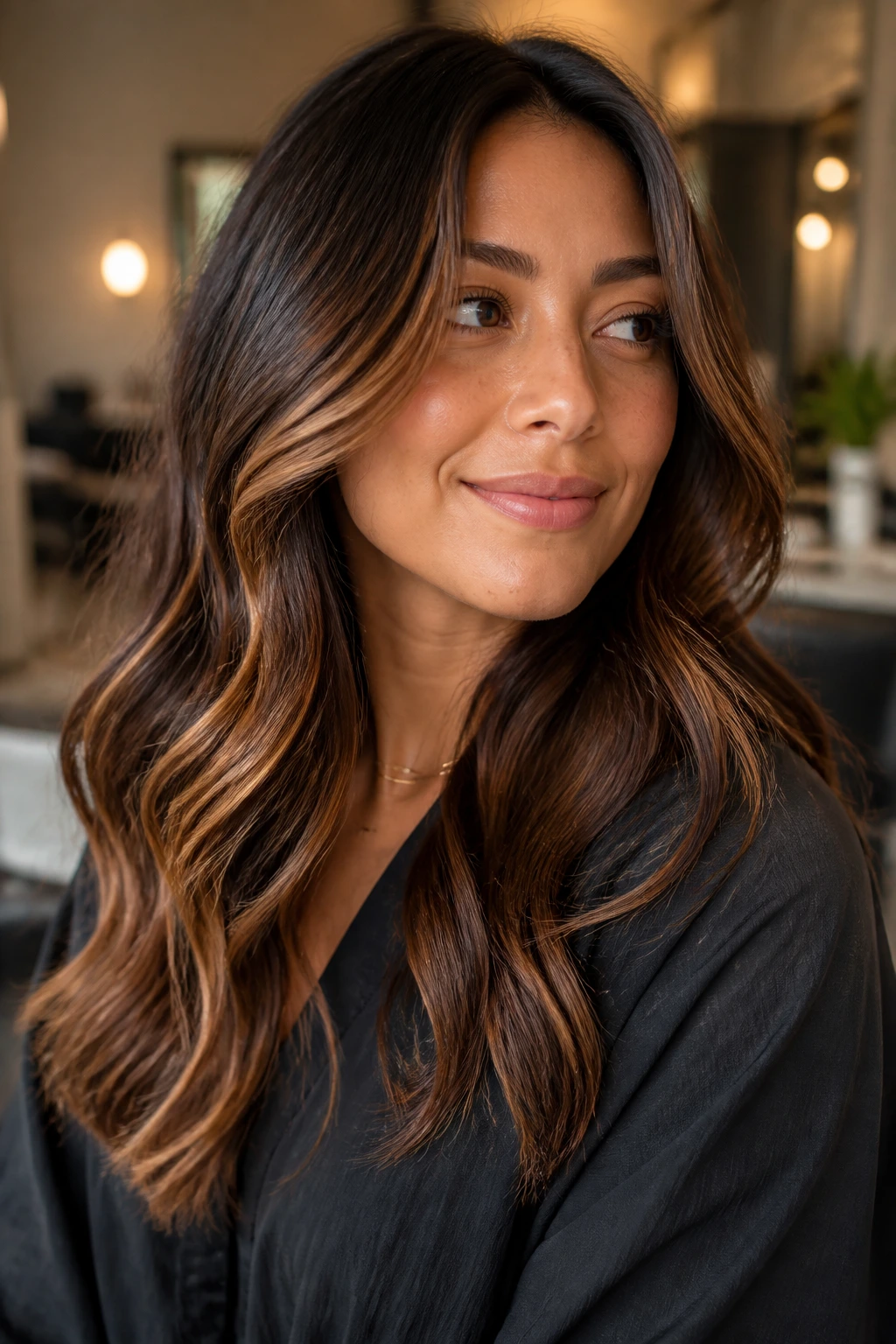
Spiced mocha is one of my favorite ways to warm up brunette hair without pushing it into obvious red. The mocha base keeps the color grounded, while the spice—think cinnamon, clove, and a hint of copper—shows up in the ribbons. It looks polished and a little moody.
The technique works because the lighter pieces are never too far from the base. You’re not trying to create blonde; you’re creating dimension. That makes it a good fit for thick hair, because the contrast helps break up bulk and gives the cut shape.
If your hair tends to reflect red on its own, keep the spice subtle and let the mocha do more of the talking. If it’s dull or flat, ask for a bit more warmth around the face. That’s usually where the color earns its keep.
20. Penny Copper Highlights for Warm Skin Tones
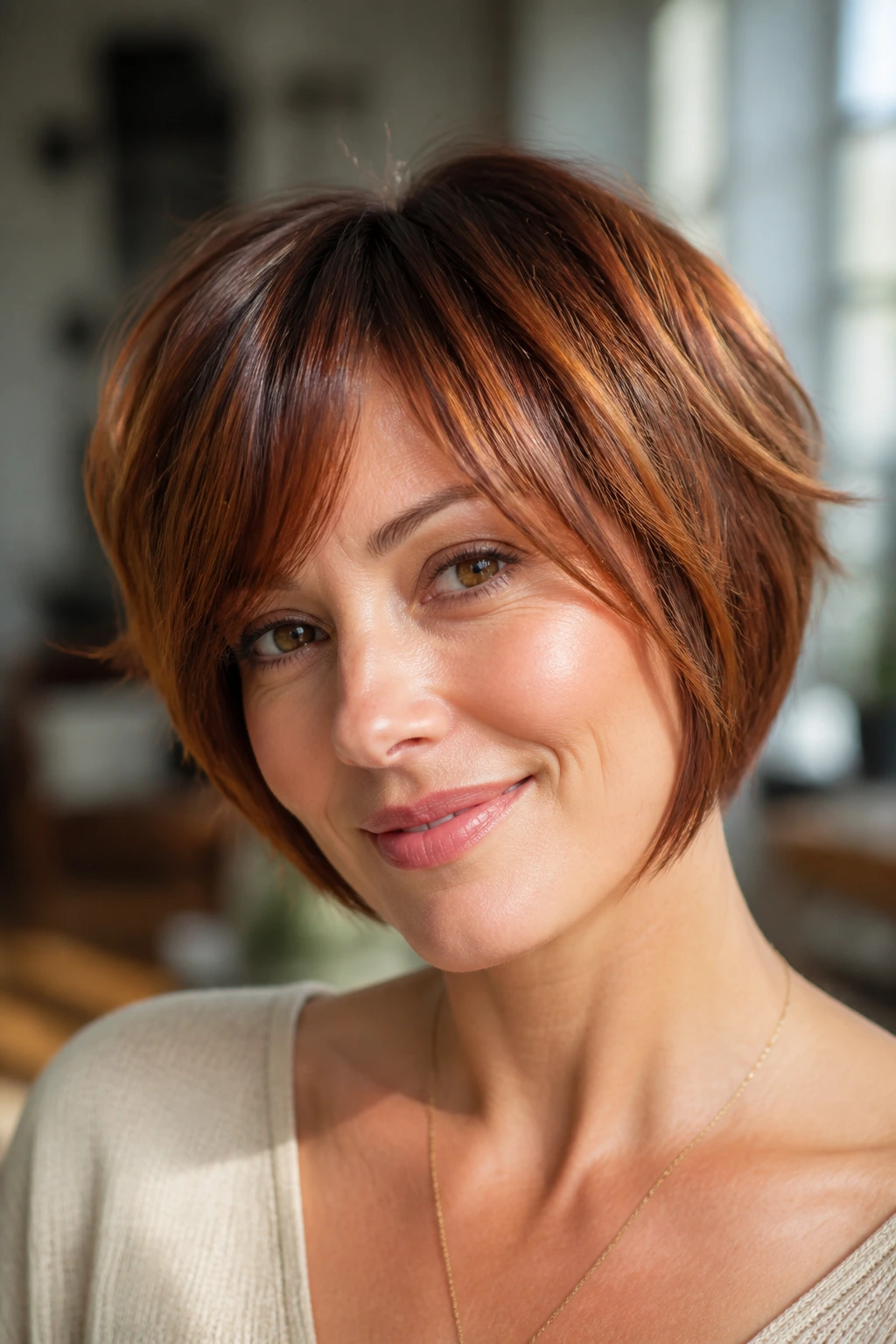
Penny copper is brighter than auburn and shinier than straight red, which makes it a strong pick for short cuts and textured bobs. The metallic note matters here. It gives the color a reflective edge that catches light at the ends and around the crown.
On warm skin, penny copper can look electric in a good way, especially when the haircut has movement. A pixie, shag, or cropped bob lets the color flash in and out instead of sitting as one solid panel. That keeps it lively.
The risk is saturation. Copper on short hair can go from spicy to loud fast, so placement and timing matter more than you think. If you’re unsure, ask for a few copper pieces first and see how they sit before going all in.
21. Golden Mocha Gloss to Refresh Faded Brunette
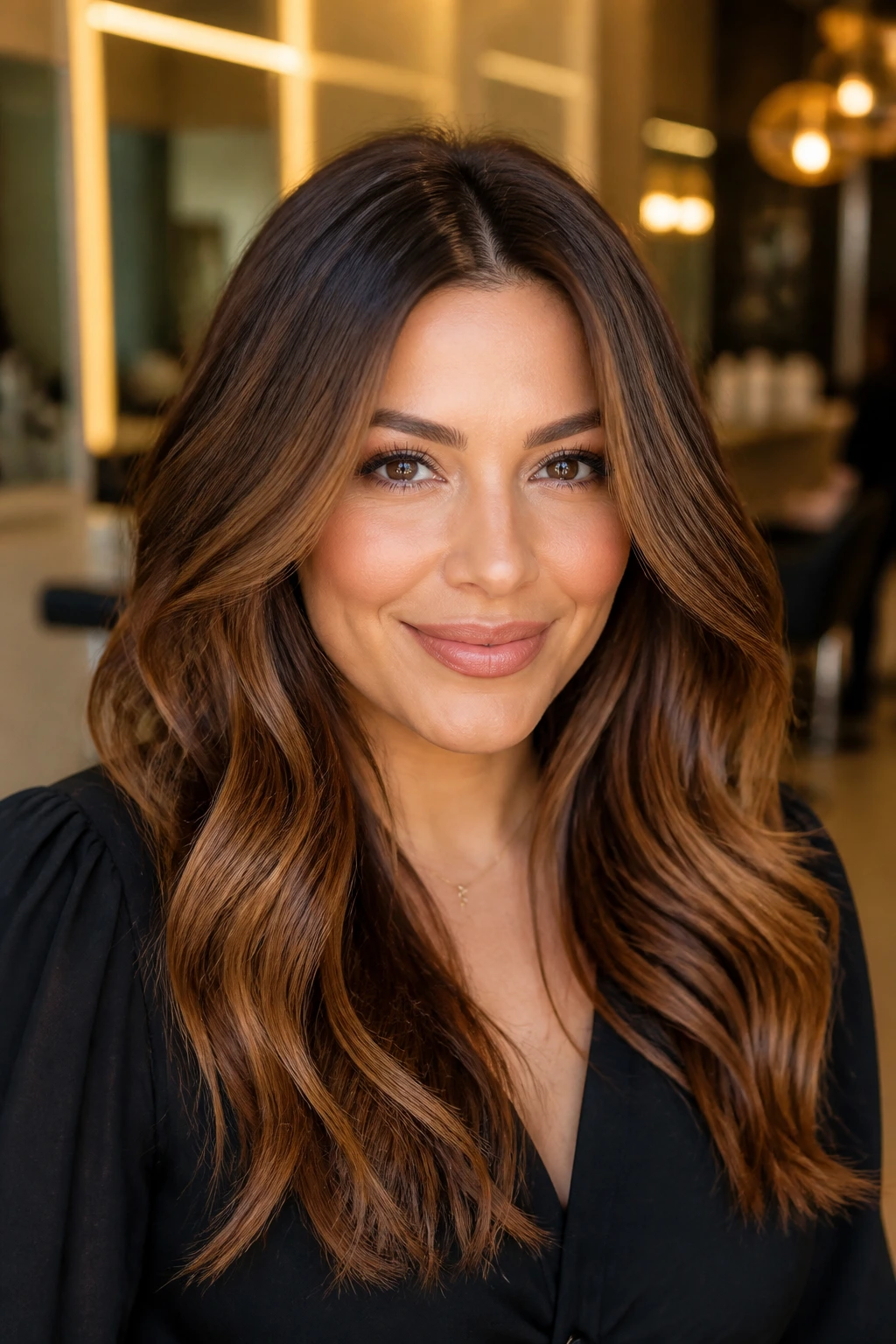
A golden mocha gloss is the maintenance move for brunette hair that’s gone flat after sun, water, or too much shampoo. It doesn’t need to be dramatic. It just needs enough gold to revive the surface and enough brown to keep the tone grounded.
Why choose this over a full color appointment? Because it gives you shine and warmth without rebuilding the entire head. A demi gloss can restore tone in 20 to 30 minutes, and the fade-out is soft enough that you won’t get a hard line later.
I like this for people whose hair is already healthy but looks a little tired. The gloss makes the shade feel richer, not darker. If your mids and ends are porous, keep the formula lighter there so the gold doesn’t stain unevenly.
22. Apricot Peekaboo Panels Underneath
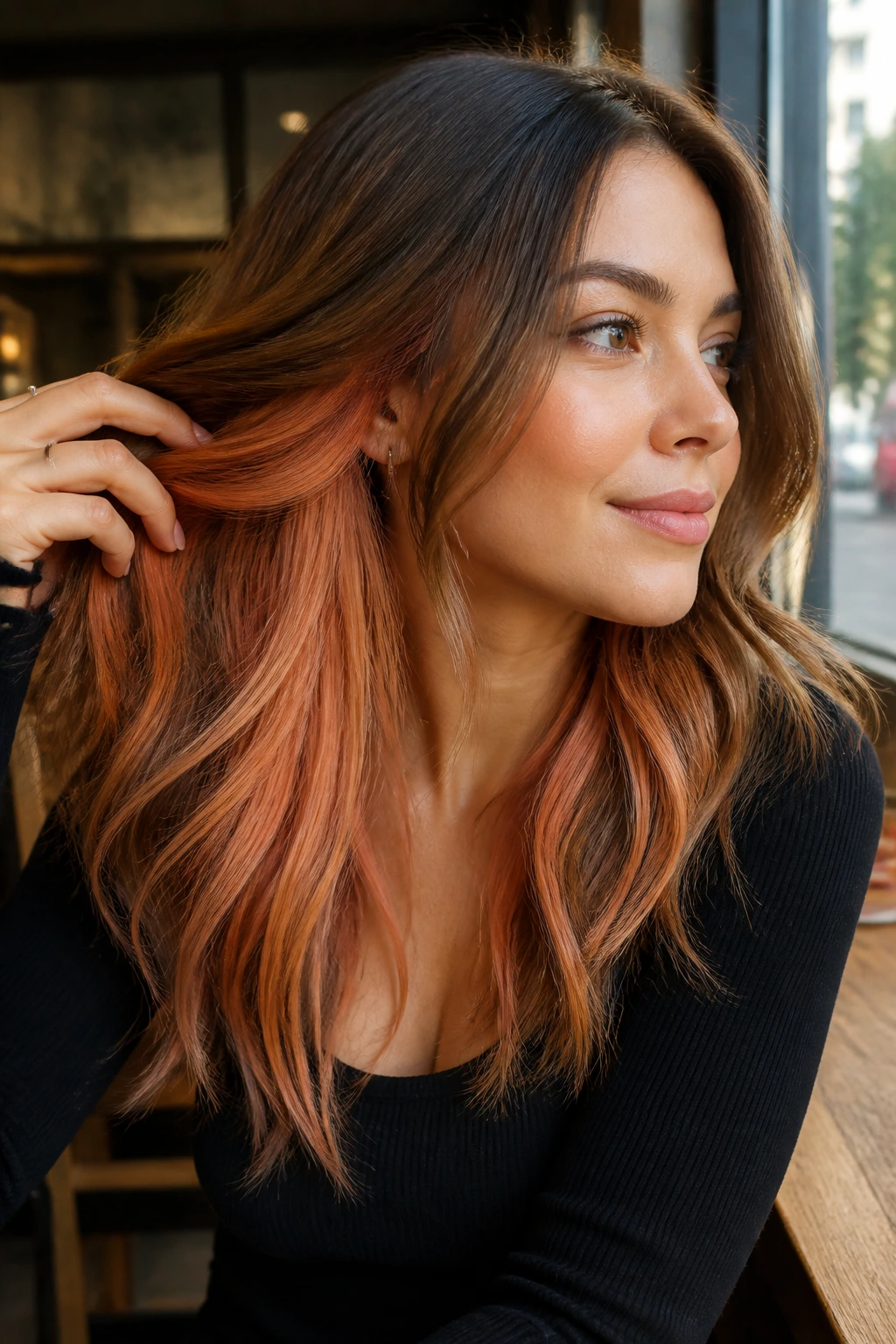
Peekaboo panels are the quiet troublemaker of hair color. The shade hides under the top layers, then flashes when the hair moves, gets tucked behind the ear, or catches a breeze. Apricot works especially well because it has warmth without the neon hit that some fashion shades bring.
This is a strong option if you want something playful but still wearable in most settings. The top layer can stay brunette, bronde, or blonde while the underneath layers carry the color. That means the look can be as subtle or as loud as you want depending on how you style it.
How to Wear It
Wear the hair half-up or with a deep side tuck when you want the panels to show. Keep the top layer a bit deeper so the apricot feels like a surprise, not a full-time commitment. On warm skin, that flash of color can make the whole look feel alive.
23. Toasted Almond Face-Framing Balayage
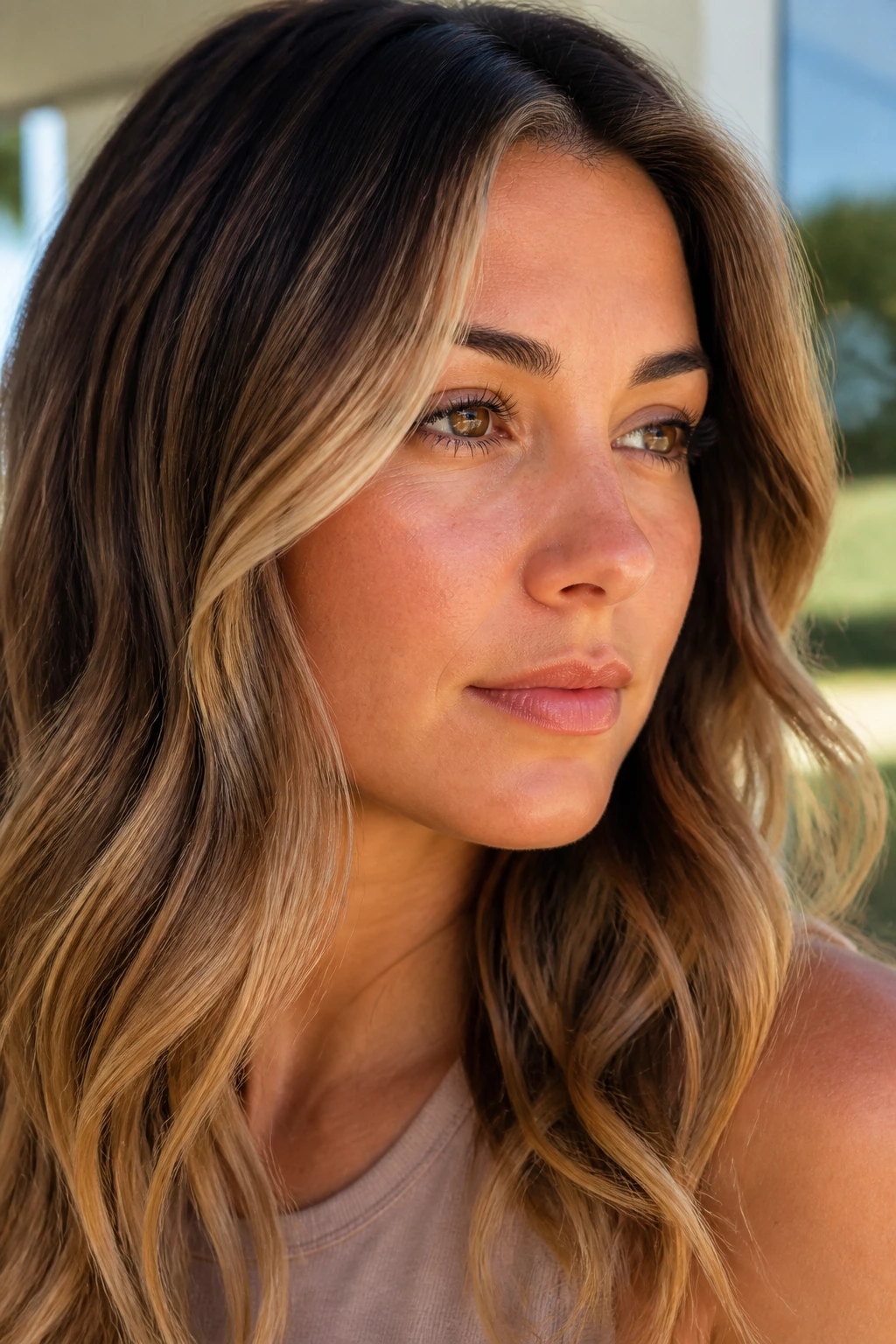
Toasted almond is what happens when beige, gold, and brown stop arguing and settle into the same strand. As a face-framing balayage, it adds light around the hairline and temples without dragging brightness through the whole head. That’s useful on warm skin because the color feels warm, but not sugary.
I like this look on layered cuts with a center or soft off-center part. The front pieces are the stars, so they need to sit where the eye naturally lands. If the haircut is too blunt or the front layers are too short, the effect gets chopped up.
A good toasted almond piece should look like the hair got lighter from living in sunlight, not from one neat foil session. That means irregular placement, soft blending, and a toner that leans beige-gold rather than ash.
24. Tiger-Eye Ribbons for Warm Skin Tones
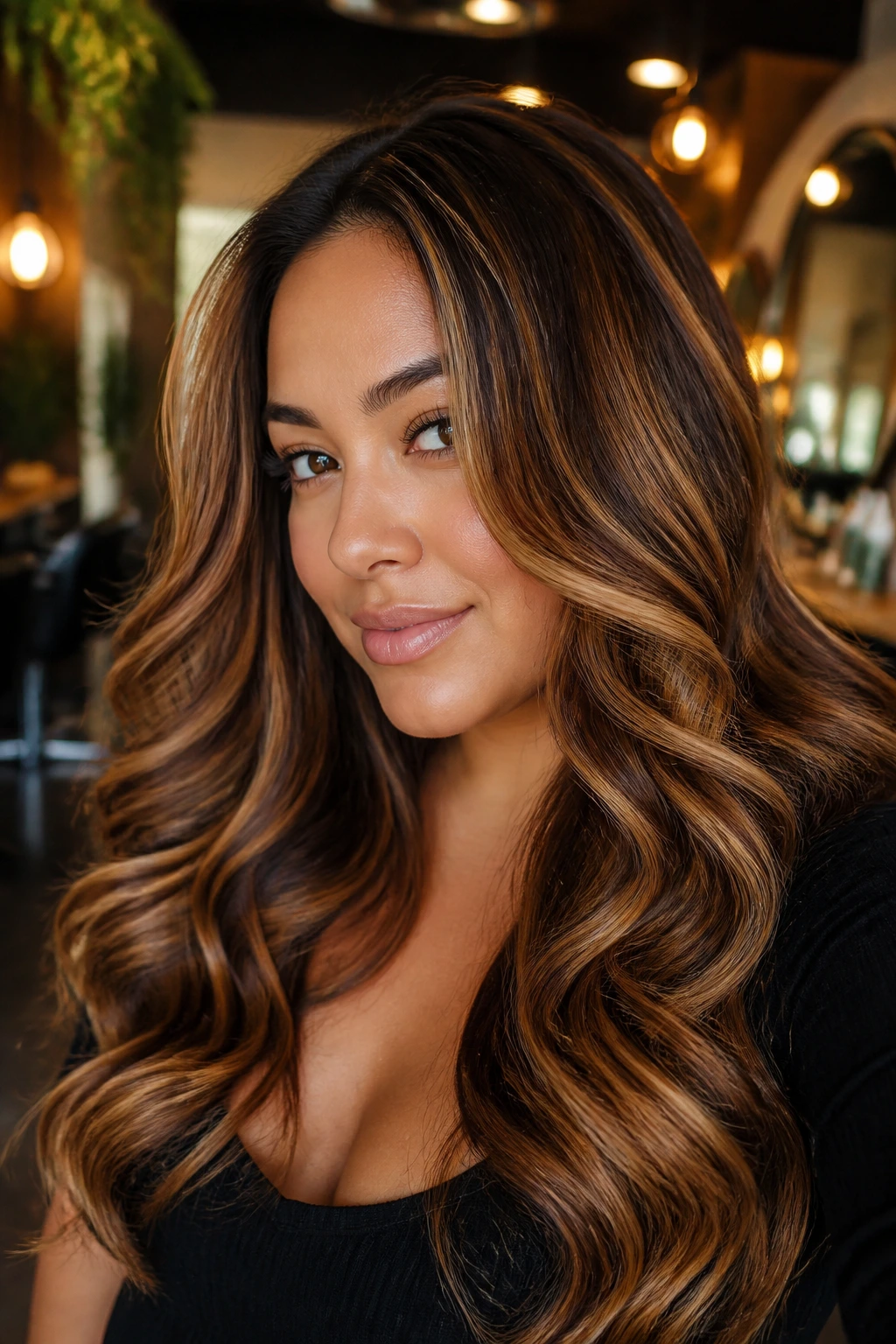
Tiger-eye color borrows the stone’s bands of gold, bronze, and brown, and the result can be gorgeous on dense hair. The ribbons are usually wider than babylights but slimmer than chunky highlights, which gives a bold but still controlled look. On warm skin, the golden bands echo the undertone in a way that feels natural.
This technique shines when the hair has enough volume to show contrast. Dense hair can swallow tiny highlights, so the wider ribbon pattern keeps the dimension visible. It also helps long layers look more carved and less heavy.
Ask for variation in placement, not just color. A few brighter ribbons near the front, deeper bronze through the back, and a caramel-gold gloss on top will read far richer than repeating one shade everywhere.
25. Honeyed Platinum With a Warm Root Tap
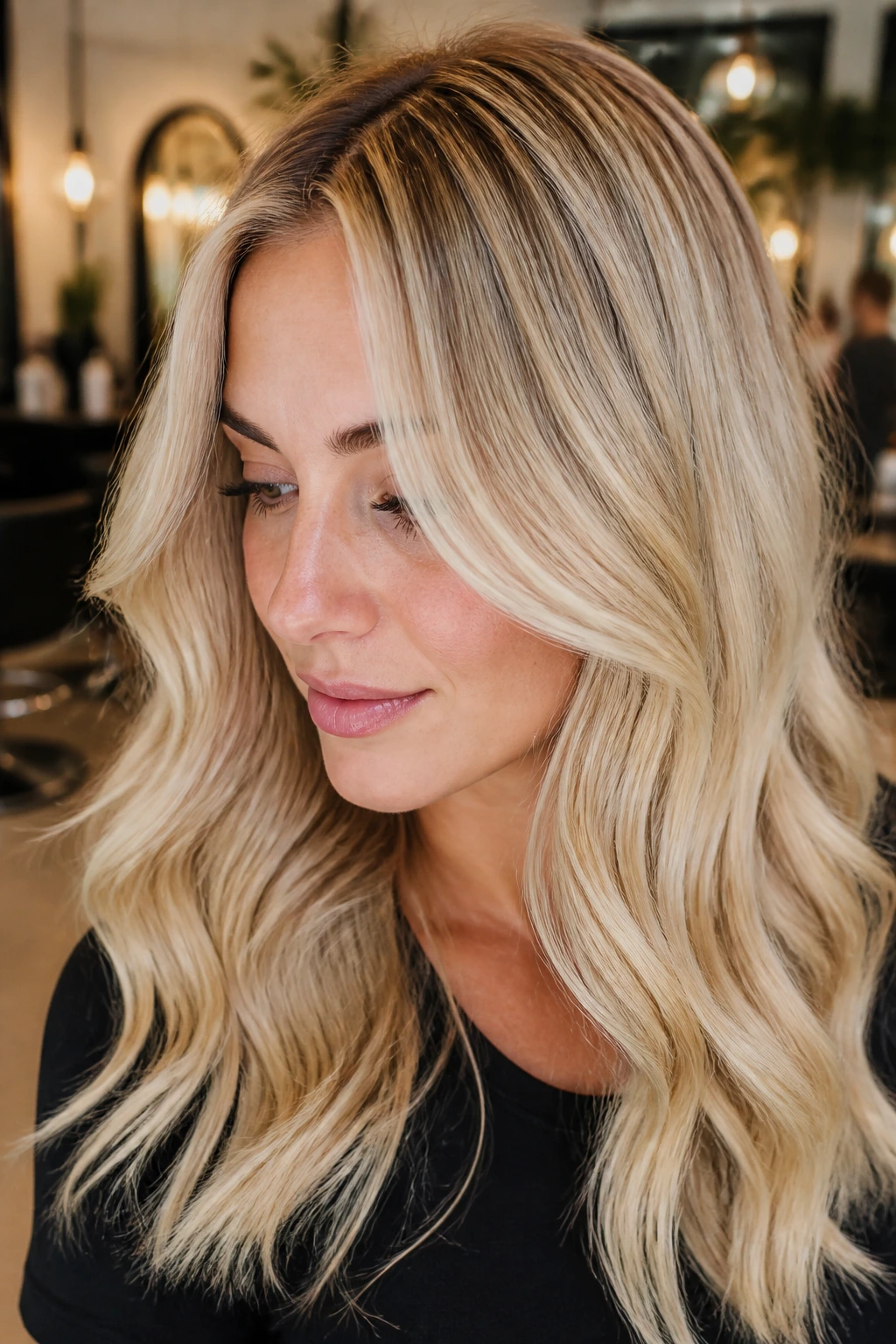
Here’s the contrarian take: if you want platinum next to warm skin, don’t chase icy white. Honeyed platinum keeps the brightness high but adds a warm veil over the lightest pieces, and the root tap softens the transition so the color doesn’t look pasted on.
That little bit of gold changes everything. Instead of making the skin look sallow or pale, the hair reflects warmth back at the face. It’s still blonde. Just less glacial, less sharp, and easier to wear with peachy or golden undertones.
This is the highest-maintenance look in the group, so I wouldn’t recommend it to someone who hates toning appointments. But if you want light hair and still want your skin to look alive, this version is the one to ask about. Go too cool here and the whole effect drops flat.
Why Warm Dimension Works So Well
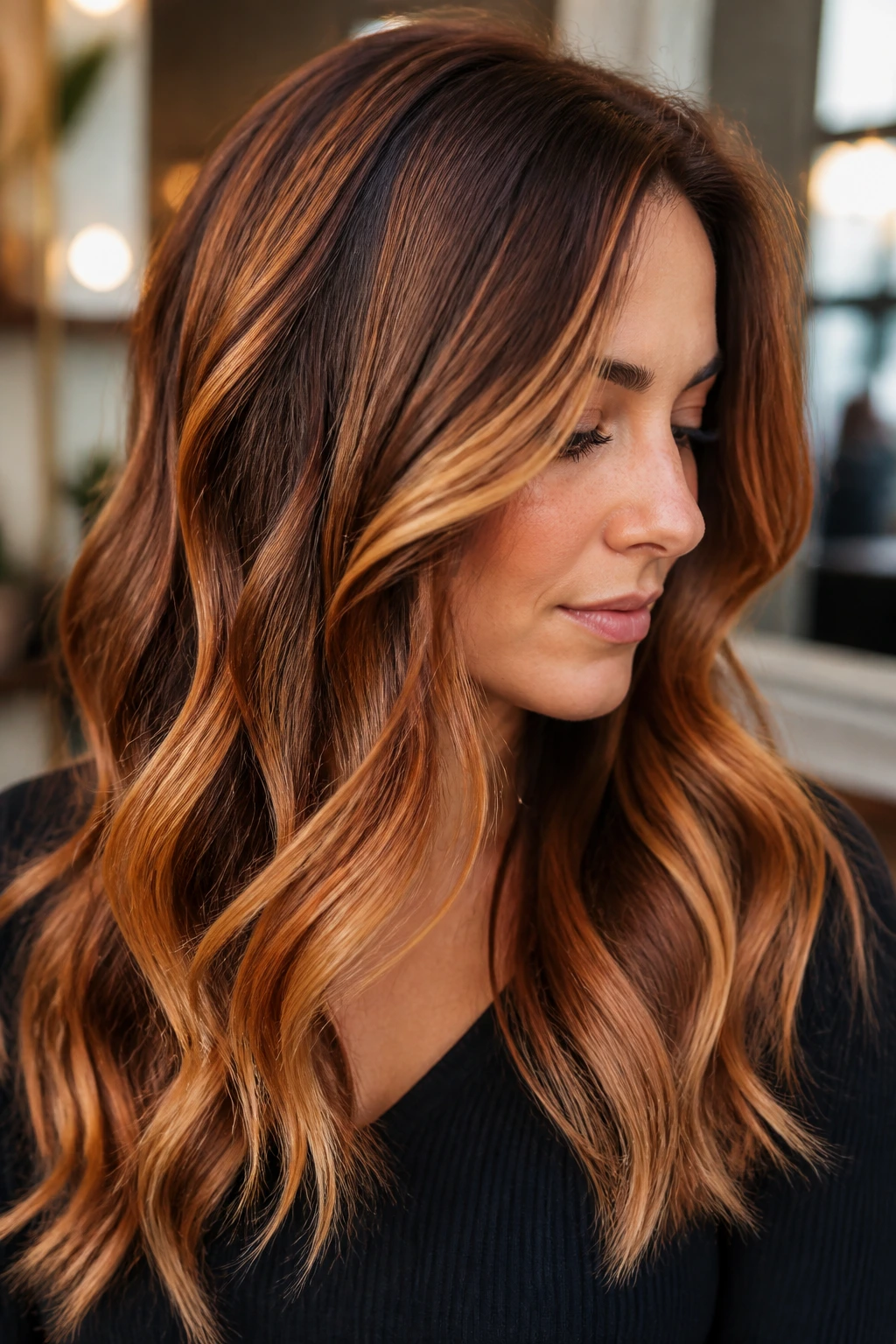
Warm hair color looks best when it behaves like light, not paint. That’s why balayage, foilyage, babylights, money pieces, melts, and glosses show up so often in the list above. They let the warmth move through the hair in different levels instead of sitting as one flat block, and that movement matters more than people think.
The face is usually the deciding factor. A honey ribbon near the cheekbone can soften a strong jaw. A copper gloss around the hairline can wake up a dull complexion. A root shadow can stop blonde from looking too heavy at the crown. All of those little choices add up.
Flat color can still work, especially with chestnut, mahogany, or mocha shades. But once you add dimension, the warmth starts to look expensive rather than obvious. That’s the lane I’d stay in if the goal is color that keeps flattering you after the first salon blowout is gone.
Essential Equipment for These Techniques
- Tail comb: Ideal for clean partings, thin babylights, and precise money pieces.
- Tint brush: Use a narrower brush for face-framing work and a wider one for balayage panels.
- Foils: Necessary for foilyage, stronger lift, and any section that needs a controlled process.
- Balayage board or paddle: Helps hand-painted lightener stay smooth and even on longer pieces.
- Sectioning clips: Four to six sturdy clips keep your sections clean and stop overlap.
- Mixing bowl and color scale: A scale keeps the lightener and developer ratios consistent.
- Gloves and cape: Dye stains fast, and warm pigments can leave a visible line on skin.
- Timer: Warm tones can turn copper or red too fast if you guess the timing.
- Bond-building treatment: Optional, but worth it if you’re lightening already fragile ends.
- Color-safe shampoo and mask: Keep them on hand before the appointment, not after the fade starts.
How to Choose the Right Gold, Copper, or Caramel Formula
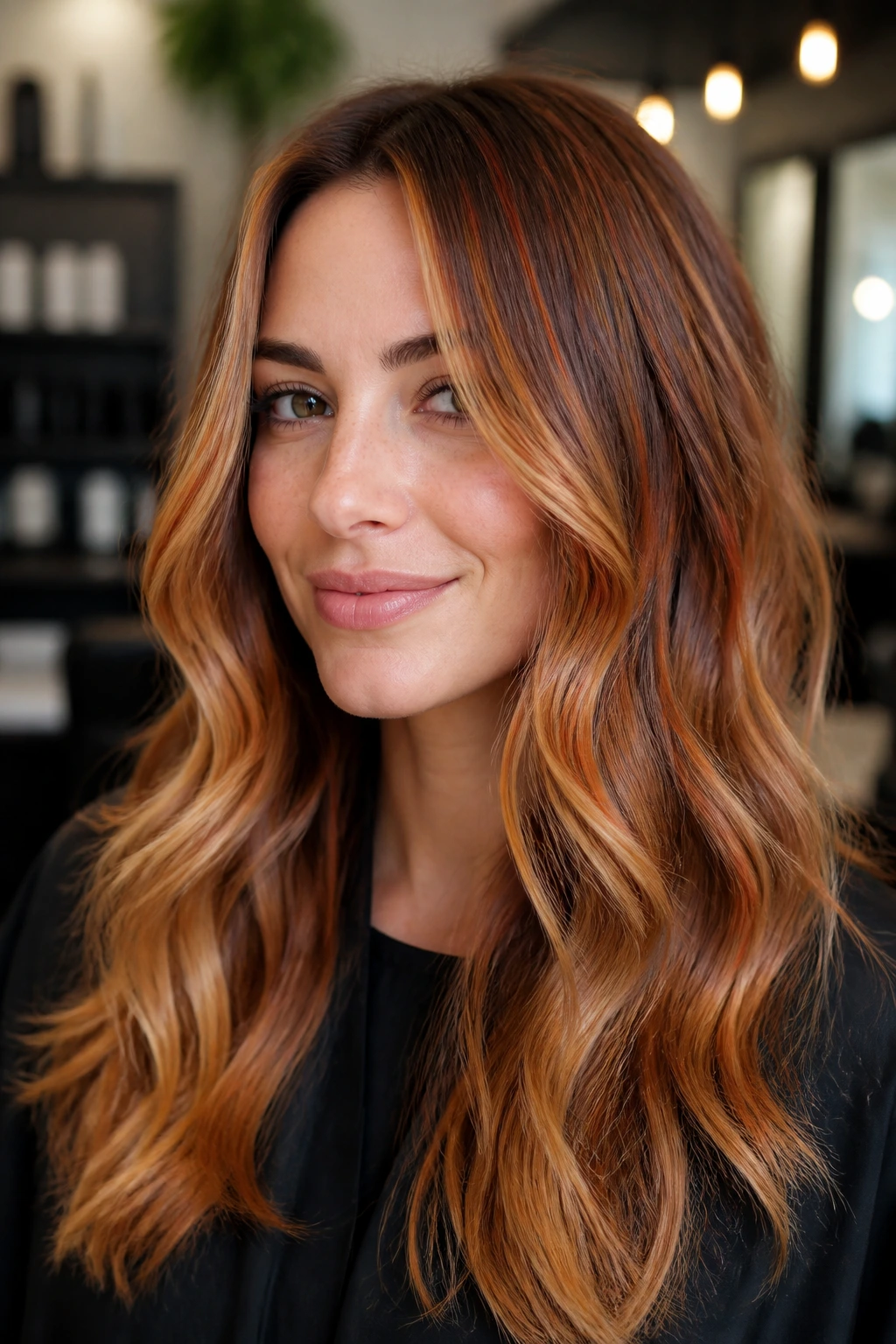
Shopping for warm color is less about the box art and more about the words on the label. Look for shades that say honey, gold, amber, copper, caramel, toffee, apricot, chestnut, mocha, or bronze. If a formula leans beige-gold, soft copper, or golden brown, you’re usually in safer territory than a flat ash brown or silvery beige.
Developer matters too. A 10-volume developer mostly deposits color and is useful for glosses and toners. A 20-volume developer lifts and deposits, which is the standard for many highlight services. 30-volume has more lift and more risk; I’d only use it when the hair can handle it and the plan actually needs that extra push. That one choice can save you from fried ends.
Porosity is the other part people skip. If your ends feel rough, the lightest sections will grab warm pigment fast, sometimes too fast. In that case, a filler, porosity equalizer, or slightly diluted formula can keep the color from going muddy or too dark at the ends.
How to Style Warm Hair Color So the Tone Reads Clearly
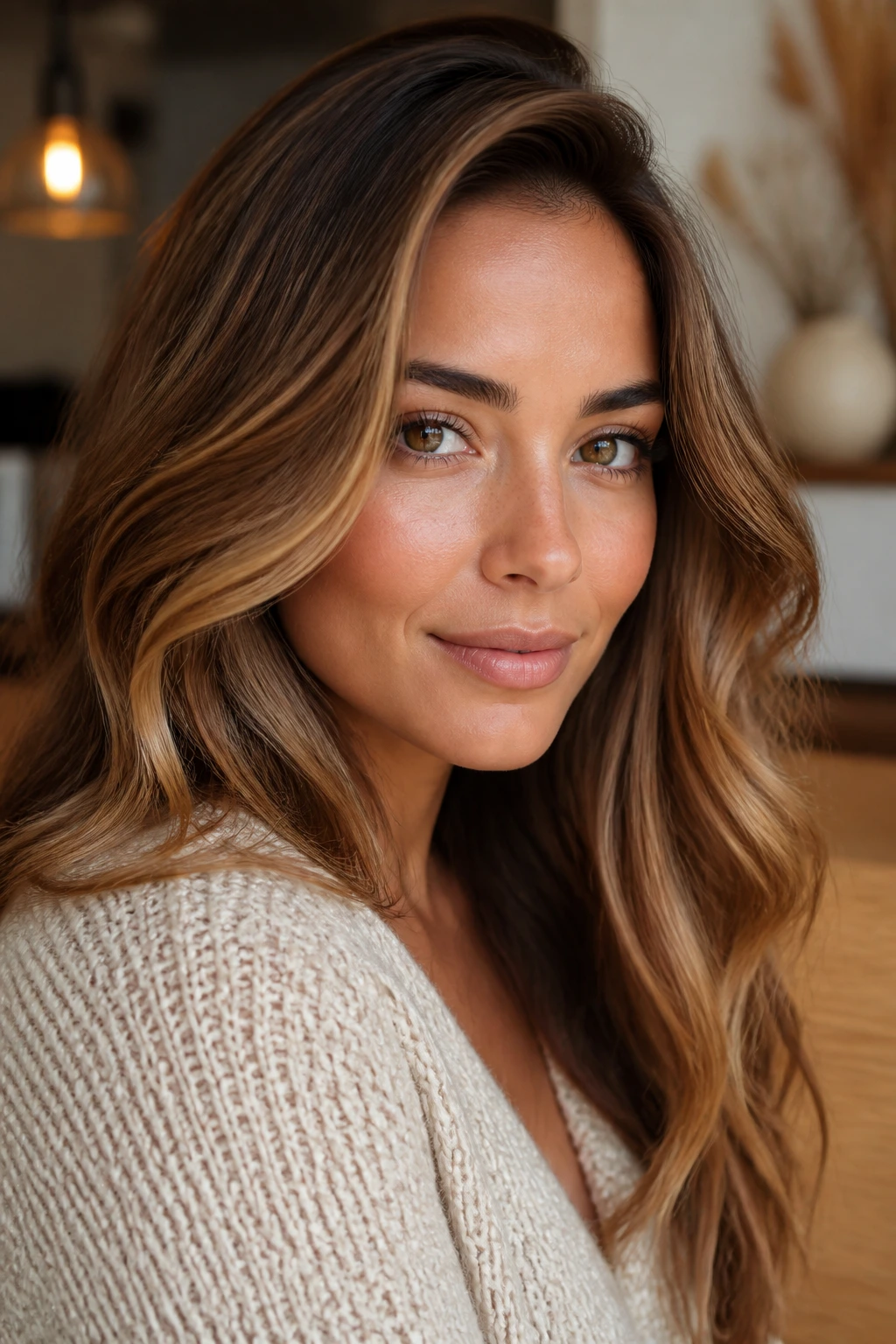
Placement: A slight off-center part usually shows warm ribbons better than a dead-center line, especially if you have face-framing pieces. If the color is around the hairline, let it fall forward a bit instead of tucking it all behind the ears.
Styling: Loose bends, a round-brush blowout, or a soft diffuser finish are all better than a bone-straight look. Movement is what reveals caramel, copper, and gold. Pin-straight hair can make even a rich color feel flatter than it really is.
Makeup Match: Peach blush, terracotta lip color, warm brown liner, and a little gold on the lids keep the face in the same temperature range as the hair. You do not need to match exactly. Just stay in the same family.
Wardrobe: Cream, camel, olive, rust, chocolate, and soft navy help warm color look richer. Stark cool gray can work, but it often makes golden hair look slightly dull unless the hair itself has enough depth.
Small Adjustments That Keep Warmth From Turning Loud
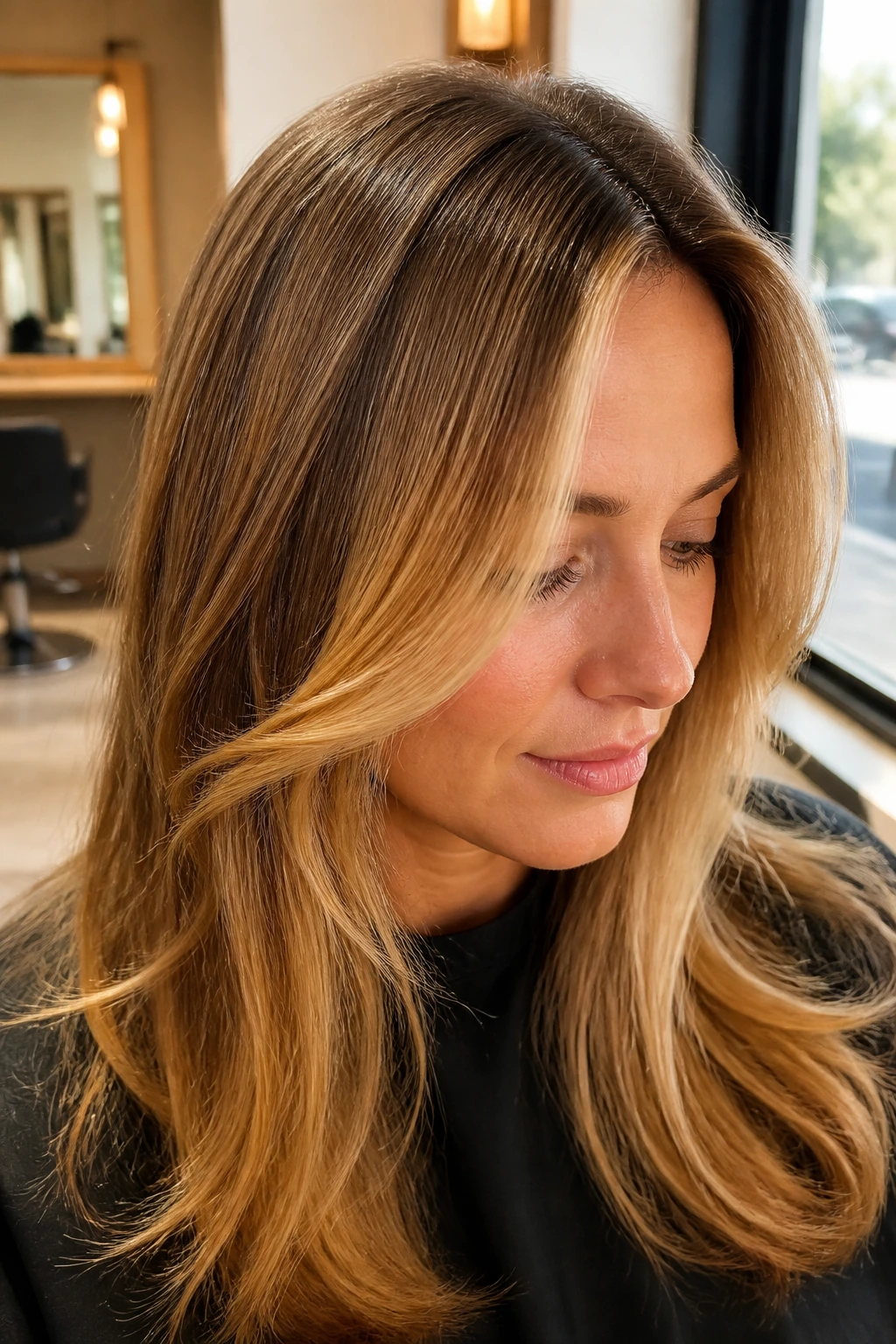
Warmth Boost: If the hair looks a touch flat, ask for a clear gloss with gold or beige-gold undertones. That often fixes the problem faster than adding more lightness.
Customization: For a softer version, keep the root one level deeper and place the brightest pieces only around the face and crown. For a bolder version, widen the money piece and let the copper or apricot show more clearly through the top layer.
Shine Finish: A lightweight oil on the ends makes gold and copper reflect better, but use it sparingly. Too much oil can make the color look heavy and sticky in daylight.
Make-It-Yours: If you have gray hair, chestnut, mocha, and golden brunette formulas blend better than super-pale blonde techniques. If your skin is very peachy, choose honey and caramel over orange copper. If your complexion runs olive, bronze and amber often sit more naturally than bright yellow gold.
Common Mistakes That Flatten Warm Skin Tones
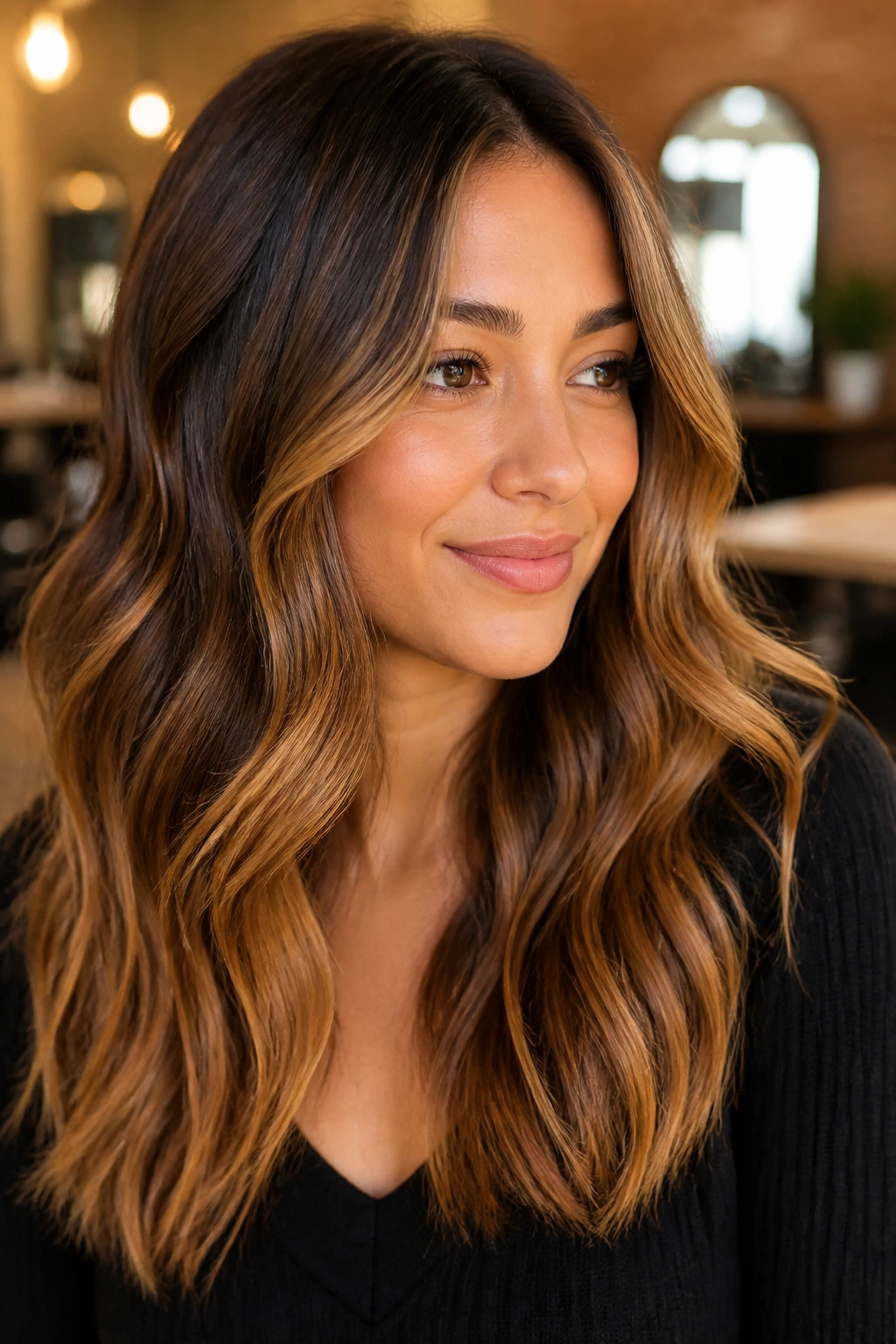
The first mistake is going too ash-heavy. Ash toner can wipe out the warmth that makes the complexion look alive, and the result is often a flat, slightly gray cast around the face. If you want softness, ask for beige-gold or honey-gold instead.
Another one: lifting too light around the face. Platinum against warm skin can work, but it needs careful root depth and the right tone. If the pieces are pale and icy with no warmth left in them, the face can look drained. That’s why honeyed platinum is safer than stark platinum for most people.
Porosity gets ignored all the time. Ends that are dry or overlightened grab pigment like a sponge, which can make the bottom half of the hair look darker or redder than the mids. The fix is easy enough—different formulas, shorter processing, and a quick check halfway through.
Over-foiling is another trap. Too many foils or too many light pieces remove the depth that makes warm color look rich. Some darkness needs to stay in the hair. Without it, honey turns washed out and caramel loses shape.
Variations and Adaptations to Try
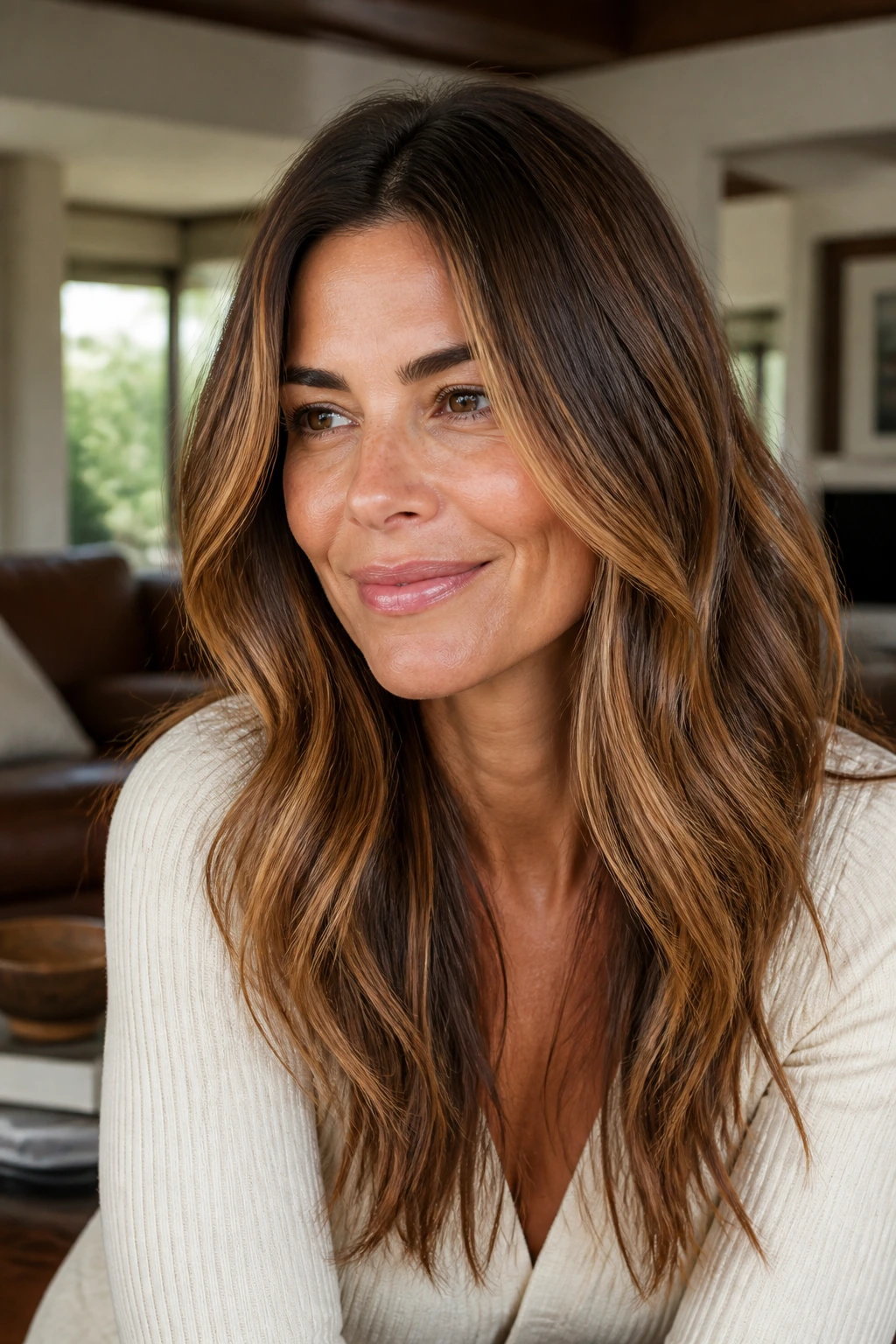
Soft Grow-Out Version: Keep the root shadow deeper and use balayage or foilyage only on the outer layers. This works well if you want fewer salon visits and a gentler line of regrowth. It also keeps warm tones from looking too busy on thick hair.
Copper-Forward Version: Add more copper, auburn, or penny warmth to any of the techniques above. This is the bolder route, and it suits people who want the color to read from across the room. Just keep the formula controlled near the ends so it doesn’t go too red-orange.
Gray-Blending Version: Use chestnut, mocha, caramel, and golden lowlights to soften gray without fully covering every silver strand. The result is more forgiving than a solid dark dye job. It also grows out with less fuss.
Curly-Hair Version: Place warm pieces where curls open up—the top layer, the outer curve, and around the face. Curls hide and reveal color differently than straight hair, so broad placement can disappear in motion. Fine ribbons work better than blocky chunks.
Low-Commitment Gloss Version: If you don’t want bleach, stay with demi-permanent glosses and root-smudge formulas. They deposit warmth, deepen tone, and fade quietly. Good choice if you’re testing a new shade family.
High-Contrast Version: Keep the base deeper and make the face frame brighter with apricot, honey, or butterscotch. This is the one for people who like visible dimension and don’t mind a little upkeep.
How to Maintain Warm Hair Color Between Salon Visits
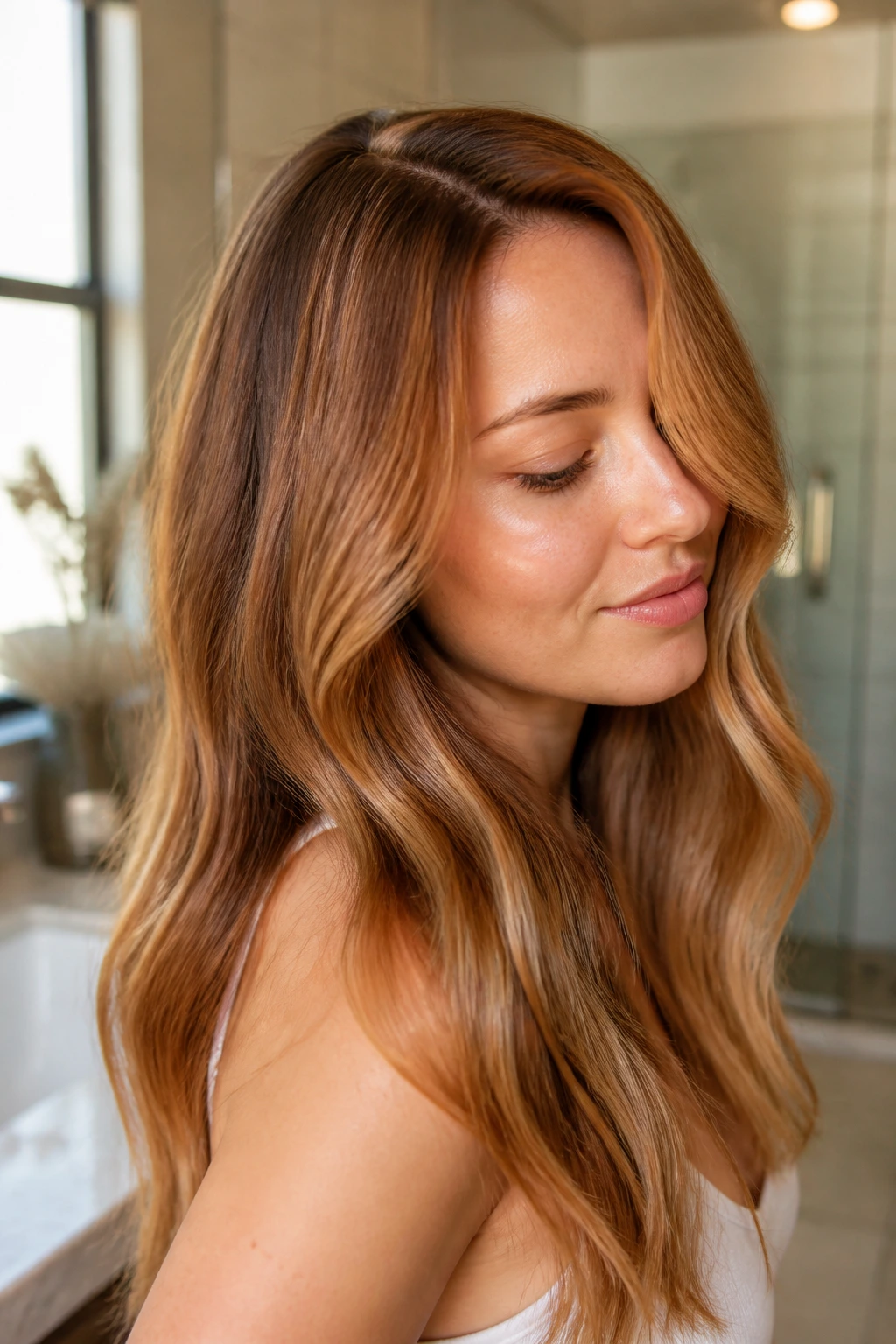
Warm tones live and die by routine. After coloring, many stylists recommend waiting about 48 hours before the first shampoo so the cuticle can settle, and that small pause can help the tone hold. After that, lukewarm water and a color-safe shampoo are your best friends. Hot water rinses warmth out faster than most people expect.
For glosses and demi-permanent color, plan on 4 to 6 weeks between refreshes if you want the warmth to stay obvious. Balayage and foilyage can usually stretch to 8 to 12 weeks, depending on how visible you like your regrowth. All-over chestnut or mahogany often needs root work in the 4 to 8 week window, especially if gray coverage matters.
Weekly care should be simple. Use a moisturizing mask once a week, keep heat tools at a moderate setting, and use UV protection if you spend a lot of time outside. If your water runs hard, a chelating wash once a month helps stop mineral buildup from dulling copper, gold, and caramel tones. And skip purple shampoo unless your blonde has gone too yellow; too much of it can mute the warmth you wanted in the first place.
Questions People Ask Before Booking Warm-Tone Color
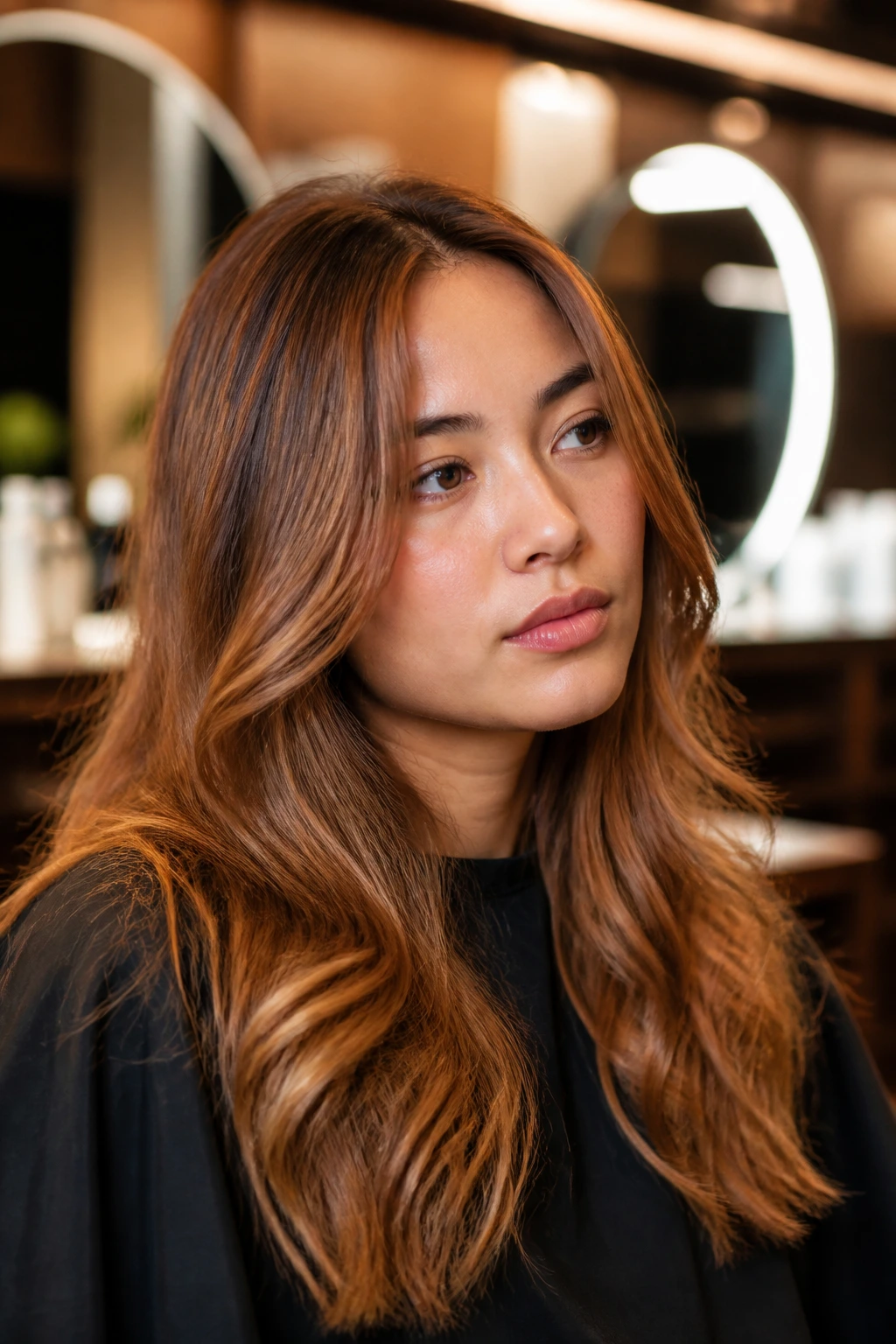
What counts as a warm skin tone?
Usually skin with golden, peach, yellow, or olive undertones falls in the warm camp. You might burn before you tan, or you may tan quickly with a golden cast. If silver jewelry feels harsh and gold jewelry looks easier, that’s another clue.
Can warm skin wear blonde?
Yes, but the blonde usually looks better when it leans honey, buttercream, beige-gold, or honeyed platinum rather than icy ash. Warm blonde reflects light back into the face more kindly. Pure silver blonde can work, but it takes more careful toning.
Will copper always turn too orange?
Not if the formula and timing are handled well. Copper gets loud when it’s applied too strong, left too long, or placed on very porous hair without a buffer. A gloss or diluted copper mix is a safer first step.
What if my highlights already turned brass?
That usually means the toner faded and the underlying yellow or orange started showing through. A beige-gold gloss, a soft root shadow, or a few lowlights can calm it down without stripping the hair again.
Can I do these looks without bleach?
You can, especially with chestnut, mahogany, copper gloss, golden brunette, and many deep caramel shades. If you want actual blonde lift, bleach or lightener is usually required. That’s just how pigment works.
Which technique is lowest maintenance?
A root-shadow balayage, golden brunette glaze, or chestnut single-process color tends to be the easiest to live with. They fade gracefully and don’t demand constant correction at the part line.
Is one appointment enough to go from cool brown to warm brunette?
Sometimes, yes, if the change is subtle and your starting base is close. Bigger shifts may need a filler, a gloss, and a second pass to keep the warmth from looking flat or hollow. Hair history decides a lot here.
How often should I get a gloss?
Most warm glosses stay nice for about 4 to 8 washes, depending on porosity and shampoo frequency. If the shine disappears before the tone does, you may only need a clear glaze, not a full recolor.
Warmth That Grows Out Gracefully
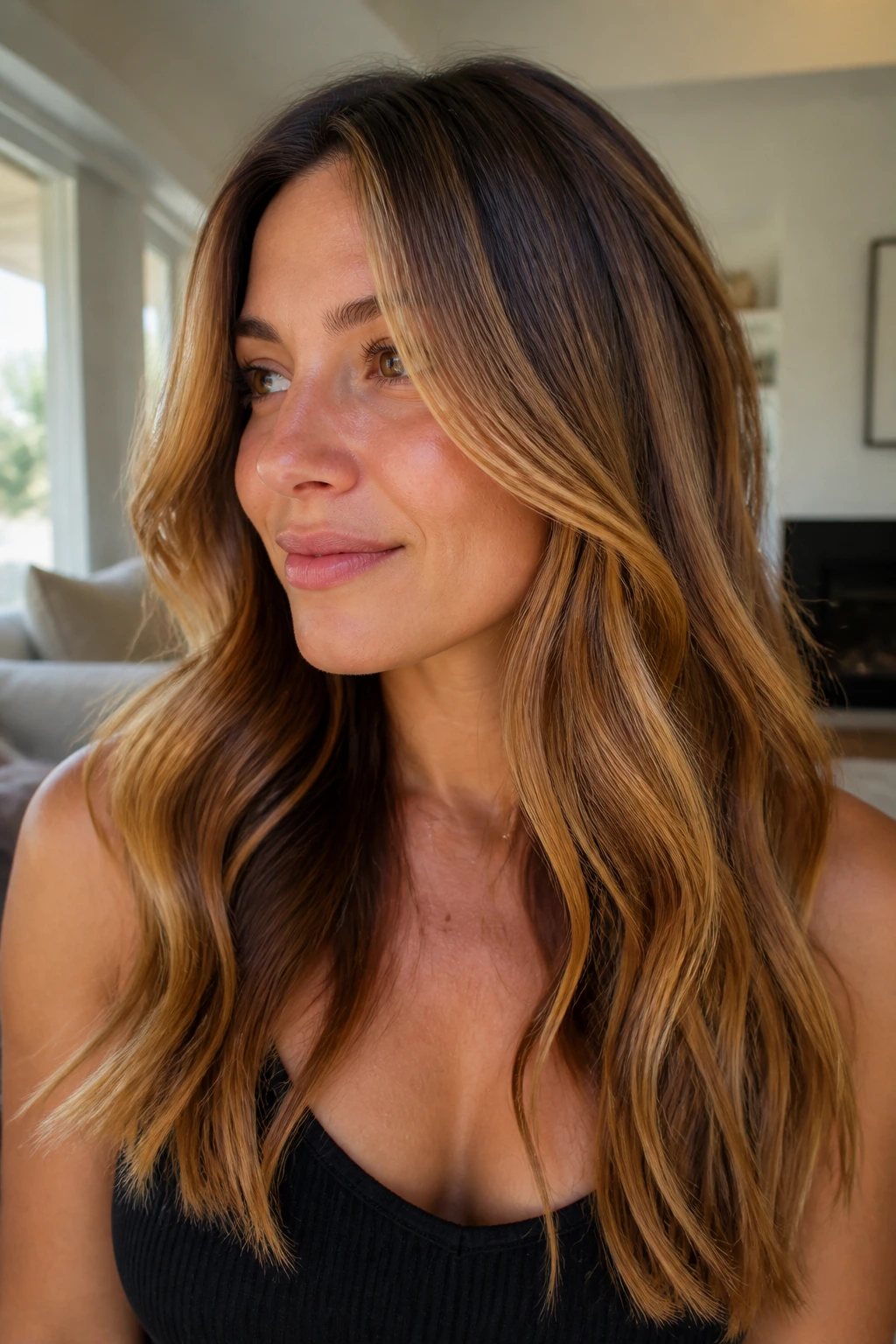
The best warm color is the kind that still looks planned when it’s lived in for a few weeks. That means good placement, the right amount of depth, and a tone that flatters the skin instead of fighting it. Honey, caramel, copper, amber, mahogany, and chestnut all have their place, but they work best when they’re used with a little restraint.
I’d rather see a warm shade with depth than a bright orange that needs fixing two weeks later. Every time. If you pick the technique that matches your base, your upkeep tolerance, and the way you actually wear your hair, the result will look calmer and richer from day one—and it’ll still look like you after the grow-out starts to show.