



Golden platinum blonde hair color ideas only make sense once you’ve seen the bad versions up close. Too much lift and the hair goes chalky. Too much warmth and it drifts into banana territory. The sweet spot sits between those two extremes, where the blonde still looks bright but the tone has enough gold to feel soft against the face instead of sharp and cold.
That middle lane is the interesting one. A good golden platinum blonde can look creamy on a bob, expensive on long layers, and oddly polished on curls that would have read as frizzy in a harsher blonde. Placement matters as much as tone. A few brighter pieces around the front, a slightly deeper root, and a beige-gold gloss through the mids can change the whole mood of a cut.
I keep coming back to this shade family because it solves a real problem: people want platinum-level brightness without the flat, brittle look that sometimes comes with icy blonde. The versions worth saving have movement, dimension, and a little warmth left in the hair so the color doesn’t look like a single white sheet under indoor light. Some lean champagne. Some lean honey. A few go nearly white at the ends and keep just enough gold near the root to make the grow-out less obvious.
Why Golden Platinum Blonde Hair Color Ideas Work on So Many Cuts
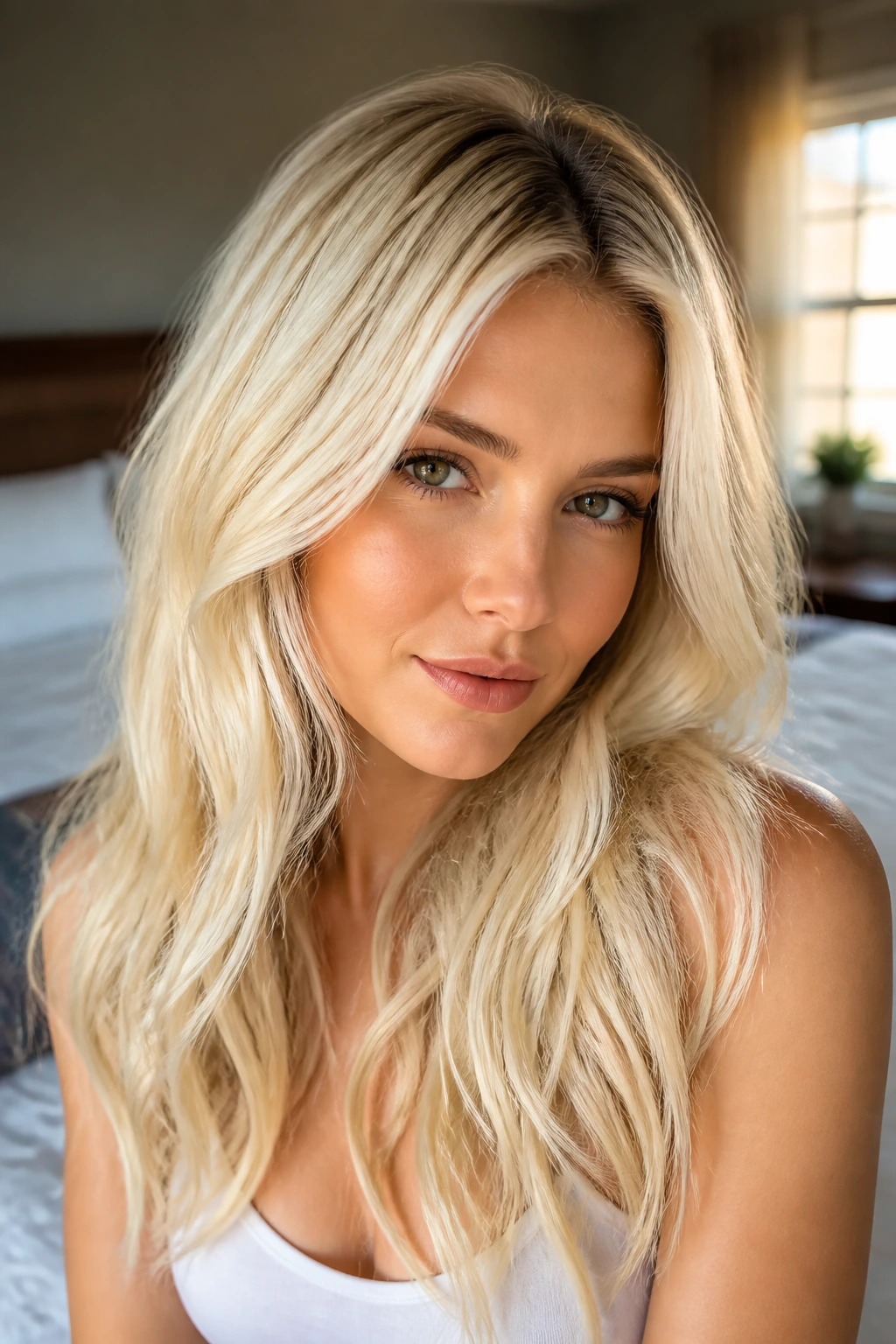
- Soft Grow-Out: A root shadow that sits one level deeper than the mids keeps regrowth from looking like a hard stripe after a couple of weeks.
- Face-Friendly Warmth: Beige-gold tone sits kinder on skin than a blunt icy blonde, especially when the hair is worn straight and close to the face.
- Real Dimension: Platinum on every strand can look flat in a bad way; mixing gold, beige, and pale neutral pieces gives the eye somewhere to travel.
- Flexible Placement: You can push brightness into the front, the ends, or the crown and still stay in the same color family.
- Better for Texture: Waves and curls show off ribbon-like highlights more clearly when the blonde isn’t too cool and one-note.
- Salon-Friendly Reference Point: If you can describe where you want the lightest pieces and where you want a little depth left behind, you’re already halfway to a better result.
1. Honeyed Root Melt
A honeyed root melt is for anyone who wants the brightness of platinum without letting the roots scream for attention. The crown stays a soft beige-gold, then the blonde opens up through the mids and ends until it lands in a pale platinum finish that still feels wearable. On straight hair, the blend looks smooth and glossy. On waves, it breaks into creamy bands that move.
Why It Works
The darker root gives the eye a place to rest. That matters more than people think.
With a melt like this, the lightest blonde doesn’t start at the scalp, so the grow-out line stays gentler. If your natural base is medium blonde to light brown, this is one of the easiest ways to wear golden platinum without reliving the salon visit every three weeks.
Quick Placement Notes
- Keep the root shadow soft, not muddy.
- Ask for brighter ends than mids.
- Use a beige-gold gloss, not an orange toner.
Best for: shoulder-length cuts, long layers, and anyone who likes a color that softens itself as it grows.
2. Champagne Money Piece
If you only brighten one part of the head, brighten the front. A champagne money piece puts the lightest blonde around the face and keeps the rest of the color a shade or two softer, which is exactly why it looks sharp without turning aggressive. The front pieces catch glasses, earrings, and movement in a way that whole-head platinum often doesn’t.
This version works especially well when the face-framing panels start around the cheekbone and widen only slightly toward the ends. Too wide, and it can look striped. Too thin, and you lose the point. The best champagne money pieces have a pale, bubbly tone—not silver, not lemon, just a clean lift with a faint gold edge.
Wear it when: you pull your hair behind your ears a lot, wear a center part, or want brightness that shows even when the rest of the hair is tucked away.
3. Cream Soda Lob
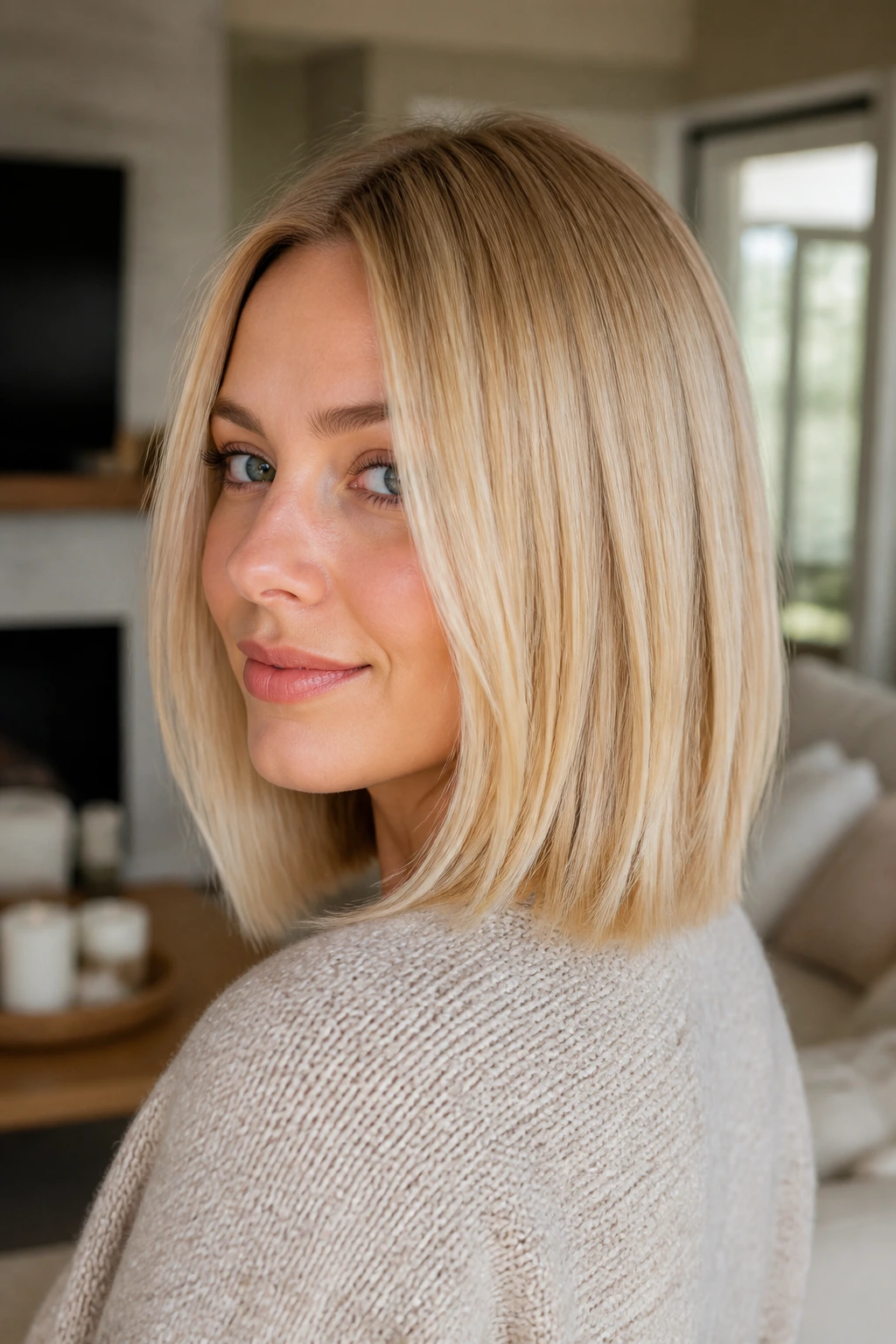
Why does a lob look so polished in this color? Because the collarbone length gives the blonde enough surface area to show tone, but not so much length that the shade gets lost. Cream soda blonde sits in that soft zone between beige and platinum, and on a blunt lob it reads smooth instead of busy.
Best Cut Match
A one-length lob with a slightly beveled end is the cleanest partner for this tone. The edge gives the blonde a firm outline, while the creamier toner keeps the whole shape from looking too hard. If your hair is fine, this is a smart choice; the lighter tone makes the cut look denser than it really is.
The trick is not to over-layer it. Too many short pieces and the color can scatter. Keep the shape controlled, then let the blonde do the talking.
4. Golden Ribbon Balayage
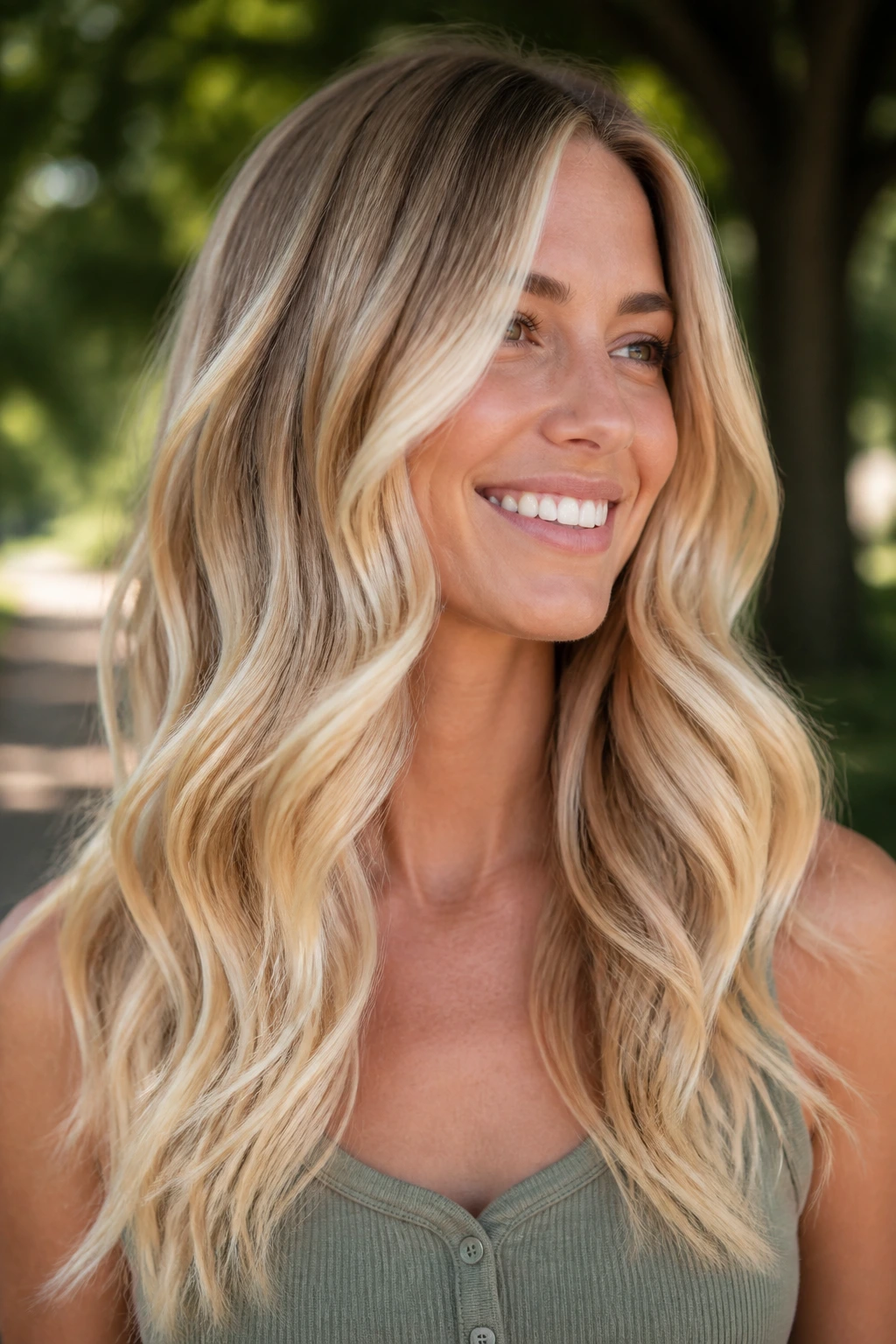
This is the version I recommend to people who want dimension they can actually see in motion. Golden ribbon balayage means the lightest pieces are painted in curved sections through the mids and ends, leaving the darker natural base visible between them. The result isn’t stripy. It looks like the hair has been lit from within, which sounds cheesy until you see it on a loose wave.
A lot of blondes fail because every strand is forced into the same tone. Here, the warmth sits between the platinum pieces and makes the whole head read richer. It’s especially good on wavy or thick hair, where the ribbons can twist in and out of view.
- Best on medium to long hair.
- Works well with a deep side part.
- Needs a gloss every few weeks to keep the gold clean.
5. Shadow-Root Beach Waves
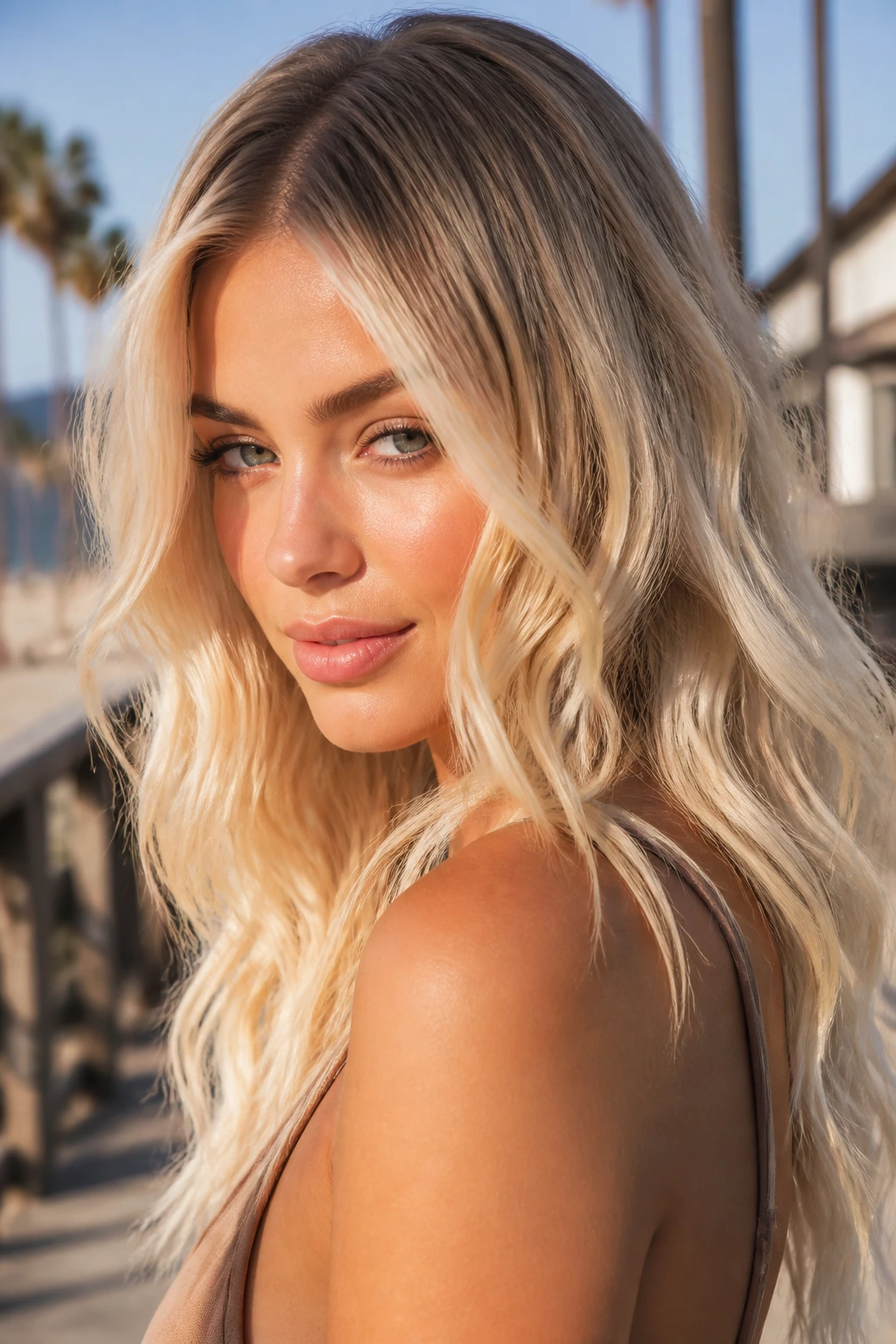
A shadow-root blonde with beach waves is what happens when you want low drama at the scalp and a bright finish through the ends. The root stays slightly deeper—usually a beige blonde or soft gold blonde—while the lower lengths are pushed toward pale platinum. The bend in the waves keeps the transition from looking harsh.
This shade makes sense if you like hair that does not need to be perfectly styled to look finished. Even a loose bend with a flat iron, done in alternating directions, is enough to show the contrast. On very straight hair, the effect is more subtle, almost smoky. On medium waves, it turns into those layered blonde streaks people keep saving to their phone.
6. Vanilla-Glaze Curls
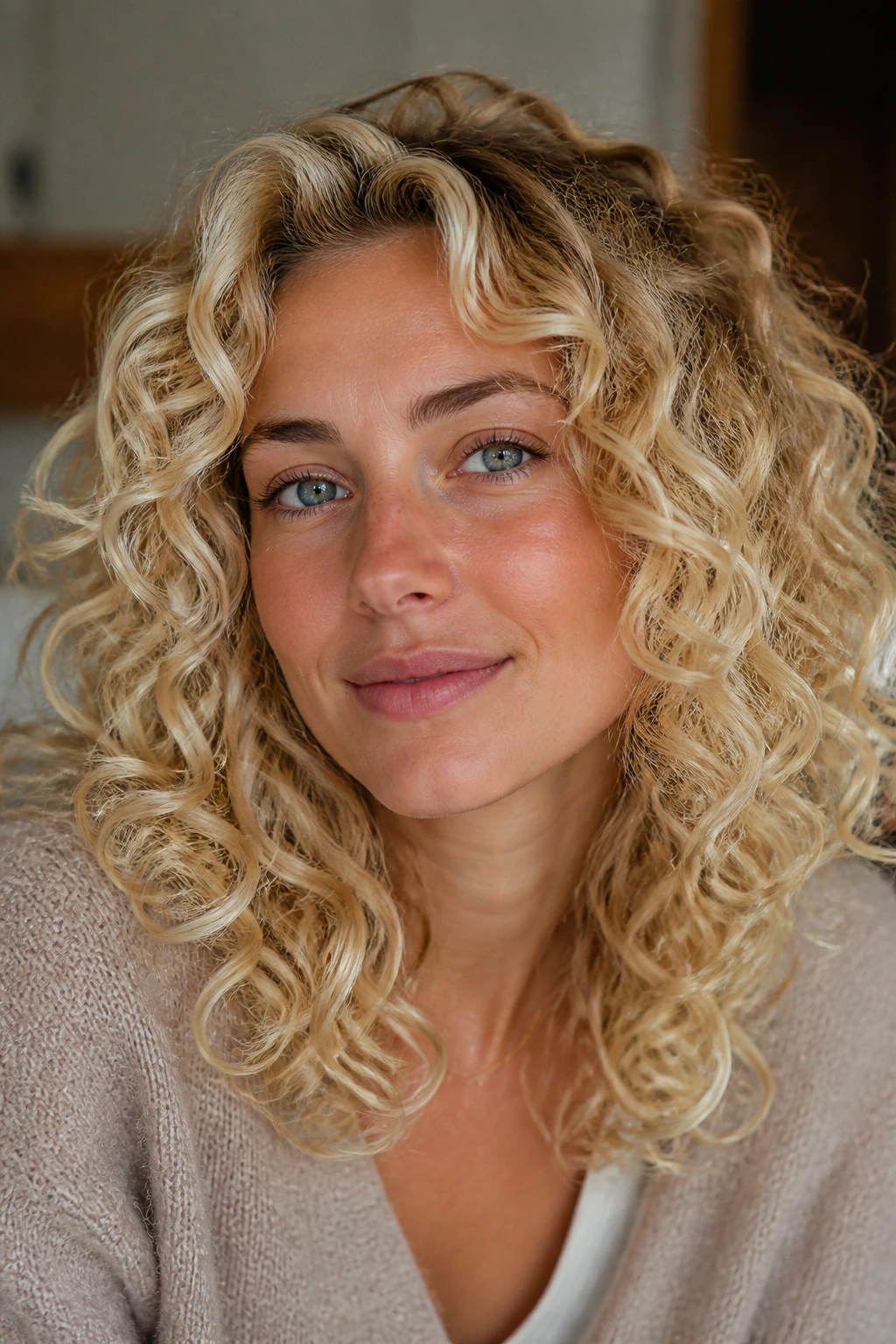
Curls change everything. They eat color, hide seams, and make tone look softer than it does on straight hair, which is why a vanilla-glaze blonde can be such a good choice. The platinum pieces sit on the outer curve of the curl, the gold keeps the base from looking hollow, and the whole head ends up with a creamy finish that moves.
How to Place It
I’d keep the lightest strands away from the densest interior zones. Put more brightness where the curls fall forward—around the temples, cheekbones, and ends. That lets the color show without trying to fight the curl pattern.
A vanilla glaze also helps if your curls run porous. Pure ash toner can make them look dull fast. A beige-vanilla finish stays brighter longer and feels less dry-looking.
Best for: loose curls, spiral patterns, and layered cuts that need a bit of visual lift.
7. Butter Blonde Pixie
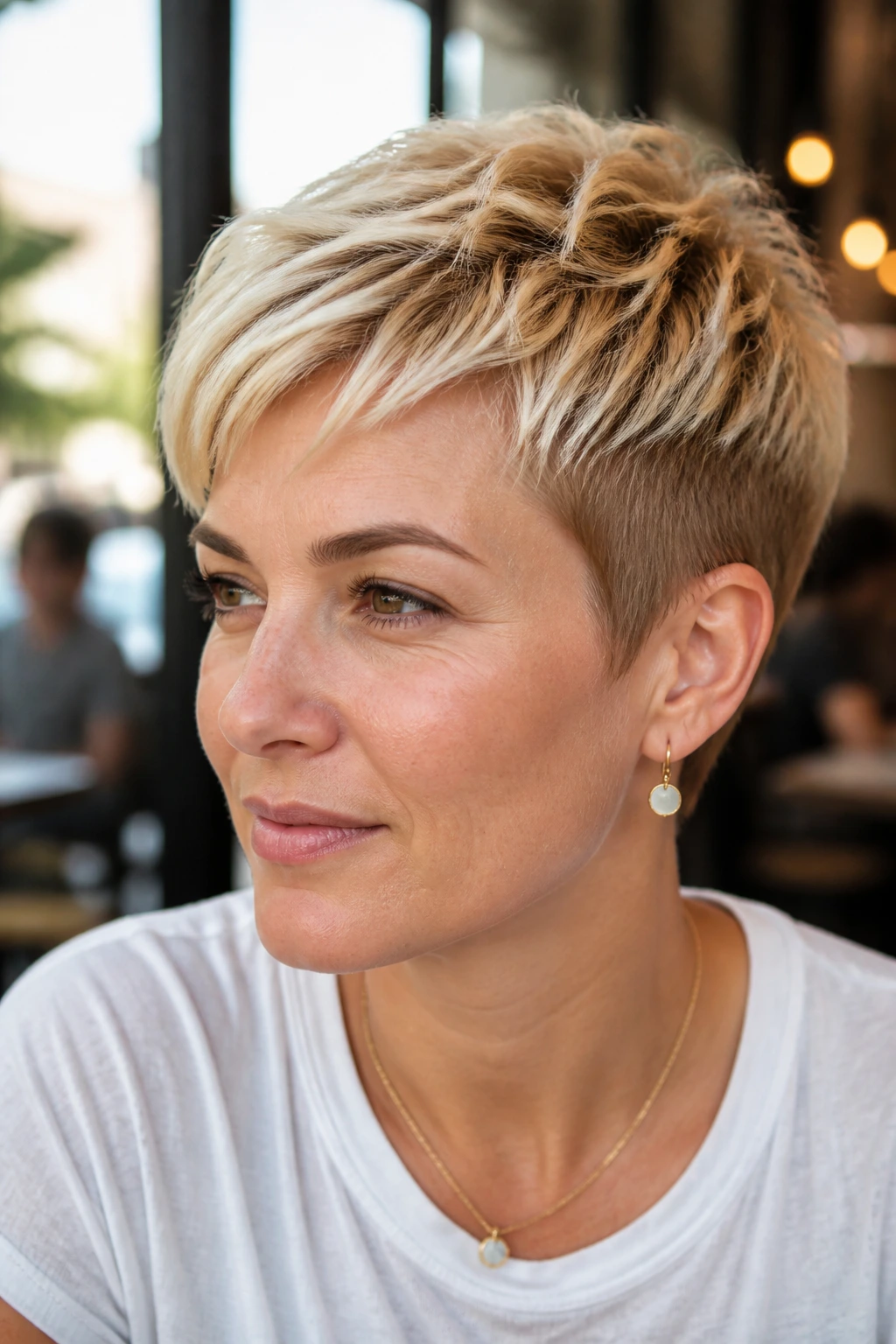
Short hair can carry golden platinum beautifully because every inch matters. A butter blonde pixie keeps the top and fringe light enough to reflect shine, while the sides can sit a touch deeper so the shape doesn’t collapse into one pale blur. That tiny bit of contrast does a lot.
I like this look best when the top is textured with a matte paste or light cream. You want the color to show off the cut, not the other way around. Too much polish can make a pixie look helmet-like. A little separation at the crown keeps the blonde lively and lets the gold read as warmth, not brass.
8. Frosted Bob with Golden Ends
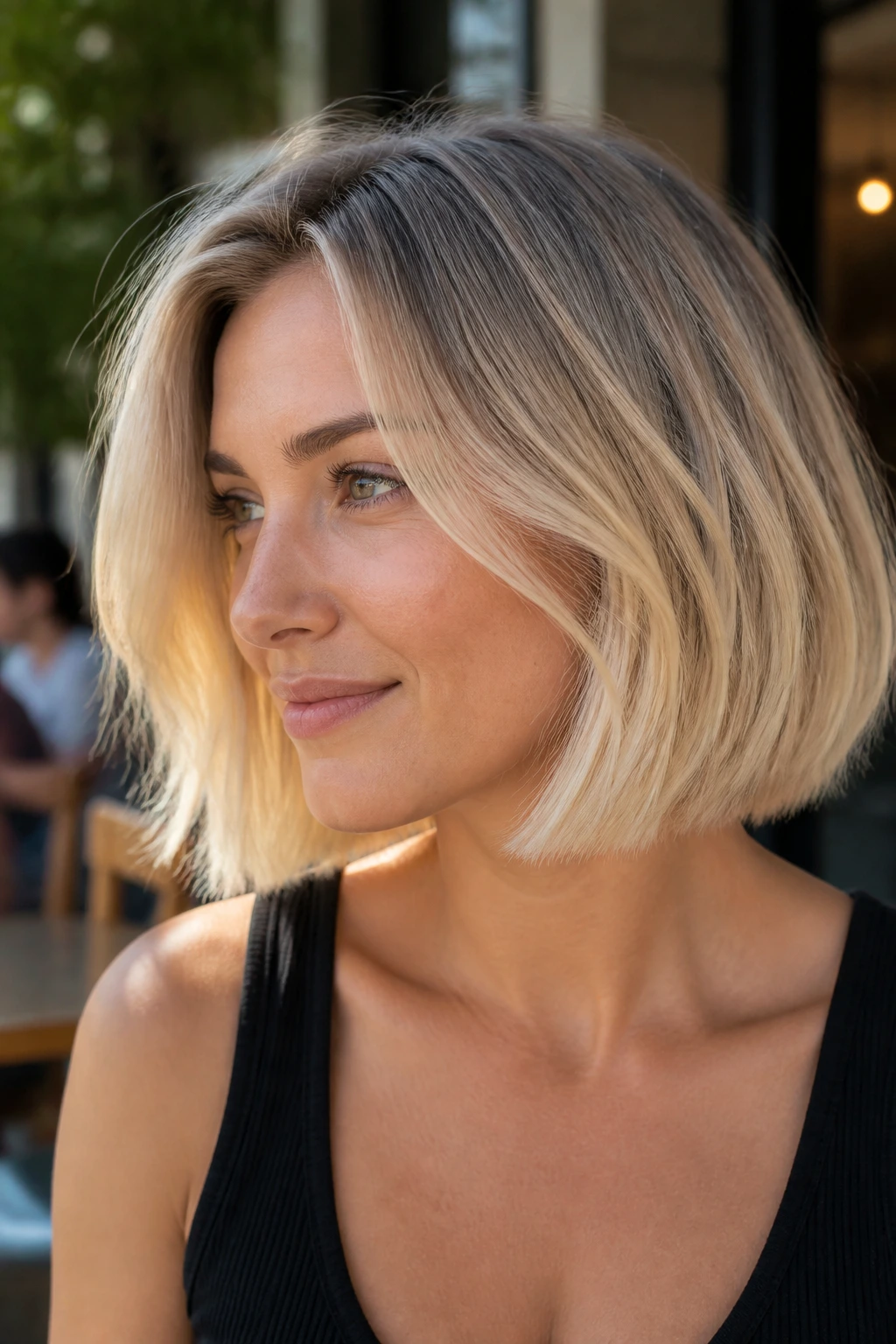
What stops a bob from looking blocky? Bright ends and a controlled root. That’s the whole trick here. A frosted bob with golden ends keeps the outline clean but lets the perimeter glow, which is especially useful on jaw-length or chin-length cuts that sit close to the face.
The ends should be the brightest part, almost like the hair has been dusted with light near the bottom edge. The upper half can stay a little softer so the cut doesn’t turn into a solid white cap. If the bob is blunt, this contrast makes the edge look intentional. If it’s slightly curved under, the tone follows the shape nicely.
9. Pearl Face-Frame Layers
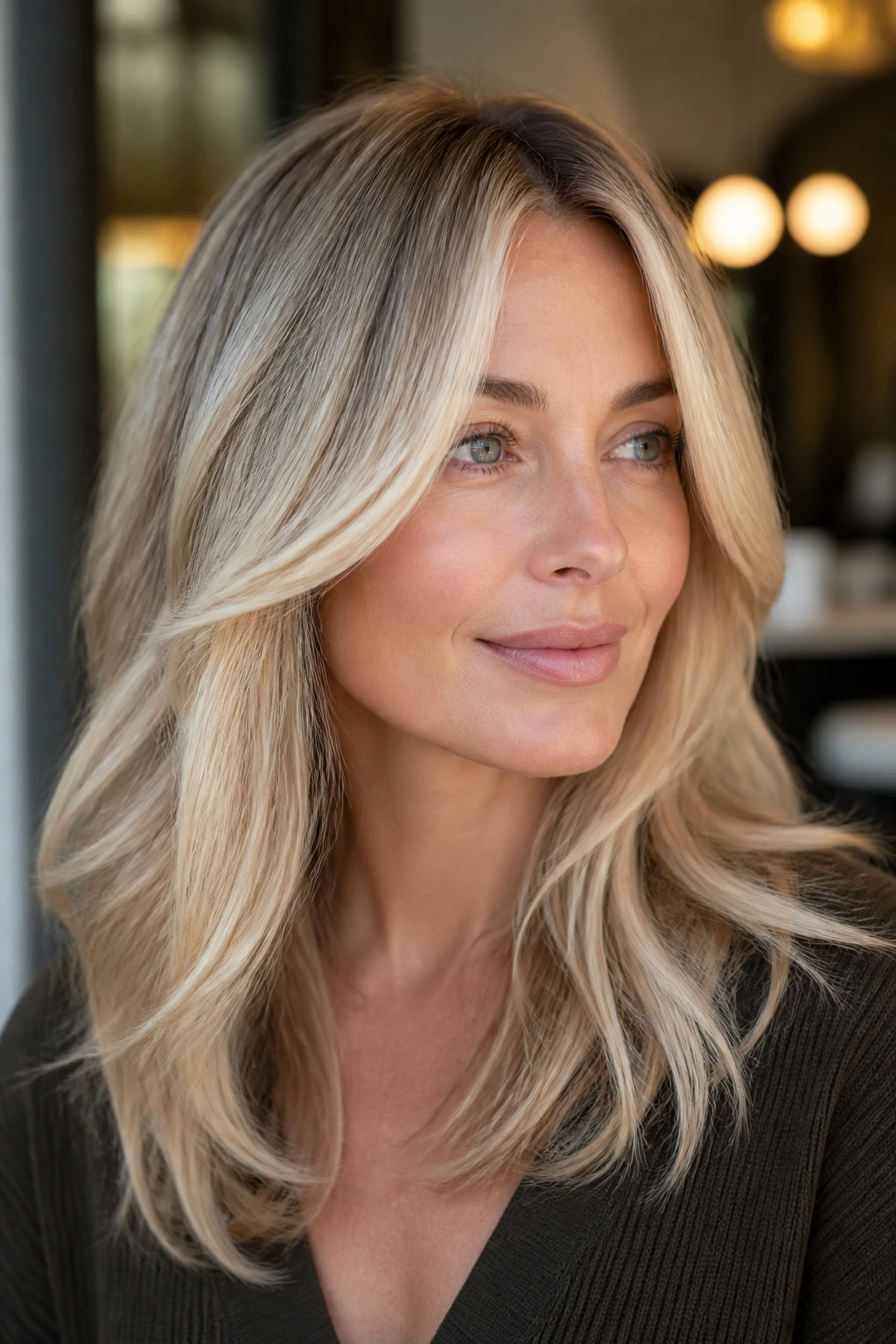
A pearl face-frame is one of those details that does more than people expect. The front pieces are lifted a little higher, toned toward pearl-beige, and blended into softer layers that travel down the sides. The rest of the head doesn’t need to be as bright, which keeps the look wearable.
- Brightest pieces should start near the cheekbone.
- Keep the inner layers softer so the face frame stands out.
- Ask for pearl-beige, not silver-white, if you want warmth left in the finish.
This is a strong choice for medium-density hair because the face frame can lift the whole cut without forcing the back to go just as light. It also grows out neatly, which matters if you don’t enjoy constant touch-ups.
10. Sunlit Long Layers
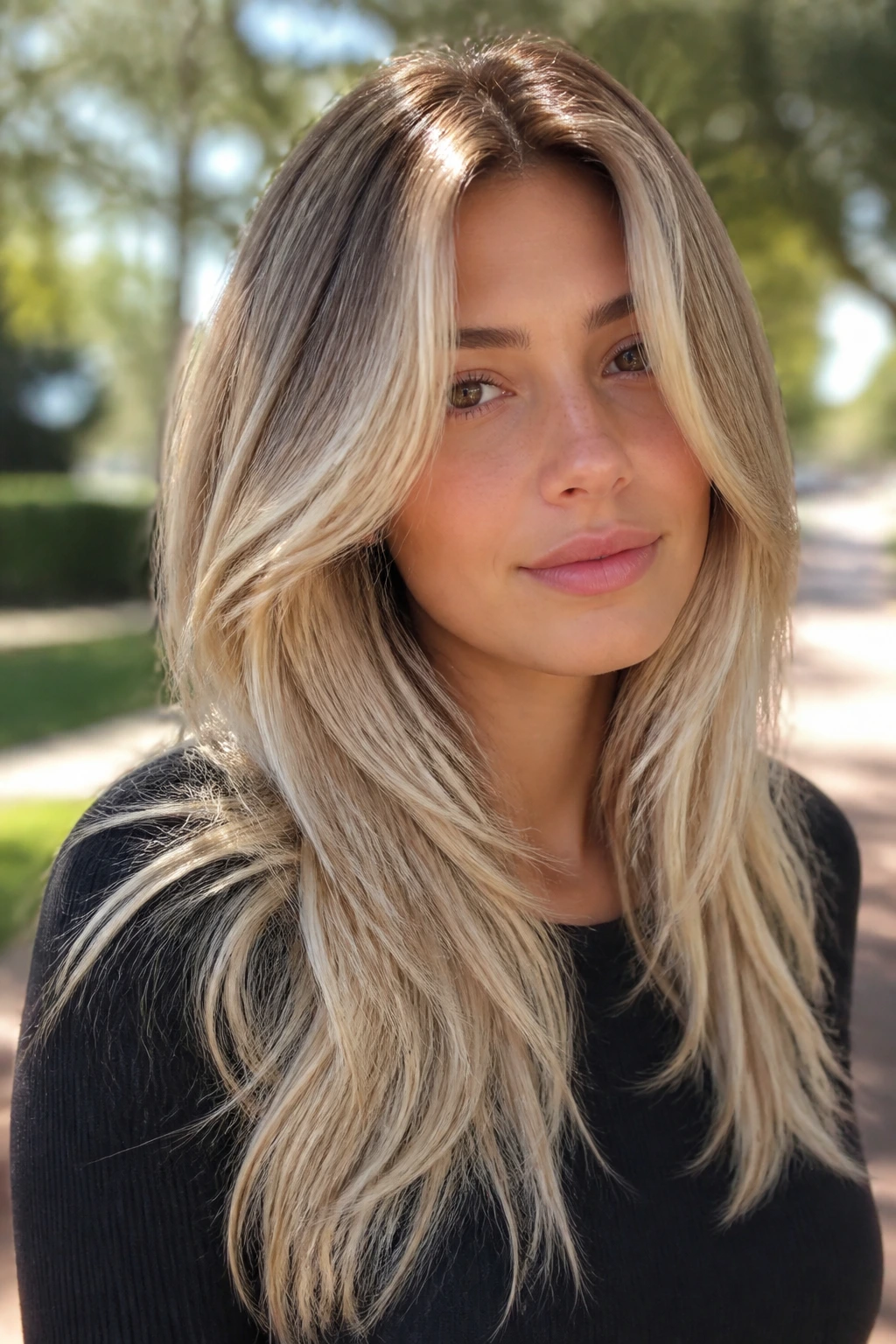
Long hair can swallow color if every section is treated the same way. Sunlit layers solve that by keeping the root and upper mids slightly deeper, then pushing brightness into the lower layers and face-framing pieces. The result looks like actual sunlight moved through the hair instead of one fixed bleach job.
This approach is smart for people with long, heavy hair because the lighter ends keep the length from looking flat. I’d especially use it on layered hair that already has movement, since the dimension shows up with almost no effort. A pale gold gloss on the top half and a cleaner platinum at the bottom is enough to give the whole style a softer edge.
11. Gilded Curtain Bangs
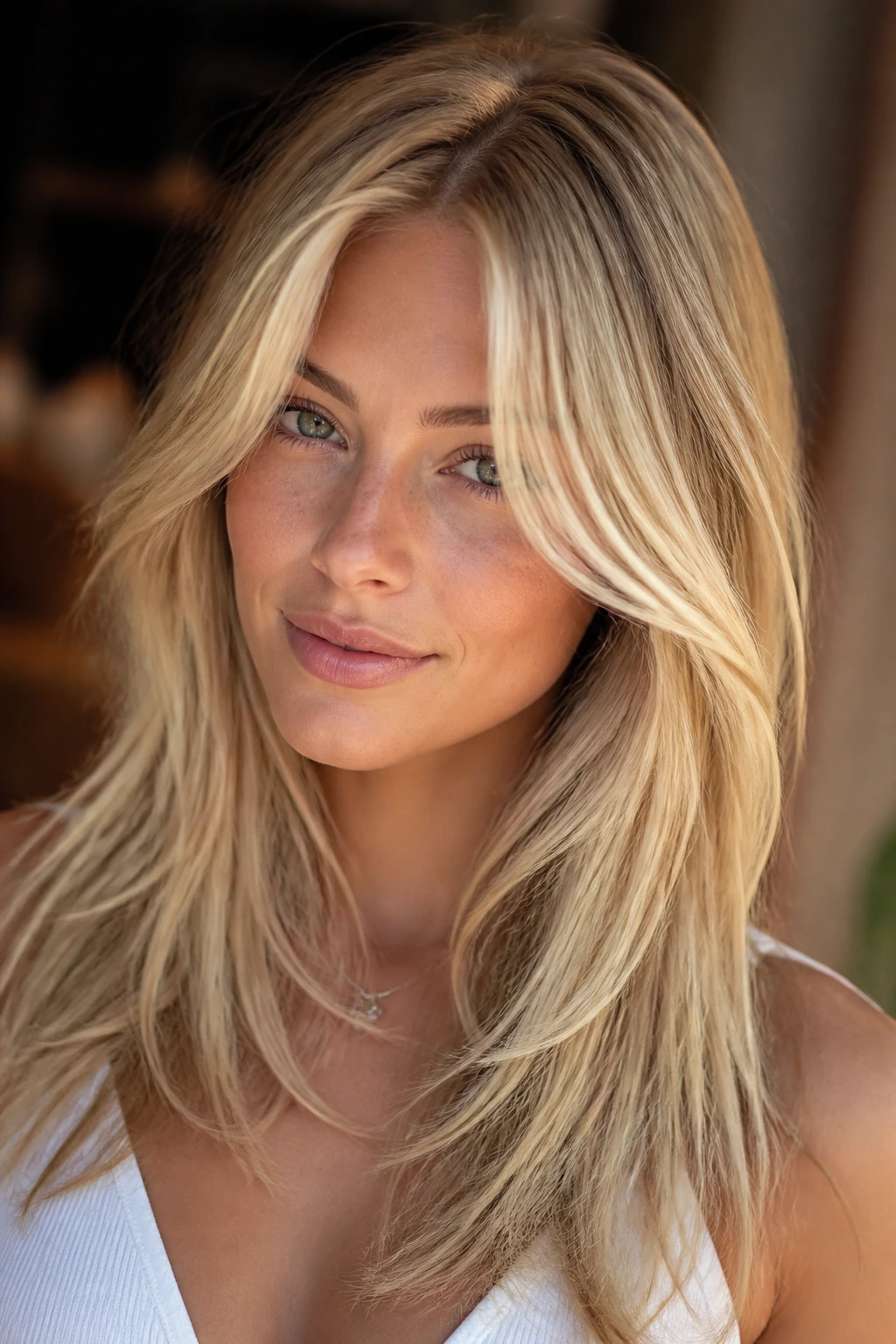
Curtain bangs are a tiny canvas, which means the color has to be placed with some restraint. A gilded version keeps the fringe one shade brighter than the crown so the bang opens up the face without looking detached from the rest of the hair. If the bangs are too white, they can look pasted on. Too dark, and the whole point disappears.
What Makes It Work
The shape of the bang matters almost as much as the tone. Longer curtain bangs that skim the cheekbone can carry a soft gold-platinum blend better than a choppy fringe, because the color has room to feather.
I’d dry these with a round brush or a large Velcro roller if you want the separation to show. Flat, undone bangs tend to collapse the color into the rest of the hair. A little lift at the root changes the whole read.
12. Platinum-Glazed Coils
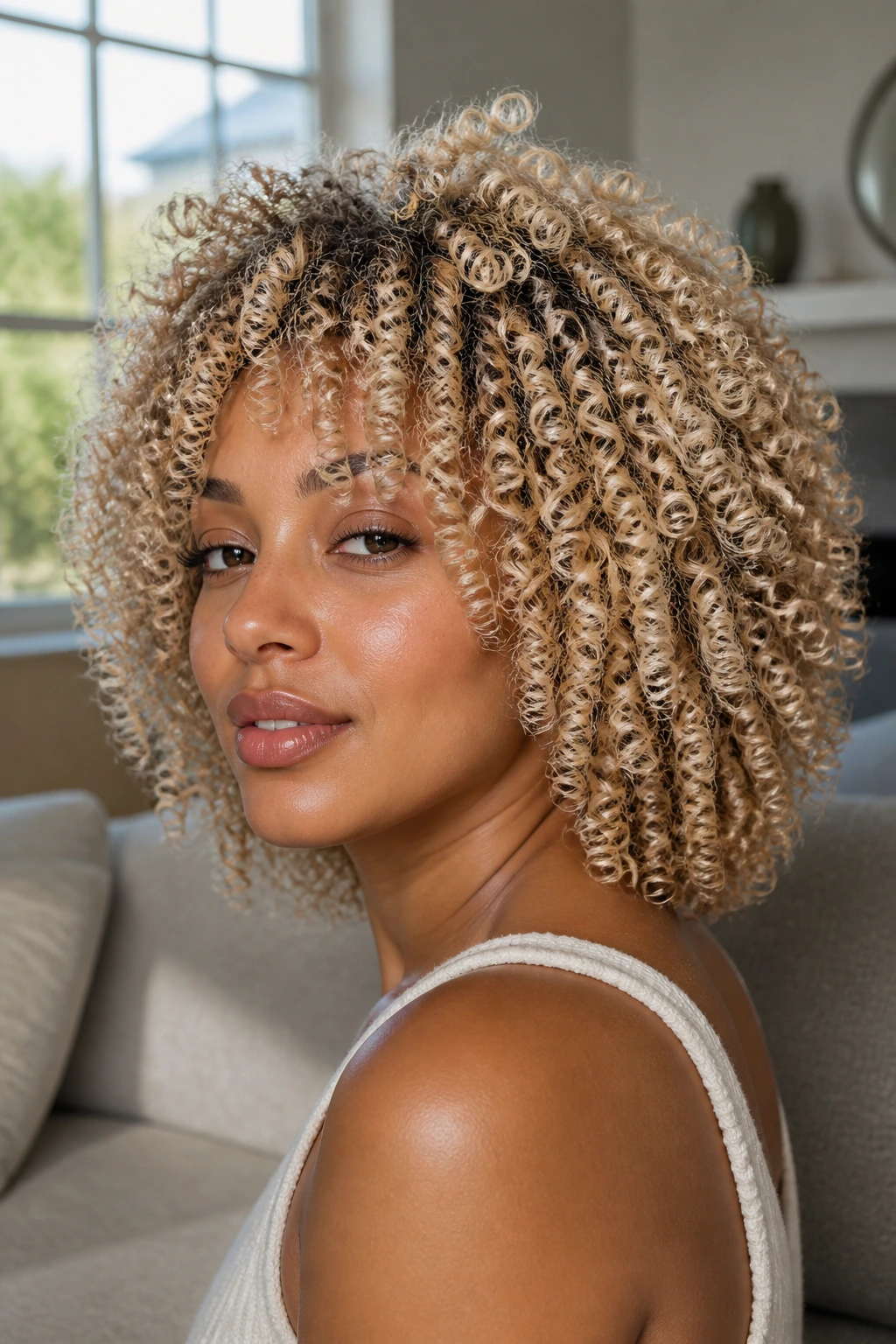
Coils can hold bright blonde in a way straight hair can’t, but the placement has to respect the curl pattern. Platinum-glazed coils use selective lightening on the outer coils and around the top layer, then finish with a warm-beige glaze so the color looks crisp without getting dry and harsh.
This is one of my favorite versions because the curls create their own shadow and shine. You do not need every strand to be the same tone. In fact, that usually makes the hair look flatter. Letting some deeper gold stay near the roots and interior coils keeps the shape from losing depth.
If the hair is dense, freehand painting and tight foil placement can work together. If it’s more delicate, fewer lifted sections can still give you that high-contrast look.
13. Beige-to-Gold Balayage
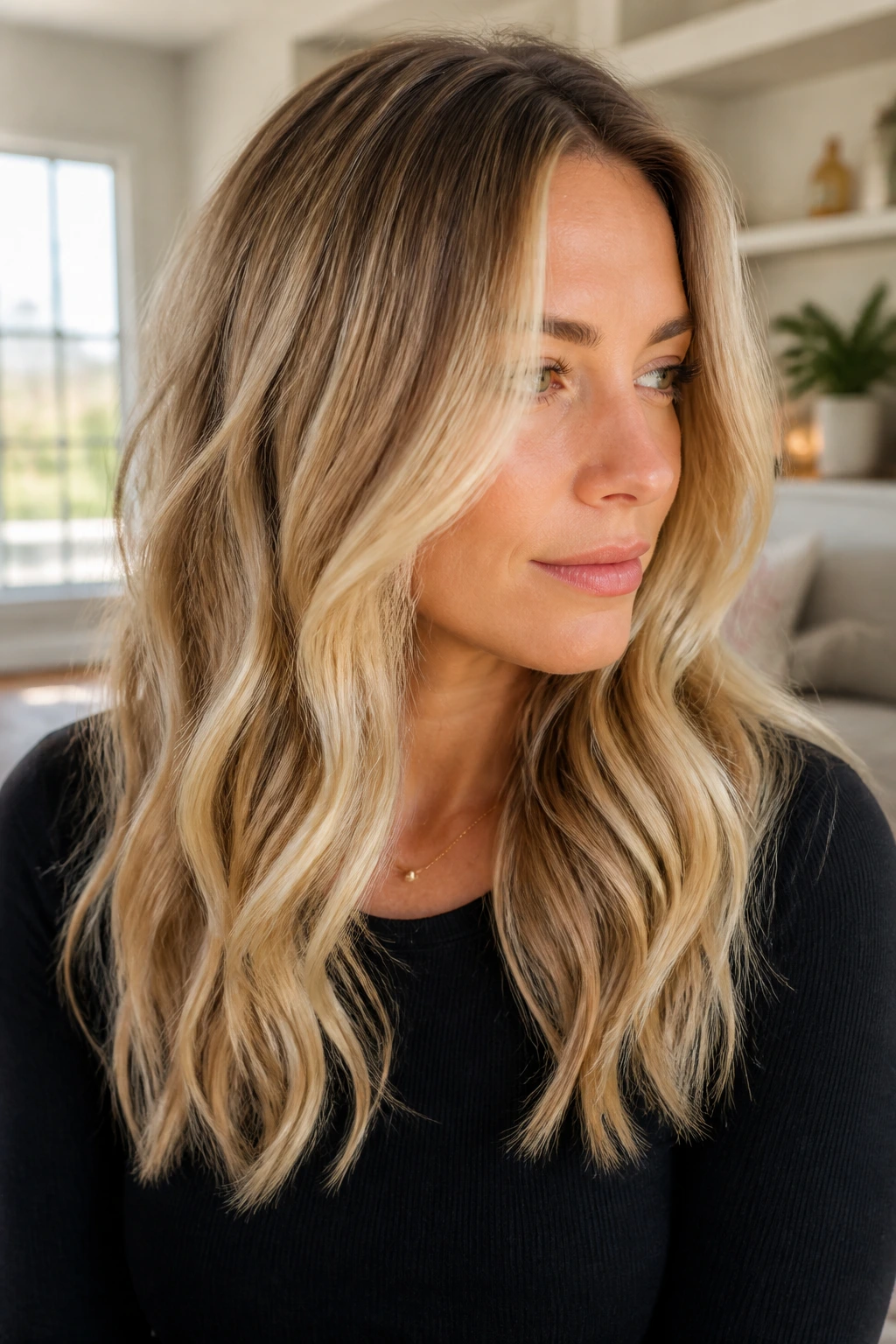
Why choose beige-to-gold instead of pure ash? Because ash alone can go flat fast, especially on hair that already leans pale. Beige-to-gold balayage keeps the blonde soft, but it doesn’t lose the warmth that makes platinum wearable. The effect sits somewhere between sand and champagne.
This color grows out well because the palette itself is forgiving. The roots can stay a little deeper, the mids can sit in beige territory, and the ends can move toward pale gold-platinum. That range keeps the hair from looking chopped into bands.
When It Fits Best
If your hair has been lightened before and you want to keep some softness left in it, this is a good direction. It also suits people who wear waves often, because the tonal shift shows through the bends.
14. Sliced Blonde Shag
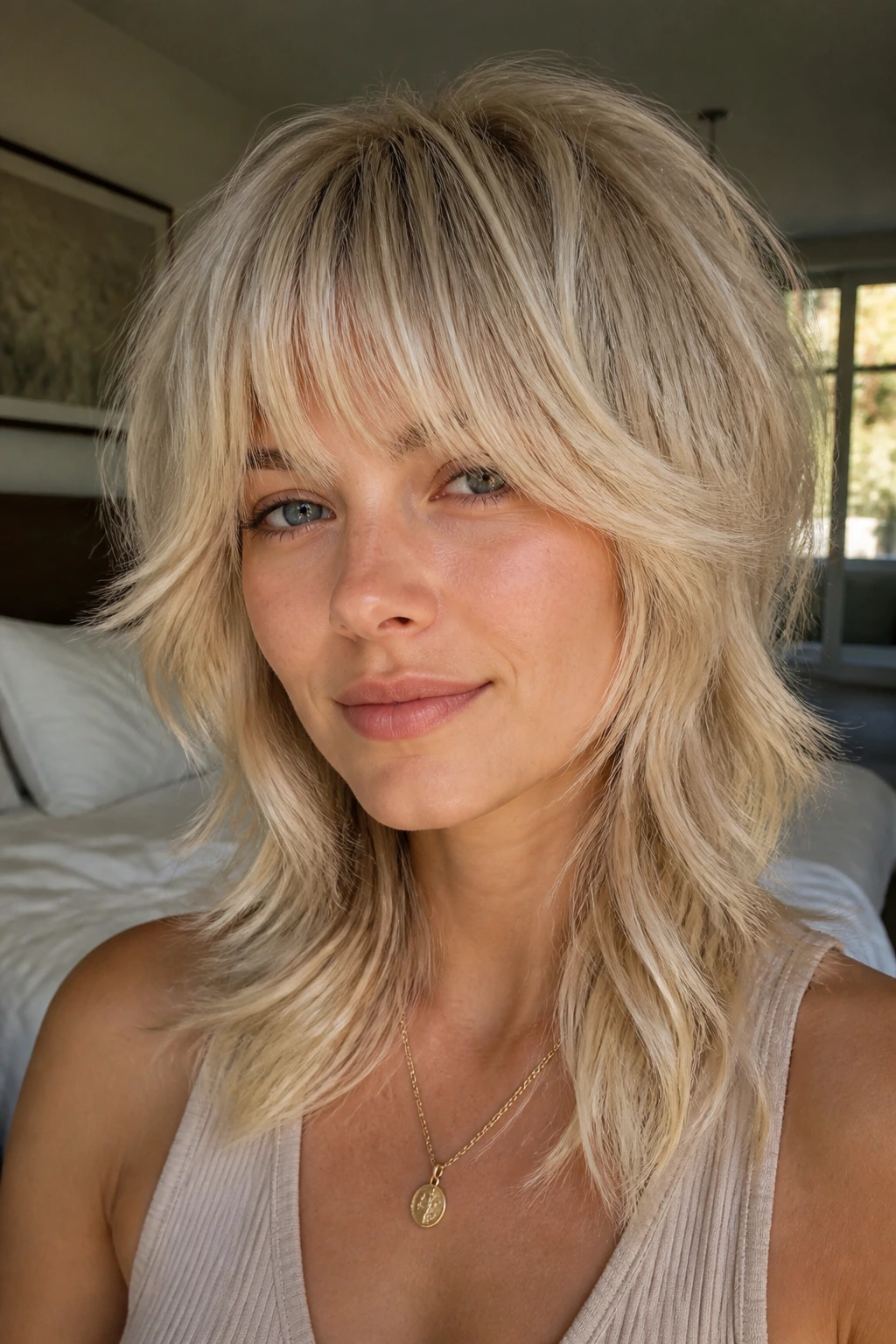
A shag needs slices of brightness, not a uniform wash of blonde. That’s what makes this version work. The sliced placement puts lighter panels through the crown, cheek areas, and ends so the layers break apart visually. The golden platinum tone keeps the texture from looking too harsh.
This is one of the better choices for someone who likes hair with movement but doesn’t want a polished salon blowout every day. The messier the style, the better the color reads. A clean center part with a little lift at the roots helps the shag show off the slices instead of hiding them.
- Best for medium to thick hair.
- Keep the crown slightly brighter than the nape.
- Ask for soft, separated pieces rather than chunky stripes.
15. Bright Blunt Lob
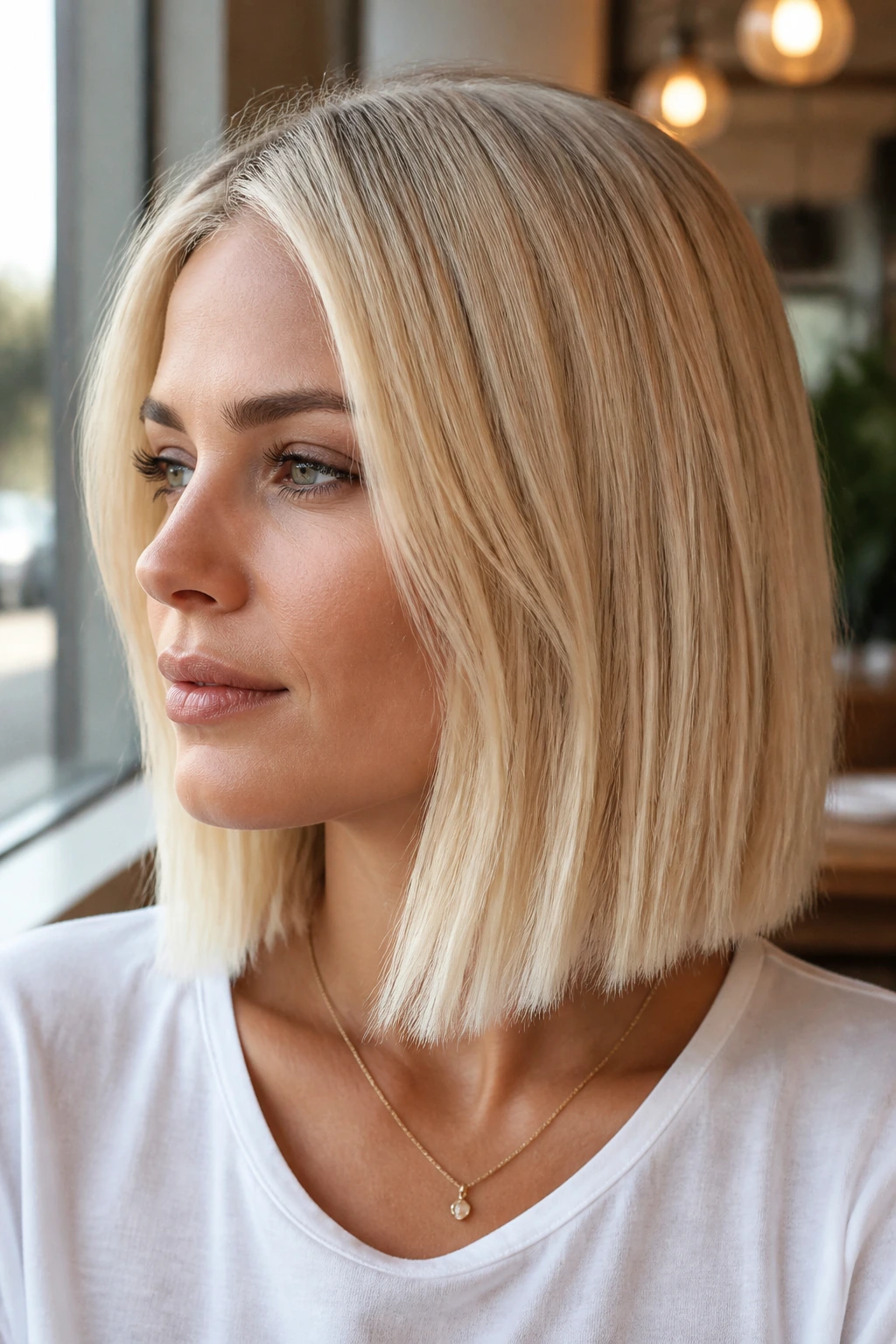
A blunt lob is all about edge, so the blonde should support that edge instead of softening it away. Bright platinum through the mids and ends gives the cut its shape, while a light golden glaze keeps the shade from turning stark. The result looks crisp, not icy for the sake of being icy.
This version is a favorite for finer hair because the brighter perimeter can make the ends look fuller. There’s less visual break in the line, so the lob feels denser. Wear it straight if you want the line to read sharp, or flip the ends under if you want the warmth to show a little more.
16. Dimensional Blowout Blonde
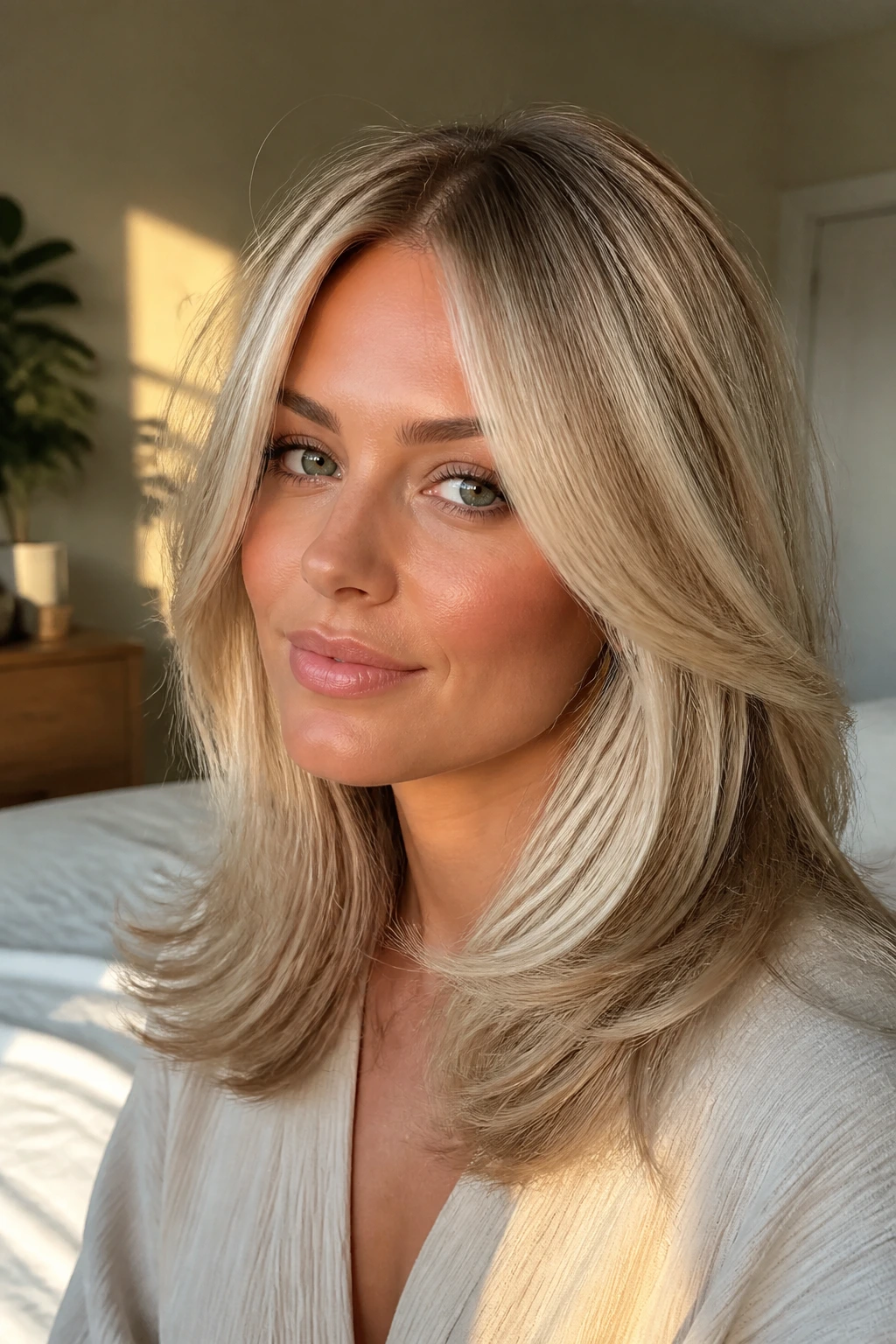
A blowout blonde is less about the cut and more about how the light falls across it. Dimensional versions use brighter pieces around the face and top layers, then keep lower sections a touch deeper so the hair has depth even when it’s brushed smooth. The finish should look creamy, not overprocessed.
Why the Blowout Matters
Round-brush styling makes the color read differently. The curve of the hair catches the lighter pieces and leaves the deeper sections where they belong, which is why this shade looks especially good on layered shoulder-length cuts.
- Use lighter sections around the part line.
- Keep the ends a little brighter than the crown.
- Ask for a beige-gold gloss if the lift looks too cool under indoor light.
That small amount of contrast keeps the blowout from looking like one flat wash of blonde.
17. Golden Platinum Bob with Tucked Ends
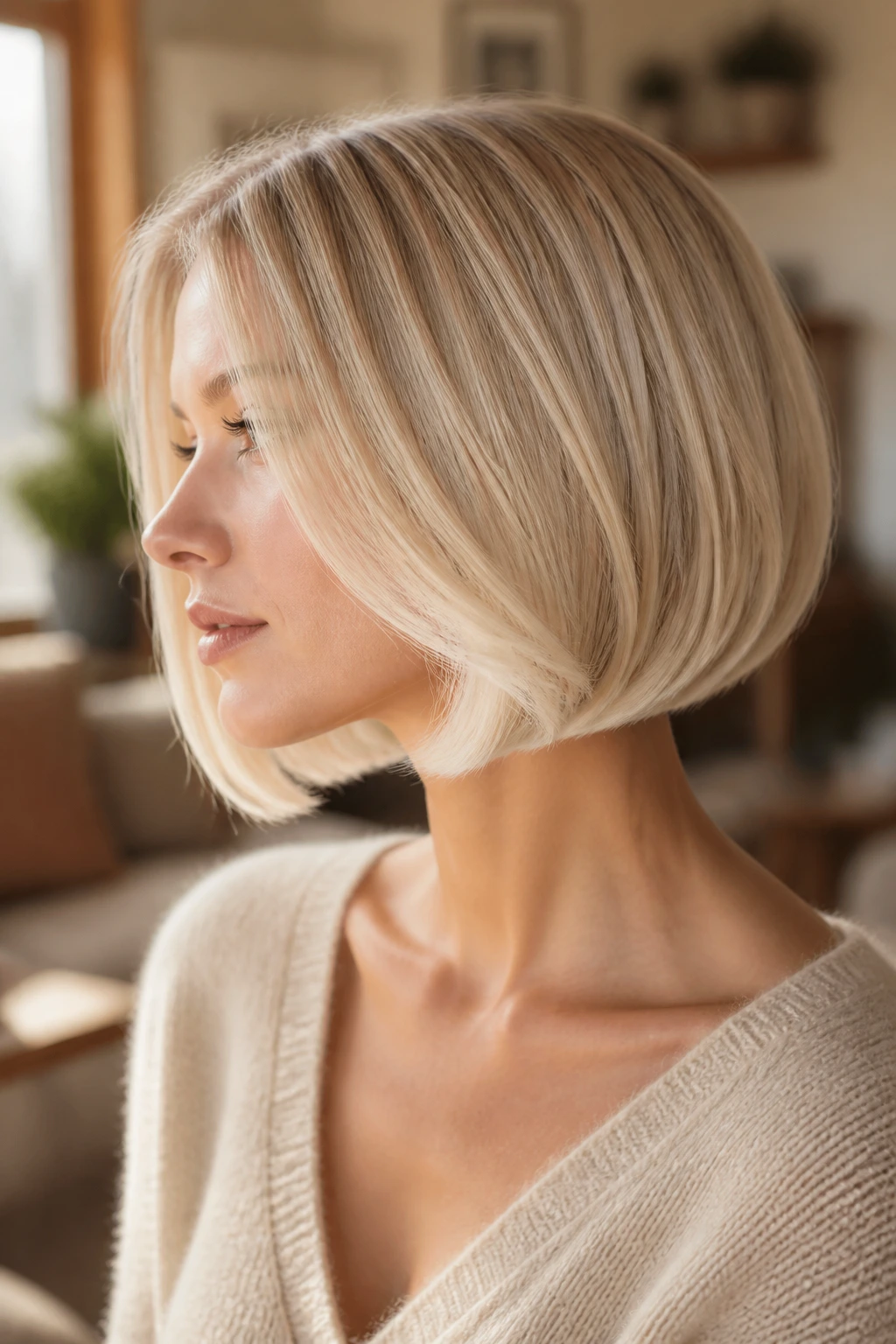
A bob that tucks under at the ends is a sneaky way to show off color. The curve at the perimeter frames the jaw, and golden platinum on that edge makes the cut feel deliberate instead of blunt. I like this version for people who wear earrings, because the lighter face-framing edge sits right where the eye lands.
This bob works best when the interior is slightly softer than the outer edge. The eye reads the line first, then notices the brighter blonde sitting there. If every inch is equally light, the shape loses definition. Give the ends more brightness, keep the crown a shade deeper, and the whole cut starts to hold its shape better.
18. Feathery Mid-Length Cut
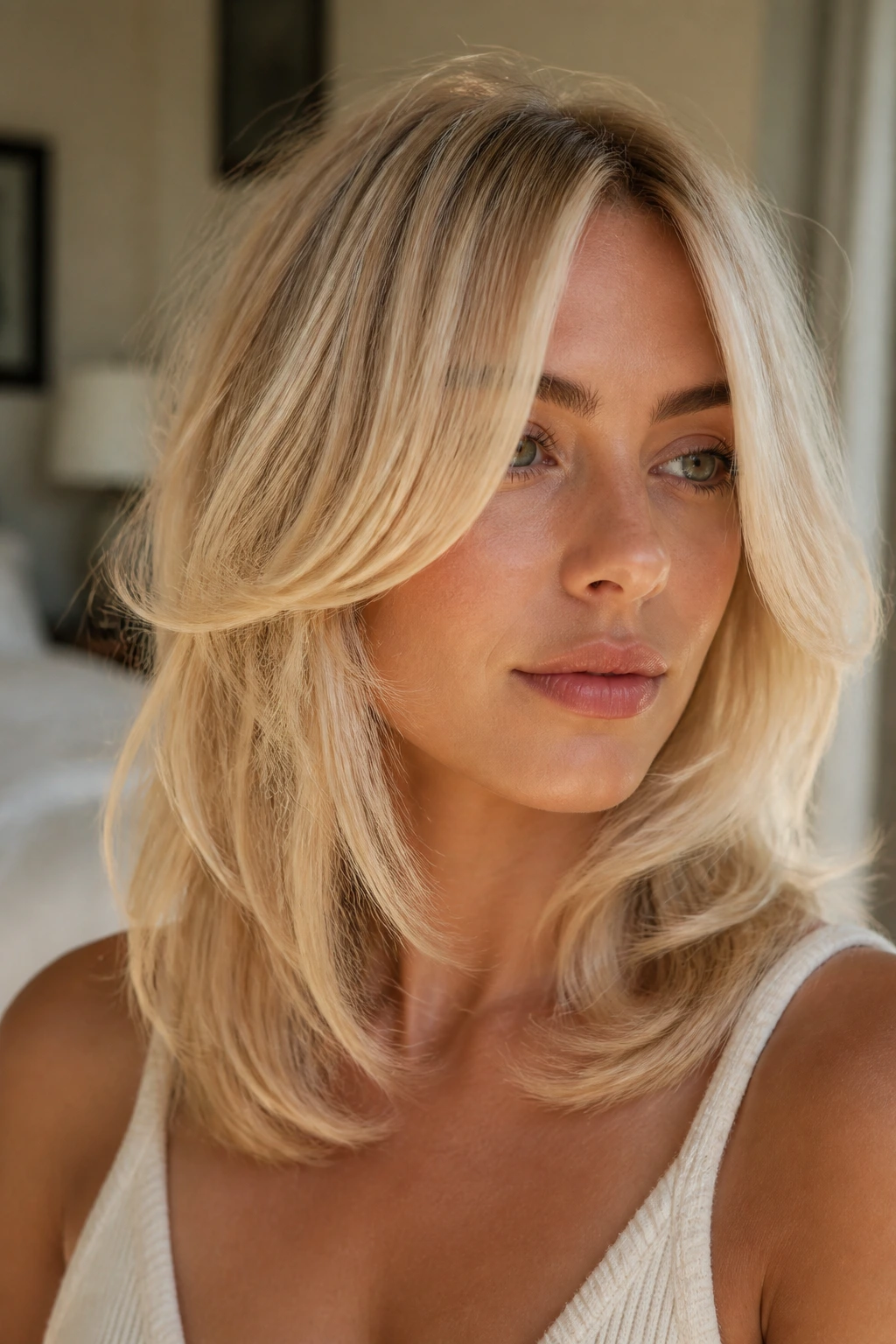
What happens when you add feathery layers to a golden platinum base? The color starts moving through the cut instead of sitting on top of it. Feathery mid-length hair is one of the easiest places to wear this shade because the layers break up the blonde naturally and keep the ends from looking heavy.
This style is especially good if your hair is dense or straight. Heavy hair can make platinum look blocky. Feathering removes that problem. The lightest pieces can sit through the front and the lower layers, while the top keeps enough beige depth to avoid a washed-out finish.
19. Halo Highlighted Ponytail Blonde
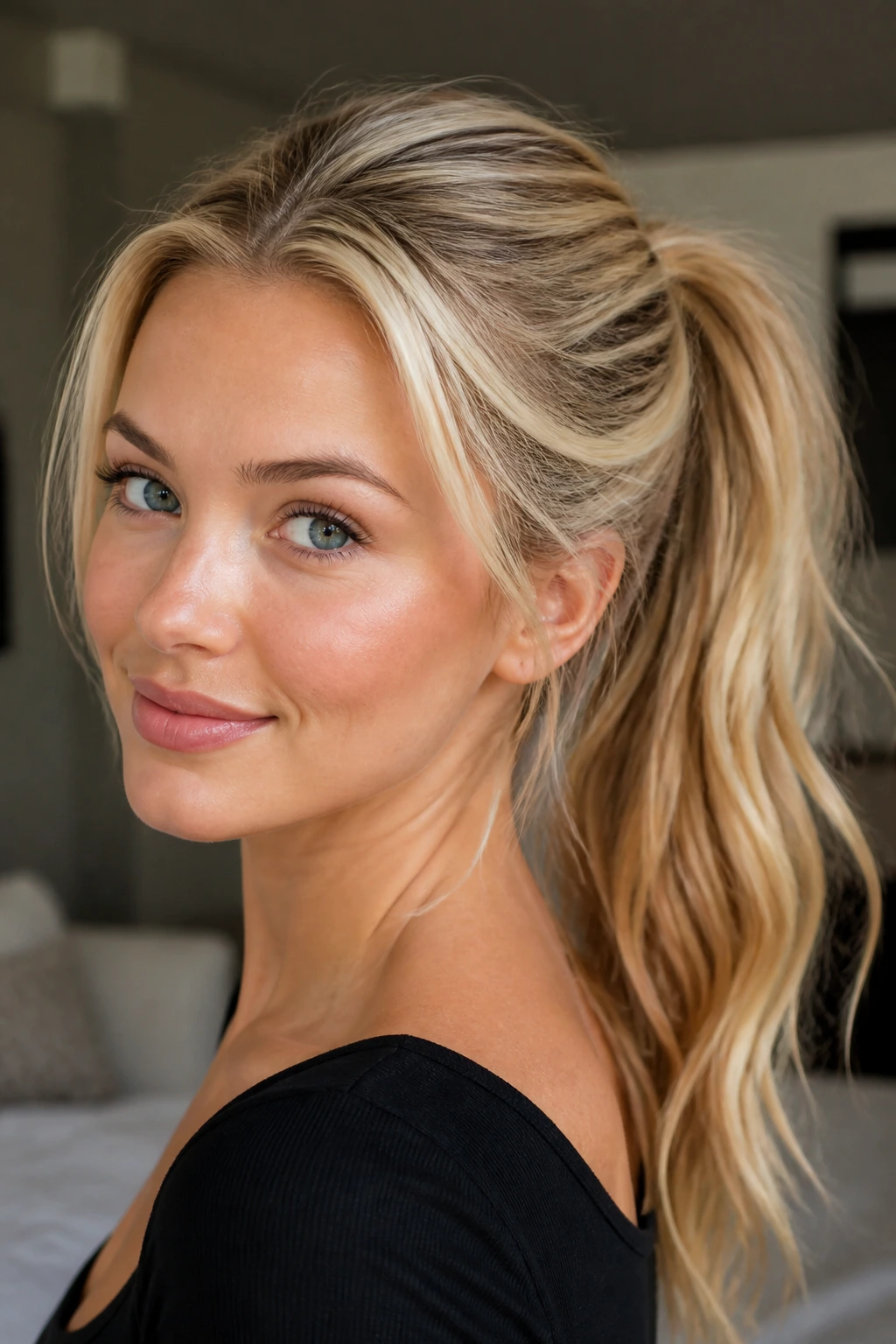
A lot of blondes look great down and disappear completely when pulled back. Halo highlighting fixes that. The brightest pieces sit around the hairline, temples, and upper crown, so even a simple ponytail shows enough contrast to feel finished. The rest of the hair can stay softer and lower maintenance.
- Place the lightest strands where the ponytail wraps and sits.
- Keep a few face-framing pieces brighter than the rest.
- A shine spray helps the halo pieces stand out without looking greasy.
This is the version I’d pick for someone who wears clips, buns, and ponytails most days but still wants the blonde to register when the hair goes up.
20. Cool-to-Warm Ombre
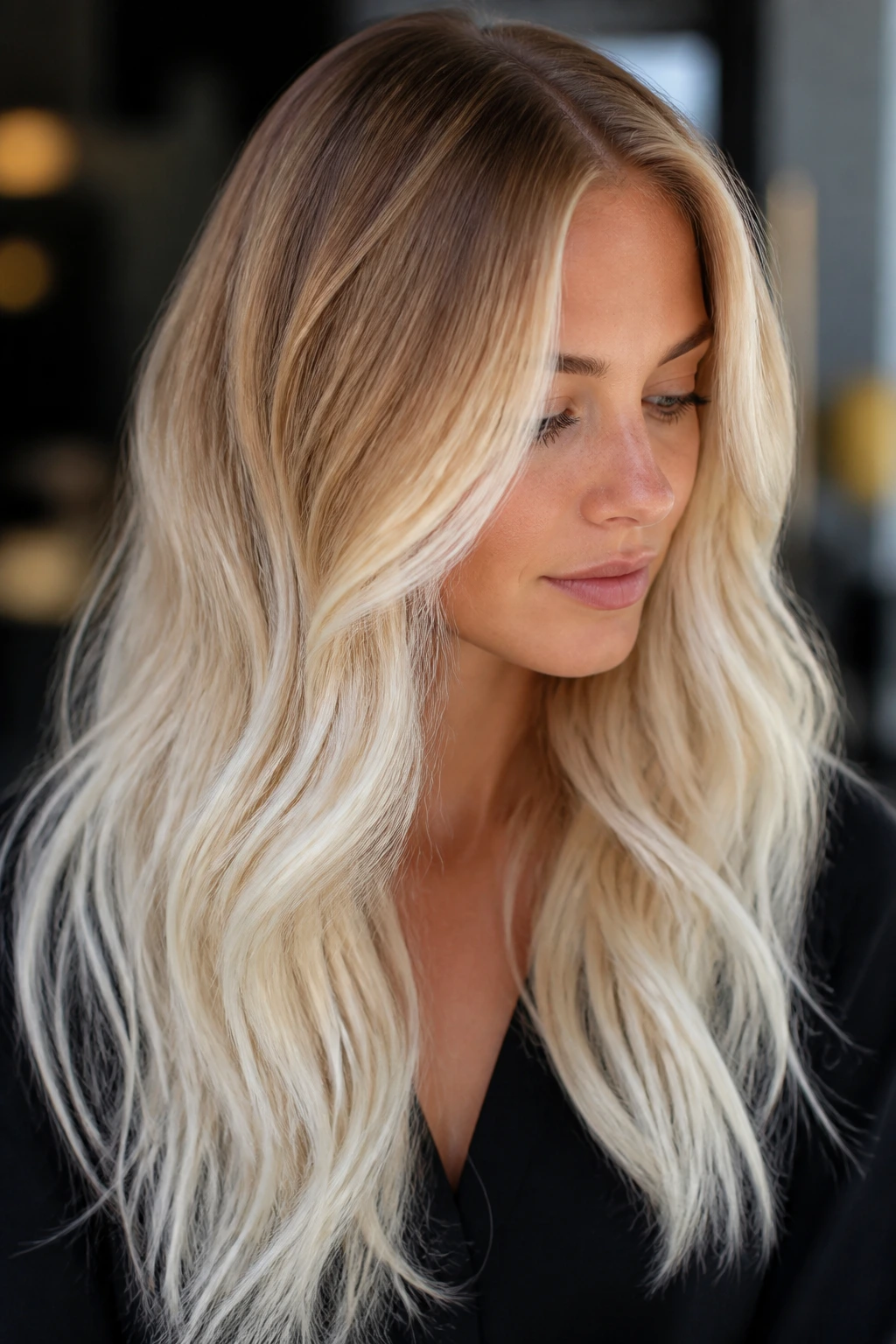
A cool-to-warm ombre sounds contradictory until you see it. The lighter ends sit cooler and closer to platinum, while the upper lengths and root area hold onto a soft gold or beige tone. That shift makes the color feel intentional, almost like the blonde warms and cools as it moves down the hair.
This works best when the transition is slow. A hard line between warm and cool will look stripy. Keep the fade soft, and the ombre suddenly becomes a useful way to wear brightness without forcing every inch of the hair into the same toner. On long hair, it can also make the ends look cleaner and more expensive-looking, if that doesn’t sound too fussy.
21. Soft-Rooted Mermaid Waves
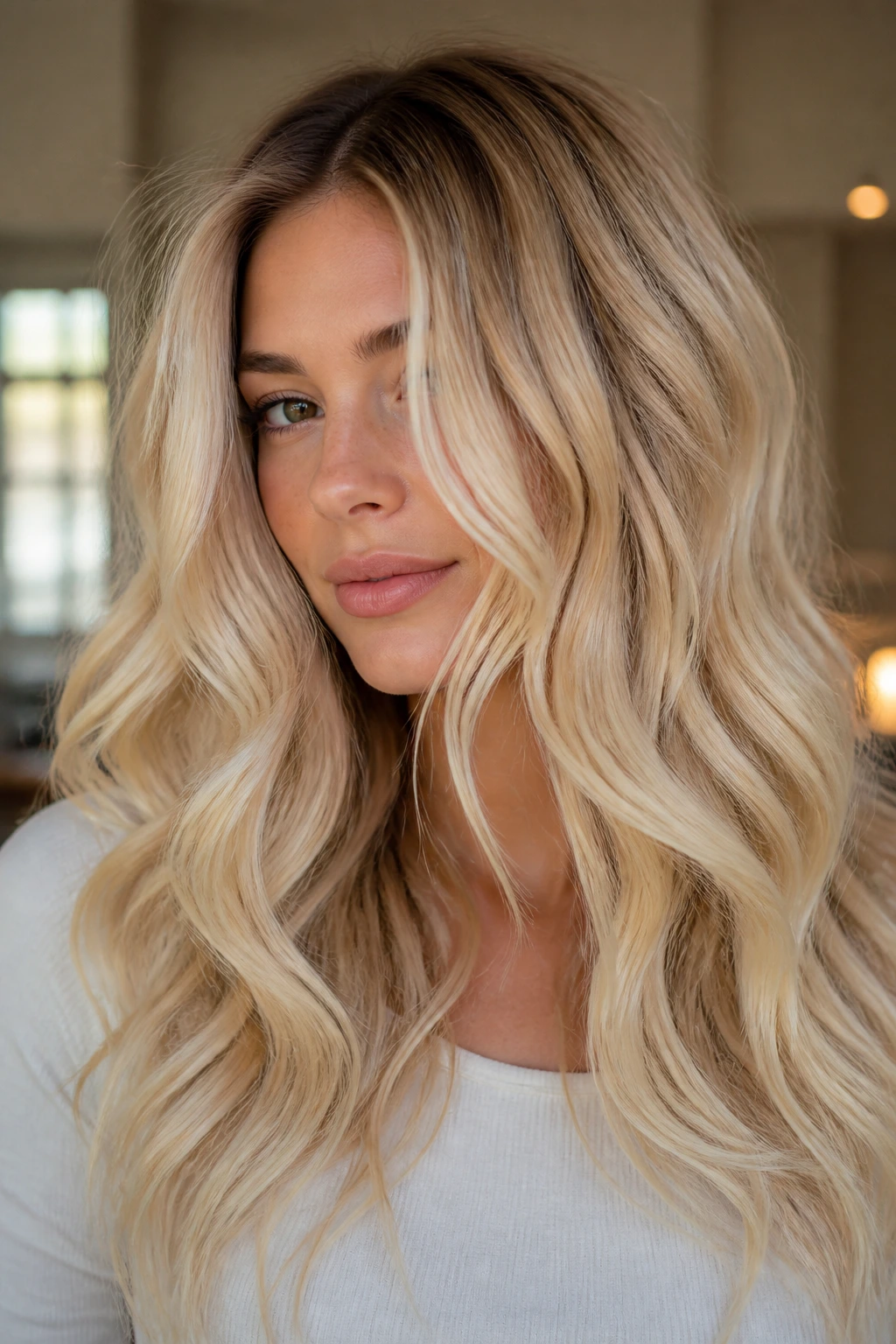
Mermaid waves love dimension, but only if the root isn’t shouting over the rest of the hair. A soft-rooted version keeps the crown a bit deeper and lets the platinum sit through the lengths in loose, sweeping ribbons. The gold shows up around the root and mid-shaft, which makes the brighter ends feel anchored.
Quick Shape Notes
- Long layers help the waves hold.
- The lightest pieces should fall where the wave bends.
- A beige-gold gloss keeps the finish from going too white.
This is one of the better choices for very long hair, where the scale of the color needs to match the length. A single flat tone can make long waves look heavy. A soft root fixes that fast.
22. Creamy Platinum Crop
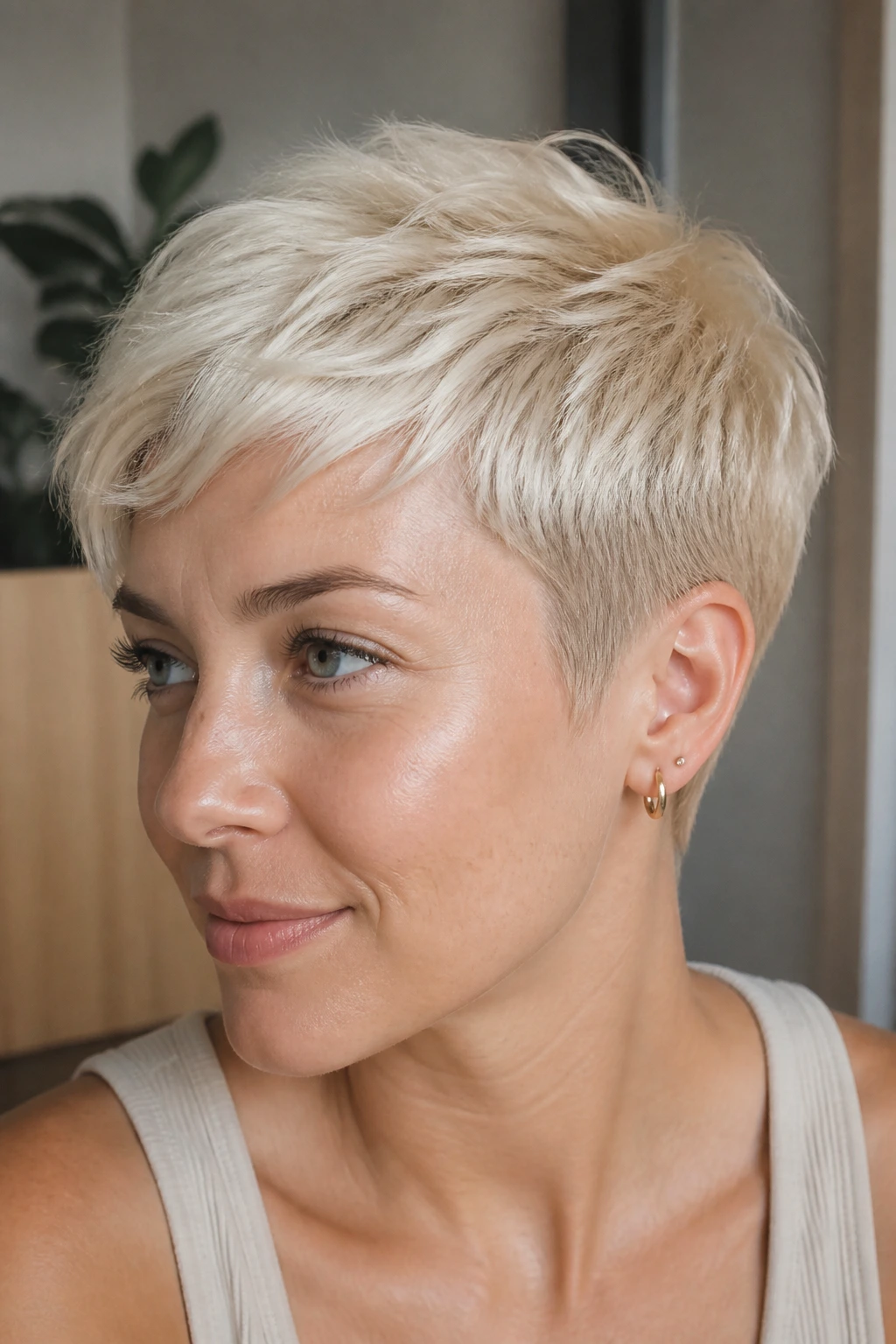
A crop cut needs tone more than length does. Creamy platinum gives the short shape a smooth, polished look without turning it into a white cap. The top can stay the brightest, while the sides and back hold a faint gold-beige note so the haircut still has dimension from every angle.
I’d recommend this if you like short hair but don’t want it to look severe. Pure white platinum can feel sharp on a crop. Creamy platinum keeps the edges softer, and that matters when the haircut is close to the head. A little separation at the crown helps, too. Flat, slicked-down short hair can swallow the nuance.
23. Gold Dust Tips on a Wavy Shag
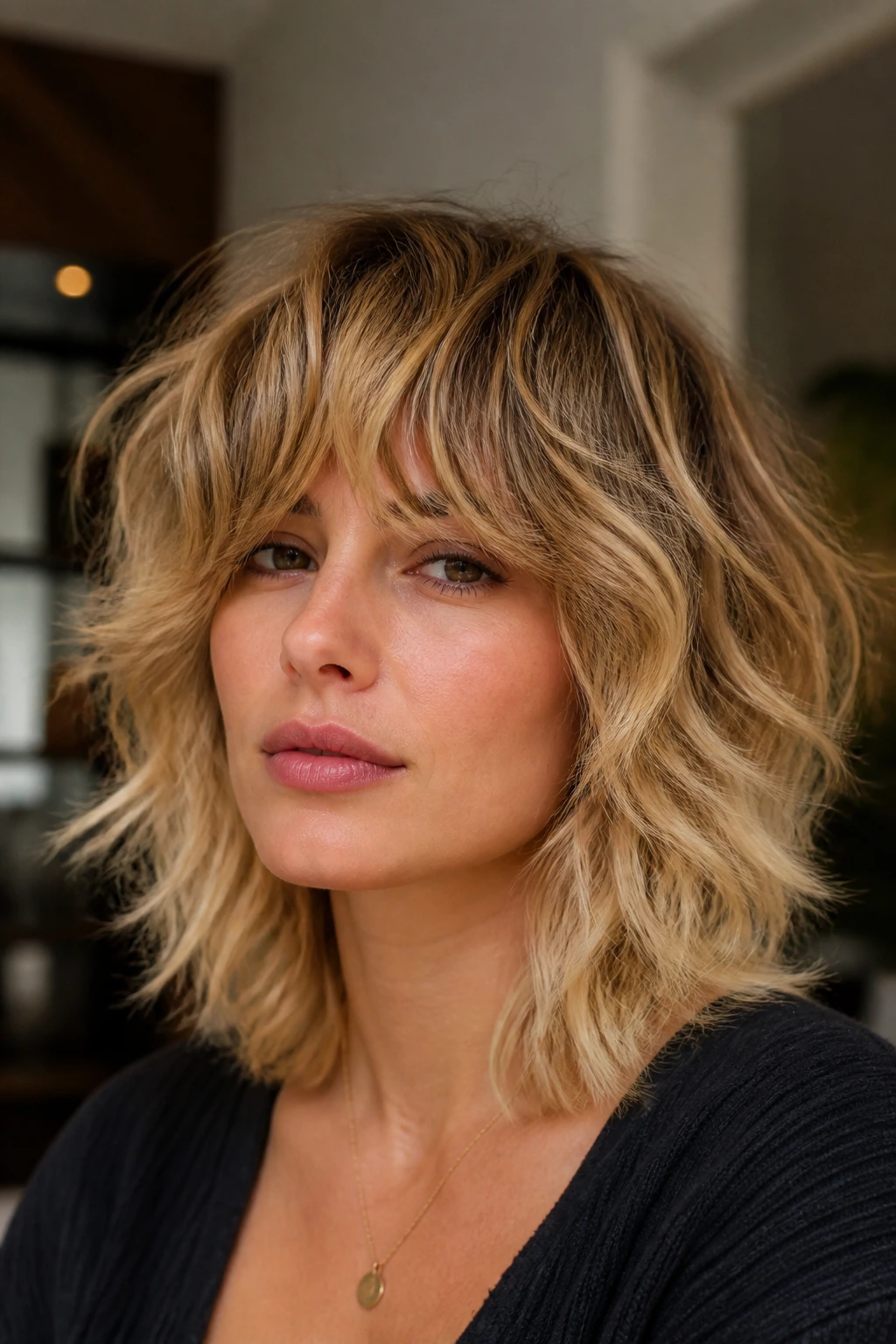
Why put the brightest color at the tips? Because it keeps the shag light at the edges, where the movement lives. Gold dust tips give you a wavy cut that looks sun-touched without forcing the whole head to climb to the lightest level. The root and mids can stay warmer and easier to wear.
This is a smart direction if your hair has some past color or if you want to preserve a little strength in the upper layers. The tips take the lightest blonde, the mid-lengths hold a softer gold, and the cut still feels airy. On a shag, that little contrast is enough. You don’t need more.
24. High-Contrast Money Piece Layers
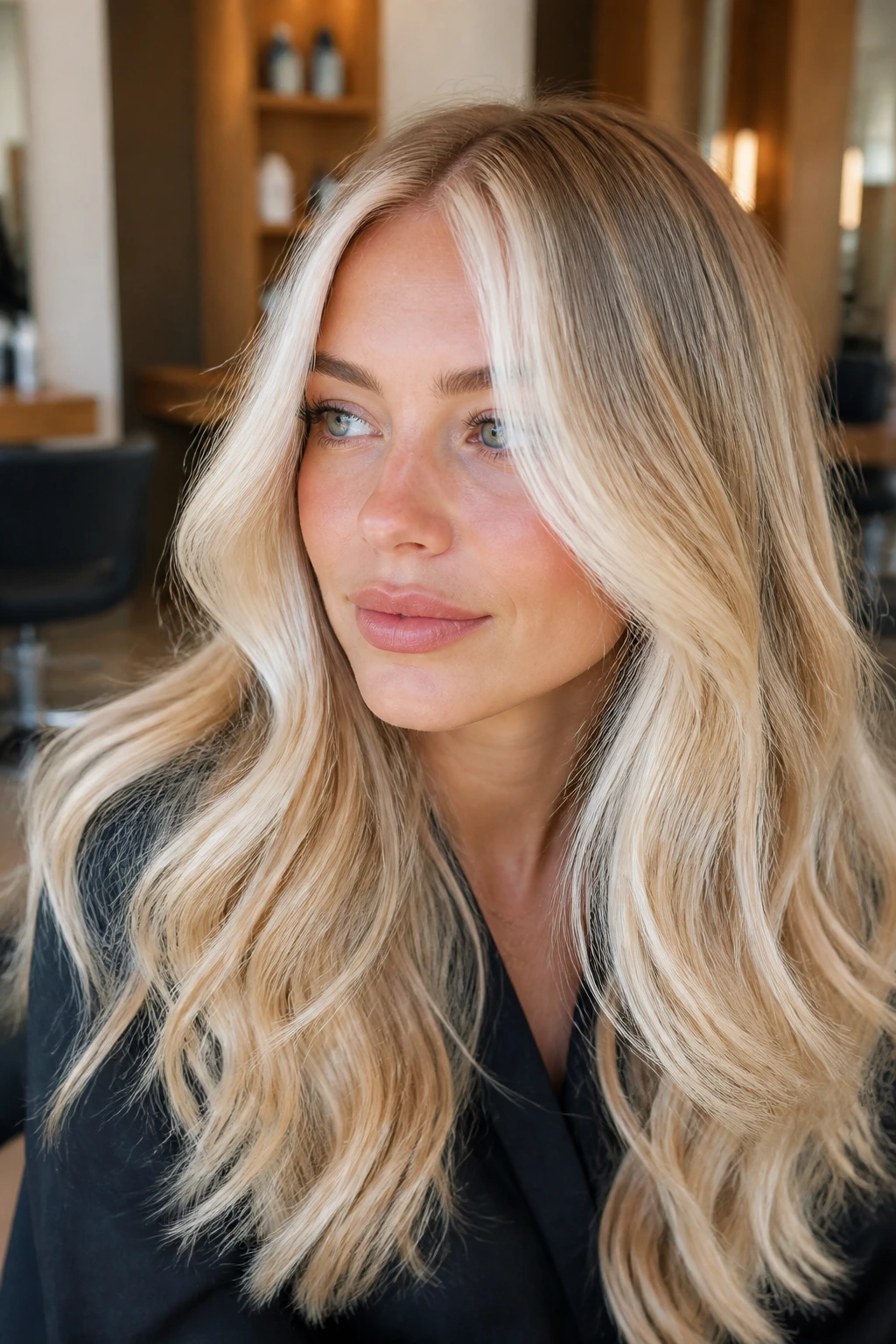
If you wear a center part, this one has teeth. High-contrast money piece layers put the brightest blonde right at the front, then let the rest of the layers sit a touch deeper so the face frame pops hard against the body of the hair. It’s a good choice when you want the blonde to read from across a room.
The contrast works best when the front pieces are carefully sized, not oversized. Too much brightness around the face can overpower the rest of the cut. Keep the money piece narrow near the root and a bit wider at the ends, and the layers will do the rest. This is the sort of blonde that looks especially good when tucked behind one ear.
25. Satin Blonde with a Full Lift
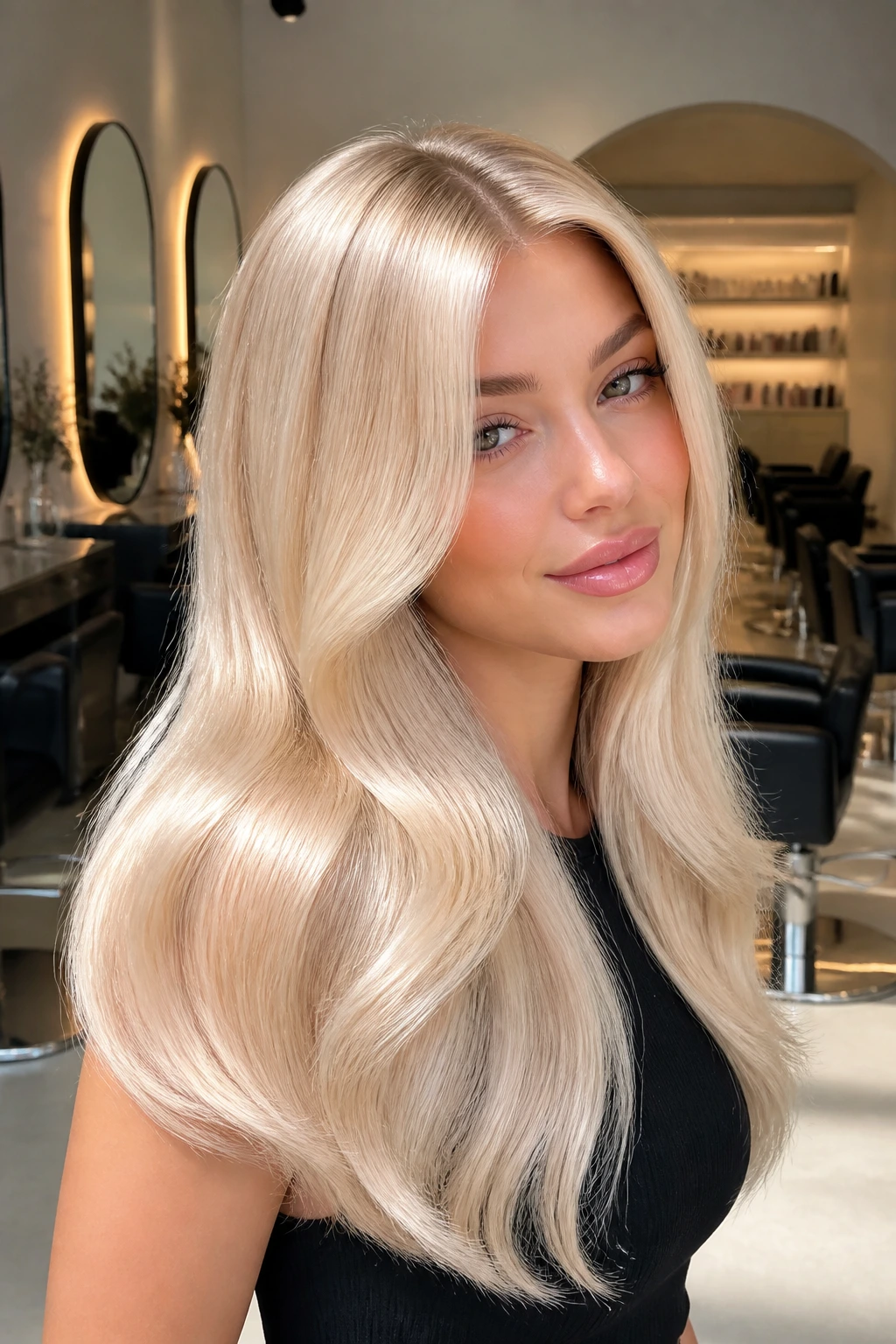
This is the brightest version in the group, and it’s not for someone who wants to forget about maintenance. Satin blonde with a full lift means the head has been taken to a pale level 9 or 10, then finished with a beige-gold gloss so the tone stays soft instead of raw. The satin part matters. It’s the difference between crisp and dry-looking.
I’d choose this if you like clean, high-contrast blonde and you’re fine with regular glossing. On healthy hair, it can look smooth and reflective. On damaged hair, it can go brittle fast, so the condition of the ends matters more here than in any of the softer looks above. It’s the boldest option, and also the one that shows every shortcut.
What Makes Golden Platinum Blonde Read Soft Instead of Brassy
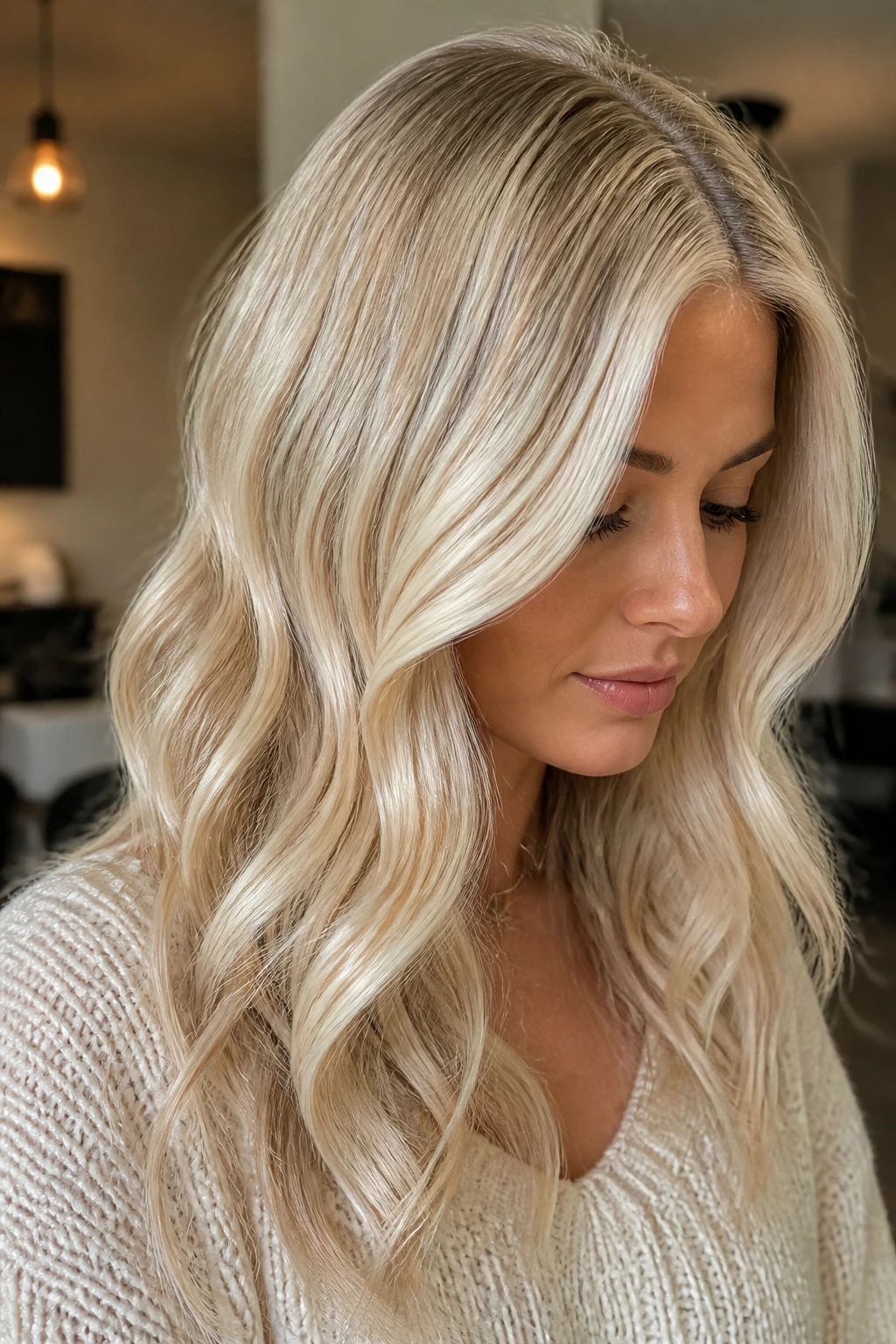
The line between warm and brassy is thinner than most people expect. A good golden platinum blonde doesn’t lean yellow in a cheap way; it leans beige, champagne, cream, or soft honey. That difference is mostly about how much gold stays in the toner and how much yellow was left in the lift. If the hair is lifted cleanly and then glazed with a controlled warm toner, it looks rich. If it’s under-lifted and covered with too much warmth, it looks muddy.
This is why placement matters so much. Platinum at the ends gives the shade clarity. A softer root or a beige mid-shaft gives it depth. The hair never has to be one flat color, and that keeps the finish from looking harsh under fluorescent light, which is where a lot of blondes fall apart.
I also think golden platinum works because it leaves a little life in the color. Pure platinum can look brittle if the cut is too blunt or the hair is too fine. The gold gives the eye something softer to land on. It’s a small shift, but on a head of hair, small shifts do the heavy lifting.
Tools Your Colorist Will Reach For
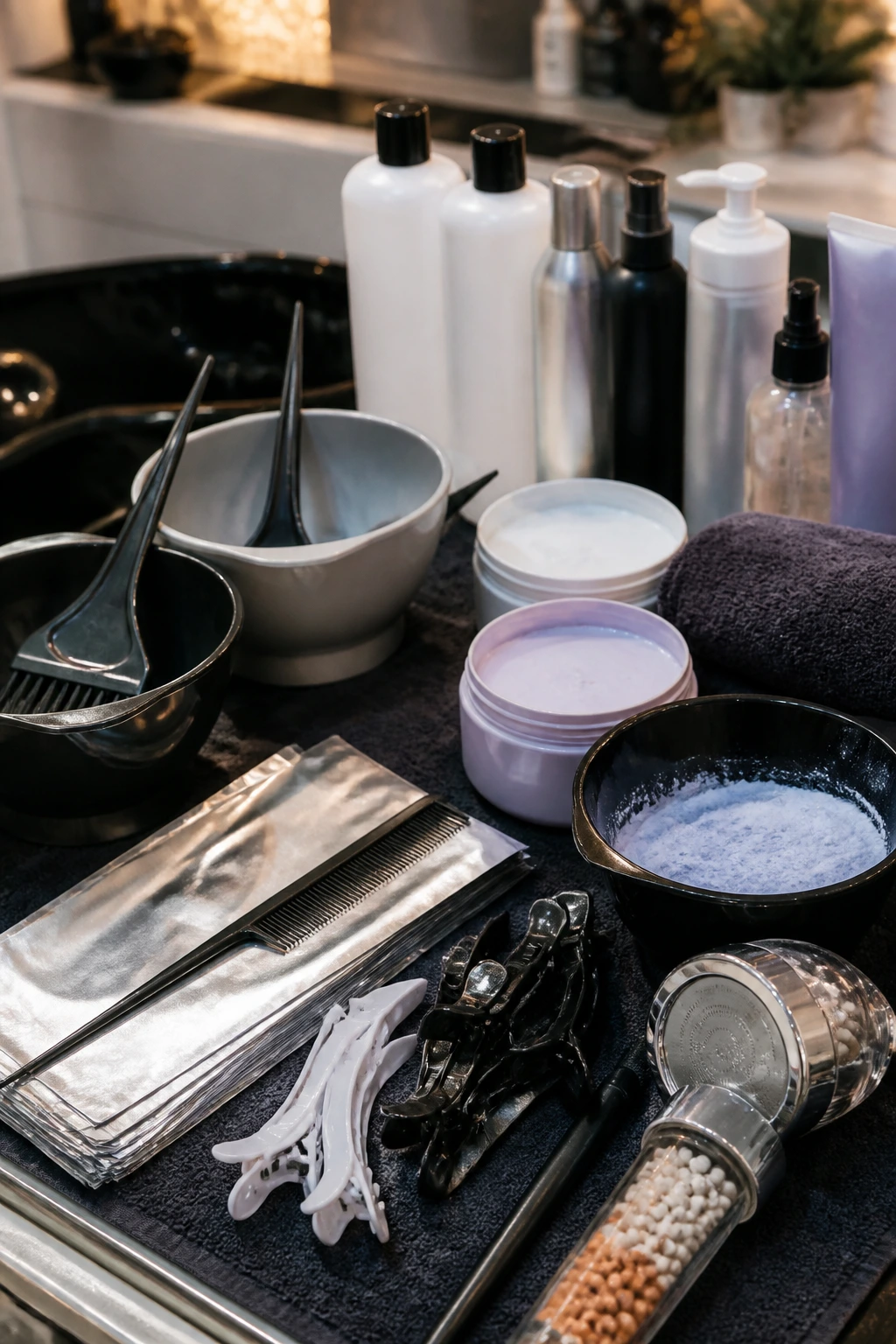
- Tint bowls and brushes: These matter for clean root shadow, money pieces, and gloss placement.
- Foils or balayage boards: Foils give you lift and control; balayage boards help keep painted pieces smooth and even.
- Tail comb: Good sectioning starts here, especially around the part and hairline.
- Section clips: Thick hair needs to stay out of the way so the color lands where it should.
- Lightener and developer: The level of lift is the whole game for platinum; the wrong strength can chew up the hair fast.
- Toner or gloss: This is where the shade becomes golden platinum instead of just pale yellow.
- Bond-building treatment: Useful when the hair has been lifted more than once, because it helps the strands feel less fragile.
- Purple shampoo: Use it carefully. Too much and the blonde goes dull.
- Color-safe mask: A good mask gives slip back to dry ends.
- Microfiber towel: Less friction, less frizz, less breakage.
- Heat protectant: Non-negotiable if you blow-dry or iron the hair.
- Shower filter: Optional, but helpful if hard water leaves a dull film on light hair.
How to Ask for Golden Platinum Blonde at the Salon
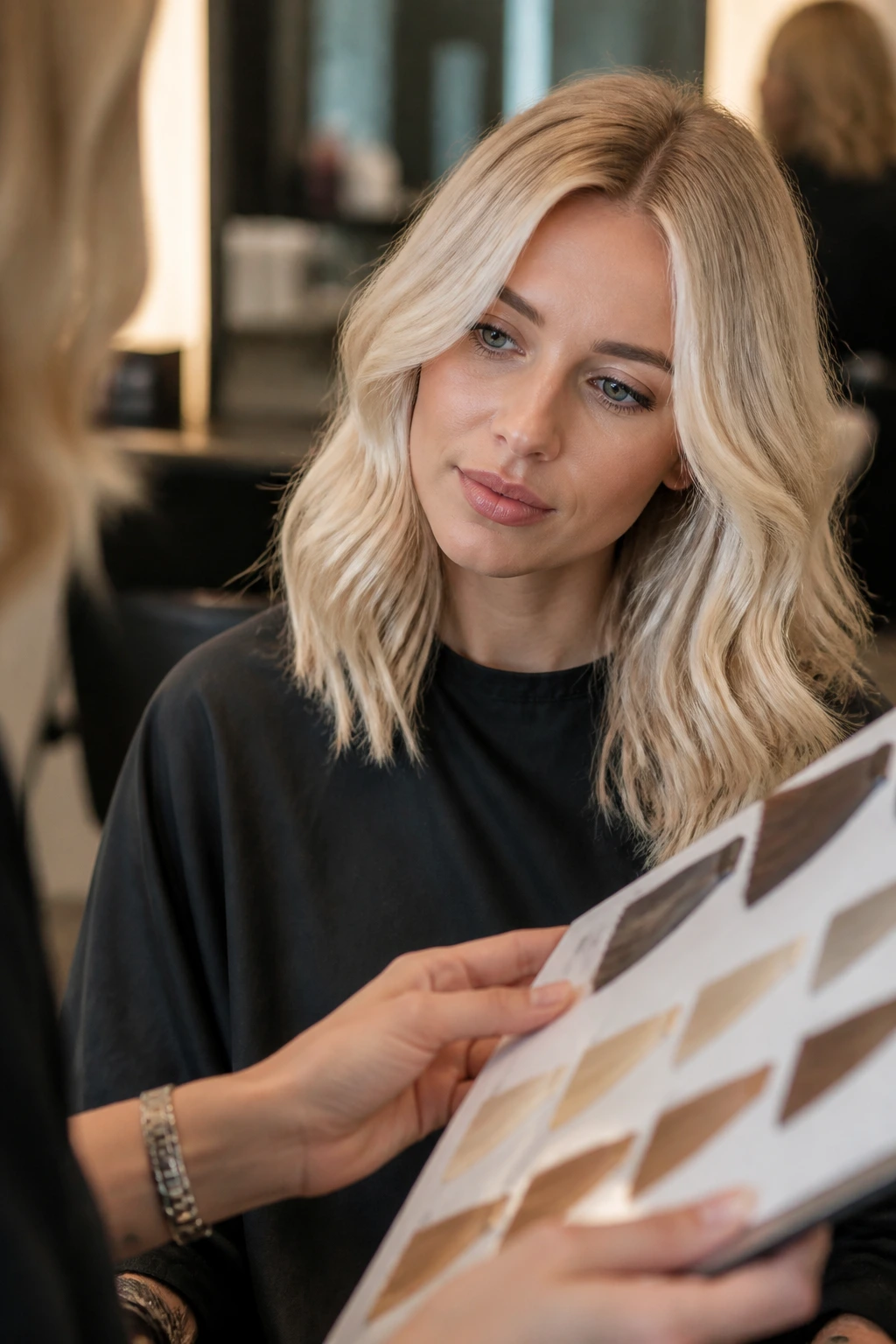
Bring photos, but bring the right photos. One picture for the tone, one for the placement, and one for the root depth is better than a single image that only looks good because of lighting. If you say you want “golden platinum,” a colorist may still need to know whether you mean beige-gold, champagne-gold, or a warmer buttery finish. Those are not the same thing, and they behave differently once the hair is washed a few times.
Tell them how you wear your hair most days. If you live in waves and clips, bright face-framing pieces matter more than an even overall lift. If you wear a center part, a money piece can do more than a full-head foil. If your hair is porous or already lightened, say that up front. Porosity changes how toner grabs, and it can make the blonde go cooler or duller faster than expected.
A good consultation usually includes a talk about depth at the root, how much warmth you want left in the finish, and how often you’re willing to come back. If you hate upkeep, ask for a shadow root or softer highlight placement. If you don’t mind seeing the salon often, you can push the platinum harder and keep the gloss cleaner.
How to Style the Color So the Placement Shows Up
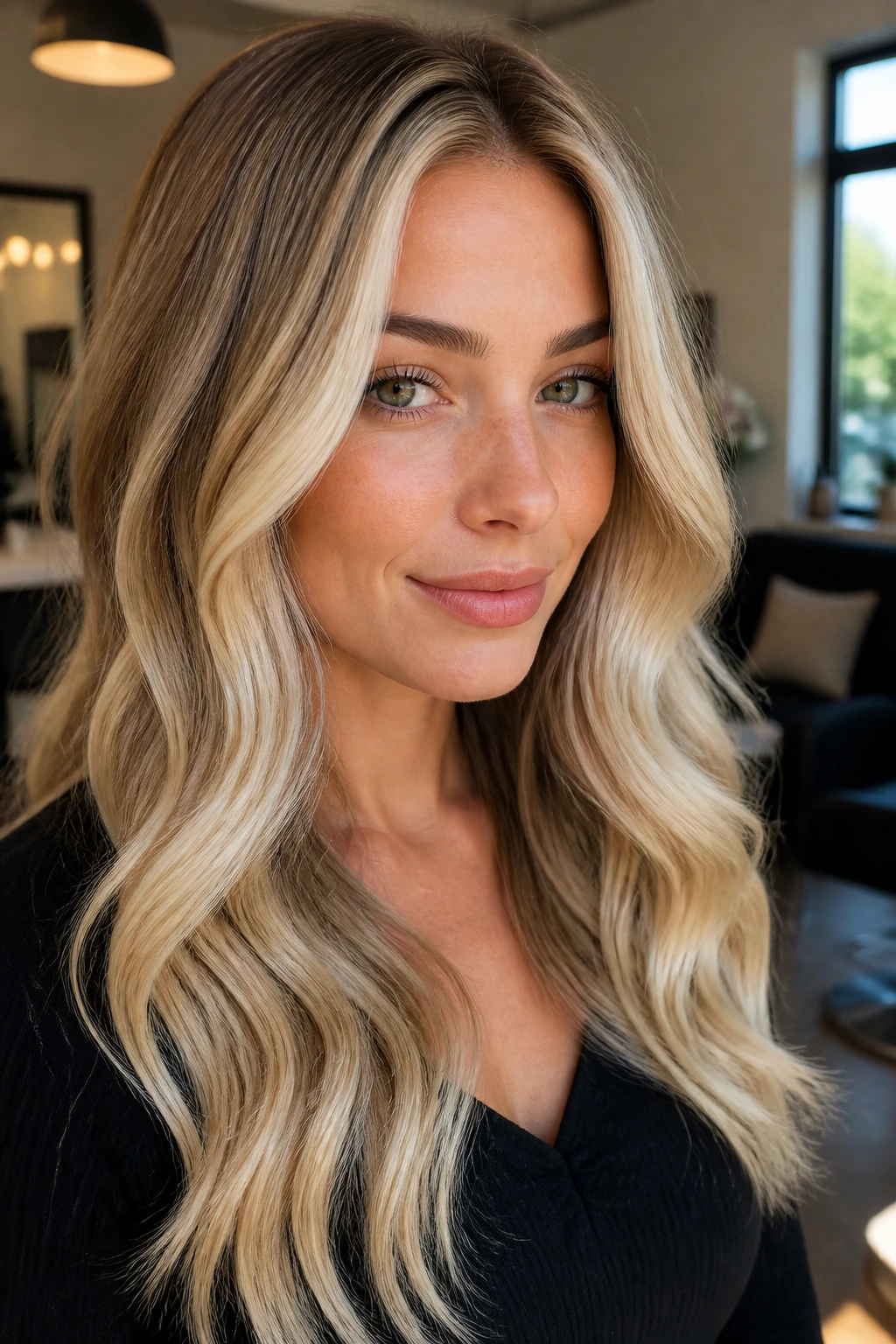
Loose waves are the easiest way to let golden platinum read the way it should. A 1 to 1.25-inch curling iron, wrapped away from the face on one side and toward the face on the other, gives the blonde enough bend to show ribbons instead of a single flat sheet. Keep the ends out on a few sections. That little irregularity makes the color look lived in.
Sleek styling does the opposite, and I like that too. A straight blowout with a center part puts the money piece and root shadow on full display. If the color has a soft beige base and brighter ends, the contrast becomes obvious. This is the style that exposes bad toner fastest, though, so if the blonde looks yellow under a mirror, a sleek finish will tell on it.
Updos and half-up styles are useful when you want the front pieces to do the work. Pull the hair away from the face, leave the brightest panels loose, and the whole color family suddenly looks more expensive. The trick is not to drown the hair in oil or heavy cream. Platinum shows product buildup fast, and the shine should come from the color, not a greasy surface.
Common Mistakes That Turn the Blonde Muddy or Harsh
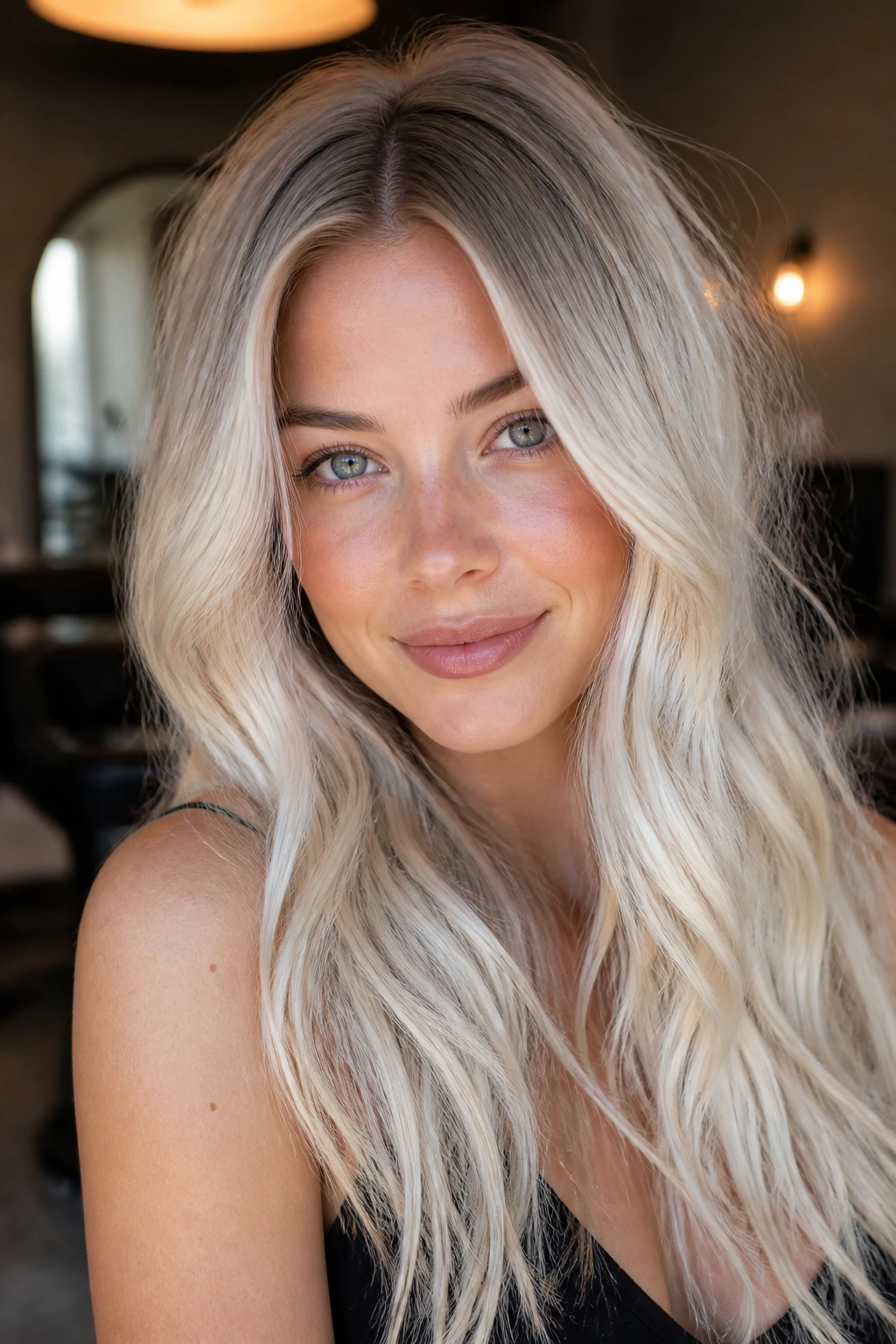
The first mistake is over-toning. If you leave a violet or ash gloss on too long, the blonde can go flat and gray instead of golden-platinum. The fix is simple: watch the toner like a hawk and rinse when the warmth lands where you want it, not five minutes after.
Another problem is asking for too much brightness at the root. A root that’s lifted all the way to platinum can look clean in a chair and rough two weeks later. A little shadow buys you softness. It also hides regrowth better, which is useful unless you enjoy constant upkeep.
Porous ends are a separate headache. They grab pigment, go dull fast, and can make the whole style look older than it is. A bond-building mask, less heat, and a gentler gloss schedule help a lot. So does trimming the ends before they start fraying into pale little tassels.
Hard water is the quiet villain. Mineral buildup can make even a good blonde look smoky or yellowed. If your water is rough, a shower filter and an occasional clarifying wash keep the tone from going sticky and dark.
Variations and Adaptations to Try
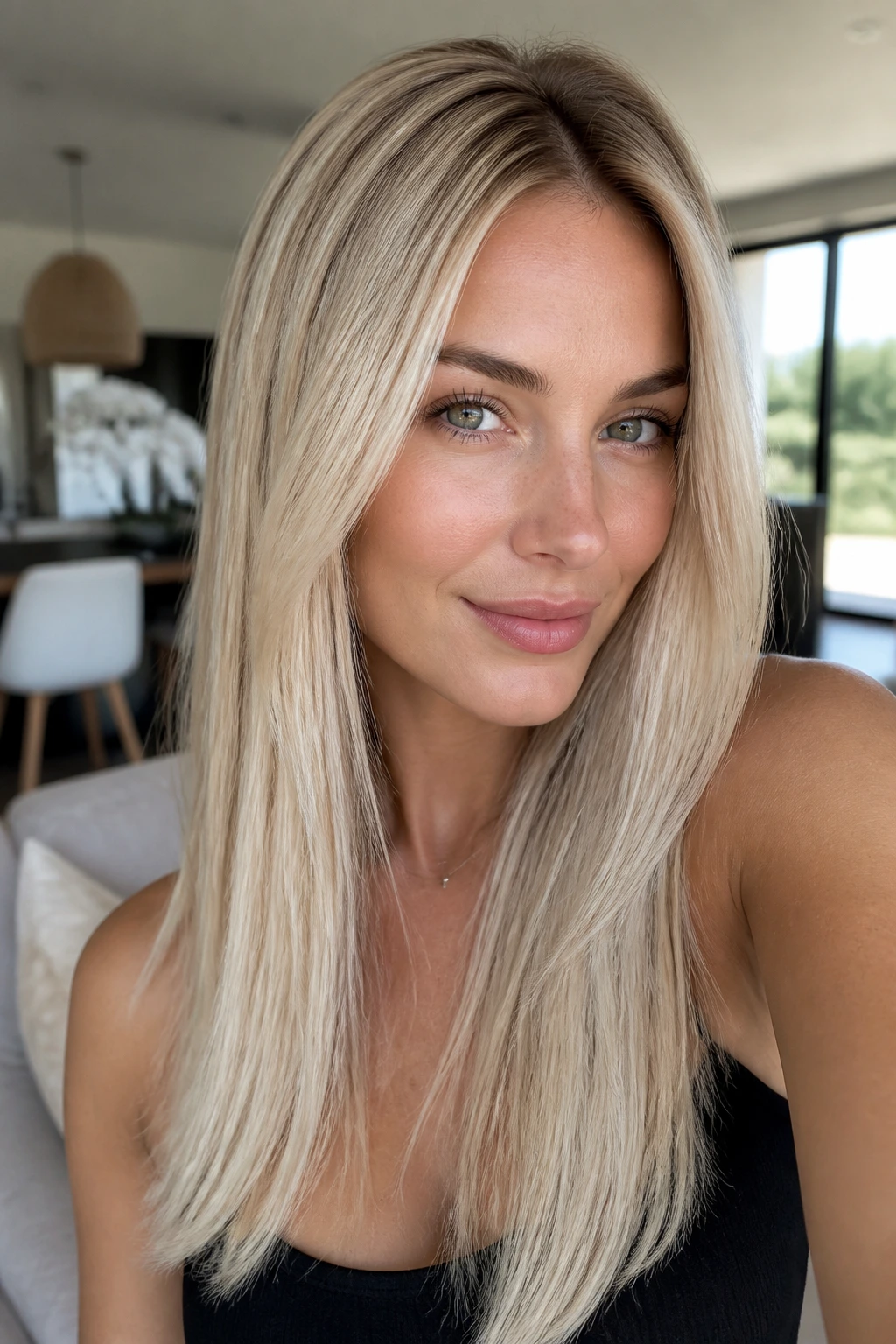
Champagne Beige Melt: This version keeps the tone soft and creamy, with less obvious gold and more pale beige at the mids. It’s a good choice if your skin runs neutral or cool and you want warmth without yellow.
Ice-Edge Blonde: Here the ends go cooler and brighter while the root stays softly golden. It’s sharper than the rest of the group and looks best on straight hair or clean waves with a strong finish.
Curly Ribbon Blonde: This one places the brightest pieces only where the curl pattern opens up. It saves the interior from over-lightening and gives dense curls a more natural-looking glow.
Low-Maintenance Rooted Blonde: The root stays a shade or two deeper than in the other versions, which buys you more time between appointments. The color still reads bright, but the grow-out is quieter.
Short-Cut Spark: For pixies and crops, concentrate the lightest blonde at the top and fringe, then leave a touch more gold at the sides. It keeps short hair from going flat or chalky.
Keeping the Tone Fresh Between Appointments
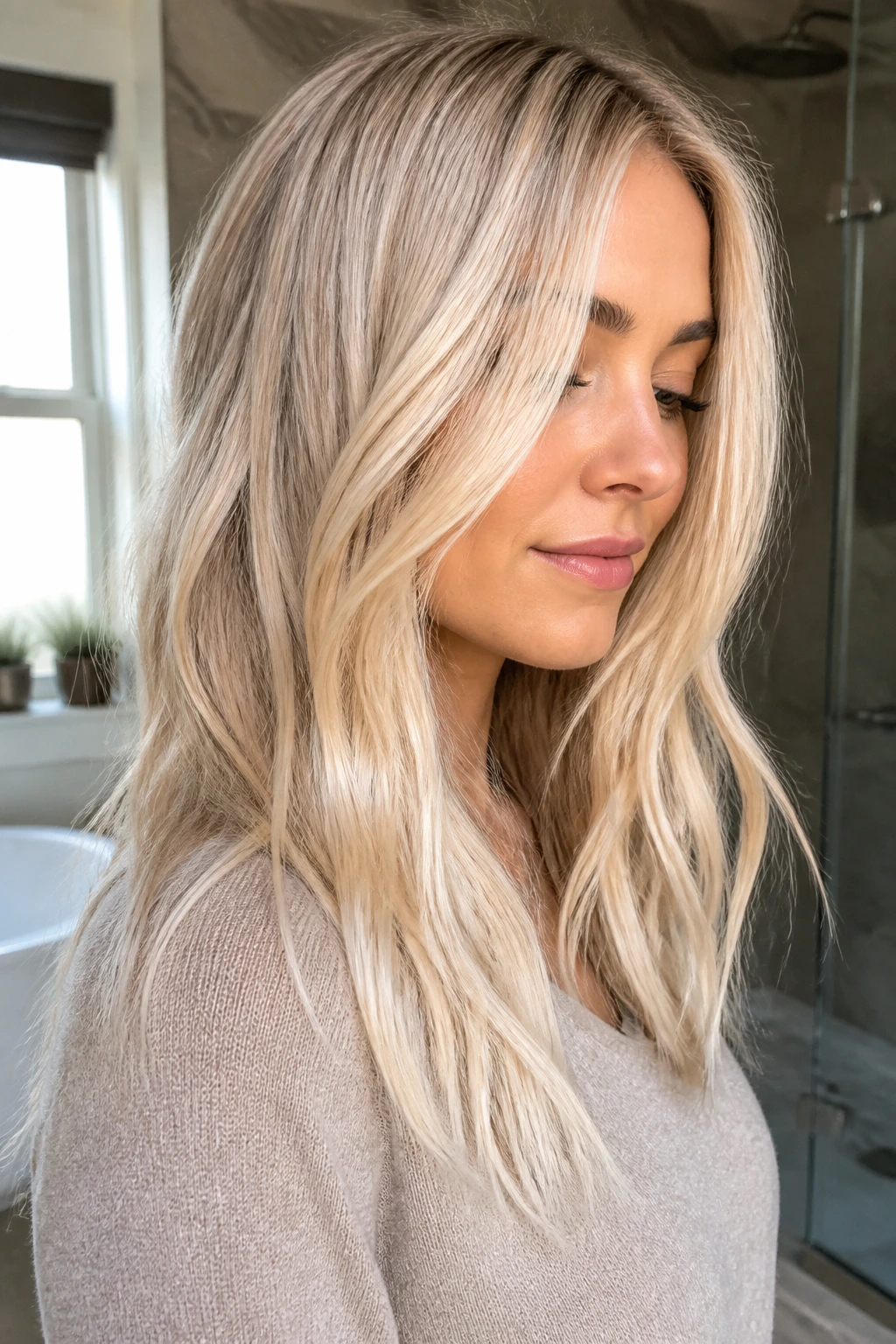
A blonde this light needs a routine, not just a good salon visit. Most people do well washing two or three times a week with a color-safe shampoo, then using purple shampoo only when the hair starts drifting too yellow. If your golden platinum has a lot of warmth left in it, use the purple stuff sparingly. Once a week is often enough. Overdoing it can erase the gold you actually wanted.
Glosses matter more than people think. A quick beige-gold gloss every 4 to 6 weeks keeps the color from turning brassy or dull. If your hair lifts quickly and grabs toner fast, you may need it sooner. If the hair is healthy and the tone holds, you can stretch that out a bit. The point is to refresh the finish before it starts looking tired.
Heat styling should stay under control. Use a protectant every time, and keep the iron on a moderate setting instead of roasting the hair until it squeaks. Bleached blonde does not forgive reckless heat. A deep-conditioning mask once a week helps the ends keep their slip, and a trim every 8 to 10 weeks keeps the brighter tips from turning scruffy.
Frequently Asked Questions
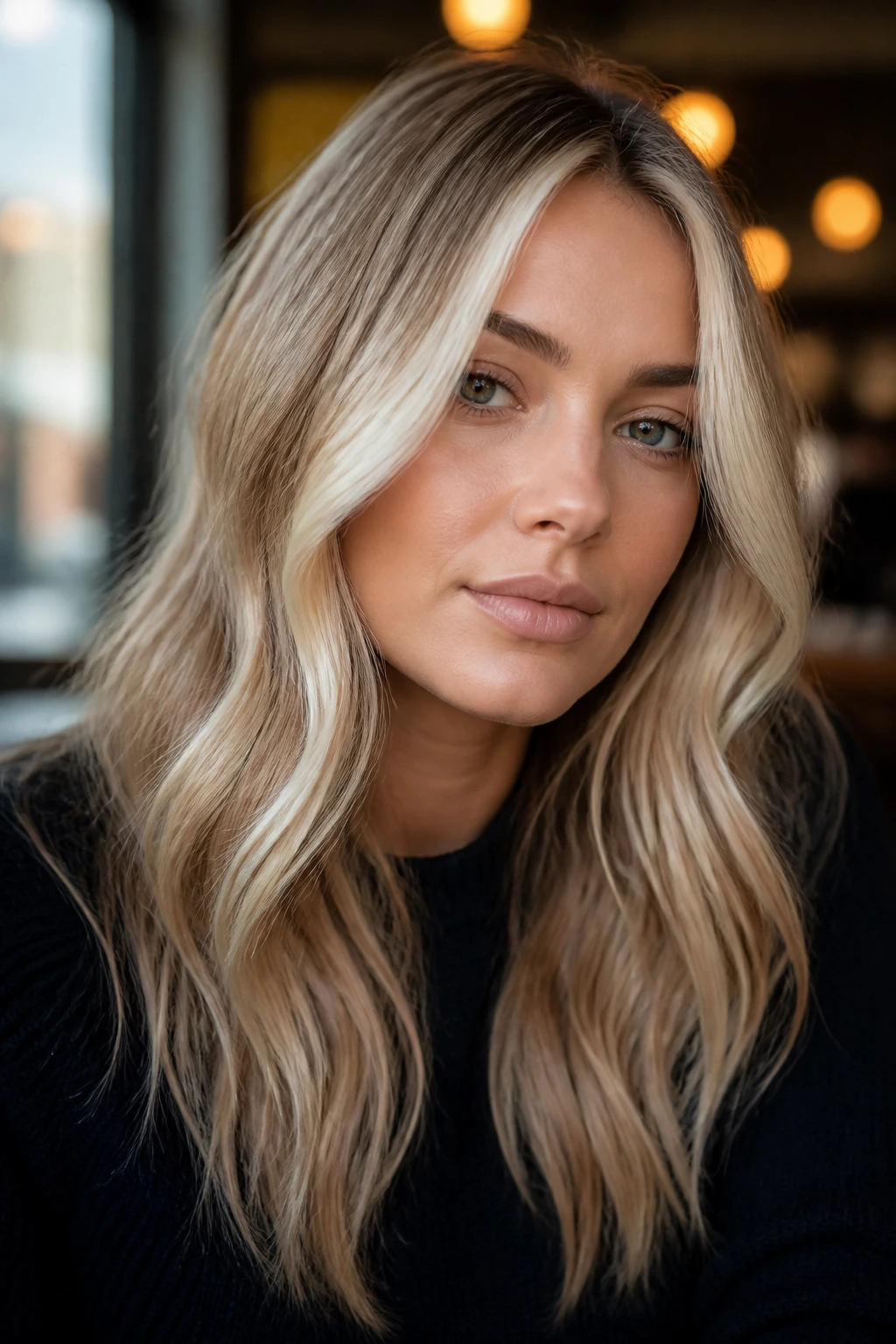
Can golden platinum blonde work on dark hair?
Yes, but usually not in one go. Dark hair often needs more than one lift session to reach a clean level 9 or 10, and rushing it can leave the strands rough or uneven. The golden part is the easy bit; the clean lift is what takes patience.
Is this shade lower maintenance than icy platinum?
Usually, yes. A little gold or beige in the tone makes regrowth feel softer and hides minor fading better than a stark icy finish. You’ll still need glossing and moisture, though, because light hair is light hair.
What toner keeps the blonde golden instead of yellow?
Ask for beige-gold, champagne, or soft honey rather than a straight yellow or heavy ash. The right toner should clean up the brass without stripping all the warmth out of the hair. If it looks banana-like in the chair, it’s too warm.
Can I get this look without bleach?
Only if your hair is already very light. On darker bases, the platinum part usually needs lightening to show up properly. You might get a softer gold-blonde effect without bleach, but not the full bright contrast.
Does golden platinum work on curly hair?
It can look excellent on curls because the curl pattern breaks the color into ribbons. The key is respecting the shape of the curl and not over-processing the interior. Too much lift in the wrong spots can make curls look frizzy and dry.
How often should I refresh the gloss?
Every 4 to 6 weeks is a good starting point for most people. If your hair is porous or you swim often, the tone may fade faster. If the blonde is healthy and the gold is subtle, you can sometimes go a little longer.
What if my blonde turns too yellow?
Use a gentle purple shampoo once or twice, not every wash. If it still looks too warm, a salon gloss can clean it up more precisely than at-home products. Yellow often means the toner has faded, not that the hair has gone bad.
Will this color make fine hair look thinner?
It can, if the tone is too flat. Fine hair usually looks fuller when the roots keep a little depth and the lightest blonde is placed around the face, ends, or top layers. One solid pale color can show the scalp more than a dimensional mix does.
The Soft Side of Bright Blonde
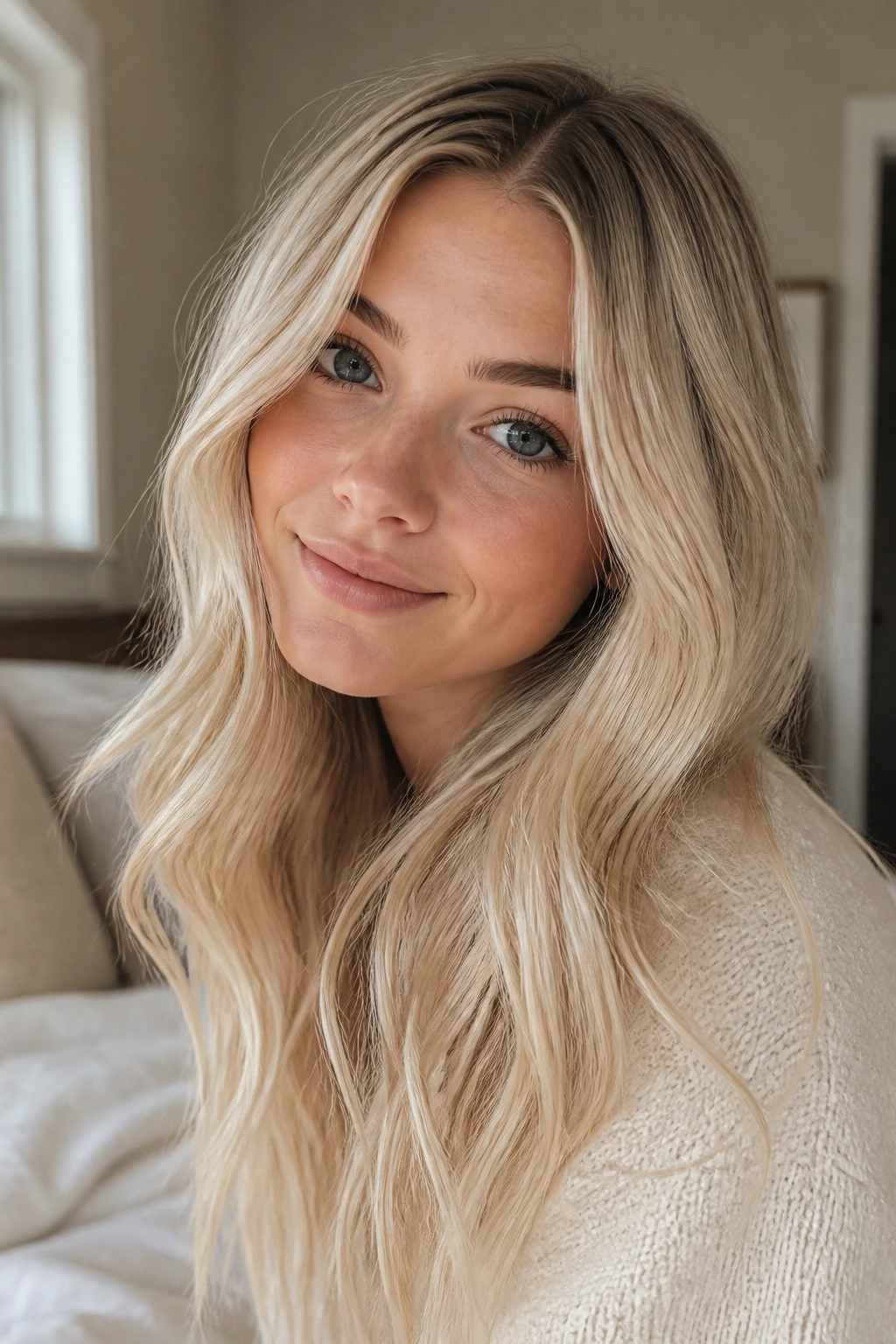
The best golden platinum blonde hair color ideas don’t fight warmth; they organize it. That’s the difference between a blonde that feels icy and one that feels wearable for more than a week. A soft root, a clean lift, and a beige-gold gloss can do more for the hair than chasing white-blonde perfection ever does.
What I like about this shade family is how much room it gives you. You can go bright at the face, low-key at the root, creamy through the mids, or almost white at the ends and still stay inside the same lane. That range is what makes the color useful, not just pretty in a photo.
Pick the version that matches how you actually wear your hair, and let the tone do the rest.