



Hair color ideas for dark skin and square faces work best when they do two jobs at once: they need to look rich against deep melanin, and they need to soften the straight lines of a strong jaw. A shade can be gorgeous on a swatch card and still feel off once it sits around the face, especially if it’s too flat, too ashy, or placed in a hard stripe that stops right at the widest part of the jaw. That’s the part most people miss.
The sweet spot is usually dimension. Not fuss. Not a shouty color block from root to tip. A dark base with a reflective finish, a berry-toned brown that catches light at the bend of a curl, or a caramel ribbon that starts at the cheekbone can make the whole face look more open and fluid. On square faces, that softness matters. On dark skin, so does depth. A weak color can look dusty fast. A good one looks expensive because it has movement, and movement is what keeps the face from looking boxed in.
That’s why the best hair color ideas for dark skin and square faces are rarely the loudest ones in the room. They’re the ones that know where to sit. A face-framing piece near the temples, a shadow root, a glossy finish, a copper tone with enough brown in it to stay grounded — these are the kinds of choices that do real work.
Why These Shades Earn Their Place
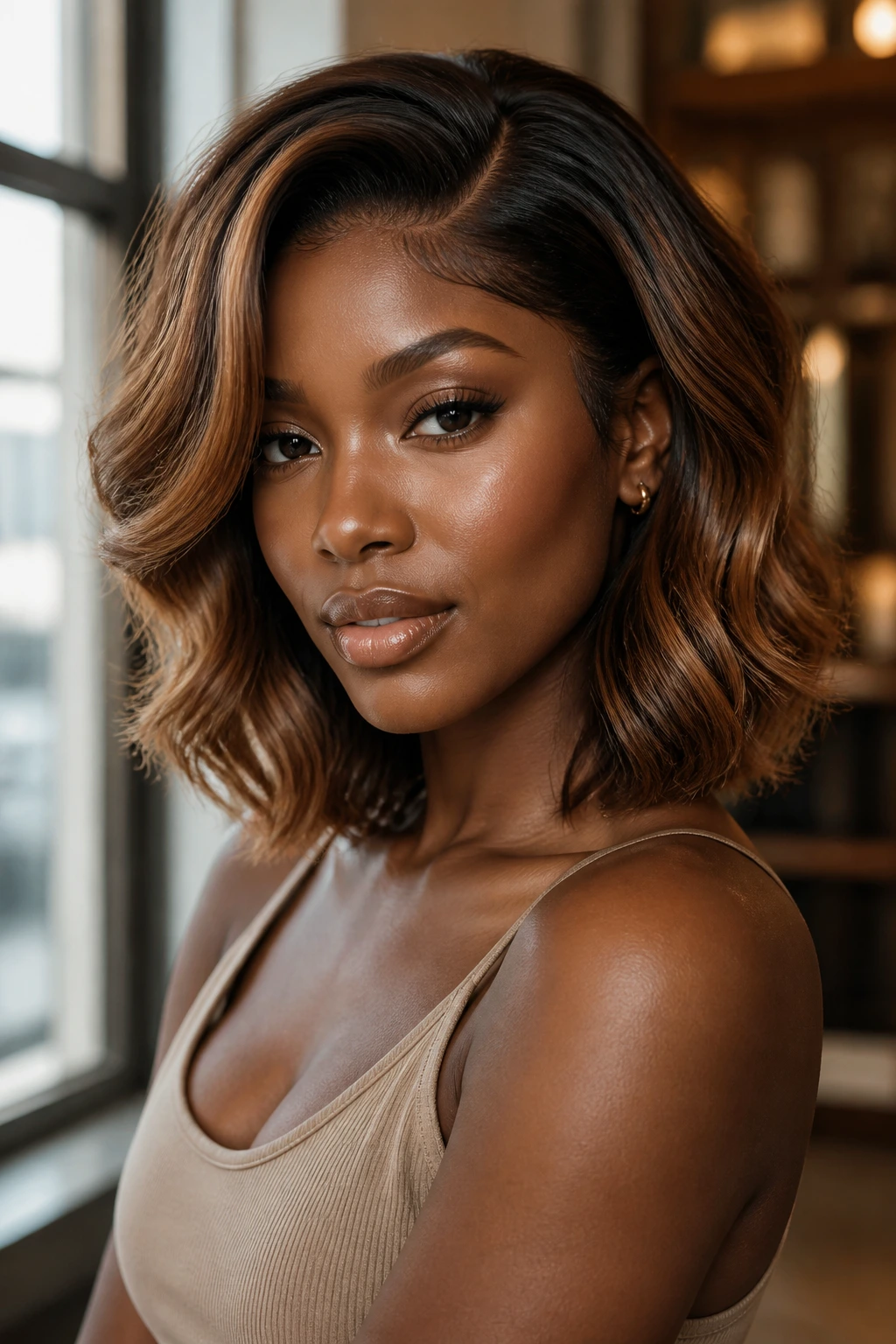
- Depth first: Dark skin usually looks richest when the color keeps a little depth at the root instead of trying to jump straight to pale contrast.
- Softness at the edges: Square faces often look better when brightness lands around the temples, cheekbones, and collarbone, not in one hard line across the jaw.
- Warmth that flatters: Honey, bronze, copper, cinnamon, and mahogany shades usually echo the warmth in deeper complexions instead of fighting it.
- Gloss matters: A smooth, reflective finish shows off dimension and keeps brown tones from looking muddy under indoor light.
- Low-lift options exist: You do not need high-bleach drama to get a strong result; sometimes a glaze, balayage, or money piece does the job better.
- Contrast should feel shaped, not striped: The best colors make the face look more sculpted in a gentle way. Hard, blocky placement tends to do the opposite.
How Undertone and Jawline Work Together
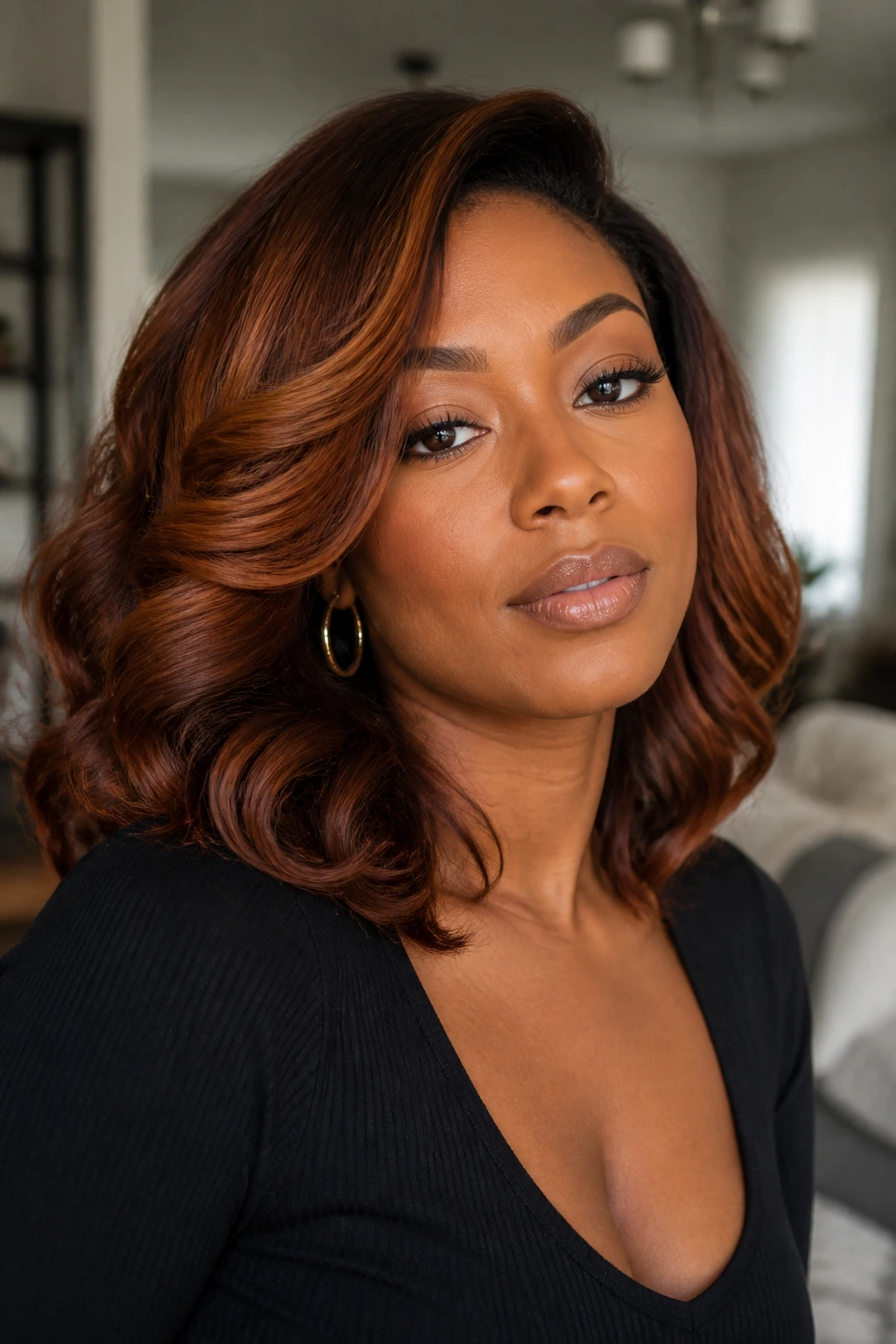
A lot of bad hair color happens because people shop by name instead of by behavior. “Chestnut,” “caramel,” and “auburn” sound friendly, but the undertone inside the dye decides whether the result looks lush or flat. On dark skin, warm undertones usually love gold, copper, bronze, and red-brown tones. Cool undertones can take blue-black, plum, espresso, and smoky brown without the face looking red or washed out.
The square face piece is simpler, but people overcomplicate it. Sharp corners soften when the eye has somewhere to travel. That means curved curls, side parts, layered ends, and brighter pieces that land above or below the jawline. A blunt color line across the widest part of the face can make the jaw look even stronger. A ribbon that bends around it does the opposite.
Texture matters too. Coily hair, stretched curls, silk presses, braids, and locs all reflect color differently. A copper on tight curls reads more dimensional than the same copper on pin-straight hair. A blue-black gloss can look almost liquid on a silk press. Keep that in mind while the list unfolds, because placement and finish are doing as much work as the shade itself.
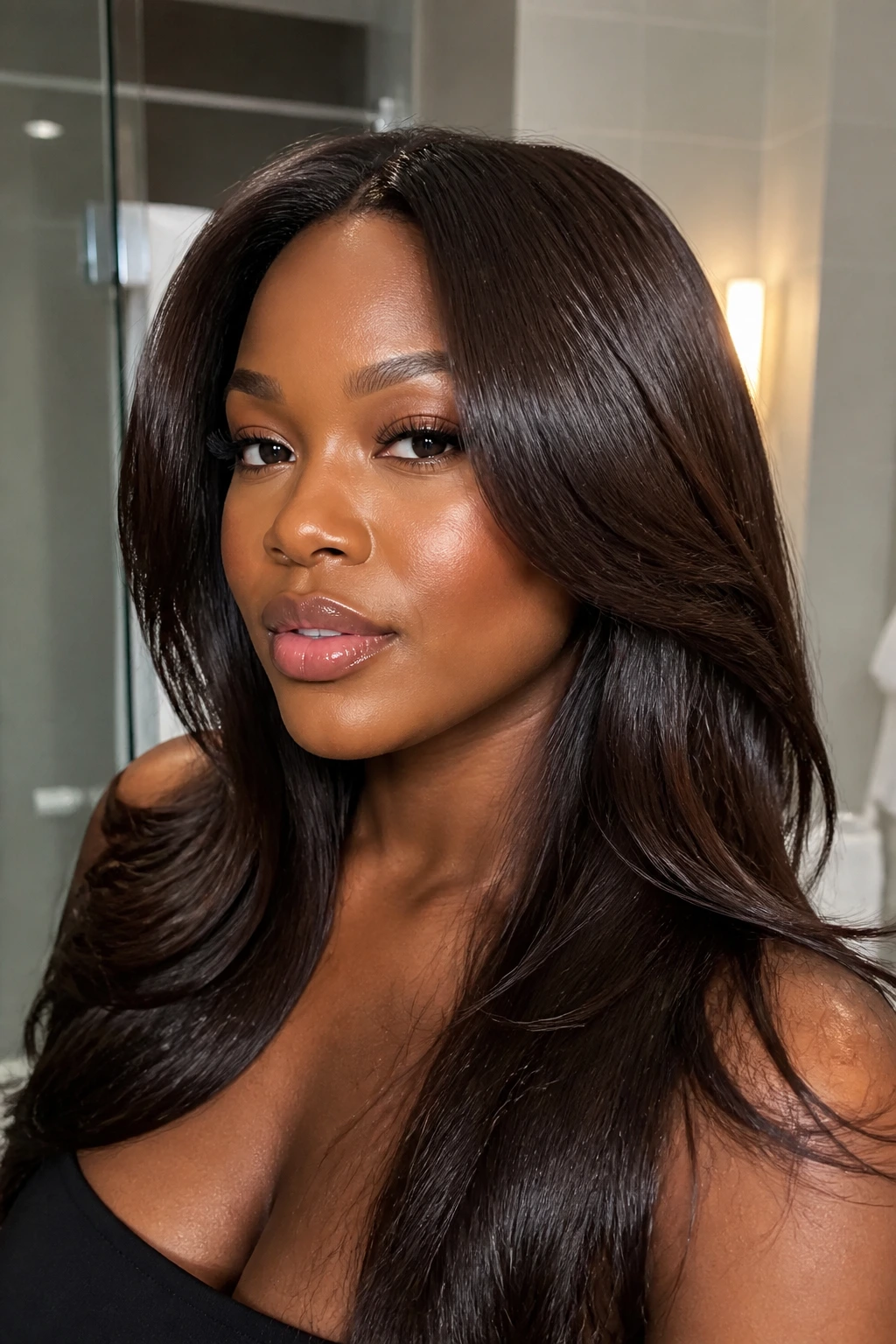
1. Jet Black Gloss
Jet black is not boring when it has shine. On dark skin, a true black gloss can look lacquered and deliberate, almost like patent leather, and the trick is the finish. If the hair is healthy and reflective, the color gives the face a clean frame without flattening it. For square faces, that crisp frame works best when the cut has movement — long layers, soft coils, or a curved blowout keep the look from feeling too boxy.
This shade is especially strong if your natural hair is already dark and you want the cleanest possible upgrade. Ask for a blue-based black rather than a smoky brown-black if you want that glossy, ink-like depth. Pair it with a side part or face-framing layers, and the hard line of the jaw starts to feel more balanced.
2. Espresso Brown with Mirror Shine
Espresso brown sits right in the sweet spot between black and chocolate, which is why it flatters so many dark complexions. It has enough depth to look rich, but the brown softness keeps it from feeling severe. On square faces, espresso works well when the light lands around the cheekbones instead of sitting all at the ends.
The mirror-shine part is the dealbreaker. Matte espresso can look flat under fluorescent light, and flat is not the goal here. A gloss treatment or a color with a warm brown finish gives the style a smoother surface, which makes the face look more lifted. It’s a quiet color, but it has range.
3. Blue-Black Sheen
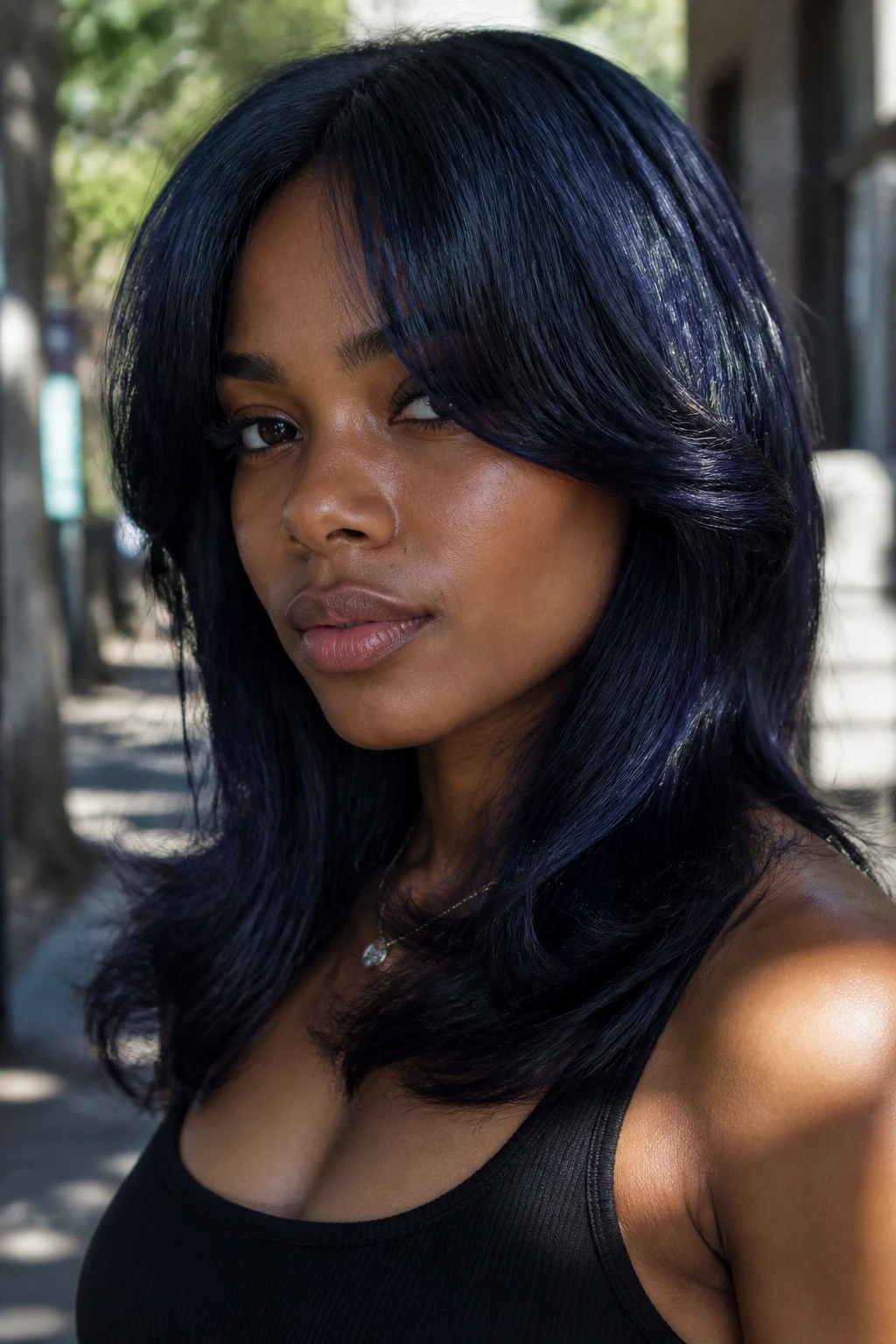
Blue-black is one of those colors that looks understated until sunlight hits it. Then the blue cast wakes up. On dark skin, that cool shimmer can make the complexion look clearer and more polished, especially if your undertone leans neutral or cool. It is sharper than espresso, but still rooted enough to stay wearable.
For a square face, blue-black works best with movement near the front. Curtain bangs, a soft bend in the ends, or long pieces that curve under the chin help the color soften the jawline. If the cut is blunt and the color is blunt, the whole look can feel hard. Give it one point of softness, at least.
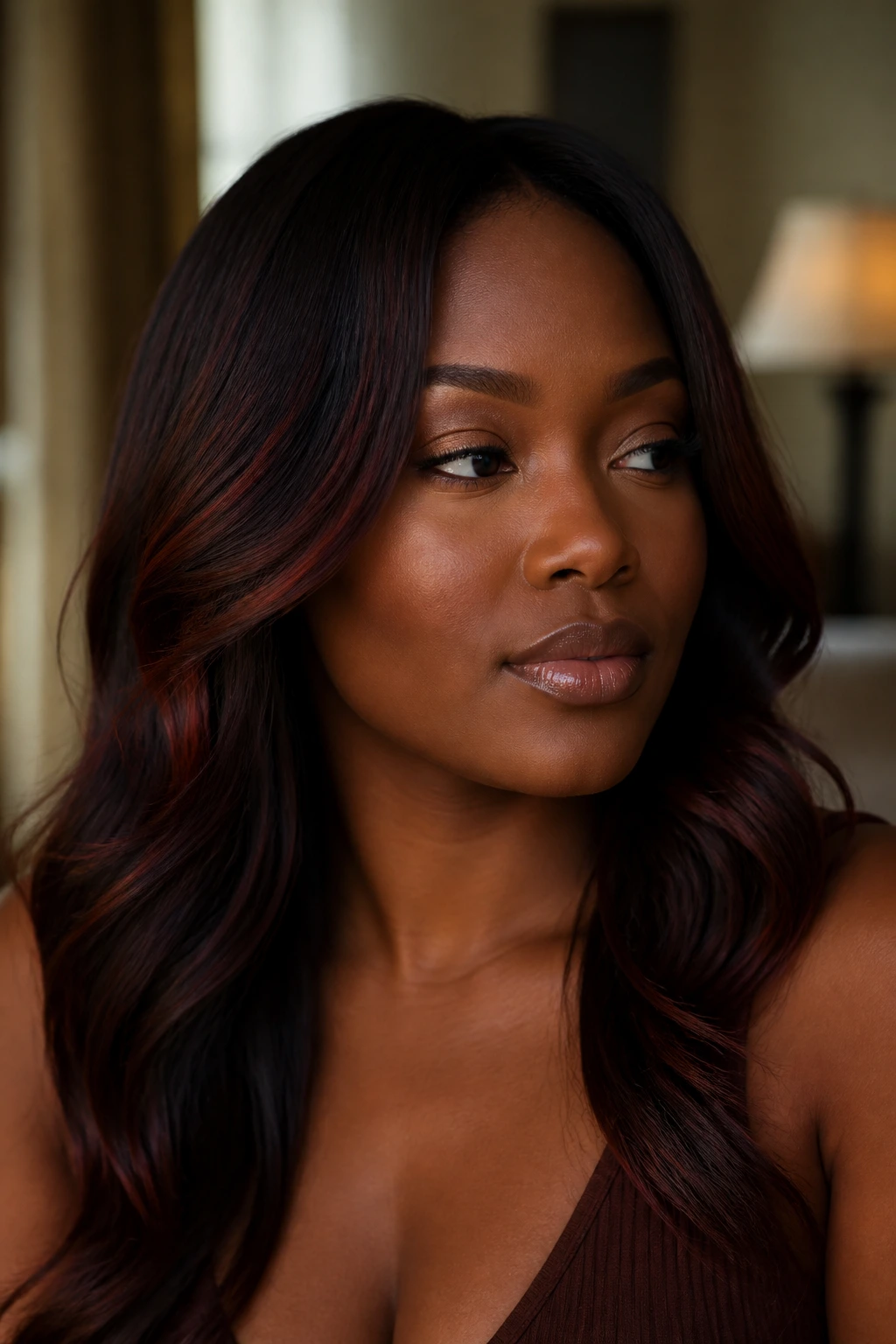
4. Chocolate Cherry
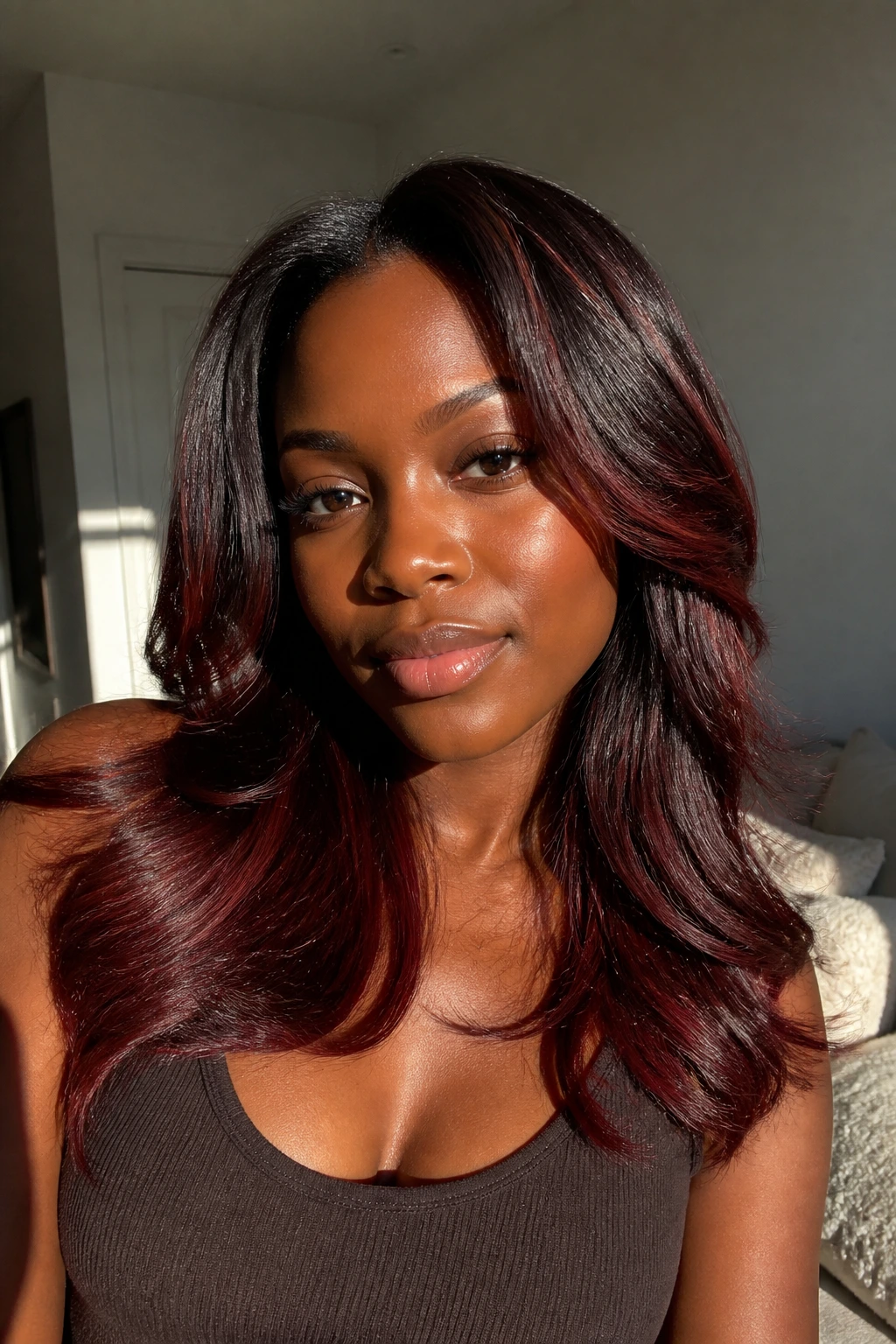
Chocolate cherry is one of the easiest ways to add depth without losing that dark, expensive base. In a dim room it reads like rich brunette. In sunlight, the red tones wake up and give the hair a wine-like glow. On deeper skin, that little flash of cherry keeps the color from disappearing into the background.
This is a strong choice if you want warmth but not orange. It flatters square faces because the red tones catch light around the face, especially on layered cuts and wavy styles. A glossy chocolate cherry bob or lob can look especially good because the ends move enough to show off the color shift.
5. Mahogany Brown
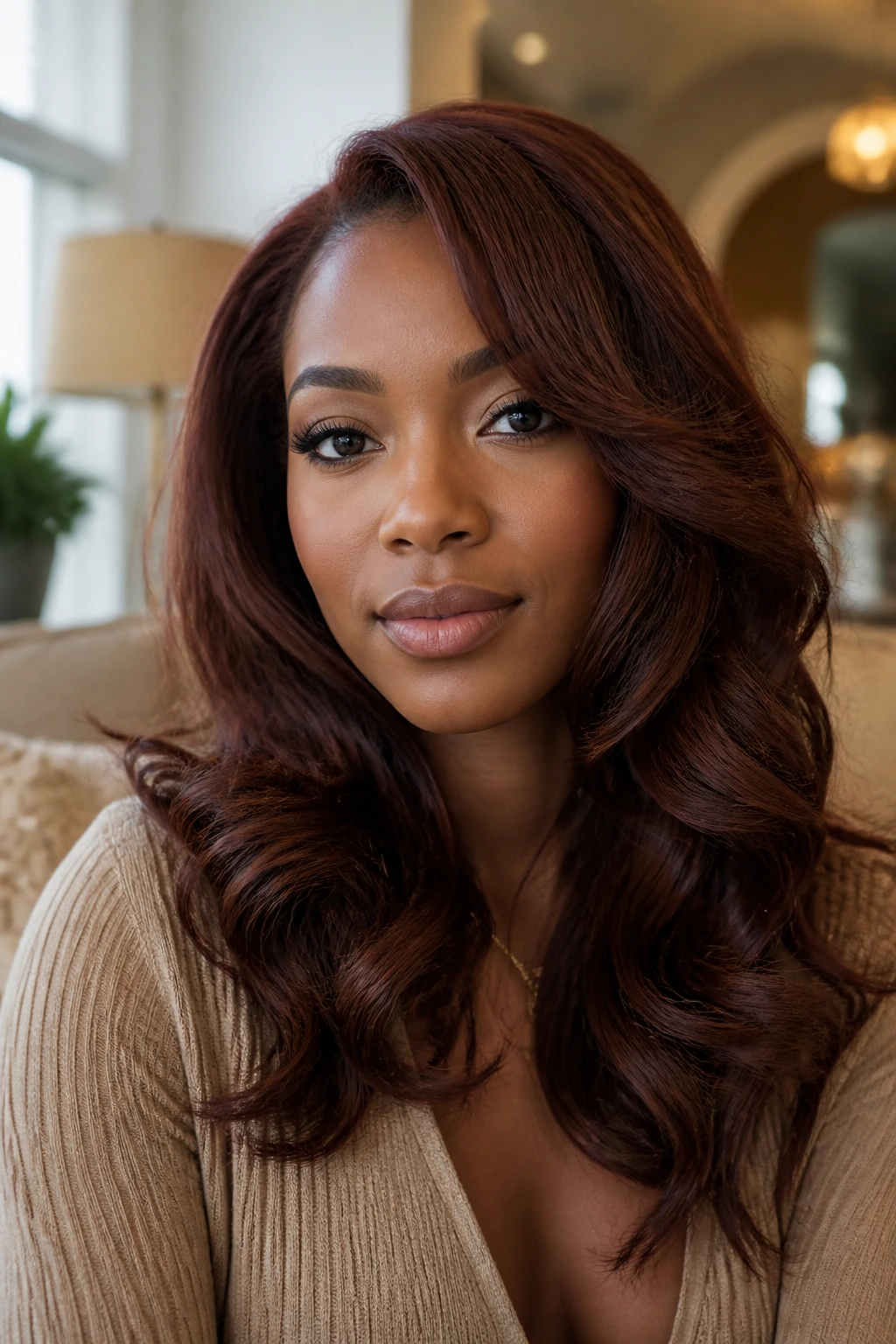
Mahogany is deeper than auburn and richer than standard red-brown. That’s why it tends to look polished on dark skin instead of loud. The shade carries enough red to warm the complexion, but the brown base keeps it grounded. On square faces, it adds softness without screaming for attention.
I like mahogany most on layered curls or silk pressed styles with a slight bend. The color seems to live in the movement. If you want something more formal than copper and less quiet than espresso, mahogany is the middle path that usually works.
6. Cinnamon Balayage
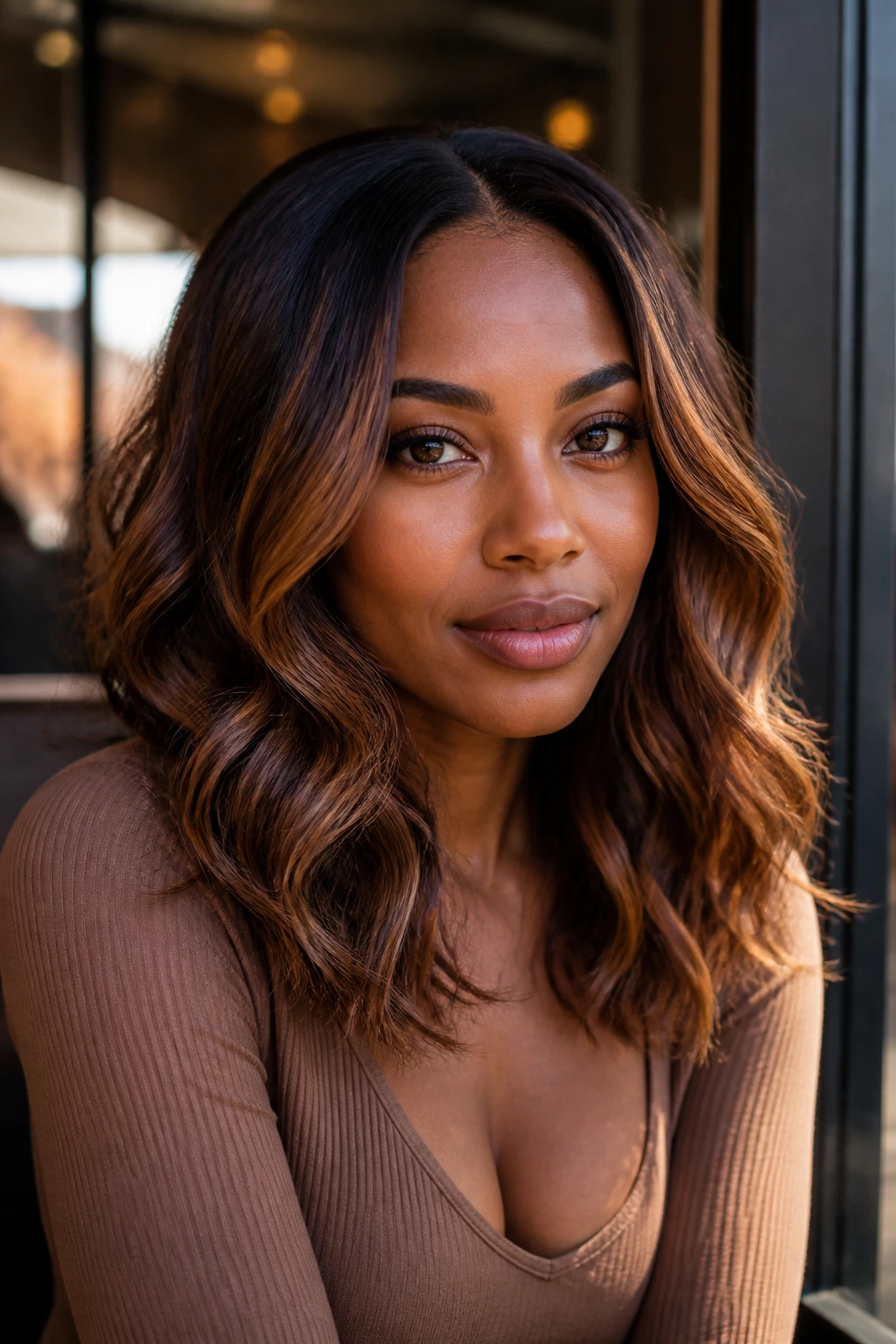
Cinnamon balayage gives dark hair a little heat without turning the head into one solid warm block. The lighter cinnamon pieces sit like ribbons through the mid-lengths and ends, which means the face gets a soft halo instead of a harsh stripe. That placement matters on square faces because it breaks up the jawline without making the front look heavy.
The best cinnamon tones are brown-based, not pumpkin-bright. Think toasted spice, not neon red. On coily or curly textures, cinnamon balayage can look especially good because each bend catches the light a little differently. It feels dimensional instead of painted on.
7. Honey Caramel Money Piece
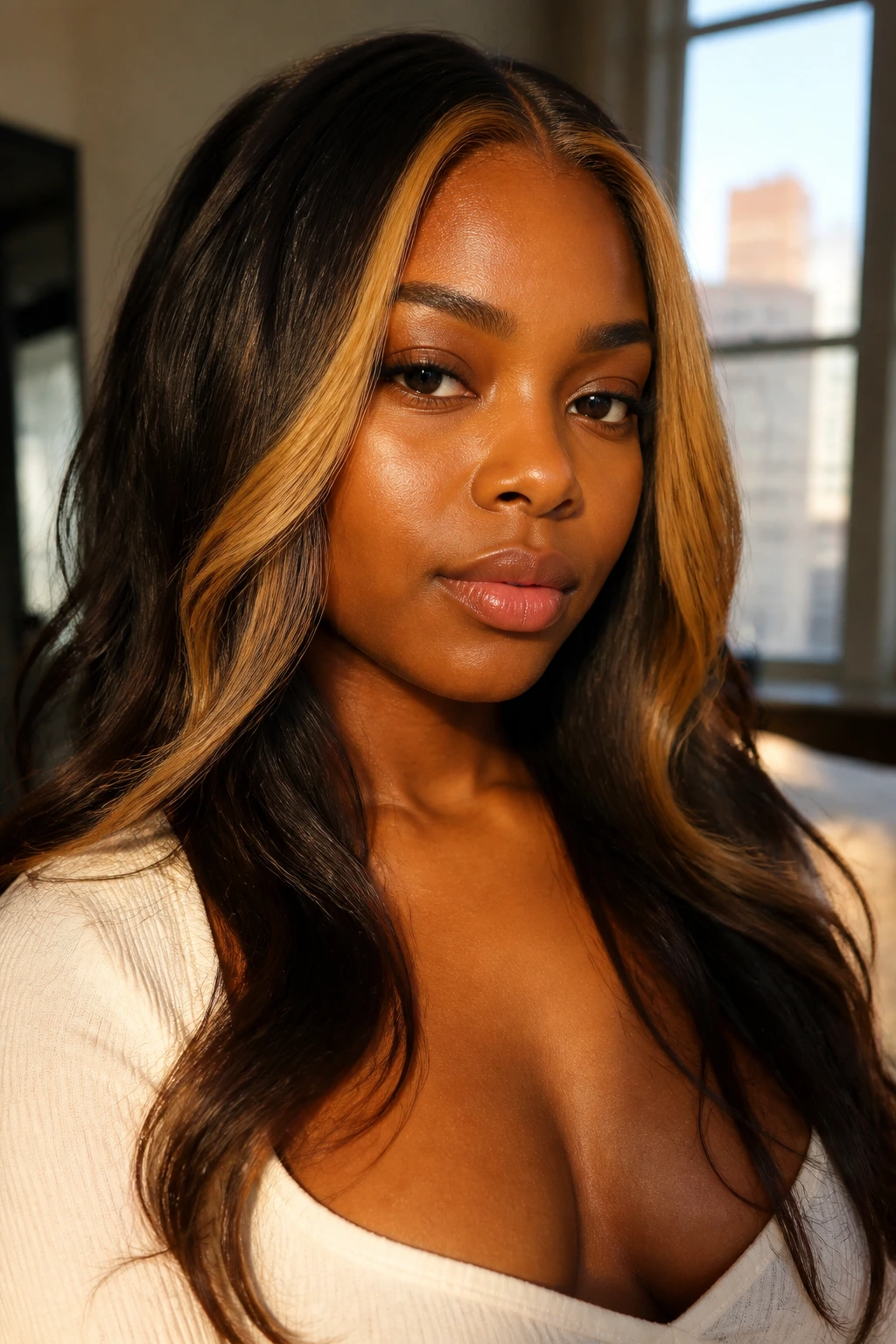
A honey caramel money piece is the color move I reach for when someone wants a visible change without bleaching the whole head. Two lighter front sections can lift the face fast, and on dark skin the honey tone looks luminous when it stays warm. Put it too ash-toned, and it starts to look chalky. Warm is the point.
For a square face, keep the brightest parts around the temples and cheekbones, not directly across the widest part of the jaw. That little shift changes everything. The hair still feels full, but the face looks a touch softer and longer. It’s a small placement trick with a big payoff.
8. Toffee Ribbon Highlights
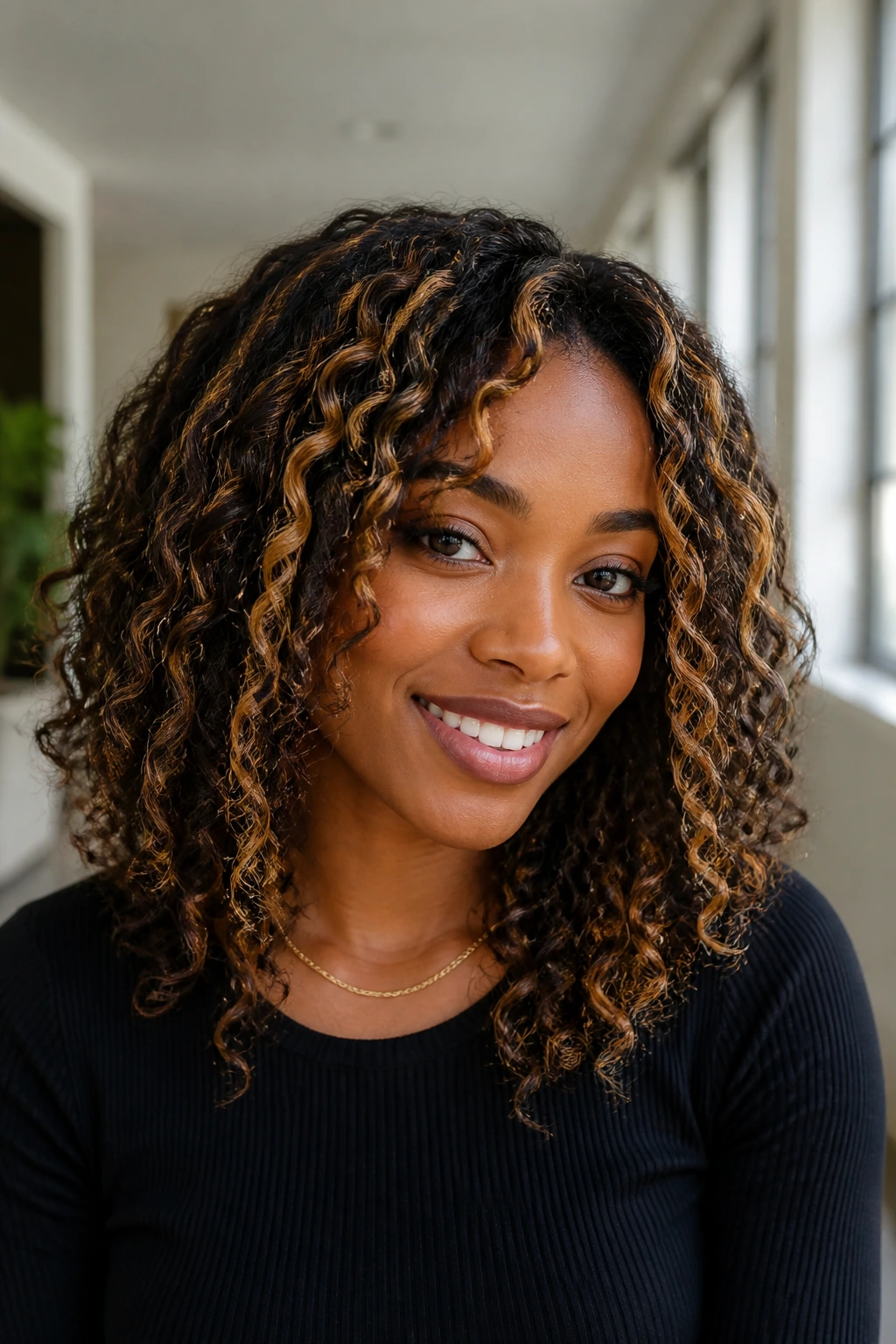
Toffee highlights are one of the best low-drama choices for dark skin because they give movement without taking over the whole head. The color sits between caramel and light brown, which means it blends into deep bases more naturally than pale blonde. On a square face, ribbons are better than stripes. Always.
Ask for thin, irregular pieces through the top and around the front, then keep the ends a little brighter than the roots. That gradual change keeps the shape soft. If your hair is curly, the toffee pieces will peek through in different places as the curls separate, which makes the whole style feel alive instead of static.
9. Copper Penny Lob
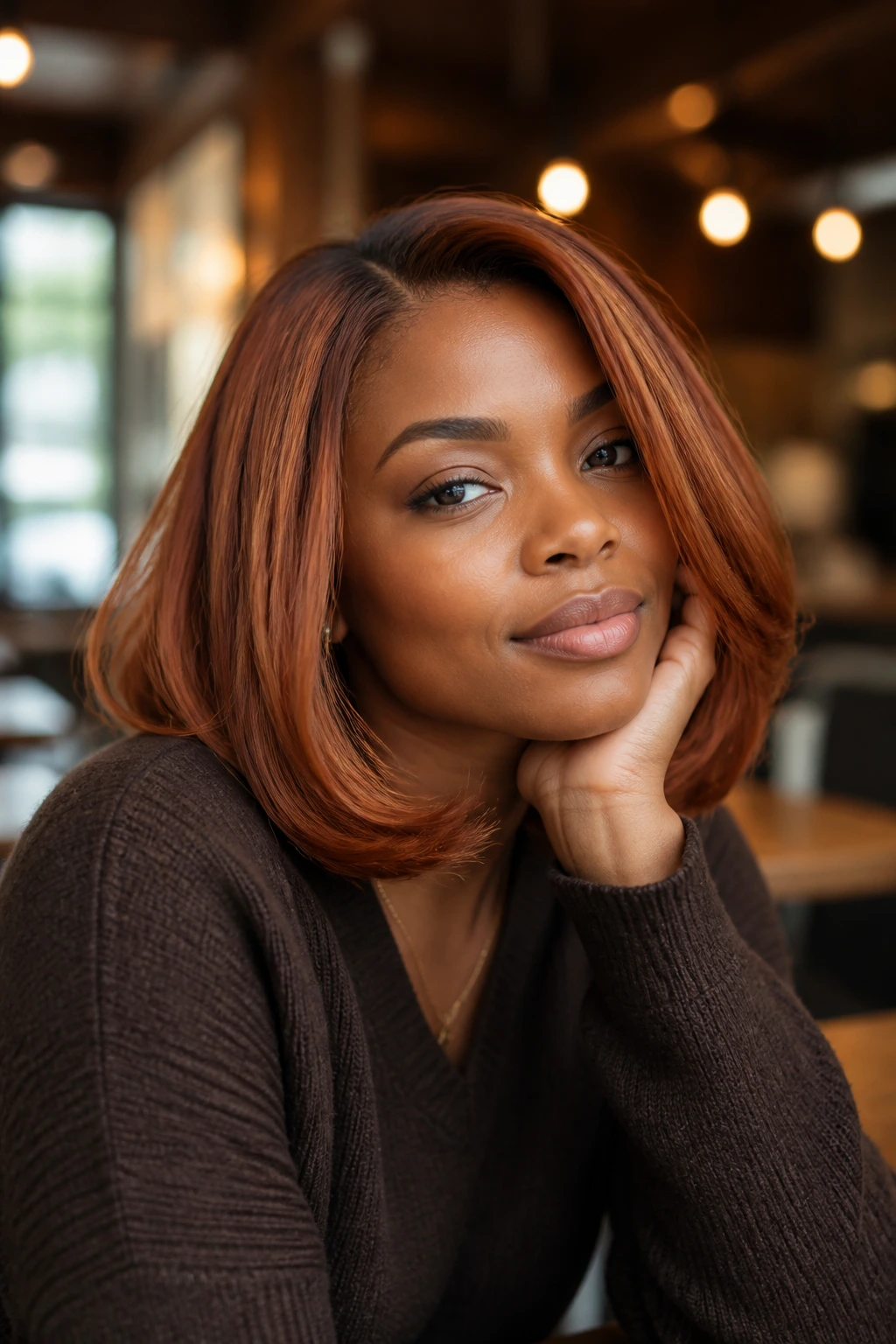
Copper on dark skin can be stunning when it’s grounded with brown. A penny copper lob has that bright, metallic edge, but the bob shape keeps it chic instead of loud. The cut is part of the color story here. A lob gives the copper room to glow around the face without dragging the jawline into a boxy silhouette.
The best version uses curved styling — a tucked-under end, a loose wave, or a blowout with a little bend. That softness matters. Copper reflects a lot of light, so if the cut is too blunt, the face can look harder than you want. Give the color a curve and it behaves beautifully.
10. Auburn Melt
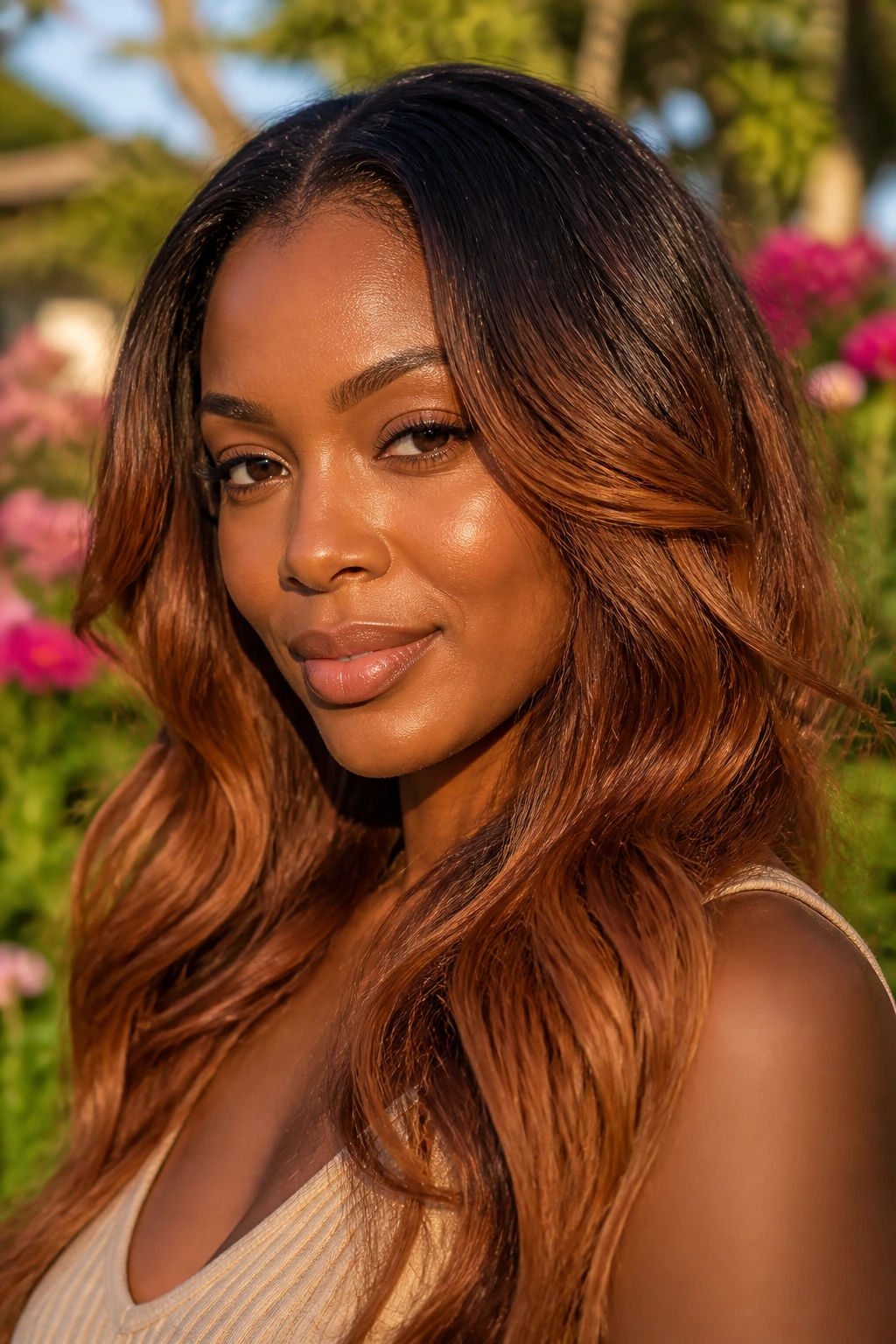
Auburn melt is for someone who wants warmth that moves from root to tip instead of stopping in a hard line. The dark root keeps the look grounded on deep skin, and the auburn through the mid-lengths creates a warm glow that catches sunlight. This is one of the prettiest options for square faces because the transition itself acts like soft contour.
The melt works best when the lighter auburn starts below the cheekbone and gets richer toward the ends. That keeps the face from feeling boxed in. On curly hair, the color shift shows up in layers, which can be gorgeous. On straight styles, it looks smoother and more deliberate.
11. Burgundy Velvet
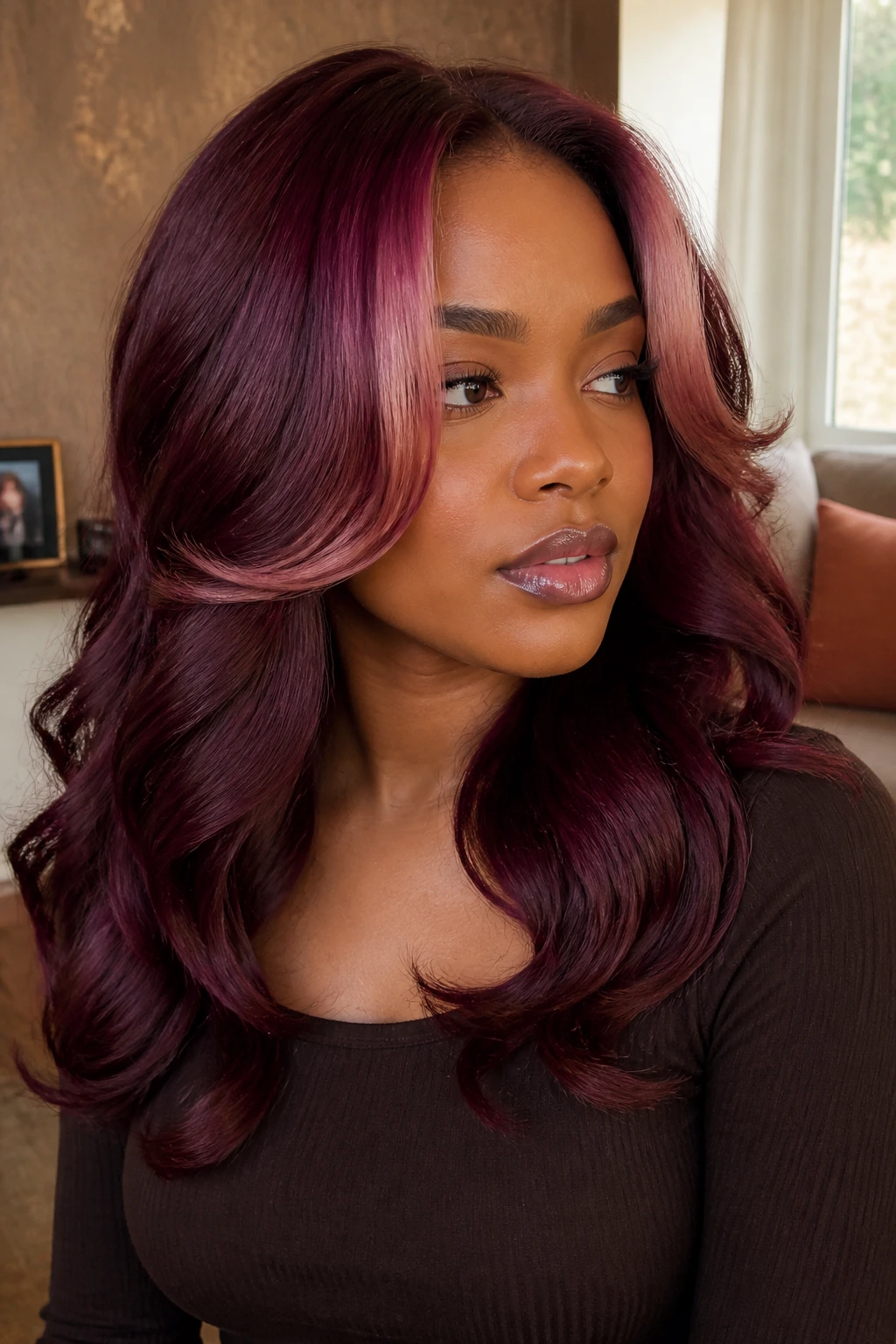
Burgundy velvet is deep, lush, and a little moody in the best way. The red is muted by brown and plum notes, so it stays wearable on dark skin without turning neon. Under indoor light it looks like wine. In sun, it picks up a velvet sheen that feels expensive rather than flashy.
For square faces, burgundy works when the front pieces are a touch lighter or more reflective than the rest. That keeps the eye moving. It’s a color that loves textured hair because the twist and bend give the shade more life. Flat ironed, it looks sleek. Curled, it looks plush.
12. Plum Brown
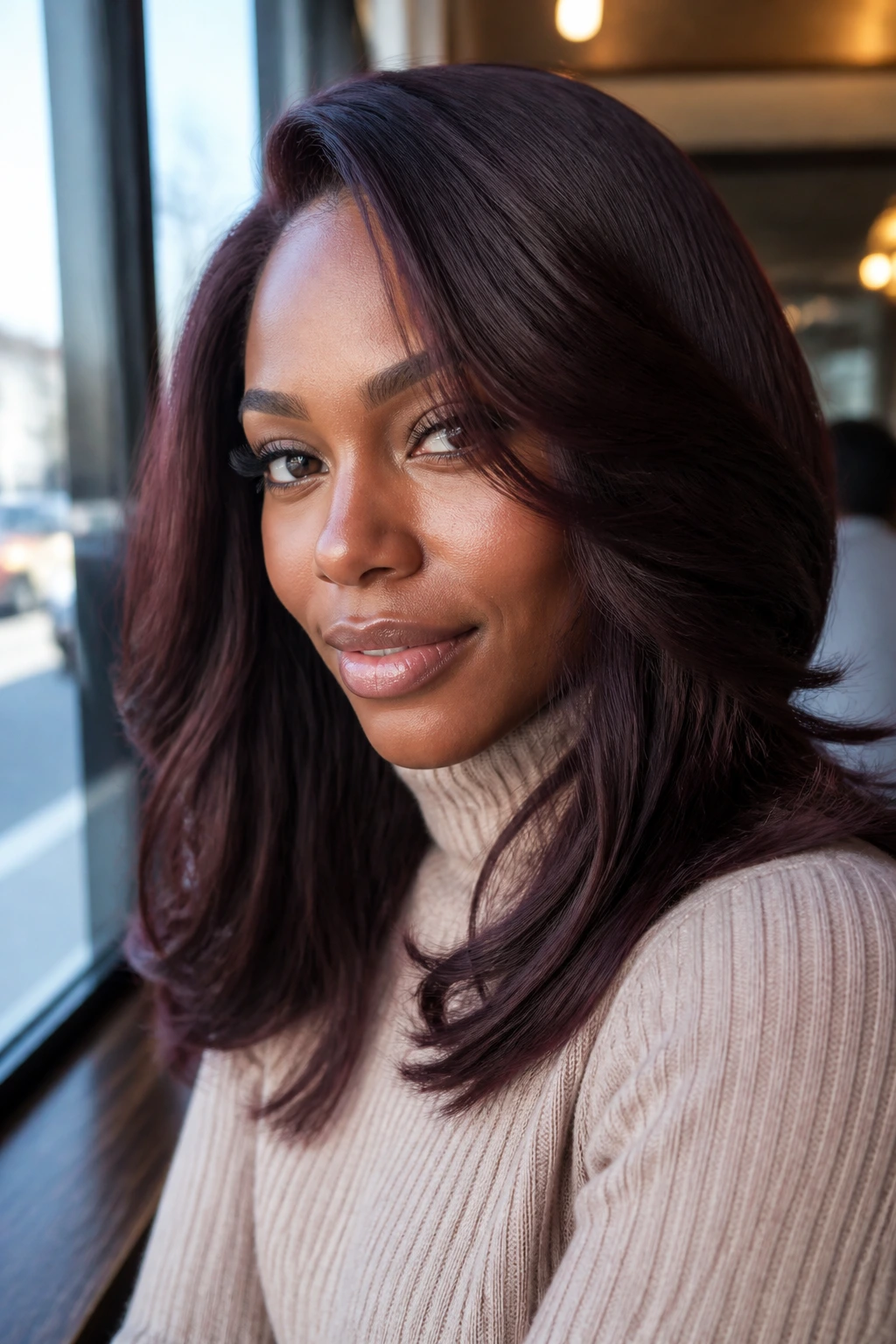
Plum brown is one of the smartest cool-toned options for deeper skin because the plum is there, but it is restrained. You get a berry cast instead of a purple costume effect. On the right base, it looks mysterious in daylight and very polished at night.
This shade suits square faces when it’s paired with layers or a soft face frame. The cool tone can sharpen the face if the cut is too angular, so give it some movement. A plum brown silk press with rounded ends or a layered curly cut tends to look balanced fast.
13. Bronze Ombré
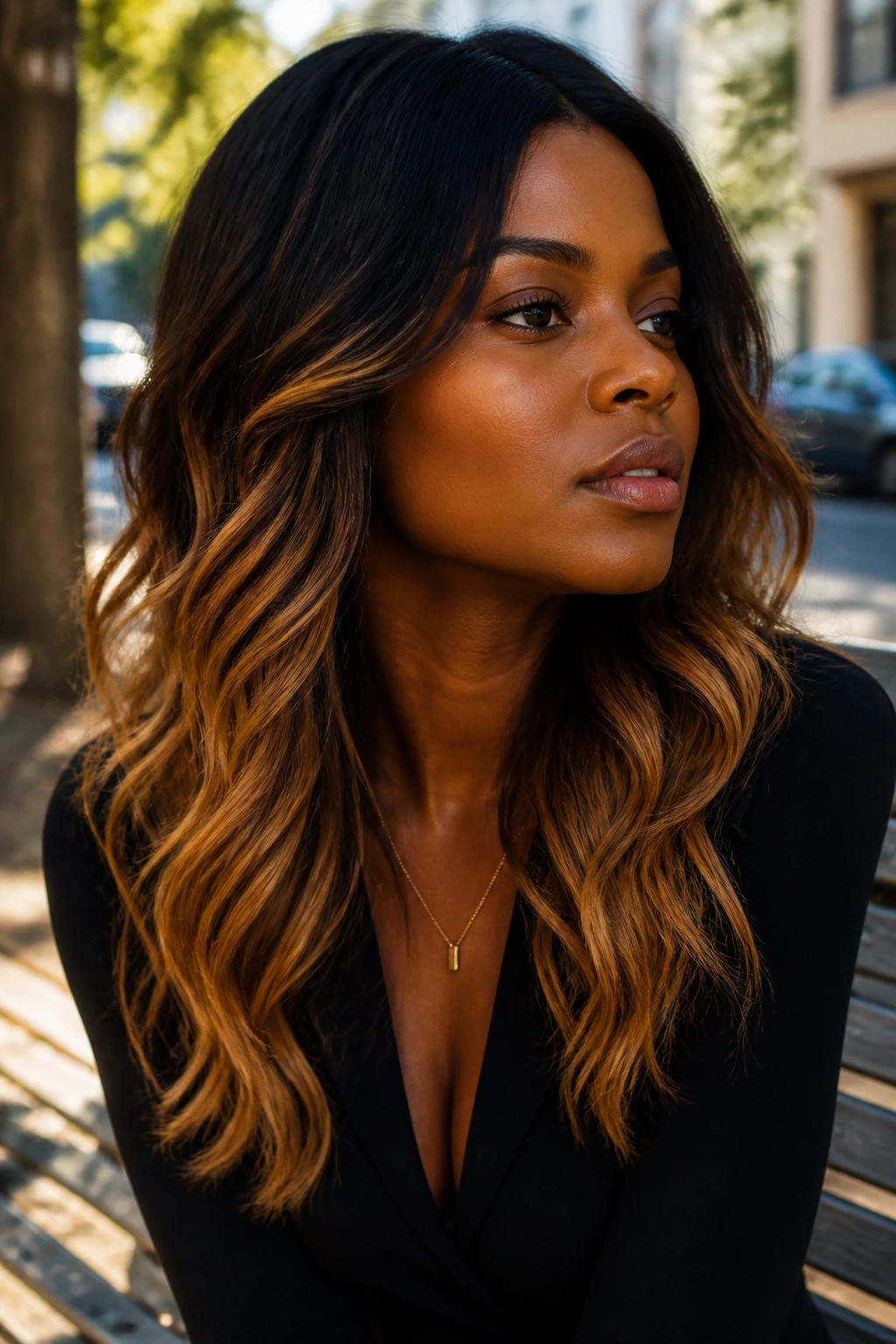
Bronze ombré is a good answer when you want visible lightness without a root-to-end commitment. Bronze sits well on dark skin because it has enough gold to glow but enough brown to stay rich. The ombré shape also helps square faces, since the brightness drops lower on the head and keeps the jaw area from feeling too heavy.
This is a nice choice for someone who wears their hair loose often. The bronze tips show when the hair swings, and the darker root keeps regrowth from shouting. If you want something that looks sun-kissed without looking beachy, this is the lane.
14. Tiger Eye Brunette
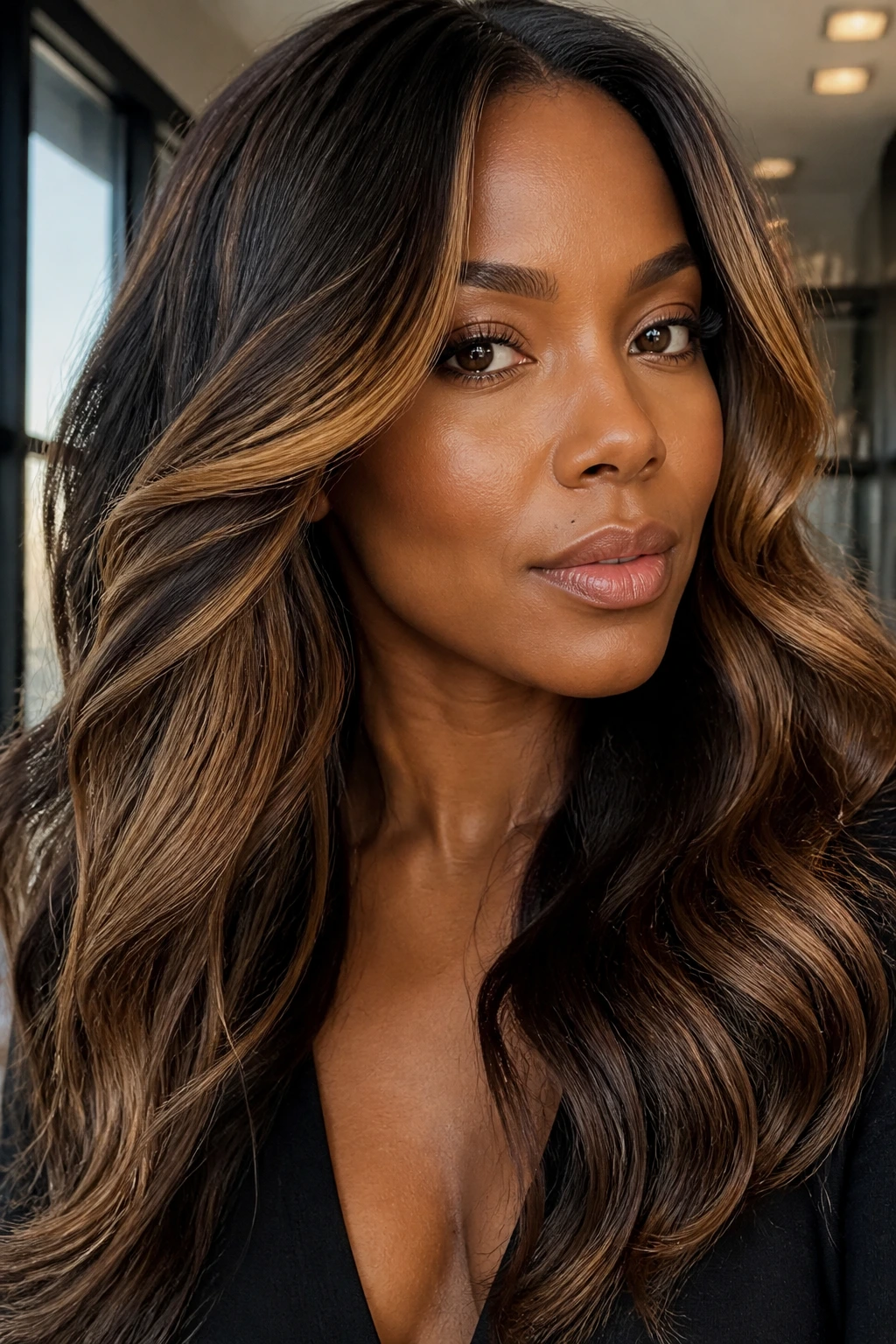
Tiger eye brunette borrows the look of the stone: deep brown, gold, bronze, and caramel all woven together in a way that feels layered rather than streaky. On dark skin, it creates that rich, high-contrast shimmer without requiring dramatic blonde pieces. It’s a very smart color if you want dimension you can still wear to work, dinner, or anywhere in between.
Square faces benefit from the placement. Keep the brightest bronze around the face and through the outer layers, then leave the interior deeper. That stops the head from looking wide. Tiger eye color almost always looks better when the cut has bends or long layers, because the highlights need movement to show.
15. Mocha Bronde
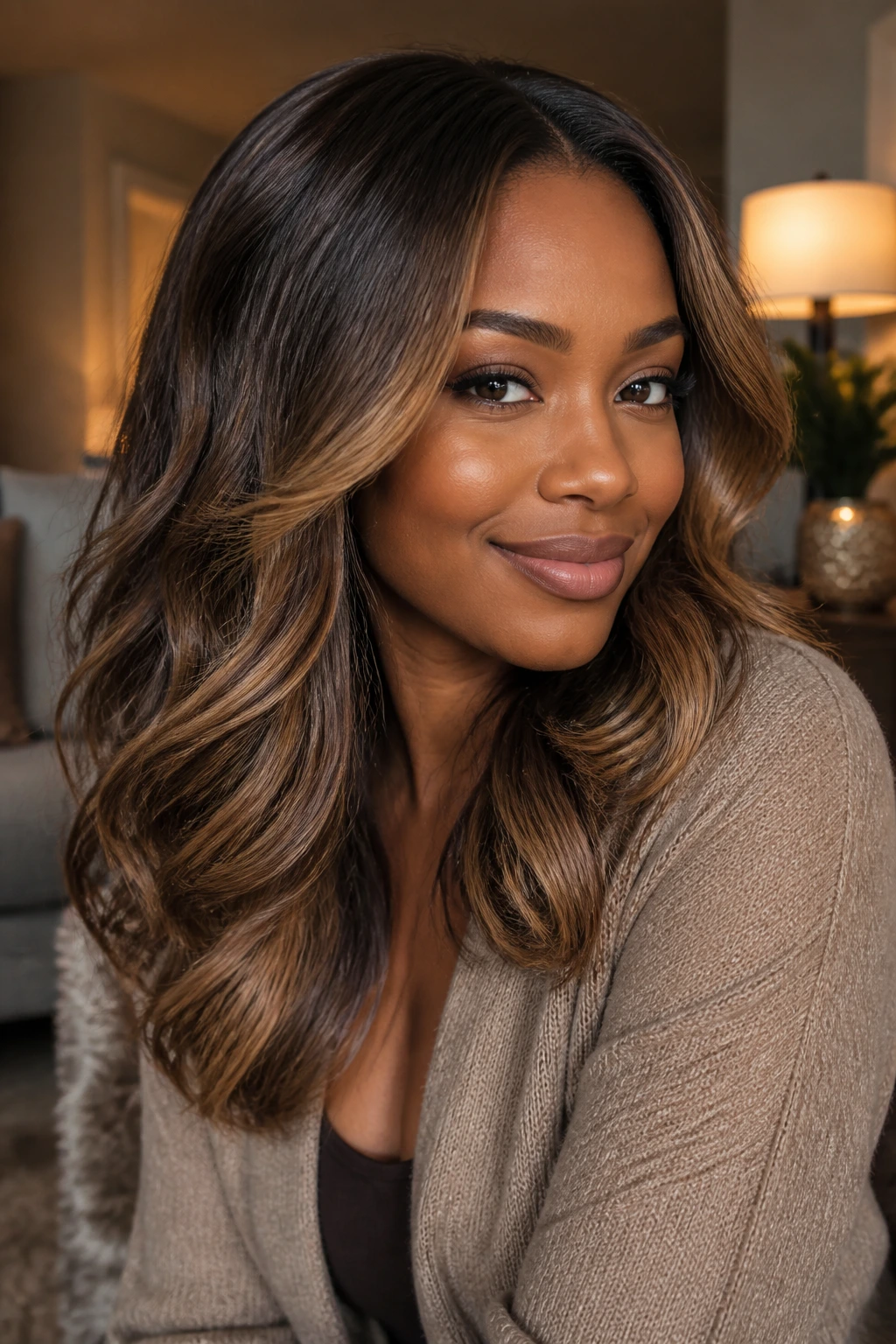
Mocha bronde is for the person who wants brown-on-brown dimension instead of obvious blonde. It blends mocha depth with soft beige or caramel accents, which makes it flattering on dark skin when the lighter pieces stay warm. The result is subtle, but not flat. That’s a hard balance to pull off, and this shade does it well.
On a square face, mochas and bronde tones work best when the brightness is concentrated near the eyes and cheekbones, not spread evenly everywhere. That gives the face shape a softer edge. If your natural hair is dark and you want a gentle lift rather than a dramatic shift, this is one of the safest bets.
16. Smoky Mushroom Brown
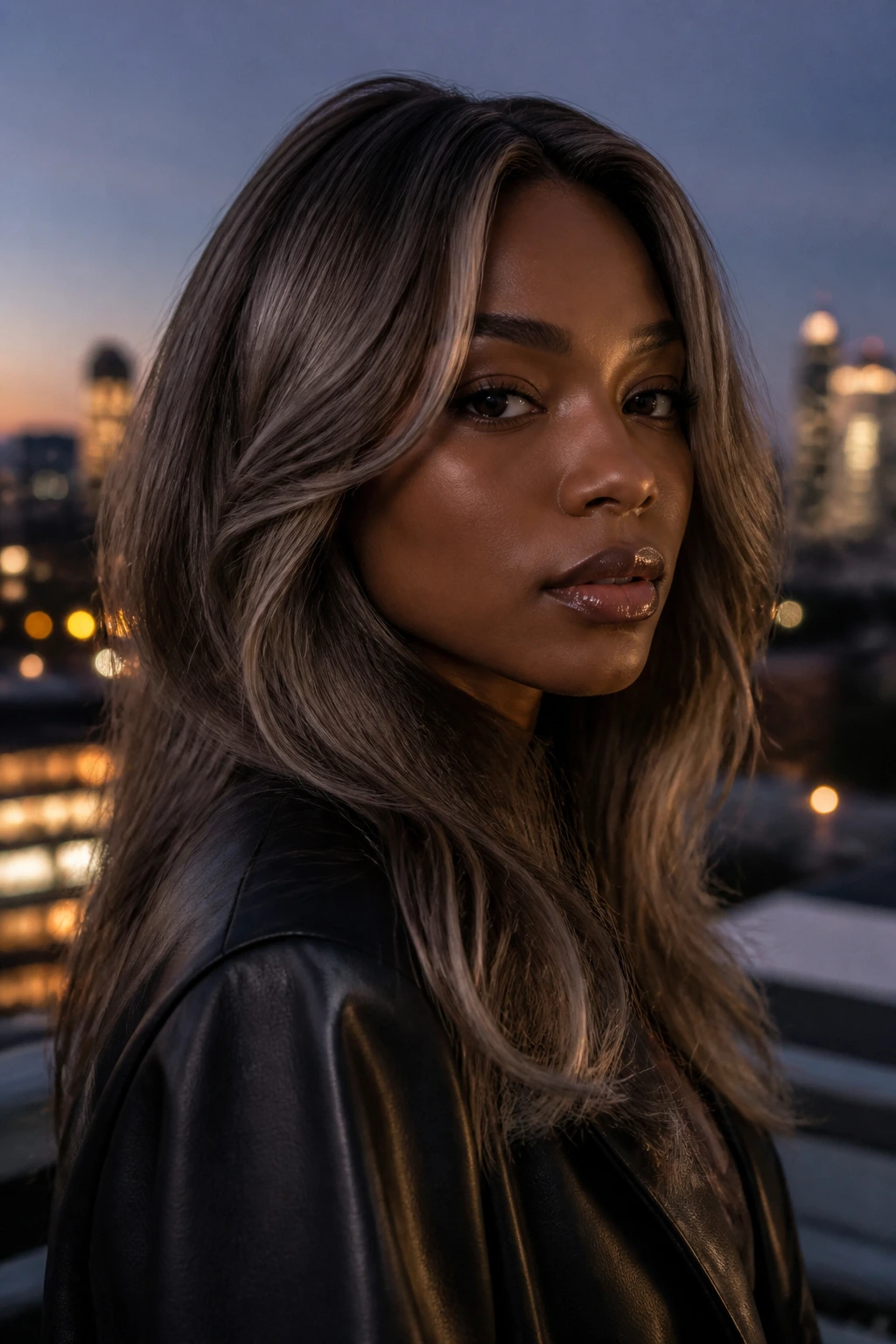
Smoky mushroom brown has a cooler, muted cast that can look expensive when it’s handled carefully. It is not the brightest choice in the group, and that’s exactly why it can work. On dark skin with neutral undertones, the smoky dimension can look sleek and modern, especially if the hair has a glossy finish.
The caution is placement. Mushroom brown needs softness around the face or it can look a little flat against a square jaw. Keep the ends textured, the front pieces lighter by a half-step, and the overall tone more reflective than matte. If your skin leans warm, ask for a warmer mushroom — something with beige-brown rather than gray-brown.
17. Rose Brown
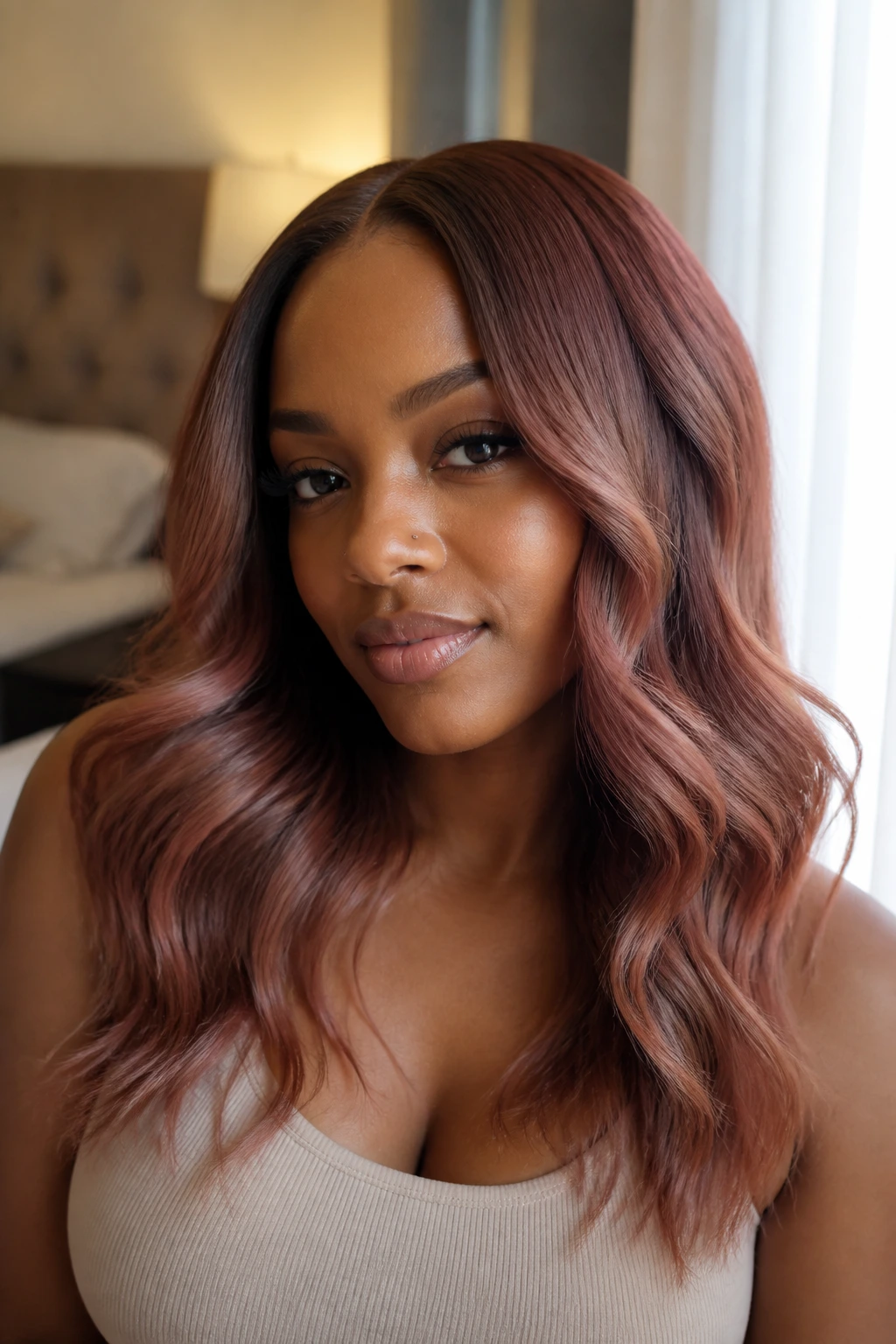
Rose brown is the quieter cousin of pink hair, and that’s why it works so well on deeper skin. The rose is tucked under a brown base, so the color appears as a blush-toned sheen instead of a candy color. On square faces, the softness of the rose does some of the work that face-framing layers usually do.
This shade shines best when it’s paired with waves or curls. The rose flashes in movement, then disappears back into brown. If you want something creative that still feels wearable, rose brown is one of the easiest places to start. It feels playful, but not costume-y.
18. Golden Bronze Balayage
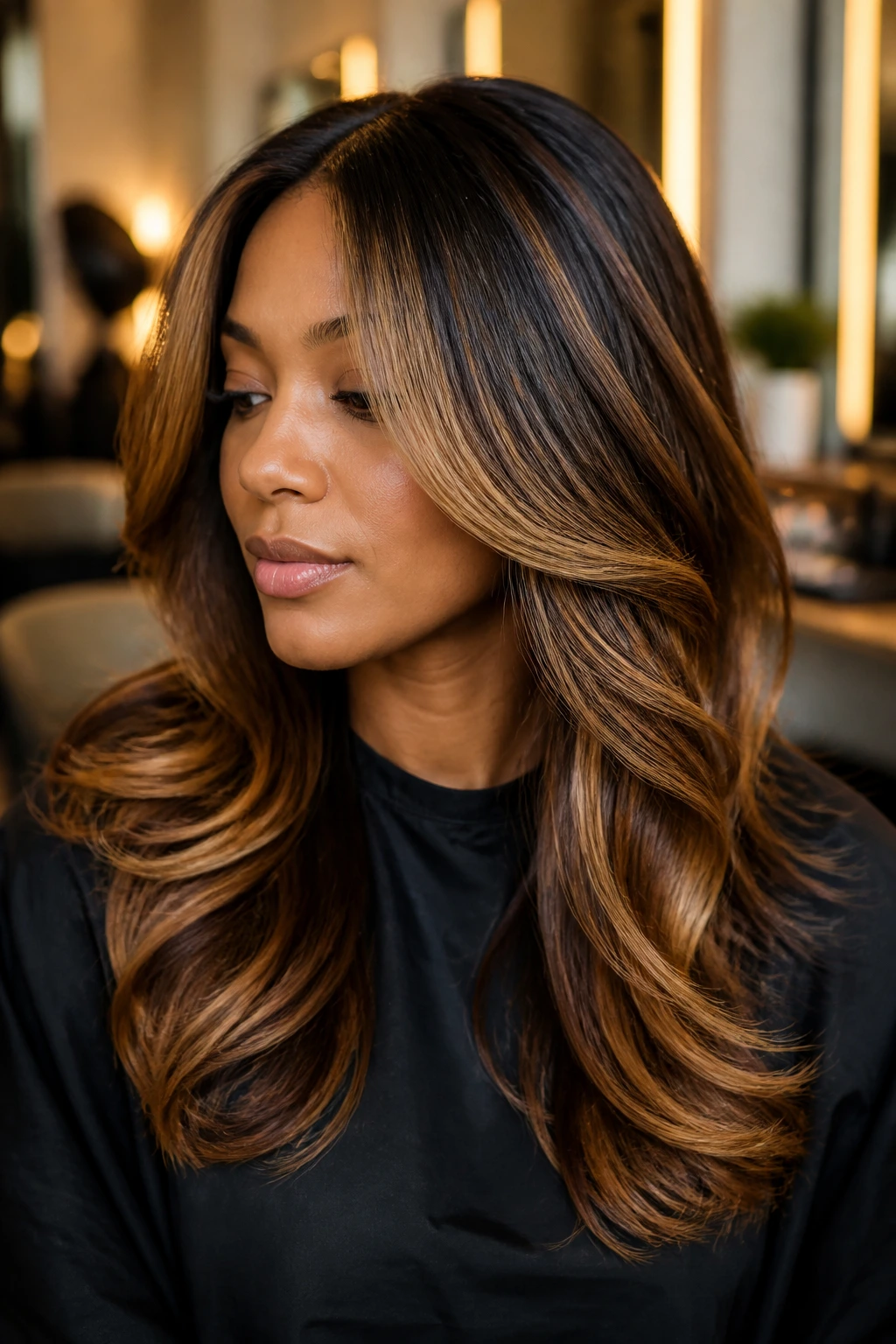
Golden bronze balayage brings warmth without making the hair look too yellow. On dark skin, the gold reads as glow, not brass, when it is woven through a bronze base. The effect is especially nice on layered cuts because the highlights pick up at the ends and around the face.
Square faces need a softer highlight map, and balayage gives you that. Keep the brightest pieces around the front and just under the crown, then let them taper out toward the ends. You do not want a thick light stripe sitting right at jaw level. That line is the enemy here.
19. Chestnut with Subtle Auburn Ends
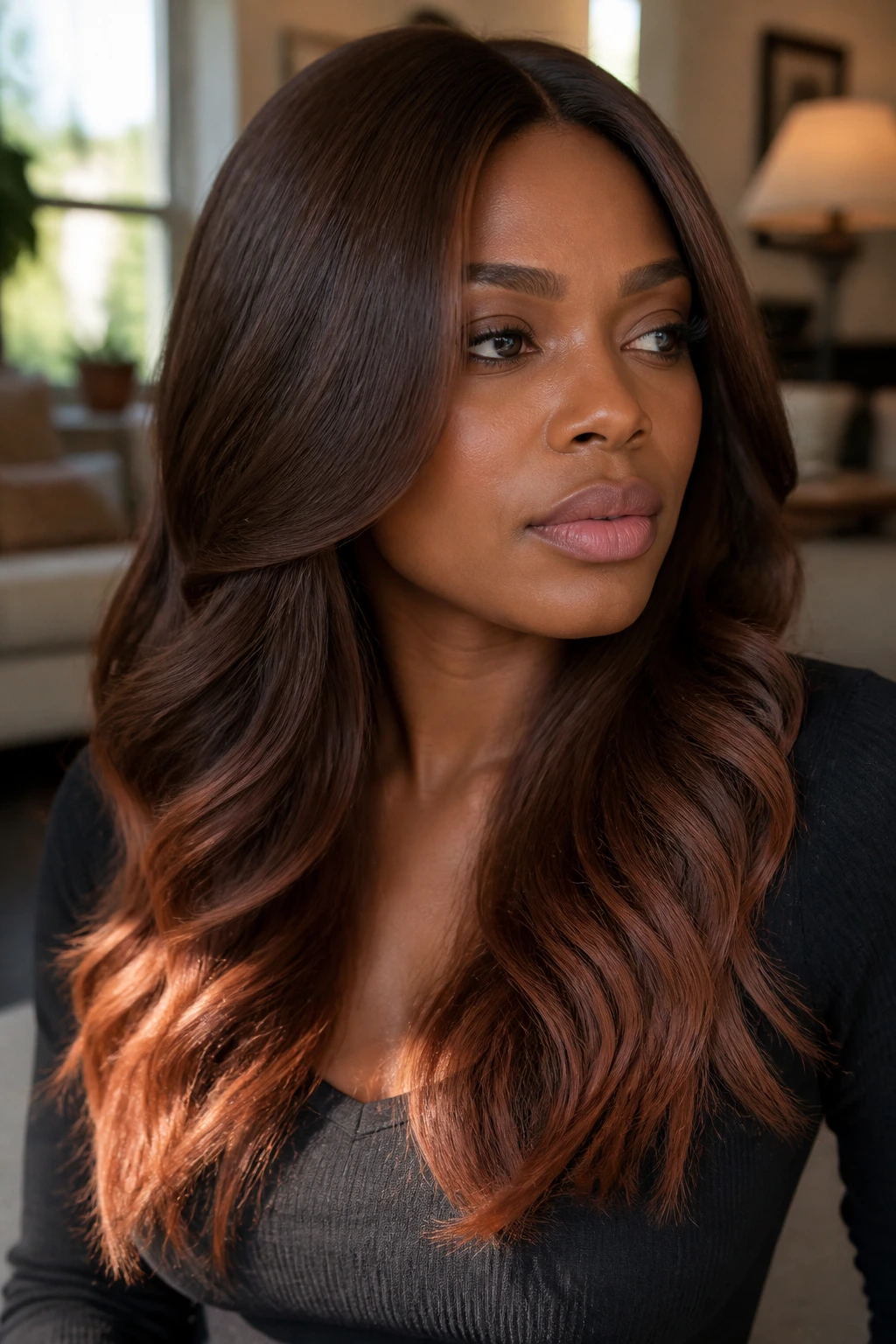
Chestnut is one of those shades that rarely disappoints because it lives in the middle of the warm-brown family. Add auburn ends, and the style gets a little life without jumping into full red territory. On dark skin, the chestnut root keeps everything grounded while the auburn ends catch light in motion.
For square faces, the subtle fade toward the ends helps soften the bottom half of the face. It is a good option for long layers, braids with colored ends, or a blowout that bends under at the shoulders. If you want warmth but hate obvious color blocks, this is a calm, smart choice.
20. Deep Violet Gloss
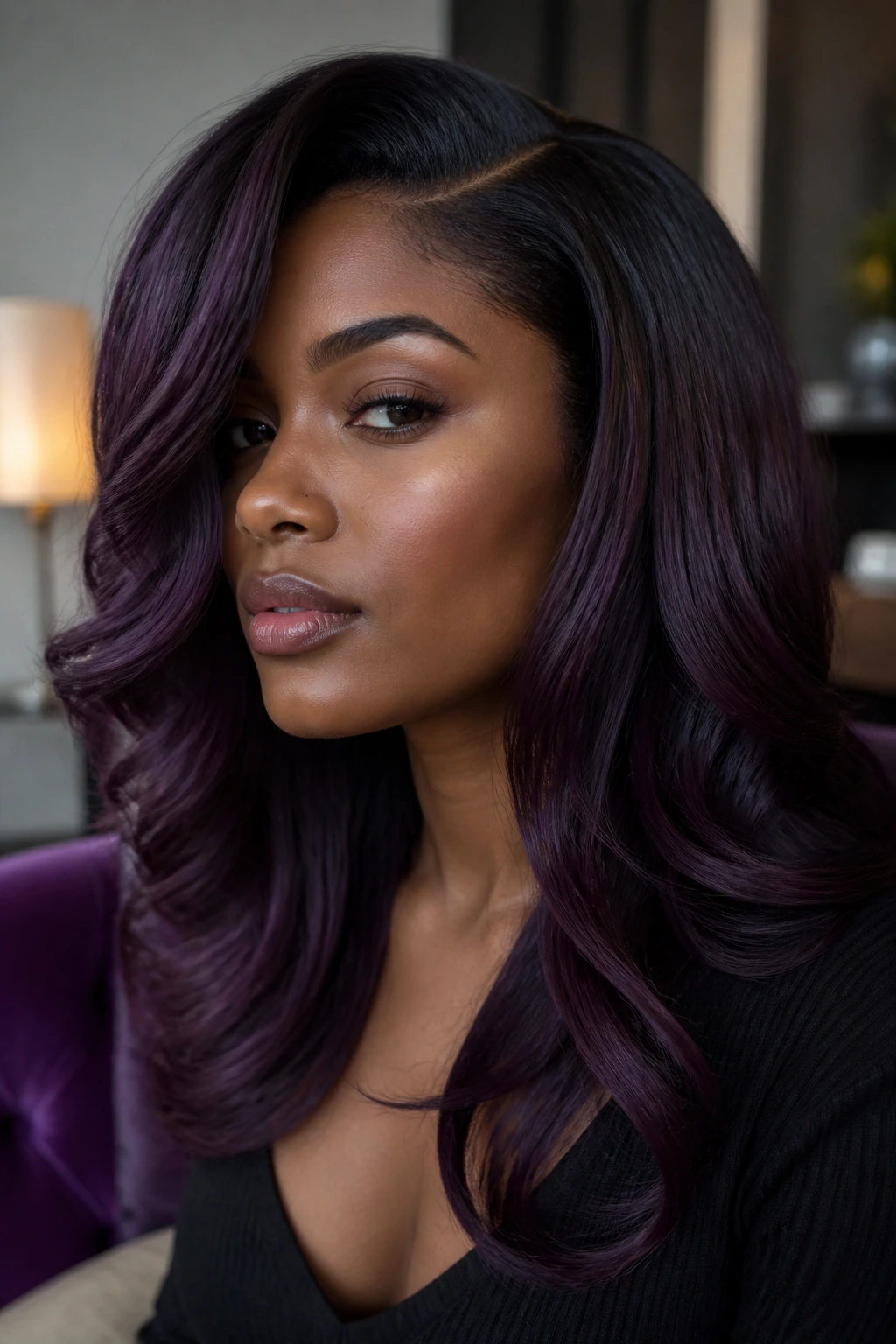
Deep violet is one of the most flattering fashion colors on dark skin because it can sit right beside the complexion instead of competing with it. At a deep level, violet reads like a dark jewel tone, not a neon shade. The gloss keeps it elegant. Without shine, it can look dull fast.
Square faces get a lift from violet when the shade is concentrated on the lengths and front pieces rather than packed into a blunt line. A side part or soft curls will make the color feel less severe. If you want something bold that still feels polished, this is a strong pick.
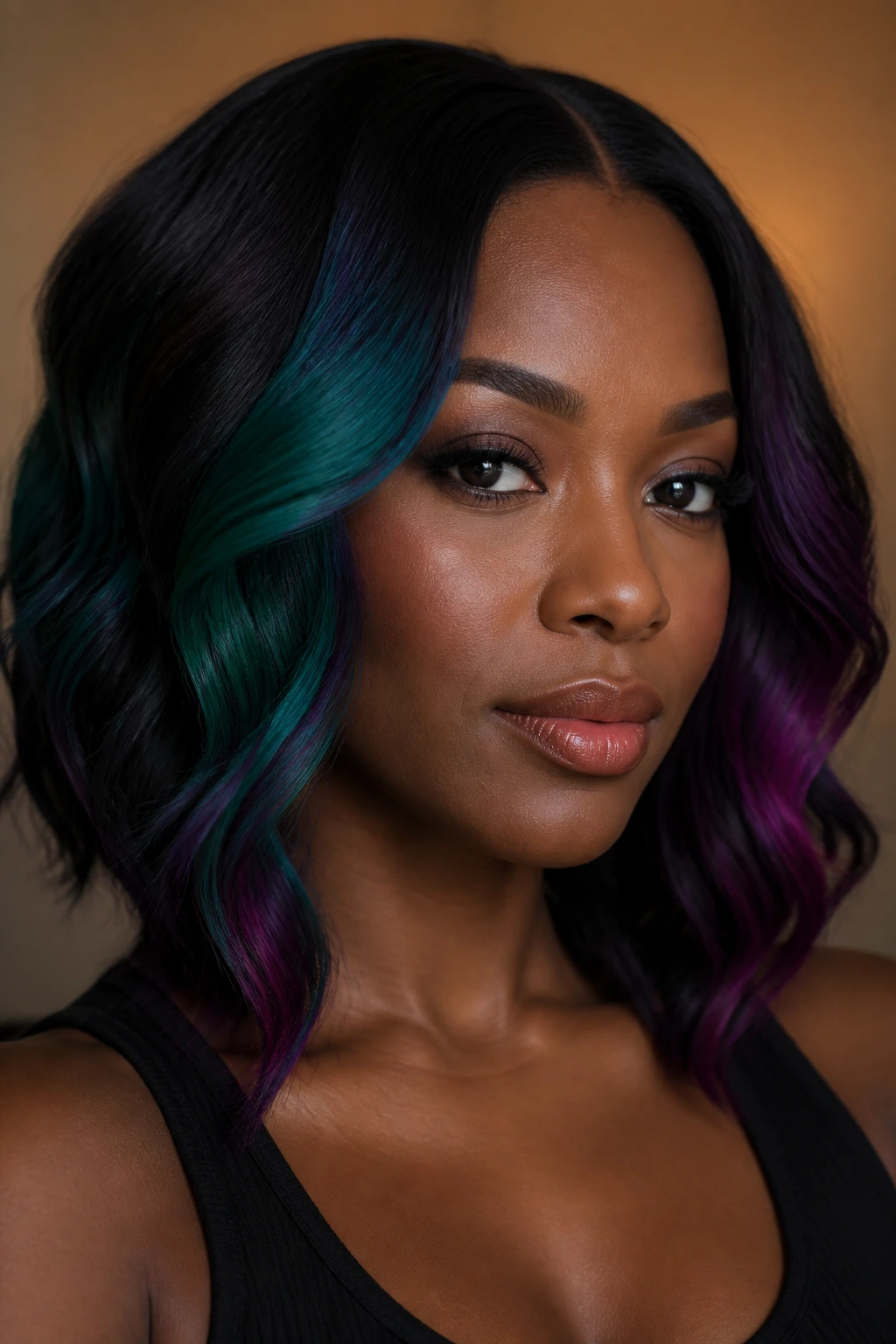
21. Emerald Peekaboo Panels
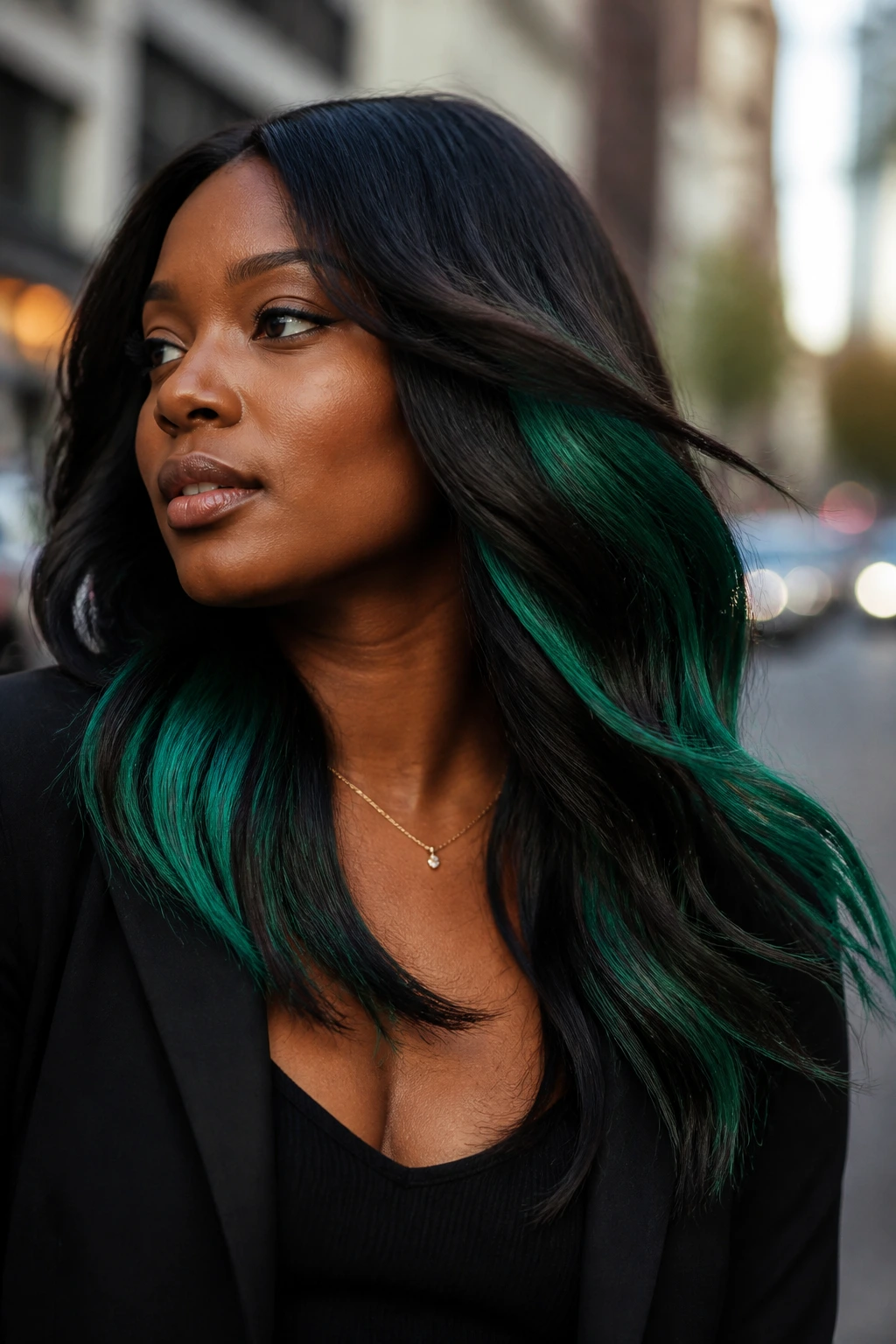
Emerald peekaboo color is for the person who likes a little surprise. Because the green sits underneath or inside the hair, it flashes when the hair moves instead of shouting from every angle. On dark skin, rich emerald looks jewel-like and deliberate, especially if the rest of the hair stays black or espresso.
Square faces can handle peekaboo color better than full-head bright shades because the placement is controlled. The eye catches the color in motion, which keeps the jaw from feeling boxed in. Try it beneath a bob, under braids, or inside a layered cut where the panels can appear and disappear.
22. Soft Peach Copper
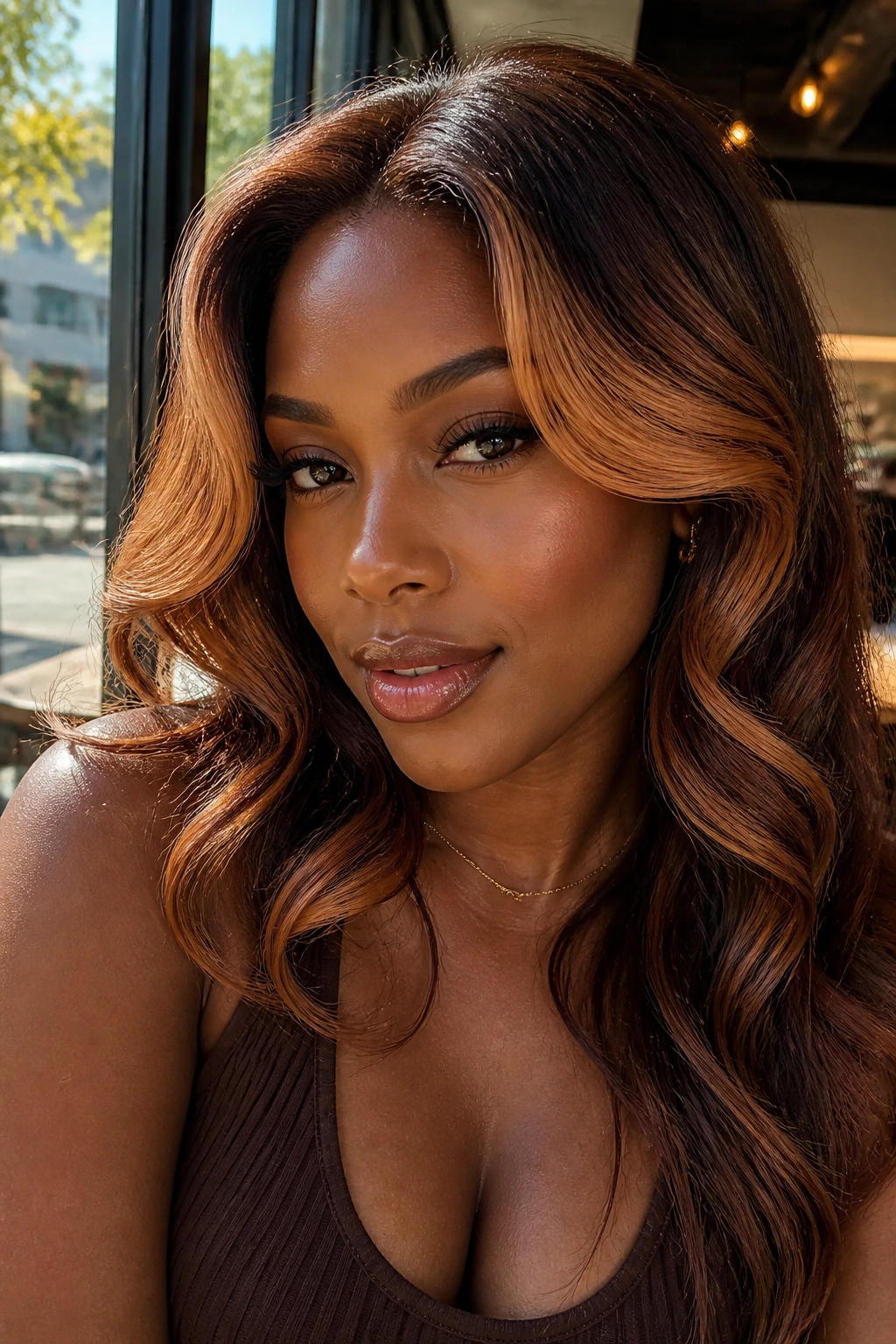
Peach copper sounds delicate, but the trick is keeping it brown enough to live on dark skin. The peach note should feel like warmth at the surface, not a pastel overlay. When it is done well, the color gives the complexion a fresh, lit-from-within look that doesn’t collapse into orange.
This tone softens a square face fast if the lighter pieces are placed around the temples and along curled front sections. It’s a lovely choice for warmer undertones, and it looks especially good when the hair has bounce. Think of it as copper with a softer edge. That’s where the charm is.
23. Iced Latte Highlights
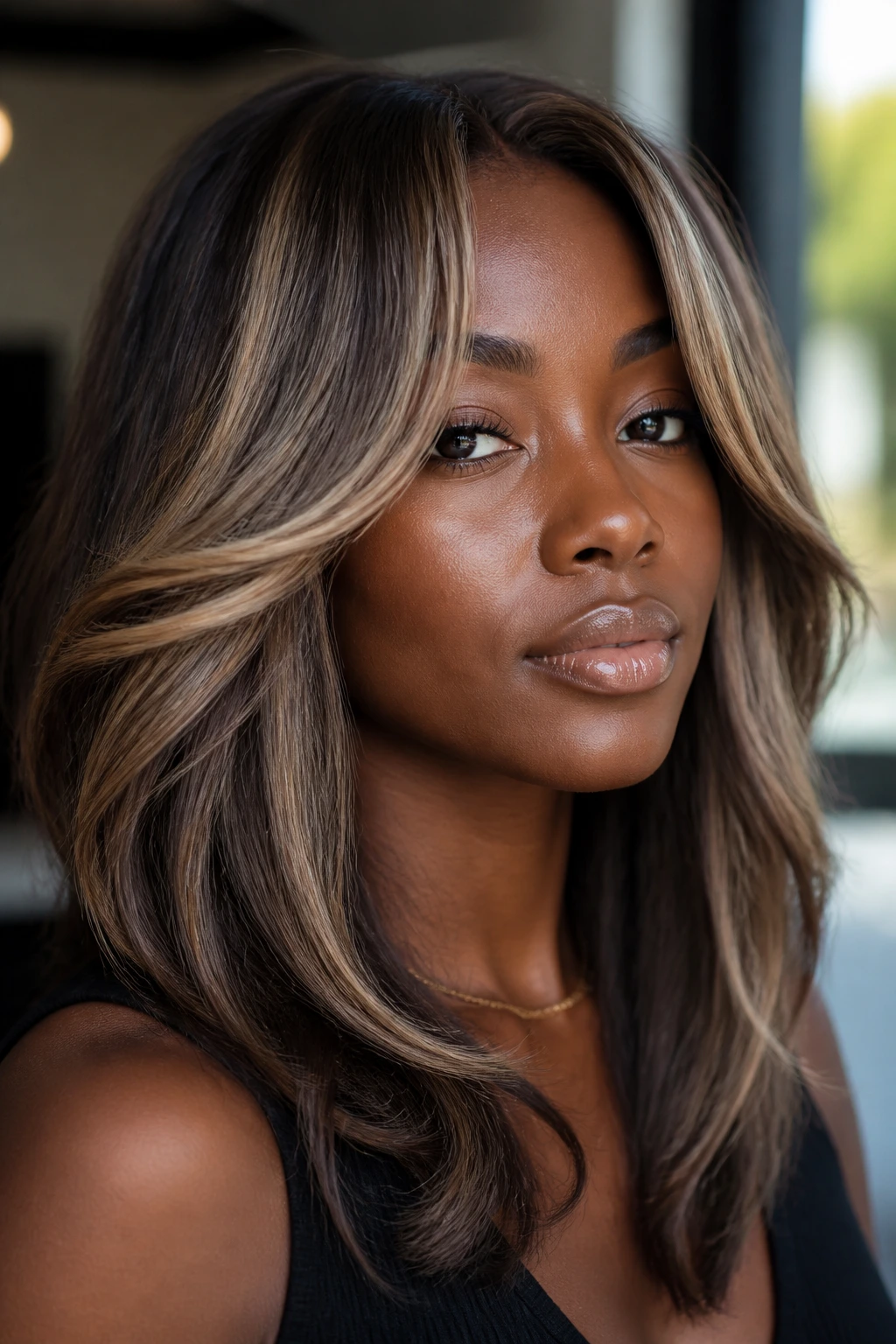
Iced latte highlights are cooler and lighter, but they need a careful hand on dark skin. The goal is not to erase depth. The goal is to thread in beige, taupe, and milk-tea pieces that brighten the face without turning the whole style flat. On the right base, the contrast can look very clean.
Square faces benefit from keeping the brightest latte pieces around the fringe and outer layers, not in a broad band across the jaw. A layered cut helps a lot here. If your skin has warm undertones, ask for more beige and less ash so the hair doesn’t read gray.
24. Charcoal Smoke with Silver Ribbons
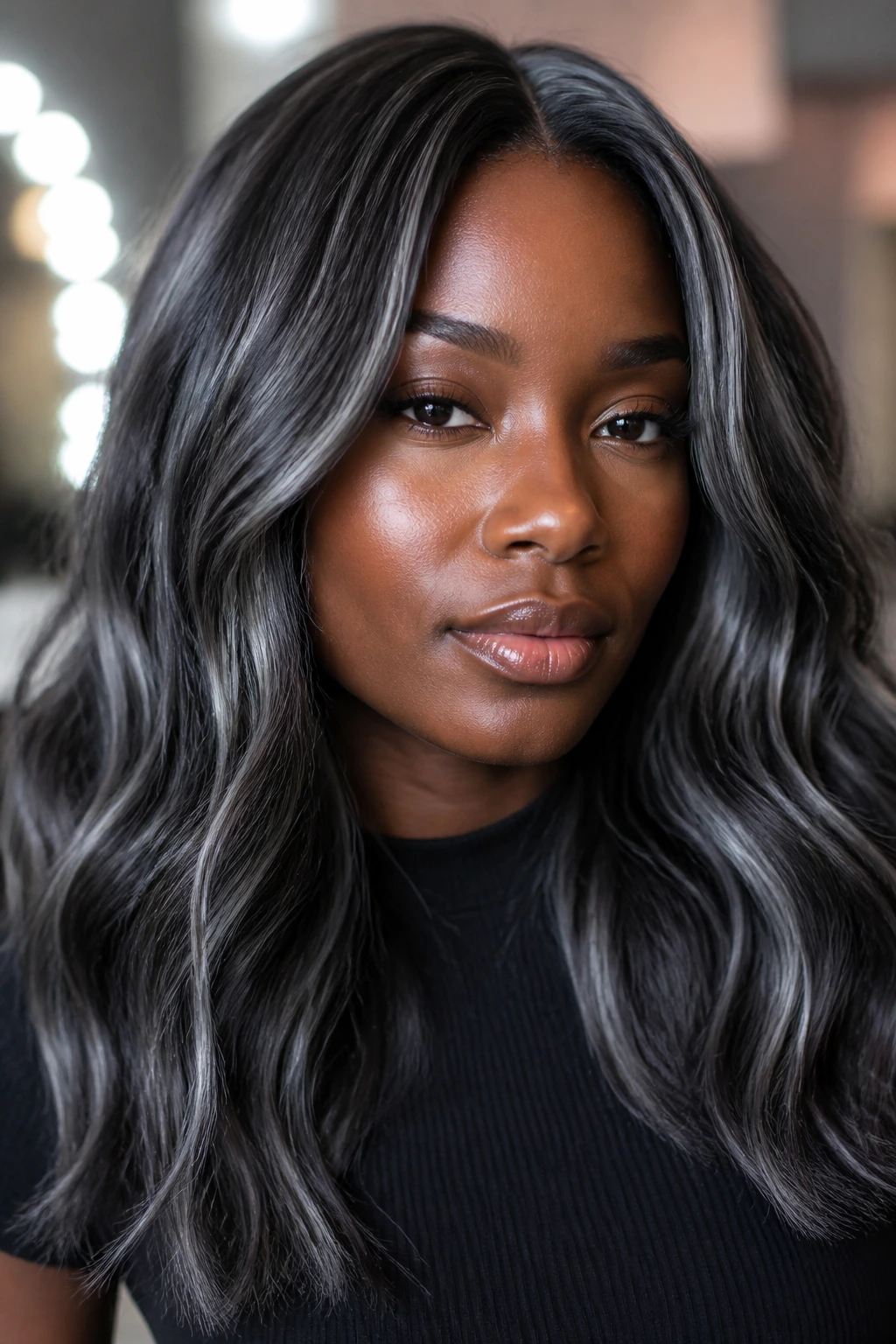
Charcoal smoke gives dark hair a cooler, smoky edge, and the silver ribbons add a sharp glint that stands out in movement. This is not a soft, shy color. It’s more editorial. Still, on dark skin it can look striking rather than harsh when the silver is used sparingly and the base stays deep.
The square-face trick is restraint. Keep the ribbons thin and vertical, not chunky and horizontal. That keeps the style from widening the face. Loose waves, a tucked bob, or a long layered cut lets the color move instead of sitting in one heavy frame.
25. Rich Caramel Face Frame
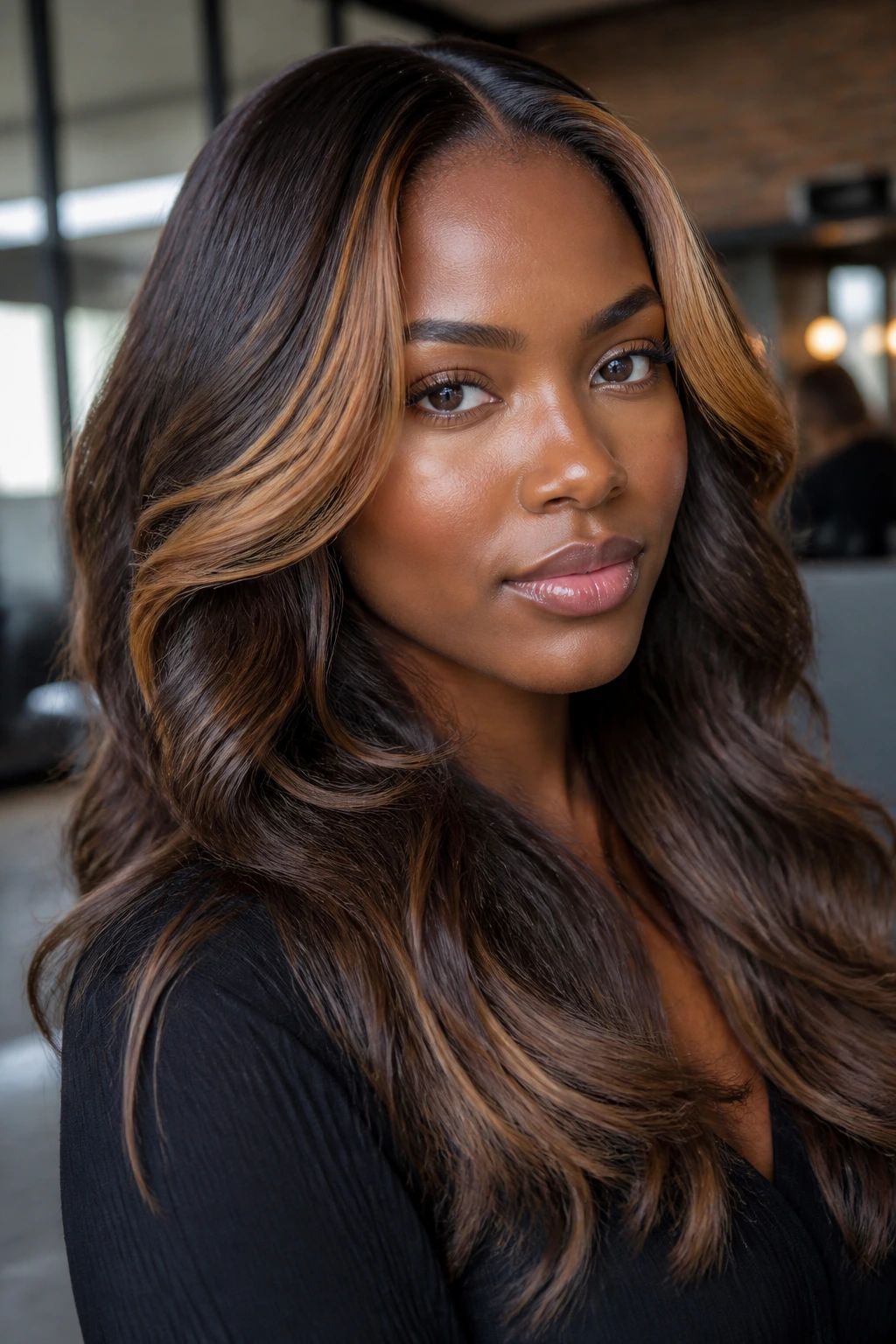
Rich caramel around the face is the classic answer for a reason: it brightens without stealing the whole show. On dark skin, caramel looks warm and glossy when it has enough brown in it. Around a square face, the face frame does exactly what you want — it breaks up the jawline and guides the eye upward.
The best version starts just below the brow or temple area and softens as it drops toward the shoulders. That slope matters more than people think. If the caramel is too thick, it can look chunky. If it’s too thin, it disappears. Get the balance right, and it’s one of the easiest ways to change the whole mood of a cut.
The Placement Rules That Keep Color Soft
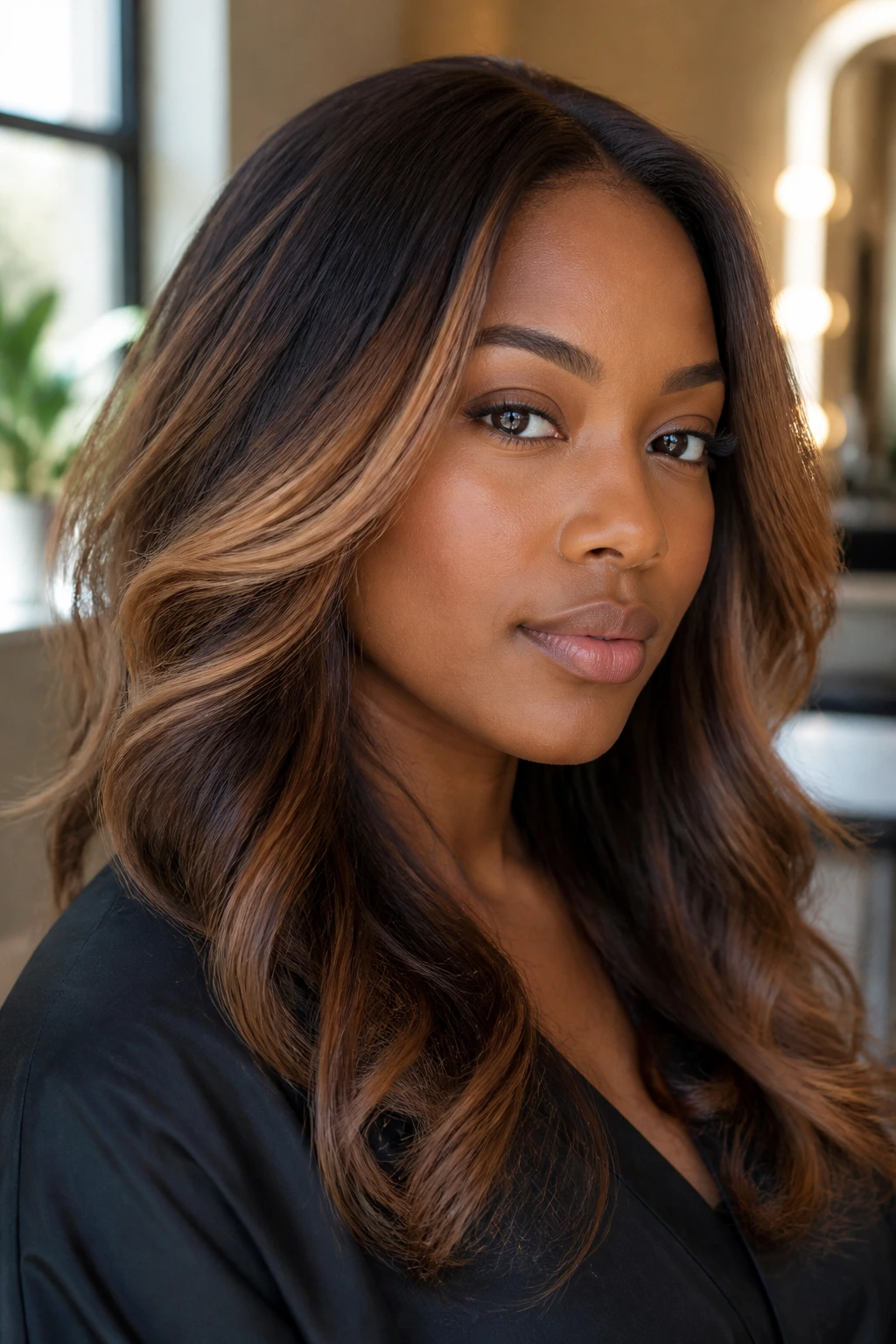
The shade matters, but placement usually decides whether the finished look flatters your face or fights it. Square faces do best when the brightest color sits on curves, not corners. Around the temples, cheekbones, and the outer layers of the hair, a lighter ribbon can redirect attention away from the jaw and toward the eyes.
Texture changes the equation a little. Curly and coily hair already has built-in softness, so color can be a touch bolder. Straight styles need more careful placement because every line shows. A money piece at the front, a shadow root, or a balayage that fades lower on the head keeps the look from becoming blocky.
And yes, shine matters more than people admit. Deep shades on dark skin look better when the cuticle is smooth, because light can bounce across the surface. That’s why a gloss or glaze can change the whole result even if the color formula stays the same.
Essential Tools for a Clean Color Job
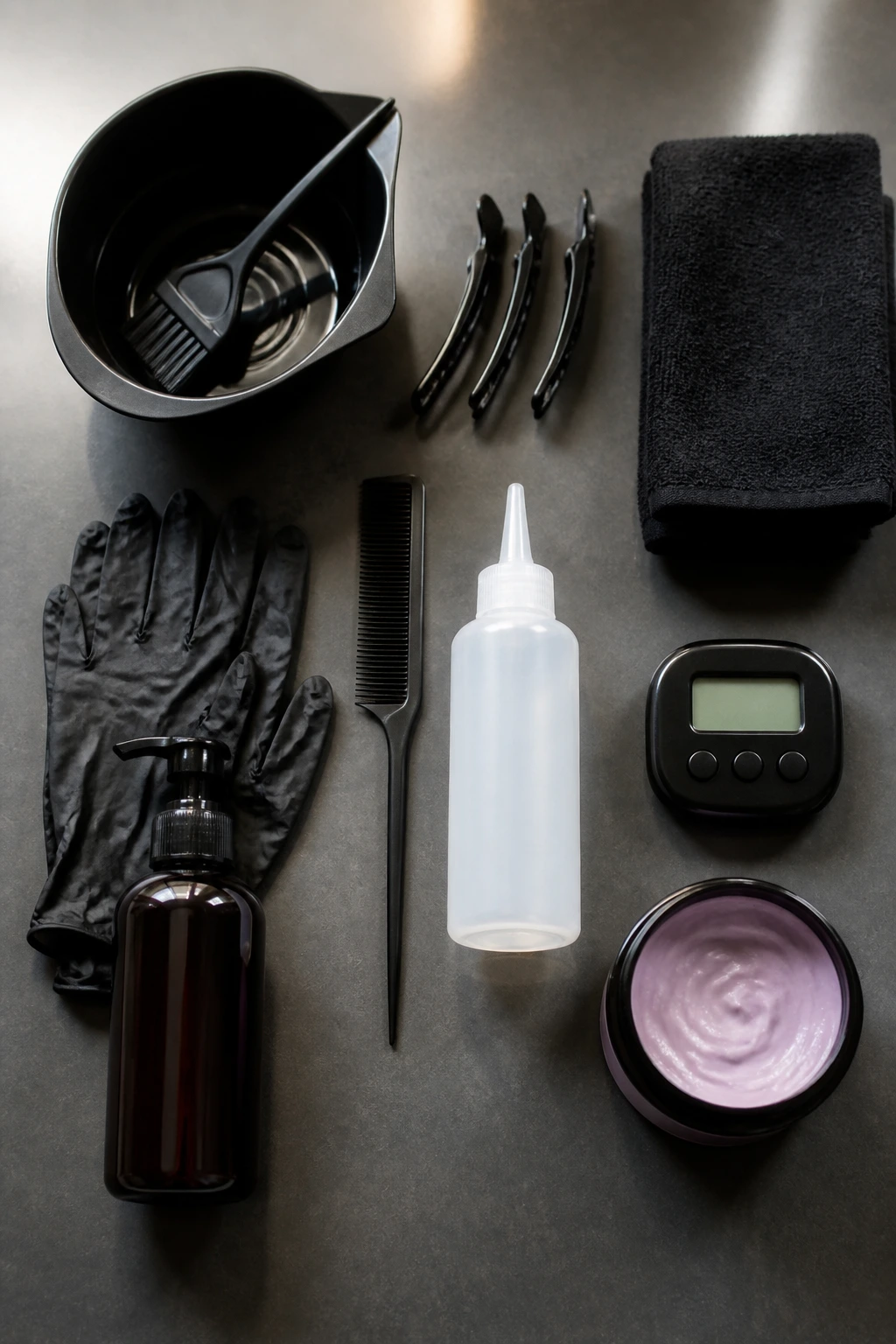
- Tint bowl: A non-metal bowl keeps your formula easy to mix and easy to see.
- Color brush: A narrow brush helps you place front pieces cleanly instead of flooding the hairline.
- Sectioning clips: Four to six clips keep the hair organized, especially for balayage or money-piece placement.
- Nitrile gloves: They protect your hands from staining and give you a better grip.
- Tail comb: Use it to make clean partings and thin slices for highlights.
- Applicator bottle: Handy for roots, glosses, and all-over demi color.
- Timer: Color that sits too long can go dull or brassy.
- Old towel or color cape: Dye drips fast; your shirt will not thank you.
- Clarifying shampoo: Use it before a gloss or color application if there’s product buildup.
- Color-safe mask: Helpful after coloring, especially if the hair has been lightened at all.
Smart Shade Shopping and Formula Notes
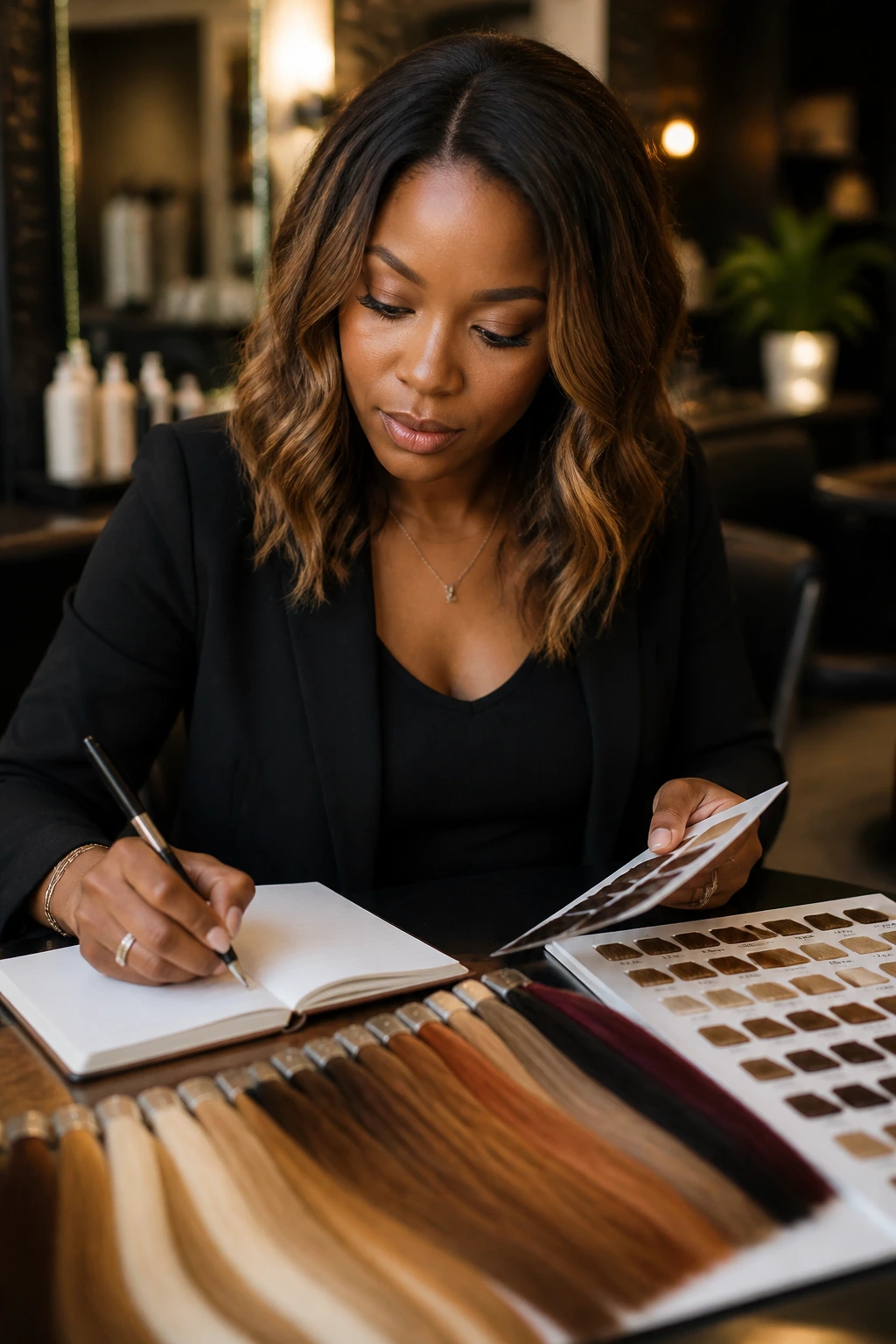
Shopping for hair color is easier when you stop trusting the box name alone. A “light brown” from one brand can run warm and golden, while another can turn muddy and flat on the same head. Check the level, the undertone, and whether the product is permanent, demi-permanent, or a gloss. That matters more than the pretty model on the front.
On dark hair, deeper tones often look better when they’re one or two levels richer than you think you need. A level 3 or 4 espresso, a level 5 chestnut, or a level 6 caramel-brown highlight usually sits more naturally on dark skin than a pale, dry-looking lift. If you want lightness around the face, buy for the front and leave the rest darker. That contrast is cleaner and easier to wear.
If your hair is textured or porous, avoid formulas that promise a pale result with one easy step. Hair that has been relaxed, bleached, or heat-styled hard can grab color unevenly. A strand test saves you from a lot of drama. So does a gloss, which can tone, smooth, and add shine without forcing a huge shift.
How to Wear These Shades
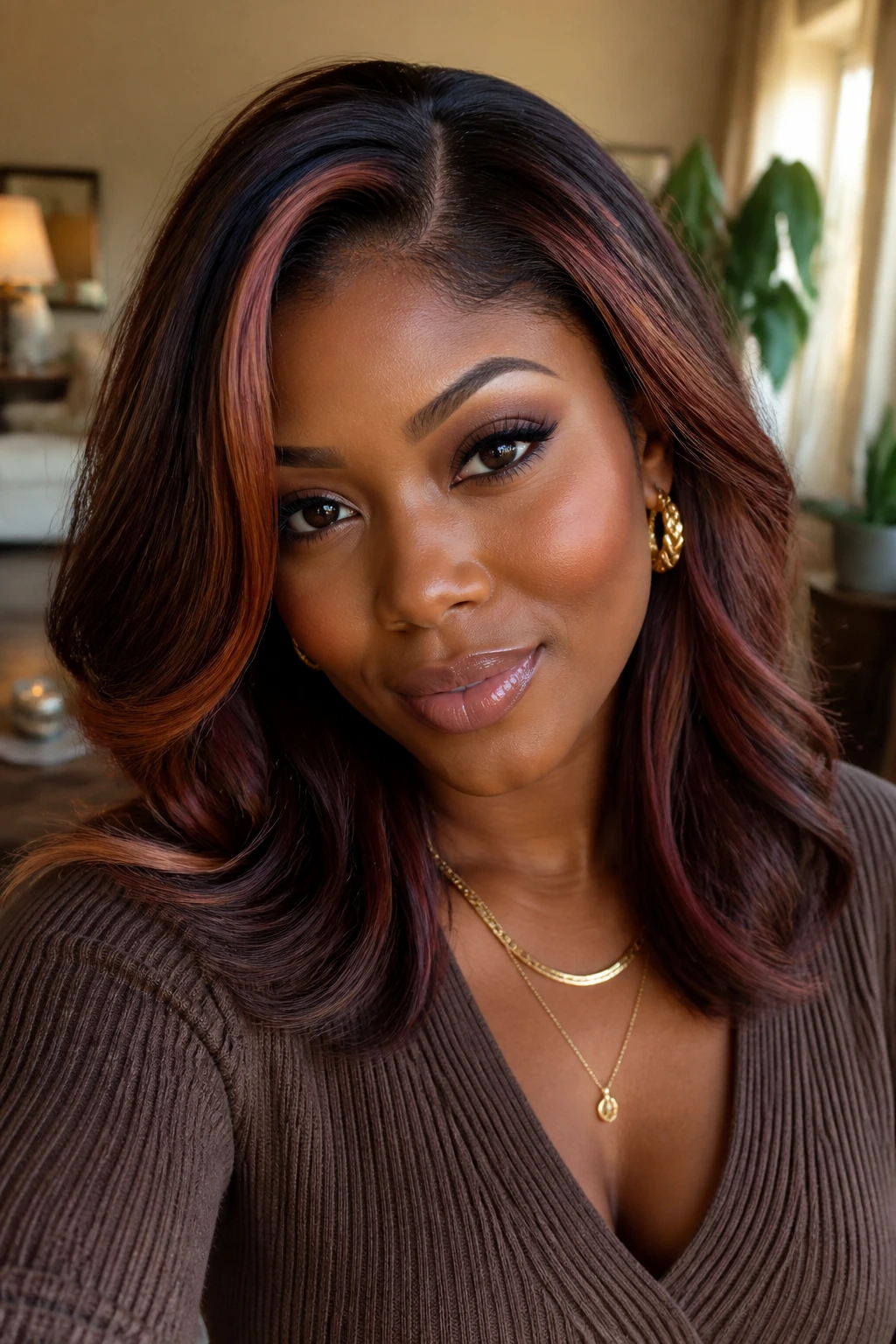
Presentation: Loose waves, rounded blowouts, twist-outs, braid-outs, and layered curls show dimension best. A straight style can work too, but it needs shine and a clean part so the color doesn’t look flat.
Accompaniments: Gold hoops, berry lipstick, soft bronzer, and jewel-tone clothes tend to sit well beside rich brunette, copper, plum, and bronze shades. Cool colors like emerald and violet look sharper with a cleaner makeup base and a little glow on the skin.
Portions: If you want low commitment, keep the brightest color at the front or through the outer layers only. Full-head copper, plum, or bronze can be gorgeous, but on square faces the face-framing pieces usually do more than an all-over bright shade.
Accessory Pairing: Headbands, clips, silk scarves, and earrings can work with the color instead of against it. A caramel money piece looks even better when the front is tucked behind one ear. That small shift opens the face.
Extra Polish and Personalization
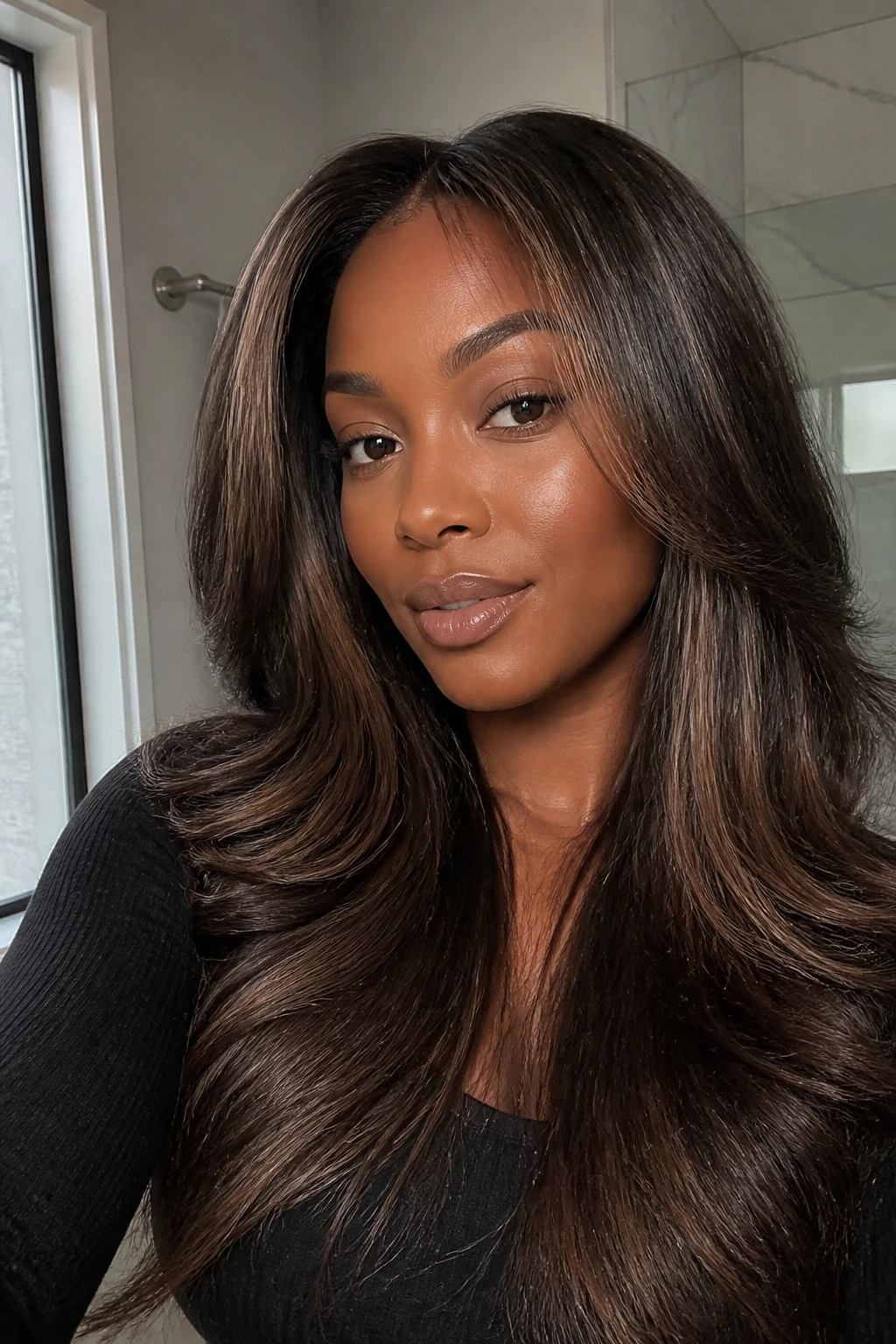
Shine Enhancement: A clear gloss every few weeks keeps deep brunettes, black tones, and red-brown shades from looking chalky. On dark skin, shine does a lot of heavy lifting.
Customization: If a color feels too strong, ask for a root shadow or keep the front pieces one shade lighter than the rest. That tiny change can soften the face more than adding another level of lightness everywhere.
Serving Suggestions: For square faces, soft curls around the jaw, side-swept bangs, or shoulder-skimming layers tend to flatter more than a blunt finish. The color looks better when the cut has somewhere to move.
Make-It-Yours: Warm undertones usually look best with caramel, copper, bronze, and mahogany. Cool undertones can lean into blue-black, plum, smoky brown, and deep violet. If you’re unsure, start with a glaze or demi-permanent shade before committing to permanent lift.
Color Care, Refreshes, and Regrowth
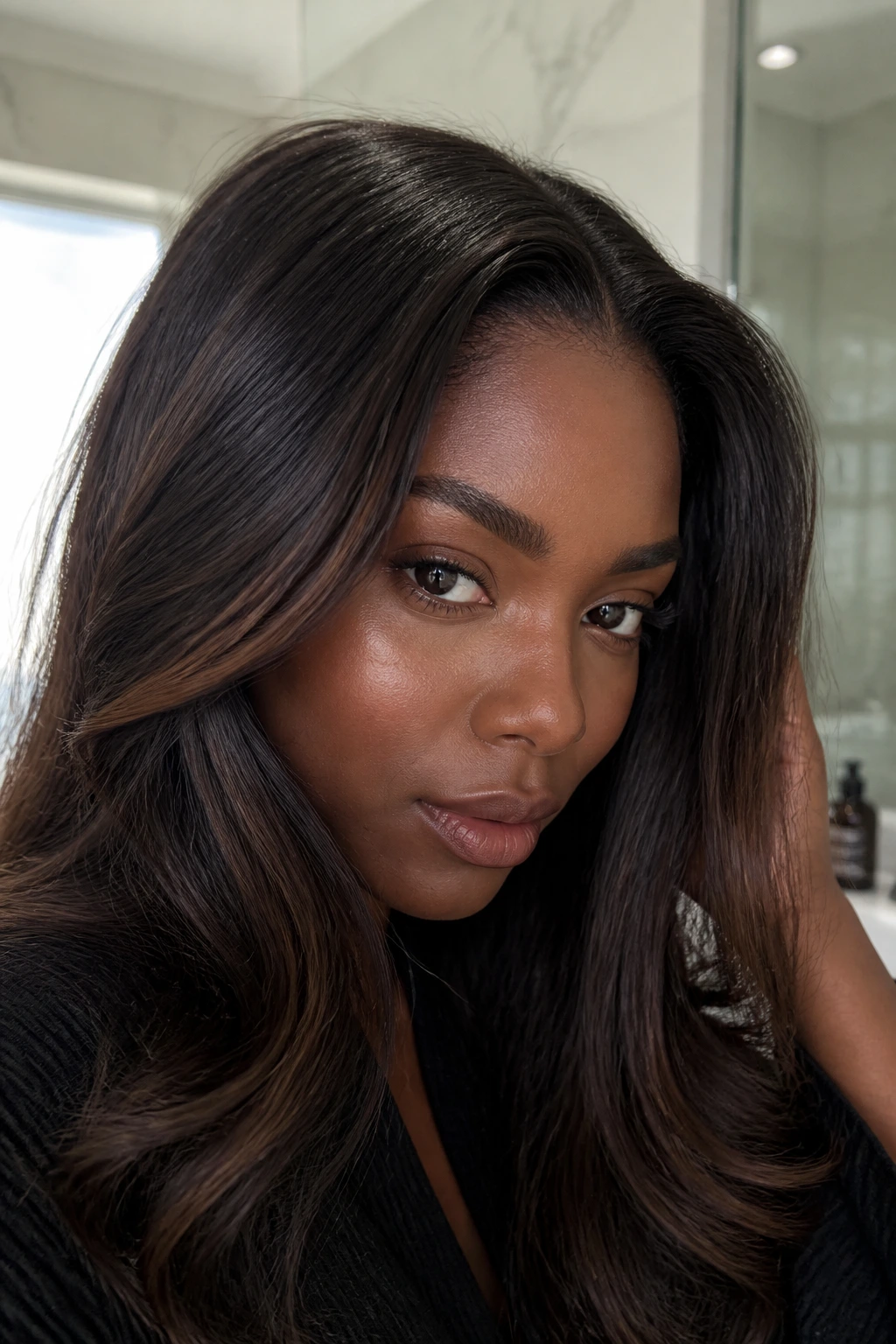
Most dark shades need less drama to maintain, but they still need a plan. Permanent root color usually holds for 4 to 6 weeks before regrowth starts showing clearly. Demi-permanent brunettes and glosses often stay fresh for 6 to 12 washes, depending on how often you shampoo and how hot your water runs. Fashion shades like violet or emerald fade faster, and that is normal.
Cool water helps. So does cutting shampoo down to 2 or 3 times a week if your scalp allows it. Use a color-safe cleanser, and keep a richer mask on the hair once a week if the ends feel rough. If the shade has been lightened at all, a bond-repair treatment can help the hair keep its feel and bounce.
Heat is another thing. A silk press or flat iron can make a dark color look incredible, but high heat burns shine out of the surface fast. Keep heat protectant in the routine, and don’t chase the same sleek look every day. Braids, twist-outs, and loose buns give the color a rest while the tone settles in.
Common Mistakes to Avoid
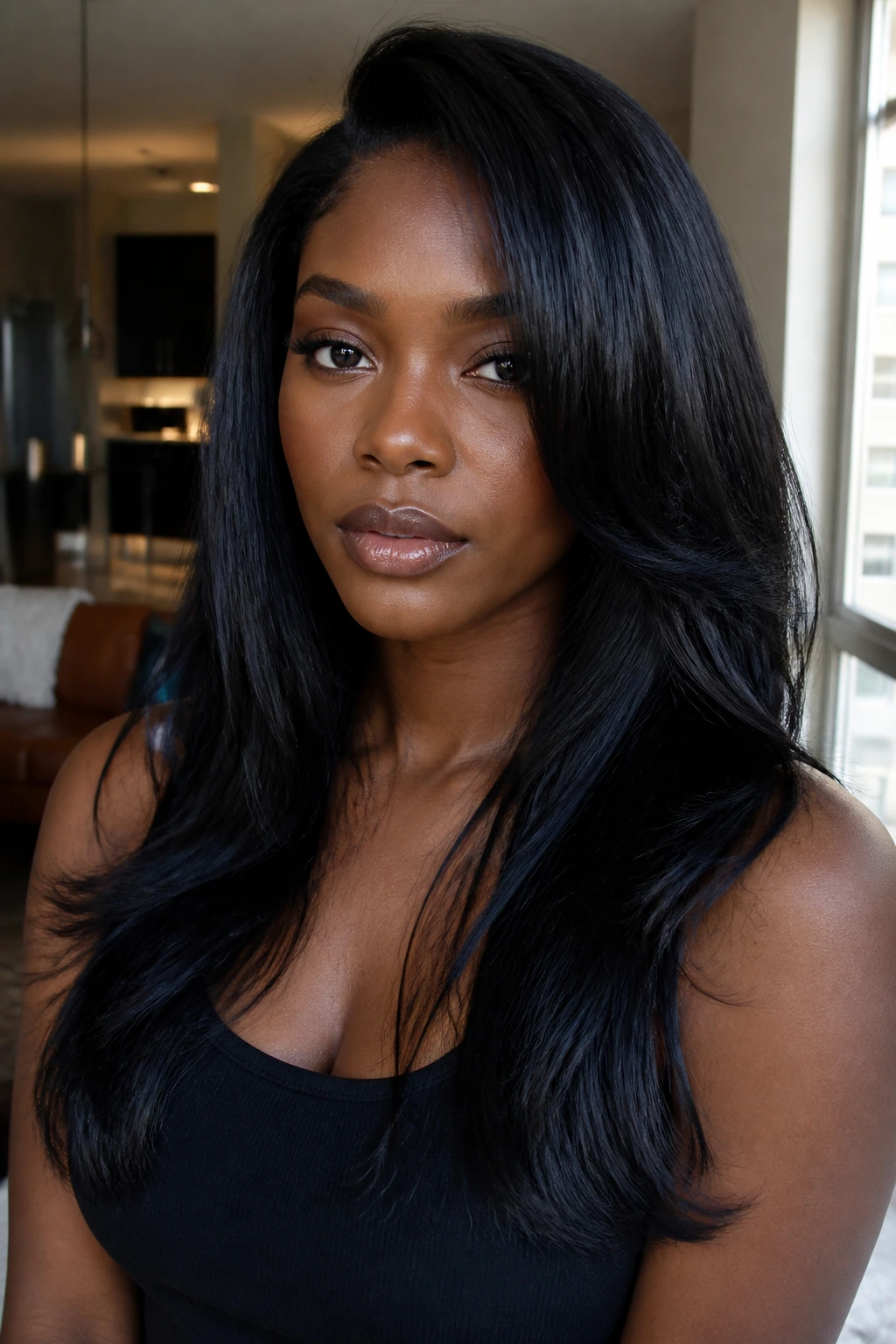
The first mistake is choosing a shade that is too light, too fast. A pale blonde or a washed-out ash brown can drain dark skin and make the hair look disconnected from the face. If you want contrast, keep it warm or smoky rather than chalky.
The second mistake is putting all the brightness at the jawline. That’s where square faces need the most softening, not the most weight. Move lighter pieces higher, lower, or around the temples so the face gets shape instead of more width.
The third mistake is ignoring undertone. A cool ash formula on warm skin can look dull. A copper too red on a cool complexion can look loud in the wrong way. Shade families matter more than the marketing names.
The fourth mistake is skipping maintenance and expecting the color to stay pretty on its own. Glosses fade. Reds fade faster. Highlights can get brassy. A quick toner or moisturizing mask on a schedule keeps the color from slipping into that tired, rough look that ruins the whole effect.
The last mistake is leaving the hairline too harsh. If your front pieces are thick, straight, and placed in one hard block, the face can look boxed in. Feather the placement. Soften the part. Let the color bend.
Smart Variations to Try
Low-Commitment Gloss: Choose espresso, mahogany, or blue-black in a demi or gloss formula if you want richer depth without a big color shift. This works well for textured hair and anyone who changes their mind often.
Warm Glow Balayage: If your skin leans golden or red, try cinnamon, bronze, caramel, or honey placement through the outer layers. The color should look like light moving through the hair, not stripes sitting on top.
Bold Fashion Panels: Emerald, violet, or silver ribbons work best as peekaboo panels or face-framing accents. You get the punch without turning the whole head into a costume.
Soft Face Frame Only: If you’re nervous about color, keep the base dark and lighten only the pieces around the cheeks and temples. This is one of the best setups for square faces because it changes the shape without crowding the jaw.
Textured Hair First: On curls, coils, and braids, color should respect the pattern. Slightly deeper roots and warmer ends usually look more natural than trying to force an even, flat tone from root to tip.
Frequently Asked Questions
Which hair colors look best on dark skin and square faces?
Warm browns, copper, mahogany, bronze, burgundy, and deep jewel tones usually work well because they keep the complexion rich while softening the face. The placement matters just as much as the shade; face-framing pieces and curved highlights tend to flatter square jaws more than hard stripes.
Can a square face wear blonde?
Yes, but the tone and placement need more care. Beige, caramel, honey, and bronze-blonde pieces usually work better than icy, pale blonde because they keep the color from looking harsh against strong facial angles.
Is warm or cool hair color better on dark skin?
Both can work. Warm undertones usually love copper, gold, caramel, and mahogany, while cool undertones can handle blue-black, plum, smoky brown, and deep violet more easily.
Should I choose highlights or one solid color?
Highlights or balayage usually soften a square face better because they create movement around the head. A solid color can still look beautiful, especially in black, espresso, or burgundy, but it benefits from a soft cut and plenty of shine.
What if my hair is natural and textured?
Textured hair can carry color beautifully, but porosity matters. Lighter pieces, glosses, and warm tones often show dimension best, and you may need a strand test before committing to a lighter formula.
How often should I refresh the color?
Glosses usually need a refresh every 4 to 6 weeks. Demi-permanent brunettes can last longer, while reds, violets, and fashion shades often fade faster and may need toning or re-glossing sooner.
What if the color turns brassy?
That usually means the tone is too warm for the formula you wanted, or the hair has been exposed to heat and hard water. A toner, blue shampoo for orange brass, or a cooler glaze can pull it back into shape.
Can I do these colors at home?
Some of them, yes. Jet black, espresso, deep burgundy, and simple glosses are more forgiving at home than lighter balayage or fashion shades. If you want a big lift, especially around the face, a salon placement usually gives cleaner results.
The Shades That Do the Most With the Least
The best color on dark skin usually has depth first and brightness second. That is the part a lot of box-dye thinking misses. Hair color ideas for dark skin and square faces work when they keep the complexion rich, not stripped, and when they soften the jaw instead of drawing a ruler-straight line around it.
A good rule to keep in your head: if the color looks nicer when the hair moves, you’re probably on the right track. Soft ribbons, glossy brunettes, warm reds, and carefully placed jewel tones tend to do more for a square face than loud, flat lightness ever will.
Pick the shade that gives you movement. Pick the placement that bends around the face. The rest is just details — and the good kind of details are usually the ones people notice without knowing why.