



Warm brown can be rude to cool skin. Put a copper-heavy brunette next to pink, blue, or rosy-beige undertones and the face starts to look a little tired, a little sallow, a little like the hair arrived first and the complexion is trying to catch up.
That is why brunette hair transformations for cool skin tones live in a different lane from the usual caramel-and-honey crowd. The trick isn’t “go darker” or “go lighter” as if those are the only choices. It’s choosing the right kind of brown — ash, blue-based, violet-balanced, neutral, smoky, taupe — and placing it where the face can use it. A level 4 espresso can look sharper than a level 7 brown that’s been warmed up too much. A mushroom brunette can make pale skin look clearer. A blue-black pixie can make the whites of the eyes jump. Same family. Very different result.
The best cool brunette shades don’t sit there and behave. They do a little work. They sharpen the jaw, calm redness, brighten the sclera of the eye, and keep the whole look from drifting into orange when the sun hits it. Some are low maintenance. Some are a bit fussy. None of them are random.
Why These Brunette Transformations Work on Cool Skin
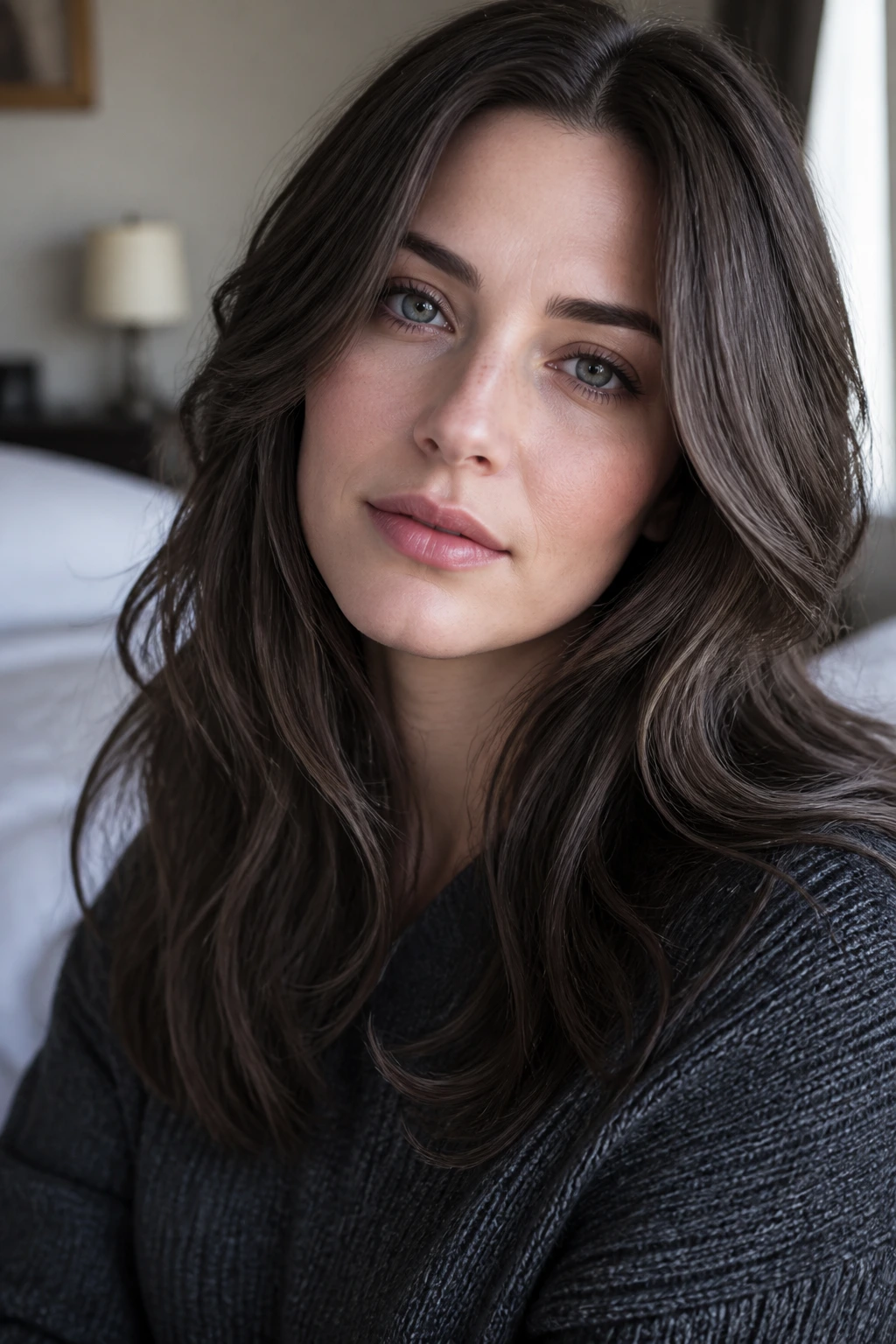
Ash and neutral bases keep the brown clean. When a brunette has too much red or gold, cool skin often loses its crisp edge and starts looking washed. Blue, violet, and ash pigments pull the shade back into place.
Dimension matters more than drama. Flat dark brown can look severe on cool undertones, especially in indoor light. Fine ribbons, lowlights, and soft root shadow give the hair movement without adding warmth.
Cool brunettes play nicely with silver jewelry and cool makeup. Think charcoal eyeliner, berry blush, plum lipstick, and crisp white shirts. The hair stops fighting those colors and starts supporting them.
Cool skin isn’t one note. Fair porcelain, rosy beige, olive-cool, and deep cool undertones all need different depths. A mushroom brown bob and a blue-black pixie are both cool-friendly, but they solve different problems.
Glosses beat heavy color when all you want is tone. If your brunette already has good depth, a demi-permanent gloss can shift the undertone without wrecking the movement you already have.
1. Smoky Espresso Gloss
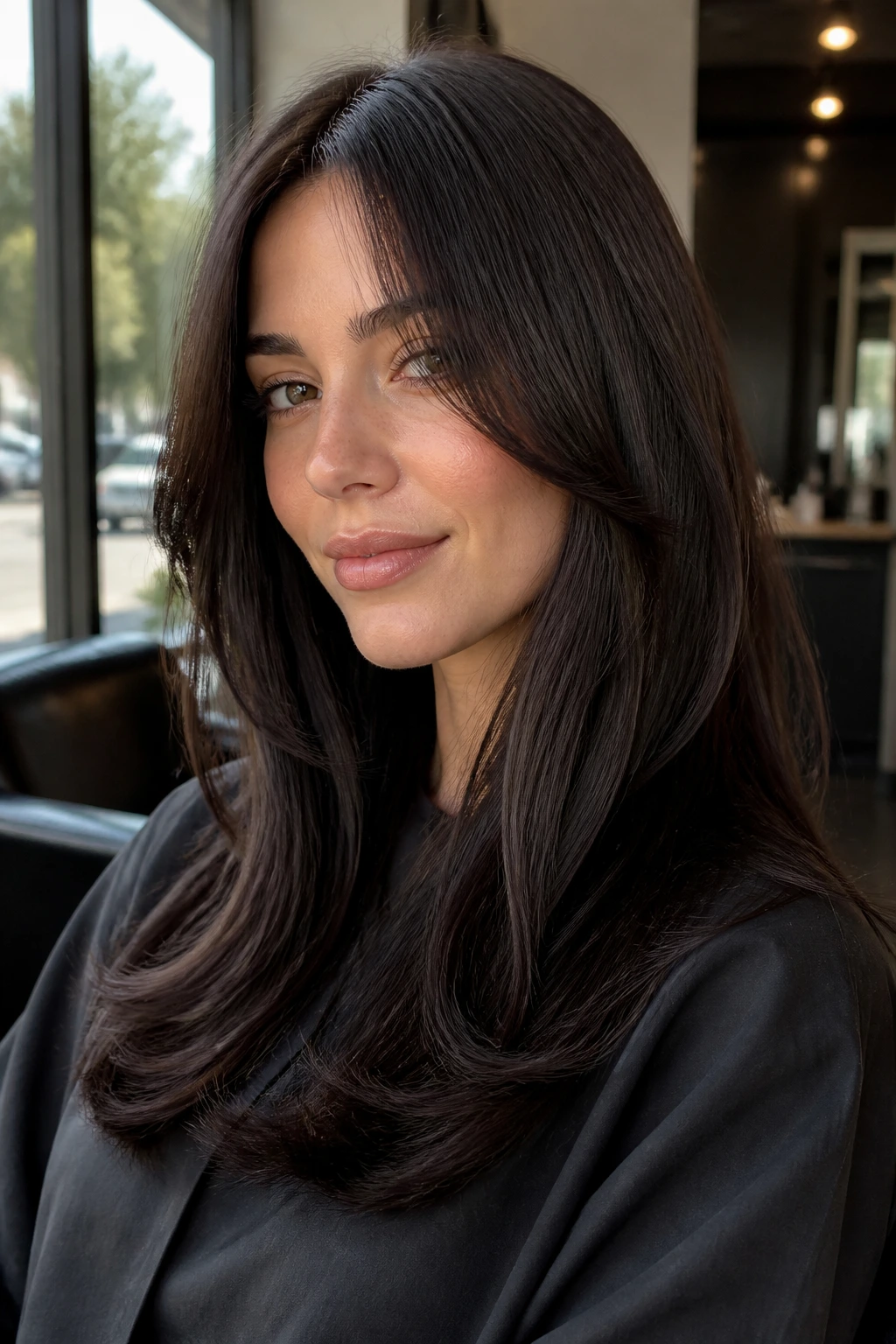
This is the brunette for people who want their hair to look expensive without looking loud. Smoky espresso sits near the dark end of the brown scale, but the cool finish keeps it from sliding into soft black or red-brown. On cool skin, that matters. The shine sharpens the face instead of warming it up into orange.
I like this shade on long layers, blunt lobs, and glassy blowouts because the gloss itself does a lot of the visual work. If your skin is fair and pink, ask for a few level-5 pieces around the hairline so the color doesn’t swallow the face. If your skin is medium-cool, you can go deeper.
Why It Stands Out
A smoky espresso gloss doesn’t need highlights to read as polished. It needs light reflection. That’s the difference.
- Best depth: level 3 to 4 with a cool neutral gloss.
- Best finish: silky, straightened lengths or loose bends.
- Best for: cool complexions that look best in clean contrast.
- Watch for: red undertones sneaking in around faded ends.
2. Mushroom Brown Lob
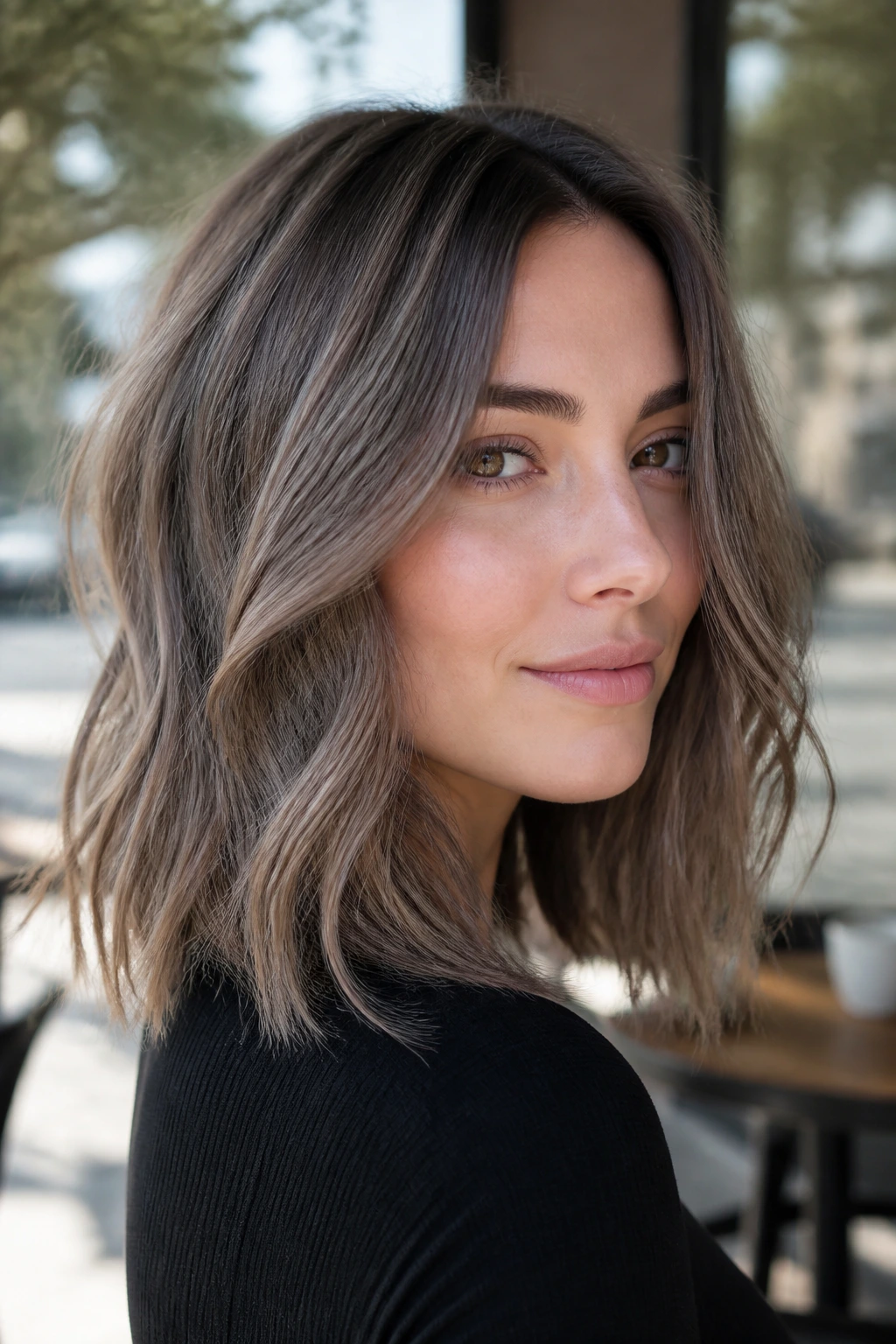
Mushroom brown is one of those shades that sounds niche until you see it on the right face. Then it makes sense. It’s a greige-brown — not beige, not ash, not muddy — and on a lob it has that slightly editorial, slightly lived-in feel that cool skin loves. There’s no copper flash trying to warm the complexion from the outside.
The collarbone length matters here. A mushroom shade on a longer cut can look heavy unless there’s a bit of layering or wave. On a lob, the shape keeps the color airy. If you want the look to feel softer, ask for a root tap one shade deeper than the mids. That tiny darkening near the scalp keeps the hair from reading flat.
What Makes It Different
Mushroom brown works because it borrows from taupe, not caramel. That’s a small shift with a big payoff.
It’s a smart choice if your skin leans pink and you’ve noticed that golden browns make your face look flushed in a bad way. Mushroom brown does the opposite. It cools the whole frame.
3. Ash Brunette Money Piece
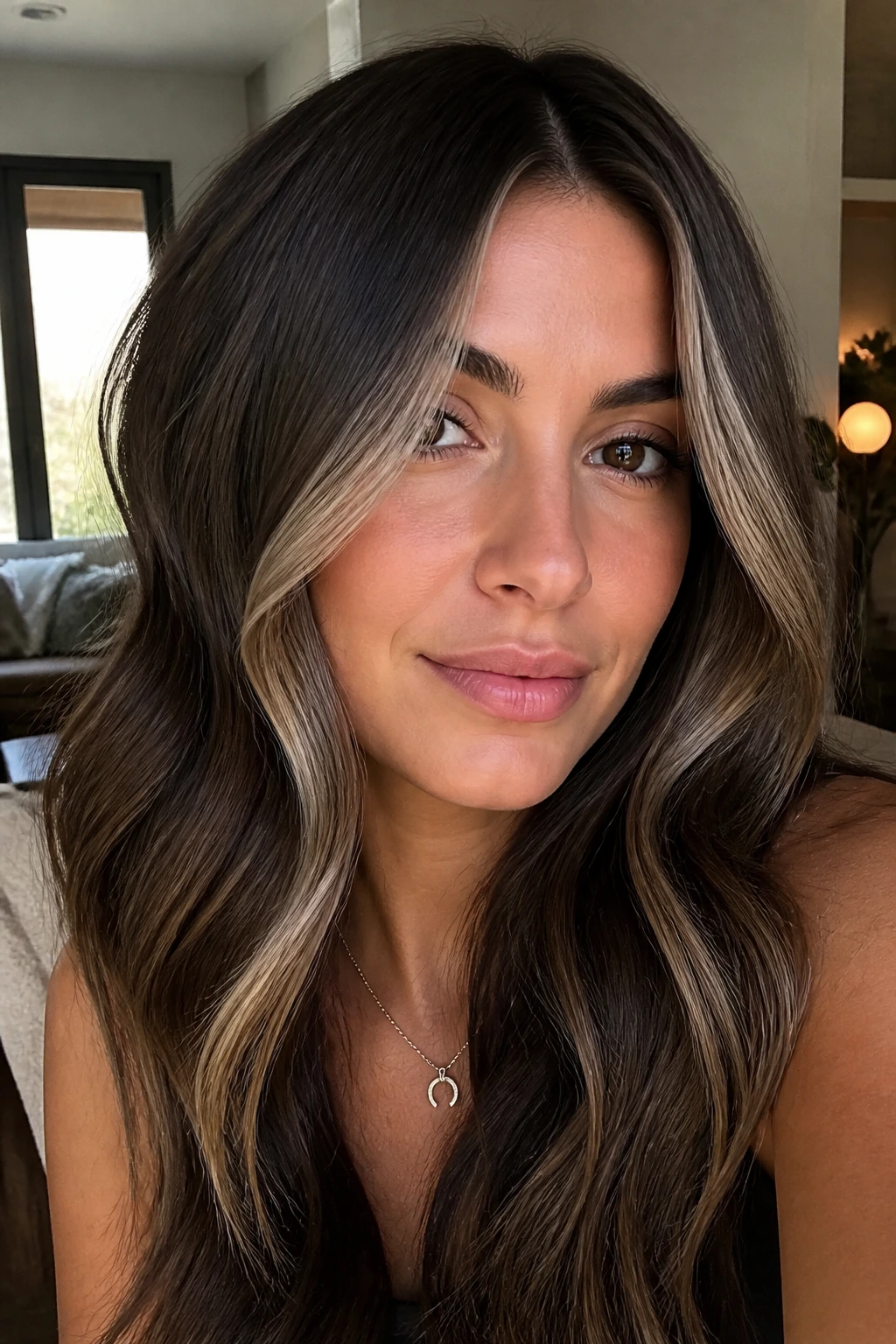
A cool money piece can save a brunette that feels too heavy around the face. The key is restraint. You want the face-framing pieces light enough to catch the eye, but not so pale that they go yellow against cool skin. Level 7 ash-beige is the sweet spot for a lot of people. Jump to level 9 and you can lose the harmony fast.
This look works best when the base stays a rich brunette and the front ribbons are narrow. Thick stripes are too loud. Thin ribbons around the cheekbone and temple feel modern and keep the color from looking like an early-2000s throwback. I prefer it on soft waves because the bend breaks up the contrast.
- Best for: fair to medium cool skin that needs brightness near the face.
- Best pairings: middle part, curtain fringe, or long layers.
- Color note: ask for ash-beige, not gold-beige.
- Maintenance: refresh the front pieces every 6 to 8 weeks.
4. Cool Chestnut Melt
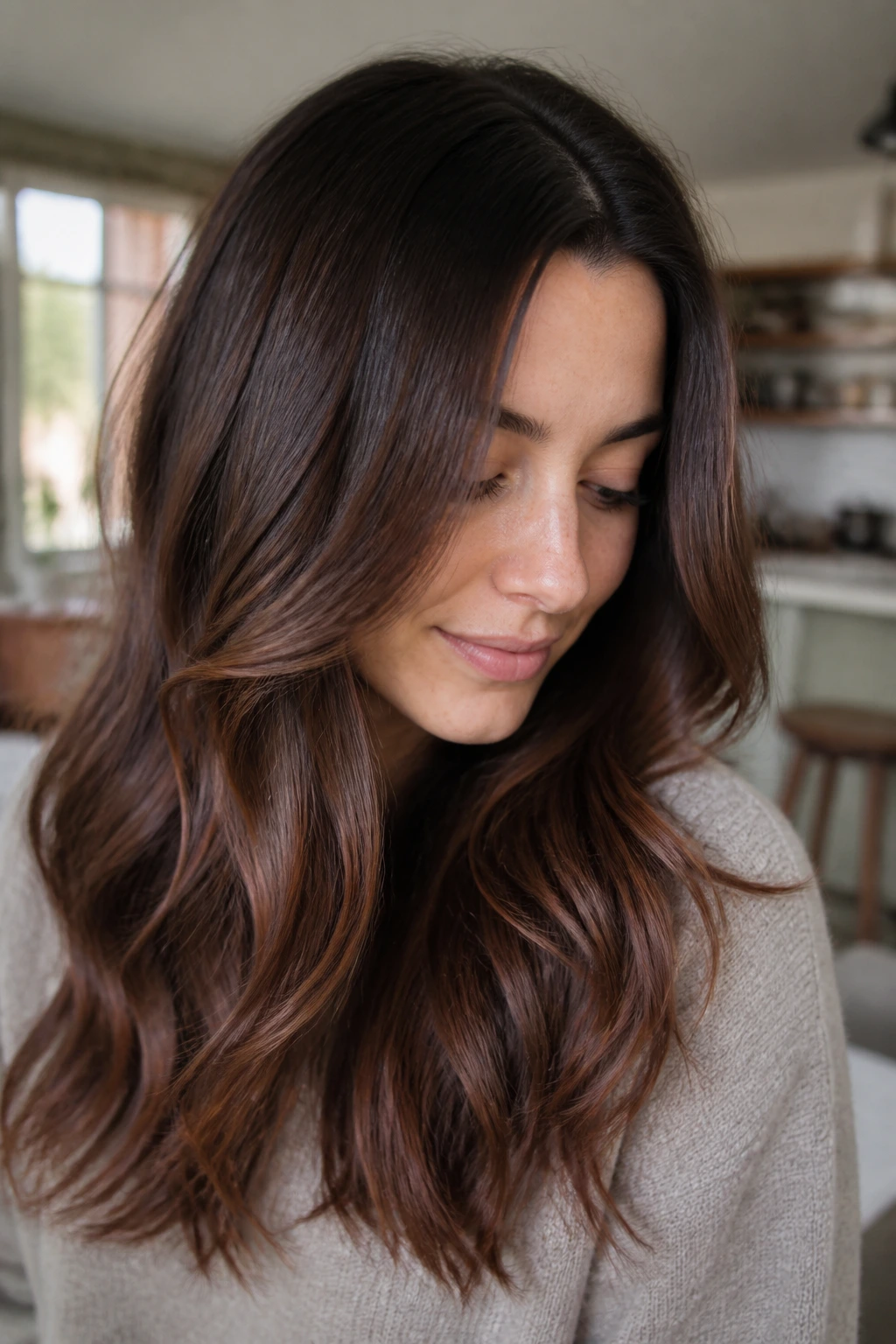
Chestnut gets a bad name because too many chestnuts are warm. Too red. Too shiny in the wrong way. A cool chestnut melt is different. It keeps the brown depth and the soft red-brown warmth only where it flatters, then mutes the rest with neutral and ash tones. The result lands somewhere between cocoa and muted mahogany, and that’s why it works on cool skin.
This is a good shade if you want richness without the heaviness of espresso. It’s also kinder than a hard ash brown if your skin is very pale and can look drained by flat gray tones. The melt should start deeper at the root, then ease into slightly lighter mid-lengths so the hair moves.
Why It Flatters Cool Undertones
A cooled chestnut gives the skin a little life, but not the orange cast that regular chestnut can throw. Think of it as warmth with the volume turned down. Not gone. Controlled.
5. Blue-Black Brunette Pixie
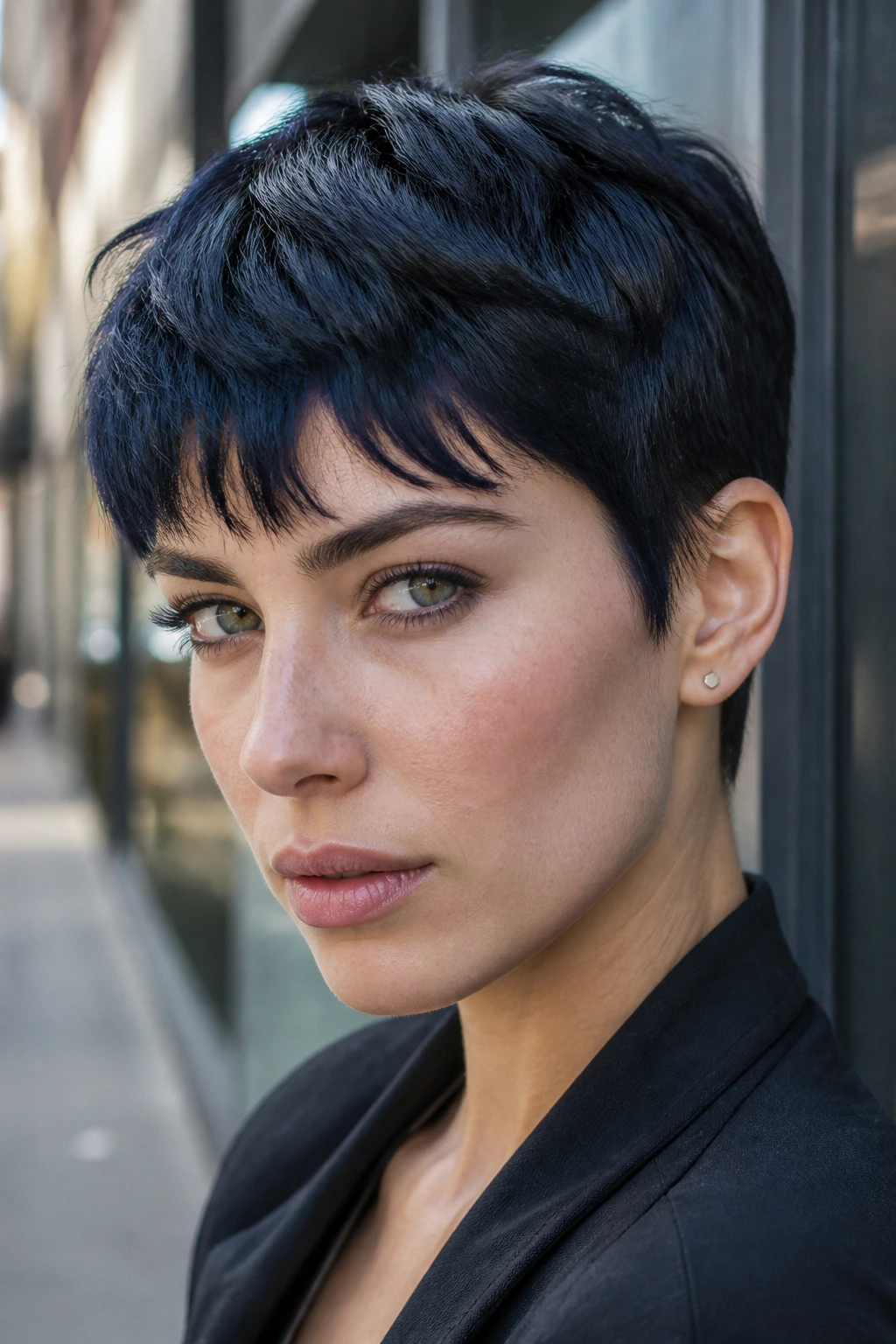
Short hair and cool skin can be a brilliant pair when the color is bold enough. Blue-black is the move here. It isn’t plain black. It has a blue cast that shows up in sunlight and gives the cut a sharp edge. On a pixie, that edge matters because the haircut already brings structure; the color should support it, not soften it into mush.
This look is especially good on very fair cool skin or deep cool skin with strong contrast. If your features are crisp — dark lashes, defined brows, prominent cheekbones — blue-black can look striking rather than severe. If your skin is delicate, keep a soft fringe or some texture on top so the cut doesn’t feel too hard.
One warning. Blue-black fades with a different personality than brown. It can shift toward flat dark brown if the gloss isn’t maintained, and then the magic disappears fast.
6. Taupe Brown Curtain Bangs
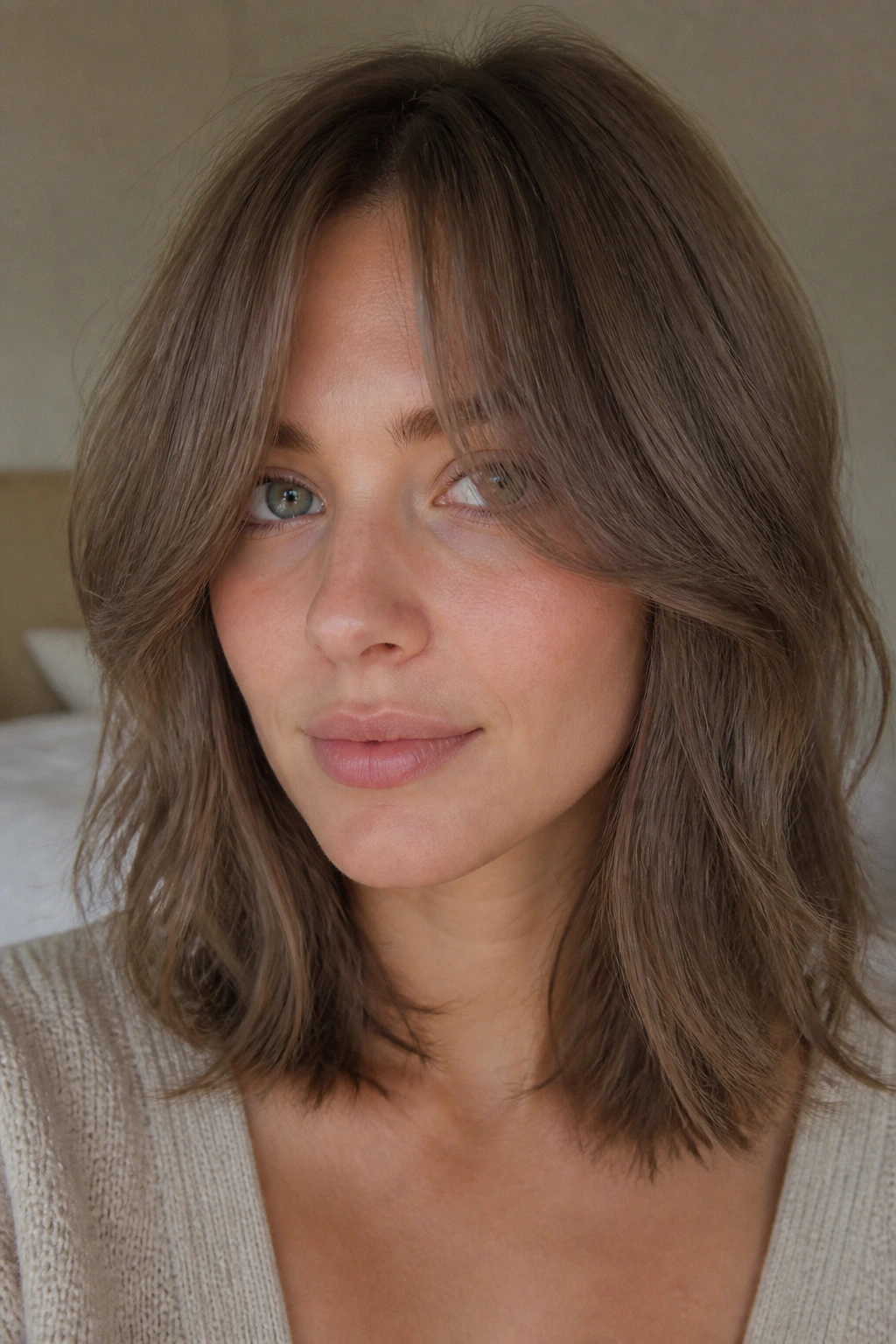
Taupe brown is the quiet cousin of mushroom brown. A little softer. A little lighter. It sits in that cool beige-brown range that never screams for attention, which is exactly why it works on cool skin with curtain bangs. The bangs help pull the color forward around the face, while the taupe tone keeps the whole thing gentle.
I like this on shoulder-length cuts with movement because the bangs frame the eyes and the cooler brown keeps the face from looking pink or flushed. If your hair is naturally medium brown and you just want a refinement, this is one of the nicest places to start. The color shift can be subtle, but the payoff shows up in the mirror every time you turn your head.
7. Brushed-Down Bronde Balayage
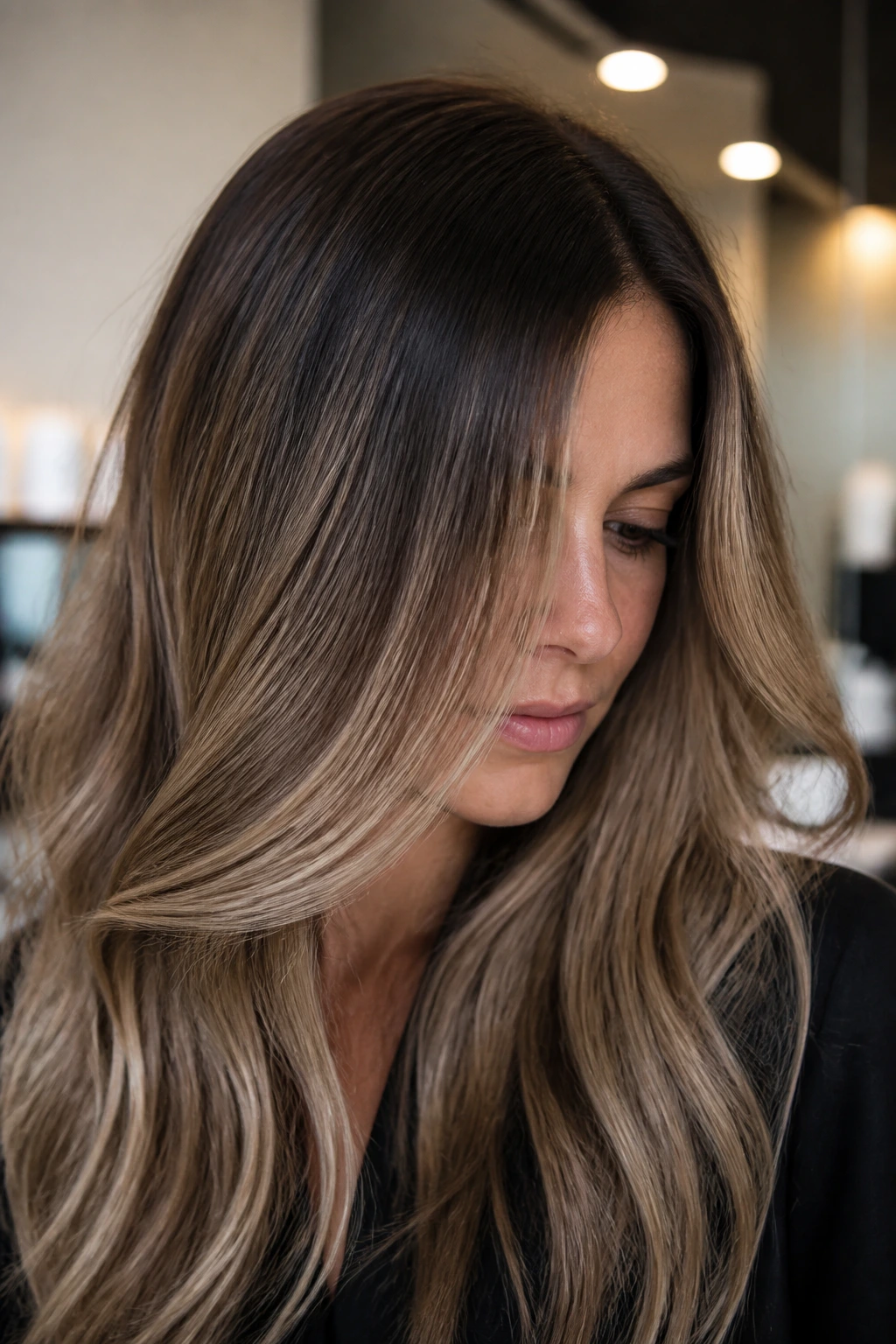
Bronde can go wrong fast on cool skin if the blonde side gets too buttery. Brushed-down bronde solves that by keeping the blonde pieces ash-leaning and low contrast, then styling them sleek enough that the dimension reads as polished instead of beachy. That brushed-down finish is the whole point. It stops the highlights from going yellow in the light.
This is the look for someone who wants brightness but hates harsh stripes. The brunette base should stay dominant. The lifted pieces live mostly through the mid-lengths and ends, with a few face-framing seams near the front.
The Shape Matters
On straight hair, this can look chic and clean. On waves, it looks softer, more diffused.
- Best base: level 4 or 5 brunette.
- Best lift: ash-beige, not golden blonde.
- Best styling: soft brush-out, not tight curls.
- Watch for: too many bright pieces near the crown, which can make the color look patchy.
8. Mocha Melt with Shadow Root
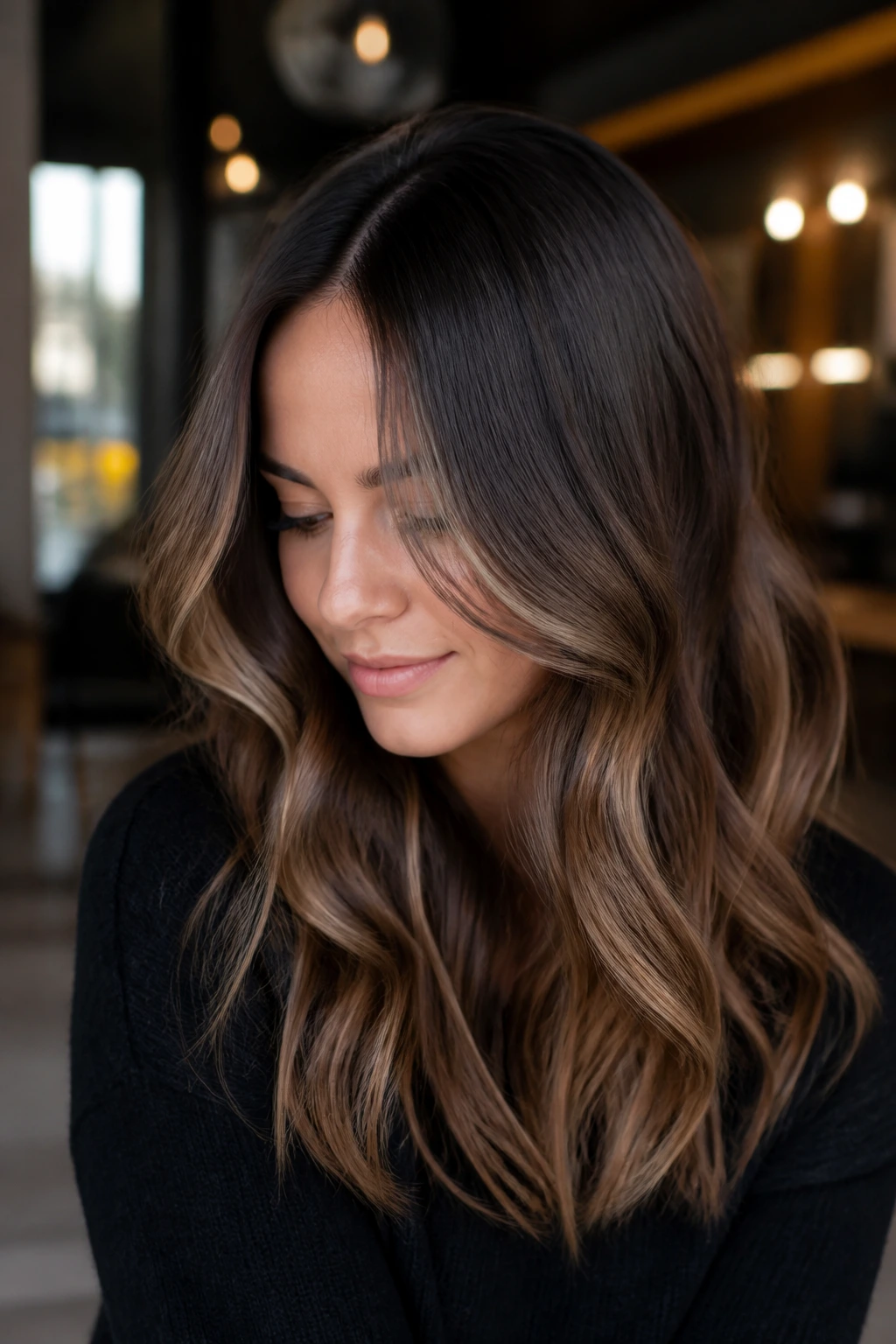
A mocha melt is one of those shades that sounds simple and ends up doing a lot. The root stays a shade deeper, the mids turn creamy-cool mocha, and the ends lighten just enough to show the movement. On cool skin, the shadow root keeps the scalp from looking pale or washed out, which is a small detail that makes the whole style feel more finished.
This is a strong choice if you like a softer grow-out. The root shadow buys you time between appointments, and the melt prevents the color from looking blocky. If your hair has a tendency to pull orange, ask for a blue-violet toner on the ends. That keeps the mocha from turning hazelnut.
9. Smoke-Kissed Cocoa Curls
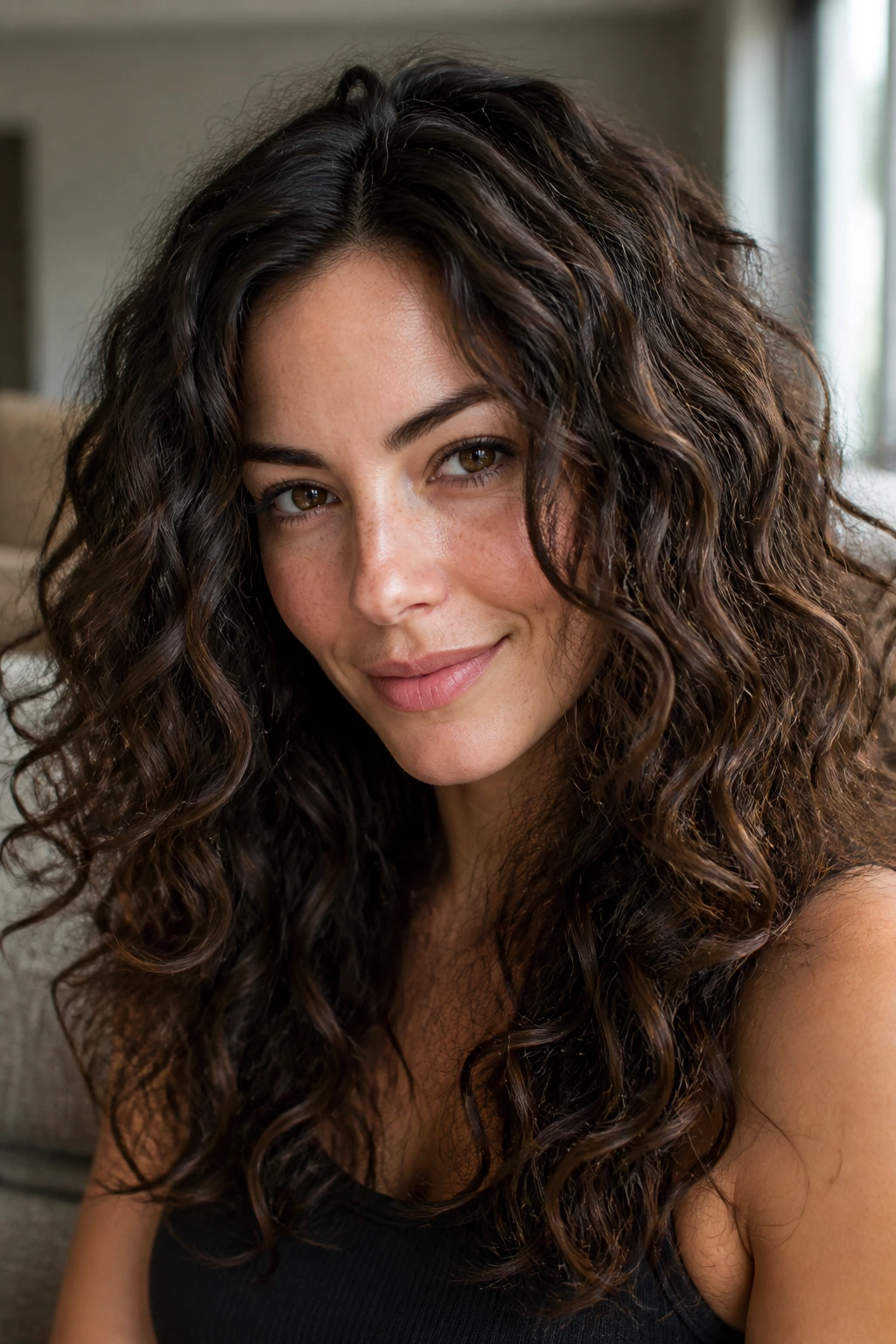
Curls need dimension or they can collapse into one dark shape. Smoke-kissed cocoa solves that with cool-toned lowlights and a glossy cocoa base that defines the curl pattern without warming the hair up. The shade reads rich, not rusty. That’s the line you want to stay on.
This look suits coily, curly, and wavy textures because the bends catch the lighter and darker pieces differently. A diffuse highlight placement around the face can help, but I’d keep the bulk of the color low and smoky. Too many bright streaks on curls can look stripy. One or two tones of difference is usually enough.
10. Ash Brunette with Curtain Bangs
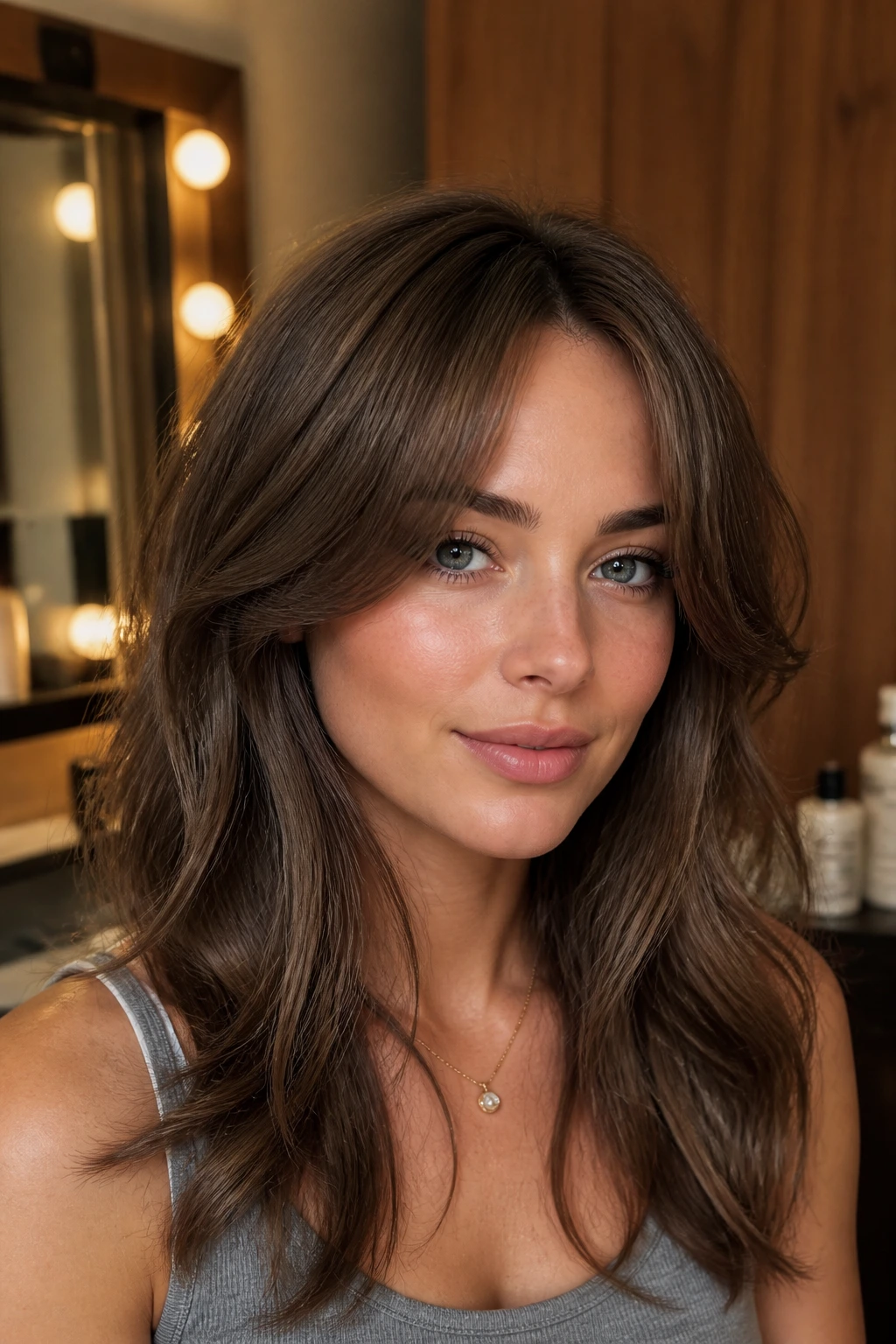
If you want a brunette that feels clean and modern rather than cozy, this is it. Ash brunette with curtain bangs has enough softness around the eyes to keep the face open, but the ash base keeps the brown from drifting warm. It’s one of the easiest ways to make pink undertones look clear instead of ruddy.
The bangs do a lot here. They break up the forehead, make the eyes stand out, and keep the hair from disappearing into one long dark sheet. Ask for a level 4 to 5 ash brown with a cool glaze, not a flat muddy dye. There’s a difference. Muddy brown looks dead. Ash brown looks intentional.
11. Iced Mocha Shag
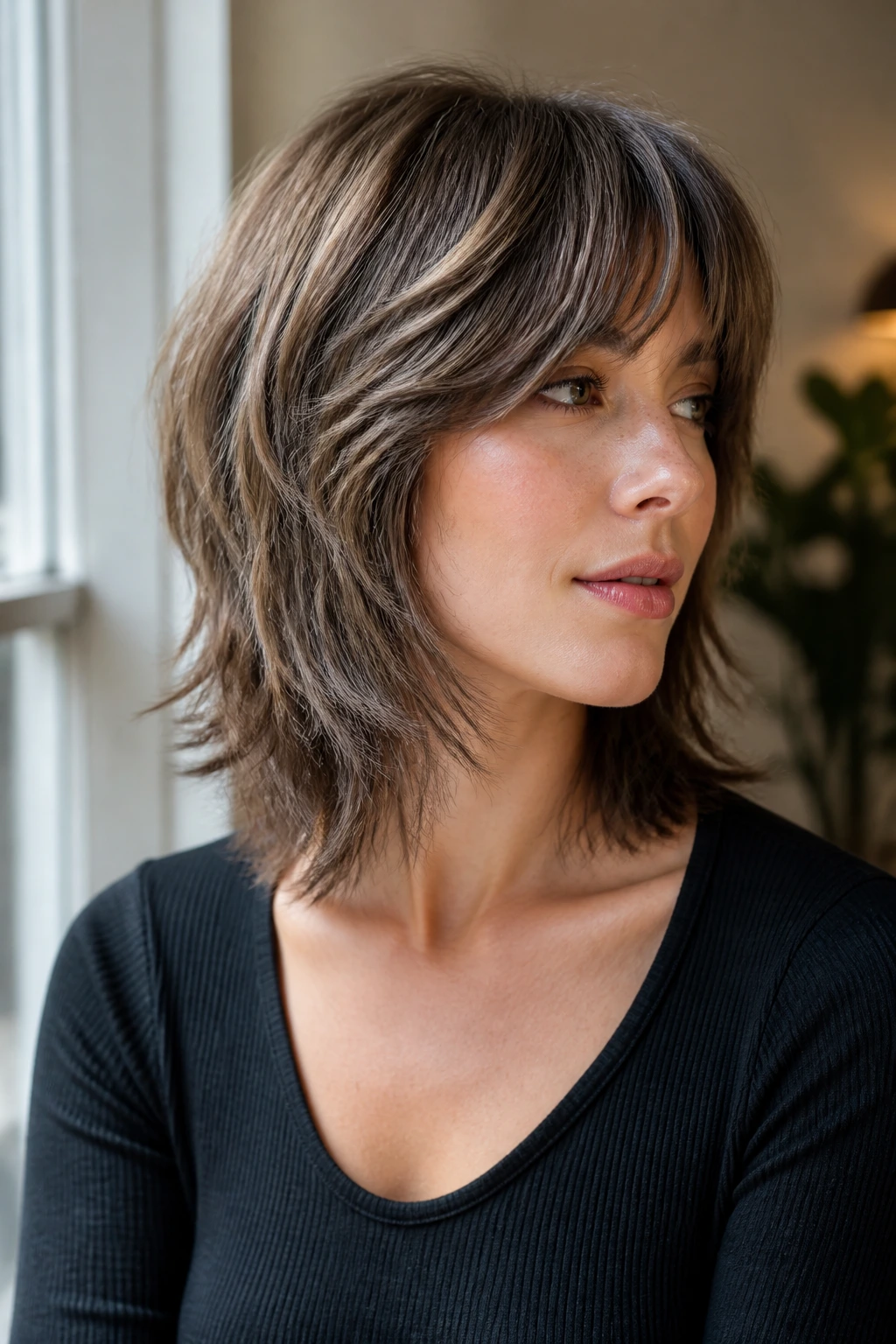
The shag haircut loves a cool brunette because the layers create built-in motion. Iced mocha is the shade I’d reach for when a client wants something dimensional but not sunny. It sits between ash brown and soft mocha, with enough coolness to stay sharp on the skin and enough creaminess to avoid going gray.
A shag benefits from tone changes at the ends, especially if your hair is thick. Keep the root area slightly deeper and let the mids and ends carry the lighter mocha pieces. That gives the cut lift where it needs it. If you’re styling with texture spray, go light. The point of the cut is movement, not crunch.
12. Dark Chocolate with Soft Lowlights
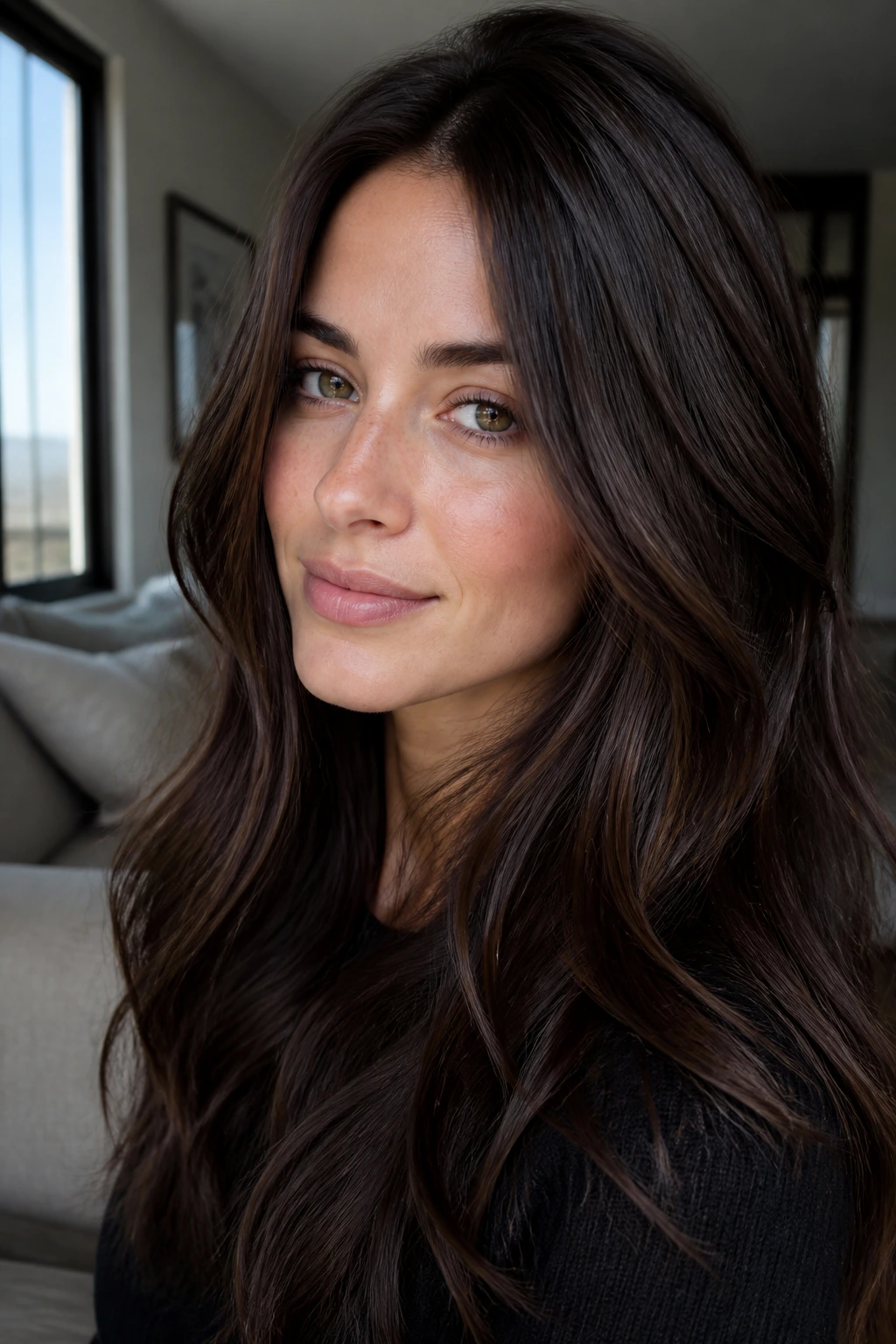
Dark chocolate is a classic for a reason. On cool skin, it works best when the lowlights are there to break up the shape rather than to change the whole color family. The base should stay deep and cool, with just enough muted brown variation to keep the hair from reading as one block.
I like this on medium to long cuts where the lowlights can show up under movement. If your hair is fine, keep the lowlights narrow so you don’t lose density. If it’s thick, a few wider panels can help the whole look breathe.
There’s a practical upside too. Dark chocolate hides fading better than lighter brunettes, so it’s one of the easier cool-toned looks to maintain between glosses.
13. Cool Walnut Waves
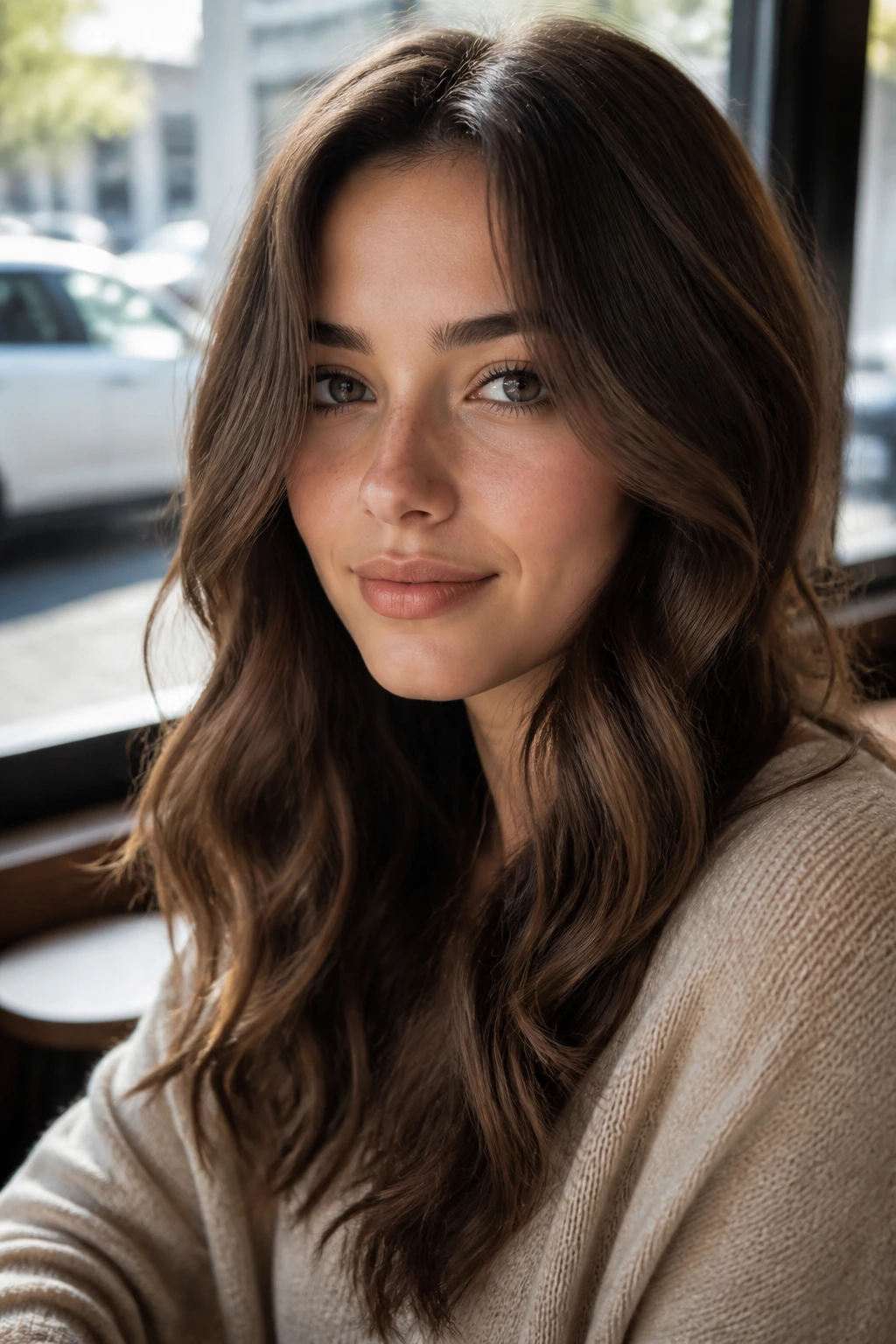
Walnut is the brunette you choose when ash brown feels too icy and chestnut feels too warm. It lives in the middle. That balance makes it good on cool skin that still wants a little softness in the face. On waves, walnut gets a gentle sheen that reads rich rather than flat.
Why Walnut Works When Ash Feels Harsh
Ash can sometimes pull a face too pale, especially if your skin is fair and your eyes are light. Walnut solves that by keeping some brown warmth, but not the red-gold kind. The result is easier on the complexion.
- Best tone: neutral-cool brown with a muted finish.
- Best texture: loose waves or a soft blowout.
- Best use: when you want something wearable, not dramatic.
- Tip: ask for a gloss instead of an all-over permanent shift if your base is already close.
14. Beige Brunette with Root Tap
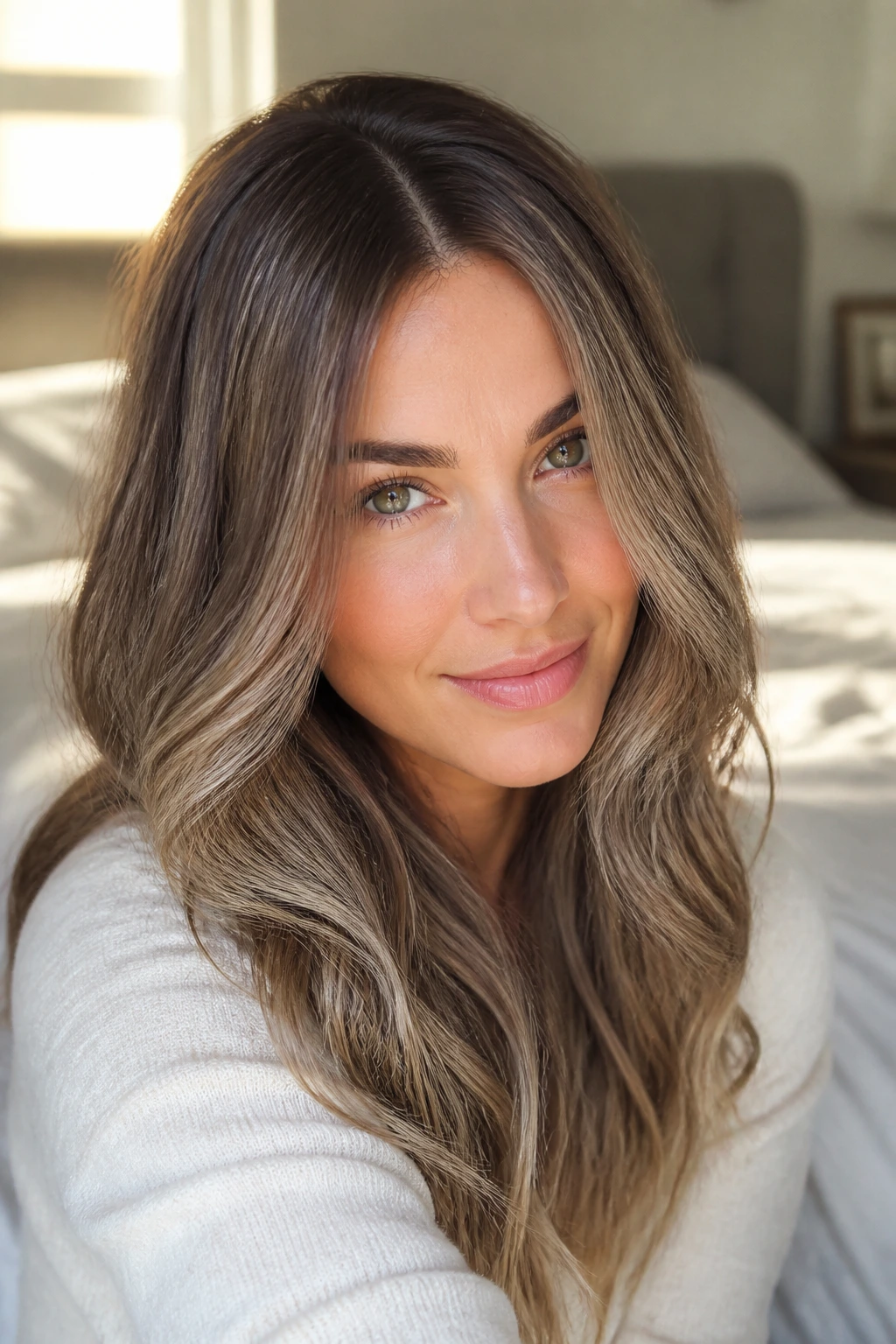
Beige brunette is one of the safer brightened brunettes for cool skin because it stays soft instead of golden. The root tap keeps the top darker and cooler, then the beige-brown lengths give the hair lightness without brass. That root contrast matters. Without it, beige can blur into pale warmth and lose the shape.
This look is especially good if you’re growing out old highlights or want a brunette that feels lighter around the face. Keep the pieces around the hairline just a touch brighter than the rest. Not blonde. Just enough to lift the complexion.
15. Slate Brown Crop
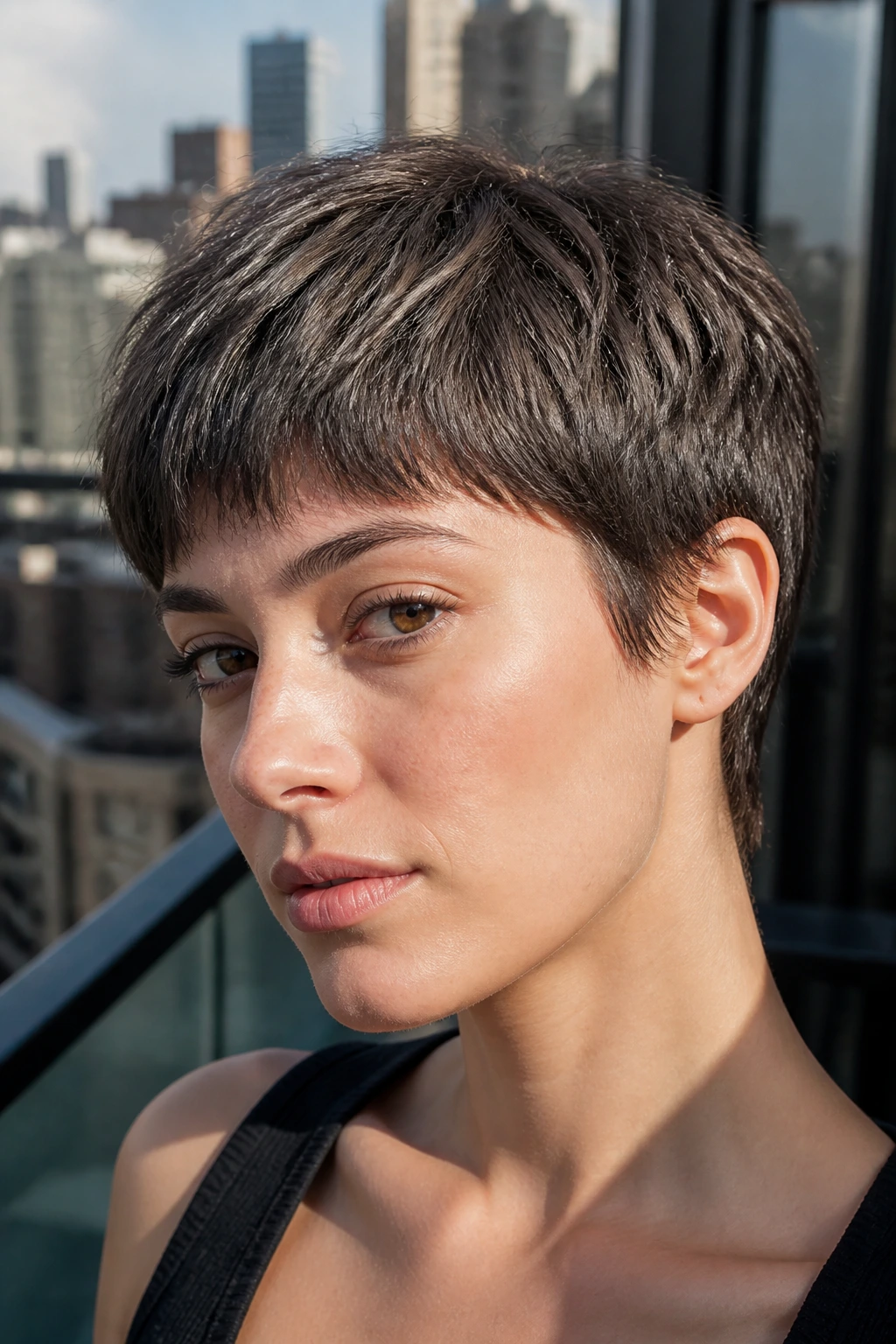
Slate brown is the shade I’d call the most editorial on this list. It has a gray-brown cast that feels sharp, almost graphite-like, and it’s gorgeous on a crop because the haircut already has edge. For cool skin, the lack of warmth is the whole attraction. The face stays crisp.
This look is not for someone who wants softness first. It’s for someone who wants structure. Short, piecey texture keeps the slate shade from feeling heavy, and a tiny amount of shine serum on the ends helps the cut read sleek instead of chalky. If the hair is too dry, this color can look tired fast, so hydration matters.
16. Smoky Ombré Brunette
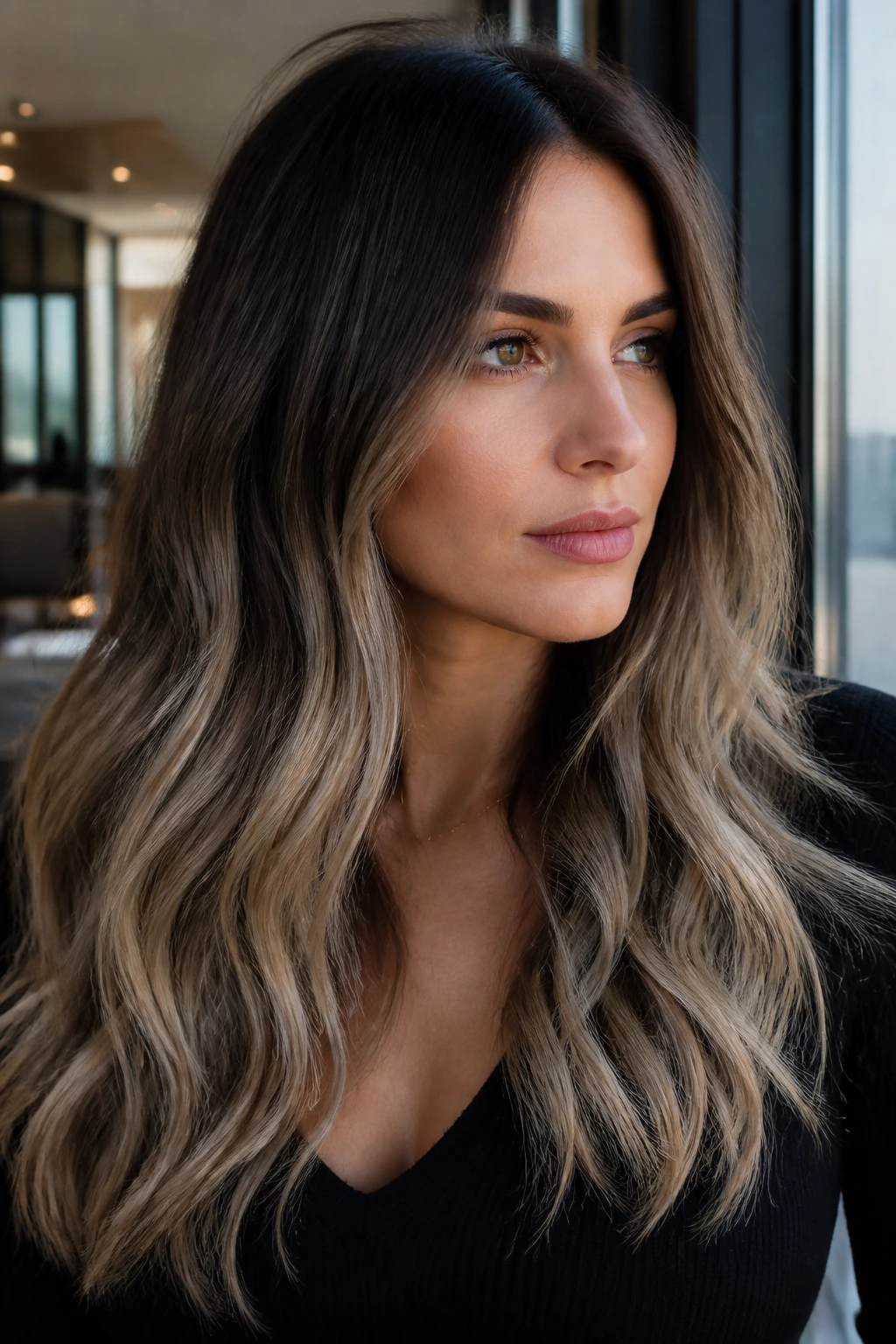
Ombré still works when the fade is controlled. Smoky ombré keeps the roots deep and cool, then lets the color soften downward into muted brown ends rather than bright caramel. The transition should look like the hair has quietly changed in the light, not like two separate colors are arguing on the same head.
This is a good choice if you want some brightness but hate the maintenance of all-over highlights. Cool skin usually does better with this kind of muted fade than with high-contrast golden ombré. Keep the lightest pieces ash-beige and stop the lift before it turns yellow. That one decision saves the whole look.
17. Cool Espresso Coils

Espresso on coils can be gorgeous because the texture gives the depth places to move. On cool skin, the trick is keeping the espresso glossy and not too red. The coils should look defined and rich, almost like polished wood in low light.
I prefer this with a rinse-out or leave-in that adds shine, because coils can swallow light if they’re too matte. A few lowlights one shade deeper than the base can help separate the curl pattern. If you have warm hard water, use a clarifying wash once every couple of weeks so the color doesn’t go dull and gummy.
18. Mushroom Brown with Face Framing
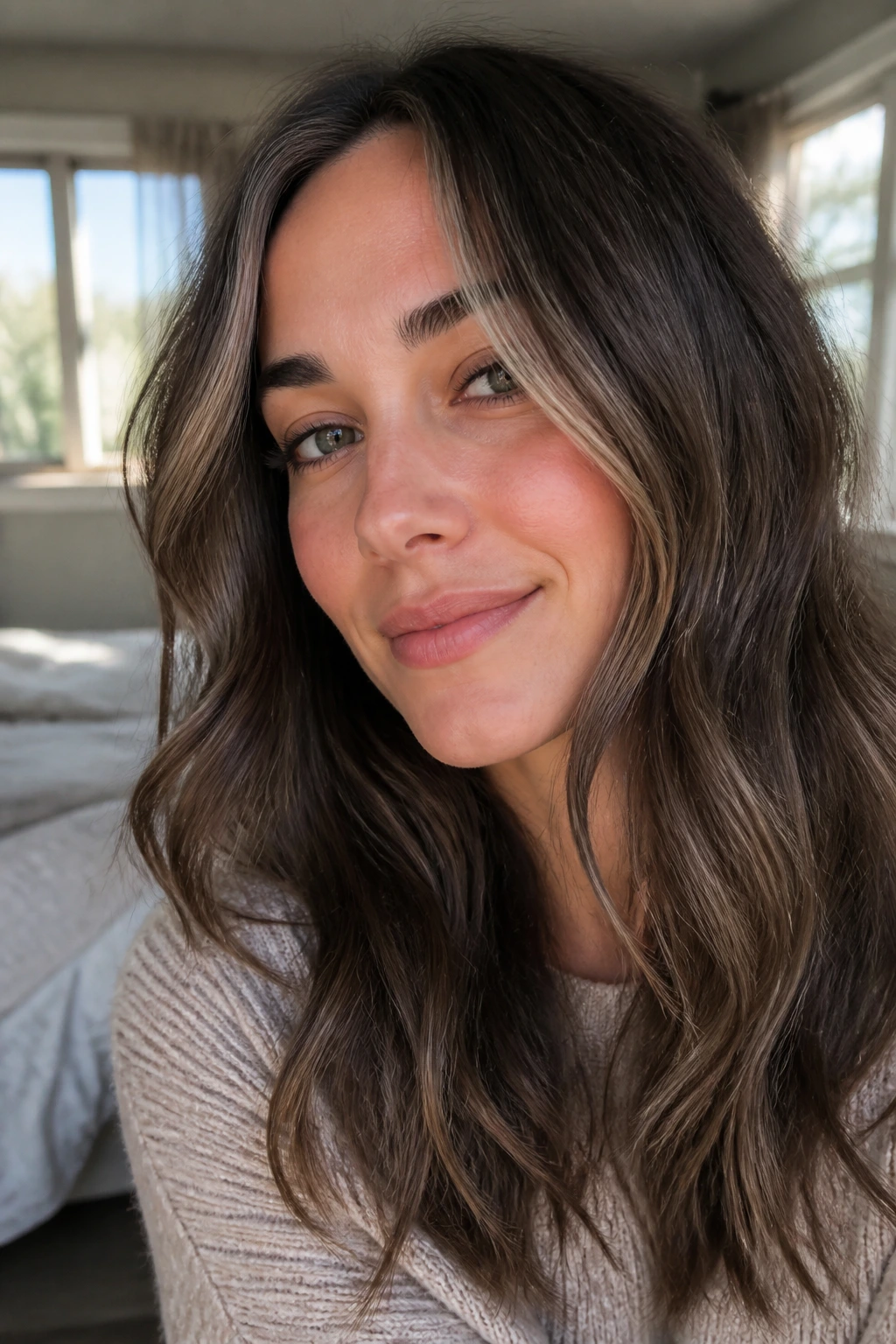
This is mushroom brown’s slightly more flattering, slightly more awake cousin. The face-framing pieces prevent the cool brown from settling too far back into the hairline, which can happen on cool skin with lighter complexions. It’s a smart compromise: dimensional, soft, and not too icy.
Ask for the front pieces to sit one level lighter than the rest of the hair. That little shift makes the eyes look brighter and keeps the skin from looking flat. On wavy cuts, the color blooms. On straight hair, it reads neat and modern.
19. Cocoa Ribbon Highlights
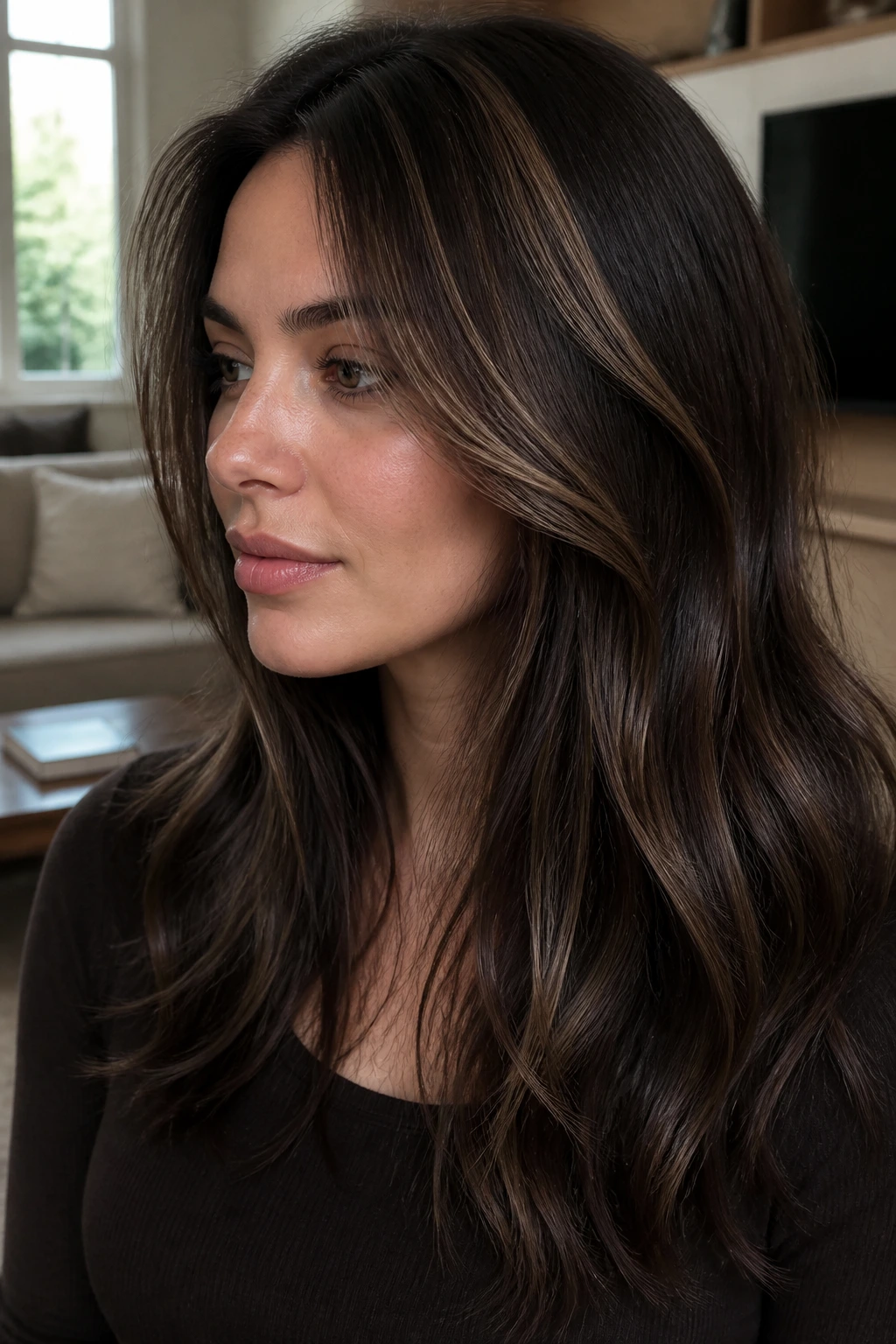
Ribbon highlights are the subtle version of chunky contrast, and cocoa ribbons are the right kind for cool skin. They should be thin enough to blend but visible enough to break up a dark base. That means less stripe, more woven texture.
A few rules keep this from going warm. The ribbons should be beige-brown or ash-brown, not honey. They should sit mostly through the sides and top layers, where light hits naturally. And they should be toned with a cool gloss once the lift is done. Skip the gloss and you’ll get brass. There’s no mystery there.
20. Satin Chestnut Blowout
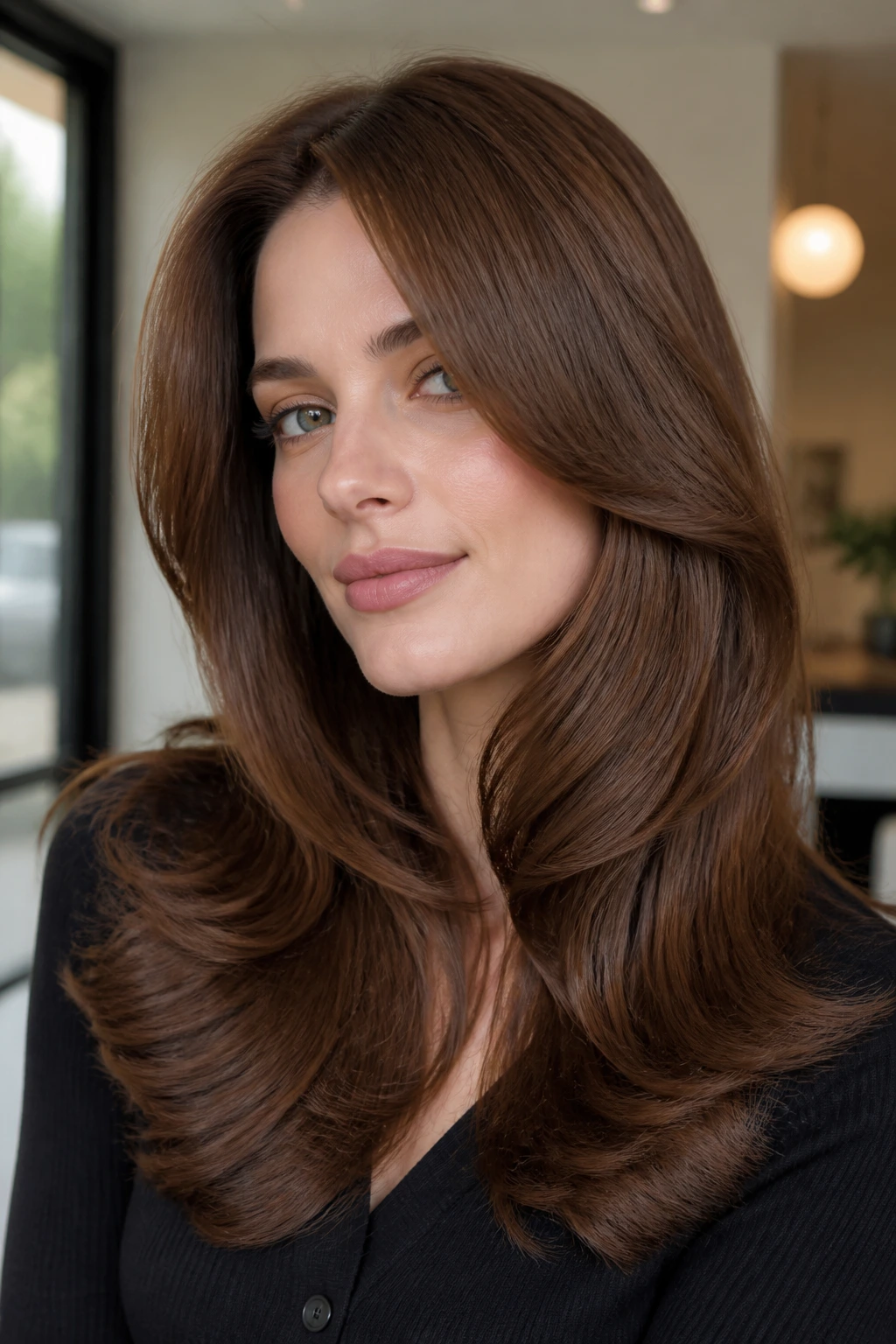
Chestnut on cool skin only works when it’s polished and controlled. A satin blowout helps that chestnut read smooth instead of coppery. The finish matters almost as much as the formula, because a blown-out surface shows the true tone better than a rough texture full of flyaways.
Best for a Soft, Expensive-Looking Finish
This is a good choice if you want brunette hair that feels warmer than ash but not overtly red. Ask for neutral chestnut with a cool glaze. A too-warm chestnut will flash orange under office light and look different in every mirror.
A satin blowout also pairs well with blunt ends or soft layers. The cleaner the shape, the more the color seems deliberate.
21. Salt-and-Pepper Brunette Blend
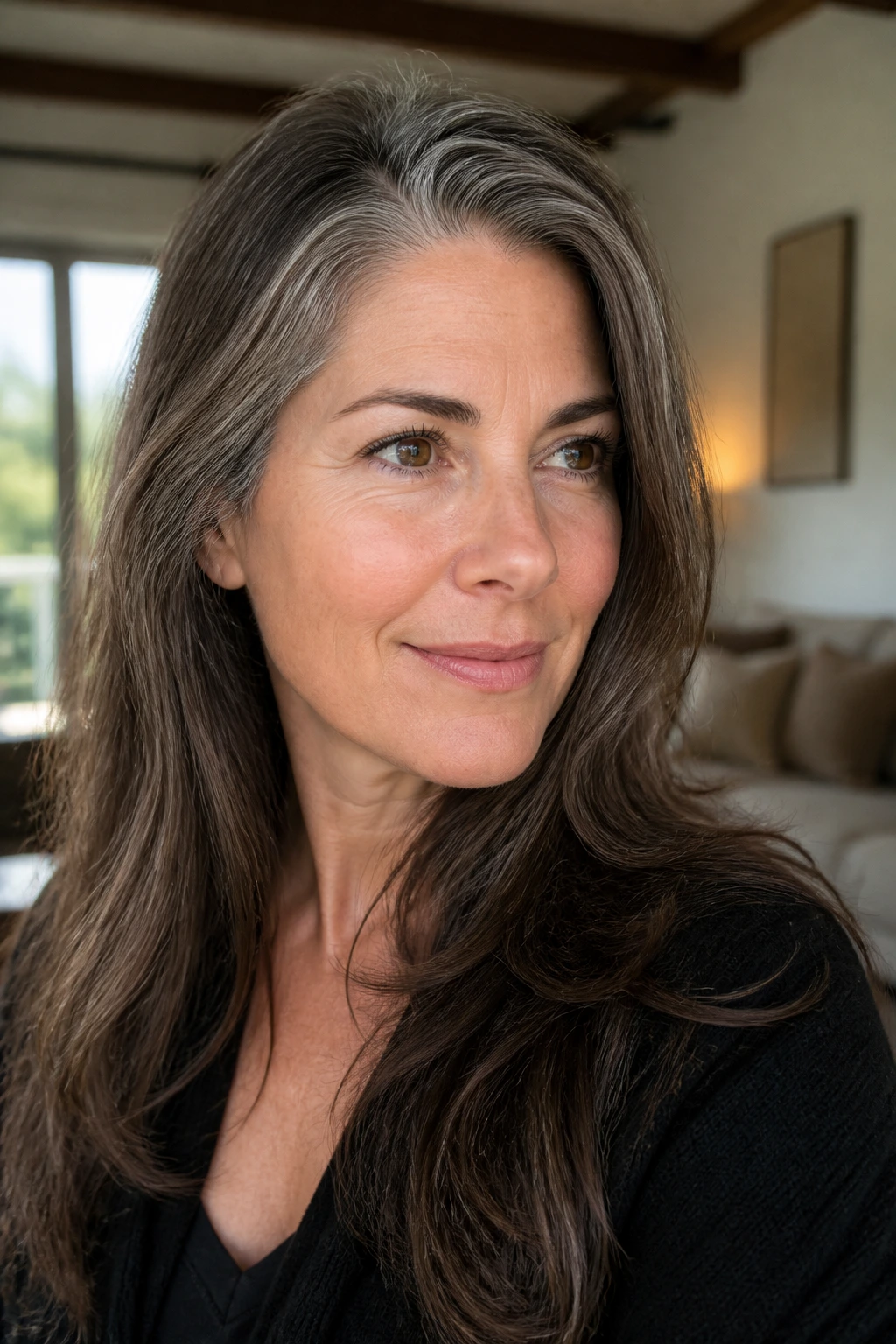
Gray blending is one of the easiest places to use cool brunette tones well. Salt-and-pepper blend doesn’t try to erase every silver strand. It mixes cool brown lowlights, gloss, and natural gray so the transition looks intentional instead of grown-out.
This works beautifully if you’re not interested in chasing full coverage every few weeks. The silver gives the hair sparkle. The brunette gives it structure. Together, they make a cool-toned palette that feels very current without trying too hard. If the silver is streaky around the temples, ask for a soft lowlight there rather than all over. It looks better when the dimension follows the real growth pattern.
22. Soft Mushroom Brown Pixie
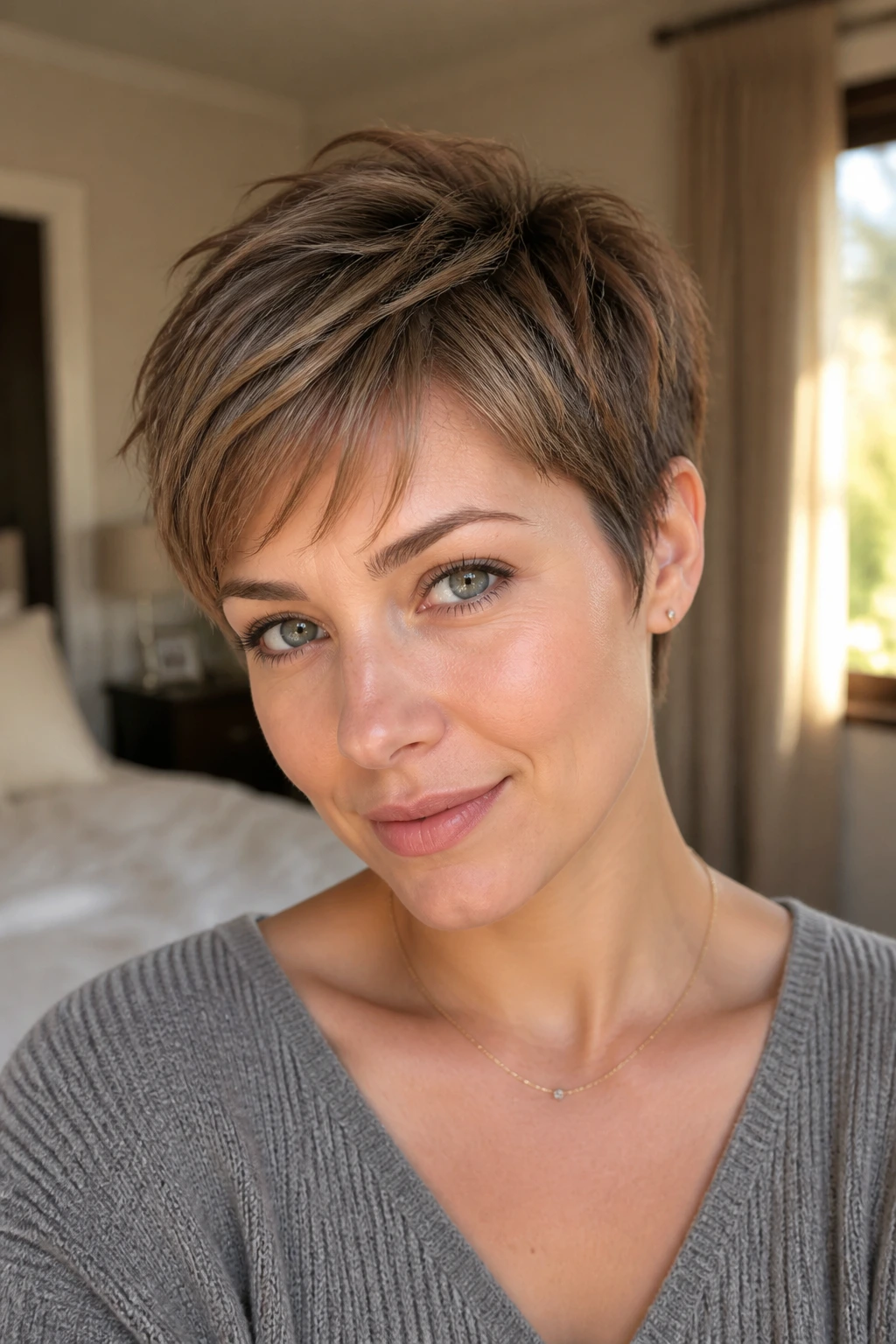
A pixie can be playful or severe. Mushroom brown helps keep it playful. The soft greige tone takes the edge off the short cut, while the shape still feels fresh and neat. On cool skin, the effect is easy on the face because the shade avoids any bronze cast around the temples.
I’d keep this one piecey at the crown and a little lighter through the fringe area. It stops the cut from looking helmet-like. If your hair is fine, a matte paste can work. If it’s thick, you’ll want a smoother styling cream so the color can show.
23. Coffee Bean Brunette with Midlength Layers
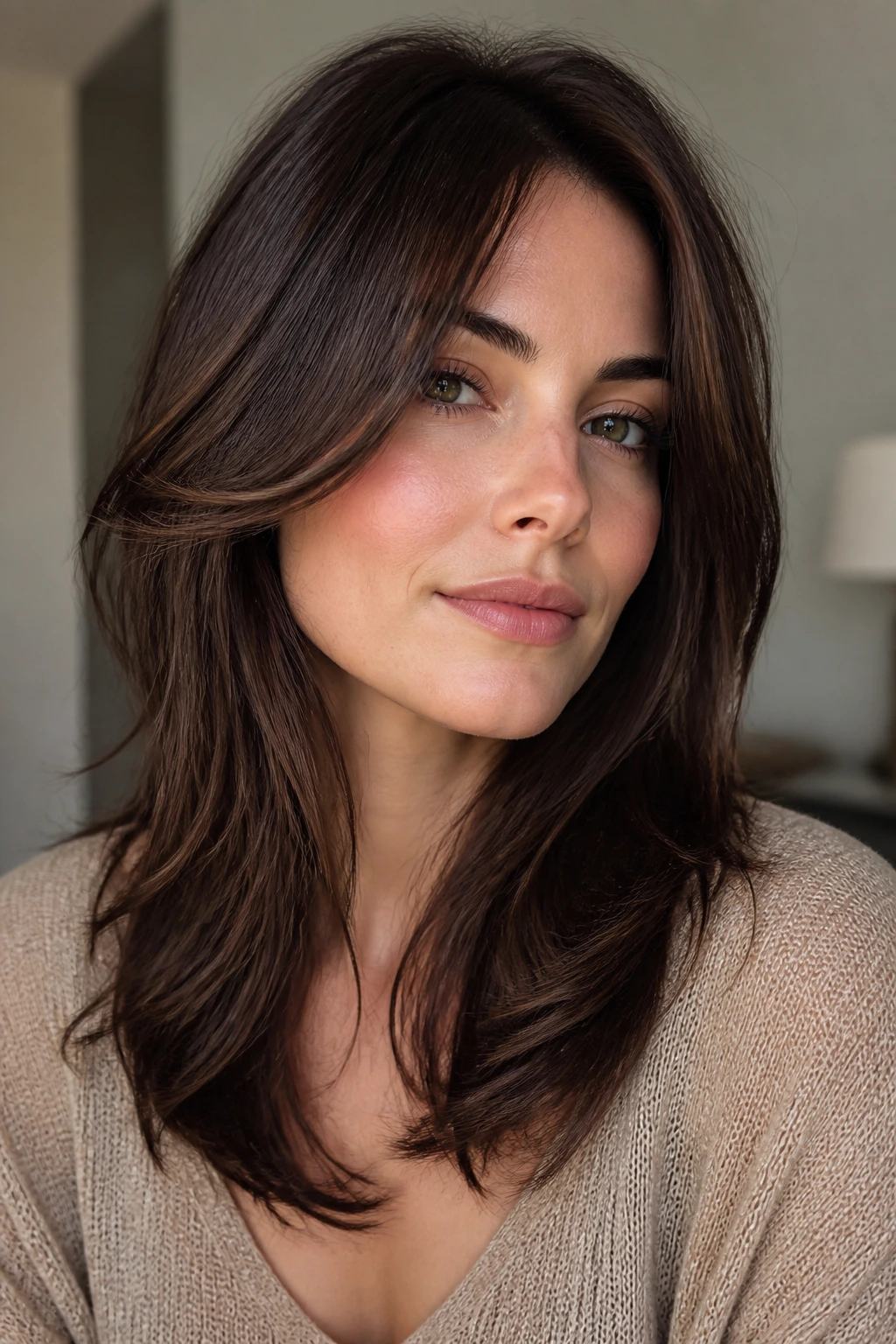
Coffee bean brunette is deeper than mocha and softer than black-brown. On midlength layers, it looks smooth, clean, and expensive without borrowing warmth from caramel or gold. Cool skin gets the payoff because the shade keeps the face from going red while still giving enough depth to make the eyes stand out.
The Layering Changes Everything
Midlength layers keep this color from reading too dense. The movement shows off the cool undertone in the brown, which is half the point.
- Best cut: collarbone to chest-length layers.
- Best tone: deep neutral brown with a cool gloss.
- Best styling: loose bend, not tight curl.
- Watch for: ends that fade warm first, especially if the hair is porous.
24. Espresso and Ash Balayage
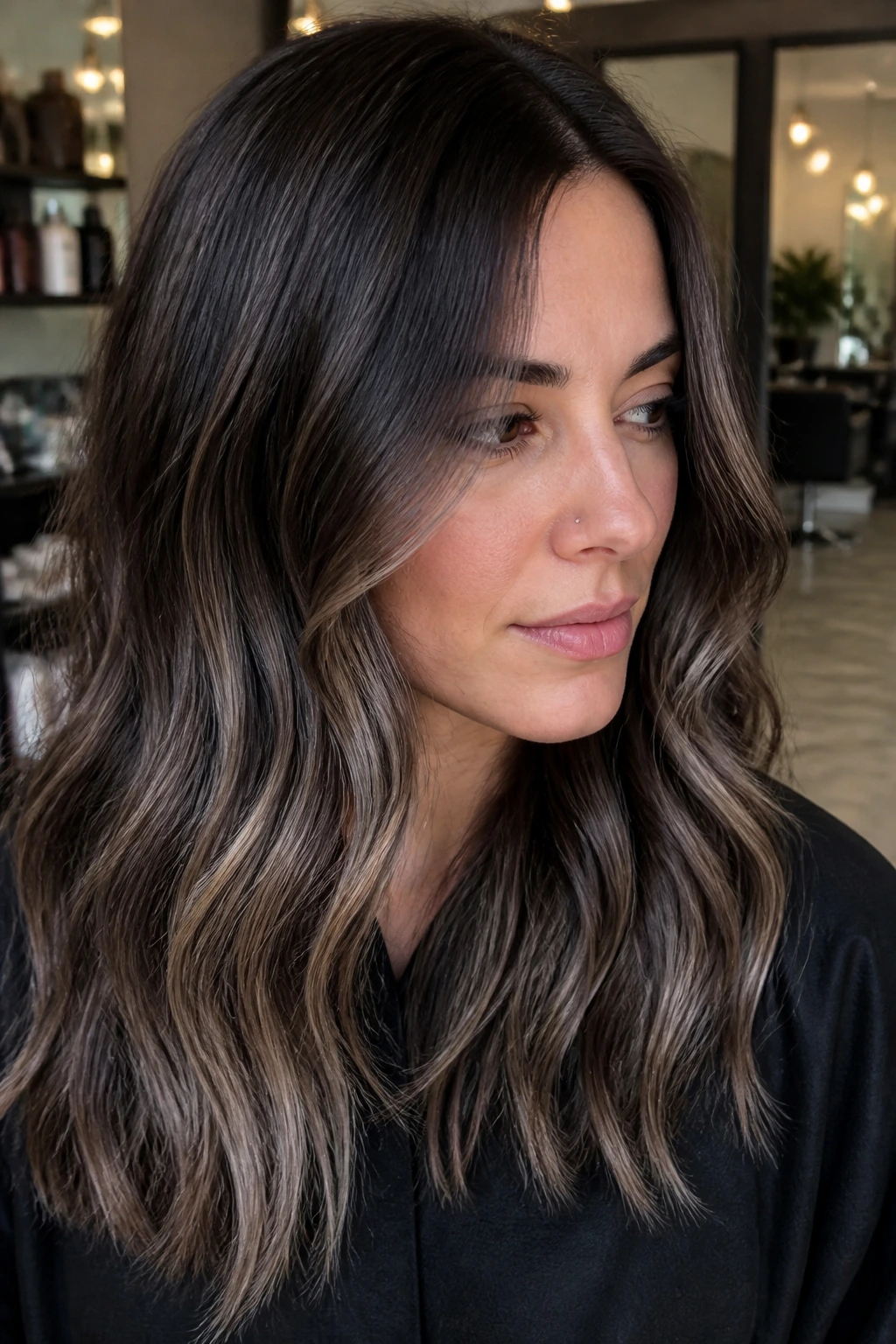
This is the brunette for someone who wants contrast, but not flashy contrast. Espresso at the root. Ash balayage through the mids. A cooler, lighter finish at the ends. The blend should feel layered, not striped.
On cool skin, the ash keeps the balayage from turning yellow and the espresso keeps the base grounded. That balance is what makes the color feel expensive rather than overdone. I’d keep the brightest pieces away from the widest part of the face unless you specifically want a stronger frame. Too much light near the cheeks can make the rest of the face look washed.
25. Dimensional Taupe Brunette
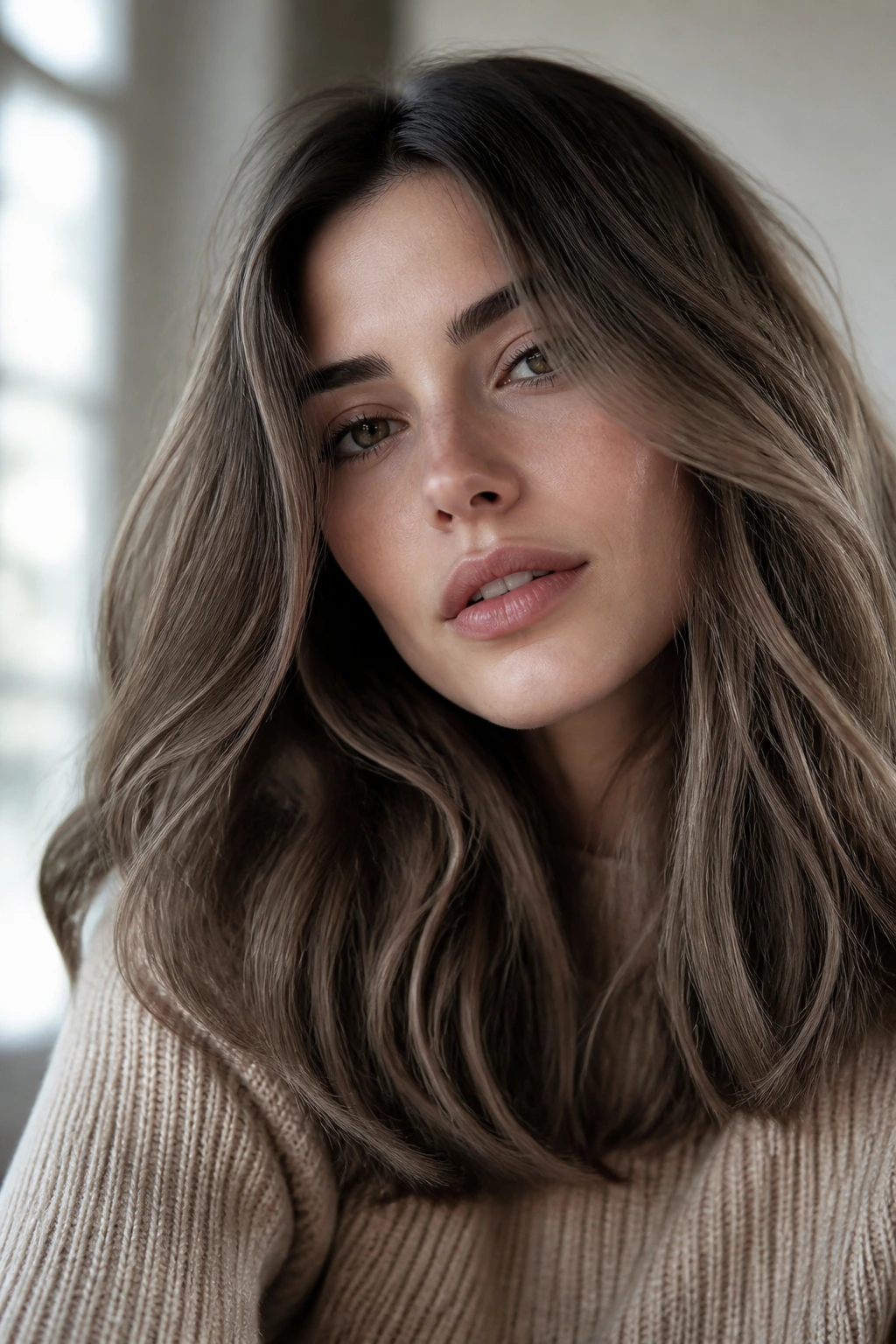
Taupe is the shade that rescues brunettes who hate both gold and gray. Dimensional taupe brunette uses multiple cool-brown notes — beige, ash, muted mushroom, soft mocha — so the hair looks layered even when it’s styled simply. On cool skin, it’s flattering because it doesn’t shout warmth at the complexion.
This look is especially good for straight or slightly wavy hair where every tone shift is visible. If the hair is curly, keep the tonal changes a little broader so they don’t disappear. Ask your colorist to avoid strong copper base color. Once copper gets in, taupe starts to wobble.
26. Smoky Brunette with Baby Bangs
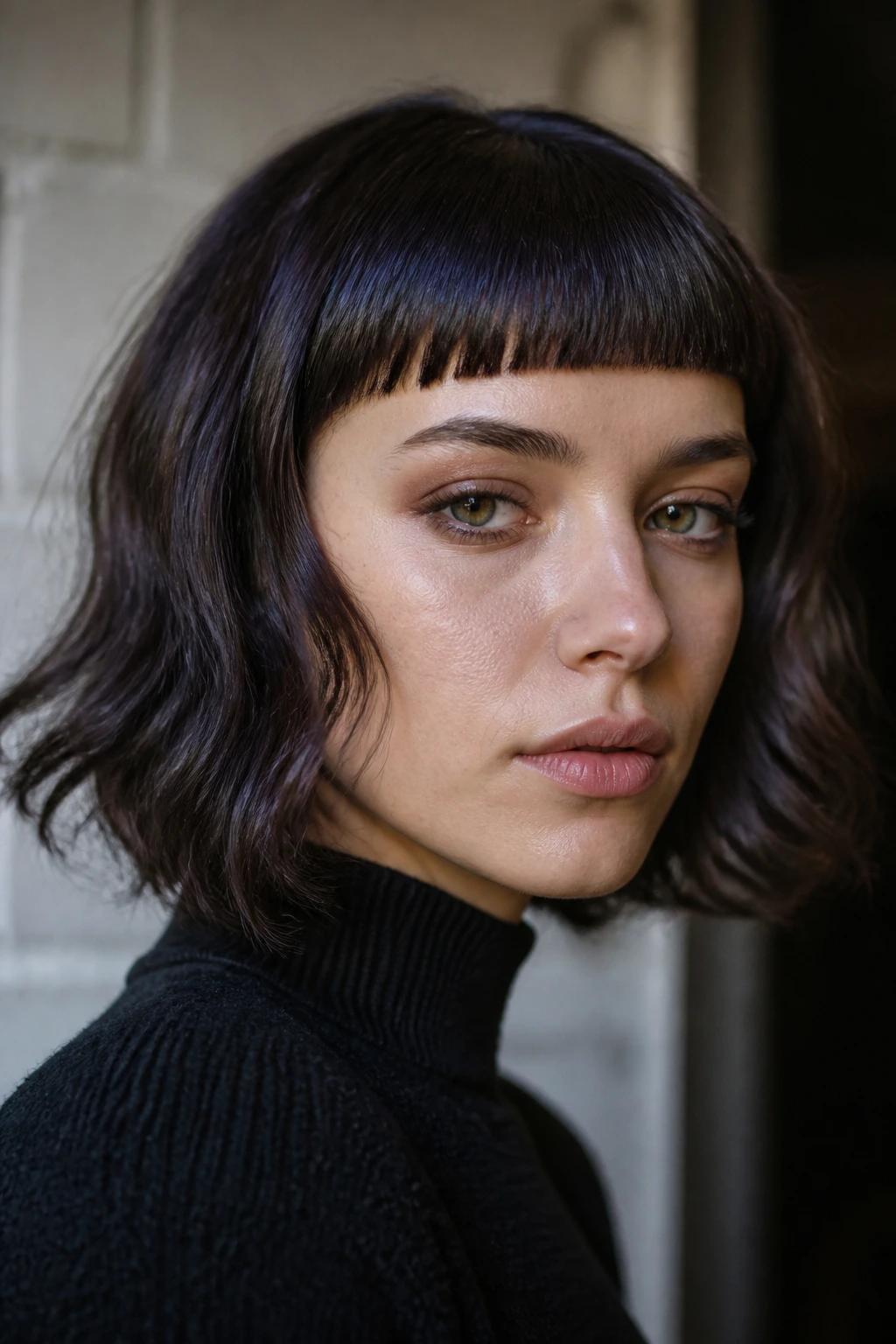
Baby bangs are not subtle. That is part of the fun. Pair them with a smoky brunette base and the whole look feels sharp, modern, and a little rebellious without turning goth. Cool skin handles this well because the muted tone keeps the fringe from overpowering the face.
Best When You Want an Editorial Edge
This is not the haircut for someone who wants to disappear into the background. It’s for someone who likes a clean line and a bit of attitude.
A smoky brunette base keeps the short fringe from looking too severe. If your hair is naturally warm, ask for a blue-violet gloss over the top. That one step makes the fringe read cooler against the forehead and keeps the overall look from getting brassy at the hairline.
27. Neutral Cocoa Brunette with Mirror Gloss
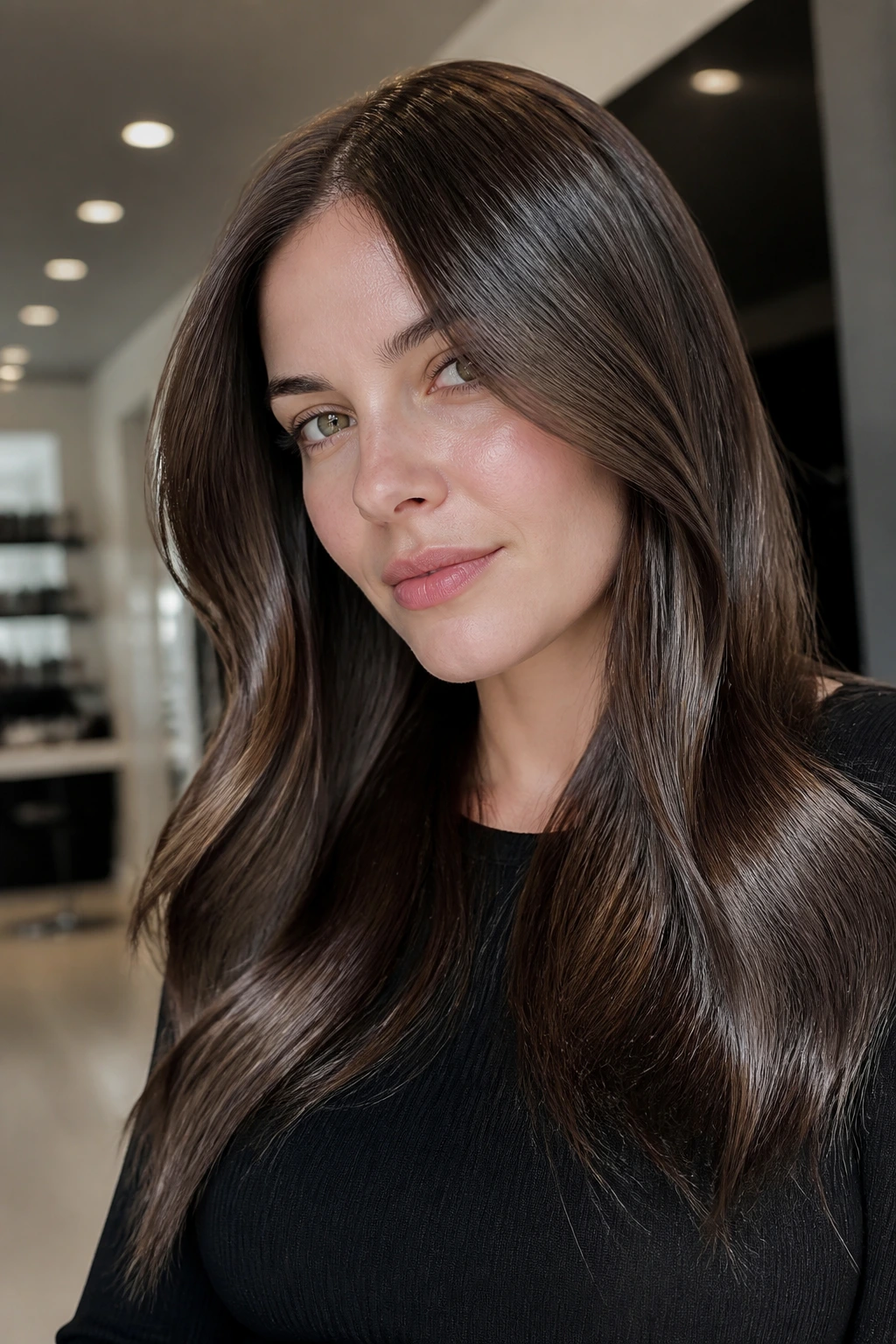
Neutral cocoa is the brunette I recommend when a client says, “I want brown, but I don’t want it to do anything weird.” Fair enough. This shade sits quietly in the middle, and the mirror gloss is what makes it sing. The reflection does the work. On cool skin, that clean reflection stops the hair from looking dull or flat.
This is a smart everyday brunette if your wardrobe already leans cool — black, navy, slate, crisp white, denim. The hair becomes part of that palette instead of competing with it. I like it best on smooth blowouts or long layers because the shine needs a little surface to travel across.
28. Frosted Brunette Contour
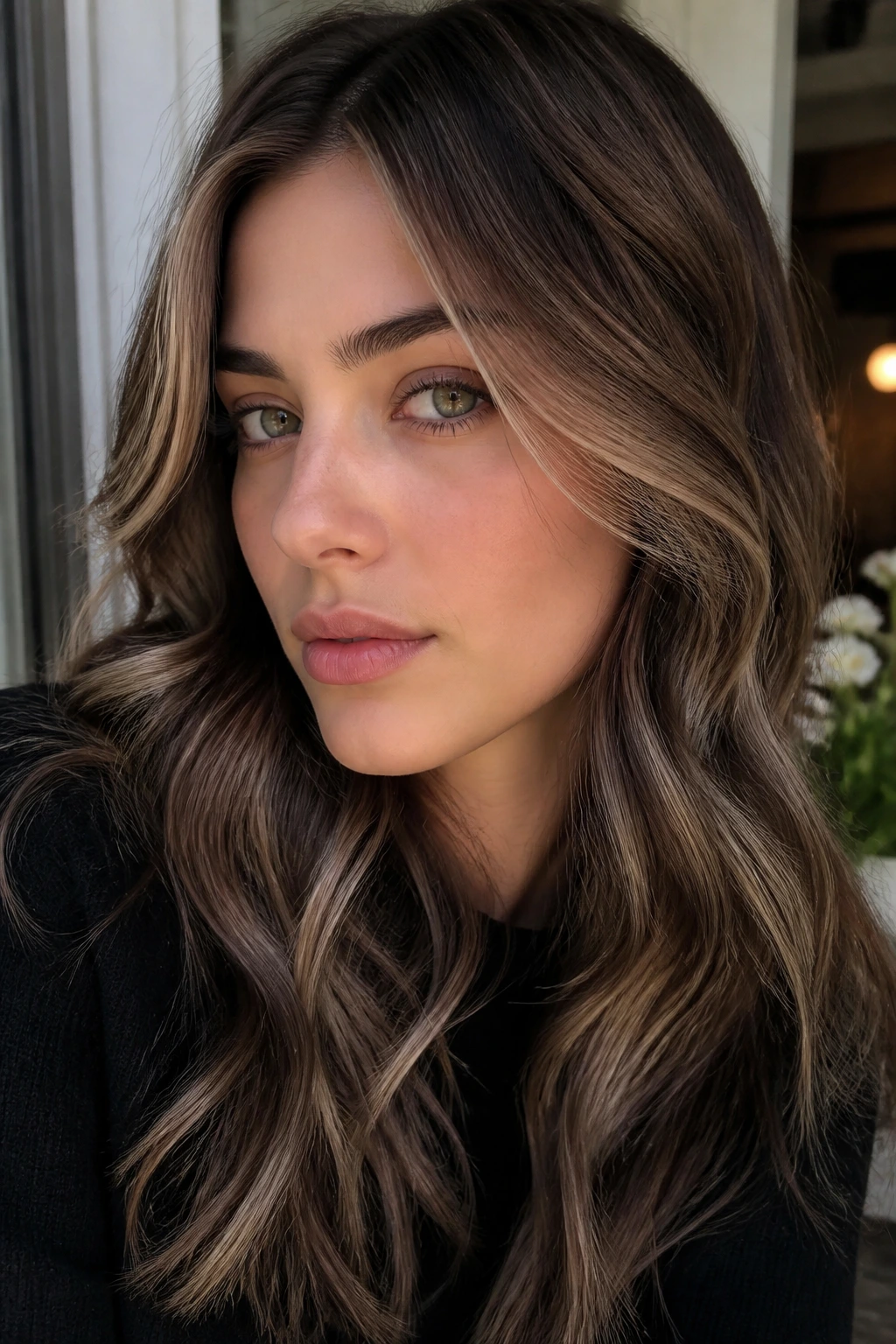
Frosted brunette contour is a very specific kind of face framing, and it’s one of the best ways to brighten cool skin without going blonde. The contour pieces sit where the light naturally lands — around the hairline, temples, and cheekbone area — while the rest of the brunette stays deeper and cooler. It creates shape with color, not just cut.
The frosted pieces should be soft, not icy-white. Think ash-beige, taupe, and smoky light brown. That keeps the contrast wearable. If the face framing gets too pale, the skin can start to look pink by comparison. Keep the rest of the hair rich and the effect stays elegant instead of loud.
How Cool Undertones Change Brunette Hair
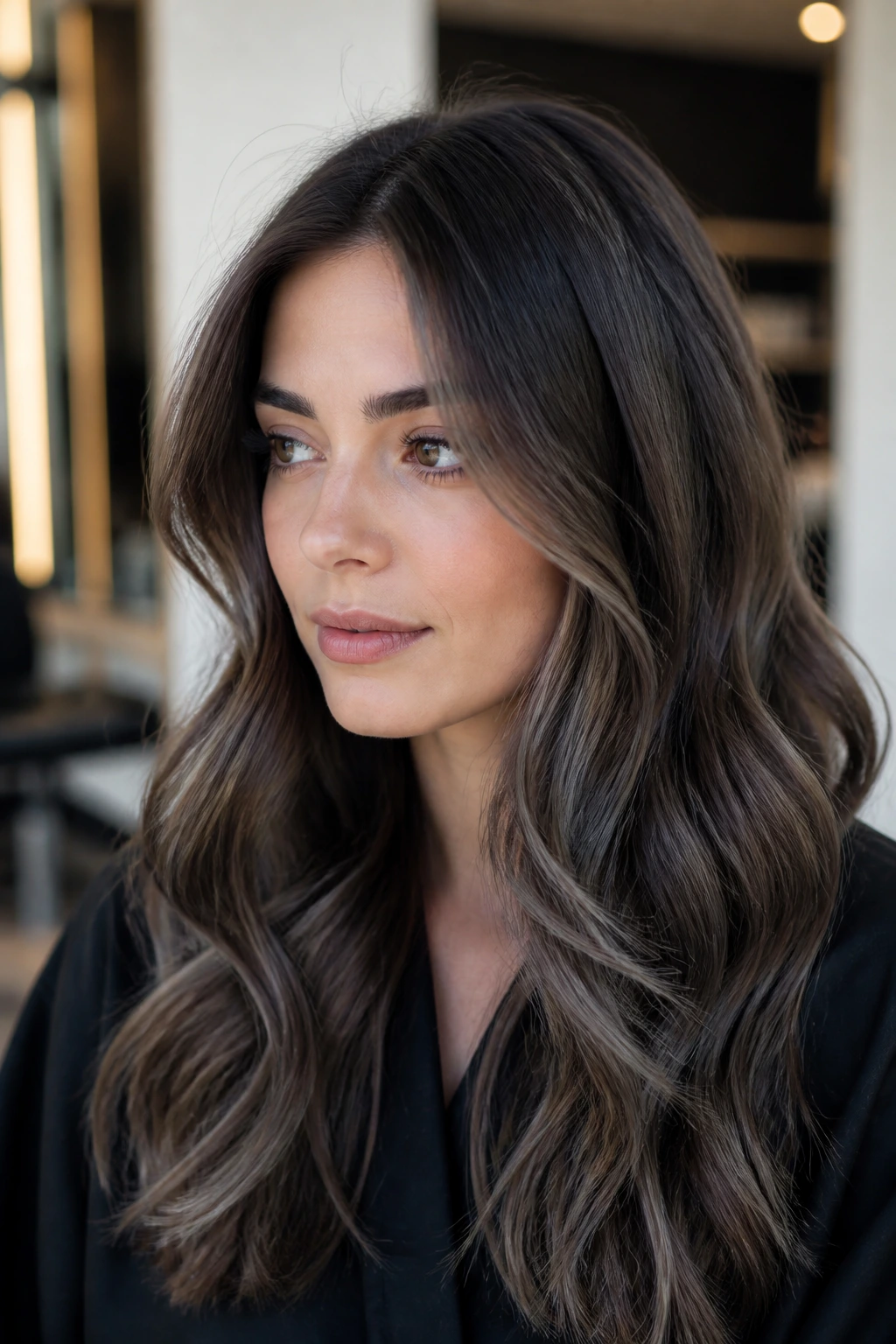
Cool skin changes brunette color more than people expect. A brown that looks soft and balanced on a warm complexion can turn flat, muddy, or even orange on a cool one. The reason is simple: cool skin already carries blue, pink, or red undertones, so hair color with extra warmth can bounce that redness around the face. The wrong brown does not just look wrong in the hair. It changes how the skin reads.
Colorists usually talk in levels and undertones for a reason. A level 4 is a deep brown, level 5 sits in medium brown, and level 6 starts to lighten into the light-brown range. Once you know that scale, the names make more sense. Ash means the pigment leans cool and mutes warmth. Neutral means it balances out. Mocha and taupe usually sit somewhere in the middle, which is why they’re such good starting points.
Ash vs. Neutral vs. Warm Brown
Ash is the safest bet when your skin has a lot of pink or blue. Neutral is the easiest place to land when you want softness without brass. Warm brown can work, but it usually needs to be muted back with toner or blended into a cooler root.
Depth Matters More Than Marketing Names
A color called “chocolate” can be cool, warm, or in-between depending on the formula. Same with “espresso.” Do not trust the name. Trust the undertone and the level.
Highlights Need Control
Cool skin can wear brightness, but it usually looks better when the lightest pieces stay ash-beige rather than yellow-gold. A few well-placed ribbons beat a lot of warm blonding every time.
How to Choose Brunette Hair Transformations for Cool Skin Tones Without Going Flat
Bring pictures in daylight. Not the filtered, golden-hour version. The daylight version. Hair color can lie under bathroom bulbs, and cool brunettes are especially vulnerable to that lie because warm indoor lighting makes them look richer than they really are.
Ask your colorist for the undertone first and the celebrity name second. “Mushroom brown with neutral depth” tells them more than “that brown from a photo.” If your hair is porous or previously lightened, ask whether a gloss or demi-permanent toner can get you there before committing to a full permanent color change. That approach is often cleaner and far easier to maintain.
Photo Strategy: Save three pictures of the same shade in different light. If the color still looks good in all three, you’re closer to the right answer.
Level Check: Know whether your starting hair sits at a level 4, 5, 6, or lighter. That one number changes everything about how the shade will show.
Porosity Check: If your ends soak up color fast, ask for the cool tones to be softened there so they don’t go muddy.
Essential Tools and Resources for Choosing the Right Brunette
- Natural-light mirror: Check your hair near a window so you can see brass, ash, and gloss the way other people do.
- Phone folder of reference photos: Keep 3 to 5 screenshots of shades that look good in different lighting.
- Color swatch book or salon level chart: This helps you talk about level 4, 5, or 6 instead of guessing at “dark brown.”
- Color-safe shampoo: A sulfate-free formula helps cool brunettes hold tone longer between salon visits.
- Blue or violet toner/gloss: Useful if your brunette starts drifting orange or yellow after a few washes.
- Heat protectant spray: Keeps the hair from fading faster when you style with a dryer, iron, or wand.
- Shower filter: Worth it if your water leaves mineral buildup that makes brunette shades go dull or brassy.
- Notebook or notes app: Write down the formula, gloss, and maintenance schedule after each appointment.
Makeup and Wardrobe Pairings for Brunette Hair Transformations for Cool Skin Tones
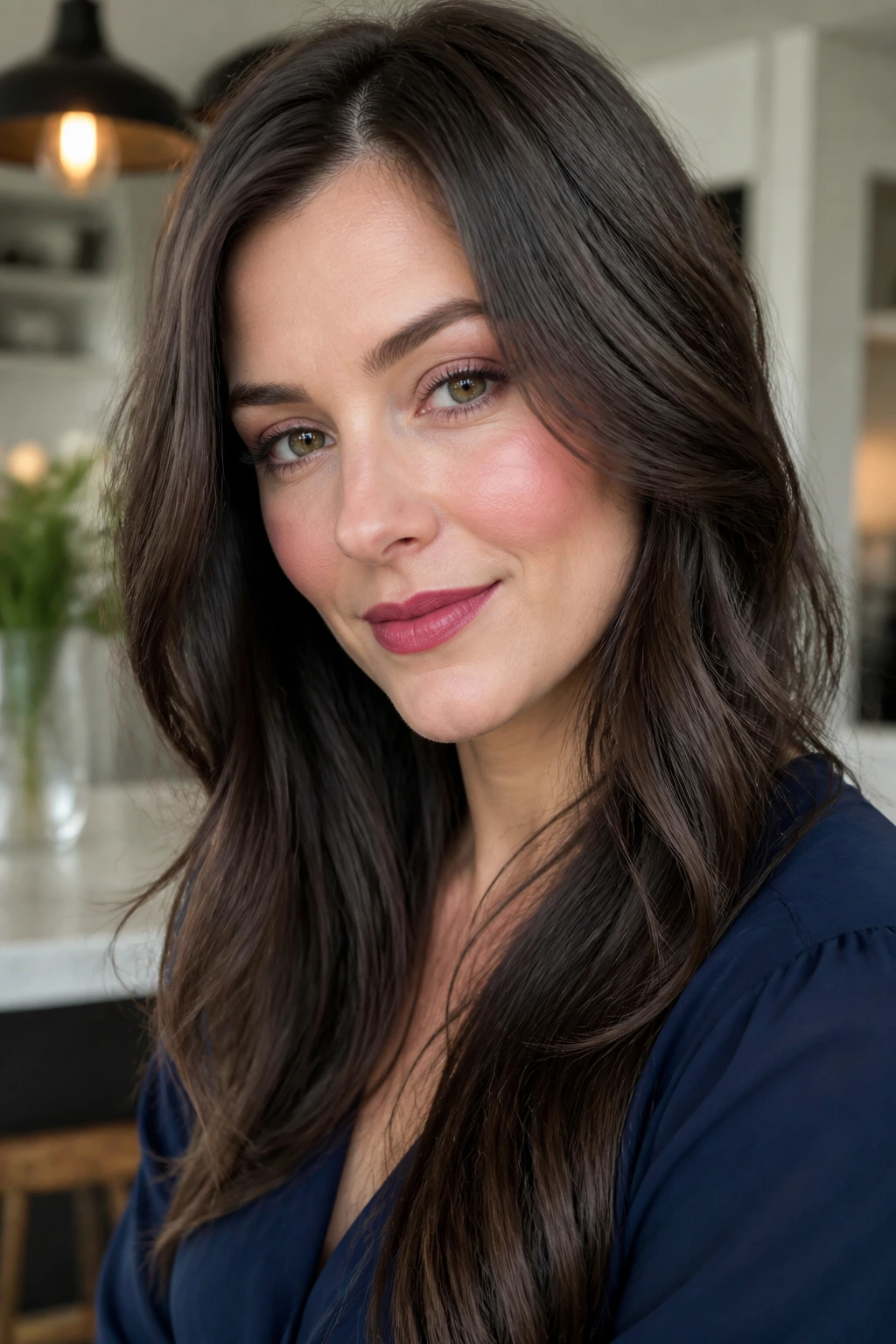
Cool brunettes look best when the rest of the palette stays clean. That doesn’t mean everything has to be icy. It means the colors near your face should not fight the undertone of the hair. Rosy blush, berry lips, soft plum, charcoal liner, and a cool taupe shadow all sit naturally beside ash, mushroom, and espresso brunettes.
Presentation: If the hair is dark and glossy, keep makeup matte or satin rather than frosty. A reflective lip and a reflective haircut can start competing.
Wardrobe: Black, navy, slate, soft white, denim, and deep forest green tend to flatter these shades. Warm camel and orange can work, but they usually need a stronger brunette tone to balance them.
Jewelry: Silver, platinum, white gold, and brushed steel often look cleaner than yellow gold on cool skin with cool brunette hair. If you love gold, choose a softer antique finish instead of a bright orange-yellow shine.
One thing I’ve noticed over and over: the right brunette makes simple clothes look more deliberate. A white tee and a cool brown bob can look more finished than a complicated outfit with the wrong warm hair color.
Additional Tips for Keeping Brunette Hair Crisp
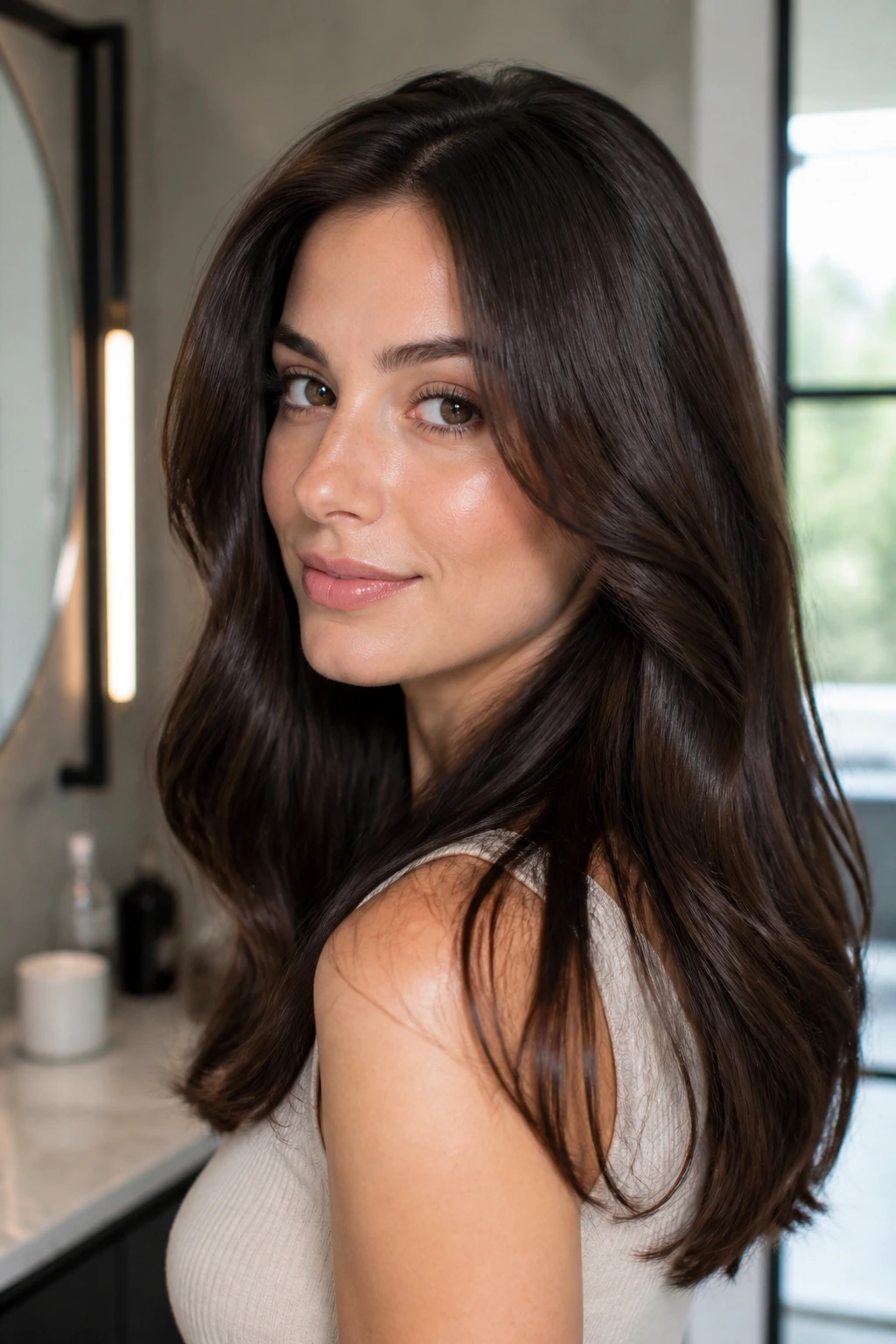
Gloss Timing: If your brunette starts looking flat or slightly warm, a salon gloss every 4 to 6 weeks brings the tone back faster than a full color overhaul. That’s the move I prefer when the shape of the hair still looks good.
Tone Control: Use blue shampoo only when you see orange drift. Use violet only when lighter pieces are going yellow. Using both too often can make brunette hair look dusty and tired.
Cost-Saver: Ask for a root shadow, lowlights, or a gloss refresh instead of full color every time. That stretches appointments without turning the hair into a patchy grow-out mess.
Heat Rule: Keep hot tools around 325°F to 375°F, and always use heat protectant. Higher than that, especially on lightened brunette pieces, and the fade gets loud fast.
Colorist Move: If your ends are porous, ask for the coolest toner on the mids and a softer version on the ends. Same shade family. Different strength. That keeps the whole head from going muddy.
Common Mistakes That Throw a Cool Brunette Off Balance
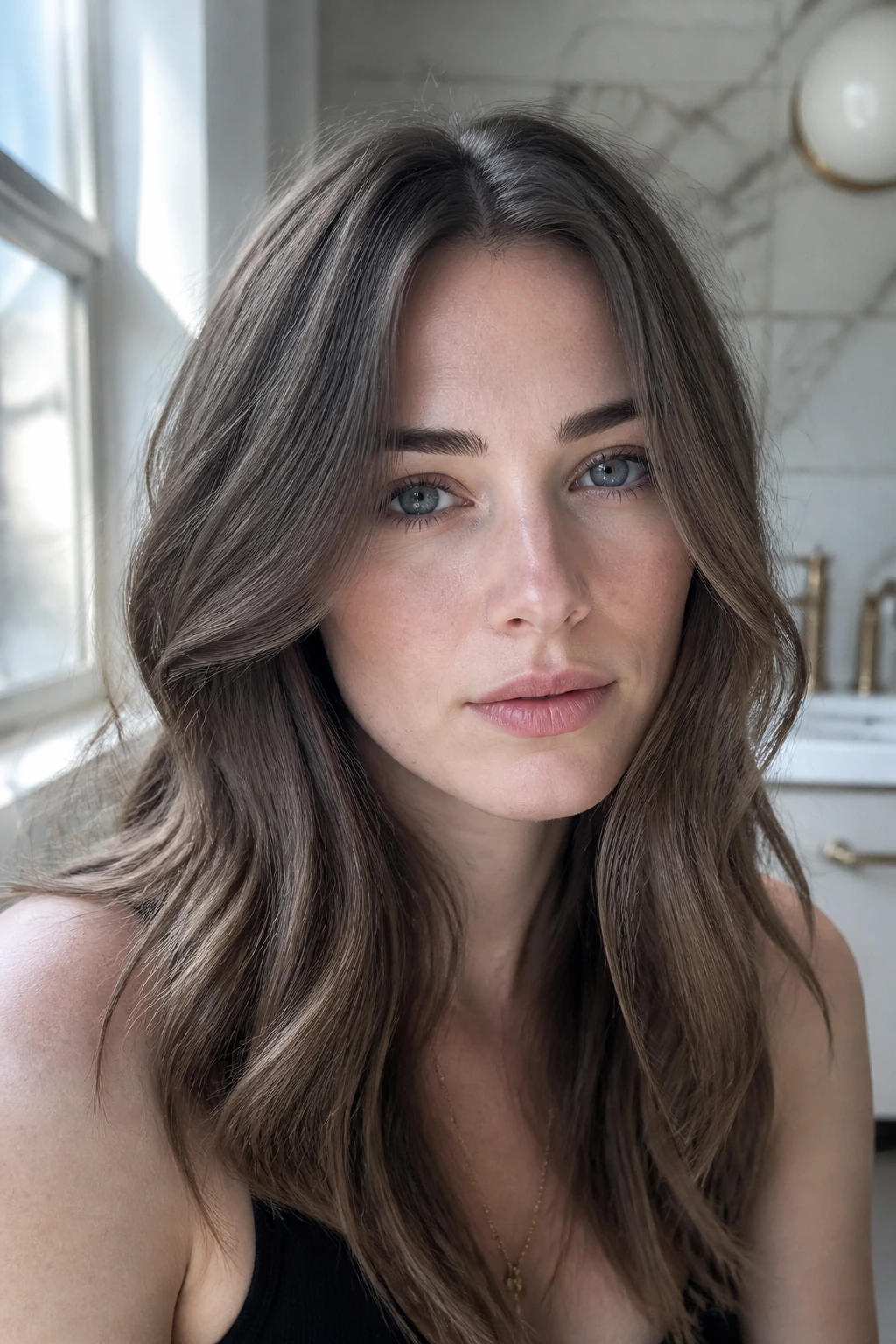
Going too warm because the sample looked “rich.” Rich is not the same as flattering. A warm brown can look buttery in the bowl and orange on the head. Ask for ash, neutral, or blue-based depth if your skin leans cool.
Choosing a brown that is too dark and too flat. Jetty, one-tone brunette can make cool skin look pale and drained. The fix is simple: add a few lowlights, a soft gloss, or a face-frame so the color has breathing room.
Skipping toner on lightened ends. If your brunette includes highlights or balayage, the lifted pieces will turn yellow or brassy first. That yellow is what throws the whole look off. Gloss it back into ash-beige before it gets loud.
Ignoring water and heat. Hard water and hot tools both strip cool tone faster than people expect. A shower filter and a proper heat protectant do more for brunette maintenance than most fancy oils ever will.
Choosing a haircut that fights the color. A very heavy, blunt shape can make a cool brunette look even denser. Sometimes the fix is a softer cut, not more color.
Variations and Adaptations to Try
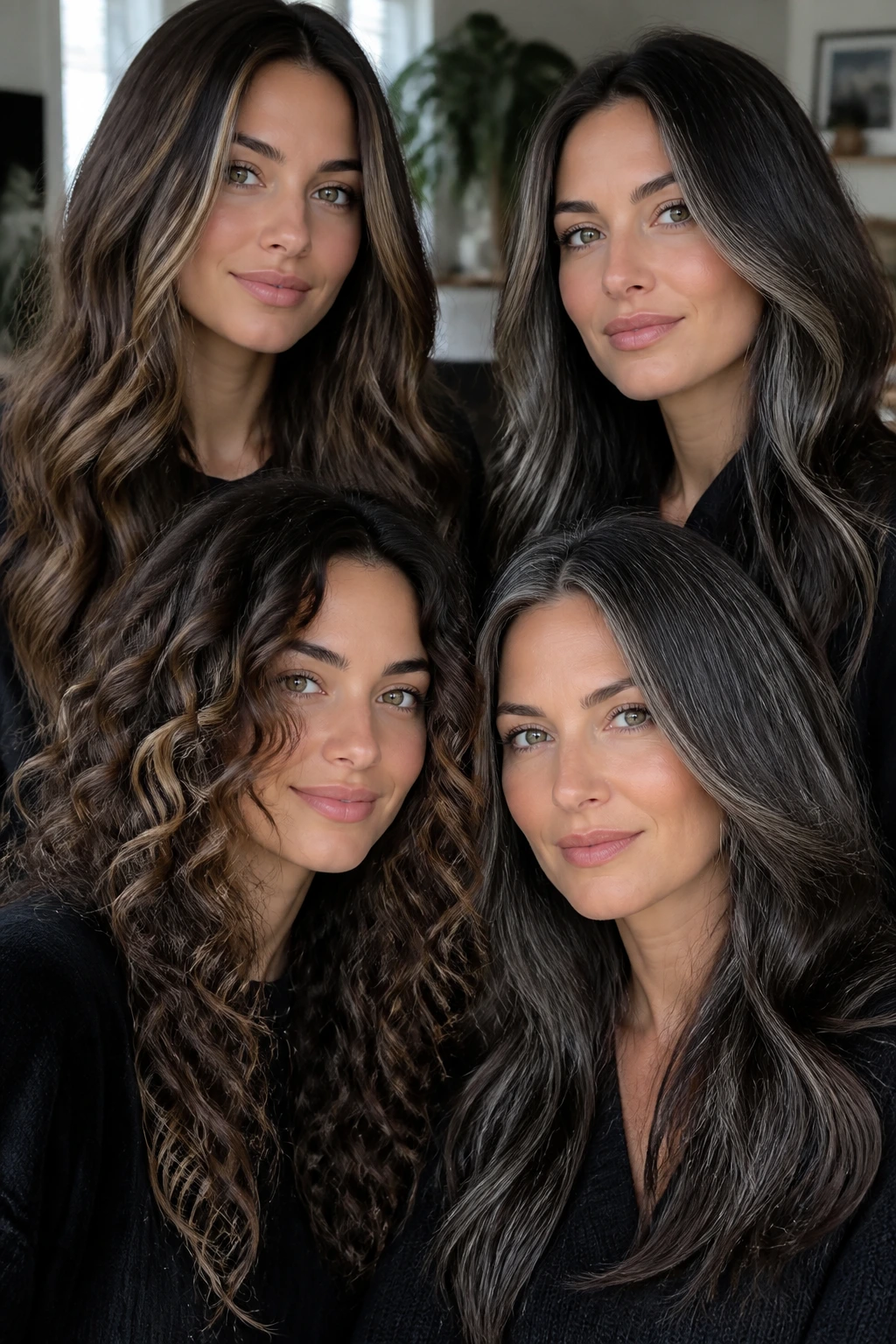
Soft Office Brown: Keep the base at a level 5 neutral brunette with tiny ash ribbons. It looks polished, grows out gently, and works well if you want something understated.
High-Contrast Cool Brunette: Pair a deep espresso base with brighter ash-beige face-framing pieces. This is the louder version of the palette, and it suits people who want the face to pop.
Curly Pattern Version: Use ribbon highlights and lowlights instead of chunky blocks. Curls show tone differently, and this method keeps the pattern visible without striping the hair.
Gray-Blending Version: Let silver strands stay part of the story. Add cool lowlights and a neutral gloss so the grow-out feels intentional instead of abandoned.
Low-Maintenance Balayage Version: Keep the root deeper, push the lightest pieces to the mids and ends, and ask for a smoked-out finish. That stretch makes appointments easier to live with.
Dramatic Nightshade Version: Go for blue-black or near-black espresso with a mirror gloss. It’s the boldest option here, and it works best on cool skin with high contrast features.
Maintenance, Glossing, and Root Touch-Up Timing
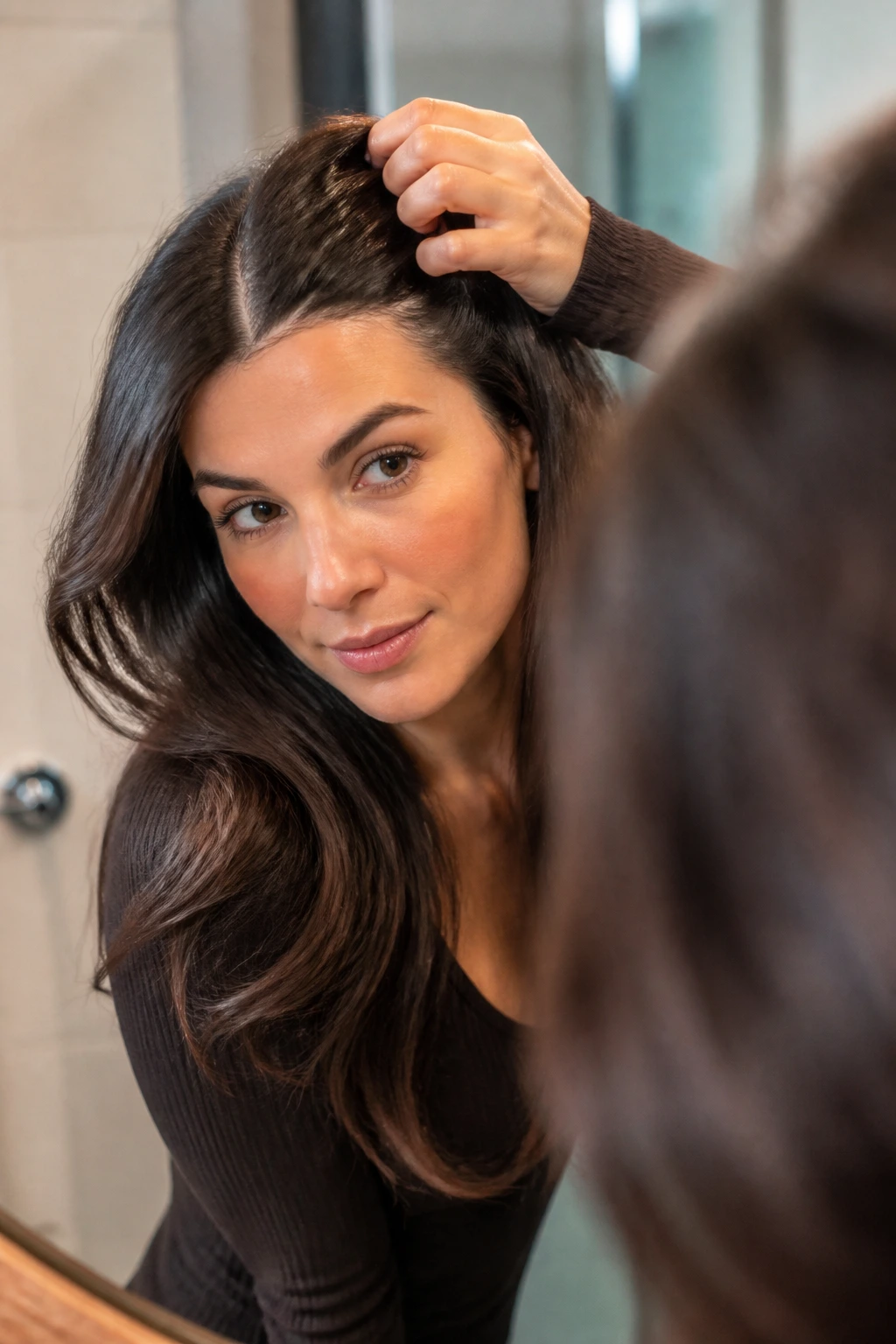
Most cool brunettes need tone maintenance before they need a full recolor. That’s the part people miss. The shade can look fine for a while, then the warmth starts sneaking back through the ends or the face frame, and suddenly the whole look feels off. A gloss every 4 to 6 weeks keeps that from happening. For balayage or shadow-root looks, a larger refresh every 8 to 12 weeks usually makes sense, depending on how much contrast you want to keep.
Root timing depends on the style. An all-over brunette with strong contrast may need touch-ups every 4 to 6 weeks if you want it immaculate. A lived-in mushroom brown or ombré can go longer, especially if you like a softer grow-out. Just don’t let brass build up for months and hope a purple shampoo will fix it. It won’t.
Wash with color-safe shampoo 2 to 3 times a week if your scalp allows it, and use lukewarm water rather than hot. Hot water strips tone faster. Once a week, add a moisture mask if your hair is lightened or porous. If the lighter pieces start turning yellow, use a blue or violet toner shampoo once every 1 to 2 weeks, not daily. Daily use can make the hair look chalky.
Frequently Asked Questions
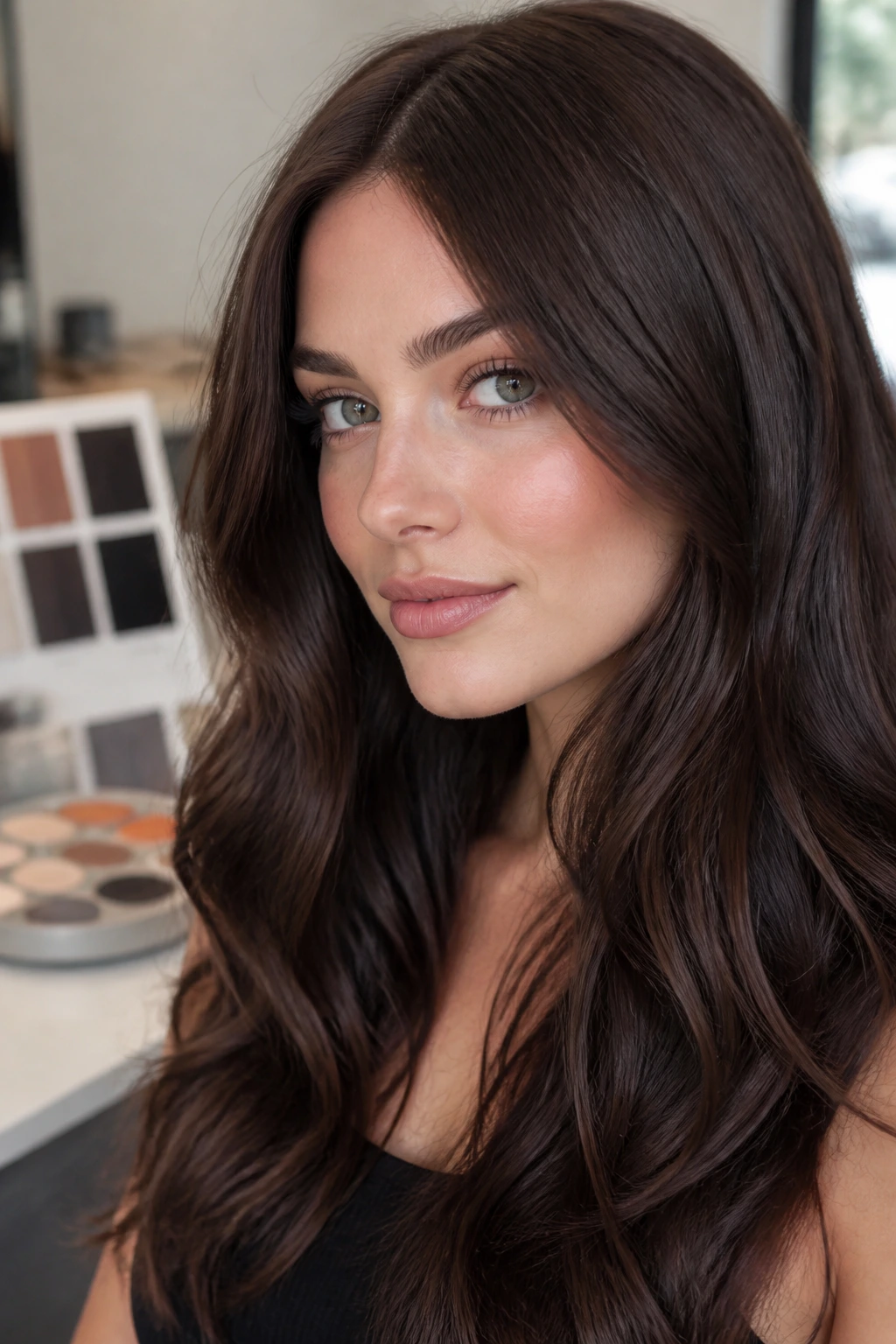
How do I know if a brunette shade is too warm for my skin?
If the hair starts making your cheeks look pinker, your under-eyes look grayer, or your skin looks less clear in daylight, the shade is probably too warm. Orange, copper, and strong gold are the usual troublemakers. Cool brunettes should feel cleaner on the face, not busier.
Can cool skin wear chestnut or mocha brown?
Yes, if the tone is muted. Chestnut and mocha work best when the red and gold are turned down with neutral or ash pigment. If the color still looks shiny and rich but not coppery, you’re in the right zone.
Is ash brown always flattering on cool undertones?
Not always. Too much ash can make very fair skin look flat or tired if there isn’t enough dimension. A mix of ash and neutral usually looks better than pure gray-brown.
What if my brunette starts turning orange after a few washes?
That means the cool tone is fading and the warmer pigment underneath is showing through. A blue-based gloss or toner usually helps, especially on mids and ends. If it happens fast, your hair may be porous and need a gentler formula next time.
Do these brunette shades work on curly hair?
Absolutely. Curly hair often looks better with ribbons, lowlights, and smoky dimension because the texture catches light in different places. Just avoid harsh stripes that can break up the curl pattern.
How often should I refresh a cool brunette?
Glosses usually need refreshing every 4 to 6 weeks if you want the tone to stay clean. Root touch-ups can stretch to 6 to 8 weeks on lived-in looks, or less if you want a crisp line. The lighter the pieces, the faster the tone shifts.
Can I get one of these looks without bleaching?
Sometimes, yes. If you’re going darker or staying within a similar level, a gloss, demi-permanent color, or lowlight service may be enough. If you want bright face-framing pieces or a lighter mushroom brown, some lifting may be needed.
Will silver jewelry really make a difference?
It can. Silver, platinum, and white gold usually echo the cool tone in the hair and skin, which keeps the whole look cleaner. Gold isn’t banned, but a bright yellow finish can fight a cool brunette more than people expect.
The Browns That Stay Sharp
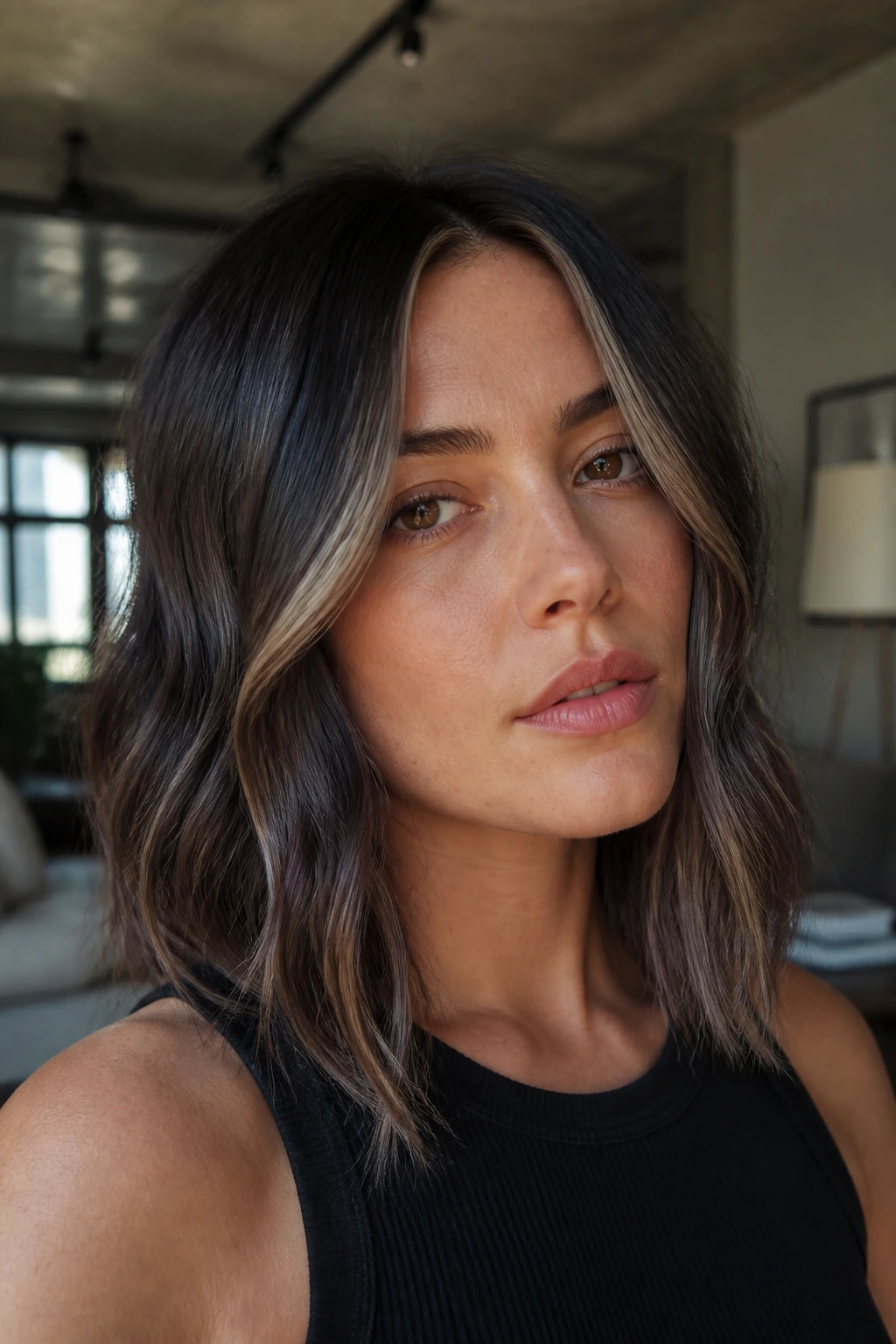
The best brunette shades for cool skin do not try to warm you up. They clean the frame. They keep the color rich, but not coppery; soft, but not muddy; dark, but not flat. That balance is the whole game, and once you see it, you stop falling for the caramel versions that looked pretty on someone else and never quite sat right on you.
There’s a reason cool brunettes keep coming back in different forms — espresso gloss, mushroom lob, ash money piece, smoke-kissed curls, frosted contour. They give you range without giving up the clean edge that cool undertones need. If your last brown felt too orange, too red, or too flat, one of these directions is probably the correction you were looking for.