



Grey hair can look chalky against warm skin when the tone is too hard and too cool. The face doesn’t get the same soft reflection back, so the whole look can feel a little tired, even when the haircut is good. That’s the part a lot of people miss. The cut matters, but the tone matters just as much.
Natural grey hairstyles for warm skin tones work best when the silver has some breathing room: beige, champagne, mushroom, smoke, honey, even a whisper of rose or apricot if the face can take it. I like grey hair most when it looks deliberate, not dutiful. A good shape at the neckline, a gloss that keeps the cuticle from looking dry, and a tone that doesn’t fight peach or gold in the skin — that’s where things start to click.
And no, you do not need to force your hair into icy platinum to make grey look “modern.” That route can be rough on warm complexions. Soft grey, creamy silver, and warm-shadowed shapes usually do more for the face, and they age better as the hair grows in. The list below leans into that sweet spot.
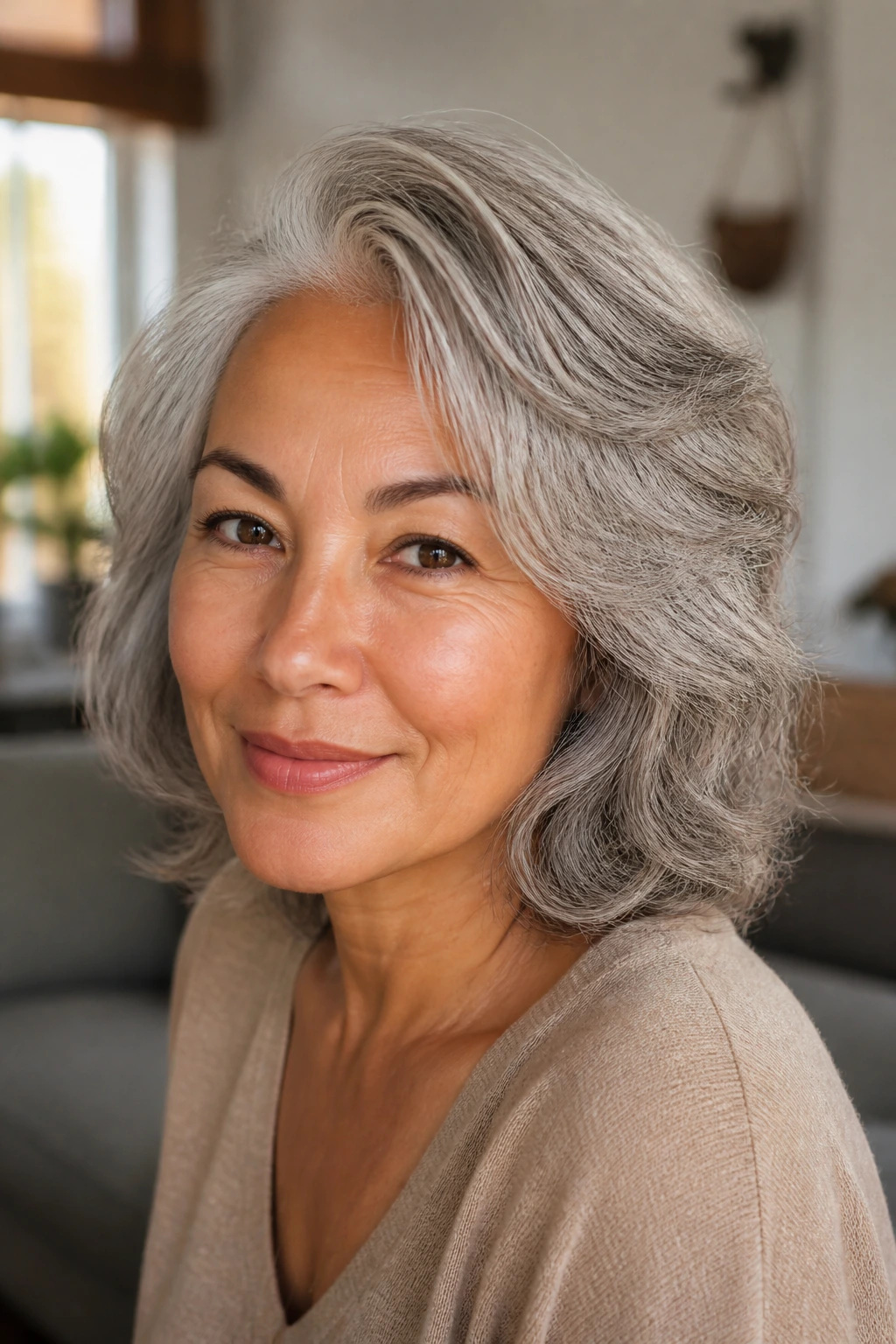
Why These Grey Looks Are Worth Saving
-
Warm undertones need softer reflection: Beige, champagne, and mushroom tones bounce light back to the face without turning the skin ruddy or flat.
-
Grey hair looks richer with shape: A clean pixie, bob, or layered cut makes the color feel intentional instead of random.
-
Glossing beats harsh toning: A demi-permanent glaze keeps natural grey reflective and touchable without the stiff, overprocessed look.
-
Grow-out is easier when the root is blended: Shadow roots and lowlights make regrowth look like part of the style, not a problem to fix.
-
Texture matters as much as color: Waves, curls, and coils carry grey in a much softer way than a blunt, one-note finish.
-
These looks age well: The right tone on grey hair holds up longer because it fades into a similar family of colors instead of flashing brass or blue.
1. Honey-Shadow Pixie
A honey-shadow pixie is one of the easiest ways to make natural grey hair look warm without making it look dyed. The cut does the heavy lifting: short sides, a little lift on top, and enough texture around the crown to keep the grey from sitting flat. The color story is subtle — a beige or honey gloss through the top layers, with the natural grey left brightest at the temples.
Why It Works
Warm skin likes contrast, but not hard contrast. The honey-shadow finish keeps the hair from going flat white against peachy or golden undertones, and the cropped shape keeps the eye moving. A pixie also shows off the face, so if the tone is a little off, you see it fast. That’s the upside and the warning at the same time.
How to Ask for It
- Ask for a textured pixie with soft tapering at the nape.
- Request a beige or honey demi-gloss on the top layers only.
- Keep the sides slightly shorter so the style doesn’t puff out around the ears.
- Style with a pea-sized amount of matte paste or light cream.
A quick blast with a blow dryer and fingers is usually enough. If the top starts to look too yellow, swap the honey gloss for a softer champagne glaze next visit.
2. Champagne Side-Part Bob
A champagne side-part bob has a quiet polish to it that grey hair rarely gets credit for. The side part adds movement, and the bob line gives the hair a clean edge at the jaw. Champagne tone sits in that useful middle ground: not icy, not yellow, not muddy. It’s the shade that lets warm skin keep its glow.
Why It Works
The side part creates a diagonal line that softens rounder faces and opens up the cheekbone area. Champagne-grey also reads brighter than taupe, which helps if your skin leans golden and your natural grey has gone a bit dull at the ends. A blunt bob can look boxy; a slight bevel under the chin fixes that fast.
Best Styling Move
A round brush and a 1.25-inch blowout turn this into a real shape instead of a helmet. If your hair is coarse, smooth a drop of serum through the mid-lengths and leave the roots alone. Too much product near the scalp kills the shine.
The parting is doing more work than people think. Move it a half-inch off center and the whole cut feels looser.
3. Mushroom-Lace Lob
Mushroom-lace is a better name than “ashy,” because ash alone can sound flat and a little mean. This lob has cool-beige softness with enough warmth to stay friendly on golden skin. The length hits between the collarbone and the shoulder, which is a sweet spot for people who want grey hair but do not want to lose movement.
Why It Works
The lob shape leaves enough length to tuck behind the ear, flip onto one side, or wear with loose waves. The mushroom tone keeps the grey from turning icy, and the “lace” part comes from the delicate, layered ends that break up the outline. On warm skin, that softness matters. Hard silver can feel abrupt. This doesn’t.
What to Ask Your Stylist For
- Collarbone length with light internal layers.
- A neutral beige or mushroom gloss through the mids.
- Slightly chipped ends so the line isn’t too blunt.
- A soft face frame that starts around the cheekbone.
Wear it with a bend, not a curl. A flat iron turned just once at mid-length makes the hair move without turning it into a pageant wave. The tone stays more believable that way.
4. Salt-and-Pepper Shag
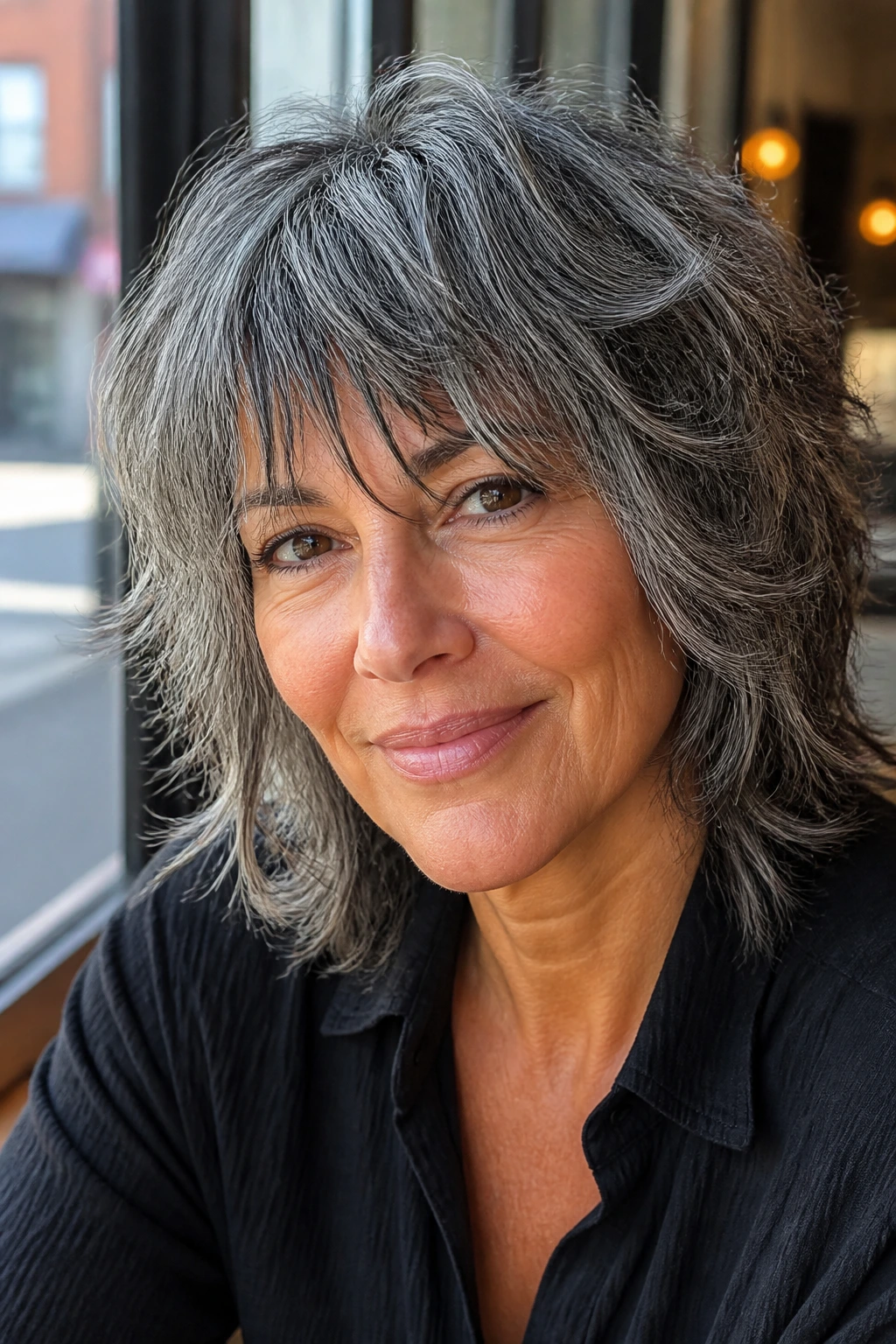
The shag is where natural grey hair starts acting like a feature instead of a phase. Salt-and-pepper color already has dimension, so the cut should lean into that. Choppy layers, a little fringe, and some roughness around the crown keep the whole thing from going stiff.
Why It Works
Warm skin often looks best with depth near the roots and brightness around the face. A shag gives you that without heavy color work. The darker strands in the mix anchor the look, while the silver pieces catch light in a softer, less metallic way. If your grey is still growing in unevenly, this is one of the most forgiving cuts you can wear.
Styling Note
Use a lightweight mousse on damp hair, then diffuse or air-dry until the layers separate a bit. Do not brush it smooth. That kills the whole point. A shag needs movement, and a slightly undone finish is what makes the grey look lived in rather than accidental.
If your fringe gets puffy, tuck the roots under with a round brush just at the front. Leave the rest alone.
5. Feathered Silver Crop
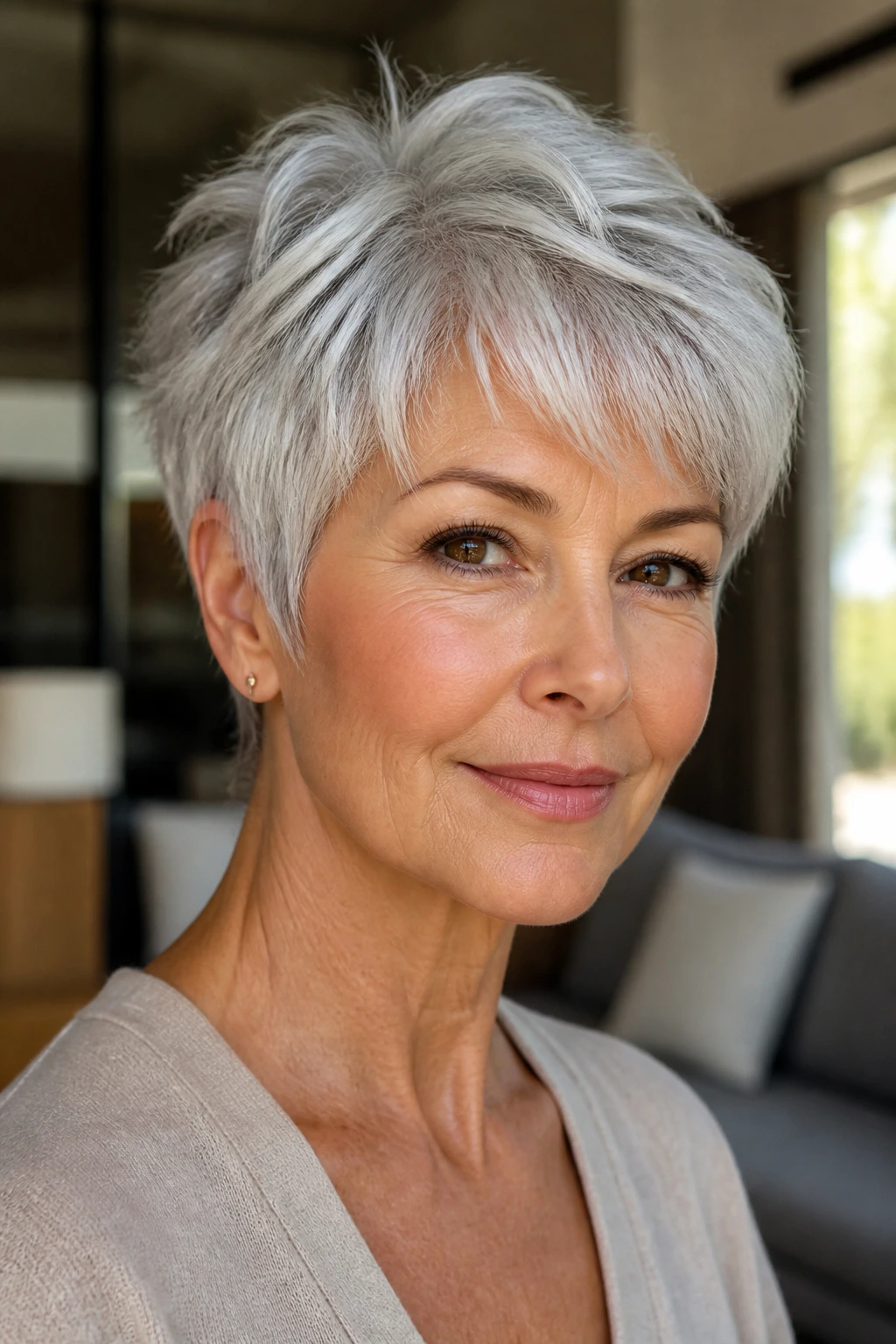
A feathered crop gives grey hair lift where warm skin often needs it most: around the eyes and cheekbones. The feathering keeps the edges soft, which matters if your face already carries warmth in the cheeks or jaw. I like this cut on people who want something short but not severe.
Why It Works
The lightness in the layers makes silver hair look airy instead of dense. That matters because thick blocks of grey can sometimes read heavy against warm undertones. Feathering breaks that mass into smaller pieces, which is kinder to the face. It also makes coarse hair behave a little better.
How to Style It
A small round brush and a low-heat blow-dry are enough. If the hair flips out at the ends, that is a sign the cut needs a touch more weight removed, not more product. Use a cream with a satin finish, not a wax that turns the feathering stiff.
This style is one of those rare short cuts that looks better the second day, once the shape settles a bit. A finger comb and a dab of styling balm usually fix what sleep flattens.
6. Curved French Bob with Beige Gloss
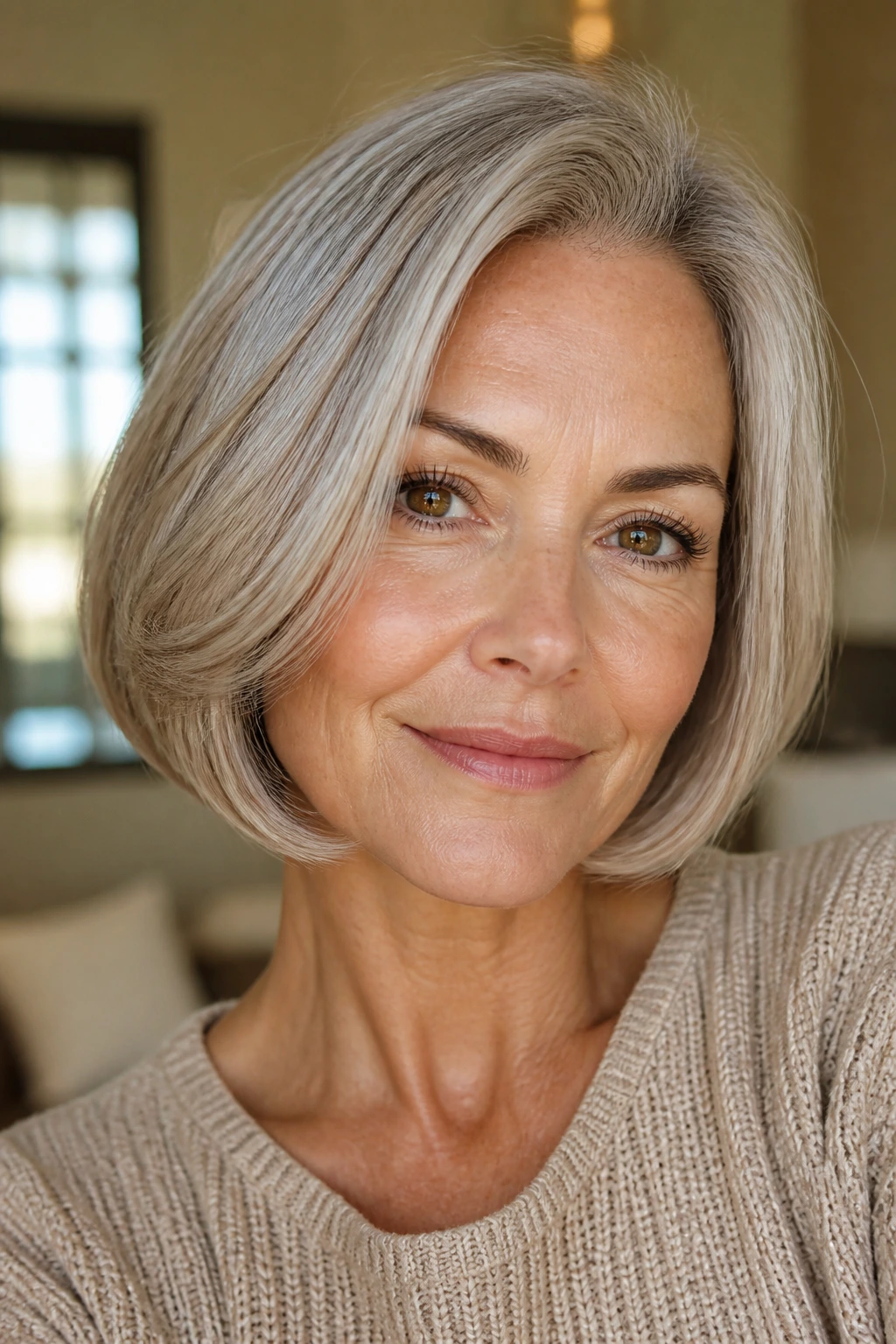
This bob curves under just enough to hug the jawline, which is a nice trick for warm skin because it frames the face without boxing it in. Add a beige gloss and the silver reads softer, less stark. The whole look feels tidy, but not severe.
Why It Works
The curve at the ends keeps the cut from looking flat. That matters with grey hair, which can lose visual depth faster than darker shades. Beige gloss is the other half of the equation. It takes the edge off fresh silver and makes the hair sit more comfortably next to warm eyes, lips, and cheeks.
The Detail That Changes Everything
Ask for the ends to be beveled under with a round brush finish, not chopped blunt. That one small choice changes the whole feel of the bob. If your hair grows wide at the sides, this shape helps keep it close to the head instead of exploding outward.
A middle part can work, but a soft off-center part usually feels friendlier on warm undertones. Try both. The mirror will tell you fast.
7. Curly Halo Cut with Warm Silver Ends
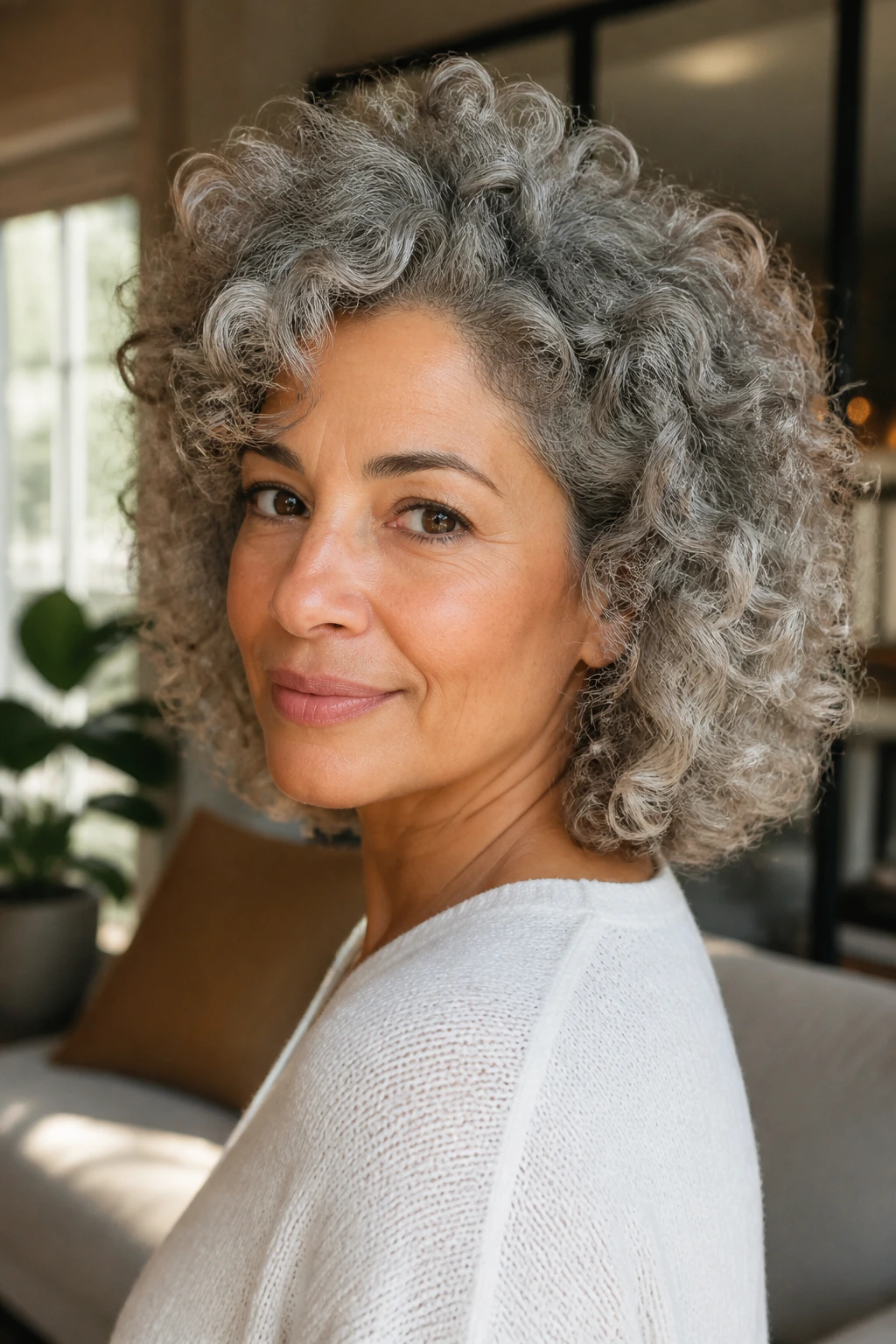
A halo cut is gorgeous on curls because it lets the shape do the work while the color stays gentle. Natural grey at the crown, warmer silver at the ends, and enough layering to keep the curl pattern from collapsing — that’s the formula. It’s one of the few grey styles that feels luminous without trying too hard.
Why It Works
Warm skin can get overwhelmed by a full head of icy silver curls, especially if the texture is dense. A halo cut gives the curl room to breathe, and the warmer ends keep the color from tipping too blue. The result is soft brightness around the perimeter of the face, not a hard halo of white.
How to Keep It Looking Good
Use a curl cream with slip, then scrunch in a small amount of mousse near the roots. Diffuse only until the curls stop dripping; over-drying makes grey hair look frizzy fast. A gloss every few weeks helps keep the ends from going chalky.
If your curl pattern is uneven, that’s not a problem here. Actually, it helps. Grey hair with curl often looks more expensive when it has some irregularity.
8. Layered Mid-Length with Caramel Root Smudge
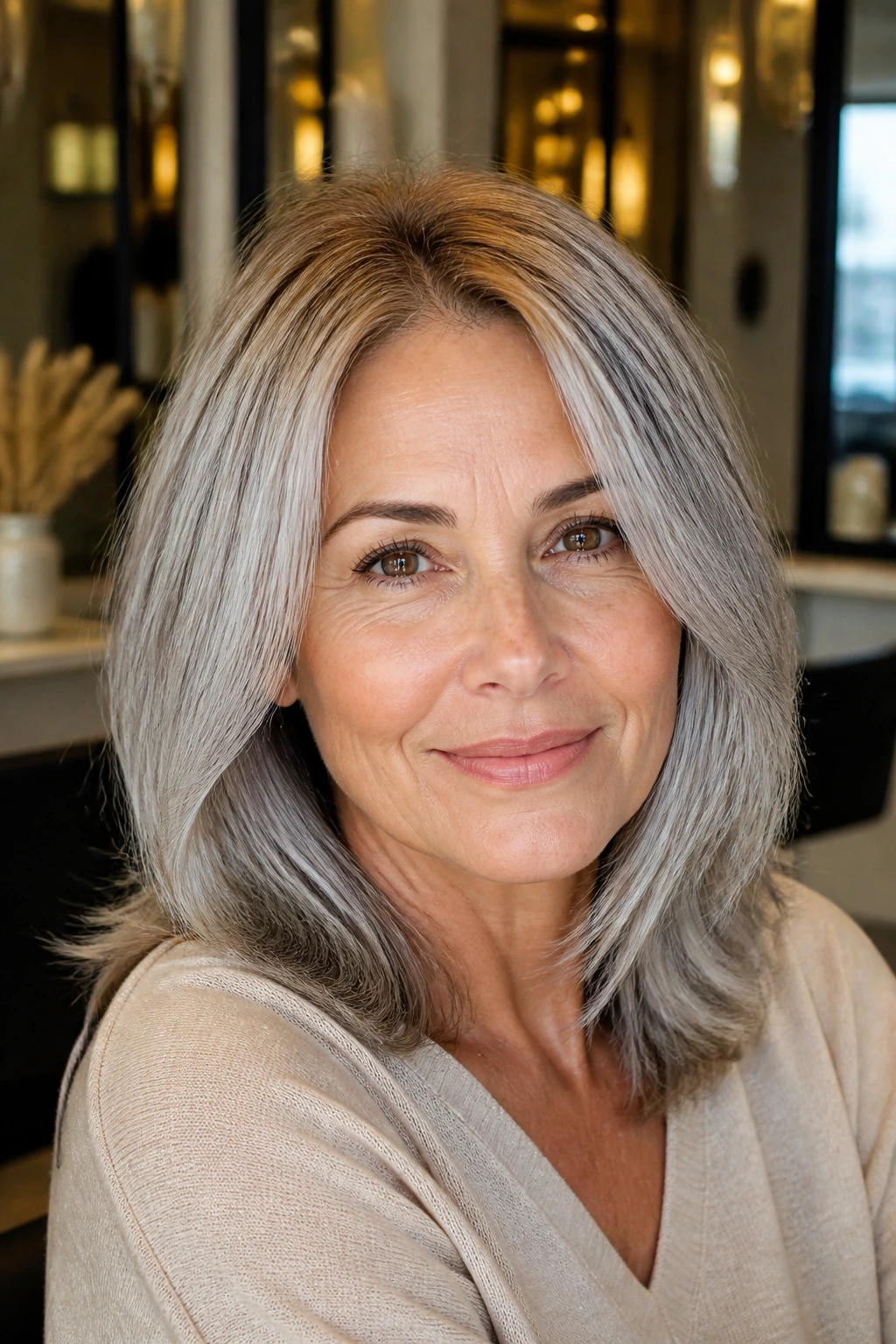
This one is for people who want grey hair but still like a little warmth near the scalp. A caramel root smudge adds depth where the hair grows in and keeps the silver from floating too high off the head. Mid-length layers prevent the style from feeling heavy or triangular.
Why It Works
The smudged root softens the transition from natural pigment to silver. On warm skin, that blended zone is important because it stops the contrast from becoming sharp. Caramel isn’t about making the hair brown again. It’s about making the grey feel anchored.
Best Ask for the Salon Chair
- Long layers starting below the chin.
- A soft root smudge in caramel-beige territory.
- Brightness preserved around the face, not everywhere.
- Ends kept blunt enough to hold shape.
This is one of the more flexible looks on the list. It can be air-dried into waves, blown smooth, or tied back without showing a harsh line at the part. Nice when you want options.
9. Tapered Crop with Apricot Sheen
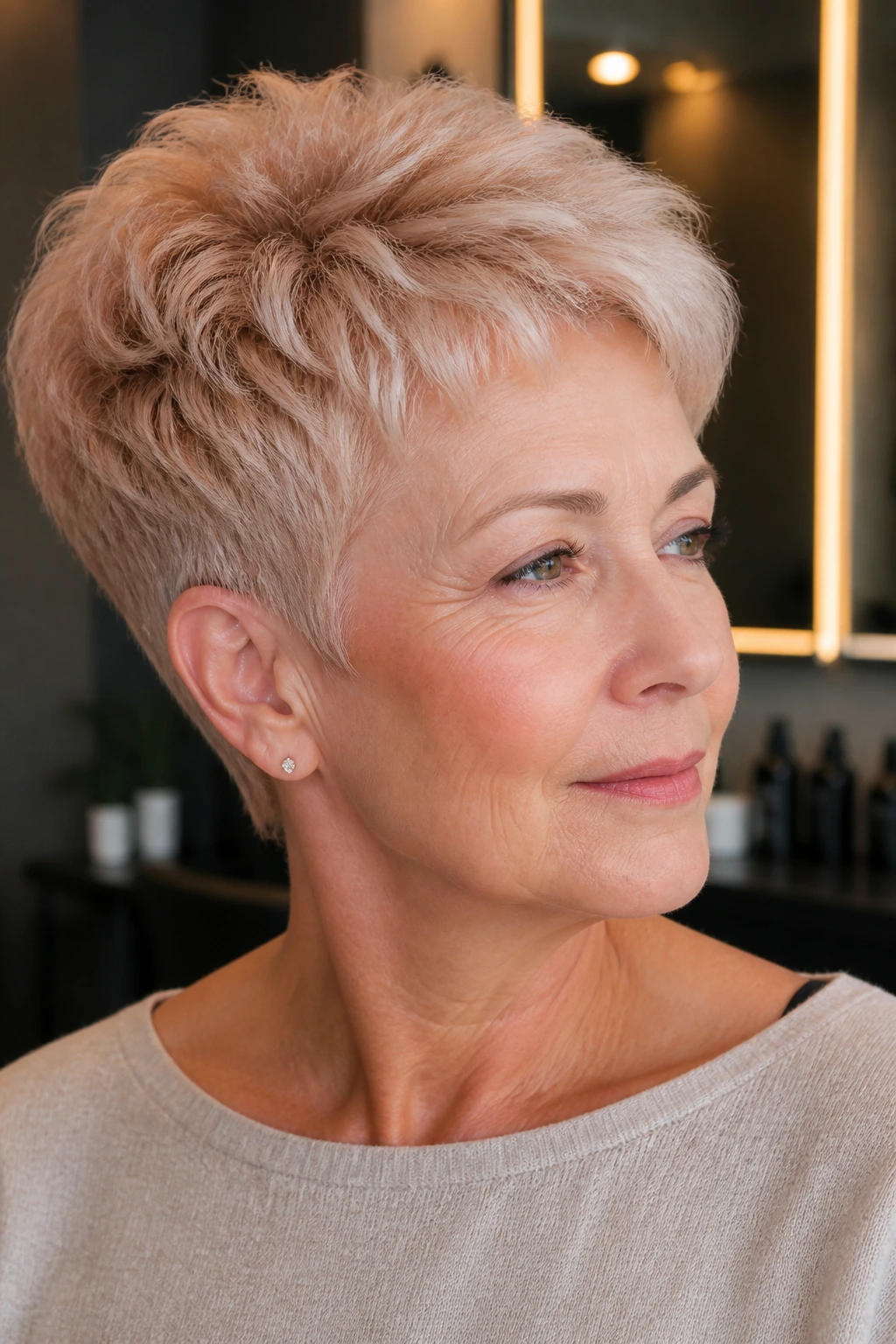
A tapered crop with a whisper of apricot is a quieter, more playful way to wear grey. The cut hugs the head neatly and keeps volume where it flatters most, usually at the crown. Apricot sheen sounds bold, but in practice it’s just a warm glaze that keeps the silver from leaning cold.
Why It Works
Warm skin and apricot tones get along because both bring a little softness to the face. You do not want neon orange here. You want a sheer tint that keeps the grey looking creamy and the complexion looking fresh. The tapered nape also keeps the shape clean, which matters with short styles.
Styling Tip
Work a tiny amount of smoothing cream through the top and brush it back with your fingers while the hair is still warm from the dryer. That keeps the shape close to the head and lets the sheen show up without shine overload.
This style looks best when it is neat. A fuzzy taper loses the whole effect. Clean edges, soft color. That’s the balance.
10. Curtain-Bang Lob with Smoke Beige Toner
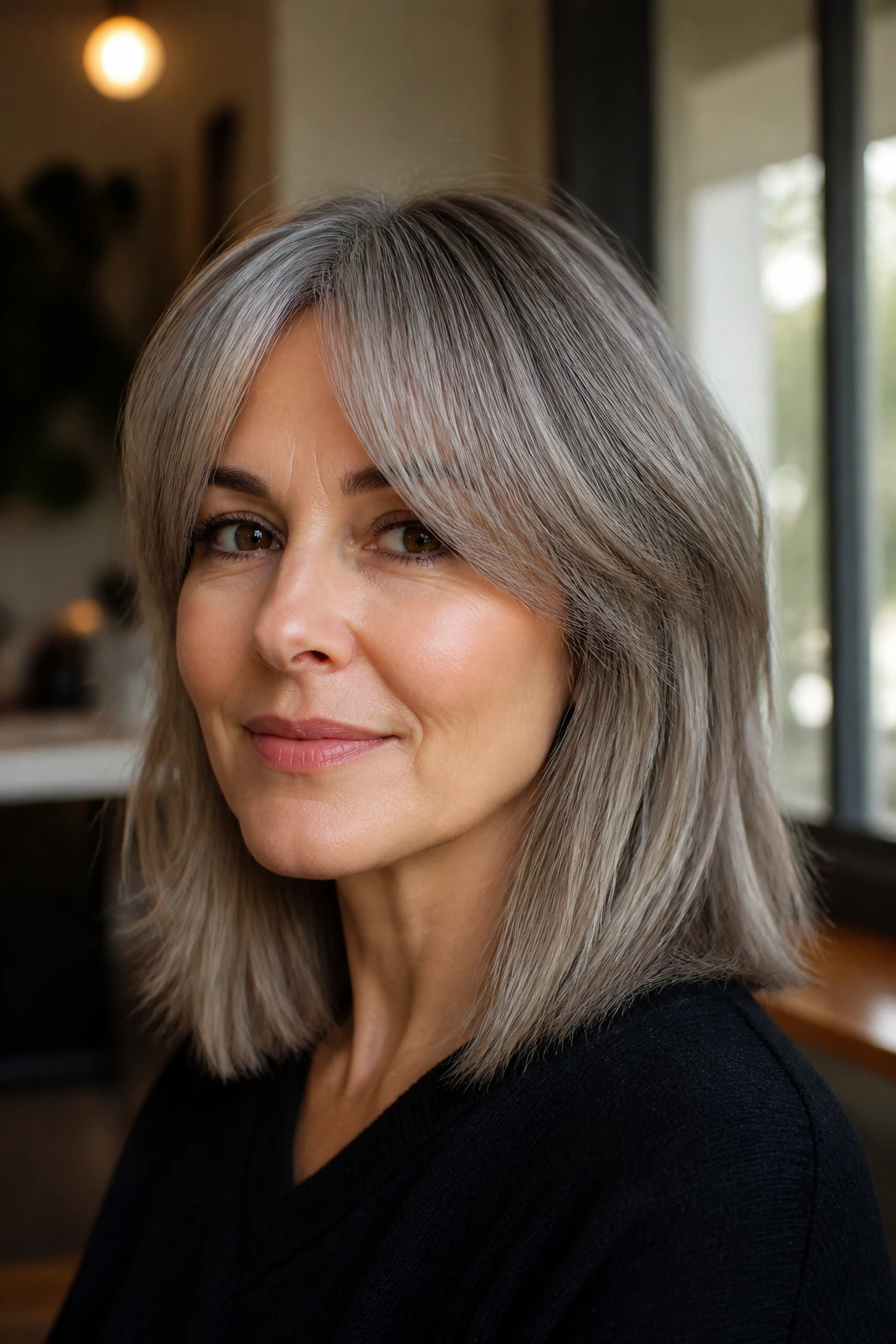
A curtain-bang lob gives you movement right where warm skin likes it most: around the forehead and cheekbones. The smoke beige toner keeps the grey from looking flat while the bangs soften the face. It’s a good choice if you want grey hair that still has some swing.
Why It Works
Curtain bangs break up a broad forehead and pull attention toward the eyes. The smoke-beige tone is cooler than honey but warmer than steel, which is why it behaves so well on golden undertones. If your grey tends to go yellow at the ends, this family of tones keeps it cleaner without turning it blue.
What to Avoid
Do not let the bangs get too thick. Heavy fringe makes the face feel boxed in, and that is the opposite of what warm skin usually needs from grey hair. Keep the center a little shorter and the sides a little longer so the fringe opens like a curtain, not a wall.
A blow dryer and round brush are enough. If the bangs separate too much, a touch of dry cream on the fingertips usually fixes them.
11. Soft Undercut Pixie with Cinnamon Depth
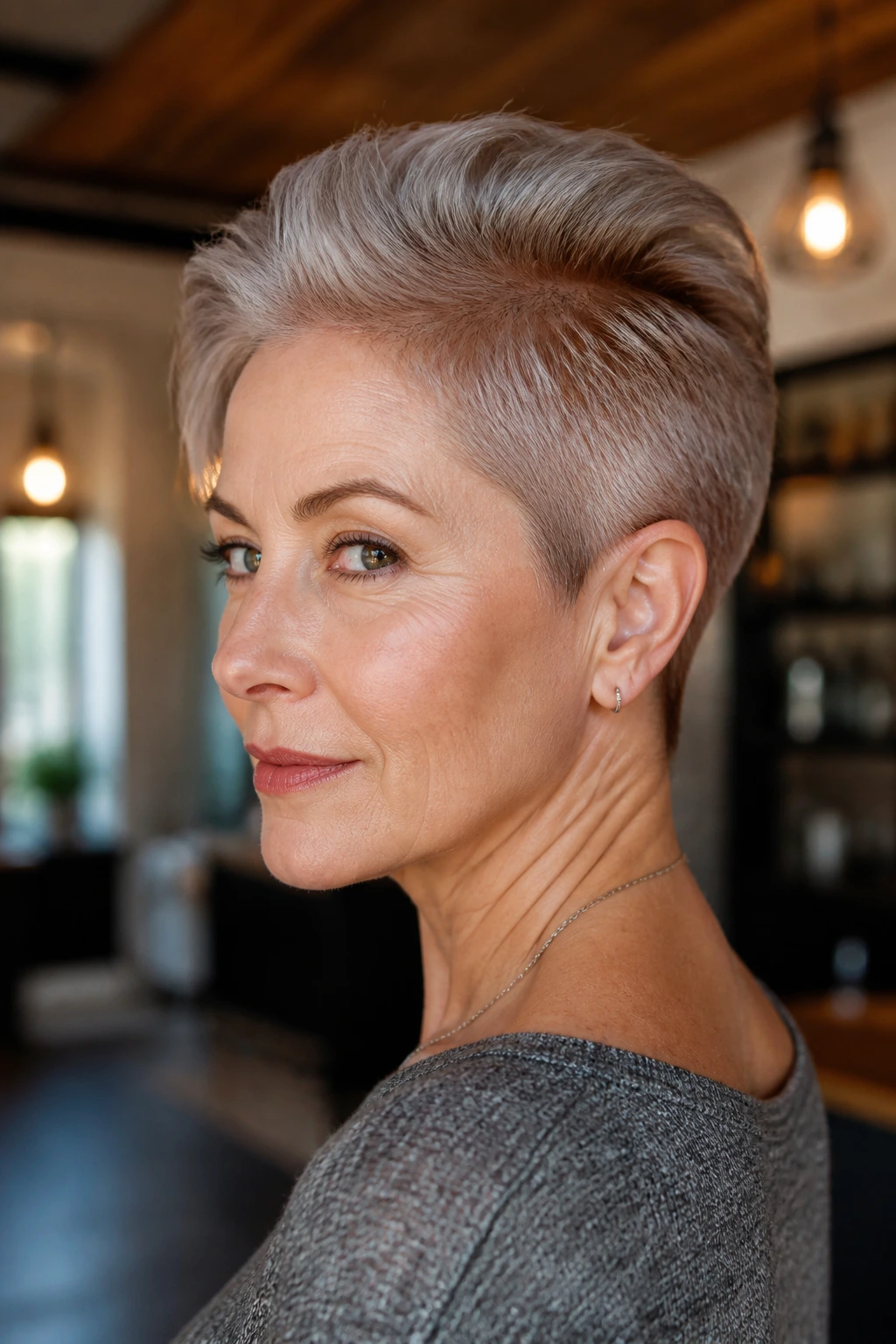
This pixie is tidy on top and slightly lean underneath, which gives the grey hair a sharper outline. Cinnamon depth near the roots makes the style warmer without going full brunette. It’s a clever move if your natural grey is coming in patchy and you want to keep the grow-out calm.
Why It Works
The undercut removes bulk at the nape and around the ears, so the top can sit with a little height. Warm skin often benefits from that lift. Cinnamon lowlights also create a bridge between your natural pigment and the bright grey, which keeps the tone from looking washed out.
Who It Suits
People with thick hair, especially. Coarser grey can puff out in short shapes, and the undercut solves that without making the style too severe. If your hair is fine, keep the undercut subtle so you do not lose too much body.
A small amount of paste on the top layers is enough. Too much product ruins the soft texture that makes this cut work.
12. Wavy Collarbone Cut with Champagne Face Frame
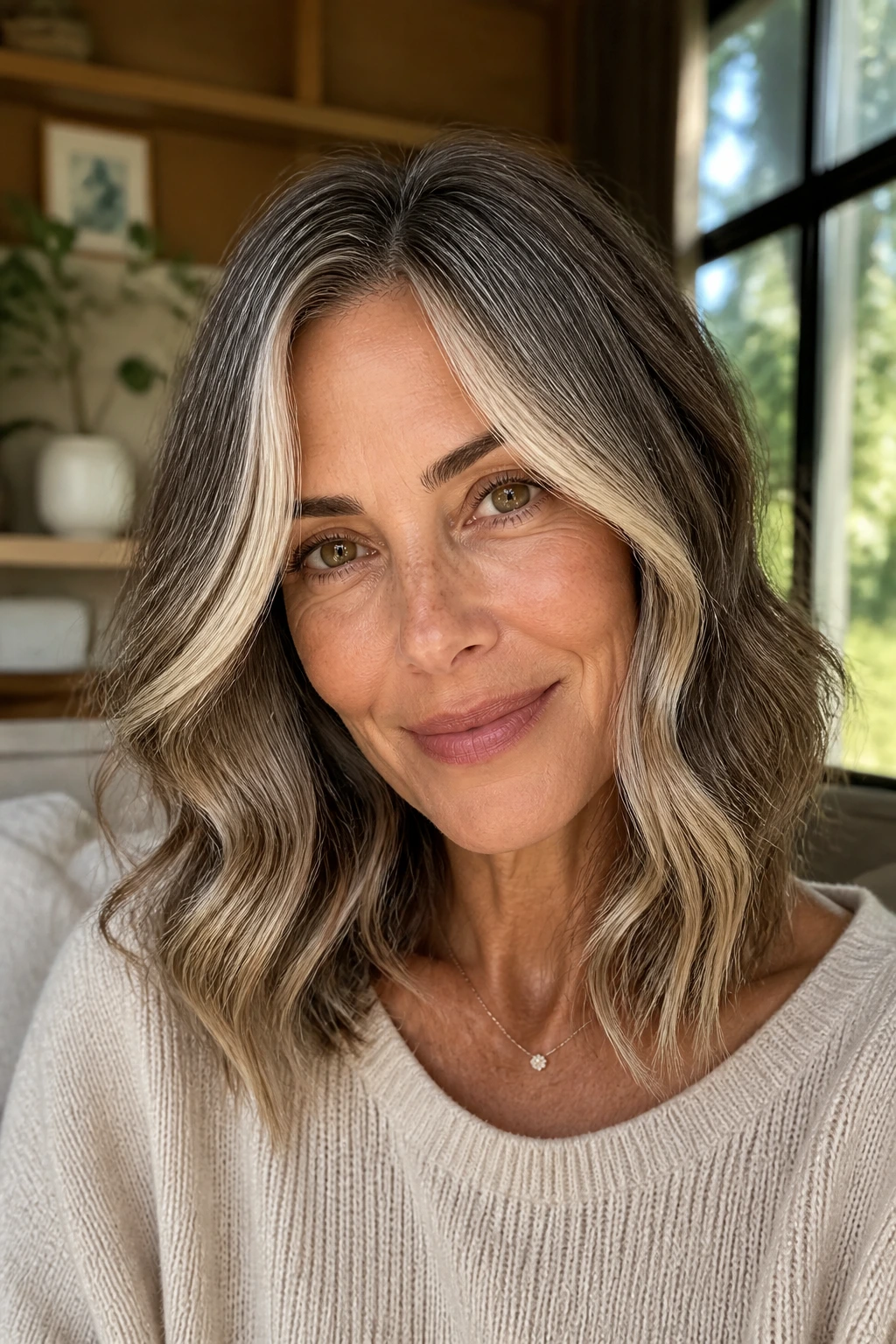
This is one of the prettiest options if you want grey hair that still has length. The collarbone cut is long enough to wave, short enough to stay light, and the champagne face frame keeps the grey from looking flat around the cheeks. It’s flattering in a very direct, no-drama way.
Why It Works
The face frame acts like a brightness filter. It catches the light near the skin and gives the warm undertone something gentle to sit against. The rest of the length can stay more natural silver or smoky grey, which keeps the maintenance reasonable.
Styling Move
Use a 1-inch curling wand and wrap only the mid-lengths for loose bends. Leave the ends a little straighter so the look stays modern, not prom-like. A single pass of shine cream through the face frame is enough.
This style is also forgiving on second-day hair. If the wave loosens, it usually looks better, not worse.
13. Rounded Bob with Taupe Dimension
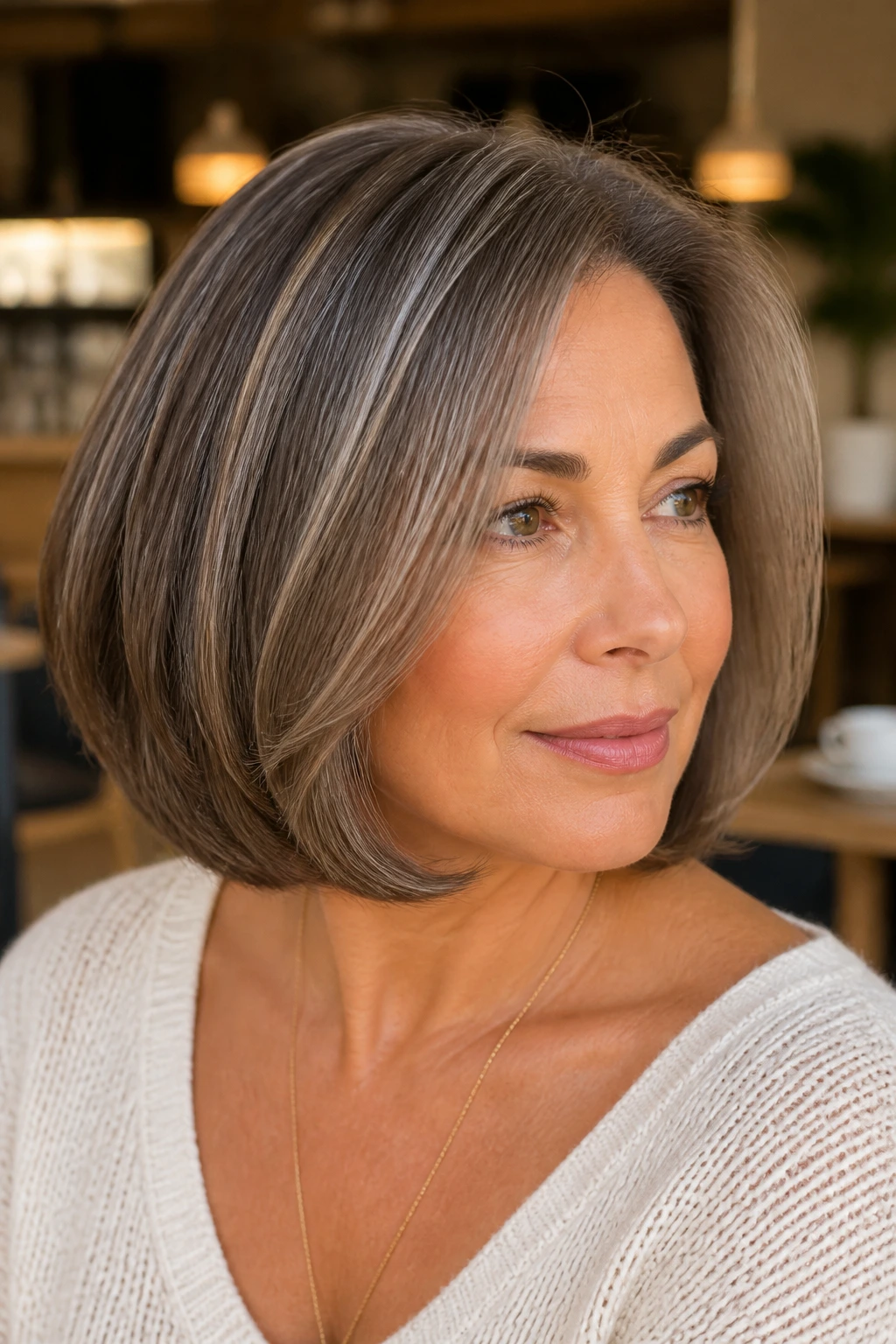
A rounded bob gives grey hair structure, and taupe dimension stops it from going flat. The shape curves gently toward the face, which is useful if your jawline is sharper or you want a little softness near the chin. Taupe is the quiet hero here. It reads natural, not dyed.
Why It Works
Warm skin can handle taupe because it sits in the middle of cool and warm. That middle ground keeps the grey from becoming too icy while still preserving the silver effect. The rounded outline also makes the hair look fuller, which helps if grey strands have lost some density.
Ask for This
Tell the stylist you want a bob with a soft perimeter and slight internal layering, not a stacked back. Stacked bobs can get too puffy and formal. This one should feel curved, not helmet-like.
If you wear glasses, this cut is especially good. The rounded line and the frames tend to echo each other in a nice way.
14. Chin-Length French Cut with Honey Glaze
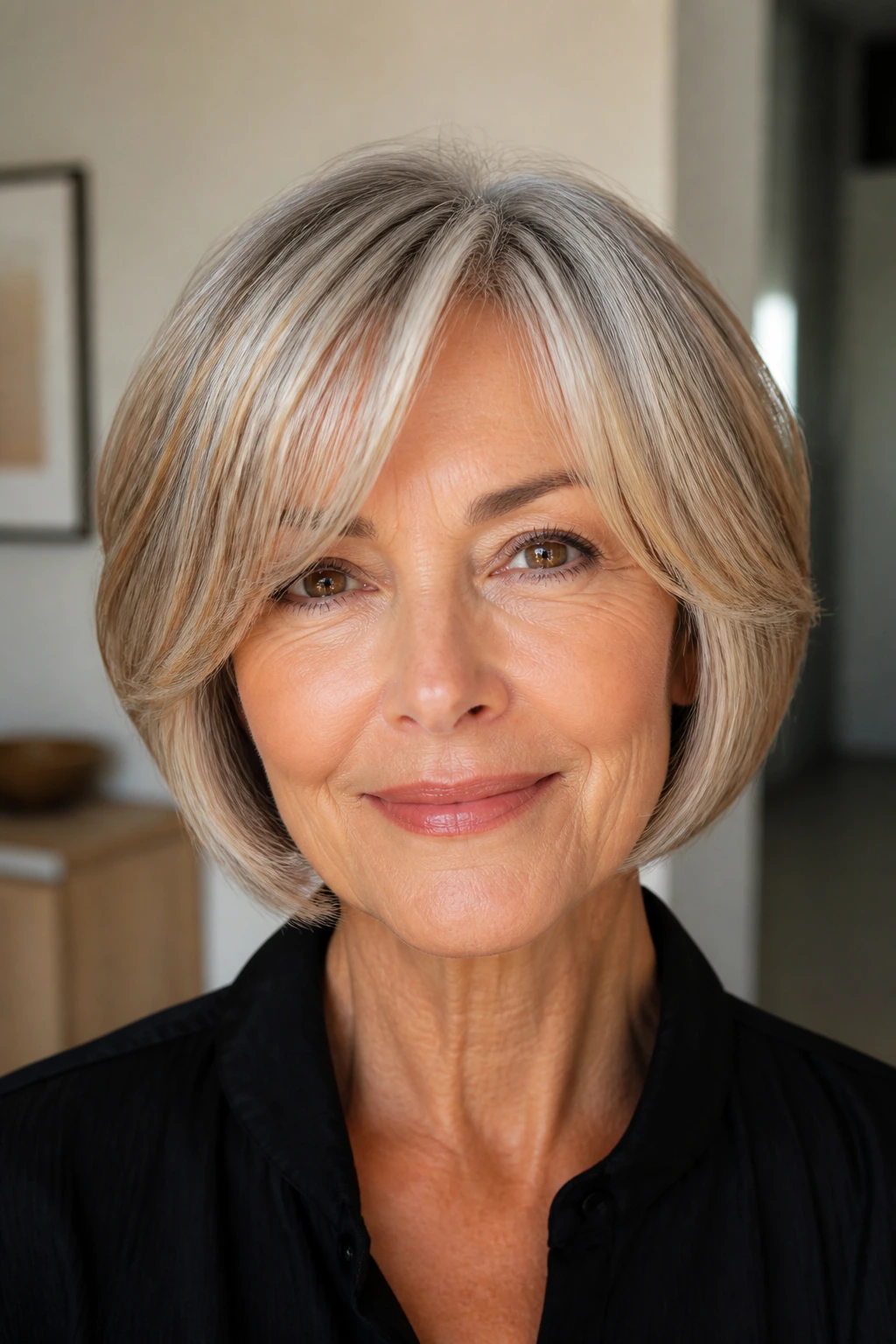
A chin-length French cut is blunt enough to feel chic, but not so blunt that it overwhelms warm skin. Honey glaze adds a touch of warmth through the silver and keeps the ends from looking dusty. The whole thing has that crisp, face-brightening effect people want from grey hair but rarely get.
Why It Works
The chin length draws attention upward. That’s useful when you want the eyes and mouth to do more of the talking. Honey glaze keeps the edges from looking dry, and a clean outline means the grey reads as intentional, almost architectural.
How to Wear It
This cut likes a smooth finish with a little bend at the ends. Tuck one side behind the ear and leave the other loose if you want it to feel less formal. A drop of serum on the ends is enough; too much and you lose the crisp line.
If your natural grey is very bright, honey glaze can keep it from looking harsh in daylight. That’s the whole point.
15. Airy Shoulder-Length Layers with Pearl-Beige Finish
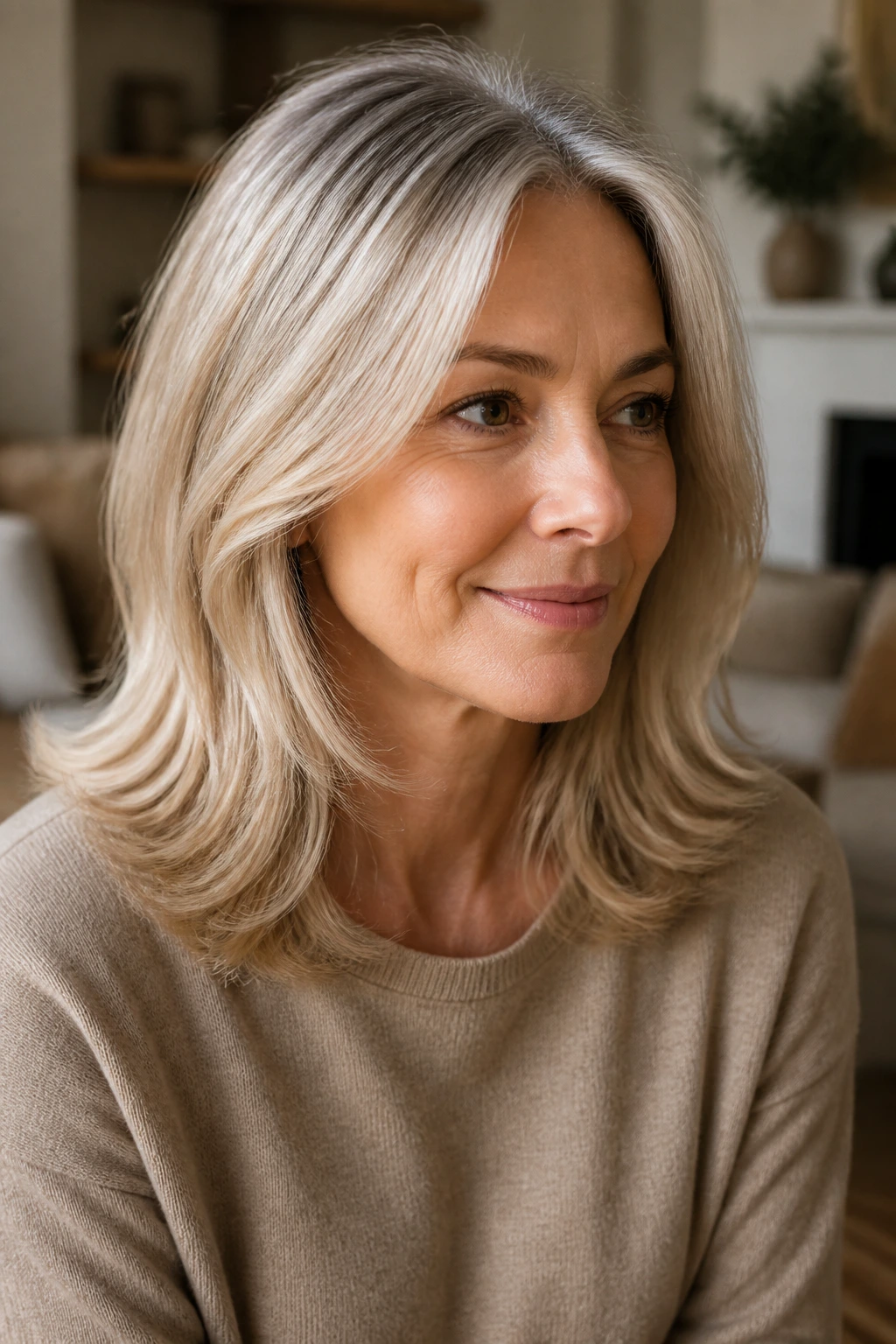
Shoulder-length layers are the workhorse of grey hair. They move, they grow out well, and they can be styled up or down without a fuss. A pearl-beige finish gives the silver a soft shell-like sheen that sits nicely on warm complexions.
Why It Works
Pearl-beige is calm. It avoids the blue cast that can make warm skin look a little drained. The layers keep the length from weighing itself down, which matters because grey strands can feel coarse and a bit stubborn. This cut gives the hair room to move.
Styling Detail
If the hair is straight, bend the ends slightly inward with a round brush. If it’s wavy, encourage the natural bend with a leave-in cream and a wide-tooth comb. The finish should look soft and touchable, not sprayed into place.
This is also one of the easiest cuts for people who air-dry. The layers do a lot of the shaping for you.
16. Tucked-Behind-Ear Crop with Warm Pewter Tone
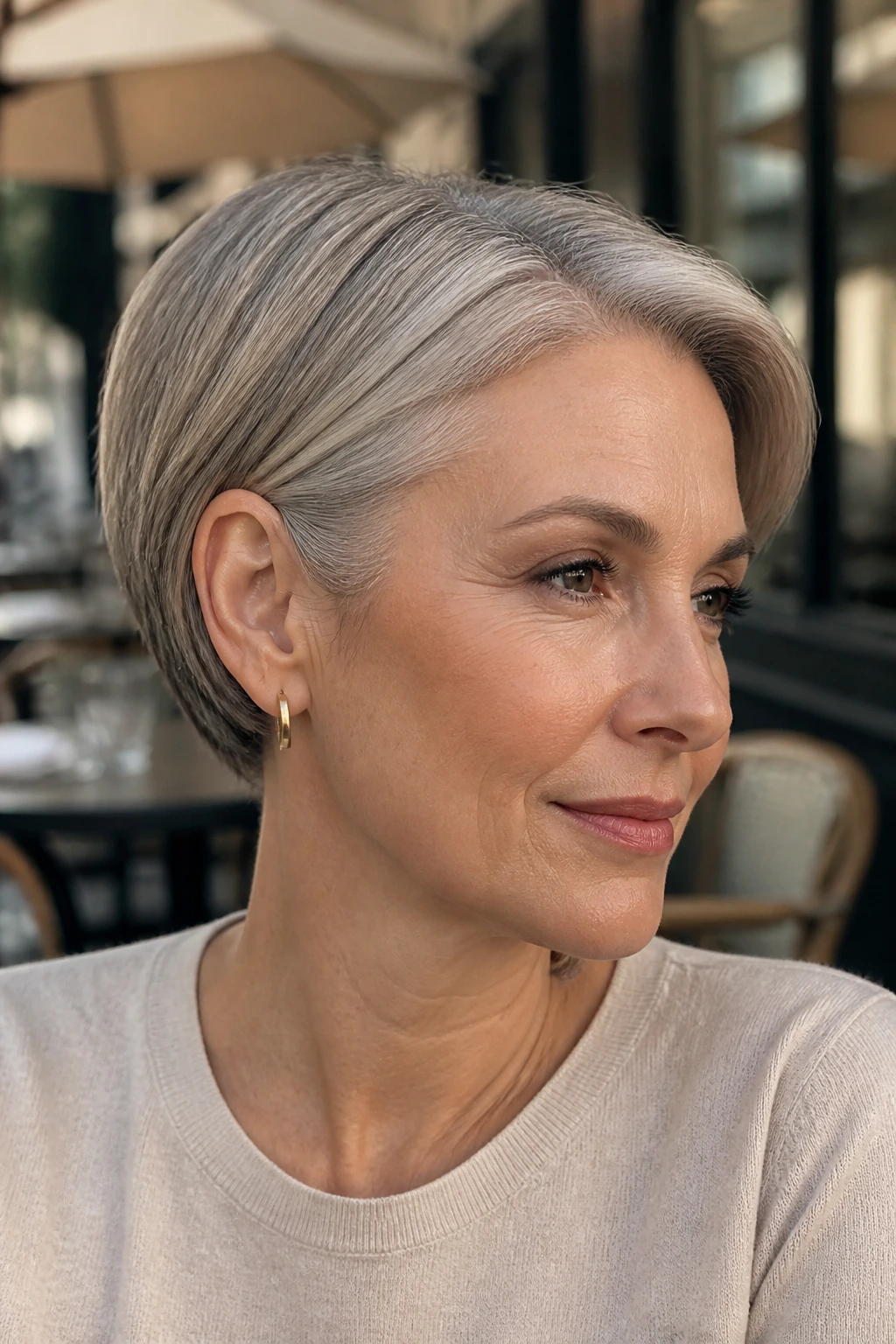
A tucked-behind-ear crop has a neatness that works beautifully on grey hair with a bit of shine. Warm pewter is the tonal answer if pure silver feels too cold. It keeps the finish metallic enough to read as grey, but not so sharp that it fights the skin.
Why It Works
Warm pewter sits lower in contrast than icy silver. That helps on peach, olive, and golden skin, especially around the temples and cheeks. Tucking the hair behind the ear exposes the face and makes the tone part of the styling, not just the color.
Styling Note
This cut needs the sides to lie flat without looking pressed. A light cream, a comb, and a quick blow-dry are usually enough. If the hair gets puffy by noon, the cut probably needs a touch more weight removed near the ears.
It’s a small style. That’s the charm. Small styles can be exacting, and this one rewards a tidy outline.
17. Long Silver Layers with Soft Root Melt
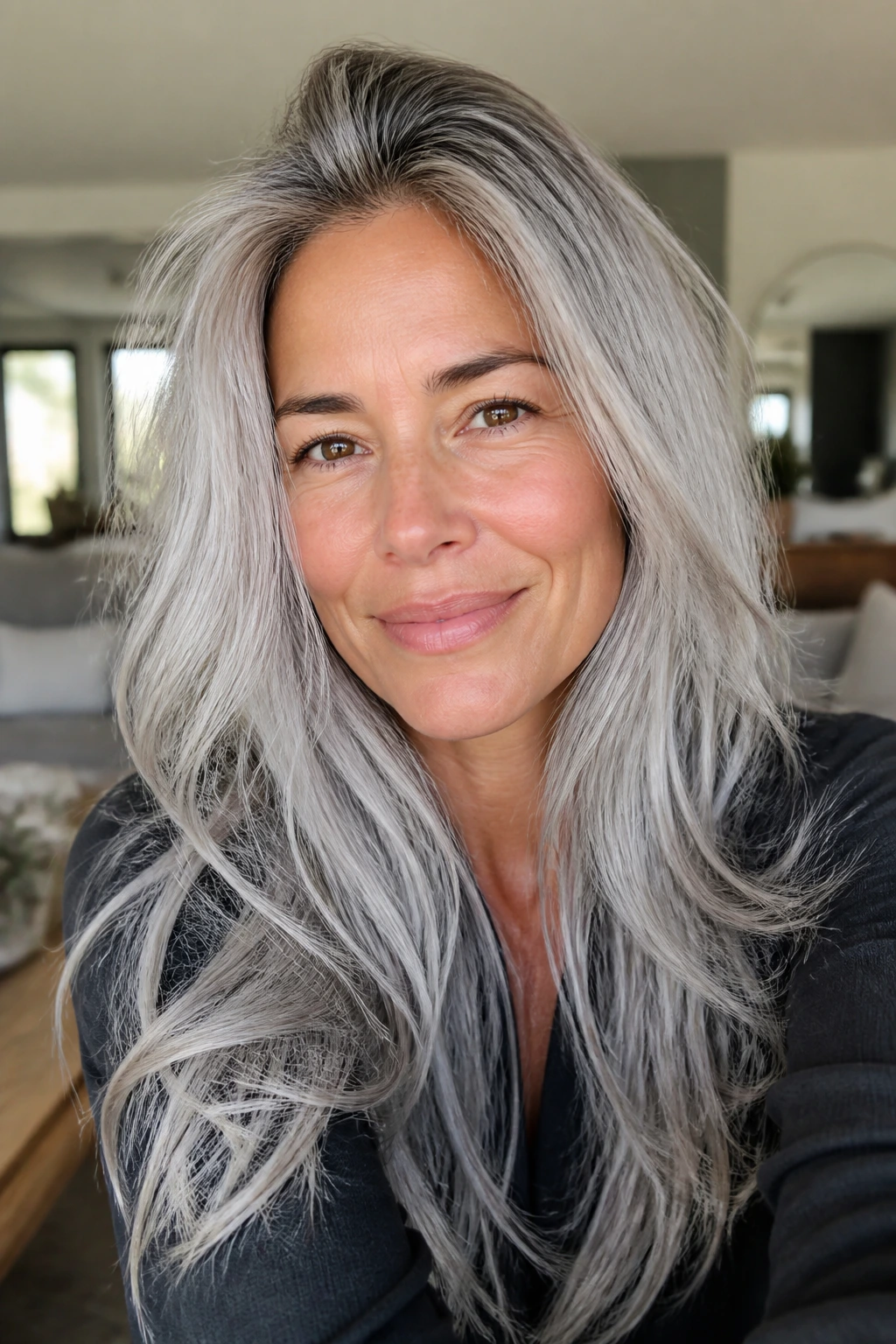
Long grey hair can look spectacular on warm skin when there’s a soft root melt to keep it grounded. The length gives the silver a flowing quality, while the melt keeps the roots from popping too hard against the face. This is a good choice for anyone not ready to cut things short.
Why It Works
Long hair shows every shift in tone, so a clean transition matters. The root melt turns the grow-out into part of the design. Warm skin benefits because the hair doesn’t start with a harsh line at the scalp; it starts softly and opens into brighter silver lengths.
Keep It From Looking Flat
Ask for internal layers, not just surface layering. Internal layers keep the ends from dragging down the shape. A soft wave through the mid-lengths also helps the silver catch light in a less severe way.
If your ends are dry, this style will show it fast. A gloss plus regular trims makes a bigger difference here than people expect.
18. Curly Shag with Bronze-Shadow Ends

A curly shag with bronze-shadow ends sounds bolder than it is. The bronze is not coppery or loud; it’s a muted warm depth that keeps the greys from becoming too cool. On curls, that little bit of warmth at the ends can be the difference between “silver” and “sparkly but tired.”
Why It Works
Curls already make grey hair look dimensional. Bronze-shadow ends add another layer without looking painted on. Warm skin tends to like the balance because there’s still brightness around the face, but the lower lengths carry some earthiness.
Style It Like This
Work curl cream into wet hair, then use a diffuser on low heat. Stop when the curls are about 80 percent dry. Over-drying makes the bronze notes fade into dullness. A satin bonnet at night keeps the shape from frizzing apart.
This cut is forgiving if your curl pattern is mixed. Different curl sizes only make the shag look more natural.
19. Asymmetrical Bob with Creamy Grey Blend
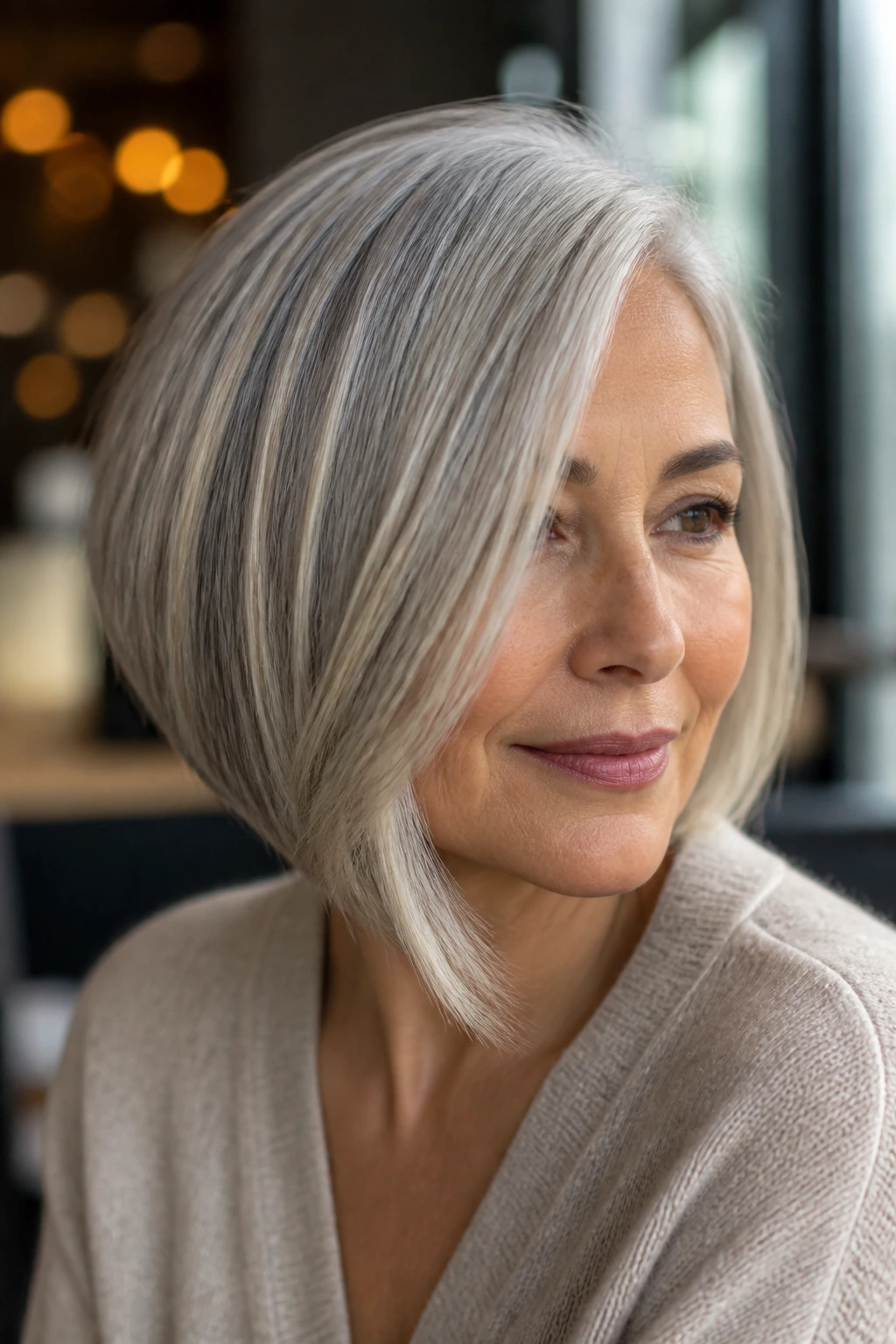
An asymmetrical bob gives natural grey hair a little edge without going harsh. One side is a touch longer, which pulls the eye across the face and keeps warm skin from looking too static. Creamy grey is the key: soft, milky, and bright enough to feel fresh.
Why It Works
The asymmetry adds motion. That motion matters when the tone is restrained, because the shape has to keep the look alive. Creamy grey also avoids the flatness that can happen with heavy ash, which is a common mistake on warm undertones.
How to Ask for It
The longer side should not be so long that it turns into a lopsided lob. Keep the difference modest — enough to feel purposeful, not theatrical. Ask for a glossy finish, not a matte one. Matte grey hair can look dusty fast.
If your face is round, this is a smart cut. The diagonal line makes the jaw feel a little slimmer without trying too hard.
20. Sleek Blunt Lob with Mushroom Gloss
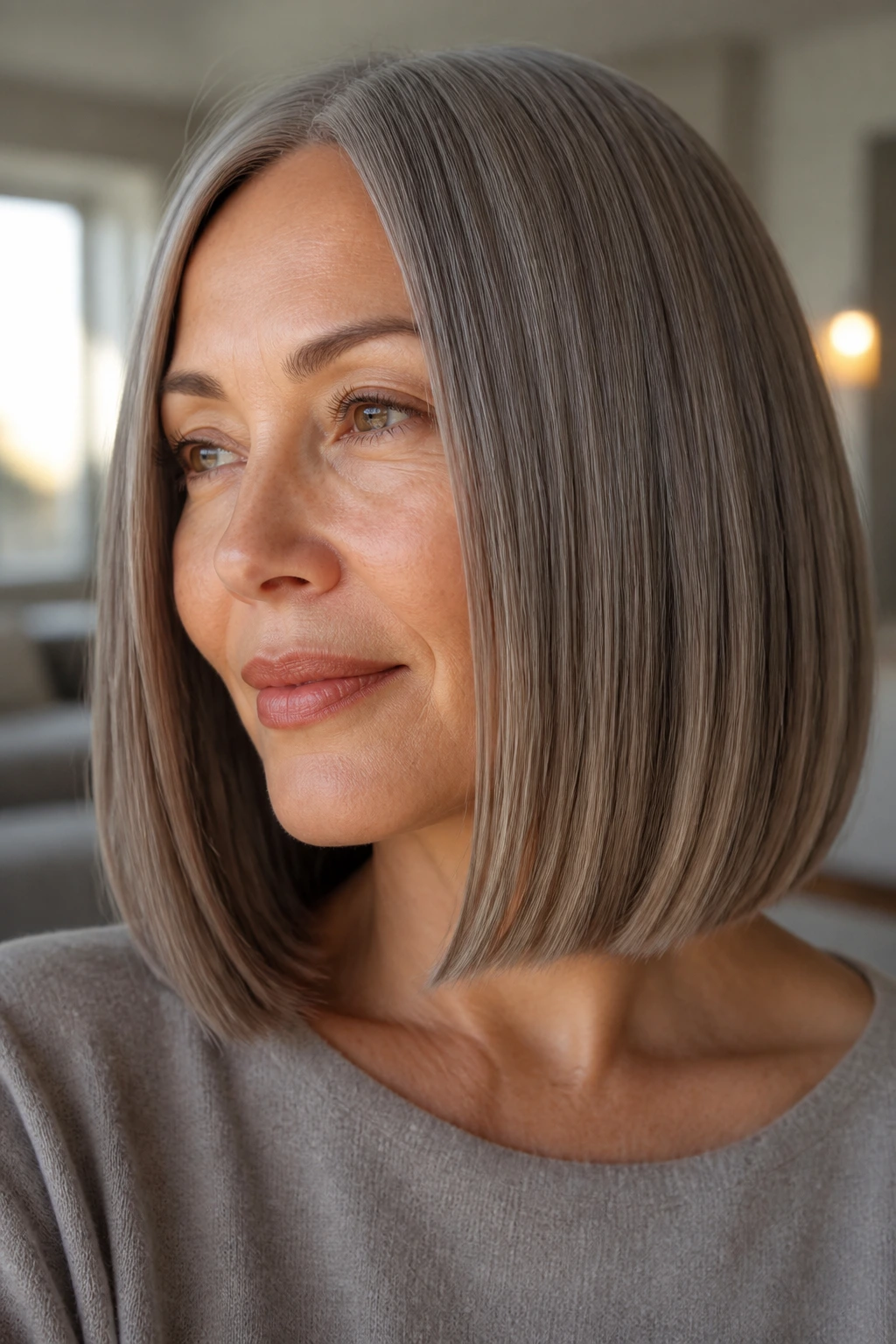
A blunt lob is clean, sharp, and a little bit demanding. Mushroom gloss softens that demand. The result is a grey hairstyle that feels modern without drifting into high-contrast silver territory, which can be unforgiving on warm skin.
Why It Works
Blunt edges create a strong outline. That outline keeps the look from feeling wispy or vague. Mushroom gloss softens the silver just enough to keep the complexion from losing warmth. If your natural grey is dense and smooth, this is a strong pick.
Styling Move
Flat iron in one slow pass, then bend the last half-inch inward. That tiny curve keeps the ends from looking board-straight and severe. If the hair is thick, a light anti-humidity serum helps the line stay clean.
This look can look too polished if you over-style it. A little texture at the roots makes it feel less like a helmet.
21. Textured Crop with Soft Gold Dusting
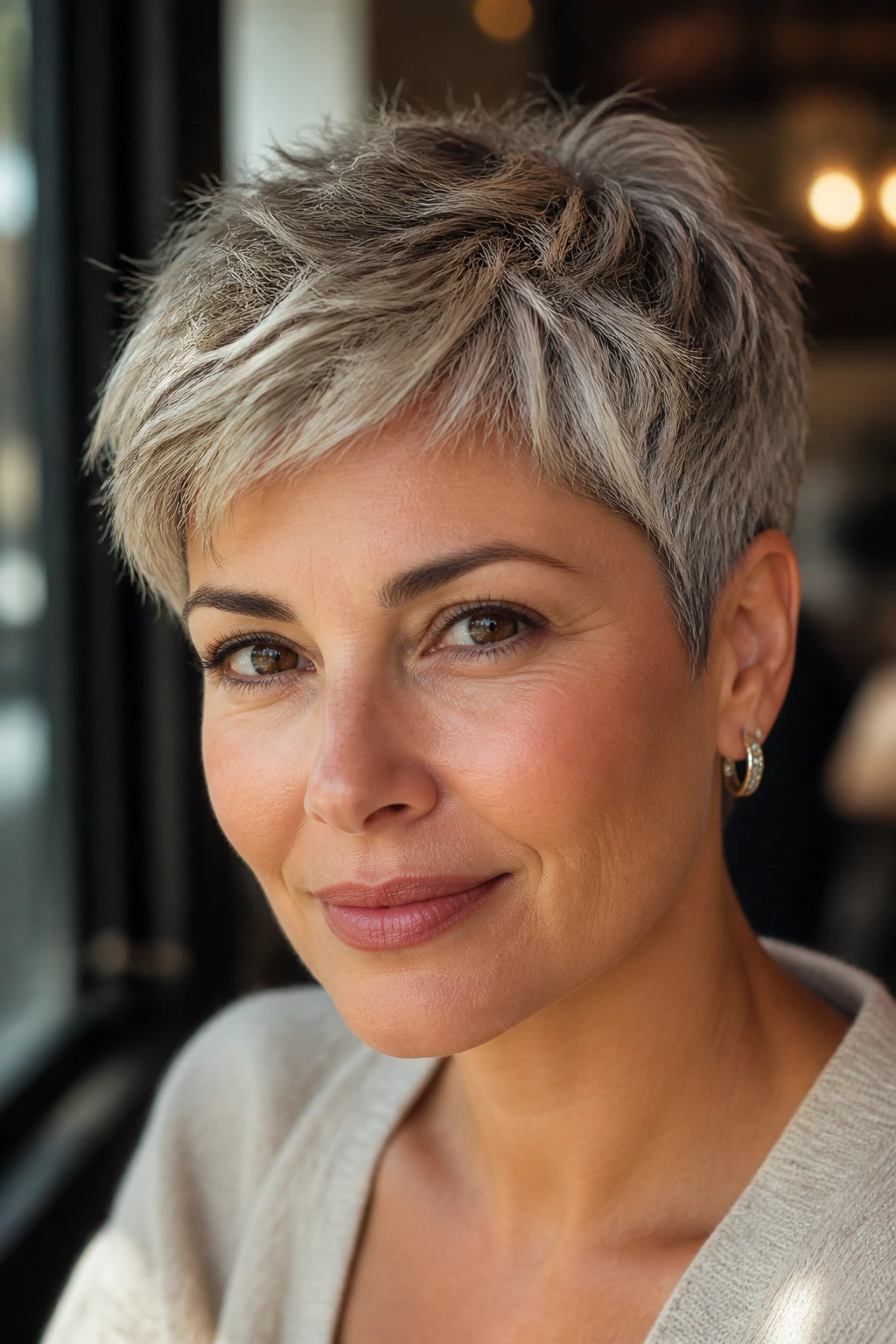
A textured crop gives grey hair edge, and a soft gold dusting adds warmth without crossing into brass. That matters on warm skin, because gold at the wrong level can look brassy fast. Kept sheer, though, it makes the grey read sunlit rather than cold.
Why It Works
The crop shape keeps the style compact and easy to wear. The texture breaks up the top so the gold dusting shows in small pieces instead of one loud block. On warm undertones, that scattered warmth can make the whole face feel healthier.
Best Use Case
This is a good cut for active people who do not want to spend twenty minutes styling hair every morning. A little paste on dry hair and a finger rake is enough. If the crop gets too fuzzy, you probably need a trim rather than more product.
The gold tone should be nearly invisible in indoor light. Outdoors, it comes alive. That subtle shift is part of the appeal.
22. Side-Swept Pixie with Rose-Beige Toning
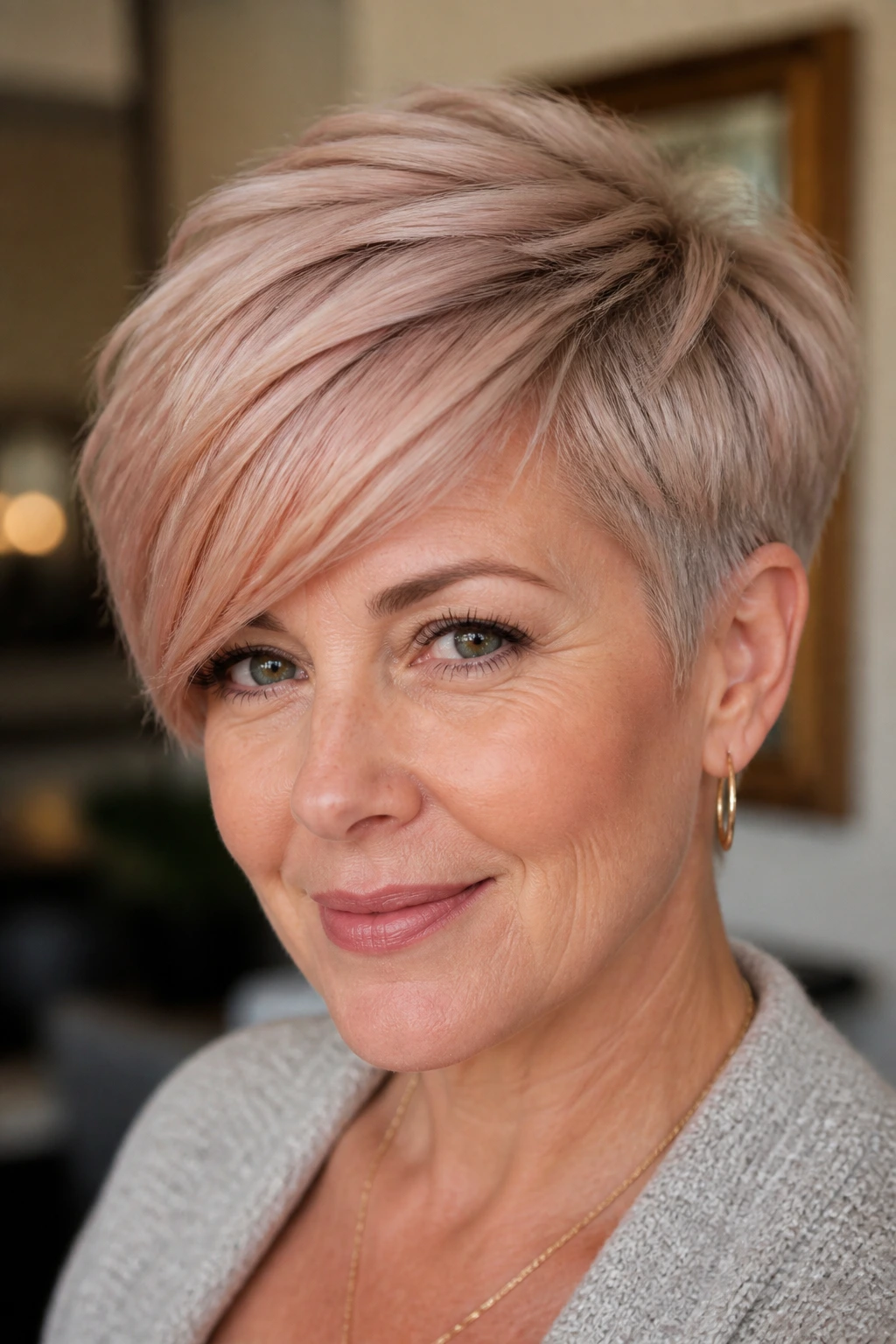
A side-swept pixie is softer than a spiky one, and rose-beige toning gives the grey a faint warmth that flatters peachy skin especially well. The sweep creates a diagonal line across the forehead, which instantly relaxes the look. It’s short hair, but not hard hair.
Why It Works
Rose-beige sits just warm enough to keep silver from looking icy. It can also make the skin look a touch more even because it echoes the natural warmth in cheeks and lips. The side sweep gives movement without needing much length.
Styling Note
Use a light cream, blow-dry the front in the direction you want it to fall, and then separate it with your fingers. That keeps the fringe piecey. Too much styling gel turns the look stiff, and then the pretty color gets lost.
This style is lovely if you wear bold earrings. The cut leaves room for them to matter.
23. Face-Framing Layers with Warm Platinum Ribbons
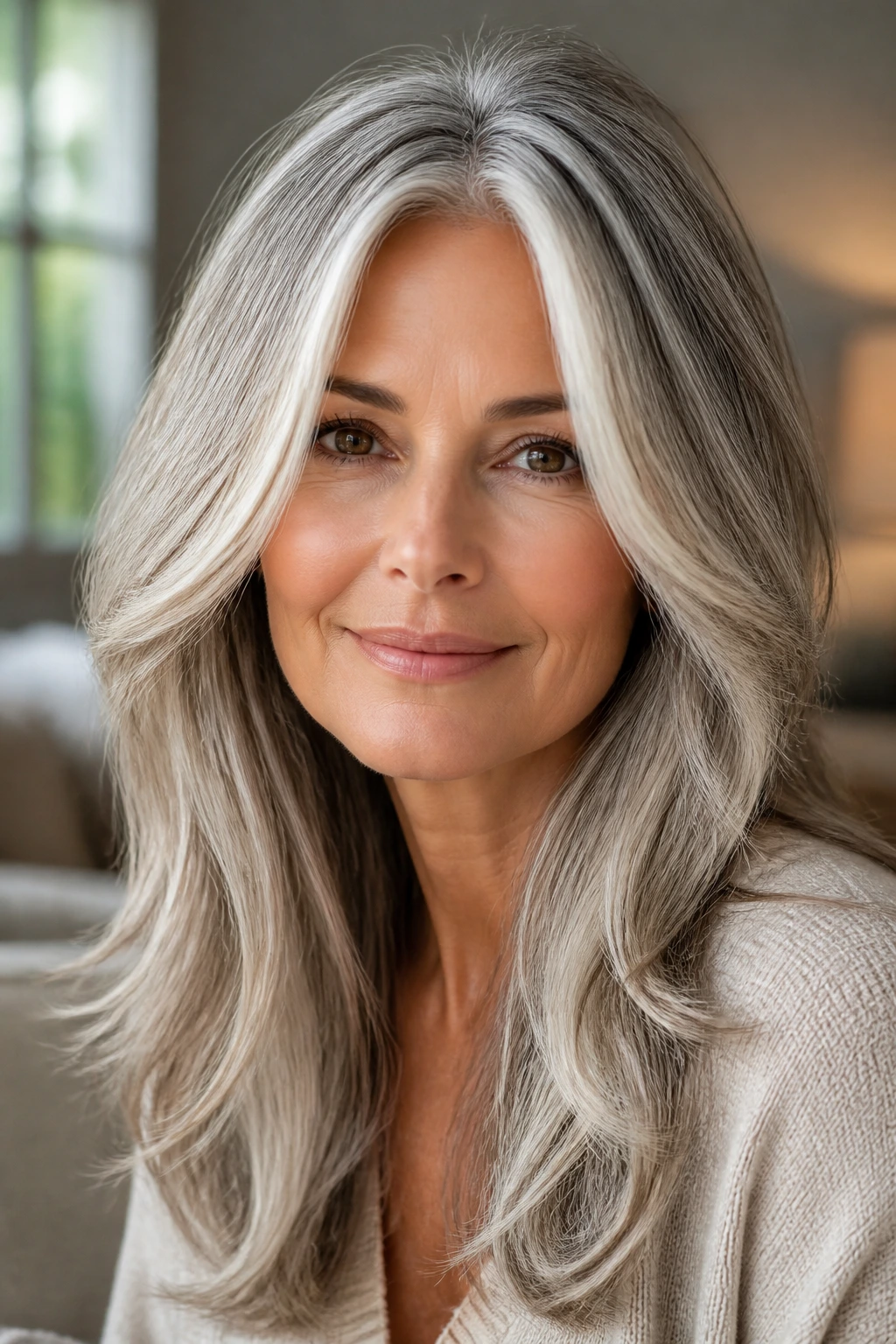
Warm platinum sounds contradictory, and that’s why it works. The platinum is softened with beige or honey ribbons near the face, so the grey hair keeps brightness without going hard. Long face-framing layers help the tone show where it helps most — at the eyes, cheekbones, and temples.
Why It Works
The ribbons give you controlled brightness. That matters on warm skin because too much pale silver near the hairline can wash the face out. The rest of the length stays calmer, which keeps the overall look from tipping into high-maintenance blonde territory.
How to Wear It
Loose bends are better than tight curls. Tight curls can make the ribboning feel busy. A broad wave lets the tonal shifts breathe.
This is a good compromise if you like brightness but still want the warmth of natural grey to show through. It looks especially nice when the layers move around the jaw.
24. Coily Tapered Cut with Smoky Honey Brightness
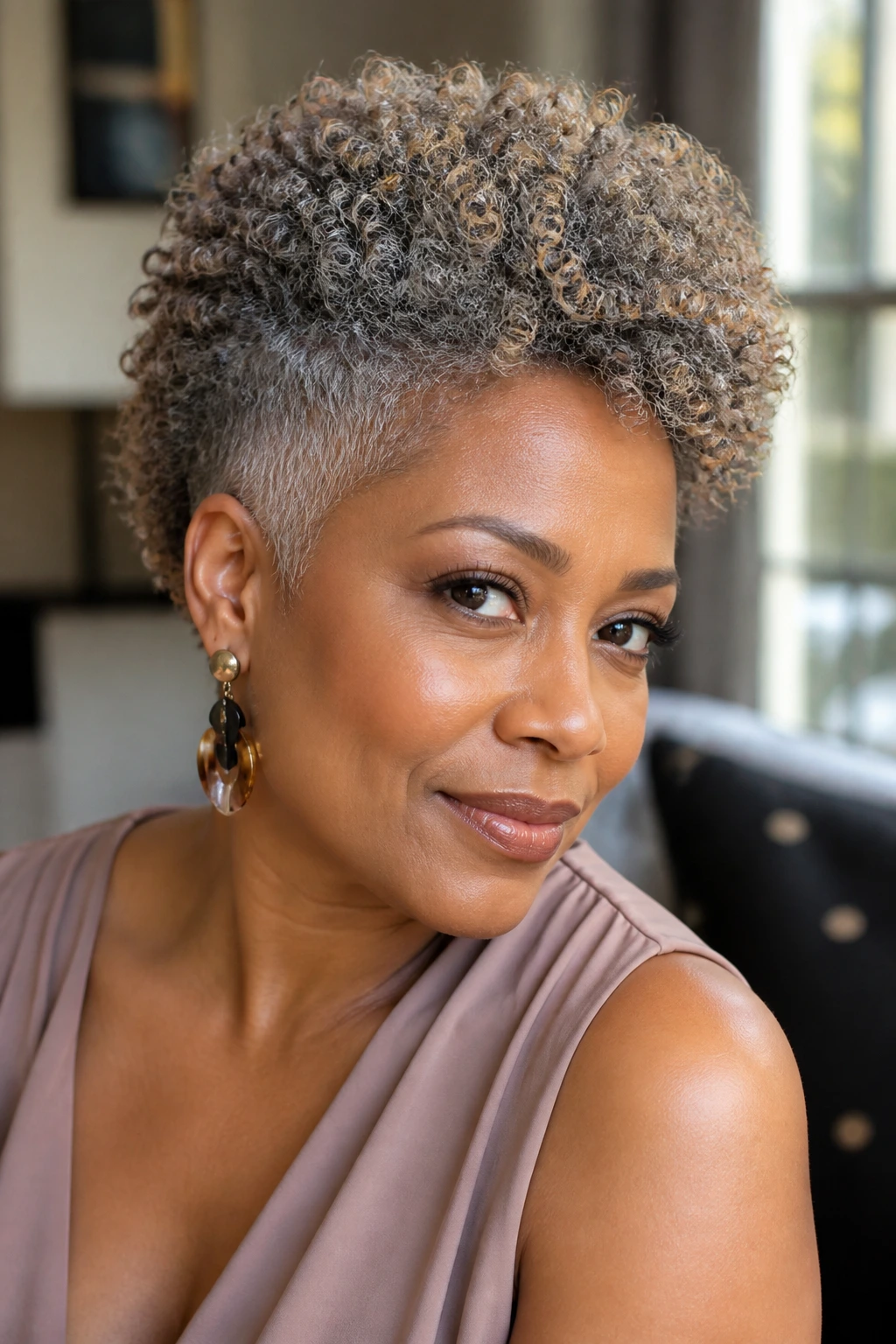
Coily grey hair loves shape. A tapered cut keeps the silhouette clean, while smoky honey brightness adds just enough warmth to keep the coils from looking flat against warm skin. It’s elegant in the practical sense — nothing fussy, nothing forced.
Why It Works
The taper creates lift at the top and neatness at the sides and nape. Grey coils can become a little wide if they are all the same length, so the taper fixes that. Smoky honey gives the hair a warm glow without turning it yellow, which is the line you want to stay behind.
Styling Tip
A rich leave-in and a defining cream are both useful here. Apply them on soaking-wet hair and avoid heavy oils at the roots. Coily grey hair can lose bounce fast if the product is too dense.
The shape is the star. The color is the support act. Keep both in balance.
25. Braided Crown with Silver-Tea Lengths
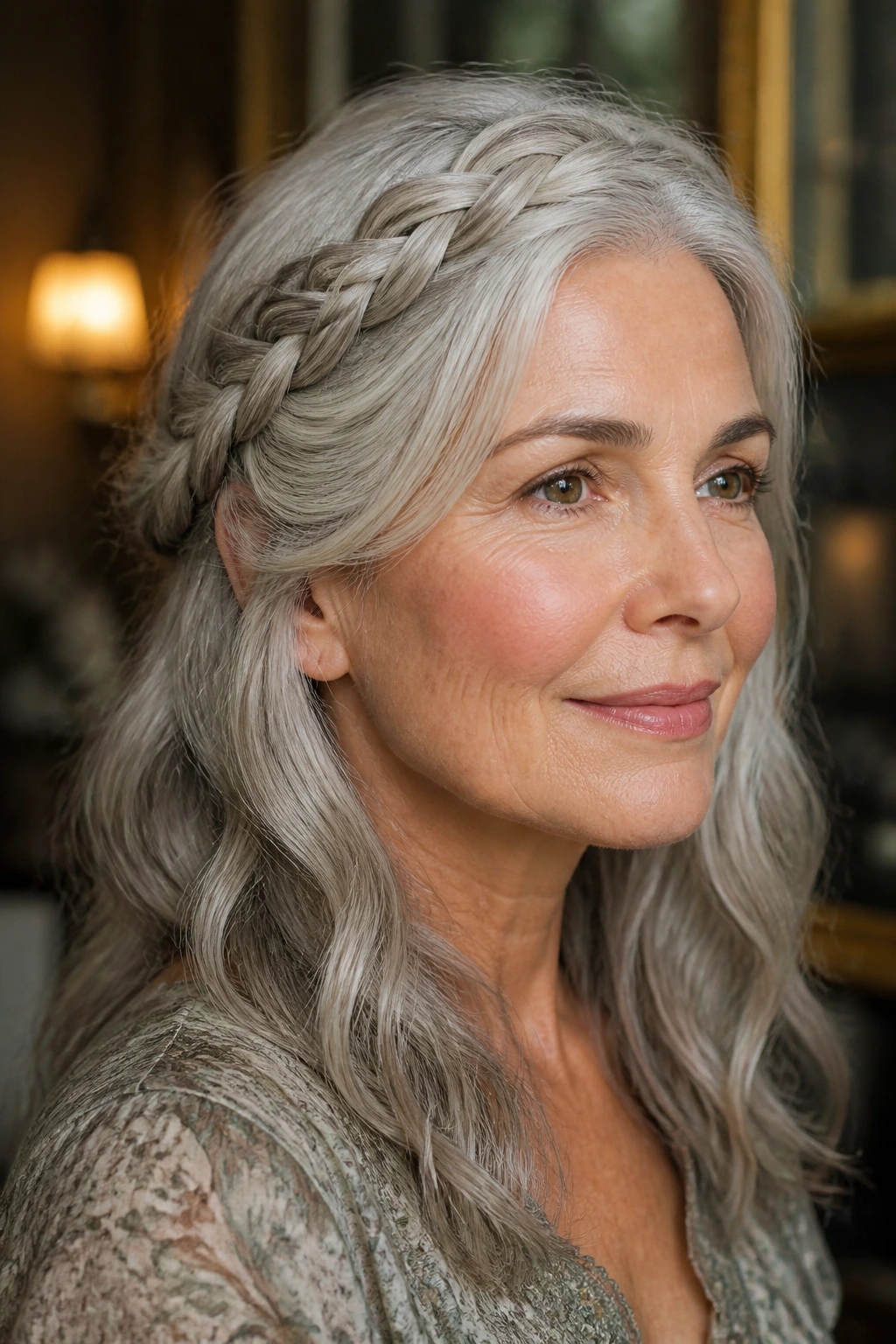
A braided crown is one of the prettiest ways to wear longer grey hair when you want the tone to feel a little more special. The silver-tea lengths give the hair a cool shimmer, while the braid keeps the face open and warm skin visible. It’s an old-school style, but not in a costume way.
Why It Works
The braid wraps some of the grey away from the face and puts the focus on the skin, earrings, and neckline. That is useful on warm undertones because it keeps the silver from dominating the whole frame. The longer lengths can stay soft, wavy, or straight underneath.
Best Occasion
This is lovely for dinners, weddings, or any day when you want the grey hair to feel deliberate. It also works well if you’re growing out older color and want a tidy style without hiding the length.
Use a light mist of flexible hairspray and a little shine serum on the ends. Too much spray and the braid gets crunchy fast.
Why Beige, Champagne, and Mushroom Read Softer on Warm Undertones
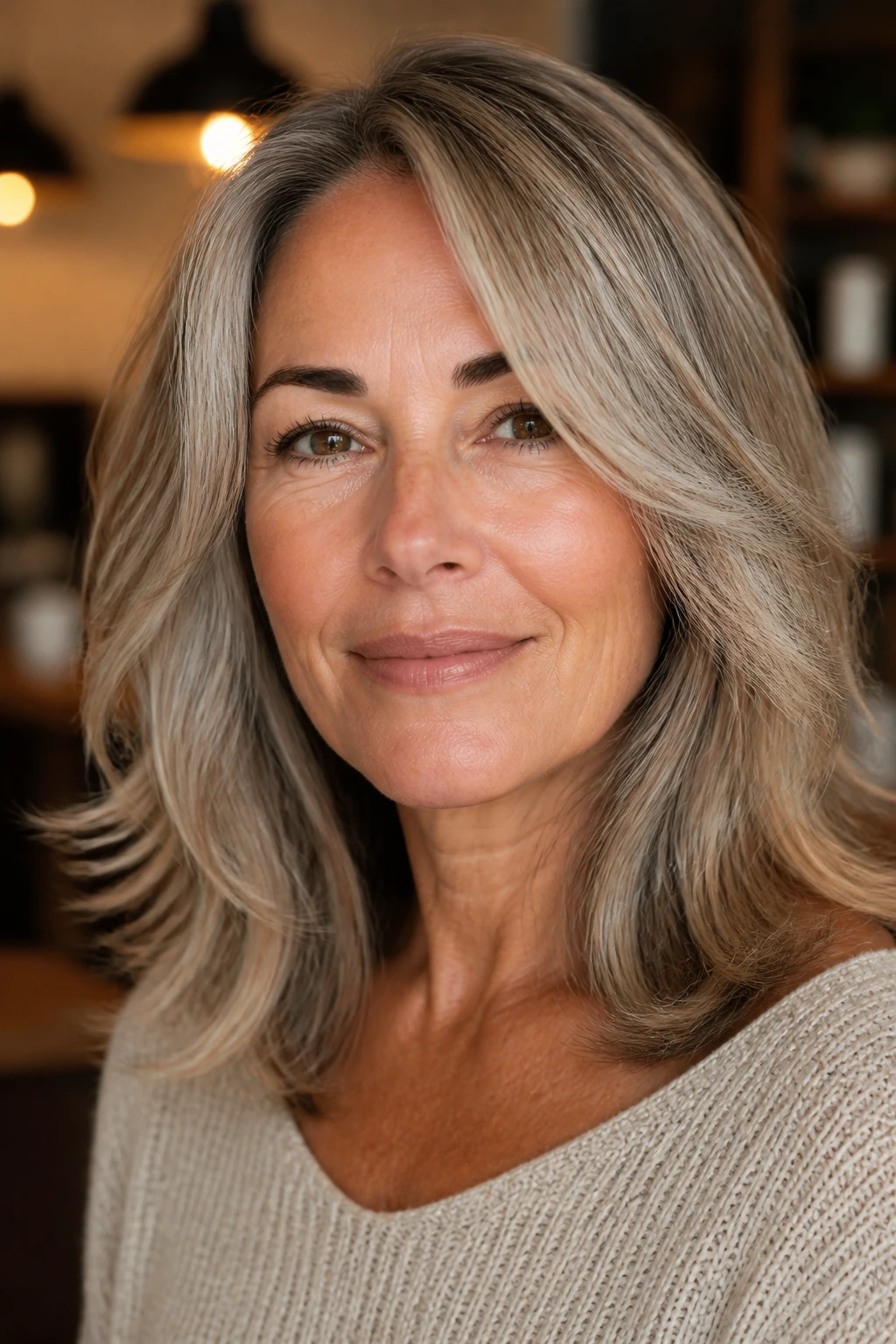
Warm skin tones usually carry gold, peach, apricot, or olive in the base. That means very cool, blue-leaning grey can sit a little too sharply against the face. The eye reads that contrast as flat or harsh, even when the hair itself is healthy. Beige, champagne, mushroom, and smoky taupe soften the edge without turning the hair beige-brown.
The trick is not warmth for its own sake. Too much gold can drift into brass, and brass is a mess nobody asked for. The sweet spot is a soft neutral that keeps natural grey reflective while still giving the skin some warmth back. That’s why demi-permanent glosses and subtle root smudges show up so often in good grey work; they do the quiet corrective work that a full permanent color usually cannot.
I also think people underestimate how much shape affects tone. A great cut can make a neutral gloss look richer, because the hair catches light in better places. A bad cut can make even a lovely silver look dull. The shape and the shade are a pair.
Essential Tools and Products for Toned Grey Styling
- Purple shampoo — Use it sparingly, usually once a week or every other week, to keep yellowing in check without turning the hair flat.
- Blue shampoo — Better for grey hair that pulls orange or copper from old color; do not use it every wash unless you enjoy overcorrecting.
- Demi-permanent gloss or toner — Keeps beige, champagne, or mushroom tones soft and reflective without a hard grow-out line.
- Heat protectant spray — Grey hair can be dry and brittle; a light mist before blow-drying or ironing matters more than people think.
- Round brush — A medium brush lifts bobs, pixies, and face-framing layers without making the ends look overworked.
- Wide-tooth comb — Best for curls, waves, and wet detangling, especially when grey strands feel rougher than the rest.
- Light styling cream or mousse — Helps the hair keep shape without coating the silver in grease.
- Silk or satin pillowcase — Reduces frizz and keeps short cuts from flattening into odd angles overnight.
- Shine serum — A tiny amount on the ends makes grey hair look fresher, but too much can make it limp fast.
- Diffuser attachment — Handy for curly and wavy styles when you want definition without blasting the cuticle open.
Smart Salon and At-Home Toner Choices
Grey hair is not one-tone hair. That’s the part worth repeating. Some strands come in bright and clean; others have a yellow cast, a smoky beige cast, or an old dye line that needs smoothing out. The best toner choice depends on which part of the grey is misbehaving.
At the salon, ask for a demi-permanent gloss rather than a heavy permanent color whenever the goal is softness, not coverage. Demi color deposits tone and fades more gently. That is useful on grey because it lets you refresh every few weeks without building a hard line at the regrowth. Beige, champagne, taupe, pearl, and smoky neutral are the families to ask about if your skin runs warm.
At home, a purple shampoo is fine when grey looks yellow. A blue shampoo is for orange or old brassy residue. Do not use both back-to-back unless you know exactly what you’re correcting. That is how hair ends up dull and over-toned. If the hair has gone dry or porous, start with one wash a week and see how it behaves before adding more.
A strand test sounds boring. Do it anyway. Grey hair grabs pigment faster than darker hair in some spots, especially at the ends. A few minutes too long can make champagne go muddy. A few minutes too short can leave the warmth uneven. Small adjustments make a bigger difference than most people expect.
How to Wear These Looks With Makeup, Glasses, and Wardrobes
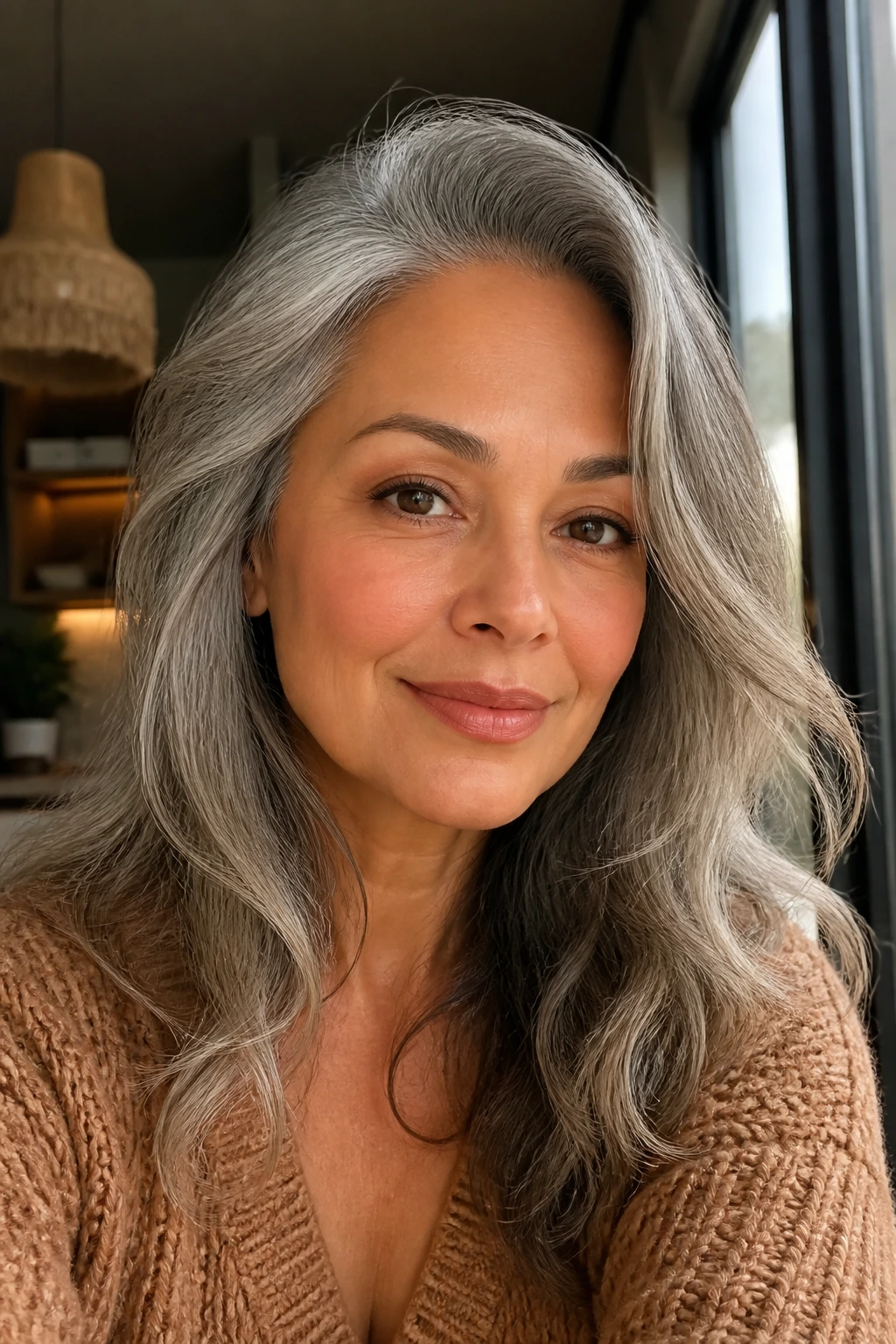
Warm skin and grey hair look their best when the rest of the styling keeps the same temperature. Peach blush, terracotta cream, warm nude lipstick, and soft brown eyeliner usually sit better than stark cool pinks. If your hair is toned in champagne or beige, a cream blush with a little apricot in it can make the face look rested in a way powder sometimes misses.
Glasses matter too. Tortoiseshell frames, caramel acetate, and warm bronze metals tend to repeat the tone story of the hair. Stark black can work, but it makes the contrast sharper. If the grey is already high-contrast, you may not need more of that near the eyes.
Wardrobe choices do not have to be boring. Cream, camel, olive, rust, soft denim, and deep teal all play well with toned grey on warm skin. Pure white can look a little clinical against some warm complexions, while soft ivory gives the hair a better backdrop. I’m not saying banish black. I’m saying don’t let it be the only thing in the closet if your grey is softly toned.
Little Adjustments That Keep Grey Hair Soft and Intentional
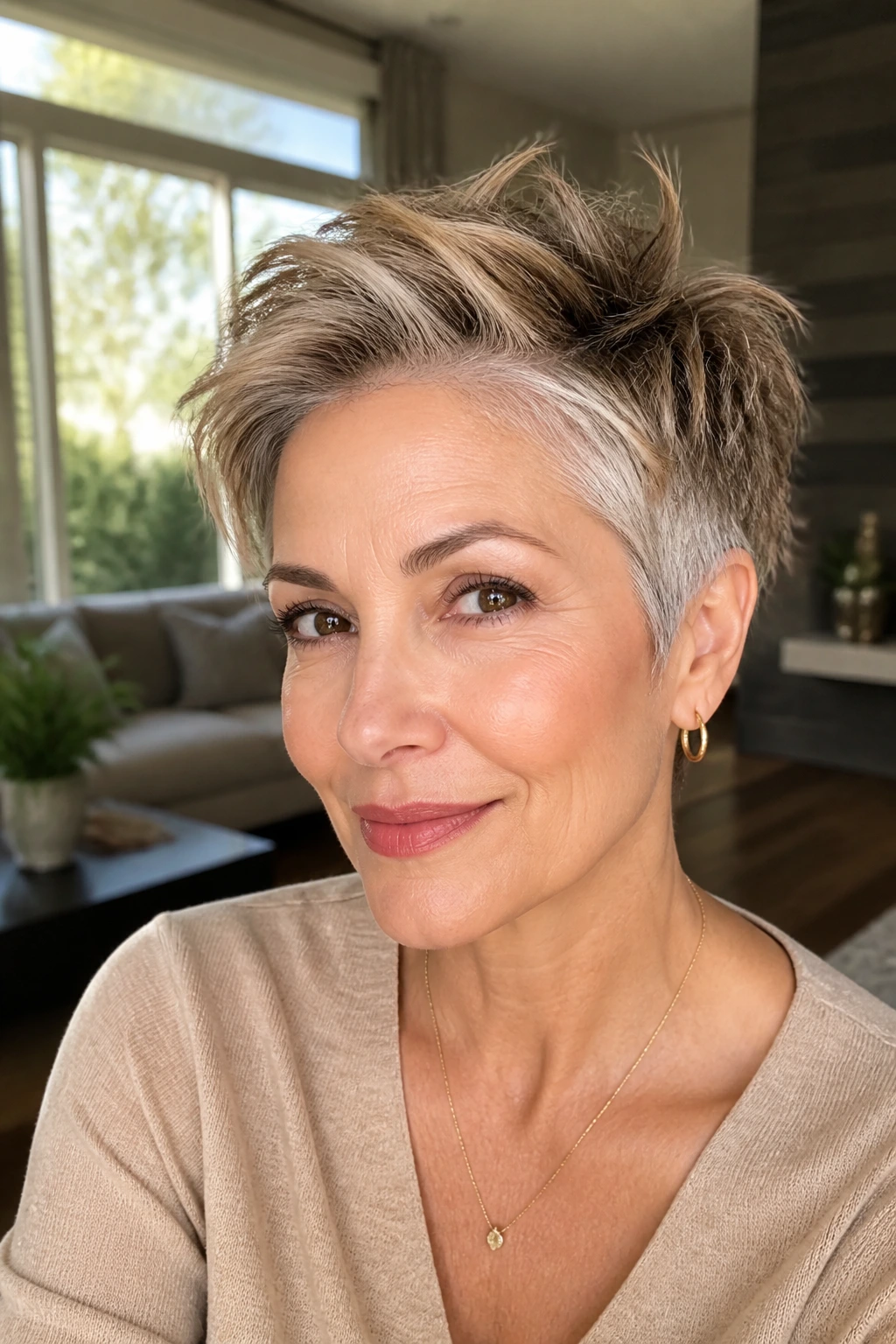
Tone Enhancement: If the grey starts looking too hard, a beige or champagne gloss can pull it back into a softer lane without changing the whole identity of the hair. The fix is usually lighter than people think.
Texture Boost: Grey hair often looks best with a little bend, a little lift, or a little separation. A flat, ironed sheet of hair can make the color feel cold. Even a loose wave at the ends helps.
Root Balance: A shadow root or soft lowlight keeps the grow-out from shouting at the face. This is especially useful if your natural grey comes in unevenly around the temples.
Finish: Use a lightweight serum on the ends and nothing heavy near the scalp. Grey hair can go limp fast if product sits on top of it.
Make-It-Yours: If your style leans conservative, add a side part or a tucked ear. If it feels too sweet, sharpen the perimeter or deepen the root. Small changes matter more than dramatic ones here.
Common Mistakes That Make Grey Hair Look Harsh
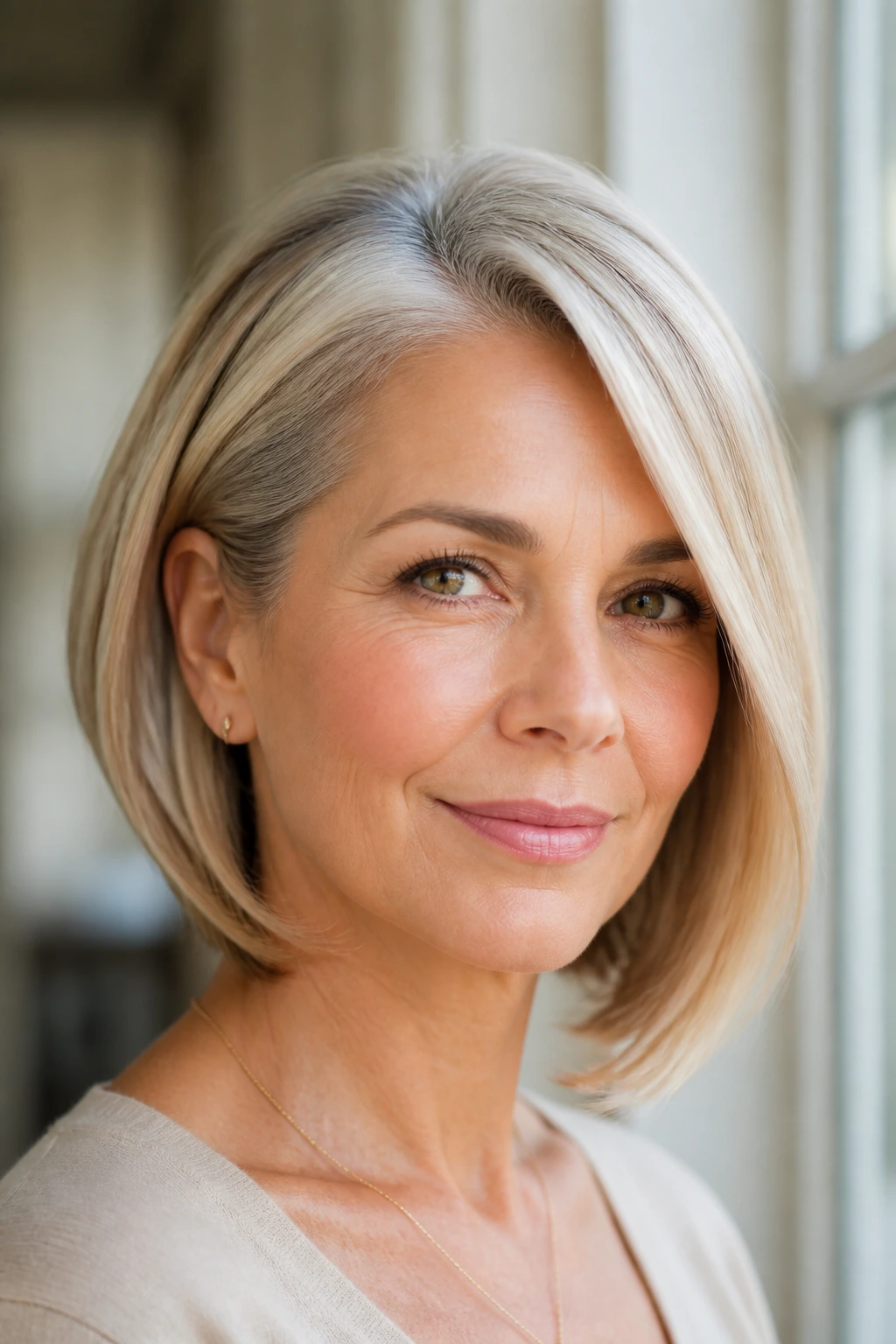
The first mistake is overusing purple shampoo. Yellow gets corrected, then the hair turns flat and cool, almost dusty. If that happens, pause the purple shampoo and switch to a moisturizing wash for a few cleanses.
Another common problem is choosing a toner that is too ash-heavy. On warm skin, too much ash can pull the complexion green or sallow. The fix is a softer beige, champagne, or mushroom family instead of an icy silver rinse.
Skipping moisture is a big one, too. Grey strands can be dry and rough, especially at the ends. If the hair feels straw-like, no amount of toning will save the look. A deep conditioner every week or so usually helps more than people expect.
Then there’s wearing a cut that is too blunt for the texture. A blunt bob can look elegant, but on thick or puffy grey hair it can also balloon out at the sides. Ask for internal layers or weight removal where the bulk lives.
The last one: ignoring the neckline and sideburn area. Those little zones show first when grey grows in. If they are fuzzy or overgrown, the whole style starts to look unplanned, even if the tone is fine.
Variations and Texture Swaps for Different Hair Types
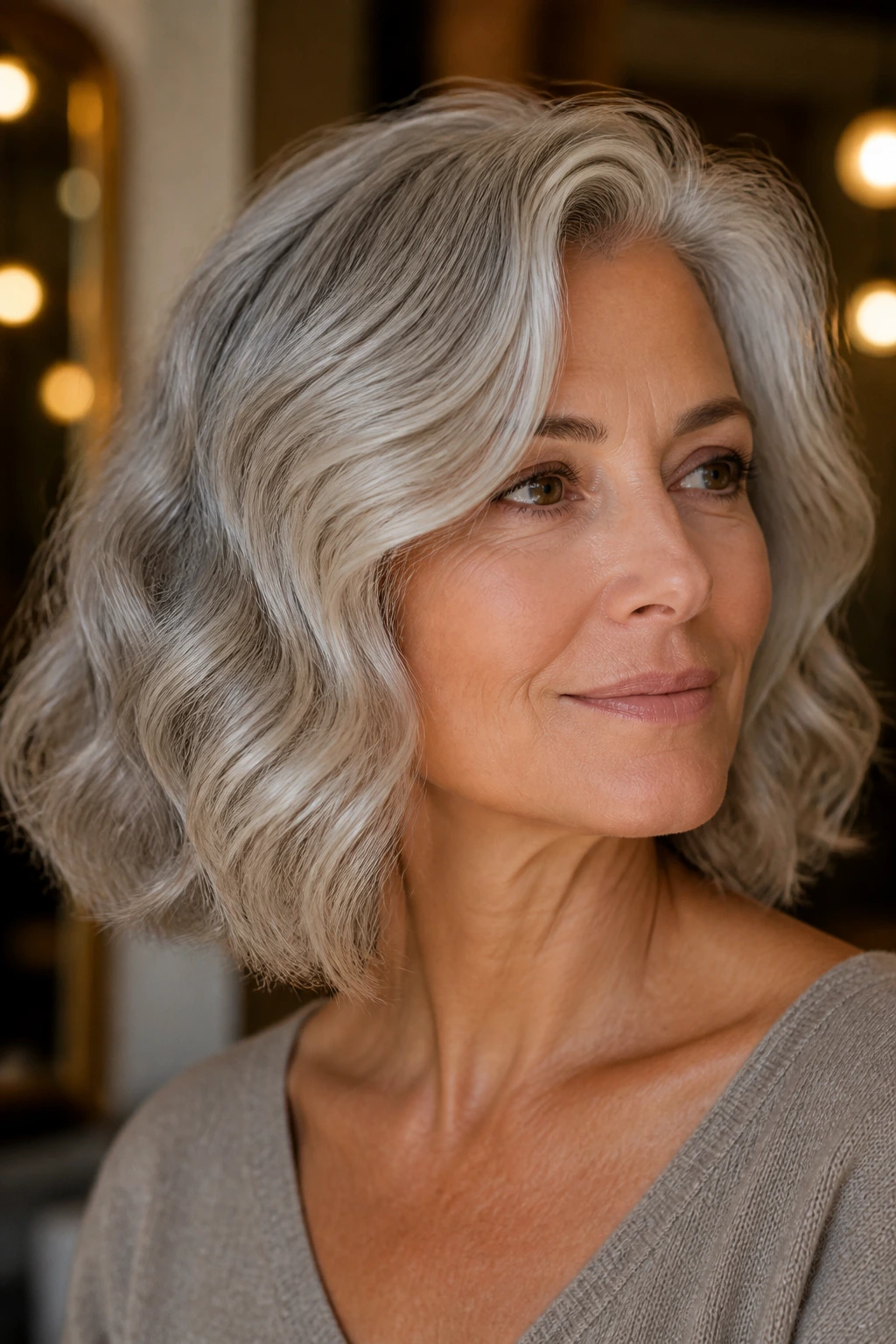
Soft Silver for Fine Hair: Keep the cut light, with subtle layering and a pearl-beige gloss. Fine hair can get swallowed by heavy toning, so brightness near the face matters more than density.
Cloud Curl for Wavy and Curly Hair: Let the curls stay loose and rounded, then use a smoky beige glaze. The texture does the work, and the tone just keeps the grey from going too cool.
Coily Crown for Tight Curl Patterns: A tapered shape with warm honey or taupe notes helps the coils hold their silhouette. This version works well when you want the color to support the shape instead of competing with it.
Long Shadow Grey: Keep the length, but add a soft root melt and airy layers through the lower half. This is the least aggressive route if you’re not ready to lose length.
Sharp and Sleek Grey: Blunt bobs and smooth lobs can look beautiful on warm skin when the gloss is mushroom or champagne. The key is to keep shine high and the edges clean, not to drown the tone in ash.
Wash-Day, Gloss-Day, and Trim-Day Maintenance

Grey hair behaves better when it gets a steady, simple routine. Most people do well with 2 to 3 washes a week if the scalp is normal; more than that can strip the softer finish off the toner. If the hair is dry or coarse, stretch washes out a little and lean on dry shampoo at the roots.
Purple shampoo usually works best once every 7 to 10 days, not every wash. Blue shampoo should be even more selective, used only when the hair actually needs it. If your grey looks clean and creamy, don’t chase a problem that isn’t there. Over-toning is one of the fastest ways to make warm skin look off.
A gloss or toner refresh every 4 to 6 weeks keeps beige, champagne, and mushroom tones in their lane. Pixies and short bobs may need trims every 4 to 6 weeks because the shape loses its edge quickly. Longer lobs and layered cuts can usually go 8 to 12 weeks between trims, depending on how fast your hair grows and how neat you like the outline.
Deep conditioning once a week helps more than most styling creams. If your hair is porous, add a chelating shampoo every 2 to 4 weeks to deal with mineral buildup from hard water. That little detail matters; hard water can make grey look dingy fast. Finish with low heat, a heat protectant, and a pillowcase that does not snag the cuticle all night.
Frequently Asked Questions
Can warm skin wear icy silver grey hair?
Yes, but it usually needs a softer haircut and a careful face frame so the tone does not dominate the complexion. A little beige or champagne near the hairline often makes icy silver look more wearable.
Is purple shampoo enough to tone natural grey hair?
Sometimes, but only if the grey is just a little yellow. Purple shampoo corrects brass; it does not create a real salon gloss or add the soft beige or mushroom tone that often flatters warm skin better.
What haircut is easiest to maintain if I’m growing in grey?
A layered lob, soft bob, or pixie with texture usually grows out more gently than a blunt one-length cut. The softer the line, the less obvious the regrowth.
How often should I gloss grey hair?
Many people need a refresh every 4 to 6 weeks, especially if the hair is porous or exposed to sun and hard water. If the tone still looks creamy and clean, you can stretch it a little longer.
Will a shadow root make grey hair look darker than I want?
Not if it’s done lightly. A good root shadow should blur the transition, not repaint the whole head. Ask for transparency near the face so the grey stays visible.
What if my grey hair feels coarse and frizzy?
Use moisture first, tone second. A rich conditioner, a light leave-in, and lower heat usually do more for the finish than another round of shampoo or pigment.
Can I combine natural grey with highlights?
Yes, but keep the highlights soft and warm. Beige ribbons, champagne pieces, or a gentle root melt tend to look more flattering on warm skin than stark foil stripes.
Does the best grey style change with face shape?
Absolutely. Short crops and side parts open up the face, while longer layers can soften stronger jaws or wider foreheads. The tone may get the attention, but the cut decides where the eye lands.
Why does my grey hair look yellow in certain light?
Hard water, product buildup, sun, and too much heat can all pull grey yellow. A clarifying or chelating wash every couple of weeks plus a restrained purple shampoo routine usually helps.
Soft Grey, Warm Face
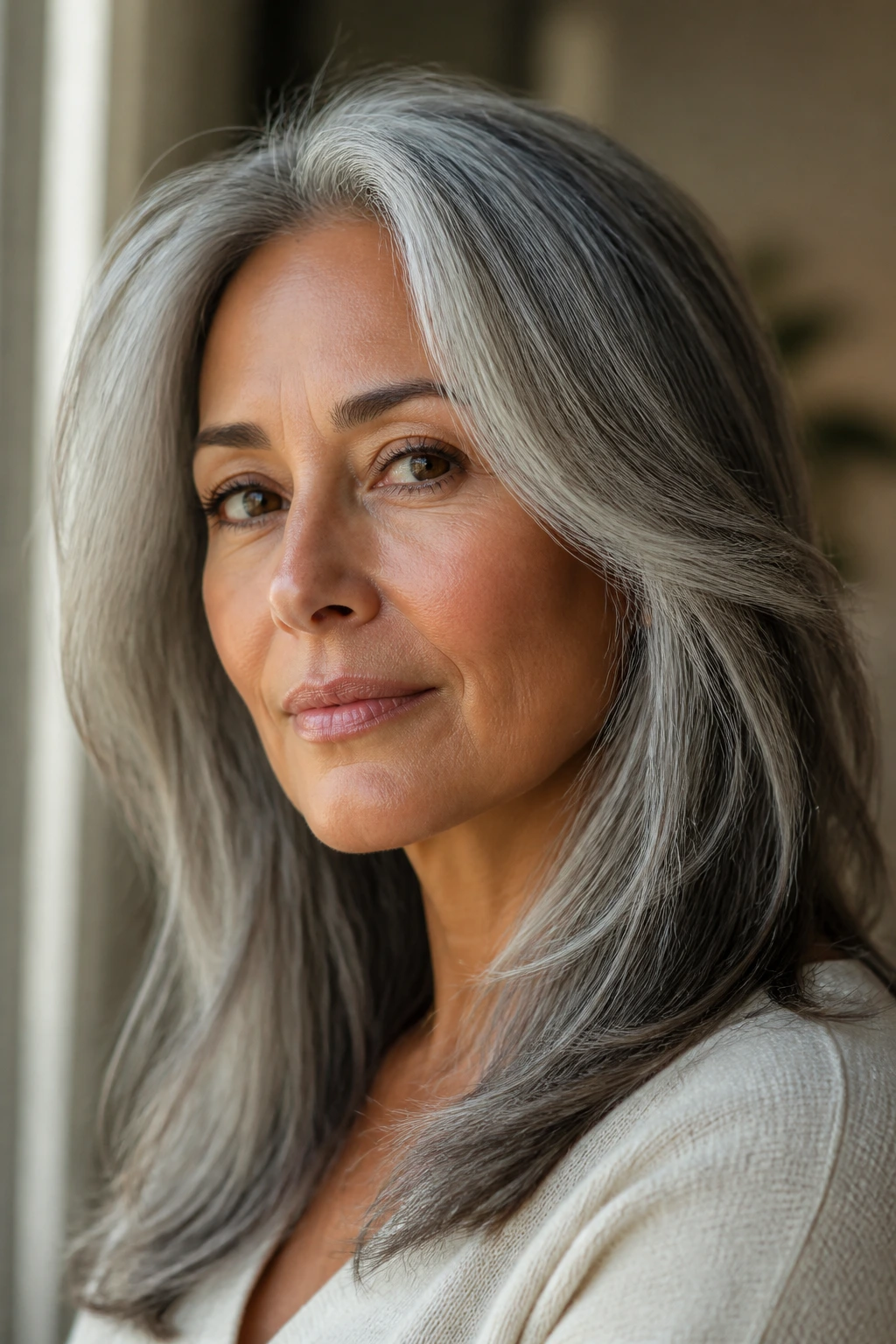
Grey hair does not need to look severe to look deliberate. When the cut has shape, the tone stays in a softer family, and the finish keeps a little shine, the whole thing becomes a lot more flattering on warm skin. The best versions here do not fight your undertone. They sit beside it.
If you’ve been flirting with silver but worried it would make your face look washed out, start with one small move: a beige gloss, a better part, or a cut with cleaner shape around the jaw. That is often enough to change the whole mood of the hair. Once the tone and the silhouette get along, grey stops looking like a compromise and starts looking like a style.