



A shag pixie cut can look sharp as a clean kitchen knife or soft enough to move when you turn your head. Babylights are the piece that keeps it from turning hard and blocky.
That matters more on short hair than people think. When the length is cropped close, every texture change shows. Every strand of gray, every cowlick at the temple, every little flat spot at the crown. A shag pixie with babylights gives you movement in the cut and movement in the color, which is why it reads more relaxed than a one-note crop. I like that. A lot.
Older women often get sold the same tired short-hair advice: go shorter, keep it neat, don’t fuss with it. That advice can make hair look smaller instead of better. The right shag pixie does the opposite. It lifts the crown, softens the hairline, and lets babylights blur the harsh line between your natural shade and the lighter pieces around your face.
What you want here is not loud contrast. It’s dimension. Tiny ribbons of light placed where the hair curves—around the part, through the fringe, at the top of the ear, at the crown—make the cut look alive without turning it into a streaky blond cap. And yes, the difference shows even more on silver, salt-and-pepper, and brunette hair that has started to change texture. The trick is choosing a version that fits the way your hair actually behaves, not the way a salon photo pretends it does.
Why This Collection Works So Well
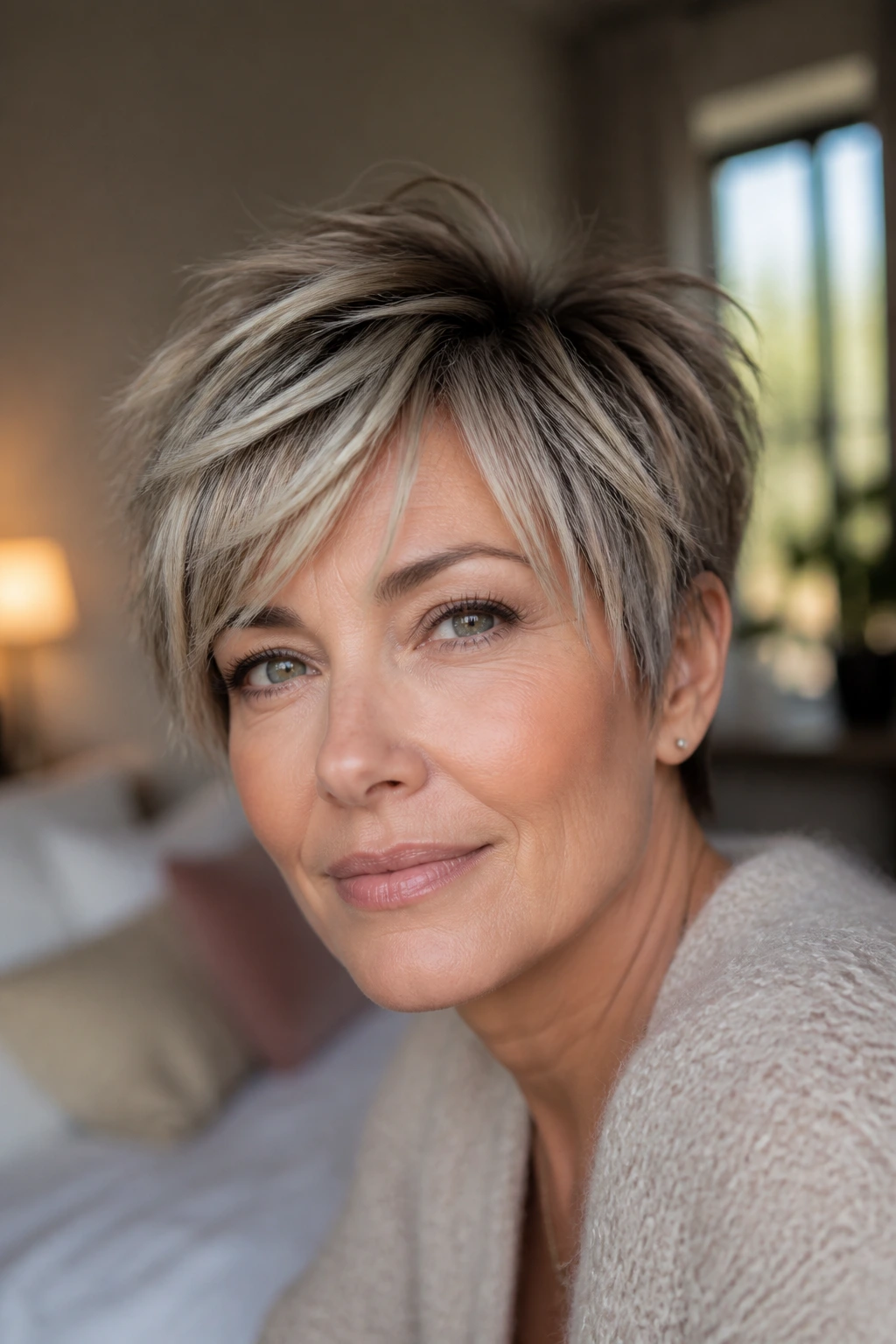
- Soft Grow-Out: Babylights are tiny enough that the regrowth line stays blurred, which is a relief if you do not want your roots announcing themselves every few weeks.
- Crown Lift: A shag pixie gets its shape from the top, and a few lighter threads at the crown make that lift easier to see, especially on fine hair.
- Face Softening: Light around the temples, fringe, and sideburn area breaks up hard lines near the eyes and jaw, which is why these cuts feel gentler than a blunt crop.
- Gray Blending: Babylights can mingle with silver or salt-and-pepper strands instead of covering them, so the hair looks dimensional instead of boxed in.
- Lower Drama, Better Texture: Thick highlight panels can look stripy on short hair; babylights keep the color quiet and let the layers do the talking.
- Real-Life Wearability: These cuts can be blown smooth, roughed up with mousse, or left a little messy and still look deliberate.
1. Feathered Crown Lift Shag Pixie
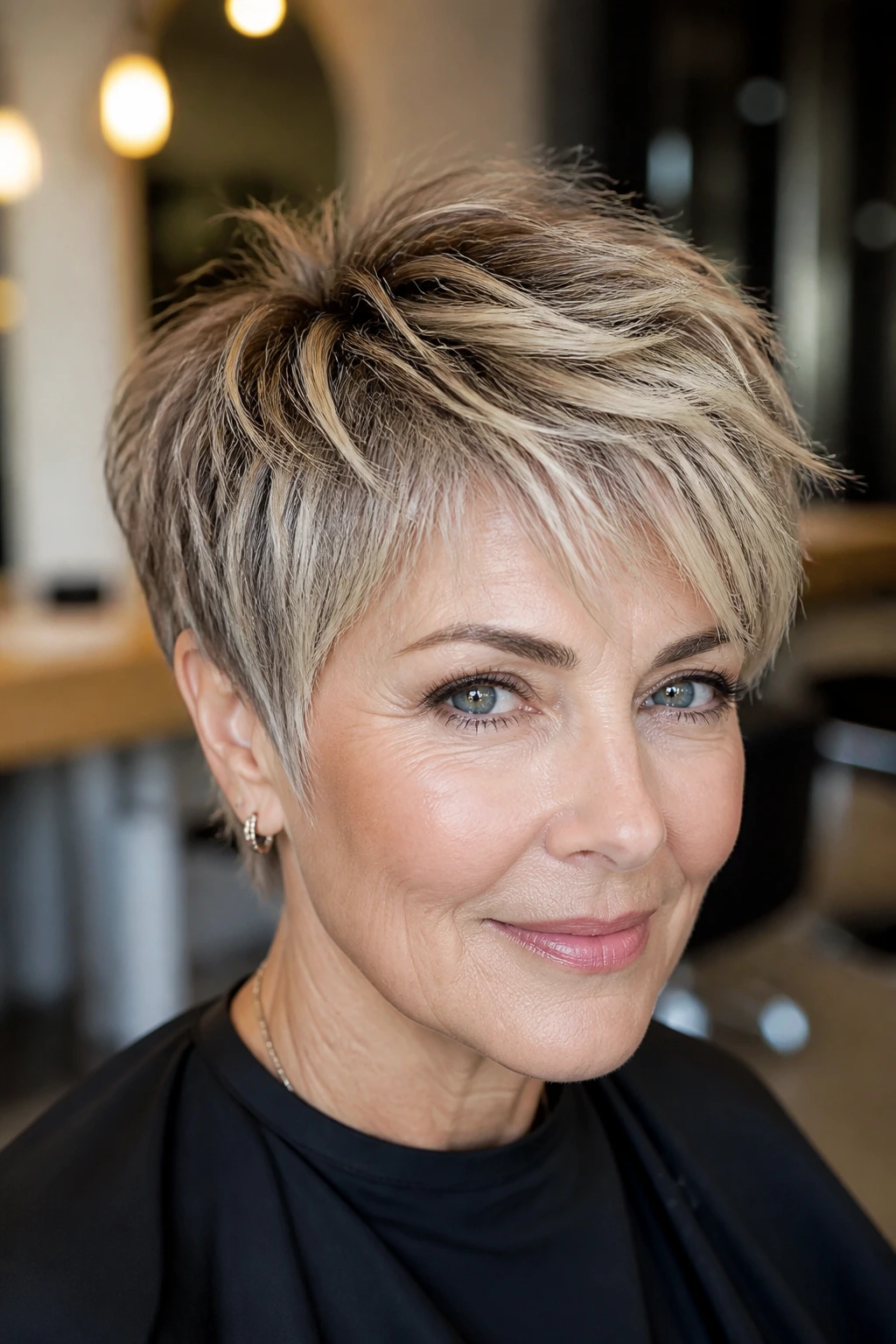
The feathered crown lift is the shag pixie I reach for when hair has started lying too close to the scalp. The sides stay neat and close, but the top is cut into short, airy layers that bend rather than sit stiff. Babylights placed through the crown and front top layer keep that lift visible even after the hair settles.
Why It Flatters Fine Hair
Fine hair can go limp fast, and short cuts expose that truth in a hurry. Feathering the top gives the hair small ledges to sit on, which helps the crown stand up instead of folding flat. If your hair is gray at the roots, babylights in a beige or soft champagne tone can keep the top from looking like a single block of color.
Quick details:
- Ask for soft point-cut layers on top, not a blunt shelf.
- Keep the lightest pieces at the crown, not only at the hairline.
- Use a root-lift mousse before blow-drying.
- Choose babylights that stay within one or two levels of your base color.
One small move makes a big difference: dry the crown forward first, then push it back while the hair is still warm.
2. Side-Swept Fringe Pixie with Champagne Babylights
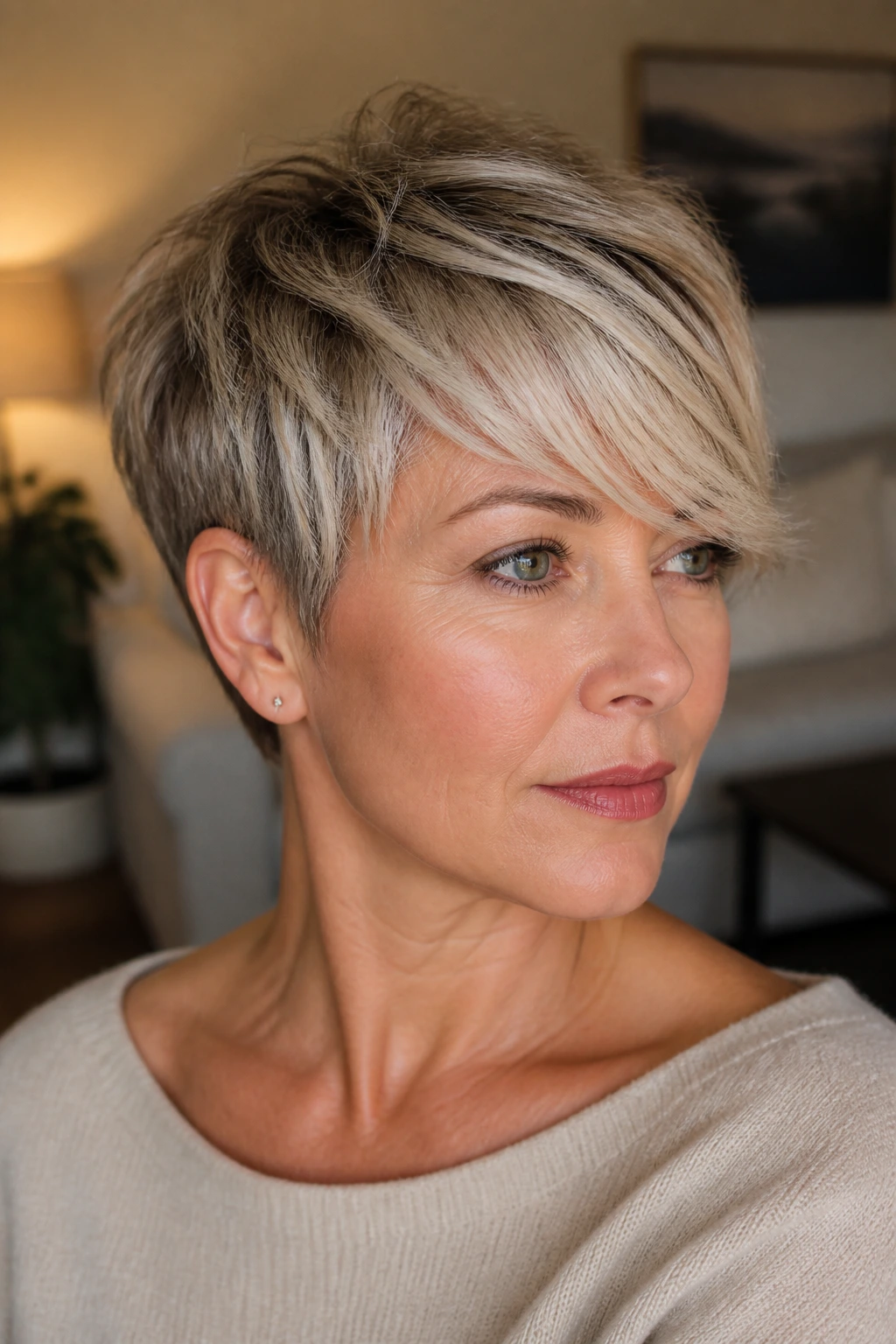
A side-swept fringe can do more for the face than a full set of bangs ever will. It gives you coverage where you want it, then lets the eye travel up into the shaggy layers instead of stopping at a hard line. Champagne babylights around the fringe and temple area keep the sweep soft, not heavy.
If you wear makeup around the eyes or have a strong brow, this shape is worth a serious look. The fringe moves away from the face instead of cutting straight across it, which makes the whole cut feel less severe. On short hair, that little bit of direction matters.
I especially like this version for women who want to soften forehead lines without hiding the face. The highlight placement is doing quiet work here. A few lighter threads near the front make the fringe look airy even when the rest of the hair is short and compact.
3. Tapered Nape Shag Pixie with Whisper-Light Highlights
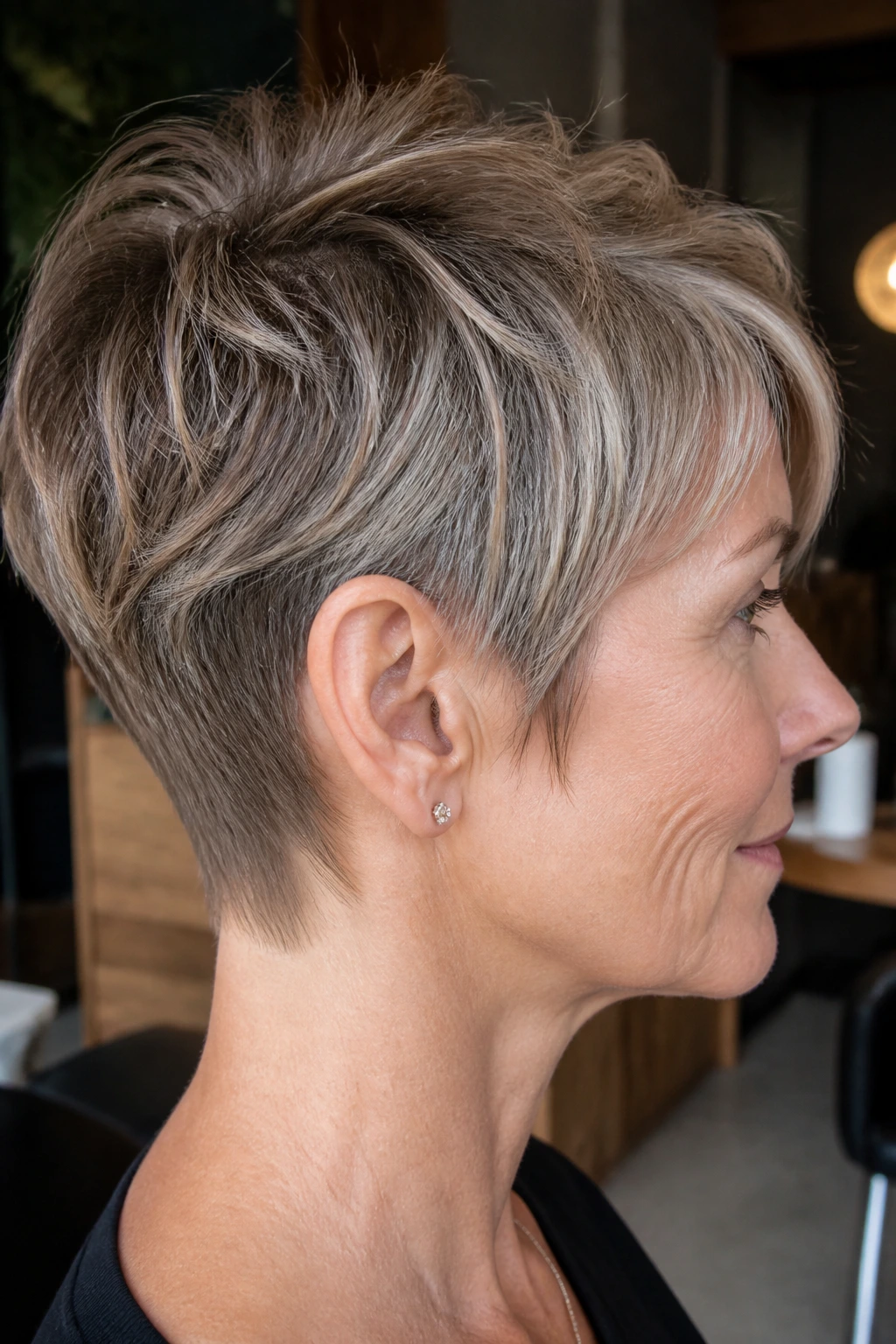
Why does a tapered nape make a shag pixie look cleaner the second it grows out? Because the neck area is where short hair starts to look fuzzy first. A soft taper keeps that edge neat without shaving it down so hard that the cut loses its shape in a week.
This version is a good fit if you like a crisp neckline but do not want the top to feel too styled. Ask for length left through the crown and a gentle graduation through the back. Babylights can sit mostly on the top layers and just skim the upper nape so the back does not read like one dark patch under the lighter top.
How to wear it
- Tuck the sides behind the ears on one side for a slightly sharper profile.
- Use a light pomade only at the nape if the hair flips.
- Keep the highlight tone close to your root color if you prefer low maintenance.
The result is tidy without feeling rigid. That matters.
4. Curly Shag Pixie with Soft Caramel Babylights
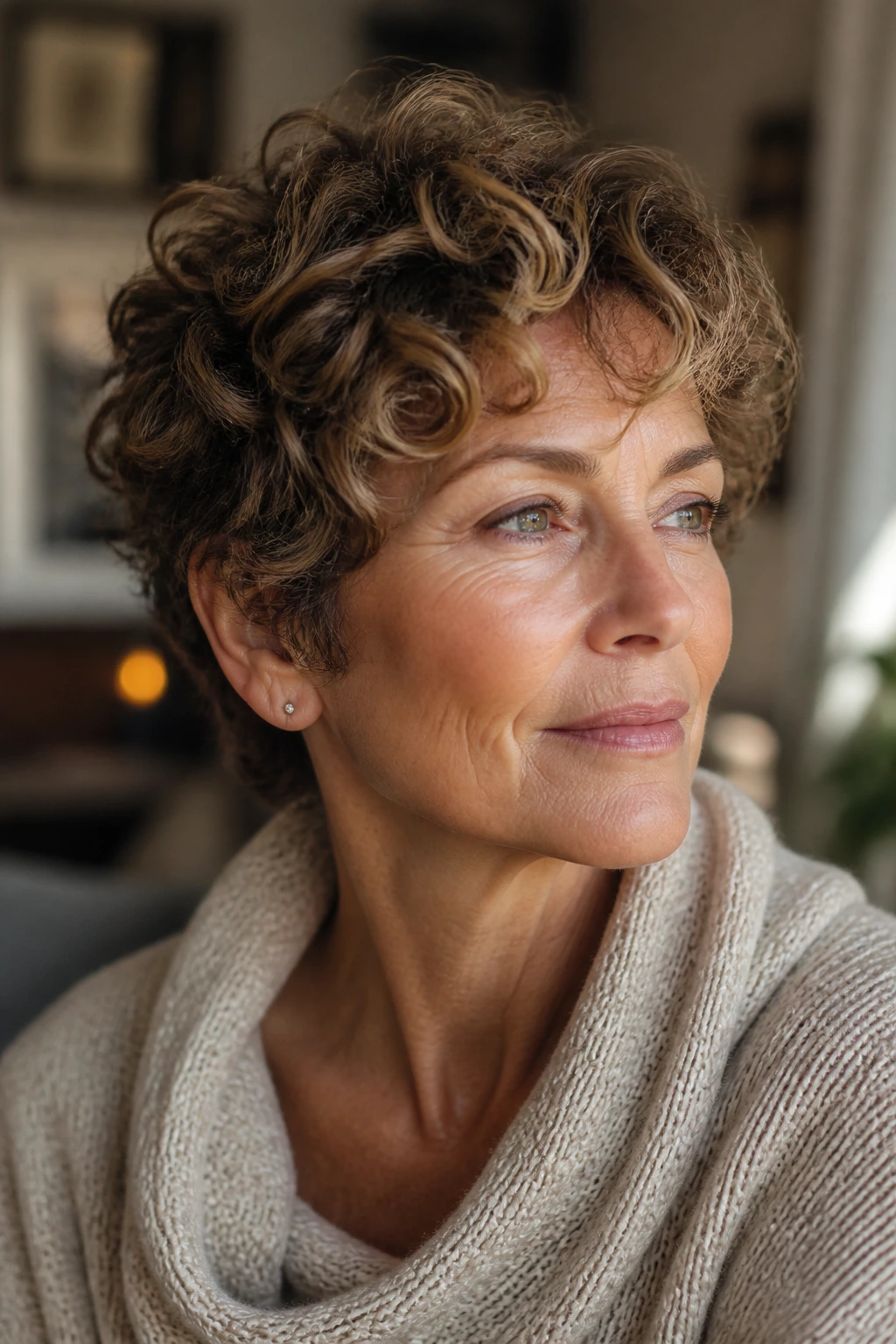
A curly shag pixie needs space more than it needs control. If the layers are cut too bluntly, the curls stack up and make the head look round in a bad way. Caramel babylights placed along the outer curve of the curls help define the shape without drying out the visual texture.
I think this cut works best when the stylist leaves enough length on top for the curls to spring, then tapers the sides just enough to keep the silhouette from puffing out. The babylights should never be packed too tightly through the interior of the curl mass; that can make the hair look frizzy instead of dimensional.
If you have a natural wave that becomes curlier when it gets shorter, this one is worth considering. The light catches the bend of the curl and gives the cut more rhythm. Air-dry foam, a little scrunching, and a diffuser on low are usually enough.
5. Silver-Blend Razor Pixie
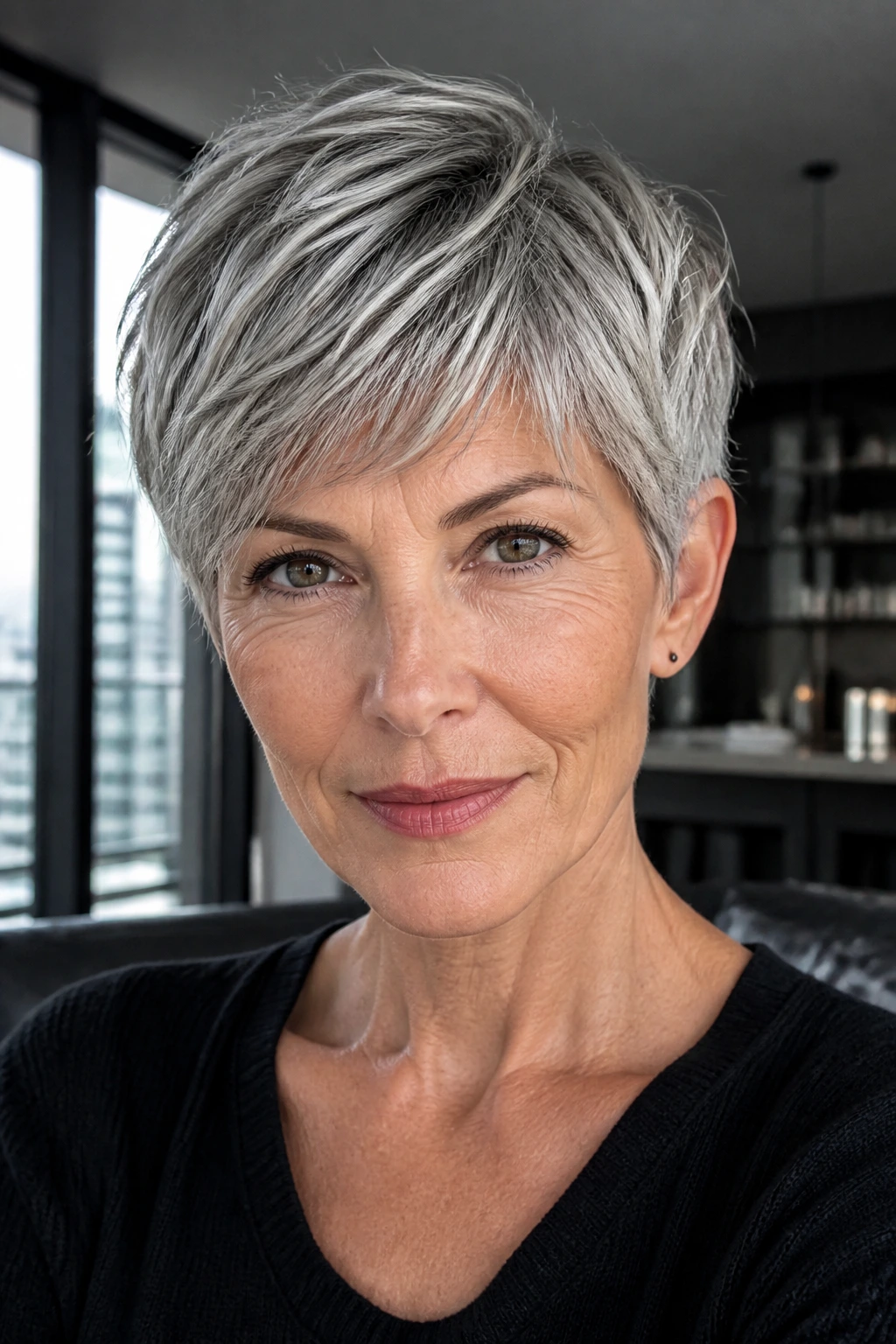
Silver-blend hair looks best when the cut has edge. Razor-cut layers take away bulk and leave a broken, feathered finish that keeps short gray hair from sitting too neatly. Babylights in pearl, ash beige, or icy silver can blur the seam between natural silver strands and the dyed pieces, which is a smarter move than trying to cover every gray hair.
I’m picky about this kind of cut. If the razor work is too aggressive, the ends can look wispy in a thin way rather than in a stylish way. The sweet spot is soft, sliced ends with enough weight left at the top to keep the shape from blowing apart.
This is a strong choice for women who already have a silver streak or a full gray pattern and want to make it look intentional. The color doesn’t have to shout. It just has to keep the surface lively.
6. Rounded Pixie Shag for Glasses
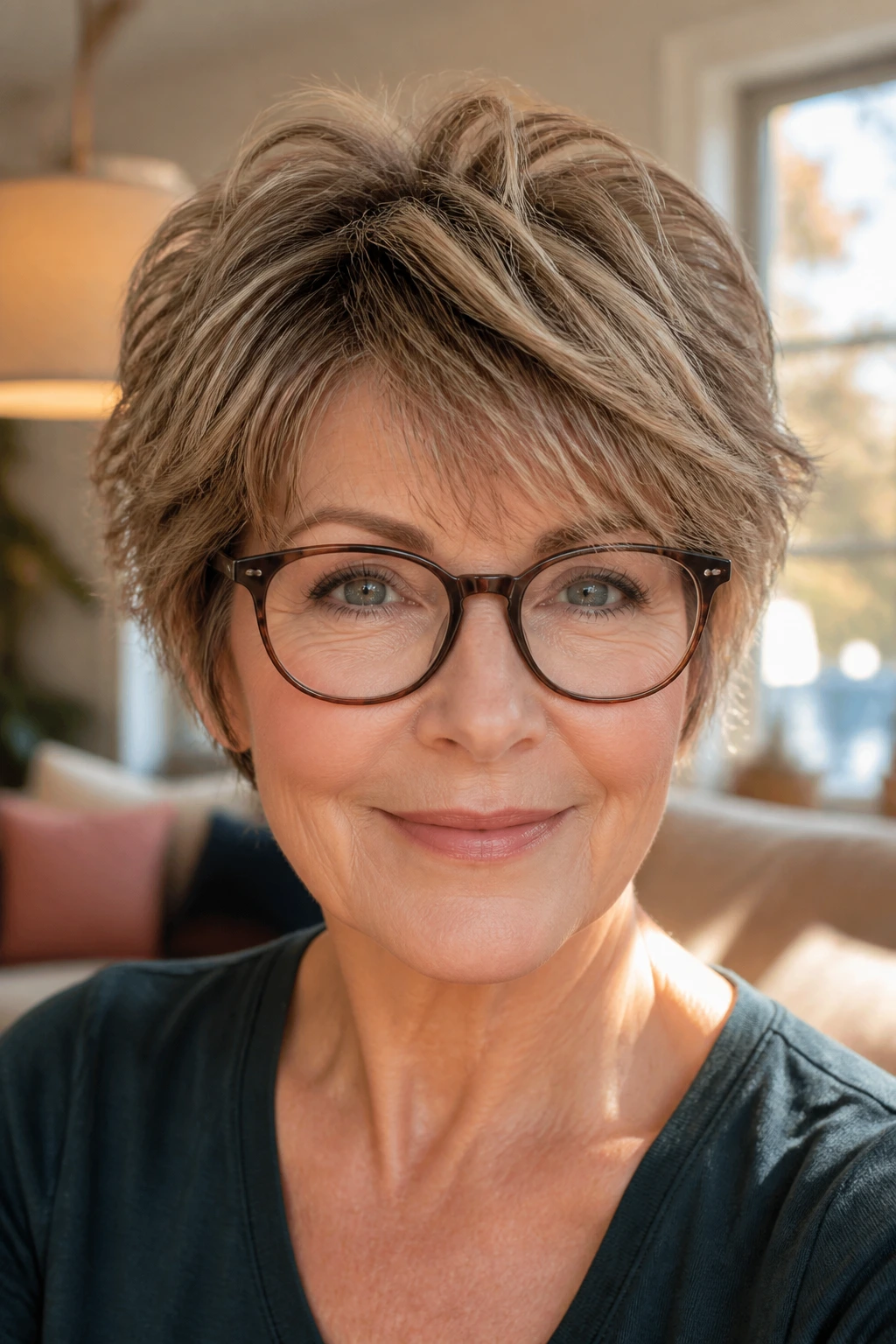
A rounded pixie shag is kinder to glasses than a flat, angular crop. The side shape bends slightly away from the frame instead of colliding with it, and that keeps the whole look tidy around the temples. Babylights at the side part and just above the ears help the hair read as lighter and less boxy next to metal or dark acetate frames.
This cut works especially well if your glasses sit high on the cheek. Too much volume at the temples can make the face feel crowded. A rounded outline gives you lift on top and a softer edge near the frame.
I’d recommend this for anyone who wants the haircut to frame the glasses, not fight them. A little texture at the crown, a little bend at the fringe, and the right placement of light around the temples. That’s enough.
7. Piecey Ash-Blonde Pixie Shag
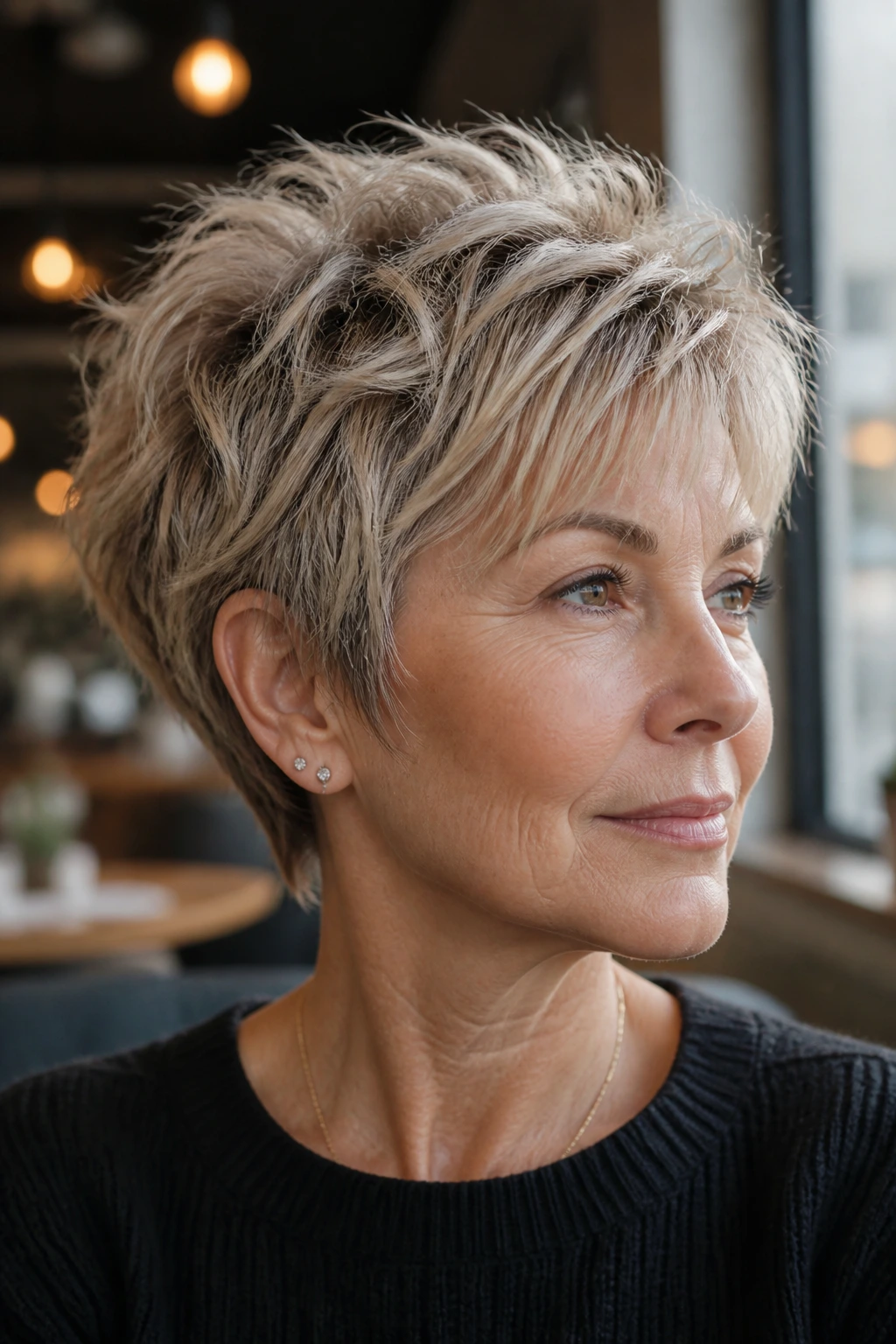
This is the shag pixie for women who like separation in the hair. Not big, chunky separation. Small, defined pieces that catch the light as you turn your head. Ash-blonde babylights give the top a cool, crisp finish that works well on brunette, dark blonde, or gray-blended bases.
The cut itself should be slightly shattered through the ends so the layers do not melt into one soft blob. Piecey texture shows best when the hair is cut with a bit of irregularity. That does not mean messy. It means the ends do not all stop at the same place.
A tiny amount of matte paste can wake this cut up fast. Rub it between your fingers, then pinch just the top layers and the fringe. Stop early. The point is to define the shape, not turn it into a crunchy helmet.
8. Brushed-Forward Fringe Pixie
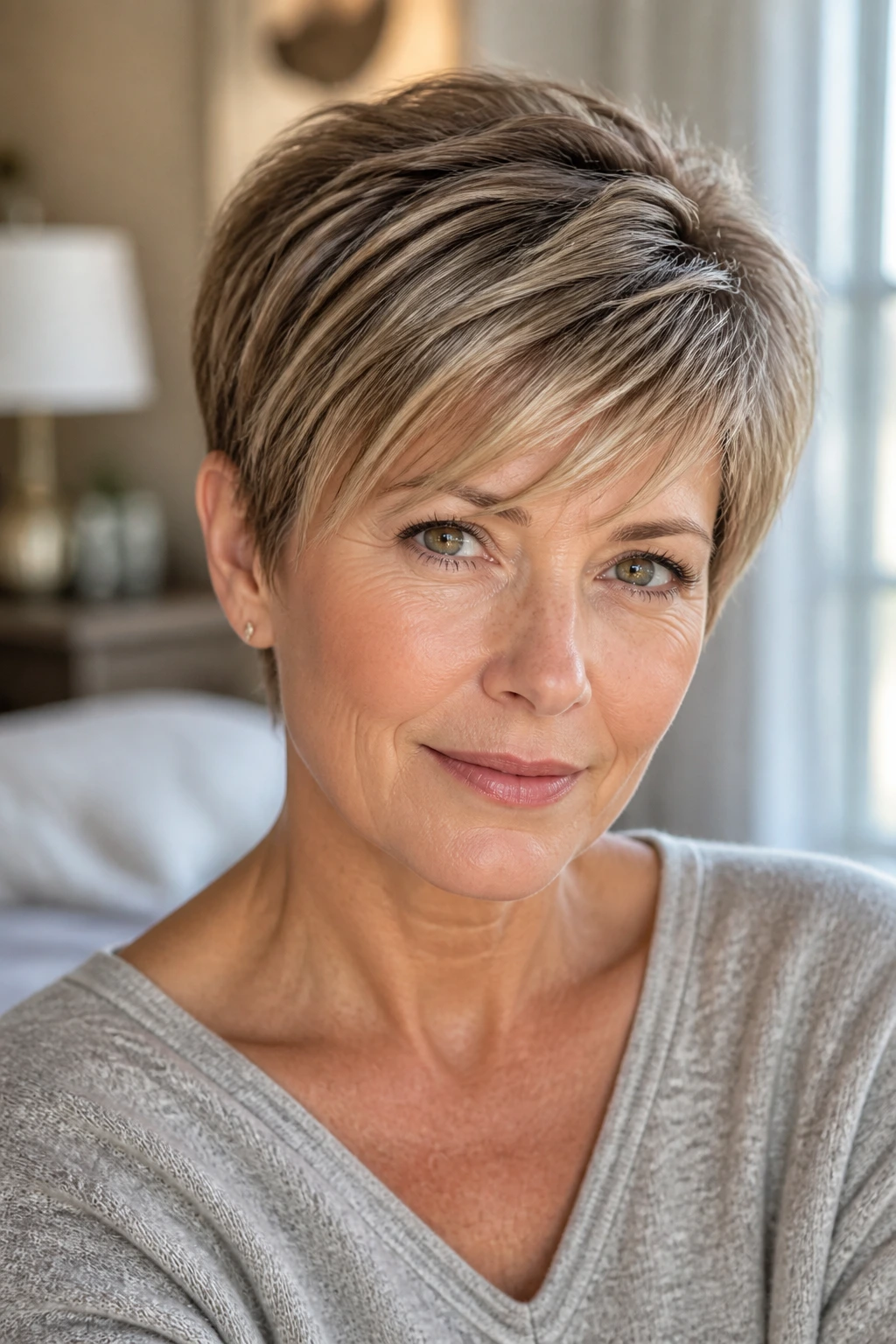
A brushed-forward fringe pulls the eye down and inward, which can be a very smart move if the forehead feels wider than you want it to. Instead of sweeping everything up and back, this cut lets the fringe sit forward in a soft arc. Babylights in the front and at the part make that fringe look airy rather than heavy.
The benefit here is control without stiffness. A lot of women with mature hair want coverage, but they do not want the old-school heavy bang that seals the face in a box. This fringe moves, and the babylights keep it from feeling flat.
If your hairline has thinned a little or your temples are getting sparse, this shape can be a relief. It gives you softness right where the eye lands first.
9. Long-Top, Short-Sides Pixie Shag
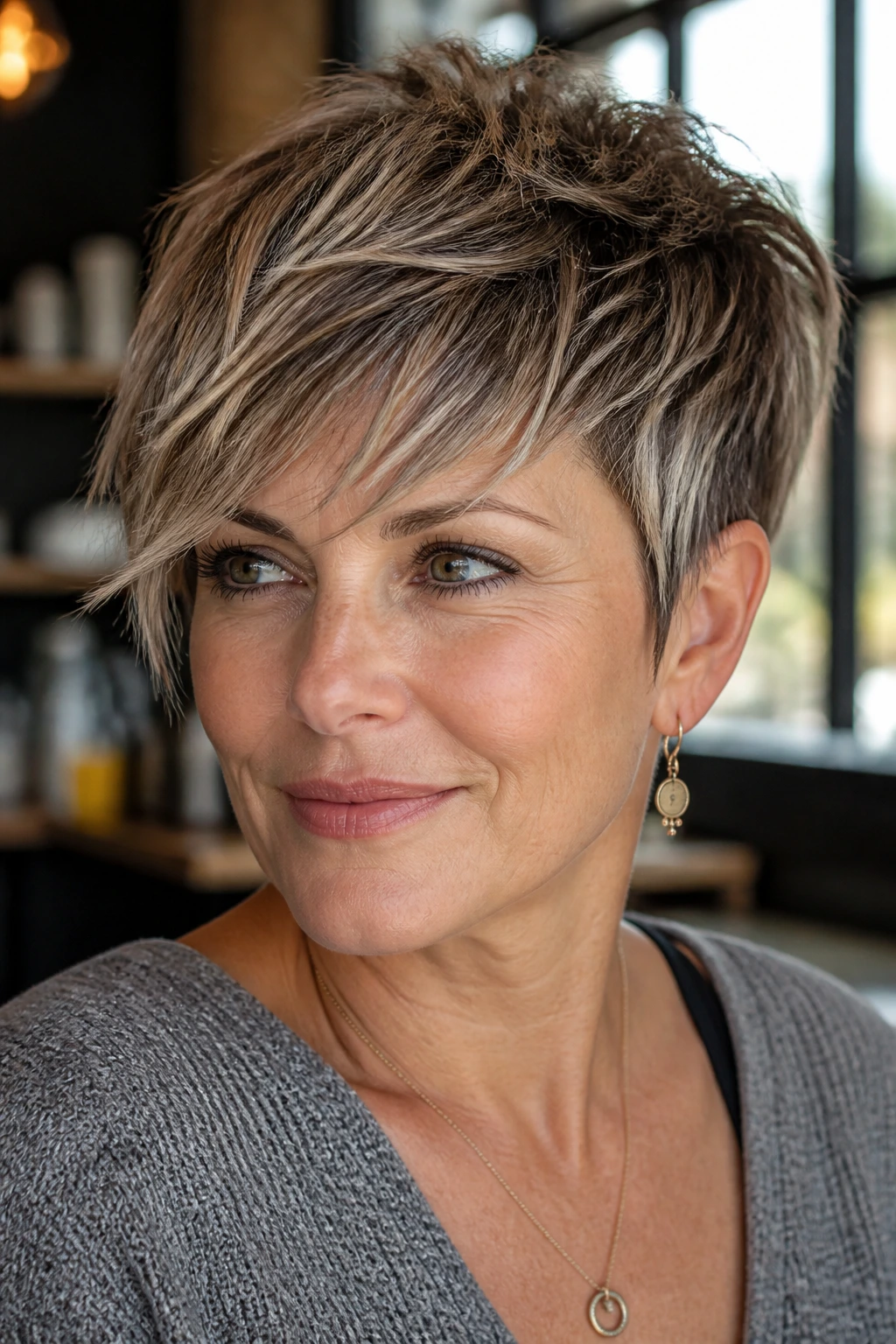
The long-top, short-sides version gives you room to play. The top can be pushed forward, swept to the side, or lifted with a quick blow-dry, while the sides stay cropped enough to keep the shape close to the head. Babylights work best when they run through the long top section and skim the front edge of the sides, so the contrast does not get too harsh.
I like this cut on hair that has good density up top but starts to feel bulky around the ears. Removing weight on the sides makes the top look more intentional. It also makes mornings easier, which is not a small thing.
This is one of those cuts that changes personality depending on how you style it. A little mousse and a round brush make it polished. Air-dry it with texture cream, and it looks lived-in instead.
10. Soft Mushroom Pixie with Dimensional Babylights
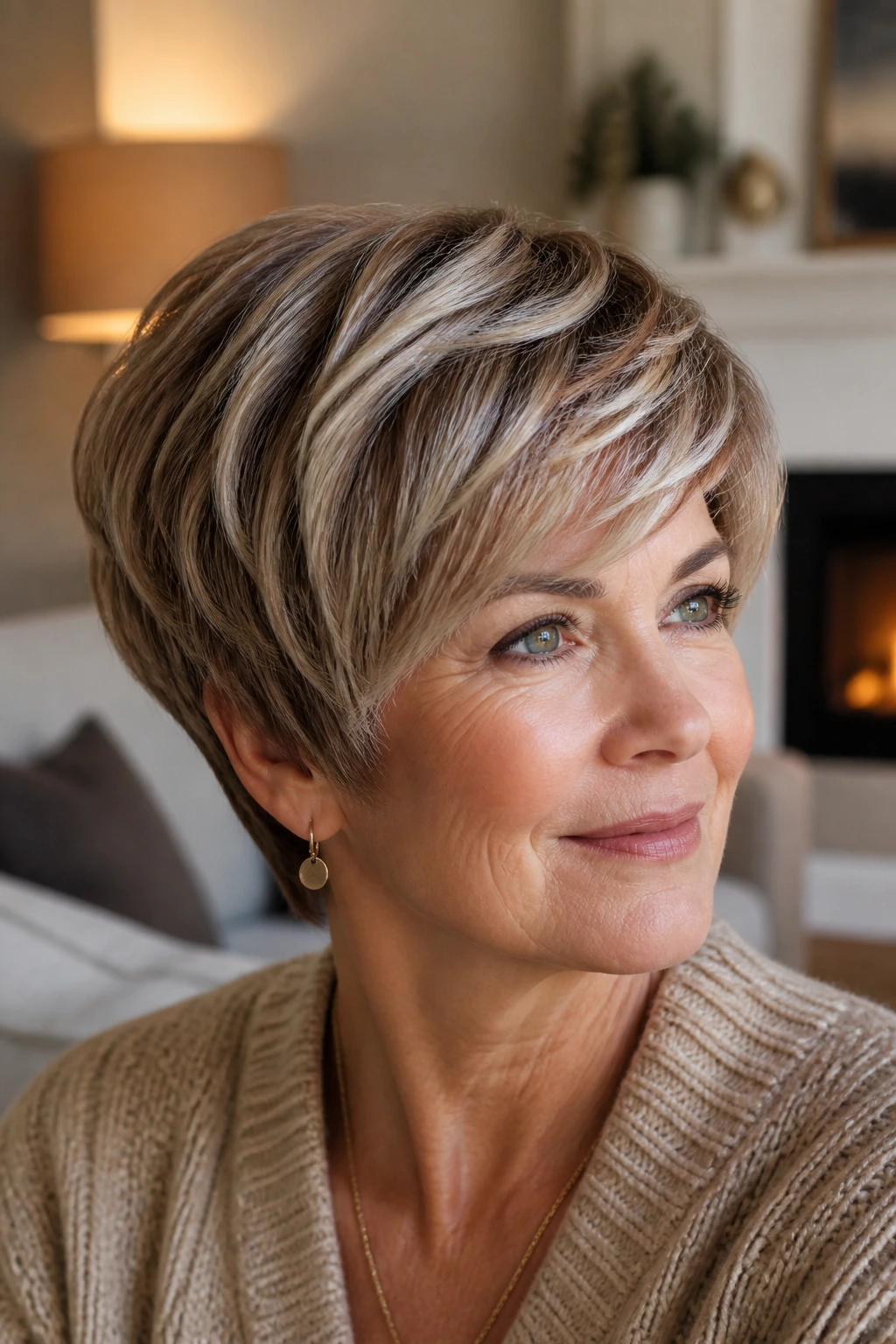
A soft mushroom pixie can go wrong fast if the edges are too blunt. The trick is to keep the rounded shape, but break it up with feathering through the top and sides. Dimensional babylights—beige, wheat, or soft honey—keep the shape from looking like a helmet.
The mushroom line is useful because it gives structure to hair that has become fine and slippery. But structure without texture is a problem. You want the curve, not the weight. The babylights help by drawing the eye across the cut in little passes instead of one hard block.
This version suits women who like a bit more coverage around the ears and temples. It reads soft and tidy at the same time, which is a hard balance to find when hair is short.
11. Salt-and-Pepper Halo Pixie
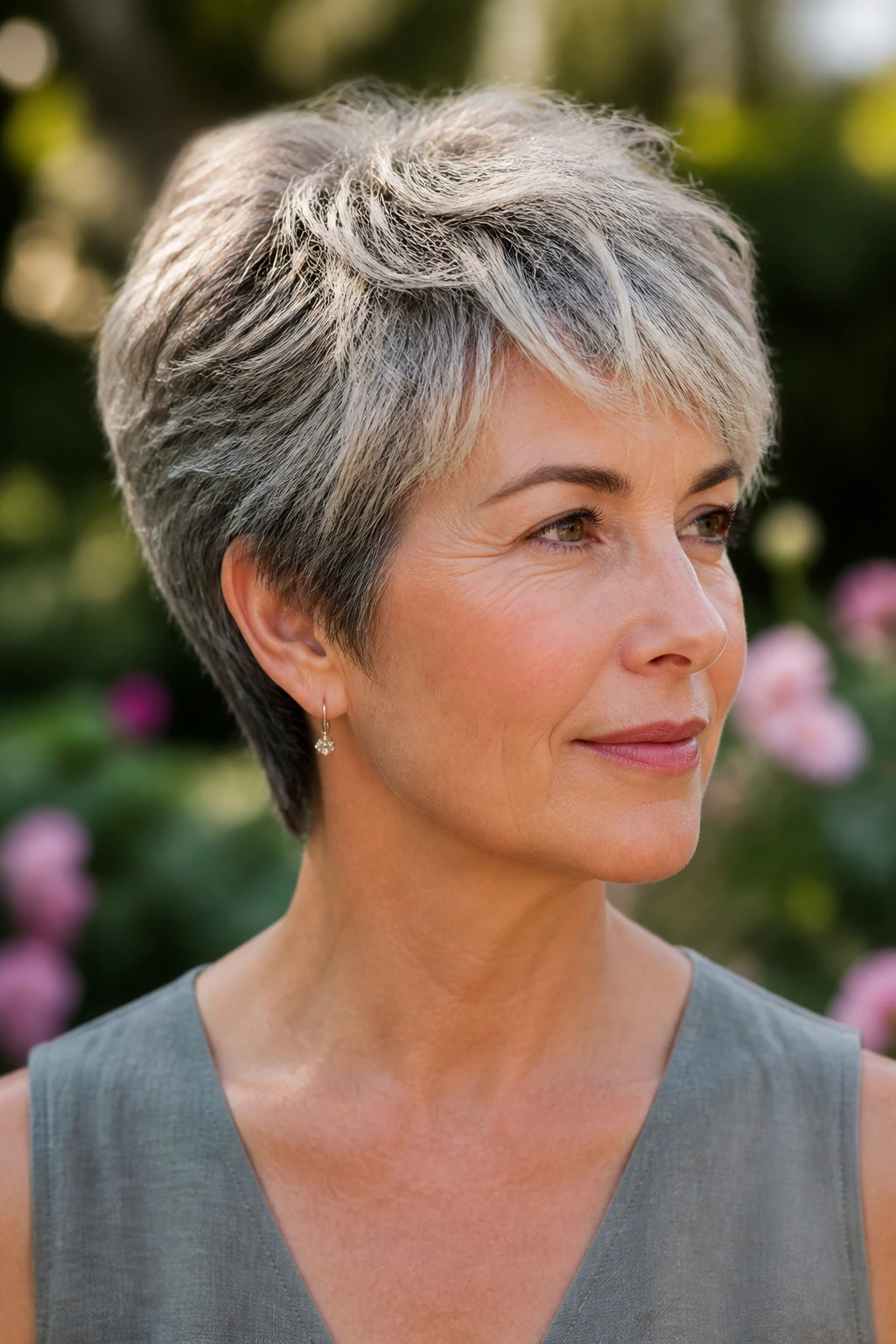
Salt-and-pepper hair has its own drama, and I’d never rush to cover it all up. A halo pixie keeps the darker lowlights underneath and places babylights around the crown, top edges, and temple line so the silver bits seem to glow rather than disappear. The result is a soft ring of brightness around the face.
This works beautifully on short hair because the color map does not need to be complicated. A few lighter threads near the top and front can make the natural silver pattern look polished. If the babylights are too bright, though, the cut starts to lose its depth, so staying close to your natural tone is the better move.
A halo effect also keeps the haircut from looking flat in profile. That matters more than it sounds. A short cut is seen from the side more often than from the front.
12. Undercut Pixie Shag with Crown Lights
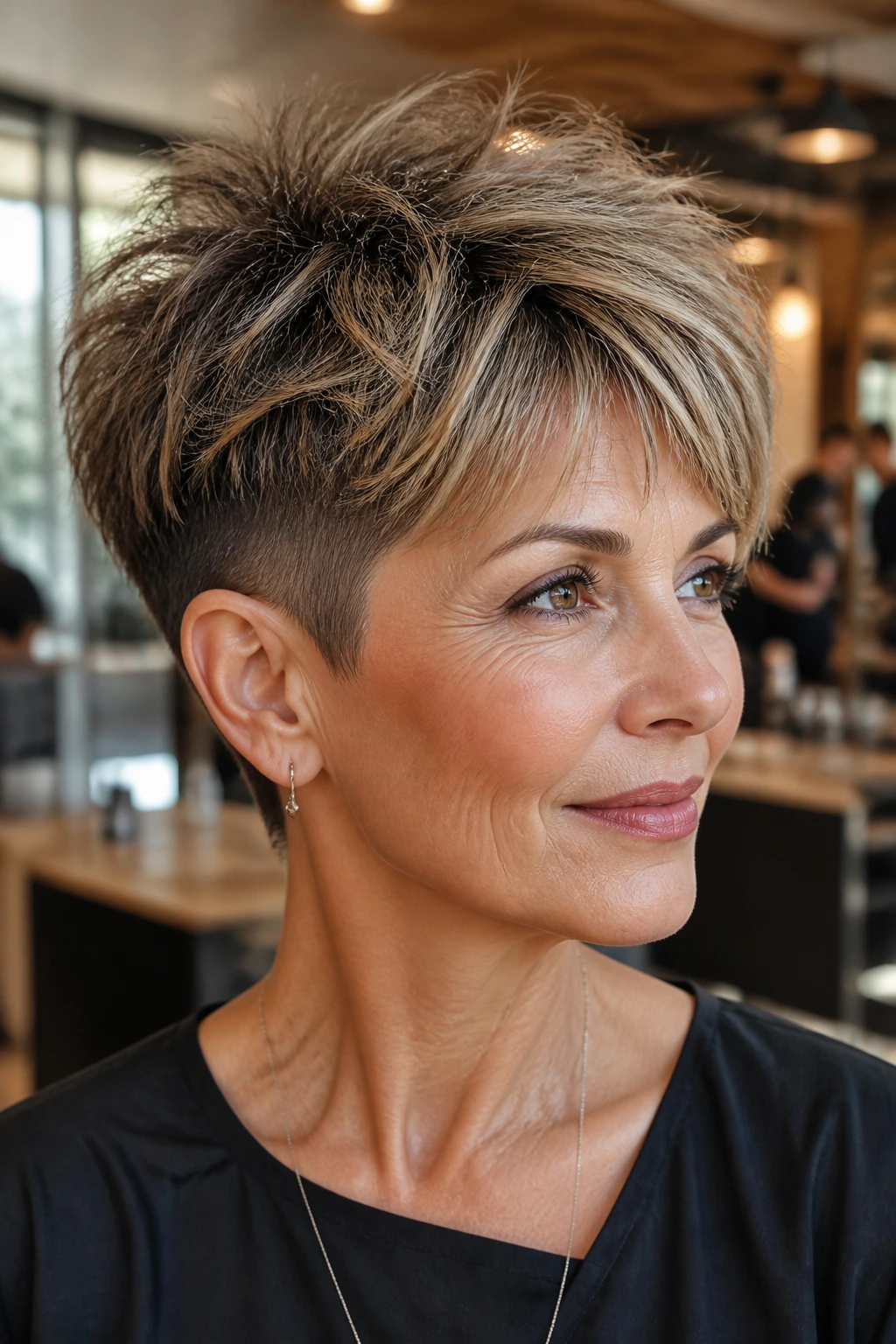
An undercut is not just for sharp, edgy haircuts. On thick hair, it can take away enough bulk to let the top move instead of ballooning out. Keep the undercut hidden and focus the babylights on the crown and top layers, where they can show the change in length.
This style is a good answer when the back of the head feels too heavy or when the hair spreads wide instead of standing up. Removing weight underneath gives the top a cleaner shape. The lighter strands on the crown then create depth so the top does not look cut too close.
If you want a pixie that feels modern without turning harsh, this is a strong option. It has bite, but it still reads soft around the face.
13. Grown-Out Low-Maintenance Pixie Shag
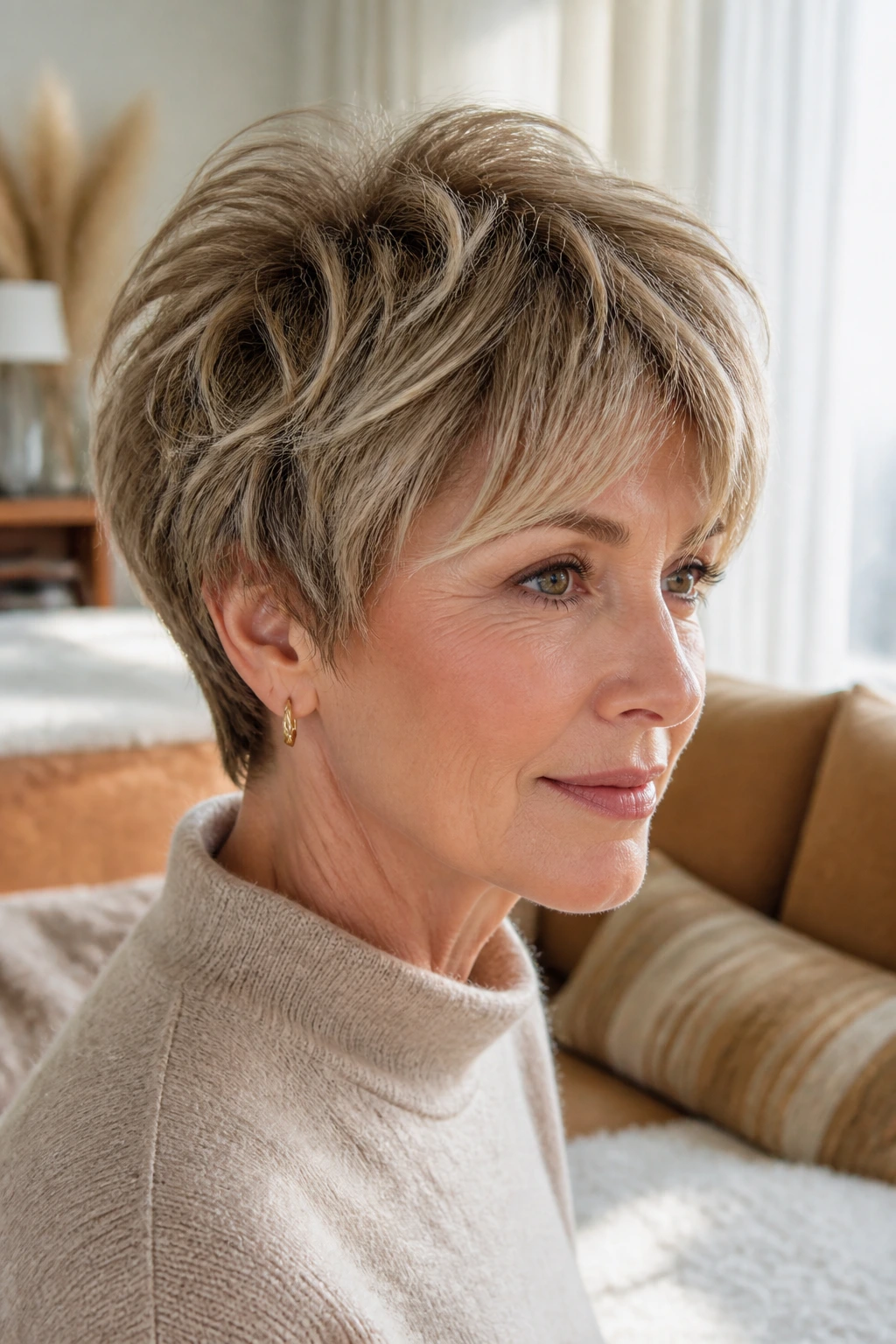
A grown-out pixie shag is not lazy hair. It is strategic hair. The length stays a little longer through the top and fringe, the nape is softly tapered, and the babylights sit close to the base color so the grow-out never looks like a hard line.
This cut is for the woman who wants shape, not a constant appointment calendar. You can push it to one side, tuck it back, or rough it up with your fingers and a tiny bit of cream. The babylights help the extra length look intentional because they keep the layers visually separated.
I like this version when someone says they want “short hair” but not the feeling of being trapped by a strict outline. That’s honest hair. And it grows out gracefully.
14. Soft Spiked Pixie with Bright Ends
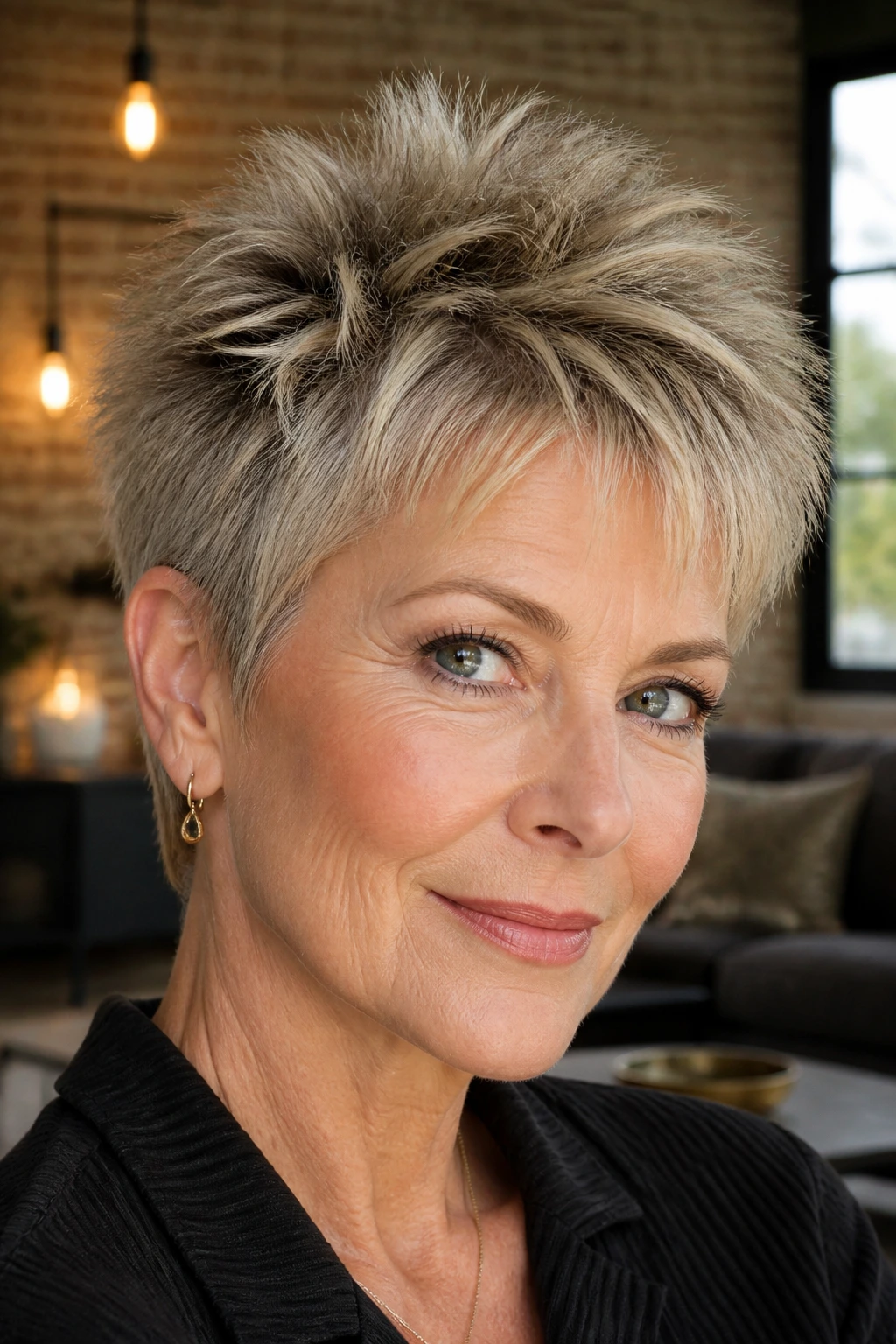
Soft spikes can go tacky fast if they’re too stiff or too upright. The better version has a lifted crown and ends that point in a few directions instead of standing at attention. Bright babylight ends at the top make the spikes visible without needing a lot of product.
This cut suits women who still like a bit of edge in their style. The lightness through the ends gives the top a dry, airy feel. Not fluffy. Airy. There’s a difference.
Use a tiny amount of styling paste, then pinch the top sections after the hair is dry. If you can feel the product in your hands, you’ve already used too much.
15. Airy Wedge-Inspired Pixie Shag
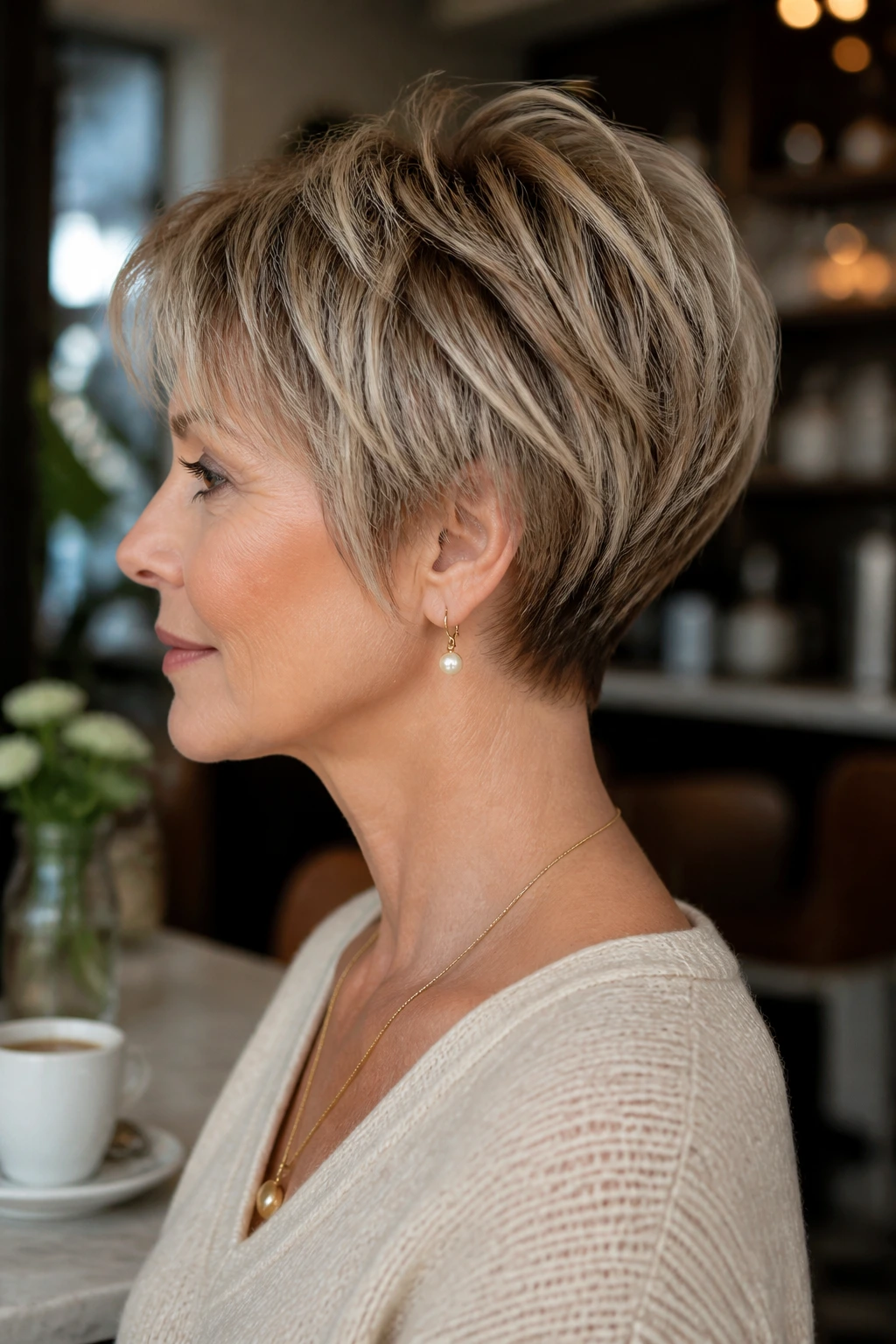
A wedge-inspired pixie shag borrows the snug back shape of a classic wedge, then loosens it up with shaggy texture on top. The silhouette is neat at the nape and rounder through the crown, which gives short hair a little architecture. Babylights placed on the upper back curve and top layers keep that shape from looking dark and heavy.
This is a good option when you want a more polished outline but still want movement. The wedge shape supports the head nicely. The shag layers keep it from feeling dated.
It also works surprisingly well on straight hair that tends to lie flat. The structure gives the cut body without asking the hair to do much on its own. That’s a nice trade.
16. Tucked-Behind-Ear Pixie with Feathered Sides
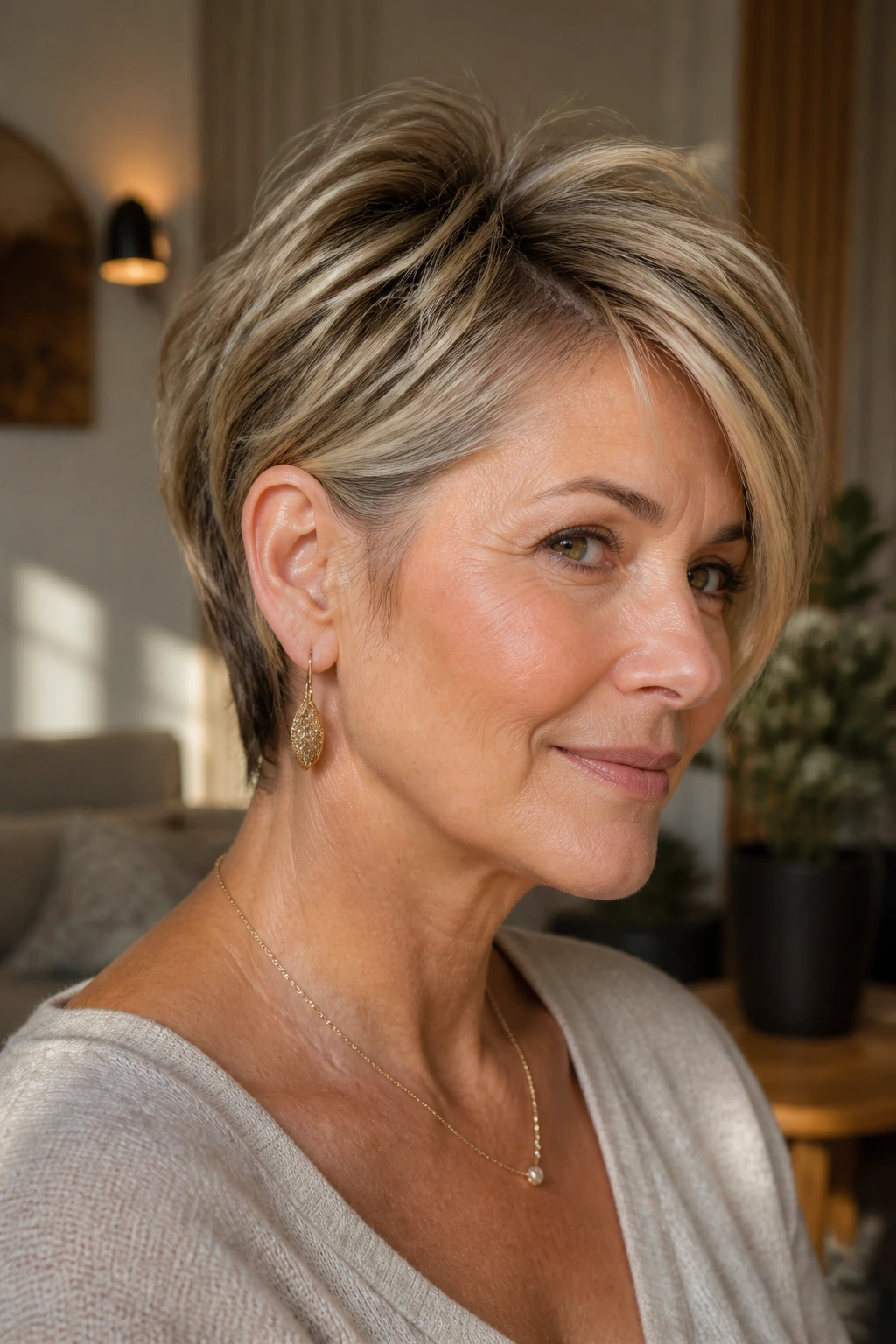
Why does a tucked-behind-ear pixie feel so graceful? Because it opens the face on purpose. The side that’s tucked shows the jawline, the cheekbone, and a little bit of earring, while the feathered side keeps enough softness so the cut doesn’t become severe. Babylights around the ear and temple keep that tucked side from reading too dark.
This is a smart style if you like asymmetry but don’t want anything dramatic. One side can be flatter and sleeker, the other side can carry a little more movement. The babylights make the shift less abrupt.
If you wear studs, hoops, or a pair of small gold frames, this cut has a nice relationship with accessories. It does not bury them. It lets them show.
17. Choppy Faux-Hawk Pixie with Caramel Threads
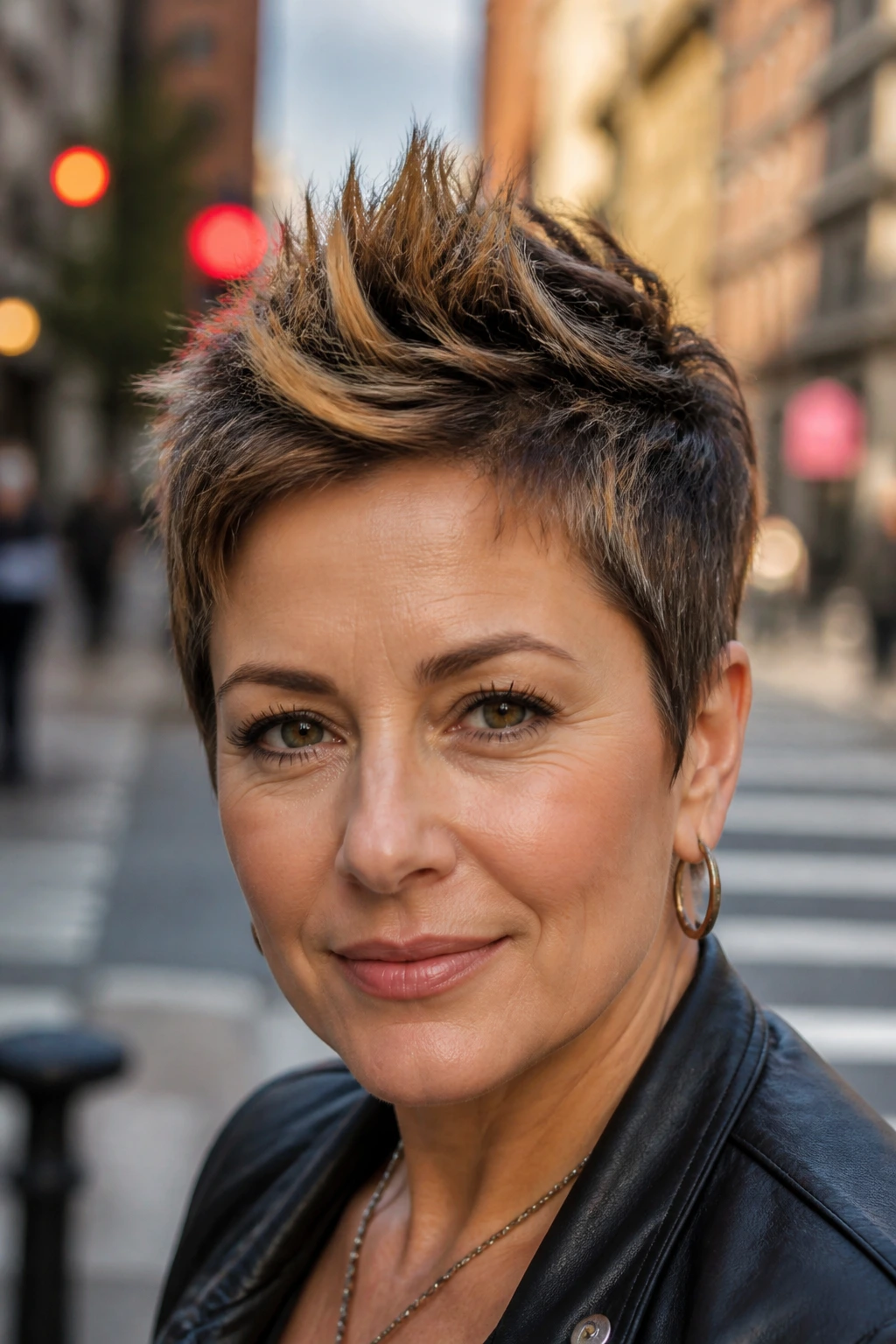
A choppy faux-hawk pixie is for the woman who wants a little more energy in the haircut. The sides stay narrow, the center rises, and the texture moves from front to back in a rough line. Caramel babylights through the center strip give that lift a visible path.
I like this shape on thicker hair because it uses the density instead of fighting it. The side softness keeps it wearable. The choppiness in the top keeps it from collapsing into a regular short crop.
This is not a loud haircut when it’s cut well. It just has a pulse. That’s a nicer way to put it.
18. Wispy Nape-Peek Pixie Shag
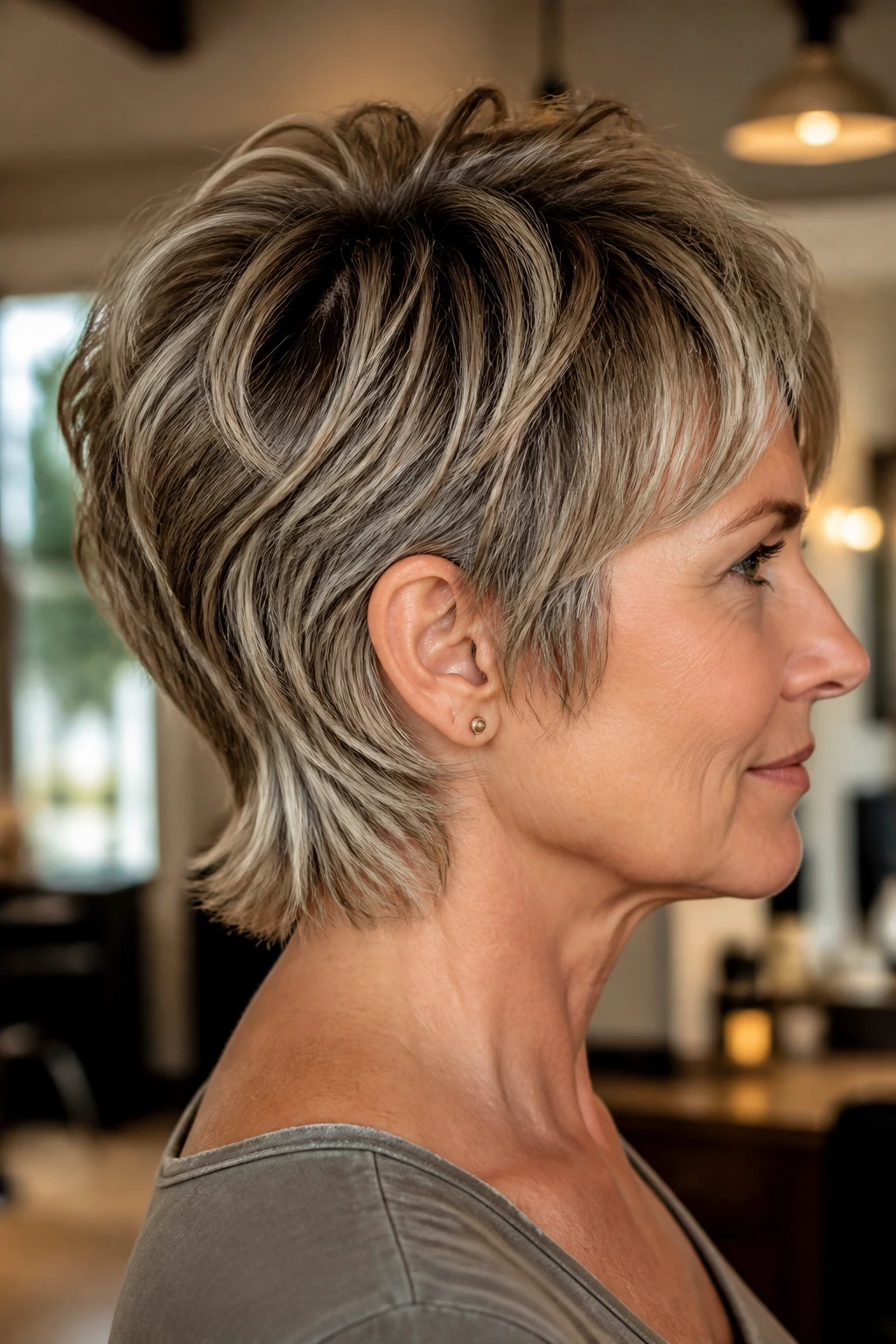
The wispy nape-peek pixie shag leaves just enough length at the back for little pieces to flick out against the neck. It’s a soft finish, not a sharp one, and babylights through the crown and nape give the style a lighter underside. The hair moves instead of sitting on the head.
This shape suits women who want a shorter cut but still like a touch of softness at the neckline. The wispy nape can be charming when it is not overcut. That’s the key. A few deliberate strands look better than a shaved patch that starts growing out within days.
It also works well if your hair is straight and naturally hugs the head. The extra texture in the back creates some relief, and the babylights keep the whole cut from reading dark at the base.
How Babylights Change the Whole Silhouette
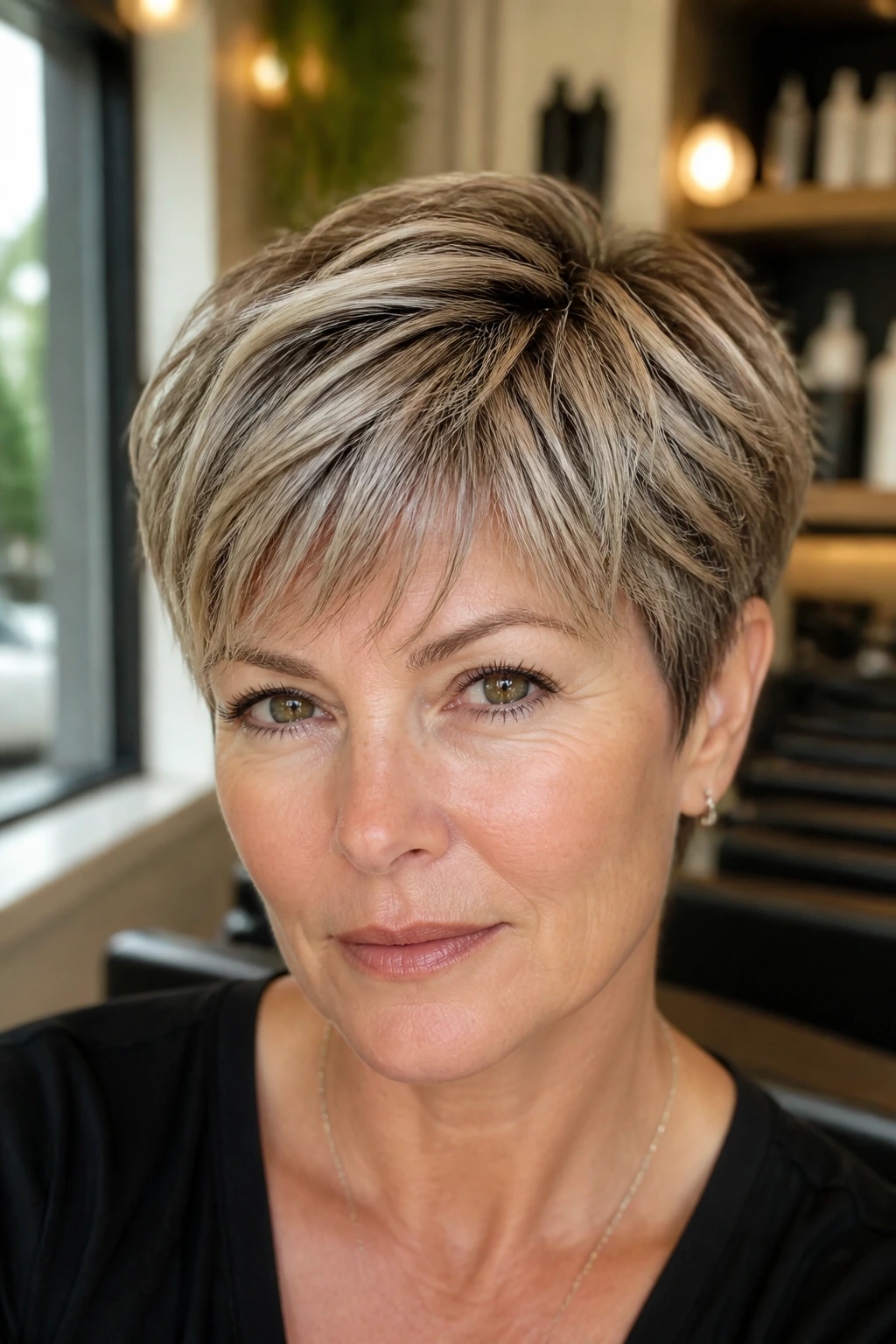
Babylights are not just a color choice. On a shag pixie, they change the way the cut reads from three feet away. Tiny highlight pieces create tiny shadows between layers, which is what gives the haircut movement without extra length.
That is why I prefer babylights to chunkier highlights on short hair. Big panels can sit on top of the layers like stickers. Babylights sit inside the shape. They soften the transition between crown, fringe, and sides so the haircut looks fuller without looking busy.
Why tiny sections matter
A babylight is usually placed in very small sections, often woven or sliced thin enough that the light looks diffused. On a pixie, that means the color seems to live inside the cut rather than on top of it. The effect is subtle, but on short hair subtle is the whole point.
How they help gray hair
Gray and silver strands can be stubborn about color, and they often reflect light in a different way than pigmented hair. Babylights let you work with that instead of fighting it. A soft beige or pearl tone can blend with natural silver and reduce the hard contrast that makes a short cut look striped.
Where the eye goes first
Place the lightest pieces where the eye naturally lands: the crown, the fringe, the temples, the top of the ear. Those are the spots that make a shag pixie feel alive. If you put all the brightness underneath, nobody sees the work.
What to Tell Your Stylist Before the Cape Goes On
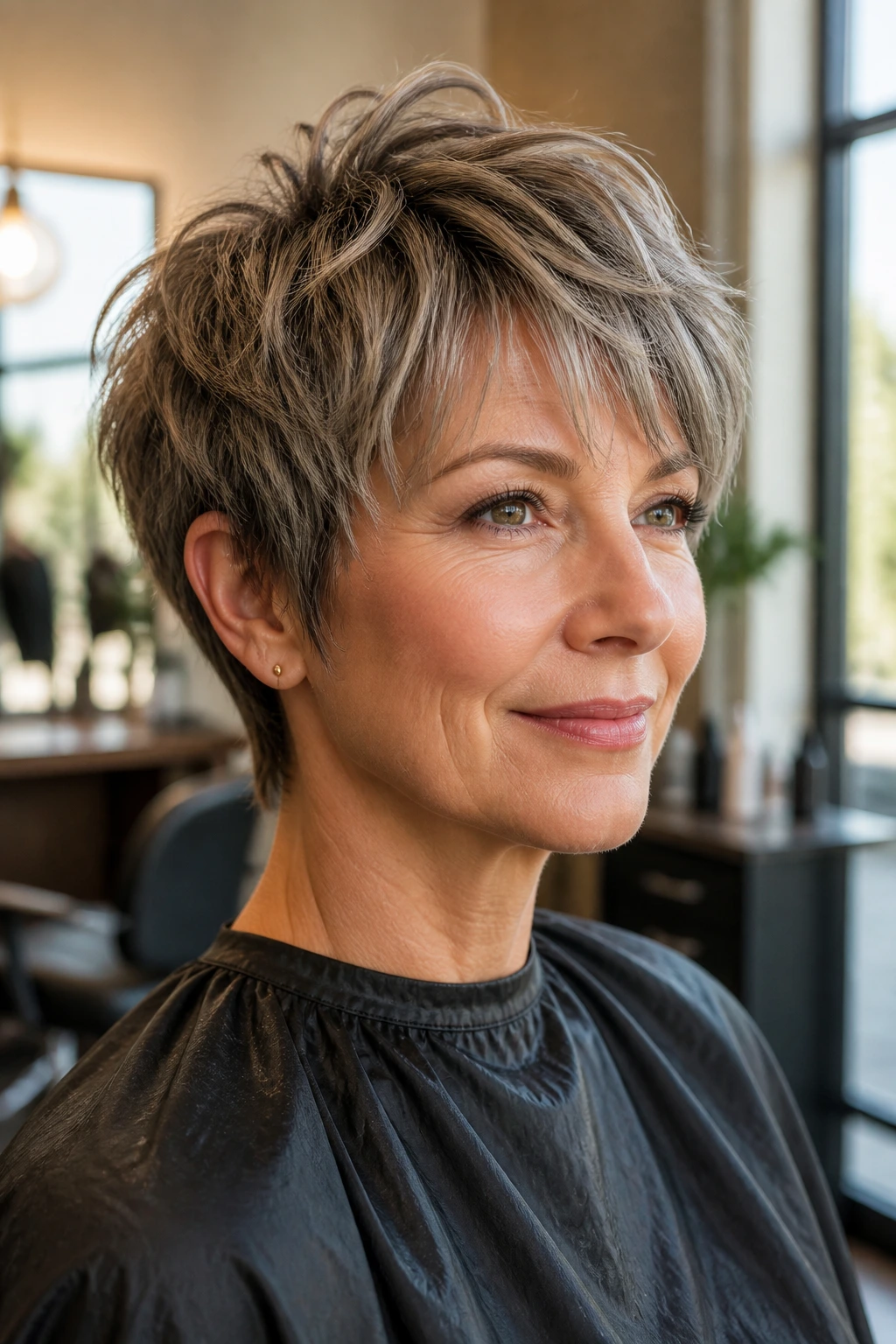
Bring pictures, yes. But do not stop there. A photo of a cute short haircut is only useful if you can explain what you like about it: the fringe length, the nape, the crown height, the texture around the ears. Otherwise the stylist is guessing at your favorite part.
Say whether you want to blow-dry it smooth, rough-dry it fast, or mostly air-dry it. That changes the cut. A shag pixie for a woman who likes a brushed finish is not the same as a shag pixie for someone who wants to scrunch and go. The layers need to match the routine.
A few specific phrases help:
- “Keep the nape tapered, not shaved.”
- “Leave enough length on top for crown lift.”
- “Use babylights close to my base color.”
- “Keep the face-framing pieces soft around the temples.”
- “I want movement, not a stiff outline.”
If your hair is gray or partly gray, say so plainly. A good colorist will know whether to blur the gray with babylights, embrace it with silver-toned lightening, or leave a deeper root shadow so the contrast feels easier on the eye. That decision matters more than people admit.
Essential Tools and Products for Styling and Maintenance
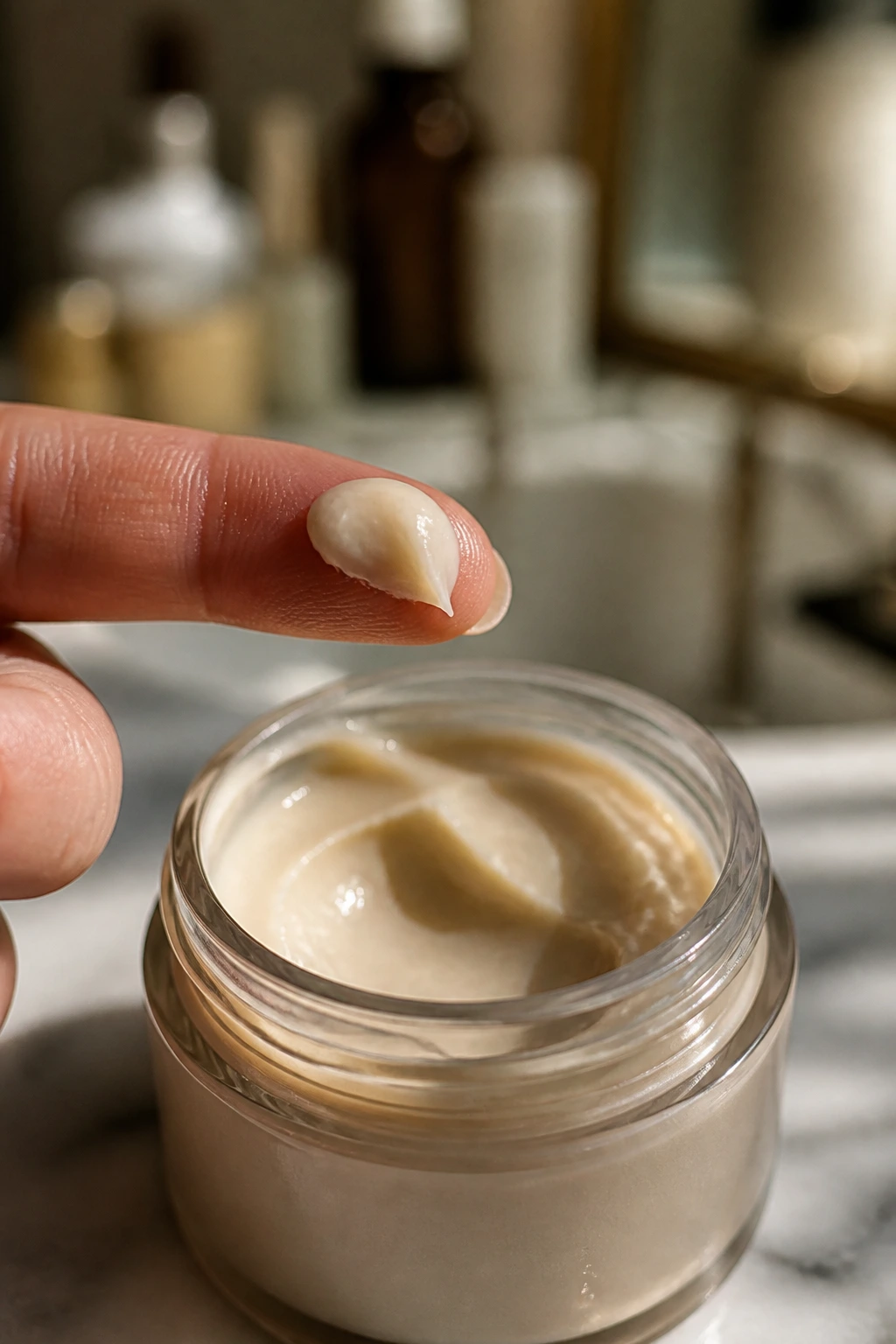
- Lightweight volumizing mousse: Gives the crown a little lift without making short hair sticky or stiff.
- Root-lift spray: Best aimed at the top and crown, not the ends. A little goes a long way.
- Blow dryer with a narrow nozzle: Helps direct the air so the layers set where you want them.
- 1- to 1.25-inch round brush: Small enough to control short layers around the fringe and crown.
- Heat protectant spray: Use it before blow-drying or touching up with a flat iron.
- Texturizing paste or cream: Ideal for piecey ends and fringe definition; use a pea-sized amount.
- Purple shampoo or silver shampoo: Useful if your babylights lean cool or icy and you want to keep brass away.
- Microfiber towel or soft T-shirt: Reduces friction on the cuticle when hair is wet.
- Fine-tooth comb: Good for parting the hair cleanly before styling or touching up babylights at the salon.
- Satin pillowcase: Keeps the crown from getting crushed overnight.
Practical Tips for Wearing These Cuts Without Fighting Them
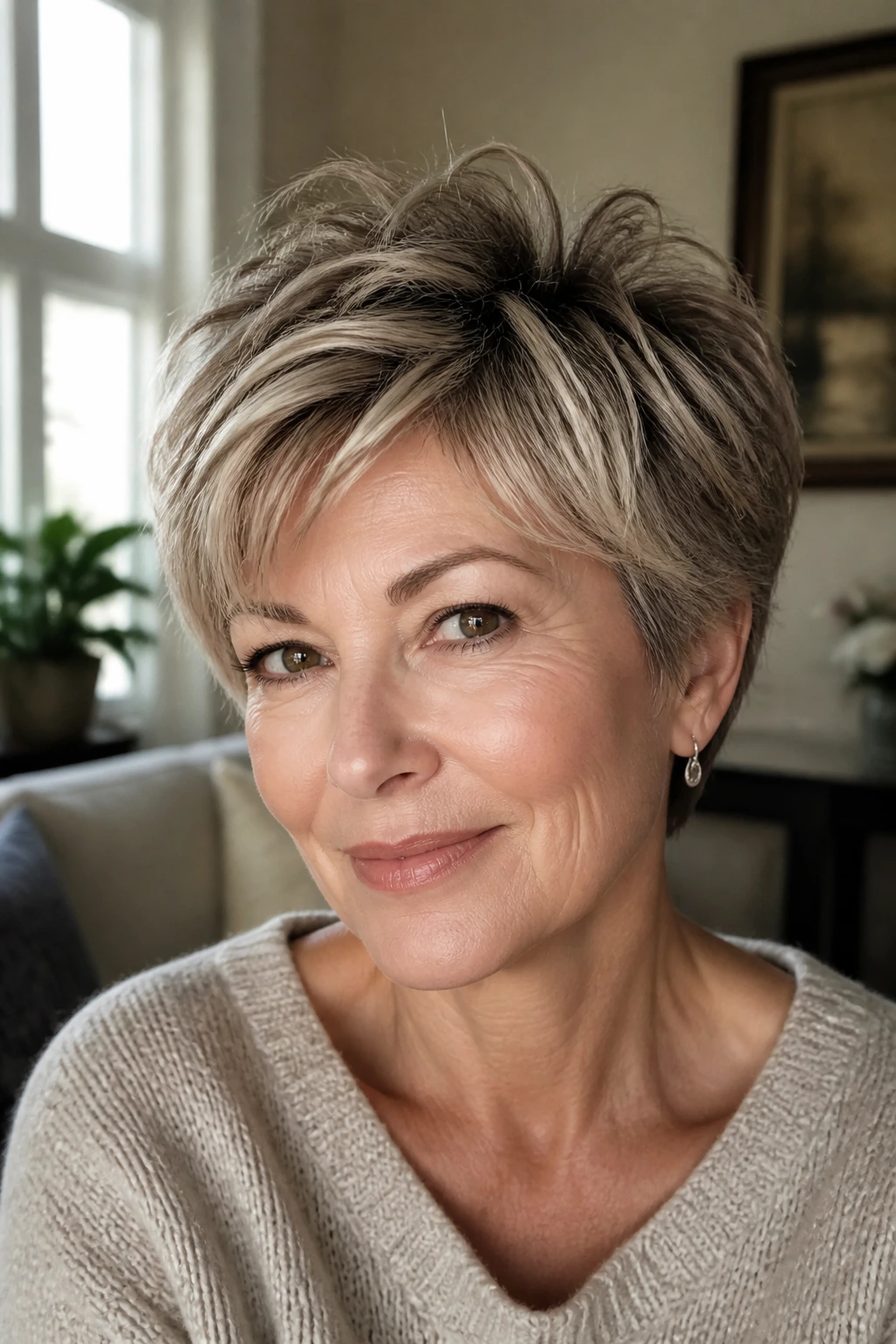
Blow-Dry Direction: Dry the crown forward first, then redirect it back or to the side while the hair is still warm. That little switch gives the top more lift than blasting it straight upward from the start.
Product Amount: Short hair needs less product than people think. Start with a pea-sized dab of paste or cream, warm it between your fingers, and add only if the ends still need definition.
Dry Shampoo Placement: Put dry shampoo at the crown, the part, and the back of the head where oil shows first. Do not load it through the fringe unless you want a chalky front.
Texture Reset: On second-day hair, mist the top lightly with water, squeeze the fringe with damp fingers, then add a touch of mousse or cream. You don’t need to start over every morning.
Color Care: If the babylights are pale blonde or silver, use a color-safe shampoo and skip the hot water. Hot water strips tone faster than people expect, especially on short hair that gets washed often.
One more thing. Short hair punishes overstyling. If you catch yourself layering mousse, spray, paste, and serum all at once, back up. Pick one product for lift and one for finish. That’s enough.
Common Mistakes That Flatten the Cut
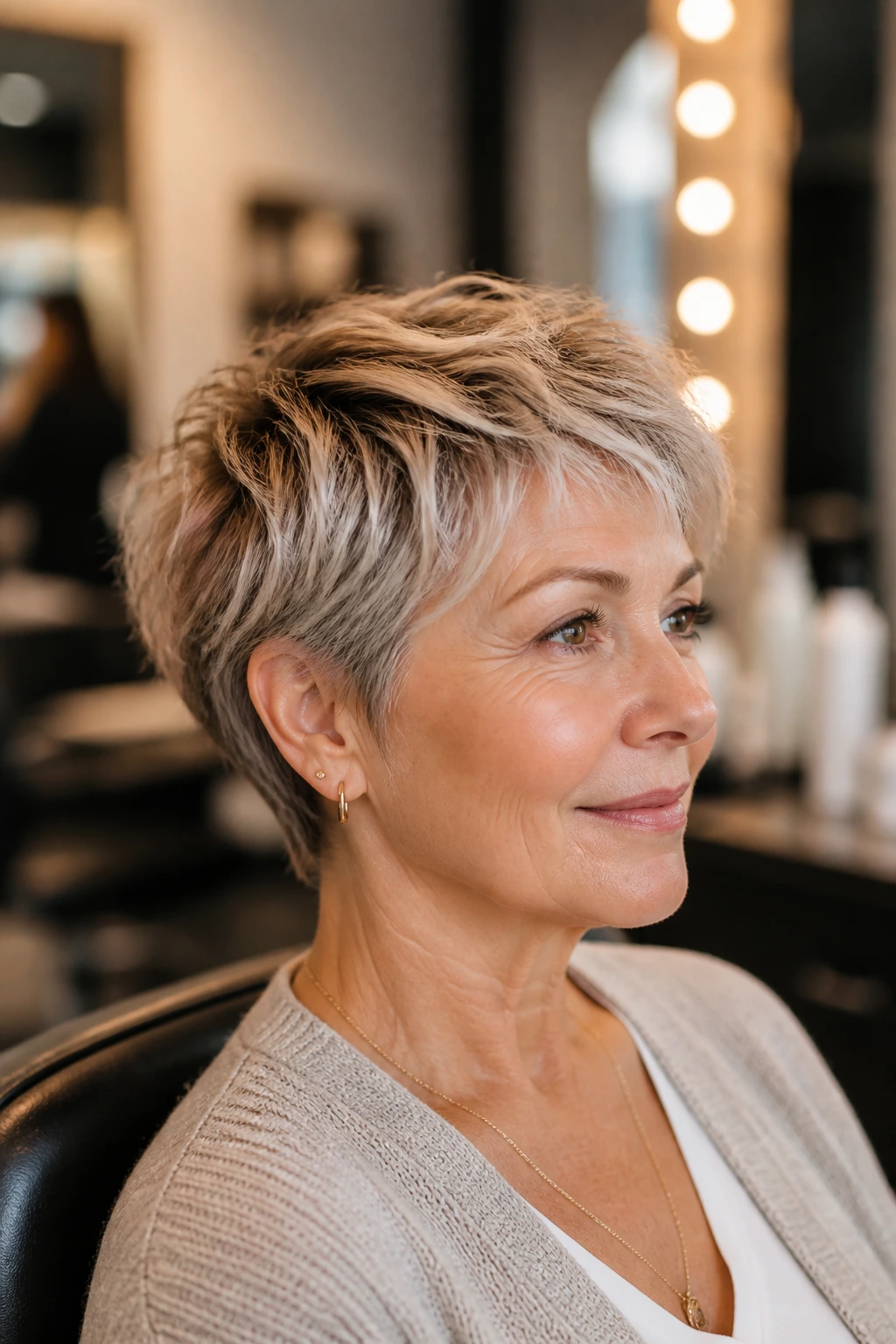
- Making the babylights too chunky: The hair starts to look stripey, especially around the fringe and crown. Fix it by asking for micro-fine sections that blend into the layers instead of sitting on top of them.
- Over-thinning the sides: The cut can puff out weirdly or expose too much scalp at the temples. Keep some weight around the ears so the silhouette still holds its shape.
- Skipping the crown entirely: A pixie with no top lift turns into a short cap, fast. Ask for crown texture and use a root-lift product when you style it.
- Using too much paste or wax: The strands clump together and the babylights disappear under product. Use less than you think, then build only if the ends need more separation.
- Letting the nape grow too long: The back starts flipping, and the whole haircut loses its clean line. Trim the neckline before it turns shaggy in the wrong way.
- Choosing highlights that are too light for the base: The contrast can make the haircut look hard, especially on short hair. Stay within a soft range unless you want a high-contrast look on purpose.
Variations and Alternatives to Try
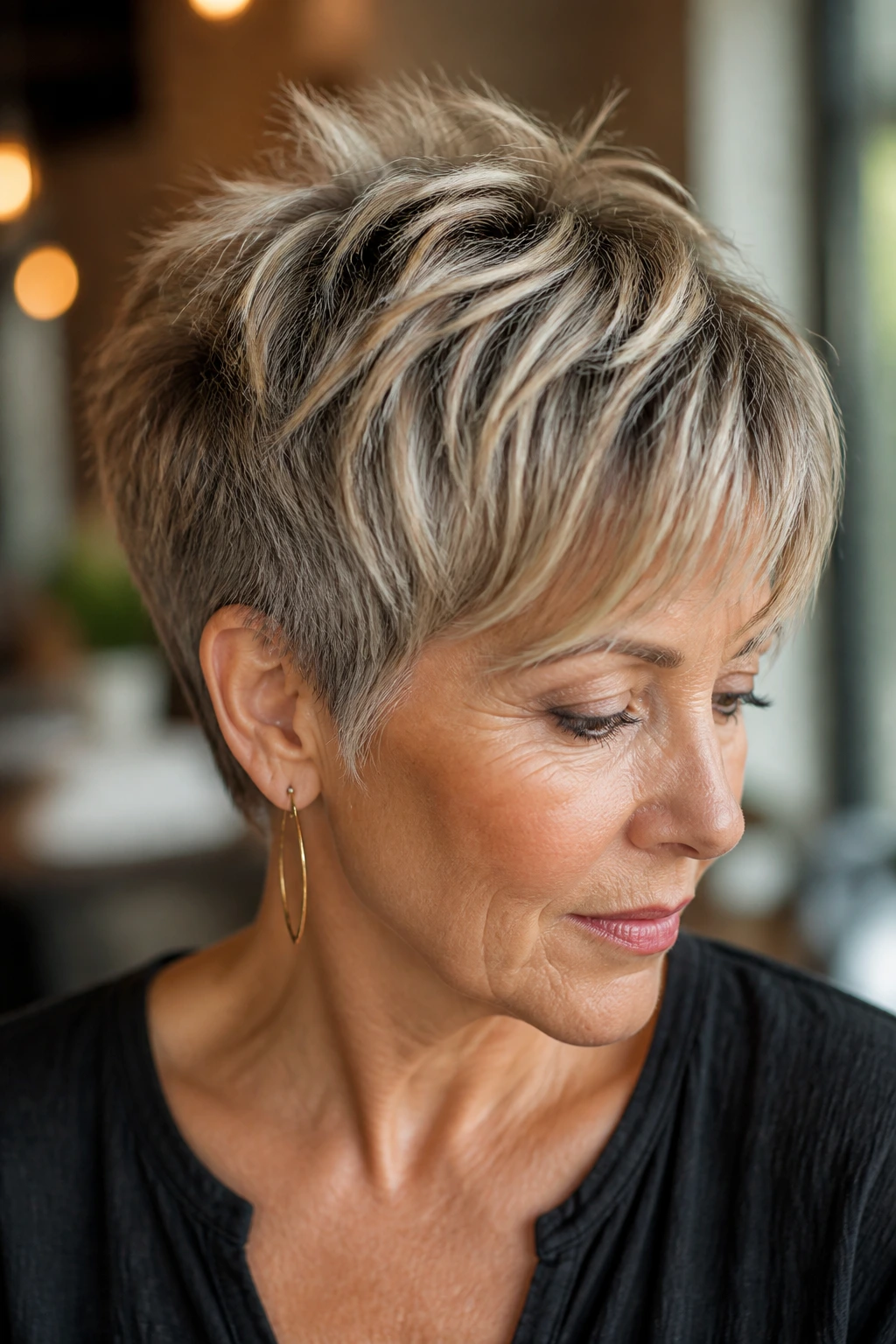
Soft Silver Cloud: If your hair is mostly gray or white, ask for pearl or silver babylights that sit close to your natural tone. The cut stays bright without tipping into frosty, high-contrast territory.
Brunette Brulee: For dark brown hair, a warm beige or caramel babylight can soften the shag pixie without making it blond. This version flatters warm complexions and keeps the overall look rich.
Curl-Friendly Halo: If your hair is wavy or curly, keep the babylights mostly on the outer ring and crown so the interior doesn’t dry out visually. The curls keep their spring, and the light catches the curve.
Low-Drama Grow-Out: Ask for a root shadow and babylights that start farther from the scalp. The grow-out is softer, and you can stretch appointments a bit longer without the color looking abandoned.
Sharper Crown Sweep: If you like a little more edge, keep the top longer and bring the babylights through the center line only. That gives the cut a lifted ridge without brightening the whole head.
Maintenance, Trims, and Color Refreshes
Short hair looks best when the trim schedule stays honest. For a crisp shag pixie, I’d plan on a shaping trim every 4 to 6 weeks. If you like a softer, grown-out edge, you can stretch a little longer, but once the nape starts flipping and the ears feel crowded, the shape has already slipped.
Color takes its own calendar. Babylights on short hair usually need a gloss or toner refresh every 6 to 10 weeks, depending on how bright the light pieces are and how often you wash. If your hair is gray-blended, a toner can keep the brightness from drifting yellow or muddy. If it’s warm blonde, a blue-leaning or purple shampoo once a week may be enough to keep brass down.
At-home care that actually helps
Use a color-safe shampoo, not a heavy one that leaves short hair coated. The buildup shows faster on a pixie than on long hair. Once a week, a light mask through the ends can keep the babylights from looking dry and frayed.
Sleep matters too. A satin pillowcase cuts down on friction and keeps the crown from being flattened into a weird triangle by morning. If the top goes limp overnight, a quick mist of water and a two-minute blow-dry at the roots usually wakes it back up.
Frequently Asked Questions
Do babylights work on gray hair, or do they just make it look dyed?
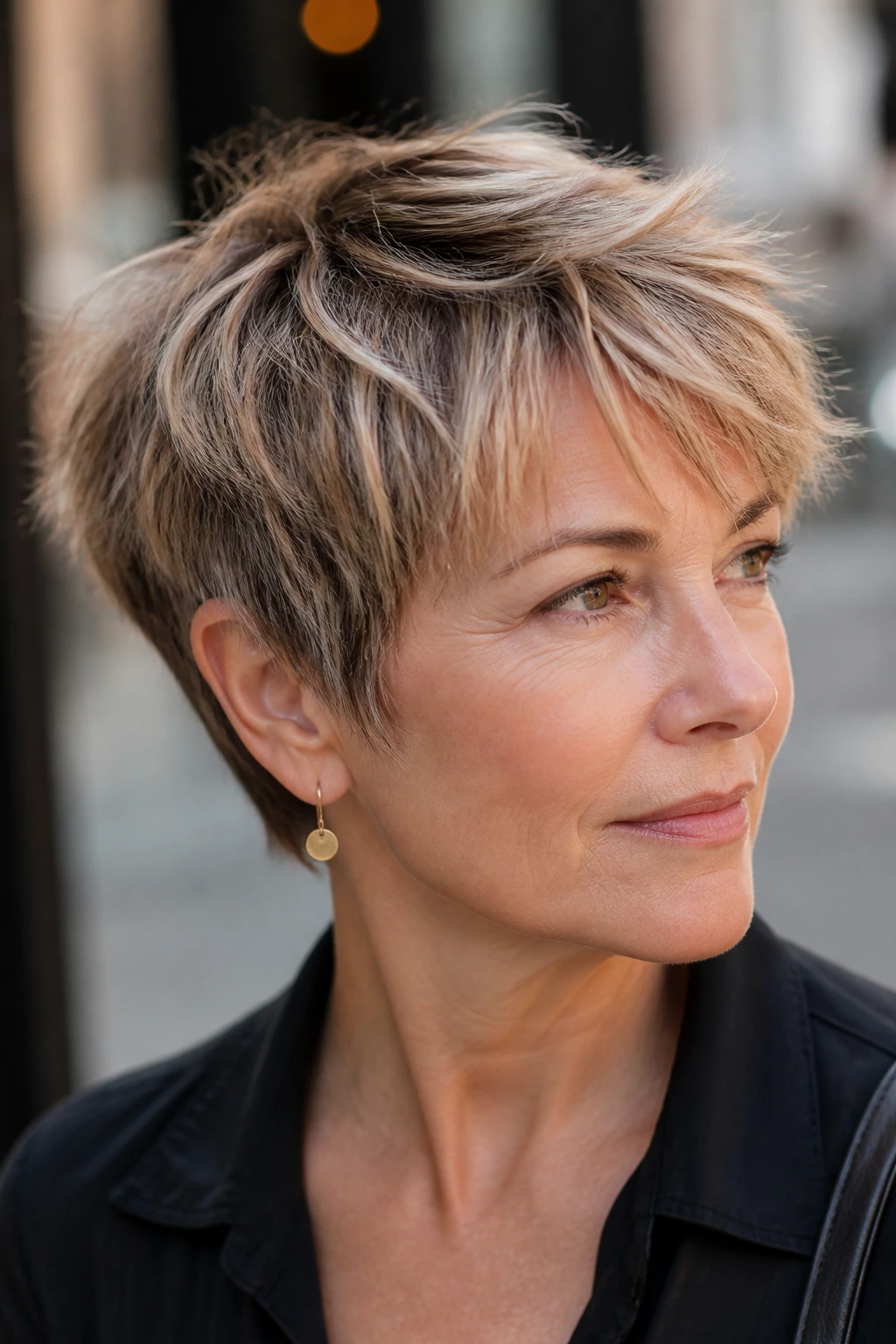
Babylights are one of the better ways to handle gray hair because they blur the transition instead of painting over it. On a shag pixie, that blur matters even more since the cut is short enough that every color line shows.
Will a shag pixie make fine hair look thinner?
Not if the cut keeps some crown lift and enough weight at the sides. Fine hair looks thinner when it’s over-thinned and over-lightened, not because it’s short. The right layers and babylights can make it look fuller by showing off movement.
How often do I need trims for this style?
Most shag pixies need reshaping every 4 to 6 weeks if you want the neckline and crown to stay crisp. If you prefer a slightly grown-out shape, you can push that farther, but the nape usually tells on you first.
Can I wear a shag pixie with glasses?
Yes, and I think some versions actually look better with glasses. Keep the sides rounded or feathered so they don’t press into the frames, and put the lightest babylights near the temples and top for balance.
What babylight color is safest if I’m not sure?
If you’re unsure, stay close to your natural base. Beige, champagne, and soft ash tones usually blend better than bright blonde on short hair. You can always go lighter later.
Is this cut better for straight, wavy, or curly hair?
All three can work, but the shape changes. Straight hair likes crown texture and a little product; wavy hair likes piecey layers; curly hair needs room in the top layers so the curl pattern doesn’t balloon out.
Can I air-dry this cut, or does it need a blow-dryer?
You can air-dry it if the cut is shaped well and your hair has some natural movement. Still, a quick blast at the roots often helps the crown stay lifted, even if you finish the rest of the hair by air.
What if the babylights turn too warm or yellow?
That usually means the tone has drifted and needs a gloss or a quick toning shampoo. On short hair, the fix shows fast because the color is concentrated in a smaller area, so do not let it sit for months if you want the light pieces to stay clean.
A Short Cut with Real Movement
The best shag pixie cuts do something sneaky: they look low-effort, but they’re actually built with a lot of thought. Babylights are part of that trick. They let the layers separate, soften the grow-out, and keep short hair from reading flat or severe.
What I like most here is the range. You can go silvery and soft, choppy and modern, rounded and quiet, or a little sharper if that’s more your mood. The babylights stay useful across all of them because they work with the shape instead of sitting on top like decoration.
Pick the version that matches your hair’s actual habits. That’s the part people skip, and it’s usually where the haircut starts behaving better.