



Babylights and thin hair are a better match than chunky highlights ever were. Thin strands do not need loud stripes; they need tiny shifts in tone, the kind that make a part line look softer and a blunt edge look denser. Put those whisper-fine light pieces in the right places, and even a modest collarbone lob starts to read as fuller, shinier, and a little more expensive-looking than it really is.
The trick is not to confuse thin with flat. Fine hair can be silky, slippery, and annoyingly quick to collapse, but a good cut can still carry shape if the perimeter stays clean and the color work is delicate. Babylights help because they break up one sheet of color into dozens of microscopic variations. Your eye fills in the rest.
That is why the best lengthening hairstyles for thin hair with babylights lean on structure, not fluff. Blunt ends. Soft bends. Diagonal lines. A careful part. A few lowlights where the interior needs depth. Nothing fussy. Nothing overworked. Just enough contrast to make the hair look like it has more room to live in.
Why These Babylight Styles Earn Their Keep
-
Micro-dimension does the heavy lifting: Babylights are so fine that they brighten the surface without carving visible gaps into sparse hair.
-
A strong edge matters more than extra layers: A blunt line at the ends makes thin hair look thicker than a sliced-up perimeter that frays by lunch.
-
The right placement changes the whole shape: Light around the part, crown, cheekbones, and top layer pulls the eye upward and outward.
-
These styles age better between appointments: Soft babylights grow out with less obvious regrowth, which matters when you do not want a harsh stripe at the root.
-
You can bend the tone to suit your hair density: Beige, champagne, caramel, pearl, and mushroom shades all behave a little differently on fine hair.
-
They work with real life, not just a salon blowout: A lot of these cuts still look intentional after air-drying, dry shampoo, and a brush-through.
The Light-and-Shadow Trick That Makes Thin Hair Read Fuller
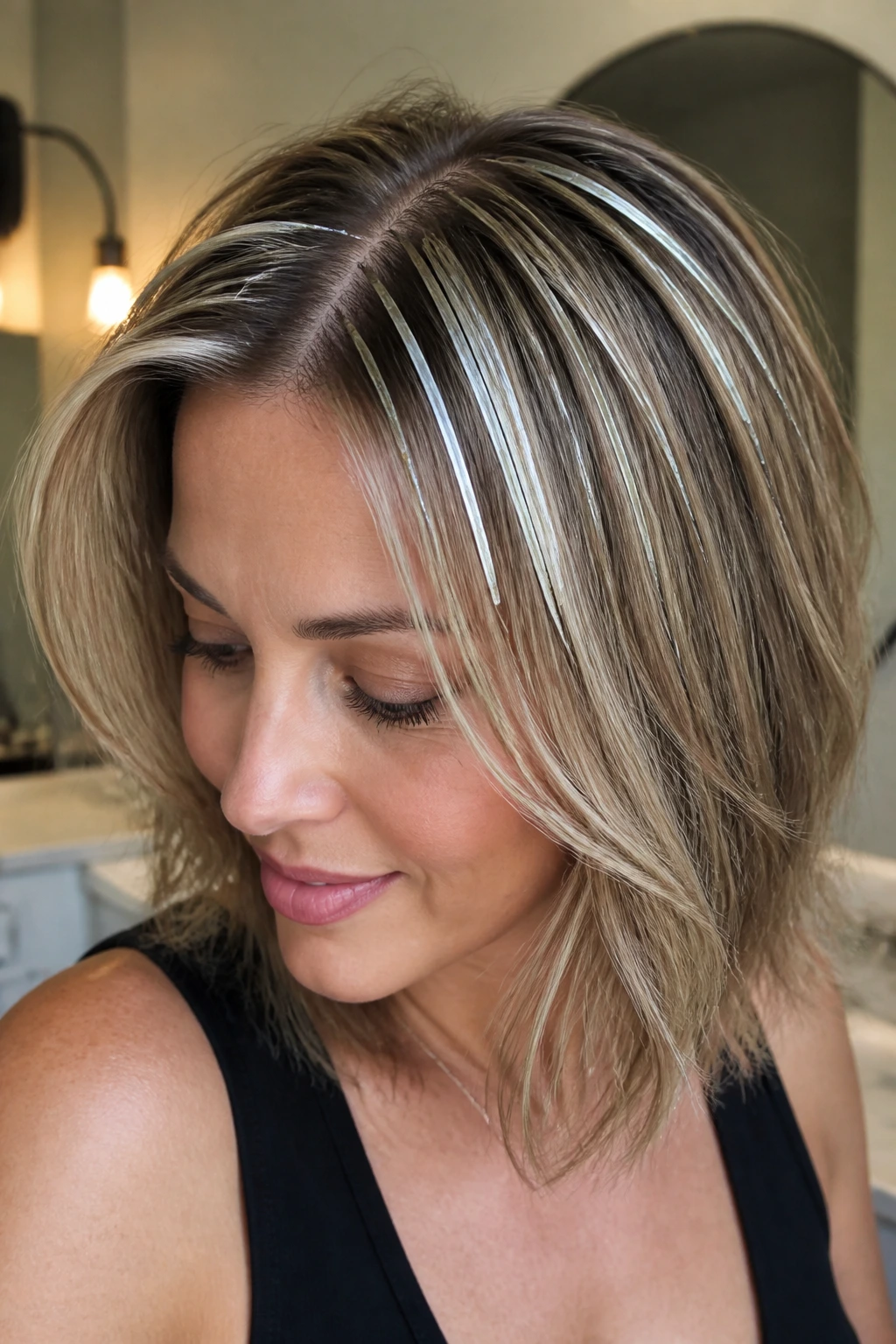
Thin hair needs contrast, but not the kind that shouts. That is where babylights come in. The pieces are painted in very fine sections — think nearly hairline-thin foils, not chunky ribbons — so the highlight doesn’t split the hair into obvious stripes. Instead, it makes a soft shimmer on top and a little shadow underneath.
That shadow matters. A lot. Fine hair can look see-through at the crown or around the part, and a skilled color placement hides that by alternating brightness with depth. A whisper of lowlight under the top layer often does more for fullness than another round of blonding ever could. The eye sees a richer surface. The hair still feels like hair, not a mesh screen.
Cut shape is the other half of the story. A blunt bob with babylights can look denser than a long, all-one-length sheet of dark hair. A collarbone lob with a clean edge and slightly brighter face frame can read longer than it actually is, because the light pulls the line forward. That is the whole game here: keep the silhouette controlled, then use babylights to make the surface look lived-in and dimensional.
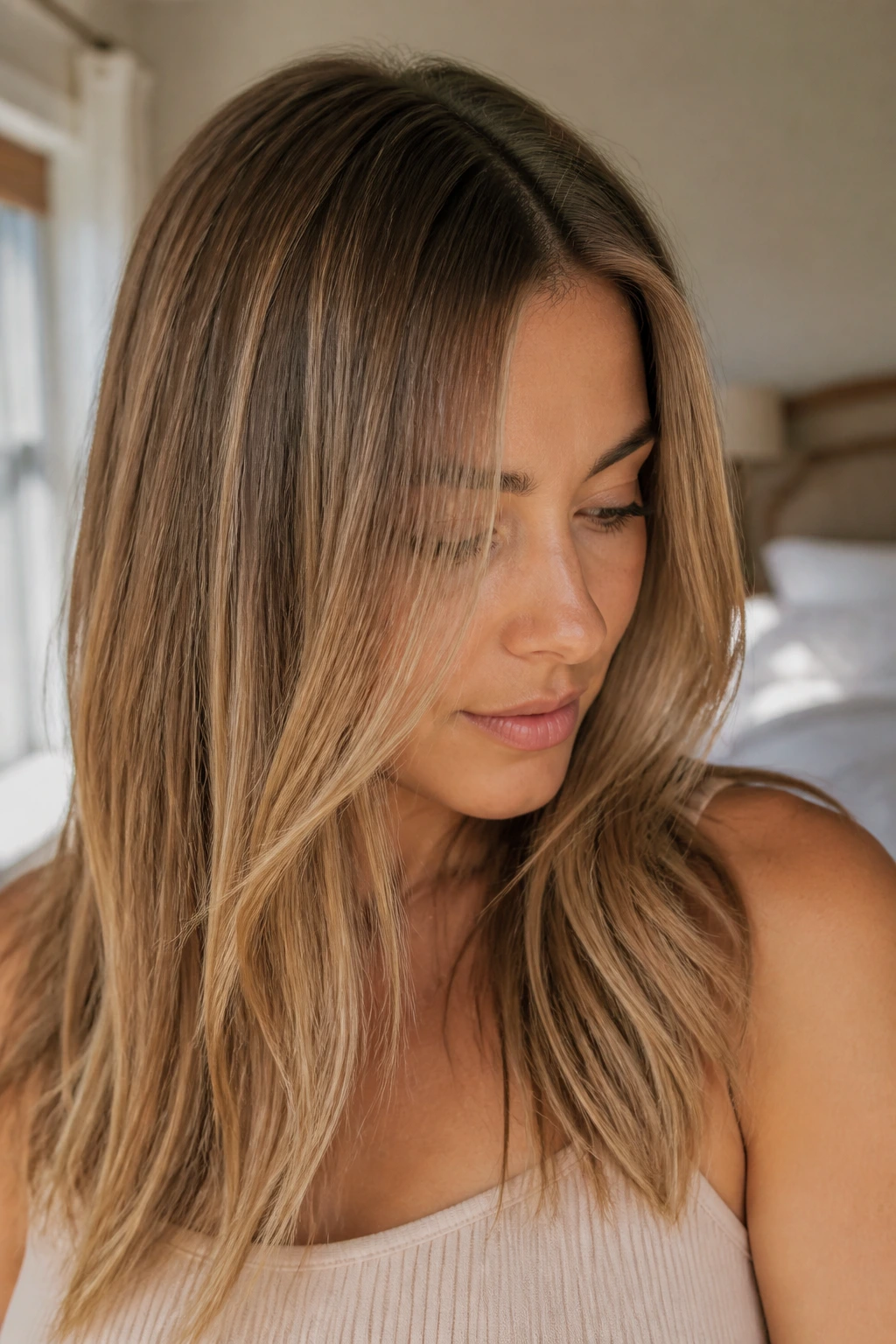
1. Blunt Collarbone Lob with Beige Babylights
A blunt collarbone lob is the style I reach for when thin hair needs to look denser fast. The edge sits at a sweet spot: long enough to feel feminine, short enough that the ends do not drift into stringy territory. Beige babylights threaded through the top layer keep the shape from looking like one flat helmet of color.
This cut works because the perimeter stays solid. No choppy layers eating away at the bulk. A round brush and a quick underbend through the last inch are enough to make the line feel deliberate.
The best version has the brightest pieces around the part and cheekbones, not scattered everywhere. That keeps the eye moving across the face instead of down into the sparse ends.
2. Chin-Length French Bob with Honey Babylights
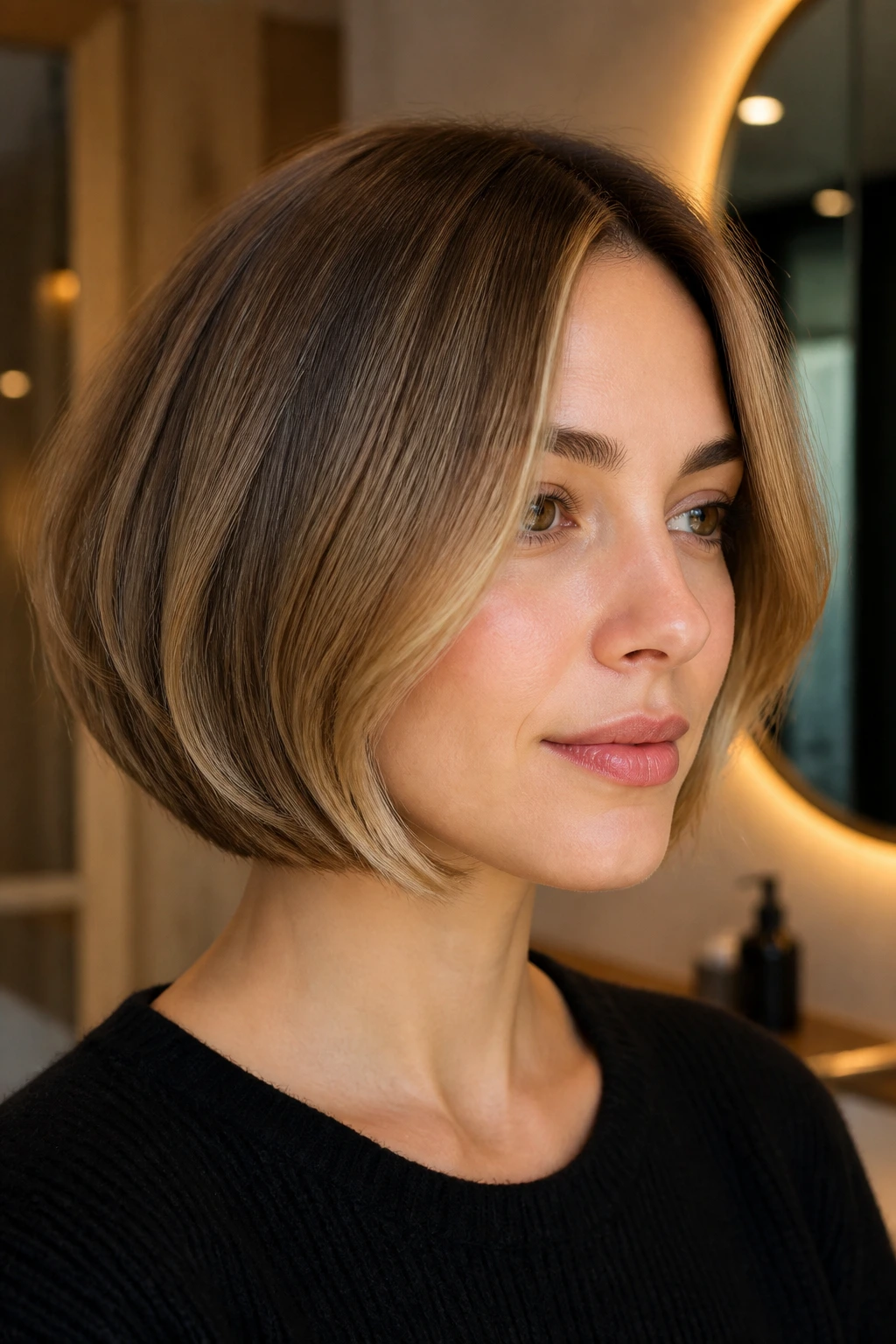
A chin-length bob sounds risky on thin hair until you see it in motion. Then it makes sense. The clean edge lands right where the jaw wants a little structure, and honey babylights soften the bluntness so the cut doesn’t look severe.
Picture this after a quick blow-dry: the hair curves inward just enough, the ends sit compact, and the tiny lighter strands around the face stop the whole thing from going dark and heavy. That balance is the point. Short hair can look fuller when every strand has a job.
- Keep the nape neat and slightly tucked.
- Ask for babylights concentrated around the face frame and crown.
- Use a pea-size styling cream, not a palmful.
- Finish with a flat brush or paddle brush for a little polish.
One little bend at the bottom is enough. More than that and the bob starts to puff in the wrong places.
3. Long Layers with Champagne Babylights
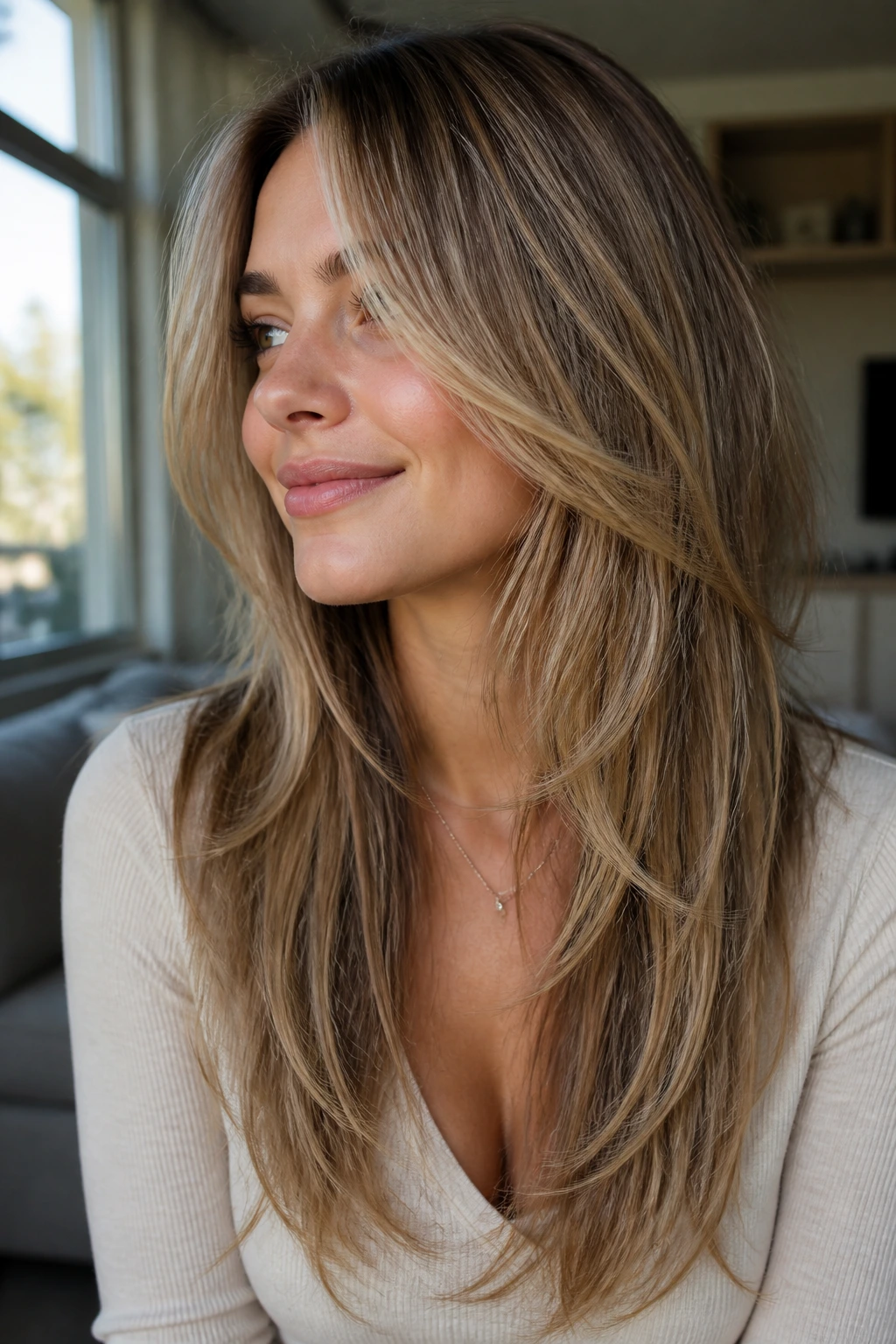
Long hair on thin strands can go stringy fast, which is why the layer map matters more than the length itself. A good long-layer cut keeps the shortest pieces below the chin, then lets the rest fall in soft, barely-there steps. Champagne babylights give the surface that fine sparkle that keeps the length from looking heavy and dull.
Why This Shape Works
The top stays bright and the lower lengths stay calm. That split is smart. If every inch of a thin mane is equally light, the whole thing can look washed out; if the color is too dark, it goes flat. Champagne sits in the middle, and it’s one of the easiest tones to live with.
Use a 1.25-inch round brush for the top section and a wide paddle brush through the ends. You want movement, not volume for volume’s sake.
4. Deep Side-Part Blowout with Caramel Ribbons
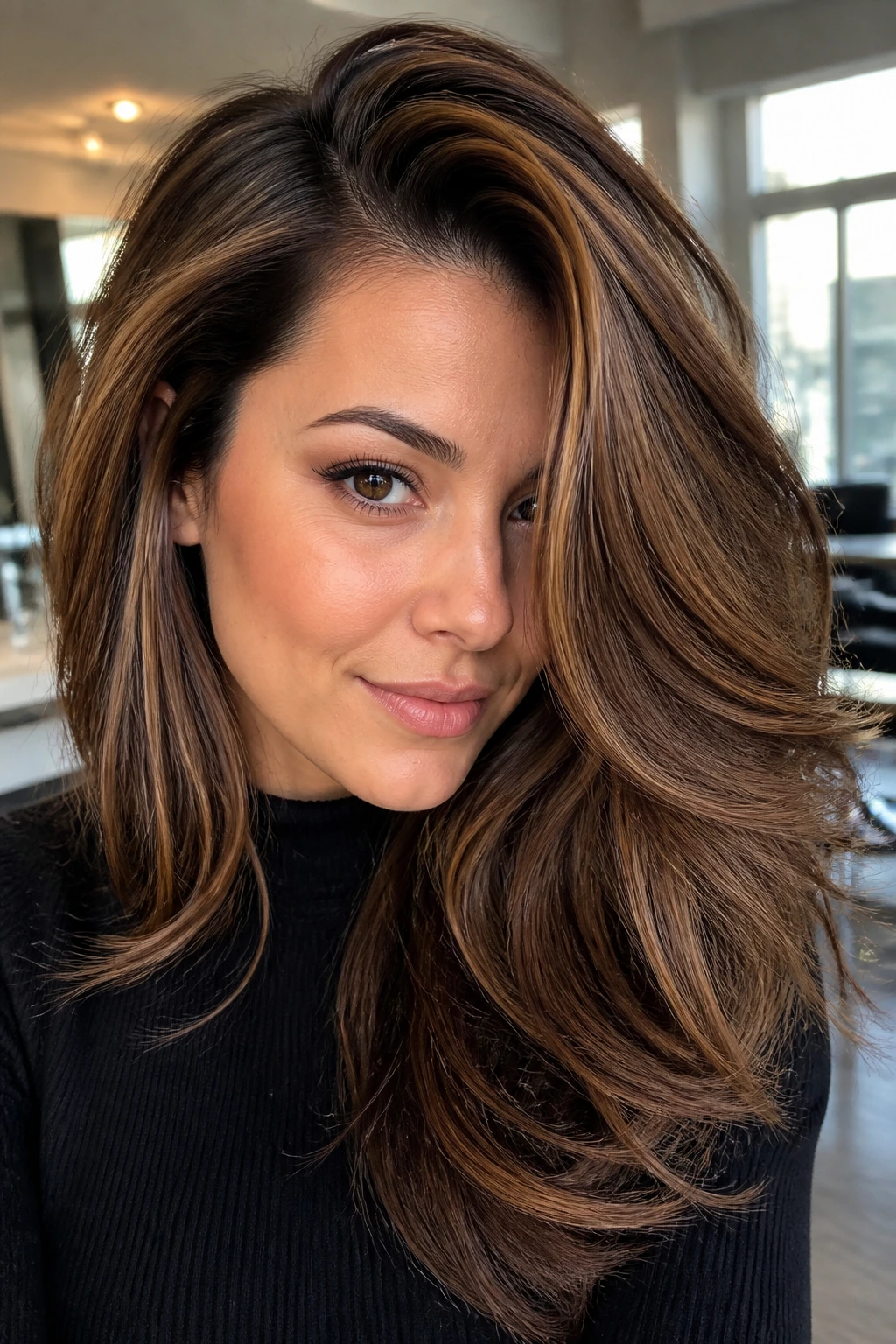
A deep side part changes the face of thin hair in seconds. It lifts one side, drops the other, and creates a little drama without asking the hair to do anything complicated. Caramel babylights on the heavier side make the swoop look thicker because the brightness catches the curve of the blowout.
This is one of my favorites when the hair is shoulder-length and stubbornly polite. It needs direction. A root-lifting spray at the crown and a round brush through the first two inches are enough to make the side part hold its shape through the day.
The beauty of this one is the asymmetry. Thin hair often looks better when it is not trying to be perfectly balanced.
5. Curtain Bangs with a Shoulder-Skimming Cut
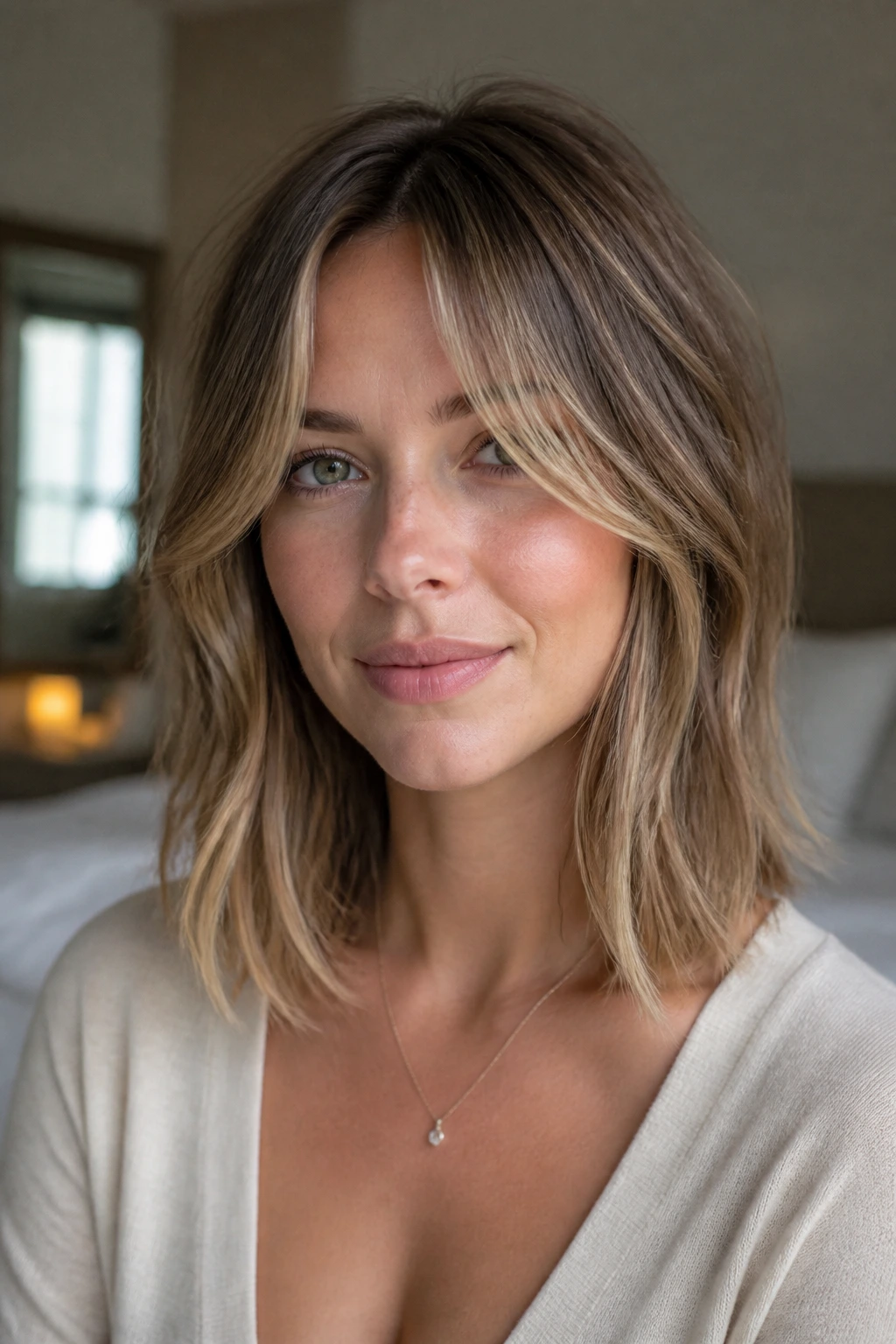
Can bangs make thin hair look thinner? Yes — if they’re cut too heavy, too blunt, or too short. Curtain bangs avoid that trap because they open at the center and soften toward the cheekbones, which creates two vertical lines instead of one dense block.
Babylights make the fringe look airy, not see-through. Keep the lightest pieces around the temples and front fringe, and leave the interior a touch deeper so the bangs don’t vanish against the forehead.
How to Keep the Fringe Airy
Dry the bangs first, before the rest of the hair. That sounds small, but it matters. A damp fringe on fine hair often dries in the wrong direction and loses that open sweep.
A shoulder-skimming cut underneath gives the bangs something to land on. The result feels longer than it is, which is the whole point here.
6. Sleek Mid-Back Cut with Micro Babylights
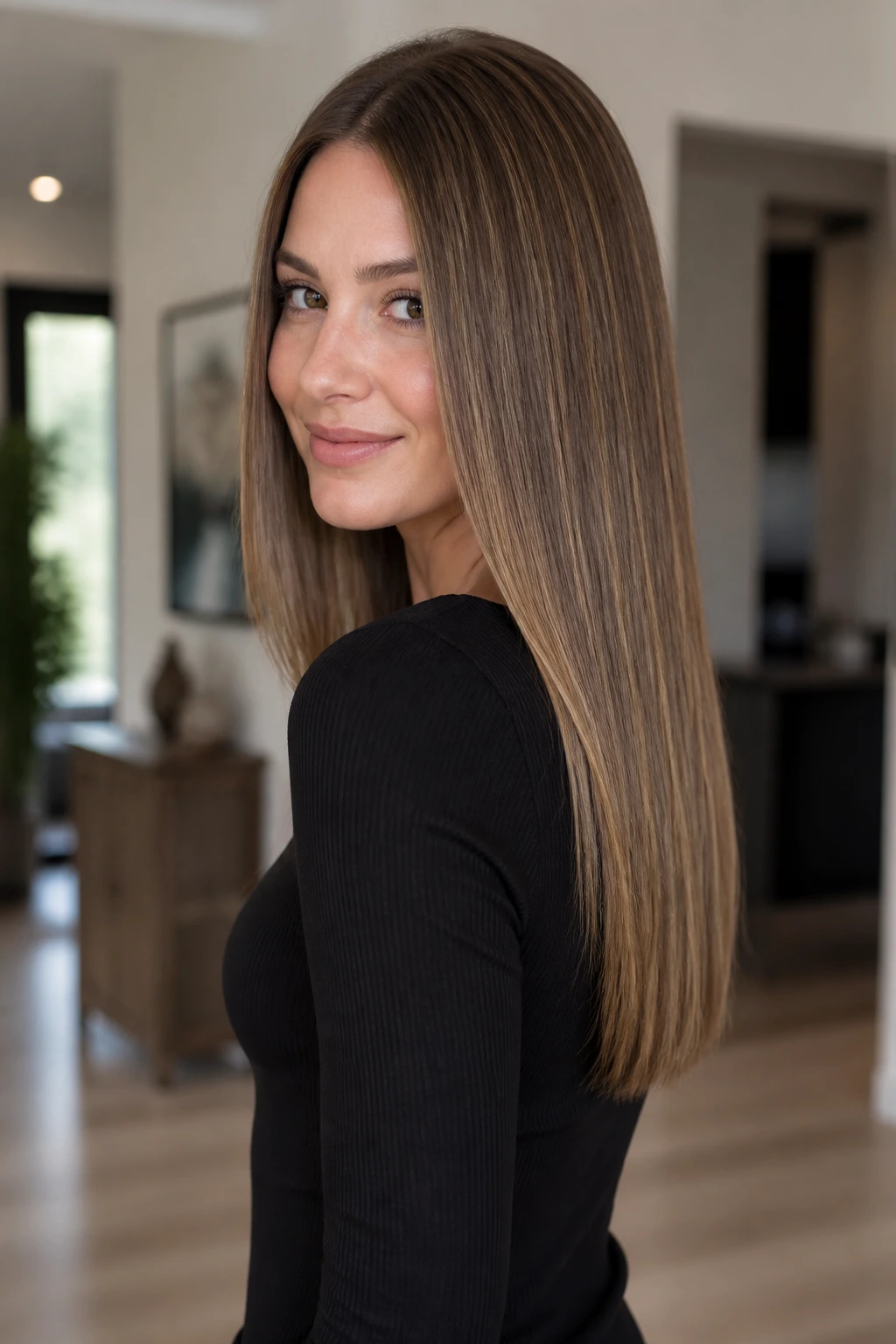
Long hair can still work for thin strands if the shape is disciplined. A sleek mid-back cut stays one length or nearly one length, and that strong line makes the ends look intentional instead of wispy. Micro babylights along the top third add shimmer without turning the whole length into a high-contrast patchwork.
Unlike heavily layered long hair, this version keeps the bulk together. That makes it a better choice when the ponytail is already small and the ends need all the help they can get. A smoothing cream and a blow-dry nozzle are worth their weight here.
I would not bleach the lower half aggressively on this cut. The point is shine and length, not over-lightened ends that split the second you tie it up.
7. Textured Wave Lob with Dimensional Lowlights
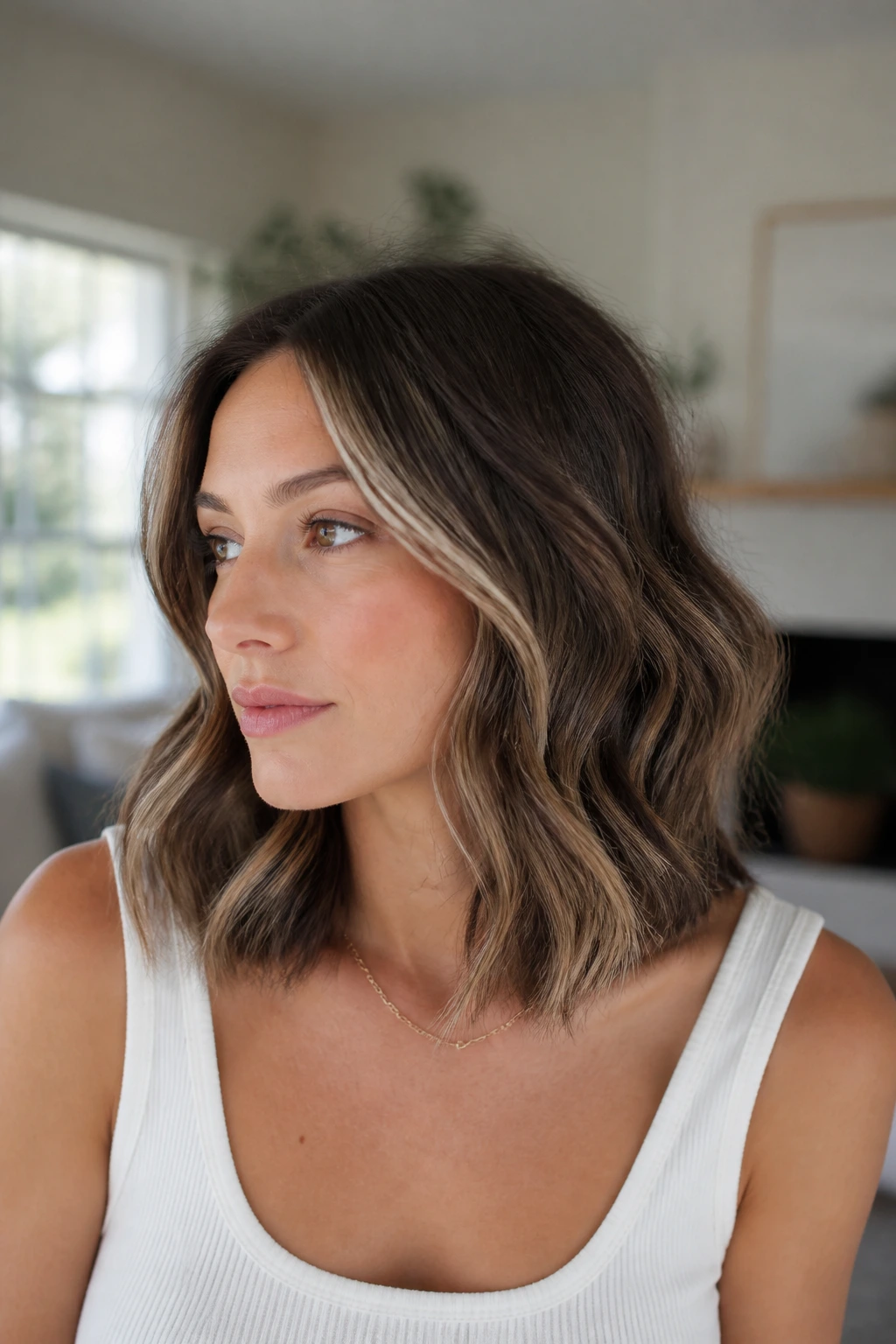
A wave lob is the move when you want movement but hate the look of over-layered hair. Soft waves create the illusion of body, and a few lowlights under the top layer keep the style from looking like one bright ribbon of color. Babylights through the surface catch the bends and make the texture show up on camera and in real life.
Use a 1-inch curling iron or wand and leave the last half-inch out. That little straight tail keeps the wave from feeling overdone. When the wave is brushed out, it gives the hair a thicker, wider read.
This is one of the easiest ways to make thin hair feel less fragile. Not bigger. Just better supported.
8. Hidden-Layer Shag with Feathered Ends
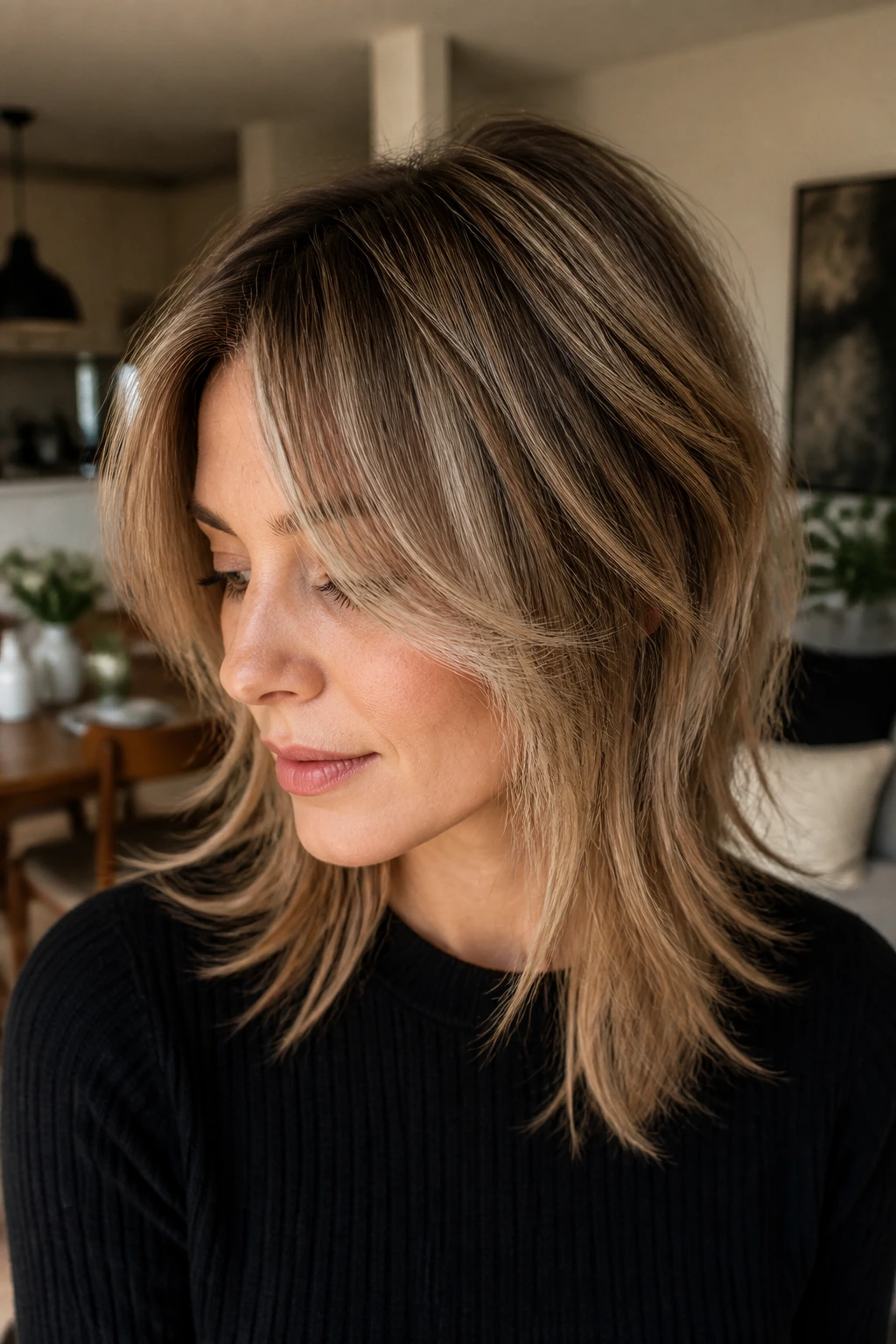
The best shag for thin hair is the one that knows when to stop. Too many layers at the ends and the cut falls apart. Keep the feathering around the crown and upper sides, where the babylights can pick up motion, and leave the lower perimeter a touch fuller.
The Cut Map Matters
Ask for internal layers, not a full chop through the bottom. That’s the difference between “airy” and “see-through.” I like babylights on the top panels and around the face, with a slightly darker underside for contrast.
A little dry texture spray at the roots helps, but not too much. If the hair feels dusty, the cut starts looking smaller than it is.
9. Bouncy Midi Cut with Rounded Ends
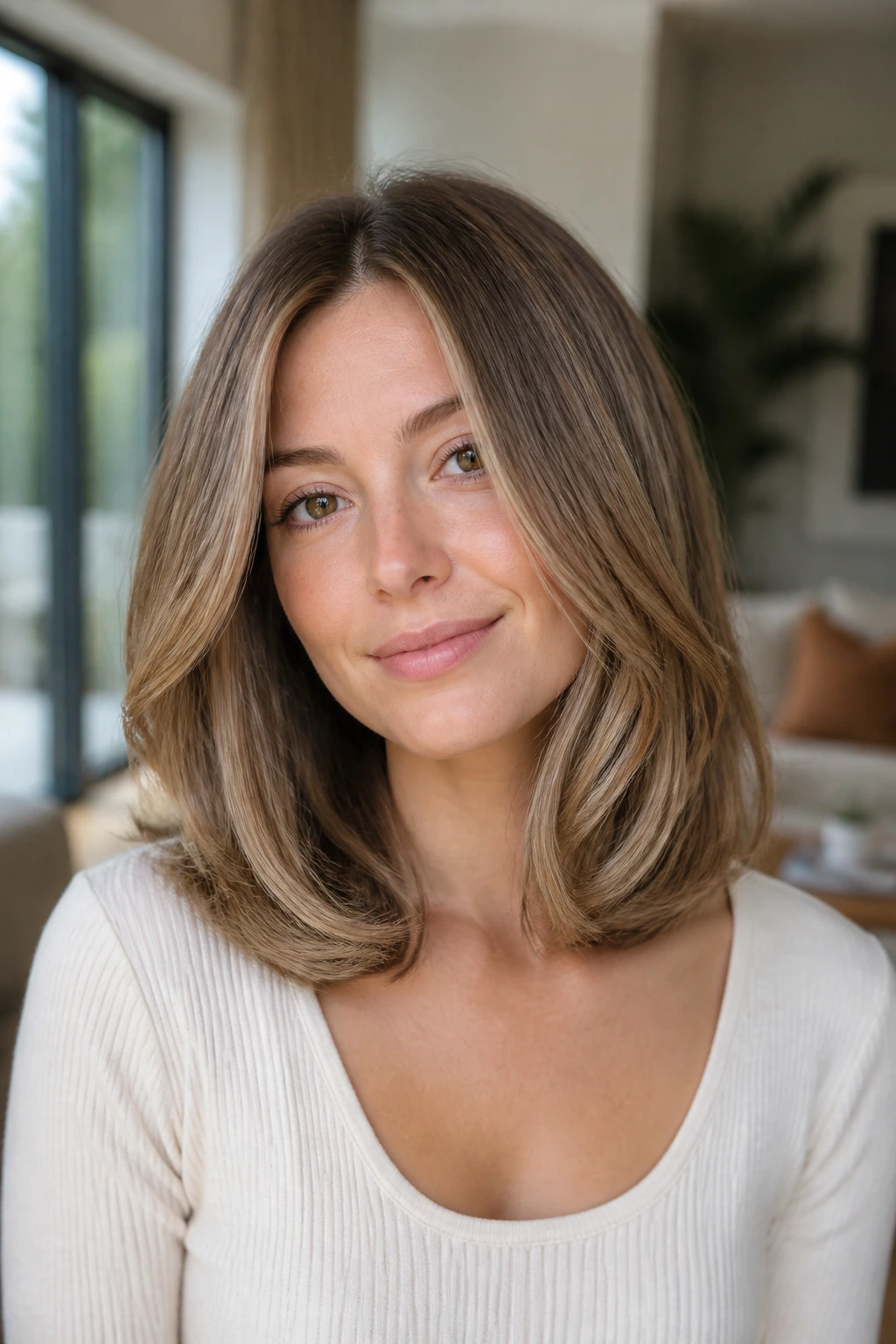
Rounded ends make thin hair look intentionally full. Straight, blunt cuts are clean, but a soft C-shaped curve at the bottom gives the whole silhouette a friendlier weight. Babylights in a warm beige or soft caramel tone keep the curve visible without drawing attention to sparse spots.
This style is a good middle ground if you like hair that sits on the shoulders but still wants a little polish. The round brush does the work. Turn the ends under while the hair is warm, hold for a few seconds, then let them cool before you touch them.
A single sentence here: flat ends are the enemy. Rounded ends are not.
10. Sleek Low Ponytail with Face-Framing Brightness
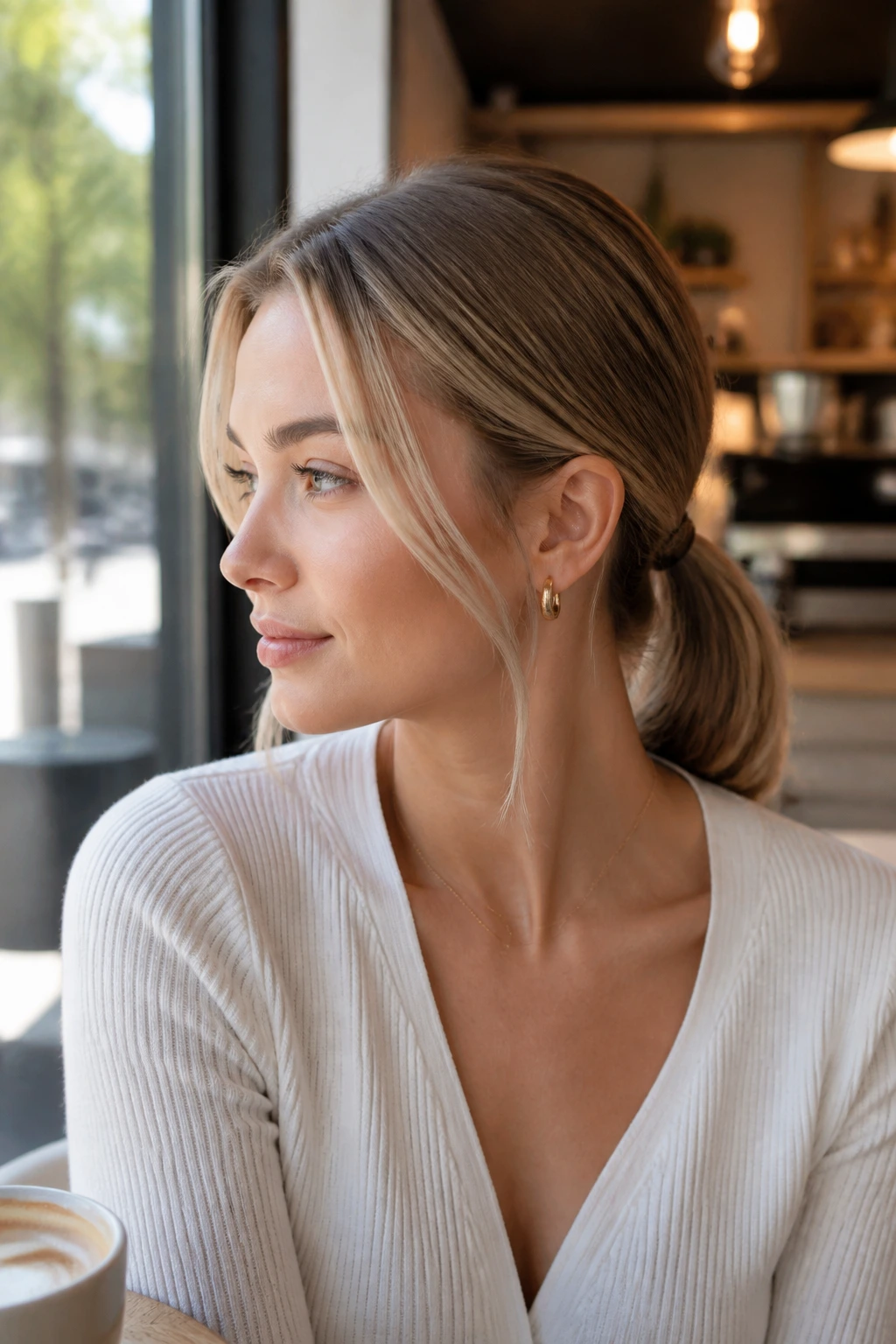
Not every lengthening hairstyle has to be worn down. A low ponytail can make thin hair look longer because it pulls everything into one clean line at the nape. Add babylights around the temples and front pieces, and the face gets brightness while the ponytail stays compact and tidy.
The trick is to keep the crown softly lifted, not slicked hard against the scalp. A small amount of root mousse at the part and a wrap of hair around the elastic make the style feel finished instead of rushed.
This is one of those styles that looks better if the hair is a little dirty. Day-two texture gives the ponytail more grip and keeps the ends from splitting apart.
11. Soft Pixie Bob with Frosted Crown
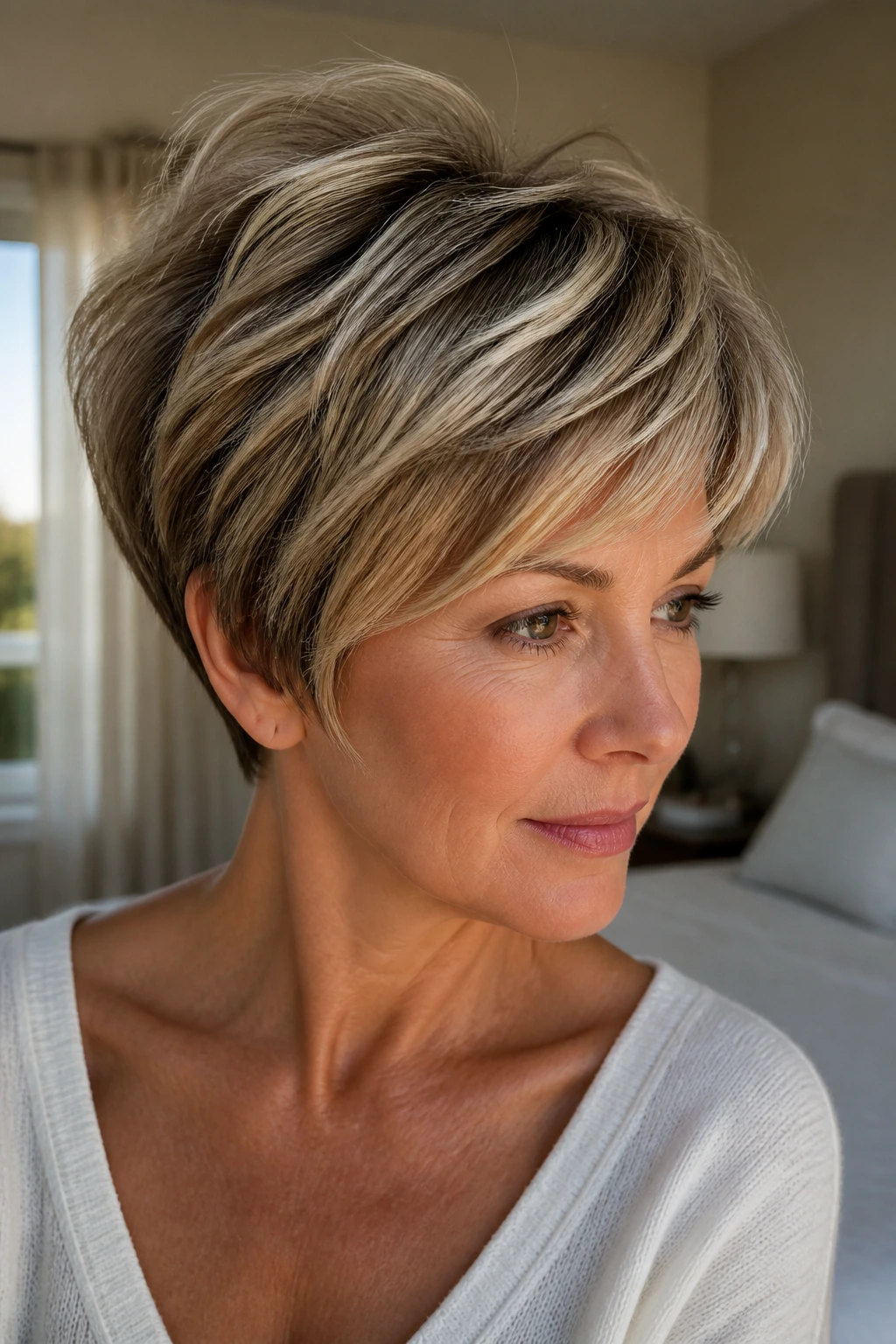
Can a pixie-bob lengthen a face? Absolutely, if the top stays longer than the sides and the crown has enough lift. Frosted babylights near the crown brighten that upper section, which pulls the eye upward and makes the whole head look taller.
Why It Flatters Thin Hair
The close sides keep the shape tidy. The longer top gives movement. Put those together and you get a cut that feels neat but not severe, especially if you work in a tiny bit of matte paste at the roots.
Avoid over-thinning the nape. A pixie-bob on fine hair can go wispy in a hurry, and once that happens, the lift is gone.
12. One-Length Bob Tucked Behind the Ear
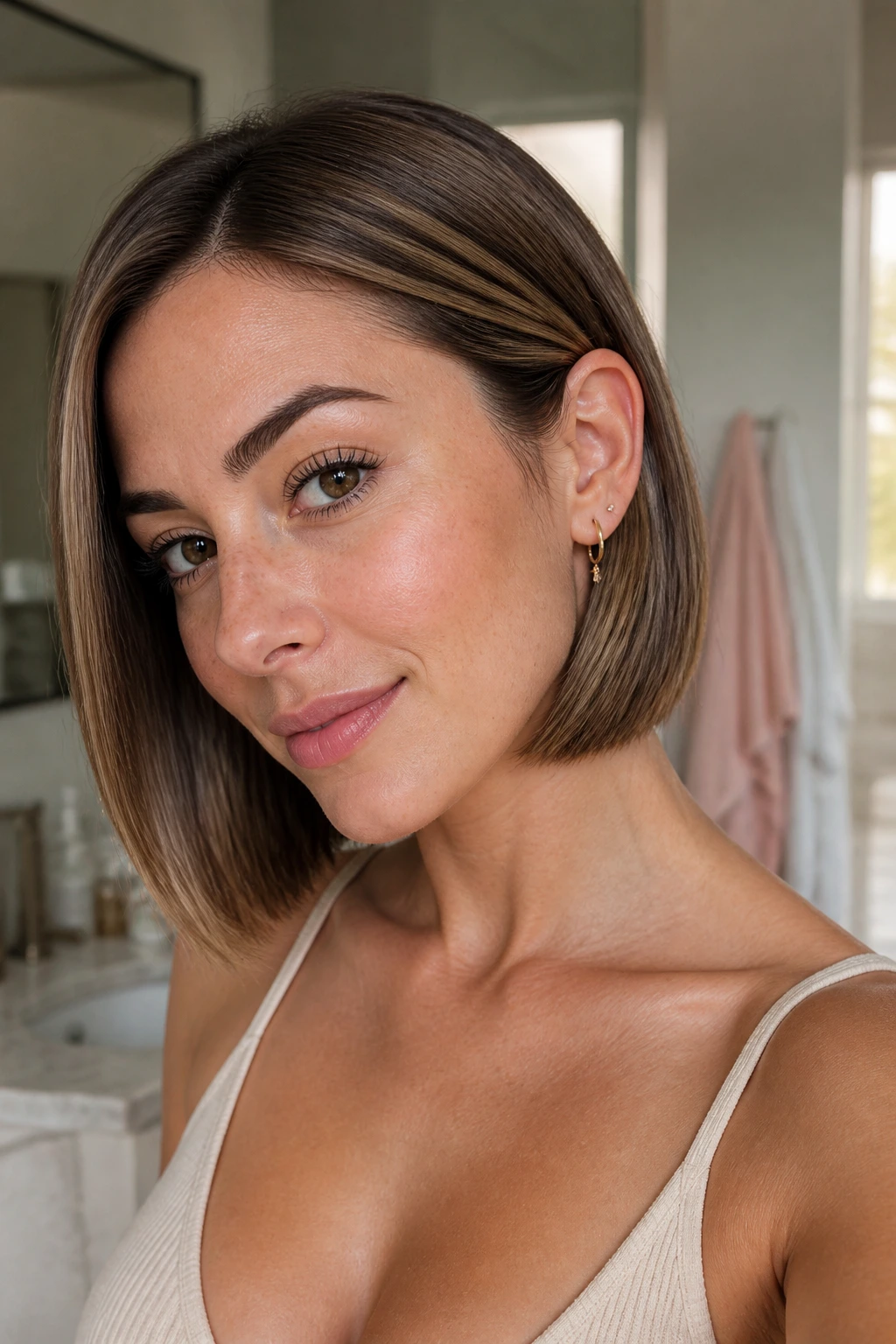
A one-length bob is the quiet overachiever of thin-hair styling. It doesn’t rely on layers to fake movement; it relies on a solid edge and a neat tuck behind one ear to create a diagonal line across the face. Babylights at the temples and outer panels keep the tucked side from disappearing into the scalp.
Unlike choppier cuts, this bob doesn’t need a lot of product. That’s part of the charm. You can blow it smooth, tuck one side, and suddenly the haircut looks sharper and longer than it really is.
A tiny amount of gloss serum on the surface is enough. Too much and the ends separate.
13. Airy Shag with a Longer Neckline
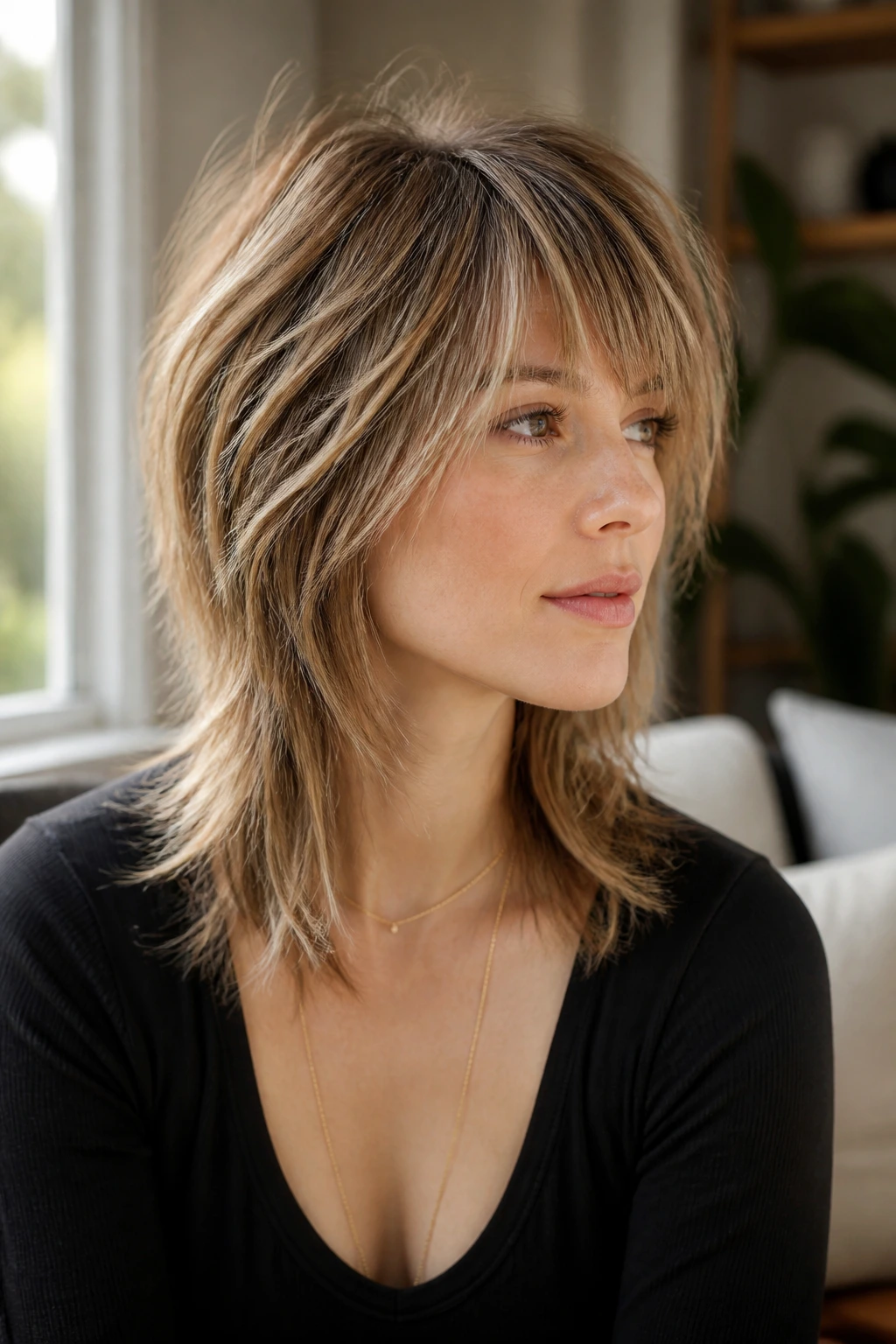
The shag gets a bad reputation when people over-layer it. For thin hair, the better version keeps the neckline longer and the crown softly broken up, so the shape has movement without losing its backbone. Babylights through the upper bends make each piece stand out.
This cut is especially good if your hair dries with a little natural wave. You don’t want to fight that. Scrunch in a lightweight mousse, let it air-dry halfway, then give the front pieces a quick twist with your fingers while they’re still damp.
The lengthening part comes from the vertical direction of the layers. They move down the neck, not outward into a puff.
14. Glass-Hair Lob with Pearl Babylights
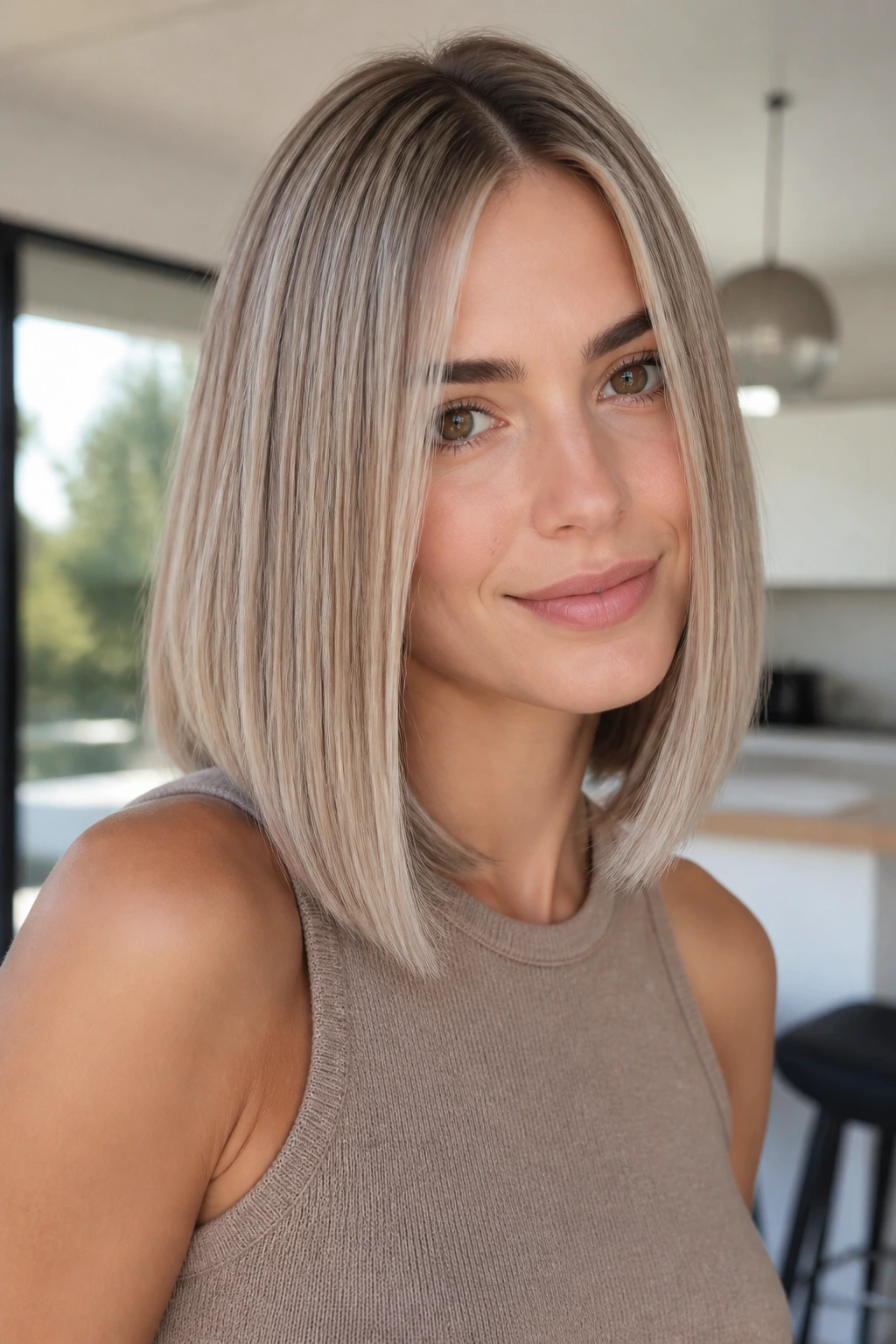
A sleek lob can look sharp on thin hair, but only if the ends are blunt and the finish is glossy. Pearl babylights add a cool, soft reflectiveness that makes the straight surface look polished rather than flat. This is the haircut equivalent of clean window light.
Use a heat protectant, a boar-bristle brush, and a flat iron only if the hair actually needs it. A lot of people overheat this style and end up with flyaways that make fine hair look even thinner. Slow, smooth passes are better than aggressive straightening.
The whole effect hinges on restraint. No crunchy spray. No heavy oils. Just clean lines and a soft shine.
15. Side-Swept Shoulder Cut with Lifted Roots
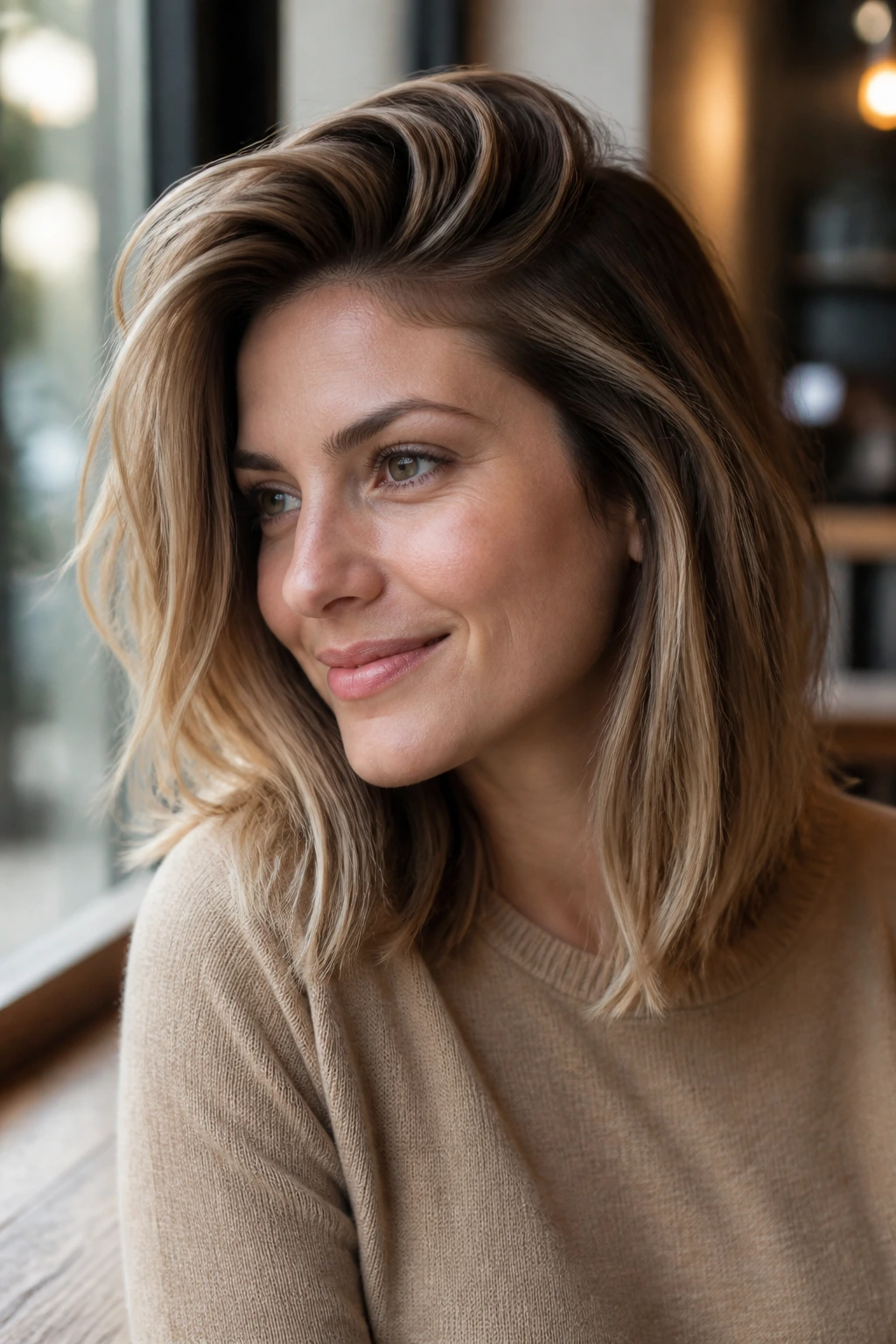
A side-swept shoulder cut builds length through angle. One side falls a little lower, the other sits higher at the root, and the whole shape feels less blunt than a straight center part. Babylights on the lifted side brighten the bend and make the crown look a little taller.
Quick Details That Matter
- Keep the part about 1 inch off-center.
- Use root-lifting mousse only at the top 2 inches.
- Wrap the front section away from the face with a 1.25-inch brush.
- Add a few lowlights underneath if the hair is very light already.
This cut is one of the easiest to wear with a blazer, a knit sweater, or anything with a high neckline. It frames the face without swallowing it.
16. Loose Curls on a Long, Narrow Layer Map
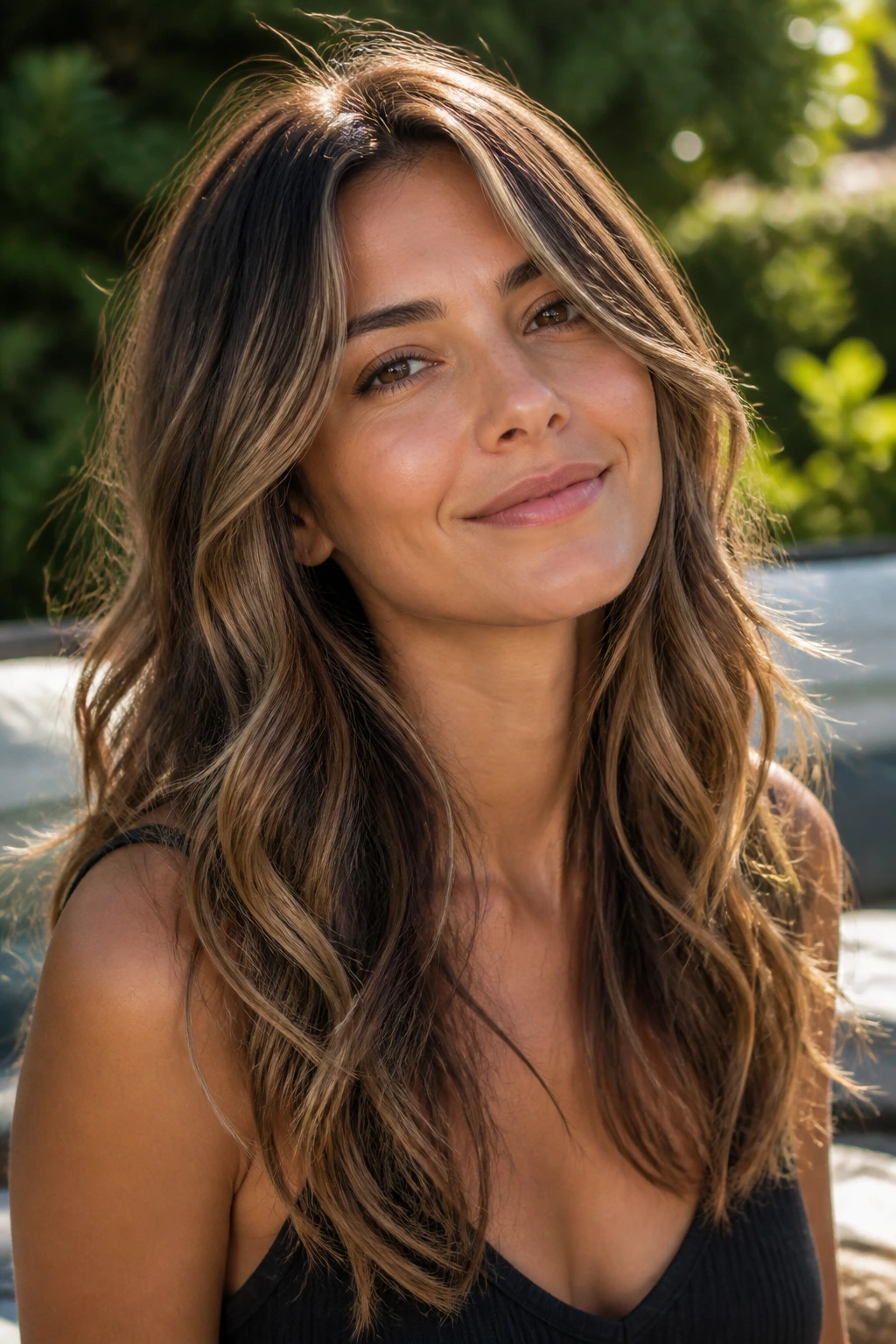
Loose curls are useful on thin hair when the layer plan is narrow and controlled. A long, narrow layer map means the curls land in broad ribbons instead of shredded pieces, which makes the hair look wider and fuller from the front. Babylights show up inside those curls in a way that flat straight hair can’t match.
The best version uses a larger barrel — 1.25 inches is a good place to start — and the curls are brushed out once they cool. That brushed-out finish is what gives the style width.
If the hair is too fine for hot tools every day, set the front sections with Velcro rollers for 10 to 15 minutes. Old-school, yes. Effective, also yes.
17. Half-Up Twist with Bright Crown Pieces
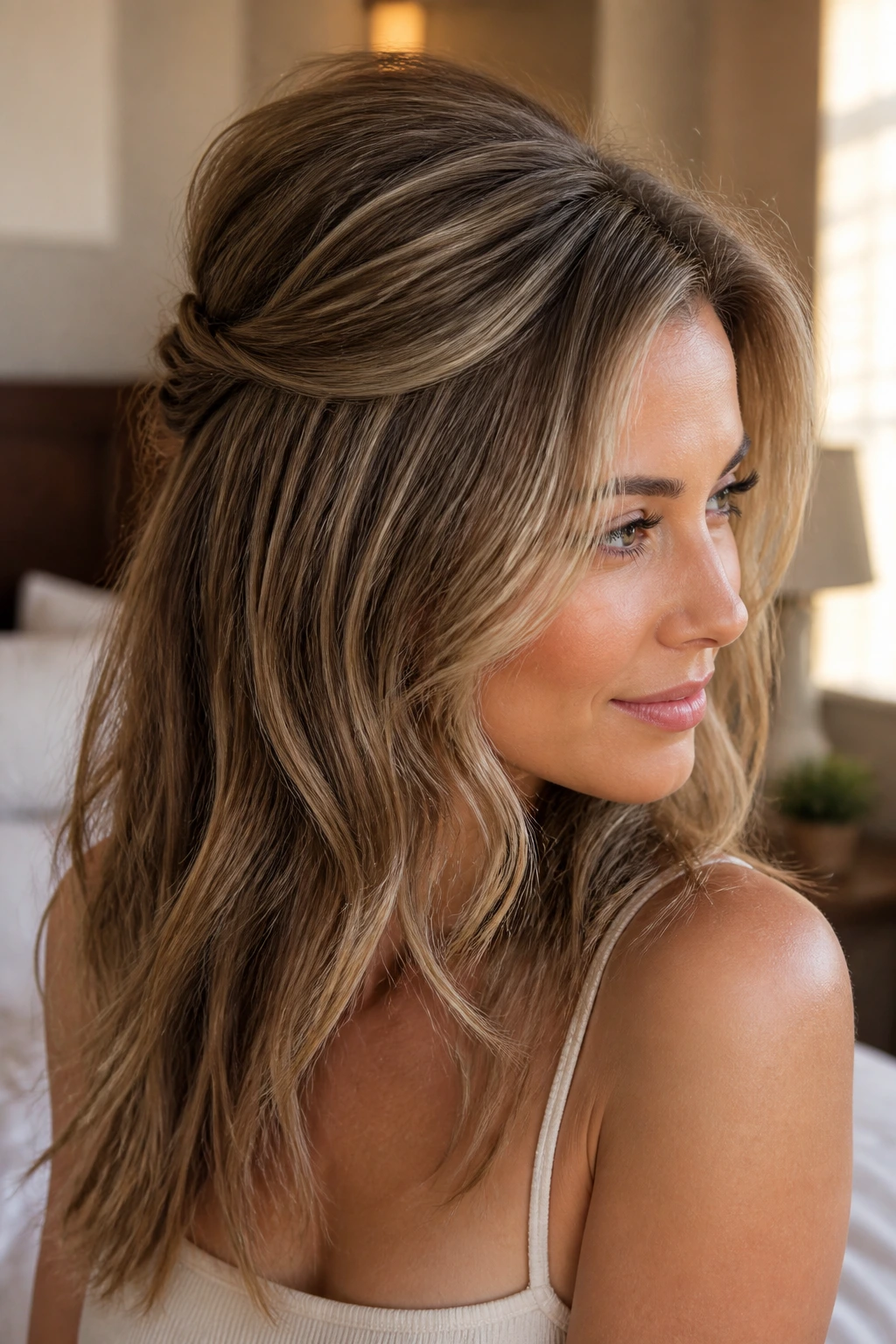
A half-up twist is one of the easiest ways to create height on thin hair without teasing it into a nest. Pull the crown section back loosely, twist it, pin it, and let the bottom stay soft. Babylights at the crown and temple pieces make the lifted area look brighter, which amplifies the illusion of fullness.
Does it work on day-two hair? Better than on freshly washed hair, honestly. A touch of texture gives the pins something to hold. If the hair is too silky, a dry shampoo mist at the roots can stop the twist from sliding.
Keep the twist low and a little loose. A tight half-up can expose the scalp line in the worst way.
18. Feathered Blowout with Far-End Lightness
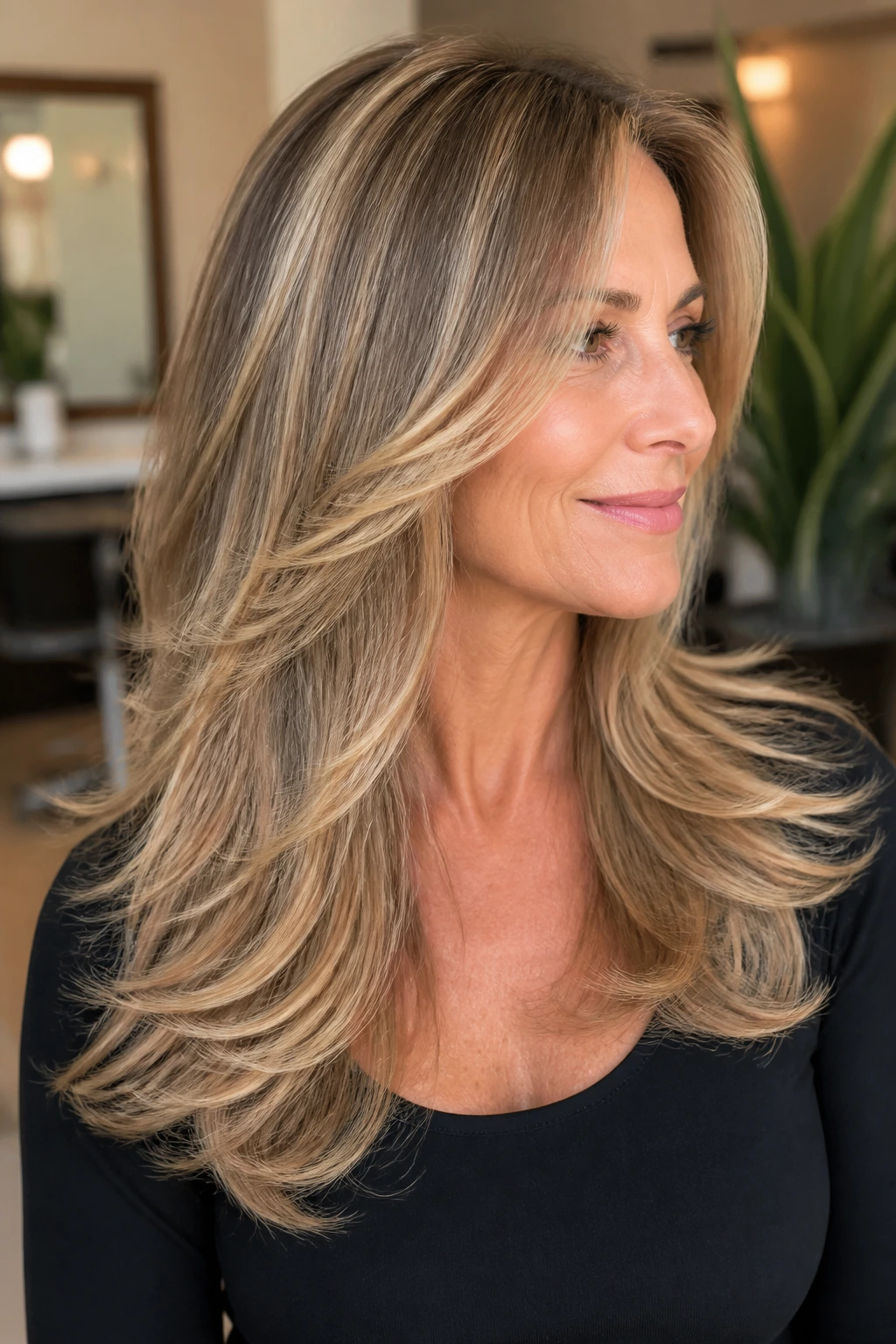
A feathered blowout is one of those styles that looks more complicated than it is. The key is keeping the feathering toward the last few inches, not shredding the whole head. Babylights near the far ends create a soft, sun-touched finish, while lowlights underneath stop the hair from looking like a pale curtain.
Unlike an overlayered blowout, this one keeps enough weight in the middle lengths to hold the shape through the day. That means less collapse by 3 p.m. and fewer weird bends at the shoulders.
The round brush should roll the ends away from the face in a gentle curve. Not a curl. A curve.
19. Collarbone Cut with Bottleneck Bangs
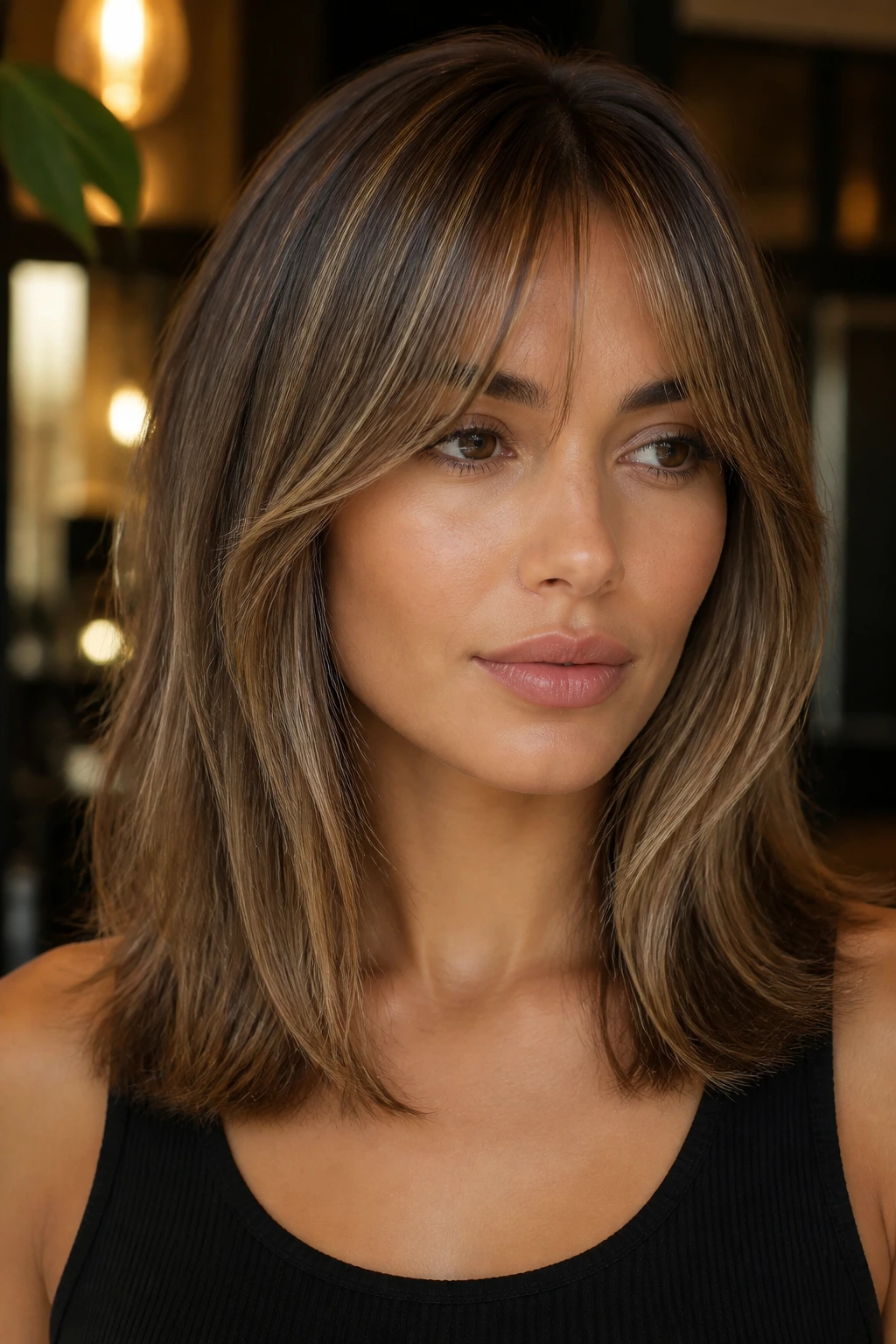
Bottleneck bangs are a smart fix when you want fringe without sacrificing density. They start narrow at the center, then widen softly around the cheekbones, which gives the face a vertical frame. On thin hair, that shape is kinder than blunt bangs because it doesn’t remove a big chunk of front bulk.
Babylights through the bangs and along the front edge keep them from looking heavy. Keep the tone soft and avoid over-lightening the very tips. Bangs are where thin hair shows every mistake.
The collarbone cut underneath gives the whole style a strong line, which keeps the face frame from floating away from the rest of the haircut.
20. Micro-Shag with Warm Blonde Babylights
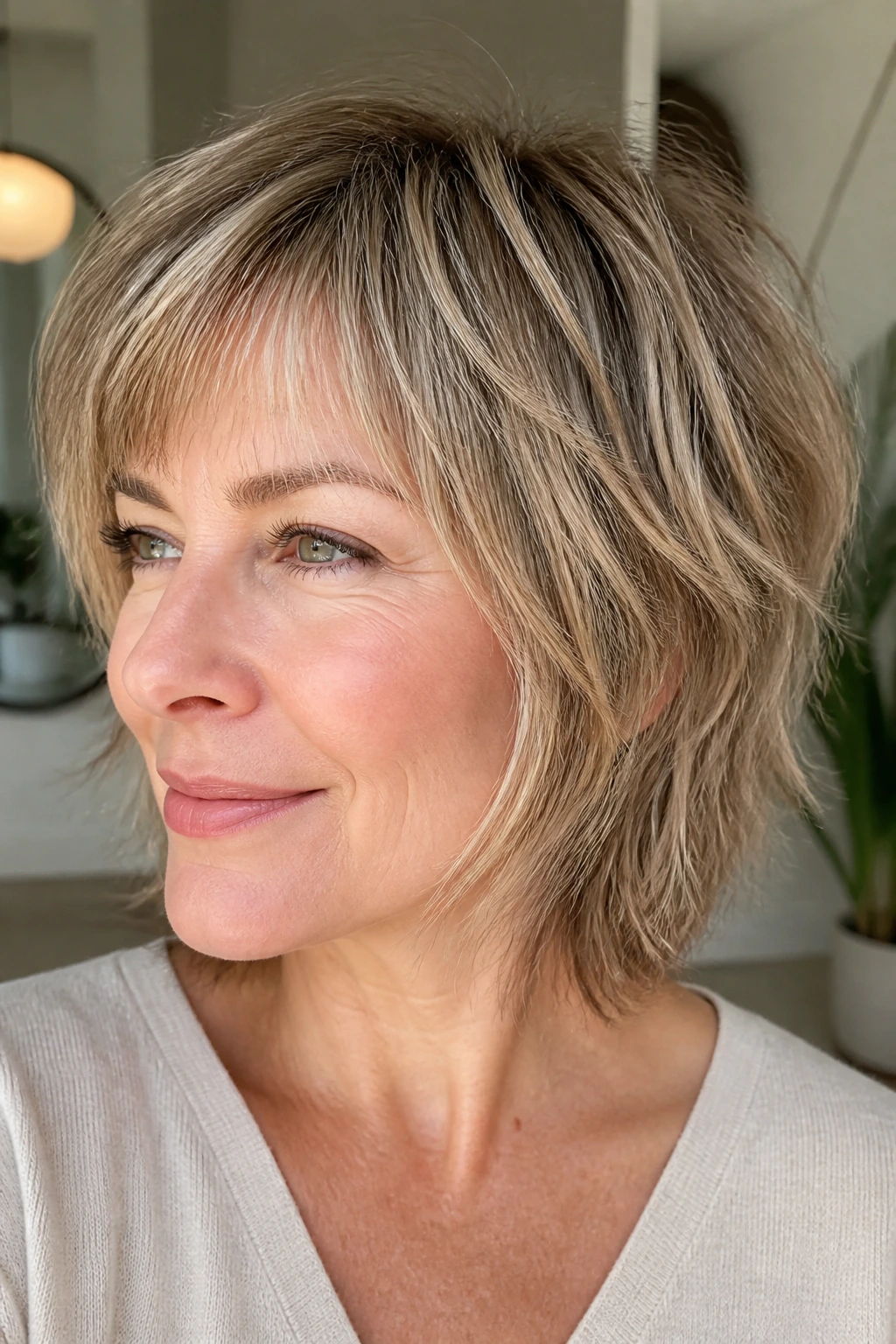
The micro-shag is for people who want movement but do not want their hair carved into pieces. It uses short, soft layers close to the crown and cheeks, then stops before the ends get too wispy. Warm blonde babylights make the texture pop without cooling the whole cut into something dusty or gray.
What Keeps It From Going Too Thin
The perimeter stays thicker than you’d expect. That’s the move. A little salt spray at the roots, a diffuser on low, and a finger-style finish are enough to wake it up.
If your hair is naturally fine and pin-straight, keep the shag micro, not aggressive. A tiny bit of texture goes a long way.
21. Low Chignon with Ribboned Highlights
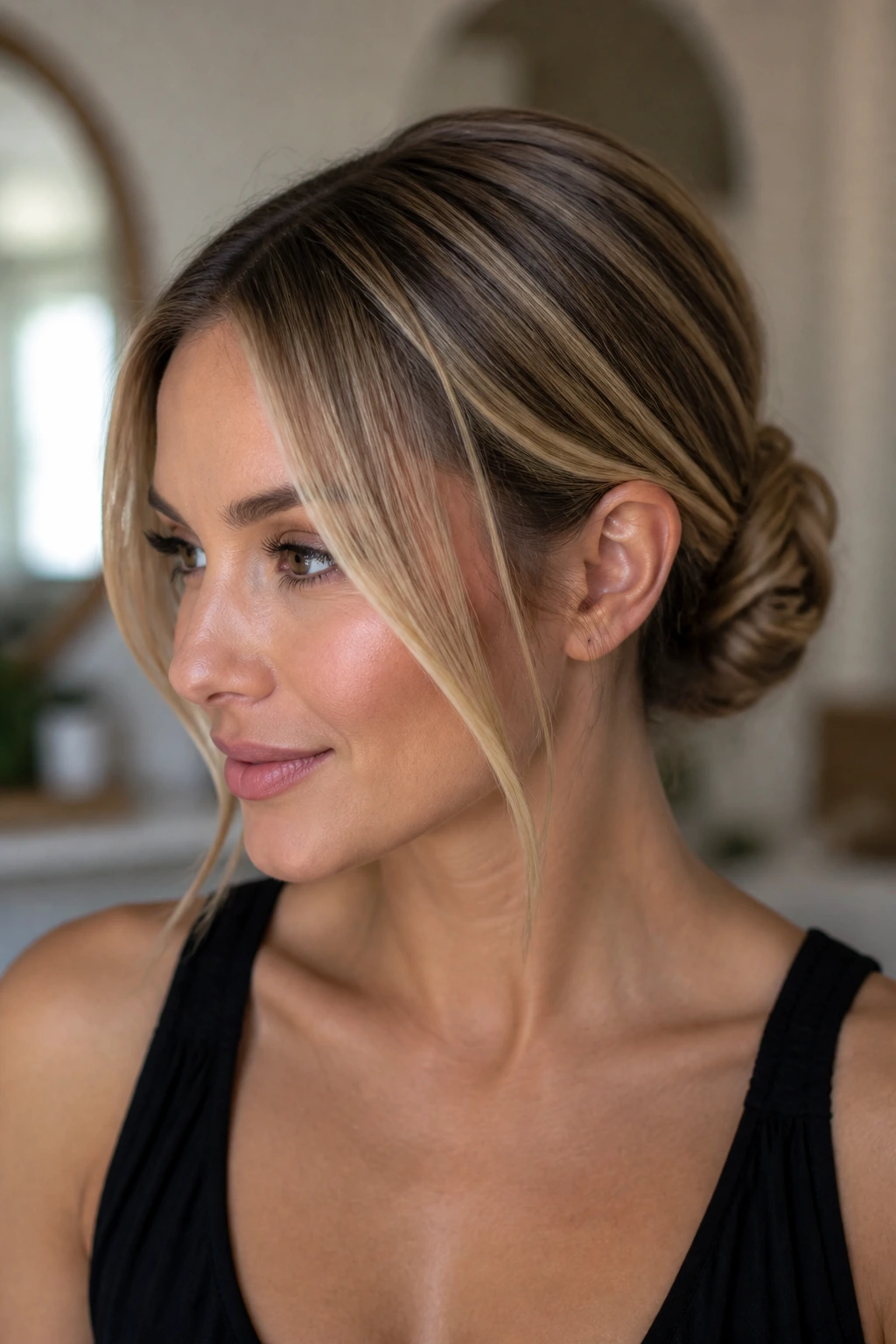
An updo can lengthen thin hair when it’s placed low and kept narrow. A low chignon at the nape draws the eye downward in one clean line, and ribboned babylights around the face stop the style from looking too severe. This is one of the better options for weddings, dinners, or any situation where you want your hair to look considered but not overbuilt.
A pin-and-roll technique works better than twisting everything into one big knot. The texture stays visible. The bun stays compact. And if a few lighter pieces slip out near the ears, that’s fine — it softens the shape.
I would skip heavy finishing cream here. It can flatten the whole crown.
22. Razor-Soft Lob with Shadow Root
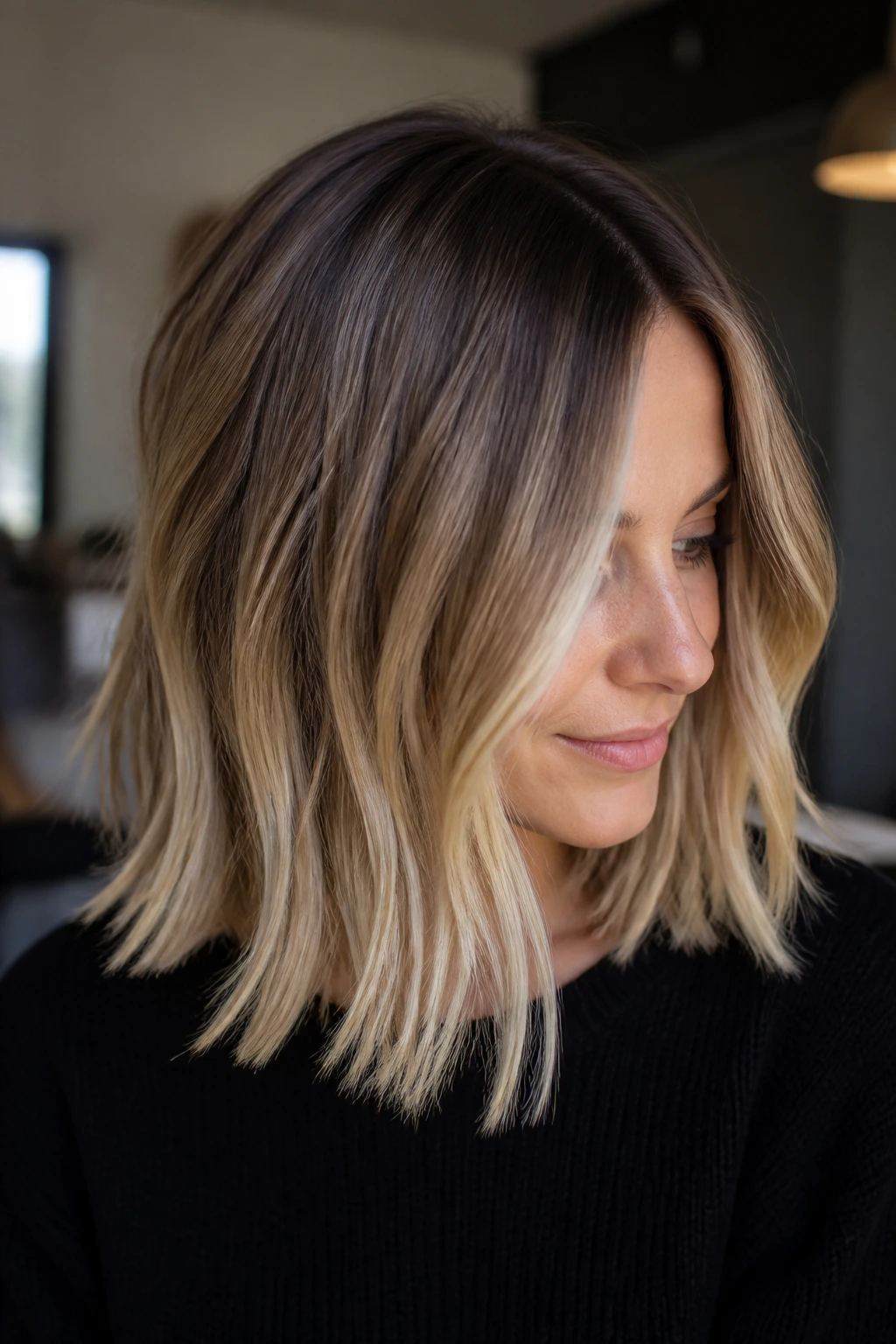
A razor-soft lob sounds edgy, but on thin hair it should still be cautious. The ends need movement, yes, but not frayed little wisps that break apart the minute the wind hits them. A soft shadow root paired with babylights gives the cut depth at the top and lift through the middle lengths.
This is the style I’d choose for someone who likes the hair to feel modern without looking stiff. The darker root gives the scalp less chance to show through. The babylights brighten the top layer. And the lob length keeps enough body in the perimeter that the hair does not vanish into the shoulders.
Use a serum only on the very ends. The crown needs air.
How to Make These Shapes Work on Real Thin Hair
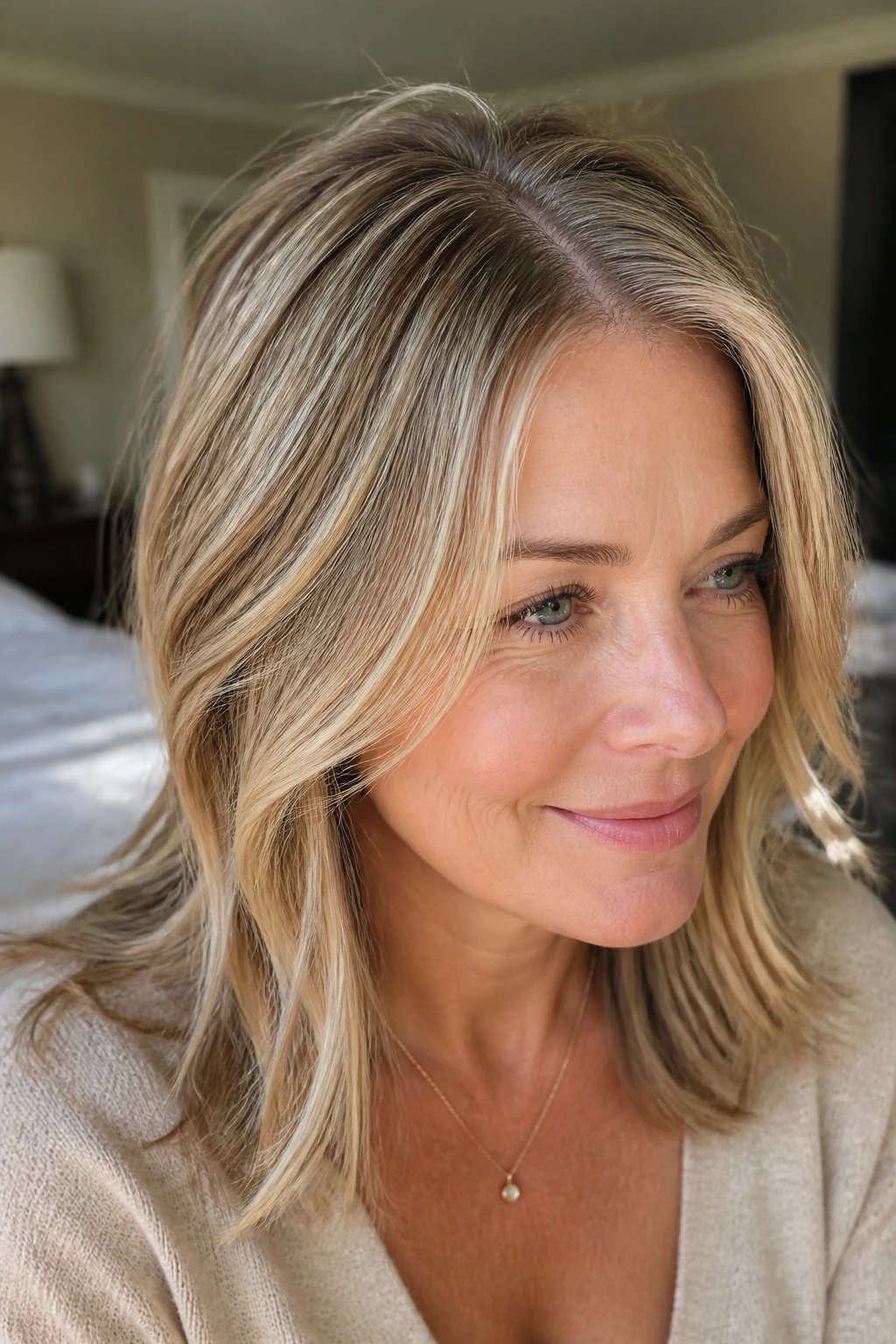
Thin hair behaves better when you stop asking it to do too much at once. Pick one job for the cut and one job for the color. If the haircut already gives you a strong edge, don’t chase every stray layer. If the babylights already brighten the top, you do not need a stack of root lift products that leave the hair crunchy by noon.
Placement matters more than volume. Babylights should live around the part, hairline, crown, and face frame first. That is where they change the silhouette. Ends can stay a little deeper if they’re already see-through, and a lowlight underneath can keep the whole head from looking stripped bare.
Ask for the shape, not the trend. A stylist hears “babylights” and “thin hair” all the time. What helps more is a sentence like: keep the perimeter blunt, place the light around the crown and temples, and leave the ends dense enough to hold a line. That’s a real plan.
Common Mistakes That Flatten Babylighted Thin Hair
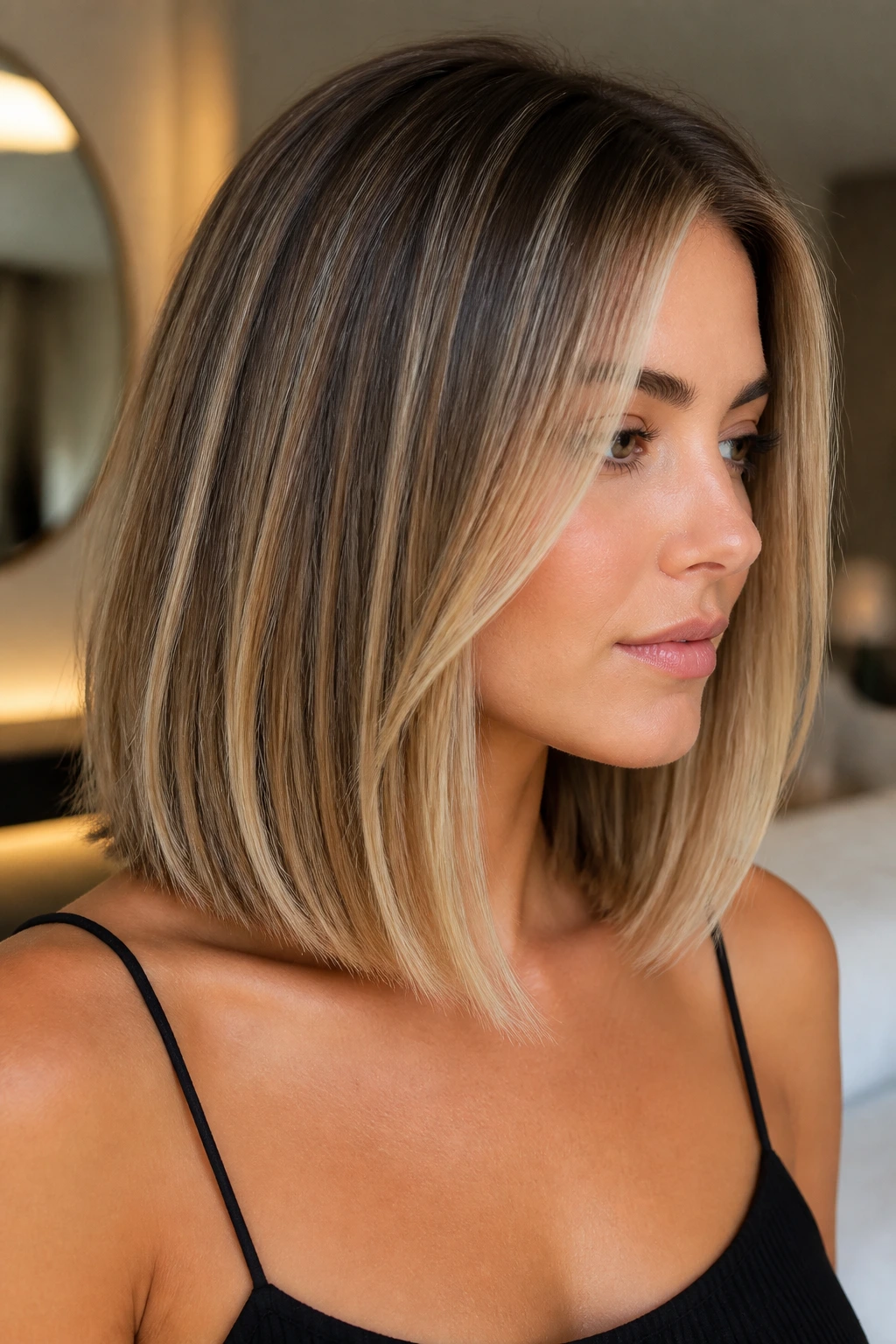
The first mistake is making the highlights too chunky. Big ribbons look pretty in a swatch book, then expose every thin spot on the head. On fine hair, the brighter the highlight, the more it can read as missing density. Keep the pieces tiny and the contrast soft.
Another problem is over-layering the ends. It feels airy at the salon, then the hair dries into wisps with no weight at all. If the cut needs movement, take it from the interior and the crown, not the bottom edge.
Heavy cream is another sneaky offender. A tablespoon too much can turn babylighted hair limp at the roots and stringy at the lengths. Use the smallest amount you can spread evenly, and stop once the frizz is controlled.
Skipping a root shadow is a mistake when the hair is very fine and pale. A little depth at the root makes the crown look fuller. Too much darkness, though, and the whole thing goes flat again. That balance is fussy, but worth getting right.
Tweaks for Different Lengths, Textures, and Face Shapes
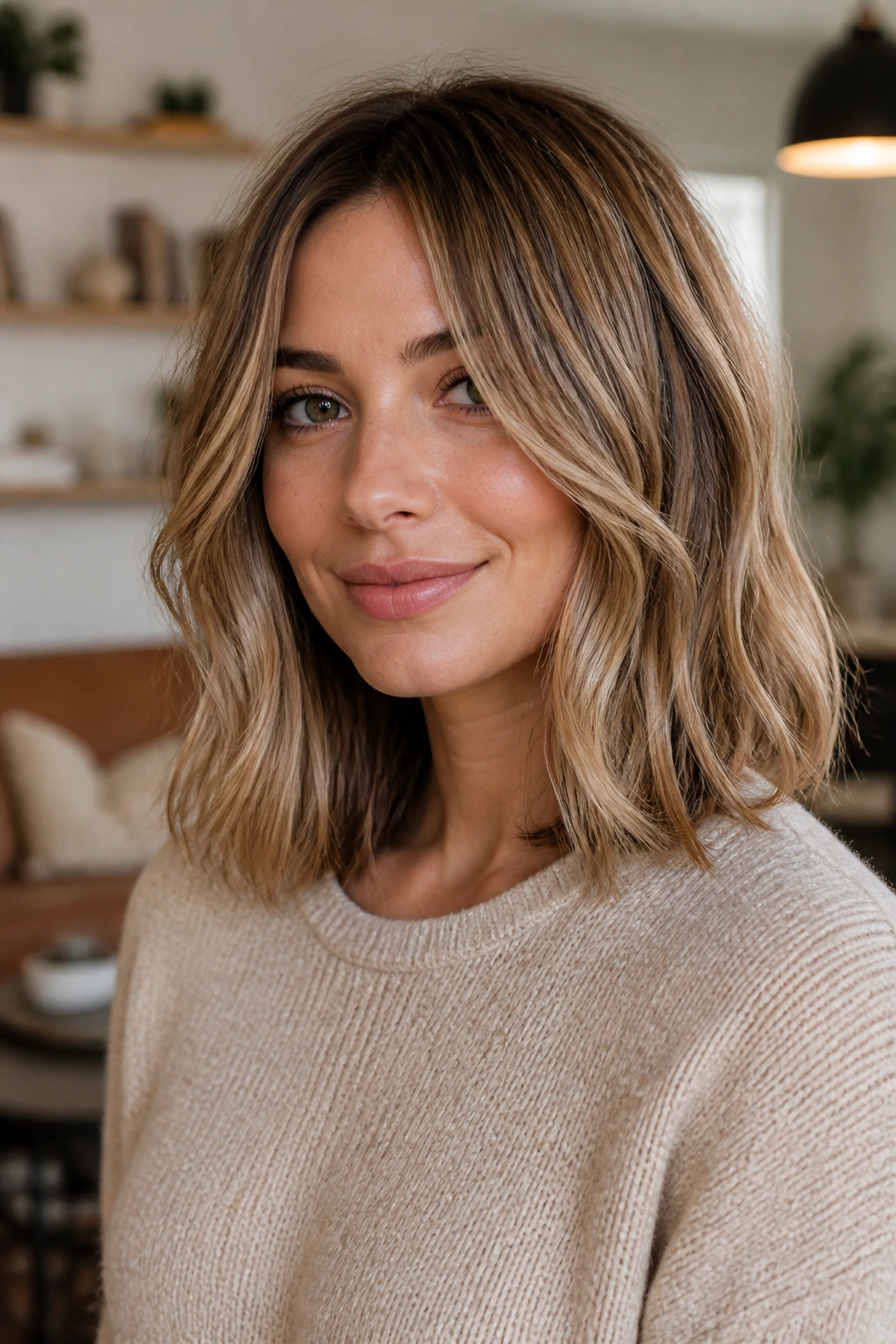
The Blunt Edge Edit: If your hair is very fine, keep the perimeter straighter and heavier than you think you need. A clean line at the shoulders or collarbone makes the hair look thicker from the front, especially with beige or champagne babylights.
The Soft-Curve Edit: If your hair bends easily, lean into C-shaped ends and loose waves. This works especially well with shoulder-length cuts because the curve adds width without making the style feel round and puffy.
The Dark-Underlayer Edit: If your hair has no natural depth, ask for a few lowlights under the top sections. The color contrast gives babylights somewhere to live, and thin hair often looks best when there is a little shadow underneath the shine.
The Fringe Edit: For longer faces, curtain bangs or bottleneck bangs can shorten the look of the face without taking too much bulk from the sides. Keep the fringe airy and place brightness around the temples so the bangs don’t disappear.
The Low-Maintenance Edit: If you hate heat styling, choose a cut that looks good with a rough air-dry and a bit of bend in the front. The babylights should do the visual work, not your curling iron.
Tools, Products, and Salon Notes That Actually Help
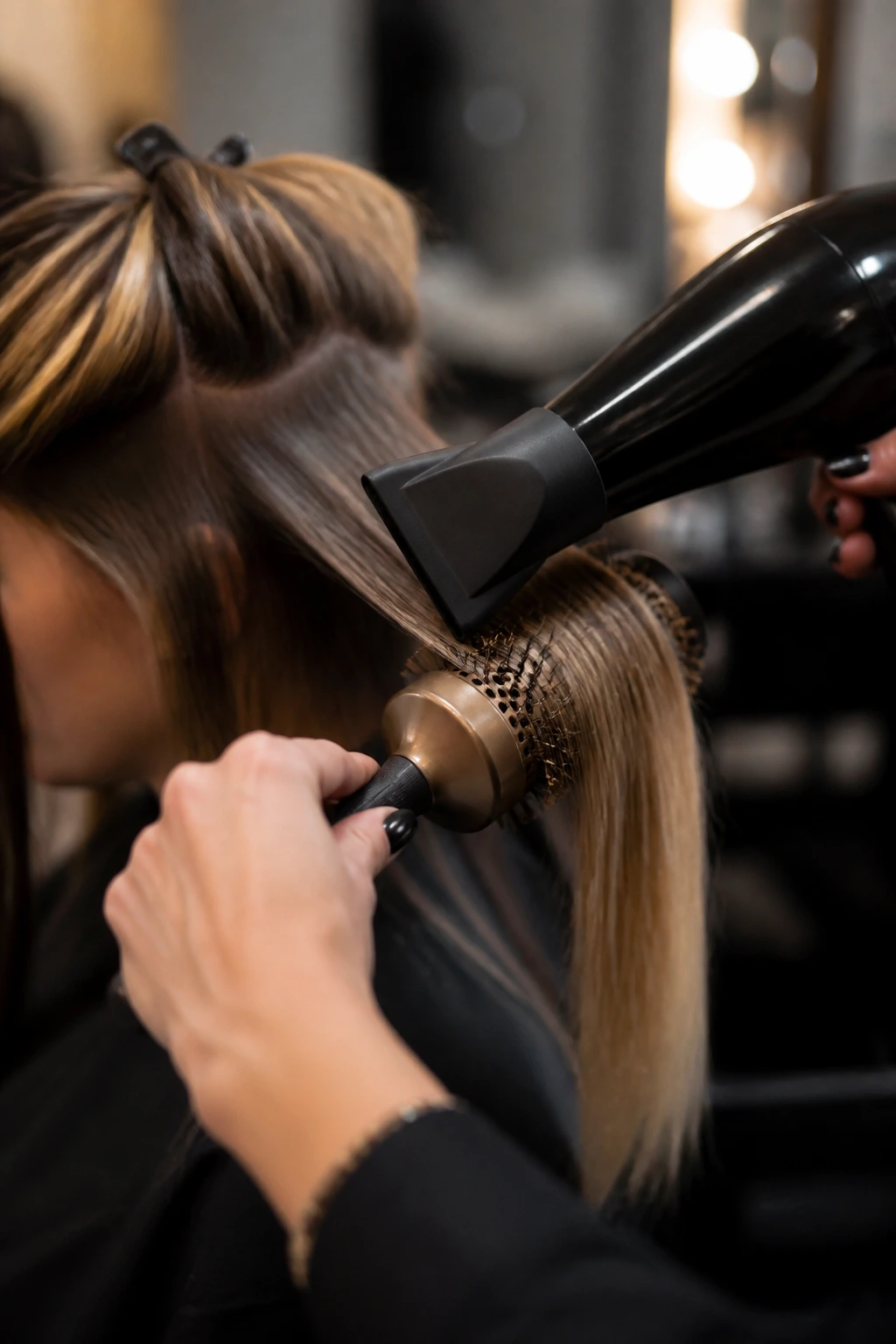
- 1.25-inch round brush: Best for collarbone lobs, rounded ends, and soft blowouts that need a little lift.
- Tail comb: Useful for carving a clean side part or lifting crown sections before styling.
- Blow-dryer with nozzle attachment: The nozzle matters. It smooths the cuticle and keeps babylights looking glossy instead of fuzzy.
- Root-lifting mousse: Put it only at the crown and first 2 inches of the hair. Too much turns fine hair sticky.
- Heat protectant spray: Thin hair burns fast, and babylights show damage faster than dark hair.
- Dry shampoo: Great on day-two styles, especially ponytails, half-up looks, and soft shags.
- 1-inch curling iron or wand: Best for loose waves that need width without turning into ringlets.
- Color-safe shampoo and conditioner: Babylights fade faster if the wash routine is harsh.
- Wide-tooth comb or detangling brush: Pulls through wet hair with less breakage than a small paddle brush.
- Salon foil note: Ask for micro-foils or babylights placed in fine slices, not chunky streaks. That one sentence can save the whole appointment.
How to Keep the Cut and Color Looking Intentional
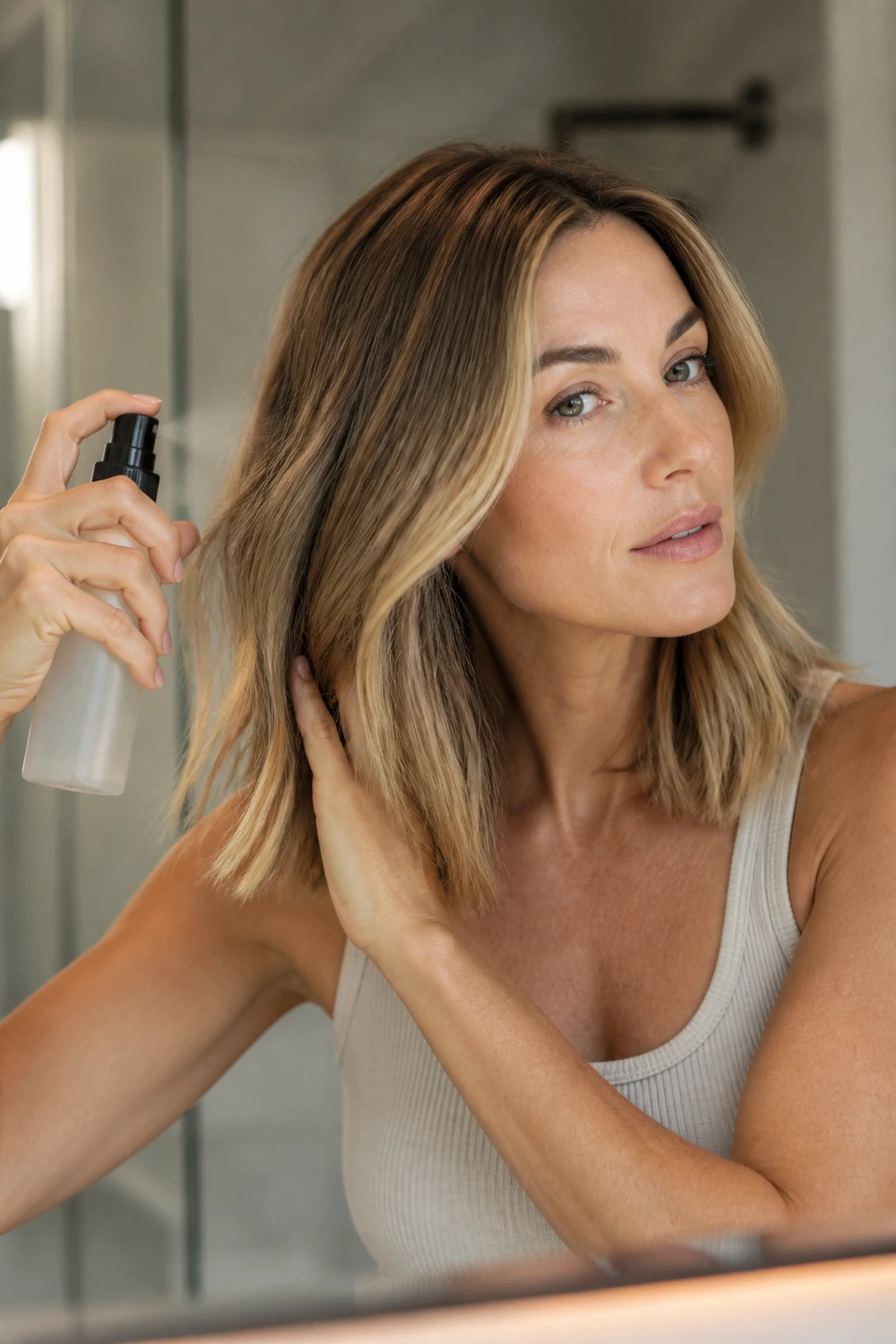
Babylights on thin hair need a maintenance rhythm that is gentler than a dramatic blonding schedule. If the color starts to warm up or turn brassy, a violet or blue shampoo once every 1 to 2 weeks is usually enough. Leave it on for 3 to 5 minutes, not 15, unless you want the hair to go flat and smoky in a way you did not ask for.
Trims matter more than people think. Every 8 to 12 weeks is a solid window for these lengthening cuts, because the ends start to fray and lose their line before the rest of the hair looks “long enough.” If the perimeter is blunt, keep it blunt. That line is doing work.
For styling, refresh with a light mist of water or leave-in on the mid-lengths, then re-bend only the front pieces and ends. You do not need to re-curl the whole head. A quick root lift with dry shampoo and a brush-through is usually enough to make the shape behave again.
If the babylights were placed well, the grow-out should look soft, not obvious. That is the whole win here. The style should be able to survive a few lazy days, a little humidity, and the occasional bad part.
Questions People Ask Before They Book Babylights
Do babylights make thin hair look thinner?
Not when they’re placed correctly. Chunky highlights can expose gaps, but micro-fine babylights soften the scalp line and add tiny shifts in tone that the eye reads as density. The cut still has to do its part, though; a weak shape can’t be saved by color alone.
Which haircut looks thickest on thin hair?
Blunt bobs and collarbone lobs usually win. A strong perimeter keeps the ends from looking wispy, and babylights around the crown or face frame add movement without removing weight from the bottom.
Are lowlights better than highlights for thin hair?
Usually, the best answer is both. A few lowlights underneath create depth, while babylights on the top surface add sparkle and lift. One without the other can look too flat or too pale.
How often should babylights be touched up?
Soft babylights can stretch longer than regular highlights because the grow-out is gentler. A toning gloss every 6 to 8 weeks and a full refresh less often can keep the color from going dull or brassy.
Can curly or wavy thin hair wear babylights?
Yes, and the shape often looks fuller because the bends catch the light. The placement should follow the curl pattern instead of fighting it; otherwise the highlight pieces disappear into the wave.
What if my hair is very fine and breaks easily?
Keep the lift conservative and the haircut blunt. You can still use babylights, but the color should stay fine and the developer strength should be chosen carefully by a colorist who knows how fragile fine hair can be.
Do these styles work without heat?
Some do. The shag, the half-up twist, the lob with micro-babylights, and the side-part styles can all look good with a rough air-dry and a little root product. The sleeker cuts need more deliberate blow-drying.
Should I ask for warm or cool babylights?
Warm tones like caramel and honey add softness and make thin hair look a little richer. Cool beige, pearl, and champagne tones feel cleaner and shinier. If your hair is already pale or ashy, too much coolness can make it look sparse.
The Styles That Earn Their Keep
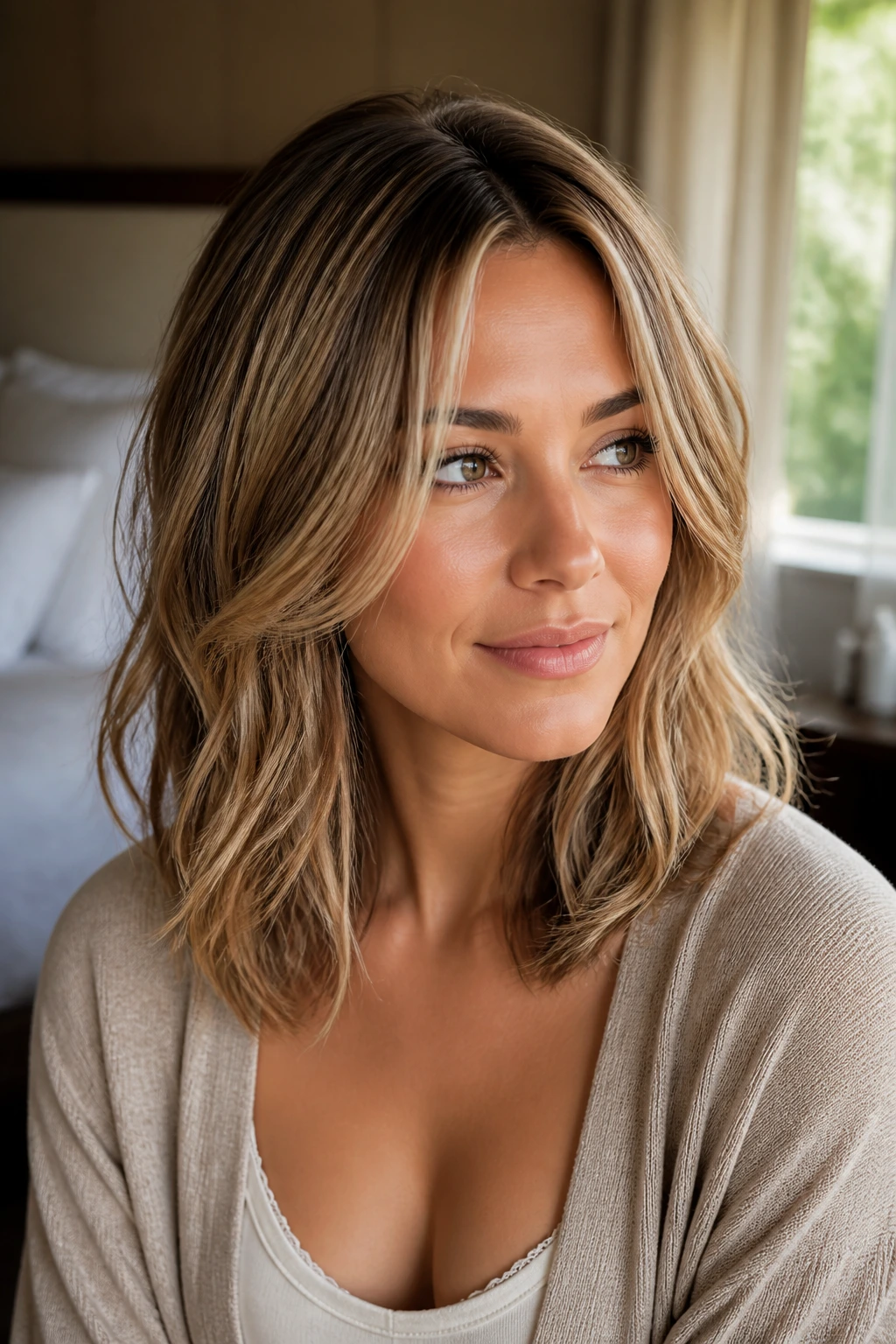
The best lengthening hairstyles for thin hair with babylights do not rely on tricks that collapse by lunchtime. They use shape, light, and a little restraint. A strong edge. A smart part. Babylights placed where the hair actually moves, not scattered like confetti.
That is what makes these cuts worth saving. They work on real hair, not just on the day of the blowout. And when the color grows out softly and the perimeter stays clean, the whole thing keeps its shape longer than you expect — which, in thin hair, is about as good as it gets.