



Pale skin and curly hair can make highlights look either airy and expensive-looking or weirdly stripy, and the gap between those two outcomes is usually smaller than people think. It is rarely about chasing the lightest blonde in the bowl. It is more often about tone, placement, and how the color sits inside a curl pattern that bends, puckers, and catches daylight in little pockets.
That matters because curls do not reflect color the way straight hair does. A ribbon that looks subtle on a flat swatch can flash brighter once it wraps around a spiral, and a shade that seems soft in the salon chair can read icy or orange by the time it dries. Fair skin makes that even trickier: pink undertones can go ruddy fast, golden undertones can get washed out, and very pale skin will happily expose every brassy note you leave behind.
So the smartest dimensional highlights for pale skin with curly hair are the ones that respect both the face and the texture. Sometimes that means a beige babylight. Sometimes it means a smoky caramel ribbon tucked under the surface. Sometimes it means leaving more depth than you expected so the curls keep their shape. The 25 looks below cover that whole range, from whisper-soft to high-contrast, and the good ones all have one thing in common: they move with the curl instead of sitting on top of it.
Why These 25 Looks Work on Pale Skin and Curly Hair
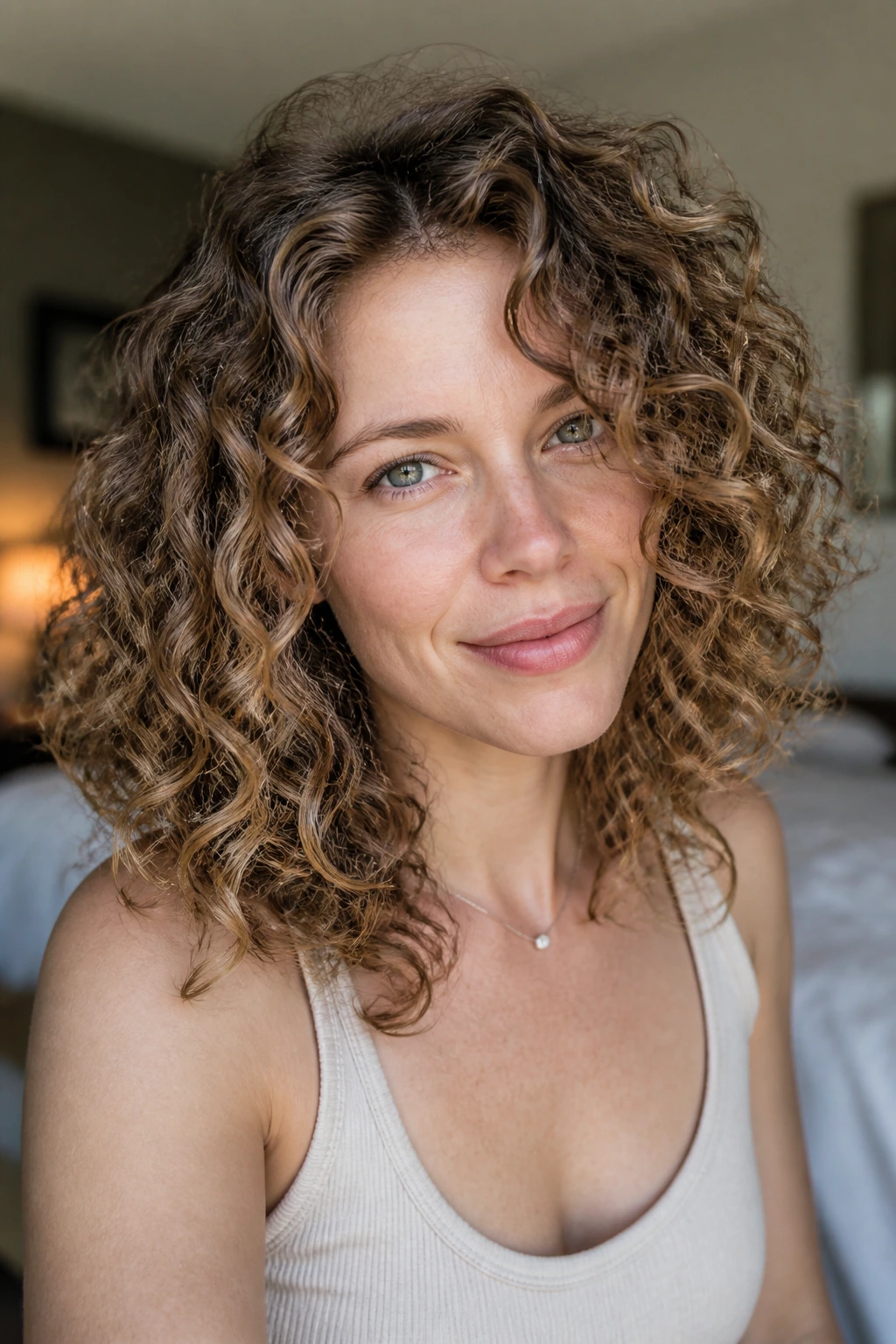
- Curl movement changes the shade: A few thin ribbons can look brighter on spirals than chunky foils ever will, because each bend catches light on a different angle.
- Fair skin needs tone discipline: Beige, champagne, pearl, copper, and mushroom brown all behave differently against pale skin, and the wrong one can make the face look tired in daylight.
- Depth is not the enemy: Leaving some root shadow, lowlights, or darker interior sections keeps curly hair from turning into one pale cloud.
- Placement beats brute force: A highlight placed at the cheekbone or outer halo often does more for the face than pushing brightness all the way to the root.
- Undertone decides the finish: Rosy, golden, neutral, and freckled skin all ask for different reflective notes, even when the overall level of lightness is the same.
The Tone Map Behind Pale Skin and Curly Hair
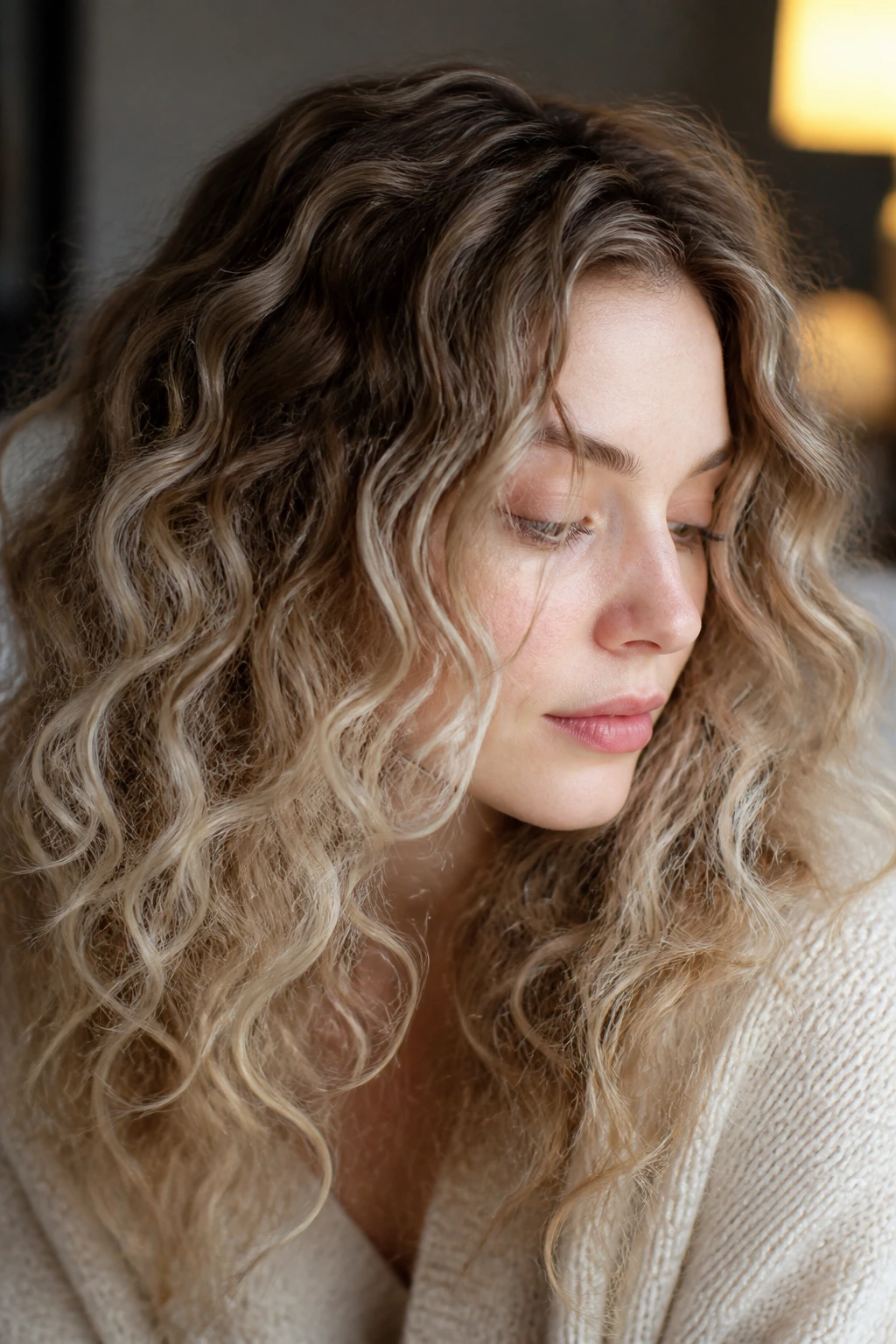
Pale skin is not one single thing, and that is where people get into trouble. Cool-toned fair skin usually looks strongest with beige, pearl, mushroom, ash, or silver-leaning accents. Neutral fair skin can wear a bigger range, which is why champagne and smoked caramel often land so well. Warm or freckled pale skin usually needs a little honey, vanilla, copper, peach, or apricot so the face does not go gray next to the hair.
Curly hair changes the rules again. If you paint a highlight too wide, the curl clumps together and the color can read as a stripe instead of a ribbon. If you paint it too close to the root on a tight curl, regrowth shows faster and the top can look harsh before the rest of the color has even settled in. The sweet spot is usually thin, irregular placement that follows the curl pattern, not the comb lines.
A good colorist will talk in levels, not just names. If your base is a level 4 or 5 brunette, jumping straight to a level 10 blonde can leave the ends overprocessed and the crown too bright. A better move is often a level 7 to 9 lift, then a gloss that bends warm, cool, or beige depending on your skin. That sounds fussy. It is. Hair color is fussy when you want it to look natural.
1. Soft Beige Babylights
Soft beige babylights are the safest place to start if you want brightness without the look of obvious foils. They sit in that sweet middle ground between blonde and brown, which means pale skin gets lightened up without turning chalky. On curly hair, they work best when the sections are paper-thin and scattered through the top layer rather than packed into one wide panel.
Why They Stay So Soft
Babylights mimic the way sun would naturally pick out a few curls at a time. That matters because the goal is not to flood the whole head with light; it is to create tiny flashes that move when the hair moves. Ask for level 8 or 9 beige on a level 5 to 6 base, with the brightest pieces around the hairline and crown.
What to Ask For
- Fine foils no wider than a shoelace
- A beige toner, not a yellow one
- Slightly deeper color underneath the surface layer
- Face-framing pieces that start around the cheekbone
The result is quiet, but not dull. And on curls, quiet color usually looks more expensive than loud blonding anyway.
2. Champagne Ribbon Highlights
Champagne ribbon highlights have just enough warmth to keep pale skin from looking drained, but they still stay clean instead of brassy. Think pale fizz, not gold foil. On curls, the ribbon shape matters more than the exact shade; a soft 1/4-inch painted piece that curves along the outer bend of a ringlet will read more dimensional than a broad strip that ignores the curl.
What I like here is the way champagne catches around the face. It sits nicely on rosy skin that tends to flush, because the gold-violet balance keeps the color from tipping too pink or too orange. If your natural base is light brown or dark blonde, this is one of those shades that brightens without looking bleached.
A small gloss every few weeks keeps the tone lively. Skip that, and champagne can drift too yellow for fair complexions. The fix is easy. Keep the foils fine, keep the gloss soft, and do not lift the ends a full three levels lighter than the roots unless you want a much louder finish.
3. Pearl Ash Balayage
What if your skin goes pink the second brass creeps in? Pearl ash balayage is the answer I reach for first. It gives pale skin a cool, clean frame without the flat gray cast that comes from overtoning. On curly hair, the balayage should be painted in a way that follows the curl cluster, not the stretched wet length.
The pearl part matters. Pure ash can look muddy if the base is too dark or the hair is porous, but pearl has a little translucence to it, almost like frosted glass. That keeps the curls from looking heavy. I like this best for neutral-to-cool fair skin, especially if the cheeks flush easily or the eyes are blue, gray, or green.
Best Placement
- Midlengths and ends first
- A soft money piece around the brow and temple
- Slightly deeper roots for contrast
- Very fine pieces through the inner layers
The only catch is upkeep. Pearl shades fade fast if you wash with hot water or leave purple shampoo on too long. Keep the tone controlled, not icy-bright, and it stays elegant.
4. Mushroom Brown Lowlights
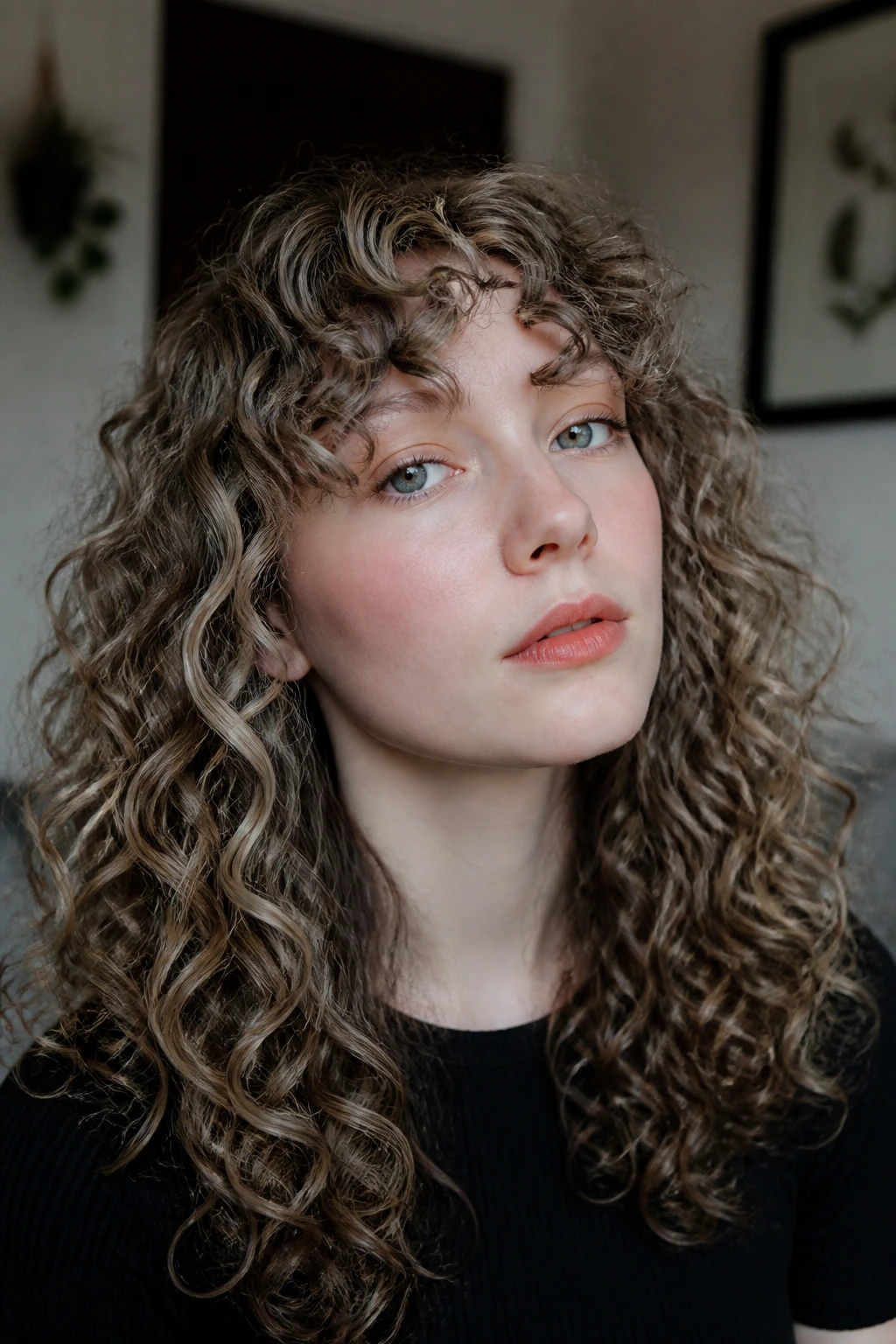
Sometimes the smartest highlight is a lowlight. Mushroom brown lowlights add that soft shadow that curly hair needs to keep its shape, especially when pale skin is starting to look washed out by too much lightness. The mushroom tone sits between taupe, ash brown, and a hint of beige, so it reads cool enough for fair skin without turning murky.
This is the one I would pick when someone says, “My curls used to look bigger, and now they just look puffy.” Lowlights rebuild the outline. They make the lighter curls stand forward instead of turning the whole head into one bright mass. Keep the lowlights tucked into the interior and the lower half of the hair, where they can do the work without stealing the spotlight.
If your hair is a natural dark blonde or medium brown, mushroom lowlights are a gentle fix for overlightening. If your hair is already very dark, the contrast can get stronger than you want. Still, in the right hands, this is the kind of depth that makes fair skin look clearer rather than paler.
5. Creamy Vanilla Money Piece
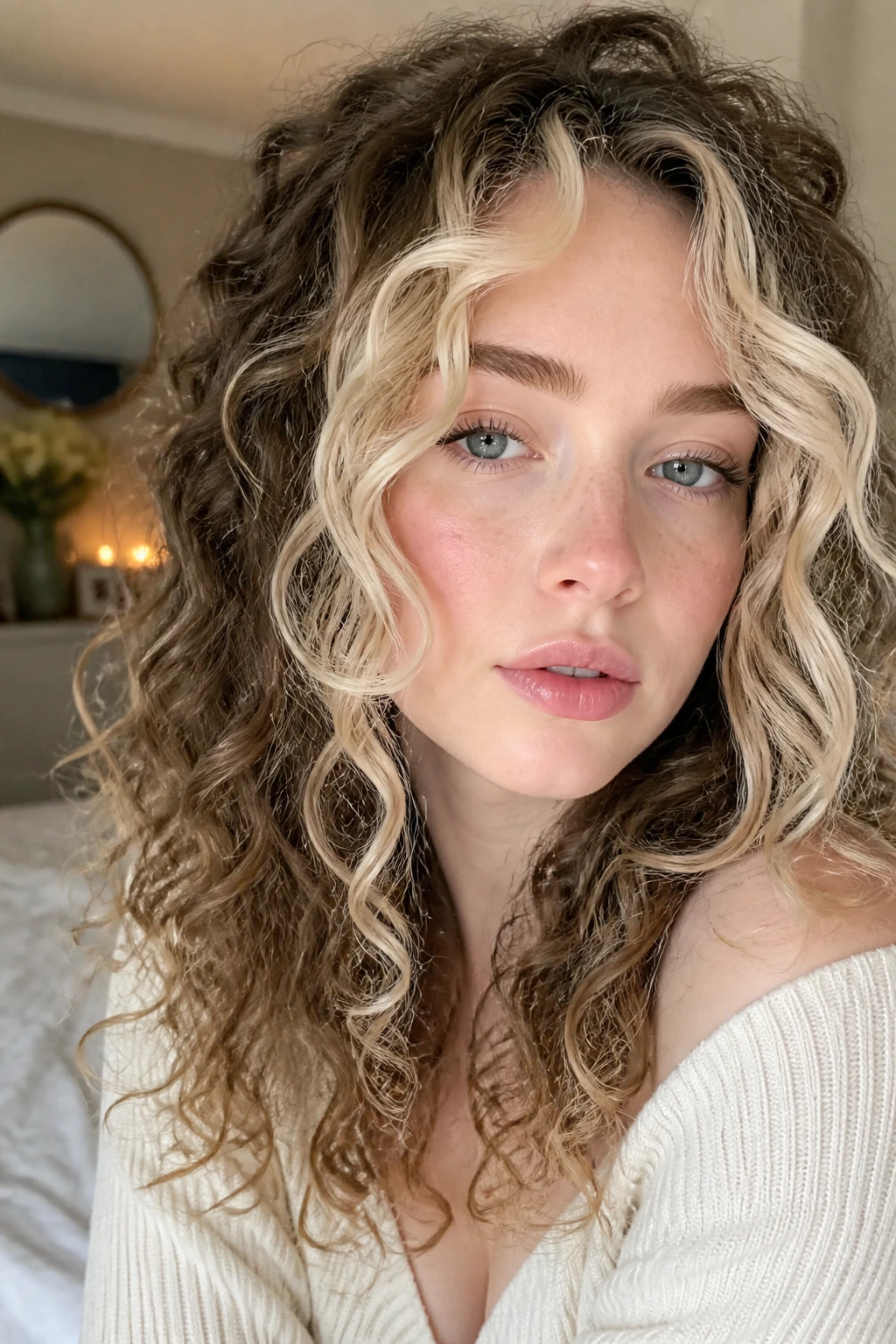
A creamy vanilla money piece wakes up pale skin faster than almost any other option on this list. It is the bright, face-framing flash you notice first, but the best version is not a harsh stripe. It starts softly near the root, gets brightest around the cheekbone, and blends back into the rest of the curls so the whole front section feels lifted.
On curly hair, a money piece can go wrong if it is too thick. Then it turns into two blond curtains hanging next to the face. Better to keep it narrow, maybe two or three carefully placed curls on each side, and let the rest of the lightness stay subtle. Vanilla is especially good when the skin leans neutral or cool and needs brightness more than warmth.
Best For
- Pale skin that needs a little glow near the eyes
- Loose curls and waves that frame the cheekbones
- Brunettes who do not want an all-over blonde
- People who like visible contrast at the front
It is a bold look, but only in the front. That is the point.
6. Strawberry Blonde Face Frame
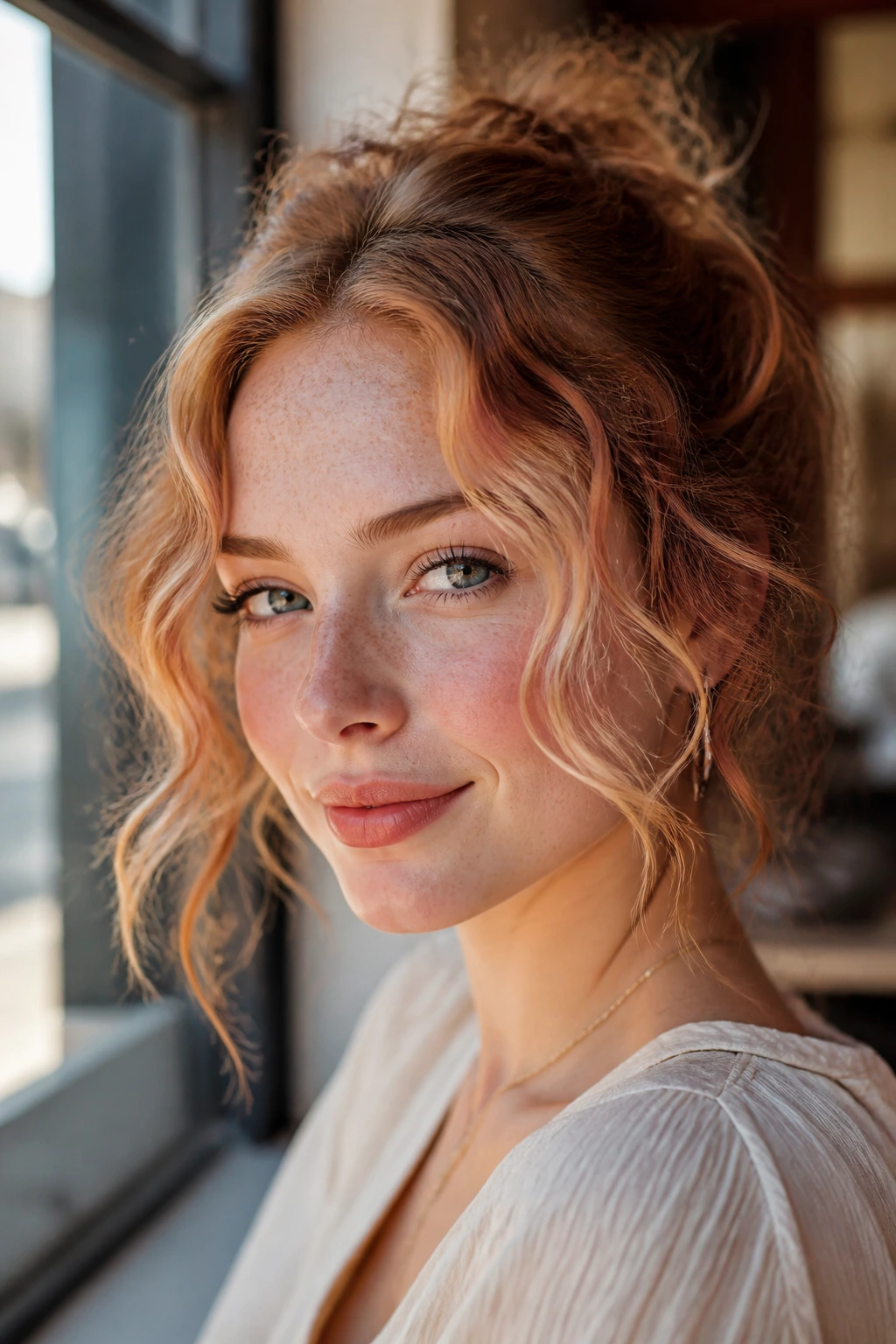
Strawberry blonde sounds louder than it usually looks in real life. The good version is soft, pale, and a little rosy, like blonde that remembers where copper came from. On pale skin with freckles or warm undertones, it can be far more flattering than a neutral beige because it echoes the skin instead of fighting it.
The trick is to keep it light enough. Think level 8 strawberry, not orange-red. A few face-framing curls and some soft ribbons at the crown are usually enough. If the whole head goes strawberry, the color can flatten the curls and steal the softness that makes this shade so useful.
I like this best on people who wear peach blush, gold jewelry, or warm lip tones naturally. It makes the face look awake without demanding a lot of makeup. And when the curls move, the slight pink-copper sheen shows up in flashes instead of all at once. That is the nice part. It feels alive, not painted on.
7. Beige Bronde Melt
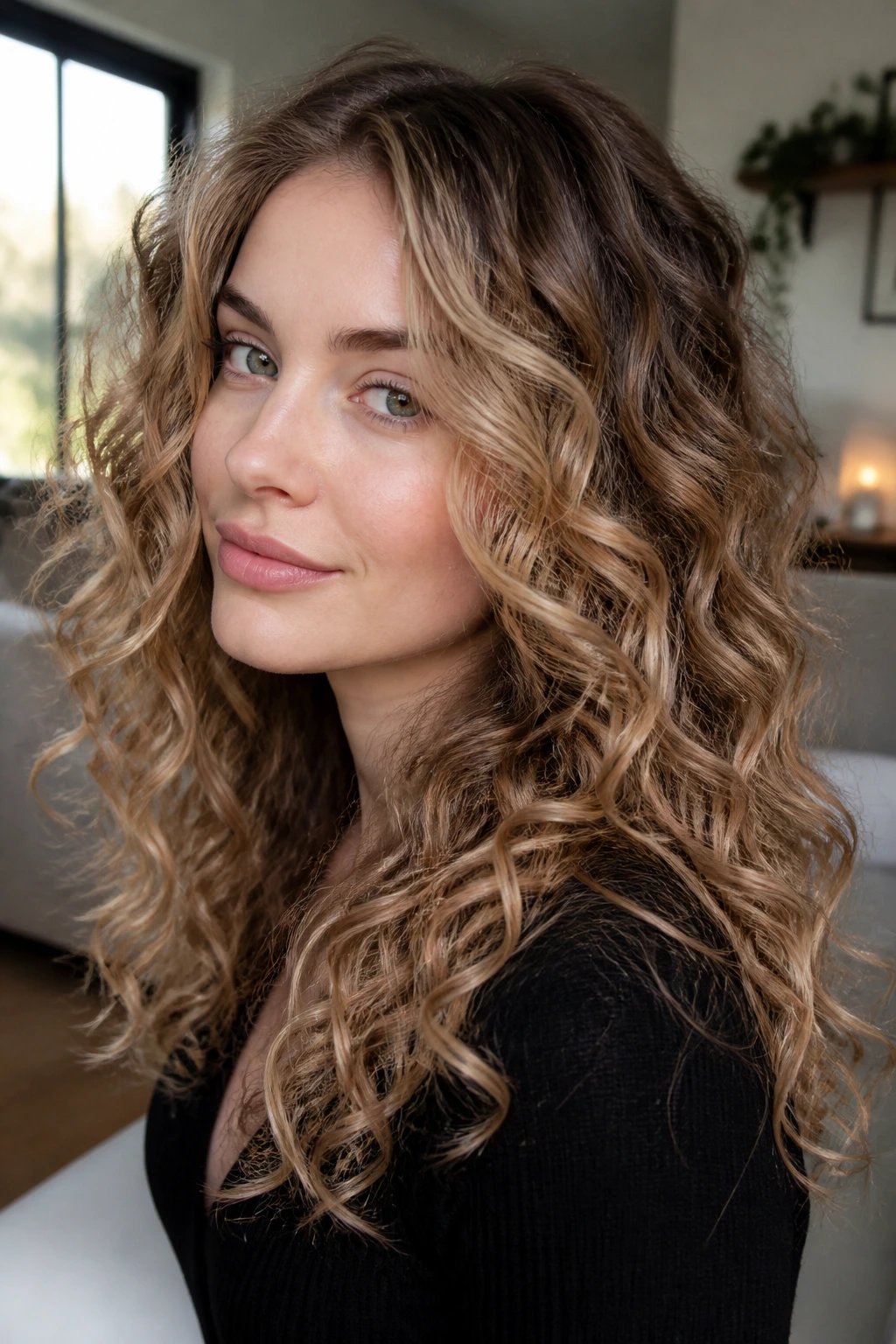
Bronde is the easy answer when someone wants dimension but gets nervous about committing to a bright blonde. Beige bronde melts from a brunette base into a sandy, soft blonde middle ground, and that softness is exactly why it flatters pale skin so well. You get light around the face and midlengths, but the base stays grounded enough to keep the curls from losing their structure.
This look is especially good if your natural hair sits around a level 6 or 7. The contrast does not have to be dramatic to matter. A few beige ribbons woven through 2 or 3 curl clumps, plus a root shadow, can change the whole read of the hair. It looks expensive in the boring, practical way colorists love: it grows out cleanly and does not scream for touch-ups every month.
Why It Works
- The root shadow keeps pale skin from getting washed out
- Beige ends avoid yellow brass
- Curly texture breaks up the transition naturally
- Grow-out stays soft instead of obvious
If you hate sharp lines, this is a very smart place to land.
8. Toffee Ribbon Lights
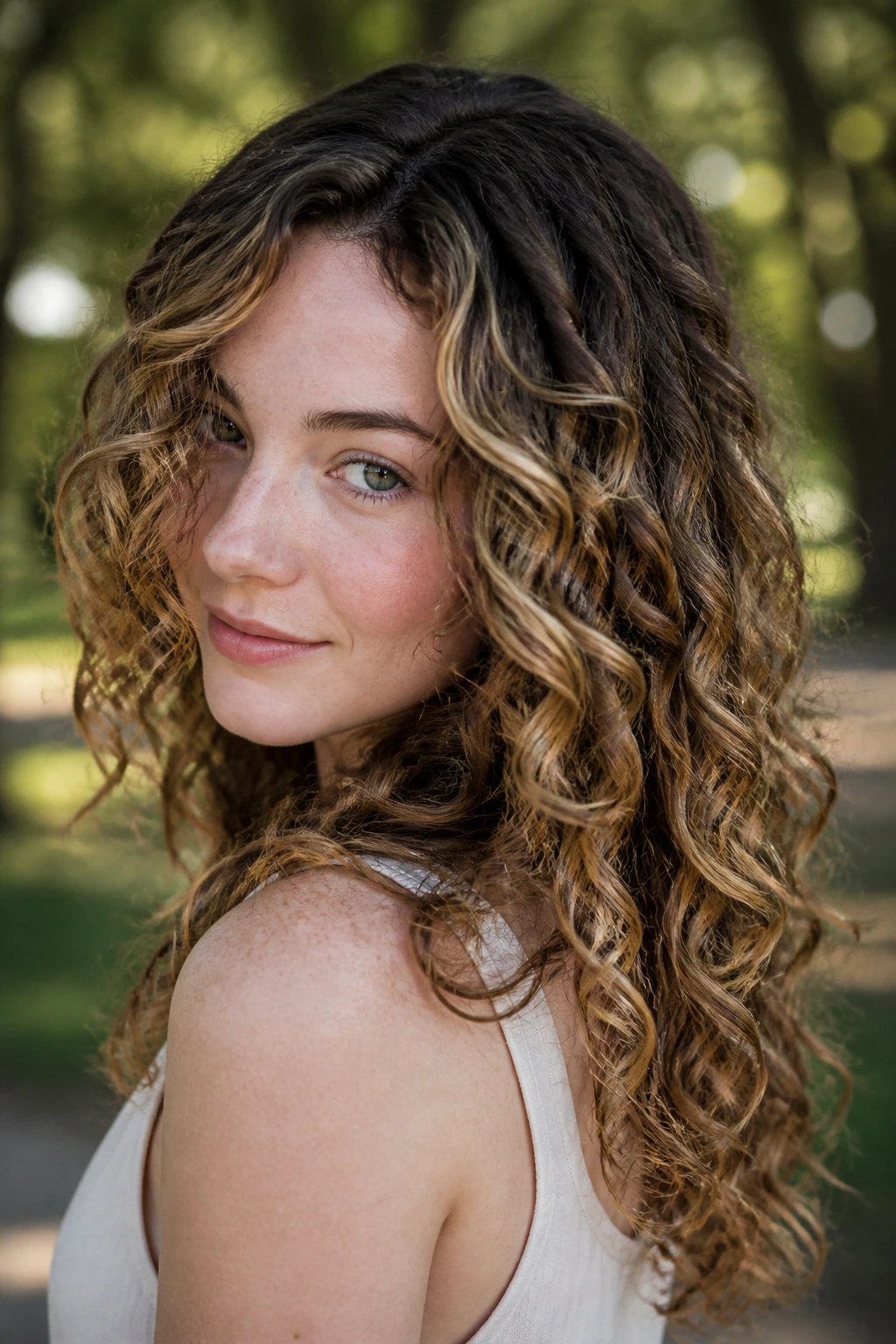
Toffee ribbon lights are warmer than beige and softer than caramel, which is a useful middle ground for pale skin that looks flat next to cool ash tones. The shade has enough gold to keep the face from looking drained, but not so much that the curls go orange under daylight.
The key is placement. Use wider ribbons under the top layer and finer ones around the face. That gives the color depth when the curls stack up, because the eye sees warm and cool notes together instead of one solid tone. On looser curls, the ribbons can be a little bolder. On tighter spirals, keep them thin. Thick toffee pieces can swallow the curl shape.
This is also one of the better options if you wear minimal makeup. Toffee adds warmth to the face without making your hair the only thing people notice. That balance is harder to pull off than it sounds, and toffee gets there without fuss.
9. Smoked Caramel Highlights
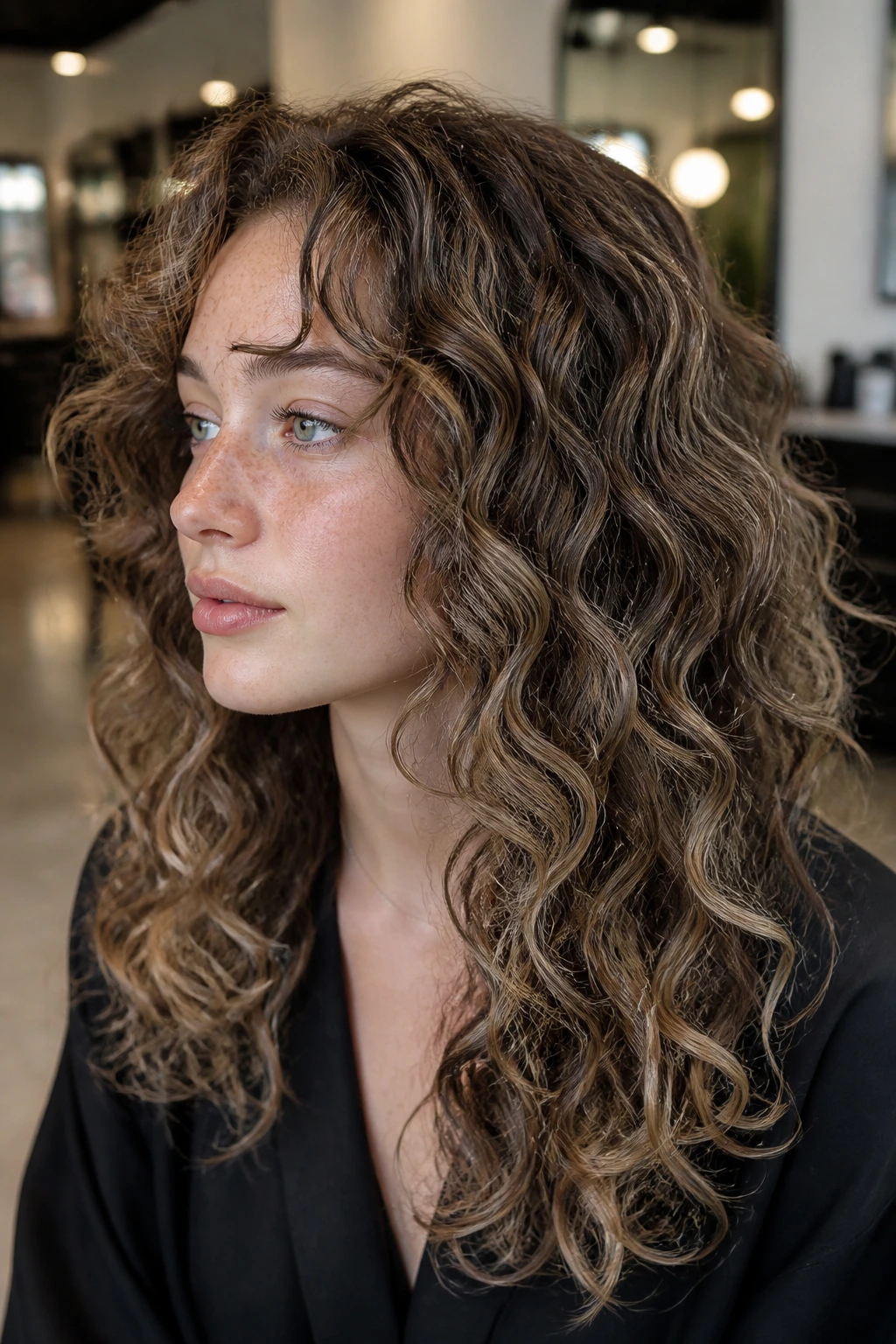
Smoked caramel is what happens when warm caramel gets a quiet ash glaze. The warmth is still there, but the smoky note keeps it from reading orange or sticky. On pale skin with neutral or slightly olive undertones, that cooler edge can make the complexion look more even.
This works well on curly hair because caramel pieces catch light aggressively. If you leave the tone too pure, every bright ribbon can shout. Smoked caramel softens the shout. It lets the color appear richer, which is a better match for curls that already have texture and movement built in.
A good colorist will usually paint the caramel through the mids and ends, then add a toner that leans beige-gray rather than gold. If the hair has been lightened before, do not skip the gloss. That is where the smoke comes from. Without it, you just get ordinary caramel, and that is a different mood entirely.
10. Copper Penny Streaks
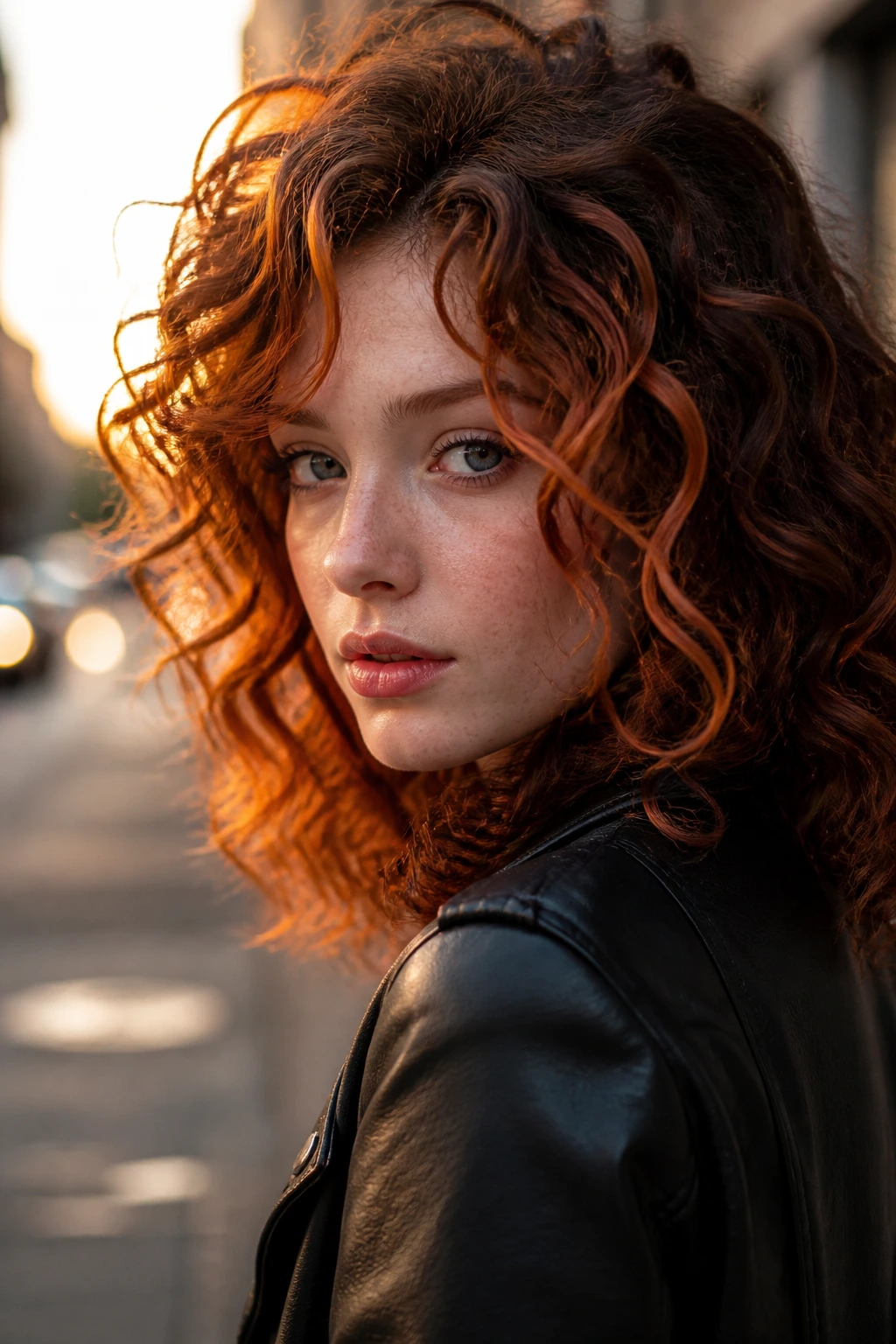
Copper penny streaks are for people who want some edge. Copper on pale skin can be gorgeous because the contrast is immediate, but it needs to be handled with restraint. A few well-placed streaks around the face and crown look dimensional; too many, and the whole head turns loud.
Curly hair gives copper a nice advantage. Each curl ring reflects the shade at a slightly different angle, so the color feels more varied than it would on straight hair. That means you can get away with a richer pigment without flattening the shape. Ask for a demi-permanent copper glaze over lighter pieces, not a full permanent orange lift unless you really want commitment.
Quick Placement Notes
- Keep the copper near the outer halo
- Brighten only 2 or 3 face pieces
- Leave some brown or blonde between the streaks
- Refresh the gloss before it fades to peach
Copper is not subtle. But in curls, it does not need to be. The texture takes some of the sharpness out of it.
11. Apricot Glaze Highlights
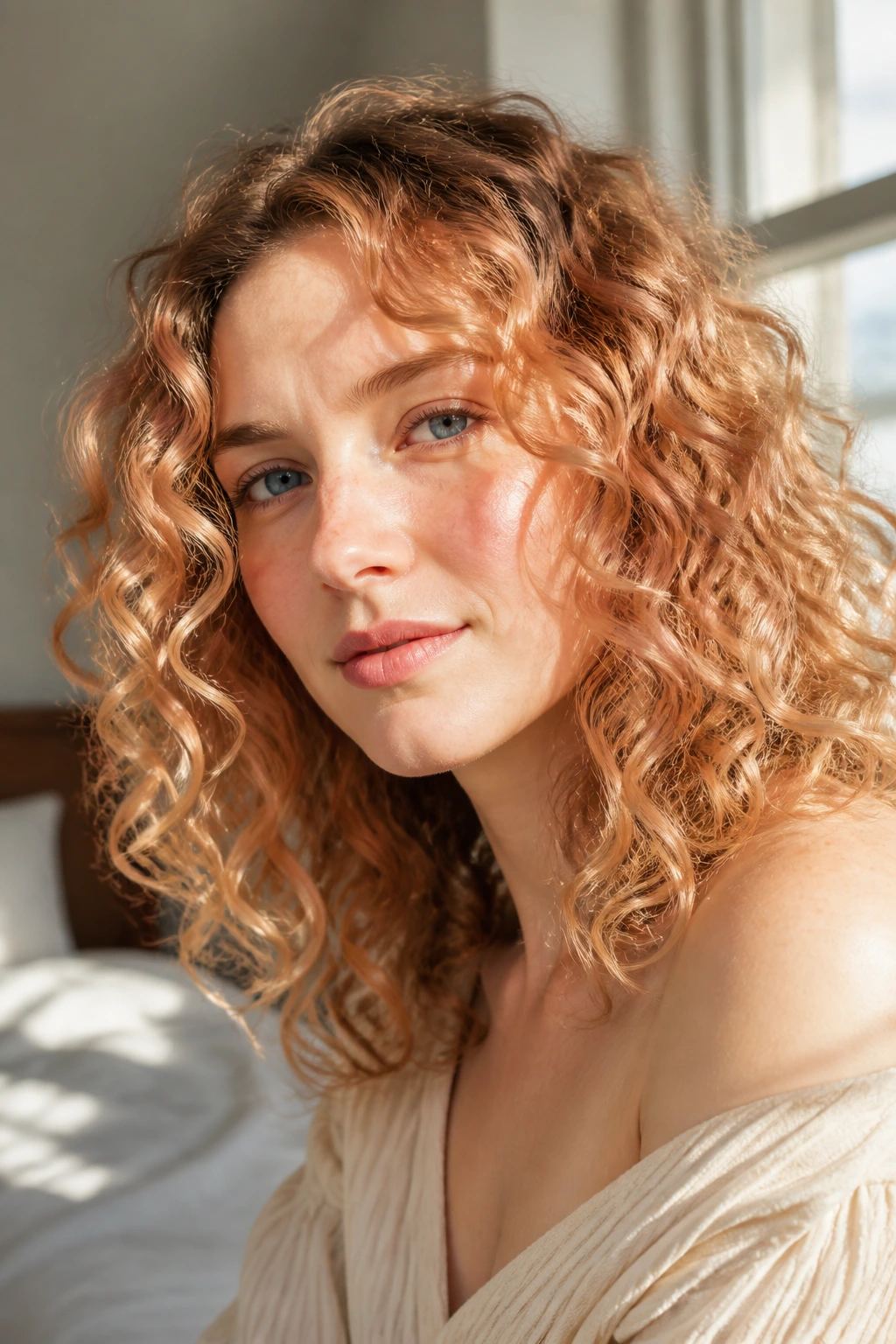
Apricot glaze highlights have a soft peach-gold cast that sits nicely against pale skin, especially if the complexion already goes rosy in cold air or after a workout. The color is lighter than copper, gentler than strawberry blonde, and warmer than champagne. That middle ground is why it works.
If you want this to stay pretty, keep it sheer. Apricot should look like light through fruit skin, not like a neon wash. A glaze over level 8 pieces gives you enough warmth to brighten the face without making the curls look brassy. I also like it on layered cuts, because the warm tone moves well when the curls stack.
The biggest mistake is going too orange. Apricot is delicate. It does not need to shout. If your skin is very cool and porcelain-like, this may be softer than you want. For everyone else, it can be a lovely way to add color without losing the airy feel that pale skin often needs.
12. Rose Gold Shimmer
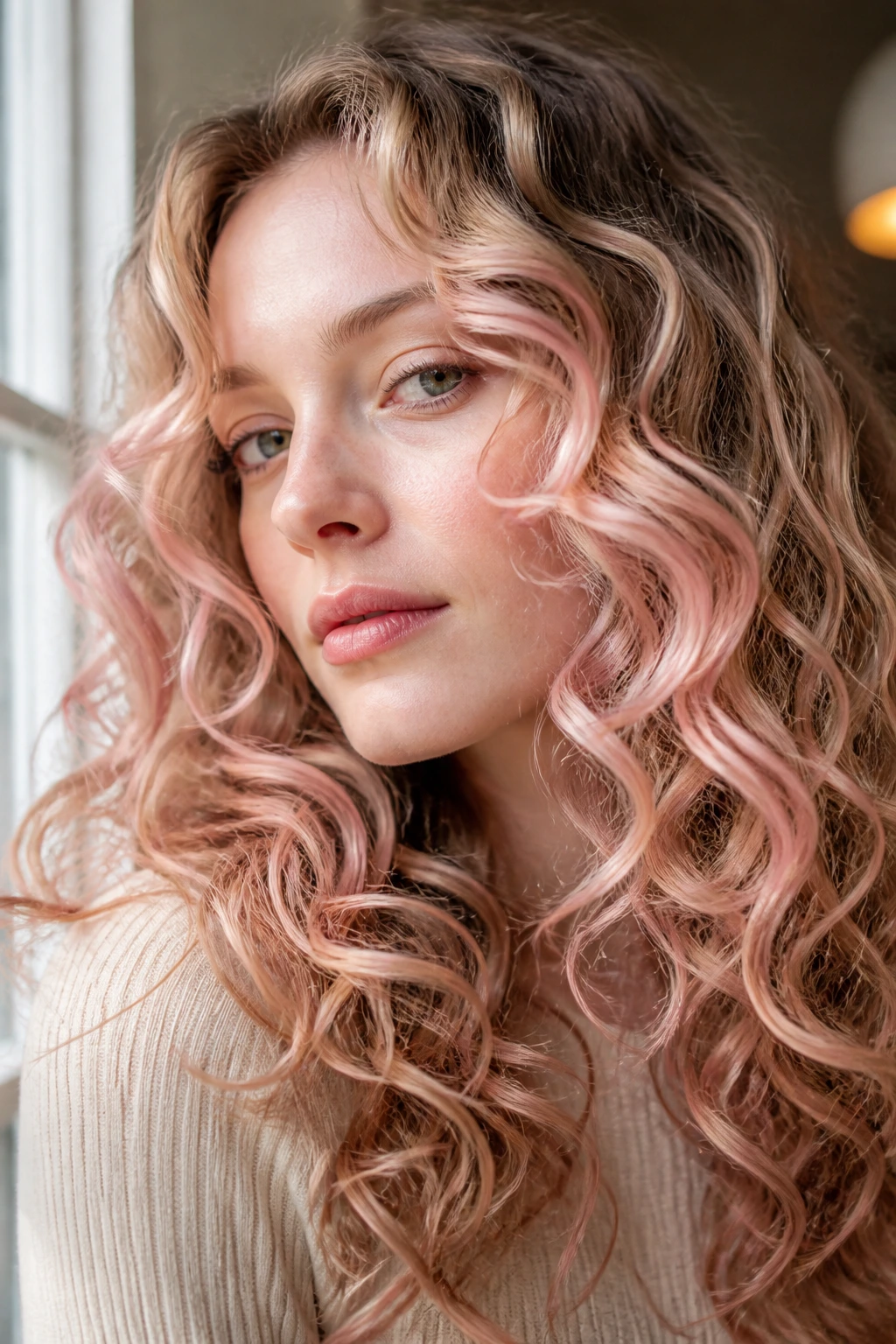
Rose gold can be tricky, and that is exactly why I like it when it is done well. The best version is not pink hair. It is a beige-blonde or light brown base with a faint rosy gloss that shows in sunlight and soft indoor light. On pale skin, that little bit of pink reflect can make the face look fresh instead of flat.
Curly hair helps here because the pinkish shimmer appears in flashes as the hair turns. You do not need a heavy color deposit. You need a translucent glaze over prelightened ribbons, ideally on pieces that sit around the face and top layer. If the curls are tight, keep the rose gold near the surface. If the curls are loose, you can carry it deeper.
A rose-gold finish is at its best when the skin has some warmth or neutral balance. If your undertone is very cool, it can go costume-y fast. Keep the pink soft, the beige present, and the root a little deeper. That is what makes it wearable.
13. Cool Mocha Contrast
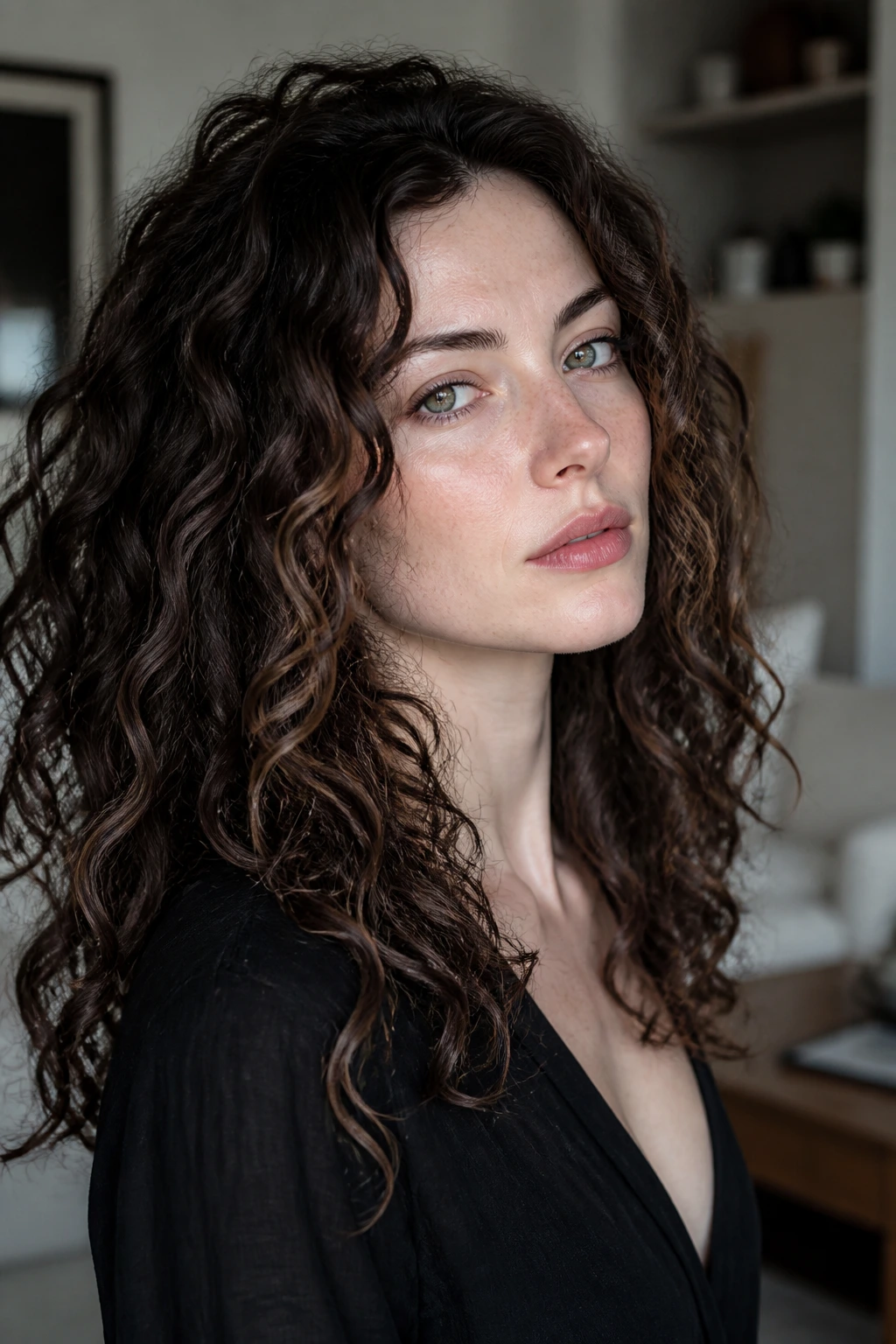
Cool mocha contrast is for the person who likes dark hair but still wants dimension around pale skin. Instead of lifting the whole head, you keep the base rich and add a few cool mocha lowlights or fine lights that break up the surface. The result is a curl pattern with more shape, not less.
This is one of the best options if your hair has gotten too bright and started looking fuzzy. Darker mocha pieces tuck into the interior and restore the visual outline. Pale skin often looks better when the hair has some depth beside it, because all-light color can make the face appear less vivid. That is the little secret people miss.
Use neutral mocha, not reddish brown. Warm brown can turn muddy against fair skin, while a cool mocha keeps the look clean. If you want brightness, place a few slender face-framing threads at the temples and leave the rest of the head deeper. That contrast is enough.
14. Icy Platinum Threads
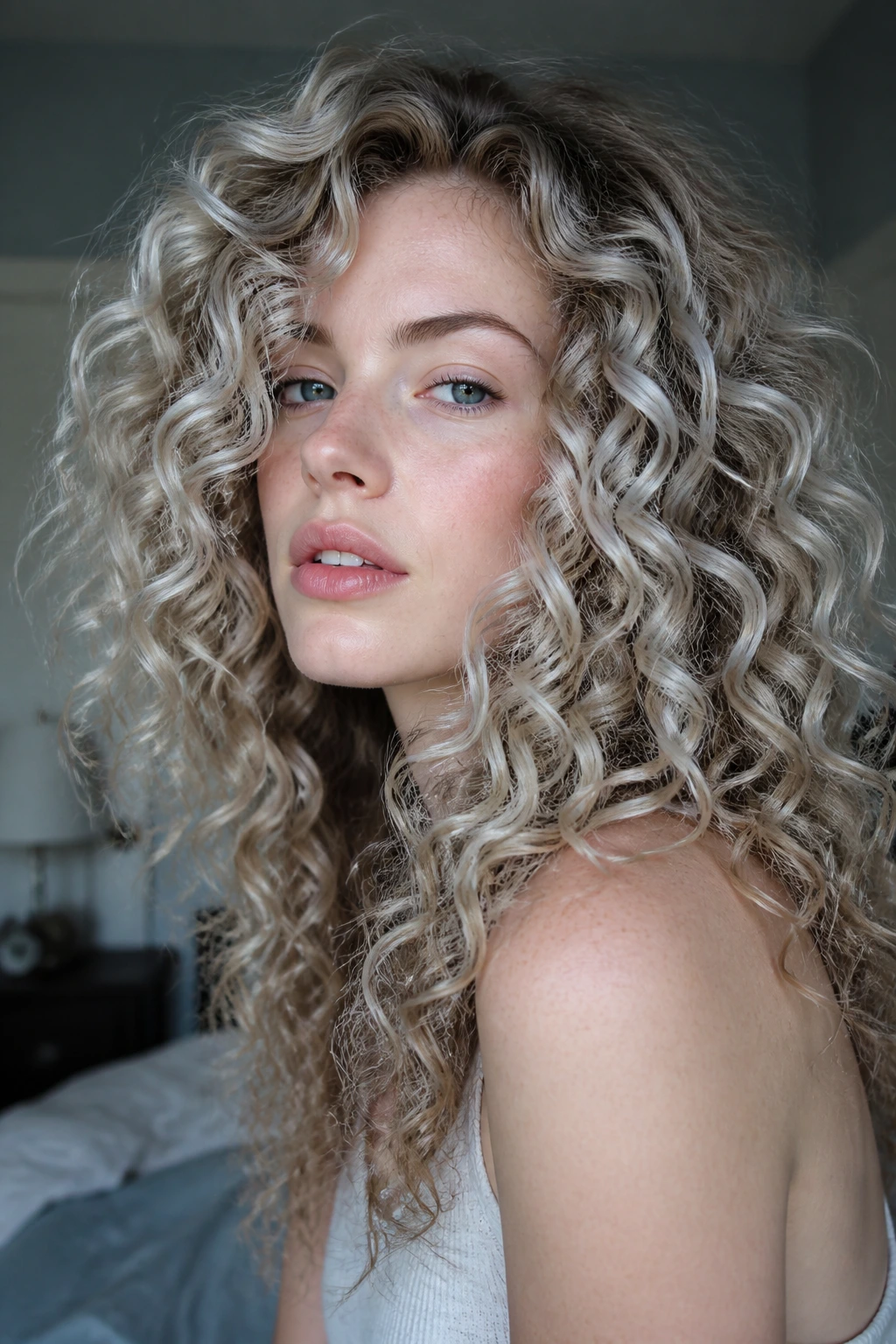
Icy platinum threads are the boldest cool-toned option here, and they can look striking on porcelain skin when the curls still have room to breathe. The point is not to make the whole head platinum. The point is to thread a few cool, bright pieces through the outer layer so the hair flashes silver-white in motion.
This is where sectioning matters. On curls, chunky platinum stripes can make regrowth and dryness obvious fast. Fine threads around the crown, hairline, and upper midlengths keep the look lighter without overwhelming the curl pattern. A level 10 lift and a crisp violet-silver toner are usually part of the picture, but the finish has to be careful. Too much toner, and the hair goes flat and gray.
Icy shades suit very pale, cool skin best. If your skin is warm or you like a rosy blush, it can start to feel stark. Still, when it works, it looks clean and a little futuristic. Not soft. Clean.
15. Sandy Blonde Weave
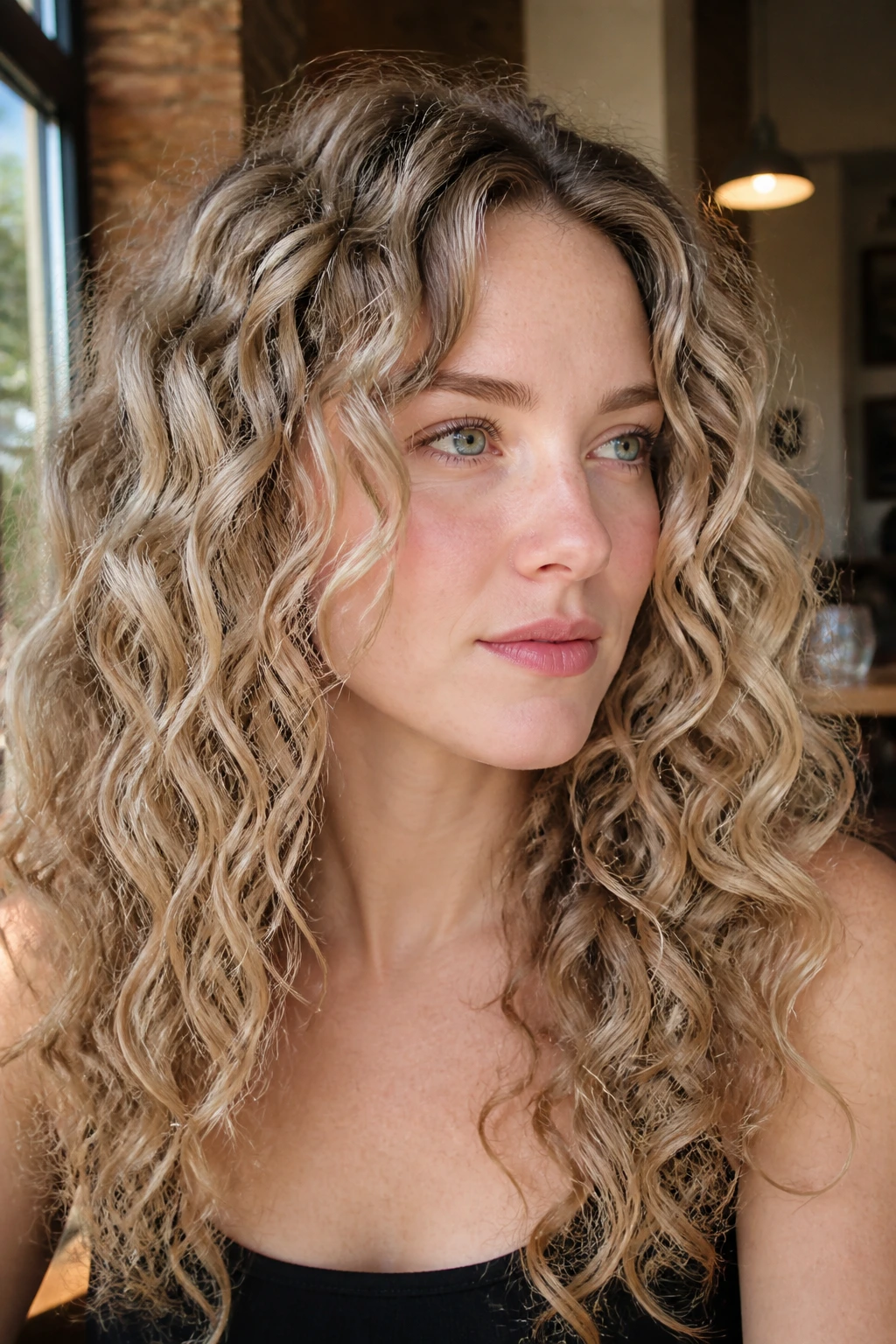
Sandy blonde is the least fussy blonde in this group, and that is a good thing. It sits between beige and a soft golden blonde, so pale skin gets light without the face going chalky. On curly hair, sandy pieces make the texture look sun-washed instead of striped.
The weave technique matters here. Rather than painting broad surfaces, the colorist should weave fine sections so some strands stay darker and the curl clumps keep their shape. I like sandy blonde on medium brunettes who want a lighter finish but do not want a bright root line. It also suits fair skin that leans neutral, because the tone is neither icy nor aggressively warm.
If you want something that ages gracefully between appointments, this is a solid choice. Sandy blonde does not depend on an exact toner match the way platinum does. It can soften, warm a little, and still look intentional.
16. Honey-Gold Halo
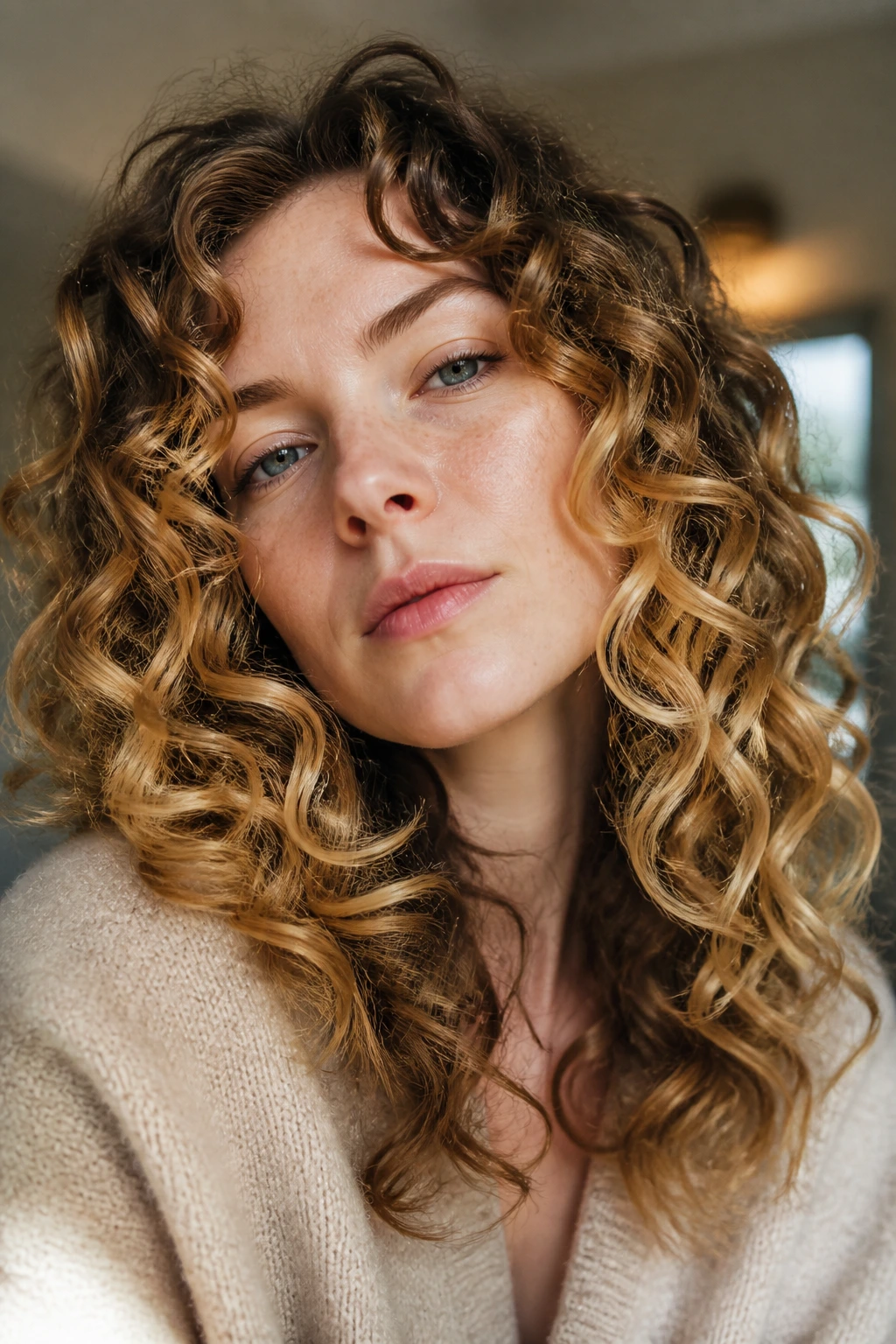
Honey-gold halo highlights belong around the outer curls, not buried under the hair. That is what gives them the halo effect: the top layer catches the warmth, while the interior stays deeper and creates shadow. Pale skin often looks more alive with this kind of warm framing, especially if it has a neutral or golden undertone.
The shade itself should be soft honey, not orange-gold. Think gentle amber in low light, not shiny brass. A halo works beautifully on layered cuts because the brighter top curls move when you turn your head. If you have a rounder face, placing the brightest pieces a little below the eyes can stretch the look vertically. If your face is longer, keep the brightness closer to the cheekbone and temple.
This is one of those colors that can make bare skin look less tired. You do not need much makeup with it. That is part of the appeal. The hair carries the warmth for you.
17. Cinnamon Spice Balayage
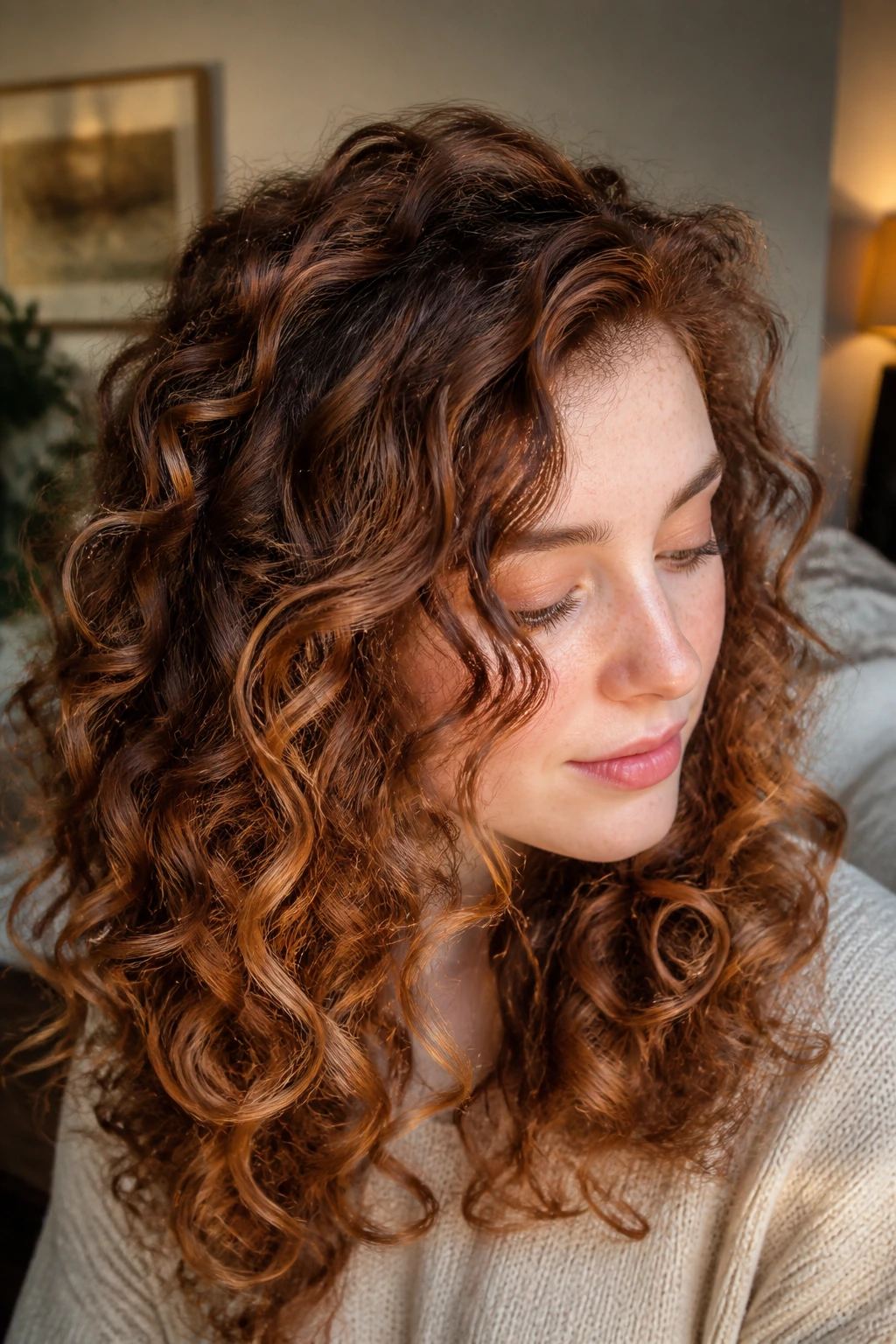
Cinnamon spice balayage sits between copper and warm brown, which makes it a smart choice for pale skin that wants warmth without a bright orange flash. The cinnamon note keeps the color grounded. A few gold flicks at the ends keep the curls from looking one-dimensional.
This shade is especially good on dark blonde or medium brown hair. You do not have to lift the entire head to get a rich result. Paint the cinnamon through the mids, feather it toward the ends, and leave the roots a bit deeper so the curls have room to move. If you want extra glow, ask for a warm gloss rather than a stronger bleach session.
I prefer this on hair that already has texture and volume, because the reddish warmth can make the curls look lush. Pale skin needs only a little of it. Too much cinnamon, and the face can start to read flushed. A measured hand is the whole game here.
18. Mocha Brunette with Fine Gloss Lights
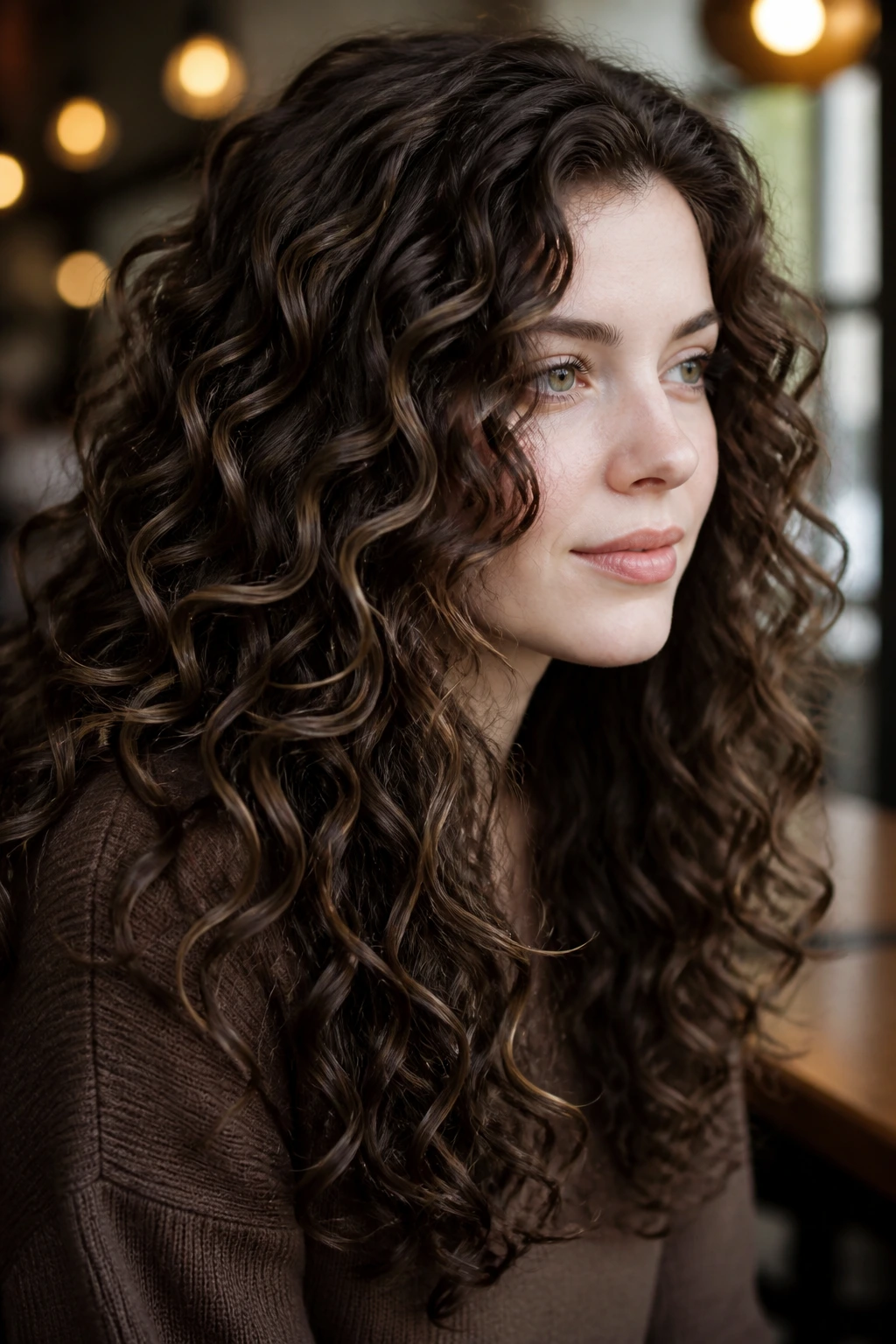
Mocha brunette with fine gloss lights is for the person who does not want to go lighter, only better. The base stays dark and cool, while tiny gloss lights thread through the curls just enough to break up the block of color. On pale skin, that contrast is useful. It keeps the face from disappearing next to the hair.
The lights should be micro-fine. Seriously. Too many and the whole thing turns into an accidental balayage. Instead, ask for a few very thin ribbons around the face, with the rest of the dimension sitting in the crown and top layers. A neutral mocha gloss gives the hair that polished, reflective finish without pushing it brown-red.
This look is underrated because it is practical. You get depth, shine, and less visible grow-out than with a high-lift blonde. For curly hair, that means the color can stay flattering longer between salon visits, which matters more than people admit.
19. Bronde Melt with Root Shadow
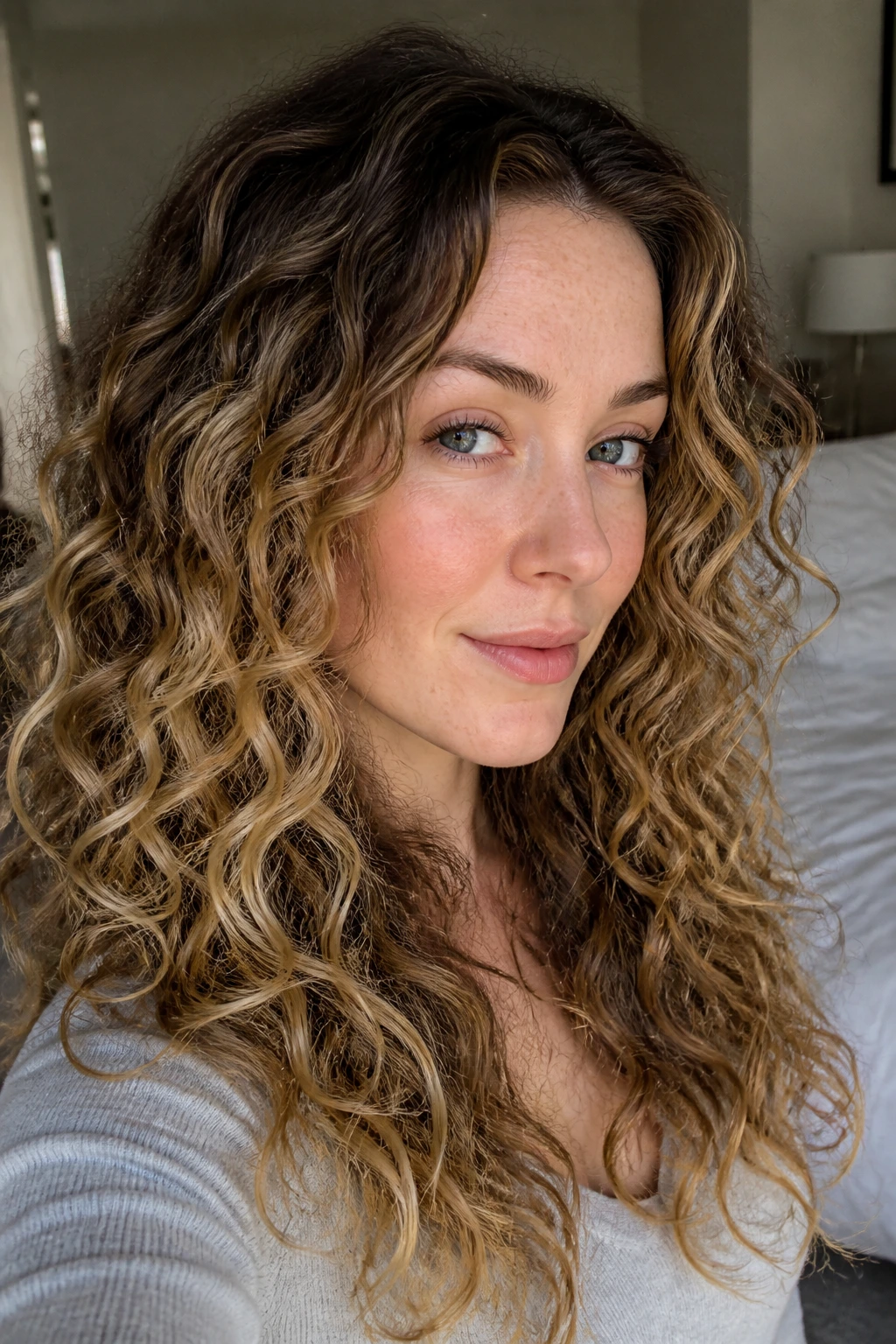
A root shadow is not a cheat. It is the reason a bronde melt looks soft instead of streaky. On pale skin, the darker root gives the face contrast, and the lighter mids and ends bring brightness without that hard line that can make curly hair look boxy.
Bronde melts are especially good if your natural color is somewhere in the brunette-to-dark-blonde zone. The transition from root to midlengths to ends should feel gradual. No sudden jump. No obvious stripe. A root shadow of about 1/2 to 1 inch usually gives enough depth to keep the style graceful as it grows out.
This is one of the easiest looks to live with. It is forgiving on most curl patterns, and it lets you keep dimension even when the curls expand on humid days. That matters. Curly hair can change shape fast, and a good bronde melt stays pretty through the change.
20. Buttercream Ribbons
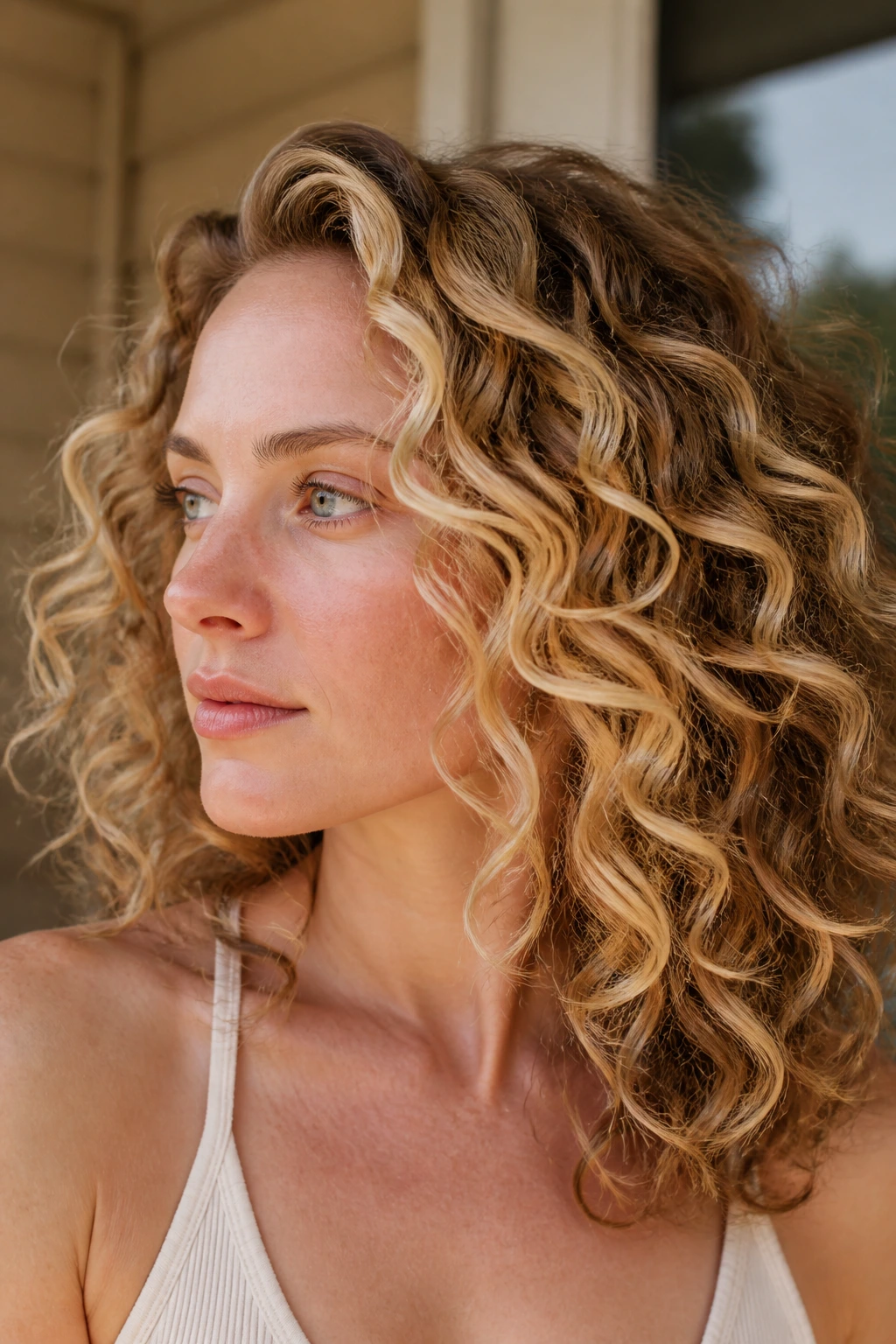
Buttercream ribbons are paler and creamier than beige blonde, with a soft yellow note that stays flattering instead of brassy. On pale skin, they can add brightness without the coolness that sometimes makes the face look pale in a bad way. The effect is soft, creamy, and a little luminous.
What keeps buttercream from tipping too yellow is the base underneath it. You want some depth still visible, especially under the top curls and near the roots. The ribbons themselves should be fine enough that the curl pattern stays readable. On a tight spiral, a thicker ribbon can turn into a slab. On looser curls, the same ribbon might be fine.
This is one of my favorite picks for people who want blondness but not sharp blondness. Buttercream does not shout. It glows. And on pale skin with freckles or peach undertones, that glow can be more flattering than icy brightness ever is.
21. Peachy Blonde Halo
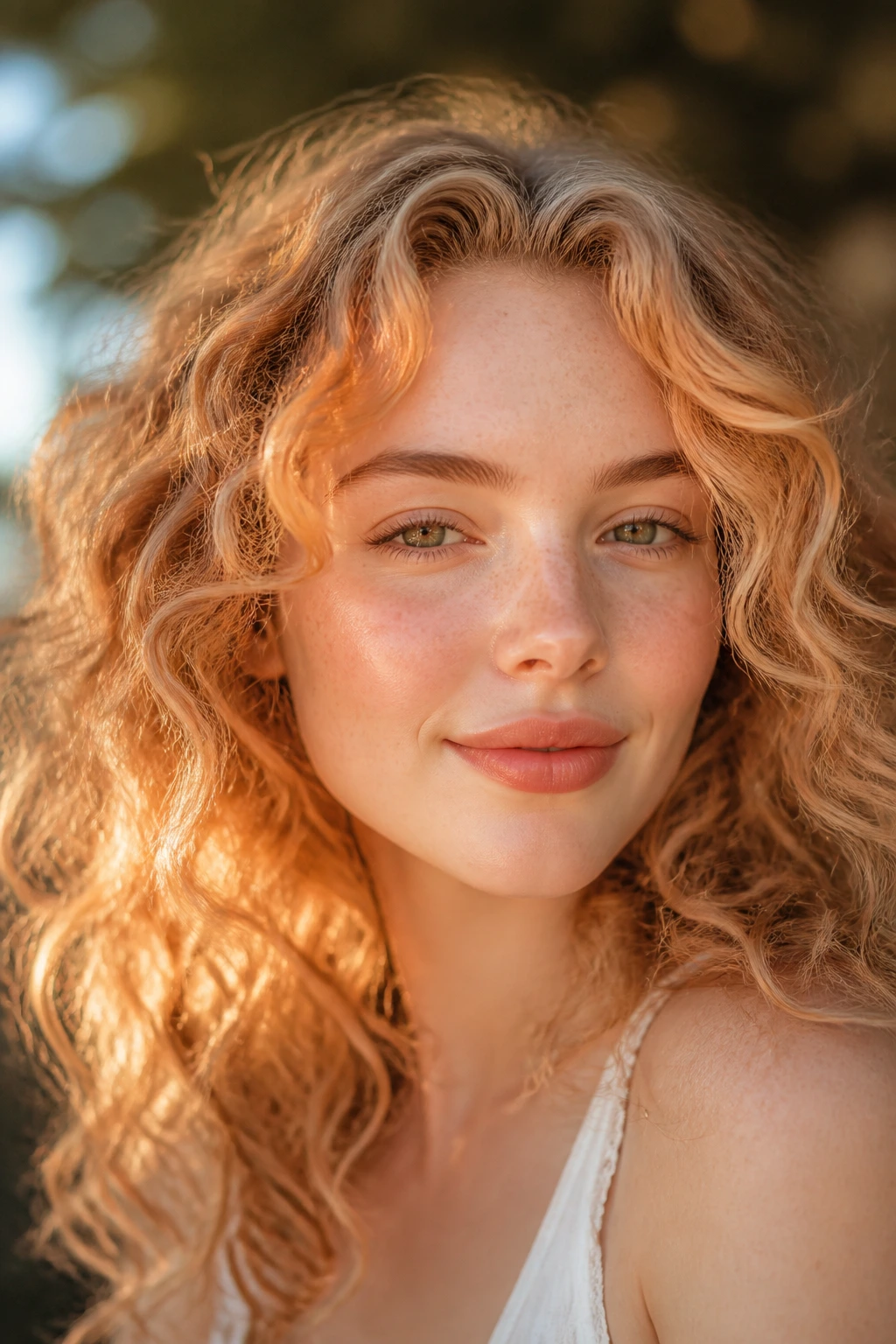
Peachy blonde halo highlights sit in a sweet spot for pale skin that has rosy cheeks or a little warmth in the undertone. Peach is gentler than copper and less yellow than gold, so it gives the complexion a soft lift instead of a hard contrast. Around curls, it reads almost like a blush for the hair.
The halo placement matters more than ever here. Concentrate the peachy pieces around the hairline, top layer, and the curls that frame the eyes. Leave the back and interior a touch deeper so the color does not overwhelm the face. If the peach is spread everywhere, the look can go sugary fast. A halo keeps it airy.
I also like this shade for springy, bouncy curl patterns because the peach flashes on the curve of each ringlet. It is cheerful without feeling juvenile. That balance is hard. Peachy blonde gets there when it stays soft and does not try to be neon.
22. Tawny Lowlights
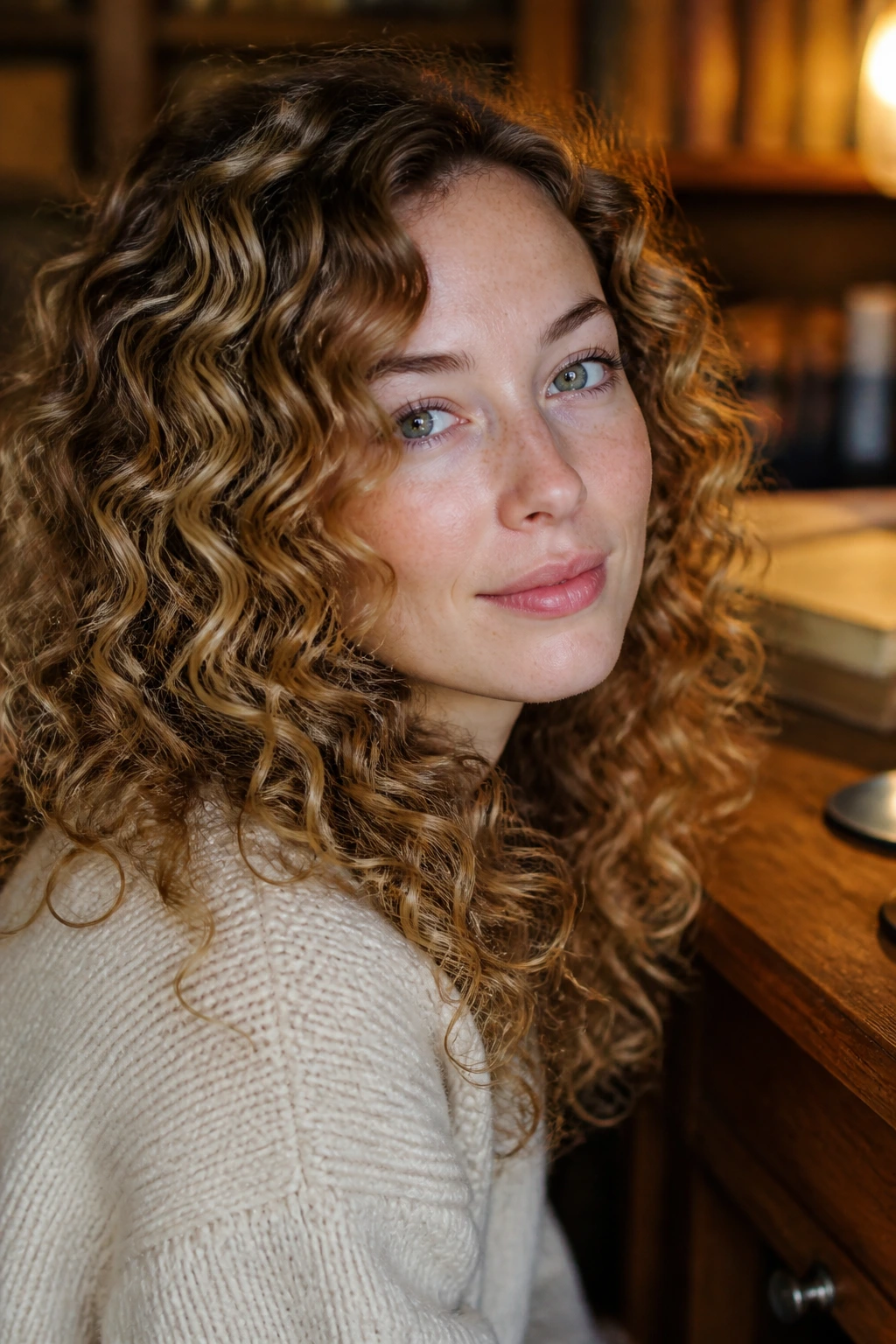
When curls get too light, tawny lowlights put the shape back in. Tawny sits between chestnut and warm taupe, which means it reads as shadow first and color second. That is exactly what pale skin often needs when the hair has started to overpower the face.
The best part of tawny lowlights is how they sit inside the curl mass. You do not see them all at once. You see them when the hair shifts, and that little reveal makes the overall color feel dimensional instead of flat. Use them under the surface, near the nape, and in the inner bends of the curl clumps.
If you have fine curls, this is one of the easiest ways to keep them from looking fluffy. If you have thick curls, it helps stop the style from turning into a halo of light ends. Not every great color move is about making things brighter. Sometimes it is about giving the brightness a place to land.
23. Smoked Bronze Ribbons
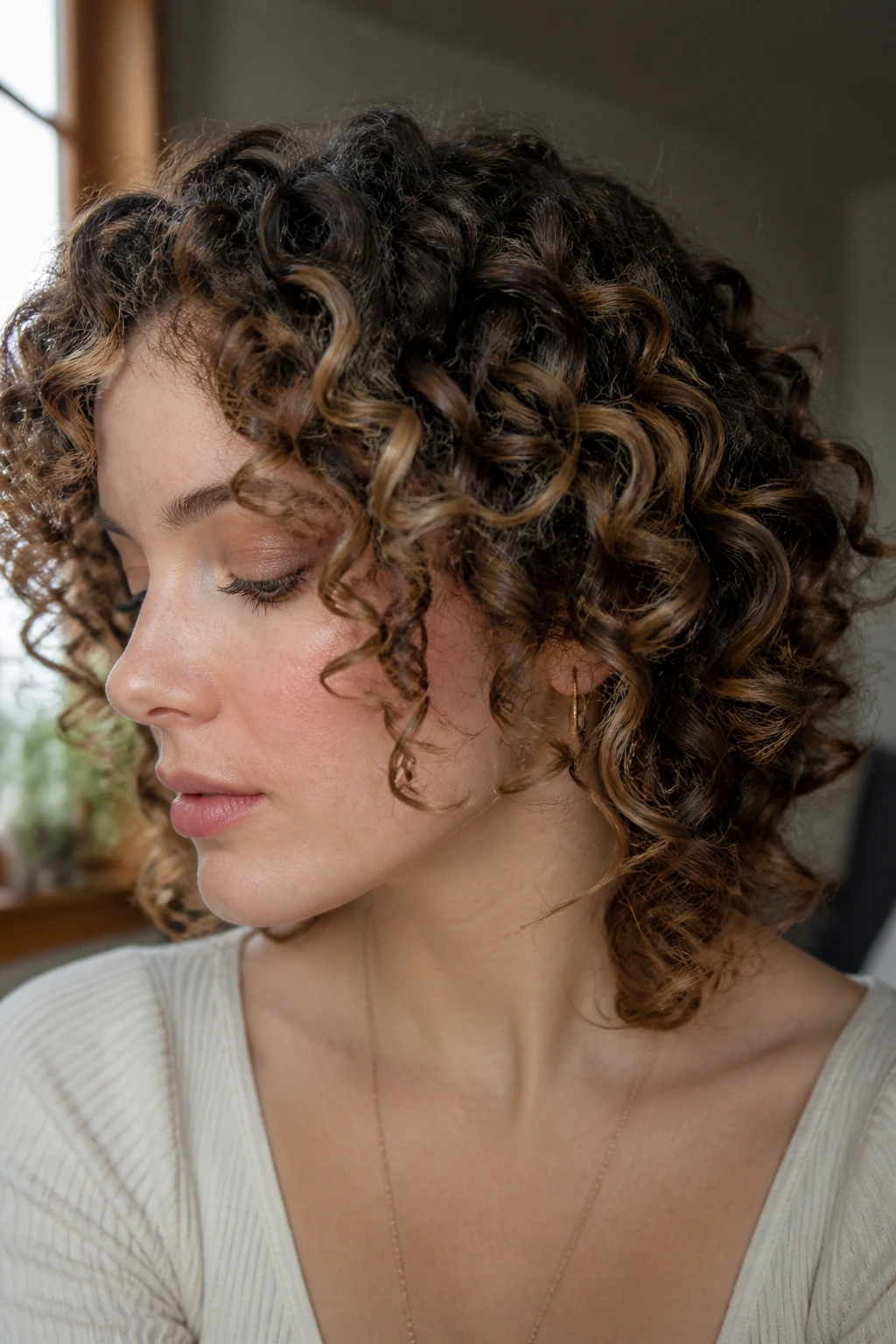
Smoked bronze ribbons give you warmth, depth, and a little edge without the goldiness that can make pale skin look shiny in the wrong way. Bronze on its own can be flashy. Smoked bronze is calmer. It sits closer to a softened metal than a full copper or honey tone.
The placement should be selective. A few ribbons around the crown and behind the ears are enough to change the read of the whole head. Too many, and you lose the effect of contrast. On curly hair, bronze shows best when it is woven through different curl sizes rather than painted in a single band. That keeps the light from pooling in one place.
This is a strong pick for neutral or warm fair skin. It also plays nicely with brown eyes and gold makeup tones. If you like a shade that looks richer in the sun but not loud indoors, smoked bronze has that range.
24. Silver Smoke Gloss Lights
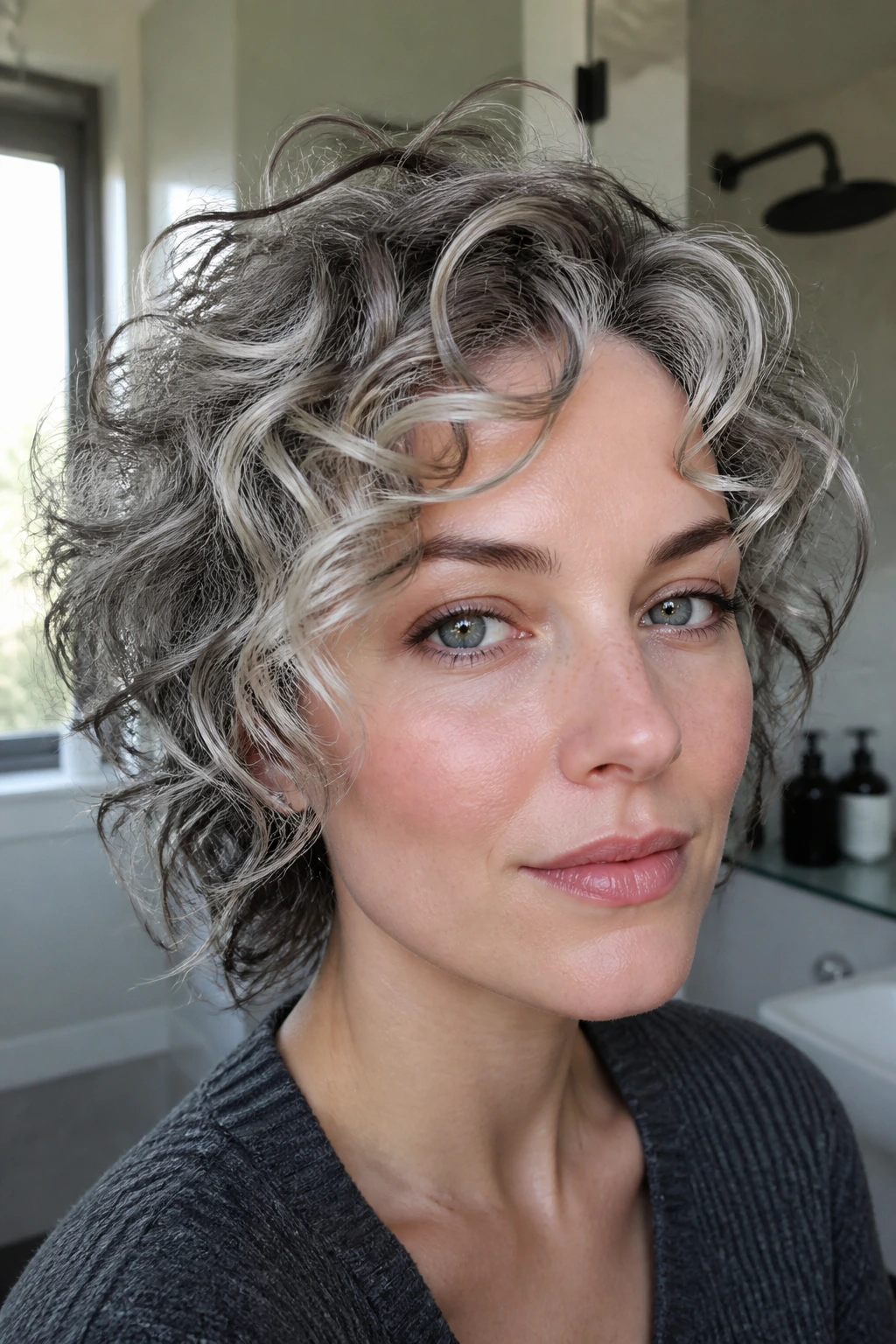
Silver smoke is the cool, polished cousin of platinum. It combines pale silver tones with a smoky base so the highlight does not look paper white. On fair skin, especially cool fair skin, that gives a crisp finish without the harshness of a full icy blonde.
The gloss is everything. You are not trying to bleach the hair into a flat silver sheet. You are layering a translucent silver smoke over lighter pieces so the color reflects instead of sitting dead. Curly hair makes this look more interesting because the silver flashes move along the bends of each curl, which keeps the finish from feeling static.
I would use this for someone who likes a little edge and does not mind upkeep. Silver smoke fades fast if you use hot water and heavy stylers. But when it is fresh, it has one of the clearest, cleanest effects on pale skin. Crisp, not harsh. That is the whole point.
25. Gingered Cinnamon with Gold Flicks
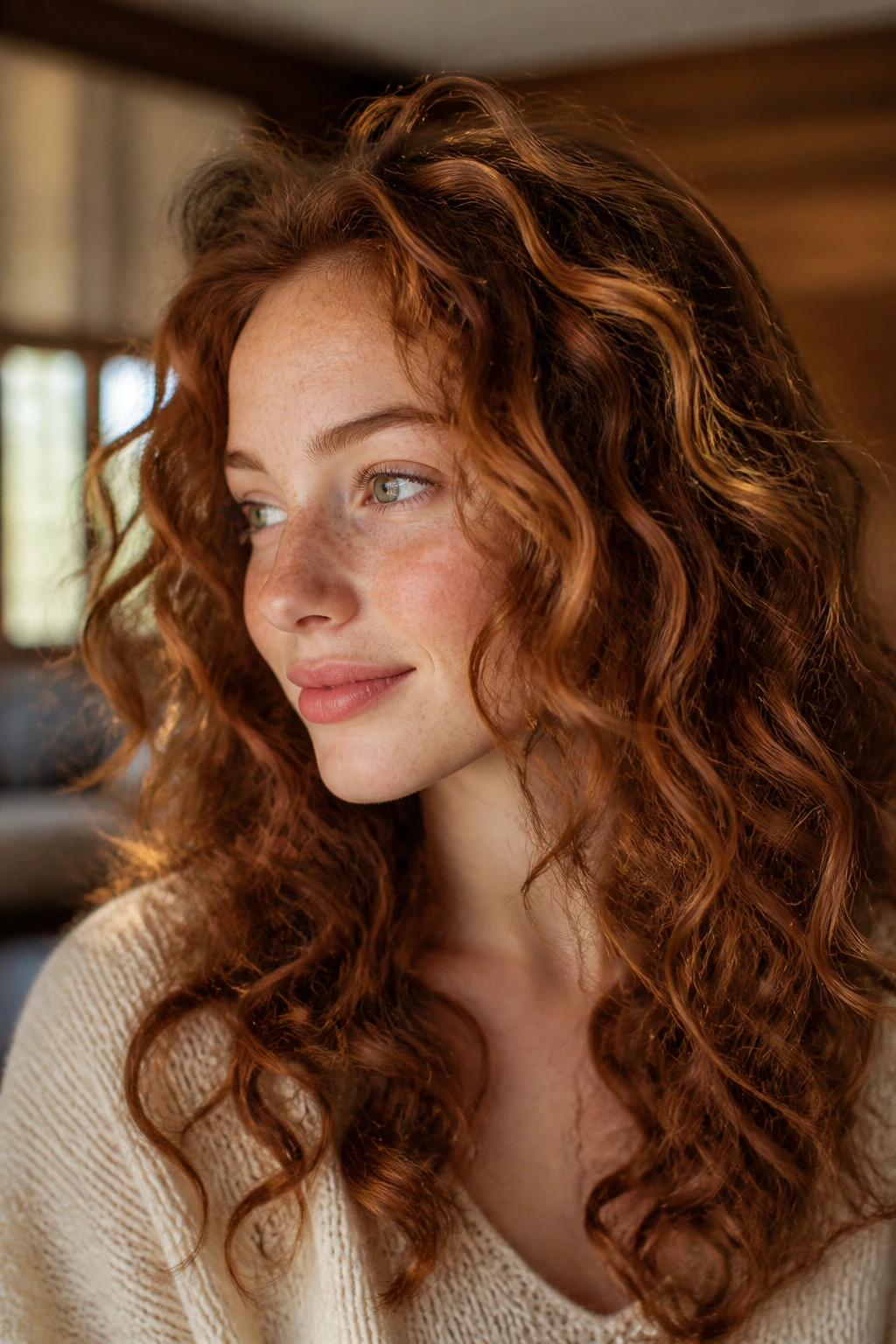
Gingered cinnamon with gold flicks brings the list home with warmth and movement. It is richer than strawberry blonde, gentler than full copper, and more dimensional than a plain brunette glaze. On pale skin, the ginger note adds life without turning the face orange, as long as the gold is used sparingly.
The flicks should sit on the top bends of the curls and around the hairline. That is where they catch the most light and where the warmth does the most for the complexion. Keep the cinnamon through the mids and ends, then let the gold appear almost as sparks rather than blocks of color. That little bit of contrast is what makes the shade feel alive.
This is a strong choice if your skin likes warmth but your hair still needs to look soft and curl-friendly. It has personality. It also has boundaries, which is why it works. The color does not need to take over the whole head to make an impression.
How to Ask for Dimensional Highlights Without Losing Your Curl Pattern
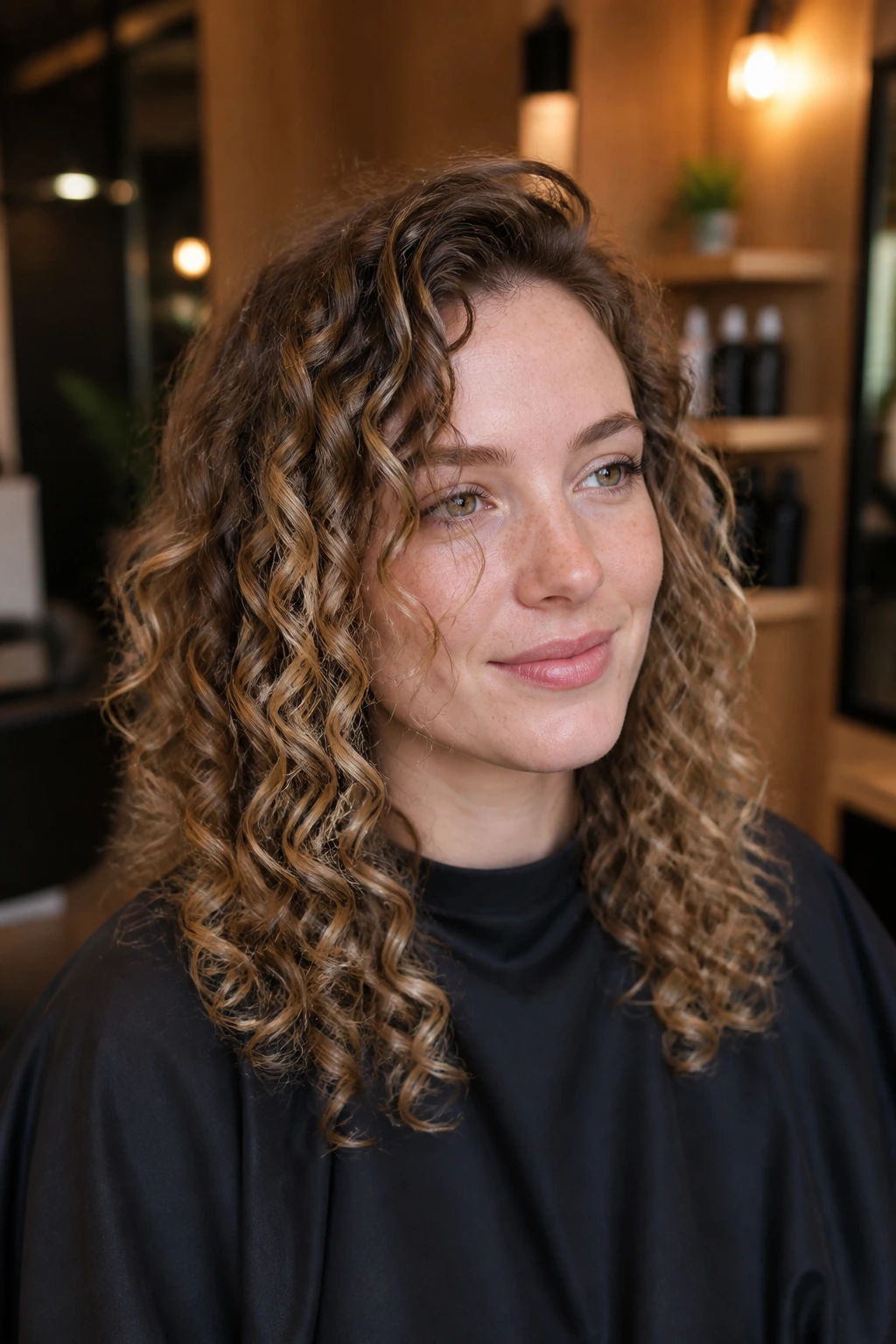
The easiest way to ruin a good highlight plan is to ask for “blonde” and leave it at that. A better salon conversation starts with how bright you want the face, how much root you want to keep, and how often you are willing to come back. If you want pale skin to stay fresh without making curly hair look stripey, ask for fine placement, not broad panels, and say you want the curl shape to stay visible when the hair dries.
Bring two photos. One should show the brightness you like in daylight. The other should show what you do not want. That second photo saves time because it tells the colorist where your line is. If your curls shrink a lot, say so. A highlight that looks subtle while wet can turn into a loud ribbon once the hair dries and contracts.
Mention your history, too. Box dye, henna, repeated bleach, and hard-water buildup all change how highlights lift and tone. So does porosity. The ends of curly hair often lighten faster than the mids, which is why a good colorist may keep the brightest pieces slightly farther from the tips. That is not hesitation. It is protection.
How to Style Highlighted Curls So the Color Shows
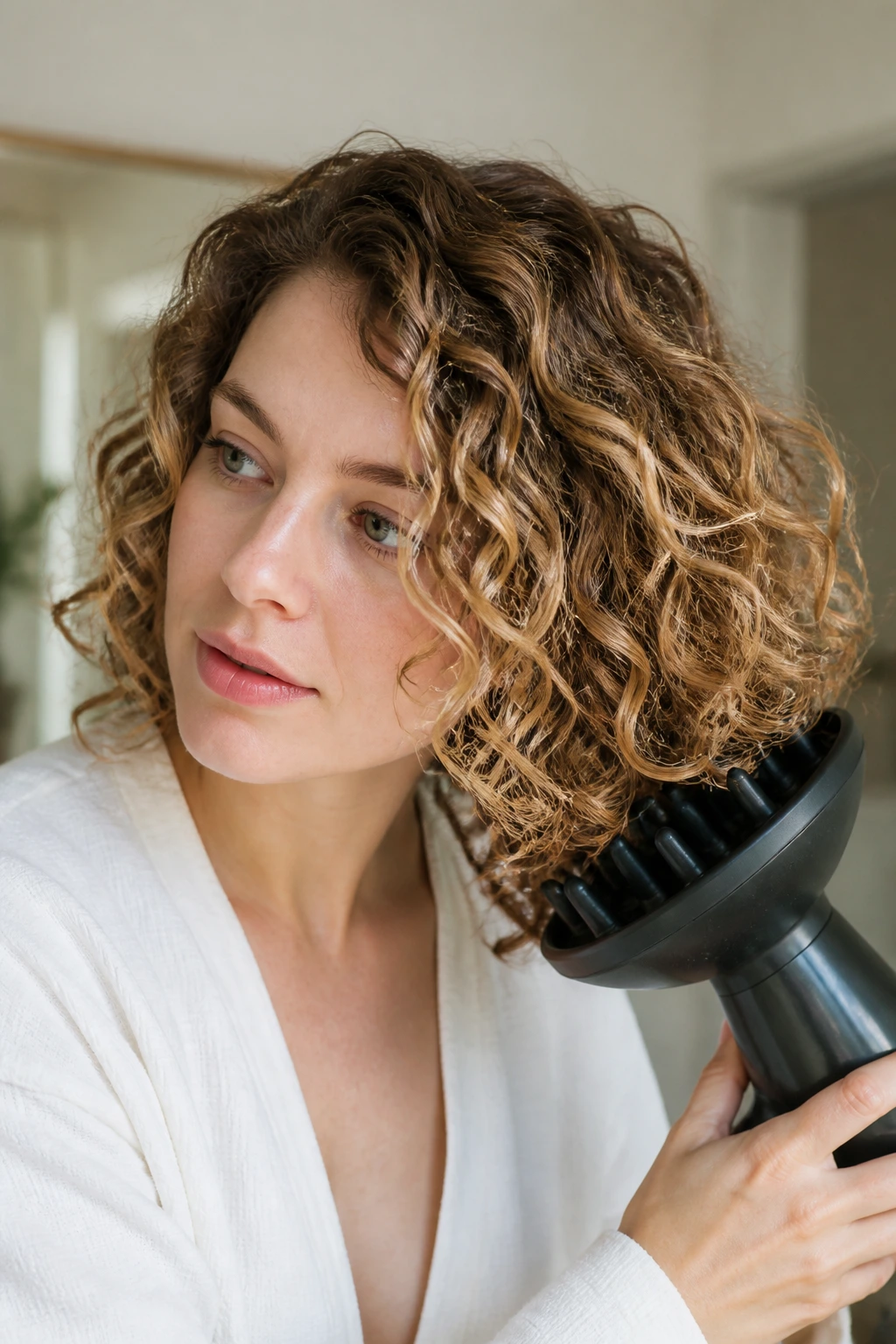
Highlight placement only does half the work. Styling decides whether the color reads as dimensional or just damp and fuzzy. Diffusing on low heat usually gives the cleanest shape, because it lets the lighter ribbons dry in defined clumps instead of blowing apart. If you air-dry, resist the urge to touch the curls every ten minutes. The less you disturb the pattern, the more the highlights stay visible.
A lightweight curl cream or gel usually works better than a heavy butter on highlighted hair. Too much product can mute the shine and make the lighter pieces disappear into the mass. Scrunch from the ends upward, then clip the roots if you want lift around the crown. That crown lift matters more with highlights than people think, because the top layer is where the eye goes first.
Once the hair is fully dry, you can separate a few curls with a drop of serum on your fingertips. Do not rake through the whole head. That is how you lose the spiral that makes the color interesting in the first place. A little separation is enough.
Tools, Products, and Reference Photos Worth Bringing
- Three natural-light photos of your hair: One from the front, one from the back, and one with your curls fully dry help your colorist see how the pattern sits.
- A clear “yes” photo and a “no” photo: Showing what you want and what you refuse to wear saves a lot of guesswork.
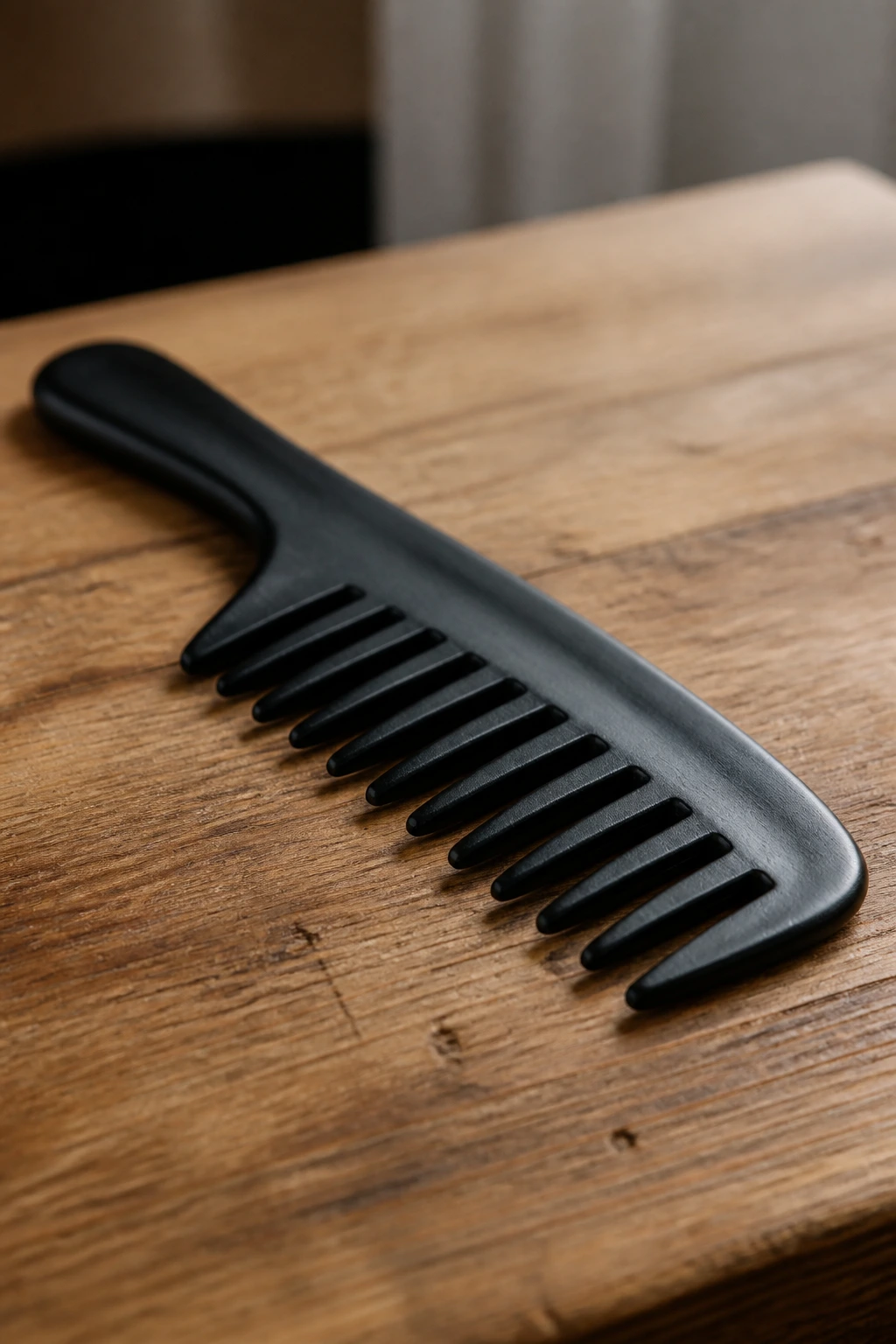
- A wide-tooth comb: Useful for detangling while keeping curl clumps intact before a salon visit or gloss application.
- A sulfate-free color shampoo: Helps preserve toners and keeps pale highlights from fading too fast.
- Purple or blue shampoo: Purple works better for yellow blonde; blue is usually better if your highlights are drifting orange or caramel.
- A lightweight leave-in conditioner: Keeps highlighted curls from feeling crunchy, especially if the hair has been lightened more than once.
- Heat protectant: Even diffusing counts as heat, and highlighted curls show damage quickly when the ends dry out.
- A satin pillowcase or bonnet: Reduces friction, which helps both curl shape and color shine.
Keeping the Color Bright Between Appointments
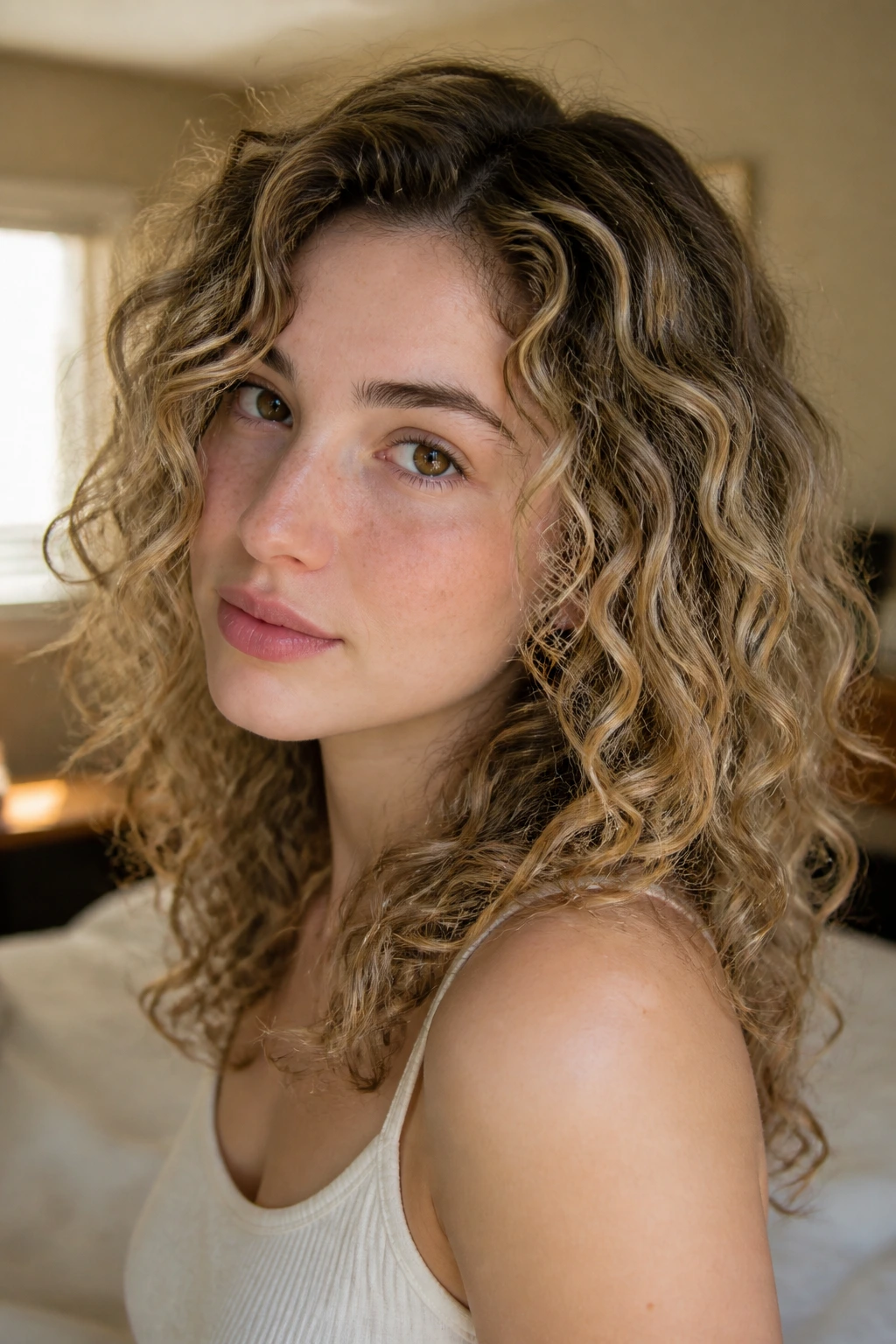
Highlighted curls are happiest on a schedule, not chaos. Most people can stretch a gloss or toner appointment about 4 to 8 weeks, depending on how fast the tone fades and how often they wash. Copper, strawberry, and peach shades usually fade faster than beige, ash, or mushroom tones. Platinum and silver can hold their lightness but lose their cool edge if you overuse purple shampoo.
Wash days matter more than people want to admit. Cool or lukewarm water helps preserve both tone and curl cuticle. Hot water opens the hair too much and strips gloss fast. If your water is hard, a clarifying wash every 3 to 4 weeks can stop mineral buildup from making blonde pieces look dingy. Pair that with a deep conditioner once a week, especially on the ends.
Touch-ups depend on the technique. Babylights and money pieces may need a refresh around 8 to 12 weeks. Balayage and root-shadow looks can stretch longer, sometimes 12 to 16 weeks, because the grow-out is softer. Lowlights often need a refresh when they start to fade into the base rather than when the roots show. That difference matters.
Common Mistakes That Flatten Curly Dimension
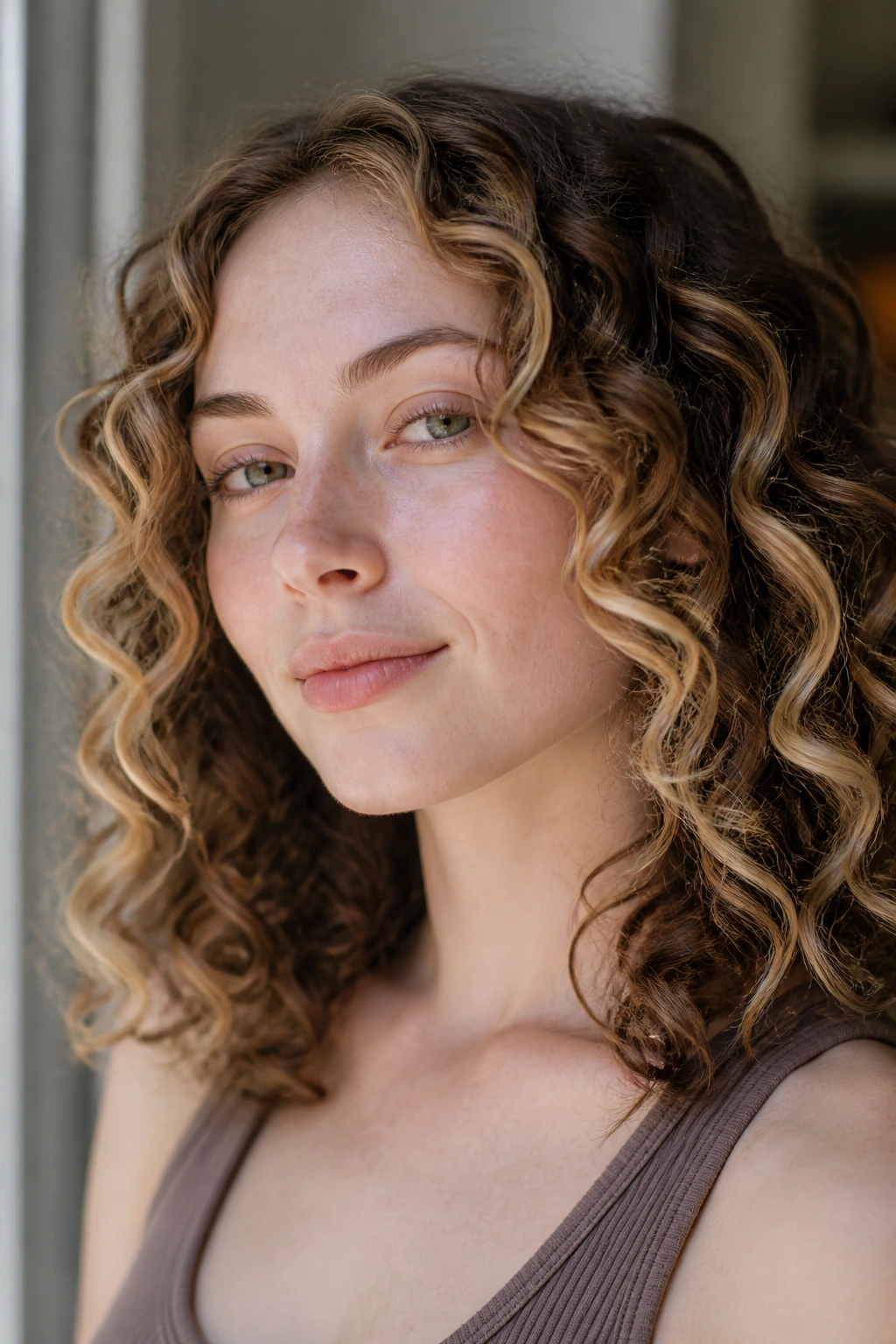
The first mistake is choosing one flat shade and painting it everywhere. On curly hair, that turns beautiful texture into a stripey mess because every curl catches the same color in the same place. The fix is to ask for 2 or 3 tones and some visible depth at the root or underneath.
The second mistake is putting the brightest pieces only on the surface. It looks fine when the hair is wet and flat, then vanishes once the curls spring up. Your color needs to live in the curl clumps, not just on top of them. Ask for interior lightness as well as surface pieces.
Third, people often go too icy for their skin tone. On very pale skin with warm or rosy undertones, over-ash can make the face look gray and the hair look dusty. Beige, champagne, or soft copper usually solve the problem faster than another round of toner.
Fourth, purple shampoo gets overused. A little keeps yellow away. Too much turns the blonde dull and chalky, and on curls that dryness shows up fast. Use it once a week or every other week, not every wash.
Fifth, some people ignore shrinkage. Curly hair lifts visually as it dries, so highlight placement has to account for where the curls will sit, not where they hang wet. If the colorist paints too close to the root on tight curls, the result can look harsh very quickly.
Variations and Alternatives for Different Commitment Levels
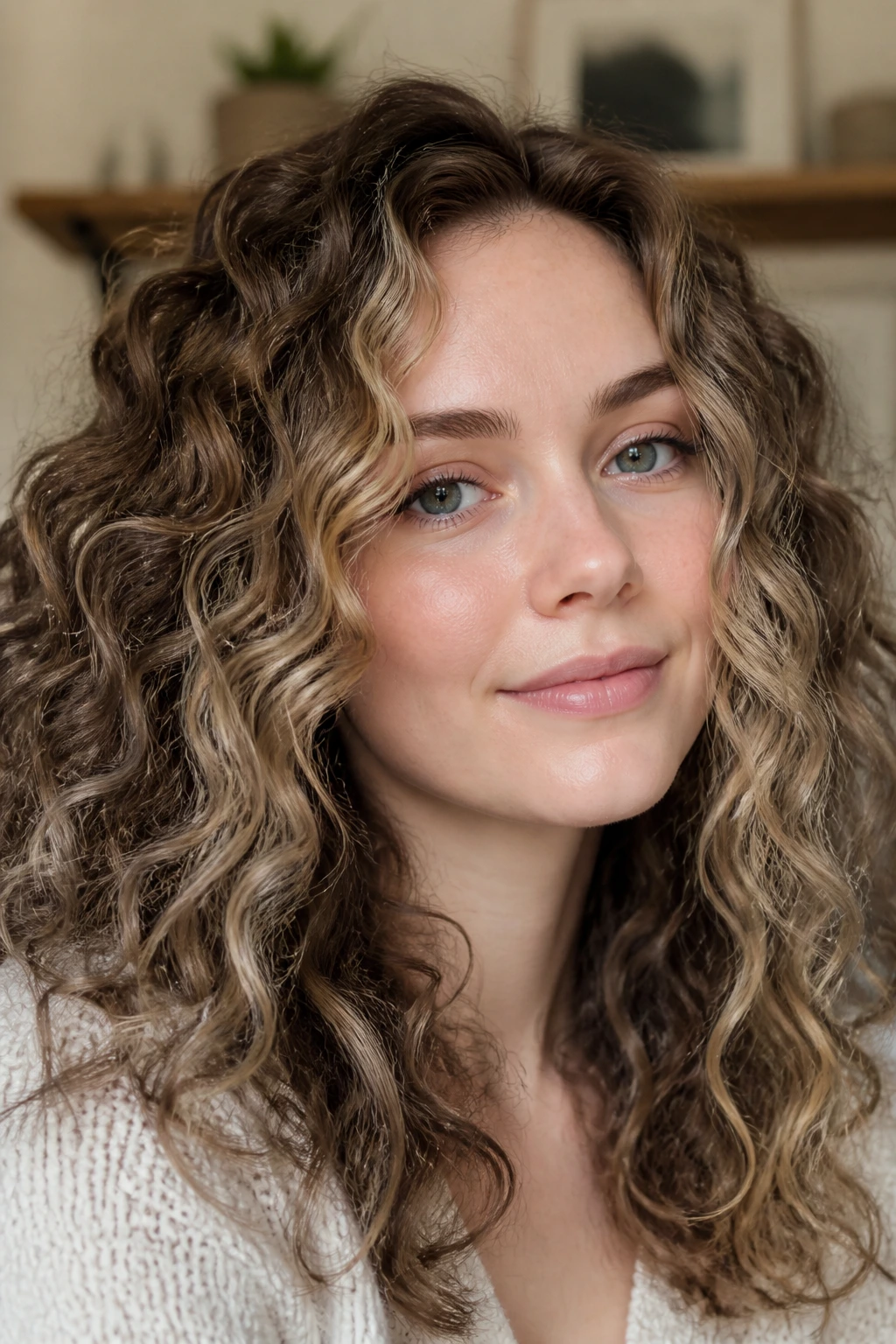
Barely-There Brightening: If you want to test the waters, ask for a few beige babylights plus a soft gloss around the face. The hair stays mostly your natural color, and the dimension shows up most when the curls move. This is the right choice for someone who wants softness first and change second.
Face-Frame First: Start with a money piece and leave the rest of the hair almost untouched. That gives pale skin an immediate lift without a full color commitment, and it is easy to grow into more highlights later. It also lets you see how your undertone reacts before you go lighter all over.
Cool-Only Palette: Pearl, ash, mushroom, silver smoke, and cool mocha all live in this lane. Use this if gold tones make your skin look ruddy or if you prefer a crisp, clean finish. The key is to keep the toner soft enough that the curls still look like hair, not frosting.
Warm Glow Palette: Honey, toffee, copper, cinnamon, peach, and apricot sit here. These shades suit pale skin with freckles, neutral warmth, or a little blush in the cheeks. Warm tones need restraint, though. Too much saturation and the hair starts to dominate the face.
Low-Maintenance Grow-Out: Bronde melts, root shadows, and smoked caramel ribbons are the most forgiving choices in this group. They let you go longer between appointments without a blunt regrowth line. If your schedule is packed or you do not enjoy salon upkeep, this lane makes sense.
Frequently Asked Questions
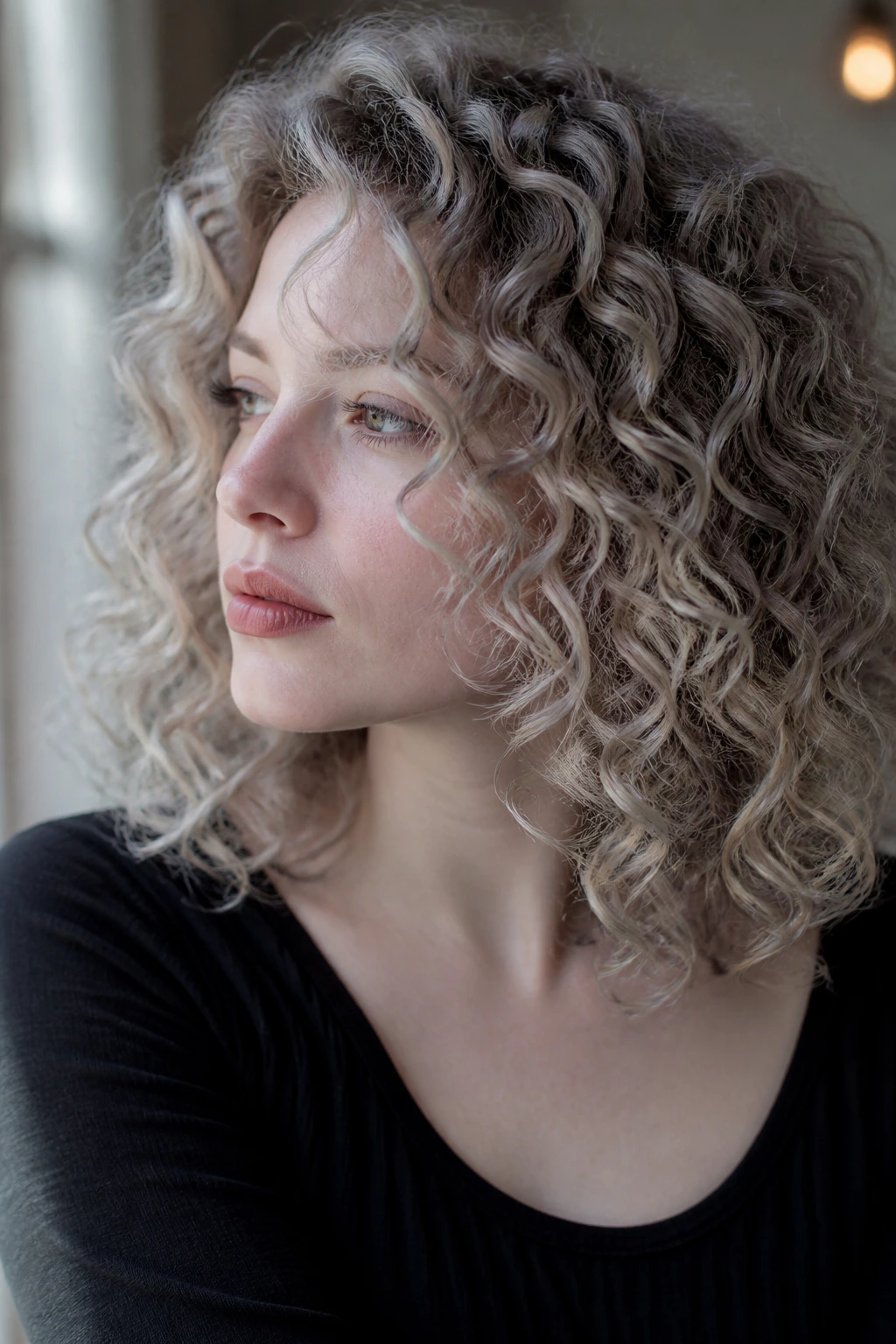
Are highlights or lowlights better for pale skin with curly hair?
Both can work, but they solve different problems. Highlights brighten the face and make the curls catch light; lowlights add depth so the hair does not look washed out or too fluffy. If your skin is very fair, a mix of both usually gives the most natural result.
How light should the highlights be?
A jump of 2 to 4 levels is often enough for dimension, especially on curly hair. Going much lighter can flatten the shape and make regrowth obvious faster. If you want platinum or icy silver, it is usually better to get there in stages.
Will highlights damage my curls?
They can, especially if the hair is already dry or porous. Fine placement, bond-building color, and a careful gloss help a lot, but aftercare matters too. If your ends snap or feel gummy during a strand test, stop and reassess before pushing lighter.
What if my highlights turn brassy fast?
That usually means the tone is too warm for your base or your maintenance products are too harsh. Switch to a color-safe shampoo, add a gloss sooner, and use purple or blue shampoo only on the weeks you need it. Brassy ends are often a toner problem, not a full re-color problem.
Can I get these looks on dark brown curls?
Yes, but you may need more than one session if you want a light blonde result. If you prefer lower stress on the hair, go for bronde, caramel, cinnamon, copper, or smoky mocha tones first. Those still give dimension without forcing a dramatic lift.
How do I stop highlights from looking stripey?
Ask for very fine sections, varied placement, and more than one tone. On curly hair, broad foils are the enemy of softness because the curl pattern makes them stand out even more. Ribboning, babylights, and soft balayage are usually safer than chunky streaks.
Do I need a full gloss every time I refresh the color?
Not always, but glossing is one of the best ways to keep pale highlights from drifting yellow, orange, or flat. Many people benefit from a toner or gloss every 4 to 8 weeks, even if they are not re-highlighting the whole head. It keeps the tone honest.
The Shade That Moves With You
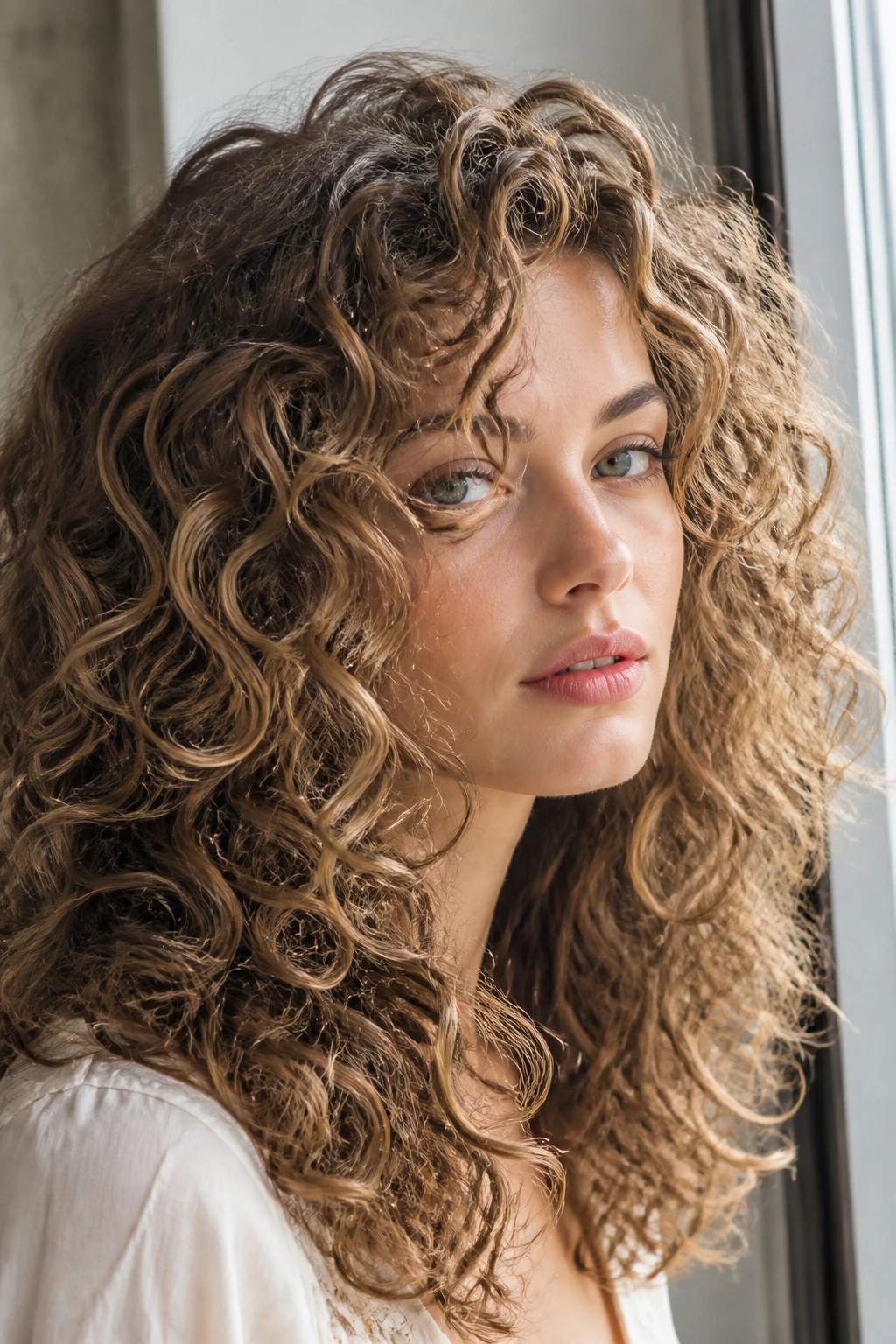
The nicest thing about dimensional highlights on pale skin and curly hair is that they do not have to be loud to matter. A few well-placed beige ribbons, a smoky caramel lowlight, or a careful face frame can change the whole mood of the hair without flattening the curl pattern that makes it interesting in the first place.
That is the part worth protecting. The best color here does not sit on top of the curls like paint. It slides through them, catches on the bends, and leaves enough shadow behind for the shape to breathe. Bring clear reference photos, say what your undertone actually does in daylight, and ask for placement that respects the way your curls move. That small bit of honesty in the chair usually leads to the best result.