



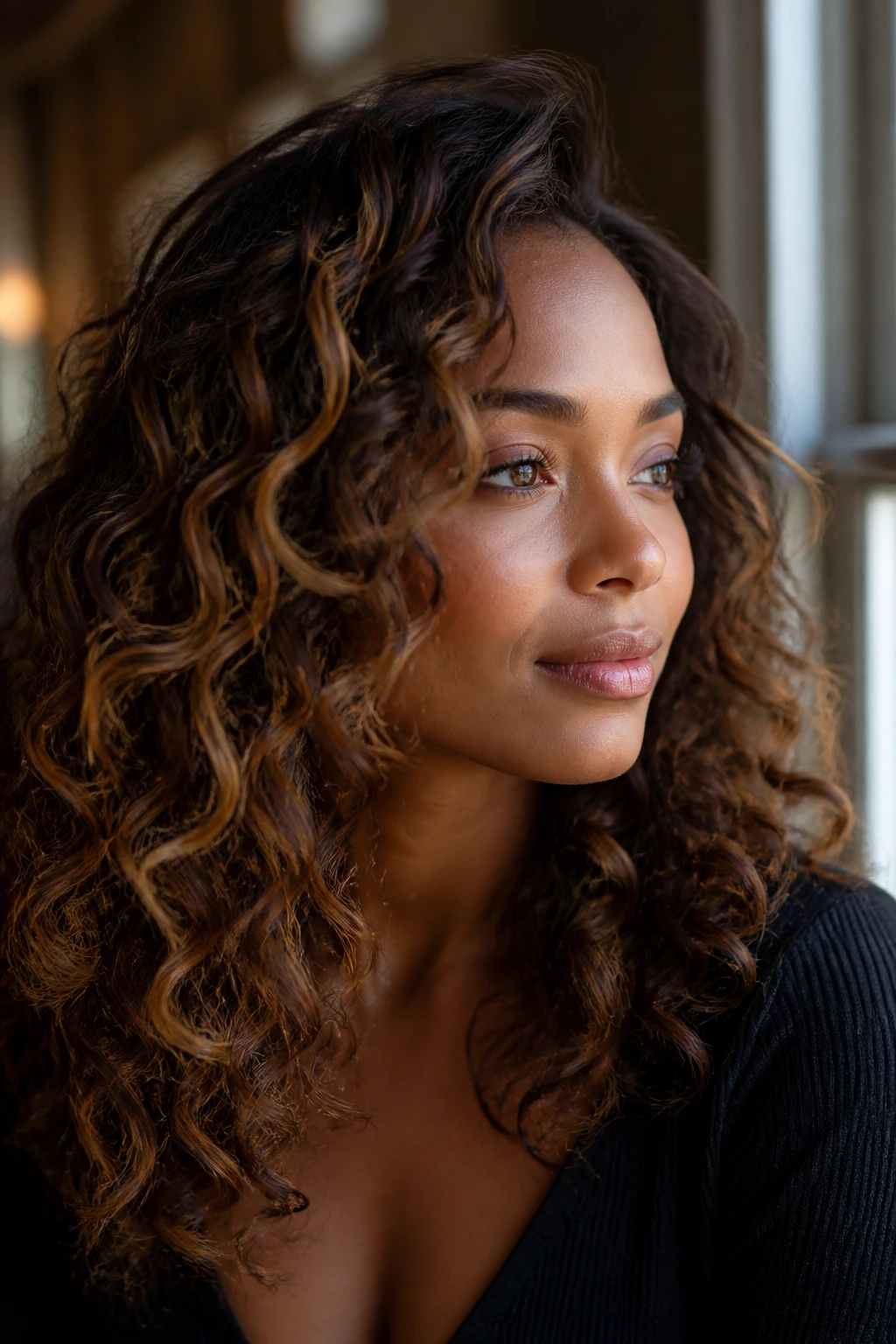
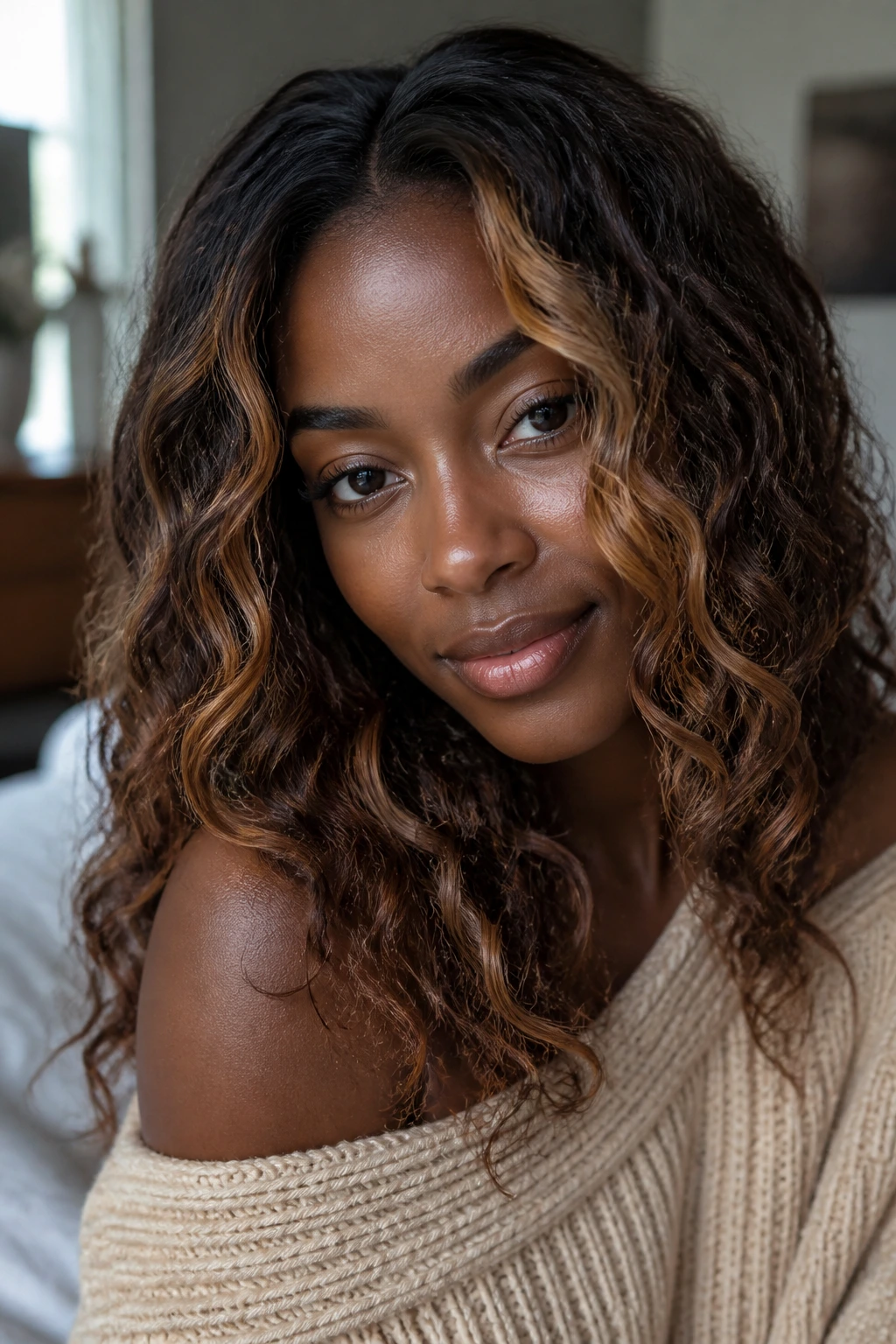
Loose curls change everything. A caramel ribbon that looks tame on straight hair can flash gold at one bend, bronze at the next, and nearly disappear a few inches lower. That shifting effect is exactly why winter highlights for deep skin tones with loose curls need a different hand than the pale, streaky color that gets passed around mood boards.
Deep skin does not need timid color. It needs placement that respects undertone, curl width, and the way hair moves when it dries. On a loose curl pattern, a highlight is never just one streak; it becomes a bend, a ridge, a soft edge around the face, then another flash at the mid-lengths when the light lands from the side.
The best looks here are rich, not chalky. Honey, cinnamon, bronze, copper, mahogany, plum-brown, and smoky cocoa can all work beautifully when they’re placed with intention and kept a little deeper than the internet’s favorite blonde obsession. Start there, and the options get better fast.
Why You’ll Love This Collection
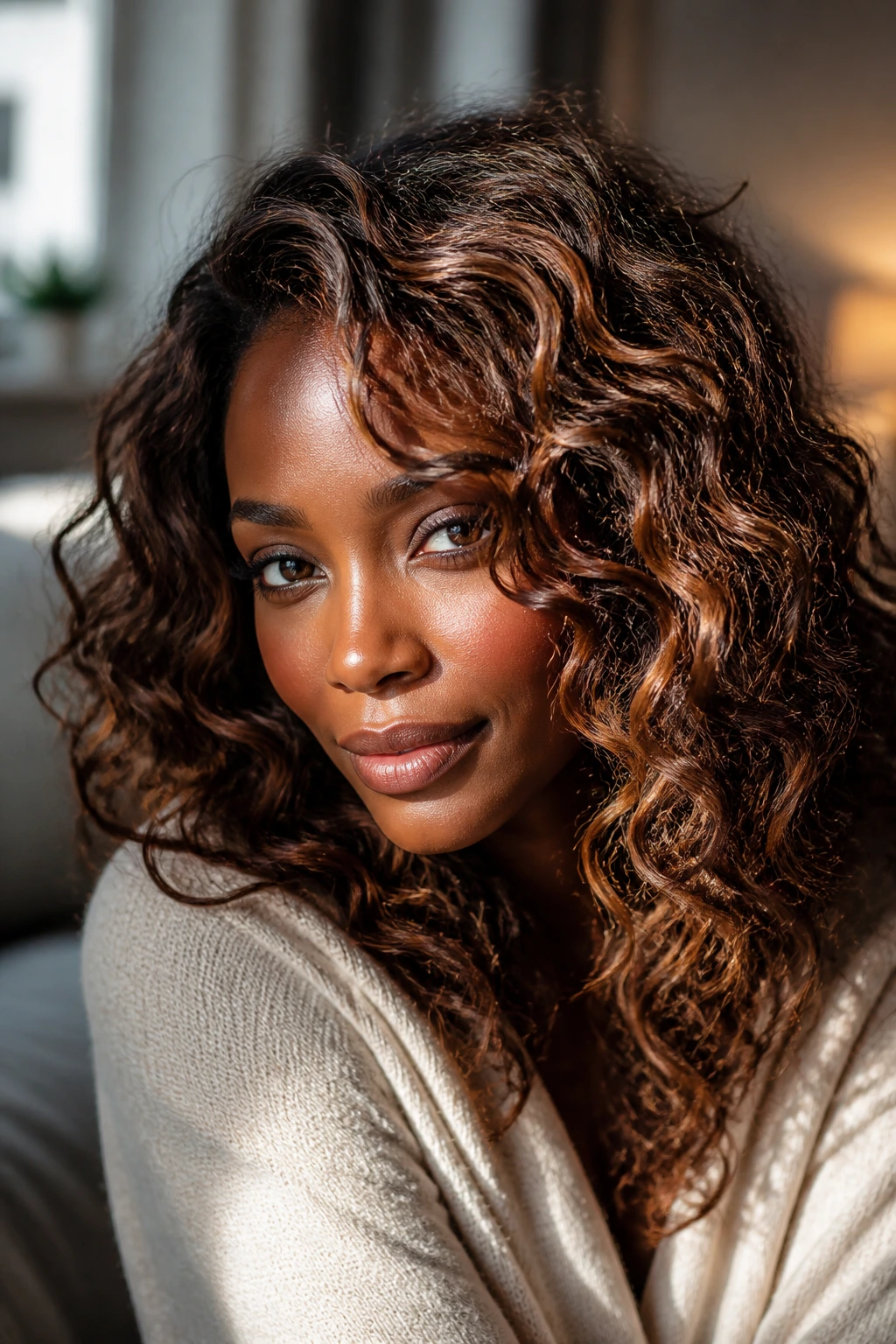
- Curl-Friendly Dimension: Loose curls split color into soft ribbons, so even one well-placed highlight can look fuller and more expensive than a whole head of pale streaks.
- Deep-Skin Glow: Warm caramel, bronze, copper, and mahogany tones tend to sit cleanly against deep complexions without turning flat or dusty.
- Low-Drama Grow-Out: Balayage, foilyage, and root-shadow placement keep the regrowth line soft, which matters when you want to stretch salon visits.
- Winter-Proof Richness: Cooler air and indoor heat can flatten hair color; these shades keep the hair from looking dull or one-note.
- Flexible Intensity: You can go subtle with babylights or make the front pieces bolder without bleaching the entire head.
- Works With Real Life: Most of these looks still read well on day-two curls, diffused waves, twist-outs, and air-dried texture.
1. Honey-Tobacco Balayage
Honey-Tobacco Balayage has that warm, tea-stained look that makes loose curls read soft instead of streaky. The honey sits on top of a deeper brown base, while the tobacco note keeps the color from drifting too yellow. On deep skin, that balance matters. Too much yellow can look loud; this lands richer.
Why It Works
This placement suits curls because the painted pieces are not all the same width. A loose curl pattern lets the honey catch on the curve and vanish again a few inches later, which gives the hair motion even when you are standing still. Keep the lift around level 7 if the base is dark brown. That is enough contrast to show in winter light without tipping into brassy blonde territory.
Best for: warm and neutral undertones, especially if you wear your hair down a lot.
Pro tip: Ask for a soft root shadow at the first inch so the highlight grows out like it belongs there, not like it was dropped on top of the hair.
2. Cinnamon Ribbon Highlights
Cinnamon ribbons are the color answer for people who want warmth with a little edge. They sit between copper and brown, which means they glow on deep skin without shouting. The color looks especially good when it’s placed through the mid-lengths of loose curls, where each bend can show a different slice of red-brown.
What Makes It Different
Unlike pale gold highlights, cinnamon doesn’t rely on brightness to make the hair stand out. It relies on tone. That’s why it works so well on curly hair that already has texture and movement. A few narrow ribbons around the crown and sides are usually enough. If the pieces are too thick, the red tone can start to look flat.
How to Wear It
Wear this one with a side part if you want the color to frame the face. Center parts make it read calmer and more balanced. Either way, the shade looks best when the curls are defined, not brushed into a puff of frizz.
3. Caramel Money-Piece Brightening
Want the fastest way to wake up loose curls? Brighten the front pieces and leave the rest of the head quieter. A caramel money piece gives you that face-framing lift without committing to a full head of lighter strands. On deep skin, it draws the eye to the cheekbones and brow line in a way that feels deliberate, not trendy-for-trendy’s-sake.
Why It Works
The trick is restraint. Two to four foils around the hairline are often enough, and the lift should stop around level 7 or 8. Anything brighter can take over the face instead of framing it. A good colorist will keep the brightest panels just off the root and soften them through the mid-lengths so the transition doesn’t look sharp.
Placement Notes
- Keep the front pieces a half-shade brighter than the rest of the head.
- Leave the part line slightly deeper for contrast.
- Let the curls fall naturally before judging the brightness; loose coils always look brighter once they separate.
4. Bronze Babylights
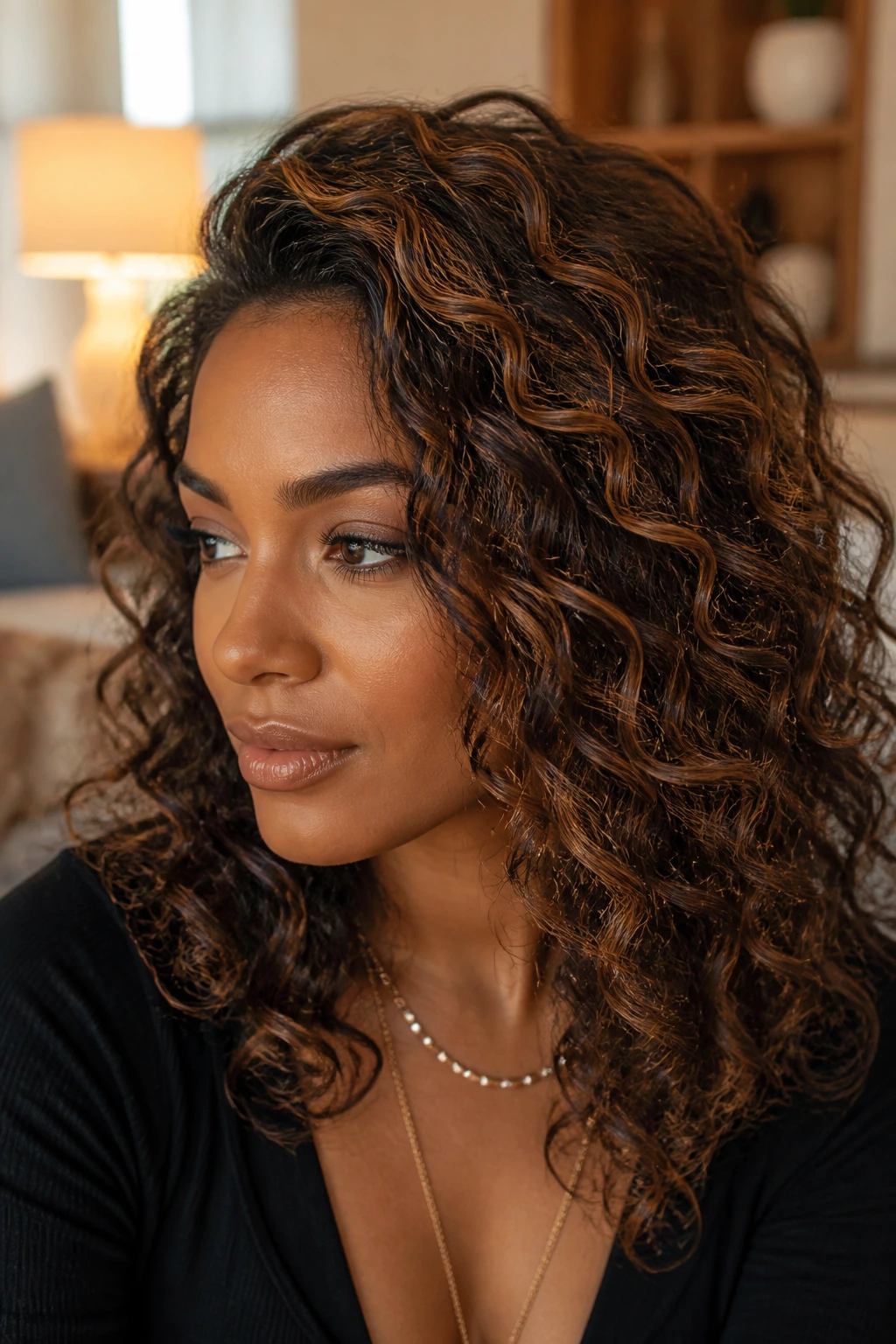
Bronze babylights are for the person who likes the idea of highlights but hates seeing obvious stripes. These are tiny woven pieces, almost threadlike, that add a soft metallic shimmer through the top and crown. On loose curls, they read as movement more than color, and that is the point.
The bronze tone is sneaky in a good way. It pulls light without turning the hair copper-orange or beige-blonde. If your base is deep brown, a few delicate bronze foils around the part and upper sides can make the whole head look denser and shinier. No drama. Just sheen.
A cut with layers helps here. Without a little shape, babylights can hide too much inside the curl mass. With the right layering, they sit on the bends and show up exactly where the light hits.
5. Chestnut Root-Shadow Blend
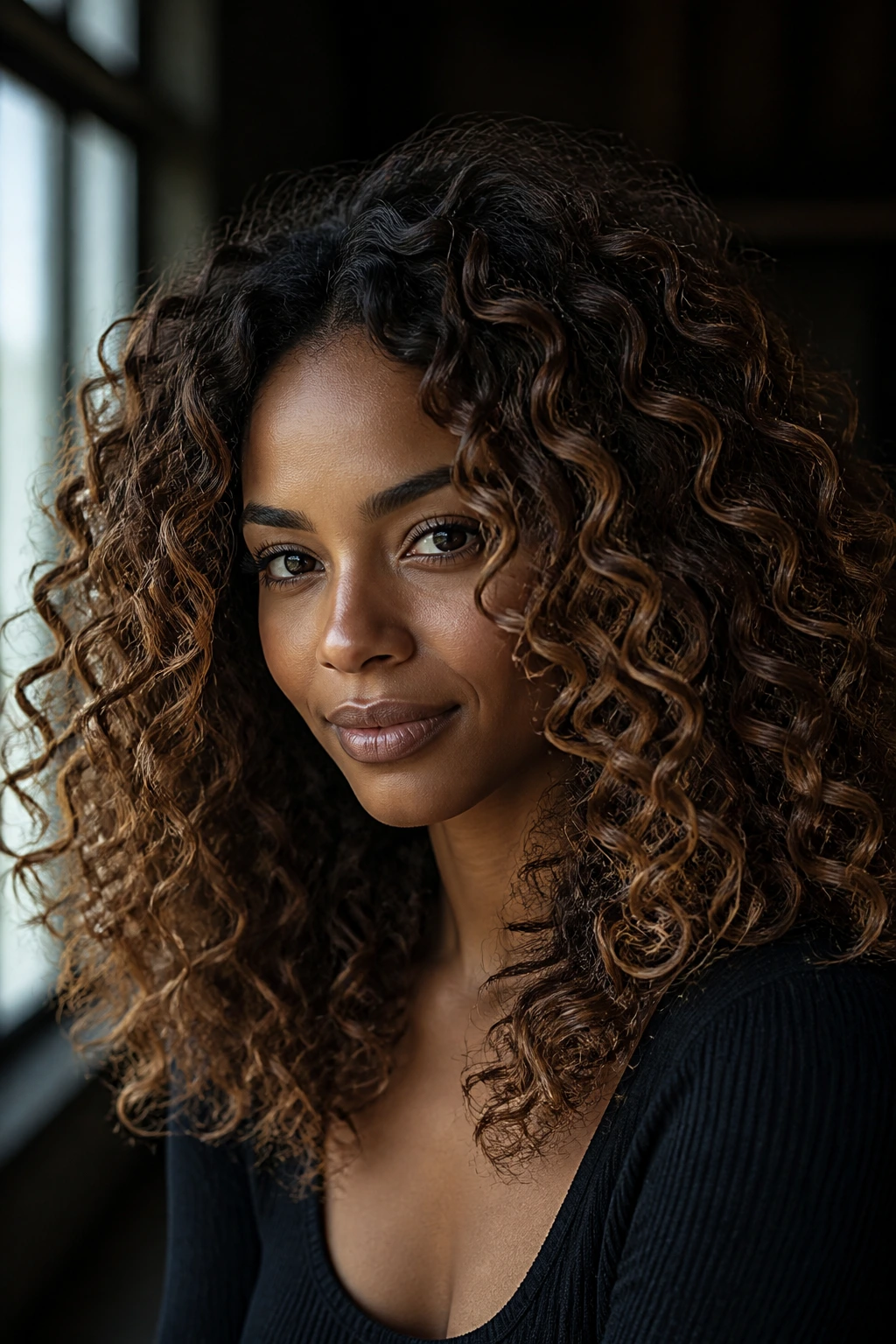
Chestnut with a root shadow is one of those styles that looks calm from across the room and expensive up close. The base stays deep, the mids shift into chestnut, and the root melts into the rest so the grow-out line barely announces itself. If you hate salon panic at week five, this is a smart pick.
Why It Works on Loose Curls
Loose curls need depth under the bright pieces. Without that shadow, highlighted hair can start to look stringy. Chestnut keeps the curls reading full. It also plays well with deep skin because the warmth is brown-first, not blonde-first.
A good version of this look usually uses 1 to 2 shades of lift, not more. That keeps the color believable in winter light. If your hair is very dark, ask for a gentle caramel-chestnut result instead of chasing a light brown that might turn orange during the process.
Best Use Case
This is the one I’d point to for someone who wants highlights that look polished even on the days when the curls are a little imperfect. And that’s most days, if we’re being honest.
6. Copper Face-Frame
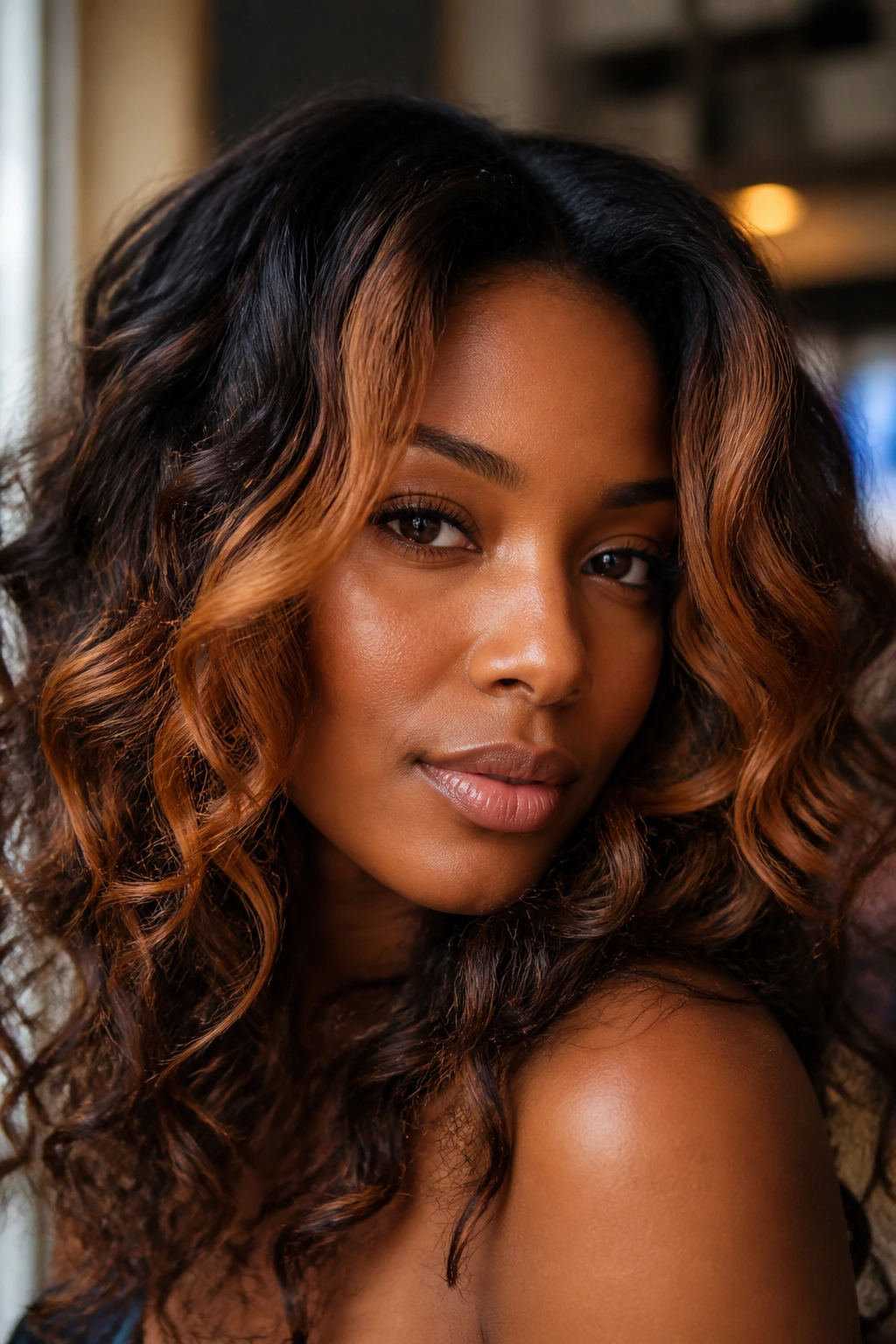
Copper around the face is louder than caramel, and that’s the fun of it. The tone sits between red and gold, so it catches the eye fast and gives deep skin a real glow. On loose curls, those front pieces don’t need to be broad. A few well-placed foils can do more than a whole highlighted head if the color is dialed in.
Comparison Angle
If caramel is soft daylight, copper is late-afternoon sun. It’s warmer, sharper, and a bit more obvious. That makes it especially good for people who wear minimal makeup and still want the hair to do some of the work. Keep the copper rich, not neon. A good copper face frame should look like pigment, not costume color.
Who it suits best: warm undertones, golden skin, and anyone who likes jewelry in brass or gold.
Recommendation: Ask your colorist to leave the crown deeper so the copper stays around the face and doesn’t take over the whole head.
7. Toffee Ombré Ends
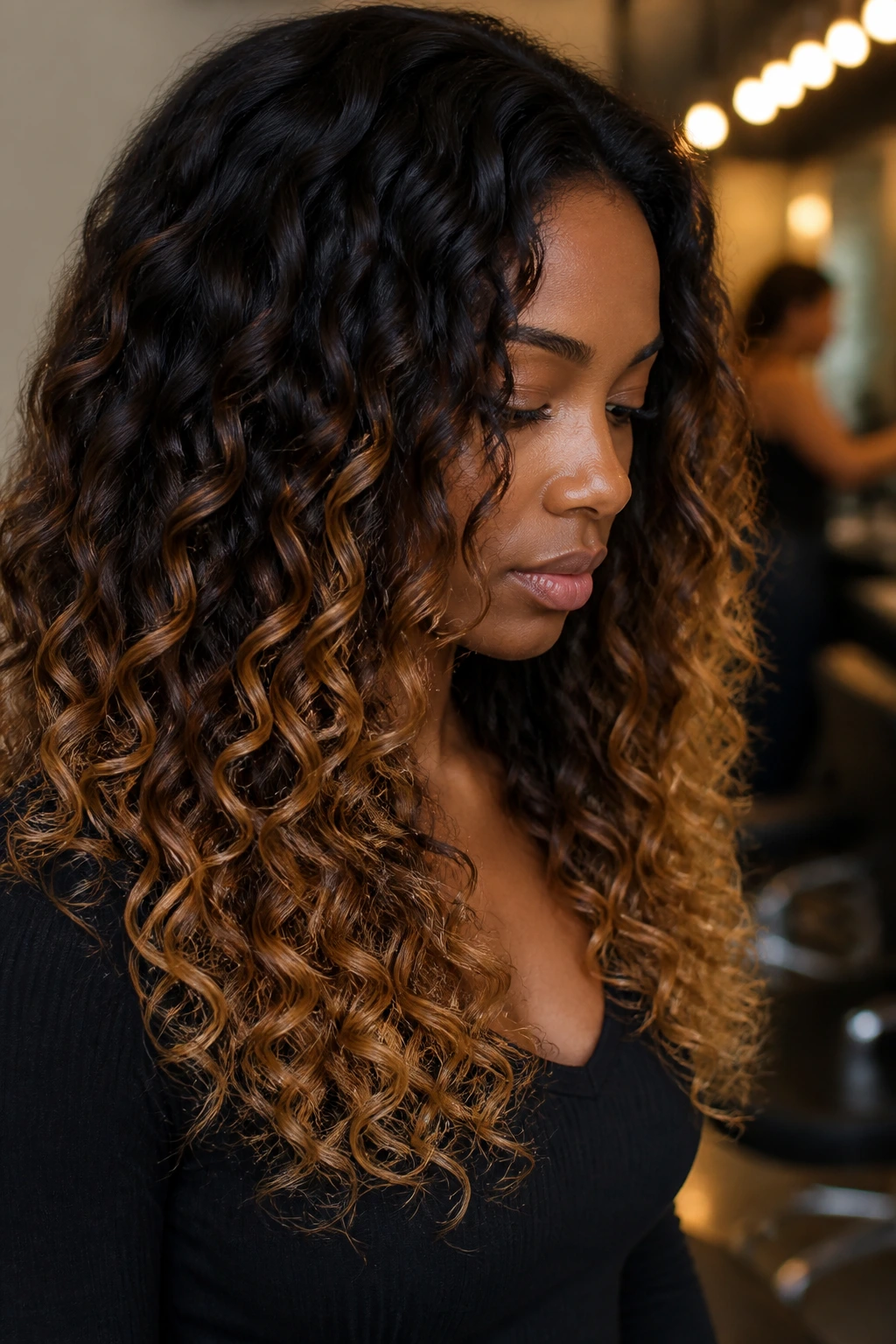
Toffee ombré is the answer when you want lighter ends but don’t want a hard line anywhere near the roots. The darkest color stays near the scalp, then soft toffee rolls down into the length. On loose curls, the gradient shows up beautifully because the coils stack over each other and create little shadows between the lighter ends.
This works best when the ends already have some length to them. Short curly cuts can lose the ombré effect because the color doesn’t have room to breathe. Longer layers give you the sweep you need. A good ombré should look like the hair naturally spent time in the sun, except the tone is richer and better controlled.
Keep the toffee beige-gold rather than yellow. Beige reads more expensive on deep skin. Yellow can get noisy fast.
8. Espresso-and-Mocha Lowlights
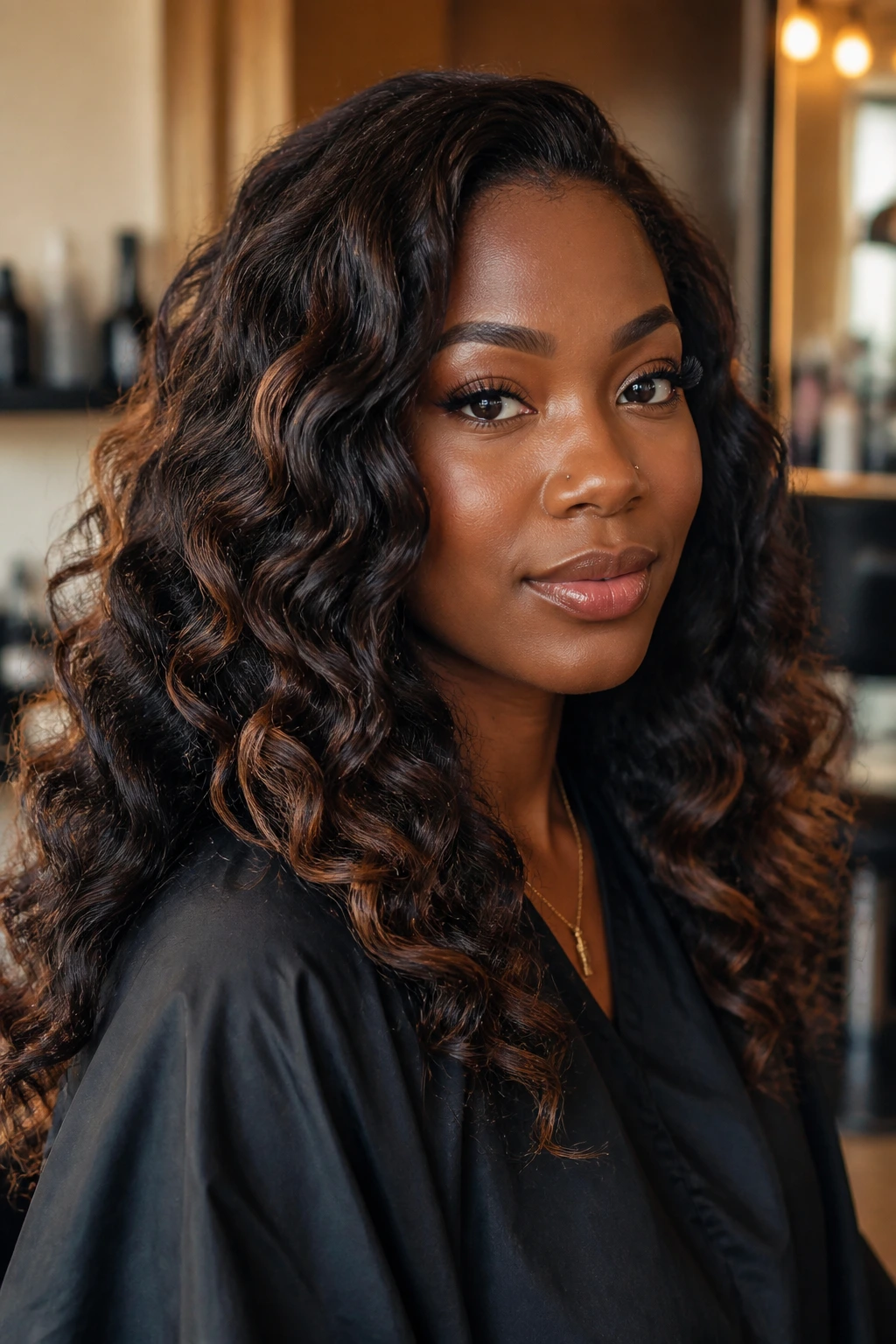
Not every winter color story needs more light. Sometimes the smartest move is to add depth back in. Espresso-and-mocha lowlights make existing highlights look richer by giving the curls darker lanes to travel through. On loose curls, that contrast is what keeps the whole head from looking washed out.
Why It’s Worth Considering
If your hair has been lightened a few times and starts to feel airy in the wrong way, lowlights can save the shape. They fill in the gaps and make the curls look more defined. That matters on deep skin tones, where too much lightness can flatten the face and pull attention away from the eyes.
A good colorist usually paints the lowlights in broader, softer sections than the highlights. That prevents the hair from looking zebra-striped. I like this look most on people who already have a few lighter ribbons and want them to read expensive instead of overexposed.
9. Auburn Peekaboo Panels
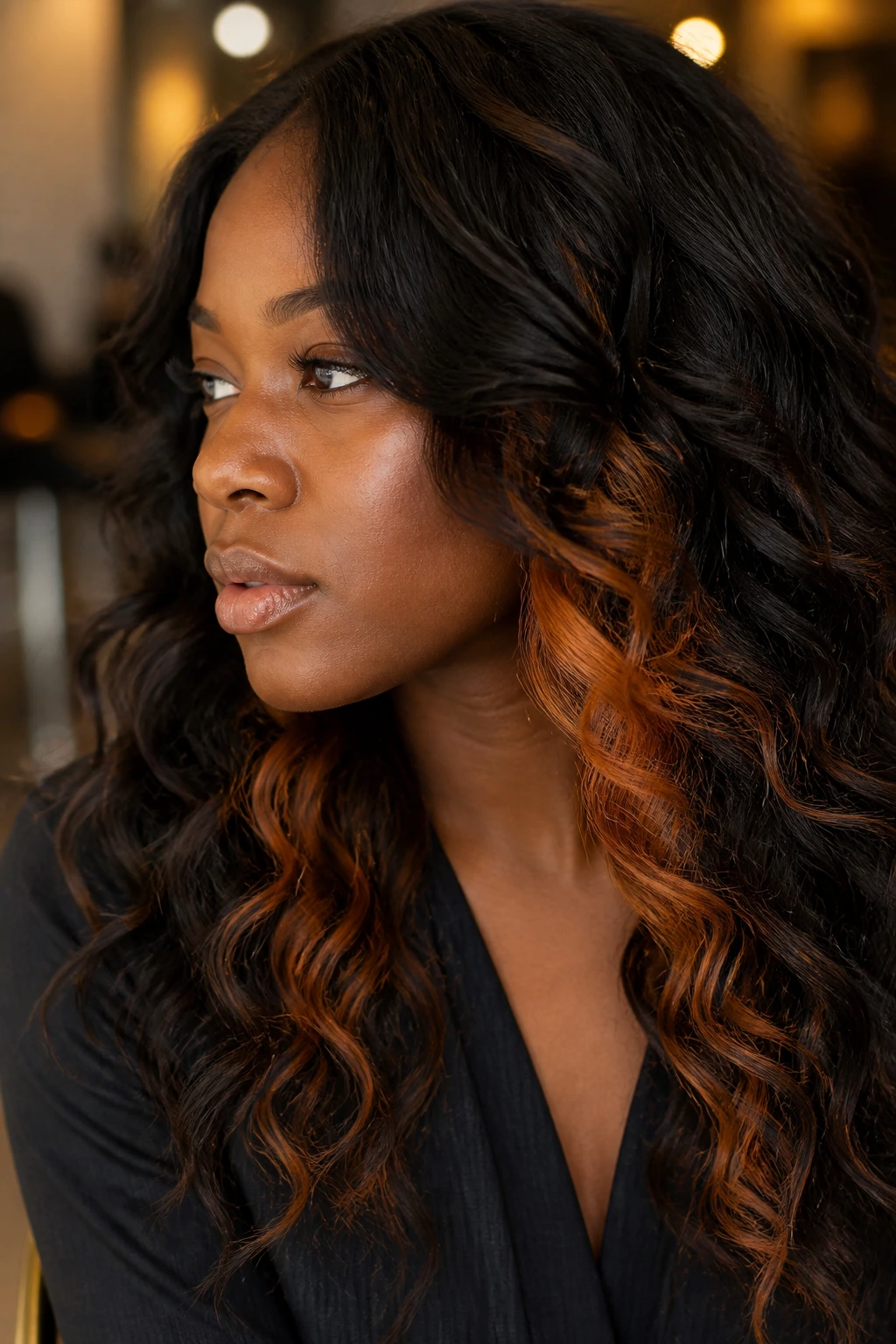
Auburn peekaboo panels are for the person who wants color with a little secret tucked underneath. The top layer stays relatively dark, then auburn shows up when the curls swing apart. On loose curls, that movement matters. The color appears and disappears like a good reveal.
How to Use It
Ask for the auburn under the crown and around the mid-back sections, not just at the front. That way the color shows when you gather the hair, tuck it behind the ear, or flip it to one side. Keep the auburn deep and brown-based. If it gets too bright, the hidden effect turns obvious.
What to Watch For
- Too much auburn near the surface can make the whole head look warmer than you planned.
- The best panels are placed where the curls separate naturally.
- If you wear protective styles between wash days, this color still pops when the hair comes back out.
10. Butterscotch Contour Highlights
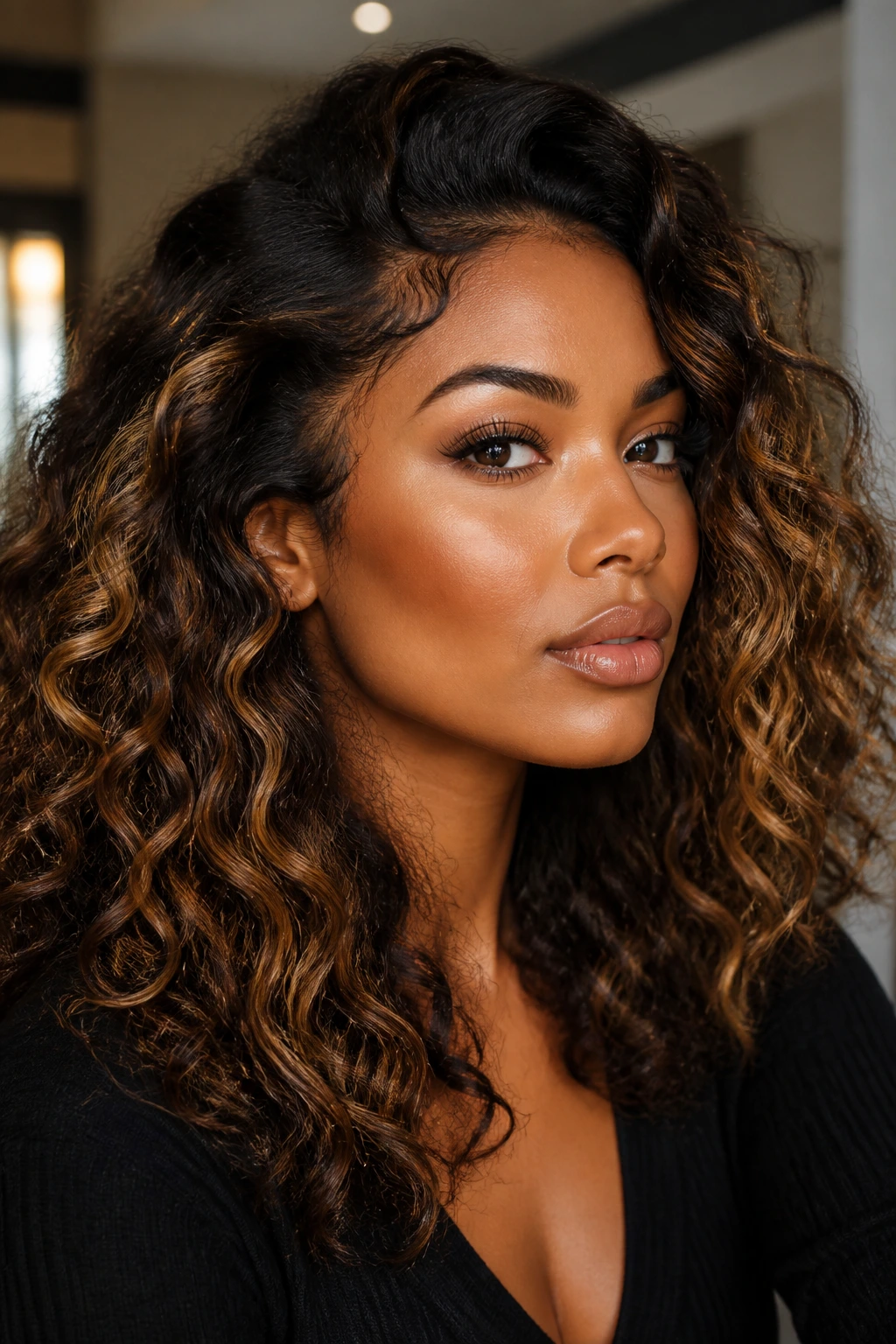
Butterscotch contour highlights are placed where the face actually needs light: temples, cheek line, jawline, and the curve just ahead of the ears. That’s why they feel more flattering than random streaks. The color itself is warm and creamy, but the placement does the real work.
Think of this as hair contouring with a lighter hand. A few face-framing pieces and a gentle sweep through the upper sides can sharpen the silhouette of loose curls without turning them into a full blonde project. On deep skin, butterscotch works because it has enough gold to glow, but enough brown in the mix to stay grounded.
This is a strong option if you wear glasses, hoops, or a lot of necklines that leave the hair visible around the face. The highlight becomes part of the frame instead of sitting off to the side.
11. Maple Ribbons on a Dark Base
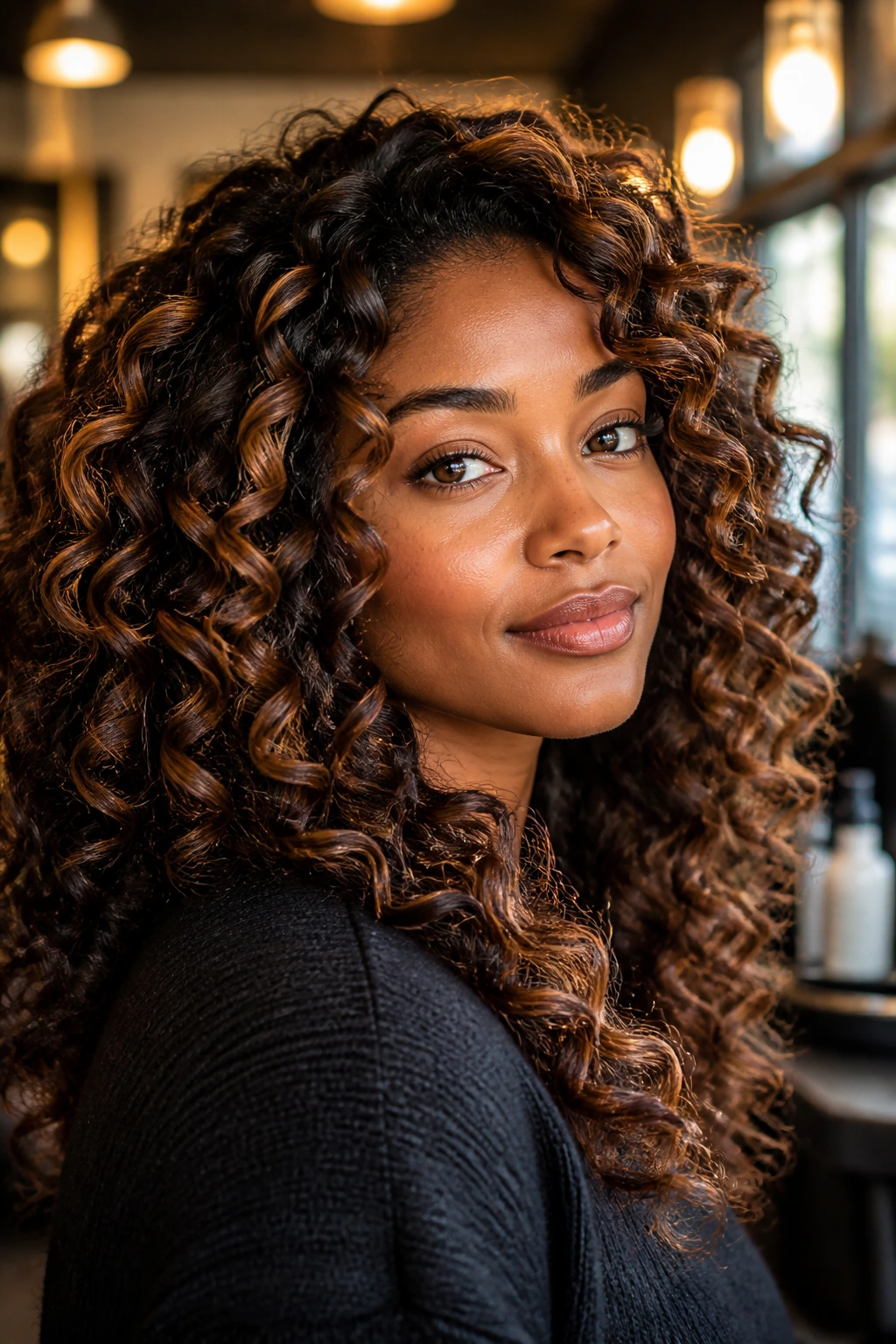
Maple ribbons are broader than babylights and softer than chunky streaks. They land in that sweet middle space where the color is noticeable, but the curl pattern still gets to do the talking. On a dark base, maple gives a warm, syrupy finish that feels right at home in colder months.
Why This One Feels Fuller
Loose curls can handle slightly wider ribbons because the bend breaks them up. Straight hair would show every line. Curl texture hides the edges and makes the color look more blended. That means you can go a touch bolder without losing softness.
This is one of my favorite options for thicker hair. A dense curl pattern can swallow tiny highlights. Maple ribbons have enough width to stay visible between washes and enough softness to grow out without a hard edge.
12. Mahogany Foilyage
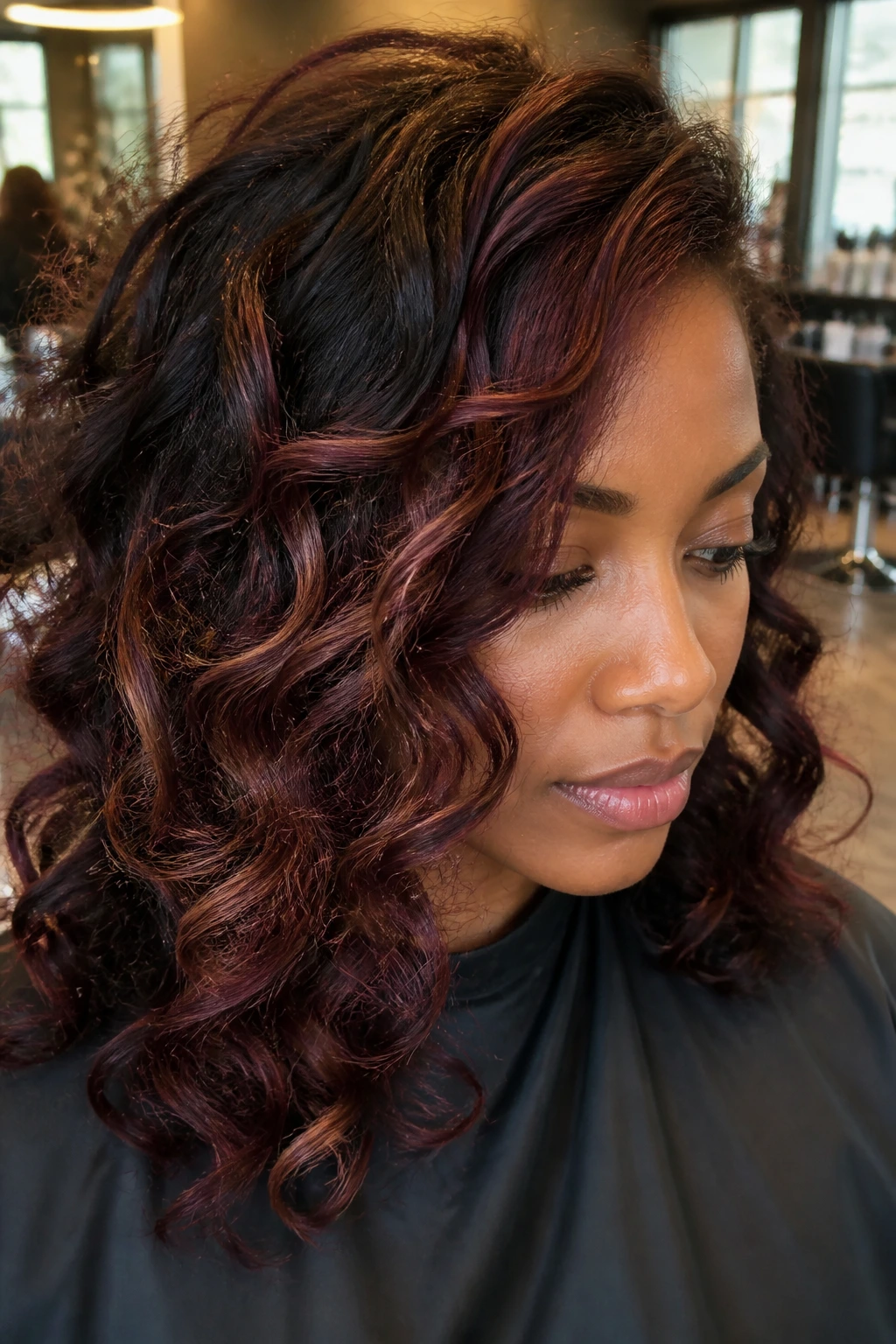
Foilyage gives you the lift of foil with the hand-painted feel of balayage, and mahogany is one of the best shades to pair with it on deep skin. The result sits between reddish brown and deep wine, which keeps the color rich instead of brassy. It’s a little more polished than a casual painted highlight.
What Makes It Different
Foils trap heat, so the lift is usually stronger and cleaner than open-air painting. That matters when dark hair resists color or when you want the contrast to show from across the room. Mahogany softens that extra lift by keeping the tone brown-based instead of pushing it into bright copper.
Best For
- Dark natural bases that need more visible contrast.
- Clients who want one appointment to count.
- Loose curls that open up enough to show the inside of the color.
If you’ve ever felt like balayage on your hair looked too subtle to register, mahogany foilyage is the more assertive cousin.
13. Rose Bronze Accents
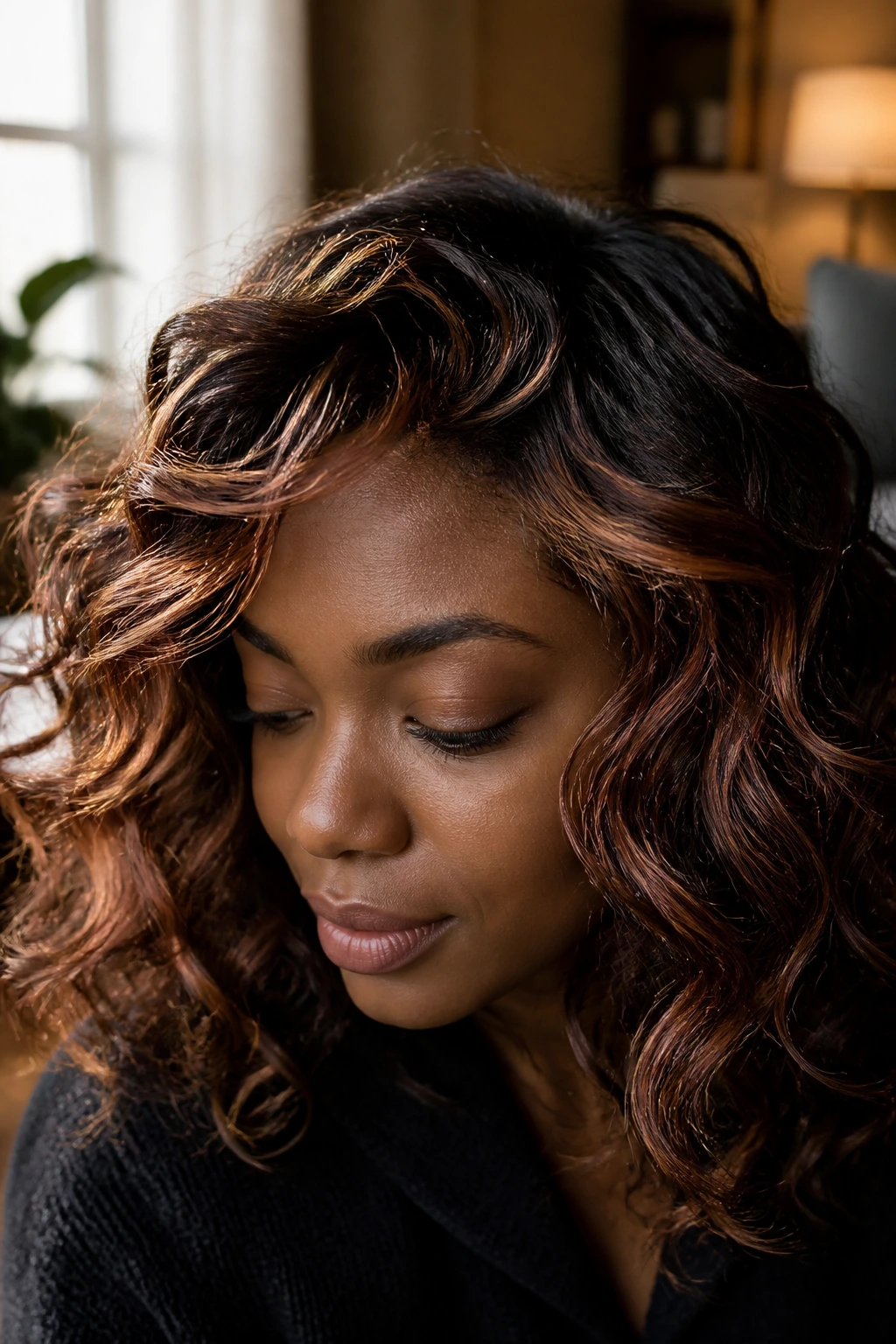
Rose bronze sits in a small lane that not everyone thinks to try, which is a shame. It has the warmth of bronze, but the faint blush note keeps it from looking too orange on deep skin. On loose curls, that little rosy cast shows up when the light lands at the edges of the curl.
Why It Works on Deep Complexions
Deep skin with neutral or cool undertones can make copper feel too hot. Rose bronze gives you warmth without leaning aggressively red. The effect is prettier than dramatic, and that’s a useful distinction. It reads like a glossed finish rather than a high-contrast stripe.
This look tends to work best when the light pieces are kept around the face and crown. Too much rose tone through the ends can feel busy. A few well-placed accents, though, make the curls look touched by light instead of painted over.
14. Smoky Cocoa Balayage
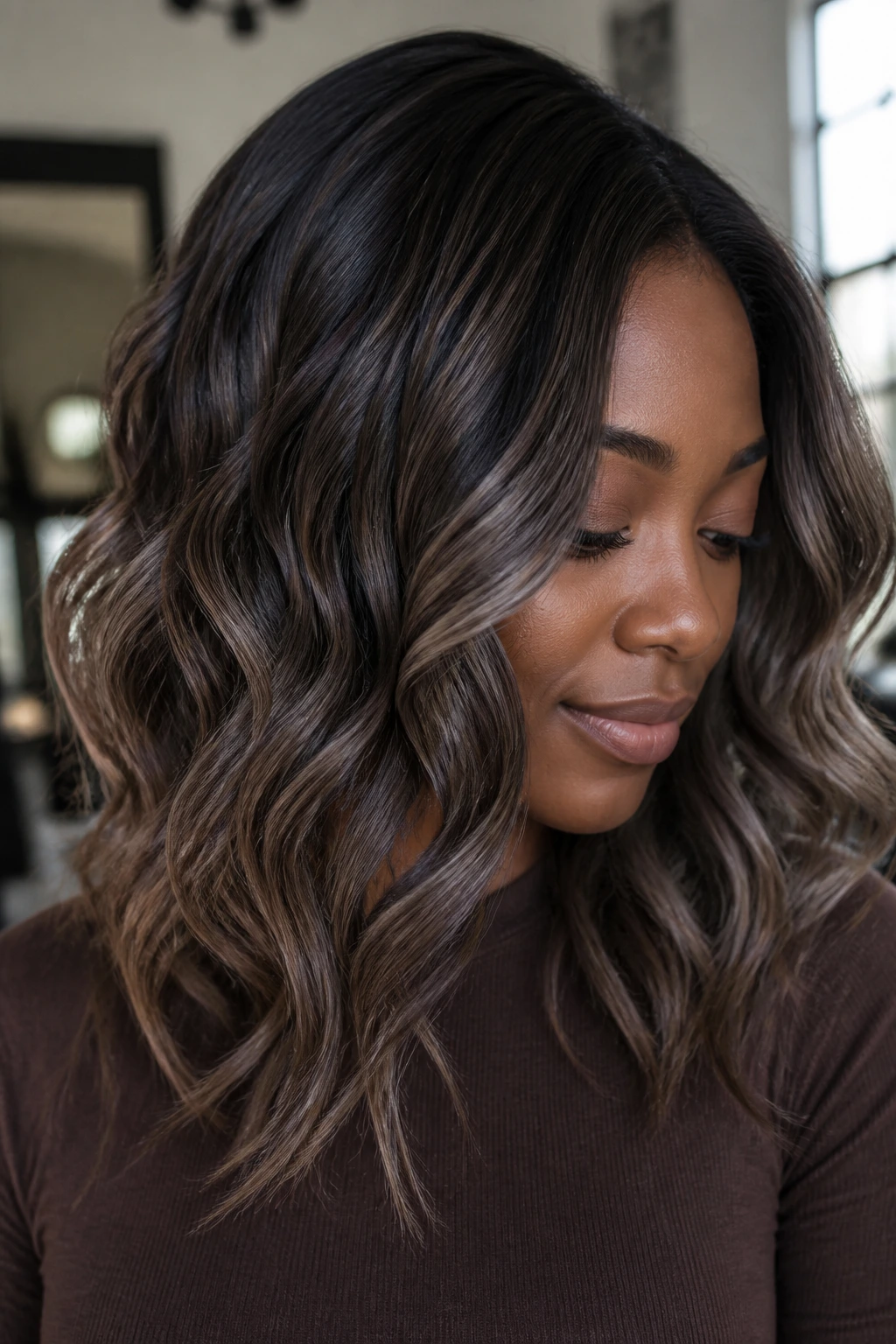
Smoky cocoa is the cool-weather answer for people who don’t want warmth at all. It sits between dark brown and taupe, with just enough ash to quiet the shine without making the hair look dusty. On deep skin, that’s a fine line, and this shade walks it better than most.
Bold Take
Cool highlights do not have to mean pale, grayish pieces that fight the face. Smoky cocoa stays rich. It gives loose curls a soft shadow effect, which can be gorgeous if your skin leans cool or neutral and gold highlights keep looking too bright.
The placement should be soft and sparse. The whole point is contrast through tone, not brightness through lift. A root shadow and a beige-cocoa gloss help keep the finish smooth. If your hair has a lot of red in it naturally, this can be a useful way to calm things down.
15. Hazelnut Micro-Foils
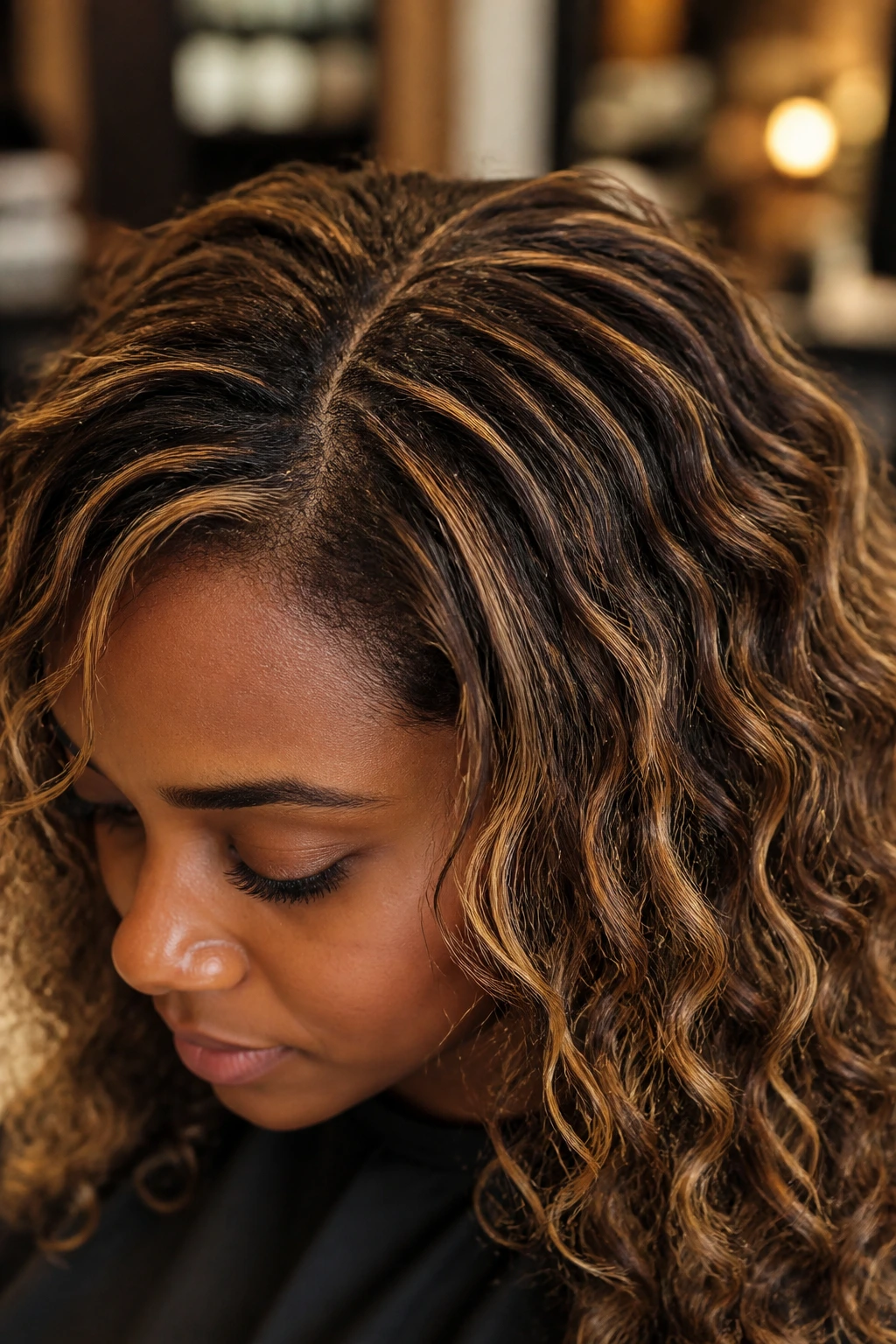
Hazelnut micro-foils are tiny, precise, and a little old-school in the best way. Instead of broad ribbons, the colorist weaves very fine pieces through the top and crown. The result is a soft, expensive-looking shimmer that shows up when loose curls shift.
Why It’s a Smart Choice
This is the look for people who want dimension without the obvious highlight pattern. The hazelnut tone sits in a warm brown lane, so it flatters deep skin without making the hair read blonde. Because the foils are so fine, the grow-out is forgiving and the overall effect feels natural rather than painted.
A micro-foil approach also works well if your hair is medium density and you want the top layer to look fuller. The small pieces create the illusion of depth, which is helpful when curls start to clump together after wash day.
16. Tawny Champagne Ends
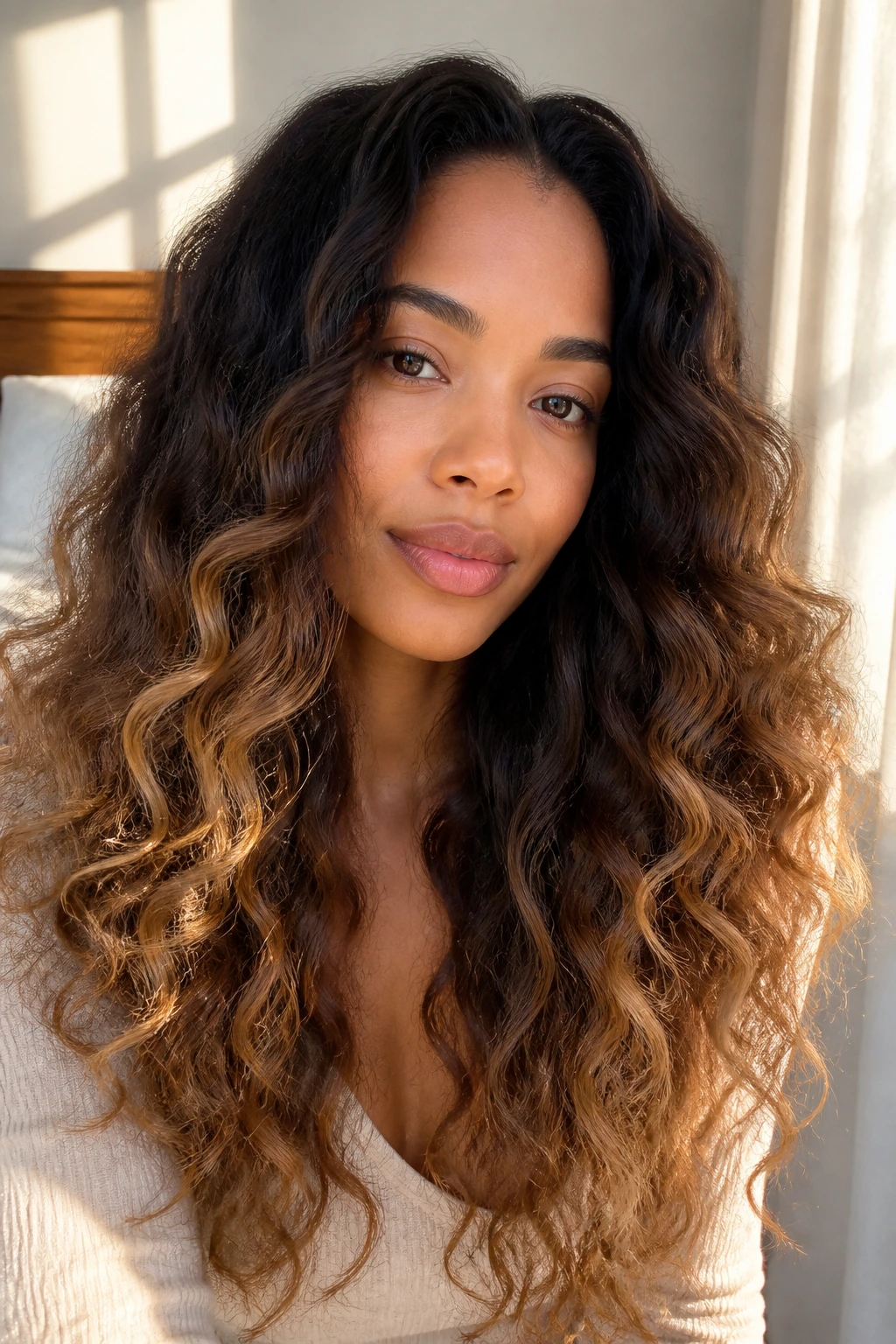
Champagne is usually a risky word in curly color, but tawny champagne is a different animal. It’s beige-gold with brown in the mix, and that brown is doing a lot of quiet work. Put it on the ends of long loose curls and the whole shape starts to move more.
The ends catch light first, which makes this placement feel airy without bleaching the roots to death. It works best when the curls have enough length to show a gradient from darker mids to lighter ends. Shorter cuts can lose that effect.
A careful toner matters here. If the champagne leans too pale, the finish can look dry against deep skin. Keep it tawny, not frosty.
17. Plum-Brown Veil
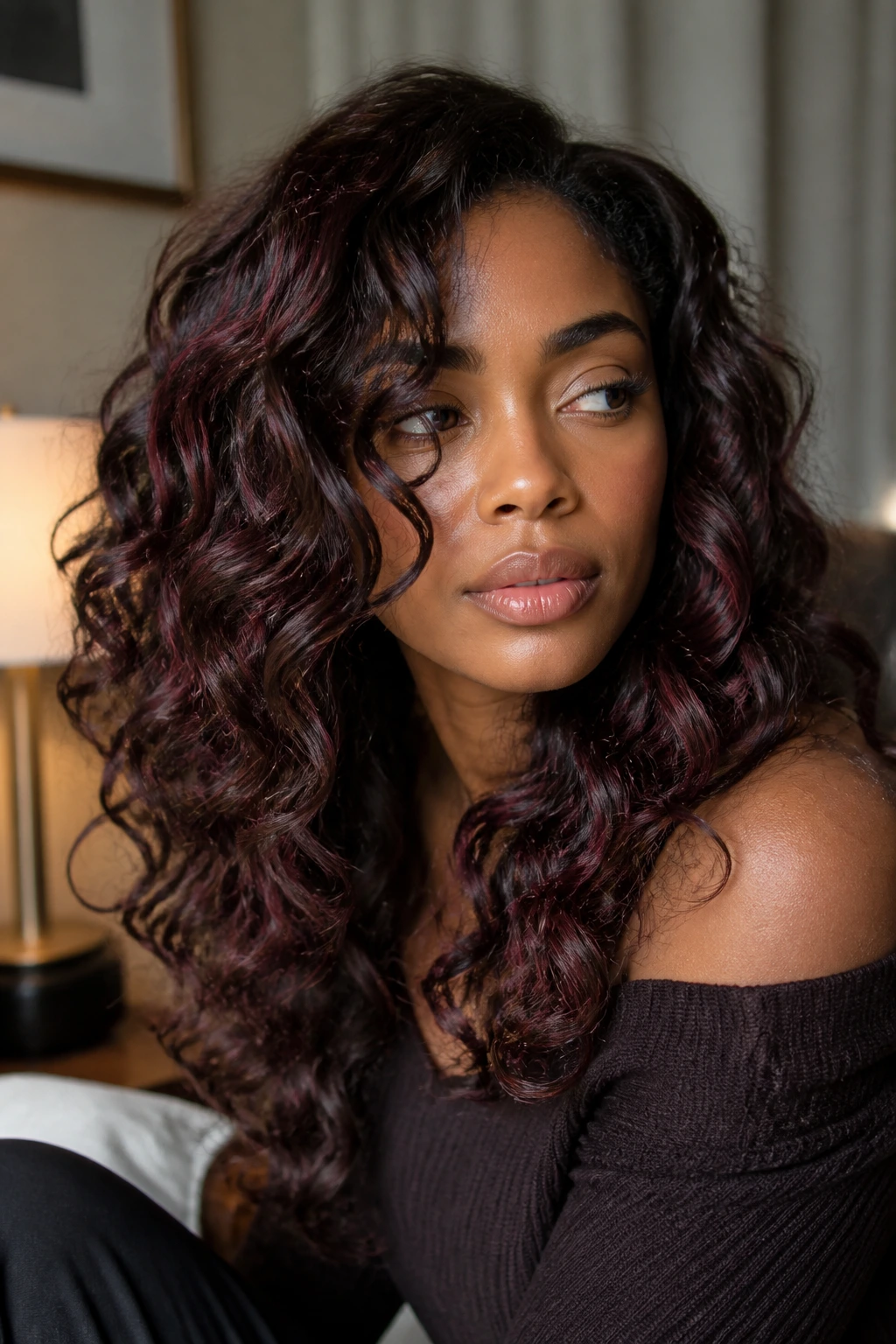
Plum-brown is for someone who likes color that feels a little moody, a little smart, and nowhere near ordinary blonde territory. The plum note stays muted enough to read brown in shade, then flashes wine-purple under indoor light. On deep skin, that contrast is rich and flattering, especially in loose curls where the color bends in and out of view.
What to Expect
This is not a neon fashion color. It’s a veil. The plum should sit over brown, not on top of it. That keeps the finish wearable and helps it fade gracefully. If you want a more subtle version, ask for a brown gloss with a plum cast rather than a full saturated dye job.
Who Should Try It
- Deep skin tones with cool or neutral undertones.
- Anyone tired of caramel and copper.
- Loose curls that need interest without extra brightness.
18. Mulled Wine Dimension
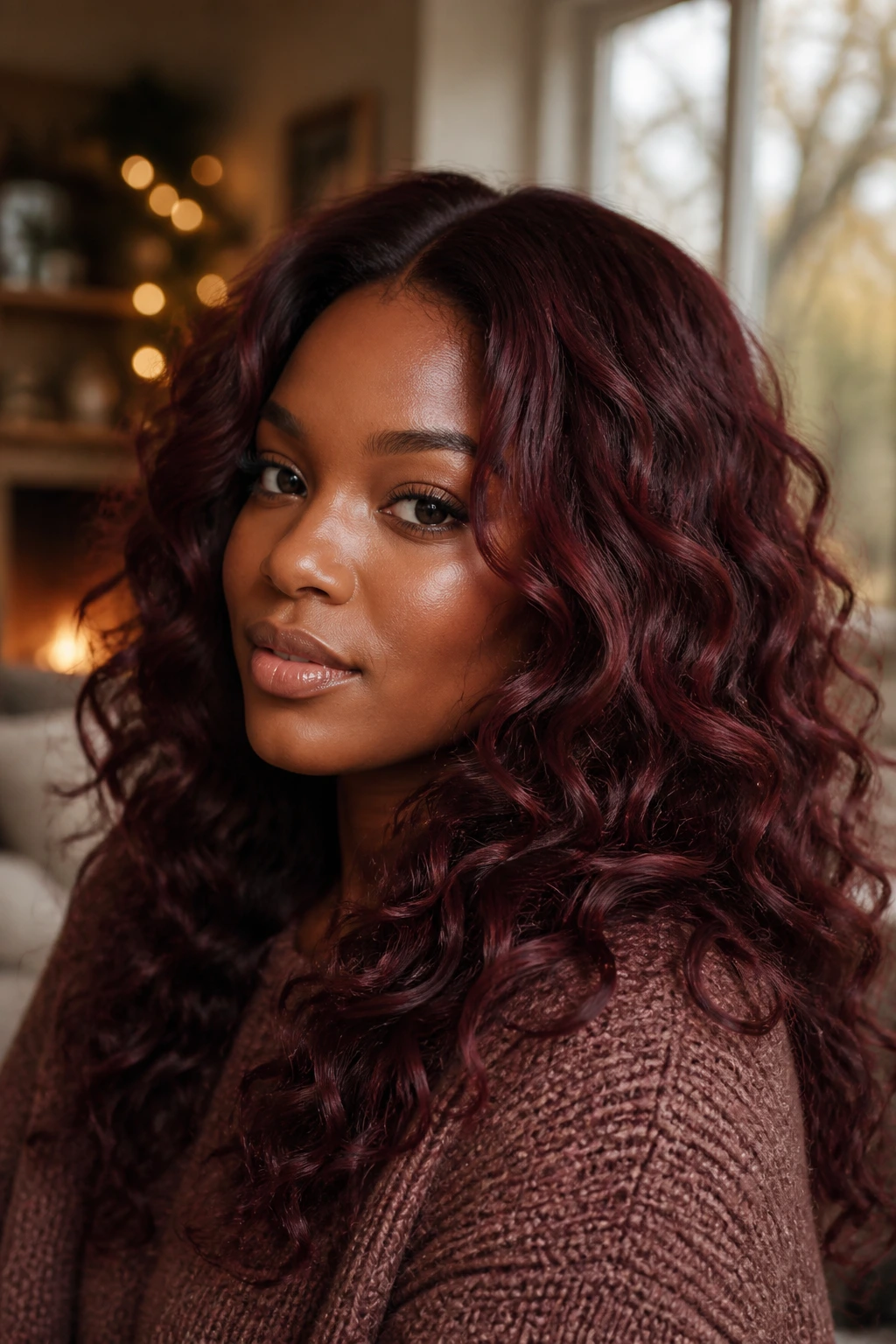
Mulled wine dimension is the boldest look in the bunch, and it earns that spot. It mixes burgundy, claret, and brown so the hair reads rich instead of red for red’s sake. On deep skin, that depth is the whole appeal. It gives winter hair a dark jewel tone without forcing the curls into bright territory.
Comparison Angle
Unlike copper, mulled wine leans deeper. Unlike plum, it carries more warmth. That middle ground makes it especially flattering if you want something striking but not loud. The color flashes differently depending on the light, which is where loose curls do their best work.
This is a strong choice if you already wear bold lipstick, gold hoops, or deeper clothes. The hair can hold its own without competing. Keep the roots shadowed and let the brighter wine notes sit through the mid-lengths and ends.
How to Brief Your Colorist So the Curl Pattern Stays Soft
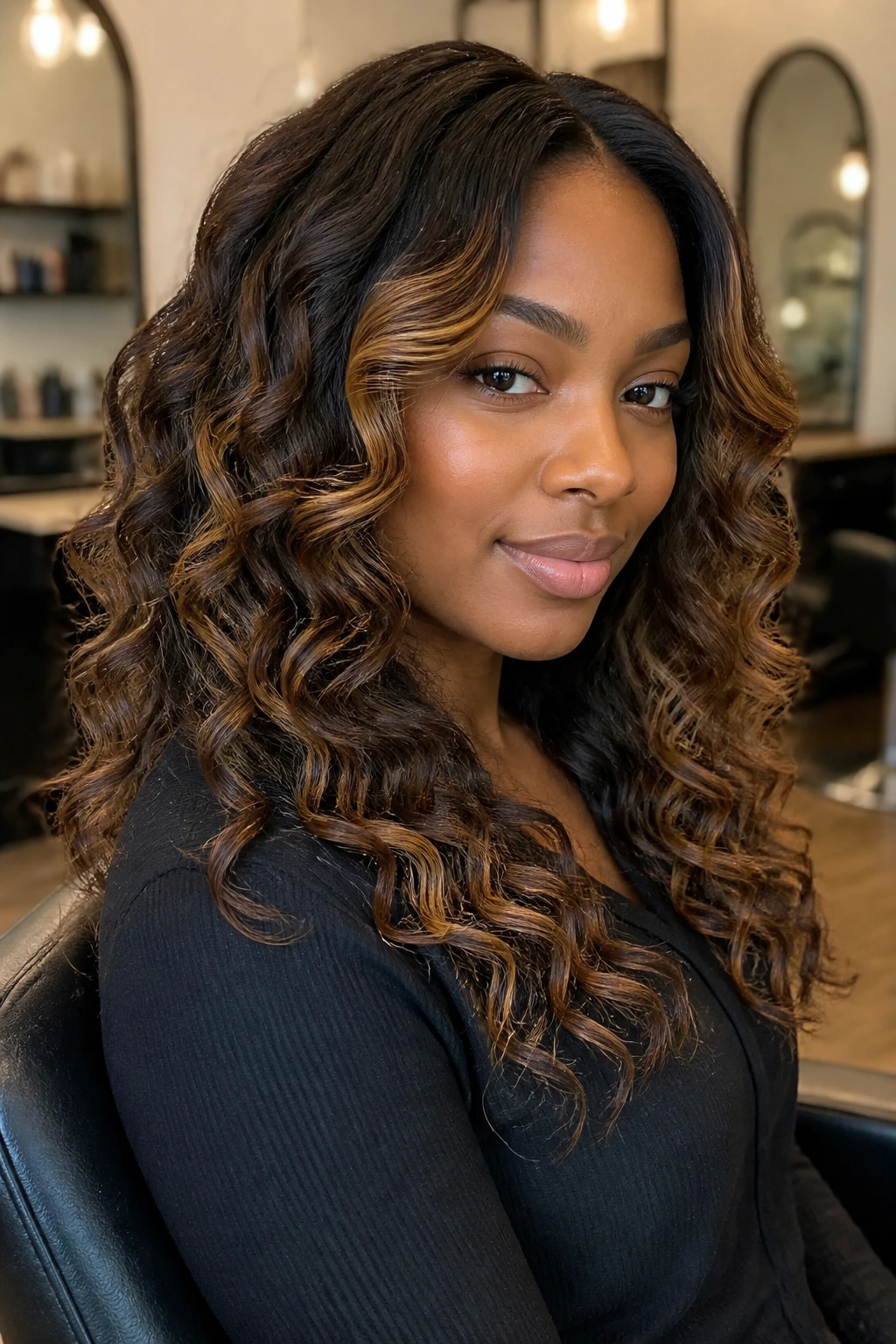
The best color appointment starts before the first foil goes in. Bring two or three photos that show the shade in daylight, not just on a ring light. Then say the actual words you want: caramel, honey, copper, mahogany, smoky cocoa. “Blonde” is too loose. It can mean anything from pale yellow to deep beige, and those are not the same thing on deep skin.
Be specific about brightness. If you want dimension, ask for one to three levels of lift instead of a full blonde change. If you want a face frame, say you want the front pieces brighter but the crown kept deeper. If you want a low-maintenance grow-out, ask for a root shadow or melt from the start. That little phrase saves you from a hard line later.
Tell your colorist how you wear your curls. If you diffuse on low and wear the hair parted on the side, the highlights should be placed where that pattern naturally falls. If you pull your hair back a lot, the color needs to live closer to the hairline and upper sides so it still shows.
And one more thing. If your hair is already dry or chemically treated, say so out loud. Don’t let anyone wave that off. Previous bleach, heat damage, or frequent relaxer use changes how fast the hair lifts and how much gloss it can hold.
Essential Tools and Products for These Looks
- 2–3 reference photos: Bring daylight shots and one indoor shot so your colorist can see how the shade shifts.
- Color-safe shampoo: A sulfate-free formula helps keep caramel, copper, and rose tones from washing out fast.
- Moisturizing conditioner: Lightened curls need slip, especially on ends that take the most color.
- Leave-in conditioner: A small amount keeps loose curls soft without smothering the highlight pattern.
- Heat protectant spray: Use it before diffusing or any hot tool; color-treated hair gets thirsty fast.
- Diffuser attachment: Low airflow helps keep the curl clumps intact so the highlights read as ribbons instead of fuzz.
- Wide-tooth comb: Better than a brush for detangling without stretching the curl pattern.
- Sectioning clips: Handy for styling, root clipping, or at-home gloss work.
- Satin bonnet or pillowcase: Cuts down on friction and keeps the brightest pieces from looking rough at the ends.
- Color-depositing gloss or mask: Useful for copper, plum, and bronze tones that need a little refresh between salon visits.
Smart Shade Matching for Deep Skin Undertones
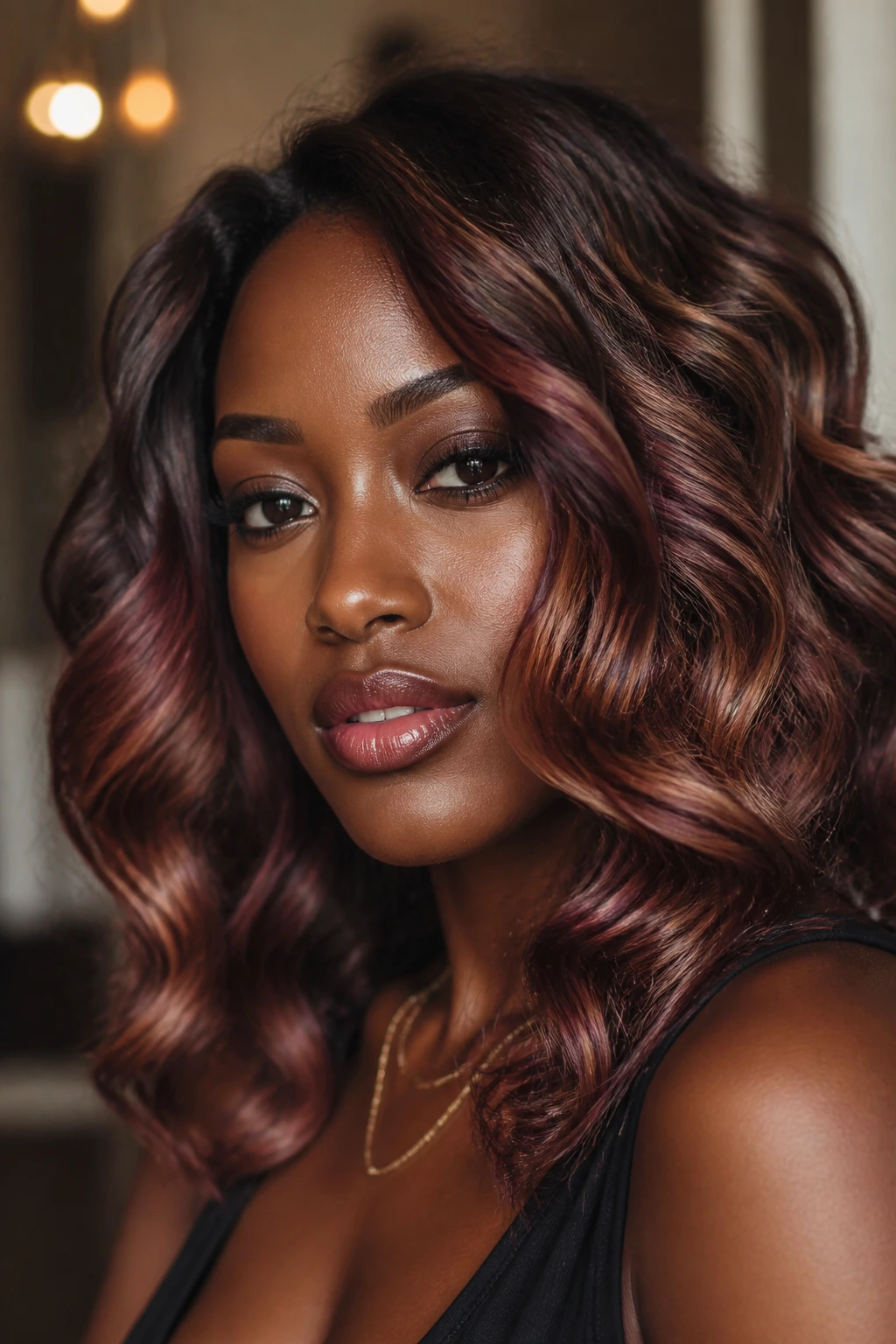
Deep skin is not one note, and the highlight should not be one note either. Warm undertones usually look happiest with honey, caramel, copper, bronze, and maple because those shades echo the warmth already in the skin. Neutral undertones can move either direction, which is why chestnut, mahogany, toffee, and smoky cocoa are useful middle-ground options.
Cool undertones need a little more care. A highlight that’s too gold can pull muddy, while an ash tone that’s too gray can flatten the face. For that group, rose bronze, plum-brown, smoky cocoa, and beige-champagne tend to read cleaner. They give color without turning the hair orange.
There’s also the practical side: the curl pattern changes how the tone reads. A loose curl can make a warm ribbon feel softer than it would on straight hair because the curve breaks up the color. That means you can often wear a richer tone than you’d expect. The safest test is simple: if the highlight looks like a flat stripe in a swatch, it will probably look too sharp in the hair. If it looks soft and beige-gold or brown-gold, it has a better chance of sitting well against deep skin.
How to Wear the Dimension on Wash Day and Beyond
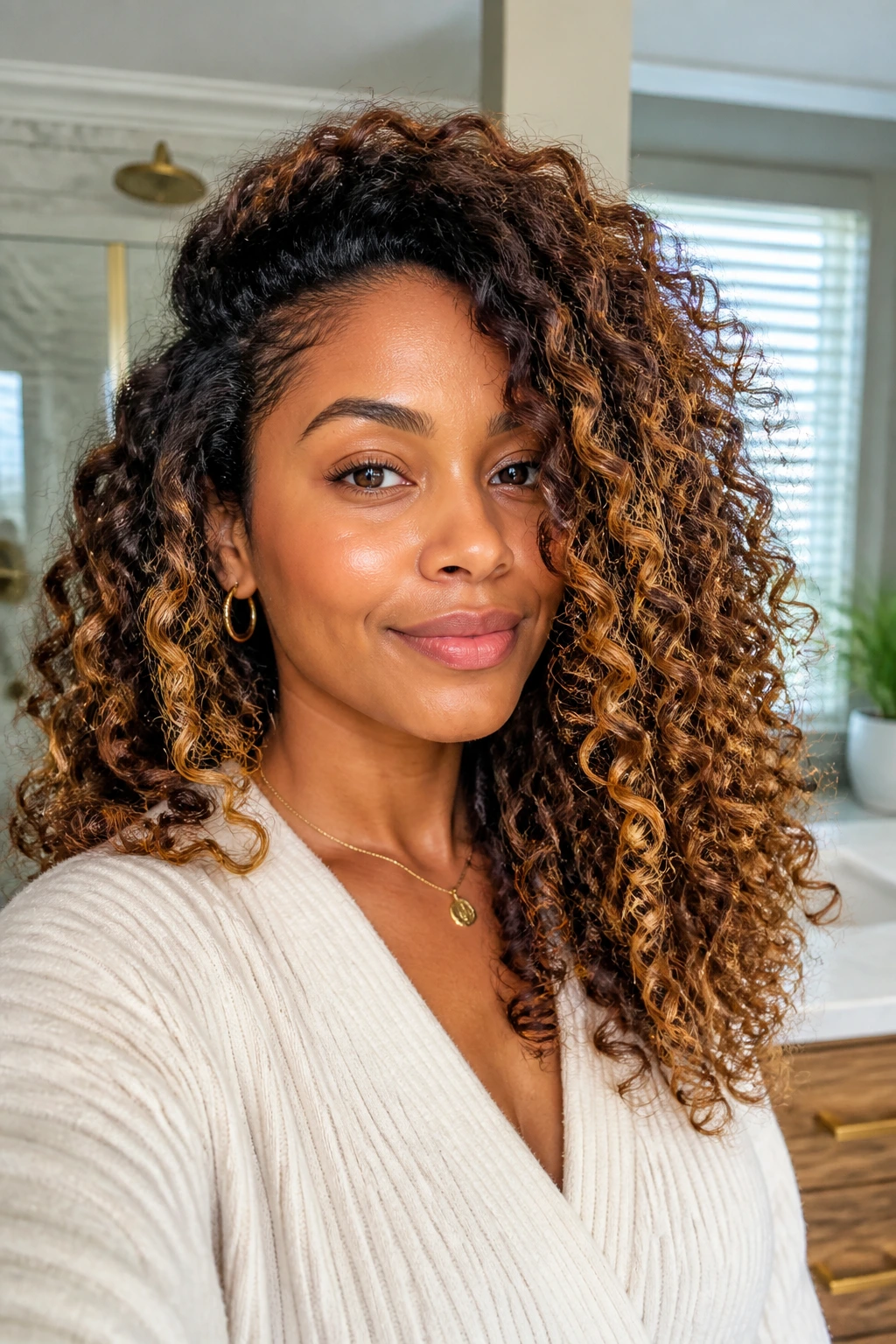
Loose curls show color best when they’re defined, not stretched out by heavy product. Start with a light leave-in, a curl cream that doesn’t leave a waxy film, and a gel or mousse that holds the clump. Then diffuse on low heat and low airflow until the cast forms and the curls stop feeling wet at the core.
Break the cast only after the hair is fully dry. If you fluff too early, you blur the highlight placement and lose the ribbon effect. A small amount of shine serum at the ends can help, but keep it off the roots. Too much oil near the scalp makes the color look darker than it is.
A side part usually shows more face-framing color. A center part makes the whole head look more symmetrical and gives the crown highlights room to breathe. Day two is often where these looks shine, because the curls settle and separate a little more. The color stops looking like a salon idea and starts looking like hair that lives in the real world.
Additional Tips and Shade Boosters
Flavor Enhancement: Ask for a clear or beige gloss after the lightening step. It softens brass, adds slip, and keeps caramel or bronze from turning raw.
Customization: If you like contrast, pair a brighter money piece with deeper lowlights underneath. If you prefer subtlety, keep the front softer and let the light live around the crown and ends.
Serving Suggestions: A middle part with a defined curl cream finish looks sleek; a side part with a little root lift feels fuller and more face-framing. Gold hoops, warm makeup, and a brown lip tend to make these shades look richer.
Make-It-Yours: Warm undertone? Push honey, copper, or maple. Cool undertone? Lean smoky cocoa, plum-brown, or rose bronze. Neutral undertone? You can sit right in the middle with chestnut, toffee, or mahogany.
Color Care, Gloss Refresh, and Grow-Out Timing
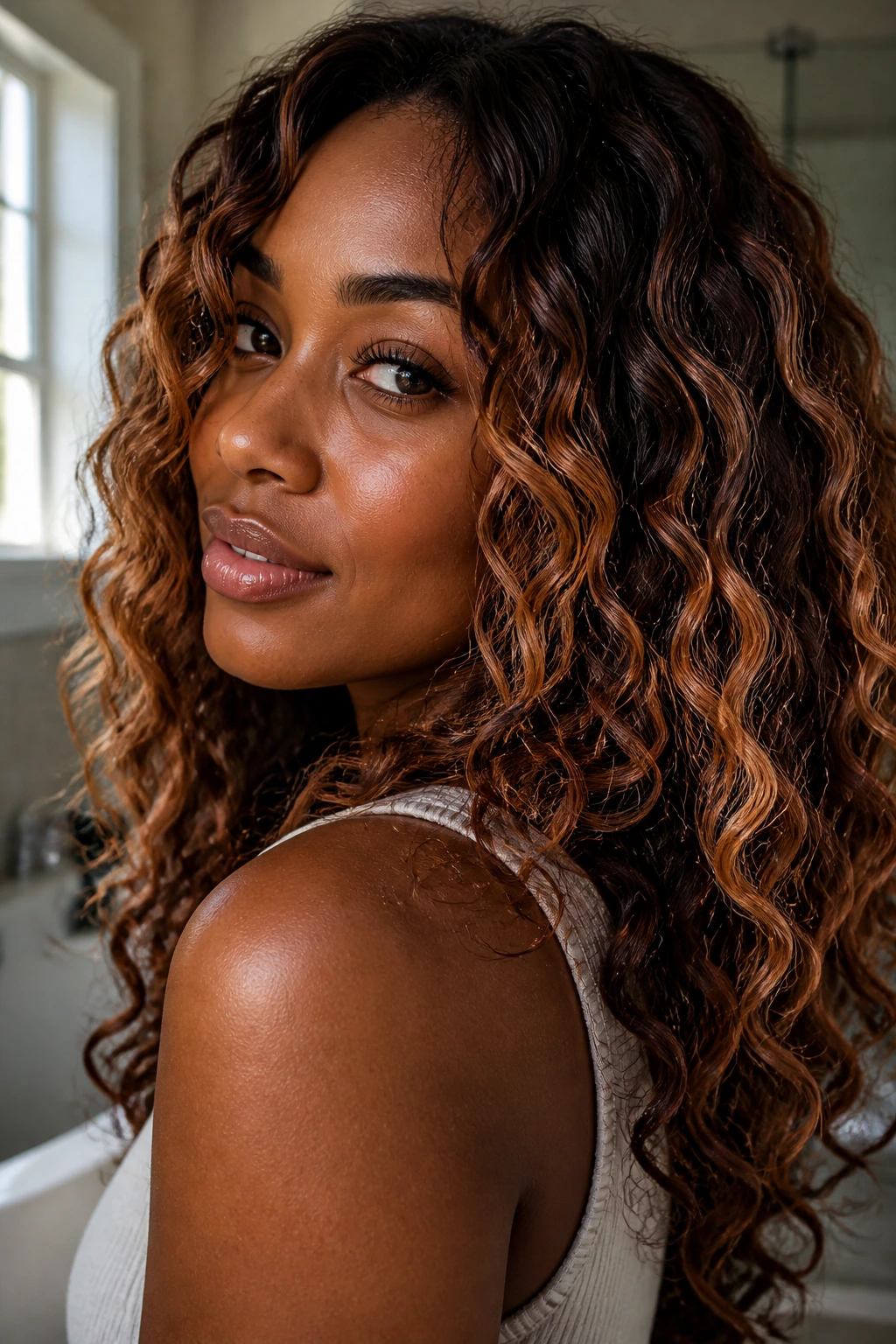
Color-treated loose curls need a steady routine, not a rescue mission. Wash with cool or lukewarm water, and keep cleansers gentle. Hot water strips tone fast, especially from copper, bronze, and caramel shades. If your hair feels coated from stylers, use a clarifying shampoo once every 3 to 4 weeks, then follow with a deep conditioner.
Gloss timing depends on the shade. Copper, rose bronze, and plum tones usually need a refresh every 4 to 6 weeks because they fade faster than brown-based caramel. Honey, chestnut, and smoky cocoa can often go 6 to 8 weeks before they need another glaze. If the color starts looking dull before then, a conditioner with a hint of pigment can bridge the gap.
Plan trims every 8 to 12 weeks if your ends are taking a beating from lightening or heat styling. That keeps the curl shape bouncy and stops the highlights from living on dry, frayed ends. For hot tools, stay under 375°F / 190°C and use heat protectant every single time. No shortcuts there. If the curls are porous, they’ll drink up color fast and lose it just as fast, so moisture and gloss matter more than usual.
Variations and Adaptations to Try
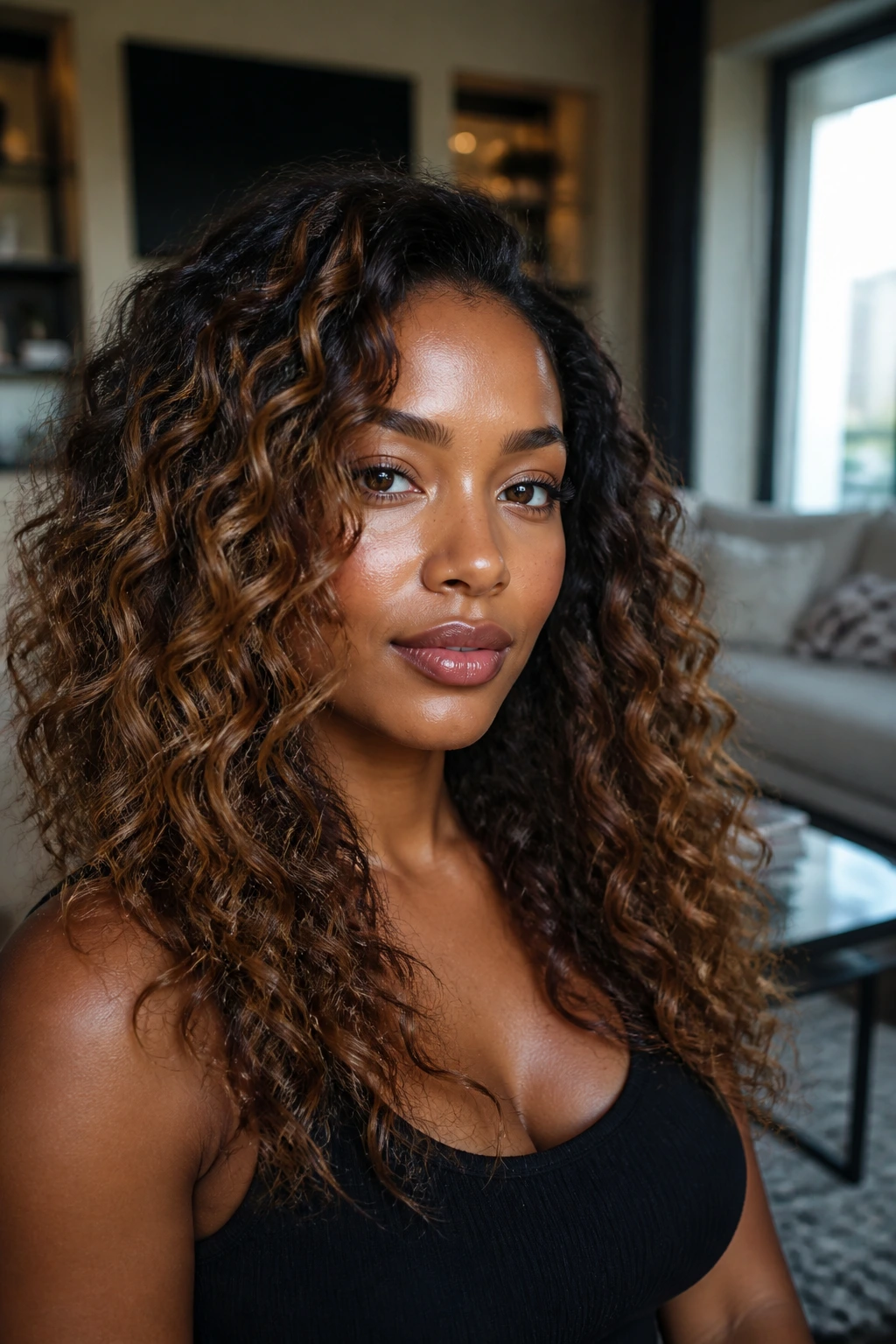
Soft Glow Version: Keep the lift to one or two shades lighter than the base and paint only the top layer and face frame. This works if you want the color to show in daylight without reading as dyed from across the room. It’s the easiest version to live with during grow-out.
Warm Ember Blend: Mix caramel, copper, and honey in the same head so the color shifts between golden and red-brown as the curls move. This is a smart pick for deep warm undertones and for anyone who likes gold jewelry and warm makeup. The different tones keep the hair from feeling flat.
Smoky Winter Mix: Use smoky cocoa, taupe-brown, and a faint beige gloss for a cooler finish. It’s a good option if orange or gold tones fight your skin. The result is muted, rich, and quietly polished.
Face-Frame Only: Brighten just the front hairline, temples, and the first few curls near the cheekbones. This gives a visible change without pushing the whole head into highlight territory. It’s also the least stressful version if you’re new to color.
Ribbon-and-Root Blend: Keep broad ribbons through the mid-lengths, then melt them back into a deeper root shadow. This version suits thick loose curls because the wider pieces don’t disappear inside the hair. The root melt keeps the grow-out line soft.
Common Mistakes That Flatten the Color
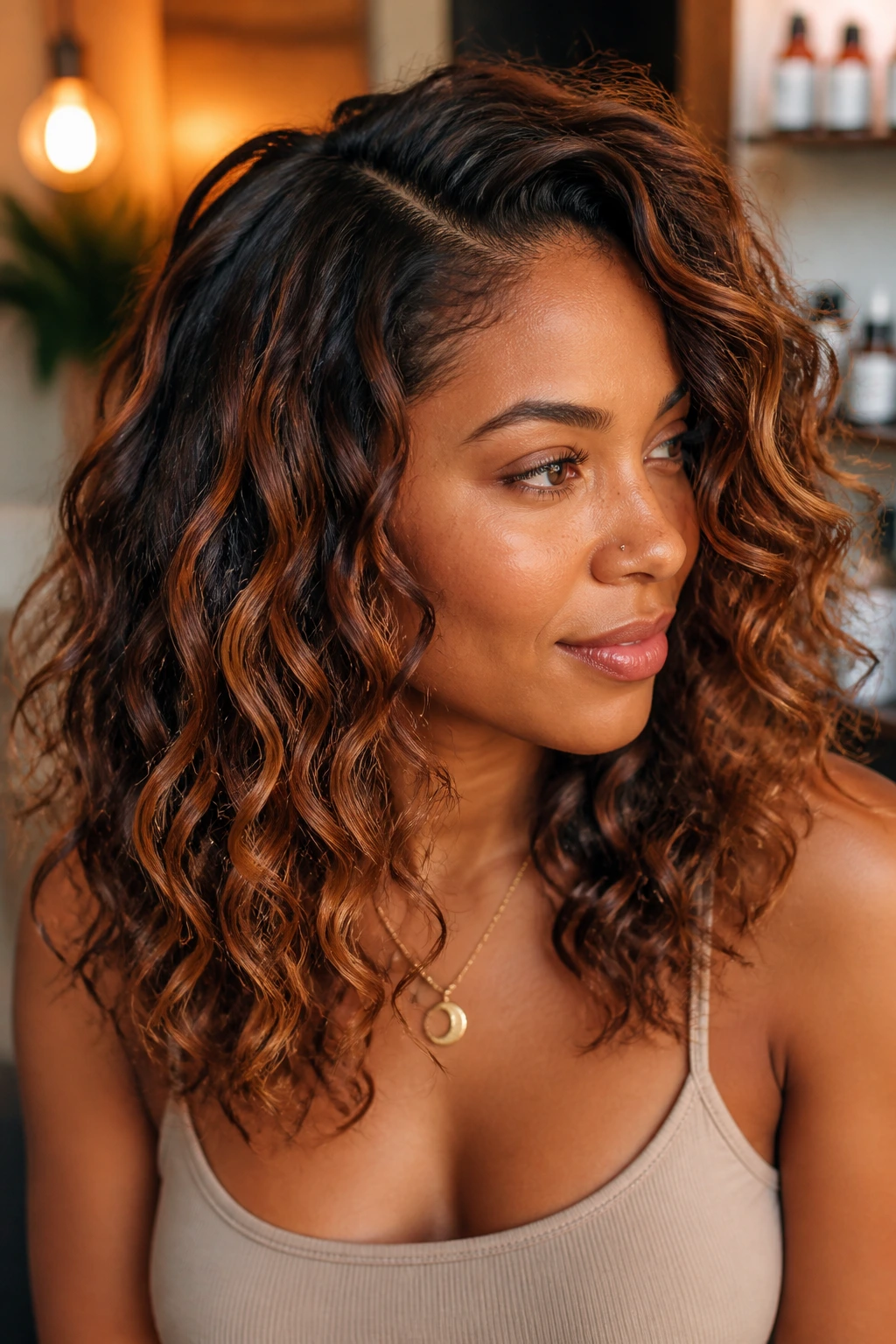
The biggest mistake is going too light too fast. On deep skin, pale blonde can pull the whole style away from the face and make the curls look dry before they even start to move. Ask for a controlled lift and keep the tone rich.
Another common miss: too many fine stripes. On loose curls, narrow streaks can blur into a fuzzy, striped pattern that looks busier than it should. Wider ribbons, a soft root shadow, and a few deeper lowlights usually work better.
Skipping toner is another trap. Lightened hair on dark bases often picks up yellow or orange warmth during the lift, and that warmth needs balancing. A gloss is not optional if you want the final color to look intentional.
People also overload the hair with oils, butters, and heavy creams after coloring. That can make the highlights disappear under a waxy film. Use lighter stylers and save the richer products for the driest ends only.
Finally, don’t ignore grow-out. If your natural roots are dark and the highlight is very bright, the line will show fast. A root shadow or melt saves you from that hard border and keeps the style calmer for longer.
Frequently Asked Questions
Which highlight shades flatter deep skin tones the most?
Caramel, honey, copper, bronze, chestnut, and mahogany are the safest starting points because they stay rich against deep complexions. If your undertone is cooler, smoky cocoa and plum-brown can look even better than gold.
Are loose curls better than straight hair for highlights?
In many cases, yes. Loose curls break the color into ribbons, so one highlight can show several tones at once as the hair bends and turns. Straight hair shows every placement line, which makes mistakes easier to spot.
Can I get this look without bleaching my whole head?
Absolutely. Most of these styles use balayage, foilyage, babylights, or a face-frame approach instead of all-over lightening. That keeps the base intact and protects the curl pattern better.
How light can I go without making my curls look fried?
That depends on your starting color and porosity, but most deep bases look best stopped around level 7 or 8 for warmth and dimension. Going much lighter can work, though it usually needs more maintenance and more careful toning.
Do I need lowlights too, or are highlights enough?
If the hair already has a lot of light pieces, lowlights help rebuild depth and stop the curls from looking stringy. They are especially useful on loose curls because the pattern can hide contrast better than straight hair can.
How often should I refresh the toner?
Warm reds, copper, and rose tones often need a refresh every 4 to 6 weeks. Caramel, chestnut, and smoky cocoa can usually last a little longer, around 6 to 8 weeks, before the gloss starts to fade.
What if my highlights turn orange or yellow?
That means the tone went warmer than planned, which happens often on dark hair with too much lift. A beige or brown-based gloss can calm it down; purple shampoo only helps if the pieces are pale enough to need it, and it can dull rich caramel if you use too much.
Can I keep this color if I wear my hair curly most days?
Yes, and that’s actually where these looks shine. Curl definition helps the ribbons show up better, as long as you keep the hair moisturized and avoid heavy stylers that coat the color.
The Curl-Friendly Finish
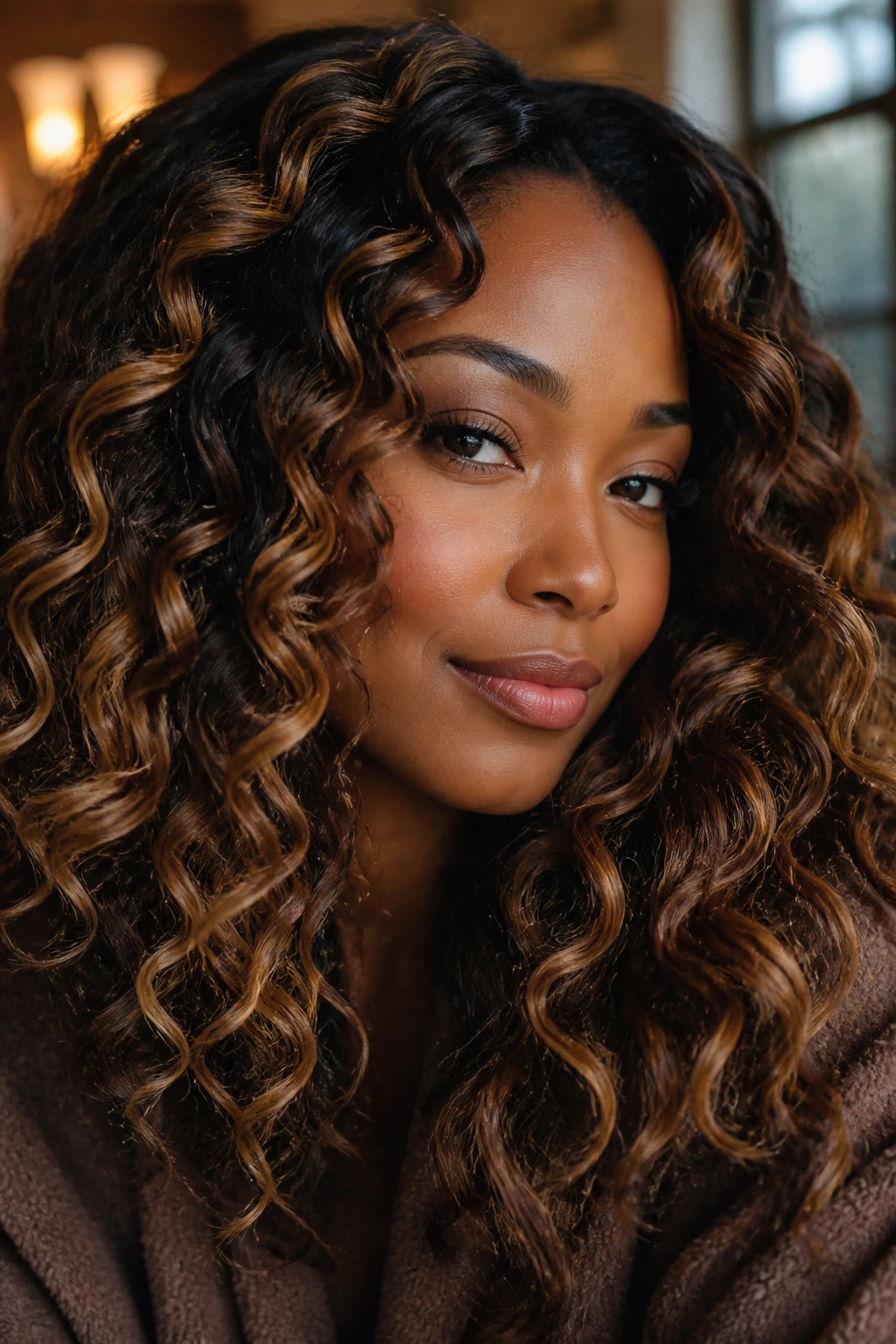
The best thing about these looks is that they do not fight the hair you already have. They work with the bend of a loose curl, the depth of a dark base, and the way deep skin holds warm and smoky tones without effort. That’s why the shades here feel richer than a flat blonde ever could.
If you want one practical rule to keep in mind, make it this: choose placement before brightness. A caramel ribbon in the right spot beats a pale streak in the wrong one every time. Let the curls do some of the work, keep the tone grounded, and the color will look like it belongs there from the first wash through the grow-out.