



Brunette highlights for dark hair with side-swept bangs live or die by placement. Put the light in the wrong place and you get stripey fringe and tired ends; put it in the right place and the haircut suddenly looks sharper, softer, and more polished without losing the depth that makes dark brown hair look so rich.
The part people miss is that a side-swept bang is already a built-in highlight map. The fringe arcs across the forehead, then lands near the cheekbone, which means even a few caramel ribbons or chestnut babylights can change the whole read of the cut. On dark hair, that matters more than broad lightening ever does; a half-inch shift can be the difference between soft dimension and a loud strip of color.
I like brunette color work that keeps the base honest. Dark hair should still look dark. The best versions of this look keep the roots grounded, let the front pieces do the talking, and add movement where the eye naturally goes — at the sweep, the temple, and the first bend of the wave.
Why These Brunette Looks Hit Harder Than Flat Dark Brown
-
The bang does the framing. A side-swept fringe creates a diagonal line across the face, so even a thin ribbon of lighter brown reads clearly where a blunt cut would hide it.
-
Dark hair needs placement, not just lift. A few well-placed caramel or chestnut pieces around the temple can add more shape than all-over lightening that fades into the lengths.
-
Grow-out stays softer. Low-contrast brunettes, especially balayage and babylights, leave a blur at the root line instead of a harsh stripe every time the hair grows an inch.
-
Warm and cool shades both work. A warm brunette can glow with caramel or cinnamon, while an ashier base can handle mushroom or smoky bronze without looking muddy.
-
The sweep changes the mood. Side-swept bangs can make the same color look romantic, sleek, or edgy depending on where the brightest piece lands and how the fringe is styled.
-
You can go subtle or bold without changing the haircut. The bang is the constant; the highlight tone decides whether the result whispers, shimmers, or leans dramatic.
1. Caramel Ribbon Balayage
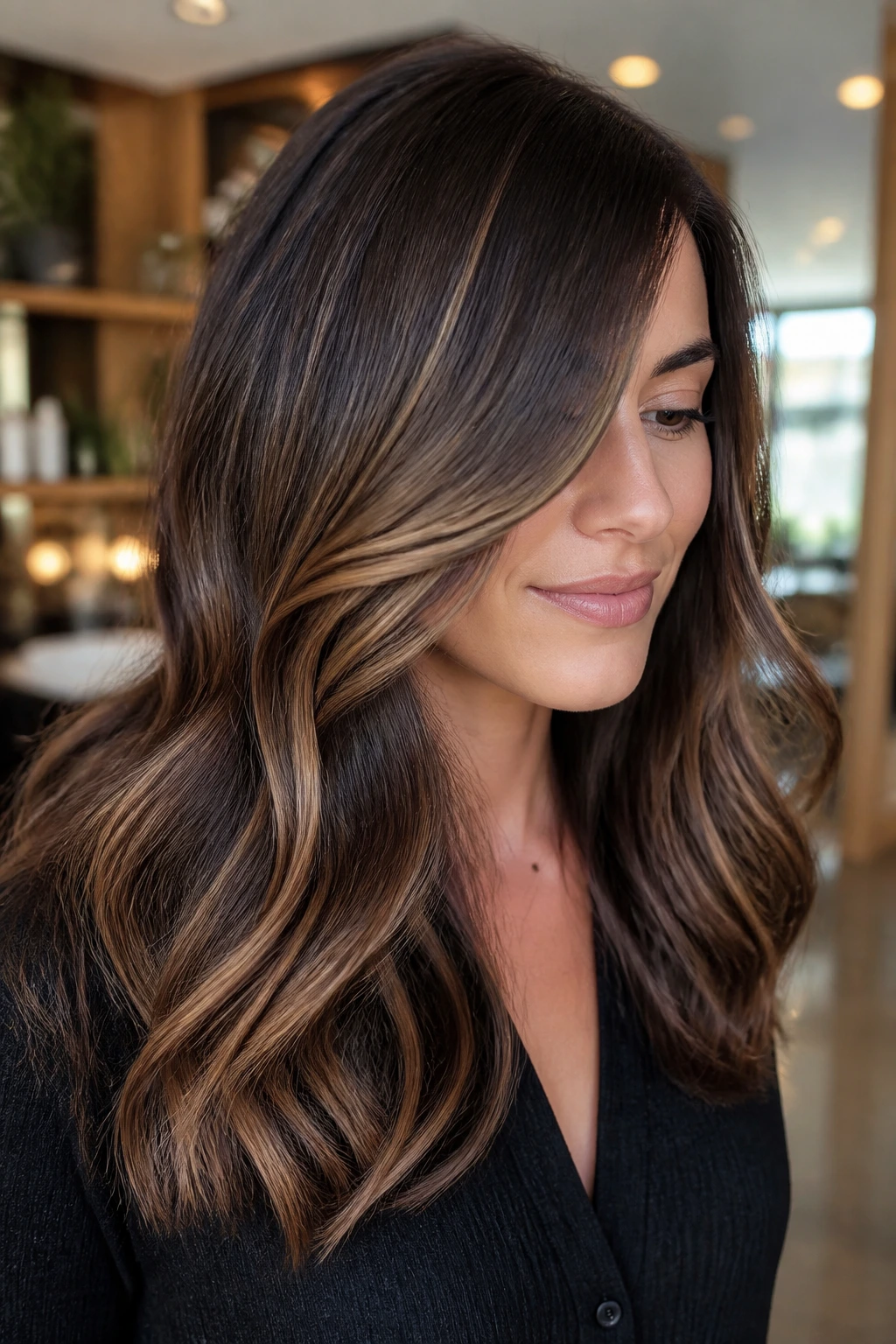
Caramel ribbon balayage is the one I reach for when someone wants warmth without tipping into orange or honey-blonde territory. On dark brown hair, the caramel sits just a shade or two lighter than the base, so the movement shows first and the color second. With side-swept bangs, I like the brightest ribbon to start just behind the bang’s longest point, then taper through the cheekbone and top layer. That keeps the fringe from looking busy.
Why It Works With a Side-Swept Fringe
The diagonal bang line already pulls the eye across the face. Caramel ribbons echo that movement, which makes the haircut feel more layered even if the actual cut is simple. If the hair waves, the ribbons flash softly at each bend; if it’s straight, they read like a satin line rather than a stripe.
A clean middle root shadow helps this look hold its shape for weeks. Ask for a gloss at the sink, too. It keeps the caramel from turning flat.
2. Espresso-to-Mocha Babylights
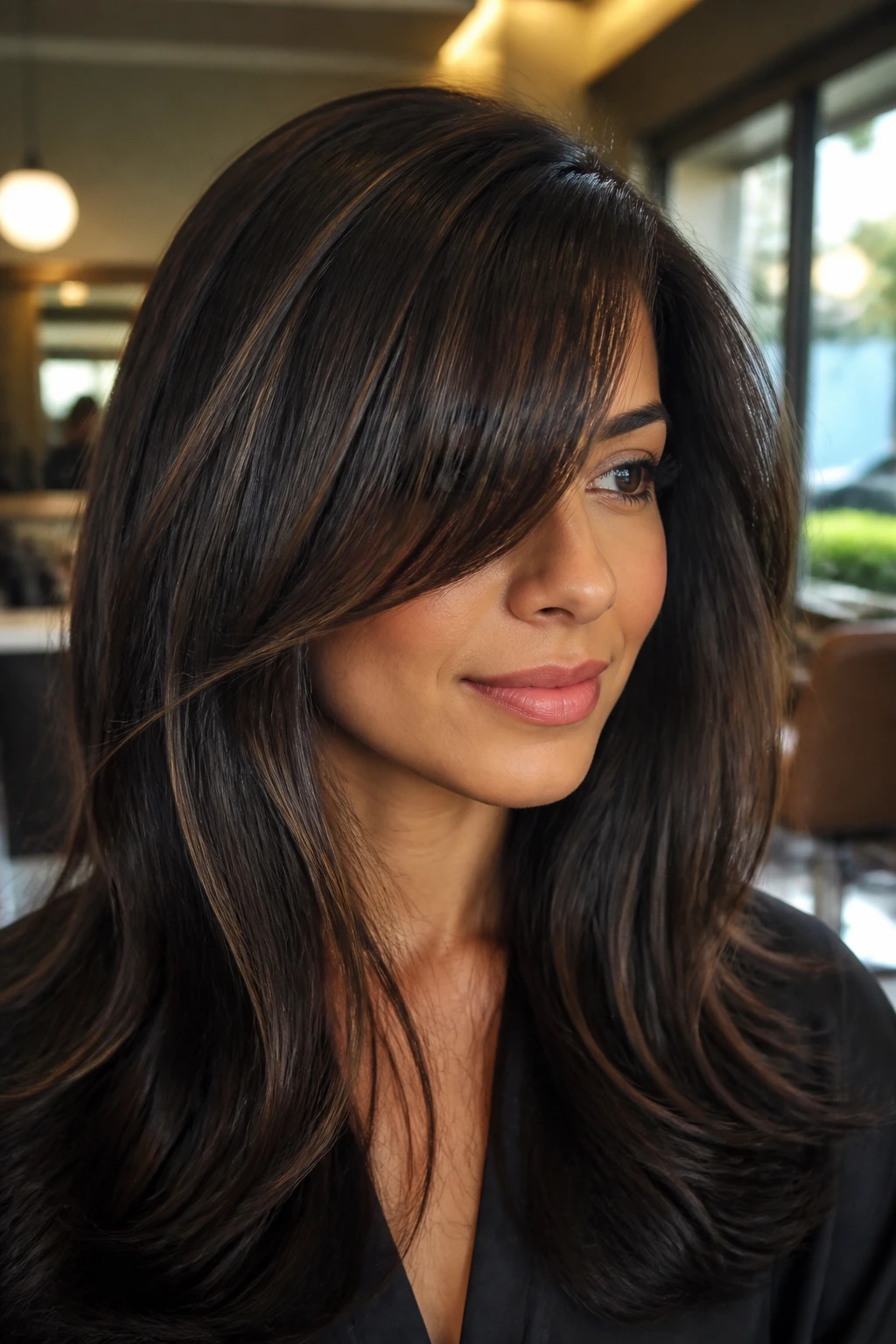
Can tiny changes really matter on very dark hair? Absolutely. Espresso-to-mocha babylights work because they stay close to the base color, so the result looks expensive rather than obvious. You get sheen, depth, and movement without the “I just got highlights” look that can feel too hard on dark brunette hair.
How to Keep It Subtle
Babylights should be fine enough that the part line doesn’t look chunked up. Ask for pieces that are barely a few millimeters wide through the crown and side fringe, then slightly denser near the face. That little increase in brightness near the side-swept bang gives the cut a cleaner edge.
This is the right pick if your hair is straight or softly bent. The closer tones need motion to show up, and a swept fringe gives you exactly that.
3. Toffee Money Piece
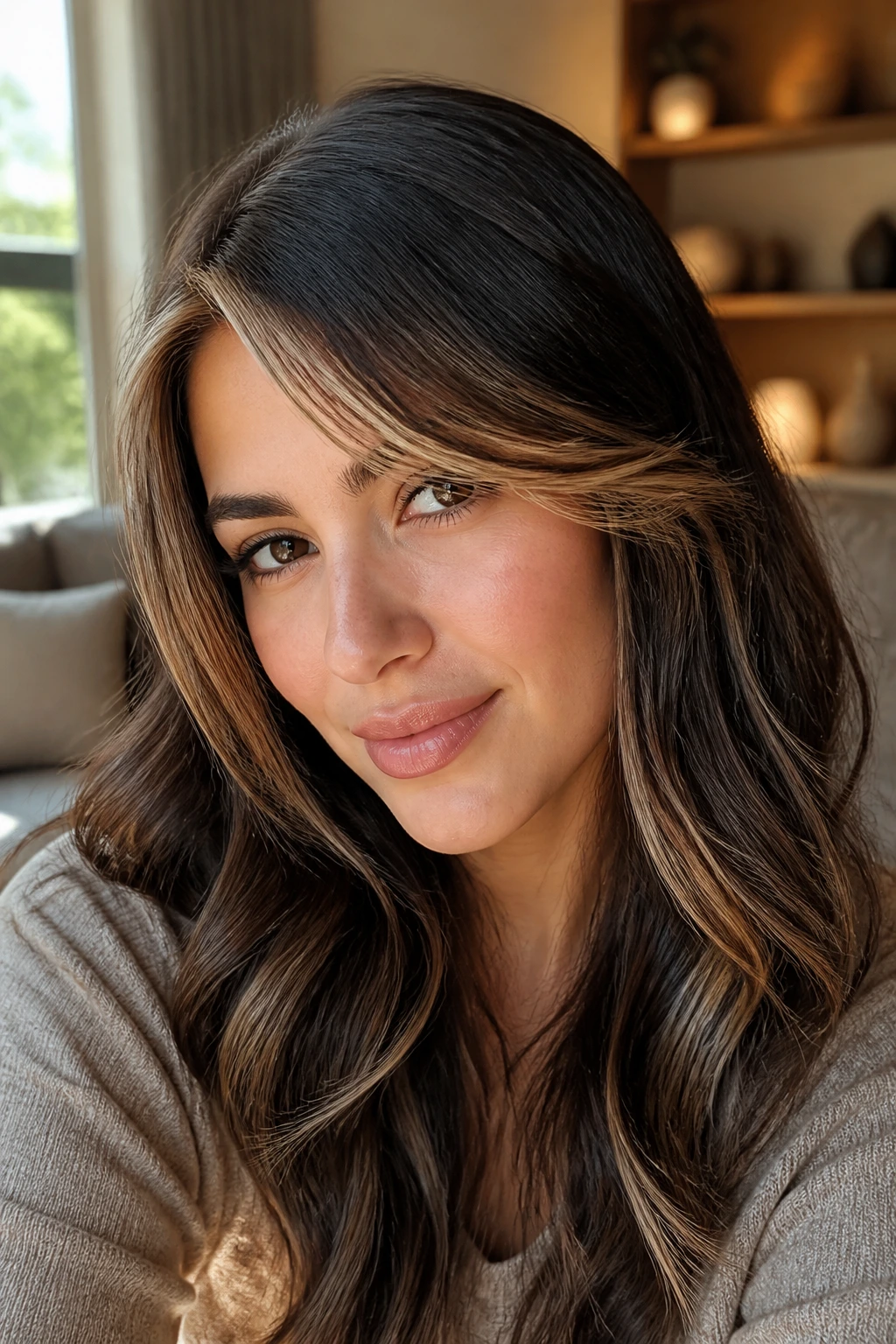
A toffee money piece is where you go when you want the front of the haircut to wake up fast. The color sits a little brighter than caramel and a little richer than blonde, which makes it a nice middle ground for dark hair. On a side-swept bang, the key is not to paint the whole fringe light. Leave the deepest part near the roots and brighten the curve that drops toward the cheek.
Where the Brightness Should Land
The best toffee money piece has two jobs: frame the eyes and keep the length from looking heavy. I’d ask for the brightest placement at the front-most layers, then a softer melt back toward the temple. If you go too wide, the bang starts to look disconnected from the rest of the cut. Too narrow, and you lose the point of the whole thing.
This style loves a loose blowout. A round brush and a light bend make the toffee pieces flick forward instead of hanging flat.
4. Chestnut Balayage Waves
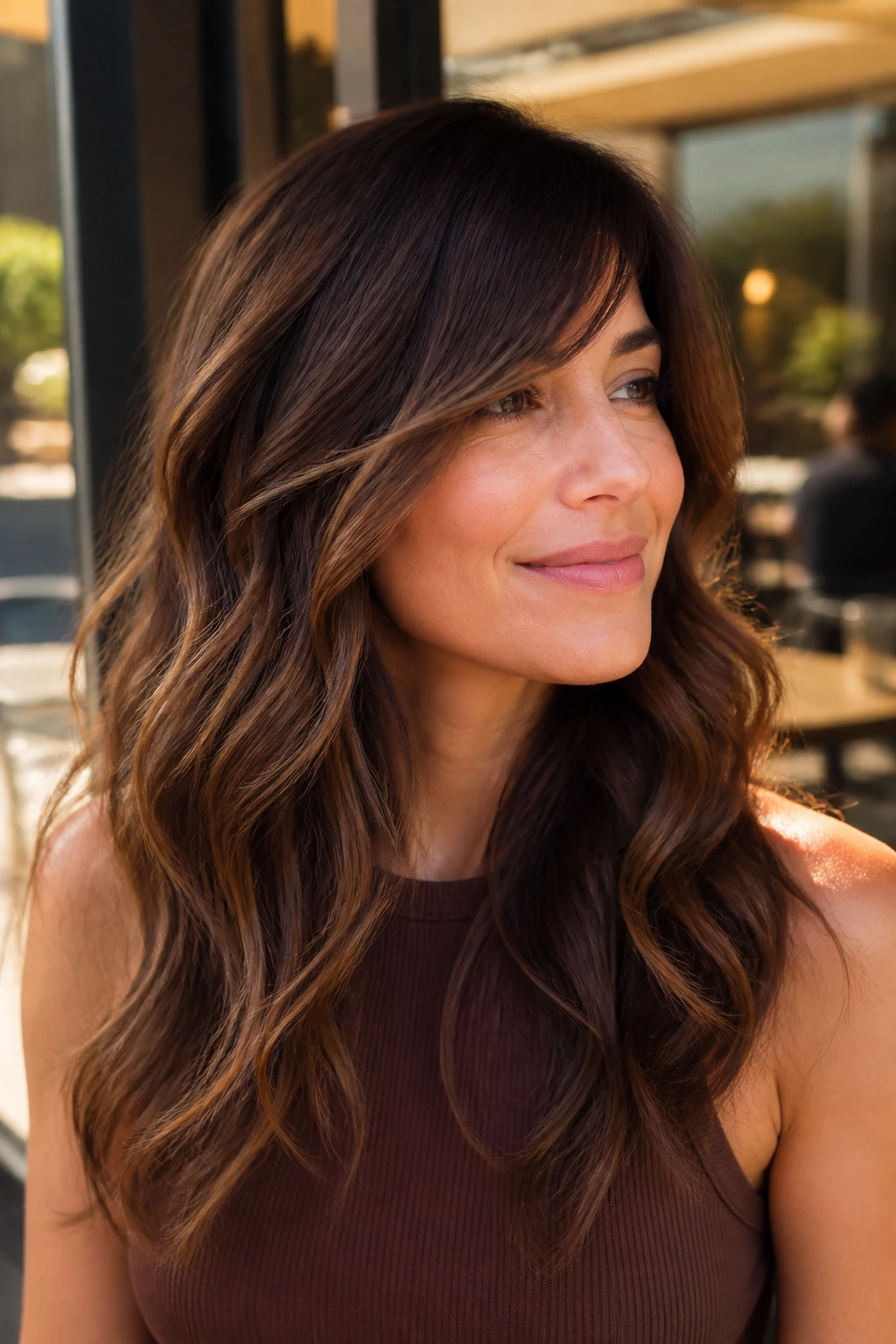
Chestnut balayage is the classic move, and I mean that in the best way. It gives dark hair a warmer, leafier kind of movement — brown on brown, but not boring. On side-swept bangs, chestnut works because it doesn’t fight the fringe. It just softens the line and adds a little glow where the hair curves around the face.
Best For Low-Drama Color Changes
If you’re nervous about lightening, chestnut is a smart first step. It stays in brunette territory, which means regrowth won’t shout at you from across the room. The color tends to look richest when the ends are a touch brighter than the mids, almost like the hair caught warm light from a window.
I prefer this with medium texture and a wave pattern. Very straight hair can make chestnut look too tidy unless you rough it up a bit with a texturizing spray.
5. Cinnamon Glaze Highlights
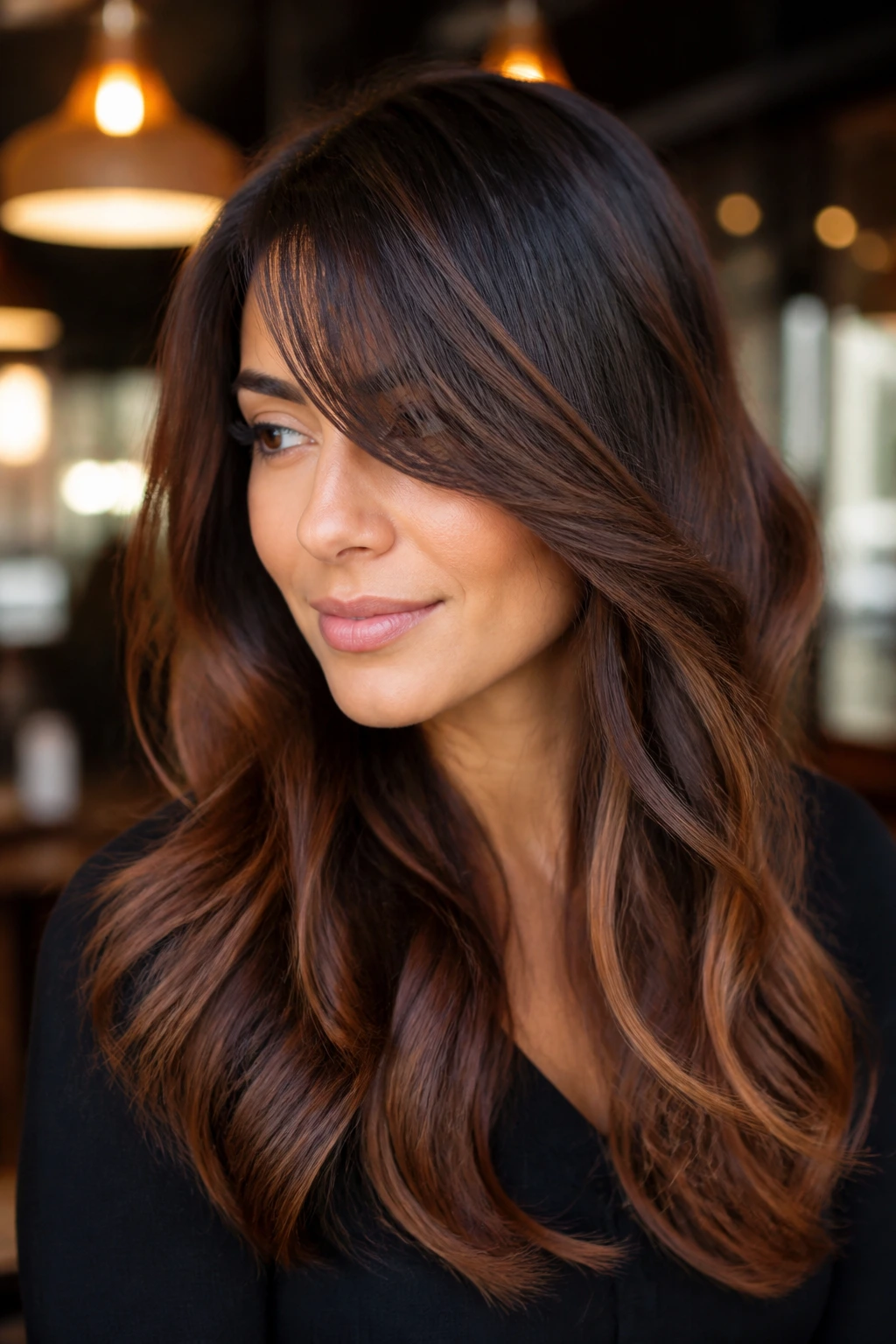
Cinnamon highlights bring a faint red-brown heat that dark hair often needs. They are not copper, and they should not look orange. Think of the color after a cinnamon stick has steeped in hot milk — warm, a little spicy, and grounded by brown. Side-swept bangs make the tone read more luxed up, especially if the brightest section lives right where the fringe bends.
A Good Choice When Brown Feels Flat
Cinnamon makes dark hair look alive under indoor light, which is where a lot of brunette shades get boring fast. The trick is keeping the saturation controlled. A glaze or demi-permanent tone usually gives you that warmth without chewing through the cuticle.
I’d ask for a gloss refresh every few weeks if your hair tends to pull red. The color is lovely when it’s fresh. Too faded, and it can wander into brassy territory.
6. Mushroom Brown Low-Contrast Blend
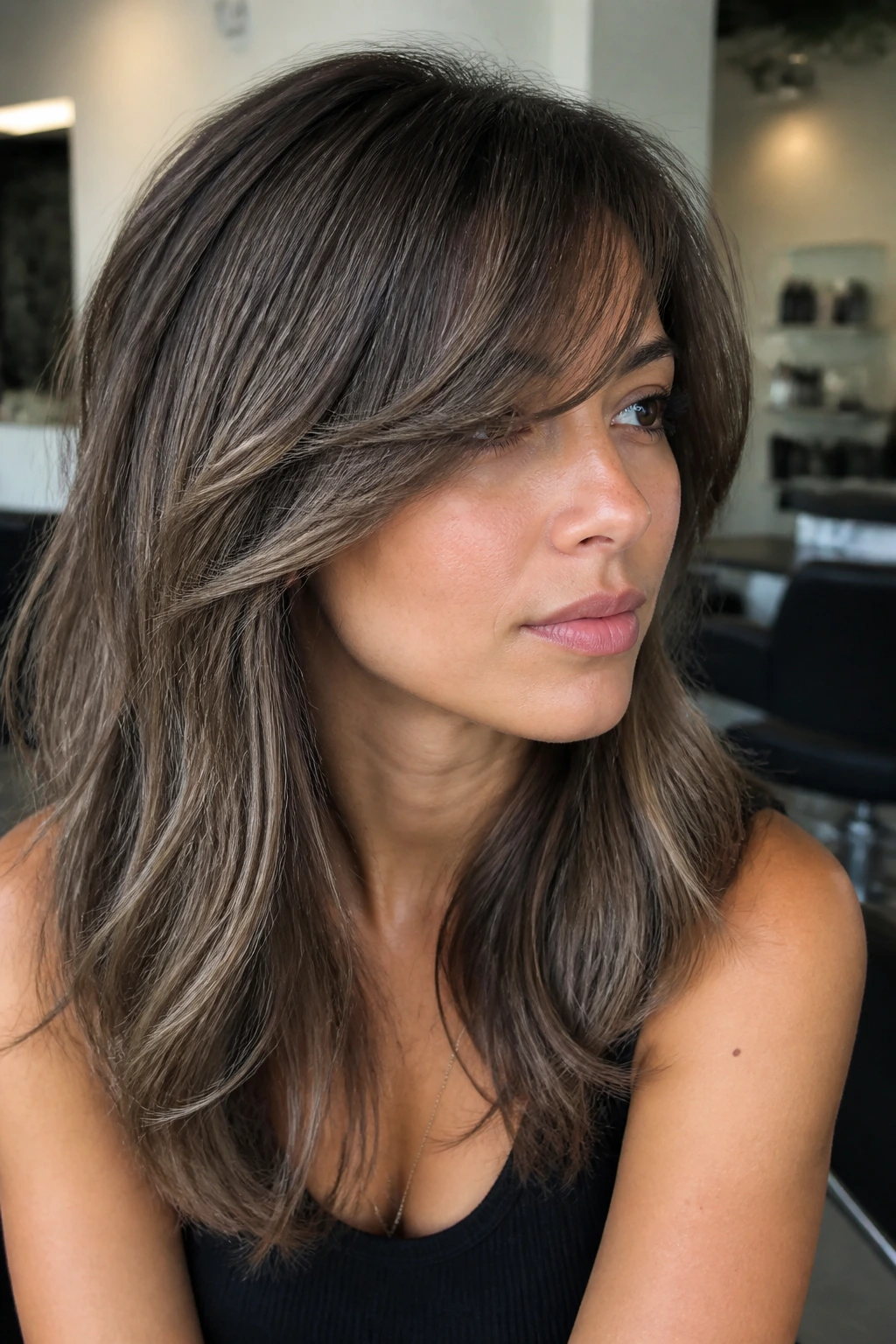
Mushroom brown is the cool cousin in the room. It uses taupe, ash, and soft beige-brown notes to give dark hair a smoky finish instead of a warm glow. With side-swept bangs, the effect is especially good because the cool tones sharpen the face frame. The sweep looks deliberate, not sweet.
When Cool Brunette Beats Warm Brunette
This is the one I recommend for someone who wears black, charcoal, silver jewelry, or very clean makeup. Warm caramel can fight those colors. Mushroom brown sits quietly beside them. The highlight should be soft enough that you notice the sheen before you notice the shade itself.
It’s also a smart pick if your base is already level 3 or 4 and you do not want golden ends. Ask for a rooty blend, not isolated streaks. Chunky placement ruins the point.
7. Bronze Veil Highlights
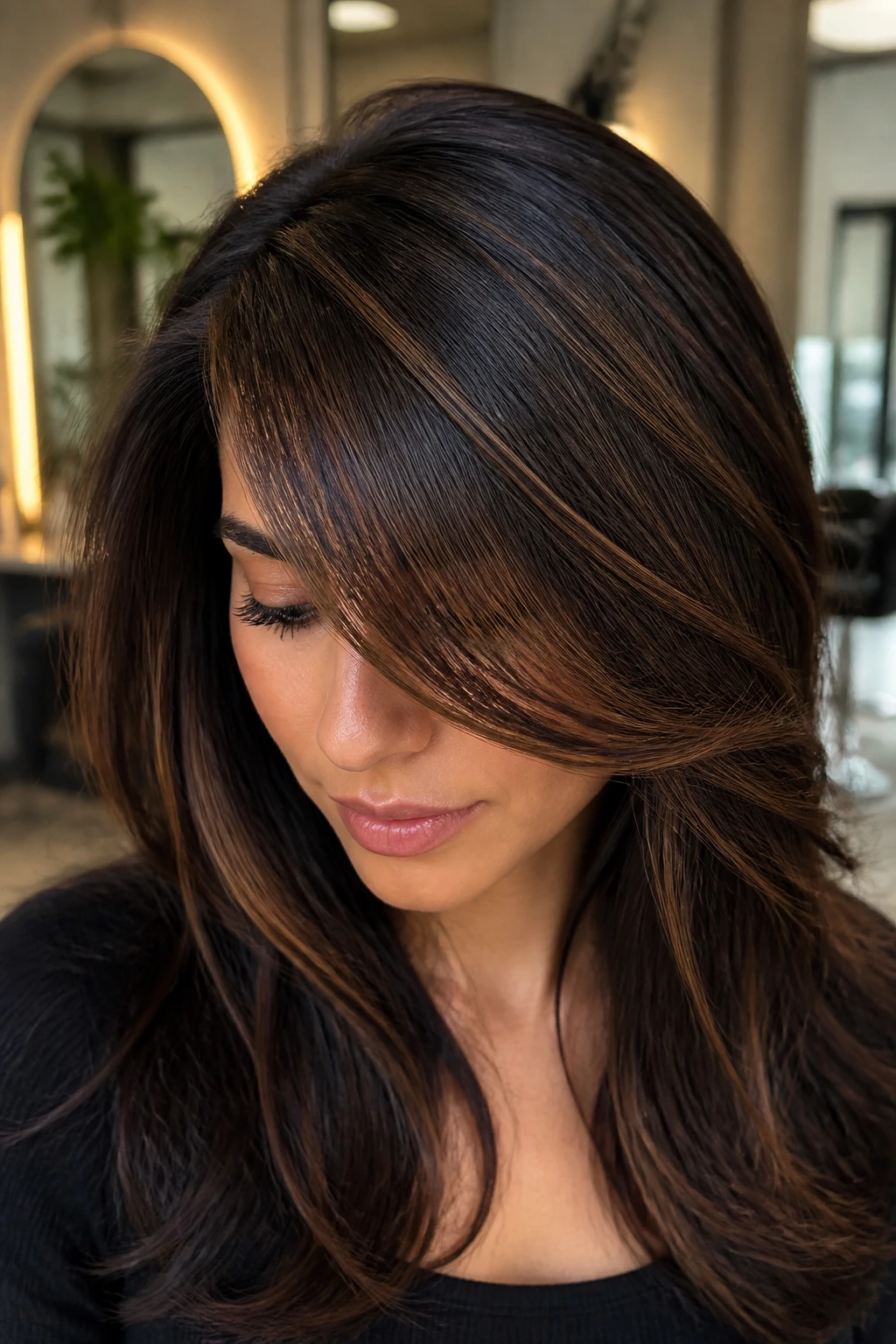
Bronze veil highlights give you shine with a little edge. They sit between caramel and copper, so the result is richer than gold but less red than auburn. On dark hair, bronze can catch light in a way that looks almost metallic, especially along the side-swept bang where the hair shifts with every turn of the head.
Why This One Feels Polished
Bronze works because it adds warmth without blowing out the depth of the base. The best version uses fine ribbons through the top layer and a bit more brightness right around the bang’s bend. If the highlights are too sparse, bronze can disappear. Too dense, and you lose the brunette feel.
I like this with a soft blowout and a glossing serum on the ends. The color wants shine. Matte styling products fight it.
8. Auburn Accent Panels
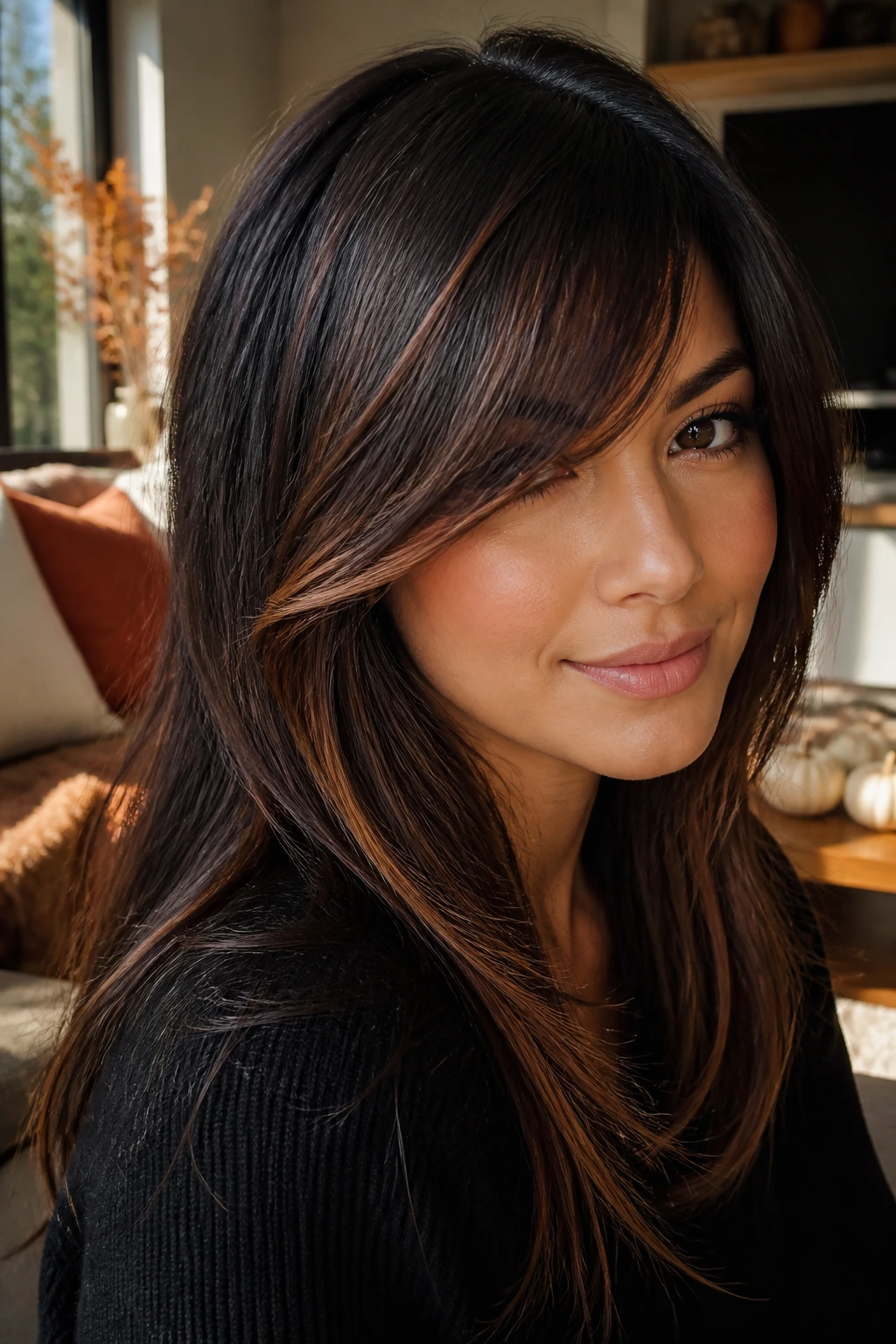
Not every brunette highlight needs to be soft and quiet. Auburn accent panels bring a little drama, especially on a dark base with side-swept bangs. These are larger than babylights and more visible than a glaze, but you still want them placed with restraint. One or two panels near the face and a few hidden pieces through the top can be enough.
For People Who Want a Visible Shift
Auburn shows best when the hair moves. A swept fringe lets the shade flash in the front, then disappear into darker lengths, which keeps it from looking flat. The trick is keeping the auburn deep enough to stay brown at the root of the strand. Too much red and the whole thing takes over.
This is the style that looks especially good in autumn light, though I’d never call it a seasonal color only. It works year-round if the red stays muted.
9. Honeyed Face-Framing Pieces
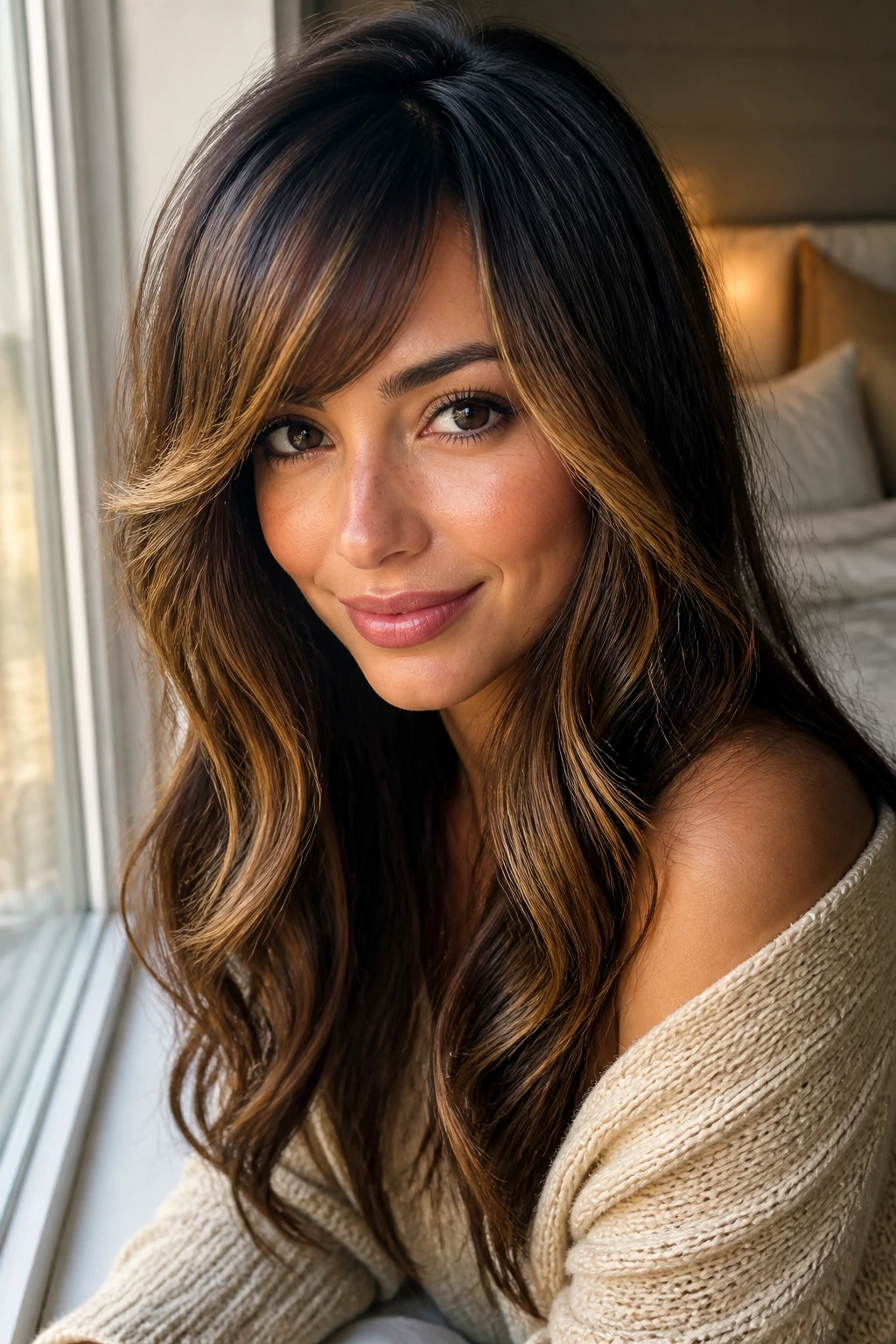
Honeyed face-framing pieces brighten the eyes fast. On dark hair, they should be used sparingly — not because they’re weak, but because honey can take over if you flood the front with it. A side-swept bang gives you the perfect landing strip. Place the brightest part where the fringe falls against the cheek, then fade it back into brunette depth.
The Right Amount of Brightness
If the hairline is the only thing you lighten, the effect can look a little disconnected. I prefer to carry a whisper of honey through the front layers so the bang and the rest of the cut feel related. That keeps the color from looking like a separate panel floating on top.
This one flatters warm skin tones, but it can also work on cooler complexions if the honey is toned down with beige. Avoid anything too gold. It will fight the dark base.
10. Cocoa and Walnut Ribbons
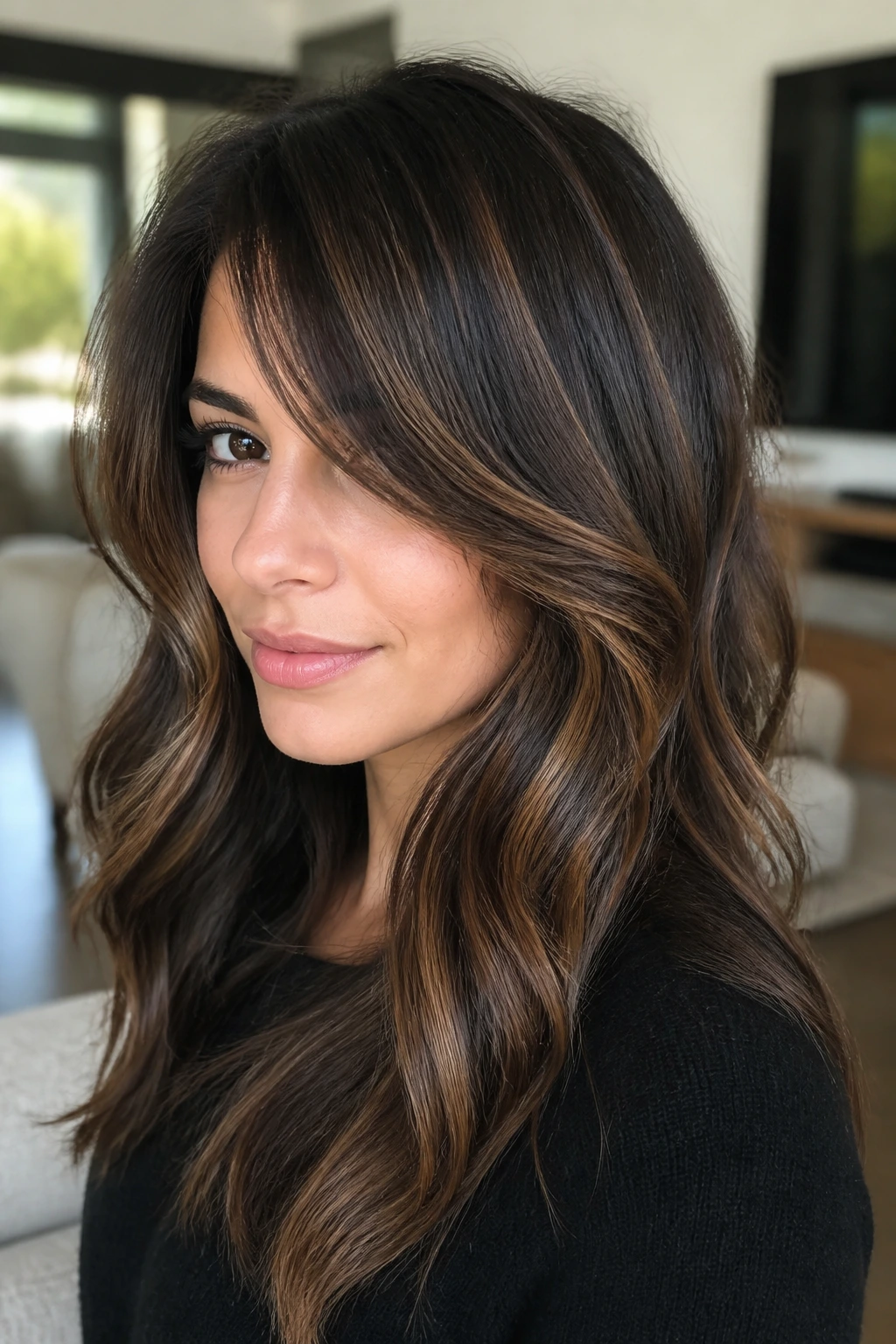
Cocoa and walnut ribbons are for the person who wants dimension but hates obvious highlighting. The shades sit close to the brunette family, so the contrast is subtle and expensive-looking rather than loud. On side-swept bangs, this combination is especially useful because it keeps the fringe soft while still breaking up a solid dark sheet of hair.
A Quiet Color Story
The walnut pieces should sit slightly lighter than the cocoa base, not blonde by any stretch. That tiny spread in depth is what makes the hair look thicker. Under natural light, you’ll see the ribbon effect. Indoors, you mostly see shine.
I like this look on long layered cuts and on shoulder-length hair that tends to fall flat. It gives shape without needing a heavy curl pattern. And that matters if you don’t want to spend your morning fighting a round brush.
11. Bronde Melt With a Side Sweep
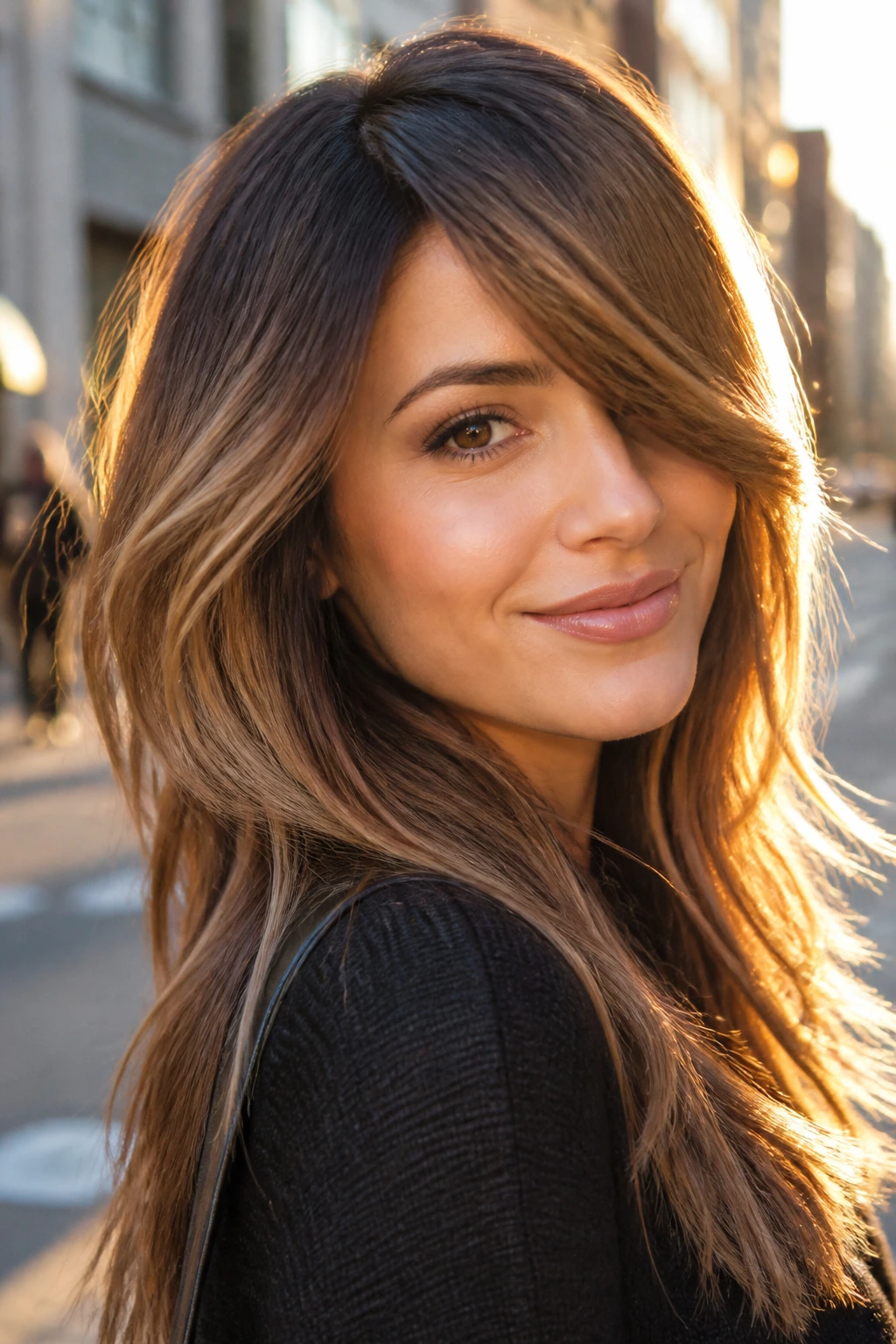
Bronde is the bridge between brunette and blonde, and on dark hair it should be handled like a controlled experiment. The goal is not to become light. The goal is to melt the darker base into warm beige-brown mids that still read brunette at a glance. Side-swept bangs help the transition because the sweep softens the line where the lightening starts.
Best For Someone Who Wants More Noticeable Contrast
This version suits hair that can handle a bit more lift, especially if you want the face frame to pop from across the room. Keep the brightest pieces around the bang and the front layers, then let the lower lengths stay deeper. That keeps the shape from turning puffy or over-processed-looking.
Bronde can go wrong when the tones are too yellow. Ask for a beige gloss, not a bright gold toner. That small difference matters.
12. Smoky Bronze Lowlights and Highlights
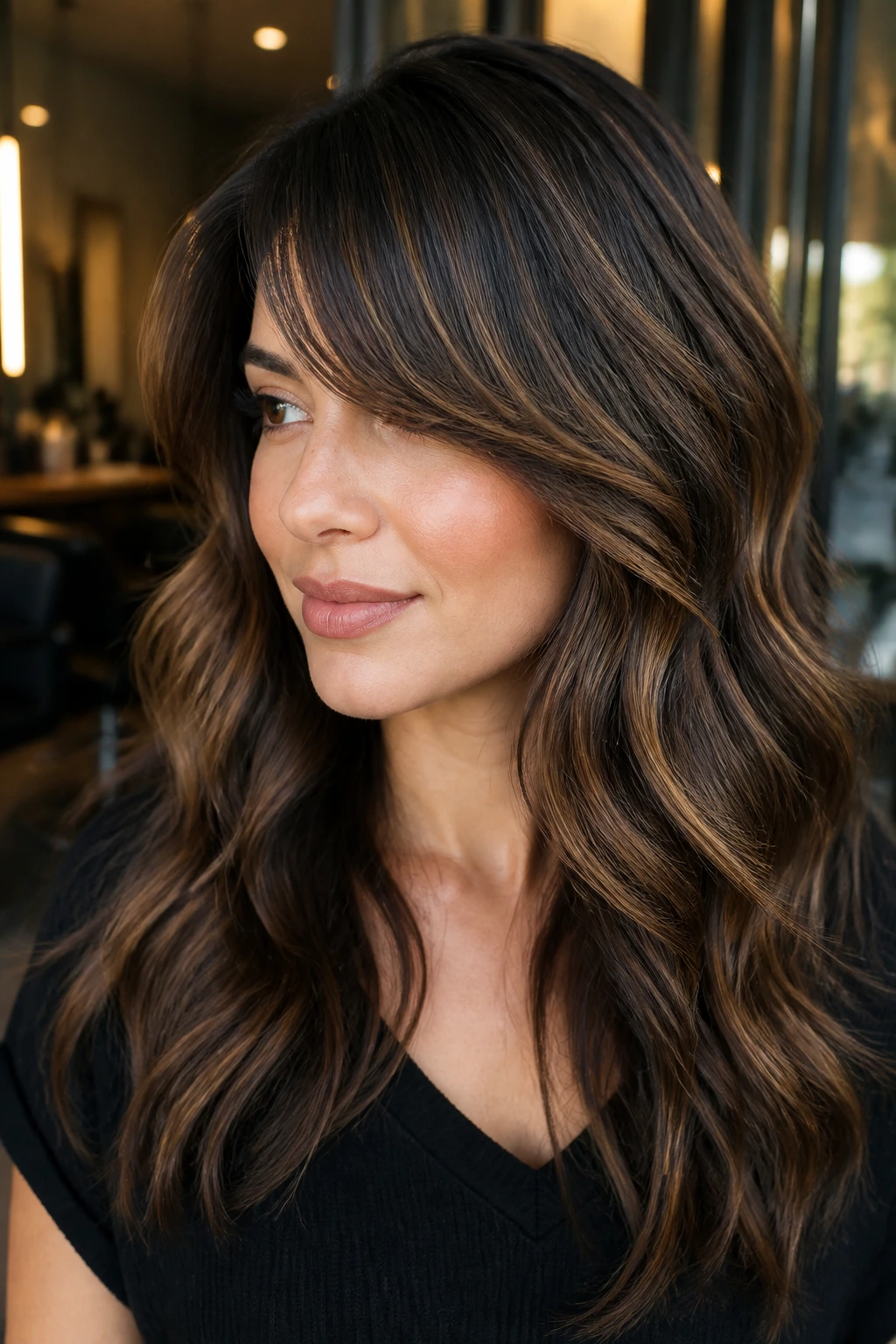
Smoky bronze is what happens when you stop thinking in simple highlight terms and start thinking in depth. You’re layering light and dark brown tones so the hair has movement from both directions. With a side-swept bang, this is one of the best ways to keep the fringe from looking too solid at the root.
Why The Mix Matters
A single lightening service can flatten dark hair if the tone is too even. Bronze highlights plus deeper lowlights give the cut a bendy, shadowed finish that looks expensive in motion. The bang catches a little bronze, then drops back into cocoa, which keeps the shape lively.
This is a smart option for thick hair. Density can swallow subtle color. A smoky bronze mix keeps the surface from looking like one big dark block.
13. Maple Biscuit Highlights
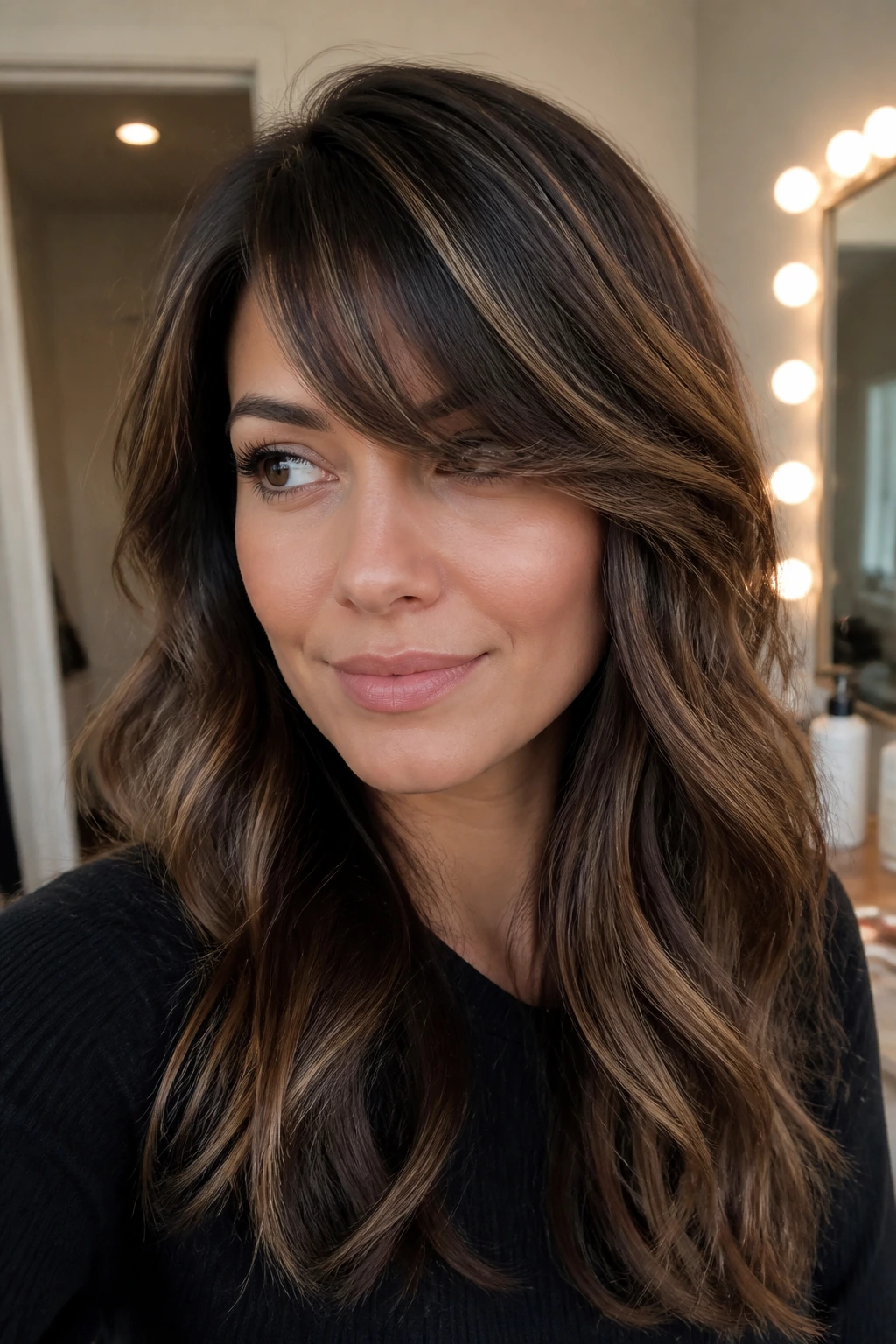
Maple biscuit sounds almost too sweet, but the color itself is softer than the name. Think warm beige-brown, a touch lighter than chestnut, with a dry bakery note rather than a glossy caramel finish. On dark hair, the color works well when the highlights are feathered through the top and allowed to peek through the side-swept fringe.
When You Want Warmth Without Red
This shade is a nice fit for someone whose hair pulls orange when lightened. The beige note reins that in. It also photographs in a calmer way than brighter golds, because the reflection is softer and more matte.
If your face-swept bang tends to sit heavy, maple biscuit can open it up without making it obvious that you colored the front. That balance is the whole trick.
14. Hazelnut Peekaboo Layers
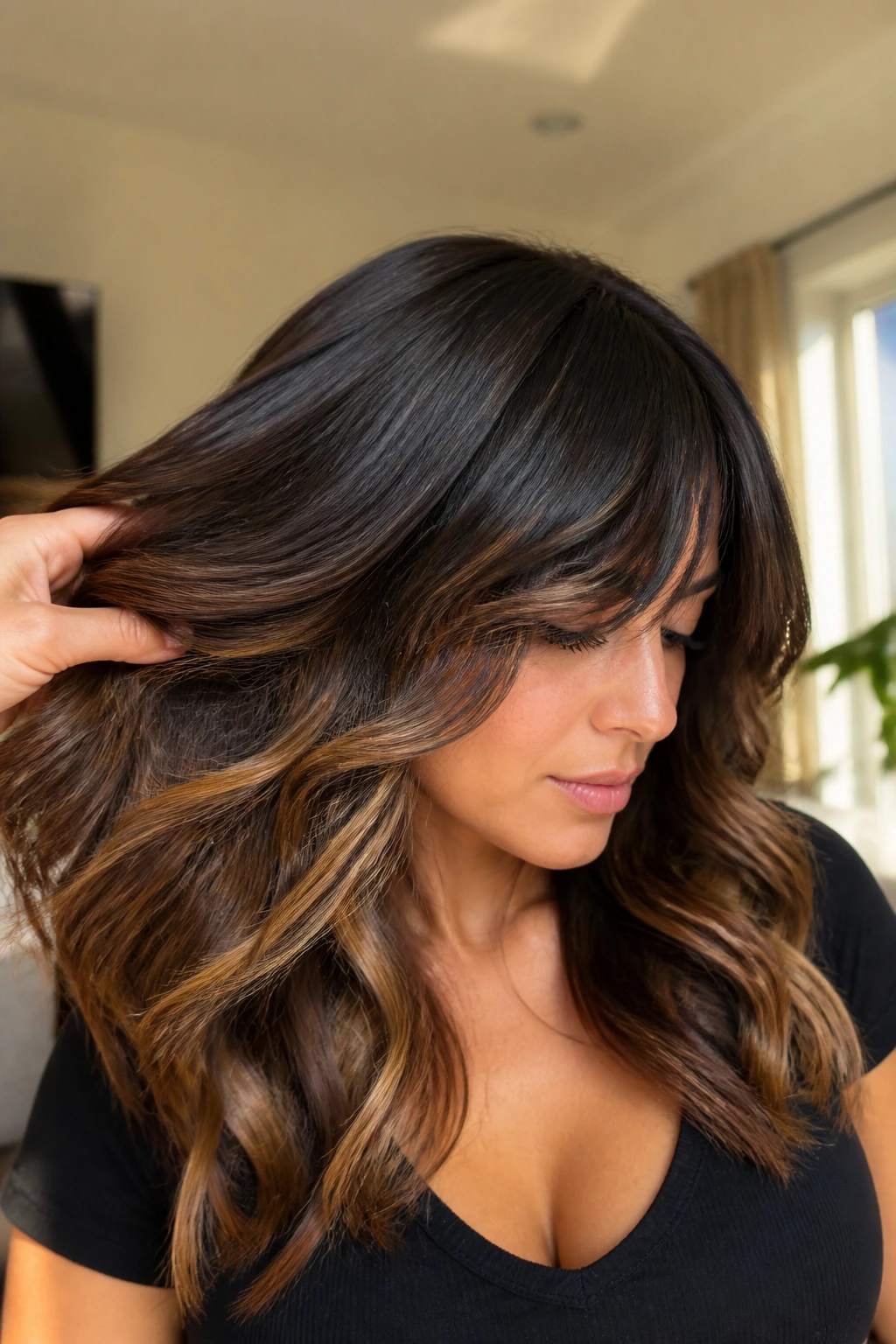
Hazelnut peekaboo layers are one of my favorite understated options. The brighter hazelnut pieces hide underneath the top layer, then show themselves when the hair moves or when the side-swept bang shifts off the face. That little reveal is a lot more interesting than obvious striping.
For Movement, Not Constant Display
This works especially well on layered cuts where the top can cover some of the lighter pieces. You get dimension without commitment to a loud front frame. If you wear your bangs to one side often, the peekaboo effect becomes part of the haircut’s rhythm.
I’d choose this if you like surprise more than statement. The color shows at the temple, in curls, and at the ends of a blowout. Straight, still hair will hide more of it, which is either a flaw or a feature depending on your taste.
15. Sable and Champagne Ribbon
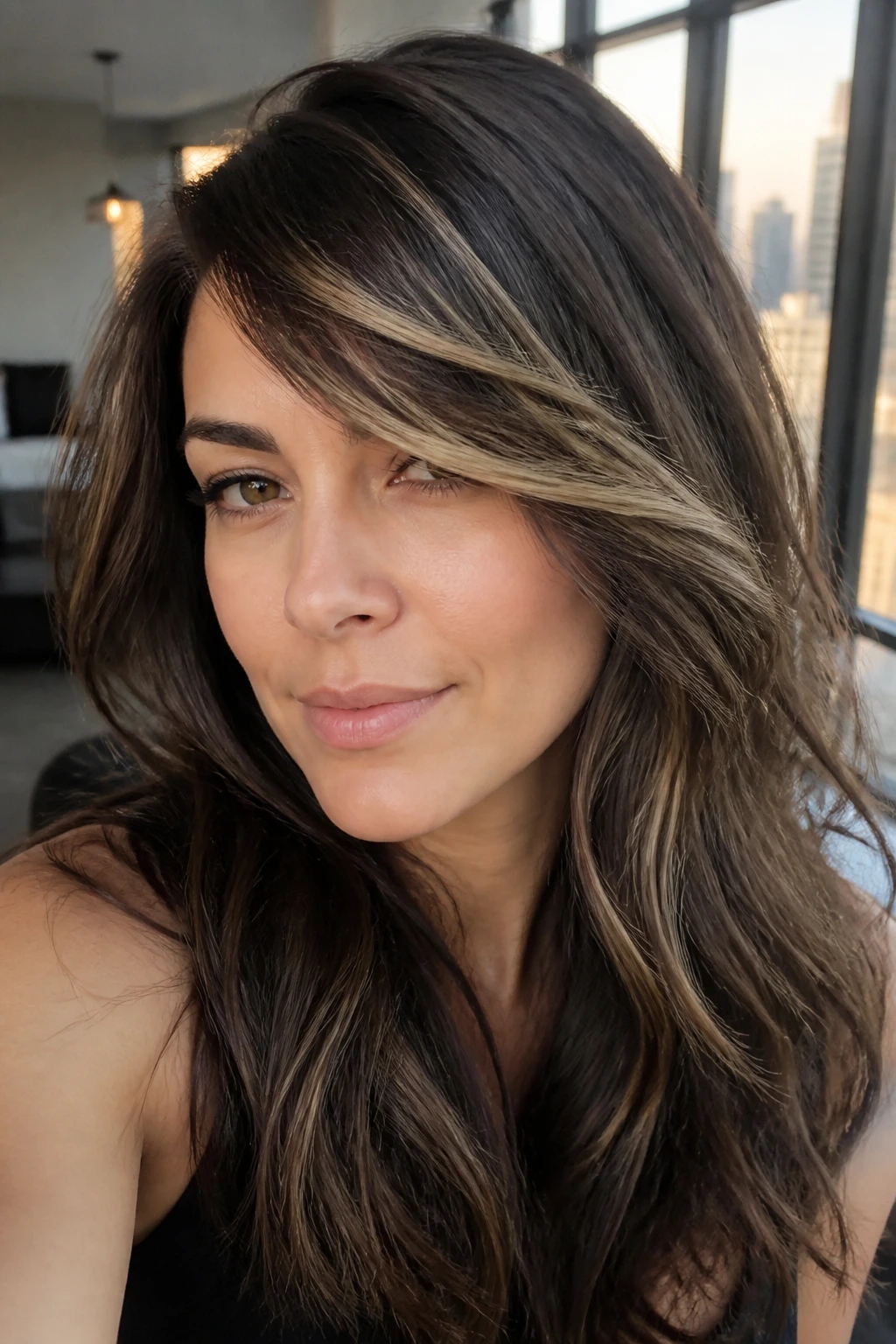
Sable and champagne is the boldest contrast in this list, but it still stays elegant if the placement is careful. The sable base keeps the darkness intact while a few champagne-toned ribbons skim the front and top layers. On side-swept bangs, the champagne should land like a sliver of light, not a stripe.
A Good Pick If You Like Contrast
This is the brunette version of putting a spotlight where it counts. The brighter pieces create instant lift around the eyes and cheekbones, while the sable underneath keeps the whole thing grounded. That push and pull is what makes it work.
I would not do this with a blunt fringe. The sweep gives it the softness it needs. Without that diagonal line, the brighter pieces can feel too separate from the cut.
16. Cherry Cola Dimension
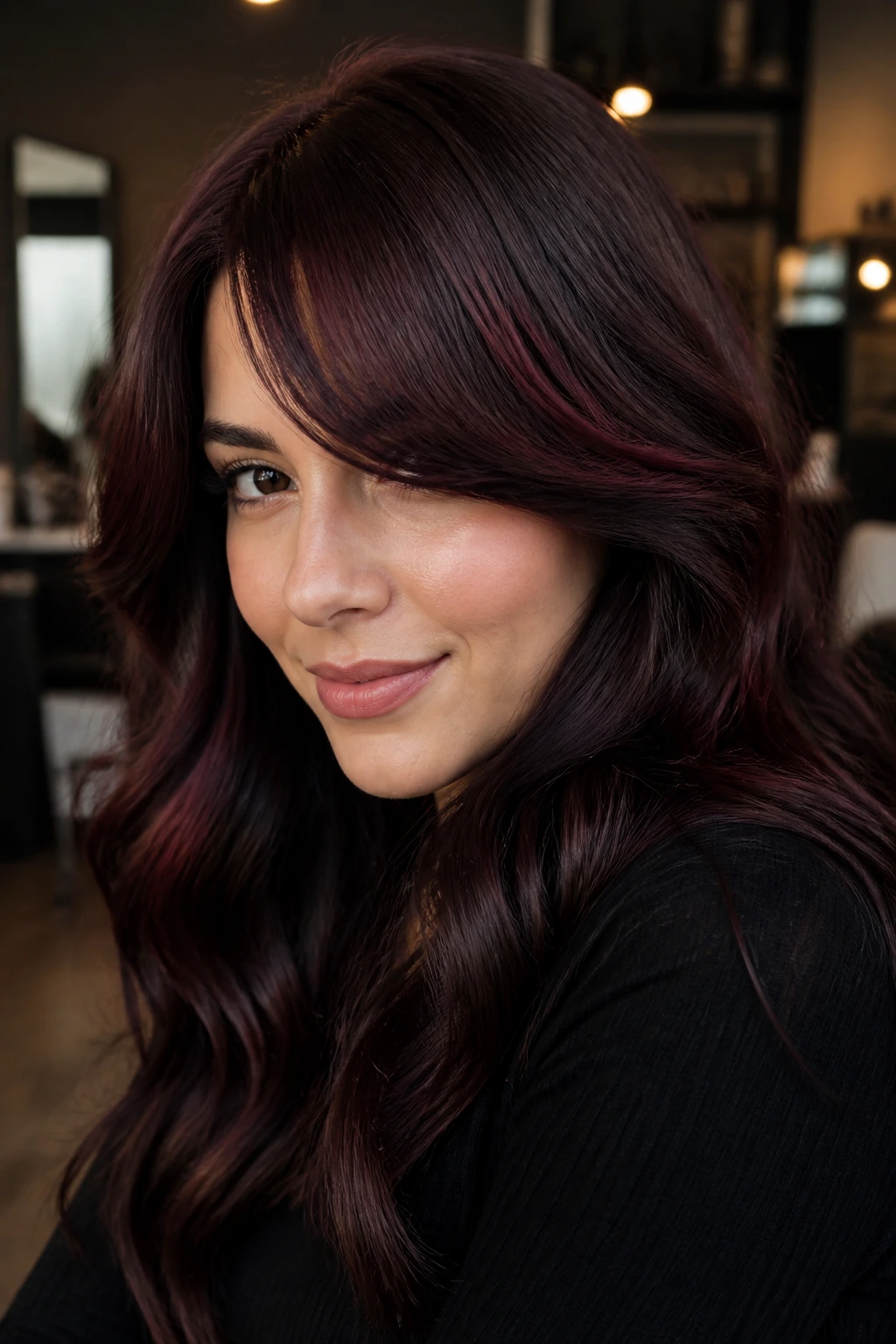
Cherry cola dimension has a mood to it. It’s brunette, but the red-violet undertone changes the whole read of the hair, especially in low light. On dark brown hair with side-swept bangs, the color appears almost like gloss first and pigment second. Then you catch the ruby edge. That’s the good part.
Rich, Not Loud
This shade is best when the cherry note stays deep. If it goes too bright, the brunette base disappears. The side sweep helps because it lets the color flicker instead of sitting in one heavy block across the forehead.
I like this for layered cuts and wavy hair. The movement gives the red-violet tone little places to show up. Flat ironed hair can still work, but it leans sleeker and a bit less playful.
17. Toasted Almond Balayage
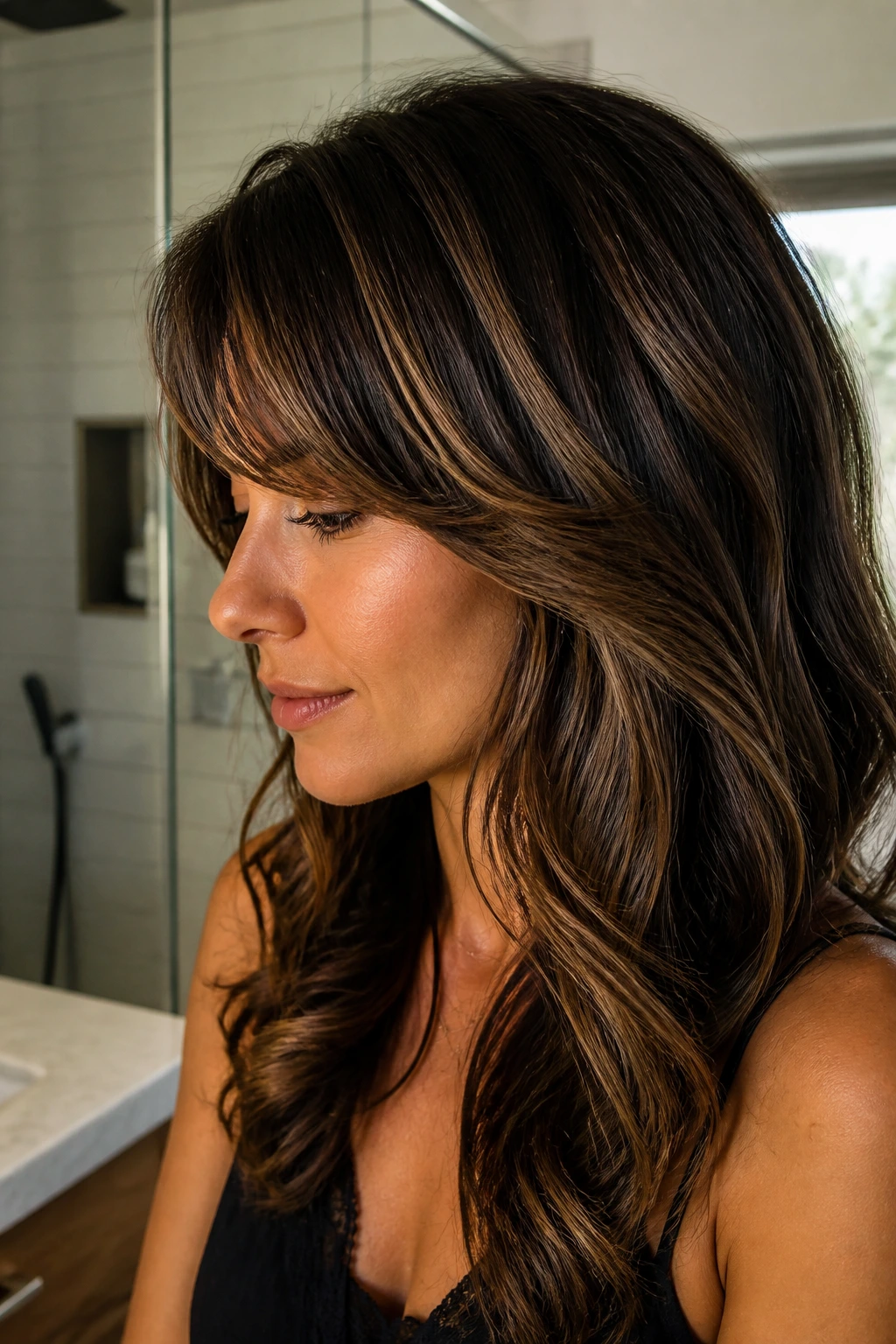
Toasted almond balayage lives in that warm-neutral zone that flatters a lot of dark brunettes. It isn’t as golden as honey, and it’s not as red as cinnamon. It just softens the edges of the base. Around a side-swept bang, that means the front looks lighter without looking artificially painted.
A Safe Place to Start Lighter
If you’re not sure whether you want warmth or coolness, toasted almond is usually the least risky answer. It works with both warm and neutral skin tones, and it gives the haircut a smoother finish around the face. The highlights should be kept airy and broken up, not painted in solid bands.
This is the kind of color that looks especially nice on second-day hair. A little natural oil at the root gives it shine instead of flattening it.
18. Soft Latte Foils
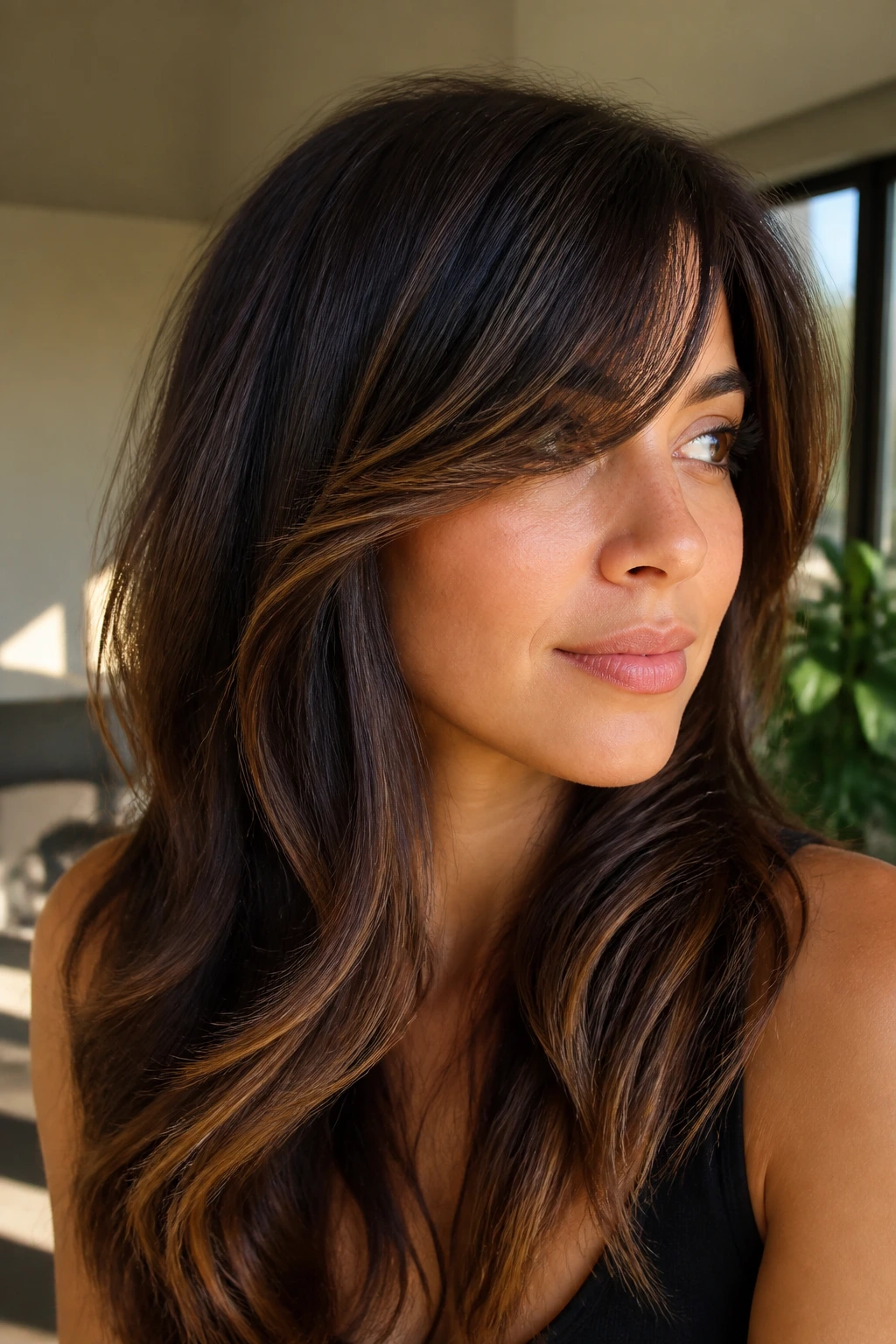
Soft latte foils are more structured than balayage, and sometimes that’s exactly what dark hair needs. Foils let you place creamy beige-brown pieces with control, which is useful when you want the side-swept bang to have a clear bright spot and the back to stay deep. The result is neat, clean, and a touch more tailored.
Why Foils Make Sense Here
If your hair is resistant or very dark, foils help lift enough to show the tone. You can ask for a few fine foils around the bang, then a softer spread through the crown. That keeps the face frame readable without making the whole head light.
I like this for finer hair, too. The color detail gives the illusion of more body, especially when the fringe is blown over with a soft bend.
19. Copper-Kissed Brunette
Copper-kissed brunette sits just warm enough to look alive. It is not a copper color story in the usual sense. Think of it as a brunette base with a warm metal sheen woven through the front and top. Side-swept bangs are a good place for the copper kiss because the angle lets the warmth catch light instead of staring at you head-on.
Best When You Want Warmth With Attitude
This shade can be a little electric if the copper is too strong. Keep it muted. The best versions look like the color has been warmed by the sun, not dyed red. A slightly deeper root makes the finish richer and keeps maintenance manageable.
If your wardrobe leans camel, cream, rust, or olive, this color feels especially easy to wear. It brings the dark hair forward without making it feel costume-y.
20. Mocha Melt With Root Shadow
A mocha melt with root shadow is the version I’d recommend to somebody who wants hair that grows out without constant salon visits. The root stays deepest, then mocha pieces melt through the mids and soften at the ends. Side-swept bangs help because they blur the transition line right where the hair parts and falls.
The Grow-Out Advantage
Dark roots are part of the look here, not a problem to fix. That makes the color less fussy than bright highlights, and it keeps the overall shape calm around the fringe. A melted finish also gives the illusion of thicker hair because the tones don’t stop abruptly.
This is the least needy option in the group, which I say with affection. It’s also one of the easiest to keep looking intentional after several weeks.
21. Chestnut Halo Lights
Chestnut halo lights are exactly what they sound like: a soft ring of light around the top of the head and face frame. The color isn’t loud, but it changes how the haircut sits in space. With side-swept bangs, the halo effect is especially nice because the fringe becomes part of the glow instead of a separate panel.
For Lifting the Whole Cut
I’d place the brightest chestnut just along the crown and the first front layers, then keep the underlayers darker. That stops the color from looking dusty. The hair moves better when the light lives where the eye expects movement.
This is a good compromise if you want dimension without giving up your brunette identity. The base still reads dark. You just get a little light around the edges, which is often enough.
22. Ash Brown Contour Highlights
Ash brown contour highlights are not for everyone, and that’s exactly why I like them. They create shape through cool-toned contrast rather than warmth, which can make a dark brunette cut look sharper and more modern. On a side-swept bang, ash contouring can define the slope of the fringe and the line of the cheekbone without going blond.
When You Want Edge Instead of Glow
The color should sit in a cool brown range, not gray. That matters. Too much ash can make dark hair look flat or dusty, especially if the base already skews cool. The safest way is to keep the highlights narrow and let the root melt stay soft.
This shade is strongest on straight or smooth styles where the lines show clearly. If you wear curls, the cool tones still work, but the effect gets softer and less graphic.
23. Golden Nutmeg Foils
Golden nutmeg foils give dark hair a spiced warmth that feels grounded. Nutmeg sits between beige and amber, so it gives you enough brightness to see but not so much that the brunette loses its depth. With side-swept bangs, the golden note catches at the front and gives the face a little lift.
A Warm Shade That Still Feels Brown
I like golden nutmeg for medium to dark brunettes who want light near the face but don’t want blonde energy. The foils can be placed a touch denser around the bang and temple, then spaced farther apart through the crown. That keeps the front lively and the back controlled.
This shade works especially well if your hair already has warm undertones. If the base is icy or ashy, ask for a beige-gold gloss so the color doesn’t fight itself.
24. Rich Espresso With Micro-Highlights
Rich espresso with micro-highlights is the quietest option here, and honestly, one of the smartest. You keep the dark base nearly intact, then sprinkle in ultra-fine pieces that catch the light only when the hair moves. Side-swept bangs are what make it visible. The sweep creates motion, and motion is where this look lives.
Almost Invisible, Until It Isn’t
Micro-highlights are ideal if you want shine and dimension more than a color change. The pieces should be delicate enough that they disappear at a glance, then show up in the fringe and top layer when the light hits. That makes the haircut look expensive without looking edited.
This is a favorite on long hair that tends to read heavy. The tiny bright lines stop the mass from swallowing all the texture.
25. Warm Sandstone Balayage
Warm sandstone balayage is the closing note I’d put at the end of a brunette color menu. It has enough beige in it to soften dark hair, enough warmth to keep it from feeling flat, and enough depth to stay rooted in brunette territory. With side-swept bangs, sandstone gives you a face frame that feels sun-warmed rather than streaked.
The Most Balanced Option in the Set
If you want one shade that lands between caramel, beige, and chestnut, this is the one. The balayage should start softly and get a little brighter only where the bang bends and the front layers move. That keeps the look controlled. No hard lines. No chunky blocks.
I like this for people who want to color their hair once, then breathe for a while. It’s gentle on the eye, and it grows out in a way that still looks planned.
What Makes Brunette Highlights Read So Well on Dark Hair
Dark hair takes highlight work differently than lighter brunettes do. The contrast is stronger, but the room for error is smaller. If the light pieces are too pale, they can sit on top of the hair like tape. If they’re too close to the base, you lose the whole point. The sweet spot is usually one to three levels lighter than your natural dark brown, with extra brightness concentrated near the face and top layers.
That’s where side-swept bangs earn their keep. They give the color a place to land. A bang that falls diagonally across the forehead lets a ribbon of light run from part line to cheekbone, which makes even subtle brunette highlights feel shaped rather than random.
Tone matters just as much as lift. Warm brunettes usually handle caramel, chestnut, bronze, cinnamon, and nutmeg without trouble. Cooler brunettes tend to look cleaner with mushroom, ash brown, smoky bronze, and beige-based mocha. If you mix the wrong temperature with the wrong base, the hair can look either muddy or orange. Neither one is fun to maintain.
The Tools and Products That Keep the Color Clean
-
Pintail comb: This is what gives the colorist clean parting lines, especially around the fringe and temple area.
-
Sectioning clips: Good clips keep the side-swept bang separate while the rest of the hair is painted or foiled.
-
Balayage board or foil: A board helps with hand-painted lightness; foils help when the hair is resistant or very dark.
-
Tint brush and bowl: Necessary for controlled placement, which matters more than people think on dark brunettes.
-
Demi-permanent gloss or toner: This softens brass, deepens warmth, or cools the shade after lightening.
-
Color-safe shampoo and conditioner: They slow fading and keep the brunette tones from turning dull and washed out.
-
Heat protectant spray: Side-swept bangs are often blown dry every time you style, and that heat adds up fast.
-
Round brush or small ceramic brush: The bang needs bend, not puff. The right brush gives that curve.
-
Lightweight serum or oil: A few drops on the ends keep highlight lines smooth instead of dry and frayed.
How to Choose the Right Brunette Tone for Your Base
The easiest way to choose is to look at the undertone already living in your hair. If your dark brown base pulls red or gold in sunlight, warm highlights will blend in faster and age more gracefully. If the base reads almost ash-black, a cooler brunette story usually looks cleaner. Trying to force a warm caramel on a cool base can make the color fight itself, and the same thing happens in reverse when ash is dropped onto a naturally golden brunette.
Ask your colorist to think in level numbers. A dark brunette base often sits around level 3 or 4. The sweetest spot for highlights is usually around level 5 to 7, depending on how obvious you want the contrast to be. That range gives the eye enough change to notice shape, but not so much that the highlight steals the haircut.
Side-swept bangs help almost every tone. Still, the tone should echo the person wearing it. Warm skin often looks richer with caramel, bronze, or chestnut. Cooler skin usually likes mushroom, mocha, beige-brown, or ash-brown ribbons. If your skin sits neutral, you have more freedom — which is annoying, but useful.
How to Style Brunette Highlights With Side-Swept Bangs
Presentation: Keep the fringe soft and curved, not pin-straight. A round brush or a quick bend with a flat iron makes the highlight placement visible, especially at the cheekbone and temple. If you wear the hair completely flat, some of the dimension disappears.
Movement: Put the brightest pieces where the hair actually moves — around the front layers, the top of the sweep, and the ends of the bang. That gives you a little shimmer every time you turn your head. A heavy side-swept bang with no bend can hide the color, which is a waste.
Texture: A loose wave usually shows brunette highlights best because the bends break the color into ribbons. Straight hair works, too, but the finish needs shine. A little serum on the mids and ends helps the lighter pieces read as smooth rather than dry.
Maintenance: If you heat-style the fringe every day, protect it every day. Side-swept bangs sit in the hottest part of your routine, and they fade or crisp up faster than the rest of the cut.
Small Adjustments That Make the Color Look Better
Placement Trick: Ask for the brightest lightness around the part line and the front-most bend of the side-swept bang, then let the color fade as it moves back. That creates shape without a chunky money piece effect.
Gloss Trick: A demi-permanent gloss can change the feel of the highlights without re-lightening anything. Warm gloss adds caramel or bronze sheen; cool gloss knocks back gold and keeps the brunette clean.
Root Trick: Leave enough root depth to protect the dark-hair identity. A soft shadow root makes the color feel smoother and keeps regrowth from looking harsh after a few weeks.
Texture Trick: If the hair is fine, keep highlights feathered and slightly closer together. If the hair is thick, you can space them farther apart and still see the effect. Dense hair hides color fast.
Make-It-Yours: If you like a bolder look, widen the front pieces. If you want something quiet, shrink the pieces and rely on shine and placement instead.
Mistakes That Flatten Brunette Highlights
The most common mistake is over-lightening the bang itself. A side-swept fringe should frame the face, not look like a separate strip of hair pasted on top. When the light piece is too wide or too bright, the cut loses softness. The fix is simple: keep the lightest part just behind the fringe and let the sweep pick it up.
Another problem is ignoring undertone. Warm caramel on an already golden brunette can turn brassy fast. Cool ash on a naturally warm base can go dull. The answer is to match the highlight temperature to the base, then adjust with gloss rather than forcing the wrong tone to behave.
People also ask for too much contrast on the first appointment. Dark hair can absolutely go lighter, but large jumps tend to look streaky if they’re not built carefully. Safer placement, then a second session if needed, usually looks better than trying to jump five shades in one go.
Finally, skipping styling is a mistake. These looks depend on movement. If the side-swept bang is left to dry however it wants, even great placement can disappear.
Ways to Change the Look Without Losing the Point
Soft Glow Version: Keep the highlights only one level lighter than the base and focus on gloss. This is for someone who wants movement without obvious contrast, and it works best on straight or lightly waved hair.
Money-Piece Version: Brighten the front-most frame and keep the rest of the brunette deeper. This gives the fringe more presence and makes side-swept bangs look intentional from across the room.
Cool Smoke Version: Shift the tone into mushroom, ash, or smoky bronze. Good if your wardrobe and makeup lean cool, or if warm shades have ever turned orange on you.
Red-Brown Version: Add cinnamon, auburn, or cherry cola notes. This gives the hair more depth in low light and pairs nicely with layered side-swept bangs.
High-Contrast Version: Go for heavier bronde or champagne ribbons near the face. This is the boldest route, and it looks best when the cut has enough movement to carry it.
Keeping Brunette Highlights Fresh Between Appointments
Brunette highlights do not need the same kind of constant rescue that blondes do, but they still need care. Color-safe shampoo is the base layer. Use it two or three times a week if your hair gets oily fast, and rinse with cooler water when you can stomach it. Hot water strips tone faster than most people realize, especially from the bang area, which gets handled, brushed, and heat-styled more often.
A gloss or toner refresh every 6 to 8 weeks keeps warm shades from turning flat and cool shades from drifting muddy. If you wear a lot of caramel, bronze, or chestnut, a shine gloss can make the color look newly done without another full lightening session. For ash and mushroom tones, a tonal refresh matters even more because those shades fade into beige if you ignore them.
Side-swept bangs need special attention. They should be dried smoothly after washing so they don’t frizz and steal the focus from the color. If you sleep on them damp, they’ll usually dry bent in the wrong direction. That’s not a theory. It’s a nuisance.
Frequently Asked Questions
Do brunette highlights on dark hair damage the hair a lot?
Any lightening changes the hair structure, but the level of stress depends on how far you lift and how often you refresh it. Subtle babylights, balayage, and glossed brunettes usually cause less wear than heavy blonding, especially when the highlight is kept away from the porous ends.
Are balayage or foils better for side-swept bangs?
Both work. Balayage gives a softer, swept effect that suits warmer and more natural brunettes, while foils can create a cleaner bright spot around the fringe if your hair is very dark or resistant. The bang itself usually benefits from more controlled placement than the back of the hair.
What highlight level looks best on level 3 or 4 hair?
For most dark brunettes, level 5 to 7 is the sweet spot. That’s enough lift to show dimension without making the contrast feel disconnected from the base. If you want a more dramatic face frame, you can go a touch lighter just around the front.
How often do side-swept bangs need styling when they’re highlighted?
Usually every wash day, and often a quick touch-up on non-wash days. A round brush, blow dryer, or small flat iron bend keeps the fringe visible and prevents it from sitting heavy across the forehead.
Can I keep my hair dark and still get dimension?
Yes, and that’s often the best route. Low-contrast brunette ribbons, mushroom brown pieces, mocha melts, and micro-highlights all give movement without turning the hair blonde. Dark hair looks richer when the base stays strong.
What if my highlights turn orange?
That usually means the tone was lifted warm and never fully neutralized. A gloss in the right shade can correct a lot of that, but the fix depends on how warm the hair is. If the brass keeps coming back, the next appointment should focus on placement and tone rather than more lift.
Will these looks work on straight hair?
They will, but the color needs cleaner placement and better shine. Straight hair shows line and contrast more than wave, so fine ribbons, money pieces, and contour highlights tend to read best when the finish is smooth and polished.
How do I grow this out without it looking messy?
Keep a root shadow and avoid overly bright pieces too close to the part line. Low-contrast brunettes with soft balayage grow out cleaner than chunky highlights, and a gloss between visits helps the line stay blended.
The Soft Edge That Makes It Work
Brunette highlights for dark hair with side-swept bangs work because they respect the haircut instead of fighting it. The fringe gives the color a shape. The darker base gives it depth. Put the bright pieces where the eye already wants to look, and the whole style starts doing more with less.
That’s the real appeal here. You do not need the brightest blonde or the thickest stripe to make dark hair feel fresh. A good brunette highlight map, placed with a little restraint and a little nerve, gives the cut movement that keeps showing up every time you catch it in a mirror.