



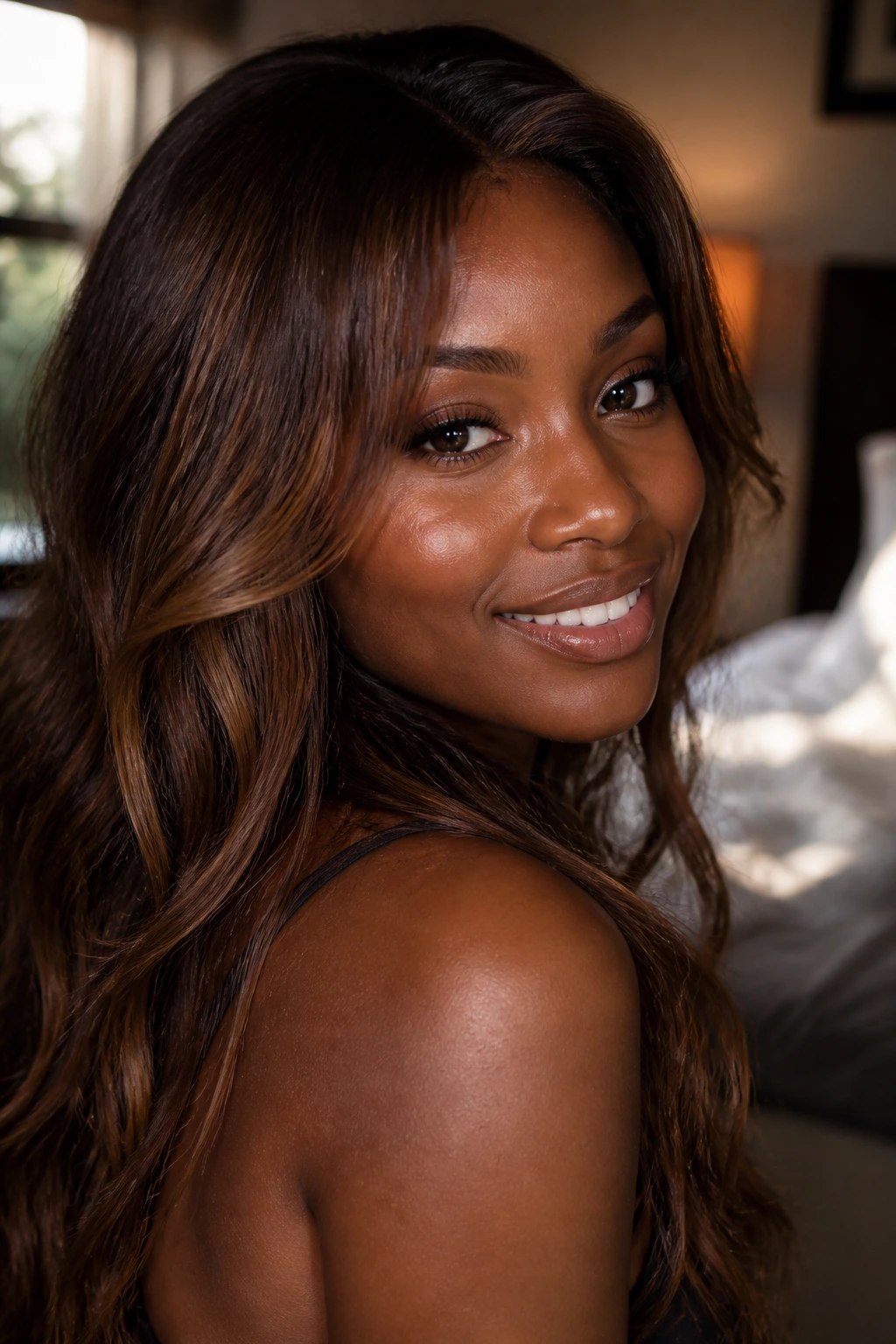
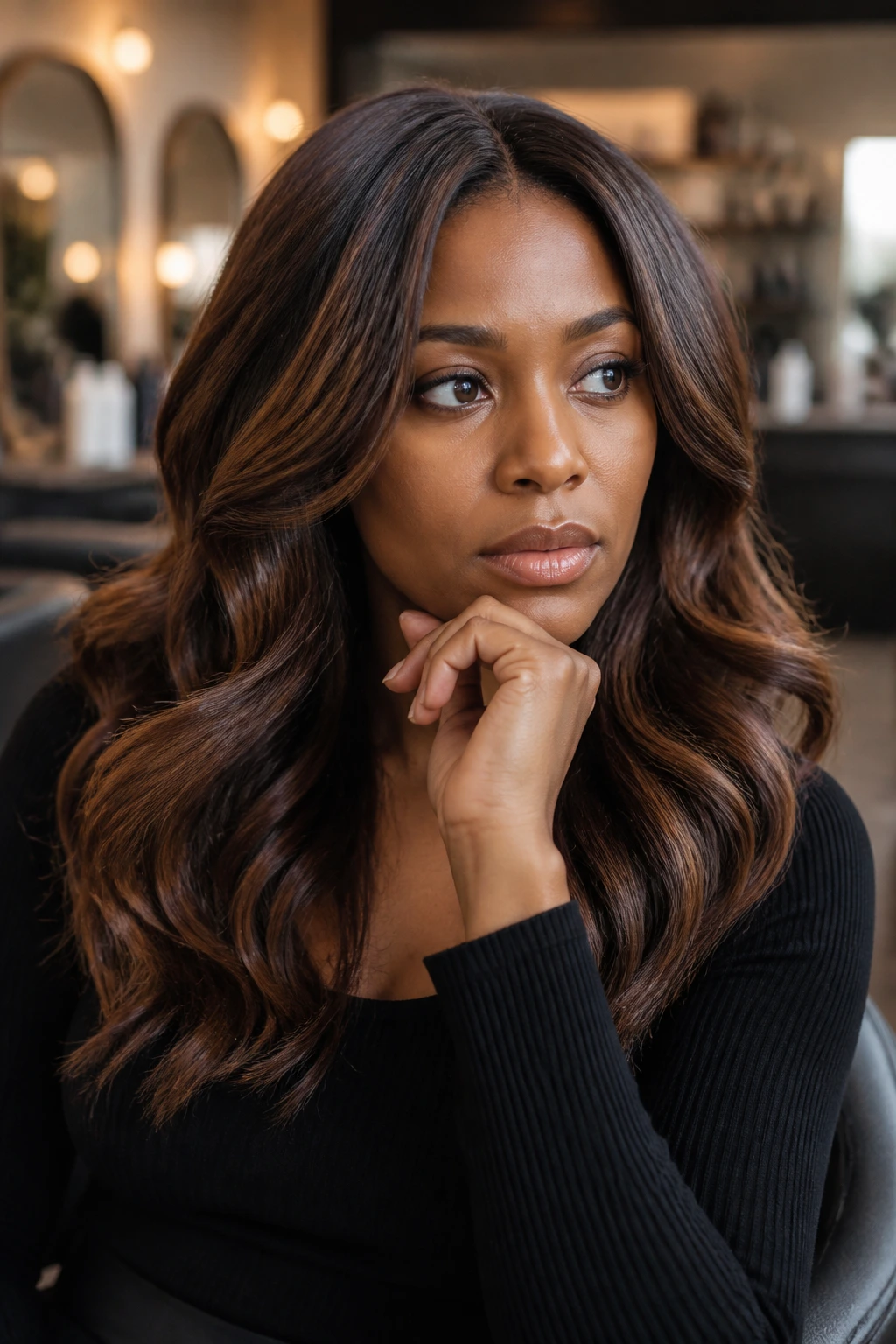
Chestnut brown highlights can go flat fast on the wrong canvas. On deep skin tones, though, the same shade can look like polished ribboning through the hair — a soft glow at the cheekbones, a warm flicker at the crown, a little lift around the face that never turns harsh.
That’s the trick with chestnut brown highlights for deep skin tones: they work best when the brown has enough warmth to echo the skin without blending into it. Think red-brown, cocoa, toasted walnut, a touch of amber at the edges. Not orange. Not ash. The sweet spot sits somewhere between espresso depth and caramel brightness, and placement matters as much as tone.
A good chestnut highlight does not announce itself from across the room. It moves when the hair moves. It catches light on a twist-out, softens a silk press, and gives a close-cropped cut a bit of lift without stealing the whole show. Get the undertone wrong, and the hair can read muddy or striped. Get it right, and the color looks expensive even when the cut is simple.
Why These Chestnut Shades Earn Their Keep
-
Warmth without brass: Chestnut sits in the red-brown family, so it tends to flatter melanin-rich skin by echoing warmth instead of fighting it.
-
Dimension without stripes: The best versions are usually only 1-3 levels lighter than the base, which keeps the hair looking layered instead of streaky.
-
Good on texture: Curls, coils, waves, and straight hair all show chestnut differently, so the same shade can look soft on one head and sharp on another.
-
Low-commitment brightness: A shadow root, balayage, or babylight pattern keeps the grow-out softer than full-head lightening.
-
Flexible with undertones: Chestnut can lean golden, cinnamon, mocha, or mahogany, which makes it easier to tune for warm, neutral, or slightly cooler skin.
-
Looks better in motion than in a swatch book: The real payoff is the shimmer you get when the hair turns, not the static color chip in the salon chair.
1. Ribboned Chestnut Balayage
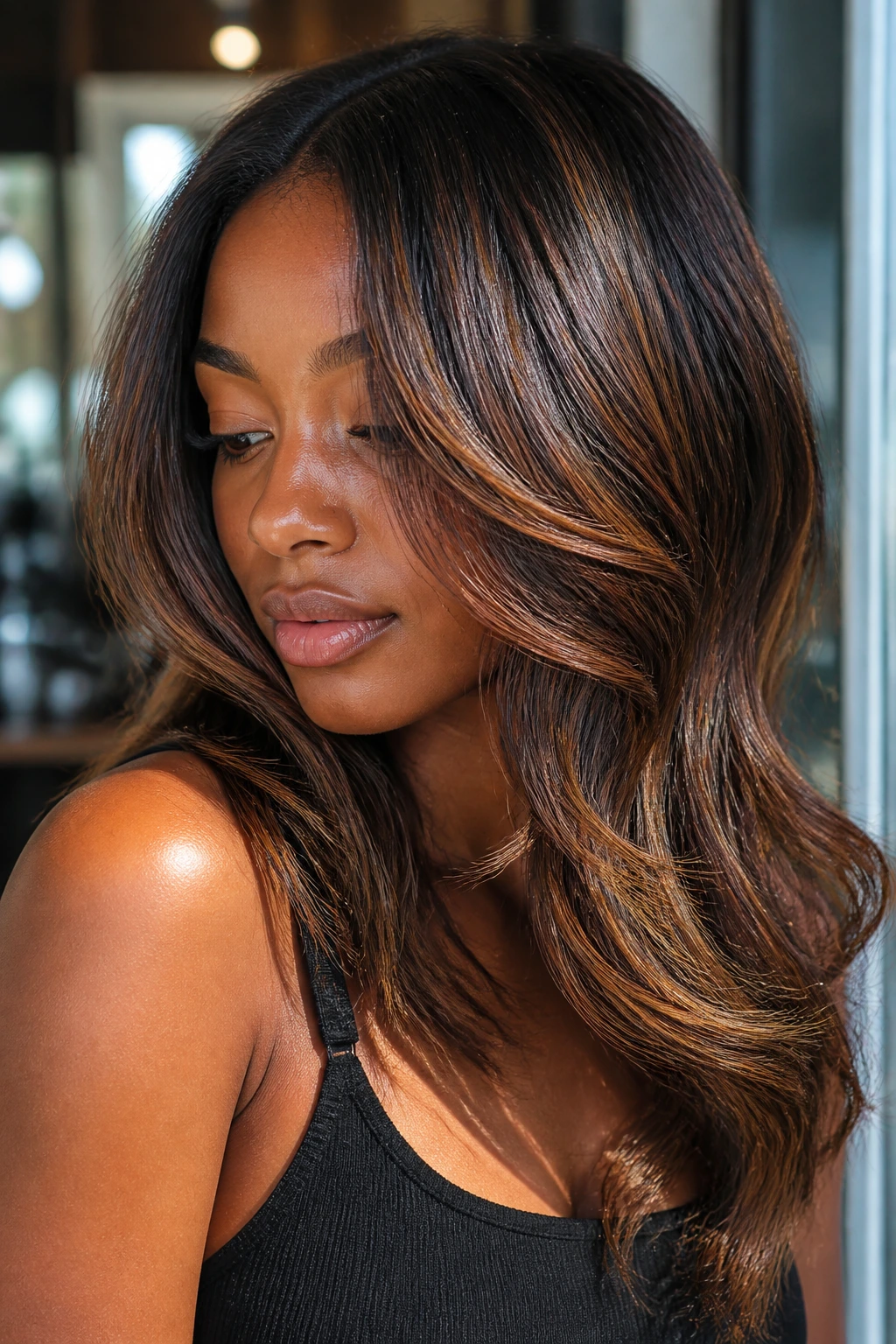
Ribboned balayage is the version I reach for when deep brown hair needs movement, not a full identity change. The hand-painted pieces sit in loose, painterly bands, so the chestnut reads like light slipping through the hair instead of sitting on top of it.
The reason it works so well on deep skin is simple: the brightness is controlled. Keep the chestnut about 2 levels lighter than the base and the result stays soft, especially on layered cuts where the ribbons can break up across the ends.
Best on layered lengths
If the hair has movement already, balayage has room to breathe. On a blunt cut, the ribbons can still work, but they look sharper and more graphic.
Ask for: chestnut ribbons concentrated through the mid-lengths and ends, with a darker root left intact for contrast.
2. Soft Chestnut Brown Babylights
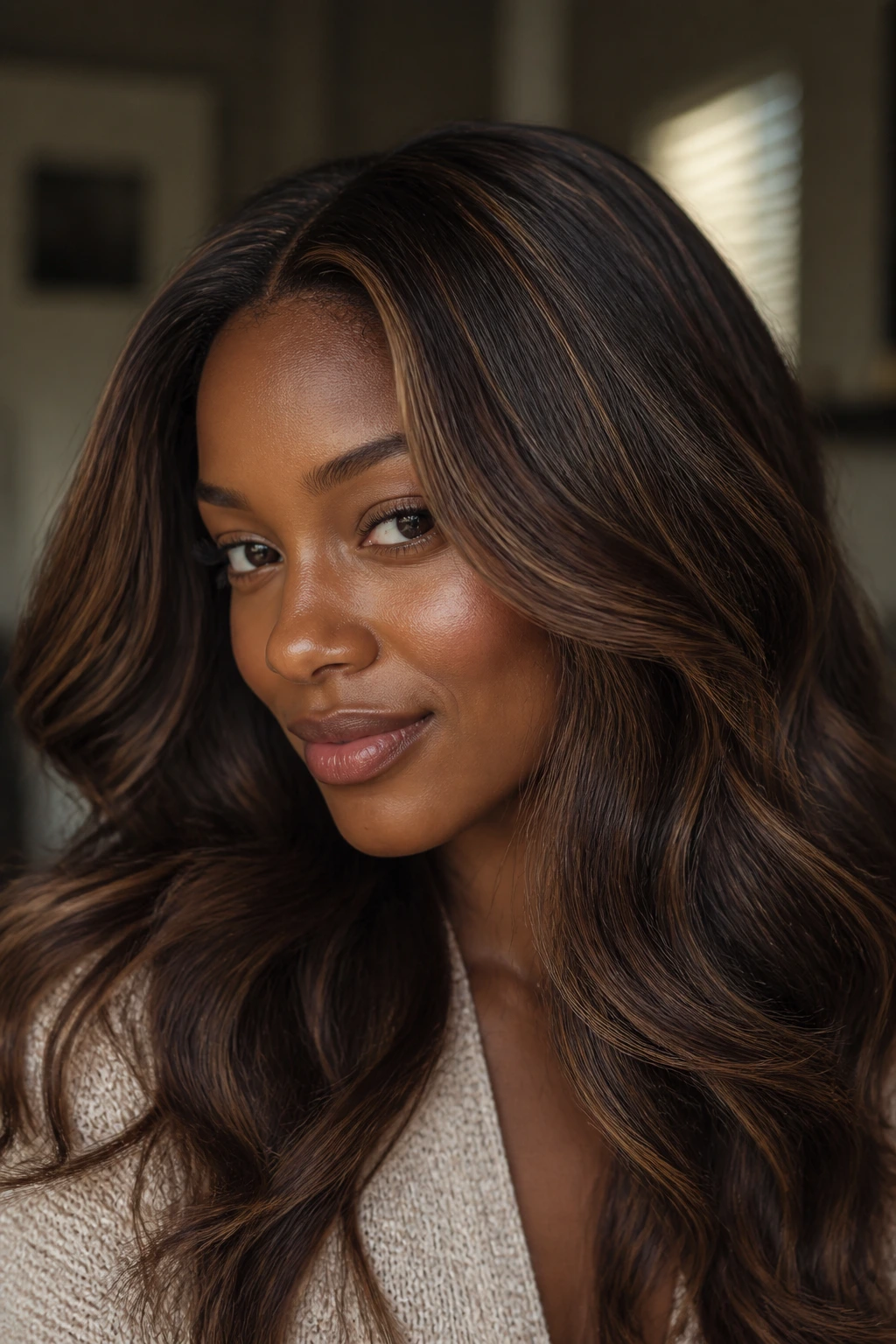
Babylights are for the person who wants the hair to shimmer instead of stripe. These are ultra-fine highlights, woven so narrowly that they blend into the base shade and show up as a gentle glow when the hair moves.
On deep skin tones, that subtlety matters. A finer weave keeps the color from reading chunky or disconnected, especially if your natural hair is nearly black or very deep brown. The effect is polished, not loud.
A good colorist will place the lightest pieces around the part line and hairline, then keep the rest whisper-thin. That gives the illusion of density and sheen, which is exactly what chestnut does best.
3. Chestnut Money Pieces at the Cheekbone
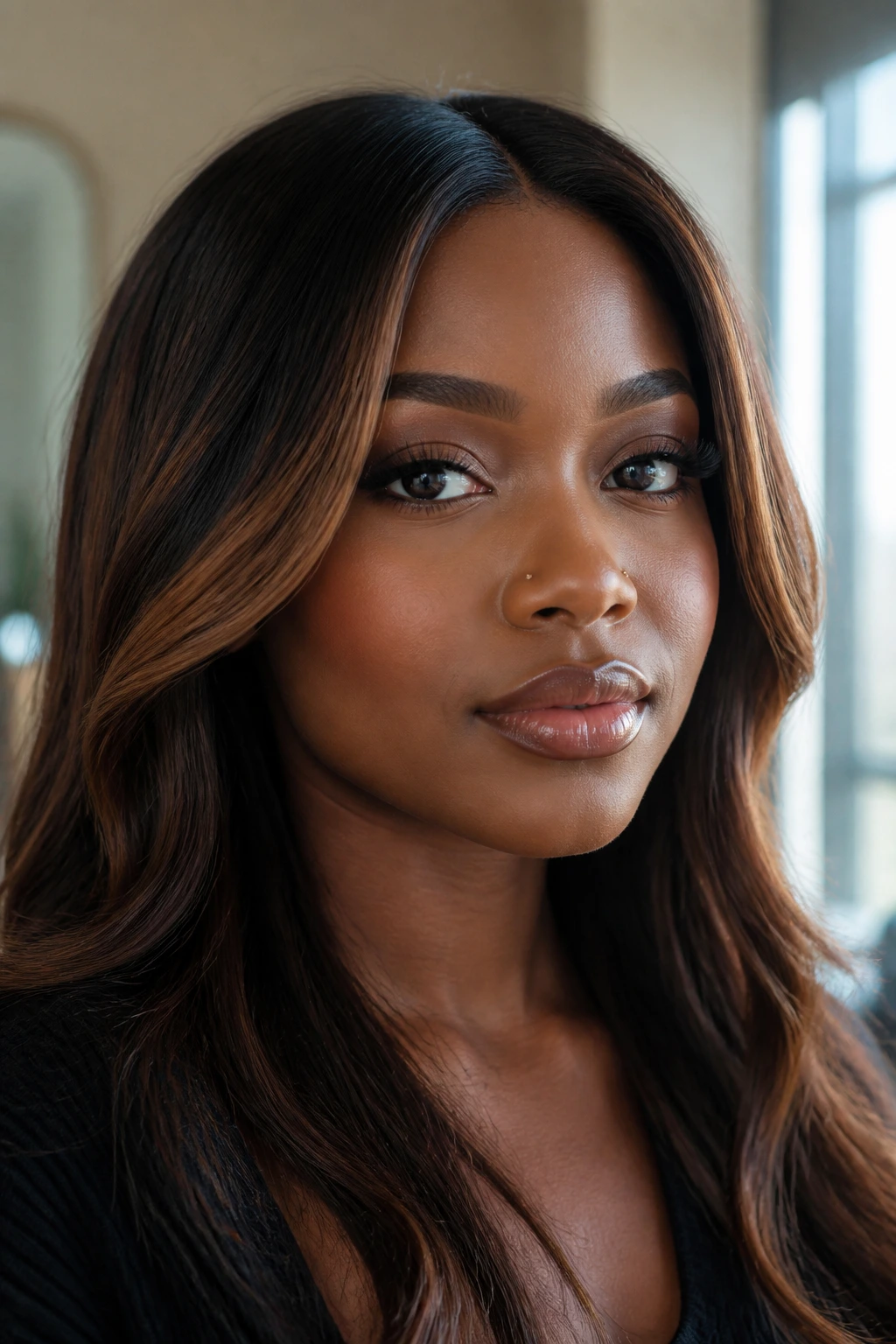
Want brightness right where people look first? Put the chestnut there. Money pieces work because they frame the face with a deliberate flash of color, and chestnut is softer than blonde, so it flatters without shouting.
I like this look on deep skin when the highlight starts just below the hairline and curves around the cheekbone instead of hugging the forehead too tightly. That shape pulls the eye upward and makes the face read more open.
A middle part can make the money piece feel clean and modern. A side part makes it feel a little softer, almost like the color got caught by accident. Good accident. The kind you keep.
4. Shadow-Root Chestnut Melt
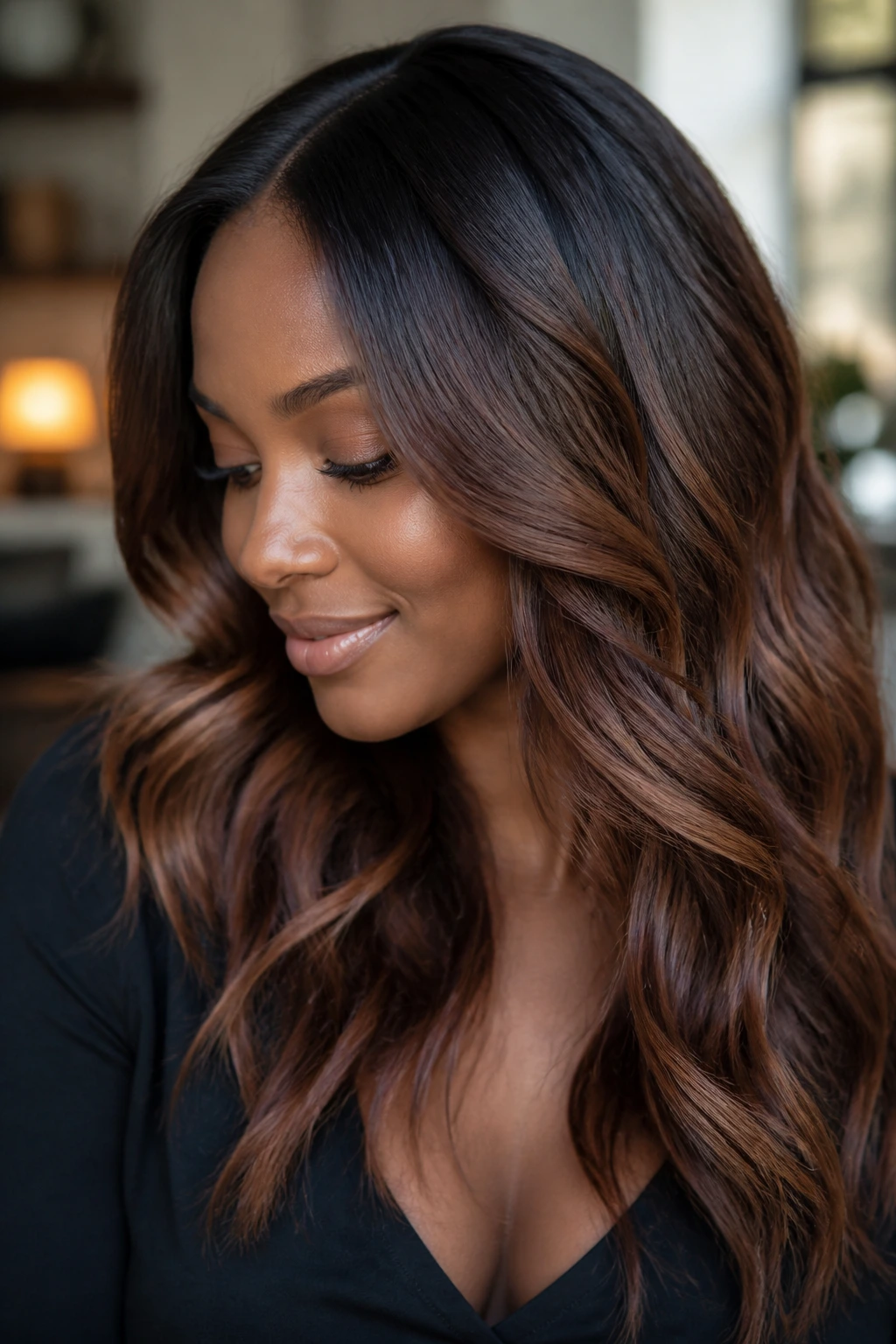
A shadow-root melt is the low-maintenance answer for anyone who hates a hard grow-out line. The roots stay deep and cool, then the chestnut eases in through the mid-lengths before reaching its brightest point near the ends.
On deep skin, this kind of melt keeps the color from looking blocky. You get enough contrast to see the dimension, but not so much that the highlight looks pasted on.
The best part is how forgiving it is. Even if your hair lifts unevenly during the process, the root shadow hides a lot of sins. That is not an excuse to rush. It’s a reason to build the color in layers.
5. Chestnut Ribbons in Defined Curls
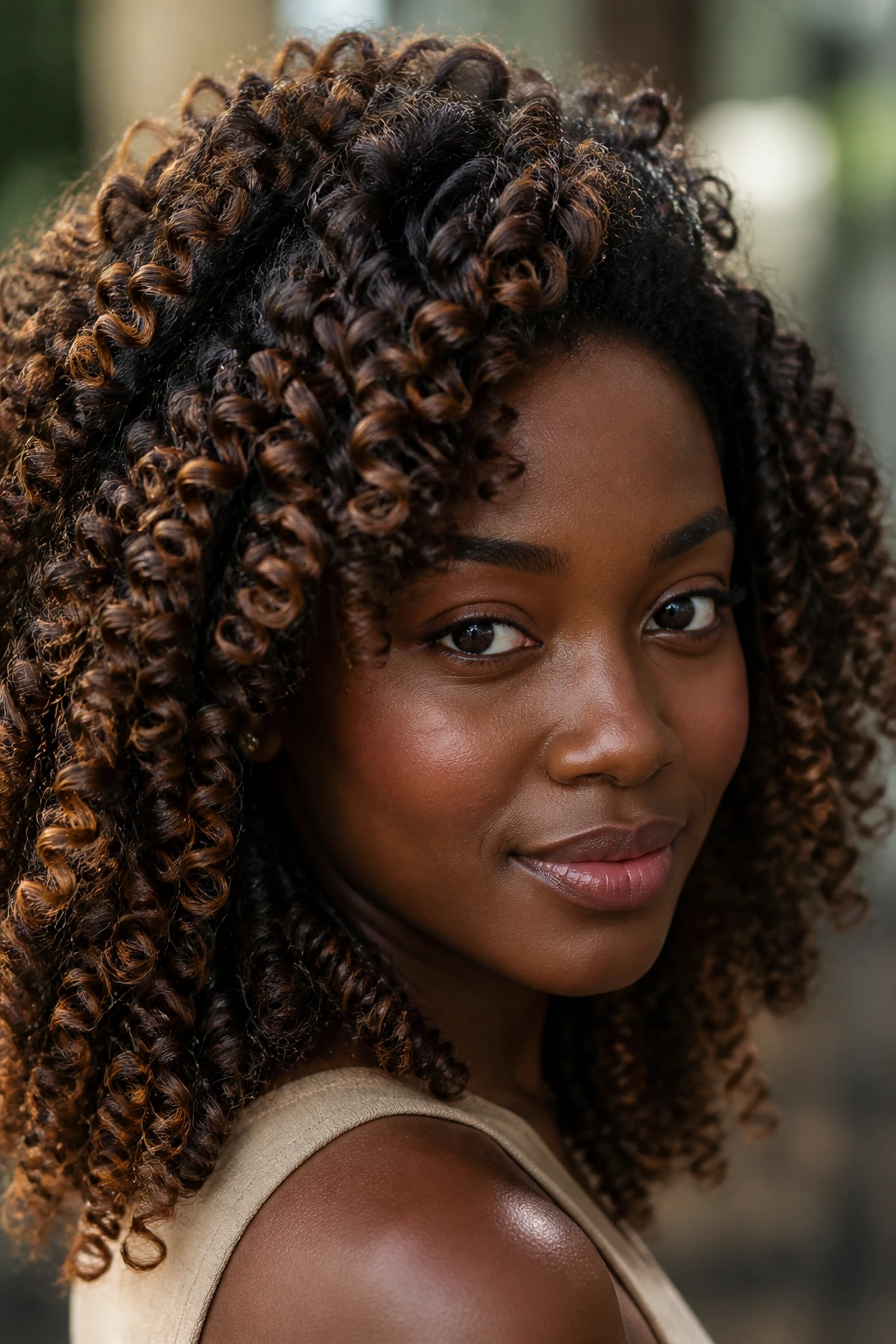
Defined curls show chestnut in a way straight hair never can. Each coil catches the light on one curve, then hides it on the next, so the highlight looks alive instead of static.
For this look, the color should be painted on the outside of the curl pattern, not buried deep inside. That gives you visible movement without losing the darker base that makes deep skin tones look grounded.
What to ask for
- Chestnut ribbons placed on the curl surface, not all the way through the interior.
- Softer saturation near the roots.
- More brightness around the front and crown, where the curls shape the face.
If you’ve ever looked at a curl pattern and thought it needed “something” but not more hair, this is that something.
6. Face-Framing Chestnut Brown Highlights on a Middle Part
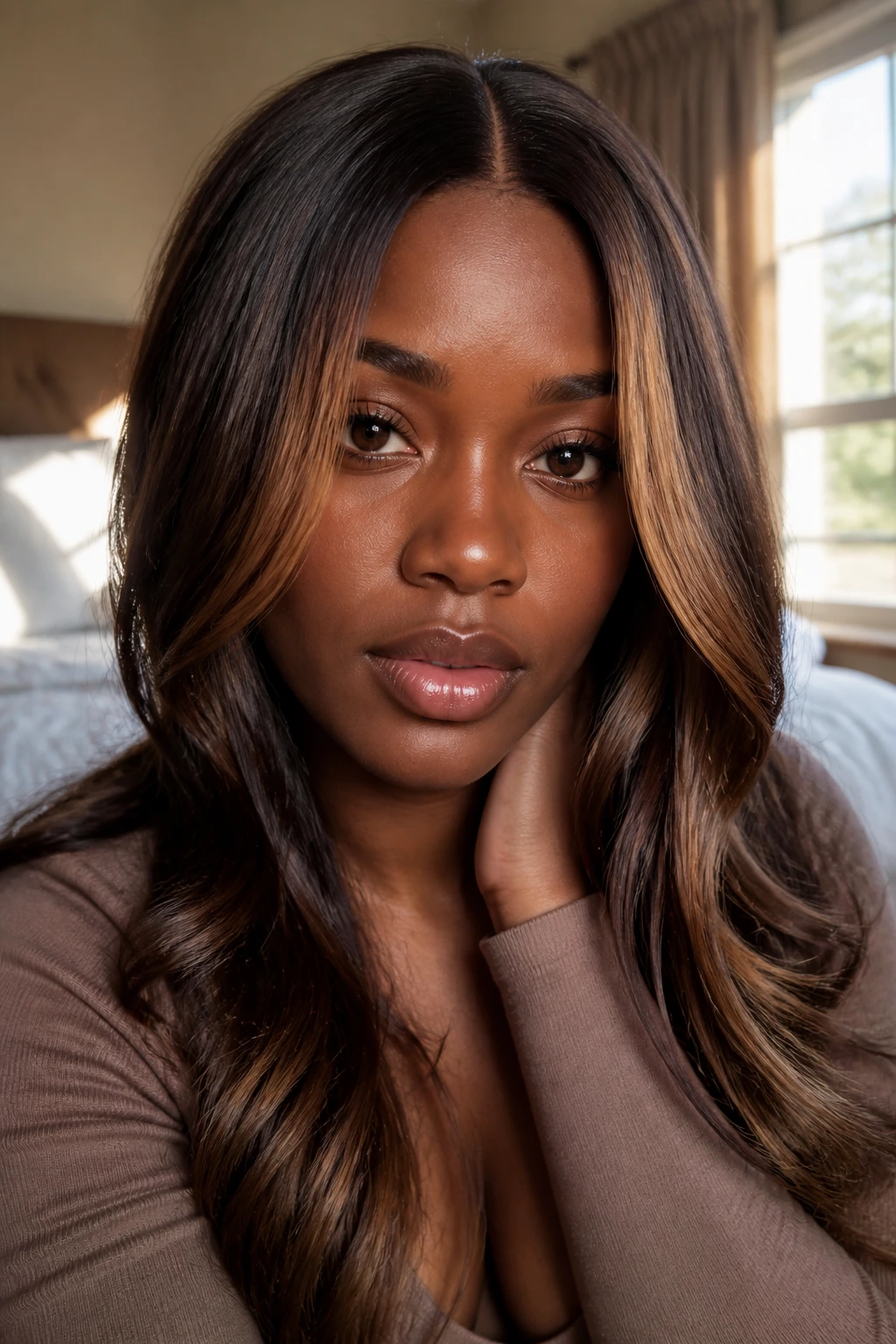
A middle part changes the whole mood of chestnut highlights. It turns the face-framing pieces into a mirror image, which makes the color feel clean and balanced instead of scattered.
This is one of the easiest ways to test chestnut on deep skin if you’re cautious about commitment. You’re not coloring the whole head. You’re giving the front section enough light to pull attention upward and let the rest stay dark.
Keep the placement narrow at the temples and slightly broader toward the chin. That little shift helps the color follow the face instead of sitting on the hair like decoration.
7. Chunky Chestnut Panels for a Bold Contrast
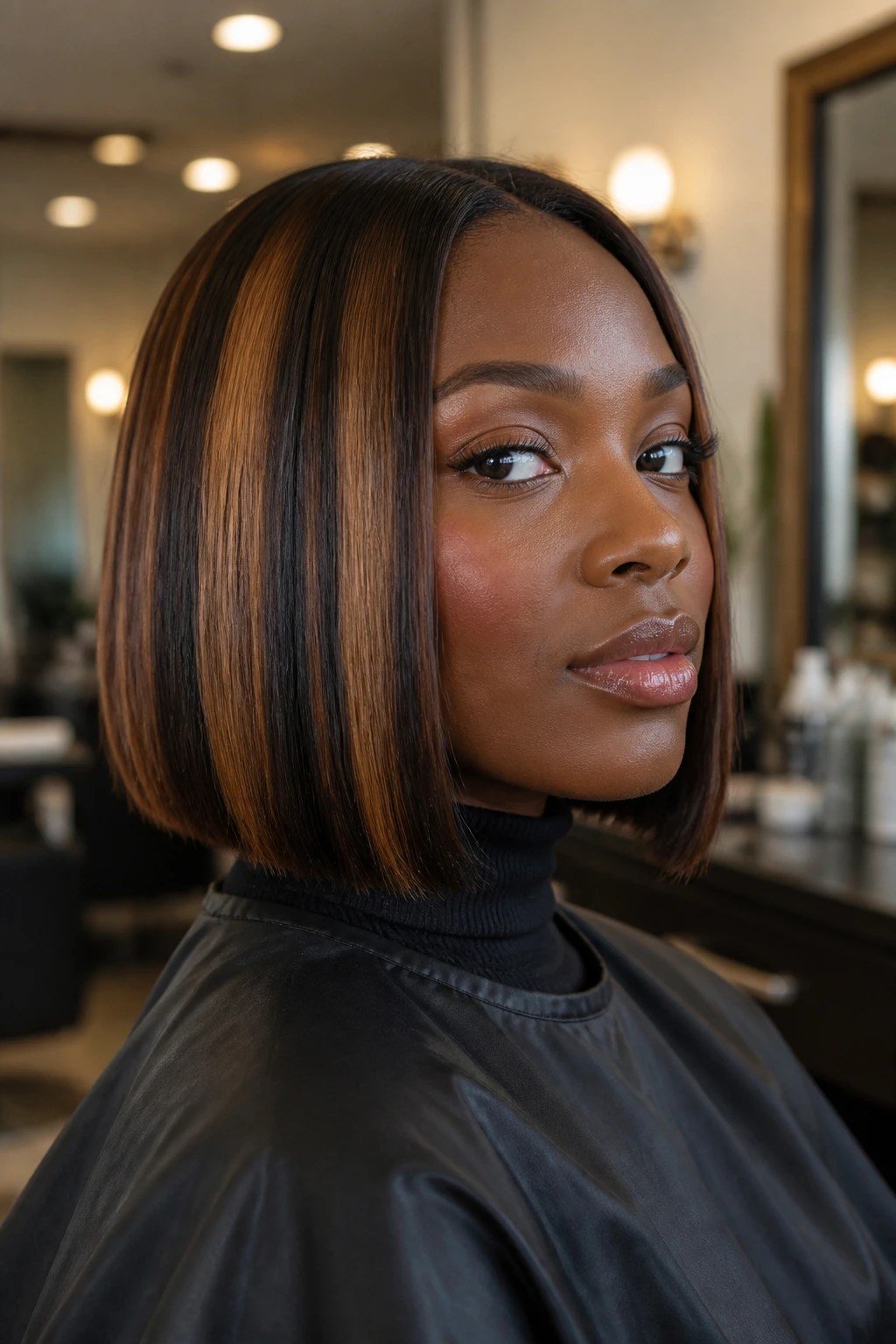
Chunky highlights are not subtle, and that’s the point. Chestnut panels can look surprisingly chic on deep skin when the blocks are placed with intention — especially on blunt bobs, shoulder-length cuts, or sharp layers.
The mistake people make is going too orange or too blonde with chunkier pieces. Chestnut works better because the warmth feels expensive rather than brassy. You still get contrast, just with a quieter edge.
This look fits someone who wants the color to show from across the room. If babylights whisper, chunky panels speak in a normal voice. Loud enough to notice. Not loud enough to regret.
8. Chestnut Ends on Long Layers
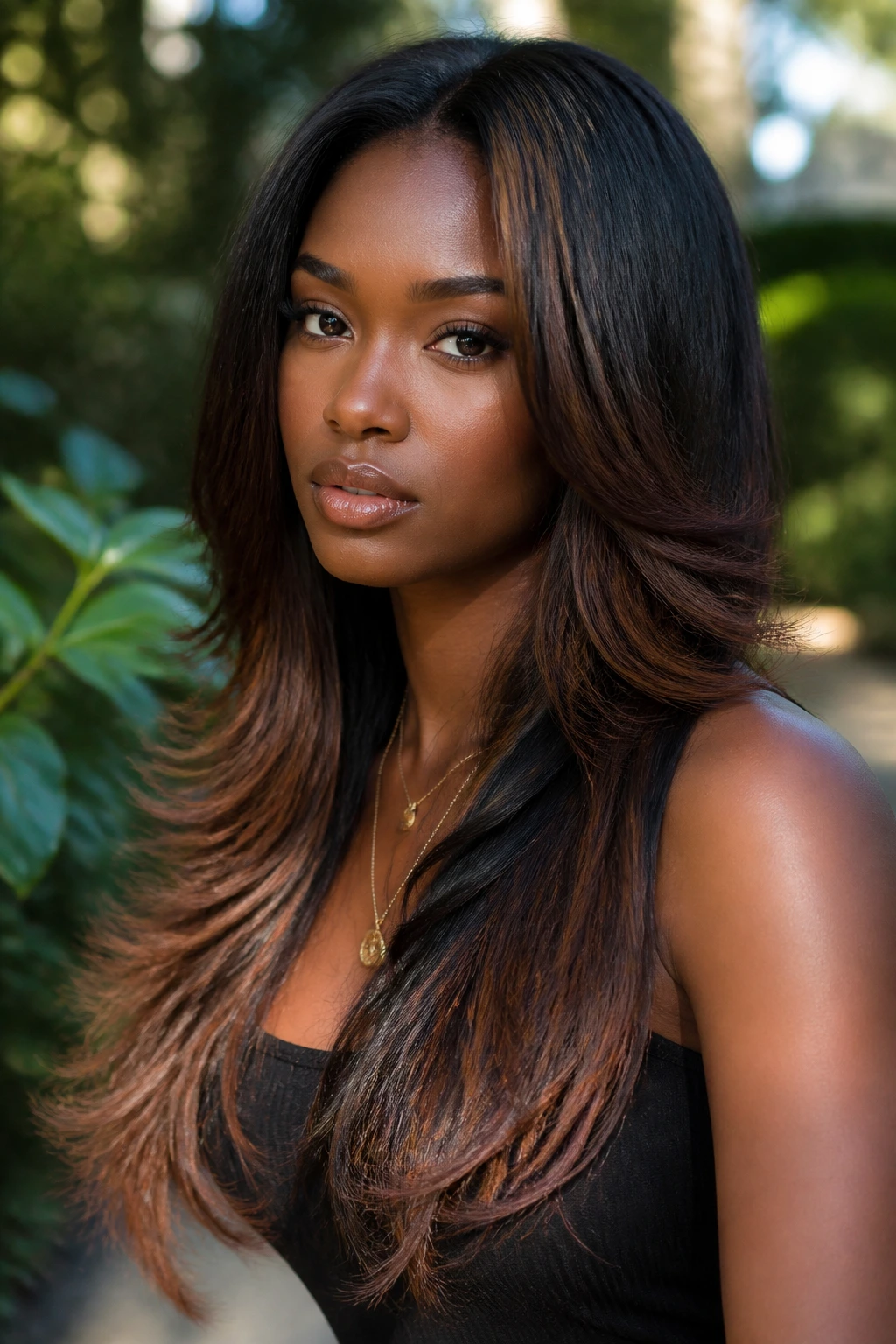
Sometimes the smartest place for color is the last 4 to 6 inches. Chestnut on the ends gives long hair depth and motion without forcing you to lighten the parts that are closest to the scalp, where the contrast can get tricky on deep skin.
Long layers help this look a lot. The lifted ends fall at different points, so the chestnut creates a staggered finish instead of one hard band across the bottom.
If your hair tends to go flat when it’s long, this is a good fix. The ends catch the light, the base stays rich, and the whole style looks like it has shape even when it’s down and simple.
9. Peekaboo Chestnut Underlights
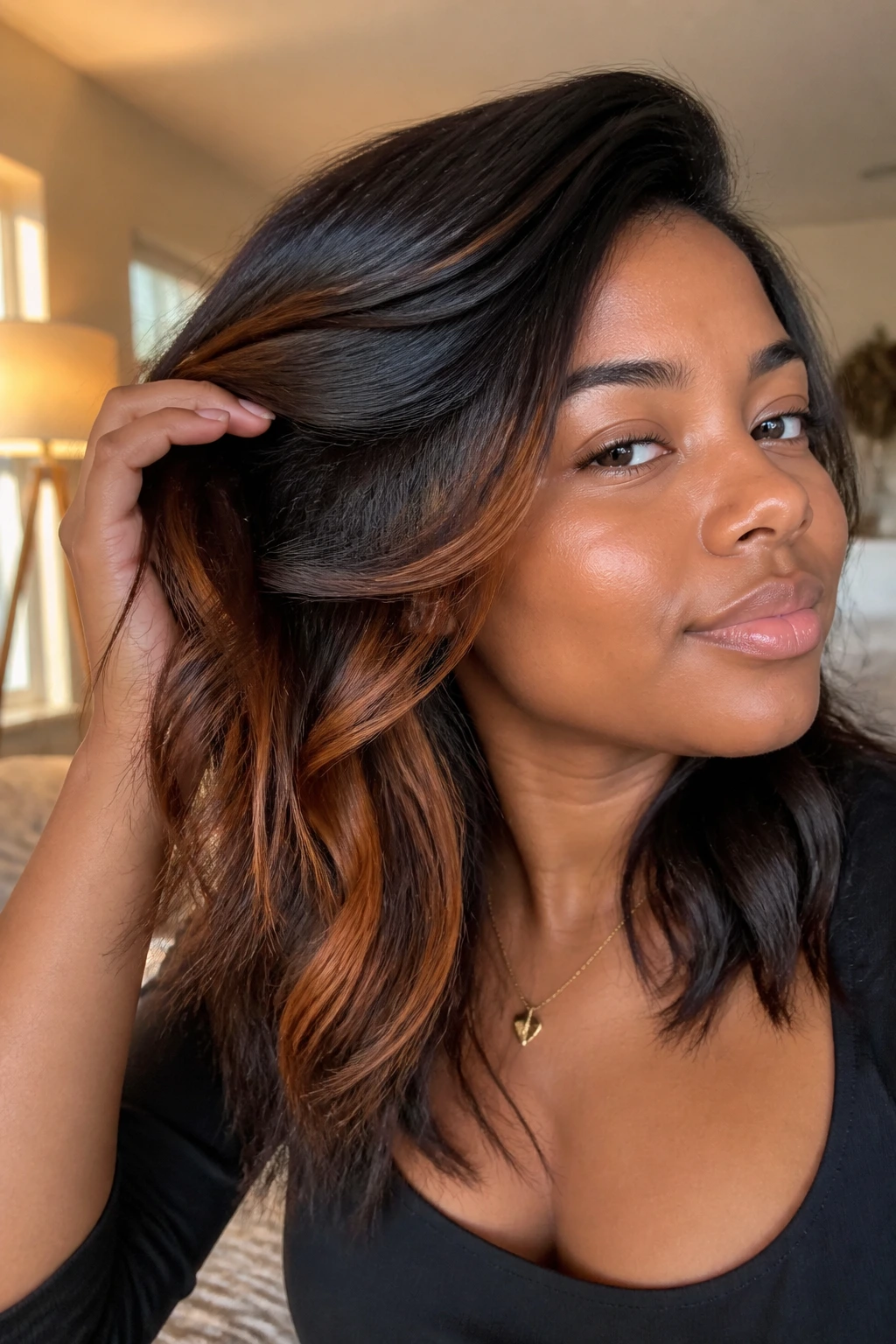
Peekaboo highlights live underneath the top layer, so they flash only when the hair shifts. Chestnut is especially good here because it creates a warm surprise instead of a hard contrast.
This is a nice option if you wear your hair up a lot or like half-up styles. The color shows through braids, twists, buns, and ponytails without changing the whole surface of the hair.
It also gives you a little room to be bolder. The top layer can stay nearly black or deep brown, and the chestnut underneath does the talking when the hair sways. Sneaky, in a good way.
10. Chestnut Brown Highlights on a Silk Press
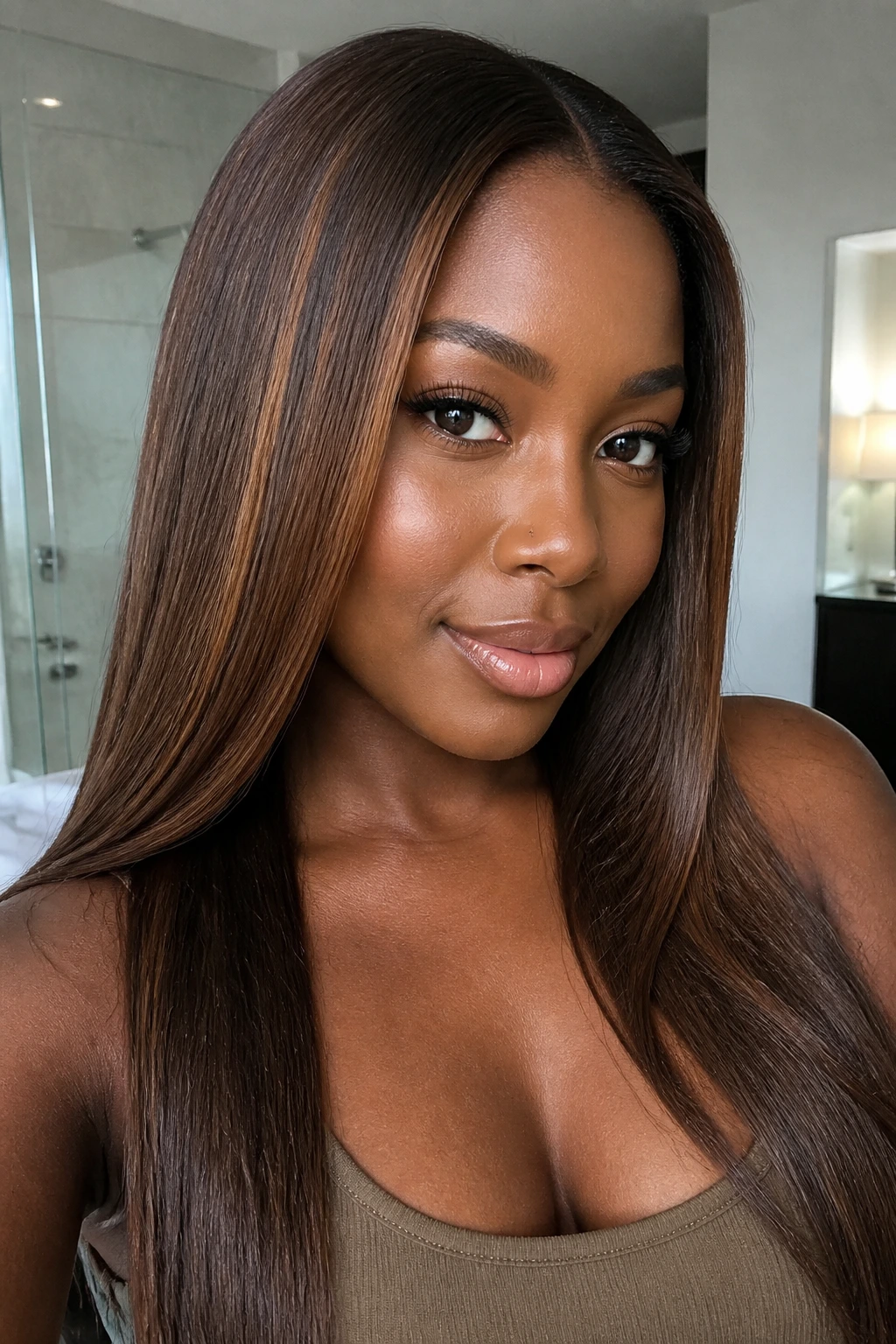
A silk press turns chestnut into a polished, mirror-like ribbon. Straight hair shows every placement choice, so the highlight pattern has to be clean — no rough bands, no harsh stops, no weird patch at the crown.
That’s why this look tends to work best when the chestnut is placed in long vertical ribbons with a soft root blur. The movement reads sleek rather than stripey, and the warm brown against deep skin looks especially crisp in daylight.
A light serum on the ends helps here. Too much product will dull the lighter pieces, and then the whole effect goes flat. A silk press does not need a heavy hand. It needs discipline.
11. Halo Chestnut Glow Around the Crown
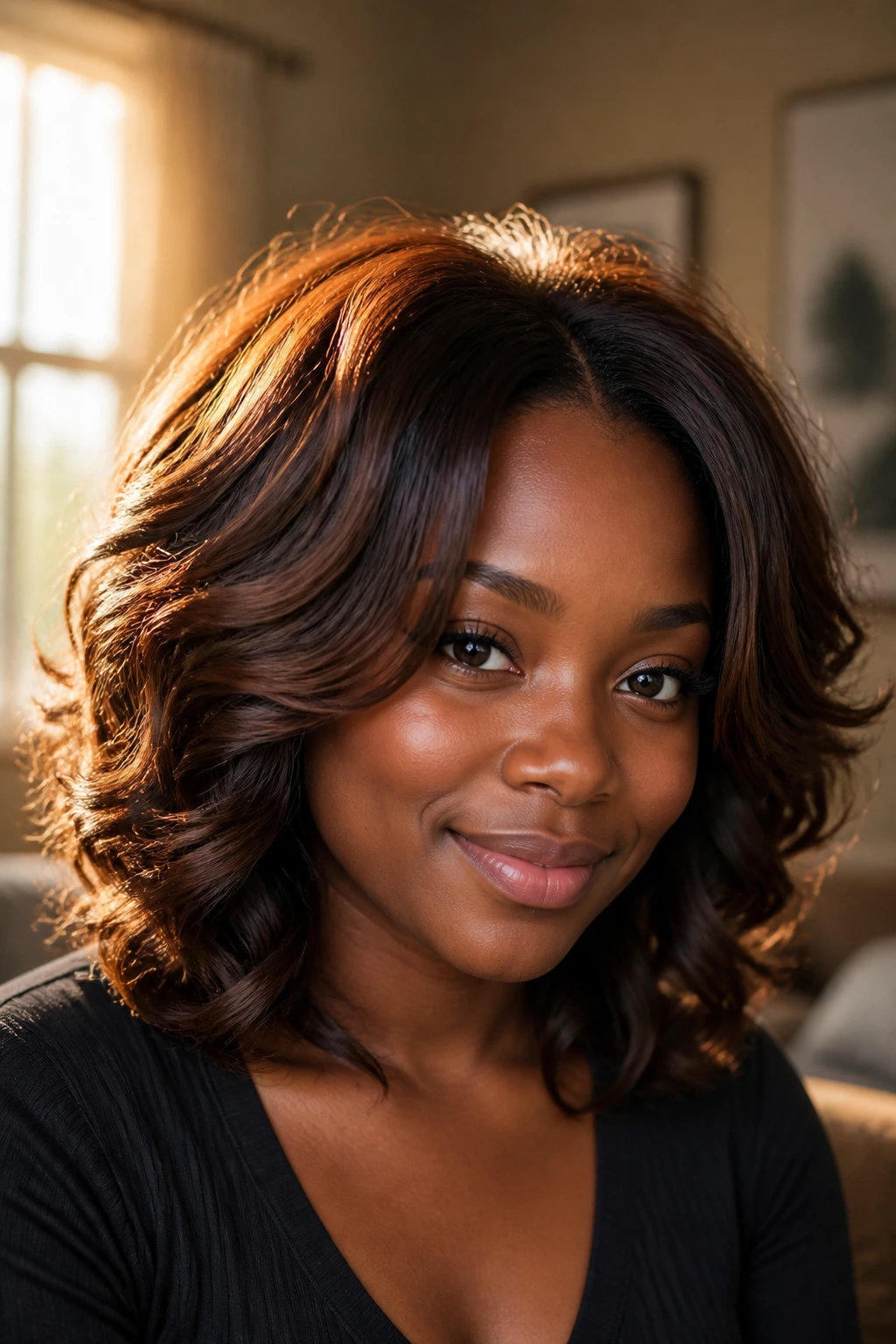
If you want brightness without changing the whole head, the crown is your friend. A halo of chestnut around the top and upper layers catches light from above, which is exactly where hair gets seen most often.
This placement is smart on deep skin because it keeps the root area rich while giving the illusion of more volume. The light sits where it can lift the whole silhouette, especially on curly or coily hair that already has a lot of shape.
I’d call this a sleeper favorite. It looks understated in the chair, then suddenly the hair starts moving and you notice the dimension everywhere.
12. Chestnut Dimension on a Rounded Bob
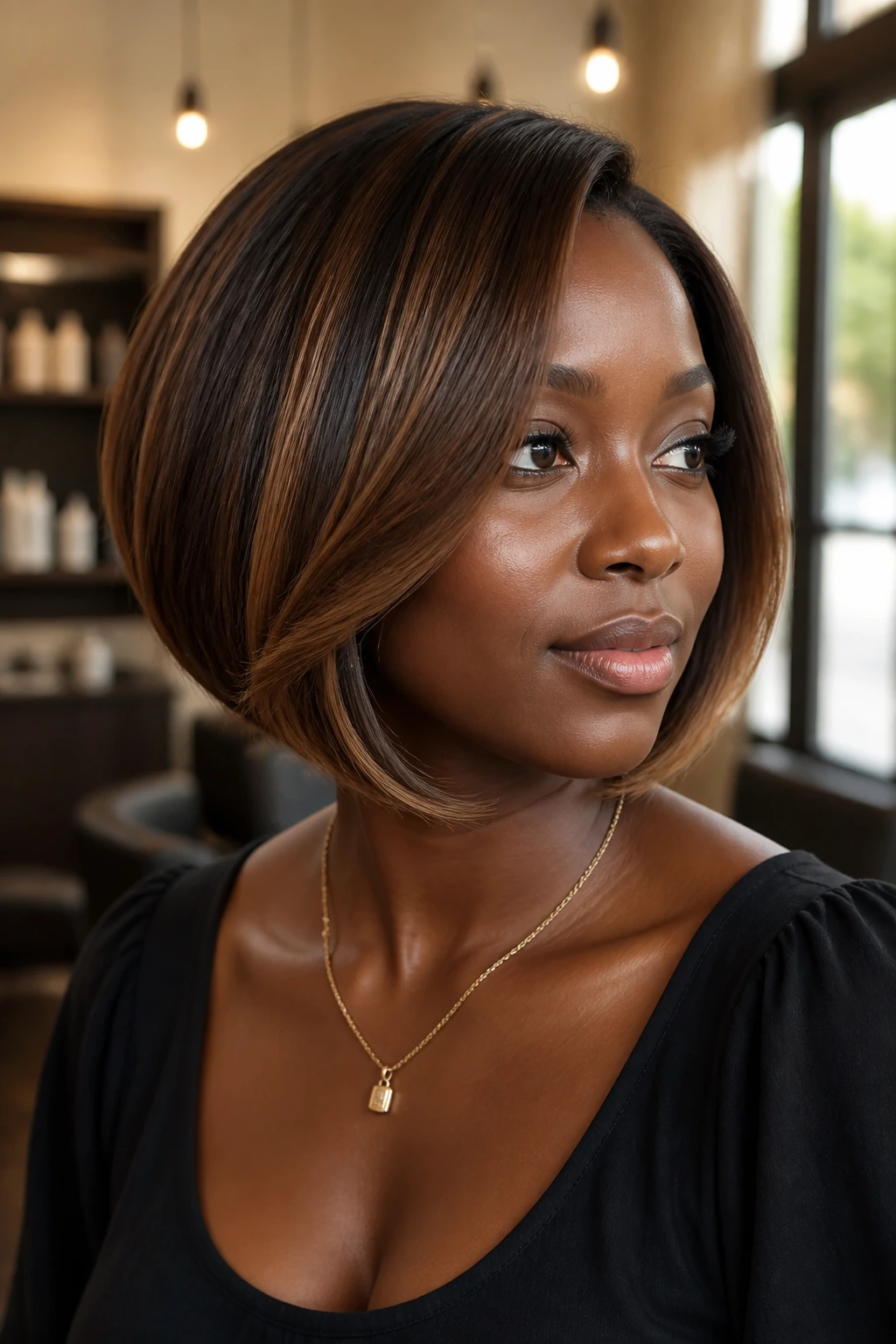
A rounded bob loves chestnut because the shape already curves inward at the jaw and nape. Add warm brown highlights and the whole cut starts to show texture, even if the hair is naturally straight.
The trick is to place the lighter pieces so they follow the curve of the bob, not fight it. That means the brightest sections should sit where the light naturally hits: around the cheekbones, under the top layer, and at the ends that tuck under slightly.
This look is especially nice when you want structure. The color sharpens the cut. The cut, in turn, keeps the color from feeling too soft. Good pairing.
13. Espresso and Chestnut Blend for Deep Brown Hair
This is the color story for people who love brown hair but don’t want to leave the brown family. Espresso at the base, chestnut through the mids, a little depth pulled back in with darker lowlights — it’s all about contrast inside the same color lane.
Deep skin tones tend to wear this beautifully because the shades stay close to the natural darkness of the hair while still giving you that lifted finish. You’re not chasing blonde brightness. You’re building depth.
Why it works
The eye sees movement before it sees color names. That’s why a careful brown-on-brown blend can look richer than a brighter highlight that was placed too aggressively.
14. Chestnut Accents on Tight Coils
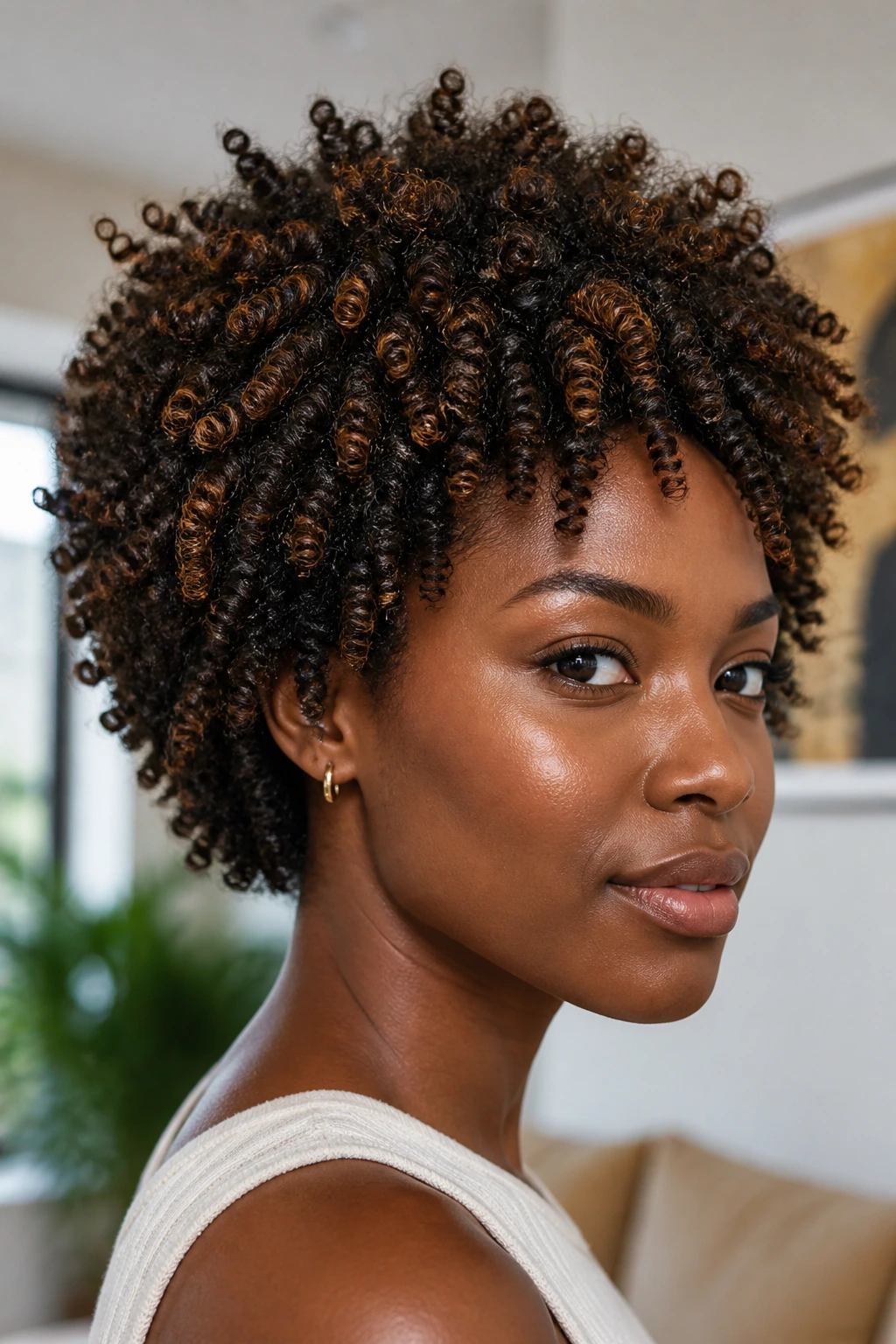
Tight coils do not need a lot of light to make chestnut show. A few well-placed accents can catch on the surface of the coil pattern and create a lovely, broken-up shimmer.
Because coils shrink and spring, the highlight usually looks more concentrated once the hair dries. That means the colorist should keep the saturation soft in the foils and avoid over-lightening. Chestnut should glow, not bleach out.
This is one of those styles where restraint pays off. Too many highlights can blur the coil pattern. A few strategic accents let the texture stay the star.
15. Side-Part Chestnut Ribbons for Soft Asymmetry
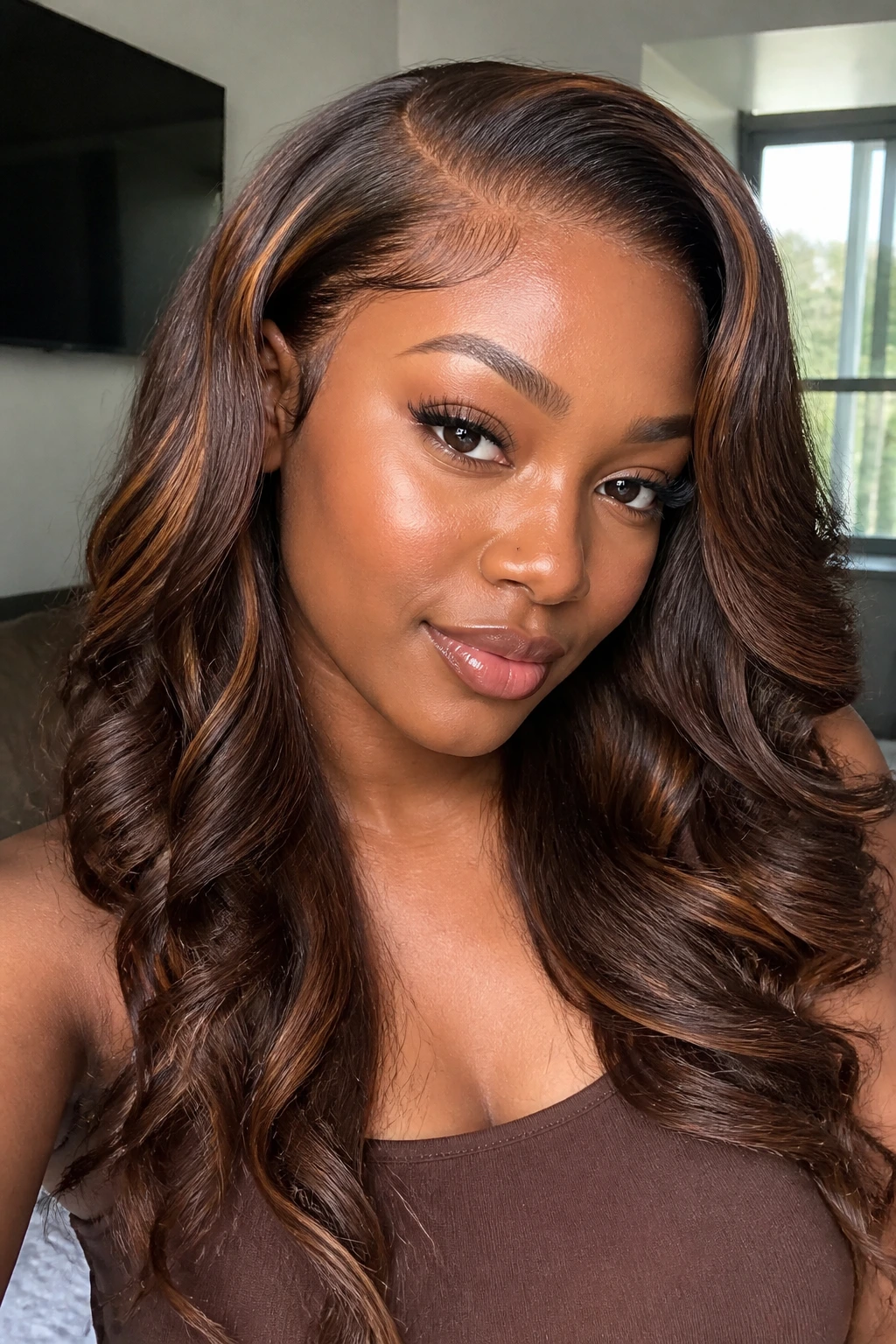
A deep side part changes where the eye goes first, which makes it a smart place to put chestnut. The brighter side catches more light, while the heavier side holds the depth and keeps the look grounded.
On deep skin tones, that asymmetry can be gorgeous because it gives the face shape without relying on a dramatic cut. The chestnut hugs the front and drifts into the lengths, so it feels intentional but not overworked.
If you like hair that looks styled even when it’s just brushed out, this is a good one. One side does the bright work. The other side keeps the balance.
16. Chestnut Highlights for Locs and Twists
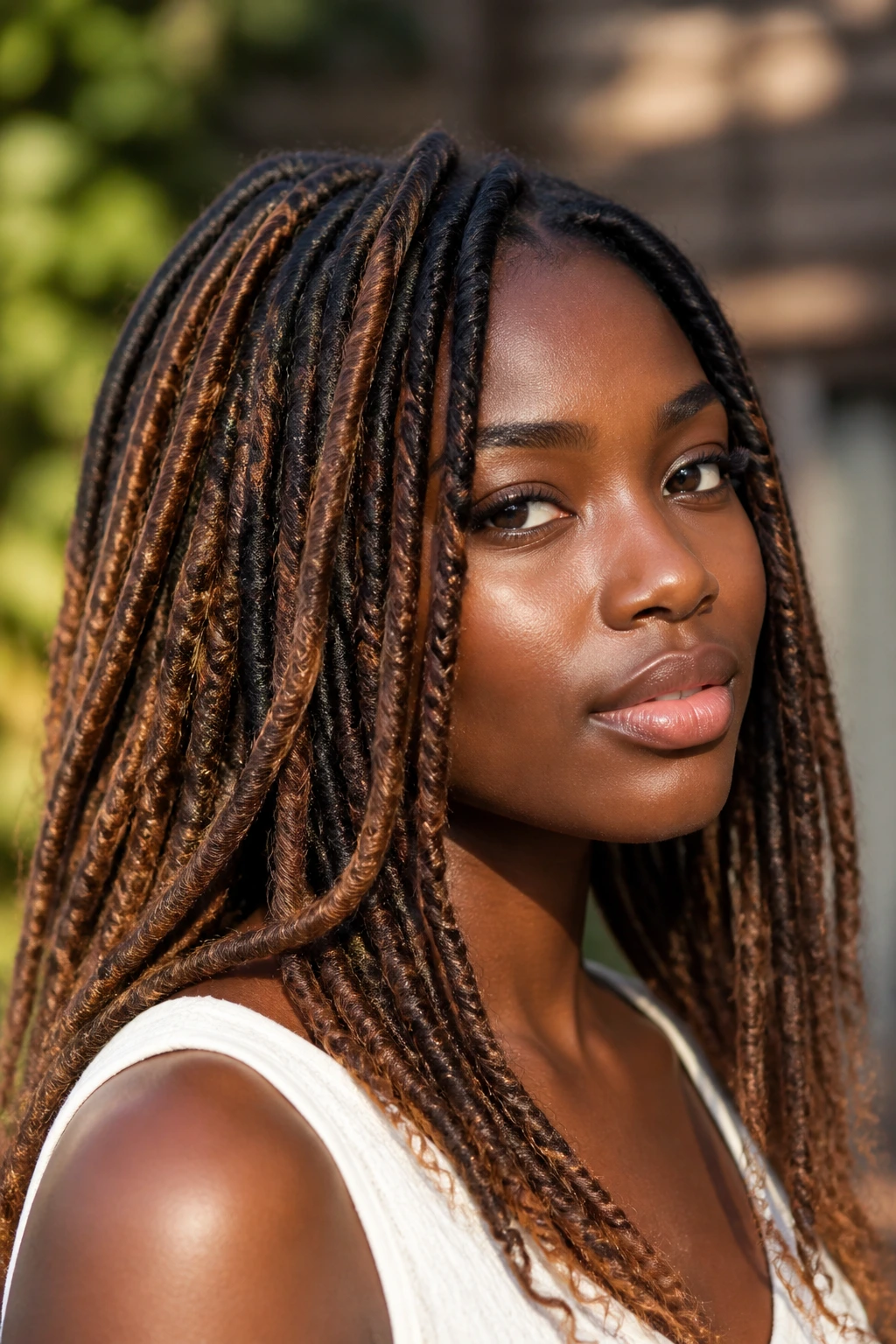
Locs and twists show color differently because the texture is rope-like and dimensional from the start. Chestnut threads through that pattern like warm thread through woven fabric — not flashy, but very readable.
I like this shade on protective styles because it keeps the hair from looking flat in photos and in real life. The warm brown sits comfortably against deep skin, and the texture gives the color plenty of places to land.
A word of caution: keep the placement even. Patchy lightening on locs or twists stands out fast. Chestnut should look deliberate, not like it wandered in by mistake.
17. Cinnamon-Chestnut Warmth with a Soft Auburn Edge
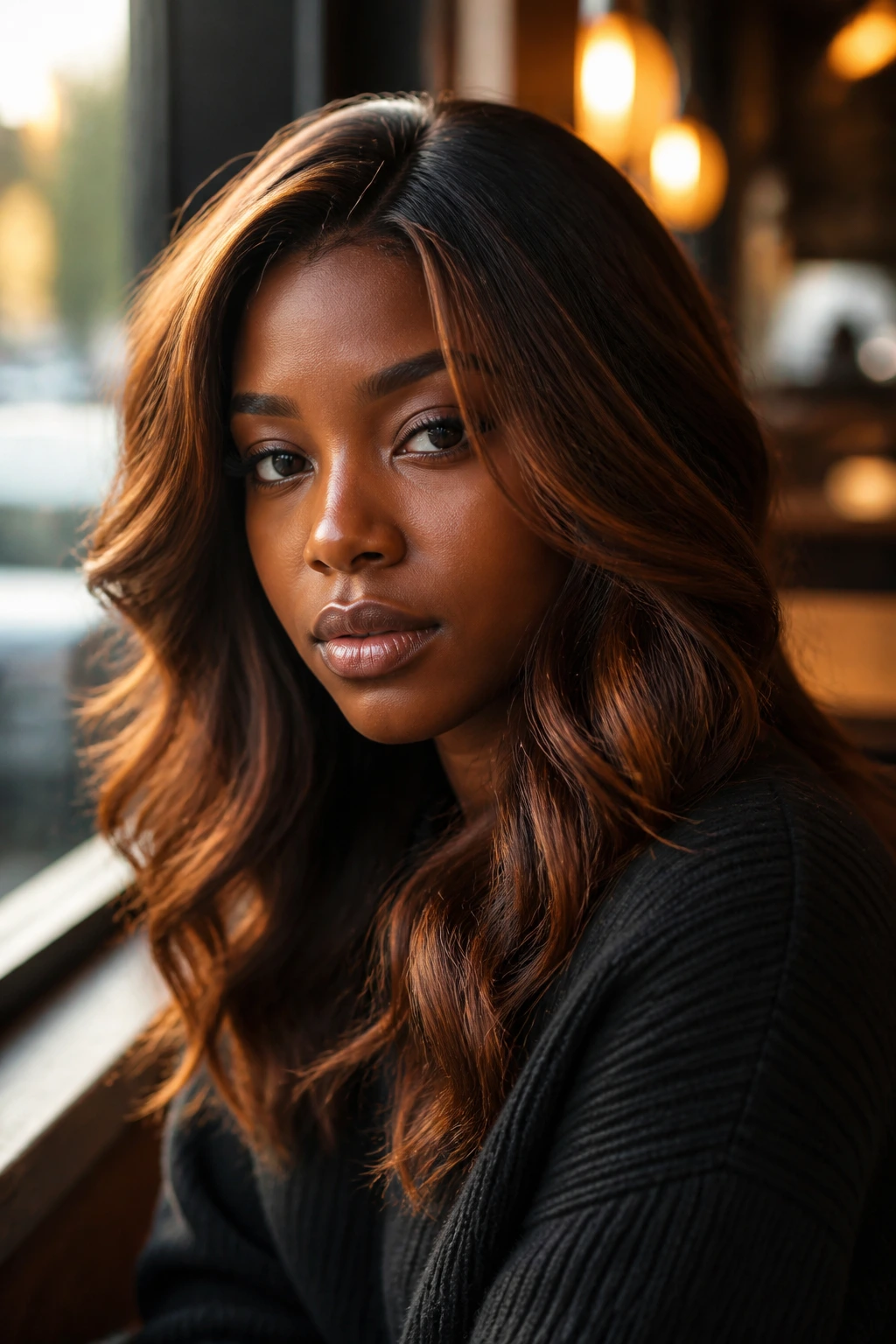
If you want the chestnut to lean warmer, this is the lane. Cinnamon and a tiny touch of auburn push the brown toward red without tipping into copper overload.
On deep skin, that warmth can be lovely when it stays controlled. The color picks up the natural richness in the complexion and adds a soft glow around the face, especially in low light.
The key is balance. Too much red and the highlight starts to dominate. Enough red to feel spicy, not enough to steal the whole room. That’s the sweet spot.
18. Cool Chestnut Brown Highlights for Neutral Undertones
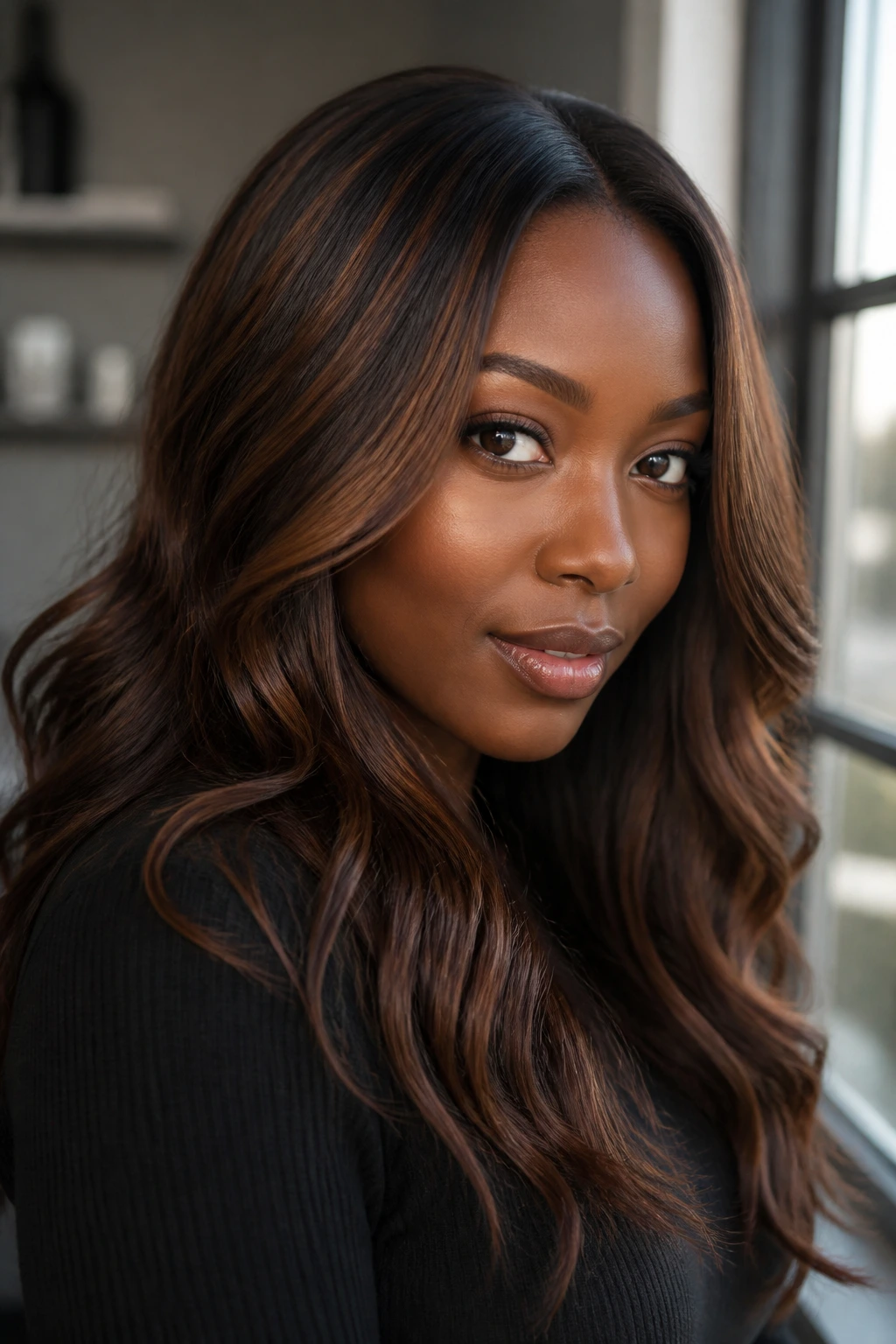
Not every deep complexion wants the same warmth. If your skin leans neutral, a cooler chestnut with a mocha edge can look cleaner and a little more modern than a cinnamon-heavy shade.
This version keeps the brown deep, with just enough brightness to separate the layers. It’s less golden, more cocoa. Less toast, more velvet.
The important thing is to avoid anything too ashy. Ash can flatten chestnut quickly, especially against deeper skin. A cooler brown is not the same thing as a gray-brown one, and that difference matters.
19. Crown-Bright Chestnut on a Tapered Cut
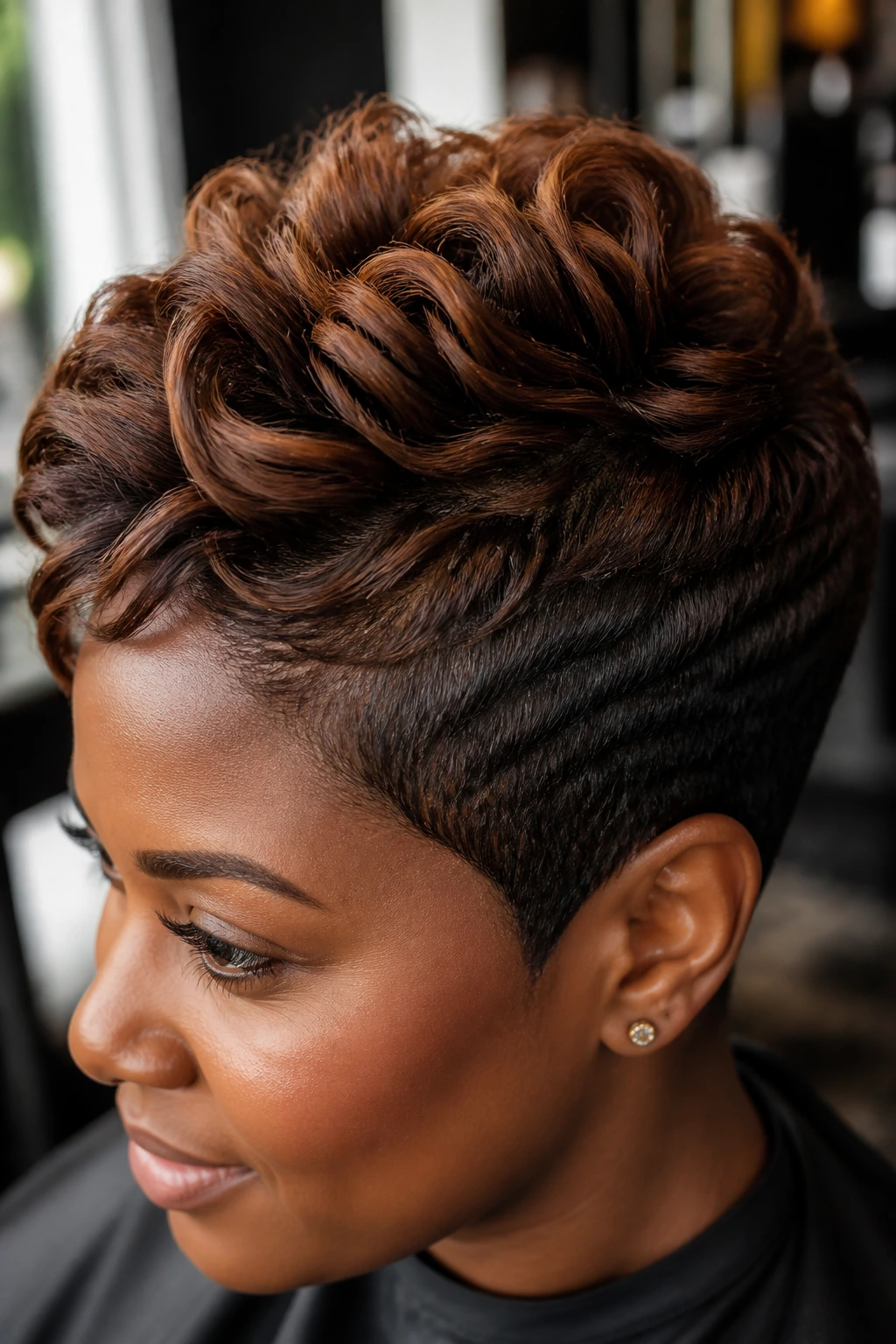
Short hair needs a different kind of highlight placement, and a tapered cut is made for crown brightness. Put the chestnut where the top has room to lift, then let the sides stay deeper so the shape reads clean.
This keeps the cut from looking too busy. The highlights sit in the area that already moves the most, which makes the texture pop without turning the whole style into a color project.
It’s a sharp look on deep skin because the contrast is tidy. The silhouette stays crisp. The chestnut gives it life.
20. Chestnut Ombré from Roots to Ends
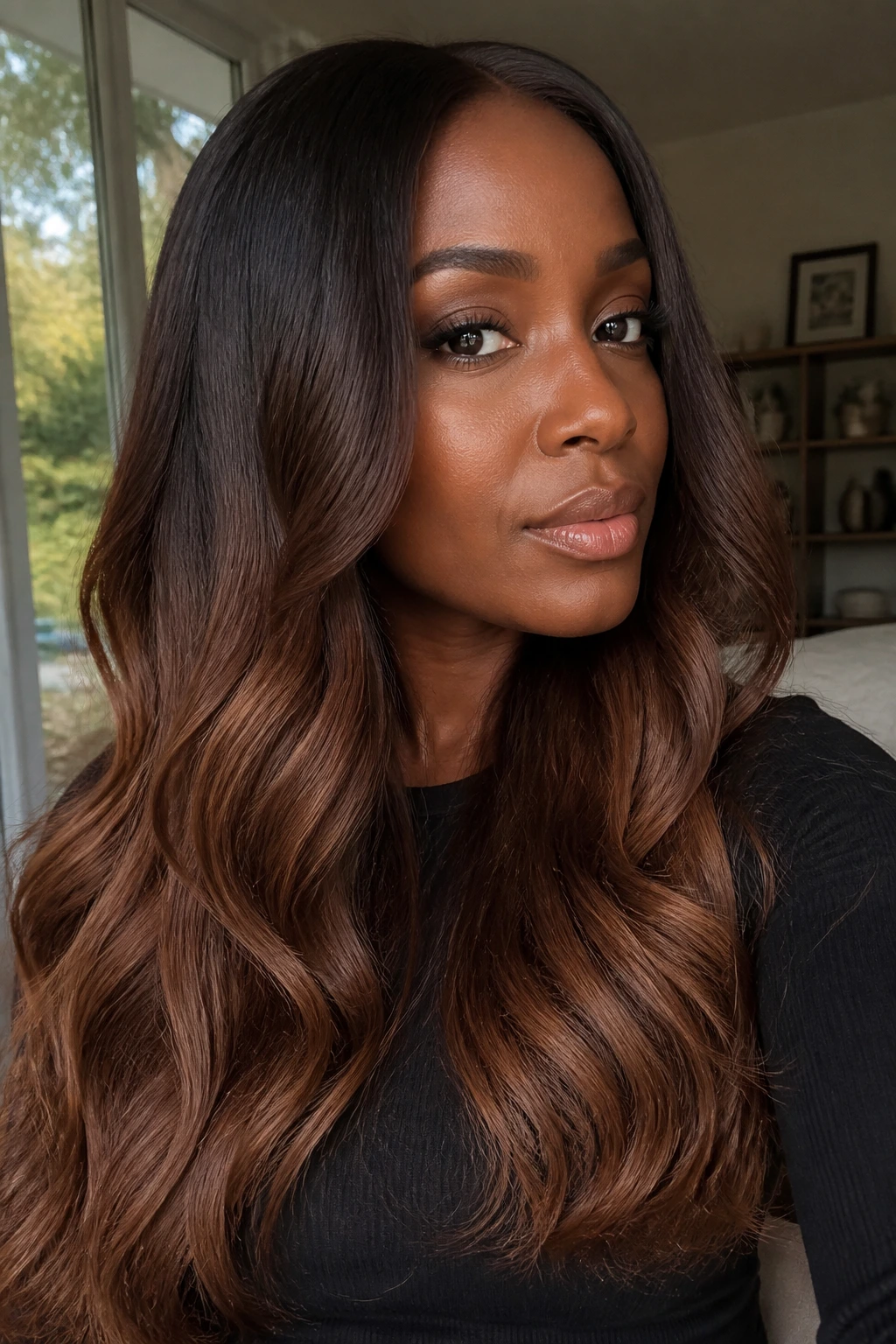
An ombré can be your friend if you want visible lightness with a softer root. Chestnut works well here because the shift from dark roots to warm brown ends feels gradual, not jarring.
The best ombré on deep skin usually keeps the transition in the brown family rather than moving straight into gold. That lets the hair brighten while still reading rich and grounded.
Best use case
Long hair. Always. The longer the canvas, the more room the color has to fade properly. On shorter cuts, ombré can look abrupt unless it’s done with a very soft hand.
21. Contour Chestnut Around the Jawline
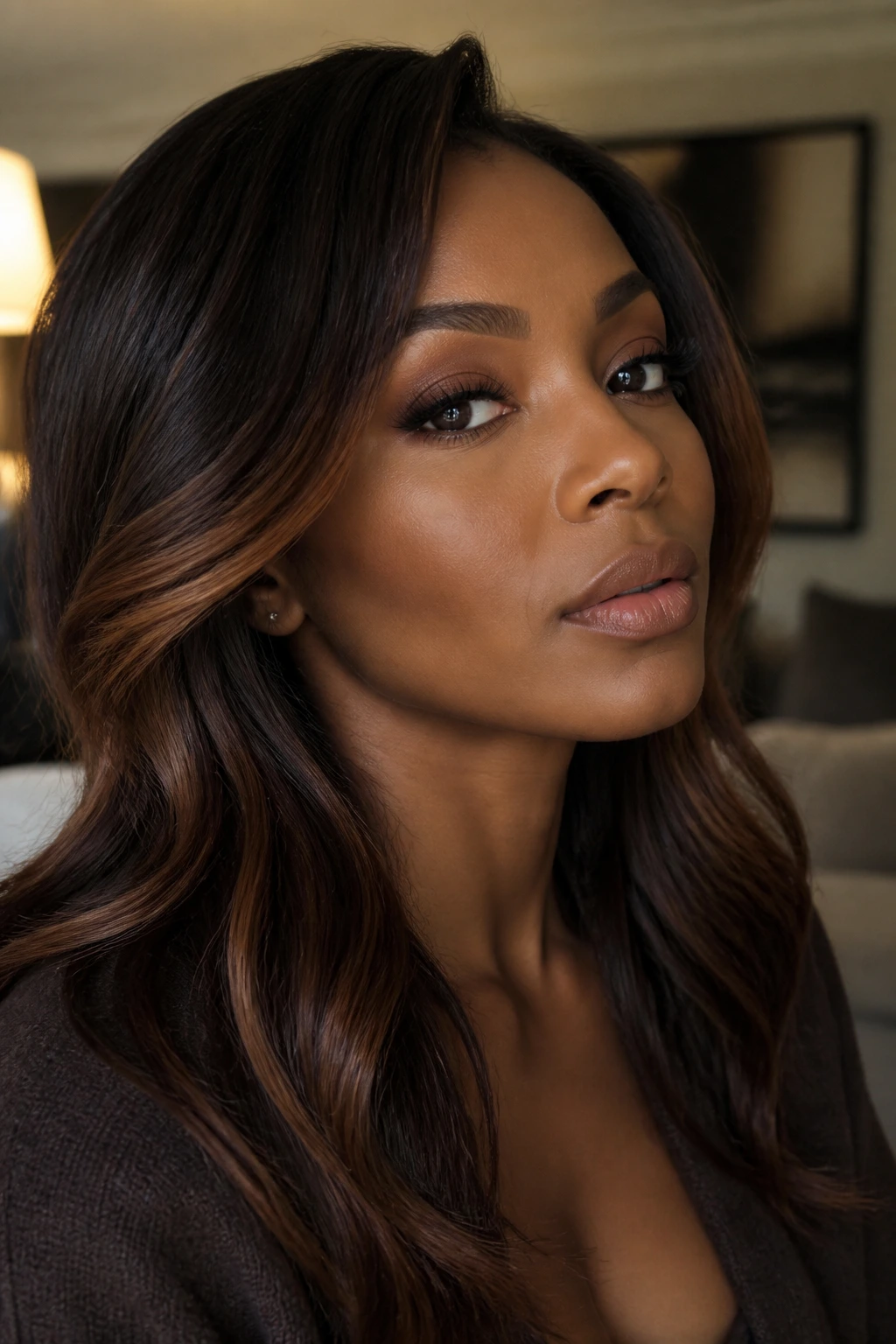
Color contouring is one of the smartest ways to place highlights. Put the chestnut where it can mimic shadow and light around the face, and the hair starts shaping the face for you.
Around the jawline, chestnut can soften a strong angle or sharpen a rounder one depending on how it’s placed. Narrow pieces close to the face create definition. Wider pieces loosen things up.
This is one of those techniques that looks subtle in photos and even better in motion. The hair moves, the color shifts, and the face seems to change shape a little with it.
22. Chestnut Brown Highlights in Braided Extensions
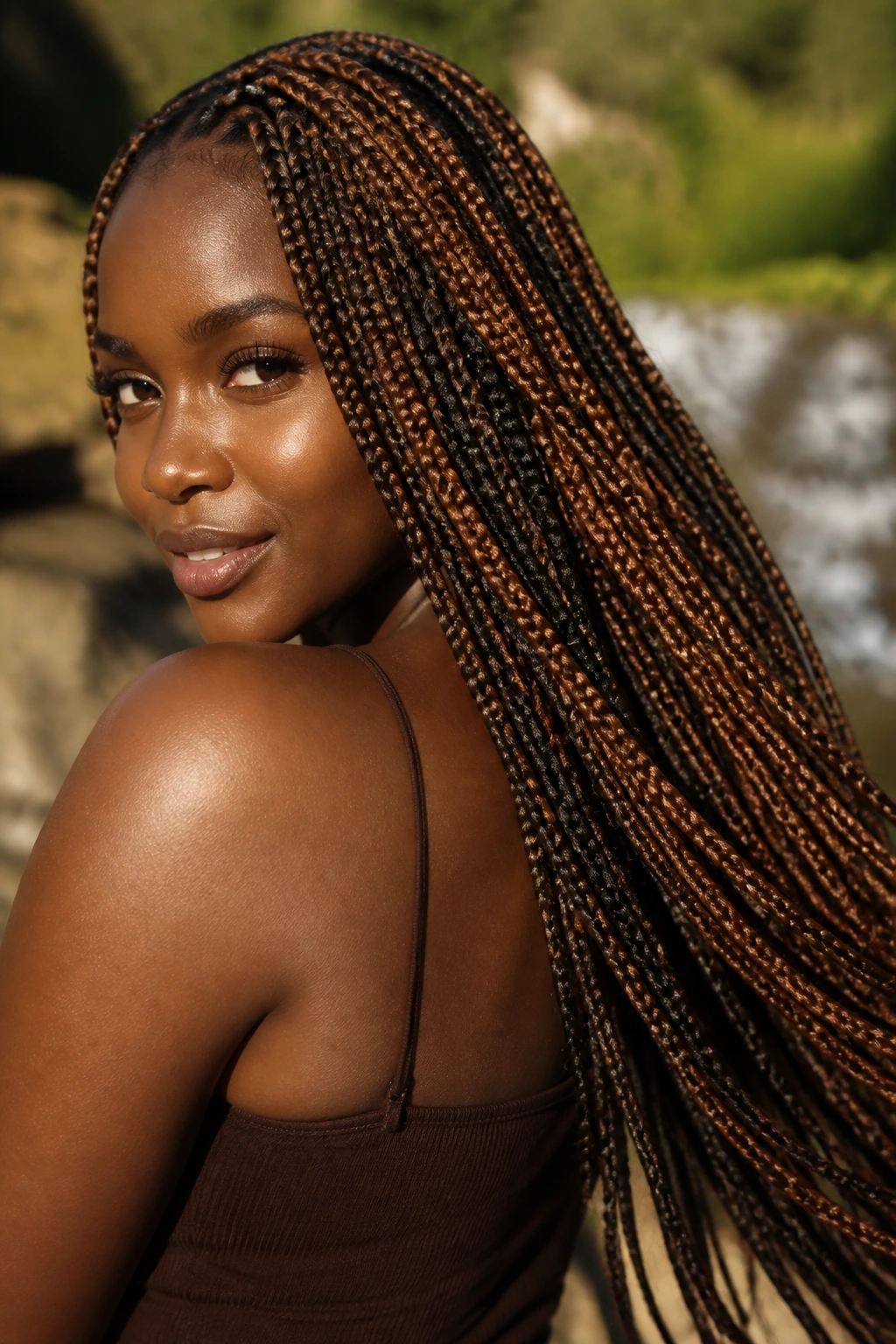
Braids and extensions give you a chance to play with chestnut without touching your natural hair as much. That can be useful if you want the color effect but don’t want the commitment of lifting your own strands.
The shade works best when the chestnut is woven through the braid in a steady rhythm. Too much contrast makes the braid look broken up; too little makes the color disappear.
I like this on long braid styles because the highlights show up in the movement of the plait. The color sits in the pattern itself, which makes the style look fuller and more expensive-looking in a very plain, non-fancy way.
23. Barely-There Chestnut Veil on Natural Black Hair
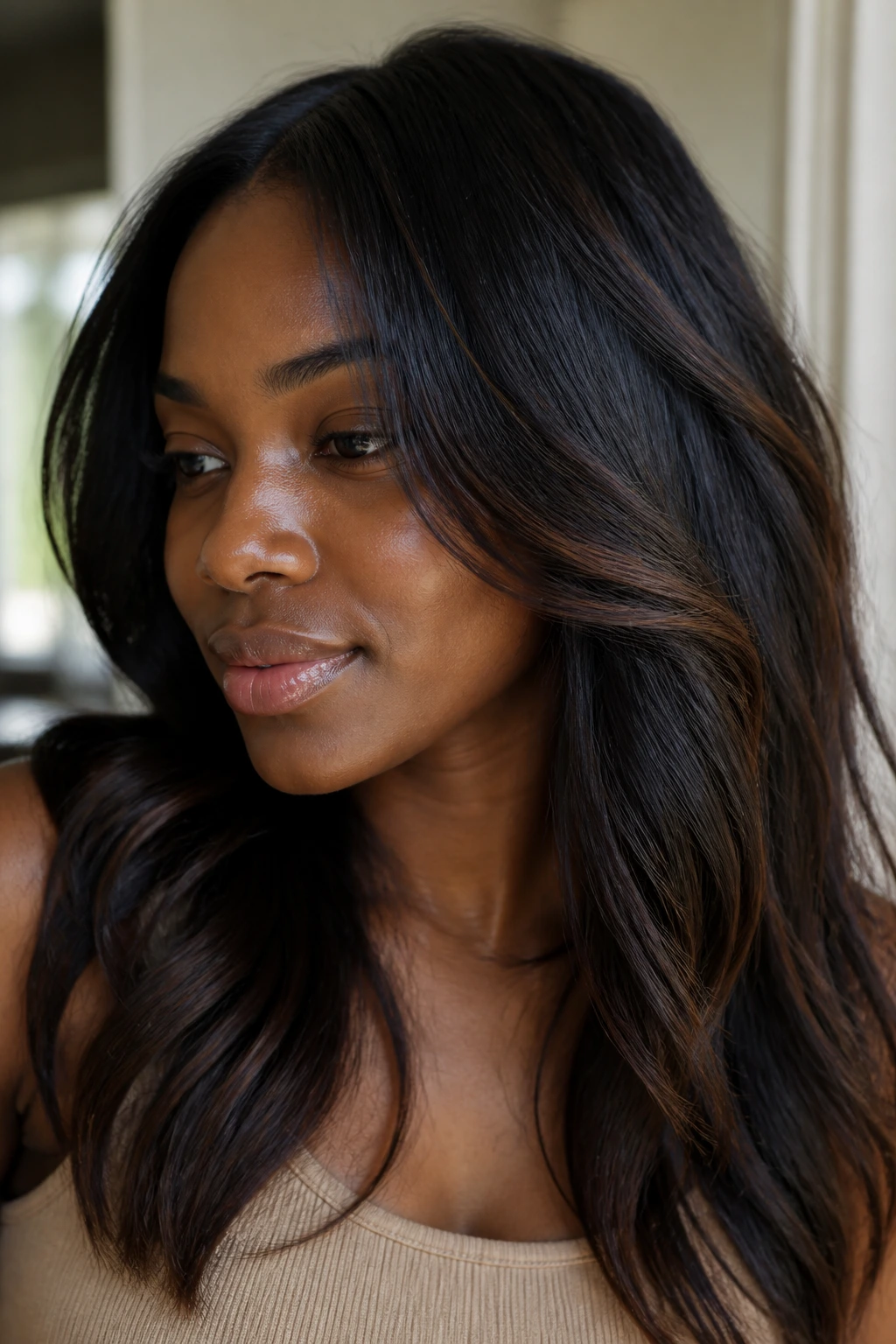
This one is for the person who wants people to notice the hair, not the highlight technique. A veil of chestnut over natural black hair gives the surface a soft brown sheen without turning the color story into a full dye job.
The look depends on finesse. The highlights should be thin, slightly staggered, and kept close enough to the base that the contrast stays quiet. On deep skin, that restraint can be gorgeous because it lets the hair reflect light without changing its whole personality.
It’s the sort of color that gets noticed on the second look. First glance: healthy hair. Second glance: oh, there’s warmth in there.
24. Golden Chestnut with a Warm Honey Finish
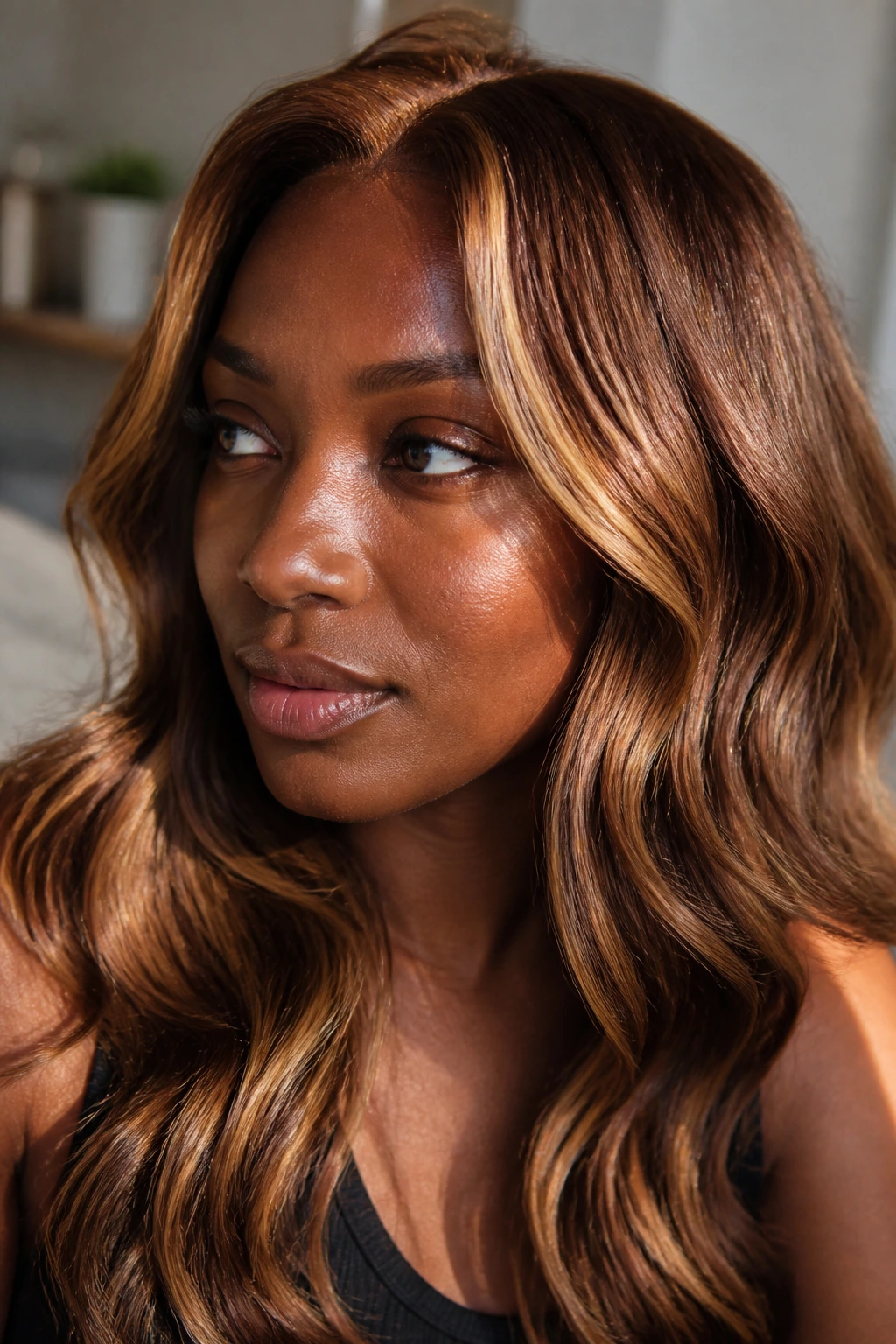
If you want more brightness, this is the warmer side of chestnut. The honey note should stay soft — more toasted sugar than yellow gold — so it flatters deep skin instead of standing apart from it.
This version does best when the warm pieces are spread through the mids and ends, with a few face-framing ribbons to keep the color from sinking too low. It gives the hair a sunlit feel without pushing into blondness.
Use this when you want the highlight to show from a distance but still feel rooted in brown. It’s cheerful, but not sugary. That matters.
25. Deep Mocha to Chestnut Melt with Subtle Lowlights
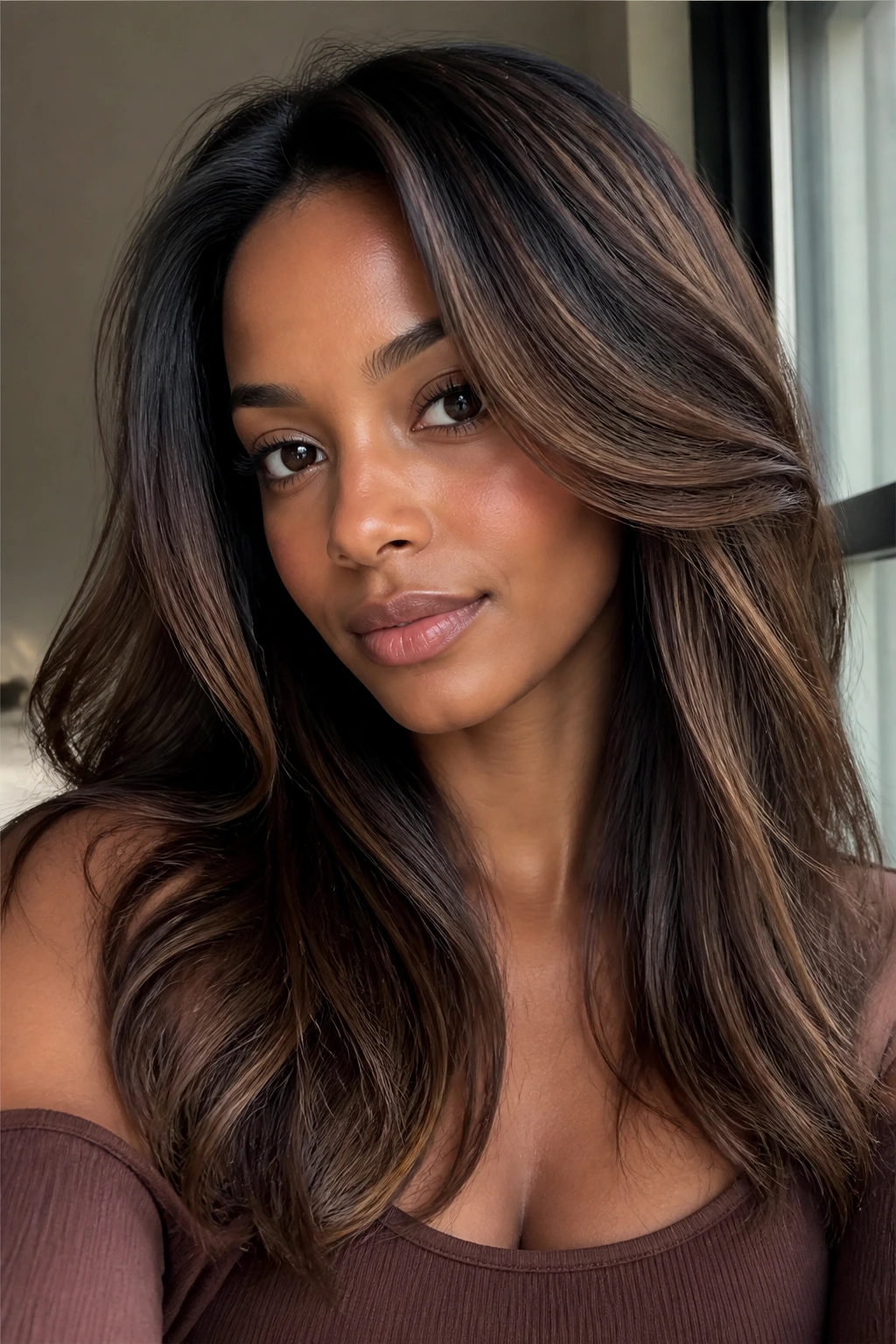
A good color melt needs darker pieces to hold it together. That is where the lowlights come in — they keep the chestnut from looking washed out and give the lighter ribbons something to sit against.
On deep skin tones, this kind of melt tends to look especially clean because it stays in the brown family from root to tip. The chestnut shows up as a shift in tone, not a break in the hair.
If you want a richer finish than a standard highlight, this is the one I’d point to first. It has depth, softness, and enough contrast to keep the hair from disappearing in low light.
Why Chestnut Brown Works So Well on Deep Skin
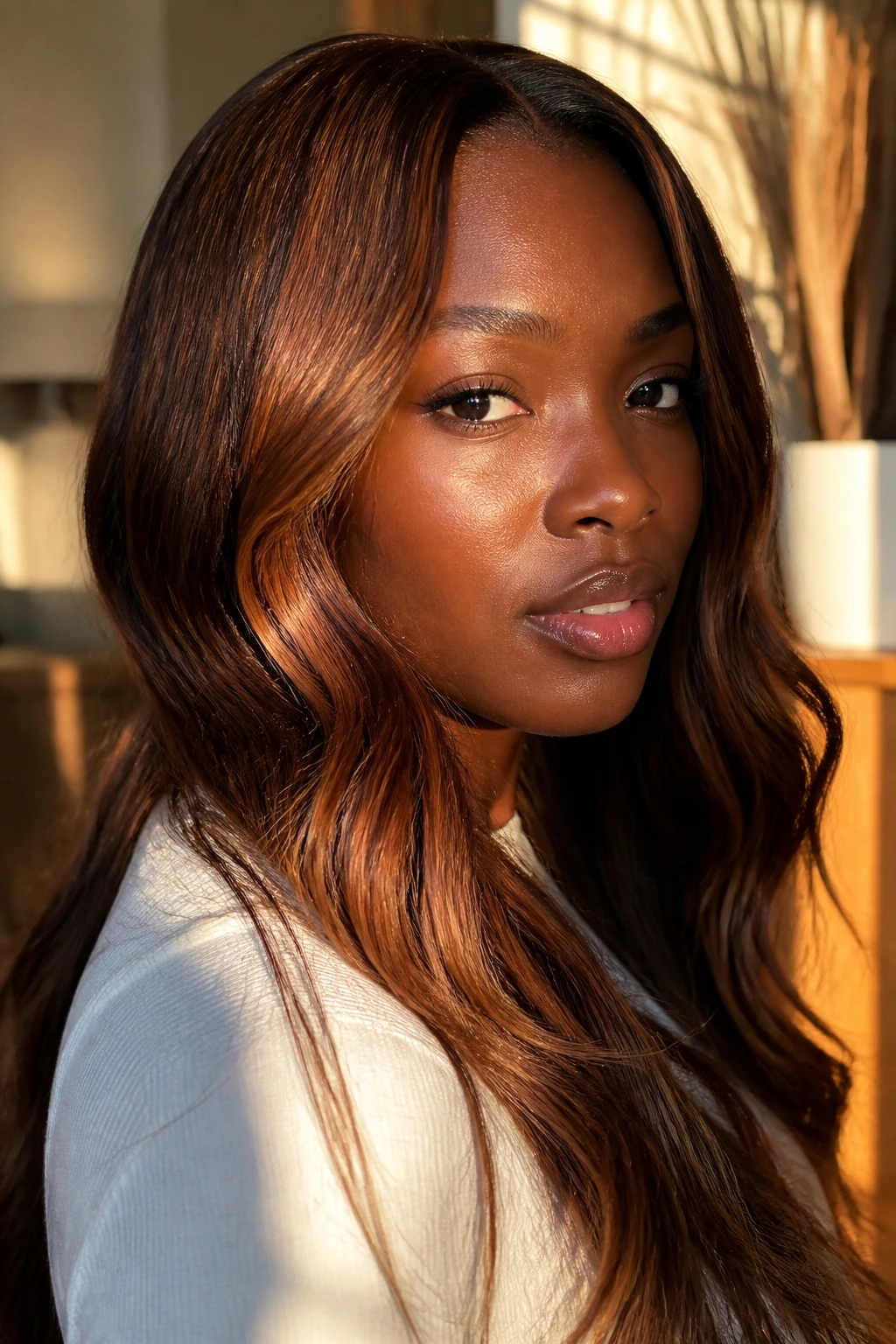
Chestnut brown sits in a very useful zone of the color wheel. It has enough red and gold in it to feel warm, but enough brown left over to keep it grounded. That balance is why it flatters deep skin tones so often — the hair and skin seem to speak the same language instead of competing for attention.
The other thing working in chestnut’s favor is value. A highlight that’s only 1-3 levels lighter than the base can look like movement and shine rather than obvious streaking. Go too light, and the contrast gets loud fast. Go too ash, and the color can flatten against richer complexions, which is a shame because the point of highlights is to make the hair look alive.
There’s also a texture factor here that gets overlooked. Deep skin often looks especially good next to colors that have body in them — cocoa, cinnamon, caramel, mahogany, chestnut. Those shades catch light softly. They don’t glare. That makes them easier to wear in everyday life, not just in a salon mirror.
I’d also argue that chestnut is one of the few brown highlight families that can move from casual to polished without changing the formula much. The difference is in placement and finish. A loose balayage on curls reads relaxed; the same shade in a glossy silk press looks tailored. Same color story. Different mood.
The Tools That Make the Color Easier to Keep
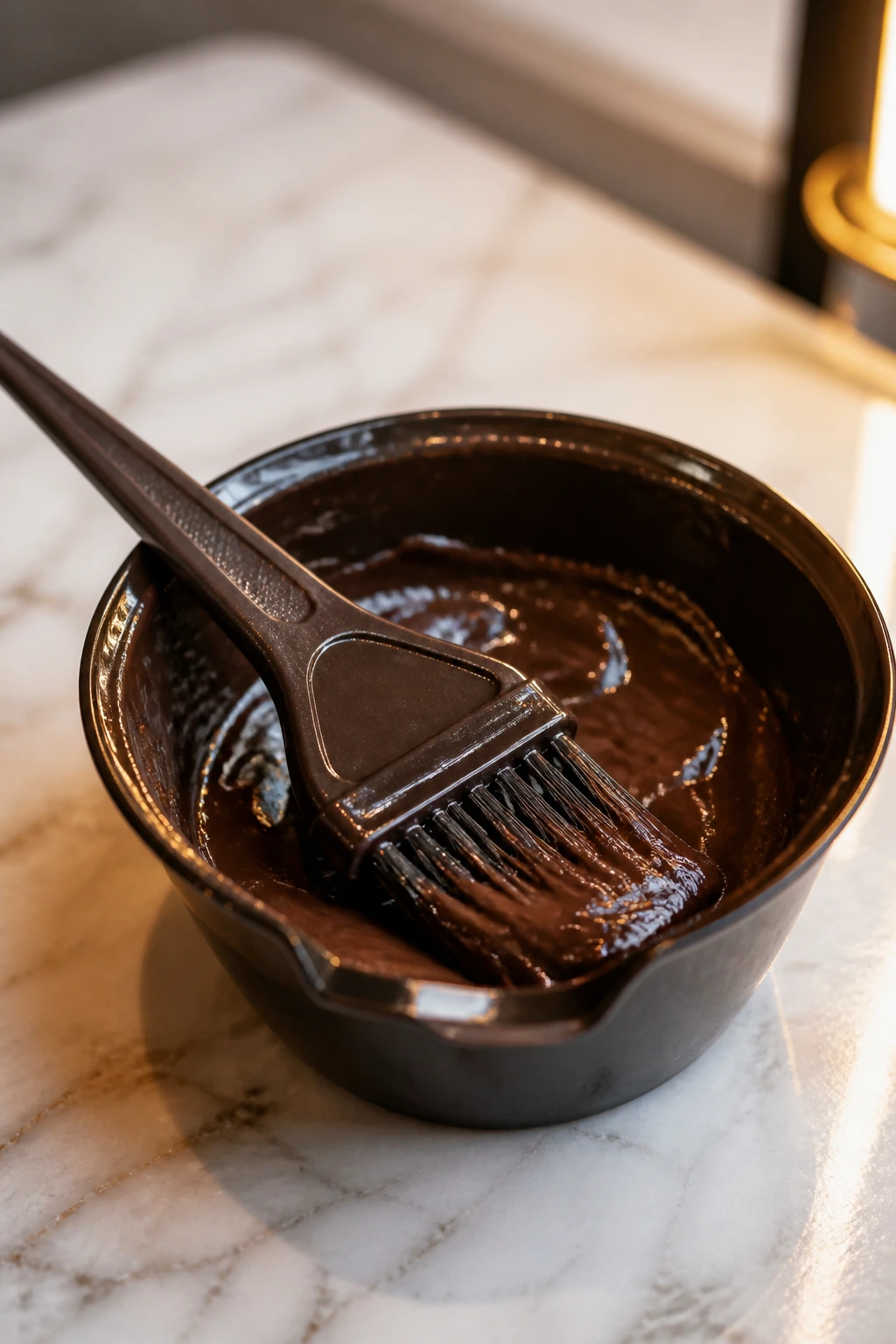
A good chestnut color is only half the job. The rest is maintenance, and the right tools make that less annoying.
- Tint brush and mixing bowl: Useful if your colorist is doing a gloss, toner, or root blend; at home, they help with precise application of color-depositing treatments.
- Foils or balayage board: These control placement during highlighting and help keep the chestnut ribbons from bleeding into each other.
- Tail comb: The fine end helps with clean parting and slicing small babylight sections.
- Color-safe shampoo: Look for a sulfate-free formula if your hair is highlighted; it slows the fade and keeps the brown from turning flat.
- Deep conditioner: Chestnut shows best on hair with a smooth cuticle, and that means regular moisture after lightening.
- Heat protectant spray: If you silk press or blow-dry, this matters every single time.
- Wide-tooth comb or detangling brush: Gentle detangling keeps highlighted hair from snapping at the lighter ends.
- Satin bonnet or pillowcase: Not glamorous, but it keeps friction from roughing up the cuticle and dulling the color.
If you’re doing this at a salon, bring photo references that show both the front and the back. Chestnut looks different depending on placement, and the back of the head can get ignored if you don’t speak up.
How to Style Chestnut Highlights So They Actually Show
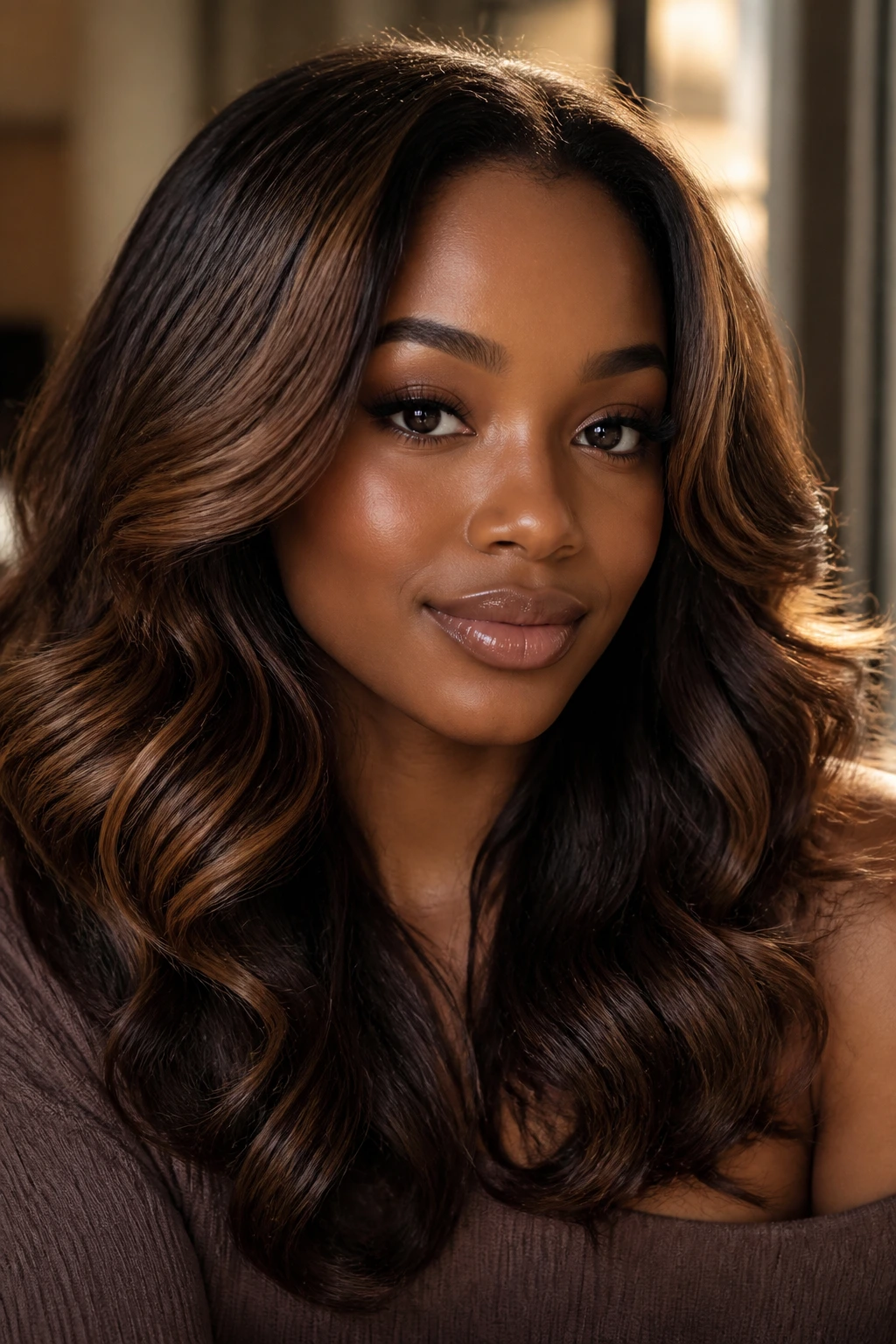
Best Styles: Loose waves, twist-outs, blowouts, and defined curls show chestnut the fastest because the bends in the hair catch the lighter pieces at different angles. Straight styles work too, but they rely on placement and shine. If the hair is flat and matte, the color can disappear.
Parting: A center part gives chestnut a clean, symmetrical frame. A deep side part brings the brighter pieces forward and can make a blunt cut look more dimensional. If you wear your hair flipped back a lot, ask for more brightness around the temples and crown so the color doesn’t hide.
Finish: Use a light serum or gloss spray on the mid-lengths and ends. Heavy oils can make chestnut highlights look darker than they are, which defeats the point. A little sheen is enough; you want reflection, not grease.
Texture: The more movement the hair has, the more chestnut works. That’s why layered cuts, curls, and soft bends tend to show the color better than one-length hair that sits still all day.
Face makeup: Warm bronzer, copper-brown shadow, and a soft nude lip pick up the chestnut without turning the whole look into a costume. Keep it simple. The hair already has enough warmth.
Small Tweaks That Change the Whole Result
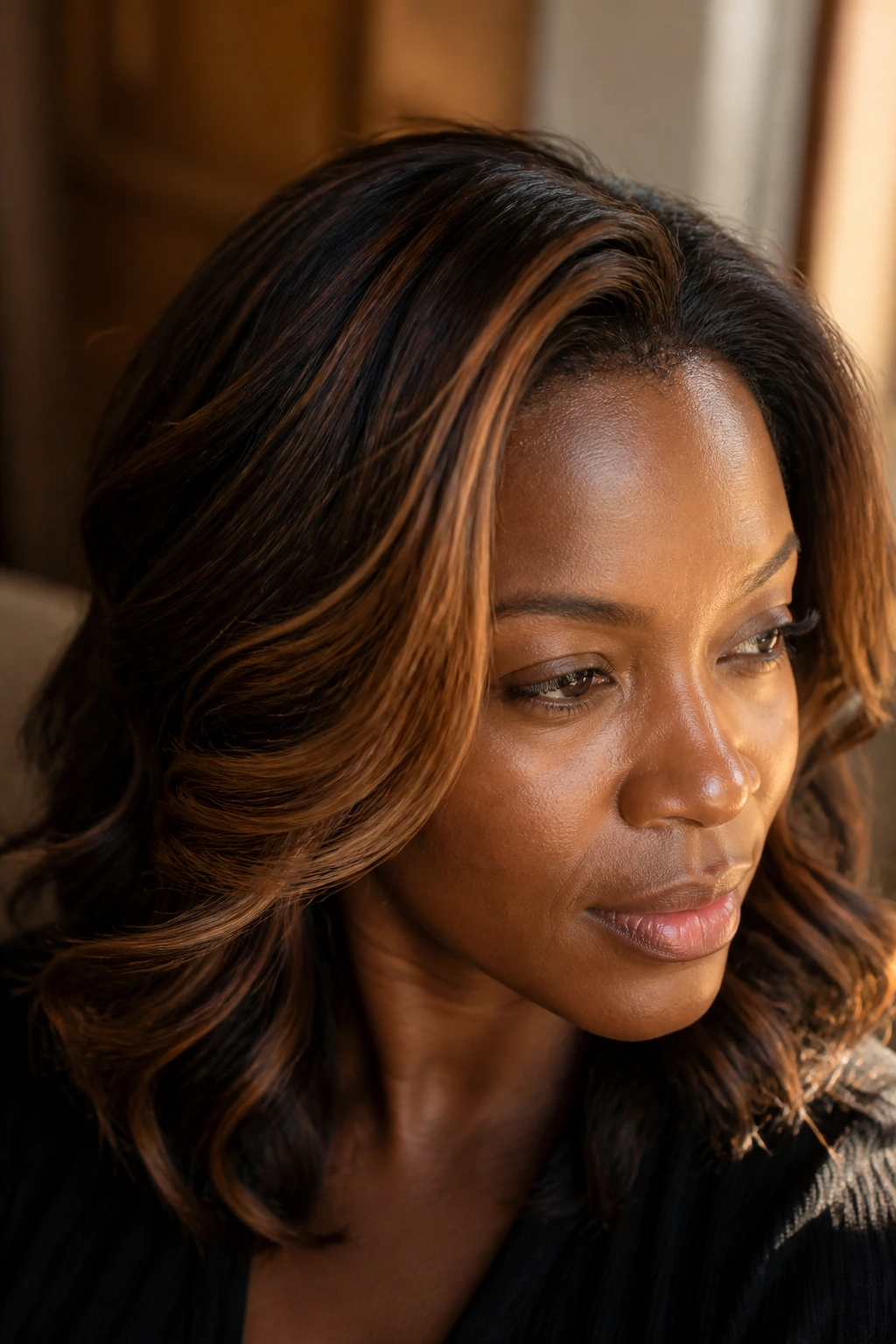
Gloss Refresh: A clear or chestnut-toned gloss every 4 to 6 weeks keeps the brown from drying out and helps the warmer notes stay visible. This is especially useful if your water is hard or you use heat a lot.
Placement Trick: Ask for brighter pieces at the temples, cheekbone, and crown before you ask for more everywhere else. Those spots do more work visually than random lightening at the ends.
Heat-Save Move: Blow-dry on medium heat with the nozzle pointed down the hair shaft. Rough drying roughens the cuticle, and chestnut color loses its clean shine faster than people expect.
Make-It-Yours: If your hair is coily, keep the lighter pieces on the outer surface of the curl. If your hair is straight, ask for narrower ribbons so the result doesn’t turn stripey. Same color. Different application.
One more thing: chestnut looks better when the brown underneath is still doing some work. If every strand is lightened evenly, the hair can go dull. Leave some depth in the formula. The contrast is the whole point.
Common Mistakes That Flatten the Color
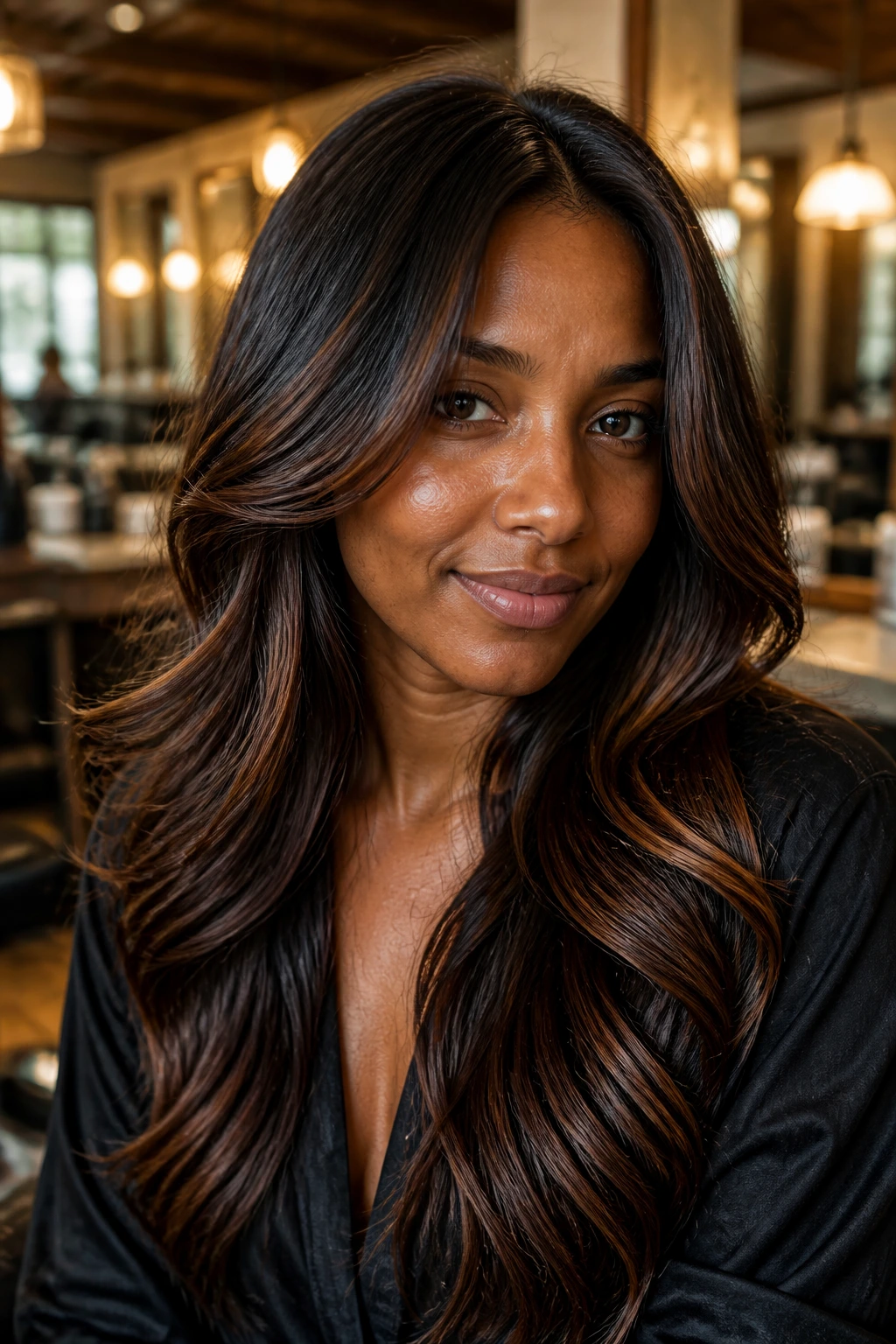
Going too light, too fast. The symptom is obvious: the highlights start looking disconnected from the base, especially on deep skin. Fix it by stopping the lift a level or two earlier and adding warmth back with a gloss instead of bleaching more.
Choosing chestnut with too much ash. Ash can make the color look gray-brown, which is a bad match for many deep complexions because it drains the natural warmth. Ask for chestnut with a warm or neutral brown base, not a smoky one unless you specifically want that cooler effect.
Putting the lightest pieces in the wrong place. If the bright sections sit only at the very ends, the color can look dragged down. If they sit too high and too wide, the hair can look patchy. The fix is face-framing placement plus a few controlled ribbons through the mids.
Ignoring texture. A highlight plan that works on straight hair can look chaotic on curls or coils if the color is woven too deeply. Keep the light on the surface where texture can break it up.
Skipping the toner or gloss. Freshly lifted hair without a tone adjustment can look flat, yellow, or orange, depending on the formula. Chestnut needs that final brown glaze to settle into its proper shade.
Treating maintenance like an afterthought. Highlighted hair that never gets a moisture mask or heat protection loses shine quickly. The chestnut doesn’t vanish. It just gets tired.
Variations and Shade Tweaks to Try
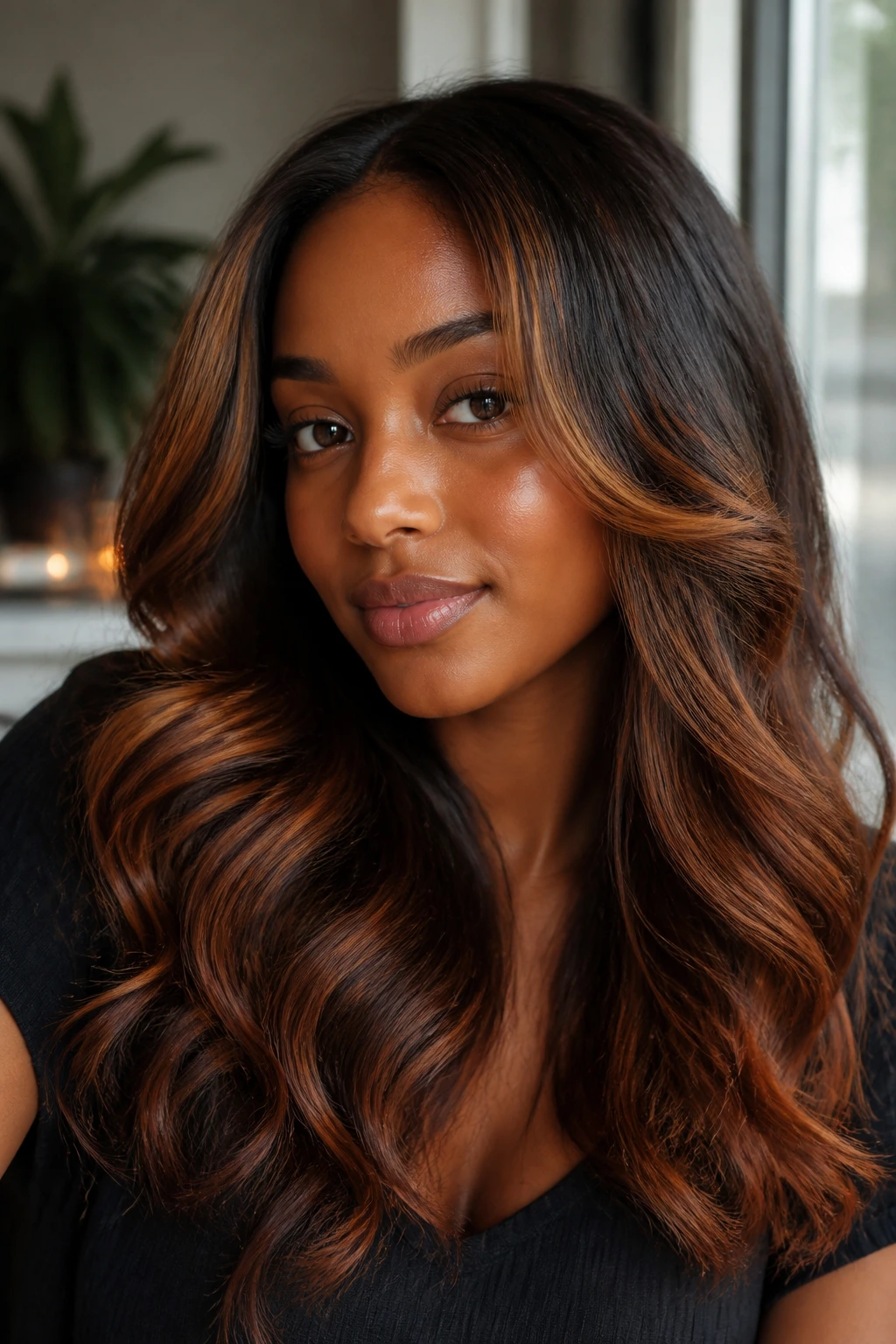
Honey-Kissed Chestnut: This version leans warmer and brighter, with a little golden finish around the face and ends. It works well if your skin has golden undertones and you want the hair to read softer in daylight.
Mink Chestnut Melt: A cooler, deeper version with more mocha and less red. Use this if you want the color to stay muted and elegant-looking without losing dimension.
Auburn-Edged Chestnut: A touch of auburn pushes the brown toward copper-red, which can be lovely on deep skin with warm undertones. Keep the red low, though; too much and the color stops looking like chestnut.
Bold Money Piece Chestnut: Bright front pieces with the rest of the hair left dark. This is the easiest way to test the shade without coloring the whole head, and it works on curls, silk presses, and bobs.
Soft Highlight-and-Lowlights Mix: Chestnut highlights paired with espresso lowlights. This gives the richest depth of all because the darker strands prevent the lighter ones from floating away.
How to Keep the Color Fresh Between Appointments
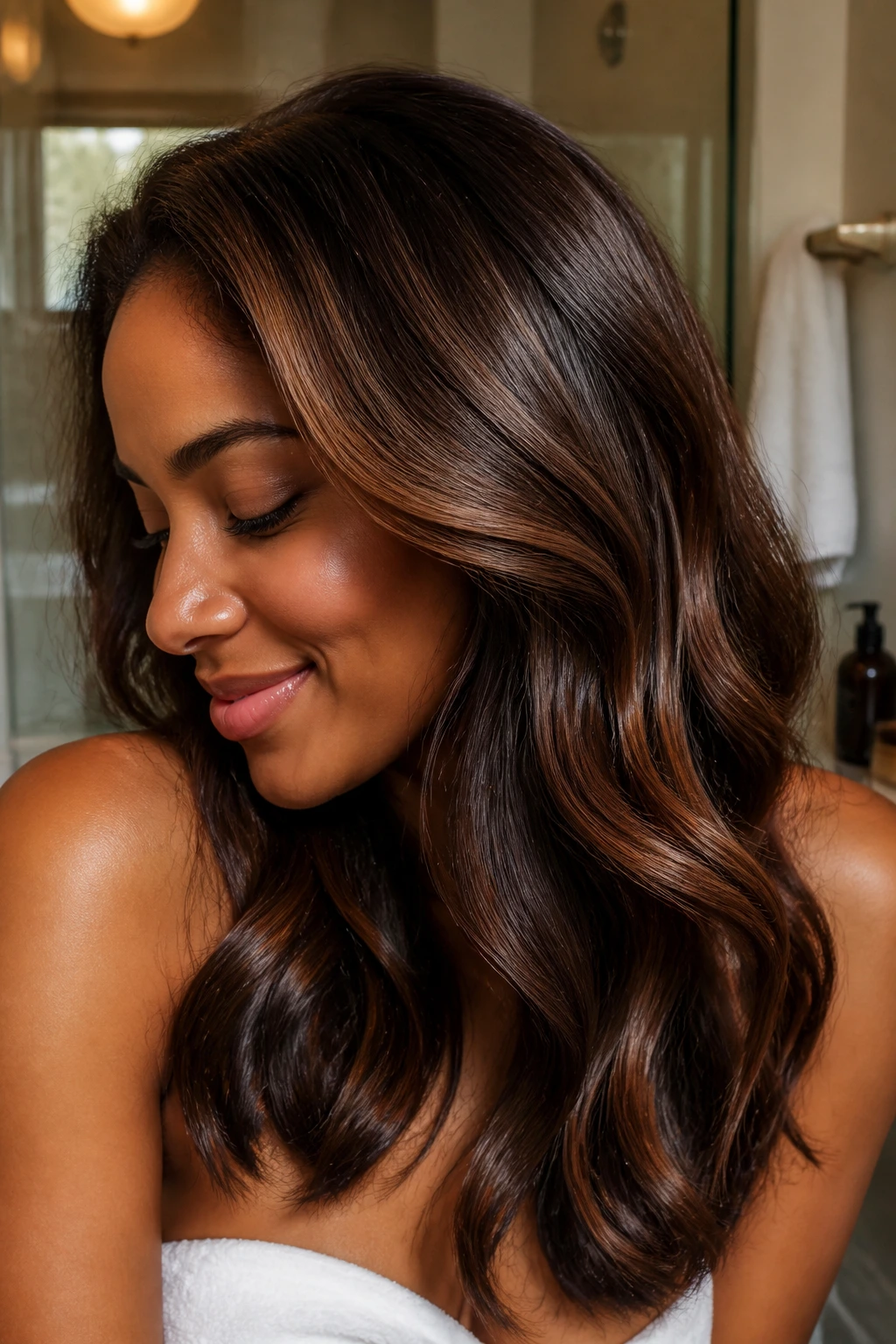
Chestnut fades best when you treat it like a stain, not a permanent piece of clothing. The goal is to keep the warmth alive while protecting the hair shaft from roughness.
Most chestnut highlights hold their best shape for about 6 to 8 weeks before the tone starts softening enough to notice. A gloss or toner refresh around that point usually brings the color back without needing a full re-lighten. If you’re wearing a stronger balayage or face-framing placement, you can often stretch a partial refresh to 8 to 12 weeks because the grow-out is softer.
At home, shampooing 2 to 3 times a week is usually enough for color-treated hair unless your scalp runs very oily. On wash day, use lukewarm water, not hot water, and follow with a mask or conditioner that leaves the hair smooth but not waxy. The lighter pieces are the first to dry out, and dry highlighted hair looks dull long before it looks damaged.
If you heat-style often, use a protectant every single time. That is not optional. Chestnut can lose its shine fast when exposed to high heat over and over, and the ends usually go first. For sleep, a satin bonnet or pillowcase keeps the surface from getting rough, which matters more than people think.
If the hair starts looking a little orange after a few washes, don’t panic. That usually means the brown pigment has faded and the warm undertone is showing through. A chestnut gloss, not a stronger bleach session, is usually the better fix.
Questions People Ask Before Booking Chestnut Highlights
How light should chestnut highlights be on deep skin tones?
Usually only 1-3 levels lighter than the natural base, depending on how dramatic you want the look. That range keeps the color rich instead of stripey, and it’s easier to maintain as it grows out.
Can chestnut brown highlights work on black hair?
Yes, but the result depends on how much lift you’re willing to allow. A soft chestnut veil or face-framing piece can work beautifully on black hair without going blonde, while deeper balayage may need a little more lift to show properly.
Is balayage or foil better for chestnut?
Balayage gives a softer, more lived-in result. Foils give cleaner brightness and more control, which can help if you want babylights, money pieces, or a stronger front frame.
Do chestnut highlights fade orange?
They can, especially if the formula starts too warm or the hair is porous. A gloss with a brown or neutral tone helps keep the red-brown family in line as the color softens.
What should I tell my colorist at the salon?
Bring pictures, but also say how bold you want the contrast, whether you wear your hair curly or straight most often, and how much maintenance you’re willing to do. Those three details matter more than the exact word “chestnut.”
Can I do chestnut highlights on curls or coils without losing definition?
Yes, if the color is painted on the outside of the curl pattern rather than packed through every strand. That keeps the curl shape intact and lets the warm pieces flash instead of blur.
Will chestnut highlights look good with braids or locs?
They can, especially when the color is woven in as a steady accent rather than random streaks. The texture actually helps the chestnut show, as long as the placement is even.
What if the highlights come out too warm?
A demi-permanent gloss in a cooler brown tone can bring the shade back into balance. Do not rush to bleach again; that usually makes the hair dry and makes the color problem worse.
The Chestnut Sweet Spot
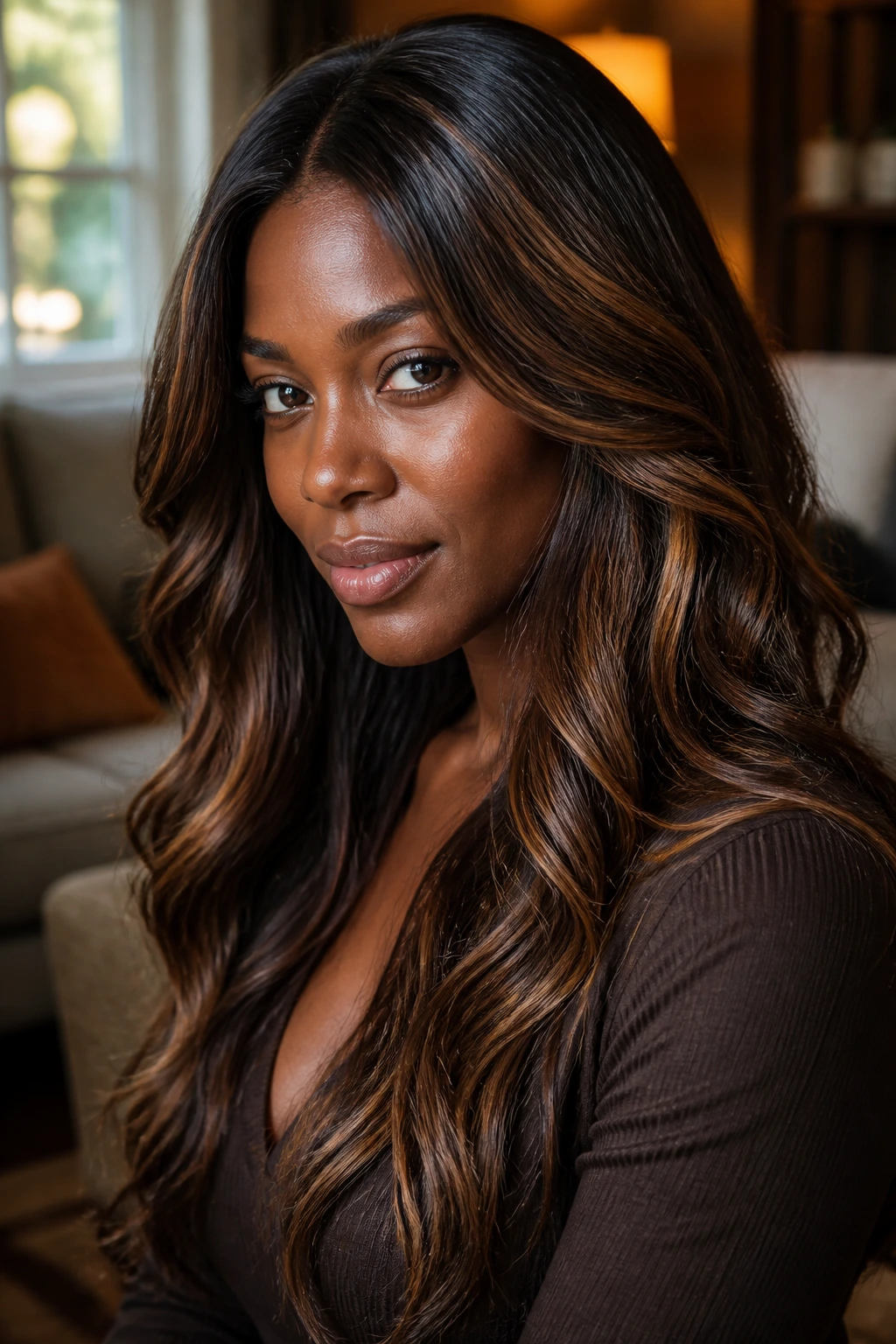
Chestnut brown highlights work on deep skin tones because they respect the depth already there. They don’t try to overpower the base color. They just add movement, warmth, and a little light in the places that count.
The best versions are the ones that look like they belong to the hair, not pasted on top of it. That means thoughtful placement, a tone that stays in the brown family, and enough maintenance to keep the shine from slipping away. Get those three things right, and chestnut stops being “just a highlight color” and starts acting like a frame for the whole face.
If you’re choosing between safer and brighter, I’d usually start safer and build. Chestnut has enough range to go from whisper-soft babylights to bold money pieces, and that flexibility is exactly why it keeps showing up on deep skin so often.