



Long hair can carry a lot of weight around the face, and not always in a flattering way. One minute the length looks sleek from the back, and the next minute the front reads as a single heavy curtain that blurs your cheekbones, drops your features, and makes the whole cut feel flatter than it should. Face-framing layers with bangs for long hair fix that by moving shape to the front edge, where the eye lands first.
The trick is balance. Too little layering, and the bangs sit there like a separate object pasted onto the forehead. Too much, and you lose the long-hair payoff that people actually wanted in the first place. The sweet spot lives in the in-between: cheekbone skims, lip-length pieces, soft diagonals, and fringe that bends instead of sitting stiff and square. That’s where long hair starts looking expensive without needing a dramatic chop.
And yes, the same basic idea can go in a dozen directions. Soft and airy. Sharp and graphic. Curly and undone. Glossy and blowout-heavy. The front of the cut does the talking, but the rest of the length still gets to stay. That combination is what makes this collection worth studying closely.
Why These Cuts Work So Well on Long Hair
-
The shape shows up right away: Long hair can swallow the face if the front stays one length, but a few well-placed layers change the silhouette in the first 2-3 inches around the jaw and cheekbones.
-
You keep the length people love: A good fringe or face frame lets you keep the back long while still making the cut feel fresh, so you are not choosing between movement and inches.
-
The grow-out usually behaves better: Softer bangs and front layers tend to merge into the rest of the hair instead of leaving a hard demarcation line every four weeks.
-
Texture gets room to do its thing: Wavy hair gains bend, straight hair gets shape, and curly hair stops ballooning at the sides when the front is cut with intention.
-
Small changes make a big difference: Moving the shortest piece from brow level to cheekbone level can change the whole mood of the haircut without touching the overall length.
-
You can tune it to your styling patience: Some versions need a round brush and ten minutes. Others air-dry into place with a little scrunching and a dab of cream.
1. Soft Curtain Bangs with Cheekbone Layers
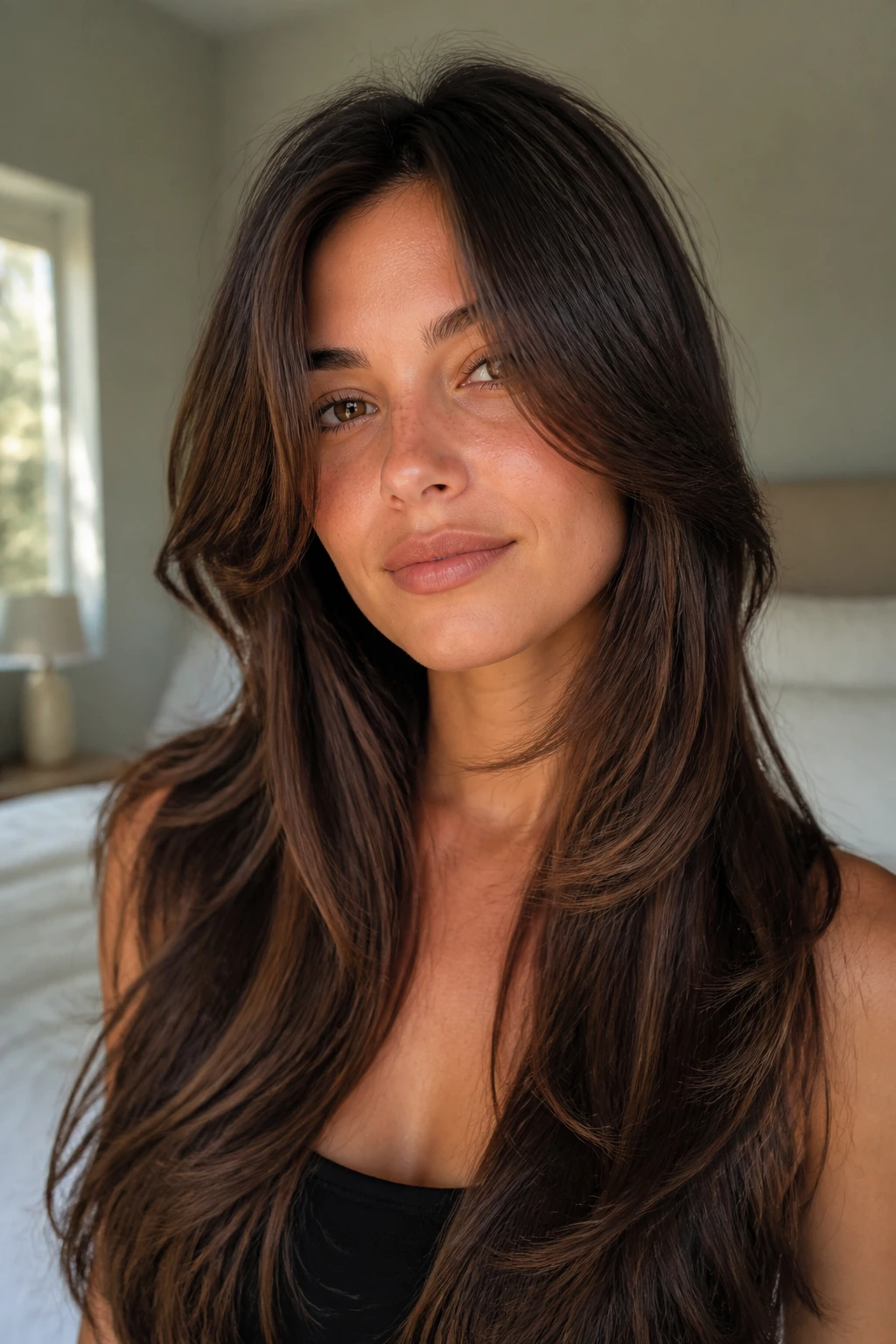
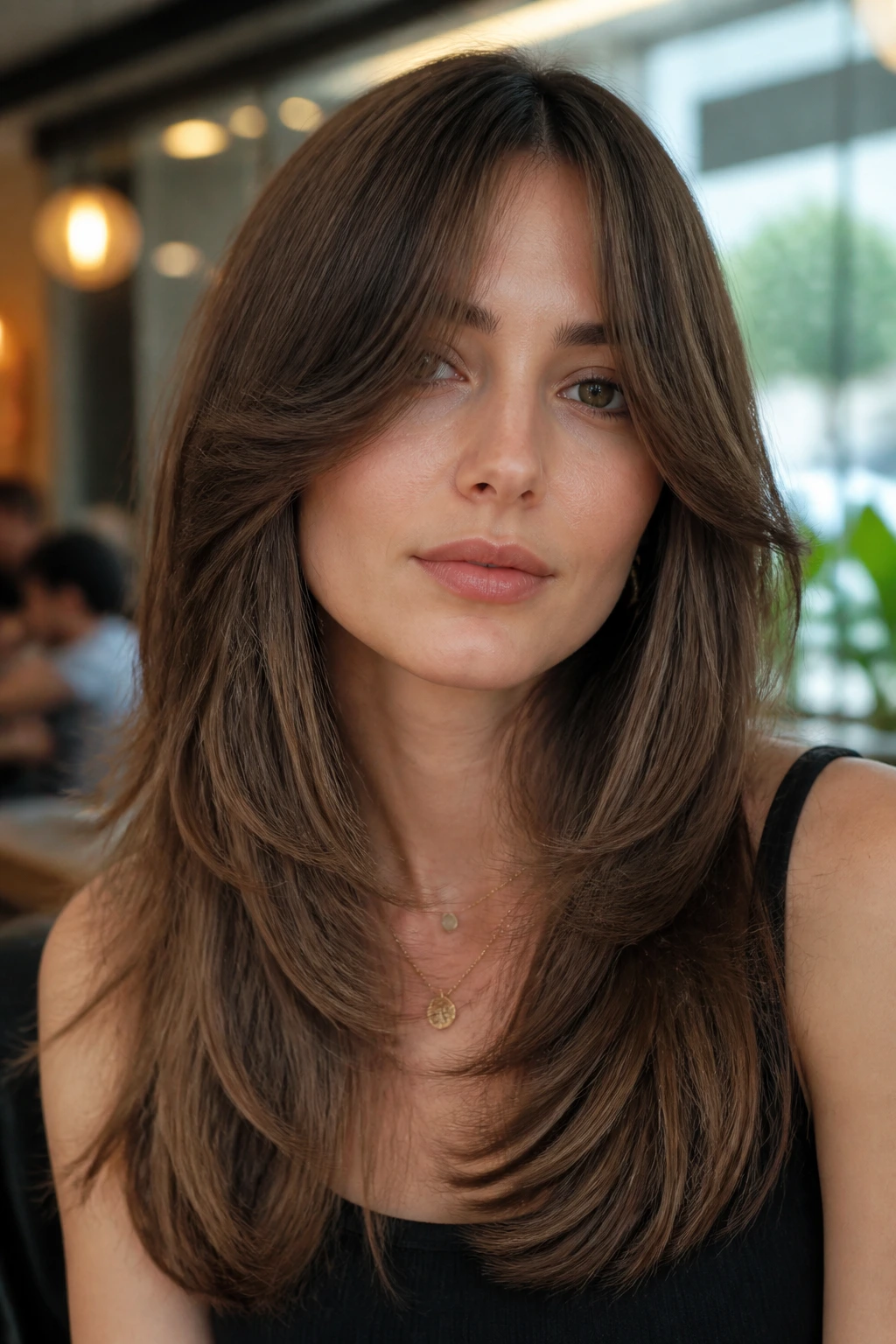
Soft curtain bangs are the safest place to start if you want face-framing layers without a hard commitment. The shortest point sits somewhere around the cheekbone, then the pieces taper outward and blend into long layers that sit cleanly over the shoulders. The effect is gentle, but not timid.
What makes this version work is the diagonal line. It creates movement around the eyes and cheekbones without cutting a blunt wall across the forehead. If your hair is medium to thick, ask for the fringe to be point-cut at the ends so it bends instead of flipping into one solid block.
This cut is especially good when you wear your hair in the center part most days. The bang splits naturally, and the front pieces fall into that easy curtain shape after a quick bend with a 1.25-inch iron or a round brush.
Tiny rule: keep the shortest piece high enough to matter, but not so high that you need a trim every two weeks.
2. Bottleneck Bangs with Long Feathered Ends
Why do bottleneck bangs flatter so many long-hair cuts? Because they give you a narrow center opening and a wider sweep at the temples, which means the forehead stays visible while the sides do the sculpting. The name sounds fussy. The actual result is relaxed and wearable.
The front section should feel slimmer in the middle and fuller as it moves outward, almost like the shape of a bottle neck opening into a soft curve. On long hair, that shape keeps the top from looking too heavy and lets the rest of the cut fall in smooth feathered panels.
Ask your stylist to keep the fringe light enough to split without clumping. If your hair is fine, too much density in the center will make the bangs sit like a little shelf. If your hair is thick, the feathered ends prevent that dense, helmet-like effect nobody wants.
Best for hair that likes a bend, not a blunt line
Bottleneck bangs shine when the hair has some natural movement. Straight strands can still wear them, but they usually need a quick pass with a round brush, then a cool shot to lock the curve in place.
3. Butterfly Cut with Sweeping Fringe
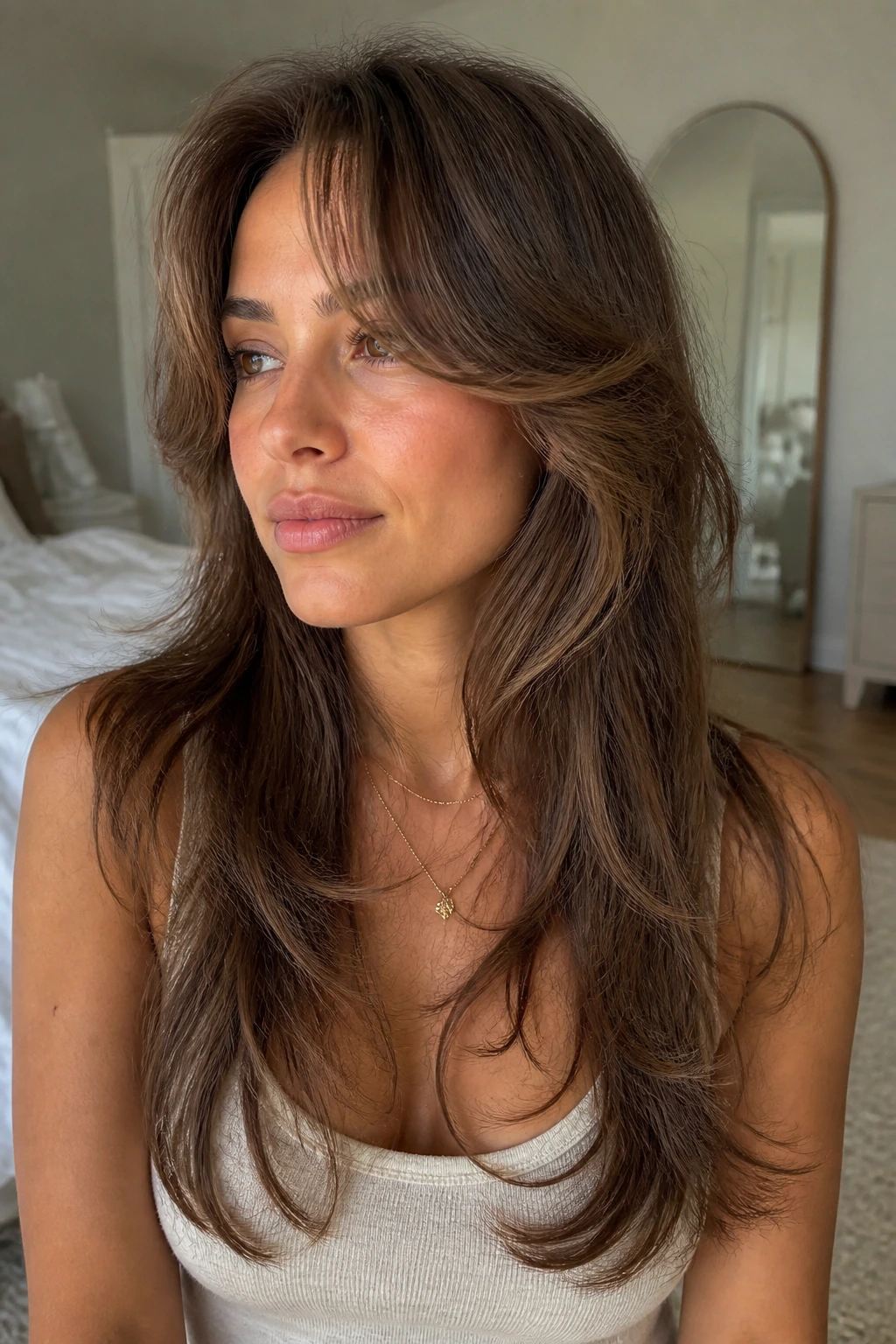
The butterfly cut gives long hair that floating, layered feeling without making the length disappear. The front usually starts with shorter pieces around the chin or collarbone, then the layers cascade into longer ends that still graze the ribs or lower back. Add a sweeping fringe, and the whole thing suddenly looks airy instead of weighed down.
This cut works because it builds volume where long hair usually goes flat. The crown gets lift, the cheekbones get a frame, and the ends stay long enough to keep the drama. It is a clever cut for anyone who likes the feel of layers but hates choppy ends.
If you blow-dry with a large round brush, the front pieces flip inward and create that soft winged look people often chase with a curling iron. The trick is not to over-layer the bottom. Keep the perimeter long and let the top do the moving.
A butterfly cut can look polished or messy depending on styling, and that flexibility is the whole appeal.
4. Side-Swept Bangs and Face-Framing Ribbons
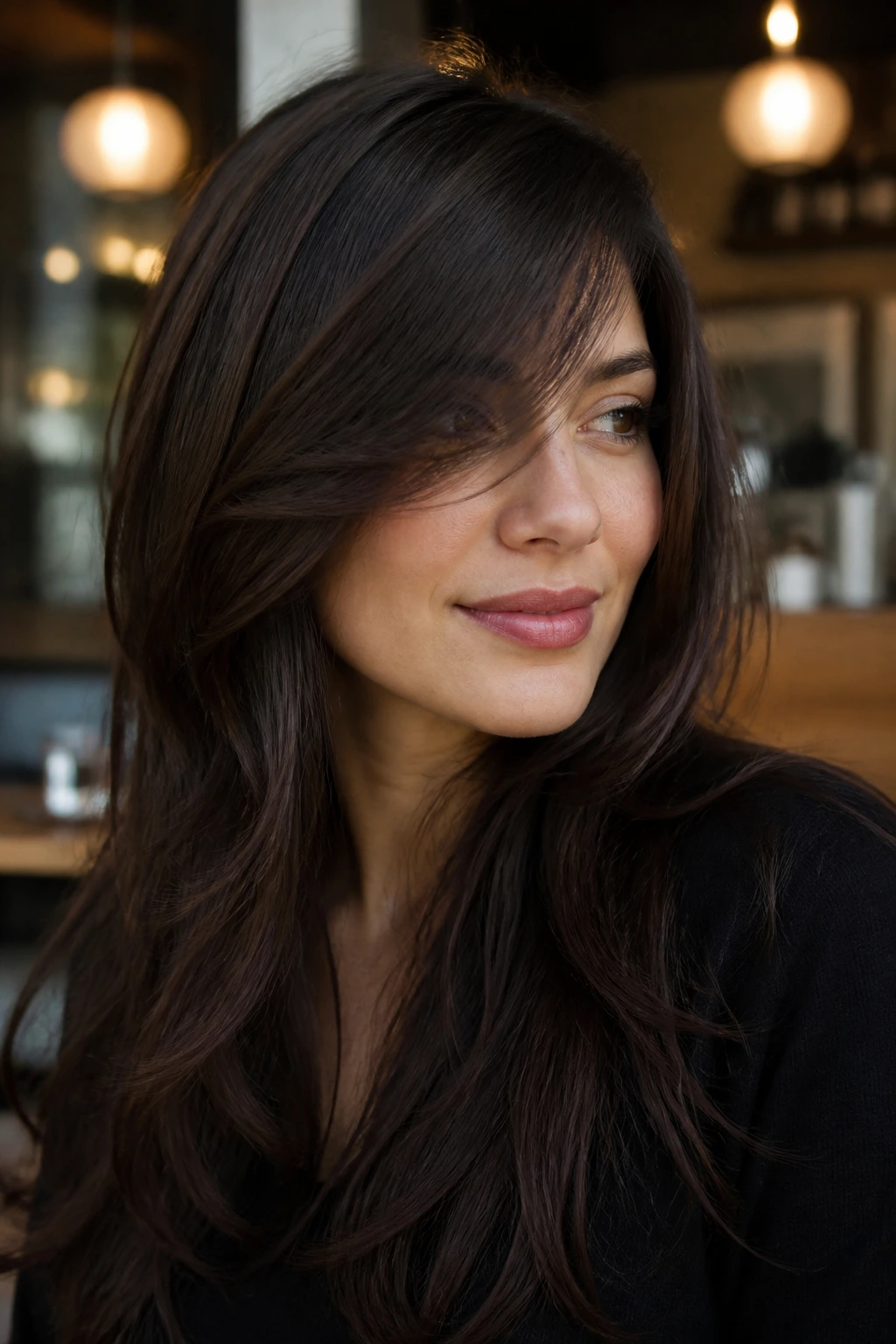
A deep side part changes everything. With side-swept bangs, the face frame becomes a long ribbon that slides across the forehead instead of splitting it in the middle. That makes this cut especially useful if your hairline has a strong cowlick or if center parts always fight back by lunch.
The layers around the face should start near the cheekbone and drift into the jaw, then soften into the rest of the length. The line needs to feel fluid. If the bang is too short, it turns old-fashioned fast; if it’s too long, it stops doing any real framing.
This version has a nice bit of softness around the eyes without looking precious. It also plays well with oversized earrings, bold lipstick, and the kind of neckline that leaves the collarbone bare. The cut gives the front some motion, so you do not have to do much else.
I’d choose this if: you like side parts, want forehead coverage, and do not want a fringe that demands daily retraining.
5. Blunt Bangs with Long Internal Layers
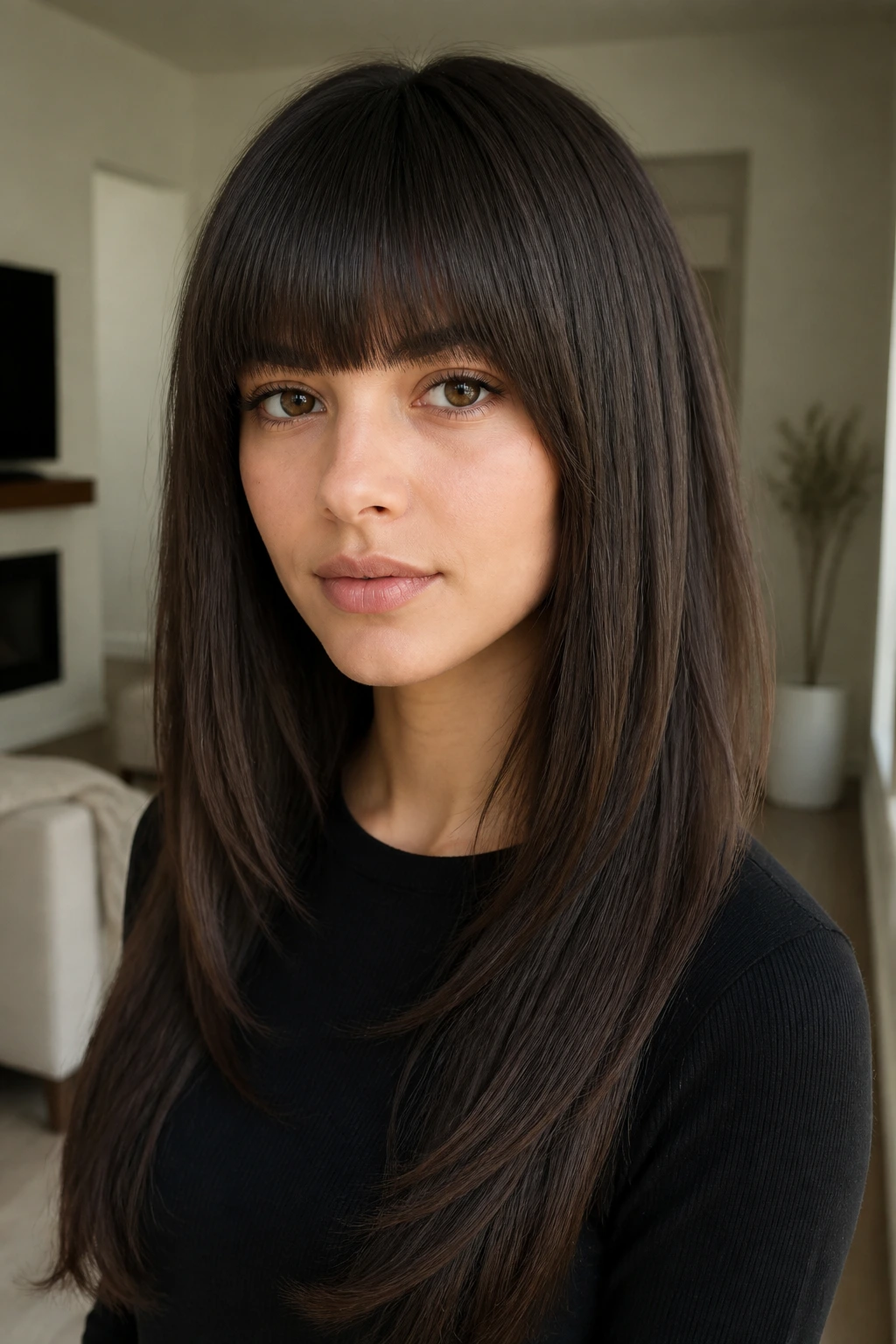
Blunt bangs are the sharp end of the spectrum. They sit straight across the forehead, full and deliberate, while the long internal layers underneath keep the rest of the hair from feeling heavy or boxy. That contrast is the whole point.
The bangs need enough density to look clean. Thin them too much and the line goes stringy. Leave them too full and they can overpower the face, especially on fine hair. The internal layers should start lower, usually below the chin, so the front stays strong while the body of the hair moves.
This cut looks best when the finish is smooth. A flat brush and a narrow nozzle on the dryer help the fringe lie flat without collapsing into frizz. Long hair with blunt bangs can feel very graphic, almost architectural, which is either exactly what you want or absolutely not.
If you like a strong first impression, this one delivers it without touching the overall length.
What to ask for
Ask for a full fringe that sits just above the brow or skims it, then long hidden layers through the mids and ends. The stylist should be able to point-cut the layer edges so they move instead of forming shelves.
6. Wispy See-Through Bangs on Glossy Lengths
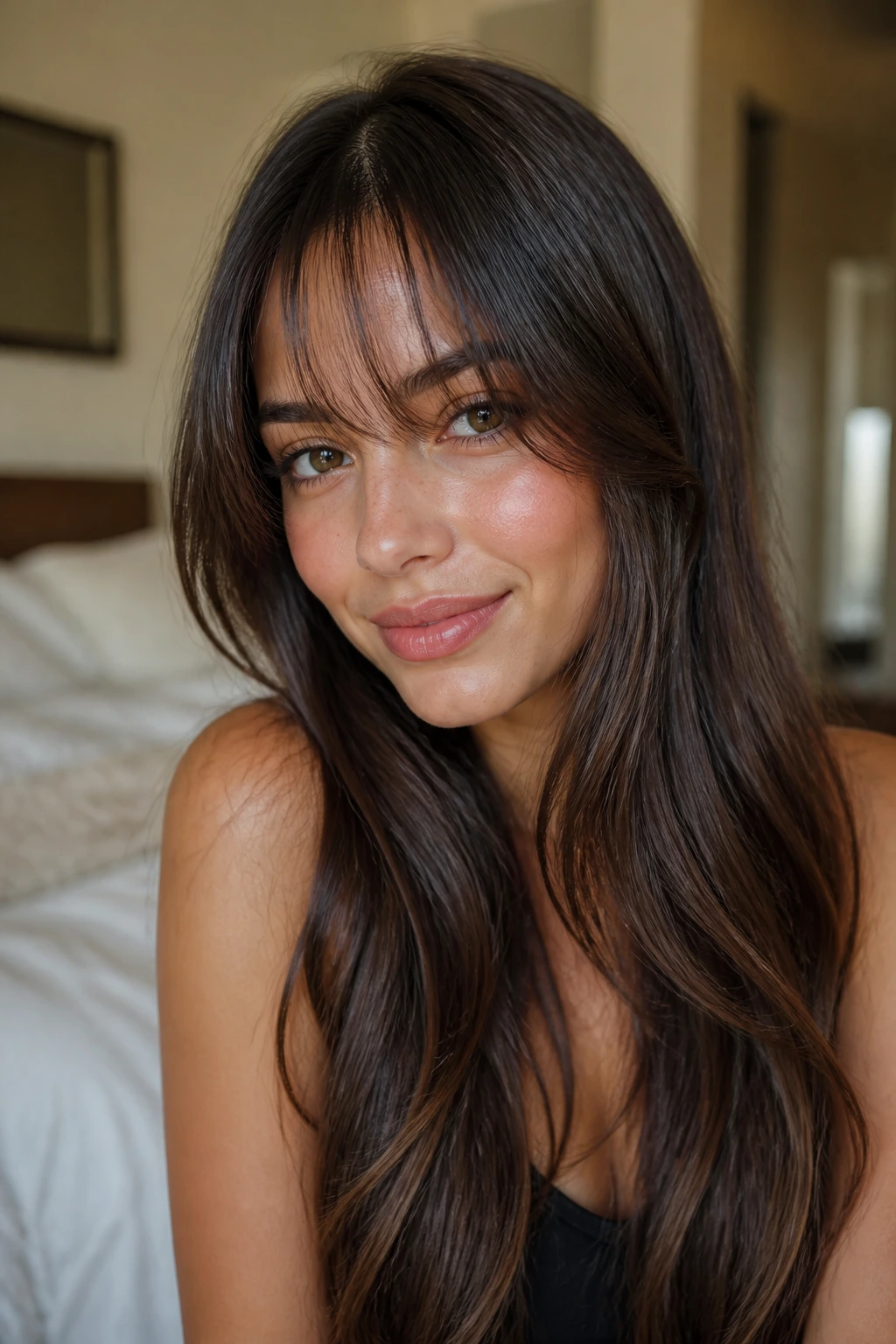
Wispy bangs are the opposite of heavy fringe. They leave little gaps of forehead showing through the hair, which keeps long hair from feeling weighed down at the front. On glossy lengths, that airy fringe can look clean and almost delicate, but not flimsy if the cut is done properly.
The density matters here. You want enough hair to create a line, but not enough to block the brow completely. If the fringe is too sparse, it looks accidental. The goal is a soft veil that breaks up the forehead and blends into the front layers.
This version works especially well when you like a sleek blowout or a straight finish. A little serum on the mids and ends keeps the shine high, while the fringe stays lighter and more textured. Fine hair often handles this cut well because the slim fringe does not fight the density of the rest of the head.
It is a quiet haircut. Not dull. Quiet.
7. Shaggy Layers with Piecey Fringe
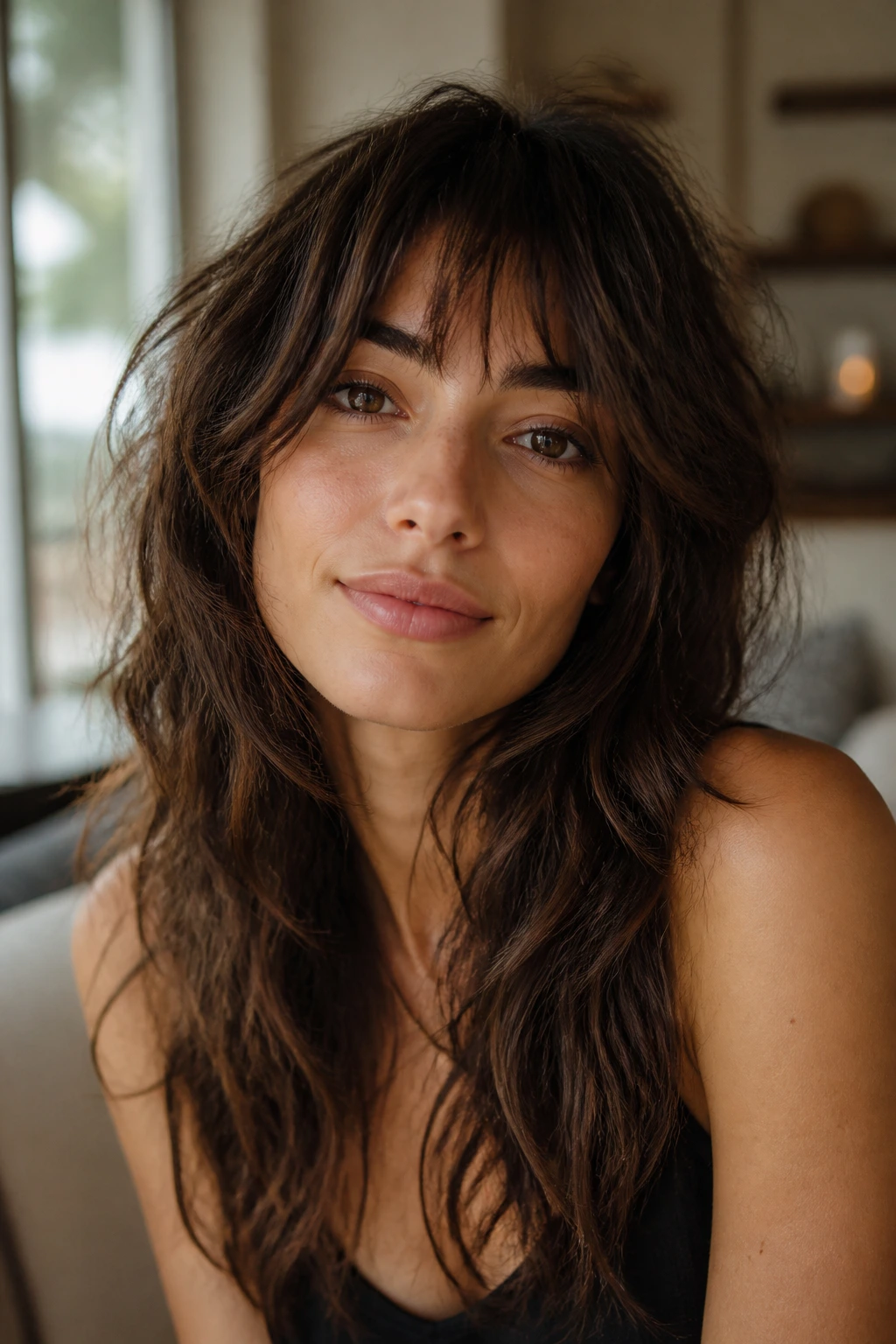
Shaggy layers do not pretend to be polished, and that is the charm. The face frame comes in pieces rather than one smooth sweep, and the fringe sits choppy and separated instead of sleek. On long hair, that kind of breakup keeps the length from feeling heavy or overcontrolled.
This cut is happiest on hair with some natural wave. A tiny bend in the mids makes the layers look intentional; pin-straight hair can still wear it, but you usually need a texture spray or a quick twist with a curling wand to wake it up. Ask for the ends to be point-cut so the pieces separate cleanly.
The face frame should start around the cheekbone and land somewhere near the jaw, but there is room for a little messiness. In fact, too much symmetry can ruin the whole feel. Shags are supposed to look like they moved a little.
If your wardrobe leans casual and your hair never seems to behave in a perfectly smooth way anyway, this cut may feel like a relief.
8. Long Wolf Cut with Soft Curtain Bangs
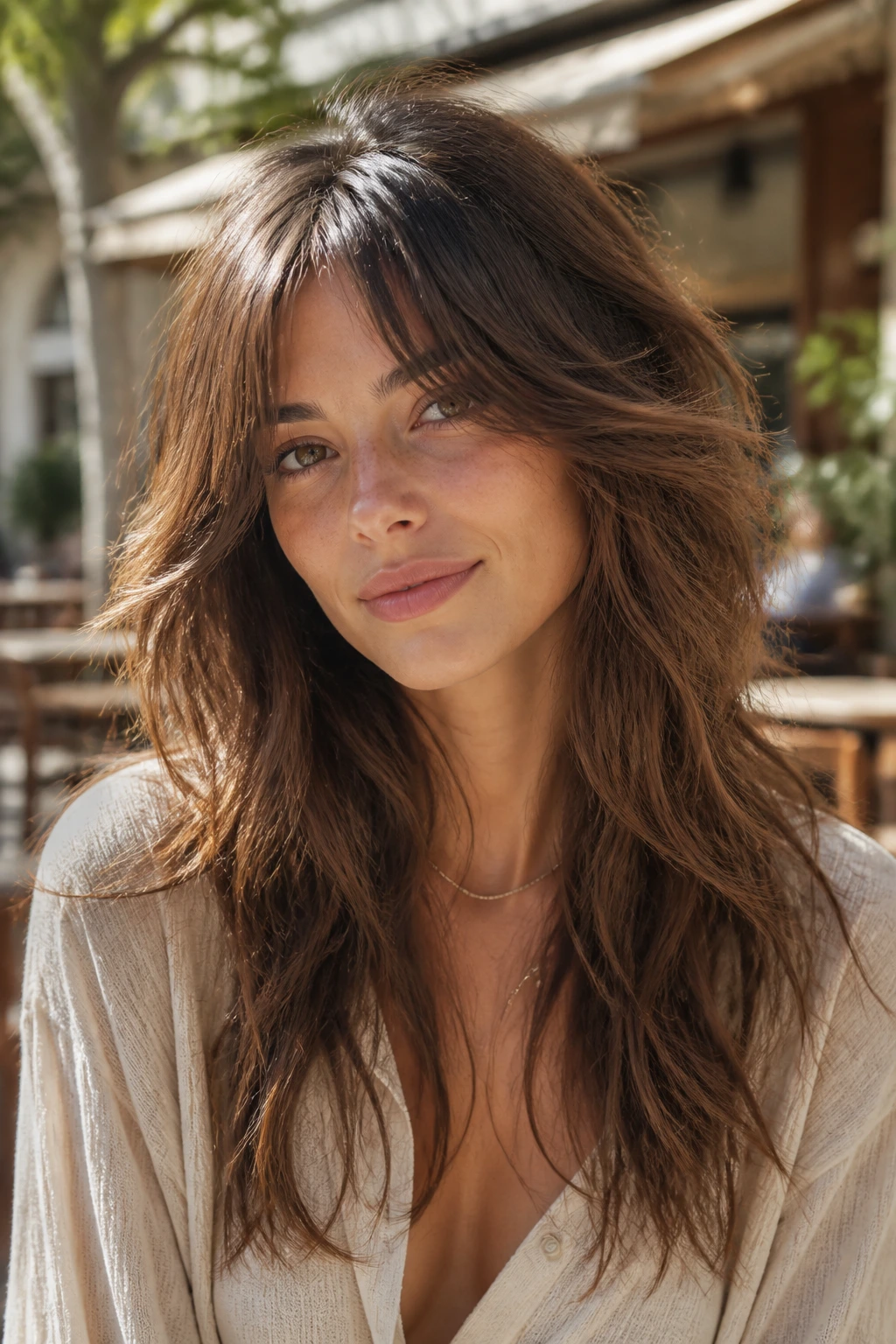
The wolf cut takes the shag idea and pushes it further. There is more separation between the crown and the length, which creates lift at the top and a bit of edge through the sides. When you pair that with soft curtain bangs, the result is wild but not sloppy.
This is not the cut for someone who wants one neat silhouette from root to tip. The top wants volume. The front wants movement. The lower length can stay fairly long, but the transition through the layers should feel intentionally broken, not chopped at random.
How to style it
Use mousse at the roots if your hair falls flat, then bend the curtain pieces away from the face with a round brush or a 1-inch iron. A little separation cream through the ends keeps the layers from puffing out into a cloud.
The best thing about this look is the built-in attitude. It can be styled rough on purpose, which makes it one of the more forgiving long cuts on this list.
9. Birkin Bangs with Long Rounded Layers
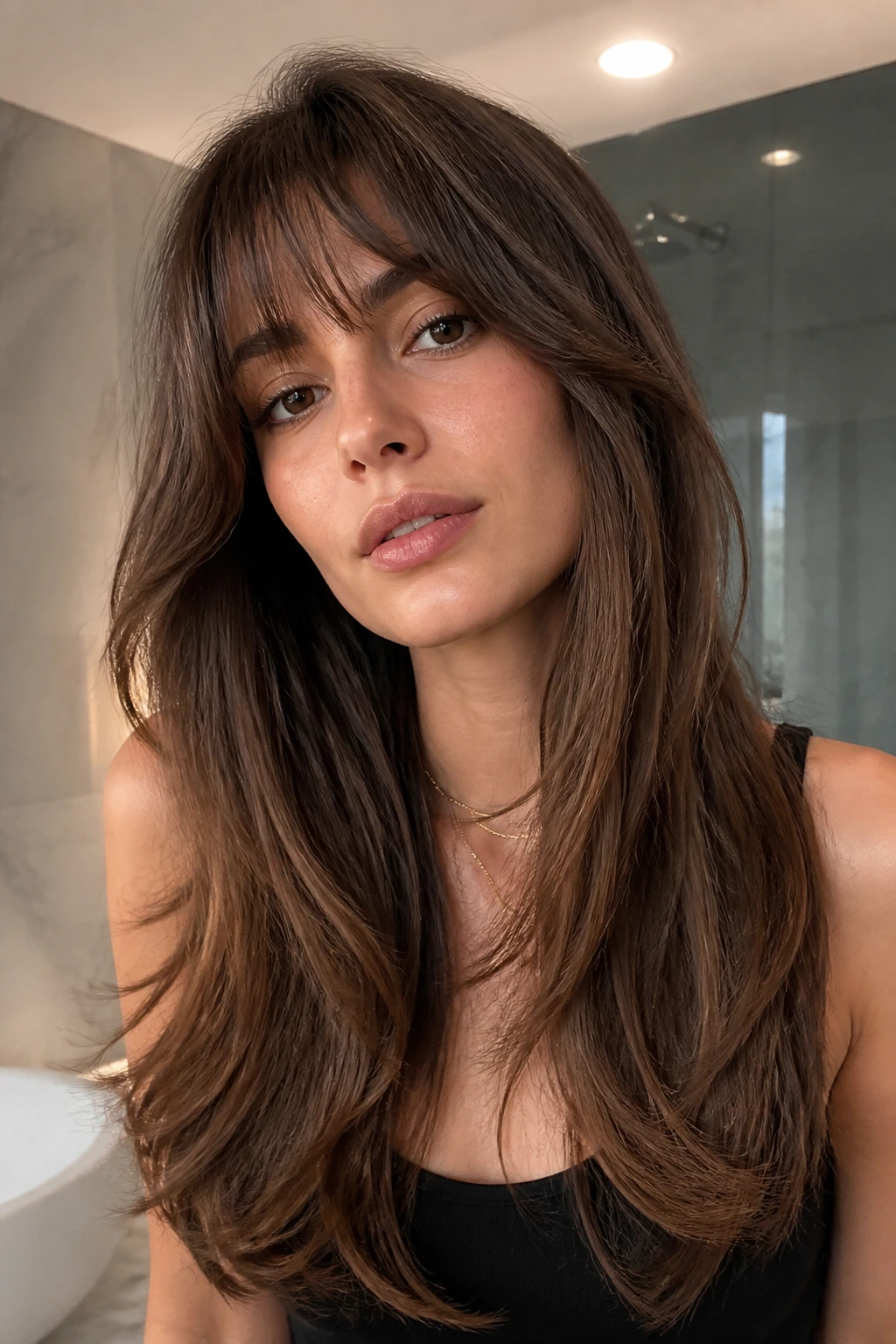
Birkin bangs sit softly across the brow with a little texture at the ends, which is why they feel more lived-in than a classic blunt fringe. On long hair, they look best when the layers around the face follow a rounded line instead of a harsh diagonal. The whole cut feels gentle and a little French, without trying too hard.
The front should not be too perfect. If the bangs are razor-straight and the rest of the hair is heavily rounded, the contrast can look stiff. Better to keep a slight bend through the fringe and let the side pieces skim the cheekbones before falling into the rest of the length.
This is one of those styles that rewards a good brush set and a little patience. Blow-dry the fringe forward first, then split and shape it once it cools. The rounded layers around the front settle better if you work them in sections.
There’s a soft-focus quality here that looks especially good with long, shiny hair and minimal texture.
10. Long C-Cut Layers with Center-Part Fringe
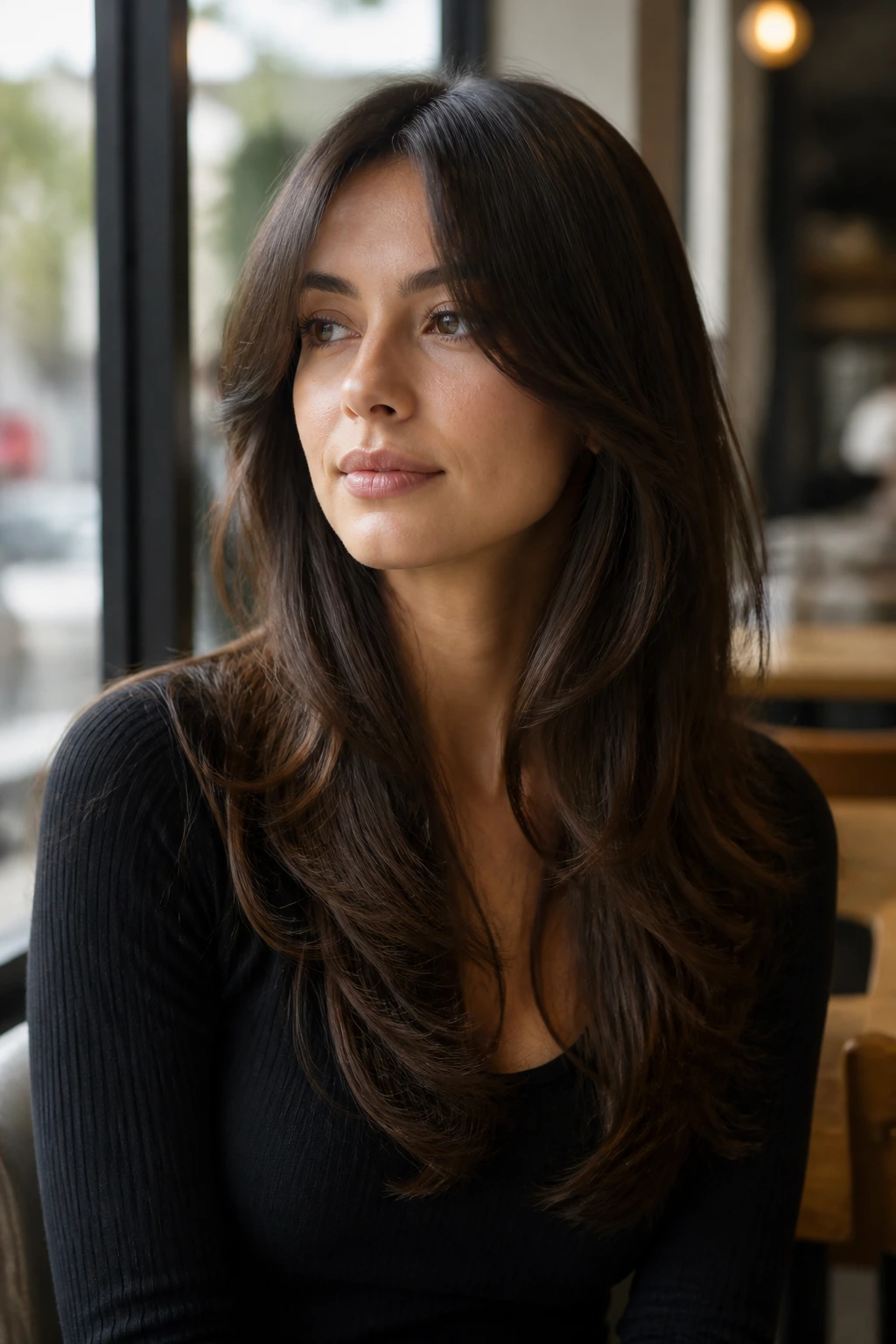
A C-cut is all about the curve. The front pieces sweep in a rounded arc from the cheekbone toward the collarbone, which gives the face a softer border than a straight-down layer. Add a center-part fringe, and the cut gets a subtle opening at the brow without losing that sleek shape.
This is a smart choice for hair that already likes to lie flat and smooth. The curved side pieces catch the light as they turn inward, and the bang splits just enough to keep the forehead from disappearing behind the hair. It is one of the cleaner-looking styles in this collection.
What I like here is the restraint. Nothing is shouting. The shape comes from line and placement, not volume. If you want a haircut that looks deliberate even when you have only spent five minutes on it, this one does a lot with very little.
It also grows out well because the curve stays flattering even after the fringe loosens.
11. U-Shaped Layers and Airy Bangs
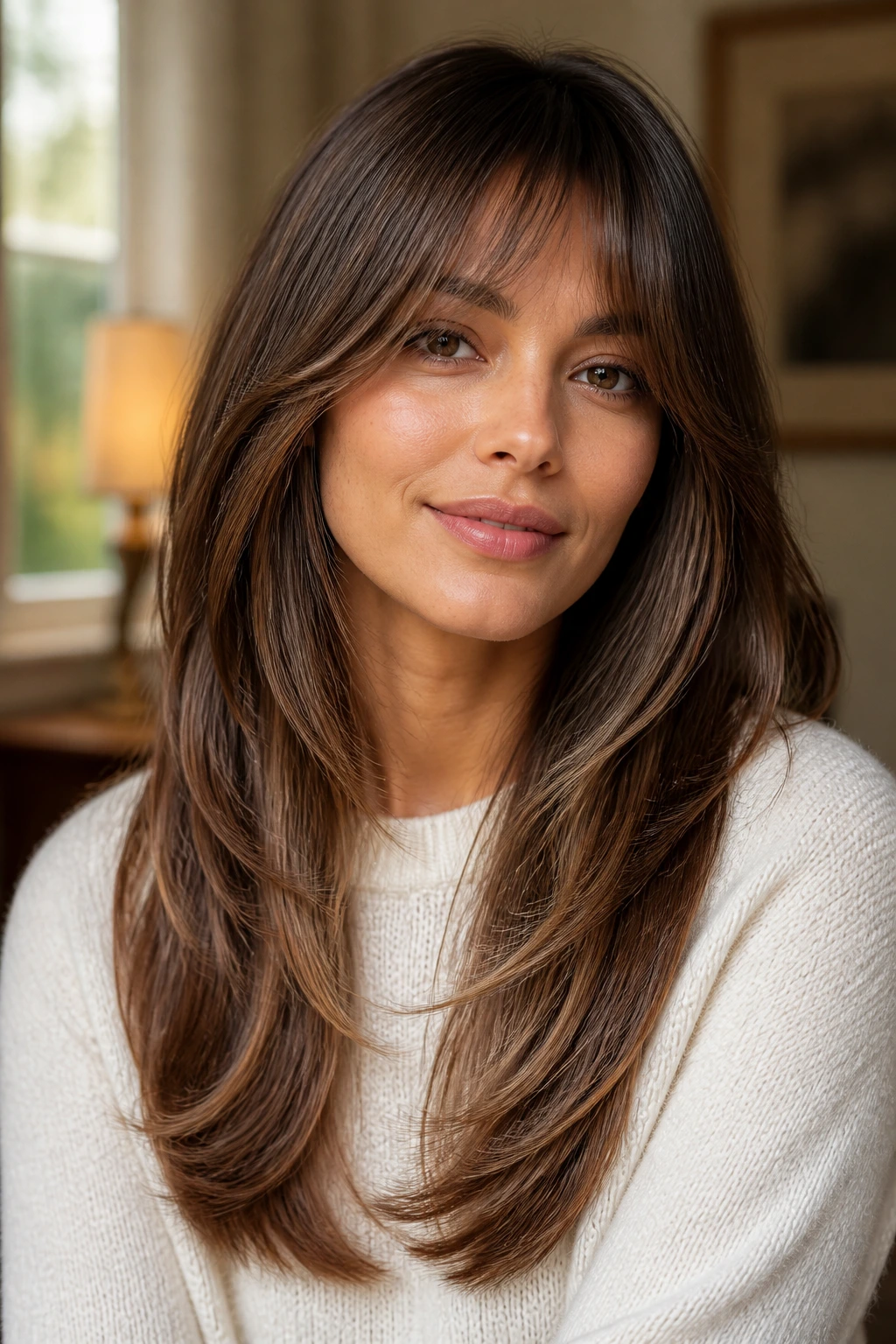
The U-shaped cut keeps the perimeter long and gently rounded, which is useful when you want your length to stay intact but the front to feel lighter. Airy bangs finish the job by breaking up the forehead with a soft, easy fringe that does not sit too heavy.
This cut is a good middle ground for people who love long hair but get tired of the front looking dense. The curve in the back keeps the silhouette feminine and smooth, while the bangs stop the face from getting swallowed. Nothing about it feels extreme.
Best if your hair is dense but not coarse
If the strands are thick but not rough, this shape tends to move well without needing a lot of product. Ask your stylist to keep the bang texture light and the front layers long enough to tuck behind the ear if you want.
The result is gentle, polished, and easy to wear with a middle part or a slightly off-center split.
12. V-Cut Lengths with Side Curtain Fringe
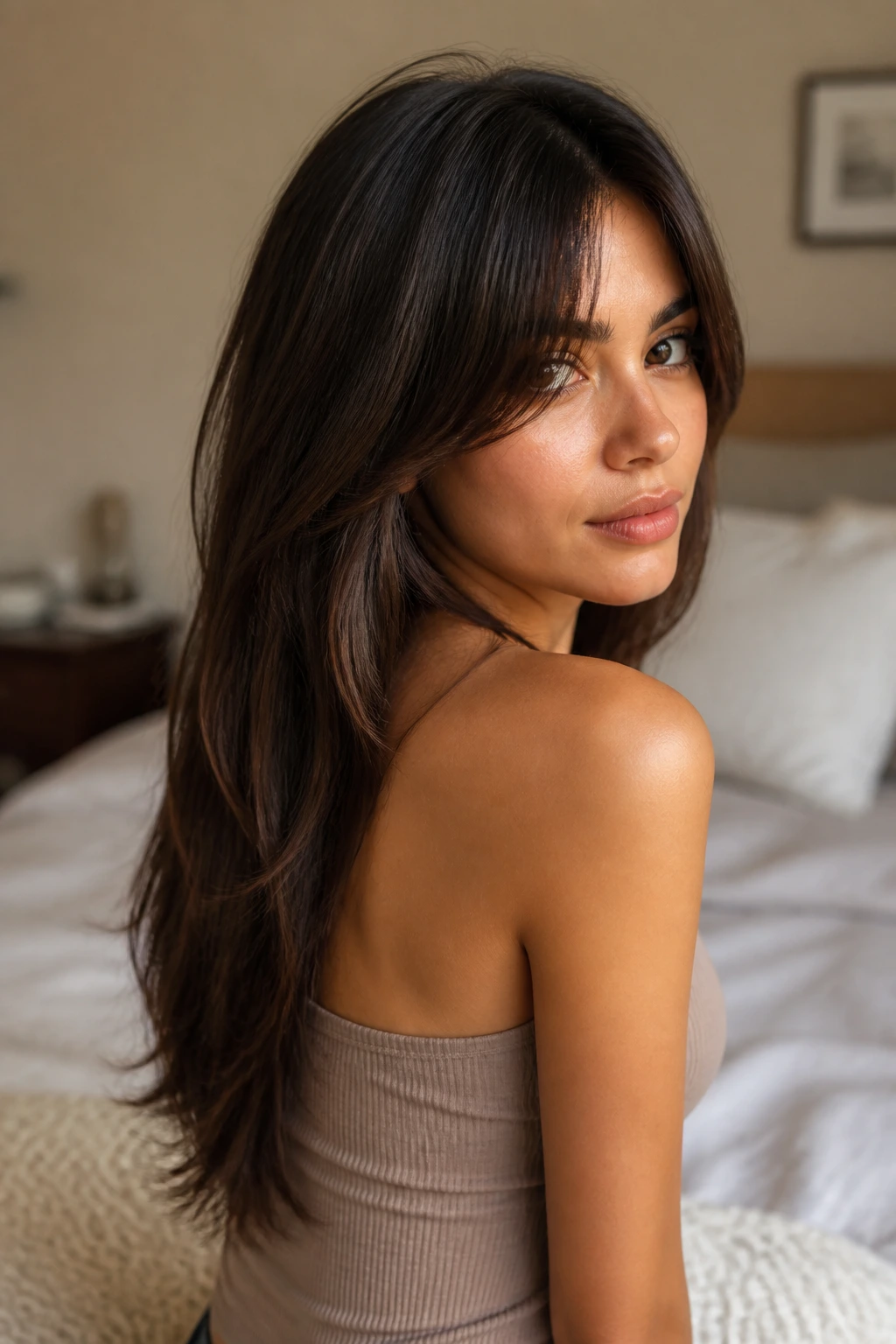
A V-cut gives the back a pointed finish, which sounds dramatic because it is. The long layers taper down toward the center, creating a sharper silhouette than a U-shaped cut, and that shape looks especially striking with a side curtain fringe. The front softens the edge so the cut does not feel severe.
This is a strong choice for thick hair. The V removes some of the visual bulk at the back, and the long fringe helps pull attention toward the eyes. If the hair is very fine, though, too much taper can make the ends look scraggly, so the stylist needs to keep the perimeter controlled.
The side curtain fringe should open from the temple and skim down into the cheekbone. Done well, it gives the cut a little motion every time you turn your head. That movement matters on long hair; otherwise the shape can just sit there.
It is one of the more dramatic options here, but it still reads as wearable.
13. Feathered Blowout Layers with Brow-Skimming Bangs
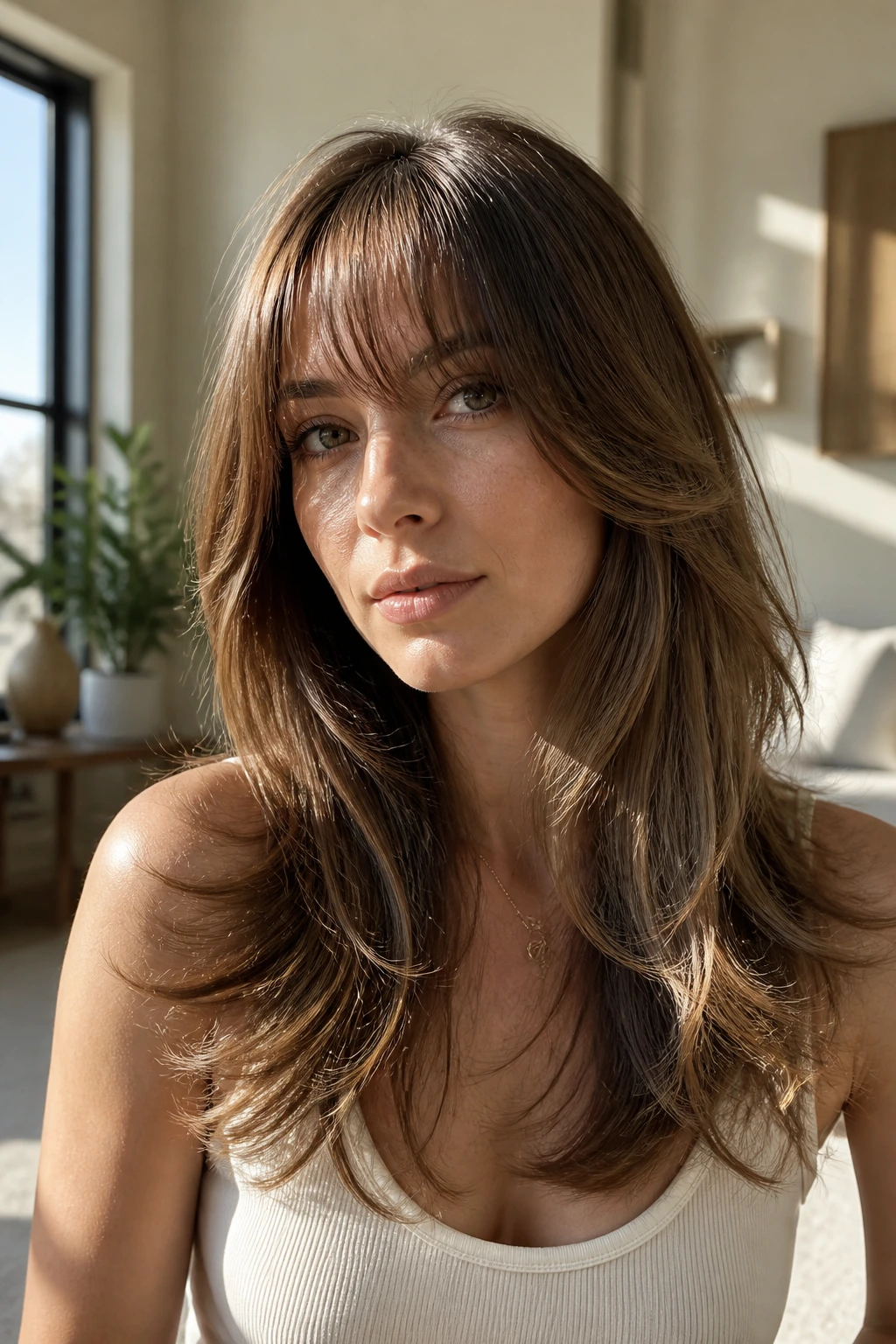
Feathered layers are all about soft edges and air. They start near the front, fan outward as they move down, and blend with a bang that kisses or just barely covers the brows. On long hair, this produces a classic blowout look that feels full without being rigid.
The key is direction. The front pieces should curve away from the face at the cheekbones, then back in slightly at the ends. That gives the haircut a little swing. If the layers are cut too bluntly, the feathers turn into hard steps and lose the whole point.
The part that matters most
A round brush gives this cut its shape, but the cooling time is what locks it in. Clip the bang or roll it under for a minute while you finish the rest, then let it cool before touching it. If you pull it apart too soon, the curve falls flat.
This is a polished haircut, but it has enough movement to feel alive.
14. Razored Layers with a Soft Fringe
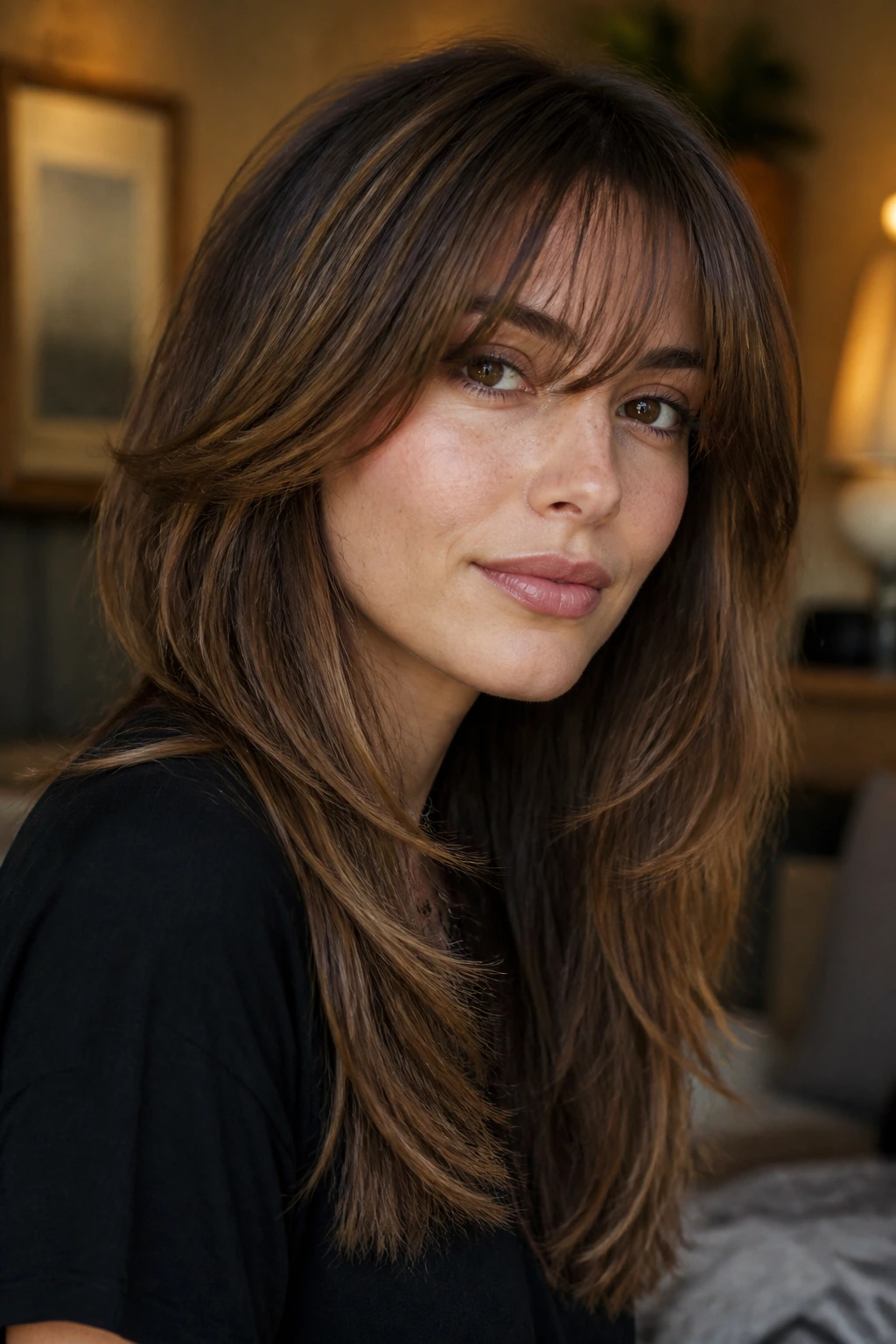
Razored layers are not for every head of hair. On straight to slightly wavy textures, though, they can take a heavy long cut and make it feel lighter without sacrificing length. The soft fringe keeps the front from looking too crisp, which balances the sharper edges created by the razor.
The appeal here is texture. Razor work leaves the ends with a softer, airier finish than blunt scissors do, and that matters when the hair is thick or tends to puff at the bottom. The bangs should still be cut with enough shape to avoid a stringy look.
If your hair has a lot of density and you hate the feeling of blunt ends hanging around your shoulders, this cut can be a real relief. It moves. It bends. It never looks as stiff as a one-length style with bangs.
One caution: razor cuts need a stylist who knows where to stop. Too much razor on fragile ends can leave them frayed.
15. Face-Framing Layers with a Deep Side Part
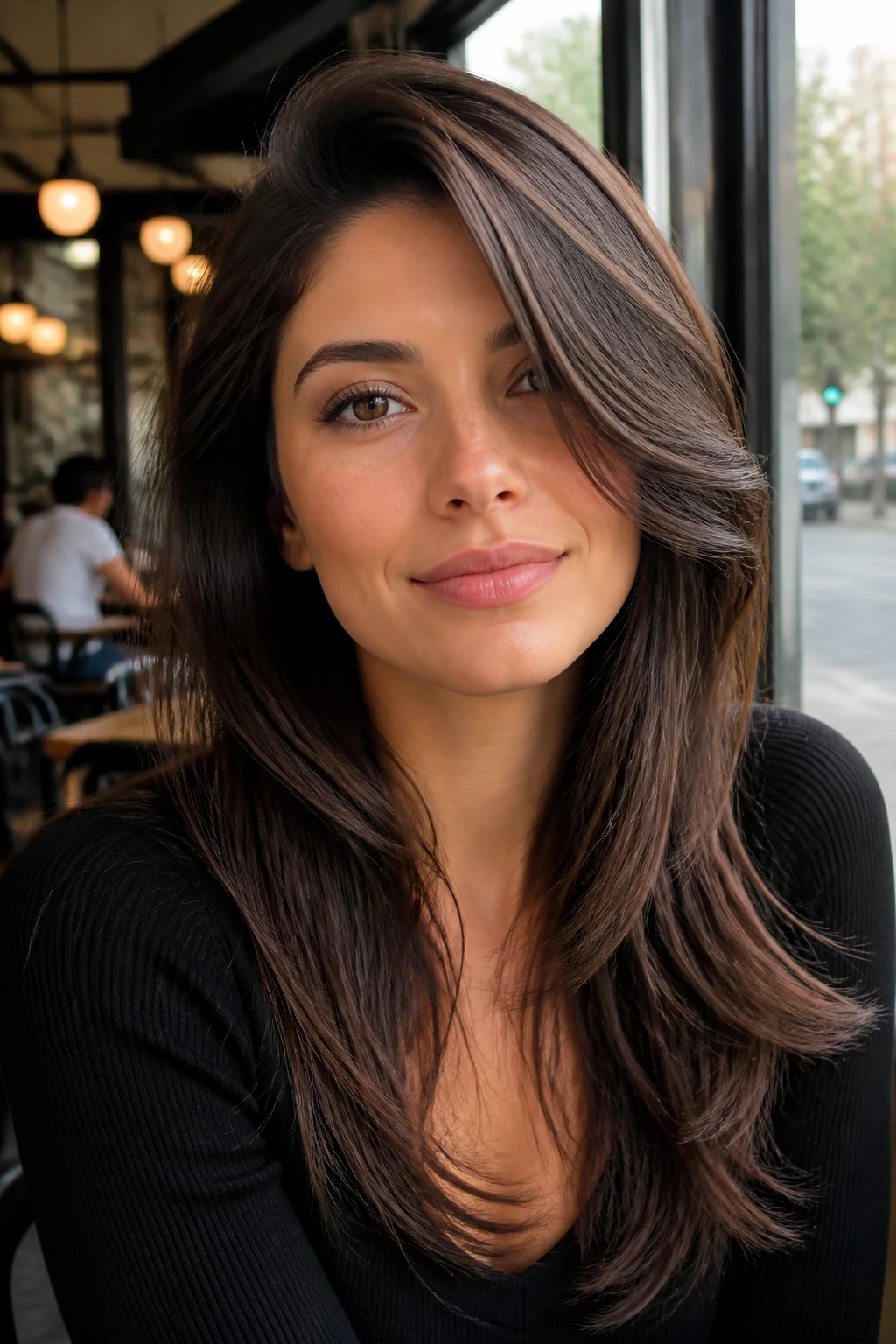
A deep side part can change the entire geometry of long hair. Instead of splitting the face down the middle, it sends the front pieces across the forehead and down the side of the cheek, which creates softness where a center part would feel more direct. The layers do the framing; the side part does the drama.
This is a good option if you are growing out bangs or never loved the commitment of a full fringe. The longest front pieces can fall from the brow area down to the jaw, then disappear into the rest of the length. You still get shape, but the cut stays flexible.
What I like most is how little it takes to change the mood. Flip the part and the whole haircut looks new. Pull the front tighter and it reads sharper. Leave it loose and it feels romantic. That kind of range is useful.
It also works well when you want your hair to sit off the face without looking overstyled.
16. Long Layers with Baby Bangs
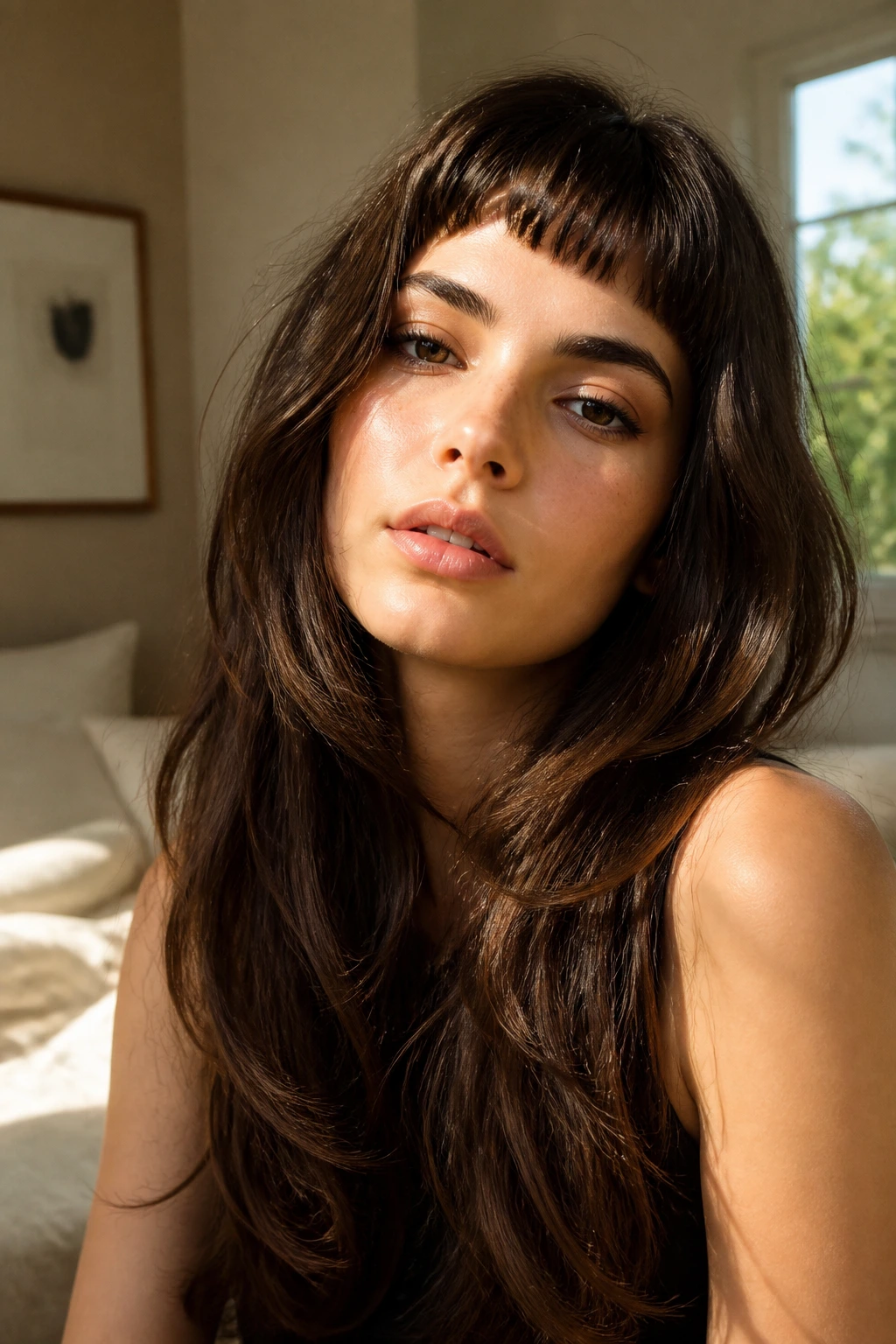
Baby bangs are a bold move, so the rest of the haircut needs to support them rather than compete with them. Long layers keep the length soft and flowing while the short fringe delivers the visual punch. The contrast is the point.
This look is more fashion-forward than most of the others here. The fringe sits high on the forehead, usually well above the brows, so it shows more skin and can make the eyes feel larger. Long hair helps keep the cut from tipping into costume territory. Without the long lengths, baby bangs can dominate too much.
Best when you want the forehead to stay visible
If you like a cut that shows your face instead of hiding it, this can be a fun option. But it does need frequent trims, and there is no way around that. Short fringe grows fast in relation to the rest of the hair.
I would keep the layers soft and the ends clean so the bang stays the star.
17. Collarbone-Front Layers with Loose Bangs
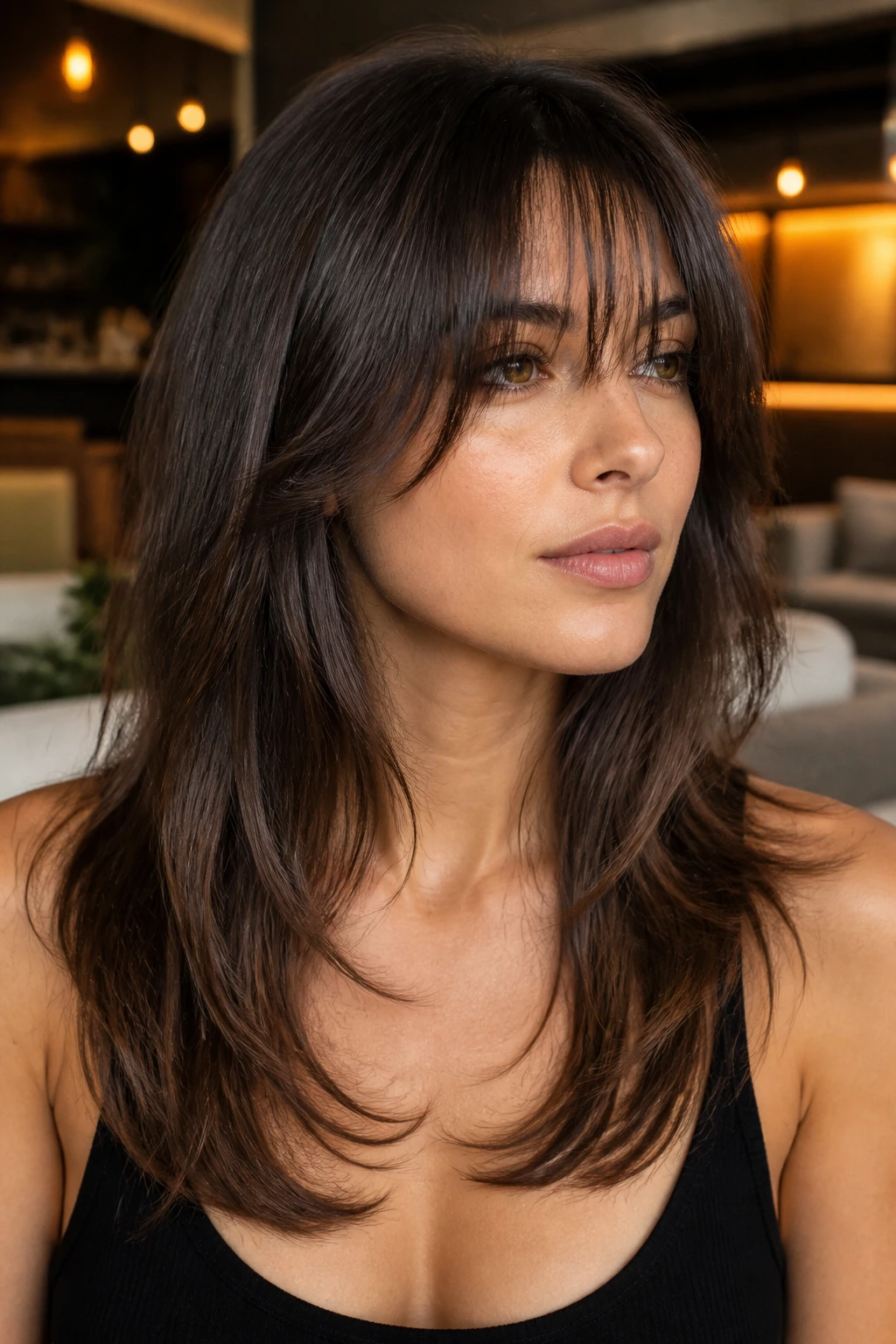
This is the low-drama version of a face frame. The front layers start around the collarbone instead of climbing higher up the cheek, and the bangs stay loose, broken, and easy to move around. It is a gentle shape, but it still gives long hair a front edge.
The trick is restraint. The layers should not carve too deeply into the length. You want enough front structure to open the face, not enough to make the whole haircut look chopped up. Loose bangs help because they sit softly and can be brushed to the side on days when you want less forehead coverage.
This cut is useful if your daily styling routine is short and you do not want to spend ten minutes on the front every morning. A quick bend with a dryer brush is usually enough. If you air-dry, the pieces should still fall in a decent direction.
It feels easy in the best way. Nothing forced.
How to keep it from collapsing
Use a lightweight mousse near the roots and a touch of cream only on the ends. Heavy oil near the front will make the bangs separate in weird little strings.
18. Curly Long Layers with Curly Fringe
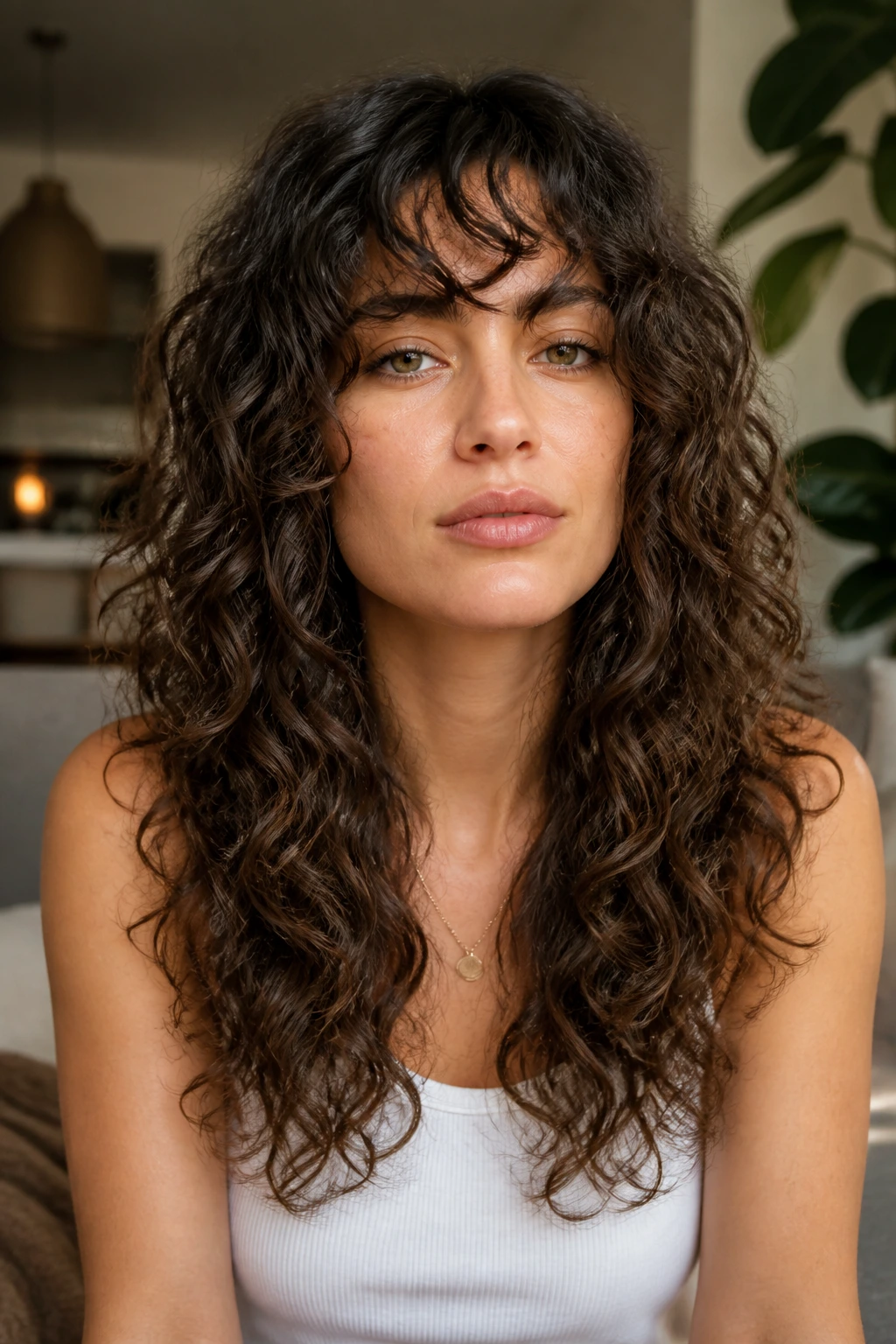
Curly hair changes the rules. The fringe shrinks, the layers spring, and the face frame needs to be cut with the curl pattern in mind rather than against it. Long layers let the curls stack without turning into a triangle, while a curly fringe softens the forehead in a way that feels natural, not forced.
The best curly cuts are usually done dry or mostly dry, because that is the only way to see where the curls actually land. If the fringe is cut wet and the stylist forgets about shrinkage, you can end up with bangs that live two inches above your brows. Not fun.
The face-framing pieces should be long enough to curl back into themselves once they dry. That usually means leaving more length than you think at the start. Curly bangs often look best when they are a little piecey and a little irregular. Perfection makes them look stiff.
This cut has personality. A lot of it.
19. Thick Hair Layers with Piecey Full Bangs
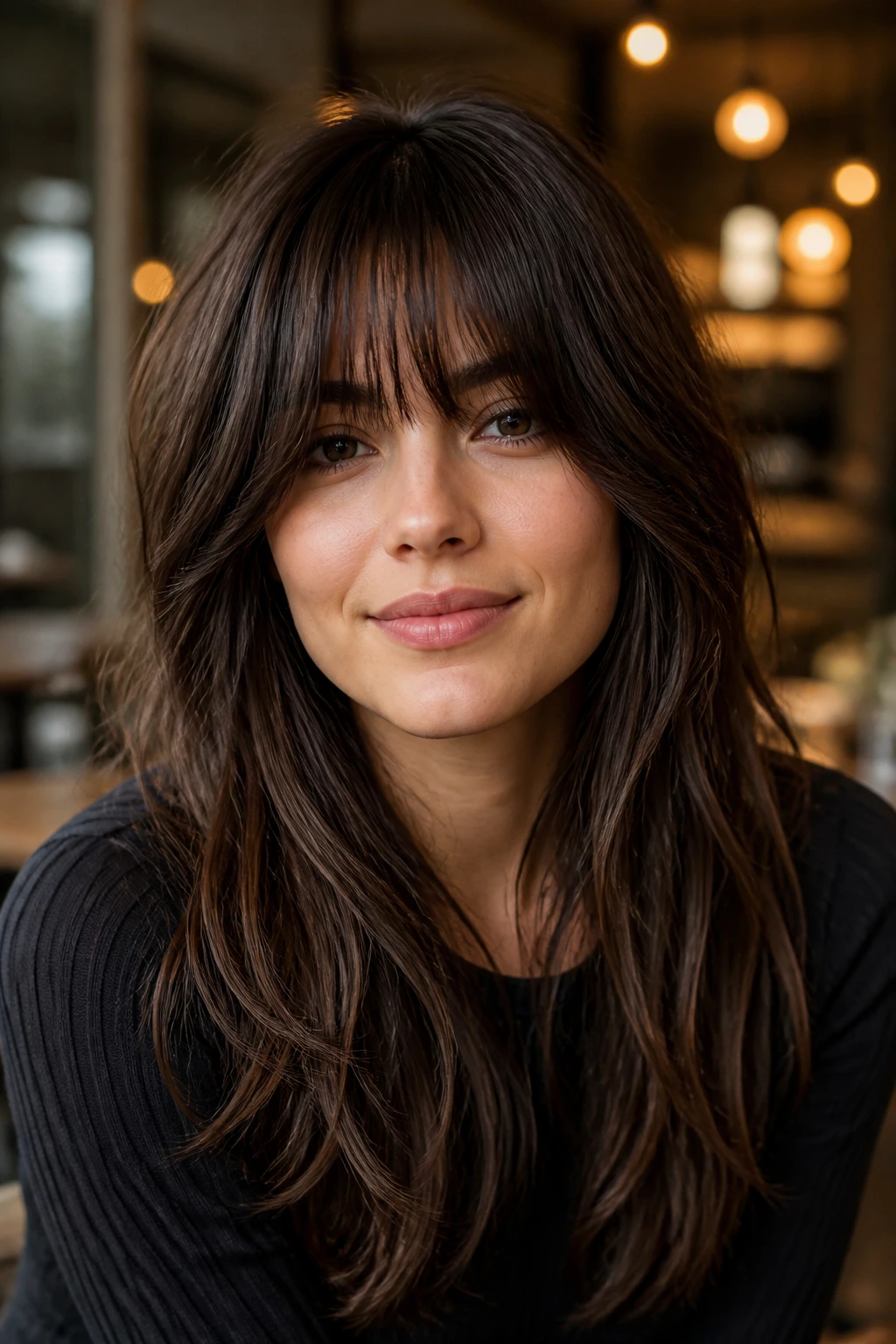
Thick hair can hold a full fringe beautifully, but only if the weight is managed well. Piecey full bangs keep the density under control by separating the fringe into defined sections, while the long layers remove bulk through the mids and ends. It is a strong shape without feeling heavy.
The full bang should not sit like a solid board across the forehead. Ask for internal texturing or point cutting so the fringe breaks up just enough to move. On thick hair, a blunt bang with no texturing can feel hot, heavy, and strangely immovable. Pieceiness solves that.
The layers around the face can start just below the cheekbone and open into the chest. That keeps the front from forming a wall of hair. If the ends are also thick, thinning the perimeter a little can help the whole cut swing instead of sitting like a blanket.
This one is for people who want fullness, but not the kind that feels bulky.
20. Retro ’90s Blowout Layers with Curtain Bangs
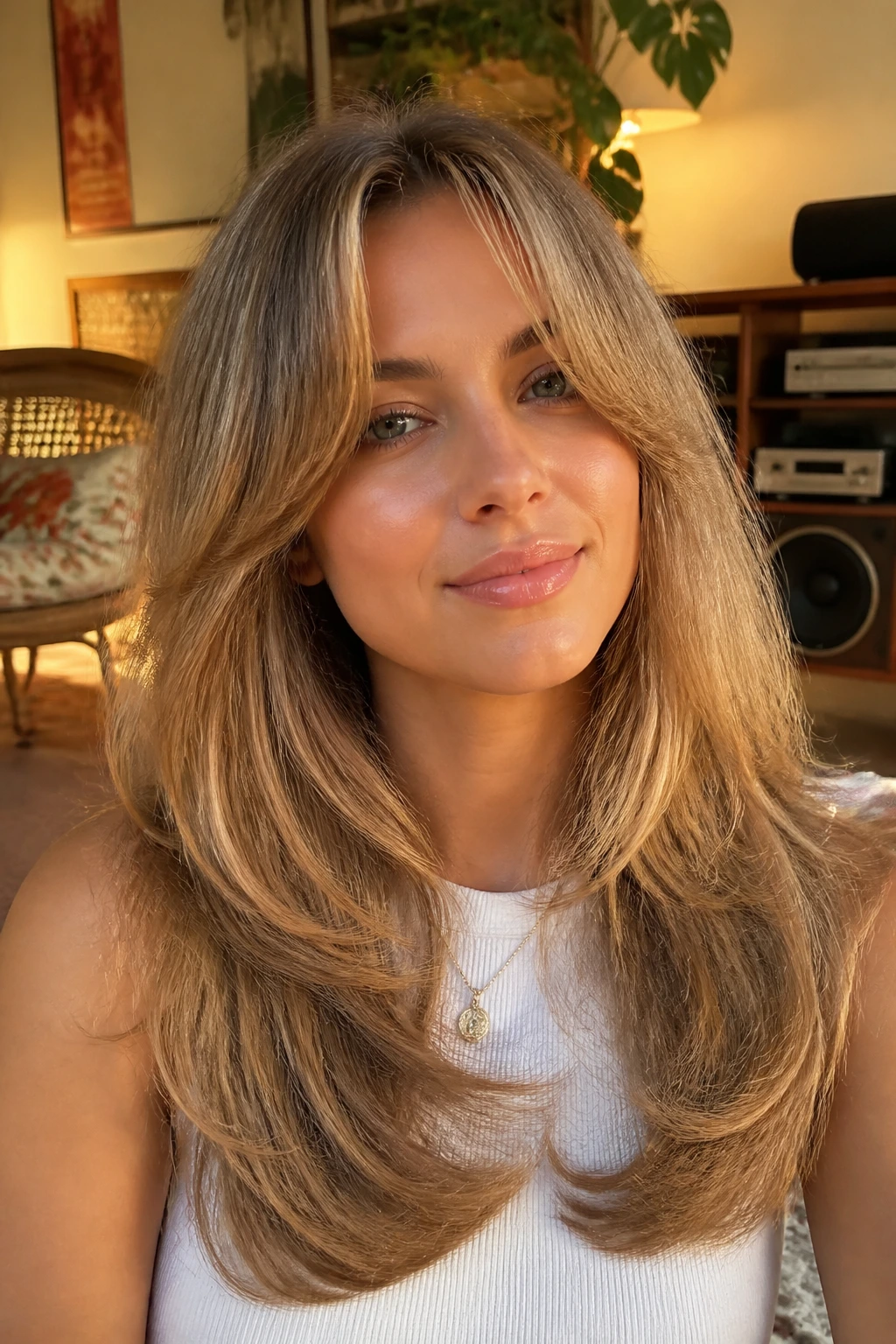
This cut is all about bounce. The layers are rounded and polished, the curtain bangs lift away from the center, and the ends curve under in that soft blowout shape that never really stopped looking good. Long hair gives the style room to breathe, which is part of why it works so well here.
A large round brush is the usual tool for this one, though some people finish the ends with a 1.5-inch iron if the hair wants to fall flat. The front pieces should be directed away from the face first, then slightly back toward it once they cool. That small change creates the movement people associate with a proper blowout.
How to set the shape
Clip the bangs up at the roots for a minute after drying, or roll them over a large brush and leave them there while you finish your makeup. Cooling matters more than most people think. Warm hair holds the curve until you touch it, then drops.
This style looks especially sharp on long hair that already has a healthy amount of density.
21. Long Layers with Arched Full Fringe
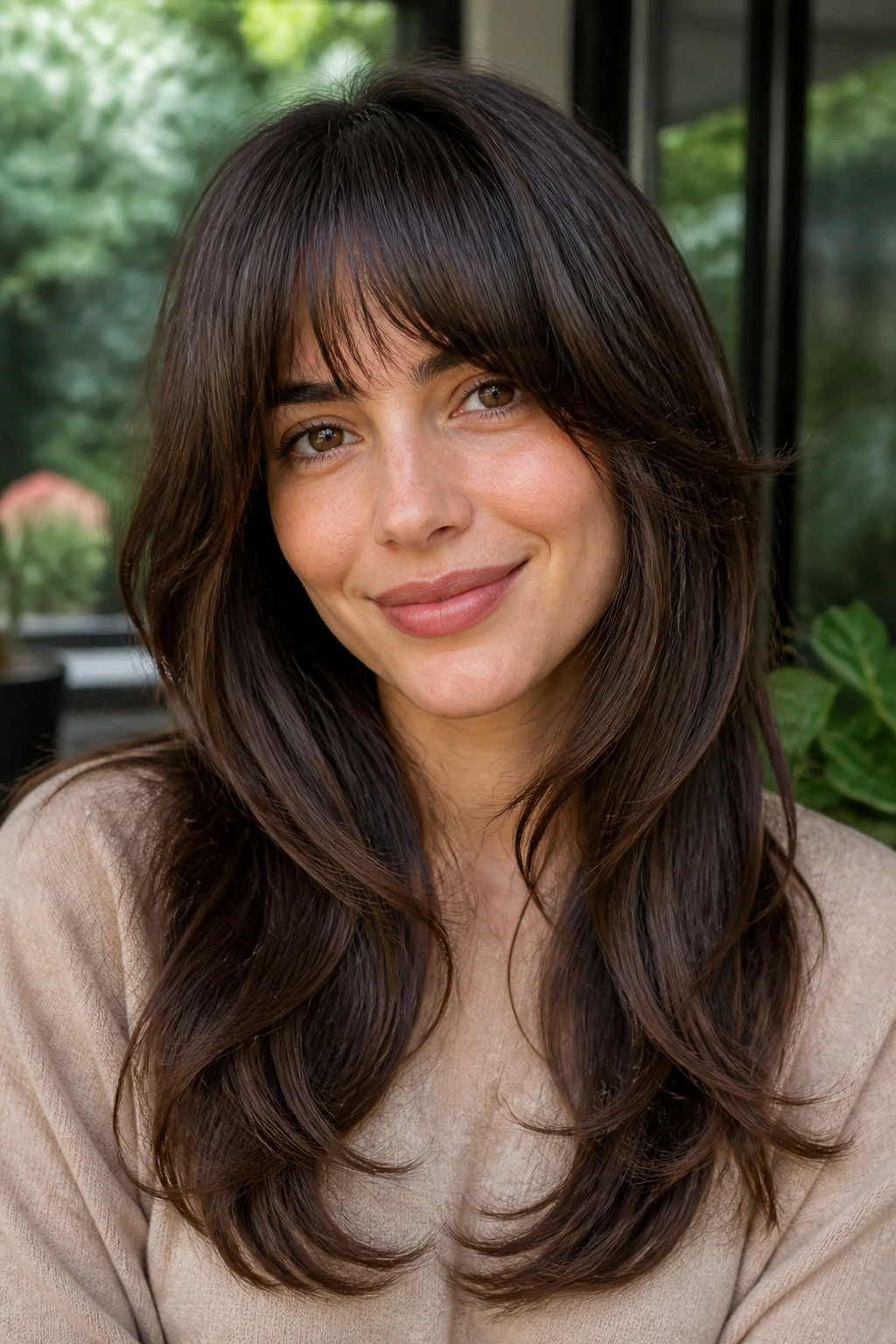
An arched fringe gives you the weight of full bangs with a softer edge. The center sits a touch shorter, then the sides dip longer as they move toward the temples. That subtle curve keeps the fringe from feeling harsh on long hair, where a perfectly straight line can sometimes overpower the face.
The layers underneath should stay long and fluid. If they get too broken up, the fringe loses its contrast and the haircut starts to look busy. The beauty of this style is that it gives the forehead a strong frame while still leaving the rest of the hair calm.
This is a good choice if your hair is naturally straight or only lightly wavy. The arch looks intentional when the fringe lies clean. On very textured hair, the curve can be harder to control, though not impossible. A small round brush and a quick blow-dry at the front usually solve most of the problem.
It feels classic, but not stiff. That matters.
22. Low-Maintenance Air-Dry Layers with Tapered Bangs
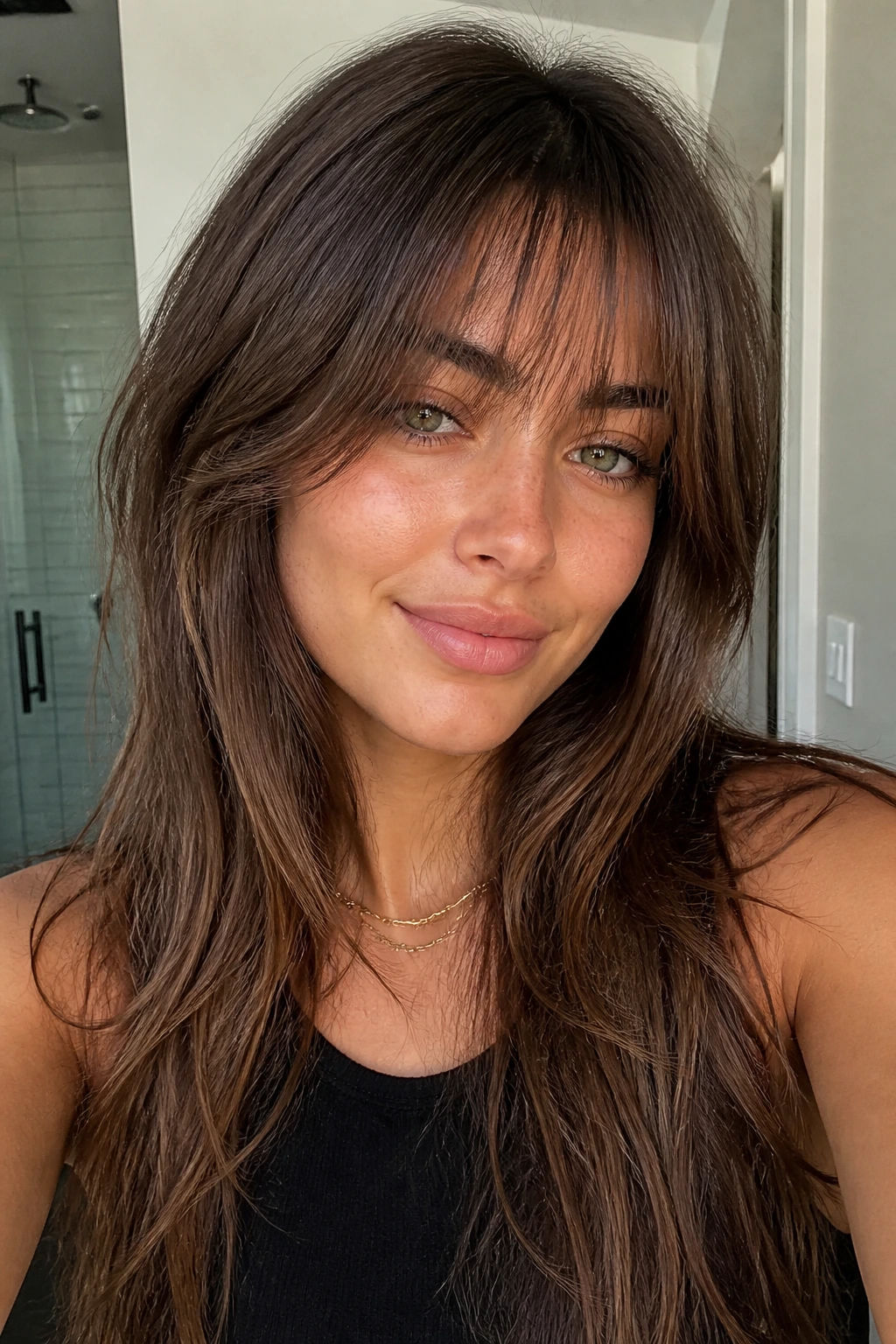
Not every fringe needs a blowout. Tapered bangs can be cut to fall into the long face-framing layers as the hair dries, which makes this one of the more practical options for people who air-dry often. The bang is softer at the center and longer at the sides, so it has room to move.
The cut should work with the pattern your hair already has. Wavy hair usually handles this best because the pieces bend naturally into the front. If your hair is straighter, the stylist needs to avoid making the fringe too sparse or too short, or it will sit in odd little angles while it dries.
This style is especially useful if you do not want a haircut that only looks good with hot tools. A little leave-in conditioner, a squeeze of curl cream, or a very light styling milk can be enough. The pieces settle on their own instead of needing constant correction.
It is not the most dramatic version here. It may be the smartest.
23. Glossy S-Shape Layers with Long Fringe
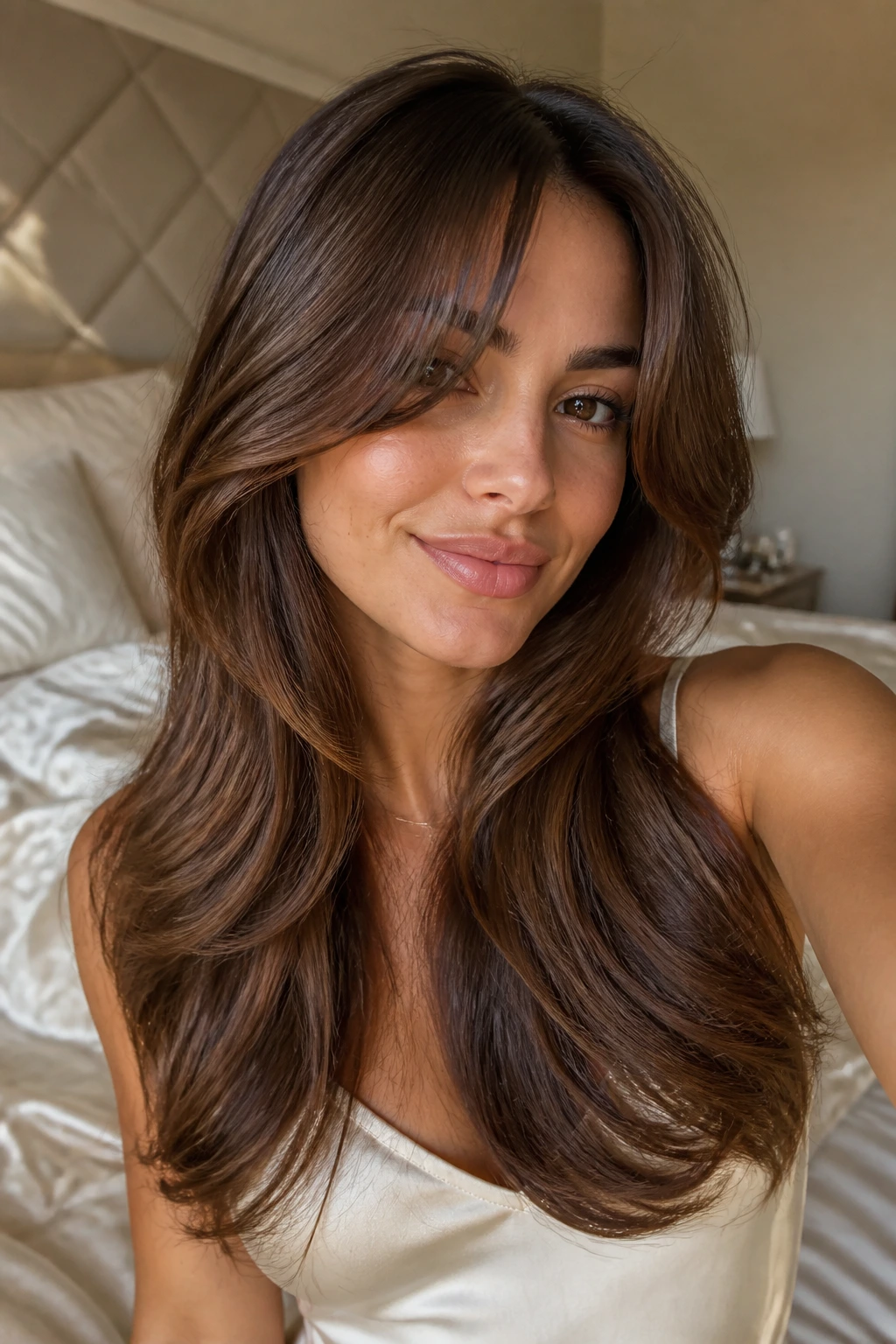
The S-shape is what happens when the front pieces curve in, then out, then back again with a soft, fluid motion. On long hair, that shape gives the front a polished swing that looks especially good when the hair is smooth and shiny. The long fringe keeps the brow covered just enough while the layers do the sculpting.
This haircut loves a satin finish. Too much texture can break the S-curve and make the front look fuzzy. A light smoothing cream and a paddle brush can do more here than a heavy styling product ever will. The whole point is graceful movement, not stiffness.
Why it stands out
The curve flatters the cheekbones without drawing a hard line across the face. It also gives long hair a more deliberate outline, which can be useful if the length tends to hang straight and forgettable.
If you like hair that swings when you turn your head, this is a strong contender.
24. Invisible Layers with a Heavy Face-Frame
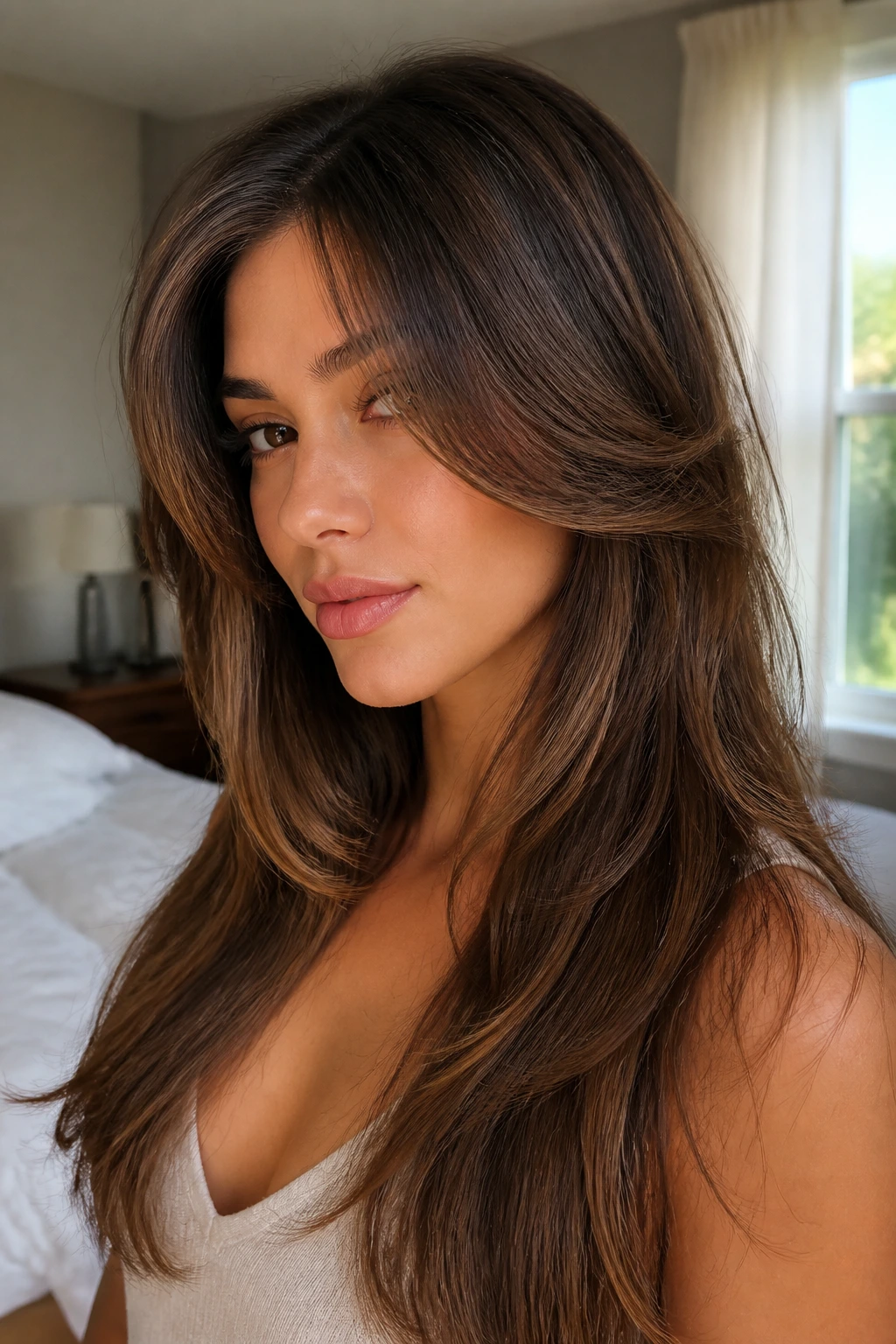
Invisible layers are for people who want to keep the length looking full while still getting movement around the front. The back stays mostly one length, but the face frame gets the real sculpting. That makes the cut feel expensive in a very quiet way.
The front pieces should be substantial enough to matter. A tiny face frame won’t do the job on long hair. You need visible shaping at the cheekbone, jaw, or collarbone so the eye has somewhere to go. The layers underneath can stay hidden, which keeps the ends looking thick.
This cut is useful if you are attached to long, one-length-looking hair but know the front needs help. It also grows out gracefully because the visible change lives near the face, not scattered through the whole head.
A lot of people ask for layers when what they actually want is just a stronger front. This is that haircut.
25. Money-Piece Layers with Long Bangs
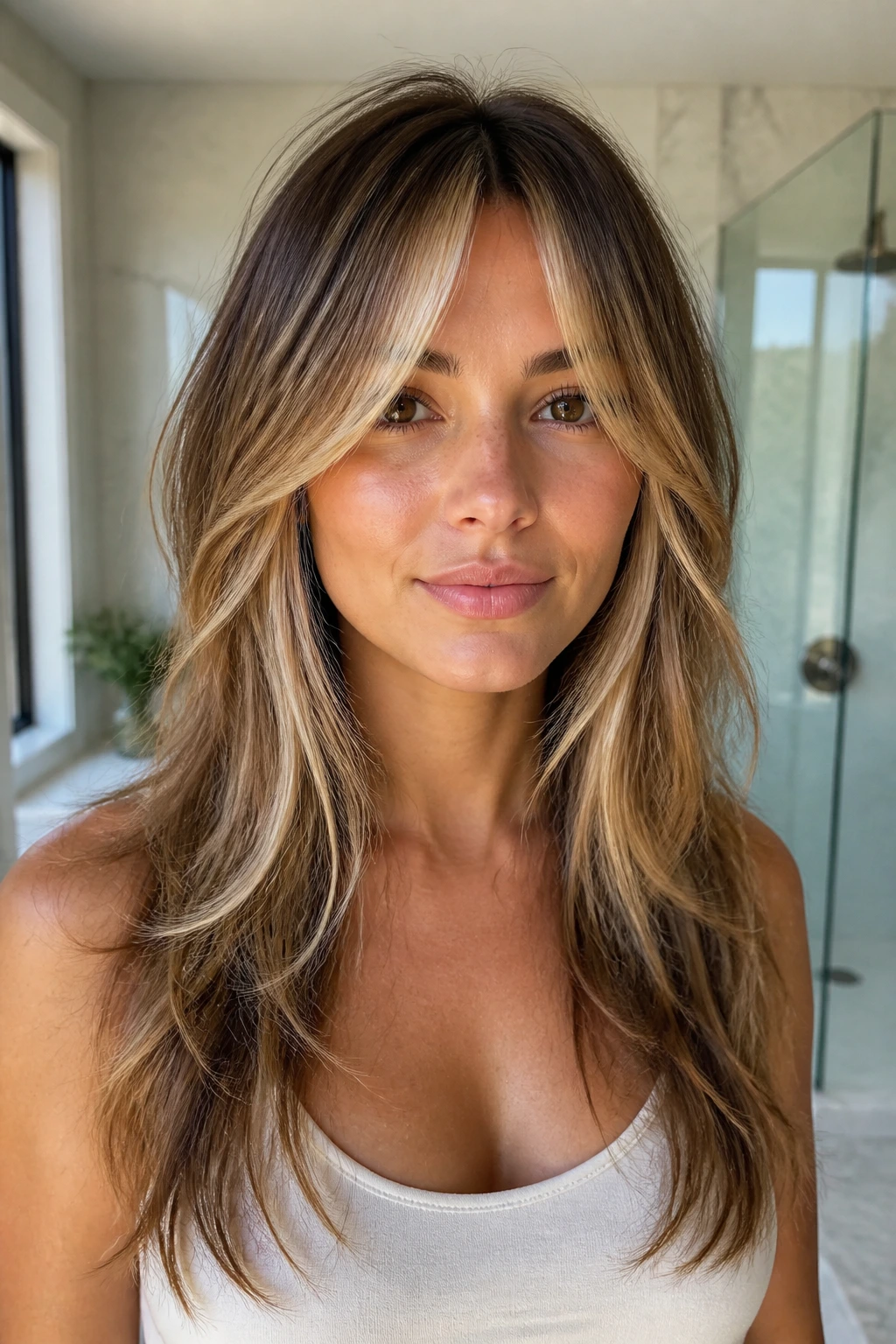
Money-piece layers use brightness at the front to make the haircut pop, and long bangs help that color placement do its job. The front pieces frame the face, the lighter streaks catch the eye, and the overall effect is much more focused than a random highlight job. On long hair, that front emphasis can be the difference between “long” and “long with shape.”
This works especially well if your hair is dark or naturally deep in tone, because the lighter front strands stand out immediately. The layers should be soft enough to blend into the color, not so choppy that they fight it. Long bangs are useful here because they give the highlighted pieces room to fall into the rest of the hair.
The upkeep is a little more involved if you color the front pieces often. Still, the visual payoff is hard to ignore. The haircut gets structure, the color gets a frame, and the face gets more definition.
If you want the front of your hair to do the talking, this is a strong way to make that happen.
Why Face-Framing Layers and Bangs Change Long Hair So Much
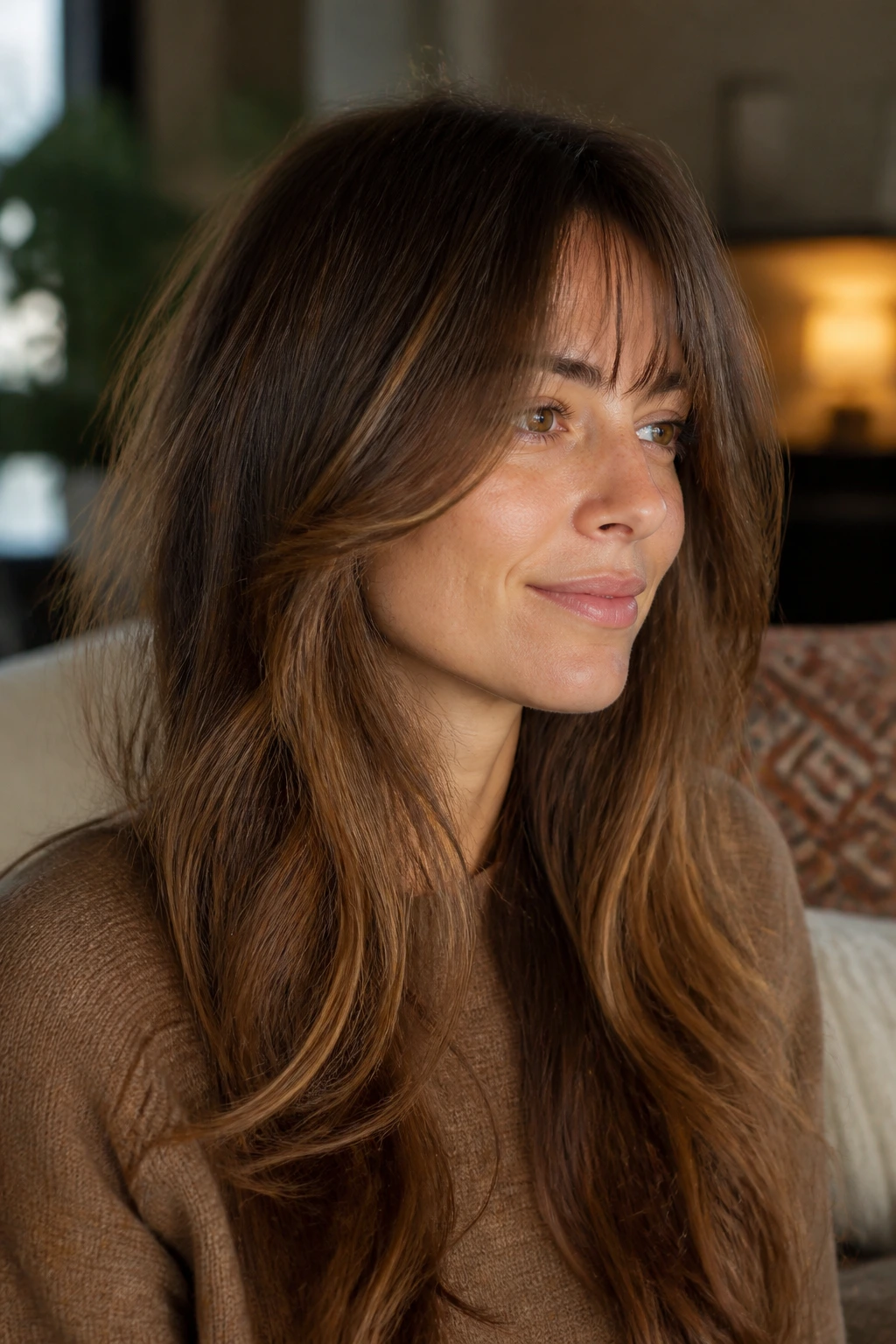
Long hair can look gorgeous and still feel like it is doing too little around the face. That is the problem these cuts solve. They remove weight where the eye looks first, which is why the shift feels bigger than the actual amount of hair taken off. A half-inch at the brow can matter more than four inches at the bottom.
The smartest versions of face-framing layers with bangs for long hair work because they create direction. The eye moves from fringe to cheekbone to jaw, then down the length. That movement is what keeps long hair from looking static, and it is why the front pieces need to be planned with the same care as the perimeter.
There is also a practical side. Front layers can soften a strong jaw, balance a longer face, or create width where the face feels narrow. Bangs do not “fix” anything, and I would not talk about them that way. They simply change the line of sight. That is enough.
The line matters more than the length
A face frame that starts at the cheekbone does a different job than one that starts at the chin. A fringe that splits at the brow does something different from one that falls straight across. Small shifts. Big effect.
How to Ask for the Right Front Shape at the Salon
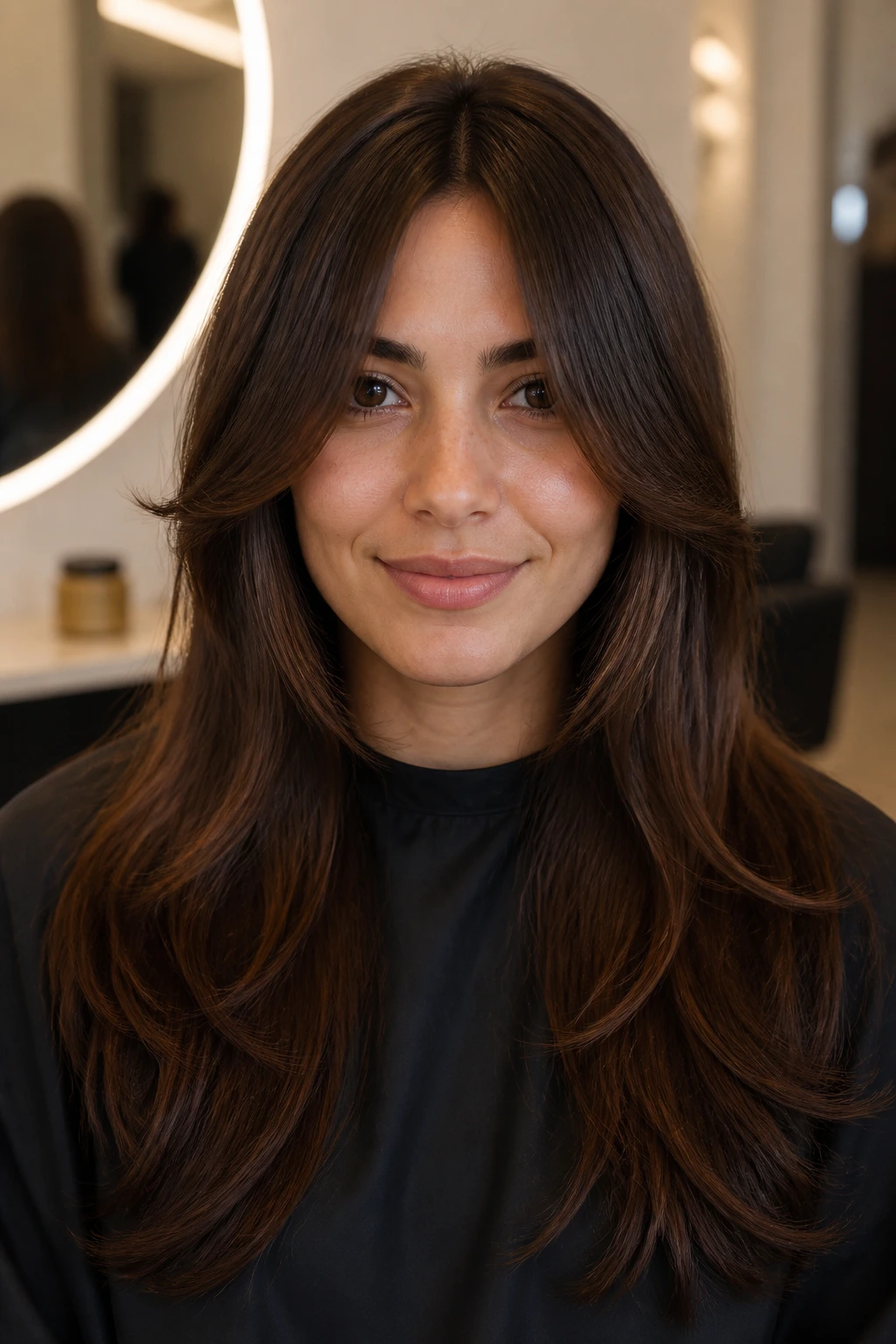
Bring photos, yes, but bring the right kind. One photo should show the front shape you want. Another should show the length you want to keep in the back. That split matters because a lot of bad haircuts happen when someone says “this” while the stylist only sees the bang and not the silhouette.
Be specific about where the shortest point should land. Say cheekbone, lip, jaw, or brow. Those words are far more useful than “face-framing.” If your stylist knows you part your hair in the middle, say so. If your cowlick pushes the fringe up on one side, say that too. Those little details change the cut more than most people expect.
A simple consultation script
- “I want to keep the length, but I need the front to move more.”
- “The shortest bang piece should hit around my cheekbone.”
- “I wear a center part most days.”
- “My hair dries wavy at the front, so I need room for shrinkage.”
That is enough to get the conversation out of guesswork territory. Good haircuts are built on specifics.
Tools That Make These Styles Easier to Wear
-
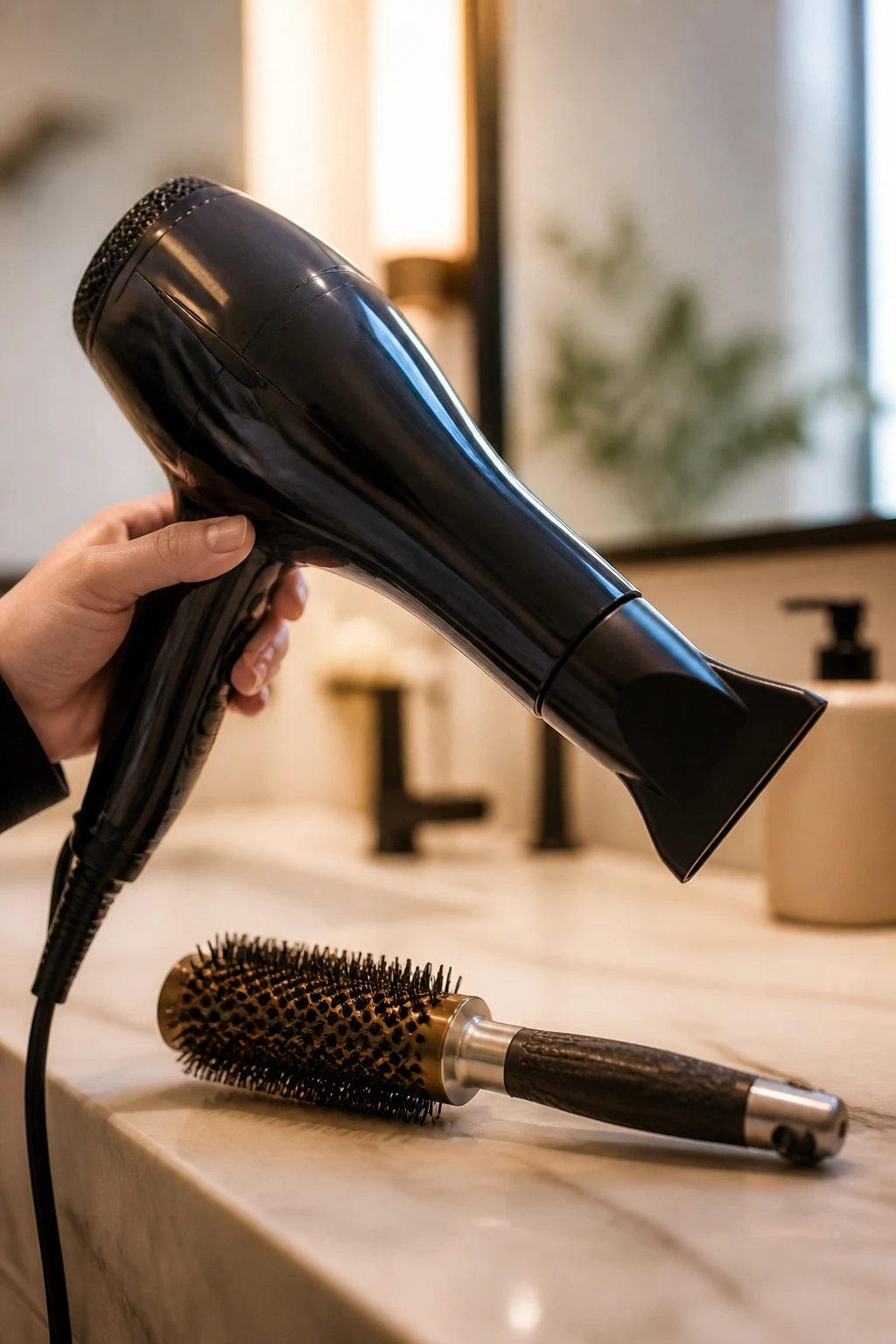
Blow dryer with a concentrator nozzle: Directs airflow so bangs and front layers lie in the direction you choose instead of puffing every which way.
-
Small round brush, 1 to 1.5 inches: The smaller size grabs fringe and shorter face-framing pieces without leaving them overcurled.
-
Large round brush, 2 inches or more: Useful for butterfly cuts, curtain bangs, and any blowout style that needs a broad bend.
-
Flat paddle brush: Good for smoothing long lengths and calming the mids when you want a sleeker finish.
-
Heat protectant spray: Worth using every time hot tools touch the front pieces, since bangs get the most direct heat.
-
Sectioning clips: Keep the fringe separate while drying the rest of the hair. A clip saves you from accidentally blasting the bang in the wrong direction.
-
Dry shampoo: Keeps bangs from turning oily at the roots, especially if your forehead is warm or your hairline is naturally slick.
-
Light finishing cream or serum: A pea-sized amount on the ends keeps feathered layers from frizzing out.
How to Wear These Cuts Day to Day
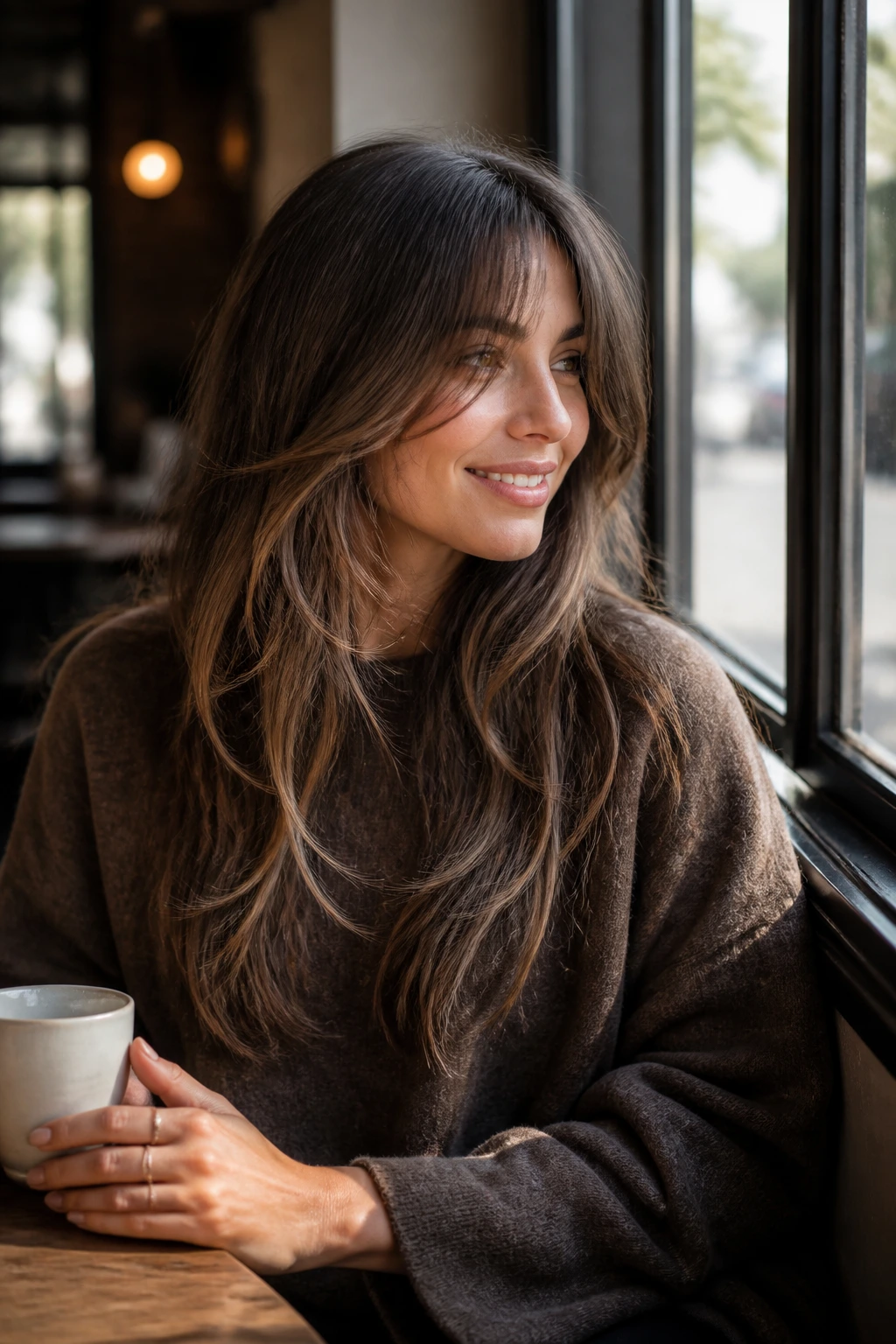
Presentation: Pick the finish that matches the cut. A butterfly cut wants a bouncy blowout. A shag wants texture. A blunt fringe looks strongest when the front is smooth and the rest of the hair stays clean.
Accompaniments: These cuts sit well with simple earrings, open necklines, or one statement lip color. The front of the haircut already does the work, so there is no need to pile on extra visual noise near the face.
Length Balance: If you want the haircut to look lighter, keep the shortest face-framing piece near the cheekbone. If you want more drama, let it skim the jaw or collarbone. The difference is visible immediately.
Everyday Mood: Center parts feel softer with curtain or bottleneck bangs. Side parts make sweepier fringe look richer. Pulling the hair half up can show off front layers in a clean way, especially when the bangs are not freshly washed.
Additional Tips and Shape Tweaks
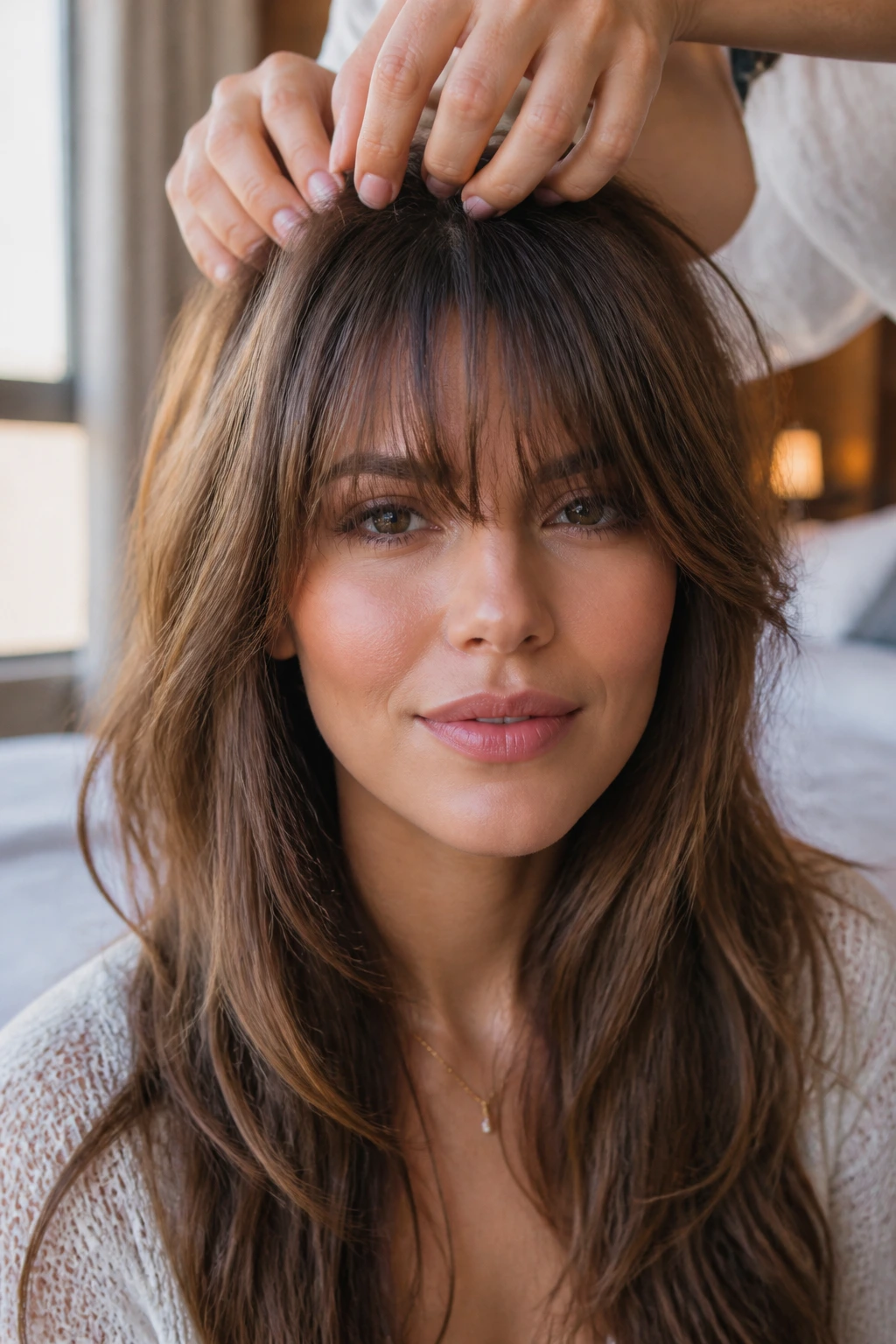
Root Lift: Blow-dry the front upside down for 10-15 seconds, then switch back to a normal direction. That tiny extra lift keeps bangs from collapsing flat against the forehead.
Texture Control: Use mousse at the roots for airy cuts and a cream only on the ends for smoother ones. Putting heavy product near the fringe is a fast way to make it separate into oily strings.
Styling Shortcut: If the fringe flips the wrong way, pin it to the opposite side for 5 minutes while it cools. Heat sets shape. Cooling locks it in.
Make-It-Yours: Thick hair usually benefits from more internal texturing. Fine hair usually needs less. Curly hair needs length left in the front to account for shrinkage. Straight hair often needs the cleanest lines.
How to Keep the Front Pieces Fresh Between Salon Visits
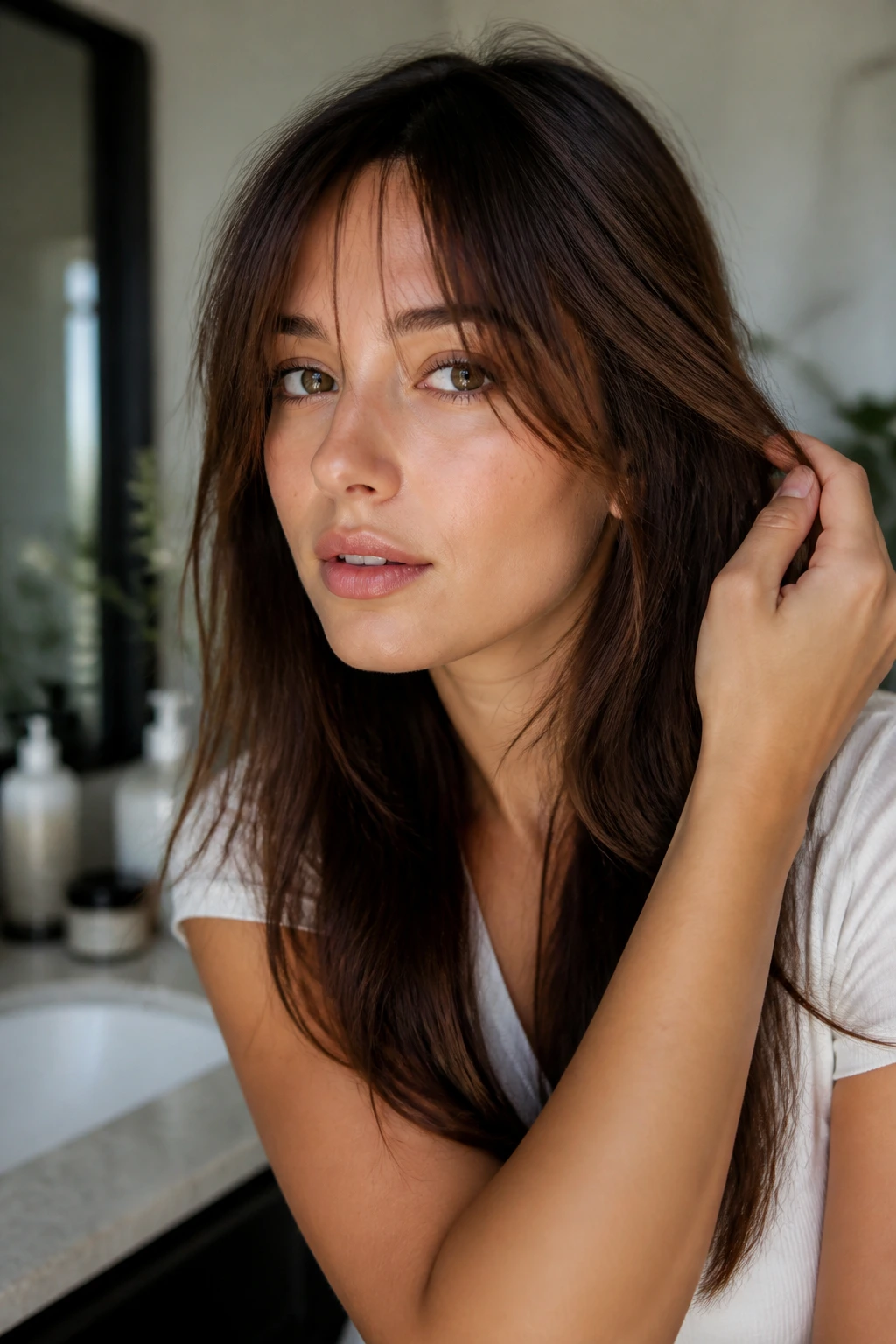
Bangs and face-framing layers do not need the whole head washed every time they misbehave. The front can be rinsed at the sink in under a minute if it starts to separate from oil or sweat. That alone can buy you another day of decent shape.
Trim timing matters more than people think. Short bangs often need a tidy-up every 3 to 5 weeks if you want them to sit in the same place. Longer curtain and bottleneck bangs can go 6 to 8 weeks before they start sliding past the sweet spot. Long layers in the front usually hold their shape for 8 to 12 weeks, depending on how much movement the cut has.
At night, keep the fringe from kinking by clipping it loosely or rolling it over a soft Velcro roller for a few minutes before bed. A silk pillowcase helps, but it will not save a bad cut. It will, however, keep the front from frizzing into a rough mess by morning.
If you heat-style often, the front pieces may look best on day one and day two. By day three, dry shampoo and a quick re-bend at the ends usually make the difference between “fine” and “why did I do this.”
Variations and Adaptations to Try
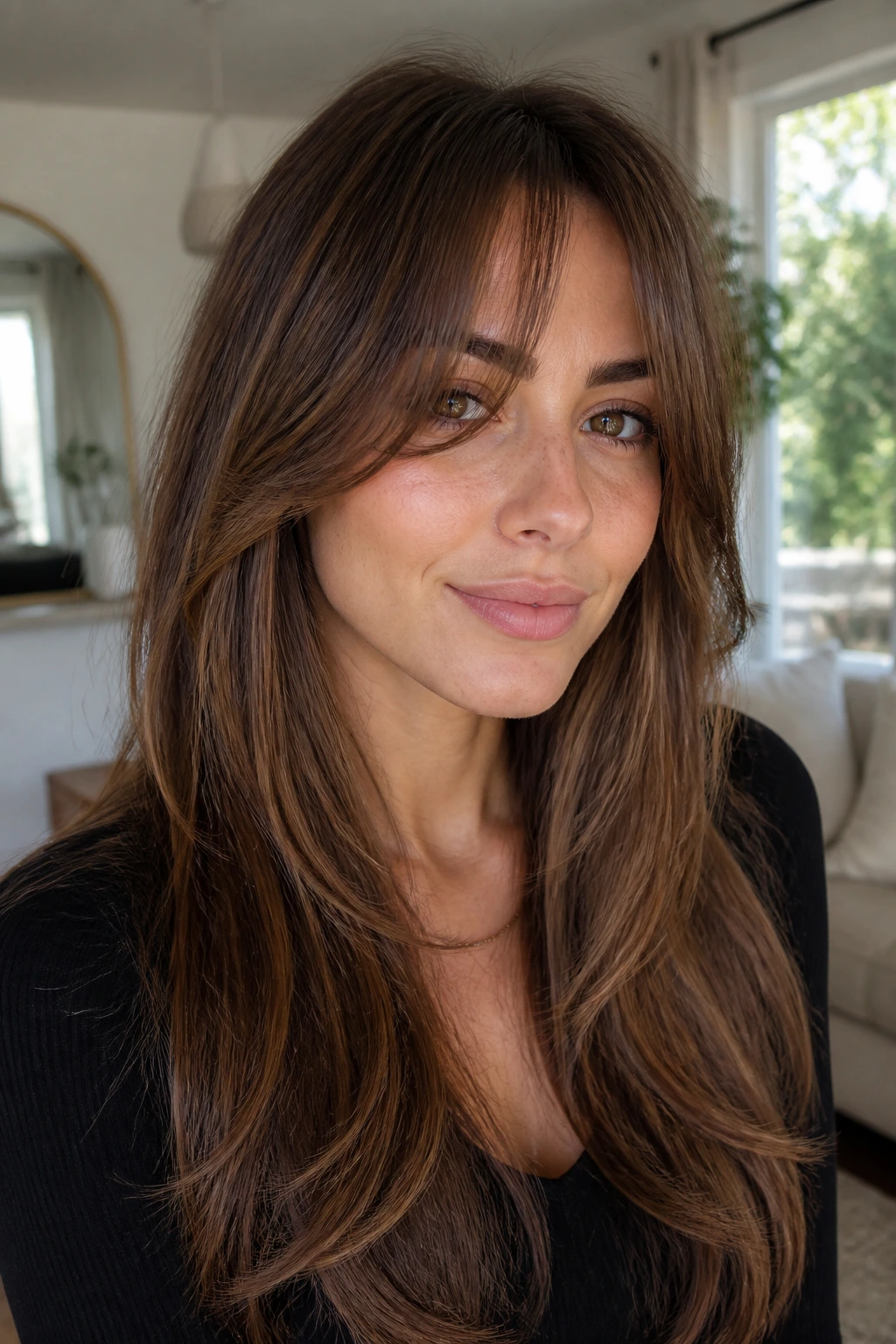
The Fine-Hair Float: Keep the layers light, the bangs wispy, and the front pieces long enough to move without collapsing. Heavy fringe will drag fine hair down, so less density usually works better.
The Thick-Hair Control Cut: Add more internal layering and use point cutting at the fringe. This keeps bulk from building up at the sides and stops the front from sitting like a solid wall.
The Curly-Friendly Shape: Cut the front longer than the final target and let the curls spring up on their own. Curly fringe looks better with room to shrink, and the face frame should be shaped dry if possible.
The Low-Heat Version: Choose tapered bangs, collarbone front pieces, and a cut that air-dries into a bend. A little leave-in and a scrunch is enough for people who do not want a brush in their hand every morning.
The Grow-Out Plan: If you know you hate frequent trims, keep the fringe at brow-skimming length or choose curtain bangs. Both can slide into the rest of the layers with less awkward in-between stage.
Common Mistakes to Avoid
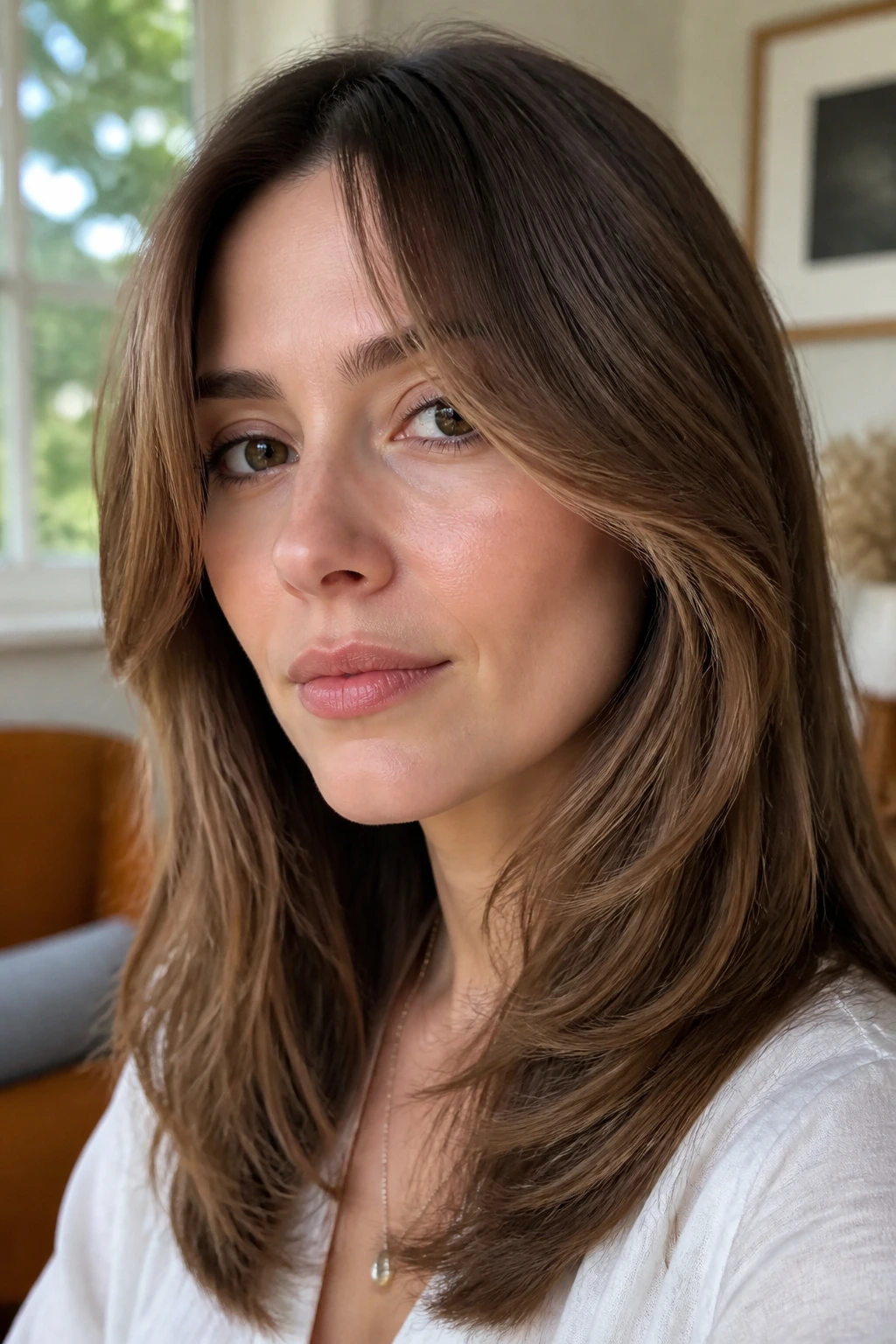
Cutting the bangs too short on the first pass: Short fringe looks bold in the chair and annoying two weeks later. Leave a little extra length if you are unsure; hair always seems to shrink once you start living with it.
Over-layering the ends: Too many steps through the length can make long hair look stringy, especially if the layers start too high. Keep the drama near the face and let the ends stay fuller.
Ignoring the natural part or cowlick: If your hair pushes hard to one side, a straight-across fringe may fight you every morning. Work with the growth pattern instead of pretending it is not there.
Using too much oil at the front: The bangs will separate, stick to the forehead, and lose all lift. Save richer products for the mids and ends.
Blowing bangs straight down every time: That creates a flat, helmet-like effect. Aim the dryer side to side first, then finish with a slight bend away from the face.
Frequently Asked Questions
Which face-framing layers with bangs work best if I want low maintenance?
Curtain bangs, bottleneck bangs, and collarbone-length front layers are usually the easiest to live with. They grow out more smoothly and can be worn center-parted or swept aside on off days.
Can long hair with bangs still look full?
Absolutely. The trick is to keep the front shape strong while leaving the perimeter dense enough to hold weight. Long hair often looks fuller when the face frame is cut well because the eye has a clear place to land.
Are blunt bangs a bad idea with long hair?
Not if you want contrast. Blunt bangs can look sharp and clean with long lengths, but they do need more upkeep and a smoother finish than softer fringe styles.
What if my bangs split in the middle no matter what I do?
That usually means the cowlick or natural growth pattern is stronger than the cut. Try a slight side part, blow-dry the roots in the opposite direction for a minute, and use a clip while the fringe cools.
Can curly hair wear face-framing layers with bangs?
Yes, but the cut has to respect shrinkage. The fringe should usually be left longer than you think, and the shape works best when it is cut with the curl pattern rather than against it.
How often should I trim the bangs?
Short fringe often needs a cleanup every 3 to 5 weeks. Curtain or longer side pieces can usually stretch to 6 to 8 weeks before they start losing their shape.
What should I ask my stylist if I want movement but not a shag?
Ask for long face-framing layers that start around the cheekbone or jaw, plus bangs that blend into those pieces. Also say you want the ends to stay full, because that helps avoid the shaggy look.
Can I air-dry these cuts and still get a good result?
Some versions, yes. Tapered bangs, soft curtain pieces, and wavy layers can dry well with a bit of leave-in and finger shaping. Blunt bangs and heavy blowout styles usually need more hands-on styling.
The Shape at the Front
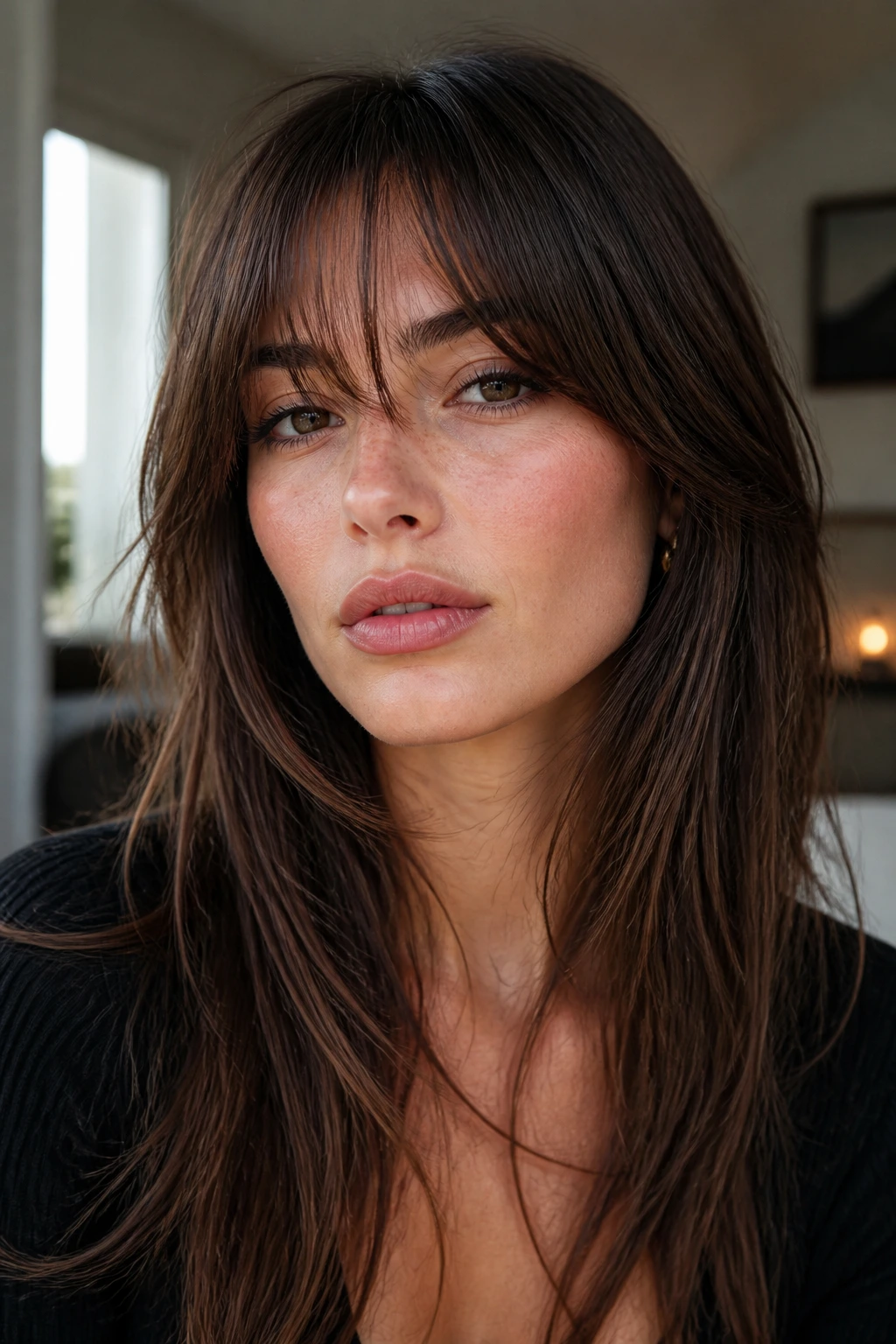
Long hair does not need to be heavy at the front to stay long. That is the part people forget. A smart fringe and a few face-framing layers can change the whole read of the haircut without stealing the length you came in for.
The best part is how personal these cuts can be. Some want softness. Some want a sharper line. Some want a fringe that vanishes into the rest of the hair by the third week. If you know which mood you want, the front of the cut can do the rest.
And once the shape is right, you stop fighting your hair every morning. That’s the real win.