



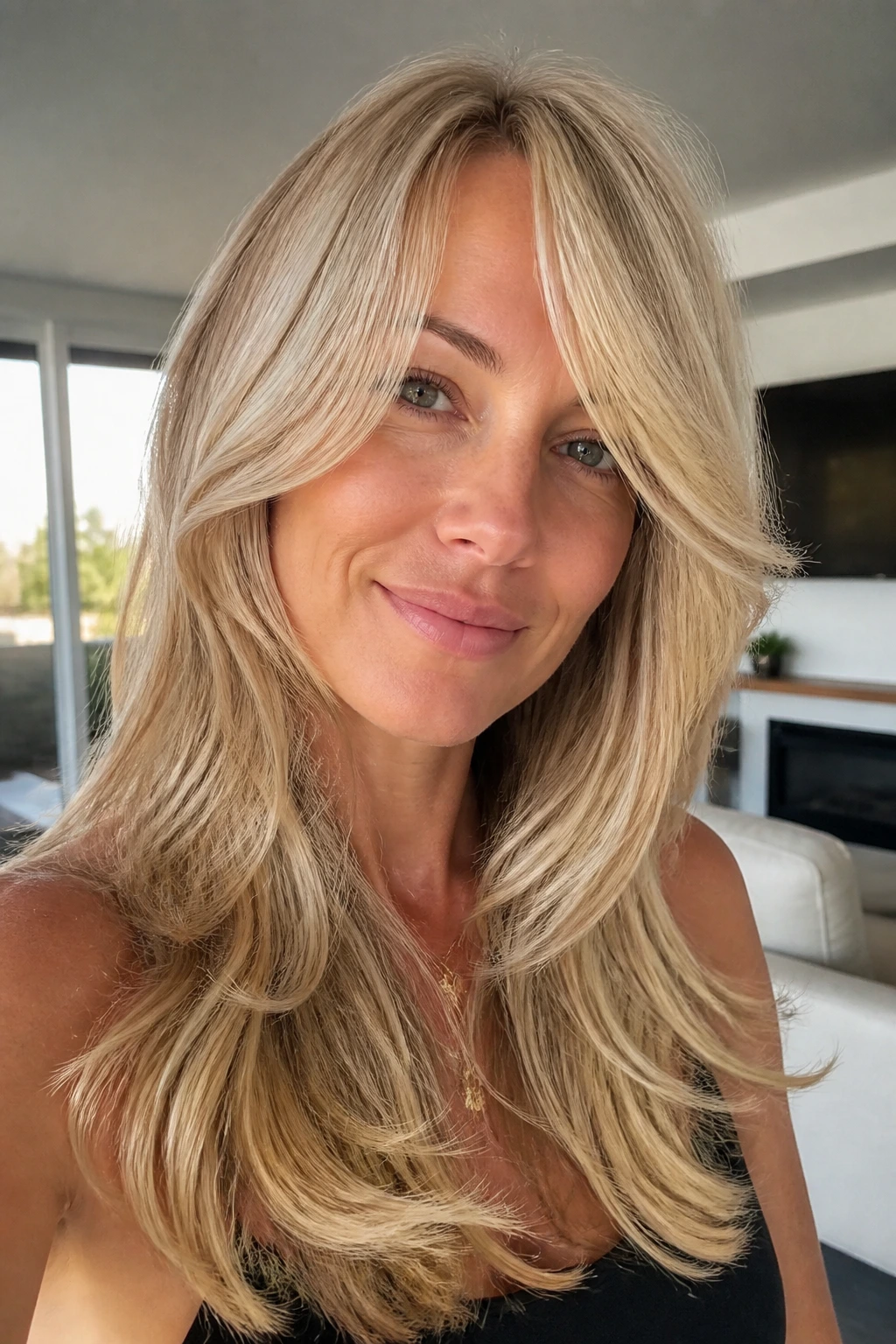
Fine hair gets bossy the minute a cut is too ambitious. Slice too high, and the ends start looking see-through; keep it too blunt, and the whole head can sit there like it’s waiting for a breeze that never comes. That’s why blonde long layers for fine hair with side-swept bangs need a lighter hand than most salon cuts. The sweet spot is movement without wrecking the perimeter, softness without turning the front into a stringy afterthought.
Blonde helps, but only if the shape earns it. Beige, champagne, honey, ash, and rooted cream all reflect light differently, and on fine hair that matters more than people think. A good side-swept fringe takes pressure off the hairline, hides a little scalp from overhead light, and gives the face a diagonal line that reads fuller than a blunt, heavy block of bangs ever will.
What works here is restraint. The right long layers let hair swing, bend, and tuck behind one ear without collapsing by noon. The wrong ones carve too much out of the interior and leave you with nice color on too little hair. There’s a big difference between airy and sparse. That difference is the whole game.
Why These 22 Cuts Work on Fine Hair
- They keep a stronger outline. The best versions leave enough weight around the bottom so the hair still looks like a body, not a halo.
- They move the eye diagonally. Side-swept bangs and face-framing layers pull attention across the face, which makes the overall shape read fuller.
- They use blonde as an optical trick. Dimension from balayage, root shadow, and bright front pieces makes the cut look deeper than a single flat shade.
- They leave room for styling mistakes. A cut with a little shape built in still looks decent when you skip a blowout or sleep on it badly.
- They grow out in a civilized way. The fringe can slide longer, the layers can blend, and you do not get that brutal “something got hacked off” phase.
- They suit real fine hair, not fantasy hair. These styles assume your ends can look thin if overworked, so the layering stays controlled instead of aggressive.
What to Tell Your Stylist Before the Scissors Come Out
A good cut starts with a boring conversation, and I mean that in the nicest way. Bring photos, but do not bring six photos of six different heads and expect the stylist to mind-read the merge. Pick one image for the layer shape, one for the bang length, and be plain about your density. If your ponytail feels small and your ends break easily, say that out loud.
Ask for long layers that start below the chin or at the collarbone, depending on how fine your hair is. That keeps the top from going fluffy while the bottom goes wispy. If you want side-swept bangs, ask for a long diagonal fringe that can tuck behind the ear, not a short chunk that sits on the forehead like a sticky note.
A blunt perimeter can be your friend here. So can a little point cutting at the ends, but not the kind that chews the hair to pieces. If you air-dry more than you blow-dry, mention that too. A cut meant for a round brush usually looks different from one meant to live in a clip and a scrunchie.
1. Champagne Feathered Layers
Champagne blonde has a nice habit of catching the light without shouting about it, and feathered layers make fine hair look lighter in the good way. The front pieces should start softly at the cheekbone, then drift into a side-swept bang that sits just under the brow. That diagonal line gives the face some lift and keeps the top from flattening into one sheet.
This cut works because the feathering stays airy at the surface while the length keeps enough weight to hold shape. On straight fine hair, that matters. You get movement around the face, but the ends still land with a little presence instead of floating away.
If your hair feels limp by lunchtime, this is the kind of cut that still behaves after a quick brush-through. A 1.25-inch round brush and a light mousse at the roots are enough to wake it up. No drama. No heavy layering. Just clean motion.
2. Butter-Blonde Butterfly Layers
Want fullness around the cheekbones without losing length? Butterfly layers are the answer I reach for most often. The top pieces are shorter and swingier, while the lower length stays long, so the cut gets that big, airy bend near the face without carving the bottom into strips.
On fine hair, the trick is keeping the shortest face frame long enough to blend into a side-swept fringe. If the bang is too short, the whole thing starts looking busy. If it’s long and soft, the shape opens up beautifully and the eye sees lift where the hair used to lie flat.
Butter blonde is the right shade for this because it keeps the overall look warm and soft. It pairs well with subtle lowlights too, which help the layers show up without making the finish look patchy. The cut has movement. The color keeps it from looking thin.
3. Beige Balayage Waterfall Layers
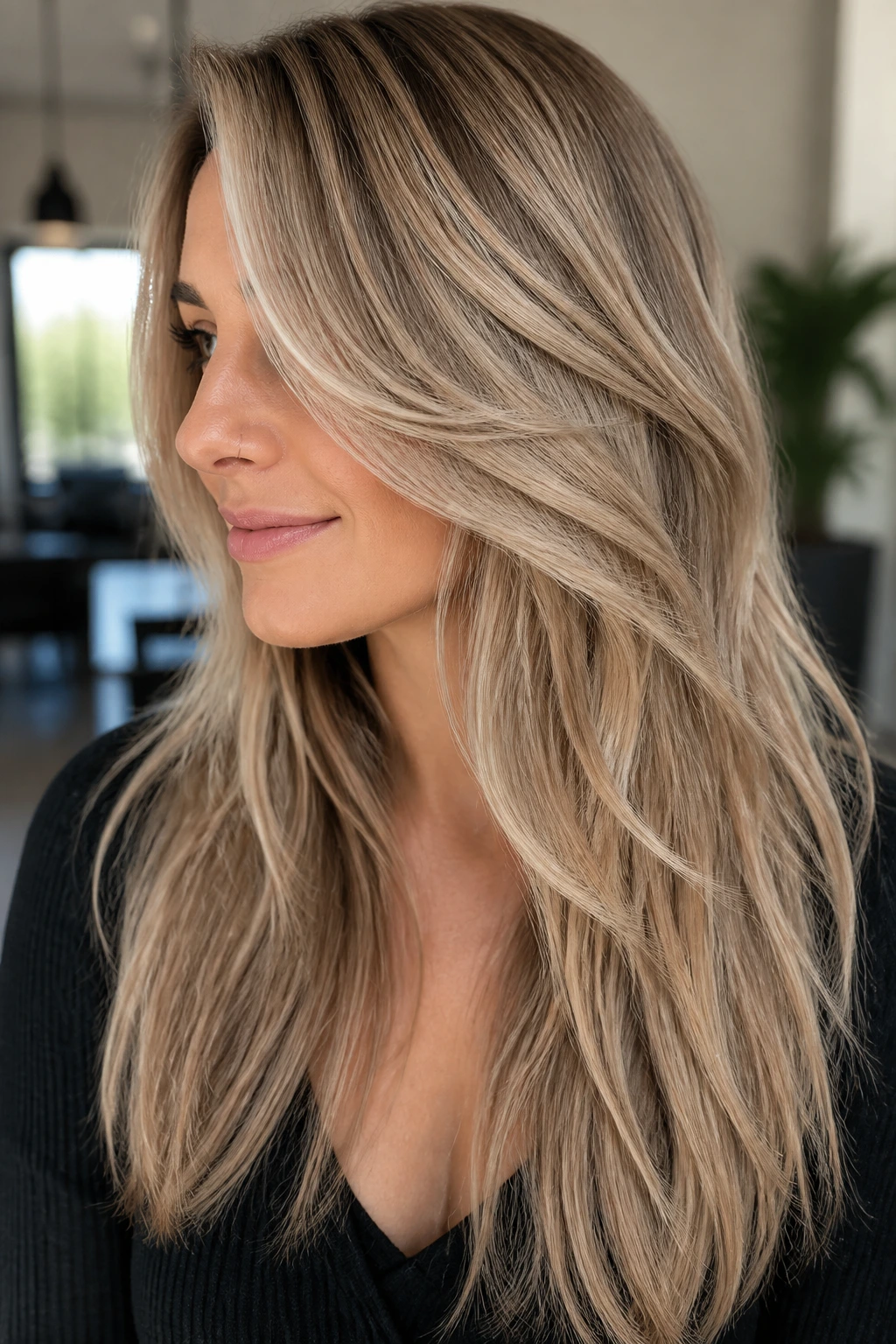
A few beige ribbons through the front can make long fine hair look denser than a single all-over blonde ever will. Waterfall layers take advantage of that by letting the pieces drop in gradual steps instead of obvious chunks. The result is flow, not chop.
The side-swept bang here should skim from a deep side part and blend into the first face-framing layer. That keeps the front from looking too separate, which is the problem I see most often with fine hair and layered cuts. Separation looks chic on Instagram; in a bathroom mirror, it can read sparse.
This is one of the better options if you wear loose waves or a soft bend with a flat iron. The balayage helps each curve catch light on a different plane, so the hair looks more layered and less like one narrow sheet.
4. Honey V-Cut Layers
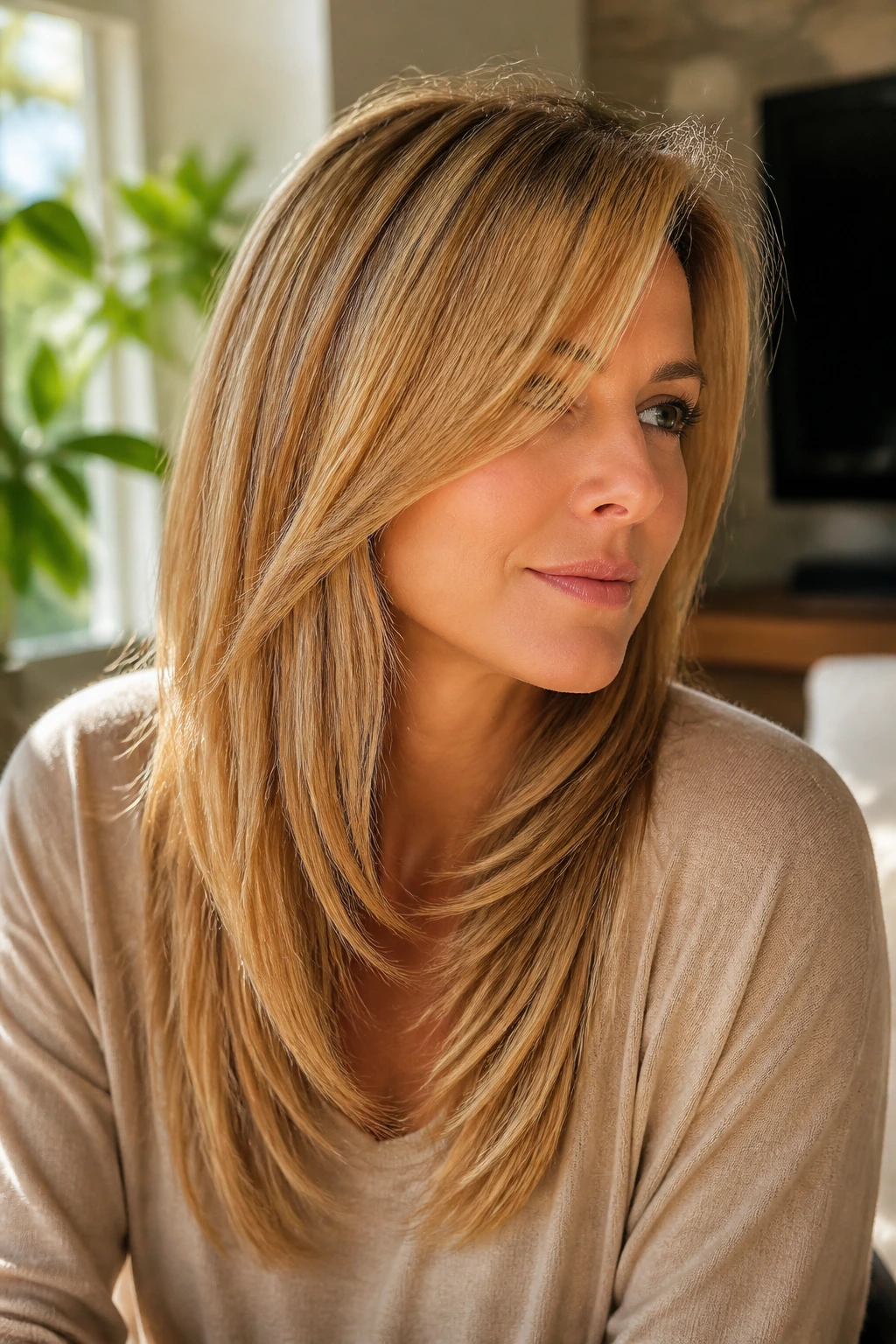
A V-shape is not the enemy of fine hair when the point stays soft. In fact, a gentle V can make long hair look longer and fuller at the same time, especially if the layers feather inward toward the center back. The silhouette feels sleek, but not stiff.
The side-swept bangs should be long enough to graze the outer edge of the eye. That length matters. It gives the face some motion without stealing density from the front, and it keeps the cut from looking too severe when you pull the hair over one shoulder.
Honey blonde suits this shape because the warmer tone adds a little glow to the ends. If your hair leans on the thinner side, skip a hard, sharply pointed V. Ask for a softened taper so the bottom still looks thick when it’s hanging straight.
5. Cool Platinum Invisible Layers
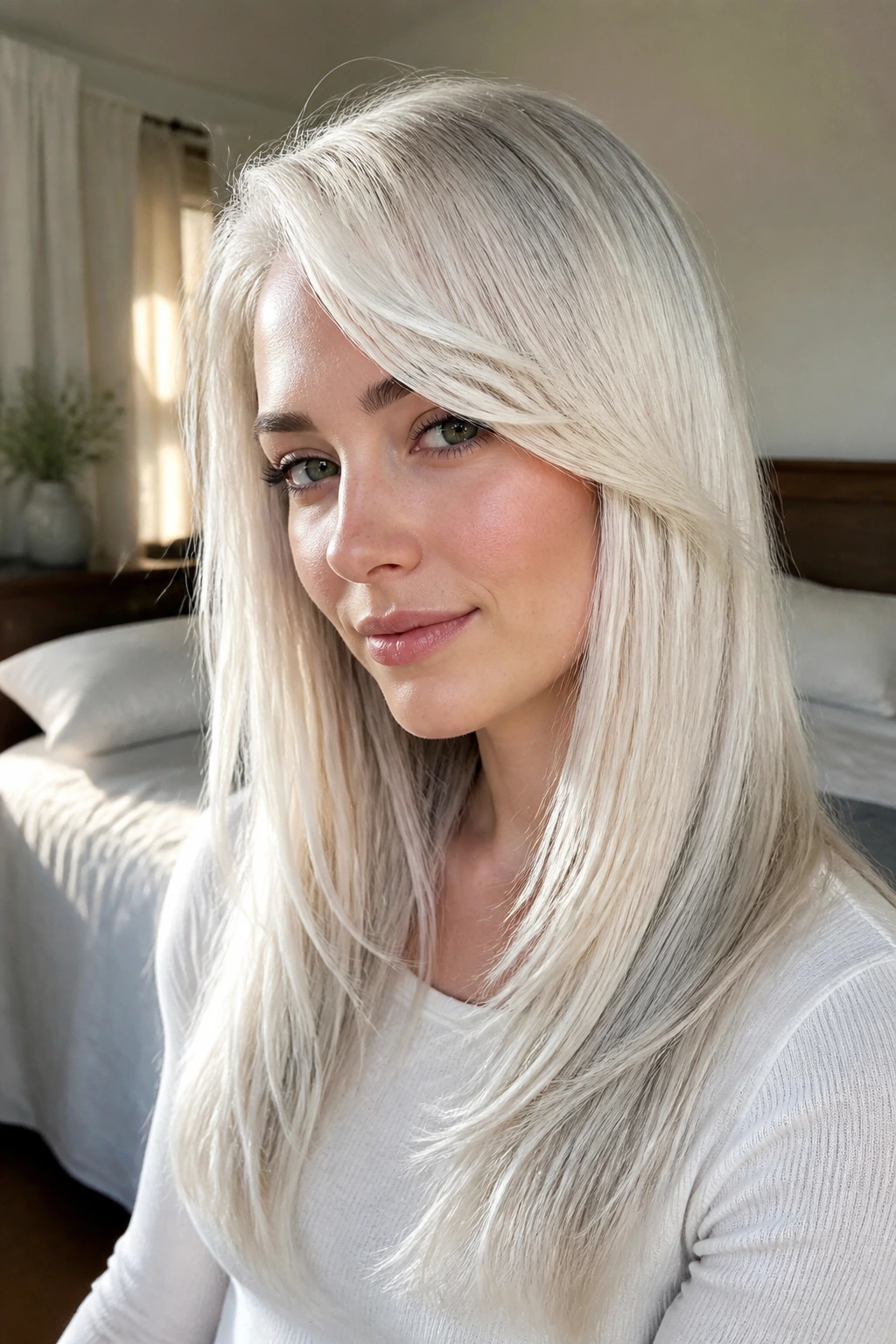
Platinum hair can make fine strands look sparse if the cut is too obvious. Invisible layers solve that by removing weight inside the shape without leaving visible shelves. The hair still feels long and sleek, but the back and sides have enough hidden movement to keep the style from lying dead flat.
The side-swept fringe should be more sweep than bang. Think long, airy, and soft around the temple. I like this cut on straight hair that tends to separate, because the layered interior gives it direction without creating little shelf-like steps along the sides.
Why it works
The cool blonde tone makes the outline crisp, while the hidden layers keep the shape from puffing out at the crown. That balance is useful if your hair is fine but not thin in density. You keep the visual thickness and lose the dead weight.
A light smoothing cream on damp hair and a low-temperature blow-dry are enough. Too much product and the whole thing turns stringy fast.
6. Sandy Blowout Layers
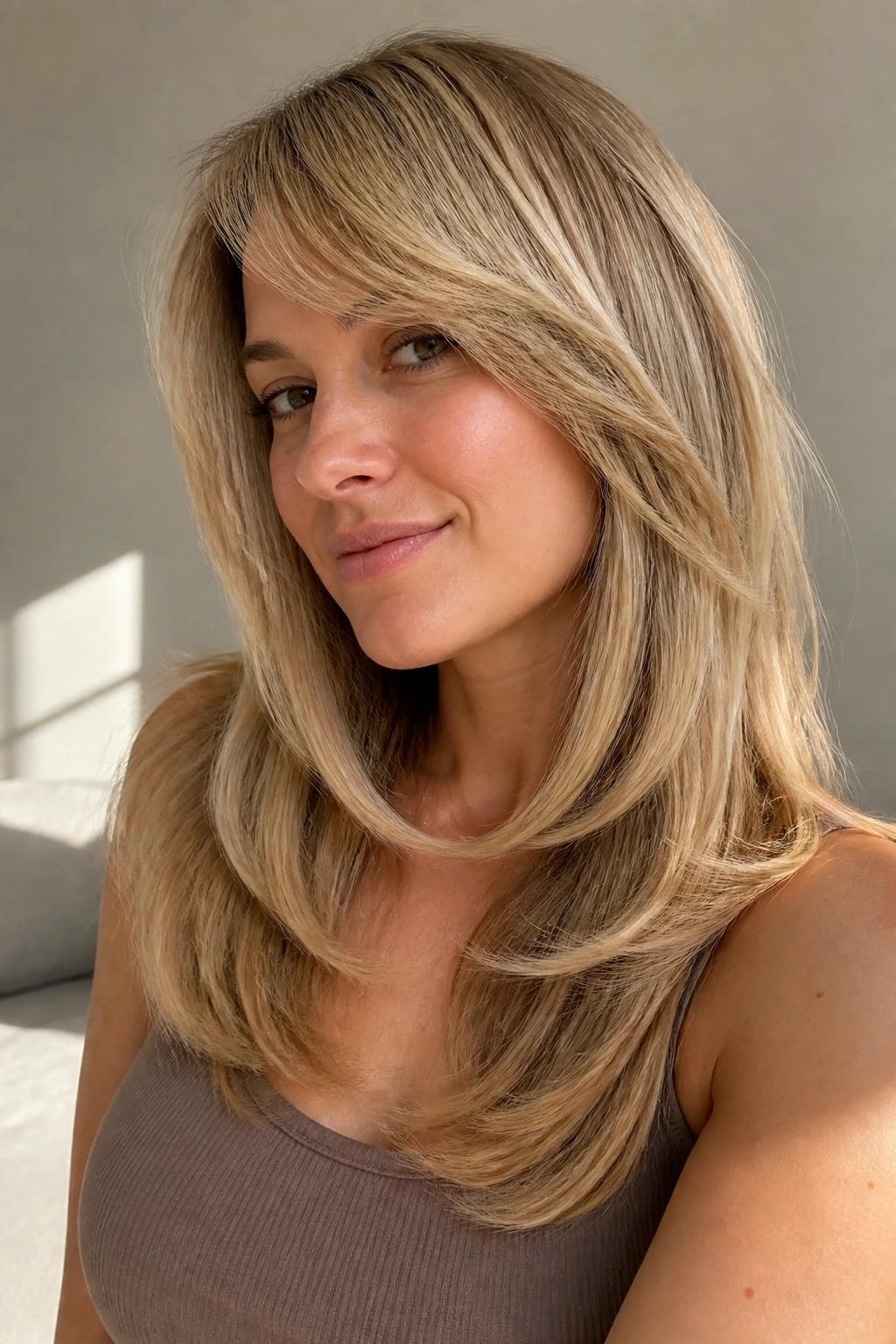
Think of that loose, brushed-out bend that looks like it spent twenty minutes under a round brush. Sandy blonde layers are made for that finish. The cut usually starts with long face-framing pieces and builds movement through the mid-lengths, not the ends, which helps fine hair keep a fuller bottom edge.
The side-swept bang here can be a little fluffier than the others. I like it just swept across the forehead and pinned loosely while the hair cools, then released into place. That gives it a bend instead of a hard part line.
This is a friendly choice if you like soft volume at the sides but hate anything that looks stiff or overstyled. A medium-hold mousse at the roots, plus a round brush that isn’t too big — 1.5 inches is plenty — will keep it from going limp too quickly.
7. U-Shaped Layers with a Long Side Sweep
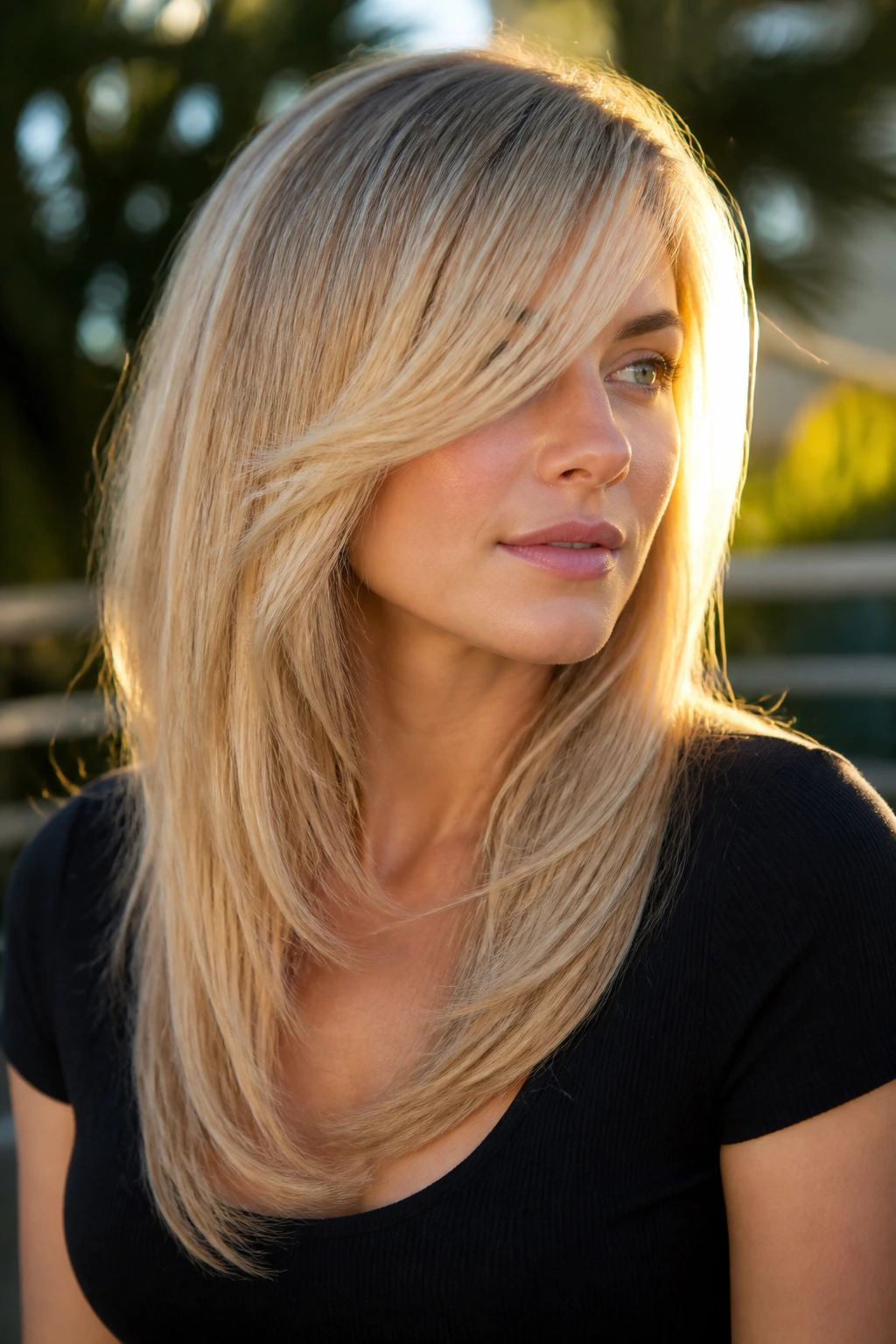
The U-shape is the one I reach for when someone wants length to stay visible. Instead of tapering the back into a point, it keeps a rounded edge that protects the illusion of thickness at the ends. Fine hair likes that. It doesn’t need the bottom sliced open.
The long side sweep should begin around the eyebrow and angle toward the cheekbone. That line softens the face without taking too much hair out of the front. If your hair is straight and a bit slippery, this shape gives it more substance without requiring a lot of texture spray.
It also grows out well. That matters more than people admit. A good U-shape can go a little longer between trims because the bottom edge still holds together even as the layers soften.
8. Razor-Soft Layers with Piecey Fringe
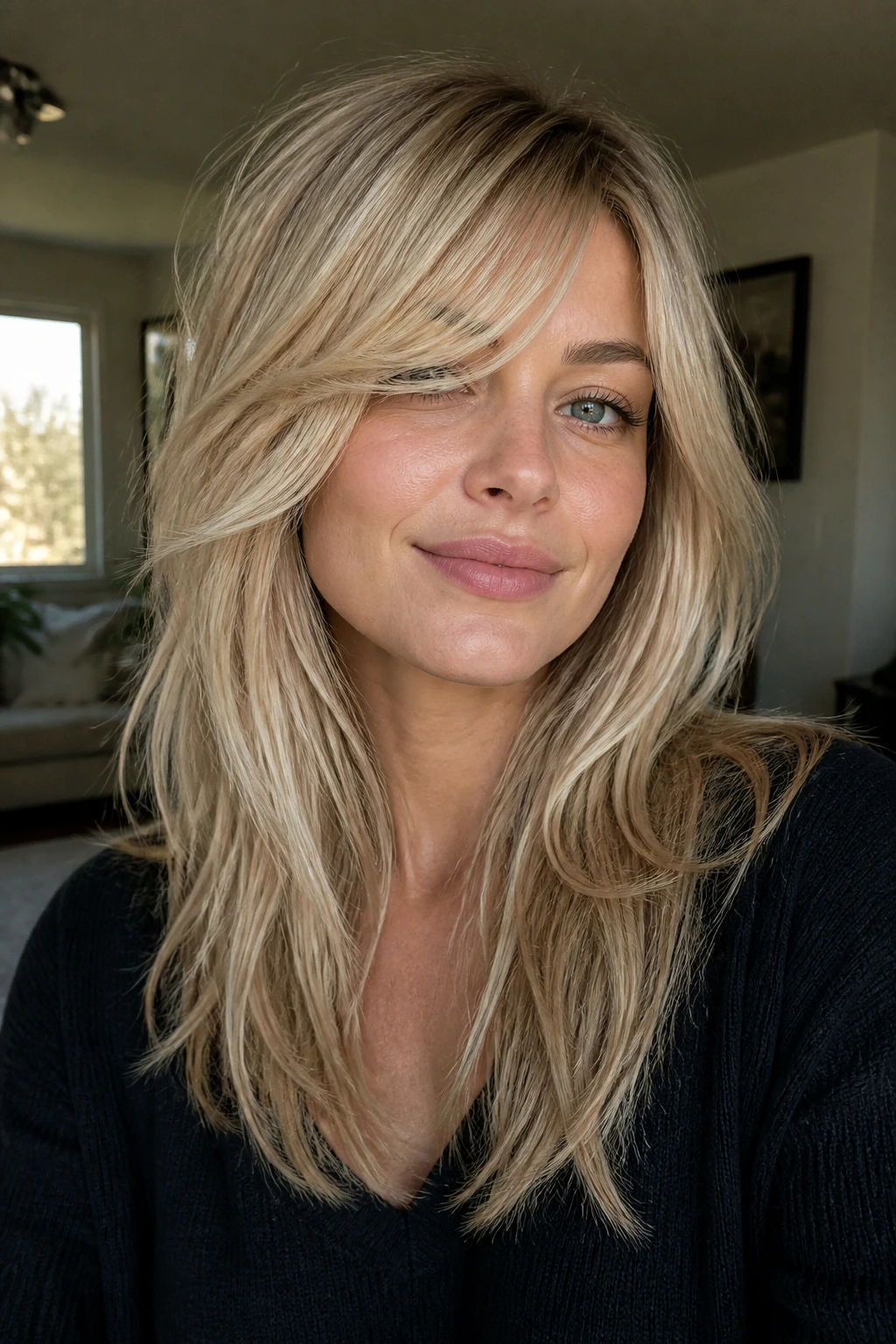
Can razor cutting work on fine hair? Yes, if the hand is light and the goal is softness, not drama. Razor-soft layers cut a little air into the ends, which can make hair look more relaxed and less heavy around the face. The danger is going too far. Fine hair can cross from feathery to ragged fast.
The fringe should stay piecey, not shredded. A side-swept bang with a few separated strands works best when you want movement and a modern edge. Keep the layers long enough to blend into the sides so the haircut still has a clean line.
This one is for someone who likes a slightly undone finish and doesn’t mind styling with a bit of paste or texture spray. If you want polished hair every day, skip the razor. If you like hair that bends and breaks apart in a good way, this shape has teeth.
9. Rooted Beige Layers with Cheekbone Bangs
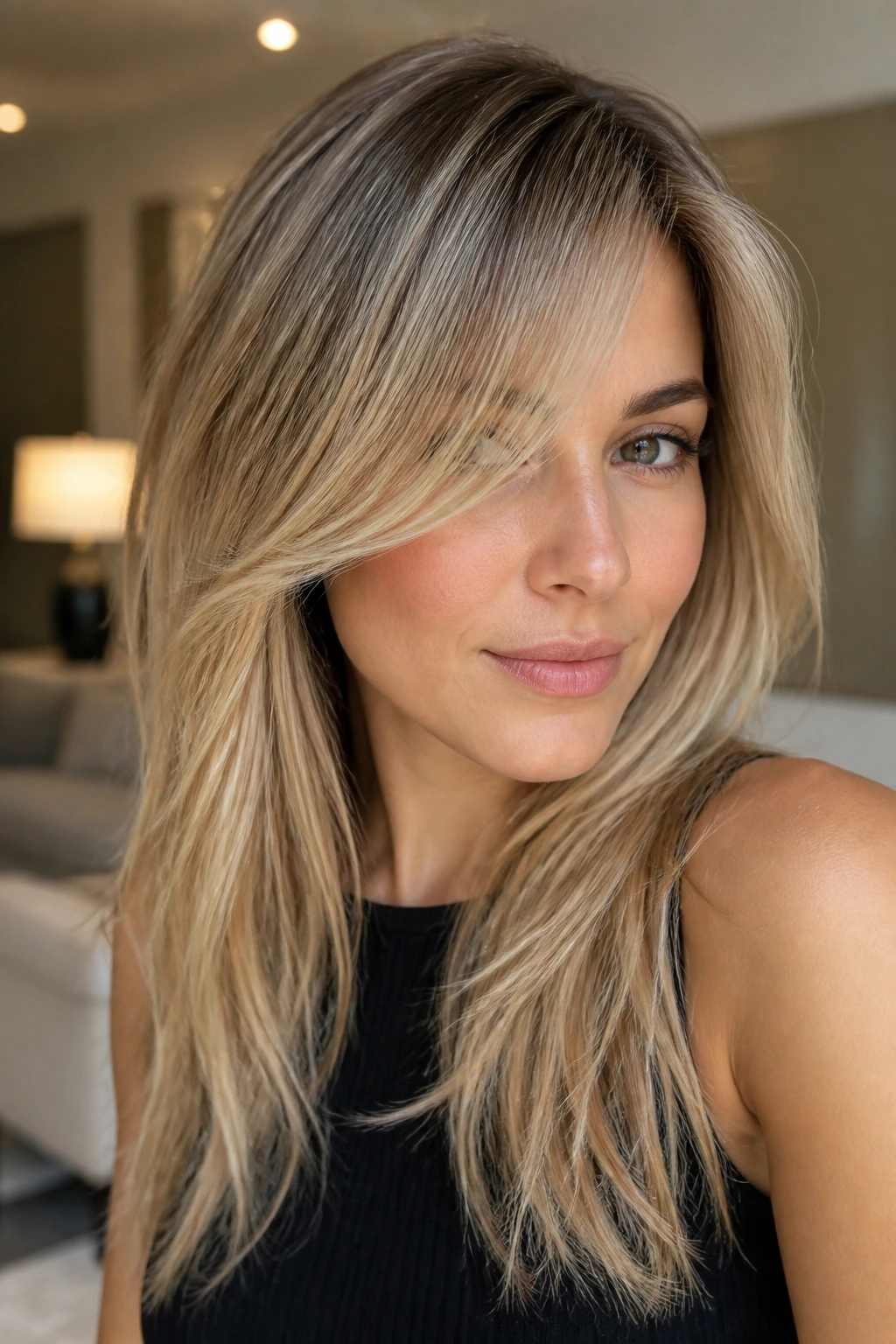
A rooted beige blonde with a cheekbone-skimming fringe has a sneaky advantage: the darker root buys visual depth at the scalp. That makes fine hair look fuller right where flatness usually shows up first. It’s one of those small color moves that does more than a flashy cut.
The layers should stay long and gently tiered, with the front pieces beginning near the cheekbone so they frame the face rather than swallowing it. The bang is the point here. It should sweep across, then melt into the first layer instead of sitting on its own little island.
This style is especially useful if your hair is fine but not pin-straight. A loose wave gives the rooted blonde some dimension, and the longer fringe keeps the front section from looking too sparse on a deep side part.
10. Caramel Ribbon Layers
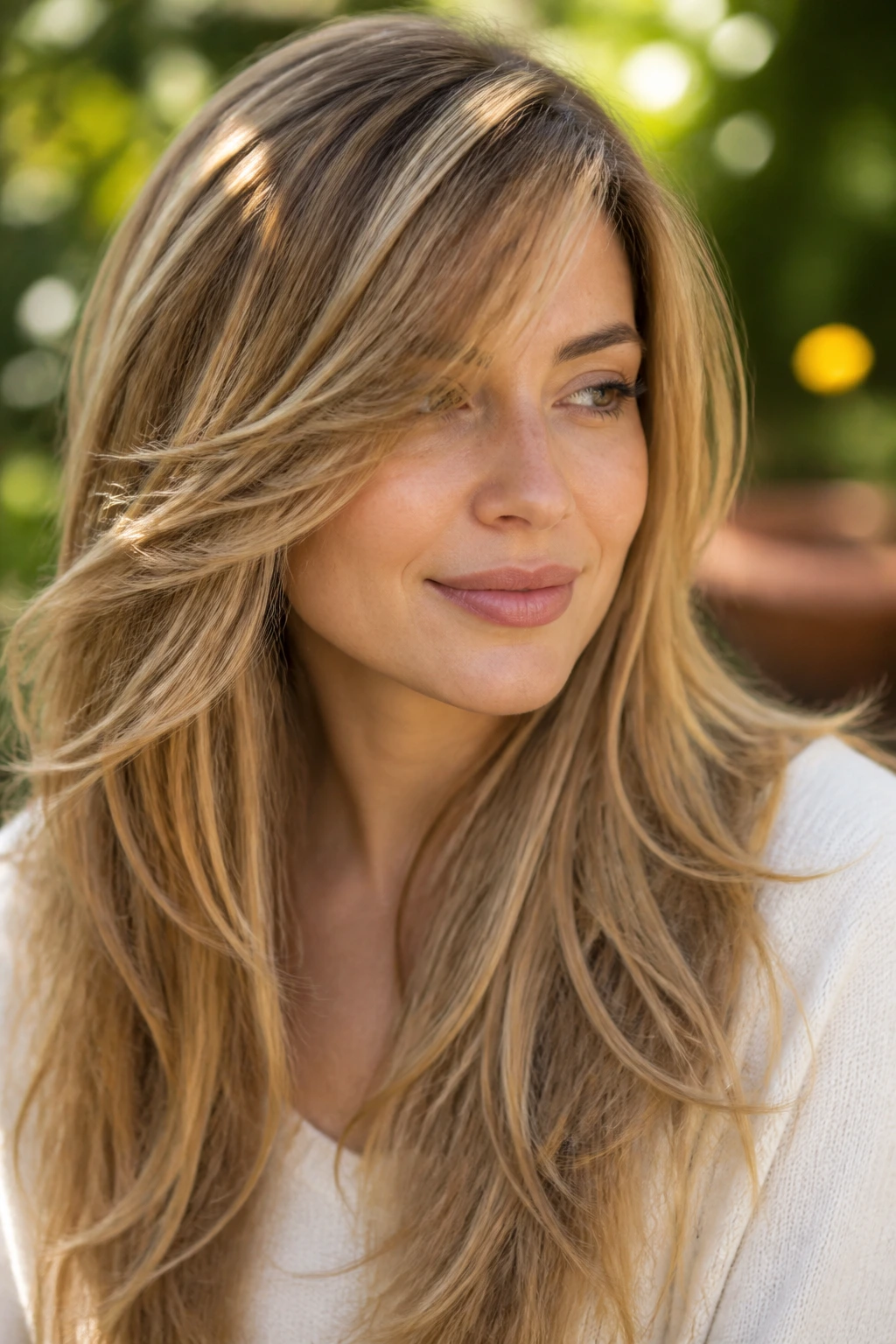
If your blonde needs warmth, caramel ribbons are the fastest way to stop the cut from looking chalky. The darker, warmer strands snake through the long layers and give the eye something to follow, which makes the hair look thicker than a single pale tone would.
The side-swept bangs should be soft and slightly longer here, almost like a side curtain that never fully splits. That keeps the face frame from feeling too narrow. On fine hair, warm dimension often looks richer than icy brightness because it adds contrast without exposing every strand.
I like this style on hair that air-dries with a slight bend. A few loose bends near the jaw and collarbone are enough. You do not need a full curl set. The ribbons do the heavy lifting.
11. Soft Shag Layers for Straight Hair
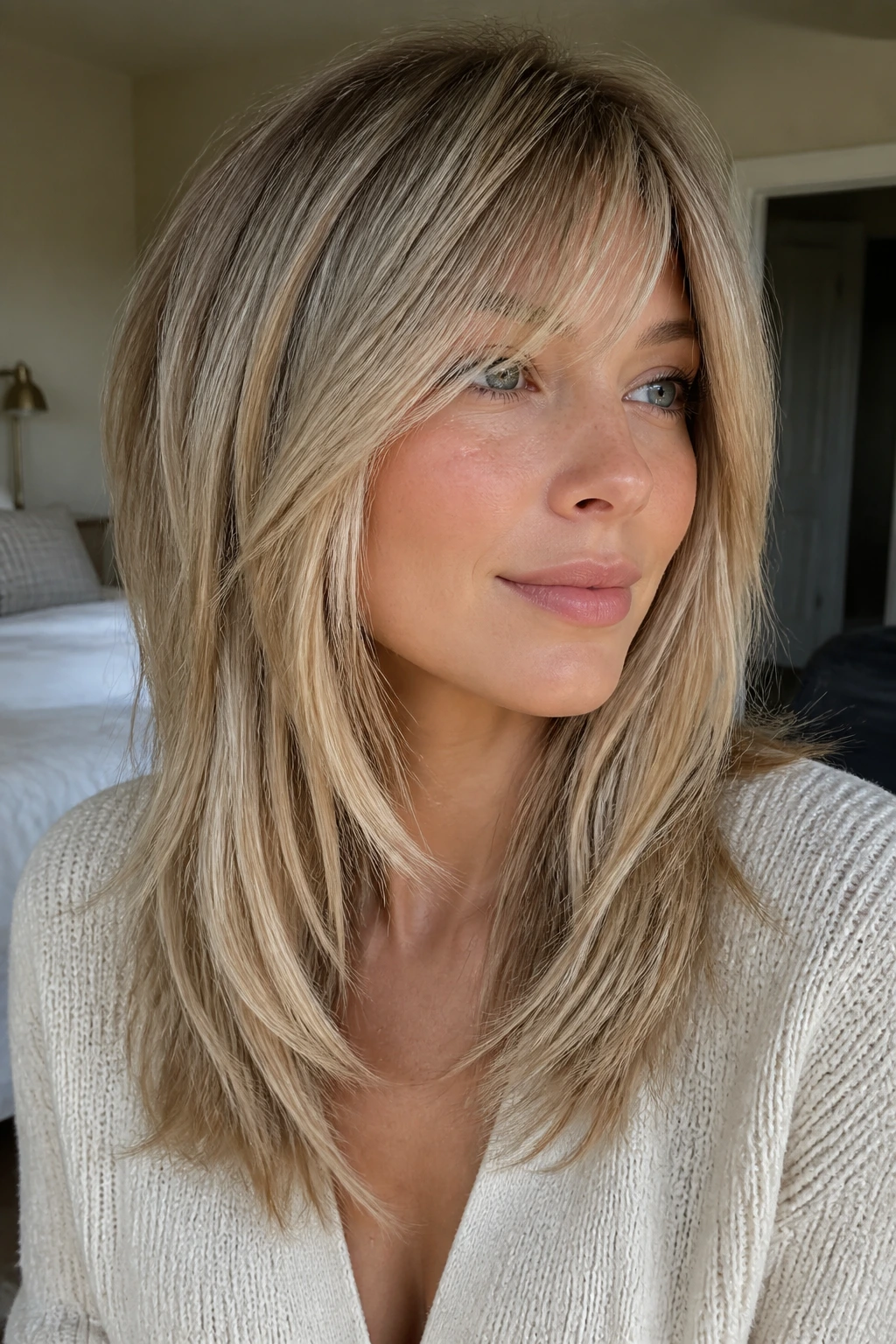
A shag can work on fine hair — if it is kept long and the interior is controlled. The problem with most shag-inspired cuts is not the idea. It’s the enthusiasm. Too many short layers and you get a top-heavy shape with wispy ends. That is not the goal.
The better version keeps the length below the shoulders and uses a side-swept fringe that breaks over the brow in a soft diagonal. The layers sit between the cheekbone and the collarbone, which gives straight fine hair a little grit and keeps it from falling flat against the head.
This cut is a good fit if you hate a polished blowout and prefer hair that looks lived-in. It responds well to a texture spray at mid-lengths and a quick ruffle with your fingers. Clean, but not precious.
12. Sleek Glass Layers with a Hidden Bend
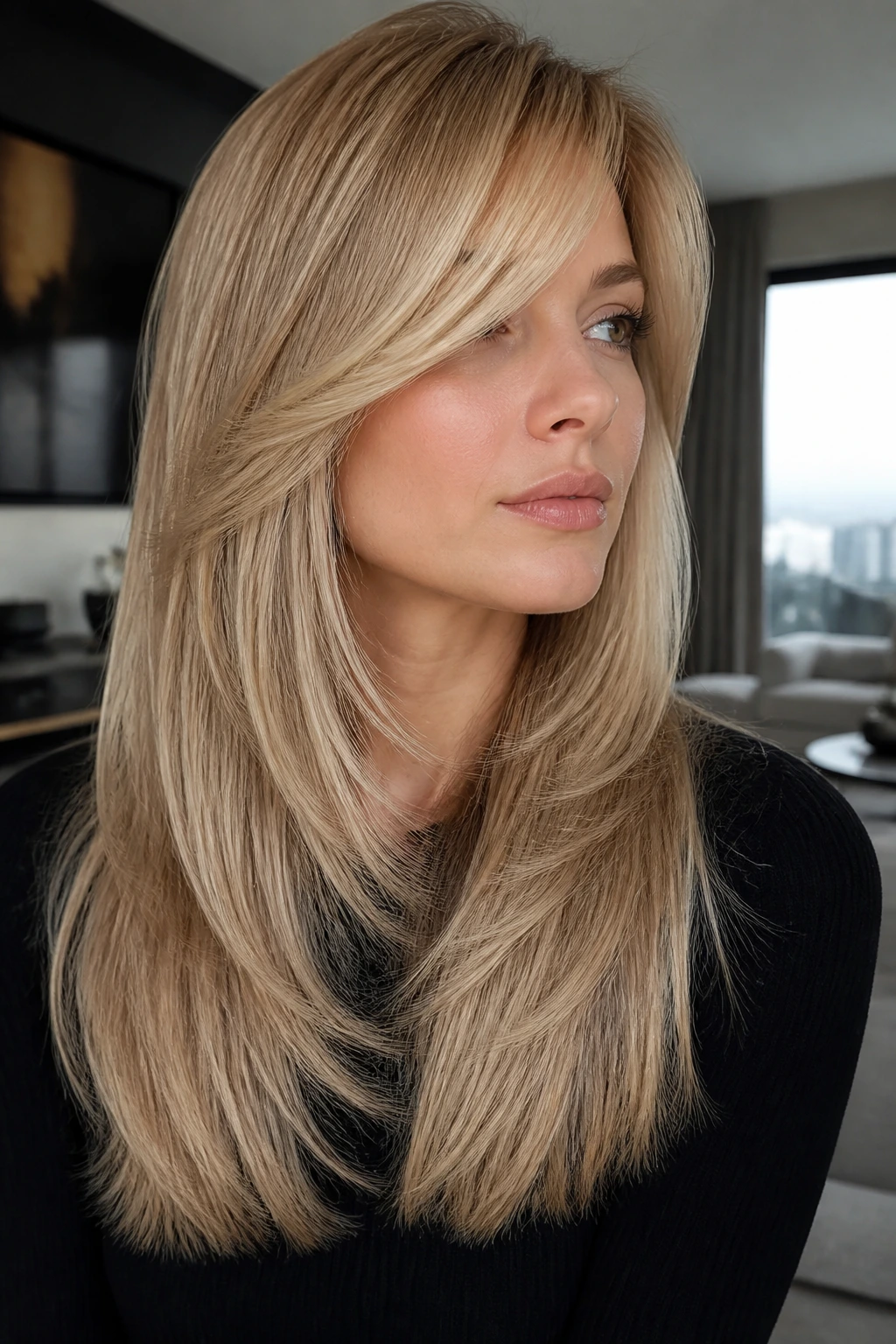
Sometimes the smartest fine-hair cut is the one that looks almost too simple. Glass layers keep the surface smooth and shiny, then hide the shaping underneath so the hair still moves when you turn your head. The fringe stays long and side-swept, and the rest of the cut avoids obvious steps.
This works especially well if your blonde is cool, creamy, or soft beige. A flat, shiny finish can make fine hair look cleaner and more expensive than a heavily textured one, because the reflection gives the illusion of a denser surface.
If you like a straight style, this is a strong pick. Use a paddle brush or a large round brush, then bend the ends under just enough to avoid a sharp line. No overflipping. No crunchy spray. The whole point is a smooth sheet with a little secret movement underneath.
13. Sunlit S-Curve Layers
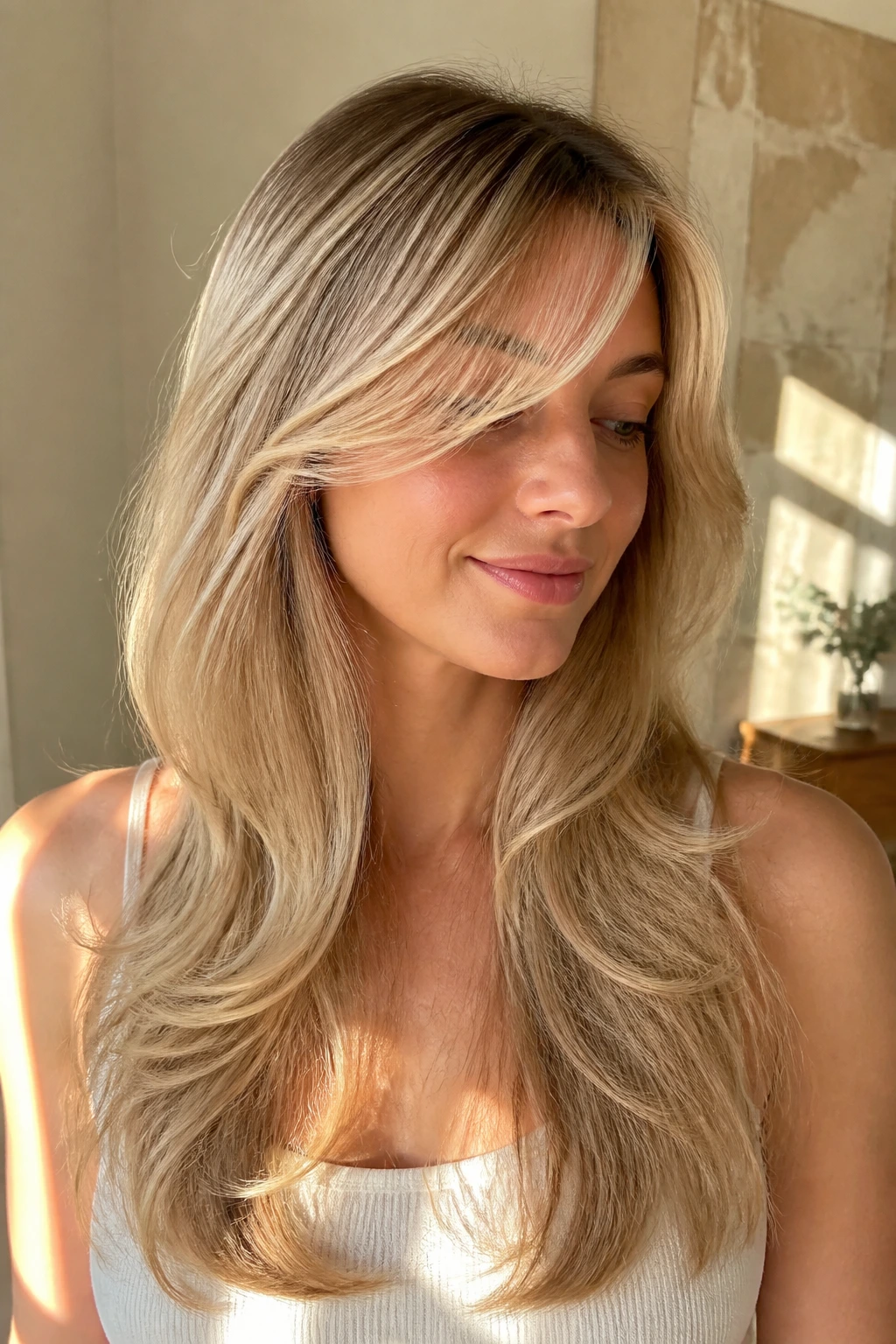
Sunlit S-curves are for hair that wants to bend instead of curl. The layers are long, the ends are soft, and the styling creates a loose wave that moves in alternating directions. On fine hair, that keeps the look from collapsing into one flat panel.
The side-swept bangs should follow the same logic. A soft sweep across the forehead, then into the longest front layer, keeps the front from splitting awkwardly. If your hair is long enough to sit at the chest or below, this is one of the prettiest ways to make the length look purposeful.
A curling iron works, but I prefer a flat iron twist on this shape because it gives a cleaner bend and less frizz. Leave the ends a little straighter. That unfinished finish keeps the hair from looking overworked.
14. Wispy Air-Lift Layers
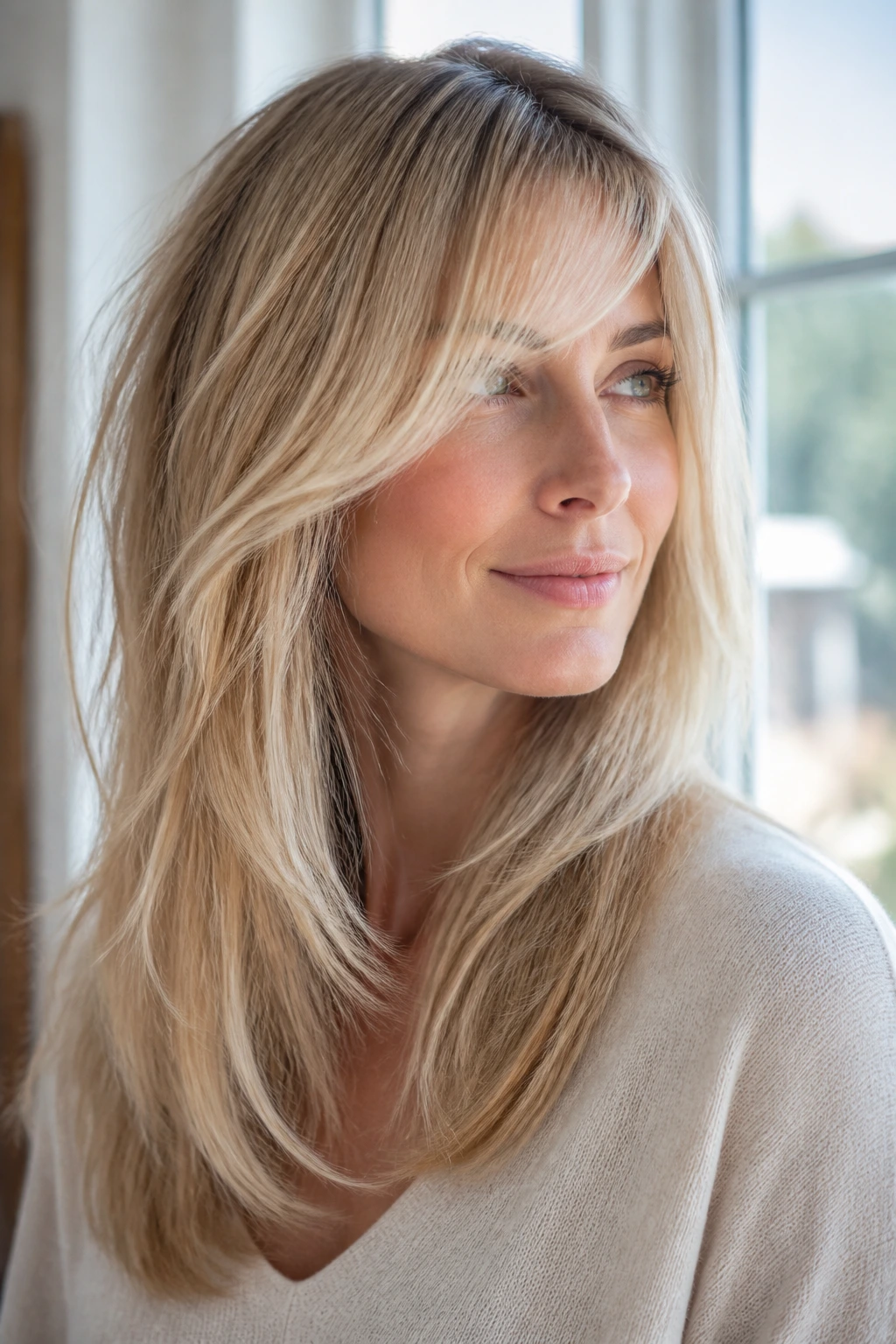
Fine hair does not need a heavy haircut to look styled. Sometimes it needs a whisper of shape and a little lift at the roots. Wispy air-lift layers are extremely light around the face and crown, but the lower length stays intact so the ends still carry weight.
The side-swept bang here should be the lightest of the bunch. Think of it as a veil that moves across the brow, not a block of hair that tries to own the forehead. If you wear glasses, this version can be excellent because the fringe stays out of the frame and doesn’t crowd the lenses.
This is a nice choice for hair that gets blown around a lot or for people who want volume without heat-styling every day. A root spray and a quick blast with the dryer are often enough. The cut already knows where it wants to sit.
15. Ash-Blonde Contour Layers
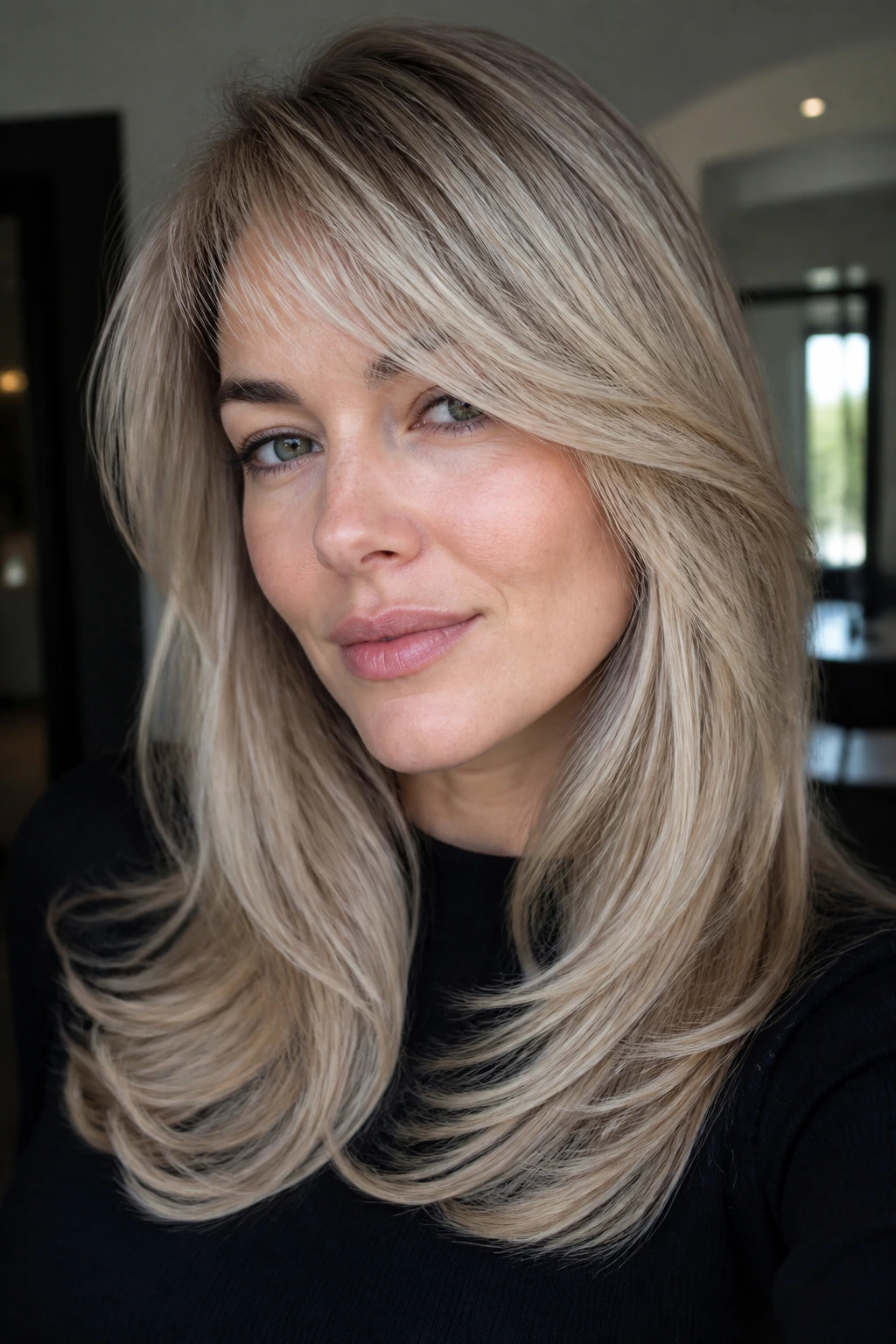
Cool ash blonde can flatten weak shapes, so contouring matters here. The layers should frame the cheekbones and jaw in a way that makes the face read sharper, while the side-swept fringe softens the forehead just enough to keep everything balanced.
I like this on fine hair when the ends are kept blunt-ish. That gives the ash tone a clean edge, which is useful because ash can sometimes look a bit flat if the cut is too wispy. Contour layers add structure back in.
If your skin has a cool or neutral undertone, this shape tends to feel easy to wear. Add a soft bend at the ends and a touch of shine spray on the mid-lengths, not the roots. Too much oil on ash blonde can make it look dull instead of sleek.
16. Long Tapered Layers with Flicked Ends
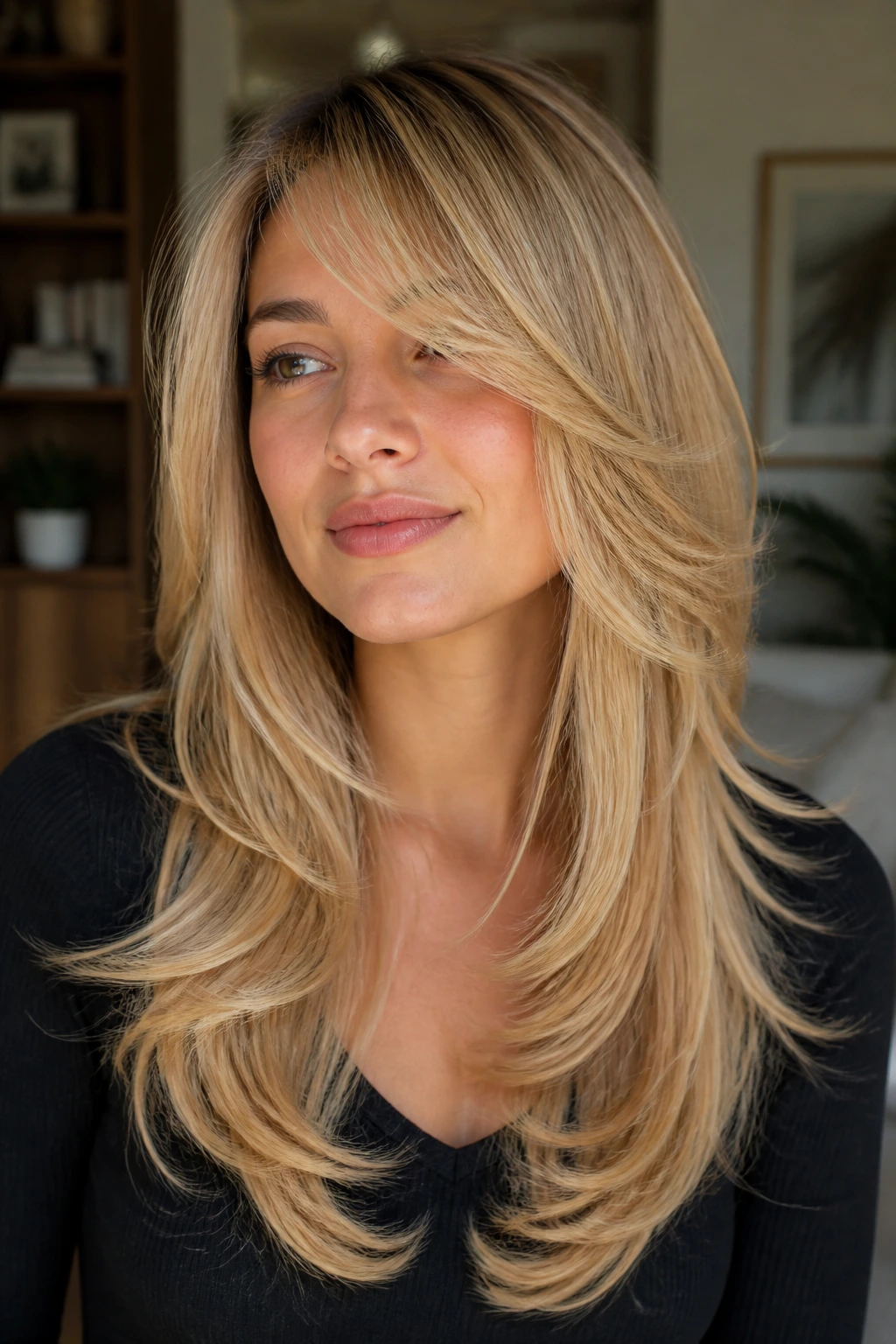
Long tapered layers are for people who like movement at the bottom edge. Instead of stacking shape near the crown, the taper runs down the length and lets the ends flick out just enough to keep the hair from hanging like a rope. Fine hair needs that kind of restraint.
The side-swept bangs should be long and fluid, with no blunt corner at the temple. If you tuck hair behind one ear a lot, this cut is especially good because the shape still survives when one side gets flattened. That sounds minor. It isn’t.
This style loves a round brush finish or a large velcro roller at the front. A little bend at the ends makes the whole thing look more intentional. Without it, the taper can go limp.
17. Side-Part Cascade Layers
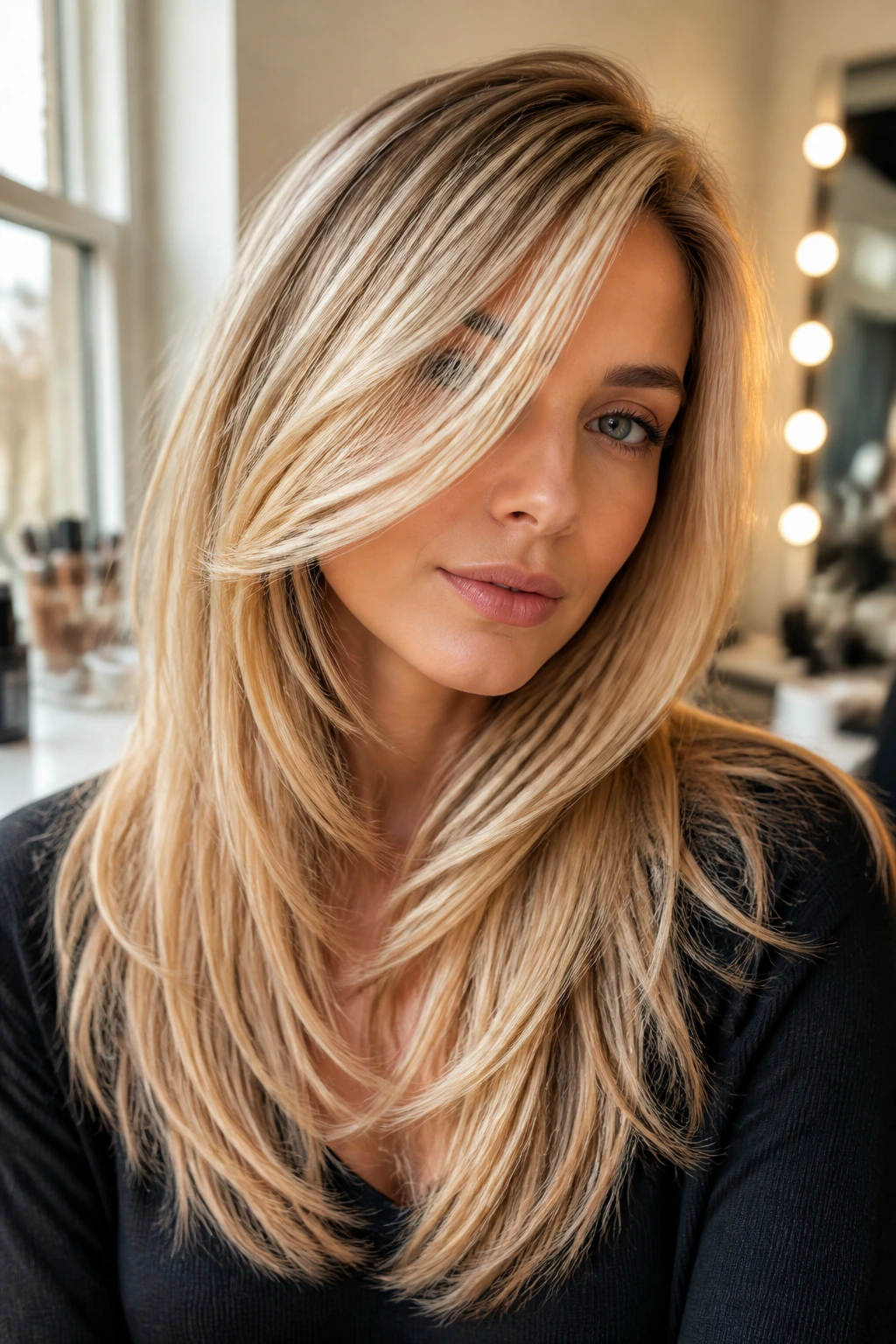
A deep side part can do more for fine hair than a drawer full of volumizing products. The cascade layers follow that part and fall in a diagonal line that gives the hair some drama without needing a ton of density. It’s flattering, fast, and often more forgiving than a center-part style.
The side-swept bang is the star here. It should flow from the part down into the longest face frame, making one side fuller and the other side cleaner. That asymmetry is useful when one temple area is naturally thinner than the other.
I like this cut for people who want a little red-carpet energy without a complicated daily routine. Dry the hair in the opposite direction of the part first, then flip it back. That one move can change the whole mood.
18. Golden Balayage Layers with Feathered Fringe
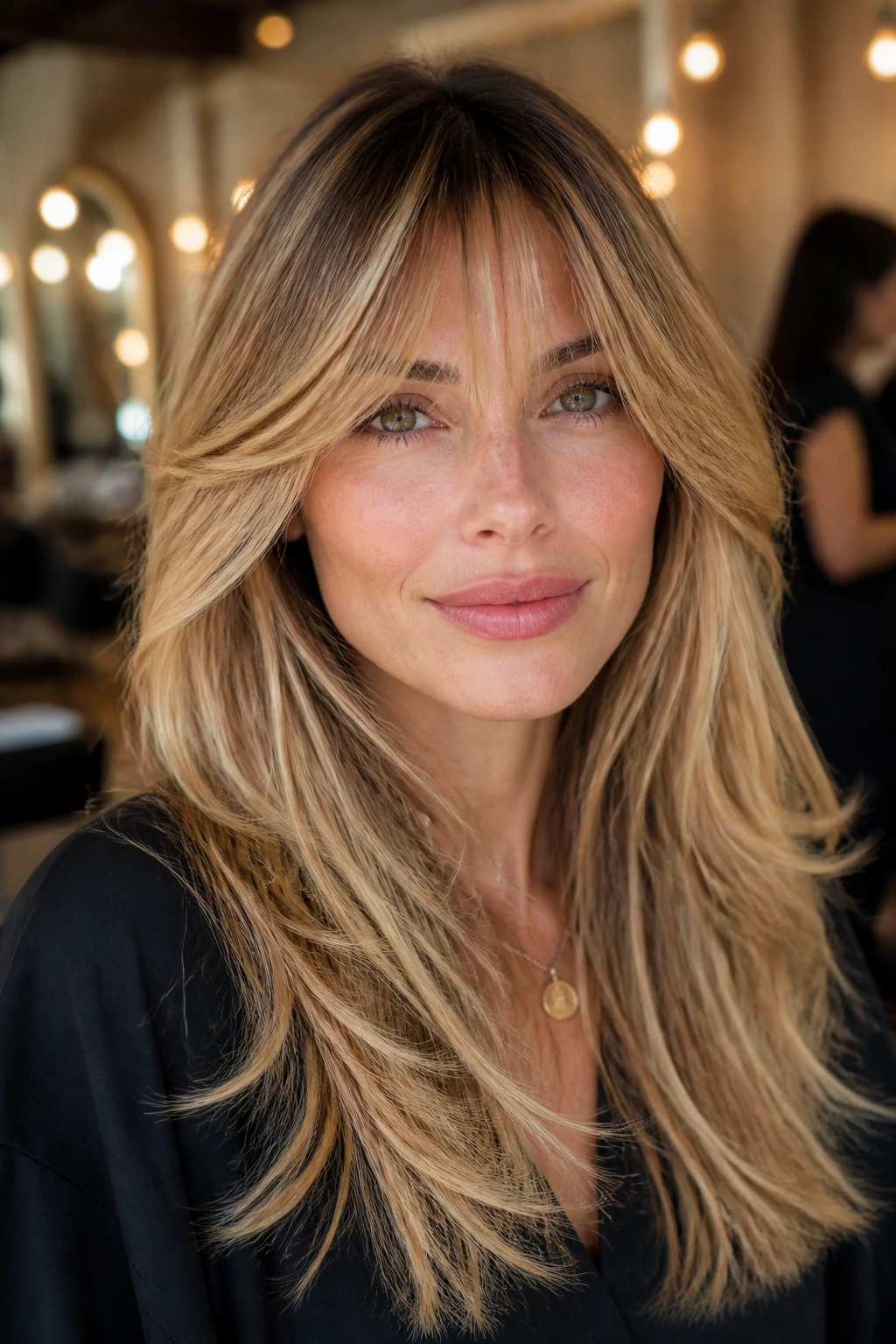
Golden balayage brings warmth and a little glow to the front, which is useful when fine hair needs the eye to stop traveling and actually notice the shape. Feathered fringe pieces keep the front from looking heavy, and the long layers help the color travel down the hair instead of hanging at one level.
This is one of the most forgiving options if your hair sits somewhere between straight and wavy. The layers catch in loose bends, and the fringe can be brushed to the side or tucked back once it grows a little. That flexibility buys you time between salon visits.
A gloss or glaze makes a big difference here. Golden blonde can go brassy if it is ignored, but a clear, warm finish keeps it looking deliberate instead of yellow. That’s the line.
19. Cream Blonde Layers with a Polished Finish
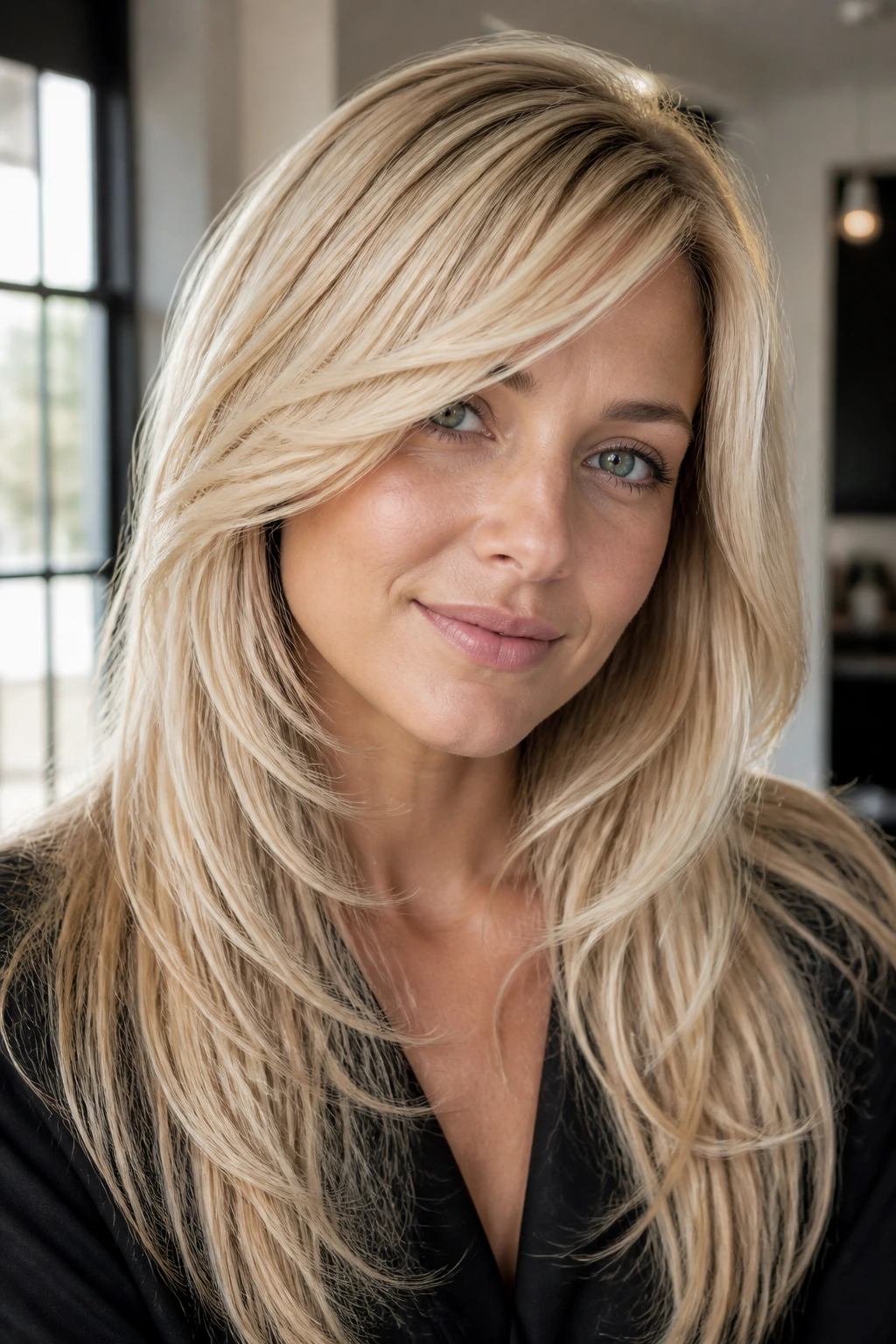
Cream blonde has a soft, expensive-looking feel when the cut underneath is calm and controlled. That means long layers, not lots of short shreds. The side-swept bang should be smooth and a little long, so it curves across the forehead rather than breaking into separate pieces.
I like this version on fine hair that already has good shine. The cut doesn’t ask the hair to be big; it asks it to be neat. A polish spray or a light serum on the mid-lengths is enough. Too much and the style loses its clean edge.
If you wear your hair straight most days, this is one of the easiest cuts to keep looking finished. The layers add movement, but the shape stays orderly enough to work with a blazer, a knit tee, or a messy bun two days later.
20. Romantic Bend Layers
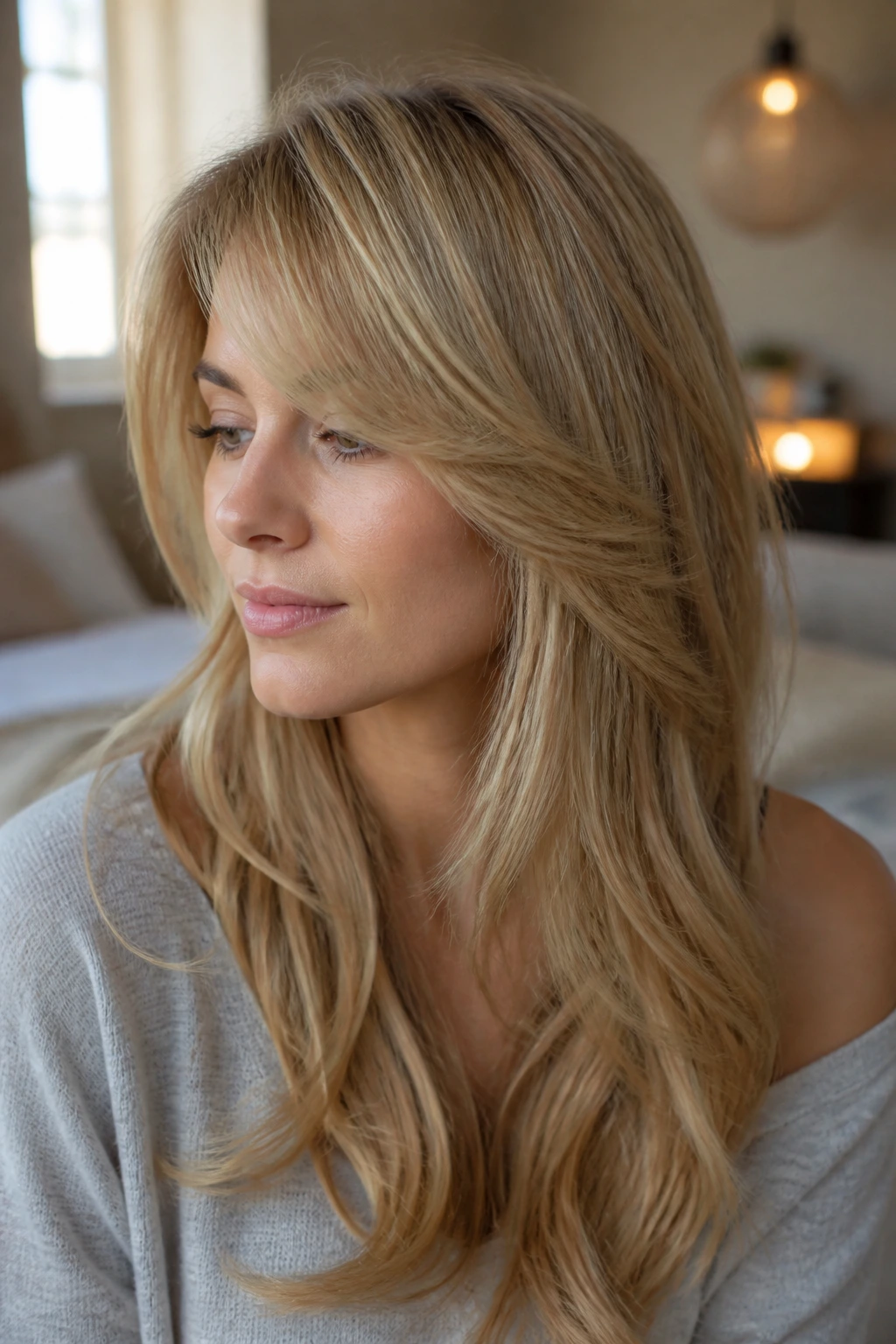
Romantic bend layers are softer than blowout layers and less obvious than a shag. The front pieces curve away from the face, the side-swept bang melts into the cheekbone, and the rest of the length has a loose, bendy feel that still looks polished.
This cut is ideal if your hair is fine but plentiful enough to handle a little movement. It avoids the over-thinned look by keeping the layers long and the ends relatively full. The blonde shade can be almost anything here, though beige and soft honey tend to feel the most natural.
You can air-dry this shape with a braid or a couple of large clips if you want. The goal is not ringlets. It’s the kind of bend that looks like hair that has its own opinions.
21. Ultra-Light Feather Layers
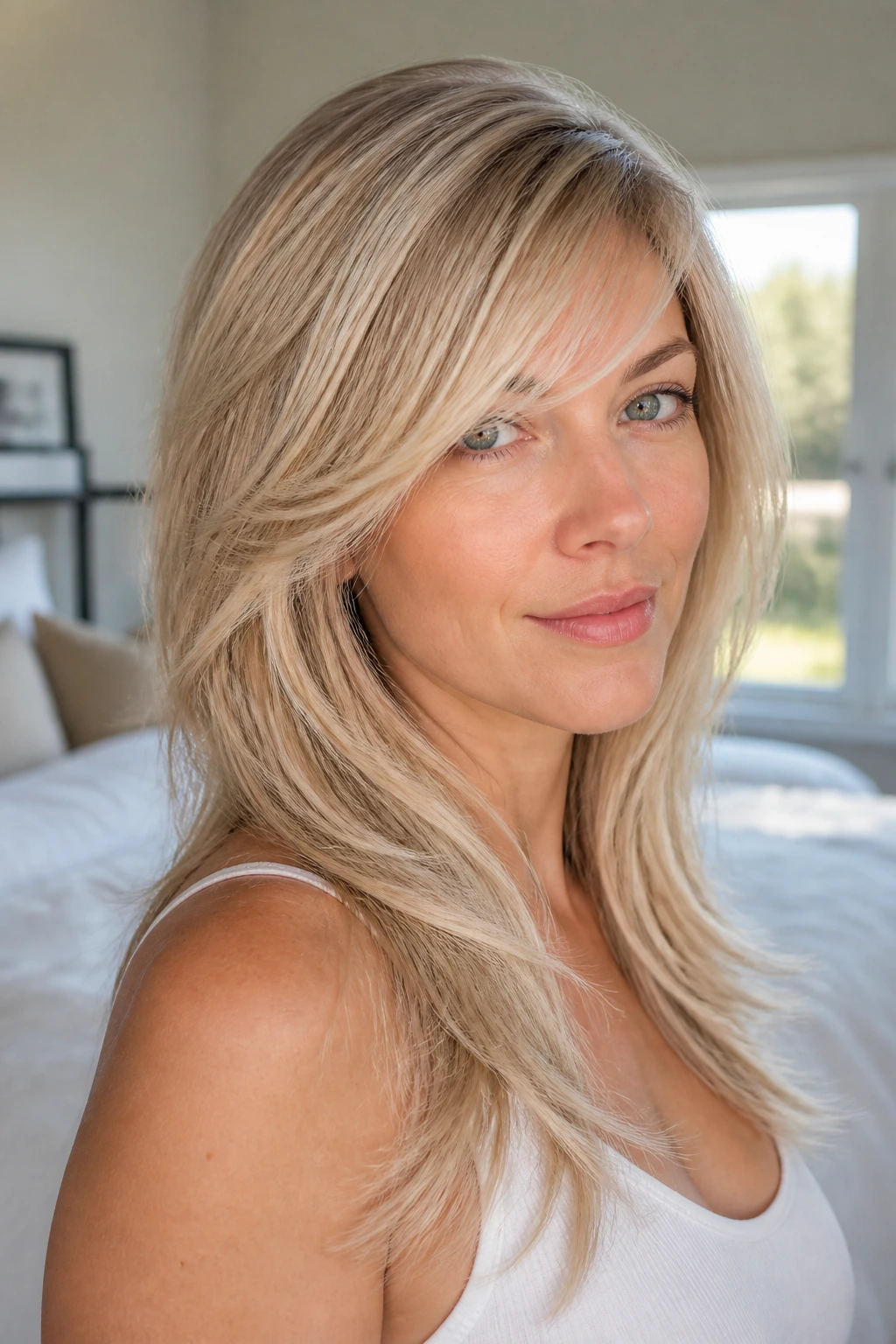
Here’s the version for hair that’s fine and easily weighed down. Ultra-light feather layers remove bulk in tiny, careful passes, so the hair still falls in one thick-enough line but gains a little swing at the sides. That swing is the whole point.
The side-swept bangs should be narrow and long, with the front edge disappearing into the layers by the jaw. Anything shorter starts to look disconnected. Anything heavier drags the face down.
This cut is a smart move if your hair is easily flattened by conditioners, weather, or even a pillowcase. It doesn’t need much product. A light mist of volumizing spray on damp roots and a quick dry with a nozzle is usually enough to show the shape.
22. Lived-In Bisque Blonde Layers
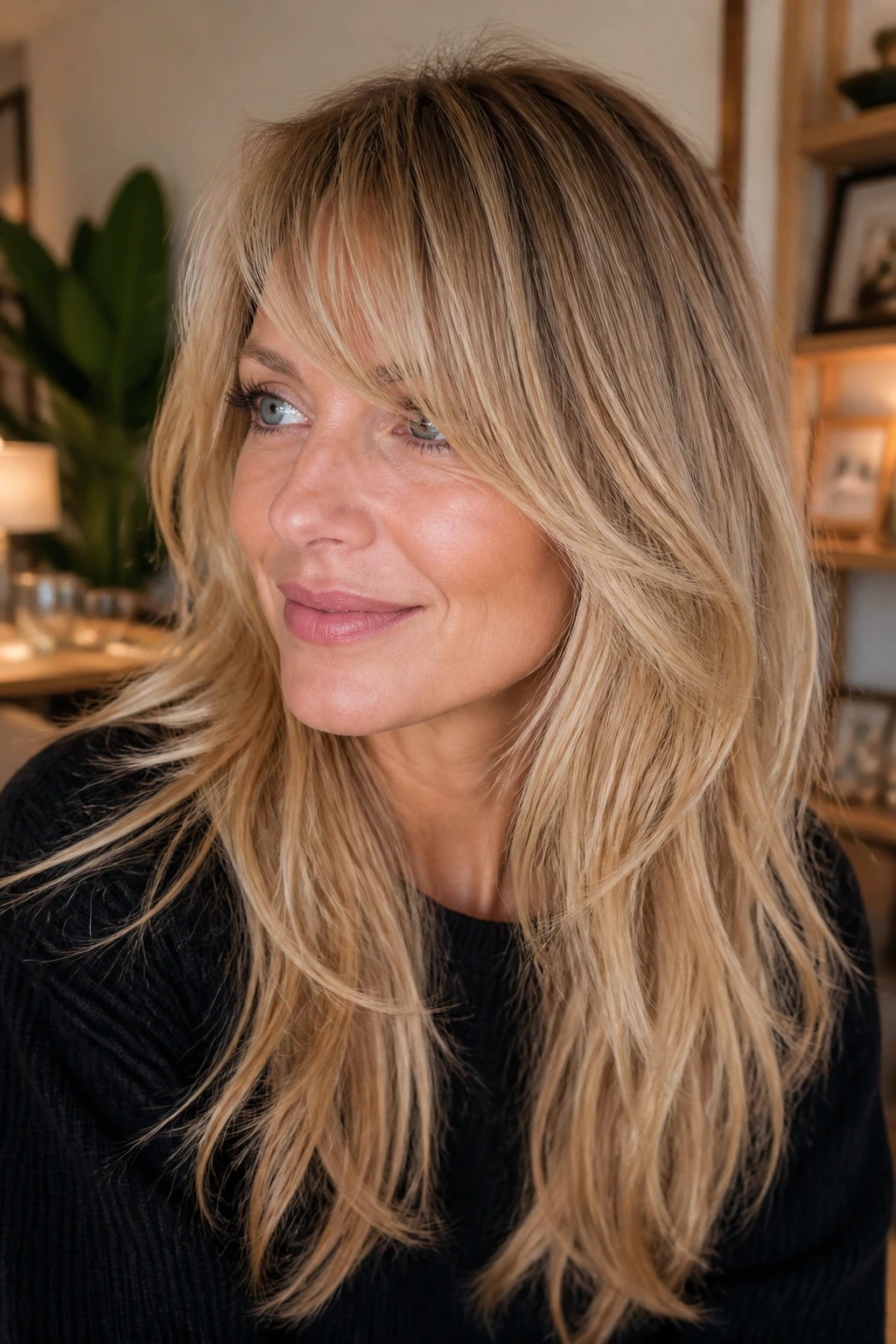
Bisque blonde sits in that soft, neutral zone between beige and warm cream. It has enough depth to keep fine hair from looking washed out, and enough brightness to lift the long layers around the face. The side-swept bang should stay loose and grown-in, which makes the whole cut feel easy.
The beauty of this shape is the grow-out. The layers are soft, the fringe can slide a little longer, and the color doesn’t scream for a touch-up the second the roots show. That matters if you like a cut that survives real life.
This one suits people who want low effort without giving up polish. It looks good tucked, bent, or loosely waved, and it does not demand a perfect morning. Frankly, that’s the appeal.
Why Long Layers and Side-Swept Bangs Beat Heavy Thinning on Fine Hair
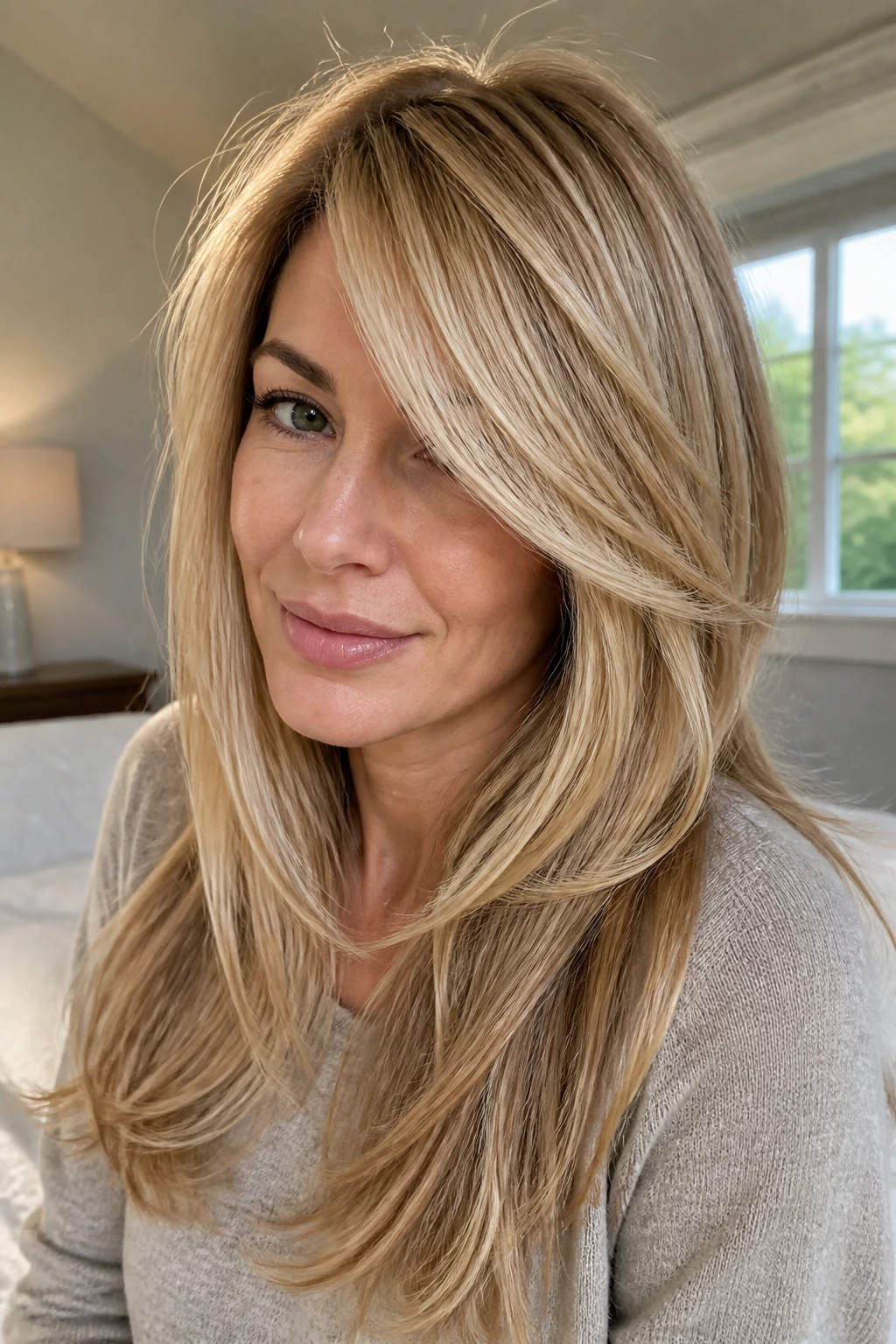
Fine hair often gets the wrong kind of help. A stylist sees limpness and reaches for more thinning, more razoring, more texture. Sometimes that works for the first two days. Then the ends start to fray, the part gets wider, and the whole shape goes a little see-through under daylight.
Long layers behave differently. They move the bulk around instead of stripping it out. That means the hair can still swing, but the bottom edge keeps enough substance to look intentional. Side-swept bangs add the other half of the equation. They break up a flat front line and create a diagonal shape across the face, which tends to read fuller than a straight-across fringe on fine hair.
Blonde helps because color can fake density. A rooted beige, a champagne glaze, or a honey ribbon catches light in several places at once. You’re not just seeing one plane of hair. You’re seeing depth. And depth is what fine hair usually needs most.
Essential Tools for Styling These Looks
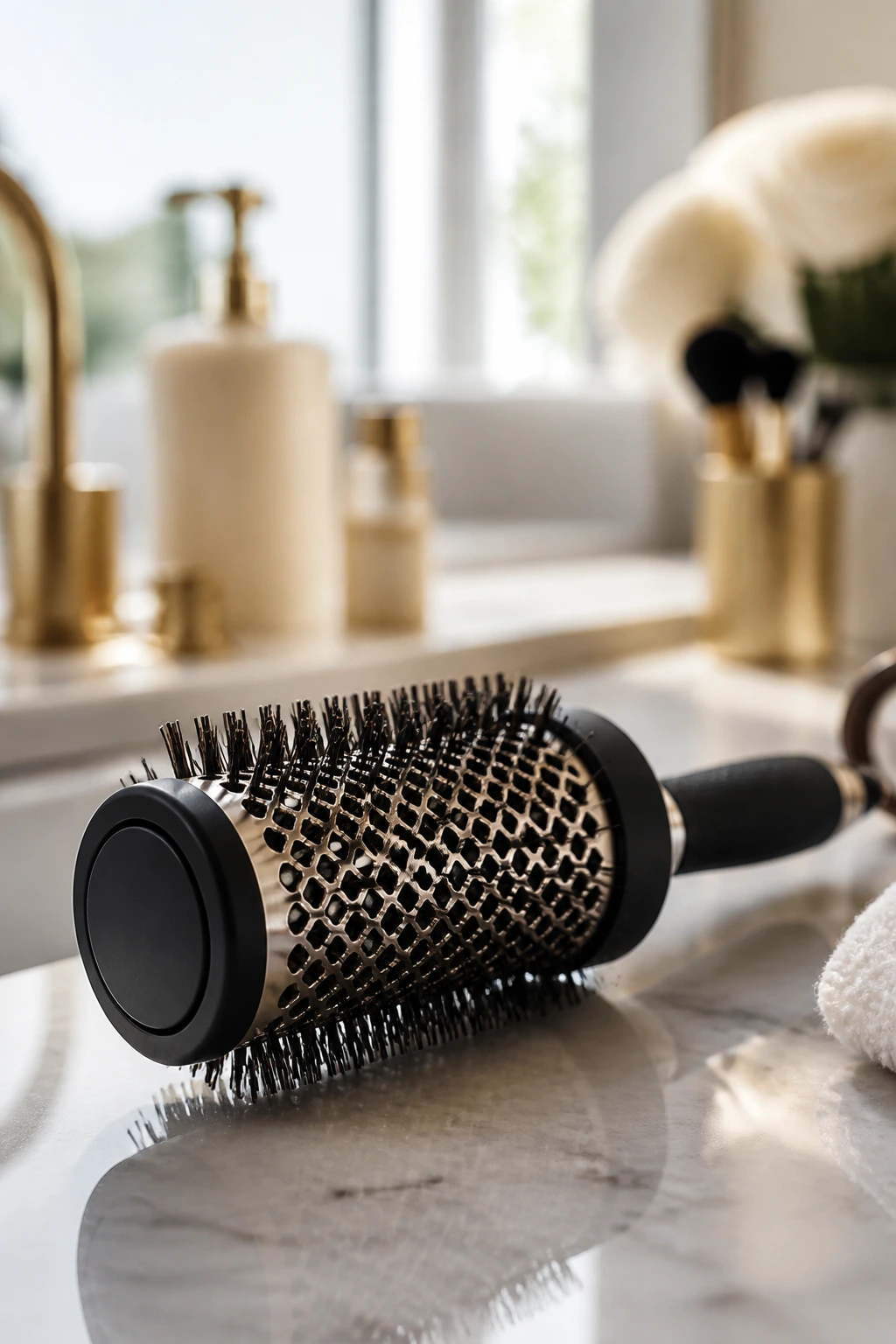
- A 1.25-inch round brush — Big enough to build bend, small enough to control a side-swept fringe.
- A blow dryer with a nozzle — The nozzle keeps airflow pointed where you want it, which matters on fine hair that flips around easily.
- Lightweight mousse or root lift spray — Use it at the roots only; heavy creams sink the shape.
- A flat iron or 1-inch curling iron — Handy for soft bends, face-framing curves, and a quick bang refresh.
- Velcro rollers or clips — Good for setting the front while it cools so the side sweep holds.
- Wide-tooth comb and a fine-tail comb — The wide-tooth comb is kinder on wet hair; the tail comb helps place a clean side part.
- Light texture spray — A few misted passes at mid-lengths can wake up flat layers without making them crunchy.
- Heat protectant — Non-negotiable if you blow-dry or iron the hair more than once a week.
- Microfiber towel or soft tee — Fine hair roughs up fast; a gentler towel keeps the cut smoother.
Choosing the Right Blonde Tone and Layer Map
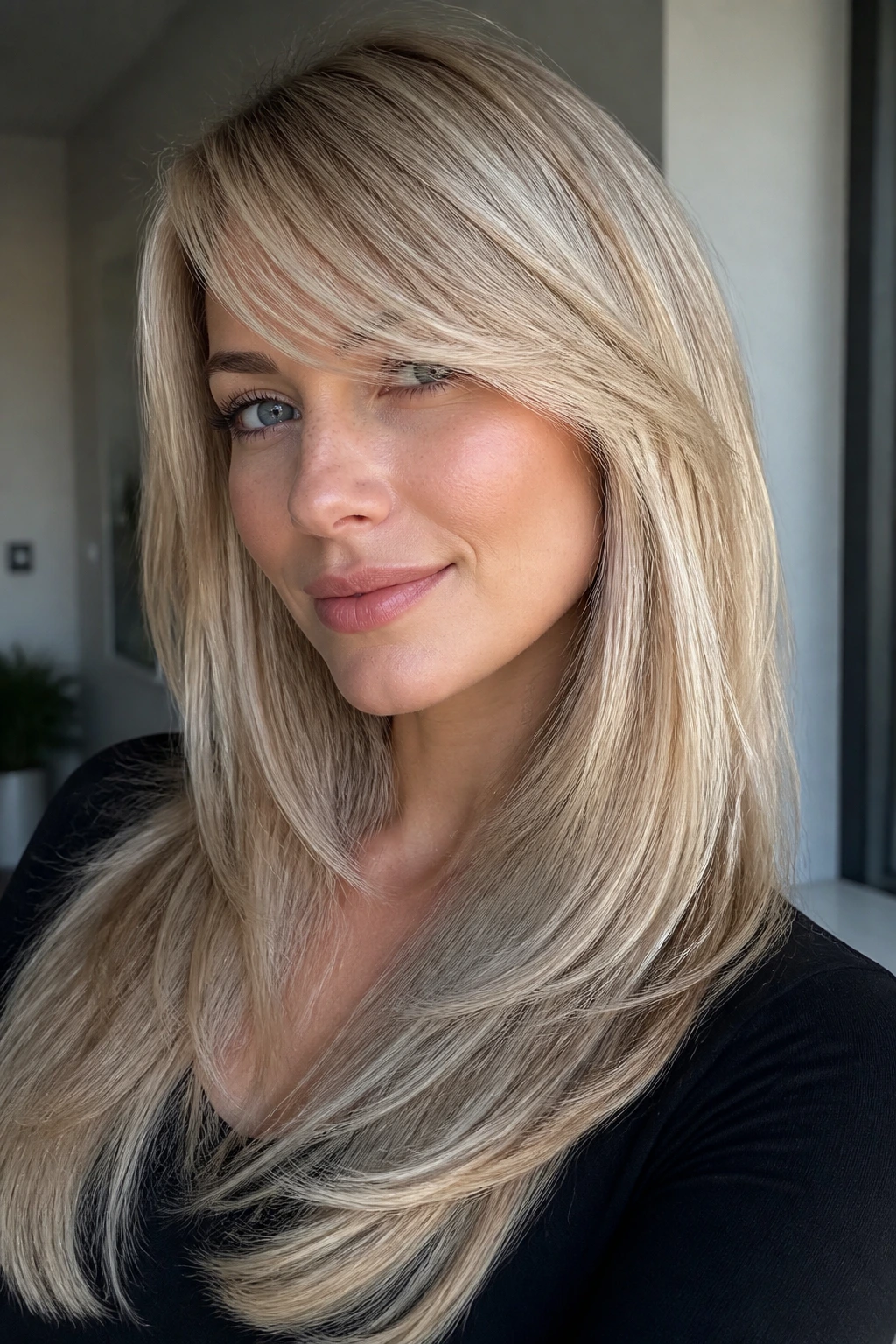
Color is not decoration here. It changes how the cut reads. A cool platinum on fine hair can look chic, but only if the layers are controlled and the ends stay solid. A beige or bisque blonde usually looks a little fuller because the softer contrast hides thin spots better. Honey and caramel add warmth, which is useful if the hair looks a touch transparent in bright light.
Root shadow deserves more credit than it gets. A slightly deeper root keeps the scalp from looking too exposed, and it lets the blonde lift happen lower down where the layers move. If your hair is very fine, ask for a root that is only a shade or two deeper, not a stark stripe. You want depth, not two-tone drama unless that is the point.
Face-framing pieces matter just as much. The shortest blonde around the cheekbone should be bright enough to catch light, but not so light that it separates from the rest of the haircut. When the color and the cut work together, the side-swept bang looks thicker and the long layers look more deliberate. That’s the trick. The eye fills in the gaps for you.
How to Style Fine Hair so the Layers Actually Show
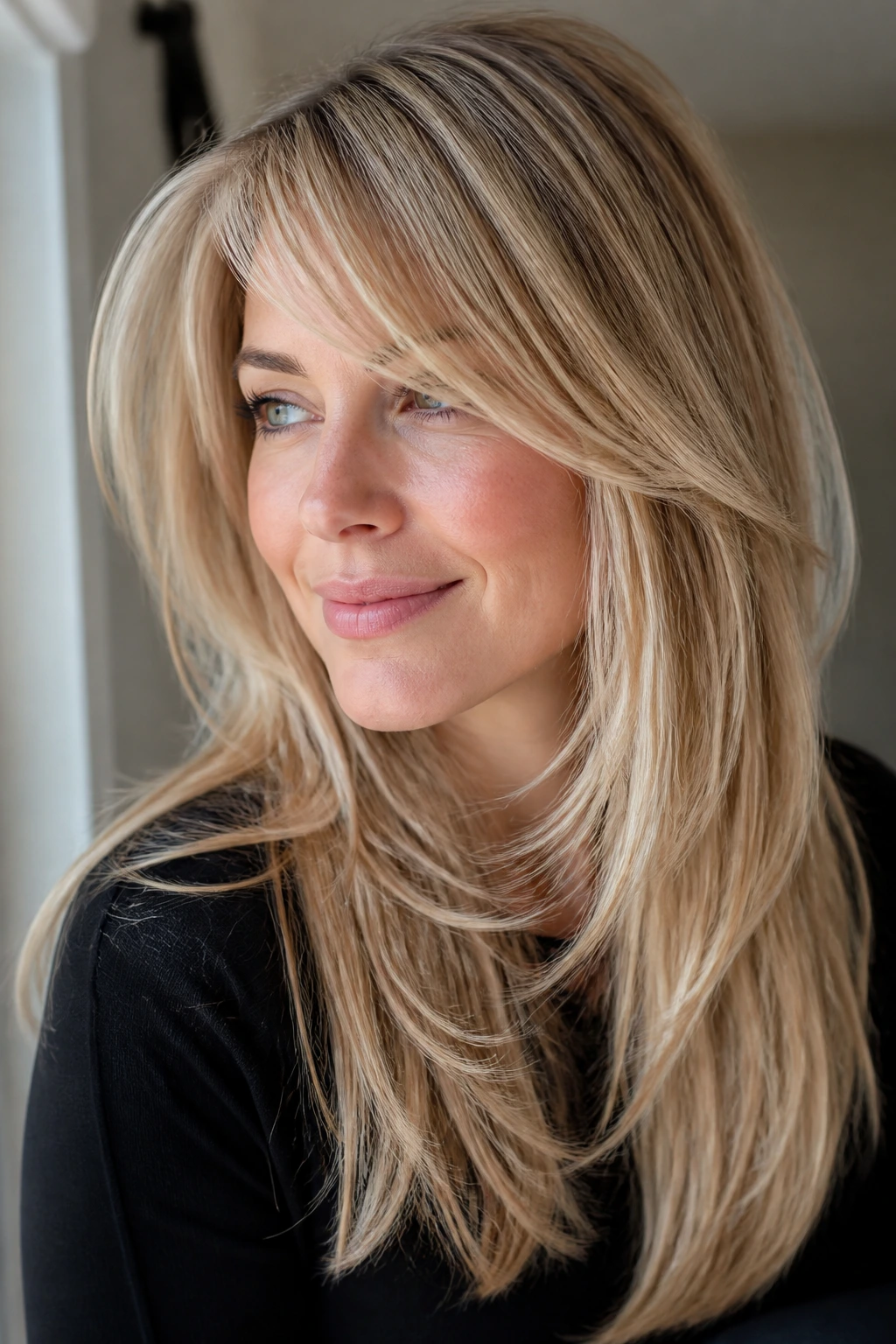
Root Lift: Put mousse or root spray on damp hair before you do anything else. Two to four pumps is usually enough for fine hair; more than that can make the roots sticky and hard to brush through. Blow-dry the roots in the opposite direction of your part for extra lift, then flip the hair back once it’s about 80 percent dry.
Round-Brush Shape: Dry the front pieces first. Wrap the side-swept bang over a 1.25-inch brush, aim the nozzle down the hair shaft, and let the section cool on the brush for a few seconds. That cooling step matters. If you release it hot, the sweep falls flat faster.
Soft Bend Through the Ends: Use a flat iron or curling iron only on the mid-lengths and ends. Leave the last inch straighter if you want that expensive, undone finish. Curling all the way to the tips tends to make fine hair look overstyled and smaller.
Bang Control: If your fringe splits in the wrong place, wet it lightly, brush it into the right direction, and clip it there while it cools. Ten minutes can change the whole day. I keep a couple of duckbill clips near the mirror for exactly this reason.
Extra Lift, Shine, and Movement Tricks
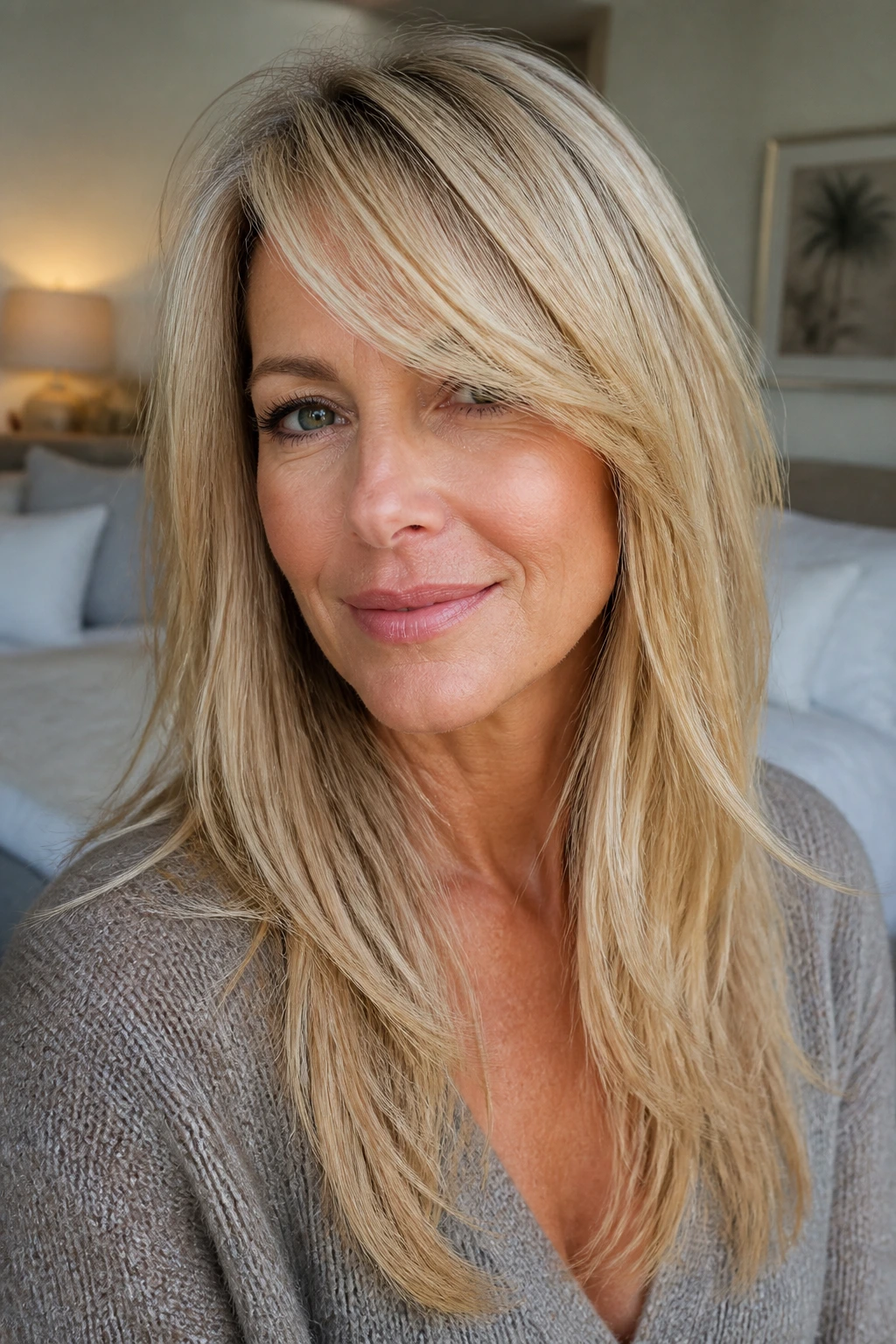
Flavor Enhancement: A tiny bit of shine spray on the mid-lengths can make blonde layers look healthier, but keep it off the roots. Fine hair hates a heavy shine product at the scalp.
Customization: If your hair needs more texture, mist a dry texture spray under the top layer and scrunch once. If it needs more polish, use a smoothing cream the size of a dime and spread it through the ends only.
Serving Suggestions: Tuck one side behind the ear and let the side-swept bang fall across the opposite brow. It sounds simple because it is, and it shows off the cut better than fighting both sides into symmetry.
Make-It-Yours: If your hair is very flat, choose a deeper side part and a few brighter face-framing pieces. If it’s naturally wavy, keep the layers longer and let the bend do most of the work. If you want the least maintenance possible, lean into rooted blonde and a long fringe that can grow out gracefully.
Common Mistakes to Avoid
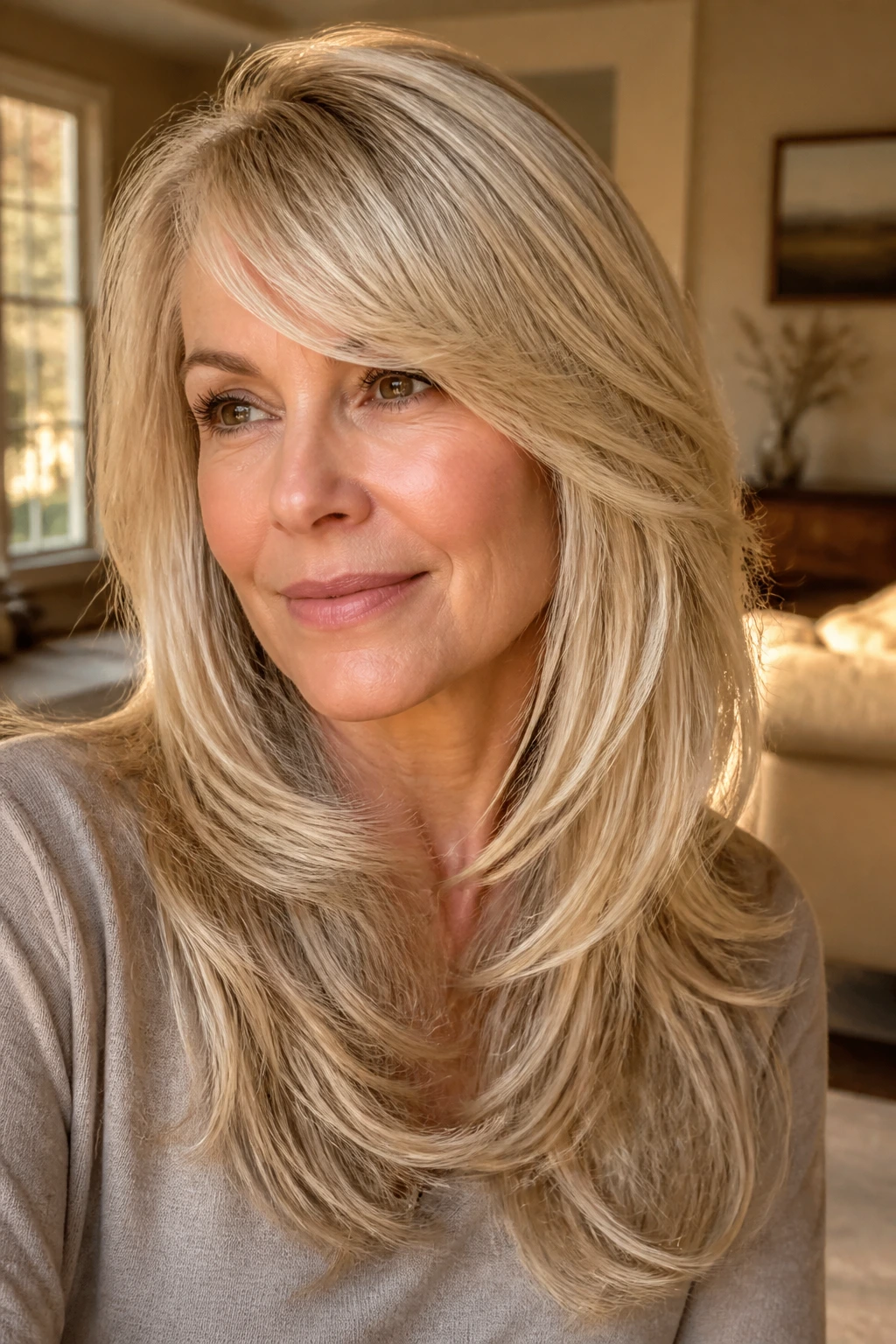
The first mistake is layering too high. You can see it right away: the crown goes fluffy, and the ends look skinny. The fix is simple, if slightly unglamorous — keep the shortest layers lower, usually around the cheekbone or collarbone, and leave the perimeter thick.
The second is cutting the side-swept bangs too short. Fine hair does not forgive a bang that sits above the brow unless you want to babysit it every morning. Long diagonal fringe pieces are safer, and they grow out in a way that still looks intentional.
The third is using heavy conditioner or oil everywhere. Fine hair loves to look silky and then collapse half an hour later. Put richer products only from the ears down, and use a lighter formula on the top half of the hair.
The fourth is going one-dimensional with color. Flat blonde makes thin sections easier to spot. A root shadow, a soft lowlight, or even a slightly deeper panel under the top layer gives the style more depth.
The fifth is overtexturizing the ends. That “piecey” effect can slide into frayed fast. If the ends start looking shredded after a cut, ask for softer blending next time, not more razor work.
Variations and Adaptations to Try
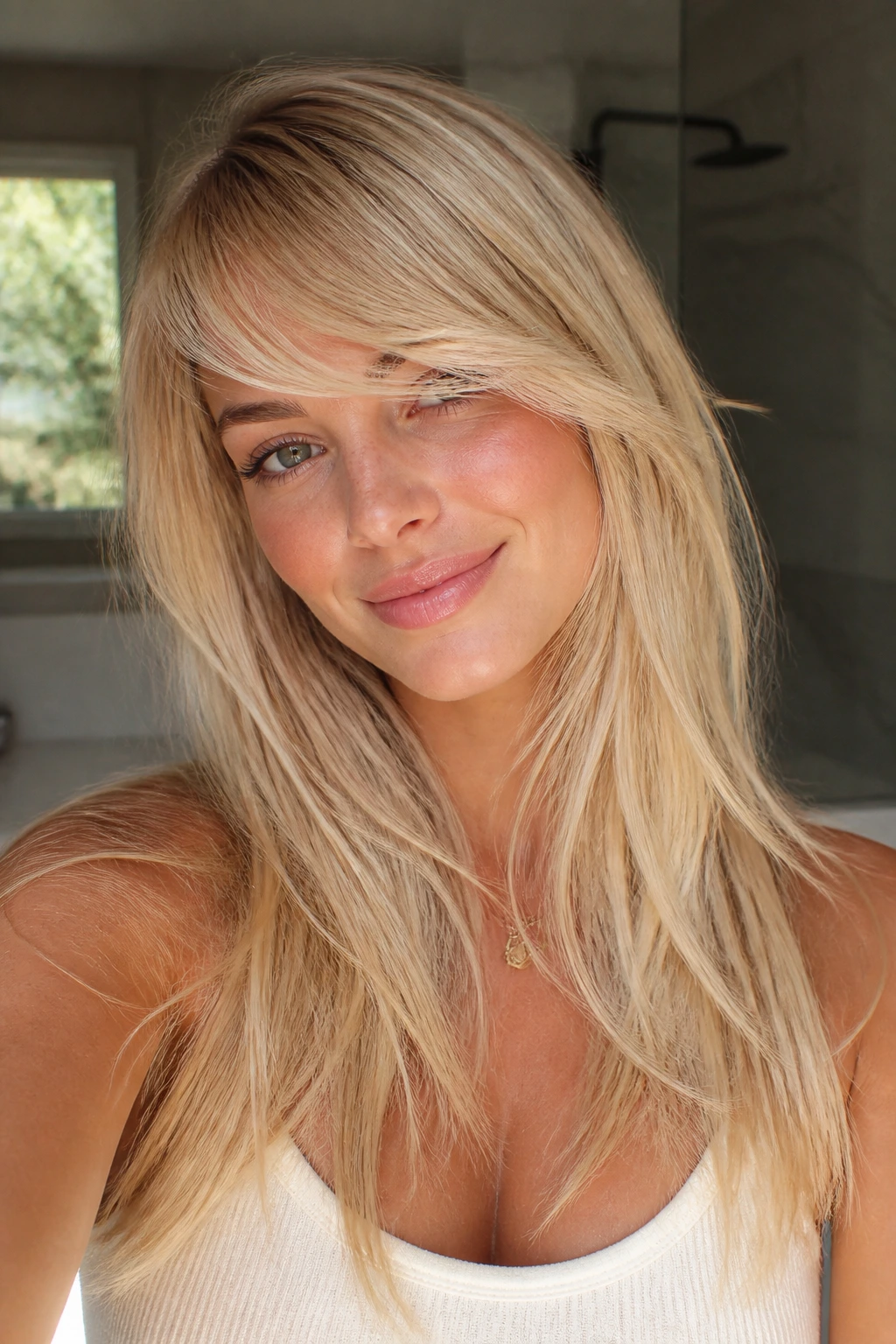
Air-Dry Friendly Sweep: Keep the layers long and the fringe longer than you think you need. This version works when you want the cut to look good with a quick towel dry and a little scrunching.
Glossy Straightened Version: Ask for a blunt-ish perimeter, hidden layers, and a cream blonde or beige tone. This one reads cleaner and denser when you love a polished finish.
Beach-Wave Version: Add brighter face-framing balayage and slightly more movement through the mids. It works best on hair that already bends naturally and doesn’t need a ton of heat.
Low-Maintenance Rooted Blonde: Ask for a deeper root and longer side-swept bangs that can live a little past eyebrow length. The grow-out is softer, and the shape stays wearable longer between salon visits.
Thicker-Looking Version: Keep the layers fewer and more controlled, with a stronger bottom line. This is the move if your hair is fine and sparse, not just fine in texture.
Keeping the Cut in Shape Between Salon Visits
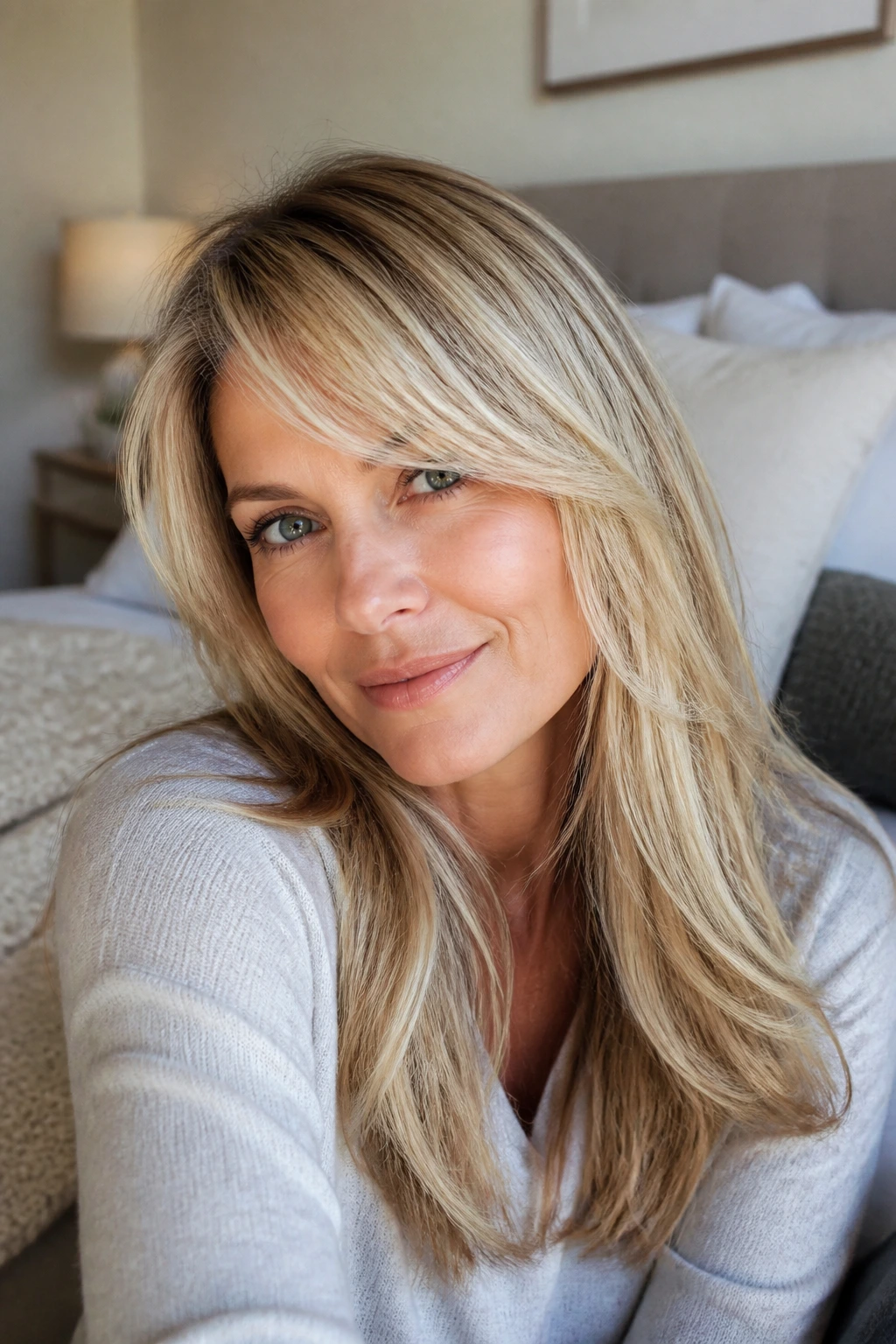
Fine hair usually needs trims on a tighter schedule than people want to admit. Side-swept bangs often need a touch-up every 4 to 6 weeks if you want the sweep to stay neat and out of your eyes. The long layers can stretch longer, usually around 8 to 12 weeks, depending on how fast your hair grows and how much shape you like to keep.
The color matters too. If you wear blonde and it tends to go dull or brassy, a gloss or toner refresh every 6 to 8 weeks keeps the cut from losing its shine. Purple shampoo can help, but use it lightly — once every one or two washes is usually enough. Too much, and the blonde can start looking flat or slightly gray.
At night, keep the side sweep from getting crushed. A loose clip, a soft scrunchie, or a silk pillowcase can save you a whole morning of re-bending the fringe. If your front section goes crooked, dampen it with a little water, blow it in the proper direction for 30 seconds, and let it cool before you touch it again. That tiny reset beats trying to rebuild the whole cut from scratch.
Frequently Asked Questions
Will long layers make fine hair look thinner?
Not if they’re cut with restraint. Long layers should remove weight without stripping out the perimeter, so the ends still look full enough to hold the shape.
Are side-swept bangs better than curtain bangs for fine hair?
Often, yes. A side-swept fringe creates one clean diagonal panel, which can read fuller than a split curtain fringe if your hair is very sparse at the temple.
What blonde shade makes fine hair look thickest?
Beige, bisque, honey, and champagne shades usually do a good job because they create soft dimension without exposing every strand. A root shadow helps too.
How short should the side-swept bangs be?
Long enough to tuck behind the ear or brush past the cheekbone. If they sit too high on the brow, they grow out awkwardly and need constant trimming.
Can I wear these layers if I air-dry most days?
Yes, but keep the layer map soft and the fringe long. A quick clip at the side part while the hair dries can help the bang settle in the right direction.
Do these cuts work on straight hair only?
Nope. Wavy hair often shows the layers even better, though the shaping should stay longer so the cut doesn’t mushroom. Curly hair needs a different approach, with dry cutting and less interior removal.
How do I stop my bangs from splitting open?
Dry them first, in the direction you want them to sit, and clip them while they cool. A little root spray at the base helps, but the cooling shape is what makes the sweep hold.
What if my hair is very fine and sparse?
Choose fewer layers, a stronger bottom line, and a deeper root color. You want movement, not holes. That’s the line to protect.
The Shape That Makes Fine Hair Behave
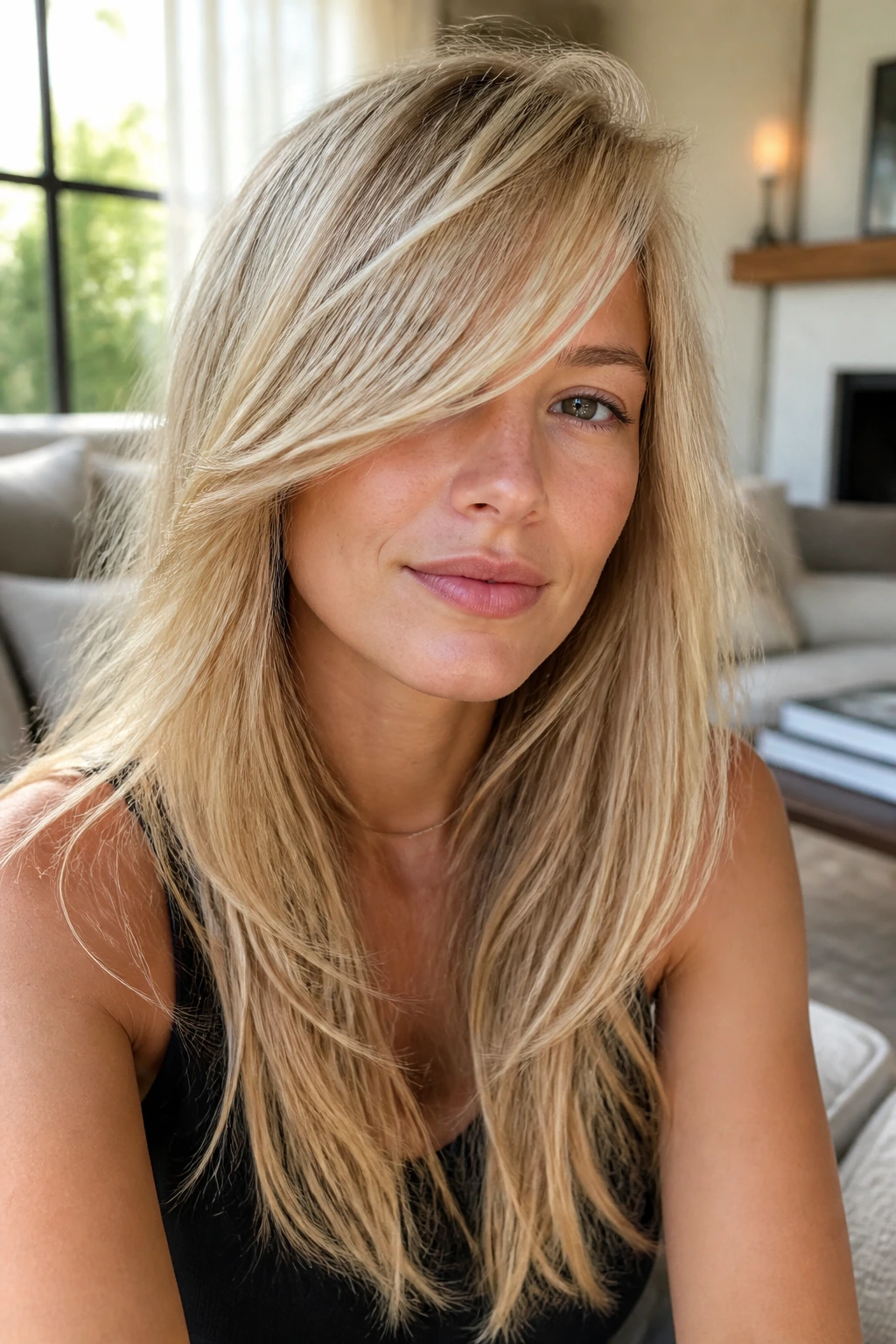
The nicest thing about these cuts is that they do not fight fine hair’s nature. They work with it. A soft side sweep gives the front section a little presence, long layers keep the length alive, and the blonde shade does its own bit of visual lifting without asking for a huge styling routine.
Some versions here are airy and polished. Others are softer, rooted, or a little piecey around the face. The common thread is simple: the hair still looks like hair when it’s tucked, brushed, or slightly windblown. That’s a better goal than chasing giant volume that disappears by lunch.
Pick the version that matches how you live with your hair, not how you imagine it on a perfect day. The cut should make your mirror easier to deal with, not harder.