



Choppy bangs are one of the few fringe cuts that can work with a round face instead of drawing a fat black line straight across it. The broken edge interrupts width. The lighter ends keep the front from turning into a helmet. And fine hair, which can look limp in a solid fringe, gets a little lift because the cut removes weight right where the bang wants to collapse.
A blunt bang on a round face often behaves like a spotlight. It sits across the widest part, announces itself, and makes the cheeks look even softer. That is not the move here. The smarter approach is texture, a bit of asymmetry, and lengths that shift between the brow and the cheekbone so the eye travels up and down instead of side to side.
Fine hair changes the game too. Too much thinning and you get see-through strings. Too little and the fringe drops flat by lunch. The sweet spot is a controlled break in the line, usually with point-cutting or light slide-cutting, so the bangs still look like hair — just hair with a little movement and a little nerve.
Why These Fringe Ideas Earn Their Keep
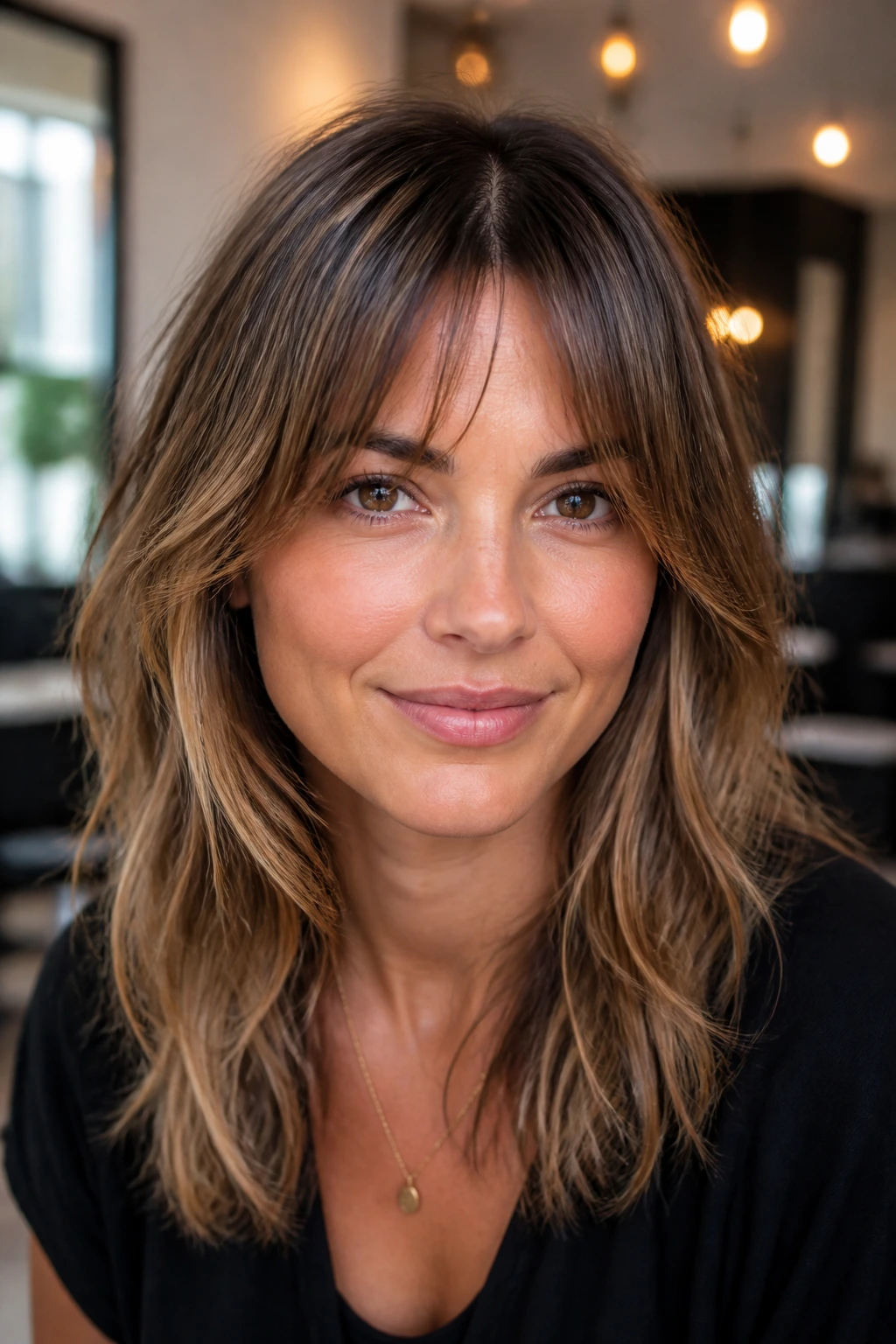
- Face-lengthening shape: The styles below use diagonal lines, center gaps, or broken ends to draw the eye vertically, which keeps a round face from looking wider at the temples.
- Fine-hair friendly density: These cuts rely on texture instead of bulk, so the fringe can move without needing twice as much hair in the front.
- Lower stress at grow-out: Several of these shapes melt into curtain layers or side pieces as they lengthen, which means fewer awkward weeks.
- Styling that takes minutes, not a production: Most of these bangs need a quick root lift, a bend at the ends, and maybe a tap of dry shampoo the next morning.
- Salon-language friendly: The ideas are easy to describe with real words like point-cut, cheekbone length, and broken edge, so you can ask for them without waving around a photo and hoping for the best.
What Makes Choppy Bangs Work on a Round Face

Round faces usually carry their width in the middle third — cheeks, jawline, and the soft curve between them. That means the trick is not to hide the face. It’s to break the circle. Choppy bangs do that with tiny interruptions in the line, so the fringe never looks like one solid bar across the forehead.
Length matters more than people think. A fringe that ends exactly at the fullest part of the cheek can box the face in. A fringe that starts a little shorter in the center and stretches longer toward the temples or cheekbones does the opposite. It nudges the eye upward, then outward, then down again. That little zigzag is doing more work than a heavy cut ever will.
Fine hair needs a separate kind of restraint. If a stylist removes too much density with aggressive thinning shears, the fringe starts to look stringy in daylight. I prefer point-cutting the edges and keeping the body of the bang intact, because the hair still needs enough presence to show up in a mirror. Texture is the point. Transparency is not.
1. Feathered Brow-Grazer
This is the safest entry point if you want movement without drama. The center sits just above the brows, and the edges taper longer toward the temples so the whole fringe feels lighter than a straight line. On a round face, that soft taper helps the forehead look a touch taller and keeps the cheeks from feeling like the widest thing in the frame.
Fine hair likes this cut because the ends are feathered, not shredded. Ask for point-cutting with the scissors held vertically, and keep the shortest piece no higher than a whisper above the brow. Any shorter and the fringe can start to bounce up in odd ways if your hair has even a small cowlick.
I like this version for people who wear their bangs down most days but still want room to pin them back when they’re tired of them. It grows out cleanly into a loose curtain shape. That alone saves a lot of regret.
2. Side-Swept Micro Chops
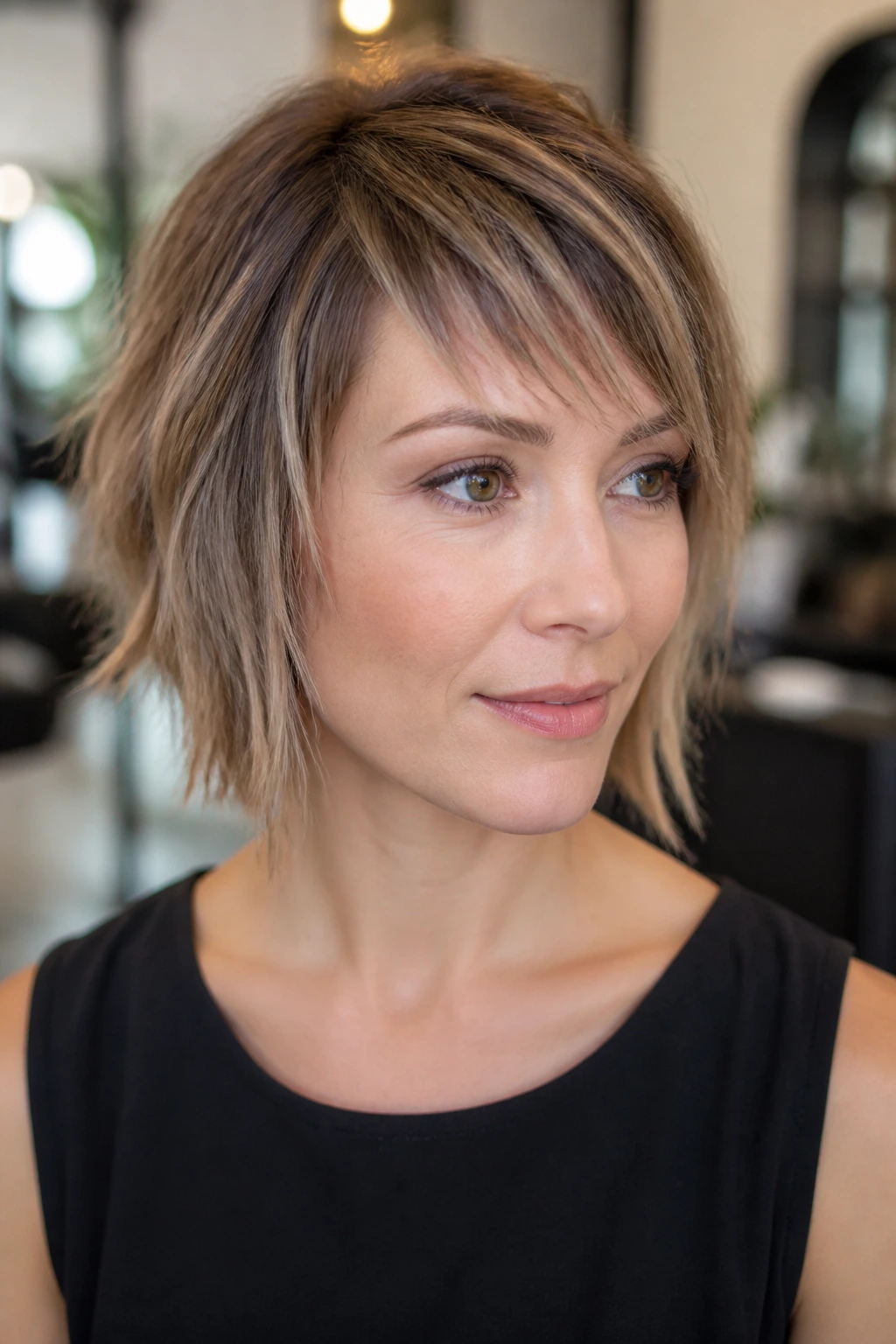
A side-swept fringe with choppy ends can be a very good liar. It looks casual, but the diagonal line does serious face-shaping work. The sweep cuts across the forehead instead of sitting squarely on it, which gives a round face a longer line to follow.
The trick is to keep the pieces light enough that they don’t fall into one heavy slab by noon. Fine hair does better here when the roots get a quick blast of lift from a blow-dryer and a small round brush. I’d keep the longest piece around the top of the cheekbone and the shortest piece just skimming the brow on the opposite side.
This style is also useful if your hair parts stubbornly to one side. Don’t fight the natural split. Let the fringe lean into it, then rough it forward while damp and sweep it across while it’s still warm.
3. Bottleneck Choppy Fringe
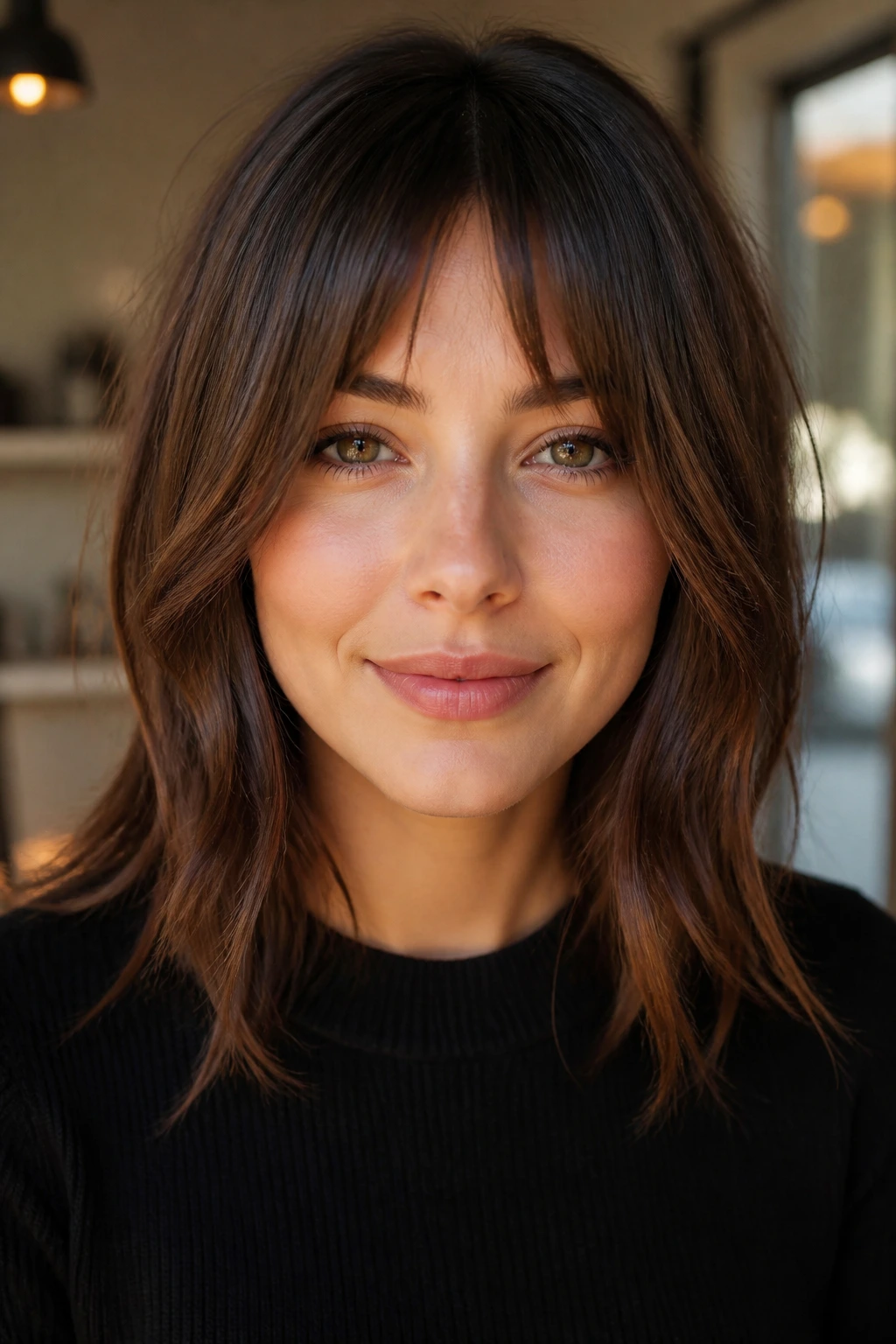
Why does this shape keep showing up in good salons? Because it solves two problems at once. The center is shorter, almost like a narrow opening, and the sides get longer as they move toward the cheeks. That creates a face-framing effect without building a heavy wall across the forehead.
For round faces, bottleneck bangs are doing geometry in your favor. The shortest point sits in the middle, then the fringe expands downward and outward. That keeps the face from reading too wide at the center. On fine hair, the tapered edges help avoid the floppy triangle that some curtain bangs can become.
Ask your stylist to keep the middle soft and the side pieces cheekbone-length, not jaw-length. Jaw-length can sometimes add width right where you do not want it. This cut works especially well with a small bend at the ends, not a full curl.
4. See-Through Curtain Bangs

A see-through curtain fringe is what happens when curtain bangs stop pretending to be thick. And that is a good thing. The gap in the middle opens the face, the lighter density keeps fine hair from getting weighed down, and the broken ends soften the overall shape.
This look depends on restraint. If you pile too much product into it, the airy effect disappears and you end up with flat, separated strands. A tiny amount of mousse at the roots is enough. After that, a quick blow-dry with the bangs wrapped loosely around a small round brush will set the split and keep the ends from sticking to the forehead.
This one flatters round faces because it doesn’t add a blunt width line. Instead, it leaves skin showing down the center and shifts attention outward toward the cheekbones. A narrow face is not the goal. A longer-looking one is.
5. Shattered Eyebrow Fringe
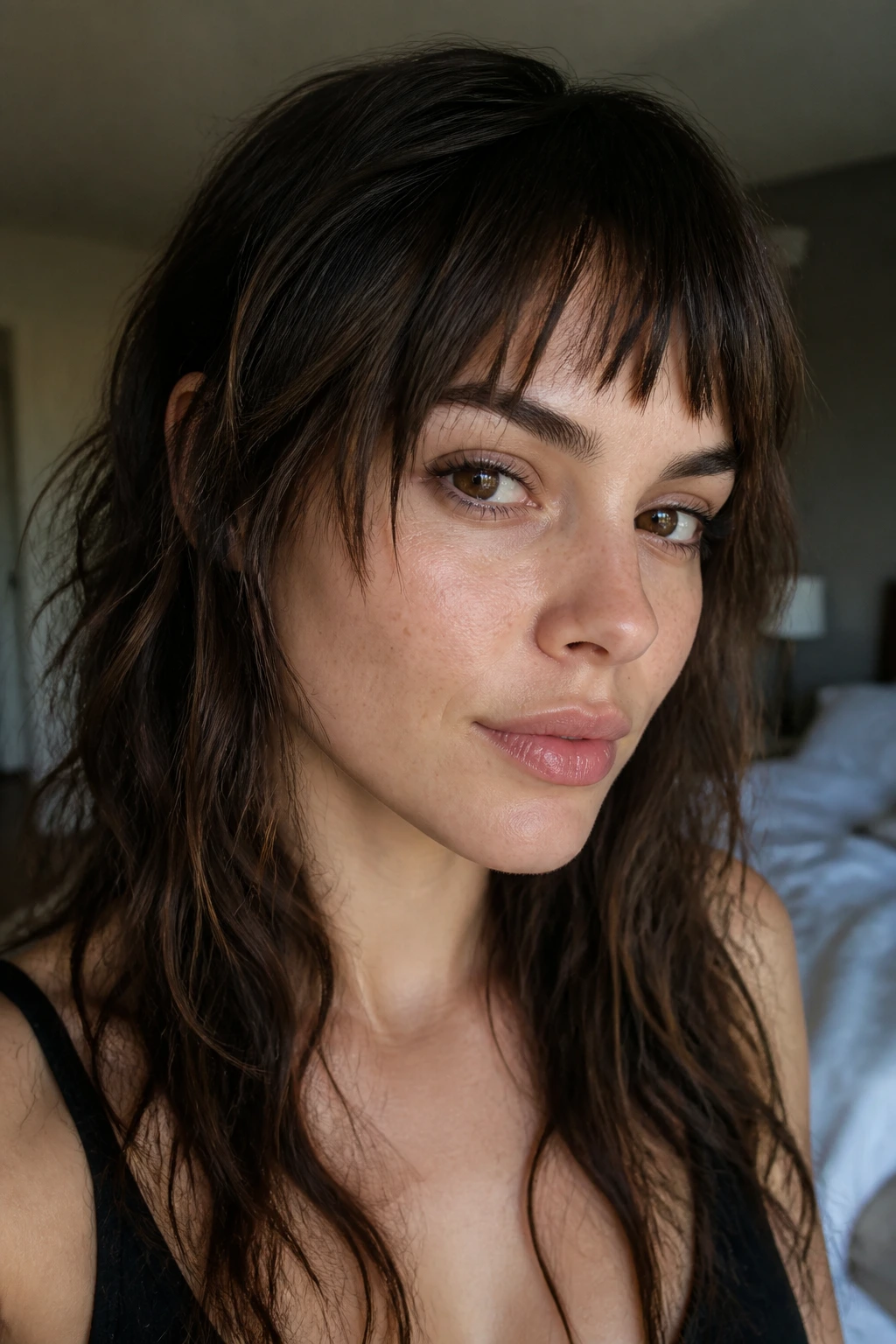
A shattered eyebrow fringe has a little edge to it, but not the kind that feels loud in person. The ends land around brow length, yet each piece varies slightly, so the line never turns into a shelf. That broken finish is what gives fine hair some attitude without asking it to carry too much weight.
I like this cut when the hair is naturally straight or only slightly bent. Too much wave can make the shattered pieces puff in different directions, which is a different kind of mess. If your texture is smooth, this fringe can sit cleanly after a quick pass with a flat iron on low heat and a light heat protectant.
On a round face, the irregular edge helps the forehead look less wide. The eye catches the uneven pieces first, then keeps moving. It’s a small thing, but small things matter a lot in fringe work.
6. Long Angled Fringe
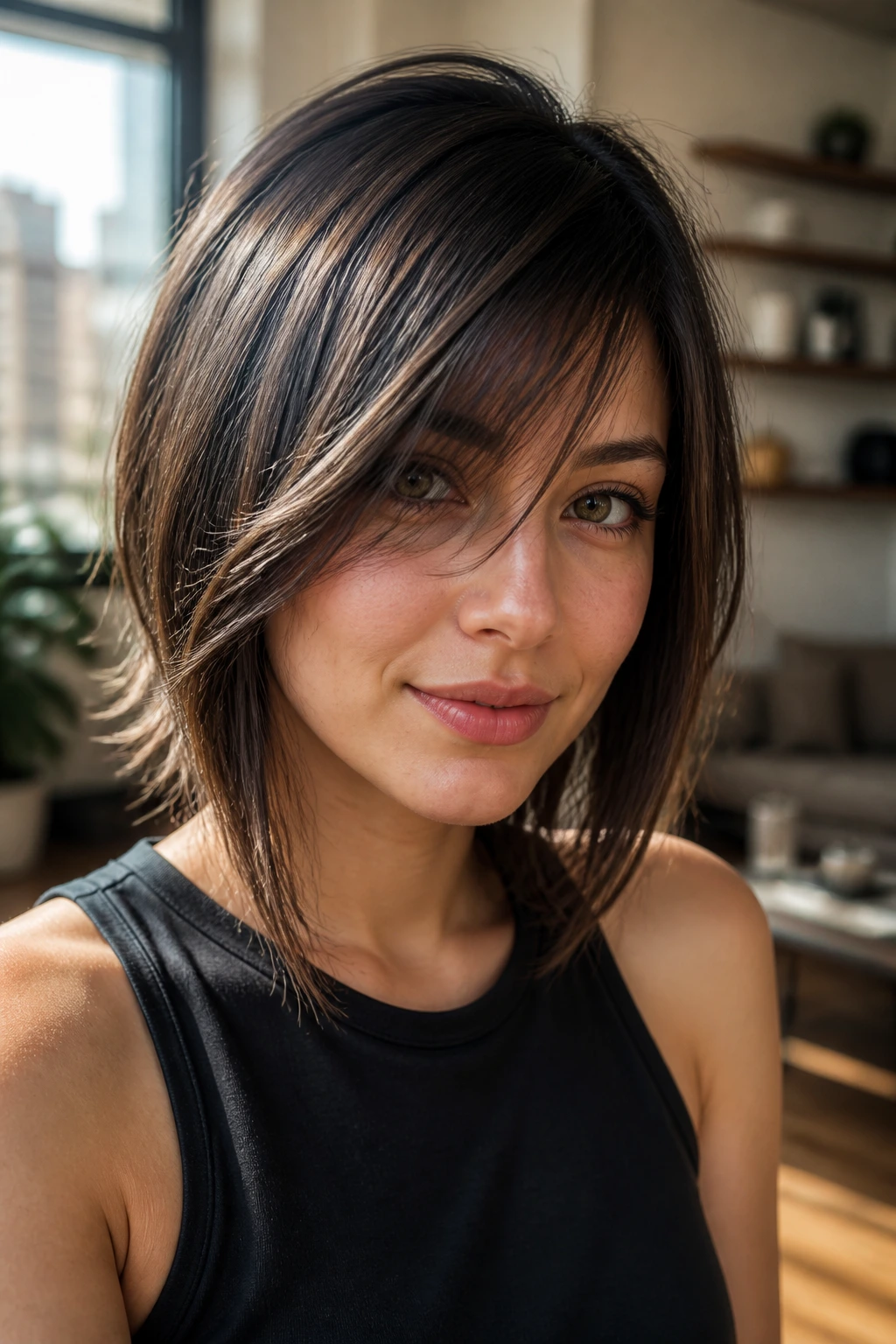
A long angled fringe is one of the easiest ways to make a round face look a bit more vertical. The bang starts shorter near one side of the forehead and slides longer toward the opposite cheekbone, creating a line that cuts diagonally instead of horizontally. Diagonal wins here. Every time.
Fine hair handles this shape well because the weight stays focused in a narrow zone. You are not trying to spread thickness across the whole forehead. You’re creating one clean sweep of hair that can be tucked, pushed, or hooked behind one ear when you want it out of the way.
Ask for a soft angle, not a dramatic swoop. Dramatic can tip into dated fast. The good version moves like it belongs there, even when you barely style it.
Best way to wear it
Keep the roots lifted and the ends lightly bent under. That small bend keeps the piece from sticking flat to the face and making the forehead look shorter than it is.
7. Wispy Piecey Bangs

Piecey bangs work because they behave like several tiny fringes instead of one heavy one. That is a gift for fine hair, which can get swallowed by too much fringe density. You still see forehead through the spaces, which helps keep a round face from looking boxed in.
The styling here matters. A pea-sized amount of texturizing cream is too much for some hair types, so I would start with dry shampoo at the roots and a barely-there pomade only on the ends. Use your fingers to separate the pieces while the hair is still warm from the dryer. A brush can smooth out the texture you actually want.
This is a smart choice if you like bangs that look a little undone by default. They are forgiving on day two, and they don’t scream when they grow out a quarter inch.
8. Center-Parted Choppy Curtain

A center part can be tricky on a round face, but a choppy curtain fringe gives it some discipline. The middle split opens the face, and the ragged edges keep the part from feeling severe. Fine hair benefits because the strands are allowed to sit where they naturally want to fall instead of being forced into a heavy front panel.
The sides should not be the same length as the center. That’s the part people get wrong. Keep the center short enough to frame the forehead, then let the outer pieces drop toward the cheekbones. That creates a soft vertical path down the face.
I like this cut with a little root lift and a loose bend away from the face. If the ends curve under too hard, the whole thing starts to read like an old-school blowout. A little air is better.
9. Tapered Side Fringe

This is the kind of fringe that looks quiet until you see what it does to the face. It starts fuller near the temple, then narrows as it crosses the forehead, so the line feels directional rather than heavy. That taper can be a lifesaver for round faces because it keeps the widest point of the hair from sitting squarely across the cheeks.
It’s also a good pick if you have one stubborn cowlick near the front. Instead of fighting it with a blunt cut, let the fringe angle around it. Fine hair usually settles better when the shape works with the grain of the hair, not against it.
The look is especially nice when the rest of the hair has layers around the jaw. You get a clean diagonal in the front and softer movement below. That combination does more than one job.
10. Baby Chops With Texture
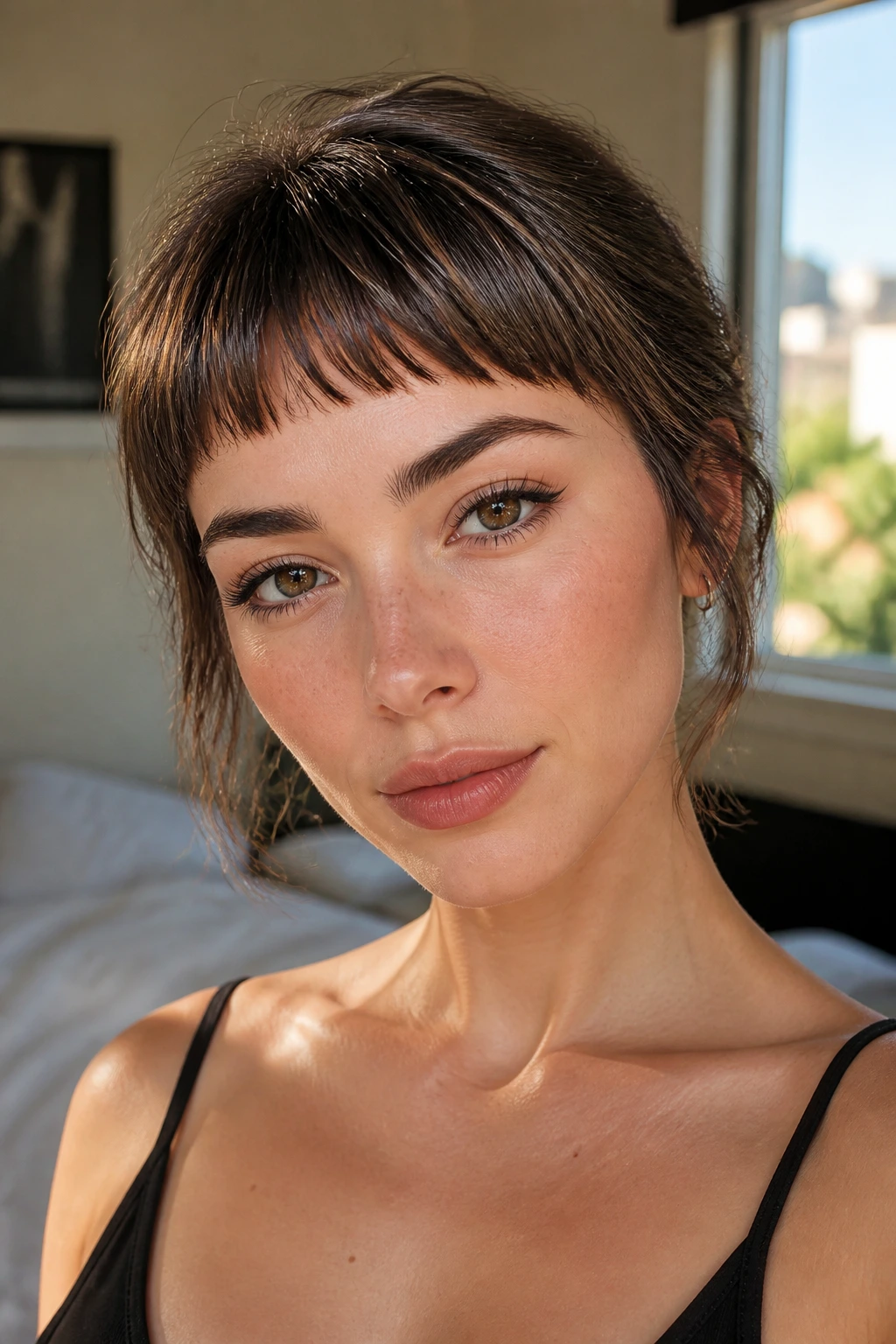
Baby bangs can be risky on a round face, and I’m not going to pretend otherwise. Cut too blunt, they can make the forehead look shorter and the cheeks look wider. But a textured version — soft, choppy, and slightly longer at the sides — can work if you want something sharper and more visible.
Keep the shortest pieces just above the brows, never high on the forehead, and let the edges dissolve into side wisps. Fine hair helps here because the fringe does not need to carry a dense wall of hair to make an impact. It can be light and still read clearly.
This style looks best when the texture is intentional. A little separation on the ends, a little lift at the roots, and no hard line. Otherwise it turns childish fast.
11. Arc-Shaped Fringe

An arc-shaped fringe sounds simple, but the cut is doing a lot. The center lands a touch shorter, then the fringe curves down toward the temples in a shallow arch. That shape pulls the eye upward in the middle and outward at the sides, which is useful when you want a round face to feel a little longer.
Fine hair tends to do well with arcs because the shape keeps the center from getting too bulky. Ask for the edge to be softened with point-cutting so the curve doesn’t look drawn on. You want the suggestion of a shape, not a perfect rainbow across the forehead.
I especially like this fringe with a little face-framing layer that starts near the cheekbone. The combination keeps the front from feeling heavy and gives you a bit of movement when you turn your head.
12. Uneven Lash-Grazers

Lash-grazing bangs are always more interesting when they’re uneven. A perfectly straight lash-length fringe can sit like a curtain. A slightly uneven one looks more alive and tends to flatter fine hair because the ends don’t clump into one thick edge.
This version works if you want coverage without weight. The longest pieces skim the lashes, and the shorter ones break up the line just enough that the forehead still shows through in places. That little bit of skin matters on a round face. It keeps the front from feeling crowded.
Styling note
Use a tiny round brush or a mini flat iron to bend the ends in slightly different directions. Not chaos. Just enough variation to keep the fringe from falling into one frozen line.
13. Soft Razor Fringe

Razor-cut bangs can be beautiful on the right hair, and a soft version can be useful for fine strands that need movement more than density. The cut edge looks airy because the blade removes hair in a softer way than scissors. But I would not take a razor too far on very fragile hair; too much removal and you lose the fringe before it has a chance to behave.
On a round face, the broken end keeps the bang from reading as a bar. The key is control. You want a little feathering at the edge, not a shredded mess that frizzes the second the humidity rises.
If your hair is naturally straight and smooth, this can be a strong choice. If it’s already prone to fuzz, ask for point-cutting instead. The result will last longer and need less fuss.
14. Airy Split Bangs

Split bangs are not the same as heavy curtain bangs with a middle part. The airy version leaves more skin visible at the center, which can be flattering on a round face because it breaks up the width at the forehead. Fine hair tends to like the spacing too; the fringe doesn’t need to pretend it has more density than it does.
The split should feel loose, not forced. Blow-dry the bangs forward first, then coax them apart with your fingers and a round brush or a clip while they cool. If the middle gap is too rigid, the style can start to look fussy.
I like this when the rest of the haircut has soft layers around the jaw and collarbone. The top stays open, the sides soften, and the face gets a longer shape without much effort.
15. Cheekbone-Grazing Fringe

If you want the face to look a touch longer, start thinking in cheekbones. A fringe that reaches that area creates a diagonal frame around the face instead of stopping at the widest point. That’s a useful trick for round faces, especially when the hair is fine and needs every bit of shape it can get.
The cut should be light at the ends but not wispy in the bad sense. There’s a difference. Wispy can mean airy and controlled; it can also mean too thin and broken. I’d keep enough hair in the center to show the line, then let the side pieces taper into the cheekbone.
This one is quietly good with glasses. The fringe gives the frame of the glasses something to meet, which helps the front look intentional instead of crowded.
16. Grown-Out Curtain Bangs
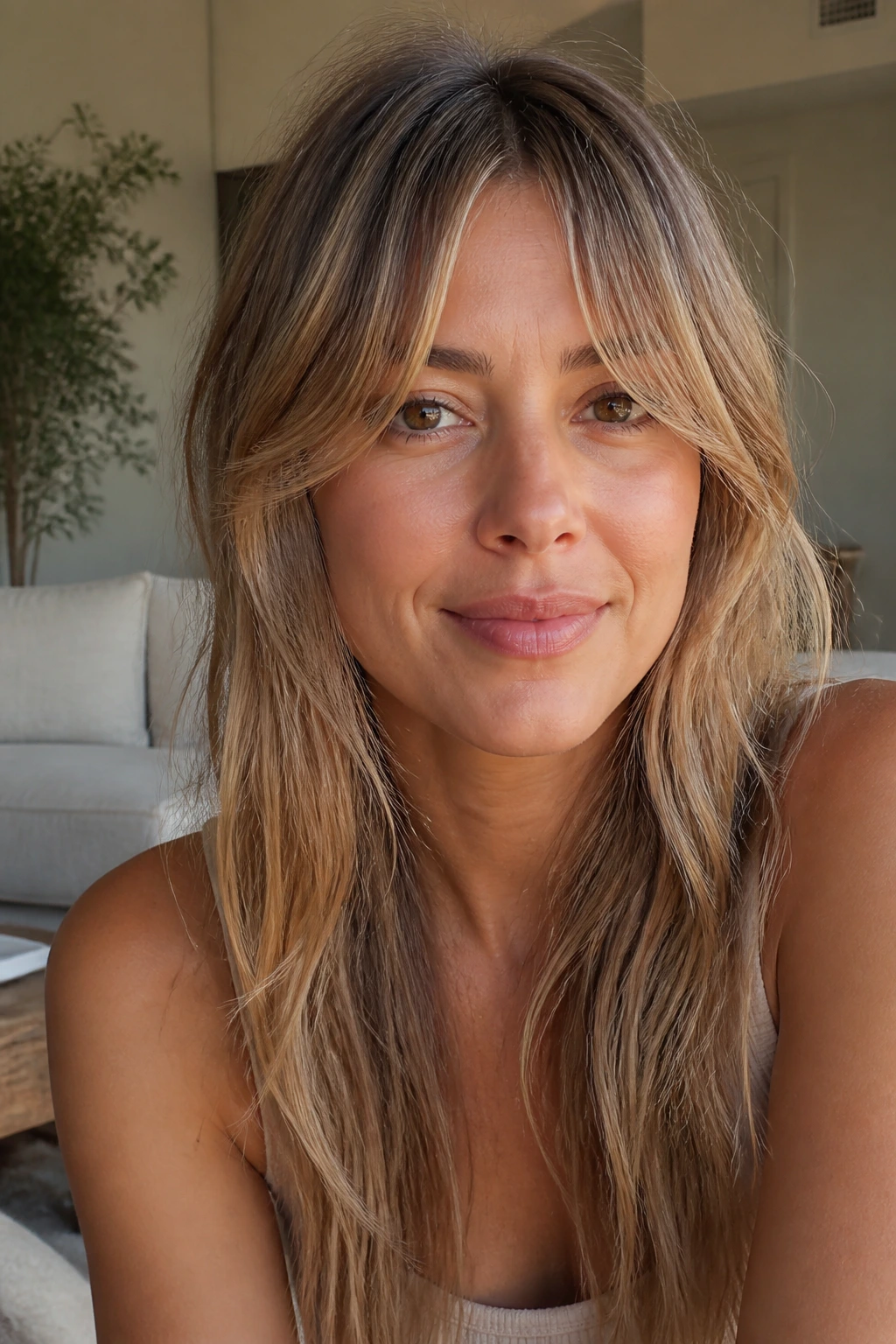
These are the bangs you choose when you know you’re not going to babysit them every three weeks. Grown-out curtain bangs already have enough length to split, bend, and tuck back, and the choppy edges keep them from looking like a leftover stage.
Round faces usually benefit from the longer side pieces because they create a vertical fall beside the cheeks. Fine hair gets a break too; the fringe doesn’t need to be packed dense at the front to have shape. In fact, a little softness is the whole point.
This is one of my favorite options for people who want bangs but hate the maintenance tax. The cut grows into layers instead of a weird half-line, and that makes living with it much easier.
17. Pinched-Ends Fringe
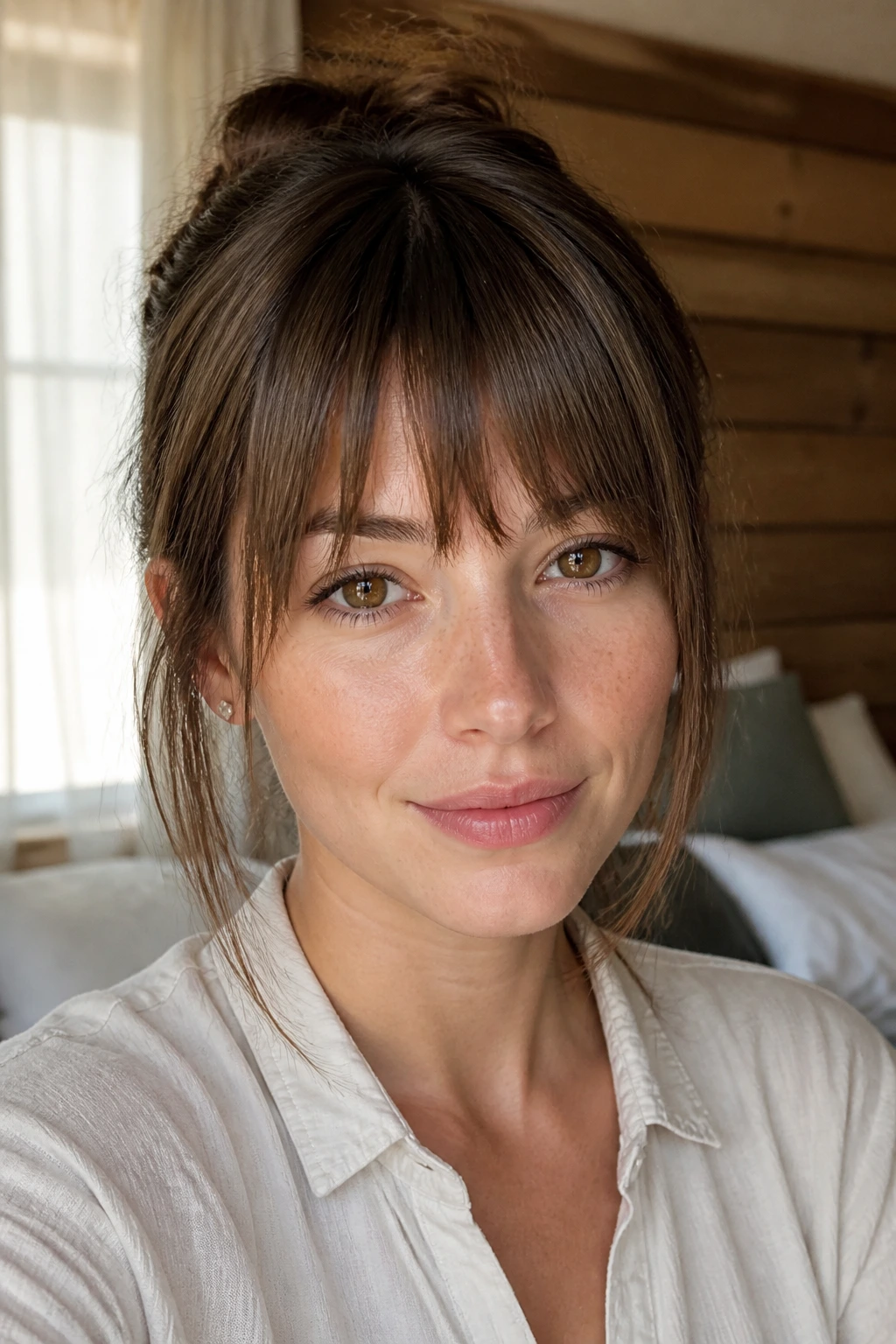
A pinched-ends fringe keeps more presence in the middle and lets the tips separate a little. The result is a fringe that feels textured but not shredded. On fine hair, that middle support matters. It prevents the bang from turning into four lonely strings by the end of the day.
For a round face, the pinched ends keep the eye moving. The front doesn’t read as one solid block, and the slight separation gives the forehead a lighter frame. I’d keep the overall length around brow level or just below, depending on how much skin you want to show.
A tiny bit of styling wax on the ends can sharpen the separation. Tiny. Not a pea-sized blob. A little goes a long way on fine hair, and too much product will flatten the root before you even leave the house.
18. Choppy Side Bangs
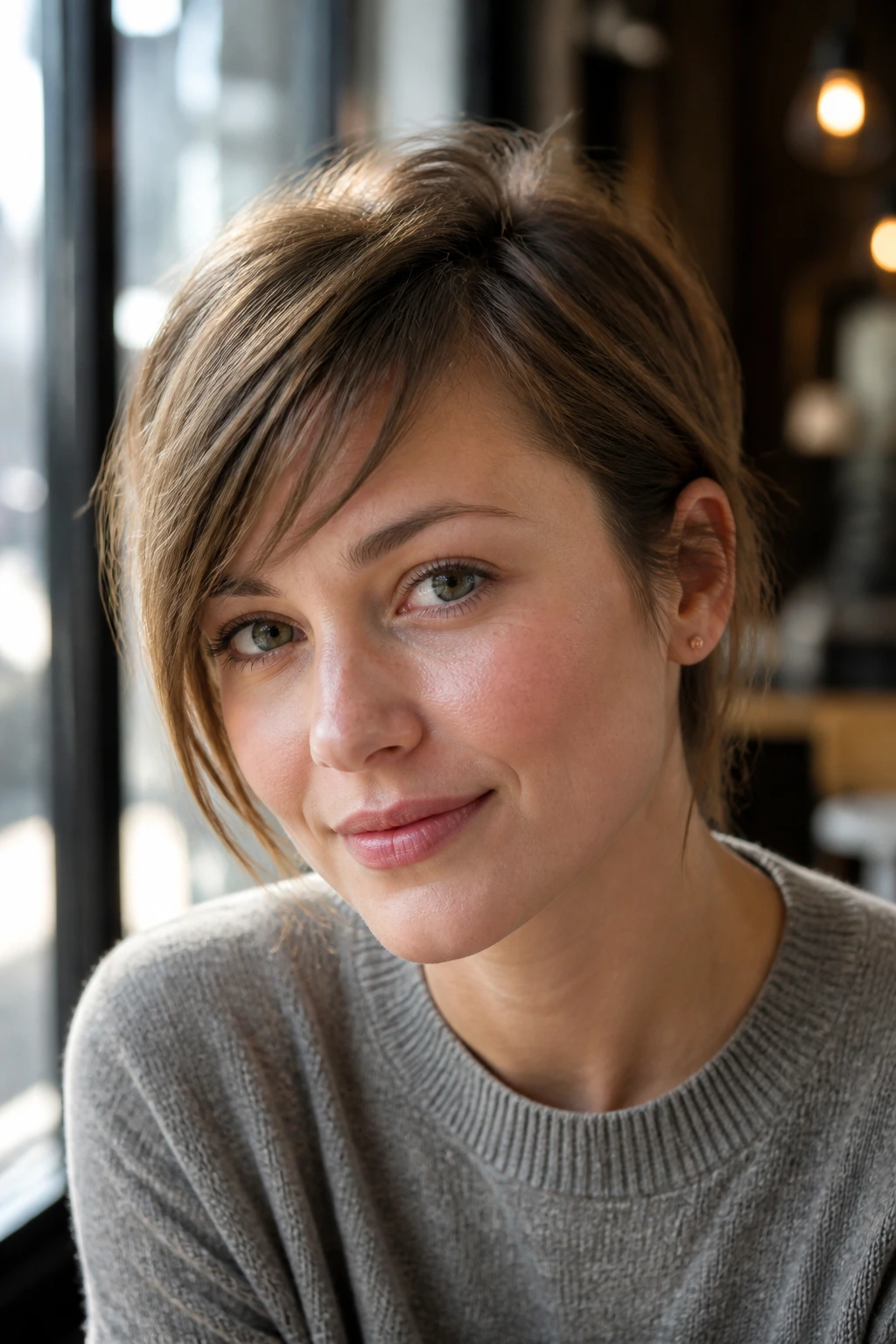
This is the old reliable, but with better manners. Side bangs are already good at softening a round face because they create a diagonal line. Add choppy ends and the style gets lighter, less dated, and much easier to move around.
Fine hair often likes this because the side sweep doesn’t need a lot of density to read well. You can keep the bang narrow, let it travel across the forehead, and tuck the rest behind the ear if the day gets annoying. It’s versatile in the plain-English sense of the word: it adapts fast.
Ask for a soft, broken perimeter and a bit of length around the outer eye. That keeps the shape modern and stops the fringe from collapsing into one heavy side panel.
19. Textured French-Girl Fringe

This version has a little attitude, but it should still feel wearable. The French-girl look usually means a brow-skimming fringe with movement, and the textured version keeps it from feeling too dense on fine hair. The pieces should separate a little and fall in a way that feels lived in, not sprayed into place.
Round faces can wear this if the center stays light. Too much width through the bangs will push the face outward. The solution is a soft middle and ragged ends that taper gently toward the temples.
I would not overload this style with product. It looks better a bit imperfect. If the bangs are too polished, they lose the easy movement that makes them work in the first place.
20. Lightly Disconnected Bangs
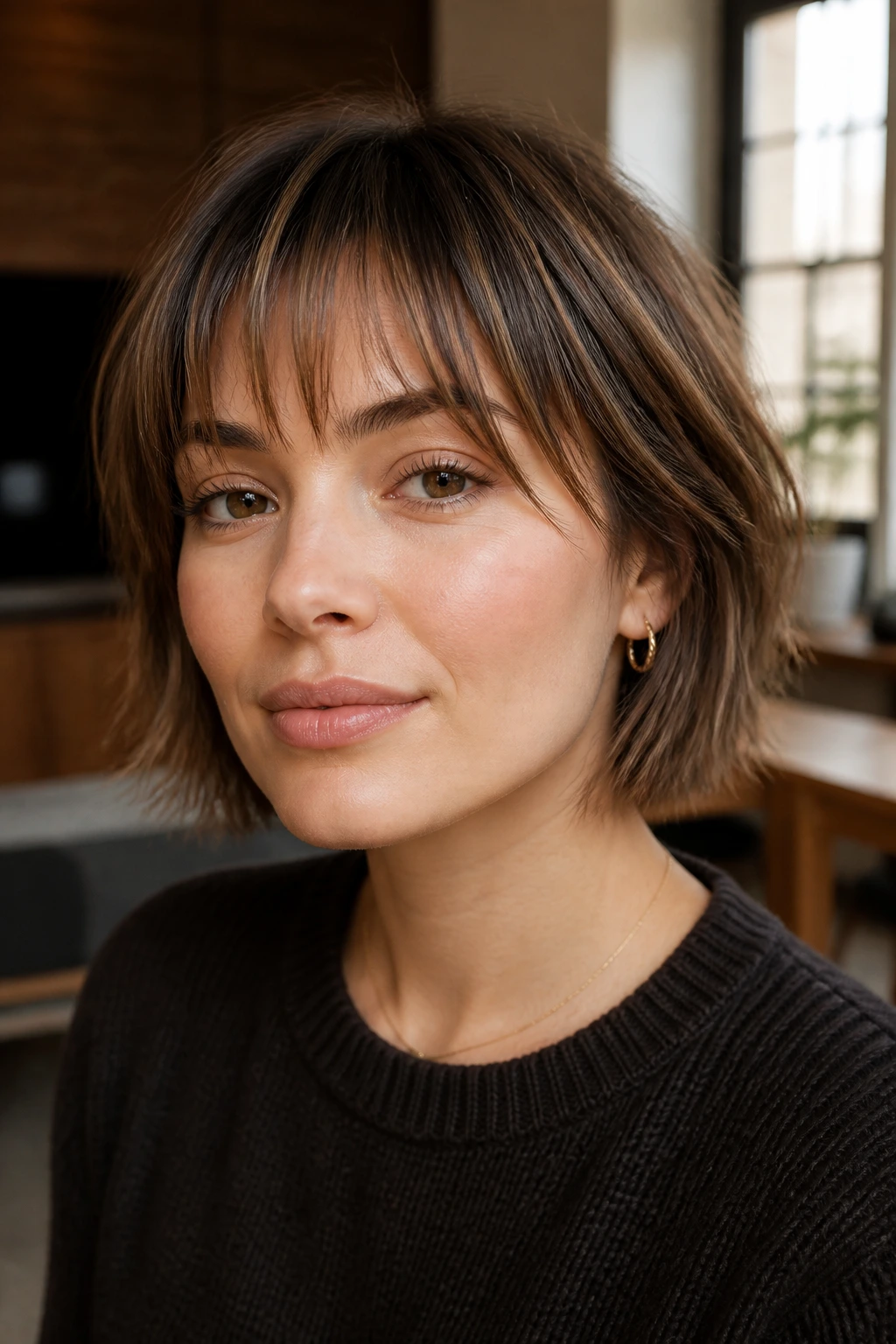
Disconnected bangs sound technical, but the idea is simple: the fringe does not form one continuous block. Small gaps, softer sections, and a slightly broken line keep the front airy. For fine hair, that’s gold. It creates shape without asking the hair to be thicker than it is.
On a round face, the disconnected pieces stop the forehead from becoming one broad band. The eye sees spacing and texture instead. That spacing can make the face look a touch longer, especially if the outer pieces fall near the cheekbones.
This cut is a good fit for people who want bangs but hate the feeling of “having bangs.” It has presence without drama.
21. Brow-Skimming Shag Fringe

When a shag fringe is done well, it gives fine hair more movement than a lot of heavier cuts ever will. The brow-skimming length keeps the front open, and the shag layers around it break up the line so the fringe doesn’t sit like a shelf.
For round faces, the shag is useful because it pushes texture upward and outward at the same time. The fringe blends into the rest of the haircut, which stops the face from feeling cut in half. I’d keep the ends choppy but not overly feathery; too much feathering can make fine hair vanish.
This is one of the easiest looks to live in if you already wear layered hair. It belongs best when the whole cut has a little movement, not just the fringe.
22. Soft C-Shaped Fringe

A soft C-shape curves around the face with a gentle bend, starting shorter near the center and falling longer toward the sides. It’s a flattering shape for round faces because the curve guides the eye down the cheek rather than straight across the forehead.
Fine hair does well with the C-shape when the weight stays controlled. You want the curve to be visible, but not stiff. A round brush or a quick bend with a small iron can set the ends, yet the middle should still look loose enough to move.
This one has a quieter feel than a bold curtain bang. If you want something soft, face-framing, and not too obvious, it sits in a nice middle ground.
23. Narrow Face-Opening Fringe
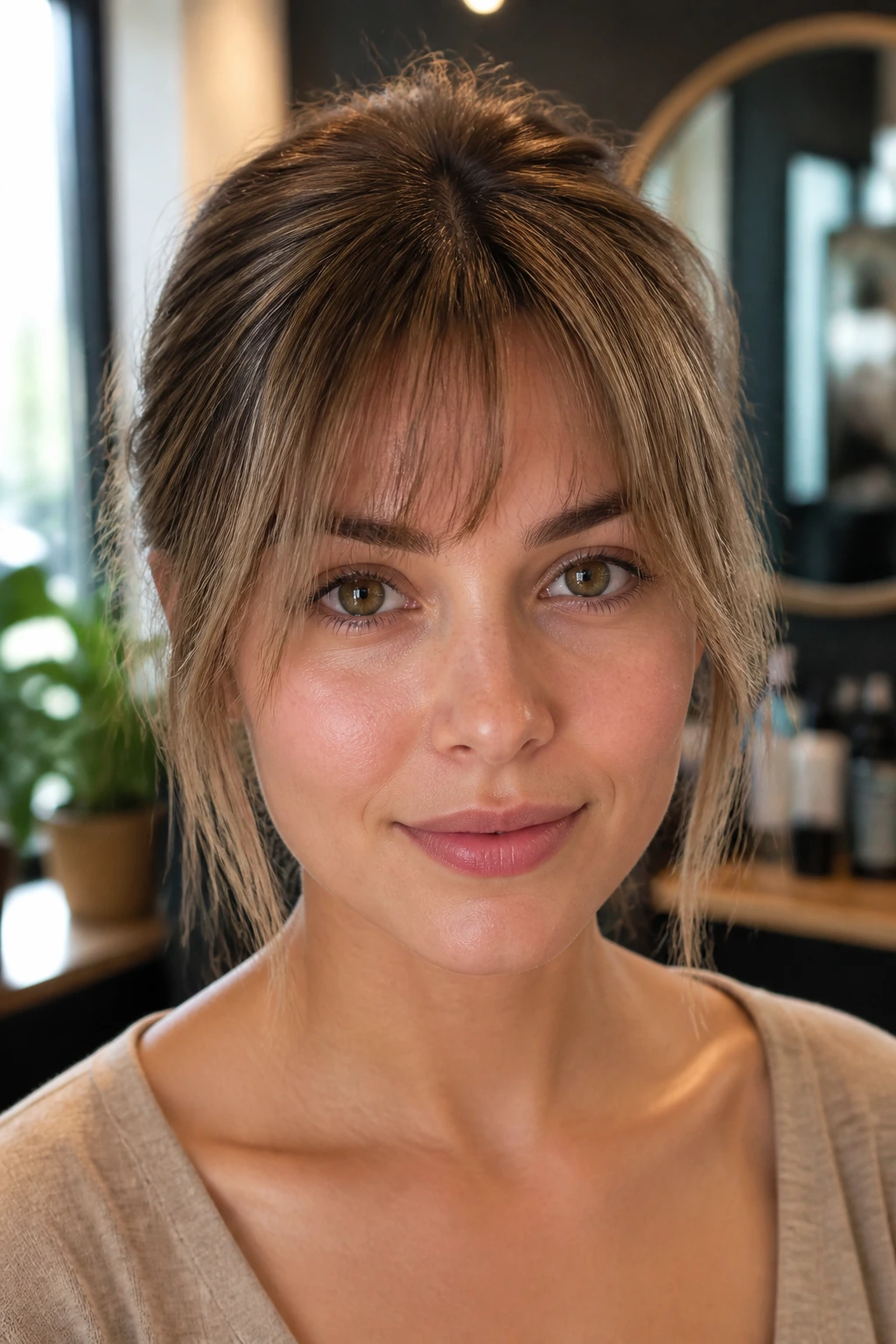
This fringe is all about the opening at the center. The bangs are kept lighter around the temples and a little denser right where the part breaks, which creates a narrow window of forehead. That little opening helps a round face feel less broad without covering too much skin.
It’s a clever shape for fine hair because the density stays concentrated where it matters most. You don’t need to spread the hair across the whole forehead. You need a focused frame, and this gives you one.
Ask your stylist to keep the side pieces intentionally light. If they’re too full, the effect disappears and the fringe starts to widen the face again.
24. Flicked-Out Bangs
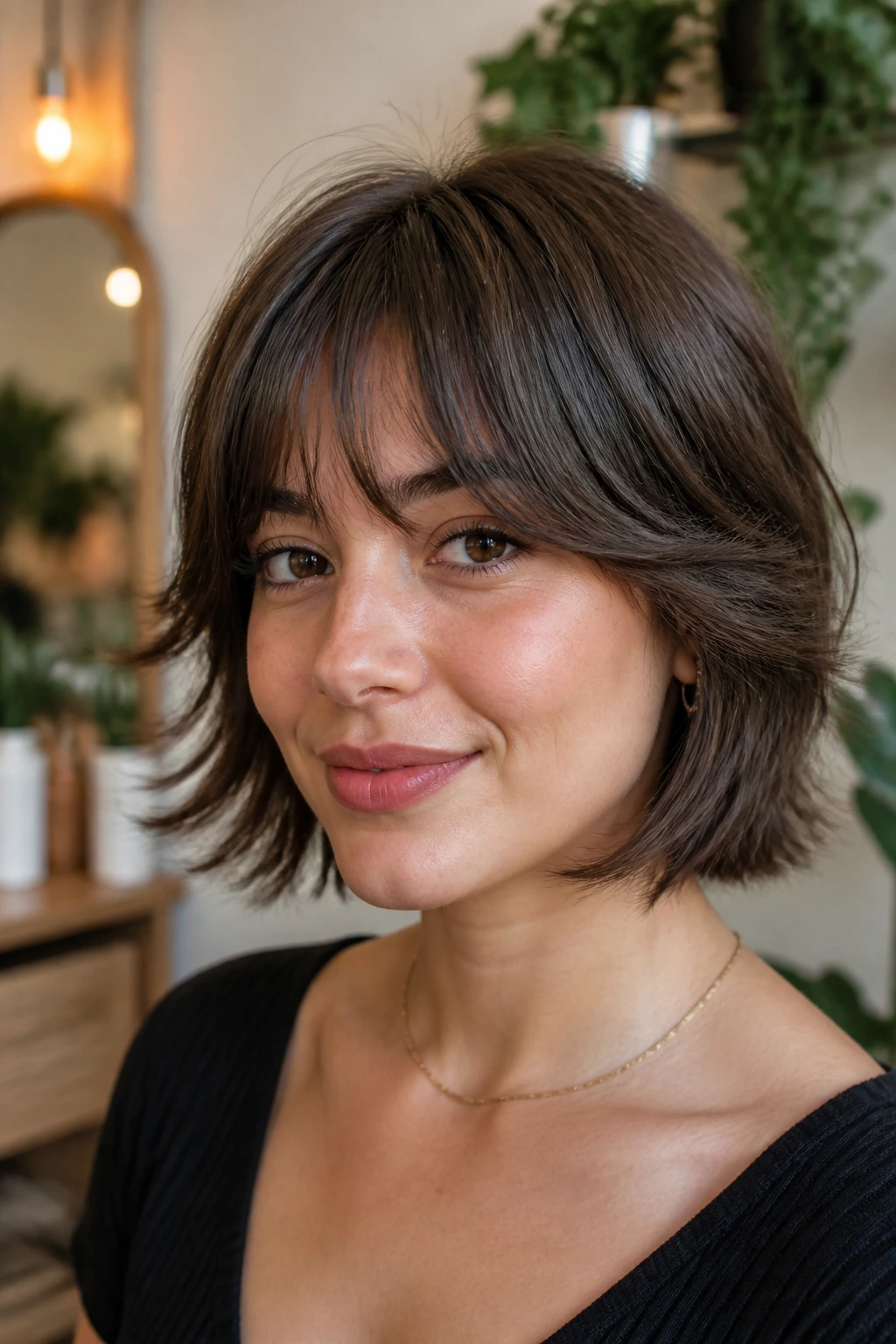
Flicked-out bangs are underrated. The ends turn slightly away from the face instead of curling under, which creates lift and a little energy at the front. On fine hair, that bend can make the fringe look fuller because the shape holds air at the edge.
For a round face, the flick-out keeps the bangs from pressing straight across the forehead. The eyes see movement first, then length. That’s what you want. It’s a small styling choice with a bigger visual payoff than people expect.
A mini flat iron or a small round brush does the job. Don’t overdo the bend. The point is movement, not a hard retro flip.
25. Minimalist Broken Fringe
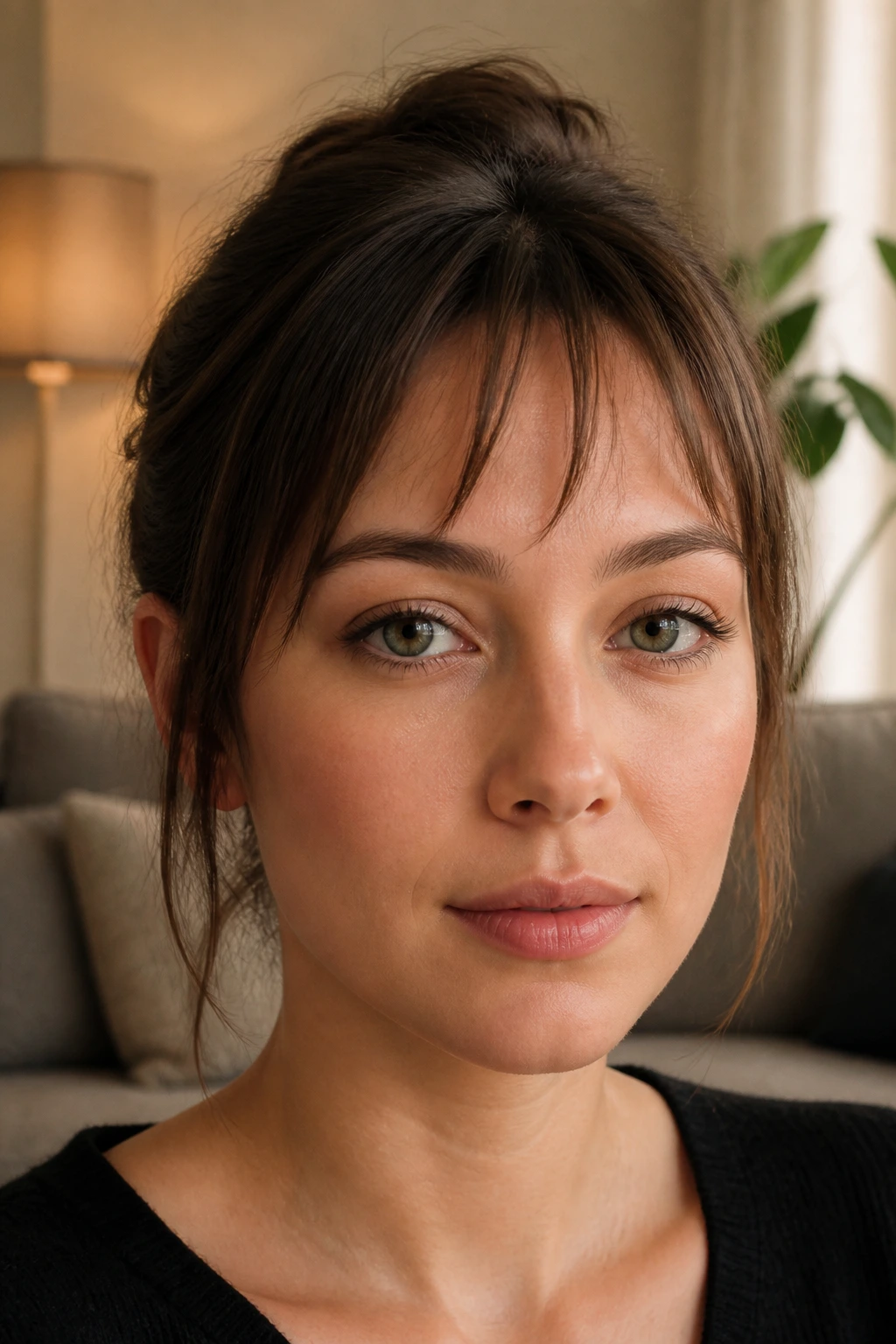
If you want the least committed option in the group, this is it. A minimalist broken fringe uses only a few airy pieces across the forehead, with the rest blending into the sides. It keeps the face open and gives fine hair a break from trying to perform density it doesn’t naturally have.
Round faces benefit because the broken pieces are narrow and spaced, not wide and blunt. The shape is light enough to disappear into the haircut when you don’t feel like wearing a full fringe. And when you do style it, the pieces frame the eyes without boxing in the cheeks.
This is the one I’d recommend for anyone growing out bangs or testing the waters. It gives you the mood of a fringe with almost none of the heavy maintenance.
The Cutting Details That Keep Choppy Bangs Light
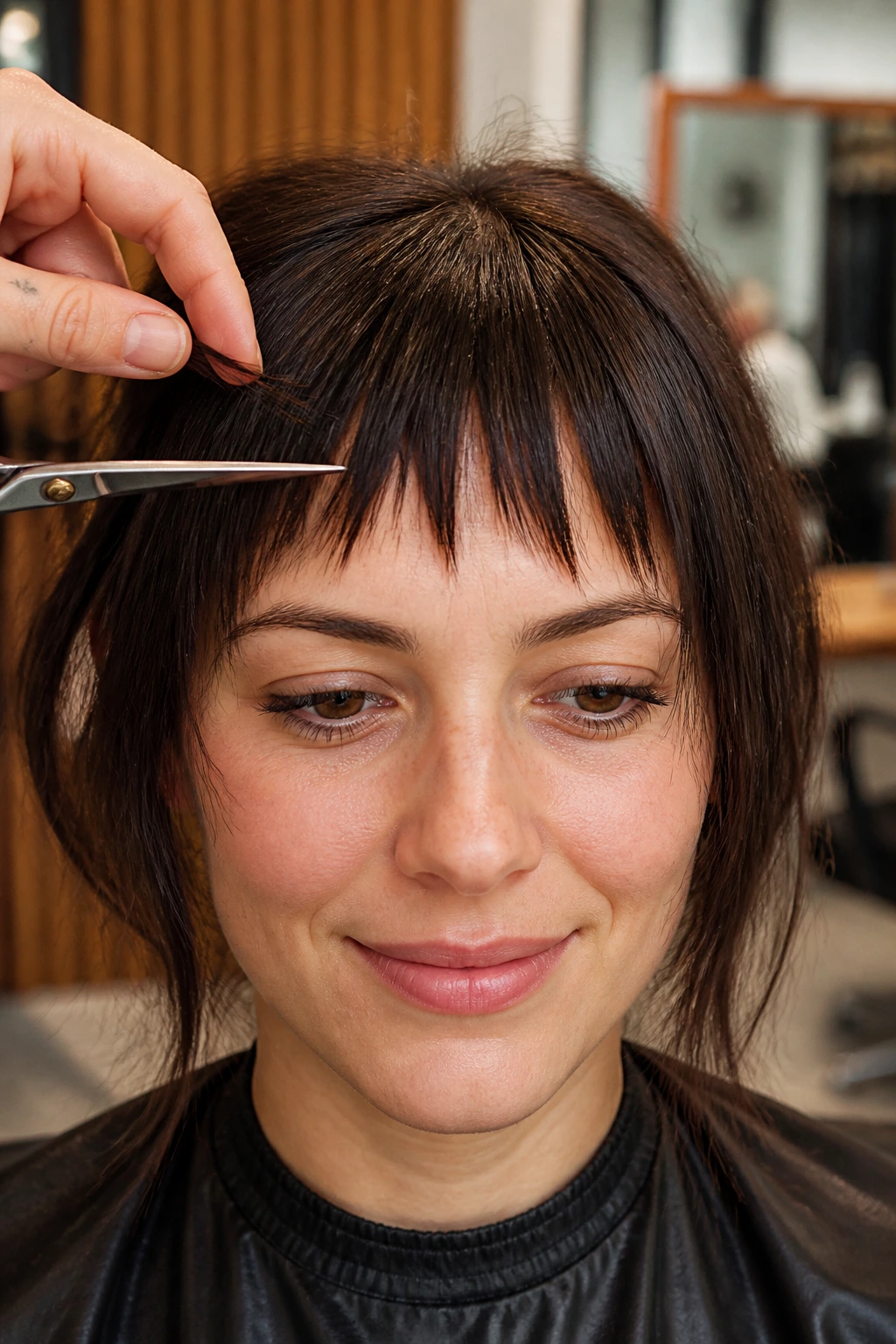
The difference between a cute choppy fringe and a sad, stringy one usually comes down to where the weight gets removed. If the cut is thinned through the middle of each strand, fine hair can look sparse from the front. If the texture is built at the perimeter instead, the fringe keeps enough body to show up in real life, not just in a salon mirror.
Point-cutting is the move I trust most for this topic. It keeps the edge irregular without destroying density. Razor work can be fine on straight, cooperative hair, but it can also make fine ends fray in humid weather. I’d rather have a soft scissor cut that behaves than a trendy texture that falls apart by afternoon.
Placement matters too. A choppy fringe that begins too wide across the forehead can make a round face look broader, even if the ends are broken up. Narrower center sections and longer side pieces usually flatter more reliably. The shape should feel like it is opening the face, not building a wall around it.
Essential Tools for Styling and Trimming Them
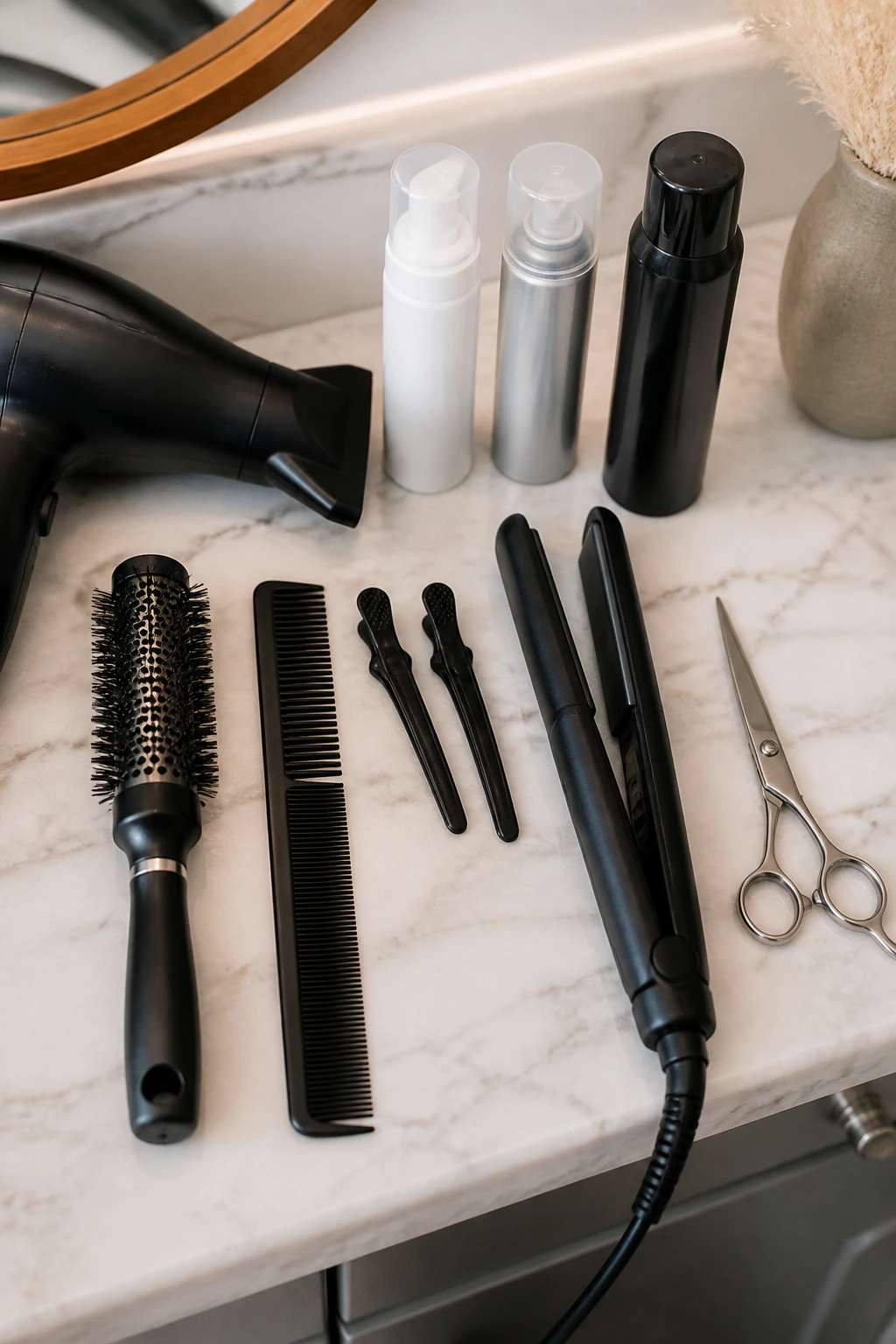
- Small round brush, 1 to 1.25 inches: This gives the fringe a bend without making it curl into a roll.
- Blow dryer with a concentrator nozzle: The nozzle helps aim the airflow at the roots instead of blasting the whole fringe apart.
- Fine-tooth or tail comb: Useful for laying down the part and separating piecey sections.
- Duckbill clips or mini sectioning clips: These hold side pieces out of the way while the center dries.
- Lightweight volumizing mousse: A small amount at the roots gives fine hair support without turning sticky.
- Dry shampoo: Keeps the fringe from clinging to the forehead and buys you an extra day between washes.
- Flexible-hold hairspray: Helps the shape stay soft instead of crunchy.
- Mini flat iron, optional: Handy for flicking the ends or correcting one stubborn bend.
- Proper hair scissors for emergency trims: Only if you already know what you’re doing. Kitchen scissors are a bad idea. Really bad.
The Salon Language That Gets You the Right Fringe
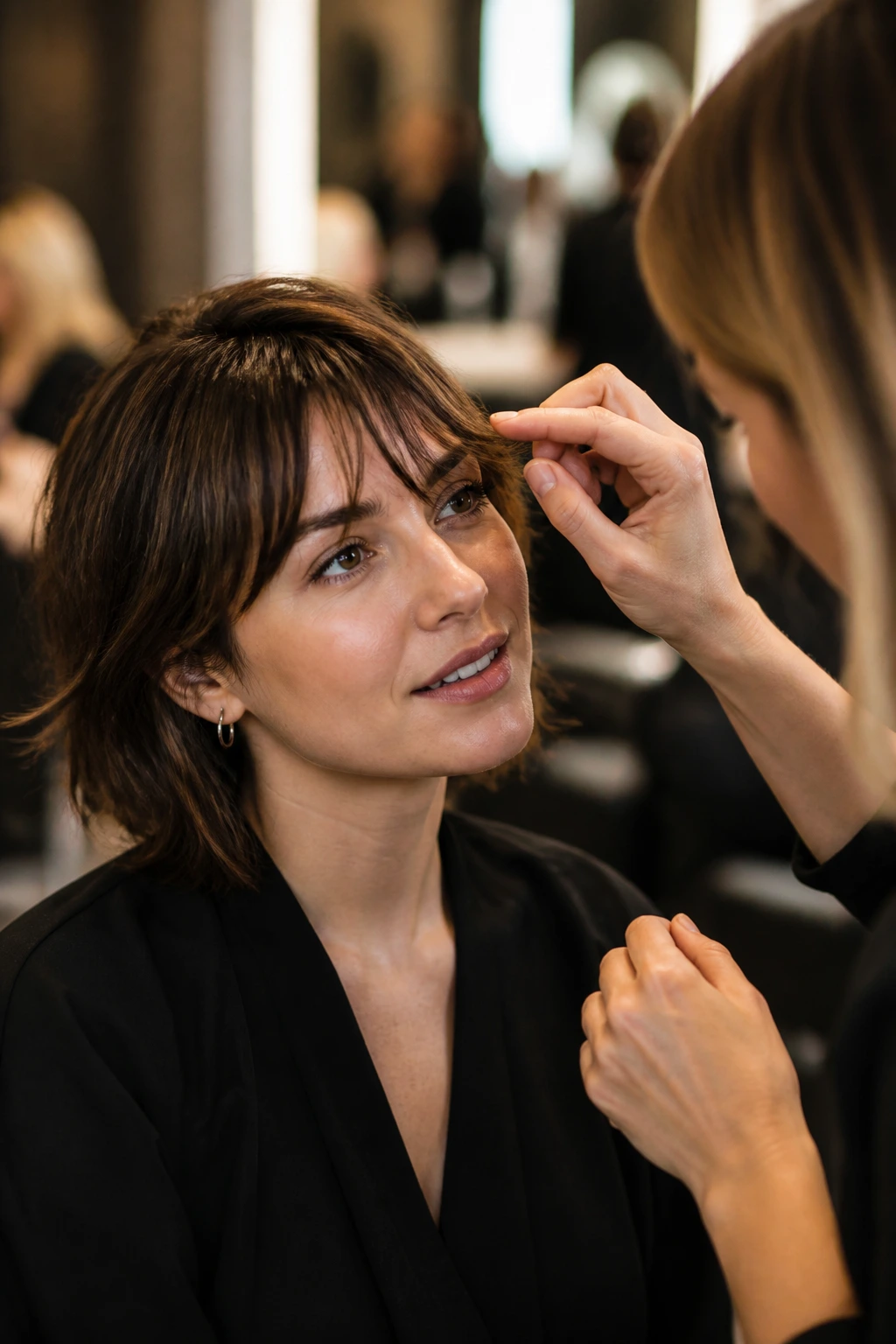
Do not ask for “just choppy bangs” and hope the haircut fairy fills in the details. Bring a photo, yes, but also explain what you like about it. Say whether you want brow length, cheekbone length, or a fringe that splits in the middle. Those landmarks are easier for a stylist to use than vague words like soft or flattering.
If you have fine hair, say that out loud. Fine hair needs a different hand than thick hair. Ask for point-cutting instead of aggressive thinning, and mention that you want to keep enough density so the bangs do not turn see-through when they dry. If your hair has a cowlick, that deserves a mention too, because it can change the whole front shape.
I also like to tell stylists whether I wear glasses, pin my hair back often, or air-dry most days. Those tiny habits affect where the fringe should sit. A good cut should work with your life, not with an imaginary day that starts with a perfect blowout.
Daily Styling Moves That Keep the Fringe Airy
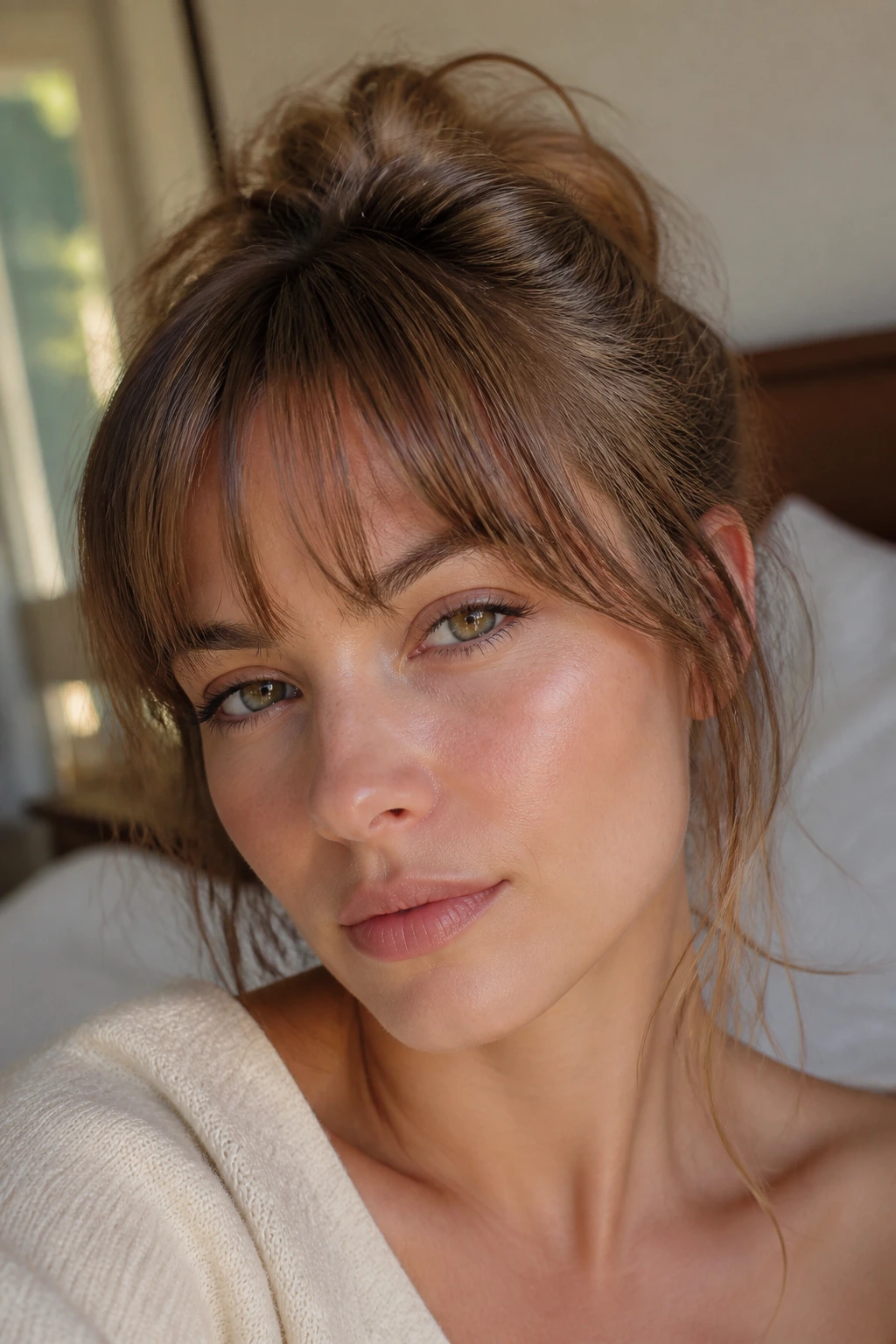
Start at the roots. Fine hair needs lift where it leaves the scalp, not just at the ends. A small amount of mousse or root spray on damp bangs, followed by a quick blow-dry, keeps the fringe from sliding down the forehead before lunch.
Dry the center first. The middle section is the part that usually collapses fastest. Direct the dryer at the root, then use the round brush to bend the ends slightly under or away from the face, depending on the style. The side pieces can be refined after the center is set.
Separate with fingers, not a brush. Once the bangs are dry, brush strokes can collapse the piecey texture you worked for. Use fingertips to split the fringe into softer sections. If a section clumps, a tiny dab of dry shampoo at the root usually fixes it.
Refresh second-day bangs with less, not more. A fine-hair fringe rarely needs a full wash to look decent again. A little dry shampoo at the roots and a pass with a cool dryer setting is often enough. Heavy creams near the forehead usually make things worse.
Smart Product Picks for Fine Hair

- Volumizing mousse: Look for a lightweight formula that says root lift or body, not thickening cream. Heavy mousses can leave the fringe sticky.
- Root-lifting spray: Good for keeping the bang from collapsing onto the skin, especially on humid days.
- Translucent dry shampoo: Better than chalky formulas, which can leave a pale cast near the brow.
- Flexible-hold hairspray: Keeps the piecey shape without freezing the fringe into one shape.
- Heat protectant mist: Fine hair burns fast. A light spray keeps the cuticle from looking fried after repeated styling.
- Tiny amount of texturizing paste: Use only on the ends if the fringe needs more separation. A little goes a long way.
Skip heavy oils at the root. Skip thick creams on damp bangs. They make fine hair clump, and once the fringe clumps, the round face starts looking wider again because the front has turned into one flat block.
Trim Cycles, Wash Days, and Grow-Out
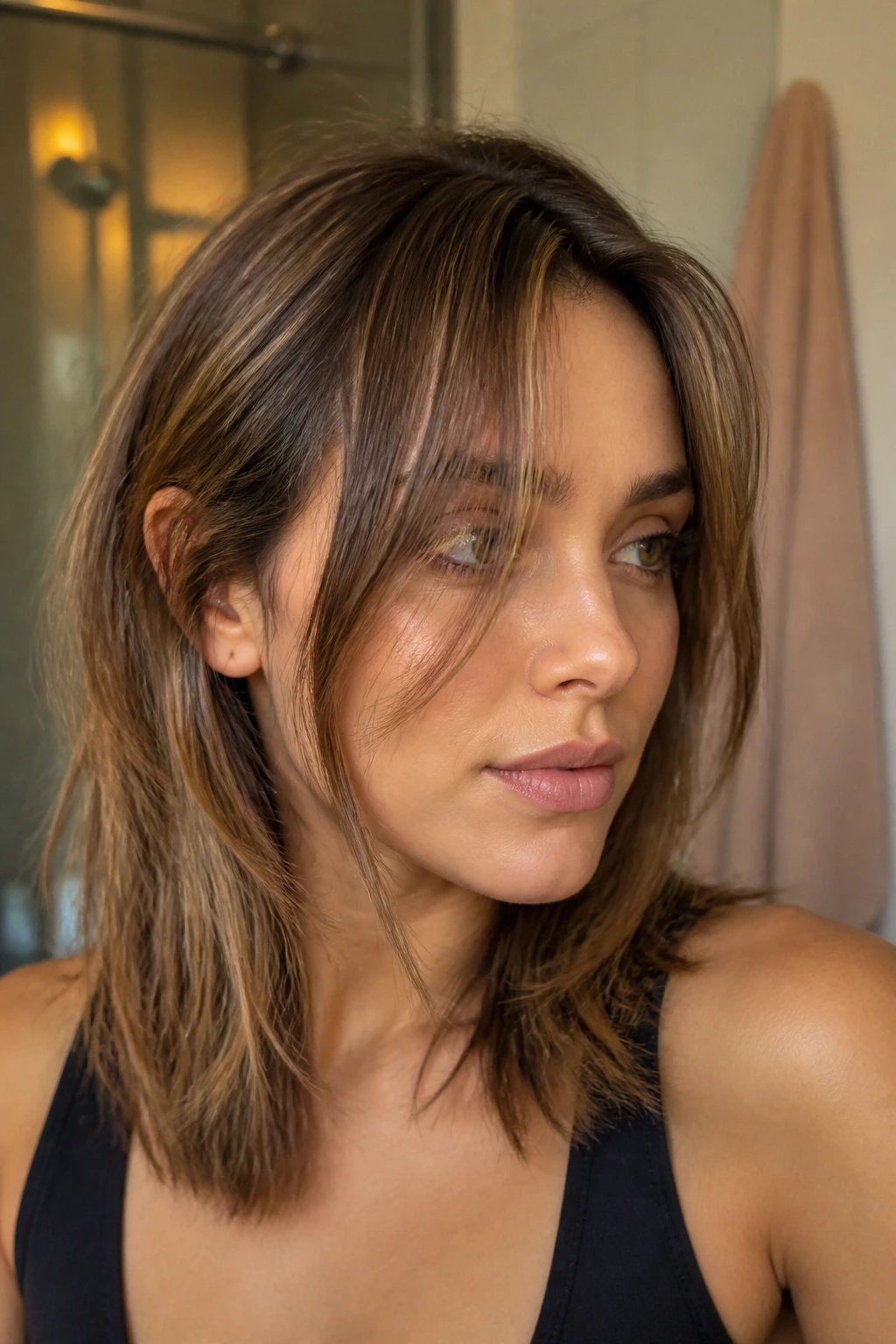
Fringe trims happen faster than people want to admit. Brow-grazing and cheekbone-grazing bangs usually need a tidy-up every 3 to 4 weeks if you want them to keep their shape. Curtain-style versions can stretch a bit longer, often 5 to 6 weeks, because the longer sides still look intentional as they grow.
The forehead is oily. That’s just life. If your bangs start separating by midday, wash the fringe on its own with a little shampoo in the sink or dry shampoo the root area and blot with a tissue. That’s faster than washing the whole head and avoids over-drying the rest of the hair.
For grow-out, clip the bangs to one side or split them down the middle and let them blend into layers. A soft side part is your friend during the awkward phase. It hides the unevenness and keeps the front from hanging like a sad curtain while you wait for the rest to catch up.
Common Mistakes That Turn Soft Fringe Into a Helmet
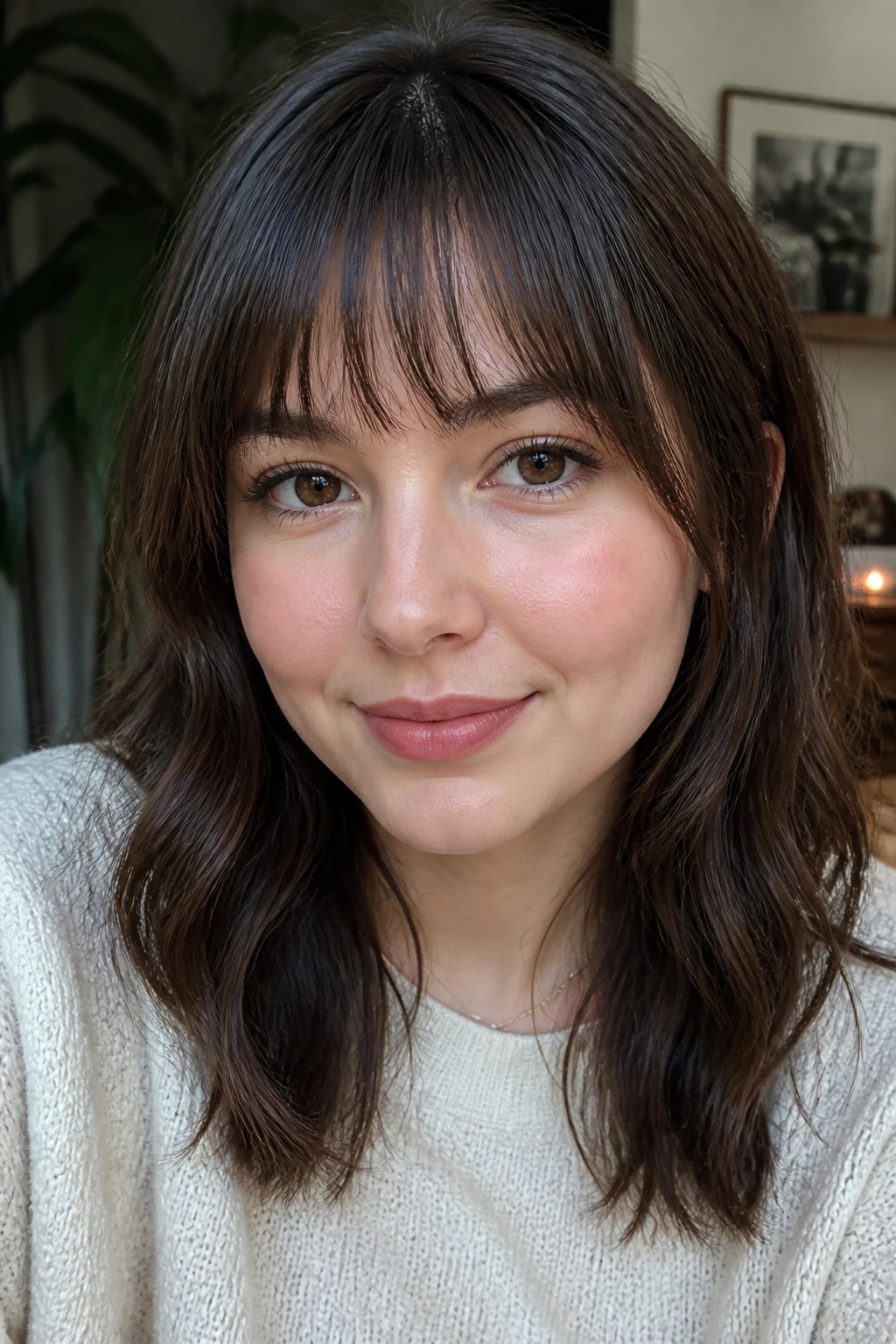
- Cutting the fringe too wide: If the bangs stretch from temple to temple, a round face can look broader. Keep the center narrower and let the edges taper outward.
- Over-thinning fine hair: Symptoms: wispy gaps, weak roots, pieces that separate into threads. The fix is simple — remove weight only at the edge, not all through the fringe.
- Using too much cream or oil: The bang goes flat, then starts sticking to the forehead. A dry shampoo or root spray usually solves the problem faster.
- Ignoring cowlicks and part habits: The fringe splits in weird places or kicks up on one side. Cut and style with the grain of the hair instead of fighting it.
- Making the edge too blunt: A hard line across the forehead can make the face look short and broad. Ask for point-cutting so the edge stays broken and light.
Variations Worth Trying if You Want a Different Mood

Glasses-Friendly Fringe: Keep the shortest pieces just above the brow and let the side pieces clear the frame of your glasses. This keeps the front from crowding the lenses and gives the face a cleaner shape.
Wavy-Hair Version: If your hair has a bend, let the texture work with the cut instead of against it. Ask for softer lengths and less aggressive texturizing so the fringe does not puff at the ends.
Ultra-Fine Hair Edit: Keep the fringe narrower and the piecey sections more controlled. Too much layering can make fine hair disappear at the front, so the goal is lightness with enough body to read from the mirror.
Grow-Out Fringe: Choose a longer, cheekbone-skimming version from the start. It slides into face-framing layers faster, which means fewer awkward weeks if you change your mind.
Cowlick-Adjusted Cut: Let one side run slightly longer if a front cowlick always sends the hair in the same direction. Fighting a stubborn root is a waste of time. Working around it saves a lot of frustration.
Questions People Ask Before They Cut the Fringe

Will choppy bangs make a round face look wider?
They can, if they’re cut too blunt or too wide. The better versions use broken lines, side length, and a narrow center so the eye moves down the face instead of across it.
Are curtain bangs or side bangs better for fine hair?
Curtain bangs are usually easier to grow out, while side bangs can feel lighter at the front. Fine hair tends to do well with either, as long as the ends are point-cut and the roots get some lift.
How often will I need trims?
Most short fringe styles need touch-ups every 3 to 4 weeks. Longer curtain or cheekbone styles can go a bit longer, especially if the grow-out is part of the look.
Can I style choppy bangs without heat?
Yes, but the shape will be softer. Clip the fringe in place while it dries, then separate the pieces with your fingers and a little dry shampoo at the root.
Should I use thinning shears on fine hair?
Usually not much, and sometimes not at all. Fine hair can lose too much body fast. Point-cutting at the ends is safer and keeps the fringe from turning sparse.
What if my bangs separate too much by midday?
That usually means there’s too much product or too little root support. Use less cream, add a light root spray, and keep dry shampoo handy for the front hairline.
Do these bangs work with glasses?
Yes, especially brow-skimming, cheekbone-grazing, and side-swept shapes. Keep the shortest pieces above the frame line so the bangs and glasses do not fight each other.
Can I grow them into layers later?
That’s one of the nicer things about choppy fringe. Longer versions blend into face-framing layers fast, especially if the sides are already soft and tapered.
A Fringe That Grows With You

The nicest thing about choppy bangs is that they don’t all demand the same level of commitment. Some sit right at the brows and sharpen the face a little. Some drift into curtain pieces. Some turn into layers before you even notice they’ve grown out. That flexibility matters when your hair is fine and your face has a soft, rounded shape that benefits from movement more than bluntness.
If you choose the cut with the face shape and texture in mind, the fringe stops being a gamble and starts behaving like a tool. A small one, sure. But a useful one. And useful bangs are the ones people keep cutting, because they don’t just look good on day one — they still make sense when the mirror catches them three weeks later.