



The easiest curly haircut is rarely the fanciest one. It’s the cut that lets your curl pattern do the heavy lifting, so you’re not fighting triangle shape, puffed-out ends, or a front section that keeps dropping into your eyes by noon.
Easy-manage haircuts for women with curly hair usually share the same bones: they respect shrinkage, keep weight in the right places, and leave enough shape at the ends that the whole cut still looks intentional on day three. That matters more than a dramatic before-and-after photo. A cut can look gorgeous in a salon mirror and turn into a lopsided halo after one wash if the lines are wrong for the curl pattern.
The sweet spot is different for everybody, but the logic is the same. A good curly cut should dry into a shape that behaves with a little leave-in, a quick scrunch, and maybe a diffuser pass if you feel like it. No heroic blowouts. No 40-minute wrestling match in the bathroom. Just hair that lands where it’s supposed to land.
Why These Cuts Earn Their Keep
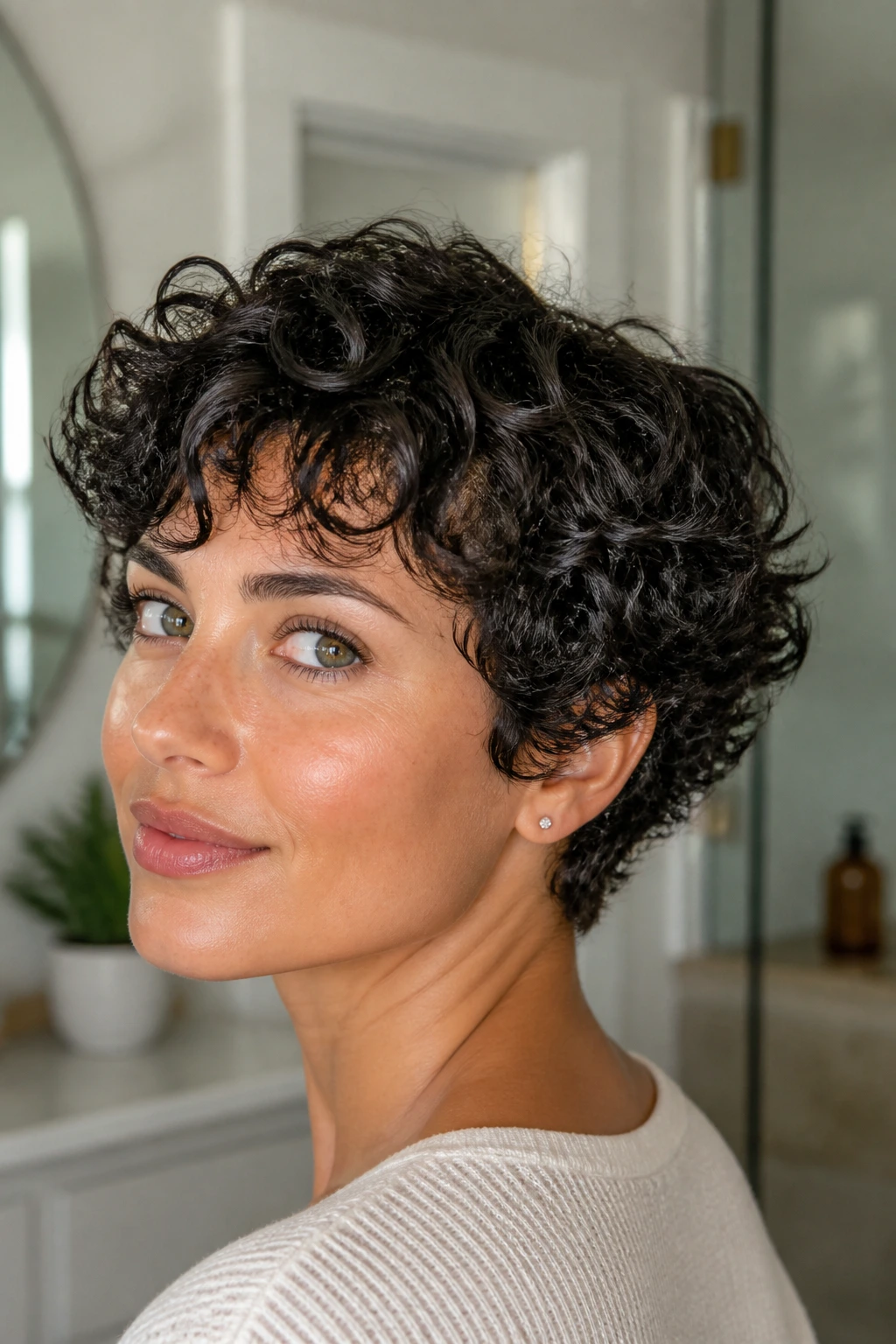
- Shrinkage-Friendly Shapes: These cuts are built with curl contraction in mind, so a collarbone length on wet hair won’t accidentally become a chin-length puff when it dries.
- Less Morning Negotiation: The right shape gives the curls a lane to follow, which means fewer rogue pieces sticking out at the temples and crown.
- Grow-Out That Still Looks Intentional: Long layers, soft bobs, and tapered shapes can stretch an extra few weeks between trims without looking ragged at the ends.
- Better Day-Two Hair: A cut with good structure keeps second-day curls from collapsing into flat roots and frizzy mids.
- Face Framing Without Fuss: Strategic fringe or front layers can soften the face without demanding daily heat styling or perfect brushwork.
- Works With Your Natural Texture: The best versions of these cuts don’t ask curls to act straight, because that never ends well.
1. Shoulder-Length Curly Lob With Long Layers
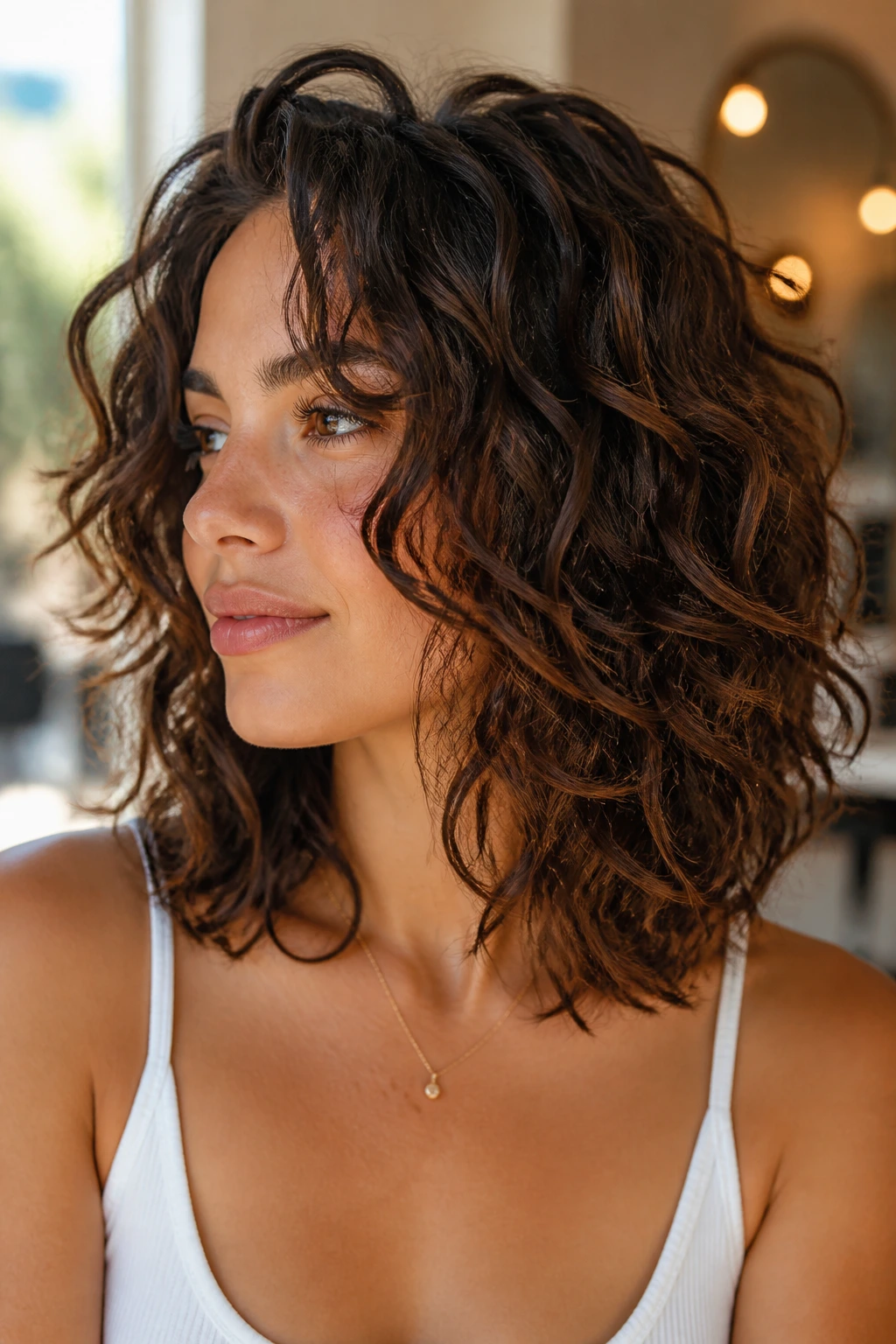
Shoulder-length is the curly-haired person’s safe harbor, and I mean that in the best way. It gives curls enough room to bounce, but not so much length that the ends drag down into a shapeless curtain.
The long layers matter here. They remove bulk from the interior without chopping the shape to bits, which is the mistake a lot of people make when they ask for “layers” and end up with frizzy shelves. If your curls shrink a lot, ask the stylist to cut the shape a little longer than you think you need when it’s dry. That little bit of restraint saves you from the too-short surprise.
This cut is especially friendly if you want to air-dry on weekdays and diffuse only when you care to. It settles fast, it grows out well, and it doesn’t punish you for skipping a refresh.
2. Rounded Curly Bob That Hugs the Jaw

Do you want your curls to look neat without looking stiff? This is the shape that does it.
A rounded bob sits just under the jaw or around the cheekbone, with enough curve in the outline that the hair doesn’t kick out at the sides. On curly hair, that rounded edge is the difference between “finished” and “triangle.” It works best when the perimeter stays full and the internal weight is removed carefully, not hacked away with thinning shears.
This one is especially nice for women who hate hair landing on the neck all day. It dries faster than longer cuts, gets out of the way more easily, and still has enough body to look deliberate with just a little curl cream.
3. Curly Shag With Cheekbone Layers
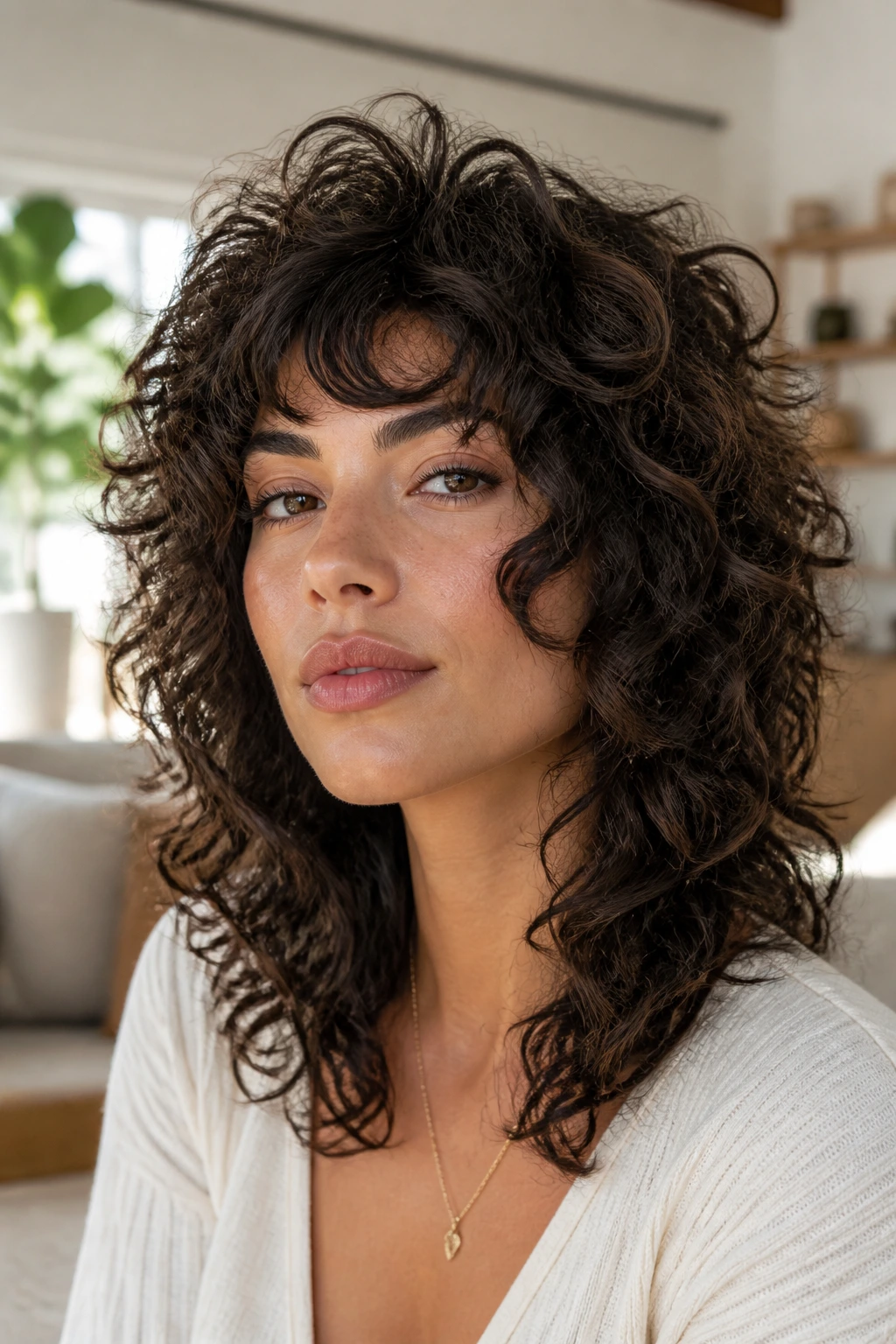
A curly shag is a built-in fix for hair that wants to sit heavy at the bottom and flat at the top. The shorter layers around the crown and cheekbones give the curls space to spring, while the longer outer pieces keep the shape from turning fuzzy and overworked.
What Makes It Stay Light
The magic is in the balance. Too many short layers and the cut gets busy; too few and you get a dense pyramid. A good shag leaves enough length around the sides that the curl pattern still reads clearly.
This cut likes movement. It works on ringlets, looser spirals, and even stronger waves that need help finding volume near the root. If your face feels swallowed by one-length curls, the shag opens things up fast.
When to Choose It
- You want volume at the crown without daily teasing.
- You like a little messiness in the shape.
- You don’t mind a fringe or face-framing layers that move around a bit.
4. Collarbone Cut With Soft Internal Layers
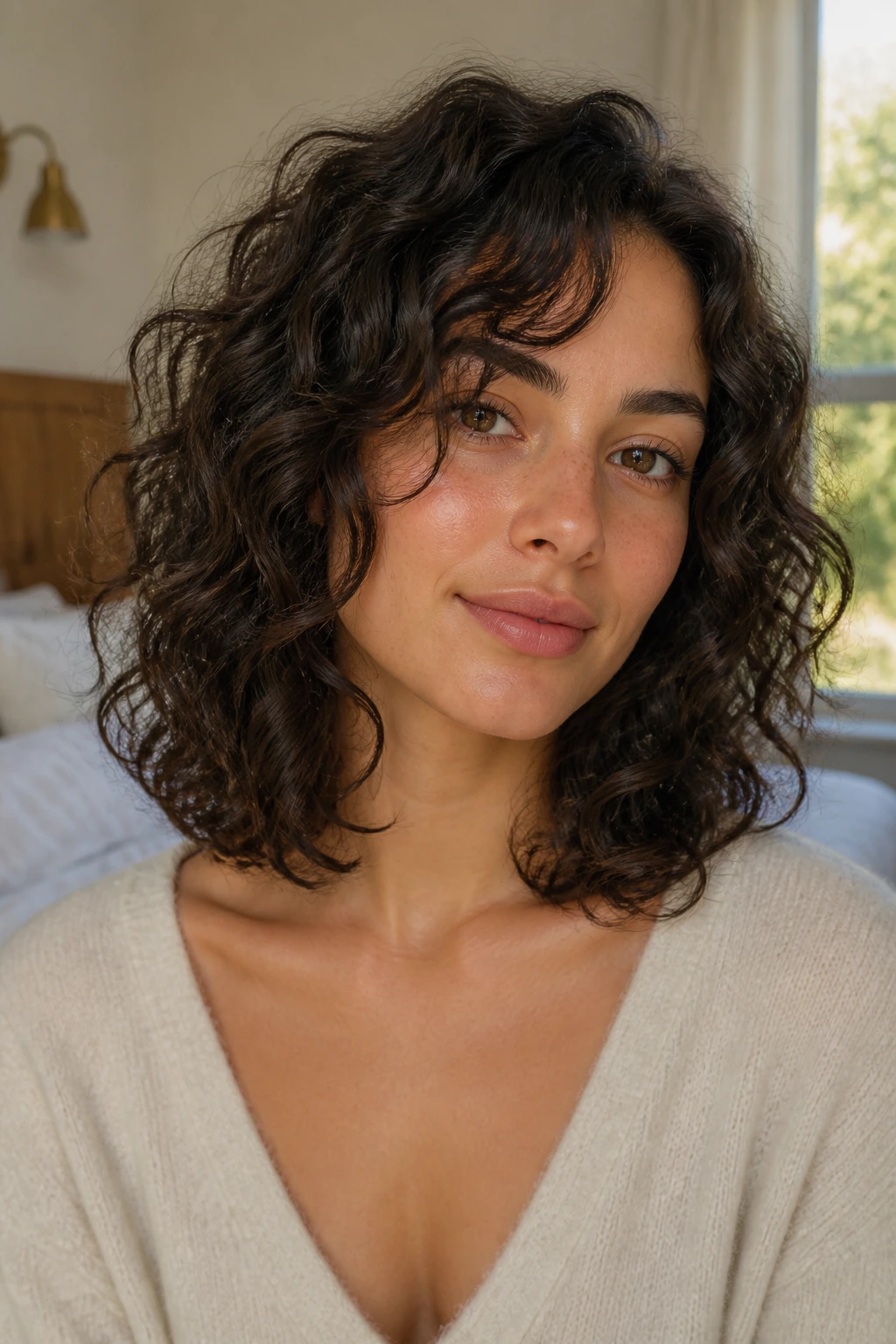
The collarbone cut is one of those quietly smart haircuts that doesn’t ask for much and gives back a lot. It’s long enough to tuck behind the ear or clip back, but short enough that it won’t take forever to dry after a wash.
Soft internal layers keep the bulk from building up under the top layer, which is what makes this version easier than a blunt cut of the same length. The outline stays calm. The curls still move. That’s the whole point.
This shape is one of my favorites for people who want length but are tired of feeling like their hair needs a full production every time it gets wet. It handles ponytails, half-up clips, and loose claw-clip twists without losing its shape.
5. Chin-Length French Bob for Loose Curls
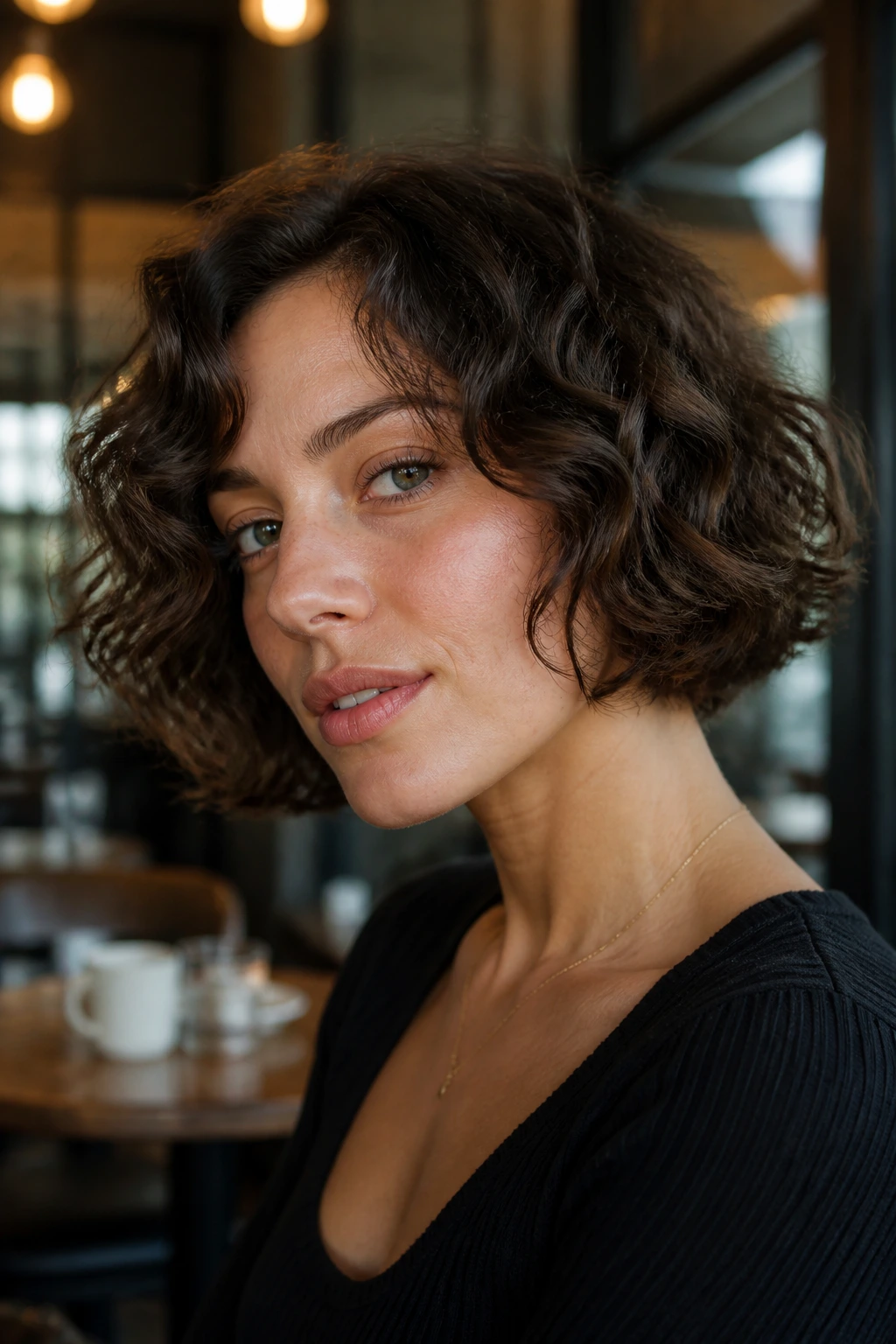
Can a chin-length bob work on curly hair? Yes, but only if the curl pattern is loose enough to sit where you want it once it dries.
The French bob has that little bit of romance in the front, usually with a soft edge that skims the cheek or jaw. On loose curls and waves, it looks sharp in a relaxed way. On tighter patterns, it can shrink upward fast, so the cut has to be planned with actual dry length in mind, not wishful thinking.
This is a strong choice if you want something short that still feels polished on a Tuesday morning. It’s fast to dry, easy to shape with your fingers, and the shorter length can make your curls look denser than they do when they’re stretched long.
6. Tapered Pixie With Curl Height on Top
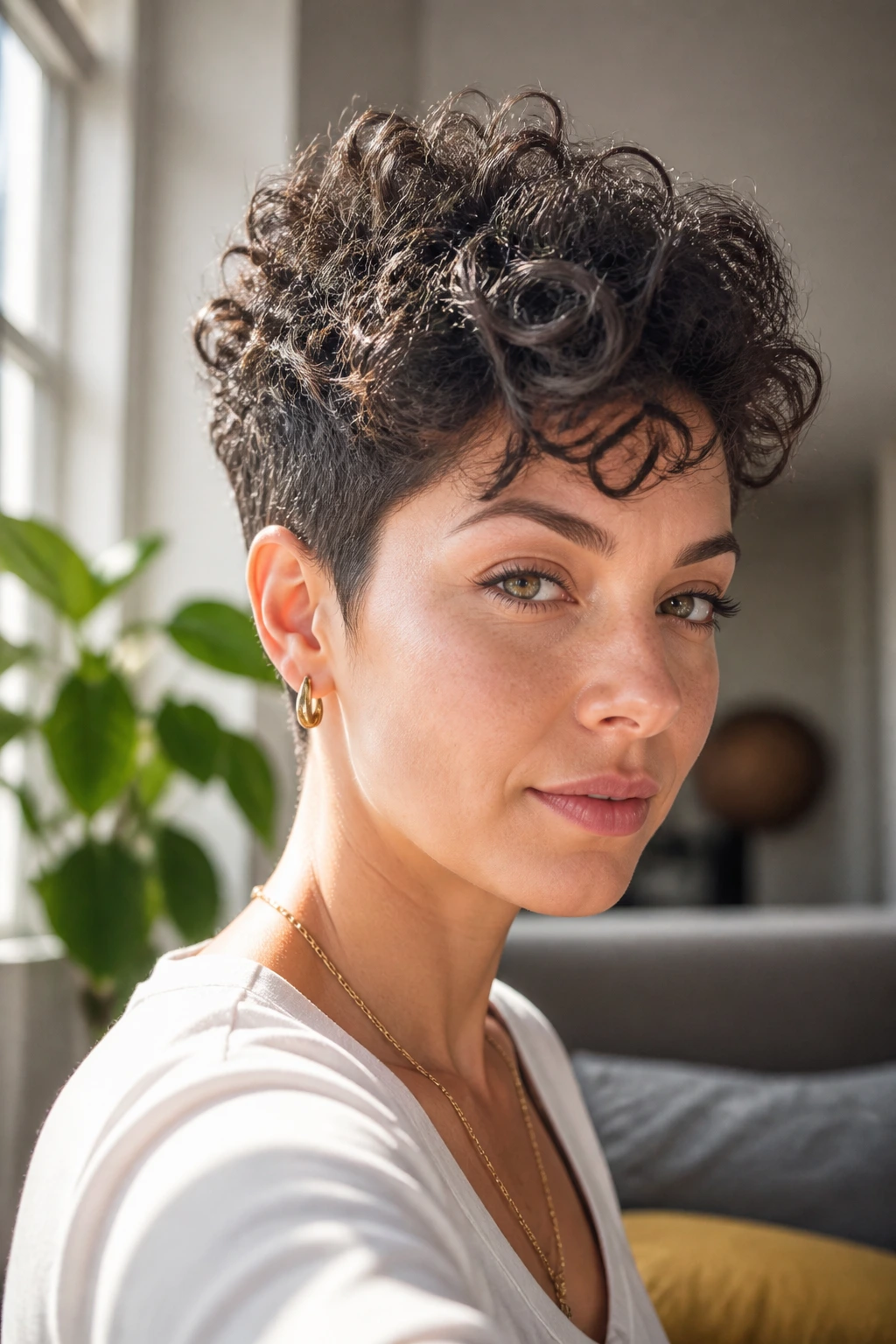
Short hair and curly hair can be a beautiful match when the shape is done with restraint. A tapered pixie keeps the sides and nape tight enough to stay neat, while leaving the top long enough—usually around 2 to 4 inches, depending on curl size—to form a soft halo or little coil stack.
The best part? It’s fast. You can wash it, scrunch in product, and be done. No wrestling with damp length, no heavy ends hanging into your neck, no long detangling session.
This cut does need regular trims. It grows out fastest in visual terms, even when the actual length change is small, so plan on shape-ups every 4 to 6 weeks if you want it to stay crisp.
7. Mid-Length U-Shape With Face-Framing Pieces
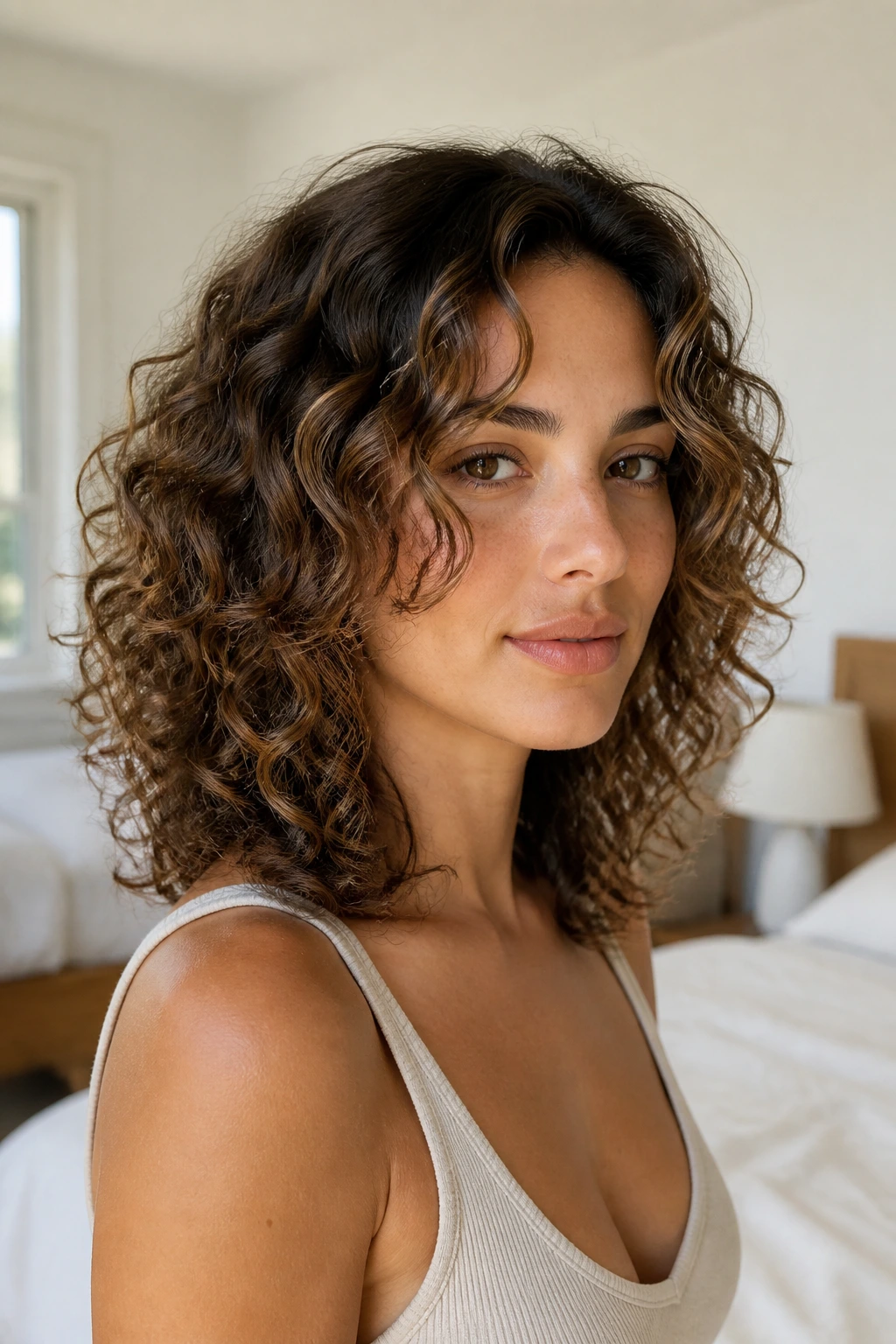
A U-shaped hemline is one of the easiest ways to keep curly hair from looking boxy. The back drops in a soft curve, the front stays a little shorter, and the whole cut feels lighter without losing much length.
Why the U Shape Helps
The curve at the back gives the curls somewhere to fall. That matters if your hair tends to bulk up at the sides or hang flat in the center. Face-framing pieces around the chin or lip line keep the front from feeling heavy, especially when the curls dry with more width than length.
Ask for This, Not That
- Ask for long face-framing pieces that blend into the rest of the cut.
- Ask for soft interior shaping, not razor-thin ends.
- Skip aggressive layering if your curls are already fine or fragile.
The U shape is good if you want your hair to still look long, but not heavy. It’s one of those cuts that can survive a messy bun day and still look good when you let it down.
8. Long Layers With a Center Part
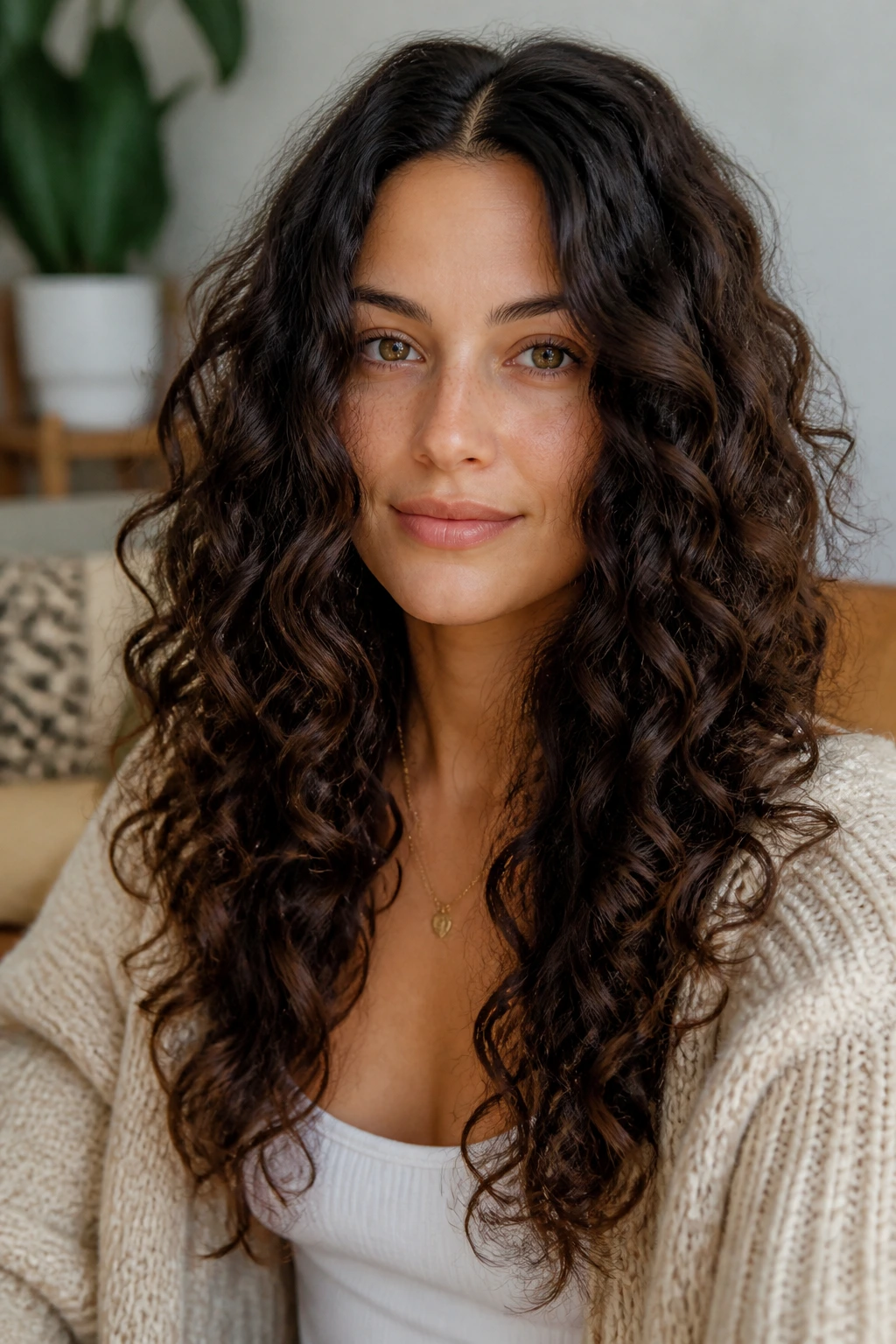
Long curls can look luxurious, but only if the shape doesn’t go flat at the top and bulky at the bottom. Long layers solve that by distributing the weight more evenly, so the curls move instead of hanging like wet rope.
A center part helps this cut read clean and balanced. It gives the curls a clear direction, and on many women it makes the face frame feel more even on both sides. That said, if your hair naturally wants a side part, forcing a center part can be more annoying than helpful.
This is a good pick for anyone who loves length but hates the feeling of too much hair sitting on the shoulders. It’s also one of the kinder cuts for women growing out a shorter curly shape.
9. Dry-Cut Deva-Style Shape
The dry-cut approach is worth seeking out if your curls are unpredictable. Some pieces spring up more than others, and some side sections behave like they belong to a different head. Cutting in the natural state lets the stylist see that mess before the scissors close.
A good dry shape follows the curl clump, not just the head outline. That matters when one side grows faster, one temple frizzes more, or the crown has a completely different personality from the nape. Wet cutting can work, but only when the person doing it understands shrinkage down to the inch.
This cut isn’t about vanity. It’s about accuracy. And when the shape is accurate, styling gets easier because the curls land in places that make sense instead of fighting the cut all day.
10. Blunt Lob With Hidden Weight Removal
A blunt lob sounds heavy, but on the right curls it can be a clean, low-maintenance dream. The trick is keeping the outer line blunt enough to hold structure while gently removing weight from the inside so it doesn’t puff out like a bell.
This cut is especially good if your curls are springy and dense, because a strong perimeter stops the ends from looking see-through. If you’ve had layered cuts that left your hair looking wispy at the bottom, this version can feel like a reset.
The hidden weight removal is the part people miss when they ask for a blunt cut. Without it, curly hair can stack too wide. With it, the shape stays firm but still moves.
11. Curly Wolf Cut With Longer Nape
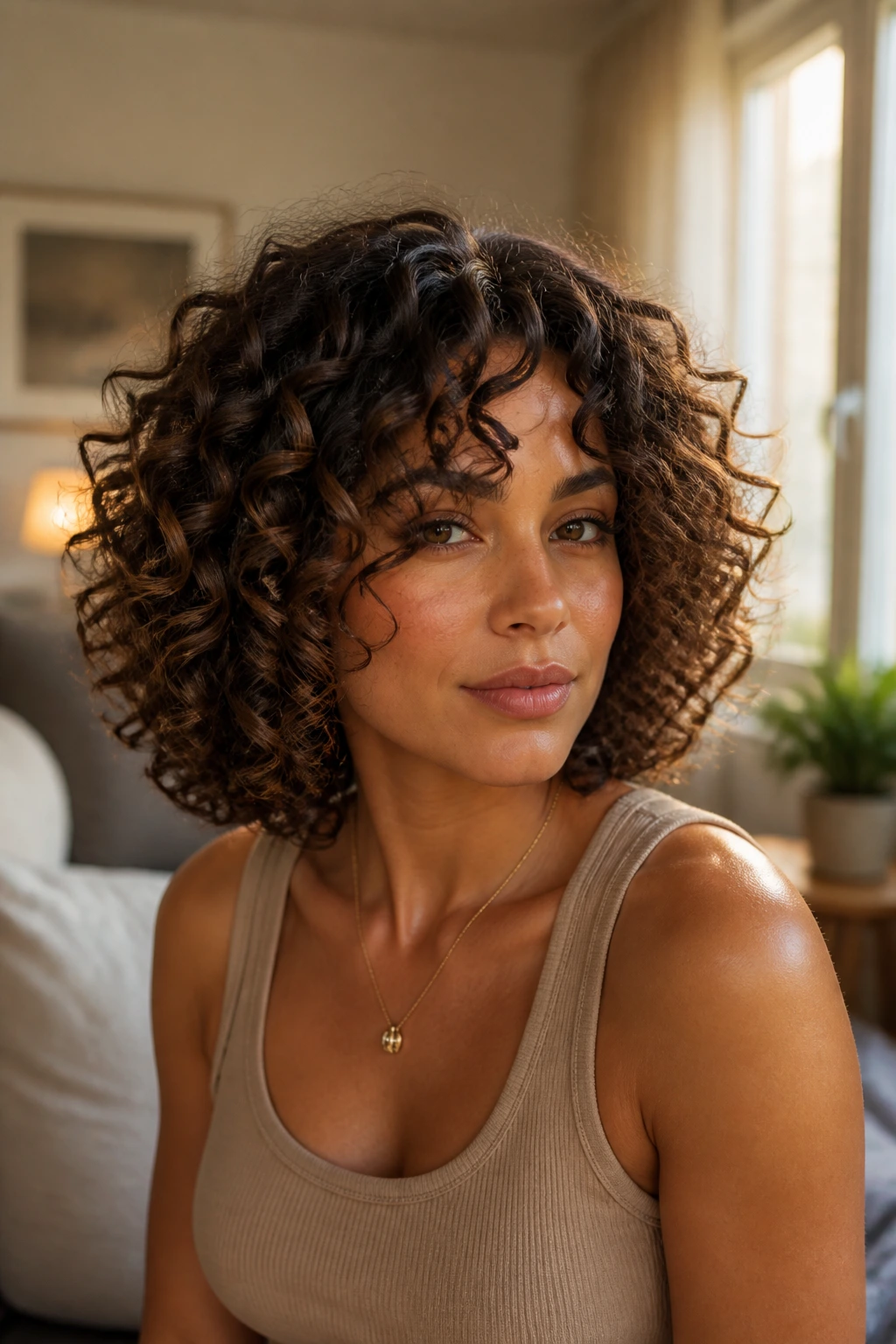
The curly wolf cut has gotten plenty of attention because it understands one basic truth: some curls want height, some want swing, and some want a little edge. A longer nape keeps the back from feeling chopped up, while the crown and sides stay layered enough to lift.
This cut works if your curls are thick and you like volume. Not the soft, sleepy kind. The kind that has a bit of lift at the roots and a little attitude at the fringe. It looks best when the top is shaped to fall naturally instead of being blown straight.
If you prefer a tidy outline, this isn’t your haircut. If you want hair that looks deliberately undone, it has real charm.
12. Side-Parted Midi With Soft Fringe
A side part can change the whole mood of curly hair. It shifts weight away from one side of the face, gives the roots a little lift, and makes a mid-length cut feel less symmetrical and more alive.
The soft fringe is the part that makes this cut easy to wear. It doesn’t have to be a full bang. A few front pieces that shorten near the cheekbone can soften the line and grow out without drama. On curls, that matters. Hard bangs are a commitment; soft fringe is a conversation.
This cut is useful if your curls naturally fall to one side anyway. Instead of fighting that habit, the shape works with it.
13. Triangle-Softening Layered Cut
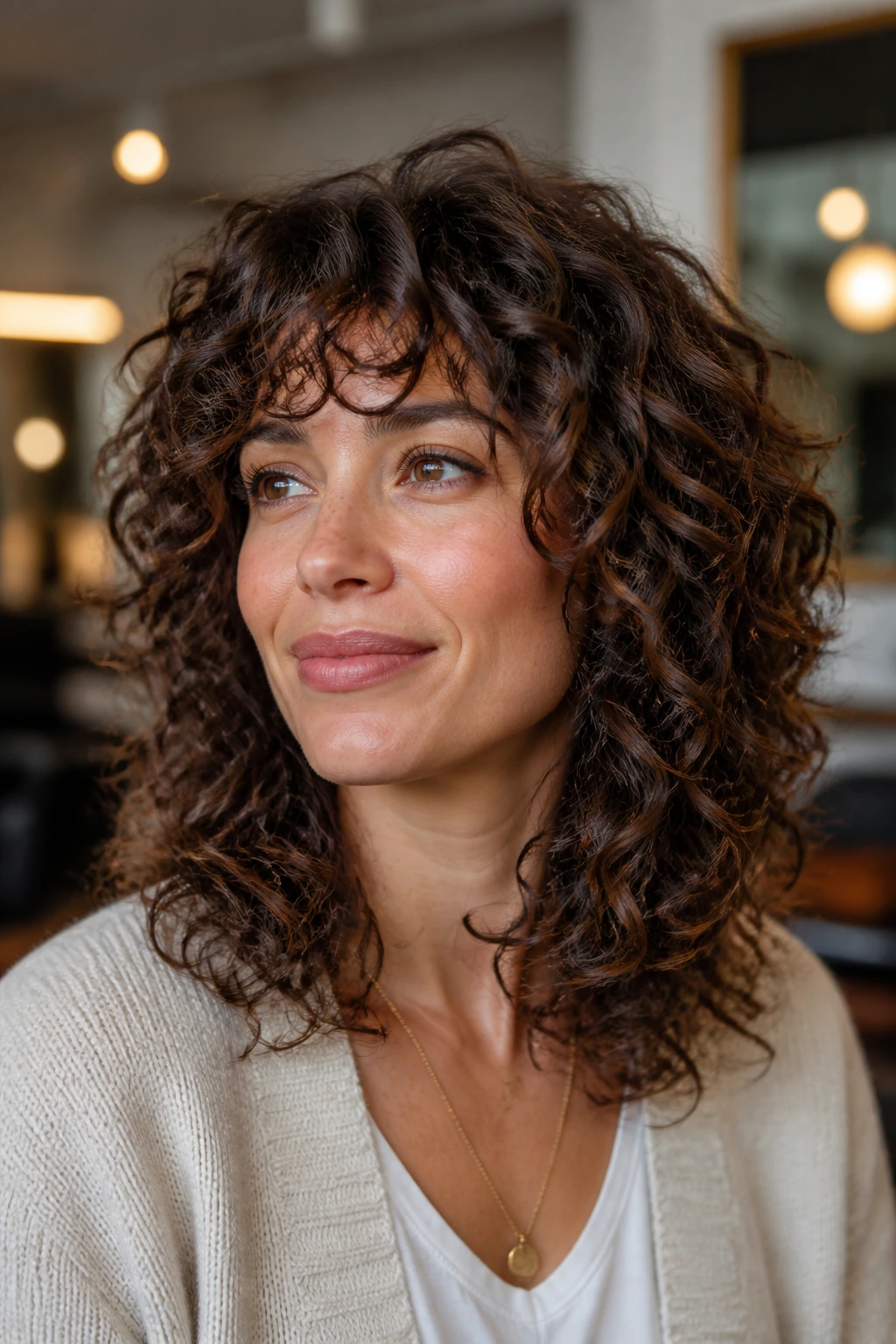
If your curls expand at the bottom and stay flatter near the scalp, you know the triangle problem. It’s not a moral failure. It’s just a cut issue.
How the Shape Gets Fixed
The answer is layers placed where the density needs relief, usually around the mid-length, not piled too high at the crown. That keeps the lower half from widening out while still preserving enough bulk at the ends to avoid frizz.
What to Ask Your Stylist
- Keep the perimeter present.
- Remove weight from the sides, not just the ends.
- Avoid over-thinning the top if your hair is fine.
This is one of the more useful cuts for thicker curls that want to spread outward. The goal isn’t skinny hair. The goal is a shape that stops at the right place.
14. Rounded Afro Shape With Clean Edges
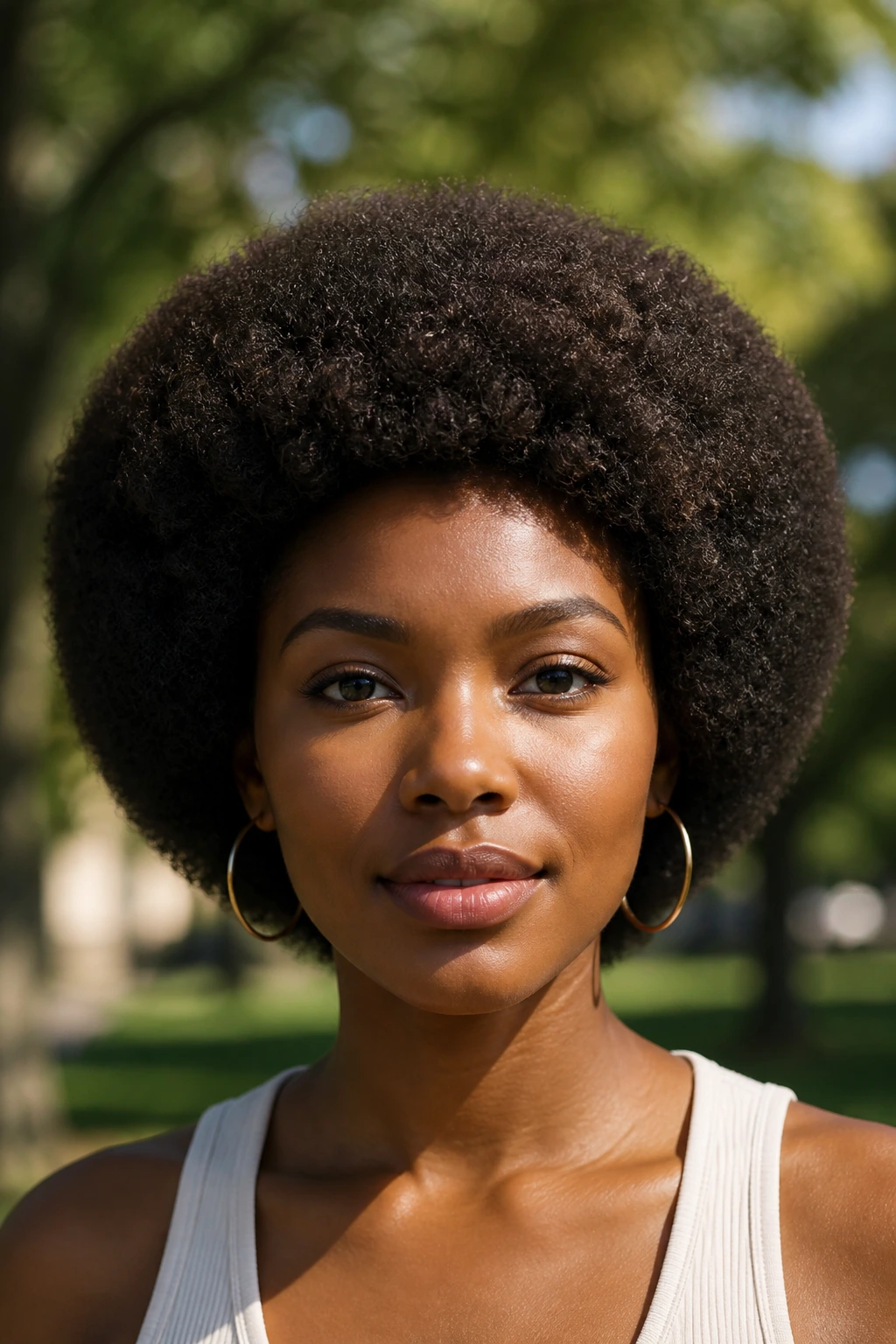
A rounded afro shape looks simple when it’s done well, but there’s real skill in making a coil pattern sit in a clean sphere without chopping the life out of it. The outline should follow the head, not force a flat top or a square side.
The clean edges help this cut stay easy to wear. You get a crisp silhouette, but the body stays soft. That’s why this shape works for women who want polish without needing heat tools every single week.
Dry shaping is especially useful here because coils shrink in ways that wet hair can hide. A good stylist will read the curl at its natural length and shape the halo accordingly, then come back for edge cleanup before the cut gets fuzzy.
15. Tapered Shoulder Cut for Tight Coils
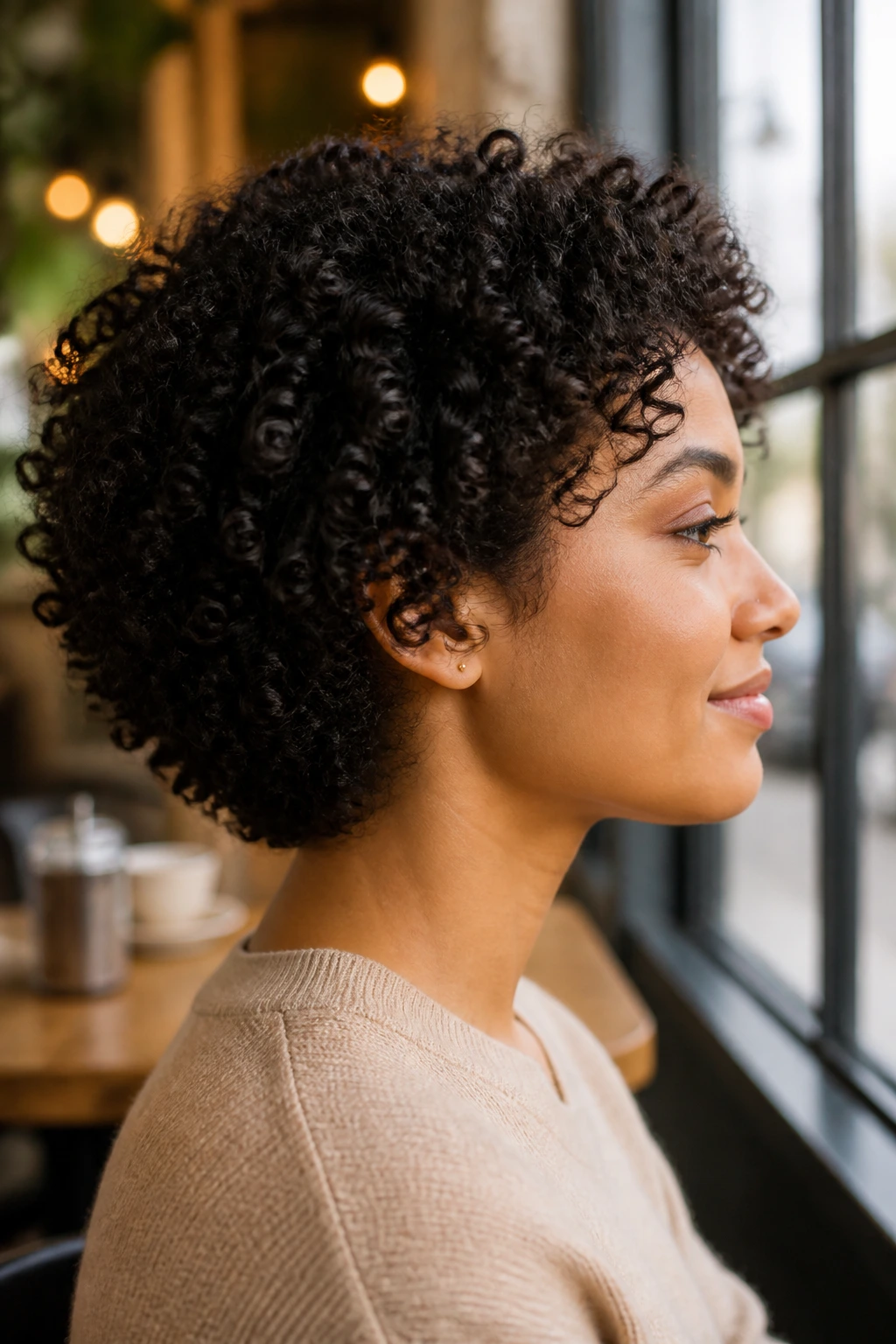
This is a smart cut for tight coils that need a little room at the neck and sides. The taper removes bulk where hair tends to snag on collars and scarves, while the shoulder-length top keeps enough volume to look full.
Ask For a Soft Taper
Not a hard fade. Not a barber-style clip job unless that’s the look you want. A soft taper means the shape eases in around the nape and sides, which helps the haircut grow out with less awkwardness.
The benefit is practical. It cuts down on tangles where hair rubs, dries more evenly, and leaves the crown with enough room to lift. If your coils get dense fast, this can make daily styling feel much lighter.
16. Soft Curly Mullet
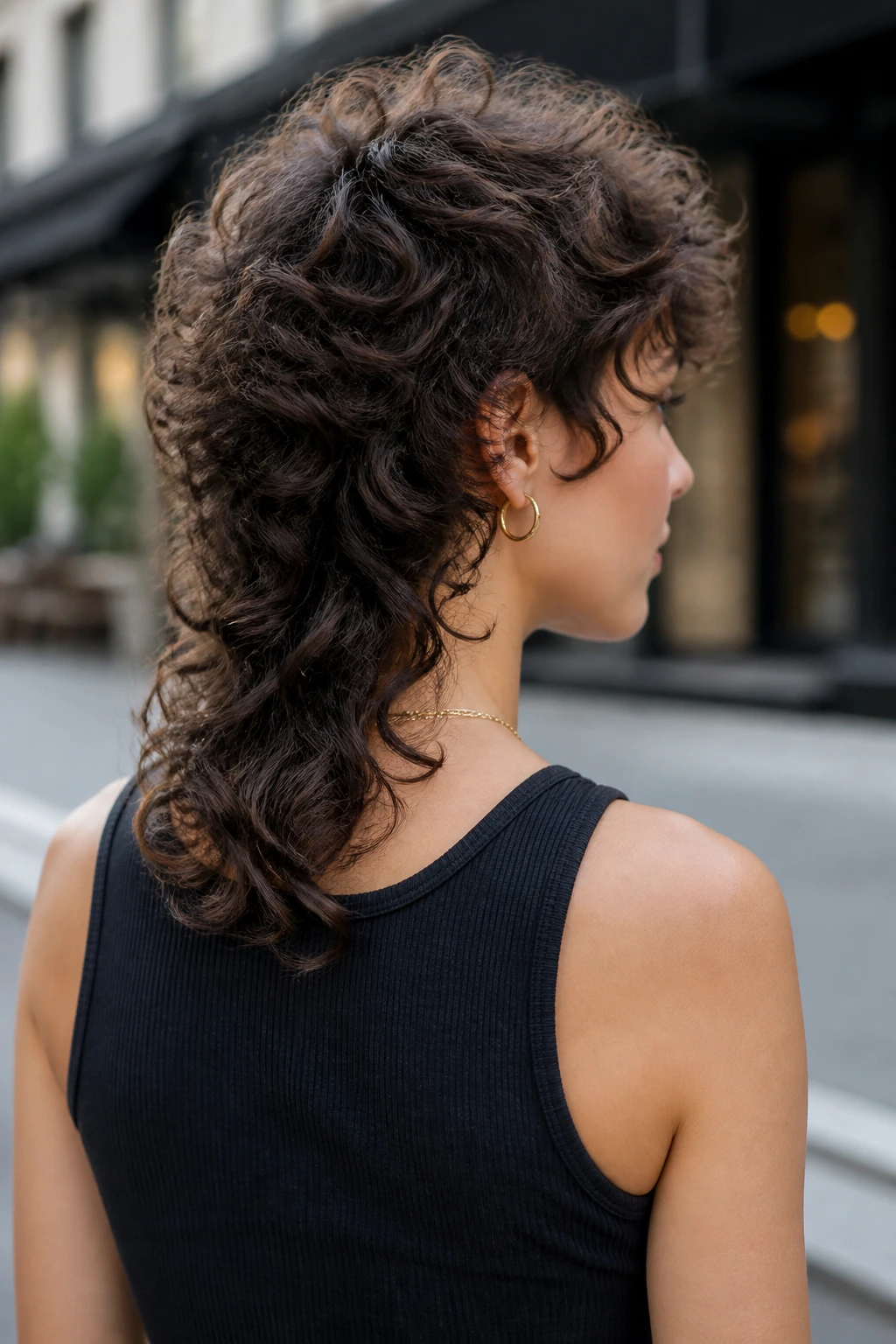
A curly mullet sounds dramatic, and sure, it can be. But the soft version is more wearable than people think because the shape keeps short pieces around the crown and longer pieces in the back, so the hair doesn’t hang in one heavy mass.
It’s a good choice if you want movement without losing personality. The front pieces can stay cheeky and face-framing, while the back holds enough length to tuck or twist. There’s less need to constantly reshape it because the cut already has motion baked in.
This one is not for someone who wants invisible hair. It is for someone who doesn’t mind a little shape showing up in the mirror.
17. Curly Bob With Curtain Bangs
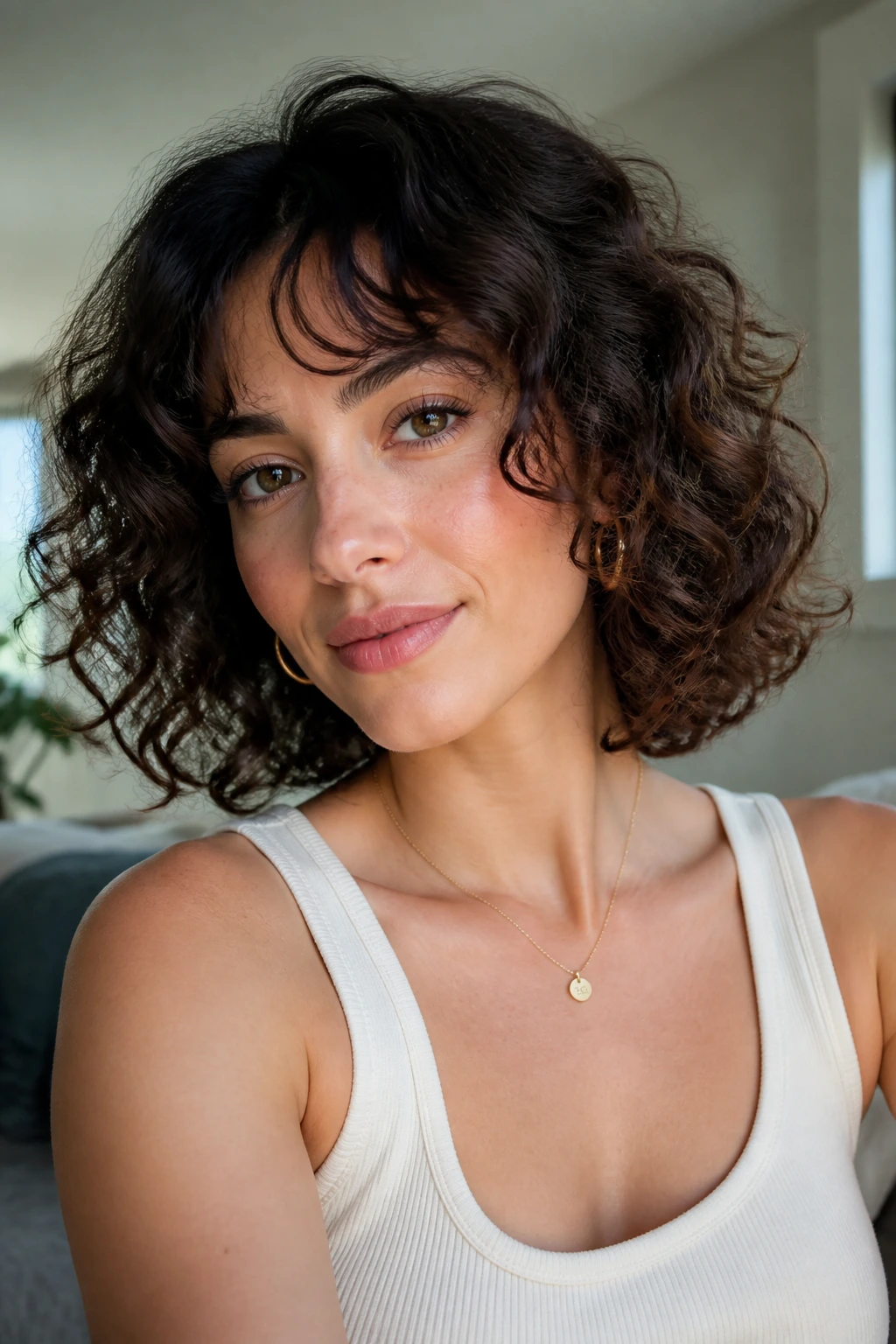
Curtain bangs can be a gift on curly hair when they’re cut with enough length to split and soften, not hang like a blunt block across the forehead. They frame the face, grow out gracefully, and can be tucked away on lazy days.
The bob underneath keeps the shape compact. Together, the two pieces create a look that’s easy to refresh because the bangs don’t have to be perfect to work. A little water, a little finger twisting, and they usually settle.
If your forehead area tends to frizz or flatten, this cut gives you a way to control that zone without committing to full bangs. That’s a useful compromise.
18. Long Curly Cut With Micro Layers
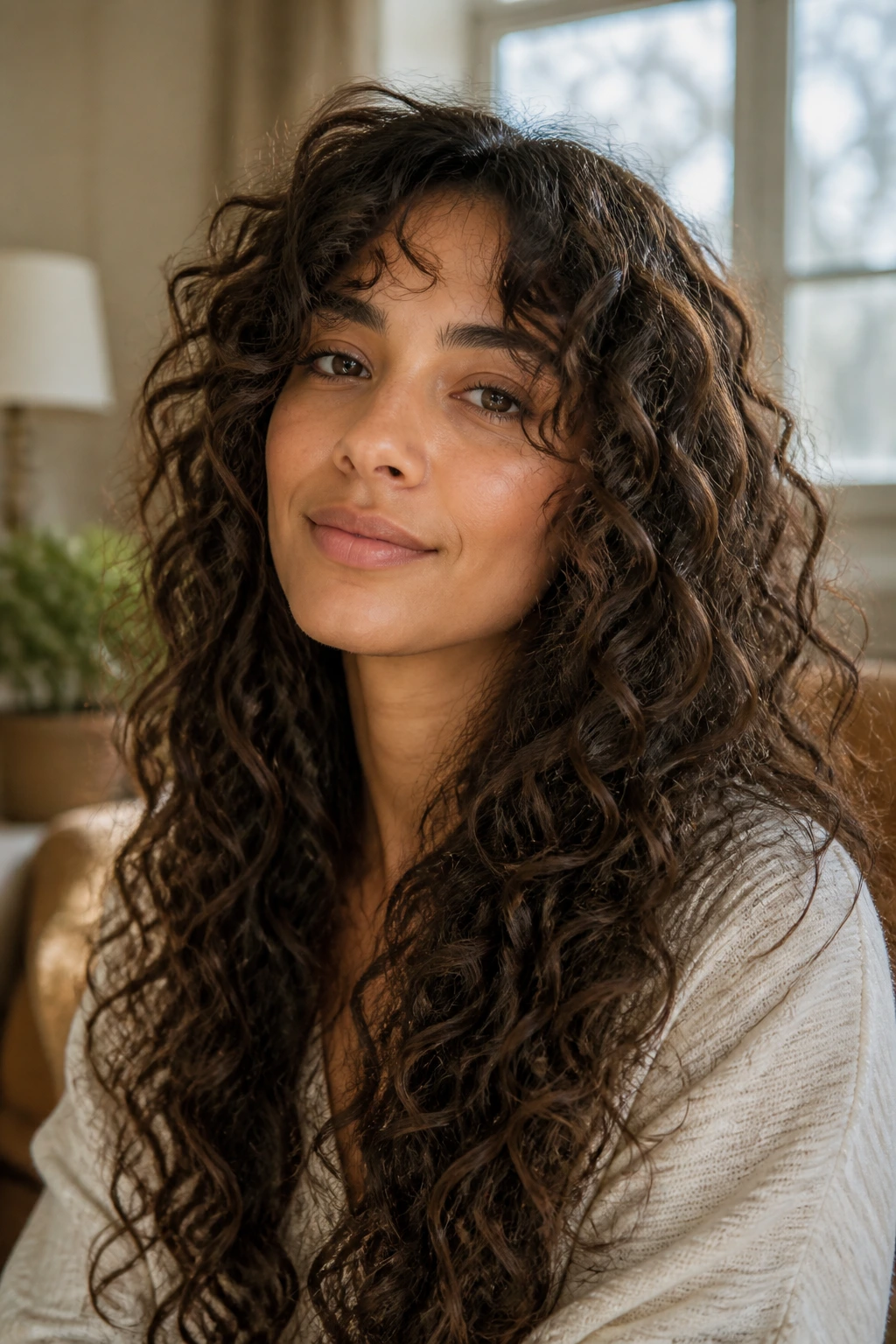
Micro layers are the quiet answer for people who want long hair but don’t want it to sit like a heavy curtain. The layers are subtle enough that length stays the main event, but the shape gets some breathing room.
This works well on thick curls that start to feel dense through the mid-lengths. A tiny bit of shaping can help the ends spring instead of dragging. The trick is not to overdo it; too many short bits can make long curls lose their line.
I like this cut for people who wear their hair down most of the time and want it to keep moving. It doesn’t scream for attention. It just behaves better.
19. Wash-and-Go Cut With Heavy Perimeter
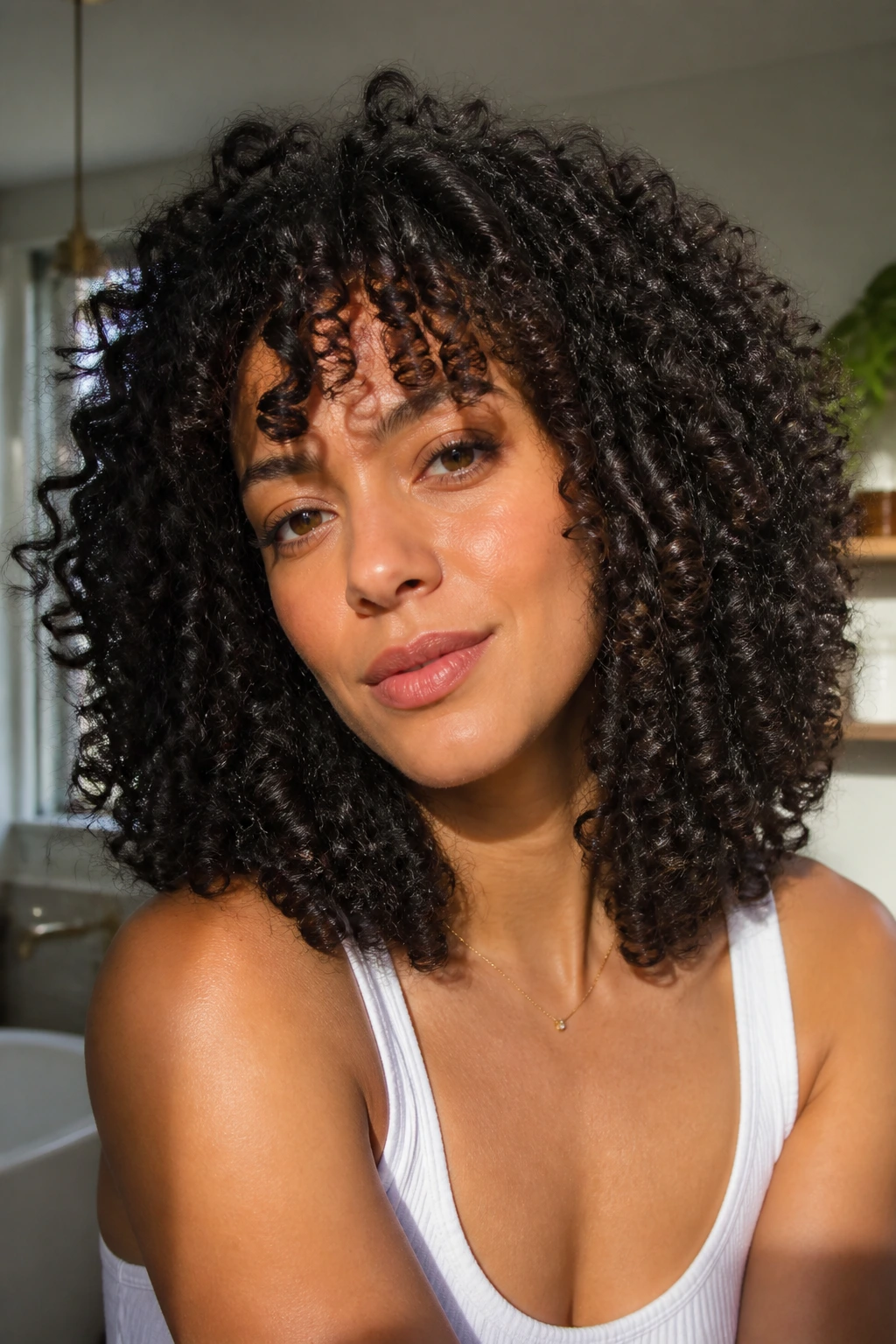
Some curly cuts are built for style. This one is built for life.
The heavy perimeter keeps the outline strong, so you can wash, scrunch, and leave the house without wondering if the ends vanished. A little internal shaping stops the base from becoming too bulky, but the overall line stays solid enough to make the hair look full on its own.
This is especially useful if you air-dry most of the time. A strong perimeter gives the curl pattern something to settle against, which helps day-two refreshes look more deliberate. If your hair is prone to frizzing at the ends, this is one of the better ways to keep the shape from fraying apart.
20. Asymmetrical Curly Lob
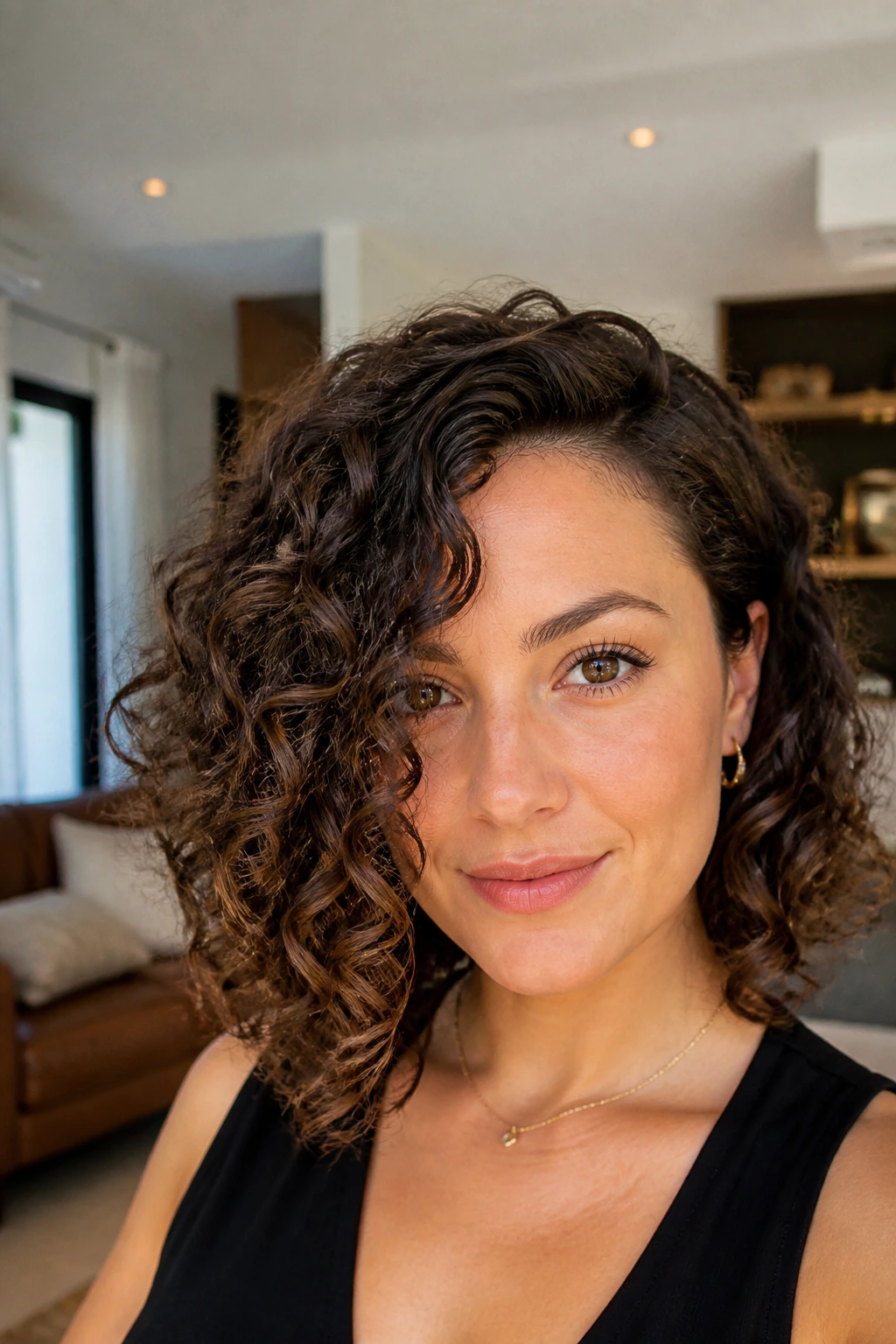
An asymmetrical lob is a good choice when your curls are a little uneven by nature, because the shape already accepts that one side may sit differently than the other. One side can be a touch longer, usually by an inch or so, and the haircut still reads as intentional.
That small difference can do a lot. It draws the eye diagonally, softens a broad face, and gives the curls more movement than a straight, even hemline. It also handles growth well, which is useful when you’re not getting trims every six weeks.
This cut works best when the asymmetry is subtle. If it gets too sharp, the grow-out starts to look accidental.
21. Grown-Out Pixie With Curly Fringe
If you’re between a pixie and a bob, this is the sweet spot. The sides stay neat enough to feel tidy, while the top and fringe keep enough length to curl, sweep, or fall forward.
That fringe is doing more work than it looks like. It gives the cut flexibility on days when you want to style it and a soft frame on days when you don’t. The rest of the shape can be tucked behind the ears, pinned back, or left loose.
It’s a practical choice for women growing out very short hair. You get movement without the awkward helmet stage that sometimes happens when the crown is too short to blend.
22. Thick-Curl Relief Cut With Internal Layers
This is the haircut for dense curls that feel like they’re wearing the room. The perimeter stays honest, but the inside is relieved of some weight so the whole shape doesn’t balloon.
Where It Helps Most
- Around the crown, where thick curls can pile up.
- Through the mid-lengths, where bulk tends to create a shelf.
- Near the nape, where extra thickness can make the neck feel trapped.
The point is not to thin the hair into submission. It’s to let the curls fold over one another without forming a block. That means a careful hand, not a heavy-handed razor.
23. Side-Bang Cut With Loose Ends
Side bangs are the curly compromise that almost always ages well. They sweep across the forehead, soften the face, and grow out in a way that doesn’t turn into a disaster overnight.
Loose ends through the length keep the shape relaxed. The haircut feels less formal and less precious, which is a useful thing if you don’t want to style every curl into place. A side bang also gives you an escape hatch on humid days because it can be pinned back or tucked away.
This cut works especially well if your curls have a looser pattern around the front than the back. That little difference is more common than people think, and a side bang makes use of it instead of fighting it.
24. U-Shape Cut for Wavy-Curly Hair
Wavy-curly hair can be tricky because it changes its mind. Some days the curls are loose and stretched; other days they bunch up and look denser. A U-shape helps because it keeps the back soft and rounded without forcing one rigid line across the bottom.
The front pieces can be a touch shorter, which keeps the hair from dragging forward. That matters if your waves flatten at the root but puff at the ends. The U shape gives them a cleaner landing spot.
This is one of the easiest cuts for people who like to wear hair down, half up, and in clips. It doesn’t get in the way, and it doesn’t scream for a heat tool to look presentable.
25. Short Curly Crop With Soft Nape
A short crop can be a relief when you’re tired of weight, tangles, and long drying time. The nape stays soft and neat, while the top keeps enough length—usually a few inches—to form a curl pattern instead of standing up like fuzz.
This cut needs good balance. If the top is too short, the curls lose shape. If the sides are left too heavy, the crop stops looking clean. The sweet spot gives you a cut that feels light but not severe.
It’s a strong finish to this list because it proves something simple: curly hair does not have to be long to be easy. It just has to be shaped with the way it moves.
How to Choose the Shape Your Curls Will Keep
The best easy-manage haircut starts with three things: curl pattern, density, and shrinkage. Miss one of those, and the cut can look like a completely different haircut once it dries. That’s why a photo of someone else’s curls helps only so much. The same bob can sit at the chin on one head and the ear on another.
Loose waves and stretched curls usually do well with collarbone lengths, soft lobs, and fringe that can bend into the face. They tend to lose structure if the layers are too aggressive, so a cleaner outline often works better than a heavily chopped-up one. Tight curls and coils can take more internal shaping, but they still need a perimeter with enough weight to keep the ends from floating away.
Density changes everything. Thick hair usually needs weight removed from the inside, not the bottom. Fine curls often need the opposite: less slicing, less thinning, and a shape that leaves the ends intact. If your hair grows in different directions around the crown, ask the stylist to look at it dry before cutting too much off. That one request saves more bad haircuts than people realize.
What to Say at the Salon So the Cut Comes Out Right
Bring pictures, yes, but bring the right kind of pictures. Show the stylist a shape you like on a person with a curl pattern close to yours, then point to what you like about it: the length at the front, the fullness at the ends, the way the fringe sits. “Cute” is not a useful instruction. “I want the length to stay below my collarbone when dry” is.
Say how you wear your hair most days. Air-dried? Diffused? Half-up? If you never straighten your curls, don’t let the cut be planned around a blowout fantasy. And if one side tends to spring tighter than the other, mention it before the scissors come out. That detail can change where the layers land.
Ask whether the stylist cuts curls dry, curl by curl, or lightly damp with a finish check at the end. Any of those can work. What matters is that they understand shrinkage and are willing to leave enough length for the curl to actually exist.
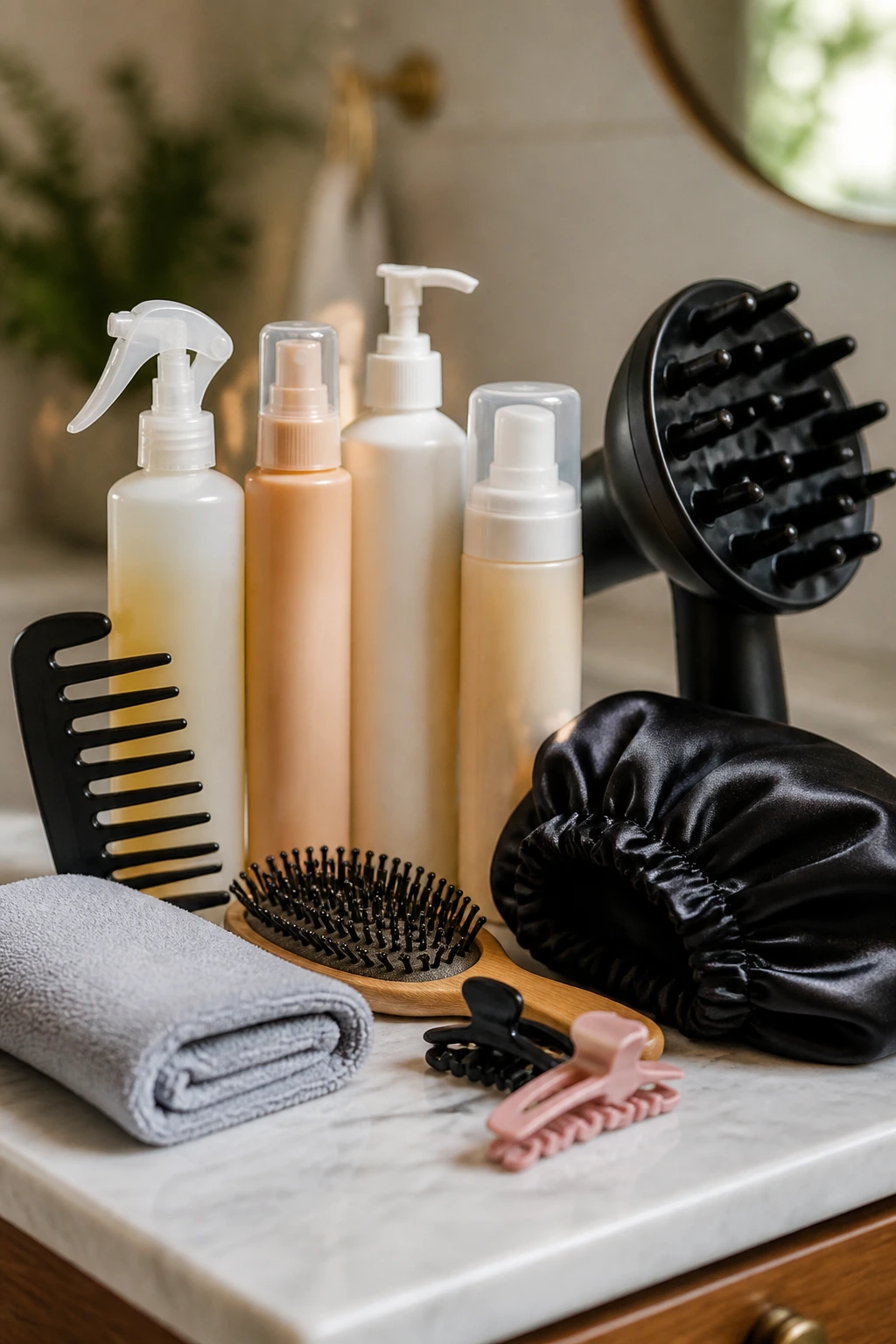
Essential Tools and Products for Easy Curly Hair
- Wide-tooth comb: Best for detangling in the shower when conditioner is still giving your hair slip.
- Microfiber towel or cotton T-shirt: Cuts down on rough friction, which helps the shape stay cleaner as it dries.
- Leave-in conditioner: Keeps the curl clumps soft so the cut reads as defined instead of fluffy.
- Curl cream or mousse: A light layer can help the haircut hold its outline without getting stiff.
- Diffuser attachment: Useful for setting the shape at the root and speeding up dry time on days you want more lift.
- Hair clips: Good for pinning fringe or setting a root lift while the hair dries.
- Spray bottle with water: Handy for refreshing front sections without soaking the whole head again.
- Satin pillowcase or bonnet: Helps the cut keep its shape overnight instead of waking up frayed.
- Clarifying shampoo: Useful every few weeks when product starts weighing down the roots and making the cut collapse.
- Small round brush or finger comb: Optional, mainly for those who like smoothing the fringe or front pieces without a full blowout.
Styling Moves That Save Time on Busy Mornings
The easiest curly cuts still need a little support, but not much. Start with hair that’s wet enough for product to spread evenly. If the top dries before you finish applying leave-in or cream, the front can go frizzy while the rest still looks damp and stringy.
Root lift beats extra product. A few clips at the crown while the hair dries can change the whole shape, especially on bobs, lobs, and shags. You don’t need much—just enough to keep the roots from flattening against your scalp.
Touch the front first. If you’re short on time, refresh the face-framing pieces and bangs, then leave the back alone. People notice the front. The back can behave on its own more often than you think.
Use less product than you expect. Curly hair takes product well, but too much cream makes the cut droop and feel sticky. Start small, then add only if the ends need it.
Common Mistakes That Make Curly Hair Harder to Handle
- Cutting for wet length alone: Curls shrink, and some shrink a lot. If the stylist doesn’t leave extra length for that, the finished cut can jump several inches shorter than planned.
- Over-layering fine curls: Too many short layers can leave the ends wispy and the shape frizzy. The fix is a stronger perimeter with only light internal shaping.
- Thinning dense curls with the wrong tools: Heavy thinning shears or aggressive razor work can make curls puff out in odd places. Ask for weight removal that follows the curl pattern instead.
- Ignoring the crown and nape differently: Those zones often behave unlike the rest of the head. If they’re not shaped separately, the cut can sit flat on top and bulky at the neck.
- Skipping regular trims: Split or stringy ends make even a good cut look tired. Tiny dustings every few months keep the outline clean.
Variations and Alternatives for Different Routines
The Wash-and-Go Lob: Keep the length around the collarbone, add soft internal layers, and leave the perimeter full. This is the easiest option for people who want a shape that still looks finished with just leave-in and air-drying.
The Volume-First Shag: Shorter crown layers, cheekbone framing, and a lighter fringe give this cut more height. Choose it if your curls tend to sit flat on top and you want a little lift without teasing.
The Length-Keeping U Cut: This version is for women who want to keep as much length as possible but lose the heavy bottom line. It works well when the ends feel thick and the middle starts to swell outward.
The Short-and-Neat Crop: A tapered crop with a soft top is the low-maintenance answer for women who don’t want much drying time. It does need regular trims, but daily styling gets simple fast.
The Grow-Out Fringe Cut: Curtain bangs or long side bangs make the cut look intentional while it grows. That’s useful if you want a shape that can change slowly instead of announcing every inch.
Keeping the Cut in Shape Between Salon Visits
Curly hair usually looks best when you protect the shape instead of trying to fight it every morning. For short crops and pixies, plan on shape-ups every 4 to 6 weeks. Bobs and lobs can often go 8 to 12 weeks before the outline starts getting fuzzy. Long layered cuts can stretch longer, but if the front starts collapsing or the ends get see-through, it’s time.
Night care matters more than people want to admit. A satin pillowcase or bonnet keeps curls from getting smashed flat and frayed. If your hair is long enough, a loose pineapple at the top of the head keeps the lower curls from getting pressed into the pillow.
Refresh with water first, not more product. A light mist and a quick scrunch often brings the curl shape back better than layering on more cream. If the roots are limp, clip them up for 10 to 15 minutes while the hair dries a bit. It sounds small. It works.
Frequently Asked Questions
Should curly hair be cut dry or wet?
Either can work, but dry cutting or cutting in the curl’s natural state makes shrinkage easier to read. Wet cutting is fine when the stylist understands how much your curls jump after they dry and leaves room for that.
What haircut is easiest to manage for very thick curly hair?
A cut with a strong perimeter and careful internal weight removal usually wins. Think lob, rounded bob, or a shaped shoulder-length cut rather than a heavily thinned shag that can balloon at the sides.
Do layers make curly hair frizzy?
Not by themselves. Badly placed layers make curly hair frizzy because they create uneven ends and too much exposed surface, while thoughtful layers can take weight out without wrecking the curl pattern.
Can I get bangs with curly hair?
Yes, but they should be cut longer than straight bangs and shaped for shrinkage. Curtain bangs and side bangs are usually easier to wear than a blunt fringe because they grow out more gently.
What if one side of my curly hair grows or curls differently?
Say so at the appointment and ask the stylist to check the cut from both sides while it’s dry. A little asymmetry is normal, and a smart cut will work with it instead of forcing perfect mirror-image sides.
How often should curly hair be trimmed?
Short cuts need the most frequent trims, often every 4 to 6 weeks. Longer layered cuts can usually go 8 to 12 weeks, though split ends and shape loss should decide more than the calendar does.
What if my curls are really loose waves instead of springy curls?
Choose softer lines, not heavy layers. A collarbone lob, U-shape, or side-parted midi usually gives waves enough structure without making the hair look overcut.
How do I know if a haircut is too thin?
If the ends look see-through, the shape sticks out at random, or the cut loses its outline when your hair dries, it’s too thin. Curl hair needs some weight at the bottom to hold its form.
Cuts That Work With Curls, Not Against Them
The smartest curly haircut is the one that makes the curl pattern look more like itself. Not more controlled. Not more polished in a fake, straight-haired way. Just better shaped, better balanced, and easier to live with on a regular Tuesday.
If you keep one thing in mind, make it this: ask for a shape that respects your shrinkage, your density, and the way you actually wear your hair. A great cut should dry with less drama, grow out without falling apart, and make the mirror feel a little kinder in the morning. Bring that idea to your next appointment, and let the curls do the rest.