



Biracial hairstyles for round faces with curly hair work best when they stop trying to flatten the curl pattern and start using it like architecture. A little height at the crown, a clean diagonal part, and a curl line that drops below the cheekbone can change a face shape fast — without a flat iron in sight.
The mistake I see most often is oddly simple: the style gets widest exactly where the face is already widest. That happens with chin-length curls that stop dead at the jaw, with center parts that split the face into two equal halves, and with bulky side volume that sits right over the cheeks. None of that is fatal, but it does make the face look shorter and rounder than it needs to.
What works instead is shape, not severity. Let one side move forward. Let the top sit a little taller. Let the ends live lower than the jaw. The 25 styles below do that in different ways — some polished, some playful, some protective, some a little edgy — but all of them know where to put the volume.
Why These Styles Earn Their Place
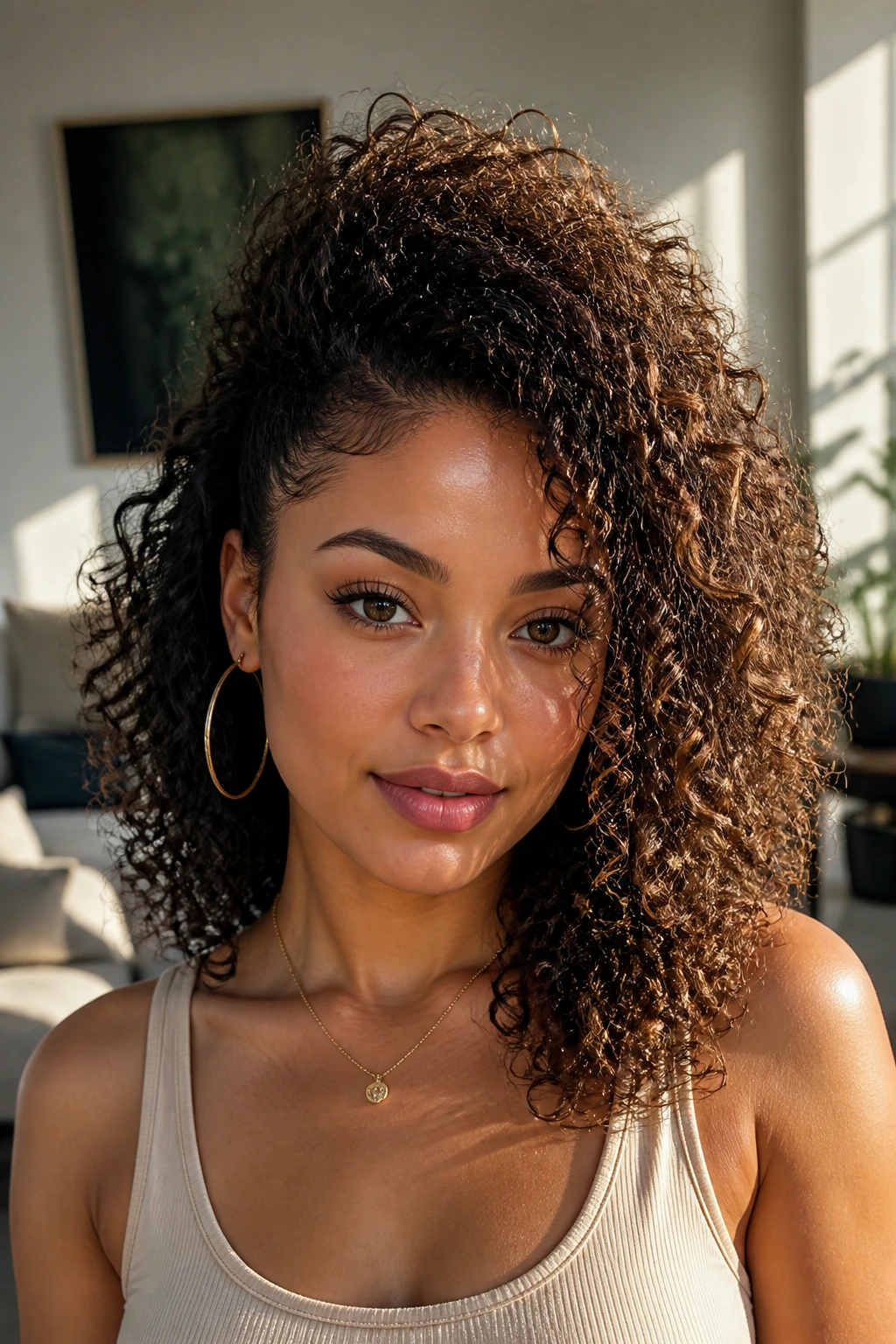
- Round-Face Friendly: Every style here uses length, height, or asymmetry to keep the face from looking wider than it is.
- Curl-First Styling: These looks respect curly hair’s natural bend instead of forcing it into a flat, stretched shape that lasts about ten minutes.
- Mixed-Texture Smart: If one section of your hair is looser and another is tighter, these styles still make sense; they don’t depend on one uniform curl pattern.
- Low-Heat Options: Plenty of these styles work with twist-outs, puffs, braids, and finger coils, so you can skip the hot tools when you want to.
- Easy to Personalize: A deeper part, a taller crown, a few face-framing pieces — small changes make a big difference here.
The Shape Rules That Make a Round Face Look Longer
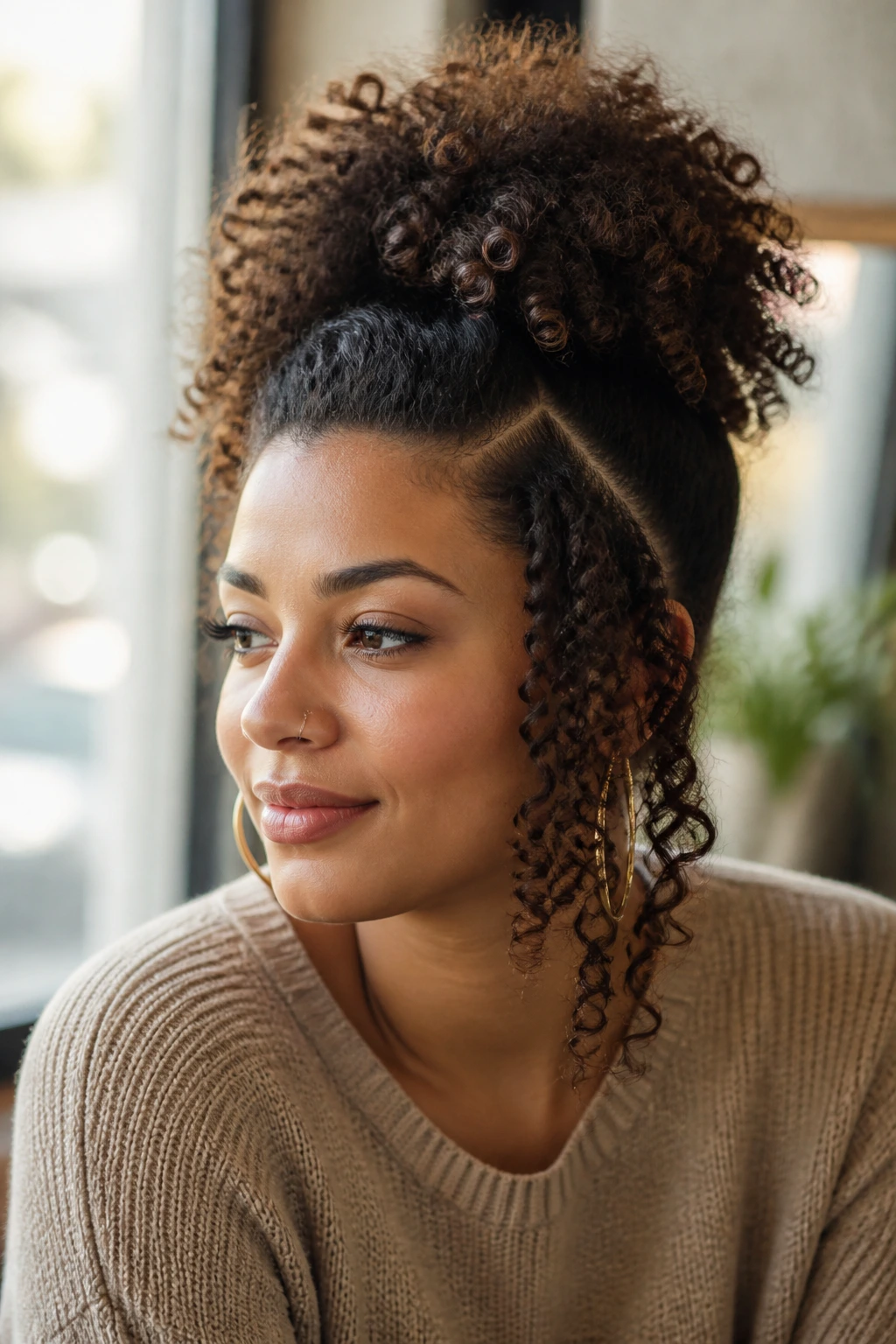
Round faces tend to read wider through the cheeks, with the length and width landing closer together than they do on an oval face. That does not mean you need to hide your face. It means you should stop placing the visual weight in the same place as the widest part of your face.
Lift changes everything. Even a couple of extra inches at the crown creates a vertical line that curls can play against. That’s why high puffs, tapered cuts, faux hawks, and tall updos show up so often in flattering curly styles for round faces.
Asymmetry helps more than symmetry. A deep side part, a side sweep, or a ponytail that sits slightly off-center gives the eye somewhere to travel. Straight-down symmetry can be neat, but it also tends to sit there and announce the width of the face. Diagonal lines soften that.
Length below the jaw is your friend. Curls that hit right at chin level can box the face in, especially if they’re thick and springy. A lob that falls at the collarbone, long layers, or an updo with loose tendrils usually reads leaner.
Mixed curl textures need shape, not punishment. One section may be looser, one tighter, and one frizzier than the rest. That’s normal. The goal is not to force all of it into the same behavior. The goal is to build a silhouette that makes the differences look intentional.
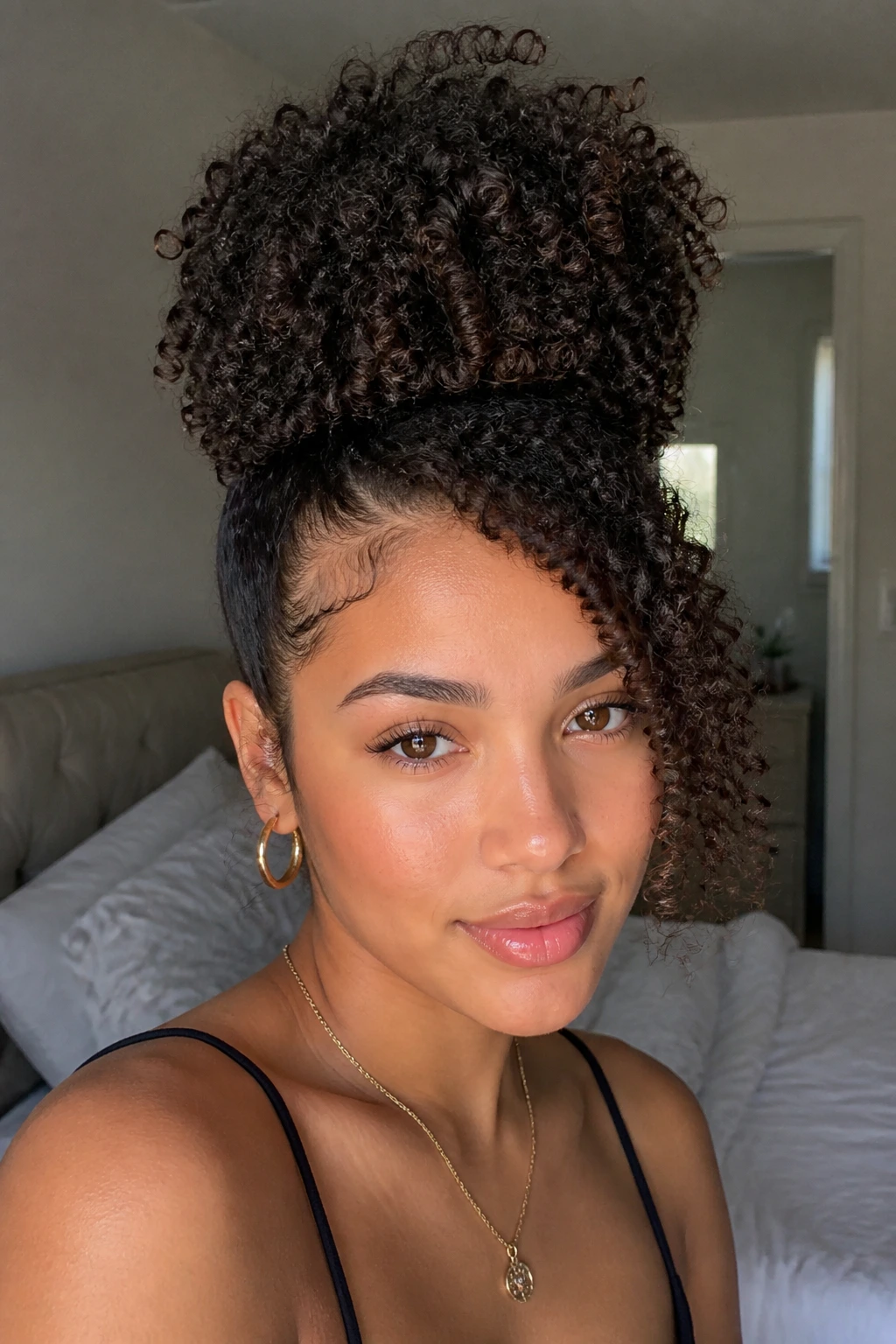
1. High Curly Puff with a Deep Side Sweep
A high curly puff is one of those styles that looks simple until you see what it does to the face. The puff sits above the crown, which instantly pulls the eye upward, and the side sweep softens the cheek line instead of stopping there. On a round face, that diagonal front piece matters more than people think.
Why It Works
The shape adds vertical space where round faces usually need it most. It also keeps the widest part of the hair away from the widest part of the face, which is the whole trick in one sentence.
A satin scrunchie, a soft brush, and a little gel at the hairline are enough. If your curls are dense, leave a few textured pieces out around the temples so the puff doesn’t look stiff.
Best for: second-day curls, busy mornings, and anyone who wants lift without a full updo.
Watch for: placing the puff too low at the back of the head. That flattens the profile fast.
2. Angled Shoulder-Length Curly Lob
If you want something that feels grown-up without being fussy, this is the cut I’d point you toward first. An angled lob lets the front pieces sit a little longer than the back, and that longer front line helps a round face look less boxed in. The curls move, but they don’t balloon right at the jaw.
The key is where the length lands. I like it best when the front brushes the collarbone or drops a touch below it. That little bit of extra length gives the curls room to spring without sitting directly on the cheeks.
This style is especially good if your curls shrink up when they dry. A cut that looks “too long” when wet often lands in the right place once it’s dry. Strange but true.
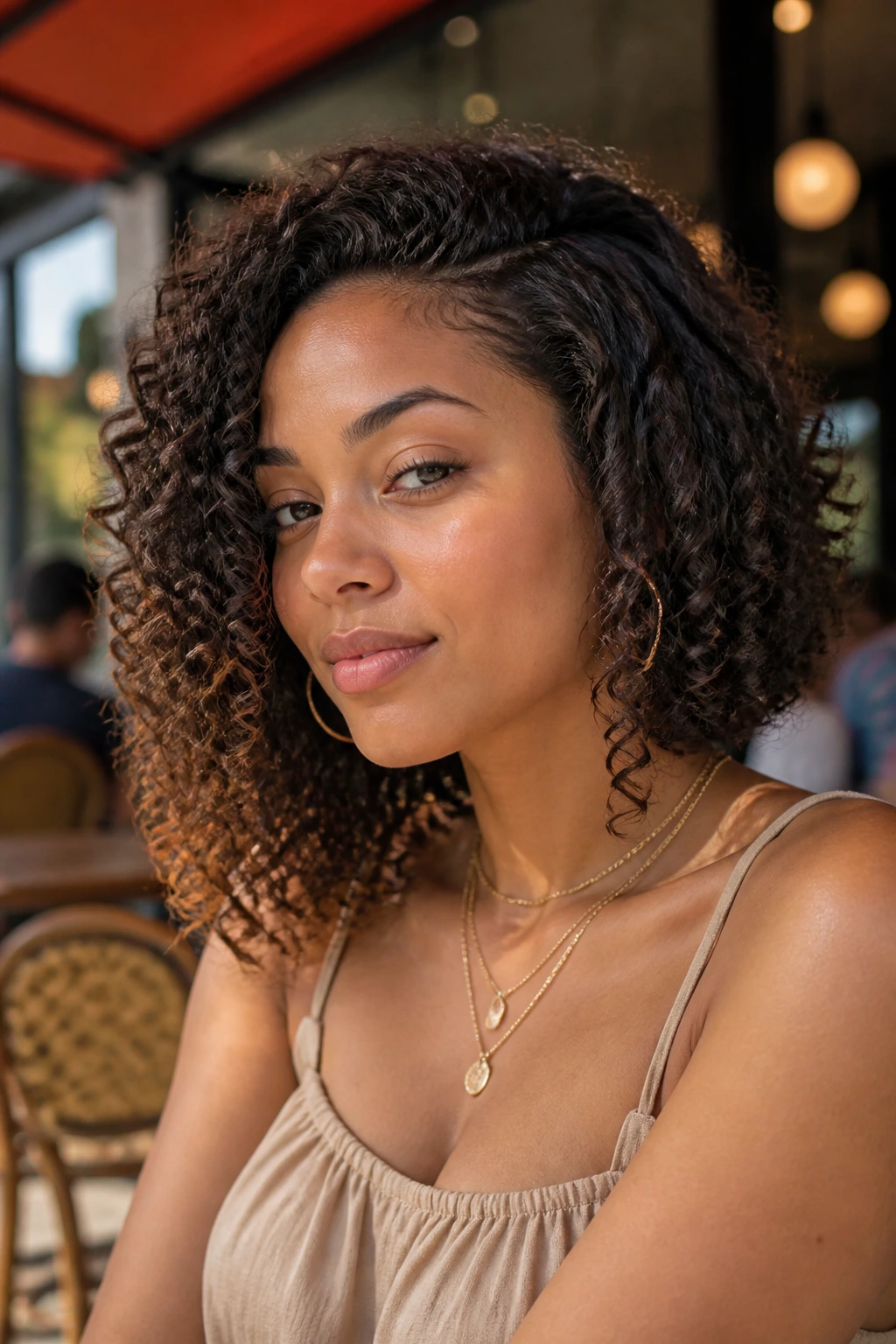
3. Deep Side Part with Face-Framing Layers
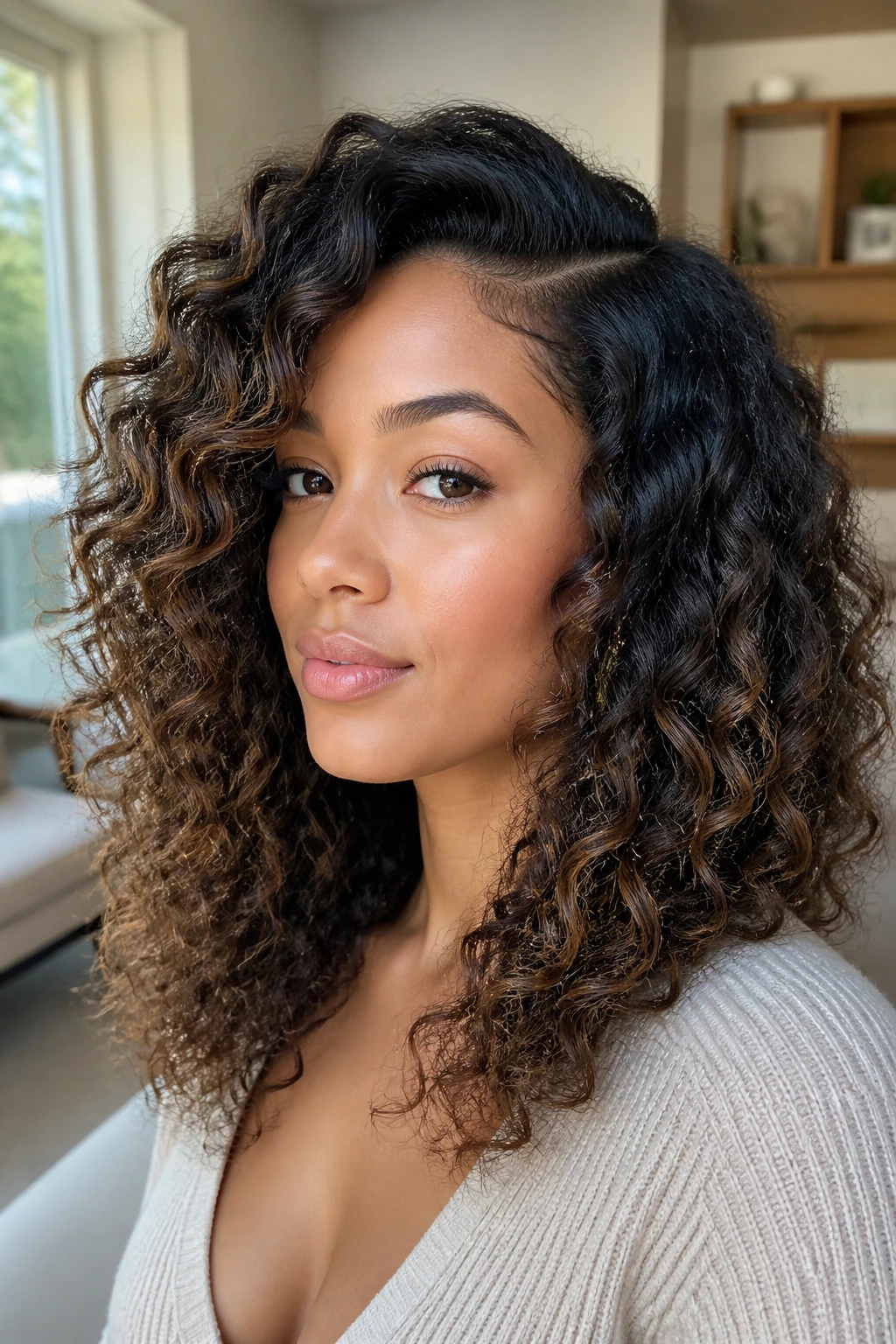
Why does a side part work so well on a round face? Because it breaks the face into uneven sections, and uneven usually reads longer. A middle part can work on some people, sure, but the deep side part has more attitude and more shape.
The Angle Matters
Ask for the first part line to sit well off center, not just a lazy half-inch shift. Then add face-framing layers that begin below the cheekbone, not at it. If the layers start too high, you can accidentally widen the face instead of lengthening it.
This is a good choice when your curls are medium to long and you want definition without losing density. It also plays well with mixed textures because the side that wants more volume can stay fuller, while the other side follows the line.
4. Half-Up Pineapple with Defined Ends
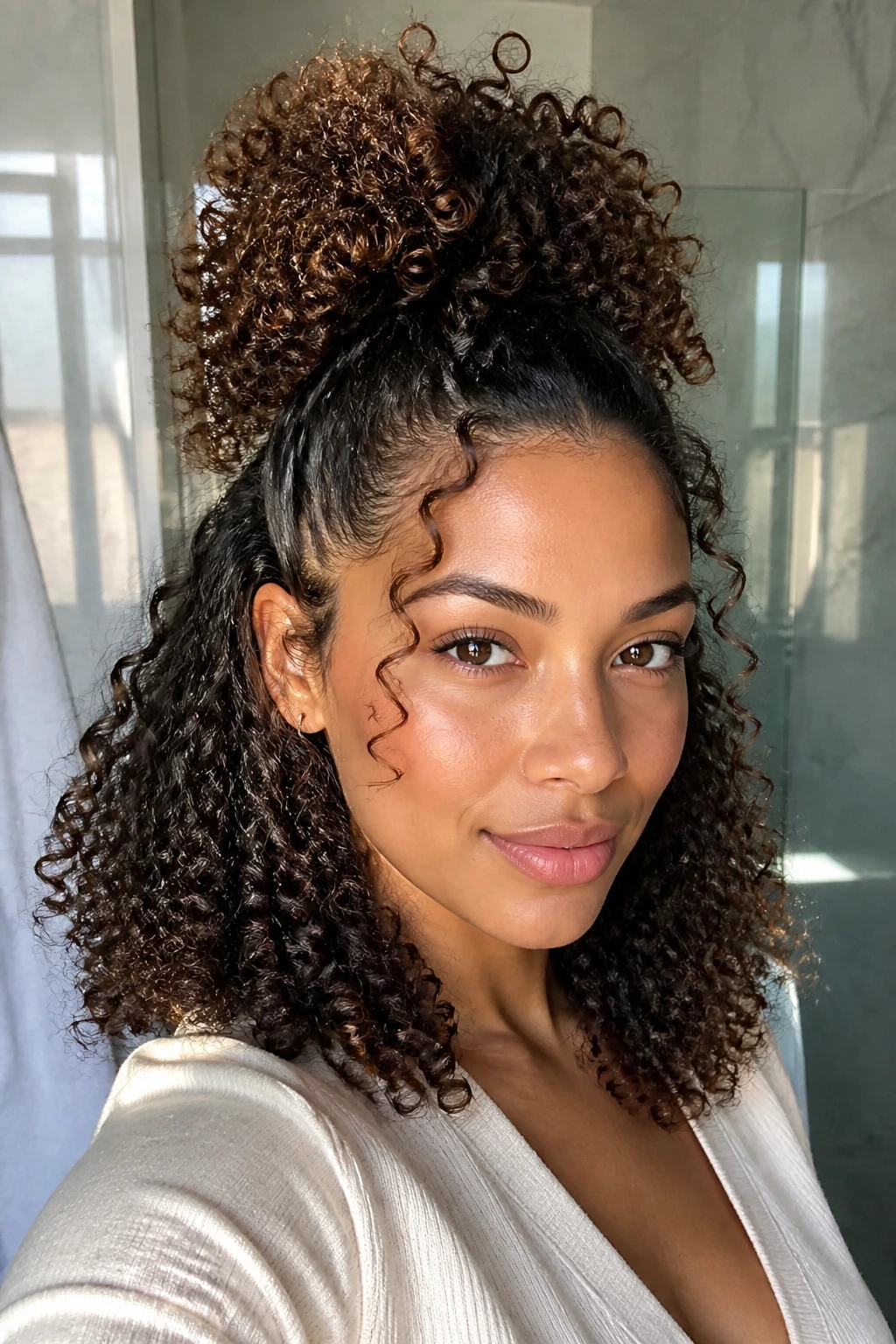
The half-up pineapple is the style I reach for when day-two curls need a reset but I do not want to erase the shape. Pulling the top section up and away from the face adds height, while the ends below stay defined and visible. That keeps the whole look from turning into one big round cloud.
A few face-framing curls left loose near the temples make a big difference. They keep the style from feeling severe. If your hair is finer, use a small claw clip or a loose scrunchie so the top doesn’t collapse by lunchtime.
This one is also good for people whose curls look better after they’ve had a little air and a little lift. Not every style needs to be polished into submission.
5. Curly Shag with Curtain Bangs
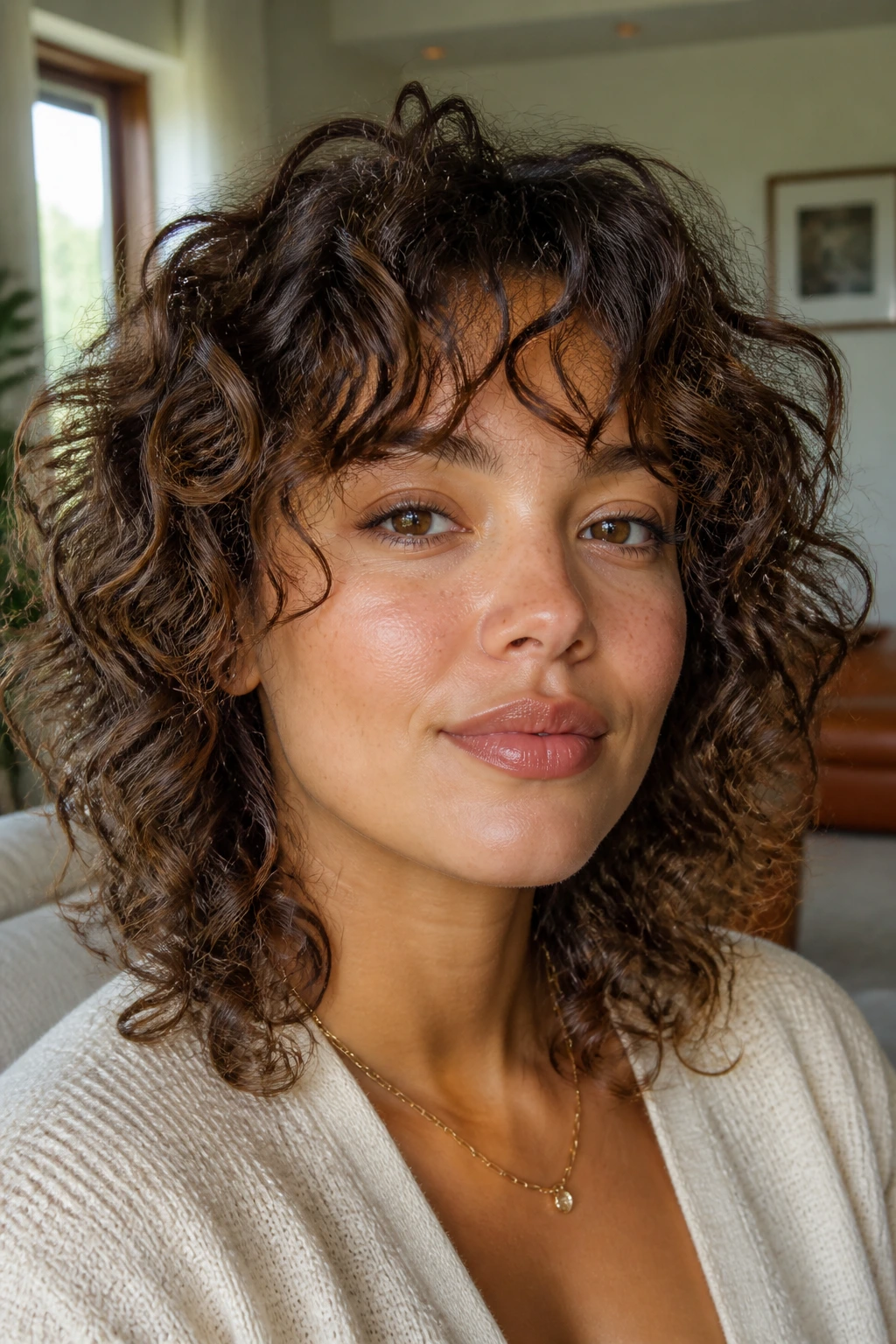
A curly shag can be a gift on a round face, but only if the layering is done with some nerve. Too much bulk at the sides turns the whole cut into a mushroom. The right shag removes weight lower down and lets the top stay lively, while curtain bangs open the forehead and pull attention upward.
The bangs should graze, not chop. If they sit too short and too blunt, they can make the face look wider. Longer curtain bangs that split softly in the middle are better because they build a vertical line without hard edges.
This is one of my favorite cuts for mixed-texture curls, because it does not need every curl to behave the same way. Messy is part of the look. So is motion.
6. Tapered Cut with Height at the Crown
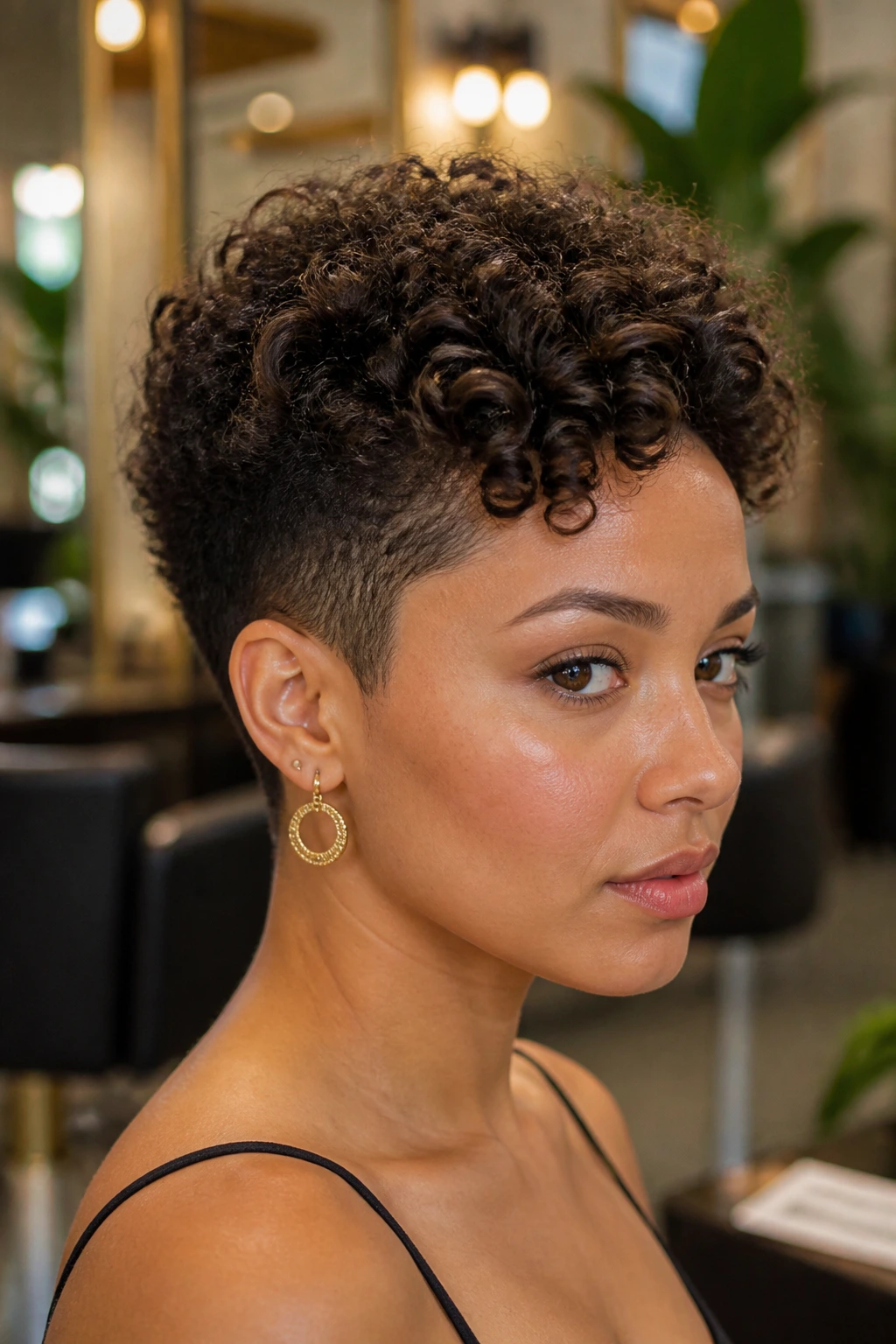
A tapered cut is one of the cleanest answers to a round face with curly hair. The sides and back stay shorter, the top keeps more length, and the silhouette naturally climbs upward instead of spreading outward. That shape is doing half the work for you.
I like this more than a rounded, even afro when the goal is to sharpen the face line. The taper gives structure. It also makes dense coils easier to manage because there’s less bulk around the ears and neck.
If you want a low-maintenance style that still looks intentional, this one is hard to beat. Ask for the taper to stay soft at the temples if you want the look to feel feminine or gentle rather than super sharp.
7. Braided Crown with Loose Curls
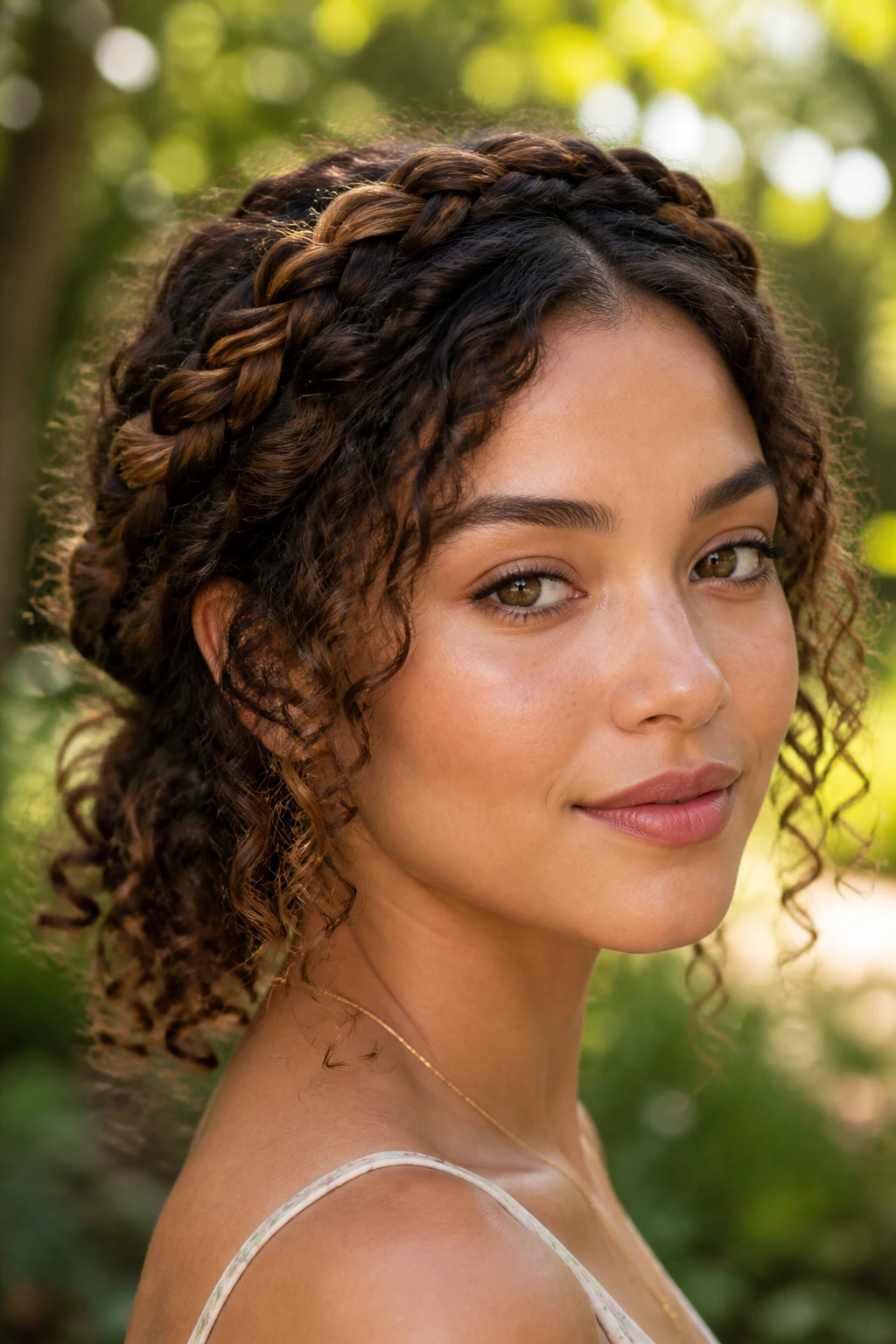
Can a braid actually flatter a round face? Absolutely — if it travels across the top rather than sitting heavy at the sides. A braided crown pulls the eye upward and around the head, while loose curls left out at the back or near the nape keep the style from looking too tight.
Keep the Braid Loose at the Temples
This part matters. If the braid hugs the face too hard, it can make the cheeks stand out more. Leave a little softness near the temples and let a few curls fall free around the ears.
This is a strong option for weddings, photos, and long days when you want your hair to stay put. It looks refined, but it doesn’t flatten the curl pattern into something it is not.
8. High Ponytail with Wrapped Base
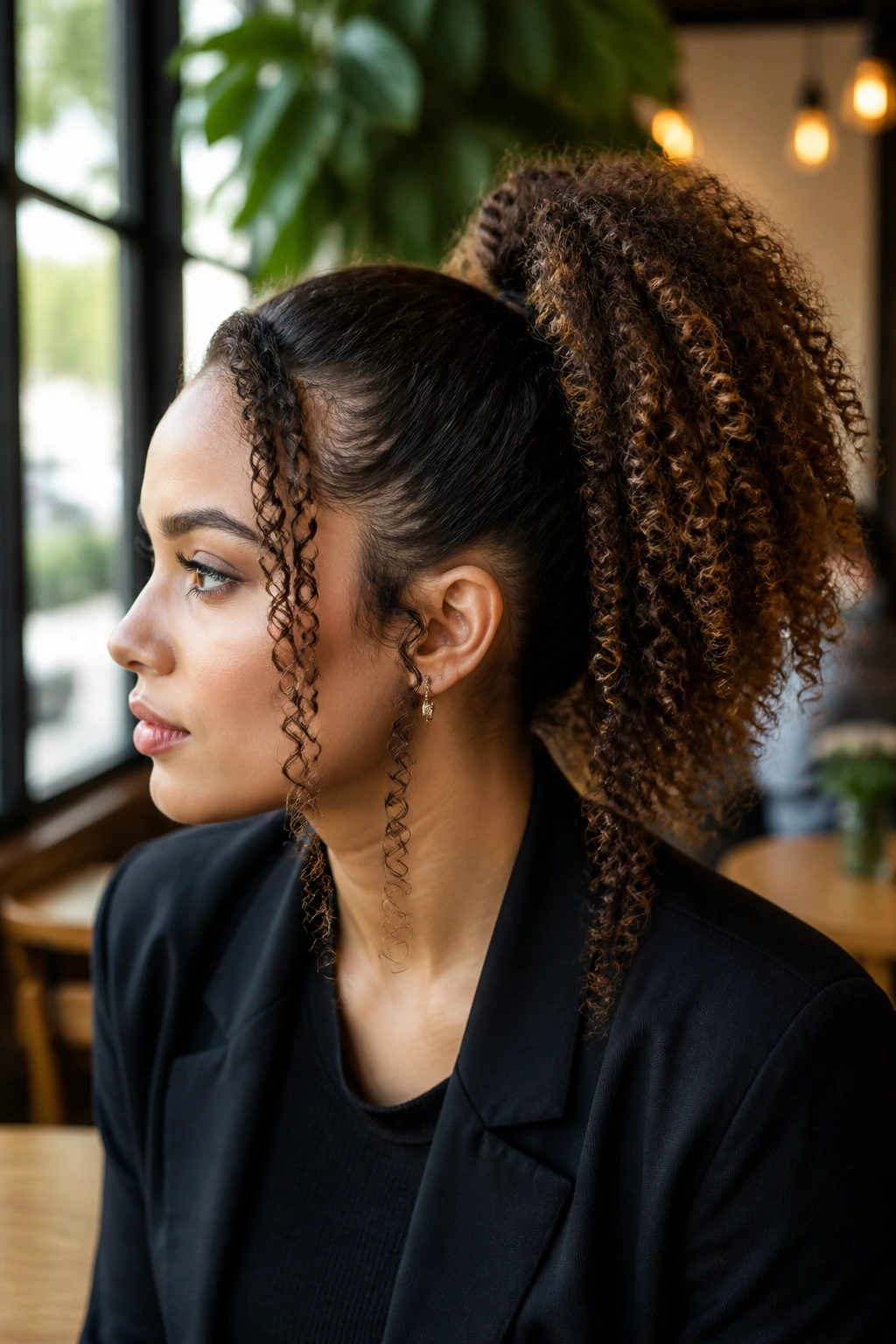
A high ponytail gives you height, and height is the whole game when the face is round. Pull the ponytail up at the crown, not at the back of the head, then wrap a small section of hair around the elastic so the base looks polished. That tiny move cleans up the style fast.
Leave the tail curly and let it keep its texture. A sleek ponytail on curly hair can look good, but the wrapped base with a textured tail feels richer and less severe. If your hairline is sensitive, do not yank the pony too tight. The shape should sit up, not hurt.
This style works especially well when you want your earrings, neckline, or makeup to show. It clears the face and still keeps the curls central.
9. Long Layers with an Off-Center Part
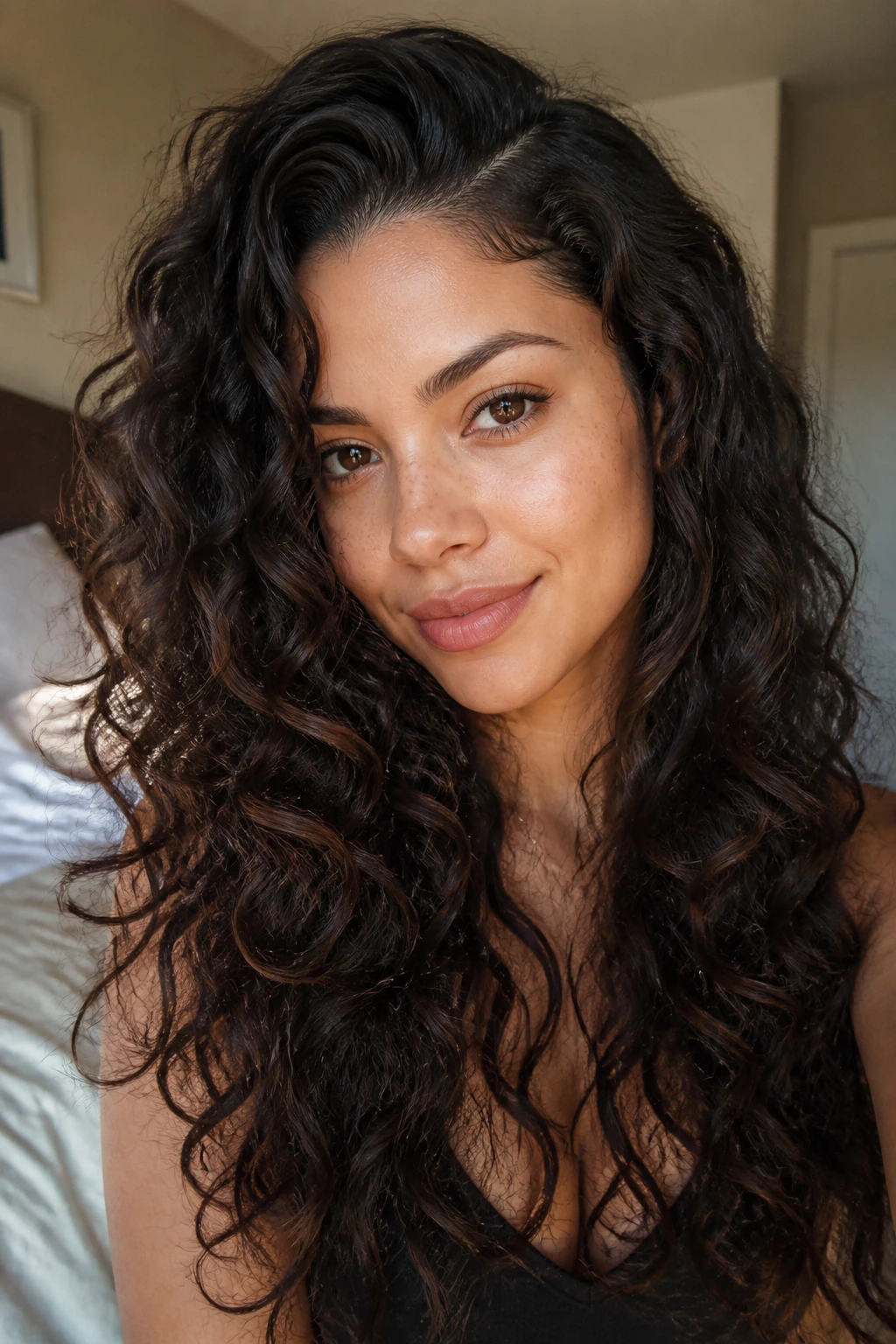
Long layers are underrated because people assume long hair automatically solves everything. It doesn’t. If the ends are too blunt or the part is too centered, long hair can still sit like a curtain around a round face. The off-center part and long layers fix that.
The layers should move enough to show texture, but not so much that the bottom looks wispy. I like layers that start around the collarbone and continue downward in soft drops. That gives the curls room to breathe without making the silhouette too wide at the cheek line.
This is a smart choice if you like wearing your hair down most days and do not want to style it into an updo every morning. You still get shape. You just get it with less effort.
10. Curly Bob with a Chin-Bypassing Angle
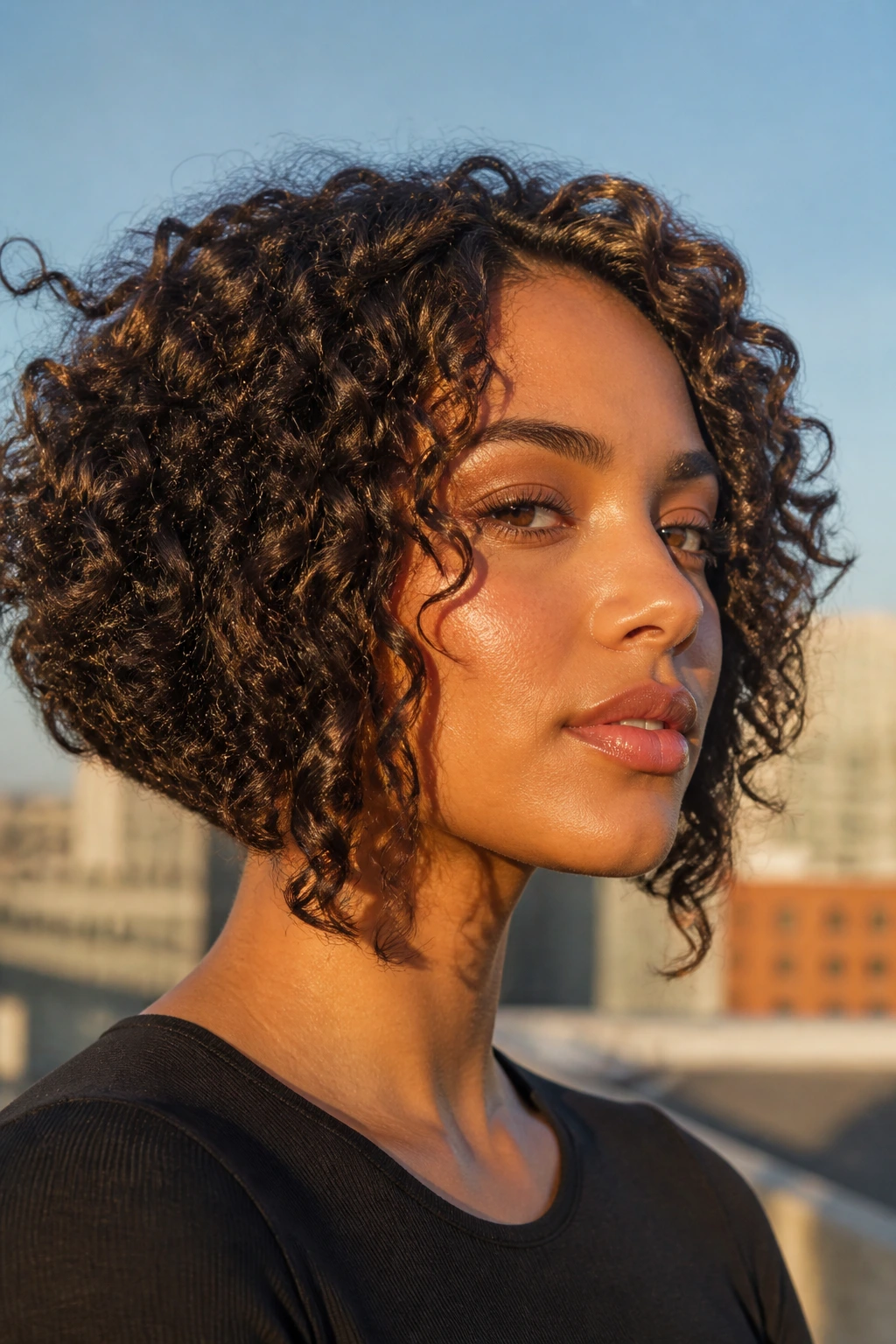
A bob can work on a round face — but not a blunt one that stops right at the chin and sits there like a shelf. The better version is a curved or angled bob that either dips below the jaw or keeps the front pieces longer. That little drop is the difference between “cute” and “why does my face look wider?”
If you love shorter hair, this is the safe version to ask for. It gives you the easy feel of a bob, but the angle keeps the curls from crowding the cheek area.
I’d skip a dense, straight-across curl line here. Curly bobs need movement at the edges. Otherwise the cut reads square.
11. Faux Hawk with Side Definition
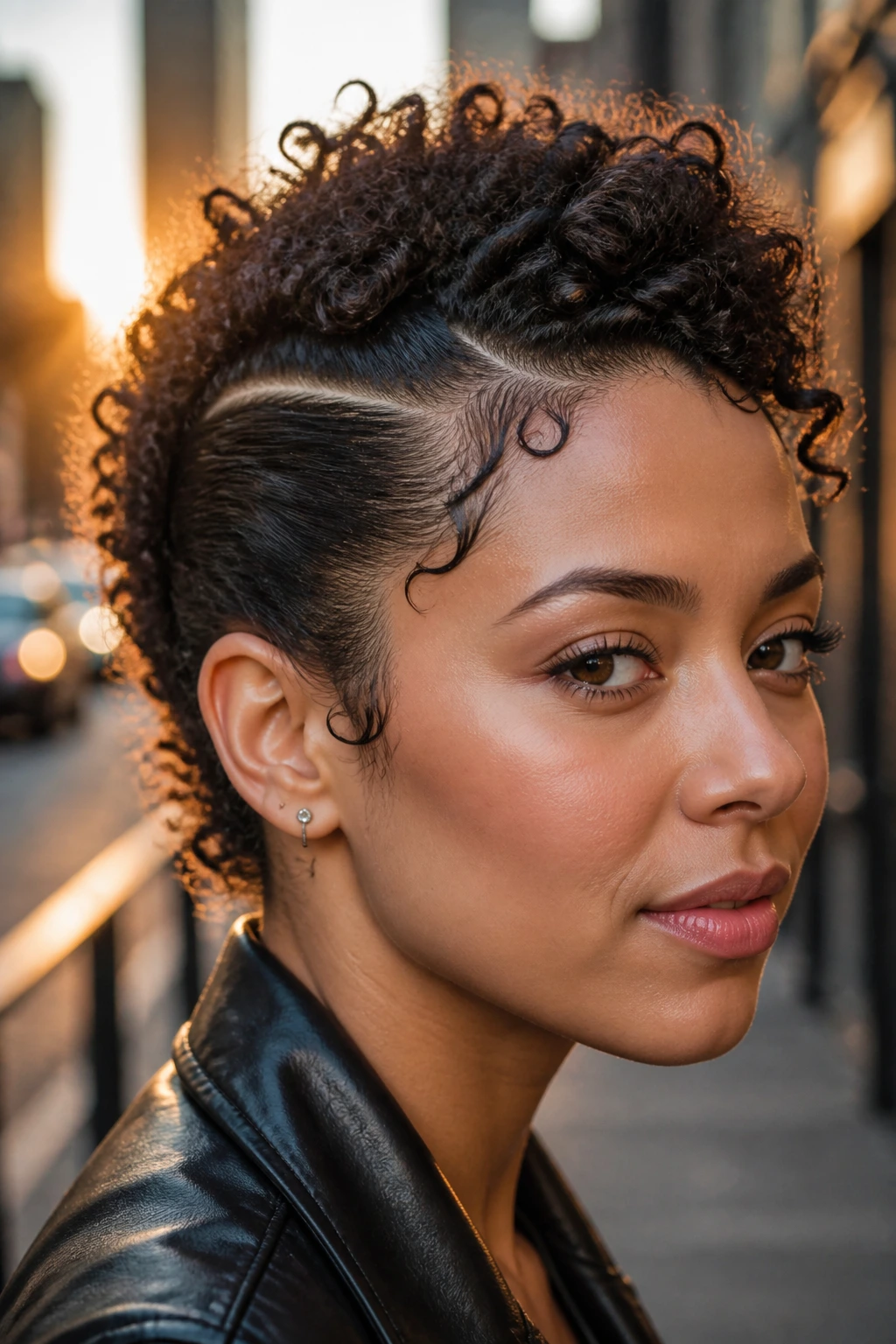
This is the style for people who want a little attitude without shaving the whole side of their head. The faux hawk keeps volume centered along the top and lets the sides stay controlled, pinned, slicked, or braided back. That vertical line is doing the heavy lifting.
It works because it narrows the visual width of the face while stretching the shape upward. You can make it soft or sharp depending on how much of the sides you pull back. I prefer a version that leaves a few curls loose at the hairline so it doesn’t feel helmet-like.
If your curls are dense and springy, this style gives them a stage. If they’re looser, use pins and a strong-hold gel to keep the center ridge from sagging.
12. Twist-Out Bob with Volume at the Top
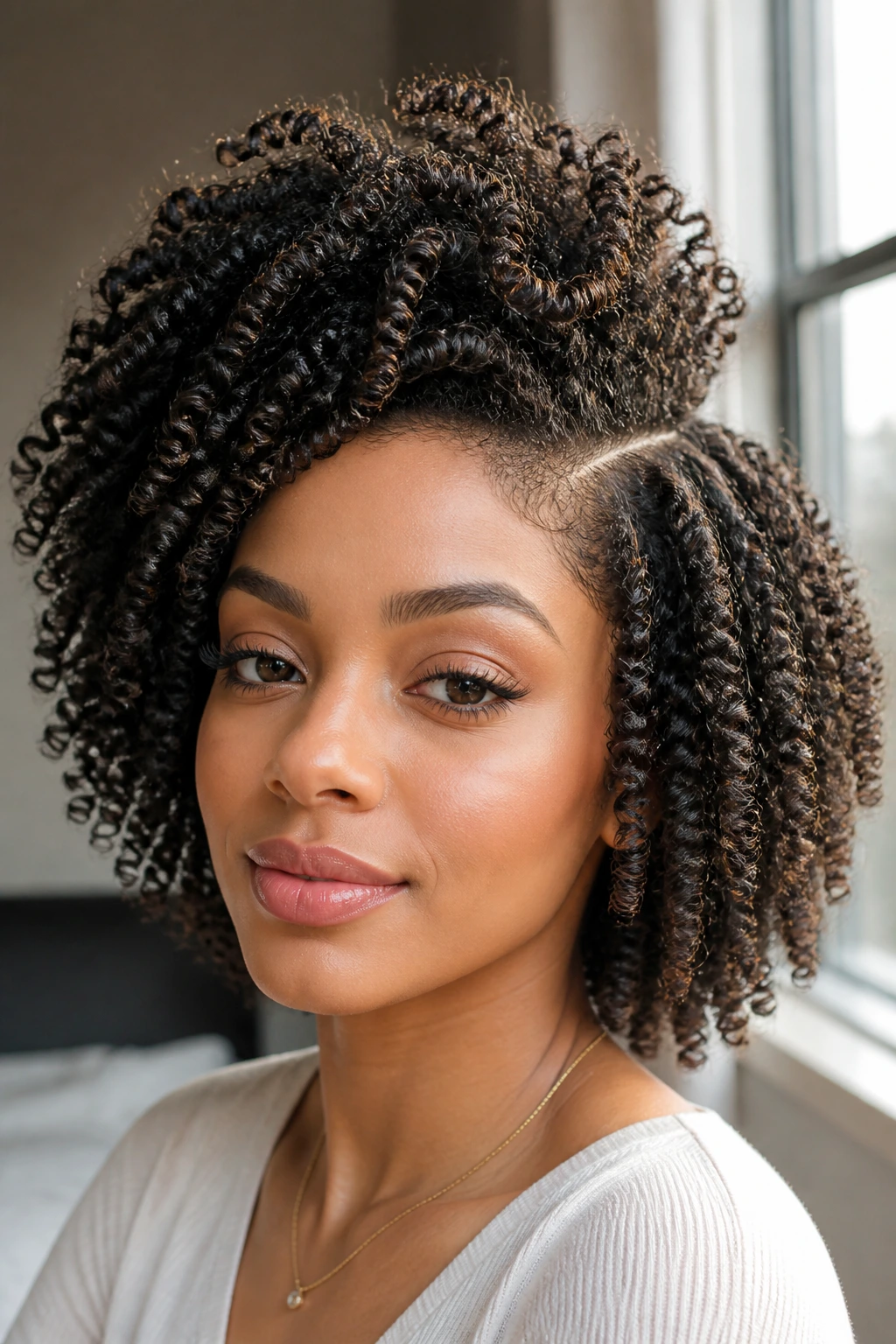
A twist-out bob can be a little magic on a round face because it gives you texture and shape without needing a cut that’s too short. The top stays lifted, the curls fan out in a controlled way, and the silhouette doesn’t collapse into the cheeks.
What I like here is that the twist-out gives the curl pattern more definition than a plain wash-and-go. You can place the fluff exactly where you want it. A little more volume on top, a little less at the sides, and suddenly the whole thing looks more elongated.
Use this when your hair has enough length to graze the jaw or collarbone. If it’s shorter than that, the shape can become too round.
13. Box Braids with Curly Ends
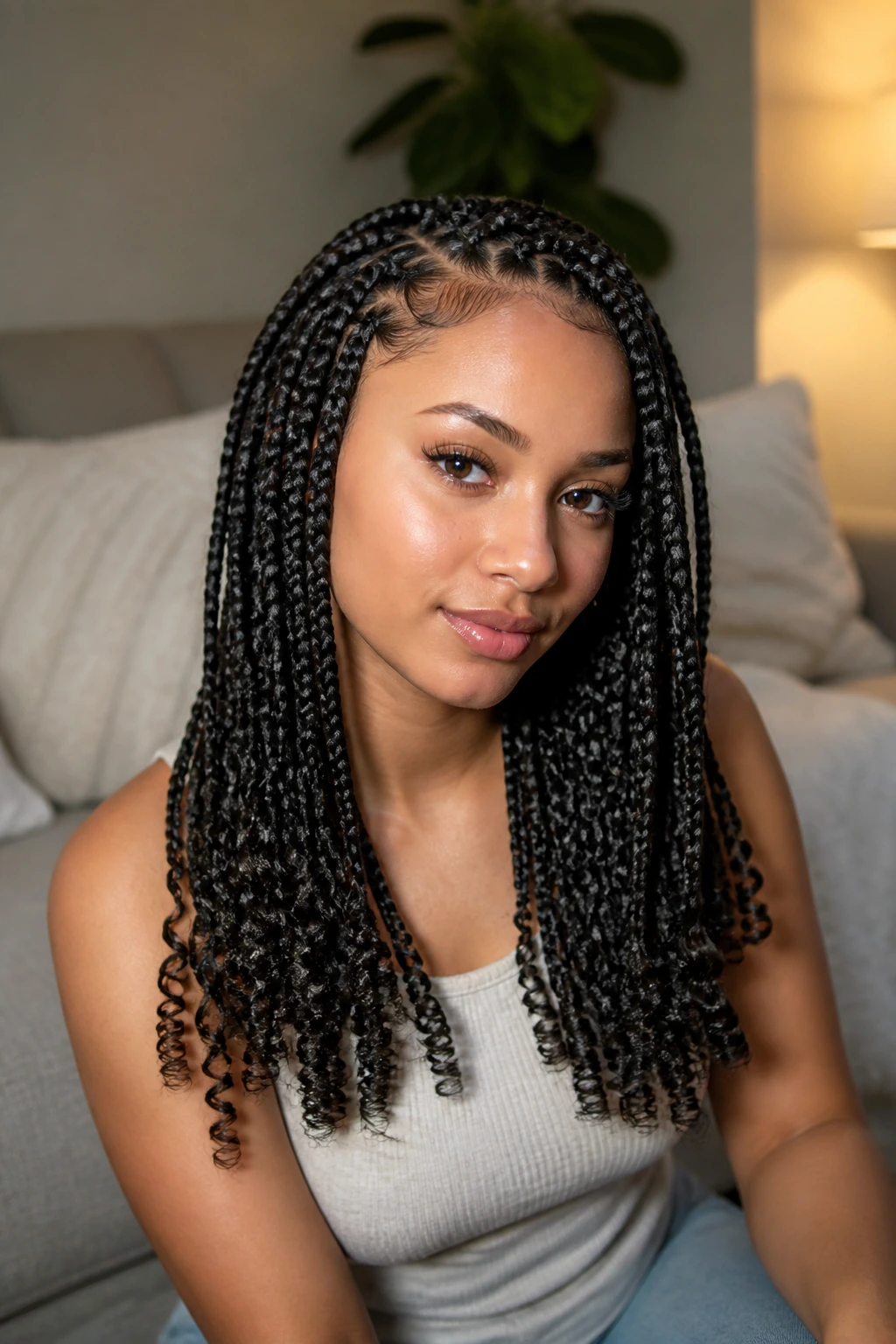
Box braids with curly ends are a smart compromise when you want protection but you do not want the style to look heavy around the face. The braids keep the roots neat, and the curly ends add movement below the jaw where you actually want it.
Compared with straight-ended braids, this version feels softer. The curls at the ends break up the strong vertical lines and keep the face from looking boxed in. They also look good with a side part, which adds another bit of asymmetry.
If you wear braids often, ask for them to start a little smaller near the hairline and slightly fuller toward the back. That keeps the front from feeling bulky.
14. Side-Swept Curly Updo
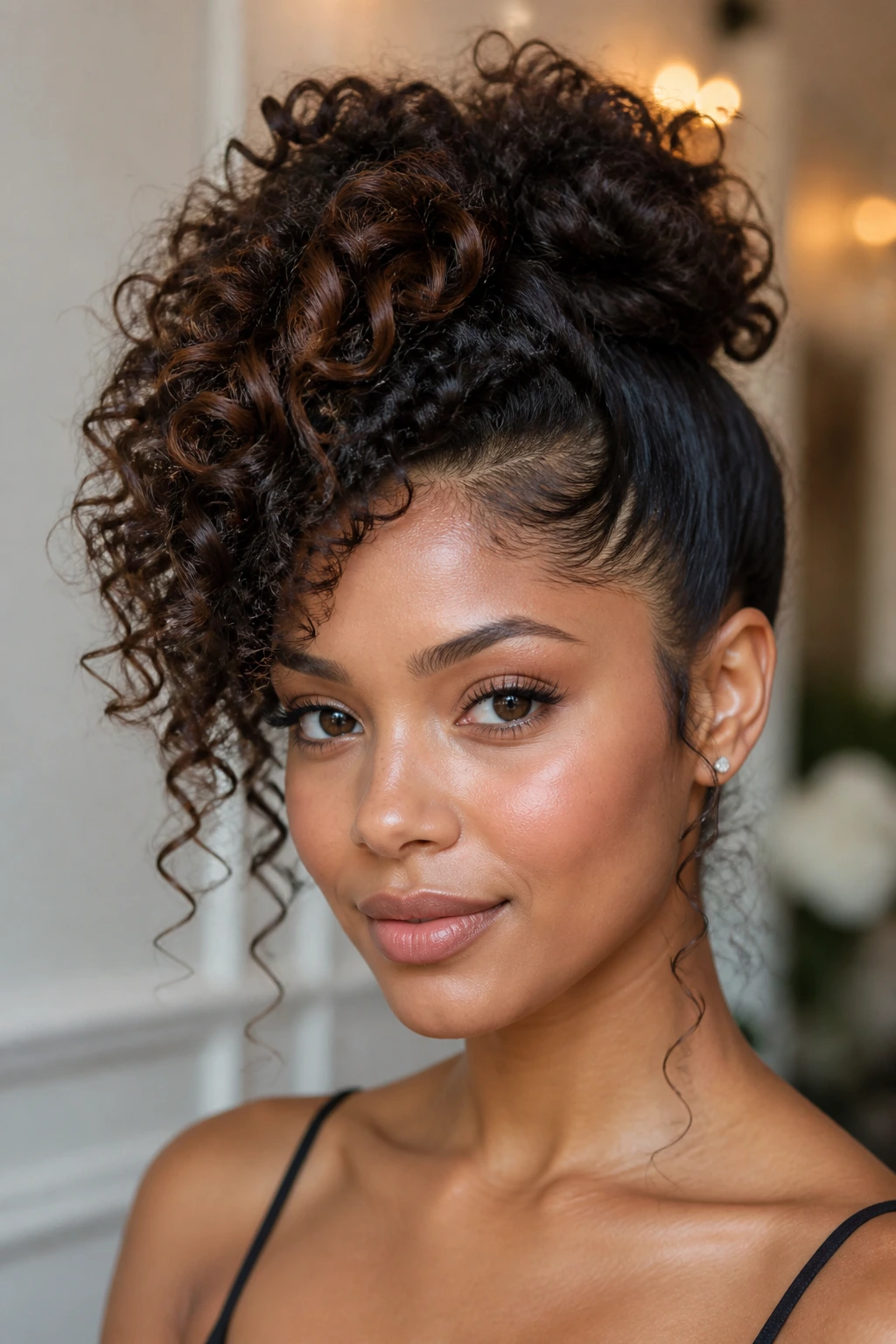
A side-swept updo can make a round face look more sculpted because it moves hair away from the cheeks and toward one side of the head. The shape is less formal than a tight bun and more flattering than a flat updo that hugs the skull.
Where the Sweep Starts
Have the sweep begin above one temple, not low at the ear. The higher placement helps lengthen the face line. Let a few curls escape near the forehead and neck so the style keeps some softness.
This is one of the better formal options if you want your curls to still look like curls. It does not fight the texture. It just arranges it with some discipline.
15. TWA with Sculpted Finger Coils
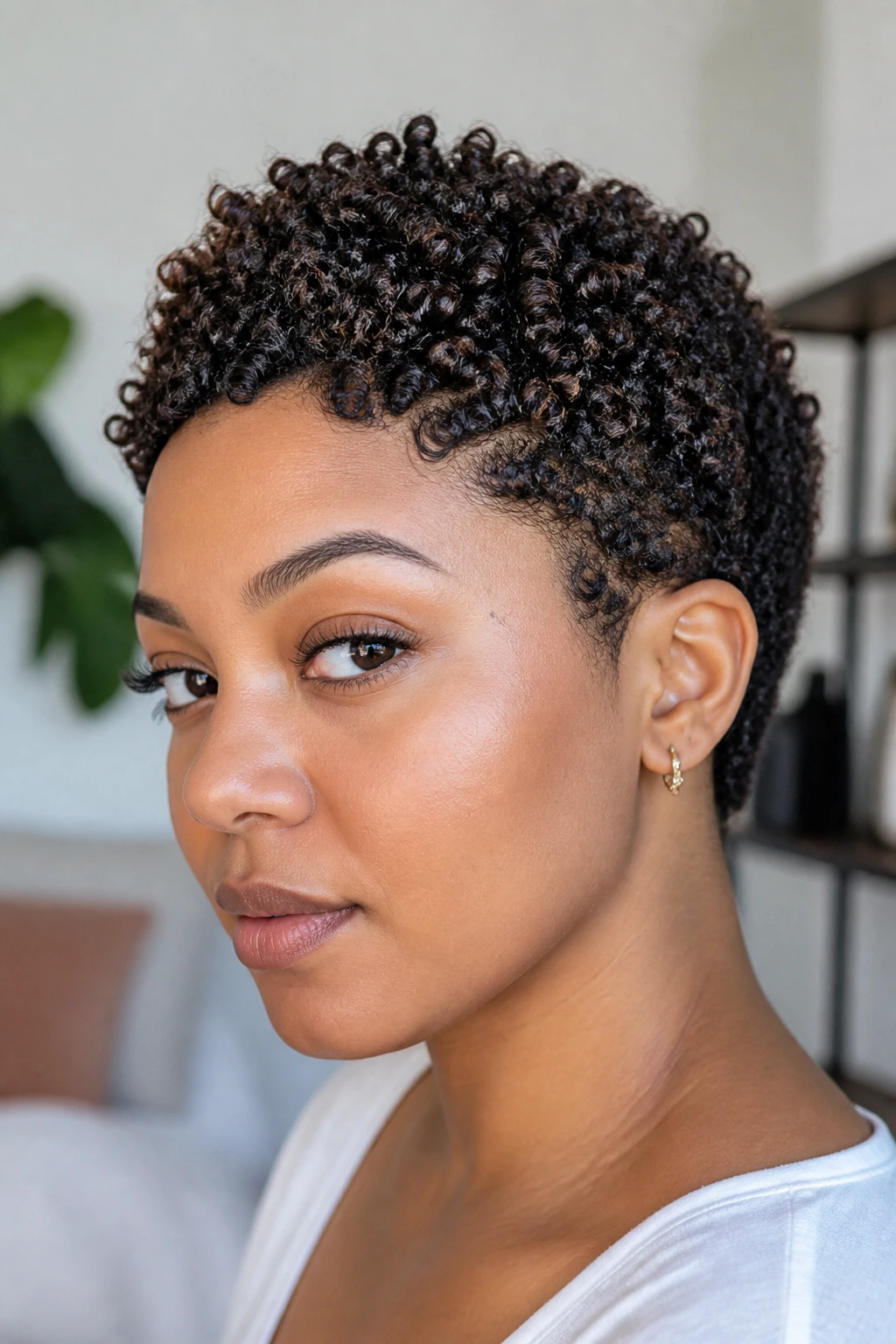
A TWA, or teeny weeny afro, can be one of the sharpest looks on a round face when it’s shaped with care. Finger coils add definition, and that definition keeps the short length from reading as unfinished. You get texture, not puff.
The shape should rise a bit at the crown and stay cleaner at the sides. That prevents the face from looking wider than it is. If you like a very soft edge, ask for the outline to be rounded instead of boxy.
This is a great style for people who want to see their curl pattern clearly. It also puts your face front and center, which is not a bad thing when the shape is right.
16. Shoulder-Length Wash-and-Go with Root Lift
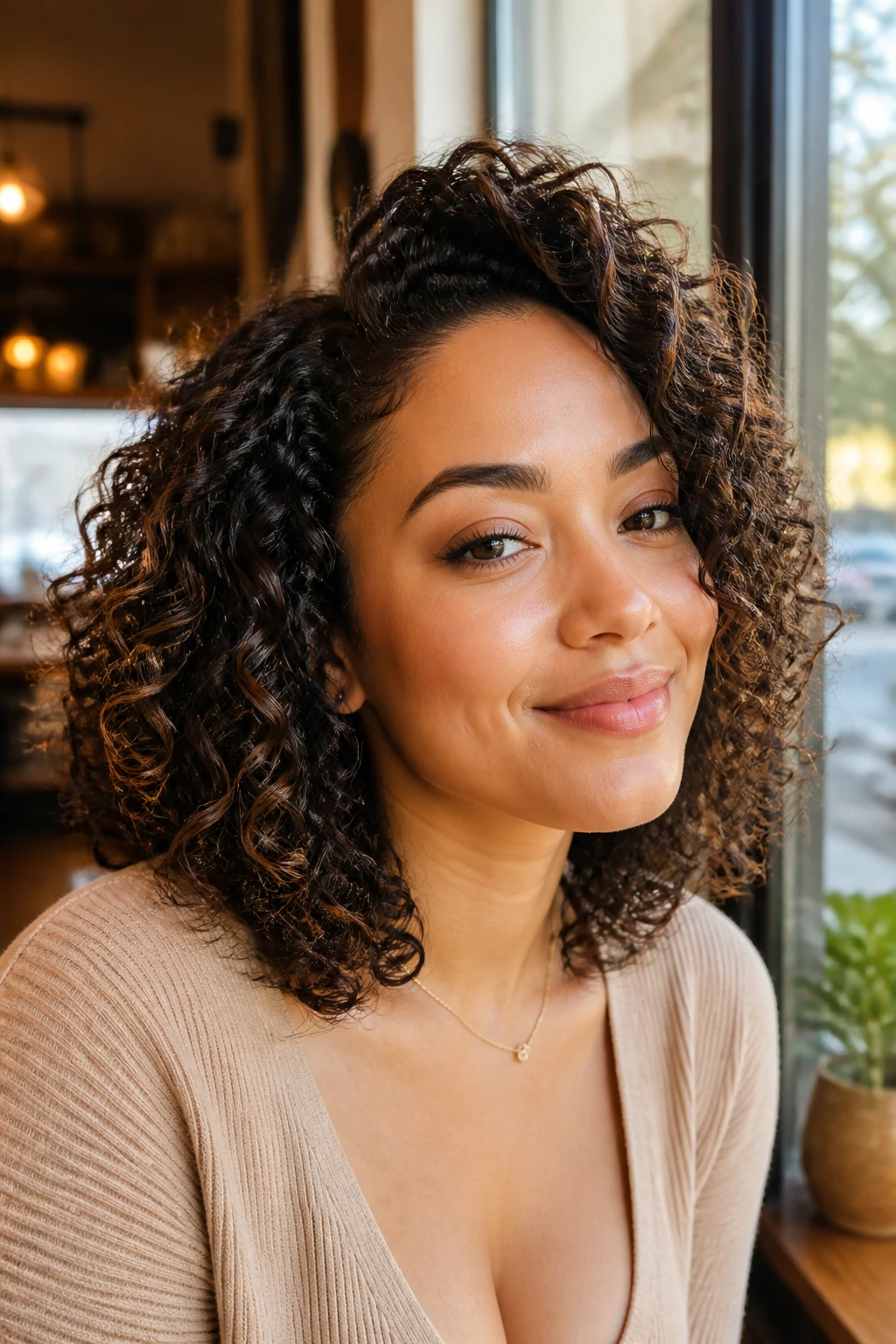
A wash-and-go at shoulder length can be gorgeous on a round face if the roots are lifted and the sides are not too wide. The whole look depends on where the curls start to expand. If they puff out at the cheek line, the shape gets heavy. If they lift at the root and fall lower, it looks clean and easy.
Why the Roots Matter
Diffusing the roots upward for a few minutes gives the style structure. After that, let the curls fall on their own. I also like a tiny bit of clip lifting at the crown while the hair dries. It sounds fussy. It isn’t.
This is the kind of style that works when you want to keep your natural texture visible and don’t want to disguise a single curl.
17. Halo Braid with a Loose Curl Fringe
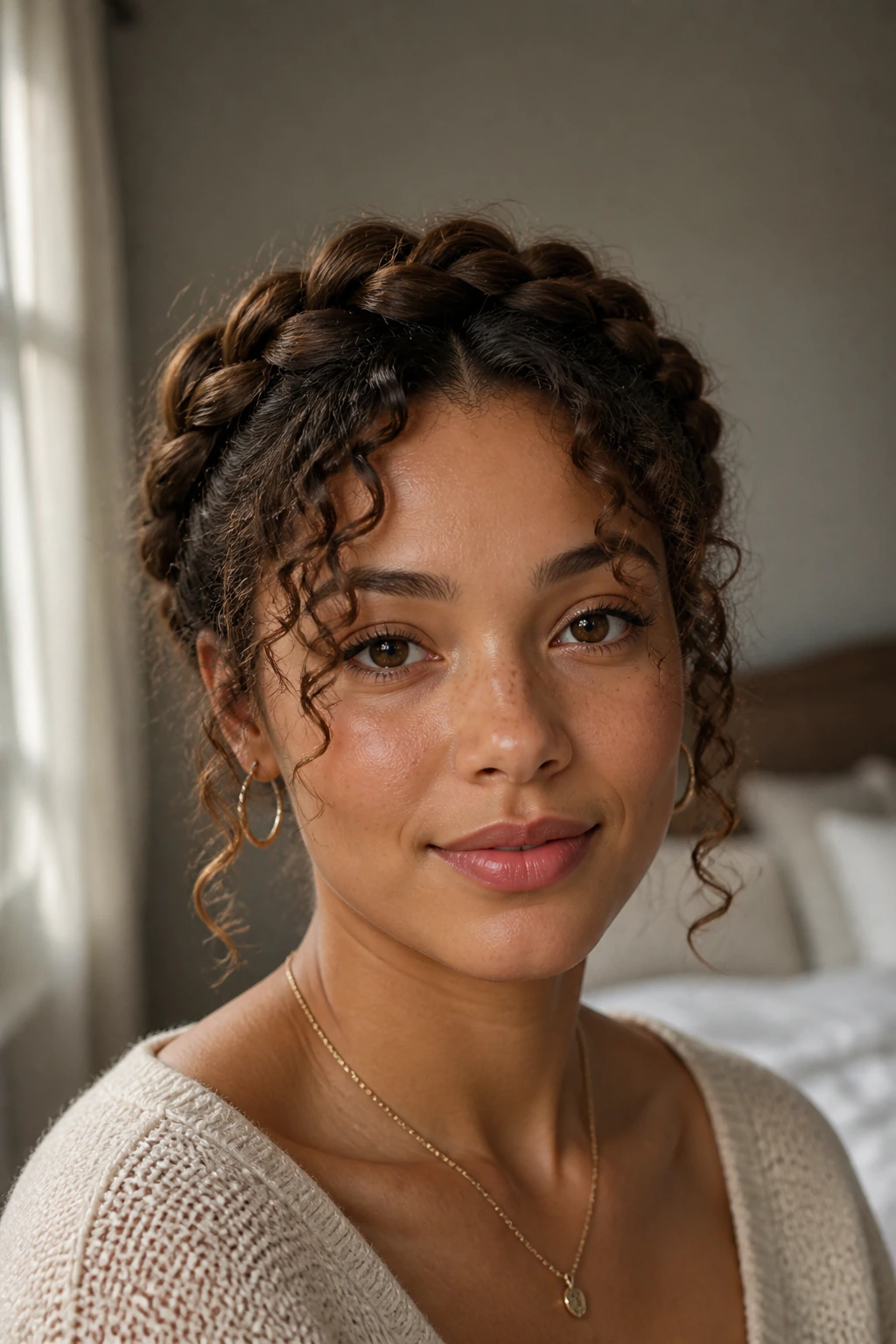
The halo braid wraps around the head like a crown, which means the eye follows the line around and up instead of stopping at the cheeks. That’s a nice trick on a round face. Leave a loose curl fringe in front, and the style softens even more.
The fringe can be a couple of face-framing curls or a full curly bang section, depending on how much forehead you want to show. Keep the braid close enough to the head to stay neat, but not so tight that the temples get pulled flat.
This is one of those styles that looks more complicated than it is. Once it’s set, it holds.
18. Space Buns with Curly Leave-Out
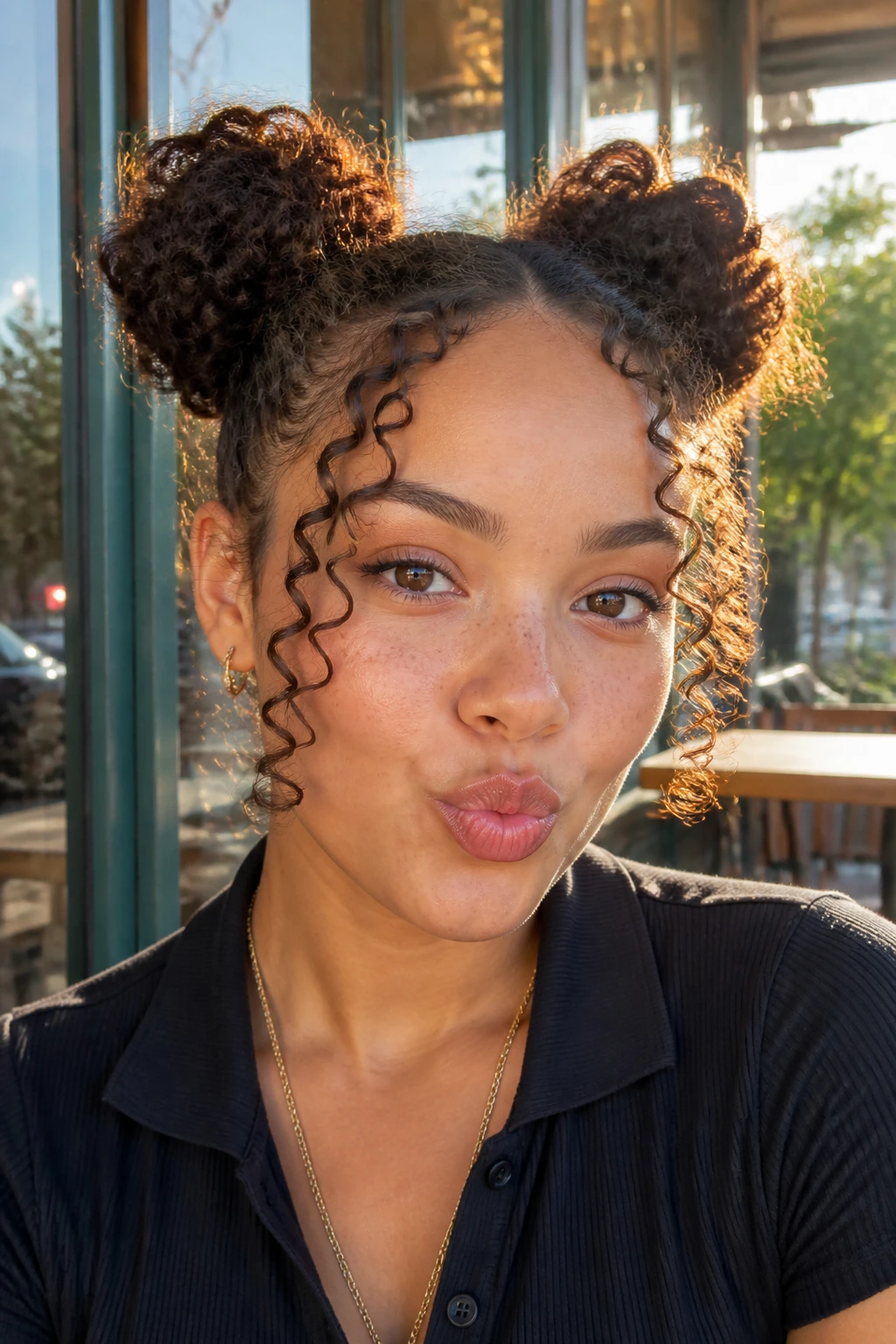
Space buns can look playful instead of juvenile when the buns sit high and the leave-out curls frame the face. The height pulls the eye upward, and the loose front pieces stop the style from looking too round. If everything is pulled back too cleanly, the face ends up carrying all the shape on its own.
I like this style most when the buns are imperfect. A little fullness, a little frizz, a few curls escaping — all good. The goal is not a doll-perfect finish. The goal is a shape that feels alive.
Use this one on days when you want to wear something fun but still keep the face line open.
19. Cornrow Front, Curly Back
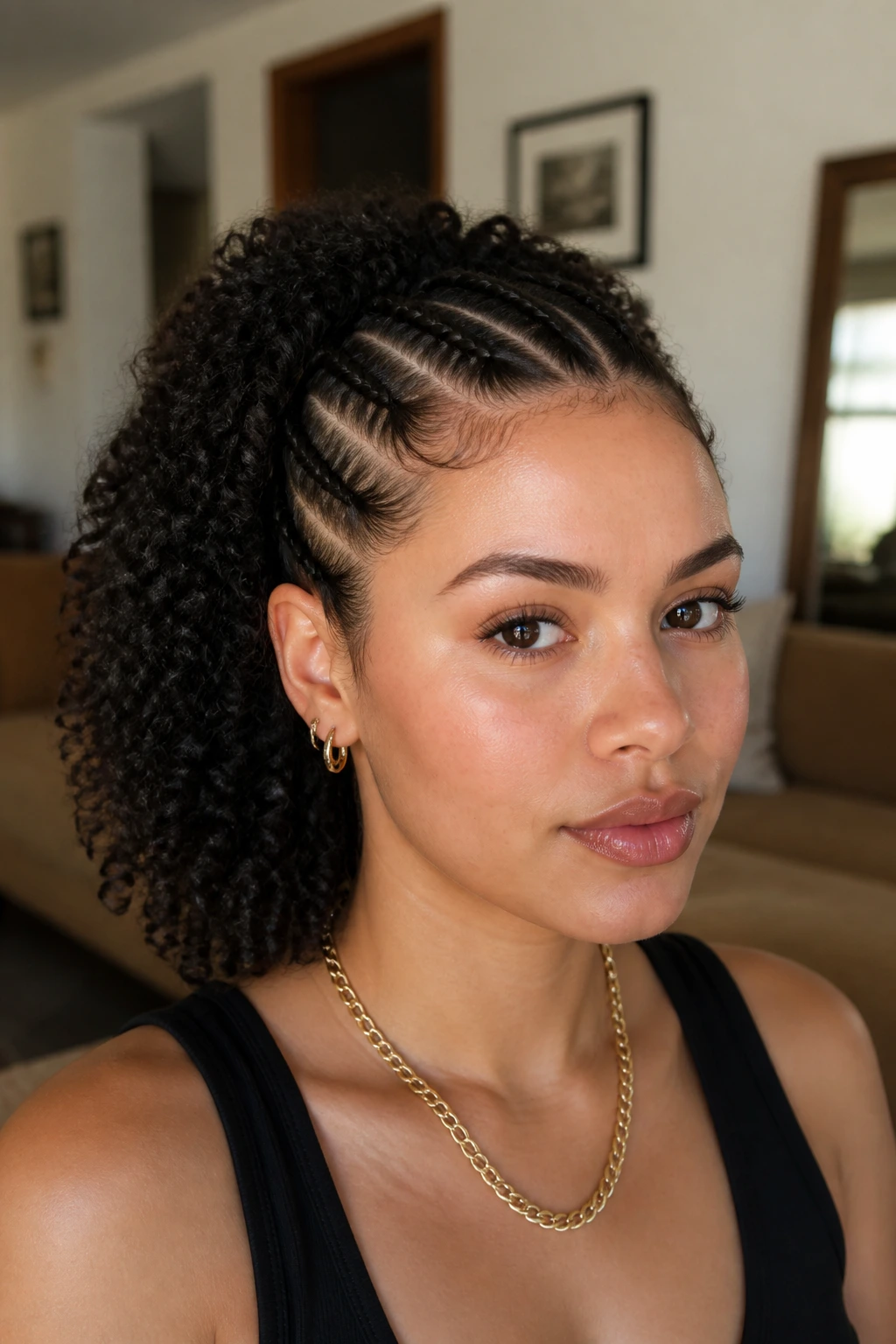
Cornrows at the front with loose curls in the back give you the neatness of a protective style without losing all your texture. The front keeps the hairline controlled, which is useful if your curls tend to puff at the temples. The back stays curly and soft, which keeps the look from getting too severe.
This is especially useful for mixed-texture hair, because the front can be braided into a smoother section while the back keeps more natural volume. It also takes pressure off the face. Nothing heavy is sitting right at the cheeks.
If you want the style to feel more flattering, keep the cornrows angled slightly backward instead of straight across. That subtle direction matters.
20. Side-Parted Afro with a Soft Edge Shape
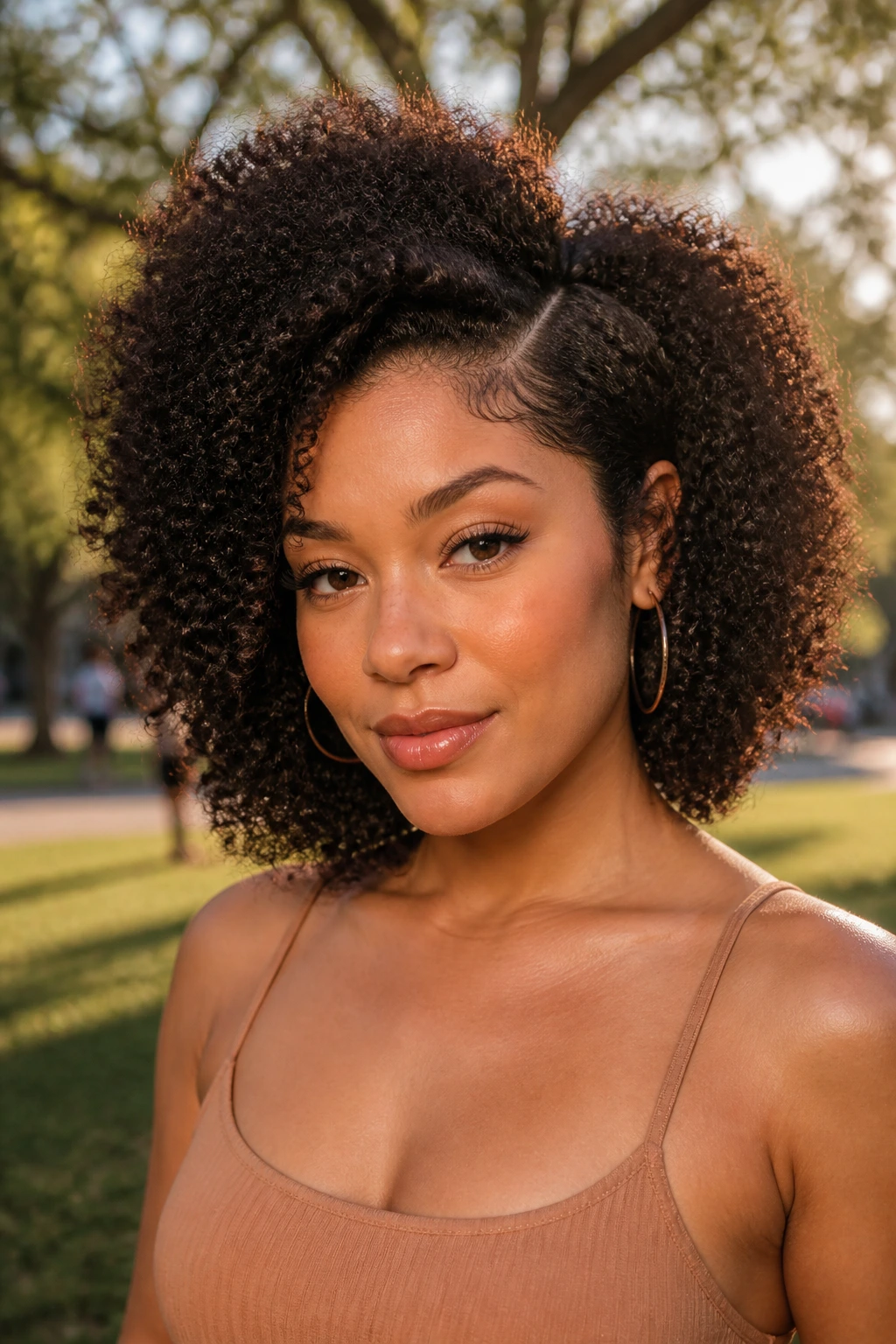
A side-parted afro is one of the strongest shapes you can wear on a round face if you control the outline. The part gives the style direction, and the softened edges keep it from turning into a perfectly circular halo. That matters more than people think.
Keep the Sides Rounded, Not Boxy
You want width, but not at the exact cheek level. Ask for the sides to stay a little closer to the head and let the top and upper sides do most of the visual work. That keeps the face looking balanced without shrinking the hair.
This is a proud, straightforward style. It does not try to be invisible. It just needs a smart shape.
21. Layered Curly Wolf Cut
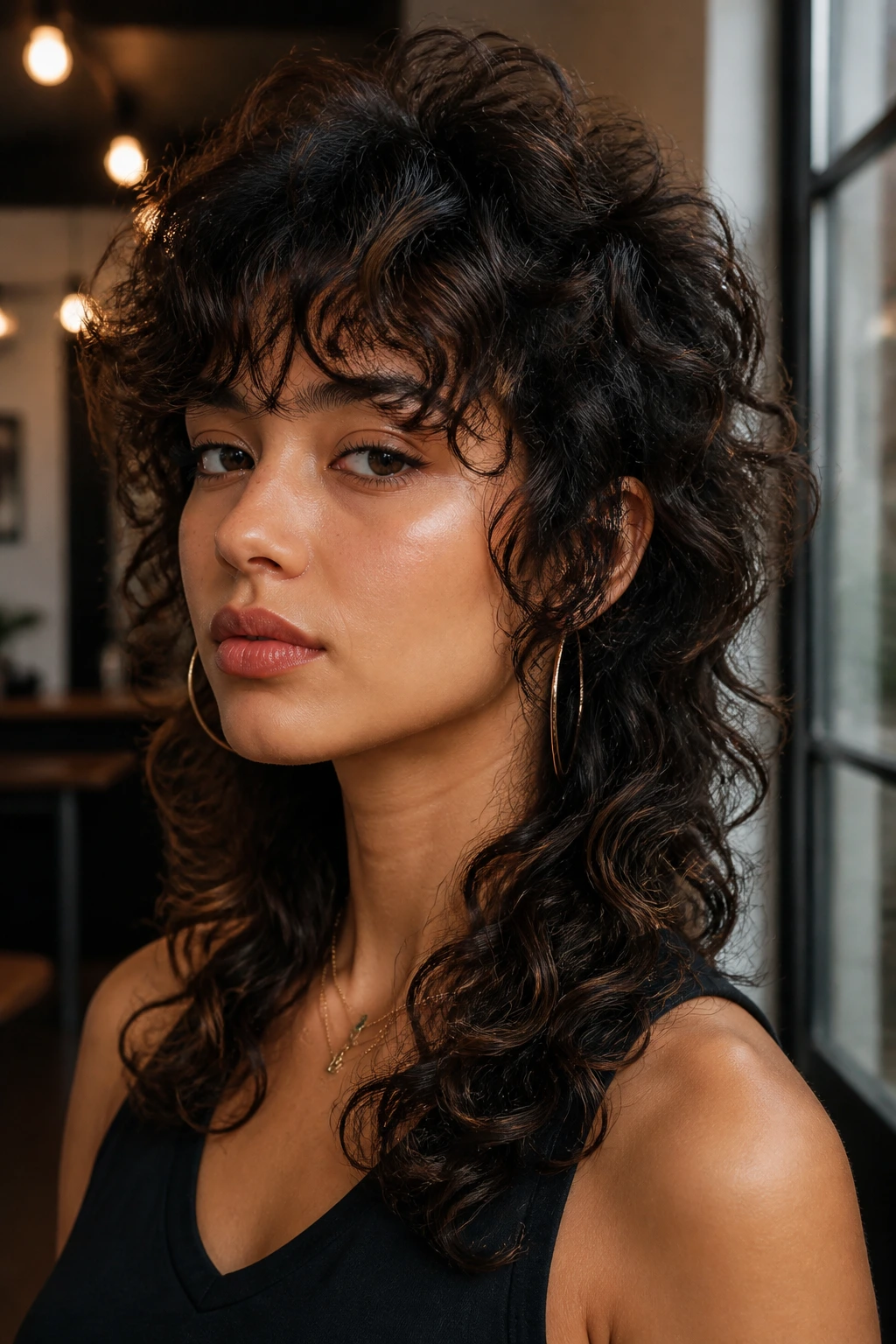
Why does the wolf cut keep showing up in curly hair conversations? Because the layers create movement in the right places. On a round face, that means more height near the crown, less heaviness around the sides, and a slightly messier silhouette that does not cling to the jaw.
The Layers Do the Work
The best version has shorter pieces around the top and longer pieces through the back. That contrast lengthens the face visually and keeps the curls from forming a uniform ball. If you like a little edge, this cut gives it to you without needing bright color or a shaved side.
It’s not for someone who wants a clean, tidy line every day. It’s for someone who likes hair with some swagger.
22. Low Bun with Curly Tendrils
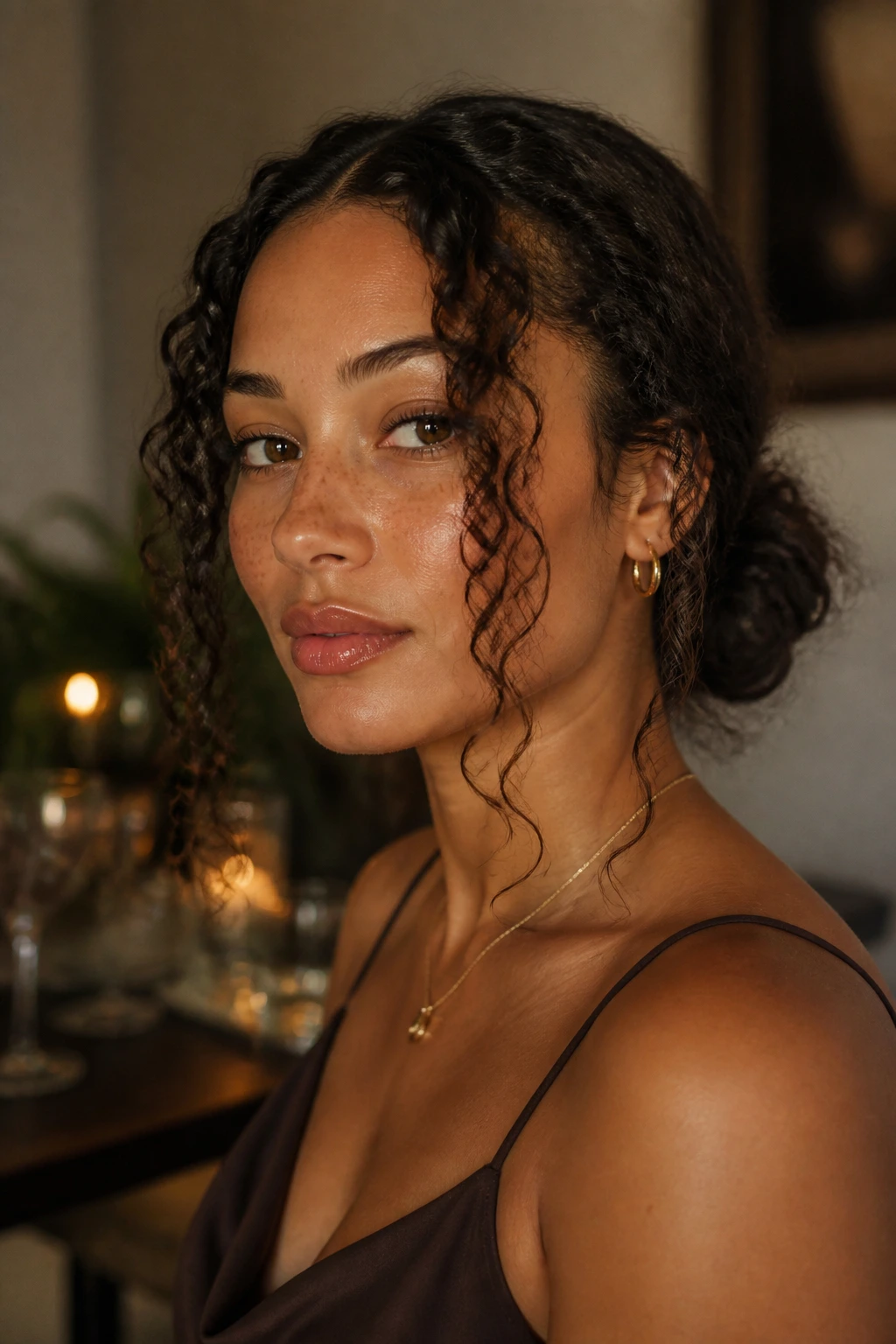
A low bun can work on a round face if it is not too sleek and not too tight. The bun sits low enough to keep the face open, while the curly tendrils around the jaw and temples give the style some motion. Without those tendrils, the bun can look a little severe.
I prefer this look with a center or slightly off-center part and a few tendrils left out on purpose. Let them be curly, not ironed straight. Straight tendrils look forced next to the bun and can make the whole thing feel overmanaged.
This is a good choice for dinners, interviews, and any moment when you want polish without the stiffness of a slick bun.
23. Jumbo Twists with Flipped Ends
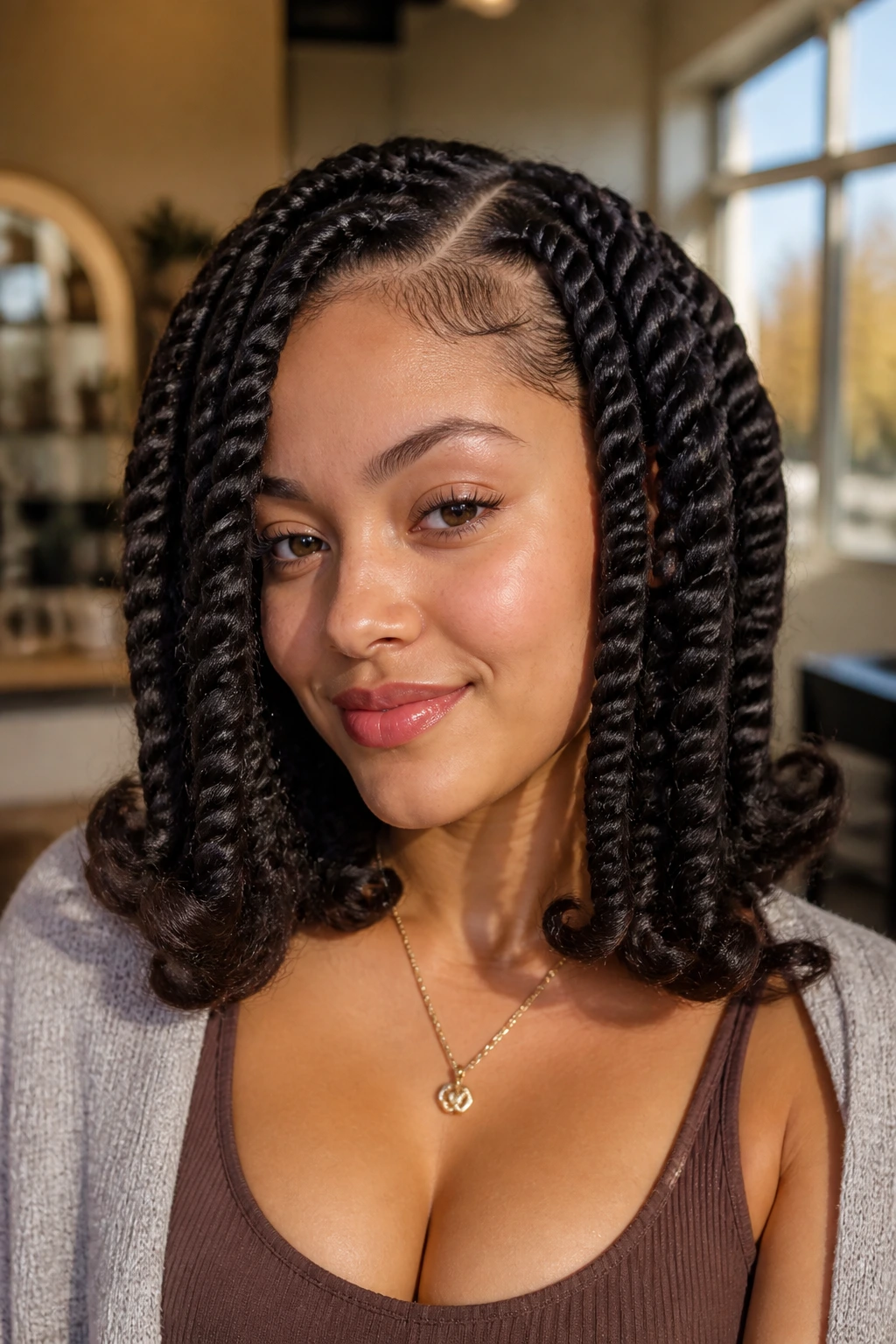
Jumbo twists are one of the easiest ways to get shape without spending all morning on sectioning. On a round face, the key is letting the twists fall in a way that keeps the front open and the ends slightly flipped or curved outward. That keeps the silhouette from looking too dense at the cheek line.
They also give mixed-texture hair a break, because the twist pattern blends loose and tight curls more gracefully than a style that tries to force uniform definition. If your hair is thick, this is a relief. If your hair is fine, keep the twists a little smaller so they don’t unravel too quickly.
A side part makes this style look cleaner right away.
24. Curly Bangs and Long Layers
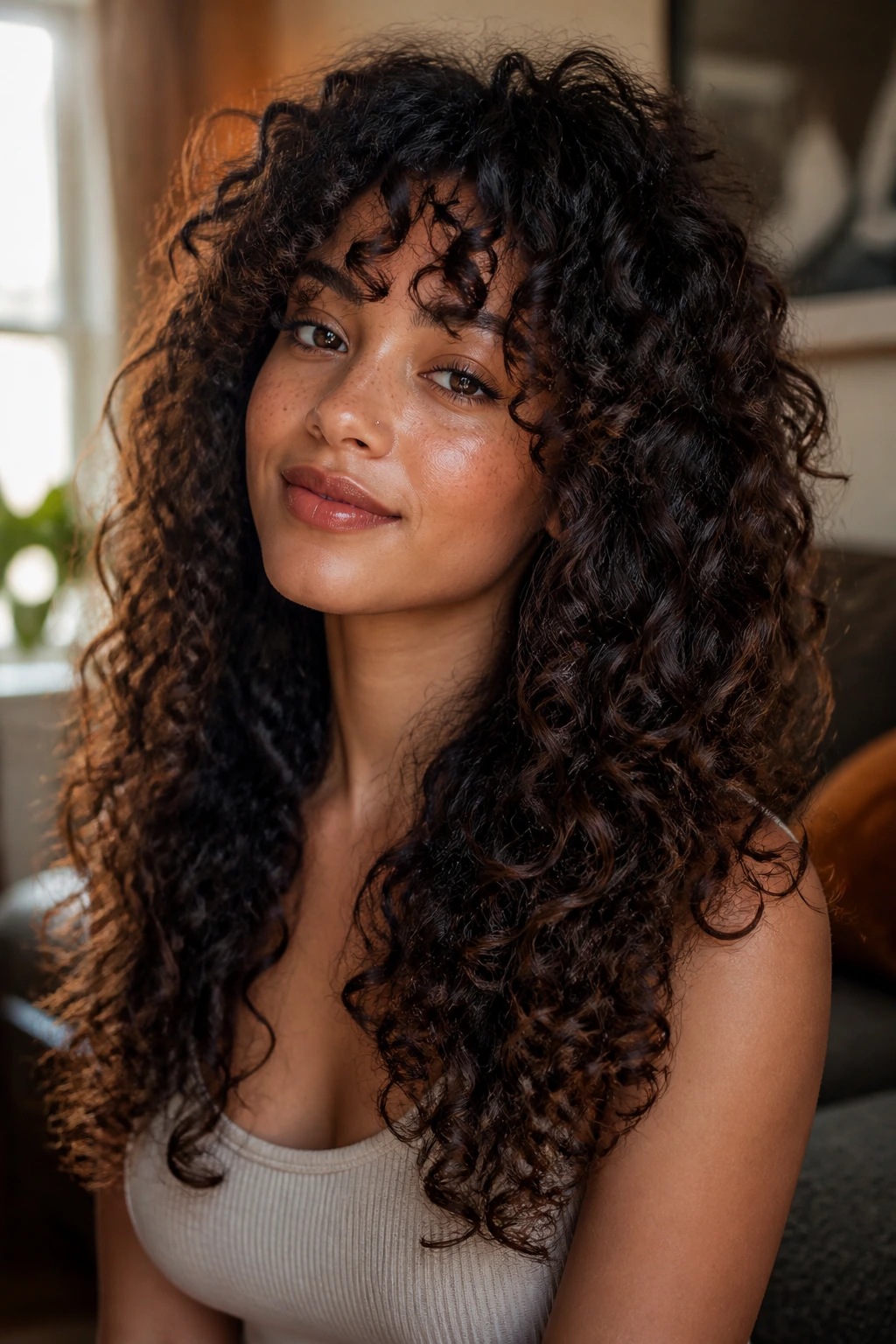
Curly bangs can be fabulous on a round face, but they need to be soft and a little unpredictable. Blunt bangs that stop high on the forehead make the face feel shorter. Curly bangs that skim the brows and break apart naturally work much better because they create texture without a hard line.
The long layers below carry the rest of the shape, so the bangs don’t become the whole story. That balance matters. You want the eye to move from the fringe down the length, not get stuck in one thick patch across the forehead.
This is a good pick if you like a face-framing look that feels youthful without being childish.
25. Temple Side Shave with Curly Volume
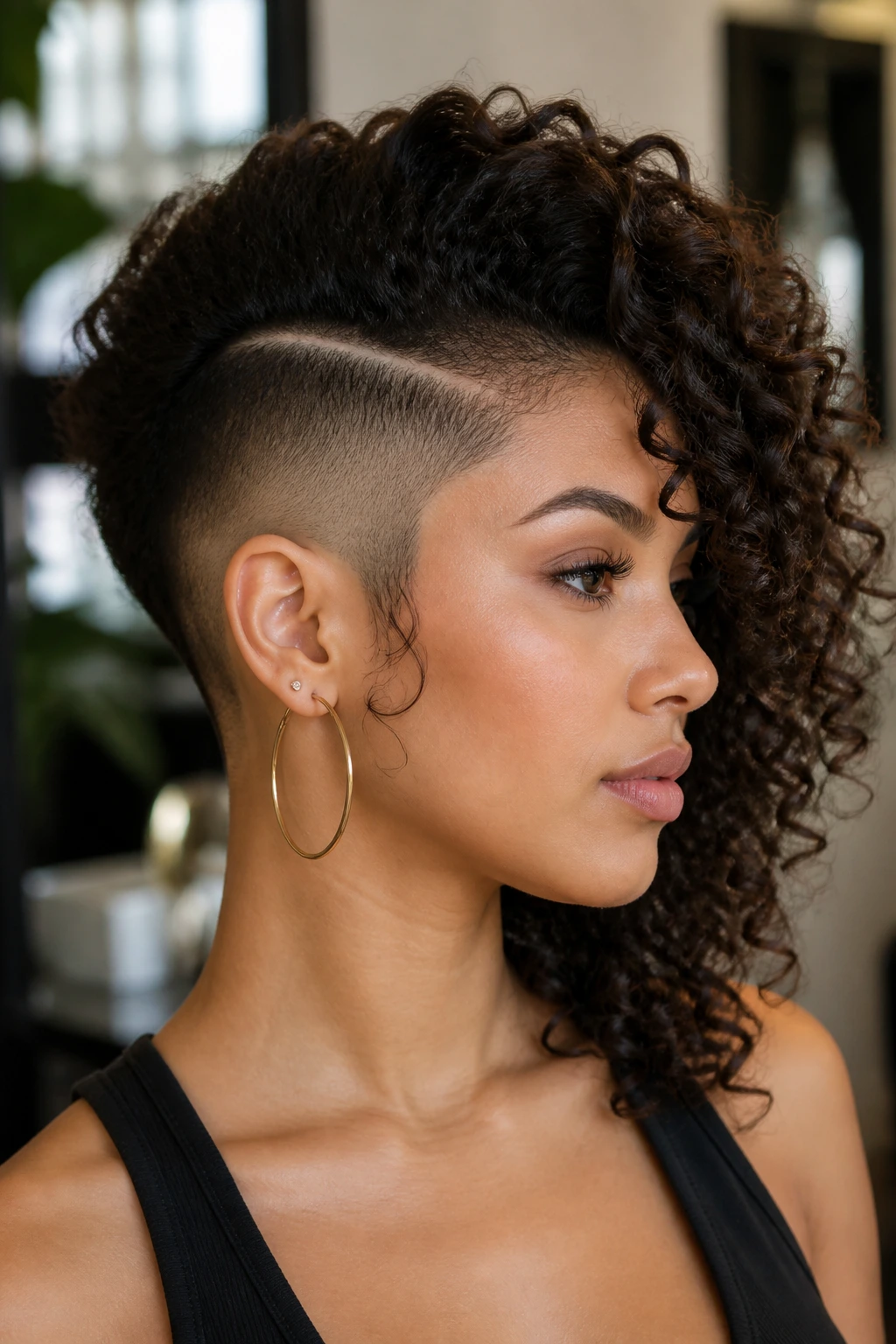
A temple side shave is not subtle, and that is part of the appeal. The shaved section removes width at the side of the face, while the curly volume stays concentrated on top and through the opposite side. That creates a strong vertical line right away.
If you want the idea without going fully bold, ask for a small undercut at the temple instead of a larger shave. You still get the slimming effect, just with less commitment. I like this most on people who want their curls to look dramatic rather than soft.
It is the final style on this list because it proves the point: a round face does not need hiding. It just needs a shape that knows where to stand tall.
The Shape Rules That Make These Styles Work
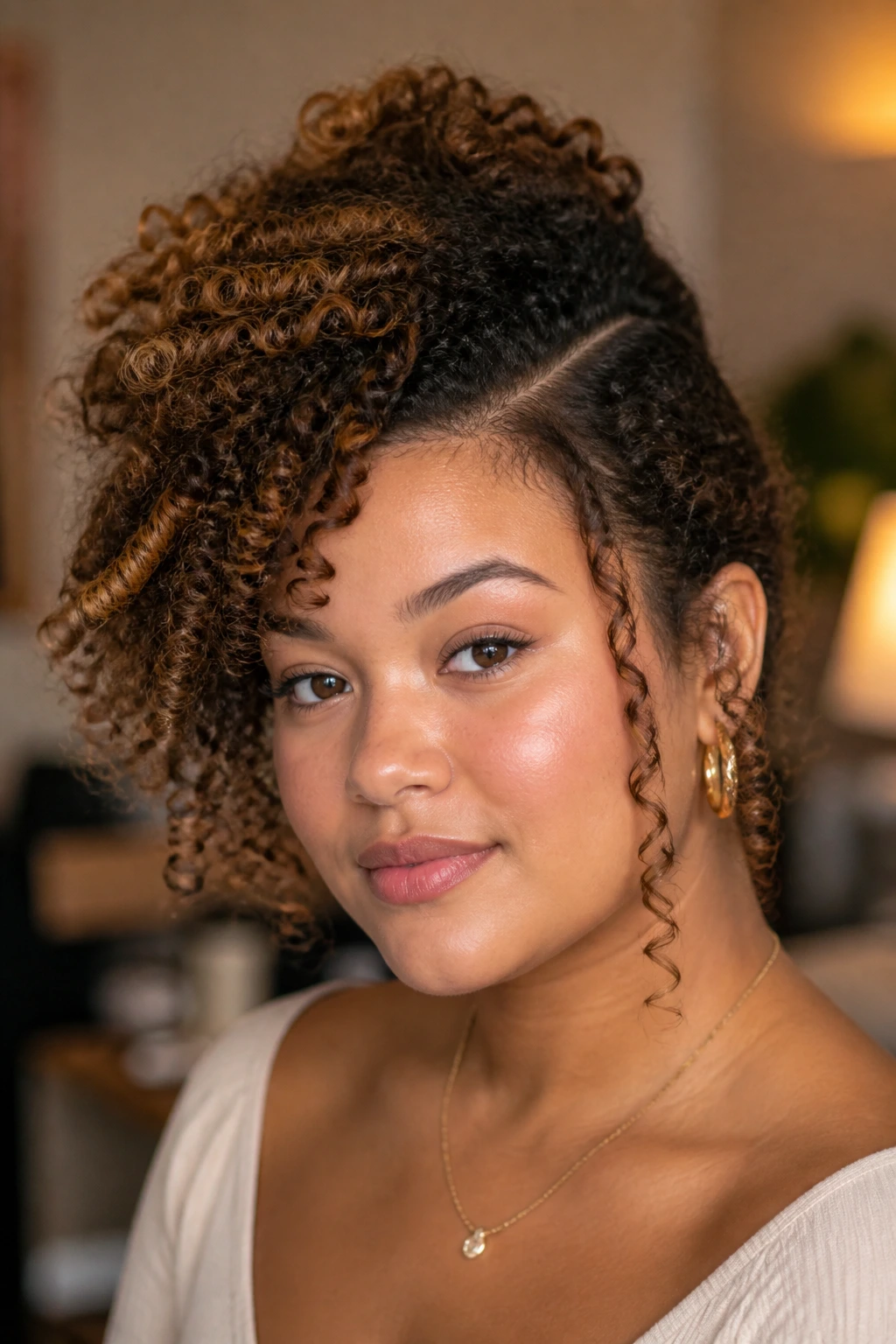
The thread running through all 25 styles is simple. Lift above the widest point. Keep the curl line from stopping at the cheek. Use diagonal movement when straight symmetry starts feeling boxy.
Curly hair does not need to be beaten into submission to flatter a round face. It needs a plan. That plan can be a high puff, a side part, a taper, a braid, a shag, or a bun with loose pieces hanging out — but it always comes back to placement.
I’d also be blunt about one thing: not every style that looks cute on Pinterest will behave well on a round face with real curls and real shrinkage. The best cuts and styles here account for both. They give your hair somewhere to go instead of asking it to sit still and pretend it is straight.
Tools That Make Curly Styling Less of a Fight
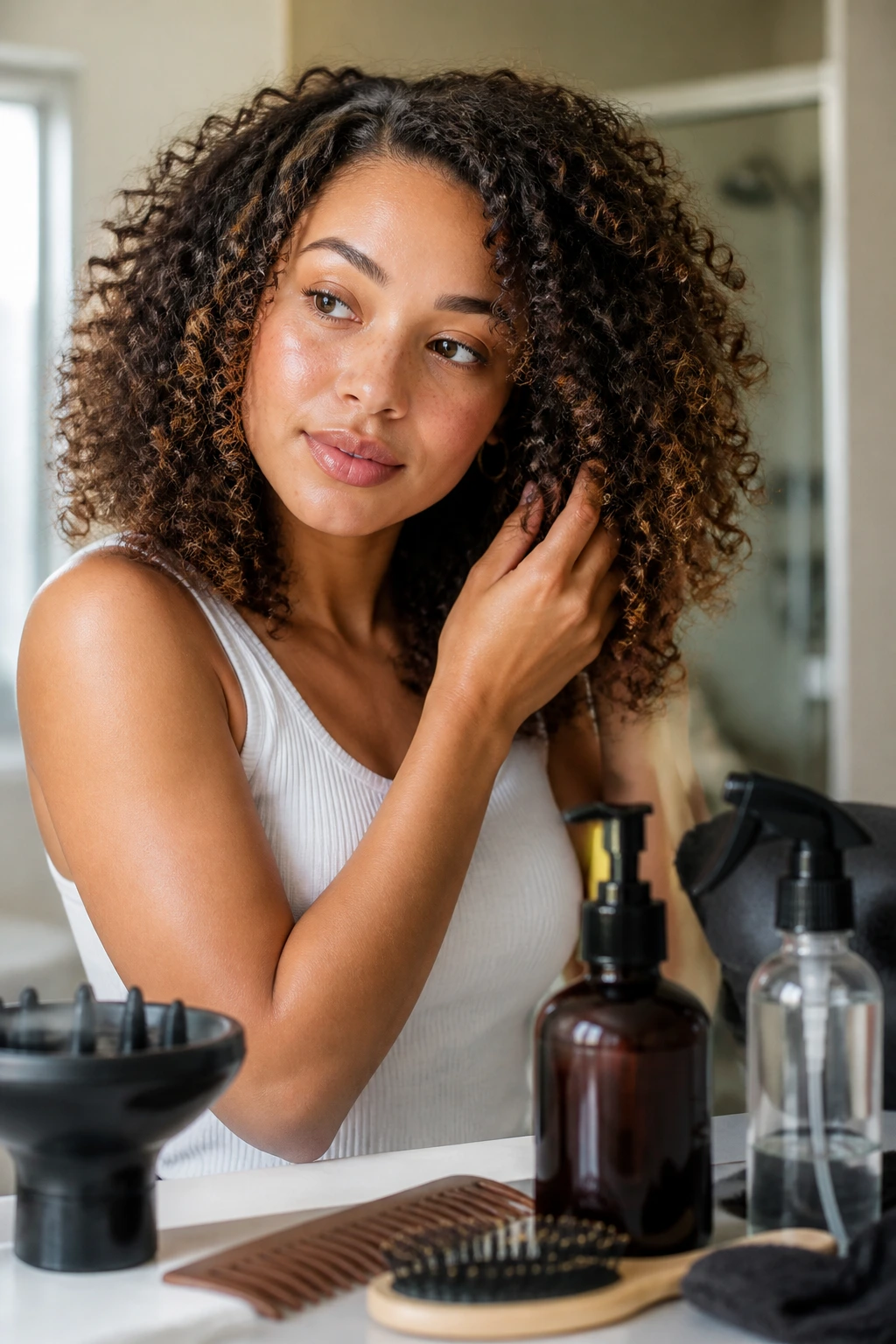
- Wide-tooth comb: Good for detangling curls with less breakage before styling.
- Spray bottle: Useful for reactivating product and reshaping sections without fully re-wetting the hair.
- Denman brush or curl-defining brush: Helps clump curls together when you want a cleaner pattern.
- Edge brush: Handy for smoothing hairline edges on puffs, ponytails, and updos.
- Satin scrunchies: They hold curls without leaving a harsh dent or snapping fragile strands.
- Duckbill clips: Great for root clipping, sectioning, and letting layers dry with a little lift.
- Diffuser attachment: Helps set curls at the roots and reduce the heavy triangle effect.
- Rat-tail comb: Perfect for making precise side parts and cleaner sections for braids or twists.
- Bobby pins: Small but necessary for side sweeps, buns, and halo braids.
- Satin scarf or bonnet: Keeps curls from getting crushed overnight and protects edges.
Smart Product and Texture Tips for Mixed-Curl Hair
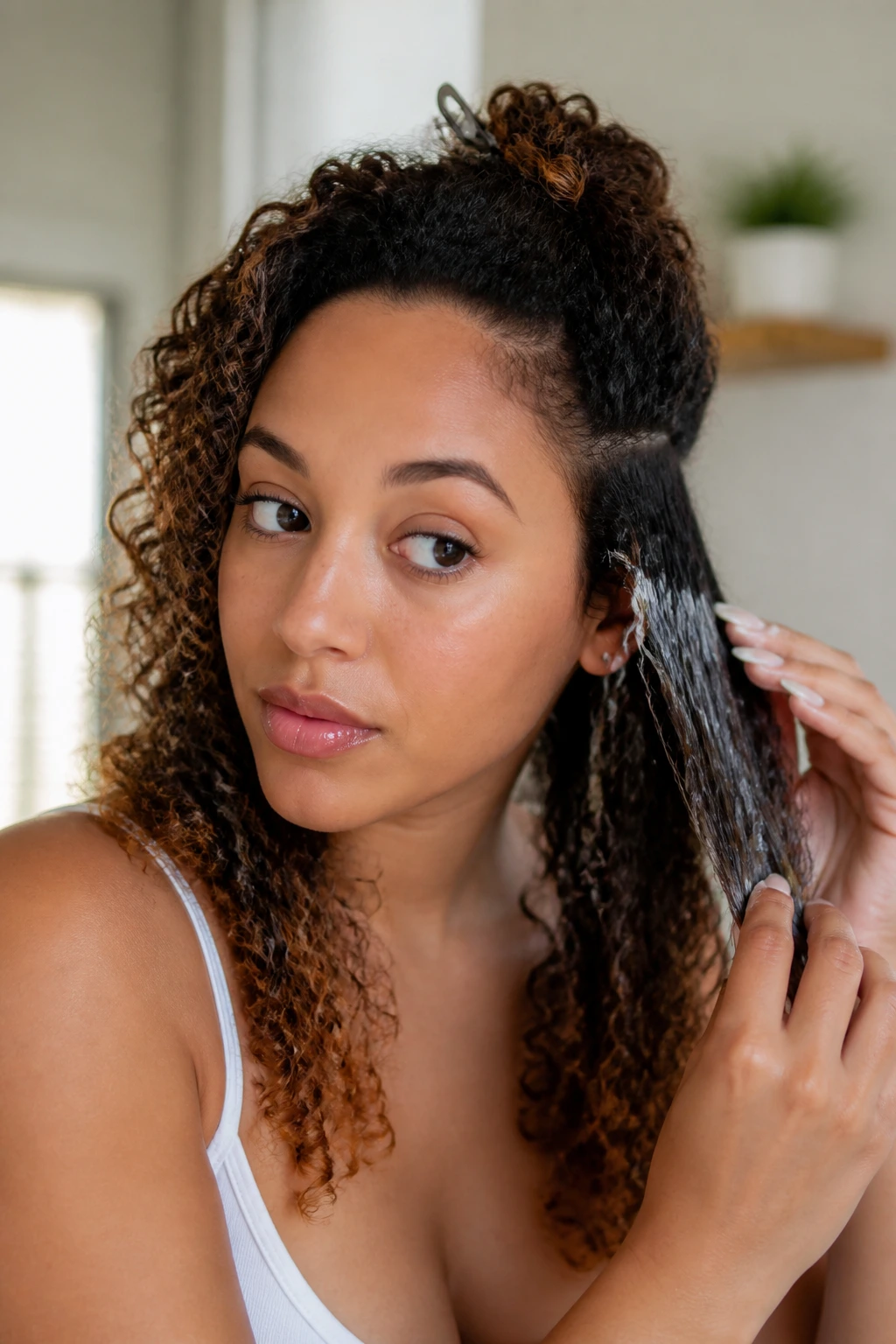
Product choice matters more than brand loyalty here. If your hair includes looser waves and tighter coils on the same head, the heavier sections usually need more hold, while the finer sections need less weight. That is why the same cream that makes one section rich and defined can make another section sag.
For fine curls: Use a lightweight leave-in plus mousse or a soft gel. Heavy butters can flatten the root and drag down the style by midday.
For dense coils: Layer a cream under a gel if you want definition that actually lasts. The cream gives slip, but the gel is what keeps the shape standing when the curls dry.
For dry ends: A tiny amount of oil on the finished style is enough. Two or three drops is not a lot, and that is the point. More oil can break down hold and make the whole shape puff out too soon.
For humidity: Go for products that leave a cast or firm hold, then scrunch it out once the hair is fully dry. Soft hold is comfortable, but it often collapses the silhouette before dinner.
If your curls differ a lot from root to tip, treat the hair in sections. The tighter area may want more cream and less brushing. The looser area may need more mousse and a gentler touch. One product for the whole head is convenient; it is not always wise.
How to Wear These Styles in Real Life
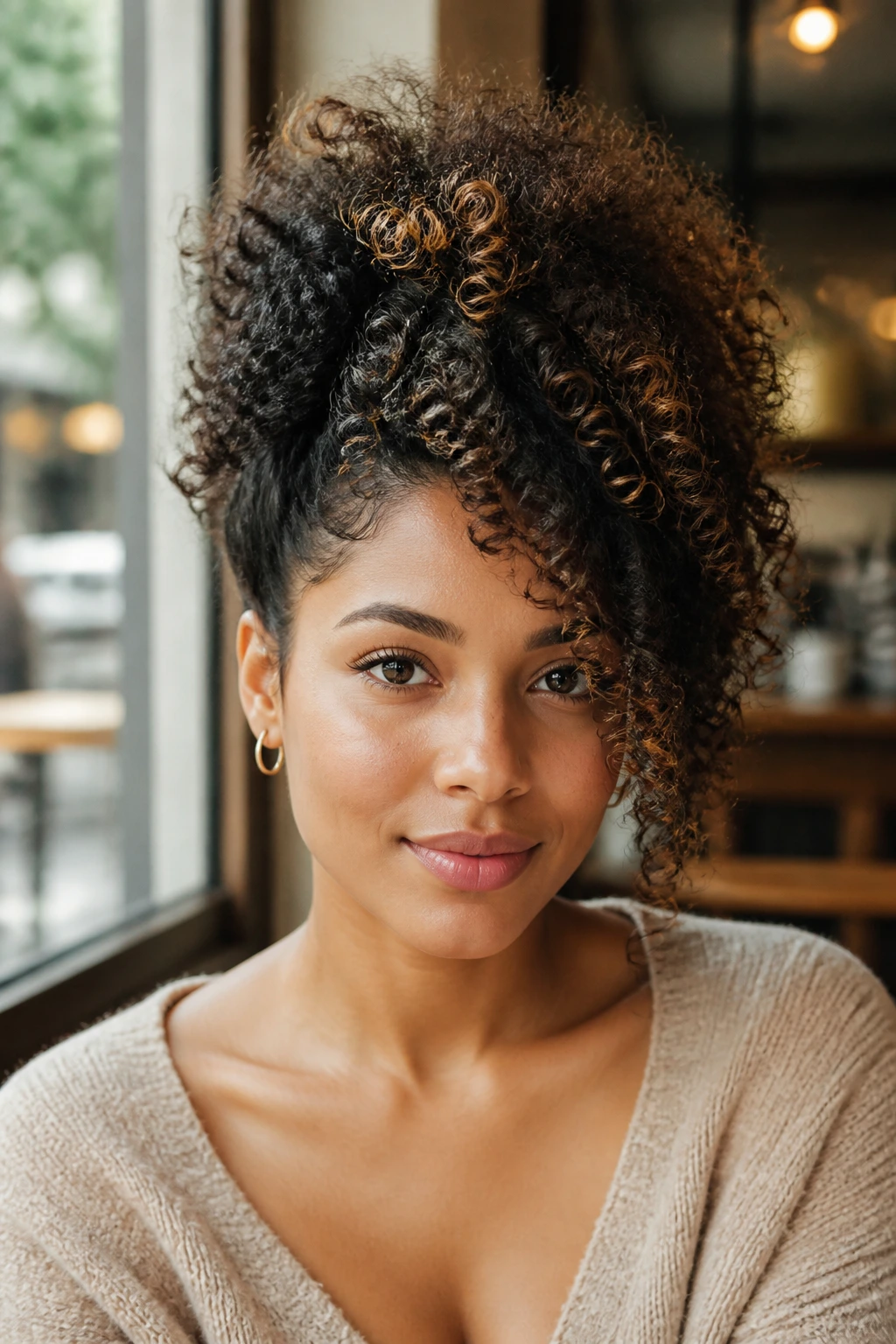
Presentation: Keep the highest part of the style above the crown or slightly off center so the silhouette stretches upward. Let the part, braid, puff, or bun create a line that moves instead of one that sits flat across the cheeks.
Accompaniments: Open necklines — V-necks, scoop necks, boat necks — tend to work well with big curls because they give the face room. High collars are fine too, but they pair better with taller styles like puffs, faux hawks, or updos.
Portions: For everyday wear, go smaller and neater with puffs, buns, and ponytails. For photos, events, or nights out, allow more root lift, more fringe, and a little more width through the top half of the style. That shift changes the mood without changing the cut.
Beverage Pairing: A hairstyle does not need a drink, obviously, but the styling equivalent is this: choose earrings, makeup, or a headband that matches the energy of the hair. Big curls and tiny accessories can look stingy. Big curls and clean hoops, a slim barrette, or a satin scarf usually feel more complete.
Additional Tweaks and Style Boosters
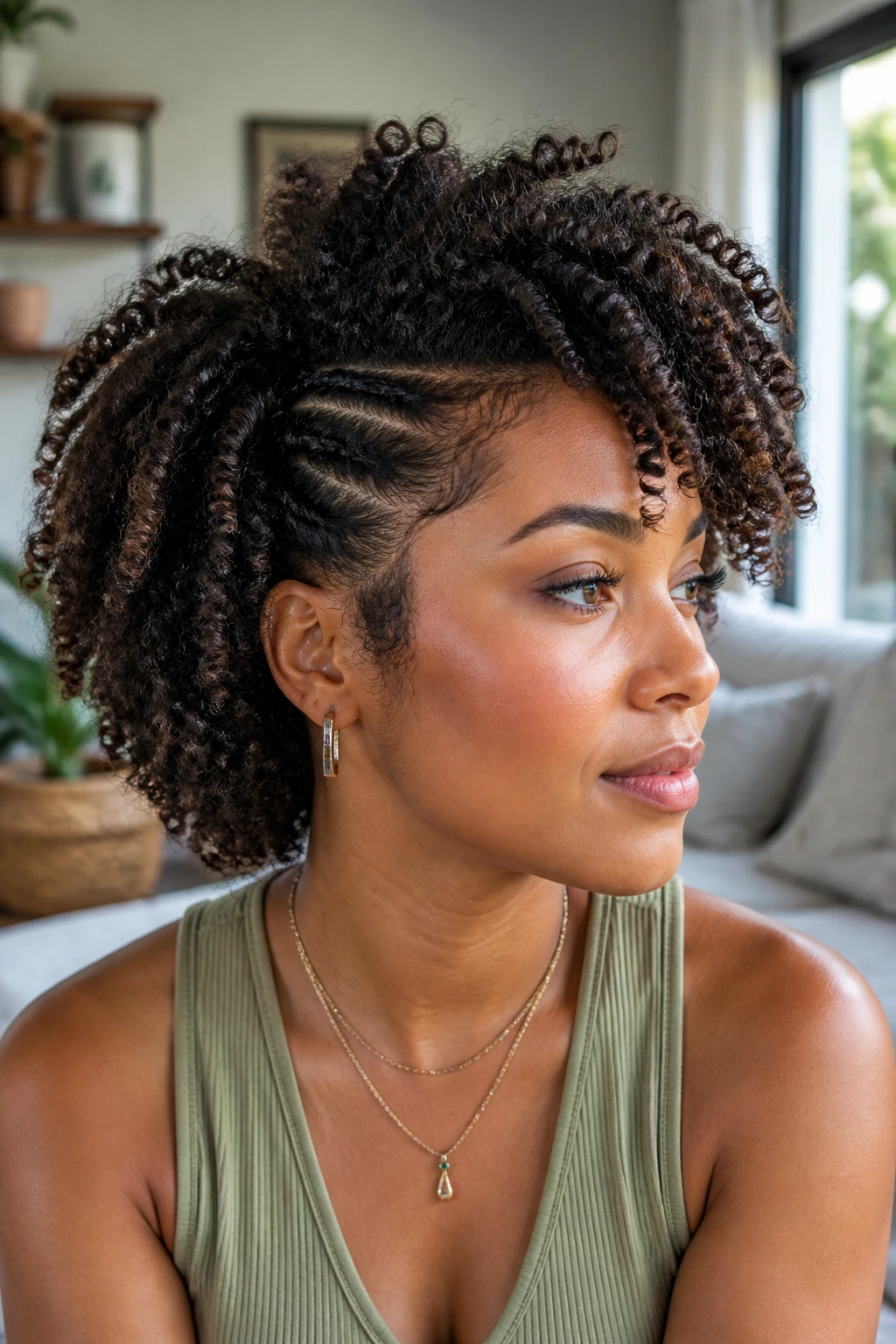
Lift at the Root: If a style feels too round, clip the roots while the hair dries or diffuse the crown upside down for a few minutes. You do not need all-over volume; you need height where the eye starts first.
Softness at the Edges: A few loose curls around the temples or nape can rescue a style that starts to look too severe. I like this trick on braids, buns, and ponytails because it keeps the face from looking boxed in.
Shape Memory: On twist-outs and wash-and-gos, set the front pieces with more direction than the rest. A single curl placed across the forehead or swept to one side can change the whole silhouette.
Accessory Upgrade: Thin headbands, small clips, and satin scrunchies do more than decorate. They mark the style and give it a visual line, which is useful when the curls themselves are doing a lot of the talking.
Make-It-Yours: If you wear your hair in a more formal setting, go neat and lifted. If you like a softer, more casual look, keep some frizz and movement. Curly hair usually looks better when it has at least one thing left a little imperfect.
Keeping the Shape Fresh Between Wash Days
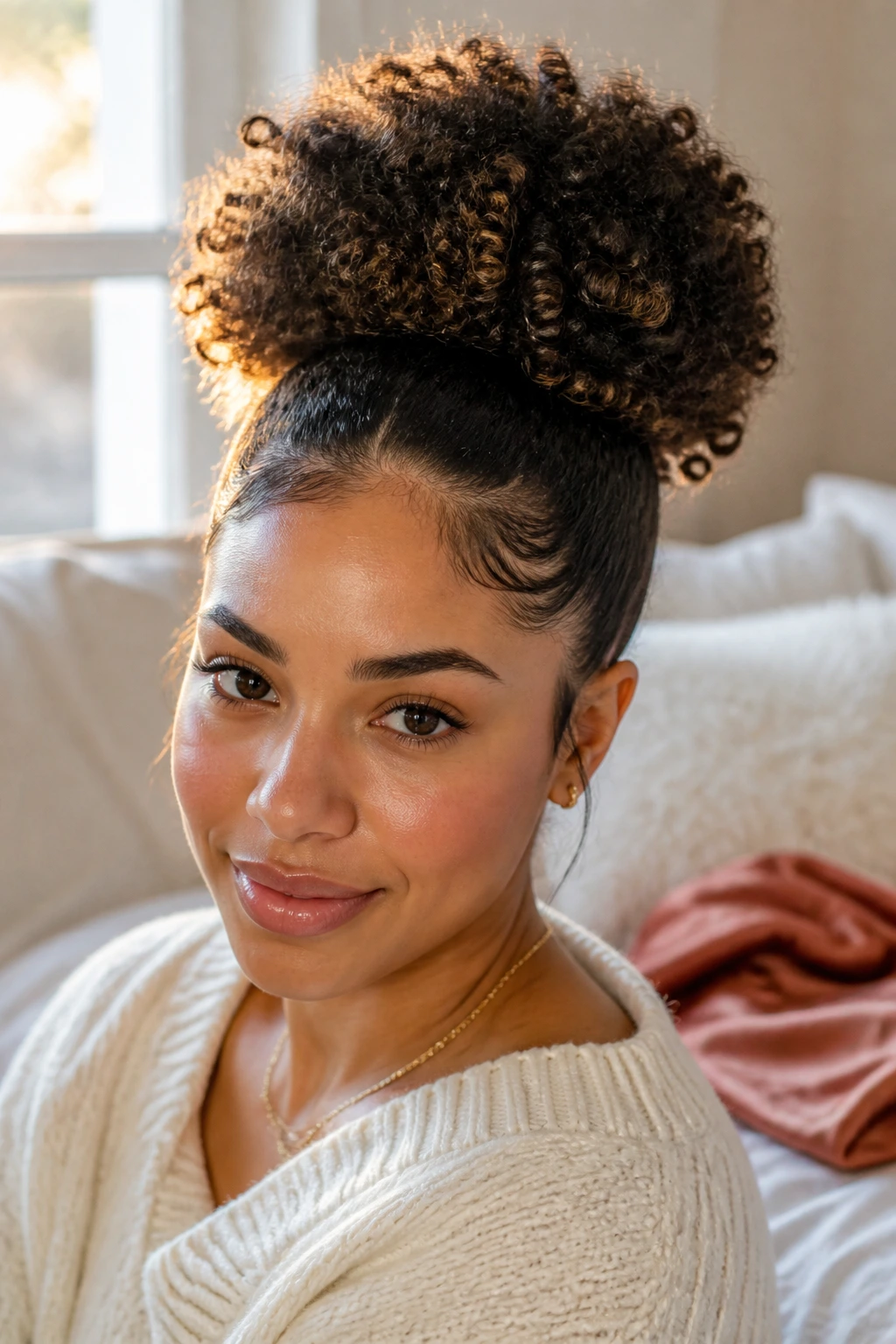
Some styles hold for hours. Some hold for days. The trick is knowing which is which so you do not fight the hair at 7 a.m. with a bottle of water and hope.
A high puff, ponytail, or bun usually stays clean for one to two days before the root starts to fray or the elastic line looks tired. A quick edge touch-up and a satin scarf overnight can stretch that window a bit. For wash-and-go styles, expect three to five days if you keep the roots lifted and avoid soaking the hair every morning.
Twist-outs, braid-outs, and finger coils often last longer when they are pineapplied at night and refreshed with a light mist in the morning. I mean light. Five to eight spritzes is enough to wake up the curl pattern without turning it into frizz soup. If the style was set with gel, don’t rake through it too hard once it starts to soften. That’s when the shape falls apart.
Protective styles like braids, twists, and cornrow-front looks can stay neat for one to three weeks depending on how tightly they were installed and how much your edges are asked to do. Keep the scalp clean, oil only when needed, and sleep with a satin bonnet or scarf. If the style starts tugging at the hairline, take it down sooner. A cute style is not worth a sore scalp.
Named Variations and Adaptations to Try
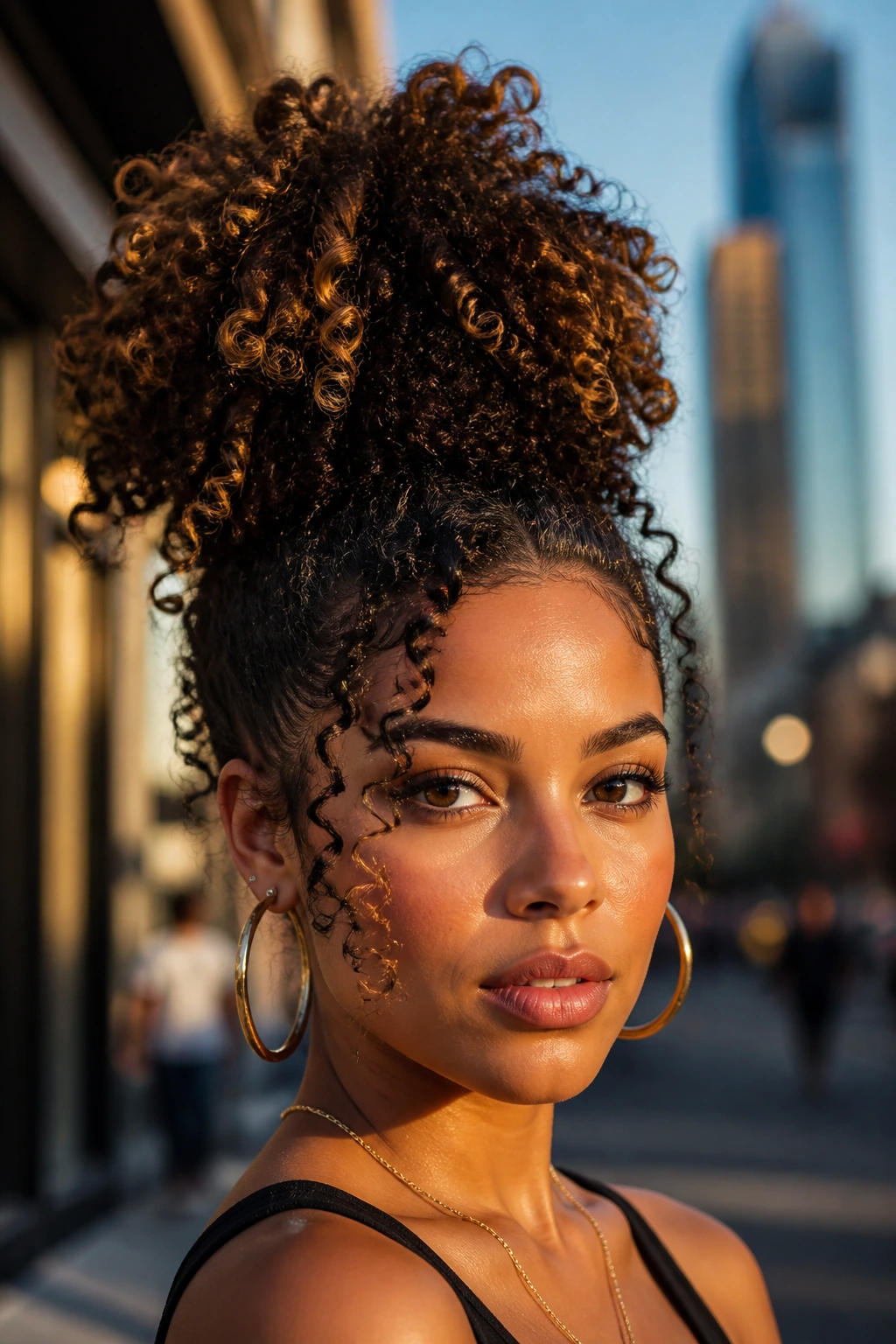
The Soft-Volume Edit: Keep the shape loose and airy with an off-center part, longer layers, and a light mousse instead of a heavy cream. This version works well if you want your curls to move more and look less sculpted.
The Protective Stretch: Swap any loose style for braids, twists, cornrows, or tucked buns with curled ends. It gives your hair a break from daily manipulation while still keeping the face line open.
The Big-Top Version: Add extra height through the crown with clipping, diffusing, or a taller puff placement. This is the one to use when you want your face to read longer in photos or formal settings.
The Minimal-Heat Route: Choose wash-and-gos, twist-outs, braid-outs, and finger coils, then shape them with parts and accessories instead of hot tools. It’s the best route when your hair likes moisture and hates repeated straightening.
The Bold-Cut Switch: If your style needs more edge, move toward a tapered cut, a wolf cut, or a temple shave with curls left full on top. These cuts trade softness for structure, and that can be a very good trade.
Common Mistakes to Avoid
- Putting the widest part of the hair at the widest part of the face: If the curls balloon right across the cheeks, the whole style reads broader. Move the volume higher or lower, and the face shape looks cleaner.
- Cutting curls too blunt at the chin: The symptom is a square, heavy outline that sits on the jaw. Ask for length that drops below the jaw or for angle in the front.
- Using too much heavy product at the roots: That makes curls collapse and spread sideways. Start light, then add more only where the hair actually needs it.
- Making every part dead-center: Center parts can work, but on a round face they sometimes emphasize symmetry in a bad way. Try a side part or off-center placement before you give up on the cut.
- Smoothing the hair so hard it loses shape: Sleek is not always flattering. A little texture creates movement, and movement is your friend here.
- Forgetting shrinkage: Curly hair can land several inches shorter once dry. What looks like a collarbone cut when wet may become a chin-length bubble if you don’t plan for the shrink.
Frequently Asked Questions
Can biracial hair with mixed curl patterns wear the same style all over?
Sometimes, yes, but mixed-texture hair often looks better when the style respects the differences. The tighter sections may need more hold, while the looser sections may need less product and more shape control.
What hairstyle is best if I want my round face to look longer fast?
A high puff, deep side part, or faux hawk usually works fastest because they all add height and break up symmetry. If you want length without an updo, try an angled lob or long layers with an off-center part.
Are bangs a bad idea for round faces?
Not if they’re curly and soft. Curtain bangs or curly bangs that graze the brows can look excellent; blunt, short bangs across the forehead are the ones that tend to shorten the face.
What if my curls are fine and lose shape quickly?
Use lighter products, root clipping, and a style with some structure already built in, like a side part or layered lob. Fine curls usually need hold more than moisture-heavy creams.
Do protective styles help curly hair on round faces?
Yes, if the braids or twists are shaped with intention. Protective styles that keep the front neat and the volume higher or lower than the cheeks usually flatter round faces best.
Can I wear a middle part on a round face?
You can, but I’d test it with length, lift, or face-framing layers instead of wearing it flat and blunt. A center part works better when the hair drops below the jaw and keeps the sides from puffing too wide.
How often should I refresh curly styles like wash-and-gos or twist-outs?
Most wash-and-gos need a light refresh after two or three days, while twist-outs can stretch a little longer if you sleep on satin and don’t over-mist them. The goal is to wake the curl up, not soak it.
What style should I choose if I want low maintenance?
A tapered cut, high puff, jumbo twists, or a low bun with tendrils is usually easier to keep up than a highly layered wash-and-go. Lower maintenance usually means fewer moving parts, not fewer good results.
The Shape That Works With You
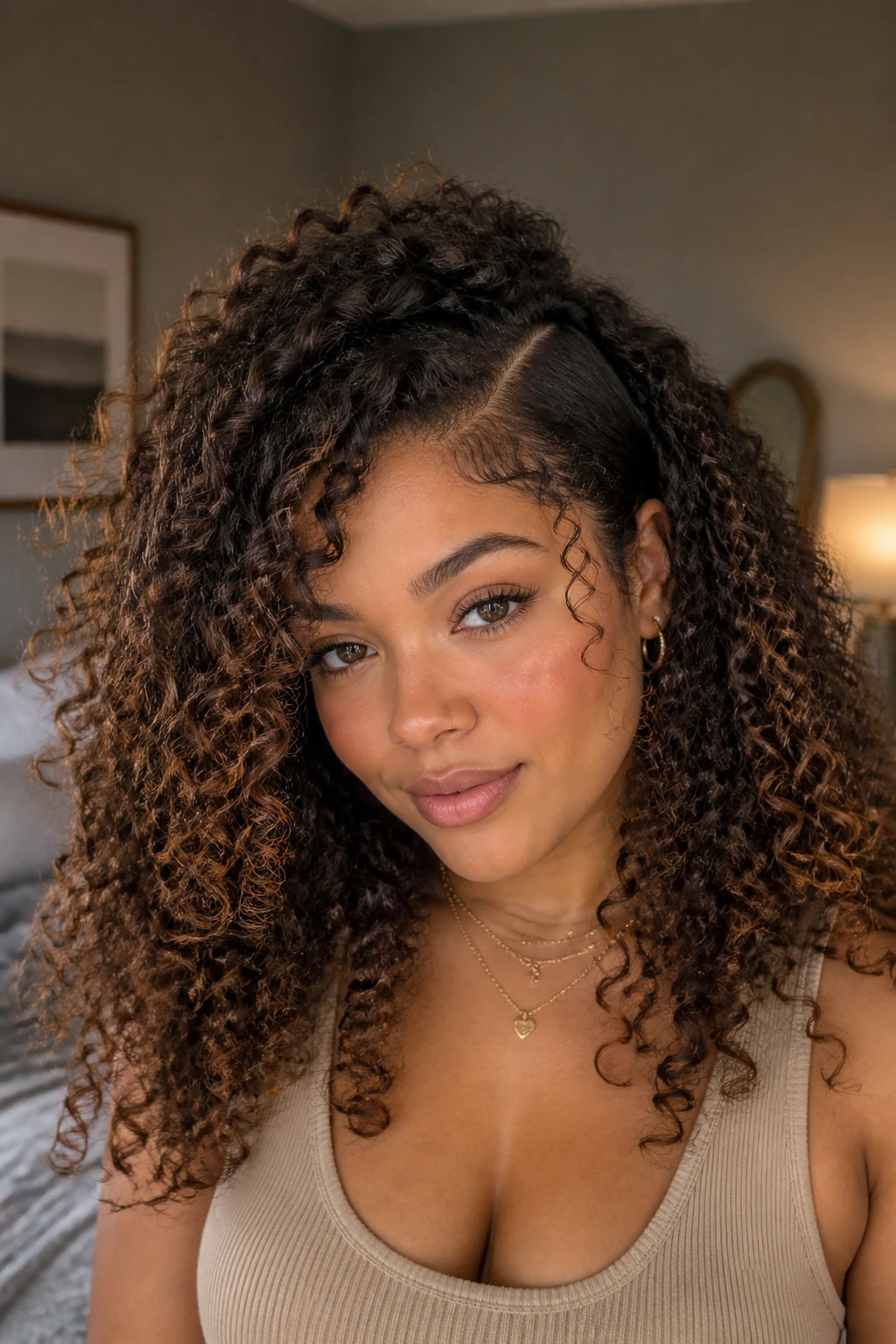
Round faces and curly hair are not an awkward pairing. They’re a shape problem, and shape problems have good solutions. Once you start paying attention to height, parting, and where the curl ends land, a lot of styles that seemed impossible suddenly make sense.
The best part is that none of this asks you to erase your texture. The curls stay curls. The coils stay coils. You’re just choosing a silhouette that lets the face and the hair support each other instead of competing for the same space.
Pick one style that sounds closest to your life, not just your mood. Wear it once, then adjust the part, the height, or the face-framing pieces the next time around — that is where the real shape starts to happen.