



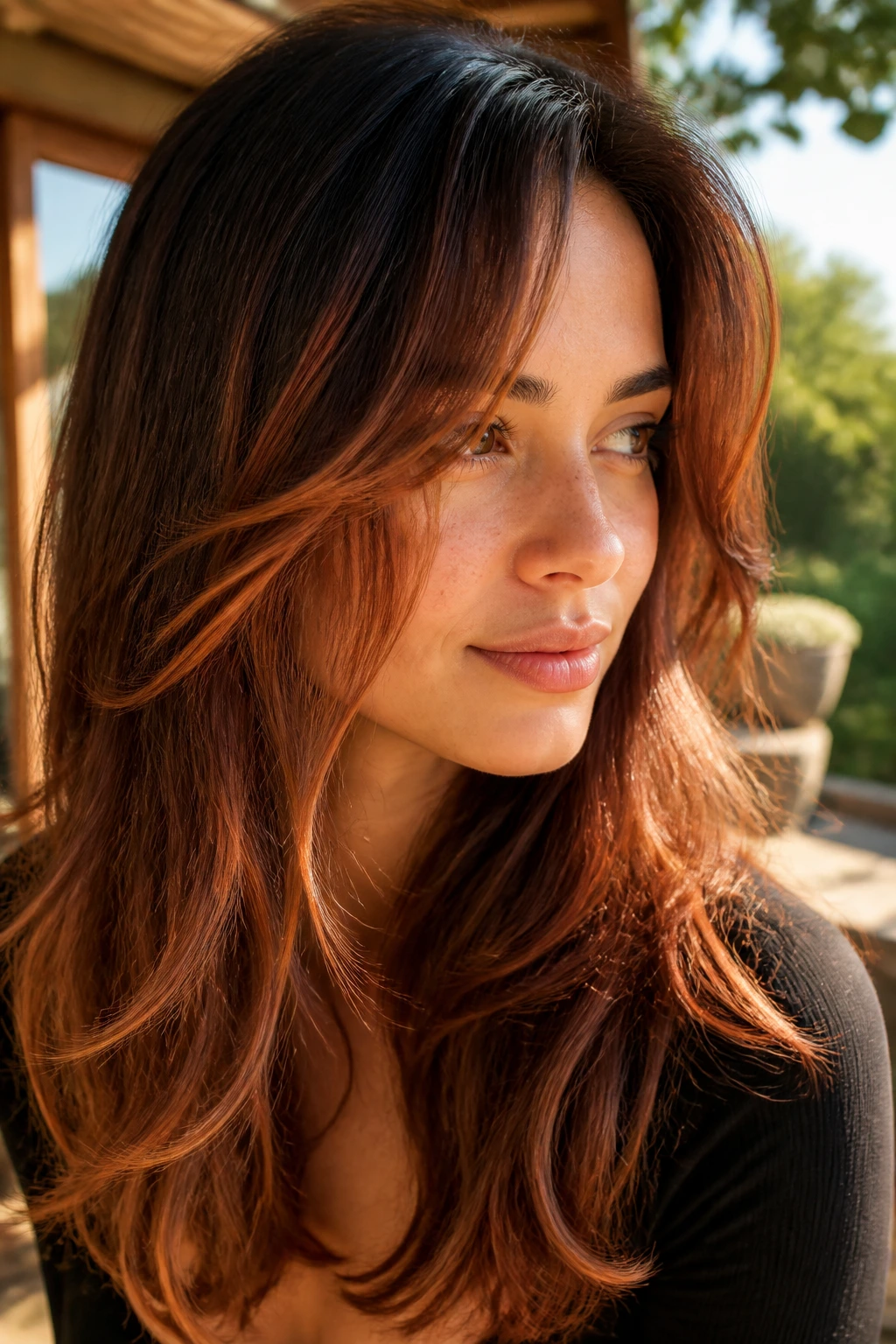
Soft layers change brunette hair in a way blunt cuts never quite do. The movement is the whole point: the ends feather, the front pieces swing, and every change in angle gives the color a new face. A flat brown can look sleepy on a one-length cut. Put it on a layered cut with face-framing pieces, and suddenly the same brown starts showing smoke, caramel, cinnamon, cherry, or gold in little flashes that feel expensive without trying too hard.
For brunettes with soft layers, color placement matters as much as the shade itself. Thick highlight panels can look choppy once the hair moves. A thinner ribbon at the cheekbone, a dimmer lowlight under the crown, or a root melt that stays a little deeper near the scalp usually looks cleaner and more natural. That’s the trick with this kind of haircut: the cut already gives you motion, so the color should follow it instead of fighting it.
Some of these looks are barely louder than your natural brunette, just with better shine and more depth at the ends. Others lean bolder, with cherry, auburn, copper, or blue-black glosses that make the layers pop when the hair bends. The good ones all share the same thing: they make the haircut look like it has more shape than the scissors alone could explain.
Why Brunette Layers Need Their Color Placed Differently
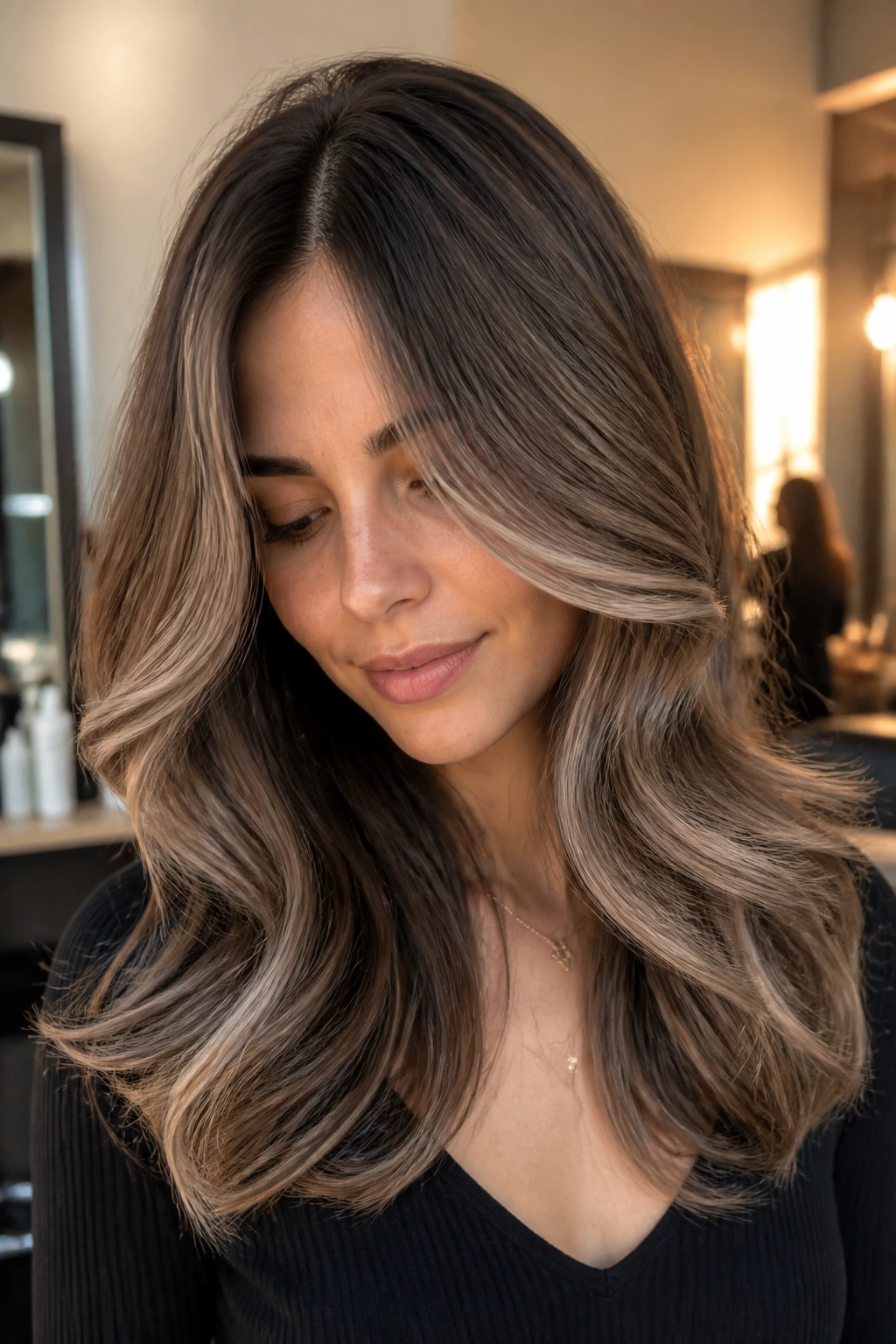
- Movement does half the work: Soft layers create little planes of light, so even a thin ribbon of color can read clearly if it sits in the right spot.
- Face-framing pieces matter most: The front sections are the first thing people see, which is why a well-placed money piece can do more than a full head of highlights.
- Depth keeps the cut from looking stringy: Brunette lowlights and root shadows make the ends look thicker, especially on finer hair.
- Tone matters as much as brightness: A cool mushroom brown and a warm chestnut can both be flattering, but they say very different things on a layered cut.
- Gloss is not optional: Brunette shades look dull fast when the cut is airy, so a clear or tinted glaze usually pays off more than another round of lightening.
1. Mushroom Brunette with Taupe Ribbons
The cool, earthy thing about mushroom brunette is that it never screams for attention, which is exactly why it works on soft layers. The taupe ribbons sit between brown and beige, so the cut looks shaded instead of striped. On wavy layers, the color shifts every time the hair bends. On straighter hair, it reads like a soft haze that keeps the brunette from going flat.
Why it flatters layered brunettes
Taupe sits in that useful middle ground where it can cool down a warm base without making the hair look muddy. If your layers are long and feathered, the ribbons show at the bends and ends instead of all over the top. That keeps the color dimensional without looking overworked.
A mushroom brunette also grows out with a calmer line than brighter highlights. Ask for the lightest pieces around the face and through the top half of the mid-lengths, then leave the underside a shade or two deeper. The contrast looks richer when the layers move.
- Best on level 4–6 brunettes
- Strong on loose waves and airy blowouts
- Works well with curtain bangs or cheekbone layers
My take: If you want brunette hair color ideas that feel polished but not flashy, this is one of the smartest places to start.
2. Velvet Espresso with Caramel Money Pieces
Velvet espresso is the kind of dark brunette that looks almost liquid in a glassy finish. Then the caramel money pieces hit the front, and the whole haircut wakes up. Those front strips should not be thick. They should sit softly around the face, just bright enough to show off the layers without making the hair look zebra-striped.
This one works because the base stays deep. The caramel only needs to be a few levels lighter than the rest, not blonde-blonde. On soft layers, that contrast creates a clean frame at the cheekbones and jawline, which is where layered cuts tend to look their best anyway. The ends stay rich, the front feels lighter, and the haircut keeps its shape.
If you wear your hair parted in the middle, the money pieces can be mirrored. If you prefer a side part, shift the brightest part slightly toward the heavier side so the balance feels natural. Tiny detail. Big payoff.
3. Cinnamon Brown Melt
Cinnamon brown is warm without turning orange, and that’s the part people usually get wrong. The best version feels like spice and shine, not brass. On soft layers, it adds a gentle glow to the ends and mid-lengths, especially if the cut has movement near the collarbone.
The shape it gives the haircut
A cinnamon melt is more flattering than a full warm color block because the tone can be deeper at the root and lighter through the bend of the layer. That makes the haircut look softer and thicker at once. Curls love it. Waves love it. Even a smooth blowout picks up the reddish warmth when the light hits the front pieces.
Ask for a warm brown base with cinnamon glaze painted through the outer layer and a touch more brightness around the face. If your natural brunette leans red already, this shade can be tiny and still visible. If your hair runs ash-brown, the warmth shows up most at the ends, which can be a nice surprise.
4. Chestnut Swirl with Feathered Ends
Chestnut is one of those brunette shades that can look calm in a swatch and alive on a layered cut. The difference is the feathered ends. They catch enough light to show the chestnut’s red-gold undertone, but not so much that the hair looks overly highlighted.
If you like a clean, classic brunette with just a hint of warmth, this is the easy pick. The swirls can be placed as a gloss over the mids and ends, then kept a little richer underneath the top layer so the cut has depth when it moves. It’s especially nice on shoulder-length layers, where the ends flick out just enough to show the tone.
The beauty here is restraint. Chestnut does not need to be loud to do its job. It just needs shine, a neat shape, and a layered cut that lets the ends breathe.
5. Ash Mocha with Smoky Lowlights
Cool brunettes can look incredibly expensive on layered hair, especially when the finish is soft instead of icy. Ash mocha has that smoky, cocoa-and-slate feel that keeps the color grounded. Add lowlights one shade deeper under the top layer, and the cut suddenly looks fuller.
That fullness is the real reason this works. Fine or medium hair can go a little see-through through the ends once it’s layered. Smoky lowlights underneath stop that from happening. They make the outer pieces look like they’re floating over a darker base, which is a nice effect if you want movement without obvious highlight streaks.
This shade tends to suit cooler skin tones best, but it can also work on warm complexions if the ash is kept modest. Too much blue-gray can make the hair feel flat. A little smoke is enough. More than that and the whole thing starts looking tired.
6. Cocoa Beige Bronde
Bronde gets tossed around a lot, but cocoa beige bronde earns its keep on soft layers. The cocoa base keeps the brunette identity intact, while the beige pieces lift the front and the outer layer just enough to make the cut feel airy. It’s lighter than mushroom brown, warmer than ash mocha, and easier to wear than a full blonde route.
The cleanest version starts with a medium brunette root and beige ribbons woven through the face frame and upper mid-lengths. The ends can stay a touch deeper so the layers don’t dissolve into one pale blur. That little depth at the bottom matters. Without it, the haircut can lose shape.
This is the shade I’d hand to someone who wants brightness but hates a hard grow-out line. It looks best when the layers are soft around the face and slightly longer through the back, because the blend has room to move.
7. Cherry Cola Gloss
Cherry cola is one of the few red-brown shades that can look moody instead of costume-y. The trick is the depth: a dark brunette base with a cherry gloss layered over it, not a bright red dye job pretending to be subtle. On soft layers, the color catches best along the curves of the hair, so every bend picks up a little wine-colored shine.
When this shade really sings
Straight, glossy hair shows cherry cola in a sleek way. Wavy hair shows it in flashes. Either version works, but layered cuts give you that extra bit of motion that stops the red from sitting still. If you want the color to show more clearly, ask for a deeper red-violet gloss around the front and a softer wash through the ends.
It’s a strong choice for brunettes who want something richer than copper but less obvious than burgundy. The layers do the rest. They break up the color just enough so the whole look feels plush, not blocky.
8. Toffee Root Melt
Toffee root melt is one of the best low-maintenance brunette ideas in the bunch. The root stays deeper, the mids soften into warm toffee, and the ends pick up a little honeyed light. Because the color shifts gradually, soft layers help the transition feel even smoother.
This is especially good on collarbone-length cuts where the layers are long enough to show movement but not so short that the color gets chopped into pieces. The root shadow keeps grow-out tidy. The toffee sections around the face keep the haircut from looking heavy. It’s a practical color, and I mean that as a compliment.
If your hair tends to pull warm on its own, this can look almost seamless. If your base is cooler, the toffee gives you a warmer glow without forcing the whole head blonde. It’s a comfortable middle path.
9. Mocha Micro-Babylights
Micro-babylights are tiny for a reason. On layered brunette hair, too much contrast can look chunky fast, especially around soft, face-framing pieces. These fine, delicate strands thread through the mocha base and just barely catch the light. The result is shimmer, not stripes.
A look like this is ideal when you want the haircut to stay the star. The color supports the layers instead of stealing the show. It’s also a nice fix for hair that feels heavy or one-dimensional but does not need a big color shift. You can keep the base close to natural and still get that moving, dimensional effect.
Best of all, the grow-out is clean. Micro-babylights blur into the brunette, so the haircut can stretch a bit between appointments without looking harsh. That matters if you prefer a lived-in result over a high-commitment one.
10. Copper Penny Brown
Copper penny brown has more attitude than most brunette shades, and soft layers keep it wearable. The copper should sit in the brown, not on top of it like a loud coat of paint. When done well, it looks like warm metal woven through the mid-lengths and ends.
This shade is strongest on layered hair with some texture. A loose bend or natural wave lets the copper flash in sections rather than all at once. That matters because copper can go bright fast in direct light. The layers act like little windows, opening and closing as you move.
Ask for a brown base with copper-leaning ribbons through the outer layer, and keep the front pieces a touch brighter if you want the face to glow. If your skin is already warm, the result can look effortless. If you run cool, keeping the copper deeper and slightly muted makes it easier to wear.
11. Sand Beige Brunette
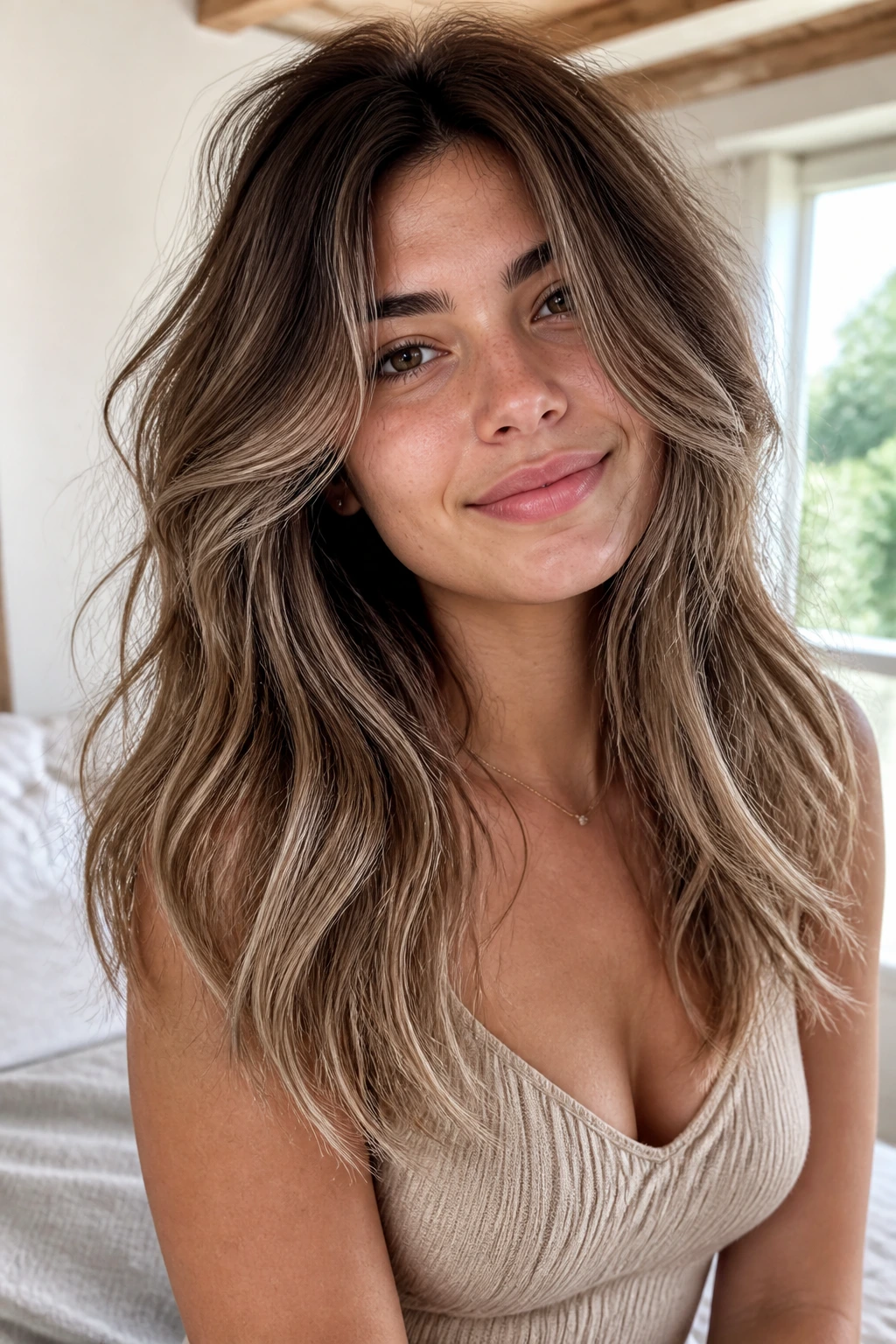
Sand beige brunette is light, clean, and quietly bright. It doesn’t have the warmth of toffee or the smoke of mushroom brown. What it has is a soft beige cast that makes the layers look airy, almost powdery at the ends.
The shade works best when the base is still clearly brunette. That’s the whole reason it looks good on layered cuts: the brown underneath gives the beige somewhere to sit. Without that depth, the color can look washed out. With it, the layers get a little lift without losing shape.
This is a strong choice for a layered lob or a mid-length cut with face-framing pieces. It gives movement to the front and a light finish to the ends, which keeps the style from feeling heavy around the jaw. If your hair texture is fine, keep the beige ribbons sparse and close to the surface.
12. Chocolate Cherry Gloss
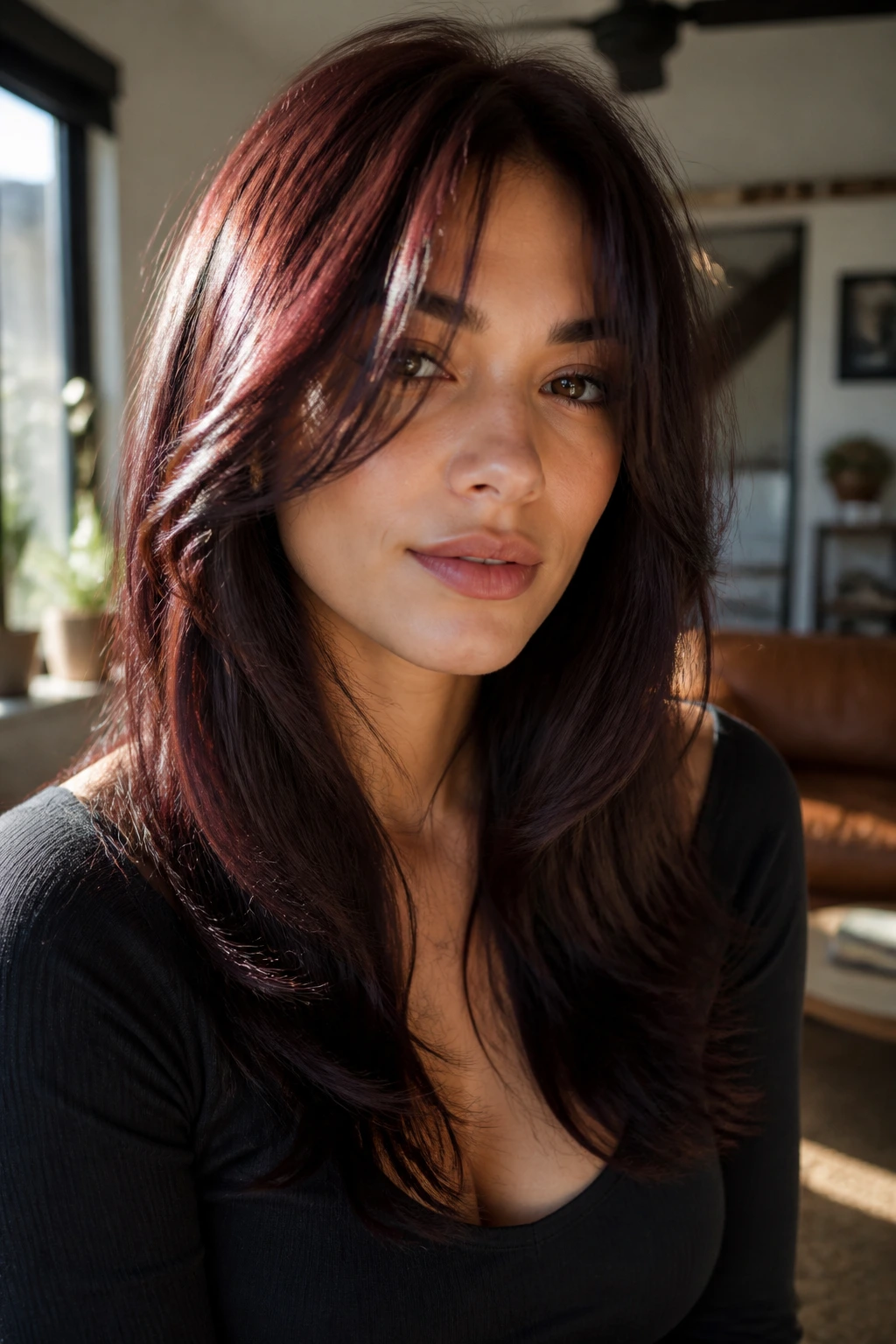
Chocolate cherry is darker and more understated than cherry cola, and that makes it a sneaky good option for soft layers. The base stays rich chocolate brown, while the cherry gloss comes through in sunlight and indoor warmth. It’s not a red you spot from across the room. It’s a red you notice when the hair shifts.
That subtlety is what makes it so usable. On layered hair, the gloss peeks out at the bends and around the face, especially if the layers are feathered at the ends. It’s a lovely option for someone who wants depth and shine more than contrast.
If your hair is already dark brown, this can be done with a demi-permanent gloss rather than a major color change. That means less damage, more shine, and a softer fade. Which is honestly the smart way to do red on brunette hair if you don’t want a maintenance headache.
13. Amber Peekaboo Highlights
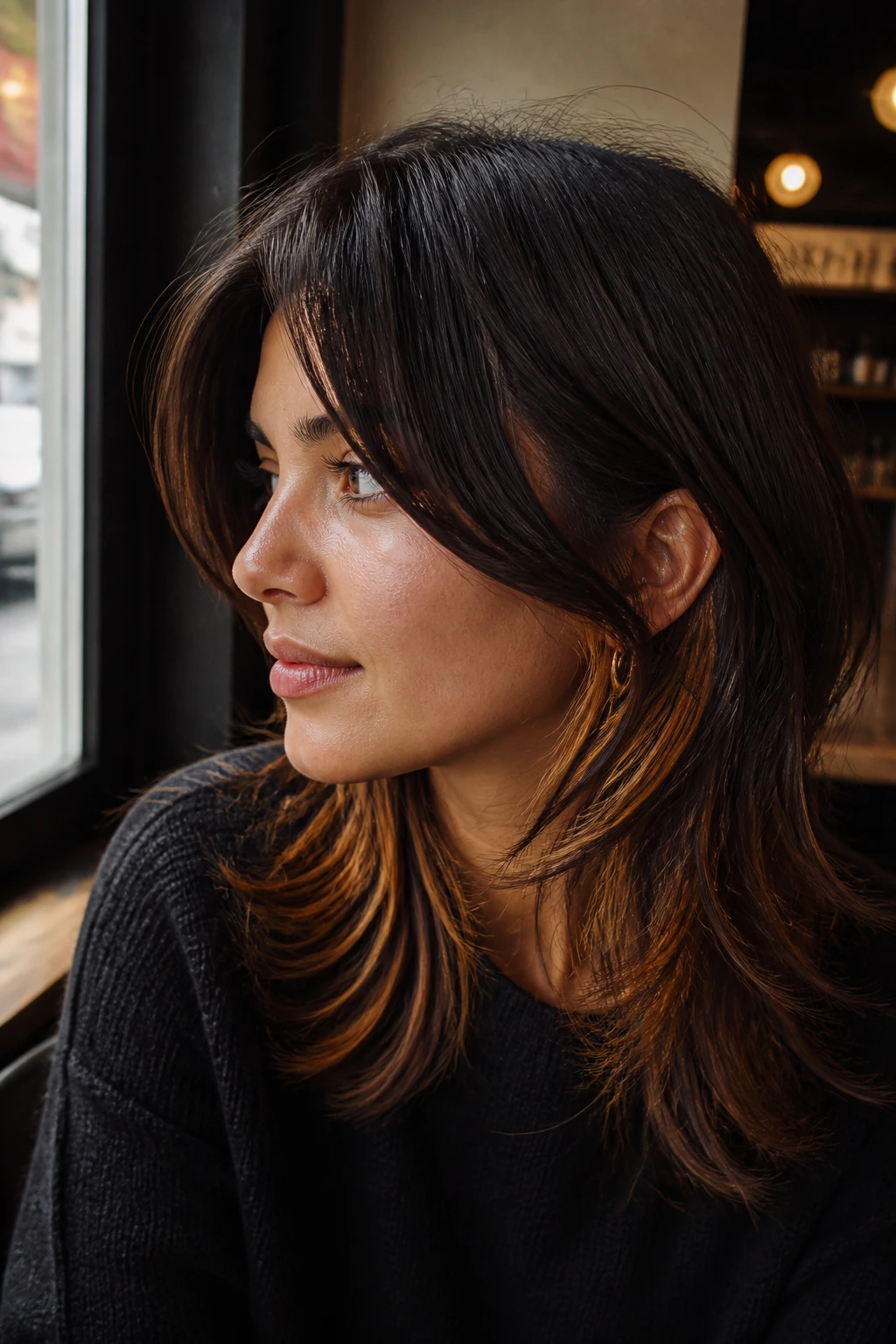
Peekaboo color is underrated on layered brunettes because the cut itself decides when to reveal it. Amber panels tucked beneath the top layer swing out at the ends, then disappear again when the hair settles. That little bit of surprise gives the haircut motion without demanding a bright all-over result.
This works especially well if your layers are shorter around the crown and longer through the bottom. The hidden amber catches when the hair flips, curls, or tucks behind the ear. You get color without the commitment of a full highlight map.
It’s a playful choice, but not a childish one. Keep the amber rich and warm rather than pale gold, and it reads more like a deliberate accent than a streaky contrast. On brown hair, that distinction matters.
14. Smoky Bronde Melt
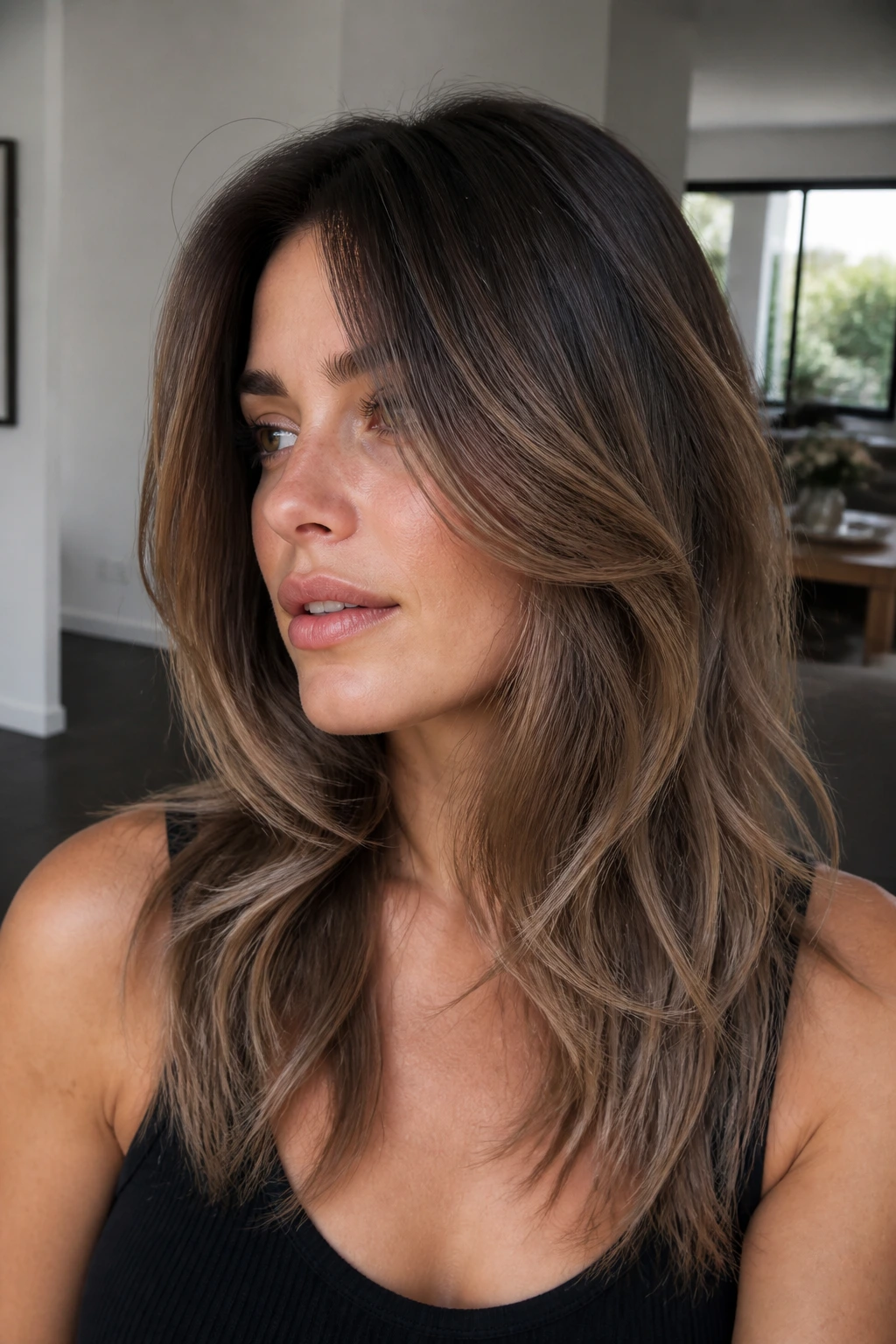
Smoky bronde is for the person who likes softness first and brightness second. The color drift goes from brunette roots into muted beige-brown mids, then stays low and cool near the ends. On soft layers, the result looks like a gentle blur rather than a hard ombré line.
The best layer shapes for it
Long layers and shaggy curtain bangs both work well here. They give the smoky tones enough edges to sit on, which keeps the color from looking too uniform. The trick is to avoid a light end that’s brighter than the front; that can make the cut feel disconnected.
A smoky bronde melt is a nice middle option if you’ve outgrown high-contrast balayage. It still gives dimension. It just does it with a quieter hand.
15. Walnut Brown with Caramel Veil
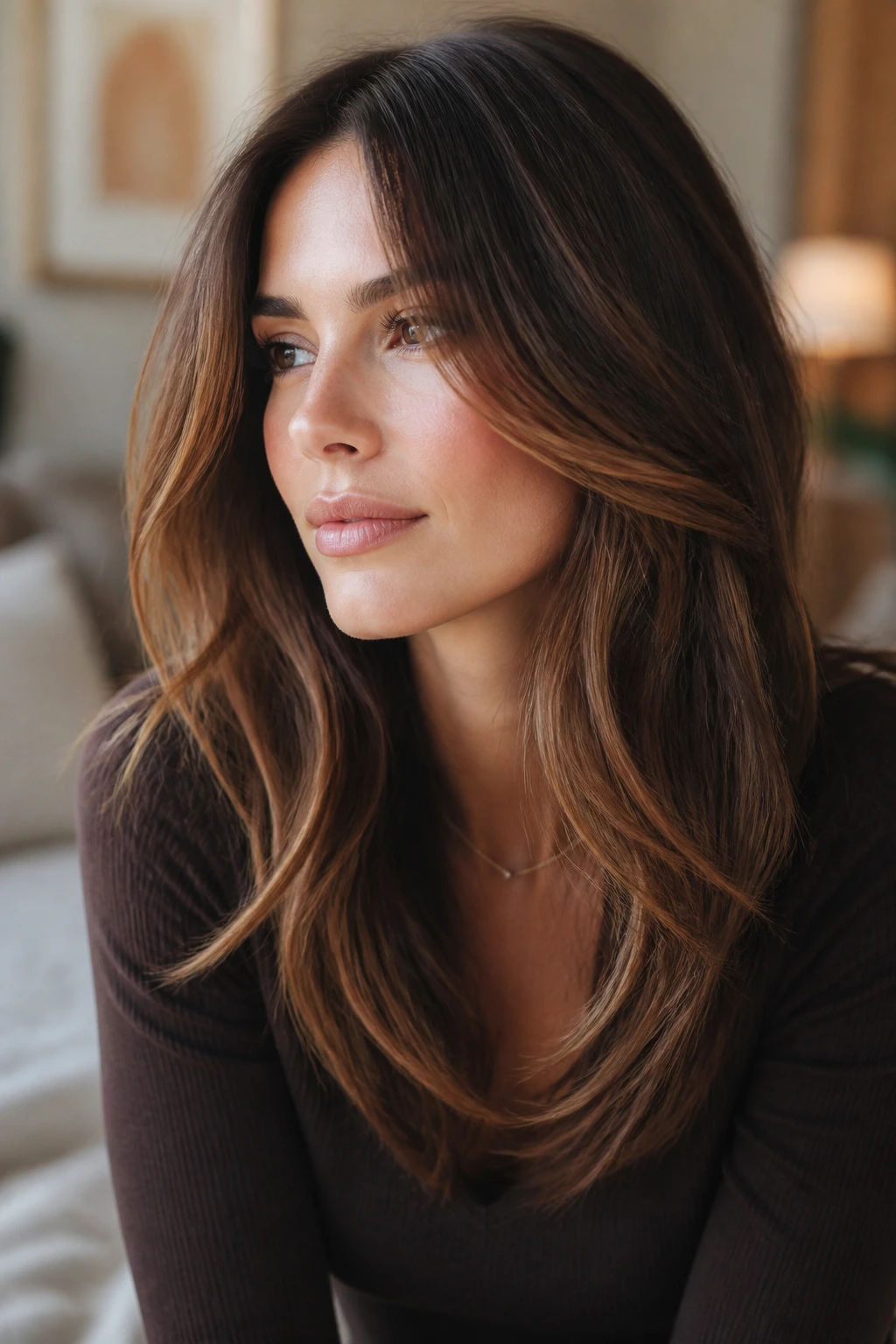
Walnut brown has a grounded, polished look that works beautifully on layered hair. Add a thin caramel veil over the outer layer, and the whole shape gets lighter without losing that deep brunette base. Think of it as daylight, not bleach.
This shade is ideal for office-friendly hair that still wants movement. The caramel should sit lightly around the face and on the bends of the longest layers. Too much and it turns into a standard highlight job. Too little and you miss the point entirely. The sweet spot is thin, warm, and scattered.
It also looks good on thicker hair because the walnut depth helps preserve richness through the interior. That keeps the haircut from spreading out visually once it’s blown dry. Nice shape. Nice shine. No drama.
16. Deep Auburn Brunette
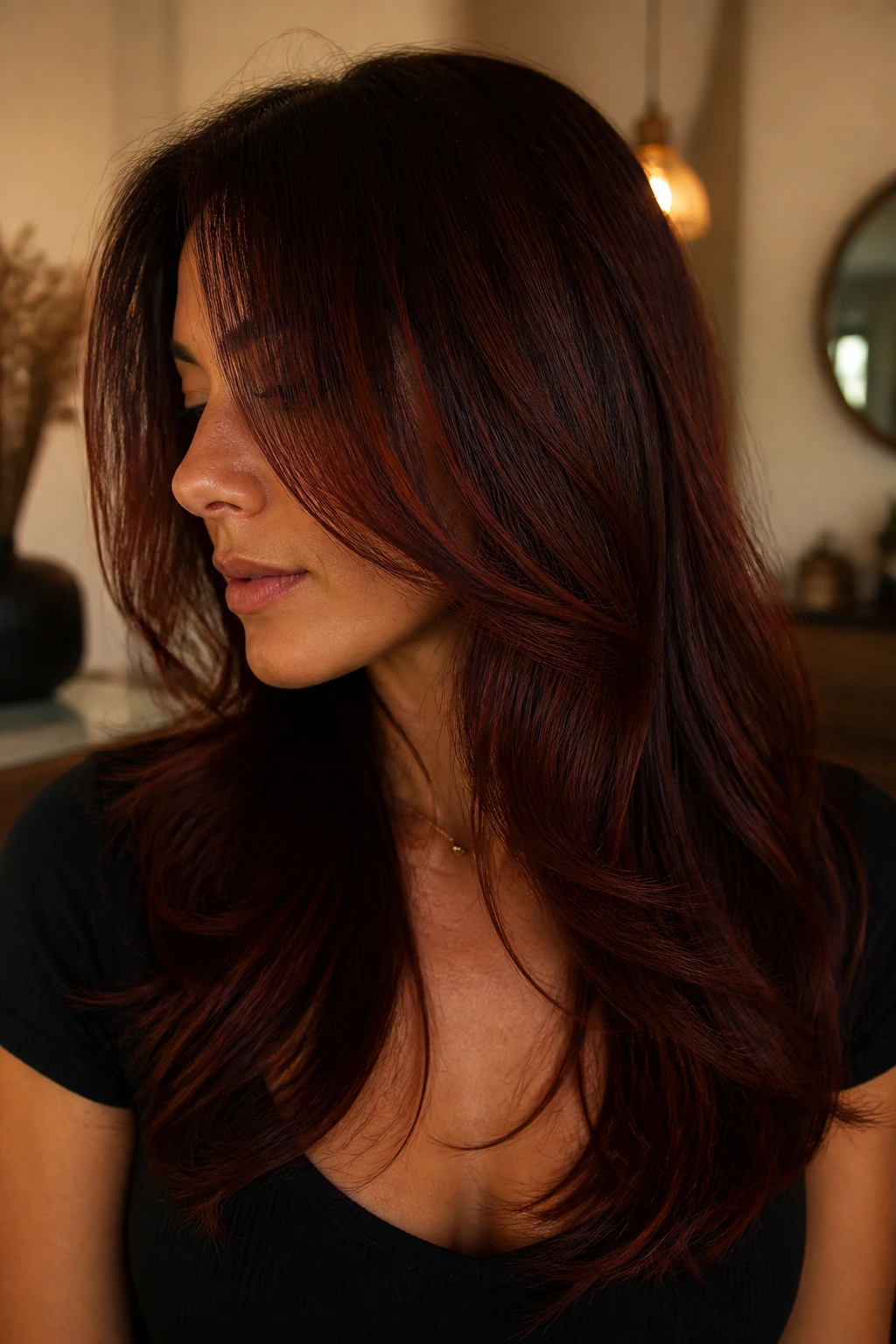
Deep auburn is the brunette answer to red hair that still feels grounded. It has enough warmth to glow, enough brown to stay wearable, and enough depth to suit soft layers that move a lot. The shade is especially pretty on thick hair, where the layers reveal little flashes of red as the hair shifts.
If the cut is heavily feathered, the auburn can be spread through the outer sections and intensified around the ends. That keeps the top from looking too flat while giving the shape some warmth below. This is one of those colors that makes a simple blowout look finished without needing much else.
Auburn fades in a flattering way too. As the red softens, the brunette underneath still holds the shape. That’s useful if you do not want every appointment to feel like a reset.
17. Honey Drip Balayage
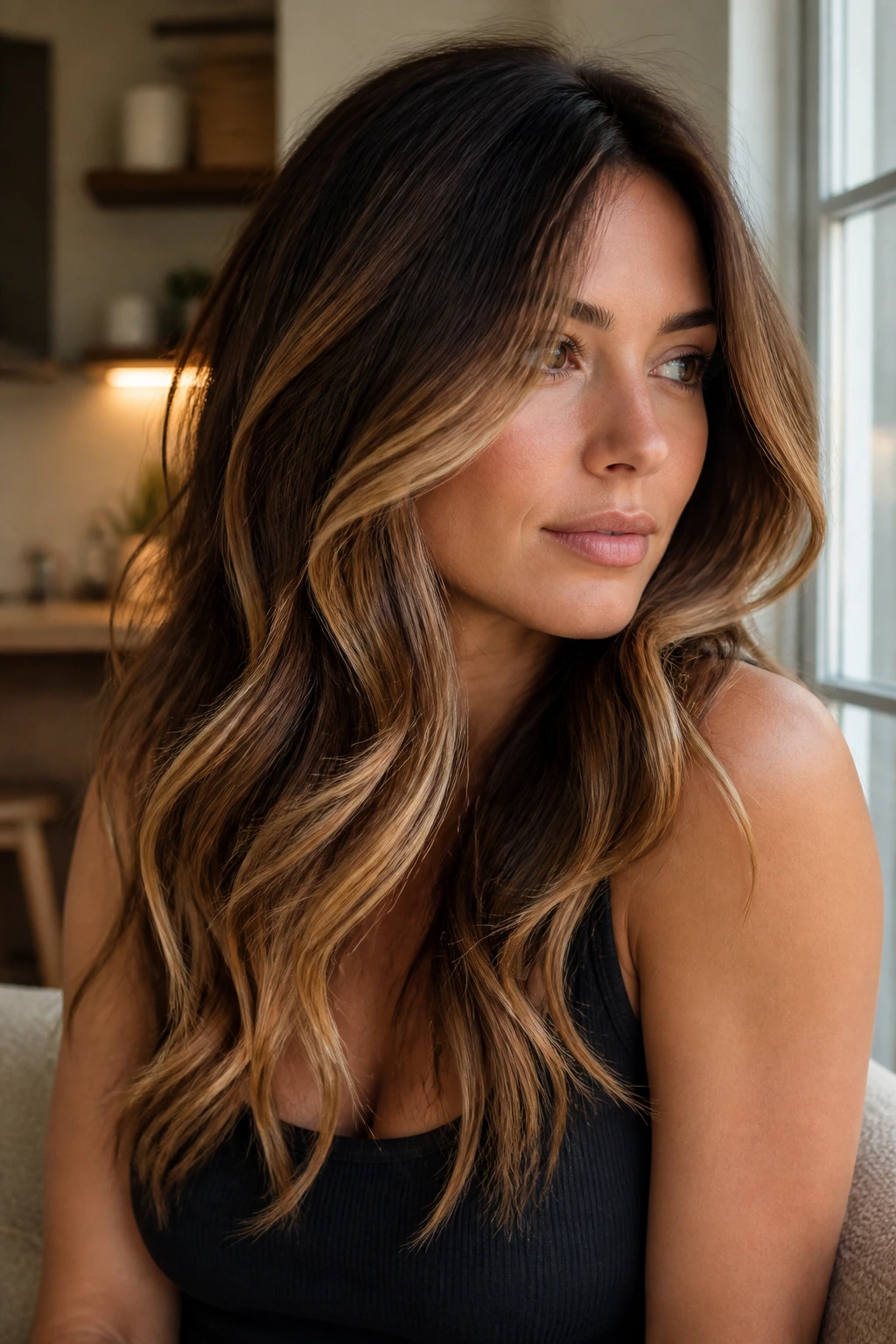
Honey balayage can go wrong when it’s too blonde, too chunky, or too bright at the root. The good version stays closer to warm honey than to yellow gold. On layered brunette hair, the honey falls through the outer lengths and the front pieces in soft drips rather than hard stripes.
What makes it work on layers
The placement matters more than the tone. Honey around the face can brighten the skin, while soft mids and ends show off the haircut’s movement. If your layers are long, the honey can be painted lower so the color appears in motion. If your layers are shorter, keep the lift delicate or the whole look will jump too fast.
This shade suits brunettes who want warmth but not obvious red. It’s also a good bridge shade if you’re moving from darker brunette toward something lighter without making a dramatic leap.
18. Iced Mocha Brown
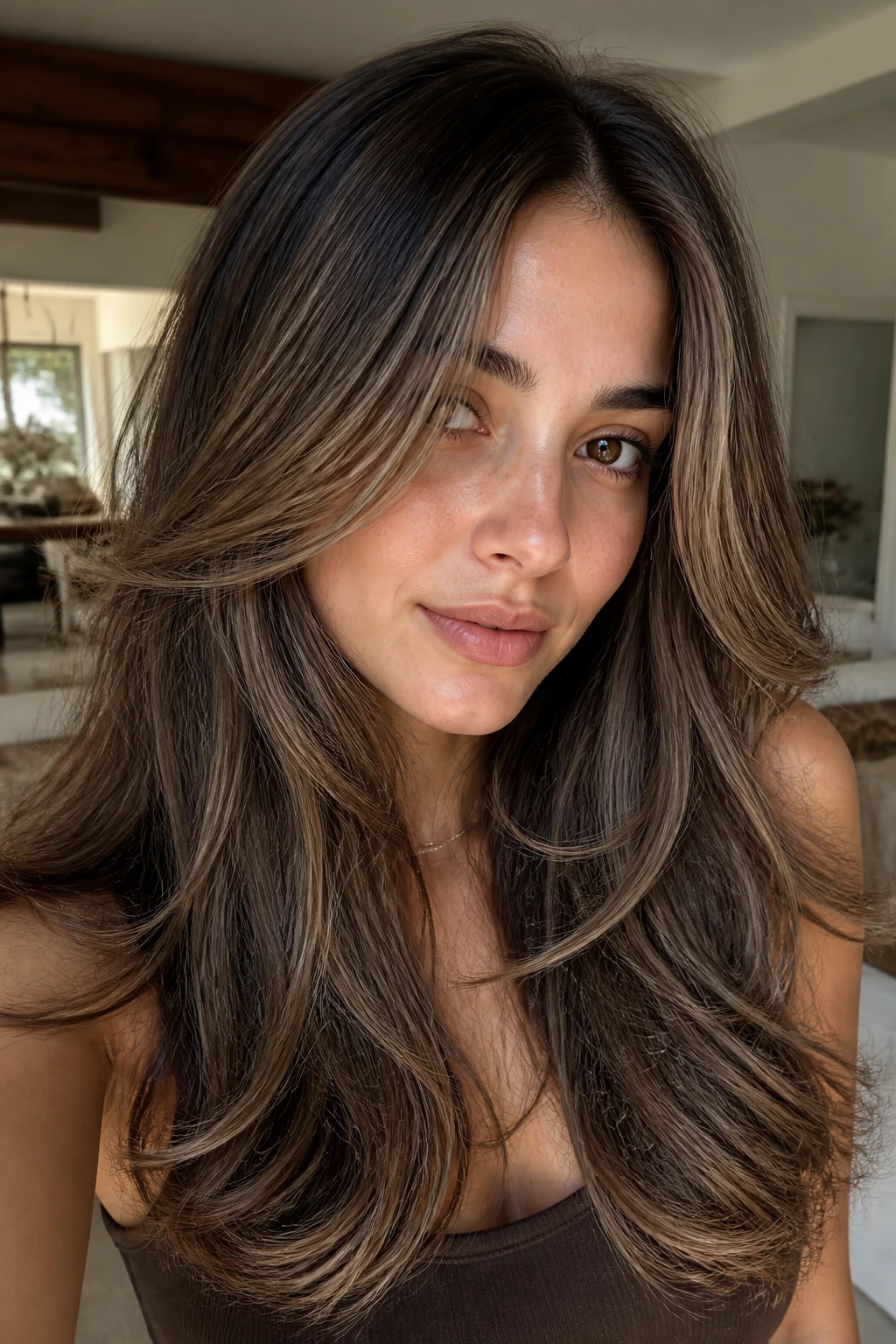
Iced mocha is what happens when brunette hair gets a cool, creamy finish without losing depth. It’s brown with a chilled edge, almost like a latte that was left under a silver spoon. On soft layers, that cool tone keeps the ends from looking too heavy.
The shade does best when the root and interior stay a little darker than the surface pieces. That little difference is what gives the haircut shape. If everything is the same tone, the layers blur into one block. With iced mocha, the front and outer layer can stay slightly lighter, which helps the hair move.
This is a smart pick for someone who likes understated color but hates brass. It also photographs cleanly in indoor light because the cool beige tones stay controlled. No orange surprise. Good.
19. Rosewood Brunette
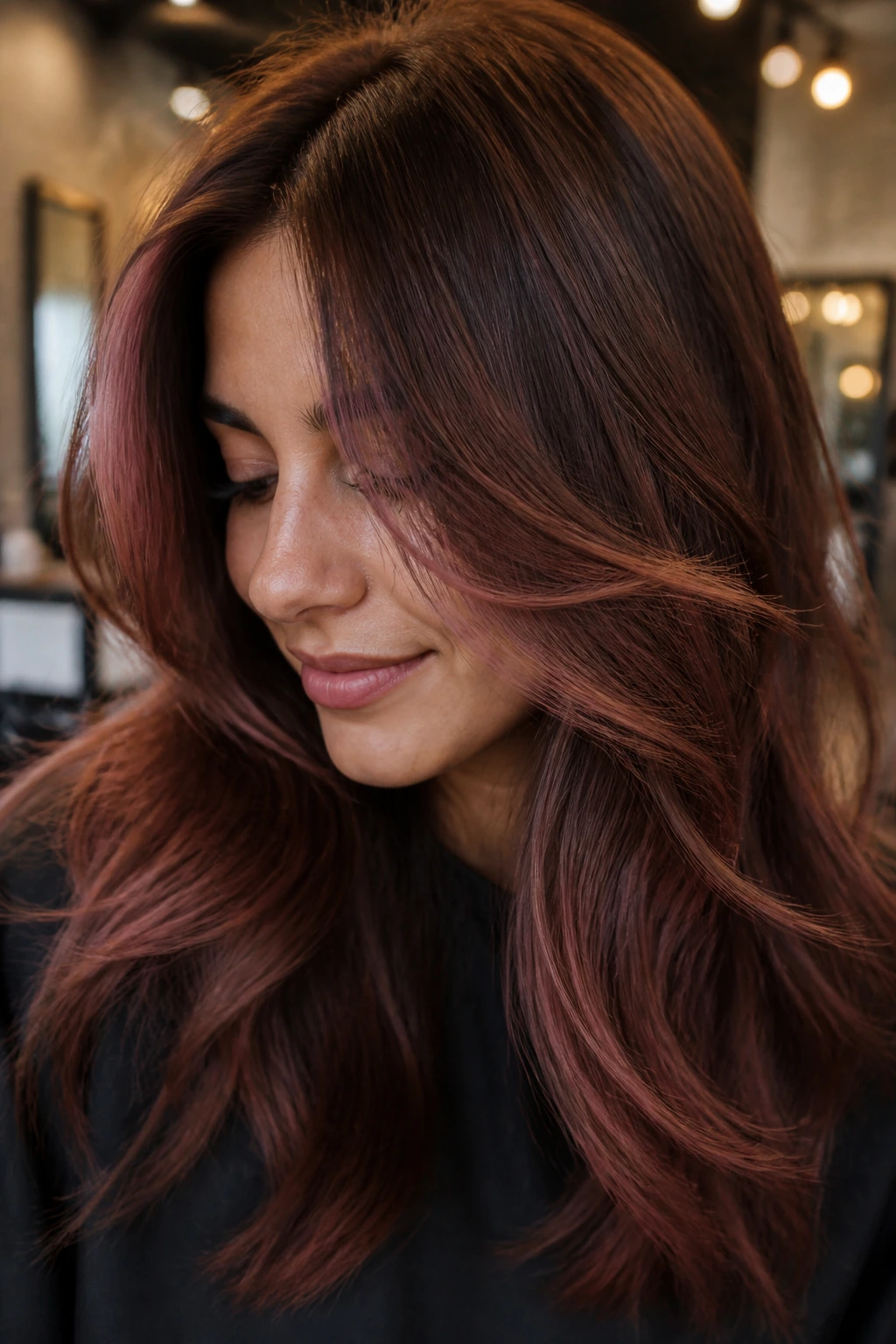
Rosewood sits between brown and muted rose-red, and on layered hair it has a plush, almost velvety depth. It’s less bright than burgundy and less copper than auburn. That middle position makes it wearable without feeling safe.
Soft layers help rosewood show its best side because the color changes as the hair bends. In a full gloss, it can look like a deep brunette with a hidden pinkish cast. In brighter light, the rose comes forward just enough to be noticed. That shifting quality is what makes it interesting.
If you want the shade to stay elegant, keep the rose tone grounded in brown rather than letting it drift too pastel or too red. The haircut already gives the drama. The color just needs to support it.
20. Spiced Praline Dimension
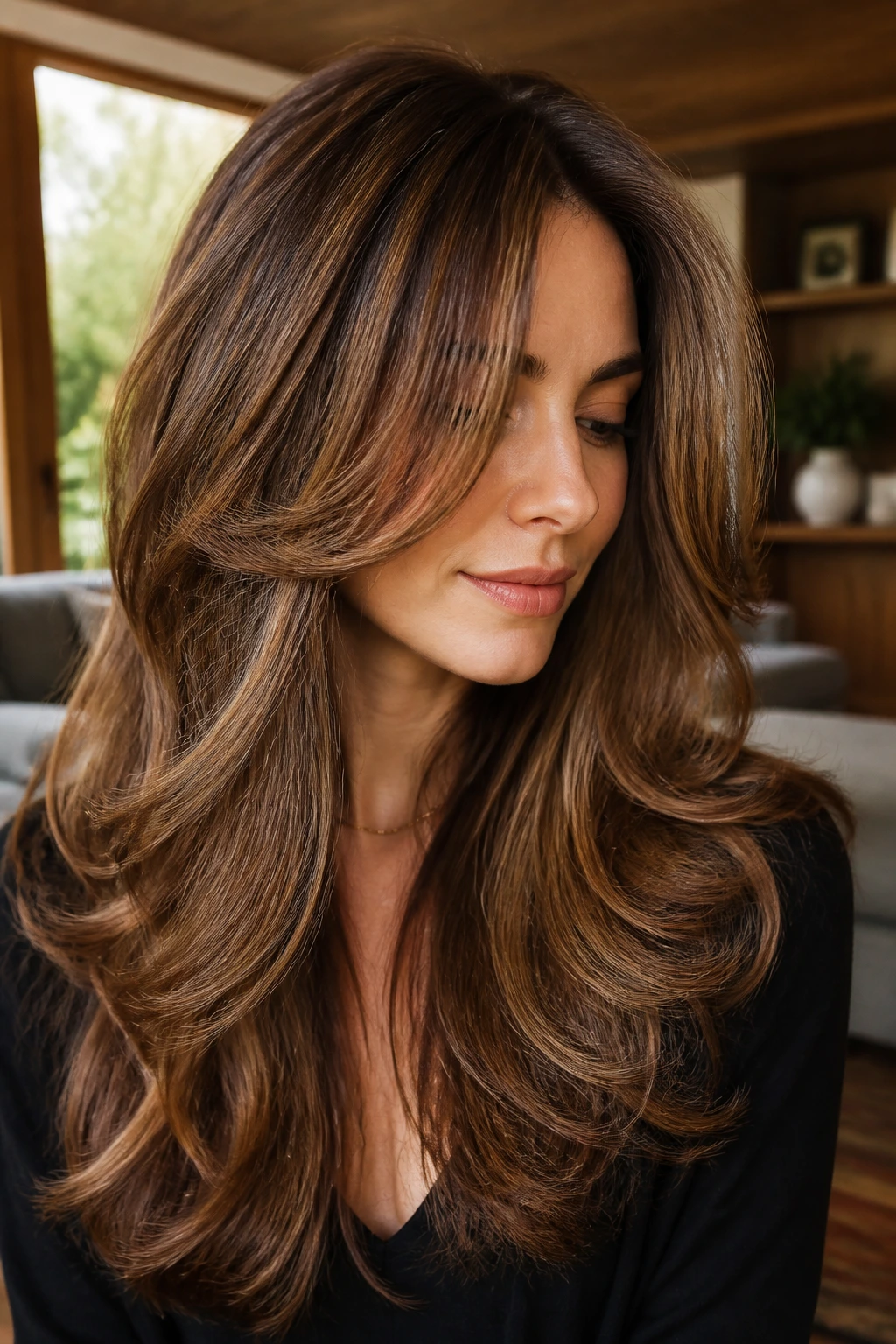
Spiced praline is warm, layered, and a little bit toasted. The beauty of this shade is how many tones it can hold at once: brown, caramel, nut, and a touch of cinnamon if you want it. On soft layers, those tones break apart in a very flattering way.
This is the sort of color that keeps thicker brunettes from looking heavy at the ends. The lighter praline pieces sit on top of the darker base, which gives the cut lift without making the whole head brighter. It works well if your layers are long and rounded, since the color can follow the shape instead of fighting it.
If you like a warm brunette that still feels rich, this is a strong candidate. It’s especially useful when you want dimension but don’t want the maintenance of a bigger highlight job.
21. Midnight Brown with Blue-Black Shine
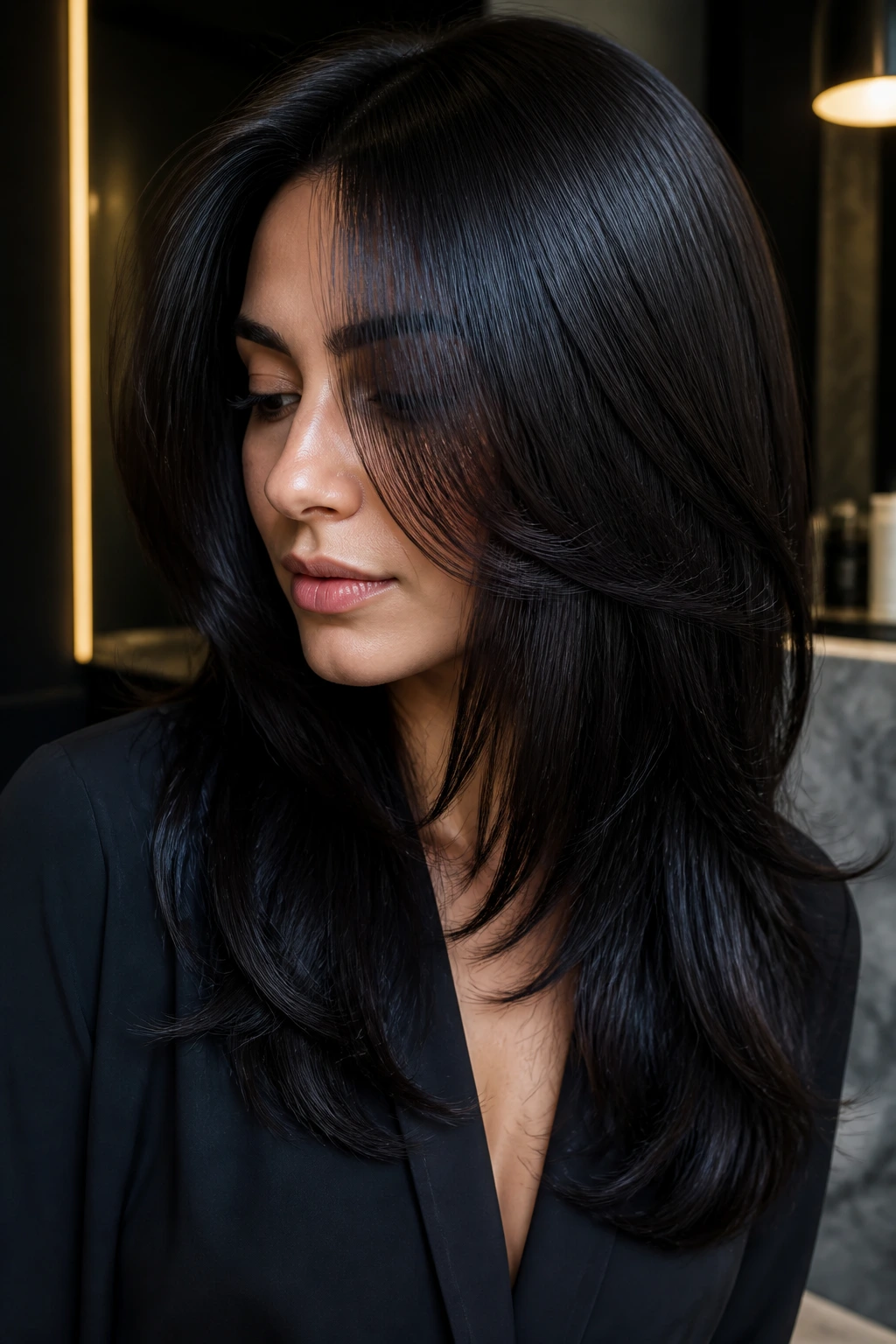
Midnight brown is not for subtlety. It’s for shine. The blue-black cast gives the brunette a deep reflective edge, and on soft layers that shine travels across the hair in clean lines. The result is dramatic, but the movement keeps it from feeling severe.
This is the color I’d choose when a brunette wants the dark side of the spectrum to look intentional rather than accidental. The layers need gloss here more than brightness, so a silky finish matters. Straight hair shows the shine like glass. Loose bends show it like ink moving on paper.
It’s also a strong choice if your natural hair is already very dark and you want to enrich it instead of lighten it. You do not need highlights to make dark hair interesting. Sometimes you just need depth and shine.
22. Soft Bronde Face Frame
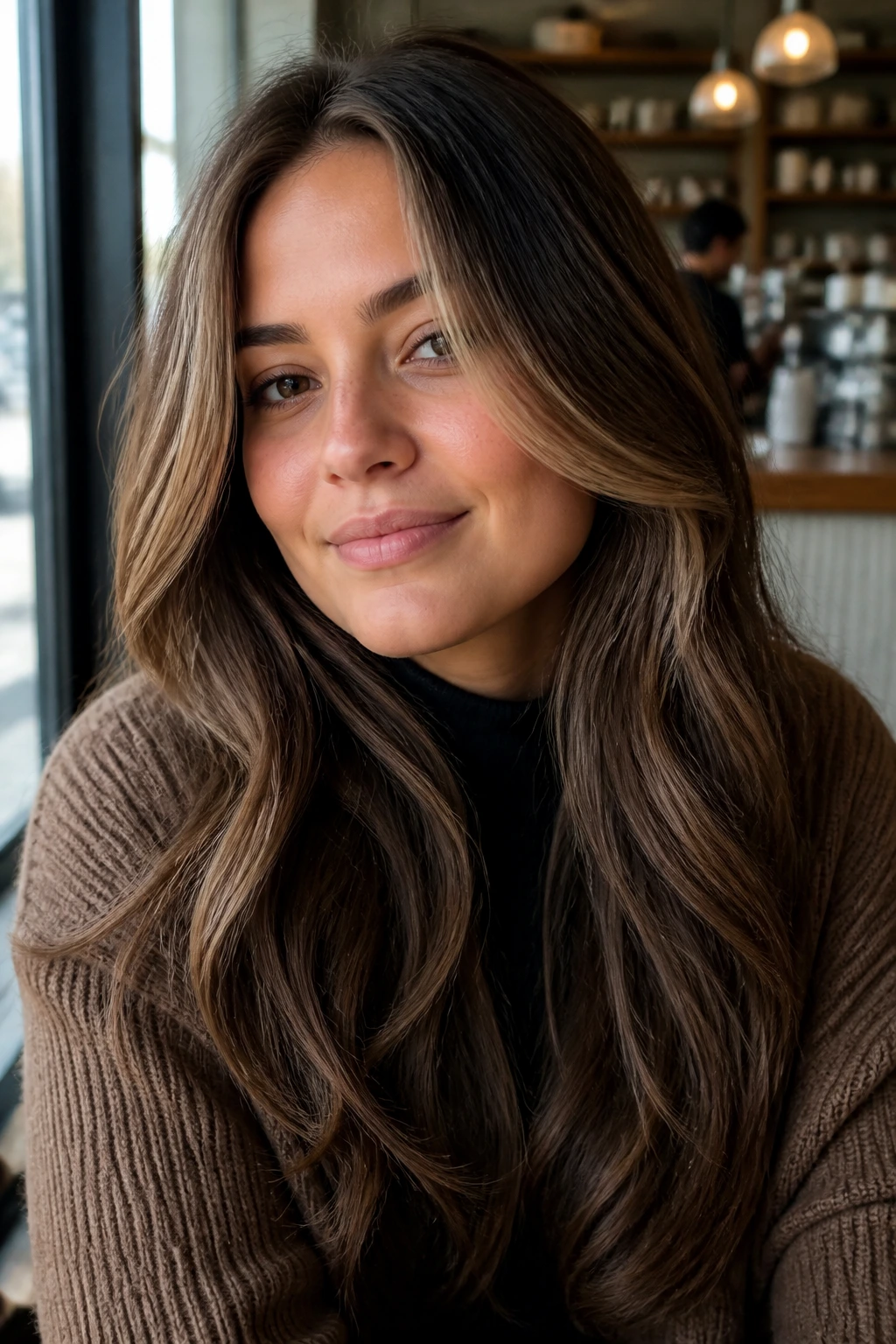
Not every brunette color idea needs to live all over the head. Sometimes the smartest move is a soft bronde face frame with the rest of the hair kept deeper. That keeps the haircut grounded while brightening the part that matters most: the pieces around the eyes, cheeks, and jaw.
This is the color version of a well-placed stretch of light. It’s modest, but it changes the whole read of the haircut. If your soft layers already give you movement, the face frame adds focus. It helps the layers stand out without pushing you into a high-contrast blonde job.
Ask for a subtle lift no more than a couple of levels lighter than your base, then keep the brightness concentrated near the front and through the topmost bend of the layers. That placement makes the cut look intentional instead of overlightened.
23. Burgundy Brown Melt
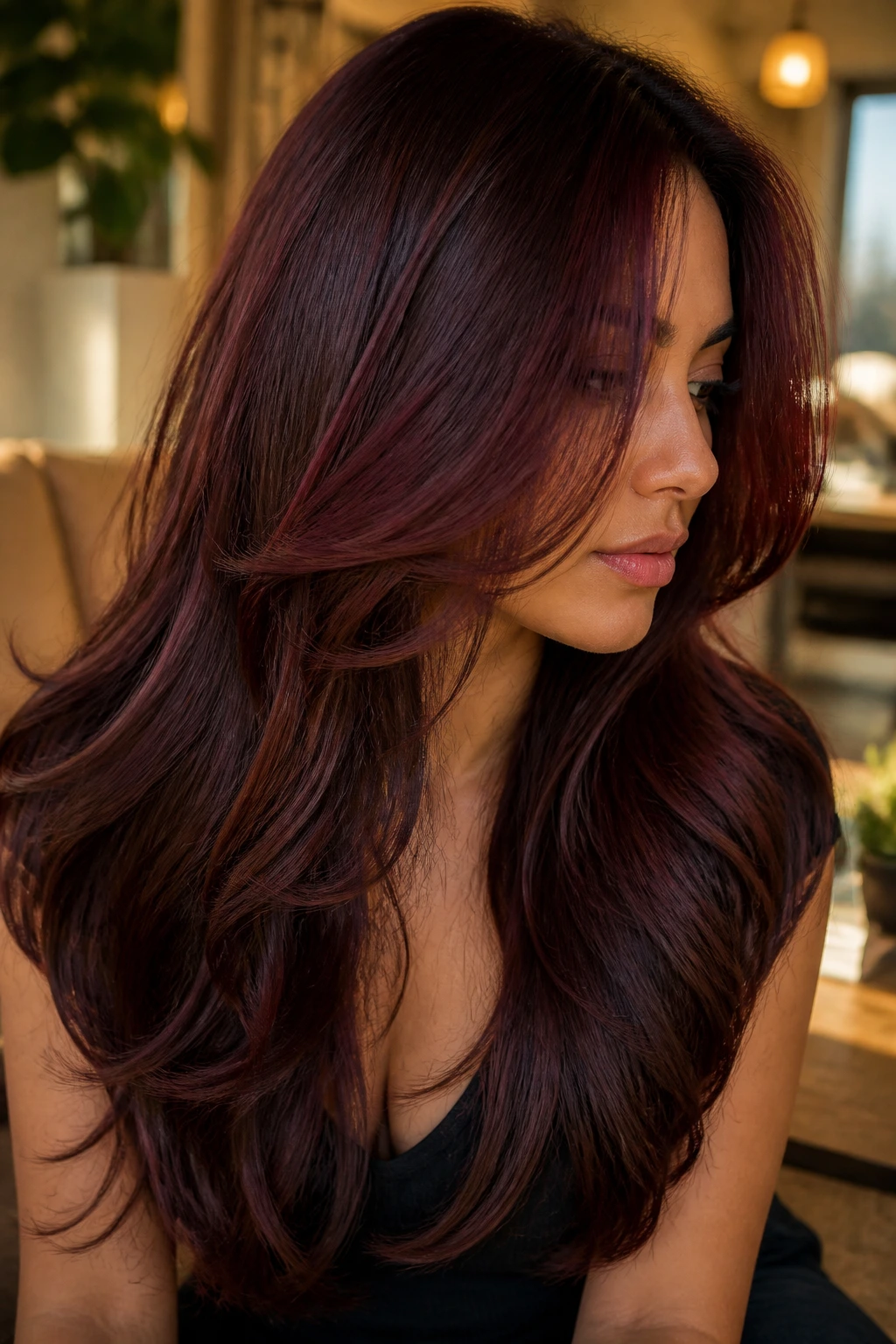
Burgundy brown has a wine-dark richness that looks especially good once layers start moving. The brown base keeps it grounded; the burgundy makes it glow in bends and around the face. It is one of the easiest ways to wear red tones without going full redhead.
The melt works best when the burgundy is strongest through the outer layer and softer underneath. That creates a change in tone rather than a hard stripe of color. On curls, it looks plush. On blowouts, it looks glossy and deliberate.
If you like deeper shades with personality, this is a strong pick. It also fades in a useful direction, often leaving behind a warm brunette with a slight berry cast instead of a flat brown.
24. Golden Hazelnut Swirl
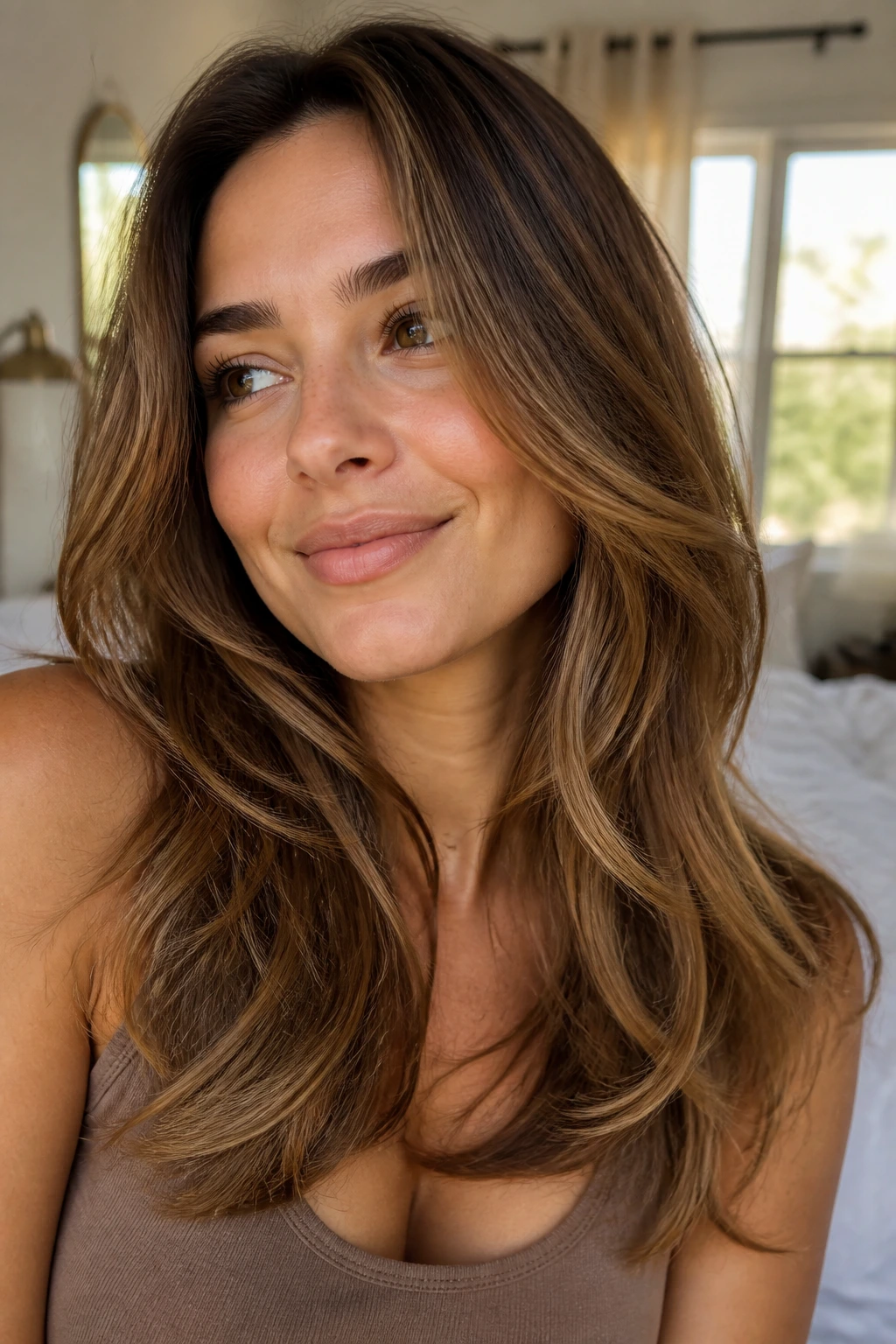
Golden hazelnut sits in that sweet spot between warm and neutral, which makes it easy to wear on a layered cut. The gold is soft, the hazelnut keeps it brown, and the swirl placement lets the layers show off both tones at once.
This one is lovely when the haircut has soft ends and a bit of internal layering. The color breaks apart in movement, so the hair looks fuller without looking blown out. It’s not loud. It just looks healthy and well lit.
If your brunette tends to look flat in winter light or indoor lighting, golden hazelnut can fix that without a giant contrast jump. It warms the face, gives the ends more dimension, and still grows out in a calm way.
25. Auburn Ribbon Ends
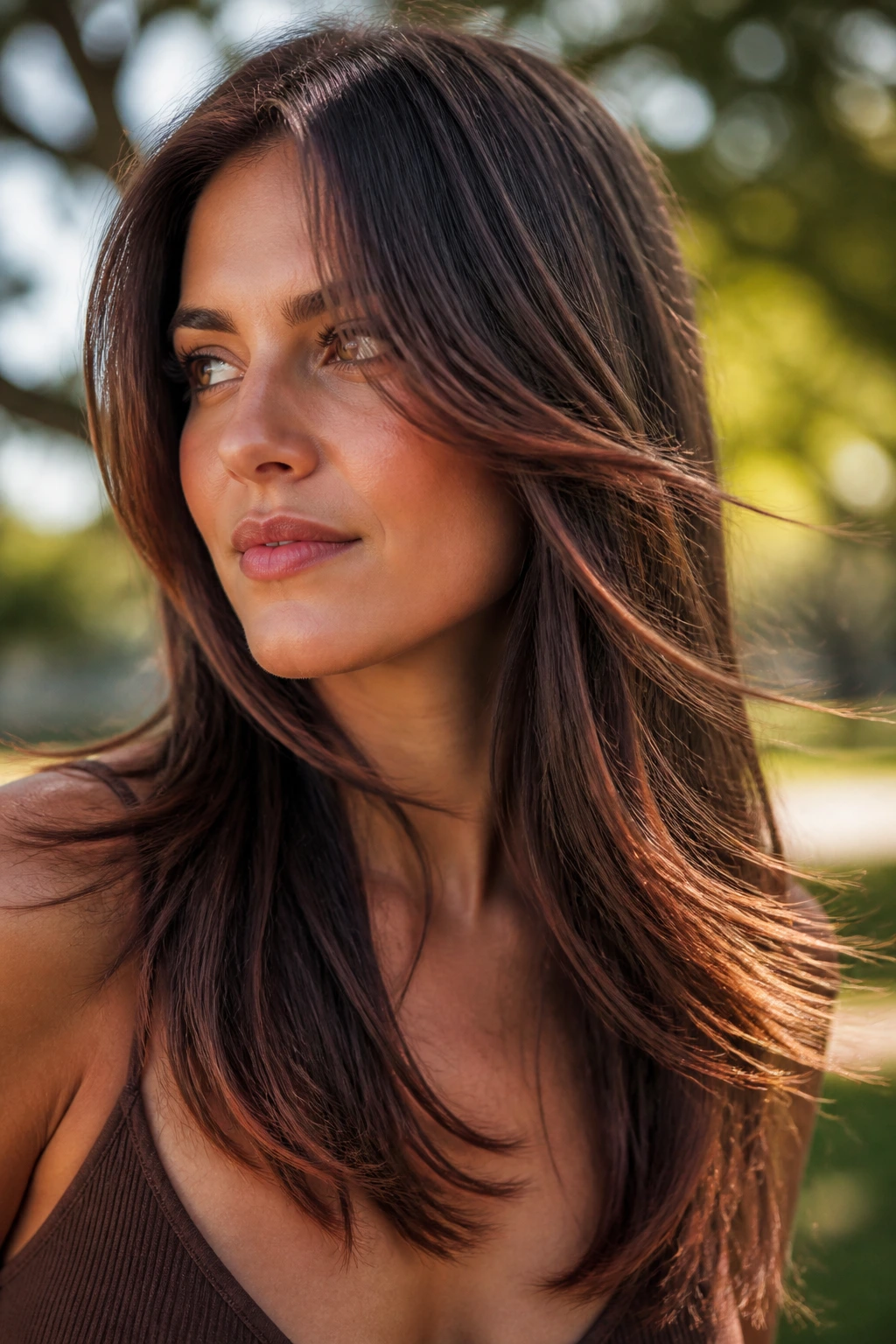
Auburn ribbon ends are a clever way to keep the brunette base intact while giving the layers a little edge. Instead of coloring the whole head, the warmth concentrates toward the bottom half, where the movement is easiest to see. Every flip of the layer shows a bit of red-brown shine.
This is especially good on haircuts with soft layering around the shoulders and collarbone. The ribbons show as the ends turn under or away from the face, which makes the whole cut feel more animated. It’s also a nice option if you want a color shift that won’t demand constant root attention.
The look is best when the auburn is blended, not painted in thick lines. Thin ribbons keep the finish airy. Thick ones can make the ends look heavy, and that defeats the point of a soft layered cut.
Why Soft Layers Change the Way Brunette Color Reads
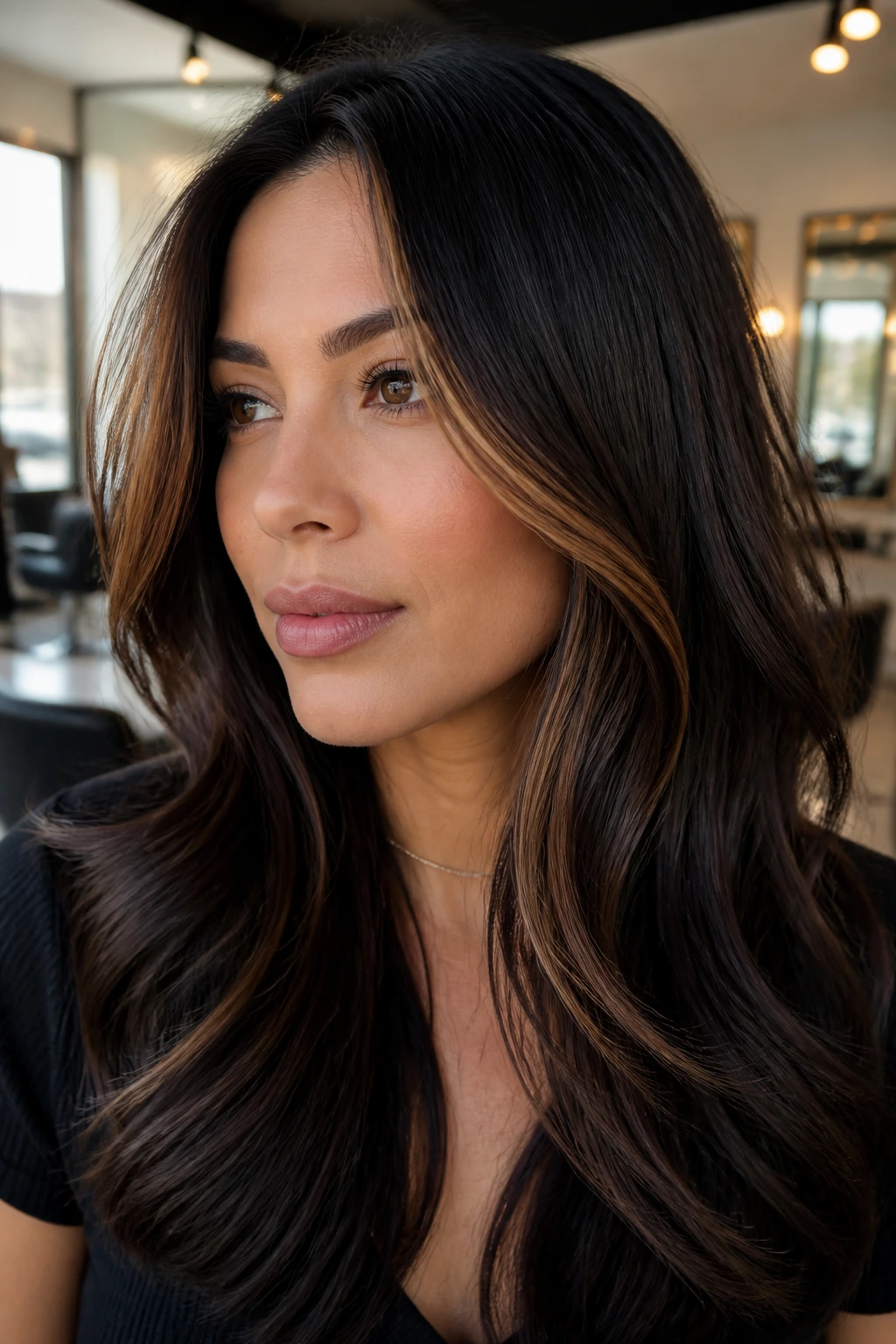
Soft layers are not a neutral backdrop. They change how brunette color behaves because they create little shifts in height, texture, and light. A one-length cut tends to show color in broad blocks. A layered cut breaks that up, which means the same shade can look warmer at the ends, deeper near the crown, and brighter right around the face.
That is why brunette color placement matters so much here. A root melt keeps the top grounded. Babylights keep the surface alive. Lowlights inside the cut stop the ends from looking skinny or over-processed. When all three work together, the haircut looks intentional instead of busy.
Face-framing pieces deserve special attention. If they’re too bright, they can dominate the whole style. If they’re too dark, they disappear the second the hair swings forward. The best version usually lives one to two levels lighter than the base, with a soft blend at the cheekbone rather than a hard line at the root.
And yes, texture changes the result. Straightened layers show color in cleaner lines. Wavy or curly layers scatter it. That means the same formula can look bolder in curls and softer in a blowout. Worth remembering.
Tools, Glosses, and Salon Terms Worth Knowing
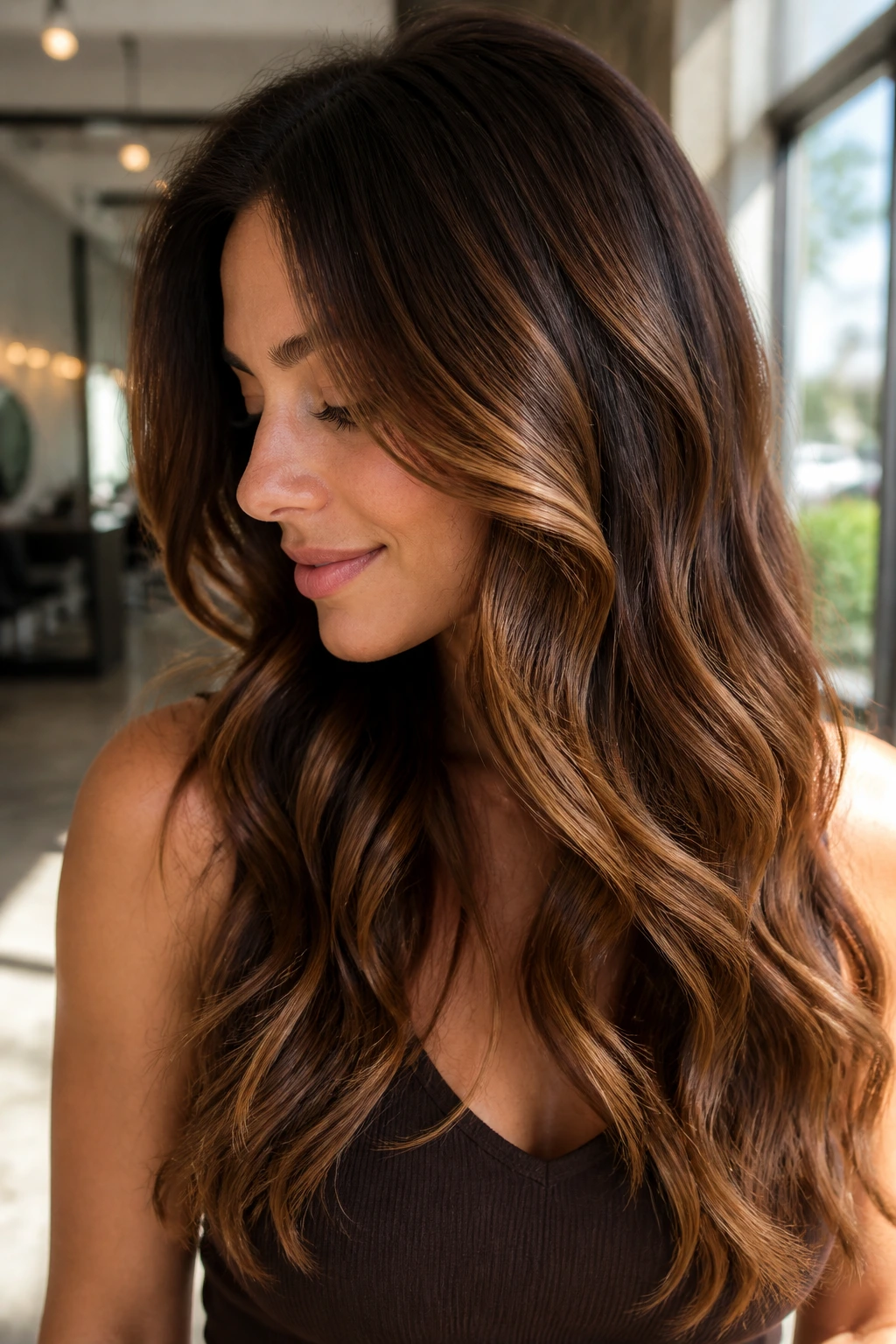
- Balayage brush: A soft brush made for hand-painted color; it helps create those ribbon-like brunette highlights instead of stripey sections.
- Tint bowl and color brush: Useful for glosses, root smudges, and precise face-framing placement when the front pieces need extra control.
- Foils or meche: Foils give more lift and tighter control, which matters if your brunette needs a bigger shift than a soft gloss can deliver.
- Sectioning clips: Clean sectioning makes a huge difference on layered cuts because the face frame and crown often need different treatment.
- Demi-permanent gloss: A deposit-only color that adds tone and shine without the full commitment of permanent dye.
- Color-safe shampoo: Keeps brunette tones from fading into that washed-out brown that happens after too many harsh washes.
- Blue shampoo: Helpful if your brunette starts pulling orange, though it should be used sparingly or it can dull the shine.
- Heat protectant: Layered brunettes show heat damage fast because the ends are visible; this is not the place to skip it.
- Wide-tooth comb: Better than yanking a brush through damp, highlighted layers, especially if the ends are delicate.
- Reference photos with similar lighting: Not a tool in the literal sense, but probably the most useful thing you can bring to a color appointment.
Picking the Right Shade for Your Base, Undertone, and Layer Length
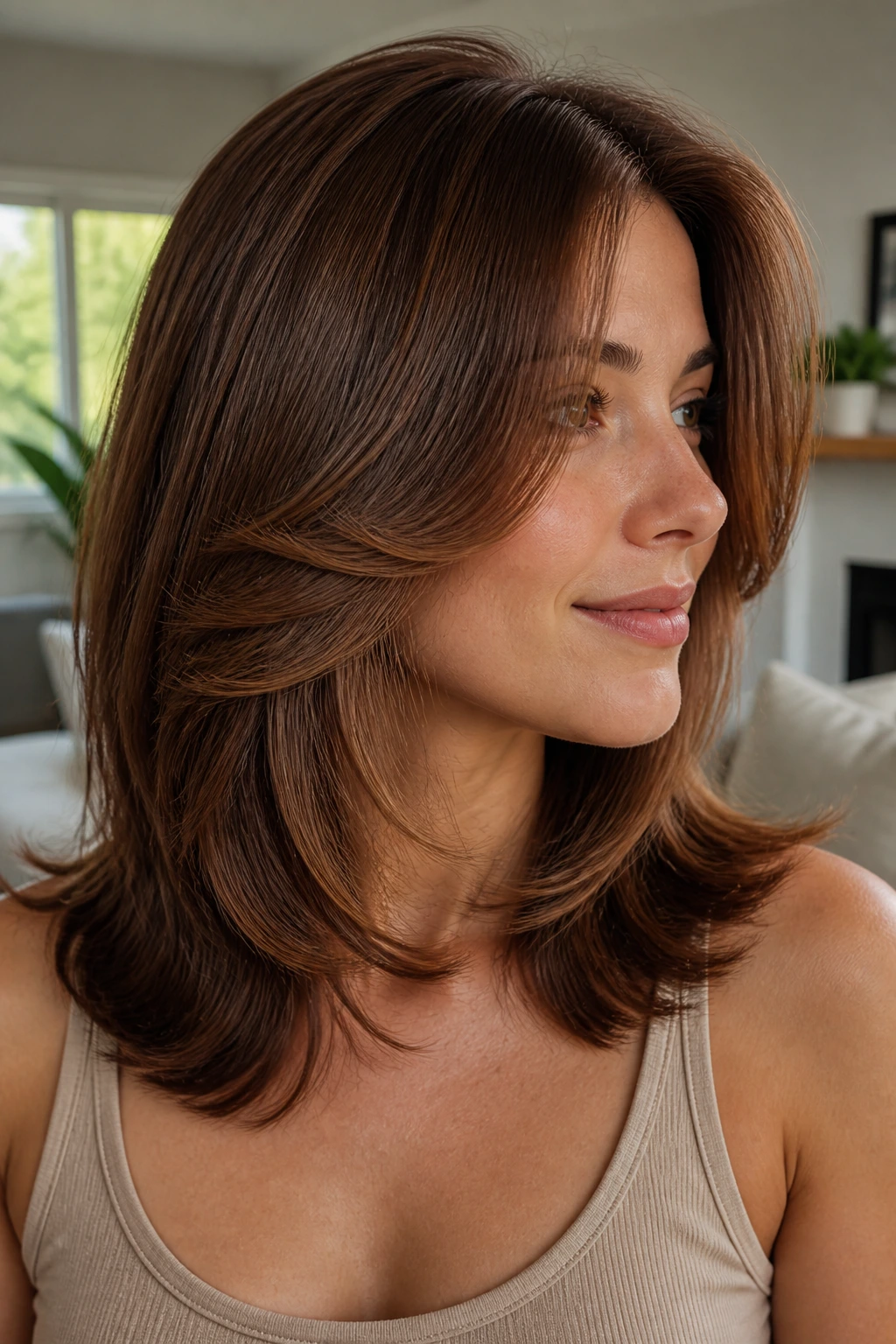
Brunette color is easiest to choose when you stop thinking in vague color names and start thinking in levels. A level 3–4 brunette can hold smoky mocha, blue-black shine, or burgundy depth without needing a huge lift. A level 5–6 brunette can handle caramel, honey, beige, and chestnut with less effort. If your hair is closer to a medium brown, the lighter looks will show faster and may need more upkeep.
Undertone matters more than most people admit. Warm skin usually plays well with caramel, toffee, copper, chestnut, and hazelnut. Cooler skin tends to love mushroom brown, ash mocha, iced mocha, and smoky bronde. Neutral skin can wear both, which is the annoying luxury of being able to choose almost anything.
Layer length changes the visual result. Short face-framing layers need softer placement because the color will show in a bigger, brighter swath. Longer layers can carry more contrast without looking busy. If your haircut is very feathered, keep the lightest pieces thin. If the layers are broader and rounder, you can use slightly chunkier ribbons and still keep the style calm.
Gray coverage changes the plan too. If you’ve got scattered silver at the temples or through the crown, a root shadow plus gloss can blend it better than highlights alone. Sometimes a little depth is the real fix.
How to Wear These Colors with Everyday Styling
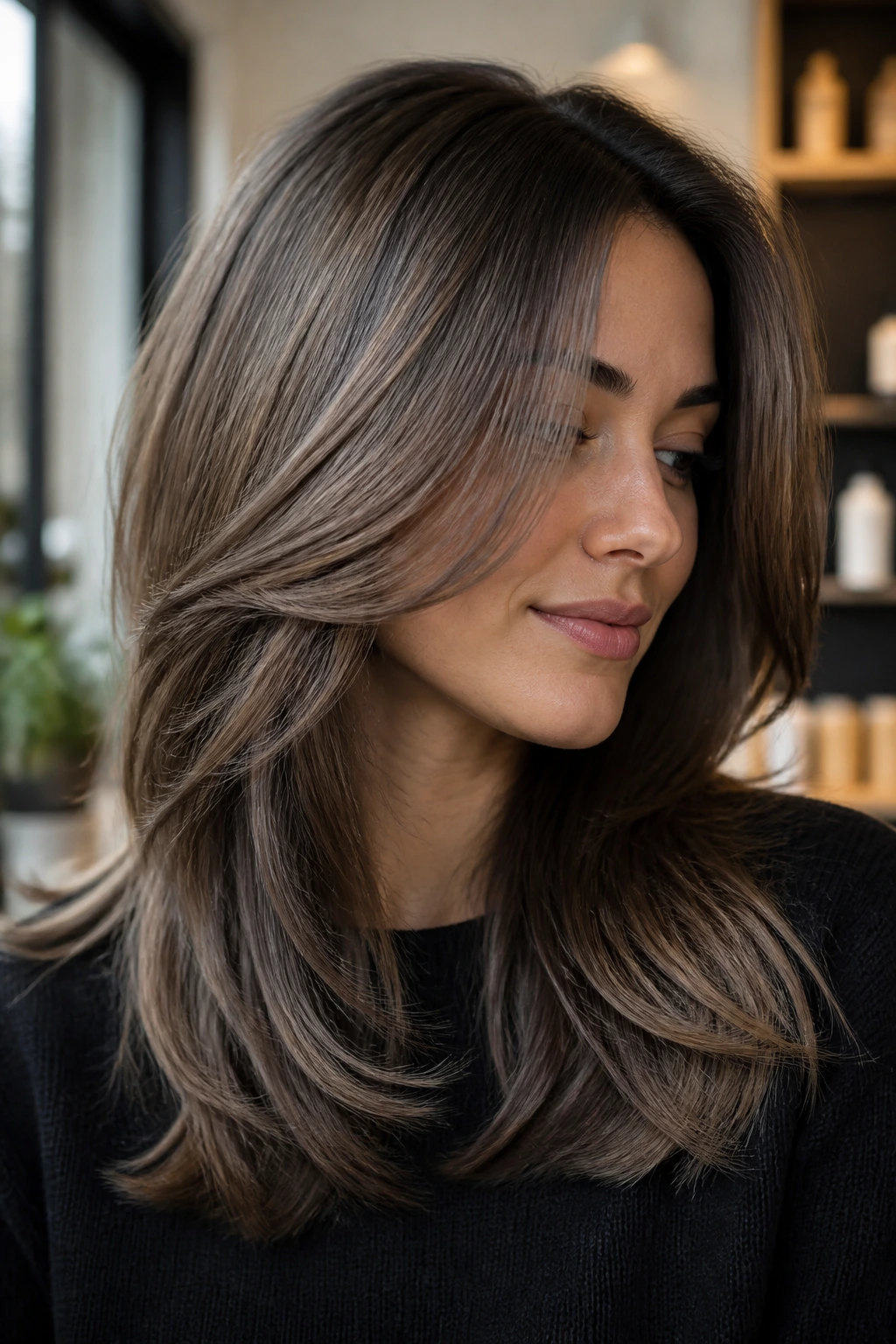
Presentation: Soft layers show their best shape when the hair has a bend, not a hard curl. A round brush blowout, a 1.25-inch iron, or even a loose bend created with a flat iron will make brunette ribbons look more dimensional. The color reads best when the ends can move.
Companion Cut: Curtain bangs, long face-framing layers, and collarbone-length cuts all make these shades easier to wear. A blunt bob can still handle brunette dimension, but the whole point here is motion, and soft layers give it room.
Style Match: If you wear minimal makeup, keep the front pieces subtle and close to your base. If you like a stronger makeup look, brighter money pieces or copper accents can balance the face. Gold jewelry tends to flatter warm brunettes. Silver or pewter often looks cleaner with ash and mushroom tones.
Maintenance Rhythm: A lighter, face-framing color needs more touch-ups than a full glossed brunette. Plan for the bright front pieces to refresh first, while the deeper root and mid-lengths can usually stretch longer. That balance keeps the haircut from looking overcolored.
Extra Color Tips for Shine, Depth, and Soft Contrast
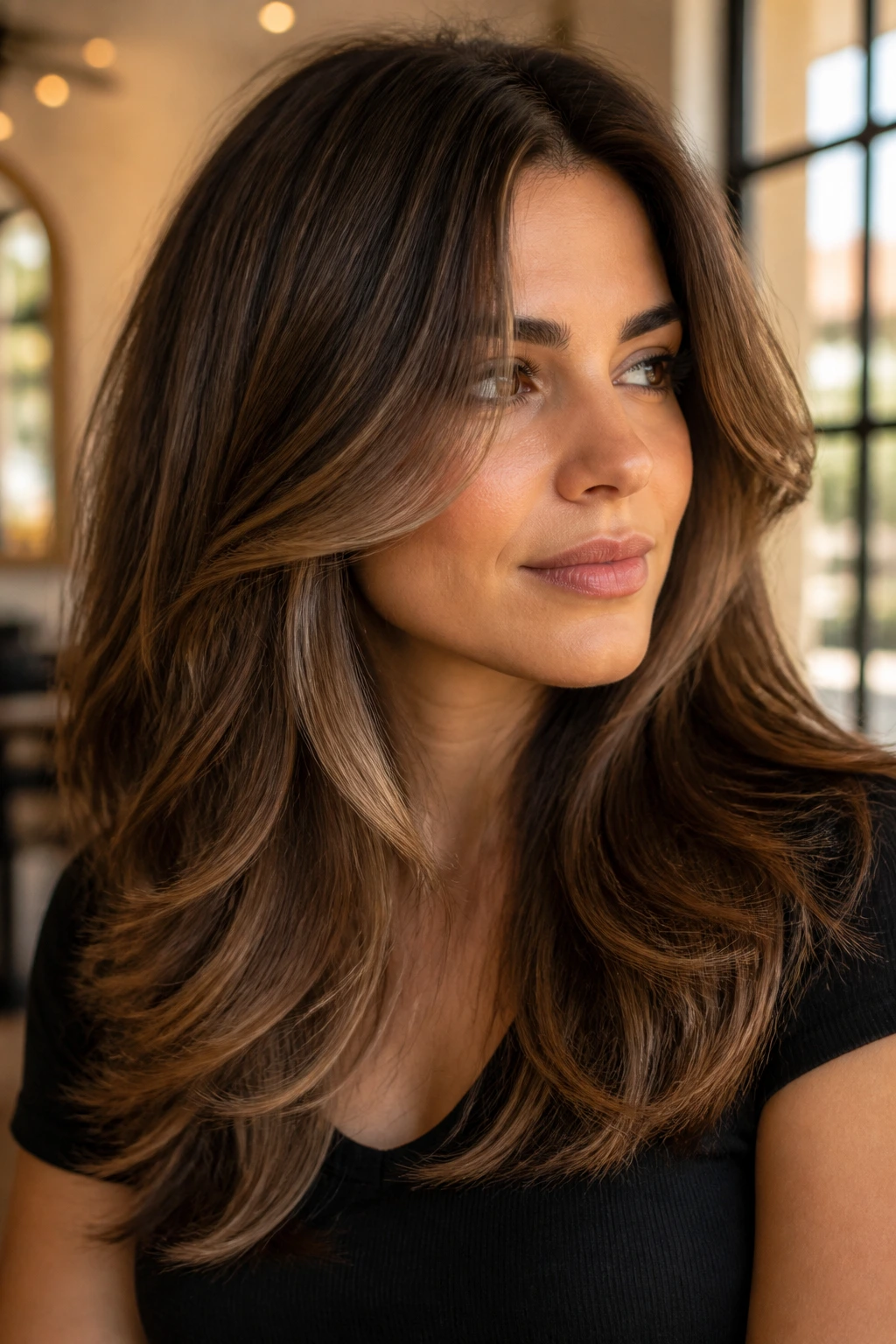
Gloss Enhancement: A clear or tinted gloss every 4 to 6 weeks keeps brunette shades from looking dry or dull. It also helps the layers read as soft pieces instead of frayed ends, which is half the battle.
Tone Control: If your brunette pulls too orange, a cool toner or blue-leaning gloss can calm it down. If it goes flat and muddy, a warmer glaze in the caramel or chestnut family usually brings the shine back without turning the hair gold.
Texture Match: Wavy and curly hair can handle a little more contrast because the movement breaks up the color naturally. Sleeker styles often need finer placement, since broad ribbons show more clearly when the hair lies flat.
Make-It-Yours: If you want lower maintenance, ask for deeper roots and lighter ends only around the face. If you want more drama, concentrate the brightness on the cheekbone area and keep the underside dark. If you want a gray-blending result, stay closer to beige, taupe, or smoky brown so the grow-out stays soft.
Common Color Mistakes That Make Brunettes Look Flat
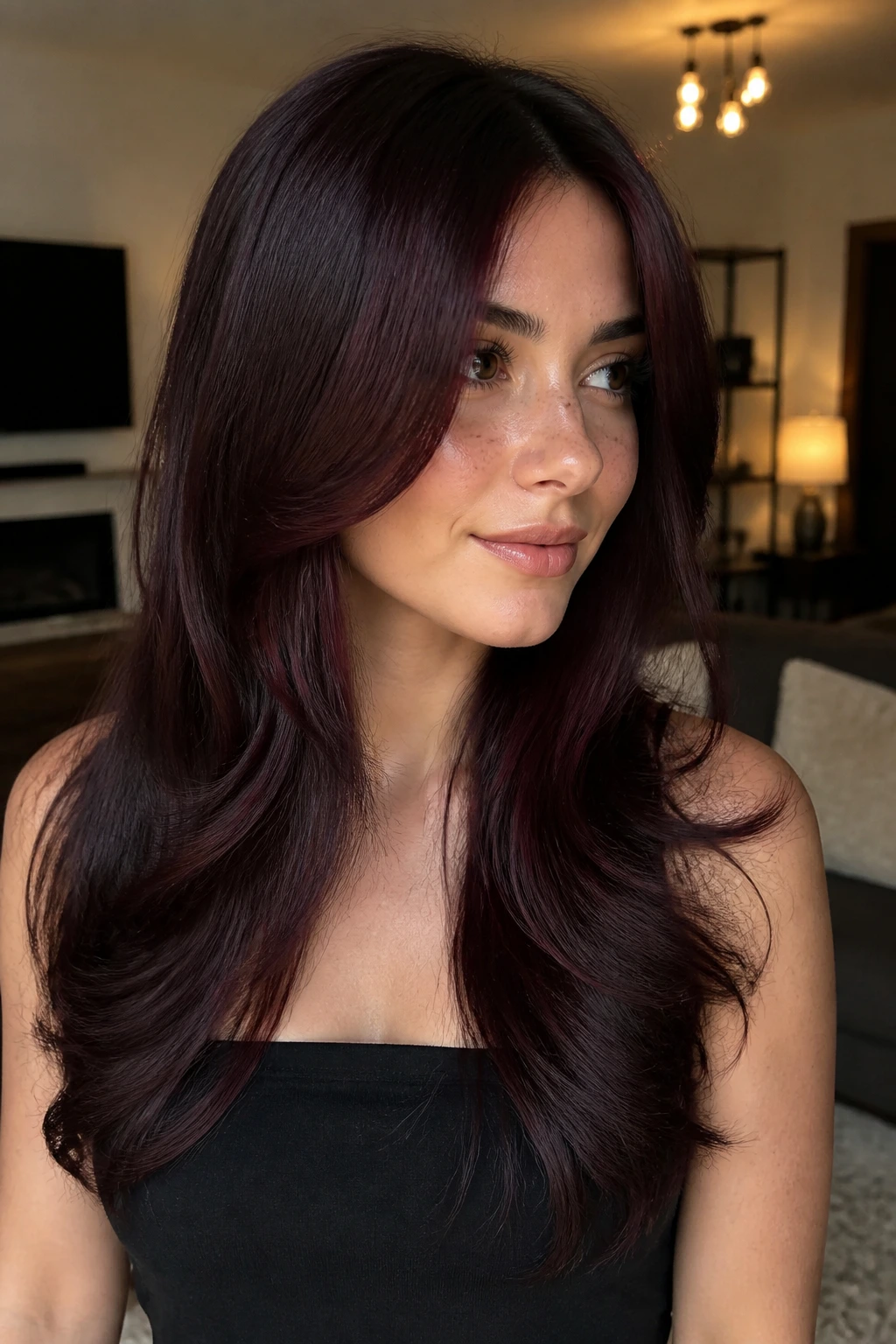
The first mistake is making the front pieces too wide. It sounds dramatic in the chair, and then it looks blunt once the hair moves. Thin, thoughtful face-framing pieces usually look far better on layered brunettes because the cut already gives you movement.
Another one: lifting everything too light. Soft layers need depth under the surface or the haircut starts to look wispy. Keep some brunette in the interior and underlayer so the ends do not disappear.
Tone mismatch is a big one too. Warm highlights on a cool brunette base can look patchy. Cool ash on a very golden base can look dirty. If the undertone and base fight each other, the whole style gets fuzzy. Better to choose a shade family that already lives near your natural color.
Skipping a gloss is a mistake I see constantly. Brunette hair loses polish fast once it’s colored, especially around the ends. A clear or tinted gloss gives the layers that smooth, reflective finish people are usually chasing.
Last, do not overdo purple or blue shampoo. One or two uses can calm brass. Too much can leave brunette hair dry, dull, and slightly khaki at the ends. Nobody wants khaki hair. Nobody.
Variations and Adaptations to Try
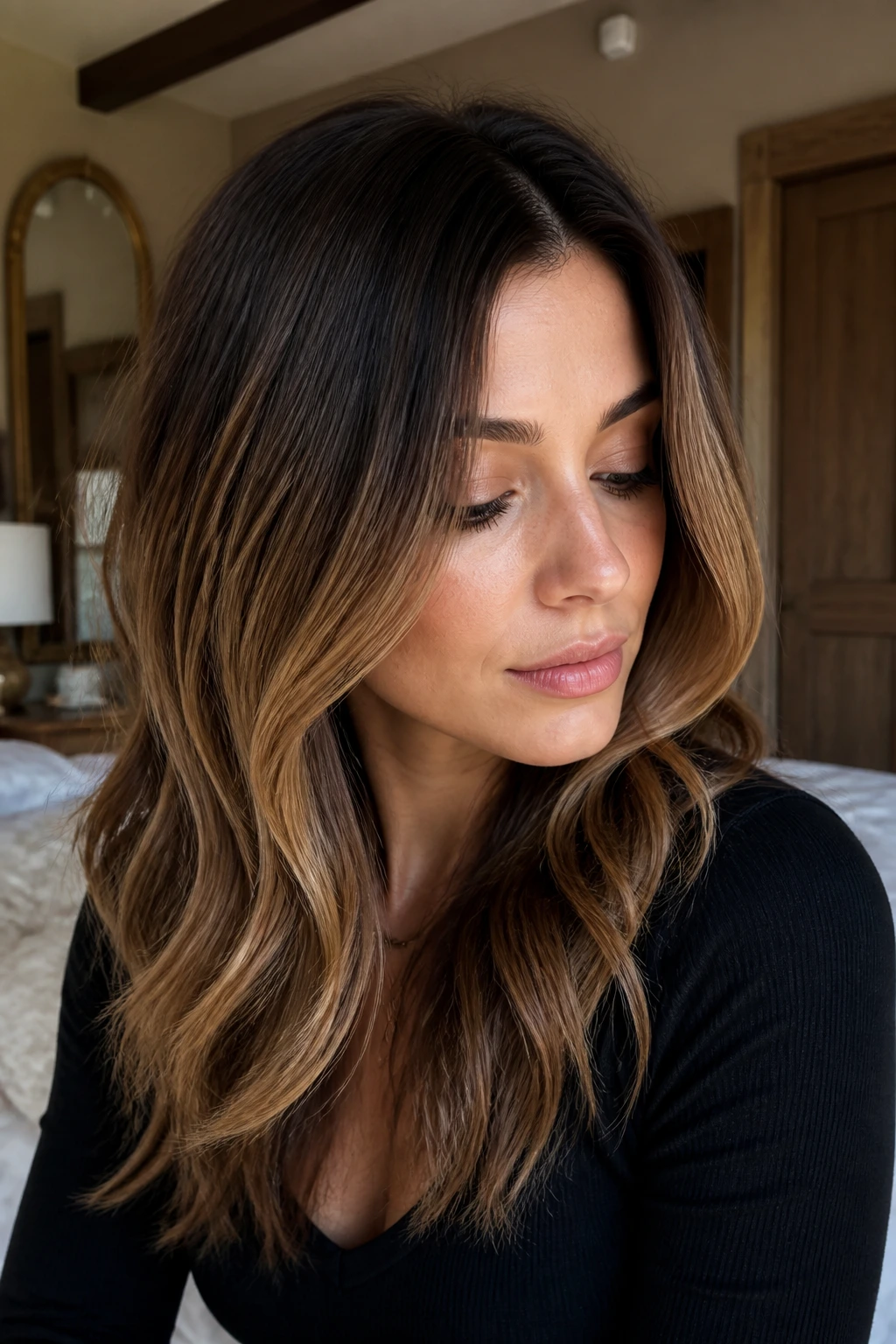
Low-Maintenance Root Shadow: Keep the first inch or two near the scalp deeper, then place all the brightness through the mid-lengths and face frame. This grows out quietly and works well if you hate obvious regrowth lines.
Curly Layer Version: Ask for softer ribbons and skip any heavy front striping. Curly layers already create movement, so the color should be scattered and lighter on the surface rather than packed into one area.
Gray-Blending Brunette: Choose taupe, beige, chestnut, or smoky mocha tones that sit close to silver hair. The goal is not to cover every gray strand, but to blend them into the brunette so the grow-out feels softer.
Warm Glow Edit: Push the shade family toward caramel, honey, auburn, or cinnamon if your skin likes warmth and your haircut needs more shine. This version looks especially good on feathered ends and blowouts with a round brush.
Cool Smoke Edit: Shift into ash mocha, mushroom brunette, or iced mocha if brass is your enemy. Cooler brunettes often need a little extra gloss to keep them from looking too flat under indoor lighting.
Accent-Only Refresh: If you already like your brunette base, brighten only the face frame and a few outer ribbons. That gives the layers more shape without committing to a full color overhaul.
How to Keep Brunette Color Fresh Between Appointments
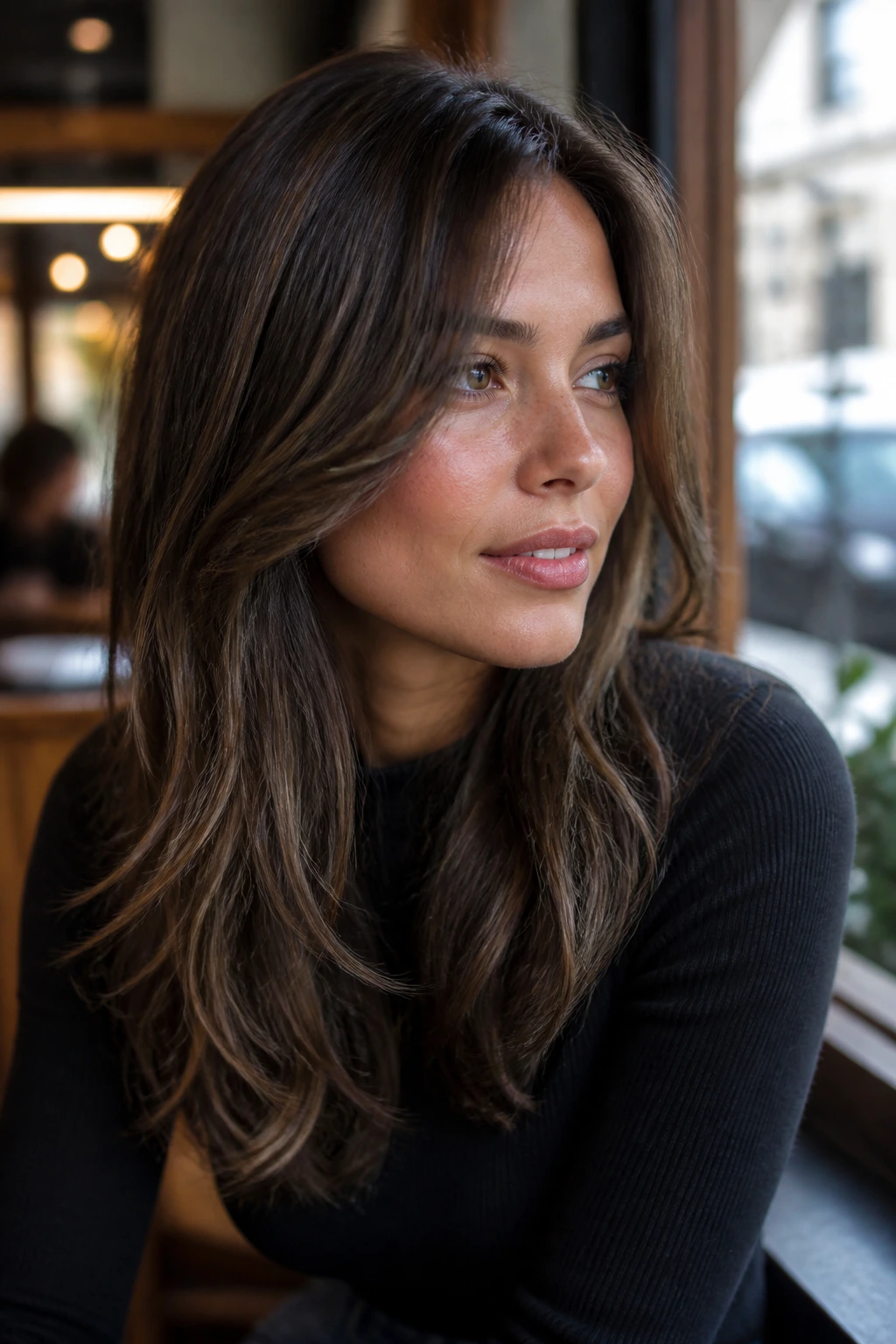
Brunette color is forgiving, but it is not maintenance-free. A color-safe shampoo 2 to 3 times a week keeps the tone from slipping too fast. If your hair is dry, alternate with a gentler moisturizing shampoo and concentrate conditioner from the ears down, not on the roots.
Glosses and toners usually need refreshing every 4 to 8 weeks, depending on how porous your ends are and how much heat you use. Lighter face-framing pieces may need attention sooner than the rest of the head. That is normal. The front is the first place the eye goes, and the first place fade shows up.
Heat matters more than people think. Blow-drying on high heat every day can rough up the cuticle and make brunette shades lose shine in a hurry. A heat protectant before blow-drying or curling buys you more time between salon visits. So does a cooler rinse at the end of washing, which helps the cuticle lie flatter.
If you wear your hair in a layered blowout, a silk pillowcase or a loose braid at night can save the ends from friction. That sounds fussy until you compare it with the look of tangled, puffy, faded brunette ends. Then it feels worth it.
Frequently Asked Questions About Brunette Hair Color with Soft Layers
Can soft layers make brunette highlights look too chunky?
Yes, if the highlights are too wide or too bright. Soft layers break up the shape of the hair, so thin ribbons, babylights, and glossed face-framing pieces usually look better than thick stripes.
What brunette shade needs the least upkeep?
Deep mocha, mushroom brunette, walnut brown, and root-shadowed toffee all grow out quietly. Anything that stays close to your natural base will usually last longer and fade more softly.
Do I need bleach for these looks?
Not always. Glosses, root smudges, lowlights, and some face-framing enhancements can be done without bleach on darker brunettes. If you want a major lift to caramel or beige, lightening is usually part of the process.
Which shades work best if my skin is warm?
Caramel, honey, chestnut, copper, toffee, and golden hazelnut tend to flatter warm undertones. They echo the warmth already in the skin instead of fighting it.
Which shades are better for cool undertones?
Mushroom brunette, ash mocha, iced mocha, smoky bronde, and blue-black shine are the safer bets. They keep the overall look clean instead of turning orange.
How do I keep the front pieces from turning brassy?
Use a blue shampoo sparingly if the tones drift orange, and ask for a cool or neutral toner at refresh appointments. The trick is controlling brass without stripping the shine out of the whole head.
Will these colors work on fine hair?
Yes, but fine hair usually looks better with soft ribbons, babylights, and root shadow rather than thick panels of light. Too much contrast can make fine layers look thinner than they are.
Can I blend gray hair with brunette color instead of covering it?
Absolutely. That is often the smarter move with soft layers, because a blend of beige, taupe, or chestnut can soften the gray without creating a harsh line at the root.
The Shade That Moves With You
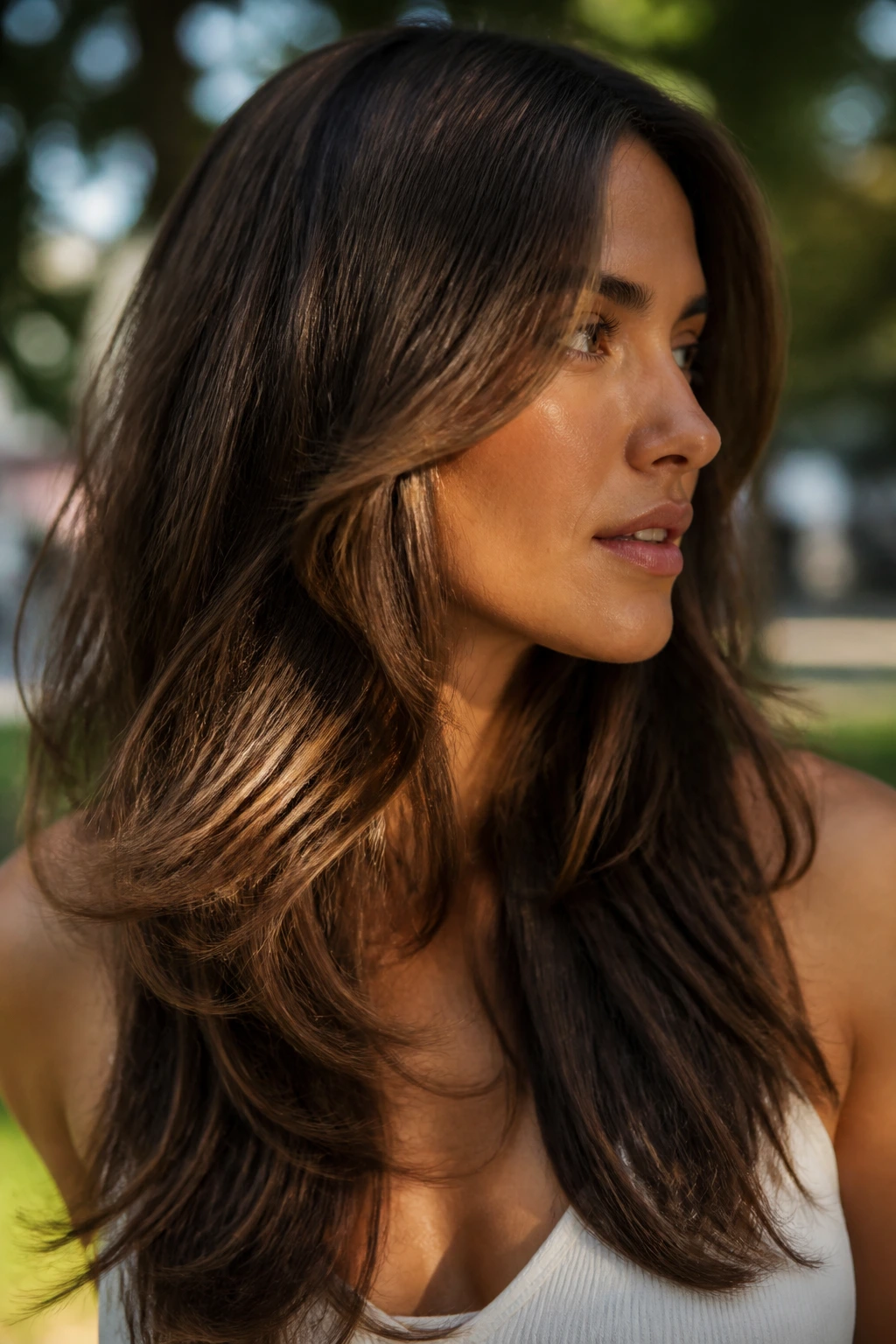
The best brunette color for soft layers is the one that respects the cut. That sounds obvious until you see how often color gets painted as if the hair were still one flat sheet. On layered hair, the light should move. The depth should stay in the right places. The face frame should do its job without taking over the whole head.
That’s why these shades work: mushroom brown, cherry cola, toffee melt, smoky bronde, chestnut gloss, copper ribbons, and all the rest are not just color ideas. They are ways of giving the haircut more shape. Pick the one that matches your base, your maintenance tolerance, and the amount of contrast you actually want to see when you catch your reflection in a window.
And if you’re torn between two, choose the one that keeps a little depth at the root and a little brightness around the face. That balance tends to age best, grow out best, and look the most natural when the layers start doing their quiet work.