



A round face does not need to be hidden. It needs shape. Draped bangs do that job with a kind of quiet precision that blunt fringe never quite manages: they draw the eye downward, then let it slide outward along a soft curve, which makes the face feel a little longer and a little leaner without turning the front of your hair into a hard line.
Wavy hair is the part that makes these bangs interesting. Straight hair can be persuaded into almost anything with a brush and a flat iron, but waves have opinions. They spring, bend, puff, and collapse in ways that can be annoying at the salon and gorgeous the second you stop fighting them. Draped bangs for round faces and wavy hair work best when the cut respects that movement instead of flattening it into submission.
The trick is length, not drama. A good draped fringe usually lives somewhere between the brow and the cheekbone, sometimes dipping to the lip on the outer edge, with enough softness at the ends that the whole shape feels like it belongs to the haircut rather than sitting on top of it. Get that balance right, and the bangs do something blunt bangs can’t: they frame the face while keeping the front open and airy. That matters a lot on rounder faces, where the wrong fringe can widen the middle of the face in a hurry.
Why This Collection Earns a Spot in the Save Folder
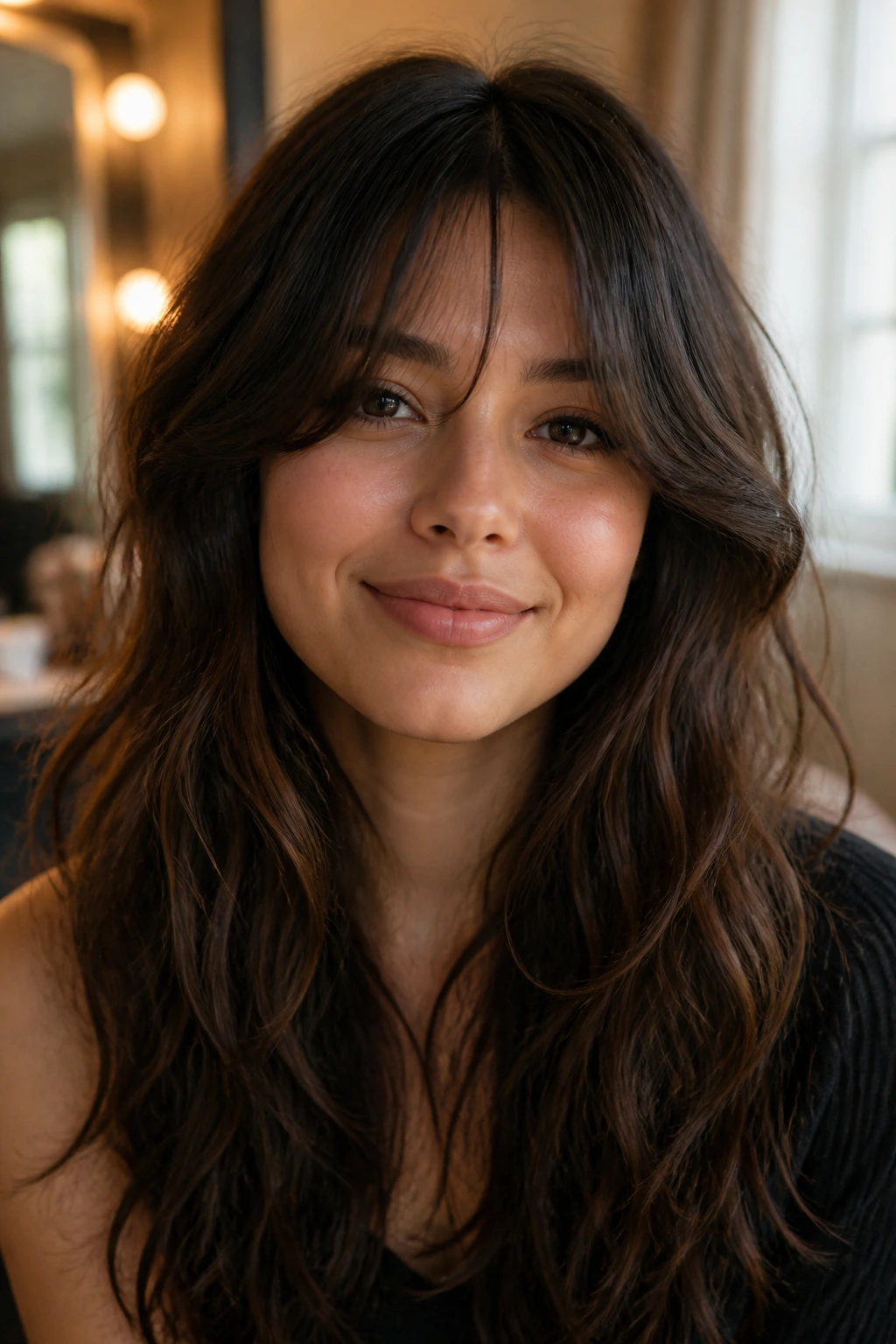
-
It softens width without cutting off the face: The longer center point and side-swept ends create diagonals, and diagonals are your friend when you want a round face to look a touch longer.
-
Waves do half the styling for you: A natural bend keeps the fringe from looking helmet-straight or overworked, which is exactly why these cuts feel better on wavy texture than a stiff, blunt bang.
-
The grow-out is less painful: Draped bangs can slide into face-framing layers instead of turning into that awkward, chopped-in-between stage that makes people reach for bobby pins too early.
-
They work with a middle part or a soft side part: That flexibility matters when your hair has a cowlick, a strong bend, or a habit of drifting off-center by lunch.
-
The shape can be light, airy, or full: You can keep the fringe whisper-thin for fine waves or build more density for thicker hair, and the effect changes without losing the draped outline.
-
They look styled even when they’re not perfect: A little uneven bend or a slightly broken piece at the cheekbone makes the whole cut feel easier, not sloppier.
1. Cheekbone-Skimming Center Drapes
A good starting point is the classic center-split drape that lands right at the cheekbone and curves inward just enough to soften the face. On a round face, that cheekbone hit matters. It gives the eye a clear diagonal to follow, which is more flattering than a short fringe that stops at the widest part of the cheeks.
Why It Flatters
The longer center opening keeps the forehead visible, while the side pieces act like rails that guide the eye downward. On wavy hair, this shape usually falls into place with less fuss than a blunt bang, because the natural bend helps the fringe tuck around the face instead of sticking straight out.
Keep the ends light. Heavy bottoms make the shape feel boxy.
How I’d Wear It
Ask for the shortest point to sit somewhere between the brows and the lash line when dry, then let the side pieces fall to the cheekbone. If your waves are looser, this cut looks especially good with a little root lift and a loose bend through the ends.
2. Lip-Length Swoop with a Soft Split
This one is for anyone who wants draped bangs with a little more sweep and a little less “bang” in the old-school sense. The shortest center pieces hover around the upper lip, then the fringe opens into longer wings that brush the jaw. On round faces, that extra length is not wasted space. It’s the whole point.
A lip-length swoop gives you room to play with an off-center part, and that matters when your hair naturally falls to one side anyway. Wavy texture makes this style look expensive in the best way, because the curve reads as intentional even when you let it air-dry.
Best for: medium to thick waves, fuller cheeks, and people who want movement more than polish.
Styling note: blow-dry the roots forward first, then sweep the fringe away from the face with a round brush. Don’t try to make both sides identical. That’s how you get the too-perfect look that fights wavy hair all day.
3. Bottleneck Bangs with Wide Outer Wings
Why do bottleneck bangs work so well on rounder faces? Because they narrow at the center and widen only where the face can handle the volume. The middle starts short and light, then the outer pieces widen and drop toward the cheekbones, which gives the whole forehead a longer shape without cutting the face in half.
This is a smart pick if your waves are dense and need a bit of internal removal. The cut can hold shape without looking puffy, especially if the stylist point-cuts the ends instead of creating a blunt edge. You want movement at the sides, not a shelf.
The outer wings matter more than people think. If they land around the top of the cheek or just below it, they pull the face downward in a way that feels subtle but real. That’s the kind of detail you notice in the mirror before anyone else notices it in a photo.
4. Feathered Side-Curtain Bangs
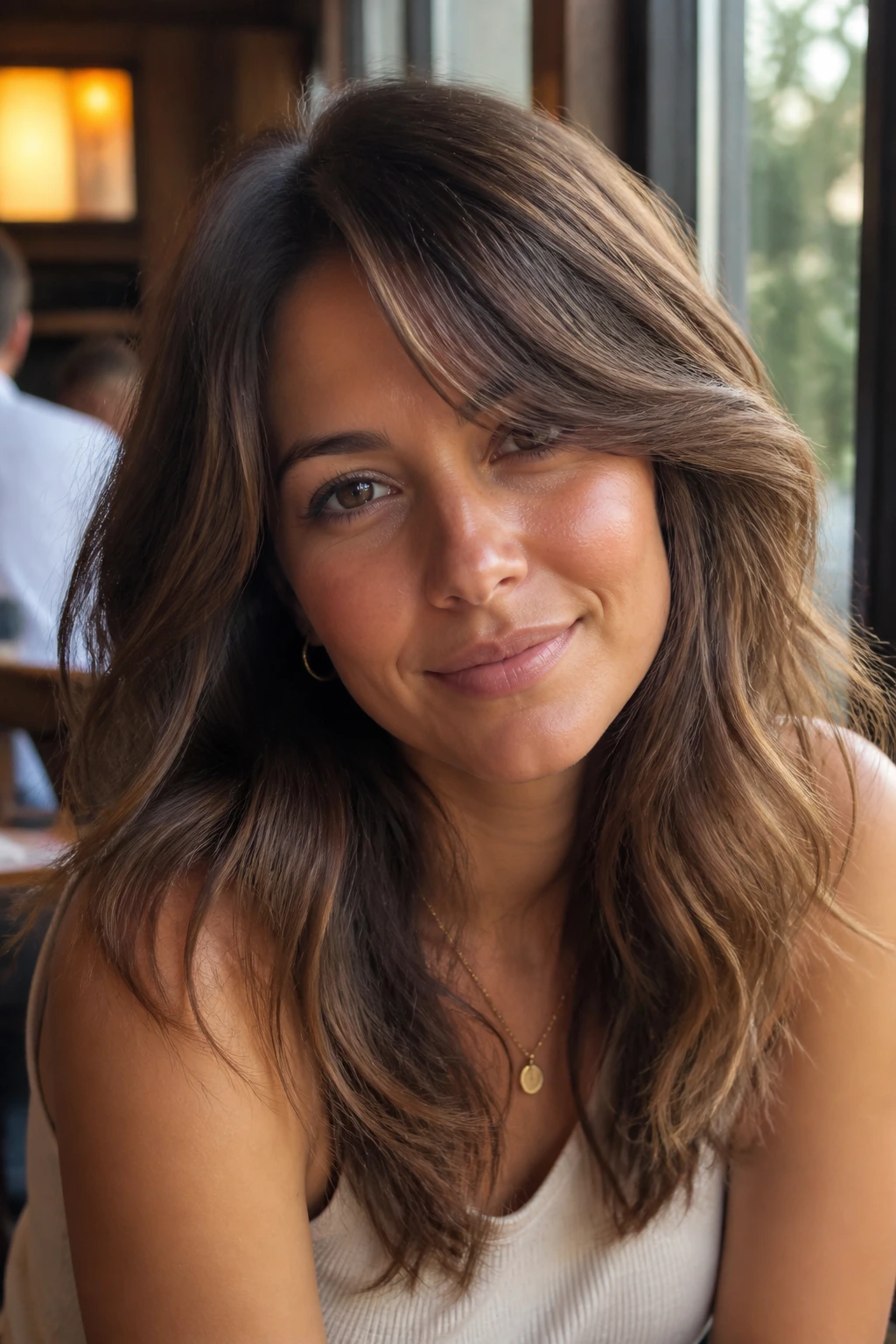
Not everyone wants a center part, and frankly, not everyone should force one. Feathered side-curtain bangs start with a soft side part, then sweep diagonally across the forehead so the shorter side blends into a longer face frame. On wavy hair, that diagonal gives the front section somewhere to go instead of letting it fluff outward.
A round face tends to look best when the front has a little slant. This shape delivers that without the severe line of a side bang from the early 2000s. It’s softer, airier, and easier to refresh after a humid commute or a windy day.
What Makes It Work
- The side part breaks up width at the forehead.
- Feathered ends keep the fringe from looking heavy at the temples.
- Waves add bend, so the shape looks lived-in instead of stiff.
Use a lightweight mousse at the roots and a small round brush just on the front section. You do not need to blast the whole head into submission.
5. Choppy Draped Bangs with a Razor Finish

Choppy draped bangs are the opposite of a tidy, perfectly even curtain. The ends are irregular on purpose, which makes them a strong match for wavy hair that likes to separate into little pieces anyway. On a round face, that broken texture can be a gift: it keeps the fringe from becoming one smooth band across the forehead.
The razor finish is the part that matters. Done well, it removes bulk and leaves a softer edge. Done badly, it frays the ends and makes the bangs look thin in the wrong places. I’d only ask for this if your stylist has a steady hand with textured cuts.
This style is best when you want the bangs to feel relaxed, a little undone, and easy to shove aside on busy mornings. It’s not precious. That’s the charm.
6. Long Crescent Bangs Over Wavy Layers
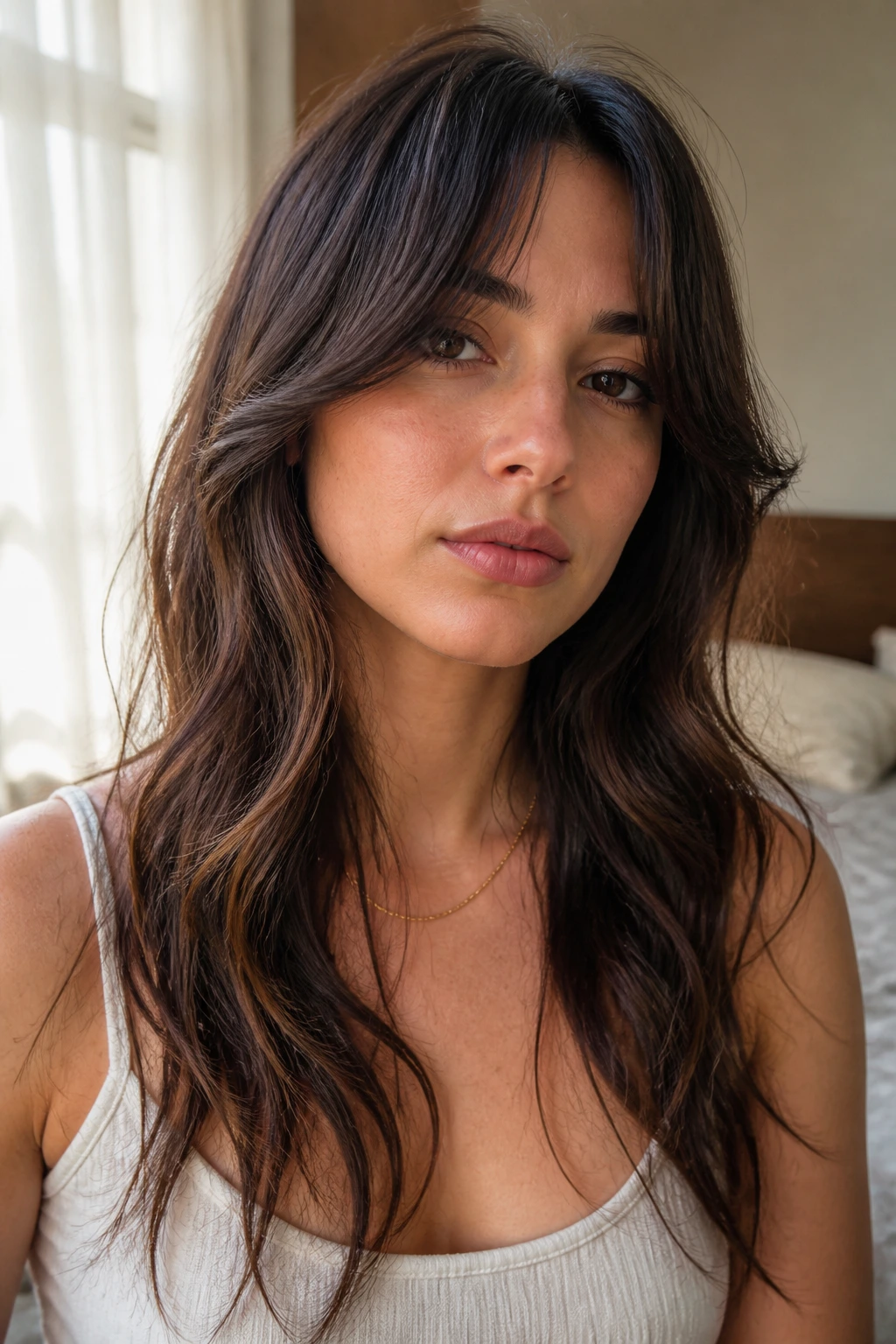
Long crescent bangs arc outward like the top half of a moon, with the shortest center point staying high enough to keep the forehead open and the sides dropping low enough to skim the cheek. That shape is especially kind to round faces because it creates a vertical line in the middle and a wider frame at the edges.
Wavy layers help here. When the fringe blends into the front layers, you don’t get a hard break between “bang” and “hair.” Everything feels connected, which is exactly what makes this style look expensive instead of chopped up.
If your hair is medium-thick and naturally puffs at the temples, this is a good one to try. The longer wings keep the silhouette narrow where you want it and soft where you don’t.
7. Airy Split Fringe for Fine Waves

Fine waves need a different approach. Too much hair in the fringe and the whole thing droops by noon. Too little and the bangs disappear into the rest of the cut. An airy split fringe lands in the middle: light density, open center, soft sides, and just enough curve to show up without feeling heavy.
The real advantage is movement. Fine wavy hair often looks best when the front has some separation, because that little bit of space between pieces keeps the fringe from looking flat against the forehead. A dry texture spray at the roots helps. So does a tiny round brush, used only where the bangs first bend away from the face.
How to Wear It
Let the fringe part itself a little. If every strand is forced into the same direction, you lose the airy part and end up with a skinny, fussy curtain. A few separated pieces at the ends are fine. They help the cut breathe.
8. Jaw-Grazing Face Frames That Start at the Cheek
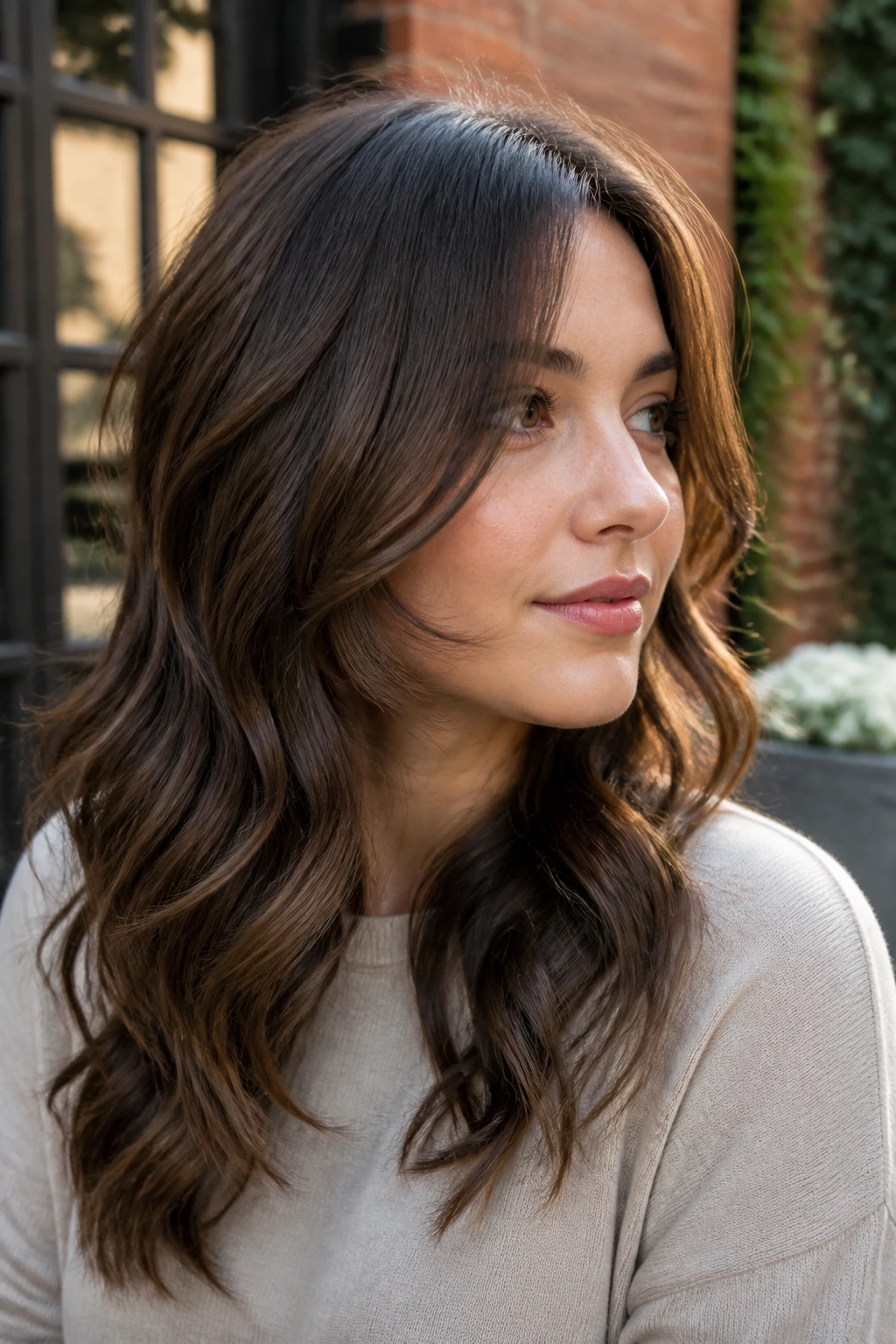
Sometimes the best “bangs” aren’t bangs at all. Jaw-grazing face frames give you the draped effect without committing to a front fringe that sits across the forehead. The shortest pieces start around the cheekbone, then drop toward the jaw, which makes the face read longer and gives round cheeks a cleaner outline.
This is the version I’d hand to someone who says they want bangs but hates the idea of styling them every morning. The shape lives in the front layers, so it is easier to tuck behind the ear, pin back, or let fall naturally when your hair is having one of those days.
It also plays well with wavy hair that expands when it dries. Since the pieces are already long, a little swelling doesn’t ruin the line. It just makes the frame fuller.
9. Grown-Out Curtain Bangs with a Deep Side Bias

A grown-out curtain fringe is not a failure state. Done on purpose, it looks soft, relaxed, and a little cooler than freshly cut bangs. The deep side bias gives round faces a strong diagonal line, while the longer sides drift into the rest of the haircut instead of sitting like a separate section.
This style is especially useful if you’re between trims and don’t want to fight your hair. Wavy hair usually settles into a grown-out curtain shape faster than straight hair because it already wants that bend. The part can stay fairly deep, or you can let it shift a little as the day goes on.
The key is to keep the center area light. If the middle gets too heavy, the fringe falls straight down and loses the open, draped feeling that makes the cut work.
10. Piecey Off-Center Drapes
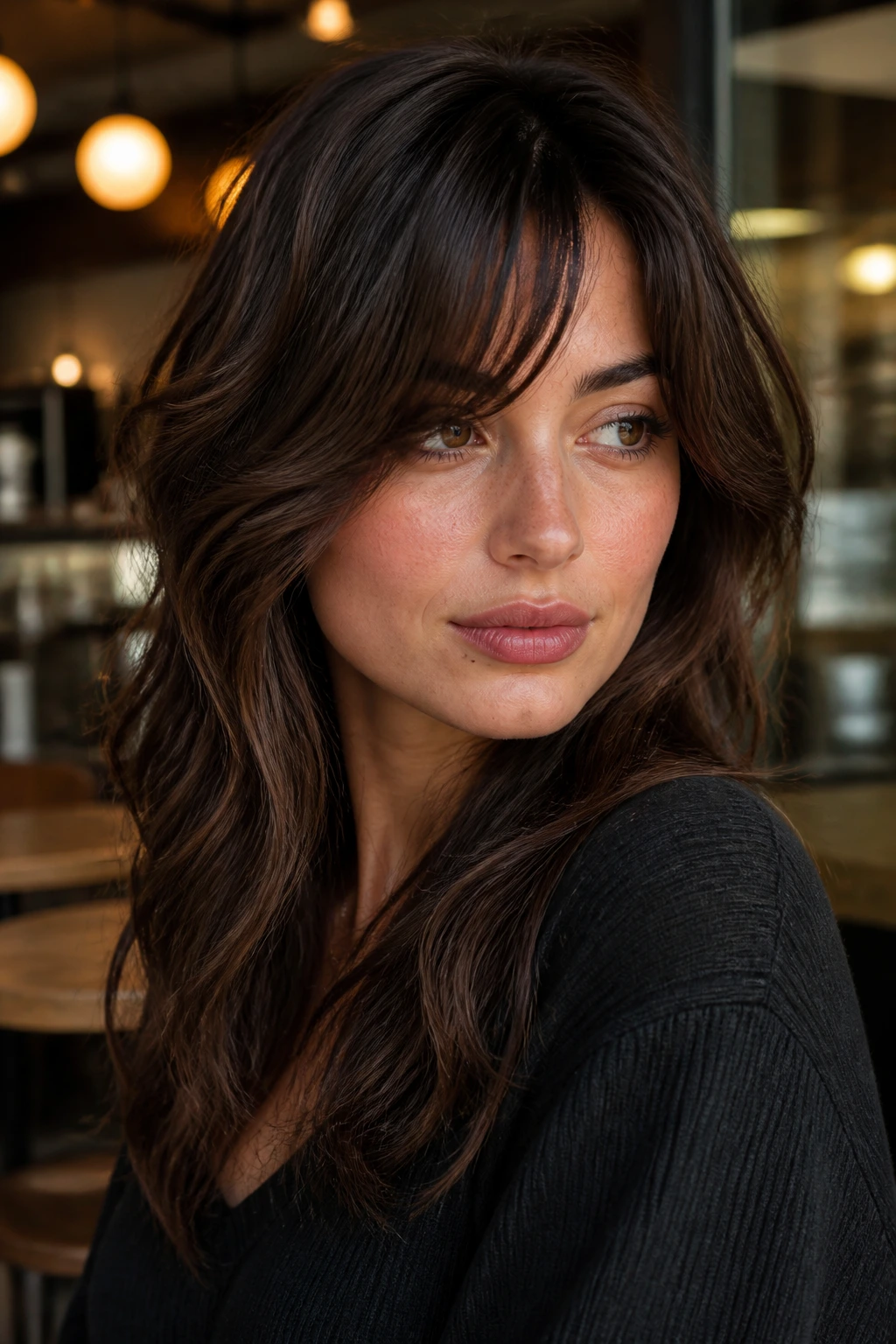
A slightly off-center part can change the whole mood of a fringe. Piecey off-center drapes keep the face open on one side and allow the other side to sweep longer, which helps break up the symmetry that can make round faces look wider than they are.
This is a good one for people whose hair naturally refuses to sit perfectly in the middle. Fight the part less, and the haircut usually looks better. Wavy texture makes the pieces separate on their own, which gives you that soft, broken fringe line without a lot of product.
The Finish Matters
A little paste on the very ends—not the roots—keeps the pieces visible. Too much product at the base will clump the front and kill the movement. You want separation, not grease.
11. Rounded Temples Fringe
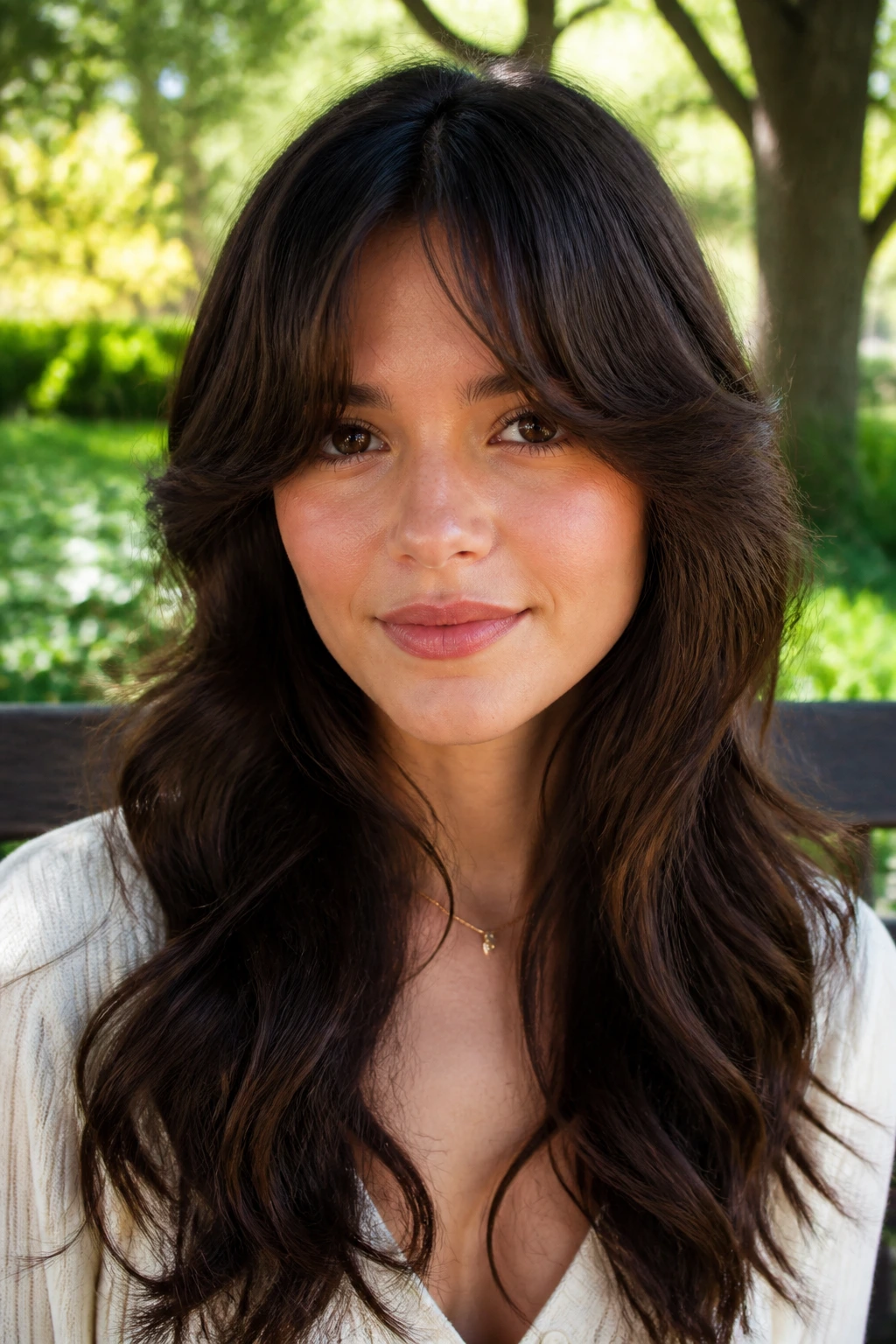
Round faces can wear rounded bangs, but only if the curve is placed with care. This version softens at the temples instead of wrapping tightly around the cheeks, which keeps the shape from turning into a circle-on-circle effect. The fringe should bend outward, not inward, and that small difference changes everything.
Wavy hair helps the curve stay soft. A flat, dense rounded fringe can feel heavy fast, but a draped version with wave through it looks like part of the haircut rather than a costume. If your forehead is shorter or you wear glasses, this can be a good middle ground between full bangs and long curtains.
The cut should still be longer at the sides than in the center. That’s the detail that keeps the face from feeling boxed in.
12. Wavy Shag Bangs with a Floating Center
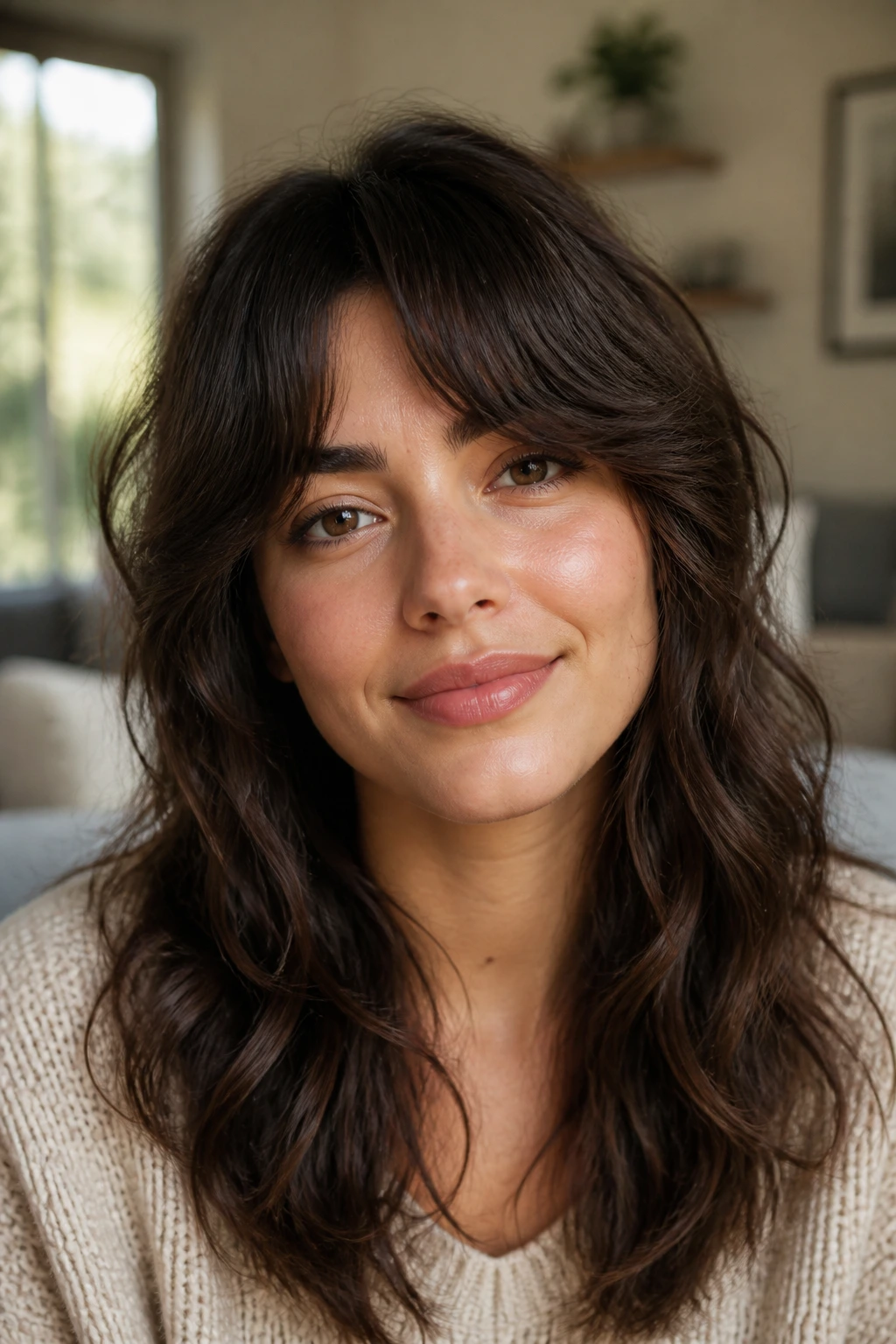
If your haircut already has shag layers, the fringe should not fight them. Wavy shag bangs with a floating center sit light on the forehead and then break apart into layered side pieces that blend into the rest of the cut. The result is loose, movable, and far less formal than a classic curtain bang.
This version suits thicker wave patterns that can carry a bit more texture in the front. It also works on round faces because the front pieces are never flat and horizontal for long. They lift, separate, and move, which breaks up width in a natural way.
A diffuser helps here if you air-dry, but don’t overthink it. The charm is in the imperfect shape.
13. S-Curve Bangs with a Polished Bend
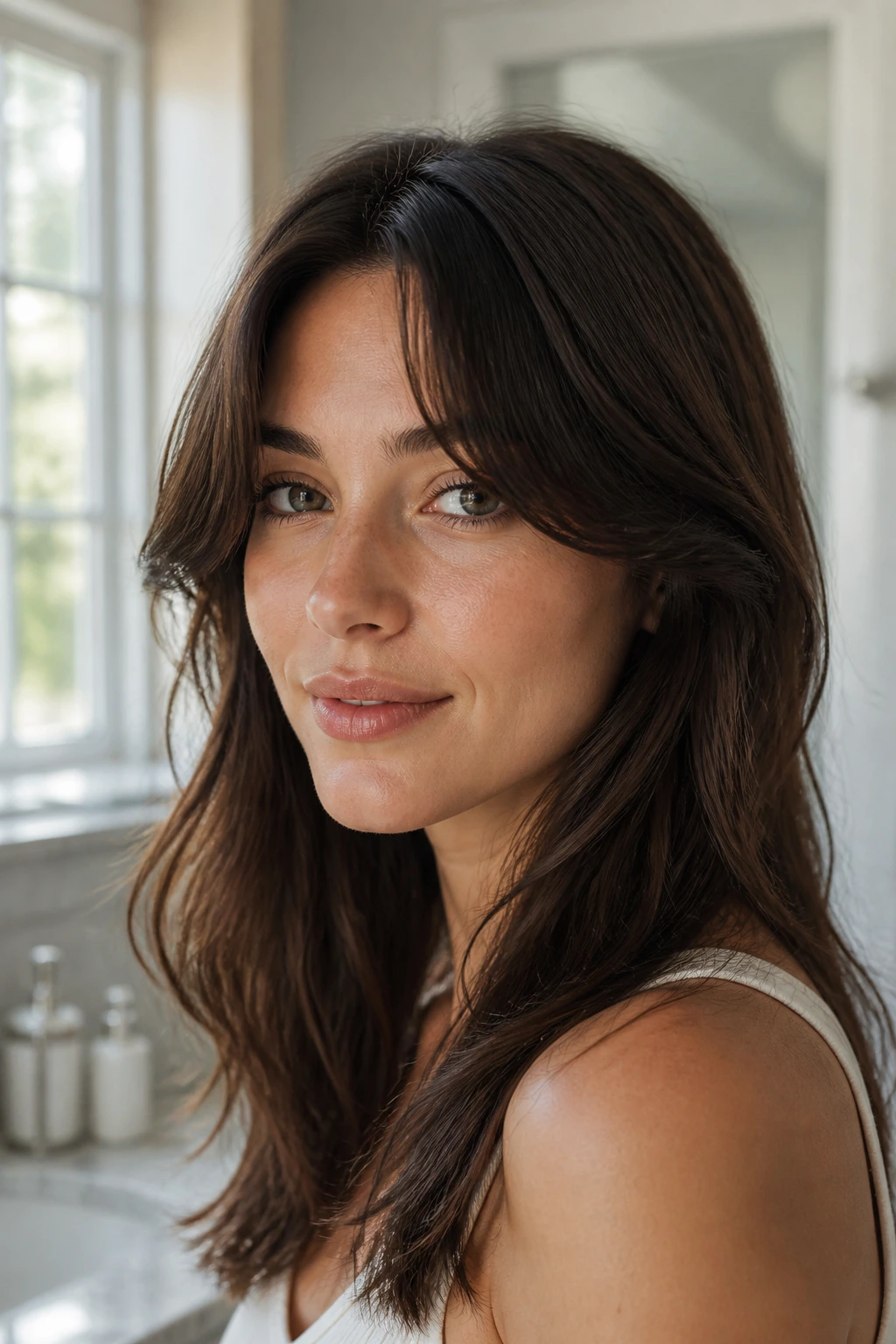
Some fringe styles look best when they have a little sculpted curve, and the S-curve bang is one of them. The front section bends inward near the brow, then sweeps outward past the cheekbone. On a round face, that moving line adds length where a straight line would just sit there and widen the middle.
This style leans more polished than shaggy. It’s a strong choice if your waves are loose and easy to smooth with a brush, or if you like the look of a blowout without needing every strand to behave. It also holds up well when the rest of the hair is layered and soft.
Keep the bend loose. A stiff S-shape can look dated fast. The modern version should move when you do.
14. Collarbone-to-Face Frame Bangs
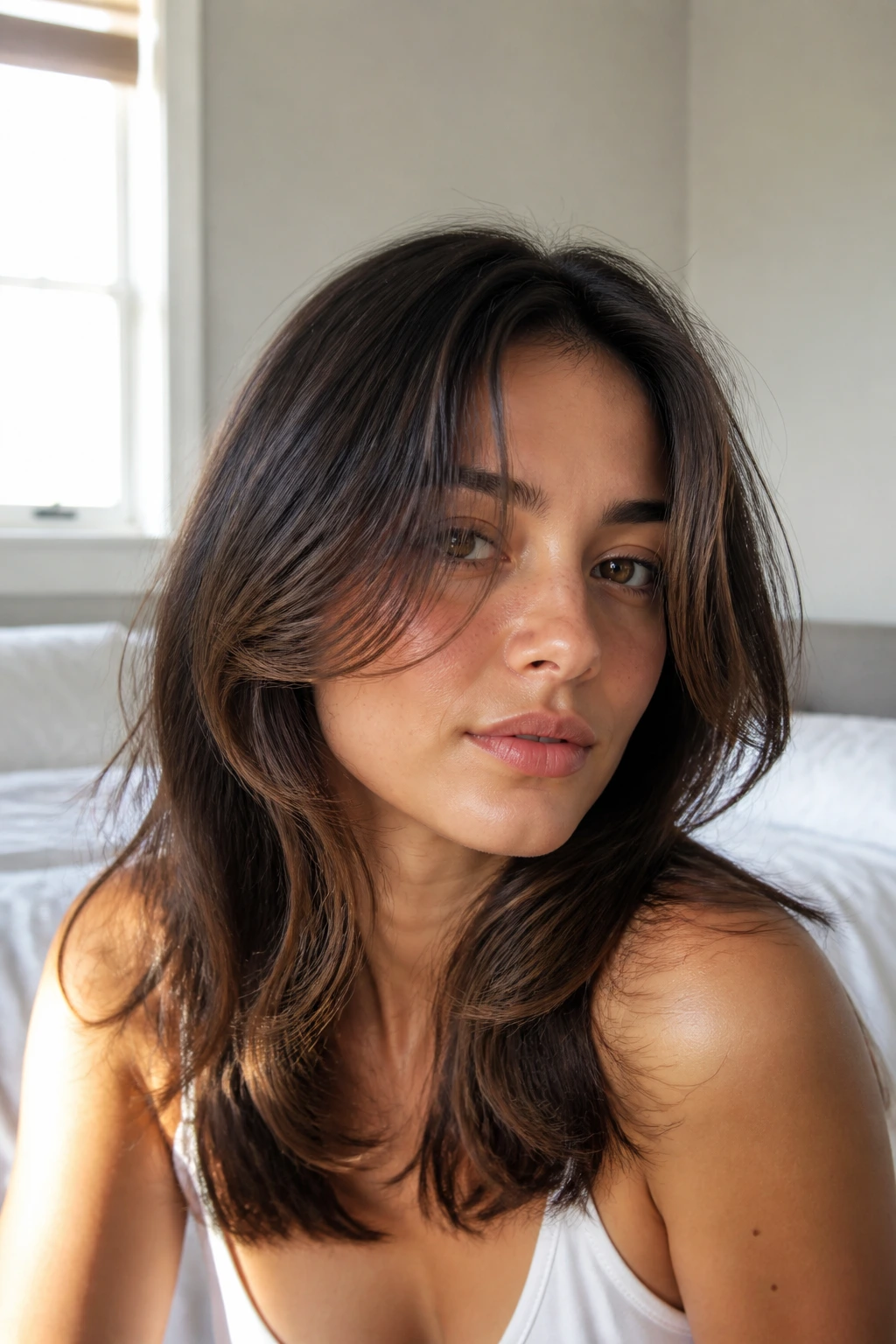
Why not start the drape lower and let it earn its way up? Collarbone-to-face frame bangs begin as long front layers and then are styled forward so the shortest visible pieces sit near the cheek. That gives round faces plenty of length and keeps the overall shape calm, not choppy.
This is one of the least risky ways to test the waters. You can wear it as a face frame, push it into a faux curtain, or tuck it away on days when you want your forehead fully open. Wavy hair usually makes the front bend in just enough to give the illusion of a proper fringe.
It’s a quiet cut. Not boring. Just quiet.
15. Invisible Layer Bangs That Melt into the Cut
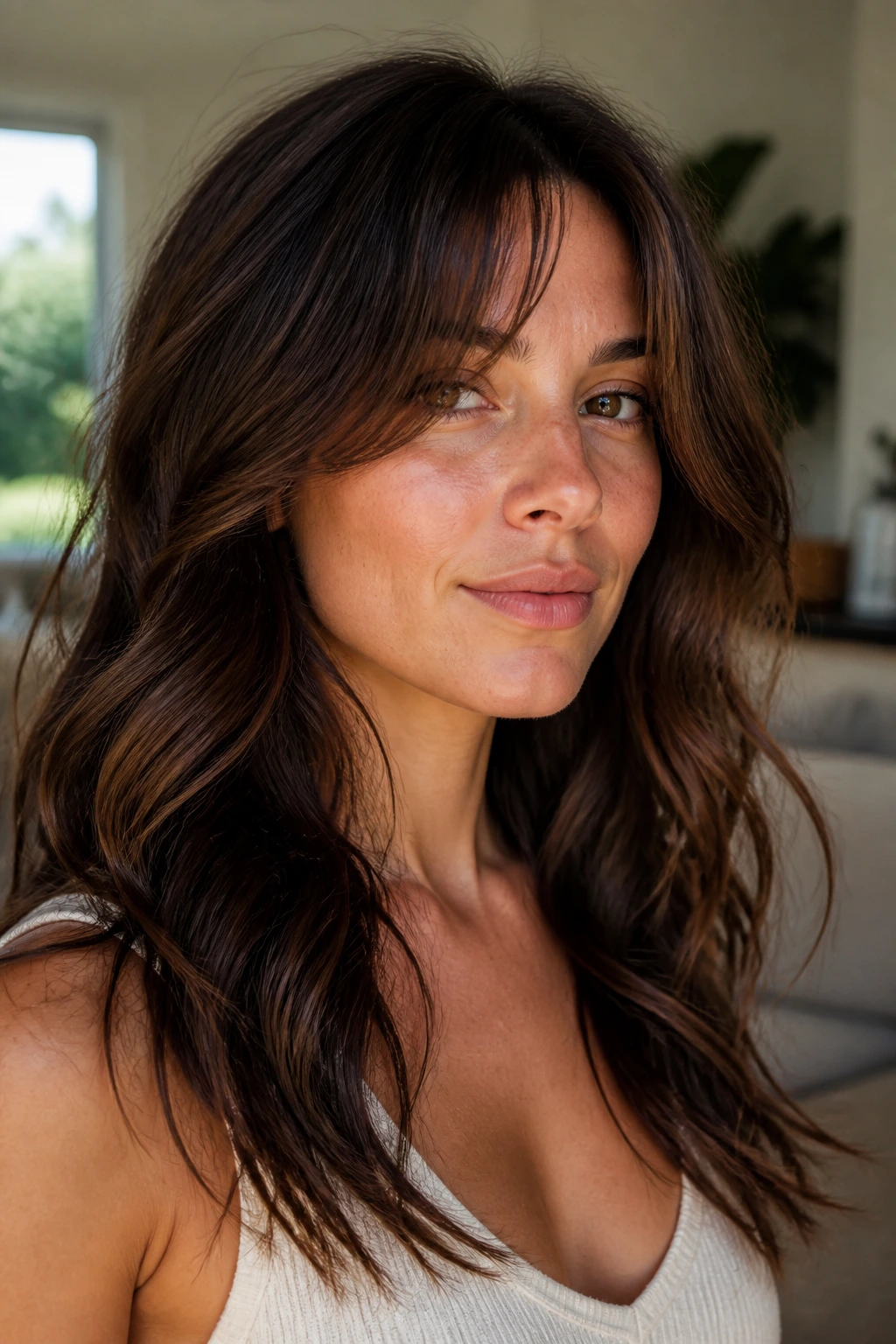
Invisible layer bangs are for people who want face framing without an obvious fringe line. The front sections are cut into the layers so gently that, when the hair is down, you read softness first and bangs second. On a round face, that can be a smart move if you want shape but don’t want to call attention to the forehead.
This version is especially useful when your waves are unpredictable. Since the pieces are blended, a little movement does not ruin the effect. It just makes the haircut look more lived-in. You can still style the front forward with a small round brush, but the shape won’t fall apart if you skip a perfect blowout.
If you hate obvious maintenance, this is worth a look.
16. Air-Dried Drapes with Defined Ends
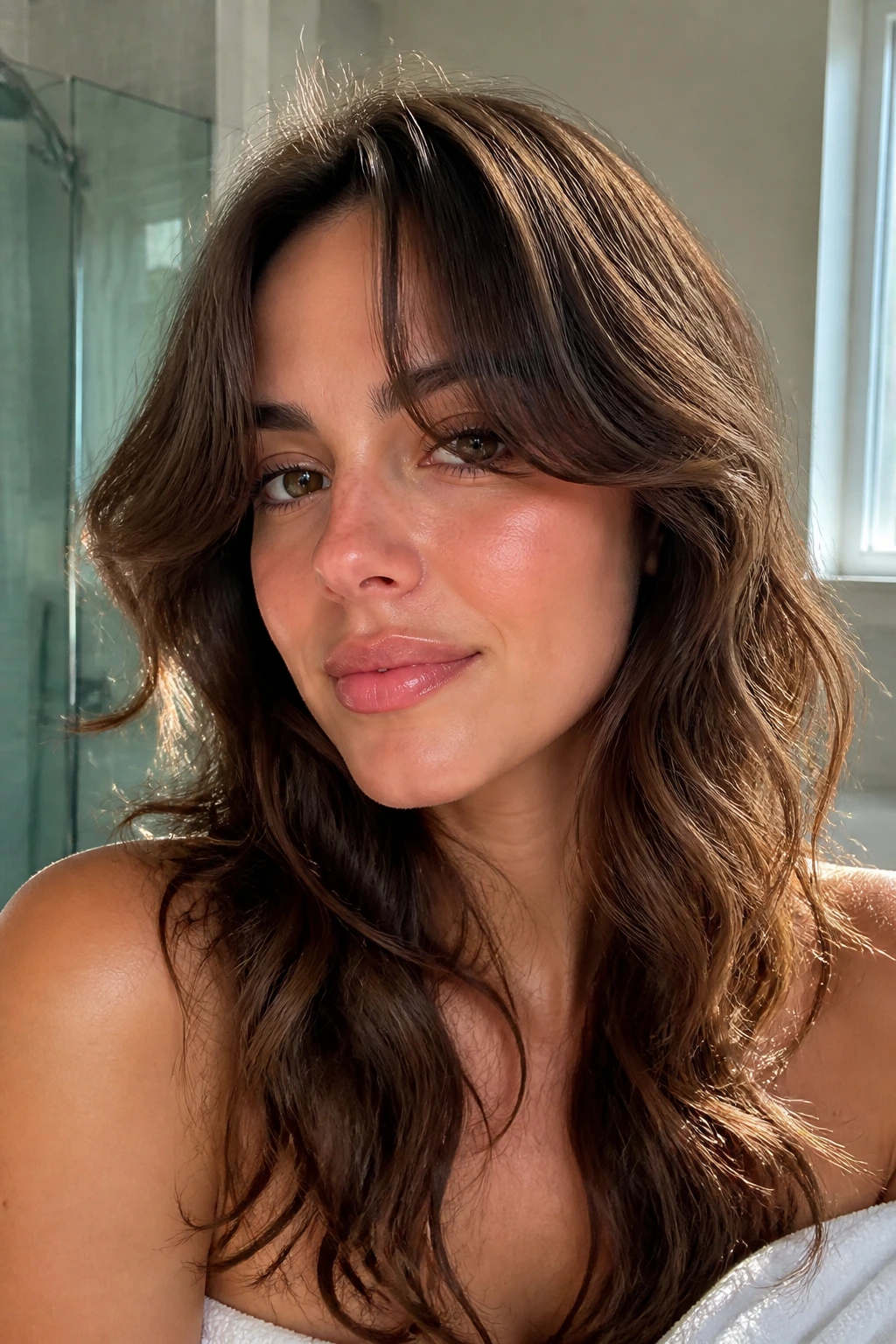
Air-dried drapes are not a lazy version of bangs. They’re a different finish. The cut is designed so the fringe lands well after it dries in its own bend, which means the hairdresser needs to leave enough length for shrinkage and enough texture for the ends to separate cleanly.
On wavy hair, that can look very good. The front bends without needing a round brush, and the slight irregularity at the tips makes the drape feel softer on a round face. You still want a little guidance—maybe a touch of cream at the ends and a clip at the root while it dries—but the overall vibe is less “styled” and more “this is how it lives.”
That’s the appeal. It feels honest.
17. Full Curtain Bangs with a Narrow Center Opening
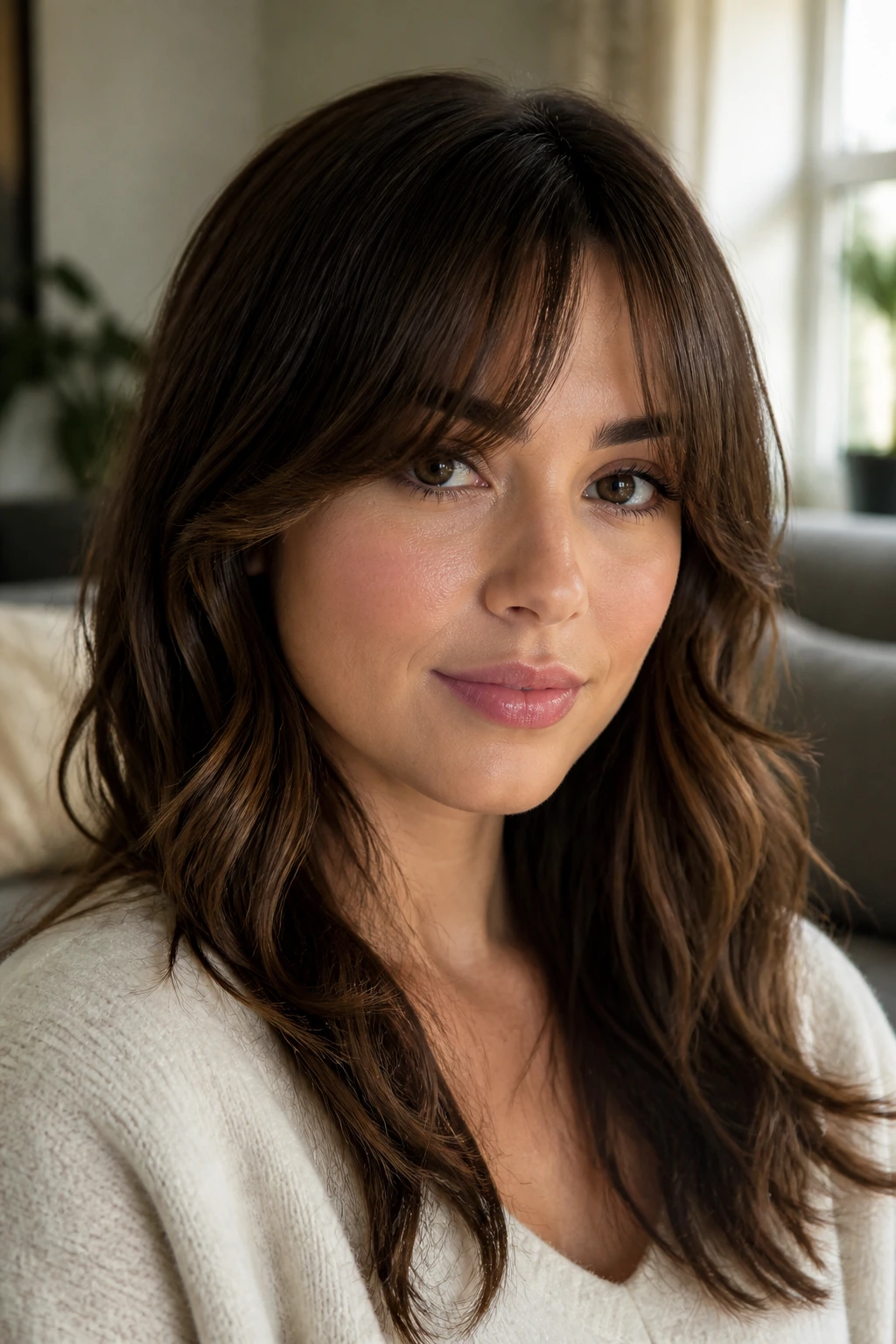
A fuller curtain bang gives you more hair in the front, which sounds risky on a round face until you see how much shape the center opening provides. Keep the split narrow and the sides longer, and the effect becomes almost architectural: a soft frame that narrows the middle while keeping the cheeks from disappearing under one heavy curtain.
This is a strong match for medium-density waves that need weight to hold their shape. Too little hair and the fringe wisps apart. Too much and it can swallow the face. The middle split keeps the center from looking blocky, while the outer length still creates a clean line.
If your hair likes to puff at the sides, ask for extra internal texturing at the cheekbone level. It keeps the fringe from ballooning.
18. Side-Swept Drapes with Soft Lift
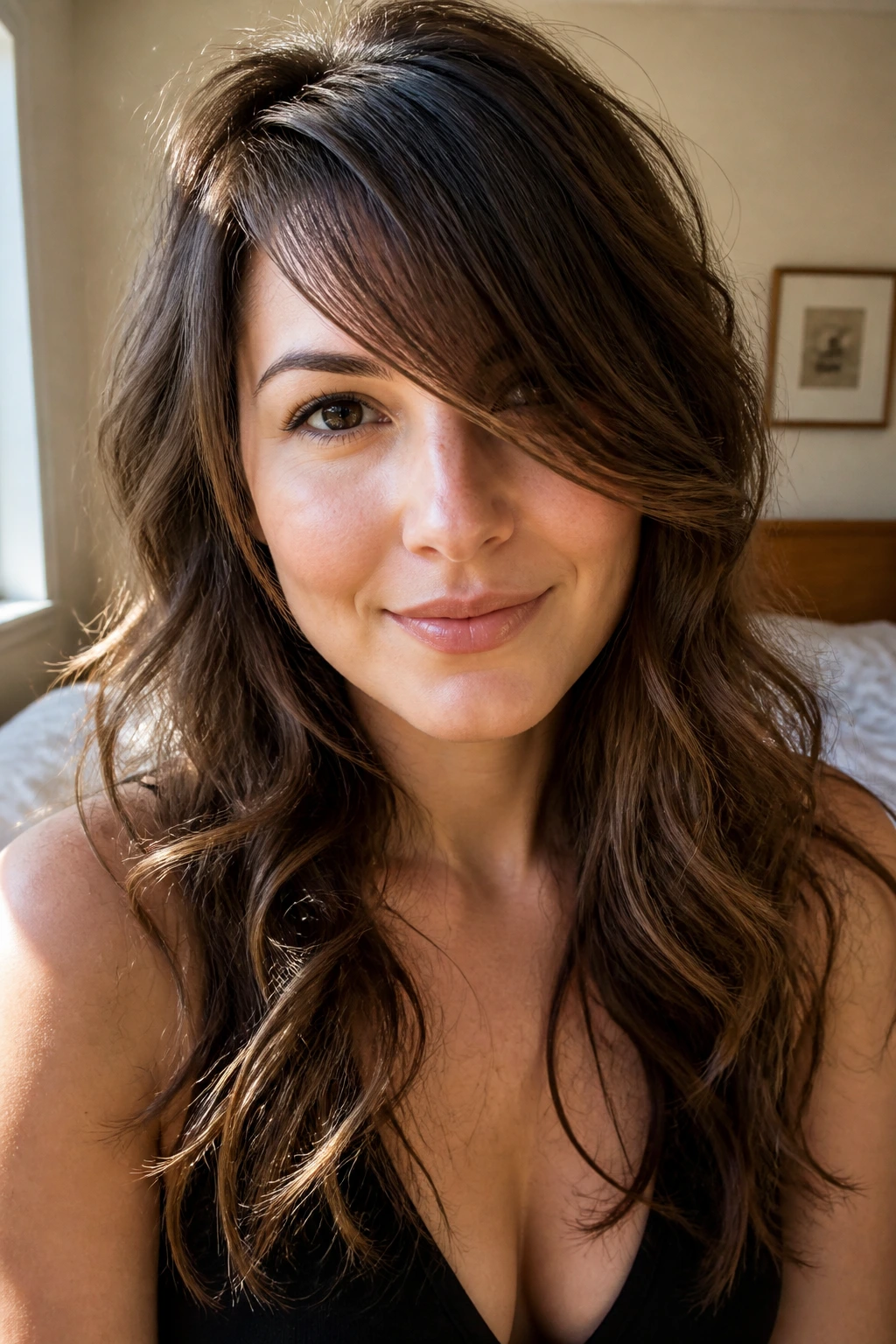
Side-swept bangs can look dated when they’re too blunt or too stiff, but the draped version keeps the front open and soft. A little lift at the root gives the style height, while the longer side piece sweeps across the forehead and drops near the cheek. For round faces, that diagonal line is doing real work.
This is the style for people who part their hair on the side and plan to keep doing it. Wavy hair usually makes the sweep look more natural, since the bend helps the front hair arc instead of sitting flat against the head. It can be tucked, pinned, or worn loose without losing its shape.
Best detail: ask for the shortest point to sit above the brow, not on it. Anything shorter can slide into the “just grown out” zone too fast.
19. Tousled Fringe That Breaks at the Cheekbones
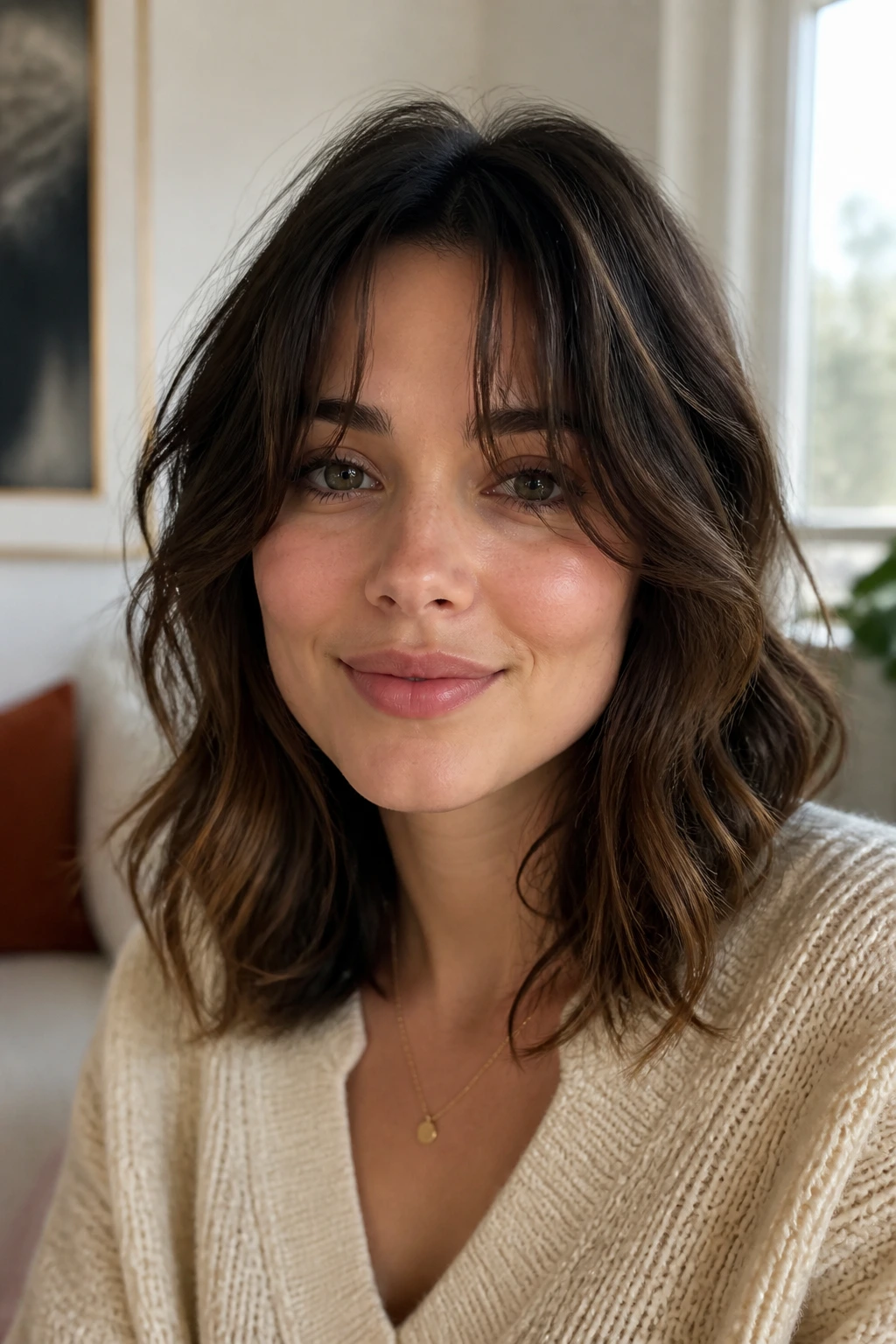
A tousled fringe is meant to look broken up, not perfectly arranged. The pieces should separate around the cheekbones so the front never becomes one heavy band. On a round face, that little bit of interruption is useful. It keeps the eye moving and prevents the bangs from widening the center of the face.
Wavy hair almost builds this style for you. The trick is keeping the ends soft enough that the fringe still bends forward instead of flipping outward. A diffuser or a quick pass with a curling iron on just a few front strands can help, but you do not need uniform curls. That would defeat the point.
This one is for people who like a little motion around the eyes and don’t mind if the bangs look different from one side to the other.
20. Long Bottleneck Bangs with Extra Width
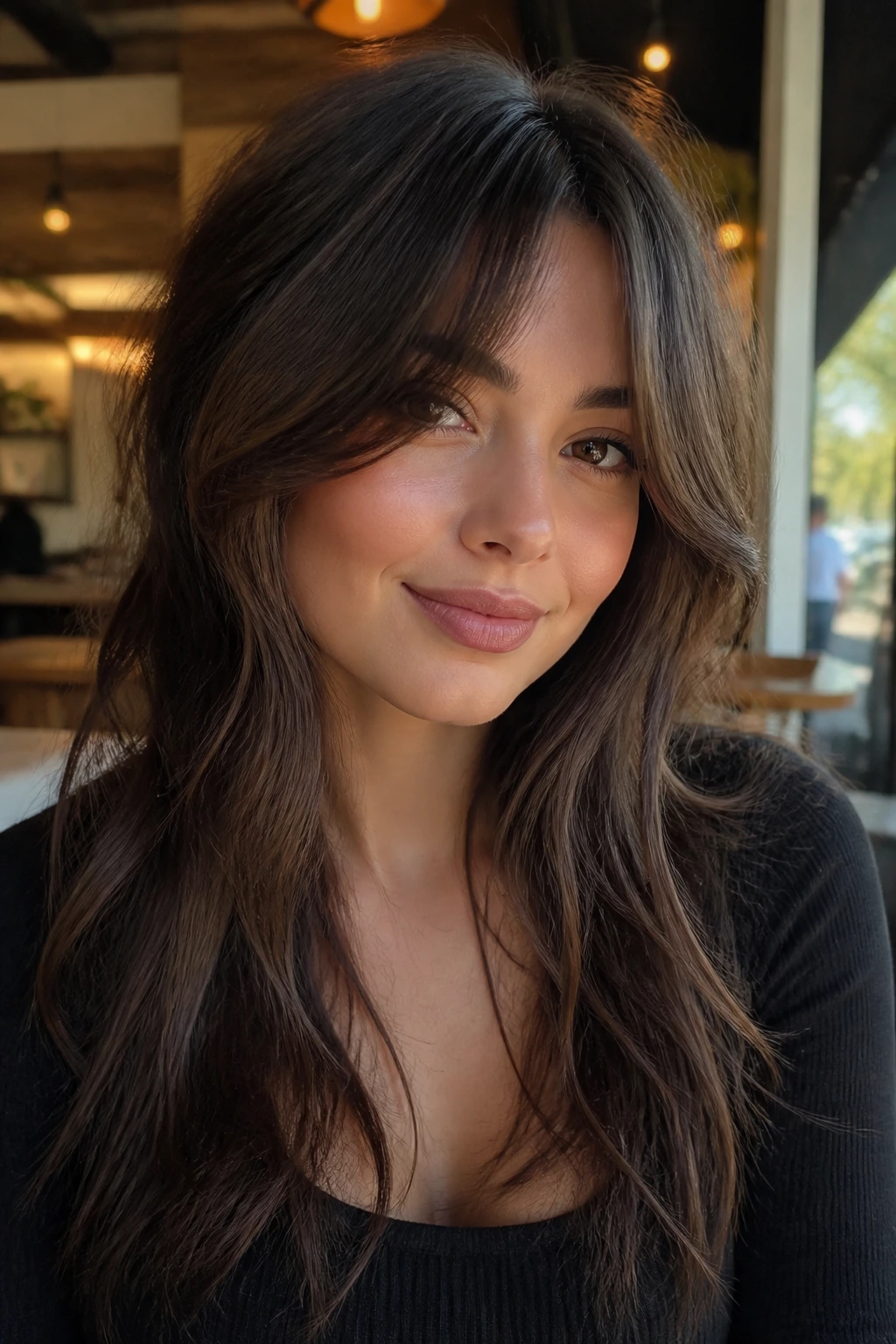
Long bottleneck bangs are a stronger, slightly more dramatic version of the bottleneck shape. The center stays narrow, but the outer wings are wider and longer, reaching past the cheekbone and sometimes nearing the jaw. That extra width at the edges creates a long, tapering shape that suits round faces better than a short, boxed fringe.
The extra length also helps wavy hair. As the bangs dry and swell a little, the outer pieces still land where they should. Shorter versions can puff up and lose the line. This one keeps it.
If you like a fringe that feels present but not blunt, this is one of the most forgiving choices in the whole set.
21. Soft Razor Curtain Bangs
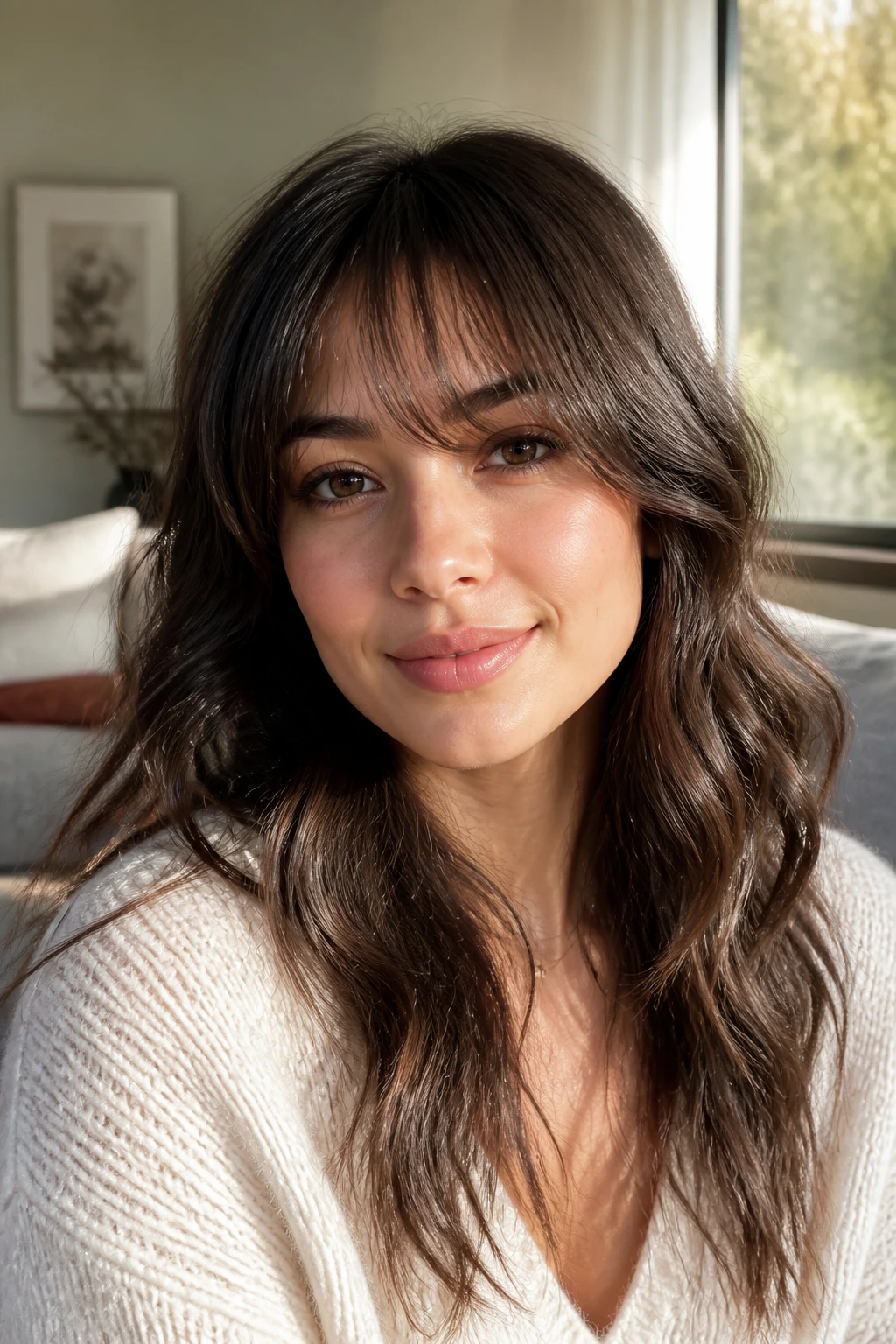
A soft razor cut can make draped bangs feel lighter without making them skinny. The blade removes weight from the ends and leaves a feathered edge that sits well on wavy hair, especially if the wave pattern is medium and has some natural bend already.
This is not a cut for someone who wants hard edges. The whole point is to keep the fringe floating. On a round face, that floating effect helps because it avoids a heavy horizontal line across the forehead. The pieces should slide into the side layers almost before you notice where the bangs end.
Worth knowing
Razor cuts are only a win when the stylist understands your texture. On coarse or very springy waves, a rough razor can fray the ends and create a halo you did not ask for. Precision matters here.
22. Layered Drapes for Thick Wavy Hair
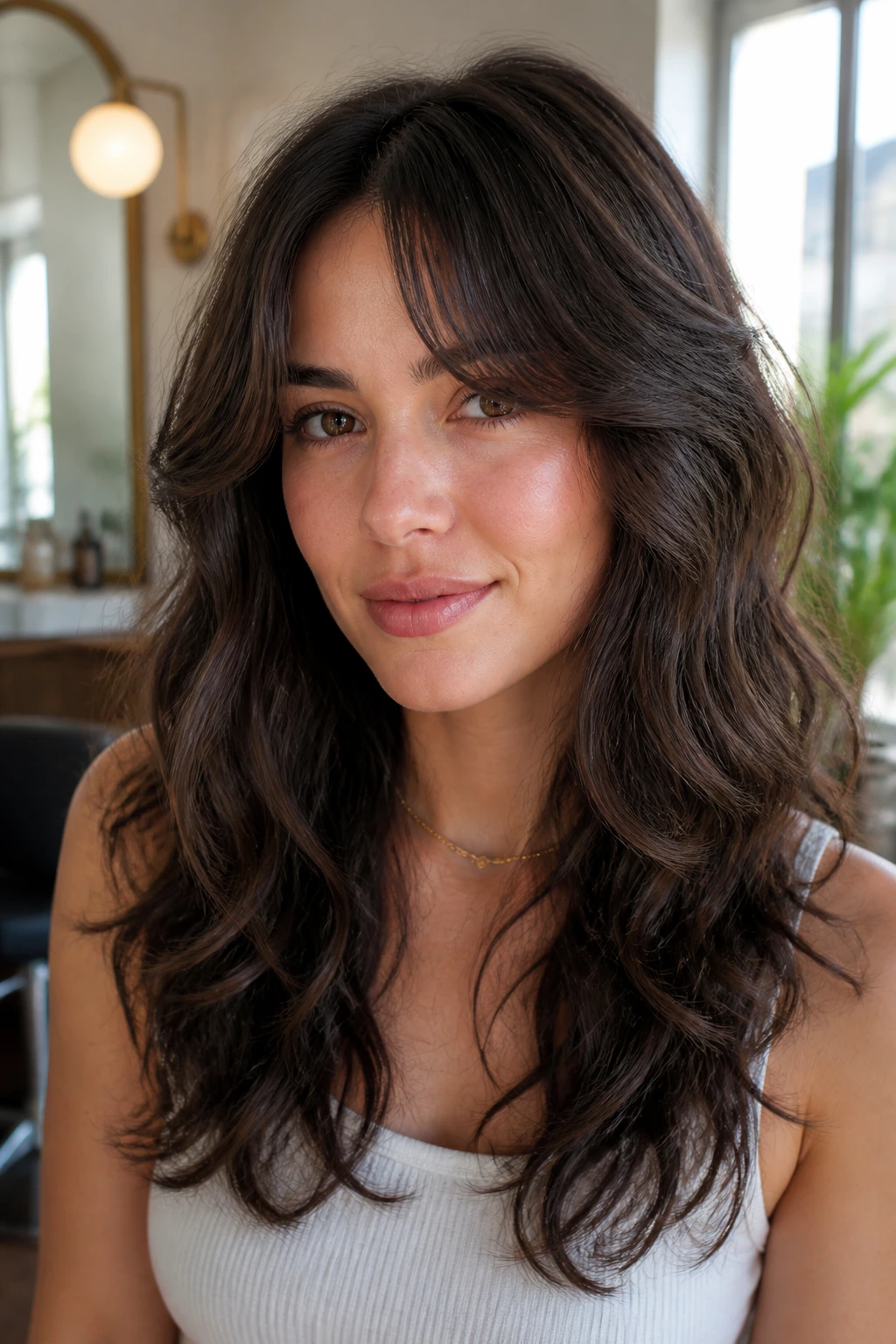
Thick wavy hair can wear bangs, but the front has to be thinned with some care. Layered drapes remove enough bulk to stop the fringe from sitting like a curtain wall, while still leaving enough weight for the shape to stay visible through the day.
Round faces benefit from the extra softness at the sides. The bangs should be longer near the temples and lighter in the middle, with internal layering that keeps the front from bulking up. If your hair gets bigger as it dries, this is the shape that respects that fact instead of pretending it won’t happen.
I’d ask for point-cutting, not aggressive texturizing. The first keeps the edge soft. The second can chew up the front and leave you with see-through spots.
23. Fine-Hair Draped Bangs with a Lightweight Finish
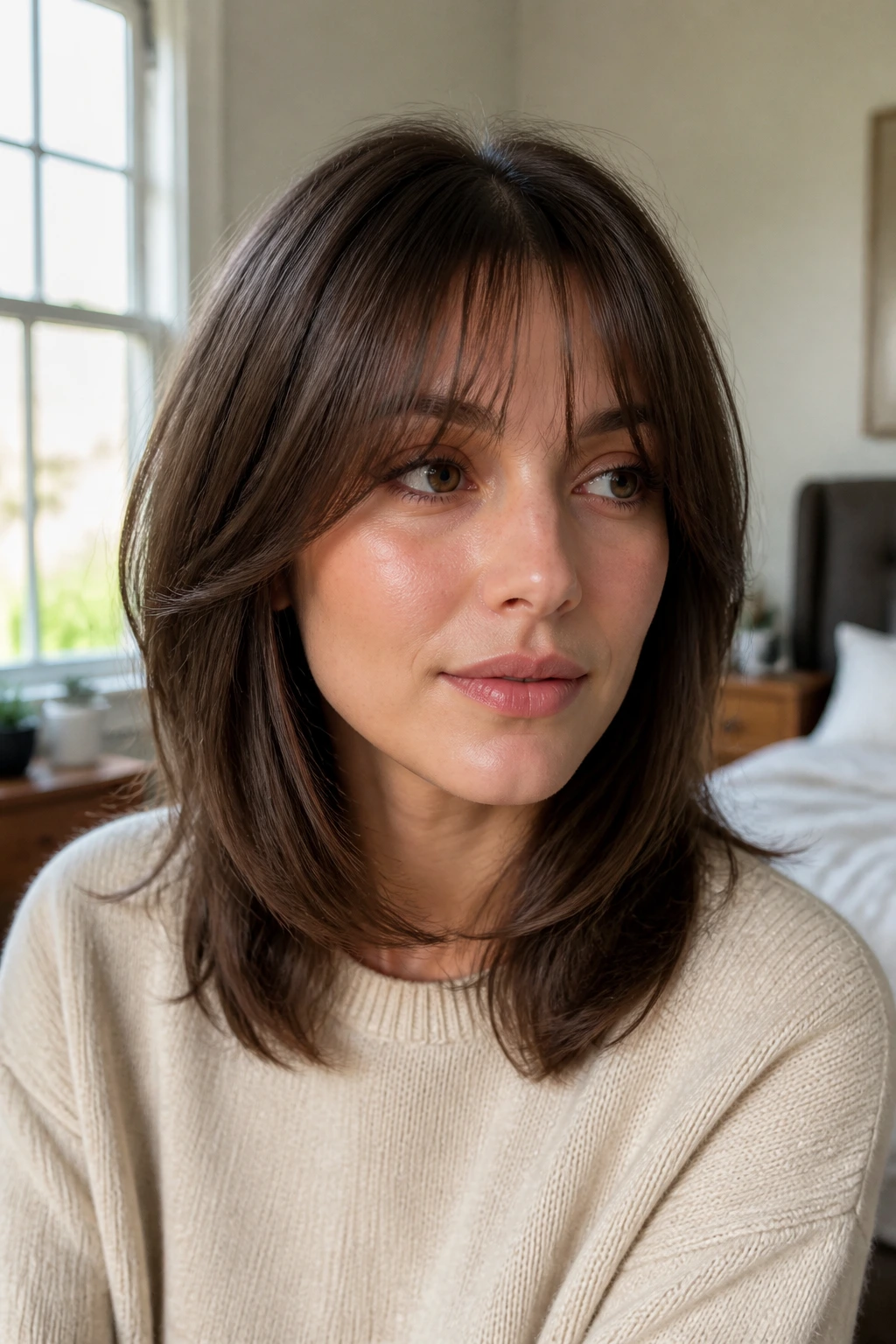
Fine hair can look almost invisible if the fringe is too sparse, so the drape needs a careful hand. A lightweight finish keeps the front from lying flat, but there should still be enough density at the center to create a visible shape. That balance matters more on round faces, where the bang needs to narrow the forehead without disappearing.
This style works best when the ends are tucked forward with a bit of root lift and a small amount of mousse or spray foam. Heavy creams are a bad idea. They crush fine waves into flatness, and flatness is not your friend here.
If your hair is soft and delicate, ask for a fringe that keeps fullness at the center and length at the sides. That’s the part that keeps it from vanishing.
24. Romantic Arc Bangs That Brush the Eyes
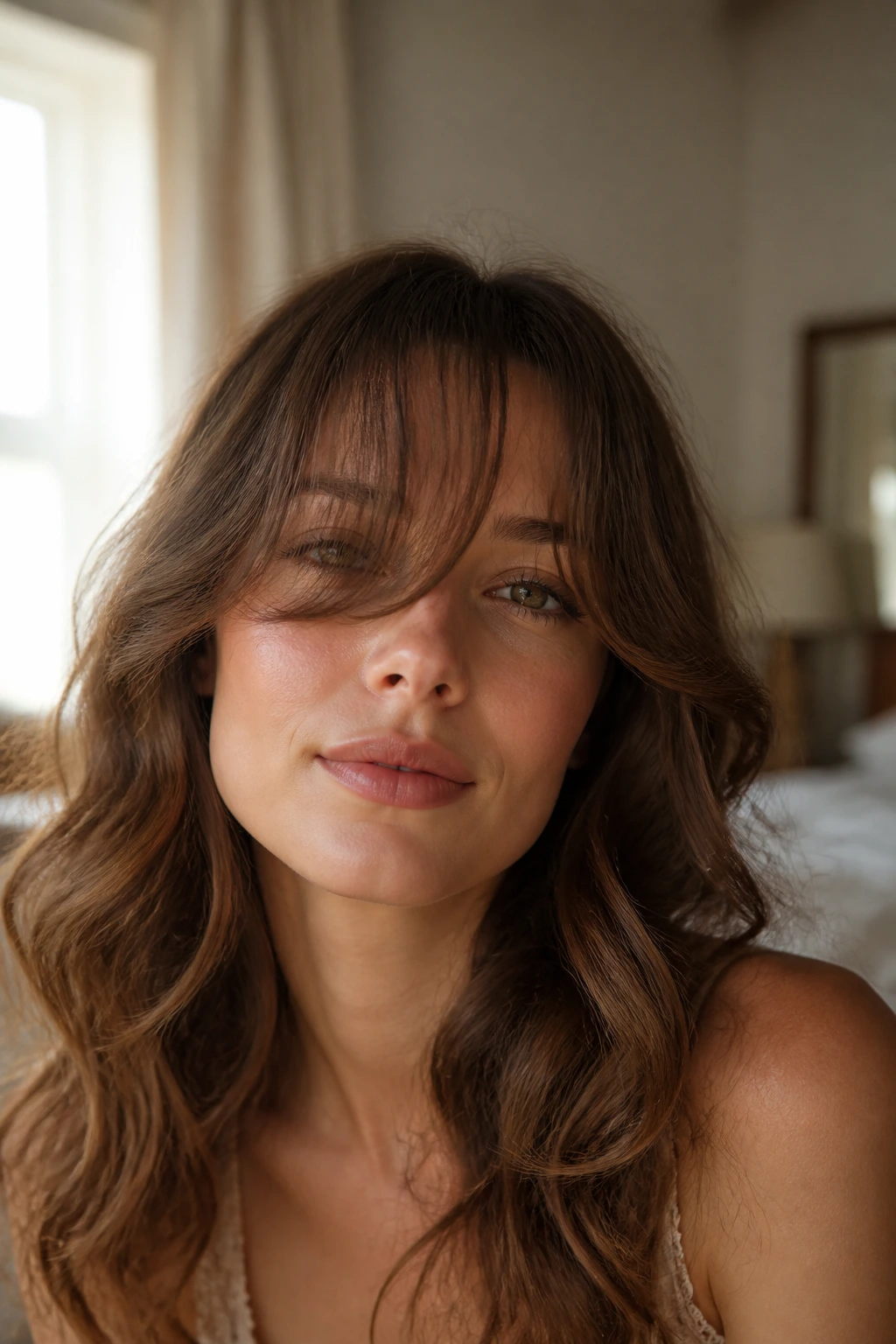
There’s a reason people keep coming back to fringe that brushes the eyes. It gives the face a little mystery, but it also softens the forehead in a very direct way. On round faces, the romantic arc shape works because it starts open at the center, then drops in a long curve that frames the eyes and cheekbones without cutting the face into sections.
Wavy hair makes this style feel almost effortless—though that word is usually oversold. The wave adds a lived-in bend that straight hair has to fake with heat. If your ends are too blunt, the style loses its softness. If they’re too thin, the whole thing looks wispy in a bad way. The cut wants a delicate middle ground.
It’s one of the prettiest options here. Also one of the fussiest. Worth it if you like a fringe with a little mood.
25. Low-Maintenance Grown-In Drapes
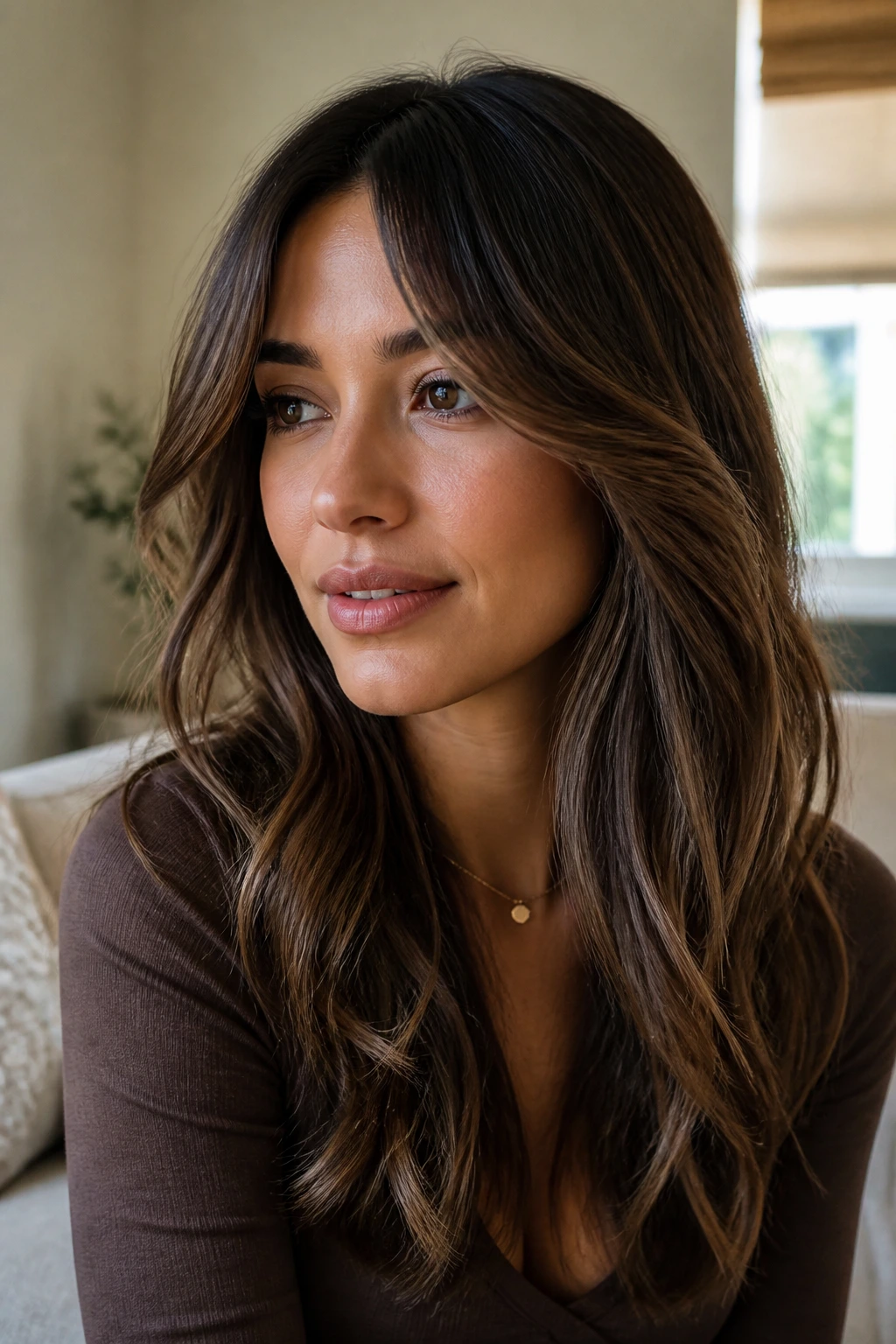
The last style is for the person who wants the shape but not the maintenance spiral. Low-maintenance grown-in drapes use long face-framing pieces, a loose center opening, and enough side length that the fringe can keep changing without looking bad. On a round face, that flexibility is useful because the shape still creates vertical movement even when it’s no longer freshly cut.
Wavy hair is often better at this than straight hair. The natural bend softens the transition as the bangs grow, so you can go longer between trims without looking like you missed a salon deadline. A little dry shampoo at the roots and a soft bend through the ends are usually enough.
If you’ve ever loved bangs for two weeks and then resented them for six, this is the version to try.
Why Draped Bangs Work So Well on Round Faces and Wavy Hair
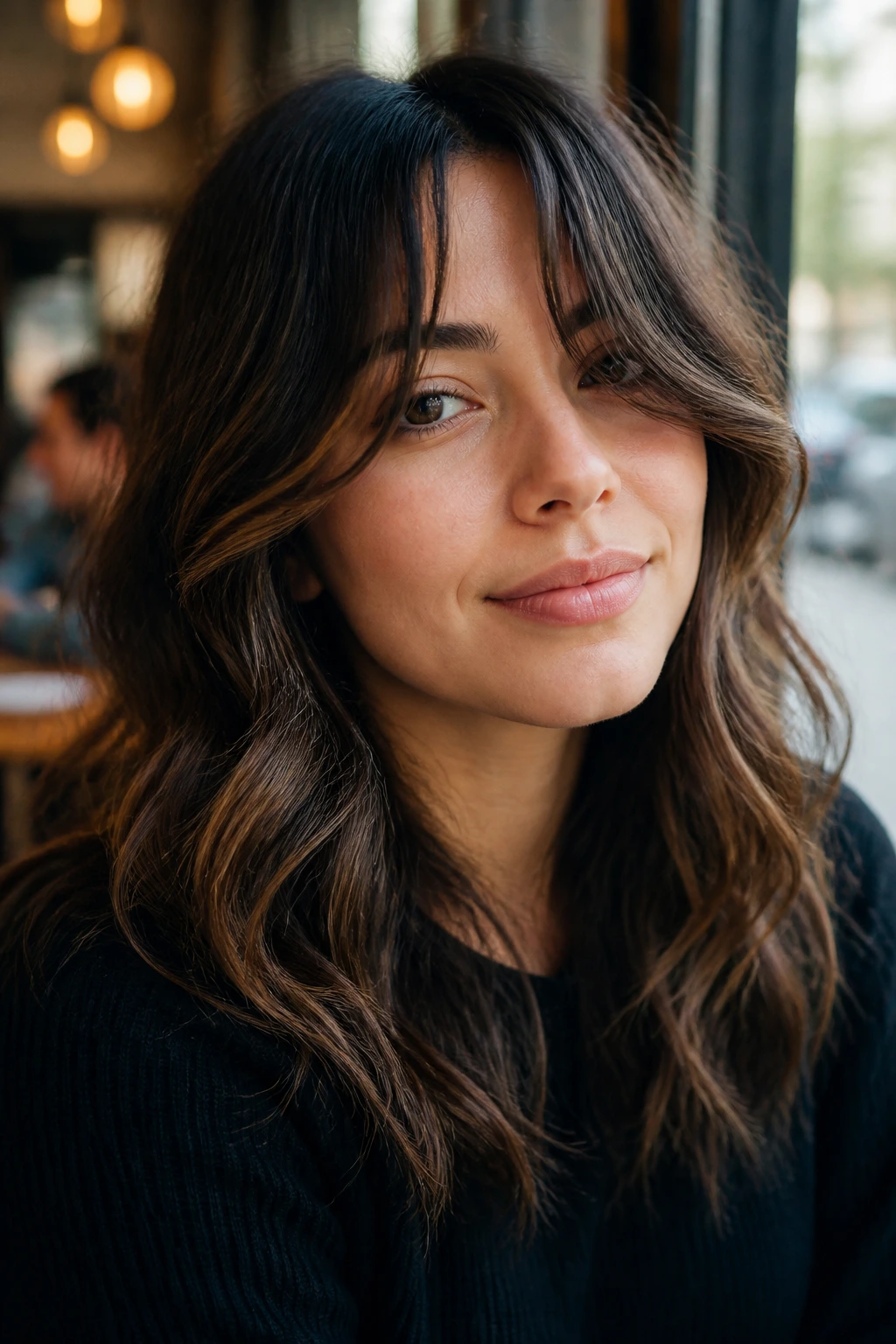
Round faces usually look best when the front of the hair creates height, diagonal movement, or both. Draped bangs do that without building a hard wall across the forehead. The center opening keeps the eye moving upward and down through the middle of the face, while the longer side pieces create lines that travel past the cheeks instead of stopping right on them.
Wavy hair adds another layer. It gives the bangs bend, and bend is useful here. A wave that lands a little unevenly looks softer than a crisp, straight fringe, and that softness keeps the front of the haircut from feeling too wide or too finished. The fringe should move with the rest of the cut, not act like a separate little helmet.
There’s one detail people miss all the time: waves shrink differently when they dry. A bang cut at eyebrow length when wet can land much shorter once it dries, and on wavy hair that can mean the difference between “soft drape” and “tiny shelf.” Leaving extra length at the center and cutting the sides longer gives the face room to breathe.
The Tools That Make These Bangs Behave
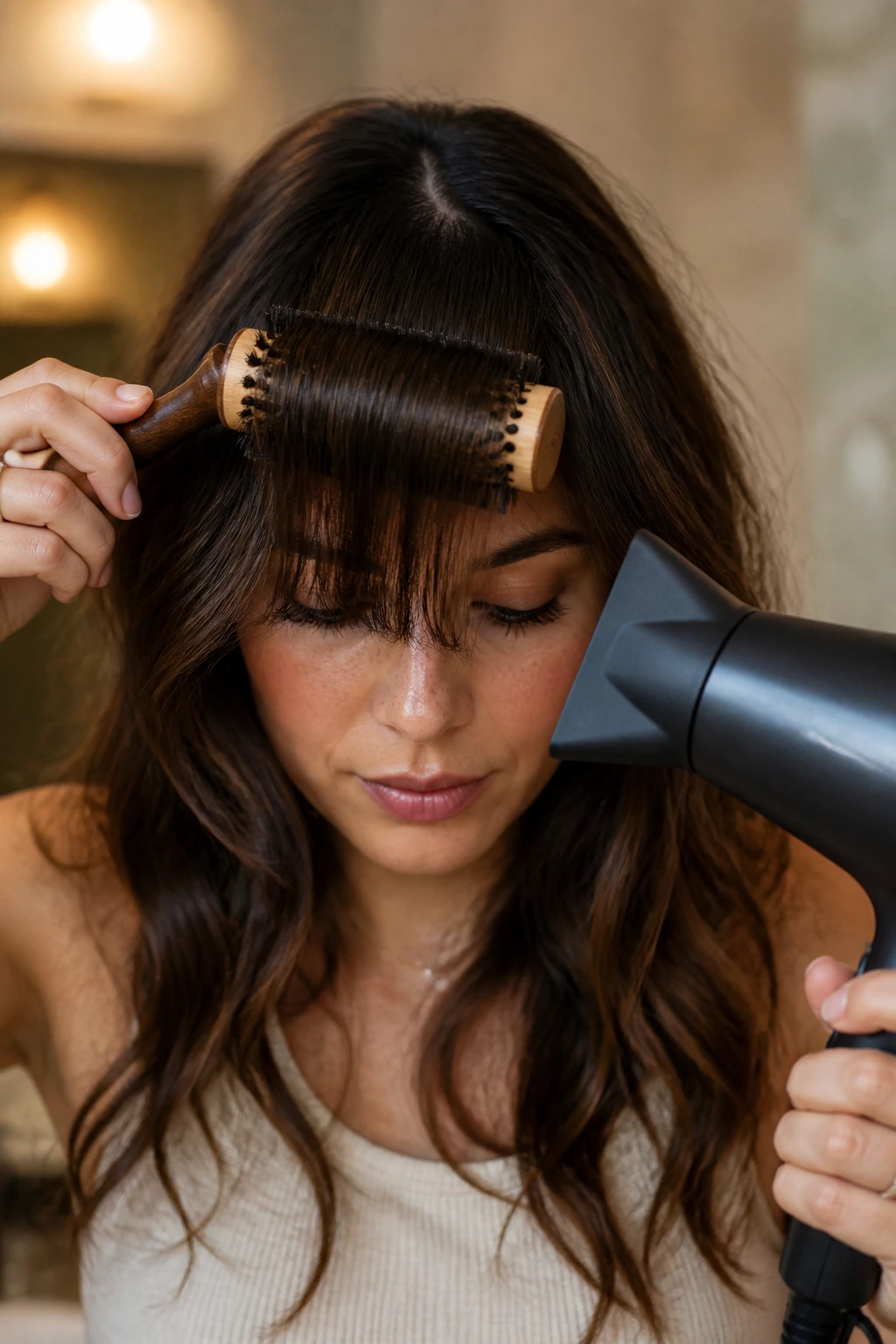
A draped fringe is easier to manage when you stop improvising with the wrong tools. The right brush or spray does not fix a bad cut, but it does make a good cut show up the way it should.
-
1. Round brush, 1 to 1.5 inches: Small enough to shape the front without wrapping too much hair around the barrel. It gives the bangs that slight undercurve at the ends.
-
2. Blow dryer with a concentrator nozzle: The nozzle keeps airflow pointed where you want it, which matters when you’re trying to smooth the roots without blasting the fringe into chaos.
-
3. Duckbill clips or small sectioning clips: These hold the rest of the hair back while you dry the bangs first. Drying the fringe before the rest of the head keeps it from getting damp again.
-
4. Heat protectant spray: Use a light mist on the bangs before any blow-drying or flat ironing. Front hair gets heat more often than the back, and it shows.
-
5. Mini flat iron with rounded plates: Handy for correcting one side, not for flattening the whole front. A little bend at low heat is enough.
-
6. Lightweight mousse or root-lift spray: Best for wavy hair that drops at the front. Use it at the roots, not the ends.
-
7. Texturizing spray: Good for piecey finishes and for refreshing the fringe on day two.
-
8. Tail comb: Makes parting and sectioning cleaner, especially if your wave pattern likes to drift.
What to Tell Your Stylist Before the First Snip
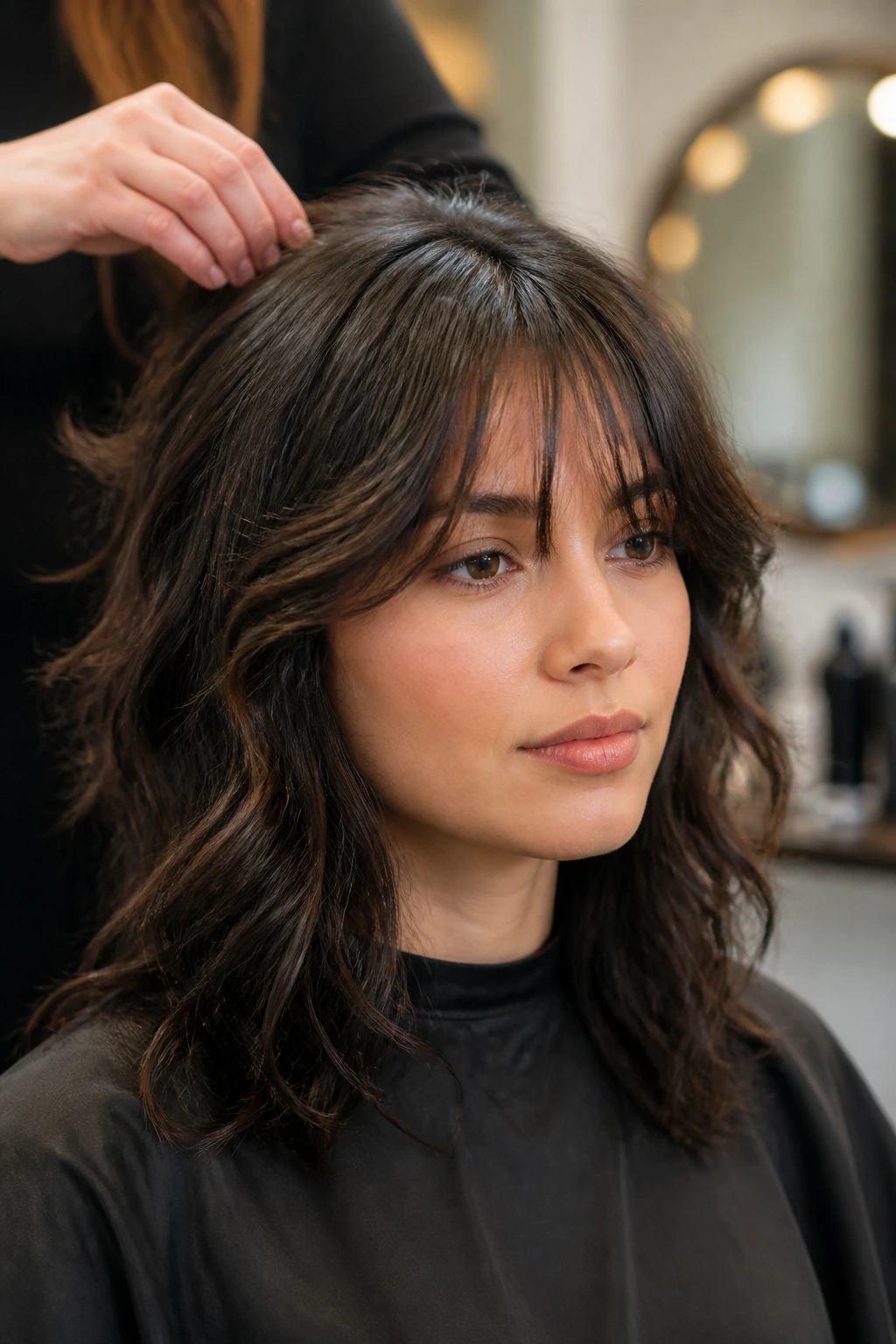
Bring photos, yes, but bring the right photos. Show bangs on hair that moves like yours, not pin-straight styles that were blow-dried within an inch of their life. If your waves are loose, ask for examples on loose waves. If your hair is thick and bends fast, show that.
Say where you want the shortest point to live when the hair is dry. That sentence matters more than almost anything else. On a round face, the center piece usually looks best somewhere between the brow and the lash line, with the sides dropping to the cheekbone, lip, or jaw depending on how dramatic you want the frame. If your stylist cuts too short, there is no magic trick that gives you length back.
Tell them how you part your hair on a real morning, not how you part it for the photo. Mention a cowlick, a strong side bend, or glasses if you wear them. Ask for point-cutting or soft texturing through the ends rather than a hard blunt line, especially if your hair is medium or thick. And if you know your waves shrink a lot, say so. Dry curls lie less than wet ones.
How to Style Draped Bangs So They Fall in the Right Place
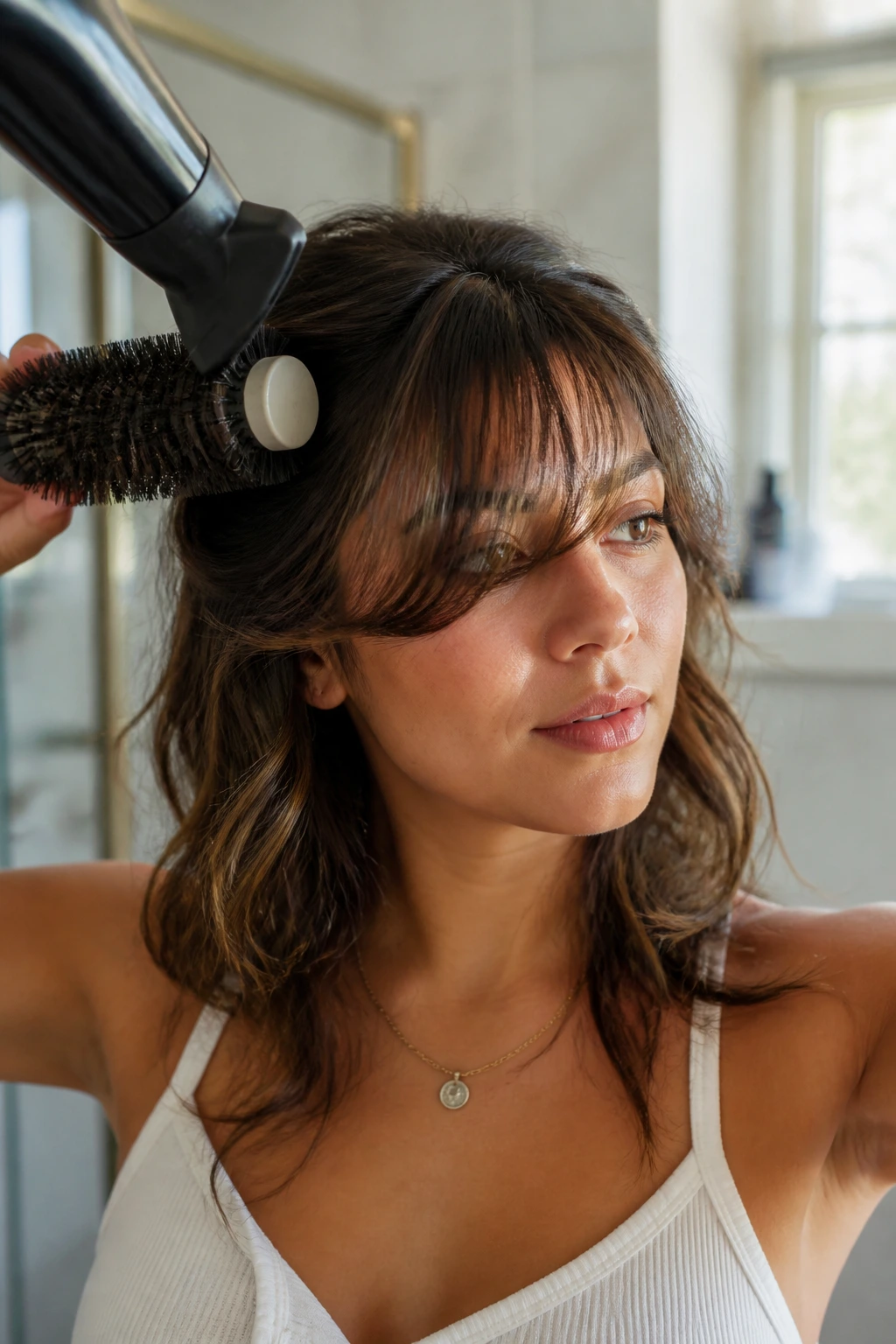
The easiest morning method starts with damp bangs, not soaking ones. Blot them with a towel, add a pea-size amount of mousse or root spray, then clip the fringe forward for a minute or two while you dry the rest of your hair. That little pause helps the root set in the direction you want instead of sticking straight up.
Root First, Ends Second
Blow-dry the root area with the nozzle aimed downward and slightly side to side. Use the round brush only when the front starts to bend. If you overwork the ends, they puff. If you shape the root first, the fringe tends to land more cleanly around the face.
Keep the Bend Soft
A draped bang should curve, not curl into a tight tube. If one side flips too much, touch only that piece with a flat iron or brush it while it cools. The goal is a soft arc that follows the cheekbone. Not a perfect curl. Never a hard flick.
Finish Lightly
A mist of flexible hairspray or a touch of texturizing spray is enough. Heavy serum at the root will flatten the lift and make the bangs separate in greasy chunks. If you need shine, put the tiniest amount on the ends only.
The Mistakes That Make Draped Bangs Puff, Split, or Shrink
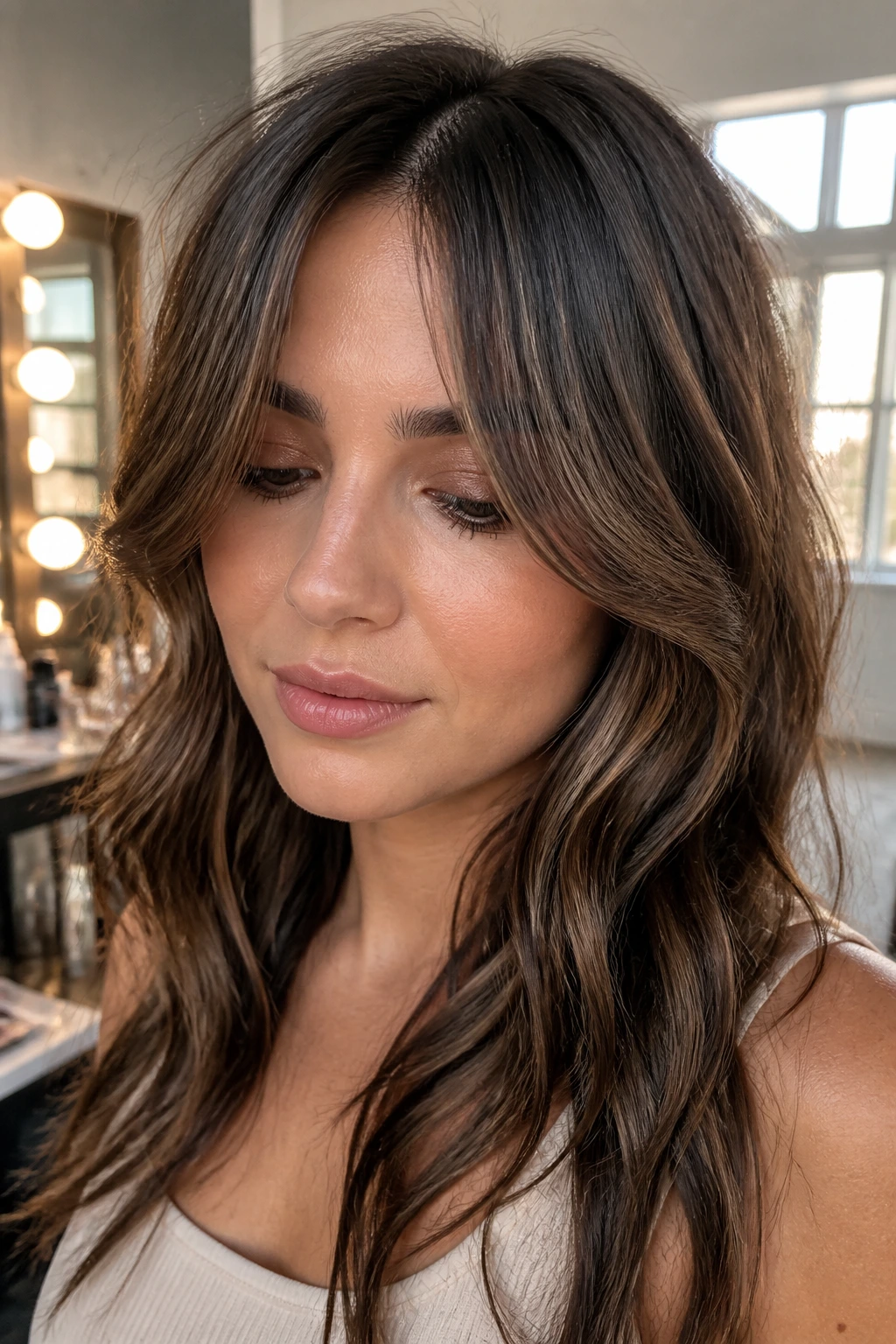
The most common mistake is cutting the fringe too short while it’s wet. Wavy hair springs up, and the shorter the bang, the more obvious that spring becomes. The fix is simple: leave extra length at the first cut, then dry it fully and refine from there.
Another mistake is making the bangs too blunt. A straight wall across the forehead can widen a round face and make the front feel heavy. Ask for soft point-cut ends or a razor finish only if the stylist knows how your texture behaves.
Overloading the front with product causes trouble fast. The bangs collapse, stick together, and separate into greasy strands at the temples. Use a light mousse or root spray near the roots and keep creams away from the scalp.
Cowlicks can also wreck the shape if you ignore them. If your front hair always pushes left or right, build the cut around that bend instead of fighting it. A fringe that respects the cowlick usually looks better after lunch than a fringe that was trained into submission at 7 a.m.
Variations and Different Ways to Wear the Shape
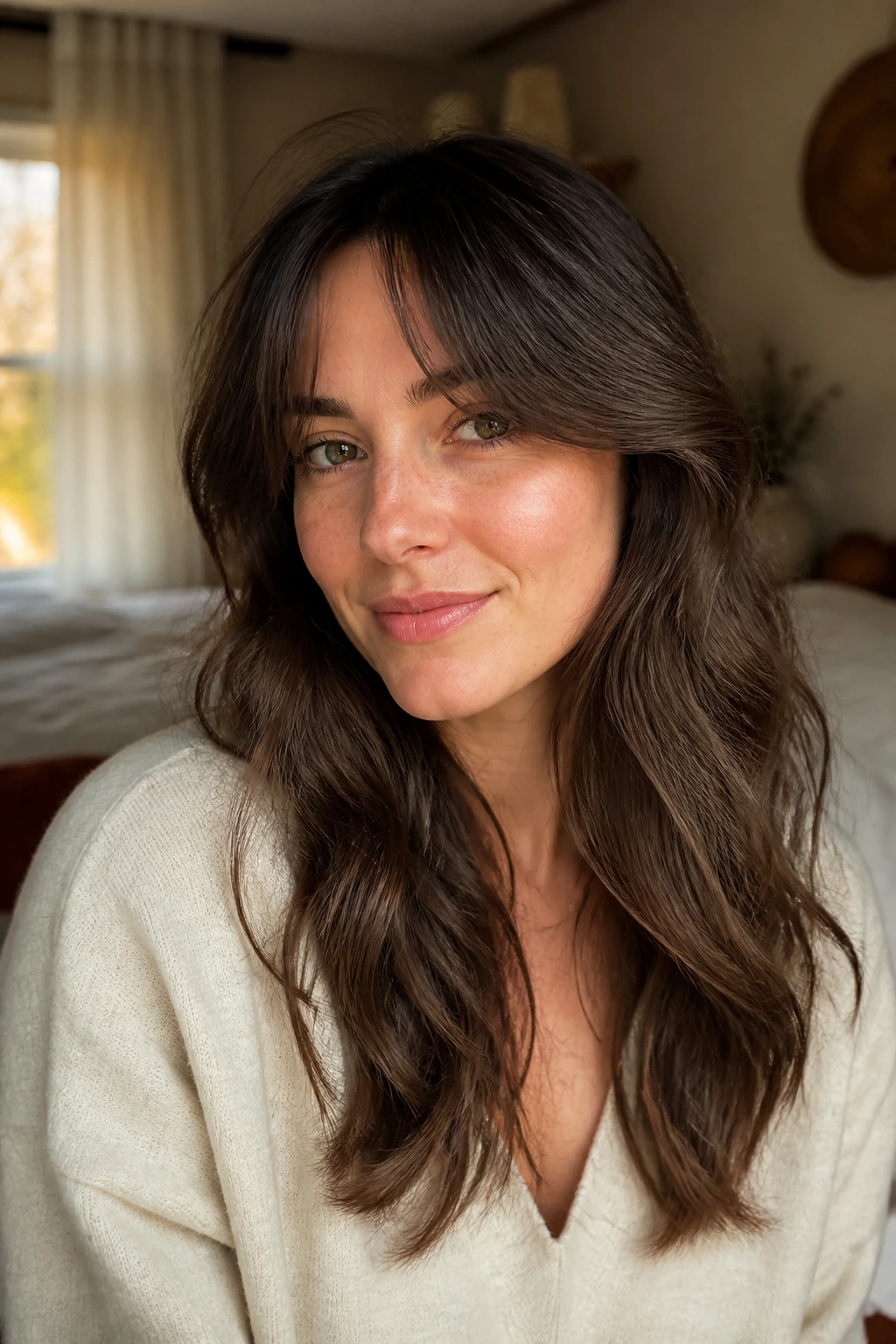
The Soft Curtain: Keep the center open and the sides long, then style with a loose round brush bend. This version is the easiest to live with if you want movement but not a strong statement.
The Bottleneck Bend: Start narrow at the middle and widen the sides more aggressively. It gives a round face extra vertical space up top while still framing the cheeks.
The Shag-Link Fringe: Let the bangs blend straight into shag layers. This works well when your wave pattern is thick and you want the fringe to feel like part of the haircut, not a separate piece.
The Off-Center Sweep: Shift the part a little to one side and let the bangs fall diagonally. Good for anyone whose natural part refuses to stay in the middle.
The Long Grow-Out Frame: Keep everything longer and treat the “bangs” like front layers that can tuck, sweep, or split. This is the one I’d choose for low maintenance.
Keeping the Shape Between Salon Visits
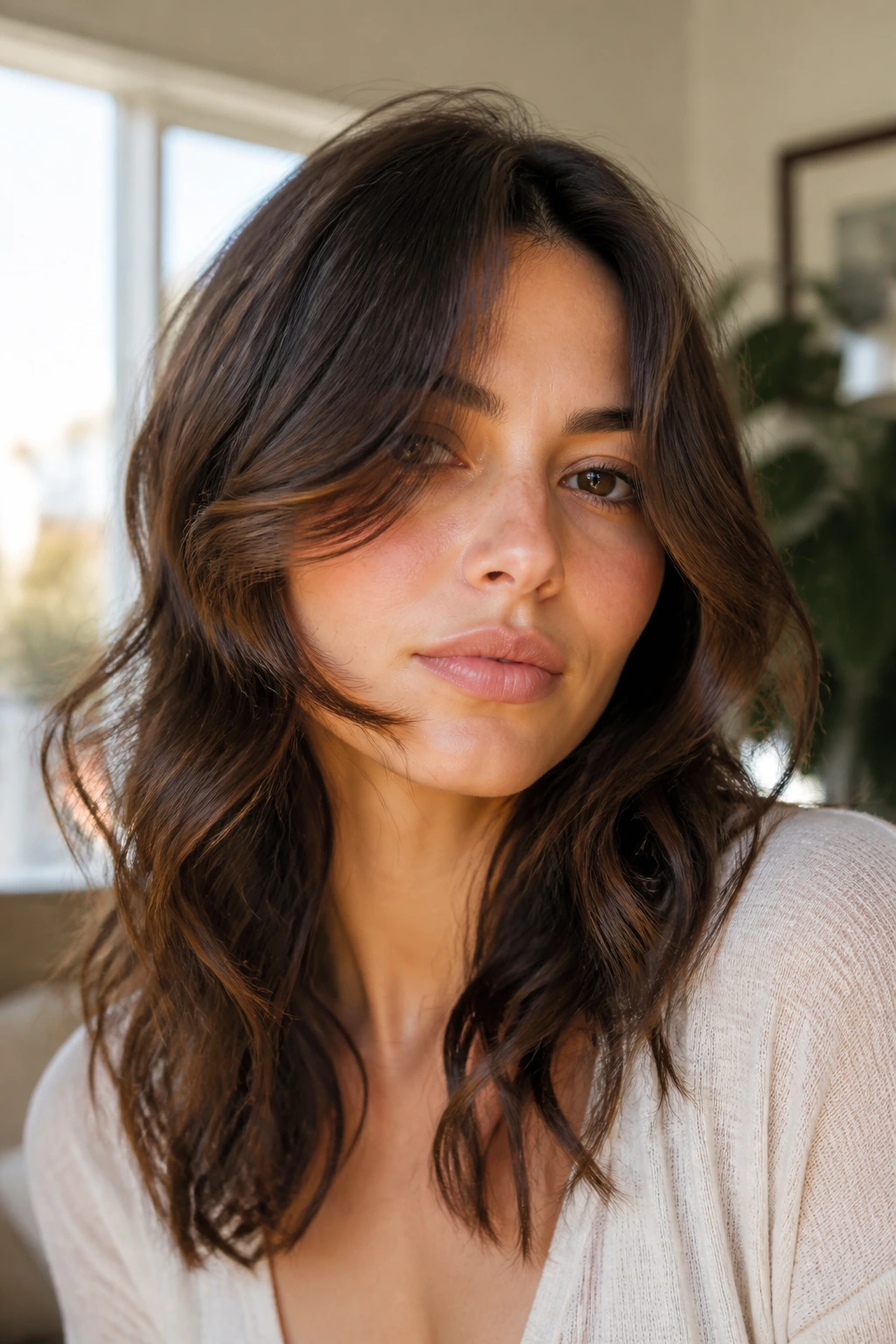
Draped bangs don’t need a trim every week, but they do need a little upkeep if you want the shape to stay clean. For most wavy hair, a fringe trim every 4 to 7 weeks keeps the front from dropping too far into the eyes or separating too much at the center. If your wave pattern is strong, the line may need a touch-up sooner.
Dry shampoo helps more than people admit. A small amount at the roots keeps the front from collapsing, especially if you like to wear the fringe off-center or brushed away from the face. Use it sparingly. A chalky front looks worse than a flat one.
At night, a satin pillowcase or a loose clip can keep the front from bending in strange directions while you sleep. If the bangs wake up bent, mist them lightly with water, reshape with your fingers, and use a brush only where the root needs direction. Do not soak the whole fringe and start from zero unless you have time.
Frequently Asked Questions
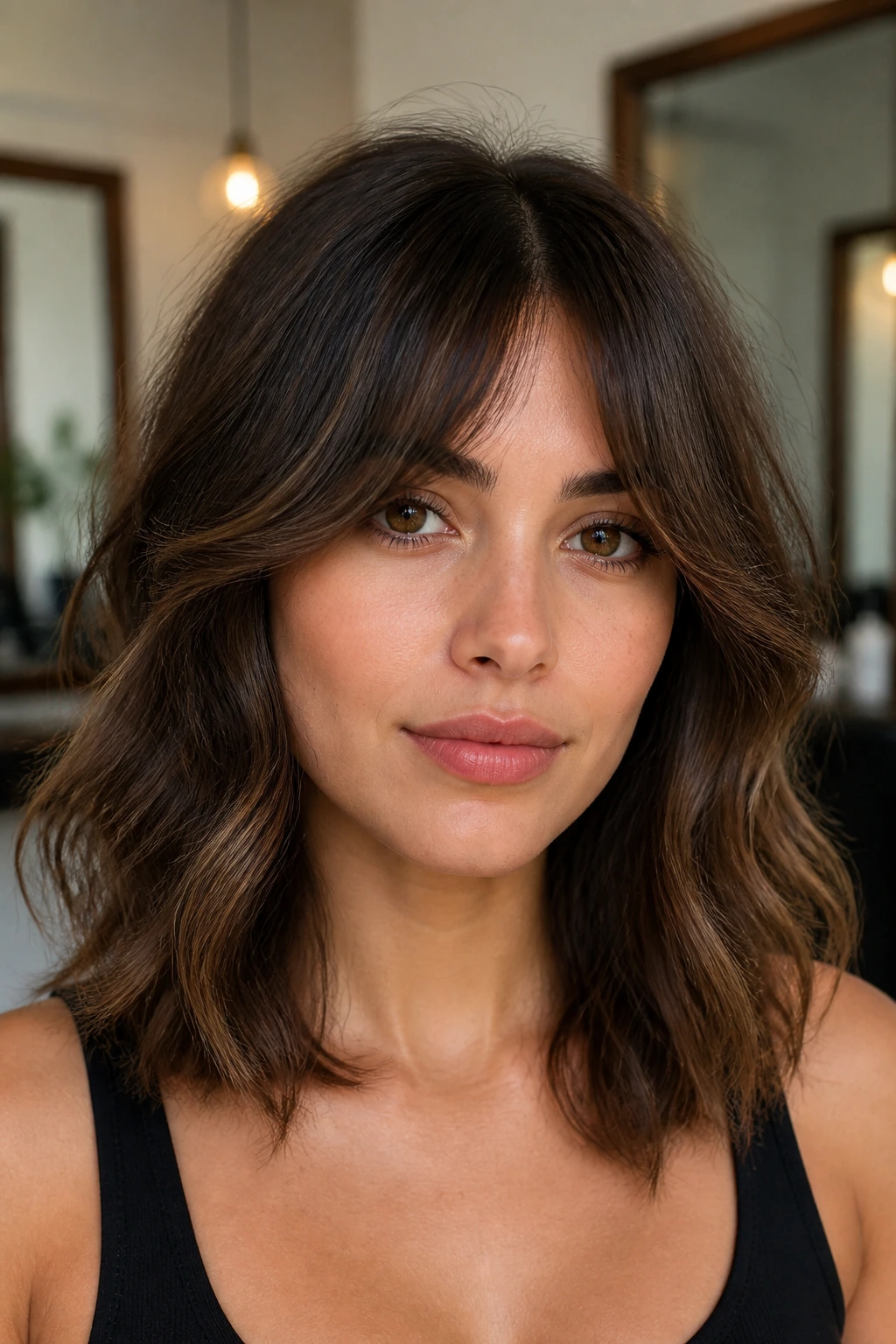
Do draped bangs make a round face look wider?
They can, if the cut sits too short or too blunt across the forehead. The versions that work best keep the center open and the side pieces longer, so the face reads more vertical than horizontal.
How short should draped bangs be on wavy hair?
Longer than you think. If your hair has any spring, the dry length usually sits higher than the wet length, so the shortest point often needs to start around the brows or slightly below them before the final dry cut.
Can I air-dry draped bangs, or do I need a blow-dryer?
You can air-dry them, but the cut has to be designed for that. If you want a smooth swoop or a clean bend, a quick blow-dry at the root gives more control. Air-drying works better when the fringe is layered and intentionally piecey.
What if my waves are coarse and frizzy?
Ask for more weight in the fringe and longer side pieces. Coarse waves can puff if the bang is thinned too much, so a softer, fuller drape with a light cream at the ends usually holds better than a skinny fringe.
How often do draped bangs need trimming?
Most people land somewhere between 4 and 7 weeks, but it depends on how fast your hair grows and how much structure you want. If you like the fringe to brush the eyes, you’ll notice the need for a trim sooner.
Can I wear glasses with draped bangs?
Yes, and the shape often looks better with glasses than blunt bangs do. Keep the shortest point high enough that it clears the frames, then let the sides angle down outside the glasses line so the front doesn’t crowd your face.
What if one side keeps falling flat?
That usually means the part, cowlick, or root pattern is stronger on that side. Dry that section first, clip it up while the rest dries, and ask your stylist to account for the bend rather than cutting both sides as if they behave the same.
How do I grow these out without that awkward in-between stage?
Let the fringe merge into face-framing layers early. The longer side pieces can be tucked, pinned, or swept across the forehead while the center fills in, which keeps the cut looking deliberate instead of neglected.
Why These Bangs Still Make Sense When the Hair Is Real
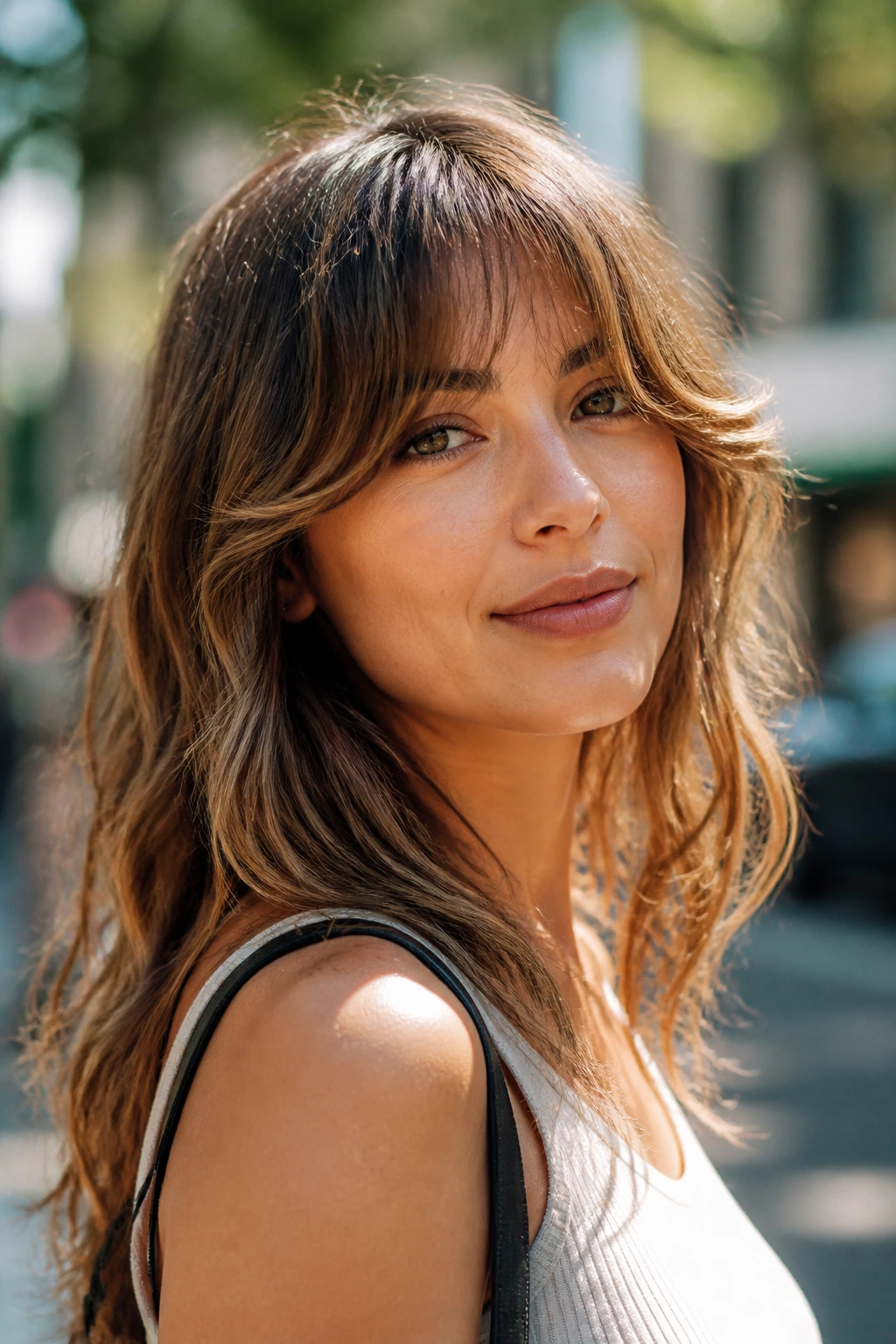
The prettiest version of a draped fringe is rarely the one that looks the most controlled. It’s the one that keeps its shape after a commute, a little humidity, and a hand running through it twice. Round faces and wavy hair give you a useful advantage here, because both the face shape and the texture already work in the direction these cuts need.
Pick the version that matches your patience, not your fantasy. A soft curtain, a bottleneck bend, or a long grown-in frame can all look right on the same face if the length and density are tuned to the hair you actually have. That’s the part people miss when they save haircut photos and hope the mirror will cooperate.
A good draped fringe should feel like it belongs to you by the second day. When it does, it stops reading as a haircut and starts reading as shape. That’s the whole point, and it’s worth being picky about.