



Undercut pixie cuts for toddler boys with curly hair work because they solve the two problems that matter most: the sides puff out first, and a toddler’s head never stays still long enough for a fussy shape to survive. Keep the bulk off the temples and nape, leave enough curl on top to show movement, and the whole haircut starts behaving like it was built for real life instead of a salon photo.
Curly hair has a sneaky habit of shrinking after it dries. A trim that looks generous when the curls are damp can land two inches shorter once the ringlets spring back, which is why these cuts need a little more length on top than parents often expect. The undercut part is doing real work here, too. It removes the fuzz where little ears and collars rub all day, so the shape stays readable even after a nap, a playground slide, or a car-seat nap that squashes the crown flat.
“Pixie” can sound like a strange word for a boy’s cut, but I’m using it the way many barbers do: short, tidy sides with a longer, textured top and a soft outline around the ears. That shape can be playful or neat, rounded or sharp, quiet or high-contrast. The trick is matching the cut to the curl pattern, not forcing the curl pattern into a shape it doesn’t want.
Why These Cuts Feel Easier Than a Plain Short Crop
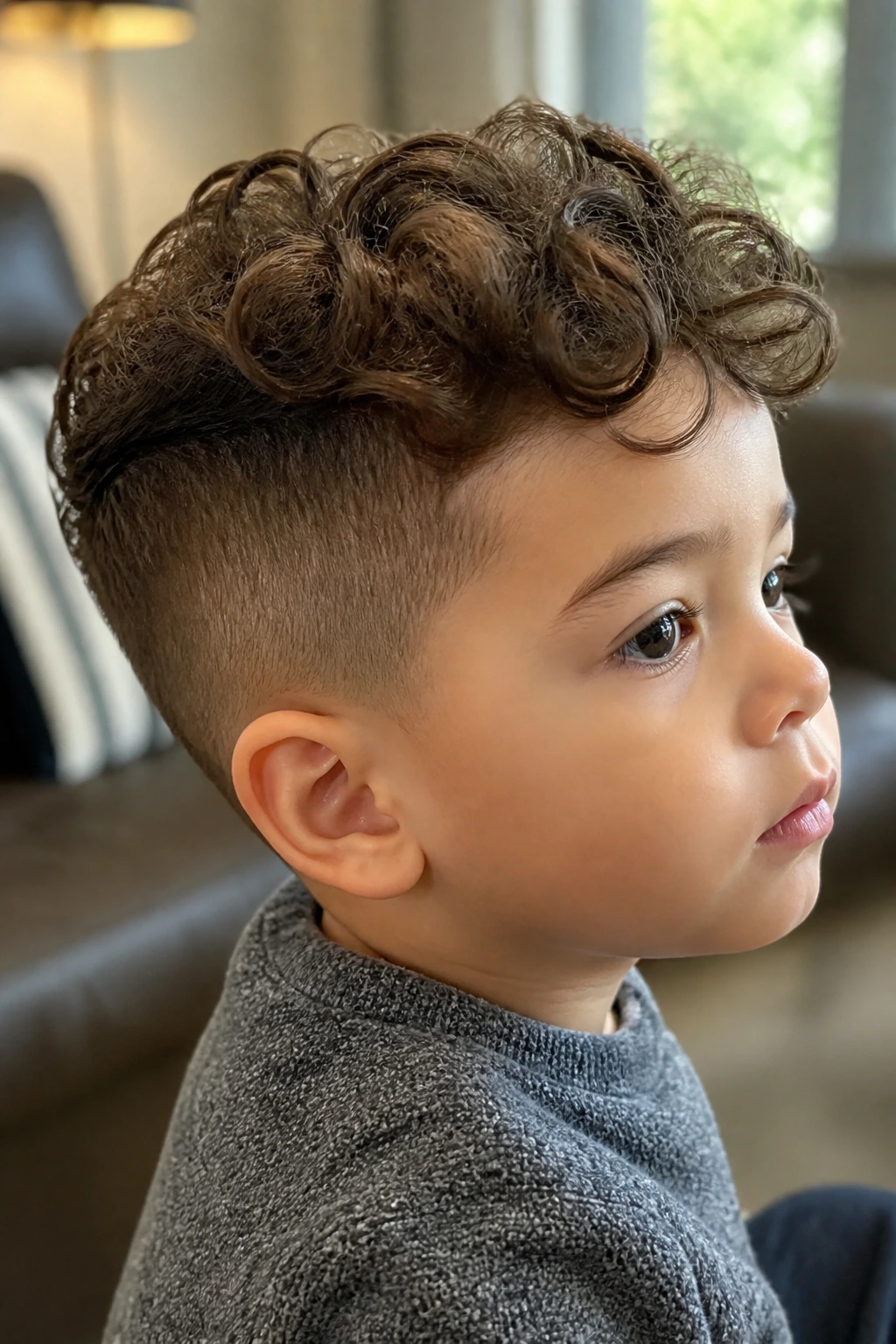
- The sides stop ballooning: A short undercut keeps the hair from flaring out around the ears and neck, which is the first place toddler curls usually go fluffy.
- The top still has personality: Leaving 1.5 to 3 inches on top gives curls enough weight to form ringlets instead of turning into a fuzzy cap.
- Morning styling stays fast: A spray bottle, a dab of curl cream, and a few finger-scrunches are usually enough to bring the shape back.
- The cut grows out more neatly: Because the bulk is controlled underneath, the haircut can go several weeks before it starts looking ragged.
- It adapts to different curl types: Loose waves, springy spirals, and tighter coils can all work with the same basic structure if the top length changes.
- It survives real toddler behavior: Hats, naps, seatbelts, and a few very determined hand-to-head moments do not wreck the entire silhouette.
1. Soft Temple Undercut Pixie
This is the calmest place to start. The sides are clipped low around the temples and nape, but not taken so short that the scalp flashes through. The top stays soft and curly, with enough length for the curls to bend instead of puff. On a toddler, that matters more than drama. A cut that looks polished at the chair and falls apart after lunch is not useful.
Why it works
The soft temple undercut keeps the attention where it belongs: on the curl pattern. Ask for a #2 or #3 guard on the sides and a top length around 1.5 to 2.5 inches, depending on how tight the curls are. If the hair is looser, the top can sit a little shorter. If it’s springy, leave more. That tiny bit of extra length keeps the curls from collapsing into the head.
What to ask for
- Short temples and nape, but no hard scalp line
- A rounded shape around the ears
- The top left long enough to scrunch with fingers
- A soft blend rather than a sharp disconnect
This cut is my pick for parents who want something neat without looking severe. It holds up on busy days and doesn’t demand much besides a quick mist and a little leave-in conditioner.
2. Curly Fringe Pixie
If your toddler keeps pushing hair off the forehead, this is the one that buys you peace. The fringe is left longer than the sides, so the curls fall forward in a soft curtain instead of sticking straight up after a nap. The undercut clears the ears, which keeps the whole shape from turning boxy.
The fringe should sit around the brow line when dry, maybe a touch higher if the curls are especially springy. That’s the part parents often miss. Curly bangs shrink a lot. A fringe that seems generous in the chair can end up half an inch shorter once it dries, so I’d rather see a barber leave a little extra and trim again later than carve it too tight on day one.
This cut suits kids who rub their forehead when they’re sleepy or tired. It also helps if your toddler has a strong cowlick at the front, because the fringe can be guided with fingers instead of fighting a stubborn part. Use a small amount of curl cream, then push the front slightly to one side or let it fall naturally. No helmet hair. No crunchy gel.
3. Rounded Curl Crop
What if you want the cut to look soft from every angle instead of edgy? The rounded curl crop is the answer. The top is shaped into a gentle dome that follows the head, and the undercut is tucked low enough to keep the outline clean without creating a harsh contrast. On tighter curls, this shape is a lifesaver because it stops the sides from puffing wider than the crown.
This one works especially well when the child has dense hair and the usual short crop starts to look triangular. A barber can use scissor-over-comb on the top and keep the perimeter rounded instead of square. The final effect is neat, but not stiff. It reads as a deliberate shape, not just “short hair everywhere.”
A rounded crop also ages well between trims. Even when the hair grows out, the curve keeps the cut looking intentional. If your toddler is in a phase where every clipper buzz causes complaints, ask for a softer taper with scissors on the sides. You’ll lose a little sharpness, but you’ll gain cooperation. And cooperation is worth a lot.
4. Ear-Forward Side-Sweep Pixie
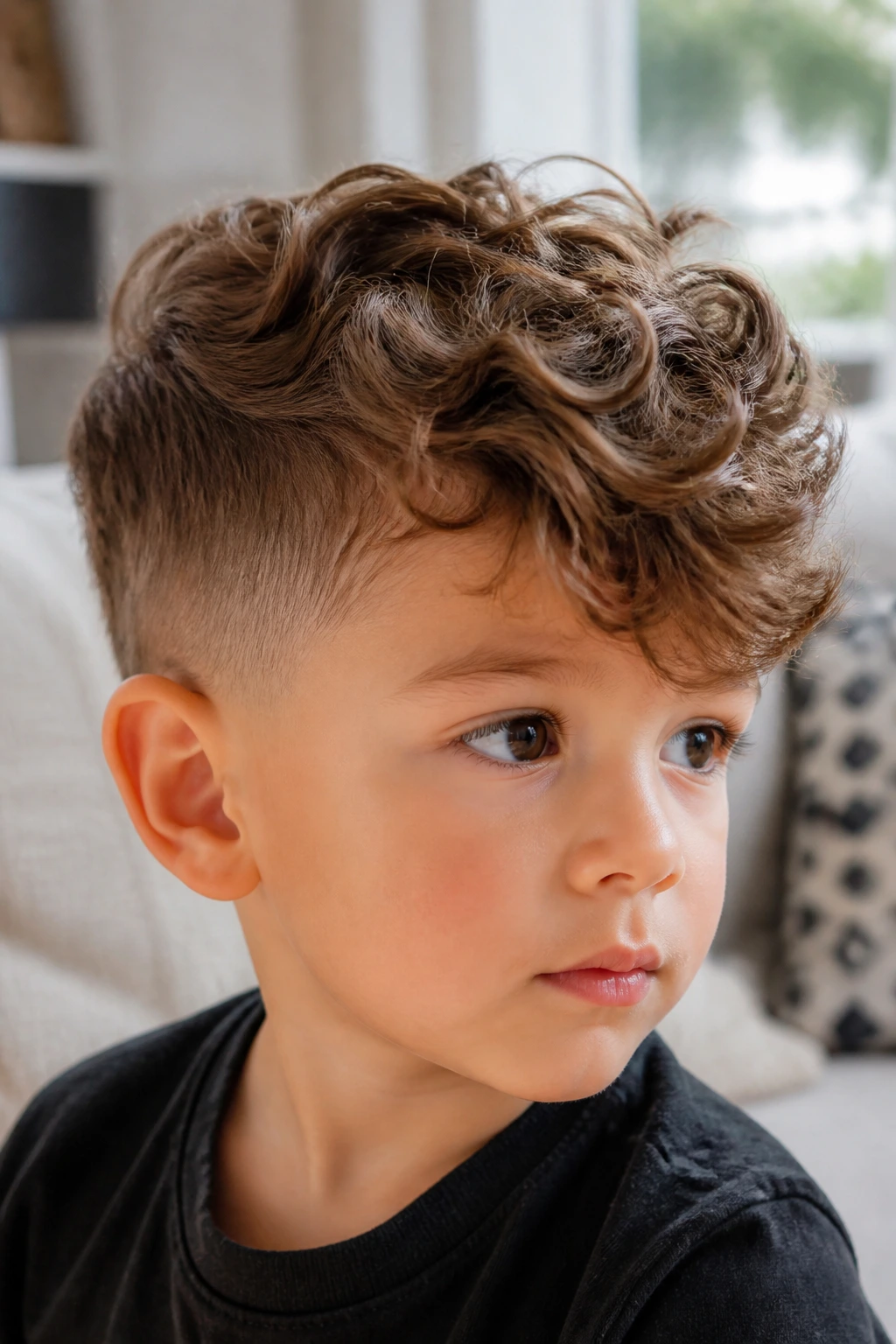
A side sweep can hide a messy hairline better than almost anything else. One side of the top is left slightly longer and brushed forward toward the forehead and cheek, while the other side is cut tighter under the sweep. That asymmetry gives the cut motion, which is useful when curly hair insists on doing its own thing.
This is a smart choice for a toddler with a cowlick near the crown or one front section that always lifts. Instead of fighting the swirl, the side sweep turns it into part of the design. The shorter side keeps the ears open, and the longer side gives a soft frame across the face. It looks a little more styled than a basic crop, but it still works with two fingers and a damp brush.
If you want to ask for it clearly, say you want one side heavier, one side cleaner, with the top long enough to sweep across the forehead. That’s simpler than trying to describe “modern” or “cute,” which means different things to different barbers. Concrete directions get better haircuts.
5. Mini Faux Hawk Pixie
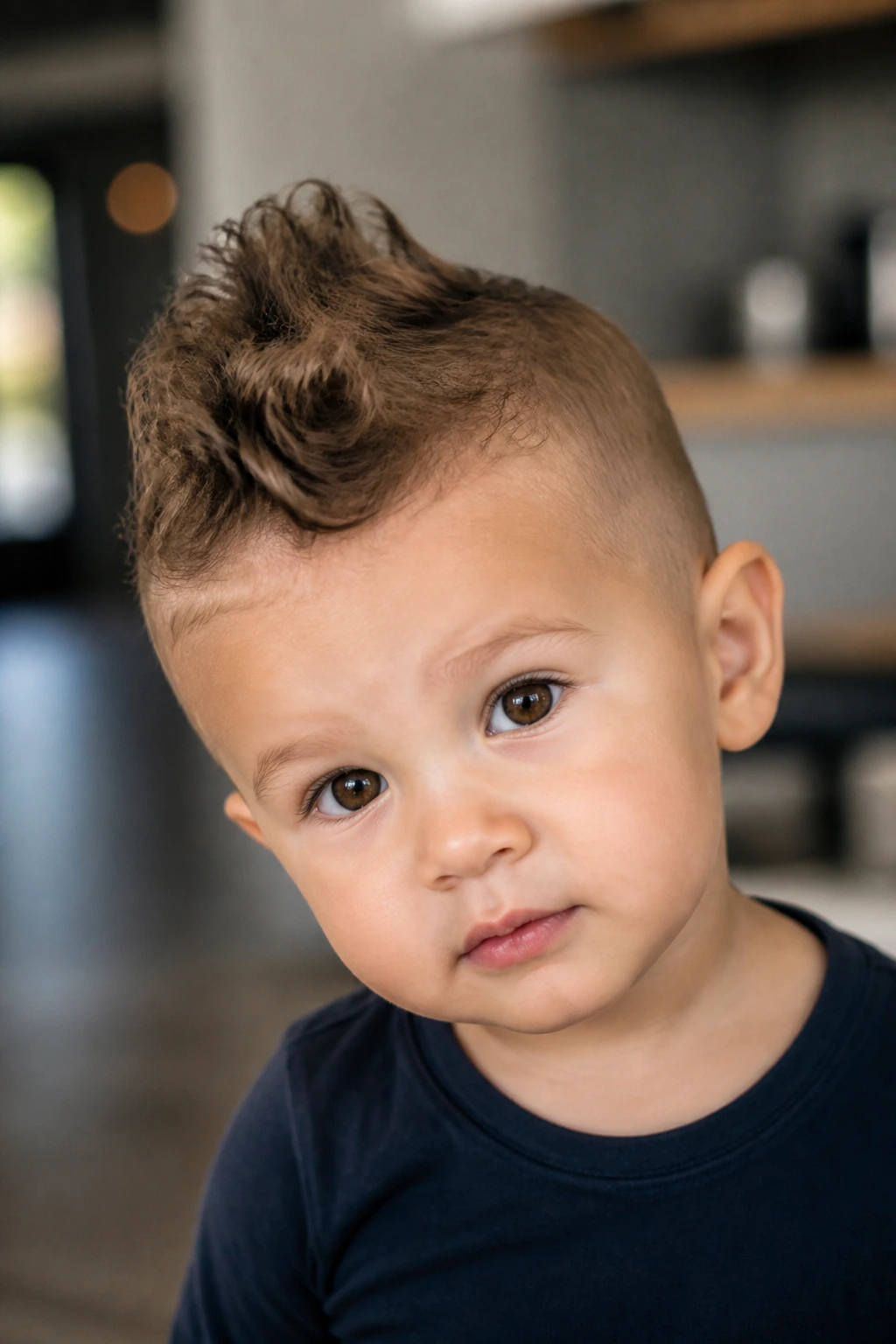
This one has a bit of swagger, but it stays toddler-friendly. The sides are trimmed short, the middle strip is left longer, and the curls on top are allowed to rise into a soft ridge instead of a stiff spike. It’s not a punk cut. It’s a curly little mohawk that still looks sweet when the curls fall a bit.
The best version keeps the ridge narrow enough that the shape stays controlled. If the strip is too wide, the cut turns into a puffy mound. If it’s too thin, it loses the texture that makes curly hair fun in the first place. I’d usually keep the center area around 2 to 3 inches, depending on curl tightness, and trim the sides down to a tidy low guard or soft taper.
This cut suits kids with dense curls in the middle of the scalp and finer hair near the temples. It also helps if you want something playful for a birthday photo but don’t want a style that screams “dress-up only.” A tiny amount of curl cream and a quick lift with your fingers is enough. Skip hard gel. It makes the top feel like plastic, and that is not the point.
6. Deep Side-Part Pixie
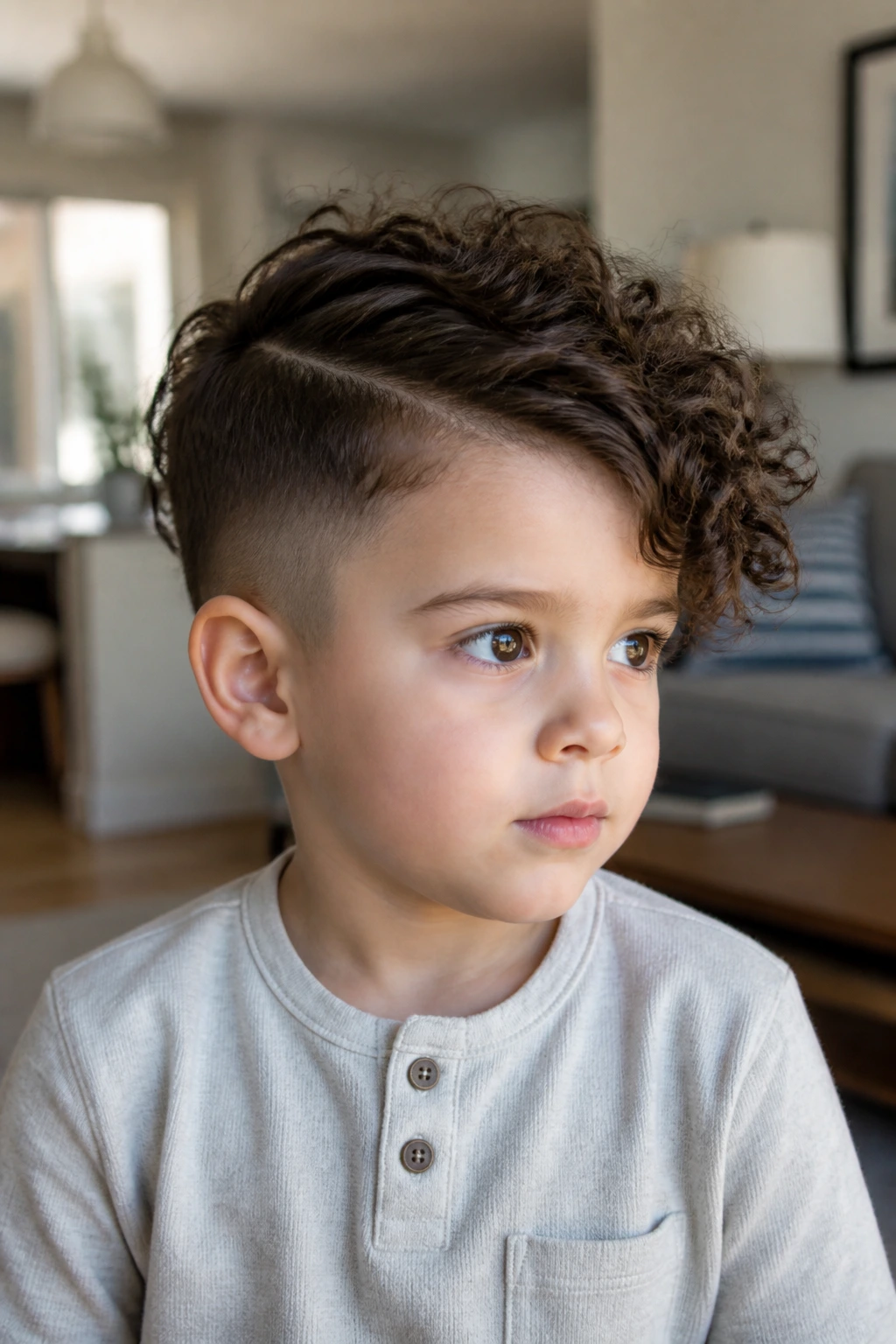
A strong side part does something useful for curly toddler hair: it gives the eye a place to rest. Instead of letting the curls spread evenly in every direction, the part creates a heavier side and a cleaner side. The undercut beneath keeps the shorter side from blooming into a puff ball by afternoon.
This works especially well on looser curls or wavy hair that tends to lose shape fast. The part helps the cut look styled without needing a lot of product. The fuller side can fall across the forehead or tuck behind an ear, while the tighter side stays neat. If your toddler has one side that grows faster or a swirl that resists symmetry, this is a friendly way to work with it.
I like this cut for parents who want a style that looks tidy in daylight and still reads clearly in photos. Ask the barber to leave the part area slightly longer and keep the opposite side close to the head. The contrast should be visible, but not severe. Too much contrast and the cut starts looking disconnected. Too little and the part disappears.
7. Scissor-Only Soft Undercut Pixie
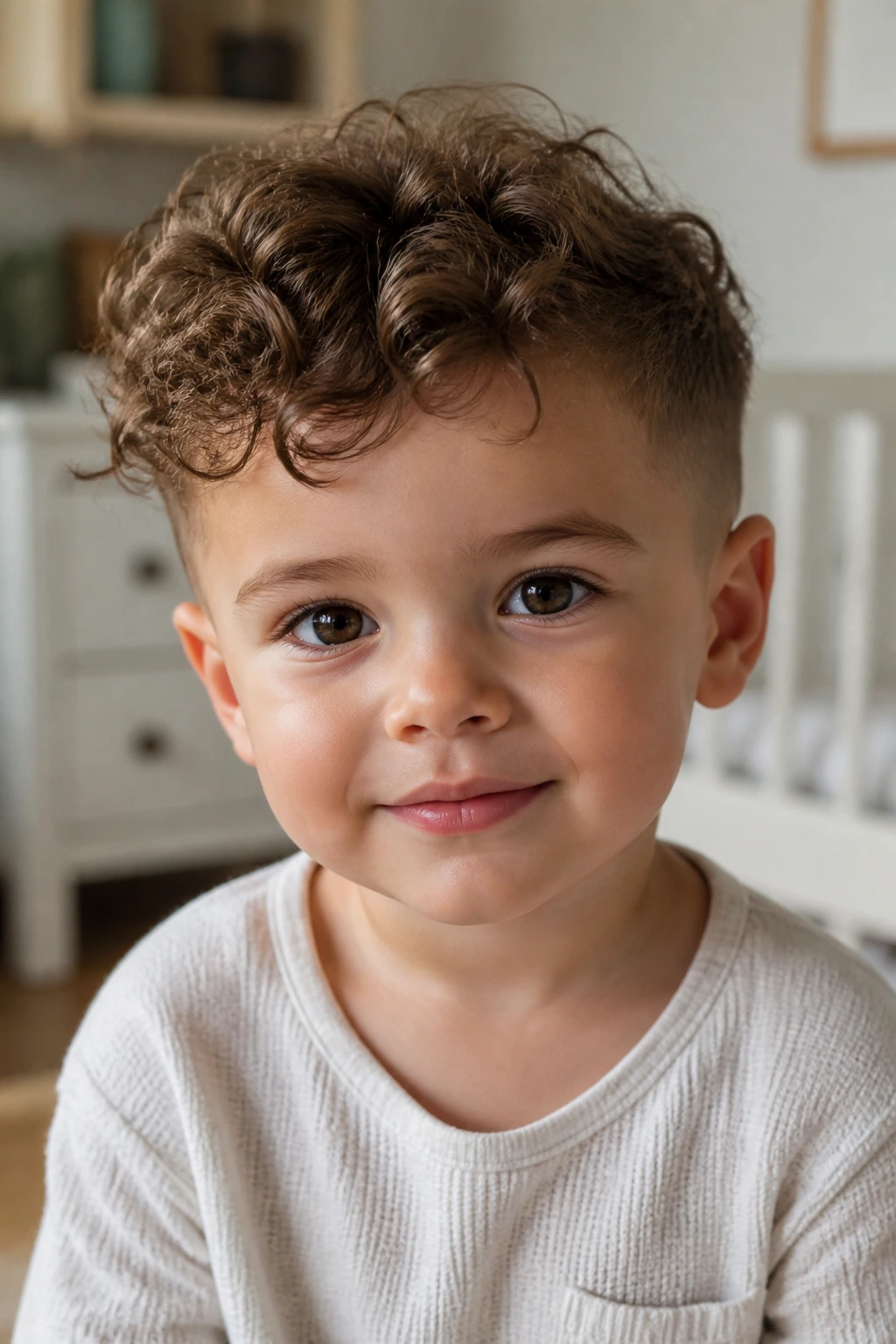
A clipper-free version matters more than people think. Some toddlers hate the vibration of clippers, the buzz near the ears, or the sound right behind the neck. A scissor-only soft undercut keeps the shape quieter and gentler, while still removing enough bulk to open up the sides. It won’t look as crisp as a true clipper undercut, but it can be the difference between a decent haircut and a meltdown in the chair.
Best for
- Sensory-sensitive toddlers
- Very curly or coily hair that needs softer shaping
- Parents who want a less severe edge
What to mention to the barber
Ask for a soft taper with scissors around the temples and nape, not a hard fade. The top should be left long enough for curls to move, but the outline should stay rounded rather than squared off. If the barber is comfortable cutting curly hair dry, that can help them see the real shape before they take off too much.
This is the version I’d choose when the child is nervous around noise or touch. It’s slower, sure. But slower can be kinder, and kinder often gives you a better result.
8. Temple Fade Curly Pixie
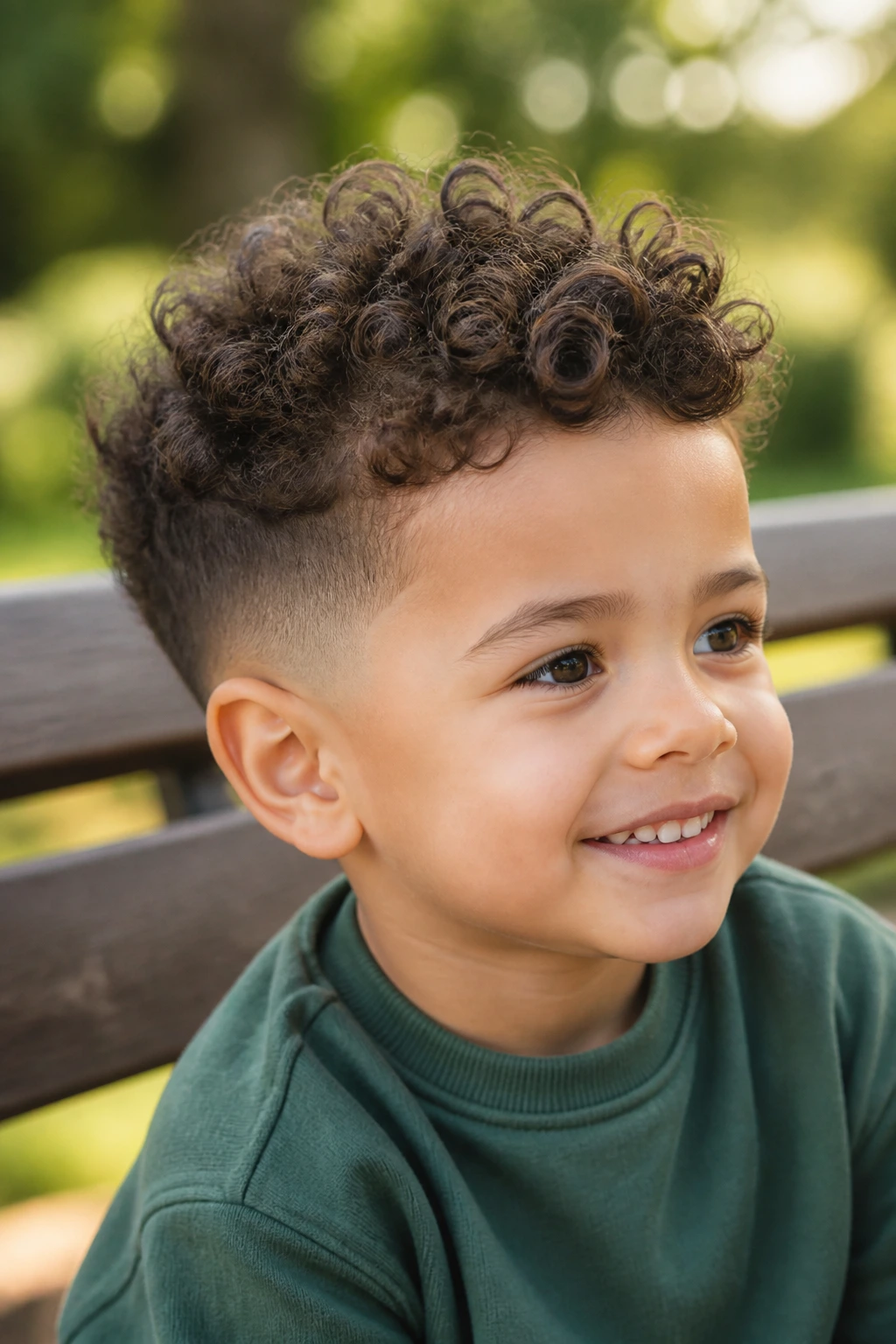
This cut leans sharper. The fade is concentrated around the temples, and the top keeps more weight so the curl texture stays the hero. It has a sporty look, almost like a tiny barbershop version of a clean sneaker: crisp around the edges, fuller where it counts.
The temple fade is a smart move for thick curls that balloon at the sides. By tapering the hair down close at the temples, you avoid that mushroom effect that shows up when the crown looks small and the sides look too broad. Keep the fade low or mid-height on a toddler. A fade that climbs too high can make the head look narrow and can also show patchy growth too soon.
This one needs more upkeep than the softer versions. If you like clean lines, fine. If you’d rather stretch time between cuts, think twice. The good part is how sharp it looks right after the barber finishes. The bad part is how fast a little regrowth can blur the fade. That is the tradeoff, and it’s real.
9. Mushroom-Inspired Curly Pixie
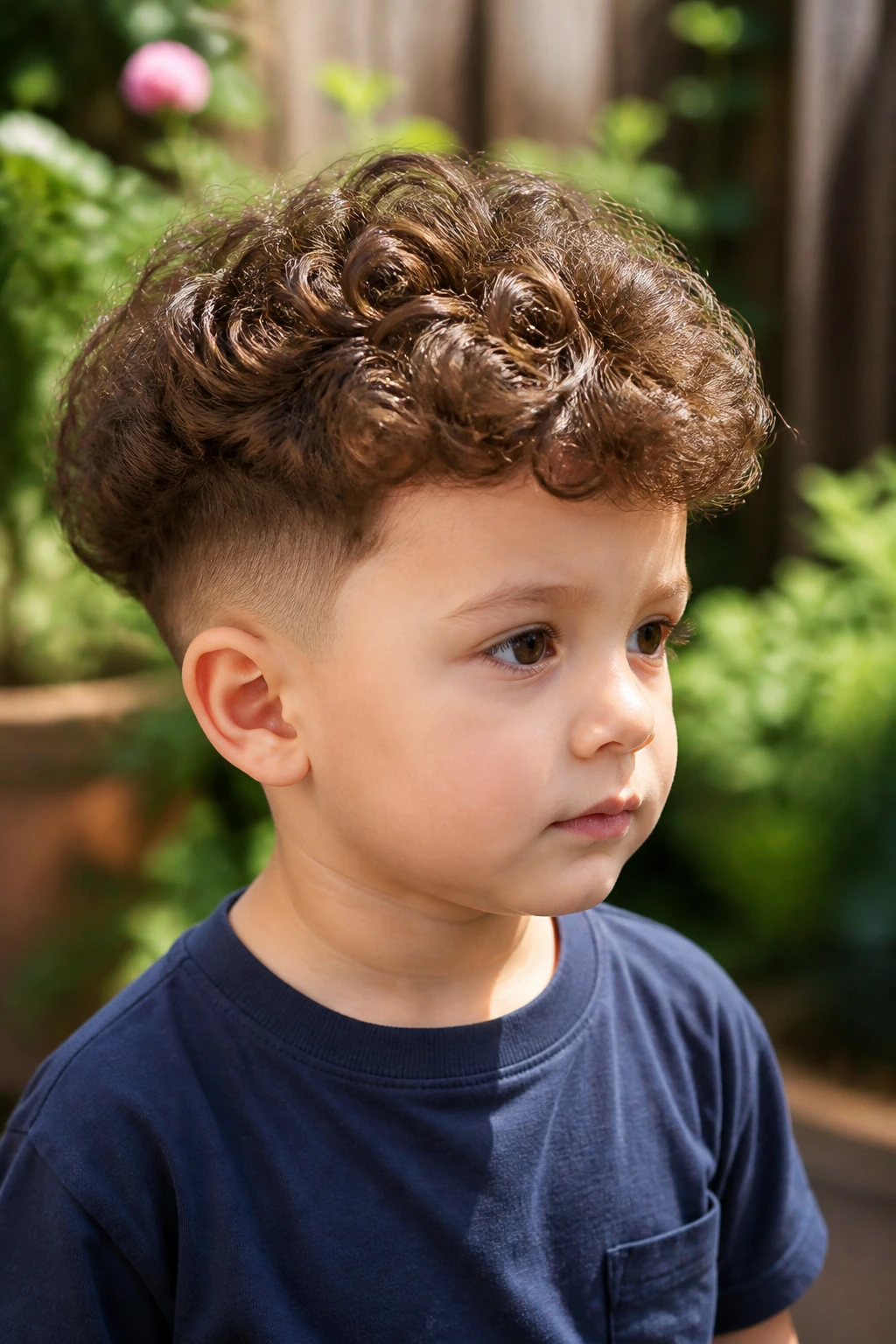
Does “mushroom” sound a little old-school? Maybe. But on curly toddler hair, a softened mushroom shape can look surprisingly good. The trick is to keep the perimeter rounded and the sides under control, not to let the haircut turn into a bowl. With the undercut tucked underneath, the silhouette stays neat while the curls on top keep their bounce.
This cut is useful for dense, springy curls that want to stack upward. Instead of forcing the top flat, you let it keep some volume and shape it into a dome that follows the head. The barber should leave enough length at the crown for the curls to form layers, then clean the underside so the cut doesn’t spread outward at the ears.
I like this for small heads with a lot of curl density, because the rounded shape stops the hair from overpowering the face. It’s also a nice choice if you want a cut that looks soft rather than edged-up. A little curl cream on damp hair, then gentle scrunching, is usually enough to finish it. If the top starts puffing too wide, the answer is not more product. It’s a better shape.
10. Long-on-Top, Short-Back Pixie
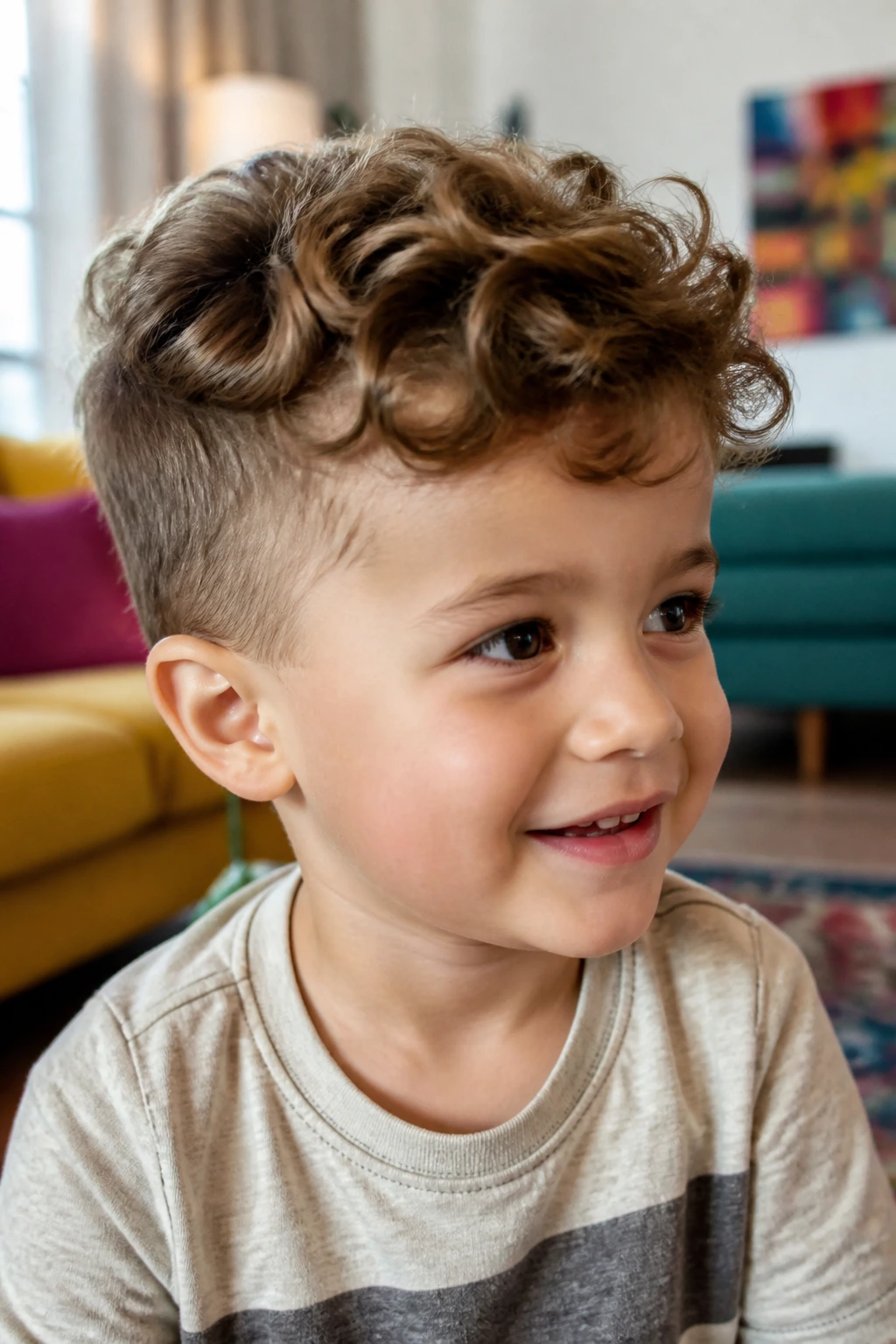
This version keeps the focus on the crown and front, then trims the back close enough that collars and seat belts don’t mash it into a lump. It’s one of the most practical shapes for busy toddlers because the messy part of curly hair often shows up at the back first. Shorten that zone, and the haircut stays readable longer.
The longer top gives you styling options. You can push the curls forward, let them sit loose, or sweep them slightly to one side. Meanwhile, the short back keeps the nape from turning fuzzy after one afternoon outside. If your child has a longer face or a tall forehead, leaving more length on top can balance the shape nicely. It’s a small thing, but it matters.
Ask the barber to keep the top around 2.5 to 3.5 inches and reduce the back cleanly without taking the crown too short. That avoids the flat-top effect that happens when the back is cut down too hard. The result is tidy from the front and practical from the back. That’s a useful combination. Not fancy. Useful.
11. Tucked-Behind-Ears Pixie
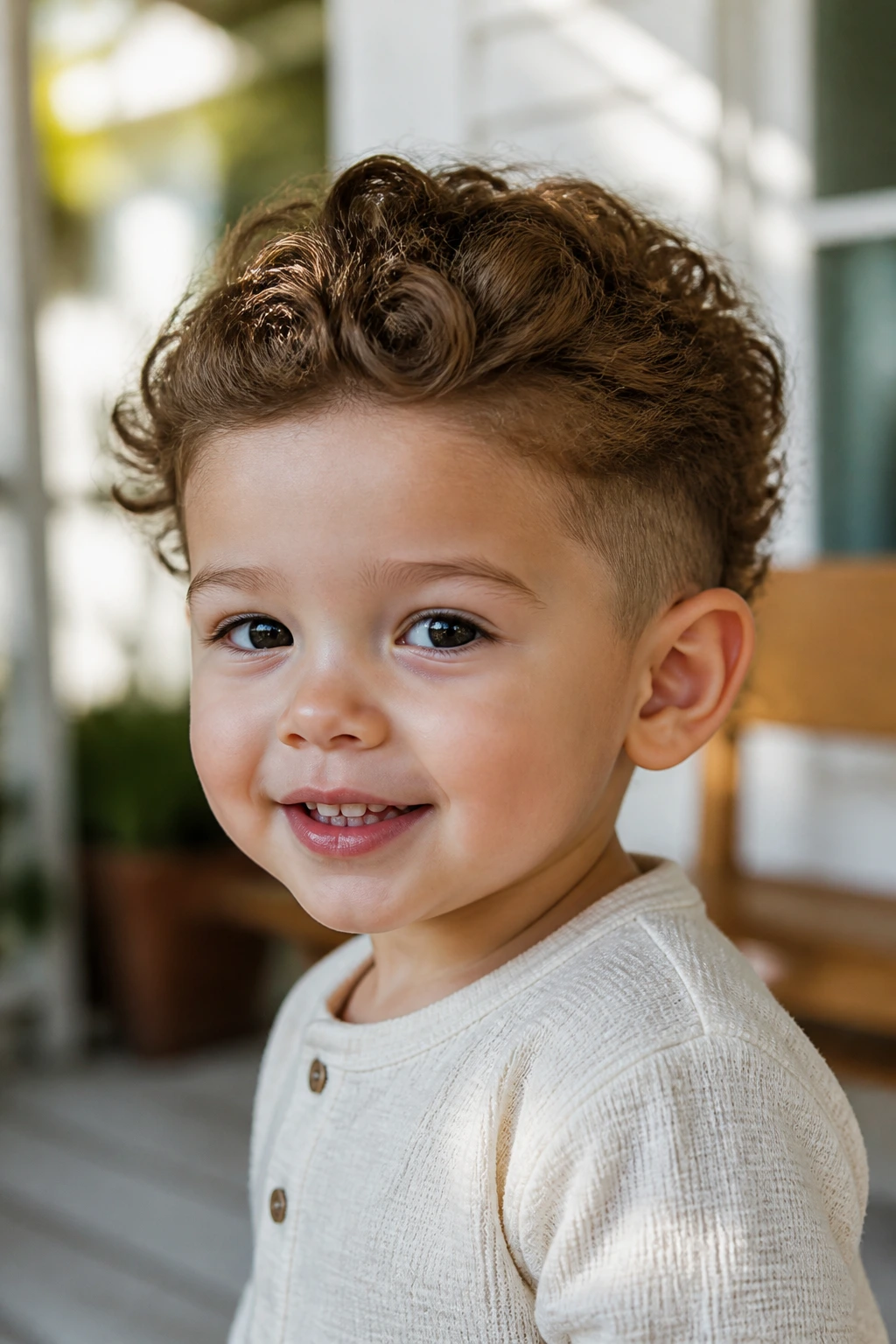
This haircut is for kids whose curls are long enough to tuck, but short enough that they need an undercut to stay civilized. The top and side curls sit a little longer, then get brushed or fingered back behind the ears. Underneath, the bulk is reduced so the tuck stays in place instead of puffing out.
The look is soft, almost sweet, without getting floppy. It works well on medium curls that aren’t ready for a full short crop. If the hair is too short, there’s nothing to tuck. Too long, and it starts behaving like a shag. In the middle, it’s lovely.
I like this style because it gives the face room. The forehead stays open, the ears are visible, and the curls have enough length to show their shape. A light leave-in conditioner on damp hair helps the tuck sit flat enough to stay put for a while. If your toddler keeps pulling the hair forward, the top may need a touch more length at the front than you first think.
12. Tiny Curls Line-Up Pixie
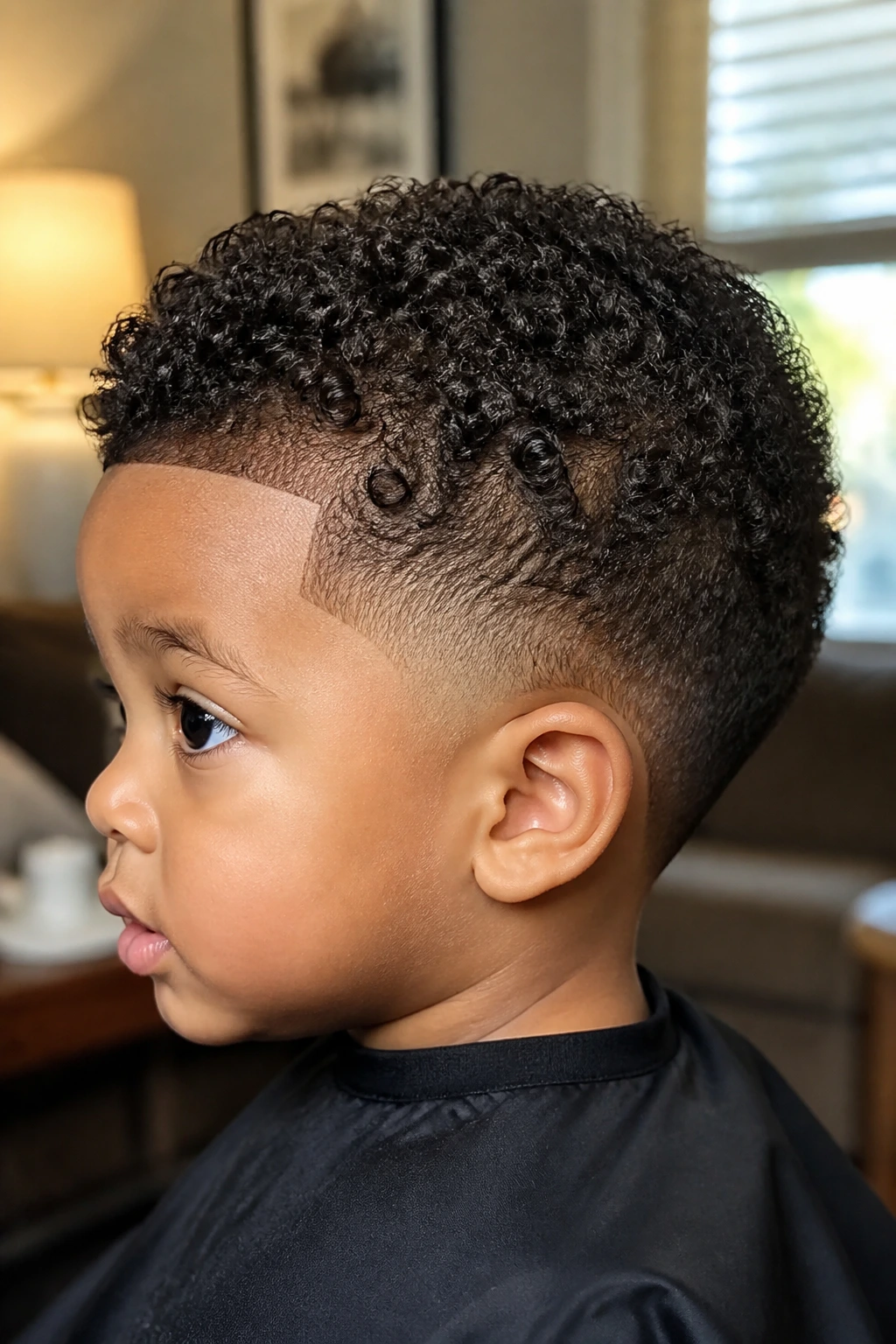
This is the neatest option in the group. The temple and nape lines are cleaned up carefully, and the curls on top are left dense enough to form a tidy cap of texture. The difference between this and a fade is the edge work: a line-up gives the haircut a sharper frame, while the undercut keeps the side bulk under control.
It works best on tight curls and coily hair that naturally forms a defined edge. That said, I would not push a toddler’s hairline too hard. Little hairlines are soft, and over-shaping them can make the cut look too adult too fast. A gentle lineup that follows the natural line looks cleaner and grows out better than a razor-straight edge carved too high.
If you want something crisp for family photos, this is the one. It’s also the cut most likely to benefit from a barber who has a steady hand and doesn’t rush. The shape is only as good as the line. Miss the line, and the whole thing looks off by a mile.
13. Grow-Out Friendly Curly Pixie
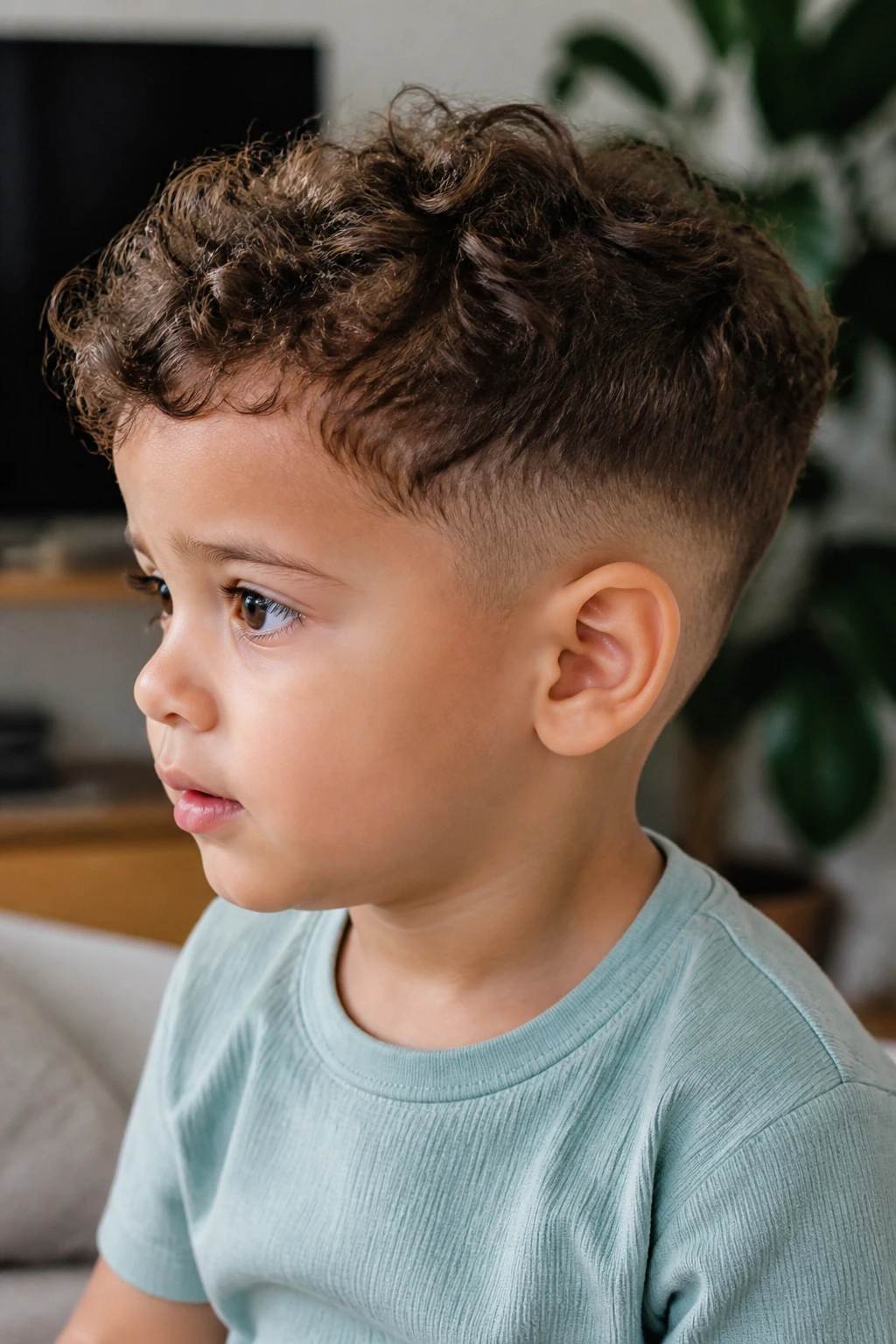
Some parents want a cut that still behaves when they skip the next appointment by a couple of weeks. This is that cut. The top is layered softly, the sides are tapered without a hard disconnect, and the nape is kept clean enough that the shape doesn’t collapse as it grows. The goal is not dramatic precision. The goal is a good-looking grow-out.
That matters because toddler schedules are chaotic. Somebody gets sick, somebody forgets the booking, and suddenly it’s been seven weeks since the last trim. A grow-out friendly pixie avoids the ugly stage where the top looks too short for a style and the sides look too long for a crop. Instead, it just gets a little fuller, which is easier to live with.
Ask for softer edges and no razor-sharp separation. A slightly longer top and a gentle taper will buy you time. This is the cut I recommend when the family wants low drama and fewer maintenance headaches. It’s not the flashiest option. It is the one most likely to still look decent when life gets messy.
14. Soft Mohawk Pixie
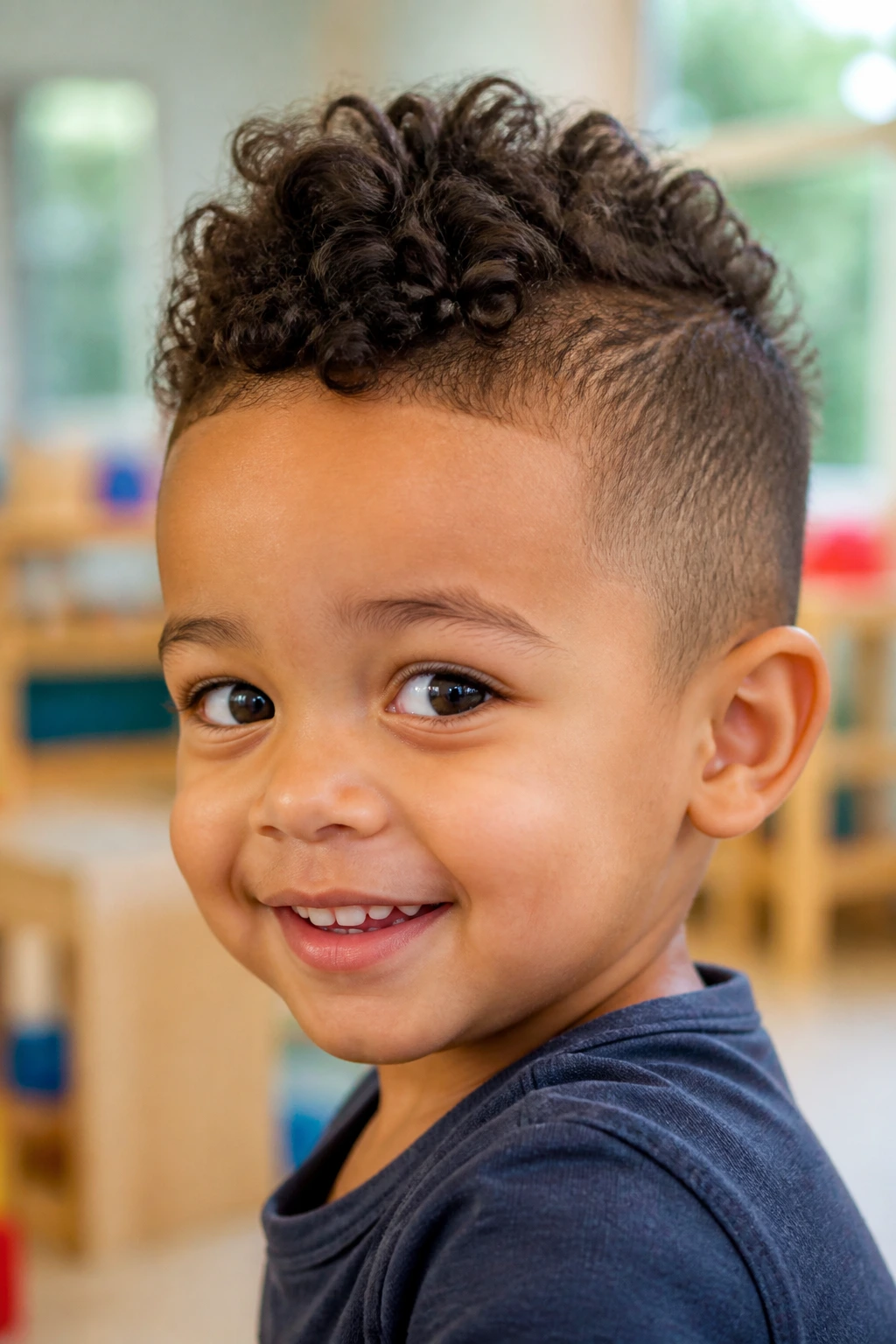
A soft mohawk sounds bolder than it is. The middle stays longer, the sides come down short, and the curls on top rise into a narrow ridge that reads playful rather than extreme. On curly hair, the shape comes naturally if the center length is left alone and the sides are cleaned up enough to show contrast.
This is a good cut for kids with strong curl density through the middle of the scalp. It gives that area a place to live instead of flattening it. The result has movement, and movement is what makes toddler curls look alive instead of overworked. Keep the sides soft, though. A razor-bare mohawk on a toddler can feel harsh fast, especially if the skin is sensitive.
Use a tiny bit of curl cream, then lift the center with your fingers and let the rest fall where it wants. The beauty here is that it doesn’t need perfect styling. If the ridge leans slightly to one side after a nap, that’s fine. It still looks intentional.
15. Classic Low-Commitment Pixie
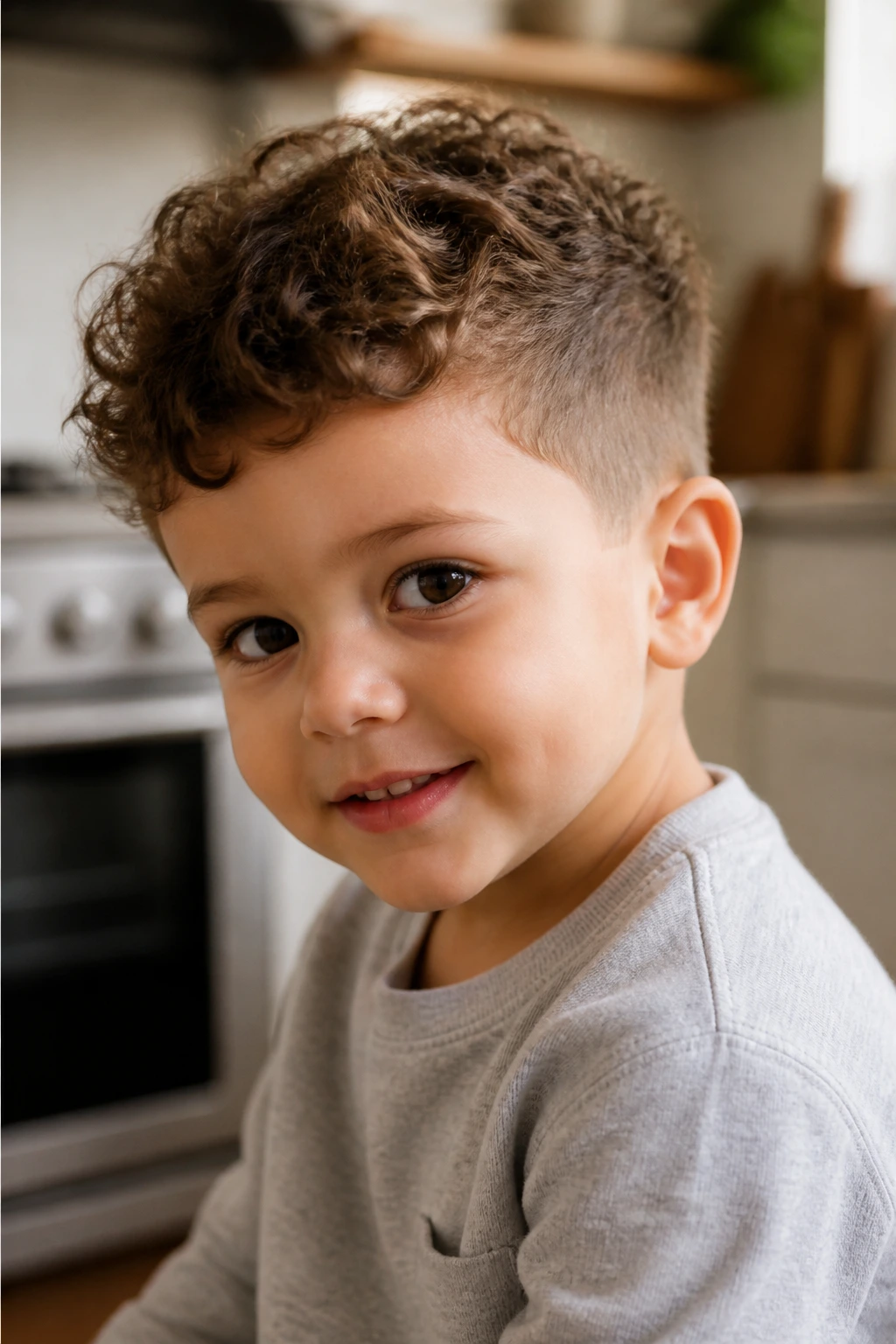
If you want one version that makes sense for most curly toddlers, start here. The sides are short enough to stay clean, the top is long enough to show curl texture, and the whole shape stays soft instead of severe. There’s no hard part, no sharp line-up, and no tricky styling rule to remember before breakfast.
The strength of this cut is balance. It works on loose curls, medium curls, and tighter spirals if the top length is adjusted a little. It also gives a barber room to respond to the child’s head shape, which matters more than people think. Two toddlers with the same curl type can still need different cuts because one has a flatter crown, one has a bigger cowlick, and one has a forehead swirl that refuses to cooperate.
This is the cut I’d choose if you’re unsure where to begin. It’s tidy enough for everyday wear and flexible enough to shift into a bolder style later. Not every haircut has to make a statement. Some just need to behave.
Why the Undercut Shape Works So Well on Curly Toddler Hair
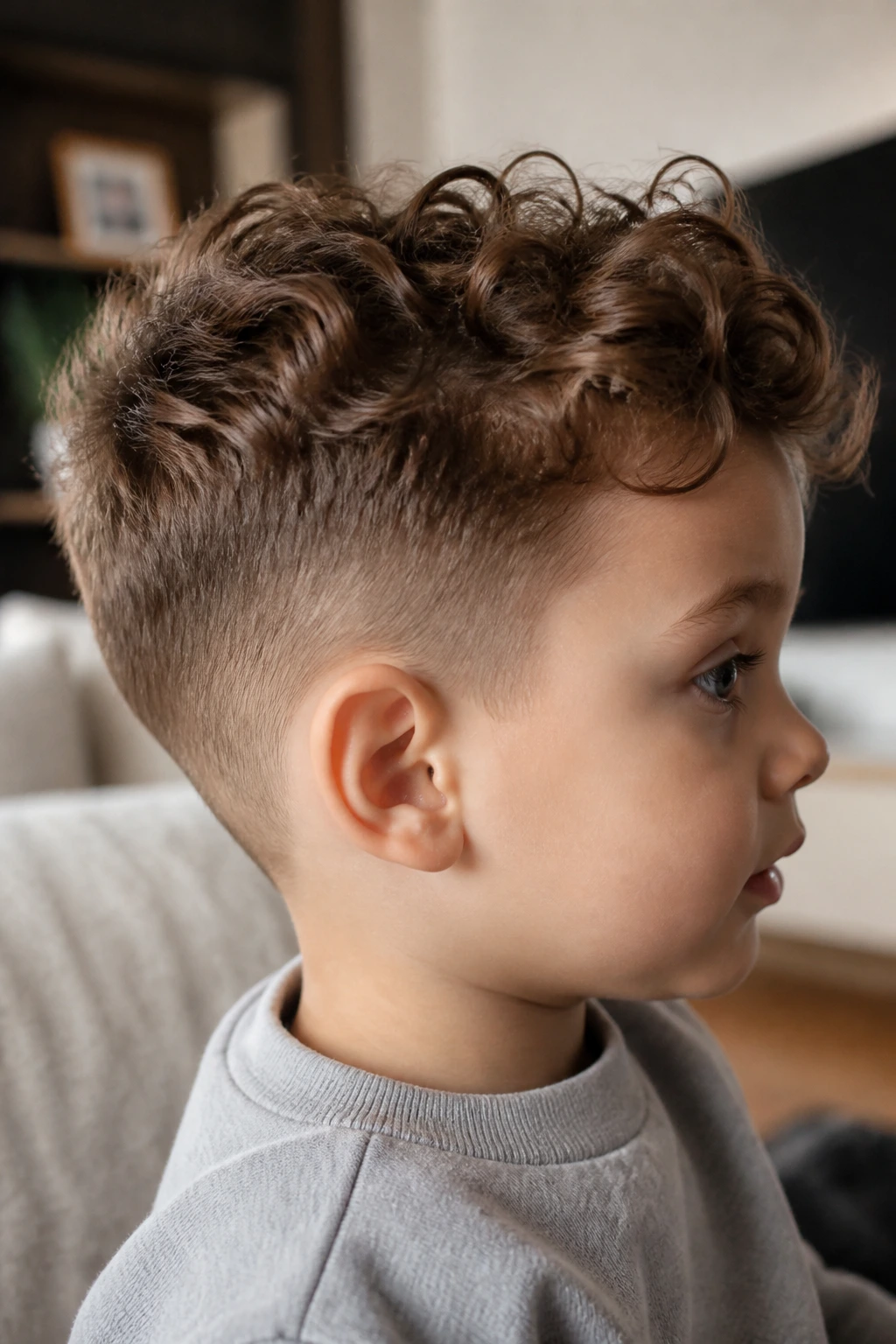
Curly hair does not lie flat just because you ask nicely. It swells where it wants to swell, shrinks when it dries, and grows out of shape faster at the sides than people expect. That is exactly why the undercut part matters so much. Once the bulk is removed from the temples, ears, and nape, the haircut stops fighting the child’s natural texture and starts supporting it.
There’s also a practical reason this shape holds up. Toddlers rub their heads on car seats, nap mats, couch cushions, and sleeves. The shortest hair on the sides gets wrecked first. A clean undercut lowers that friction zone, which means less puff at the bottom and fewer random curls sticking out after a nap.
The top is where you let the curl pattern breathe. Leave enough length for the curl to form a bend—usually somewhere around 1.5 to 3.5 inches, depending on density and tightness—and the style can do something useful. Too short, and the curls pop away from the scalp in little hard points. Too long, and the top falls into the eyes or collapses into a shaggy helmet. The sweet spot is somewhere in the middle, and it changes with curl type.
One thing I’d say bluntly: most bad toddler curly cuts are not bad because the barber lacks skill. They’re bad because the cut was treated like straight hair. Curly hair needs more room, more respect for shrinkage, and a little less confidence in wet length. That’s the whole game.
Talking to the Barber Without Guesswork
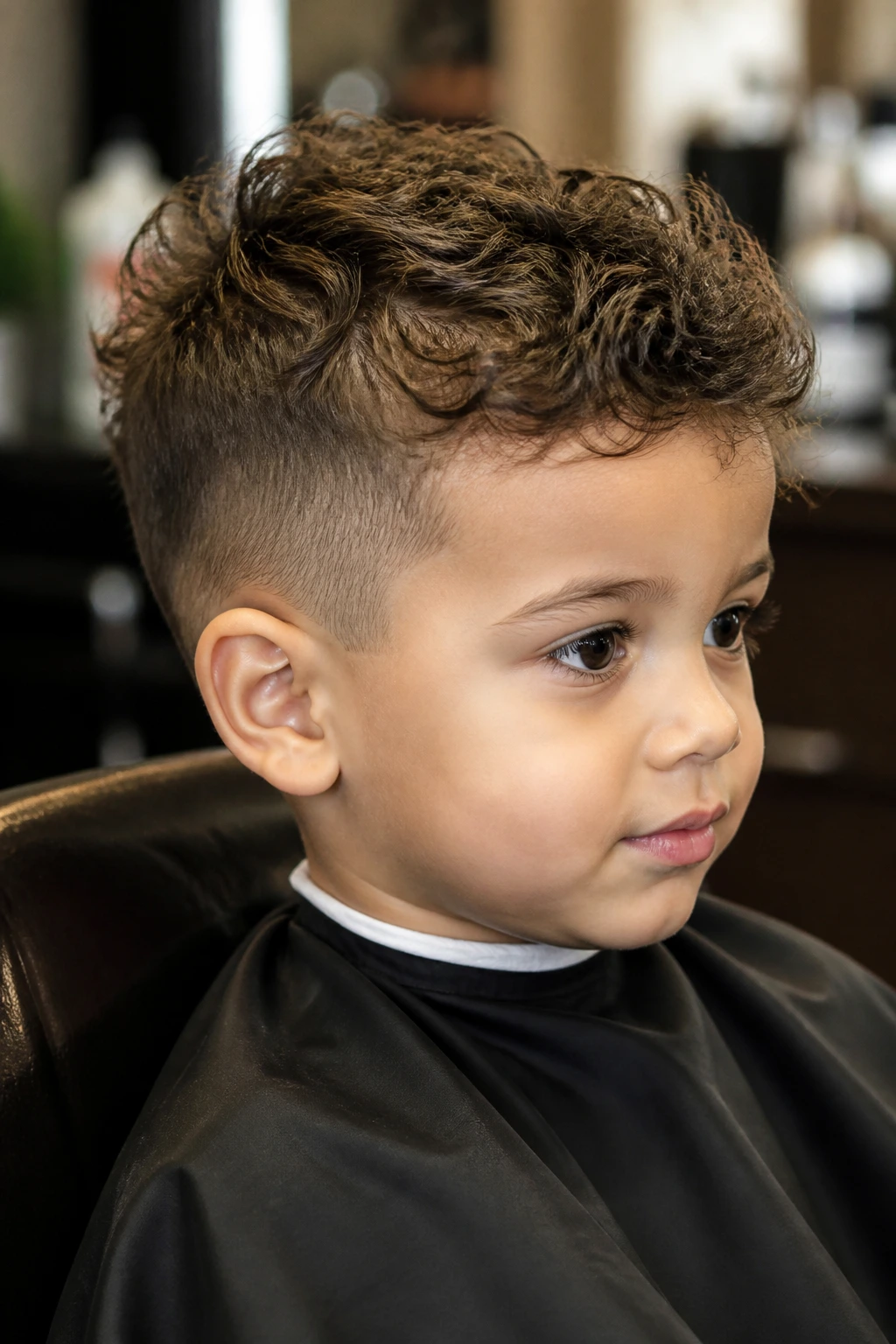
A good barbershop conversation is worth more than a vague photo and a shrug. Bring one or two reference pictures, but speak in plain shape language. Say what you want the sides to do, what you want the top to do, and how much time you’re willing to spend maintaining it. That saves everybody from the dreaded “something like this” request.
A few concrete phrases help:
Length and shape
- “Keep the top about 2 to 3 inches so the curls can spring.”
- “Take the sides down with a #2 or #3 guard, but keep the blend soft.”
- “Leave the fringe a little longer than it looks wet.”
Texture and finish
- “Cut the top in a way that respects curl shrinkage.”
- “I want the outline rounded, not boxy.”
- “Please don’t push the hairline too high.”
Toddler-specific notes
- “He moves a lot, so I need a shape that still looks good if the haircut isn’t perfect.”
- “He’s sensitive to clippers, so a quieter or softer approach would help.”
- “I’d rather have a slightly longer cut than one that looks too short the next day.”
If the barber offers to cut the top dry, that can be helpful on tighter curls. Wet curls can lie to you. Dry curls tell the truth. Not every shop works that way, but the barber should at least know shrinkage matters.
Essential Tools for These Cuts
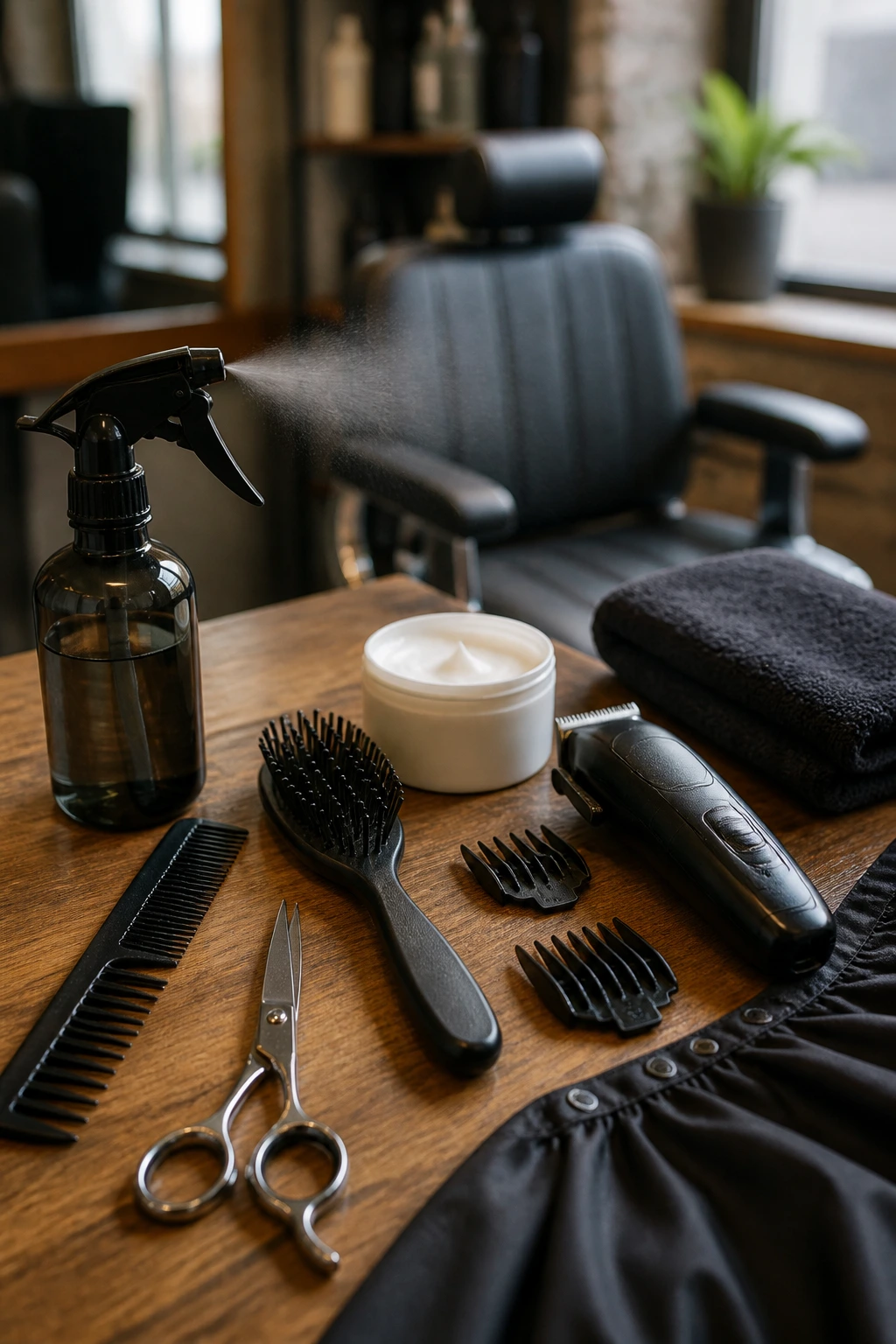
- Spray bottle with clean water: A few mist passes wake up curls before you reshape them.
- Wide-tooth comb: Good for gentle detangling when the hair is damp and conditioned.
- Detangling brush: Useful for looser curls or kids who hate combs.
- Curl cream or leave-in conditioner: Keeps the top soft and defined without making it stiff.
- Small barber scissors: Handy for tiny shape fixes around bangs or the nape.
- Clippers with guards #1 to #3: Needed if you’re doing undercut cleanup at home.
- Soft towel or microfiber wrap: Blots water without roughing up the curl cuticle.
- Barber cape: Saves shirts from hair, water, and itchy neck bits.
- Hand mirror: Lets you check the back and sides before you leave the chair.
- Soft brush or edge brush: Helpful for smoothing the hairline lightly, especially around the temples.
How to Style and Show Off the Shape
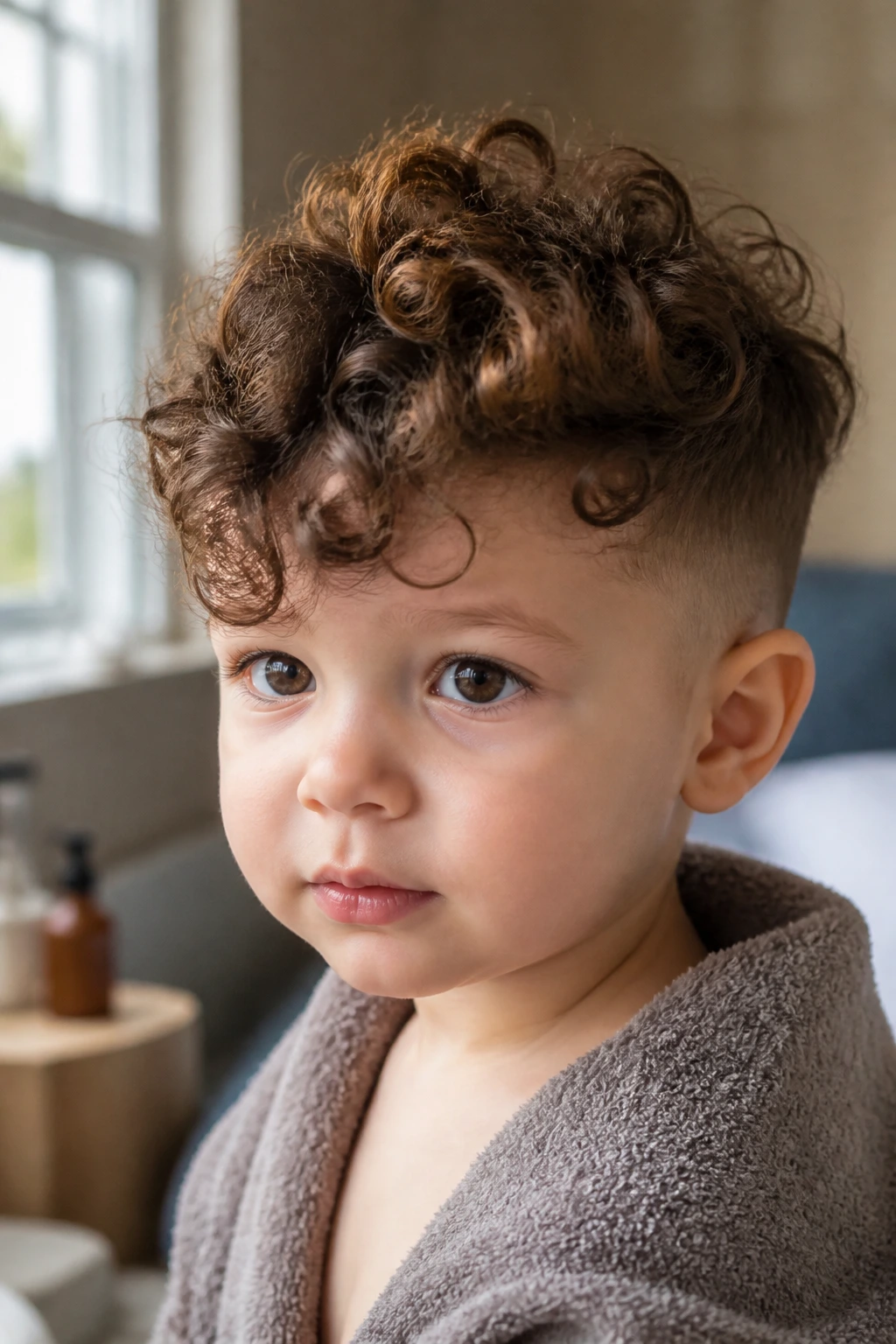
Presentation: Start with damp hair, not dry hair that’s already fluffed out. A few sprays of water and a dime-size amount of curl cream are usually enough to bring the curl pattern back to life. Scrunch the top upward, then use your fingers to keep the fringe or side sweep in the direction you want. The undercut should stay invisible under the curls, not announce itself from every angle.
Accessories: Soft caps and loose sun hats work better than tight elastic bands, which flatten the crown and leave a line across the forehead. If your toddler wears glasses, keep the curls trimmed so the temples do not crowd the frames. On warmer days, a little scalp sunscreen on the exposed undercut area can matter more than people think.
Routine: For daily wear, don’t pile on product. A pea-size amount is enough for fine curls; dense curls may need a nickel-size amount, but not much more. Too much cream weighs the top down and turns the curl into stringy pieces by lunchtime. The cut should look like curls, not wet spaghetti.
Photo-day finish: Finger-style the front, then pause. Really. The best look is usually one or two steps less styled than you think. Curly toddler hair gets charming when it stays soft at the edges.
Additional Tips and Shape Boosters
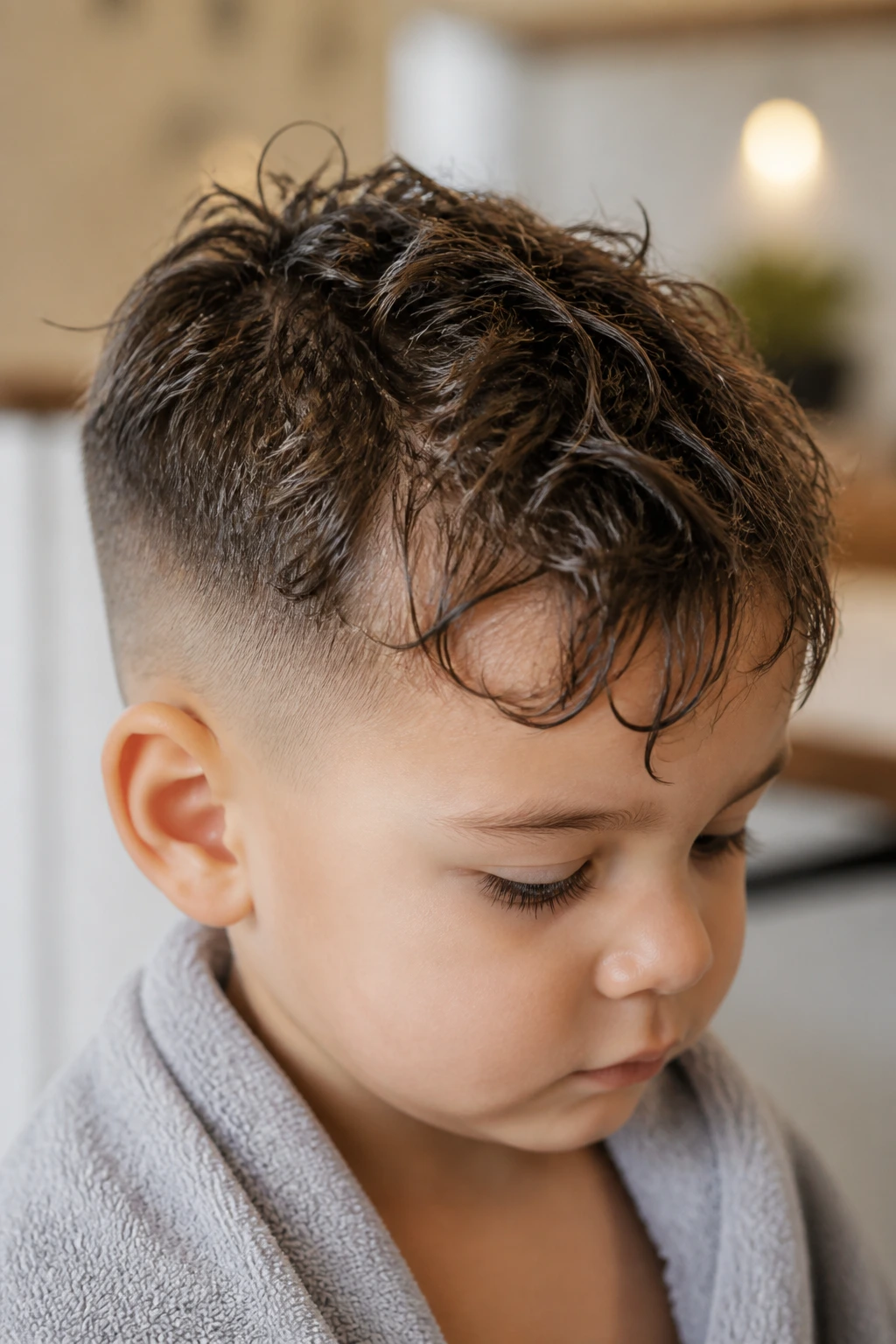
Shape Boost: Leave the front a little longer than the crown if the curls shrink sharply. That tiny bit of extra length keeps the fringe from vanishing above the eyebrows after it dries.
Frizz Control: Put leave-in conditioner on soaking-wet hair, then scrunch with a microfiber towel. Rubbing dry curls is a fast way to get a halo of frizz around the head.
Time-Saver: Keep a spray bottle by the bathroom sink. Most mornings, a full wash is unnecessary. A quick mist, a finger-comb, and a little scrunching are enough.
Make-It-Yours: If you want a sharper look, ask for a lower fade and a cleaner temple line. If you want softness, keep the blend scissor-finished and avoid hard edges. The same general shape can go in either direction.
For Tight Coils: Use less product than you think and leave more length on top. Coils need room to spring. Cut them too short, and they stand up like tiny hooks.
Common Mistakes to Avoid
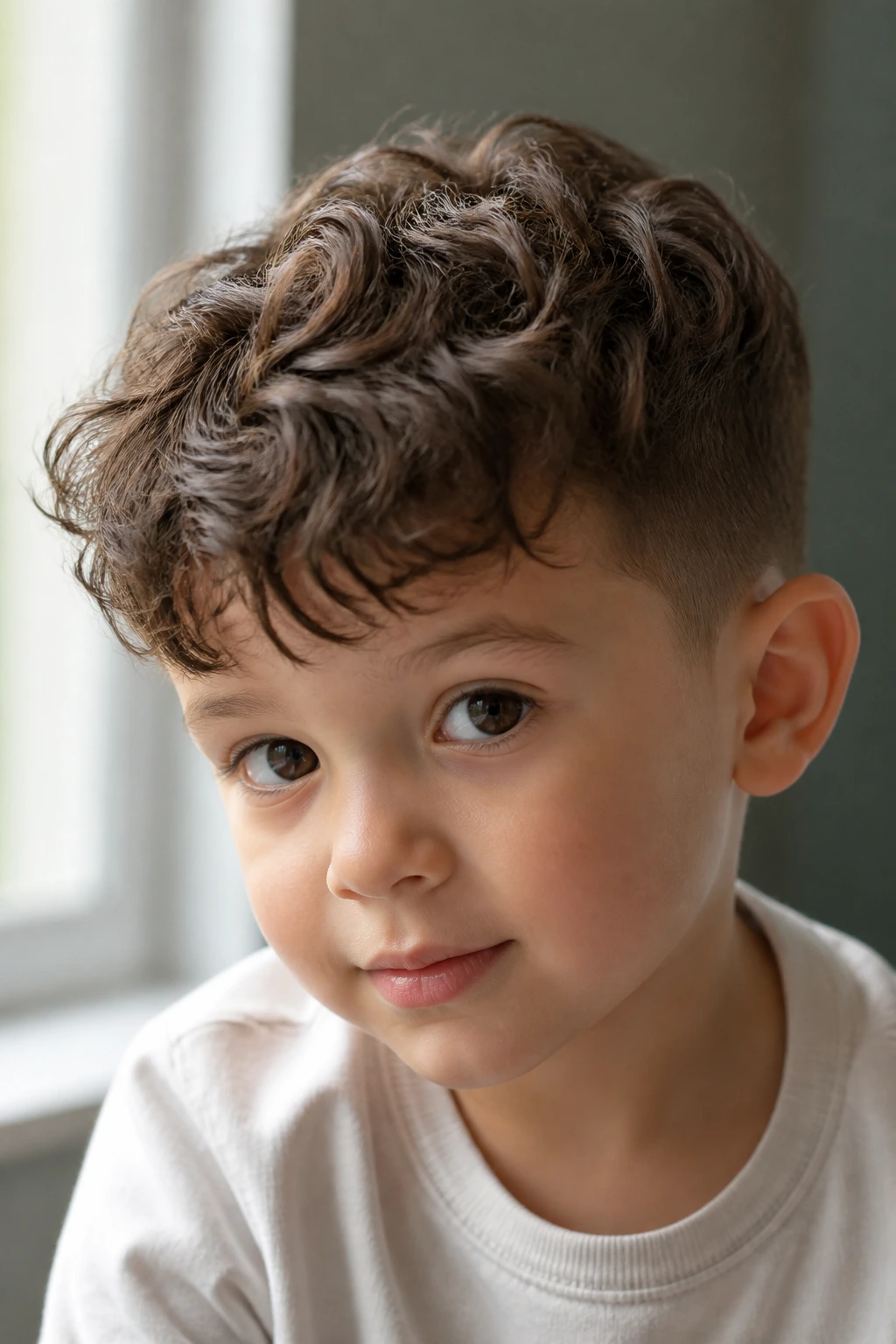
Cutting the top too short when it’s wet: Wet curls stretch out and lie. Once they dry, they spring up and can end up much shorter than planned. The fix is simple: leave more length than the wet hair seems to need, then check the dry shape before taking off more.
Pushing the fade too high: A high fade on a toddler can make the head look narrow and leave the cut looking disconnected fast. A lower undercut or soft taper usually grows out better and feels less severe.
Using heavy gel: Hard gel makes curly toddler hair crunchy, flaky, and awkward after naps. It can also invite more touching, which makes the top frizzier. A light cream or leave-in is usually the better move.
Ignoring the cowlick: A strong swirl at the crown will push the hair in a direction you did not ask for. If you cut right over it without checking dry movement, the style can stick up or split oddly. Work with the swirl, not against it.
Chasing a perfect line-up on a soft hairline: Toddler hairlines are not adult hairlines. Push them too hard and the result looks harsh, and sometimes uneven by the next week. A natural outline ages better.
Letting the cut go too long between trims: Even good undercuts blur after several weeks, especially on the sides. If the shape starts swelling at the temples or nape, a quick cleanup is easier than waiting until everything needs to come off.
Variations and Adaptations to Try
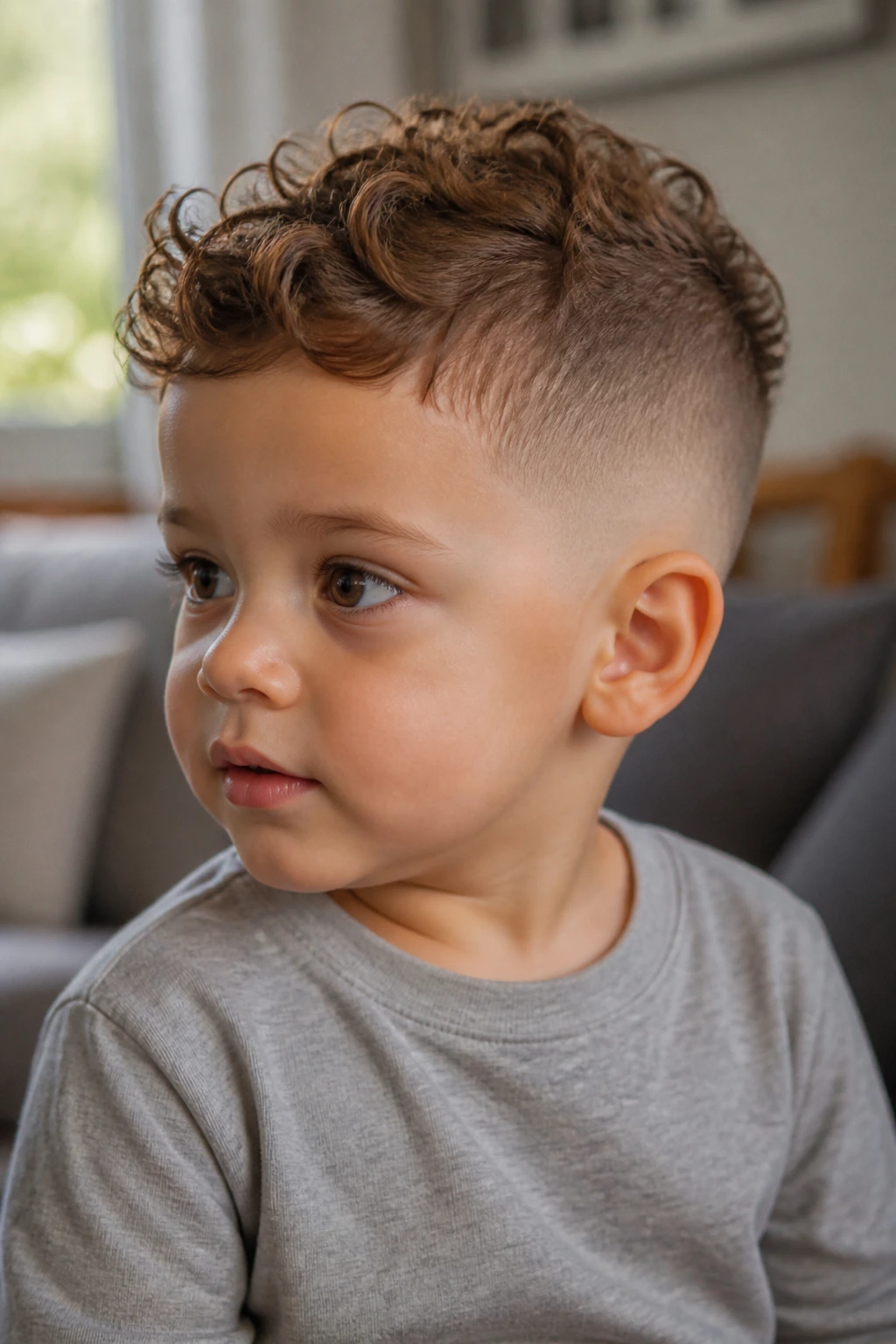
The Soft Fade Swap: Replace the undercut with a very low fade if you want less contrast and a smoother grow-out. This works well for families who like neat edges but do not want the scalp to show too much.
The No-Noise Version: Ask for scissors only, with no clippers near the ears or neck. That’s the better route for toddlers who tense up at the sound of buzzing and refuse to sit still once the clipper starts.
The Longer Fringe Edit: Keep the front noticeably longer than the rest of the top if your child likes hair in the face or has a strong forehead swirl. It gives you a softer shape and makes morning styling easier.
The Tight-Curl Shape-Up: Leave the crown a little denser and clean the perimeter carefully if the curls are compact and springy. The result is tidy without flattening the texture.
The Sporty Cleanup: Add a crisp temple line and a cleaner nape for a sharper finish. This version needs more maintenance, but it looks neat right after a trim and suits kids with thick, fast-growing hair.
The Grow-Out Cushion: Keep the sides blended instead of fully disconnected. If the next haircut gets delayed, this softer version will still look intentional rather than messy.
Keeping the Shape Between Trims
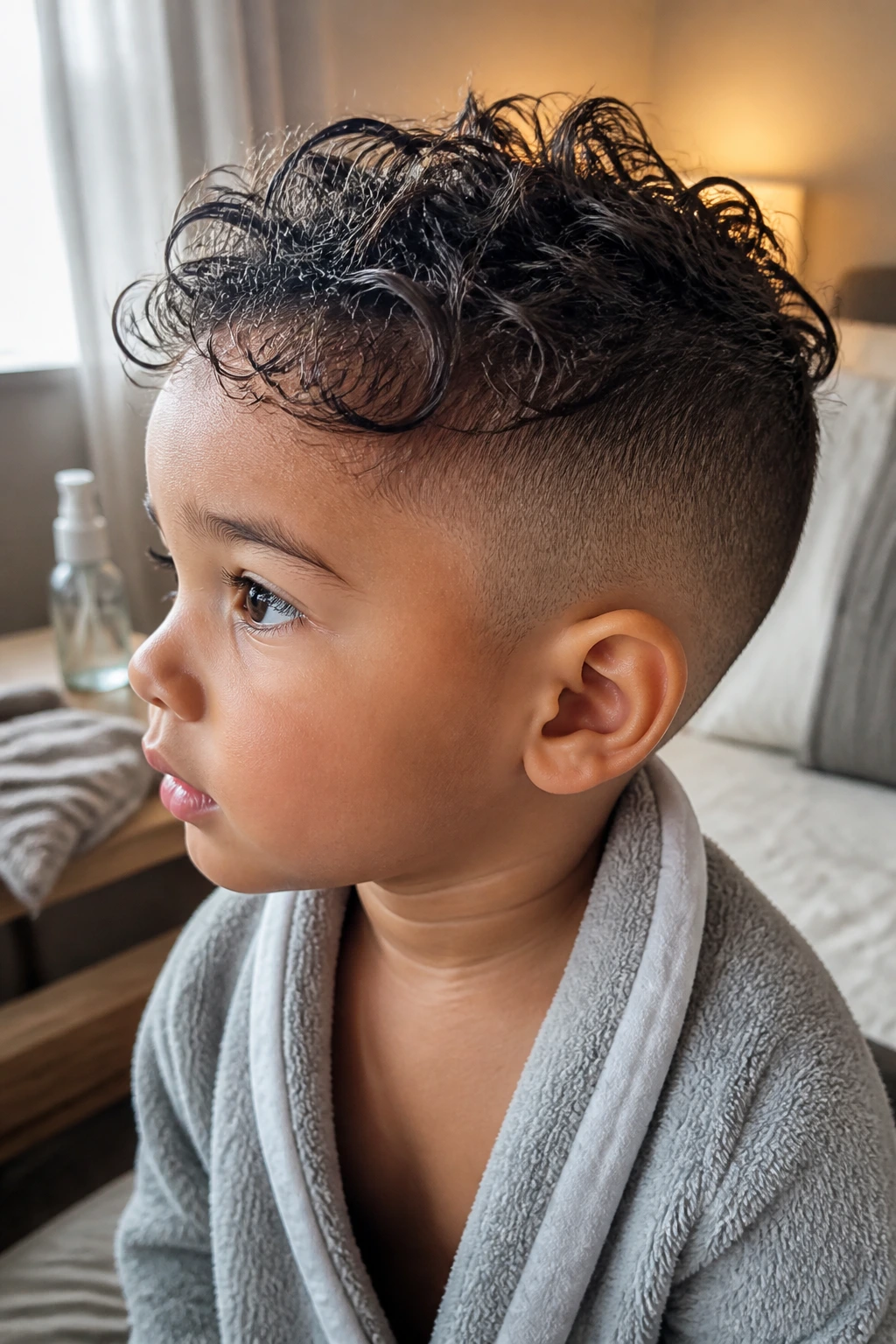
Curly toddler hair behaves best when the routine stays simple. Wash it only as often as it needs it—usually one to two times a week for many kids, sometimes less if the scalp stays comfortable and product buildup is light. Conditioner matters more than fancy styling. If the hair feels dry, use a small amount of leave-in on damp hair after the bath and stop there.
For daily refreshes, keep a spray bottle nearby. Mist the top lightly, scrunch the curls back into place, and smooth the sides with damp fingers if they’ve puffed up. That takes less than a minute once you’ve done it a few times. A microfiber towel or soft cotton T-shirt works better than a rough bath towel because it won’t rough up the curl pattern.
Trims depend on how crisp you want the undercut. Every 4 to 6 weeks is a good range for most blended styles. If you chose a sharper fade or a line-up, you may want cleanup sooner. If you picked a softer, grow-out-friendly shape, you can stretch longer. The cut will tell you when it’s losing the plot: the sides get wider, the nape fuzzes out, and the fringe stops falling where it used to.
At bedtime, a satin pillowcase can help reduce morning frizz and flattening. It sounds small. It isn’t. Curly hair rubs easily, and curly toddler hair rubs a lot.
Frequently Asked Questions
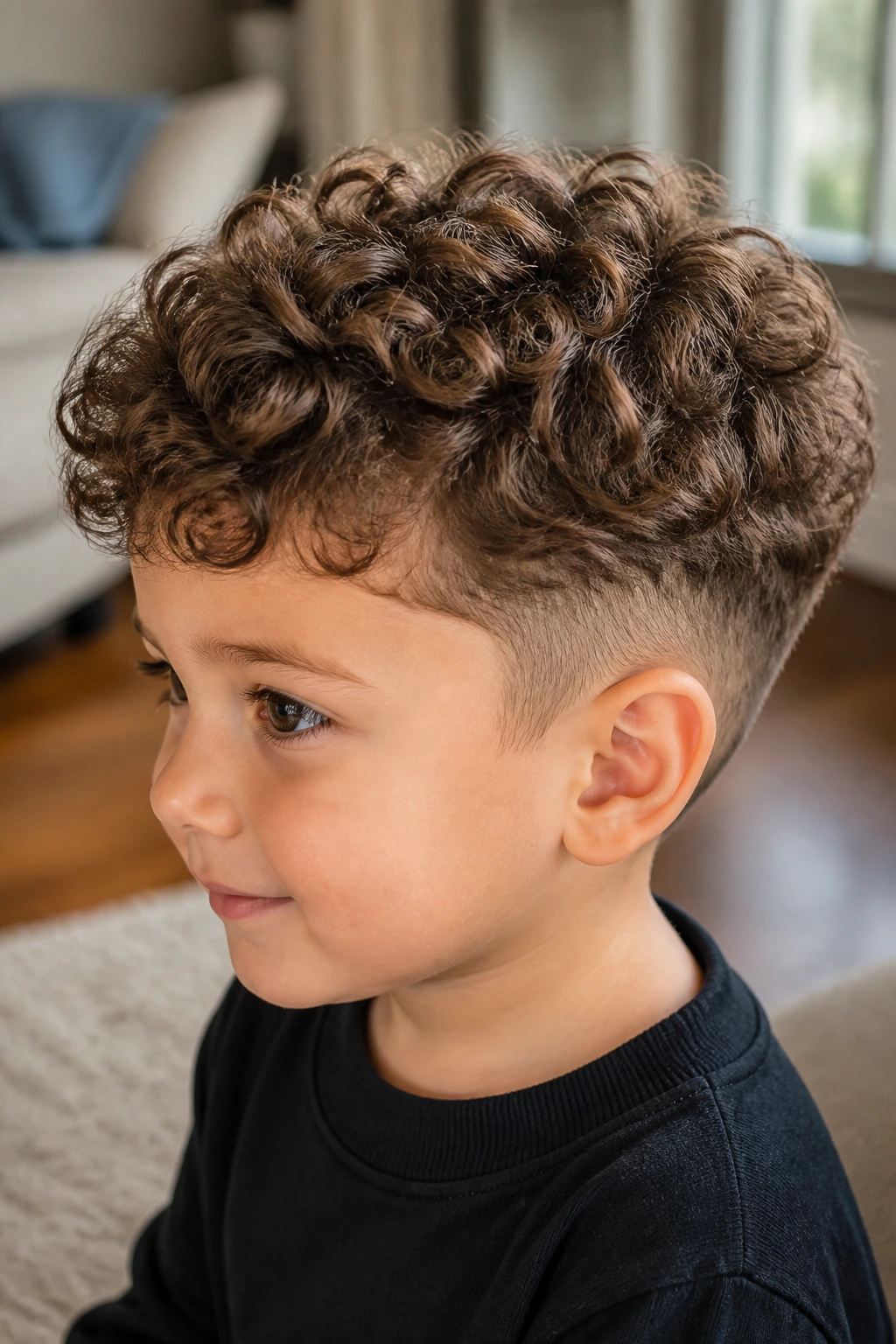
How short should the sides be on a toddler boy’s curly undercut pixie?
A #2 or #3 guard is a safe starting point for many toddlers because it keeps the sides neat without exposing too much scalp. If you want a sharper fade, you can go shorter near the bottom, but I’d avoid taking everything down at once on the first cut.
Should curly toddler hair be cut wet or dry?
For looser curls, damp cutting works fine. For tighter curls and stronger shrinkage, a dry trim on top helps the barber see the real shape before too much length disappears. The best answer is often a mix: damp for the overall structure, dry for the finish.
What if my toddler hates clippers near the ears?
Ask for a scissor-only taper or a softer undercut with quieter tools. A barber who works slowly and keeps the first pass light can make a huge difference. Sometimes the cure is not a different haircut; it’s a different approach.
Can this style work on very tight curls or coils?
Yes, but the top usually needs more length than people expect. Tight curls shrink more, so leaving extra room on top keeps the style from turning into a short puff. The sides can still stay short and tidy without forcing the top flat.
How often does an undercut pixie need a trim?
Most versions need attention every 4 to 6 weeks. Sharper fades or line-ups may need cleanup closer to every 2 to 3 weeks, while softer blends can go longer if the grow-out still looks clean.
What product should I use on the curls?
A light leave-in conditioner or curl cream usually works better than heavy gel or grease. You want the curls soft, touchable, and defined, not stiff enough to crack when they dry. Use less product than your first instinct tells you.
How do I stop the top from looking puffy after a nap?
A quick mist of water and a little scrunching usually brings the curls back. If the shape still balloons, the top may be a touch too short or the sides may need a lower undercut so the contrast feels balanced.
Can I ask for this cut at a regular salon instead of a barber shop?
You can, as long as the stylist works comfortably with curly hair and knows how to handle short shapes. What matters most is whether they understand shrinkage, undercuts, and toddler-friendly softness. The label on the door matters less than the person holding the scissors.
A Shape That Still Looks Good After a Nap
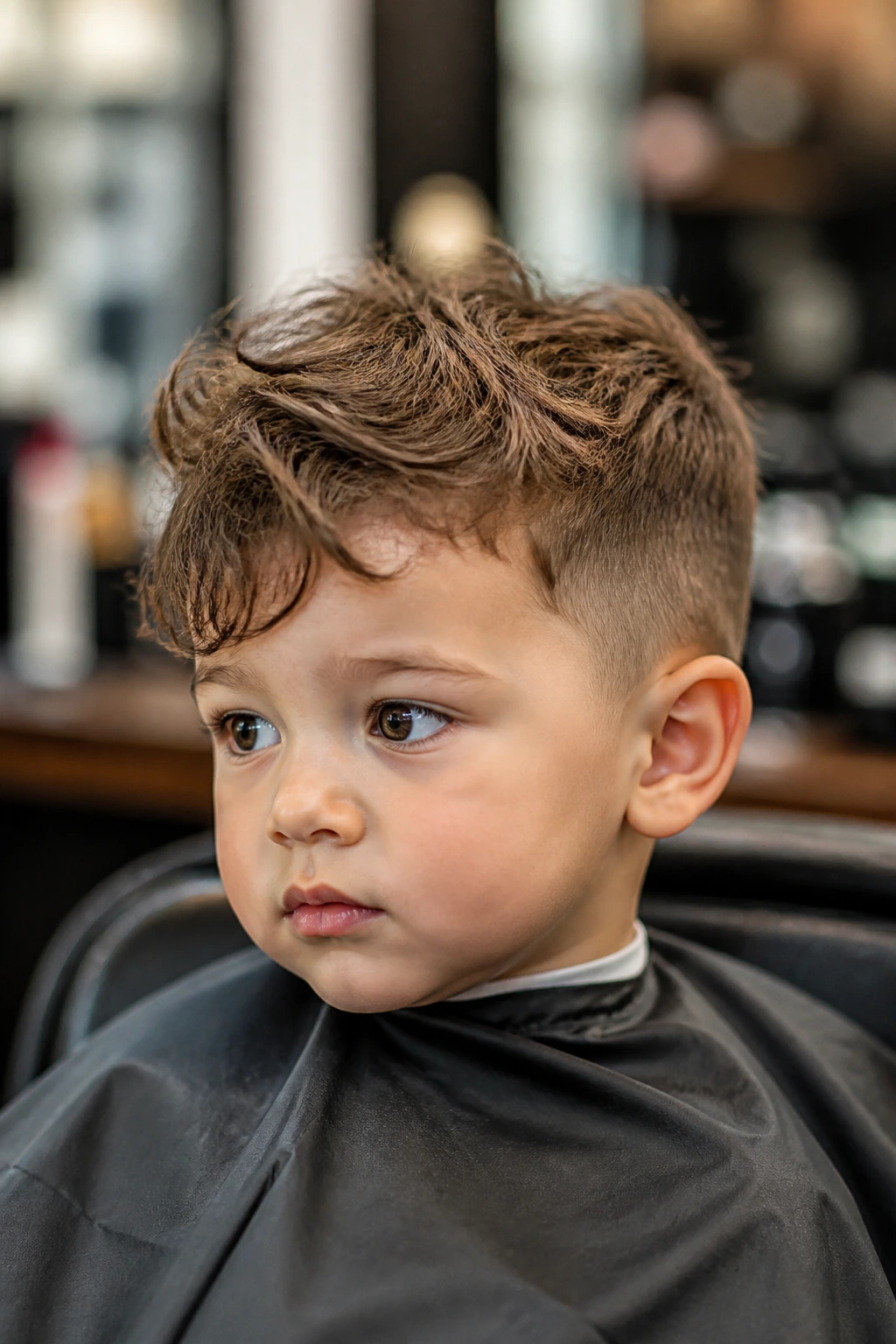
The best version of an undercut pixie on a curly toddler is the one that keeps its shape when the day stops cooperating. That might mean a soft temple taper, a longer fringe, or a grow-out-friendly blend instead of a sharper fade. It might mean saying no to the stiff gel and yes to a little extra length on top. Small choices. Big difference.
If you’re standing in a chair with a wriggly child and a barber asking how short to go, start with the version that leaves room for the curls to do their own work. Curly hair rarely rewards overcontrol. Give it a clean frame, keep the sides calm, and the rest usually falls into place.