



Dark honey blonde highlights can look expensive in the best way, or they can land like a strip of yellow paint sitting on top of a good haircut. Cool skin tones are where that difference shows fast. Pink, blue, and neutral-cool undertones don’t need harsh gold. They need warmth with manners.
That’s why the smartest versions of dark honey blonde are never flat, never brassy, and never loud at the root. The shade works when the blonde is kept a notch deeper, usually with beige, mushroom, or softly toasted gold notes instead of bright yellow. On cool skin, that deeper honey reads as glow, not heat. The effect is soft around the face, richer in the lengths, and a lot less fussy than the glossy Instagram blonde that needs a full-time toner schedule just to stay polite.
I’ve always thought the best honey blondes are the ones that look like they belong to the haircut, not the other way around. The dark base gives the color somewhere to breathe. The highlight placement does the rest. A narrow money piece can wake up a pale complexion; a few ribboned balayage pieces can make a bob look thicker; a smoke-toned gloss can keep the whole thing from tipping orange after two shampoos.
Why These Shades Work on Cool Skin
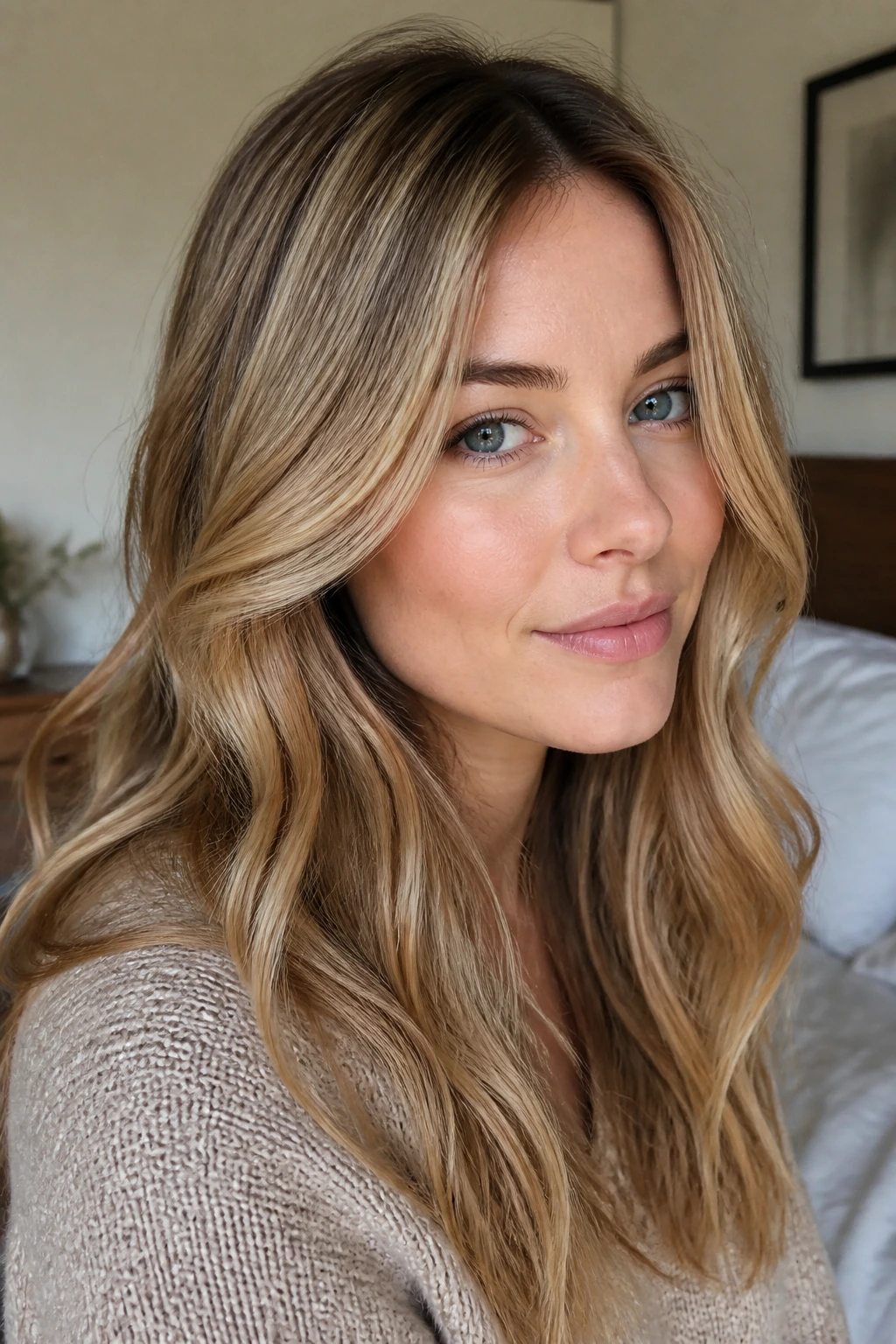
Beige warmth sits closer to amber than brass. That matters on cool skin because amber gives you softness, while neon-gold can make the skin look pinker or a little tired.
Depth at the root keeps the face from going washed out. A level 5 or 6 brunette base leaves room for the honey pieces to show up without flattening the features.
Placement changes the temperature of the whole look. A few face-framing ribbons brighten the complexion; chunky streaks near the part can make the color feel much hotter than it actually is.
A cool gloss can rescue a too-warm formula. A beige or neutral toner pulls the color back from banana-yellow and leaves you with a richer, sandier finish.
The grow-out is kinder than all-over blonde. Dark honey blonde highlights blur into the natural root more easily, so you’re not racing the mirror every two weeks.
This color plays well with makeup and jewelry. Cool-toned blush, berry lips, and silver hoops sit nicely next to honey pieces that lean beige rather than orange.
1. Smoked Honey Balayage
This is the version I’d hand to anyone who likes warmth but hates looking brassy. The honey isn’t sitting on the surface; it’s diffused through the mid-lengths and ends, with a smoky root that keeps the finish grounded. On cool skin, that darker root shadow does half the work. It stops the highlights from shouting.
Ask for soft painted ribbons in a level 7 to 8 honey-beige range over a level 5 or 6 base. The trick is keeping the lightest pieces away from a hard stripe at the part line. You want movement, not zebra.
What Makes It Flatters Cool Skin
The smoked root keeps pink undertones from looking flushed, and the beige-gold lift around the cheekbones gives the face a little warmth without turning it yellow. It’s one of those shades that looks especially good in soft daylight, where the dimension shows instead of the gloss alone.
Best for: shoulder-length cuts, long layers, and hair that already has some natural depth.
Avoid: overly golden toner. That’s where the whole thing starts to wander into brass.
2. Mushroom-Honey Ribbon Lights
Mushroom brunette and dark honey blonde make a good argument together. The cool brown base keeps the hair grounded, while the honey ribbons are thin enough to feel airy instead of stripey. It’s a quiet color, which is a relief if you’re the kind of person who likes your hair to look expensive, not noisy.
I like this on cool skin with a strong pink undertone. The mushroom shade softens the contrast so the face doesn’t get overwhelmed by warmth. A colorist can paint the ribbons through the mid-lengths and leave the ends a touch brighter, which gives the hair a soft sweep when it moves.
How to Wear It
This one likes loose waves or a blowout with a round brush. Straight hair can look a little flatter with this palette, while a bend in the middle makes the ribbons stand up and catch the eye properly.
Pro note: keep the toner on the cooler side of beige. Too much gold, and the mushroom loses the point.
3. Soft Honey Babylights
Babylights are tiny, and that’s the whole charm. Instead of bold chunks, you get ultra-fine slices of dark honey blonde woven close together, so the result looks like sunlight found the hair by accident. Cool skin likes that because the change is gentle. There’s no hard jump from brunette to blonde.
This is a smart choice if you wear your hair up a lot or if your cut has a lot of layers around the crown. The highlights show through in movement and don’t crowd the face. If your base is dark brown, the honey pieces can sit around level 7 and still feel soft.
What to Ask For
A fine weave with a beige-gold gloss is the key. Ask your colorist to keep the lightest pieces no brighter than a dark blonde, especially around the hairline. That keeps the color wearable and stops it from reading too yellow against cool-toned skin.
One more thing. Babylights can disappear if the hair is heavily textured or very dark. In that case, ask for a few slightly thicker ribbons near the front so the color doesn’t vanish in the curls or waves.
4. Face-Framing Honey Veil
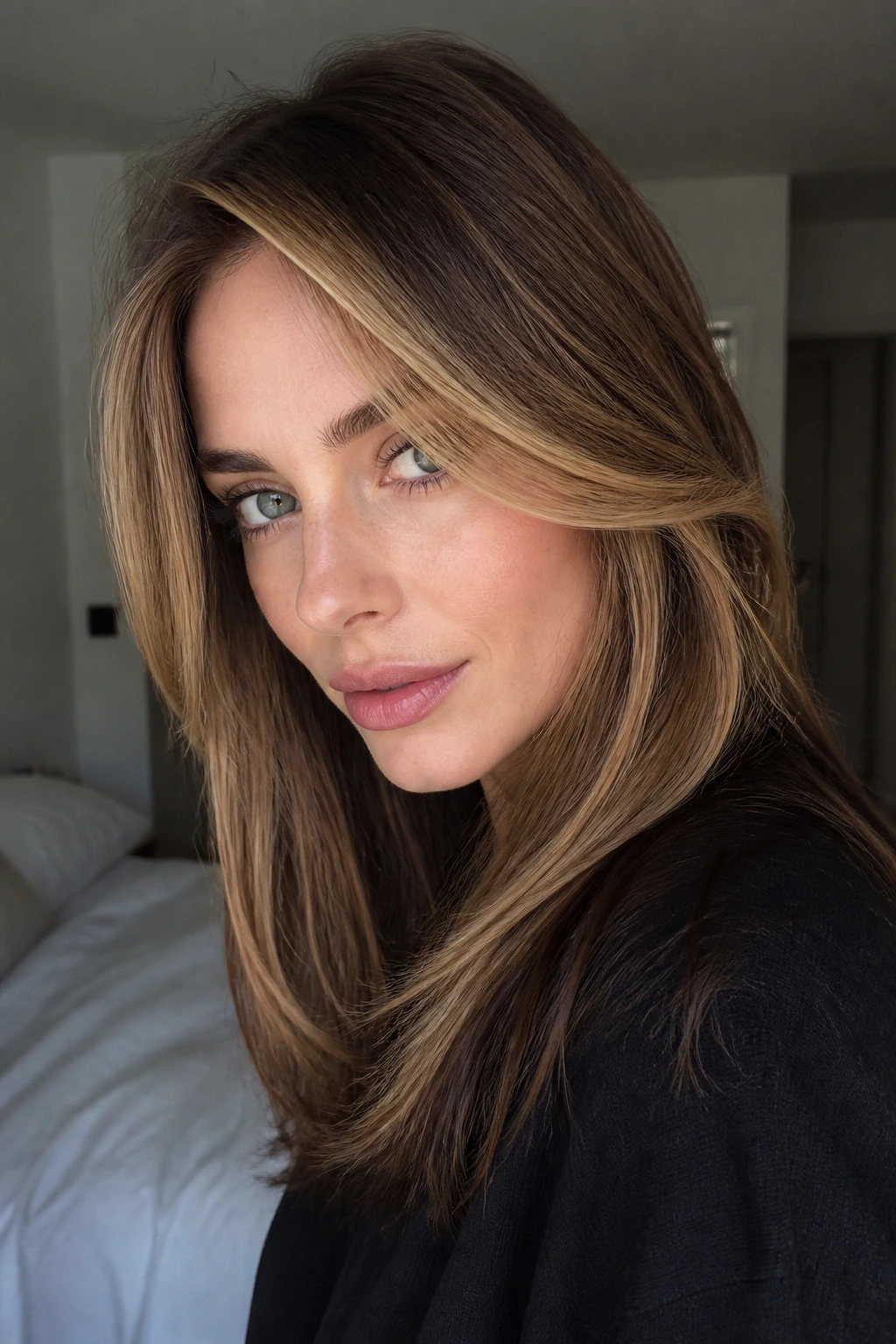
This is the sort of color move that wakes up the whole face in two seconds. A veil of dark honey blonde at the front lightens the cheek area, while the rest of the hair stays richer and deeper. On cool skin, that front brightness matters more than people think. It brings life to the complexion without requiring a full head of blonde.
The best version is soft and narrow, not a giant money piece that starts at the part and announces itself from across the room. Keep the front pieces feathered and blended into the sides. If the highlight hits around the collarbone and cheekbone, the effect looks natural, not theatrical.
H3: Why It Works
Cool skin tones can lose shape fast when the hair is all one dark color. A honey veil breaks that up. The contrast frames the face, and the beige warmth keeps the skin from looking flat under indoor light.
Best with: long bobs, curtain bangs, and layered cuts that need a little lift near the face.
5. Rooted Honey Foilayage
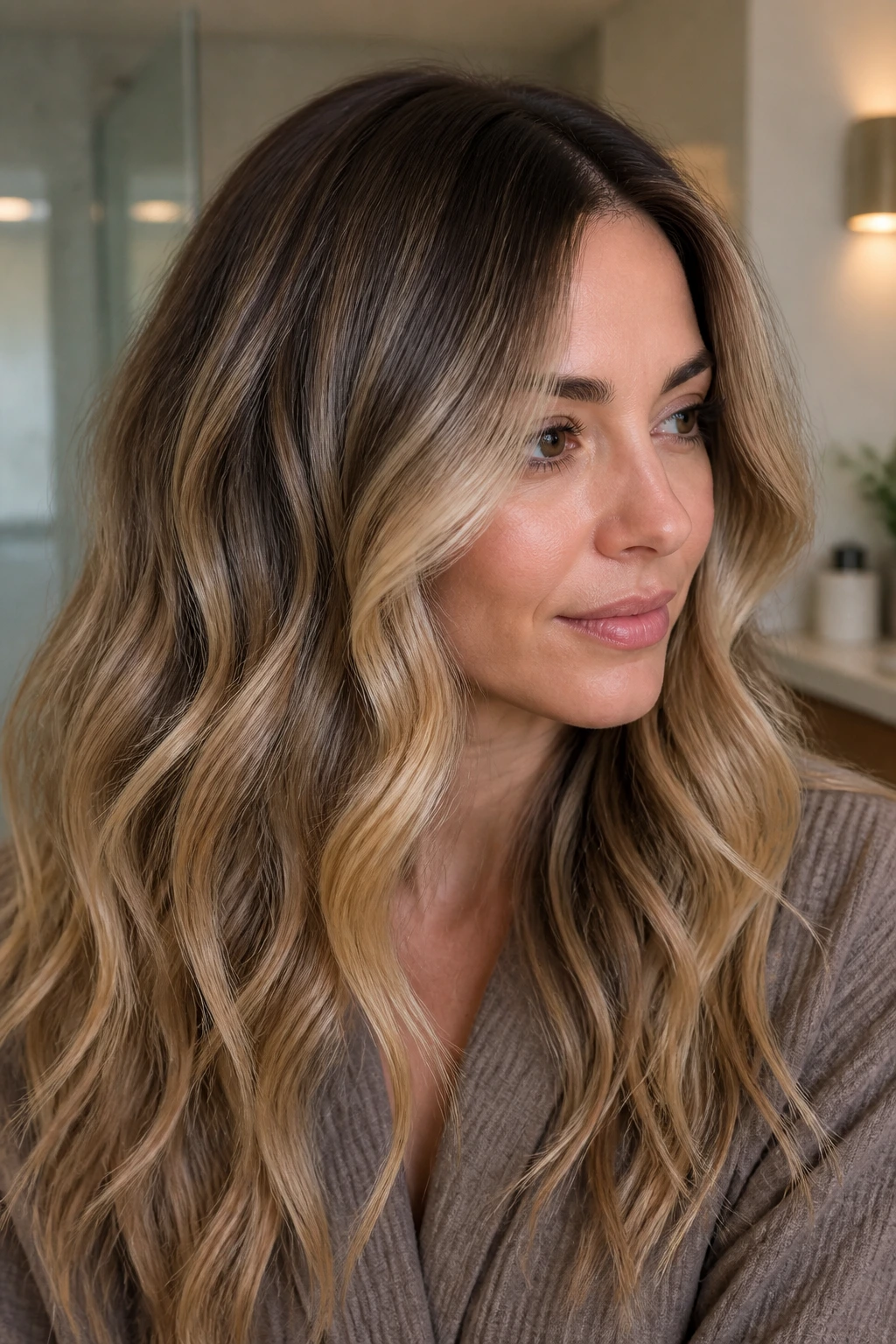
Foilayage gives you that hand-painted softness with a little more brightness than classic balayage. Add a rooted finish, and dark honey blonde highlights stay rich at the scalp while becoming lighter through the ends. It’s a good choice if you want dimension that looks grown-in from day one.
On cool skin, I like this when the honey stays in the beige zone. A rooted foilayage can go too warm if the colorist uses a golden blonde glaze everywhere, so ask for a neutral or smoky toner on top. That keeps the finish from drifting into orange after a few washes.
Best for: medium to thick hair, since the foil work helps the lighter pieces stand out.
Watch for: chunky end brightness. If the ends are too pale, the balance can look top-heavy.
6. Beige Honey Contour
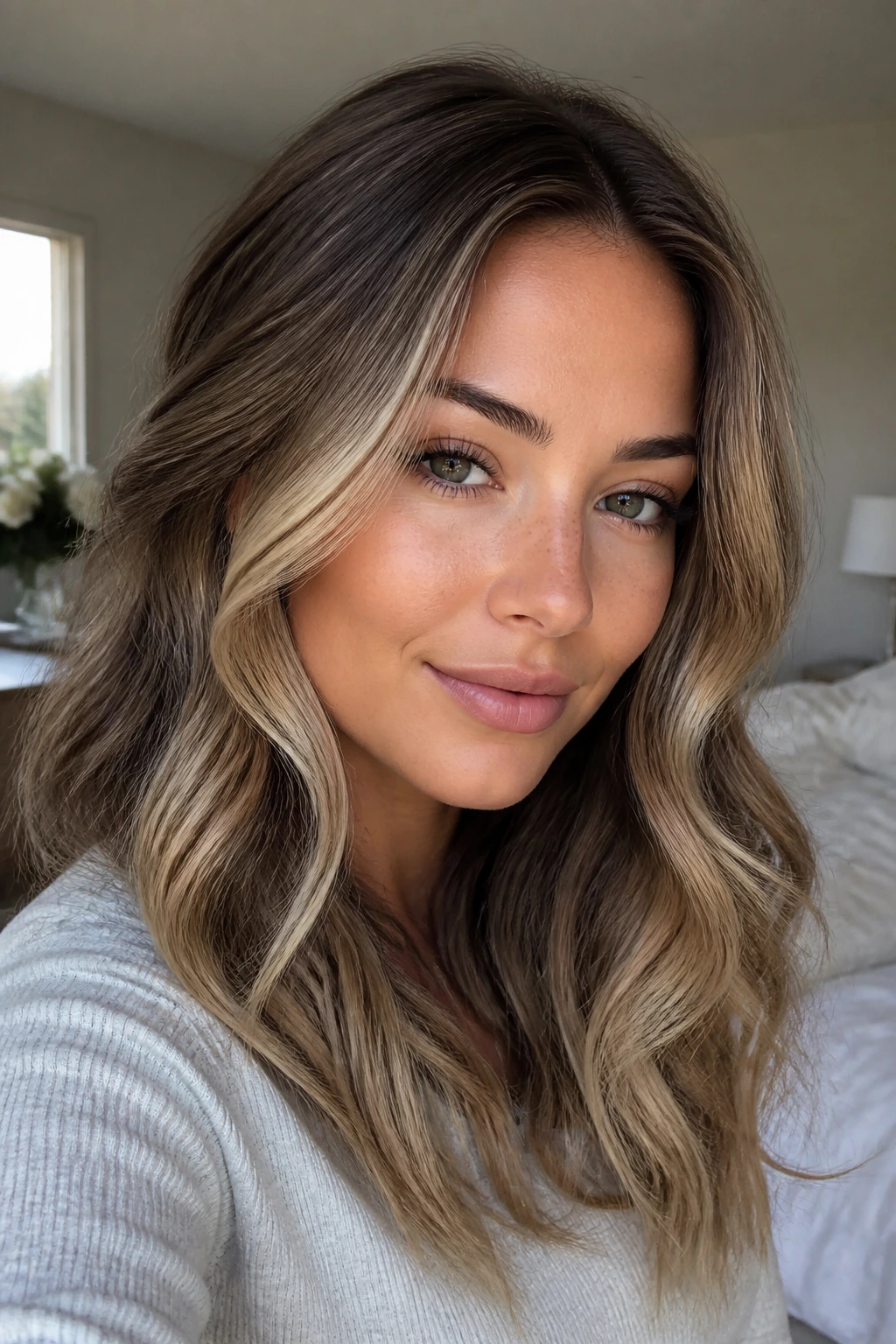
Think of this as face contouring, but with hair. The lighter pieces sit where your face naturally needs brightness — usually around the temples, cheekbones, and a touch through the ends near the jaw. Beige honey is the sweet spot here because it gives shape without going full gold.
Cool skin tones tend to look best when the front sections are more beige than yellow. That softens the transition between skin and hair and keeps the complexion from competing with the color. If your hair is a deep brown, the contrast can be gorgeous.
Quick Styling Note
A middle part makes this look crisp. A side part gives it a softer fall. Both work, but the placement changes the whole mood.
Pro tip: ask for the front pieces to be a half-step lighter than the rest. That tiny shift matters more than extra brightness everywhere.
7. Honey Sombre
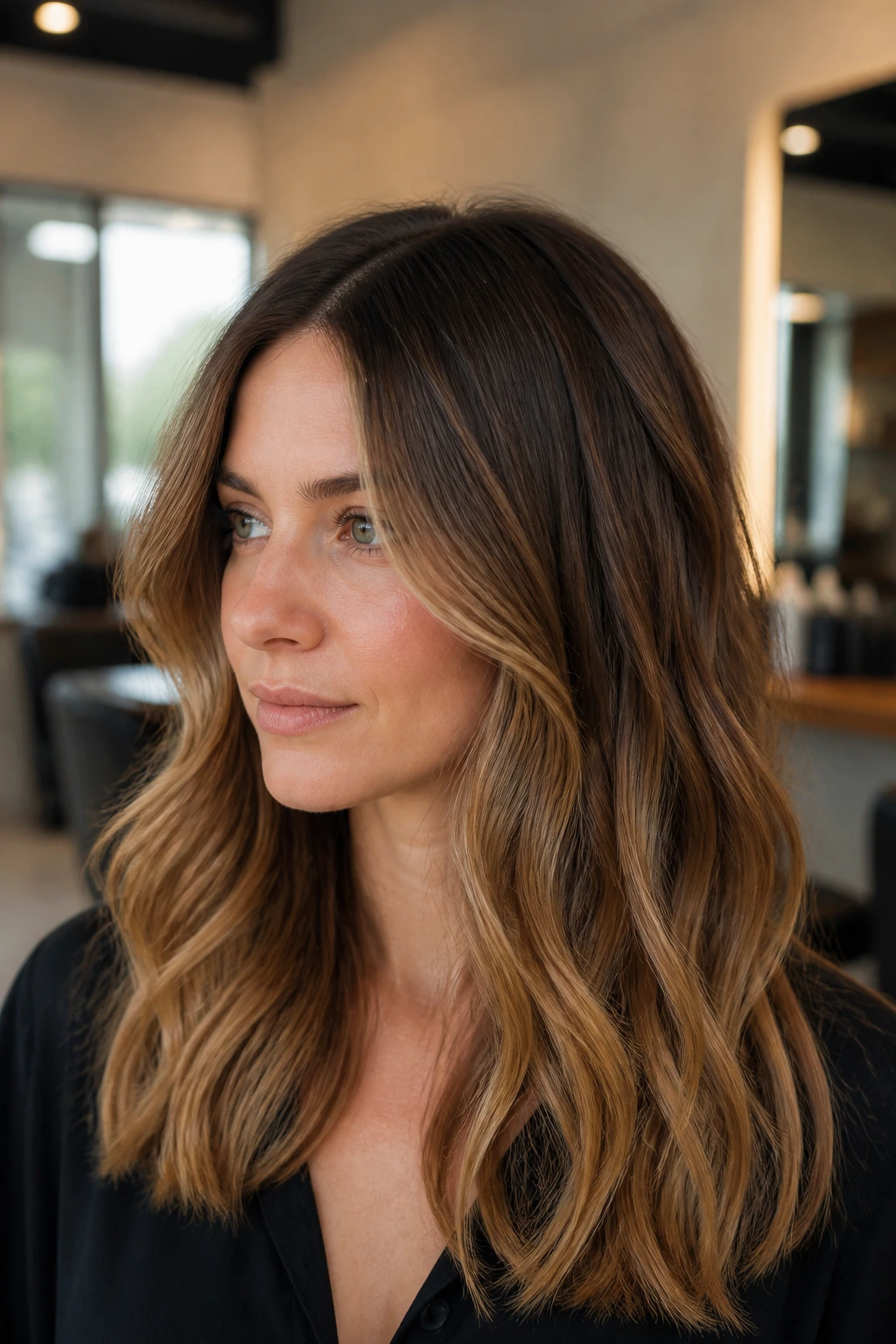
Sombre is the quieter cousin of ombré, and that’s exactly why it works so well here. The color moves gradually from dark brunette at the root to dark honey blonde through the mid-lengths and ends. No line. No sharp break. Just a smooth shift that looks like the sun did some careful editing.
This version is especially kind to cool skin because the fade can stay soft and sandy instead of turning orange at the bottom. A good sombre should have enough depth left in the lower half that the blonde never looks bleached. The hair feels richer that way.
If you wear minimal makeup, this is one of the easiest shades to live with. It doesn’t demand a precise lip color or a full face to work.
8. Dark Honey Money Piece
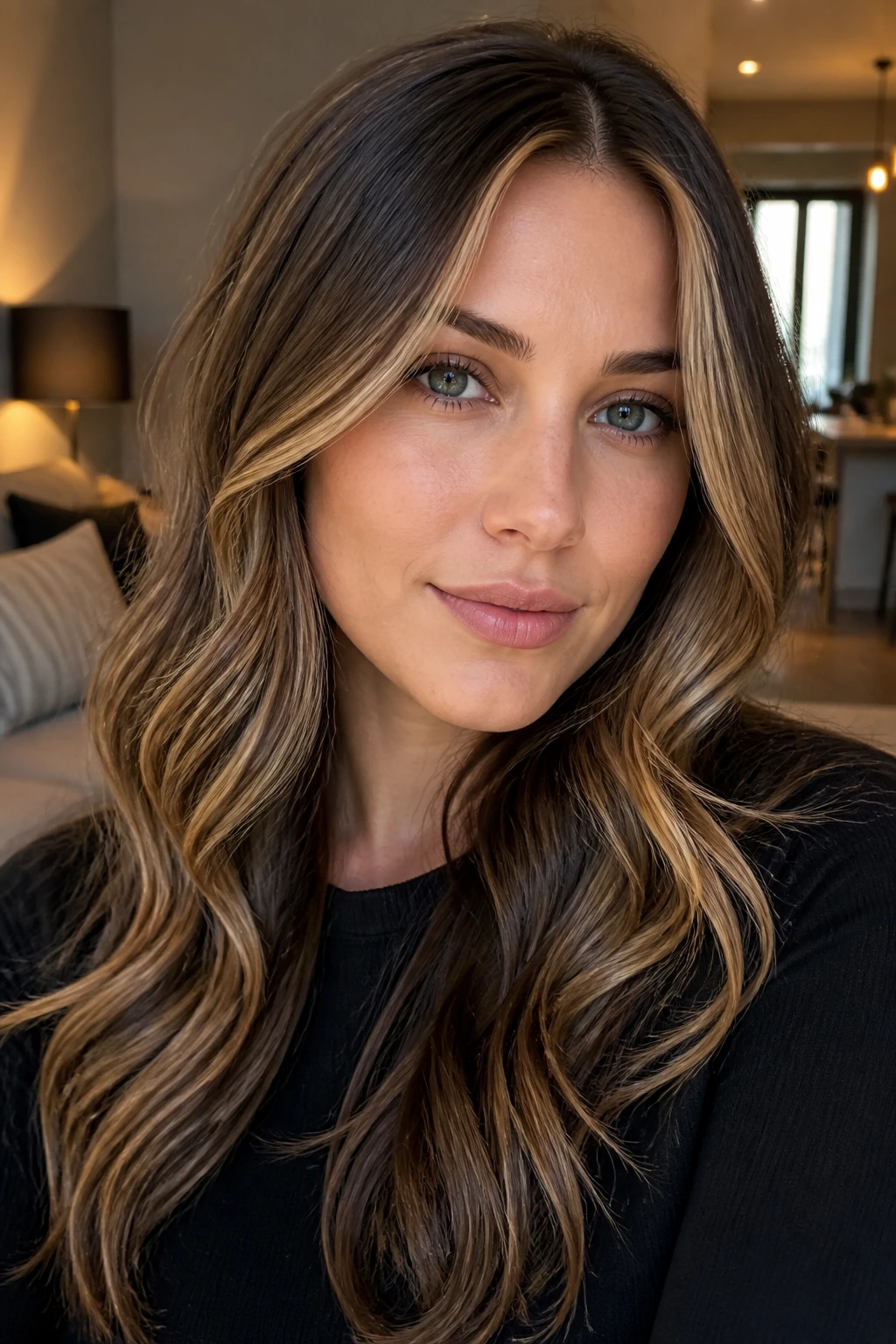
The money piece gets a bad reputation when it’s too thick or too bright. Done right, though, it can be the fastest way to make dark honey blonde highlights feel intentional on cool skin. The trick is keeping the front pieces narrow and beige-gold, not chunky and coppery.
I like this look on long layers or curtain bangs because the front pieces can move. If the money piece stays slightly darker at the root and brightens just around the cheekbones, the effect reads soft and face-opening. It’s much better than a blocky stripe.
What to Tell the Colorist
Ask for a soft frame that stops before it takes over the whole front section. Cool skin tones usually look best when the front is bright enough to lift the face but not so bright that it steals attention from the eyes.
Don’t do this: ask for “golden blonde” and assume the result will be the same. Golden and honey are not the same thing on hair. One leans sunny. The other leans richer and more wearable.
9. Curly Honey Ribbons
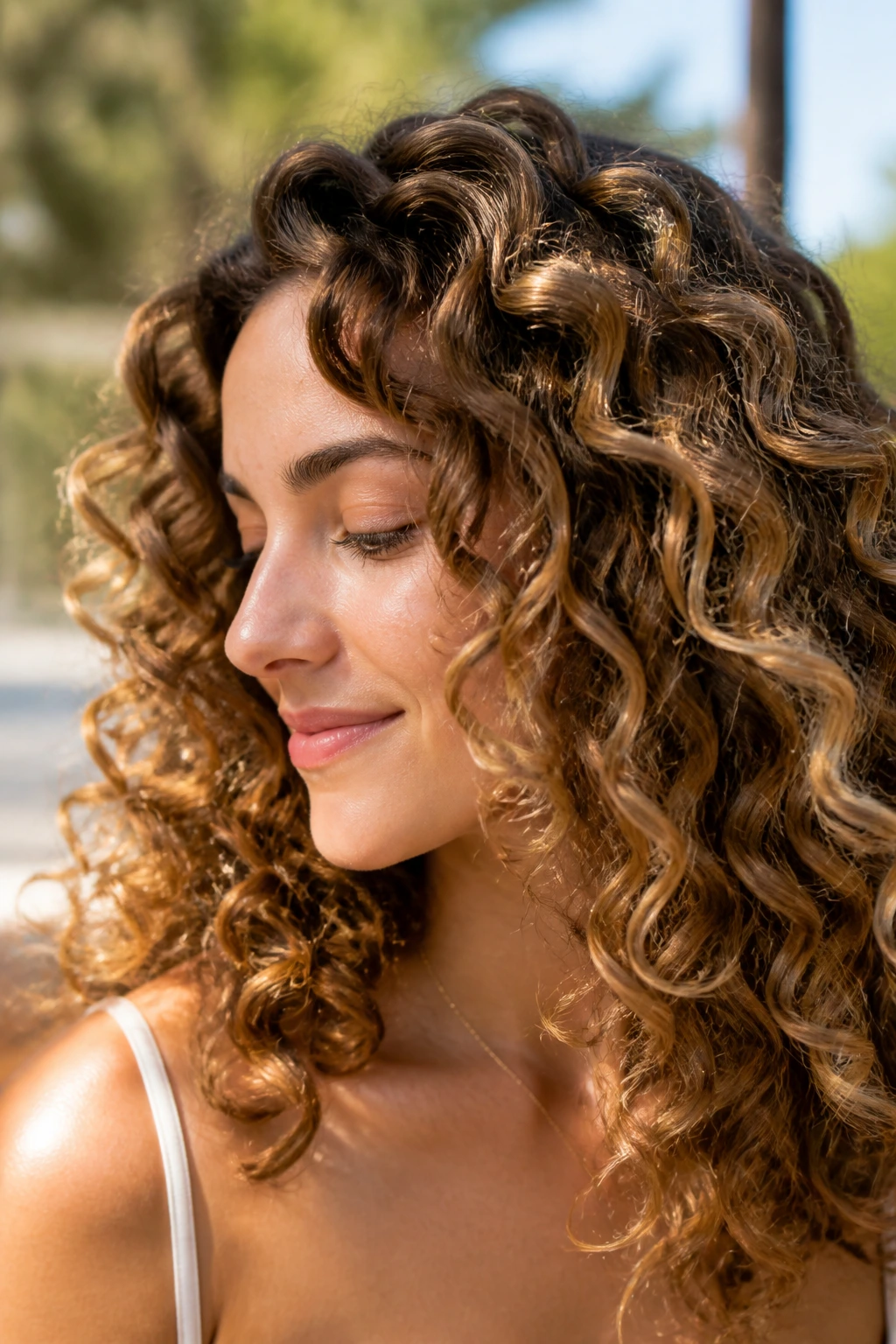
Curls handle dark honey blonde in a way straight hair never quite can. The ribbons catch on each bend, so the color looks alive even when the hair is air-dried. On cool skin, curly hair benefits from that movement because the warmth is broken up and spread around.
Ask for ribbons, not streaks. Curly texture needs space between the lighter sections so the pattern doesn’t turn busy. A colorist who understands curls will paint in a way that respects the curl family and lets the honey sit on the outer curve of the ringlet.
What Makes It Work
A deep base with a few well-placed honey ribbons keeps curls looking full. Too many light pieces and the hair starts to lose that round, plush shape. A beige toner makes the whole thing feel less orange and more expensive.
Best for: 3A to 3C curls, soft coils, and layered shags.
10. Honey Lights on a Lob
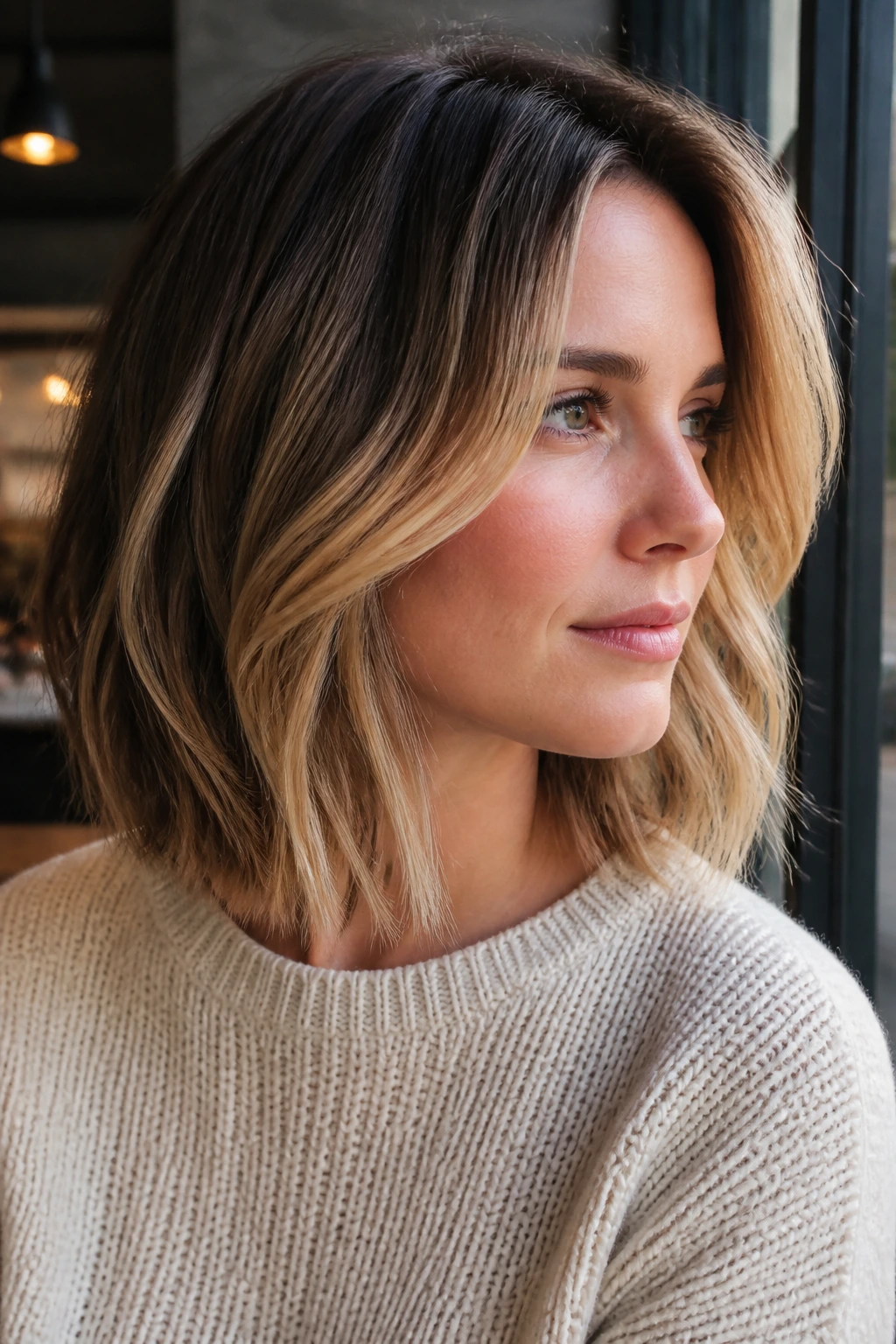
A lob with dark honey blonde highlights has that nice middle ground between polished and undone. The cut already gives you a clean shape. Add honey lights through the sides and ends, and the bob stops feeling heavy. Cool skin gets a lift because the lighter pieces usually sit right near the jaw and collarbone.
I prefer this when the highlights are a little more scattered than symmetrical. A lob can look too busy if the color is packed in evenly across both sides. Let some sections stay deeper. The variation is what makes the cut move.
Why It Flatters
The length sits close to the face, so the beige-gold pieces influence the complexion quickly. You get a soft glow without going bright. That’s a useful trick if your skin tends to look pink in harsh indoor light.
11. Espresso Base with Honey Slices
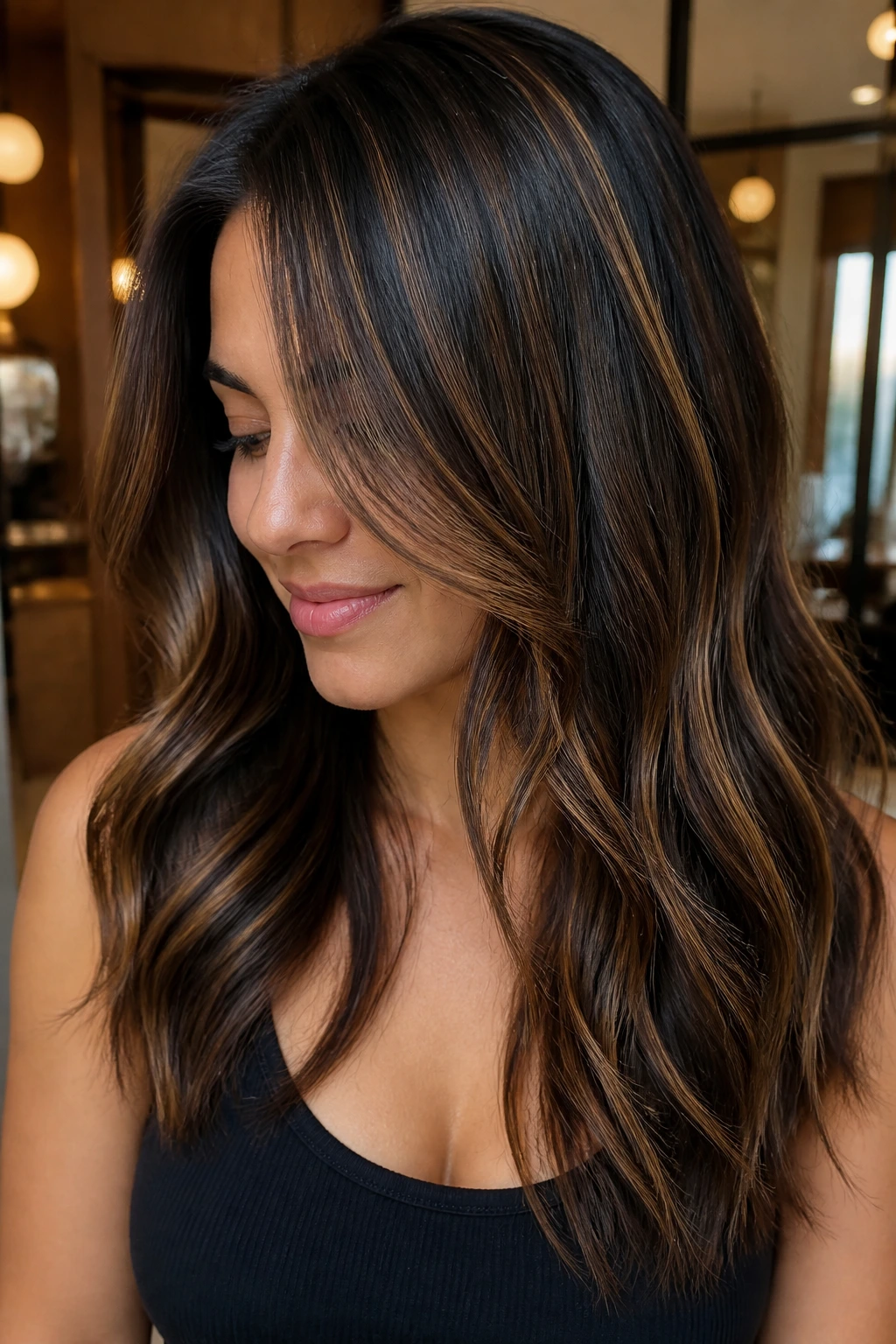
This is a richer, moodier version of dark honey blonde highlights, and I love it on cool skin because the contrast is strong but not harsh. The espresso base keeps things grounded. The honey slices are thin enough to show up as dimension instead of obvious streaks.
Ask for sliced highlights through the top layers and just a few pieces in the lower half. That keeps the depth intact. If the highlights are too spread out, the espresso loses its drama and the whole look can flatten.
Best for: long hair, dense hair, and anyone who wants the color to look glossy even when air-dried.
One small warning: don’t let the honey go orange. Espresso and orange fight each other. Espresso and beige-gold, though, is a much better conversation.
12. Honey Peekaboo Panels
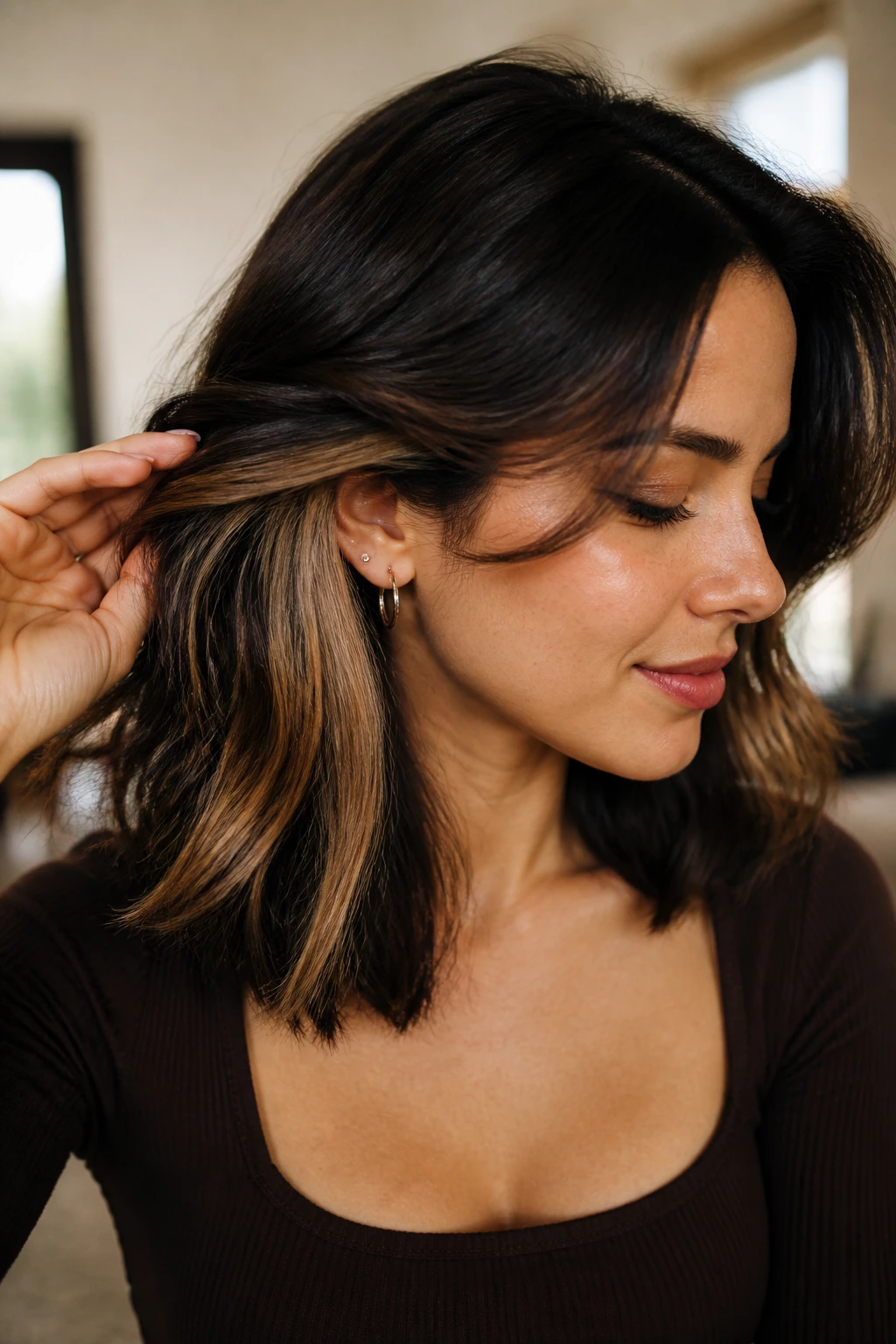
Peekaboo panels are one of the easiest ways to wear honey blonde if you’re cautious about warmth. The lighter pieces sit underneath the top layer, so they show when the hair moves or gets tucked behind the ear. On cool skin, that hidden brightness adds interest without washing out the face.
This works especially well if you like dark roots but still want some blonde. It’s also a nice way to test the shade before committing to a heavier highlight pattern. If you end up loving it, the color can be expanded later.
H3: Best Placement
Under the crown, around the nape, and through the bottom sides. That gives you flashes of honey when the hair swings but keeps the top surface looking rich and natural.
Favorite detail: this looks excellent with a blunt cut, because the hidden color pops at the edges.
13. Frosted Honey Ends
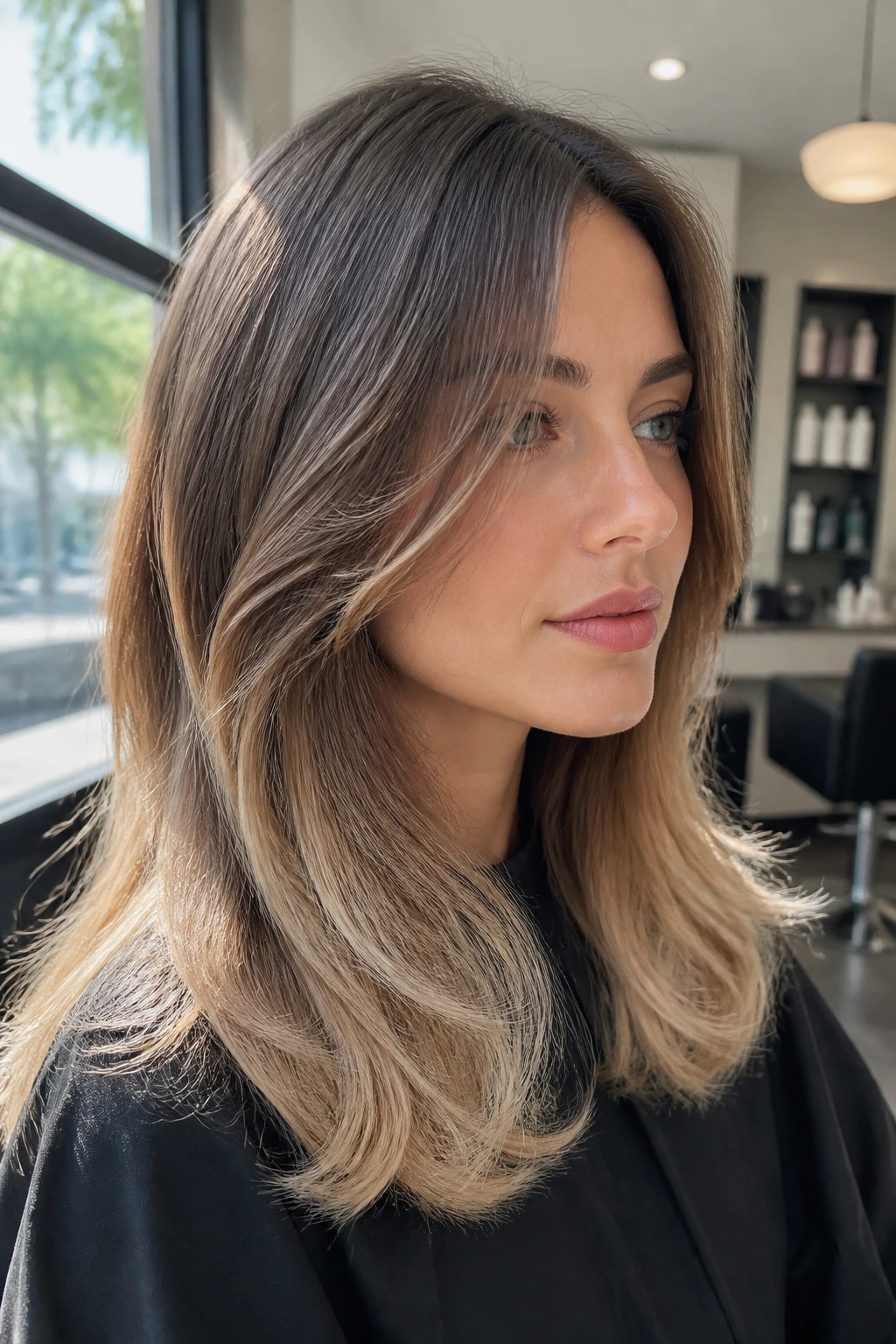
When the ends are where the color changes, the overall result feels lighter without making the root too warm. Frosted honey ends are a smart compromise for cool skin tones that want brightness but not a full blonde transformation. The cool gloss at the top and the honey at the bottom work together.
The key is keeping the transition soft. If the ends jump too pale, the look loses the “dark honey” part and starts moving into beach blonde territory. A better version lets the lightness build gradually through the last third of the hair.
Use this on: layered cuts, long bobs, and blowouts with movement.
Skip it if: your hair is very dry at the ends and already frayed. Lightening the bottom can exaggerate that damage fast.
14. Melted Honey Shag
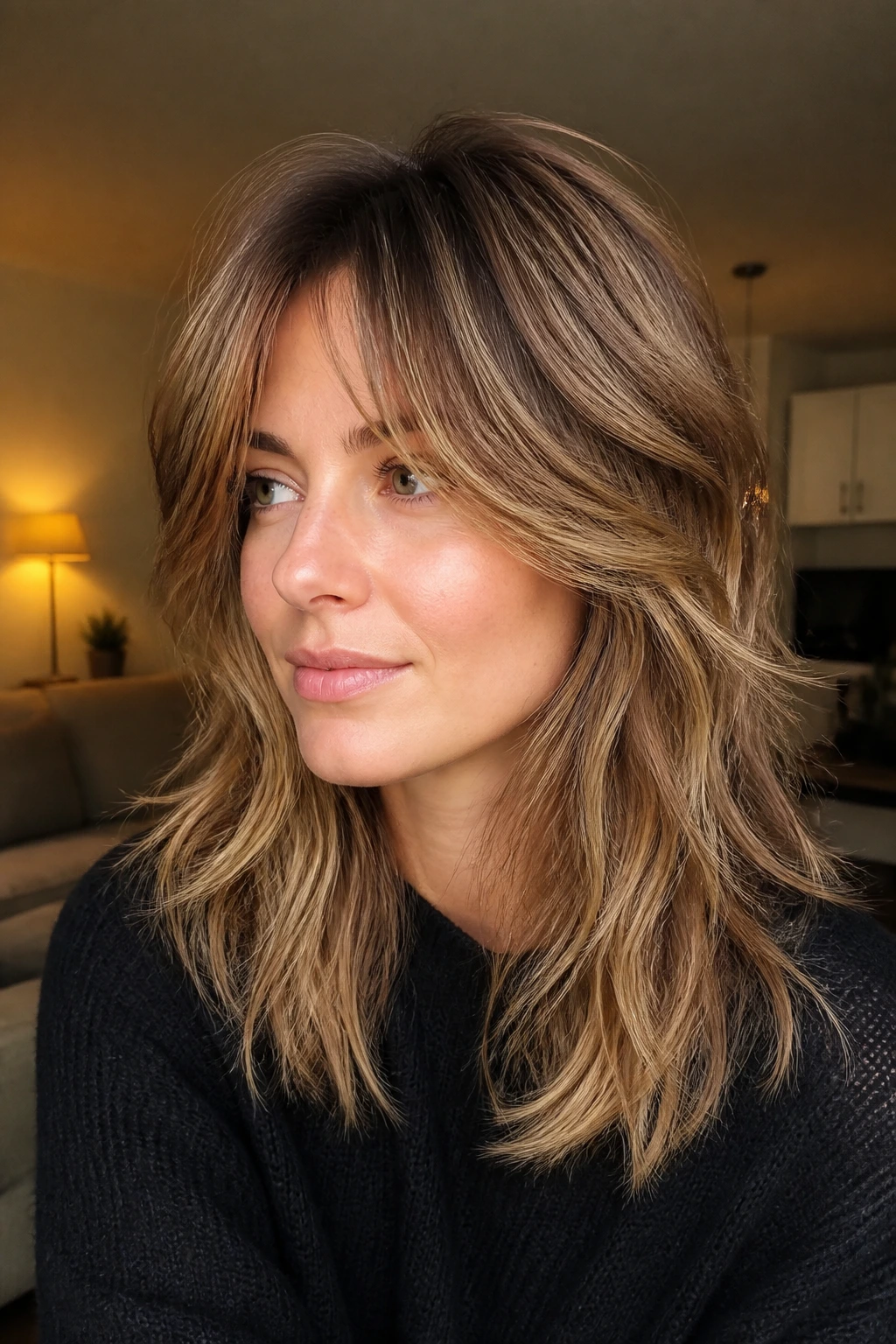
A shag loves color with movement in it. Dark honey blonde highlights through a shag should look melted into the layers, not painted in strips. Cool skin benefits from the softness because the cut already carries plenty of shape.
The best shag version keeps the crown deeper and lets the honey appear through the mid-lengths and feathered ends. That stops the color from lifting the entire head too much. If you have curtain bangs, a few lighter pieces around the fringe can bring the whole style forward.
A shag can take warmth better than a blunt cut. The texture breaks it up. That’s the reason this one works when simpler cuts might look a little too golden.
15. Cool Beige Honey Wave
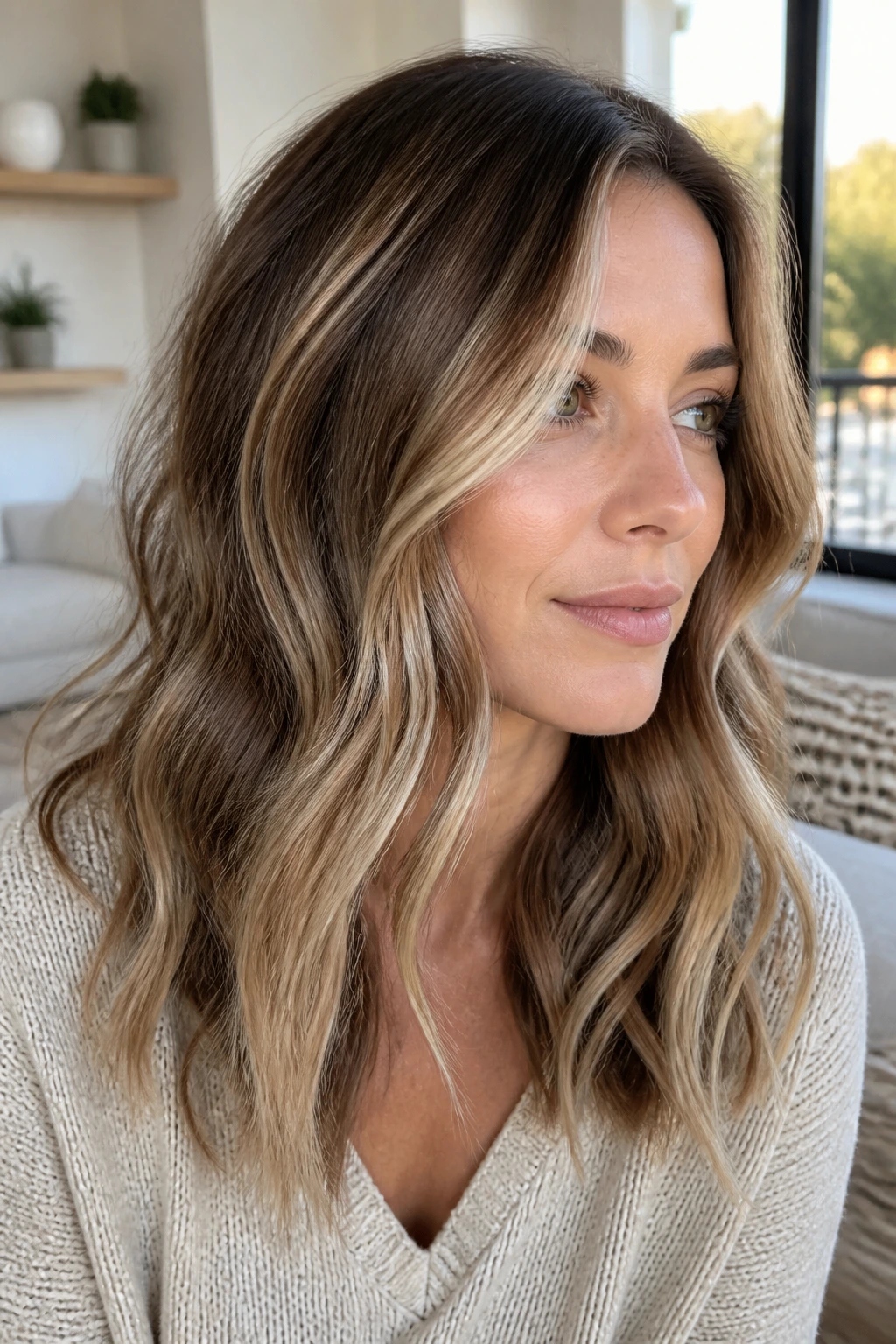
Some honey blondes are warmer than cool skin can really wear. Cool beige honey fixes that problem by steering the color toward sand, oat, and soft gold instead of yellow. Put that shade on loose waves, and you get a finish that feels airy instead of heavy.
This is a good choice if you want to stay in brunette territory but still feel lighter around the face. It also photographs nicely under mixed lighting because beige tones don’t flip as aggressively as bright gold can. The waves make the pieces separate just enough to show the dimension.
What to Ask For
A level 7 beige-gold gloss over a brunette base, with highlights concentrated from the cheekbone down. That keeps the warmth controlled and the root believable.
16. Honey Over Chocolate Brown
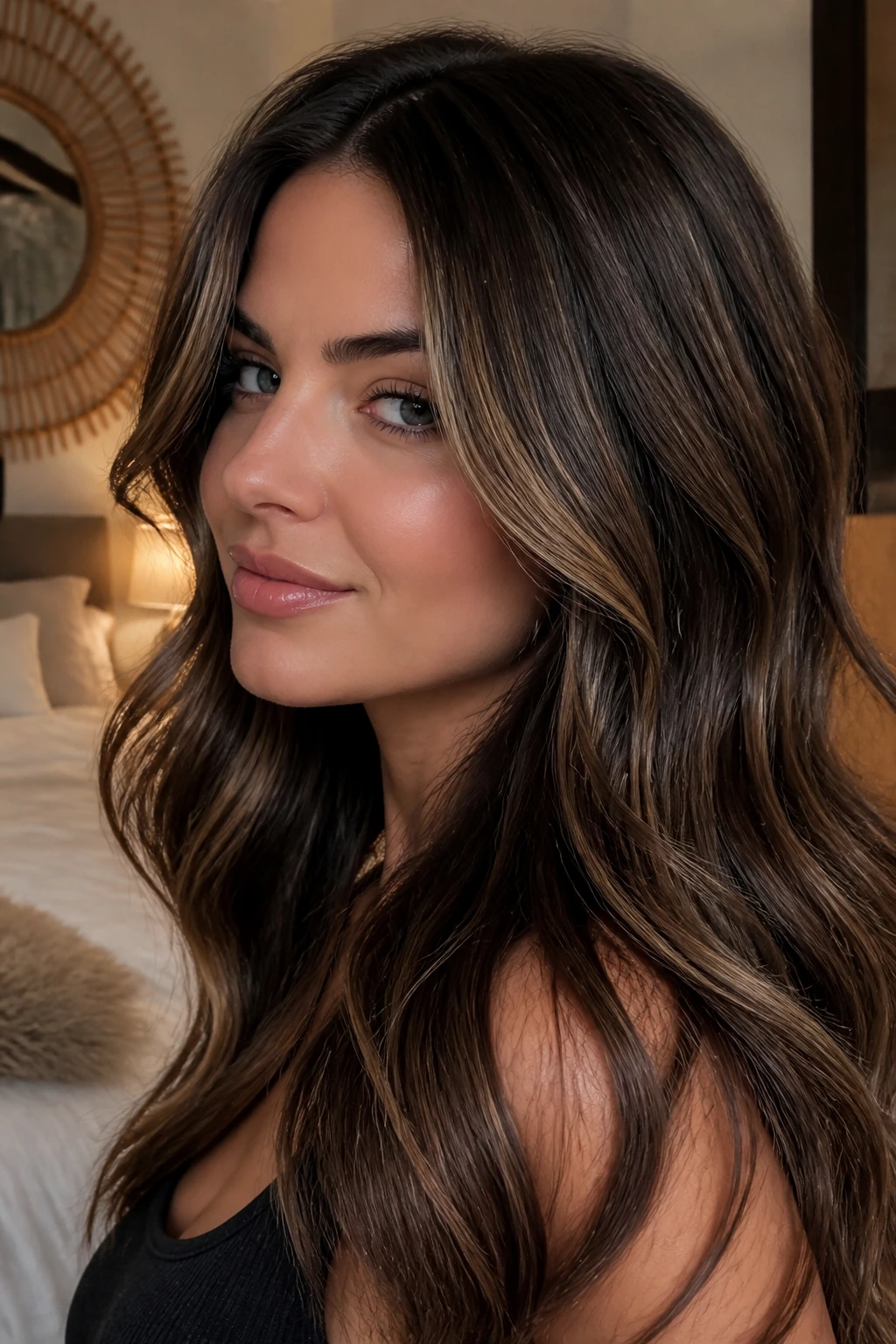
Chocolate brown with honey highlights is classic, but the cool-skin version needs discipline. Too much gold and it starts to clash. The right version uses dark honey blonde in fine ribbons over a chocolate base, with enough shadow left between the pieces to keep the look elegant.
I prefer this on medium to deep cool skin tones because the contrast can make the complexion look luminous. The hair doesn’t have to be blonde to read bright. It just needs a few careful ribbons where the light can hit.
Best with: wavy blowouts, long layers, and shoulder-skimming cuts.
Avoid: overly red chocolate bases. The red-brown can push the whole color warmer than you want.
17. Micro Honey Lights for Fine Hair
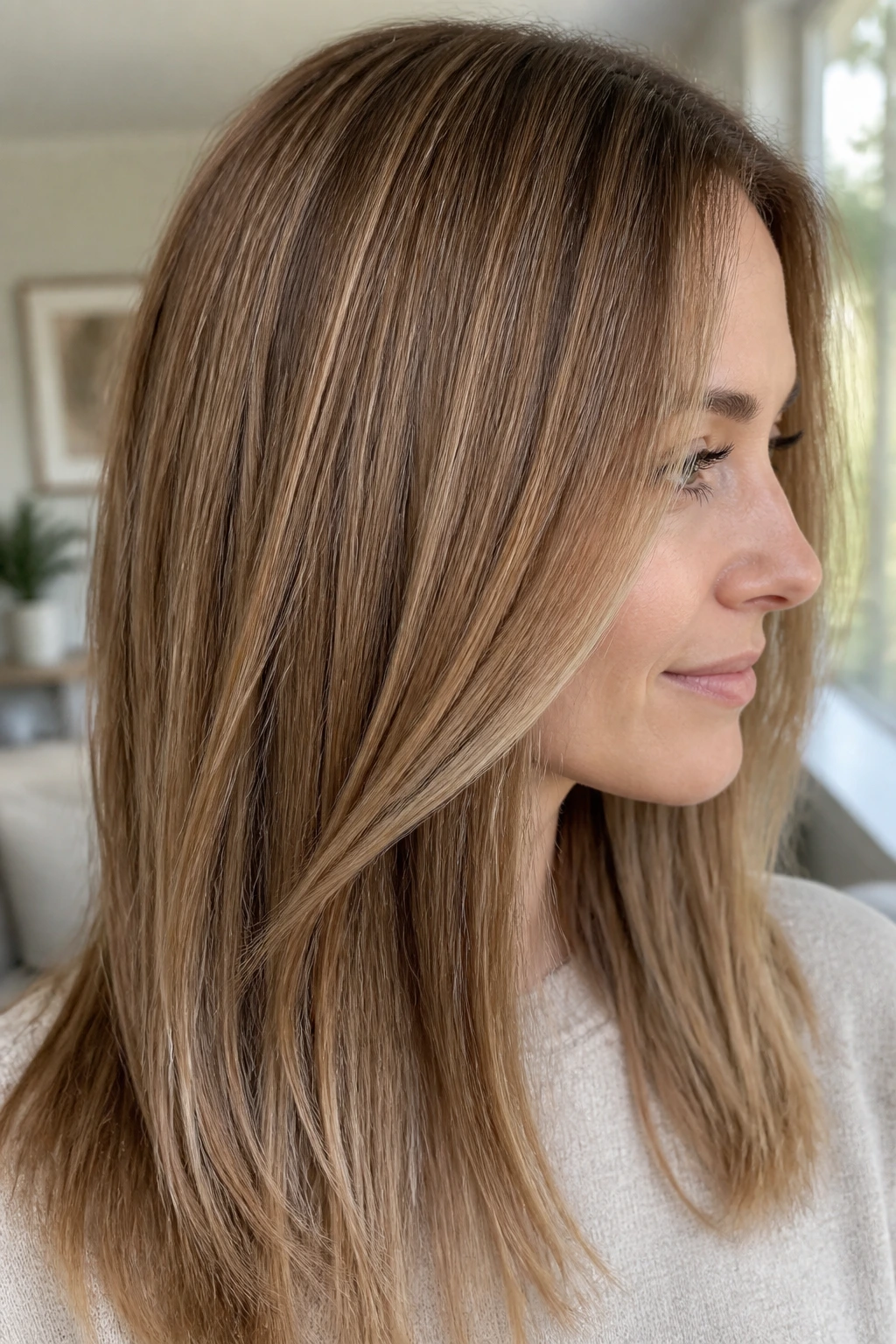
Fine hair can get swallowed by chunky highlights. Micro honey lights solve that. The pieces are tiny, close together, and spread in a way that makes the hair look fuller rather than streaky. Cool skin likes this because the color stays soft and doesn’t sit on top of the head like stripes.
Ask for a delicate weave with a beige honey gloss, not a bright blonde lift. The goal is density and movement, not high contrast. A few slightly brighter pieces around the front can still open the face without making the rest of the hair look thin.
Quick Reality Check
Fine hair can’t always carry heavy lightening near the ends. If the hair is fragile, keep the color closer to the mid-lengths and let the base do more of the visual work.
18. Honey with Ash Lowlights
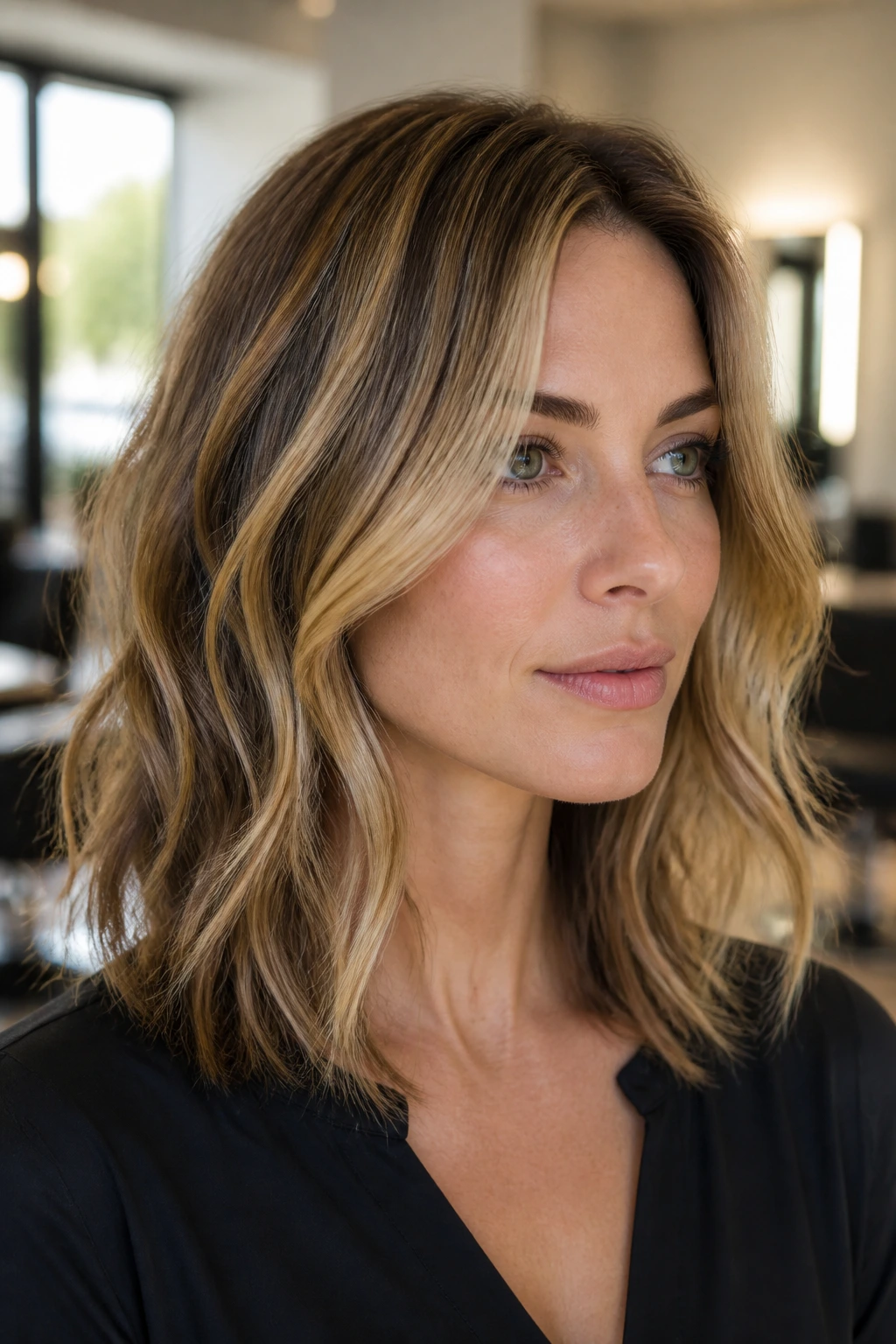
This is one of the best ways to keep honey blonde in the lane cool skin can tolerate. The highlights bring the light; the ash lowlights keep the warmth from spreading too far. Together, they create a balanced brunette-blonde mix that looks expensive in a low-key way.
The lowlights matter more than people think. They build depth around the honey and give the lighter pieces something to sit against. If you only add highlights, the warmth can float too high and start reading brassy. Add ash lowlights, and the whole color settles.
Good for: anyone with naturally medium brown hair who wants dimension without a big shift.
Color note: ask for lowlights that are ash brown, not flat black. Black can look hard against cool skin.
19. Honey Fringe Brightening
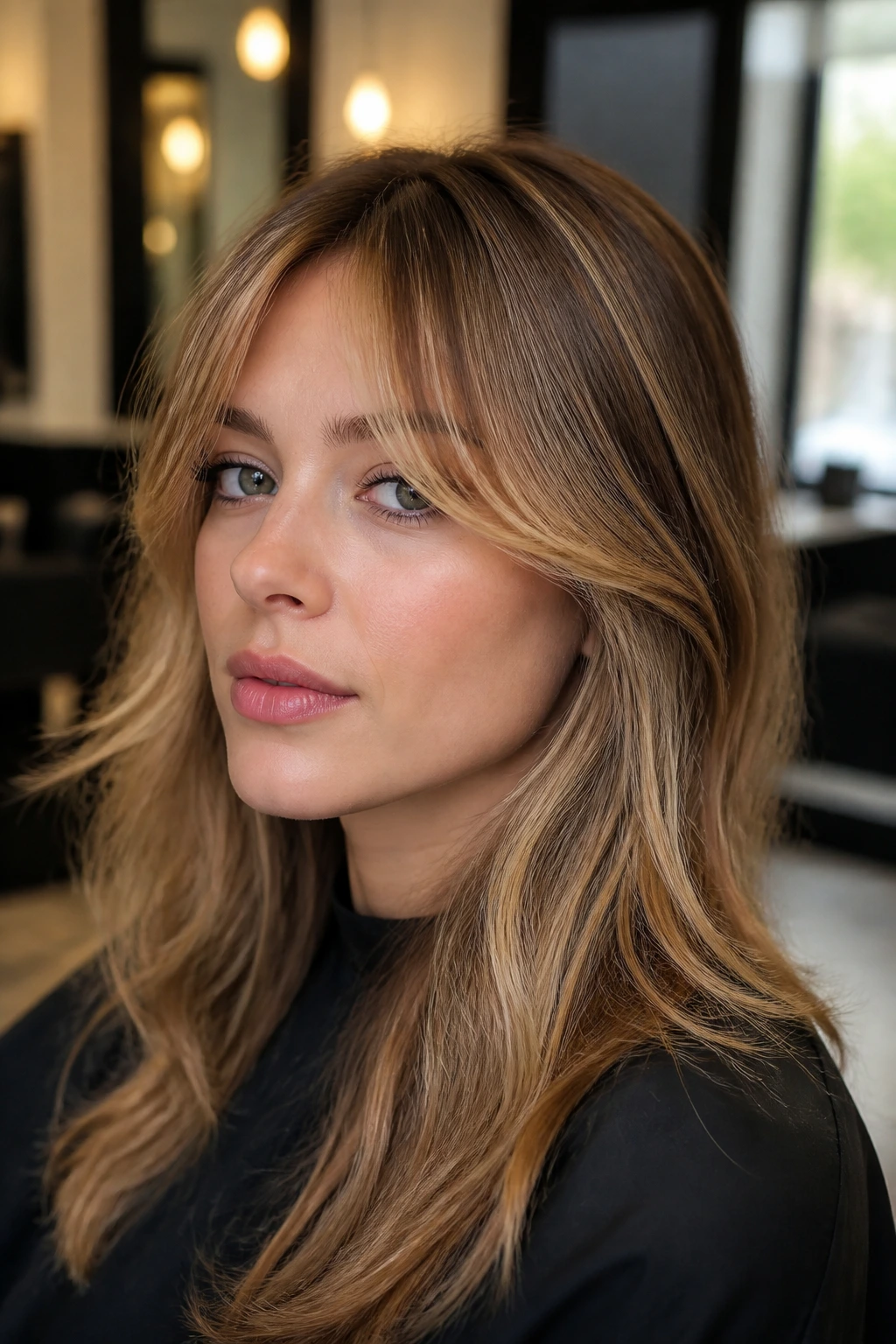
A fringe can either sit dead flat or carry a lot of personality. Dark honey blonde highlights through the fringe area brighten the eyes and make the haircut feel finished. On cool skin, that front brightness can be a lifesaver when the rest of the hair stays darker.
I like this best on soft bangs, curtain bangs, or a wispy fringe that doesn’t need a heavy color block. You want a few delicate pieces that move when the fringe separates. If the bangs are dense, keep the highlight fine. Otherwise the front can look pasted on.
Best Pairing
A deep brown base with tiny beige-gold pieces through the fringe and temple area. That gives the face light without making the whole look warm.
20. Honey Cascade on Thick Hair
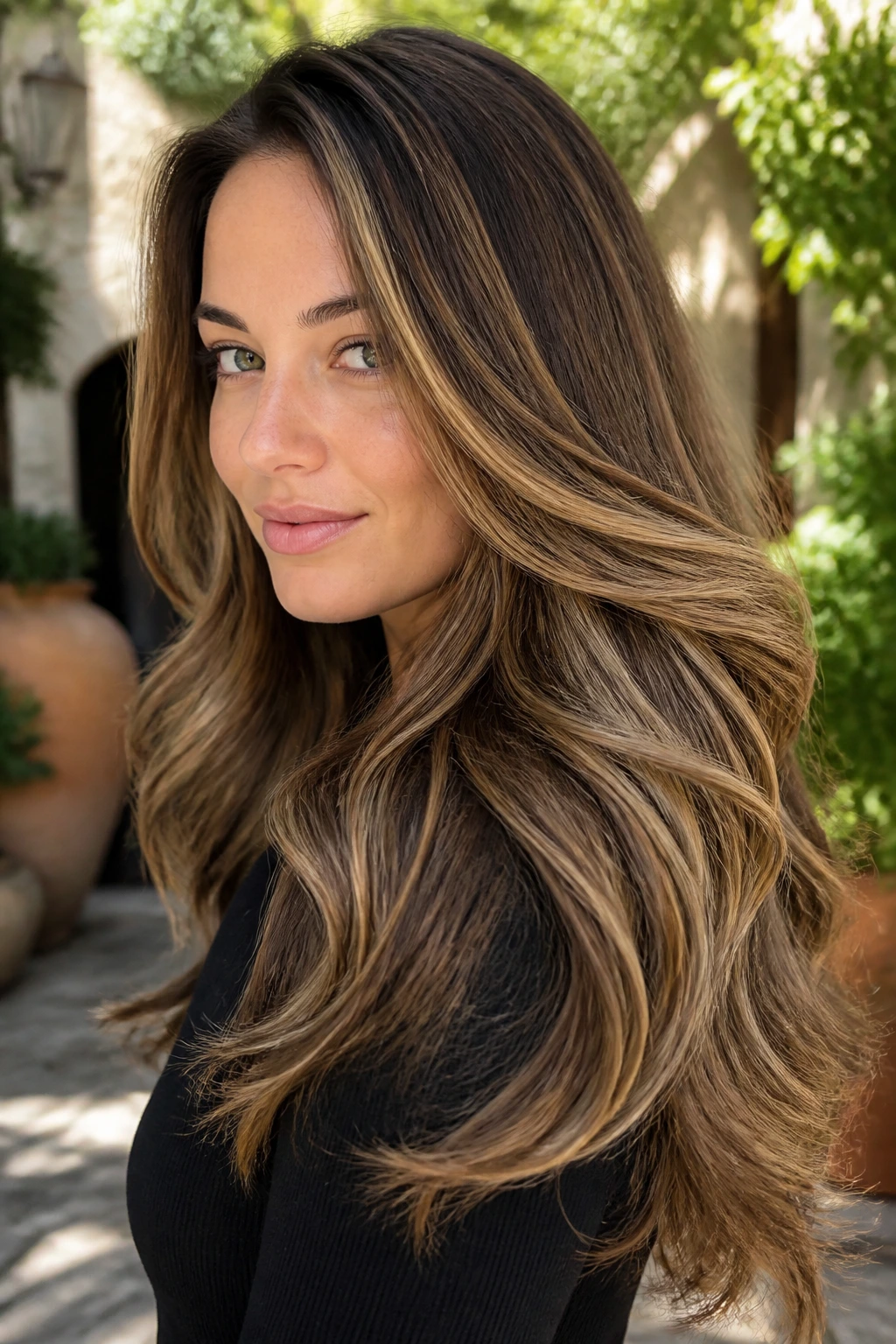
Thick hair can take bigger ribbons and still look balanced. A honey cascade uses broader pieces that drop through the lengths and show up in the movement of the hair. Cool skin needs this version to stay beige and rooted, because bigger light pieces can turn too loud very fast.
The advantage here is shape. Thick hair can look heavy if all the color sits flat on top. A cascade of honey through the lower layers breaks that up and keeps the style from feeling like one solid block. I’d choose this on long cuts, layered blowouts, and hair that holds curl well.
Best rule: keep the top darker than the bottom third. That’s what makes the color feel rich instead of overdone.
21. Soft Golden Mocha Lights
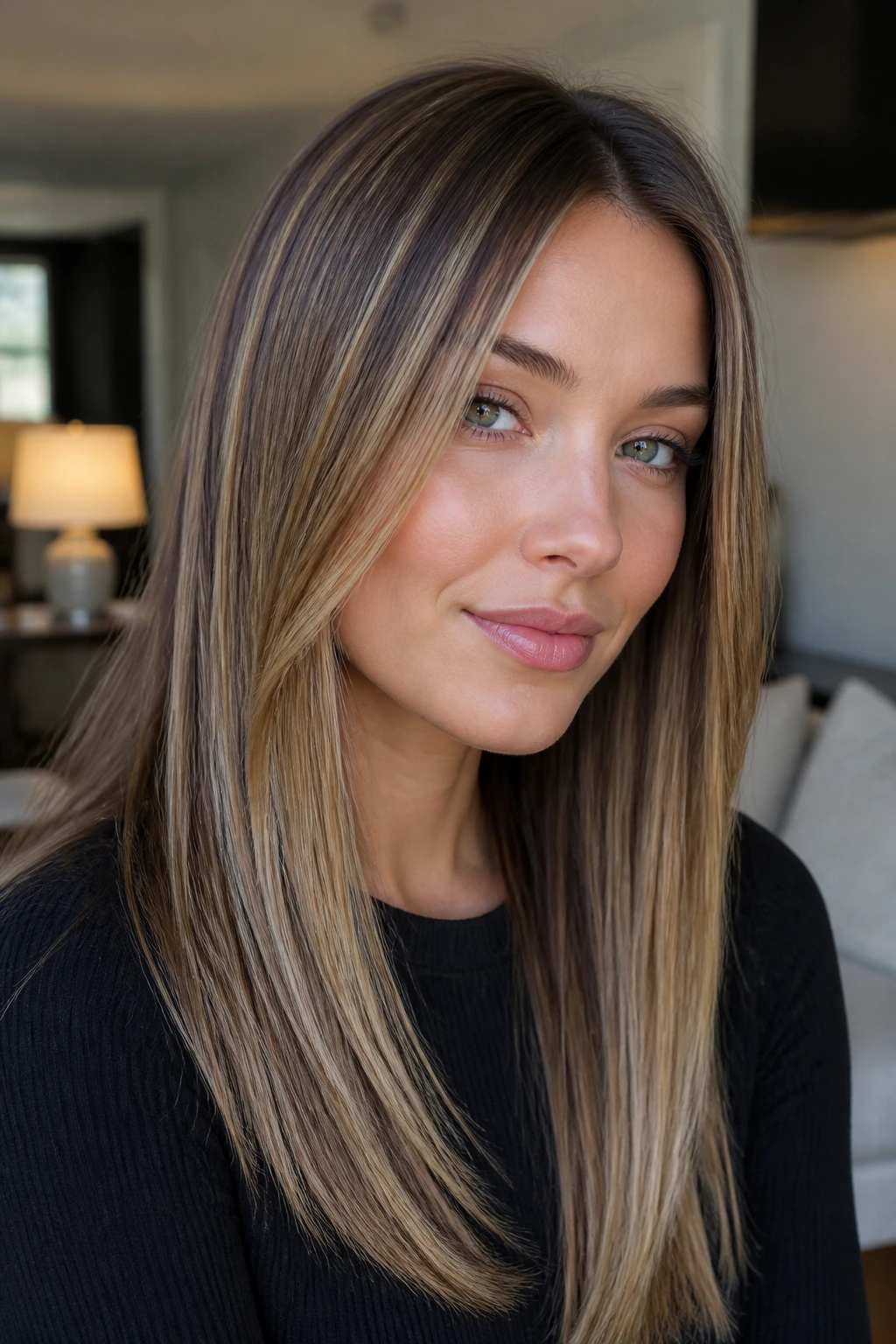
Golden mocha is warmer than mushroom, but still a lot calmer than true gold. On cool skin, that middle ground can be useful if the complexion is more neutral-cool than icy-cool. The mocha base keeps the color serious; the honey pieces add the shine.
This one looks especially good in shiny straight styles and smooth blowouts. The color reflects cleanly because the pieces are blended, not chunked. If your hair tends to look dull in winter light or under fluorescent bulbs, this shade gives it a little life without going pale.
A neutral gloss matters here. If the gold gets too bright, the mocha loses its depth and the skin can start to look pink beside it.
22. Gray-Blending Honey Ribbons
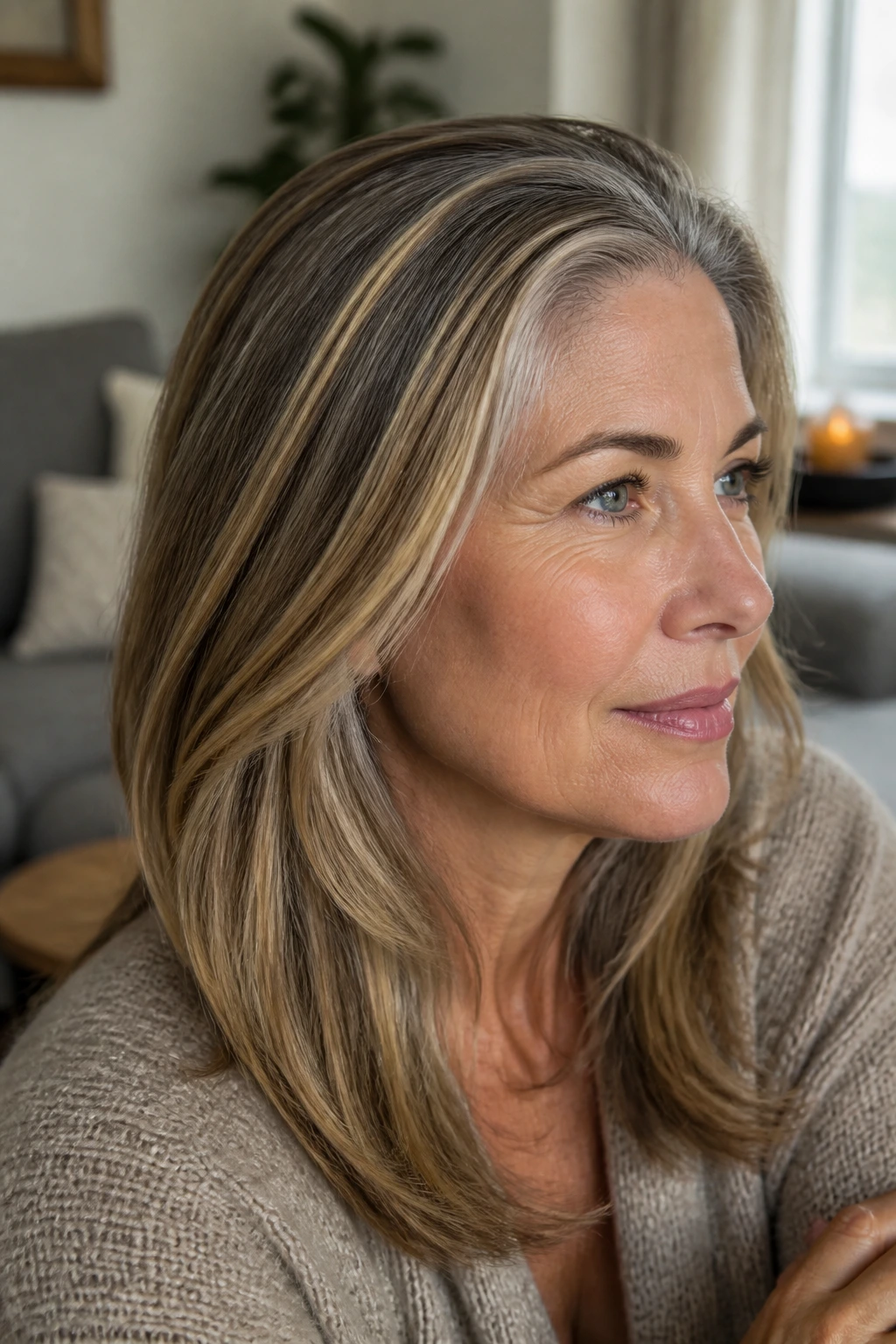
Gray blending is where dark honey blonde can do something genuinely useful. The lighter ribbons soften the contrast between gray regrowth and brunette lengths, so the grow-out looks intentional instead of obvious. Cool skin often looks great with this because the honey pieces keep the face from going flat.
The best version uses fine ribbons around the part and temples, where gray tends to show first. A beige-gold toner keeps the blend polished. You do not need a bright blonde to cover gray. You need enough lightness to blur the line.
H3: Why This Works Better Than Full Coverage
A full color can create a hard edge every few weeks. Ribbons give you more room between appointments, and they tend to look softer as they fade.
23. Bronzed Honey Bob
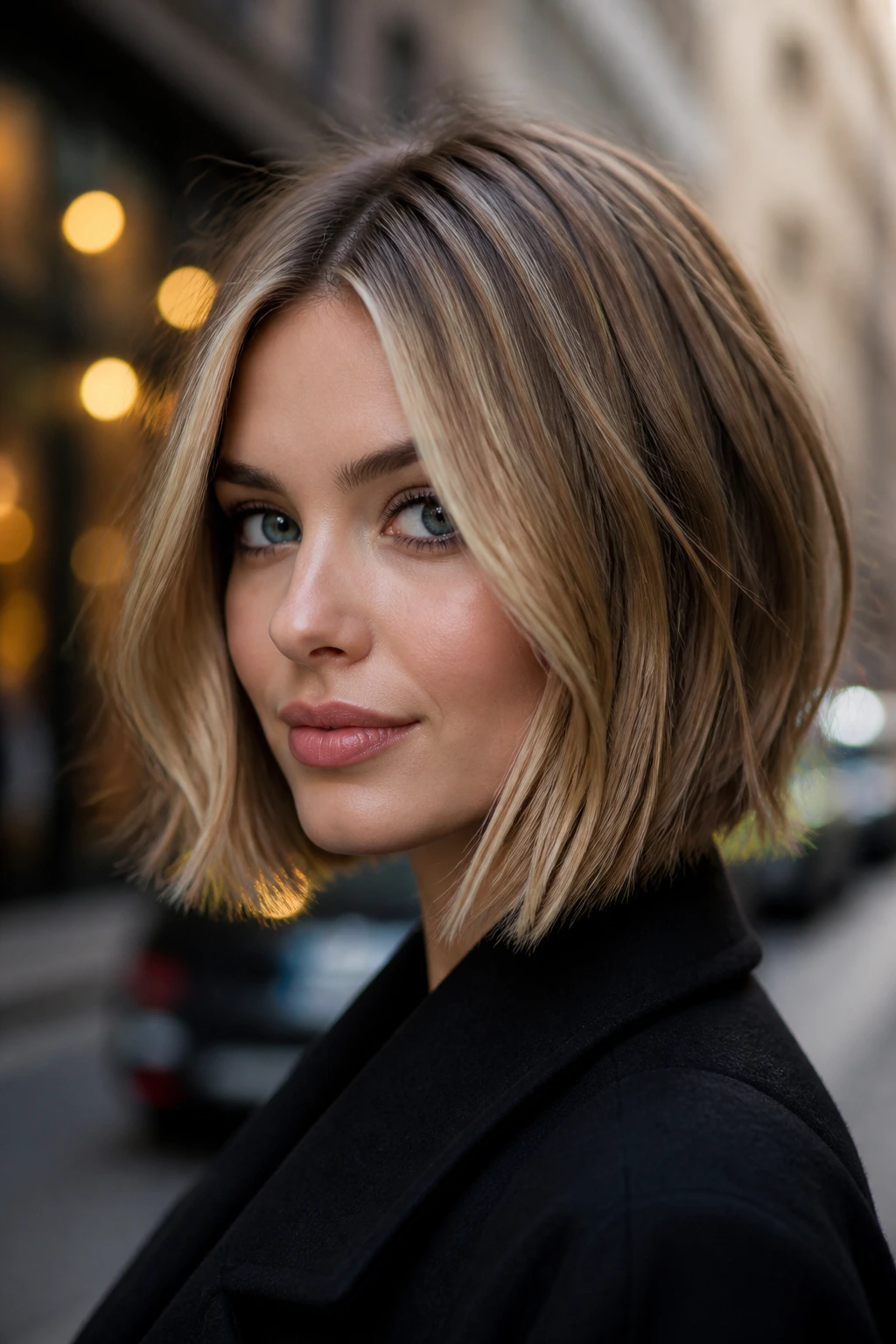
A bob can handle a slightly richer honey tone because the cut itself keeps the shape clean. Bronzed honey on a bob gives movement and shine without making the hair look overlight. On cool skin, the trick is to keep the bronze warm enough to glow and cool enough to stay sandy.
This works especially well on jaw-length bobs and chin-length cuts with a deep side part. The color has nowhere to hide, so placement matters. Put the lightest pieces near the front and through the outer surface where the eye naturally lands.
Best for: sharper haircuts, straight styles, and faces that need a little softness at the jawline.
24. Honey for Cool Olive Skin
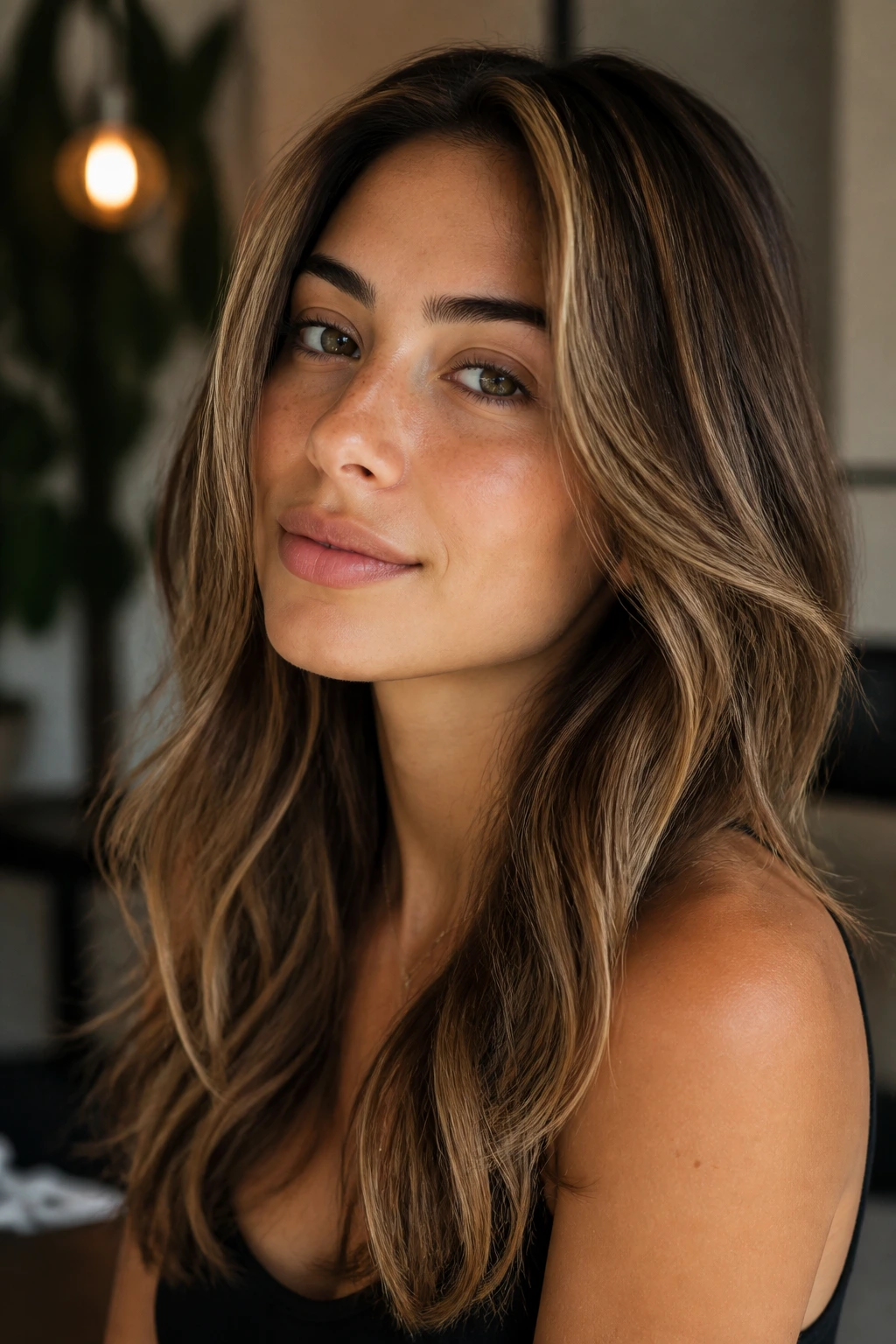
Cool olive skin can be a little awkward with blonde if the tone is wrong. Too yellow and the skin looks sallow. Too ashy and the face can go green. Dark honey blonde highlights solve that when the balance stays beige and slightly muted.
I’d steer this version toward a deeper honey with root shadow and only a modest lift through the front. The idea is to add warmth that looks like part of the skin, not a separate layer. A soft golden-beige ribbon usually sits better than a bright sunlit streak.
This is one of those shades where less is more. The hair should glow. It should not compete with the undertones sitting in the complexion.
25. Signature Soft Honey Dimension
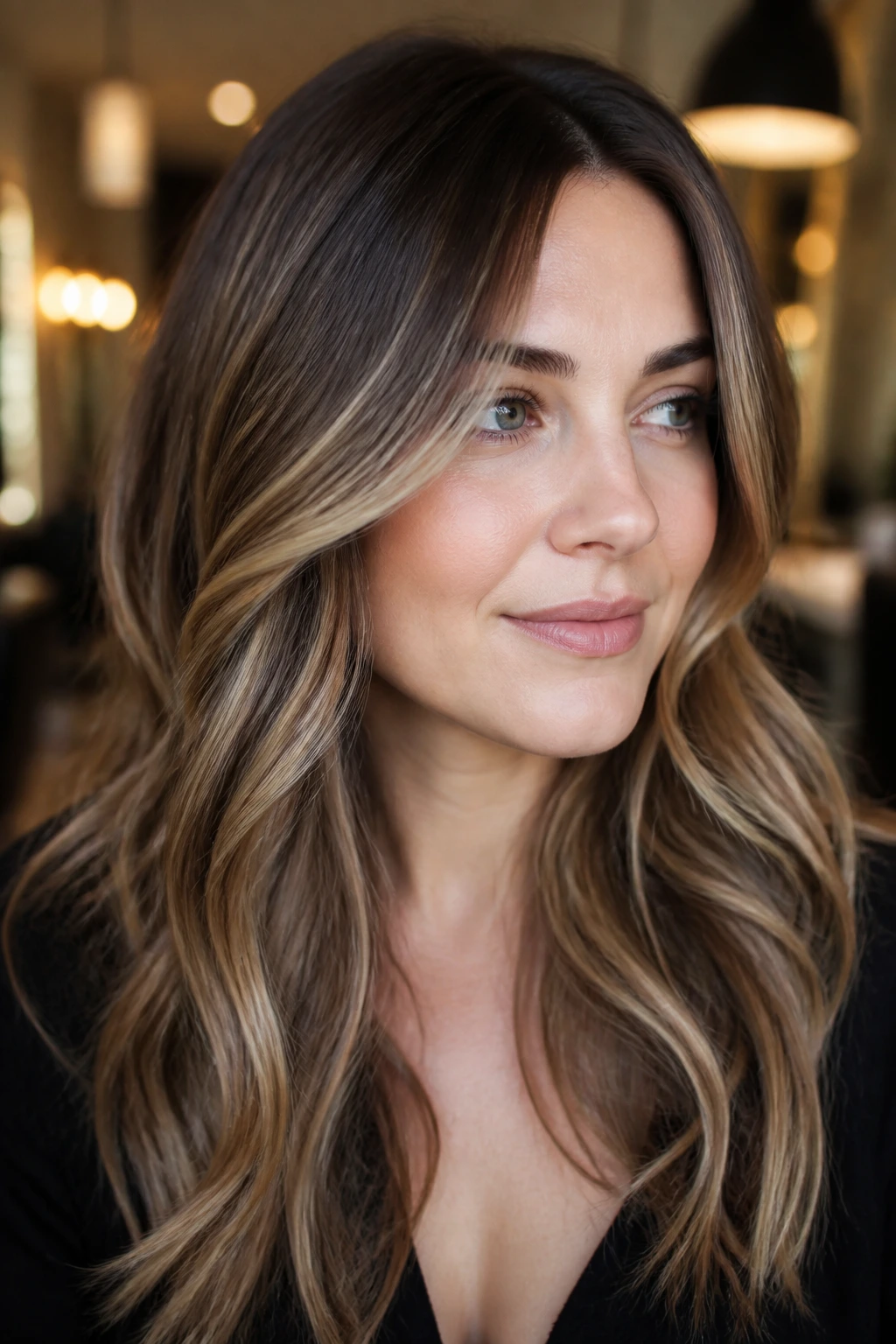
This is the version that feels the most lived-in. The base stays dark, the highlights stay soft, and the whole thing looks like the hair has multiple natural shades instead of a single salon decision. On cool skin, that layered feel is the reason it works. Nothing fights anything else.
If I had to pick one approach for someone who wants dark honey blonde highlights without drama, it would be this. Ask for fine-to-medium ribbons, a beige gloss, and a root that stays one or two levels deeper than the mid-lengths. You get warmth, but it never goes loud.
Best with: almost any length, especially if you like your hair to move and not sit in one flat sheet.
How Dark Honey Blonde Highlights Stay Soft on Cool Skin
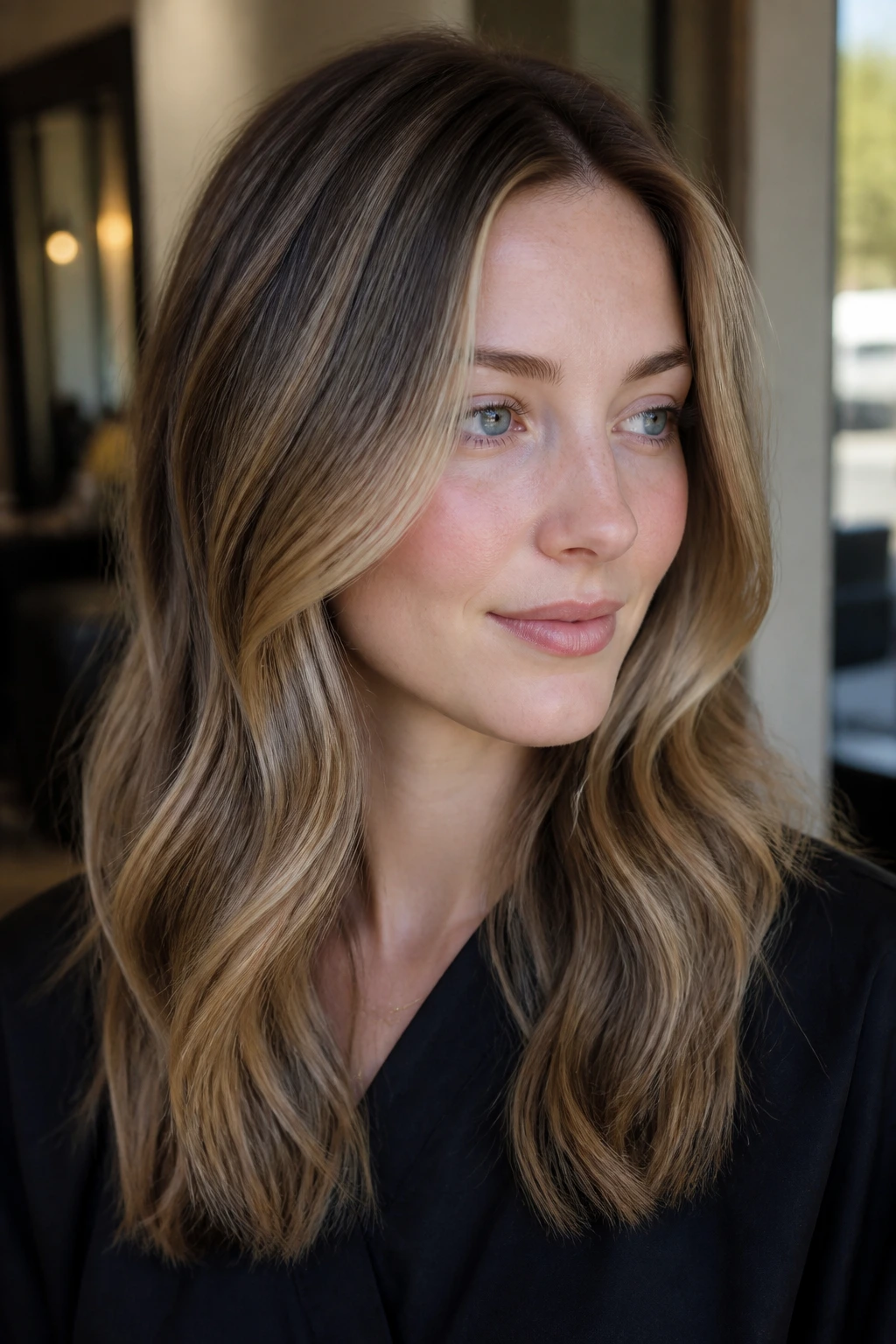
The real trick with dark honey blonde highlights is tone control. Honey is not one single shade. It can lean beige, gold, amber, sand, or even a little smoky depending on the gloss, the base color, and how much light is painted into the strands. Cool skin tones usually look best when the warmth stays under control and the base keeps some depth.
A level 5 to 6 brunette root with level 7 to 8 honey pieces is the range I trust most. Go much lighter, and the color can detach from the complexion. Go much more yellow, and the skin starts to look flushed or tired. Beige, mushroom, and neutral-gold toner are the safer lanes. They keep the blonde soft enough to flatter pink or blue undertones instead of fighting them.
Placement matters almost as much as tone. Highlights around the hairline and cheekbone area create lift. Highlights scattered through the mid-lengths create movement. Highlights packed too densely at the top can make the color feel hotter than it really is. That’s why a good dark honey blonde usually looks better when it’s blended rather than stripey. It behaves like dimension, not decoration.
How to Ask for Dark Honey Blonde Highlights at the Salon
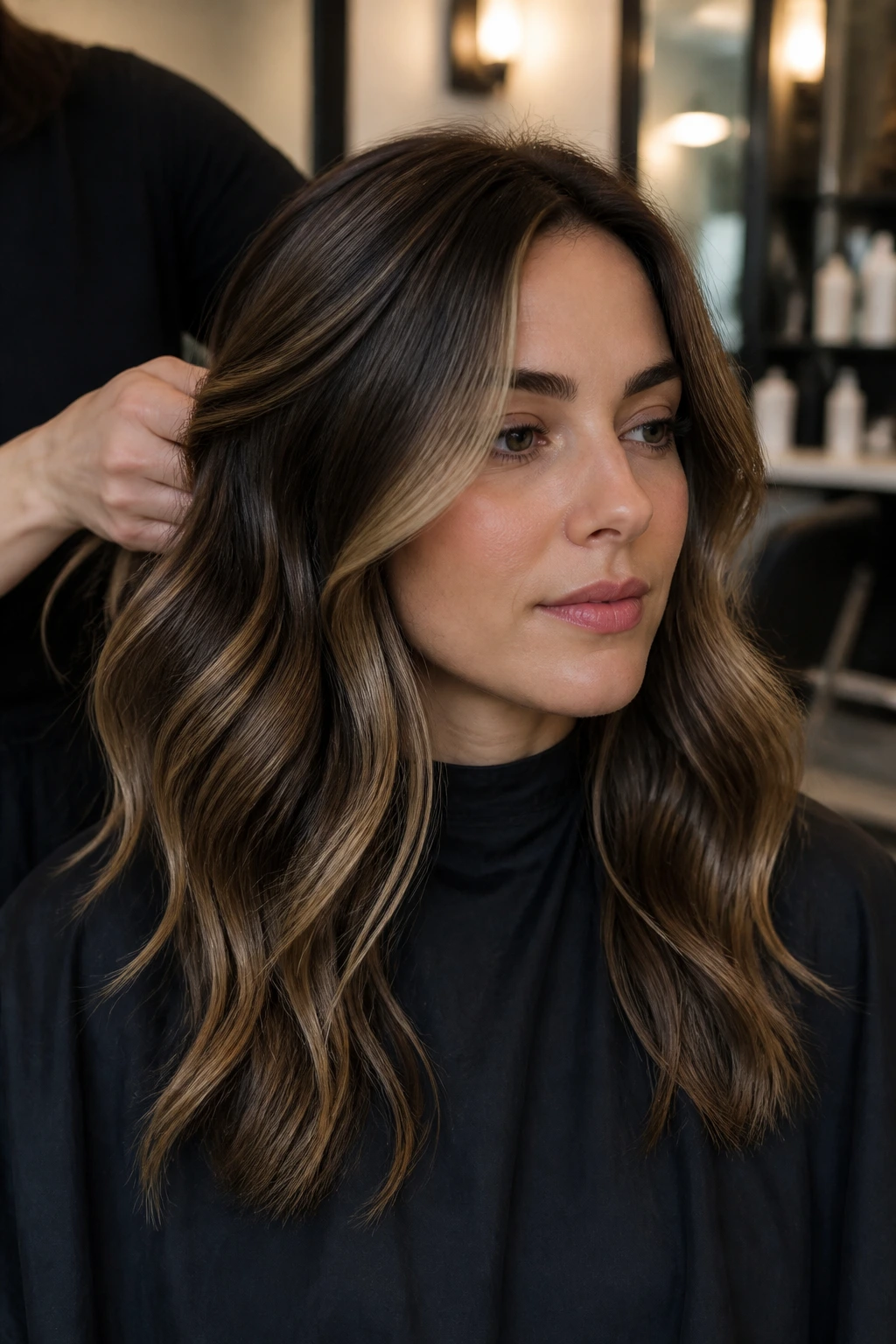
Bringing a photo helps, but a photo alone is not enough. Hair color shifts under indoor light, phone filters, and waves. The better move is to describe the depth and tone you want in plain words: dark brunette base, beige honey pieces, soft root shadow, no orange, no bright yellow. That gives your colorist room to translate the idea into the right formula for your hair.
If your skin is very cool, ask for the front pieces to stay beige rather than golden. If your hair is already dark brown, ask how many levels need to lift before the honey reads properly. On coarse or resistant hair, the answer may be a little more than you expect. On porous hair, the color may grab faster and need a gentler toner to avoid going dull.
One useful line: “I want dark honey blonde highlights that still look brown in the root and beige at the ends.” That sentence tells the whole story.
What to Bring to the Salon Chair
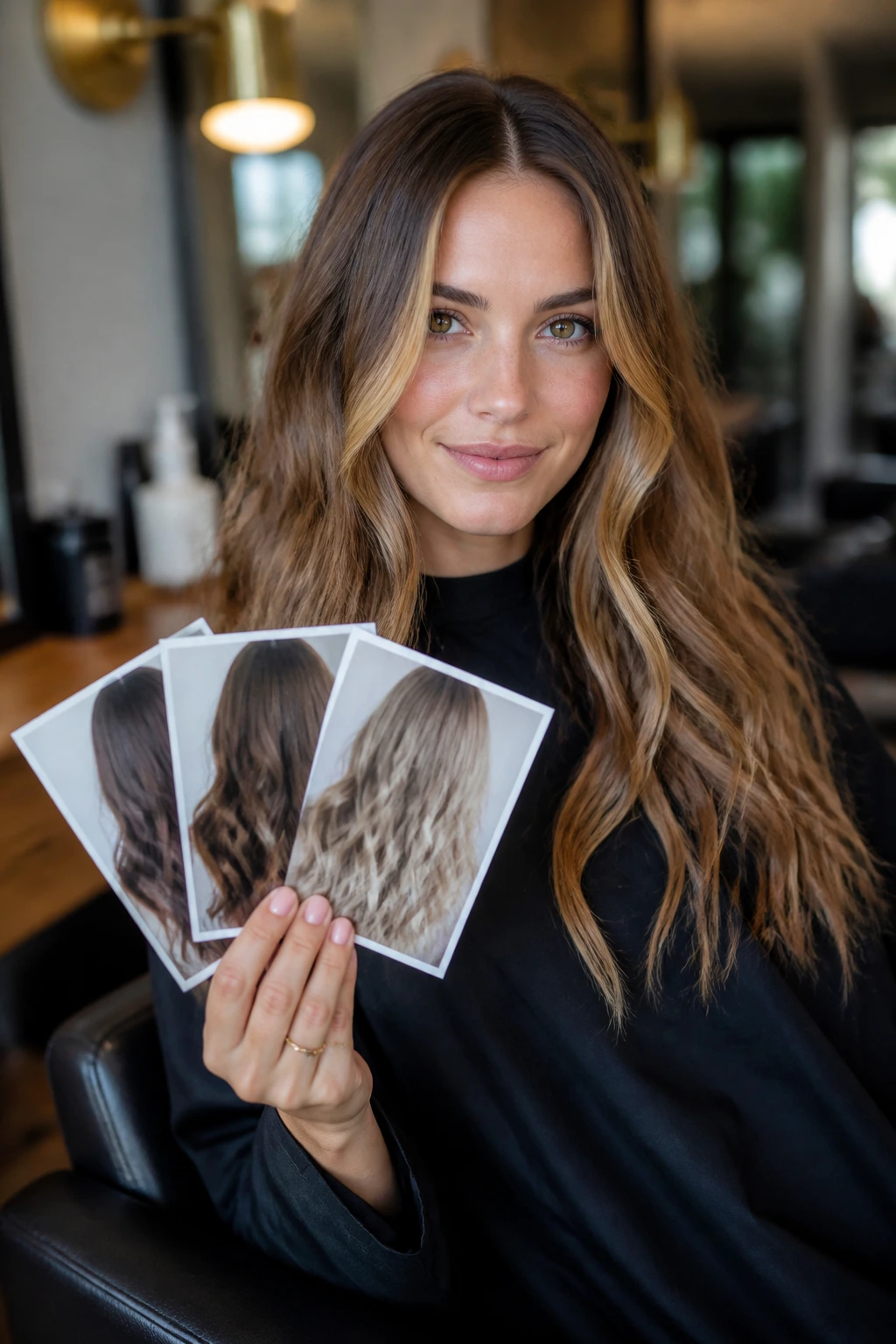
A good consultation is easier when you show up with the right stuff. You do not need a tote bag full of tools. You need a few useful references and the ability to point at what you like and what you do not.
- Two or three saved photos: Bring looks with the same base depth you want, not just pretty blonde hair. A picture of level 8 blonde won’t help if your goal is level 6 honey.
- A photo of a shade you dislike: This is underrated. Showing your colorist what feels too yellow or too orange is often clearer than describing it.
- A note about your wash routine: If you shampoo daily or live in a hard-water area, say so. It affects how fast the toner fades.
- Your last color history: Box dye, henna, dark gloss, old highlights — all of it matters.
- A stylus or clip, if you like to section hair on yourself: Not required, but it helps if you want to show exactly where you like brightness around the face.
How to Wear the Color So It Reads Right
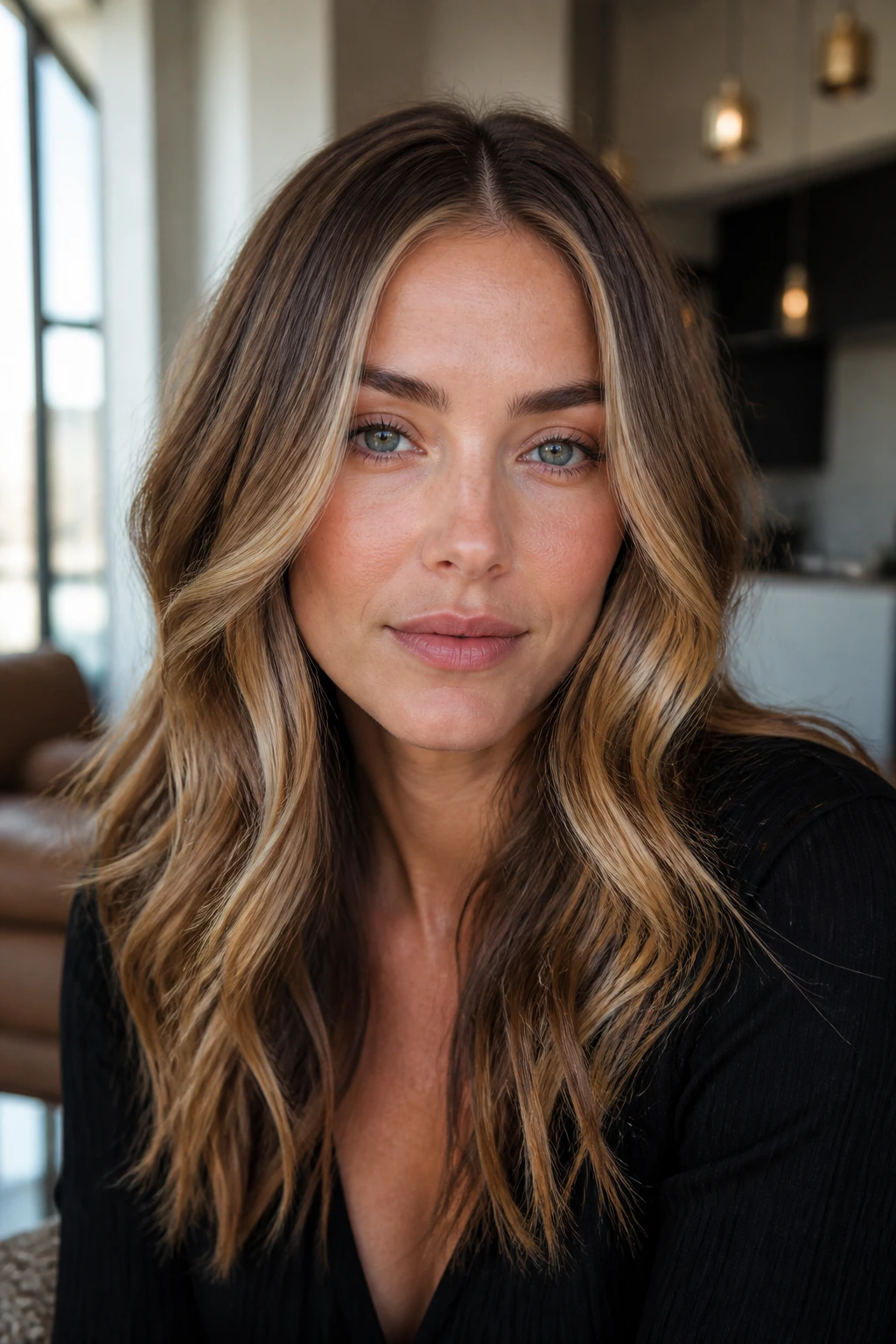
The haircut changes the whole mood. Loose waves show off ribbons and babylights. A sleek blowout makes contour highlights stand out around the face. A shag lets the lighter pieces scatter and move. Straight hair can look elegant with dark honey blonde, but the highlights need careful placement or they disappear into the shape.
Presentation
Wear the part where the lightest pieces live. A center part suits face-framing honey and contour work. A side part can make rooted balayage feel softer and more blended.
Accompaniments
Cool-toned makeup works well here: rose blush, taupe shadow, berry lipstick, and a neutral brow. Silver earrings or brushed white gold sit comfortably next to beige honey tones.
Portions
If the color is subtle, it shows up better in textured styling than in tight curls. If the color is bolder, keep the rest of the styling clean so the highlights don’t compete with too much volume.
Beverage Pairing
A little dry humor there: the real pairings are heat protectant and a decent gloss. If you want the color to stay rich, those two matter more than a new round brush.
Additional Tips and Tone Boosters
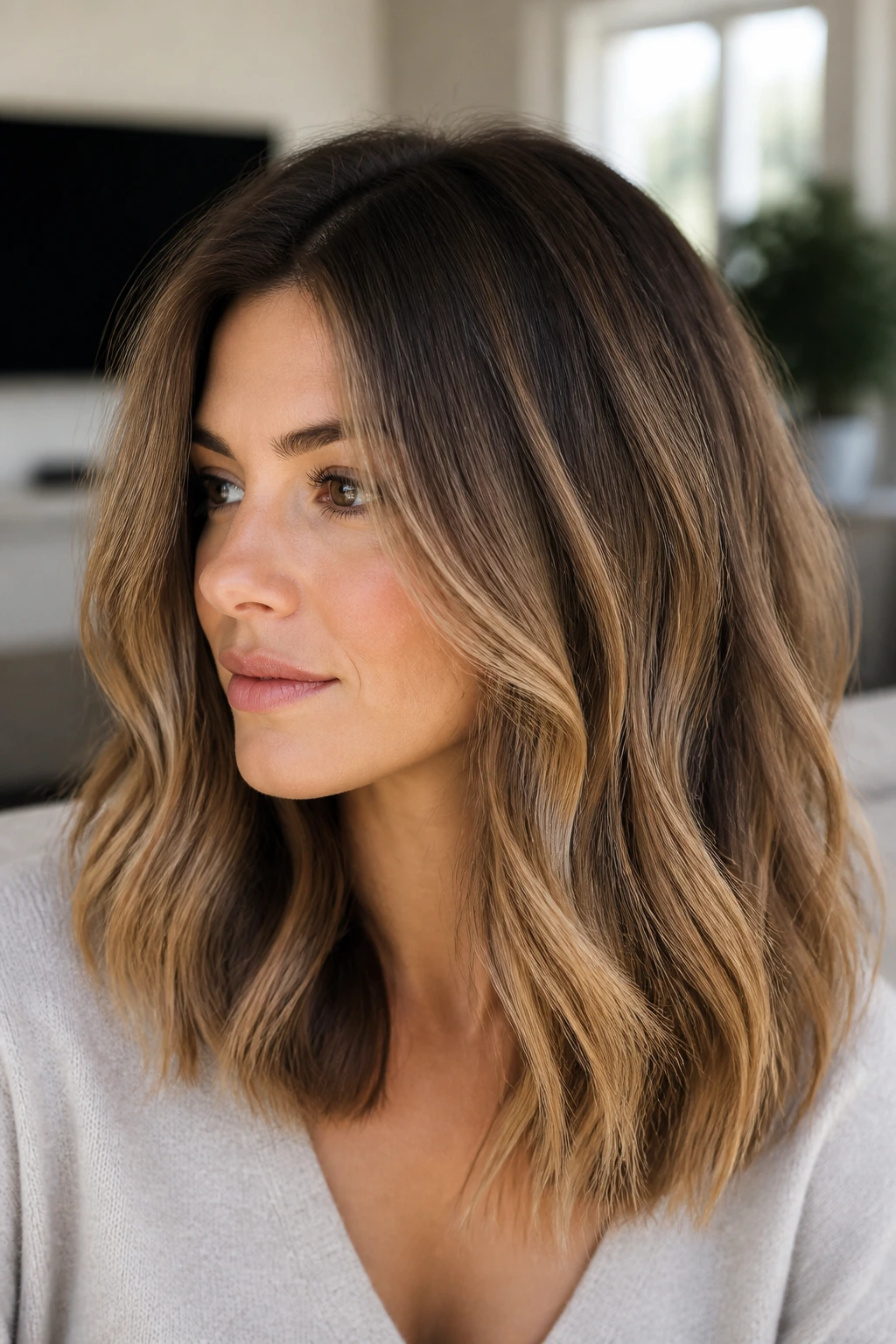
Flavor Enhancement: A clear or beige gloss every 6 to 8 weeks keeps dark honey blonde from drifting into flat gold. If the pieces start looking dull rather than bright, the gloss has probably faded, not the highlight itself.
Customization: Ask for a few cooler ribbons under the top layer if your skin is very pink. That small adjustment gives you depth without making the whole head warm. On neutral-cool skin, you can usually carry a little more beige-gold near the face.
Serving Suggestions: Soft waves, a polished blowout, or a loose braid all show the dimension better than pin-straight hair. A tiny bit of shine serum on the ends helps the honey catch light in a clean way.
Make-It-Yours: If you like a lower-maintenance version, keep the highlights farther from the roots and focus brightness below the cheekbone. If you want more drama, add one or two face-framing pieces and leave the rest softly blended.
How to Keep Dark Honey Blonde Rich Between Appointments
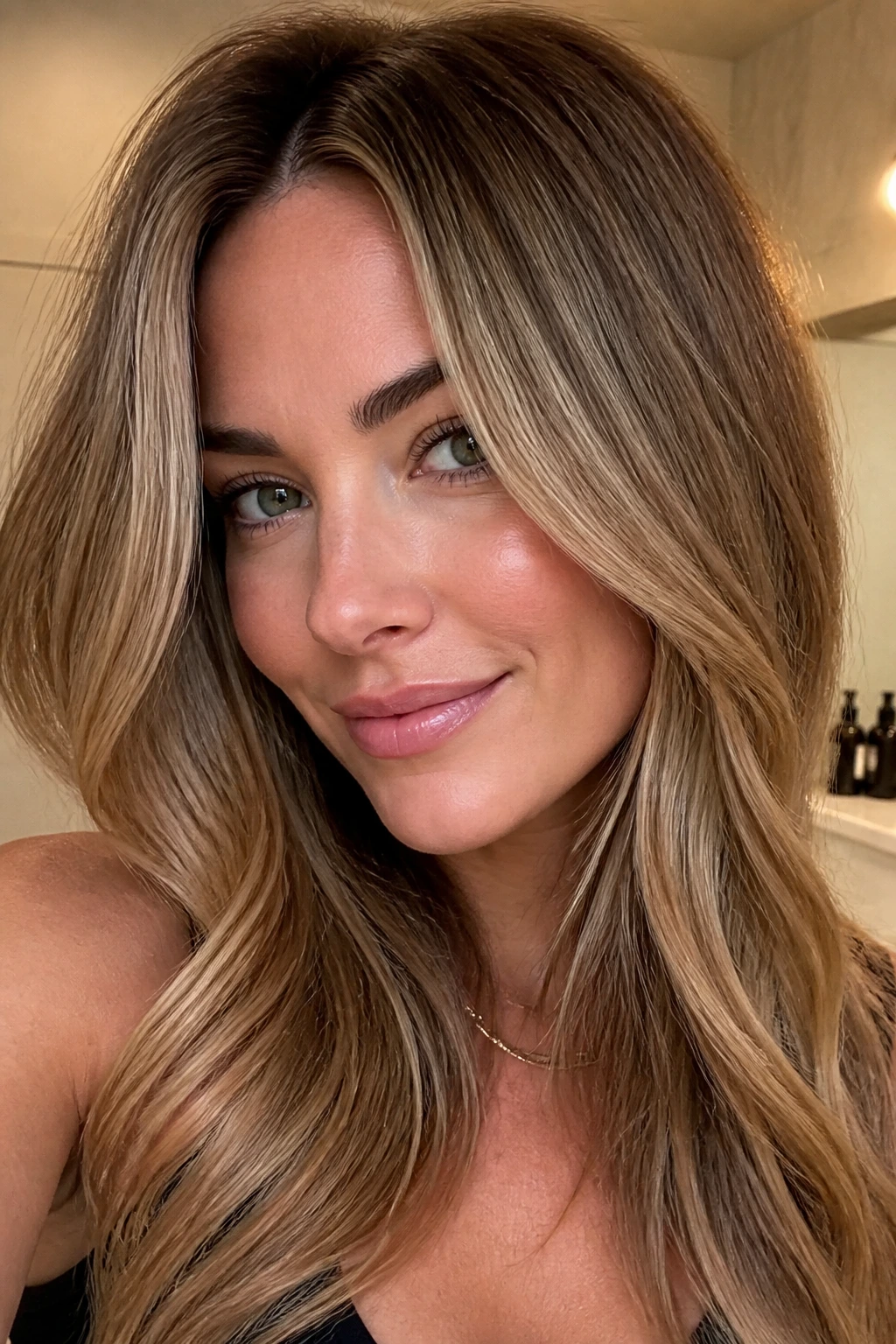
Hair color maintenance is never glamorous. It’s mostly timing, product choice, and resisting the urge to wash out a good gloss too fast. Dark honey blonde highlights usually hold their shape better than full blonde, but they still need care if you want the tone to stay beige instead of turning raw yellow.
Wash every 2 to 3 days if your scalp allows it. Daily shampooing strips toner faster, and hot water makes the fade faster again. A sulfate-free shampoo helps, though the bigger win is using lukewarm water and not scrubbing the lengths like you’re removing grease from a skillet. A color-safe conditioner on the mid-lengths and ends keeps the hair smooth enough that the honey looks polished rather than dry.
Use purple shampoo sparingly. Once every 1 to 2 weeks is usually plenty for dark honey blonde. Too much purple can make the highlight look dusty, especially on warmer beige pieces. If the color starts looking orange, a blue-based shampoo may help more than purple, but don’t overdo either one. A toning mask or salon gloss is safer when the warmth needs correction.
Heat protection matters too. Blow-dryers, curling irons, and flat irons can push the color brassier than it should be. If you style with heat a few times a week, a good protectant is not optional. It’s the difference between soft honey and tired gold.
Variations and Adaptations to Try
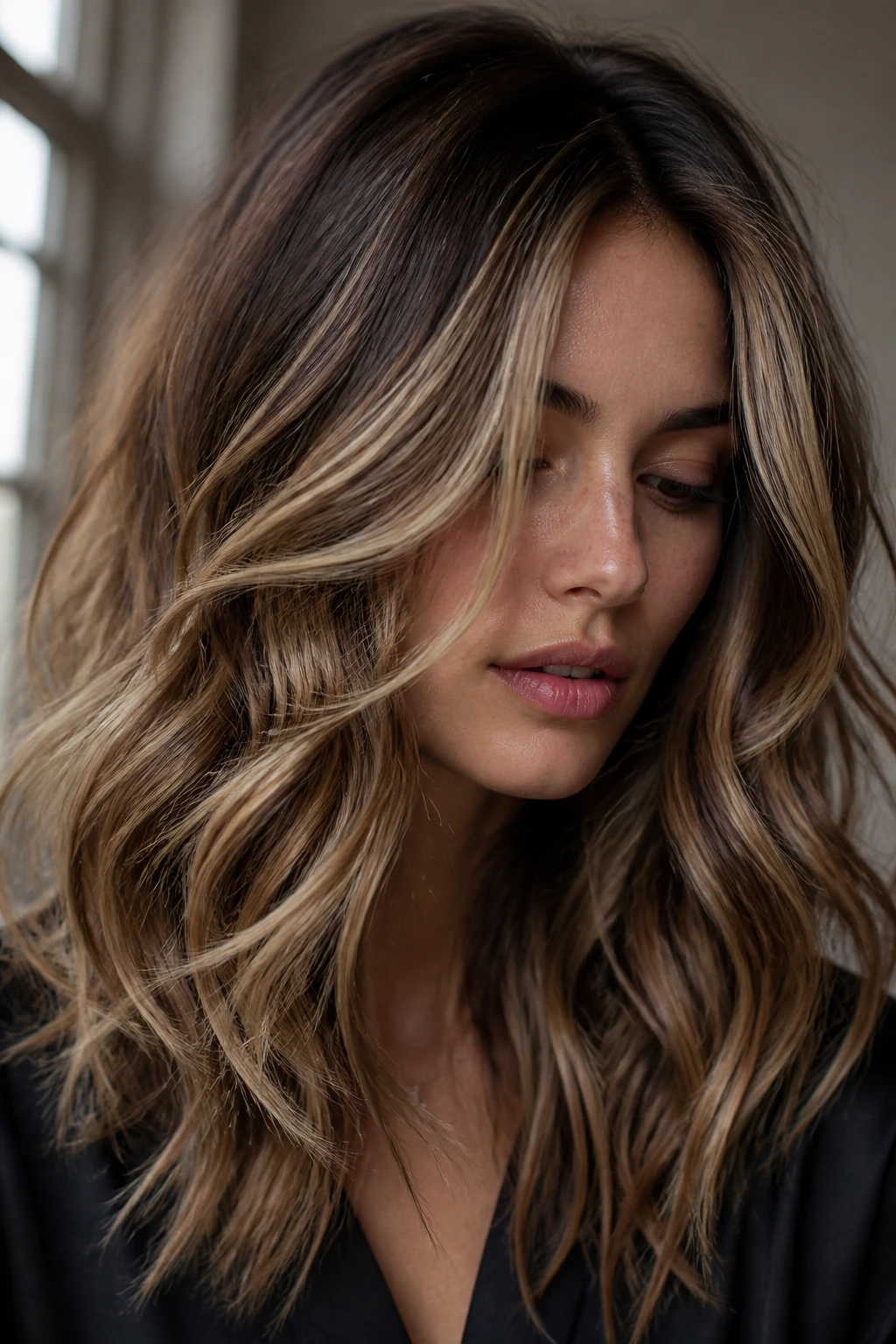
For Very Fair Cool Skin: Keep the honey closer to beige and avoid wide gold streaks near the face. Fine babylights and a smoky root usually sit better than bright money pieces.
For Cool Olive Skin: Choose muted honey with a beige gloss and a deeper base. This keeps the skin from looking green or sallow, which can happen when the blonde is too yellow or too ash-heavy.
For Curly and Coily Hair: Ask for ribbons that follow the curl pattern instead of slicing straight through it. The color should appear in movement, not as hard strips that fight the shape of the curl.
For Gray Blending: Mix honey ribbons with ash lowlights so the regrowth softens instead of standing out. This works well if you want less frequent touch-ups and a softer grow-out line.
For a More Dramatic Finish: Add a brighter face frame and keep the rest of the highlights softly diffused. The front catches the eye first, while the length stays rich and wearable.
Common Mistakes to Avoid
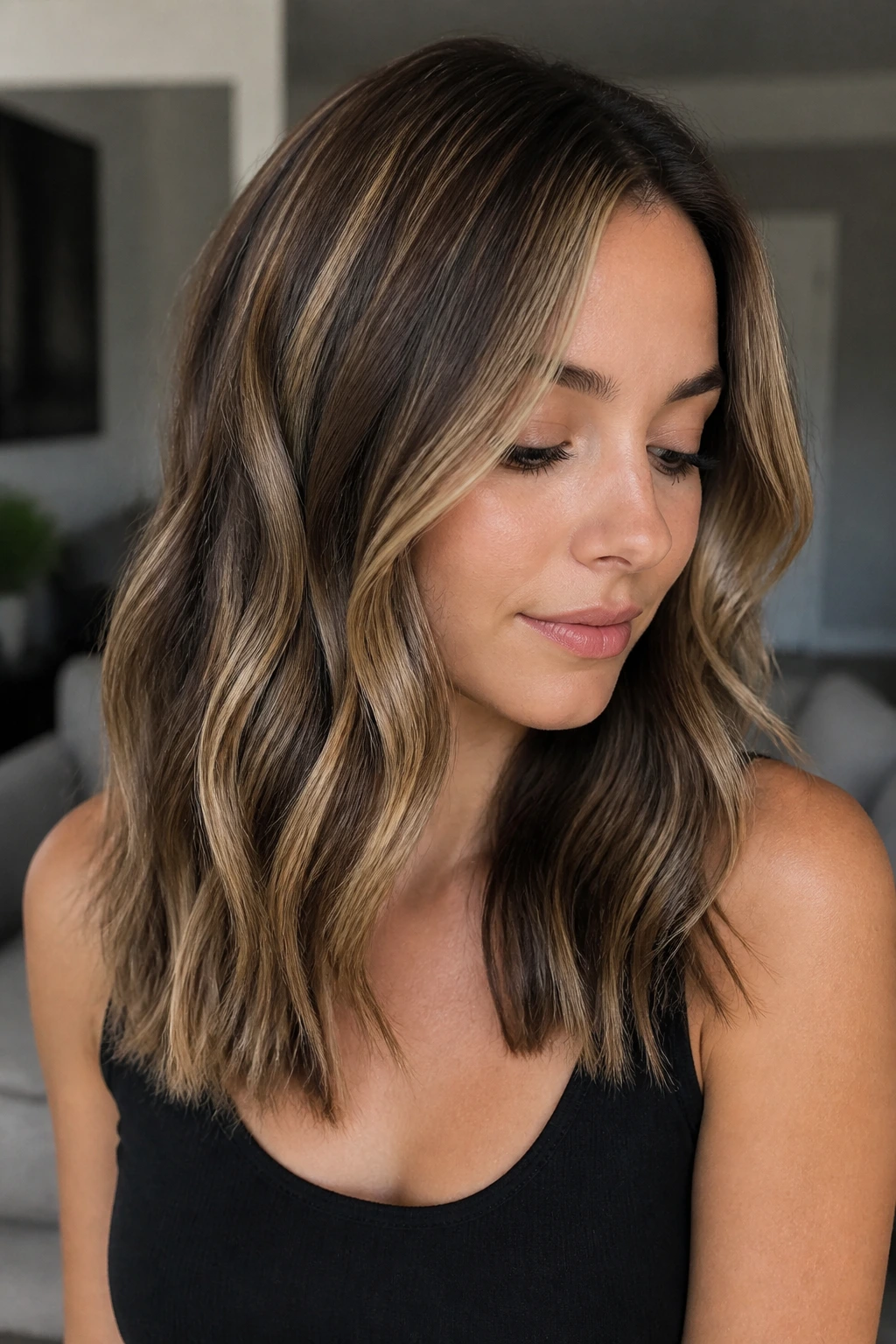
Going too yellow. The hair can look sunny in the chair and brassy by the third wash. The fix is a beige or neutral gloss, not a brighter blonde.
Making the highlights too chunky. Cool skin usually looks better with soft ribbons, not thick stripes. Chunky pieces can make the color feel loud and dated fast.
Skipping the root shadow. A flat blonde root can make the face look washed out and can create a hard line as the hair grows. A shadow root softens the transition and keeps the color deeper.
Ignoring the haircut. Honey blonde on a blunt, one-length cut can look heavier than the same color on layered hair. Shape matters. The light has to have somewhere to move.
Overusing purple shampoo. A little toning is useful. Too much can dull the honey and leave the hair looking dusty instead of soft. If the shade starts to look gray or chalky, back off.
Frequently Asked Questions
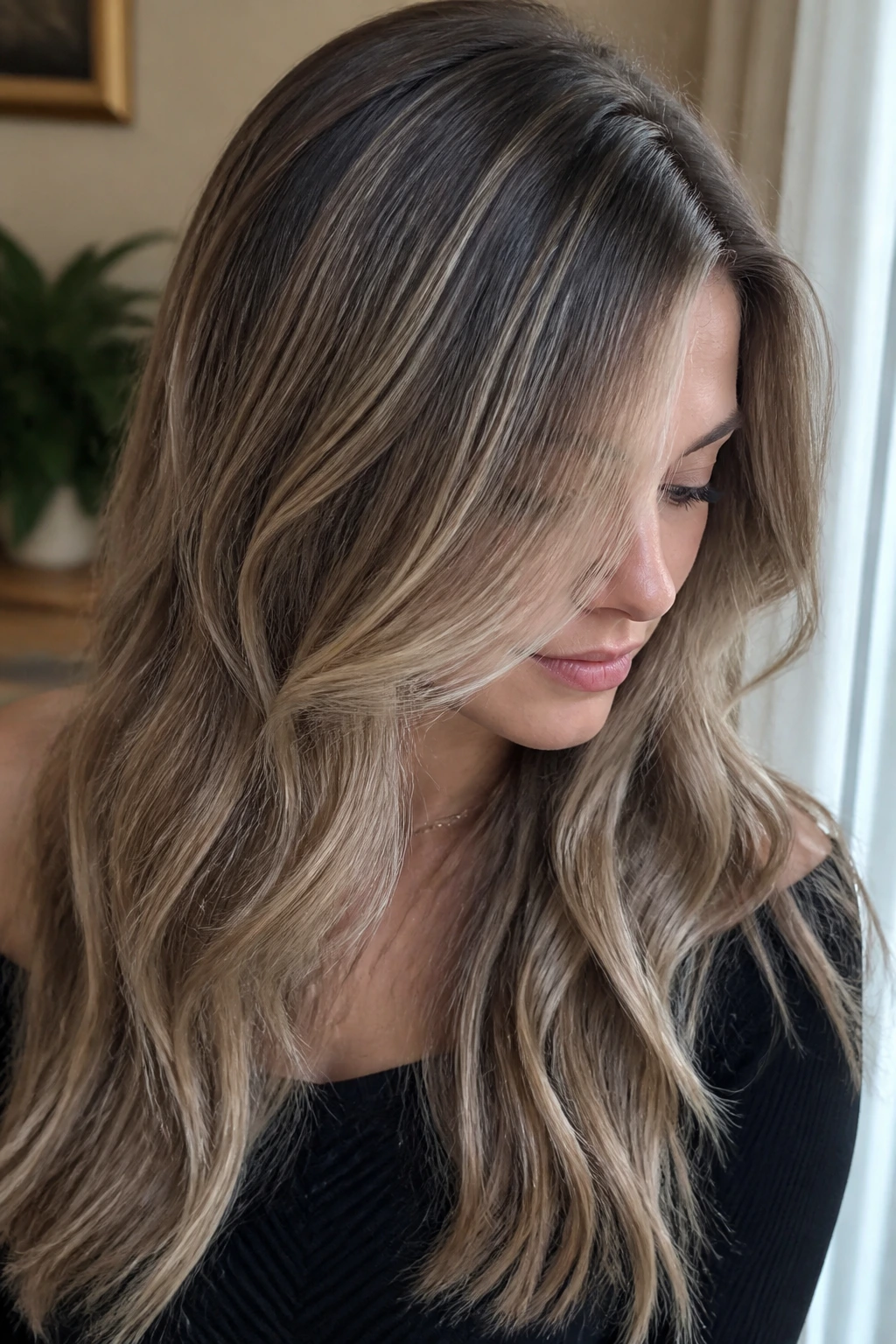
Will dark honey blonde highlights wash me out if I have very cool skin?
Not if the tone stays beige or neutral and the root keeps some depth. The problem usually comes from bright yellow highlights, not honey itself. Soft placement around the face tends to flatter cool skin far better than all-over brightness.
What’s the difference between honey blonde and caramel highlights?
Caramel leans deeper and warmer, with more brown-red in it. Honey is lighter and usually cleaner in tone. On cool skin, honey is easier to wear because it can stay beige instead of turning reddish.
Can I get this look without bleaching my whole head?
Yes. Most dark honey blonde looks use partial lightening, balayage, or foilayage instead of full-head bleach. That keeps the base intact and makes the grow-out softer.
How often should I refresh the tone?
Glosses usually need a refresh every 6 to 8 weeks, depending on how often you wash and heat-style. If the highlights start looking yellow, flat, or a little harsh, the toner has probably faded before the highlight itself has.
What if my hair pulls orange?
Ask for a cooler toner and be honest about your hair history. Hair with old box dye or darker pigment can pull warm fast, and it usually needs more careful lifting plus a beige or ash-balanced glaze at the end.
Do dark honey blonde highlights work on short hair?
They do, especially on bobs, lobs, and shags. Short hair often looks better with a few deliberate ribbons instead of too many fine pieces, because the shape is already doing visual work.
Should my brows match the honey tones?
No need. Brows usually look better a touch deeper than the lightest highlight pieces. If the hair is beige honey, a natural brow keeps the face from going washed out.
Can I wear this color if my skin is cool but not pale?
Absolutely. Medium and deep cool skin can handle honey well, especially when the base is rich and the highlights are painted in a controlled way. The shade usually looks best when it sits somewhere between beige gold and soft amber, not bright gold.
The Shade Sweet Spot
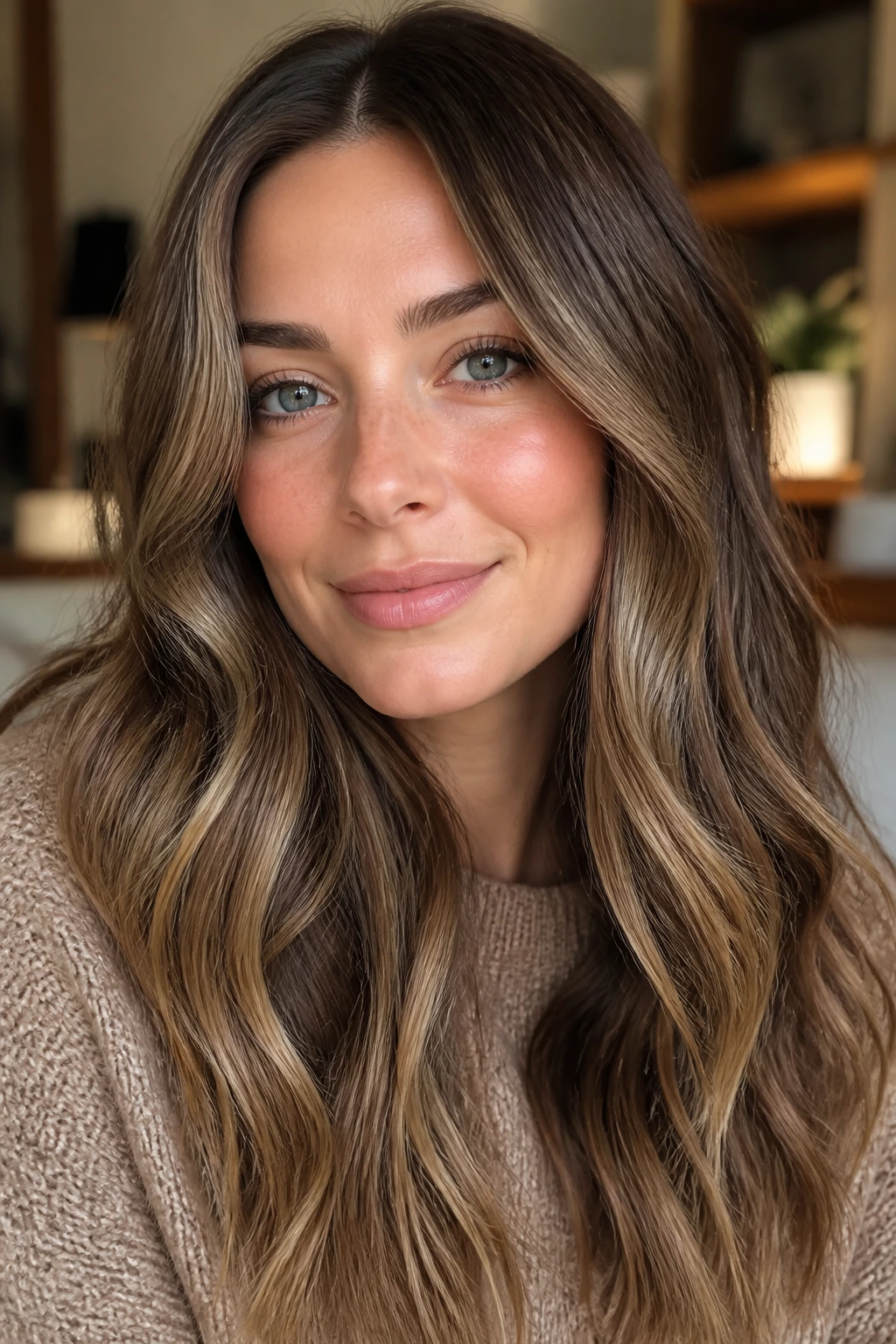
Dark honey blonde highlights earn their place because they give cool skin warmth without asking it to tolerate too much gold. That balance is rare. Most blonde shades lean one way too hard. This one works when the base stays rich, the highlights stay beige, and the gloss keeps everything from sliding into brass.
The best results are not loud. They are layered. A few soft ribbons near the face, some movement through the mid-lengths, and a root that still looks like hair instead of a color correction project — that’s the spot where this shade really shines.
If you want blonde-adjacent brightness but you’re not interested in fighting yellow tones every week, this is the lane worth staying in.