



Thin white hair can look crisp, airy, and expensive when the cut leaves enough space for light to move. The wrong shape, though, turns the same hair into a pale sheet that hugs the head and exposes every flat spot.
Natural white hairstyles for thin hair with babylights work because the color stays clean while the tiniest ribbons of tone create shadow where the eye needs it most. I prefer babylights over chunky highlights here; the chunky stuff shouts, and thin hair usually needs a whisper.
The best results come from shapes that respect the hair you actually have, not the hair you wish you had. Shorter cuts can help, sure, but so can a side part, a soft bevel at the ends, or a crown that’s left a little longer on purpose. That’s the real trick. Not drama. Proportion.
Why These Looks Keep Working
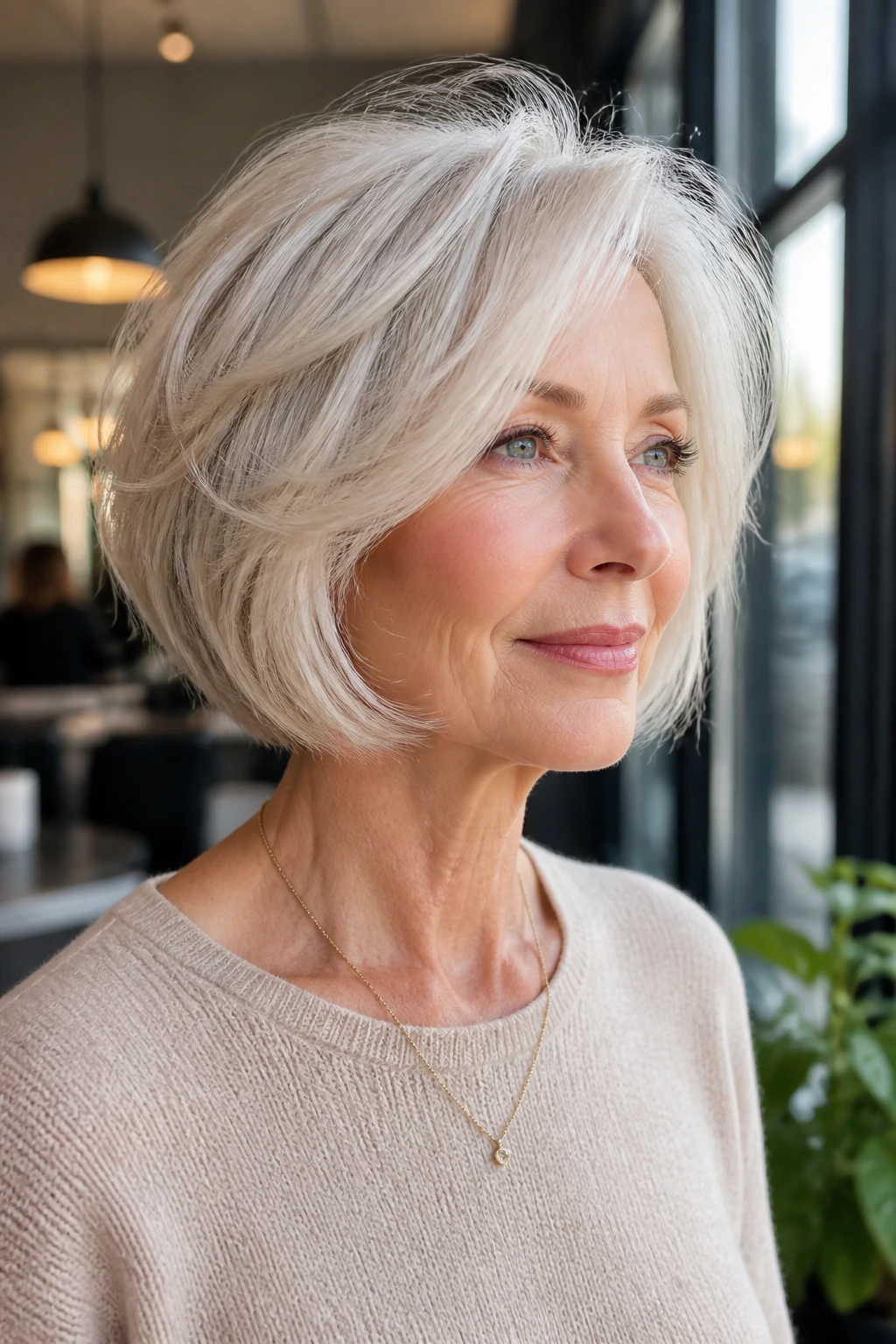
They add depth without stripes. Babylights are so fine that they read like shimmer, not blocks of color, which matters when the hair itself is already delicate.
They leave the perimeter clean. Thin hair looks fuller when the outline is crisp; too many wispy layers near the ends make it fray.
They give the crown somewhere to go. Most of these styles build lift at the top or around the face, where white hair tends to lie flat first.
They avoid heavy product. These cuts and styles do more of the work than a mound of cream or wax ever will.
They stay believable. Natural white hair looks best when the babylights feel like tiny shifts in tone, not a salon stunt.
How to Choose Natural White Hairstyles for Thin Hair with Babylights
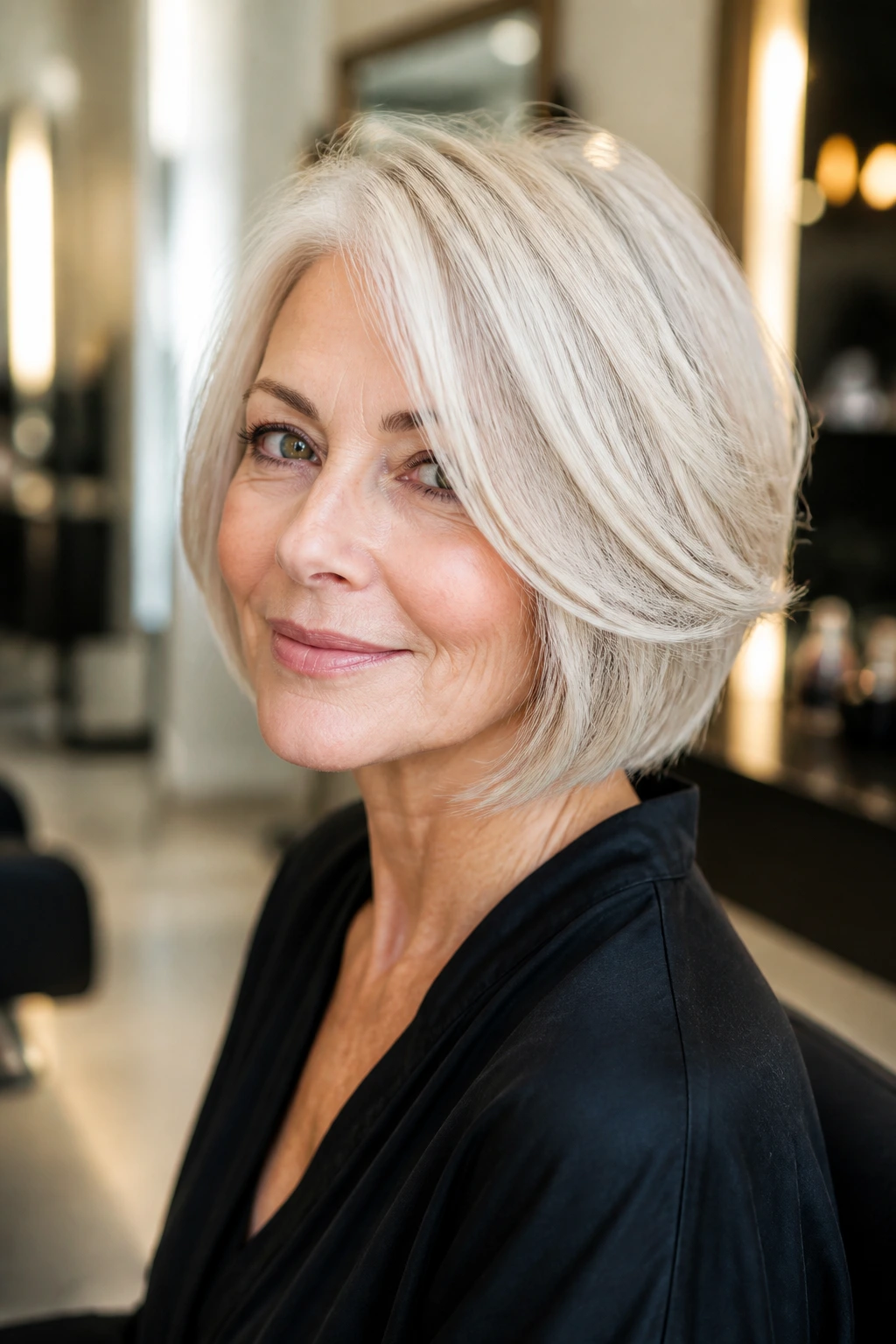
Part Placement: Put the lightest babylights just off the part, not directly in a bright stripe. That keeps the scalp from looking wider than it is.
Layer Density: Ask for soft internal layers, not a lot of slicing through the middle. Too much removal inside the shape makes thin hair collapse at the ends.
Heat Settings: Fine strands usually do better at 280°F to 300°F than at blistering iron temperatures. High heat makes the finish look frizzy and dry, which white hair does not forgive.
Product Weight: Reach for mousse, root spray, and dry texture mist. Heavy creams and rich oils can flatten the root area within an hour.
Length Choice: Chin-length bobs and collarbone cuts usually give the biggest lift for the least effort. Longer shapes can work too, but they need more bend and a stronger perimeter.
1. Chin-Length Cloud Bob
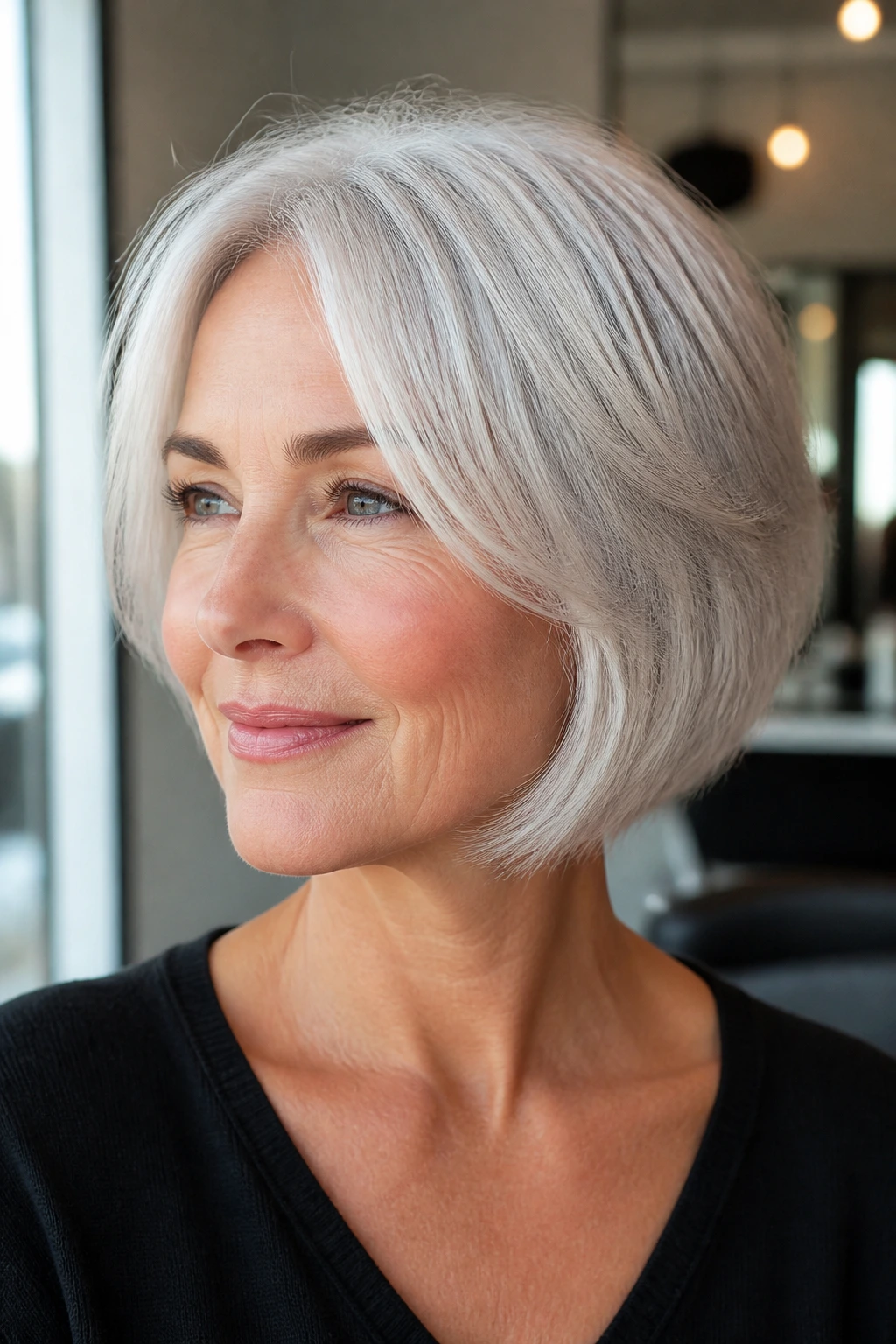
A chin-length bob is the cleanest starting point if your white hair tends to lie close to the head. The line hits just below the jaw, which gives the ends enough weight to look deliberate, but not so much that the hair drags itself downward by noon.
Why it flatters thin hair
Babylights placed through the top layer and around the temples create a soft, misty effect that makes the bob feel fuller. I like a tiny bevel at the ends — nothing cartoonish, just enough under-turn to stop the shape from looking blunt and hollow.
- Keep the length right at the chin or a touch below it.
- Place the brightest babylights near the part and crown.
- Ask for the back to sit slightly shorter if your nape is fine.
- Style with a 1-inch round brush and a light root spray.
Best move: tuck one side behind the ear and let the other side fall forward. That small asymmetry gives the whole cut more life.
2. Piecey Pixie with a Long Fringe
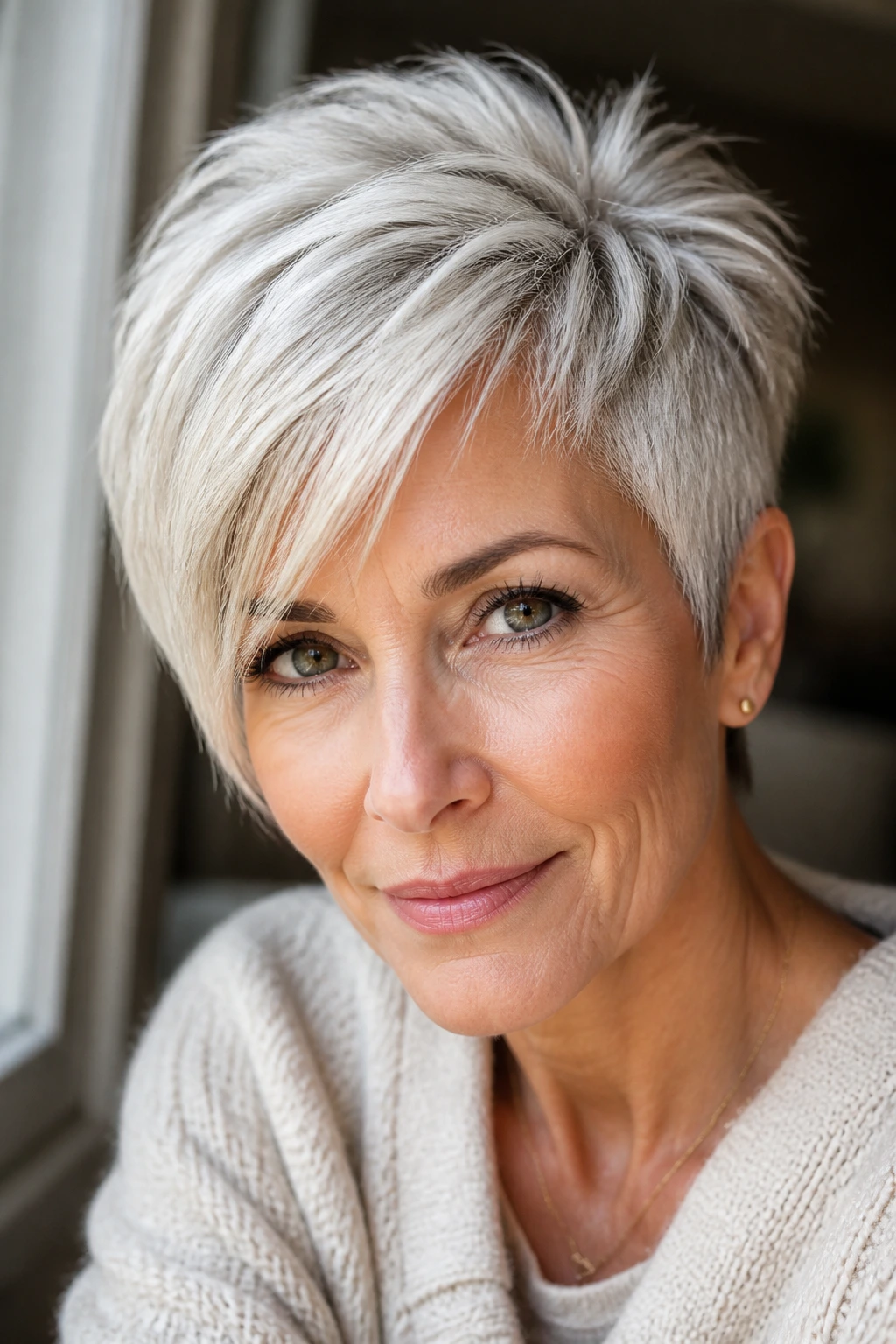
Can a pixie make thin white hair look fuller? Yes — but only if the fringe has enough length to create a front line. A cropped pixie with a long, side-swept front keeps the head shape soft while the top stays airy instead of flat.
Babylights on the crown and fringe read almost like frost across the top layer. That tiny brightness pulls the eye upward, which is the whole game with fine hair. I would not over-layer this cut. It gets sad fast when the scissors get too enthusiastic.
How to style it
Start with a pea-sized dab of mousse at the roots on damp hair. Blow-dry the fringe forward first, then sweep it over with your fingers while the roots cool. That little cool-down step matters; skip it and the hair falls back to the skull.
Use a matte paste only at the very ends, never through the top. The top needs lift, not grit.
3. Airy Lob with Root Lift
If your hair falls flat by lunchtime, a lob that skims the collarbone is a smart place to live. It gives thin white hair enough length to feel grown-up without letting the ends go stringy and see-through.
Babylights work best here when they sit in the upper half of the head and soften toward the ends. That creates a hazy depth near the crown, which is where a one-tone white can go a little chalky.
- Keep the cut collarbone length or slightly above.
- Ask for invisible layers that don’t break the edge.
- Blow-dry with a root-lift spray and a medium round brush.
- Add a few loose bends, not a full curl set.
The shape should swing, not sit. That difference is bigger than people think.
4. Curtain Bang Shag
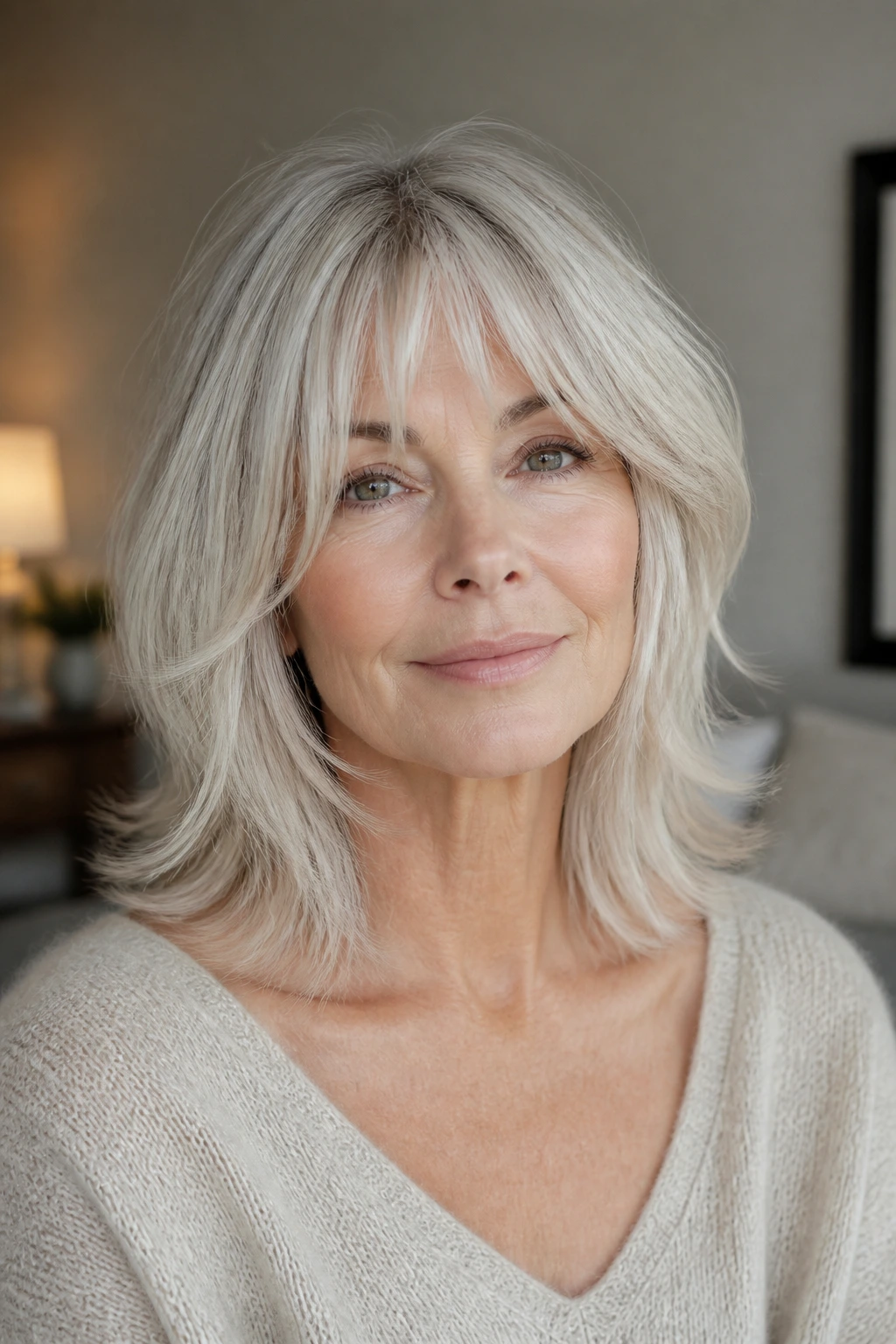
A shag can be a mess, or it can be a very smart move. On thin white hair, the version that works leaves the ends feathered and the curtain bangs soft enough to split without a fight.
Babylights through the bangs and the face frame make the movement show up even when the hair is fine. I like pearl or cool-beige tones here, because they catch light without turning the front of the hair into a bright band. The cut needs space, not clutter.
You do want texture, but not shredded texture. If the layers are too short, the style starts to look airy in a bad way — like the hair ran out.
5. Ear-Tucked Crop
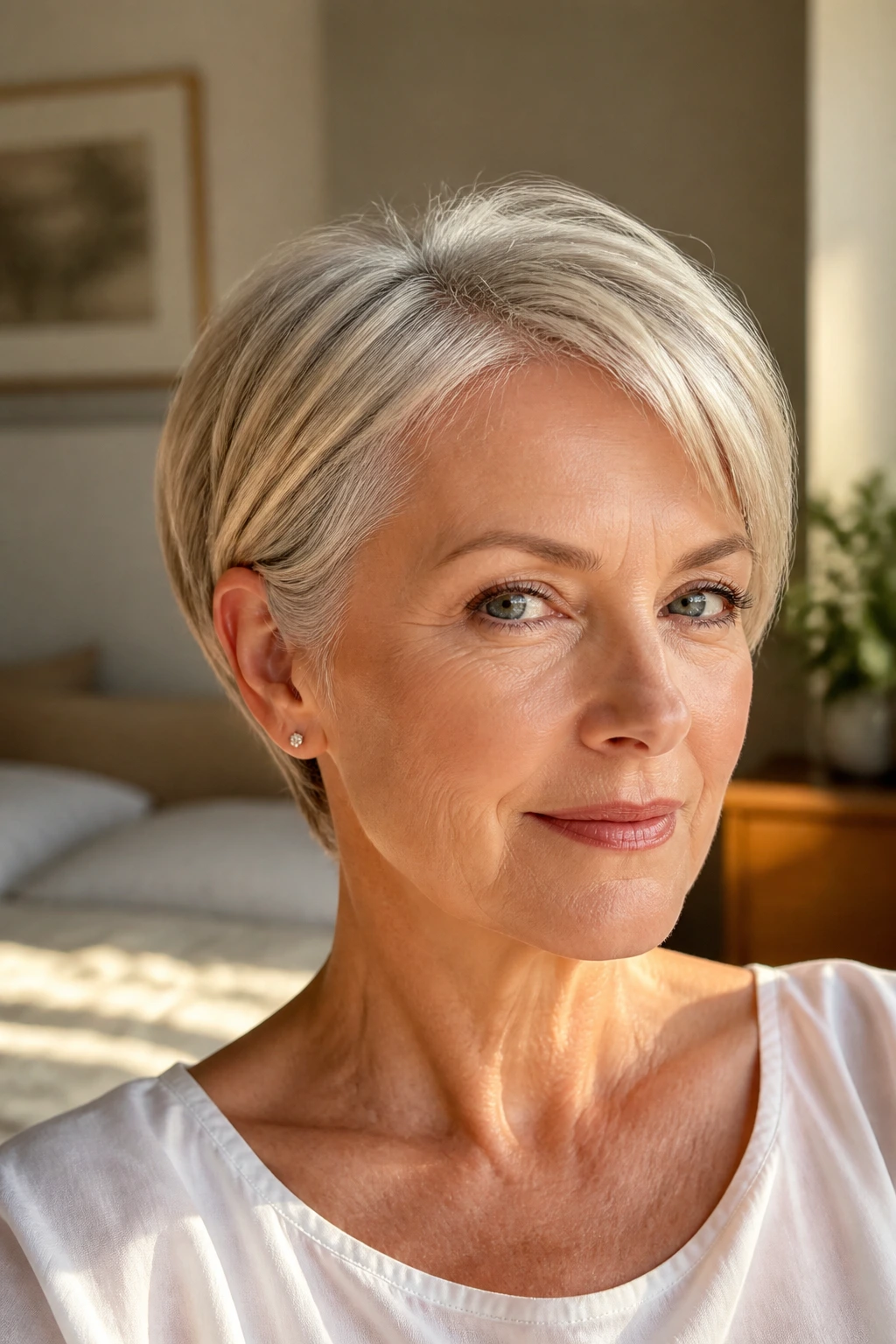
This is the cut for someone who likes structure and hates fuss. The ear-tucked crop keeps the sides neat, lets the top stay a little longer, and gives white hair a clean outline that reads denser than it is.
Compared with a longer bob, this shape gives you more scalp coverage at the crown and less drag at the sides. Babylights along the top sweep create a faint halo effect when the hair is tucked back. That tiny detail matters.
A side part helps, but not a deep one. Too deep and the whole look starts to depend on camouflage. I prefer a soft off-center part and a dry texture spray at the roots.
6. Blunt Bob with Pearl Babylights
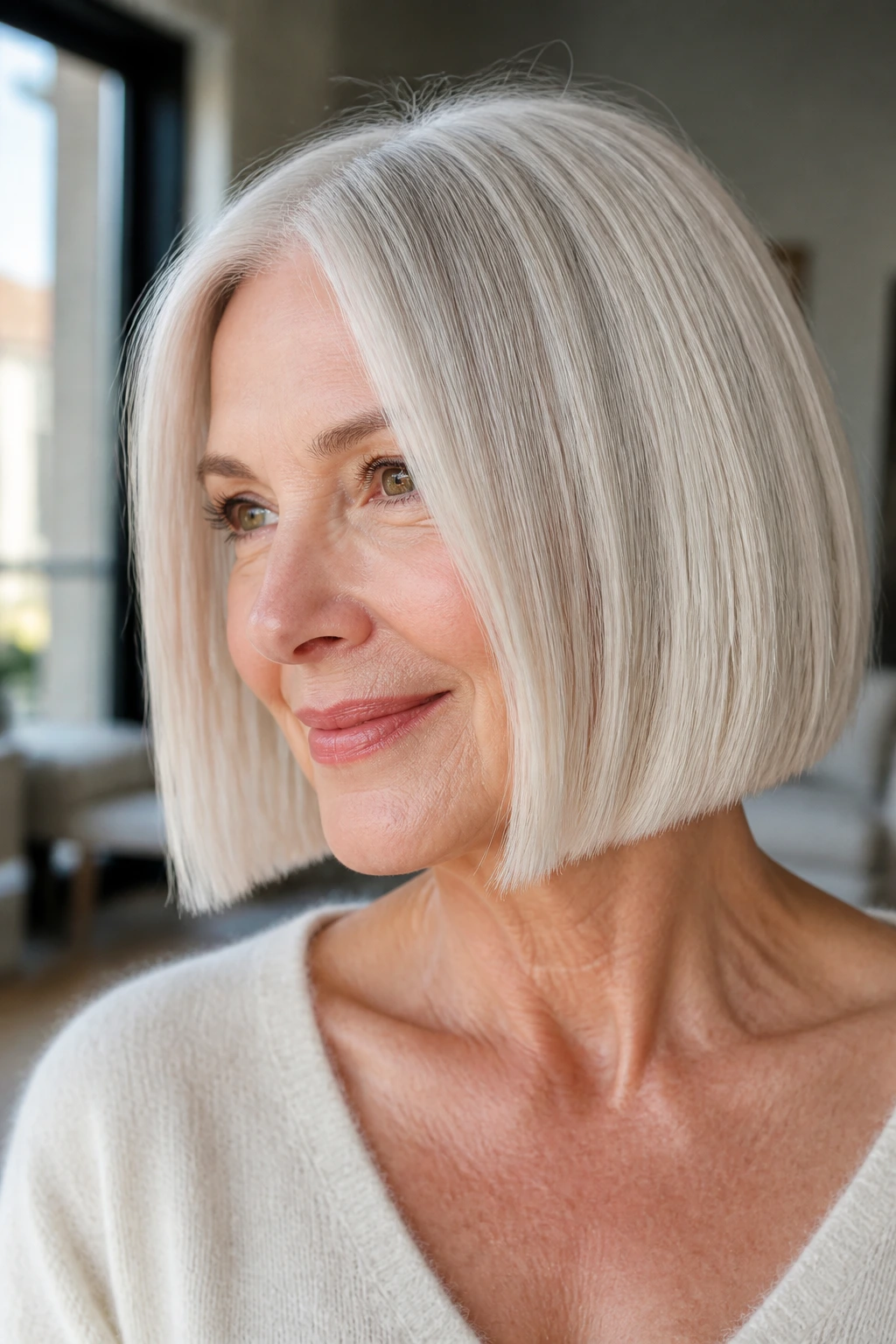
The outline is sharp. The color is not. That’s why this bob works.
A blunt bob sounds severe, but on thin white hair it can be one of the kindest shapes around, because the edge gives the illusion of thickness where the eye lands first. Babylights in a pearl or silver-beige tone break up the surface just enough to keep the cut from looking like a helmet.
Light placement that makes it work
Keep the babylights super fine through the top third of the head and a little denser around the face frame. You want dimension when the light moves, not obvious contrast when the hair is still.
- One-length perimeter at jaw or lip level.
- Very subtle internal brightness, not wide streaks.
- A gloss finish at the salon every few weeks helps the white stay clean.
My opinion: if your hair is fine and straight, this is one of the safest bets in the whole group.
7. Soft Bend Shoulder Cut

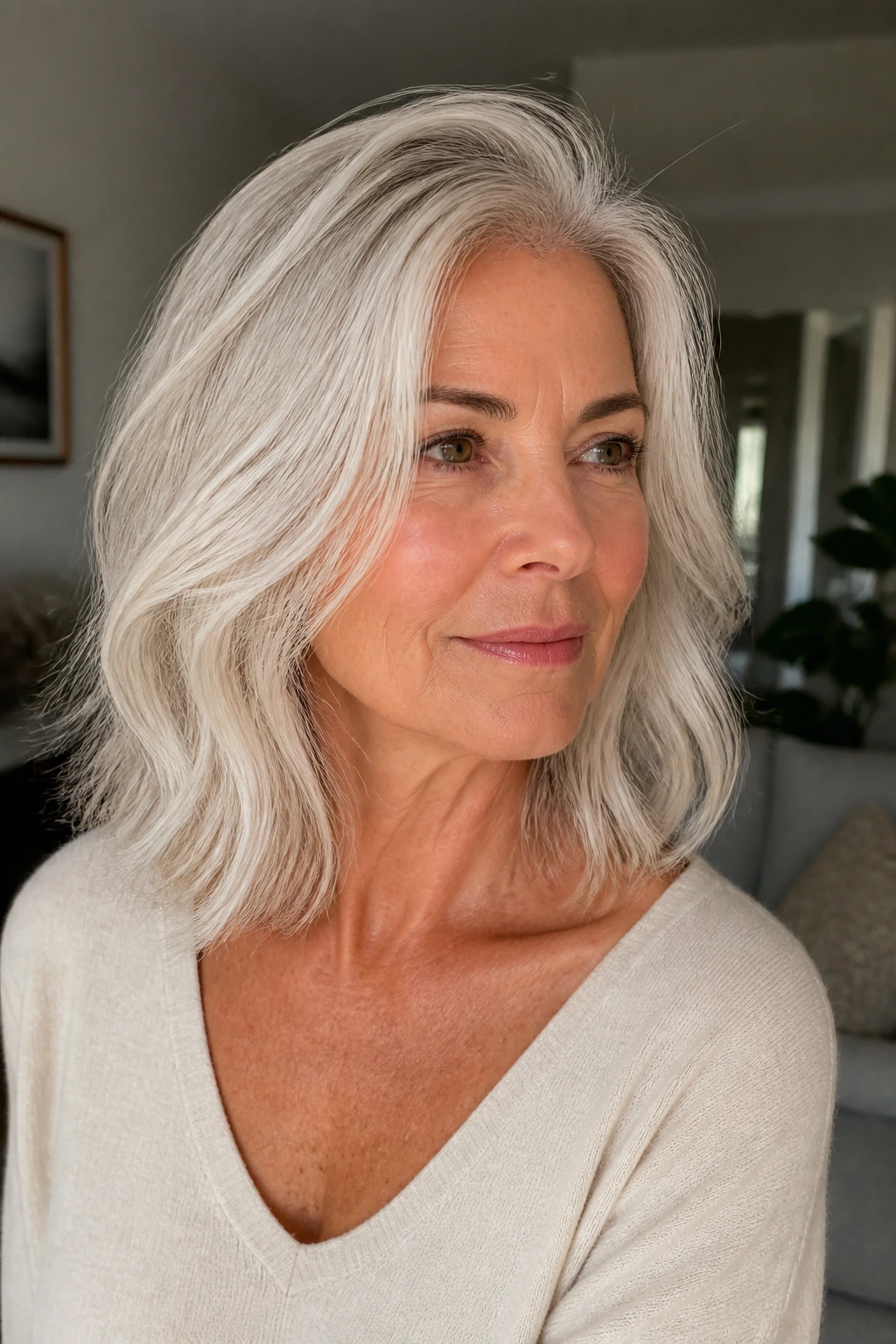
A shoulder-length cut with a soft bend is for people who want movement without losing too much length. The key is not curling the hair into obvious waves. It’s adding a quiet change of direction at the ends so the hair looks awake.
Babylights should sit where the bend starts, usually around the mid-lengths and face frame. That’s where the light catches first, and that’s where thin hair needs a little help. If you over-light the ends, the shape can look wispy in a bad way.
Use a flat iron or curling iron only on the last 2 to 3 inches. Leave the roots smoother. That contrast between sleek top and bent ends gives the style some backbone.
8. Swept-Back Volume Pixie
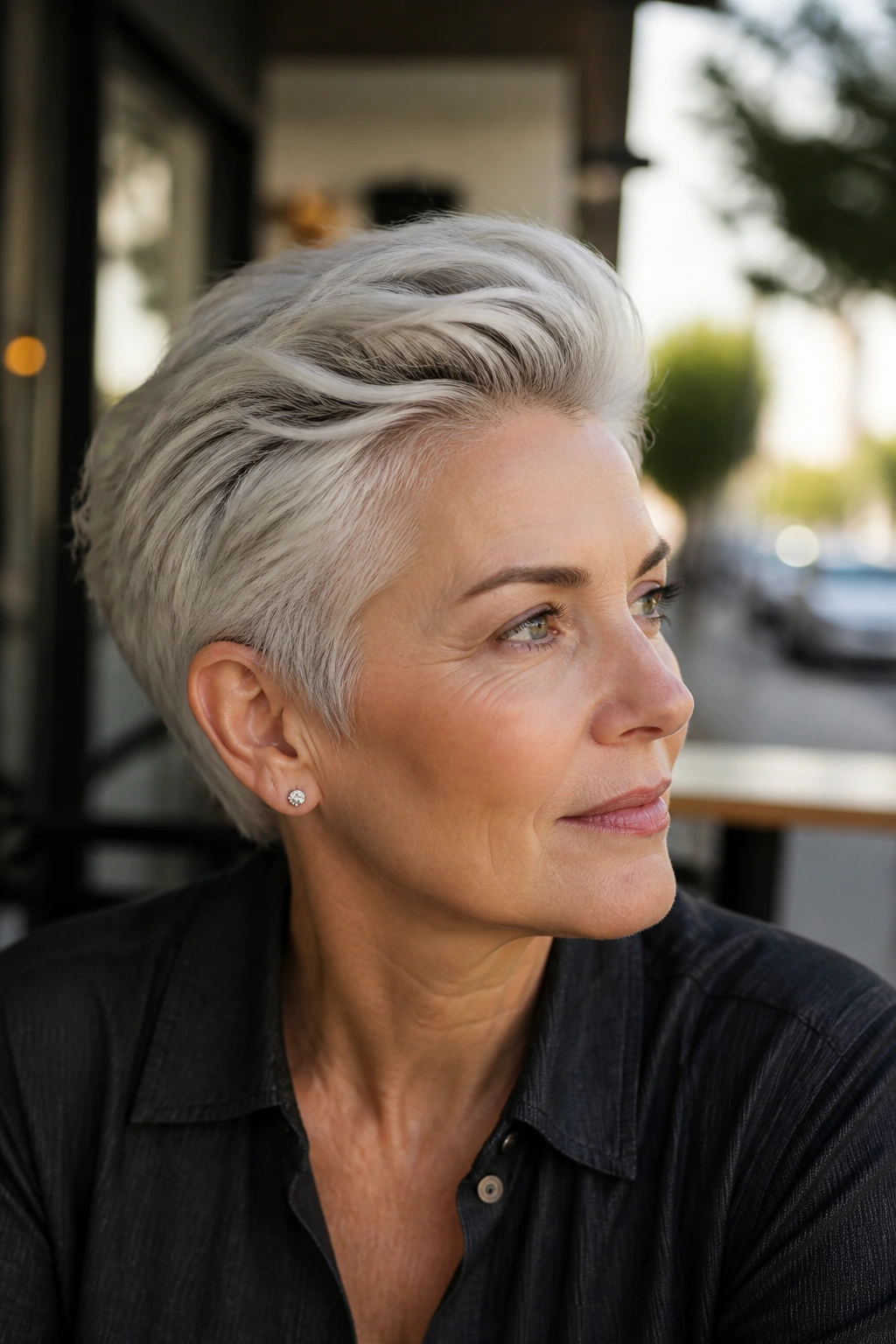
A swept-back pixie is a good answer when you want something short but not boyish. The top is left long enough to push back with a round brush or fingers, while the sides stay neat and close.
Babylights on the crown and temples create a lifted line that makes the hair look as if it has more height than it really does. I like this style for someone who wears glasses or statement earrings, because the haircut doesn’t compete with the rest of the face.
What to ask for
- Short, tapered sides.
- Longer top pieces for back-sweeping.
- Light texture through the crown only.
- Babylights concentrated above the ears and at the part.
The style looks best with a little shine at the front and a dry, touchable feel at the back. Not stiff. Never stiff.
9. Razored Collarbone Cut
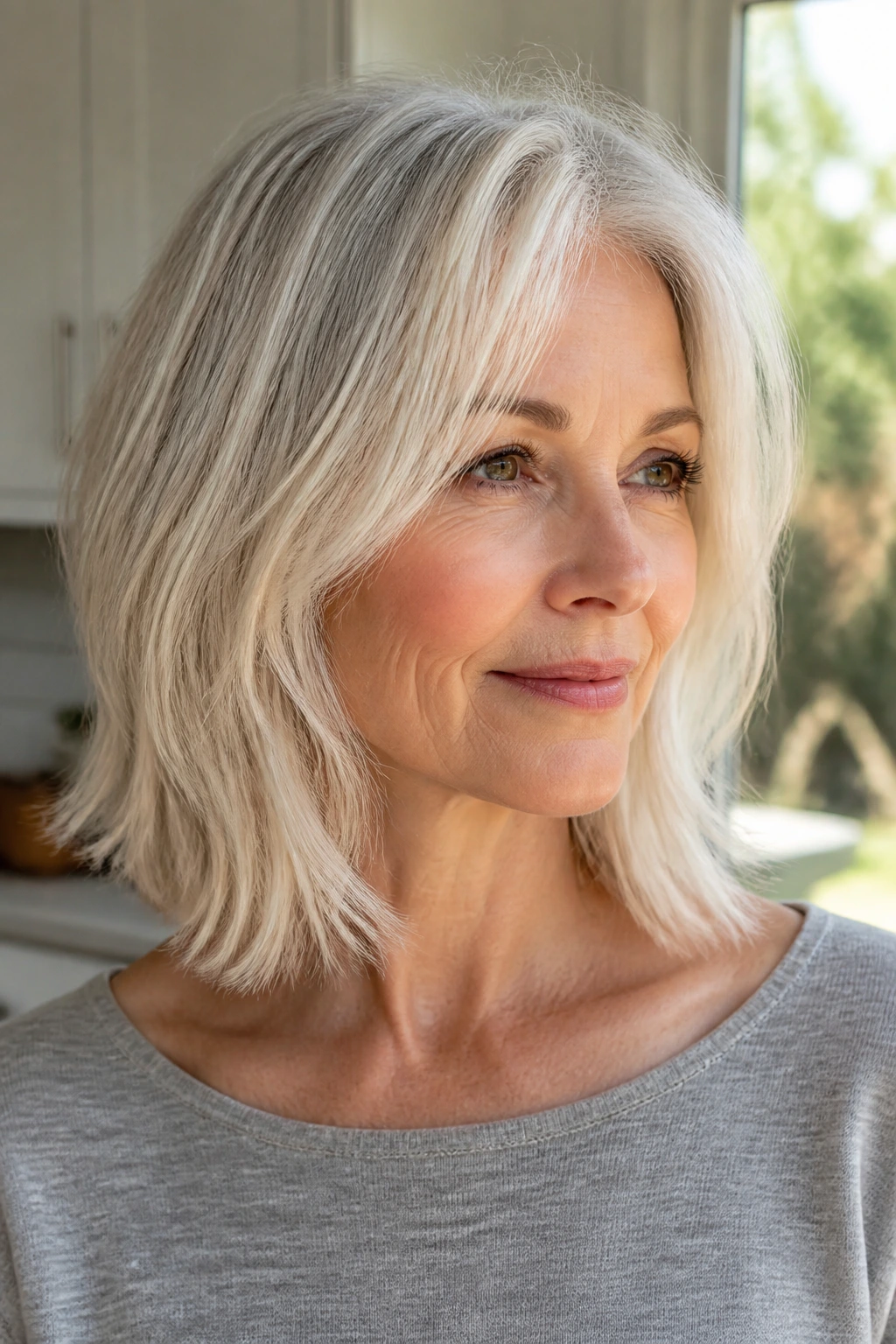
This is the cut for someone who wants softness without surrendering shape. A razored collarbone cut removes bulk at the very edge, so the ends don’t hang like one flat curtain, but it leaves enough weight through the middle to keep the look from getting stringy.
Babylights can be placed in thin ribbons through the surface so they peek through the movement instead of sitting on top of it. That’s the useful part. The cut already has a little swing; the color just keeps the eye moving.
I’d avoid aggressive razoring if the hair is extremely fine. A light hand is better. The goal is motion, not fray.
10. Angled Side-Part Bob
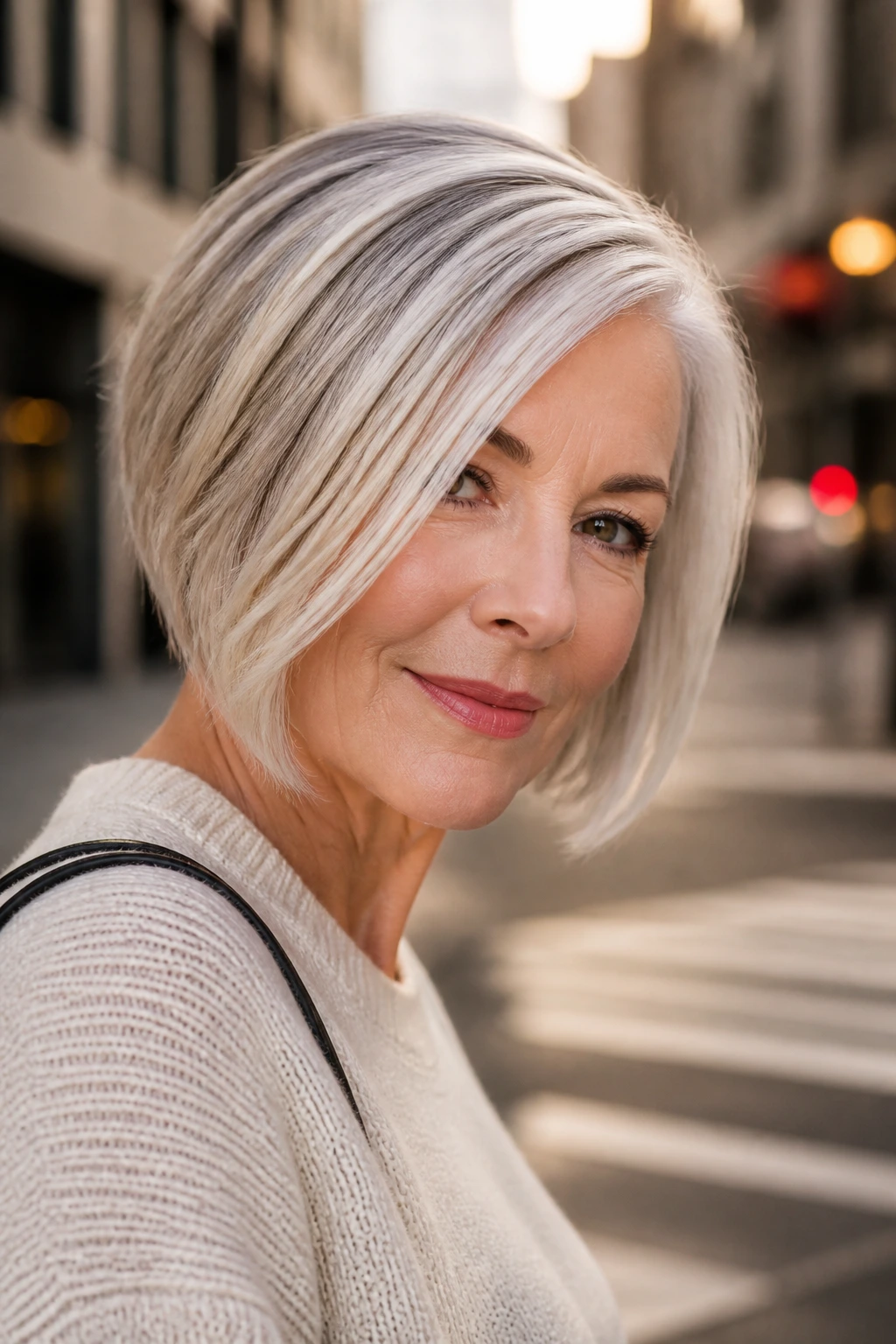
An angled bob changes the whole mood of thin white hair. Longer in front, shorter in back, it creates a diagonal line that the eye reads as density. The side part helps too, because it gives the crown a little lift right where flatness likes to show up.
Compared with a blunt bob, this one feels less formal and a touch more forgiving on days when the hair refuses to behave. Babylights at the front edge and around the part keep the angled line from looking too solid.
If your jawline is narrow, this cut looks clean and sharp. If your face is fuller, the forward angle helps frame it without dragging the hair down.
11. Long Layers with Floating Ends
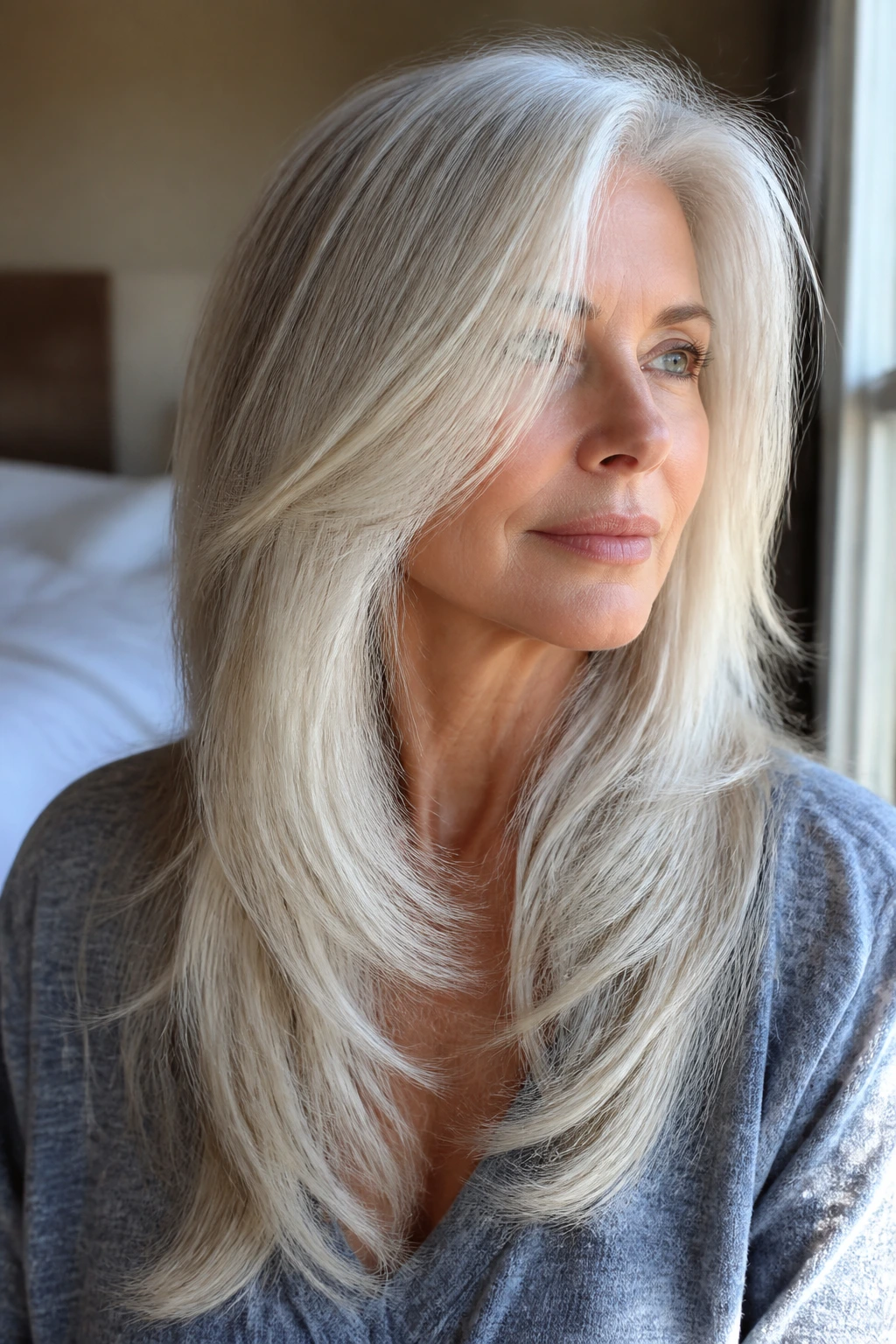
Long white hair can look full. It just has to earn it.
The mistake most people make is keeping length but adding too many short internal layers, which turns the ends thin and anxious. Better to leave the overall length and float the layers just enough to keep the shape moving. Babylights from the cheekbone down to the ends add a feathery shift that keeps the long line from going blank.
This is a good choice if you like ponytails, low buns, or half-up styles. The length gives you options, and the babylights show up when the hair is pulled back or twisted.
I would keep the face frame soft and the ends blunt-ish. Not heavy. Just honest.
12. Sculpted Pageboy
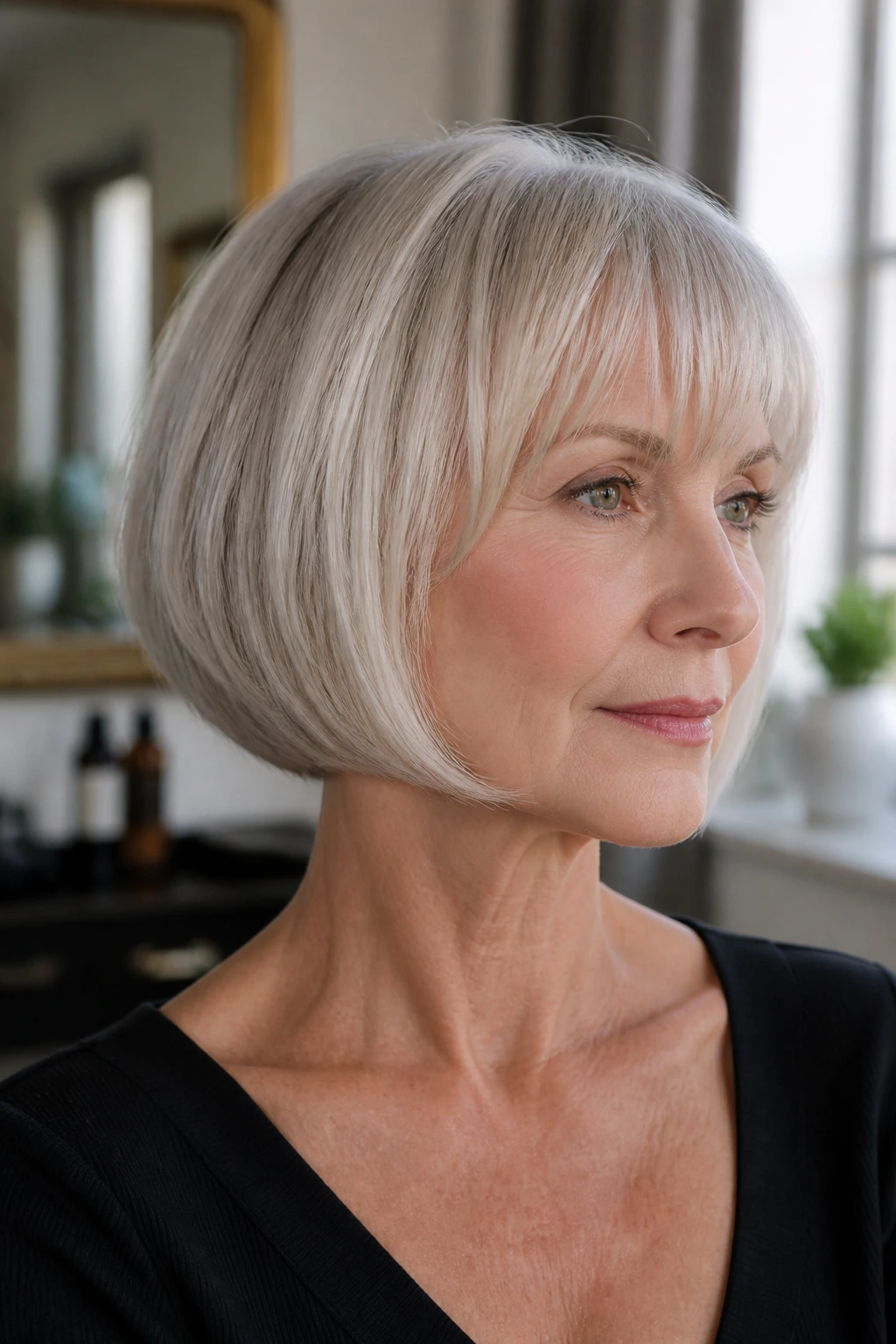
Why does a pageboy work on white hair when so many round cuts feel dated? Because the shape gives you a clean outline and a little inward bend without needing a lot of density.
The hair curves under at the jaw, which makes the ends look packed even when the actual strand count is modest. Babylights through the crown and top curve stop the style from looking like one solid cap of color. A soft fringe can help, but keep it light.
How to style it
Blow-dry with a round brush, turning the ends under just a little. Then cool the hair in place before touching it. If you want more movement, mist the surface with a flexible hold spray and rake it through once with your fingers.
The best pageboys have a polish to them. Not stiffness. Polish.
13. Tousled Crop with a Tapered Nape
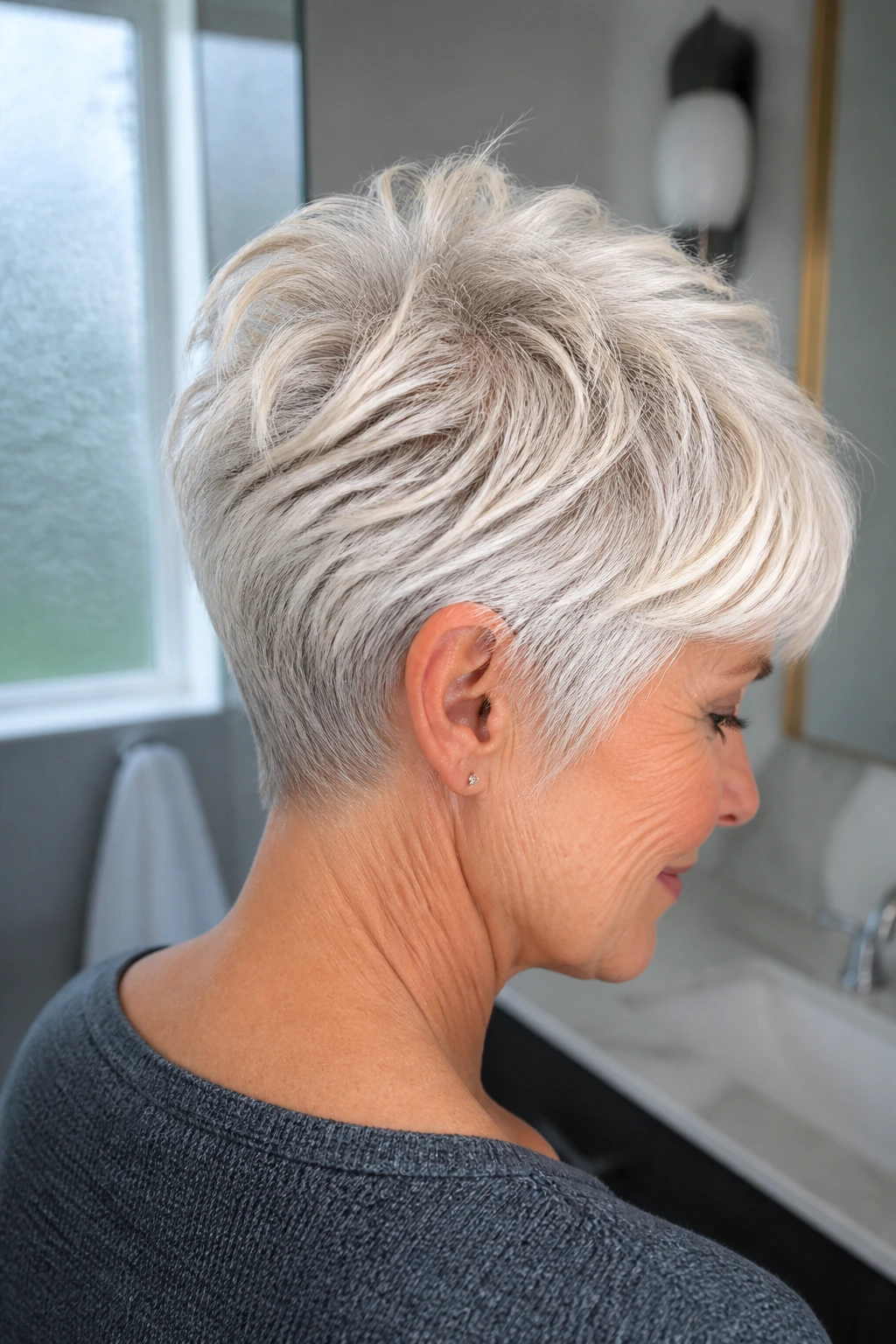
A tousled crop with a tapered nape is for the person who wants short hair that still feels a bit alive. The back sits close to the head, while the top stays uneven in the nicest sense — soft, piecey, and easy to lift.
Babylights work especially well here when they’re concentrated on the crown and a few top pieces that break forward around the face. That keeps the top from reading like a helmet and makes the short cut feel lighter.
- Tapered nape for shape.
- Longer top pieces for texture.
- Babylights kept fine and scattered.
- A small amount of paste at the ends only.
The style is honest. It doesn’t pretend the hair is thick. It just makes the best of what’s there.
14. Micro-Layered Lob

Micro-layering is one of those things people either underdo or overdo. On thin white hair, I like it in tiny doses: a little soft removal through the surface, enough to keep the lob from lying like a board, but not enough to eat into the perimeter.
Babylights should be soft, almost blurred, with the brightest bits near the face and crown. That gives the haircut a slight haze, which is useful because a single-tone white lob can sometimes look flat under indoor light.
A micro-layered lob is one of the easiest styles to wear straight. It also bends well with a 1-inch iron if you want a little air in it.
15. Half-Up Twist for Mid-Length Hair
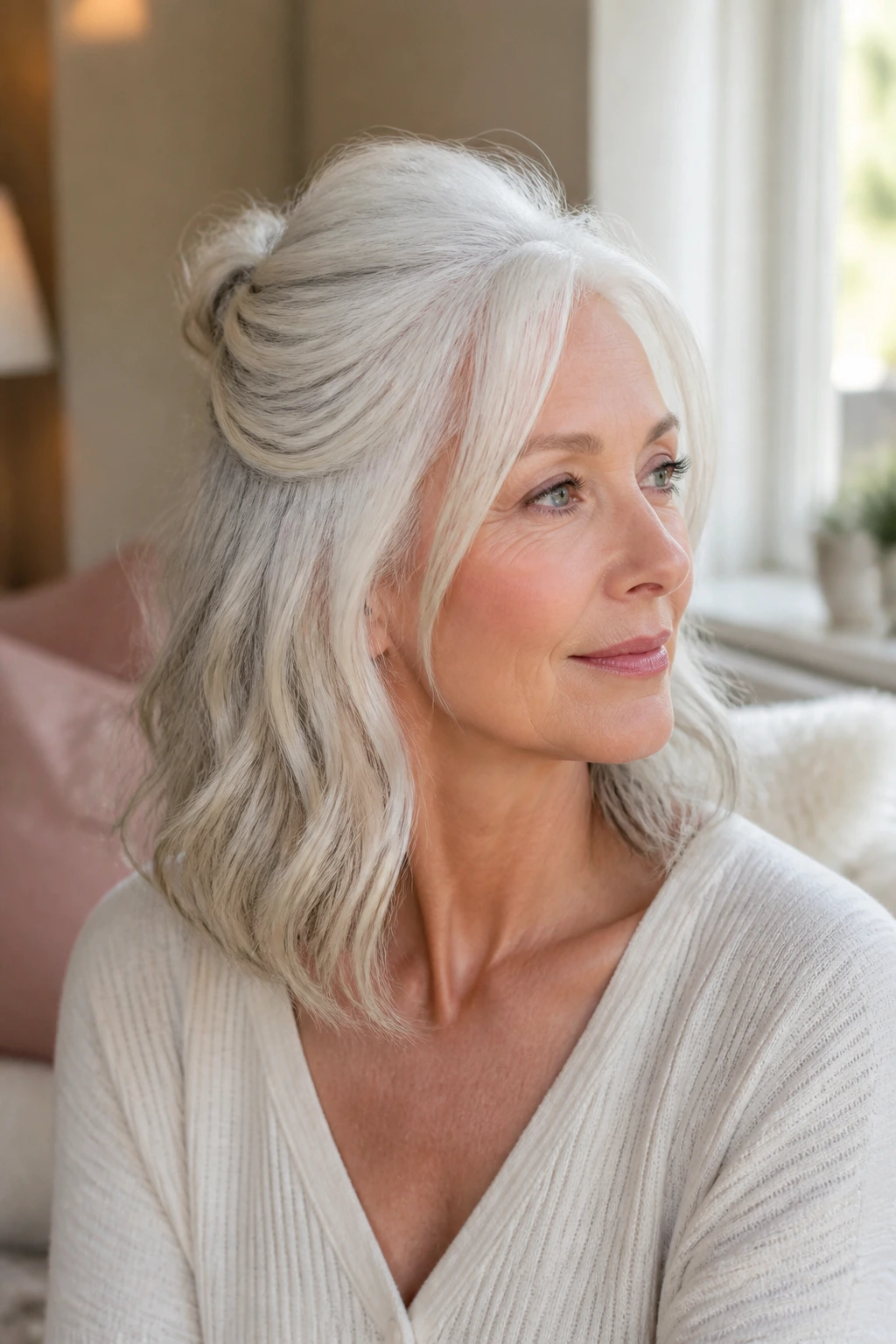
A half-up twist is not a haircut, but it changes the read of mid-length white hair fast. When the top section is lifted and pinned, the crown gets height and the babylights on the surface become visible from more angles.
Compared with a full ponytail, the twist keeps the length out of the face while preserving the softness around the shoulders. That matters when thin hair needs the illusion of a thicker perimeter.
Pull the twist loose, not tight. If you cinch it down, the hair at the temples can look sparse. Leave a little puff at the crown, and let a few babylighted pieces fall free around the ears.
16. Wavy Midi with Rake-Through Texture
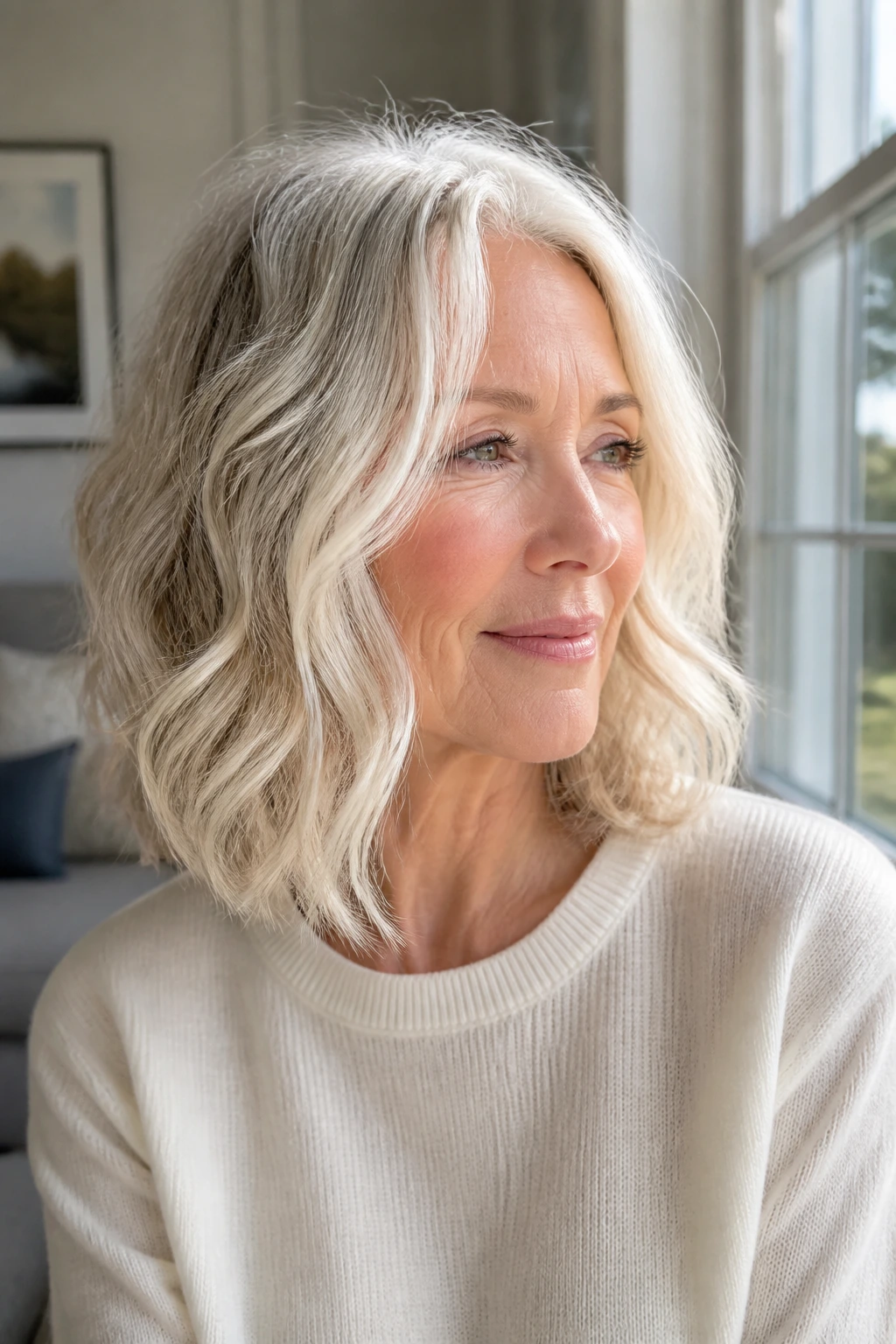
Can a midi cut look airy on thin hair? It can, if the waves are more rake-through than curl set.
This style works because the bend happens in broad sections rather than tight coils. That leaves the hair looking loose and touchable. Babylights are best placed along the outer curve of the wave so they catch light when the hair moves, not just when it’s still.
Use a diffuser if your hair has natural bend, or wrap sections around a larger barrel and brush them out lightly. The goal is a soft wave with space between pieces. Not a prom curl. Please, not that.
17. S-Wave Side-Part Bob
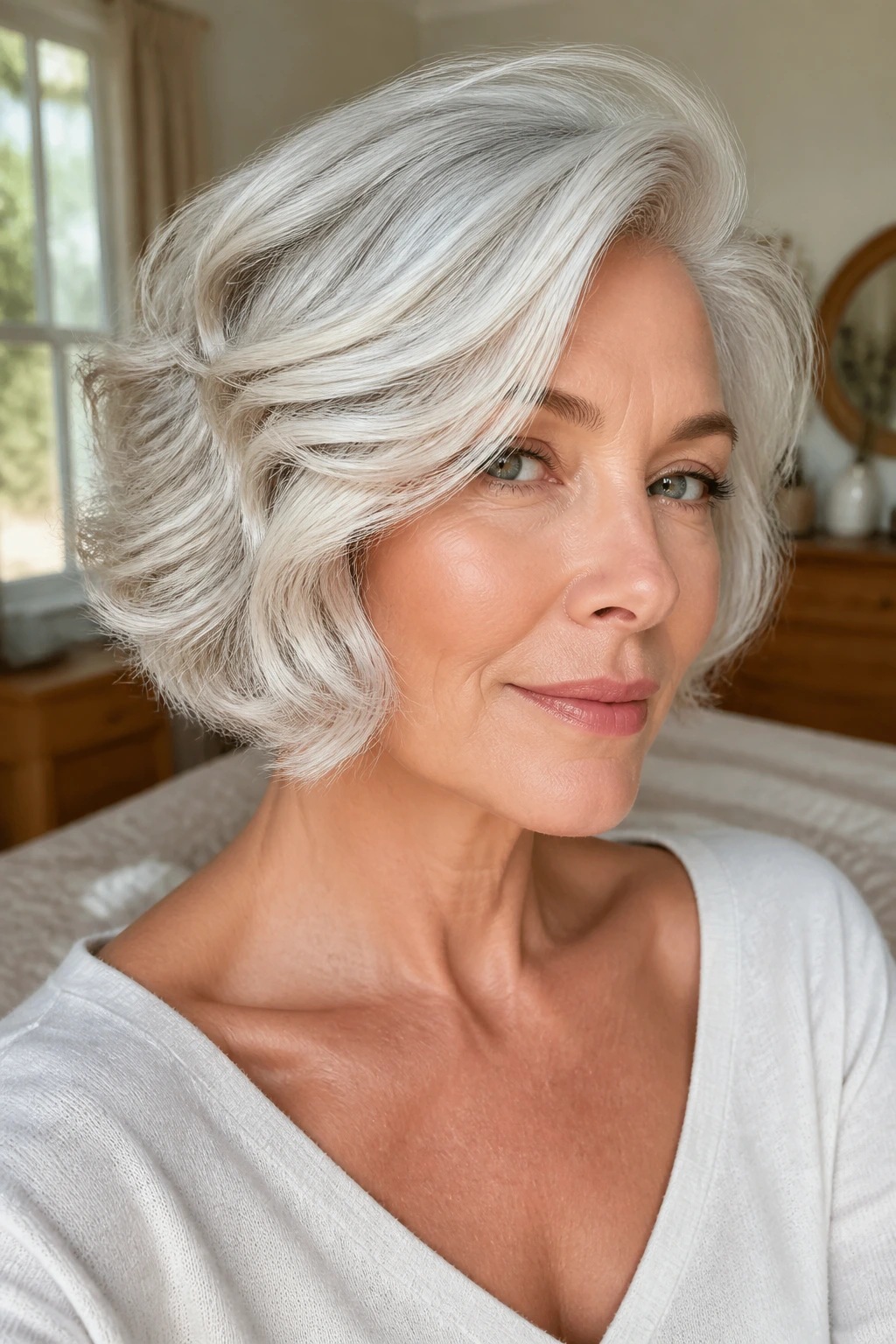
An S-wave bob gives white hair a little old-Hollywood polish without making it fussy. The side part creates height at the root, and the S-shape bends the hair in two directions so it looks fuller than a flat bob.
Babylights placed near the wave ridges keep the shape from disappearing in one tone. I like this especially for fine hair with some natural slip, because the wave pattern holds better than a tight curl and relaxes into a nice finish.
- Deep-but-not-dramatic side part.
- Soft wave through the mid-lengths.
- Babylights on the top curve and front edge.
- Flexible hairspray, not stiff lacquer.
18. Sleek Tucked Crop
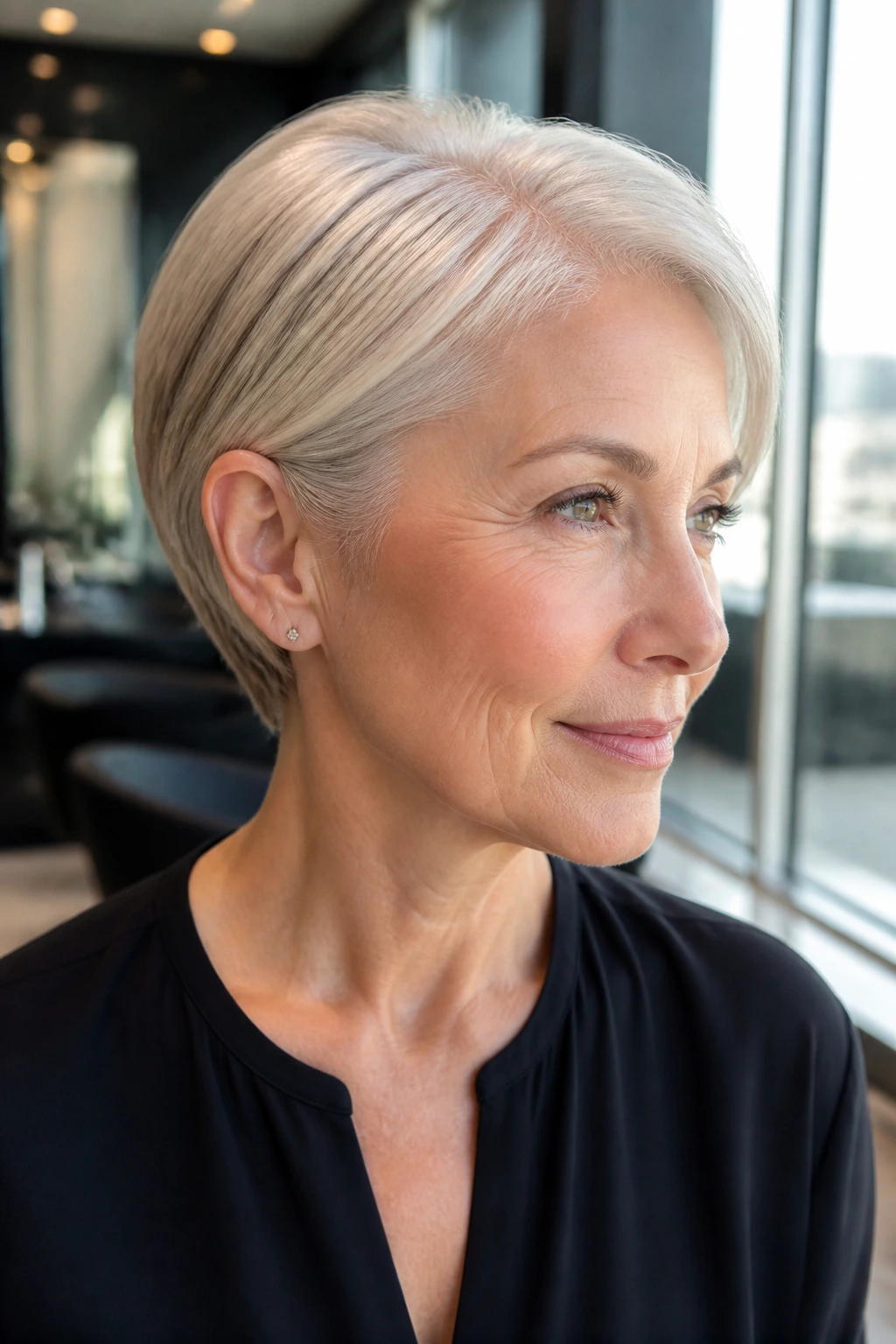
A sleek tucked crop looks sharp in a way that flatters thin white hair more than people expect. The ear tuck gives the sides a finished line, while the top stays smooth and narrow enough to feel elegant rather than bulky.
Babylights should be very fine here, almost threadlike, because the style depends on clean shine. A little brightness at the temple and part keeps the crop from reading like one pale mass.
If you wear this with glasses, it becomes even better. The frames and the tucked hair create a clean frame around the face, and the babylights stop the whole look from going severe.
19. Halo Layers Around the Face
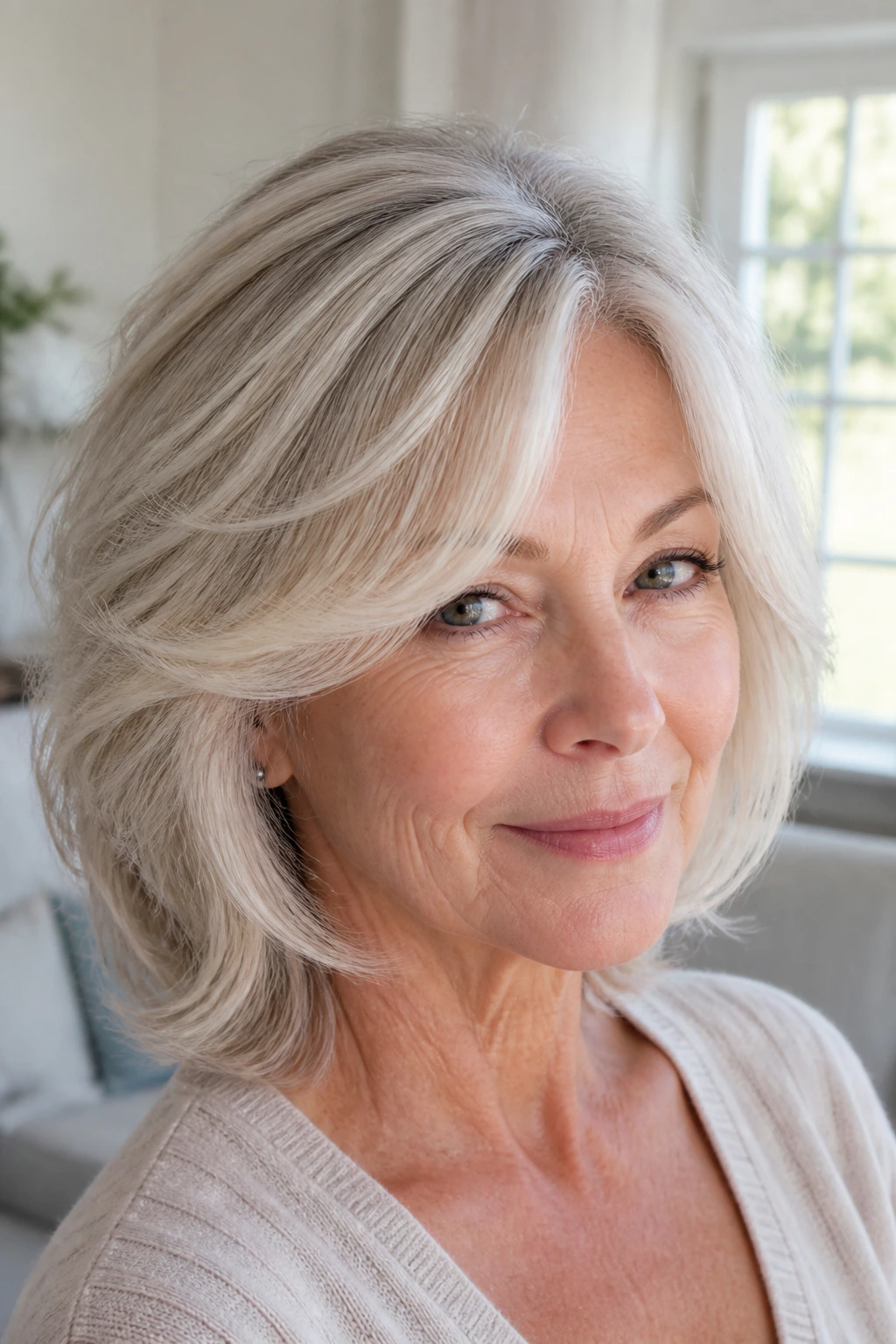
Face-framing layers can do more for thin white hair than a whole head of aggressive cutting. The trick is to keep most of the length intact and place the layers where the cheekbones, jaw, and collarbone need a little softening.
Babylights around that front halo make the face frame show up without crowding the rest of the hair. I prefer a pearl or icy beige tone here because it brightens the front without looking like a stripe.
This works especially well if your hair is naturally straight and tends to hang in one line. A few lifted pieces around the face break that line up in a useful way.
20. Grown-Out Pixie with Lifted Crown
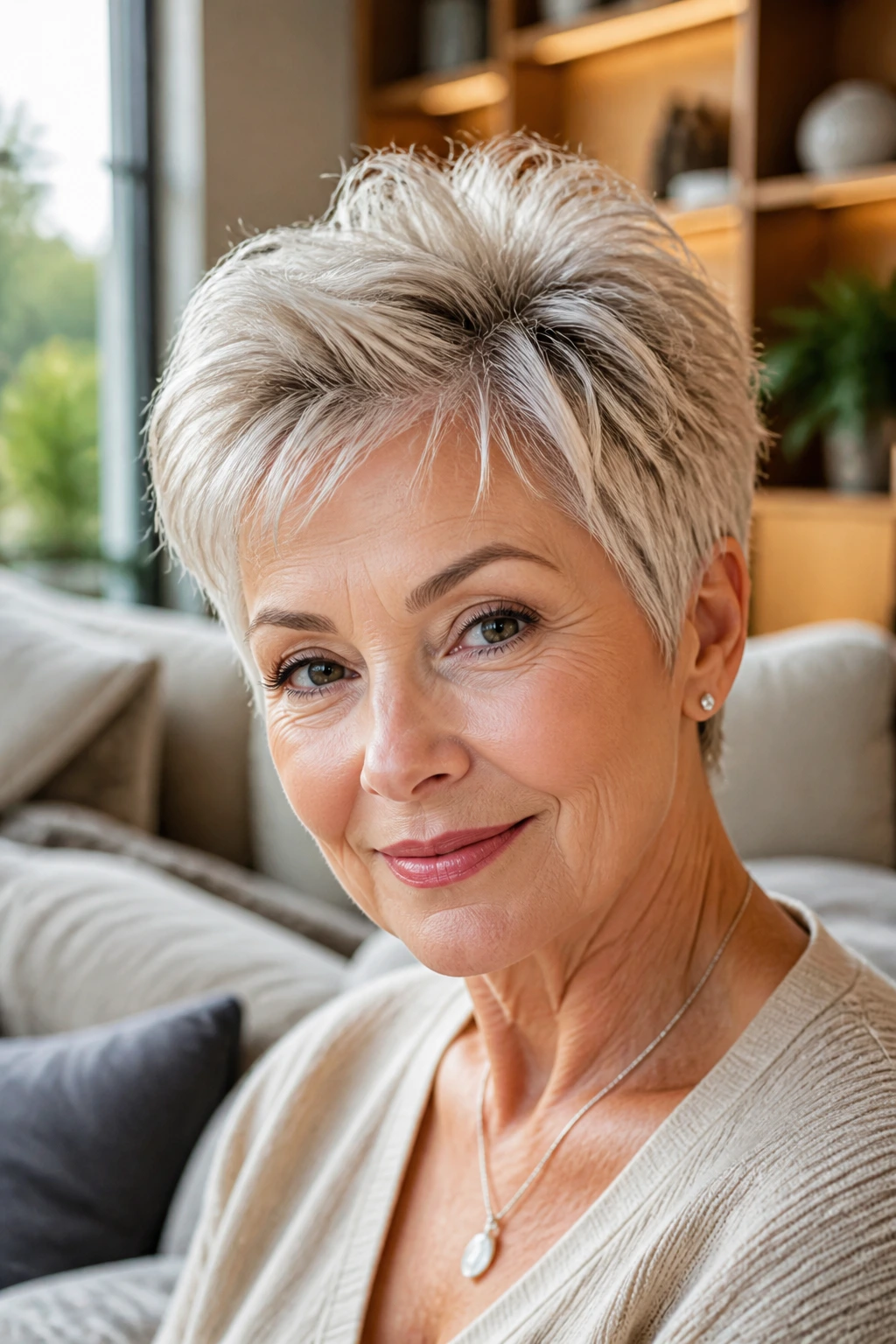
A grown-out pixie can look a little awkward if no one shapes it. Give it some crown lift and it turns into a smart, low-drama cut that reads fuller than a tight crop.
The longer top and tapered sides keep the head shape soft, while babylights at the crown and along the front pieces make the top feel lighter and more layered. This is one of my favorite options for people growing out a shorter cut, because the transition doesn’t look like an accident.
Compared with a strict pixie, this version needs less daily precision. A finger rake and a blow-dry at the root are often enough.
21. Rounded Bob with Short Bangs
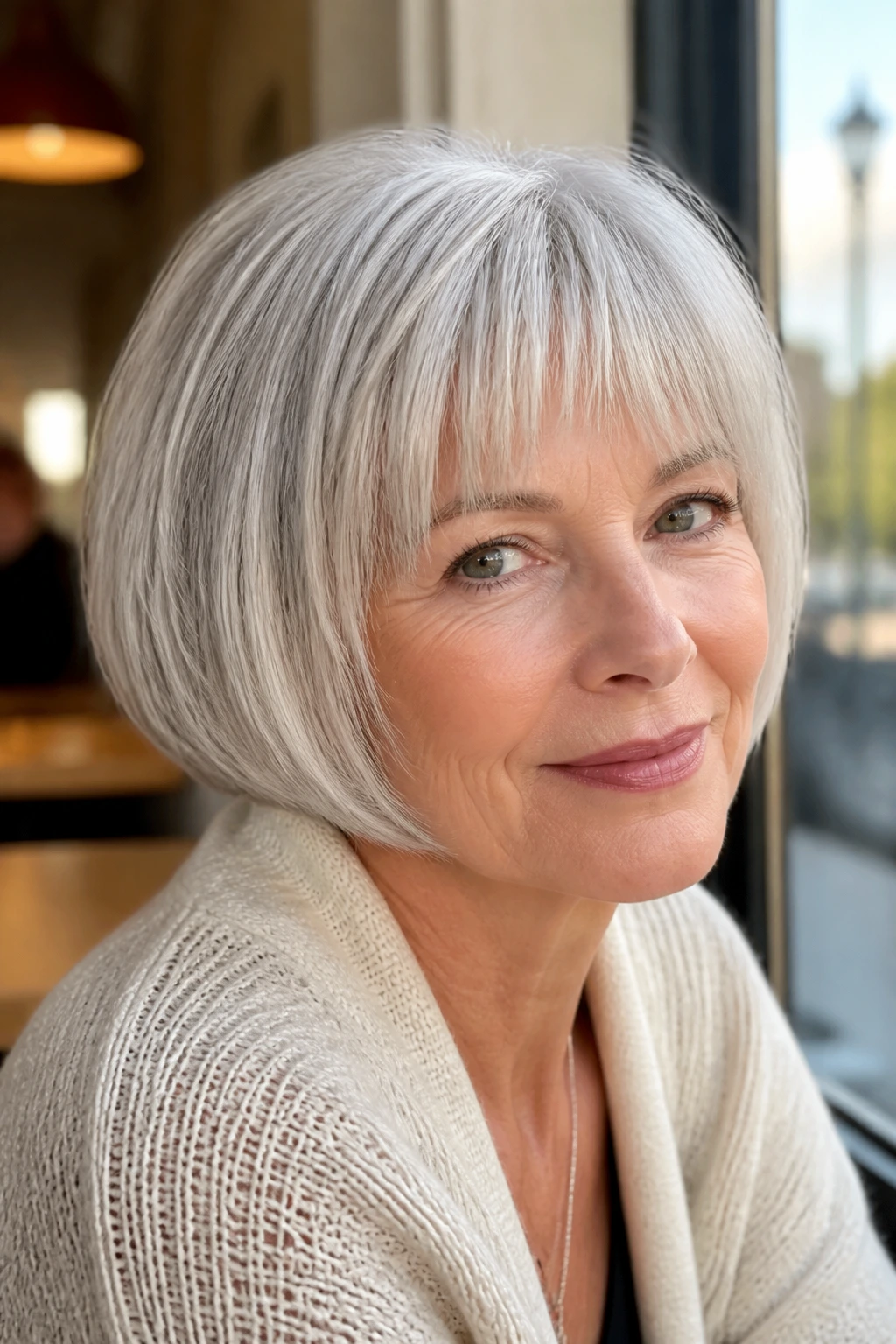
Short bangs can scare people off, but on thin white hair they can be useful if the rest of the shape is rounded and compact. The bob sits close to the head with a soft curve, and the bangs keep the front from stretching too long and flat.
What to watch for
Babylights should stay delicate through the fringe and a touch stronger at the crown. That helps the bangs blend into the rest of the shape instead of sitting like a hard line. If the bangs are too heavy, the look can feel boxed in.
- Keep the bang line light and slightly separated.
- Round the bob just under the jaw.
- Use a light mist of texturizing spray after drying.
It’s a tiny cut with a lot of attitude.
22. Roll-Under Lob with Soft Ends
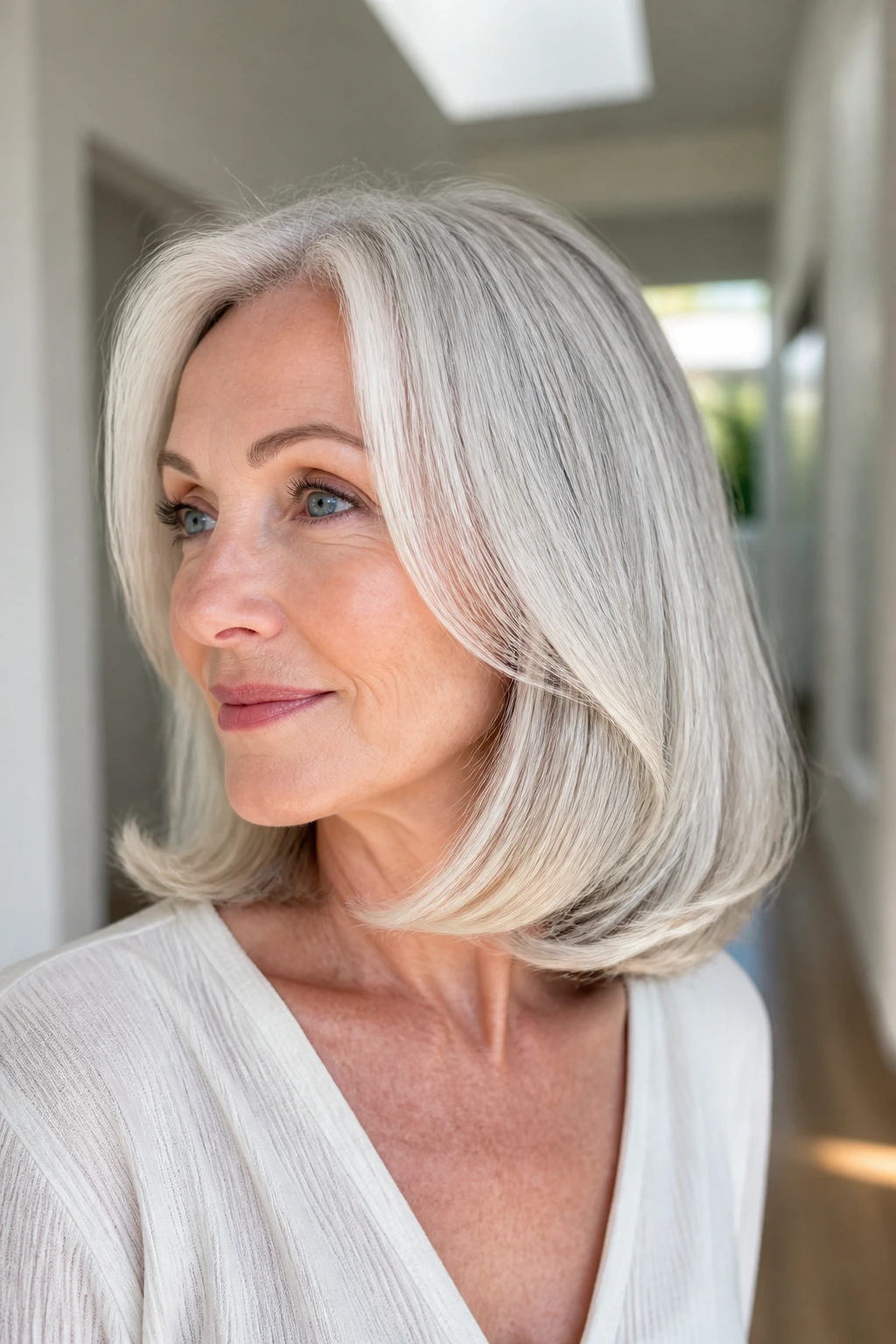
A roll-under lob is one of those styles that quietly solves several problems at once. The collarbone length gives the hair enough weight to hang well, and the under-curled ends create a fuller edge without needing a lot of teasing.
Babylights on the ends and around the face keep the curve from looking like one heavy sheet. I like this on white hair that’s naturally straight, because the bend at the bottom gives the style a polished line without making it stiff.
The finish should feel soft to the touch. Slightly airy. Not pinned down.
Why Babylights Keep White Hair from Reading Flat
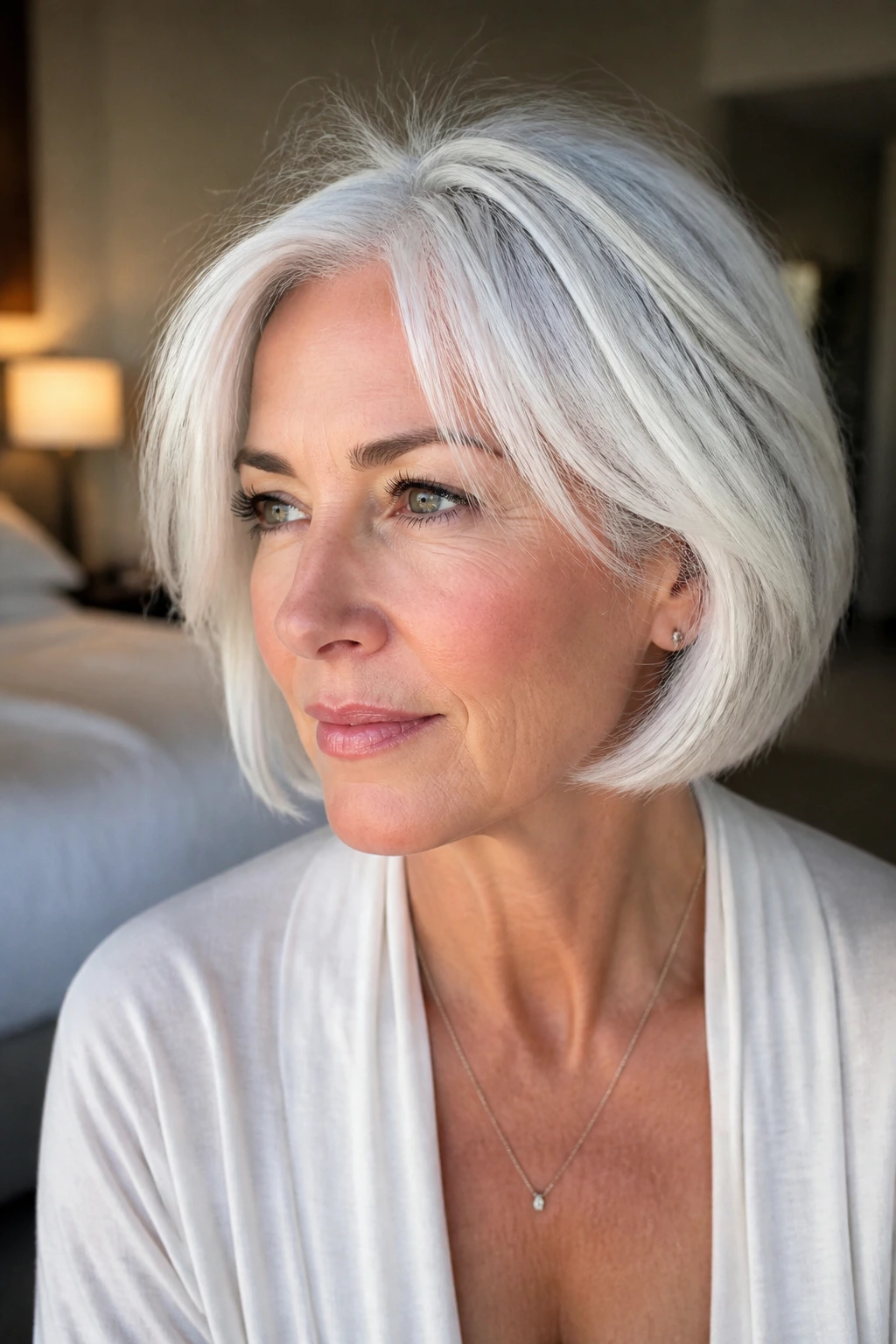
White hair loses something that darker shades have in abundance: tonal variety. There’s no shadow to hide behind, and no deep pigment to make layers disappear into each other. That’s why the tiniest shift in color matters so much.
Babylights fill in that missing contrast without turning the head into a striped map. A few lighter or slightly warmer threads near the crown and face frame create the illusion of depth, especially when the hair is fine and the scalp shows through at the part. Big highlights don’t solve that. They often make it louder.
I also like babylights because they age gracefully. The regrowth line stays soft, which means the style doesn’t go from fresh to tired in a week. If your white hair is naturally cool, pearl and silver-beige tones keep it clean. If it leans a touch yellow, a neutral gloss helps more than a heavy toner ever will.
What to Ask for at the Salon
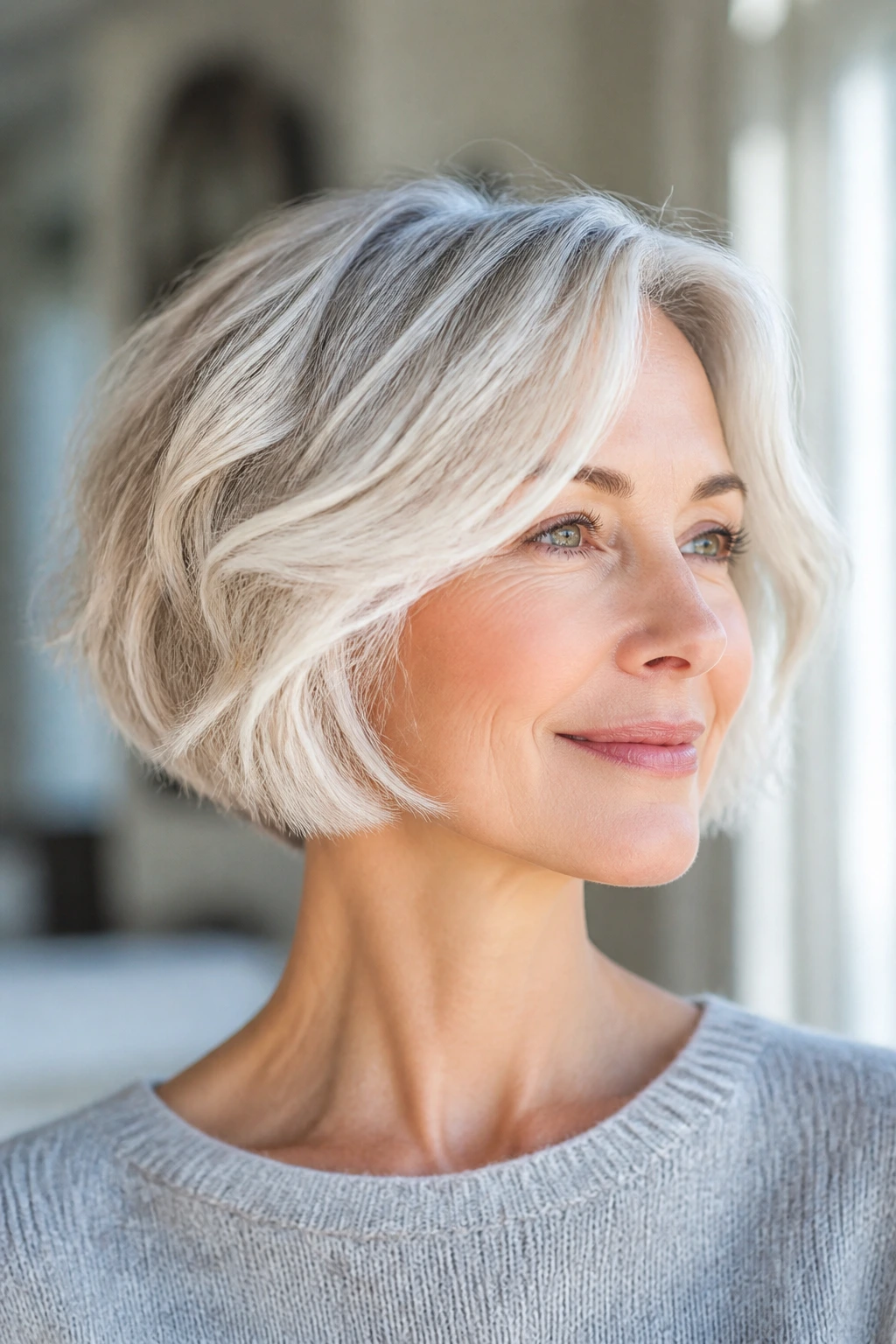
Say what you want in plain language. A good colorist will know how to translate it.
Ask for micro-fine babylights that stay closest to the part, crown, and face frame. Mention that you want depth, not obvious contrast, and that the goal is to keep the hair looking full at a glance. If your hair is very fine, ask them to avoid wide foils or chunky weave patterns; those show too much scalp.
For the tone, I’d ask for pearl, cool beige, or soft silver if you want a natural white finish. If the white is a bit harsh, a neutral gloss can soften it without muting the brightness. And if the hair is already fragile, ask for a gentle developer and a bond-supporting formula. The chemistry matters. A lot.
Bring photos, sure, but also say how you wear your hair. Side part, glasses, air-dry, blow-dry — those details change where the babylights should land.
Essential Tools and Products for These Styles
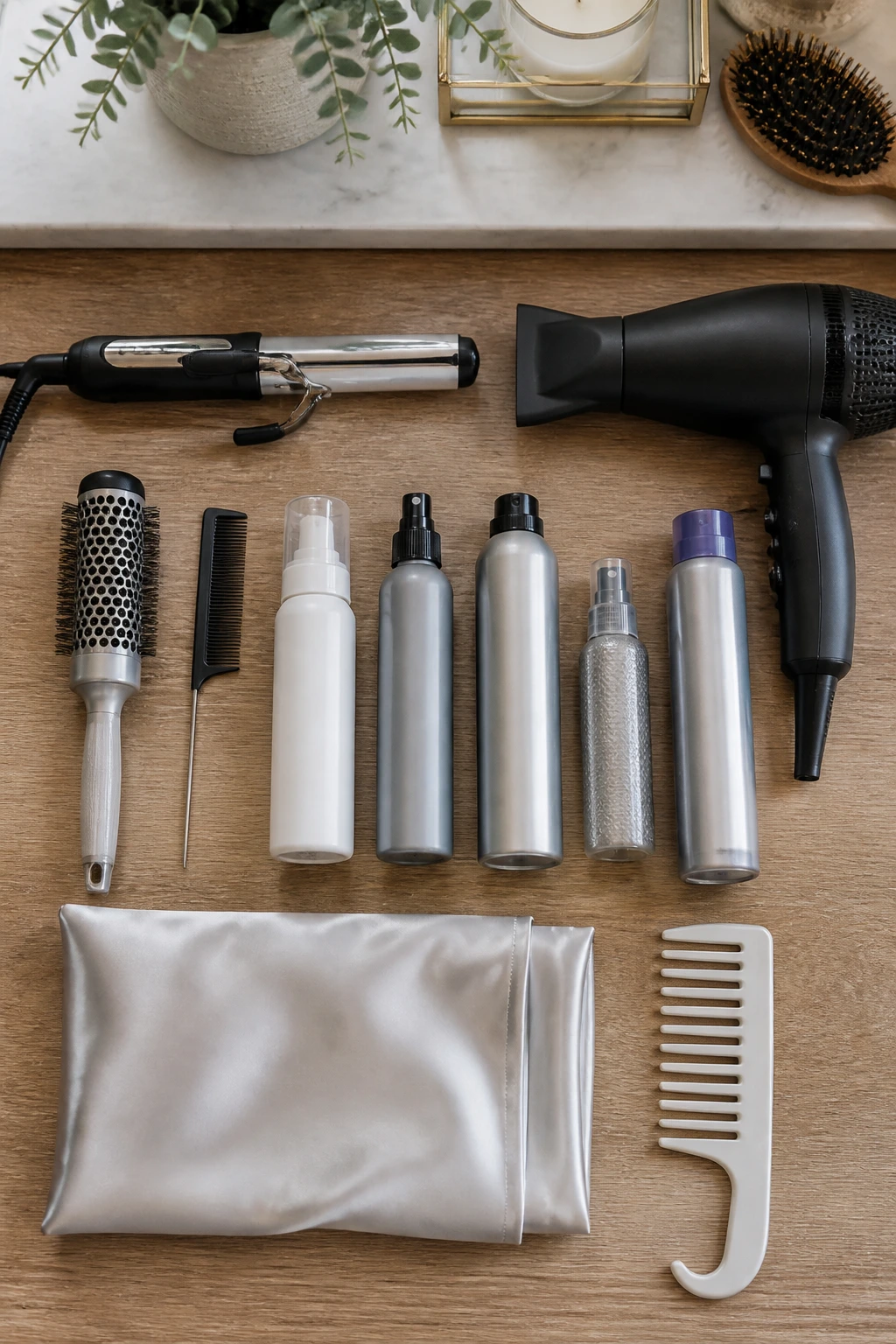
- 1-inch or 1¼-inch curling iron: Best for bends, waves, and soft roll-under ends without over-stressing fine hair.
- Blow dryer with nozzle attachment: Directs airflow at the root so the crown lifts instead of puffing out.
- Small round brush: Gives control around the fringe, temples, and bob edges.
- Tail comb: Useful for clean parts and lifting tiny sections for more volume.
- Lightweight mousse: Builds memory at the root without weighing white hair down.
- Root-lift spray: Works best on damp hair before blow-drying.
- Flexible-hold hairspray: Keeps movement in place while avoiding a helmet finish.
- Dry texture spray: Adds grip to slippery white hair that goes flat fast.
- Heat protectant mist: Non-negotiable if you use an iron, even at lower heat.
- Satin pillowcase: Helps the style last through the night and cuts down on frizz.
- Purple or violet shampoo: Use sparingly to keep white tones from going dull or yellow.
- Wide-tooth comb: Safer than a brush when the hair is damp and fragile.
How to Style Them So They Keep Their Shape
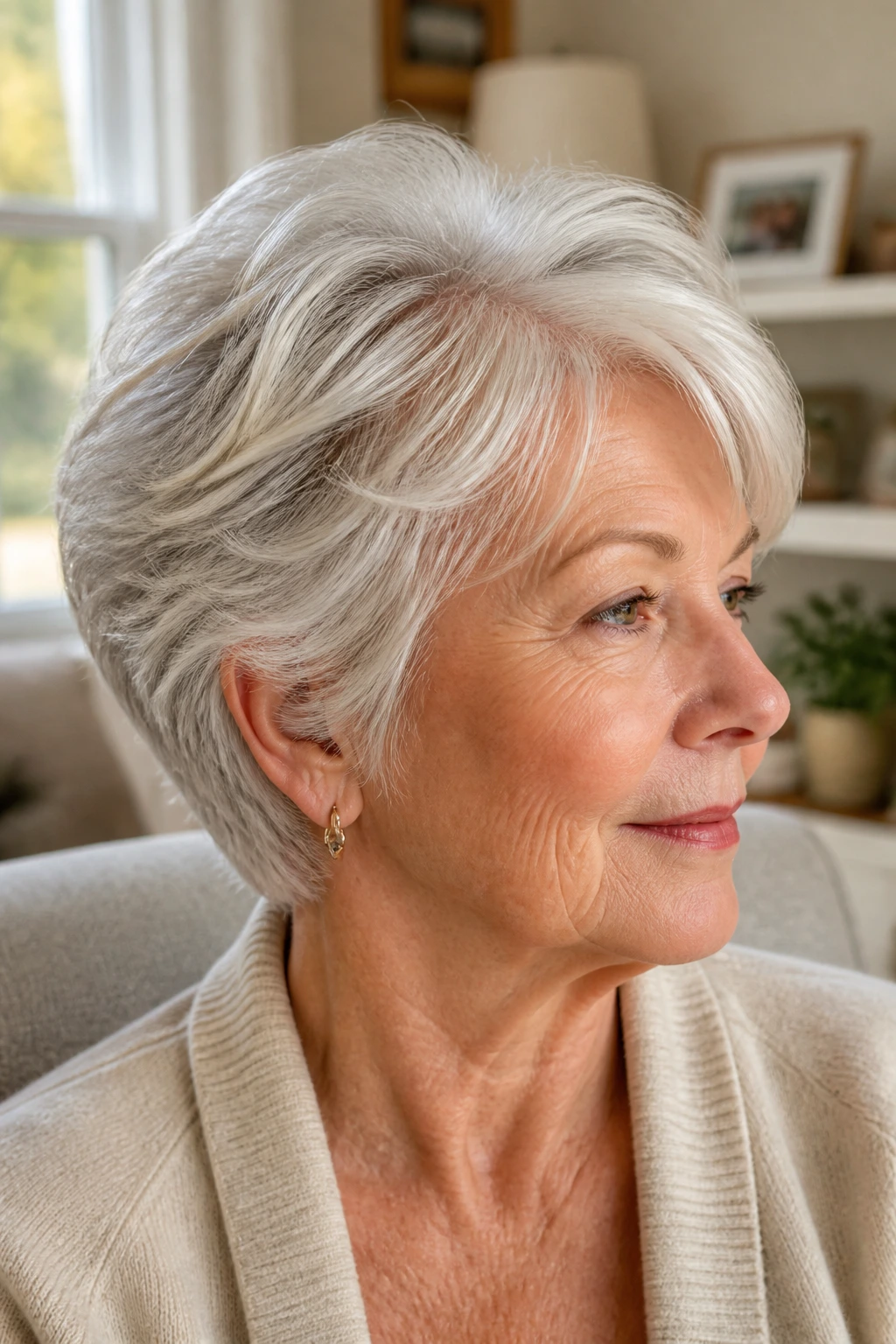
If you air-dry: Put product only at the roots and the outer layer. White hair that’s thin can soak up too much cream and collapse, so keep the mid-lengths light and let them dry with a little space around the head.
If you blow-dry: Dry the roots first, lifting sections straight up with the nozzle pointed from underneath. That one move makes a bigger difference than most people expect. Once the root is dry, switch to the ends and bend them only where the shape needs it.
If you use an iron: Stay around 280°F to 300°F and keep the clamp short. A few seconds per section is enough. If you hear a hiss or see steam, the section is too damp.
If you wear glasses: Keep the hairline around the temples soft. Hard corners and thick fringe fight with frames; a loose side-sweep or tucked ear section usually looks cleaner.
Small Adjustments That Add Lift and Softness
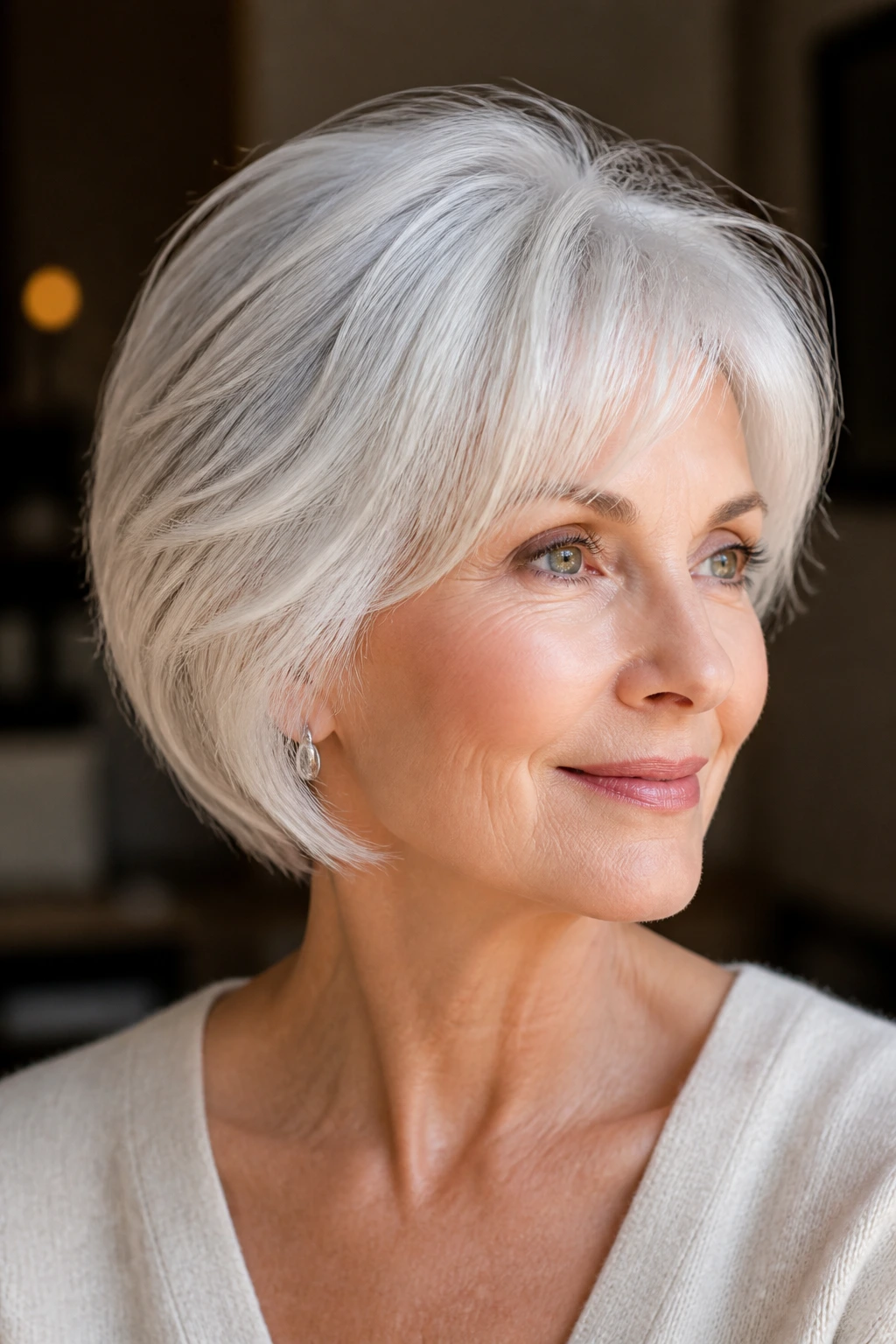
Lift at the Crown: Put root spray on damp hair, then blow-dry the top sections straight up and back. Let them cool before touching them. That cooling step locks in the shape better than another round of hot air.
Softness Around the Face: Keep the babylights brightest at the temples and cheekbone area. It lightens the face frame just enough to keep the cut from feeling heavy near the eyes.
More Density at the Ends: A cleaner perimeter often looks fuller than a heavily layered one. If the ends are wispy, ask for a gentler line and fewer interior cuts.
Less Fuss in the Morning: Keep a tiny spray bottle with water and a drop of leave-in conditioner mixed in. A light mist at the roots and a finger-comb through the crown can reset the shape in under a minute.
Make It Yours: If you like a softer look, wear the part slightly off-center. If you like sharper lines, go for a more defined side part and a sleeker finish.
Keeping the Shape Fresh Between Washes
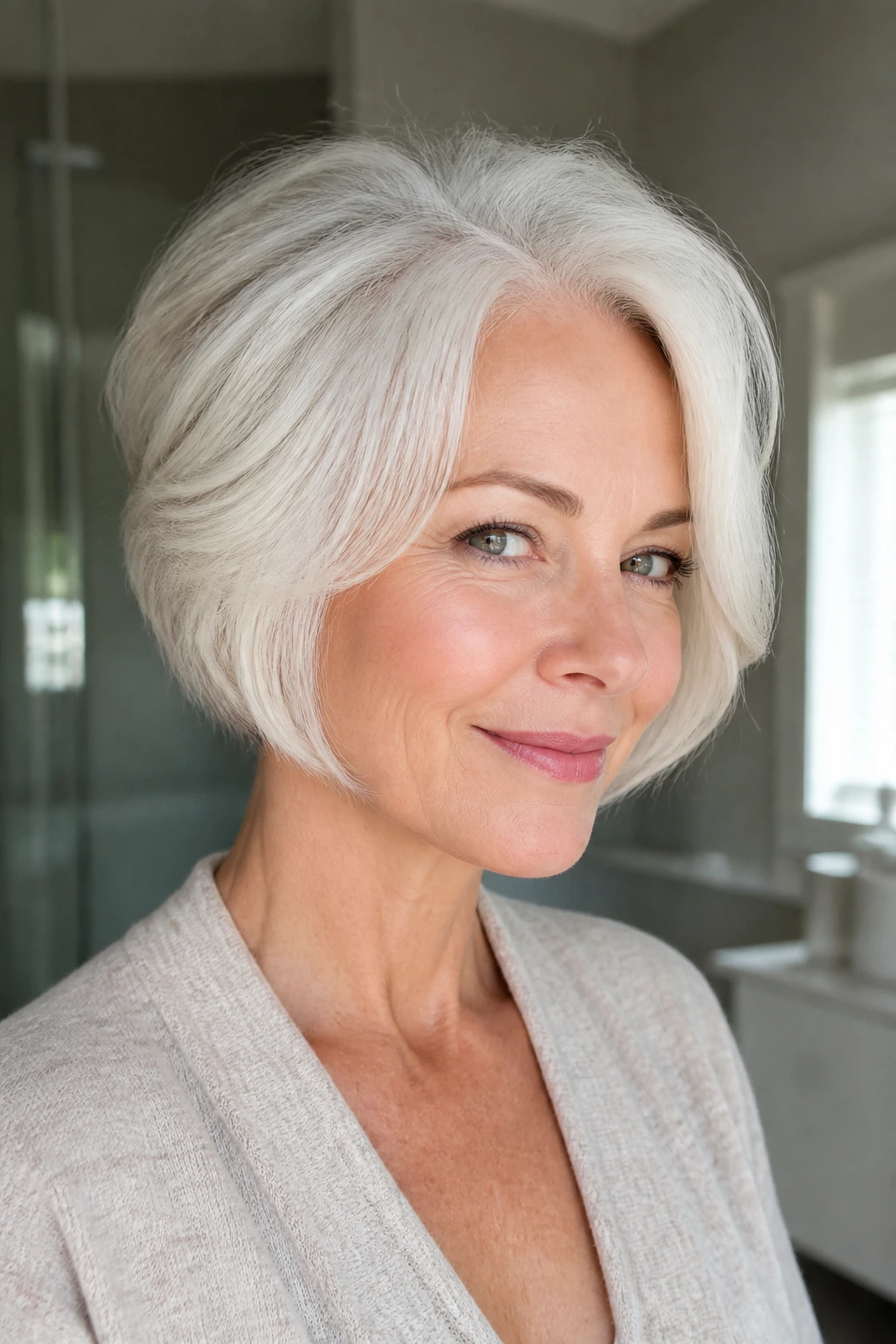
White hair can show oil at the roots faster than darker hair, and thin hair tends to lose lift when it gets even a little bit heavy. I’d wash every 2 to 4 days for most styles here, using a gentle shampoo and a light conditioner only from mid-lengths down.
Use violet shampoo once a week or every other wash if the white starts to yellow. Don’t leave it on forever. A couple of minutes is usually enough; too much and the hair can turn dull or slightly lilac in a way that reads more tired than fresh.
Trims matter. Crops and pixies usually need a tidy-up every 5 to 7 weeks. Bobs and lobs can go 7 to 10 weeks if the shape is holding. For babylights, a gloss or toner refresh every 6 to 10 weeks keeps the tone soft, though a lot depends on how much sun and heat the hair gets.
Sleeping on a satin pillowcase helps the finish survive the night without the crown getting rubbed flat.
Common Mistakes That Flatten Thin White Hair
Too many internal layers: The haircut can start looking airy in the wrong way, with see-through ends and a weak perimeter. Ask for movement near the surface, not a lot of carving through the middle.
Babylights that are too wide: Wide highlights break the clean white surface and can expose scalp in a way that feels patchy. Micro-fine placement looks softer and fuller.
Heavy cream products: Thick serums and rich leave-ins weigh the roots down fast. Use lighter products and keep them off the crown unless the hair is very dry.
A flat center part every day: A rigid center part can make thin white hair expose more scalp than it needs to. Try a soft off-center part or shift the line by half an inch.
Heat that’s too hot: Fine hair doesn’t need 400°F. It needs control. Too much heat leaves the ends rough and the white tone looking dry.
Overtoning: Cool tones are good; muddy, slate-gray toner is not. If the hair starts to look flat and dusty, lighten up on the violet shampoo and ask for a softer gloss next time.
Variations and Alternatives to Try
Pearl-Only Finish: Keep the white almost pure and use only pearl gloss plus the lightest babylights. This is the move if you want depth without any obvious warmth.
Champagne Whisper: Add the faintest warm-beige babylights around the face. That softens sharp white hair and can make the skin look a little less washed out.
Dark-Root Smudge: A soft root shadow at the part gives the crown more visual density. I like this when the hair is very thin at the scalp and needs a little camouflage.
Curly White Lift: If your hair bends naturally, work with the curl pattern instead of fighting it. Babylights should sit along the outer curve of the wave or curl so they show movement.
Ultra-Short Reset: When the ends have gone sparse, cut it shorter and keep the top textured. A shorter shape often looks thicker than a longer style that has run out of body.
Frequently Asked Questions
Will babylights make thin white hair look thinner?
Not if they’re placed with care. Wide highlights can expose too much scalp, but babylights are tiny enough to add depth without breaking up the surface. The important part is keeping the lightest pieces near the crown and part, not scattered all over.
What babylight tone works best on natural white hair?
Pearl, silver-beige, and soft cool beige are the safest bets. They keep the white bright while giving it a little movement. If the hair looks yellow, a neutral gloss usually helps more than a very cool toner.
Should thin white hair be cut short?
Not always, but shorter shapes usually need less work to look full. Chin-length bobs, pixies, and lobs with a clean perimeter tend to behave better than long, heavy layers that drag the hair down.
Can I air-dry these styles and still get volume?
Yes, but you need a little root help. Put mousse or root spray on damp hair, lift the crown with your fingers, and let the ends dry with some space instead of squeezing them flat. A diffuser helps if the hair has any bend at all.
How often should I trim this kind of cut?
Pixies and short crops need attention every 5 to 7 weeks. Bobs and lobs can usually wait 7 to 10 weeks before the shape starts to slip. If the ends get wispy first, trim sooner; that’s where thin hair shows wear fastest.
What if my hair is fine and slippery?
Use less conditioner at the root and more grip product at the crown. Dry texture spray, mousse, and a cool shot from the dryer can make a huge difference. Slippery hair often needs less softness and more structure.
Can I wear glasses with these hairstyles?
Absolutely. In fact, several of these cuts look better with frames because the clean edge around the temple and ear keeps the shape tidy. Choose a fringe or side part that doesn’t crash into the top of your glasses.
What if the white tone starts to look yellow?
Cut back on violet shampoo if you’ve been using it a lot, then book a gloss refresh or use a gentler toning conditioner. Heat, sun, and hard water can all dull the tone, so a shower filter helps if the problem keeps coming back.
A Softer Shape Wins Here
The best white hairstyles for thin hair rarely depend on one dramatic trick. They work because the cut, the babylights, and the styling all point in the same direction: more lift, cleaner edges, and less visual clutter.
That’s why I keep coming back to quieter shapes. A blunt line at the right length. A fringe that doesn’t swallow the face. Babylights that feel like light, not decoration. Those small choices do more than a pile of product ever will, and they age better between salon visits too.
If you want the safest place to start, pick the look that gives your crown the most room and your ends the cleanest edge. Everything else hangs off that decision.