



Bleach and curls can fight each other if you handle them like straight hair. Put the color in the wrong place, and the whole head turns flat, fuzzy, and a little fried-looking. Put it in the right place, though, and the curl pattern does half the work for you.
That’s the real appeal of 25 dimensional blonde hairstyles for curly hair: the blonde doesn’t sit there like a single painted block. It rides the bends, catches on the outer curve of each coil, and leaves darker pockets underneath so the shape still reads as full. On short men’s cuts, that depth can make a tight crop look sharper. On boys’ cuts, it can make a simple taper look more styled than it actually is.
I’ve always preferred blonde on curls when it’s broken up into ribbons, tips, halos, or face-framing pieces rather than blasted from root to end. One-tone blonde on curls can look loud for about three days, then it starts growing out in a way that feels heavy. Dimensional color keeps its shape longer. That’s the trick.
Why These Blonde Curls Earn Their Keep
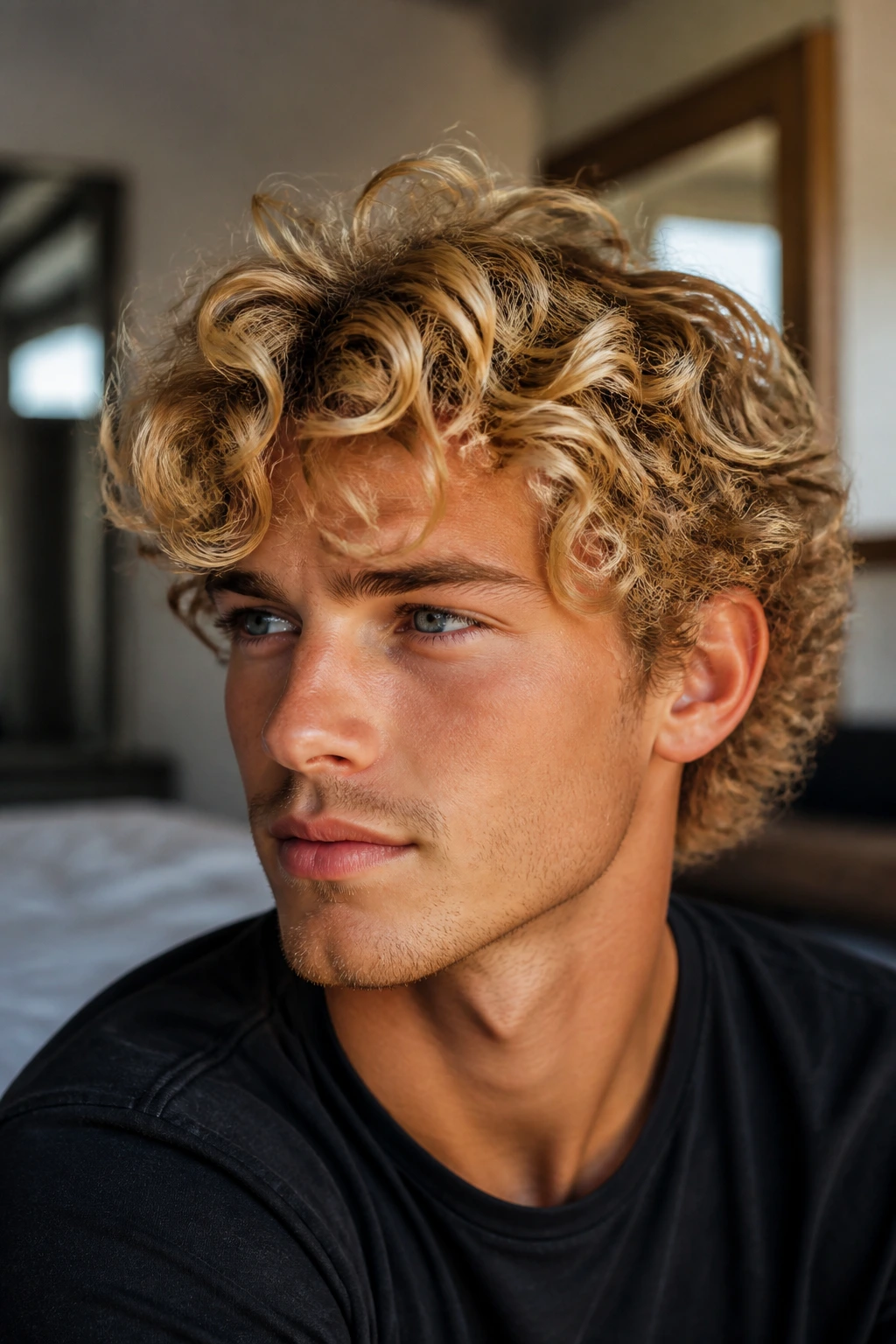
-
The color shows the curl pattern, not just the haircut. Blonde on the ridges and darker tone in the valleys makes each bend stand out, which is why curly hair often looks fuller with dimension than with one flat shade.
-
Most of these cuts grow out cleanly. A low taper, shadow root, or blonde ends can buy you extra weeks before the shape starts looking shaggy around the ears.
-
They work on different curl sizes. Tight coils, loose ringlets, and wavy curls all take blonde differently, so there’s room here for short crops, longer shags, and everything in between.
-
You can go subtle or bold without changing the haircut. The same curly cut can read soft with beige blonde or sharp with platinum slices, depending on how much lift the colorist uses.
-
They’re easier to style than they look. A diffuser, a little curl cream, and a light hold product usually do more than a shelf full of expensive grooming stuff.
1. Sunlit Curly Crop With Honey Ribbons
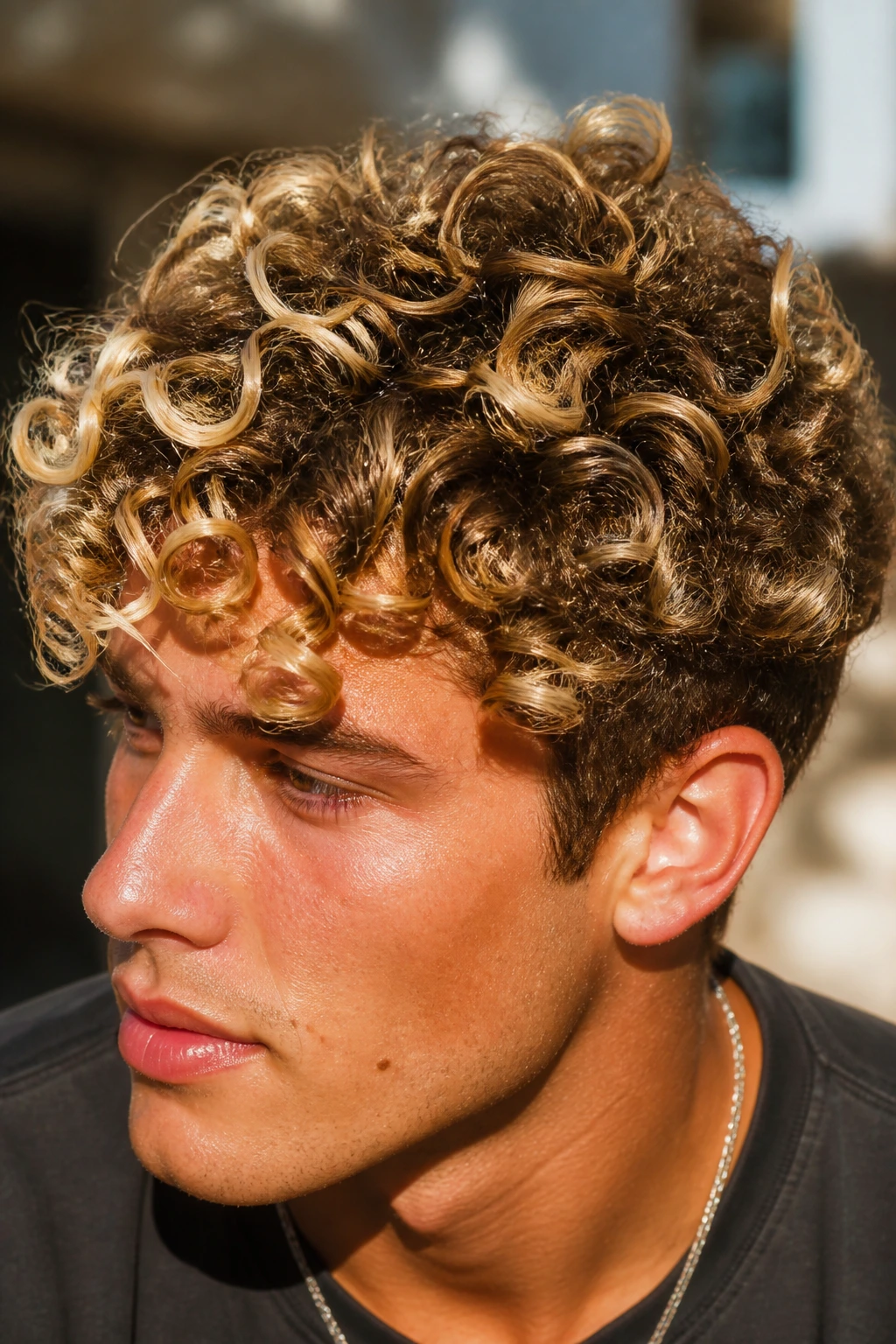
This one is the haircut I’d hand to a guy who wants blonde curls without the drama. The top stays short enough to behave, but the honey ribbons live on the outer curls, where light naturally hits first. The result is bright, but not bleached-out.
Why it works
Honey blonde is forgiving on dark or medium-brown curls because it warms the whole shape instead of shouting over it. Keep the sides in a low taper and the top around 2 to 3 inches, and the blonde pops without making the crop feel puffed up. That shorter length also means less frizz near the ends, which matters more than people think.
Quick detail to ask for
- Keep the fade low and soft.
- Place the blonde on the top layer only.
- Leave the roots deeper for contrast.
- Ask for a matte finish, not a shiny gel look.
Best tip: if your curls spring up a lot when dry, leave the top a half-inch longer than you think you need.
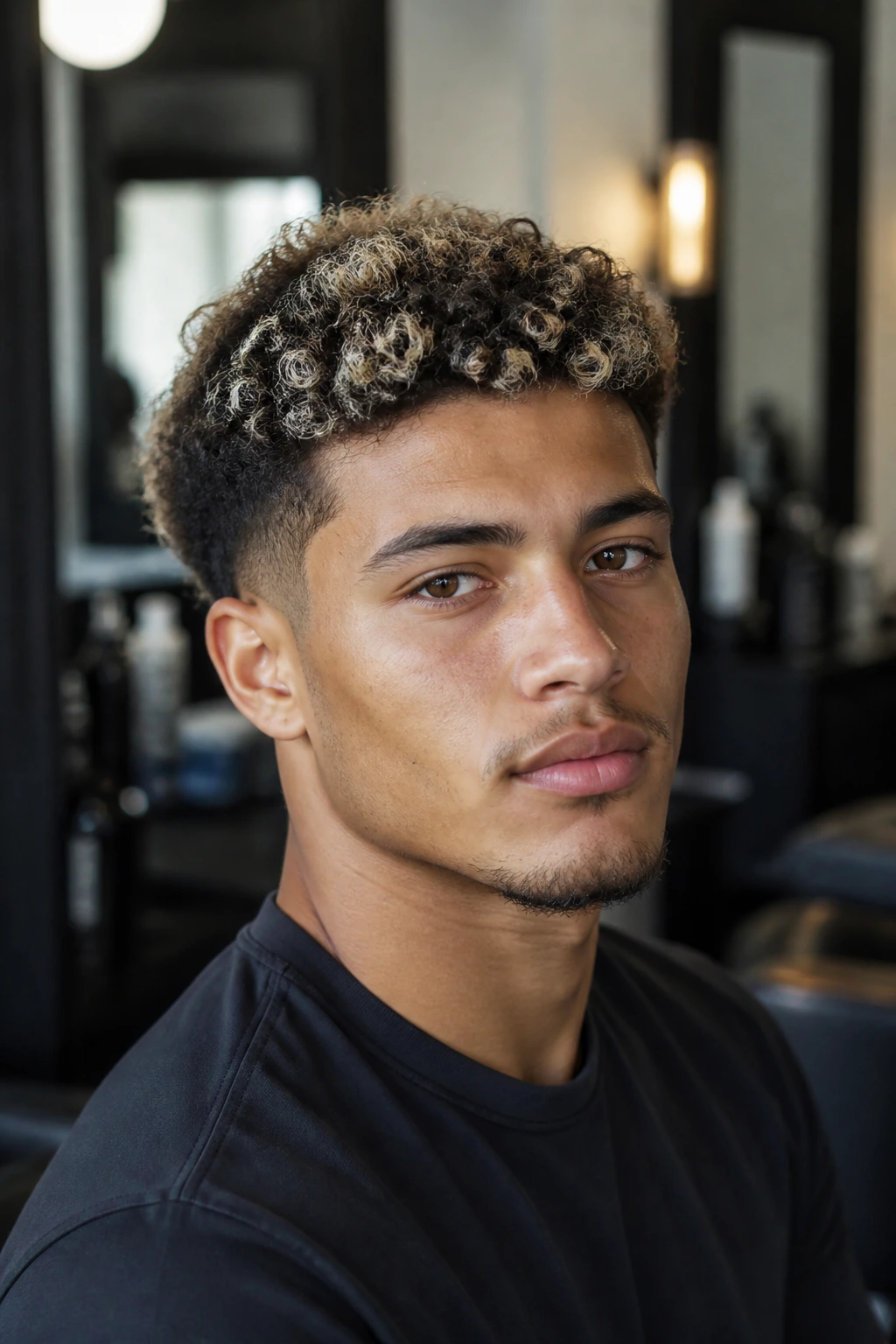
2. Low Taper Fade With Frosted Curl Tips
A frosted tip look sounds like a throwback until you see it on tight curls done properly. The modern version is cleaner, tighter at the sides, and lighter only on the ends of the coils, which keeps the texture from turning into a bleached helmet.
The low taper matters here. High fades can make the blonding feel disconnected if the top is dense, but a low taper keeps the shape grounded. On a boy’s cut, this one also stays neat longer between barber visits because the perimeter stays controlled.
What makes it sharp
The contrast is the point. Dark roots under frosted ends give the curls a little edge, and because only the tips are lightened, the maintenance stays lower than an all-over blonde job. Use a curl cream with a small amount of hold so the ends separate instead of clumping into one pale mass.
The barber note
Tell them you want the color on the outer coil tips, not painted deep into the root area. That keeps the style dimensional and prevents the top from reading flat when it grows out.
3. Soft Curly Fringe With Beige Blonde Ends
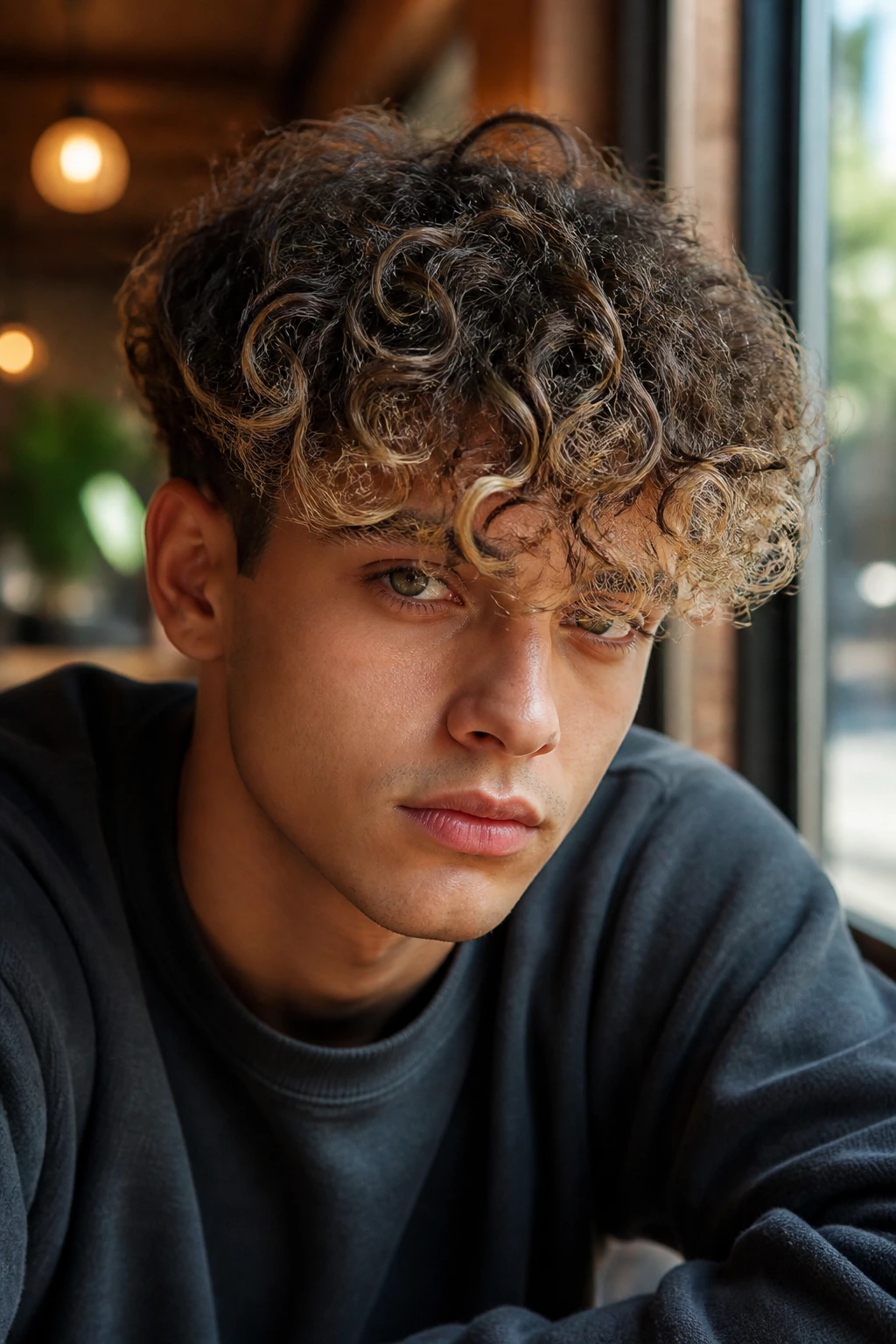
Why does a fringe look so good with blonde on curls? Because the front piece catches the eye first. If the curls fall forward across the forehead, even a small amount of beige blonde can change the whole face shape.
Beige blonde is a smart choice if you don’t want gold, brass, or stark platinum. It sits in that middle zone that works on a lot of skin tones and doesn’t yell for attention. The curls stay soft, the front stays touchable, and the haircut still has enough contrast to feel intentional.
How to wear it
Let the fringe dry forward once, then break it apart with your fingers. Don’t comb it flat. That’s the fastest way to erase the texture you paid for. If the fringe is too heavy, ask for point-cutting at the ends so the curls don’t sit in a blunt wall across the brow.
Where it fits best
- Medium-tight curls
- Oval or longer faces
- Hair that needs width at the front
- Anyone who wants a softer grow-out
4. Golden Curly Quiff With Dark Roots
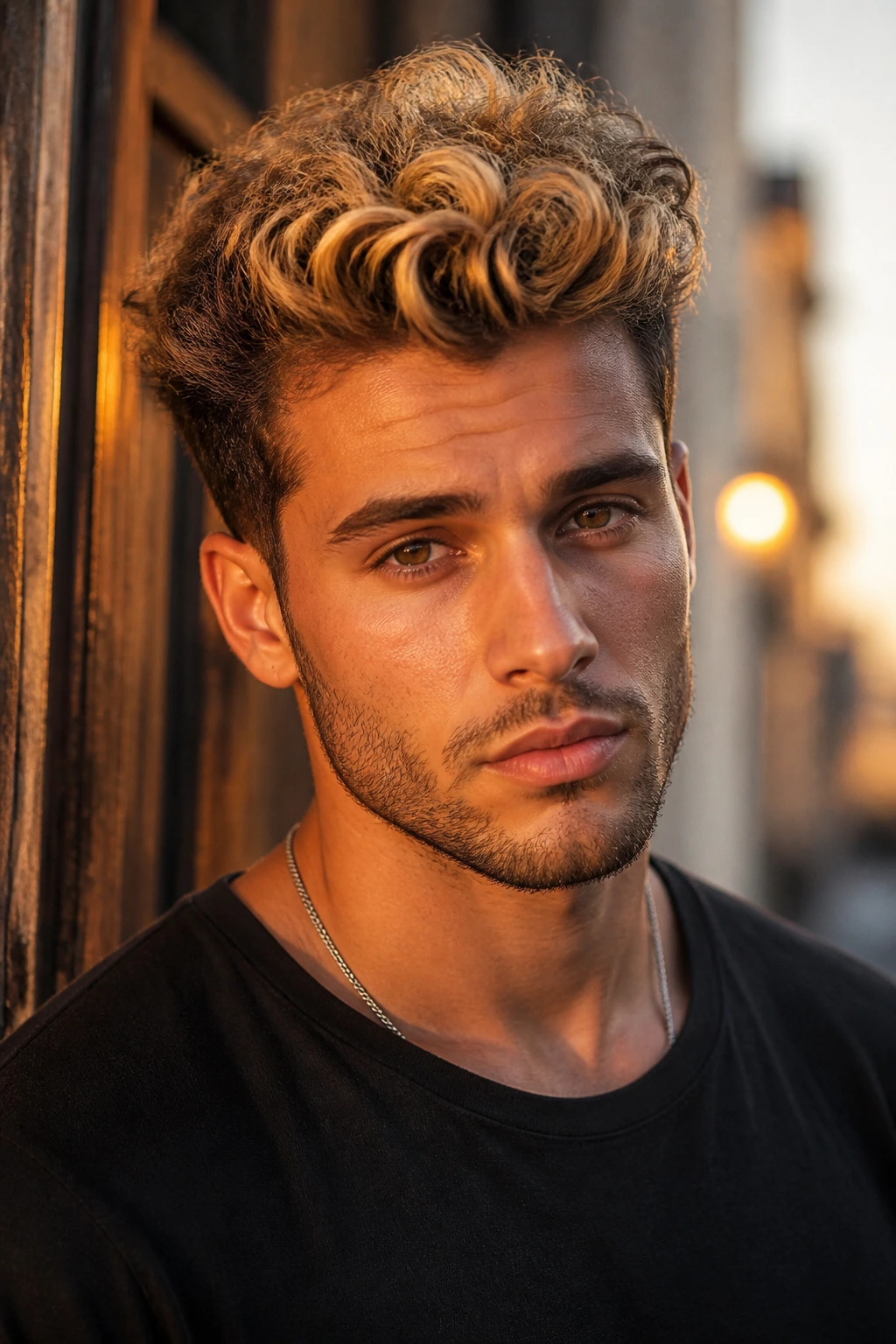
A curly quiff with dark roots is one of those cuts that looks like work, even when it’s not. The dark base keeps the roots looking full, and the gold-blonde top gives the quiff enough brightness to stand up instead of collapsing into the scalp.
I like this style on guys with medium-density curls. It gives the top a little height without forcing the curls into a stiff shape. The blonde should live mostly on the front third and upper ridge of the head, where the quiff lifts naturally.
Practical shape notes
Use a diffuser and lift the front at the root with your fingers while drying. A mousse at the base and a cream through the mid-lengths usually beats heavy pomade here. If the product is too greasy, the quiff loses its air and the blonde stops reading crisp.
The best version has a little shadow around the temples. That darker edge makes the top look brighter by comparison. Simple. Effective.
5. Curly High-Top With Wheat Blonde Panels
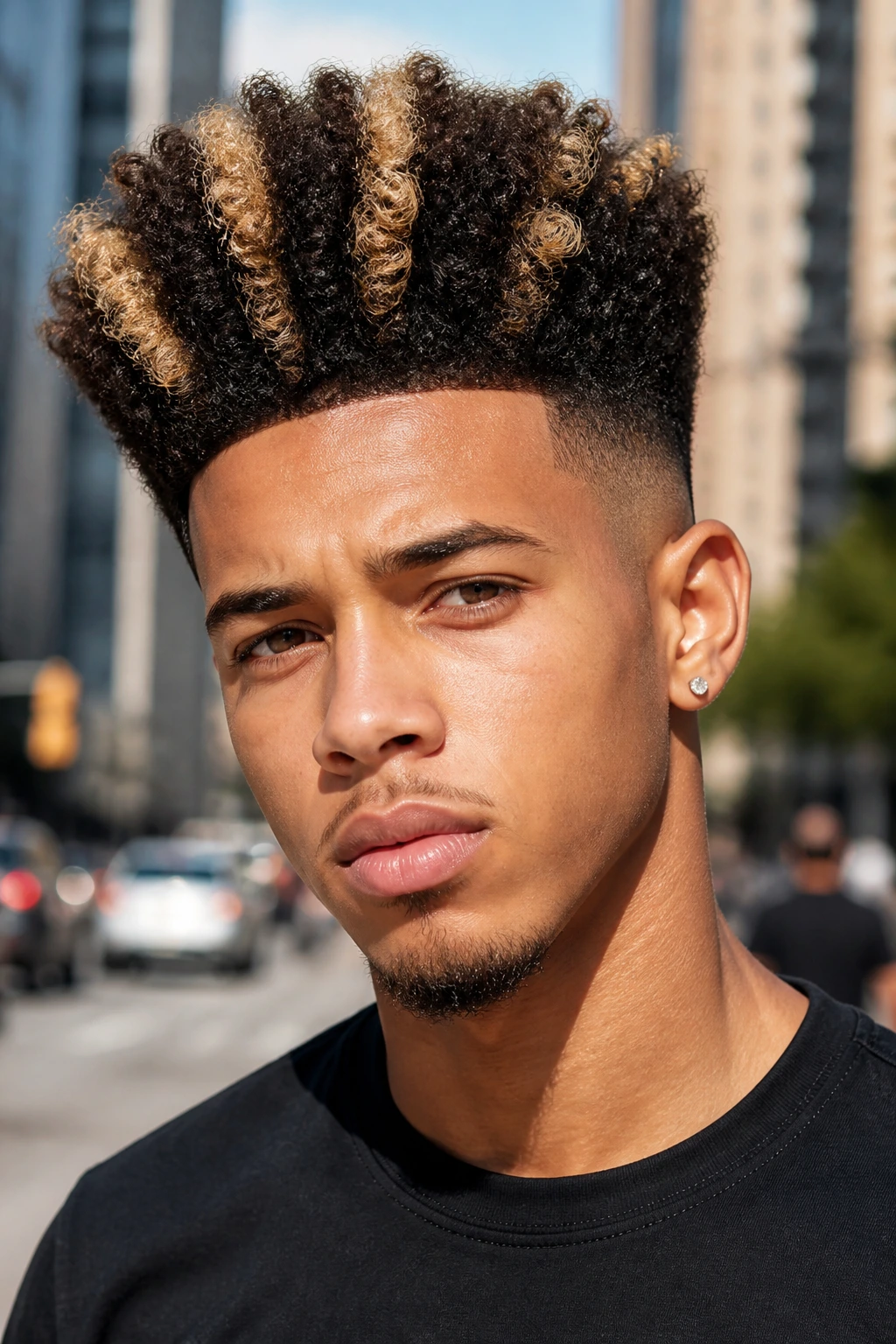
This cut leans into height, and that’s the fun of it. A curly high-top gives the blonde room to breathe, while the wheat-colored panels break up the mass so the shape doesn’t feel like one solid block.
The trick is placement. If the blonde is sprayed or foiled all over the top, the style can start looking busy. Put it in panels through the upper half of the curls and leave the lower portion richer and darker. That contrast helps the cut keep its edge even when the curls shrink after washing.
Who this suits
- Tighter curls that hold vertical shape
- Guys who like a sharper profile
- Kids who don’t mind a louder cut
- Dense hair that can handle height
A small but important note
Keep the sides clean but not shaved to skin unless the top is very full. Skin-tight sides with a tall blonde top can feel too severe if the curl pattern is soft. A short guard fade usually balances better.
6. Honey Blonde Bro Flow With Loose Layers
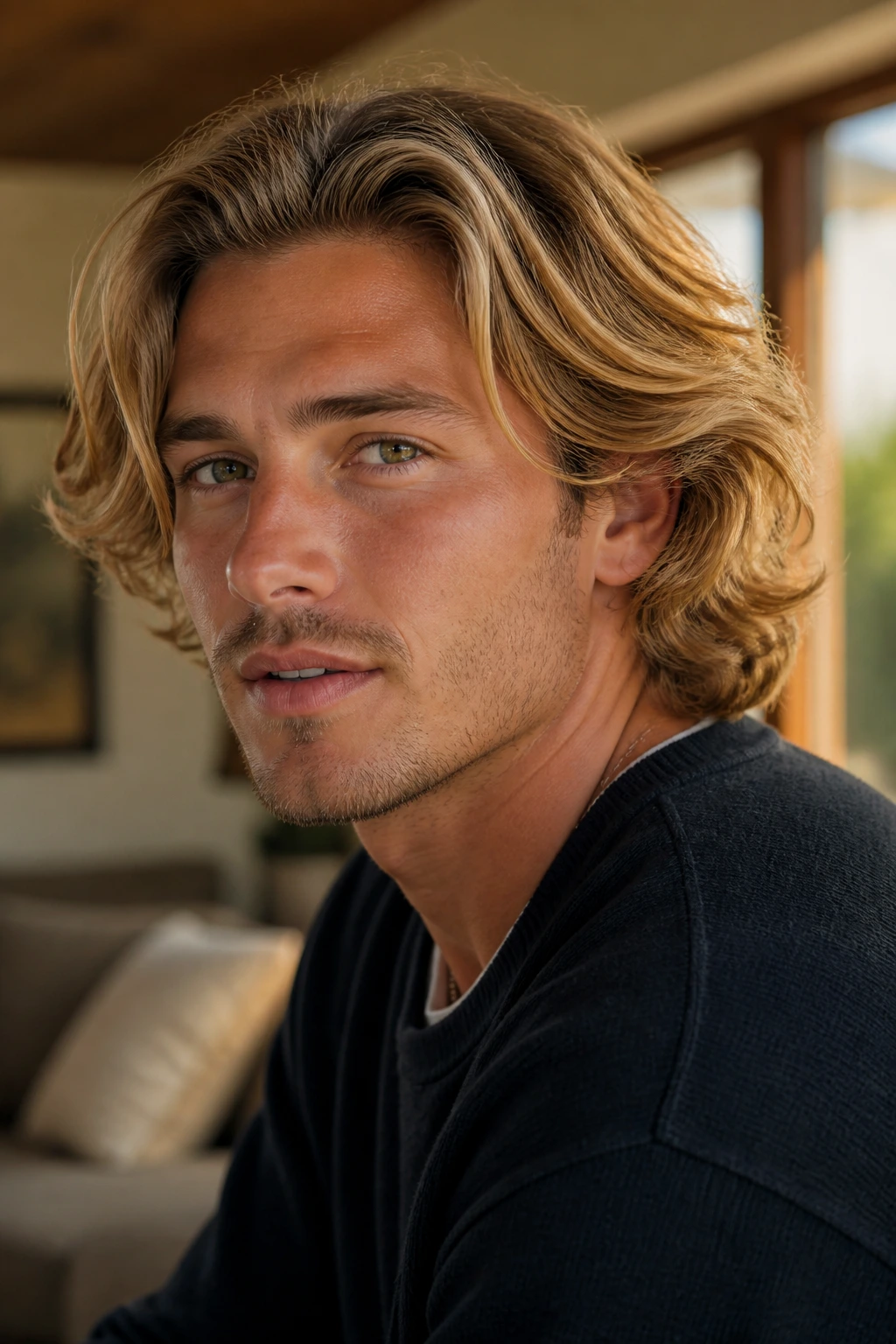
The bro flow can look lazy if the layers are wrong. With curls, though, the movement becomes the whole story. Honey blonde painted through the outer layers gives the hair a drift and a sort of broken sunlight look that works especially well when it’s worn loose behind the ears.
This is one of the few longer curly styles that feels easy rather than fussy. The blonde shouldn’t start at the roots. Let the darker base stay in place, then lighten the layers from the cheekbone down. That keeps the style from turning flat at the scalp and makes the length read softer.
If your hair is thick, ask for long, invisible layers. If it’s finer, go easy on the lightening and keep the ends a little darker so the flow still looks full. Too much lift on fine curls can leave the hair see-through.
7. Burst Fade And Blonde Halo Curls
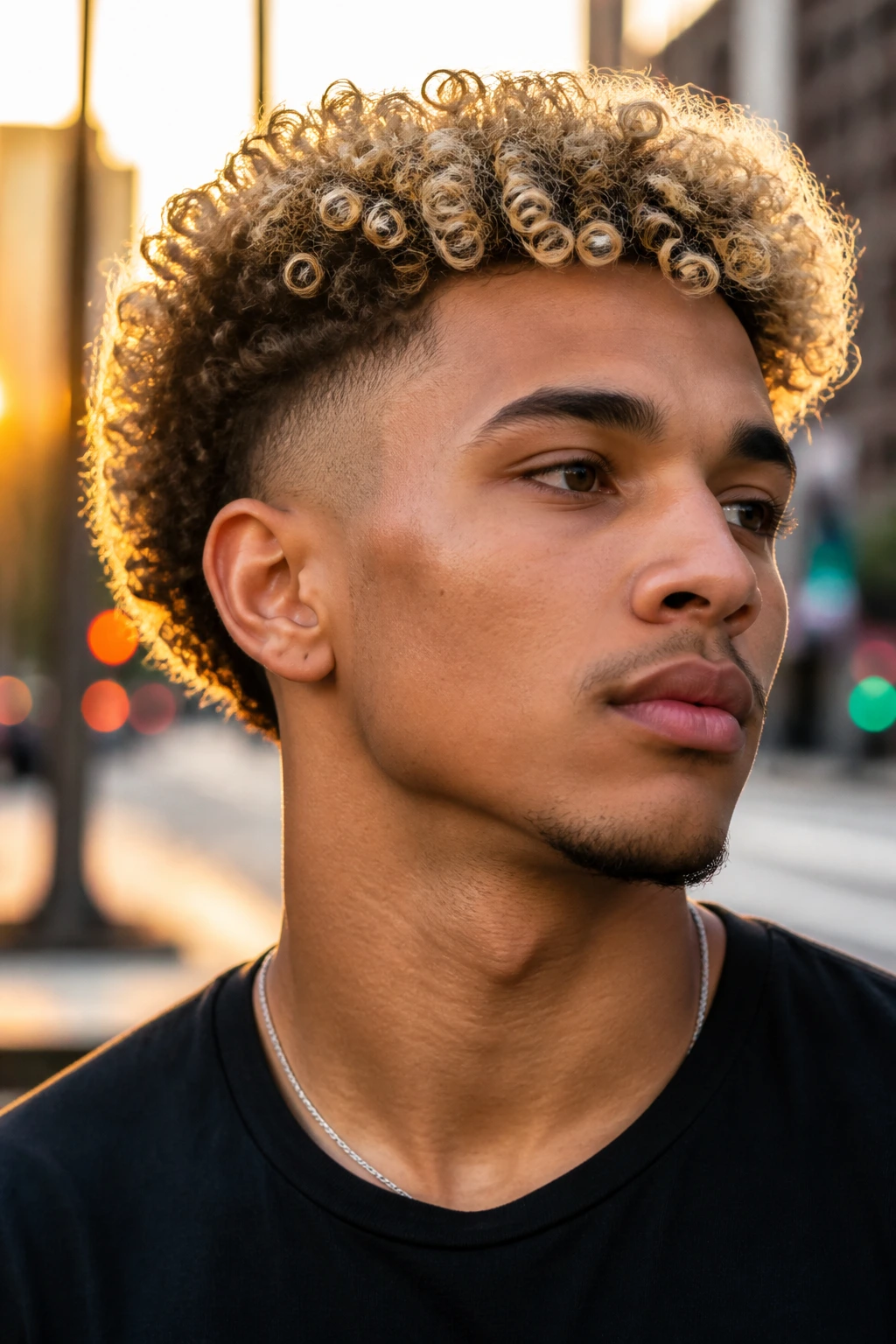
A burst fade does something useful on curly hair: it clears the ears and neckline while leaving the crown full enough to carry the color. Add a blonde halo around the top curls, and the whole cut starts to glow from the edges inward.
Why the halo shape matters
The blonde should frame the outer curls, not soak the center in one shade. That halo effect keeps the top looking rounded, which is why this style works on round heads, longer faces, and boys who need something sharp but not fussy. It also grows out in a way that still looks deliberate for a while, which is rare in high-contrast cuts.
Best styling move
Scrunch the blonde curls upward with a light foam or curl mousse, then leave the crown alone while it dries. If you keep touching it, you’ll separate the curl clumps and lose the halo effect. A few pieces around the temple can be brighter than the rest. That’s enough.
- Great for dense curls
- Works well with a short beard
- Keeps the neckline neat
- Gives the top visual lift
8. Curly Mullet With Bleached Ends
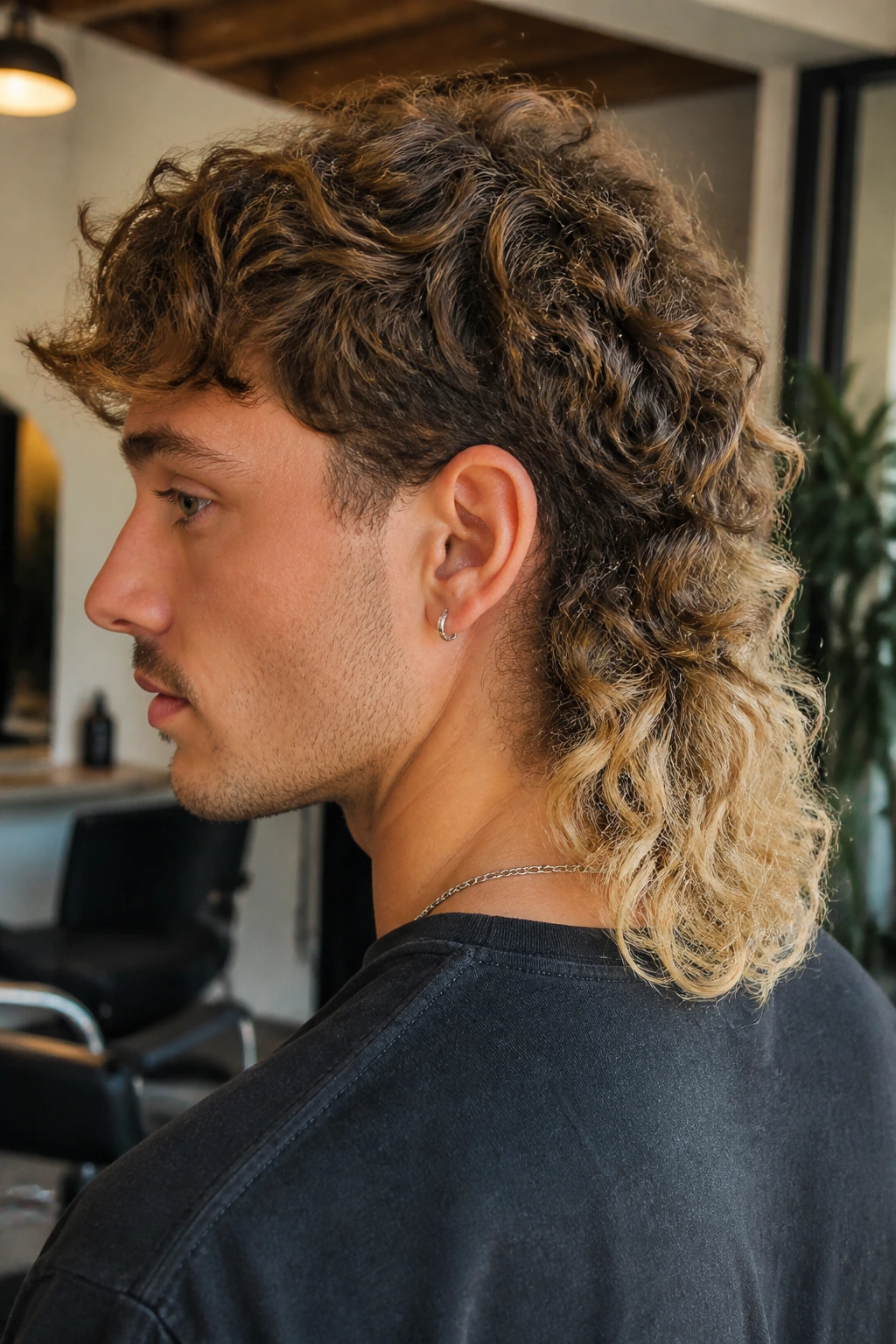
The curly mullet has stopped being a joke and started being a haircut people actually ask for. On curls, it works because the front and sides can stay controlled while the back keeps the spring and the blonde ends do the talking.
Bleached ends give the mullet a little bite. They’re also a smart way to get the bright look without committing to full-head lightening, which is a poor trade on dry curls. Keep the front fringe shorter, let the back drop a bit longer, and place the lightest pieces where the curls kick outward at the nape.
It looks best when the line between short and long isn’t too harsh. The disconnect should feel playful, not accidental. A soft taper around the ears helps the whole thing read as a haircut instead of a grow-out.
9. Side-Parted Ringlet Sweep With Caramel Lights
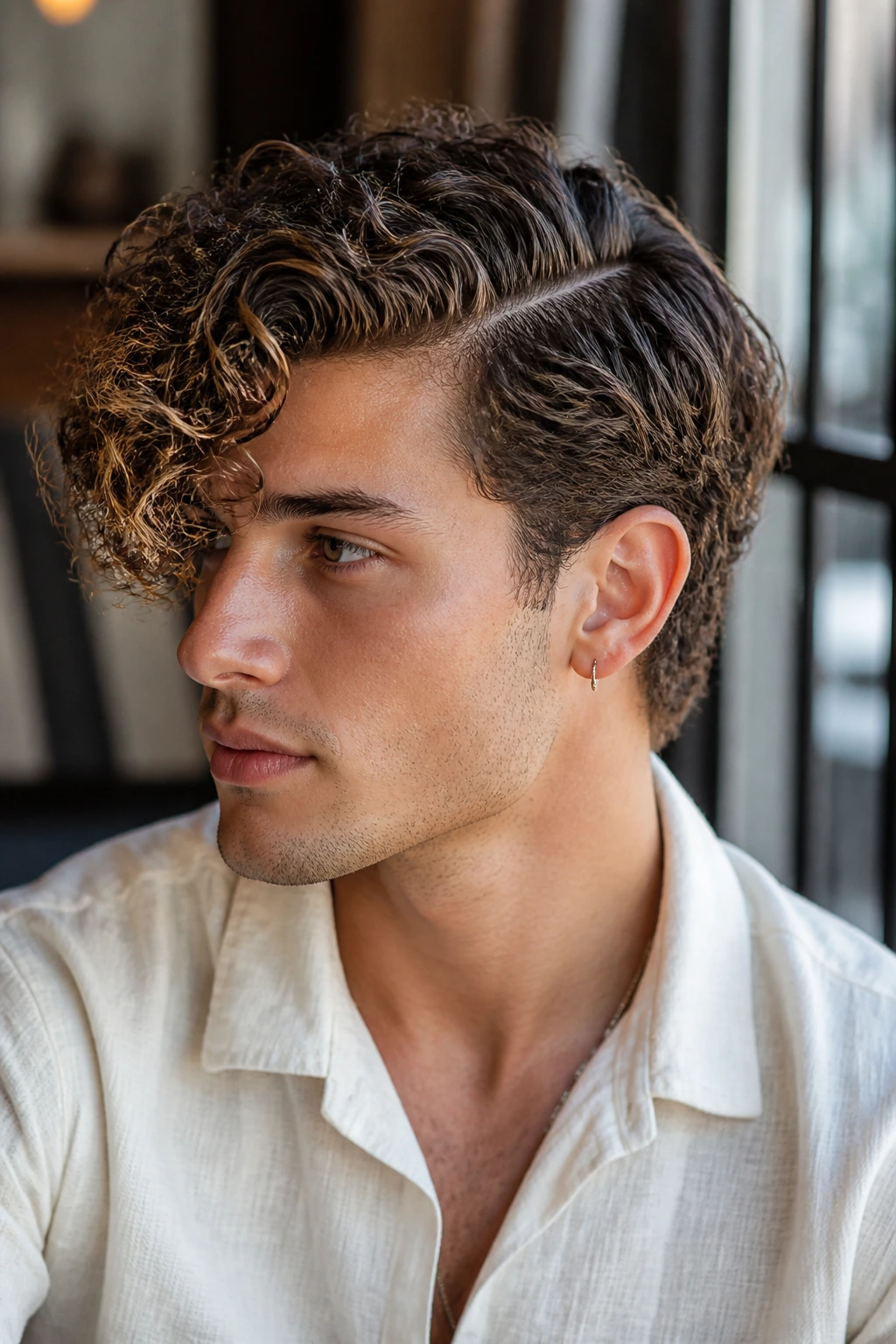
A side part can be boring on straight hair. On curls, it creates a clean route for the shape to fall, and caramel lights make the curl track visible without turning the whole head golden.
This style is especially good if your ringlets have a neat, springy bend. The part gives the cut structure, while the blonde follows the natural arc of the curl. It’s one of the more polished looks on this list, and it doesn’t need a lot of product to stay put.
What to tell the barber
Ask for a soft side part with enough length on top to sweep over, not lie down. The color should sit around the part line and the outer sweep, because that’s where the eye lands first. A bit of darker tone under the surface keeps the style from looking too tidy.
10. Short Afro With Sun-Kissed Peaks
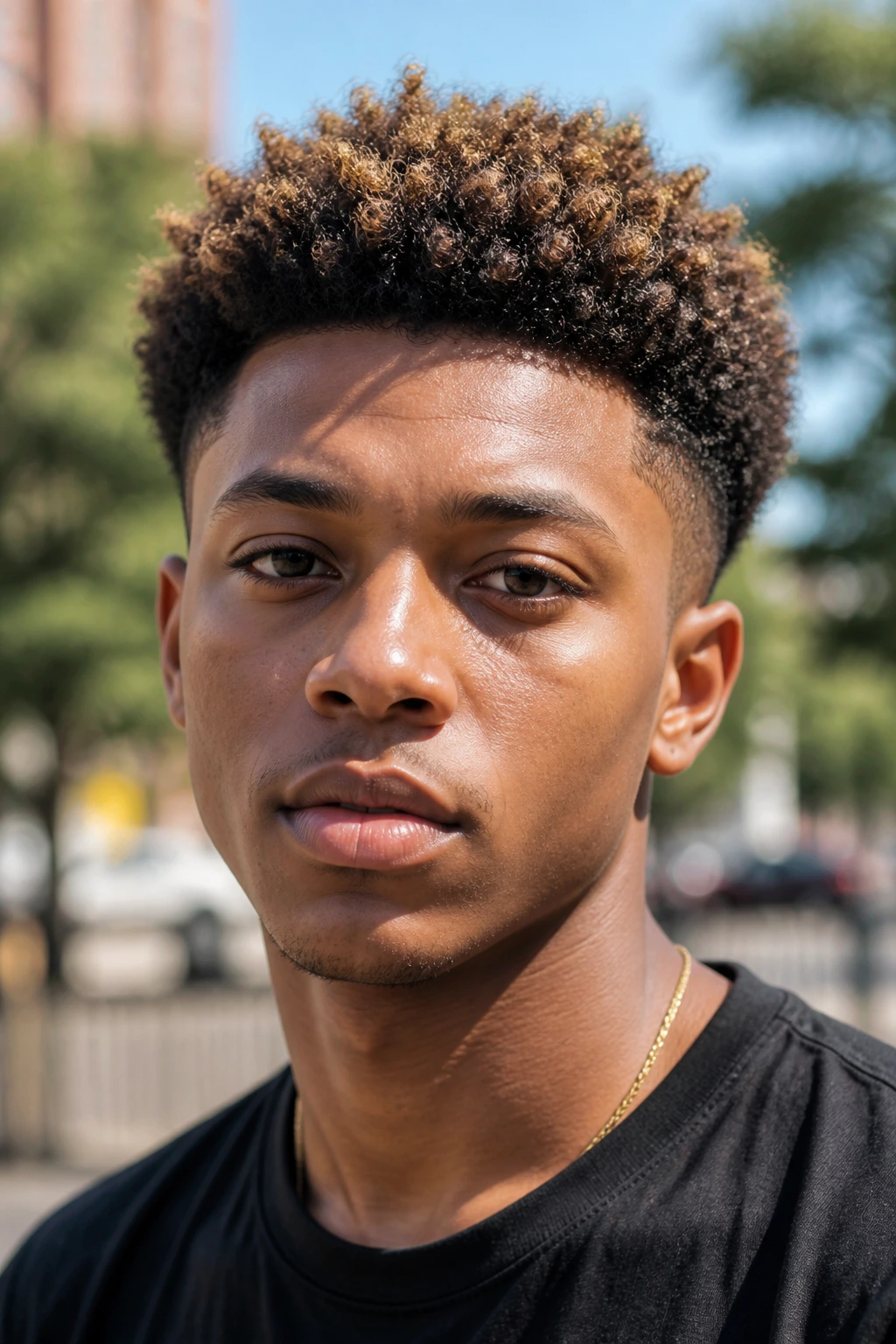
The best blonde on a short afro doesn’t chase every coil. It hits the peaks. That’s why this cut works so well: the shape stays rounded and full, but the lifted curls on top catch enough light to create movement.
I prefer this style with a soft line-up and a subtle taper at the temples. The blonde should sit in small clusters across the crown and front ridge, not in a stripe. If it’s too even, the shape can flatten. If it’s too random, it looks unfinished. Small, controlled peaks hit the sweet spot.
Why it’s useful
It’s low maintenance compared with heavier blonding jobs. You can refresh the shape with a sponge or pick, add a little leave-in, and go. The cut reads clean from across the room, which is half the job.
11. Shaggy Mid-Length Curls In Champagne Blonde
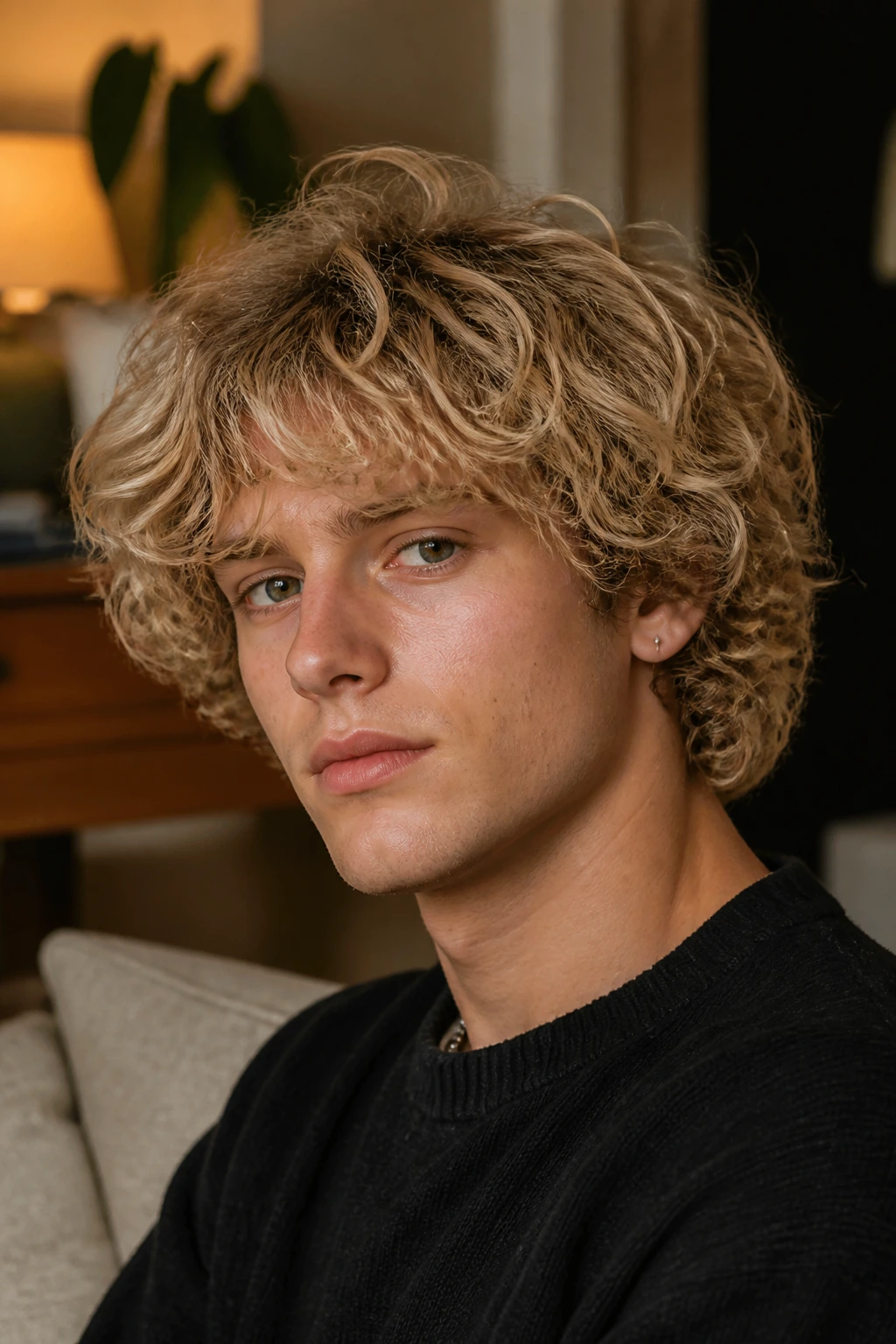
Champagne blonde gives curly shag cuts a softer edge than pure gold. It has a pale, airy look that works well when the layers are messy on purpose, not hacked up. That matters, because a shag only looks good when the layers fall in different places and the curl pattern still has room to breathe.
This is one of the most relaxed styles in the bunch. The shape can hit around the ears or drop below them, depending on how much hair you have. The blonde should be woven through the surface layers and around the face so the cut doesn’t become one dark mound with pale ends.
The good part
The shag hides grow-out better than almost anything else here. If a trim gets delayed, the layers keep the shape from ballooning. That’s a real advantage on thick curls that tend to puff when left alone too long.
12. Temple Fade With Bright Front Pieces
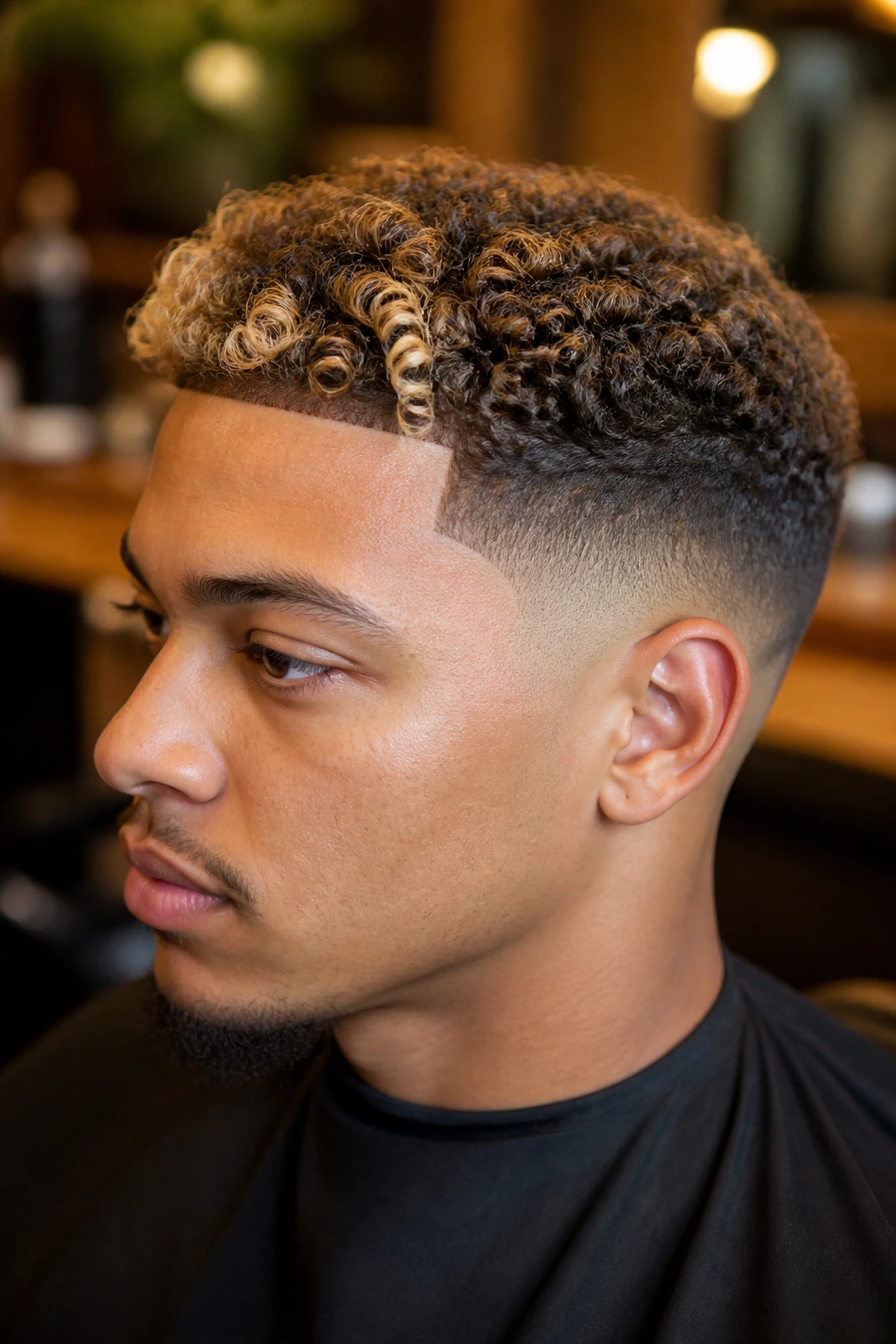
Temple fades are neat. Bright front pieces make them look intentional rather than plain. Put the two together and you get a cut that cleans up the sides while still giving the front enough color to pull focus.
The front pieces matter because they sit at eye level. A lighter curl at the temple or near the fringe changes the face in a way a hidden highlight never will. Keep the rest of the top a shade darker so the blonde has somewhere to land.
What I’d ask for
A low temple fade, short enough to stay sharp around the edges, plus two or three brighter curls near the front hairline. That’s enough. You do not need to bleach the entire front section. The style looks better when the color feels placed, not poured.
13. Curly Caesar With Sandy Blonde Texture
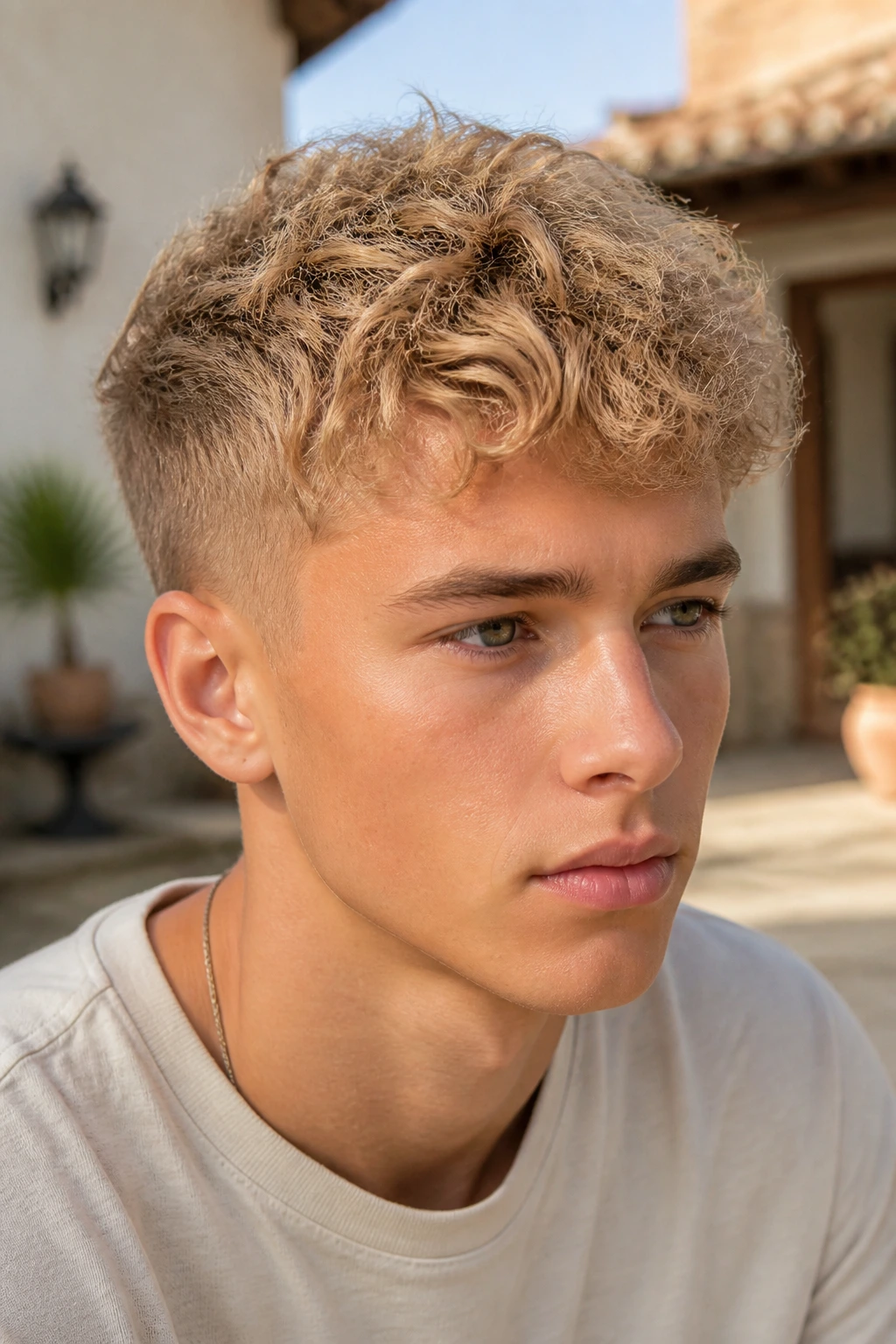
Short fringe, short sides, curly texture, and a sandy blonde finish. That’s the Caesar, but the modern version is less blocky and a lot less heavy on the forehead.
The sandy tone is the key. It’s softer than bright gold, a little cooler than honey, and it works well when the goal is texture rather than flash. On boys, this can be a solid school-friendly choice because it stays neat even after a long day. On men, it reads tidy with just enough roughness to keep it from looking severe.
Texture matters here
The fringe should be chipped into, not cut blunt. That keeps the curls from stacking into a shelf across the brow. A little paste or cream at the ends helps separate the blonde pieces so the texture doesn’t collapse into one flat band.
14. Tousled Ivy League Curls With Ash Blonde Tips
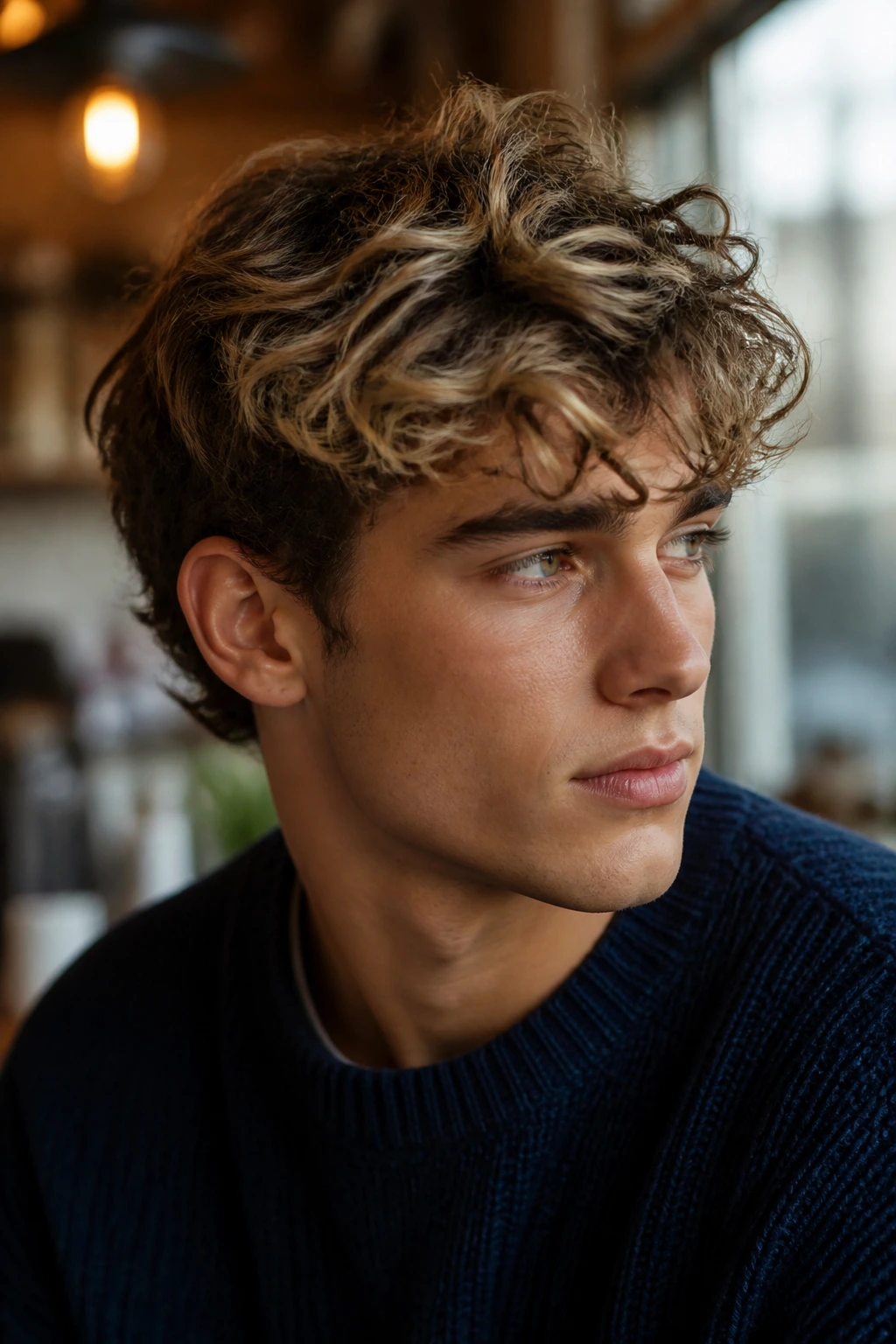
The Ivy League gets better when the top isn’t too polished. Let the curls stay loose, keep the sides tapered, and put ash blonde only on the tips. That gives the cut a more casual, lived-in feel than a neat collegiate part.
Ash blonde is a smart choice if your base color pulls warm or orange. It cools the whole look down and keeps the lighter pieces from reading brassy. The style works best when the top has enough length to move, usually around 2.5 to 4 inches depending on curl type.
If you like a cleaner line, tuck one side behind the ear and leave the other side looser. That unevenness is part of the charm. Too symmetrical and it starts to feel overworked.
15. Pineapple Top Fade With Butter Blonde Crown
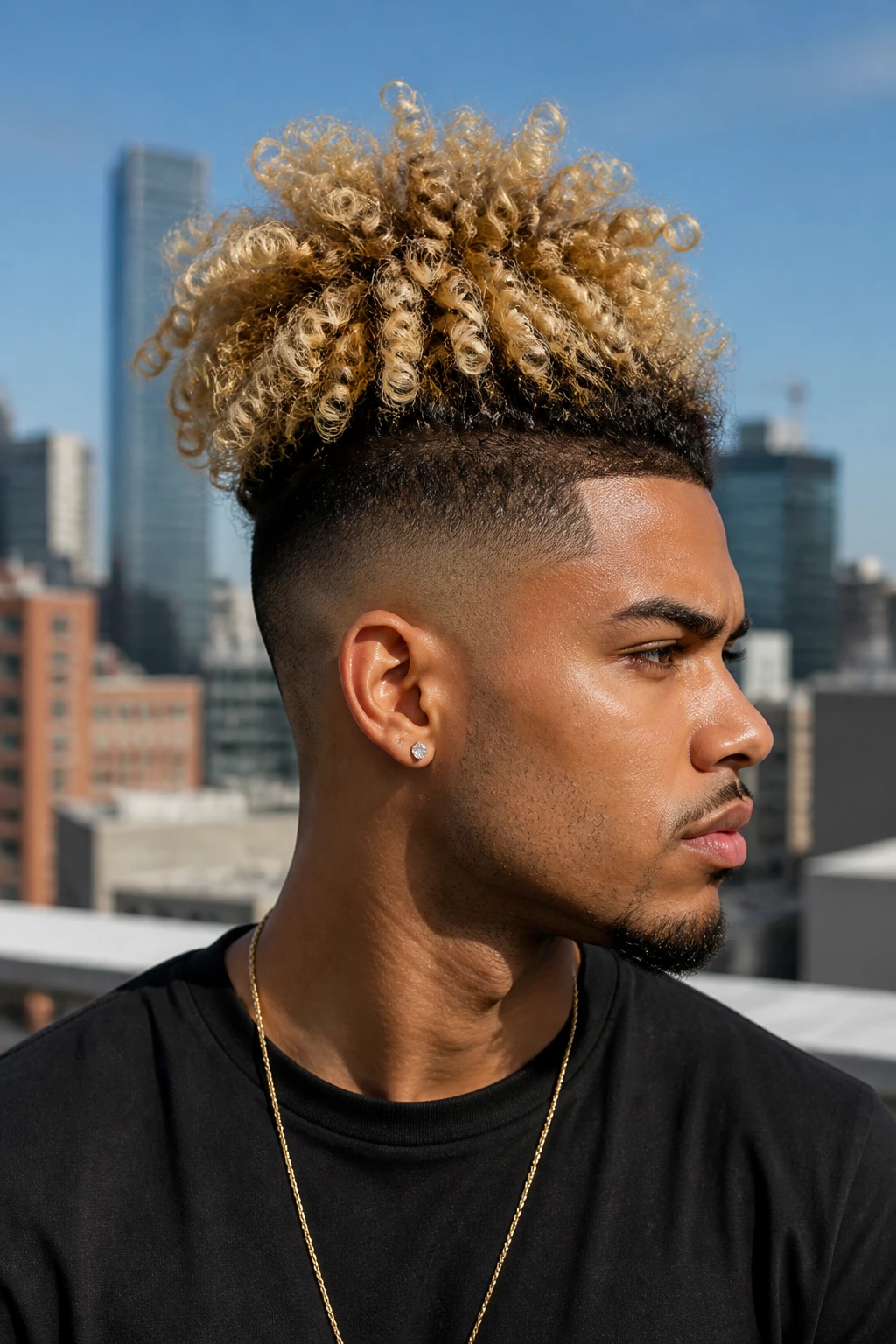
A pineapple top fade sounds playful because it is. The sides stay cropped, the crown stays high and loose, and the blonde sits in the topmost curls where it catches the most light. Butter blonde gives the style a soft glow instead of a hard bleach look.
This one fits guys who like volume. The curls should rise rather than lie flat, and the fade below keeps the silhouette from turning bulky around the ears. On dense hair, it’s a strong choice because the crown can hold shape without needing much product.
My take
The crown should be the brightest section. If the blonde is spread too evenly, the height loses impact. Keep the underlayer darker, and you get a better shape with less effort.
16. Wavy-Leaning Curly Mop With Face-Framing Blonde
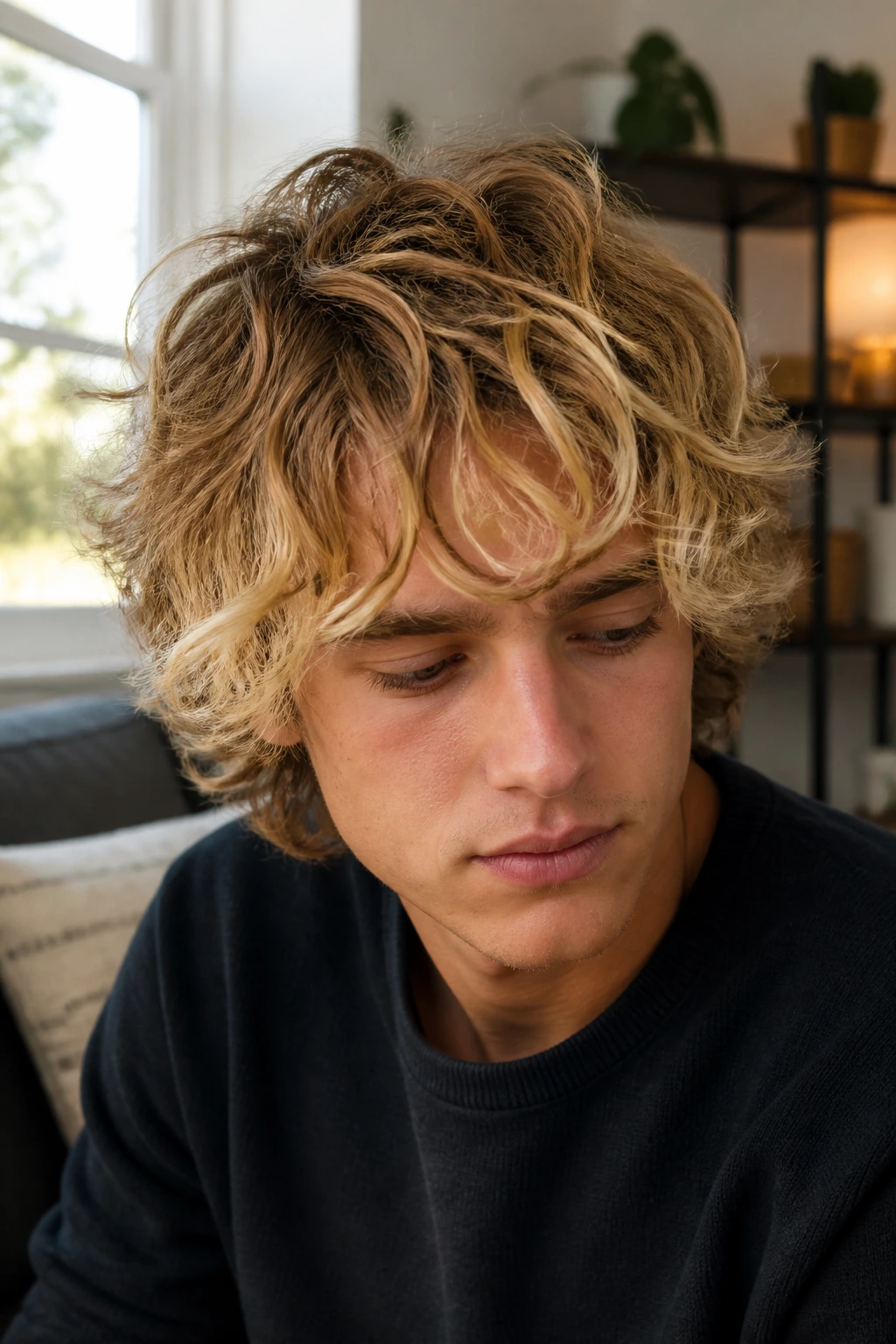
Not every curly style needs to be clean and clipped. Sometimes the best move is a shaggy mop that falls forward a little and lets the blonde sit around the face where it softens the outline.
This cut is especially good for looser curls or strong waves that bend instead of coil tightly. The blonde around the cheeks and front fringe brightens the face, which keeps the style from feeling too heavy at the sides. It also grows out without much drama, because the shape is supposed to be a little undone.
Who should pick it
- Teens and young men who want movement
- Anyone avoiding a sharp fade
- People with medium density hair
- Curls that need room to hang
A little sea salt spray can help here, but don’t overdo it. Too much grit and the blonde ends start to feel crunchy, which is never the look.
17. Textured Crop With Platinum Slices
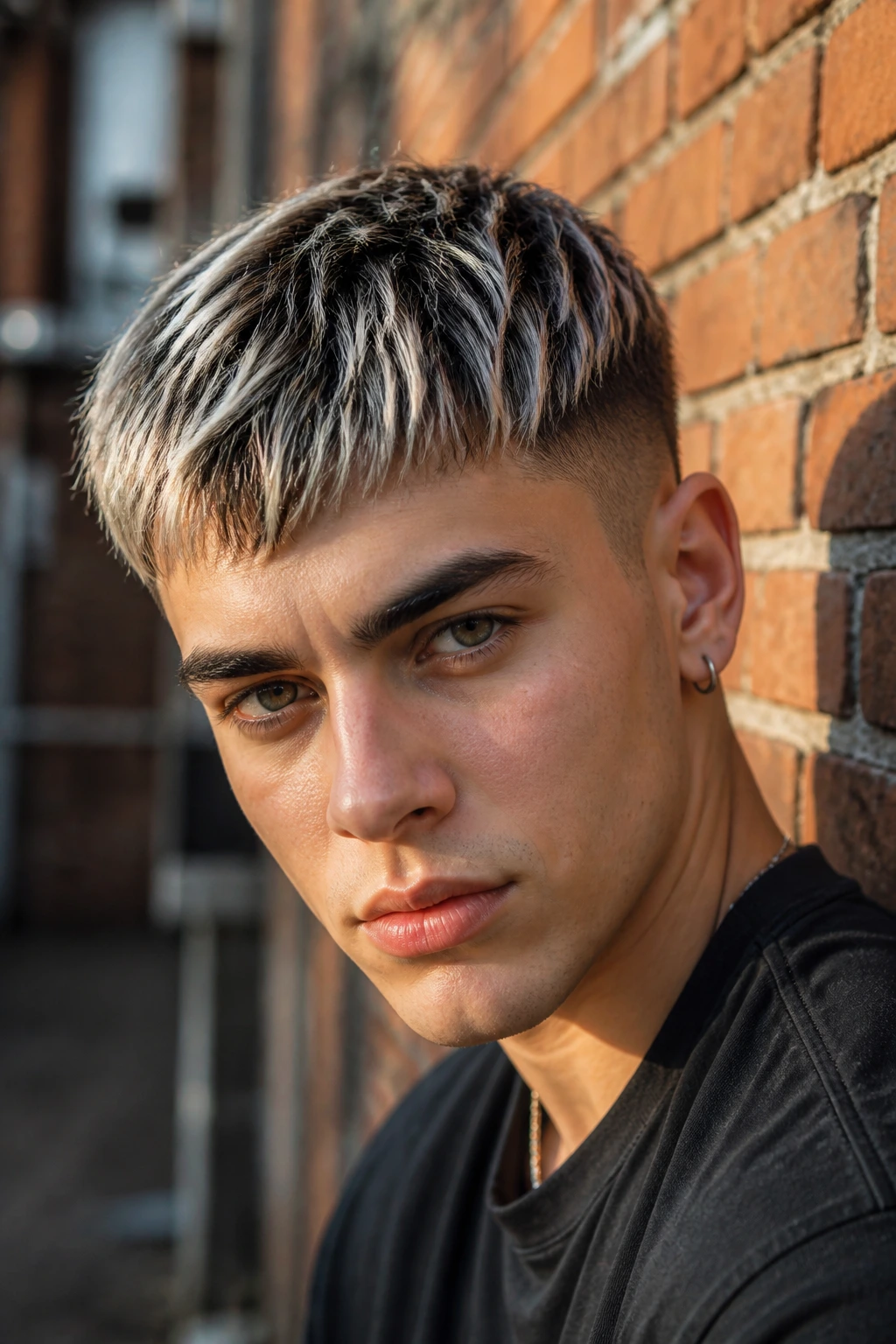
Platinum slices are not for the faint of heart. They’re high-contrast, bright, and a little icy, and they look best when the haircut itself is tidy. That’s why a textured crop is the right frame: the top is short, the edges stay neat, and the platinum only needs to live in a few controlled pieces.
This is one of the more maintenance-heavy looks in the group. I’d only push it if the curls are healthy enough to handle lift and the wearer actually wants the attention. But when it’s done well, it has a clean, modern punch that stands out fast.
A blunt truth
Platinum on curls can look gorgeous or wrecked, with very little in between. If the hair is already dry or porous, keep the slices narrow and the crop short. A few bright pieces look sharper than bleaching the entire top and hoping for the best.
18. Curly Faux Hawk With Creamy Blonde Crest
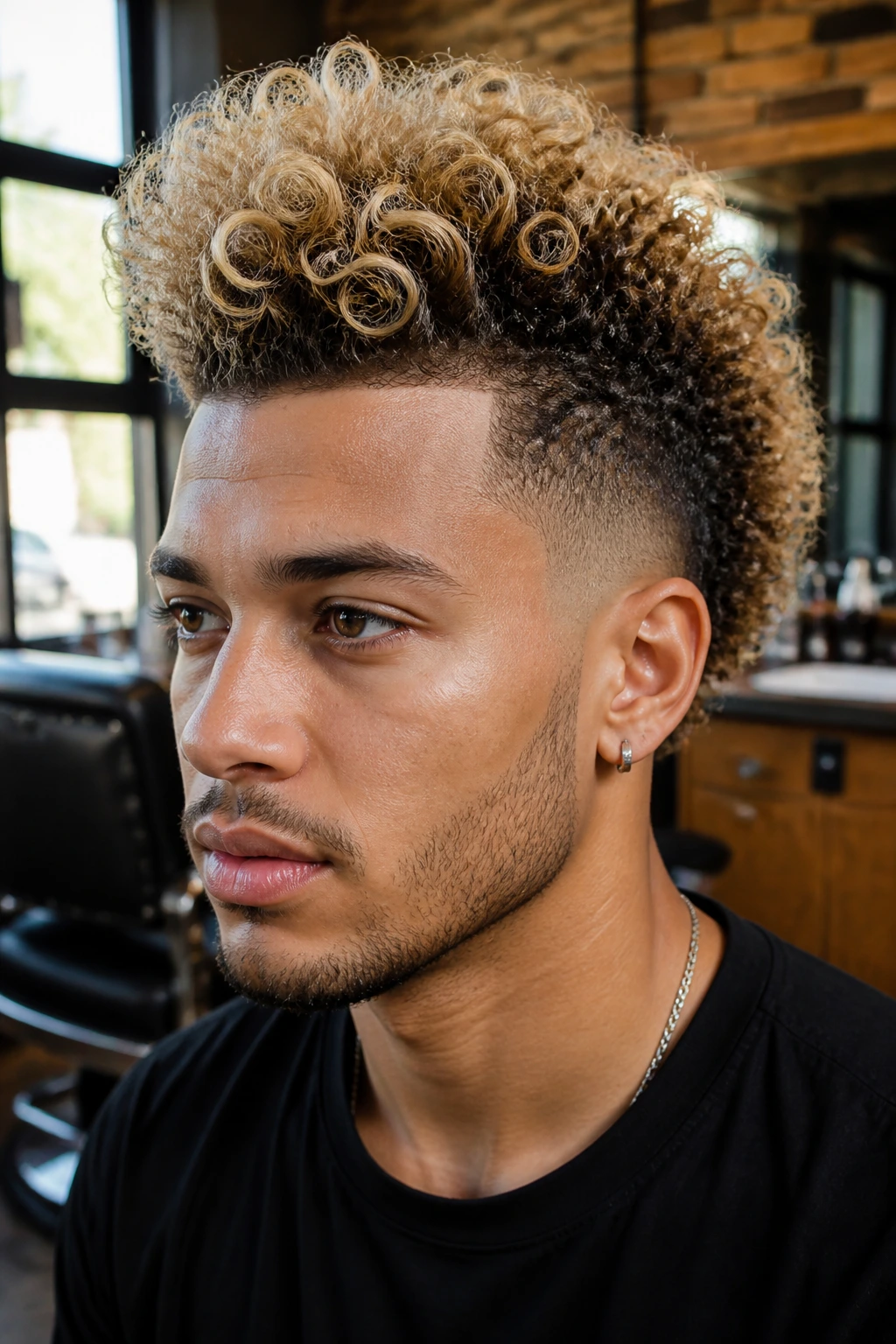
The faux hawk works because the sides are pulled in and the center ridge gets all the energy. Add creamy blonde to that ridge, and the cut turns into a strip of light that follows the head from front to crown.
Creamy blonde is softer than platinum, so it doesn’t fight the curl texture. The crest should rise with the curl pattern, not sit slicked flat like a gelled spike from an old music video. A little lift at the front and a taper down the sides are enough.
Best use case
This is a strong choice for guys who want edge without shaving their whole head down. It also works well with beard stubble because the center ridge and the facial hair help balance each other. Keep the blonde concentrated in the middle strip, and the shape stays readable from every angle.
19. Round Afro With Ribboned Honey Highlights
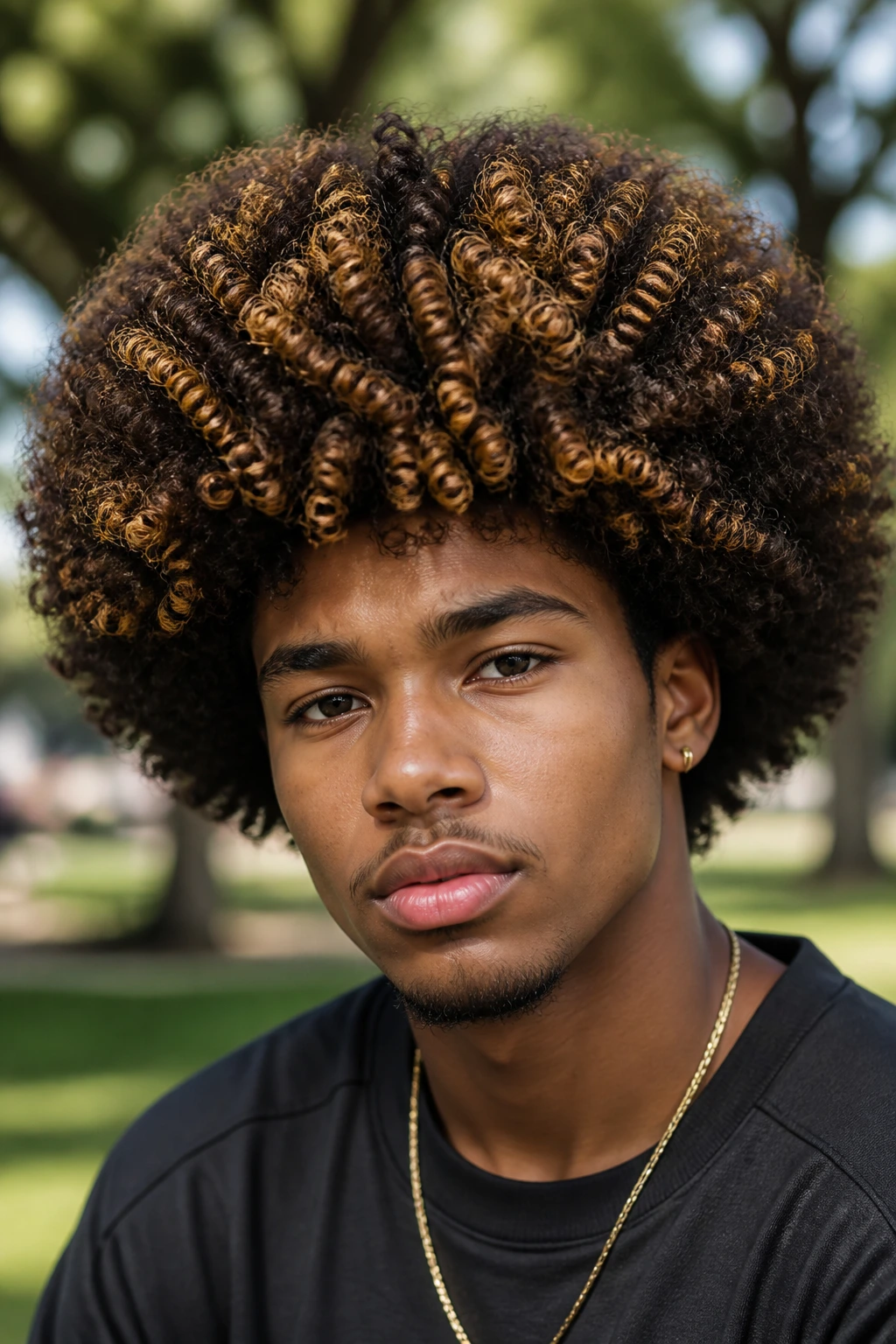
A round afro can look almost sculptural when the color is placed in ribbons instead of patches. Honey highlights soften the shape and let the curve of the afro catch light at different depths.
The round silhouette matters more than the exact number of highlights. Keep the shape even, not flattened at the sides, and place the honey pieces where the curls arc outward. That creates movement without messing with the outline. I like this on dense hair because the volume gives the highlights somewhere to live.
A small barber-shop note
Ask for the roundness to be preserved, not thinned out. Over-thinning a curly afro is a fast way to lose that rich, cloud-like shape. The blonde should add detail, not strip away the body.
20. Tapered Puff With Wheat Blonde Underlayers
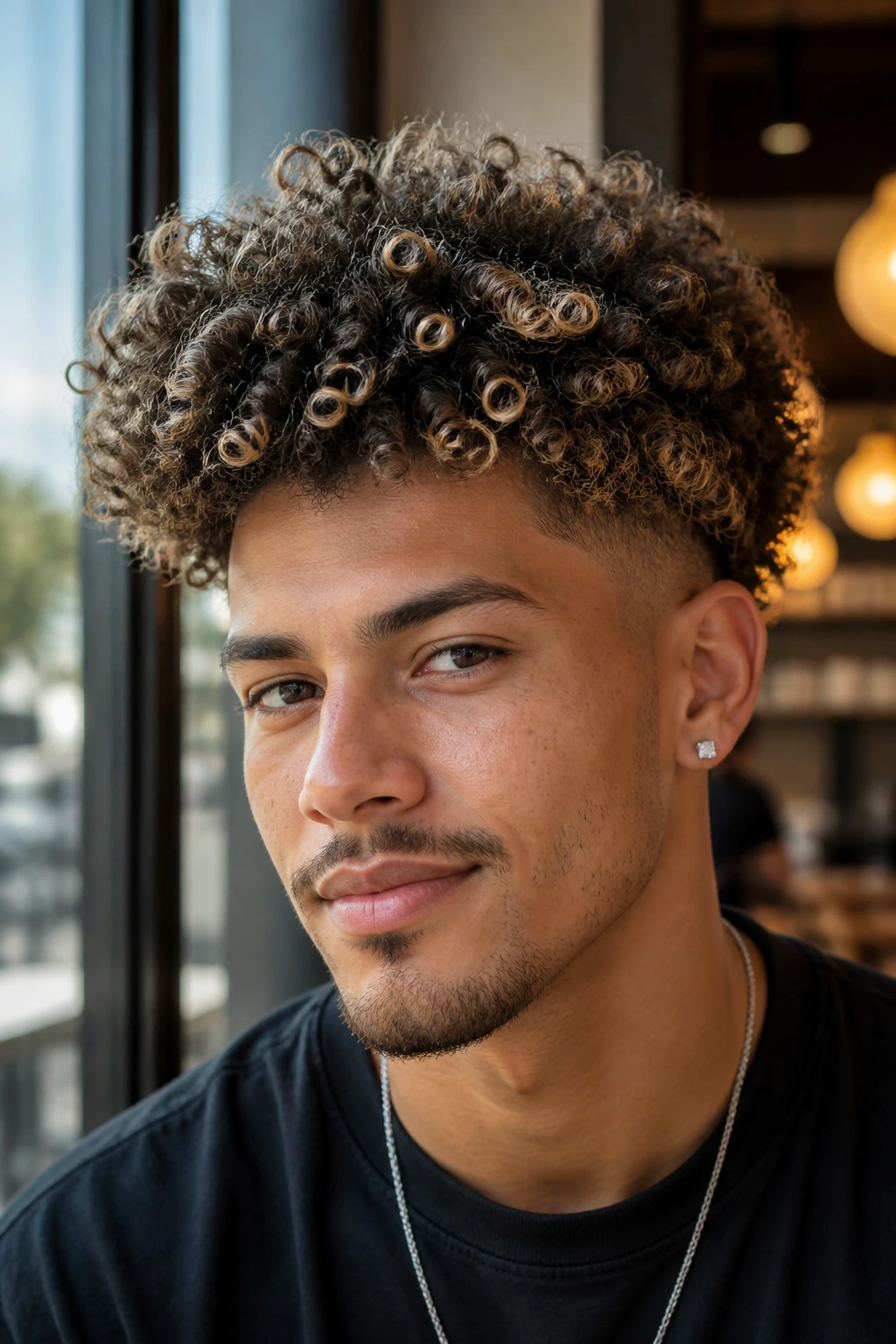
A tapered puff lets the curls keep their natural fullness while the sides and neckline stay clean. When the wheat blonde sits under the top layer, it peeks out as the puff moves, which gives the whole style a little hidden shine.
This is one of the best options for people who like easy mornings. The puff can be gathered, fluffed, or left loose. The color doesn’t have to do all the work, because the shape itself is strong. Underlayer blonding also grows out better than face-framing streaks if the hair is cut often.
What makes it different
A lot of blonding is done on the visible layer. This one flips that idea. The surprise lives underneath, and that makes the style feel less obvious while still giving it dimension.
21. Medium Shag With Shadow Root Blonde
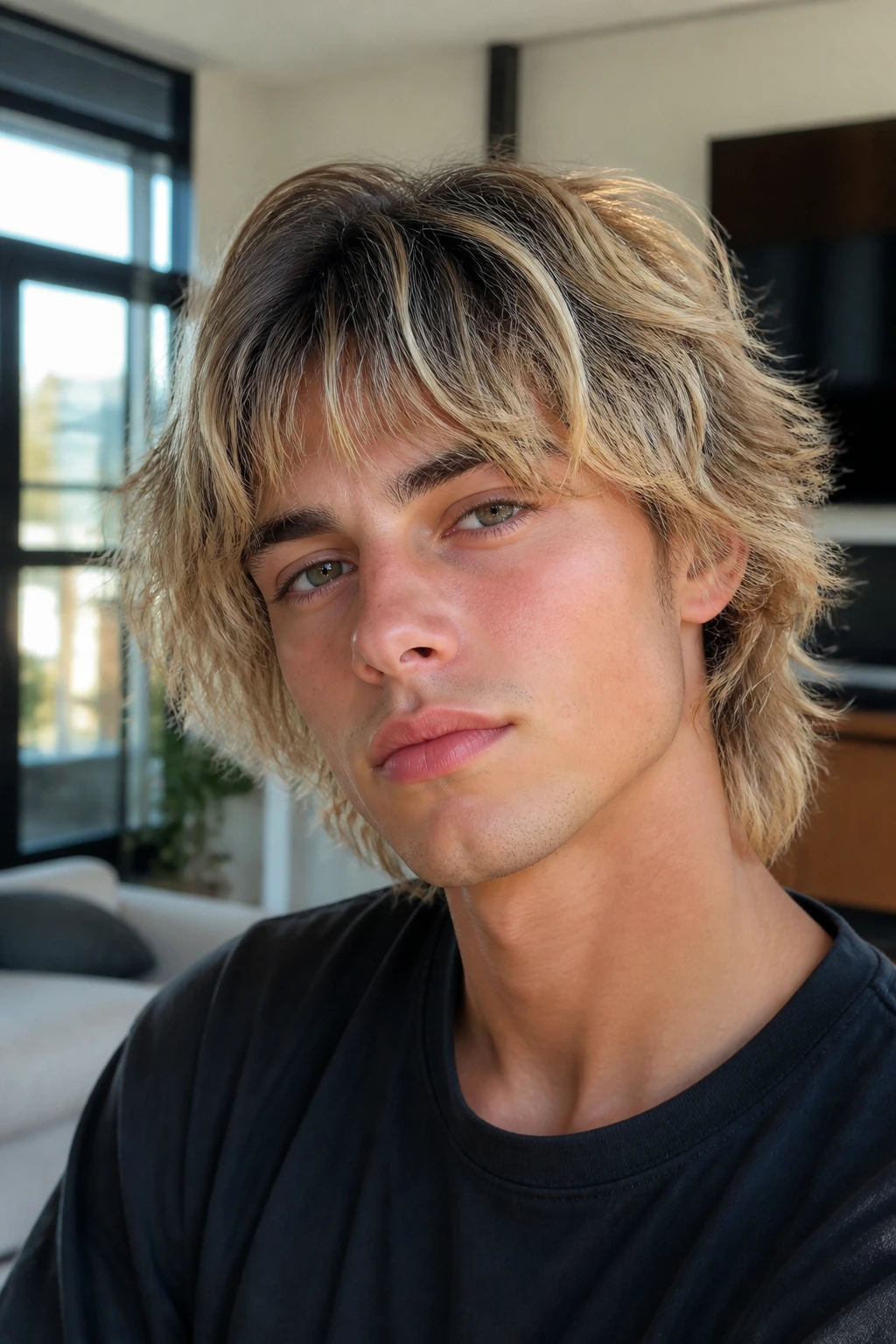
Shadow root blonde is one of the smartest choices for curly shags. Darker roots keep the shape grounded, while the lighter mids and ends create movement through the layers. On a medium shag, that contrast keeps the hair from looking muddy or overprocessed.
This cut is a good middle ground for guys who want length but don’t want the upkeep of a full blonde head. The shadow root softens the grow-out line, which means you can go longer between color sessions. It also helps on curls that puff up when they’re cut too blunt.
The shag needs unevenness. That’s the point. If every layer hits the same length, the blonde loses the broken-light effect that makes this style worth wearing.
22. Cropped Curls With Silver-Beige Frosting
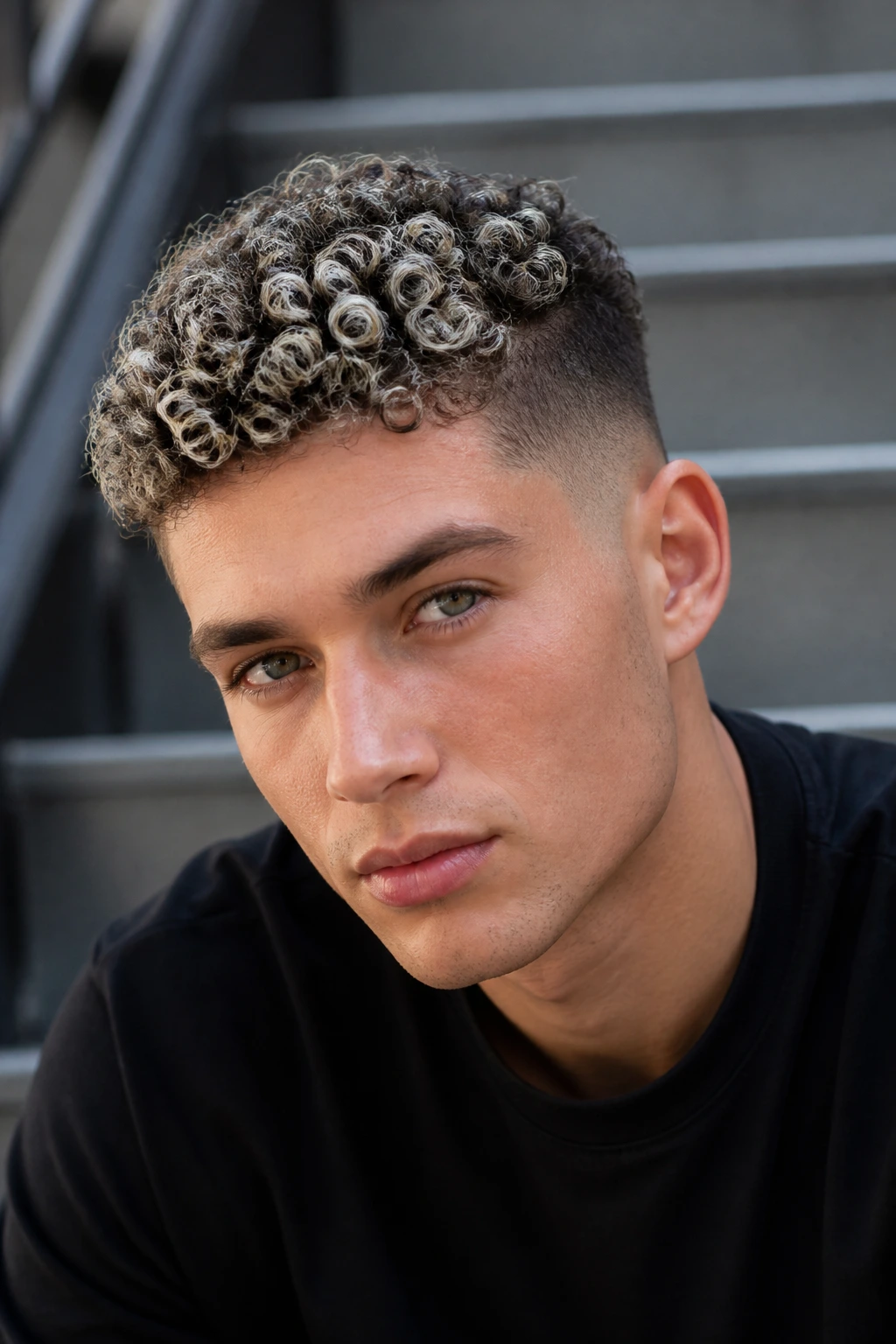
Silver-beige frosting is cooler and quieter than honey or gold. On short cropped curls, it gives a crisp look without making the hair bright in a beachy way. I like this tone on darker bases because it looks sharp against the natural shade.
The crop should stay tight around the perimeter and a little looser on top. Keep the frosting limited to the top ridge and a few outer curls. If you spread it everywhere, the haircut starts to look dusty instead of dimensional.
Best for
- Short curly cuts
- Cooler skin tones
- People who want less warmth in the blonde
- Anyone okay with regular toner refreshes
23. Disconnected Curly Undercut With Blonde Volume
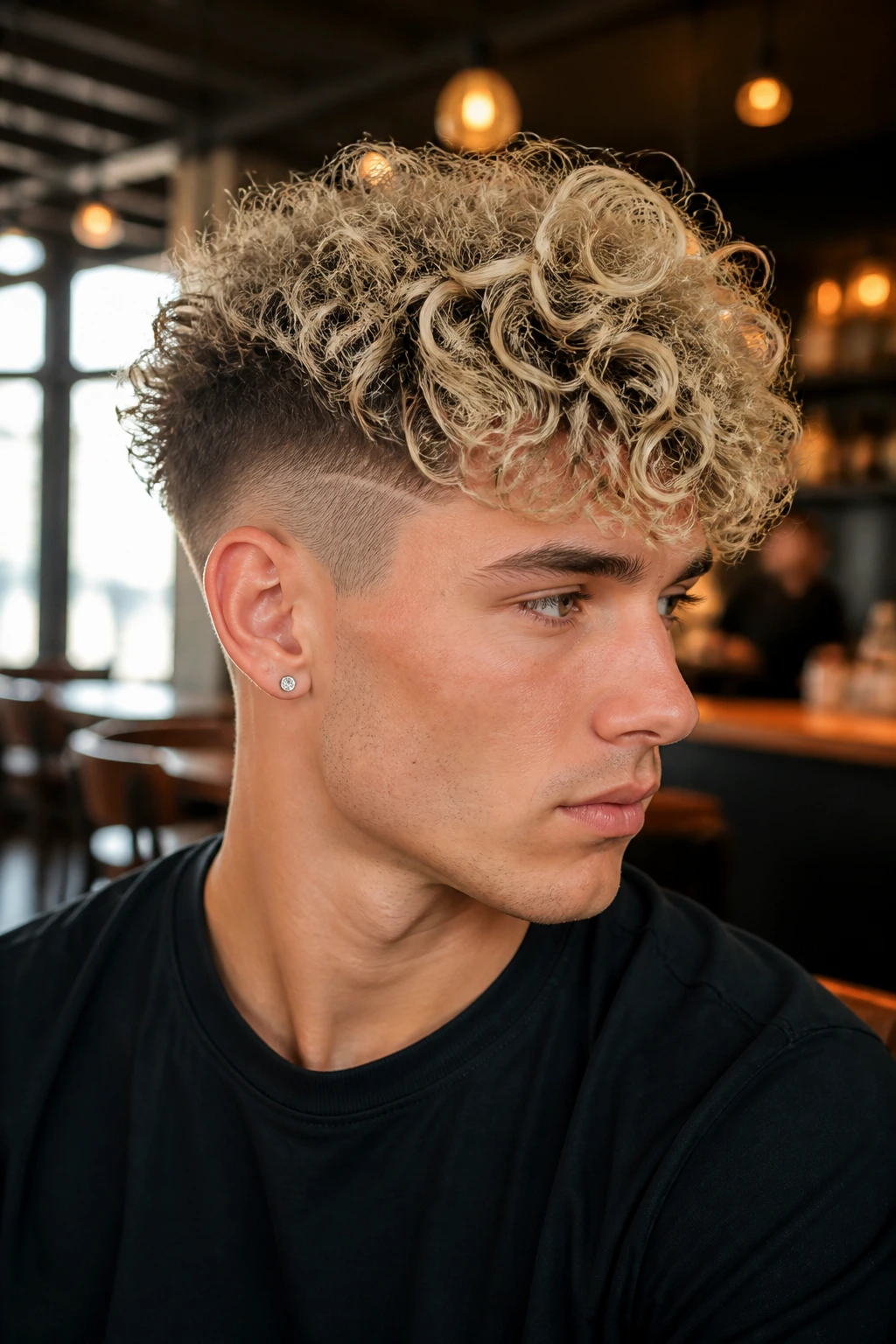
A disconnected undercut can be tricky on curls, but when it works, it really works. The sides are cut short and clean, the top stays big, and the blonde volume becomes the main event.
The disconnect has to be deliberate. If the top is too thin, the gap between top and sides looks accidental. If the top is dense and the blonde is painted in slices, the contrast becomes the style. That’s the version worth copying.
One thing to watch
This cut asks for confidence. It’s not a blend-everything haircut. The point is separation. If you want something quieter, skip this and pick a taper instead. If you want something bold, this one delivers without needing a long top.
24. Loose Curl Sweep With Buttery Balayage
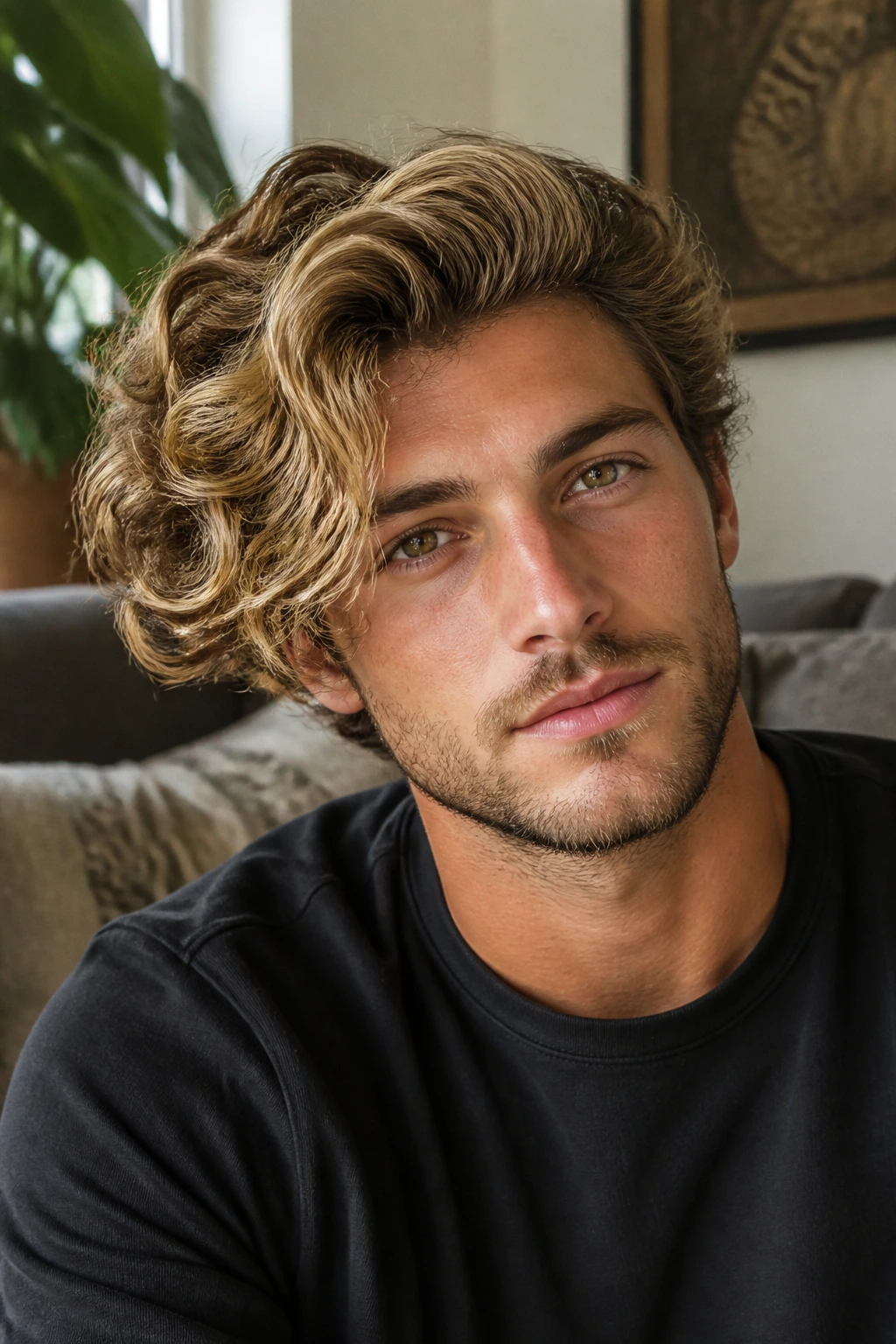
Buttery balayage on loose curls is the most easygoing blonde here. The color is hand-painted so it follows the sweep of the hair instead of fighting it, and the buttery tone keeps things soft rather than icy.
This works especially well if your curls lean wavy or fall into loose spirals. The sweep can go to one side, back off the forehead, or just drift naturally. Because the color is painted in open strokes, it looks good even when the style is a little messy. That’s not a bug. That’s the point.
A little cream and a soft diffuser dry are enough. Too much product will close the color down and make the balayage harder to see.
25. Bright Ends, Dark Roots Curly Cut
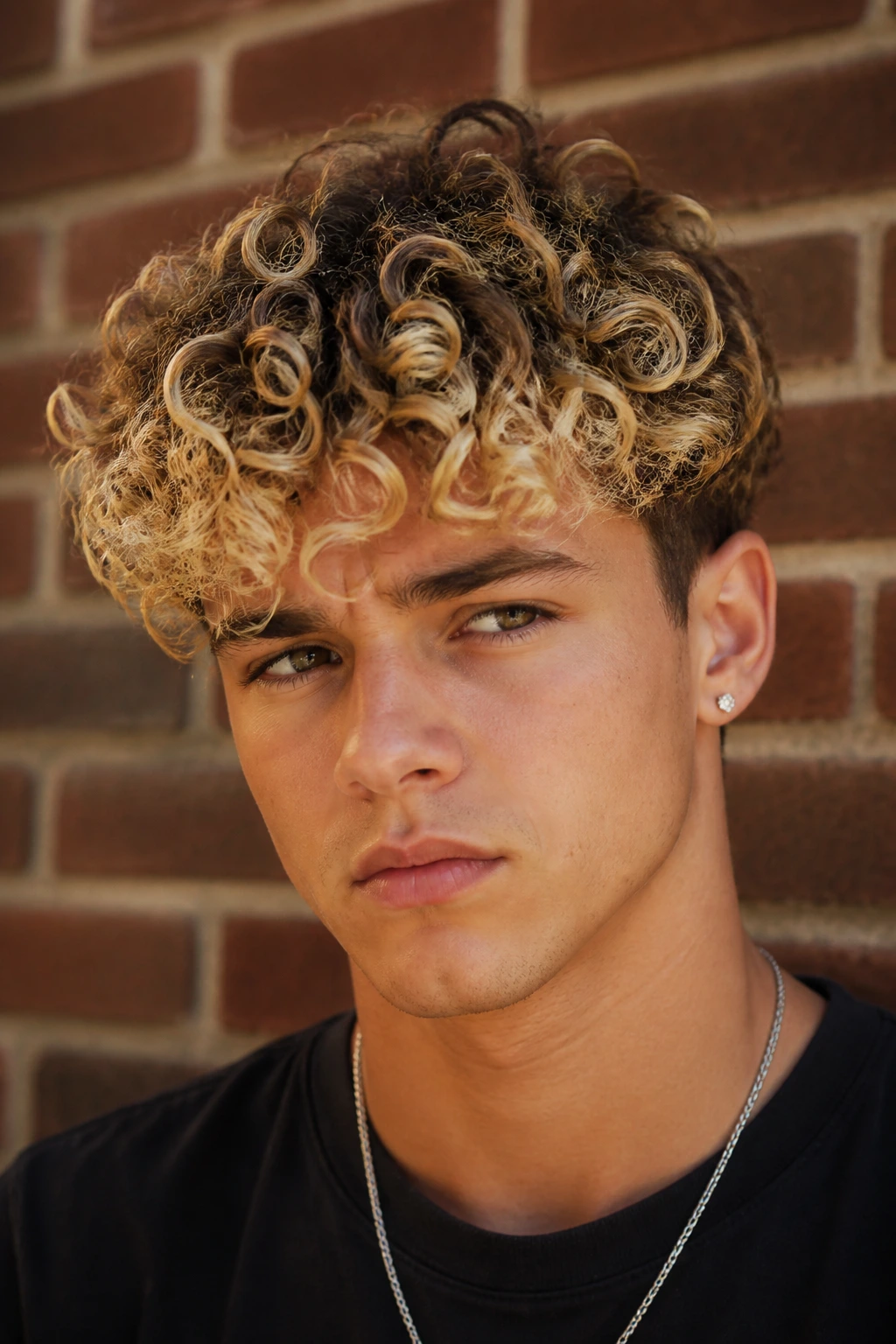
The last style is the one I keep coming back to when someone wants the strongest contrast without a complicated shape. Keep the roots dark, brighten the ends, and let the curls do the rest. Simple. Clean. Hard to mess up if the cut is good.
What makes it work is the gradient. Dark roots protect the scalp area from looking thin, while the blonde ends catch light every time the curls move. It’s also one of the easiest styles to grow out because the root shadow is already built in. That matters more than people admit.
If you want the whole head to feel fuller, this is the style to try first. It gives blonde dimension without forcing every inch of hair to compete for attention.
Why Dimensional Blonde Looks Better on Curly Hair
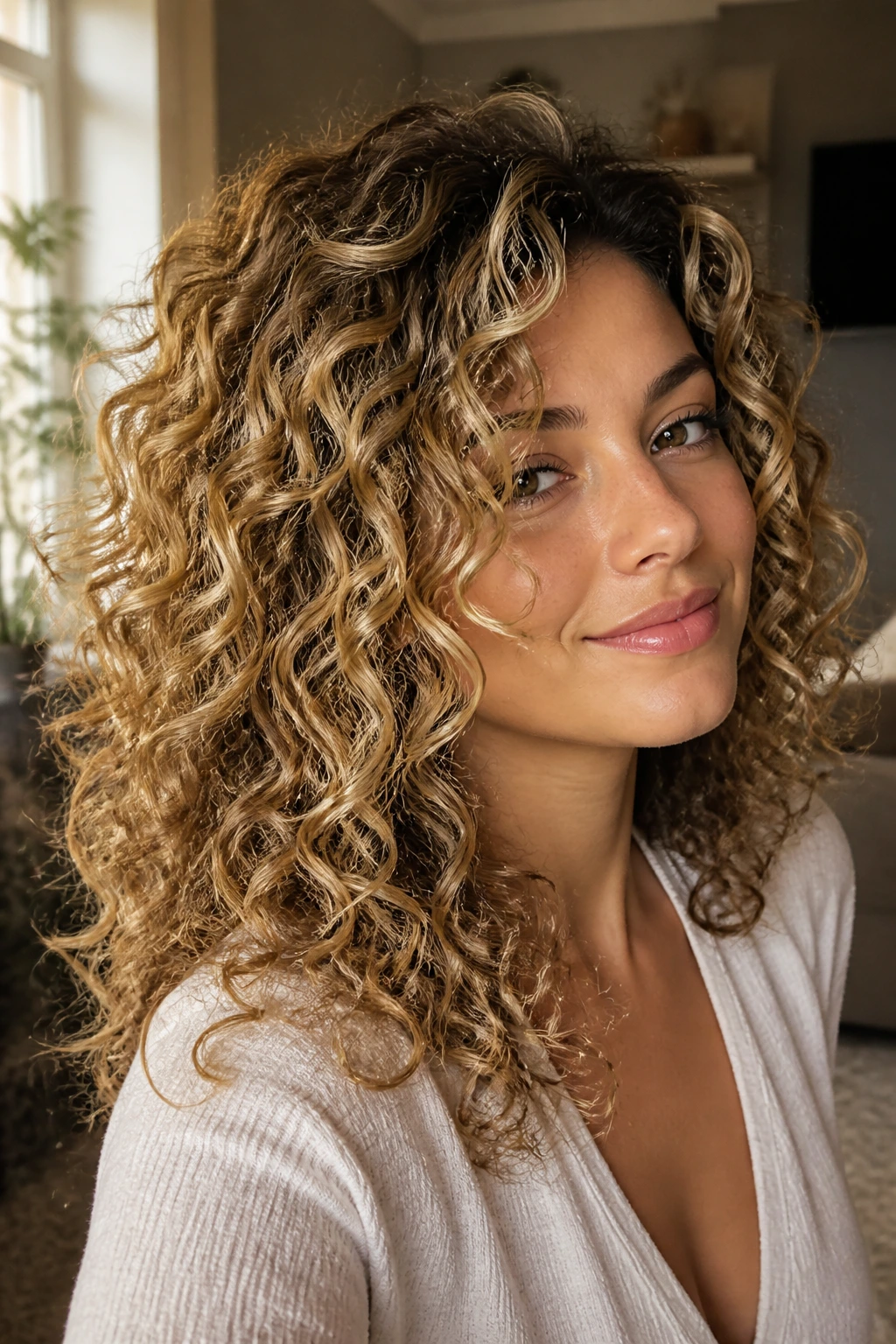
Curly hair changes the way light lands. That’s the whole reason dimensional blonde works so well here. A coil has ridges, bends, and tiny shadows, so one color can look flat fast. Two or three tones, though, make the curls read in layers even when the haircut itself is short.
The darker base is not a problem. It’s the frame. Honey, beige, ash, wheat, and champagne tones sit on top of that frame and help the shape read as fuller, not thinner. This is why so many of the better curly blonde looks use root shadow, ribbons, or tips instead of root-to-end blonde.
Light belongs on the bend, not only the edge
A few pieces of blonde around the forehead, crown, and outer curls do more than a full-head lighten job in many cases. That’s because the eye follows contrast, and curls already create it for free. Give the eye a brighter peak and a darker pocket beneath it, and the style starts moving even when you’re standing still.
Root shadow saves the grow-out
Flat blonde grows out in a hard line. Dimensional blonde does not need to. A darker root gives the salon work a longer life, and on curly hair, that line is softened even more by the texture itself. If you’ve ever watched a curly bleach job turn puffy after two weeks, you already know why this matters.
Essential Tools for These Hairstyles
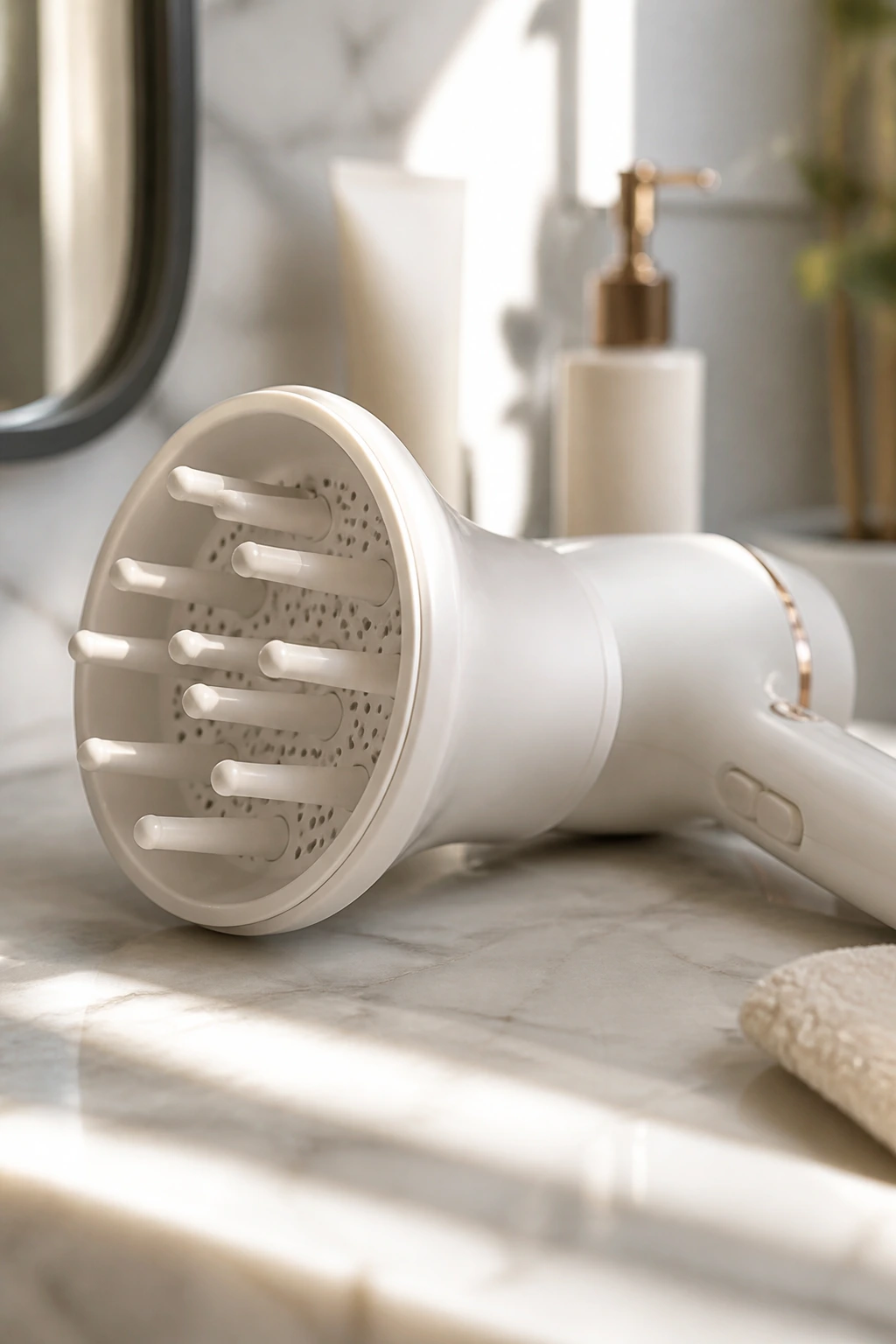
- Diffuser attachment — dries curls without blasting the pattern apart; almost mandatory if you want the blonde pieces to clump and shine.
- Leave-in conditioner — keeps lightened curls from feeling rough after washing.
- Curl cream or light mousse — gives shape without crushing the curl or making the blonde look greasy.
- Wide-tooth comb or detangling brush — helps spread product without pulling the curl pattern flat.
- Microfiber towel or cotton T-shirt — cuts down on frizz when you’re squeezing out water.
- Heat protectant — worth using any time you touch the hair with a dryer or wand.
- Color-safe shampoo and conditioner — keeps toner from washing out too quickly.
- Purple shampoo — use sparingly on blonde pieces, usually every 10 to 14 days if brass starts creeping in.
- Bond-building treatment — useful after lightening, especially on tighter curl types that feel drier at the ends.
- Satin pillowcase or bonnet — the cheap fix for overnight frizz and dull color edges.
Smart Color and Cut Choices for Dimensional Blonde Curly Hair
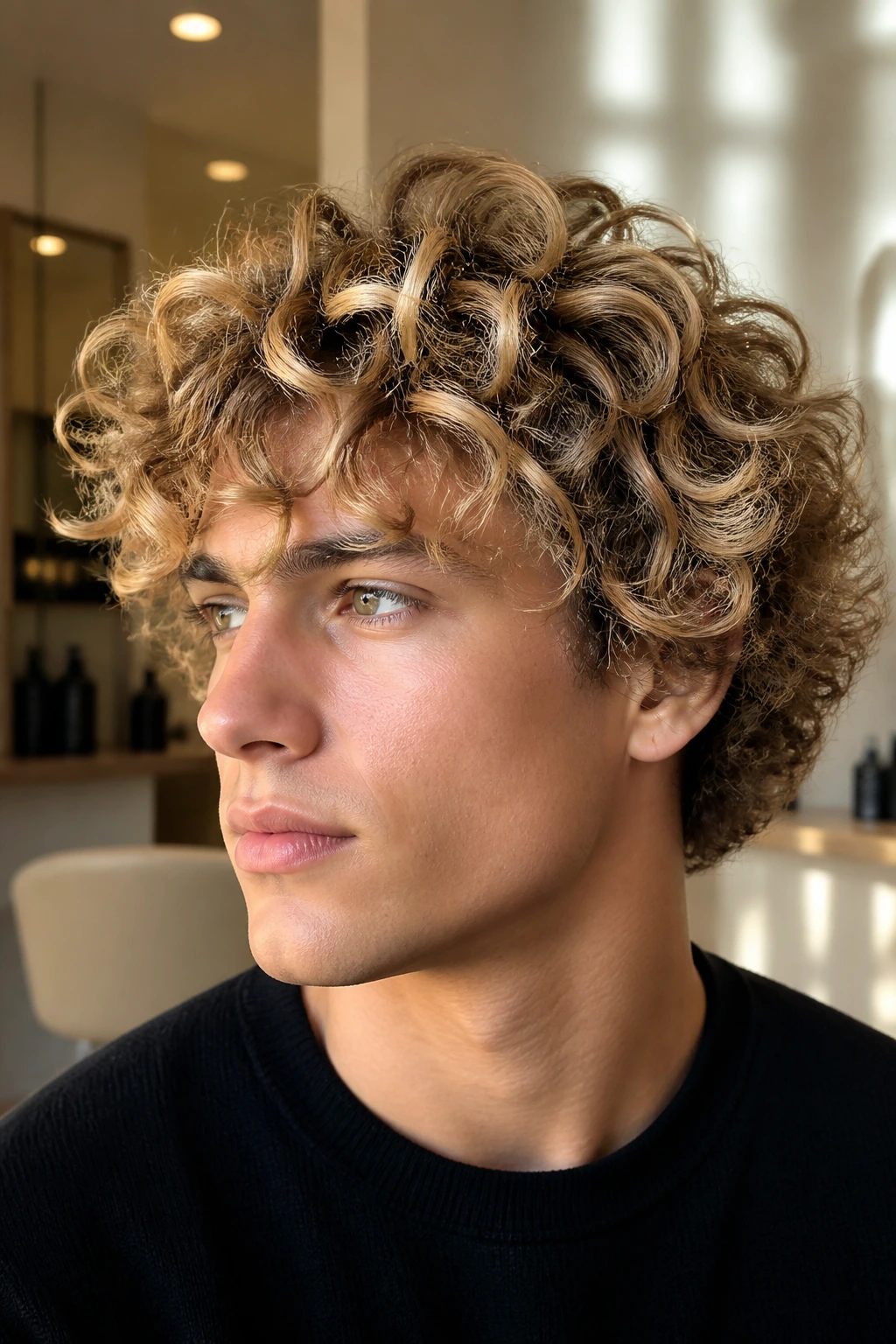
The smartest blonde starts before the color does. If your curls shrink a lot, leave more length than you would on straight hair. A barber can always trim more, but they cannot put the spring back once it’s gone. That rule saves a lot of regret.
If the base is dark
Ask for ribbons, tips, or face-framing pieces first. A full lift from black or deep brown to pale blonde on curls can take a heavy toll if the hair isn’t already healthy. Honey, caramel, beige, and wheat blonde often look better than icy blonde on the first pass anyway.
If the curls are tight
Keep the color on the outer layer and crown. Tight coils hide a lot of the blonding work, so you want the light to sit where it will actually show. Also, tighter curls usually need more moisture, so the cut should stay clean and not over-thinned.
If the hair is fine
Go softer with the blonding and keep the darker base visible. Fine curls can lose density fast if they’re lightened too much. A shadow root and a few brighter pieces around the front usually beat an all-over lift.
How to Wear These Styles in Real Life
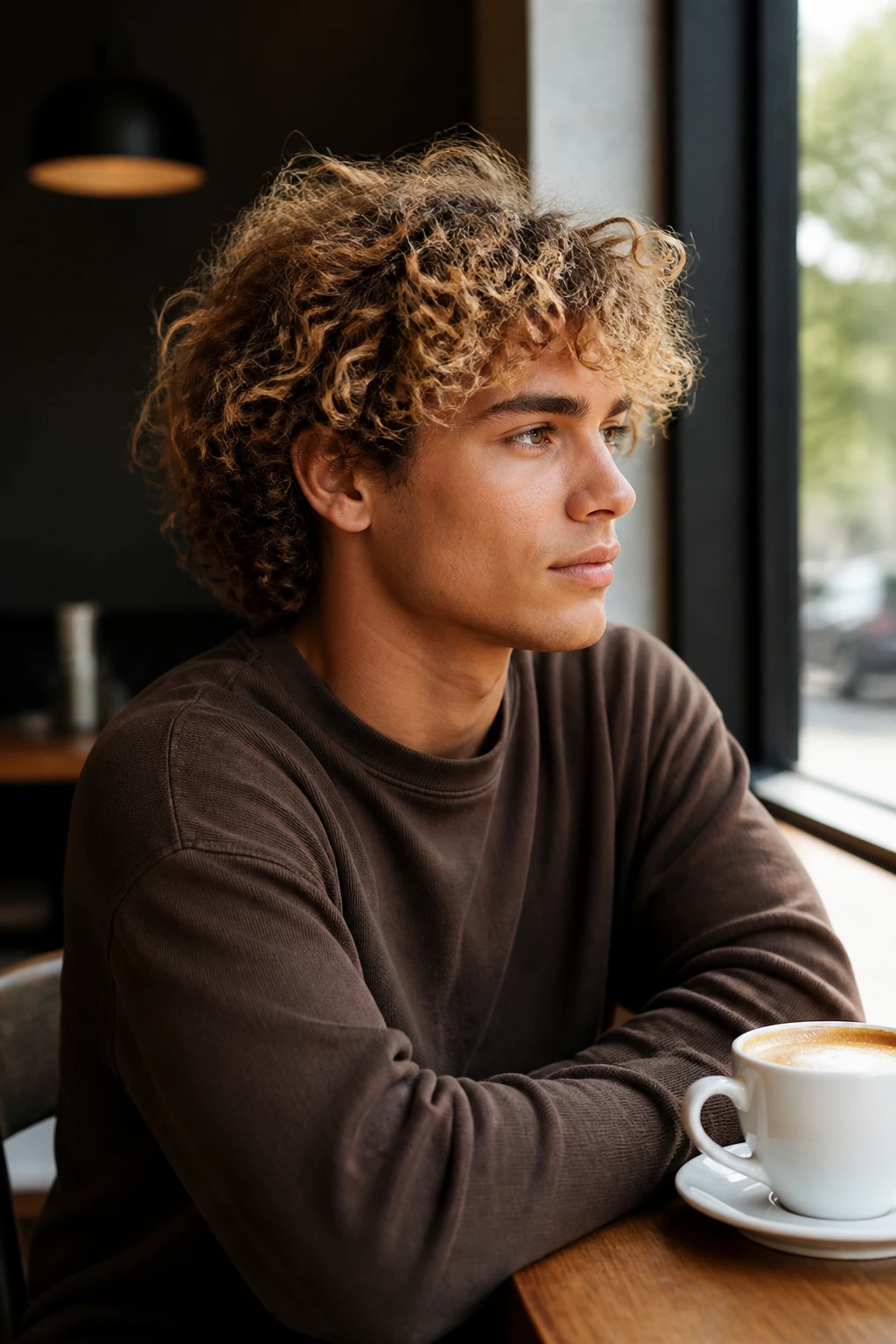
Presentation: Let the curls do the shaping. Finger-style the top, keep the parts soft, and leave a few blonde pieces free near the front so the color reads instead of hiding under product.
Accompaniments: A clean taper, a short beard, or a sharp neckline keeps the blonde from feeling too busy. Glasses work well with the softer fringe styles; hats are better with crops and fades because they preserve the silhouette underneath.
Portions: If your curls shrink hard, ask for slightly more length than the photo shows. For boys, a shorter side and a longer crown usually makes the style easier to manage after school, sports, and a rough pillowcase.
Beverage Pairing: Water, coffee, or a cold drink by the mirror won’t change the haircut, but it makes the styling routine less annoying when the diffuser is taking its time. That counts for something.
Extra Styling Moves That Make the Blonde Pop
Shine Boost: A tiny amount of lightweight oil on the outer curls can make blonde pieces look cleaner, but stop at one pump. Too much and the color goes dull at the first glance.
Customization: If your curls puff at the roots, use mousse there and curl cream through the mids. If the ends feel dry, skip the heavy gel and use a leave-in plus a soft hold styler instead. The mix matters more than the brand.
Serving Suggestions: For a cleaner finish, tuck one side behind the ear, keep the neckline fresh, and let a few lighter curls land on the forehead. That little bit of asymmetry keeps the style from looking overworked.
Make-It-Yours: For school or office settings, keep the blonde lower and softer. For something louder, move the bright pieces higher toward the crown or front fringe. Same haircut. Very different mood.
Keeping Dimensional Blonde Curly Hair Fresh Between Cuts
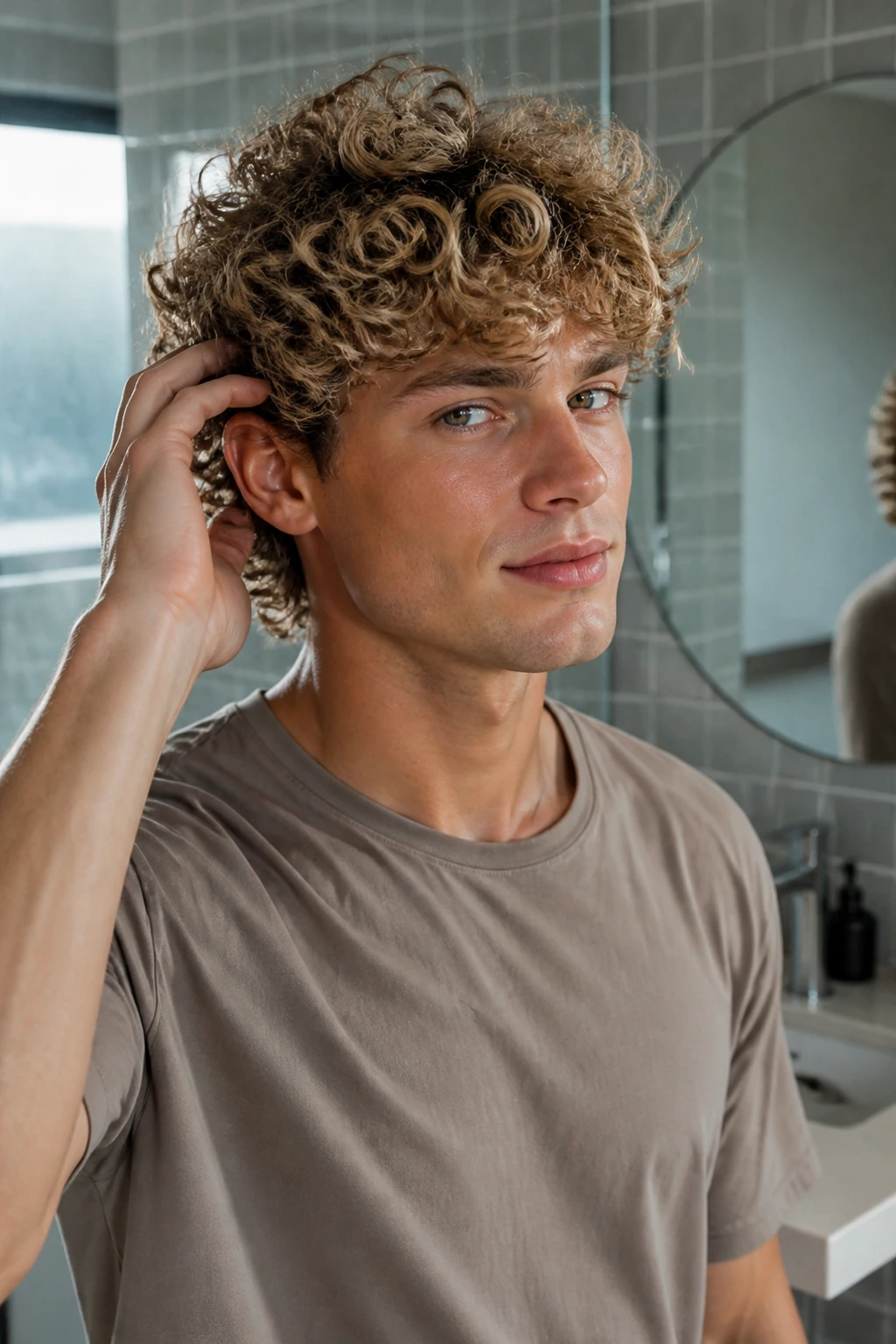
Blonde curls need a steadier routine than dark curls, but it’s not complicated. Rinse or refresh the hair after sweat-heavy days, then shampoo every 2 to 4 days depending on how oily your scalp gets. Lightened curls usually like less washing, not more.
Purple shampoo is a tool, not a lifestyle. Use it when the blonde starts turning yellow or brassy, often every 10 to 14 days, and keep it on only as long as the bottle says. Leave it too long and the blonde can pick up a dull cast. A deep conditioner once a week helps the ends stay soft, especially on platinum slices or lighter tips.
Salon timing matters too. Shape-ups every 4 to 6 weeks keep the fade or taper clean. Toner refreshes usually fall in the 4 to 8 week range, while highlight touch-ups depend on how high the lift is and how strong the grow-out line looks. If the hair starts to frizz at the ends faster than usual, the color is probably asking for moisture before it asks for more lightening.
Variations and Adaptations to Try
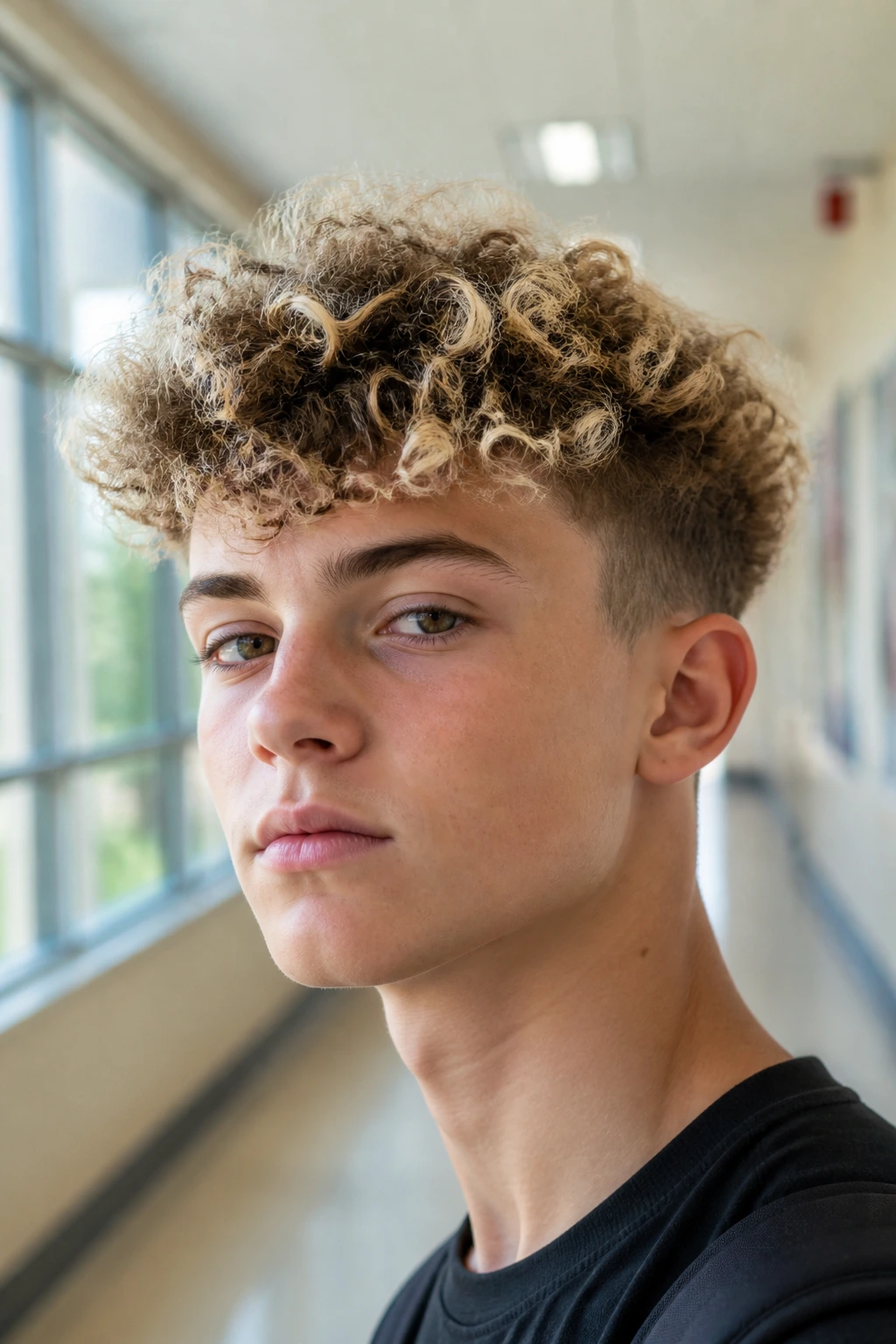
Quiet Classroom Blend: Keep the sides short, leave the top curly, and push the blonde toward the ends rather than the roots. It’s an easy way to get dimension without making the haircut loud. Good for boys, students, and anyone who needs the style to stay tidy under a hoodie.
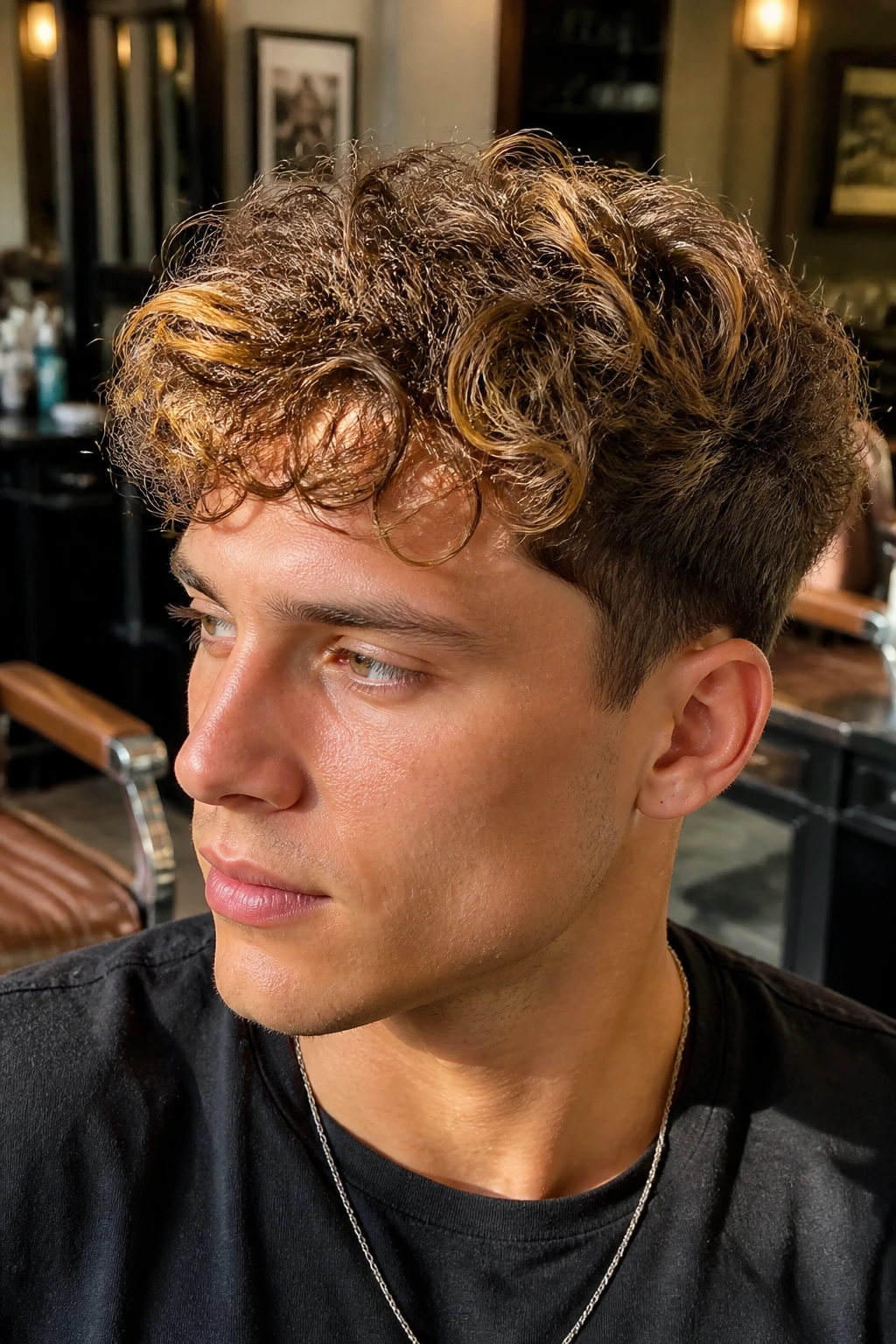
High-Contrast Barber Cut: Go with a low fade, darker roots, and bright blonde tips or slices on top. This version looks sharper and a little more rebellious, especially on dense curls. It needs more maintenance, but the payoff is strong.
Warm Honey Finish: Honey and caramel tones suit people who want the blonde to look sunlit instead of icy. The warmth softens the contrast with brown curls and usually feels easier to wear day to day. It’s a strong choice if brass is already part of your hair’s natural tendency.
Cool Ash Correction: If your hair pulls orange, ash blonde or beige blonde can calm it down. This works well on mid-length shags, side sweeps, and tighter crops where the blonde needs to look controlled. Don’t overdo the cool tone or the style can get flat.
Grow-Out Friendly Taper: Ask for more color on the mid-lengths and ends, with a darker root left intact. This adaptation keeps the look in shape longer between salon visits, which is especially useful for busy weeks or for kids who don’t sit still for long appointments.
Common Mistakes to Avoid
-
Bleaching the whole curl pattern one flat shade. The hair can end up looking wide and puffy instead of dimensional. Fix it by keeping darker roots or lower layers in play.
-
Ignoring shrinkage when the cut is made. Curls spring up after drying, and if the top was cut too short, the blonde pieces can disappear into the shape. Leave more length on top and trim in small steps.
-
Using purple shampoo like a daily cleanser. That can leave blonde curls dry and dusty. Use it only when brass shows up, then switch back to a gentle color-safe wash.
-
Loading the hair with heavy product. Thick creams and gels can make blonde pieces look greasy or dark at the surface. Start small and add only if the curls need more hold.
-
Letting the fade get too high for the top length. A very high fade can make short curly tops feel disconnected. A low or mid fade usually keeps the balance better.
-
Skipping trims after lightening. Lightened ends split faster, and split ends ruin the clean look of blonde curls fast. A trim every 6 to 8 weeks usually keeps the shape from fraying.
Frequently Asked Questions
Will blonde damage curly hair more than straight hair?
Usually, yes, because curly hair is already a little drier at the bends and ends. That does not mean blonde is off-limits; it means the lift should be done by someone who understands curl texture, with bond care and a plan for moisture afterward.
What blonde tone looks best on dark curly hair?
Honey, caramel, beige, and wheat blonde are the easiest places to start. They keep the hair looking dimensional and avoid that harsh, overprocessed look that can happen when the lift is pushed too pale too fast.
Should the color go all the way to the roots?
Most of the time, no. A darker root makes the style look fuller and helps the grow-out stay softer. Root-to-tip blonde can work on some cuts, but it takes more upkeep and usually demands healthier hair.
How often should the blonde be toned?
Toner refreshes often land somewhere around 4 to 8 weeks, depending on how fast the brass comes back and how often you wash. If the blonde starts looking yellow before that, a brief purple shampoo session can buy time.
Can boys wear these styles without a huge styling routine?
Yes, if the cut is chosen well. Shorter crops, low tapers, and blonde tips or ribbons are easier than long layered shags. A quick towel dry, a little curl cream, and a diffuser are usually enough.
What if my curls turn frizzy after lightening?
That usually means the hair needs moisture and less heat, not more product piled on top. Use a bond-building mask, reduce shampoo frequency, and keep the dryer on low with a diffuser. If the ends stay rough, the cut may need a trim too.
Do these styles work on loose waves, or only tight curls?
They work on both, but the placement changes. Loose waves do better with balayage, face-framing pieces, and soft root shadows. Tighter curls can handle more contrast in small ribbons or tips because the texture breaks up the color naturally.
Which styles are best if I want low maintenance?
The sunlit crop, the tapered puff, the short afro with peaks, and the shadow-root shag are all easier to live with. They grow out more gently, need less daily coaxing, and don’t depend on a perfect finish to look decent.
The Look That Lasts
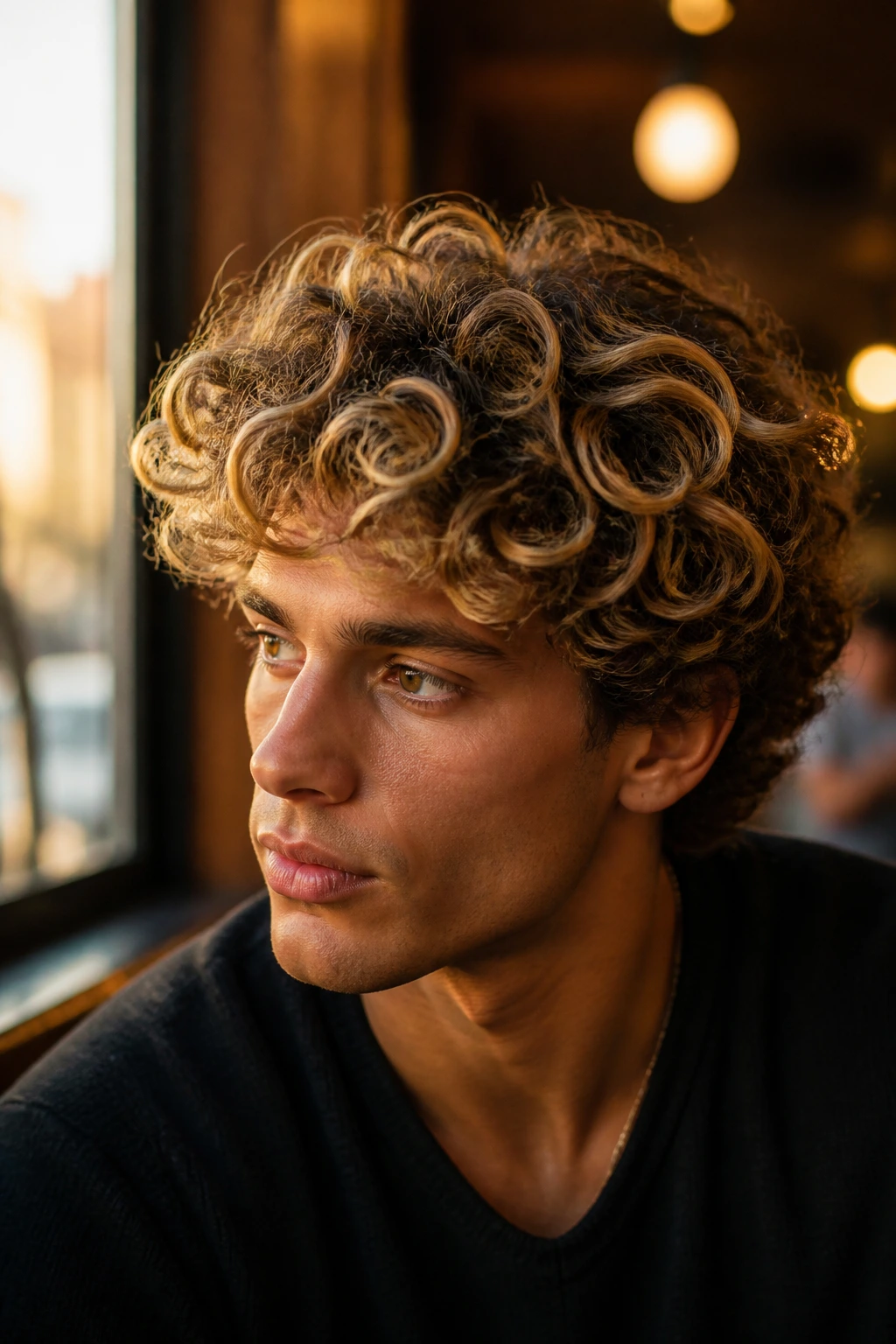
The styles worth copying are the ones that treat curl pattern like the main event and blonde like the amplifier. That’s why ribbons, tips, halos, shadow roots, and soft panels keep showing up here. They give the hair depth without sanding down the texture that made you want curly hair in the first place.
Pick one style that matches how much upkeep you’ll actually handle. Bring a photo, mention your curl shrinkage, and ask for the color to live where light naturally lands. That one conversation can save a lot of regret in the mirror later.