



Thick hair on a five-year-old boy can look adorable in the morning and like a triangle by lunchtime. That’s the whole trick with haircuts for boys with thick hair: the cut has to work with the density, not just shorten it. If you take too little off, the sides puff. If you take too much off in the wrong places, the top turns heavy and blocky. There’s a narrow middle ground, and that’s where the good cuts live.
A strong five-year-old haircut for boys with thick hair doesn’t need to be fussy. It needs shape, a sensible amount of weight removal, and enough softness around the hairline that it still looks like a child’s haircut, not a tiny adult fade trying too hard. The best styles also survive helmet straps, car seats, playground sweat, and the sort of rough towel-drying that happens when a kid is already halfway out the bathroom door.
What helps most is knowing which styles actually control bulk. Some cuts need texture on top. Some need a clean taper at the ears. Some need the fringe pushed forward so it doesn’t explode upward. And some simply need a barber who knows how to thin with restraint, because over-thinning thick hair is a fast way to get frizz, gaps, and strange little spikes that stick out at the crown.
Why These Haircuts Make Thick Hair Easier to Live With
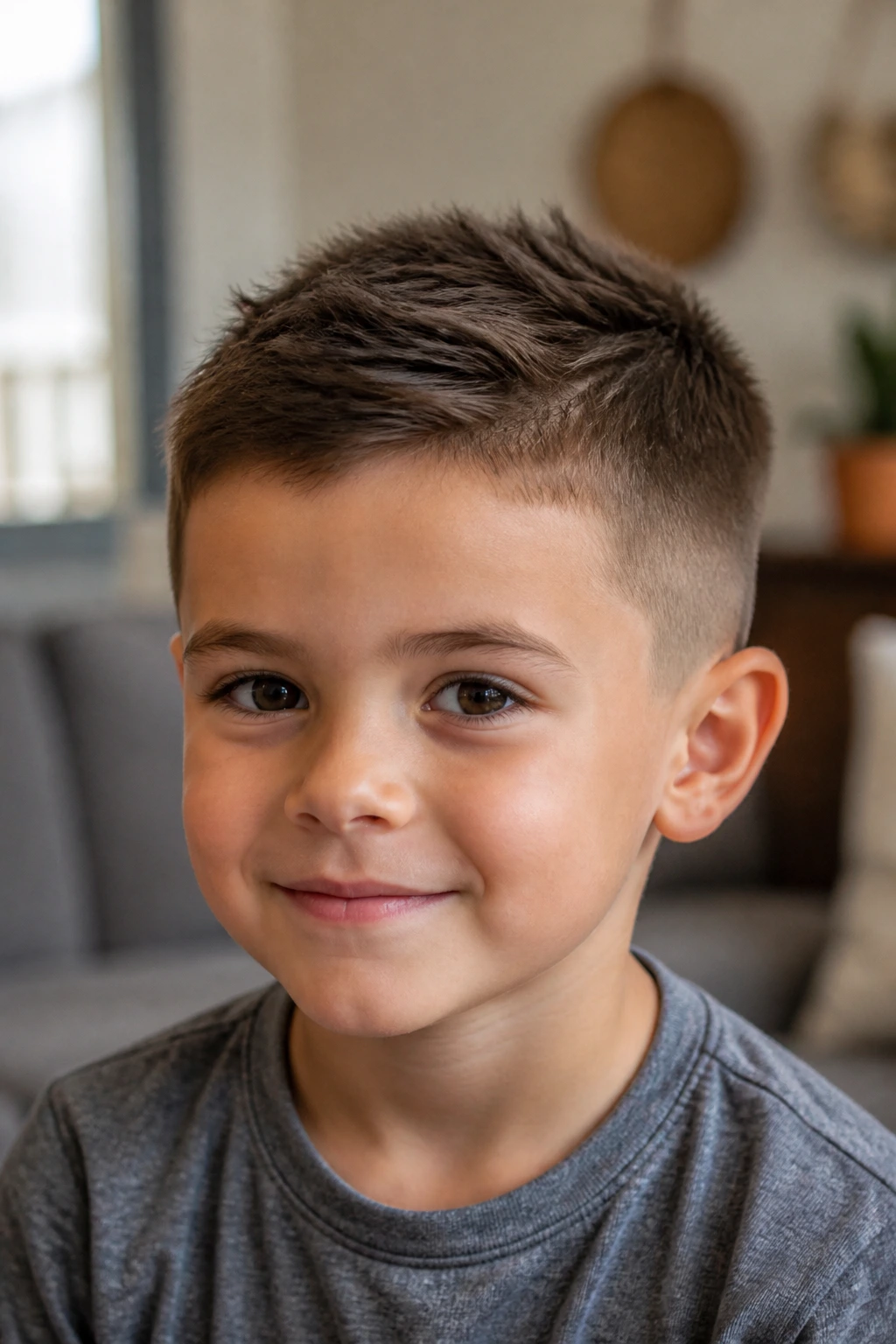
- They remove bulk where it causes puffing: Thick hair swells at the sides first, so the smartest cuts take weight off the temples, around the ears, and just under the crown.
- They leave enough length to lie down: A buzzed top on dense hair can stand up like brush bristles; a little extra length gives the cut a chance to settle.
- They grow out in a cleaner shape: Thick hair that’s cut with soft edges and taper grows back looking intentional instead of shaggy overnight.
- They keep mornings short: Most of these styles need either no product or a pea-sized amount of matte paste.
- They fit real five-year-old life: Helmets, naps, swimming, and wrestling with couch cushions do not destroy them as fast as more delicate styles.
- They make the barber’s job clearer: Each cut gives a specific lane — clipper work, scissor work, fringe control, or tapering — so you are not guessing in the chair.
1. Textured Crew Cut
A textured crew cut is one of those rare boys’ haircuts that looks tidy without looking stiff. On thick hair, that matters. Leave the top at about 1 to 1½ inches, keep the sides in the #2 to #3 guard range, and ask for a soft taper around the ears and neckline so the cut doesn’t land with a hard shelf.
Why It Works on Thick Hair
The crew cut wins because it doesn’t fight density head-on. It reduces the bulk, but it still leaves enough length on top for the hair to bend instead of springing outward. That little bit of texture keeps the cut from looking like a helmet.
If your child has a cowlick at the crown, this cut is forgiving. A barber can point-cut the top so the hair falls in pieces instead of one heavy block. That small move makes a big difference after a bath, when thick hair often dries into a puffed-up shape.
Barber Note
- Ask for short, textured top rather than a blunt, flat top.
- Mention any spot that sticks up at the back.
- If the sides get fluffy fast, keep the taper low and clean.
Best for: boys who need a low-drama cut that still looks neat in school photos.
2. Classic Side Part with Taper
A side part on thick hair can be sharp in the best way, but only if the barber respects the bulk. Leave enough length on top — usually 1½ to 2½ inches — so the hair can lie over without fighting itself, then taper the sides gently so the part has room to breathe.
The clean part line does a useful job on dense hair: it gives direction. Thick hair often wants to stand in every direction at once, and a side part turns that energy into structure. The cut looks especially good when the top is combed while damp, then left to dry with a natural bend instead of blown flat.
This is the style I’d pick when you want something polished without making a five-year-old look overdressed. It works for school, for family events, and for those days when the hair needs to stay in place under a sweater hood or a cap.
What to Ask For
- A soft side part, not a razor-hard line.
- Scissor work on top so the hair keeps movement.
- A taper that fades neatly into the sideburns.
One detail people miss: thick hair looks better with a looser part, not a perfect ruler-straight line. That tiny bit of softness keeps it kid-like.
3. French Crop with Short Fringe
Why does the French crop work so well on dense hair? Because it puts the energy in the front where you can see it, instead of letting all that thickness build into a square shape on the sides. The fringe sits forward, usually around ½ inch to 1 inch long, and the top stays choppy so it doesn’t form a smooth cap.
This style is a lifesaver when hair keeps falling into the eyes. The short fringe gives the haircut a clear edge, and the tighter sides keep the shape from puffing out around the ears. I like it more than a blunt bowl cut because it has some roughness in the texture — just enough to keep it from feeling severe.
What to Tell the Barber
- Keep the fringe short but not heavy.
- Use point cutting on top so the front isn’t one solid slab.
- Leave a soft taper around the temples.
A little matte paste can help, but the cut should hold its shape even without much product. If the hair is very straight and thick, this one works especially well because straight hair shows every blunt edge. The crop keeps those edges under control.
4. Low Taper Fade with Swept Top
Picture a child who runs hard, sweats hard, and hates when hair gets in the way. That’s the low taper fade’s home turf. The sides stay clean without going harsh, and the top — usually 2 to 3 inches — gets brushed to the side or slightly forward, depending on the child’s growth pattern.
The beauty of the low taper is that it clears the thickest zones without making the haircut look severe. Around the ears and neckline, the fade takes out the puff that thick hair loves to build. On top, the length stays long enough to move, which matters if the hair is dense and wants to stick up as soon as it dries.
This one also grows out decently. A true skin fade needs more upkeep; a low taper gives you a longer runway before the cut turns fuzzy. That makes it a smart choice for a five-year-old who isn’t exactly patient about sitting still in the chair.
Quick Details
- Ask for a low taper, not a high fade.
- Keep the top long enough to sweep with fingers.
- Use a light cream or nothing at all.
It’s neat, but not fussy. That’s the whole point.
5. Scissor-Only Layered Cut
Some kids hate the feeling of clippers near their ears. Some parents hate how quickly a clipper-heavy cut can look grown out. A scissor-only layered cut solves both problems, and on thick hair it can look especially good because the barber can shape the bulk instead of shaving away the edges.
The key is layering — real layering, not random thinning. The top and crown get cut so the hair falls in softer pieces, with a little more movement at the ends. On dense hair, that stops the top from ballooning into one block. It also keeps the silhouette rounder and more natural, which is nice on a small head.
This is one of the most forgiving cuts in the whole list. It doesn’t demand product. It doesn’t require daily styling. It just needs a barber who understands where the weight is sitting and where it should come off.
Ask for This
- Scissors only on top
- Soft layers around the crown
- Tidy sides with no hard shelf near the ears
A short sentence, because this matters: do not over-thin it. Thick hair can take removal of weight, but too much thinning makes the ends fray and puff.
6. Ivy League with a Soft Part
The Ivy League is basically the polished cousin of the crew cut. It keeps the sides tapered and the top a little longer, usually around 1½ to 2 inches, which is enough length for thick hair to fall into a neat side sweep instead of sticking straight up.
Why it works so well is simple: it gives shape without losing softness. A five-year-old in an Ivy League cut still looks like a child, not a miniature executive. The top can be combed with a dab of light cream, or just finger-brushed if the hair has decent direction on its own.
Best If Your Child Has…
- A strong swirl at the crown
- Hair that lays better to one side
- A school setting where neatness helps
I’d pick this cut over a harder side part if the hair is very dense or slightly wavy. The soft part keeps the line from fighting the texture. It’s a small distinction, but it changes everything when the hair dries and starts to move.
7. Compact Mini Quiff
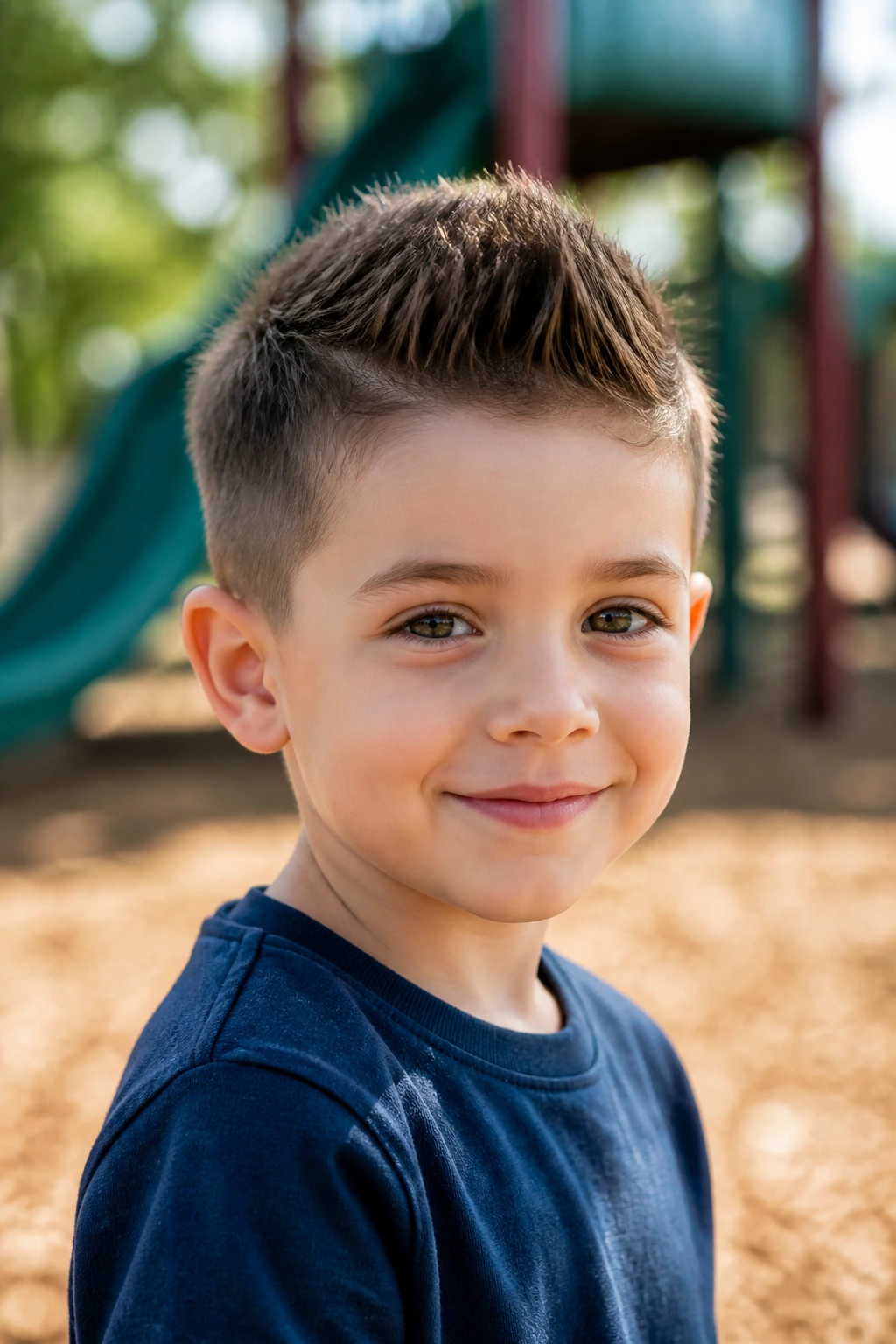
A mini quiff is what happens when thick hair gets a little personality without turning into a styling project. The front is left longer — often 2½ to 3 inches — and the rest is trimmed so the hair can lift at the front without getting bulky at the temples.
The important part is restraint. A five-year-old doesn’t need a tall quiff. He needs a compact one that rises just enough to show shape. If the front is too long, it will flop. If the sides are too short and the top too full, the style starts to look top-heavy by midday.
How to Keep It Small and Good
- Dry the front upward with a hand towel or a quick blast of warm air.
- Work in a pea-sized amount of matte paste.
- Push the front up, then slightly back — not straight skyward.
This cut is nice for thick hair that naturally wants height at the front. A strong cowlick can even help if the barber works with it. And if your child likes touching his hair, the mini quiff still holds shape after a few taps, which is more than I can say for many polished styles.
8. High and Tight Crop
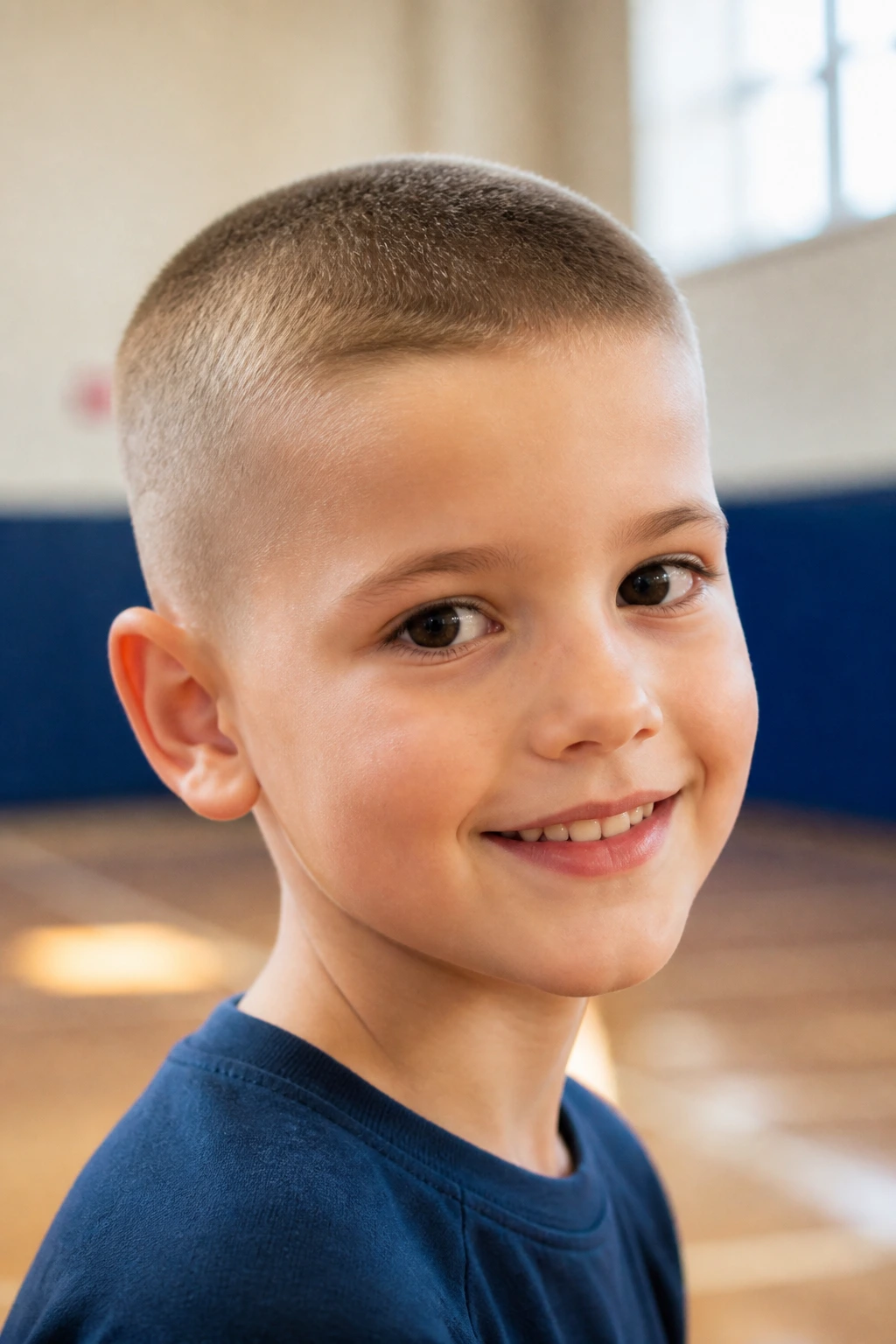
If you want the shortest, cleanest option on this list, the high and tight crop is the blunt instrument that actually behaves. The sides are cut very short — often with a #1 or #2 guard — and the top stays short too, usually around ¾ inch to 1¼ inches.
That sounds severe, but on thick hair it can look excellent when the barber softens the transition and avoids a hard military edge. The haircut removes a lot of bulk, which means less helmet effect, less side puff, and far less morning drama. It’s especially useful for active boys who get sweaty fast or refuse to sit through styling.
Who It Suits
- Boys who hate hair touching the ears
- Families who want the least maintenance possible
- Thick hair that stands up no matter what
A quick caution: if the top is cut too short, very dense hair can stand straight up like little bristles. Leave enough length for the hair to bend. That’s the difference between a good high and tight and a bristly one that looks accidental.
9. Shape-Retained Mop Top
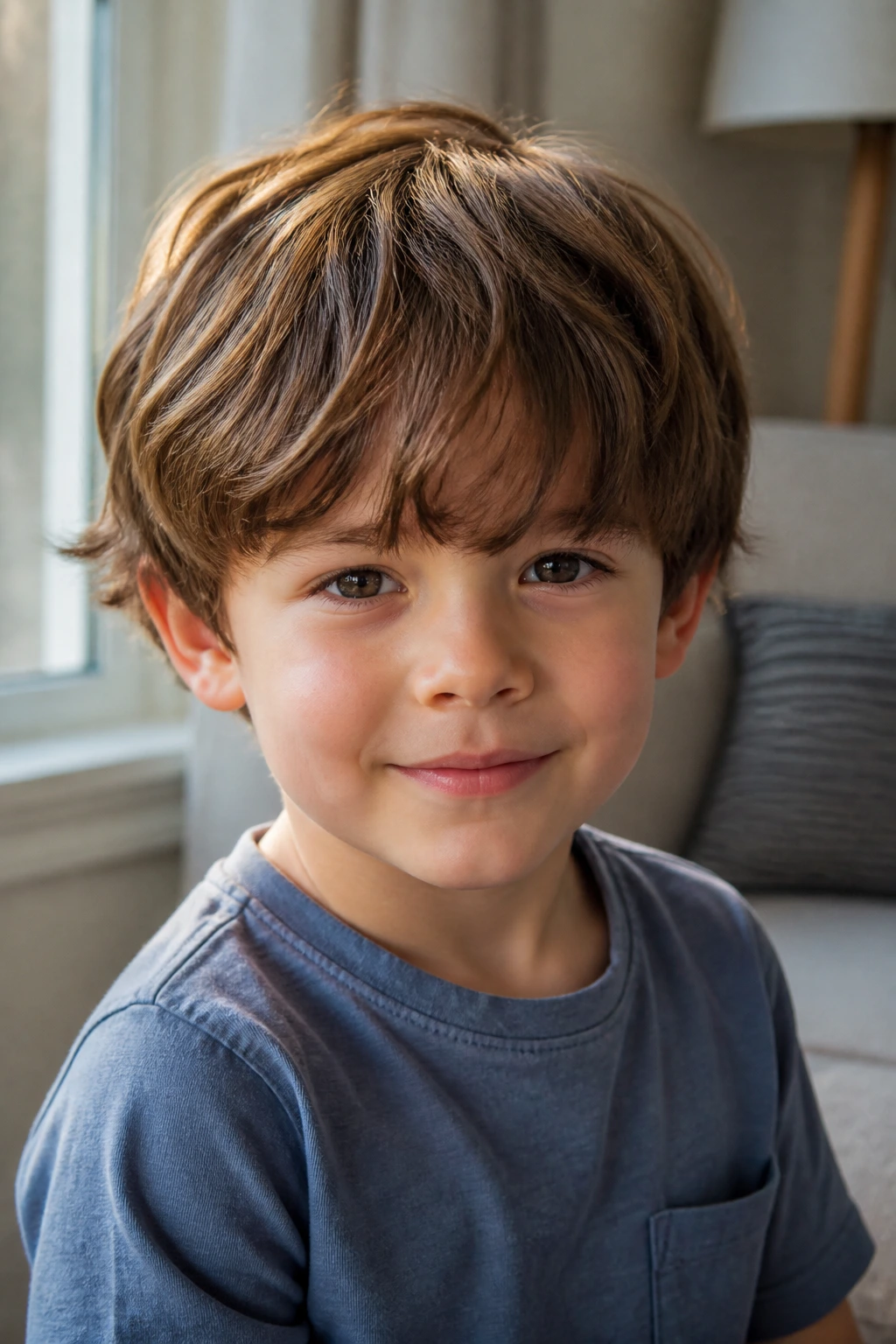
A mop top gets a bad reputation when it’s done lazily. Done well, though, it can be a soft, kid-friendly way to handle thick hair that you do not want chopped too short. The trick is to keep the length around the ears and fringe, but remove bulk underneath so the shape doesn’t turn into a mushroom.
The top usually sits in the 2½ to 4 inch range, with the fringe left long enough to skim the forehead. The barber should thin the underside and around the crown, not the visible top layer. That gives the hair a looser fall and stops the heavy shelf look that thick hair can produce.
This style is for families who want some length without chaos. It looks casual, it still frames the face, and it keeps the hair from sitting in one stiff block.
Watch the Balance
- Too much length on the sides = puff.
- Too much thinning on the top = frizz.
- Just enough layering = movement.
The best mop top is shaped, not chopped. That’s the whole difference.
10. Choppy Caesar Cut

The Caesar cut is a blunt fringe cut with a short top, but on thick hair it works best when it’s choppy, not perfectly even. Keep the fringe short and textured, usually around ¾ inch to 1 inch, and let the top stay close enough to the head that it lays flat without feeling tight.
This is one of the best choices for boys who hate hair in their eyes but still need some style around the front. The short fringe moves the attention forward, and the choppy texture prevents the cut from looking like a straight line across the forehead.
The barber’s scissors matter here. Point cutting across the front removes the heavy block effect that thick hair can create. If the fringe is left too blunt, it can sit like a tiny wall.
A Caesar cut is also good when the hairline at the front is strong and straight. If the hair grows in a clean line, the cut looks tidy fast. If the hairline is more irregular, the texture softens that too.
11. Brush-Up with Soft Texture

A brush-up is different from a quiff. It’s less polished, less tall, and much easier to wear on thick hair that wants a little lift but not a full styling routine. The top is usually about 2 to 3 inches, with the front left a touch longer so it can rise when brushed upward with fingers.
What makes this cut useful is the way it shows off density without making it look bulky. Thick hair actually gives the brush-up some staying power, which means the style can hold a nice shape even with minimal product. A matte clay or paste is enough; shiny gel usually makes it look stiff.
Better Than a Quiff When You Want Less Fuss
A quiff wants clean lines and a bit of polish. The brush-up wants texture and movement. That difference matters on a five-year-old, because one feels styled and the other feels relaxed.
If your child has hair that sticks up in the front no matter what, this cut can work with that habit instead of battling it. Ask the barber to remove weight through the top and keep the side blend soft. The result is a clean outline with a bit of lift, not a high-maintenance shape that needs a perfect comb every morning.
12. Short Pompadour with Tapered Sides
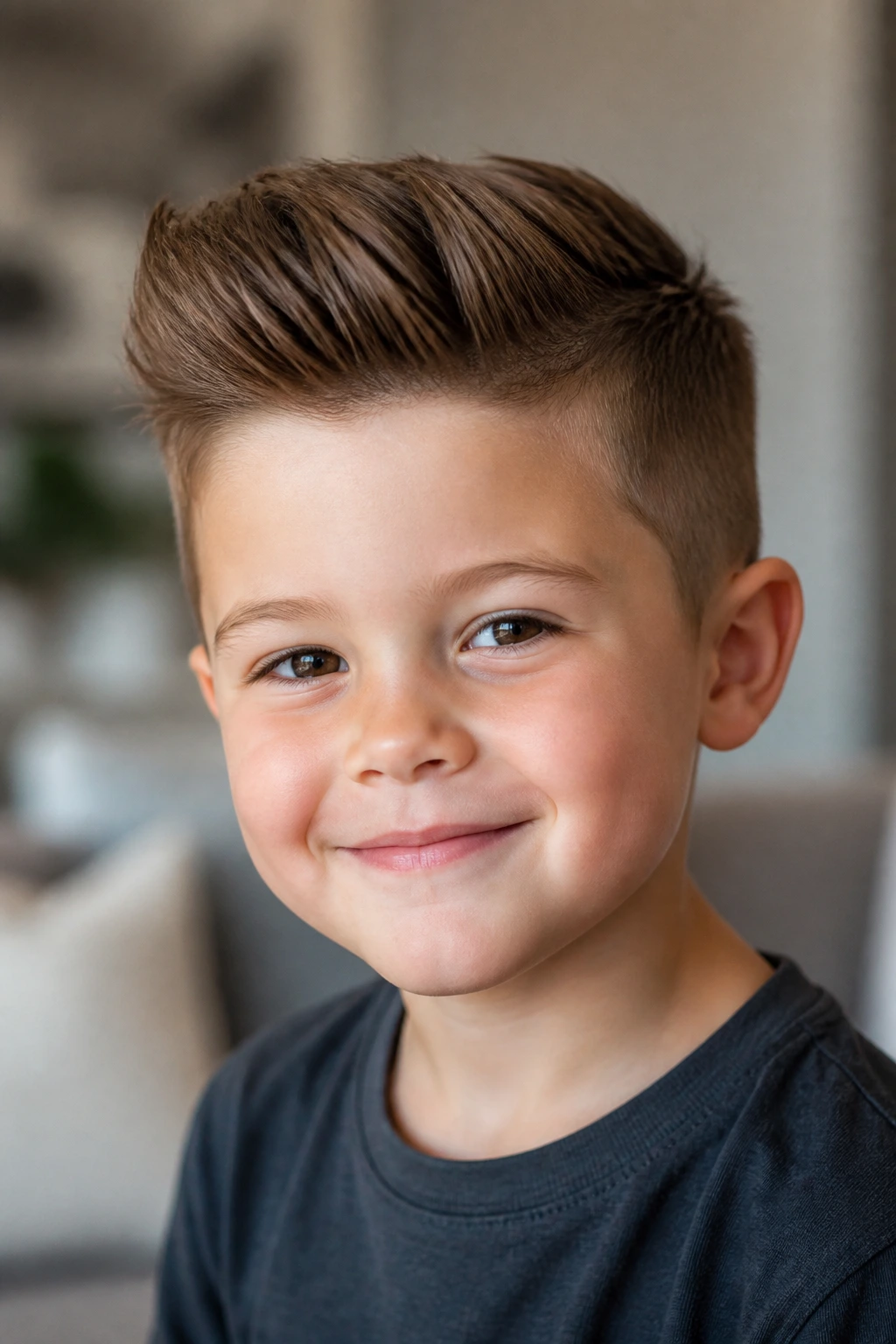
A short pompadour on a five-year-old sounds fancy until you see it with the right amount of restraint. The top stays modest — maybe 2½ to 3½ inches in the front — and the sides get tapered or faded so the shape has some clean contrast without turning into a showpiece.
Thick hair is actually helpful here. It gives the front enough body to lift. The catch is that too much length or too much product can make the style look stiff. Keep the volume compact, use a small amount of light pomade or matte cream, and shape it with fingers rather than a fine-tooth comb.
This cut is best when you want something sharper for pictures, family events, or days when a neat finish matters. It is not the lowest-maintenance style on the list, but it is one of the more satisfying if the barber nails the blend.
Tiny Rule That Saves the Look
Do not chase height. A little lift looks deliberate; too much lift starts to look fake. On a child, the best pompadour is the one that still feels soft when you run a hand over it.
13. Curtains with Tapered Sides

Curtains need enough length to split at the middle or just off-center, and thick straight hair can carry that style beautifully when it’s cut with taper on the sides. The top usually needs to sit around 3 to 4 inches so the front can part and fall instead of sticking straight out.
This cut works when the hair naturally wants to separate. If your child has dense, straight hair that falls forward after washing, curtains can look easy and slightly cool without being overstyled. The sides should stay neat, though — a soft taper keeps the haircut from puffing into a rectangle.
Best for Hair That…
- Falls forward on its own
- Has enough length to part without forcing it
- Stays dense around the forehead and temples
It’s a bit more style-forward than the crew cut or French crop, so I’d save it for kids who don’t mind a little brushing. But when it works, it really works. The movement at the front can soften a broad forehead or a very square hairline, and thick hair gives the shape some body.
14. Curly Top with Clean Sides
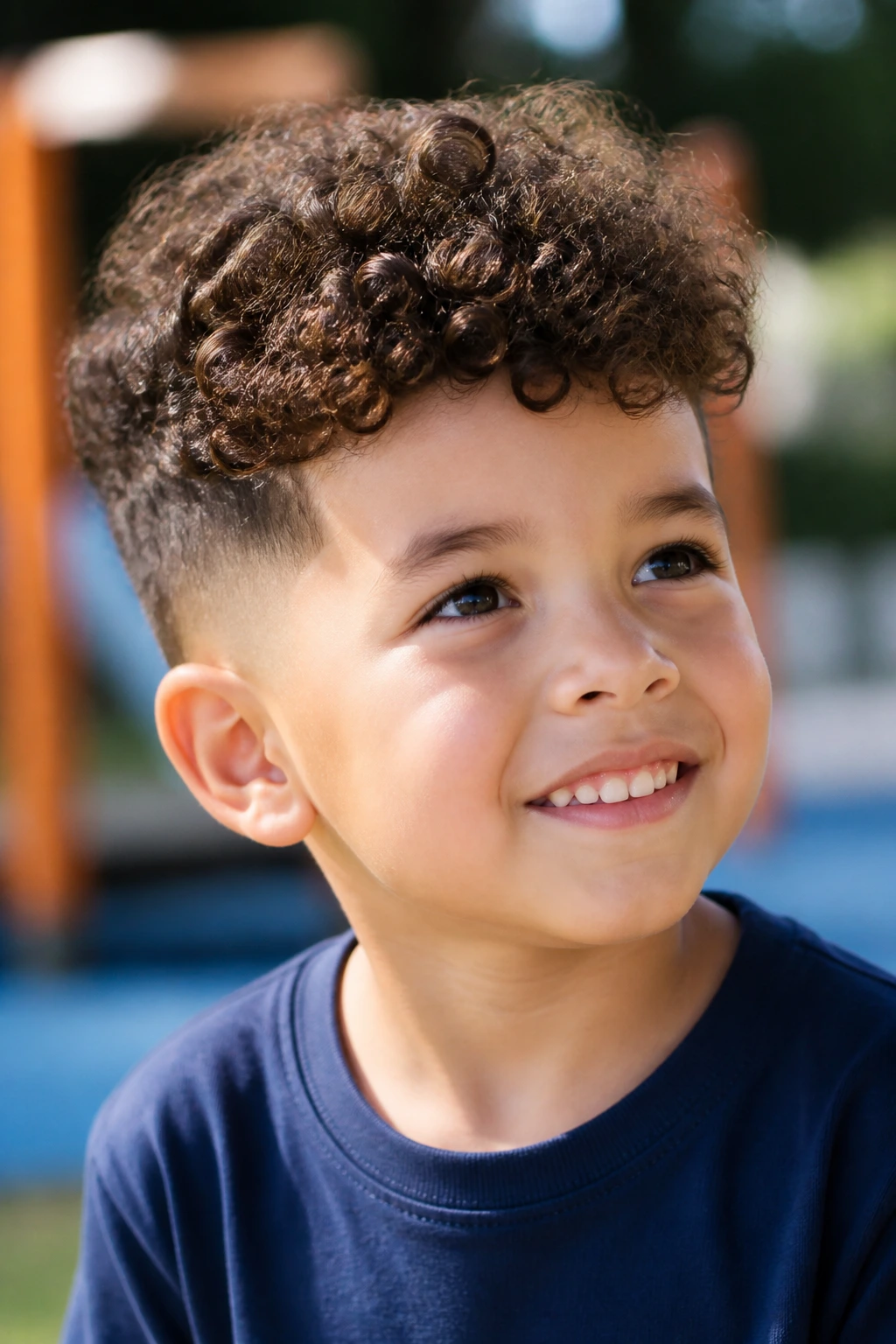
If thick hair also has curl or wave, do not cut it like straight hair. That’s where a lot of bad boy haircuts happen. A curly top with clean sides keeps enough length on top — often 2 to 4 inches, depending on curl tightness — so the pattern can show, while the sides are tapered to remove the bulk that makes curls spread outward.
The main mistake with curly or wavy thick hair is cutting too much length off the top. Once the curl springs up, the hair can look shorter than you expected. Leave room for the curl to breathe. Then shape the sides cleanly so the whole haircut feels intentional instead of triangular.
A light leave-in conditioner helps more than heavy gel. Thick curls need moisture, not crunch.
Barber Tip
Ask for curl-friendly shaping and avoid aggressive thinning. A little weight removal is useful; too much can make curls frizzy and uneven at the ends. The goal is control, not flattening.
15. Soft Spiky Crop
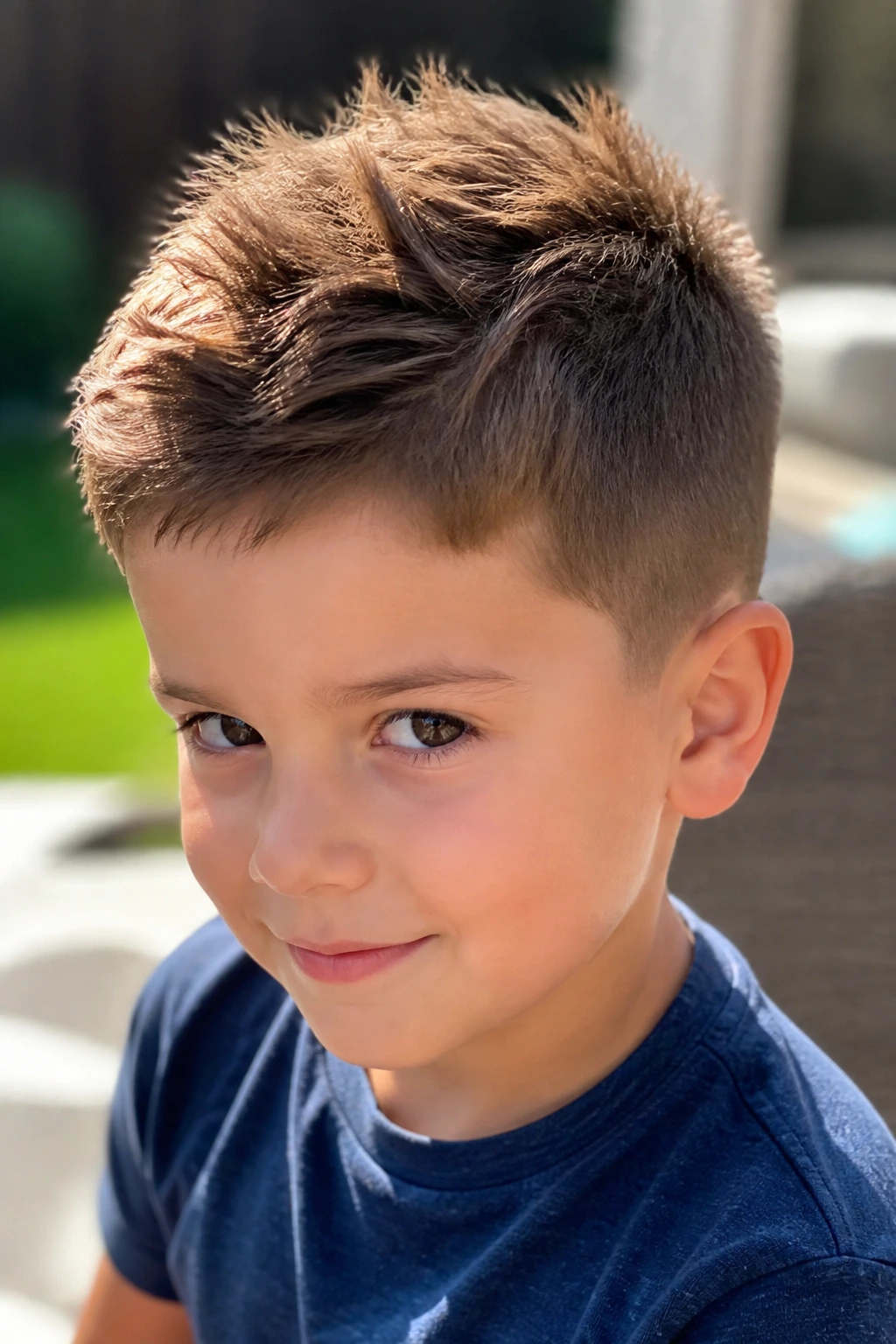
This is the cut for a boy who likes a little edge without looking like he raided a hair product aisle. Keep the top around 1½ to 2 inches, texture it with point cutting, and leave the sides short and clean. The “spikes” should be soft, separated, and touchable — not crunchy.
Thick hair makes a good spiky crop because it has enough natural lift to hold the shape. The trick is to use a matte clay or paste and work it through with fingertips, then pinch a few pieces upward. That gives the hair movement without making it stiff.
It’s a useful style when you want the haircut to survive active play. Even after a few hours, the cut still has texture. It won’t look salon-perfect all day, but it will keep its shape better than many smoother styles.
Avoid This
- Wet gel
- Too much product
- A fringe cut too blunt across the front
Those three things turn a soft spiky crop into a sticky helmet. Nobody wants that.
16. Surfer Shag with Light Taper

A surfer shag works when you want length, movement, and a little messy charm without letting thick hair turn into a block. The top and sides stay layered, the ends are softened, and a light taper around the ears and neckline keeps the silhouette from getting too shaggy.
This cut is especially good for thick, wavy hair that gets bigger when it dries. Instead of fighting the wave, the shag lets it move. The barber should remove bulk around the crown and underlayers, but leave enough length that the hair can fall in loose pieces. That part matters. If the layers are too short, the hair balloons.
The shag is a bit more maintenance than a crop, but not by much. A quick finger-comb with leave-in conditioner after washing usually does the job.
Good Fit When…
The child likes hair that feels softer and more relaxed. It also works if you want to keep some coverage around the forehead without a hard fringe. In other words: it’s the laid-back option that still has a shape.
17. Drop Fade with Textured Top
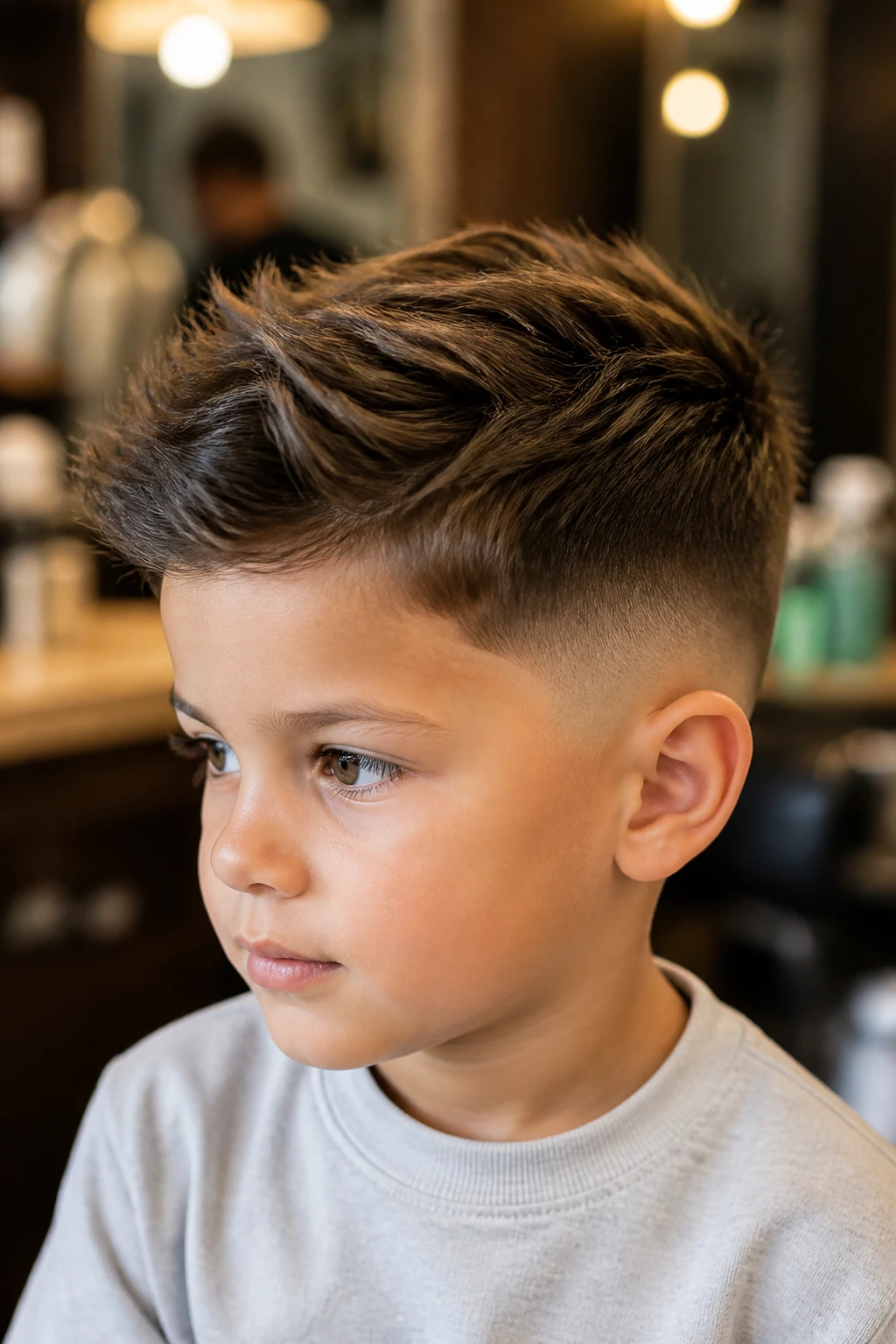
A drop fade follows the shape of the head by dipping lower behind the ear, which gives thick hair a cleaner frame than a flat fade line. With a textured top around 1½ to 2½ inches, the cut gets a nice contrast between dense top and crisp sides.
This is one of the more modern looks on the list, and it handles thick hair well because the fade removes the side bulk where puffing usually starts. The drop shape also makes the haircut feel less boxy from the back, which is a welcome thing if your child’s hair tends to grow fast at the neckline.
The top should not be smoothed flat. Keep some roughness, some separation, some movement. That way the fade looks intentional rather than severe.
Good Barber Detail
Ask for the fade to drop behind the ear rather than staying level all the way around. That one change softens the profile and gives the cut a cleaner contour.
18. Rounded Textured Crop
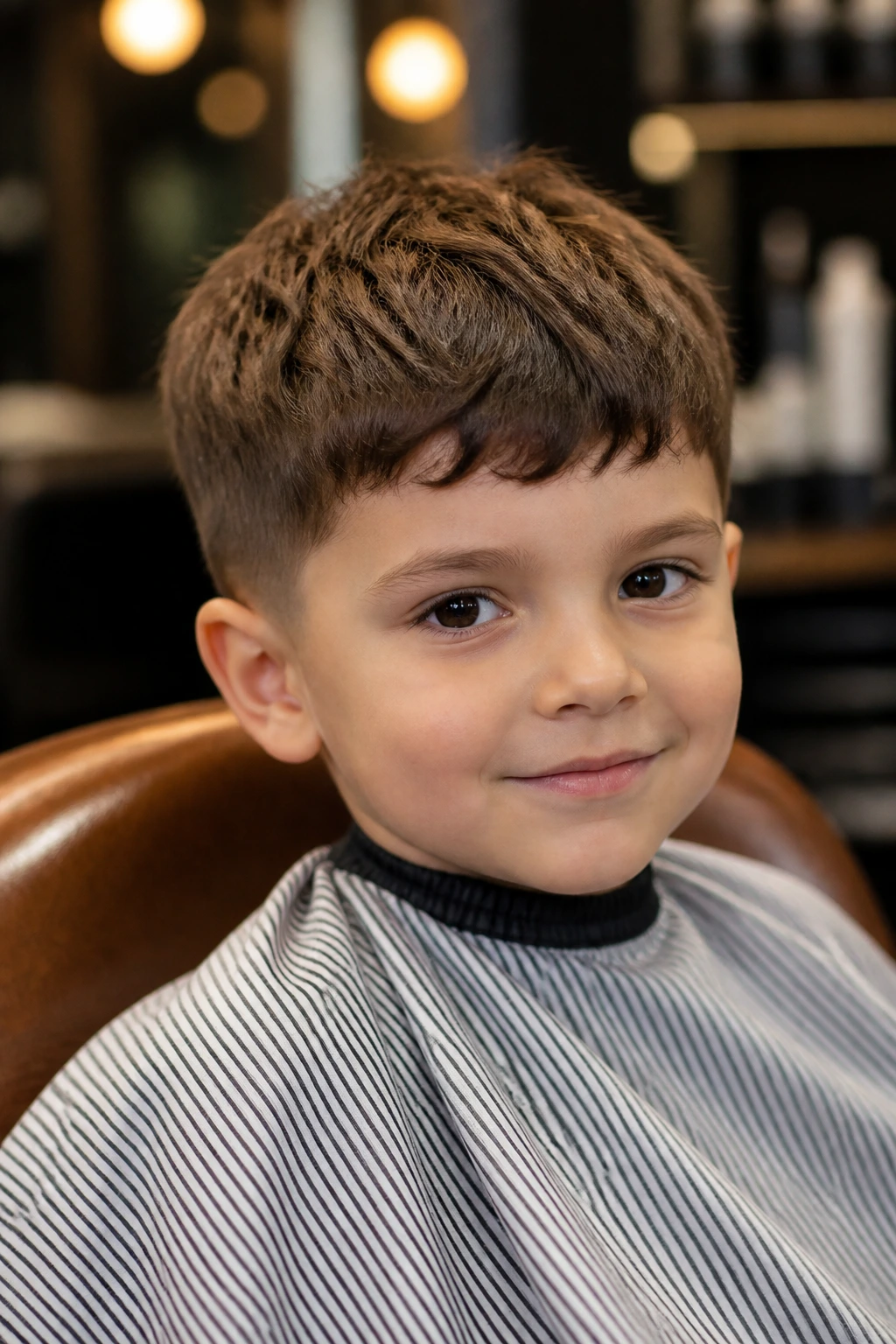
A rounded crop is basically a modern answer to the old bowl-shaped haircut, except this one has texture, taper, and a human pulse. The top is kept short — around 1 to 2 inches — and the fringe is softened so the shape curves around the head instead of sitting like a hard cap.
This is a smart choice for thick straight hair that wants to puff at the edges. The rounded silhouette controls that better than a blunt line. A barber can point-cut the fringe and soften the temple area so the haircut looks tidy without becoming severe.
I like this cut because it solves a common problem: parents want short hair, but they do not want the child to look like he was chopped with a lawn tool. The rounded crop lands in the middle. It’s clean. It’s neat. It still feels like a kid’s haircut.
Best When
- You want short hair without a rigid fade
- The hairline grows straight and dense
- You need a shape that stays neat after rough play
Why Thick Hair Needs Shape, Not Just Shortness
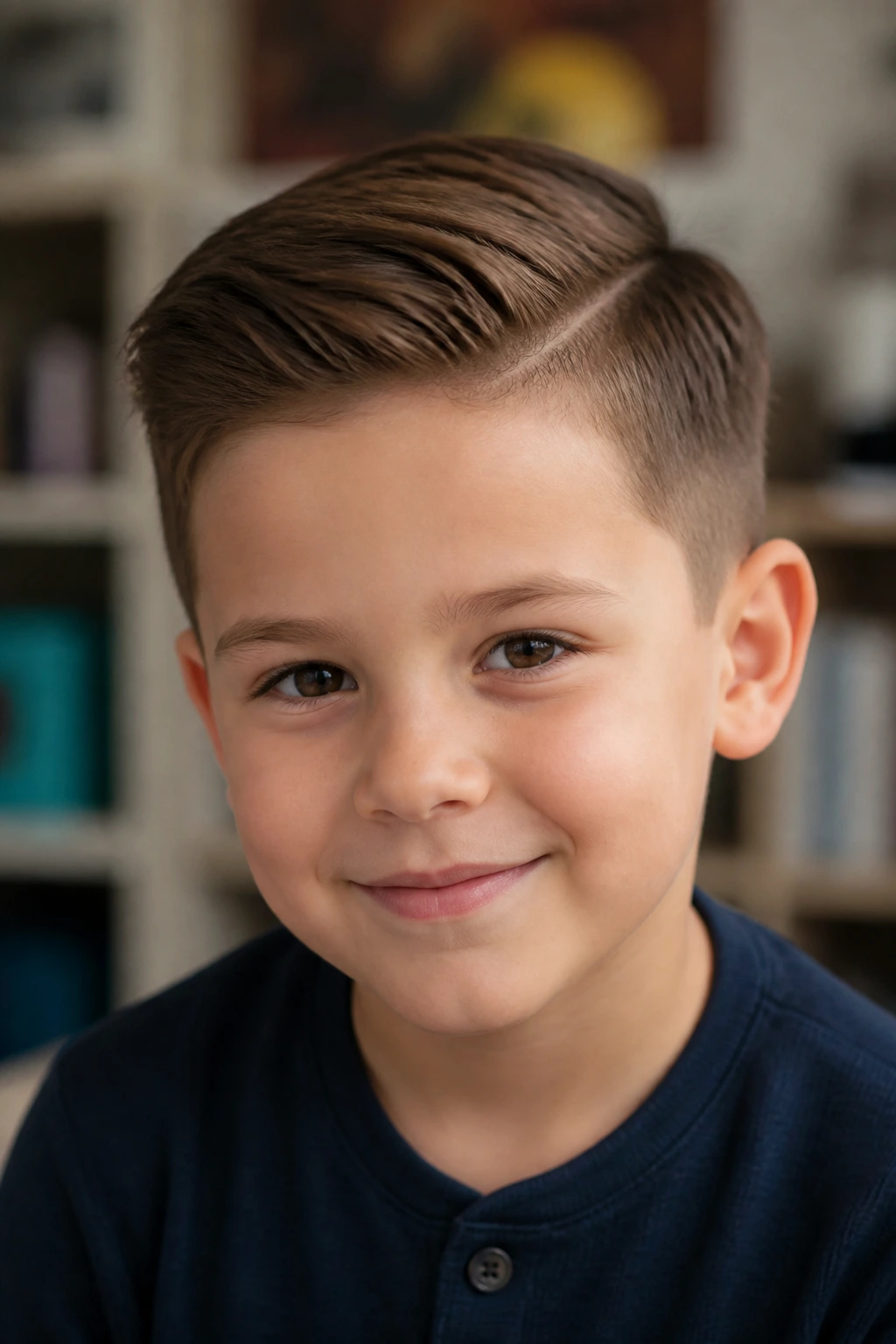
Thick hair has a stubborn little logic of its own. If you just cut it short everywhere, the hair often gets wider instead of smaller, because the density has nowhere to go. That’s why some of the worst boy haircuts on thick hair are the ones that are technically short but still feel huge at the sides.
Shape solves that. A tapered neckline, soft temple blend, and a top that’s textured instead of blunt all work together to break up the bulk. You’re not fighting the hair; you’re giving it a path to follow. And for a five-year-old, that path has to be simple enough that it doesn’t collapse after a nap.
The other part is growth. Thick hair grows back with attitude. If the shape is clean from the start, it will still look presentable when it gets a little longer. If the shape is sloppy from the start, the grow-out stage can look messy fast. That’s one reason I’m so picky about the blend around the ears. It’s the first place thick hair announces itself.
A short list of what thick hair needs:
- Weight removed where the sides balloon
- Texture on top so the hair bends instead of bulking up
- A soft taper so the cut grows out gently
- A barber who cuts with the growth pattern, not against it
Essential Equipment for These Haircuts
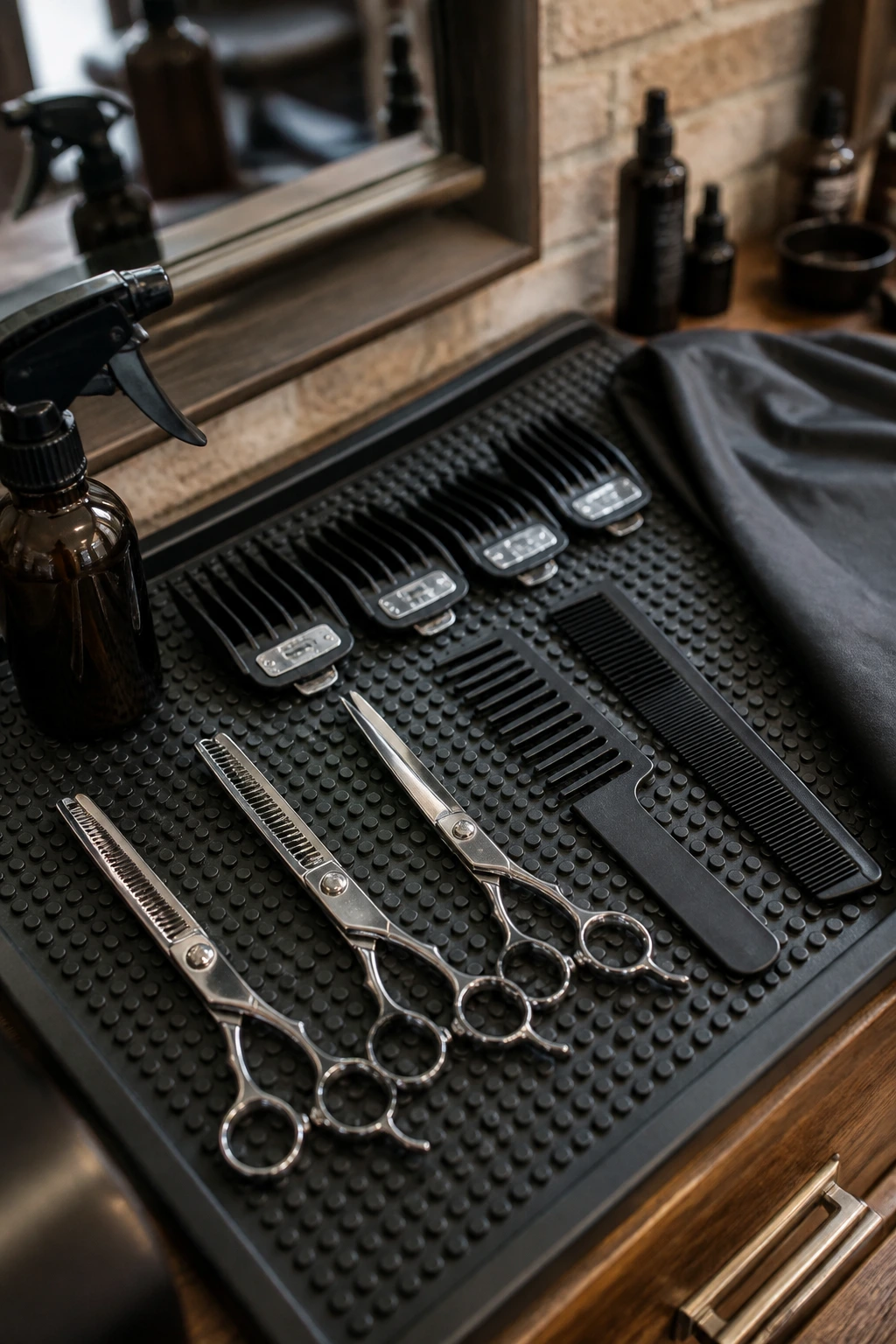
- A good pair of haircut scissors: Needed for scissor-only cuts, layering, fringe softening, and point cutting.
- Clippers with multiple guards: Essential for fades, tapers, and clean side work; a #1, #2, and #3 guard cover most of these styles.
- Thinning shears: Useful in small doses for removing bulk, but they should be used carefully on thick hair so the ends don’t fray.
- Spray bottle: Damp hair is easier to section, comb, and cut evenly.
- Wide-tooth comb and fine comb: The wide comb detangles thick hair; the fine comb helps define parts and clean lines.
- Cape or towel: Keeps the child more comfortable and cuts down on the itchy mess that thick hair leaves behind.
- Matte paste, clay, or light styling cream: Pick one; you do not need a full shelf of products for a five-year-old.
- Blow dryer with a low heat setting: Optional, but handy for quiffs, brush-ups, and any style that needs a little front lift.
- Soft brush: Good for smoothing the crown and directing dense hair without flattening it too much.
How to Ask for the Right Cut at the Barber Shop
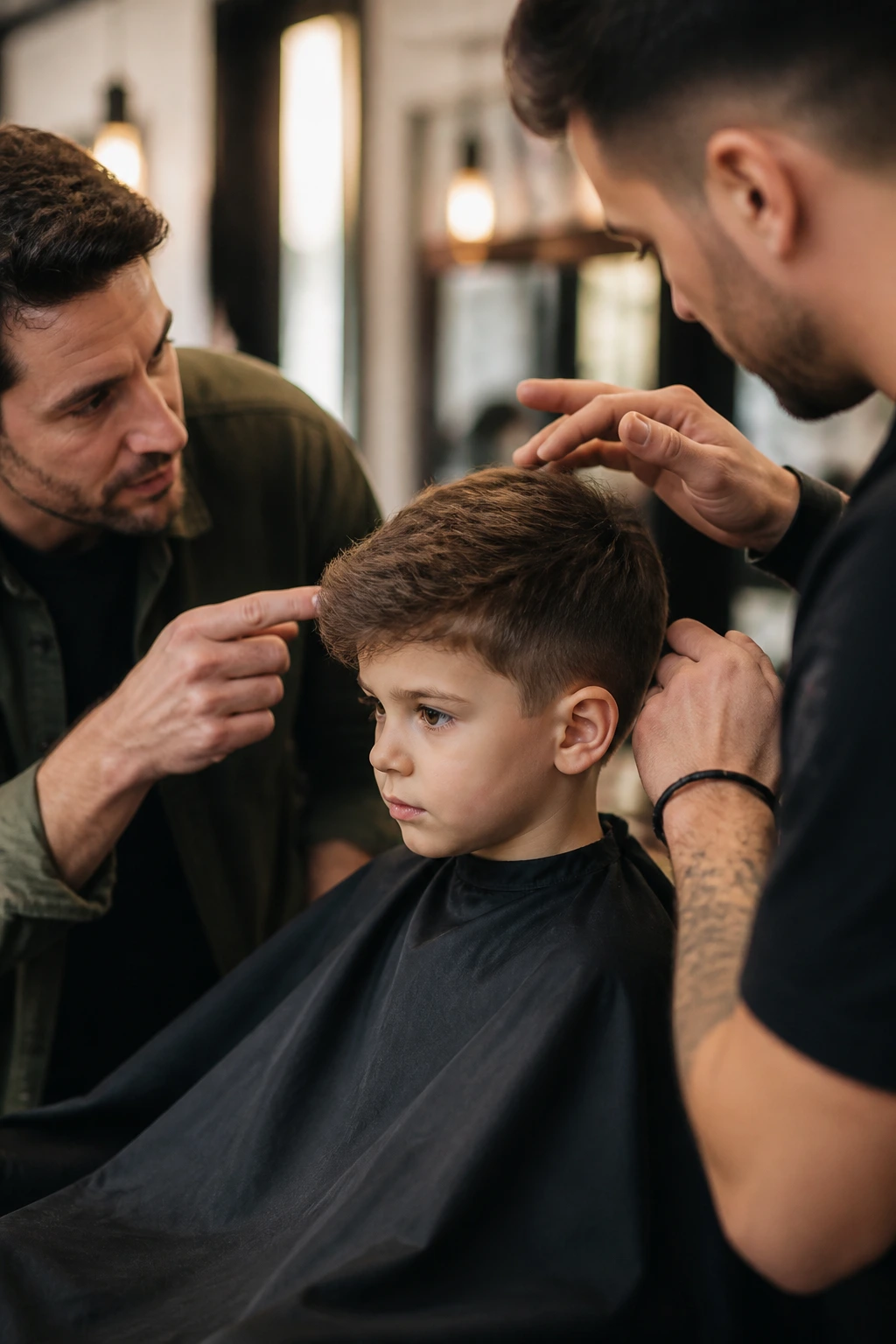
The best haircut starts before the first snip. Bring a photo, yes, but also be ready to talk in plain terms about what the hair actually does. Does it puff at the sides? Does the crown stand up? Does the fringe fall into the eyes every two weeks? That information matters more than a vague picture of a different child with different hair.
For thick hair, the most useful phrase is usually some version of “remove bulk, but keep the top soft.” That tells the barber you want shape, not a blunt buzz. If you want a fade, be specific about how high you want it. Low tapers are easier to grow out. High fades look sharper, but they need more upkeep and they expose the roundness of the head more quickly.
A few things worth saying out loud:
- “He has a cowlick here.”
- “The sides puff up first.”
- “I don’t want the top thinned too much.”
- “Can you keep the fringe off his eyes?”
- “He hates when the ears get clipped too close.”
That last one sounds small. It isn’t. If a child hates a haircut because it feels scratchy around the ears, you’ll hear about it the entire drive home.
How These Cuts Sit on a Busy Morning
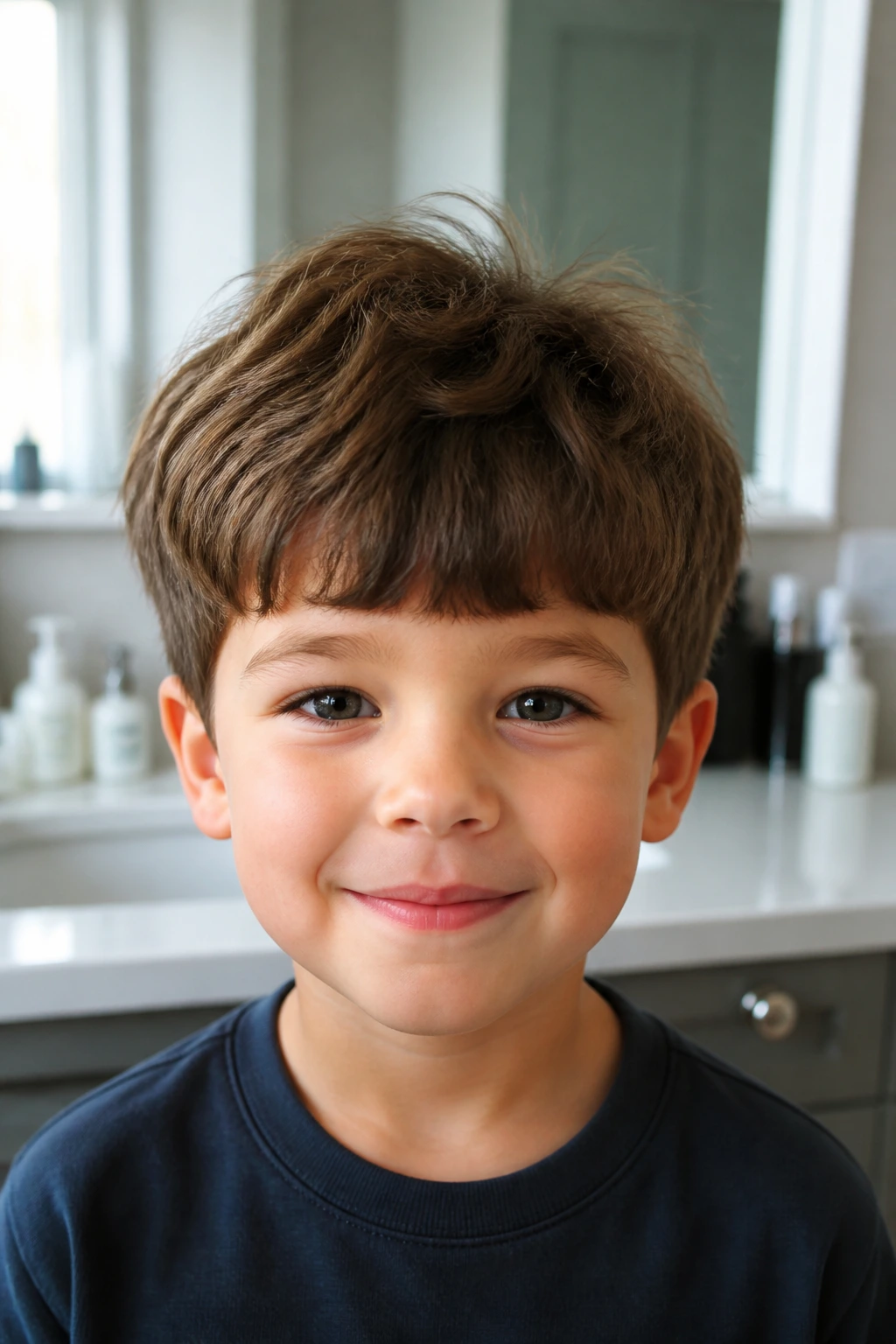
Look: The cut should still make sense when it’s been slept on, finger-combed, or brushed five times in a row. The best versions keep their shape even if the top gets a little messy, because thick hair usually has enough body to carry itself.
Works With: These cuts pair well with school days, park days, helmet days, and the general chaos of a five-year-old schedule. If a style can survive a sweatshirt hood and a car seat nap, it’s doing its job.
Length: Short crops usually need a trim every 3 to 4 weeks if you want the shape to stay crisp. Scissor cuts and shags can stretch to 5 to 6 weeks, but the fringe and neckline will need attention sooner if the hair grows fast.
Routine: Most of these styles need no more than a quick dampening, a finger rake, and a tiny bit of matte product. If you’re spending more than two minutes most mornings, the cut probably isn’t simple enough for this age.
Additional Tips for Softer Edges and Less Puff

Texture Enhancement: On thick hair, point cutting is usually better than blunt cutting because it breaks up the edge and helps the hair lie in smaller pieces. That tiny irregularity is what keeps the style from looking boxy.
Time-Saver: If the fringe grows fast, keep a small spritz bottle and a fine comb by the bathroom sink. A light mist and a quick side sweep often fix more than any product can.
Barber Shortcut: Ask for the bulk to come out around the parietal ridge — that’s the widest part of the head above the ears. That single area is where thick hair tends to balloon first.
Comfort Move: For boys who hate the clipper buzz near the ears, choose scissor-heavy cuts or a low taper instead of a skin fade. The haircut will feel less dramatic, and the child is more likely to sit still the next time.
Make-It-Yours: If the child likes a little style, add a mini quiff or brush-up. If he hates styling, keep the top textured and short. If he has wave or curl, leave more length and avoid trying to flatten it.
Common Mistakes That Make Thick Hair Look Bigger
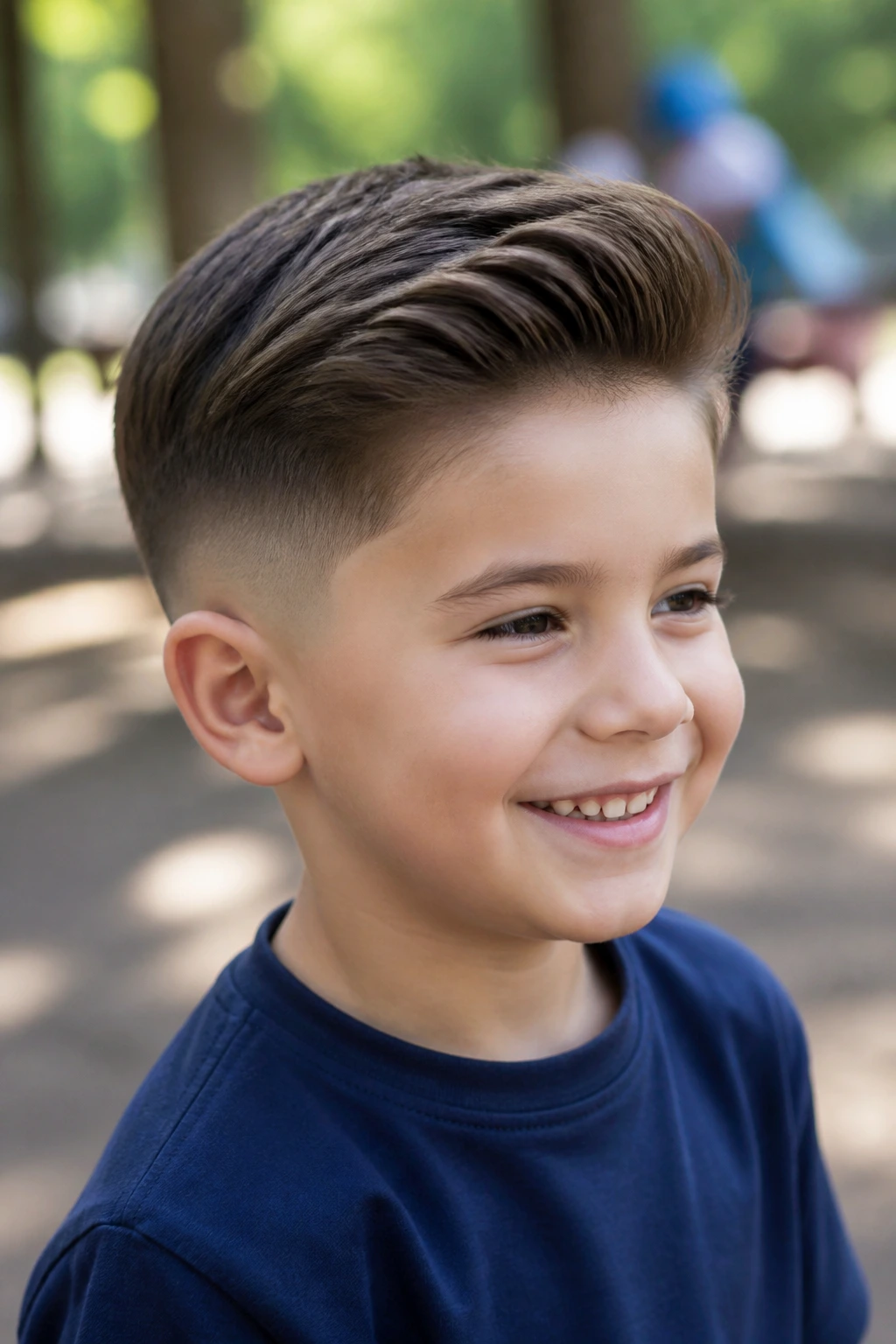
The first mistake is cutting thick hair too blunt. That creates a hard edge, and hard edges on dense hair can make the haircut look wider than it is. If the top has no texture, it tends to sit like a slab.
The second mistake is over-thinning. A little weight removal is useful. Too much leaves the ends wispy, which sounds light but often looks frizzy and uneven after the hair dries. Thick hair usually needs shaping more than thinning. That distinction matters.
The third mistake is making the fade or taper too high for a small head. A high fade can look sharp, but on a five-year-old it can also exaggerate the shape of the skull and make the top feel lonely. Low tapers and soft blends are often kinder.
The fourth mistake is ignoring the growth pattern. Cowlicks, crown swirls, and strong front growth lines will push the cut in certain directions no matter how carefully you trim it. If the barber cuts against the pattern, the hair will fight back every morning. Better to work with it.
The last mistake? Picking a style that needs more maintenance than the child will tolerate. A haircut that looks great only after a careful blow-dry is usually the wrong haircut for a five-year-old.
Variations and Adaptations for Different Hair Types
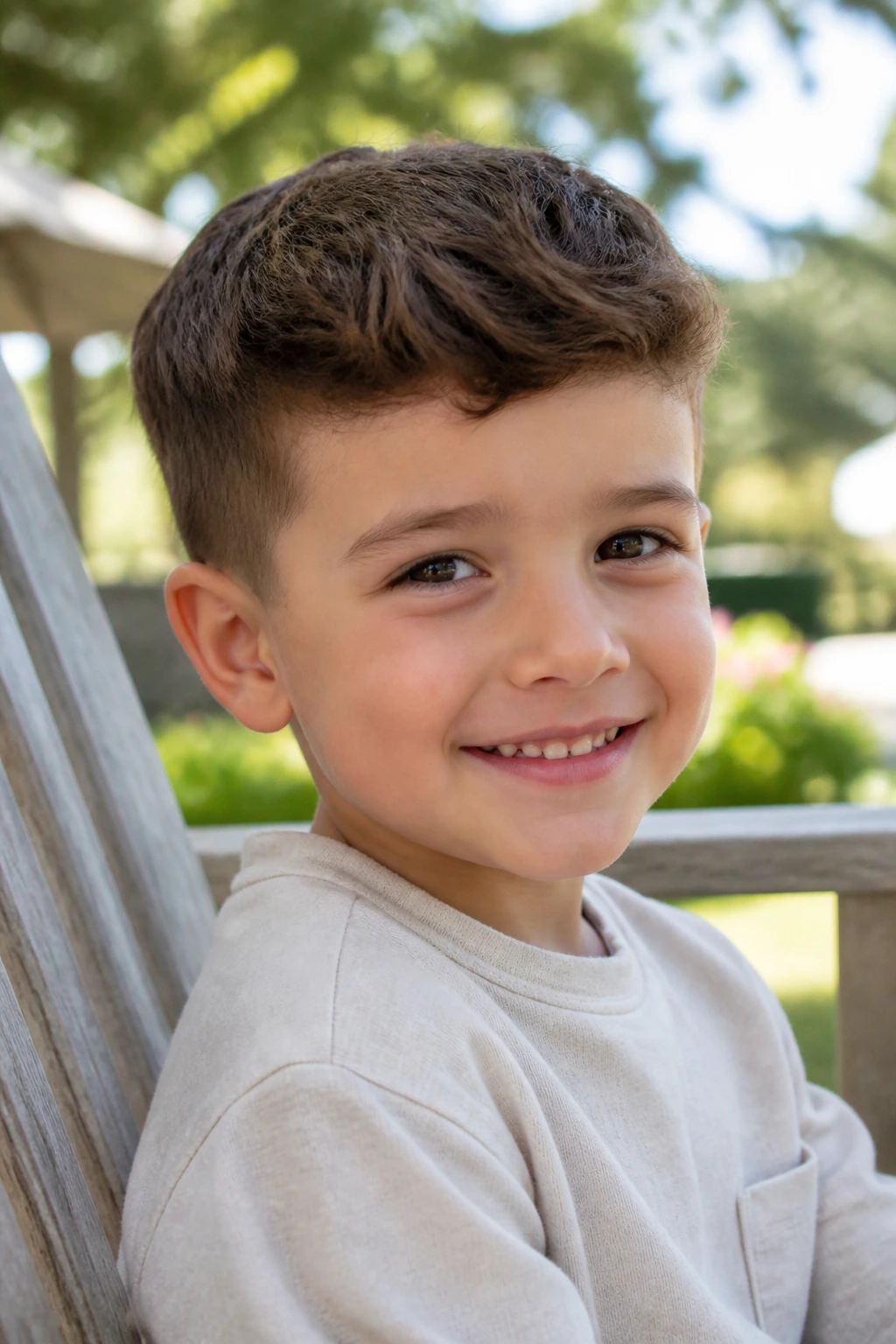
For Wavy Thick Hair: Use a French crop, shag, or textured Ivy League. The wave gives the cut movement, and the layers stop the shape from swelling outward.
For Straight Dense Hair: Choose a crew cut, Caesar, rounded crop, or side part. Straight thick hair shows bluntness fast, so point cutting and tapering make a bigger difference here.
For Sensitive Scalps: Go with scissor-heavy styles or low tapers. Keep the clippers away from the ears as much as possible and avoid high fades if the child dislikes the buzzing sensation.
For Fast Grow-Outs: Pick a style that already has a gentle shape — a crew cut, low taper, or rounded crop. These stay neat longer because the outline isn’t too sharp to begin with.
For Slightly Longer Hair: Try curtains or a shag. Thick hair with some length can look soft and stylish, but only if the barber removes weight under the surface.
Keeping the Cut Sharp Between Trims

Thick hair doesn’t need constant fussing, but it does need a little maintenance if you want the shape to last. A quick rinse and towel-dry is usually enough on most days. If the hair gets sweaty, let it dry first before you start combing hard. Rushing in while it’s dripping wet often makes the top separate in strange directions.
For shorter cuts, book trims every 3 to 4 weeks if you want the fade and neckline to stay clean. For scissor cuts or longer textured styles, 5 to 6 weeks is usually the sweet spot. Past that, thick hair starts to announce itself around the ears and crown.
Product use should stay light. A pea-sized amount of matte paste or cream is usually enough for the top of a five-year-old’s haircut. If you can feel product sitting on the hair instead of disappearing into it, there’s too much.
A Simple At-Home Habit
Use a spray bottle in the morning, smooth the crown with your palm, then work the fringe or top in the direction you want. That takes less time than a full styling routine and keeps the haircut looking intentional.
Questions Parents Ask Most Often
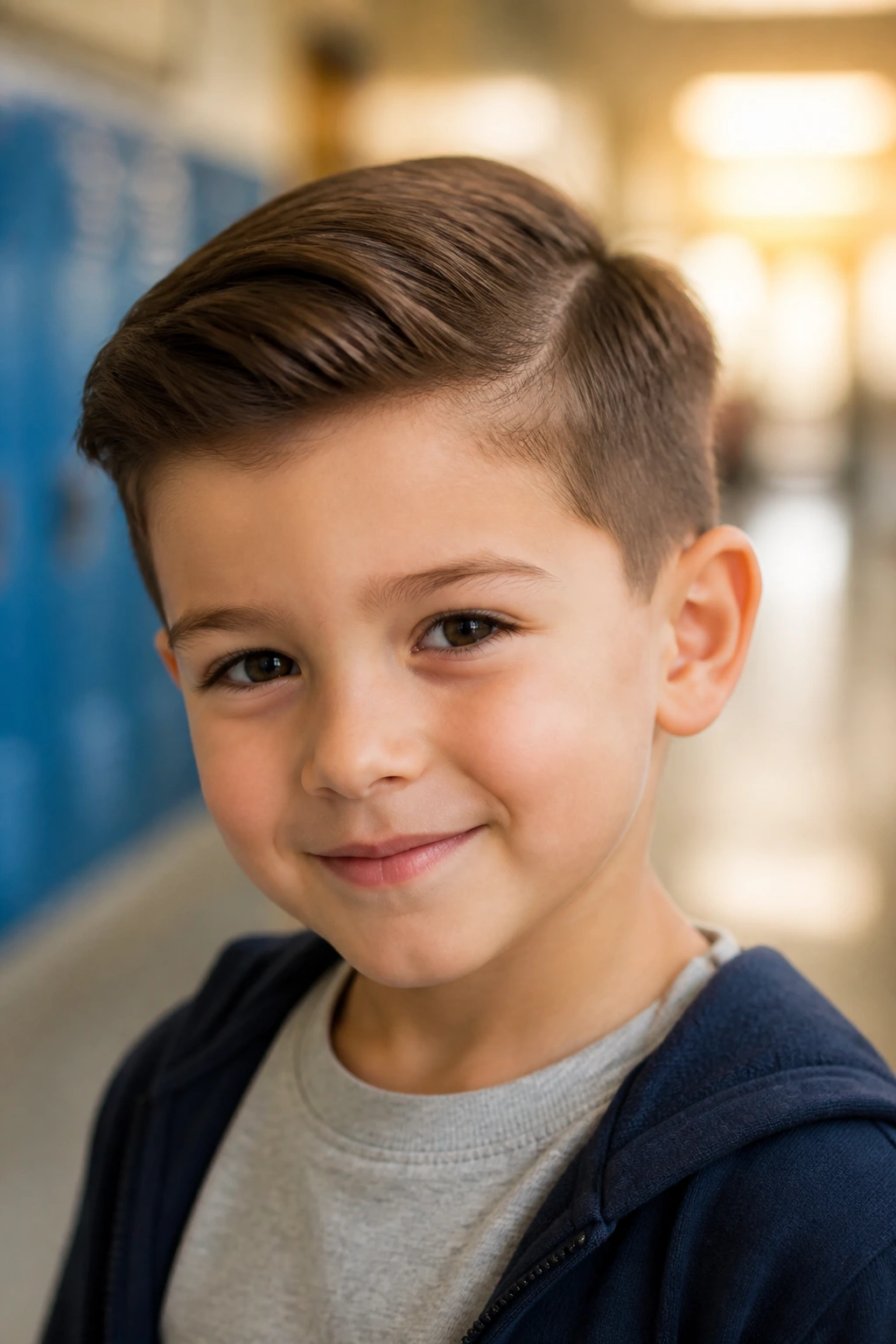
What’s the easiest haircut for a five-year-old with thick hair?
The textured crew cut is usually the easiest. It removes bulk, needs almost no product, and still looks clean after sleep, sweat, and a rough day of play.
Should thick hair on boys be thinned out?
Sometimes, but carefully. A little weight removal around the crown and parietal ridge helps; aggressive thinning can leave the ends fuzzy and uneven.
How short can thick hair go without standing up like bristles?
That depends on the hair pattern, but very short tops on dense hair often need a tiny bit more length than you expect. If the top is too short, it can stand straight up and look spiky in the wrong way.
Which haircut works best if my child hates hair in his eyes?
The French crop, Caesar cut, or a short side part all keep the fringe under control. Those styles move the hair forward or sideways instead of letting it drop into the face.
How often does a boy with thick hair need a haircut?
Short fades usually need a trim every 3 to 4 weeks. Longer scissor cuts can go 5 to 6 weeks, though the neckline may start looking fuzzy before the top does.
Can I show the barber a photo from the internet?
Absolutely, but also explain your child’s hair habits. A photo shows the shape; your words tell the barber how the hair behaves at the crown, around the ears, and at the front.
What if the haircut looks too puffy after the first wash?
That usually means the cut needs more taper or more texture, not more product. Bring the child back and ask the barber to remove bulk around the sides and soften the top with point cutting.
Is a fade always the best choice for thick hair?
No. Fades solve some problems, but not all of them. Sometimes a scissor-heavy taper or a rounded crop gives thick hair a better shape and grows out more cleanly.
A Cleaner Way to Handle Heavy Hair
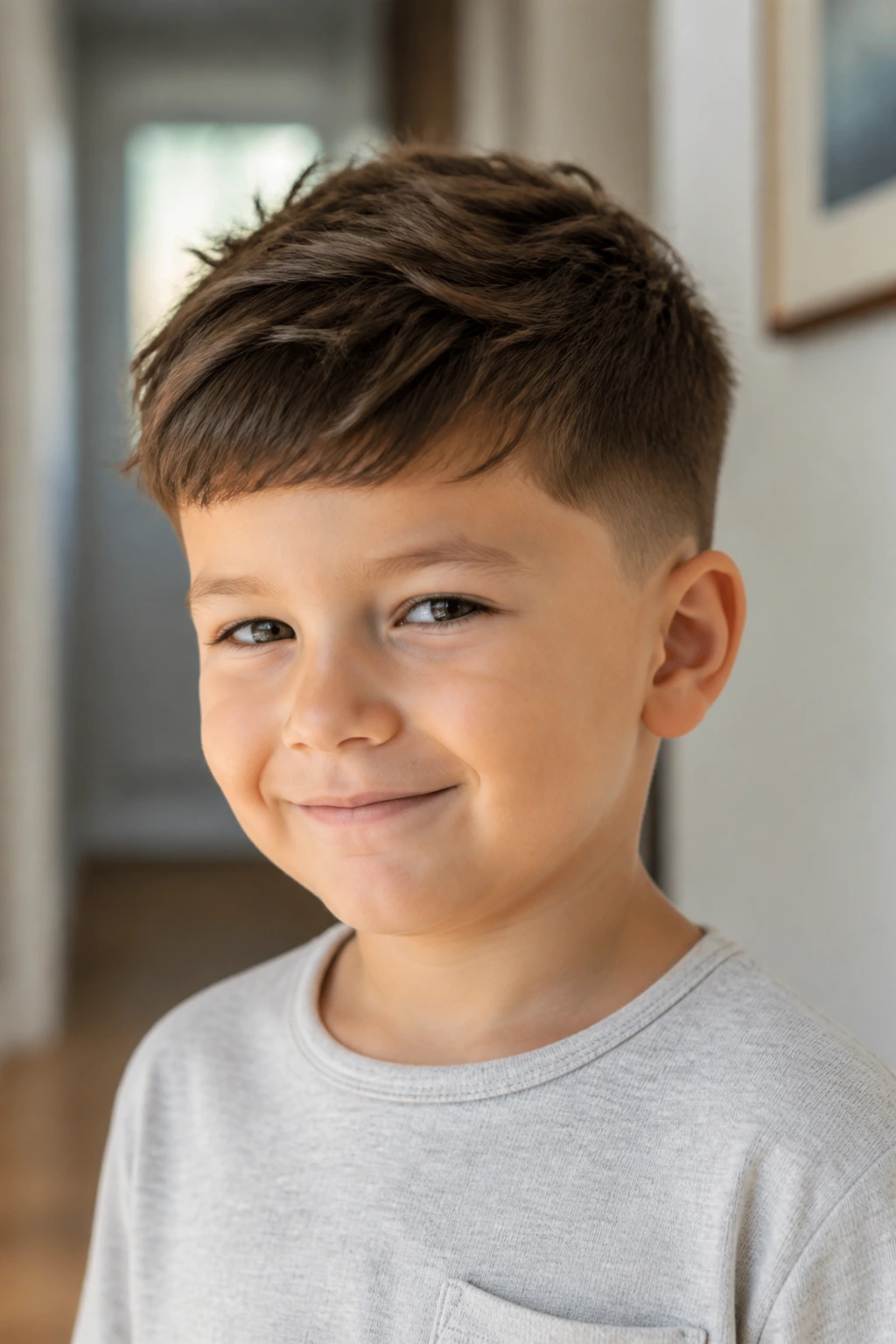
The right haircut on a five-year-old with thick hair does one thing well: it makes the hair easier to live with without making it look overworked. That’s the balance worth chasing. Clean shape, light texture, and a barber who knows where the bulk lives — that combination beats a random short cut every time.
Some families want sharp edges. Some want softness. Some want the shortest thing possible because mornings are chaos. There’s a version on this list for all three moods, and that’s the practical truth of boys’ haircuts for thick hair: the best cut is the one that fits the child, not the trend.
Pick the shape that handles the density, keep the product light, and let the haircut grow into itself a little. Thick hair rewards that kind of common sense.