



Eurohawk haircuts for boys with fine hair work best when the cut does less, not more. That’s the part a lot of people miss. Fine strands don’t like to be bullied into a tall, stiff shape; they like a clean outline, a little lift in the middle, and enough texture that the top looks deliberate instead of sparse.
A good Eurohawk keeps the center ridge wide enough to read as a style, not a strip. On fine hair, that ridge usually looks strongest when the top sits somewhere between 1.5 and 3 inches, the sides are tapered tight, and the crown is left with just enough length to stop the whole thing from collapsing by midday. If you’ve ever seen a style that looked sharp in the barber chair and limp by lunchtime, that’s usually because the top was left too long for the density it had.
The nice thing about this haircut family is that it gives boys some attitude without asking the hair to do too much work. A Eurohawk can be soft, sporty, school-friendly, spiky, or neat enough for a family photo, and the right version depends on how straight the hair is, how low the density runs, and how much maintenance anyone at home is willing to do on a school morning.
Why These Eurohawk Cuts Work for Fine Hair
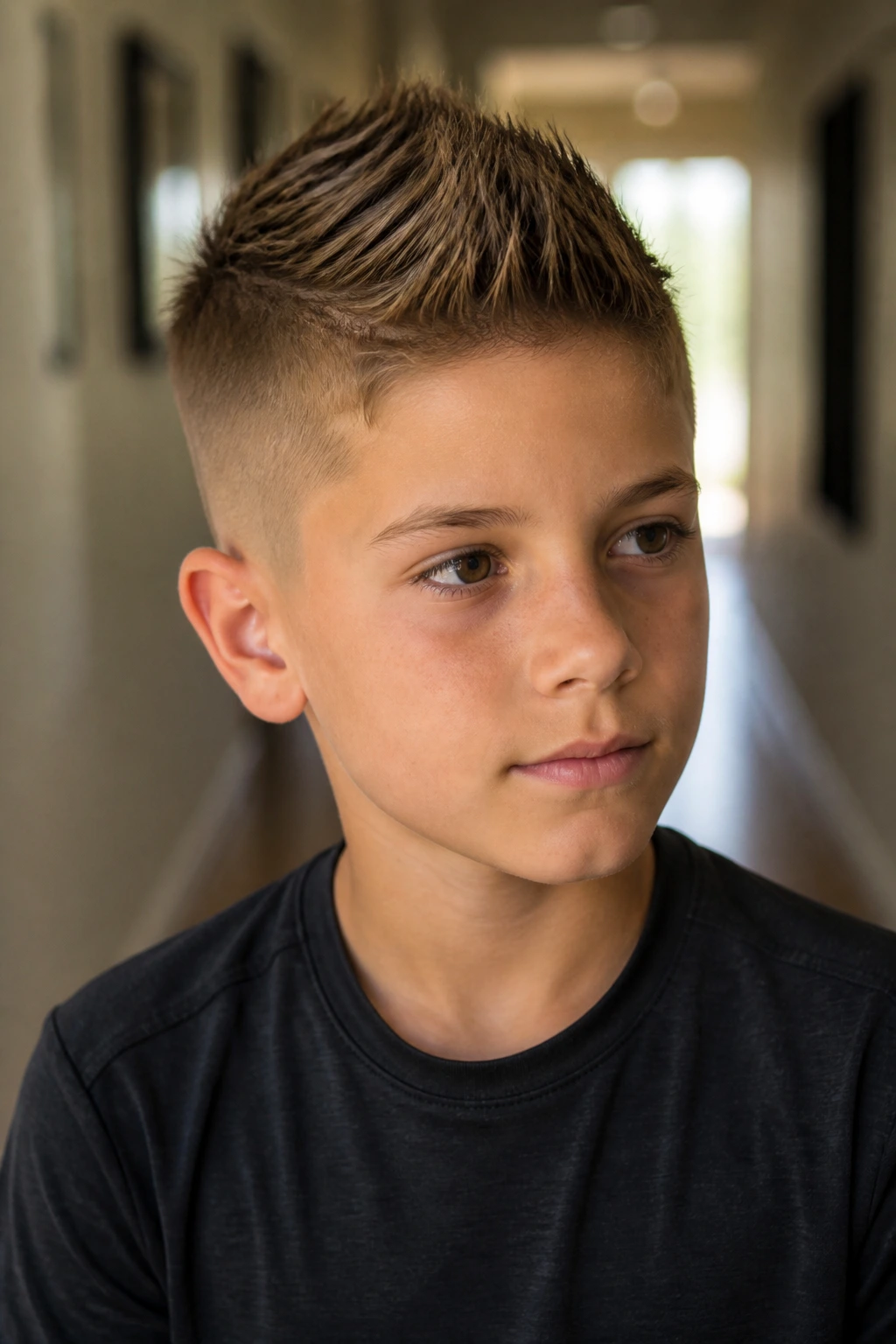
- Shape beats bulk: Fine hair often looks fuller when the silhouette is tighter on the sides and more focused through the middle, because the eye reads the outline first.
- Shorter sides do the heavy lifting: A low taper, mid fade, or skin fade removes the see-through areas around the ears and temples, which makes the top seem denser by contrast.
- Texture adds shadows: Choppy ends, point-cut layers, and matte styling products break up the light and keep the top from looking like one flat sheet.
- The style grows out with less drama: A Eurohawk usually looks acceptable a week after the trim because the shape is forgiving, especially if the sides were not taken too high.
- It works with straight hair, not against it: Straight fine hair can struggle with tall spikes, but it handles a softer center ridge well when the length is kept realistic.
1. Soft Eurohawk with Low Taper
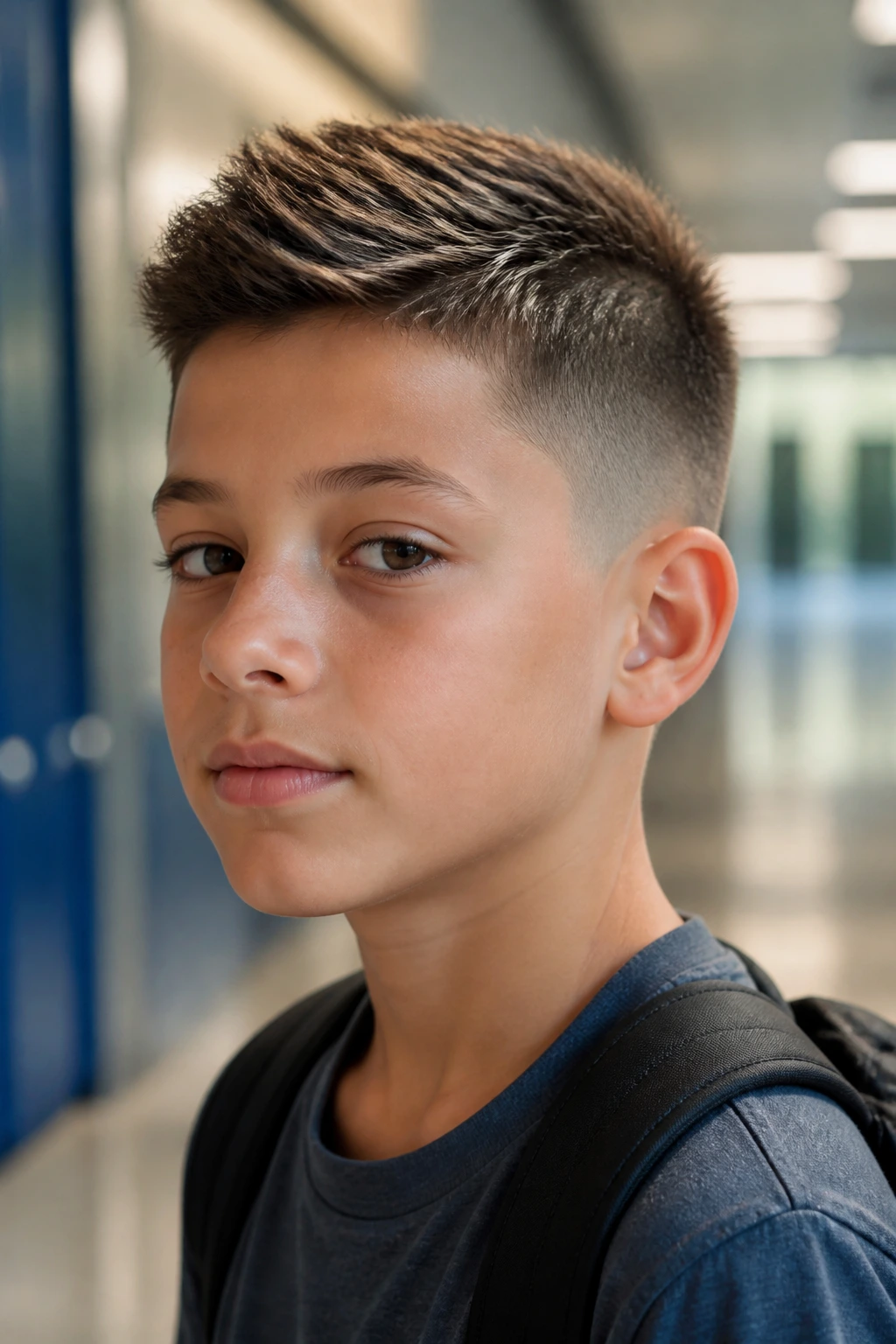
This is the cut I’d hand to a parent who wants a Eurohawk without the “did you mean mohawk?” panic. The top stays soft and touchable, usually around 1.5 to 2 inches, and the low taper around the ears keeps the whole thing tidy. On fine hair, that’s a smart trade: less height, more structure.
The shape matters more than the drama here. Ask the barber to keep the center strip slightly wider than a finger width, then taper the sides low so the head doesn’t suddenly look narrow at the temples. The result is clean from the front and still reads as a Eurohawk when the boy turns sideways.
Why It Fits Fine Hair
A soft version like this works because the hair never has to stand in a rigid line. Fine strands bend easily, and a low taper lets them fall into a controlled ridge instead of separating into see-through spikes. If the hair lies flat on top, a quick blast with a blow dryer and a pea-sized bit of matte cream is usually enough.
Best for: school rules, younger boys, and anyone who hates a high-maintenance morning routine.
Barber note: ask for the top to be point-cut, not thinned aggressively. Over-thinning fine hair is a fast way to make the scalp show.
2. Burst-Fade Eurohawk with Textured Crown
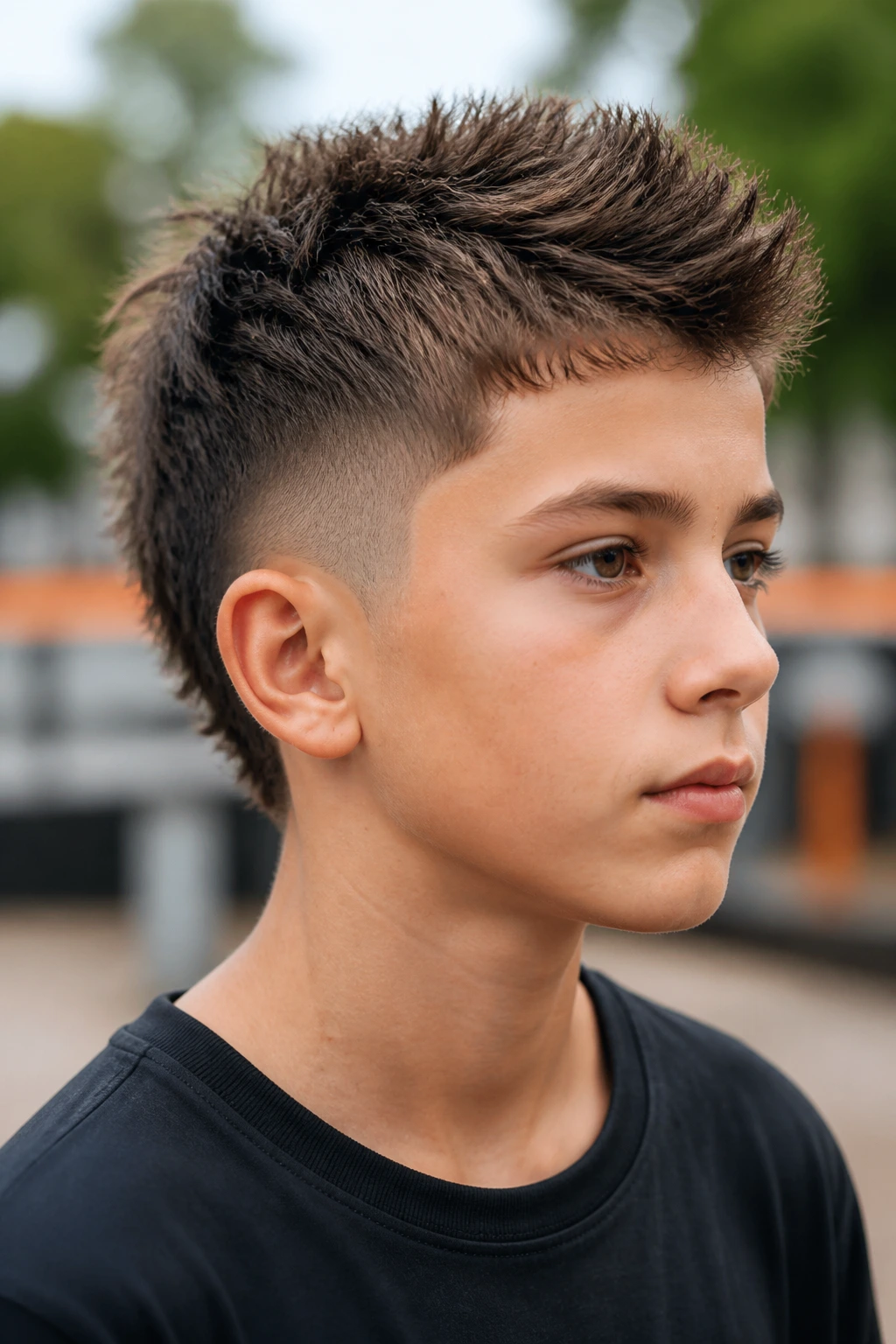
A burst fade gives a Eurohawk a curved, almost sunburst shape around the ears, and that curve is excellent on fine hair because it frames the head instead of leaving a hard boxy edge. Keep the top between 2 and 2.5 inches, with the crown texturized so it can lift without looking stuffed.
This version has a little more attitude than the soft taper, but not so much that it turns into a stage haircut. The burst fade creates a strong side profile, and the textured crown gives the top some movement. That movement is doing more work than you think.
What Makes It Stand Out
The haircut looks fuller because the fade removes weight where fine hair tends to look weakest: around the temples and above the ears. The crown stays choppy, not blunt, so the top catches light in small sections instead of one flat layer. That small difference changes the whole read of the cut.
Pro tip: keep the texture concentrated through the middle and front, not the very back of the crown. If the crown gets too short, the Eurohawk starts to puff in the wrong place.
3. Short School-Ready Eurohawk
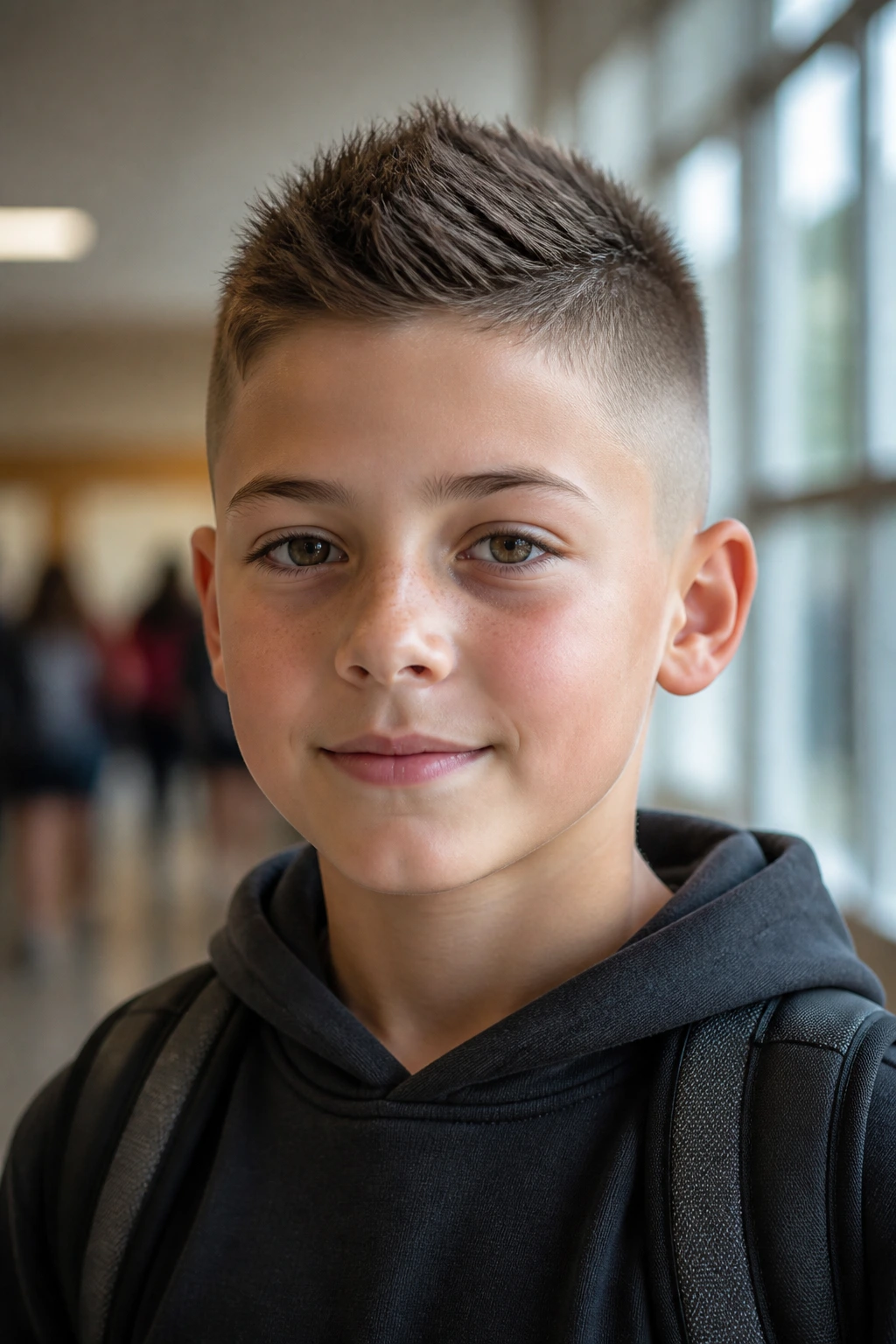
Some boys want the look, not the maintenance. This is that cut. The top stays close—about 1 to 1.25 inches—and the sides are taken down with a neat taper or a low fade, which keeps the whole shape clean enough for strict school settings.
It still counts as a Eurohawk because the middle section is slightly raised and clearly defined, but it does not shout. That’s the point. Fine hair often looks best when it isn’t forced into a tall shape, and this version keeps the outline tight so the hair doesn’t separate as it dries.
Why It Works
The shorter top means less collapse. Fine hair loses structure fast when it gets too long, especially if the boy is active or sweats easily during the day. A short Eurohawk stays readable even after a backpack strap, a hoodie, and a lunch-table wind tunnel.
Use this if: you need a haircut that survives recess, gym class, and a rushed comb-through in the morning.
4. Spiky Eurohawk with Temple Fade
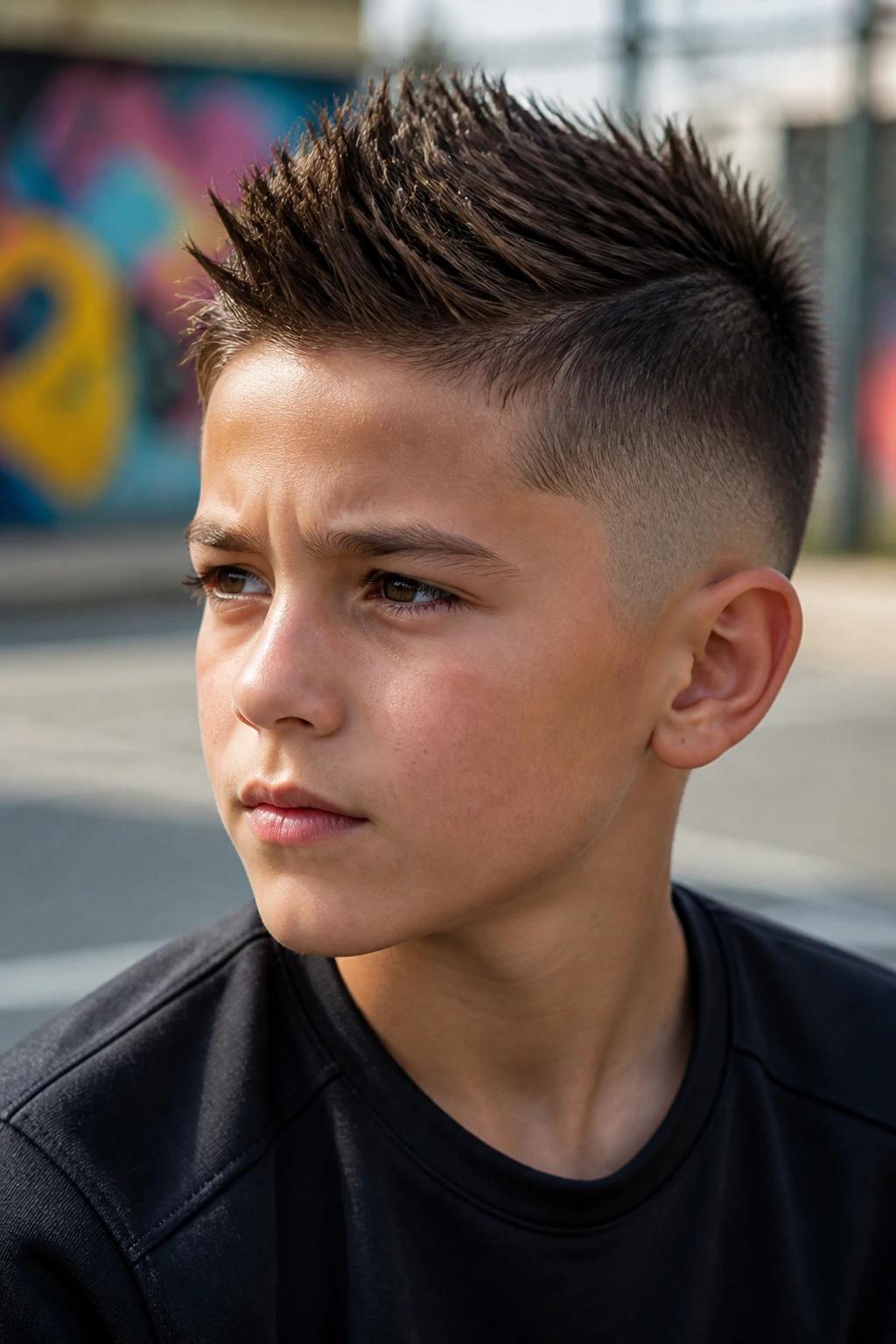
This is the louder cousin. The temple fade cleans up the front corners, and the top gets just enough length—usually 2 to 3 inches—to spike up in the middle without flopping backward. On fine hair, the trick is to keep the spikes small and broken up, not tall and glossy.
That last part matters. A lot. Heavy gel can make fine hair clump into thin, shiny blades that expose the scalp. A matte fiber or dry paste gives the spikes grip without turning them into plastic.
How to Wear It
Blow-dry the top upward from the front, then pinch the center section with your fingers while it’s still warm. Use a pea-size amount of product, warm it in your palms, and work it mostly through the middle third of the hair. Leave the ends a little rough.
Best for: boys who want visible texture and don’t mind five extra minutes in the mirror.
5. Messy Fringe Eurohawk
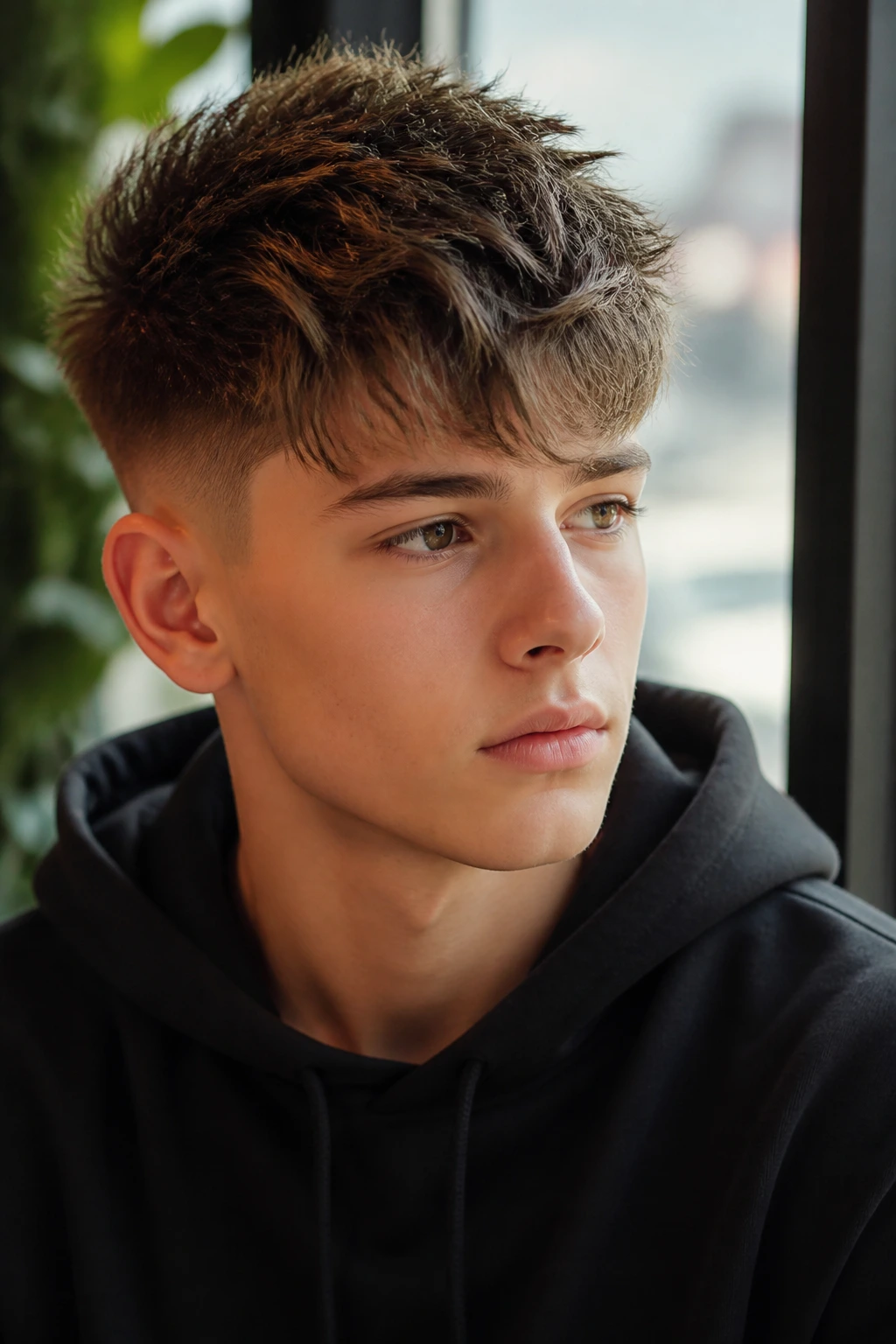
This one leans forward a bit, which is a nice move for straight fine hair that refuses to stand up on command. The fringe is kept longer at the front, around 2 to 2.5 inches, then blended back toward the crown so the center ridge still exists. The sides stay tight.
The result feels looser than a classic Eurohawk. It has that slightly undone look that makes fine hair seem thicker because the front pieces overlap instead of standing in a straight line. The fringe also helps hide a low-density hairline if that’s part of the picture.
When It’s the Right Choice
Choose this when the hair naturally falls forward or when a cowlick keeps fighting the middle. You can steer that fringe with a dryer and a vent brush, but you are not trying to freeze it in place. You’re just guiding it.
Small warning: if the top is cut too blunt, the fringe can look like a heavy curtain. Ask for soft point-cut ends so it breaks up cleanly.
6. Side-Swept Eurohawk
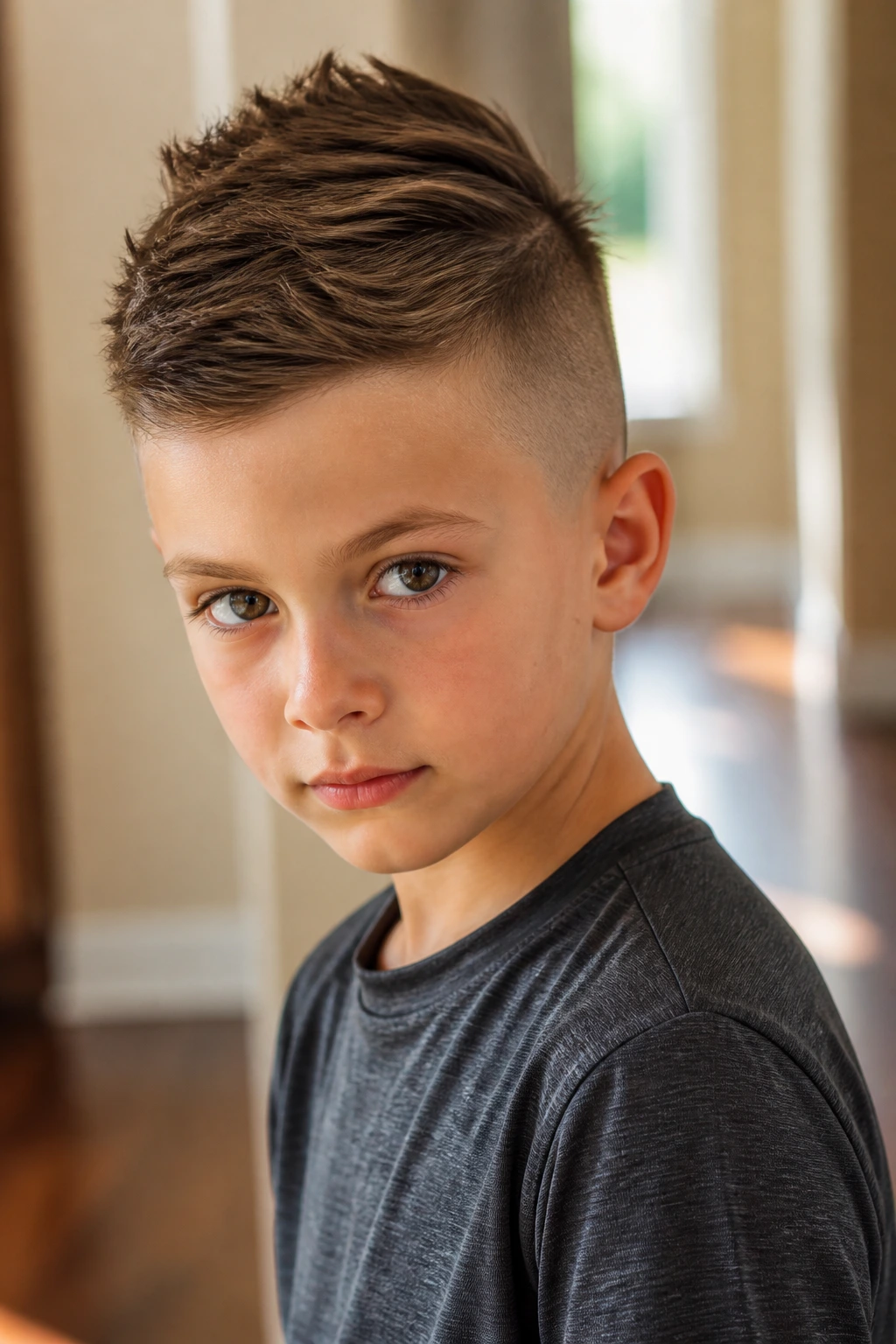
A side-swept Eurohawk is one of the smartest options for boys with a stubborn cowlick or a very straight, slippery head of hair. Instead of trying to make the center ridge stand perfectly upright, the top is directed slightly to one side, while the sides remain tight enough to preserve the shape.
It sounds subtle, and it is. But subtle can be useful. Fine hair often loses the battle when every strand has to stand straight up, and a side-swept version gives the cut a better chance of holding through the day.
Best for the Boys Who Hate a Mirror Routine
A side-swept top usually needs less product than a spiky one. Dry the hair diagonally across the head, then push the front section into the direction you want while it’s warm. Finish with a light paste, not gel.
The cut looks especially good when the line from forehead to crown has a soft curve instead of a stiff ridge. That little curve makes the style read as intentional, not accidental.
7. Skin Fade Eurohawk with Brush-Up Top
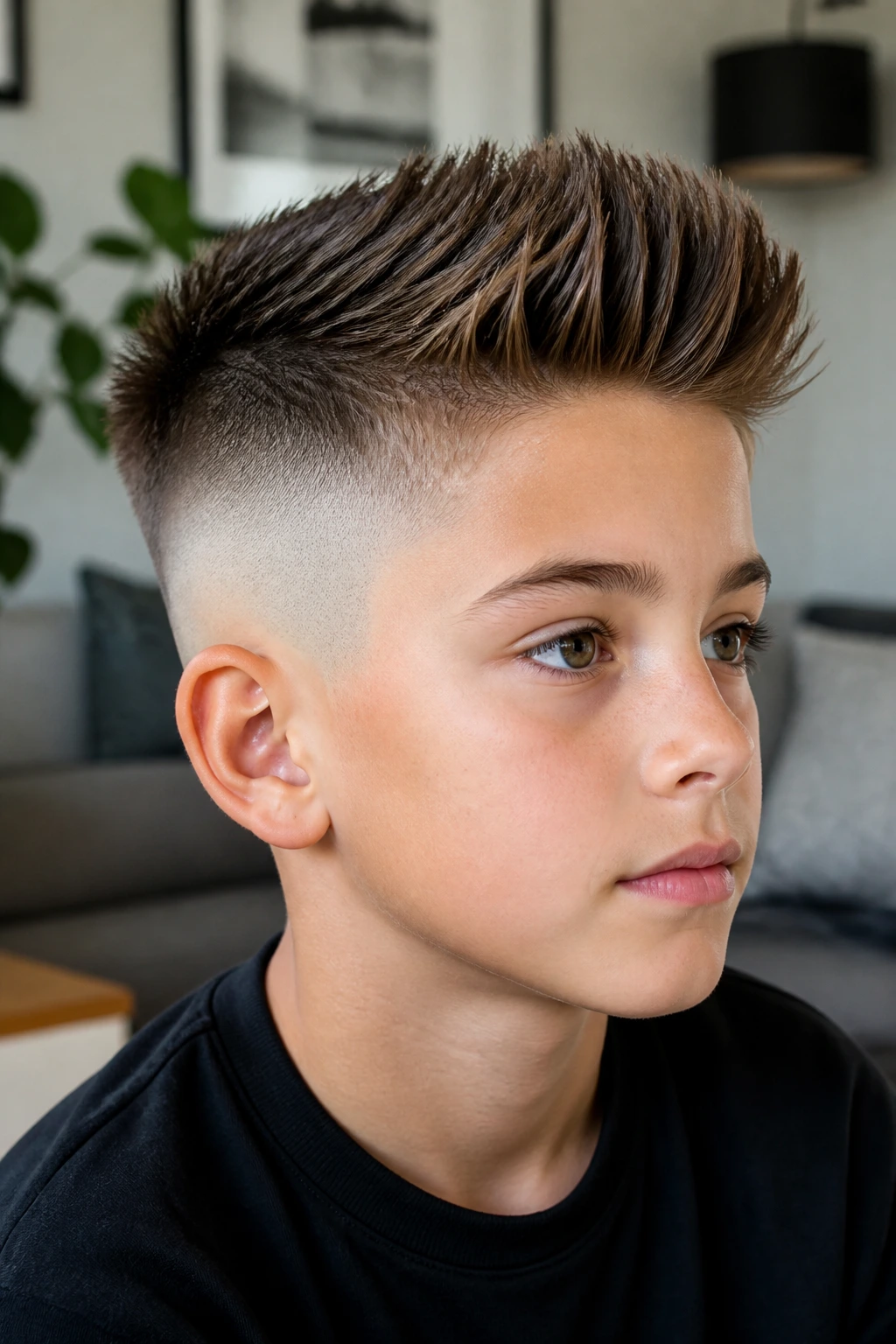
If you want contrast, this is where it lives. A skin fade drops the sides all the way down to bare skin near the bottom, which makes the top look fuller by comparison even when the hair is fine. Keep the top around 2 inches and brush it up from the front with a matte product.
This version has the cleanest outline of the bunch. It’s sharper, more obvious, and easier to style when the boy has a straight hairline and decent lift in the front. It is not the friendliest choice for a very round head shape, though. The high contrast can make the top look even narrower if the ridge is left too thin.
Best Move
Ask the barber to keep the center section broad through the front and slightly narrower near the crown. That gives the brush-up a solid base instead of a little wobbly strip sitting on top of the head.
My opinion: this one looks best when the product stays invisible. If you can see shine from across the room, you used too much.
8. Layered Eurohawk for Straight Fine Hair
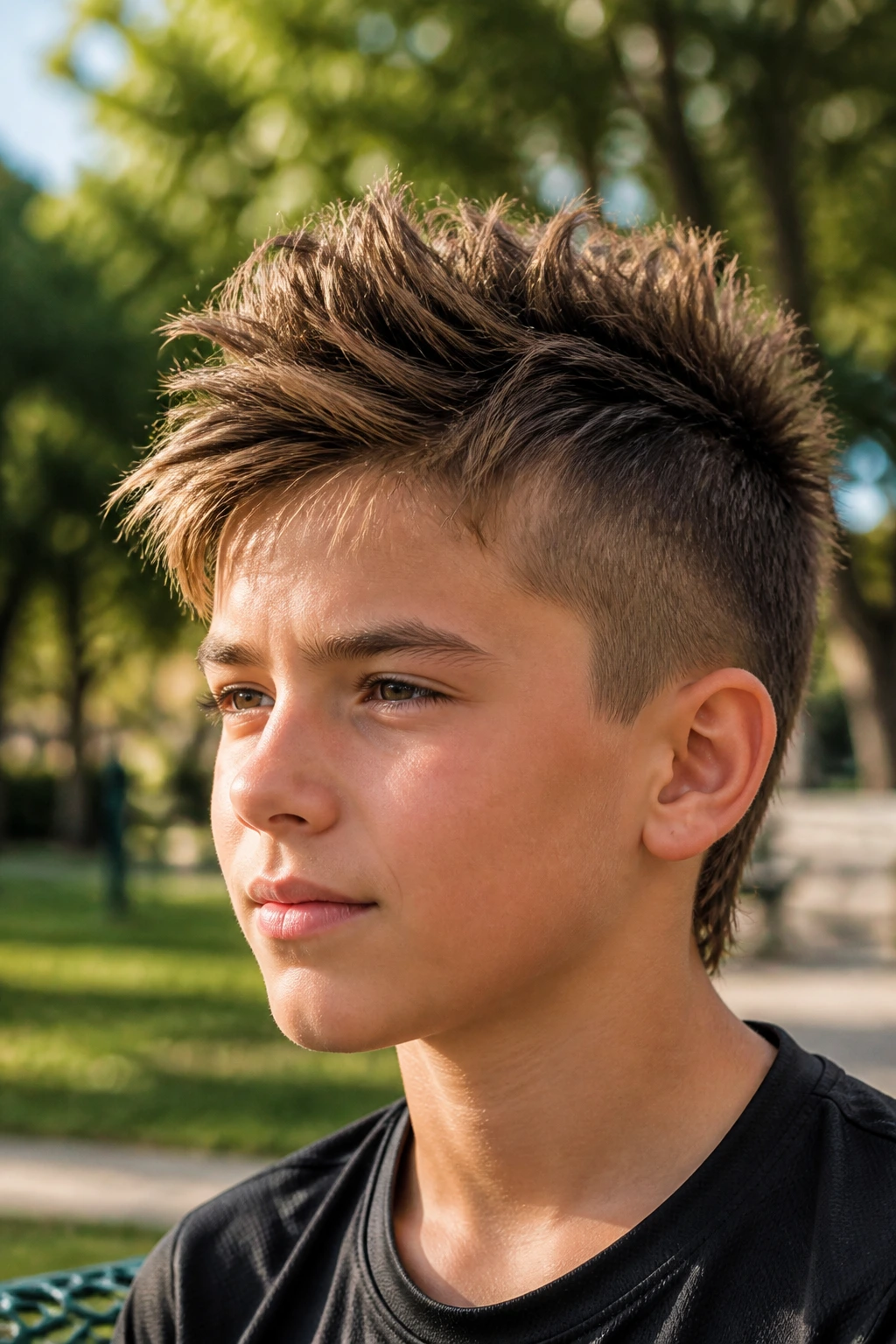
Straight fine hair can be a pain because it lies down the moment you stop watching it. Layers fix part of that. A layered Eurohawk keeps the top soft and feathered, with enough internal texture to stop the crown from turning into a flat sheet.
The haircut usually sits a little longer than the very short versions, somewhere around 2 to 3 inches on top, but the ends are heavily point-cut. That’s the key. The hair needs edges that move, not a blunt edge that hangs.
Why This One Is Worth Asking For
Fine hair rarely needs more length. It needs better engineering. Layers create tiny shifts in the way the hair stacks on itself, which gives the illusion of density without forcing the boy into a heavy product routine.
This is a strong choice if the hair looks limp when it’s freshly washed. A quick blow-dry with a vent brush and a little sea-salt spray will usually wake it up enough for the day.
9. Mini Eurohawk for Little Boys
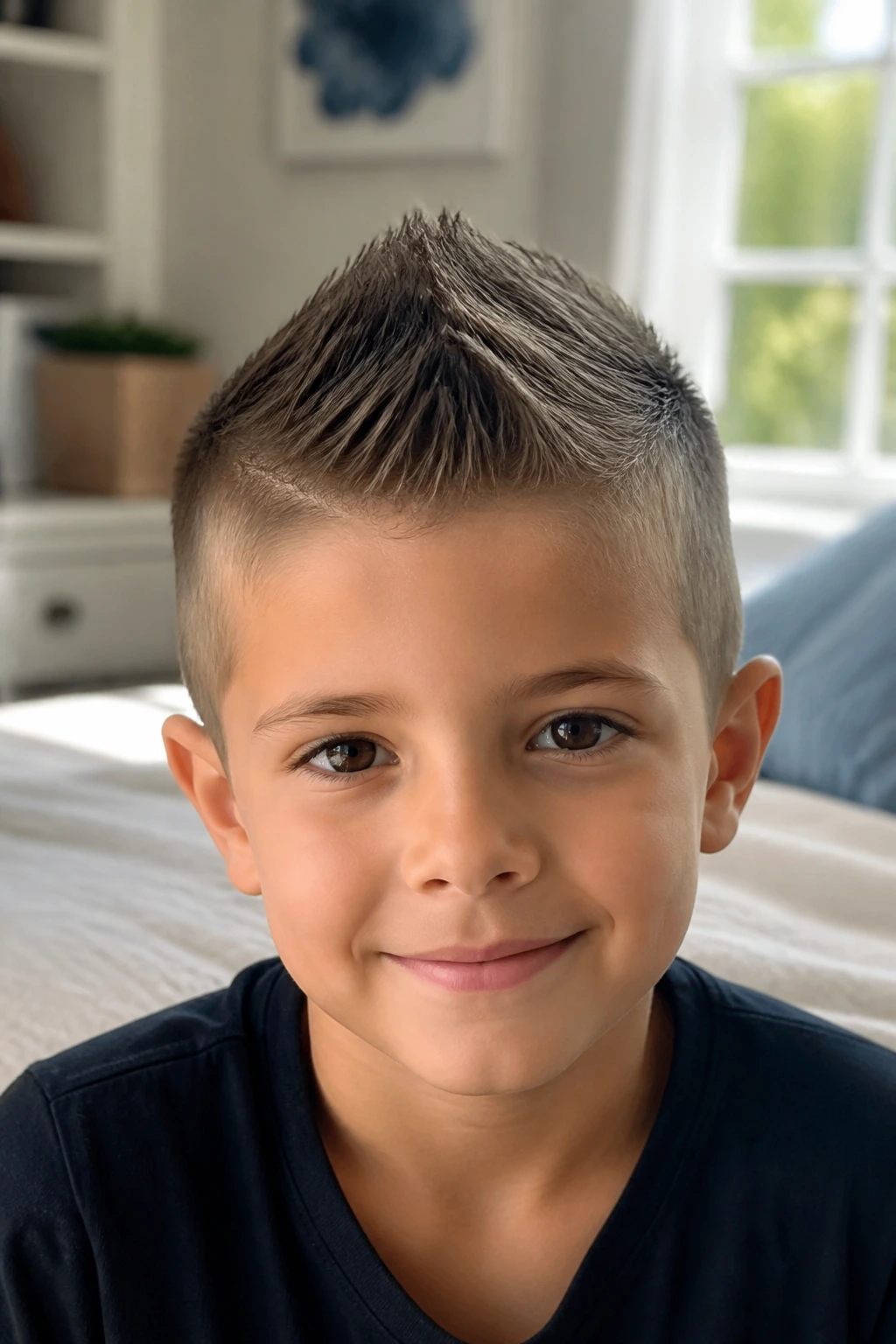
A mini Eurohawk keeps the idea but trims away the drama. The top is short—often around 1 to 1.5 inches—and the sides are tapered softly rather than aggressively faded. That makes it easier to manage for little boys who squirm, sweat, or hate sitting still for styling.
This is one of my favorite versions for very fine hair because it doesn’t rely on height. The center strip is just a touch longer than the rest, so the style reads as a Eurohawk without looking like a costume. Parents tend to appreciate that.
The Practical Part
The mini version grows out gracefully. After two or three weeks, it still looks neat because the shape is already small and controlled. You can brush it forward, nudge it up, or leave it alone on low-effort days.
Use a light touch: a tiny bit of styling cream is enough. Heavy paste on a small child’s fine hair tends to make the strands look greasy by noon.
10. Hard-Part Eurohawk
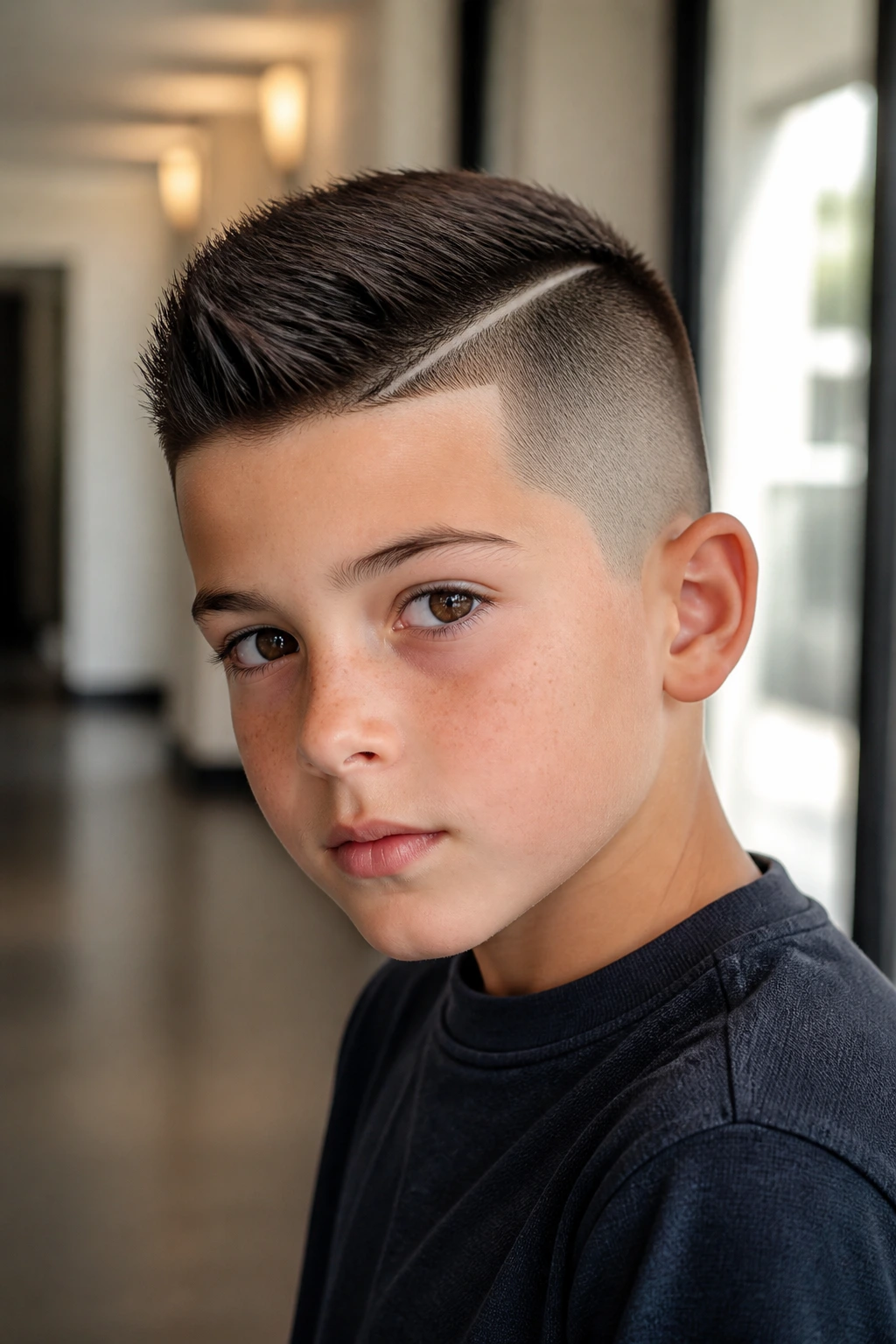
A hard part changes the whole mood of the cut. With a razor or clipper line carved into one side, the Eurohawk gets a sharper frame, and the top can be styled slightly off-center so it doesn’t look too uniform. On fine hair, that line helps the haircut look intentional even when the density is modest.
Keep the top around 2 inches, with enough texture to separate the center ridge from the parted side. The hard part is the visual anchor; the texture is what keeps the top from flattening.
Who It Suits
This version fits boys who like neat lines and don’t mind a barber visit that includes a little extra detail. It’s a strong option for straight hair because the part gives the eye something to follow.
But there’s a catch. If the top is too long, the hard part starts competing with the rest of the style. Keep the ridge compact, or the line loses its job.
11. Scissor-Taper Eurohawk
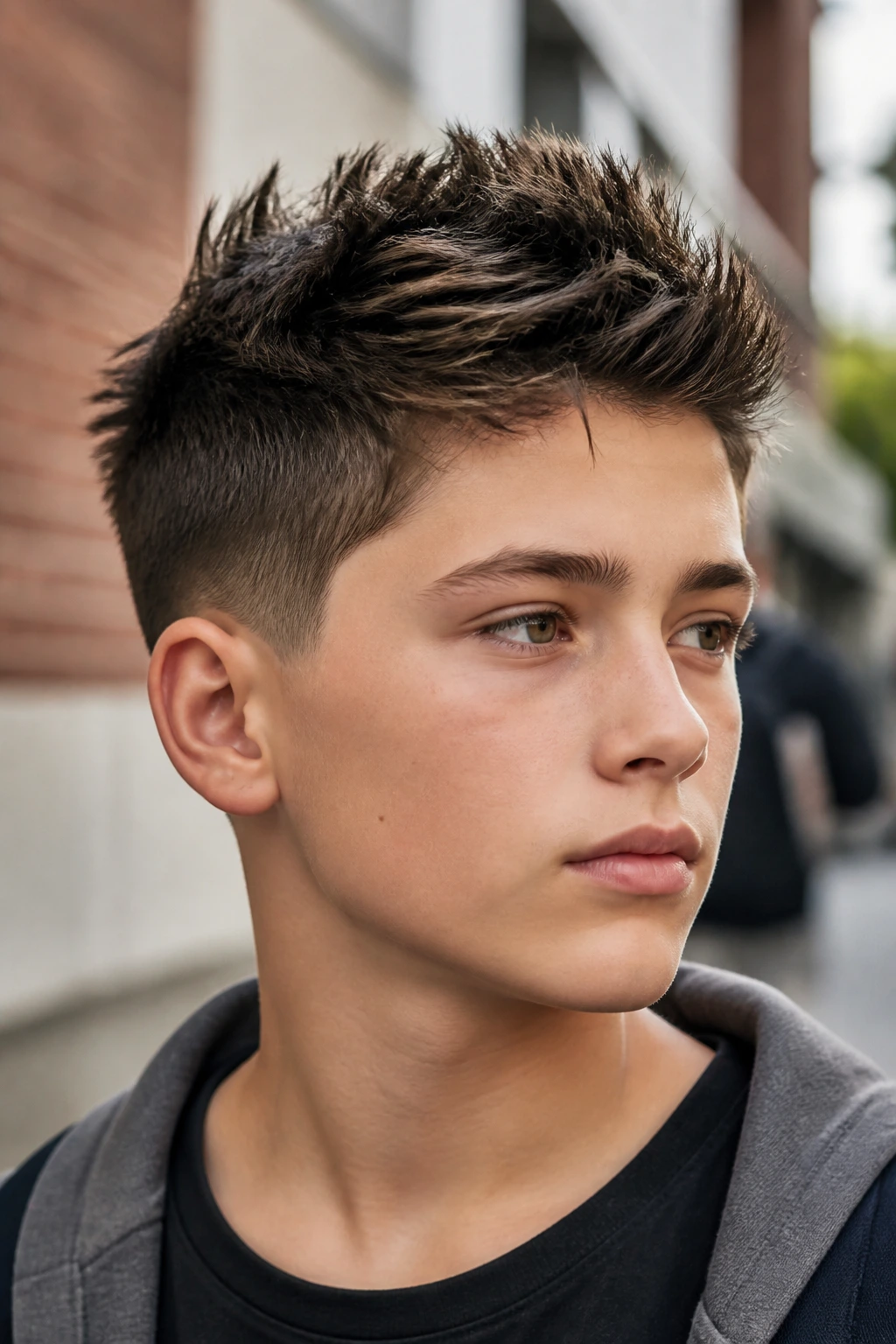
Not every Eurohawk needs a fade. A scissor taper keeps the sides cleaner and softer, which can be a better match for fine hair that looks patchy under a skin fade. The barber uses scissors and comb work to reduce bulk without taking the sides down too far.
This is the grown-up version of a low-key hawk. The top stays textured, the sides blend gradually, and the whole cut looks a little more natural as it grows out. It’s less dramatic, but the shape lasts longer between trims.
Why Parents Like It
No harsh grow-out line. That’s the big one. A scissor taper won’t create the sharp shadow that a tight fade does, so the haircut keeps its shape for an extra week or so if the child is not in the chair every month.
If the hair is very fine, this version also avoids the “too bare on the sides” problem. The hair still has enough mass around the temples to look balanced.
12. Feathered Eurohawk with Choppy Crown
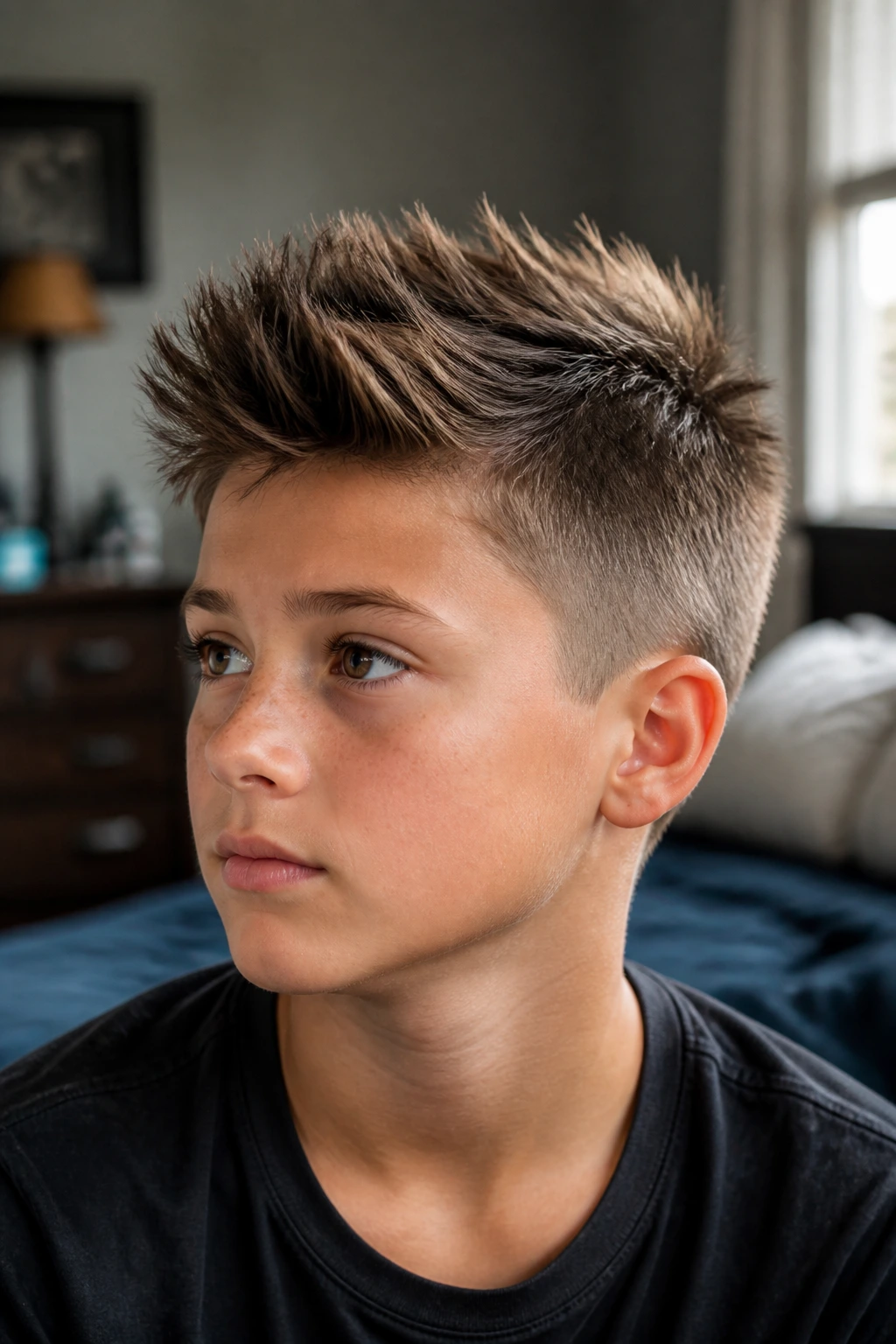
This is the airy version. The top gets feathered and sliced into soft, uneven pieces so the crown doesn’t sit like one blunt block. On fine hair, feathering can be better than heavy texturizing because it preserves the little bit of body the hair already has.
The crown should stay a little longer than the front, then blend into the center ridge. That keeps the style from collapsing backward. You want movement, not a comb-over wearing a disguise.
Where It Shines
Feathered cuts are especially nice on boys with straight strands that tend to split. The broken ends create enough friction for the hair to hold shape with minimal product, and the finish looks lighter in person than a blunt Eurohawk does.
Styling note: a small round brush and a cool shot from the blow dryer can make this version behave all day. It does not need much else.
13. Undercut Eurohawk
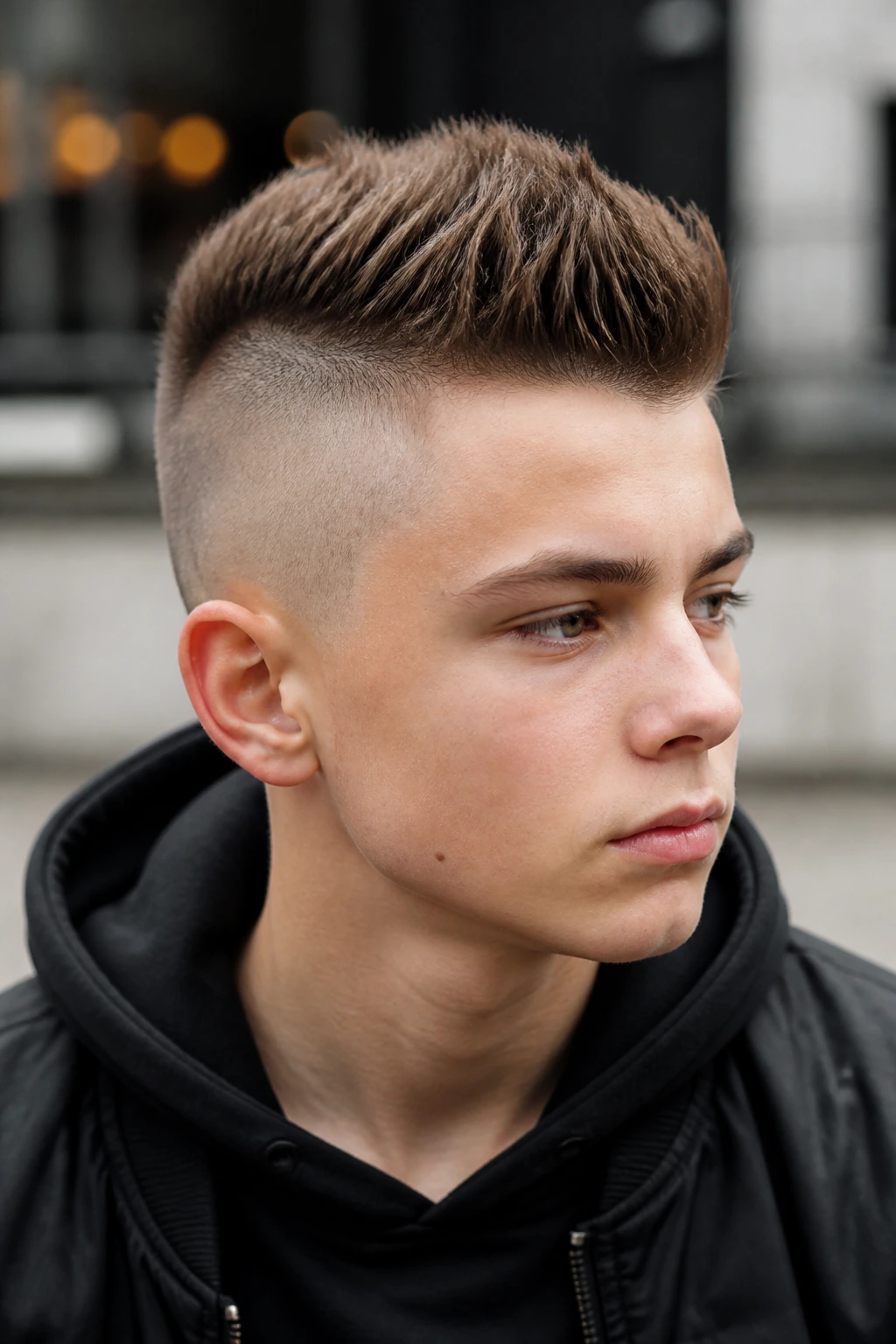
This is the bold one. The undercut removes most of the weight on the sides in one clean step, leaving the top longer and disconnected. On fine hair, that contrast can be useful because it makes the remaining top read as thicker and more defined.
Keep the top no longer than 3 inches unless the boy has a lot of natural lift. Fine hair with an undercut can drift into floppy territory fast if it gets too long. The cut looks best when the center section stands on its own instead of draping over the sides.
Best for Older Boys
Younger boys can wear this, sure, but it tends to suit older kids and teens who want something sharper. It pairs well with a matte paste and a quick blow-dry, and it gives the haircut a little edge without requiring a tall mohawk shape.
Do not overdo the disconnect. If the top is huge and the sides are shaved bare, fine hair can start to look thinner by comparison, not fuller.
14. Razor-Textured Eurohawk
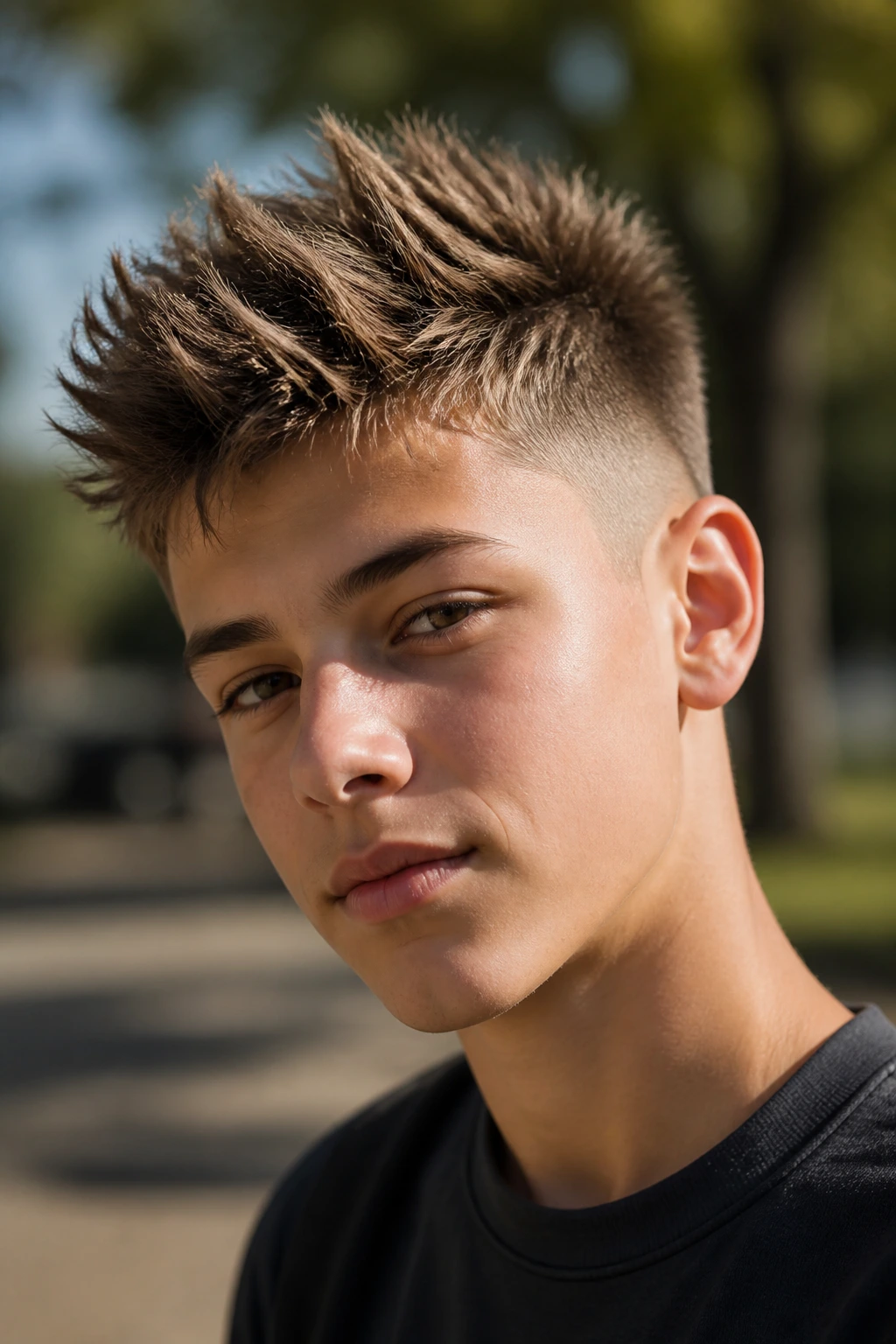
A razor-textured cut brings a rougher finish to the top, which can be useful on very straight, flat fine hair. The razor takes the ends down in a way that leaves soft jagged edges, and those edges catch light differently from blunt scissor cuts.
It’s a neat trick, but only when the barber knows how to handle fine hair gently. Too much razor work can make the ends fray, which is not the same thing as texture. You want separation, not fuzz.
The Payoff
When it’s done well, the style looks airy and full of tiny ridges. That kind of texture is especially helpful if the hair has no natural wave at all. The center ridge reads thicker because the ends are not all sitting in one straight line.
My take: this is one of the best options for the straightest, flattest hair on the list.
15. Combed-Forward Eurohawk
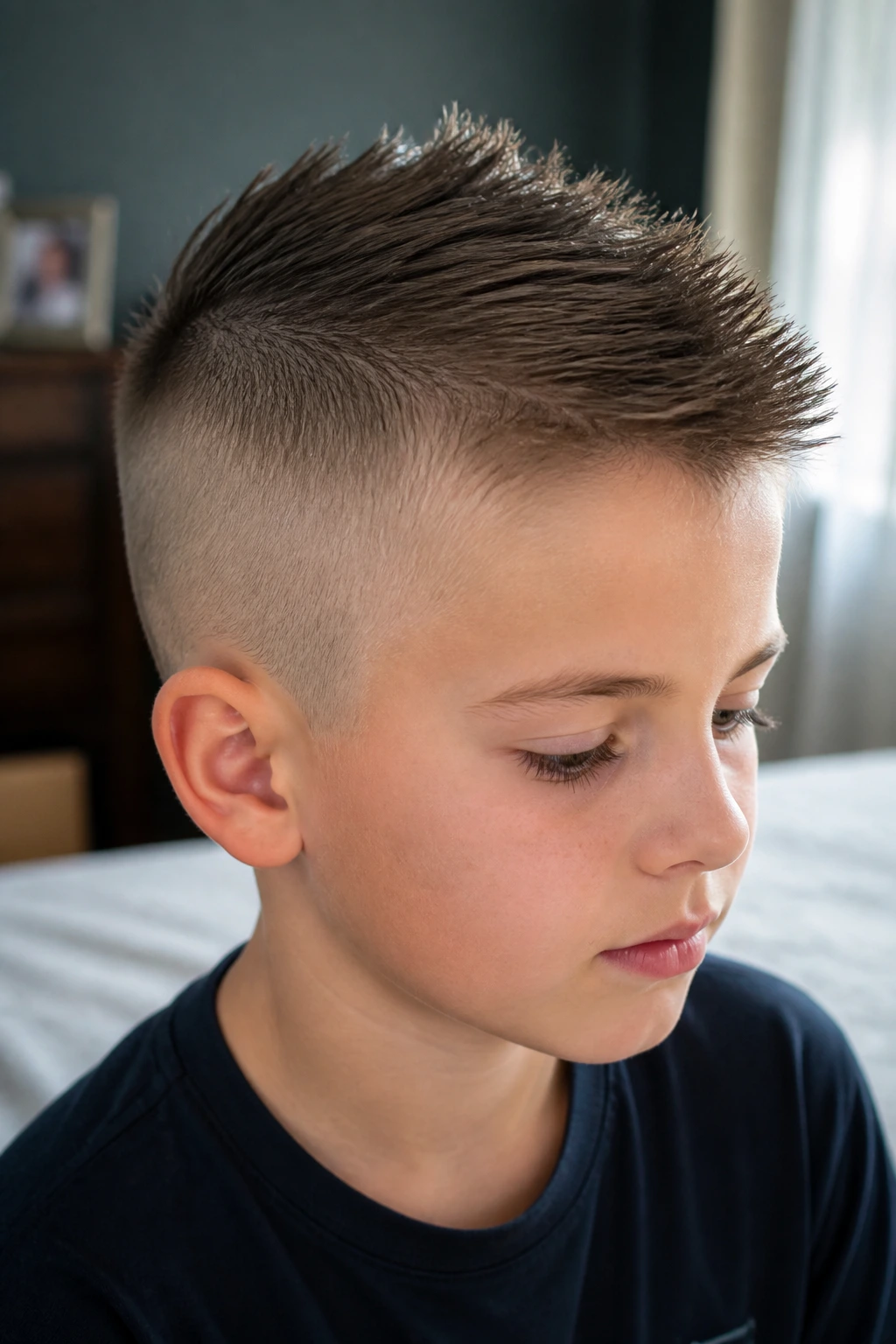
Not every Eurohawk has to be brushed up. Combed forward, the top becomes more of a controlled ridge with a slightly lifted front edge. That works beautifully for boys whose fine hair falls forward on its own and resists being pushed straight up.
The top usually sits around 1.5 to 2.5 inches, with the front kept a little longer than the crown. The sides can be a low fade or a taper, depending on how visible you want the style to be.
Why It’s Useful
A forward finish can cover a softer hairline and keep the style from looking too exposed. The front pieces overlap just enough to make the hair seem fuller, and the shape still reads clean from across the room.
Dry the front forward first, then nudge the center up at the last second. That little twist is what turns a plain short cut into a Eurohawk.
16. Sporty Eurohawk with Mid Fade
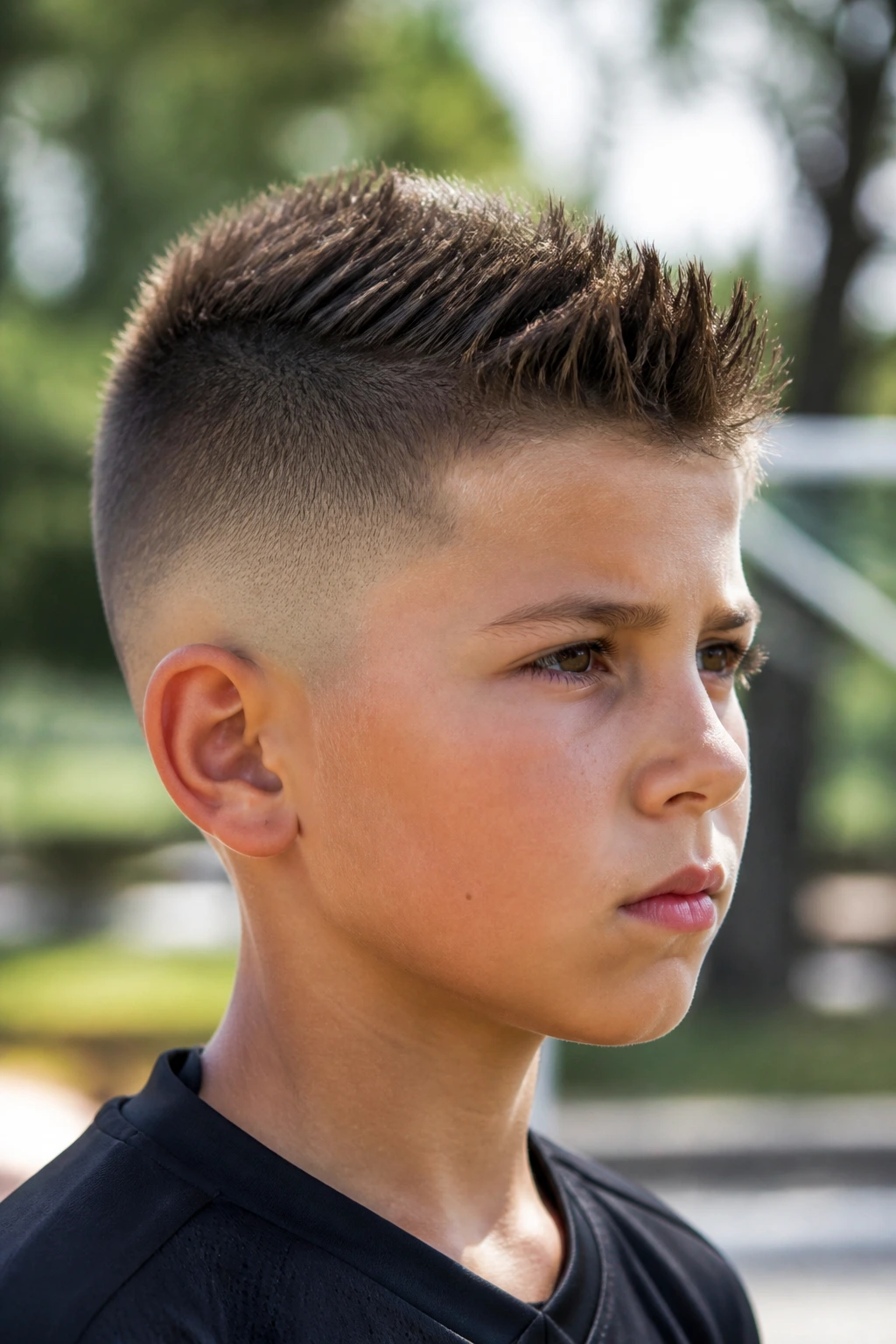
This version feels built for movement. The mid fade removes enough bulk to keep the sides crisp, but it does not climb so high that the top gets stranded on a skinny little island. On fine hair, that matters. Too much fade can make the top look lonely.
The center ridge stays short and active, usually around 1.5 to 2 inches, with enough texture that it can handle sweat and motion. If the boy plays sports, rides a bike, or generally treats his head like a helmet attachment, this is the sane option.
Best for Active Days
The cut stays in place better than a tall, glossy style. A small amount of matte paste and a quick finger-style is enough. No combing marathon required.
I like this one because it still looks put together after a rough day. That is rare.
17. Longer Top Eurohawk for Styling Variety
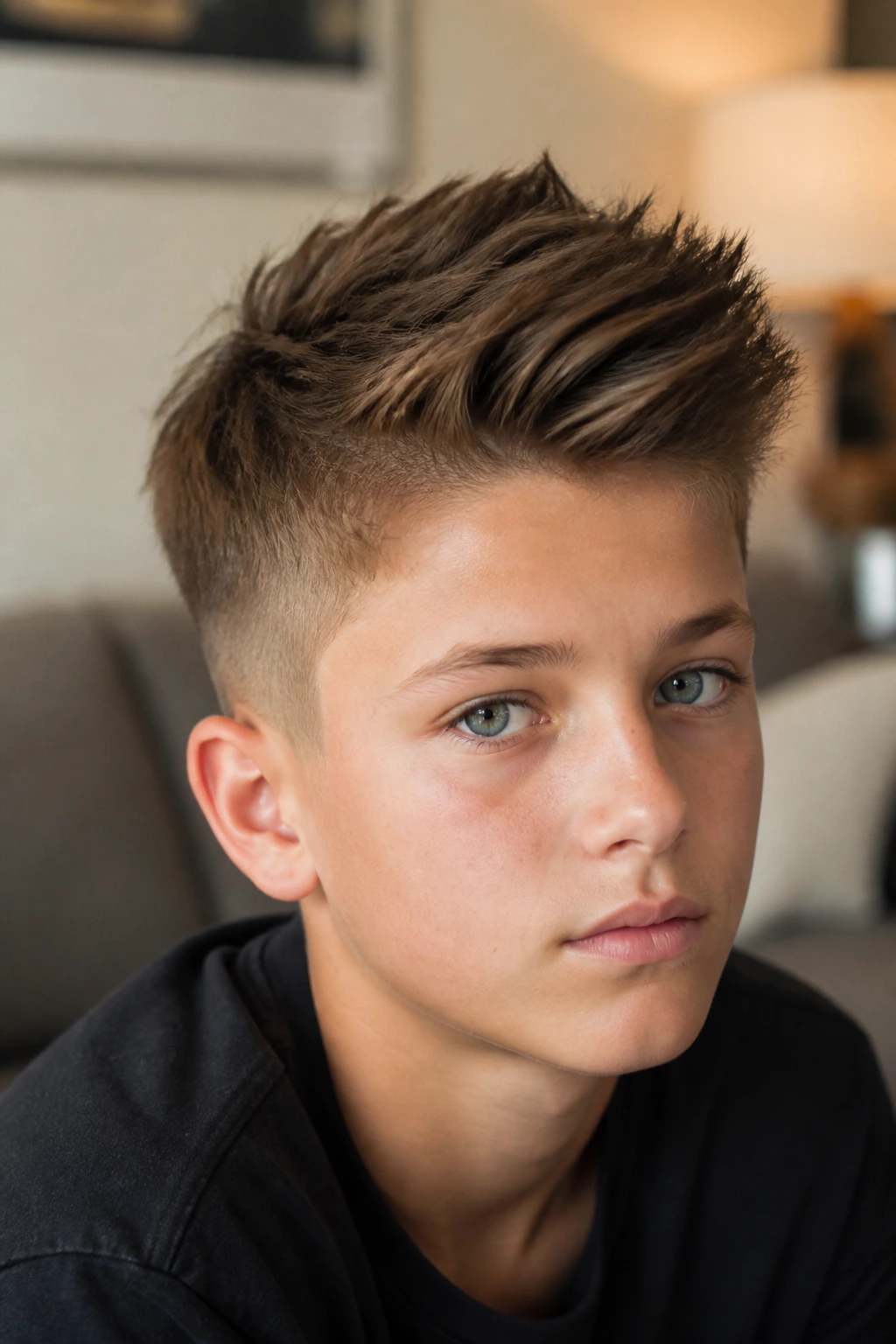
Some fine hair can handle a longer top, but only if the barber leaves enough internal texture to keep it from going limp. This Eurohawk sits at around 3 inches, sometimes a touch more, and gives you room to brush it up, sweep it slightly sideways, or wear it messy.
The sides need to stay disciplined here. A low or mid fade works better than a soft scissor trim because the longer top needs a strong base. Without that contrast, the haircut can start to look like overgrown bedhead.
When to Choose It
Pick this if the boy likes changing the style from day to day. It’s a good option for kids who want one haircut to do three jobs: neat for school, messy for weekends, brushed up for pictures.
Small warning: long fine hair has a shorter fuse. Once it passes the sweet spot, it starts collapsing. Keep the trim schedule tight.
18. Clean Line-Up Eurohawk
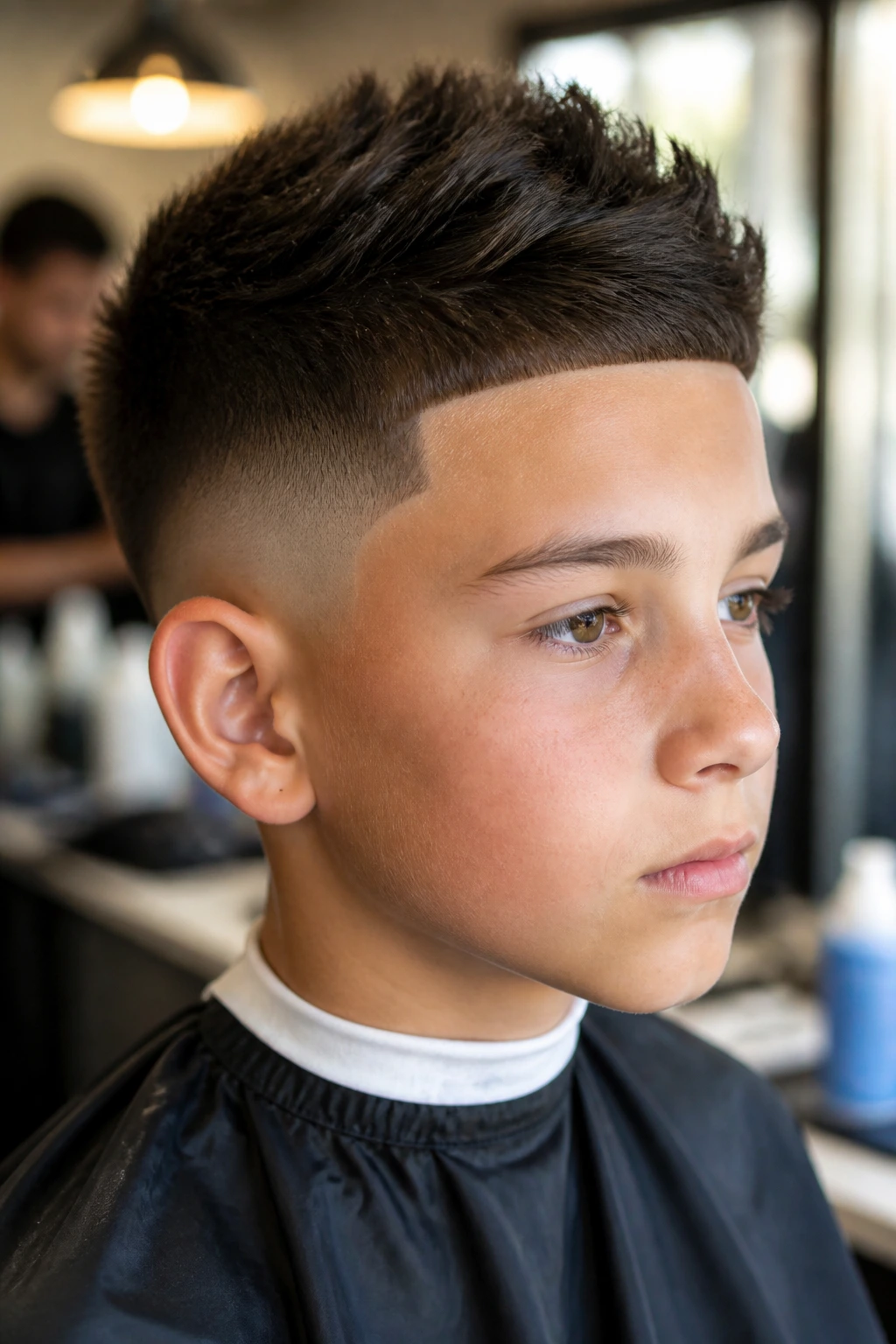
A clean line-up can rescue fine hair fast. The hairline gets edged neatly across the forehead and temples, which gives the Eurohawk a crisp frame even if the top itself is fairly soft. The cut looks sharper because the edges are doing more visual work.
The top can stay short or medium-short, but it should be textured enough to avoid a helmet effect. Fine hair with a hard line-up and no texture can look too severe, almost stamped on. Add a little movement in the center and it balances out.
Why It’s a Strong Finish to the List
This is the version for boys who want the haircut to look fresh the moment they walk out of the chair. The line-up does a lot of the heavy lifting, and the rest of the style can stay simple.
It also pairs well with a taper or skin fade if you want more contrast. Clean edges, soft center, tight sides. That combination rarely misses.
Why the Eurohawk Shape Flatters Fine Hair
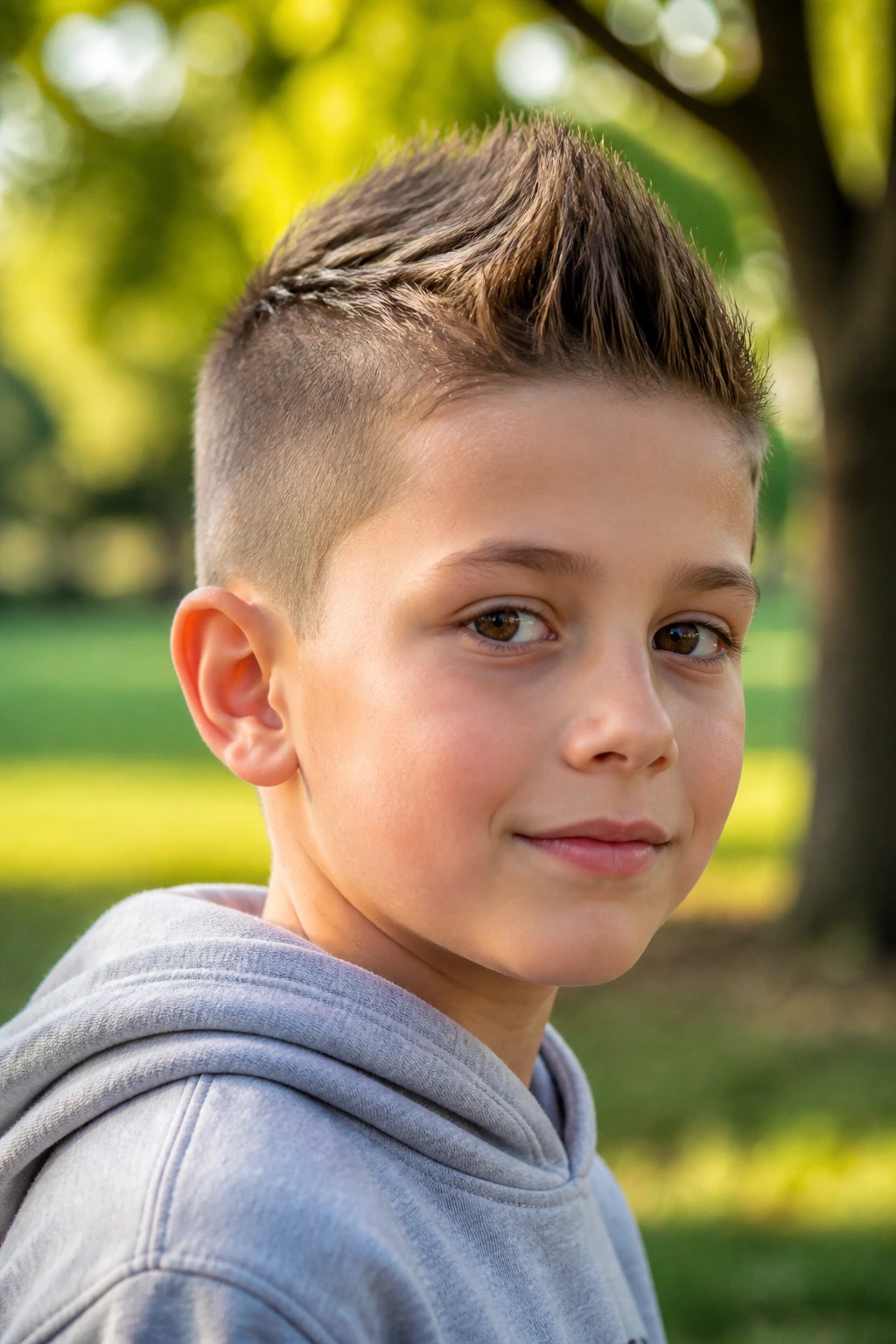
Fine hair is usually easier to control when the haircut creates a strong frame first. That’s the whole trick. The Eurohawk gives you a defined center ridge and a narrower profile through the sides, so the hair does not have to pretend it has more density than it actually does.
The style also makes use of contrast. Short sides make the top look fuller. Textured ends create shadows. A slightly raised center line gives the eye something to follow, and that alone can change the way thin-looking hair reads in the mirror. If you’ve ever seen a boy with a clean fade and wondered why his hair suddenly seemed thicker, that’s usually why.
A tall mohawk asks for a lot of body. A Eurohawk does not. That’s the reason it works so well on fine hair. The shape is lower, the ridge is wider, and the style can be adjusted to fit the head instead of fighting it.
There’s one more thing worth saying: fine hair often looks best with restraint. People reach for heavy gel, giant spikes, and too much height because they want the cut to look bold. Fine hair usually looks better when the styling is smaller, cleaner, and a little more precise. Less theater. More shape.
What to Tell the Barber Before the Clippers Start
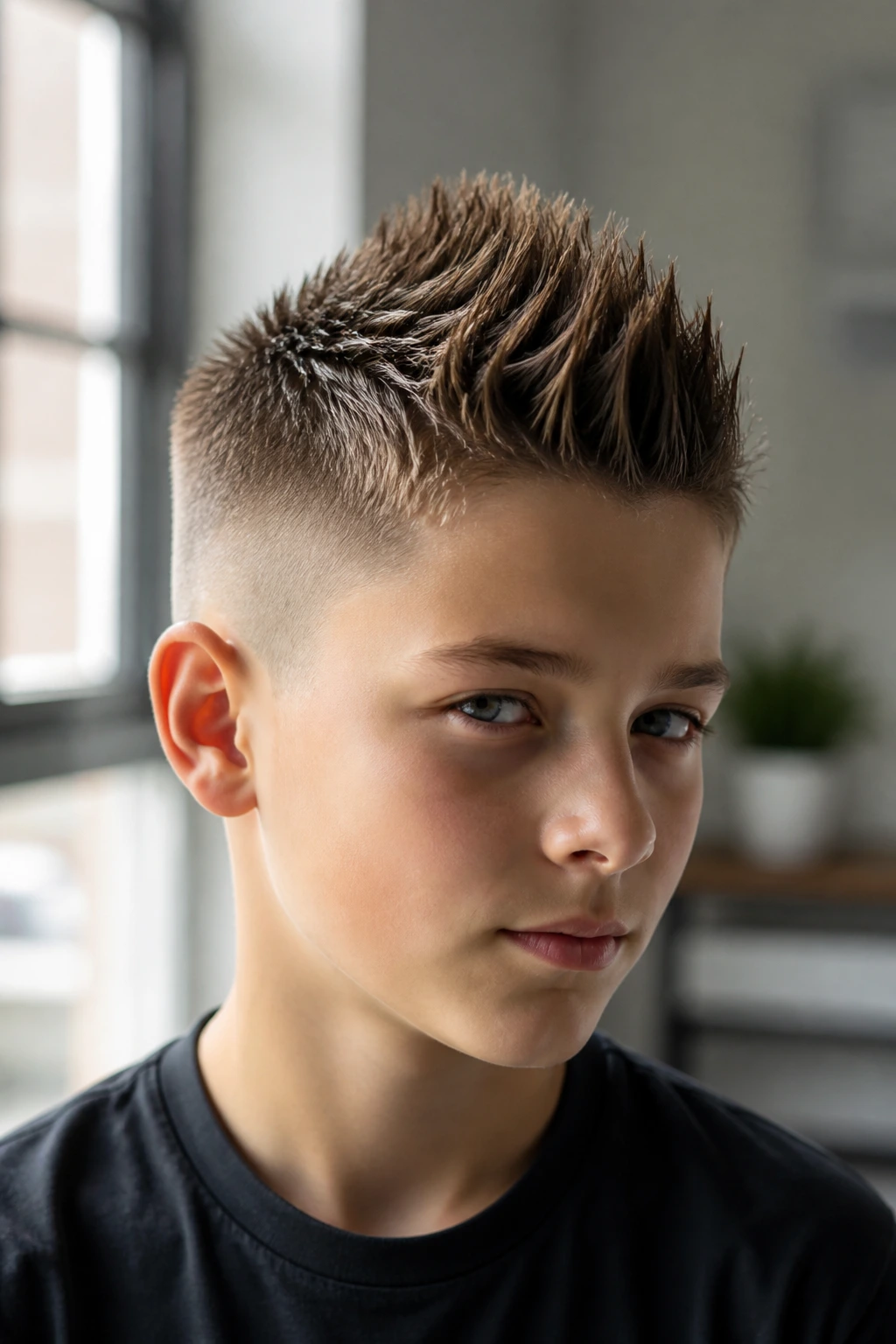
Bring a photo, sure, but don’t stop there. Photos can hide the important bits. What you want to say is specific: keep the center ridge wide enough to read as a Eurohawk, leave the top about 1.5 to 3 inches depending on how flat the hair lies, and taper the sides low or mid so the top has contrast.
That sentence does more work than “make it edgy.” It also keeps the barber from over-cutting the top. Fine hair can lose its shape fast if the length gets too chopped down in the crown, and if the barber uses thinning shears too freely, the density can look patchy instead of textured.
Useful phrases to use
- “Keep the top textured, not thinned out.”
- “Leave a little weight in the crown.”
- “Make the sides tight, but not too high.”
- “I want a soft Eurohawk, not a tall mohawk.”
- “Keep the front a little longer if it helps it stand up.”
If the hair has a cowlick, point it out before the cut starts. Cowlicks change where the ridge should sit, and a good barber will adjust the length in that spot rather than forcing the hair into a fight it cannot win.
Styling Products That Won’t Flatten Fine Hair
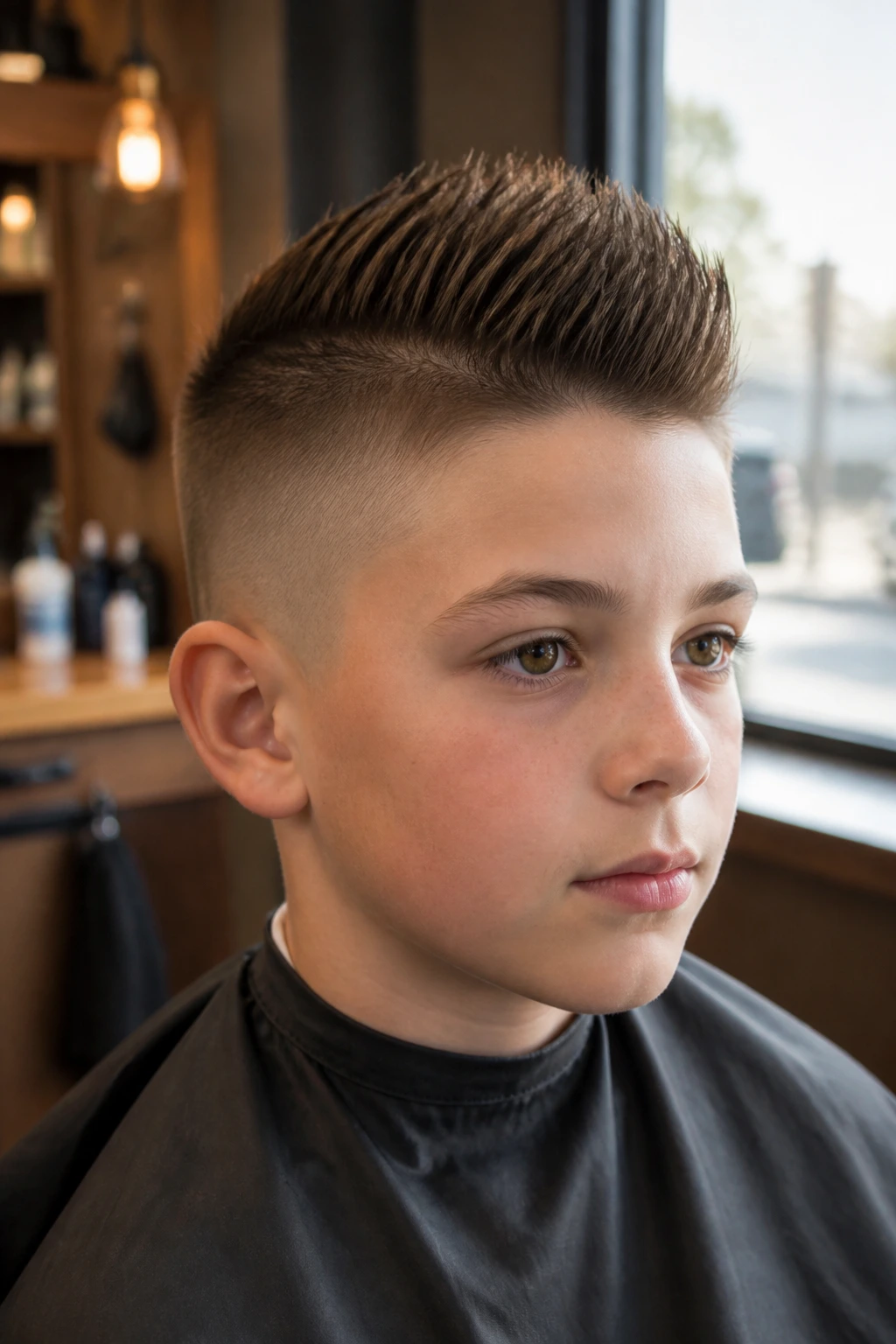
Heavy pomade is usually the wrong move here. It weighs fine hair down, and it can make the strands clump into see-through sections. Better options are matte clay, light fiber paste, sea-salt spray, or a low-shine cream. The best one depends on whether the hair needs lift, separation, or a softer finish.
A matte clay gives grip. A fiber paste gives control without a hard shell. Sea-salt spray adds roughness before blow-drying, which helps the hair grab itself instead of slipping flat. If the hair is very fine and soft, a tiny bit of cream may be all it can handle.
My bias, for what it’s worth
I’d start with a dry-finish product before I reached for gel. Gel can make a Eurohawk look shiny in a way that exposes the scalp, especially under bright bathroom light. Matte products let the top stay broken up, which is what fine hair needs.
A small bottle of sea-salt spray and a decent matte paste will cover most of the styles in this list.
The Small Tools That Make Styling Easier
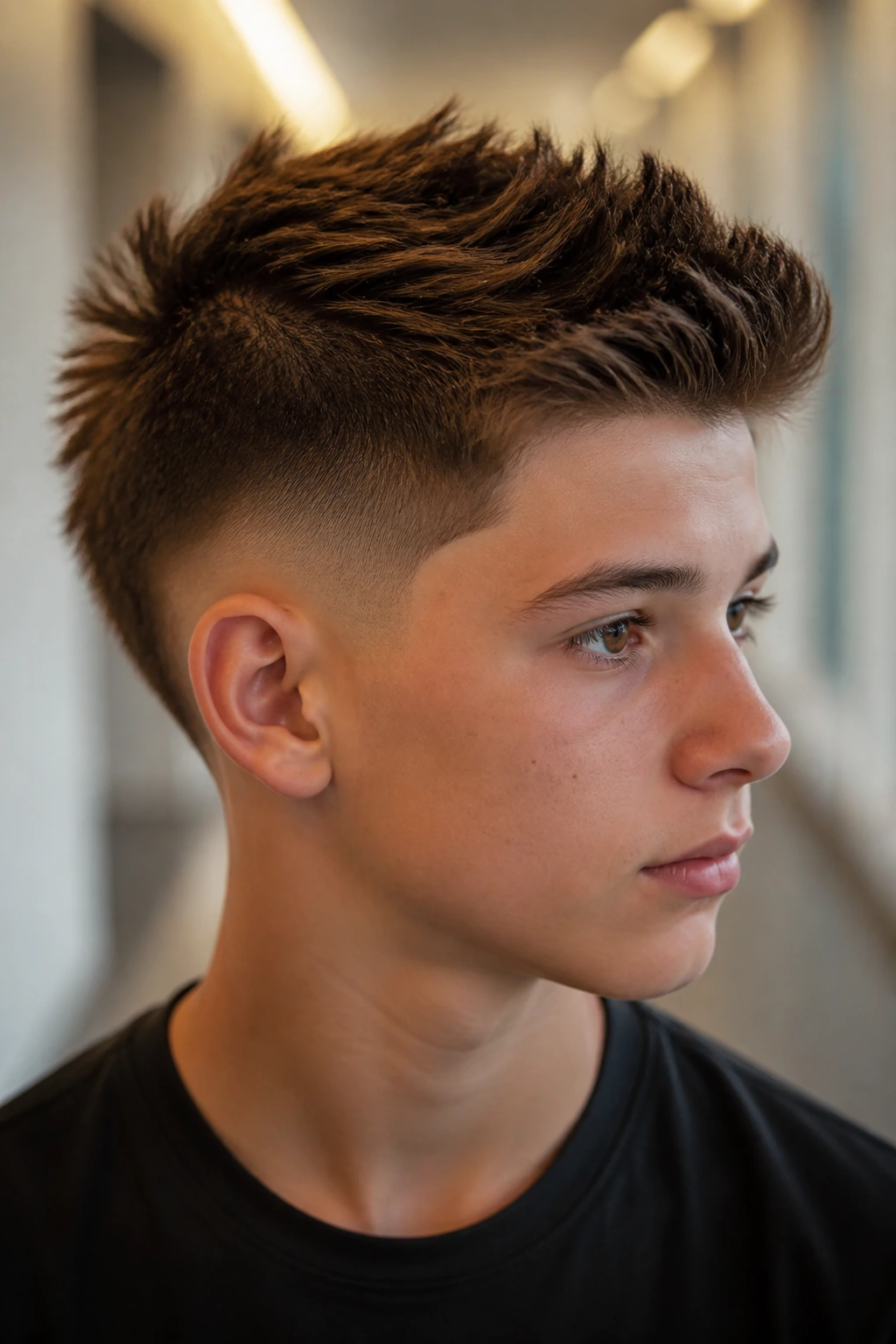
- Blow dryer with a nozzle attachment — directs air at the center ridge so the hair lifts instead of scattering.
- Vent brush or small round brush — helps guide the front and crown into shape without crushing the roots.
- Matte clay or fiber paste — gives fine hair grip without a glossy finish that shows the scalp.
- Sea-salt spray — useful as a pre-styler on very straight hair that falls flat fast.
- Water spray bottle — lets you reset the top in the morning without re-washing it.
- Hand mirror — helpful for checking the crown and neckline, especially when the fade grows out.
- Trimmer for neckline cleanup — optional, but useful if you want the back to look tidy between barber visits.
How to Style a Eurohawk Without Flattening It
Prep: Start with towel-dried hair that’s damp, not dripping. If the hair is soaked, the product slides around and the roots never get a chance to lift. A light mist of sea-salt spray or a small amount of pre-styler gives the strands some grit.
Direction: Blow-dry the top from front to back, then lift the center ridge with your fingers or a vent brush. For the spikier versions, aim the air slightly upward. For the softer versions, use a lower angle and let the hair rise naturally instead of forcing a stiff shape.
Product: Warm a pea-size amount of matte clay or fiber paste between your palms. Start at the center of the ridge, then work outward. If the hair gets too coated near the ends, the style starts to droop. That’s the part people miss.
Finish: Pinch the top lightly with fingertips to separate the strands. Don’t comb it flat. And don’t keep touching it for the next hour, either. Fine hair picks up oil from hands fast, and repeated smoothing kills the texture you just built.
A final blast of cool air helps lock the shape. It’s a small step, but it keeps the hair from relaxing the second the dryer turns off.
What Makes a Fine-Hair Eurohawk Last Longer Between Cuts
The haircut usually looks best for the first 2 to 4 weeks, depending on how short the fade is and how fast the hair grows. After that, the sides start to widen and the center ridge loses its clean outline. That’s not a disaster. It’s just the haircut doing what haircuts do.
If you want the style to stay tidy, schedule a trim before the fade gets fuzzy. A low taper can stretch a little longer; a skin fade asks for a cleaner maintenance rhythm. The neckline matters too. A quick clean-up around the back of the neck every couple of weeks keeps the whole cut from looking sleepy.
A few real-world habits help
- Rinse the hair with water and restyle on non-shampoo days.
- Use a tiny amount of product rather than layering more and more.
- Blow-dry only the top if mornings are rushed; the sides usually don’t need it.
- Keep the crown from getting too long. That spot collapses first.
Fine hair usually looks better when it’s lightly reset instead of fully rewashed every morning. Too much shampoo can make it softer and flatter, which is the opposite of what this cut needs.
Common Mistakes That Make It Look Thinner
- Taking the top too long: The hair starts to hang instead of lift, and the Eurohawk turns into a limp ridge. Keep the top within a realistic range for the hair’s density.
- Using shiny gel: Shine exposes the scalp and makes fine strands clump together. A matte product almost always reads fuller.
- Cutting the sides too high: A very high fade can make the head look narrow and the top look smaller. Low or mid fades usually balance better.
- Over-thinning the crown: This removes the little density the haircut depends on. Ask for texture at the ends, not aggressive thinning through the whole top.
- Ignoring the cowlick: A stubborn swirl at the crown can split the center ridge and make the style fall apart by noon. Plan the cut around it.
- Styling while the hair is soaking wet: The product slides, the roots stay flat, and the top dries in the wrong shape. Damp is better.
Variations and Adaptations to Try
School-Code Soft Hawk: Keep the top under 1.5 inches, use a low taper, and skip any hard lines. This version reads neat enough for stricter dress codes while still keeping the Eurohawk shape visible.
Sporty Mid-Fade Hawk: Choose a mid fade and a short, textured top that can survive sweat and movement. It’s a strong pick for boys who play sports and do not want to fuss with a brush after every game.
Cowlick-Friendly Sweep: Instead of forcing the top straight up, guide it slightly to one side and let the ridge curve across the crown. This is one of the better fixes for hair that refuses to stay centered.
Sharper Teen Version: Leave the top a little longer—around 2.5 to 3 inches—and add a skin fade or a hard part. It gives more contrast and a cleaner edge, which older boys often prefer.
Soft Feather Hawk: Ask for more point-cut texture and a softer finish through the front. This version works well when the hair is straight and fine but not interested in standing up in spikes.
Frequently Asked Questions
What exactly is a Eurohawk haircut for boys?
A Eurohawk is a softer, wider version of a mohawk or fauxhawk. The center stays raised, but the sides are usually faded or tapered instead of shaved into a dramatic strip.
Is a Eurohawk a good choice for fine hair?
Yes, because it creates the illusion of density through shape and contrast. Fine hair usually looks better in a controlled ridge than in a tall, rigid spike that has to fight gravity all day.
How short should the sides be?
Most boys with fine hair do well with a low taper, mid fade, or skin fade depending on how bold they want the look. If the hair is very sparse at the temples, a lower fade often looks better than a high one.
What product should I use?
Matte clay, fiber paste, or a light cream are the safest bets. Avoid shiny gel unless you want a wet look, because it can make the hair look thinner and clumpier.
Can a Eurohawk work with a cowlick?
Absolutely, but the cut has to be planned around the swirl. A good barber will leave a little more length where the cowlick pushes hardest and use that as part of the shape instead of fighting it.
How often does it need a trim?
Most versions need a clean-up every 3 to 5 weeks. A skin fade usually needs attention sooner than a low taper, because the contrast disappears faster as it grows out.
Can boys wear this style to school?
Yes, if the version is kept soft enough. A mini Eurohawk, scissor-taper version, or short school-ready hawk usually stays within common dress codes better than a tall spiked cut.
What if the top keeps falling flat by noon?
The cut may be too long for the hair’s density, or too much product may be weighing it down. Shorten the ridge a little, switch to a matte finish, and dry the roots upward before styling.
Keeping the Shape Sharp
The best Eurohawk for fine hair is the one that still looks like a haircut after a long day, not just after the barber sprays it and hands over the mirror. That usually means a sensible top length, a clean fade or taper, and enough texture that the hair can bend without giving up the shape entirely.
If you’re choosing between two versions, I’d usually pick the one with a better outline over the one with more height. Fine hair rarely wins by trying to be bigger than it is. It wins by looking clean, intentional, and a little bit sharper than the rest of the room.
A good Eurohawk can do that without turning morning routines into a wrestling match. And that, honestly, is the version worth keeping.