



Fine hair can be a nuisance when you try to bully it into shape. Leave it too long and the strands split apart; drown it in heavy product and every piece goes shiny and separate. The smarter move is simpler: cut the silhouette so the hair looks fuller before you even touch a jar.
That’s the part a lot of men miss. Fine hair usually doesn’t need more volume in the abstract — it needs a better outline, a cleaner perimeter, and a finish that doesn’t shout “product” from across the room. A short textured crop, a sharp crew cut, or a soft side part can make a huge difference because they control where the eye goes. The scalp reads less. The top reads denser. Day gets easier.
Some of the best men’s hairstyles for fine hair are the ones that look almost plain from a distance and quietly smart up close. They don’t fight the hair’s nature. They work with it. If your fringe falls flat by lunch, if your crown swirls in the wrong direction, or if a comb-over turns wispy the second humidity shows up, these are the shapes worth paying attention to.
Why These Styles Are Worth Your Time
-
Texture beats fake bulk: Fine hair looks fuller when the cut creates broken-up ends and a bit of movement, not when it’s piled up into a stiff shape.
-
Shorter sides help the top read thicker: A low taper or tidy fade gives the upper section more visual weight, which is half the battle.
-
Matte finish hides separation: Shiny pomades make fine strands look like individual threads. Matte clay, paste, or powder keeps the surface from flashing under bright light.
-
Most of these styles are fast to reset: If the wind or a commute ruins them, a damp hand, a comb, or 30 seconds with a dryer usually brings them back.
-
They grow out in a cleaner way: Good fine-hair cuts still look deliberate when they’re a little long, which matters if you don’t want a trim every ten days.
-
They work with real-life hairlines: Cowlicks, high foreheads, and slightly sparse temples are part of the picture here, not something to hide behind a fantasy haircut.
What Fine Hair Needs From a Cut
Fine hair is about strand diameter, not density. That sounds like a small technical difference, but it changes everything in the chair. You can have a full head of hair and still have strands that are delicate, soft, and eager to lie flat. Or you can have decent density with hair that looks wispy because the cut is too long and too soft at the edges.
That’s why over-layering often backfires. Every slice from the razor or thinning shears removes a little more visual weight, and fine hair does not have much to spare. A blunt edge, a controlled fringe, or a shape that keeps some weight near the crown usually reads better than a shag that’s been thinned to death. Harsh truth. Sorry.
The other thing to watch is direction. Fine hair shows cowlicks and growth patterns fast, which is why a cut that ignores the crown usually looks good for exactly one mirror check. If your hair pushes forward, leaning into a crop or Caesar can make life easier. If it naturally parts, a soft side part or a brushed sweep may ask less of it. The right haircut does not erase the way your hair grows. It gives that growth a job.
What to Tell the Barber Before the Clippers Start
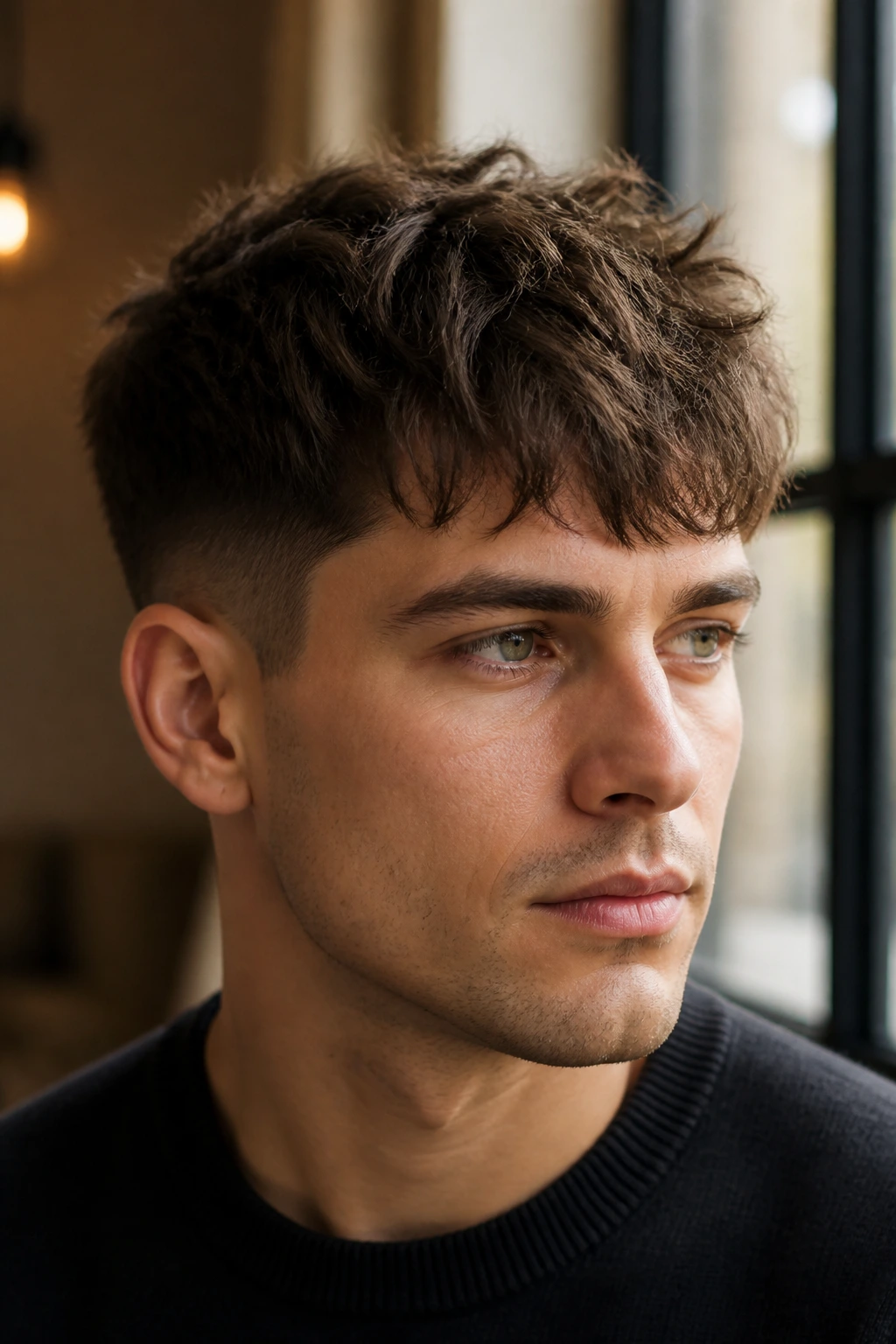
Bring a photo, sure, but don’t stop there. A picture shows the shape; your explanation gives the barber the map. Say where your hair falls apart first — the front, the temples, the crown, or the side that refuses to sit down. That one detail often changes the cut more than any style name.
Ask for texture on top without aggressive thinning. That sentence matters. Fine hair can look shredded if a barber goes in with thinning shears like they’re sanding a board. Point cutting, scissor work, and a bit of choppy movement around the fringe usually do more good than a full-on thinning session.
Be plain about your routine too. If you blow-dry for two minutes and leave, say that. If you never use a comb, say that. A great cut that requires twenty minutes and a round brush every morning is not a great everyday cut. It’s theater. Good barbers know the difference, and they’ll adjust the length on top and the weight at the sides so the style still works when you’re running late.
1. Textured Crop with a Soft Fringe
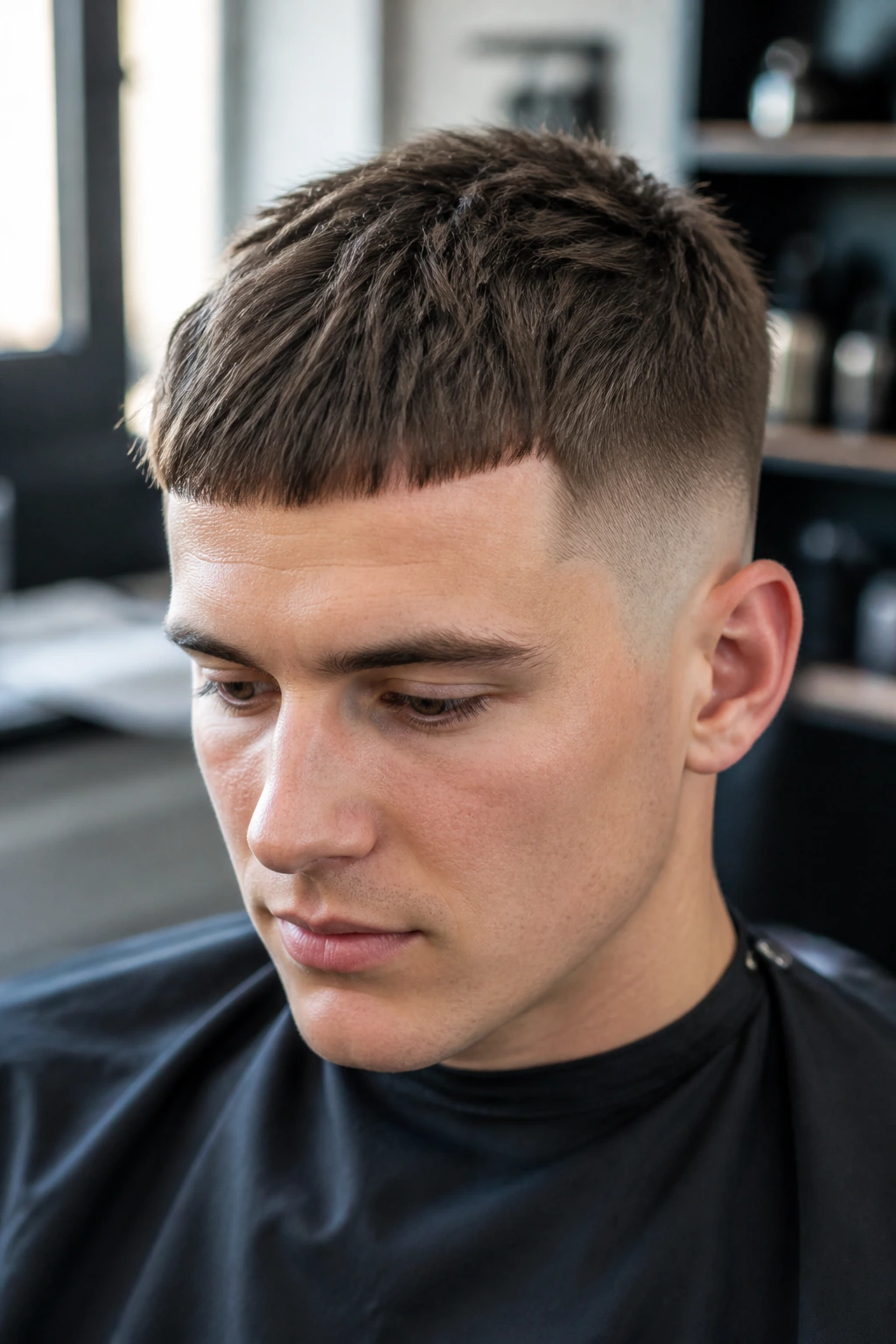
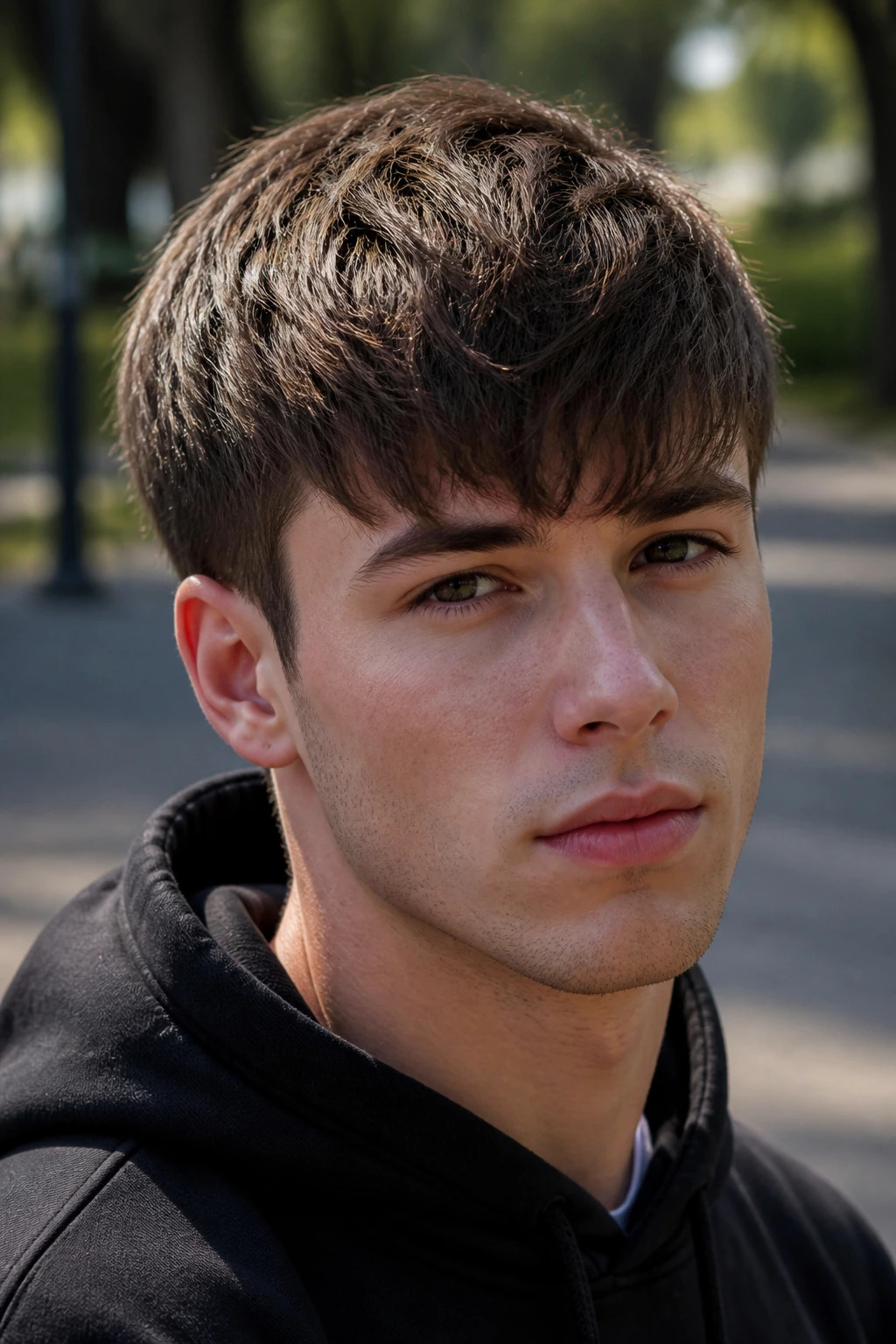
A textured crop is the haircut I’d put near the top of the list if someone handed me a head of fine hair and said, “Make this look easy.” It keeps the length short enough to hold shape, but not so short that the top disappears. The fringe sits just forward of the hairline, broken up and a little uneven, which matters because a straight line can make fine hair look flat and obvious.
Why It Works on Fine Hair
The crop works because it shifts the attention to shape, not bulk. You usually want 1.5 to 2.5 inches on top, a low taper or soft fade around the ears, and a fringe that’s point-cut instead of chopped into a blunt shelf. That gives the top some body without making the ends look wispy.
Fine hair also tends to behave better when it’s pushed forward rather than forced upward. The front can hide a weaker hairline or a crown that wants to lie down by noon. That’s a useful trade.
Quick details:
- Keep the top short enough to lift with fingers, not long enough to split.
- Ask for the fringe to be broken up, not square.
- Use a pea-sized amount of matte clay and work it into dry or almost-dry hair.
- Blow-dry the front forward with your fingers for 20 to 30 seconds if you want more hold.
Pro tip: If your hair is very straight, a tiny bit of sea salt spray at the roots before drying gives the crop more bite than paste alone.
2. French Crop with a Clean Edge
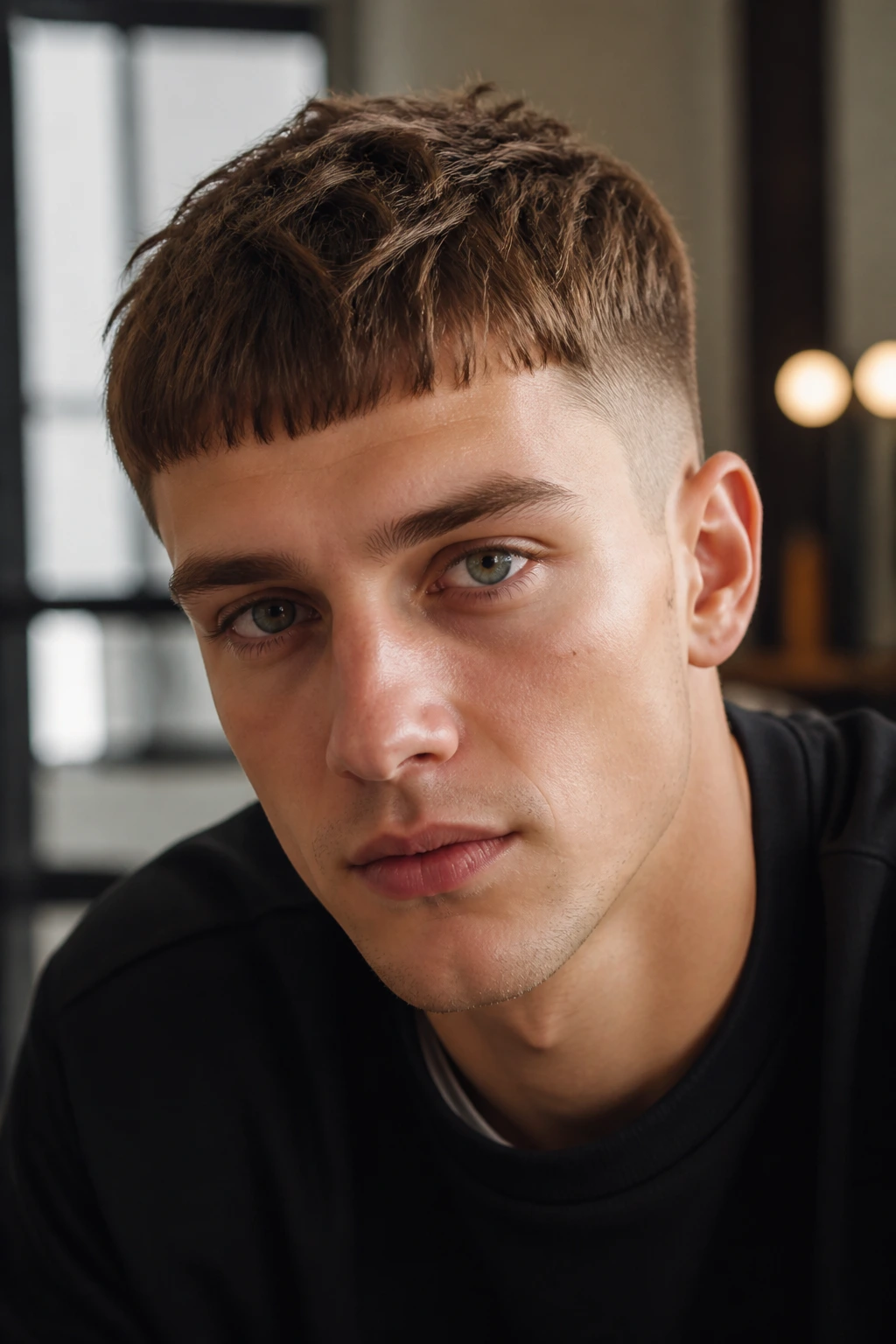
The French crop is the crop’s sharper cousin. The fringe is a little more deliberate, the outline a little cleaner, and the whole thing feels like it was designed for men who want a haircut that does not need a pep talk every morning. On fine hair, that blunt front can be a gift.
The reason is simple: a cropped fringe creates a stronger visual line across the forehead, which helps the top read denser. If your hairline has started to retreat a touch, or if the front keeps lying limp no matter what you do, this cut gives you structure without asking for height you don’t have.
A version worth wearing should still have texture. Not a helmet. The line is clean, but the ends should be lightly broken up so the fringe doesn’t look like a ruler was taken to it. I’d keep the top around 1 to 2 inches, with the sides tapered low. A harsh fade can make the contrast too stark if the hair is sparse.
You’ll get the best result with a matte paste rubbed between your palms and pressed in, not brushed through like gel. Let the fringe fall where it wants, then nudge the ends into place with your fingertips. That slightly imperfect finish is the point.
3. Ivy League with a Gentle Side Part
Want something that still looks decent after you take off a jacket, run a hand through it, and go about your day? The Ivy League is one of the cleanest answers. It keeps enough length on top to part, sweep, or flatten with intention, but it doesn’t depend on lots of hair to look finished.
How to Wear It
Ask for about 2 to 3 inches on top, a soft taper on the sides, and a part that follows your natural growth instead of fighting it. Fine hair rarely needs a hard line shaved in. That usually looks too severe, and on thinner strands it can draw attention to the scalp rather than away from it.
A small amount of lightweight cream is usually enough. Work it into damp hair, comb the top over lightly, and then break the shape with your fingers. If the part feels too neat, loosen it. The Ivy League works best when it looks like a tidy habit, not a uniform.
- Best for: straight or slightly wavy fine hair
- Good if you want: office-friendly without looking stiff
- Avoid if: your crown sticks up in a wild cowlick and you refuse to blow-dry
- Barber note: keep the sideburns and neckline tapered, not boxed
There’s a reason this cut keeps surviving every style cycle. It does its job without shouting about it.
4. Crew Cut with a Low Taper
The crew cut is what happens when a haircut stops trying to impress you and starts trying to help you. That sounds blunt, but there’s a reason it works so well for fine hair: the top is short enough to lie in one direction, and the sides stay tight enough that the top doesn’t have to compete with them.
If you work in a place where your hair gets flattened by hats, helmets, collars, or a long commute, this cut is a practical lifesaver. Ask for roughly a #2 or #3 on top, depending on how much coverage you want, with a low taper around the ears and neckline. The taper matters. A high fade can make the top look isolated and thin if the hair itself is fine.
You can wear it with nothing at all, which is part of the charm. Or you can put the tiniest amount of matte product at the front to give the hair a slight forward lift. Nothing greasy. Nothing shiny. The goal is a clean head shape, not a lacquered dome.
Crew cuts also grow out in a civilized way. That counts for a lot. Around the third week, the cut still reads intentional instead of ragged, which is more than can be said for most trend cuts on fine hair.
5. Short Quiff with Matte Lift
The short quiff is the best compromise between height and honesty. It gives you some lift at the front, but it doesn’t pretend your hair is thicker than it is. That’s the mistake a lot of men make with quiffs: they chase a giant front section, then wonder why the style falls apart the second the wind changes.
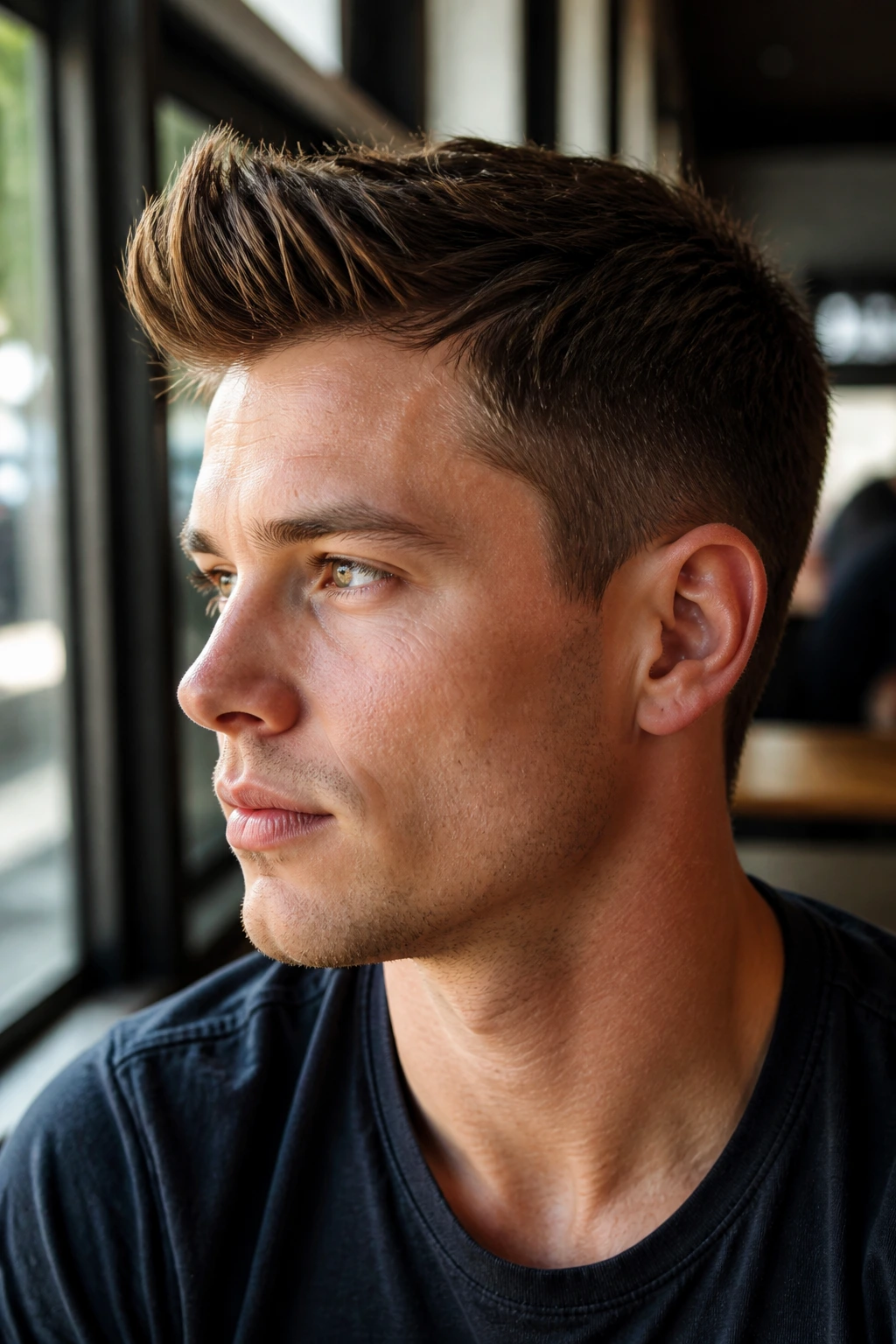
Here, keep the top in the 2.5 to 3.5 inch range, shorter at the crown, a little longer in front. Blow-dry the front up and back with a vent brush or even your fingers, then lock the shape with a matte clay or light paste. The sides should stay tight, but not so tight that the top looks like a separate object perched on your head.
What I like about this cut is that it gives fine hair a job. The front is allowed to rise, the middle supports it, and the product works with the shape instead of trying to glue it into place. If the hair is especially soft, use a little volumizing mousse before drying. That pre-step matters more than loading on product at the end.
You’ll know the quiff is right when it looks taller from the front than it feels in your hands. If it feels crunchy or stiff, it’s already gone too far.
6. Caesar Cut with Choppy Texture
The Caesar cut gets dismissed sometimes because people picture a dated, heavy version with a straight fringe and no movement. That’s the lazy version. A modern Caesar on fine hair can look sharp, compact, and very easy to manage, especially if your hairline is not as full as it used to be.
The key is texture. The fringe comes forward, yes, but the ends should be lightly chopped so they don’t sit in one flat block. Keep the top short — usually about 1 to 1.75 inches — and maintain a low taper on the sides. That keeps the whole shape compact and avoids the see-through effect that longer fine hair can create.
This cut is especially forgiving if your forehead or temples need a little camouflage. It does not hide everything, and that’s a good thing. It just makes the front look intentional instead of exposed. A small amount of matte paste or cream is enough. Work it in, push the fringe forward, and then pinch the tips so the line doesn’t look too perfect.
The modern Caesar is not for men who want height. It’s for men who want a clean front line and a style that still looks decent after a long day.
7. Brushed-Forward Fringe
Why does brushing the hair forward work so well on fine hair? Because it stacks the strands in the same direction and keeps the eye from wandering into empty space. Fine hair often looks weakest when it’s pushed back and spread out. Pull it forward, and the same amount of hair can look fuller.
How to Keep It Soft
Ask for a longer front section — not long in the dramatic sense, just long enough to fall naturally toward the brow. The sides should be tapered, and the top should be cut with some choppy movement so the fringe does not hang like a curtain. If your hair is straight, use a tiny bit of sea salt spray before drying. If it’s slightly wavy, even better.
The trick is not to flatten it with a brush. Dry it forward with your fingers, then touch only the front pieces once the shape is nearly set. If you comb the fringe straight down too aggressively, it can end up looking like a schoolboy cut that lost confidence halfway through the day.
This style works well for men who want to soften a stronger forehead or make a receding front line less obvious without resorting to a dramatic crop. It’s casual, but it still looks thought through.
8. Tapered Comb Over
A tapered comb over is not the same thing as the stiff, shiny version people picture from old office photos. The modern version is much softer. It follows the natural part, keeps the sides tidy, and lets the top sweep across rather than stand at attention.
Unlike a hard side part, this cut has a little give. That matters when your hair is fine, because a brutal line can make the scalp between the sections too visible. Keep the top around 2.5 to 4 inches, depending on density, and use a low taper or blended fade on the sides. The top should have enough length to move, but not so much that it separates into strands.
A light cream or low-shine paste is usually the right product here. Work it through damp hair, then comb the top over with a vent brush. After that, loosen it with your fingers. That last step keeps the style from looking too severe. If you’ve got straight hair that falls to one side already, this is one of the easiest styles to wear.
Best for men who want a polished shape without the slick, wet look. The cut can say “put together” without screaming for attention.
9. Classic Side Part with a Taper
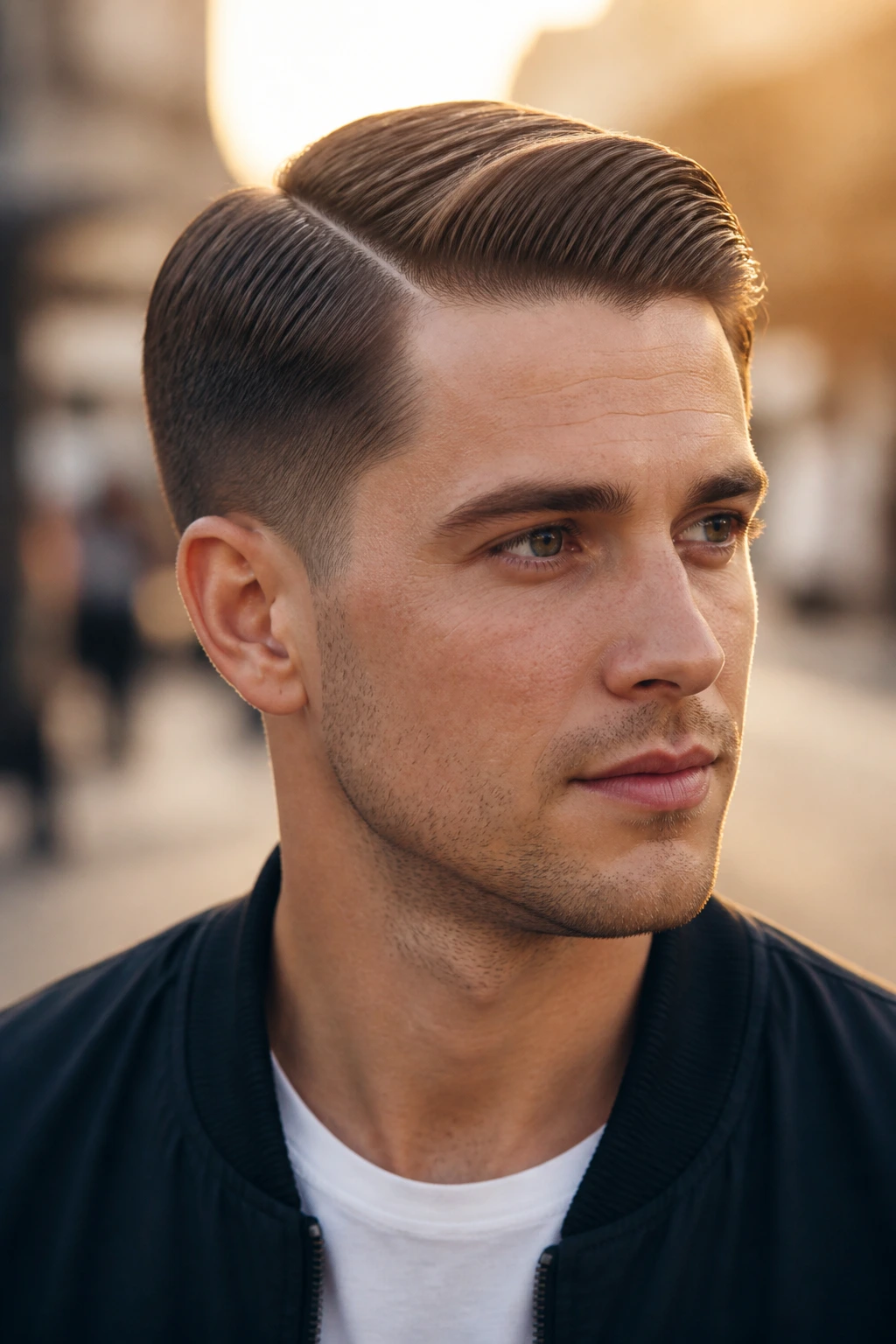
A clean side part is boring only when it’s cut lazily. Give it the right shape and it becomes one of the smartest options for fine hair, because the part creates order where the strands would otherwise wander. That order matters. Fine hair often looks thinner when it’s messy in every direction.
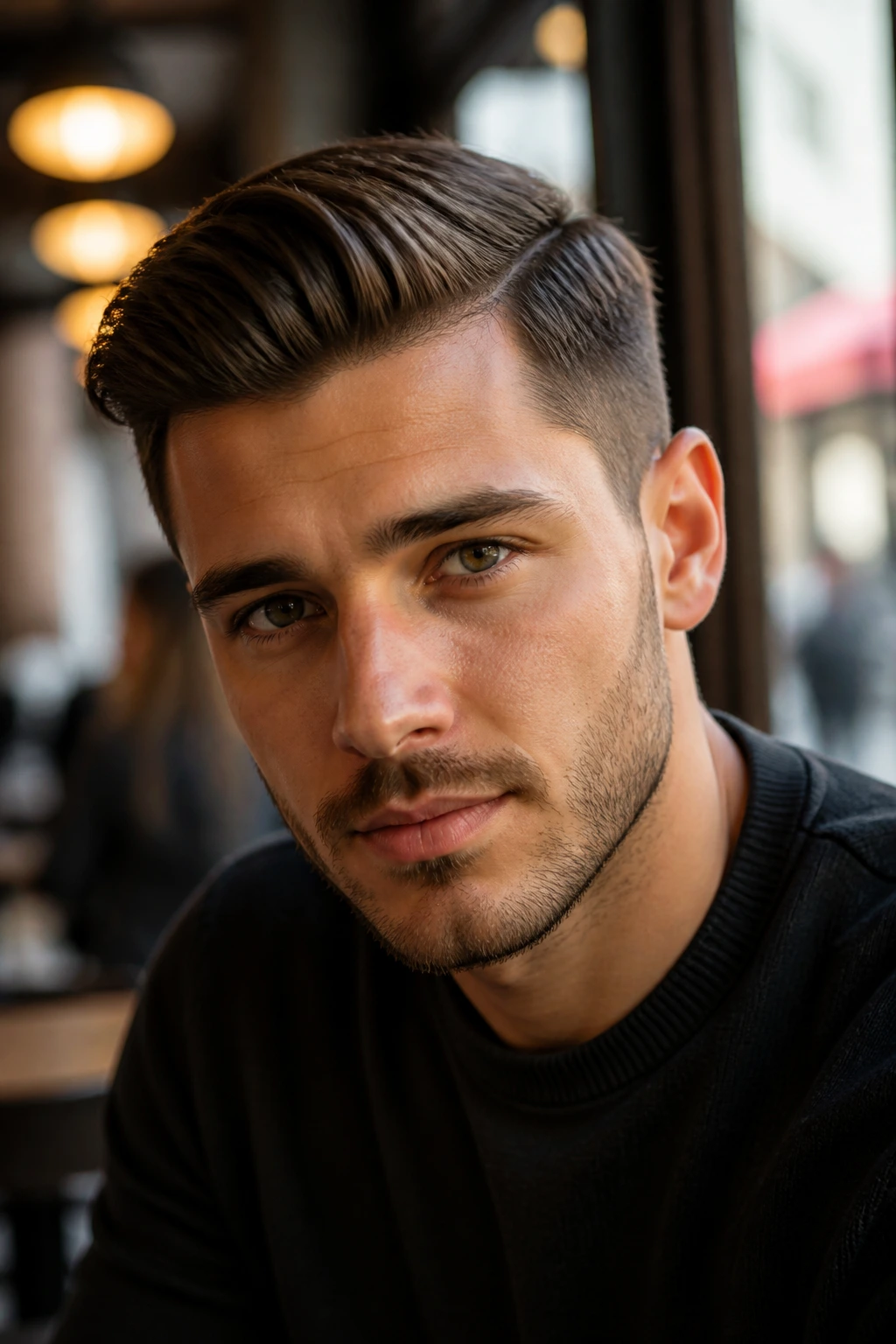
Keep the top shorter than you might expect — around 2 to 3 inches is plenty — and let the barber taper the sides so the head shape stays balanced. A hard part can work, but I usually prefer a softer line unless the hair is dense enough to support it. The less contrast the scalp has to fight, the better.
What to Ask For
- A natural side part, not a painted-on line
- Tapered sides that do not balloon at the ears
- Scissor work on top to keep the ends from looking skinny
- A finish that can be combed over with light cream or left looser with fingers
The classic side part is a good choice if you like crisp clothes, clean collars, and a haircut that won’t embarrass you on a bad hair day. It’s not flashy. It’s reliable, and that’s exactly the point.
10. Brushed-Back Taper
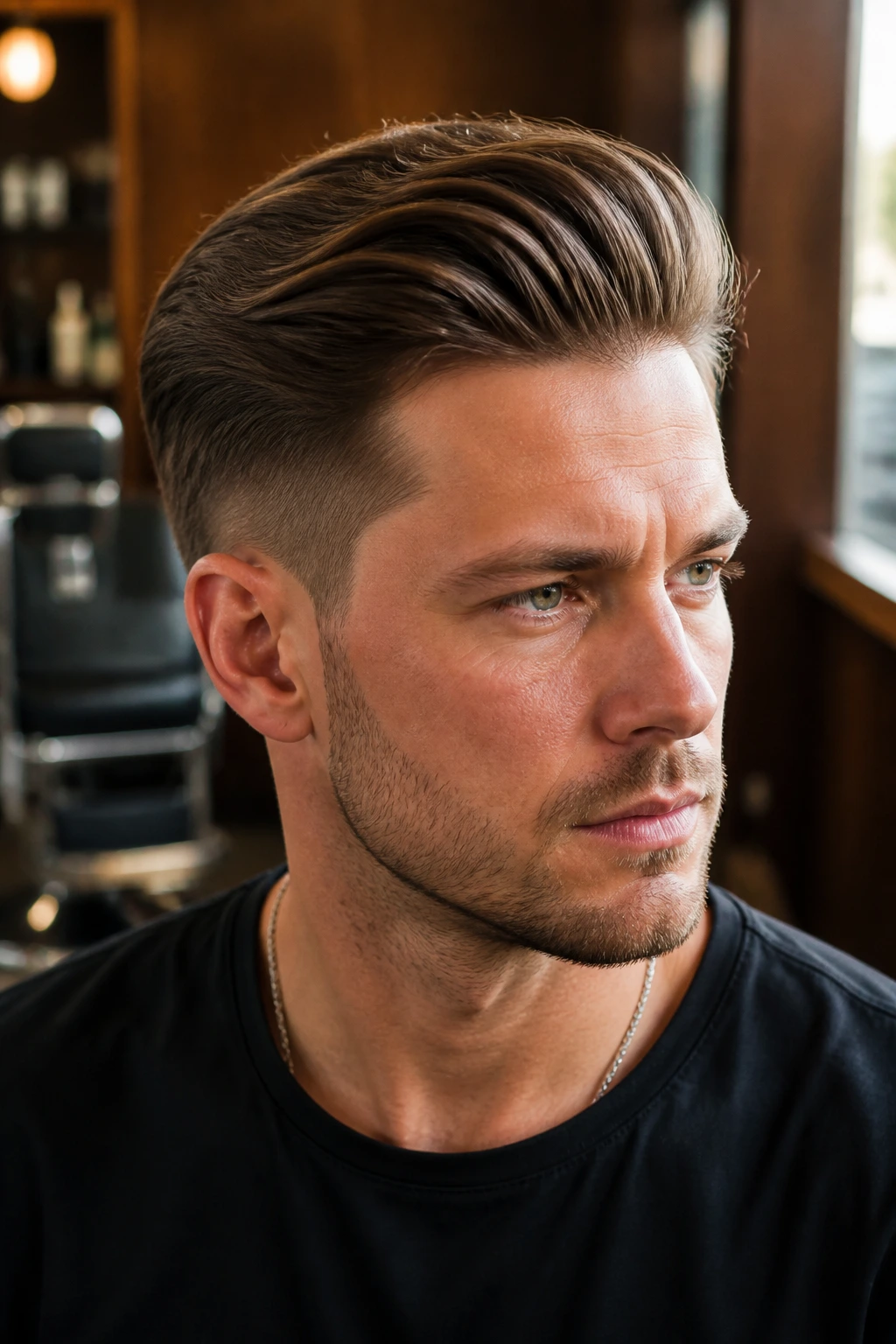
The brushed-back taper is the style for men who like the forehead open but do not want to commit to a full slick back. And that’s a useful middle ground for fine hair, because overly glossy swept-back styles tend to expose more scalp than they solve.
Keep the top just long enough to move back — usually around 2.5 to 3.5 inches — and leave some softness through the crown. A low or mid taper on the sides keeps the silhouette lean without making the top look isolated. The trick here is to brush back with direction, not force. You want the hair to lean back, not clamp down.
A small amount of low-shine cream works better than gel. If your hair is especially fine, even a touch of mousse before drying can help the roots stand up a little before the back-sweep begins. Use a dryer on medium heat and brush the front back in short passes. Stop before it looks wet. That’s where this style loses its appeal.
If you like a neat profile and a slightly cleaner forehead line, this cut gives you that without the helmet effect.
11. Short Pompadour with Airy Height
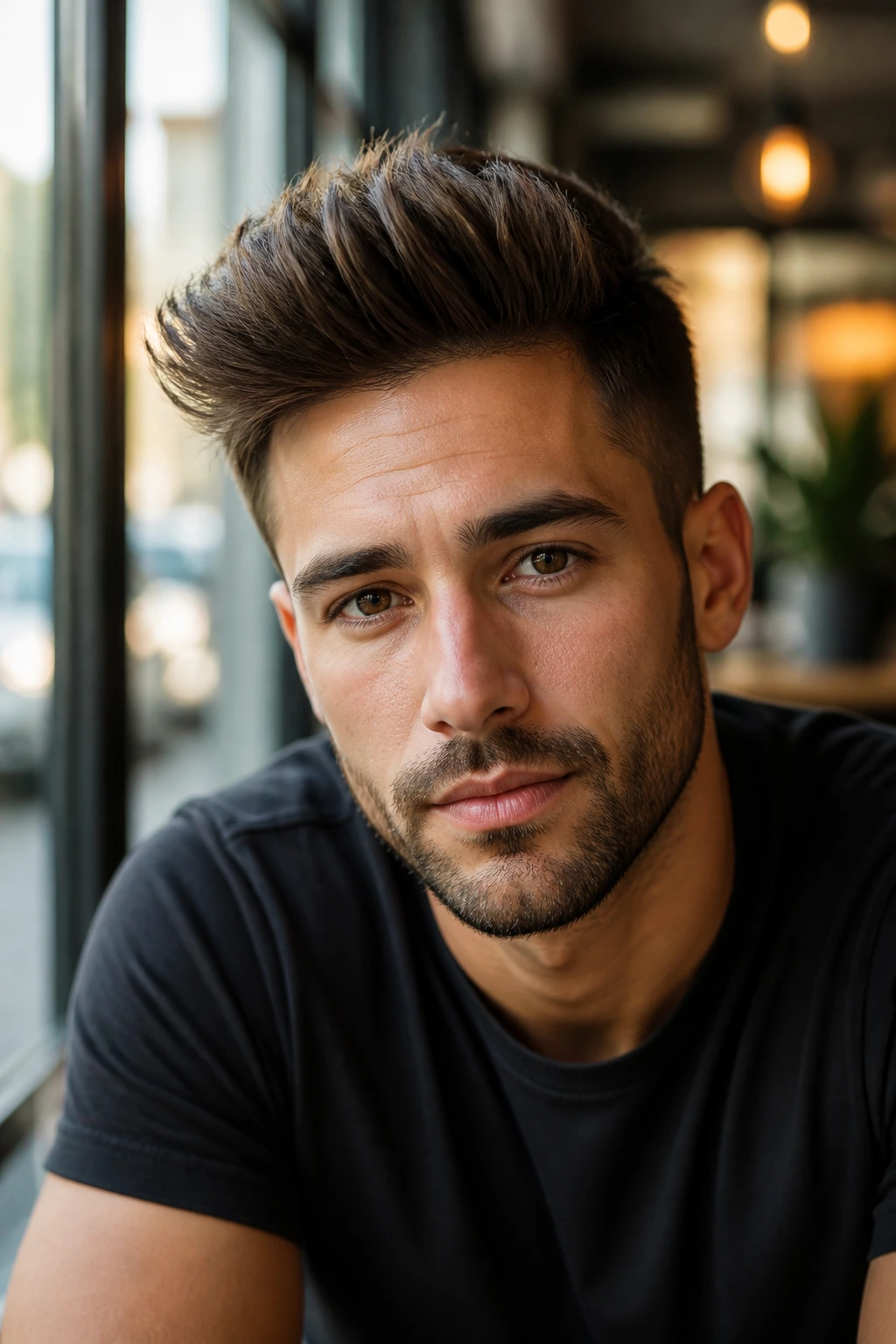
There’s a specific feel to a good short pompadour: the front lifts, the crown stays calm, and the whole haircut looks shaped rather than sprayed into place. On fine hair, that balance is everything. Too much height and the style goes floppy. Too much product and it turns stiff.
A useful version keeps the front a touch longer than the rest of the top — usually 3 inches or so at the front and a little less through the crown. The sides should be tapered cleanly so the height at the front has somewhere to live. Blow-dry the front upward and slightly back with a round brush if you have one, then finish with a matte paste or styling powder.
This cut is best for men with enough density to support a lifted front section. If your hair is ultra-fine, a quiff or crop may be a better bet. But if the strands are fine and reasonably full, the short pompadour can look polished without feeling like you’re trying too hard. It also plays nicely with a beard, which helps anchor the face and keeps the top from looking top-heavy.
Use a light hand. This style needs air, not armor.
12. Buzz Cut with a Sharp Line-Up
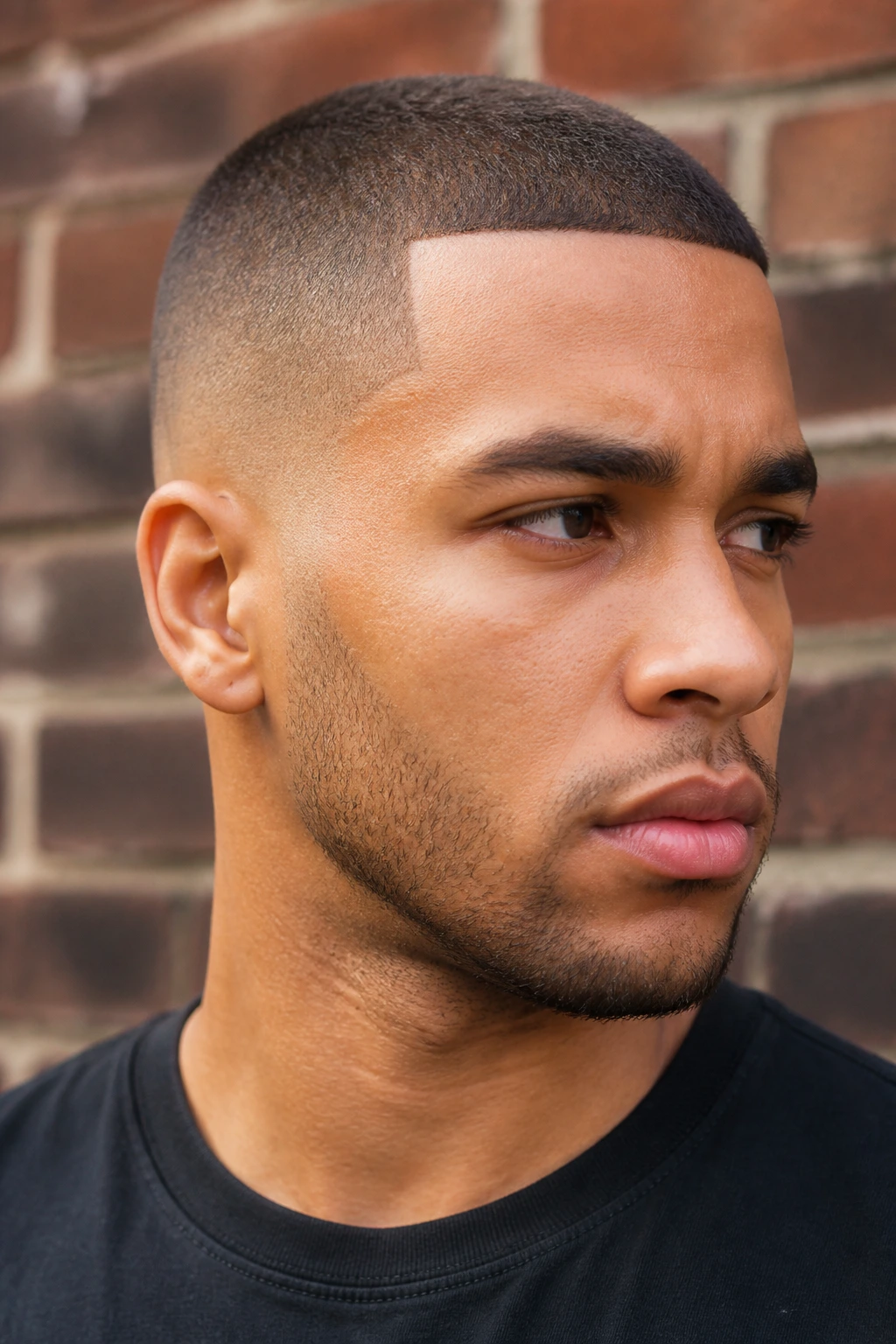
Sometimes the cleanest answer is to stop negotiating with the hair. A buzz cut does that in one move. It won’t create fake density, and that’s why it often looks better on very fine hair than a longer cut that keeps exposing the scalp in weird places.
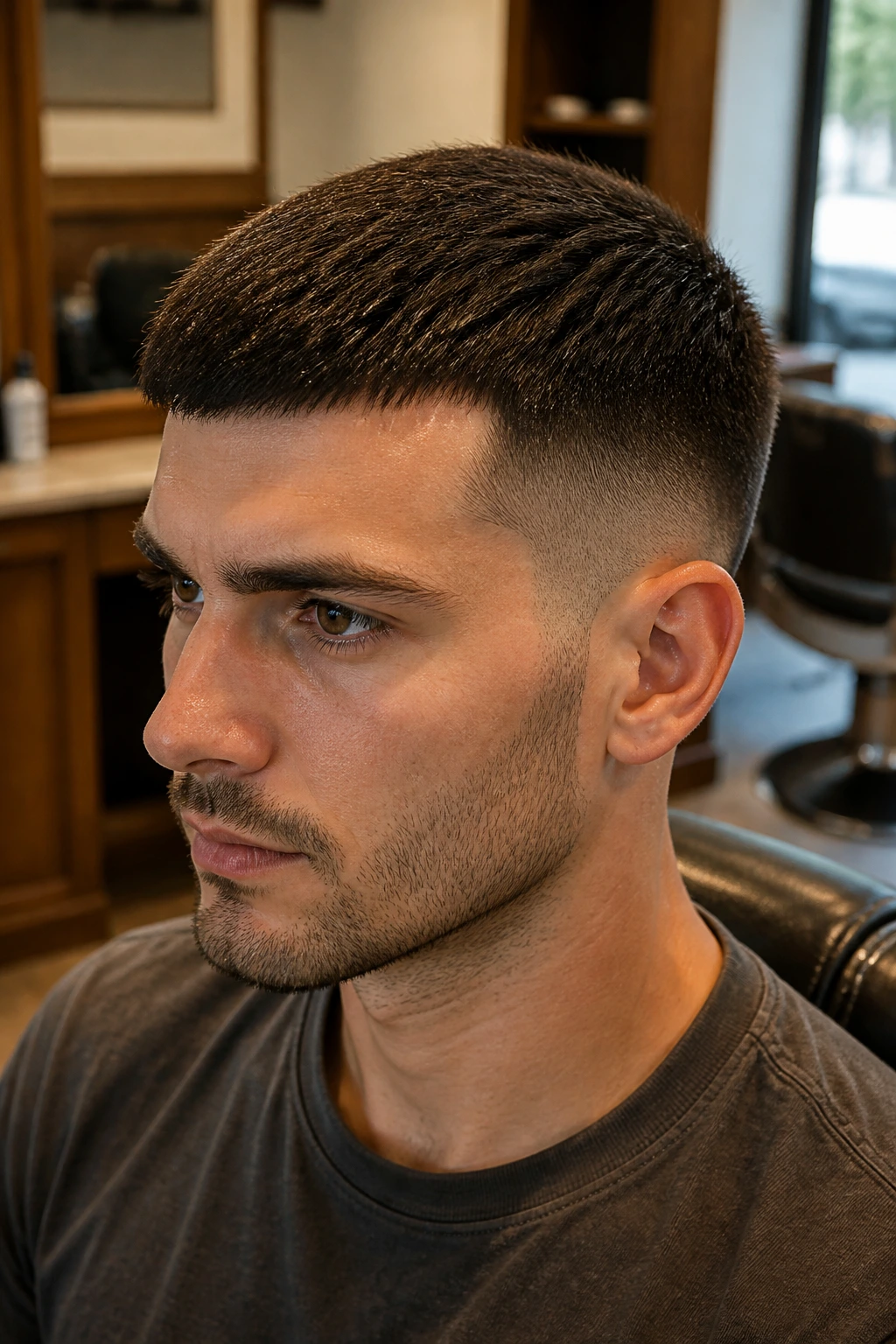
Choose a guard length that suits your head shape — #1.5 to #3 is common — and pair it with a sharp line-up or tidy edges around the temples and neckline if that suits your style. A low taper around the sides can soften the transition if you don’t want everything the same length. The result is blunt, honest, and easy to manage.
This cut works especially well if your hair is thinning unevenly, if you’re tired of styling, or if you want a cut that looks consistent after a swim, a workout, or a long workday. It also puts more attention on your face, so beard shape and eyebrow shape suddenly matter more. That’s not a downside. It just means the haircut is doing less camouflage and more framing.
If you’re worried about scalp show-through, buzz it shorter rather than trying to stretch it longer. The uniformity is what makes it work.
13. Medium Layered Sweep

Can fine hair go a little longer? Yes, if the cut is built for it. A medium layered sweep gives you more movement on top, but the layers have to be placed with some discipline or the ends start looking feather-light and thin in the wrong places.
The sweet spot is usually 3 to 5 inches on top, with controlled layering through the upper sections and shorter sides that don’t balloon out. This style behaves best on straight-to-wavy hair. If your hair bends a little on its own, the sweep can look relaxed and natural. If it’s dead straight and very soft, you’ll need a blow-dryer and a light mousse to keep the roots from collapsing.
How to Stop It From Collapsing
Start with towel-dried hair and work mousse into the roots, not just the ends. Then blow-dry the front to the side that helps it lift, using your fingers to separate the strands. Finish with a small amount of cream on the mid-lengths only. If you put product too close to the roots, the style goes heavy and loses the point.
This is a good option if you want length but still want control. It’s not a lazy haircut. It just looks easy when it’s cut right.
14. Curtain Fringe
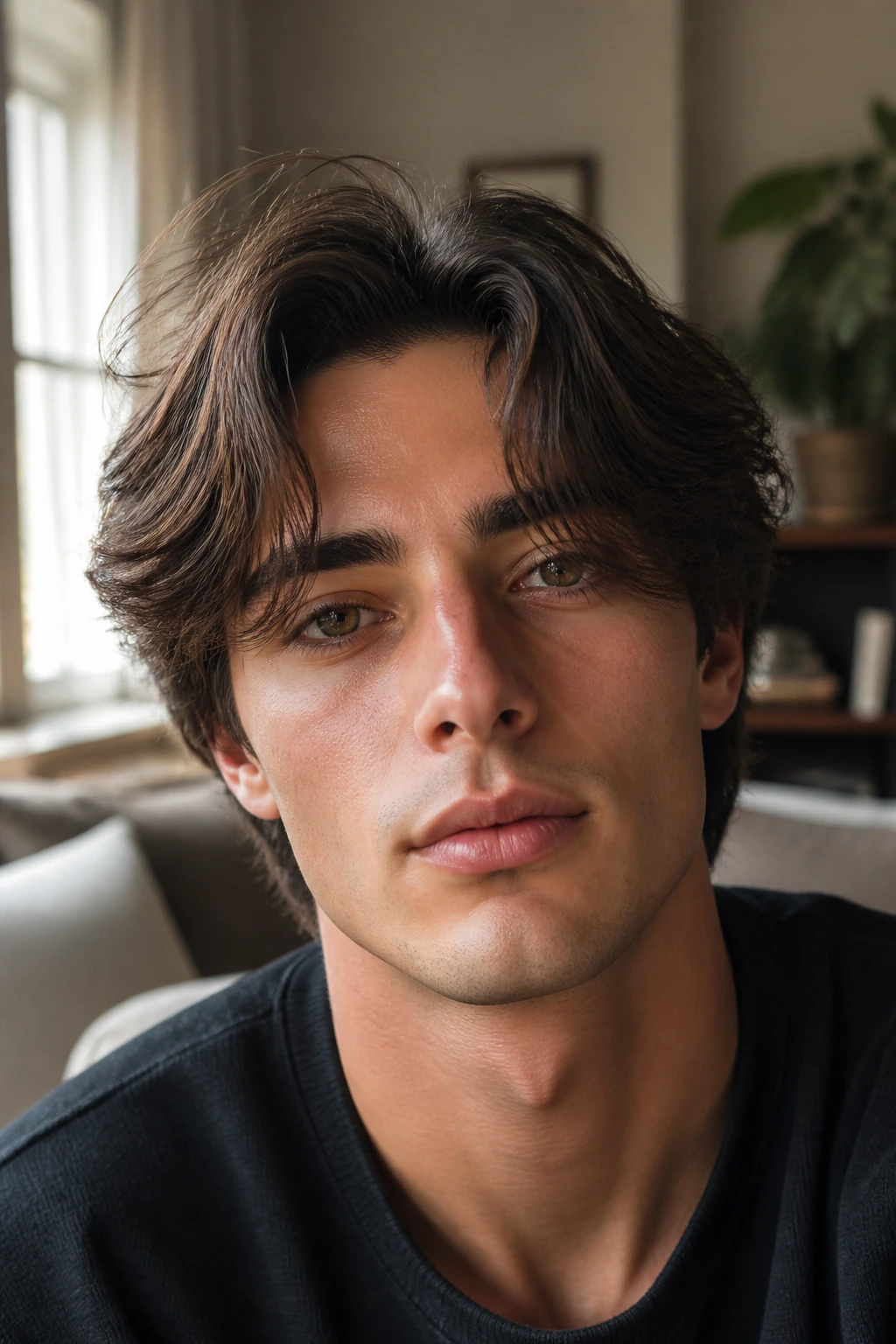
The curtain fringe has more personality than a crop and less stiffness than a side part, which is why it can be a strong choice for fine hair that has a bit of wave or bend. The hair parts near the middle or slightly off-center, then falls away from the face in soft sections.
The danger here is overdoing it. A long curtain fringe on fine hair can become limp and transparent fast. Keep the front long enough to move, but not so long that it hangs in separate stringy pieces. The sides should be shaped with a taper or soft scissor cut, not shoved into a hard fade unless the rest of the top has enough density to support it.
This style works best when the hair is dry-styled with fingers, not flattened with a comb. A dab of cream or lightweight paste is usually enough. If the hair is washed and left to air-dry with no help at all, the curtain can split awkwardly. Two minutes with a dryer can make the difference between “intentional” and “forgot to finish.”
It suits men who like a softer shape around the forehead and don’t mind a haircut with a little movement. The key is restraint.
15. Low-Volume Slick Back

This is not the wet, lacquered slick back from old movie posters. It’s looser, lower, and much kinder to fine hair. You keep enough length on top to move back, but you avoid the shiny finish that makes thin areas stand out in bright light.
The shape works best when the top is around 2 to 4 inches, with the front slightly longer than the crown. Use a low-shine cream on damp hair, comb it back lightly, and then break the shape with your fingers so it doesn’t look pasted down. The sides should be tapered cleanly, but not shaved so tight that the top floats in isolation.
This is a good cut if you like a more mature, tidy look and your hair naturally wants to lie flat anyway. It also behaves better than a tall pompadour on days when you barely have time to style. The front doesn’t need to stand up. It just needs to move back with some control.
The line between “smart” and “greasy” is narrow here. Stay on the matte side, and the style keeps its shape.
16. Skin Fade Crop with Texture on Top
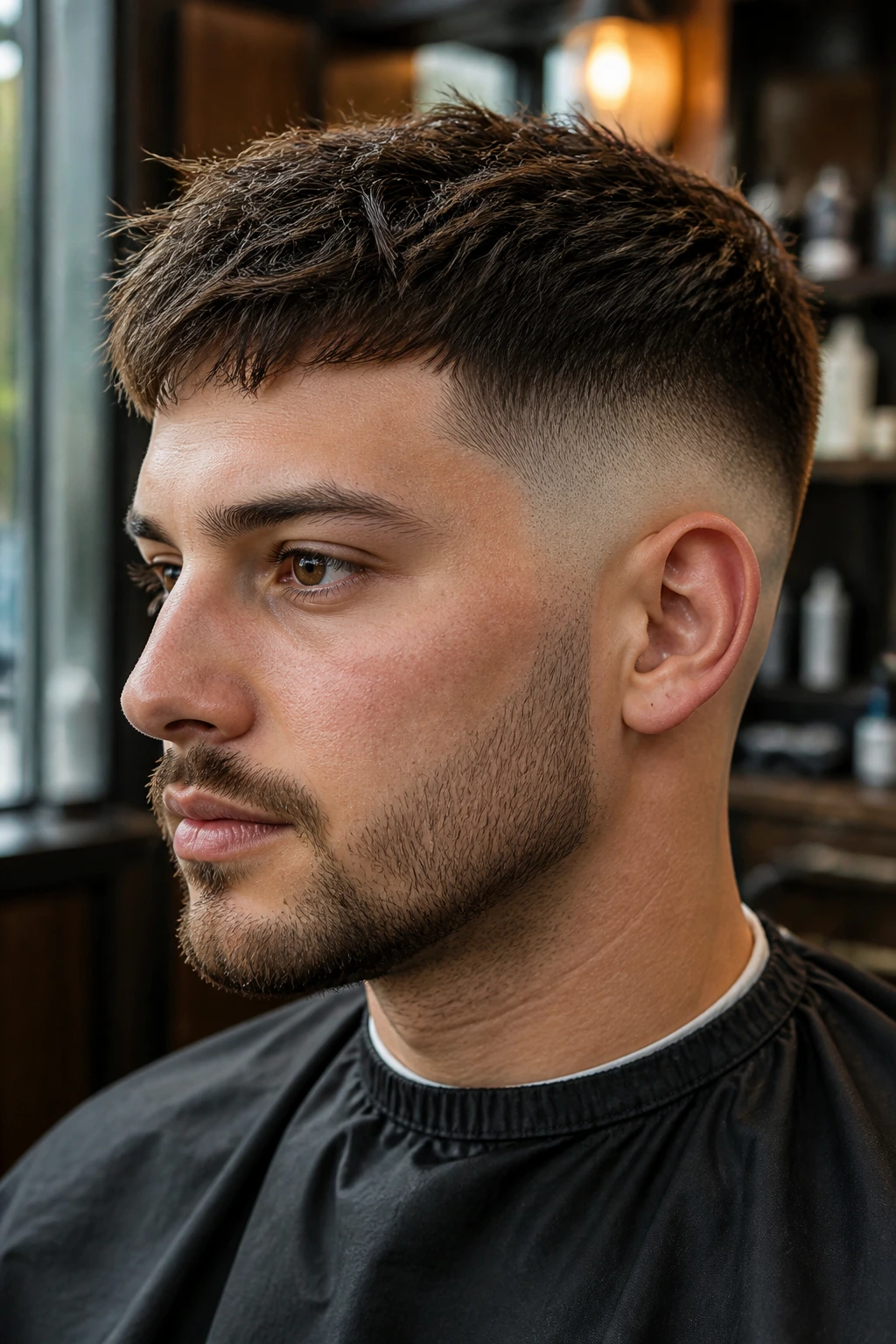
If the sides puff out first and the top lies flat, a low skin fade can clean up the whole silhouette. That contrast pulls the eye upward, which helps the top look denser even when the strands themselves are fine. The catch is that the top must stay short and textured enough to support the fade.
Keep the top around 1 to 2 inches, usually textured with scissors or a point-cut finish, and keep the skin fade low rather than climbing too high. A high fade can expose the scalp too much if the top is sparse. The low version keeps the haircut tight without making the head look half-shaved and half-empty.
This style is a good fit if you like a crisp outline and don’t mind regular touch-ups. It grows out faster than a scissor cut, but the first two or three weeks look excellent when the fade is fresh. Use a matte clay or paste, working it mostly through the front and mid-top. Too much product at the crown will flatten the lift you just paid for.
The crop-fade combination is clean, sharp, and very on-purpose. That matters when the hair itself is modest.
17. Modern Shag with Soft Layers

A modern shag can work on fine hair, but only if the layers are handled with restraint. Too much razoring and the hair looks like it has been thinned by the wind. The better version keeps longer layers through the top and sides, with enough length for the hair to separate into pieces rather than strands.
Where the Movement Comes From
You want movement, not fluff. That usually means medium length on top, soft layers around the crown, and a bit of balance around the face. Wavy fine hair does especially well here because the cut gives the wave somewhere to sit. Straight fine hair can wear it too, but it needs more styling help and a lighter touch with product.
Sea salt spray and a touch of cream can work together here: spray for grip, cream for a little control. Scrunch the hair, shake it loose, and avoid brushing it into a perfect shape. The charm of a shag is that it has some bend and a little roughness.
If you like hair that moves and you’re willing to keep the layers in good shape, this is one of the more interesting options on the list. If you want a strict, tidy style, skip it.
18. Short Brush-Up with Tapered Sides
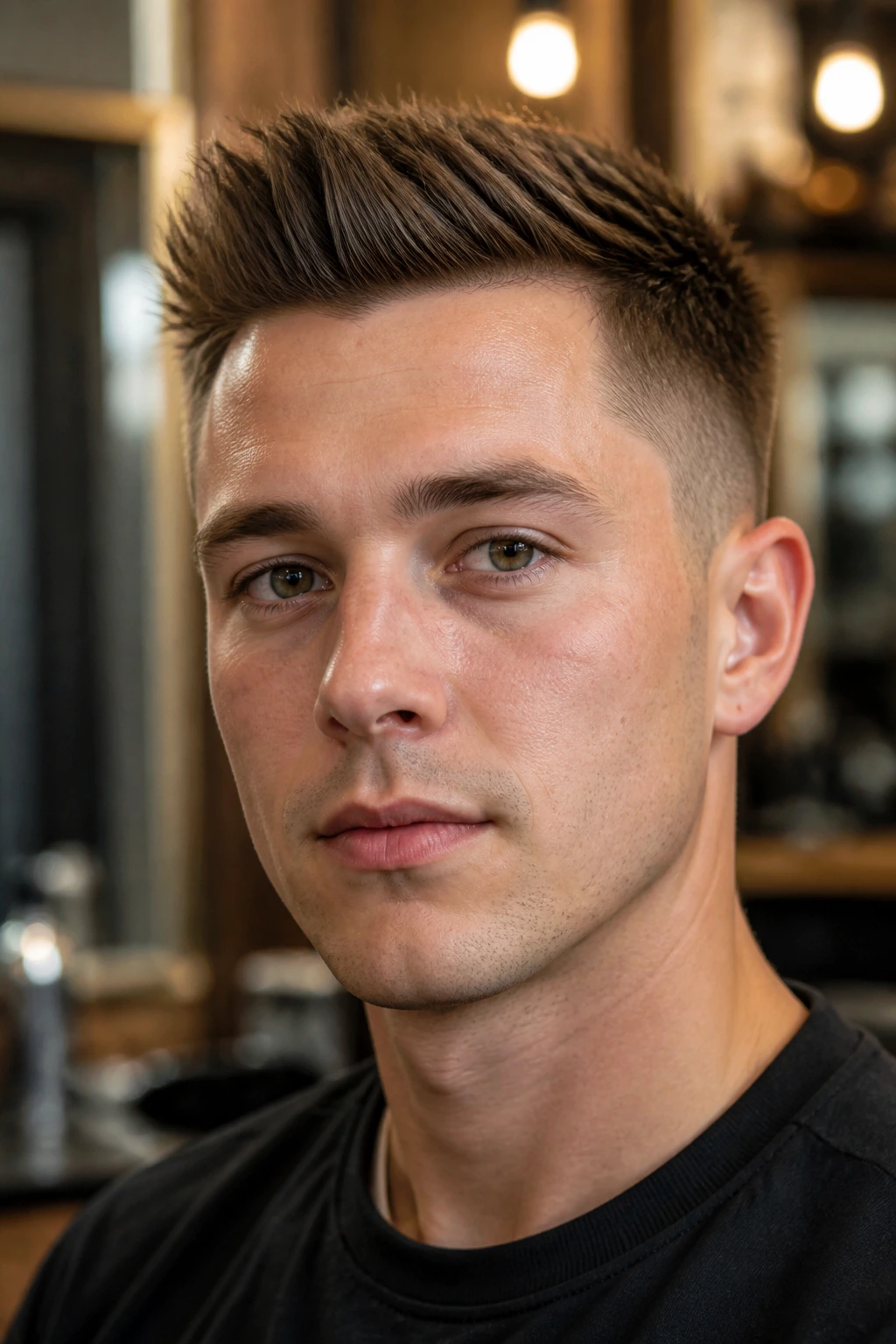
If you want a little height without the drama of a full quiff, this is the sweet spot. The brush-up gives fine hair a vertical shape at the front, but the style stays compact enough that it doesn’t collapse into a shiny ridge by noon.
Keep the top just long enough to stand up with help — usually about 1.5 to 3 inches — and taper the sides so the head reads clean from every angle. A little volumizing mousse at the roots, then a quick blow-dry upward with your fingers, is usually enough. Finish with a light matte paste or a dusting of styling powder, and stop there.
This cut is especially useful if you like a fresh, active look. It has more energy than a side part and less ceremony than a pompadour. Fine hair doesn’t need an enormous lift to look better. It usually needs a controlled one.
The brush-up is one of those styles that looks best when it’s touched, not sculpted. A small amount of mess around the front gives it life.
Styling Fine Hair Without Turning It Greasy
The fastest way to make fine hair look thinner is to drown it in product. One heavy swipe of pomade can flatten the roots, separate the strands, and leave the scalp shining through under daylight. That’s why lighter styling almost always wins here.
Start with damp hair, not soaking wet hair. Use a pre-styler if you like one — mousse for lift, sea salt spray for rough texture, or a little styling powder at the roots if your hair is very soft. Then dry the hair in the direction that supports the cut. Forward for a crop. Up and back for a quiff. Lightly to the side for an Ivy League or comb over.
The finish should be small. A pea-sized amount of matte clay or paste is often enough for the whole head. Warm it in your palms until it disappears, then press it into the top and front first. If you can see product sitting on the surface, you’ve used too much. If your fingers drag through the hair and it feels tacky but not sticky, you’re close.
One more thing. Fine hair usually looks better when you leave a little imperfection in the shape. A perfectly combed style often exposes more than it hides. A bit of finger separation, a soft edge around the fringe, or a slightly undone side sweep reads fuller than a polished shell.
Common Mistakes That Flatten Fine Hair

The first mistake is using heavy, shiny product because you think more hold equals more hair. It doesn’t. It usually means more glare, more separation, and more scalp showing through the top. If the hair starts looking wet before you leave the bathroom, strip it down and switch to matte clay, cream, powder, or mousse.
Another common error is leaving the top too long while keeping the sides too wide. That shape seems generous in theory, but on fine hair it often just makes the head look broad and the top look sparse. A tighter taper or a cleaner fade usually improves the silhouette fast.
Over-thinning is the one I see people regret most. The hair may feel lighter for a day, but the ends start to look feathery and weak. If a barber reaches for thinning shears on already-fine hair, ask a question before they keep going. You want texture, not erosion.
Styling wet hair is another trap. Hair that is still dripping has no structure, and fine strands dry exactly where they feel like drying. Rough-dry first. Shape second. Product last.
And then there’s the hairline problem. Men often ask for a style that fights their natural growth pattern instead of working with it. If your fringe wants to push forward, don’t force a tall brushed-back front every morning. That fight will get old quickly.
Variations and Adaptations to Try
The Office-Clean Version: Take the Ivy League, side part, or tapered comb over and keep the top a little shorter with a low-shine cream finish. It reads sharper without becoming stiff, which is useful if you want your hair to look neat under fluorescent office lights.
The Receding-Hairline Friendly Version: A French crop, Caesar cut, or brushed-forward fringe keeps the front controlled and textured. The goal is not to hide everything. It’s to stop the front from separating into thin little pieces that make the hairline look busier than it is.
The Wavy-Fine Hair Version: Choose a medium layered sweep, curtain fringe, or modern shag with longer layers. Fine waves benefit from a cut that leaves room for bend, but the layers should stay long enough to avoid that hollow, see-through look.
The No-Heat Morning Version: Crew cut, buzz cut, or textured crop. These are the cuts that survive a towel dry, a five-second finger comb, and a quick dash out the door. Add powder or matte paste only if you need it.
The Beard-Balanced Version: If you wear a beard, keep the hair slightly tighter on the sides so the face does not feel bottom-heavy. A short quiff, brush-up, side part, or crop often looks better when the beard carries some of the visual weight.
Tools That Make Styling Easier
-
Hair dryer with a nozzle: Directs airflow at the roots so fine hair stands up instead of drying flat.
-
Vent brush: Great for quick lift on quiffs, brush-ups, and side parts without over-smoothing the top.
-
Small round brush: Useful if you want a little bend in a pompadour, sweep, or brushed-back style.
-
Matte clay or paste: Gives control without the wet shine that exposes fine strands.
-
Volumizing mousse: Helps the roots hold a shape before drying, especially on crops and quiffs.
-
Styling powder: Handy for second-day hair and soft root lift when the top looks too clean.
-
Sea salt spray: Adds grit and separation, though too much can dry the hair out fast.
-
Lightweight cream: Good for side parts, Ivy League cuts, and brushed-back shapes that need control but not shine.
-
Fine-tooth and regular combs: The comb-over and side-part styles are easier when you can change the spacing and tension.
-
Hand mirror: Makes neckline and sideburn checks a lot easier between cuts.
Keeping the Cut Sharp Between Trims
Fine-hair cuts usually look best when they stay within a certain length window. Let them grow past that, and the shape starts to blur. Crops, Caesars, and crew cuts often need a cleanup every 3 to 4 weeks if you want the outline to stay crisp. Ivy Leagues, side parts, and brushed-back styles can often go 4 to 6 weeks. Medium layered cuts and curtain fringe styles may stretch a little longer, but only if the layers are still behaving.
Product buildup matters more on fine hair than people think. If you use clay, powder, spray, and cream all week, wash them out fully with a regular shampoo and use a clarifying shampoo every week or two if your scalp gets coated fast. Fine hair gets limp from residue much sooner than thick hair does. A clean root looks fuller than a dirty one. That’s not a moral lesson. Just annoying biology.
Dry the hair before bed if you can. Going to sleep with damp fine hair often leaves a flattened kink at the crown or a weird bend in the fringe that takes work to fix in the morning. If you need a quick reset, mist the roots lightly with water, rough-dry for a minute, and rework the top with a tiny amount of product. For styles like the crop or brush-up, that can bring them back fast without a full wash.
If you do your own neckline cleanup, keep it modest. Fine hair looks messier when the edges are over-cut. Small trims keep the shape neat. Big corrections usually make things worse.
Frequently Asked Questions
Should men with fine hair keep it short?
Not always, but shorter cuts are easier to control. The sweet spot is usually a style that keeps the sides neat and the top short enough to hold shape without separating into thin pieces.
Is a fade good for fine hair?
Yes, if the fade is used to support the top rather than overpower it. A low or mid fade usually works better than a very high skin fade, which can make the scalp more visible if the hair is sparse.
What product makes fine hair look thicker?
Matte clay, styling powder, and volumizing mousse tend to do the most useful work. Heavy gel and shiny pomade usually make fine hair look flatter, not fuller.
Can I wear a longer style with fine hair?
You can, especially if your hair has some wave. A medium layered sweep, curtain fringe, or modern shag can work well, but the cut needs enough structure to keep the ends from looking wispy.
How often should I get a trim?
Short crop, crew cut, and buzz styles often need a trim every 3 to 4 weeks. Side parts, Ivy Leagues, and longer layered cuts can usually go a bit longer, but once the shape starts collapsing, it’s time.
Does blow-drying really matter for fine hair?
Yes. Even 60 to 90 seconds at the roots can make a difference because the hair is more likely to stand where you set it. Air-drying alone often leaves fine hair flatter than you want.
Should I ask my barber to thin fine hair?
Usually no. Fine hair already lacks visual weight, so aggressive thinning shears can make the ends look see-through. Ask for texture through point cutting instead.
Can these cuts work for boys too?
Absolutely. A crop, crew cut, side part, or buzz cut can be a good fit for boys with fine hair because they stay neat, grow out cleanly, and don’t need much styling time.
The Shape That Stays Put
Fine hair does not need to be fought into submission. It needs a cut that gives the strands a better job than “sit there and hope for the best.” That’s why crops, crew cuts, side parts, and shorter quiffs keep showing up in the real world. They solve problems without turning the morning into a styling project.
Pick the shape that matches your hairline, your routine, and how much time you’re willing to spend in front of the mirror. If a cut needs more products than patience, it probably isn’t the right one for everyday wear. The sweet spot is a style that still looks like you after a little wind, a little sweat, and a little life.
Start with one cut that fits your hair as it is, not as you wish it were. Then let the shape do the work.